
Dark, richly colored rooms can feel cozy or heavy depending on how you balance their textures and light.
These Dark Boho Living Room Ideas show ways to give deep shades a softer, more layered feel, from earthy pillows on an olive sofa to woven lighting against teal walls.
You’ll also find ideas for pairing dark green backdrops with woven chairs, mixing pattern sizes across the seating, and spreading warm light around the room.
Natural materials, botanical details, and thoughtful contrast help create a collected look without making every surface compete for attention.
1. Layer Earthy Pillows on an Olive Sofa
Credits: Instagram
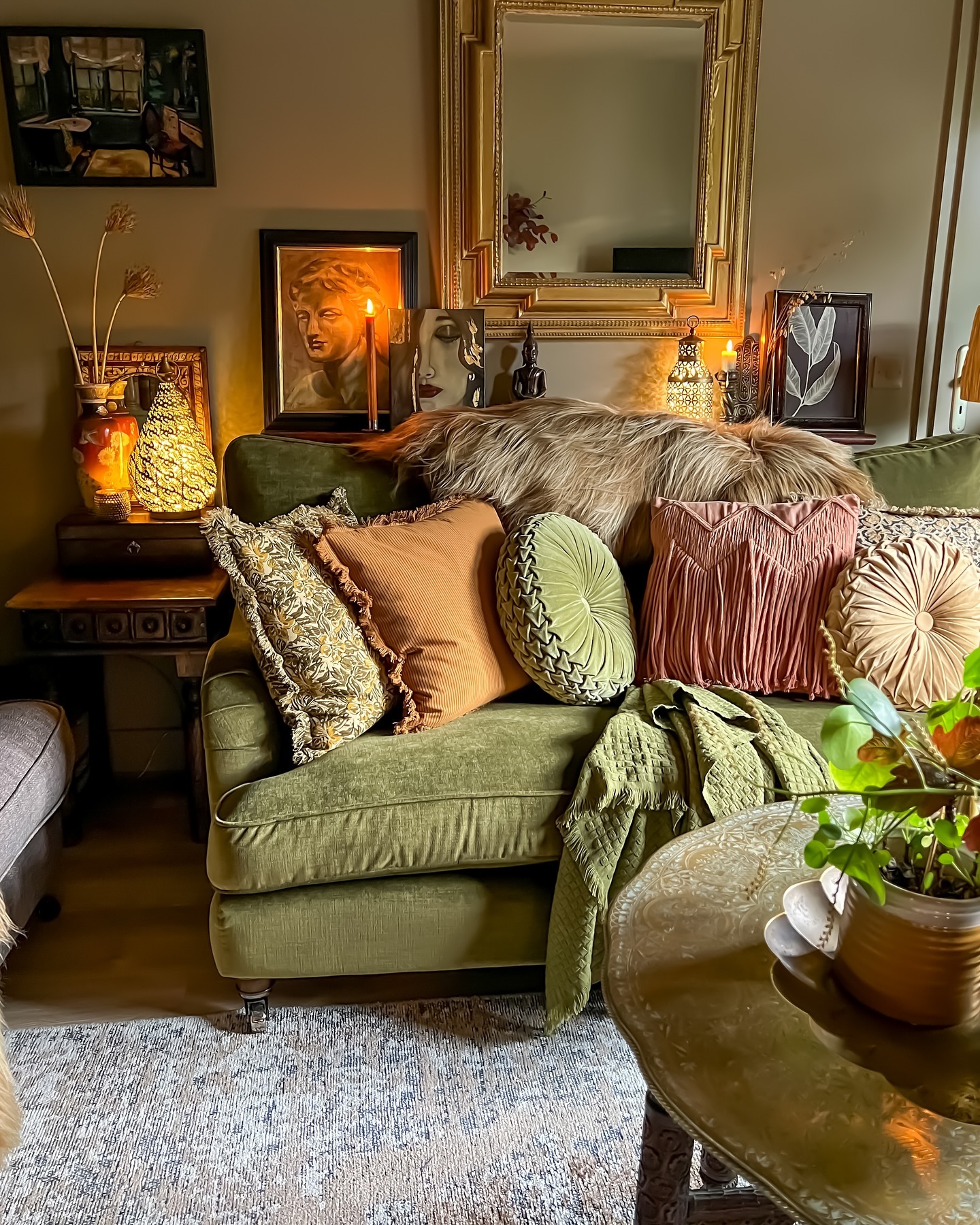
An olive sofa becomes the foundation for a layered seating area, with rust, cream, and muted green pillows bringing several textures into one compact grouping.
The fringed pillow introduces movement, while round cushions soften the sofa's squared outline. Above it, a gold mirror catches light against the subdued wall, giving the darker palette a lift.
You can borrow this approach without changing your furniture: choose pillow covers within a warm earthy range, then vary their shapes and finishes. A textured throw adds another comfortable layer across the back.
Keep nearby furniture different, such as the small carved side table and round metal coffee table shown here. Those contrasting surfaces make the room feel collected while the sofa holds everything together.
2. Warm Deep Teal Walls With Woven Lighting
Credits: Instagram
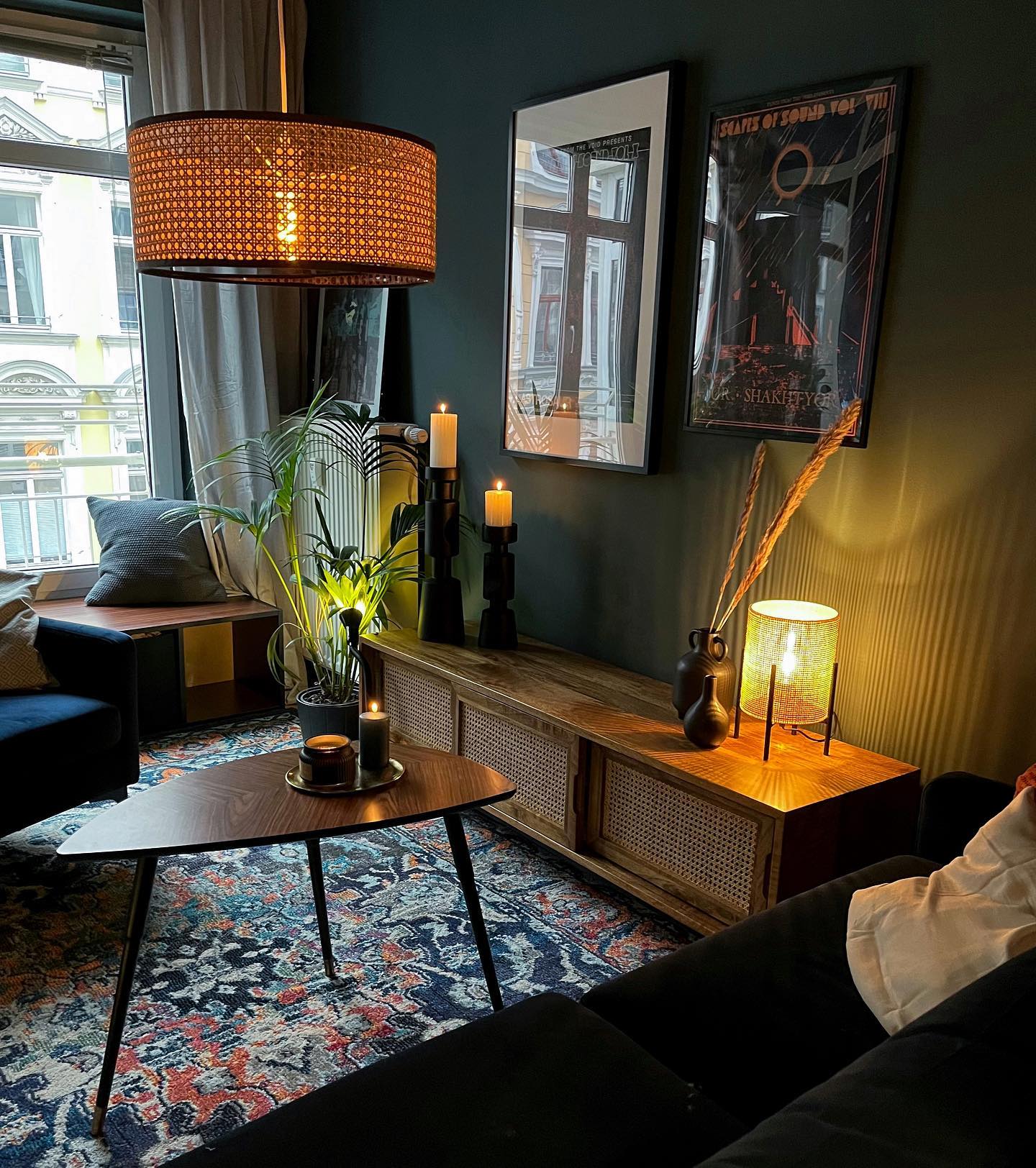
A woven pendant brings amber light into this deep teal living room, turning the wall color into a backdrop for softer materials.
The cane front of the low cabinet repeats its texture, while a patterned rug adds faded reds and blues beneath the dark seating. Framed prints provide personality without crowding the walls.
If you want a similarly intimate room, start with saturated paint color and repeat a natural woven material in two places. Position a small lamp near the seating so the pendant does not have to provide every bit of light.
The slender coffee table leaves more of the rug visible, and its rounded edges make the narrow seating area easier to move through on an ordinary evening.
3. Give a Woven Chair a Dark Green Backdrop
Credits: Instagram
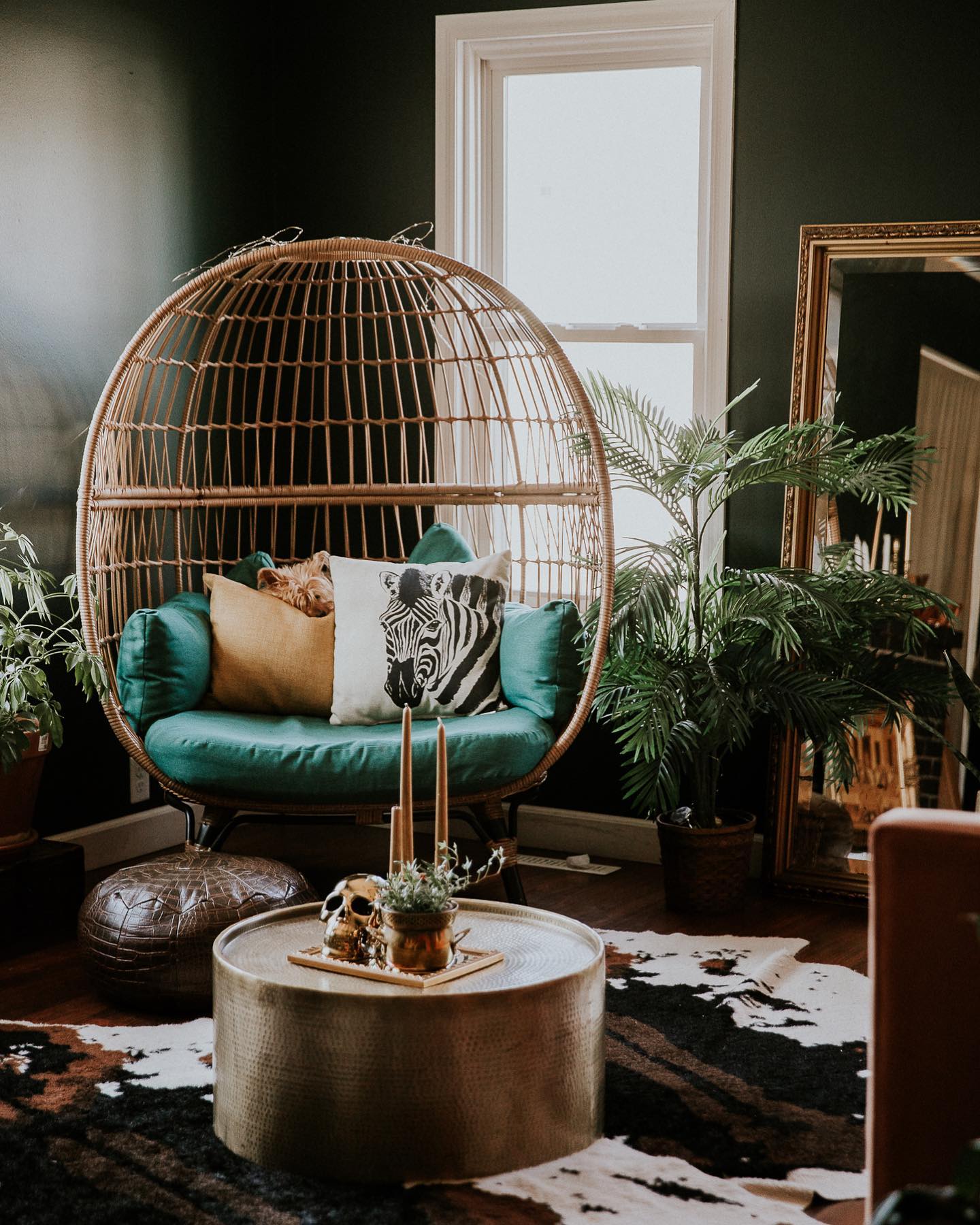
The tall woven chair takes on a sculptural quality against these dark green walls. Its open frame keeps the corner from feeling solid or crowded, while green cushions connect the seat to the paint.
A pale round coffee table and patterned hide rug introduce contrast at floor level. Nearby palms extend the chair's curved outline and give the room an easy botanical feel.
To try this combination, place one large woven chair beside a window, then surround it with only a few plants of different heights. A mirror can help bounce light back toward the seating.
Choose cushions with a mix of plain and patterned covers, letting the chair remain the main feature instead of competing with several statement pieces.
4. Build a Botanical Backdrop Around Green Velvet
Credits: Instagram
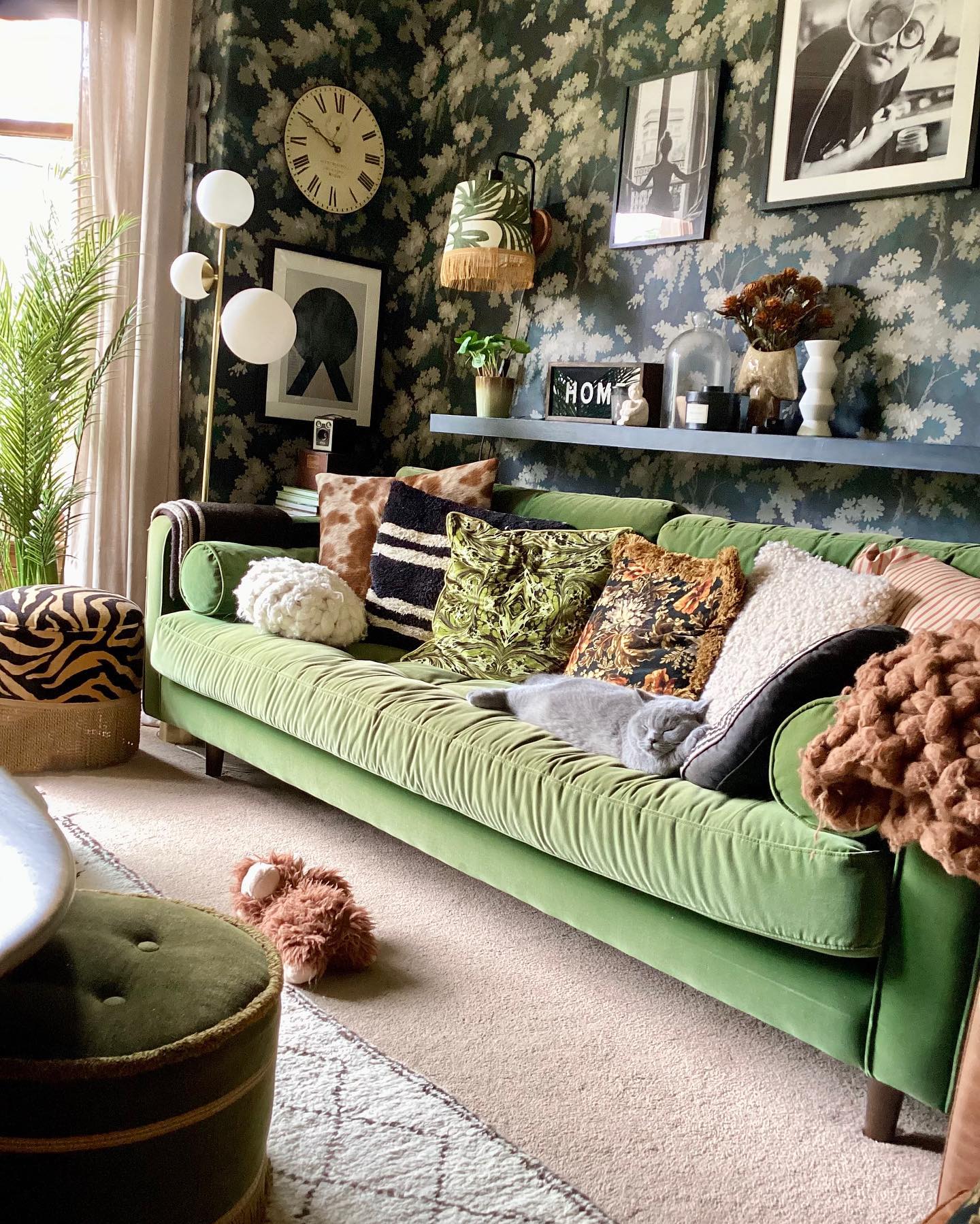
The green velvet sofa works with a wall covered in dense botanical pattern. Instead of relying on one dark paint color, this room builds its mood through overlapping foliage, framed art, and layered textiles.
A narrow shelf carries smaller objects above the sofa, while a tall plant helps the decorated wall meet the window naturally.
Try repeating the sofa's green in wallpaper or artwork, then introduce a few contrasting pillows so the upholstery does not disappear. Keep the larger furniture shapes simple when the backdrop is busy.
A round ottoman offers a soft alternative to an angular coffee table, and the pale rug gives the darker patterns some breathing room. It is a generous approach to comfortable, personal bohemian style.
5. Vary Pattern Sizes Across the Seating
Credits: Instagram
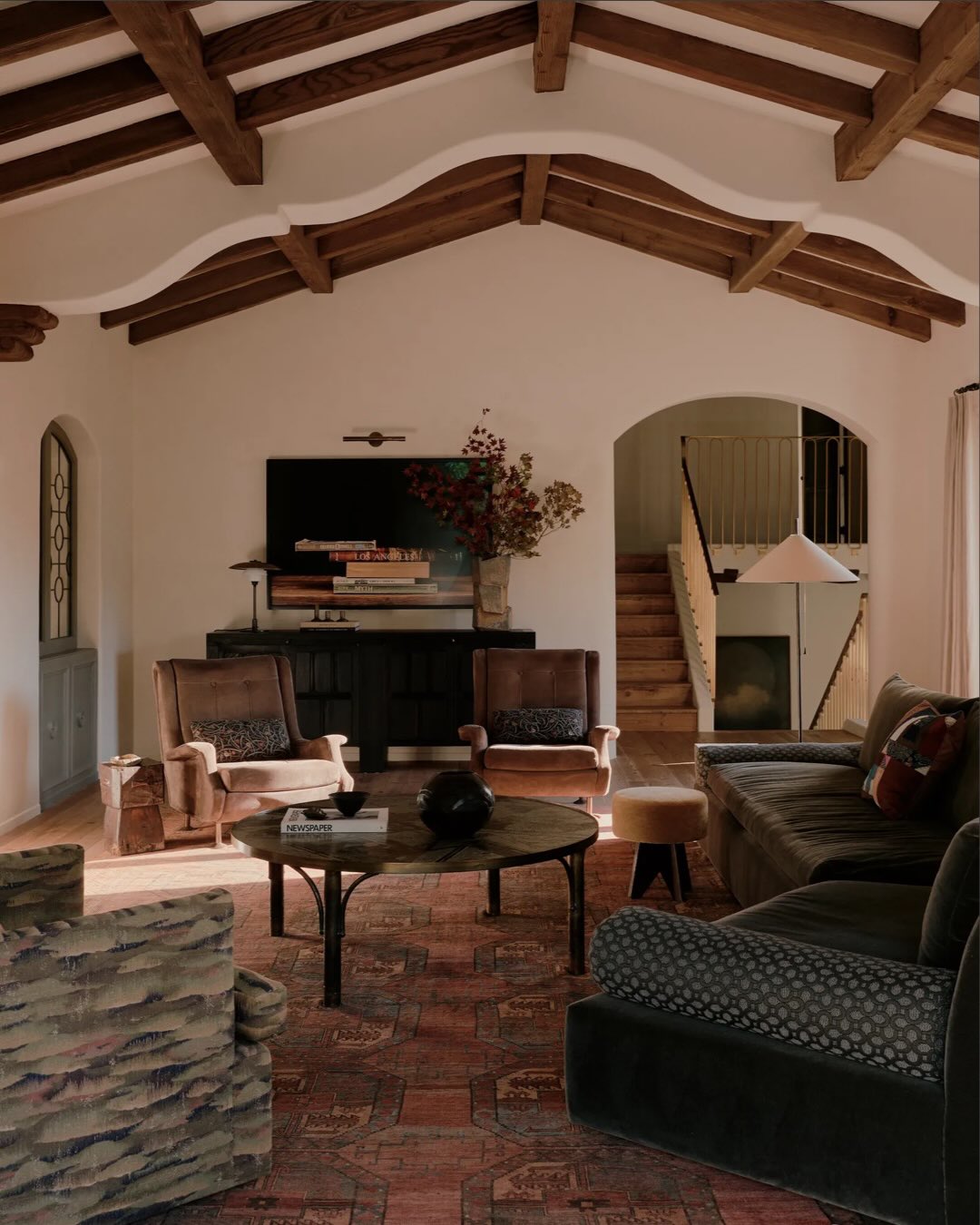
Different pattern sizes can give dark boho seating a collected feel without making every surface equally busy. Here, fine repeating motifs on the chair arms and pillows sit beside broader markings on the foreground seat and rust rug.
The deep green sofa provides a quieter area between them. Choose one larger pattern first, then add a smaller repeat that shares some of its muted colors.
Keep at least one seat mostly solid so the eye has somewhere to rest. Warm brown chairs and exposed wood beams connect the darker upholstery with the rug’s earthy tones.
A simple round coffee table leaves those fabrics visible. Try fabric samples together in the room’s light before committing to several patterns across neighboring pieces.
6. Deepen Warm Walls With Dark Green Art
Credits: Instagram
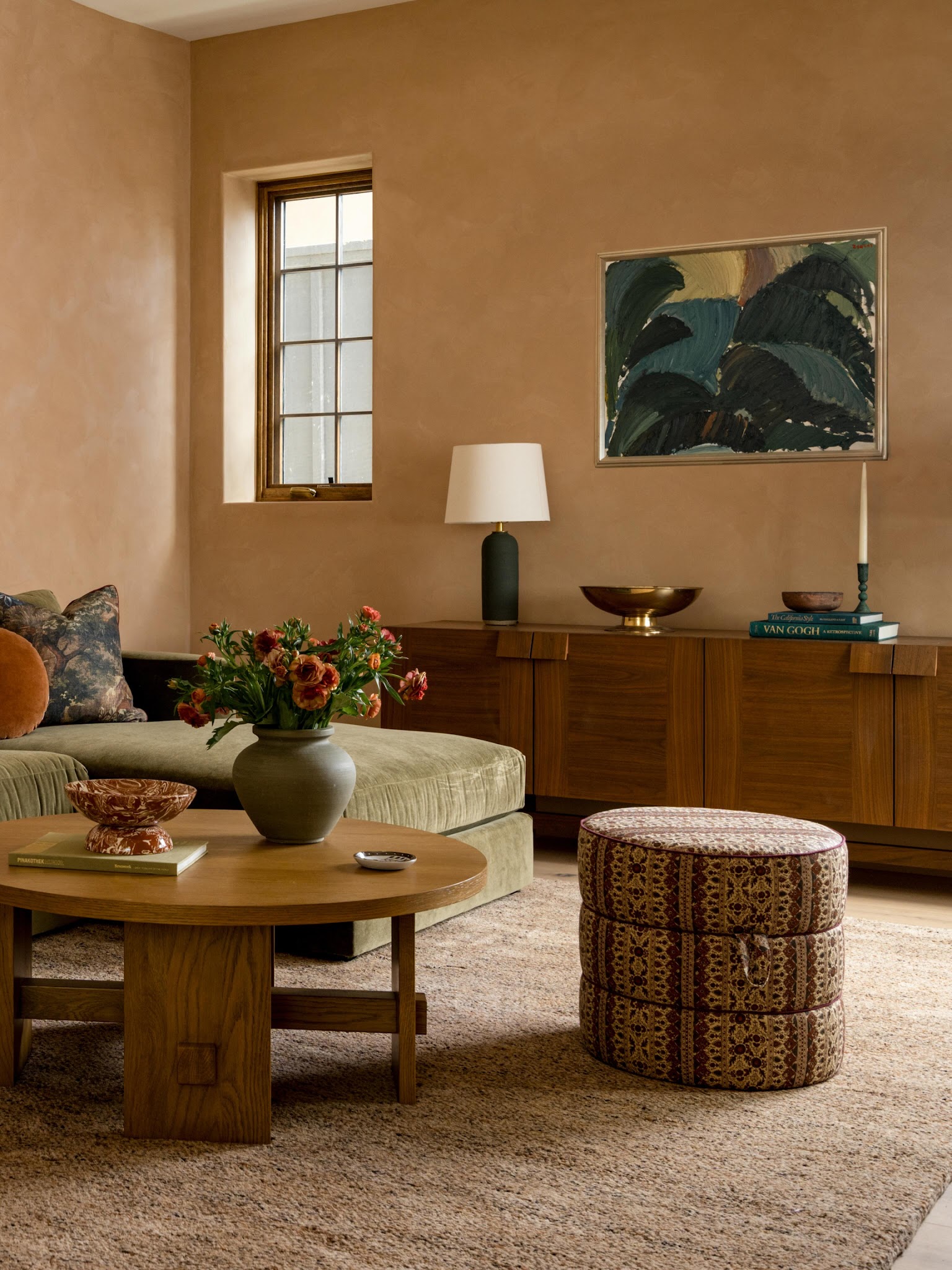
Dark green artwork can bring depth to a warm, earthy living room without covering every wall in a strong color.
Here, the painting's broad green shapes connect an olive chaise, a small lamp, and scattered accents above a long wood cabinet. Keep the surrounding wall mostly clear so the artwork has room to stand out.
Choose one color from the picture and repeat it in a textile or vessel near the seating. A patterned stool and mixed cushions supply the collected detail that suits boho rooms, while a plain rug keeps the arrangement grounded.
Check the painting's scale against the furniture below before hanging it. A simple frame lets the color do more of the work than an elaborate border.
7. Stagger Pendant Heights in a Tall Room
Credits: Instagram
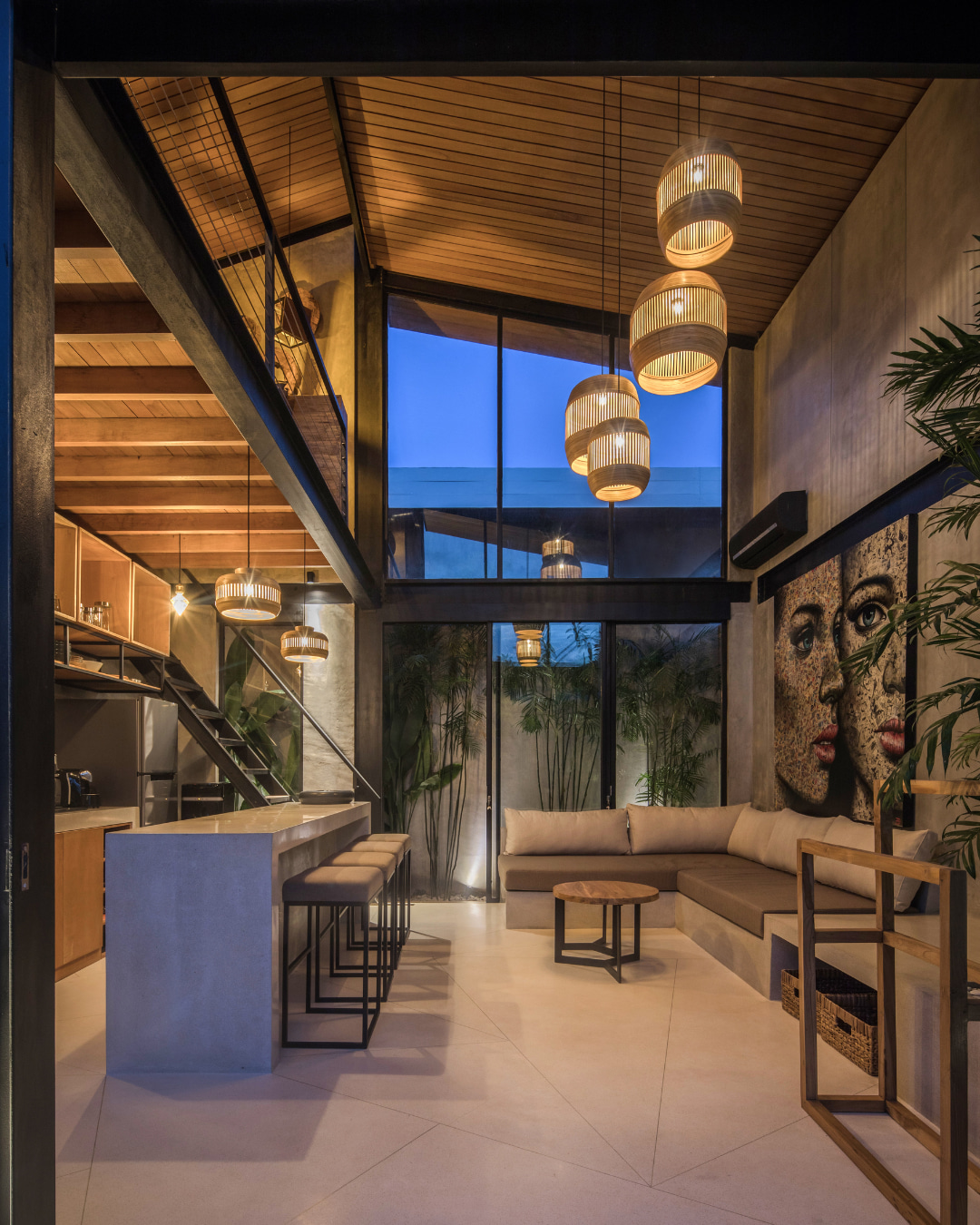
A group of pendants can make a tall, shadowy lounge feel more intimate. Here, rounded shades hang at different heights beneath the timber ceiling, bringing warm points of light down toward the seating.
Their repeated slatted texture gives the dark beams and broad glazed wall a softer counterpoint. Choose related shapes in a small range of sizes so the grouping feels connected without becoming rigid.
Judge the arrangement from the sofa, where each shade should remain visually distinct. Echo the warm color in a simple wood table or baskets near the seating without filling every corner.
Plain cushions keep attention on the lights and large artwork, while greenery adds a softer outline around the edges of this dramatic evening room.
8. Link Deep Blue Walls to a Faded Patterned Rug
Credits: Instagram
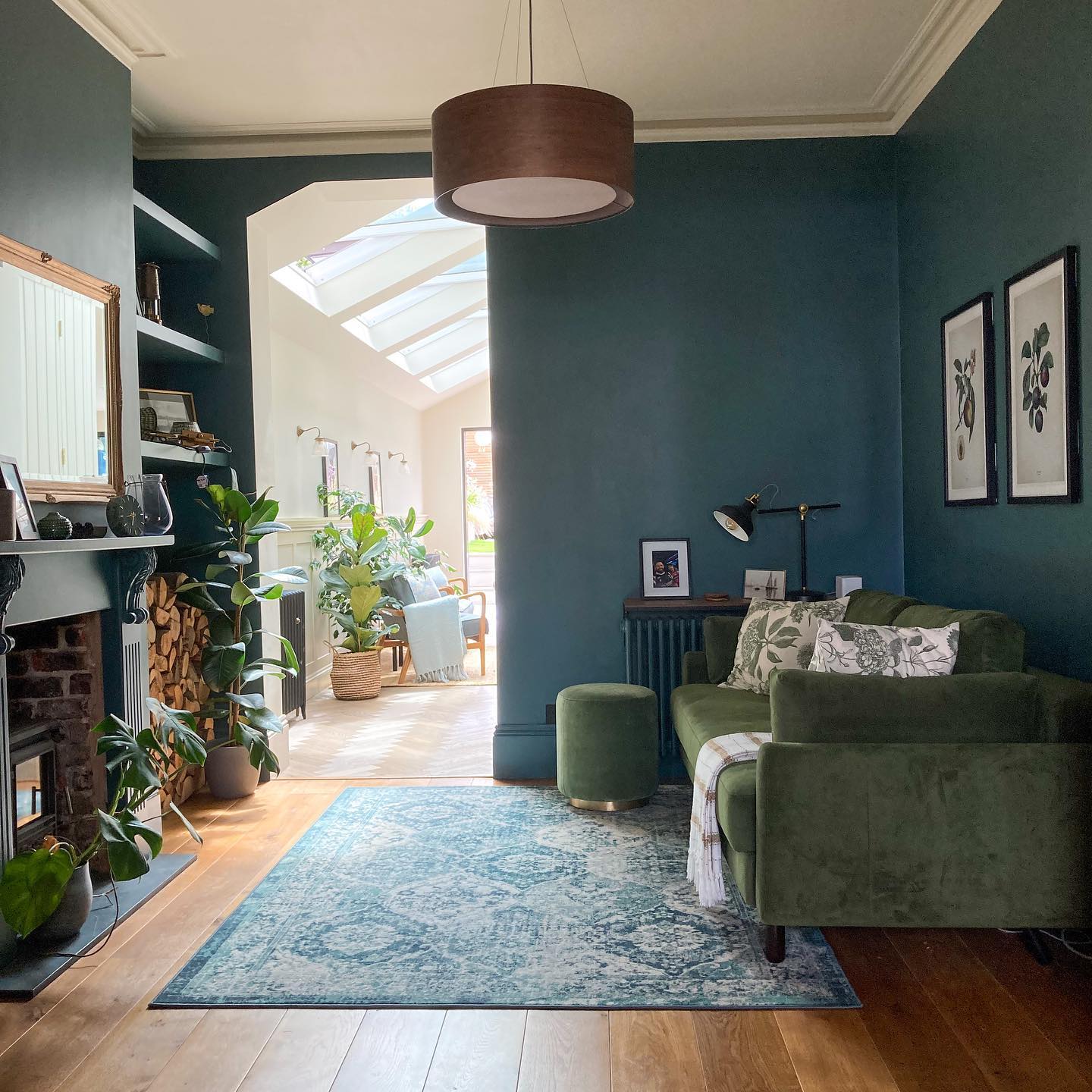
A faded blue rug brings the wall color down to the floor in this compact sitting room. Against that cool background, green velvet seating, botanical cushions, and leafy plants give the palette a softer, more organic direction.
Warm floorboards and stacked firewood keep the dark paint from feeling flat. To borrow the idea, choose a patterned rug that repeats your wall color in a lighter shade, then add one related upholstery color.
Let the patterns vary in scale: a broad rug motif can sit comfortably with smaller leaf prints on cushions. A plain ceiling provides a quiet pause above the mix.
Keep the route to adjoining rooms open so daylight can travel through and reveal the depth of the colors.
9. Soften a Black Fireplace With a Woven Chair
Credits: Instagram
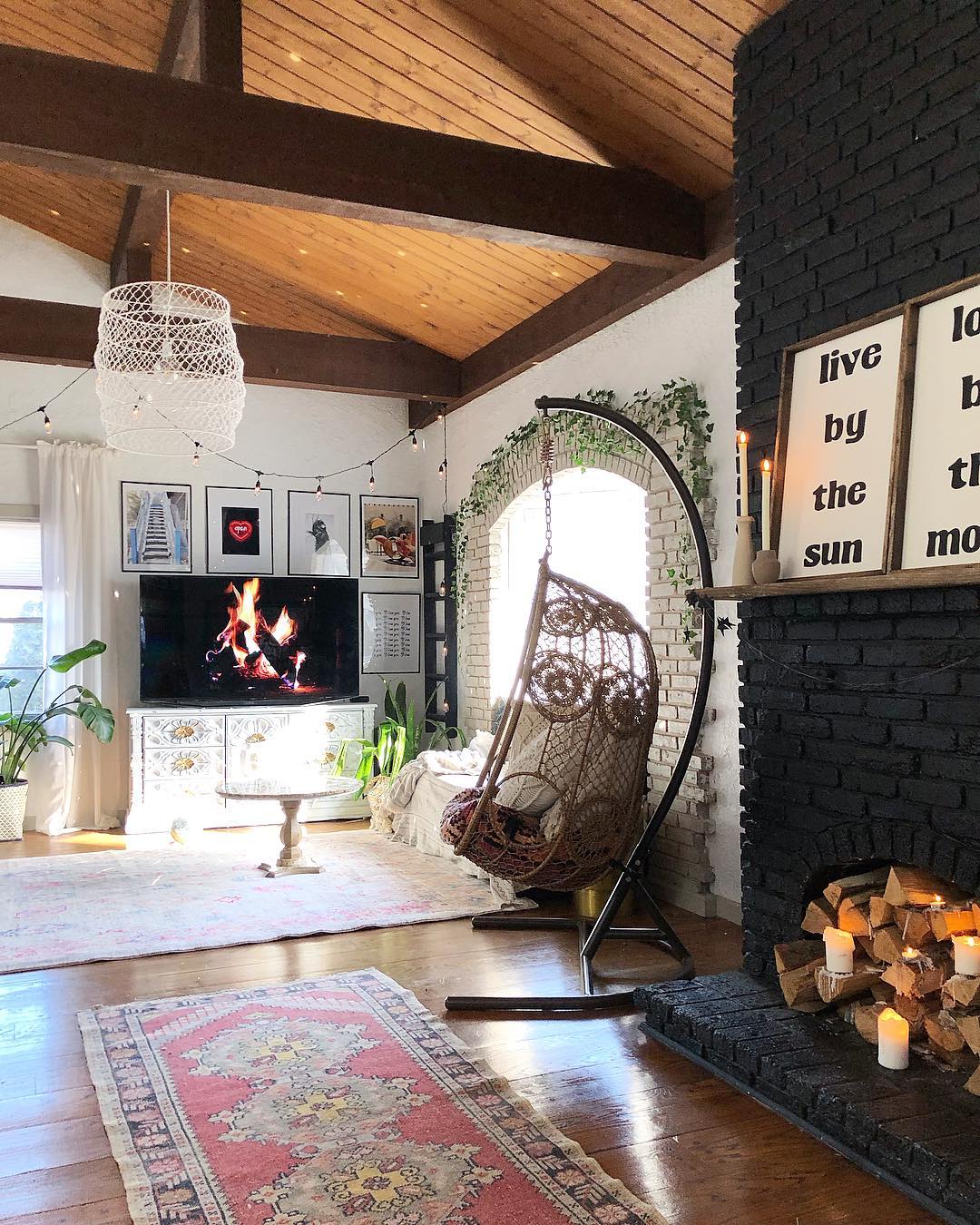
A tall black brick fireplace gives this bright living room its darker boho edge. Beside it, a suspended woven chair creates a relaxed seat beneath the timber ceiling, while pink patterned rugs soften the dark wood floor.
The chair’s curved support echoes its rounded frame, adding a clear silhouette against the pale arched opening. You can borrow this balance by concentrating dark color on one substantial architectural feature, then surrounding it with lighter woven textures.
Add a cushion and a throw for comfort, and keep the nearby floor clear enough for movement. A low table elsewhere in the seating group provides a useful landing place.
Warm wood overhead helps the black fireplace feel connected to the rest of the room.
10. Set Pale Textured Wall Art Against Black Paint
Credits: Instagram
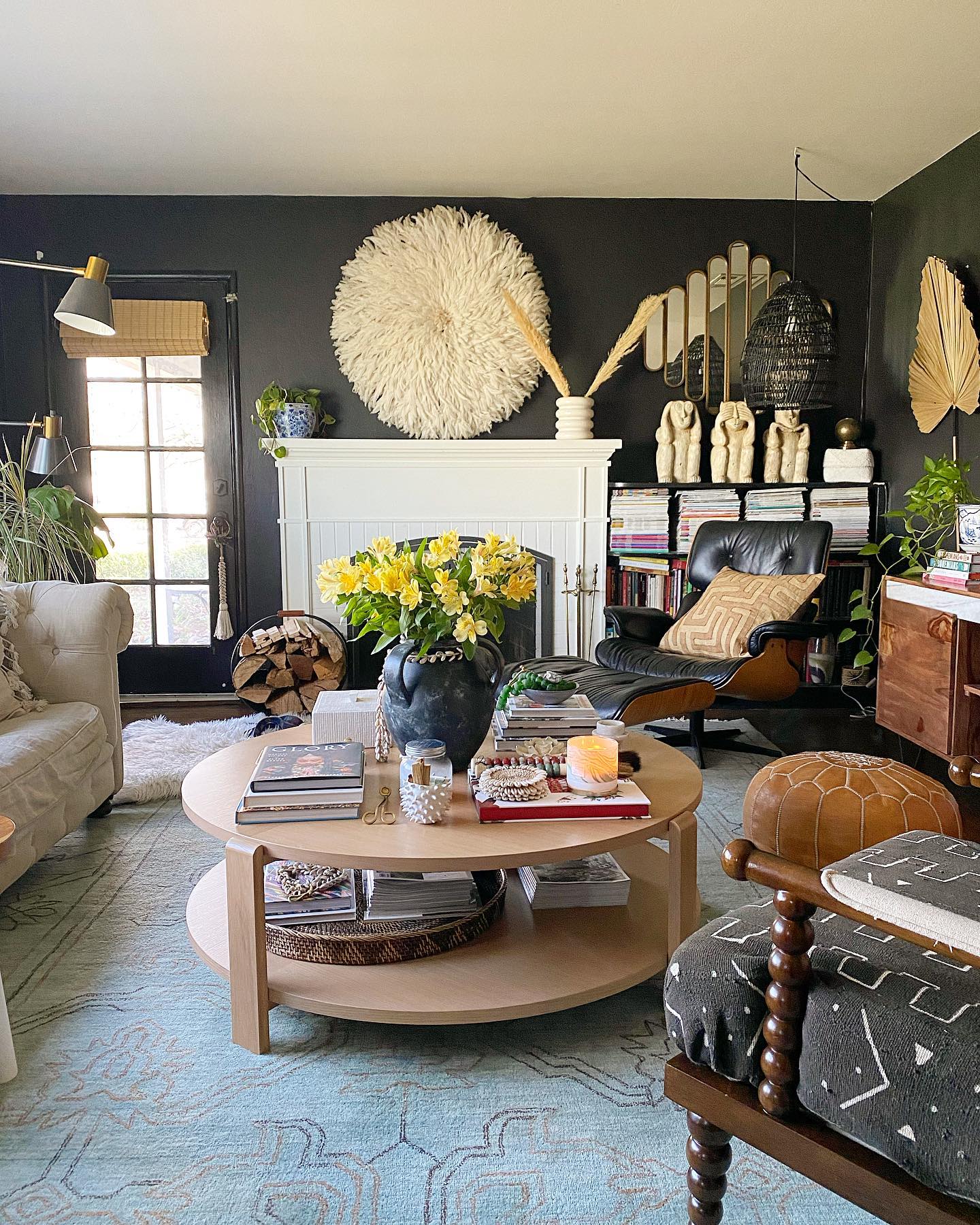
A pale textured wall piece can stand out strongly against black paint. Above the white fireplace, this large circular piece introduces a soft outline and an uneven surface among the room’s straighter shelves and door frame.
Choose one light tone that also appears in nearby upholstery or trim, then leave enough dark wall around it to keep the shape readable.
A rounded coffee table and pouf can repeat that curve lower in the room without forming a matching set. Keep smaller objects clustered on shelves or tabletops so the main wall piece remains easy to notice.
Wood, richly patterned cushions, and leafy plants add further layers, while the limited background colors help this collected arrangement retain a clear focal point.
11. Group Box Shelves Among Tall Plants
Credits: Instagram
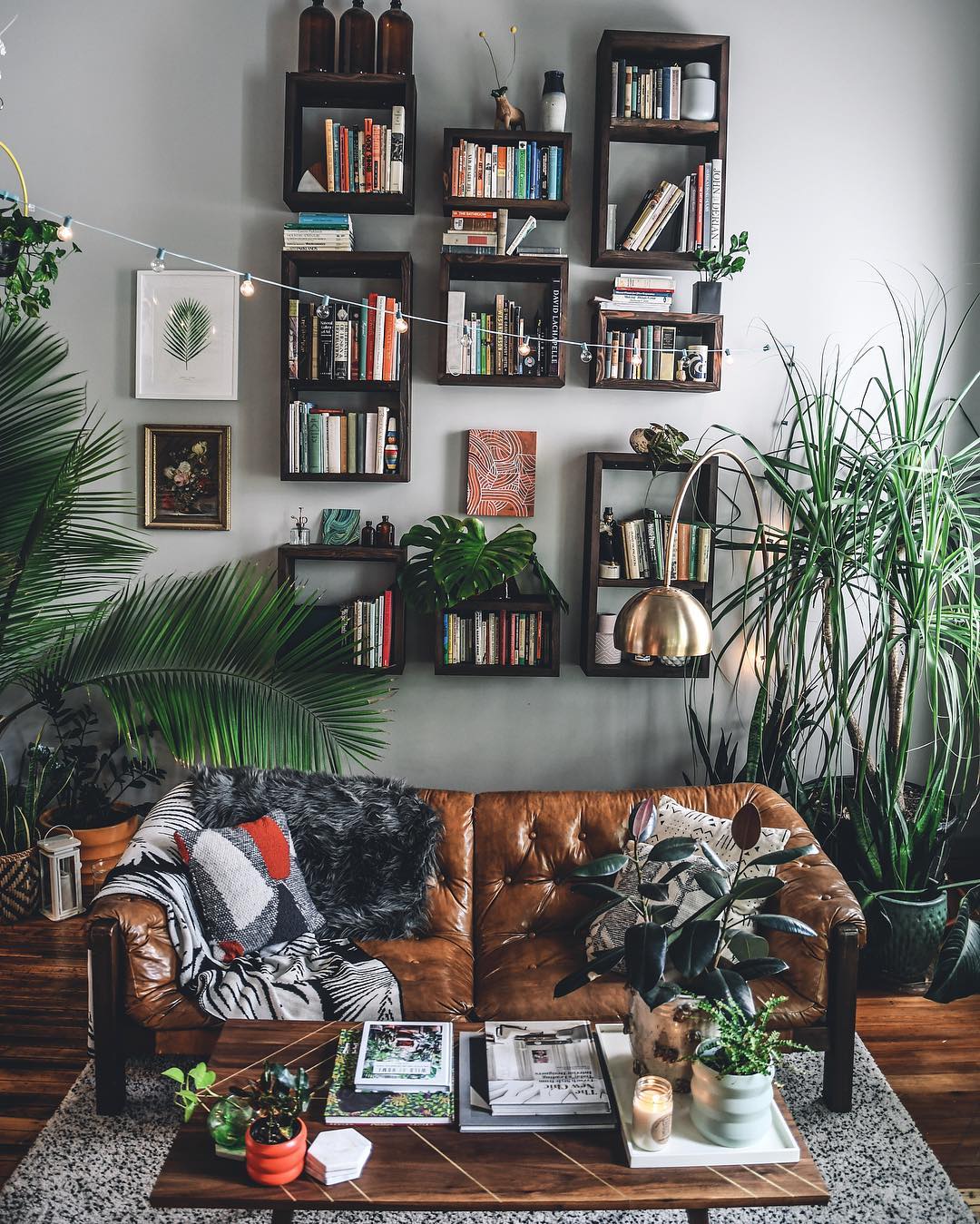
Dark wood boxes turn the gray wall above this leather sofa into a loose arrangement of books and objects. Some boxes stand tall, while others sit horizontally, creating pockets for upright books, small stacks, and pottery.
Plants rise around the seating and interrupt the straight shelf edges with broad leaves and slender stems. The repeated wood finish keeps the varied shapes connected.
Try grouping a few box shelves within one area instead of scattering them across every wall. Leave visible space between them, then balance the arrangement with greenery at different heights.
Keep frequently used books within reach and allow room to care for the plants. The result brings storage and foliage into the same comfortable corner of the room.
12. Repeat Woven Baskets at Different Heights
Credits: Instagram
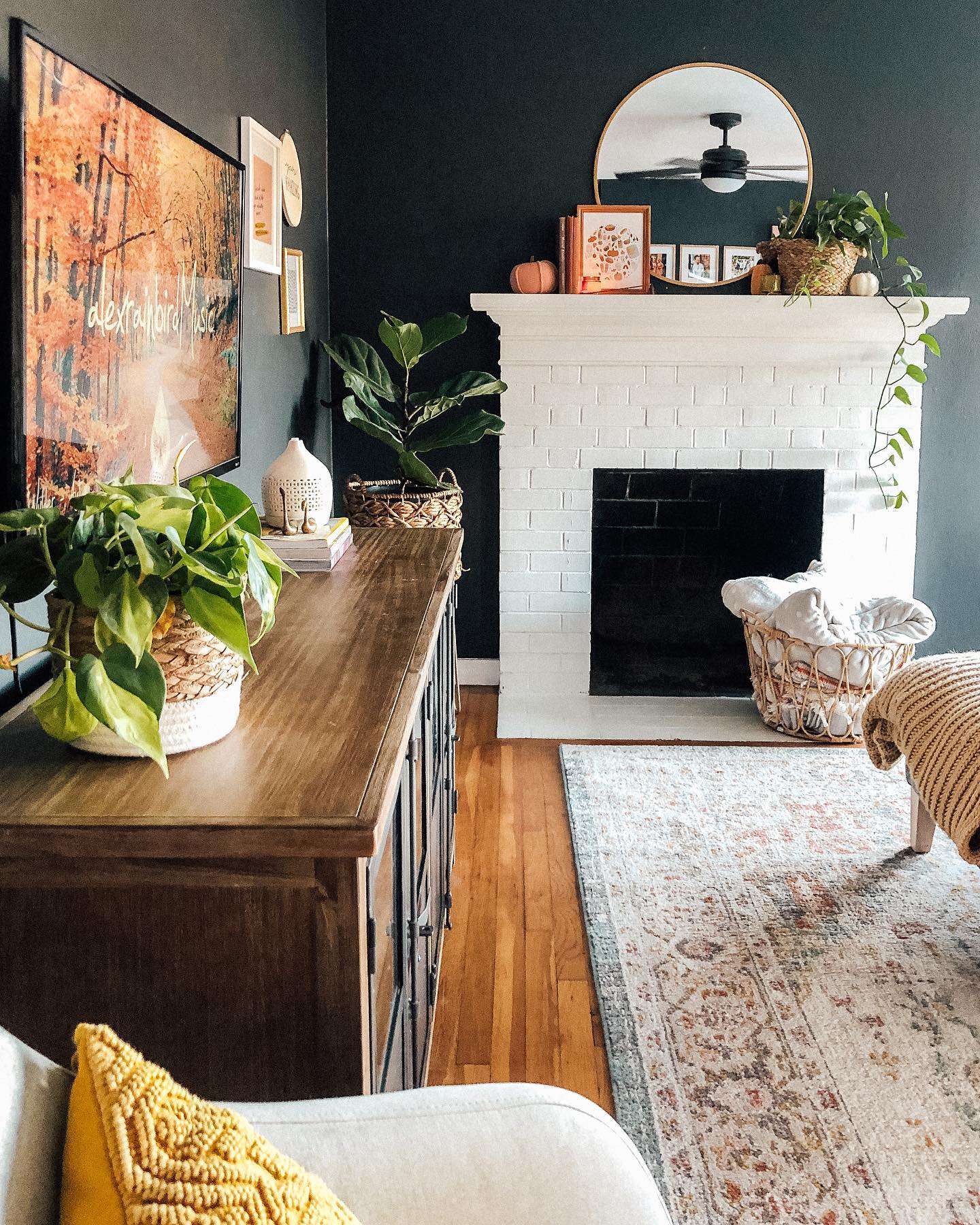
Woven baskets give this dark living room a warm, repeated texture. A planted basket on the mantel connects with another on the wood cabinet and a third tucked beside it, carrying similar tones across different heights.
A larger open basket holds pale textiles below, so the repeated texture also serves a practical purpose. Try a small group with related colors but different weaves, instead of buying identical containers.
Keep some surfaces clear between them to let their outlines show against the black walls. Green foliage softens the arrangement, while the white fireplace and light rug prevent every surface from feeling heavy.
Repeat one basket tone in a throw or cushion near the seating to connect the display with everyday comfort.
13. Spread Warm Light Around the Seating
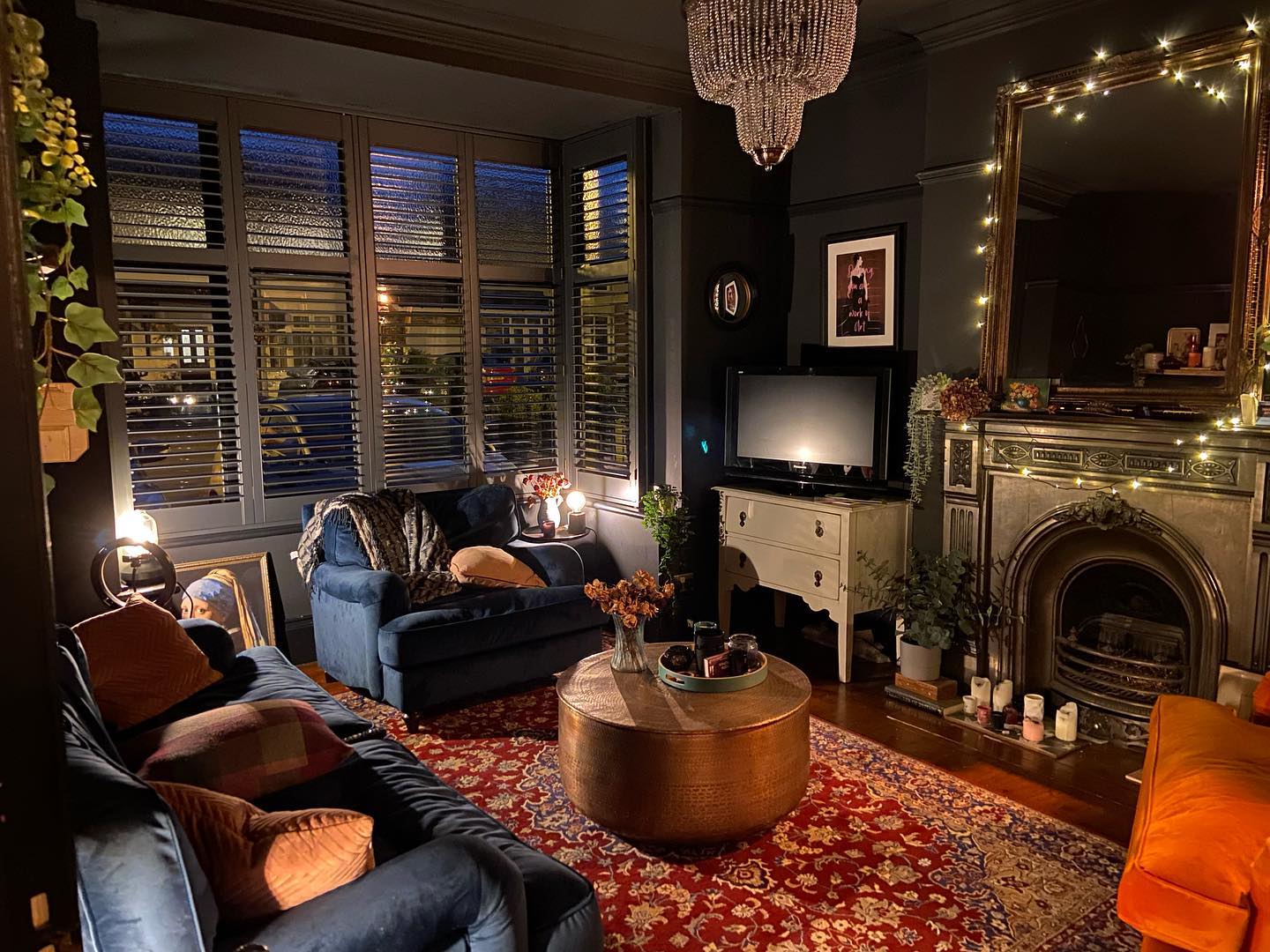
Credits: Instagram
Spread warm light around a dark living room so every seat feels connected to the space. Here, small lamps illuminate the blue upholstery beside the bay window, while string lights trace the tall mirror above the fireplace.
That arrangement gives the room several gentle focal points instead of relying on the ceiling fixture. The hammered brass table catches nearby light and repeats the mirror’s warm finish at a lower level.
A red patterned rug and orange chair keep those glimmers from feeling isolated against charcoal walls. Try placing lamps near the seating first, then add one decorative light around an architectural feature.
Keep the main furniture shapes visible after sunset, and let the patterned textiles provide the room’s bohemian character.
14. Make a Live Edge Table the Natural Focal Point
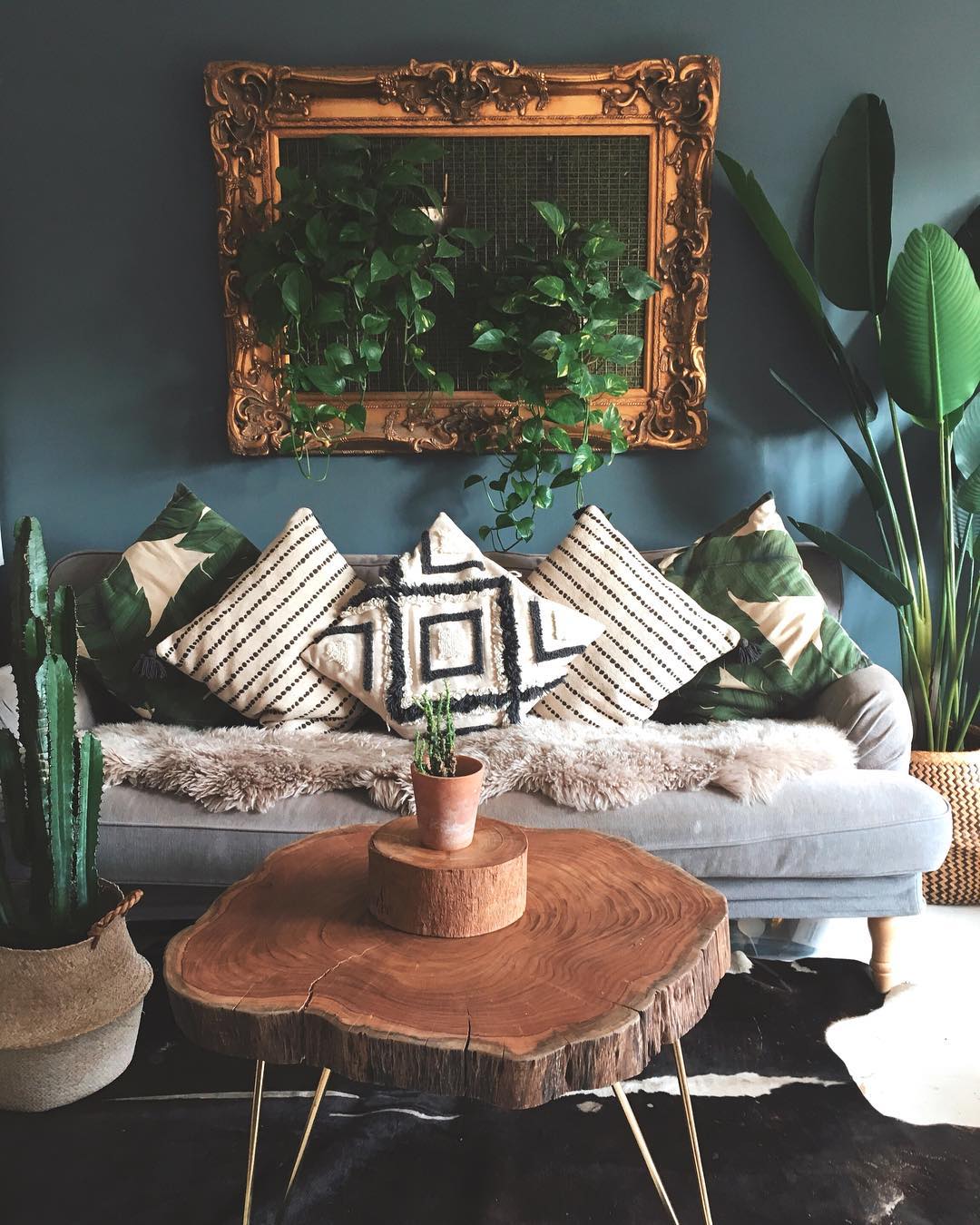
Credits: Instagram
Let a live edge coffee table introduce an irregular shape among patterned textiles. Here, the broad wood slab brings warm color and visible grain to a gray sofa, dark wall, and black and white rug.
Its thin metal legs leave the floor visible beneath the substantial top, keeping the arrangement from feeling too heavy. Choose a table whose outline leaves comfortable space beside the seating, and check its height against the sofa before buying.
Keep the tabletop display small so the grain remains part of the decoration. A single potted plant on a simple wood riser echoes the surrounding greenery without covering the surface.
Let nearby baskets and soft throws add different textures around this one strong natural focal point.
15. Use a Round Mirror to Repeat the View
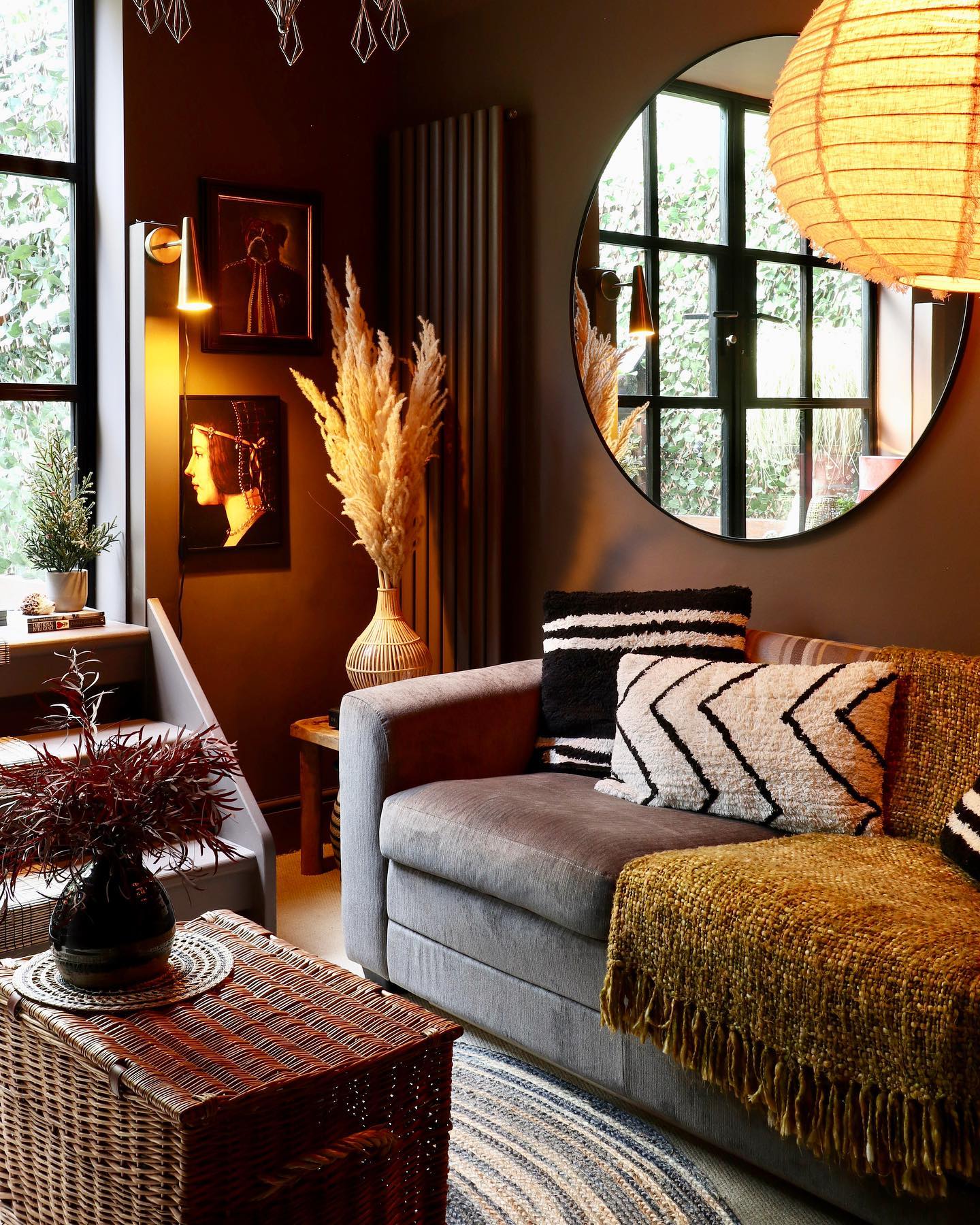
Credits: Instagram
A round mirror can give a dark wall a brighter focal point without introducing another color. Here, it reflects the black glazing bars and outdoor greenery above a gray sofa, repeating the room’s strongest lines inside a curved outline.
Before hanging a mirror, check the reflection from both the doorway and your usual seat; aim for a view you want to repeat. A slim dark frame connects it to the glazing without competing with patterned pillows.
Leave enough wall visible around the mirror so its shape stays clear. Then soften the straight window lines with a textured throw, woven chest, or rounded light shade.
The reflected view adds variety while the brown walls keep the seating corner warm and grounded.
16. Carry a Dark Band Above Patterned Walls
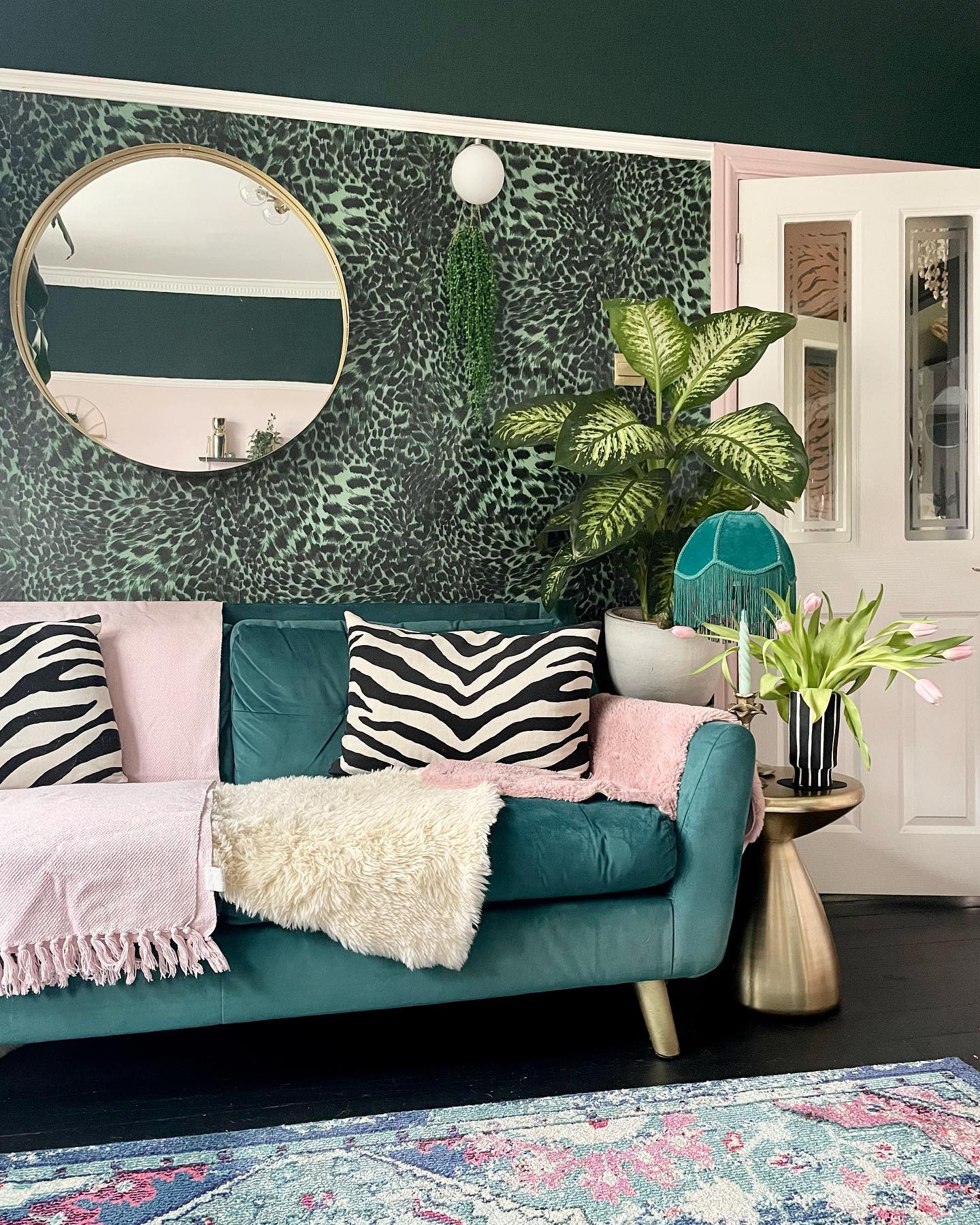
Credits: Instagram
Carry one deep paint color around the upper walls to connect a room filled with pattern. Here, the green band continues above the leopard wallpaper and doorway, while the mirror repeats it on the opposite wall.
That steady line gives the print a clear boundary. The teal sofa keeps the seating close to the wall palette, so zebra cushions and pale pink throws can stand out without introducing another background color.
Brass on the mirror, side table and sofa legs adds warmth at different heights. For a similar effect, choose your darkest shade from the wallpaper, repeat it above the picture rail, and use trim as a boundary.
Then layer softer textiles where you sit to balance the sharper patterns.
17. Keep the Garden View Open Above Low Seating
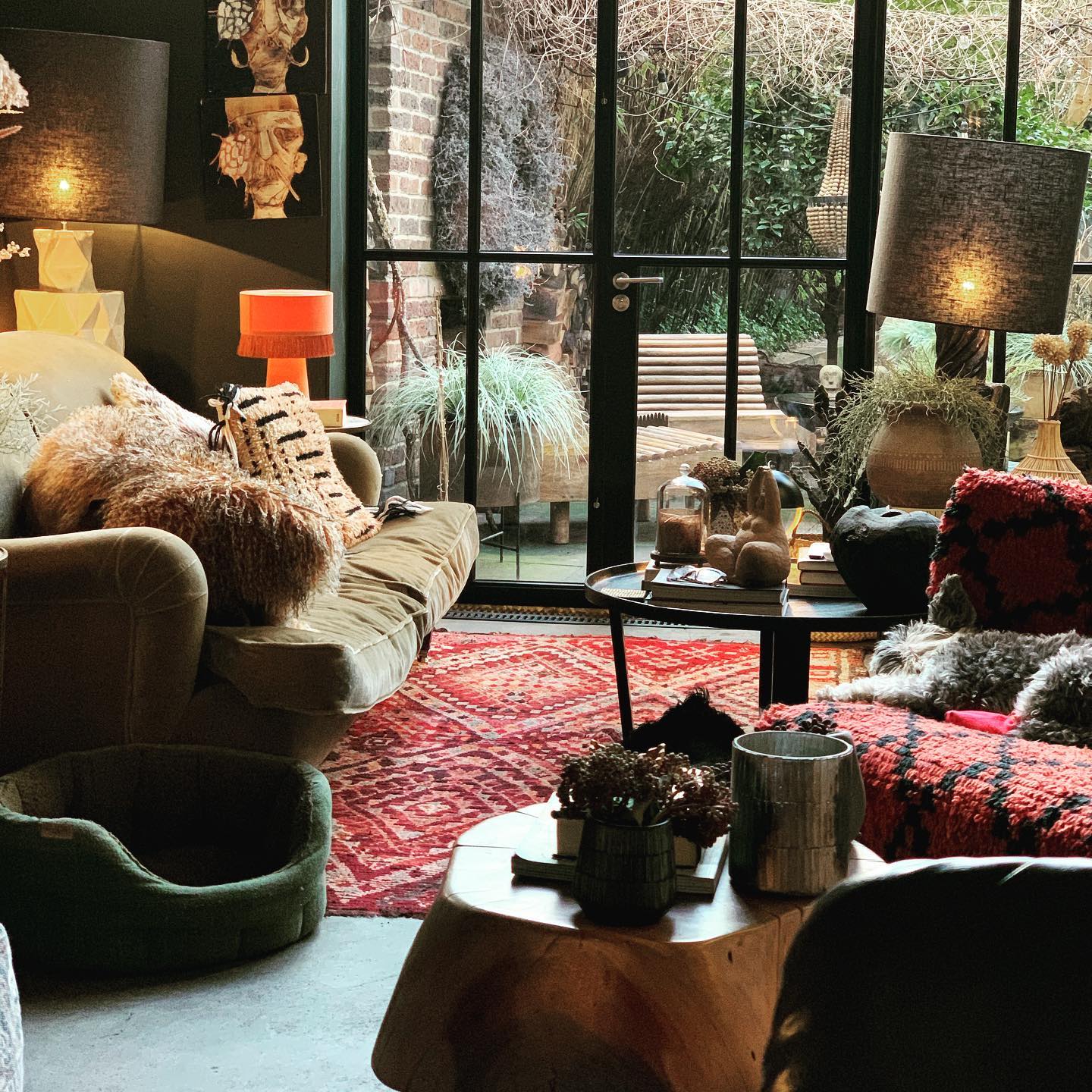
Credits: Instagram
Keep the garden visible by choosing seating and tables that sit comfortably below the main view. In this room, a low olive sofa and small round coffee table allow the black framed glazing to remain a strong backdrop.
Dense foliage outside adds another layer to the dark walls, red patterned rug, and shaggy cushions. Arrange larger furniture beside the doors instead of filling the entire glazed wall, then check that doors can open freely.
Position tall lamps toward the edges so their shades do not cover the center of the view. A lower tabletop arrangement keeps decorative objects close to the seating.
This approach lets a richly furnished room feel connected to the outdoors while preserving its intimate, enveloping atmosphere.
18. Borrow Your Palette from Fireplace Tiles
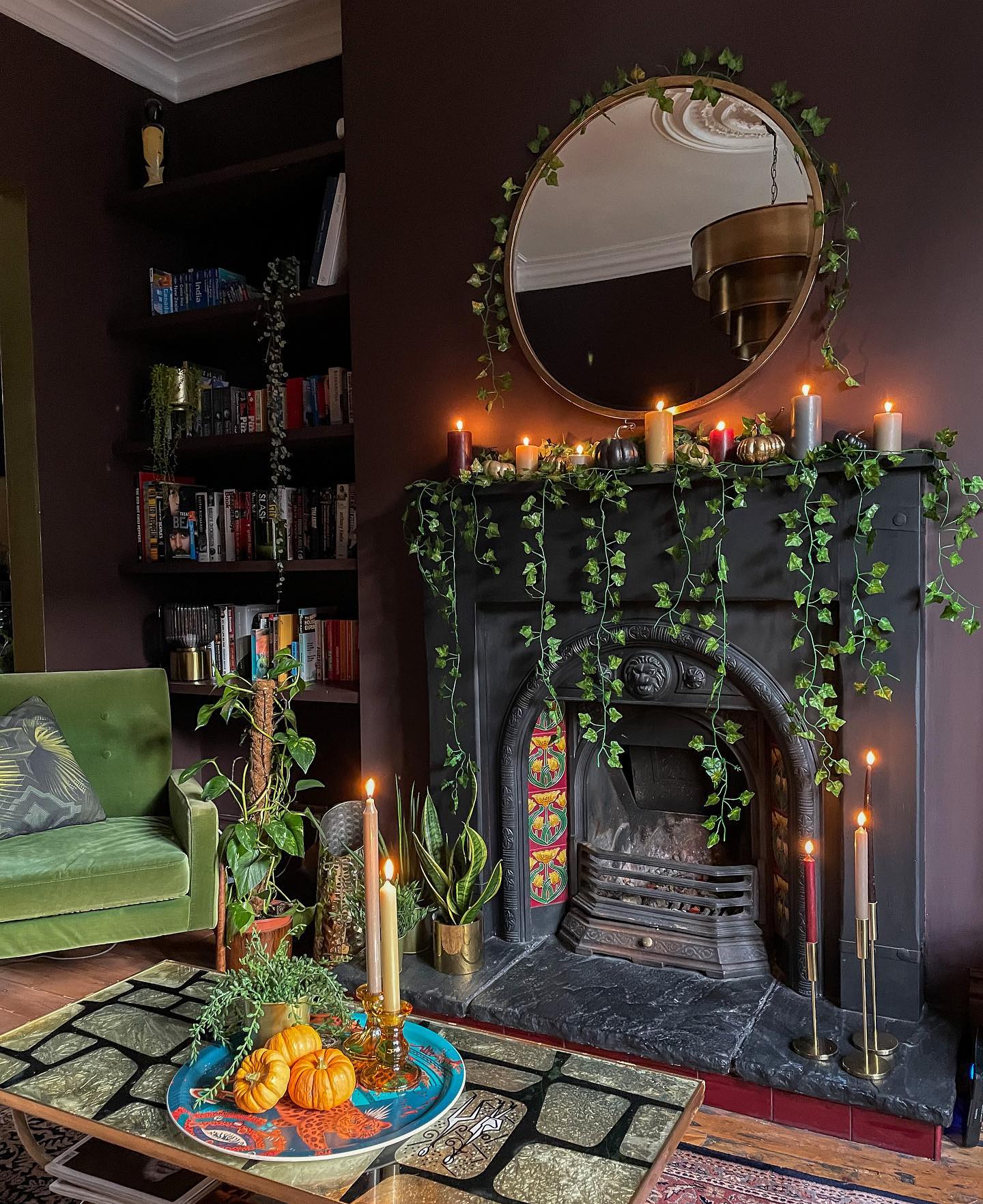
Credits: Instagram
Let a patterned fireplace supply the color palette before choosing new furniture or paint. The narrow tiles here contain green, red and yellow, giving this dark room several colors to repeat.
A green velvet chair picks up the foliage motifs, while the plum walls sit comfortably beside the warmer tile tones. The black surround provides a quiet border that keeps the small pattern readable.
Across the floor, a patterned rug and decorative tray continue the collected feeling without matching the tiles exactly.
Try this with an existing hearth, stained glass panel or vintage textile: choose one color for upholstery and a deeper related shade for the walls.
Keep the architectural detail visible so the palette has a clear starting point.
19. Give Collected Objects a Pale Backdrop
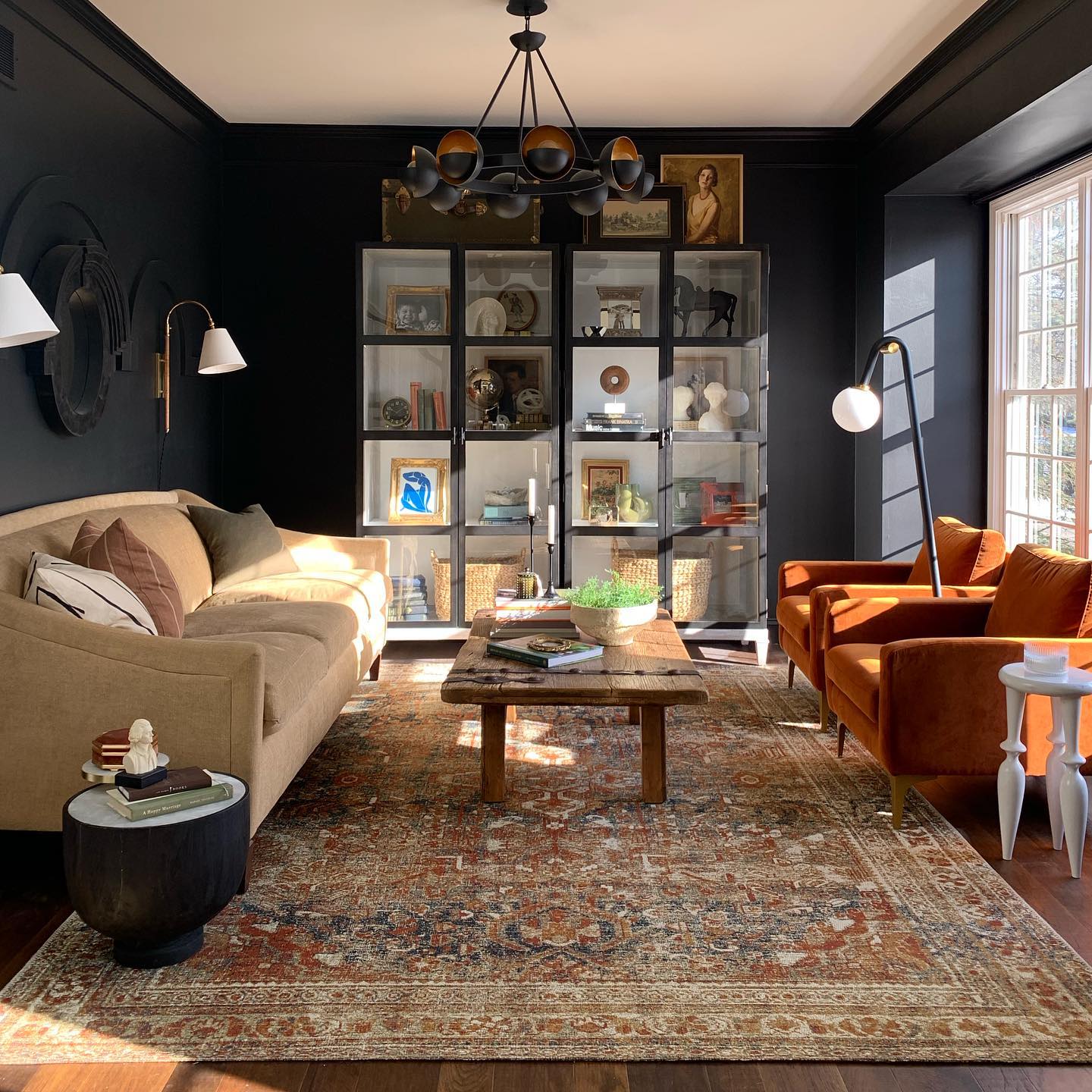
Credits: Instagram
Give collected objects a clear backdrop inside glass front cabinets. Here, pale cabinet interiors stand out against black walls, making books, small pictures, pottery, and sculptural pieces easy to see from the seating.
The dark door frames repeat the room color, so the display feels connected to its surroundings. Arrange objects in small groups, leaving some of the light backing visible around each cluster.
Set a framed piece behind a lower bowl or short stack of books to add depth without filling every shelf. Woven baskets on the bottom shelves bring texture and conceal smaller belongings.
Repeat a few warm tones from the rug and chairs throughout the display, letting the collection feel varied while the overall arrangement stays calm.
20. Layer Different Textures in a Quiet Palette
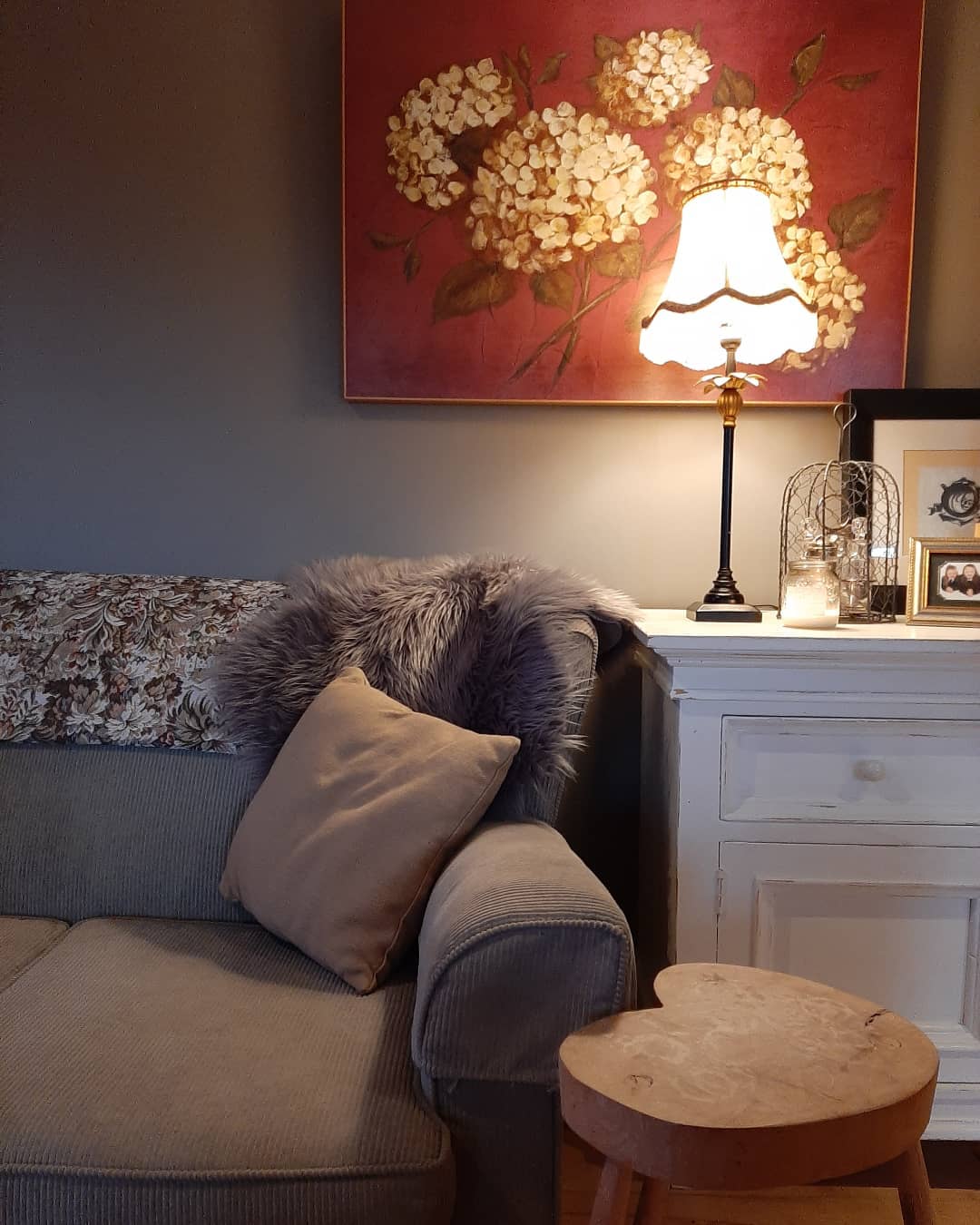
Credits: Instagram
Build depth with fabrics that share a quiet palette but feel different from one another. In this dark gray sitting corner, ribbed sofa upholstery sits beneath a floral textile and a shaggy throw, with a plain taupe pillow in front.
Their related tones keep the layers from competing, while each surface catches lamplight differently. Start with the texture already on your sofa, then add one contrasting throw and a smaller patterned piece.
Leave part of the upholstery visible so the differences remain clear. The simple wood stool gives the soft layers a firmer visual edge, and the large floral artwork introduces warmer color above.
This approach adds collected character to a seating corner without requiring several bright cushions or patterns.