
A coastal bedroom can feel connected to the shore without relying on shells or covering every surface in beach prints.
Coastal Bedroom Ideas show how muted blues, white bedding, and warm woven textures can set a relaxed tone while still working with pieces you already have.
Try framing crisp bedding with misty blue walls, bringing seafoam color to the window with curtains, or grounding pale colors with a navy dresser.
Small choices—like a single fringed pillow or leafy stems on a nightstand—can add character without crowding the room.
1. Let Misty Blue Walls Frame White Bedding
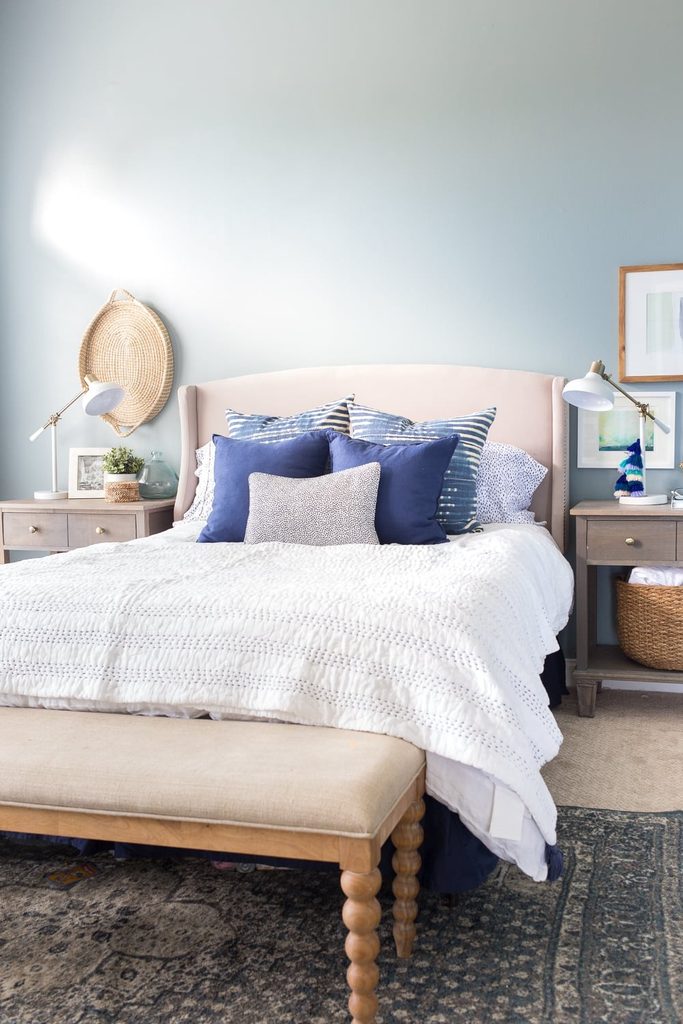
Credits: Chelsea / Making Home Base
Misty blue walls establish the coastal mood before a single shell or beach print enters the picture. Here, the color makes white quilted bedding look crisp while the pale upholstered headboard keeps the transition gentle.
Navy cushions add depth at the center, and a wooden bench supplies warmth below. To adapt this balance, test a muted blue beside your existing upholstery and floor rather than choosing it from a screen.
Keep the ceiling and trim lighter if you want a clear outline around the room. Bedding with stitched texture gives broad white areas something to offer up close.
Finish with one darker blue accent, then let natural wood and woven pieces bring the sandy side of the palette into view.
2. Layer Macrame Over a Tropical Wall Hanging
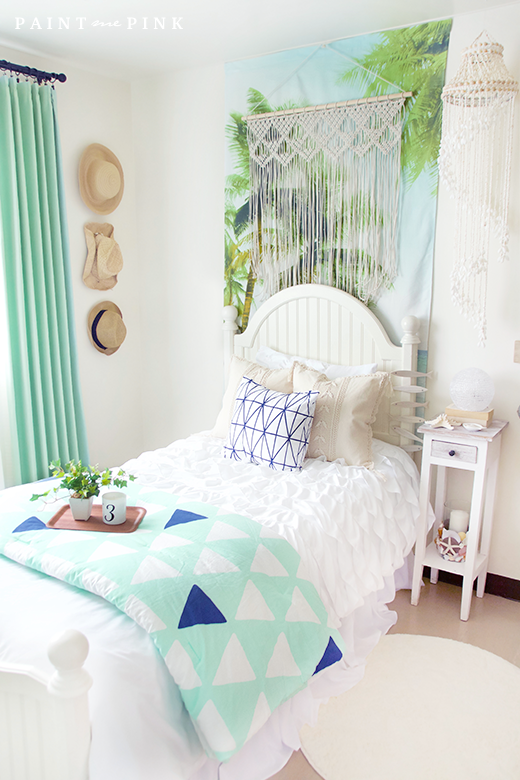
Credits: Norma / Paint Me Pink
Palm imagery and knotted cotton turn the wall behind this white bed into a tropical focal point. The fabric backdrop brings in green and aqua, while the macrame adds a separate layer of texture across its center.
Because both pieces are light in tone, the arrangement feels softer than a dense gallery wall. Choose a hanging sized to remain visible around your headboard, and secure each layer with hardware suited to its weight.
Keep dangling cords beyond the sleeping area, especially in a child’s room. A plain white bedspread leaves space for the wall treatment to stand out.
Repeating aqua in one folded blanket carries the color forward without covering the entire bed in another large leafy print as well.
3. Give a Gray Bedroom a Gentle Coastal Refresh

Credits: Casey Finn / The DIY Playbook
Coastal decorating can begin with an existing gray room. This bedroom uses white bedding, a woven basket, pale window shades, and a sandy beach print to shift its mood without changing every large piece.
The tufted headboard still feels at home because the new textiles share its quiet color range. Try replacing the smallest layers first: one pillow, a throw, and artwork you genuinely enjoy.
Leave the main bedcover light so these additions remain easy to distinguish. A basket introduces the warm texture that gray upholstery often needs, while a little green foliage gives the nightstand life.
Take a photograph after each change and check whether the room feels connected before buying another accessory simply to fill an empty spot.
4. Pair a Reading Chair With a Woven Side Table
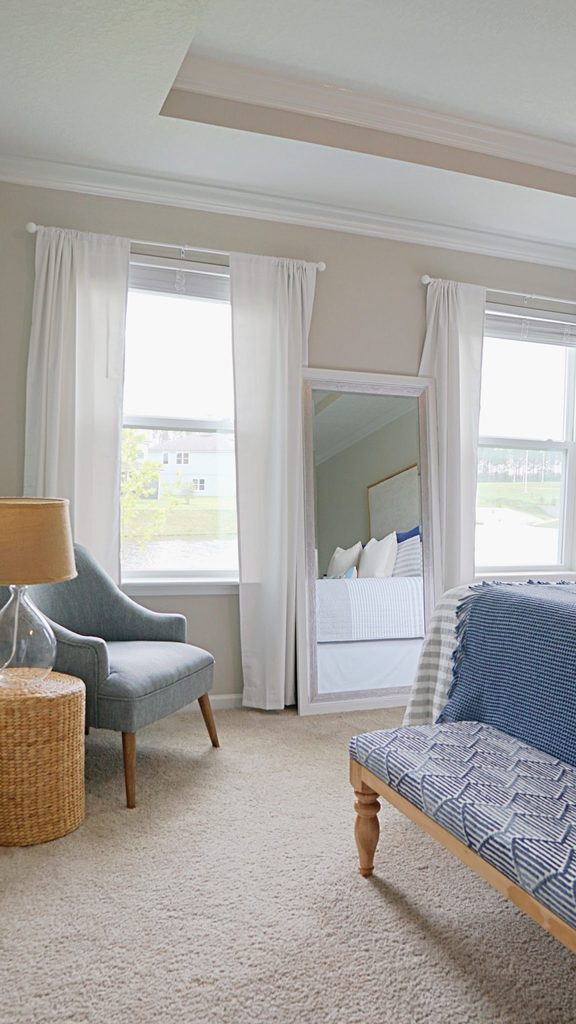
Credits: Stefani / Home With Stefani
A compact upholstered chair makes this bright bedroom corner useful beyond bedtime. Its blue gray fabric relates to the bedding, while the round woven table introduces a warmer coastal texture beside it.
A clear glass lamp keeps the tabletop from looking crowded. You can create a similar spot with a chair you already own, provided its scale leaves comfortable access to the window and bed.
Measure the table against the chair arm so a book or drink is easy to reach. Choose a lamp that lights the page rather than shining directly into your eyes.
White curtains connect this little sitting area with the rest of the room, allowing the woven surface and soft upholstery to supply most decorative interest.
5. Combine Inky Stripes With Small Dotted Patterns
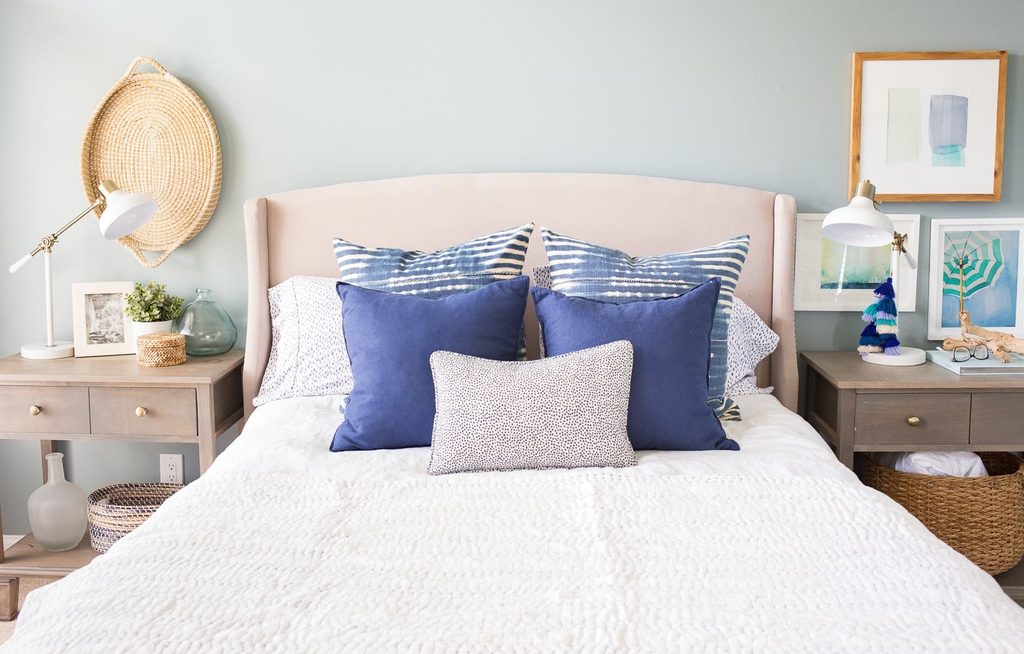
Credits: Chelsea / Making Home Base
Several blue patterns share this bed without looking like a matching set. Broad, irregular stripes sit at the back, solid navy squares add a calm middle layer, and tiny dots appear on the front cushion and sheets.
Their different scales make each fabric legible. Start with your boldest pillow pattern and give it a quieter neighbor instead of repeating the same motif everywhere.
A white coverlet provides breathing room across the largest surface. The pale headboard also helps the darker cushions stand out without making the room feel heavy.
Before adding another pillow, check how much useful sleeping space remains. A small, deliberate arrangement is easier to remove at night and restore in the morning than a towering decorative pile.
6. Bring Seafoam Color to the Window Wall
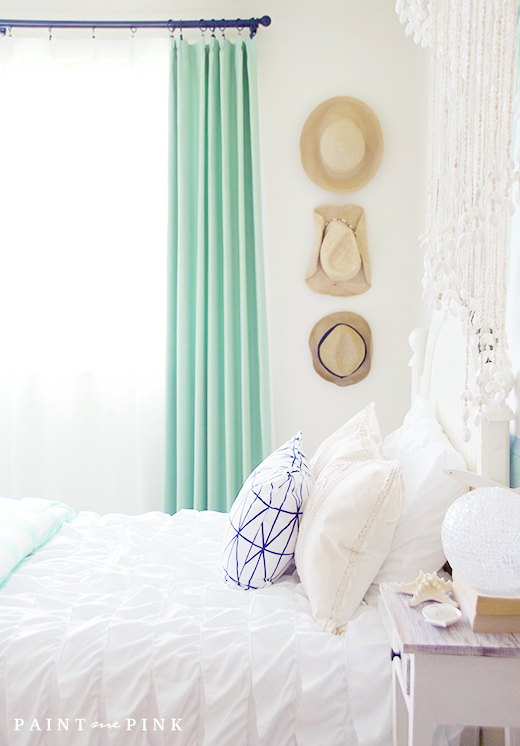
Credits: Norma / Paint Me Pink
Seafoam curtains give this mostly white bedroom a clear coastal color without covering the walls in paint. Their long vertical folds balance the soft gathers of the bedspread, while a row of straw hats adds a sandy accent nearby.
Treat the curtain fabric as your main color decision and compare it with the room’s whites in daylight. A separate sheer layer can soften the view while the colored panels frame the opening.
Check privacy after sunset before relying on either layer alone. Keep the rod wide enough for the panels to clear useful glass when open.
The hats work as simple wall decoration, but a single woven piece could create a similar warm counterpoint if you prefer a quieter arrangement.
7. Add One Fringed Blue Lumbar Pillow

Credits: Casey Finn / The DIY Playbook
A blue lumbar pillow can carry plenty of coastal character on its own. Fine raised stripes and a loose fringe give this one movement, while the cream cushions behind it offer a calm backdrop.
Large brown buttons introduce a small natural accent without adding another color family. Use a long rectangular cushion when you want the bed to feel finished with fewer pieces.
Its shape bridges the square pillows and the wide mattress, keeping the arrangement visually connected. Choose a cover that can be removed for cleaning, and check whether the fringe suits your household’s everyday use.
Repeating this exact stripe on curtains or rugs is unnecessary. Let the pillow be the detailed piece and keep the surrounding layers simple.
8. Move the Art Group Beside the Headboard
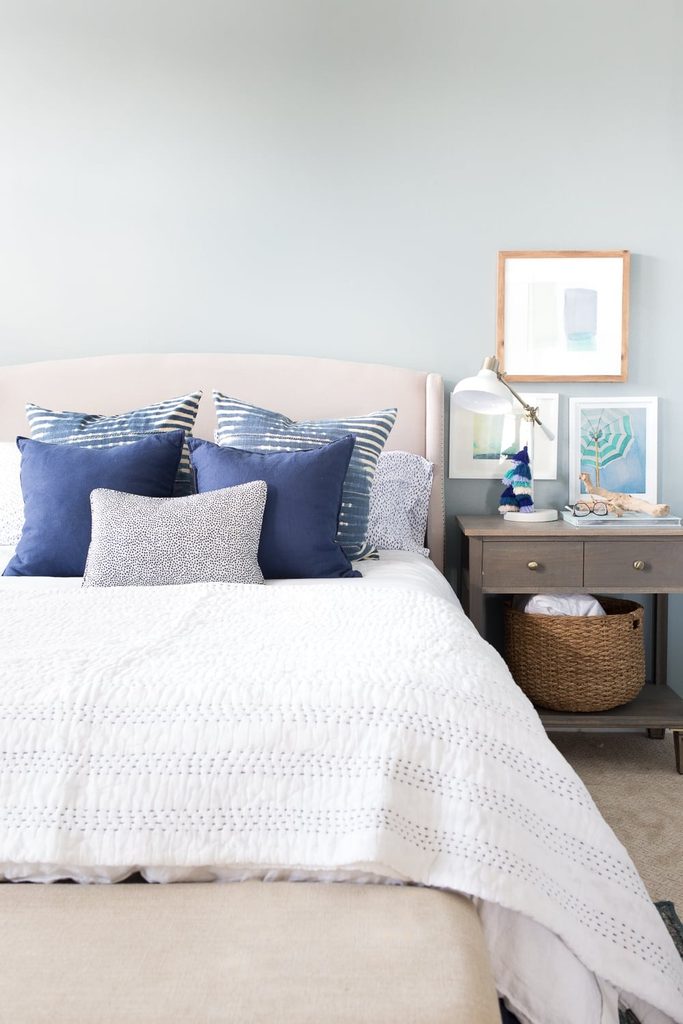
Credits: Chelsea / Making Home Base
Artwork does not have to sit directly over the center of a bed. In this room, a small group beside the headboard gives the nightstand its own coastal backdrop and leaves the broad wall above the pillows quiet.
Blue and aqua images connect with the bedding without repeating its patterns. Lay the frames out on the floor before hanging them, checking the whole group against the width of the bedside table.
Allow room for the lamp so it does not hide the most interesting parts of the pictures. A mixture of white and natural wood frames can feel collected while staying restrained.
The result gives an otherwise practical bedside corner a little personality without spreading decoration across every available wall.
9. Use Leafy Stems as a Bedside Accent
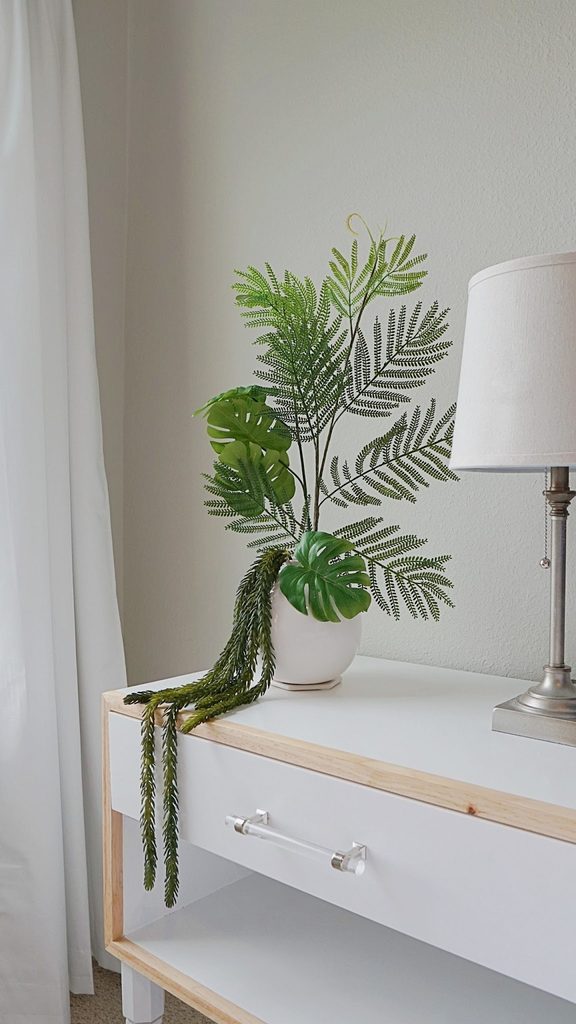
Credits: Stefani / Home With Stefani
Leafy stems give this white nightstand a relaxed tropical note. Their different shapes create interest against the plain wall, and the simple rounded vase keeps the arrangement from competing with the nearby lamp.
The light wood edge around the drawer adds another natural detail. For a similar effect, choose a few broad leaves and finer branches rather than a crowded mixed bouquet.
Keep the arrangement narrow enough that you can still reach the lamp switch and use the drawer comfortably. Fresh stems need a stable waterproof container; artificial ones need occasional dusting.
Either option can work when it suits your routine. Let some leaves extend gently outward, but keep trailing pieces away from handles, cords, and the edge you pass.
10. Ground Coastal Stripes With Navy Paneling

Credits: Instagram
Navy paneling gives the striped bedding a stronger backdrop while the pale upper wall keeps this bedroom from becoming uniformly dark. The warm picture frames, woven mirror, and bedside baskets soften the cool paint.
Try this balance when you like coastal blues but want something more substantial than white walls. Let the paneling finish above the pillows so its repeated vertical lines remain clearly visible, then keep the headboard open or visually simple.
A narrow ledge can hold a mixed collection of landscape and botanical prints, although anything above a bed should be secured appropriately. Test the paint beside your bedding before committing.
Blue fabrics and blue walls do not need to match, but their undertones should feel comfortable together.
11. Choose Beach Art With Warm Sand Tones
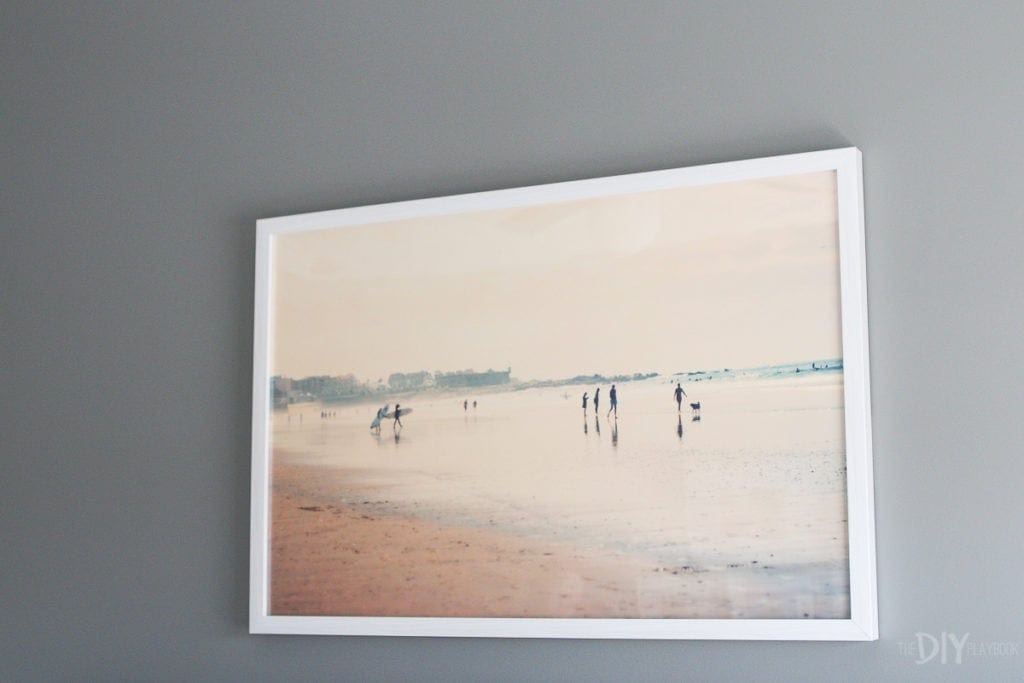
Credits: Casey Finn / The DIY Playbook
A beach scene can introduce peach, cream, and sandy beige alongside the expected blues. This framed print uses those warmer colors across a quiet shoreline, making it a useful companion to gray bedroom walls.
A slim white frame draws a clean boundary without overpowering the image. When selecting coastal art, look at the whole palette rather than searching only for bright ocean water.
Colors from the sand or sky may work better with furniture you already have. Hold a paper template on the wall to judge scale before ordering a frame.
If the artwork hangs above the bed, use appropriate secure fixings. Keep nearby decorations modest so the shoreline remains easy to appreciate from both the doorway and the pillows.
12. Make a Gauzy Coastal Reading Corner
Credits: Norma / Paint Me Pink
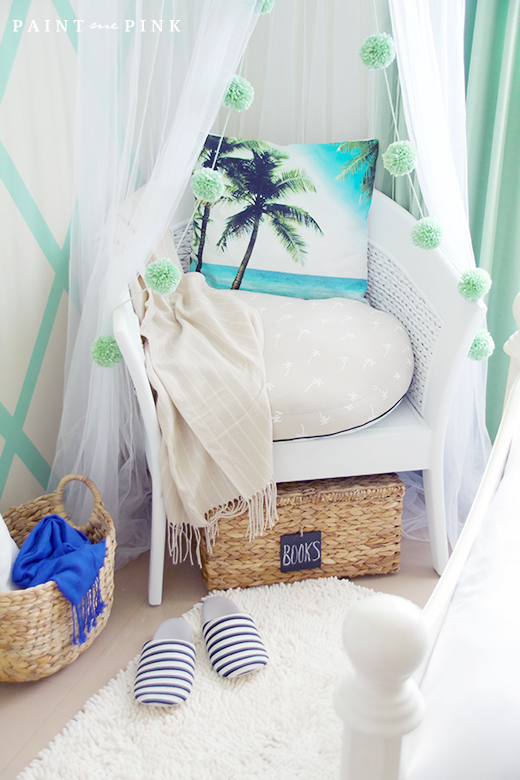
A white chair, sheer canopy, and palm print cushion give this small bedroom a separate place to unwind. The woven basket underneath makes use of the otherwise empty space below the seat, while a second basket keeps a blanket nearby.
You can borrow the feeling with a comfortable chair and a light curtain panel, even if a full canopy would crowd your room. Keep fabric clear of lamps, heaters, and walking routes, and secure overhead supports properly.
A washable cushion cover is practical for a spot used every day.
The aqua accent connects the chair with the nearby curtains, making the nook part of the bedroom rather than an unrelated collection of furniture tucked into the only corner left available.
13. Balance a Pale Nightstand With Dark Slim Legs
Credits: Casey Finn / The DIY Playbook
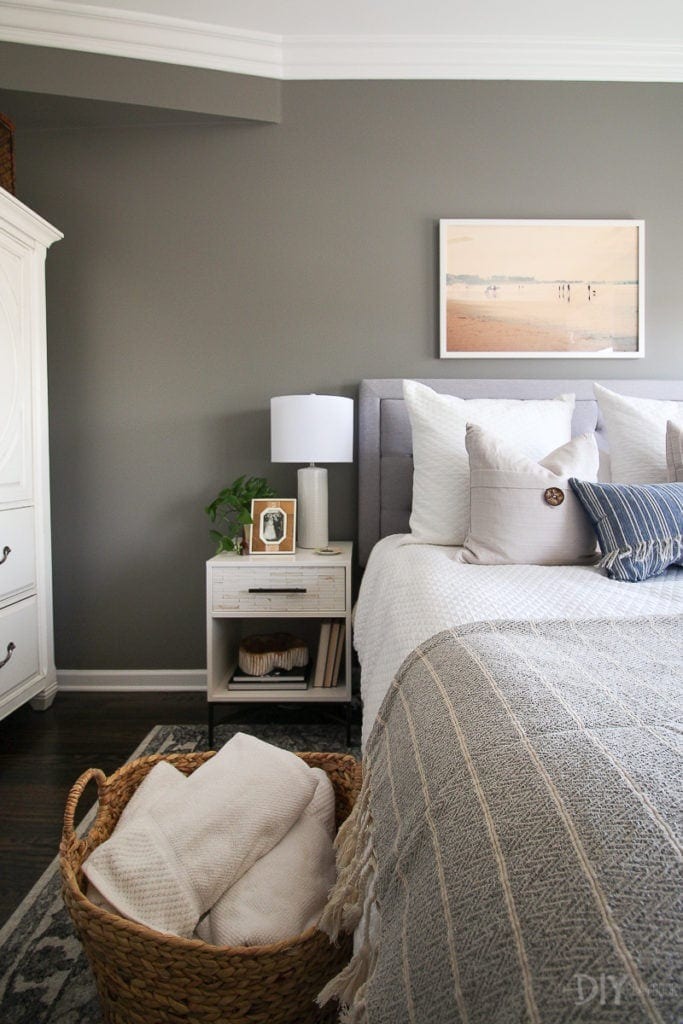
The pale nightstand in this bedroom brings a lighter surface beside the gray upholstered bed. Narrow dark legs give it definition while leaving the floor visible underneath.
Its open shelf accommodates books and a small textured container, so the top can stay fairly simple. This combination works well when a solid white chest would feel too bulky.
Look for a bedside piece whose height suits the mattress and whose drawer opens without hitting bedding or nearby furniture. A straightforward lamp and one personal photograph are enough to make the surface useful and welcoming.
Let the dark base relate to another small detail, such as a frame or curtain rod, rather than introducing several heavy black furnishings into the coastal palette.
14. Anchor Pale Coastal Colors With a Navy Dresser
Credits: Chelsea / Making Home Base
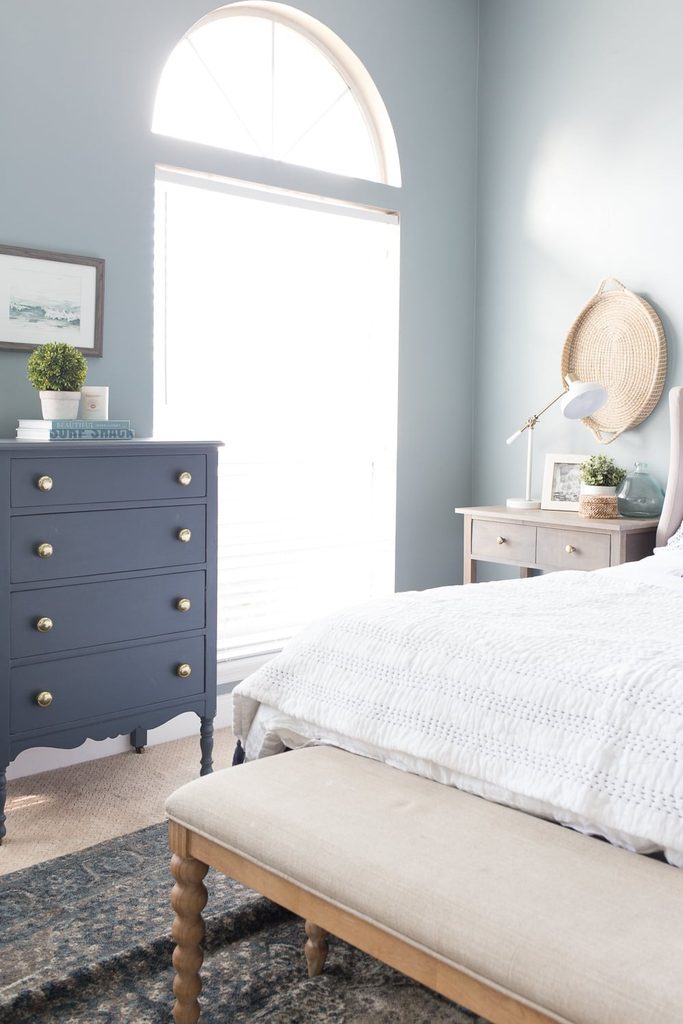
A navy dresser brings a stronger note into this airy blue bedroom. Its warm metal knobs prevent the dark finish from feeling flat, and the lighter bedding gives the piece plenty of contrast.
The nearby window keeps the corner bright during the day. Consider this approach when your room needs storage and a little visual weight without another patterned textile.
A painted dresser can supply both. Compare the proposed blue with the wall color and rug before committing, since similar shades can have different undertones.
Keep the top lightly arranged so the silhouette remains clear. A small framed seascape and green plant offer enough detail, while the pale bench continues the sandy tones across the lower part of the room.
15. Reflect Coastal Bedding in a Tall Mirror
Credits: Stefani / Home With Stefani
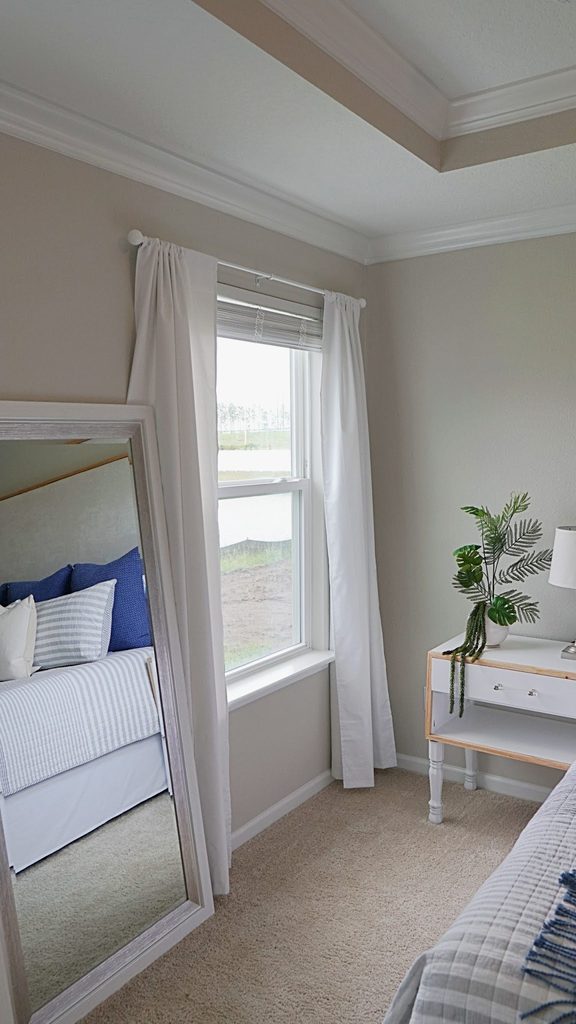
A tall mirror between the window and bedside table repeats the room’s blue striped bedding and bright white curtains. That reflected view makes the coastal palette visible from another angle without adding more patterned fabric.
A pale frame keeps the mirror connected to the surrounding trim. Before choosing its position, look at the reflection from the doorway and from the bed; a pleasing view matters as much as available wall space.
Secure a floor mirror according to its mounting instructions, even when you want a relaxed leaning appearance. Leave enough room for curtains to move freely beside it.
The nearby white nightstand and leafy arrangement keep the corner light, allowing the reflected bed to remain the strongest feature in view.
16. Mix a Practical Task Lamp With Coastal Details
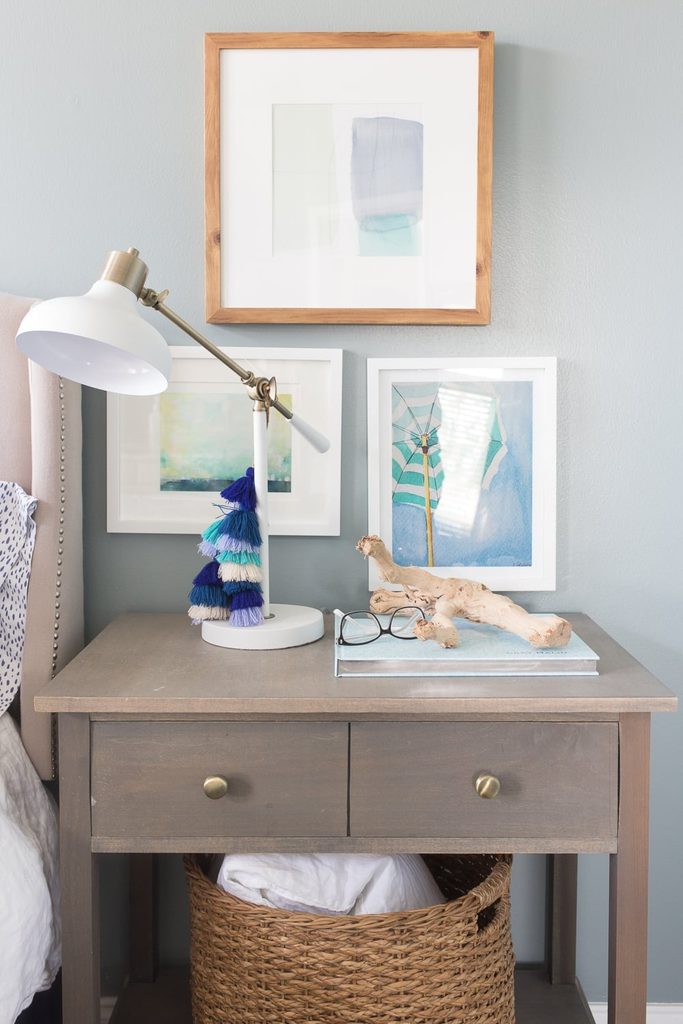
Credits: Chelsea / Making Home Base
A white task lamp gives this decorated nightstand a practical purpose. Its adjustable shape sits comfortably beside the aqua artwork, while warm metal joints relate to the drawer knobs below.
A piece of pale driftwood and a woven basket add the coastal texture. Begin with the light you need for reading, then arrange smaller objects around its base.
Keep the shade clear of decorative tassels or other fabric, and follow the lamp’s safety instructions. Test the switch and arm from your usual sleeping position before deciding the arrangement is finished.
A drawer can hold everyday clutter, leaving the top useful. The photographs and objects should fit around that function rather than forcing you to clear a space every single night.
17. Break Up White Bedding With a Nubby Striped Throw

Credits: Casey Finn / The DIY Playbook
A loosely draped striped throw gives this white bed an easygoing finish. Its raised weave and tasseled edge add detail without needing a bright color, while the gray and cream tones connect with the upholstered headboard.
Use this idea when your coastal room already has artwork or pillows doing the colorful work. Choose a throw you actually like to use and place it where you can reach it comfortably.
A soft diagonal fold looks relaxed, but keep loose ends off the floor and away from moving furniture. The bedspread underneath can stay simple and washable.
Together, the two textures create depth across a large pale surface while leaving the rest of the room free for a few well chosen accents.
18. Soften Crisp White Bedding With Crochet Details
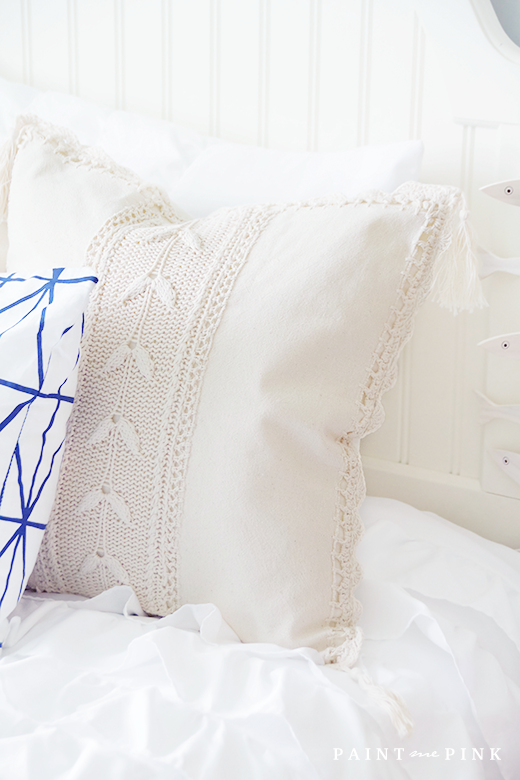
Credits: Norma / Paint Me Pink
Cream crochet and fringed edging introduce a softer layer against this bright white bed. The cushion’s raised pattern is easy to notice because the surrounding fabrics remain pale and mostly plain.
A glimpse of blue geometric print supplies contrast without taking over. Try mixing neighboring shades of white when you want a coastal bedroom to feel comfortable rather than stark.
Compare the fabrics together first, since some creams can look much yellower beside a cool white duvet. Choose one textured cushion as the main detail and keep the rest of the arrangement uncomplicated.
Removable covers make everyday care easier. The quiet color range allows you to appreciate stitching, fringe, and gathered bedding as separate details even in a small room.
19. Build a Small Dresser Vignette Around a Seascape
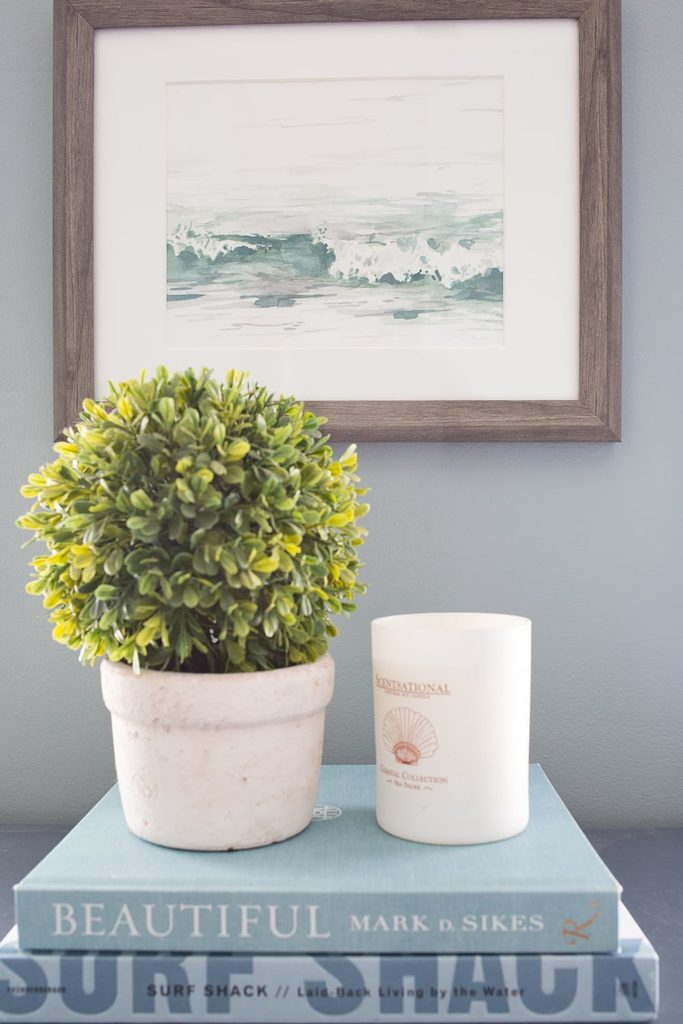
Credits: Chelsea / Making Home Base
A small wave painting gives this dresser arrangement an immediate connection to the coast. Its wide white mat and weathered looking frame leave the artwork breathing room, while a rounded green plant adds a different shape below.
Pale blue books connect the wall color with the objects on the surface. You can use a similar arrangement without collecting many accessories: begin with one picture, one plant, and a short stack of books you enjoy.
Keep their heights different so each remains visible. Leave the rest of the dresser available for daily use instead of lining up objects across its width.
If you add a candle, place it safely away from foliage and books, or choose a flameless version for ease.
20. Keep Spare Linens in a Woven Bedside Basket
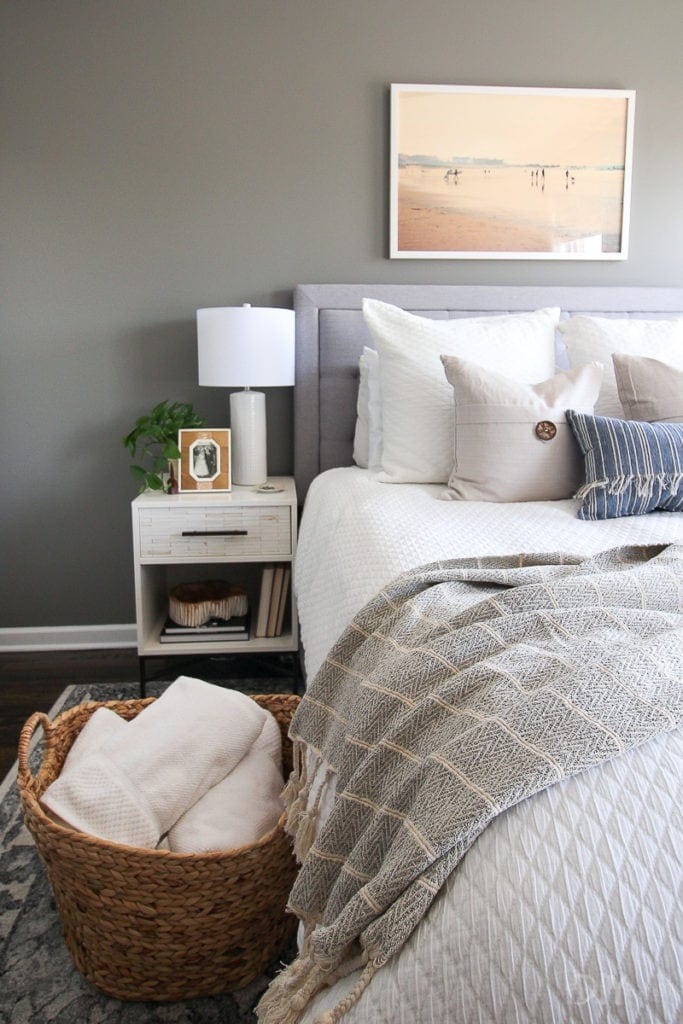
Credits: Casey Finn / The DIY Playbook
A generous woven basket brings warm color and useful storage beside this pale bed. Folded white linens remain easy to reach, and the basket’s rounded shape softens the straight lines of the nightstand.
It is a simple coastal detail that earns its place through everyday use. Choose a basket with a smooth interior or add a washable liner so delicate fabric does not catch on the weave.
Measure the available floor area before buying, leaving an unobstructed route around the mattress. Handles make it easier to carry clean towels or bedding between rooms.
Keep the contents limited enough to lift comfortably. The basket can then serve as one grounded natural accent rather than becoming a pile of things awaiting sorting.