
A bedroom can feel layered and personal without filling every surface with decor. Boho Bedroom Ideas make room for both color and calm, from rust and sage bedding against pale wood to emerald wallpaper paired with neutral woven textures.
The details can be practical, too: lidded baskets add storage, while a woven ceiling shade brings texture overhead.
If you prefer a bolder look, oversized palm shapes offer a lively feature wall, and small florals can share space with a stronger accent pattern.
These approaches show how natural materials, thoughtful color, and a few distinct patterns can give a bedroom character without making it feel crowded.
1. Layer Rust and Sage Bedding Over a Pale Wood Bed
Credits: Aniko / Place of My Taste
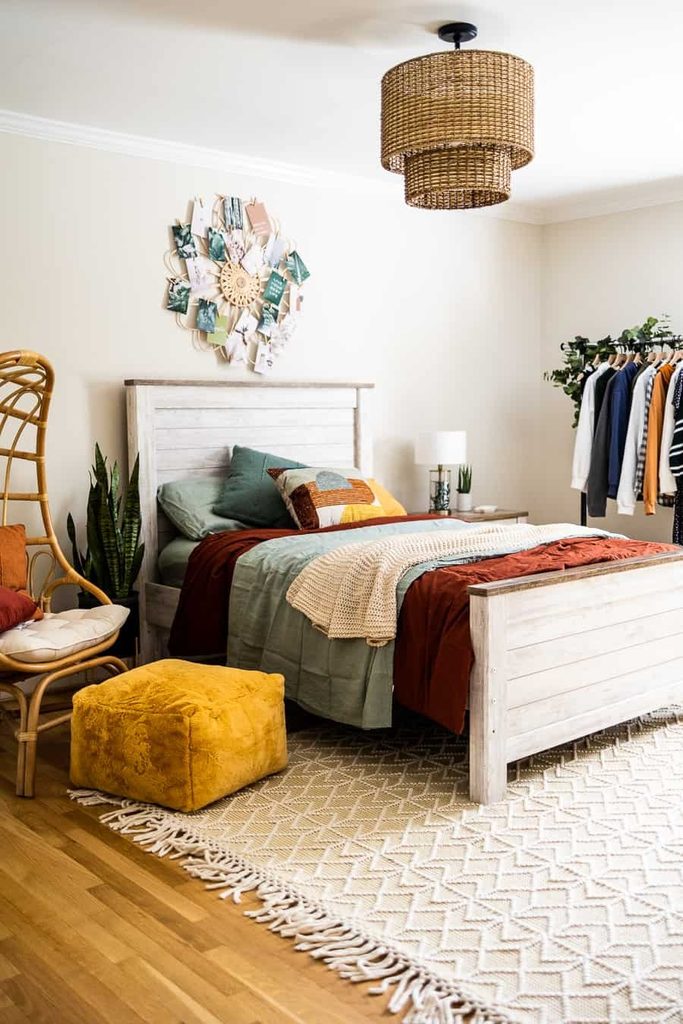
Rust and sage make a surprisingly easy pair when a bedroom needs color without a busy wall treatment. Here, a deep warm red bedcover sits beneath muted green bedding, with a cream knitted throw crossing both.
The pale wooden frame separates those deeper tones from the floor. Begin with the bedding you already own, then try one contrasting layer before buying an entire set.
A patterned accent pillow can connect several colors at once. Notice how the mustard ottoman adds warmth without needing an identical match elsewhere.
Keep the wall behind the bed relatively light if you want these textiles to stand out. The result feels relaxed because the colors repeat loosely rather than following a perfectly matched furniture package.
2. Set a Large Abstract Print Above a Textured Bed
Credits: Bre / Brepurposed
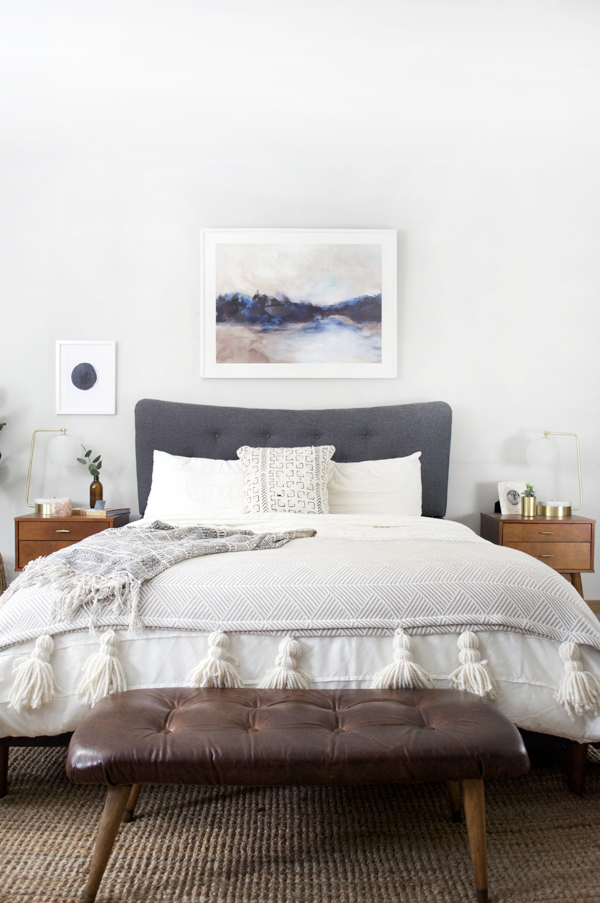
A blue and gray abstract print gives this softly layered bedroom a single clear central focal point. Its white frame relates to the bedding, while the darker upholstered headboard provides enough contrast to hold the arrangement together.
The oversized tassels along the blanket add a handmade feeling beneath the more structured artwork. Choose a print with colors that you can echo in a pillow or throw, rather than introducing an unrelated palette.
Check its size against the headboard with a paper template before hanging. A low upholstered bench adds another tactile surface without blocking the picture.
Let the art have some open wall around it, especially when the bed already combines several woven patterns, folds, and decorative edges close together.
3. Use Emerald Wallpaper Behind Neutral Woven Textures
Credits: Lizzie Ravn / Emmerson and Fifteenth
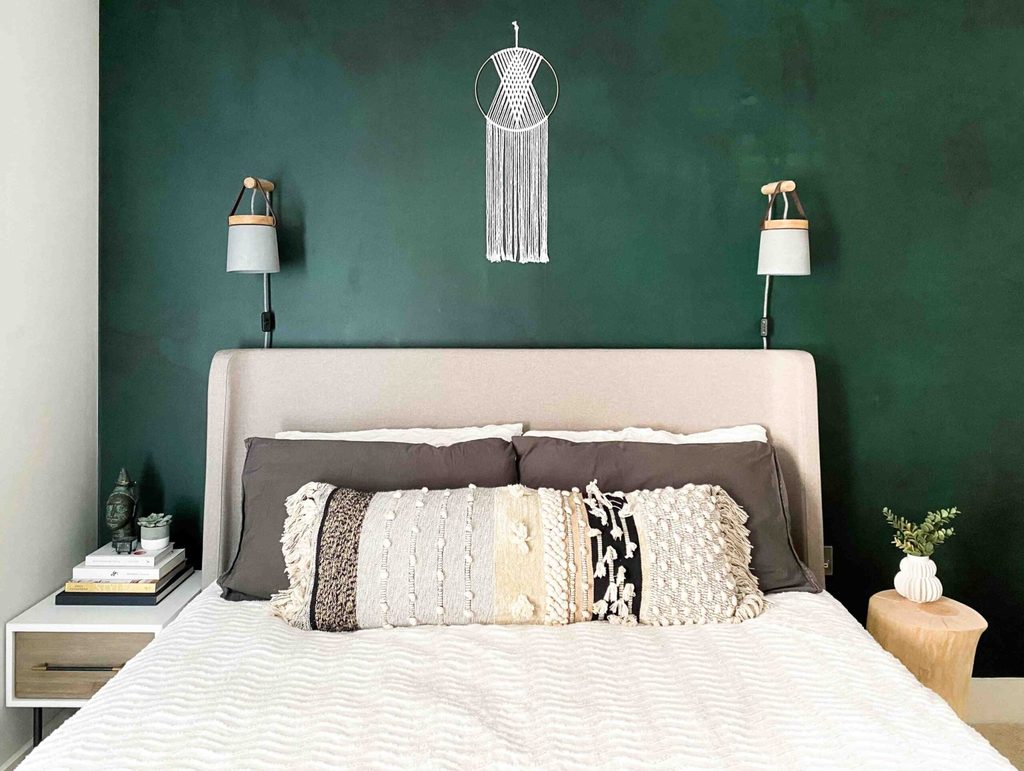
Deep emerald color makes the cream upholstery and textured lumbar pillow look especially inviting in this bedroom. The wall has subtle tonal variation rather than a crisp repeating pattern, allowing the woven details to remain easy to see.
A small fiber hanging occupies the center without competing with the bed below. This is a useful direction when you like boho texture but prefer fewer decorative objects.
Try a generous sample of the wall finish beside your bedding before committing to the whole surface. Keep the largest textiles pale, then add one slightly darker pillow layer for depth.
Matching bedside lights provide order, while the different nightstands introduce just enough variation to keep the room from feeling overly formal or rigid.
4. Bring Woven Texture Up to the Ceiling
Credits: Aniko / Place of My Taste
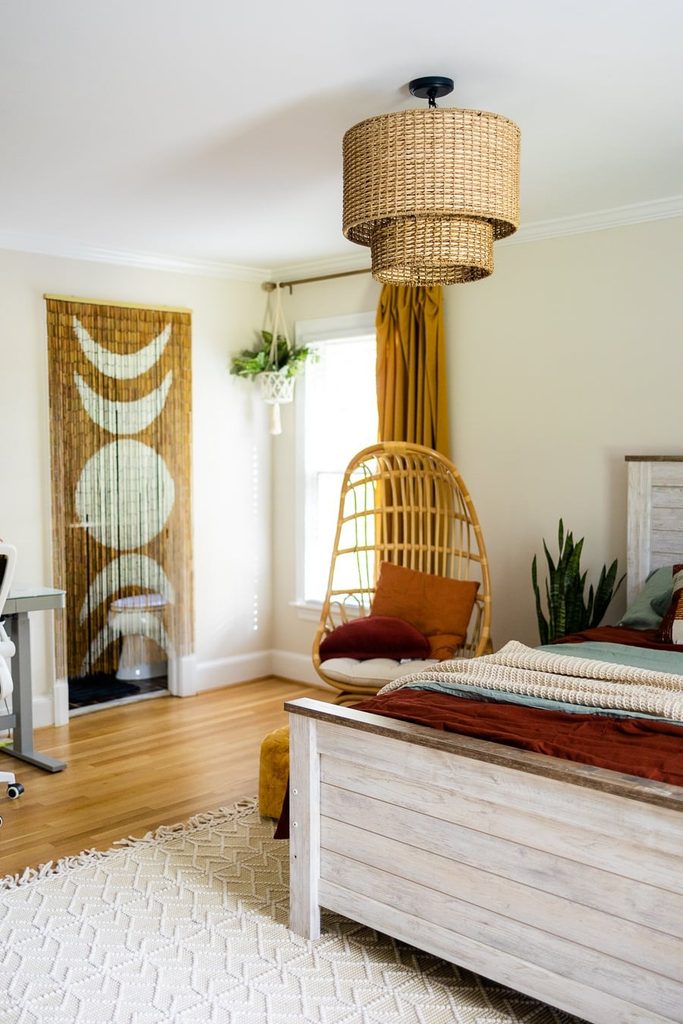
A tiered woven shade carries the room’s warm natural texture above the bed instead of leaving it entirely at floor level. Its simple drum shapes feel substantial without becoming ornate.
Below, the rounded chair and mustard curtain repeat that warmth, while the light walls give each piece room to stand out. Consider the ceiling fixture early when planning a boho bedroom, especially if existing furniture already feels complete.
Measure the available clearance and follow the fitting’s installation requirements. A qualified installer can help determine whether the current electrical box is suitable.
Keep the shade clear of curtains and doors. With a strong overhead texture in place, a few plain bedding layers can still make the whole room feel thoughtfully connected.
5. Try Oversized Palm Shapes in a Pink Palette
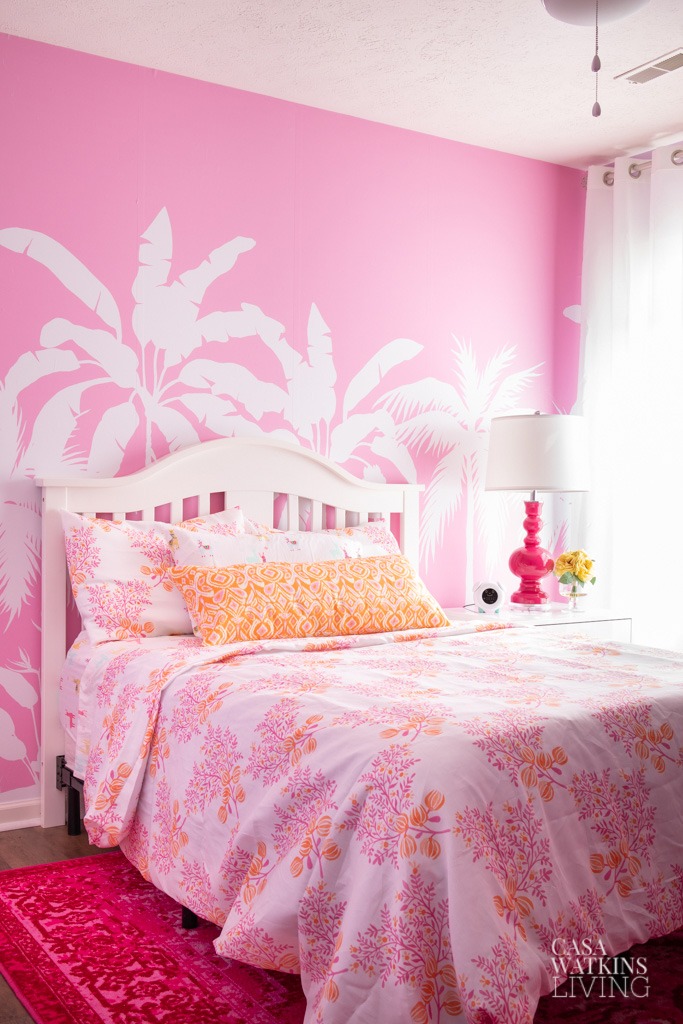
Credits: Stephanie / Casa Watkins Living
Large white palm silhouettes turn this pink wall into a lively backdrop without relying on lots of framed decorations. The white headboard remains visible because its curved outline sits against the stronger pink areas.
Smaller floral bedding introduces a different scale of pattern, and an orange pillow makes the palette feel especially sunny. Use this approach when you want a colorful boho room with one unmistakable feature wall.
Check wallpaper samples beside your existing furniture and observe them in changing daylight. Leave nearby walls quieter so the large leaves do not compete with another dominant motif.
A pale curtain and simple lampshade soften the edges of the scene, allowing the tropical shapes to remain the room’s most memorable visual feature.
6. Add Lidded Baskets to a Soft Neutral Bedroom
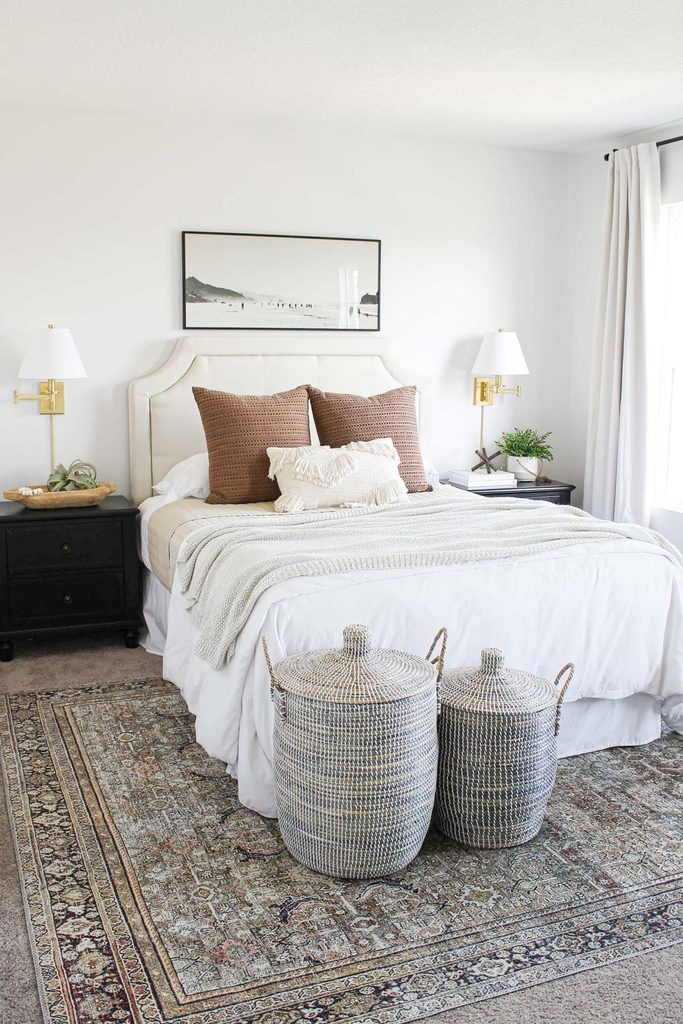
Credits: Caitlin / Caitlin Marie Design
Two lidded baskets make useful storage feel like part of this bedroom’s decoration. Their rounded woven shapes contrast with the rectangular nightstands and broad upholstered headboard.
A faded patterned rug brings additional detail beneath otherwise pale bedding, while rust pillows prevent the palette from feeling flat. Choose baskets that suit what you actually need to store, such as spare throws or seasonal cushion covers.
Check that the lids are easy to lift and that the weave will not snag delicate fabric. In a smaller room, one basket beside the bed may be more practical than a pair at its foot.
Keep the main walking route clear. Repeating natural texture at floor level helps a restrained bedroom feel comfortable and collected.
7. Use a Sculptural Wood Stump as a Nightstand
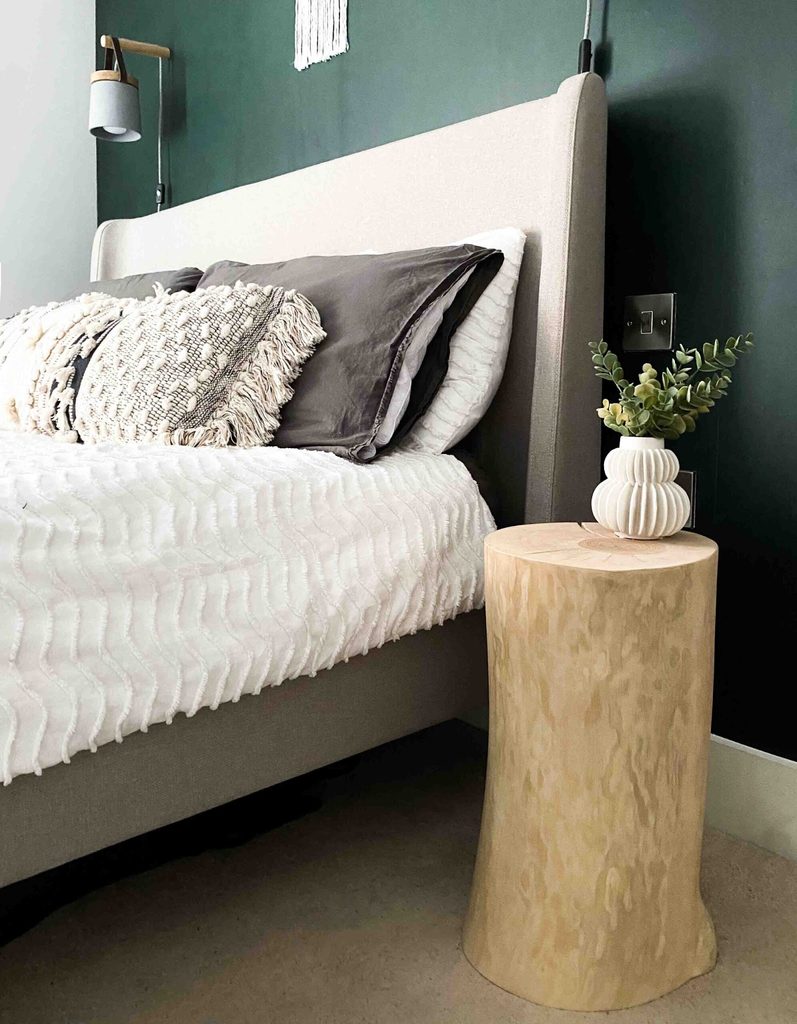
Credits: Lizzie Ravn / Emmerson and Fifteenth
A small stump table gives this bedside corner an organic shape that a standard cabinet would not provide. Its pale grain and uneven outline stand out against the dark green wall, while the simple top holds a compact vase.
This kind of piece works well where there is room for a surface but little need for drawer storage. Compare its height with the mattress so reaching for a book or glass feels comfortable.
Look for a properly dried, smoothly finished table intended for indoor use, and make sure it stands steadily. The surrounding bedding supplies softness against the solid wood.
Leaving the top mostly open keeps the natural form visible and preserves enough useful space for everyday essentials at night.
8. Give a Tall Rattan Chair a Comfortable Footrest
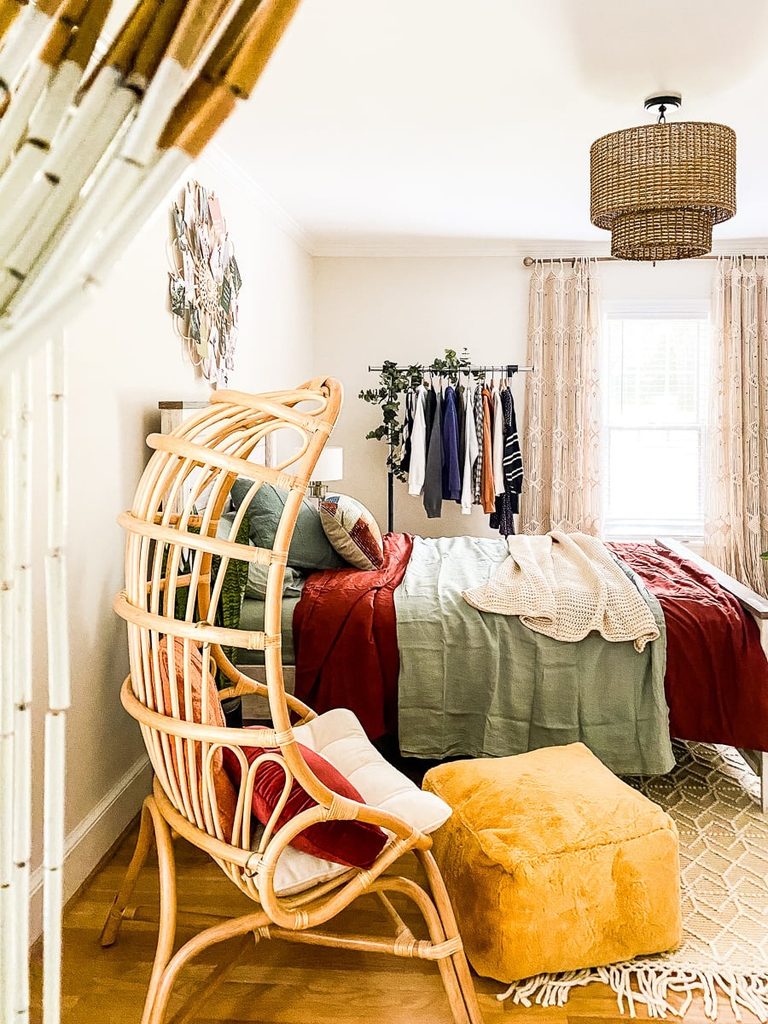
Credits: Aniko / Place of My Taste
The tall open back of this rattan chair creates a small lounging area without visually closing off the bedroom. A pale seat cushion softens the frame, and the mustard ottoman makes it more inviting for reading.
The chair’s curved lines also contrast with the straight boards of the bed nearby. Before bringing in a statement chair, measure both its footprint and the space needed to sit down comfortably.
A lightweight footrest can move aside when you need more floor space. Choose cushions that provide genuine support rather than only decoration.
Keep a reading light or nearby surface within reach if possible. Warm woven furniture can feel substantial enough to define a corner while still letting the surrounding room show through.
9. Let Cream Macrame Stand Out Against Dark Paint
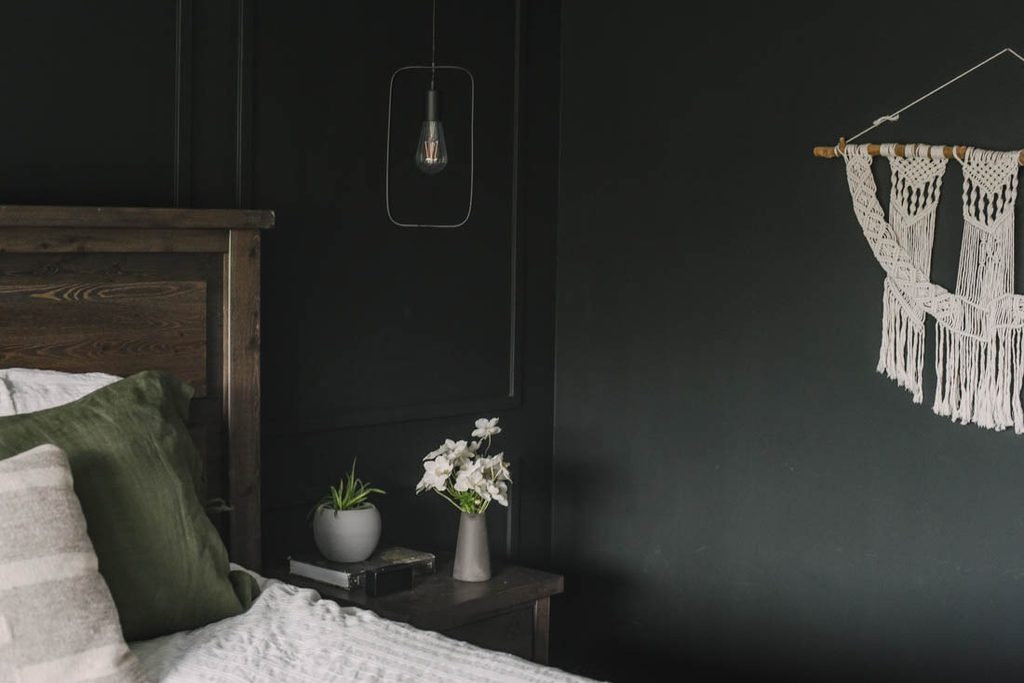
Credits: Colleen Pastoor / Lemon Thistle
Pale macrame becomes especially legible against this nearly black bedroom wall. Its open knots and loose fringe provide detail without filling the surface with several separate objects.
The natural branch across the top connects with the wooden bed and nightstand, while small white flowers repeat the hanging’s brightness. If you already have dark walls, try a single light textile before adding more framed artwork.
Choose a width that leaves visible wall on both sides, and hang it securely for its weight. The handmade character can soften a room with otherwise straight furniture and simple bedding.
Keep loose cords away from switches, lamps, and places where they might catch. A limited display gives the texture enough space to become the feature.
10. Mix Small Florals With a Bold Lumbar Pattern
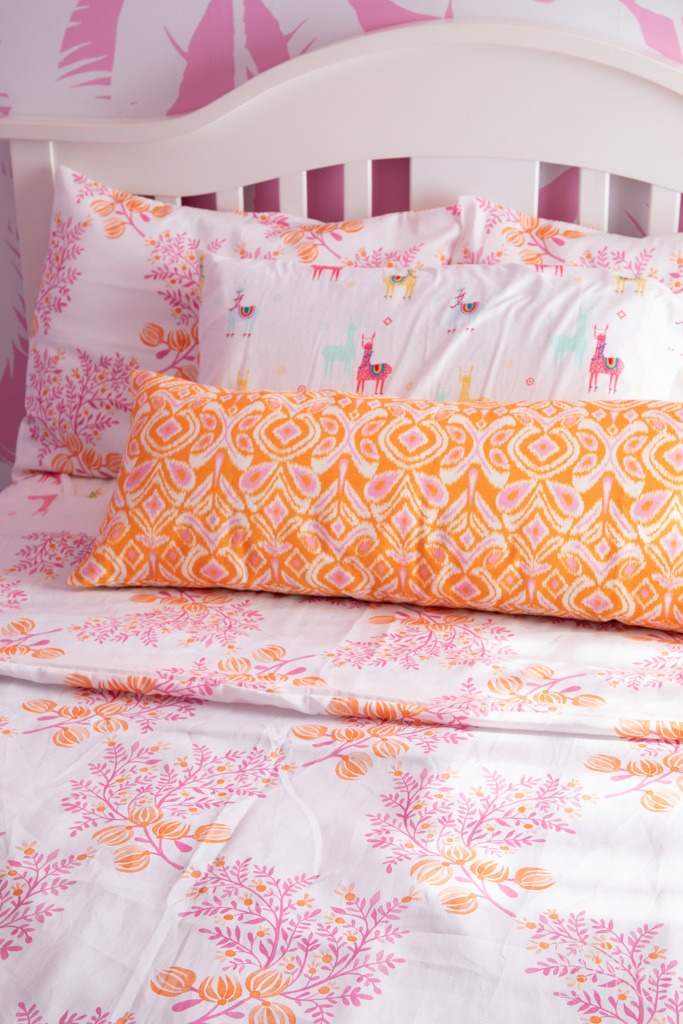
Credits: Stephanie / Casa Watkins Living
This close view shows how several patterns can share a bed without needing to be identical. Pink and orange florals cover the duvet and rear pillows, while the long front cushion uses a larger, more geometric motif.
The white background keeps the combination from becoming visually heavy. Start with two fabrics that repeat at least one color, then vary the size of their patterns.
A narrow lumbar pillow is a useful place for the stronger design because it occupies a controlled area. Keep the sleeping pillows comfortable and leave enough space to move decorative cushions at bedtime.
The white wooden headboard supplies a quiet boundary, helping the individual prints read clearly rather than merging into one continuous field of color.
11. Choose Bedside Lights With Wood and Concrete Details
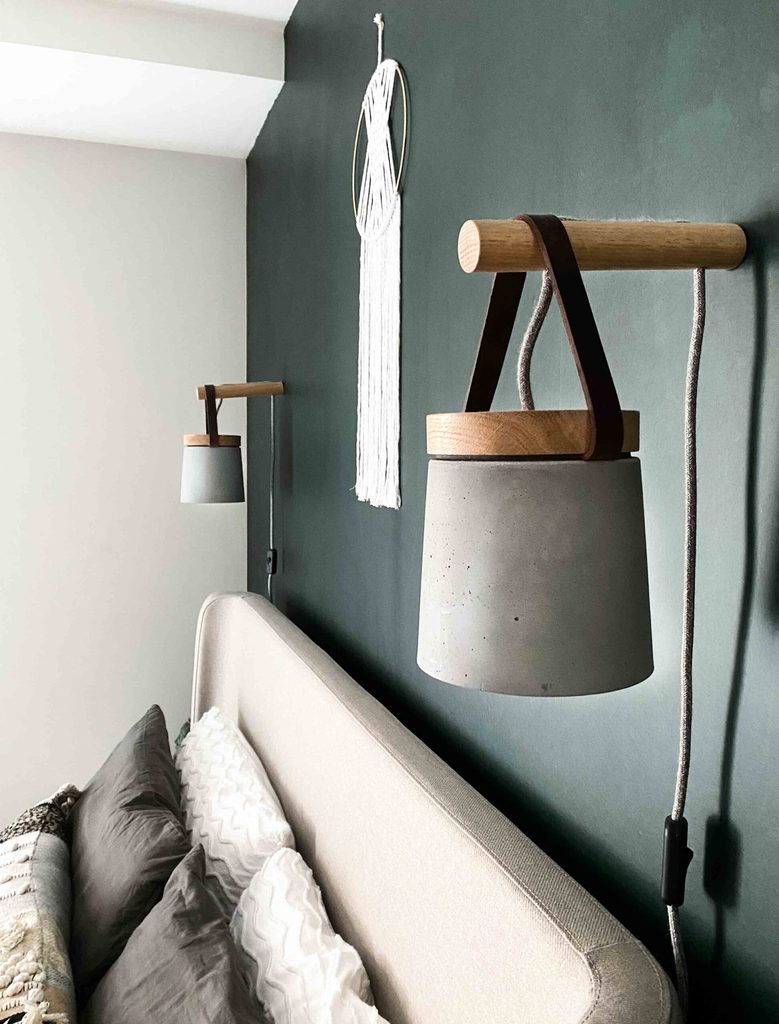
Credits: Lizzie Ravn / Emmerson and Fifteenth
Concrete shades, wooden supports, and leather straps give these bedside lights several textures in a compact form. Their gray surfaces feel calm against the green wall, and the pale wood connects with other natural materials in the room.
Wall mounted lighting also leaves the bedside tables available for everyday belongings. Plan the position from the mattress and your usual reading posture, rather than measuring from the floor alone.
Follow the manufacturer’s mounting instructions and keep the cords neatly routed where they cannot catch on bedding. Use appropriate bulbs and avoid draping fabric over any fitting.
With tactile lighting doing some of the decorating, you can keep nearby accessories simple and let the different materials contribute the room’s quieter boho character.
12. Soften an Open Clothing Rail With Greenery
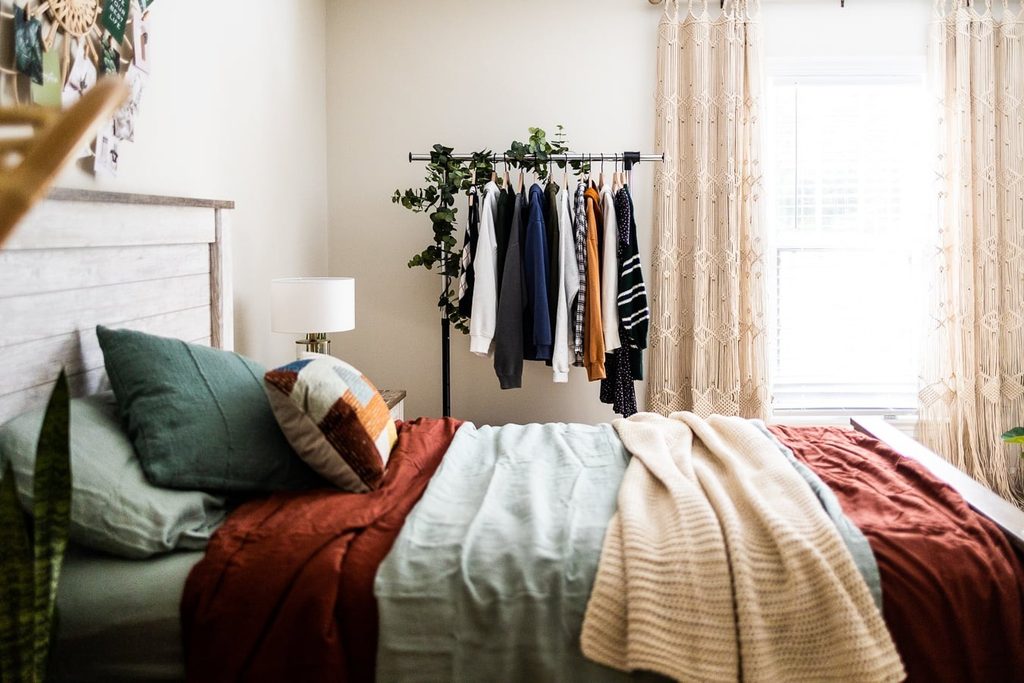
Credits: Aniko / Place of My Taste
An open clothing rail becomes part of this bedroom’s relaxed arrangement through a small amount of greenery. The dark frame remains visible, while trailing leaves soften its top edge beside the window.
Coordinated wooden hangers make the clothes look more orderly without hiding them behind doors. This is a practical option when a closet is small or when you want a few favorite pieces within reach.
Keep the rail edited to clothing you use, rather than letting it become overflow storage. Choose a stable frame with an appropriate weight limit, and avoid winding stems around moving parts.
The adjacent macrame curtains repeat the loose vertical lines, connecting this functional corner with the bed’s soft layers and the room’s other textures.
13. Carry a Favorite Pattern Inside the Closet
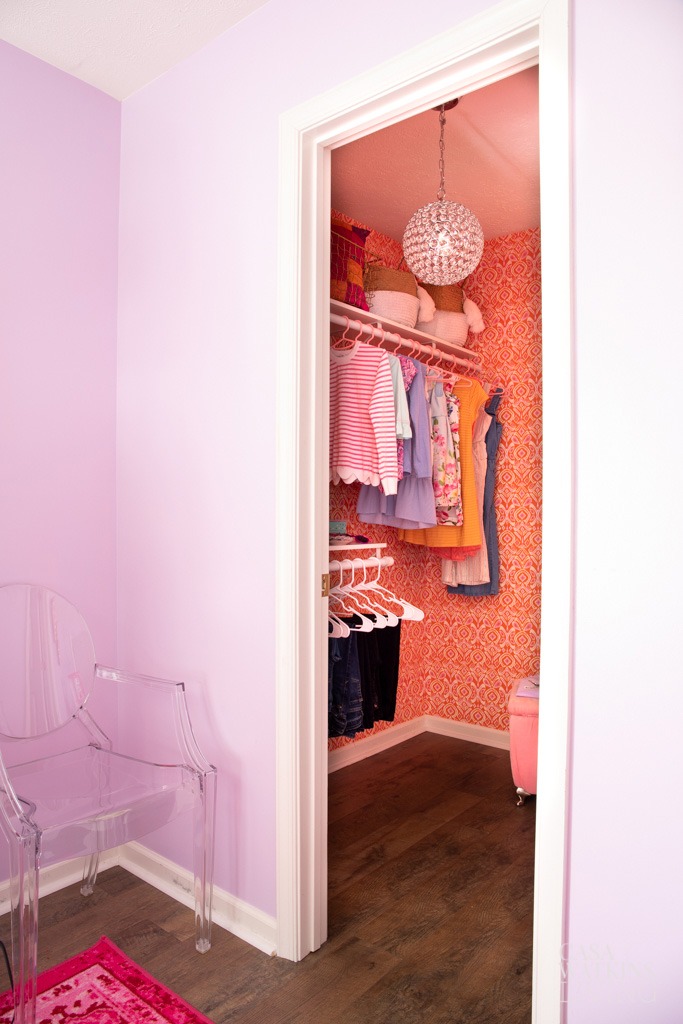
Credits: Stephanie / Casa Watkins Living
Orange patterned wallpaper makes this open closet feel connected to the bedroom instead of like an unfinished storage recess. White rails and shelving keep the clothing easy to see, while baskets on the upper shelf contain smaller belongings.
The saturated pattern works because it occupies a defined area framed by plain trim. Consider decorating a closet interior when you want a strong print without covering an entire bedroom wall.
Measure around shelves and rods carefully, and choose a wall covering suitable for the surface. Keep lighting and ventilation unobstructed.
Repeating a color from the bedding helps the view feel intentional whenever the door is open. Practical organization still matters, since the wallpaper looks clearest when the hanging space stays manageable.
14. Style Bedroom Shelves With Collected Natural Textures
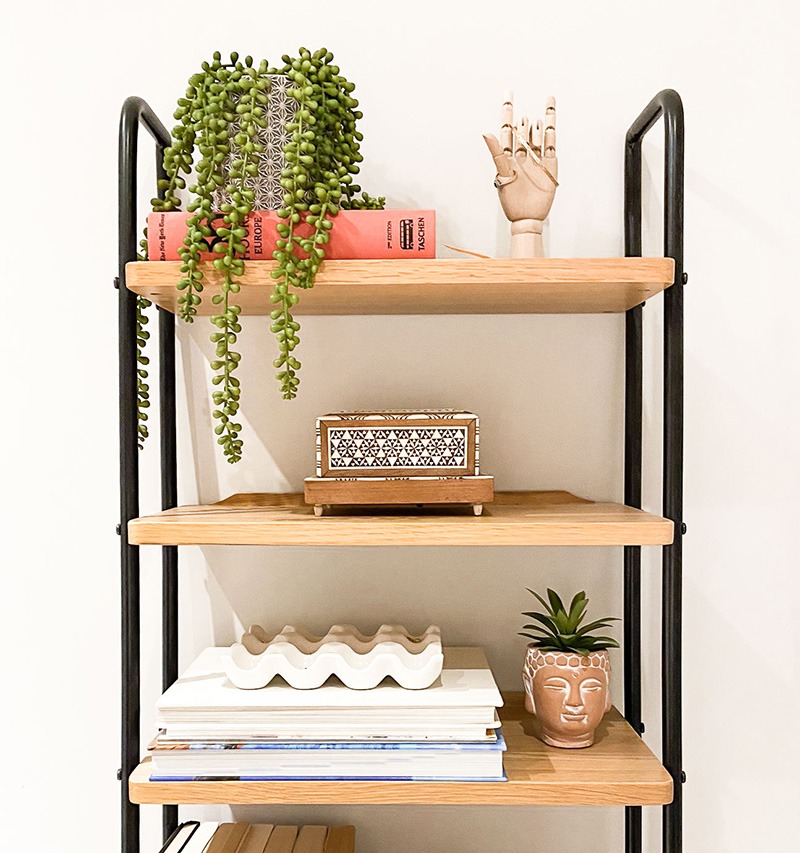
Credits: Lizzie Ravn / Emmerson and Fifteenth
Open wooden shelves give this bedroom a place for books, small containers, and personal objects. The dark metal sides define the display, while a trailing plant softens the top shelf.
A patterned box and sculptural hand add variety without requiring every object to share the same finish. Begin with items you already enjoy seeing, then leave gaps so their shapes remain distinct.
Place frequently used belongings where you can reach them easily, and keep heavier objects lower. A small lidded box can hide everyday clutter while contributing texture.
Secure the shelving according to its instructions and leave enough space for cleaning. The combination feels collected because warm wood, greenery, and patterned details sit together within a simple, consistent furniture frame.
15. Clip Small Prints Around a Rattan Wall Piece
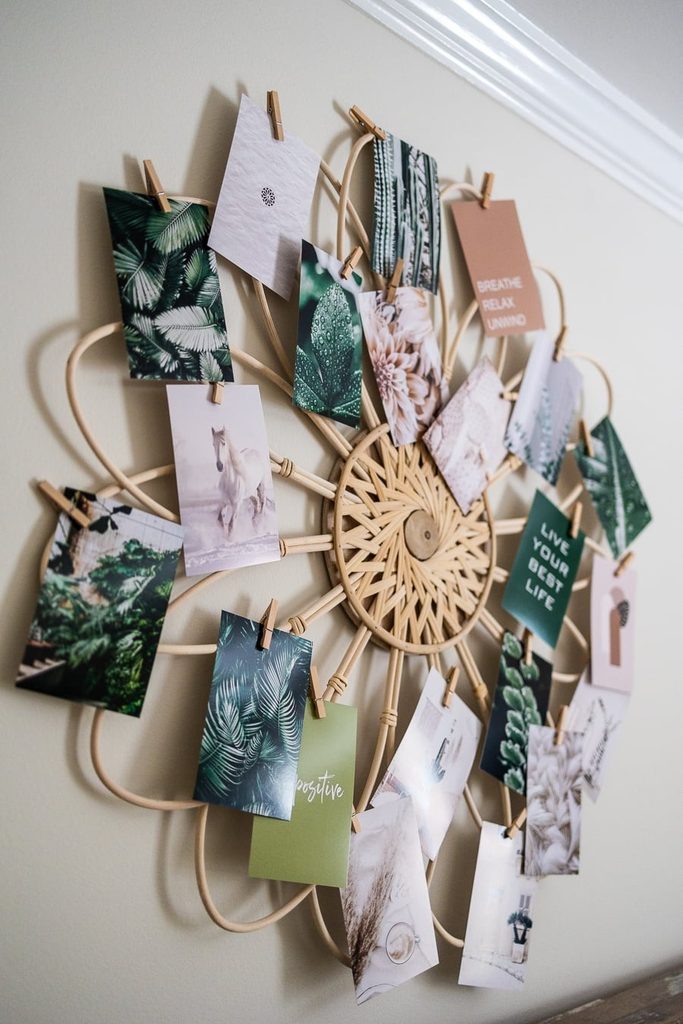
Credits: Aniko / Place of My Taste
A rattan wall decoration becomes a flexible picture display with the addition of clips. Botanical photographs and pale graphic cards sit around its open loops, leaving parts of the woven center visible.
The arrangement feels informal because the prints vary in position rather than lining up in a strict grid. Use postcards, small art prints, or your own photographs that share a few colors.
Try the layout on a table first, and avoid covering every part of the rattan structure. Lightweight clips make it easy to rotate the pictures when your interests change.
Hang the base securely and check that the paper stays clear of heat sources. This adds a personal layer without requiring a separate frame for every picture.
16. Make a Bedroom Desk Feel Light and Colorful
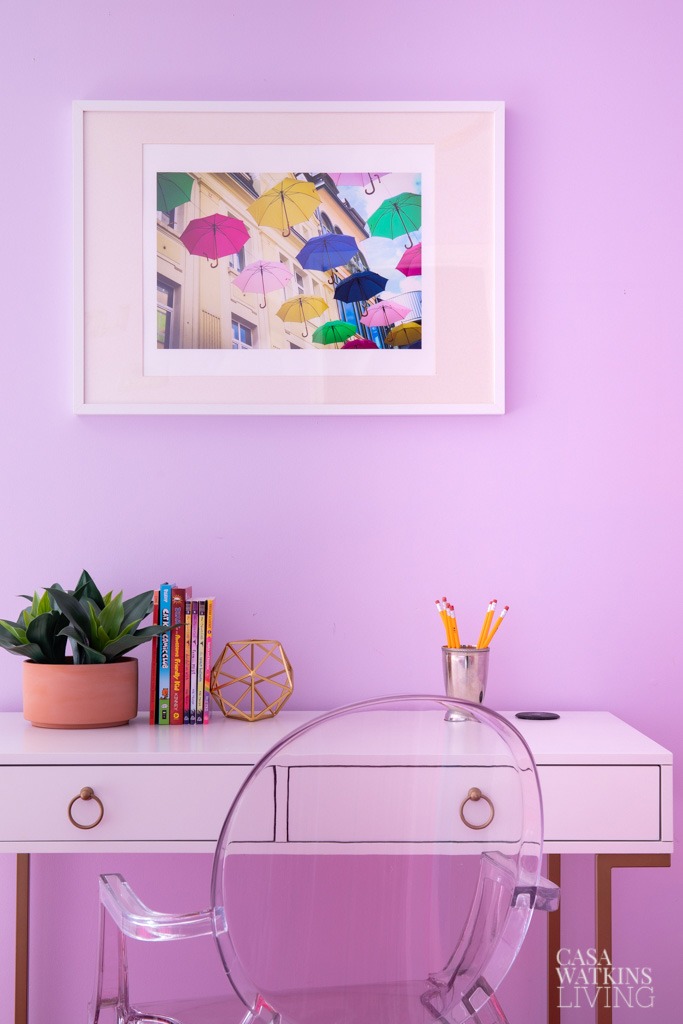
Credits: Stephanie / Casa Watkins Living
A white desk and transparent chair keep this colorful bedroom workspace from looking bulky. The lavender wall supplies most of the color, while a framed photograph introduces several brighter accents above the desk.
A terracotta planter adds an earthy touch beside the clean furniture lines. If your bedroom also needs to support work or creative hobbies, choose a desk with enough depth for the tasks you actually do.
Keep the chair comfortable for the time you will spend sitting there. A small group of books and a pencil cup can stay out without covering the entire surface.
Let one piece of artwork carry the decorative focus, leaving a useful central area for writing, drawing, or a laptop during the day.
17. Use a Decorative Mirror to Repeat Plants and Texture
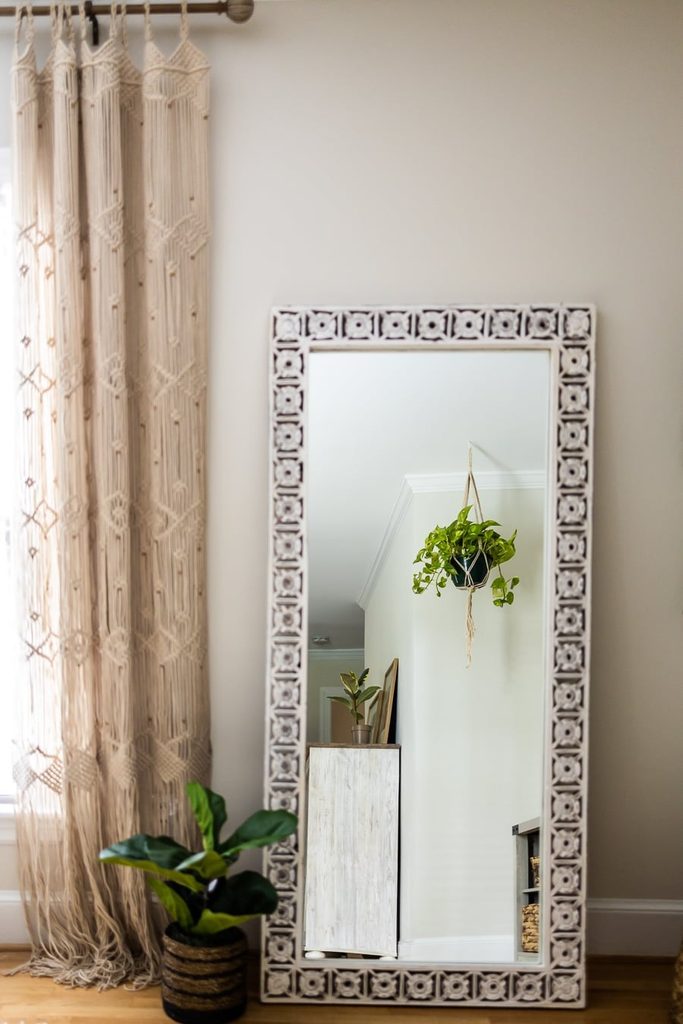
Credits: Aniko / Place of My Taste
The patterned frame around this mirror contributes detail even before its reflection comes into play. It picks up the pale macrame curtain beside it, while reflected greenery makes the corner feel layered.
A small plant at floor level connects the mirror with the rest of the room. When choosing a decorative mirror, consider both the frame and the view it will reflect from the bed.
A simple wall opposite can be just as useful as another collection of accessories. Secure a leaning mirror according to the manufacturer’s guidance, especially near walking routes.
Keep enough space around its base for cleaning. The mix of reflection, woven texture, and foliage can enrich a narrow corner without adding a substantial piece of furniture.
18. Balance Eclectic Details With a Simple Pale Dresser
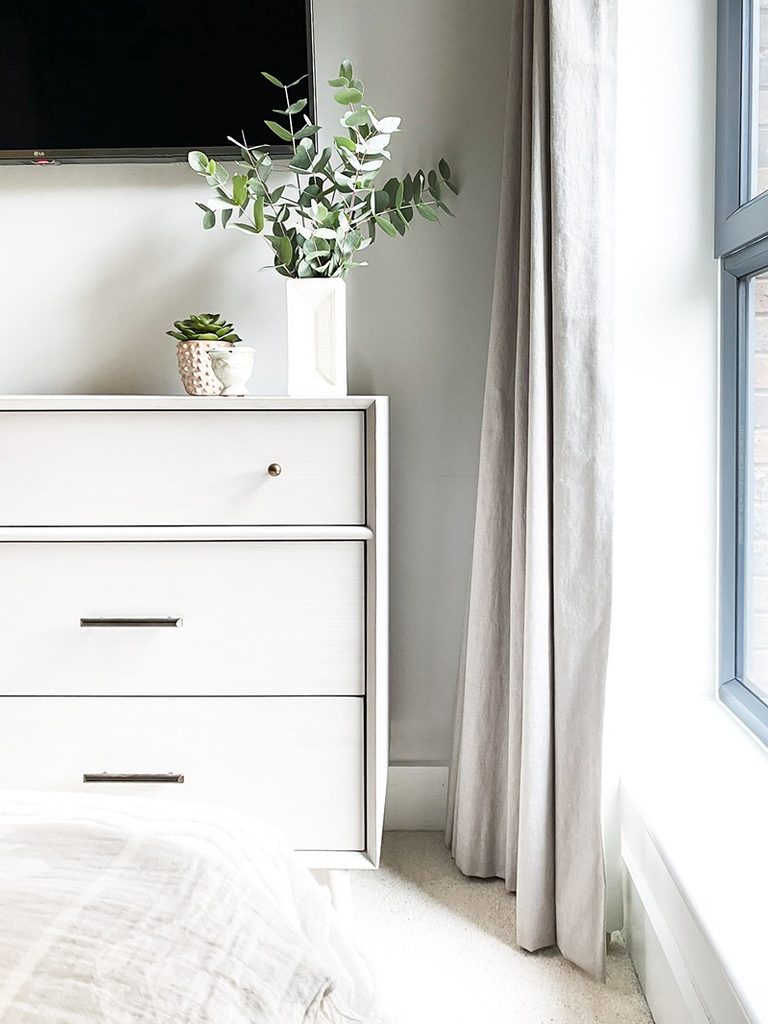
Credits: Lizzie Ravn / Emmerson and Fifteent
A pale dresser gives this boho bedroom a quieter surface between its more decorative elements. Slender metal handles add a little shine, while green stems and a small plant introduce softer shapes above.
The nearby curtain continues the light neutral palette, allowing the room’s stronger colors to stay elsewhere. Consider a simple storage piece when your bedding, artwork, or lighting already provides plenty of texture.
You do not need every item of furniture to make a statement. Check drawer clearance before positioning a dresser beside the bed, and leave the top useful for daily routines.
A restrained arrangement of two or three objects often works better than a crowded display, especially when the surrounding room already feels layered and personal.
19. Turn Decorative Hooks Into Everyday Clothing Storage
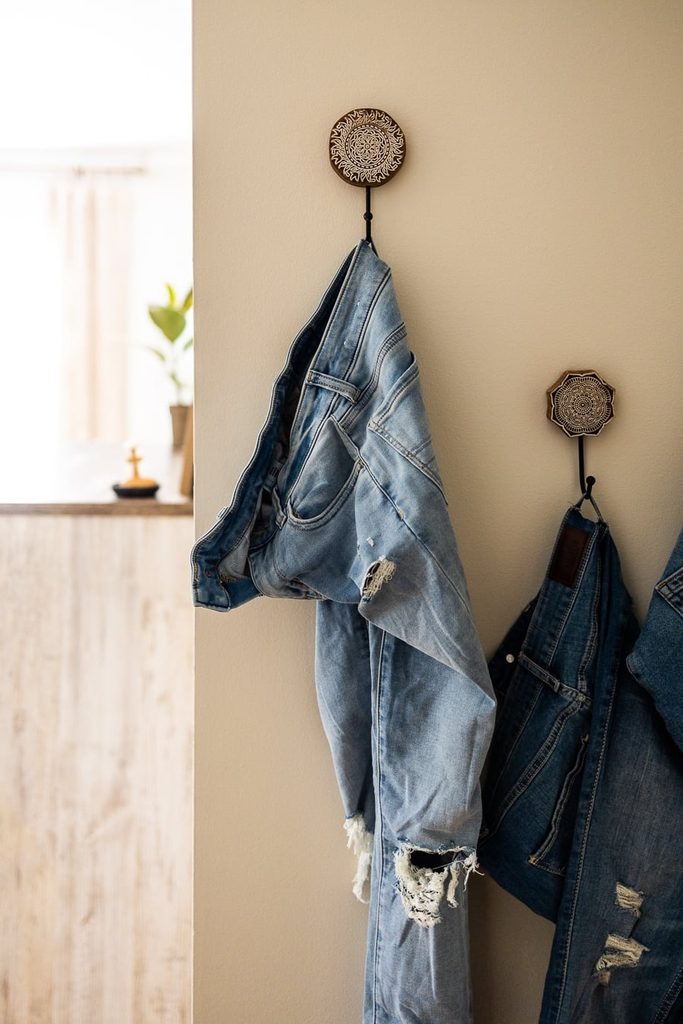
Credits: Aniko / Place of My Taste
Patterned wall hooks bring a small decorative moment to a bedroom corner while providing somewhere useful to hang clothing. Their warm brown faces stand out against the pale wall, and the dark stems keep the outline simple.
Staggering the hooks accommodates pieces of different lengths without creating a rigid row. Choose hardware sturdy enough for what you intend to hang, and install it with fixings suited to your wall.
Keep the arrangement away from doors that might swing into it. One or two favorite garments can look intentional, but an overloaded cluster quickly becomes difficult to use.
This is an easy way to introduce carved looking detail into a boho bedroom when larger furniture changes are outside your current plans.
20. Group Botanical Prints Above a Weathered Wood Surface
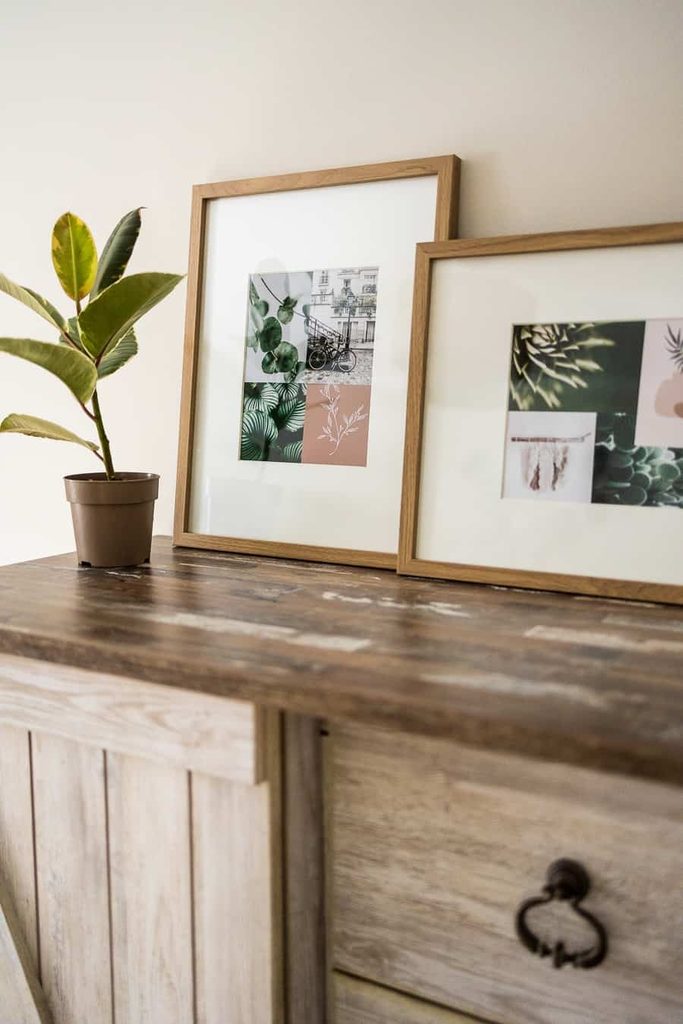
Credits: Aniko / Place of My Taste
Two framed groups of small prints create a relaxed display on this weathered looking dresser. The generous white mats give the botanical images room to breathe, while light wooden frames connect with the furniture’s warm grain.
A small plant brings a living shape into the arrangement. Try grouping postcards or personal photographs within larger mats when individual frames would make a surface feel crowded.
Keep the picture selection connected through color or subject, without requiring every image to match. Secure leaning frames where they will not slide or tip, and leave space for everyday belongings.
The combination of smooth paper, leafy shapes, and worn looking wood adds a collected feeling without needing a large gallery wall or a complicated arrangement.