
A polished living room doesn’t have to feel formal or fussy; often, the key is giving each strong element a calm backdrop.
These Classy Living Room Ideas show how thoughtful color, shape, and furniture placement can make a space feel pulled together while still comfortable for everyday use.
See how repeated curves bring cohesion to an olive sofa, how caramel accents warm pale seating, and how expressive art can anchor a conversation corner.
The examples also offer useful ways to mix patterns, define a fireside seating area, or keep a large sectional from overwhelming its surroundings.
1. Repeat Rounded Shapes Around an Olive Sofa
Credits: Instagram
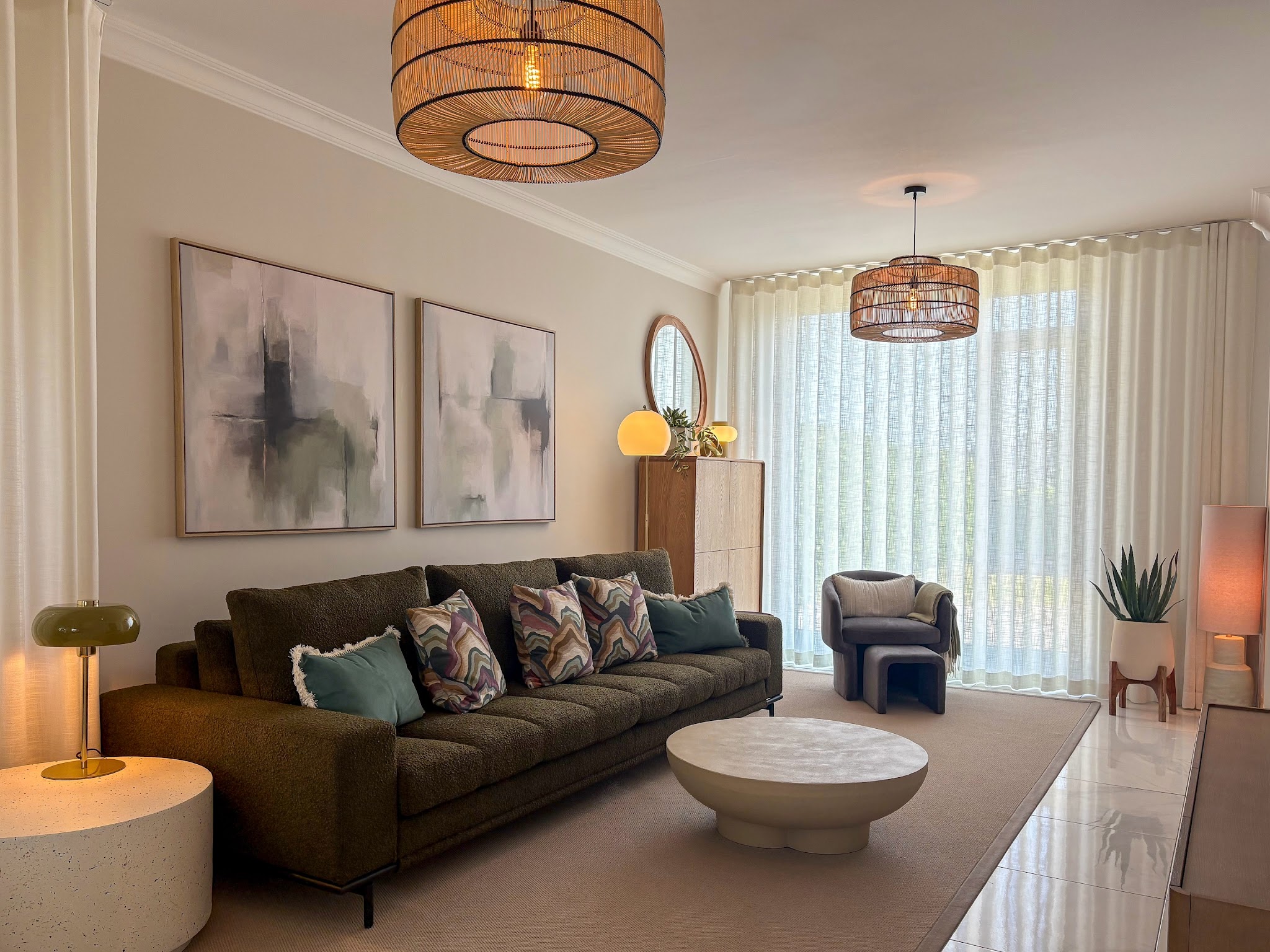
An olive sofa gives this living room depth, while a broad circular coffee table keeps the seating area feeling open. Notice how the rounded theme continues through the side table, mirror, lamps, and woven pendant shades.
Those repeated curves tie together pieces that do not match exactly. Pale curtains stretch across the far wall, softening the daylight and making a quiet backdrop for the darker furniture.
Two large abstract pictures balance the sofa without filling the wall with small objects. Try borrowing three related shapes when planning your own room, then vary their sizes and finishes.
Keep the central table low enough to preserve views across the seating, and let a few patterned pillows provide most of the visual movement.
2. Warm Pale Seating With Caramel Accents
Credits: Instagram
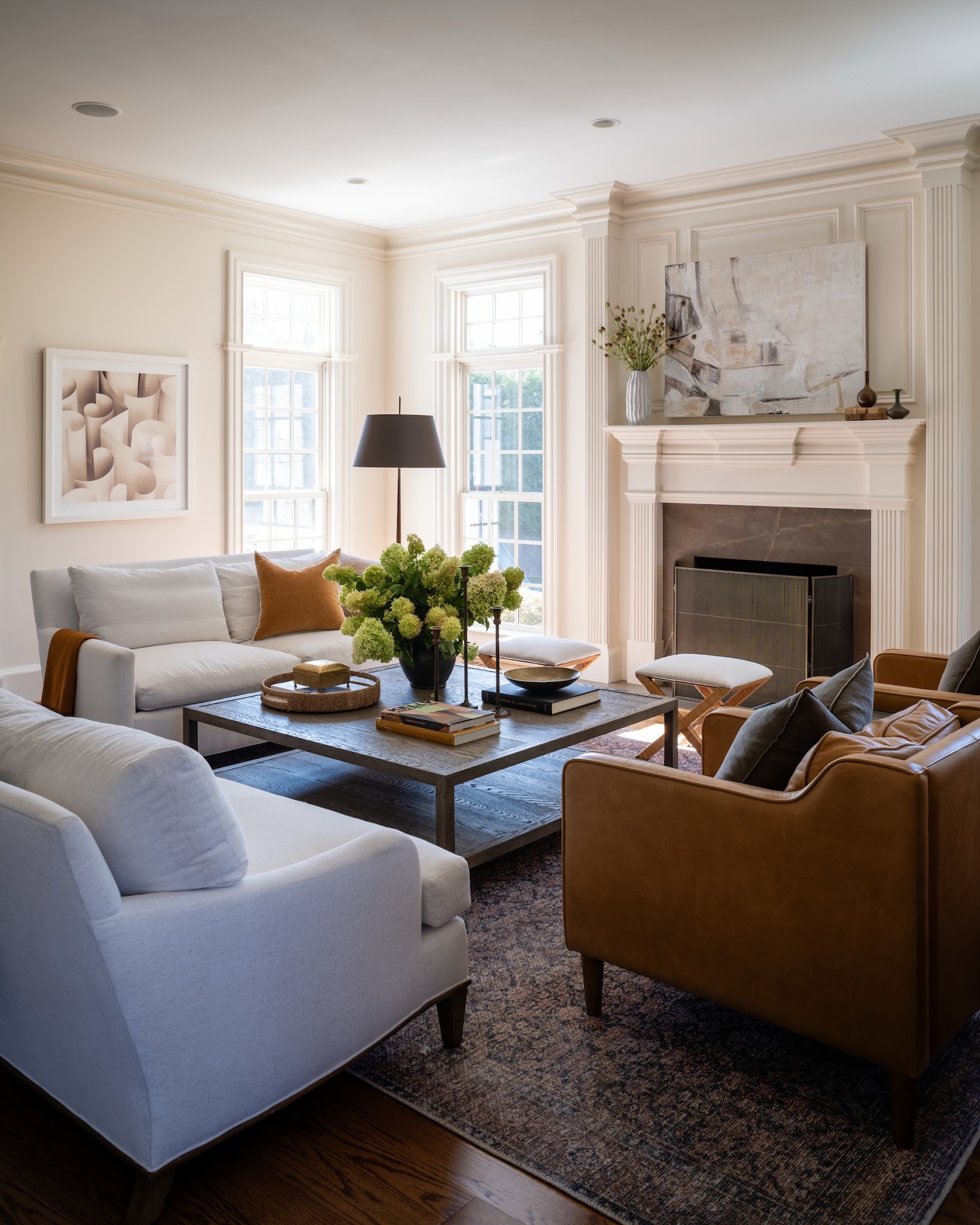
Pale upholstery can feel inviting when it sits alongside warm caramel seating and a generously sized coffee table. Here, the darker armchairs make the arrangement feel grounded, while small warm accents on the sofa repeat their color.
The fireplace, tall windows, and crisp trim create an orderly backdrop for the relaxed furniture. A patterned rug brings the different seats together, keeping the group from appearing scattered across the floor.
Use this approach when you want a polished room that still welcomes everyday lounging. Choose one warm accent color and repeat it in both a substantial piece and smaller accessories.
Leave useful space on the coffee table for books and drinks, and keep fireplace decorations simple enough to support the architecture.
3. Build a Conversation Corner Around Expressive Art
Credits: Instagram
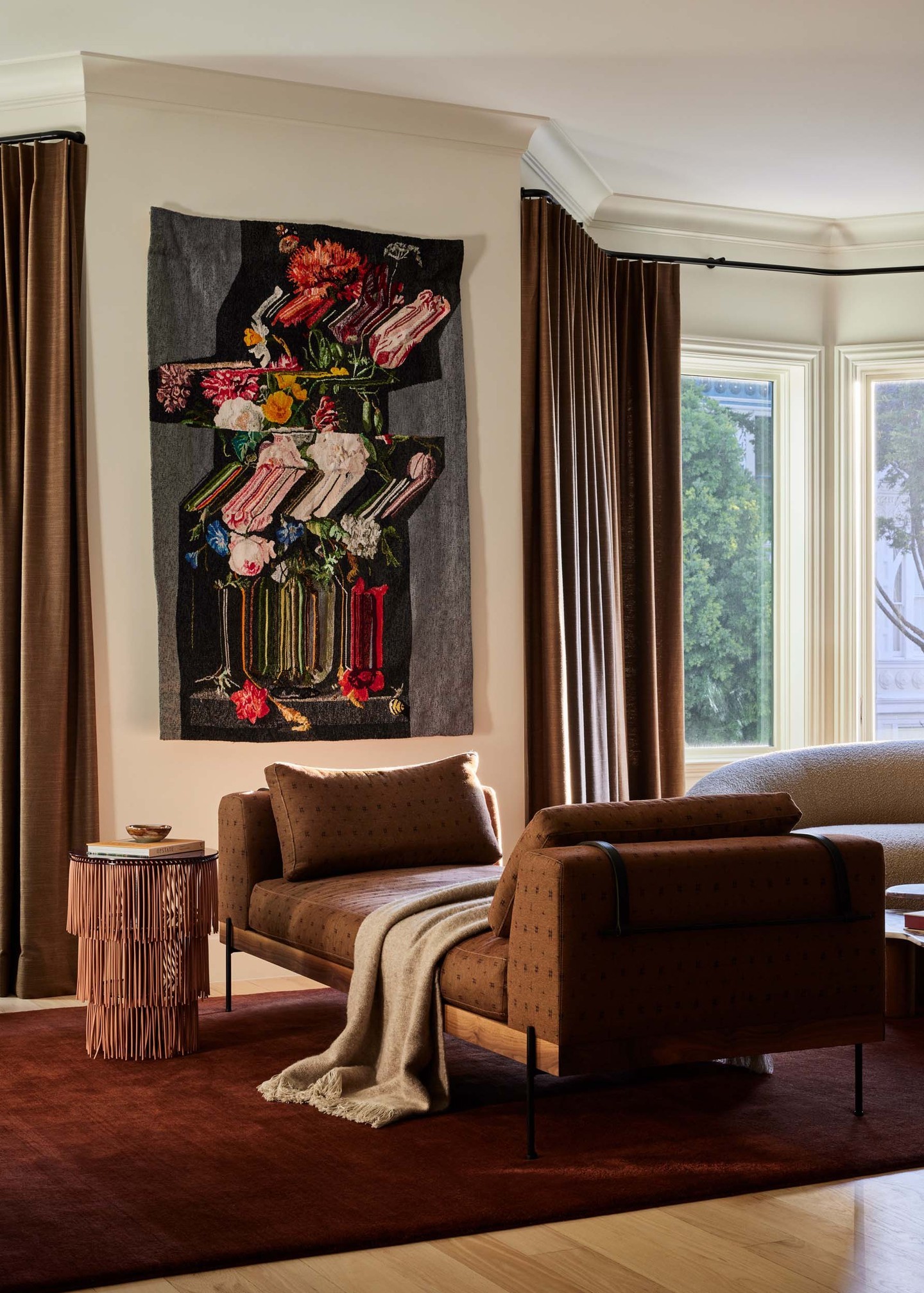
A vivid artwork becomes the center of this compact seating arrangement because the surrounding colors stay closely related.
Brown chairs, deep curtains, and a rust rug create a warm setting, while a pale curved sofa lightens the edge of the group. The chairs face inward, encouraging conversation instead of lining up along the walls.
Slender dark legs keep their substantial cushions from feeling bulky. For a similar effect, begin with one piece of art you enjoy, then pull two quieter colors into the furniture and textiles.
A small side table can offer a landing spot without competing with the picture. Keep the curtains tall and the rug large enough to contain the chairs, so the whole corner reads as intentional.
4. Unify Mixed Patterns With a Gentle Palette
Credits: Instagram
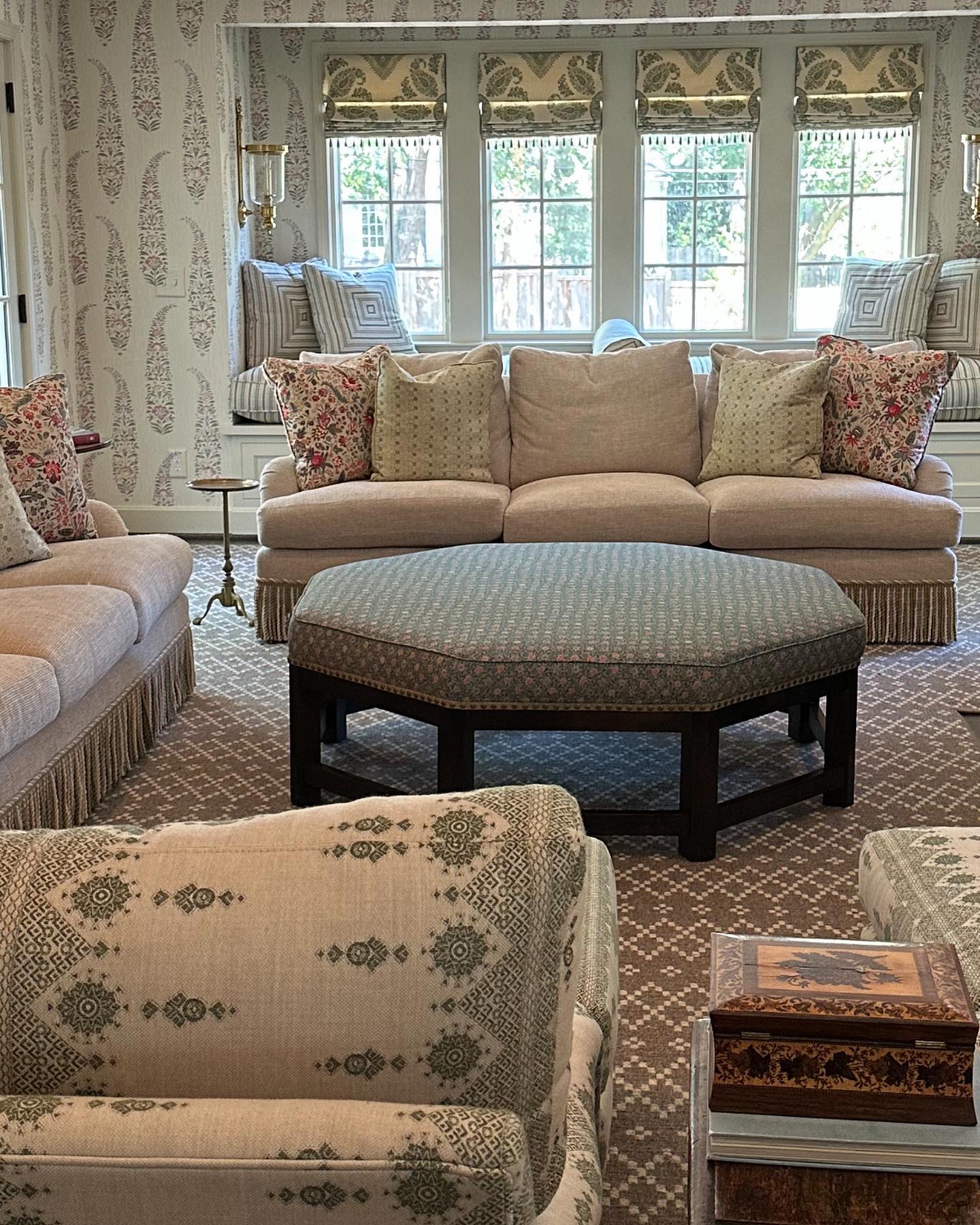
This room layers pattern across wallpaper, shades, pillows, seating, and the rug, yet its soft colors keep everything connected. Cream backgrounds and muted greens appear repeatedly, while touches of rose add warmth.
The plain sofa cushions provide a visual pause between the patterned walls and broad upholstered ottoman. Fringe at the sofa bases adds another detail without introducing a new color.
To make several patterns work together, vary their scale and give them at least one shared background tone. Include a generous area of simple upholstery so the eye has somewhere to rest.
Window seats can extend the arrangement without adding more freestanding furniture. Keep small tables close to the sofas so the large central ottoman remains comfortable and useful.
5. Make Two Fireside Chairs Feel Like a Room
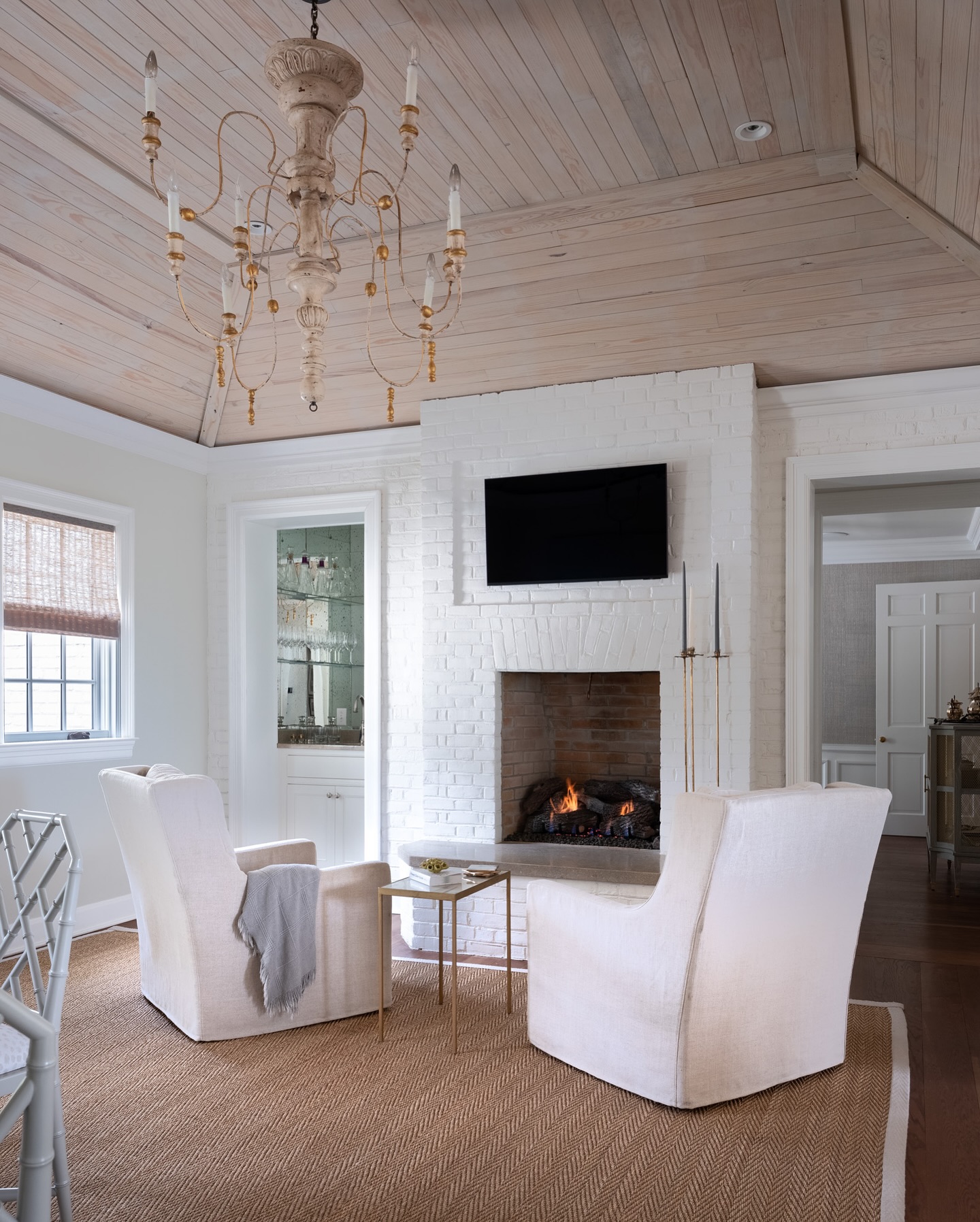
Credits: Instagram
A pair of pale chairs and one small table establish a complete sitting area in front of this fireplace. Their tall backs give the arrangement presence, while the narrow table keeps the space between them open.
White painted brick, light upholstery, and a pale plank ceiling create a calm range of tones. The chandelier supplies a decorative flourish above furniture with clean silhouettes.
This is a useful idea for a secondary living area or a generous corner beside the main seating. Start with chairs that feel comfortable for a long conversation, then add a shared surface within easy reach.
A broad rug defines their territory, and a nearby cabinet can provide practical storage without crowding the hearth or walking route.
6. Give Traditional Chairs a Fresh Pattern Mix
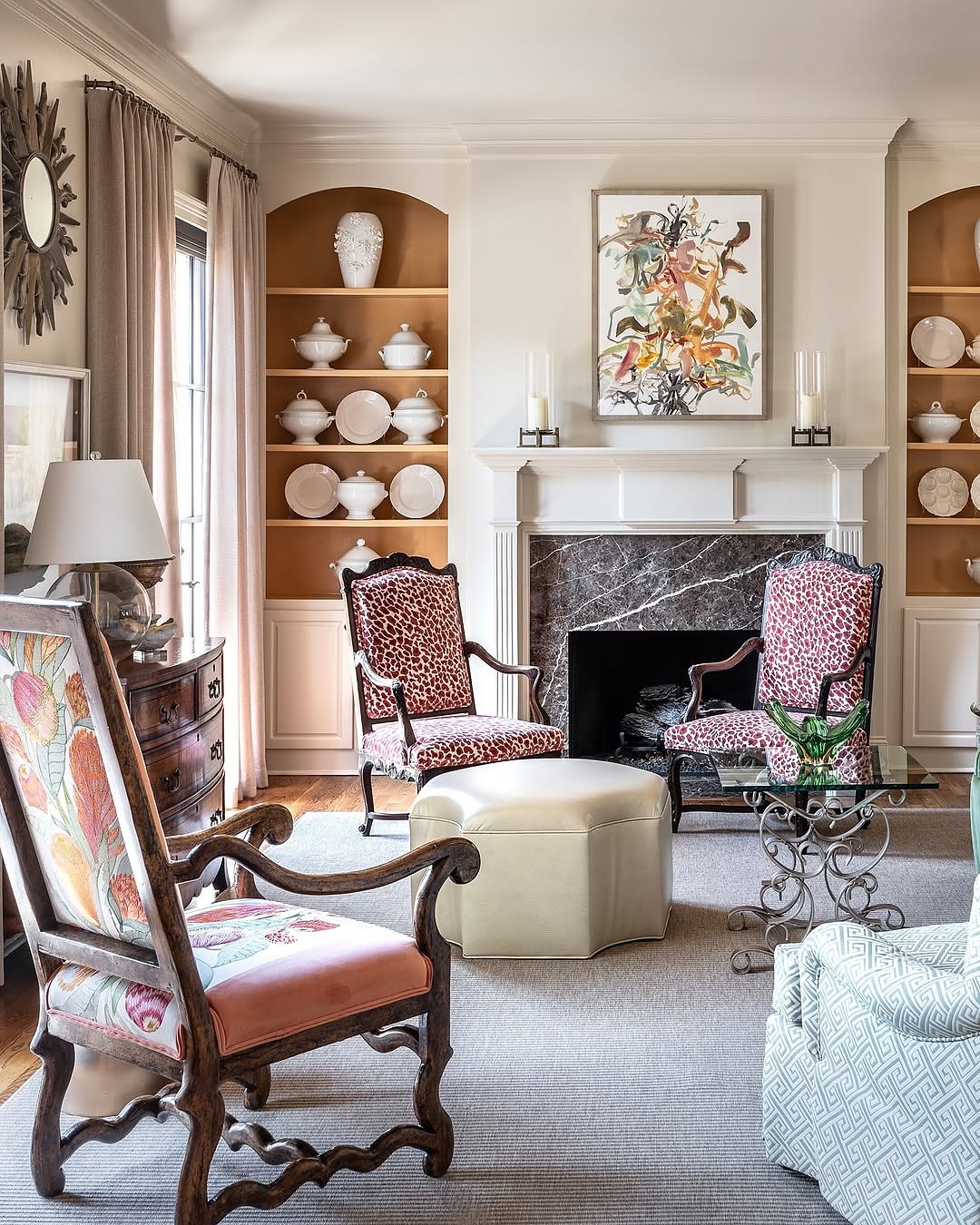
Credits: Instagram
Curved chair frames feel lively here because their upholstery varies from a large botanical design to a smaller red pattern. The fireplace and paired shelving niches provide structure, allowing the fabrics to be playful.
Repeated white dishes keep the shelves visually organized, and their warm backgrounds connect with the wood furniture. A pale ottoman and simple rug give the patterned seats room to stand out.
Try this balance when furnishing a living room with several older or decorative pieces. Repeat a color across different fabrics, rather than making every chair identical.
Keep the largest surrounding surfaces quieter, and arrange seats toward one another. A clear tabletop can add another useful surface while preserving views of the furniture's graceful outlines below.
7. Refine a Large Sectional With Simple Surroundings
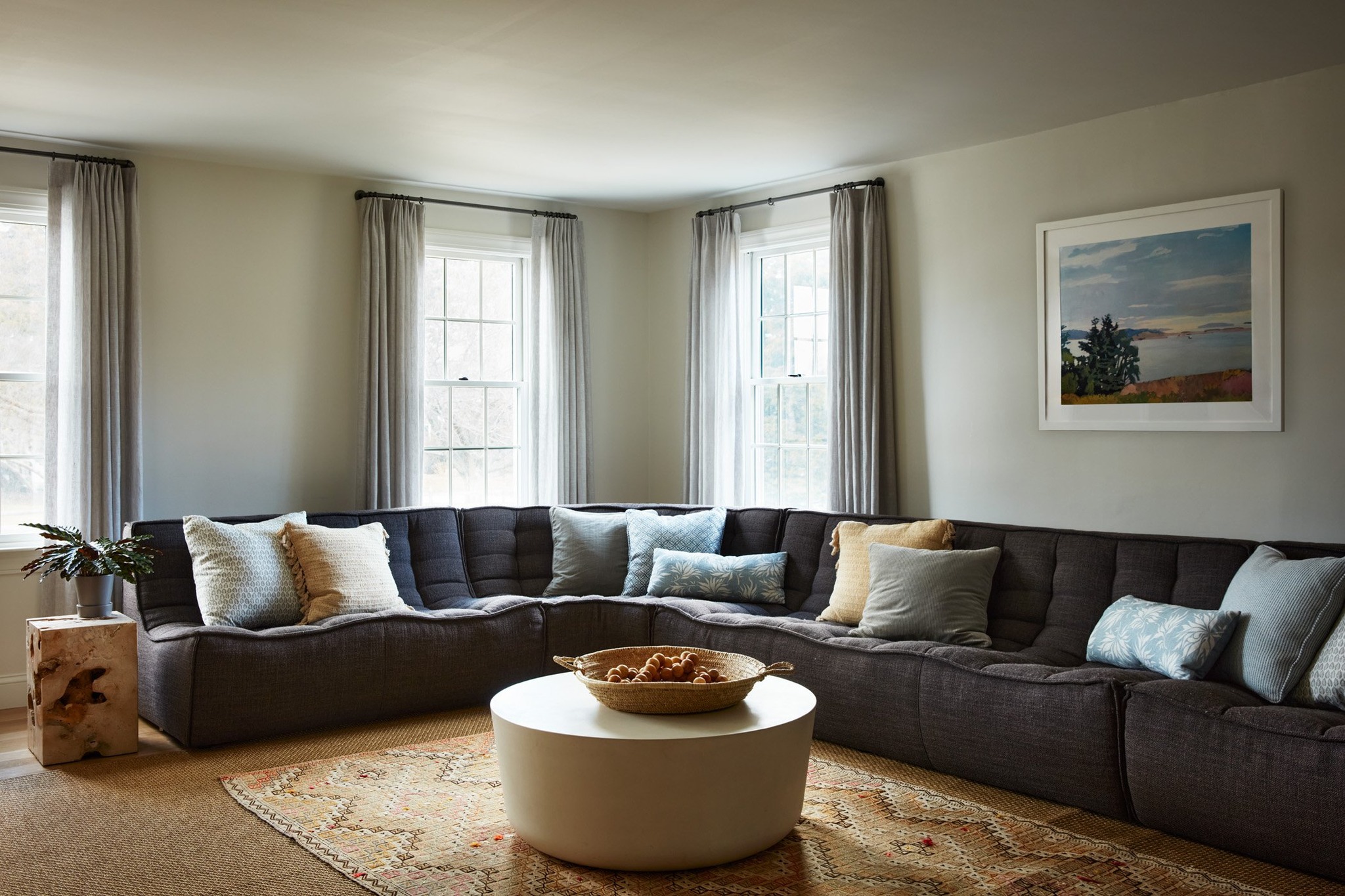
Credits: Instagram
A large sectional can look composed when its surroundings are deliberately quiet. This dark sofa follows the corner beneath tall windows, giving the room generous seating without a collection of separate chairs.
Pale curtains, restrained artwork, and a round light table soften its size. A smaller patterned rug laid over a larger plain one adds detail exactly where the seating gathers.
Borrow this idea by letting the sectional determine the room's main footprint, then choosing fewer supporting pieces. Mix pillows within a narrow range of soft colors instead of covering every cushion with a different print.
The central table should be easy to walk around and reachable from the main seats. Leave nearby wall space open to preserve the calm.
8. Balance Blue Shelves With Golden Accent Chairs
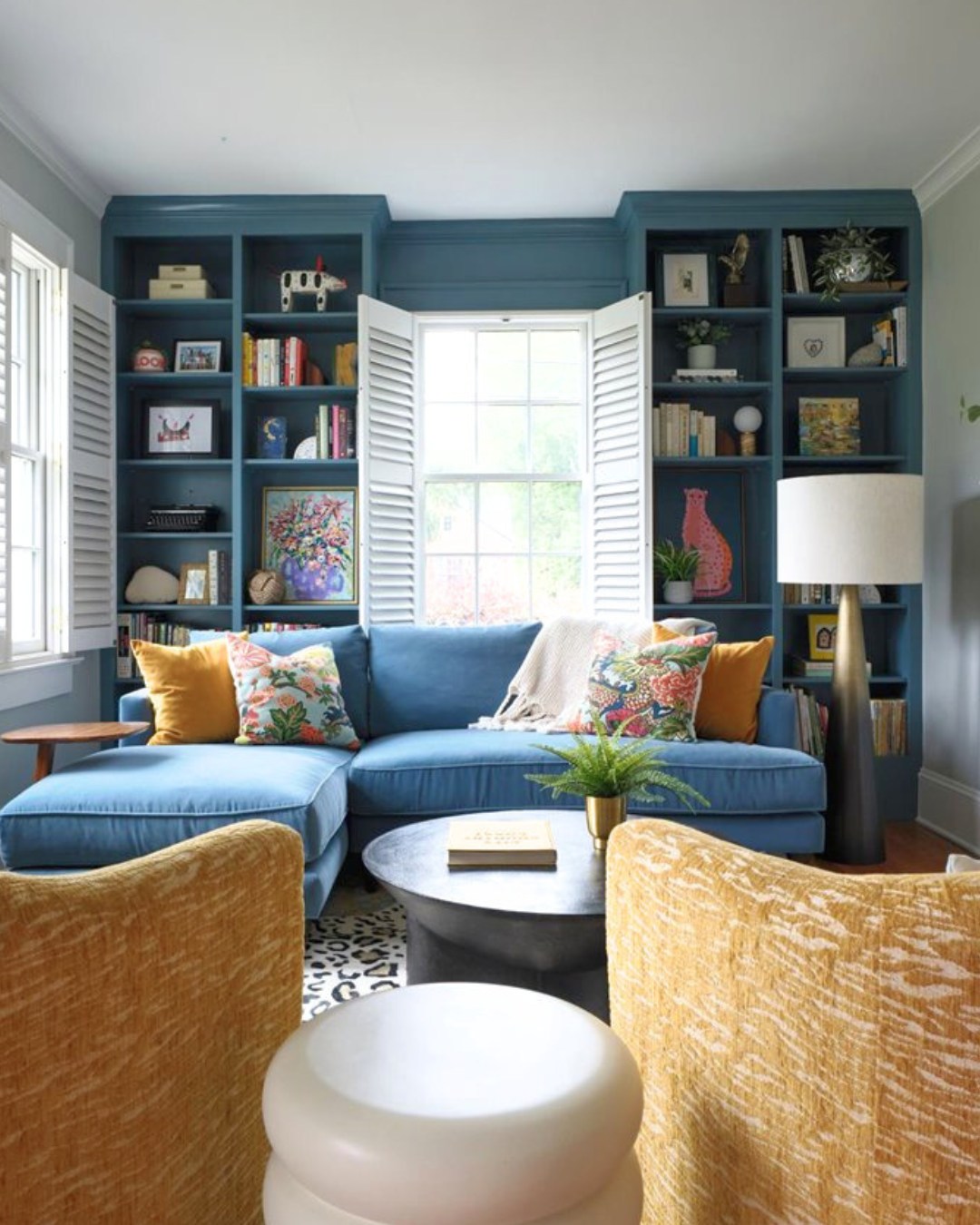
Credits: Instagram
Deep blue shelving turns this living room's window wall into a strong architectural feature. A blue sectional repeats the color below, while golden chairs bring warmth across the central table.
The matching shelf sections create balance even though the displayed books, art, and objects differ. White shutters and a pale ceiling keep the deeper shades from enclosing the room.
For a similar combination, use your dominant color on one substantial surface and one major piece of furniture. Introduce the contrasting color through a pair of seats or a few pillows.
Keep table shapes simple when shelves already hold plenty to explore. Leave gaps between displayed objects, and vary book arrangements so the storage feels personal while retaining a clear structure.
9. Carry a Rich Wall Color Across the Ceiling
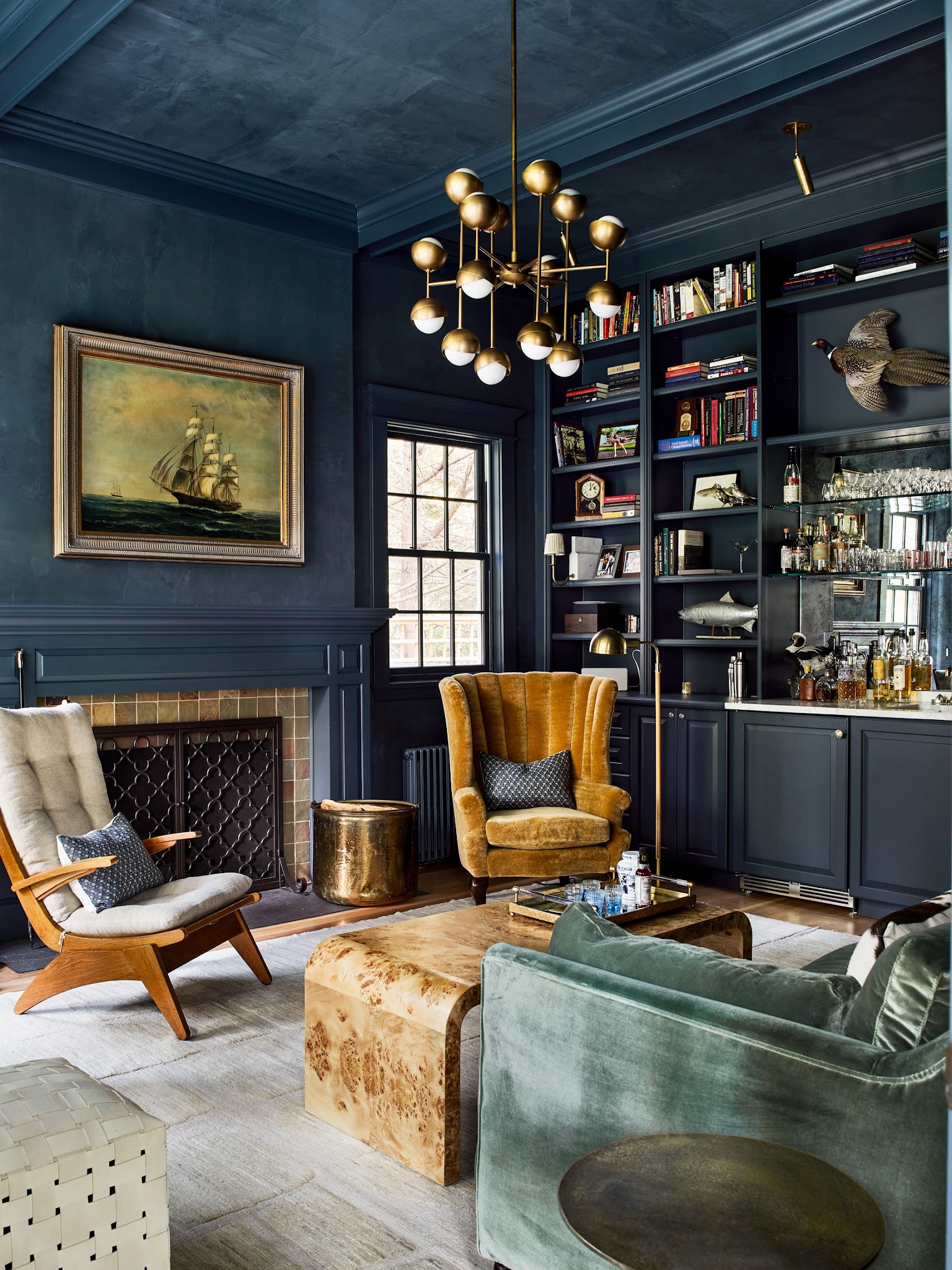
Credits: Instagram
Blue walls, trim, shelving, and ceiling wrap this sitting room in a cohesive color. The continuous backdrop helps its many details feel connected, from books and framed art to the fireplace and drinks cabinet.
A golden chair, green sofa, and pale accent chair introduce variety without losing the room's composed atmosphere. Metallic lighting and a light rug keep selected areas bright.
To borrow the idea, test a deep paint color on several surfaces before committing, since daylight changes its appearance. Choose seating in a small group of complementary tones, then repeat one finish in lighting or accessories.
A large central table grounds the arrangement. Keep everyday objects grouped on trays so a richly furnished room still offers clear, usable surfaces.
10. Pair an Olive Sectional With a Floral Ottoman
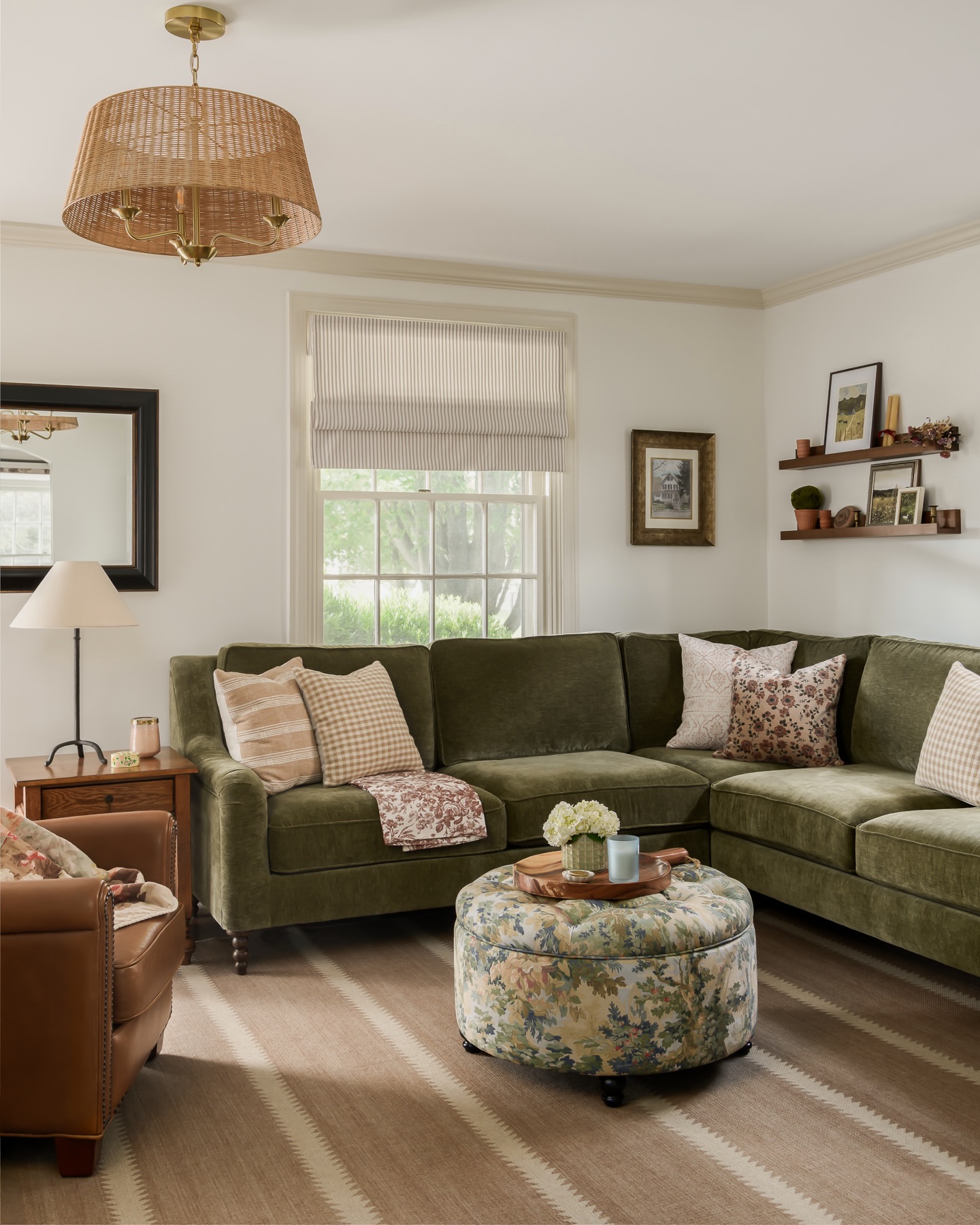
Credits: Instagram
A floral ottoman brings color and softness to this living room without requiring patterned upholstery on every seat. Its greens connect with the olive sectional, while lighter tones echo the pillows and striped rug.
A warm brown chair adds contrast, and the simple white walls leave the furniture clearly defined. Floating picture ledges gather smaller artwork into two tidy lines above the sofa.
Try using one patterned central piece to guide the rest of your palette. Keep the largest seating mostly solid, then choose pillows that repeat individual colors from the ottoman.
A tray makes the soft surface practical for drinks. Finish with lighting at different heights so the room feels welcoming for reading, conversation, and quieter evenings at home.
11. Let Warm Wood Outline Soft White Seating
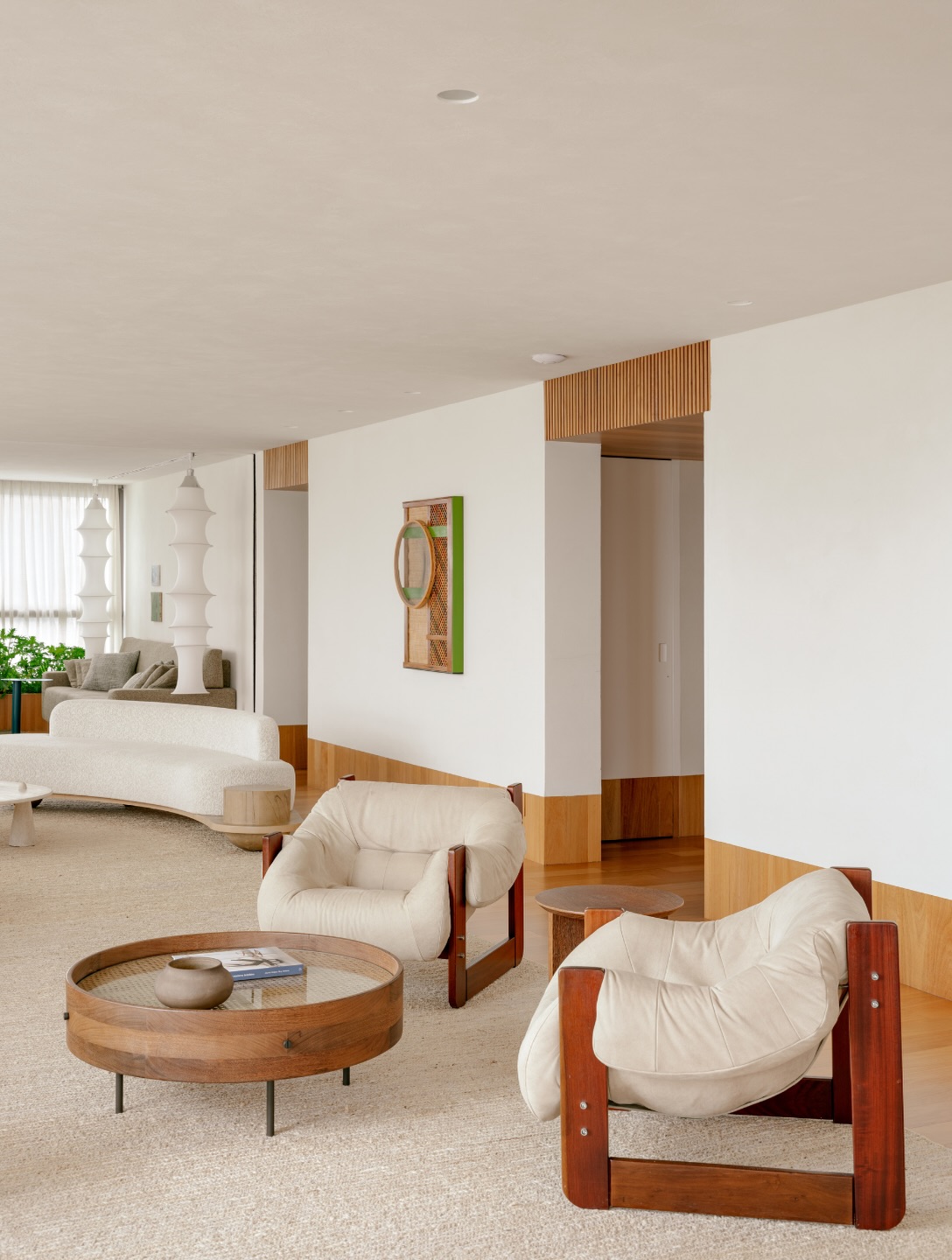
Credits: Instagram
Soft white cushions and substantial wood frames give this sitting area a clear, balanced character. A circular table repeats the warm wood tone, while the pale rug connects the chairs with the curved sofa beyond.
Wood also appears along the base of the walls, bringing continuity to the larger room. The restrained palette leaves the furniture shapes easy to appreciate.
To recreate the feeling, choose a few pieces with visible frames instead of relying entirely on upholstered blocks. Repeat their wood color in one table or architectural detail, then keep nearby fabrics simple.
Rounded seating and tables can soften a room with many straight lines. Leave space between the chairs so their outlines remain visible and the arrangement feels generous.
12. Soften Tall Industrial Windows With Full Curtains
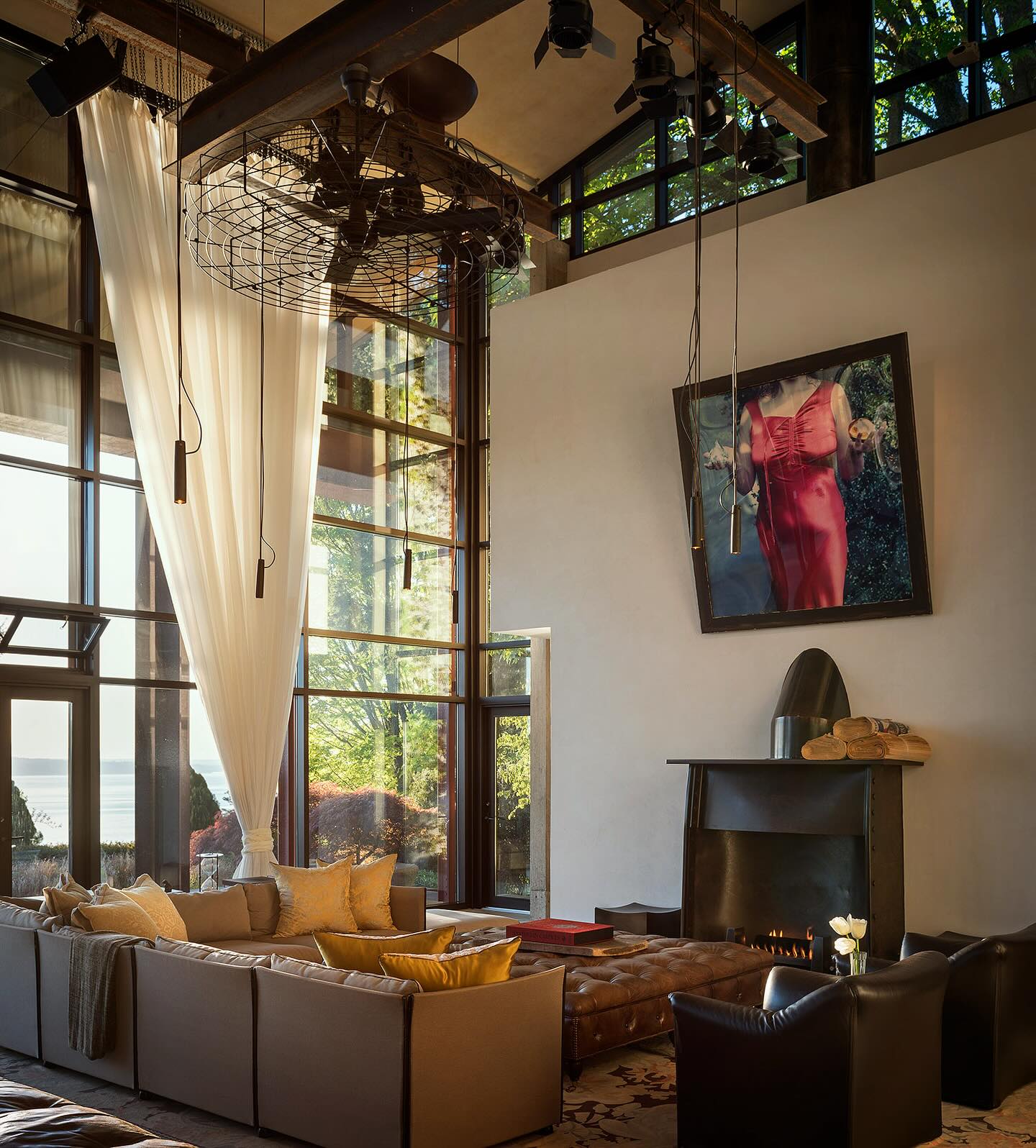
Credits: Instagram
The enormous windows and exposed overhead structure give this living room a dramatic scale. A tall pale curtain softens those strong lines, while the seating gathers closely around a broad tufted ottoman.
Warm pillows and a patterned rug make the group feel comfortable within the larger volume. The fireplace and prominent artwork provide a clear focus at sitting height and above.
Borrow the principle even in a smaller room: let the architecture be bold, then use generous textiles to make the furniture inviting. Keep seats close enough for easy conversation instead of spreading them across every available wall.
A shared color between the pillows and rug helps the group feel connected. Choose substantial accessories that remain visible against tall surroundings.
13. Give One Tailored Chair the Spotlight
Credits: Instagram
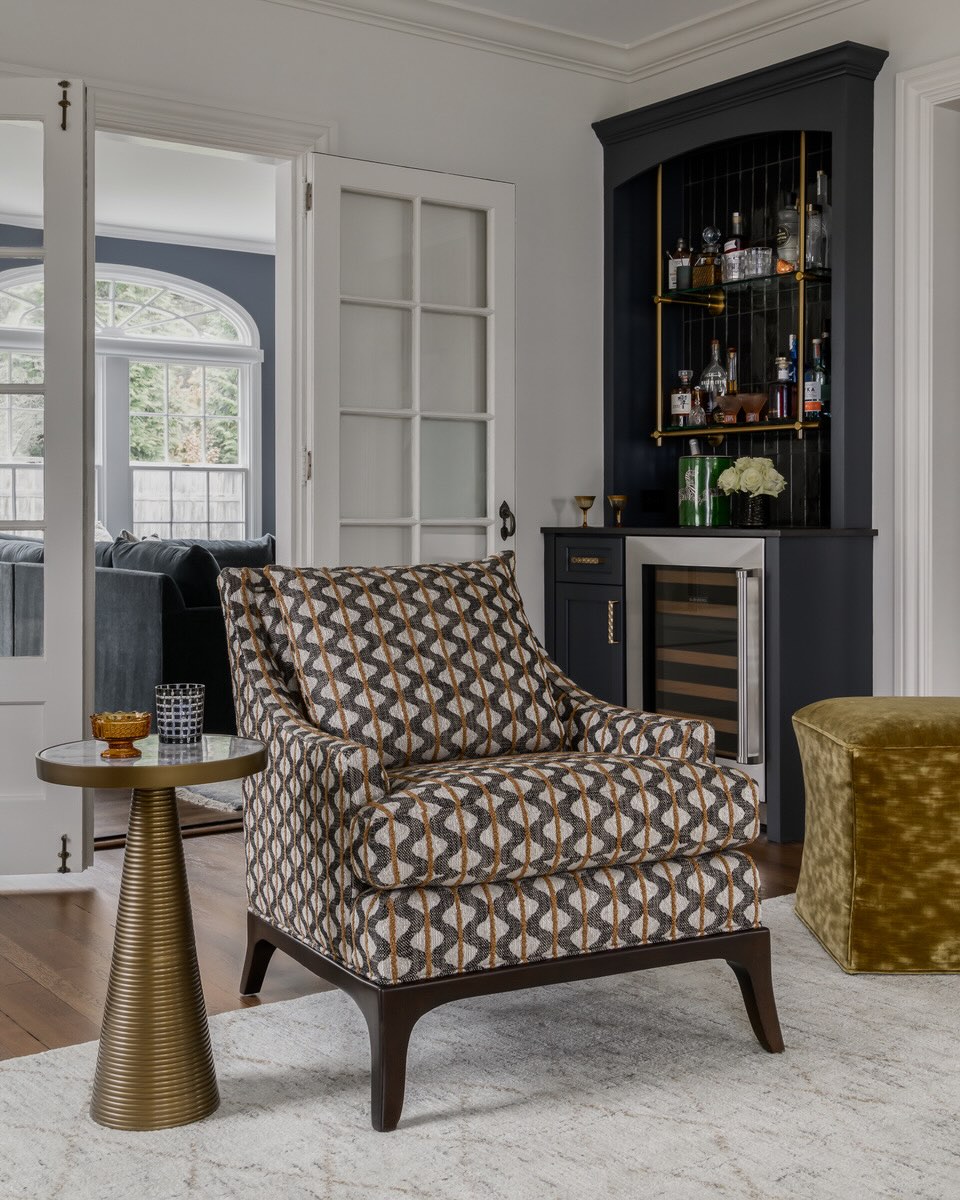
A geometric fabric turns this compact chair into a focal point without overwhelming the living area. Its dark frame and neat outline echo the nearby built-in cabinet, while a golden side table picks up warmer tones in the upholstery.
An olive ottoman adds another texture within the same restrained palette. Pale walls, a quiet rug, and glazed doors leave plenty of breathing room around the pattern.
This approach works well when an otherwise simple living room needs one expressive piece. Choose a chair with a comfortable shape first, then select fabric that relates to existing finishes.
Keep nearby accessories small and useful. A side table at arm height makes the corner practical, while open space around it preserves its presence.
14. Let Books and Collected Pieces Add Character
Credits: Instagram
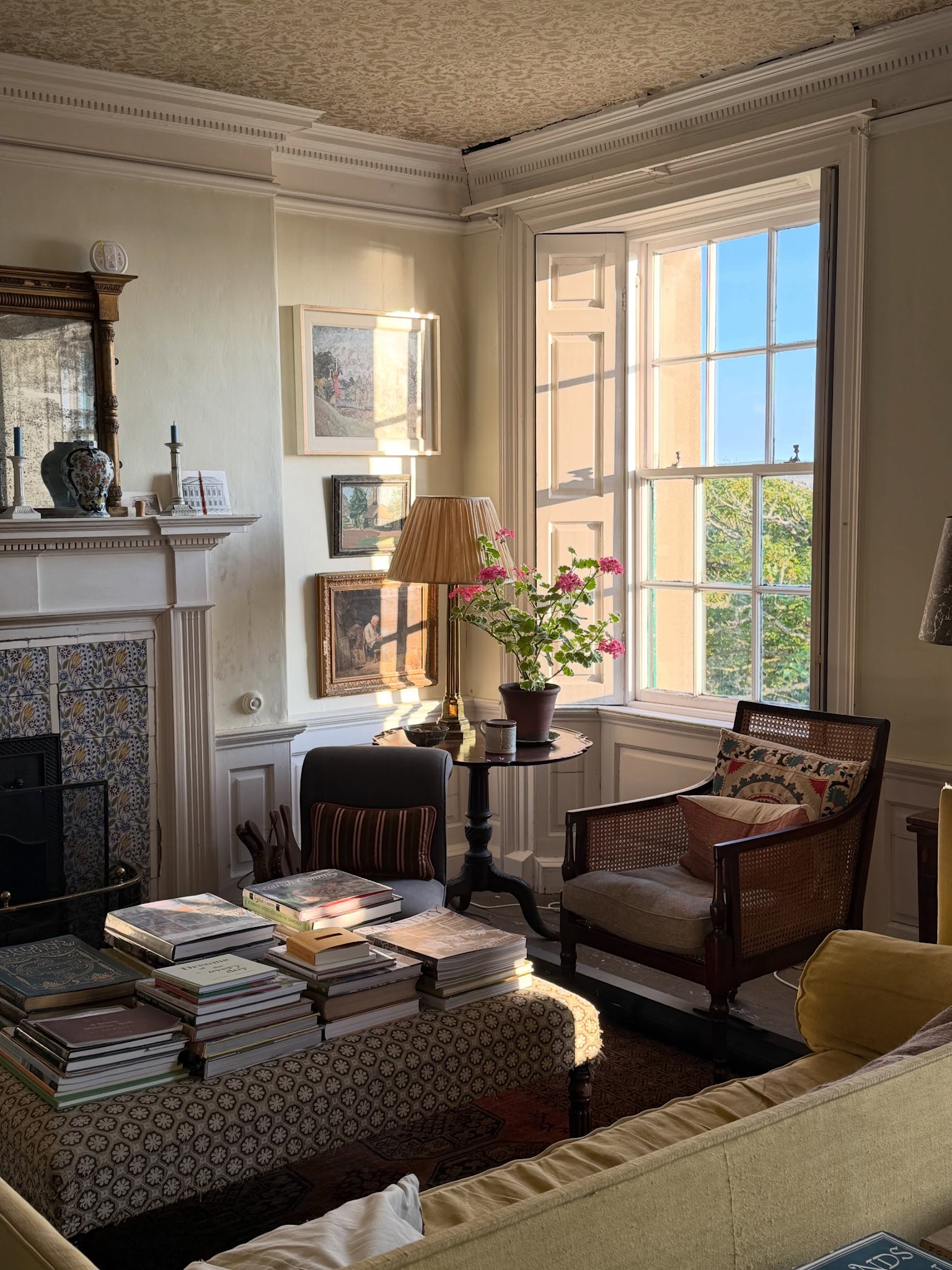
Stacks of books, a patterned ottoman, and several different chairs give this sitting room an appealingly personal rhythm. The pale walls keep the collection from feeling heavy, while the tall window brings light across the seating.
A small round table carries a lamp and plant, making the corner useful as well as decorative. The framed pictures are grouped near the fireplace instead of spread evenly across every wall.
Borrow this relaxed approach by keeping the furniture arrangement clear and allowing favorite objects to supply the detail. Gather books into manageable stacks, leaving room for a tray when drinks are served.
Mix chair shapes with a shared warm tone, and choose lighting that supports reading as well as evening conversation comfortably.
15. Connect an Open Living Area With Repeated Colors
Credits: Instagram
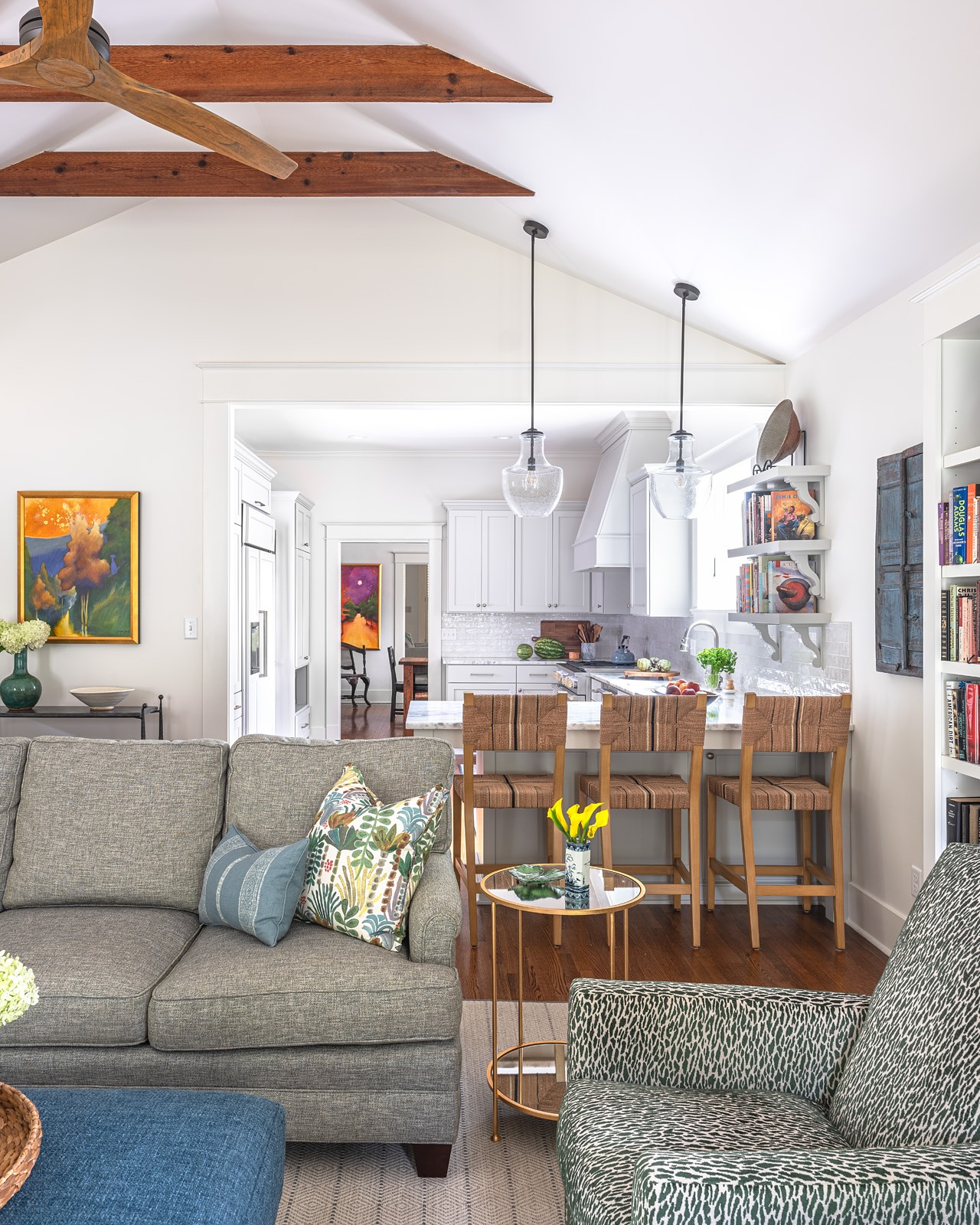
This living area remains distinct from the kitchen while sharing its light, welcoming palette. A gray sofa and patterned green chair define the foreground, with a small round table tucked between them.
Blue upholstery and pillows add another calm color, while warm wood appears in the ceiling beams, floor, and stools beyond. The repetition helps the open spaces feel related without requiring identical furniture.
When decorating connected rooms, choose two or three colors that can appear in different proportions throughout. Keep the living area's strongest patterns on movable pieces such as chairs and pillows.
A rug can establish the seating zone, while carefully placed side tables add function without blocking the view. Let useful objects and artwork provide smaller accents.
16. Echo a Curved Sofa With Rounded Lighting
Credits: Instagram
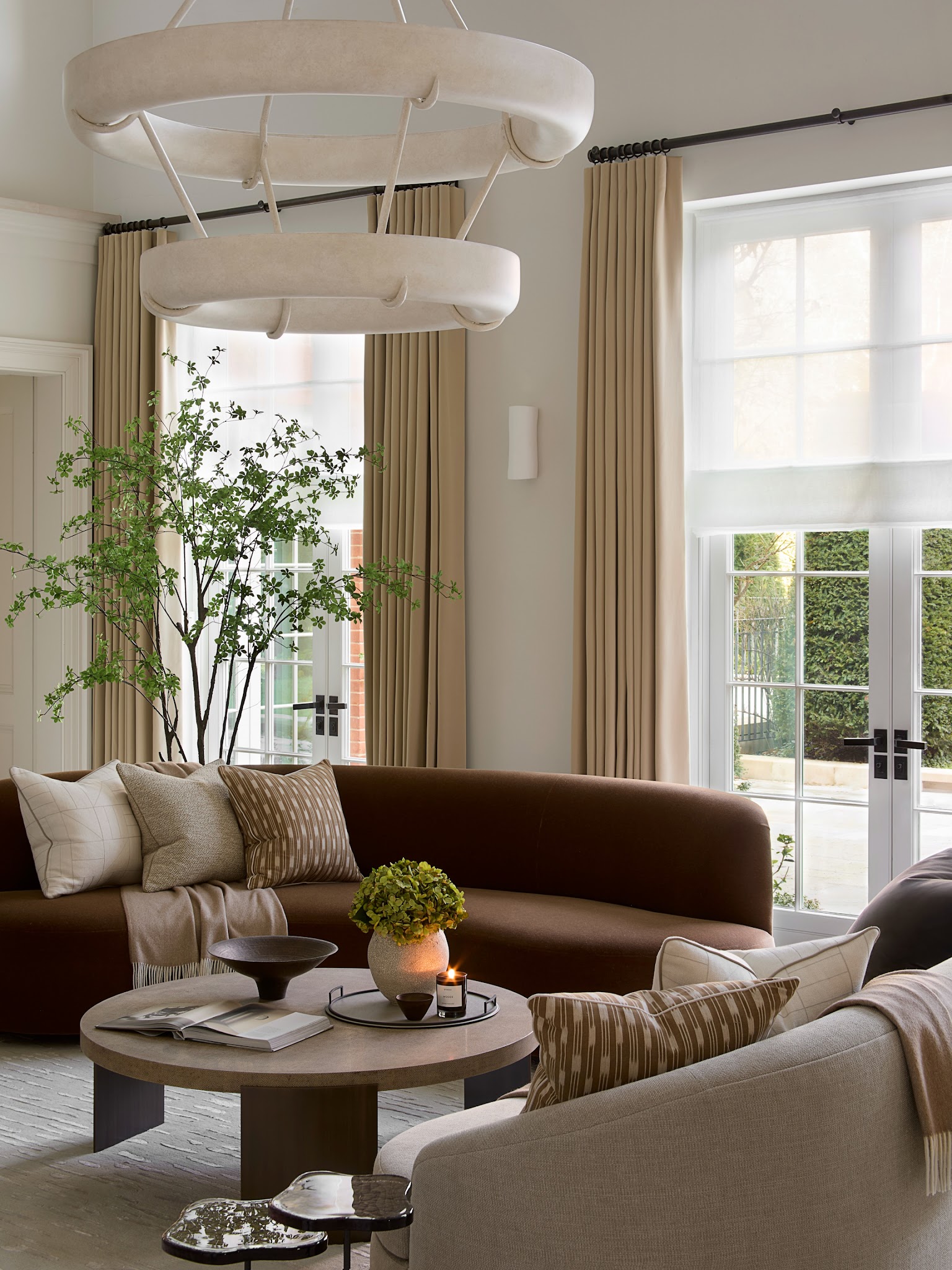
A curved brown sofa gives this elegant room a gentle focal line. The pale sofa opposite, circular table, and rounded overhead fixture continue the same language, making the arrangement feel cohesive without becoming repetitive.
Tall curtains and simple window shades soften the room's vertical edges. The neutral colors vary enough to show each silhouette clearly, while the tall greenery adds an informal touch.
Try using one curved furniture piece as the starting point for a room, then repeat its shape in just a couple of supporting elements. Keep the central table scaled to the conversation area so it serves both sofas comfortably.
A small selection of pillows can introduce texture, while clear tabletop space keeps the effect composed and usable.
17. Frame a Window Seat With Open Shelving
Credits: Instagram
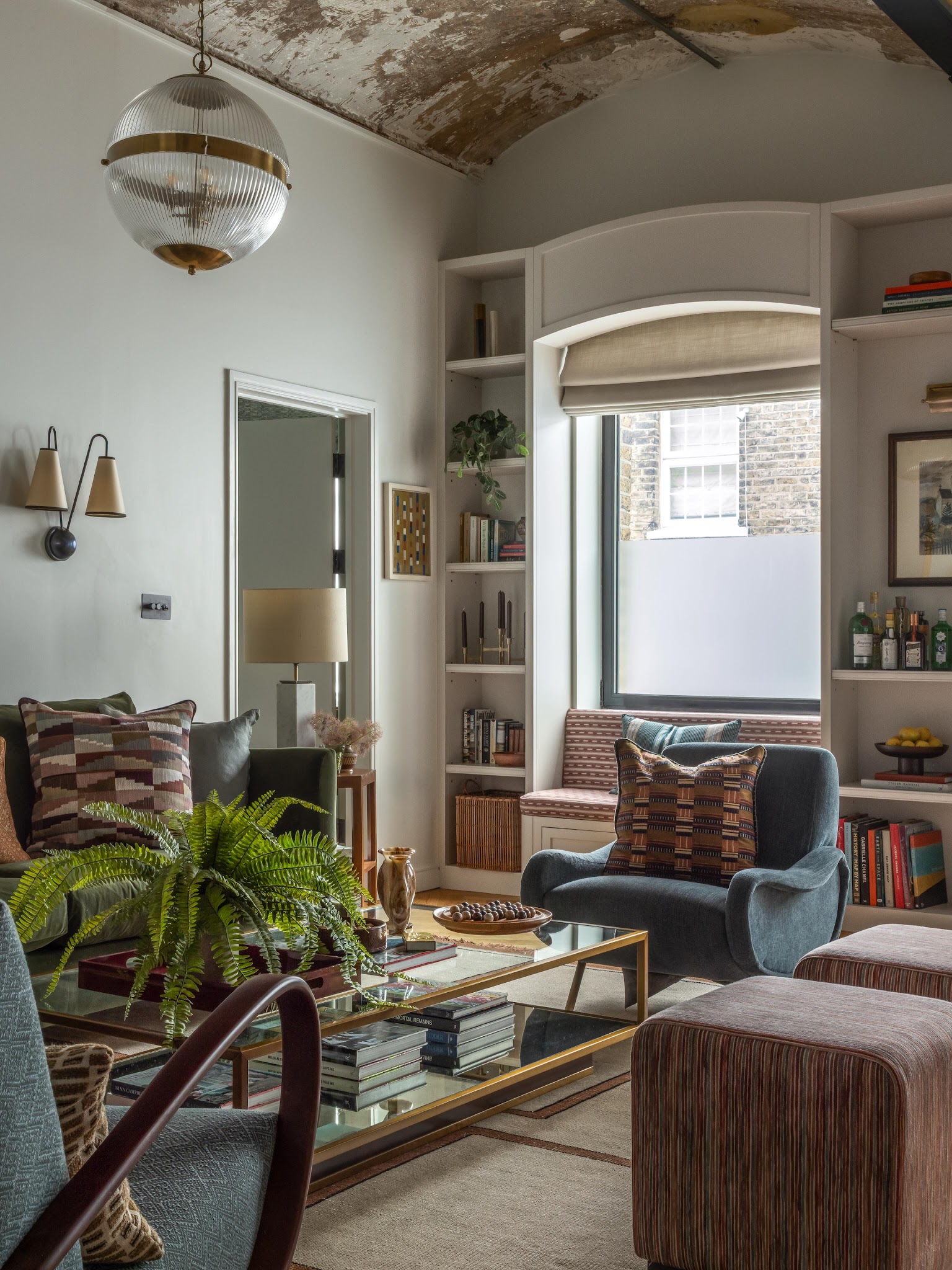
Shelves on either side of this window make its built-in seat feel like part of the living room's architecture. The gently curved detail above the shade softens the window wall, while books and small objects give the pale joinery depth.
Blue and green seating brings color into the foreground, with patterned pillows connecting the individual pieces. A glass coffee table lets the rug and furniture legs remain visible beneath it.
Use this idea where a window wall feels unfinished or offers an awkward gap for furniture. Plan a comfortable seat with accessible storage nearby, then keep the shelving balanced rather than perfectly identical.
Repeat one fabric color elsewhere in the room so the reading spot belongs to the seating arrangement.
18. Use Black and White to Support a Bold Ceiling
Credits: Instagram
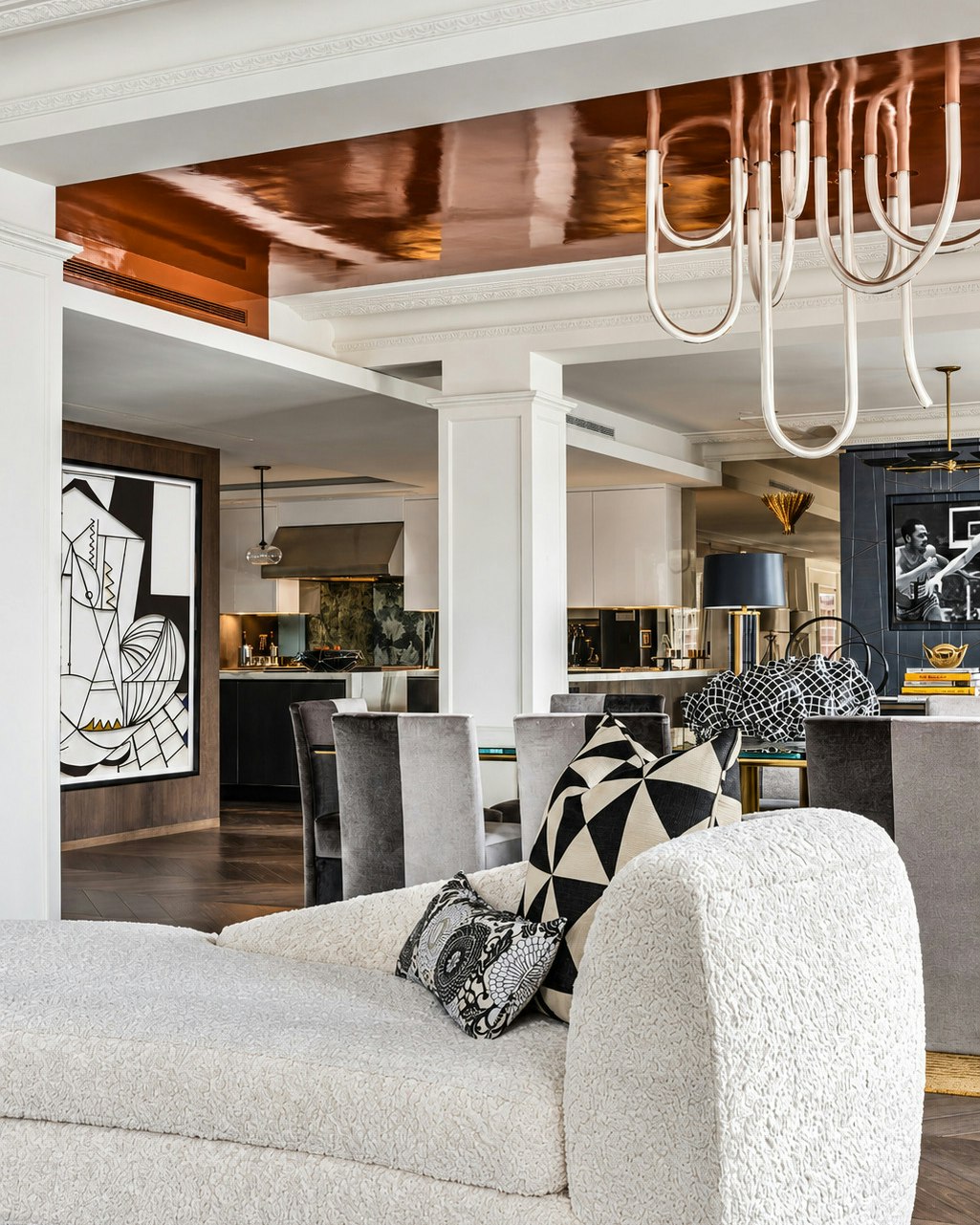
A glossy warm ceiling gives this open living space a distinctive flourish. Below it, white upholstery, dark accents, and geometric pillows form a disciplined palette that supports the stronger overhead color.
The large graphic artwork repeats the contrast, while the sofa's rounded profile softens the surrounding columns and straight furniture lines. This is a useful lesson in choosing where a room's drama should live.
If a ceiling, wall, or architectural feature already makes a statement, keep the main seating colors more restrained. Repeat the strongest contrast in a few accessories instead of introducing many unrelated shades.
A textured fabric can add interest without another pattern. Check the room from adjoining spaces so the bold feature feels connected to the plan.
19. Pair Patterned Chairs With a Simple Central Table
Credits: Instagram
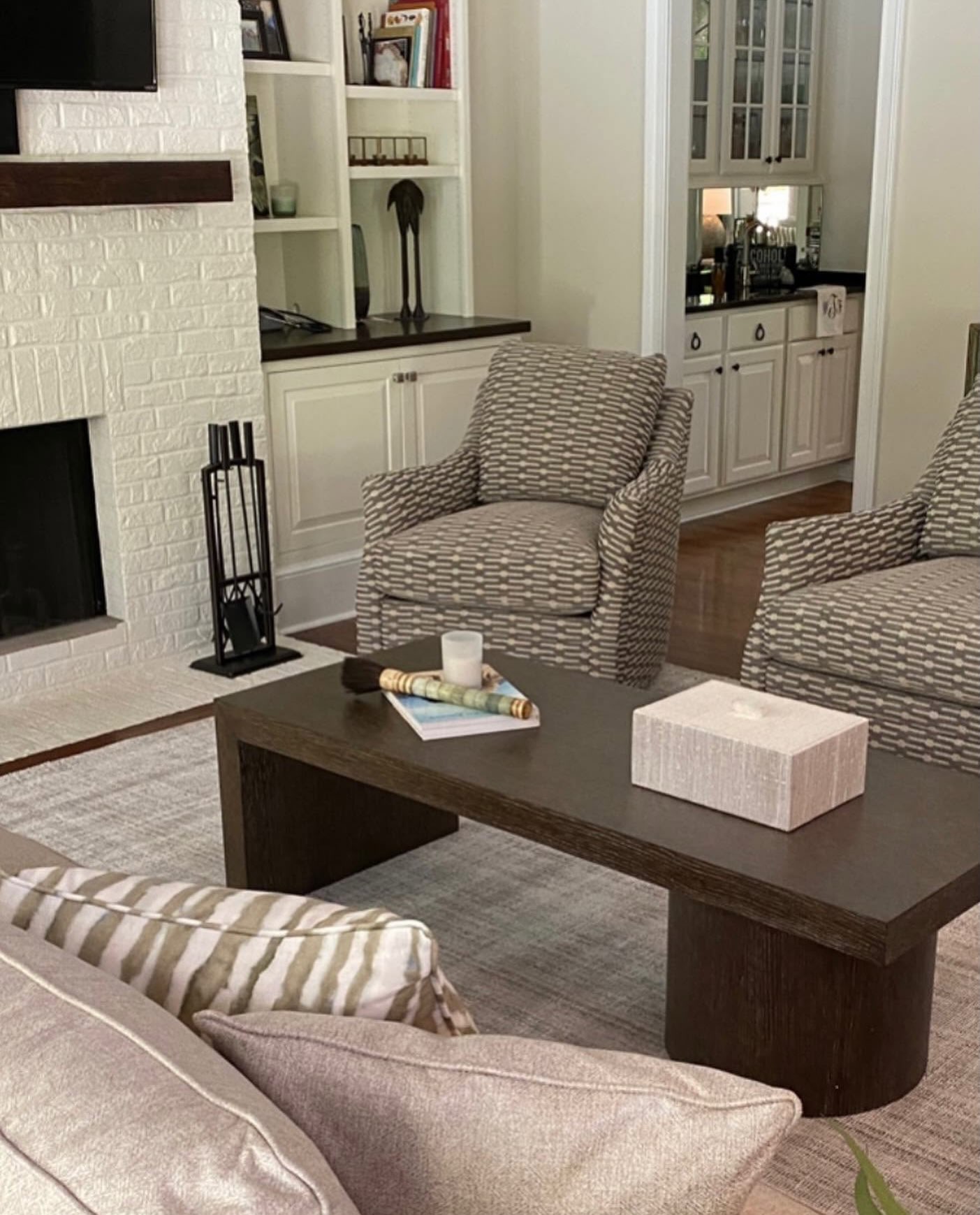
Two patterned chairs bring movement to this living room while the large rectangular table keeps the center visually steady. The upholstery repeats pale and darker neutral tones already present in the sofas, rug, and fireplace wall.
Built-in cabinets provide a calm backdrop, allowing the chairs to add interest without competing with numerous decorative objects. A pair can be especially useful when one large seat would feel heavy.
Choose chairs that offer comfortable proportions, then position them so conversation flows naturally toward the sofas. Keep the coffee table straightforward when the seating fabric has a strong repeat.
A few small objects are enough to finish the surface. Leave accessible routes around the group so the balanced arrangement works during everyday use.
20. Anchor a Pale Sofa With a Dark Tufted Ottoman
Credits: Instagram
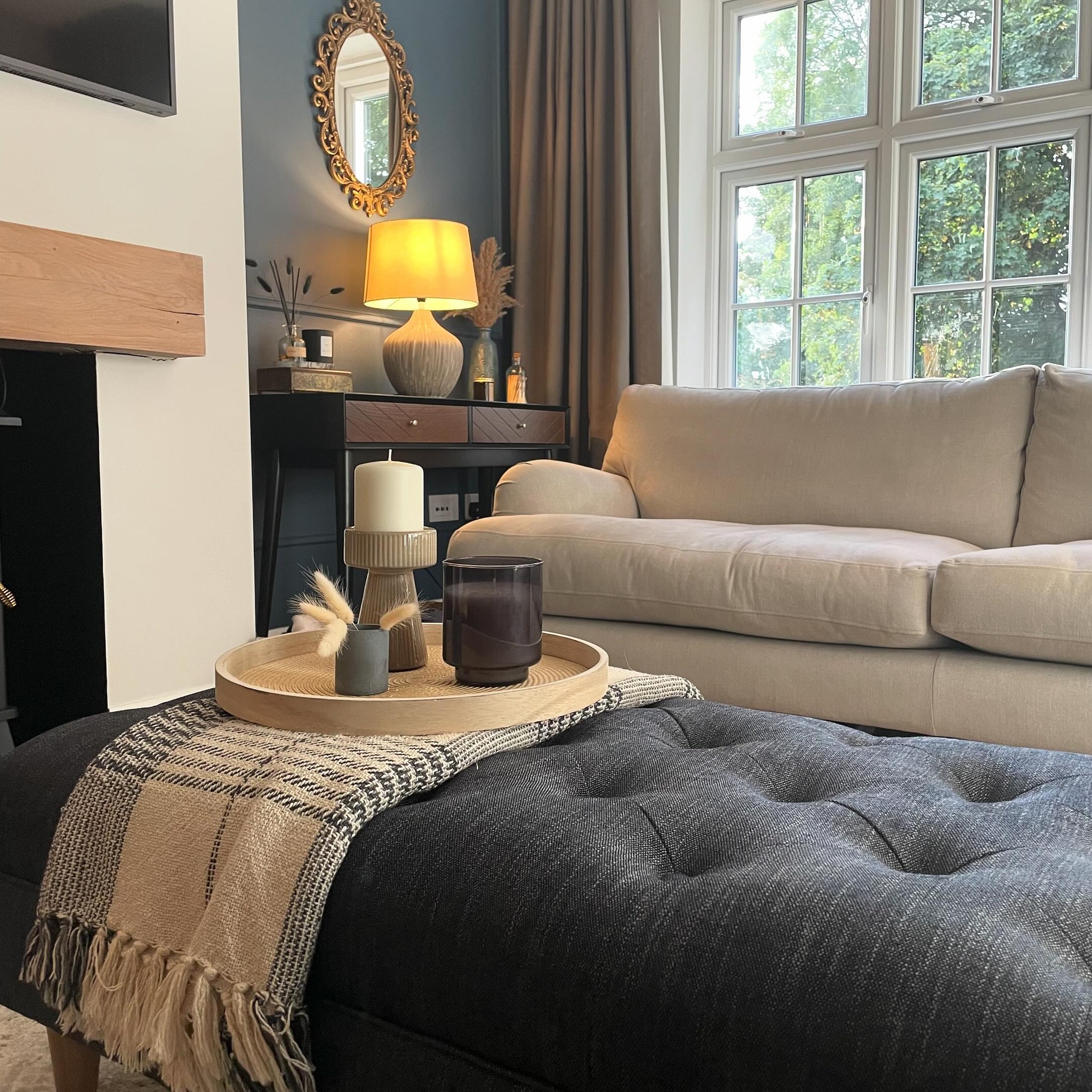
A dark tufted ottoman gives this pale seating corner a comfortable center. Its generous surface contrasts with the sofa's simple cushions, while a round tray collects the smaller accessories into one tidy group.
The darker wall behind the lamp adds depth, and the warm curtain color helps connect the gray and cream tones. An ornate mirror supplies a decorative detail without covering the wall.
Try this combination when a neutral living room needs more definition. Choose an ottoman large enough to relate to the sofa, then add a stable tray for everyday use.
Keep the surrounding palette narrow so texture does more of the work. A shaded table lamp brings gentle light to the corner after the daylight begins fading.