
Sage can feel restful without making a living room look flat, especially when its tone and texture shift across the space.
The Best Sage Green Living Room Ideas show how to build that depth with a deeper green sofa, sage paneling, or a gallery wall set against a muted backdrop.
You’ll also find ways to warm cooler shades with rust pillows, plaid, wood, or a small yellow accent. These examples offer practical inspiration for balancing green walls with pale seating, crisp trim, and the details already in your room.
1. Layer a Deep Green Sofa Against Sage Walls
Credits: Instagram
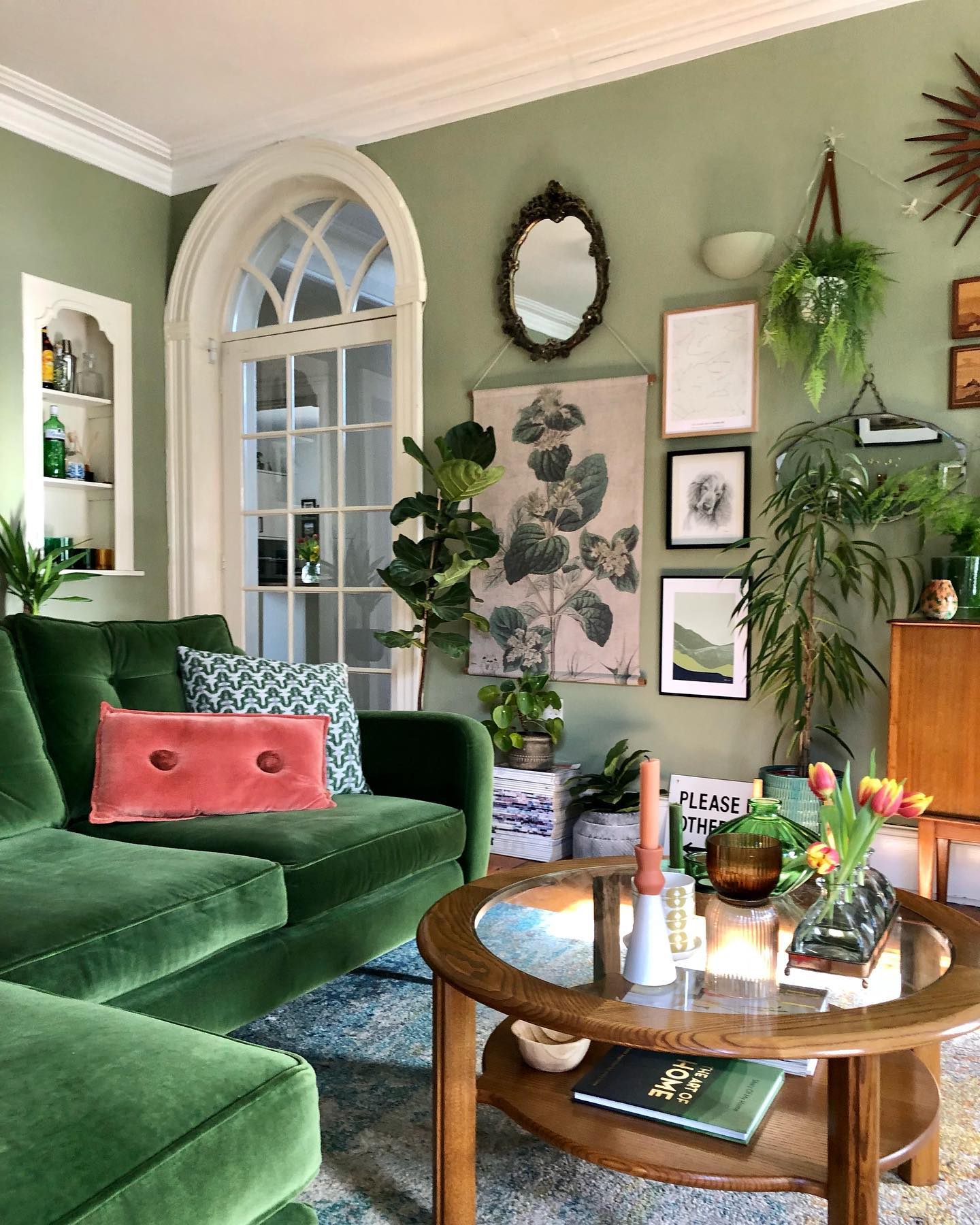
Soft sage walls give this deeper green sofa a gentler backdrop, creating depth without introducing a completely different color family. White trim outlines the arched doorway and keeps the layered greens crisp.
Try this combination by comparing upholstery and wall samples together in your own room, checking both daylight and lamplight before committing. A coral pillow provides a warm accent that stays small enough to change easily.
The botanical wall hanging and leafy plants repeat the green theme at different heights, while the rounded wood coffee table adds warmth. Keep some wall space visible between artwork so the sage remains part of the composition.
Choose a few plants suited to the available light rather than filling every corner with greenery.
2. Carry Warm Sage onto the Ceiling
Credits: Instagram
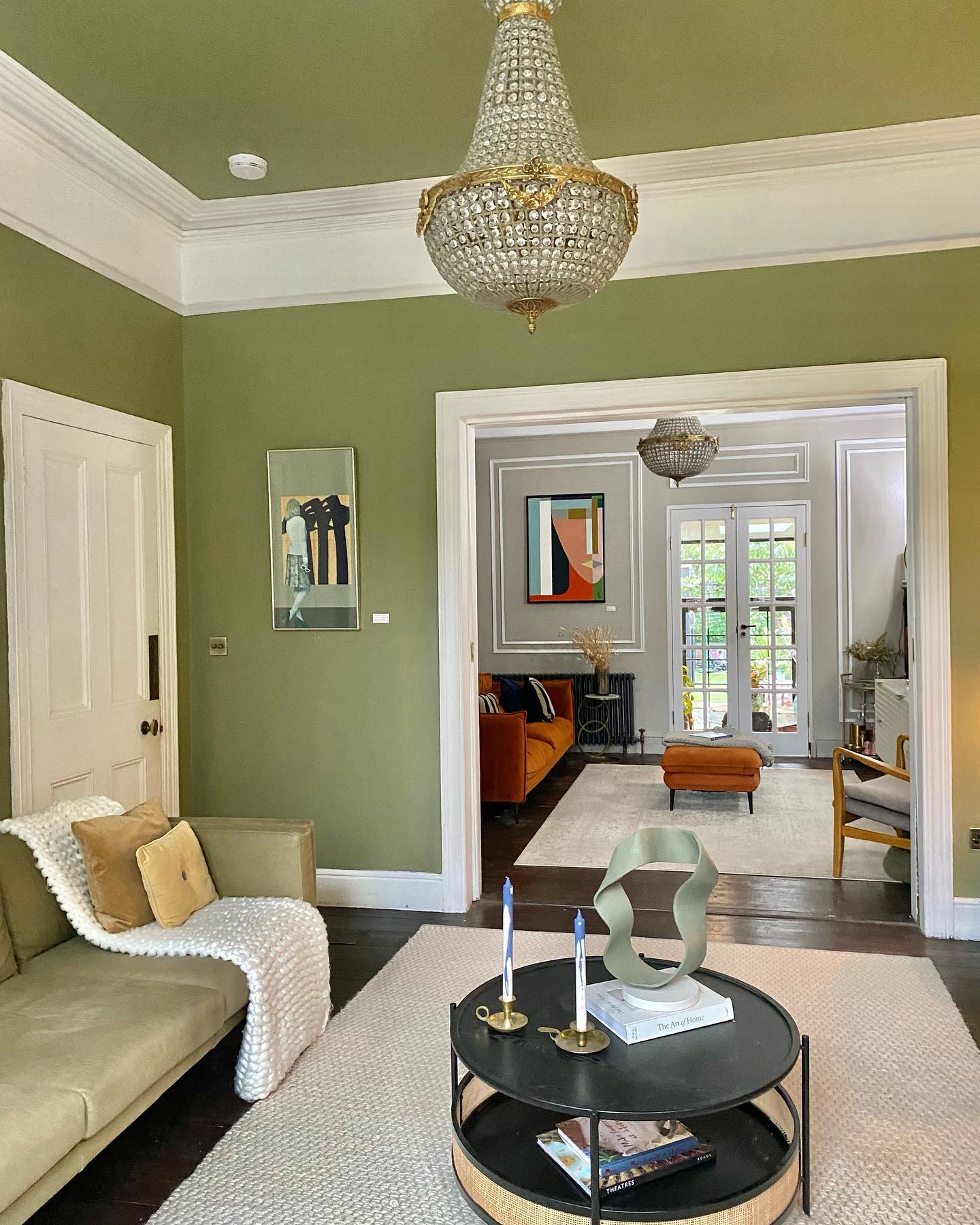
An olive leaning shade of sage covers both the walls and ceiling here, giving the front sitting room a warm, enclosed feel.
Broad white molding creates a clear border overhead, and white door frames connect the green room to the gray space beyond.
If you like a colored ceiling, sample it horizontally as well as vertically; the same color can look different as light changes across each surface.
Keep substantial trim light when you want its shape to remain prominent. The pale rug and chunky white throw break up the darker floor and green seating.
A black round coffee table anchors the foreground. Repeat one accent through adjoining rooms, such as warm yellow or orange, to make the transition intentional.
3. Give a Collected Gallery Wall a Sage Backdrop
Credits: Instagram
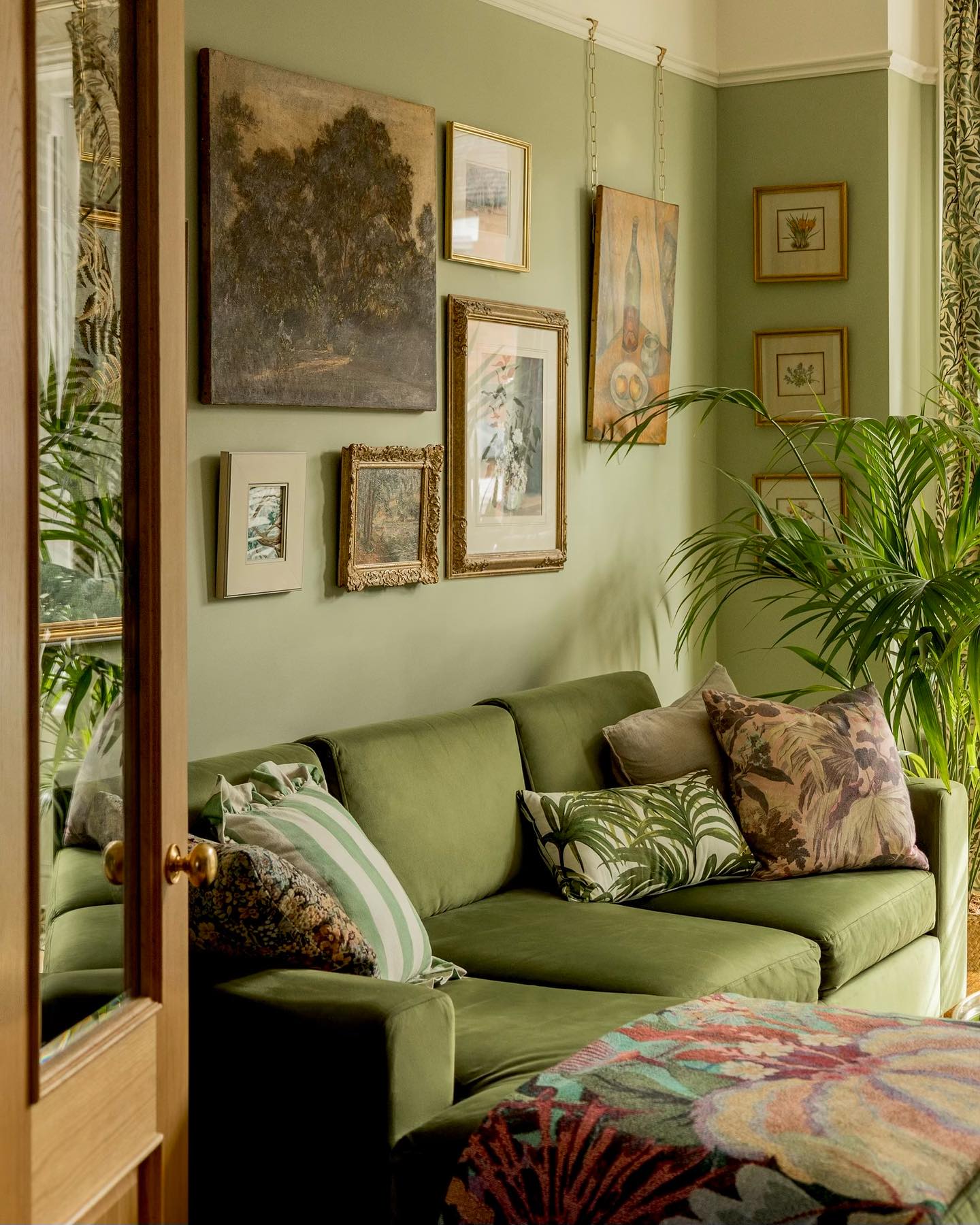
Sage green walls pull together a varied collection of landscapes, botanical pictures, and still life artwork above this sofa. Gold toned frames add warmth, while the large unframed painting keeps the grouping from feeling too uniform.
Start with your largest piece, then arrange smaller pictures around it using paper templates before making holes. Let the collection turn the corner if you have more art than one wall comfortably holds.
Here, the light upper wall and picture rail provide a clean stopping point. Green upholstery continues the background color, allowing striped and leafy pillows to introduce pattern.
Use a few repeated greens across the textiles instead of trying to match every shade. Leave enough room above seated heads for comfortable placement.
4. Add Quiet Sage Paneling Behind a Charcoal Sofa
Credits: Instagram
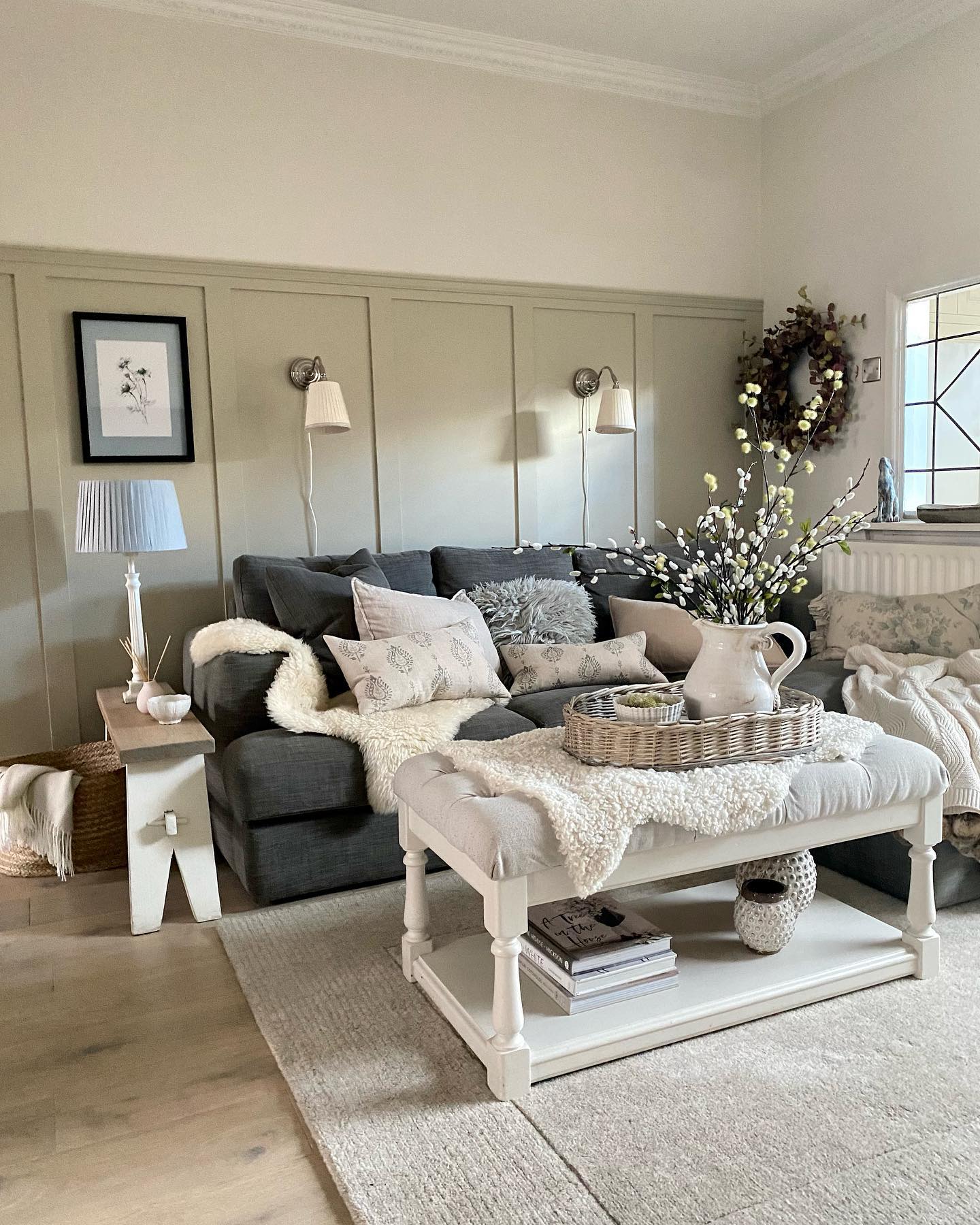
Subdued gray sage paneling gives this charcoal sectional a softer backdrop while adding structure to an otherwise simple wall. The panels stop below the ceiling, leaving a broad white band that keeps the room light.
Plan the panel spacing around your sofa and any wall lights before fixing the strips in place. A pair of shaded sconces sits above the seating here, leaving the side surface available for a separate lamp and small objects.
Check fixture height while seated so shades will not interfere with your head or shine directly into your eyes. Pale cushions, a textured throw, and a cream ottoman lighten the dark upholstery.
Keep the green quiet by choosing patterns with soft contrasts instead of sharp colors.
5. Let a Full Sage Panel Grid Replace Wall Art
Credits: Instagram
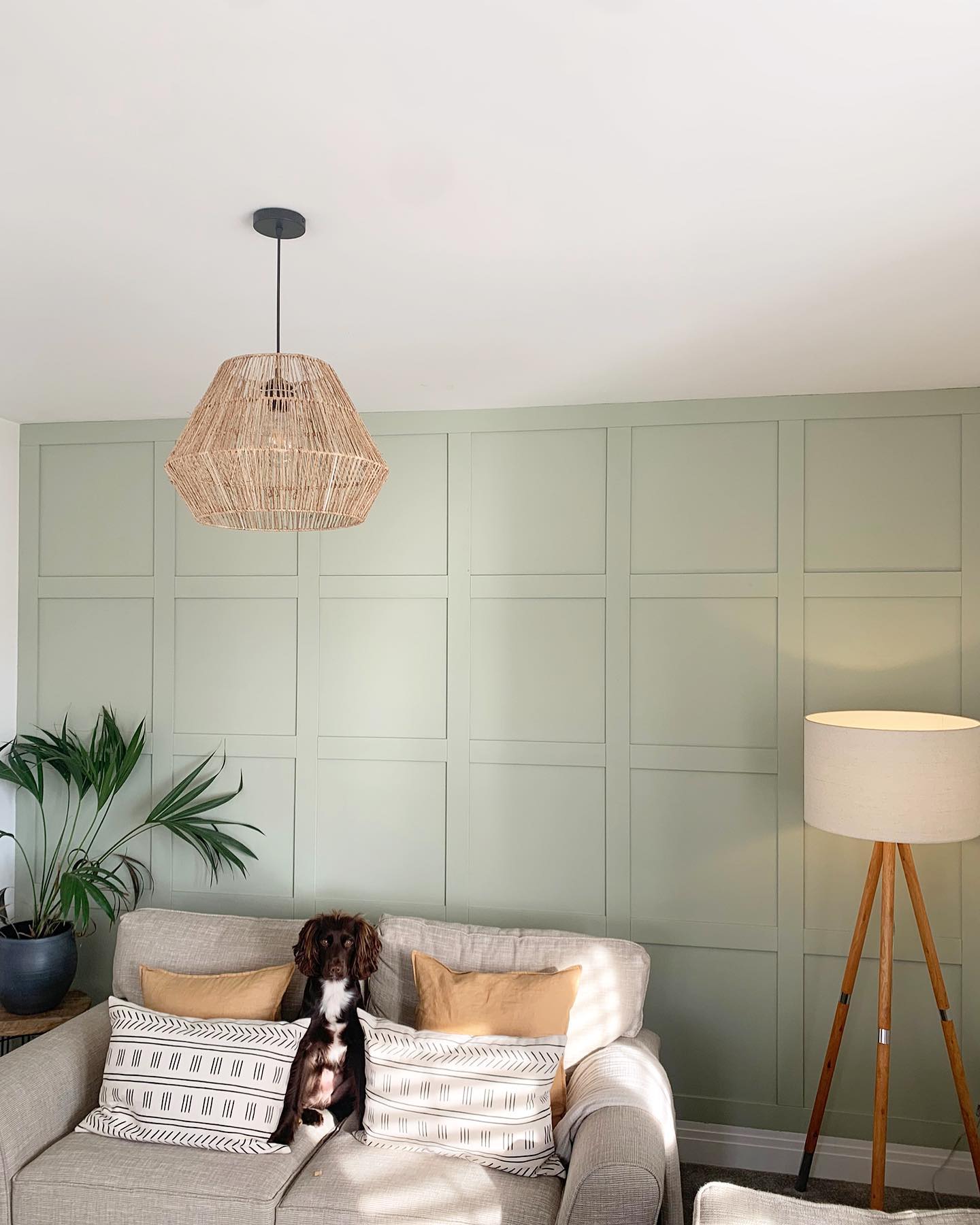
A full wall of sage rectangles supplies the decoration behind this cream sofa, so artwork is unnecessary. Painting the strips and recessed areas the same color lets their shadows create the pattern.
Before installing a similar grid, sketch the wall to scale, including baseboards and outlets. Adjust the divisions to avoid a narrow leftover panel at one end.
Test the layout with removable tape and view it from the doorway as well as your usual seat. The woven pendant and wood tripod lamp soften the regular lines with warmer textures.
Mustard pillows add a small amount of contrast, while black markings on the front cushions echo the pendant cord. Keep nearby furnishings simple enough for the wall pattern to register.
6. Match the Mantel to the Sage Walls
Credits: Instagram
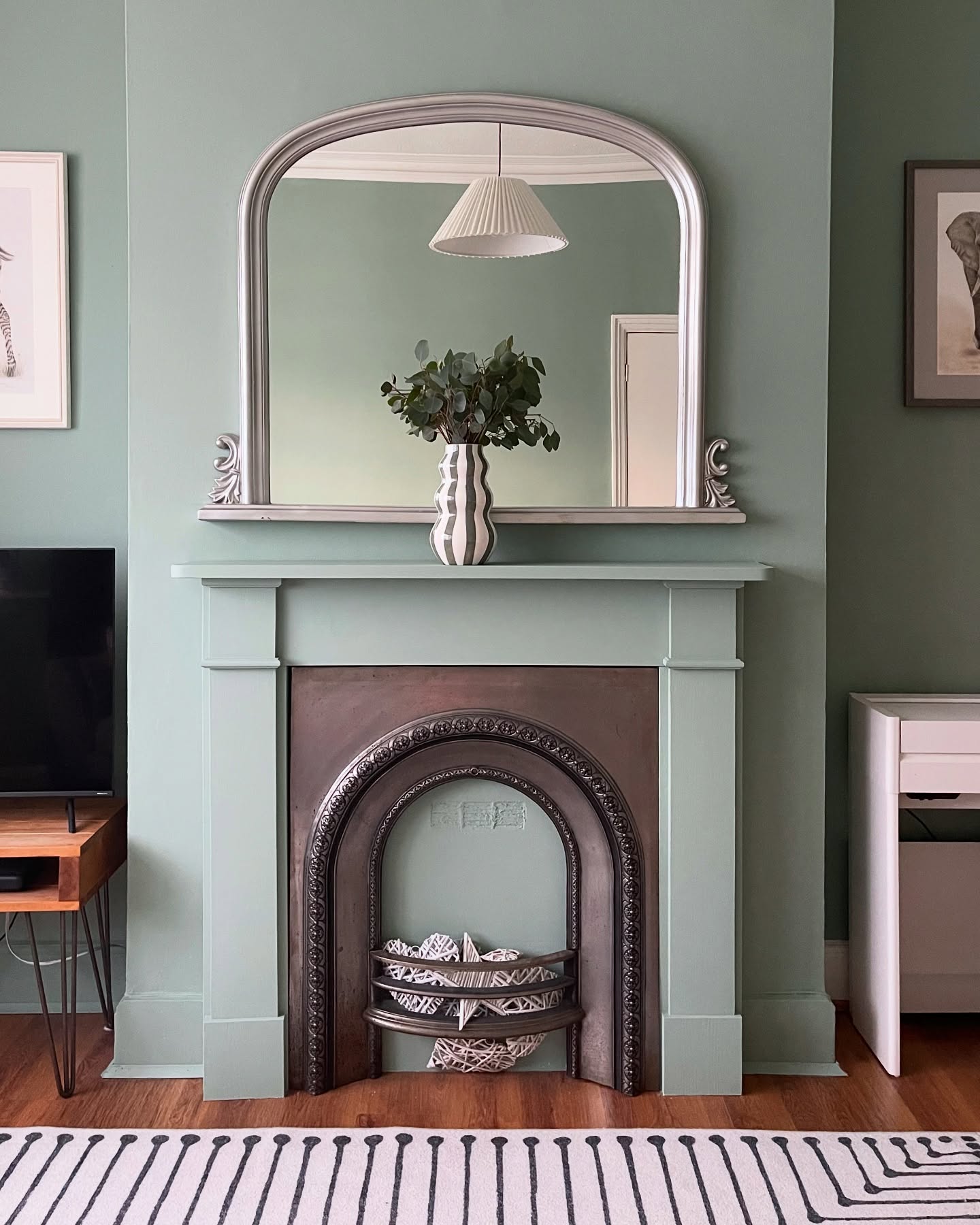
Matching sage on the mantel and surrounding walls makes this fireplace feel integrated rather than outlined as a separate feature. Its shape remains visible through the projecting shelf and shallow shadows, while the darker arched insert supplies contrast.
Above it, a large pale framed mirror repeats the curve and reflects green from the opposite wall. Try this approach when a contrasting mantel interrupts an otherwise calm palette.
Confirm that any paint is suitable for the specific surface; working fireplaces also require finishes and clearances appropriate to their heat exposure. Keep the mantel arrangement simple so its silhouette stays readable.
One striped vase and leafy stems are enough here. The black and white rug echoes the vase without adding another color.
7. Balance Pale Seating Beneath an Ornate White Ceiling
Credits: Instagram
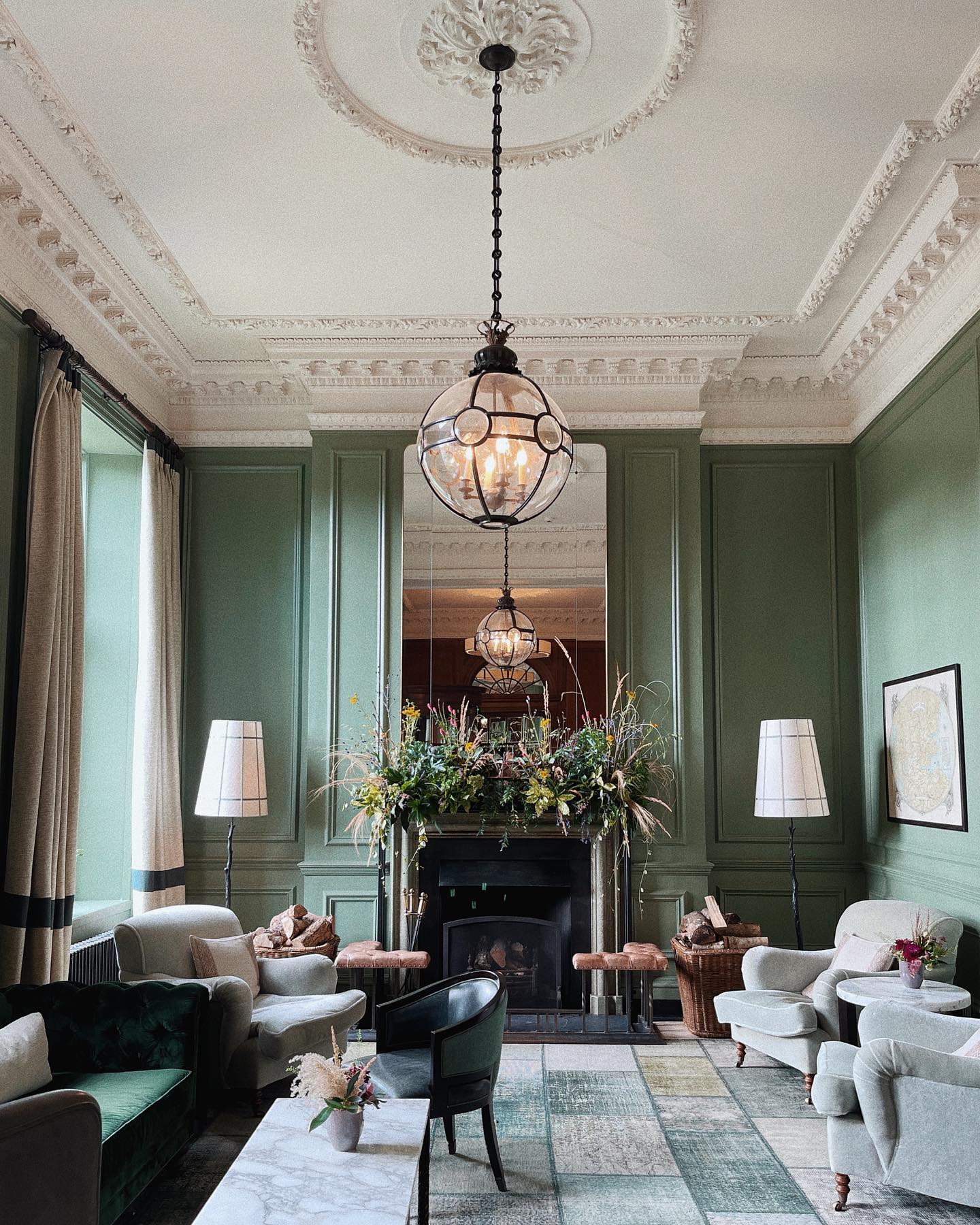
Muted green walls give this formal sitting room richness while the white ceiling keeps its elaborate molding easy to appreciate. Pale armchairs balance the fireplace, and matching floor lamps repeat that symmetry without making every seat identical.
You can borrow the arrangement on a smaller scale with two chairs and a single central focal point.
Start by keeping the chairs similar in height and visual weight, then allow different cushions or side tables to make the room comfortable. Keep the ceiling and detailed cornice in one light shade to separate them clearly from sage walls.
A tall mirror extends the vertical emphasis. Choose a pendant proportionate to your own ceiling height, and preserve clear walking routes between the grouped seats.
8. Blend Alcove Bookshelves into Sage Walls
Credits: Instagram
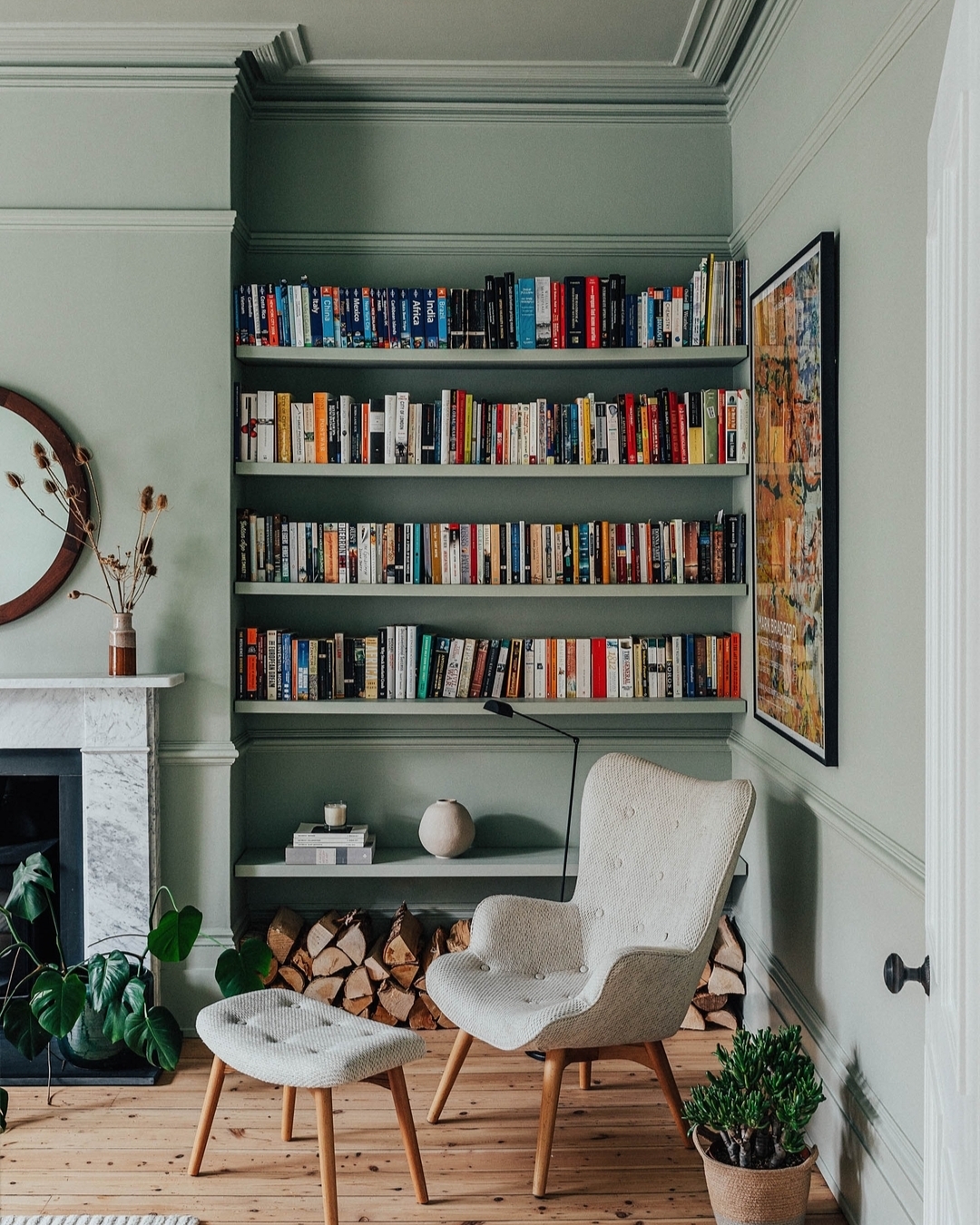
Painting alcove shelves the same sage as the walls lets a colorful book collection stand out without making the storage feel like separate furniture. The green continues across the surrounding trim, giving this reading corner a connected backdrop.
Measure your tallest books before deciding shelf spacing, and check the loaded weight when selecting supports. Leave one lower shelf less crowded for a few useful objects or current reading.
A cream chair and matching footstool create a light foreground against the deeper recess. Position the chair far enough forward to reach the books behind it without awkward lifting.
The slim black lamp adds focused light with little visual bulk. Warm wood flooring and chair legs keep the cool palette feeling inviting.
9. Continue Sage Across the Door Casing
Credits: Instagram
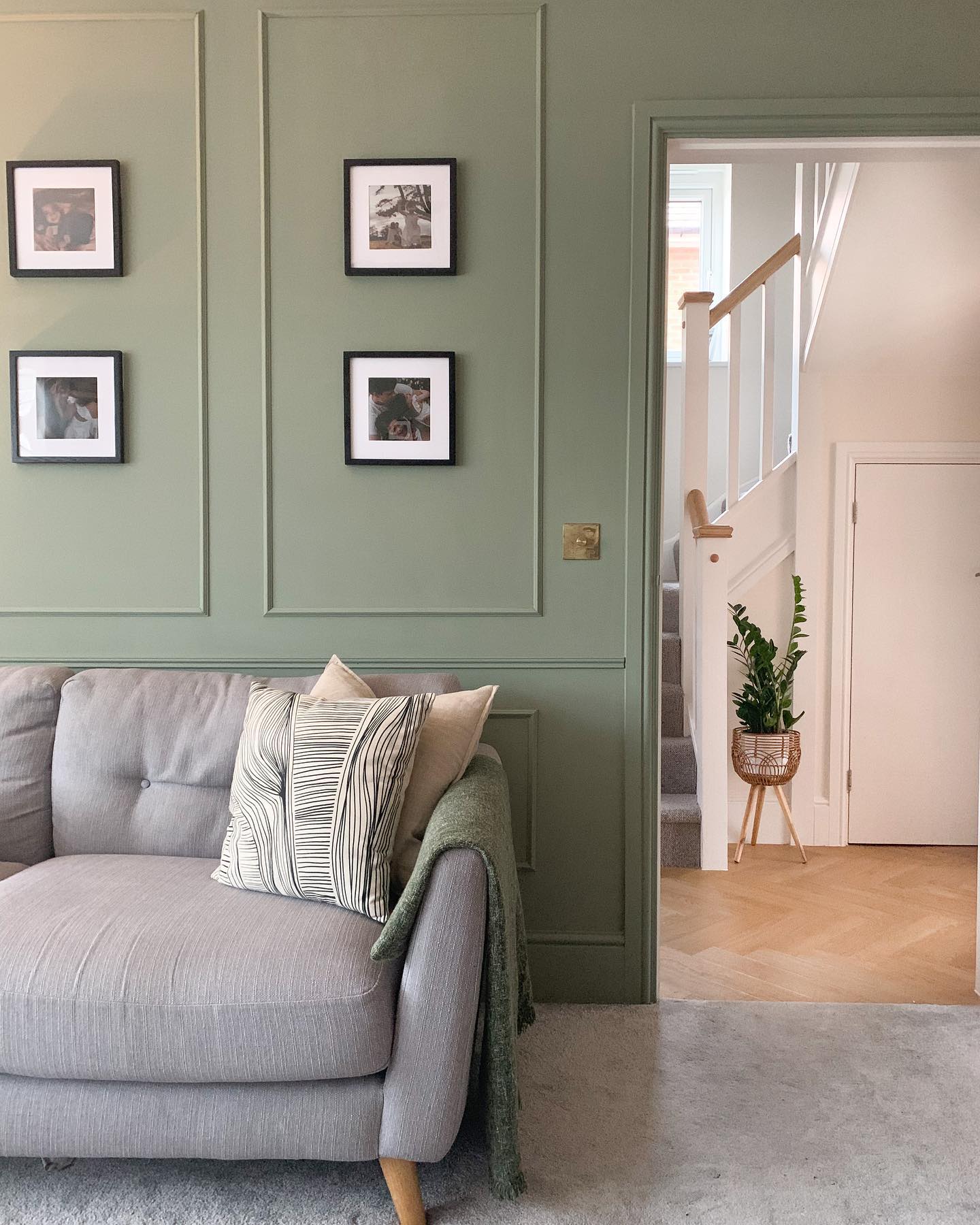
The doorway casing shares the sage wall color here, giving the living room an uninterrupted edge beside a lighter hallway. This small decision helps the opening recede while the view of the white staircase supplies contrast.
Before painting, decide exactly where the green will stop inside the opening so the transition looks deliberate from both rooms. Use suitable finishes for walls and trim, comparing their appearance together because different sheens can alter the perceived color.
A gray sofa keeps the palette subdued, with a green throw linking it back to the wall. Four small dark frames provide definition without overwhelming the tall panels.
Keep the route beside the sofa open so the calm visual transition also works comfortably in practice.
10. Connect a Gray Sofa with Green Patterned Textiles
Credits: Instagram
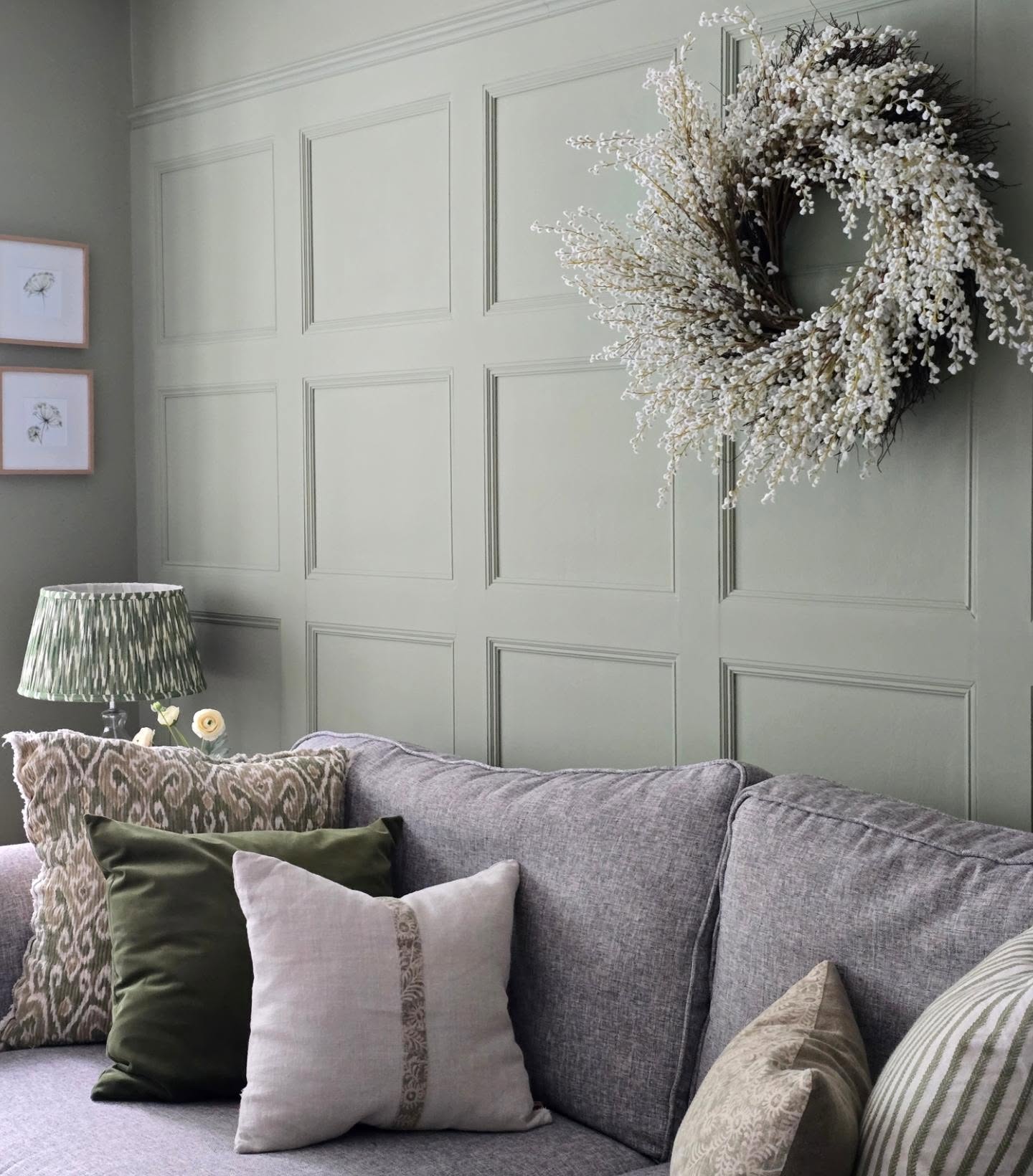
A gray sofa fits into this sage room because its pillows repeat the wall color in several ways. One solid green cushion provides a clear anchor, while patterned covers mix green with cream and softer neutrals.
The lampshade carries another small scale green pattern above the seating, spreading the color beyond a single cluster. When combining prints, vary their size and include a plain cushion so the group remains readable.
Try arranging your existing pillows first, then add only the missing color or scale. Pale covers and the light wreath keep the wall from feeling heavy.
Choose removable covers if the sofa gets frequent use, and leave enough clear seat depth for someone to sit comfortably without rearranging every pillow.
11. Introduce Muted Green with Tall Curtains
Credits: Instagram
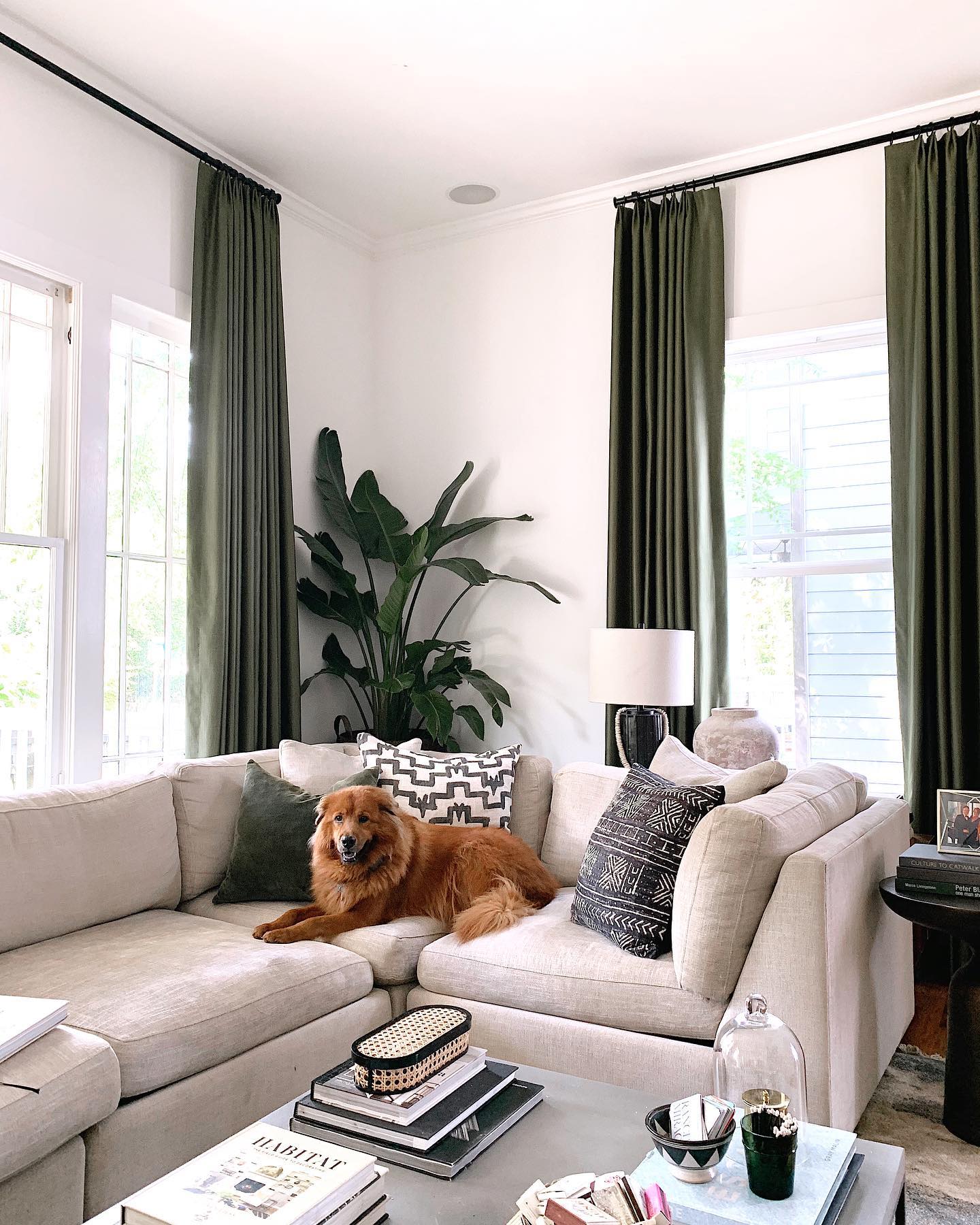
Tall curtains bring a deep, olive leaning version of muted green into this pale living room. Their long folds frame the windows and draw attention upward, while a green pillow connects them to the cream sectional.
This is a useful way to explore a sage palette without repainting the walls. Hold a generous fabric sample vertically beside the window before ordering, since backlighting can change how the color appears.
Position the rod high enough to suit the room, allowing space beyond the window for the open panels to stack. Measure from the installed rod to the floor for accurate length.
Keep furniture clear of the fabric's travel. Slim black rods and patterned pillows add definition to the soft neutral furnishings.
12. Wake Up Smoky Sage with a Yellow Accent
Credits: Instagram
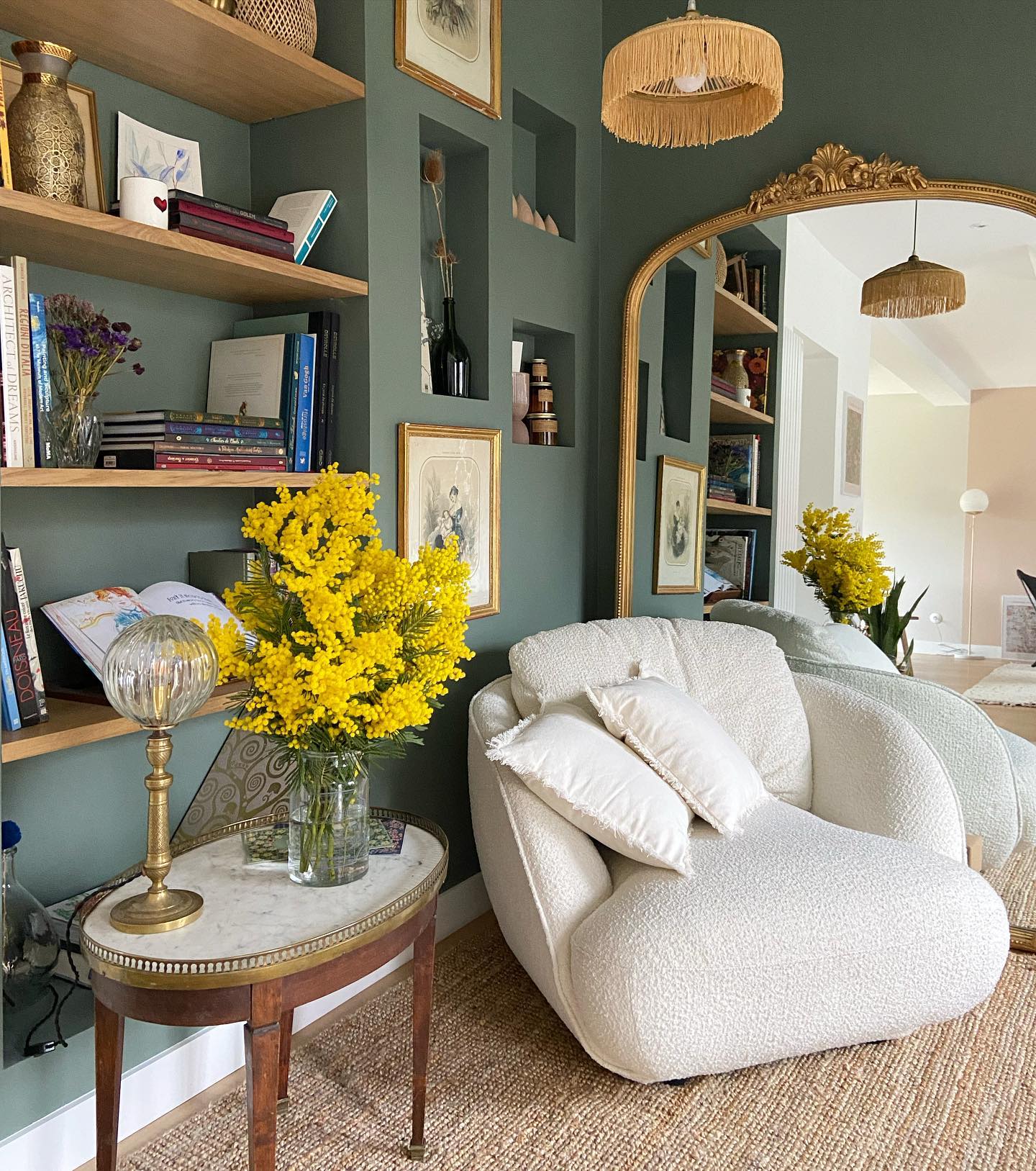
Bright yellow flowers give this smoky sage corner a lively focal point without changing its furniture or wall color.
The bouquet stands out against the darker green, while warm wood shelves and a gold toned mirror frame support the sunny accent. Start with a vase of flowers or one yellow accessory before committing to larger pieces.
Keep the surrounding textiles pale so the accent remains easy to notice. Here, a rounded cream chair softens the straight shelves and rectangular niches.
The oversized mirror reflects the lighter room beyond, adding another area beside the green wall. Check what a mirror will reflect from your usual seat before positioning it, and secure it appropriately. Keep the side table usable by limiting decorations.
13. Warm Cool Sage with Rust Pillows and Plaid
Credits: Instagram
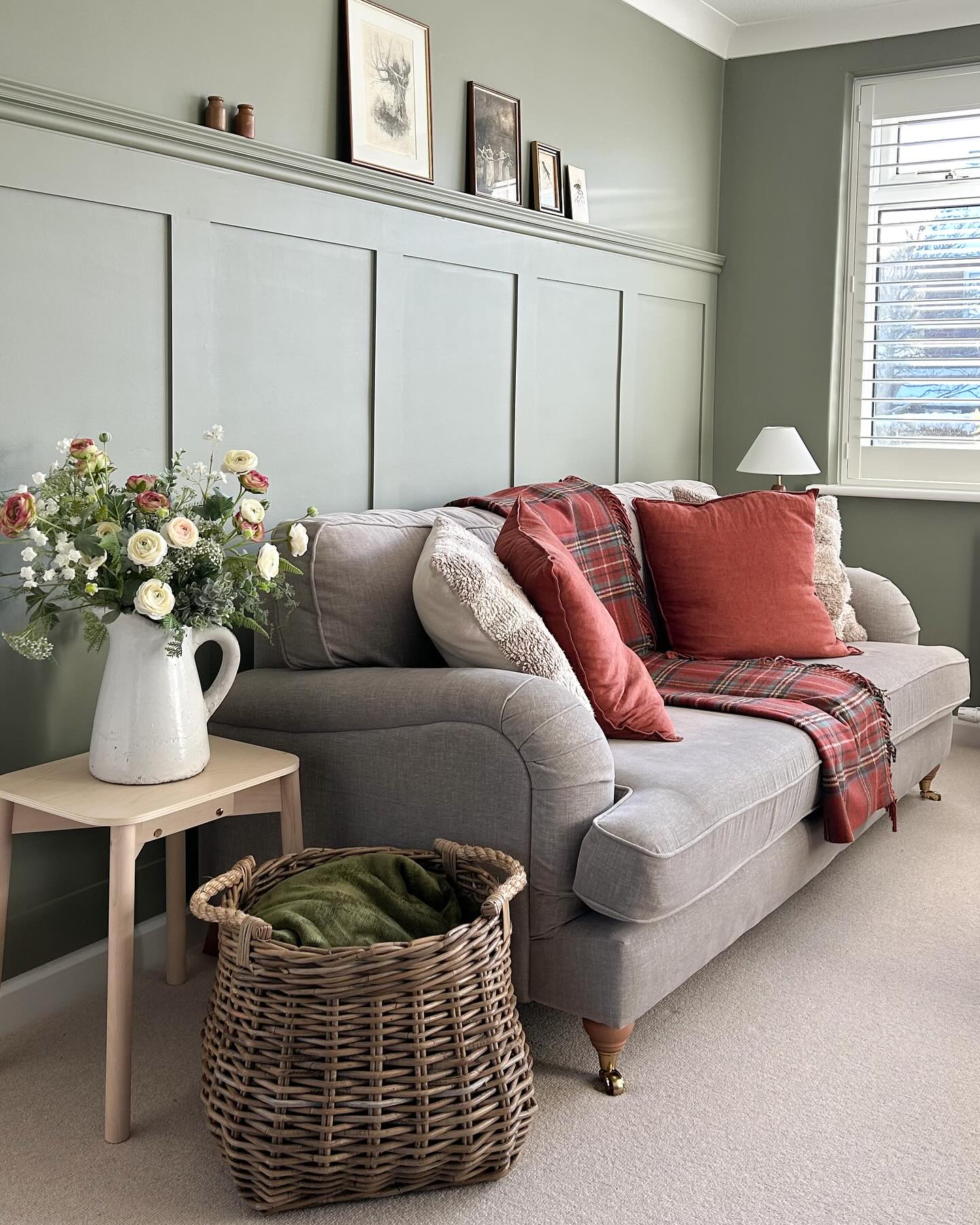
Rust pillows and a red plaid throw warm up this cool sage and gray seating area. Because the stronger colors sit on removable textiles, the room can shift with the seasons without changing its larger pieces.
Begin with a patterned blanket that includes a color you enjoy, then repeat that shade in one or two plain pillows. Keep some neutral cushions to give the pattern space.
A basket beside the sofa offers a place for spare throws when the weather warms or guests need the seat. The narrow ledge above carries small pictures and vessels, leaving the wall uncluttered around the stronger textile accents.
Choose artwork with quieter colors if you want the warm sofa details to remain the attraction.
14. Warm a Sage Fireplace Wall with a Wood Surround
Credits: Instagram
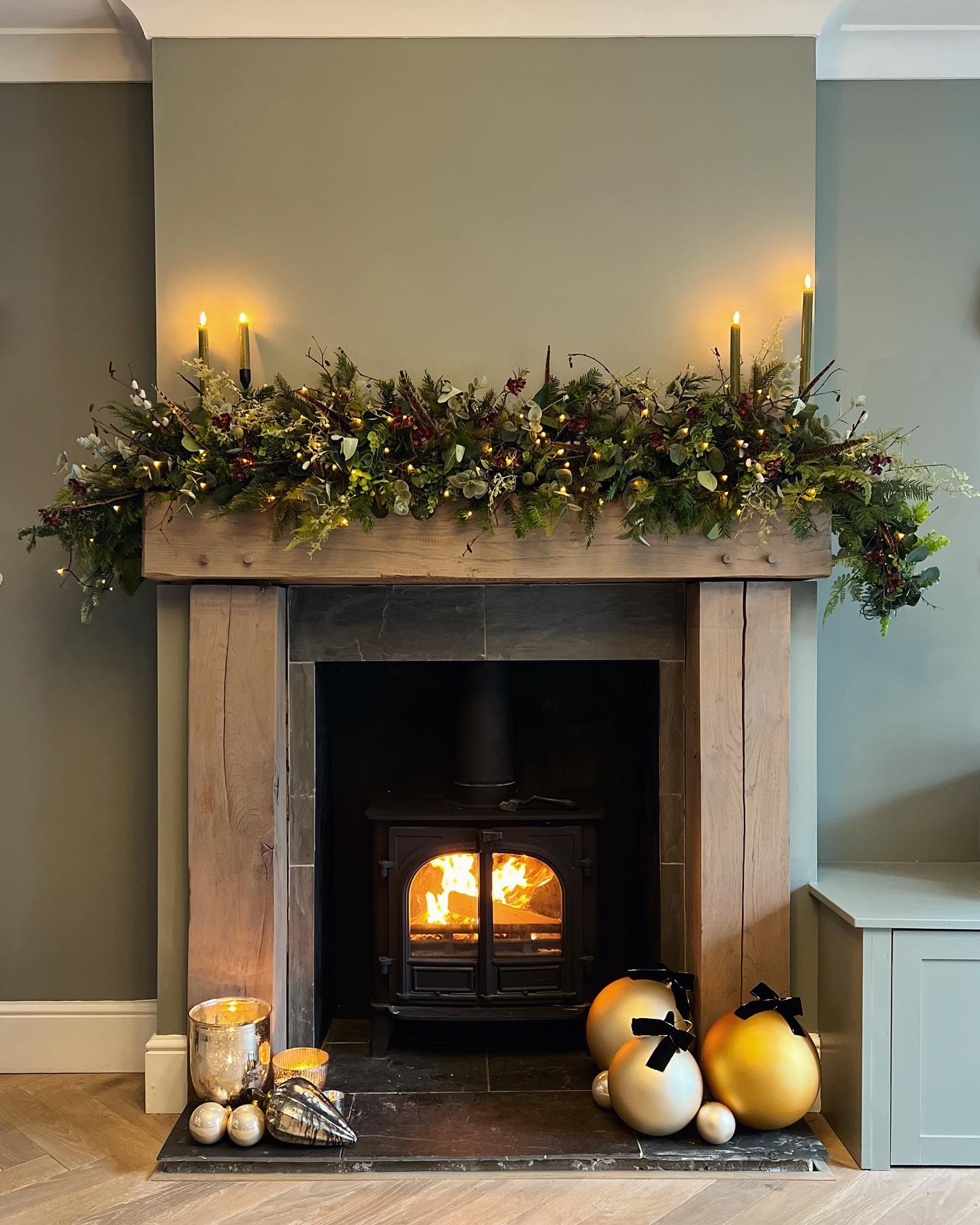
A substantial wood surround brings warmth to this gray sage fireplace wall. Its visible grain and broad proportions stand out against the smooth paint, while the dark stove and hearth add a grounding element.
This combination works beyond the seasonal styling shown: muted green, warm wood, and charcoal can form a palette throughout the year. Repeat the wood tone in a table or picture frame rather than matching every furnishing exactly.
Before changing a working fireplace, follow the appliance manufacturer's requirements for surrounding materials and clearances. Keep garlands, ribbons, candles, and other decorations safely away from heat; their placement in a photograph is not a safety guide.
A simple mantel arrangement can leave more of the wood's character on view.
15. Tie Green Seating Together with a Plaid Ottoman
Credits: Instagram
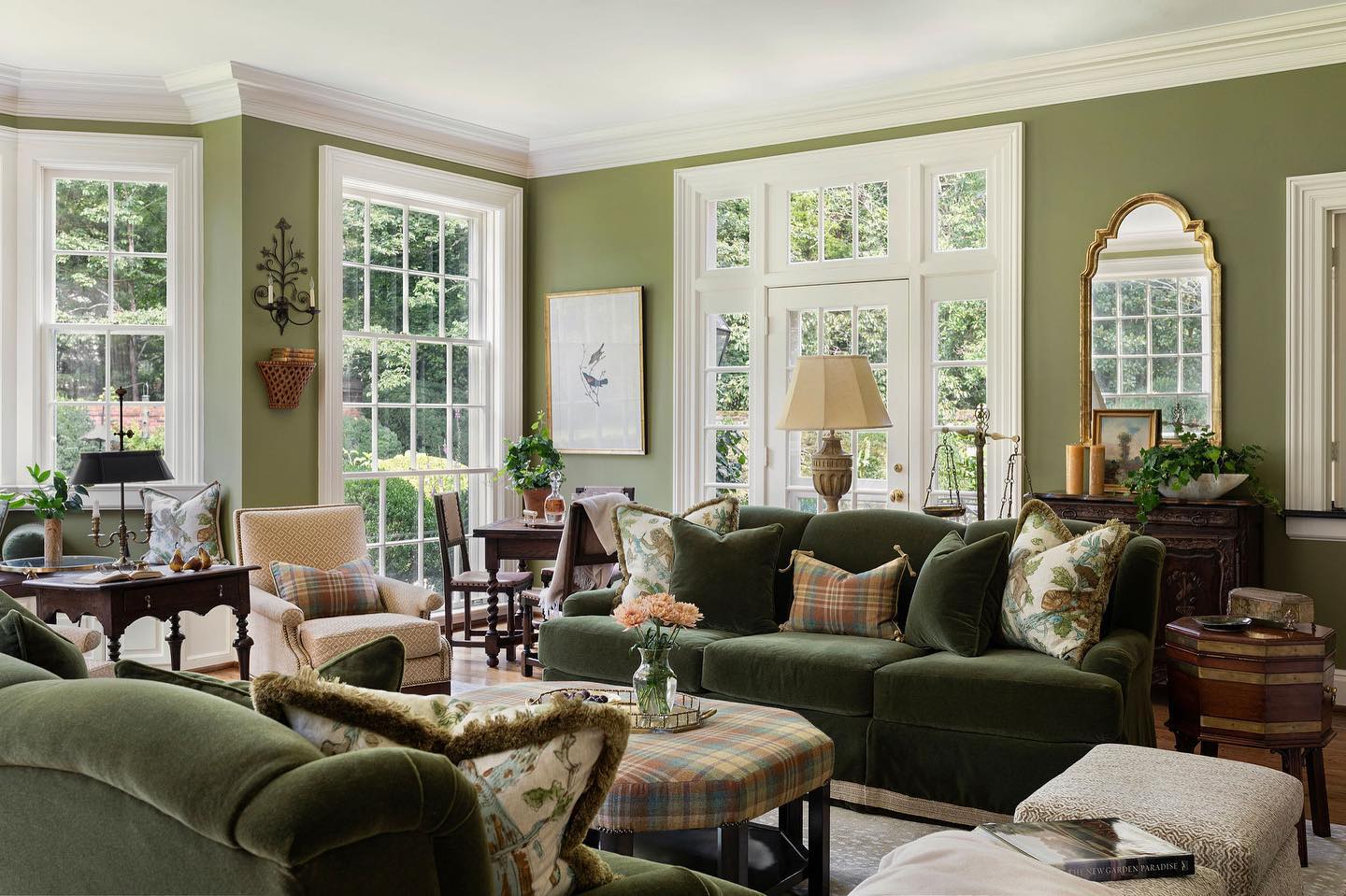
A plaid ottoman brings several muted colors into the center of this green sitting room, connecting the deeper sofas with lighter patterned cushions.
Warm sage walls provide a related background, while white window trim prevents the layered greens from becoming dense. Choose a central fabric that includes at least one color already present in your seating.
Repeat it in a small cushion rather than covering every piece with the same print. An upholstered ottoman can soften a room filled with wood furniture, but add a stable tray if it also needs to hold drinks.
Check its height and distance from the sofas before buying. Leave clear access around it, especially where the seating arrangement sits between windows and a doorway.
16. Face Pale Sofas Across a Glass Table
Credits: Instagram
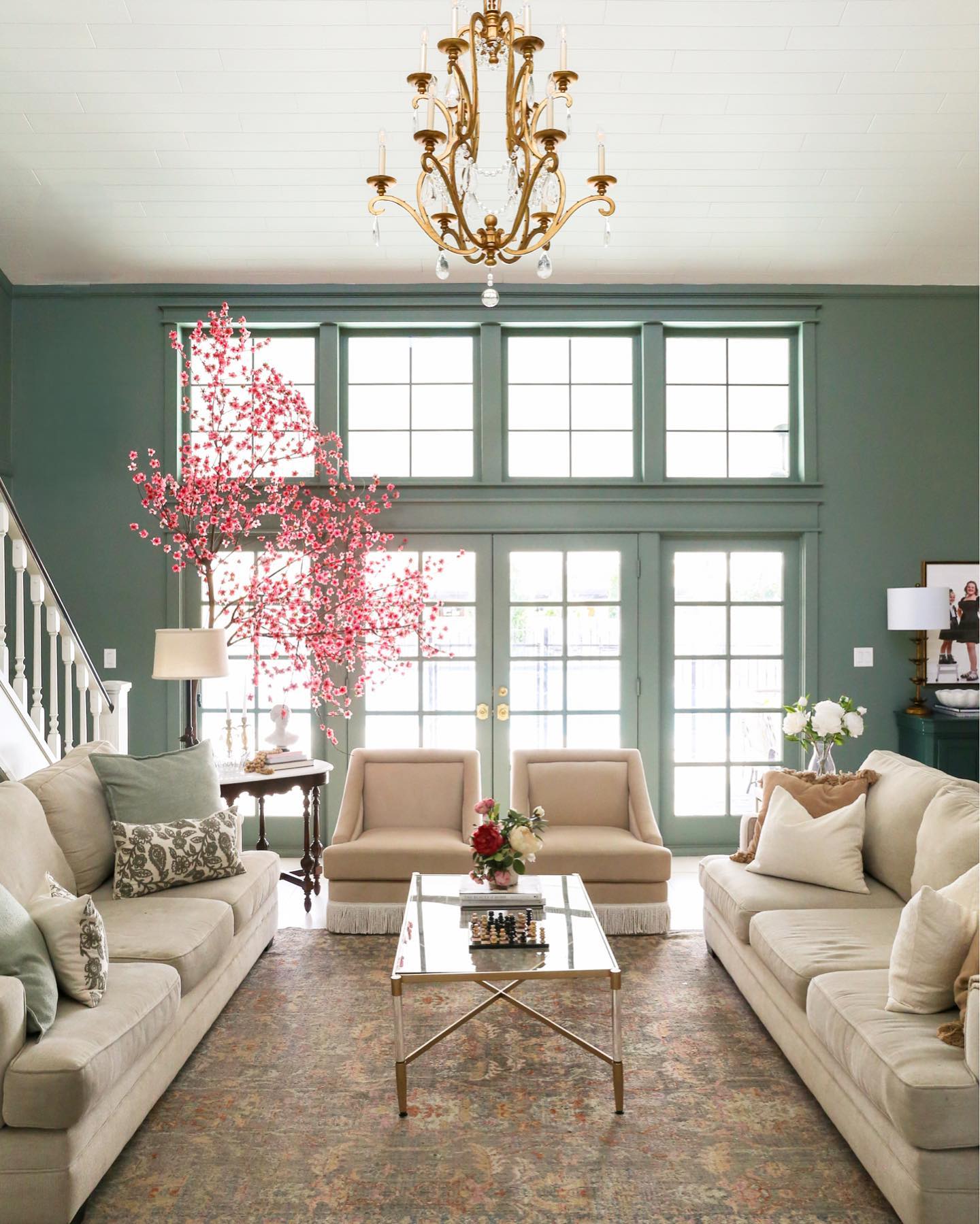
Two cream sofas face each other in front of a cool sage window wall, creating a conversation area with a clear center. Pale armless chairs close one end, while a glass topped table keeps the rug visible through the middle.
Borrow this arrangement when talking and gathering matter more than pointing every seat toward a television. Measure the space with people seated and make sure everyone can reach a nearby surface.
If doors sit behind the chairs, preserve a usable route and check their opening clearance. The sage window frames blend with the wall, leaving the bright panes prominent.
A light ceiling and restrained upholstery balance the large area of color. Small green pillows carry the background into the seating.
17. Choose a Low Sofa to Reveal Sage Room Details
Credits: Instagram
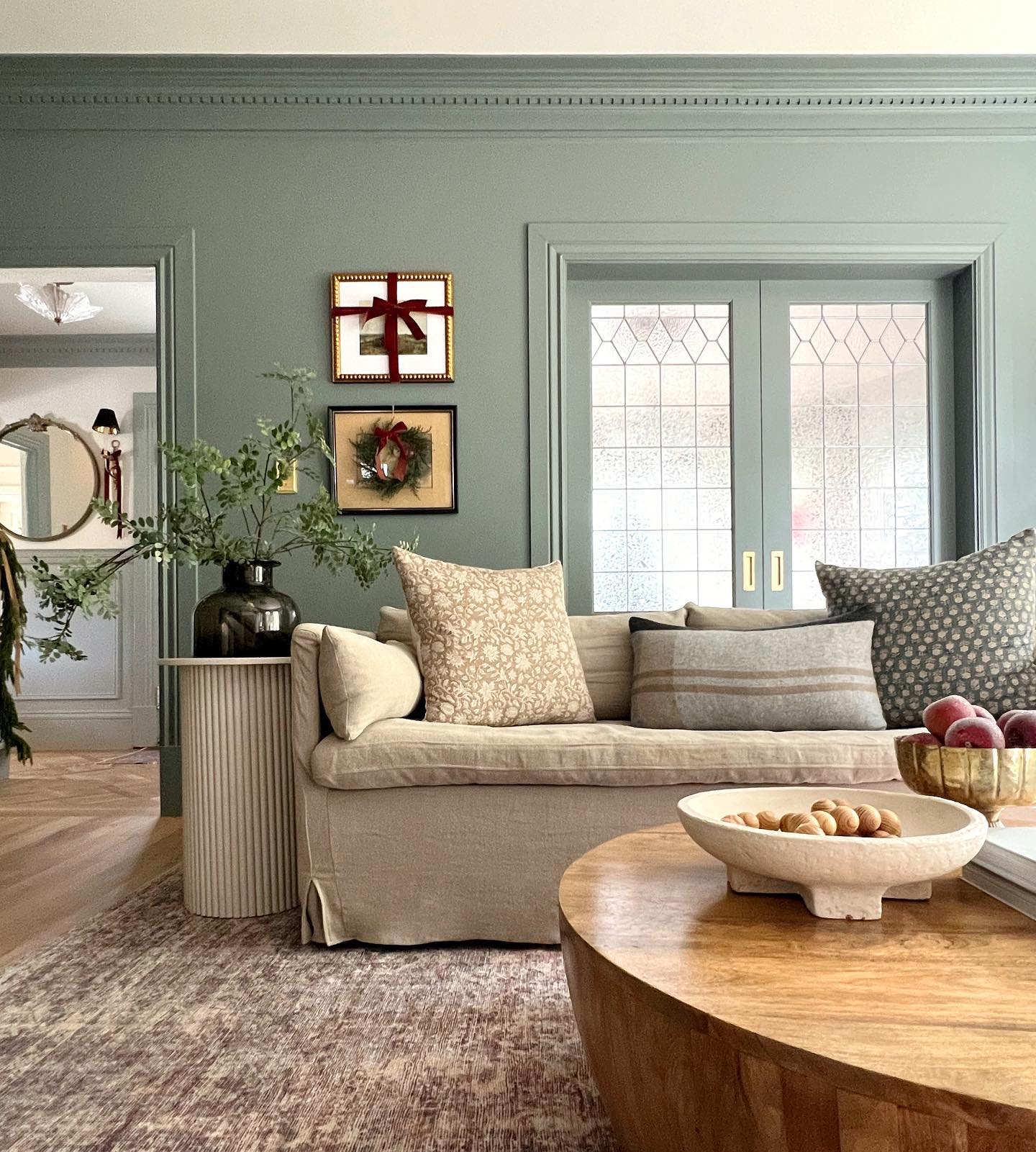
A low cream sofa leaves plenty of this sage gray wall visible, including the decorative glass doors behind it. Its simple outline lets the molding and patterned glass remain important parts of the room.
When choosing seating for a space with attractive architectural details, compare back height as carefully as width. Mark the proposed height with tape or a temporary cardboard outline to see what the sofa will hide.
Then test the seat for comfort; a low back should still suit the way you sit. Here, patterned pillows bring softness without creating one continuous tall barrier.
A low rounded table keeps the foreground open. Keep larger accessories toward the sides so they frame the seating rather than obscure the wall.
18. Pair Sage Cabinetry with a Plum Sofa
Credits: Instagram
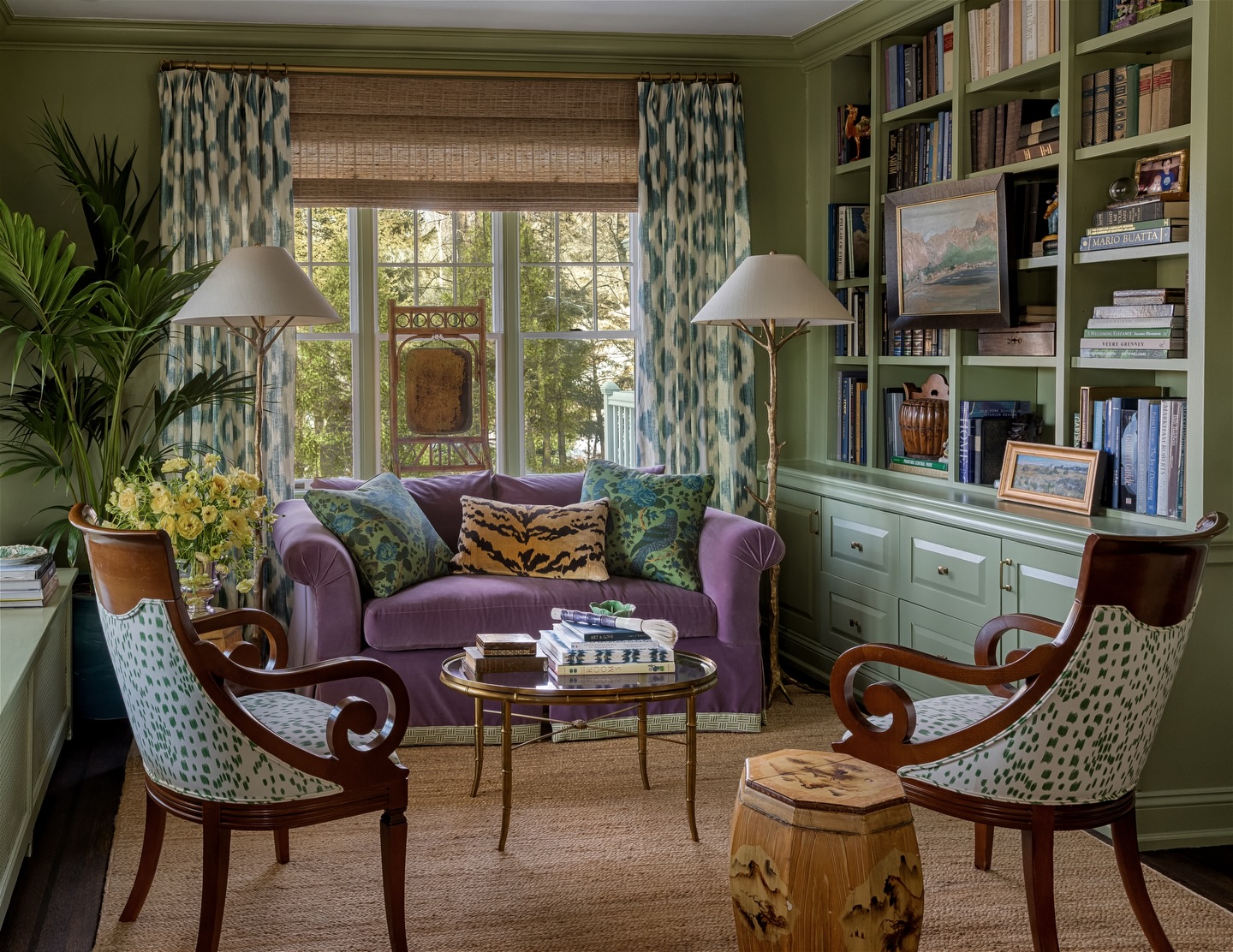
A plum sofa creates a contrast with the sage cabinetry and walls in this living room. Green patterned pillows help the unexpected upholstery color feel connected to its surroundings.
To try the pairing, place plum and sage samples beside the wood tones and flooring you plan to keep. Let one color cover more area, using the other for a clear focal point.
Here, the plain sofa gives the eye a resting place among patterned curtains, chair backs, and pillows. Mix a larger curtain motif with smaller chair patterns, then repeat a few related greens across both.
The neutral rug keeps the center calm. Leave cabinet handles accessible and allow enough space behind the chairs to browse shelves and open storage.
19. Repeat Sage Underfoot with a Striped Rug
Credits: Instagram
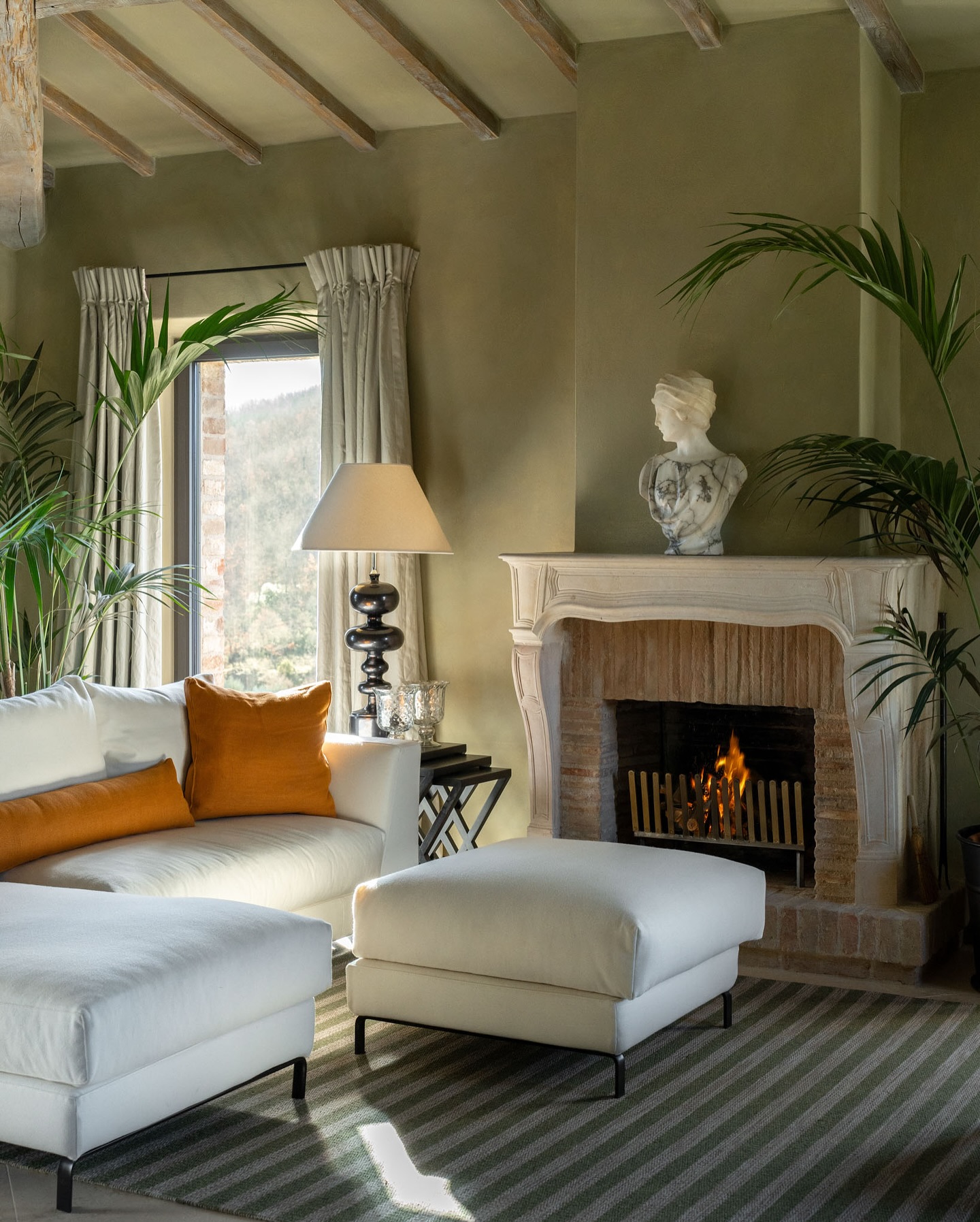
A green striped rug repeats the warm sage walls beneath the pale seating in this beamed living room. Its straight bands add order to the softer shapes of the cushions, leafy plants, and carved fireplace surround.
Use a striped rug when you want to connect green walls with neutral furniture without adding another floral or botanical print.
Choose a stripe that remains visible around the furniture, then check its direction from the main entrance before settling the layout. The pale upholstery lets the ceiling beams and fireplace details stand out.
Mustard pillows provide a small warmer accent. Maintain the required hearth clearances when placing rugs or upholstered furniture near a working fireplace. Keep movable footstools clear of the walking route.
20. Echo Sage with a Narrow Curtain Border
Credits: Instagram
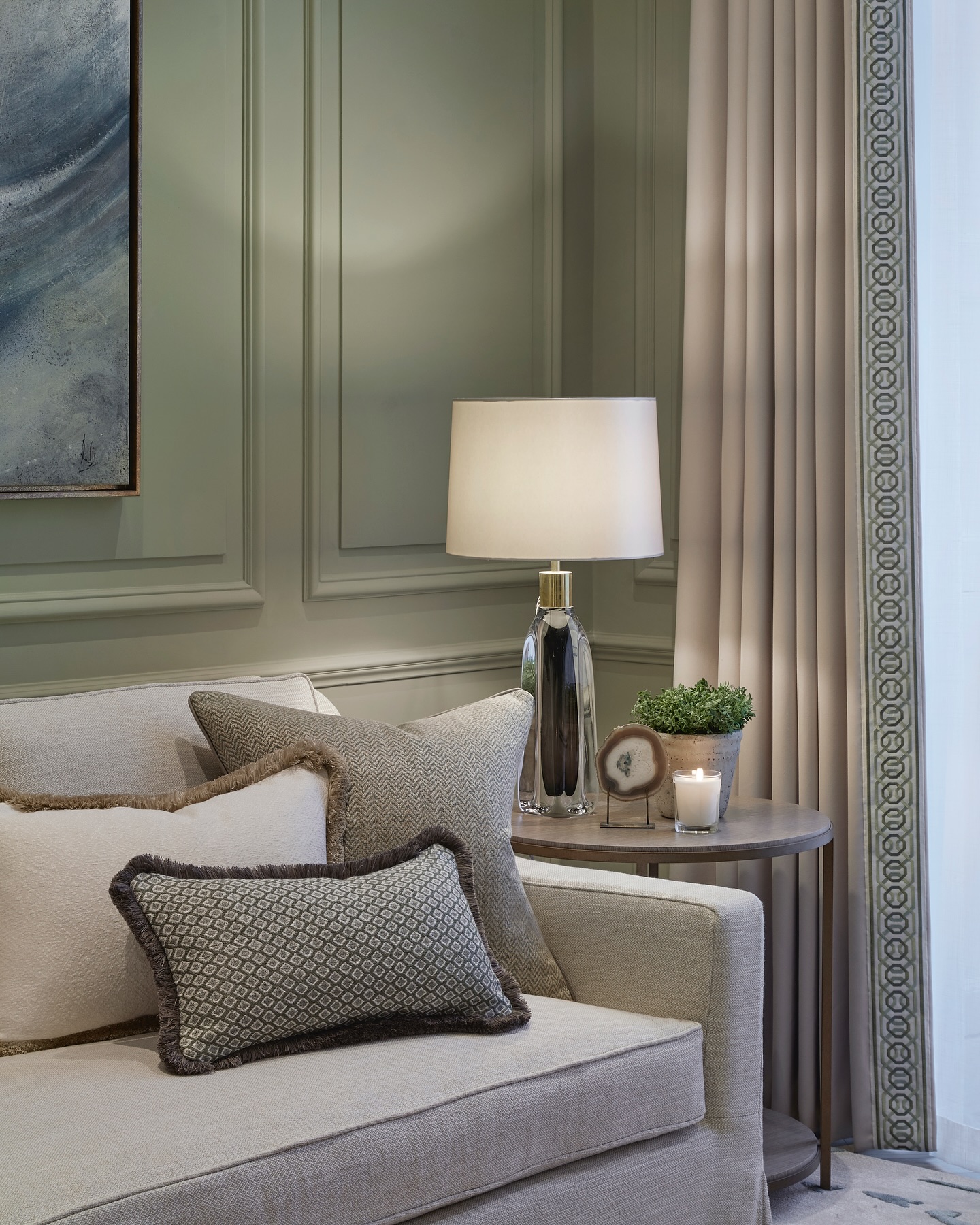
A narrow geometric border gives these pale curtains a connection to the sage wall without covering the window in a large print. The green gray edging also relates to the small patterned pillows on the neutral sofa.
Consider adding trim when you like your existing curtains but want them to feel more connected to a wall color. Compare the border against both the curtain fabric and paint in daylight before choosing its width.
A small sample held at the leading edge makes the effect easier to judge. Keep the main curtain plain so the repeated motif remains crisp.
The shaded lamp and rounded side table continue the tailored appearance. Use compatible fabrics and appropriate attachment methods to preserve even draping.