
A gray sofa can feel a little flat until the wall behind it gives the seating area some contrast.
The Best Blue And Gray Living Room Ideas show how to balance those cool tones with deep blue walls, pale gray curtains, or a patterned rug.
You’ll also find ways to carry blue through a fireplace wall, shelves, or artwork, and add warmth with a characterful wood table.
Small choices in pattern, texture, and color placement can help the room feel connected without making every piece match.
1. Frame a Gray Sofa with Deep Blue Walls
Credits: Instagram
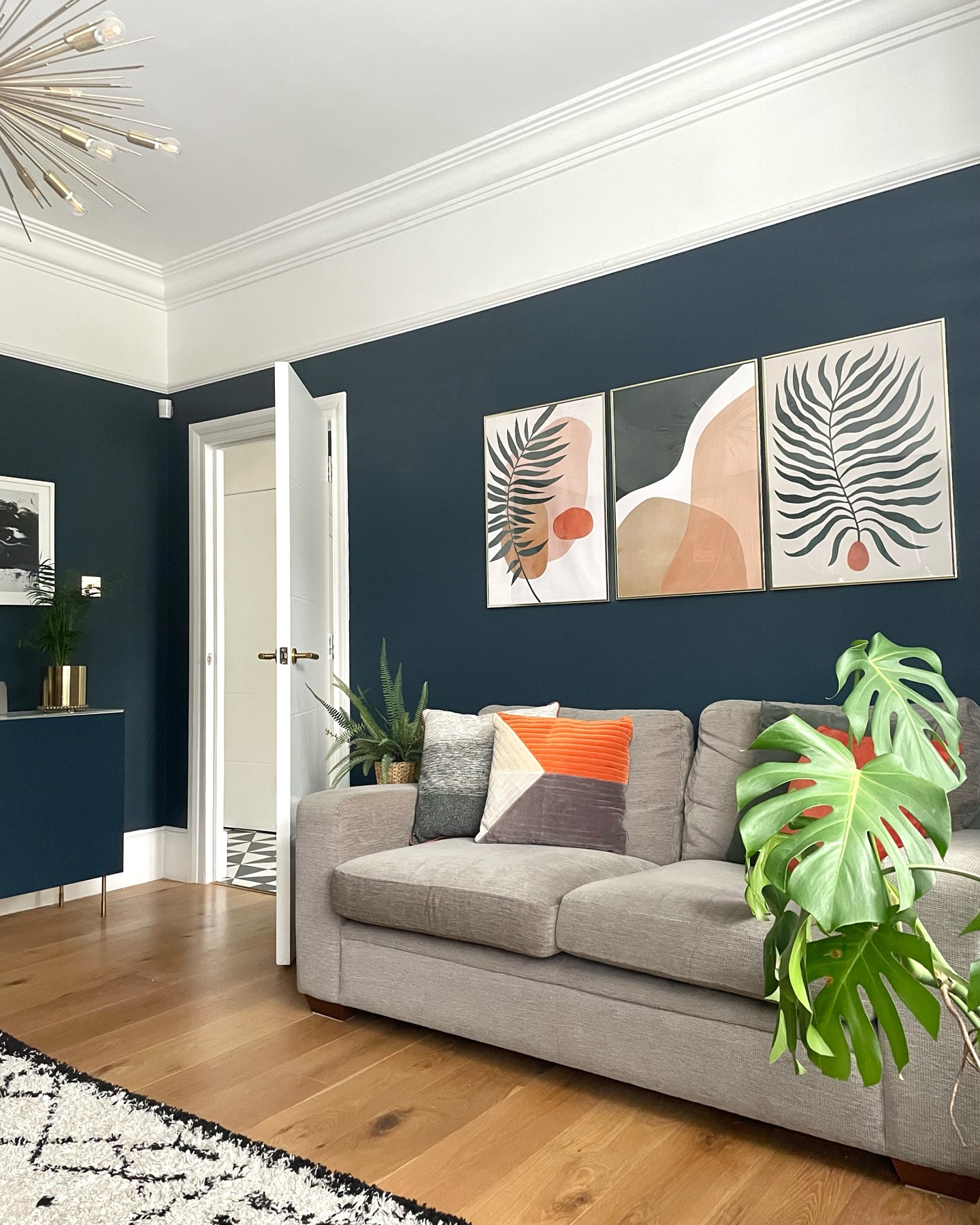
Deep blue walls give a simple gray sofa a defined backdrop, while the broad white cornice keeps the room feeling crisp. The contrast works because the upholstery is noticeably lighter than the wall.
Before painting, hold a large color sample behind your existing sofa and check it in daylight and evening light. Keep the ceiling and door trim pale if you want to preserve this clear outline.
Here, orange in the pillow and framed prints warms the cool foundation without taking over. Repeat one accent color in those small, replaceable pieces rather than adding several competing hues.
A low cabinet close to the wall color recedes visually, leaving the sofa, artwork, and generous strip of wood flooring to stand out.
2. Balance a Gray Sectional with Paired Blue Chairs
Credits: Instagram
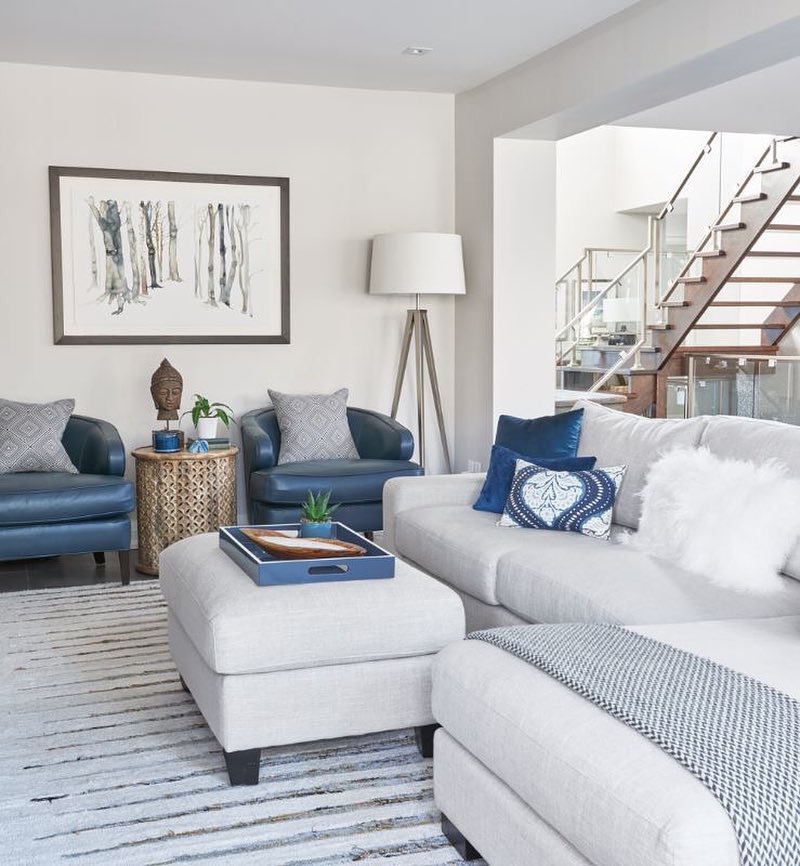
Two rounded blue chairs give this pale gray sectional a stronger visual counterweight than scattered blue accessories could. Their matching shapes establish a small seating group, while gray patterned pillows connect them back to the larger sofa.
Try a pair when your room needs extra conversation seating and you can preserve a clear route around it. Measure the full footprint, including space for knees and side tables, before buying.
The gray ottoman continues the sectional's soft surfaces; a sturdy tray creates a practical place for drinks. Repeating blue in that tray and the sofa pillows carries the color across the room.
Keep the rug quieter, as these fine horizontal lines do, so the furniture shapes remain easy to read together.
3. Carry Blue Through the Fireplace Wall and Shelves
Credits: Instagram
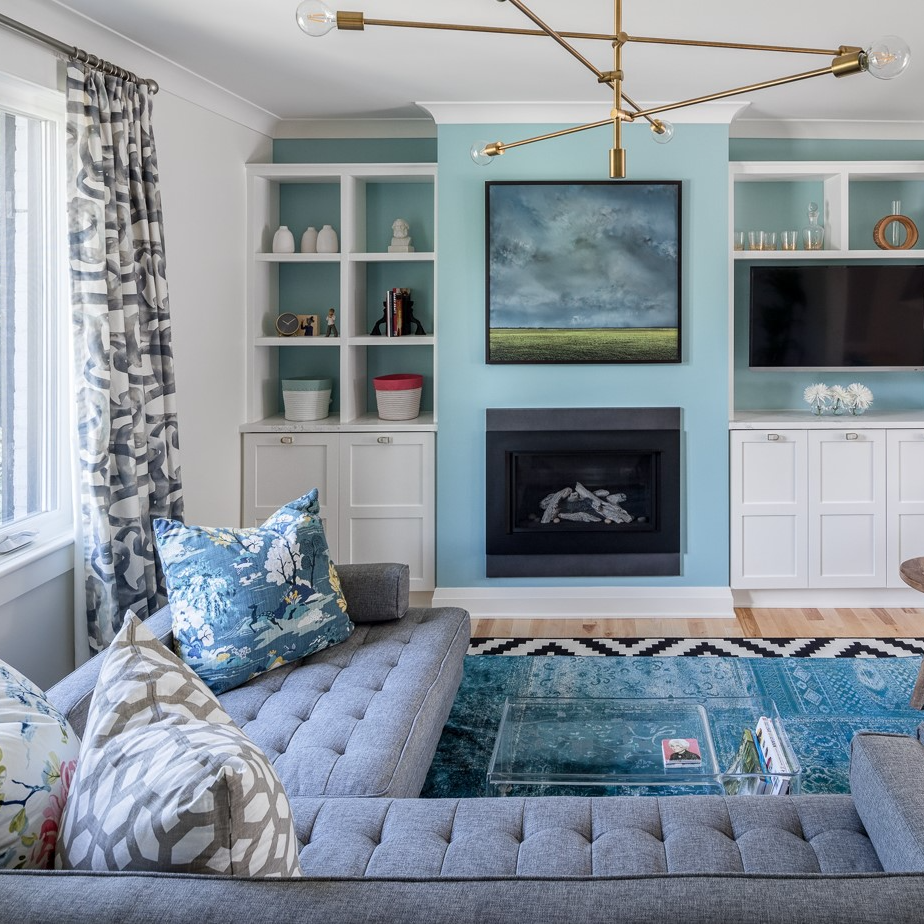
A turquoise blue fireplace wall becomes more cohesive when the same color continues behind the neighboring shelves. White cabinet fronts and shelf edges break up the blue, giving the display a clear framework.
This is a useful approach when a gray sectional already occupies much of the room: architectural color provides contrast without another large upholstered piece.
Echo the wall in a rug or one patterned pillow, as shown here, rather than trying to match every accessory. Leave empty space around shelf objects so the painted backing stays visible.
Gray curtains with an oversized pattern add movement beside the quieter upholstery. Around a working fireplace, follow the appliance manufacturer's finish and clearance requirements before painting surfaces or positioning artwork nearby.
4. Soften Blue Walls with Pale Gray Curtains
Credits: Instagram
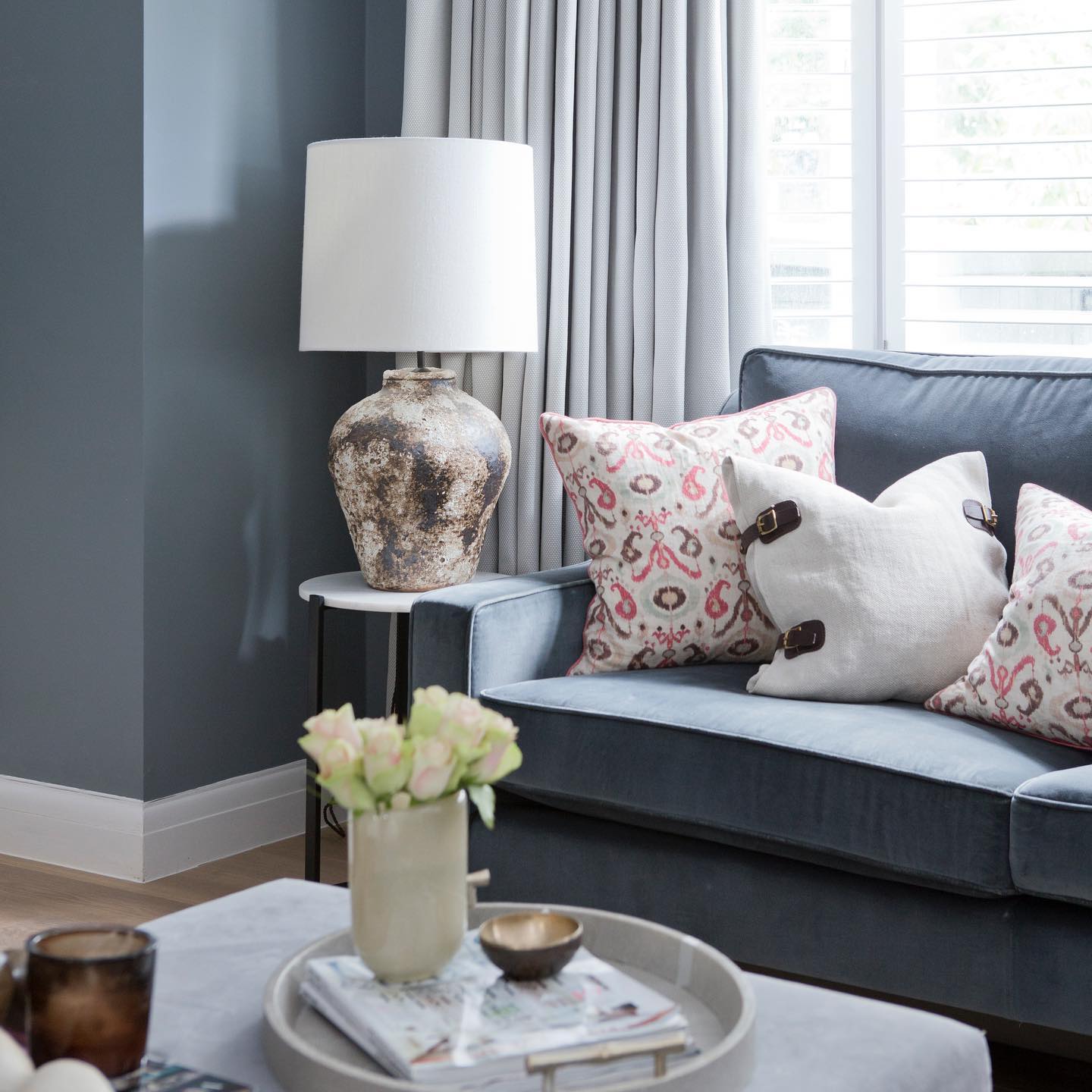
Long pale gray curtains create a gentle transition between this dark blue wall and the bright window. Their vertical folds add texture without a busy print, allowing the blue sofa and patterned pillows to hold attention.
Choose curtain samples beside both your wall color and upholstery, since gray can look warmer or cooler as the light changes. Position the panels so they can stack mostly beside the glass when open, preserving daylight.
A light gray ottoman repeats the curtain tone lower in the room and keeps the seating area from becoming uniformly dark. The pale lampshade supplies another small connection.
For pattern, limit the strongest motif to a few pillows and keep neighboring fabrics quieter for a relaxed, layered result.
5. Warm the Palette with a Characterful Wood Table
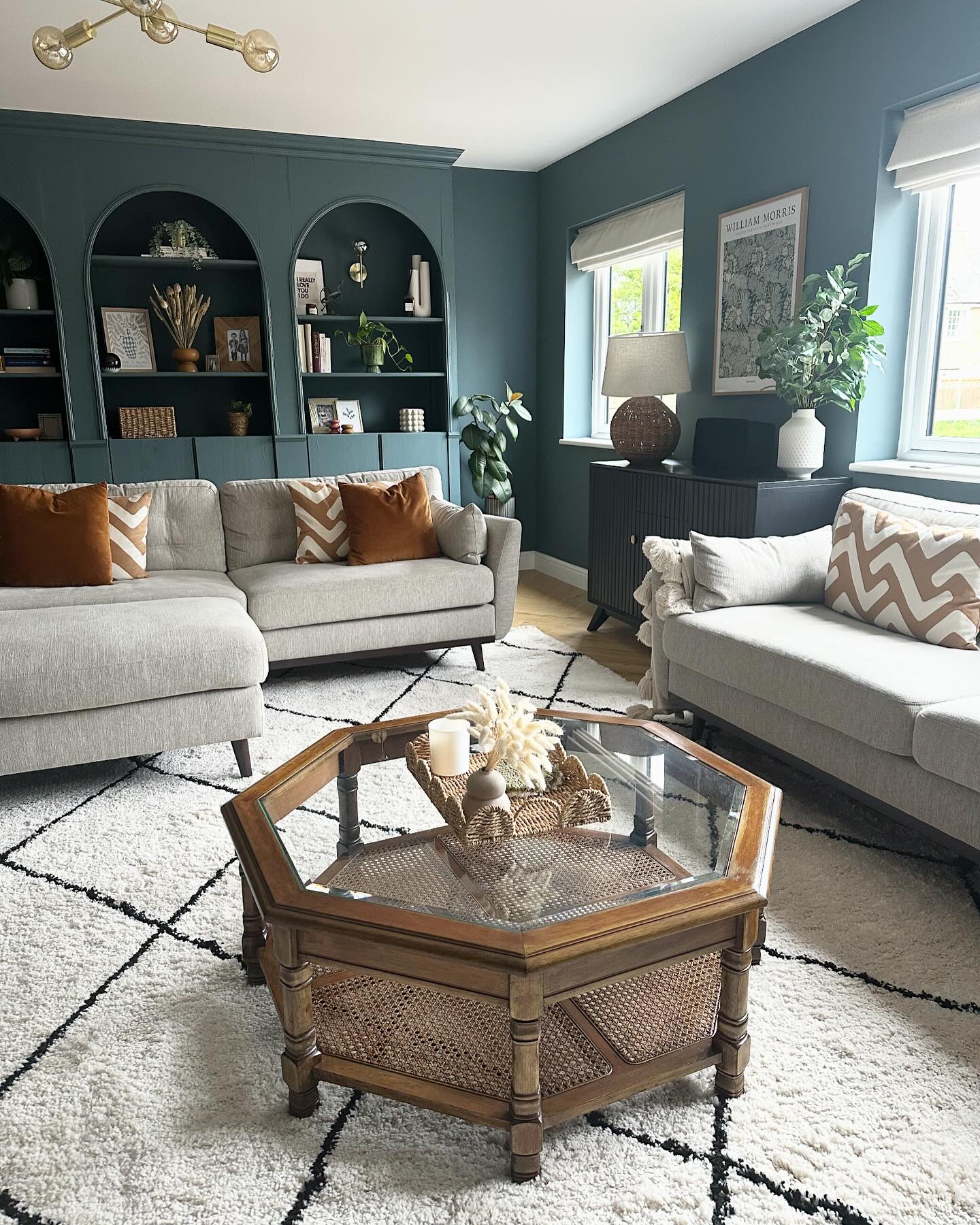
Credits: Instagram
The blue walls and light gray sofas form a cool backdrop for this warm wood coffee table. Its octagonal outline and woven lower shelf bring detail to the center without requiring more color on the walls.
A similar approach can work with a secondhand table you already own, especially when its scale suits the seating. Check the frame, joints, and glass for damage before using a vintage piece, and measure the walking space around it.
Brown pillows pick up the table's warmth, while a pale rug makes its outline easy to see. The arched shelving stays close to the wall color, keeping the room cohesive.
Limit tabletop styling to a tray and a few objects so the shape remains visible.
6. Build a Gentle Blue Palette Around Abstract Art
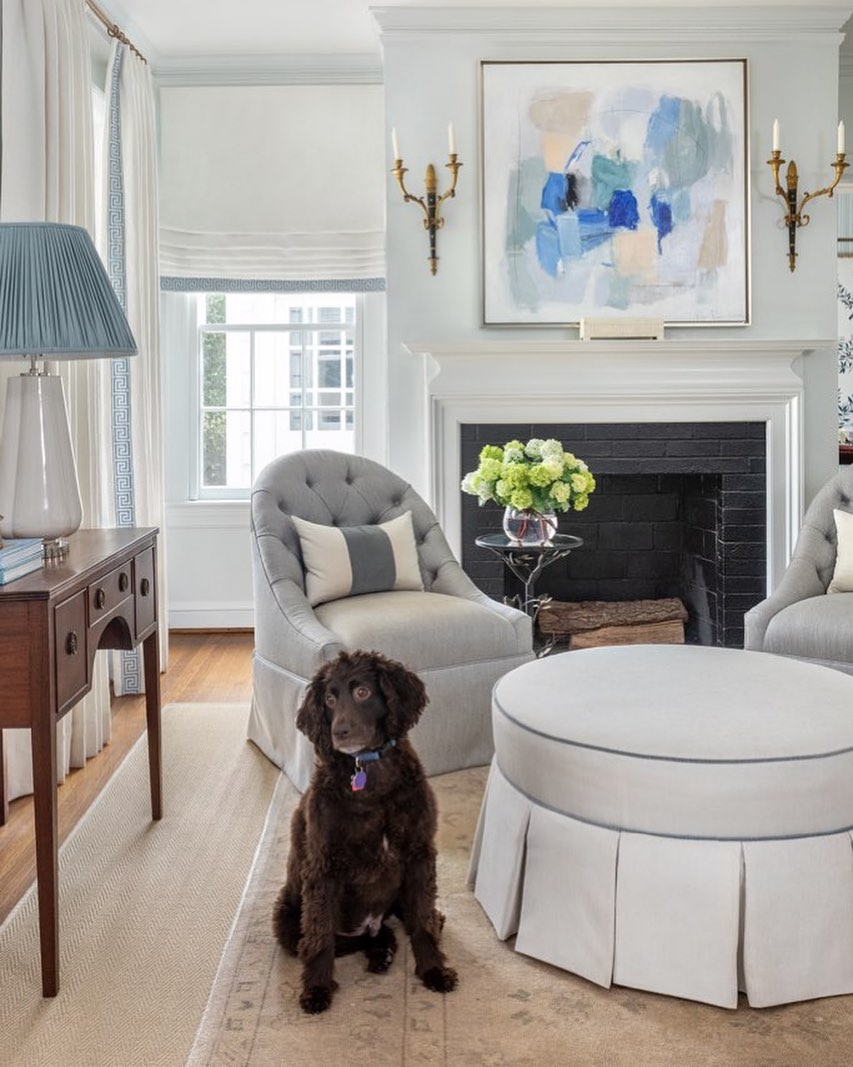
Credits: Instagram
Blue abstract artwork supplies the color direction for this otherwise light gray seating area. The painting includes several blue intensities, allowing the room to vary its accents instead of matching one shade exactly.
A pleated blue lampshade and narrow blue curtain borders draw those colors beyond the fireplace wall. Start with art you enjoy, then choose one muted blue for a lampshade or textile detail.
Keep large upholstered pieces in a compatible gray so the smaller accents remain easy to update. Here, the rounded ottoman and softly curved chairs also temper the painting's angular marks.
A slim side table offers a landing spot without filling the space between seats. Leave the artwork enough breathing room to remain the focal point.
7. Give a Blue Sofa a Textured Gray Backdrop
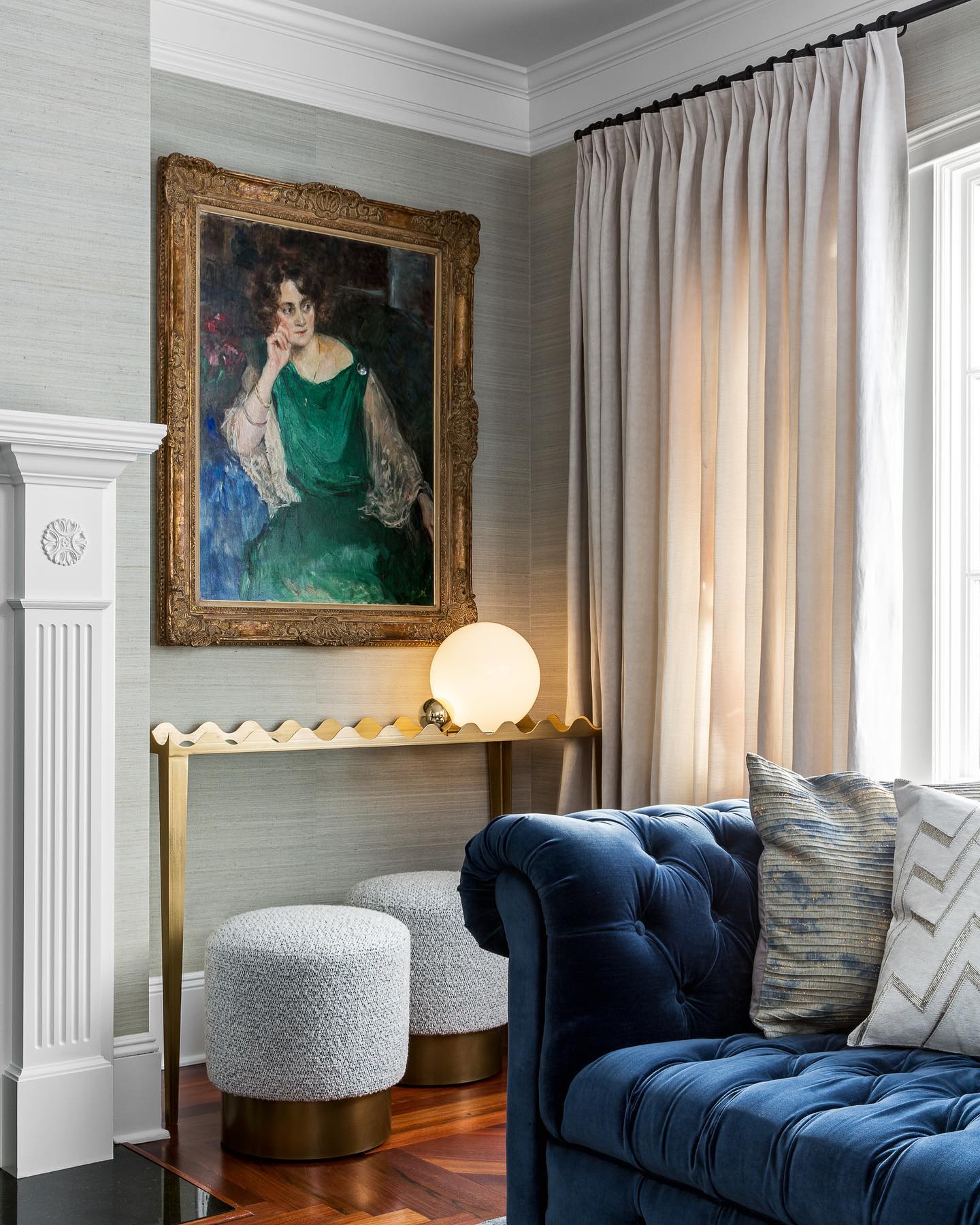
Credits: Instagram
A finely textured gray wall keeps this richly tufted blue sofa from competing with a strong painted backdrop. The wall has visual depth, but its quiet color lets the upholstery's folds and curves stay prominent.
Small gray stools echo that texture at floor level, bringing the two colors together without another large seat. Try mixing a smooth or plush blue fabric with a more tactile gray surface rather than choosing identical finishes throughout.
The gold-toned console, stool bases, and portrait frame add a warm connecting detail. Keep these metallic accents limited so they read as a deliberate thread.
If using stools for guests, check their intended seating capacity and position them where they will not block movement beside the sofa.
8. Anchor a Blue Sectional with a Patterned Gray Rug
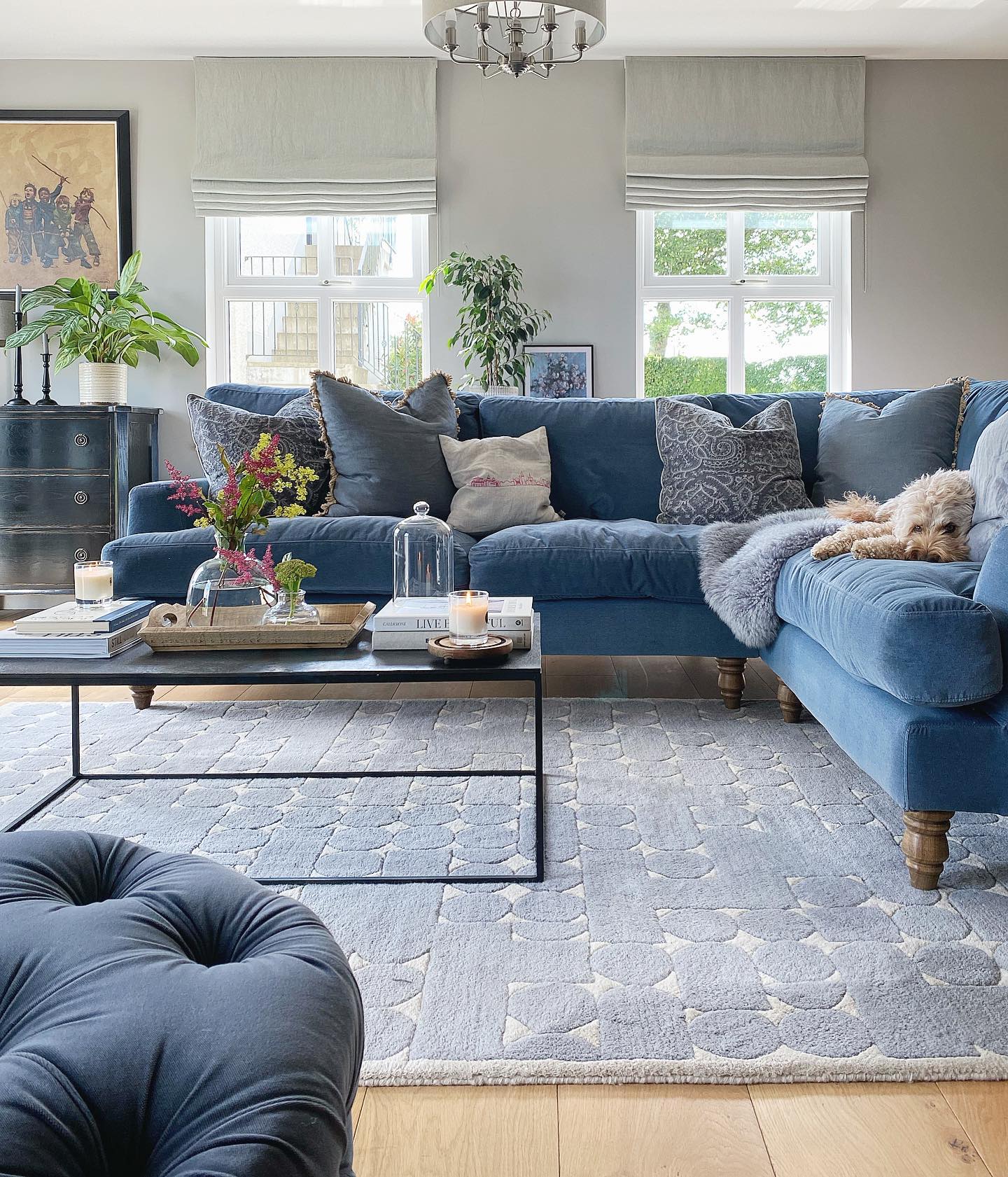
Credits: Instagram
A broad gray rug gives this blue sectional a soft landing while introducing a pattern large enough to read beneath the coffee table. Its overlapping shapes are subtle, so they add interest without fighting the solid upholstery.
When choosing a rug for an L shaped sofa, measure both seating runs and aim to support their front legs on the rug. This helps the arrangement feel connected instead of leaving the rug floating in the middle.
Gray pillows and window shades repeat the floor color at different heights. The slim black table frame provides definition without covering much of the pattern.
Compare rug samples against the sofa in your room, and choose a pile and cleaning method that suit daily use.
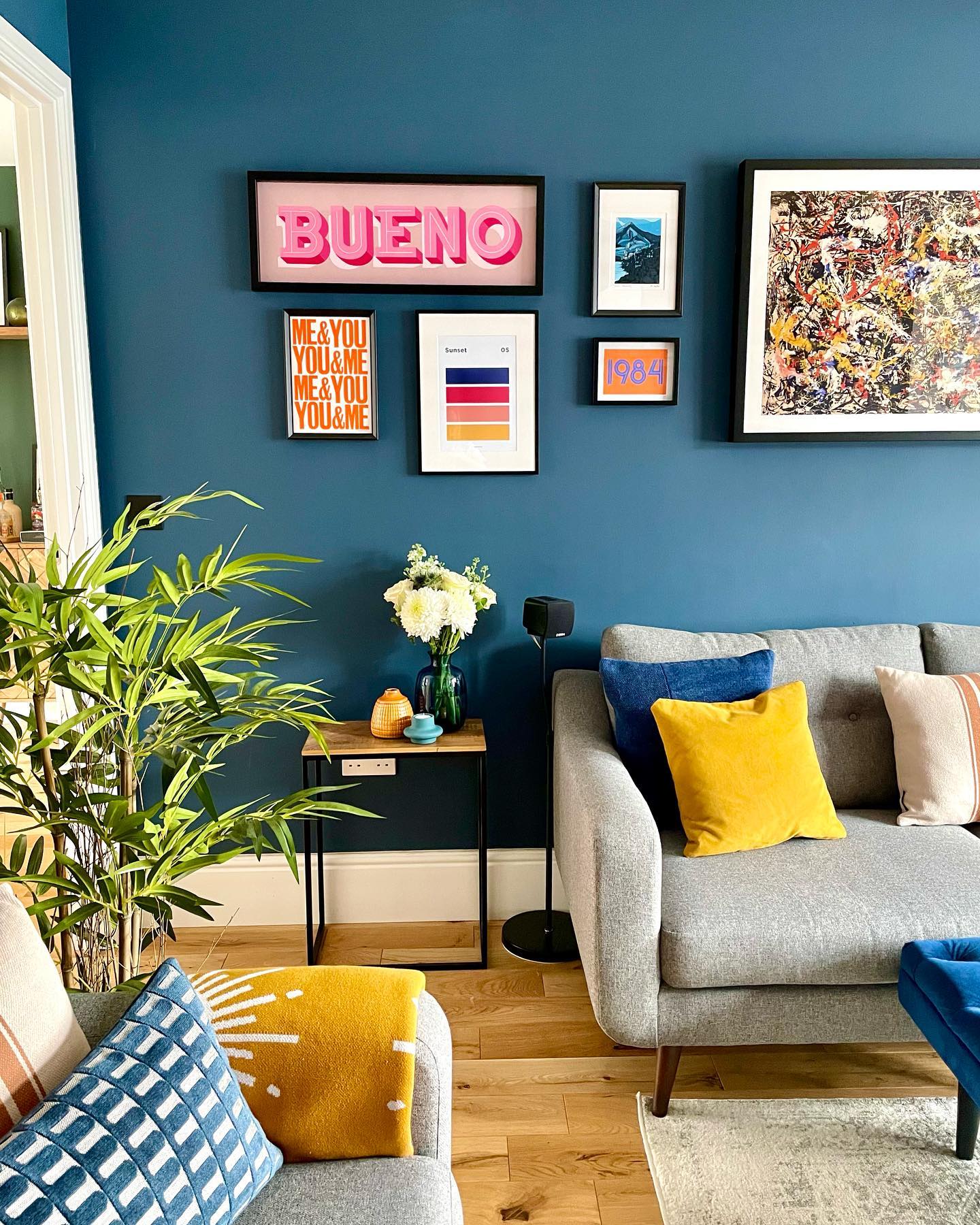
9. Make a Blue Gallery Wall Feel Playful
Credits: Instagram
Blue walls and gray seating can support a lively art collection without losing their underlying calm. Here, black frames connect typography, abstract marks, and small pictures, while the blue background lets the lighter artwork stand out.
Arrange your collection on the floor first, then test paper templates on the wall before making holes. Keep the spacing reasonably consistent even when frame sizes vary.
A yellow pillow and throw introduce a clear accent that also relates to the warm colors in the prints. You can borrow that idea with just two textiles rather than replacing larger furniture.
The gray sofa gives the eye somewhere quiet to rest. Leave enough visible blue around the display so the wall color remains clearly visible.
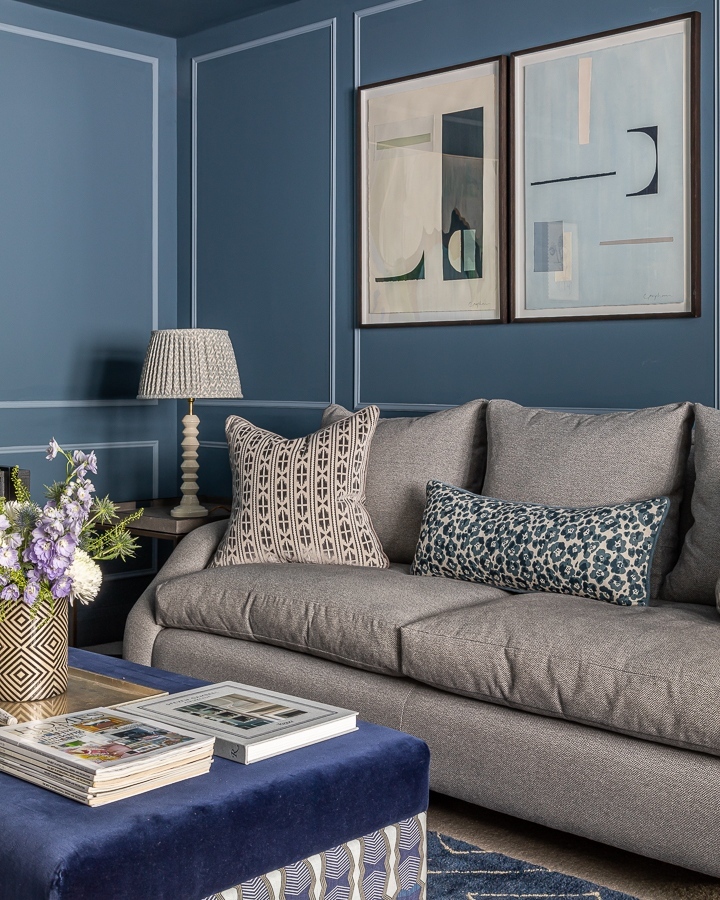
10. Use Blue Wall Molding to Add Quiet Structure
Credits: Instagram
Fine rectangular molding gives this blue wall definition behind a gray sofa without introducing a contrasting paint color. Light catches the raised edges, making the panel pattern visible while the room stays cohesive.
Plan panel proportions around the furniture and artwork rather than dividing the wall into identical boxes. Tape an outline first to check where the sofa back and picture frames will sit.
The two large prints here continue the restrained geometry, while patterned pillows introduce smaller, softer marks. A blue upholstered ottoman repeats the wall color at the center of the arrangement.
When combining patterns, vary their scale and leave the main sofa fabric plain. This keeps the molding, art, and textiles from competing at the same intensity.
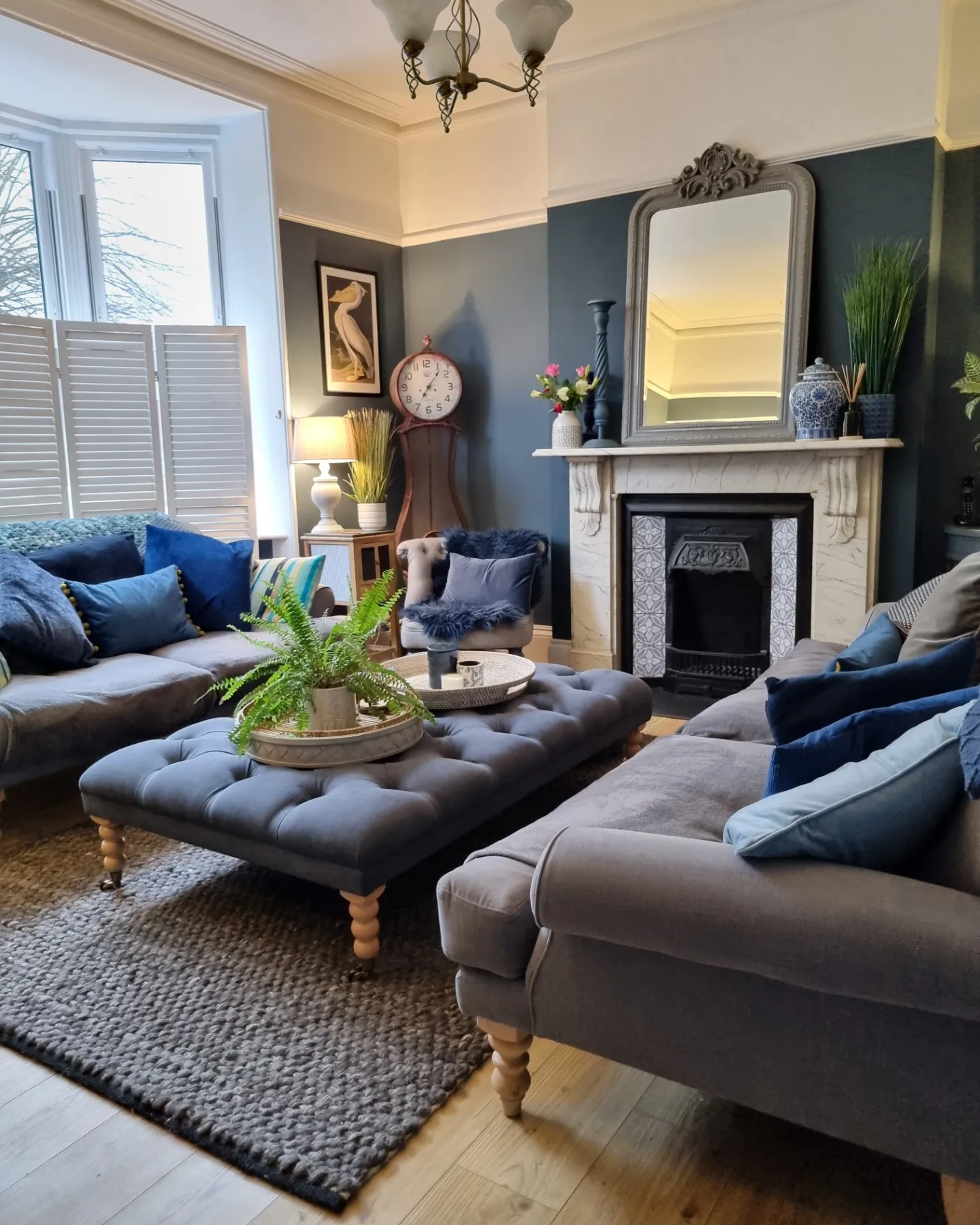
11. Arrange Gray Sofas Around a Shared Ottoman
Credits: Instagram
Facing gray sofas make this blue living room feel ready for conversation, with a tufted ottoman providing a shared center. The arrangement directs attention toward both the seating and the fireplace instead of lining every piece along one wall.
Before trying it, mark furniture outlines on the floor and check that people can pass comfortably without squeezing between seats. Choose an ottoman proportionate to the gap, and use a stable tray when placing drinks on upholstery.
Blue pillows connect the gray furniture to the walls, while the pale upper wall band keeps the architecture outlined. Leave practical access to the hearth and follow fireplace clearance requirements.
A smaller room can borrow the same arrangement with a sofa and two chairs.
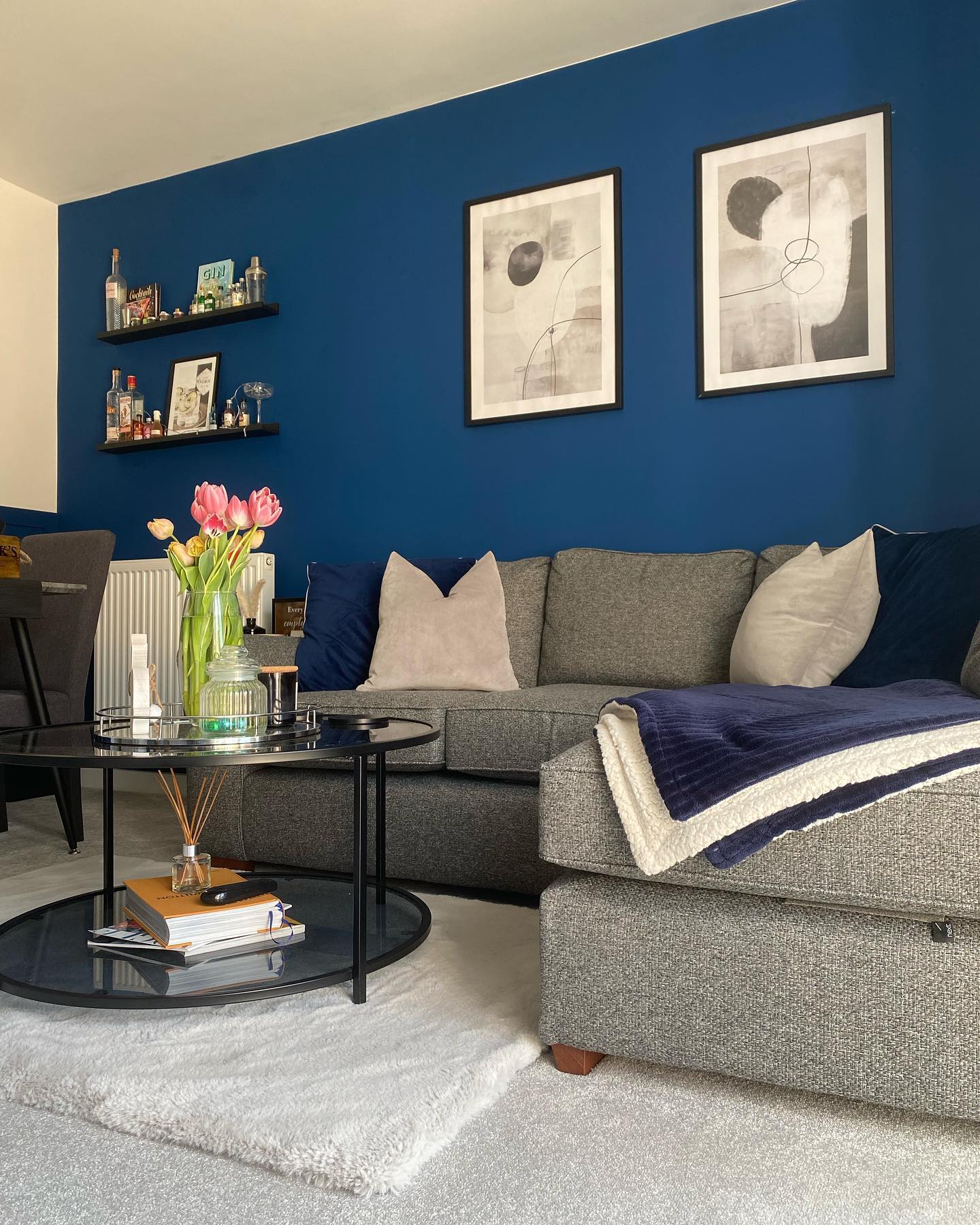
12. Choose a Round Table Beside a Gray Chaise
Credits: Instagram
The rounded coffee table softens the strong corner of this gray chaise sectional and provides a useful contrast to the rectangular artwork. Its open frame leaves the pale rug visible, helping the center feel less crowded.
When choosing a table for a chaise, measure the narrowest passage and test the outline before committing; a circle still needs enough space around its widest point.
Here, the blue accent wall supplies most of the color, with blue pillows and a folded throw bringing it forward onto the sofa. The neutral prints bridge the wall and gray upholstery without adding another dominant hue.
Use a lower shelf for a few everyday items, leaving enough clear tabletop space for cups, books, or a tray.
13. Connect Blue Walls and Gray Seating with Patterned Curtains
Credits: Instagram
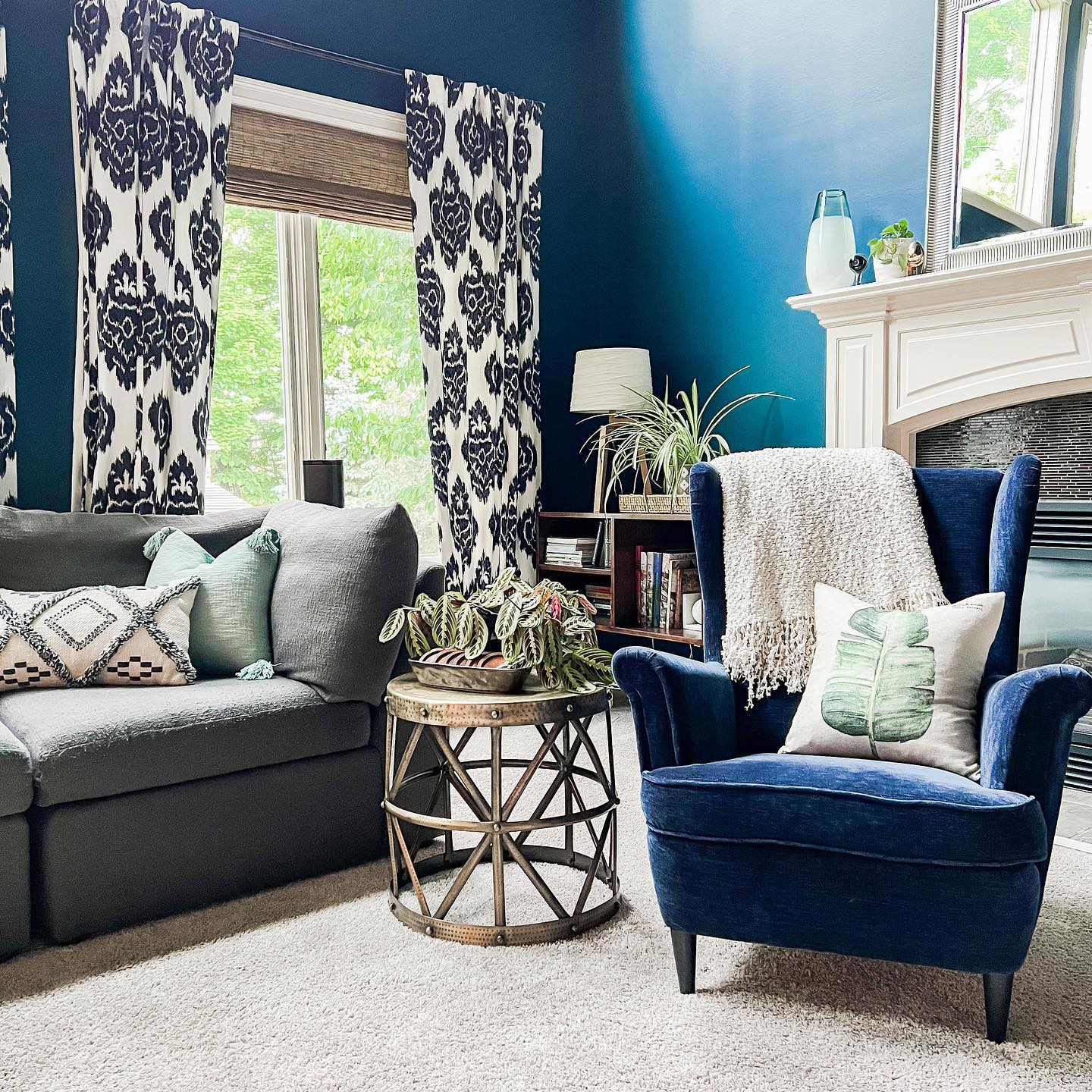
Bold blue and white curtains give this room a clear pattern anchor beside the gray sofa and blue wing chair.
Their large motif holds its own against the saturated wall, while the white areas connect with the fireplace and pale floor covering.
Choose a curtain pattern containing your main blue, then compare a generous fabric sample with the sofa before ordering. Keep the largest upholstered pieces mostly solid so the window treatment has room to stand out.
Smaller pillows can carry related patterns, but vary their scale rather than repeating the same motif everywhere. A simple woven shade adds another texture behind the curtains.
Position furniture so the panels can move freely, and keep fabrics clear of a working fireplace.
14. Layer Muted Blues into a Light Gray Room
Credits: Instagram
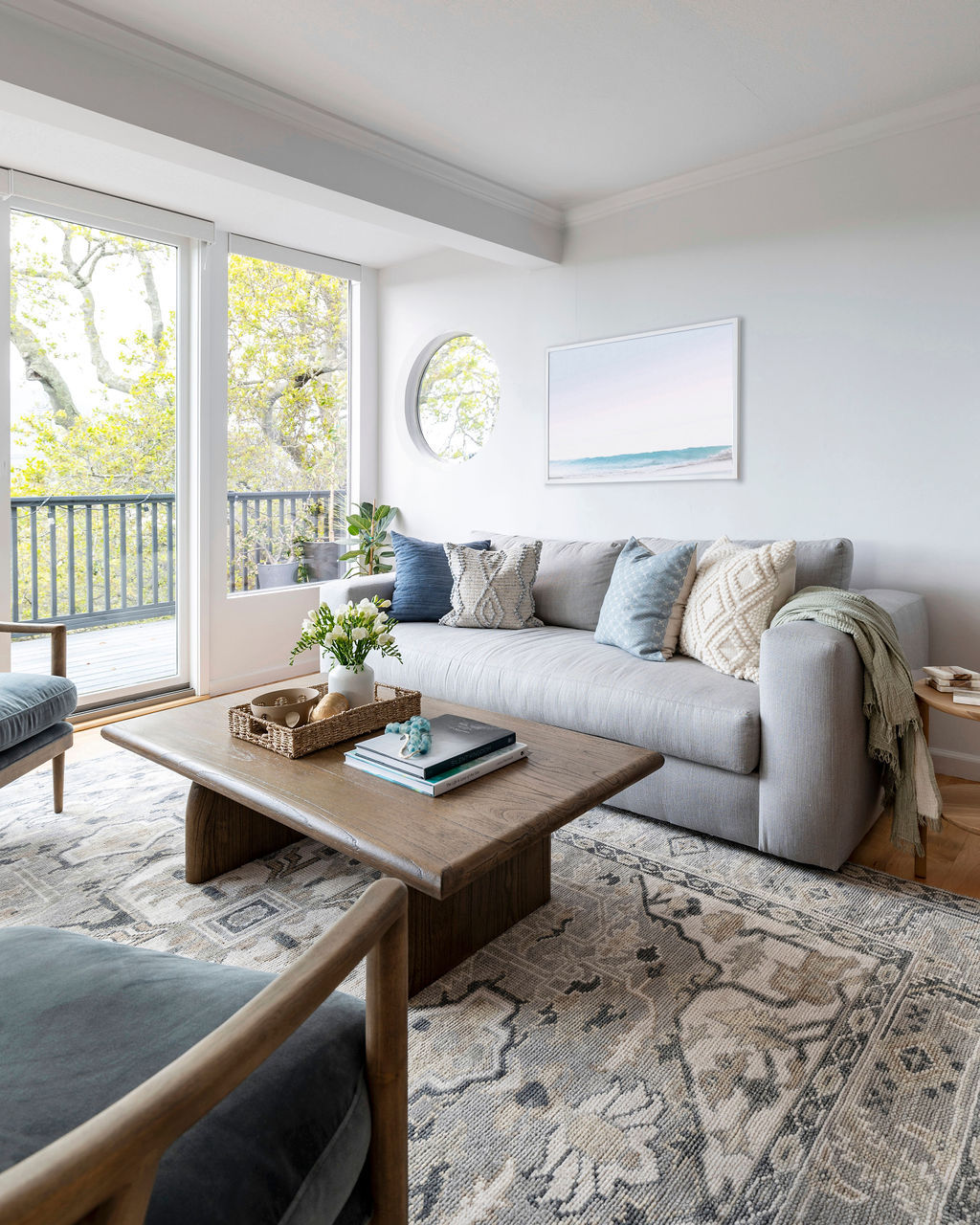
Muted blue cushions and chair upholstery give this light gray living room color without making the palette feel divided. The shades sit close enough in intensity to blend gently, while varied textures prevent the arrangement from looking flat.
Try a dusty blue pillow beside a textured cream one on your gray sofa, then repeat the blue on a separate chair or throw. You do not need an exact match across every fabric.
A patterned rug gathers the softer colors underneath the furniture, and the broad wood table adds a warmer middle tone. Keep wall art similarly restrained if you want this quieter effect.
Test the combination near your main window, where changing daylight can reveal unexpected undertones in pale fabrics.
15. Outline Pale Walls with Slim Blue Trim
Credits: Instagram
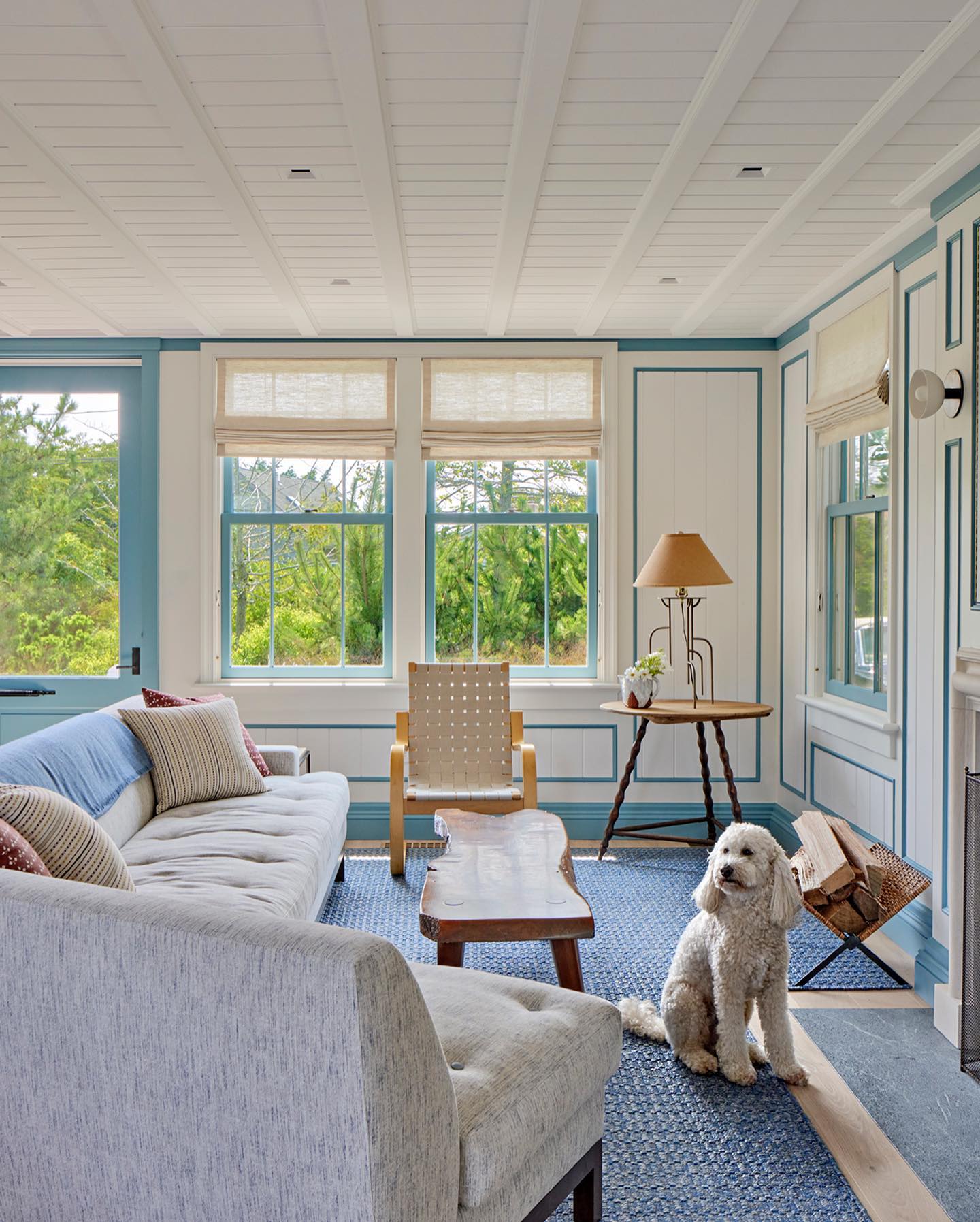
Thin blue outlines turn the pale walls into a decorative framework around this light gray sofa. Matching blue window details and a blue rug make the narrow lines feel connected to the rest of the room.
This approach provides color through edges rather than large painted surfaces, making it useful when you prefer a mostly light interior.
Start with one architectural feature, such as window trim or existing wall molding, and test how much contrast you want. Keep neighboring walls and ceiling comparatively quiet so the outline stays legible.
Here, natural-toned shades and simple wood furniture soften the repeated geometry. If painting movable window parts, use a suitable finish and keep hardware and operating gaps clear so everything still works.
16. Brighten Navy and Warm Gray with Pink Patterns
Credits: Instagram
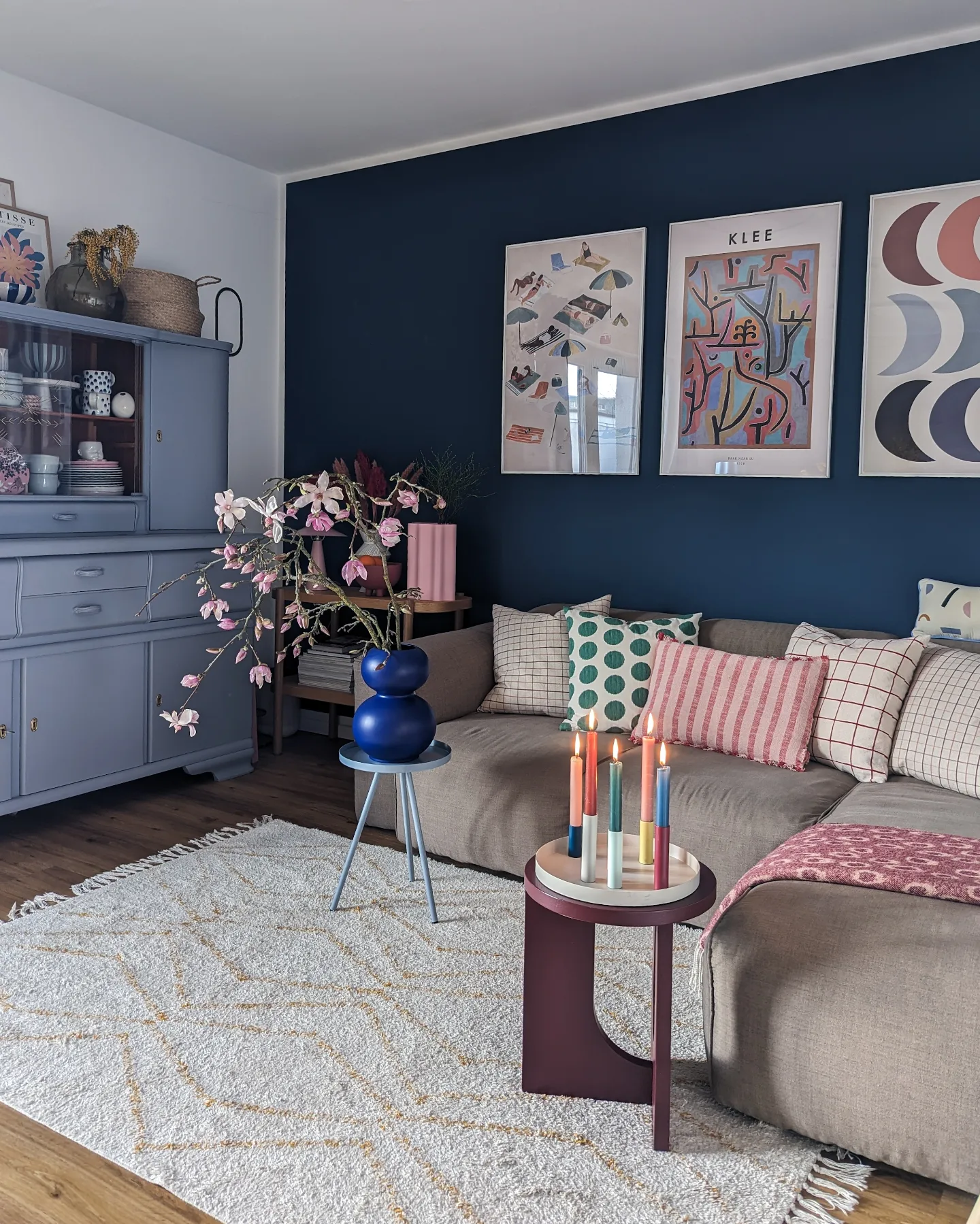
Pink stripes and small patterned textiles lift this navy and warm gray living room without replacing its main furniture. The pink also appears in the framed prints, making the accents feel connected rather than scattered.
A gray-blue cabinet bridges the dark wall and softer sofa, while the pale rug keeps the lower part of the room lighter.
To try the mix, start with one pink pillow that includes cream or gray, then repeat that pink in a smaller accessory or print. Let your existing sofa remain the steady background.
Combining stripes, checks, and rounded motifs works best when their sizes differ and each has some quiet space around it. Keep occasional tables practical by leaving a clear place for drinks.
17. Use Blue to Define an Open Plan Dining Corner
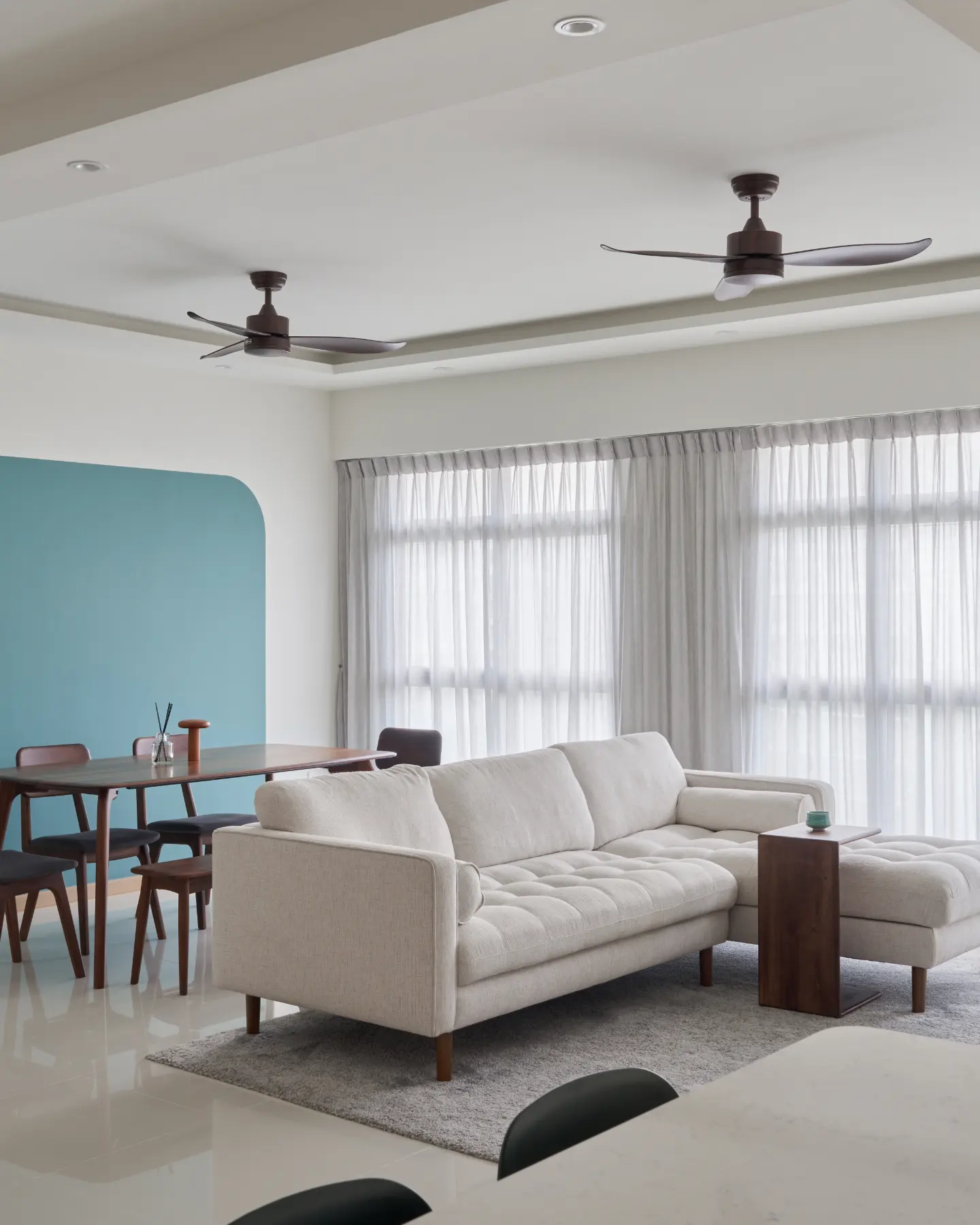
Credits: Instagram
A rounded blue wall accent distinguishes the dining corner behind this pale gray sofa without closing off the shared space. The living area stays quieter through its gray rug, soft curtains, and restrained furniture shapes.
This is useful when one room serves several purposes but you want each area to feel intentional. Position the sofa and rug first, checking routes between entrances, windows, and the dining table.
Then size the painted shape around the dining furniture so it reads as a backdrop rather than an isolated patch. A curved corner can soften the hard lines of tables and walls.
Repeat wood tones between the two areas for continuity, and avoid adding bulky storage where it would interrupt the walking route.
18. Make a Bright Blue Ottoman the Centerpiece
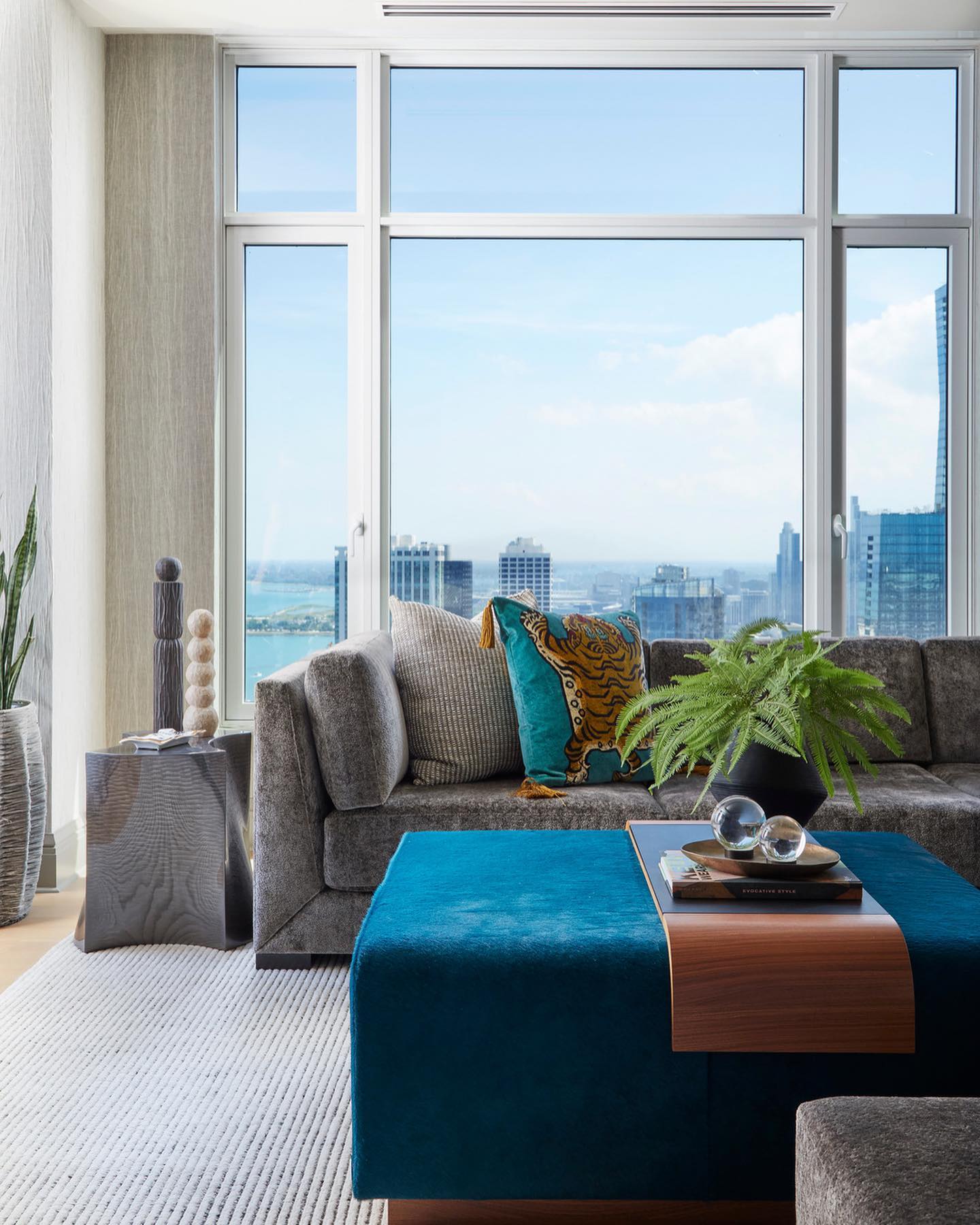
Credits: Instagram
A vivid blue ottoman creates a strong center in this otherwise gray seating arrangement. Because the largest sofas stay neutral, the saturated upholstery can stand out without spreading bright color across every surface.
A blue patterned pillow repeats the accent at seat height, making the ottoman feel connected to the room. Try this approach when you want a noticeable change but plan to keep your existing gray sofa.
Compare the ottoman's height with the seat cushions and leave comfortable clearance around it. The fitted wood surface shown here provides a firmer landing place for objects; a stable removable tray can serve a similar purpose.
Keep the surrounding rug relatively quiet so the blue remains the focal point in the grouping.
19. Layer Blue Textures Over a Plain Gray Sectional
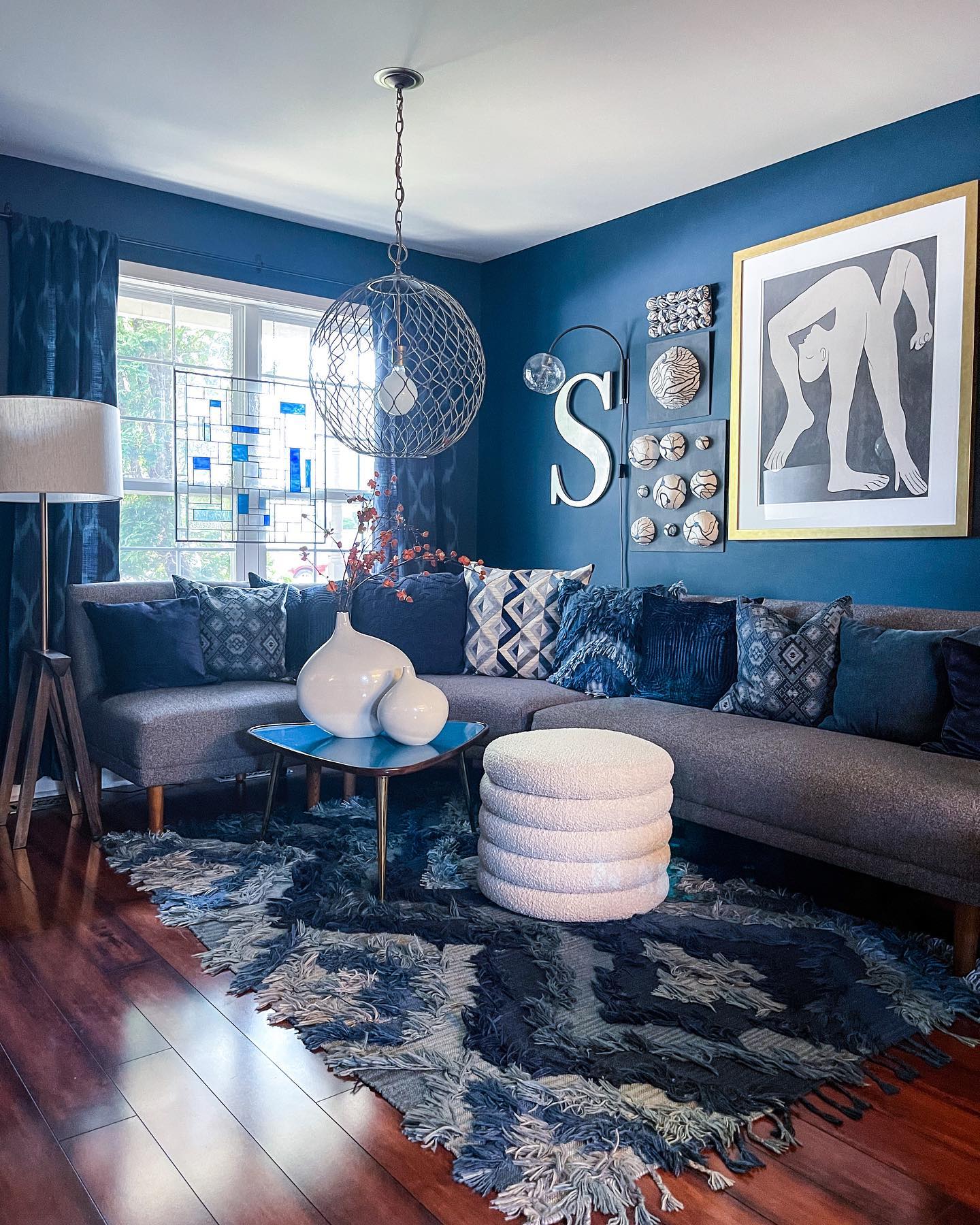
Credits: Instagram
A plain gray sectional provides the steady base for this layered blue room. Patterned curtains, textured pillows, and a shaggy rug all bring different surfaces into the same color family.
The approach feels cohesive because blue repeats, even though the individual patterns do not match. Begin with one patterned textile, then add a contrasting texture rather than adding another busy print.
Keep some solid pillows and visible gray upholstery between patterns so the seating stays readable. A pale rounded ottoman supplies a useful visual pause amid the darker blues.
Choose rug texture with maintenance in mind, especially if you have pets or frequently move furniture. Check that fringe lies outside the main walking route and that the rug stays secure.
20. Ground a Powder Blue Sofa with Charcoal Gray
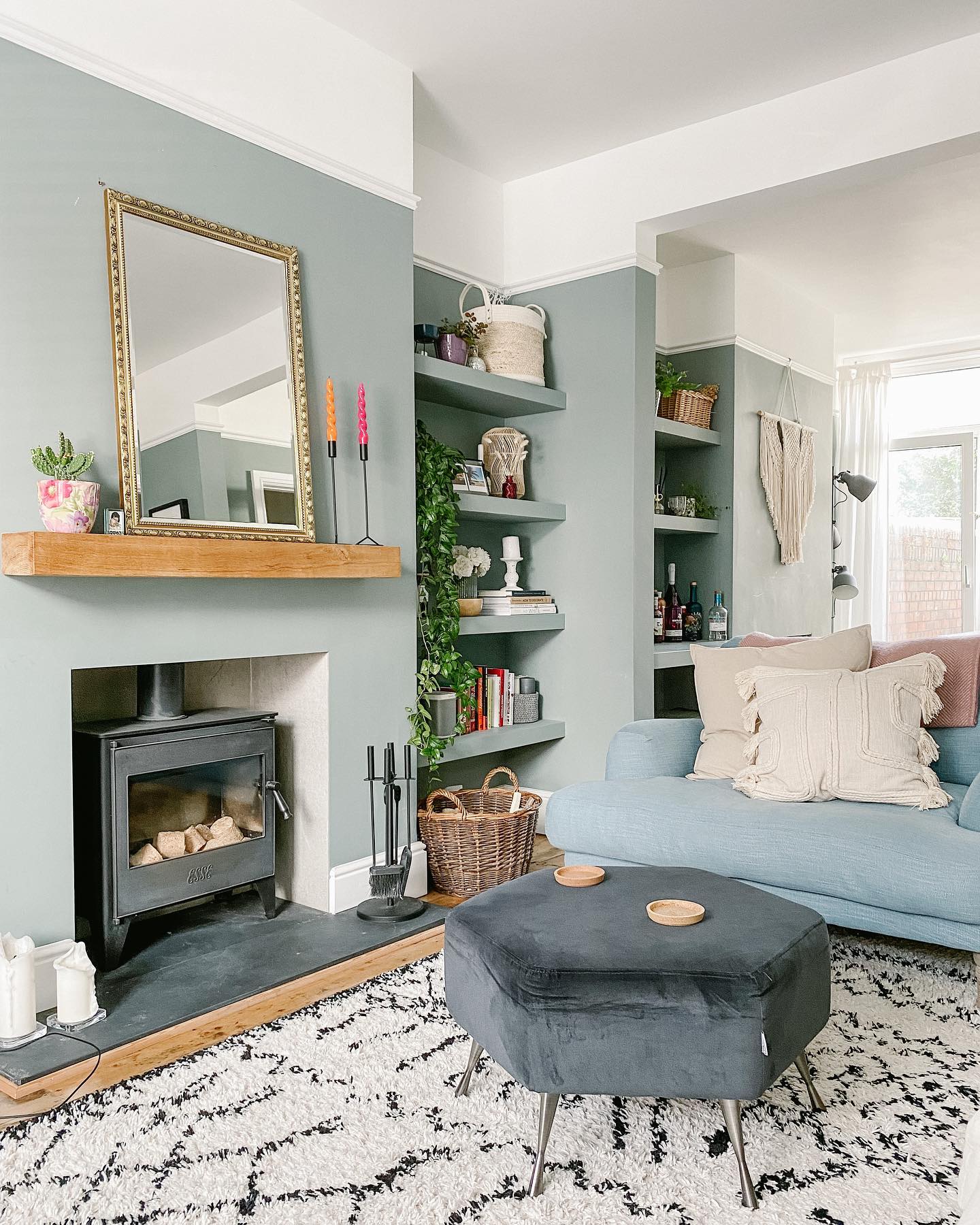
Credits: Instagram
A charcoal gray ottoman gives this powder blue sofa a darker companion without overwhelming its soft color. The contrast happens close to the floor, while pale pillows and the white upper wall band keep the room airy.
Try one dark piece before committing to a larger charcoal sofa or painted wall. Its shape matters too: this faceted ottoman introduces angles beside the softer upholstery.
A light patterned rug separates it visually from the darker hearth and helps the seating group feel connected. The muted gray walls have a green cast, showing why samples should be checked beside your chosen blue.
Around a working stove, prioritize the required clearances for furniture, rugs, stored items, and decorations over copying the arrangement exactly.