
A crowded college living room can feel even smaller when every piece of furniture blocks a path or has nowhere to put shared essentials.
The Best College Living Room Ideas make limited space work harder with practical choices such as a slim coffee table, an open bookcase that separates shared zones, and storage for extra floor cushions.
A clear walkway matters just as much as the furniture, especially when roommates are coming and going. Small touches like layered lighting and pillows can also give a compact seating area a more personal, comfortable feel.
1. Soften a Compact Futon With Cozy Layers
Credits: Instagram
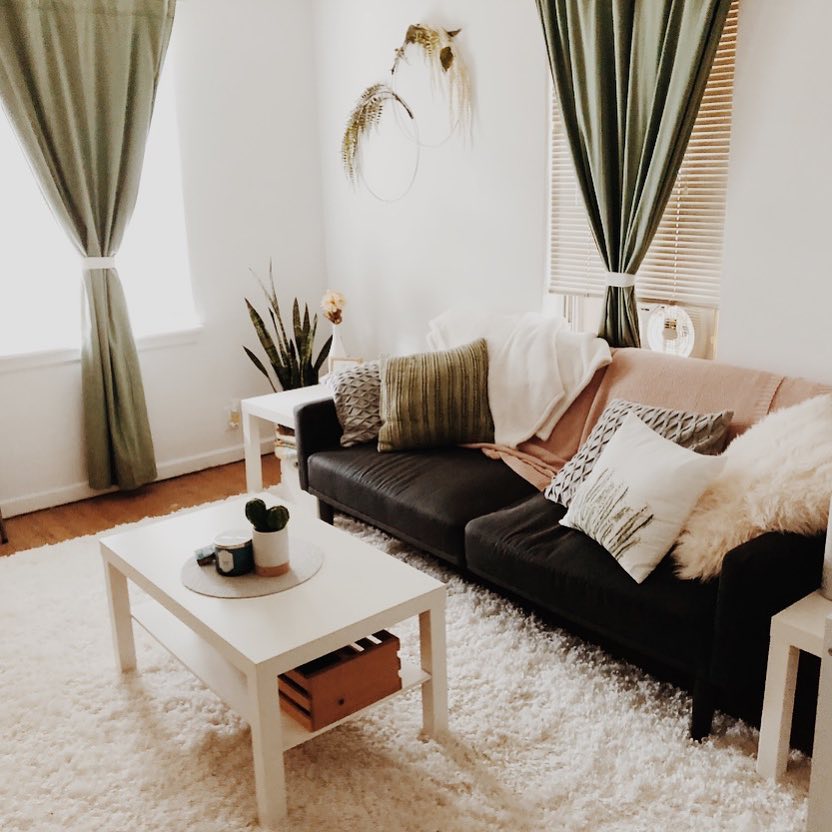
A dark futon feels softer here thanks to pale throws, textured pillows, and a fluffy light rug. Green curtains repeat the color of one cushion, giving the small seating area a simple connection.
Borrow that approach when roommates bring furniture that does not match: choose two shared accent colors and repeat them through removable textiles. Start with a throw over the back, then add only enough pillows to support comfortable sitting.
Keep spare cushions in a nearby basket during movie nights. The white coffee table also has a lower shelf, a useful place for a box of chargers or game controllers.
Choose washable covers and a rug you can realistically clean between classes, especially if snacks regularly join study sessions.
2. Use an Open Bookcase to Divide Shared Zones
Credits: Instagram
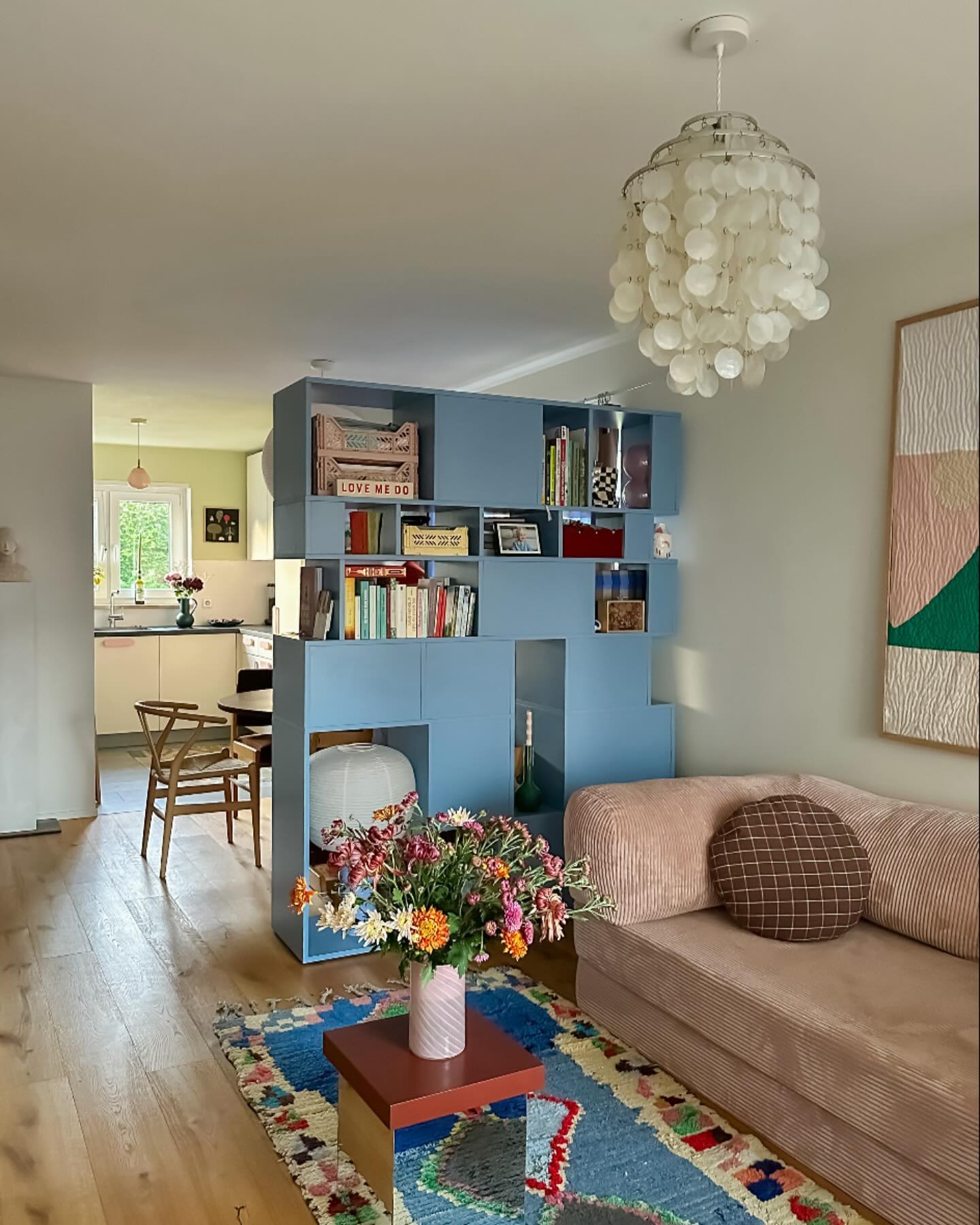
Blue shelving separates this pink sofa from the dining area while leaving openings between the two spaces. Books, baskets, and a few decorative objects make the divider useful from the living room.
In a shared apartment, a similar arrangement can mark where relaxing ends and studying or eating begins. Choose shelving designed for the intended placement, and follow its stability and anchoring instructions rather than assuming any bookcase can stand freely.
Give each roommate a basket for belongings so shared surfaces stay available. Keep some compartments open to preserve the view through the room.
Before buying, measure the remaining walking route and check that dining chairs can slide back comfortably without hitting the divider or interrupting access to the kitchen.
3. Try a Slatted Bench as a Slim Coffee Table
Credits: Instagram
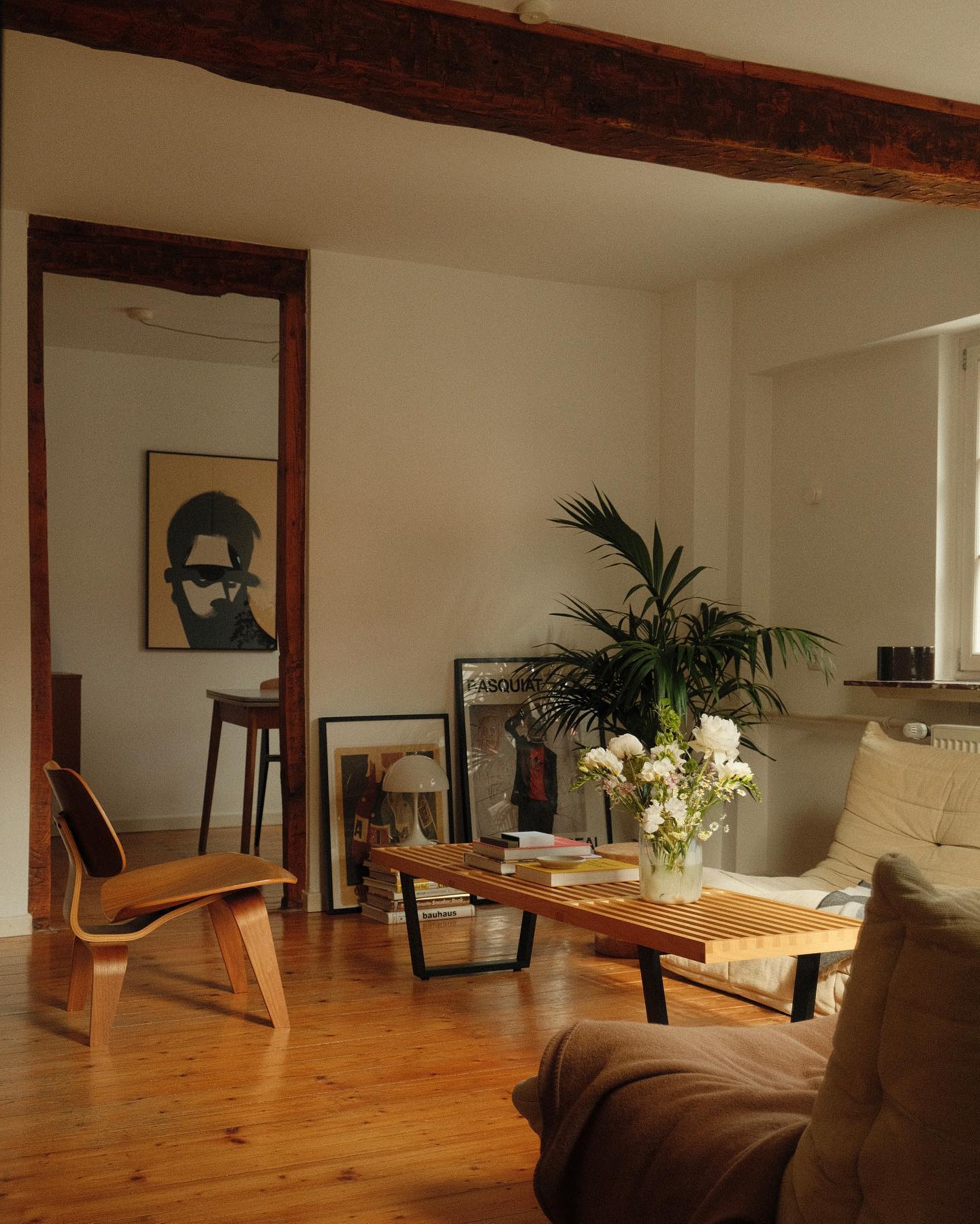
A long slatted bench sits between low lounge seating and a sculptural chair, offering a narrow surface without filling the whole floor. Its open base keeps the arrangement visually light, while books and flowers provide the decoration.
For a college apartment with limited space, consider a similarly slim piece when a deep coffee table would crowd your knees. Check its height against your sofa before committing, since reaching down too far gets awkward during everyday use.
Put drinks on a stable tray so cups cannot tilt between the slats. Leave one end clear for a notebook or shared snacks.
If you also want occasional seating, choose a bench explicitly designed to support people, then move fragile objects before anyone sits.
4. Leave an Open Walkway Through a Narrow Room
Credits: Instagram
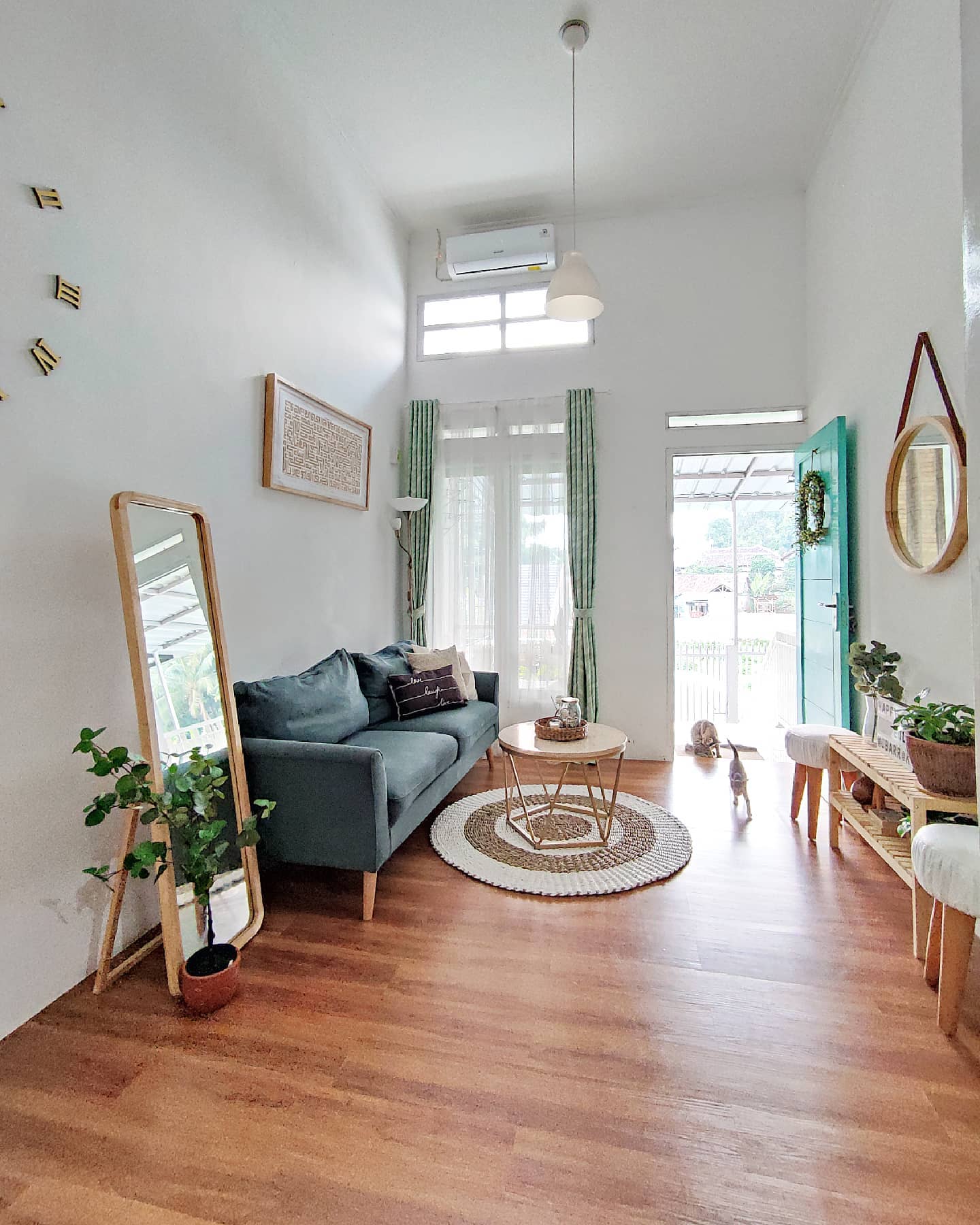
This narrow room keeps its sofa against one wall and a shallow bench along the other, leaving a clear route from the front door. A small round table serves the seating area without stretching across that passage.
Copy the layout before copying the accessories: sketch the doors, furniture, and paths everyone uses each day. Then place your largest seat where it least interferes with those routes.
Roommates carrying laundry or backpacks should not have to turn sideways around a coffee table. Keep bags on hooks or in designated storage instead of dropping them beside the sofa.
Test the arrangement with every door fully open, and make sure a chair pulled out for a visitor does not block the main exit.
5. Bring Pattern to the Wall Above a Loveseat
Credits: Instagram
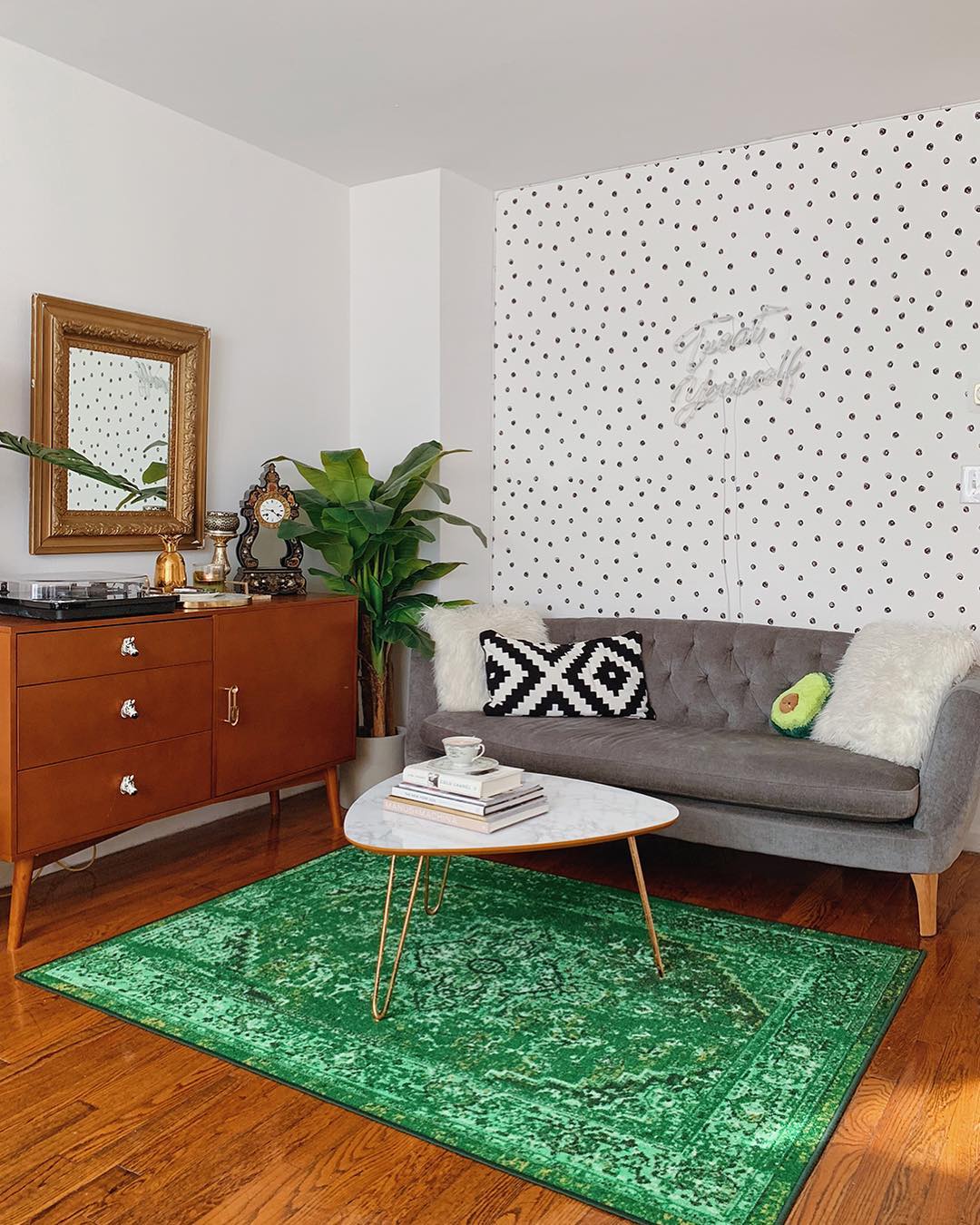
A dotted wall gives this compact gray loveseat a lively backdrop, while a geometric pillow and green rug add contrasting patterns below. The furniture stays simple, allowing the repeated dots to make the strongest statement.
For a student rental, translate the idea into framed patterned paper or a fabric panel using an approved hanging method.
The photograph does not establish how its wall treatment is attached, so check your housing rules before applying anything directly to painted walls. Choose one main pattern with your roommates, then repeat a color from it in smaller accessories.
Keep the adjacent storage cabinet useful for shared supplies rather than covering its entire top. A contained accent area can deliver personality without decorating every wall.
6. Store Extra Floor Cushions Under a Daybed
Credits: Instagram
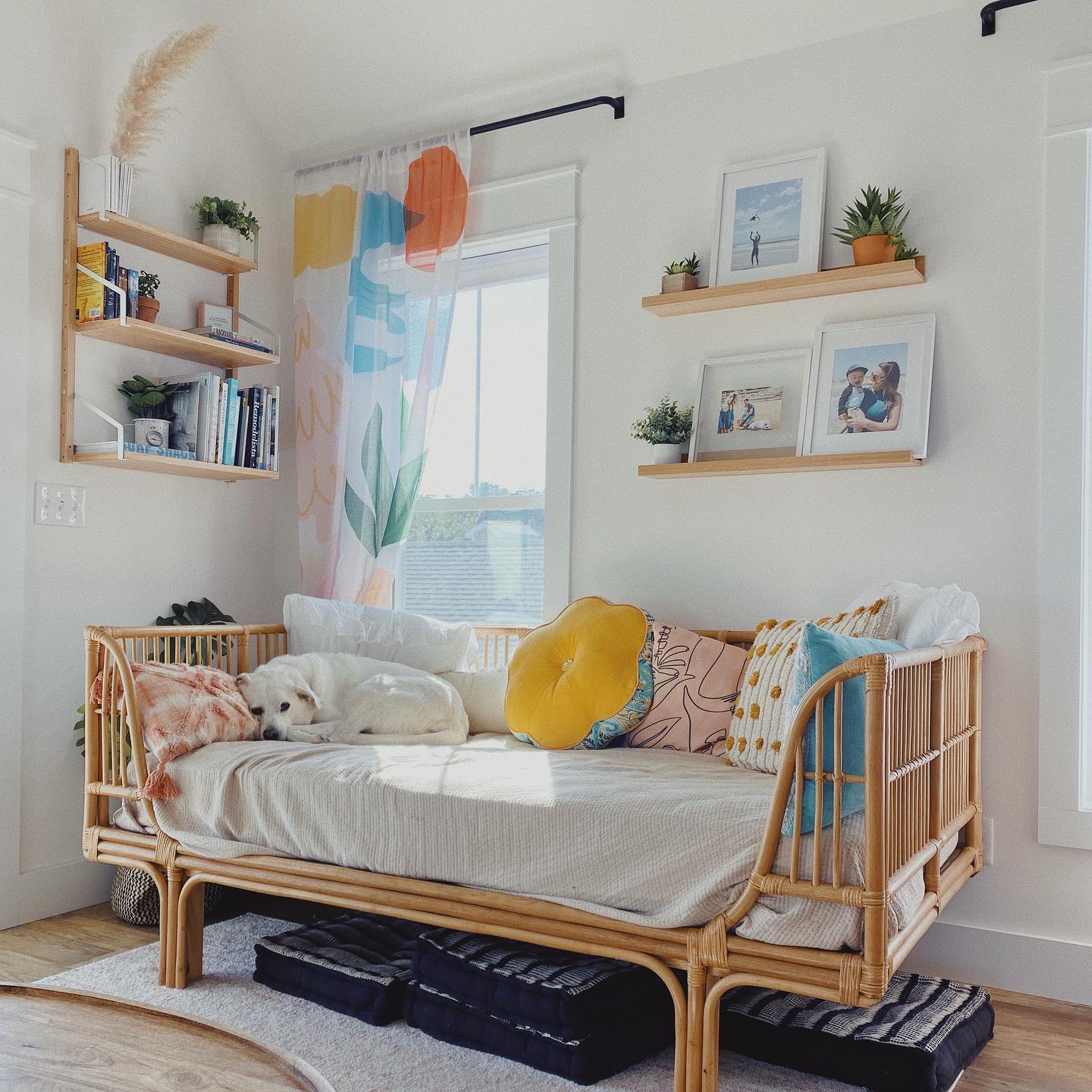
Three floor cushions tuck beneath this daybed, ready to slide out when more people gather. Bright pillows and a patterned curtain make the corner playful, while the open frame reveals the storage space underneath.
The useful lesson for roommates is to plan where occasional seating lives before guests arrive. Measure the clearance below your sofa or daybed, including any support legs, and choose cushions that fit without being compressed.
Removable covers make shared use easier to manage. Pull the cushions onto a clean rug for a game night, then return them underneath when everyone leaves.
Keep a regular chair available for anyone who finds floor seating uncomfortable. Avoid packing the space so tightly that retrieving cushions becomes another rearranging project.
7. Float a Small Sofa Between Living and Kitchen
Credits: Instagram
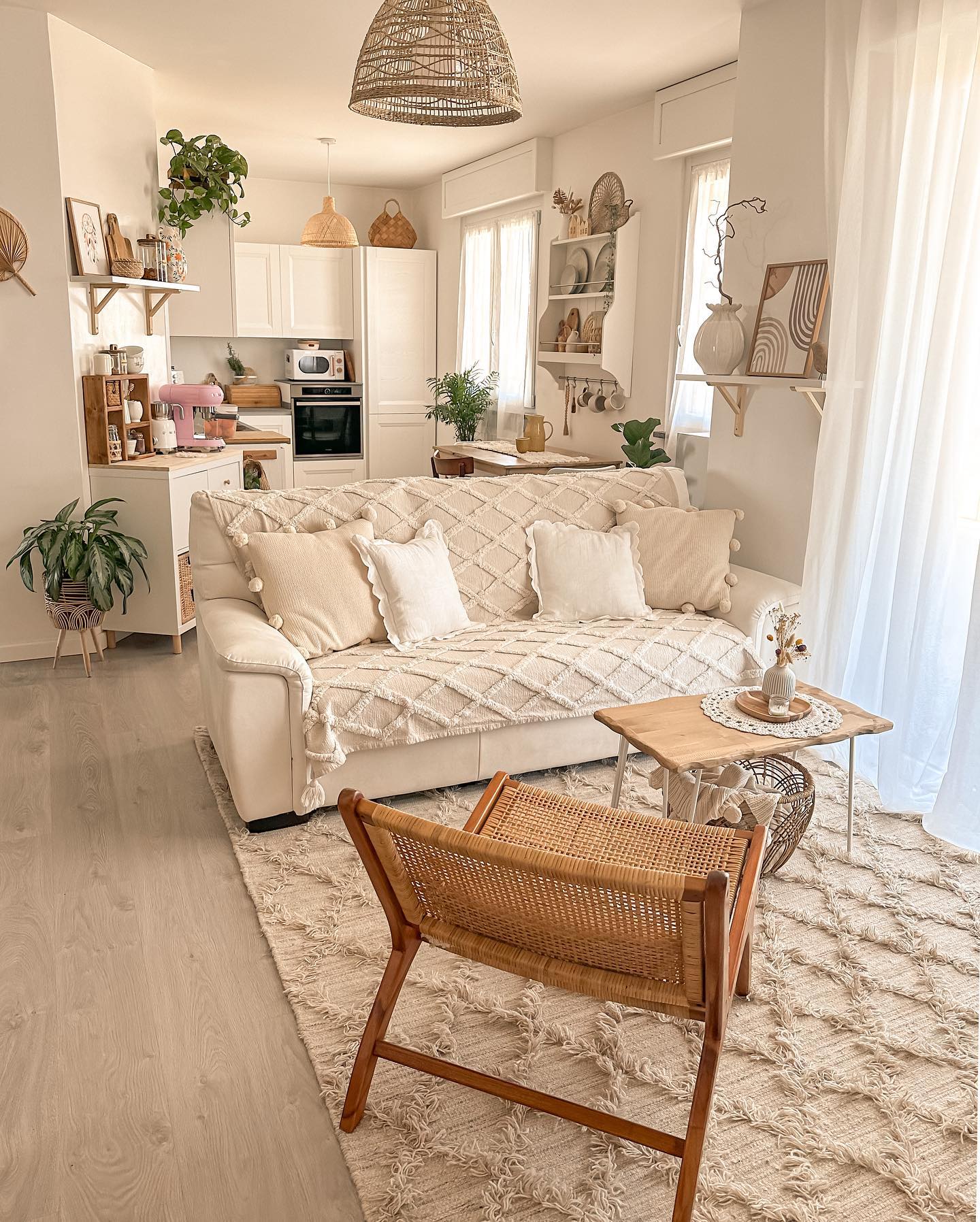
The cream sofa faces away from the kitchen, creating a clear living area within one open room. A rug, small table, and airy chair complete the group while a walkway remains along the left side.
This layout can help roommates share an apartment where cooking, eating, and relaxing happen close together. Place the sofa first, keeping enough space behind it for dining chairs and movement around the kitchen.
Then size the rug to the seating group rather than the entire room. A basket beneath the table can hold a throw or shared magazines, following the photograph's compact storage idea.
Check the view from both sides before settling the arrangement, since the sofa's back becomes a visible part of the room.
8. Layer Soft Lighting Around the Sofa
Credits: Instagram
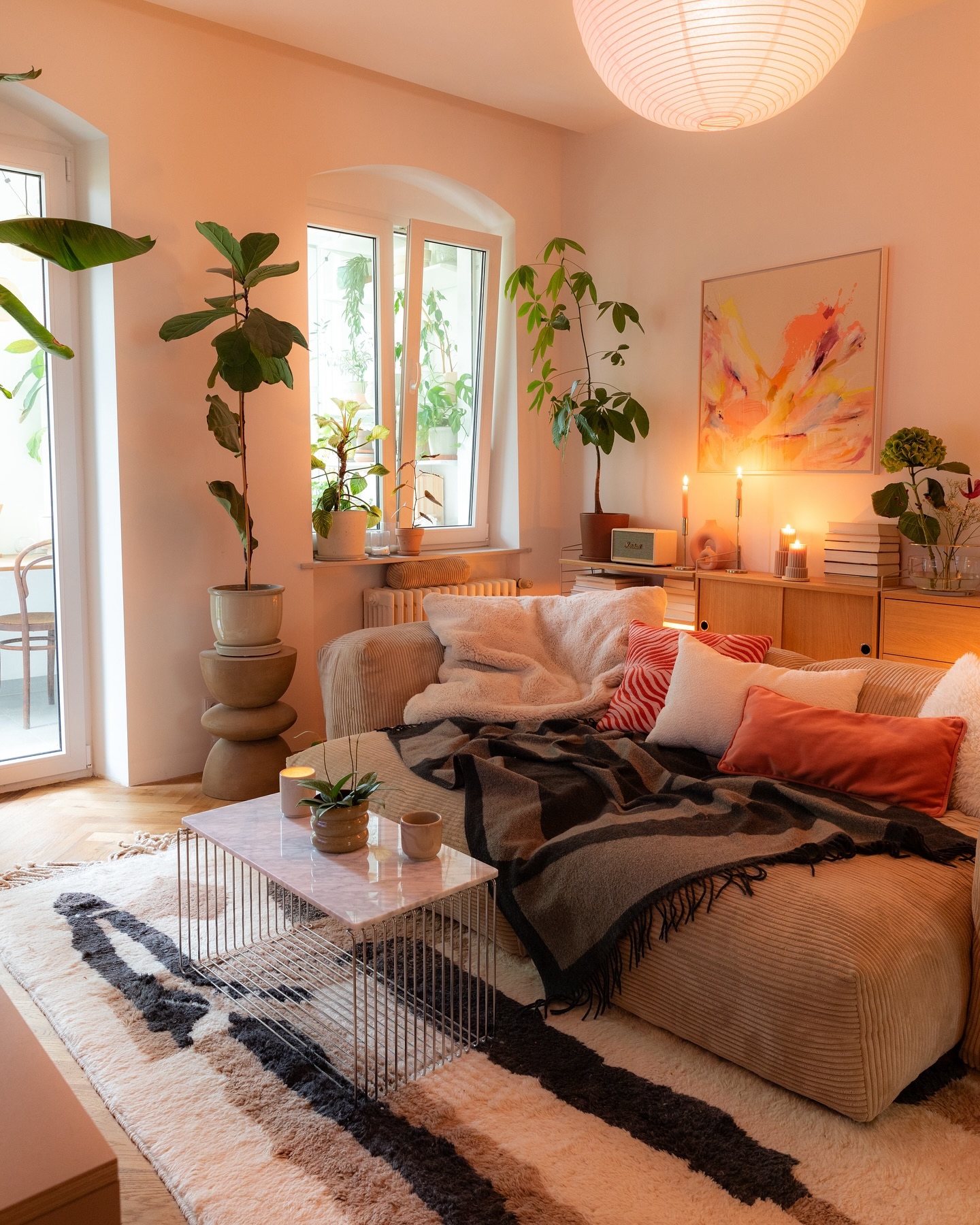
A glowing ribbed pendant and smaller points of light give this sofa corner a warm evening atmosphere. The pale upholstery, orange pillows, and colorful artwork carry that warmth through the room.
Recreate the lighting effect with a shaded lamp near the sofa and another gentle light across the space, rather than relying entirely on one bright ceiling fixture.
For college housing, use flameless candles in place of the open flames shown, and follow the property's lighting rules. Keep a separate task light available for reading so cozy evenings do not mean squinting over coursework.
Route cords along the room's edges, away from walking paths. Try the lights after dark before buying additional fixtures; one thoughtfully placed lamp may be enough.
9. Pair a Round Coffee Table With a Side Table
Credits: Instagram
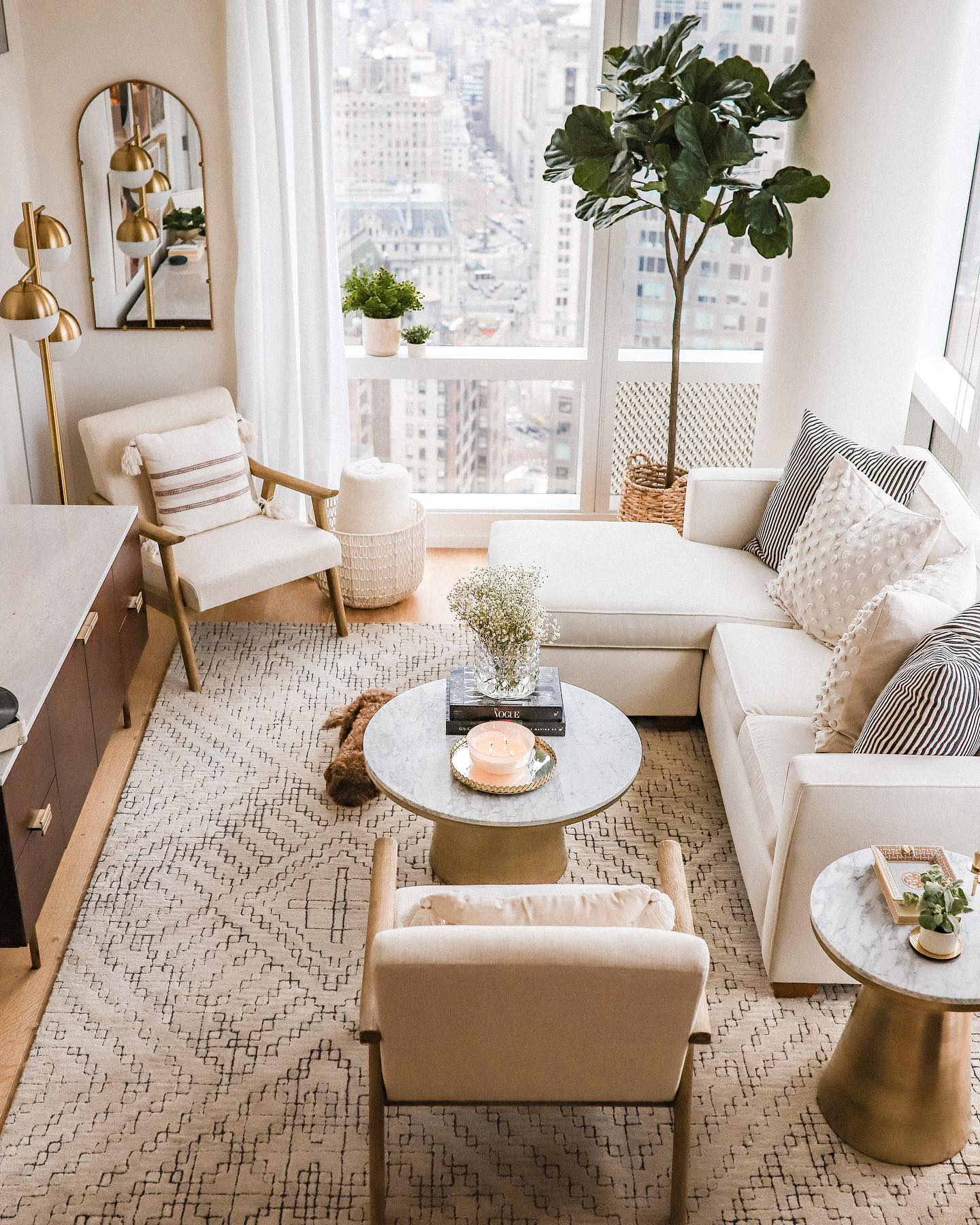
Two round tables serve different seats in this compact arrangement: one anchors the middle, while the other sits beside the sectional. The split placement provides convenient surfaces without extending a single large table across the entire seating group.
Try this approach when roommates use the living room for different activities at once. A central table can hold a board game, while the side table keeps someone's drink within reach.
Measure both pieces separately and test the walking space around their bases, which can be wider than expected. Leave enough tabletop clear for daily use instead of filling every surface with decorations.
Coordinating shapes can help mismatched furniture feel connected, even when you collect pieces gradually across several semesters and moves.
10. Make an Ottoman Do Double Duty
Credits: Instagram
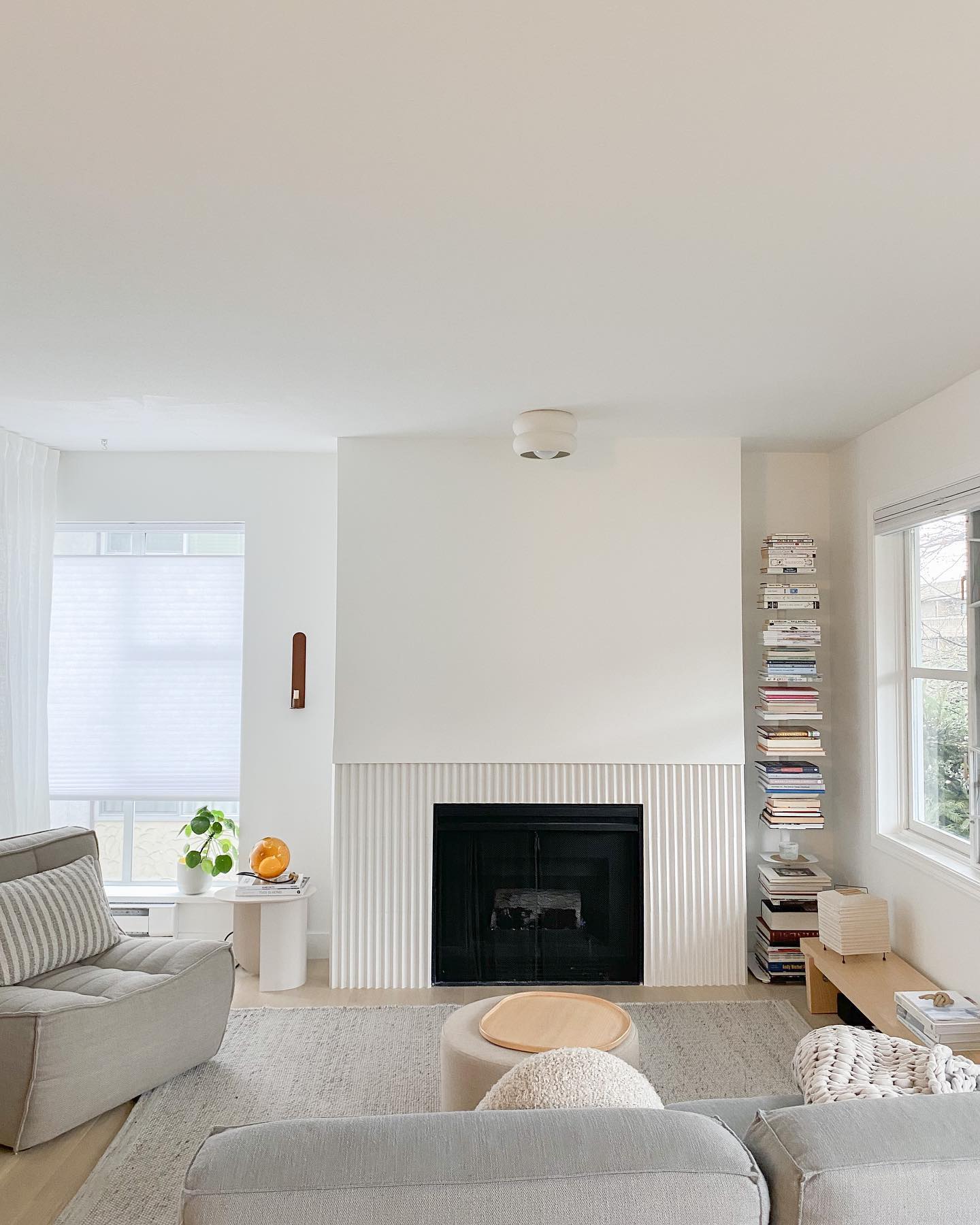
A small upholstered ottoman with a round tray sits at the center of this calm seating group. The tray supplies a firm surface, while the soft piece underneath can serve as a footrest when cleared.
For a shared college living room, this combination works best when everyone knows where the tray goes during a movie or game night. Set aside a shelf or side table for it so drinks are moved safely first.
Choose an ottoman with a stable, level top, and check the manufacturer's intended uses before treating it as extra seating. Keep its size proportional to the sofa and allow room to walk around it.
A removable cover is worth considering when the piece will receive frequent use.
11. Add a Movable Pouf for Shared Hangouts
Credits: Instagram
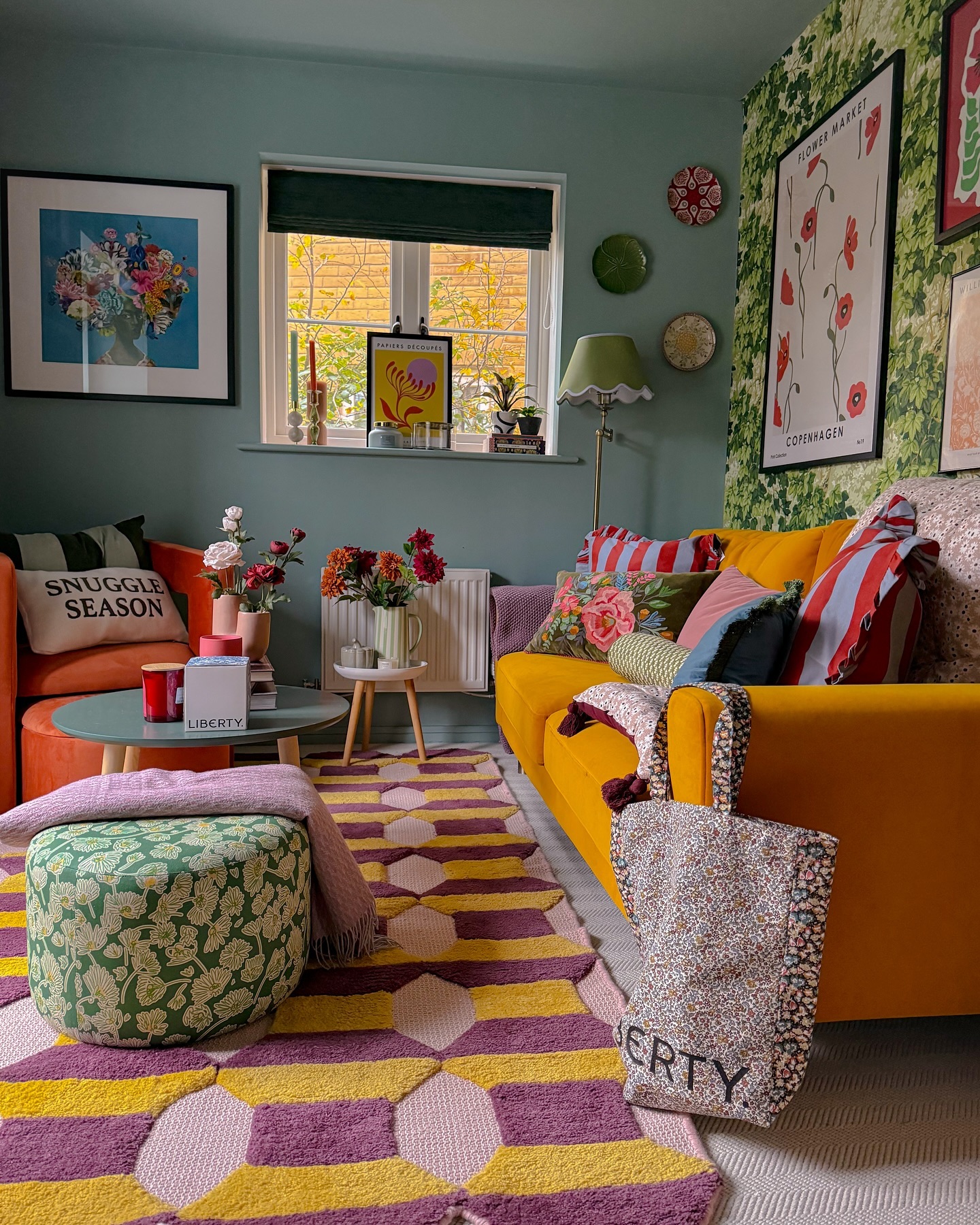
A patterned pouf adds another perch between the yellow sofa and orange armchair, making this colorful room feel ready for company. Its rounded shape fits beside the small tables without introducing another large chair.
Borrow that flexibility for a college apartment where movie nights occasionally bring extra friends. Choose a pouf designed for seating, then give it a regular parking spot tucked beside the sofa when the floor needs clearing.
Repeat one color from your existing pillows so the addition feels connected, even if roommates bring different furniture. A washable cover can simplify shared upkeep.
Keep drink glasses on a firm table, and leave a clear route through the room rather than filling every available gap with another small accessory.
12. Choose a Compact Chaise Sofa for Lounging
Credits: Instagram
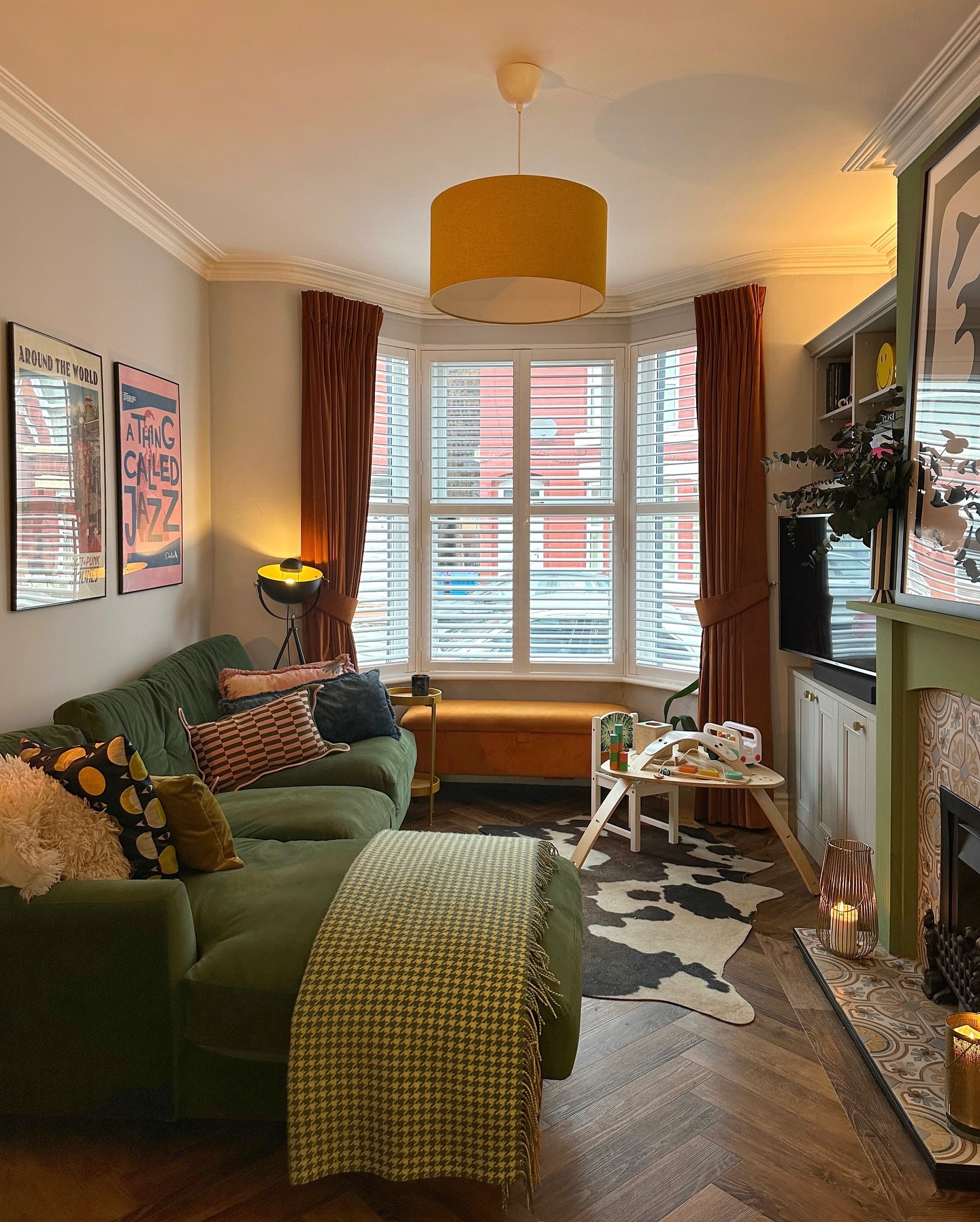
The green sofa uses one long wall, while its chaise extends toward the foreground for a comfortable place to stretch out. A slim side table handles a drink without occupying the entire center of this narrow room.
If your college living room doubles as a gathering spot after class, compare chaise placement before buying anything. Measure the projection from the wall, then mark it on the floor to check the remaining passage.
A reversible layout may help when your next apartment has different doors or windows. Keep the cushion selection manageable so several roommates can actually sit down.
Use a throw for extra comfort, and choose a separate supportive desk setup when you need to study for longer focused stretches.
13. Make a Neutral Sofa Personal With Pillows
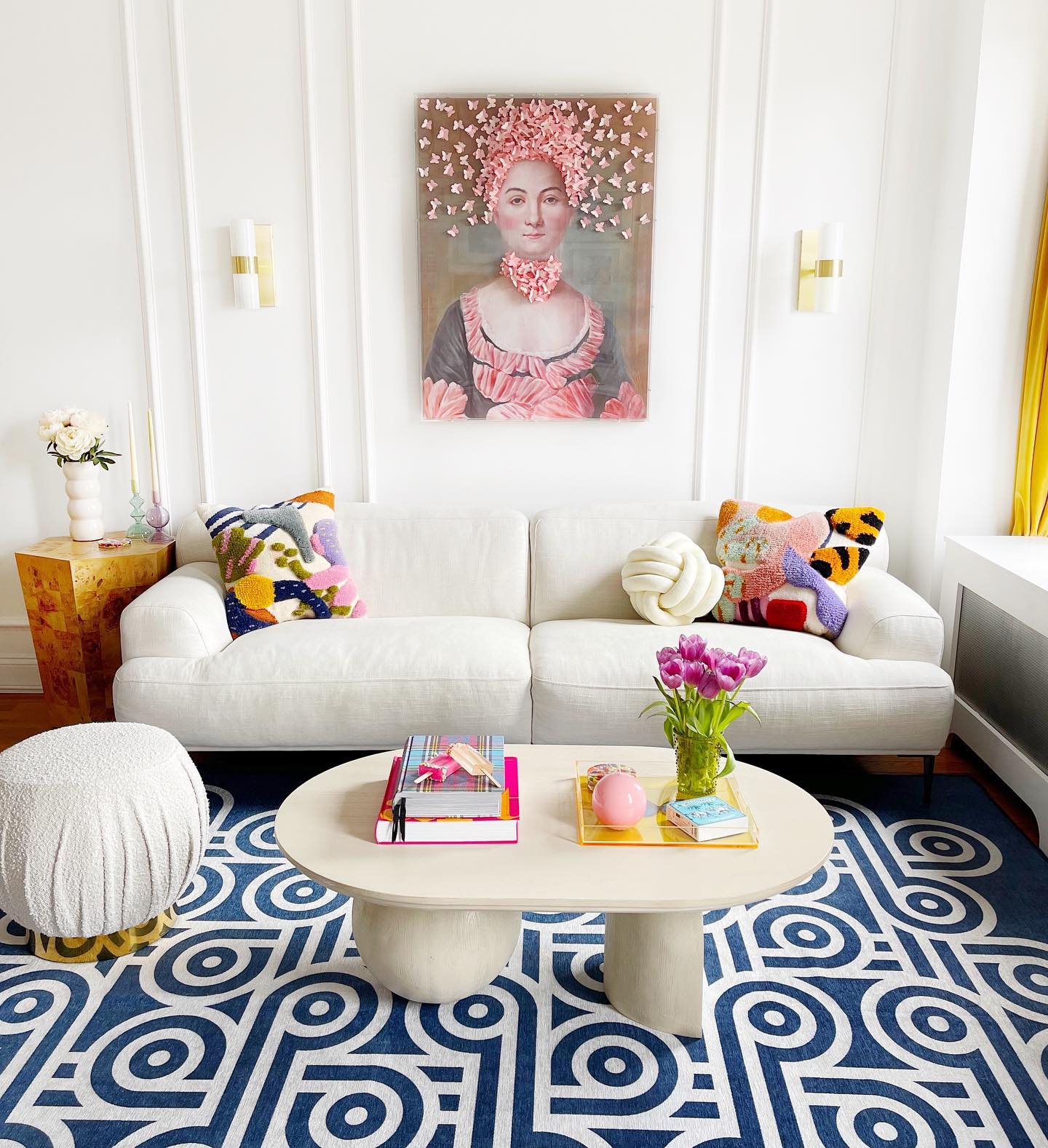
Credits: Instagram
Colorful textured pillows give this cream sofa personality while leaving plenty of the seat visible. Pink, yellow, purple, and blue connect the upholstery accents with the artwork and accessories nearby.
For roommates decorating a shared college living room, this is an approachable way to combine tastes without replacing the largest furniture. Agree on two or three recurring colors, then let everyone contribute a pillow in a different pattern.
Keep the shapes varied but avoid piling so many on the sofa that guests must move them all. Removable covers make cleaning easier if their care instructions suit your routine.
Start with the inserts you already own, measure before ordering covers, and store spare options flat until you want a seasonal change.
14. Mix Collected Pieces Around a Small Sofa
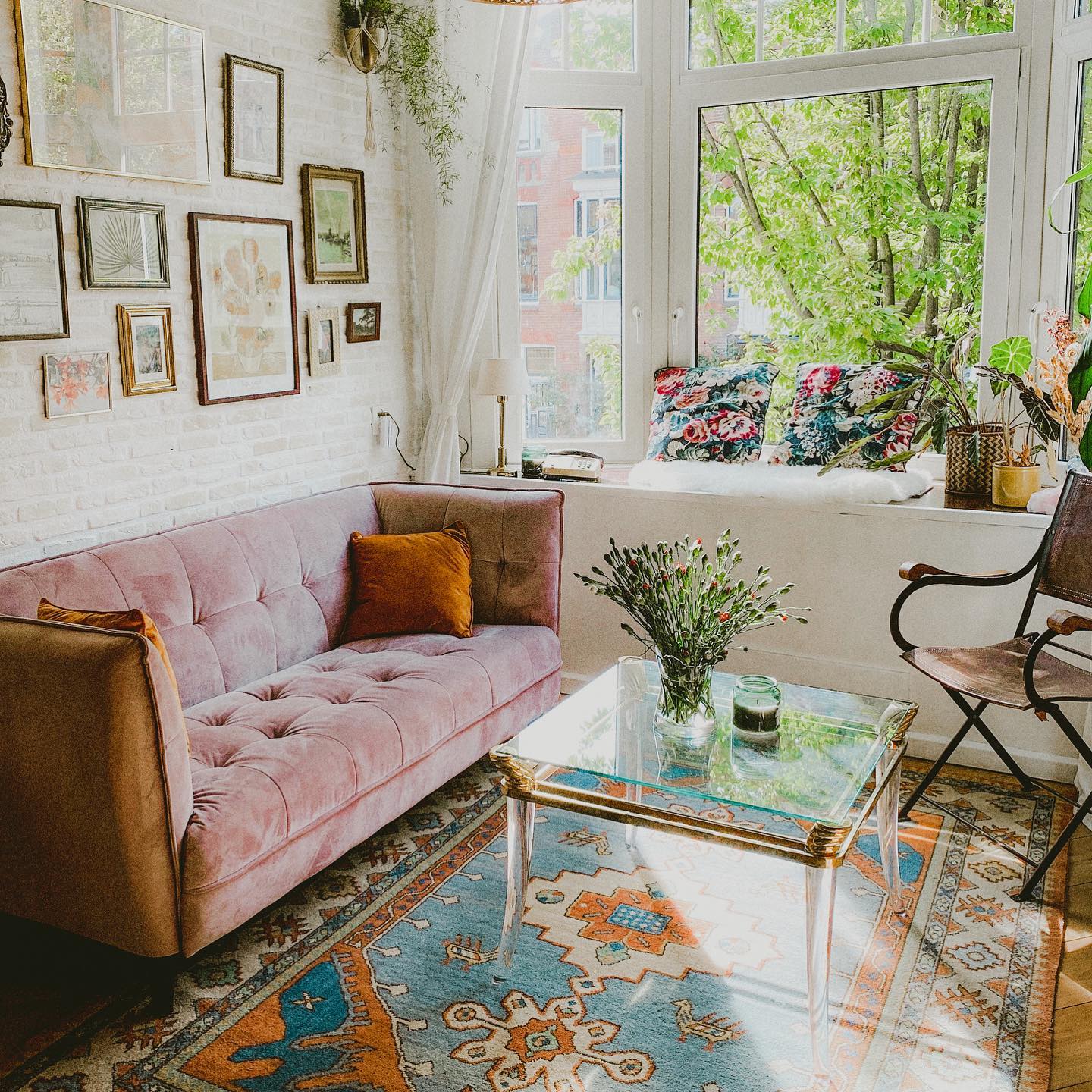
Credits: Instagram
A blush sofa, transparent coffee table, and slim accent chair sit comfortably together despite their different styles. The mixed frames and patterned rug make the arrangement feel collected, with warm colors appearing in several places.
Use the same approach when roommates arrive with furniture from different homes. Pick the sofa as your starting point, then repeat one accent color across a pillow, print, or rug.
Before bringing home a secondhand table or chair, measure its footprint and inspect joints, surfaces, and upholstery carefully. Keep enough space to stand up without bumping the table.
The clear tabletop here also lets the rug remain visible. Choose a similarly open silhouette if your shared living area needs another surface without looking overly crowded.
15. Choose a Coffee Table That Stores Games
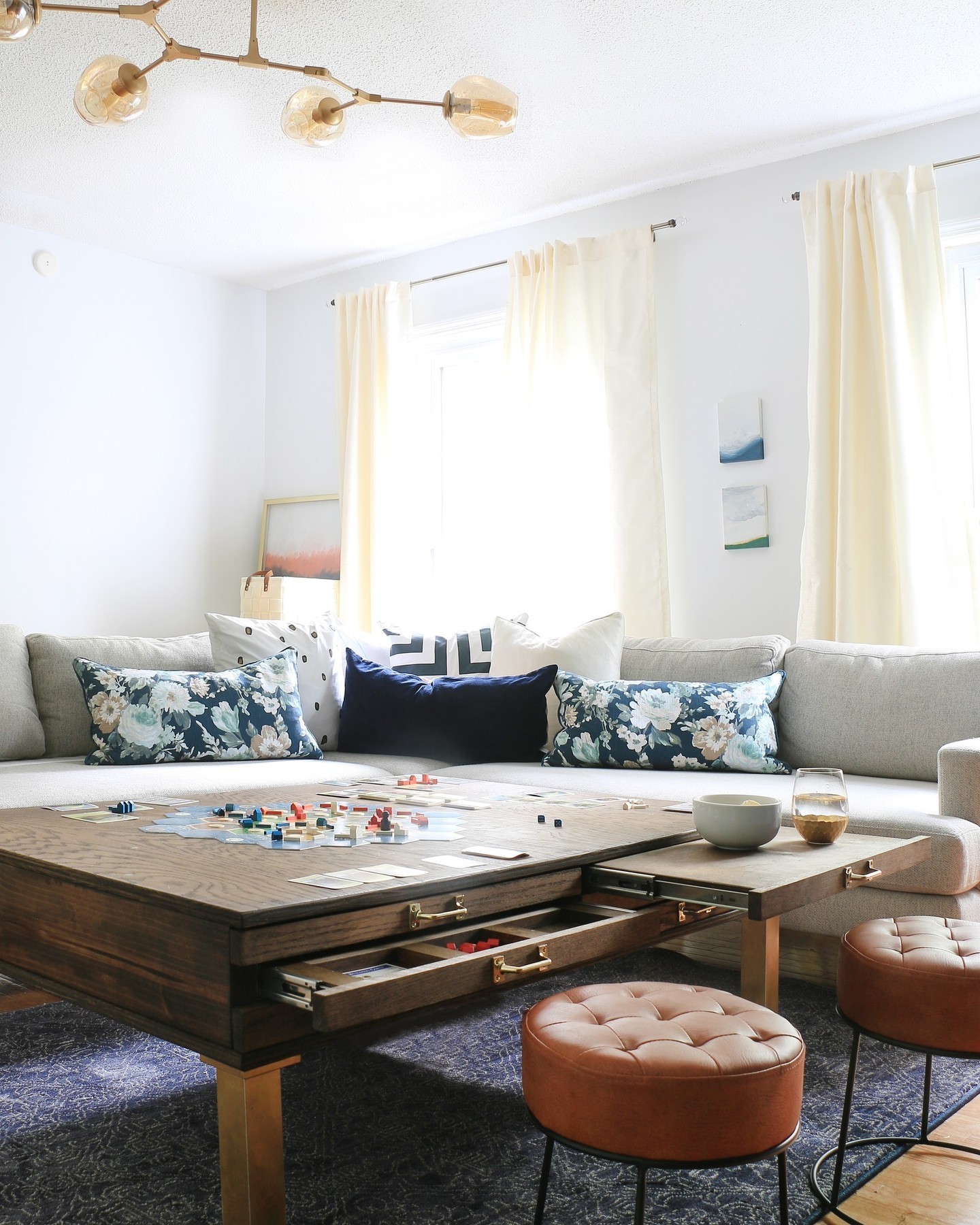
Credits: Instagram
An open drawer reveals game pieces beneath this coffee table, while a sliding side surface holds a bowl and glass beside the playing area.
The arrangement keeps entertainment supplies close to the sofa and shows how one piece can serve several purposes. For a college apartment that hosts game nights, look for storage that matches what you actually play.
Measure boxes and card organizers before choosing drawer sizes, and check that drawers open fully without hitting nearby seats. Assign one compartment to remotes and shared accessories so they stop disappearing between cushions.
Keep drinks away from paper components whenever possible. A removable tray can provide a simpler alternative if your current table already works but lacks the pictured sliding extension.
16. Tuck Spare Stools Under a Console
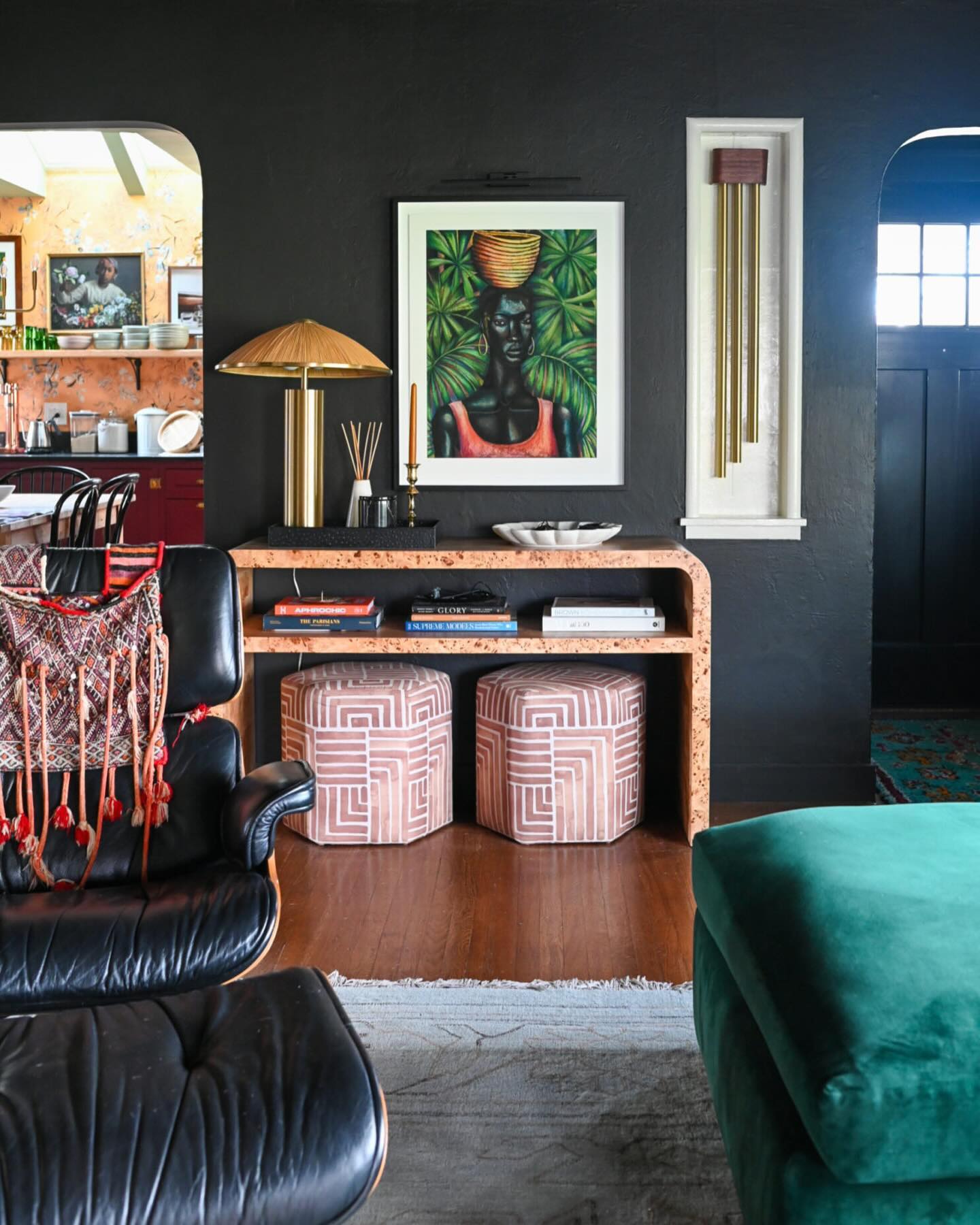
Credits: Instagram
Two patterned stools tuck beneath this console, keeping extra seats available without leaving them in the middle of the living room. Books occupy the shelf above, and a lamp turns the tabletop into a useful lighting spot.
This setup translates well to a shared college apartment with occasional visitors. Measure the opening below your console, including any supports, before shopping for stools.
Allow room to pull them out easily, and choose seats rated for adult use. A pair that fits completely underneath will keep the usual walking route clearer between gatherings.
Give each roommate a small section of the shelf for frequently used items. Keep cords secured behind the furniture, and follow the console manufacturer's instructions for stability and anchoring.
17. Pair Open-Framed Chairs With a Comfy Sofa
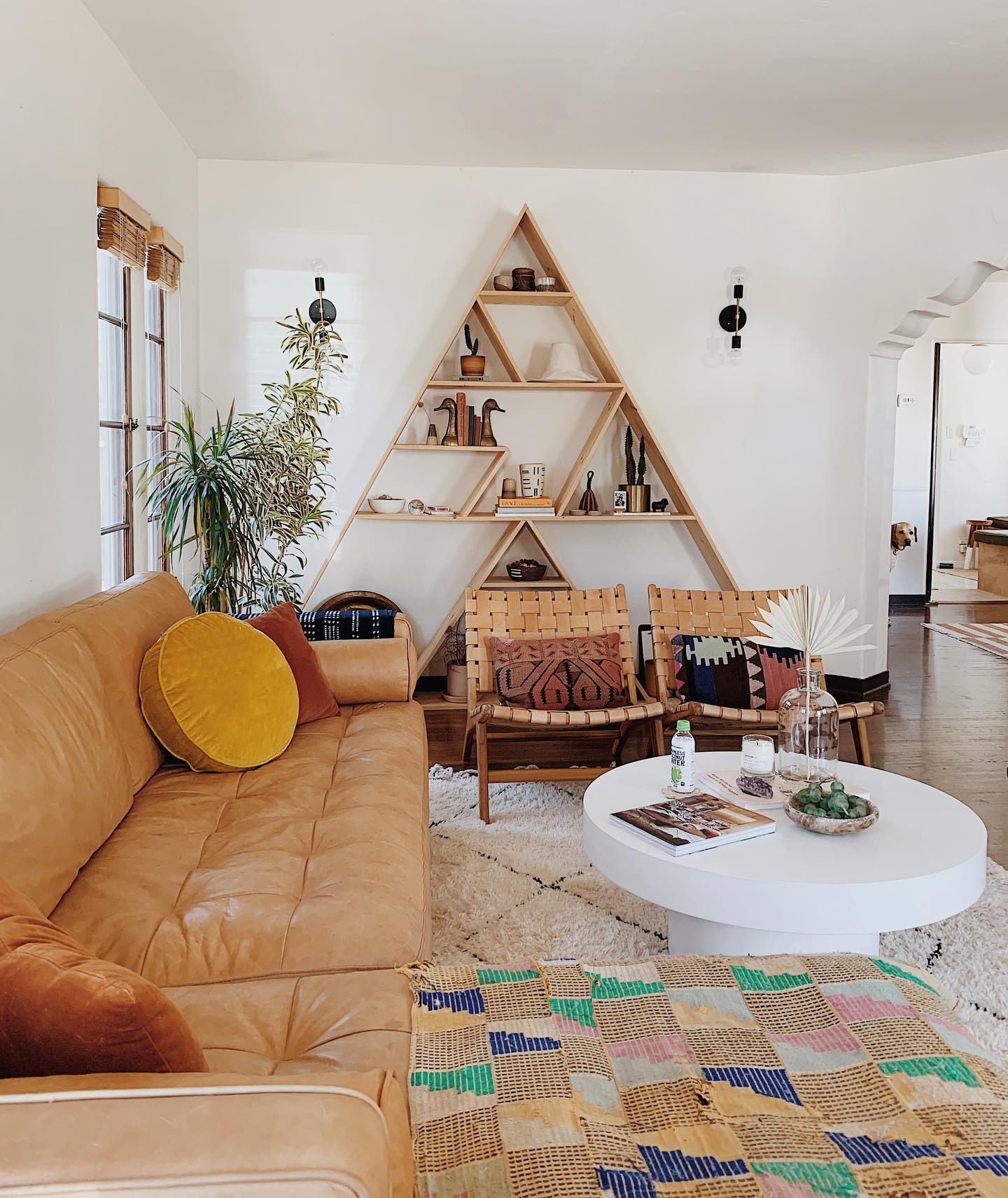
Credits: Instagram
The tan sofa supplies a generous lounging surface, while two woven chairs bring additional seats without bulky upholstered sides. Their open frames leave the surrounding floor visible, and patterned pillows connect them to the relaxed mix of textiles.
Consider this balance when furnishing a college living room that needs seating for several roommates. Start with the sofa you have, then try one or two smaller chairs instead of squeezing in another couch.
Check seat comfort in person if possible, especially for longer conversations. Angle the chairs toward the shared table so everyone can participate, but preserve access to the doorway.
A rug can connect the group visually. Choose chair dimensions that let you rearrange the room when friends come over.
18. Add a Skinny Shelf Behind the Sofa
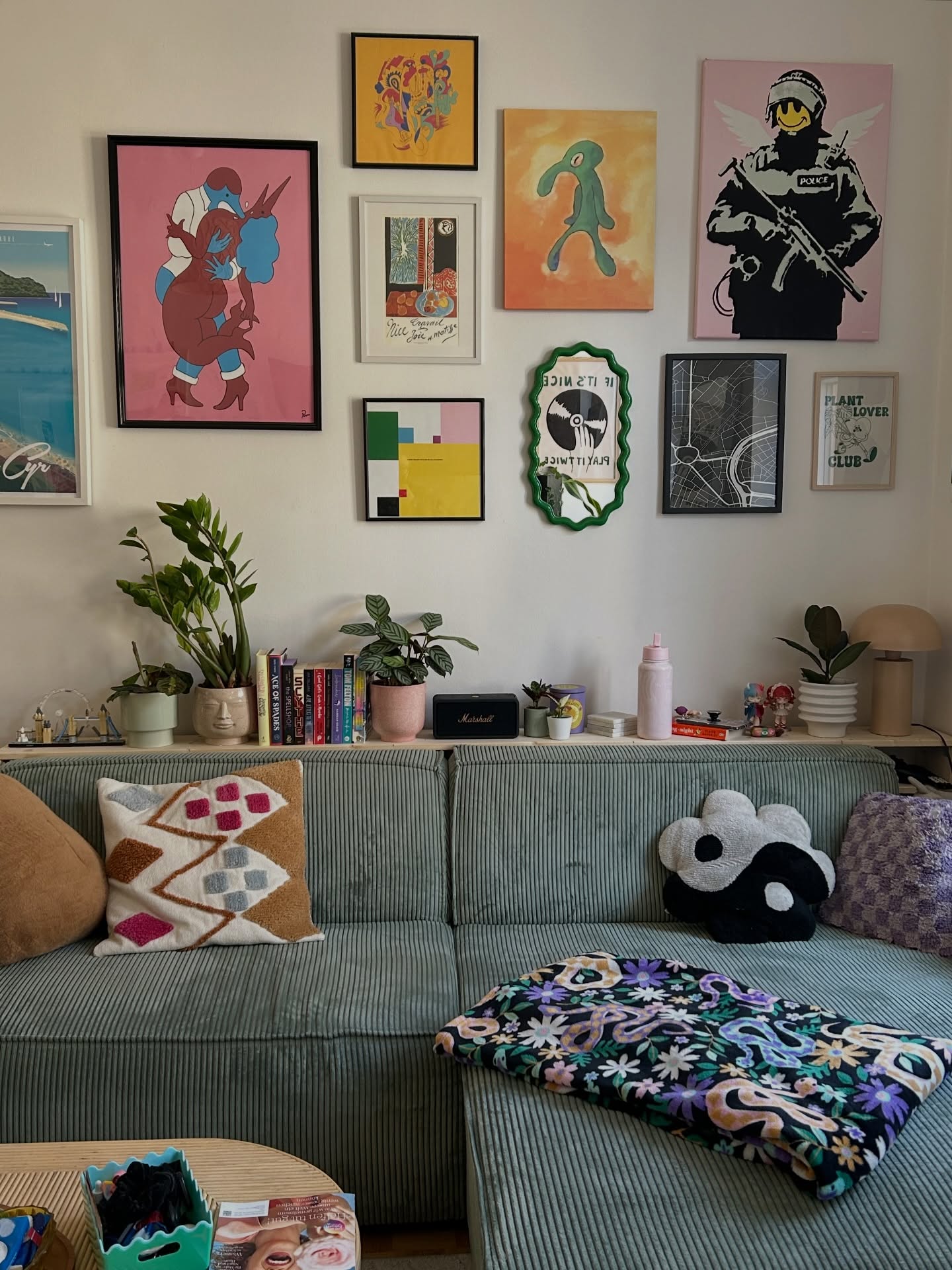
Credits: Instagram
A narrow ledge behind the sectional makes room for books, plants, a speaker, and a small lamp. Because these objects sit behind the cushions, the arrangement adds useful surfaces without a separate table beside every seat.
Adapt the idea for a college living room by measuring the sofa height and the gap available behind it. Choose a stable console or properly installed shelf that suits your lease and the wall construction.
Keep heavy or breakable objects away from the edge, especially where someone might lean back. Use a small tray for shared remotes and protect the surface beneath plant pots.
Route lamp cables away from seating mechanisms and walkways. Leave some empty space so reaching for a book stays easy.
19. Bring Different Seats Into One Conversation Zone
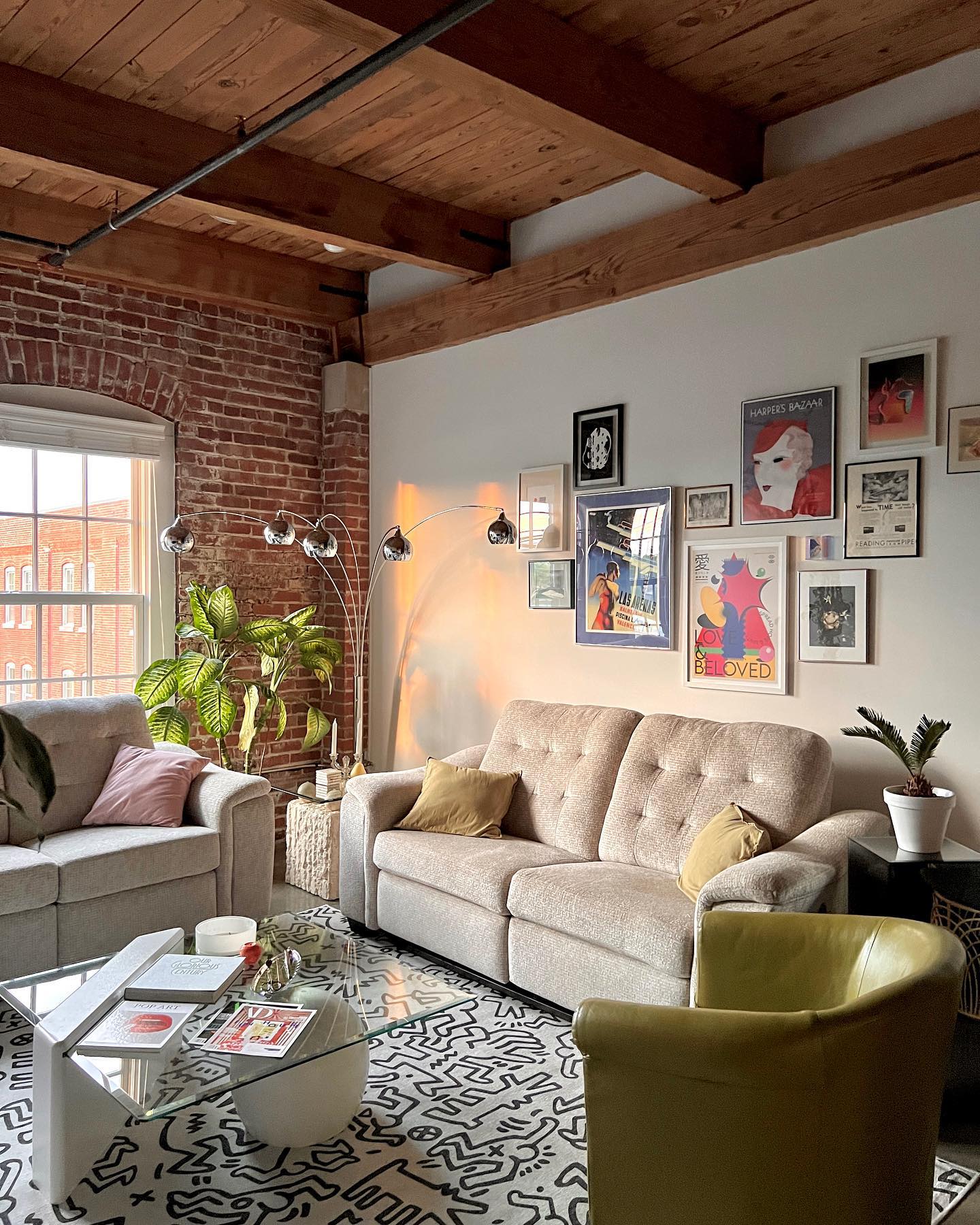
Credits: Instagram
Two pale upholstered seating pieces and a green accent chair gather around a transparent coffee table in this room. A large patterned rug connects their different shapes, while the inward arrangement makes the seating feel like one conversation area.
This is useful inspiration when college roommates combine furniture they already own. Begin by placing the biggest piece, then turn the other seats toward the center instead of lining every wall.
Try to give each person a reachable surface for a mug or phone. Repeat a color through a few pillows to connect contrasting upholstery.
Keep the main entrance route outside the seating group where possible. Before buying another piece, test the arrangement with friends and notice where movement feels cramped.
20. Go Vertical With Narrow Drawer Storage
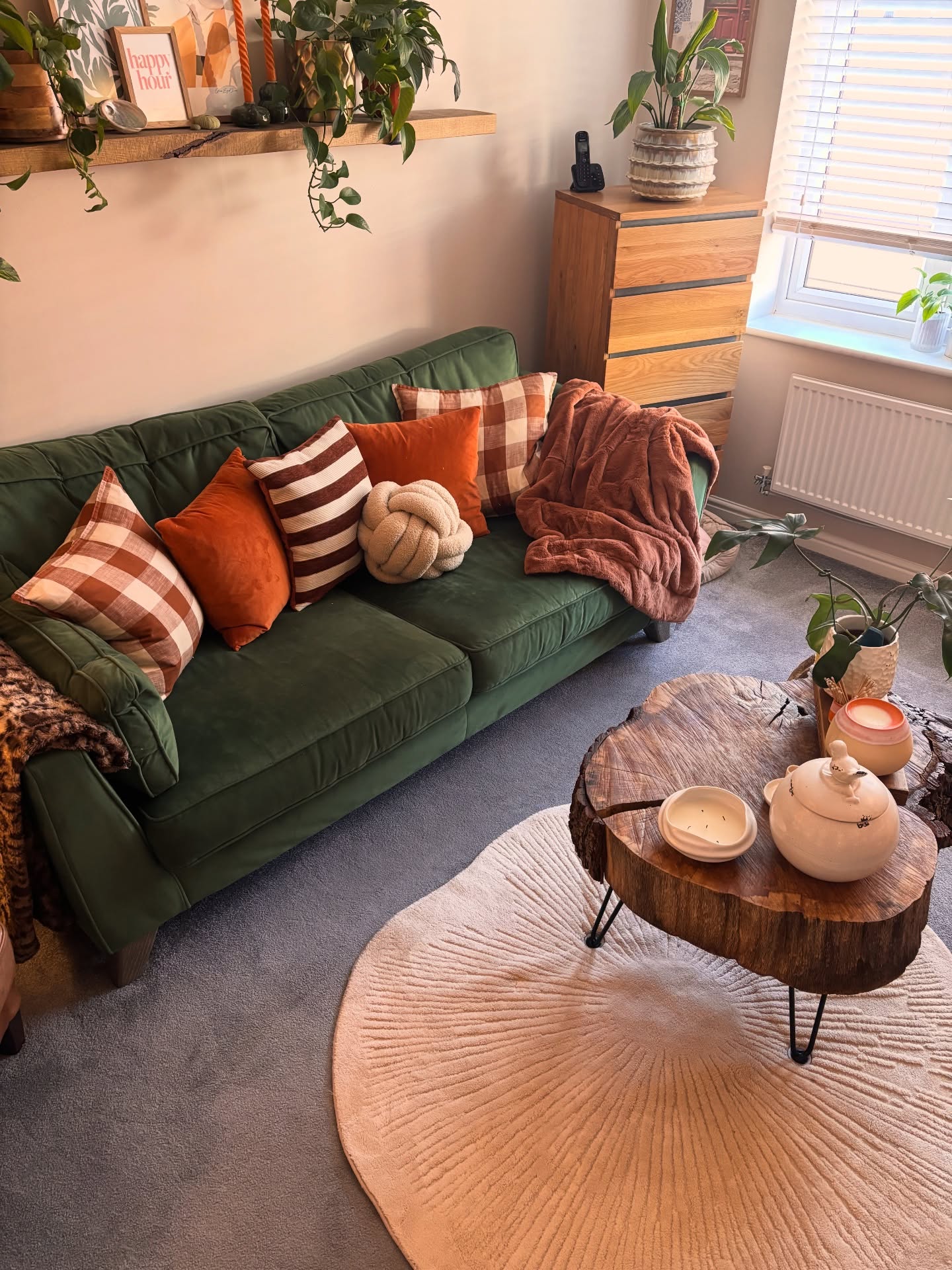
Credits: Instagram
A tall, narrow chest fits beside the green sofa, using a small patch of floor for several drawers. Its simple shape keeps storage concentrated near the corner, while the round rug and coffee table soften the seating area.
Consider similar proportions when your college living room needs somewhere for shared supplies. Measure the width beside the sofa and check that every drawer can open without catching an arm or curtain.
Divide the drawers by purpose, such as games, charging accessories, and spare linens, so roommates can find things quickly. Follow the manufacturer's anchoring instructions and arrange any required installation permission before purchase.
Keep heavy items low, avoid overloading the top, and leave nearby heating equipment and window access safely clear.