
A soaring ceiling can make a living room feel open and bright, but it can also leave the seating area feeling a little adrift.
The Best Cathedral Ceiling Living Room Ideas here show how to connect that dramatic height to everyday comfort, from centering a statement pendant beneath the ridge to using timber trusses as a guide for the room’s palette.
You’ll also find ways to add gentle texture with white ceiling planks, arrange seating for conversation, and balance a gable with paired shelving. Small, considered choices can help the architecture feel like part of the room rather than a backdrop.
Center a Statement Pendant Beneath the Ridge
Credits: Instagram
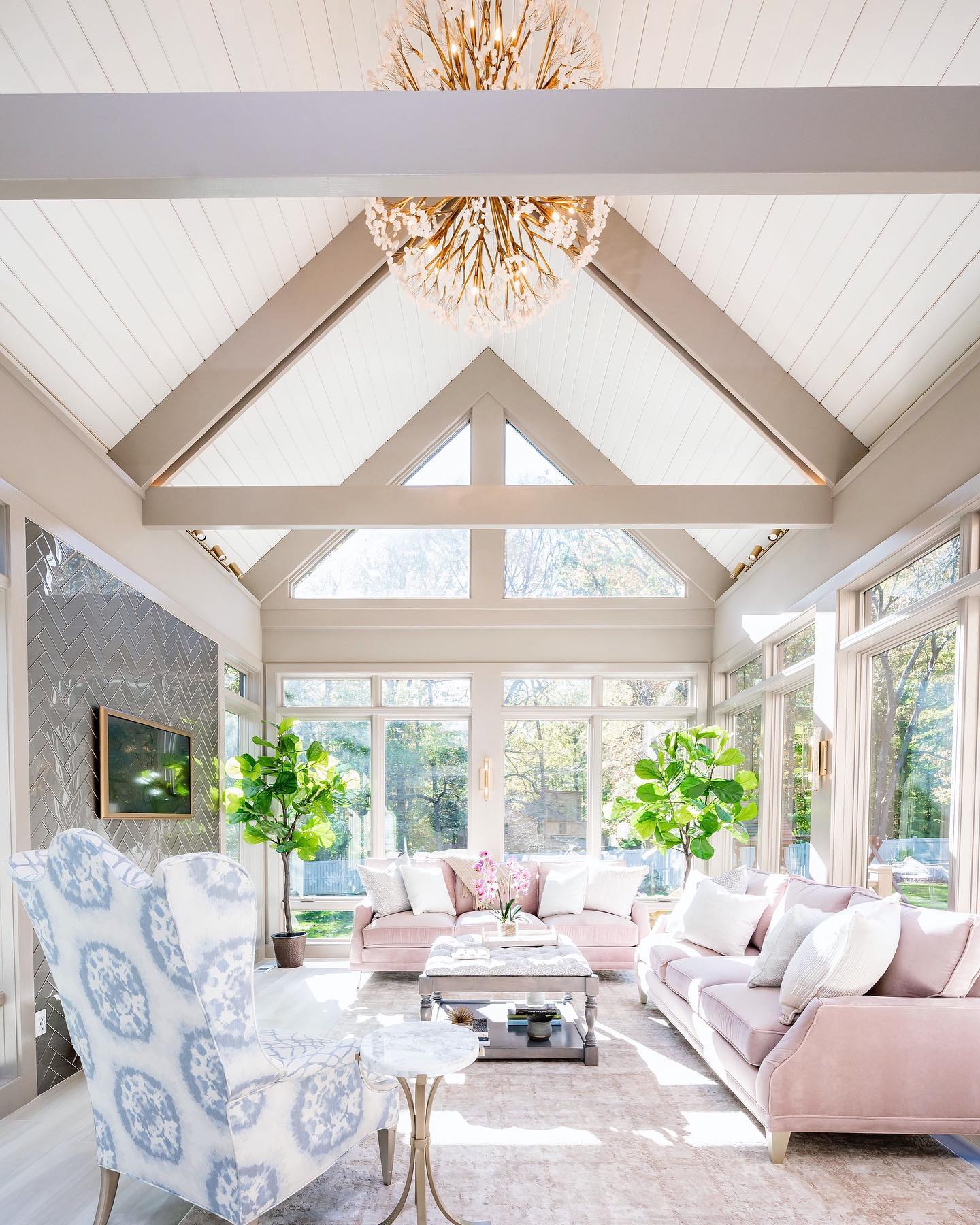
Let the meeting point of the two ceiling slopes guide the placement of one substantial pendant. In a cathedral ceiling living room, this central position makes the architecture feel deliberate without requiring decoration across every overhead surface.
Choose an open frame if preserving views toward a window matters, or a shaded fixture when softer light is the priority. Its scale should relate to the seating group below as well as the ceiling height.
Have an electrician confirm the mounting arrangement, fixture support, and appropriate hanging clearance. Then add reading lamps near individual seats so the pendant does not carry every lighting task.
A dimmer can help the same room move comfortably from relaxed afternoon gatherings to quieter evenings at home.
Let Existing Timber Trusses Set the Palette
Credits: Instagram
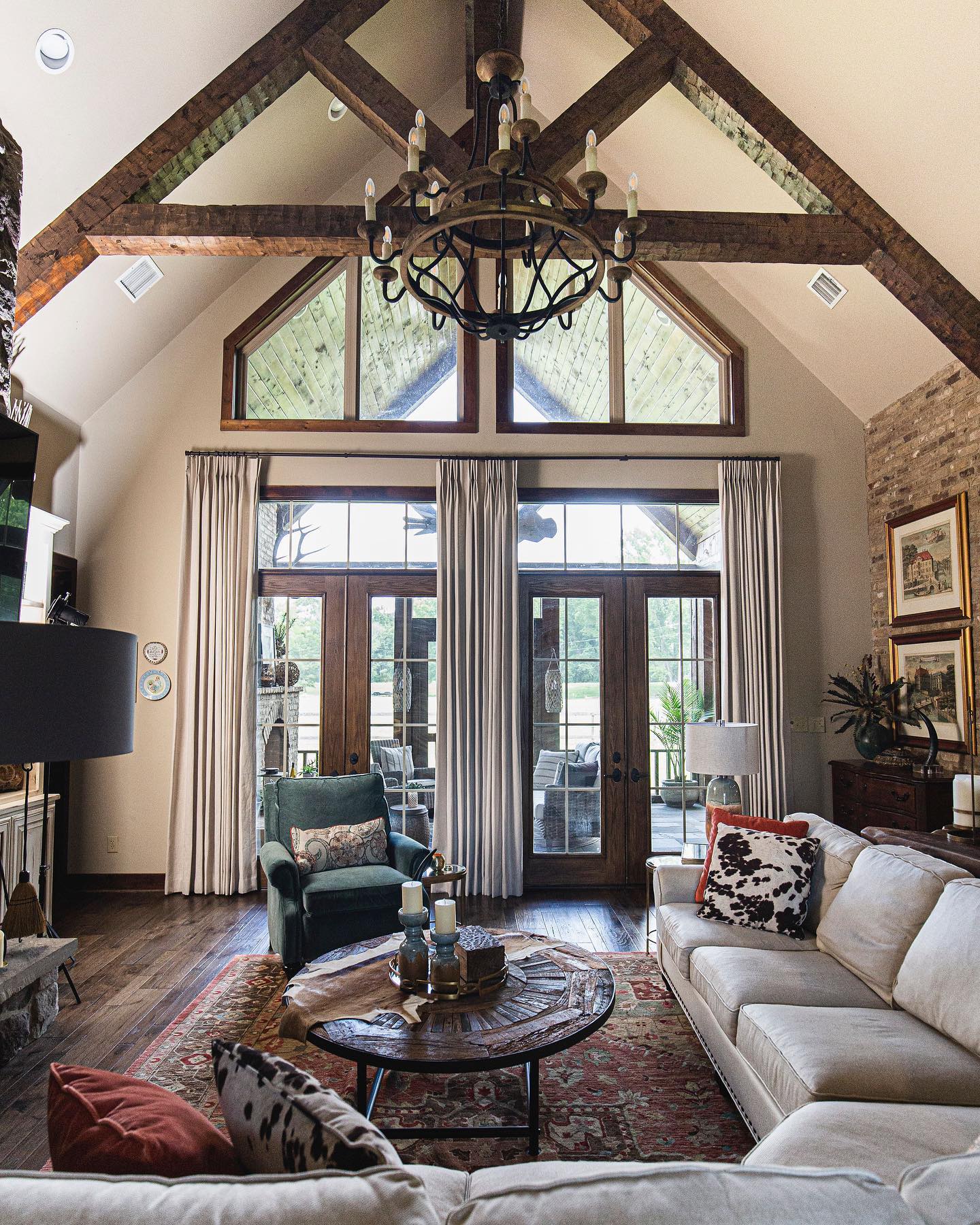
Existing timber trusses can supply the strongest pattern in a peaked room, so begin by looking at their color and spacing.
Repeat a compatible wood tone in one or two pieces below, such as a coffee table or chair frame, rather than matching every surface.
Upholstery with a quiet weave gives the beams visual breathing room; a small amount of black metal can echo their darker shadows. Leave decorative objects away from the overhead members, where cleaning and safe access become difficult.
Before refinishing any timber, establish whether it is structural and ask a qualified professional about appropriate treatment. The goal is a coordinated room that respects what is already there, with enough variation to avoid a furniture showroom effect.
Unify Both Slopes With Warm White
Credits: Instagram
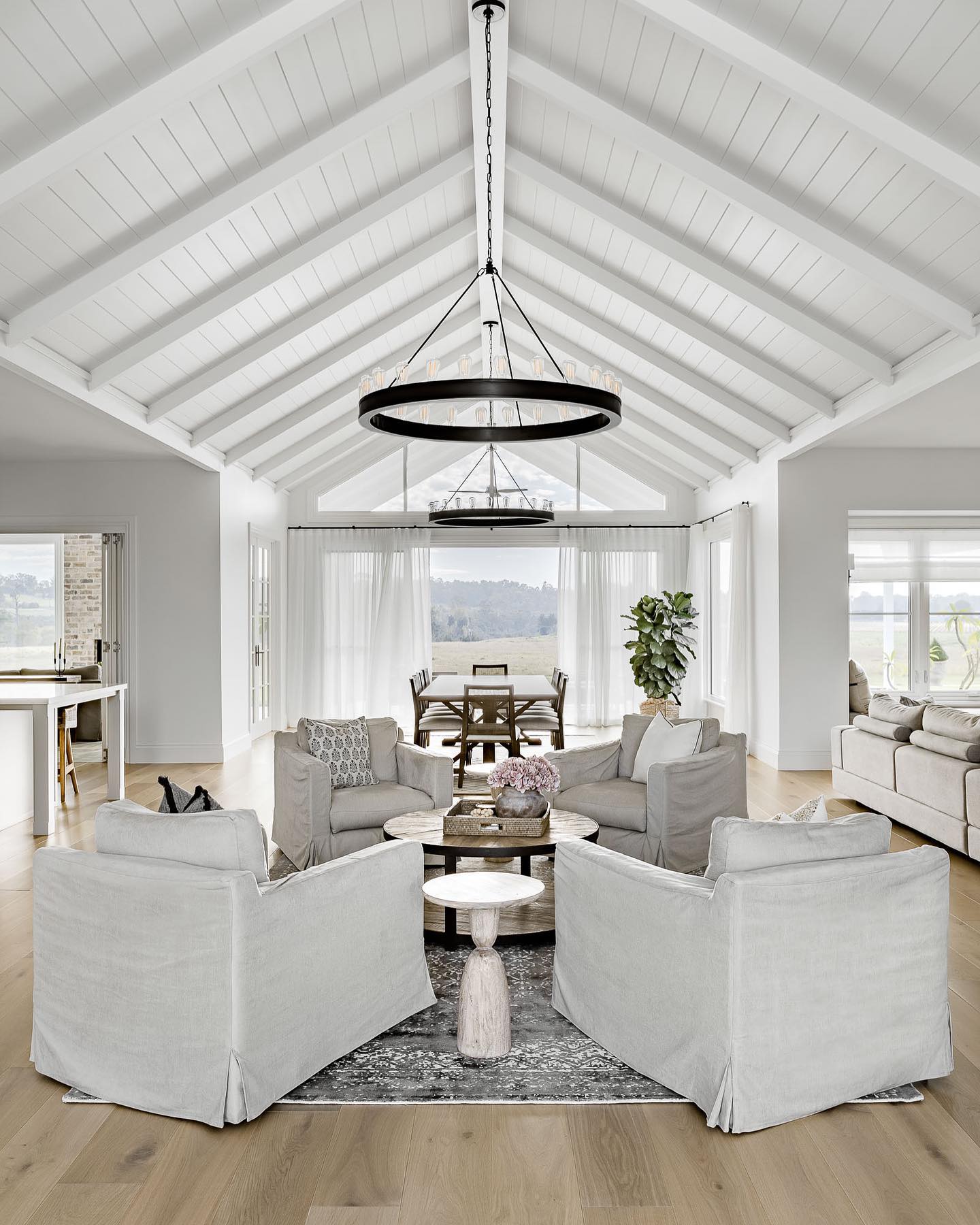
In rooms where the peak already makes a strong impression, a consistent warm white can let light and shadow provide the detail. Carry a compatible shade across both sloping planes and the upper walls, checking samples wherever daylight changes direction.
A color that looks creamy beside one window may appear gray on the opposite slope. Choose the finish with the condition of the surfaces and the paint manufacturer's guidance in mind; higher sheen can make irregularities more noticeable.
Bring depth back at seating level through woven cushions, textured upholstery, and a wood table.
This approach suits a cathedral ceiling living room whose owners want the height to feel calm, particularly when several doors, windows, or openings already interrupt the walls.
Define the Ceiling Rhythm With Decorative Beams
Credits: Instagram
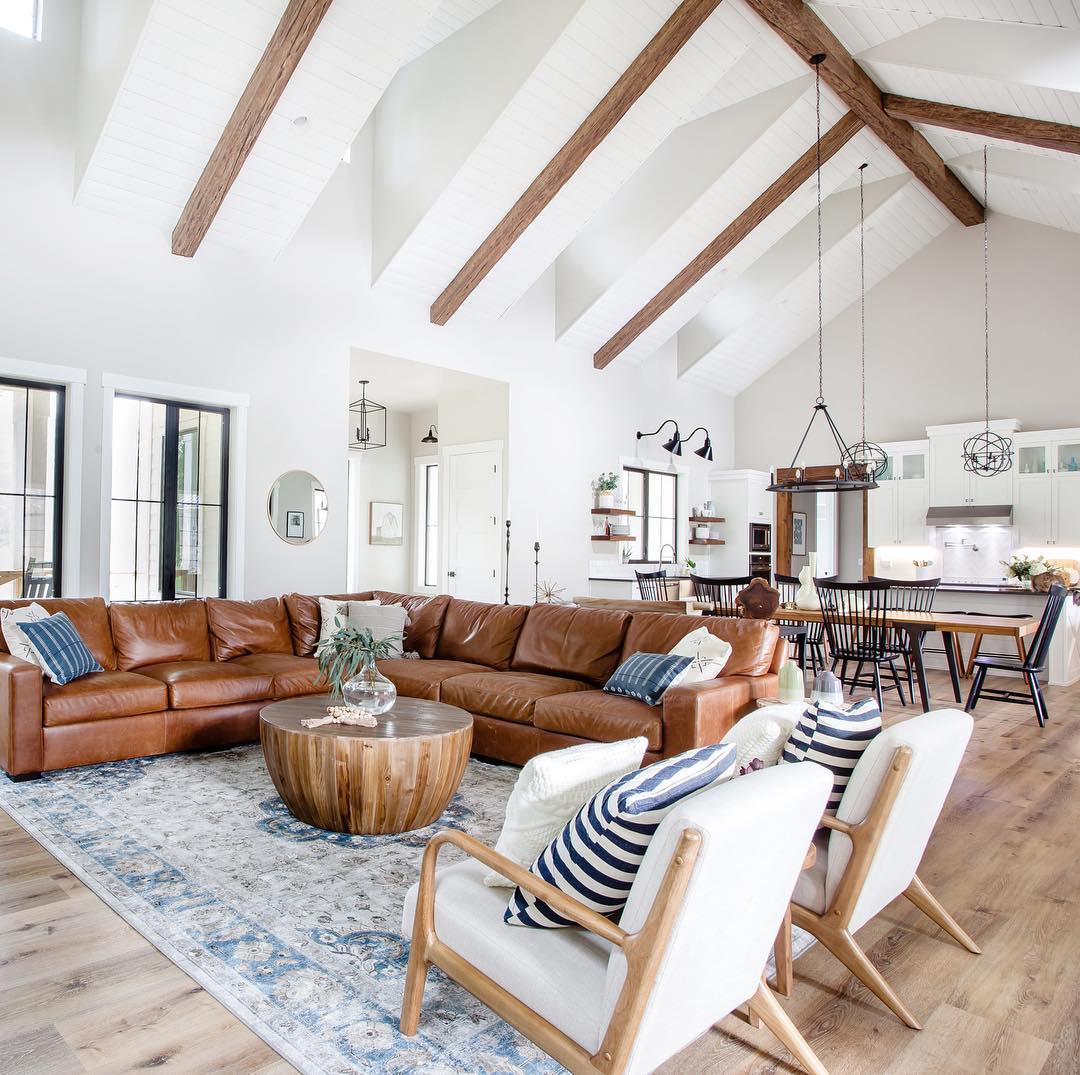
Decorative beams can emphasize a cathedral ceiling without introducing the visual weight of solid timbers. In this photographed home, the owner identifies the overhead members as faux beams, showing why appearances alone cannot establish construction.
Choose a finish that relates to furniture below, as the warm leather and wood do here, while allowing the surrounding ceiling to stay light.
Map the proposed spacing on photographs before ordering; regular intervals usually read more clearly than isolated strips. Have an installer confirm suitable fixings, product requirements, and access around existing lights or vents.
Faux beams are decorative and should never be treated as structural supports. Keeping the rest of the room relaxed helps the overhead pattern feel fully integrated rather than theatrical.
Create a Conversation Circle Beneath the Ridge
Credits: Instagram
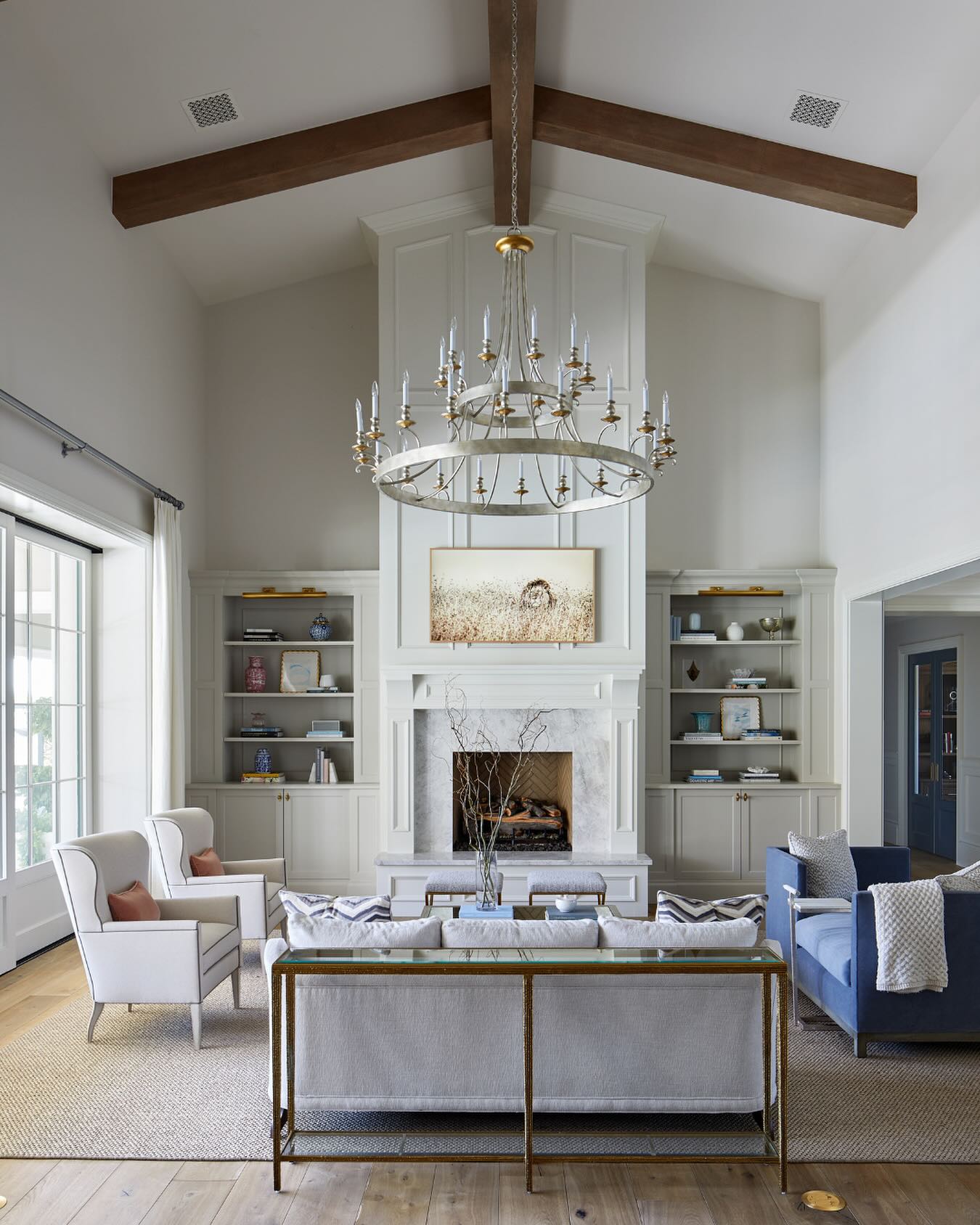
A sofa and two facing pairs of chairs can create a comfortable conversation circle beneath a cathedral ceiling. The arrangement shown here gives the tall room a clear center while keeping the fireplace visible between the chairs.
Match the pairs in scale rather than making every seat identical; contrasting upholstery adds variety without disrupting the balanced layout. Bring each chair close enough to speak comfortably, and check that everyone can reach a table.
Leave circulation space behind the grouping instead of sending traffic through its middle. Before buying, mark the furniture footprints on the floor and test the view from each position.
The ceiling supplies the drama, while the seating arrangement makes that generous volume useful for relaxed everyday company.
Add Subtle Texture With White Ceiling Planks
Credits: Instagram
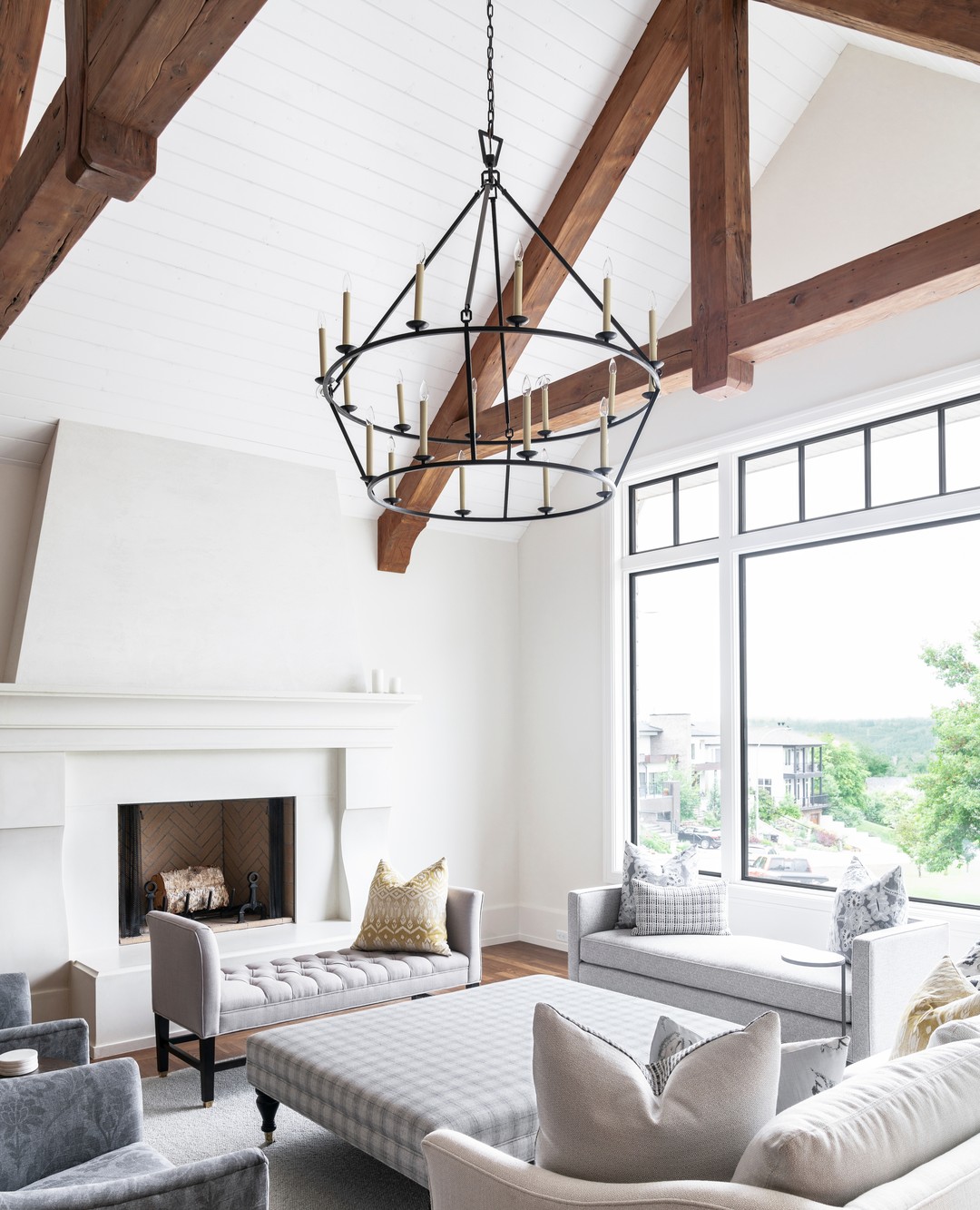
White ceiling planks add a measured rhythm to a cathedral room while leaving exposed beams easy to distinguish. Here, narrow horizontal lines recede behind substantial timber framing, so the ceiling has texture without relying on a darker finish.
Before choosing boards, view a generous sample overhead beside the existing trim; small handheld samples rarely reveal the effect of repeated joints. Ask an installer to plan the board direction, edge details, and transitions around beams and fixtures.
Paint color and sheen should respond to the room's daylight rather than match a photograph exactly. Keep nearby wall decoration restrained if the roof structure already supplies plenty of pattern.
Simple upholstery and a limited palette give the ceiling's layered surfaces room to breathe.
Balance the Gable With Paired Shelving
Credits: Instagram
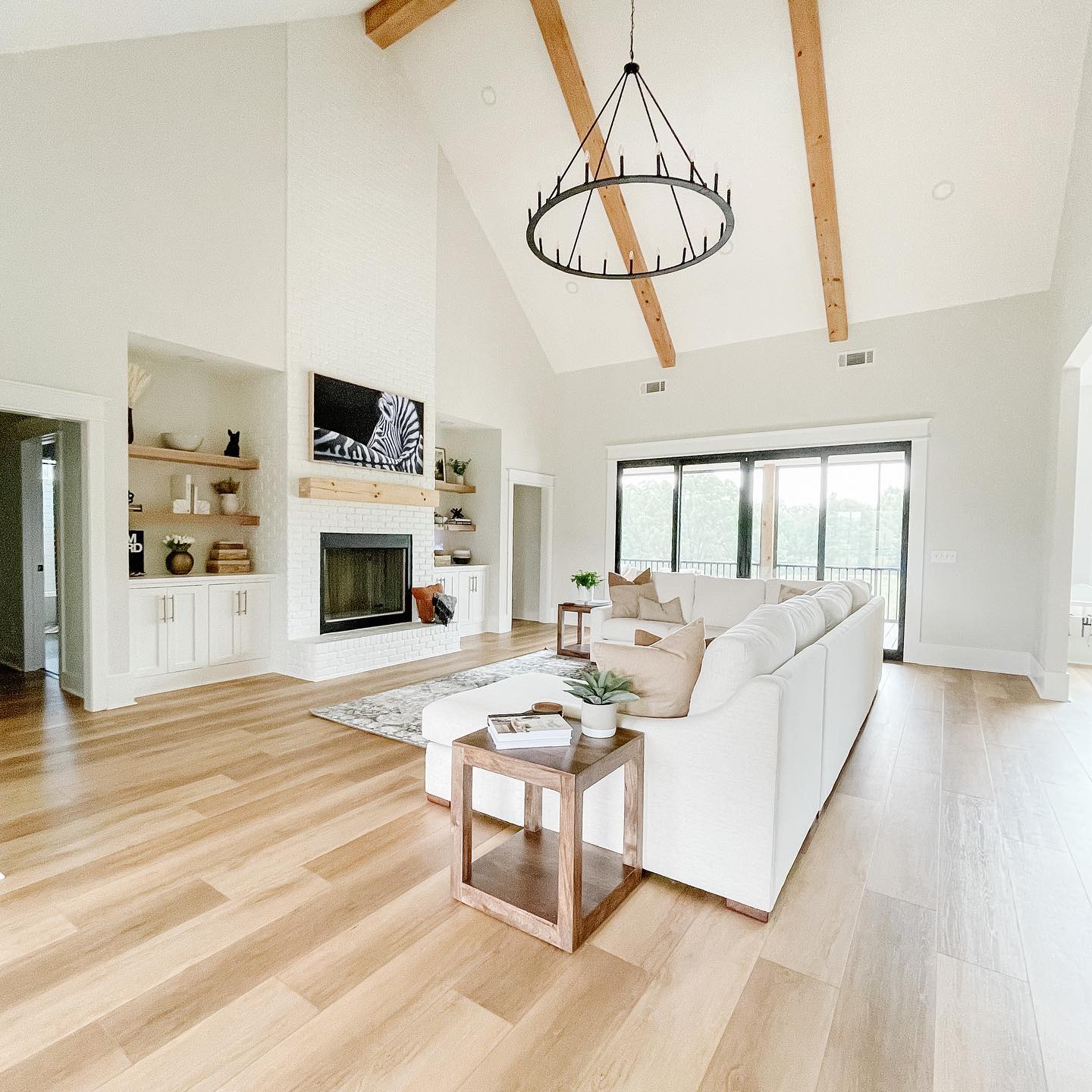
Books and collected objects can make a tall peaked wall feel connected to everyday life. Try paired shelves of similar height on either side of a central opening, artwork, or existing fireplace, while leaving the upper triangle open.
Their paired outlines reinforce the cathedral ceiling's symmetry without demanding storage all the way to the ridge. Use the reachable shelves for frequently handled items and resist filling every compartment.
If the units flank a fireplace, follow the appliance's required clearances and obtain professional advice where needed. Mount shelving securely according to its manufacturer's instructions.
A few larger objects usually read more clearly across a spacious living room than many tiny pieces, and empty shelves help keep the arrangement from feeling crowded.
Pair Timber With Rich Upholstery Colors
Credits: Instagram
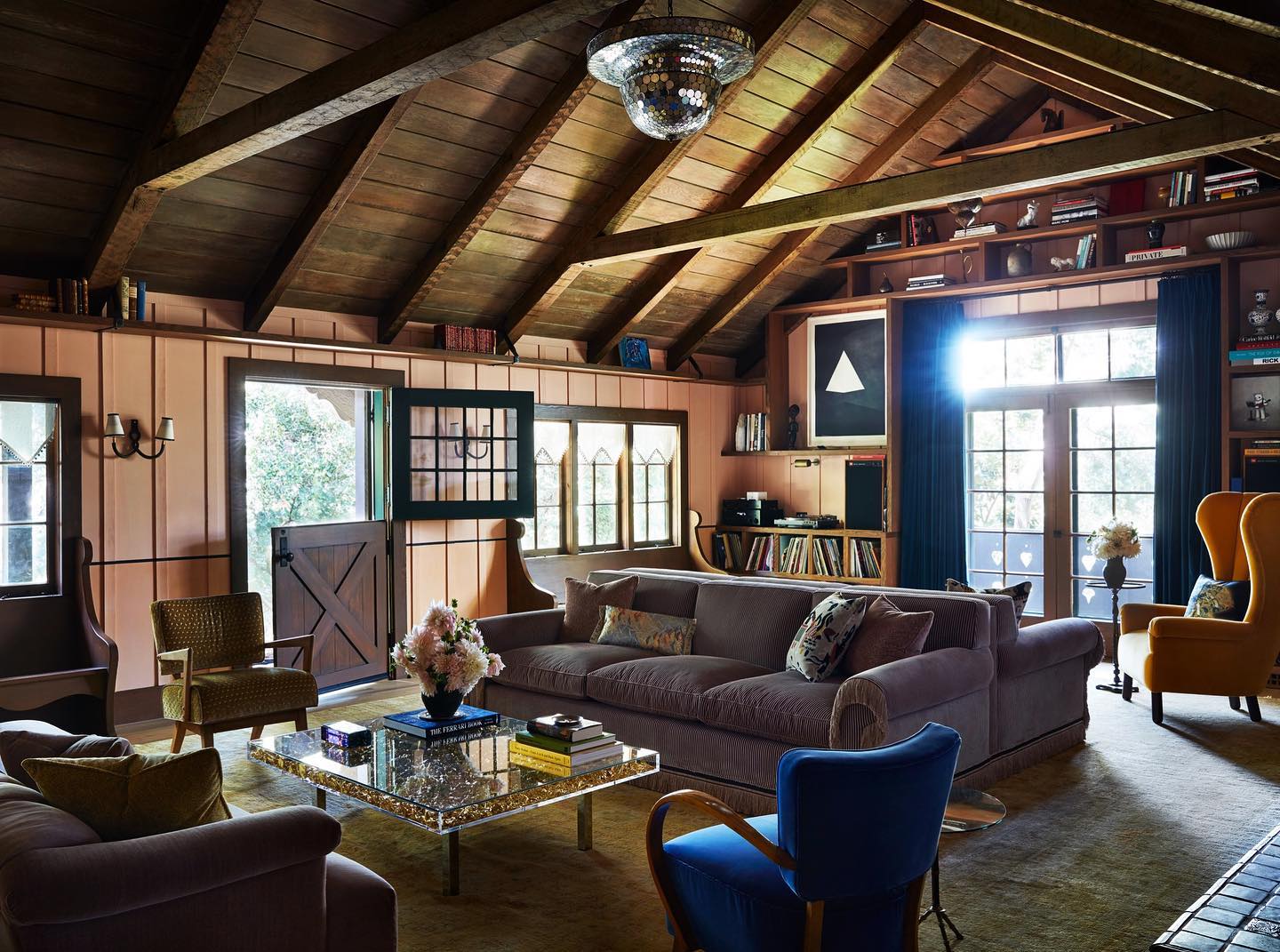
Rich upholstery can keep a timber cathedral room from becoming a single field of brown. This photographed chalet pairs a muted purple sofa with blue and golden chairs, giving the seating its own identity beneath the wood.
Start with one substantial upholstered piece, then introduce a second color in a smaller chair or cushion. Compare fabric samples beside the ceiling and flooring in daylight; warm timber can change how cooler shades appear.
Vary texture as well as color, balancing plush surfaces with flatter weaves so the grouping feels comfortably collected. A quieter rug gives the different seats a common base.
Keep tables and accessories selective, allowing the furniture colors to remain legible instead of competing with many small decorative accents.
Soften the Center With an Upholstered Ottoman
Credits: Instagram
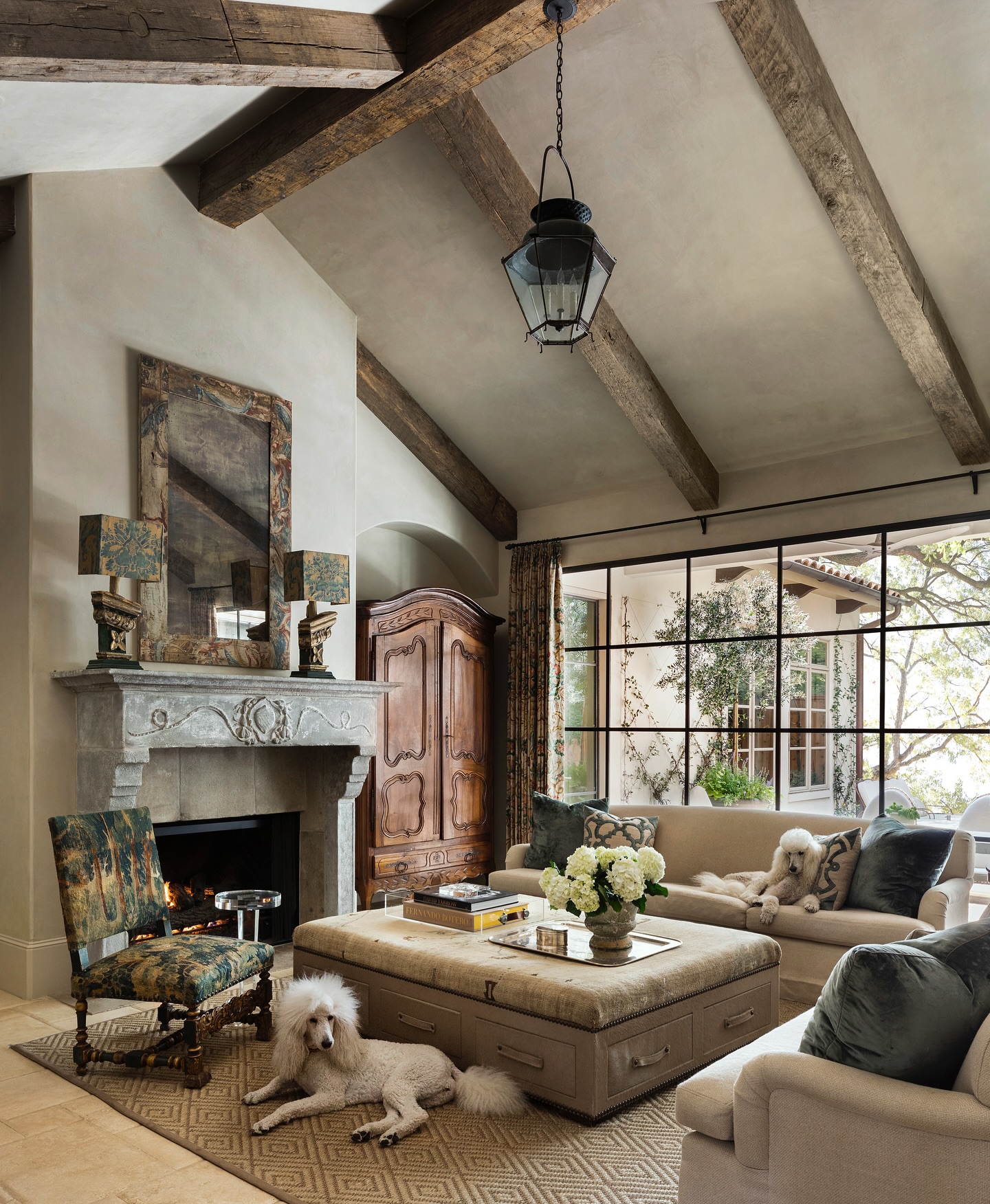
A large upholstered ottoman can make a cathedral living room feel especially inviting at its center. The soft surface shown here sits between substantial seating and textured architectural finishes, giving the eye a quieter place to rest.
Choose proportions that leave a comfortable route around the seating group and keep the top within easy reach. A firm tray provides a level spot for drinks; removable trays also preserve room for resting feet.
Consider fabric durability, cleaning instructions, and the stability of anything placed on top before buying. If storage is included, check that drawers or lids can open without moving surrounding furniture.
Repeat one upholstery tone elsewhere, then let beams, stonework, and collected pieces supply the room's more expressive details.
Give an Existing Fireplace a Clear Vertical Line
Credits: Instagram
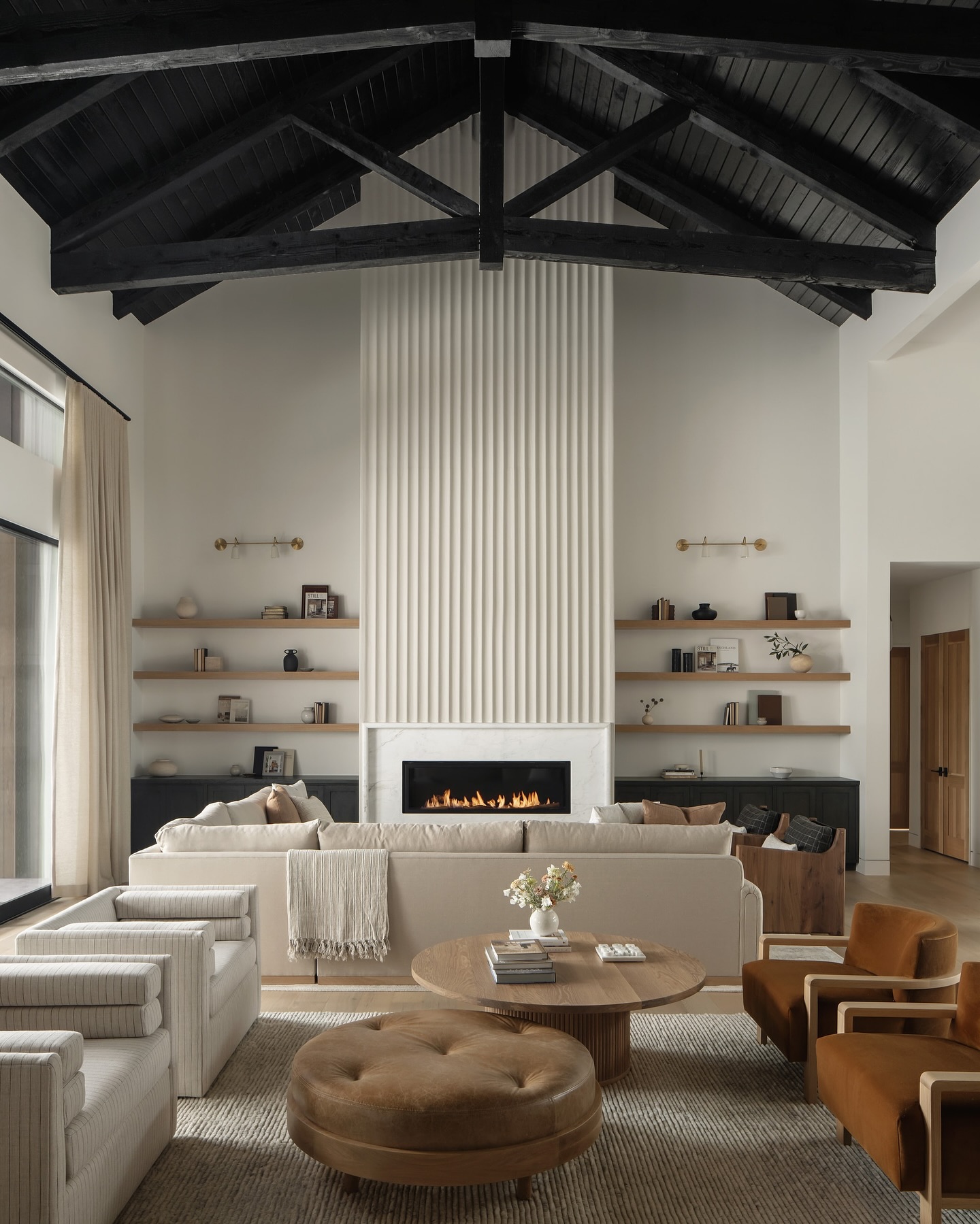
When a fireplace already anchors the gable end, its surrounding wall can provide a visual connection between the hearth and central peak. Simplify nearby decoration so that this existing vertical feature is easy to read.
A restrained mantel arrangement, balanced furnishings, and fewer small frames often do more than an elaborate new finish. If a renovation includes extending a surround, have the design and material suitability checked by the appropriate professionals before work begins.
Avoid assuming that a decorative surface can conceal vents or other required components. Keep artwork and electronics within the fireplace manufacturer's placement guidance.
The room can acknowledge its full height while preserving a welcoming focus at the hearth, where people actually gather during a quiet evening.
Bring Daylight Into the Upper Gable
Credits: Instagram
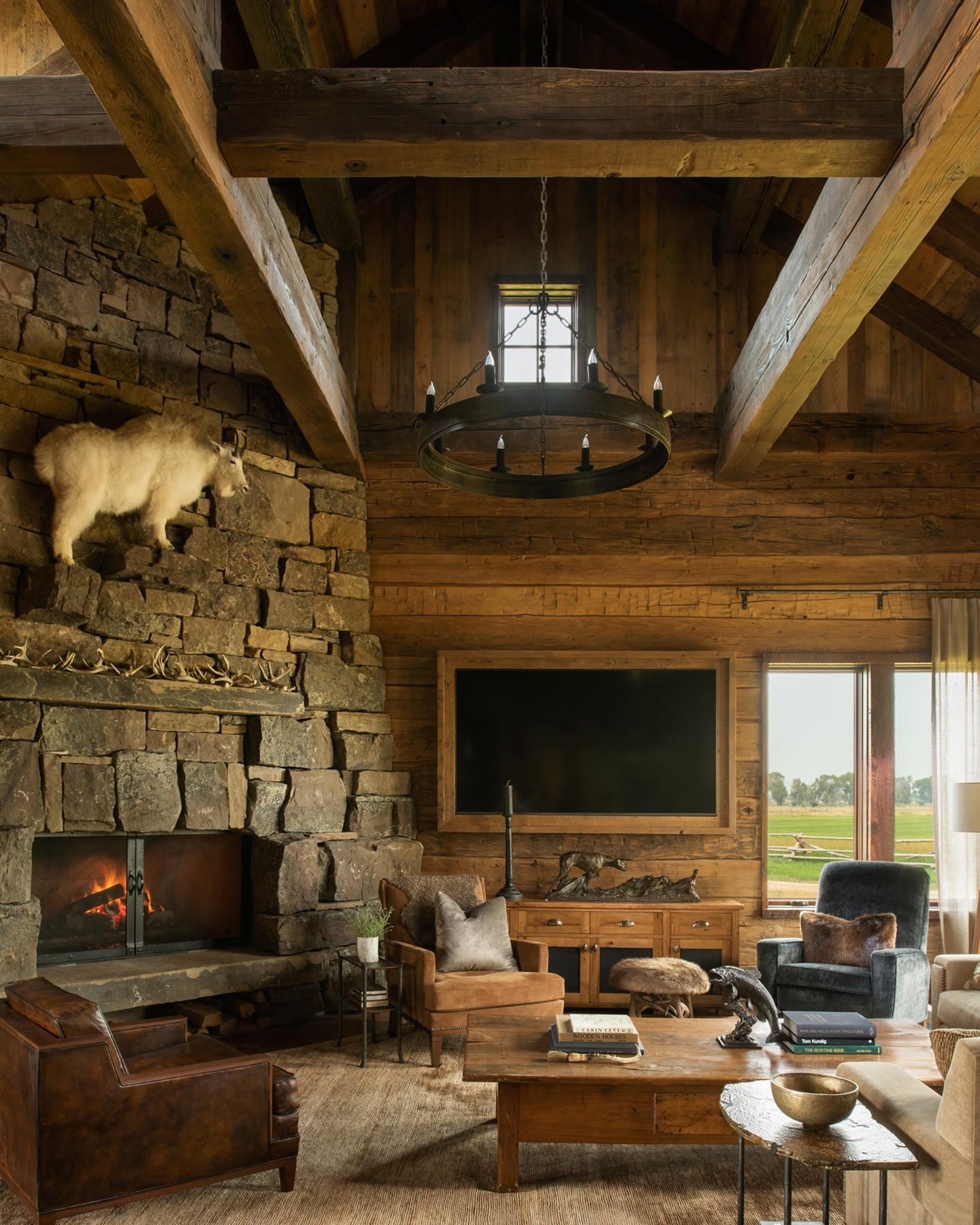
A small upper window can make a surprisingly strong contribution beneath a timber cathedral ceiling. In this cabin, daylight enters high on the gable and catches the surrounding beams, providing relief from the dark wood.
Preserve that opening's usefulness by keeping bulky decor and opaque coverings away from the glass. During a renovation, ask an architect whether additional high glazing is appropriate for the existing structure, weather exposure, and energy requirements.
Plan safe cleaning access at the same time. The lower windows still need to provide comfortable outdoor views and useful light around the seats.
Balance the changing daylight with lamps for evenings, so the room's character remains welcoming after the little upper window has faded into the night sky.
Frame the Room Through an Existing Archway
Credits: Instagram
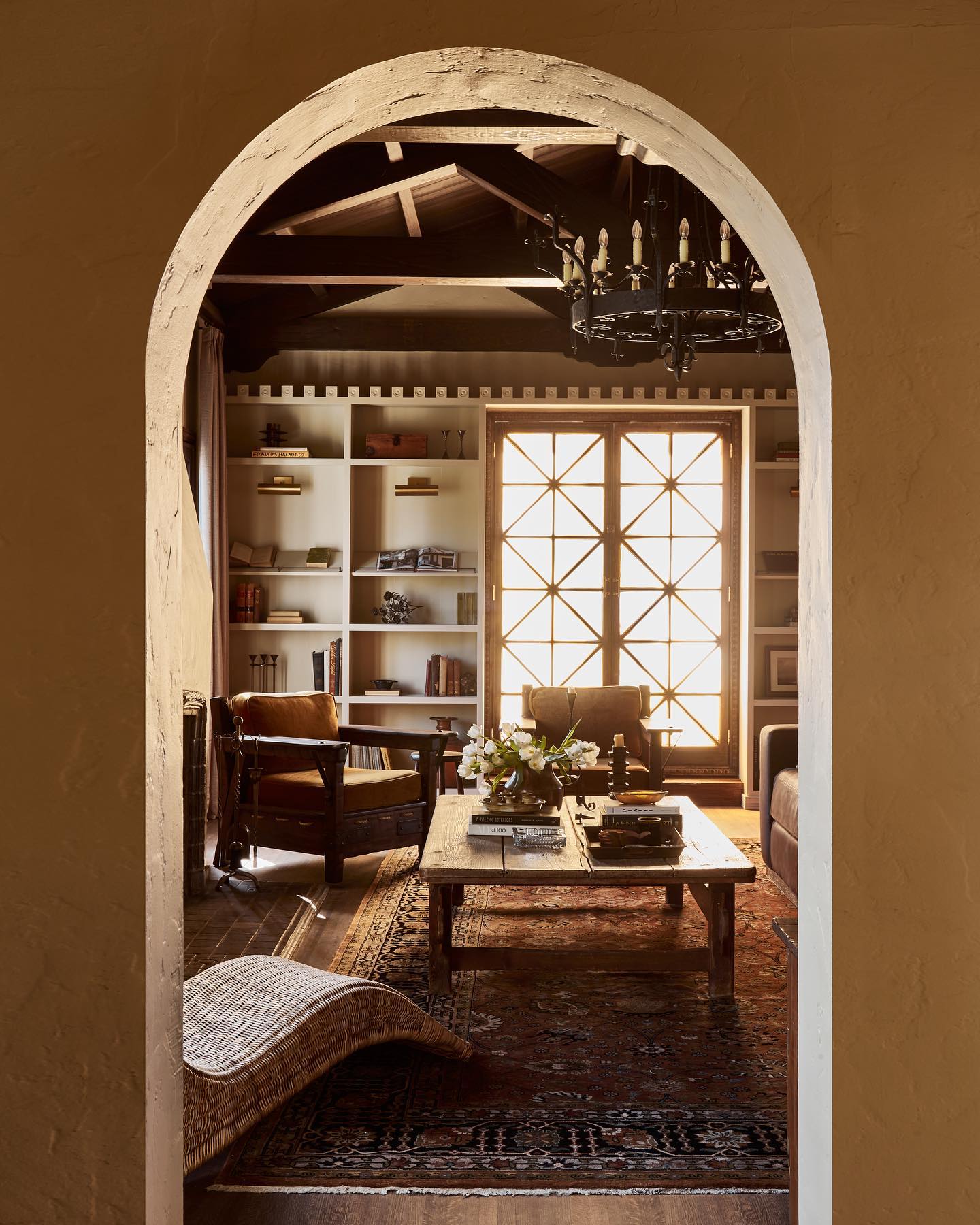
An existing arched opening can turn the entrance to a cathedral living room into a considered view. Here, the curved doorway frames timber roof slopes, collected furniture, and bright glazed doors beyond.
Preserve that sightline by keeping the threshold clear and positioning larger pieces where their outlines remain readable through the opening. The curve introduces contrast without requiring every furnishing to be rounded.
Repeat a material across the two adjoining spaces so the framed room still feels connected to the rest of the house. Before altering an opening, have a qualified professional assess structure and any necessary approvals.
Often the useful change is simply rearranging furniture or reducing clutter, allowing the architecture already present to organize the view for you.
Anchor the Seating Group With a Generous Rug
Credits: Instagram
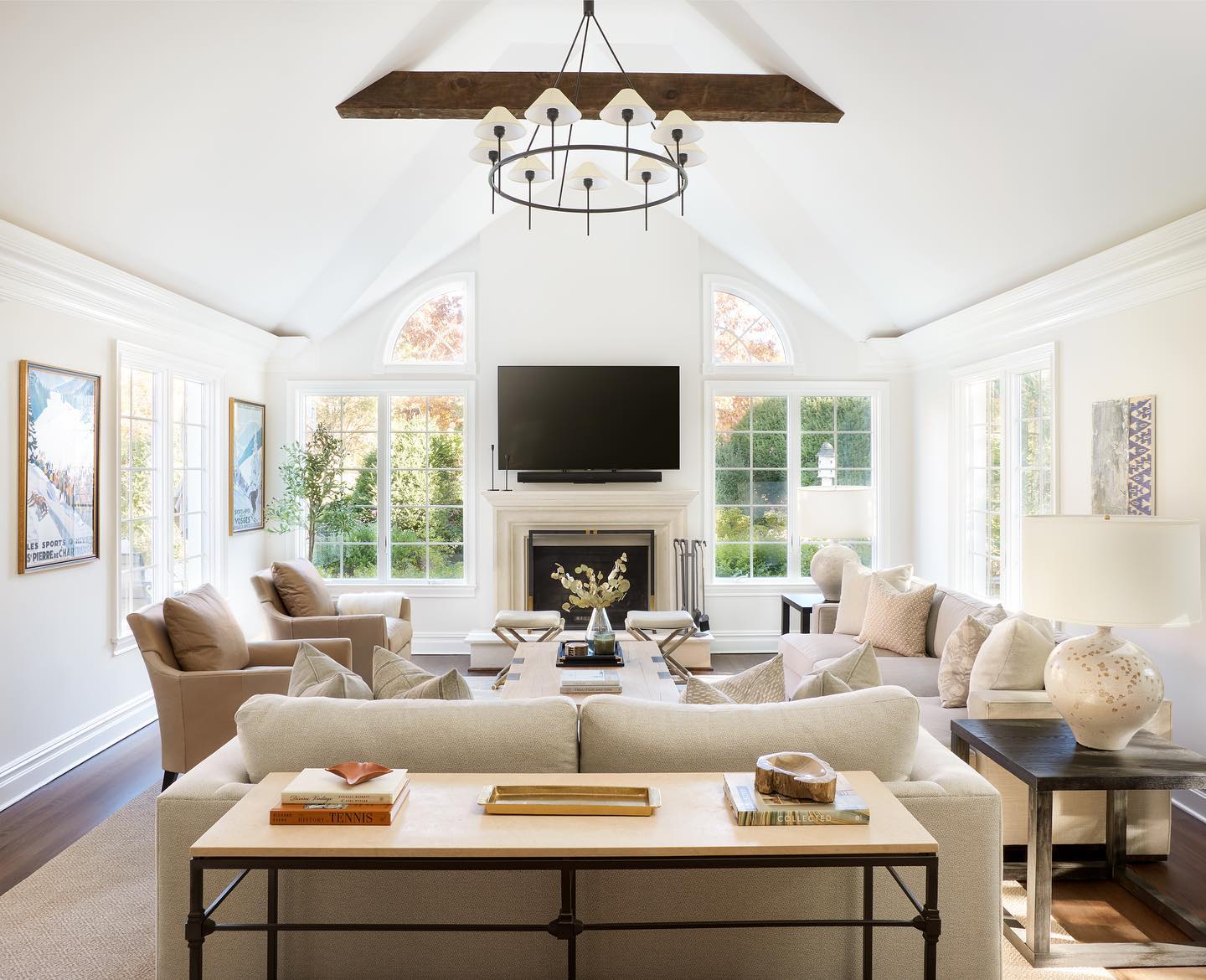
Under a high central ridge, scattered furniture can feel disconnected even when each piece is attractive. A large rug gives the seating area a recognizable footprint and brings attention back to human scale.
Map the arrangement before choosing dimensions, allowing the rug to connect the main seats rather than sit like a small island beneath the coffee table.
Its texture can complement the ceiling: a quieter weave beneath prominent timber, or a more expressive pattern beneath plain painted slopes. Consider door movement, cleaning needs, and the flooring manufacturer's advice about pads.
Leave enough visible floor around the grouping to distinguish it from circulation routes. This is a useful first adjustment when the room feels cavernous but major changes are unnecessary.
Place the Media Console on a Side Wall
Credits: Instagram
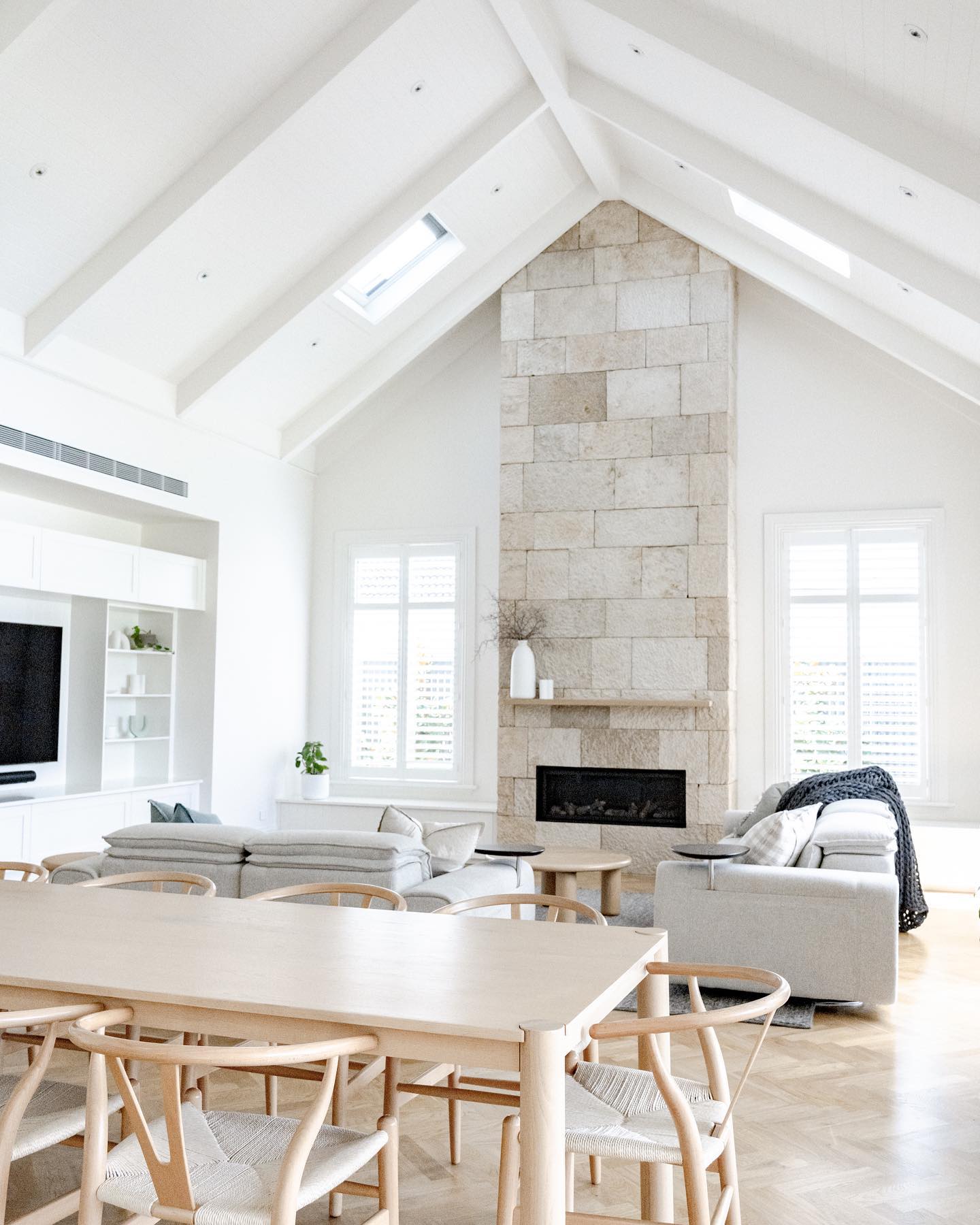
Watching television does not have to determine the treatment of the entire peaked wall.
If the layout permits, position a low media console along a straight side wall and keep the gable end available for windows, art, or the existing fireplace.
Angle or orient the main seating toward the screen without blocking the route through the room. Before mounting anything, check viewing comfort from the actual seats and observe reflections at different times of day.
The console can hold necessary equipment while its horizontal outline counterbalances the ceiling's upward movement. Keep cables managed and ventilation openings clear according to the equipment instructions.
This layout works best when the television remains easy to use without becoming the only destination for attention.
Use Horizontal Artwork Beneath the Peak
Credits: Instagram
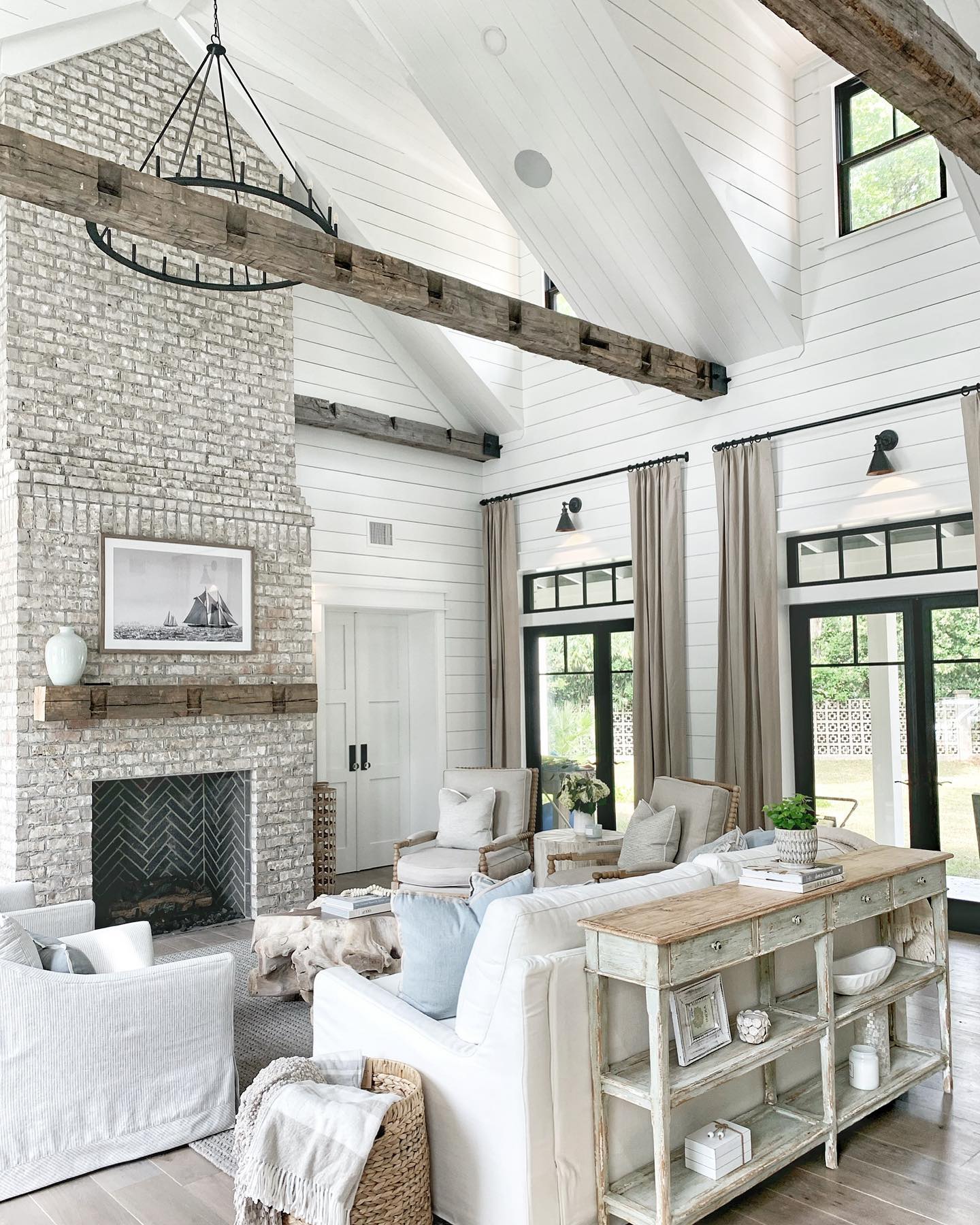
A wide painting or photograph can settle the proportions of a tall gable wall by establishing a clear horizontal line. Place it in relation to the mantel or console below, allowing the triangular area above to remain open.
There is no need to climb toward the ridge with a vertical stack of frames simply because that space exists. Choose artwork large enough to hold its place beside the furniture, then test its position with a paper outline.
From the main seats, the subject should be comfortable to see without tipping your head back. A restrained frame can help when beams or window trim already contribute strong lines.
Let the composition within the artwork provide interest instead of adding surrounding accessories.
Fill an Open Corner With a Tall Plant
Credits: Instagram
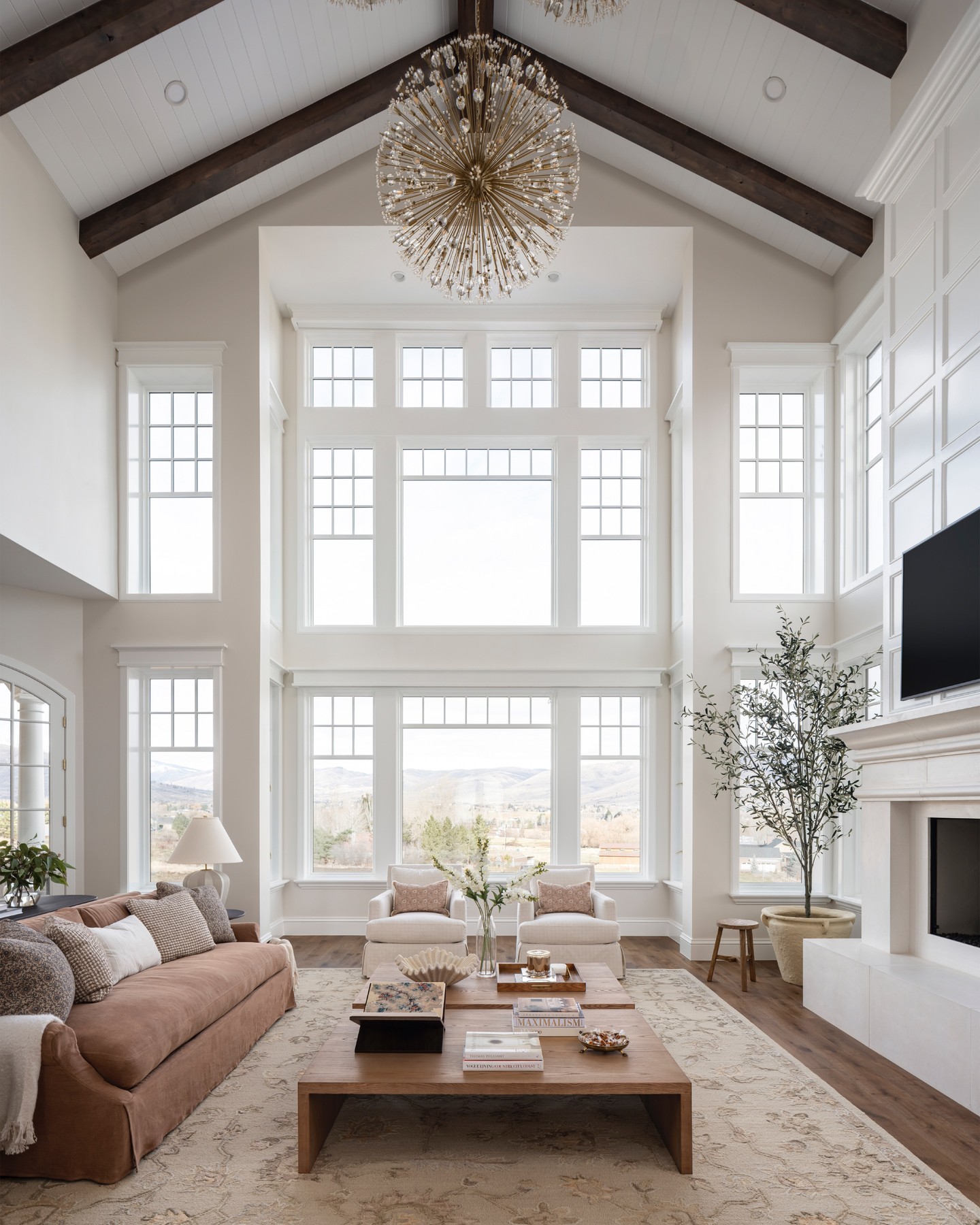
Greenery can bridge the distance between low furniture and a cathedral ceiling without requiring anything overhead. A tall indoor plant works particularly well in an otherwise empty corner near suitable natural light.
Choose the plant for the actual conditions there, including direct sun, drafts, and the household's ability to care for it. Height alone is not a reason to select a demanding species.
Give the foliage room to spread without brushing curtains or blocking a passage, and protect the floor from moisture with an appropriate container. If children or pets share the room, check plant safety before buying.
One healthy specimen can introduce a relaxed, irregular outline that keeps the symmetrical ceiling and more orderly furnishings from feeling too formal.
Introduce Sculptural Wood Through Lighting
Credits: Instagram
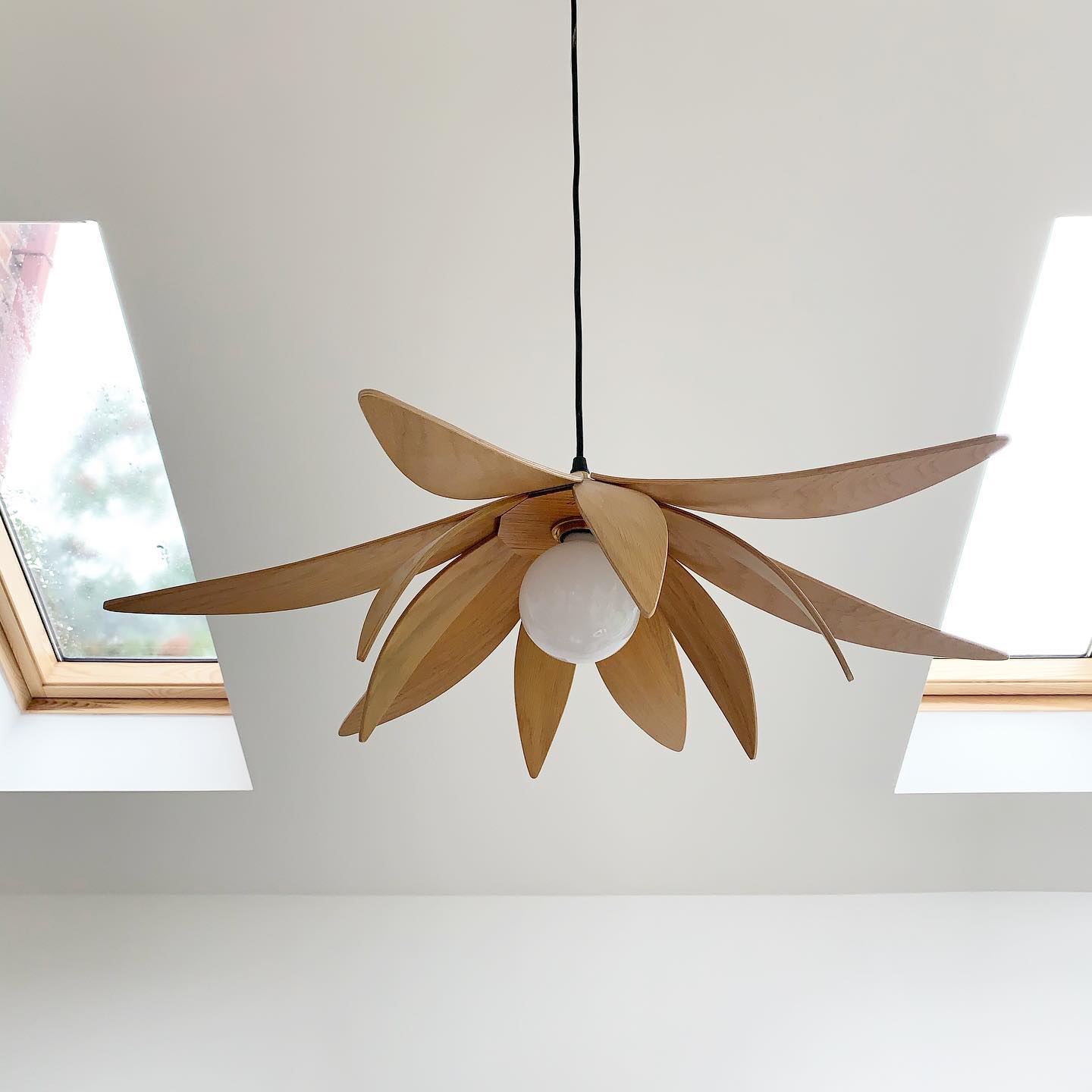
A sculptural wooden light can introduce natural warmth without covering an entire cathedral ceiling in timber. This homeowner's close photograph shows a petal-shaped shade between roof windows, illustrating how a small material choice can soften crisp white planes.
For a living room, consider the fixture's appearance from seated positions as well as from the doorway. Open shades may cast patterns or expose the bulb, so check the effect and glare before committing.
Repeat the wood tone lightly in a table or chair frame rather than matching every finish. Confirm slope compatibility, support, and clearances with a qualified electrician.
Choose accessible, replaceable light sources where possible; a beautiful fitting should remain straightforward to maintain after it is suspended above the room.
Give Glazed Doors a Contrasting Paint Finish
Credits: Instagram
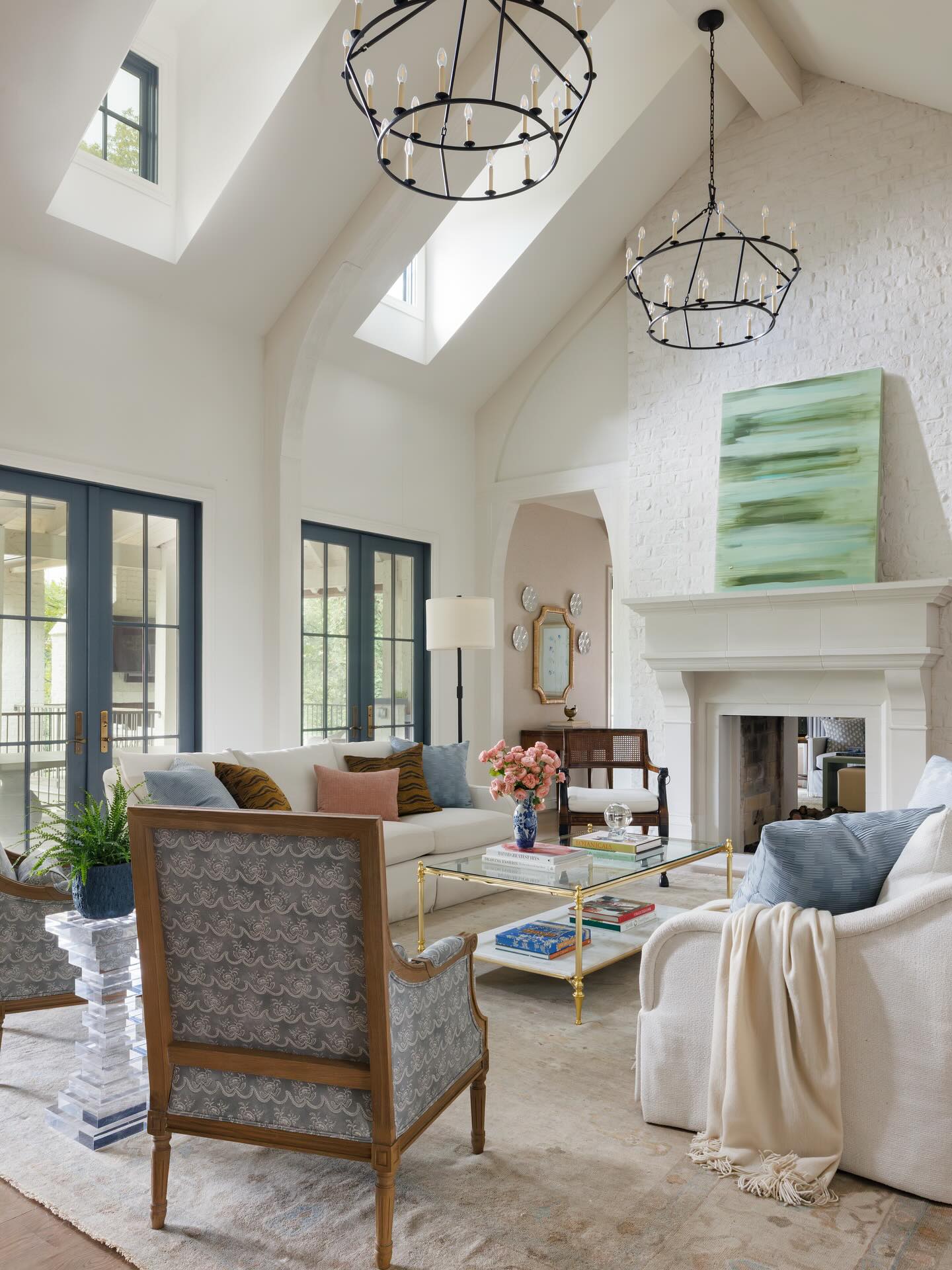
Painted glazed doors can introduce color at eye level while a cathedral ceiling stays light. The blue frames in this room outline the garden view and connect with smaller blue accents among the furnishings.
Sample the color on the actual door surface before committing, checking both bright daylight and lamplight. A muted shade can supply definition without competing with the ceiling's angles or overhead fixtures.
Use a coating suited to the existing material and prepare the surface according to its instructions. Keep adjacent trim quieter if the doors are meant to stand out.
Repeat the chosen hue in a cushion, chair fabric, or artwork, then stop before the room feels overly matched. Clear glazing keeps the colored framework visually open.
Introduce Pattern Through Full Drapery Panels
Credits: Instagram
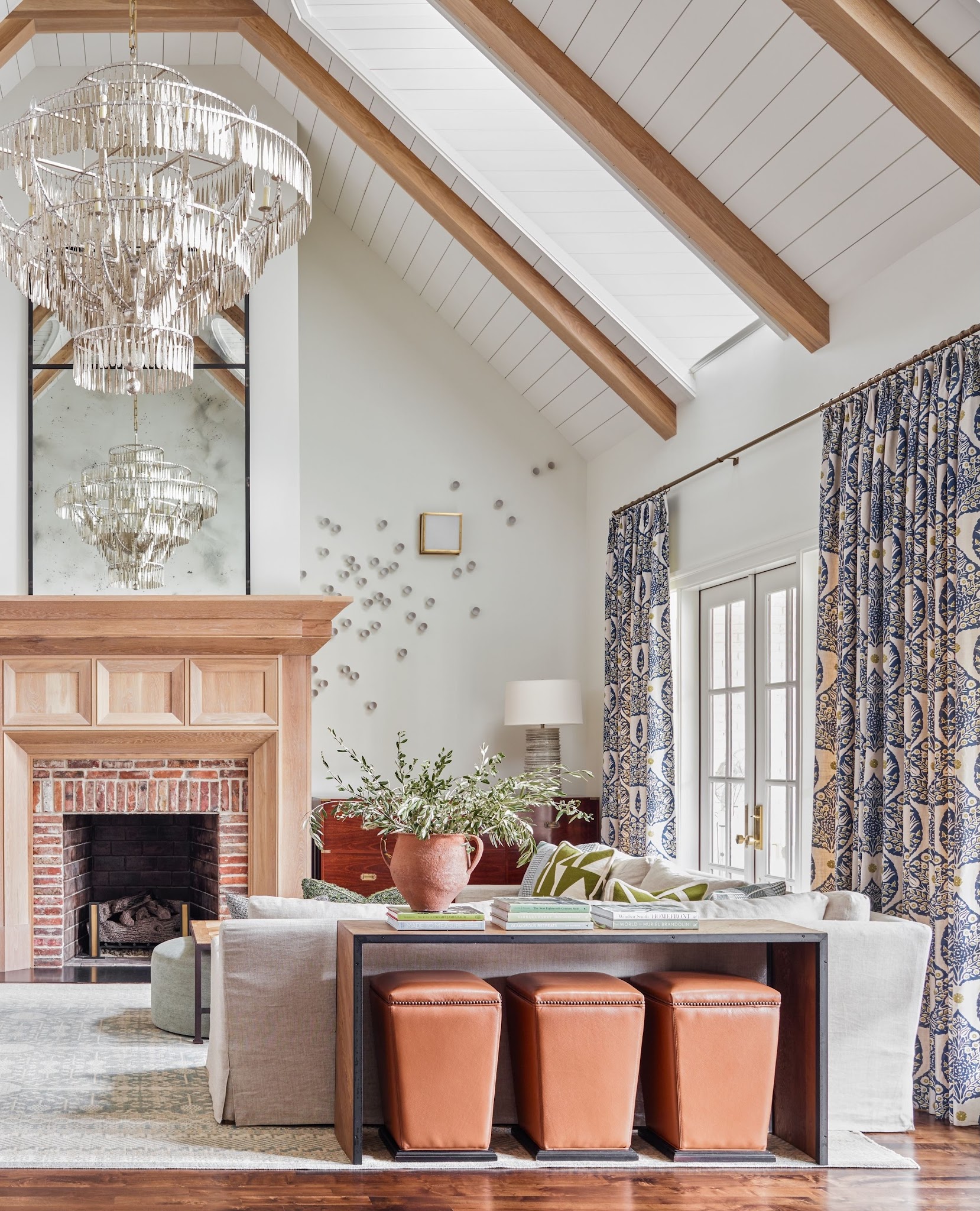
Pattern at the windows can bring a cathedral ceiling living room into a more domestic scale without covering its distinctive peak.
On suitable straight walls, drapery with a readable stripe, botanical motif, or small geometric design introduces detail where people actually see it. Select the fabric for the light control and privacy needed, then consider its relationship to rugs and upholstery.
Keep the header line consistent across comparable windows rather than trying to follow every roof angle. Panels should operate freely and avoid heat sources or obstructions.
If patterned fabric is the main decorative element, simplify nearby accessories so the room stays coherent. Samples viewed from across the space help reveal whether a design feels pleasantly textured or distractingly busy.
Divide a Long Room Into Two Seating Areas
Credits: Instagram
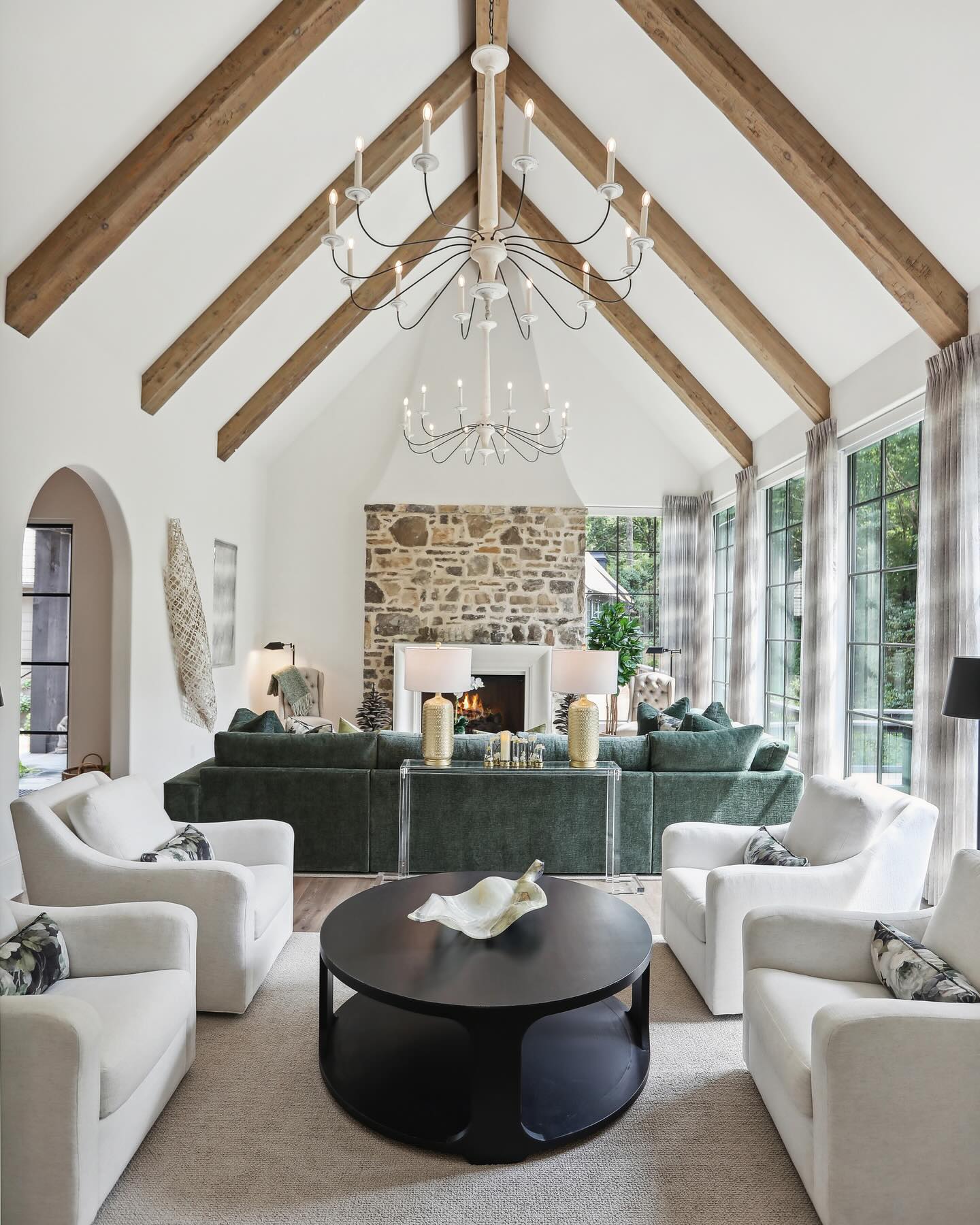
Long rooms beneath a continuous central ridge can support two distinct places to relax, provided the floor plan allows comfortable movement.
Give the main sofa group one purpose, such as conversation or television, and use the other end for a quieter pair of reading chairs. Let the ceiling remain visually continuous while separate rugs, tables, or lamps identify each area below.
Avoid lining every piece against the walls, which can exaggerate the distance between them. The secondary arrangement should feel useful on its own, with a place for a drink and adequate light.
Repeat a material or accent color between the groups to connect them. A clear path along or between the zones keeps the generous architecture pleasant to use.