
A room can feel bohemian without every surface competing for attention.
Boho Living Room Ideas in this roundup show how a few thoughtful contrasts—like a camel leather sofa against a colorful kilim or carved furniture beside simple seating—can create a collected look that still feels comfortable.
You’ll also find ways to layer pattern, from narrow stripes and floral rugs to a patterned coffee table, and to use hanging plants or open shelves to shape the room.
The common thread is balance: let standout pieces have room to breathe.
1. Gather Floor Cushions Around a Low Table
Credits: Instagram
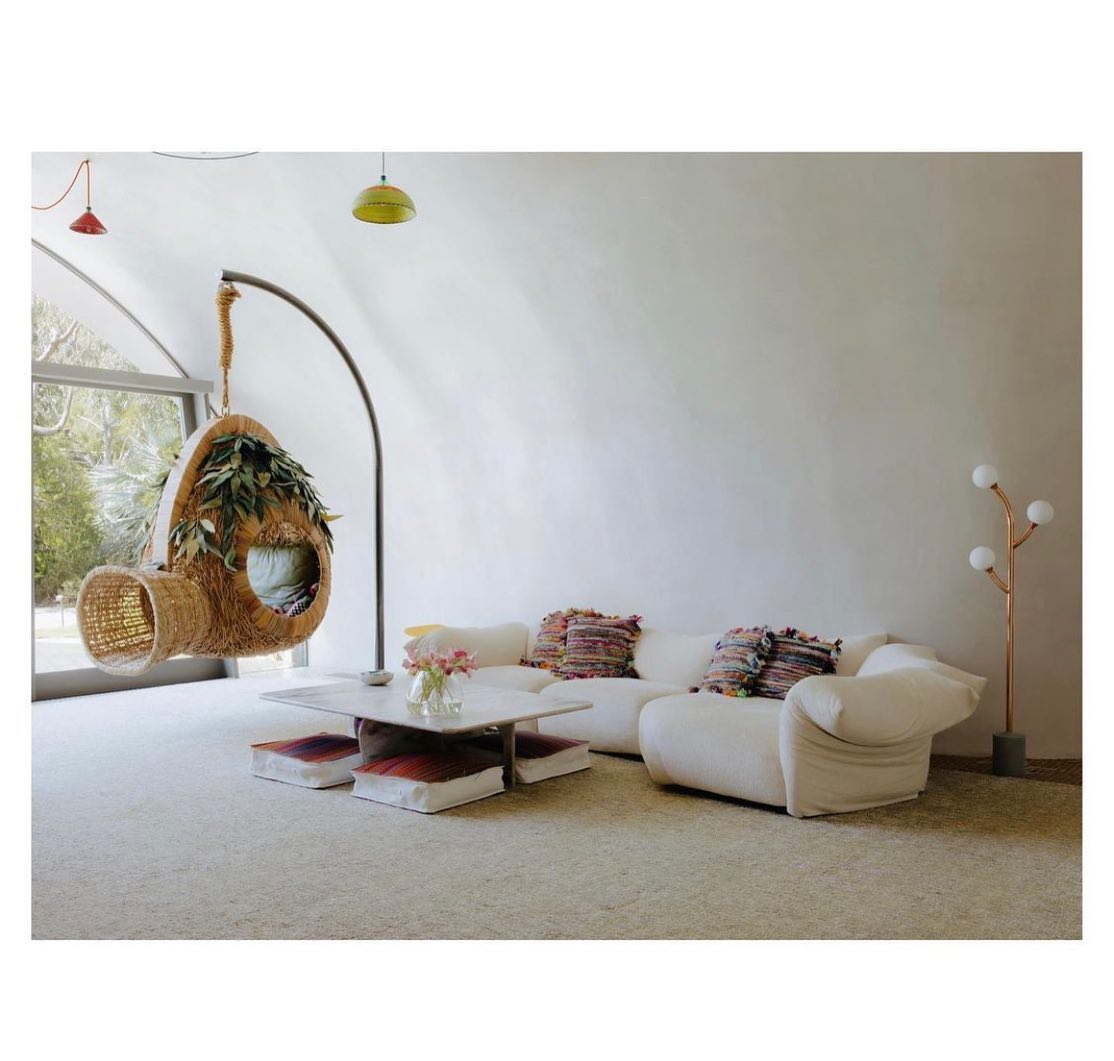
Striped floor cushions surround a low table in this airy living room, adding casual seats beside the cream sofa. Their color connects with the woven pillows, while the simple tabletop keeps the arrangement from feeling busy.
To try the idea, choose cushions with enough thickness for comfortable sitting and covers suited to regular use. Check the table height while seated on a cushion, allowing room for your knees and legs.
Keep the cushions together during gatherings, then store them nearby when you need more open floor. The hanging woven chair adds another texture here, while the cushions repeat the same informal approach to seating.
Repeating a few textile colors helps these small pieces feel connected to the larger furniture group.
2. Pair Camel Leather With a Colorful Kilim
Credits: Instagram
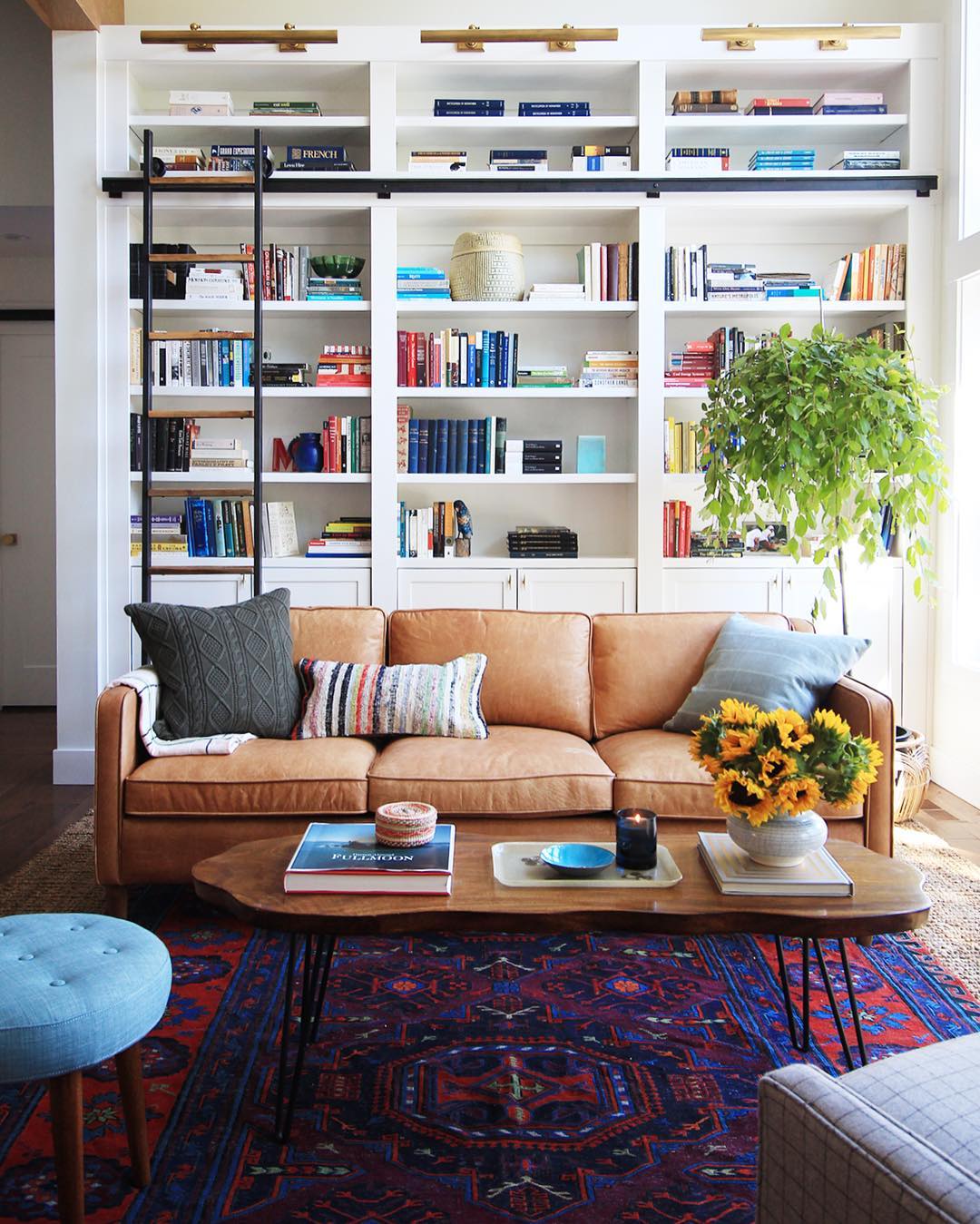
This cabin project by Jenny Komenda pairs a camel leather sofa with a red and blue kilim, giving the seating area warmth and pattern without covering every surface.
A low wood coffee table keeps the rug visible around its slender black legs. Borrow that balance by choosing one richly patterned rug, then repeating a few of its colors in simpler accents.
Here, a pale blue pillow and round blue stool echo the rug, while the striped lumbar pillow adds a smaller scale of pattern. White bookshelves provide a calm backdrop for colorful book spines and collected objects.
Keep some shelf space open, and let a tall leafy plant soften the straight lines beside the sofa for a collected, comfortable look.
3. Pair Carved Furniture With Simple Seating
Credits: Instagram
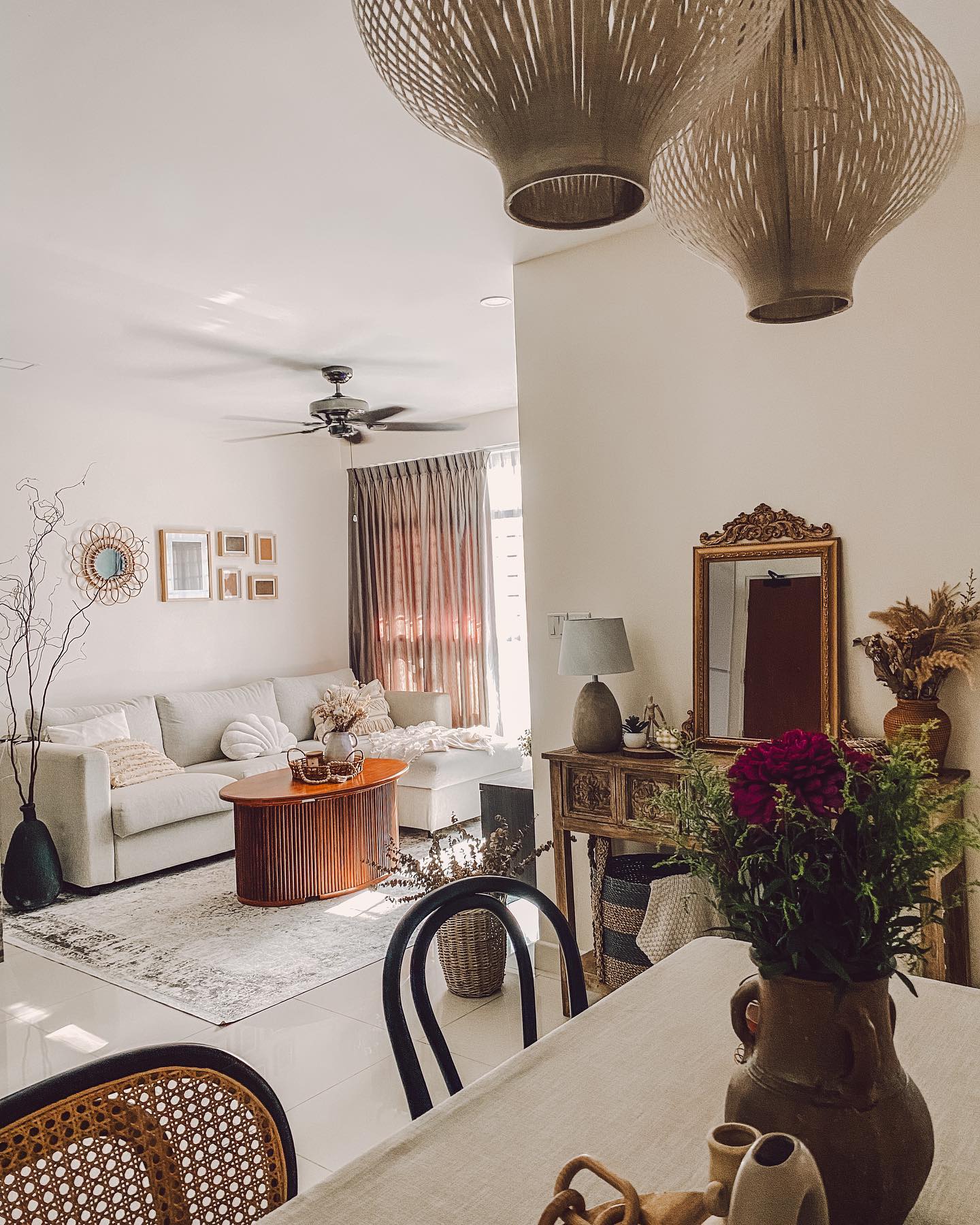
A carved console and an ornate mirror give this living area a collected feeling beside the simple cream sectional. The contrast works because the sofa’s broad, plain surfaces leave room for detailed furniture to stand out.
Try one decorative storage or display piece along a nearby wall, then keep the main seating shape uncomplicated. Here, a lamp and dried stems vary the console’s height, while a basket underneath adds another woven texture.
The warm oval coffee table links the two areas without copying the console’s carved pattern. Choose wood tones that feel related, even when their finishes differ.
A pale rug and restrained pillows help the whole arrangement stay comfortable and cohesive, with enough contrast to make individual pieces noticeable.
4. Pair Earthy Abstract Art Above a Pale Sofa
Credits: Instagram
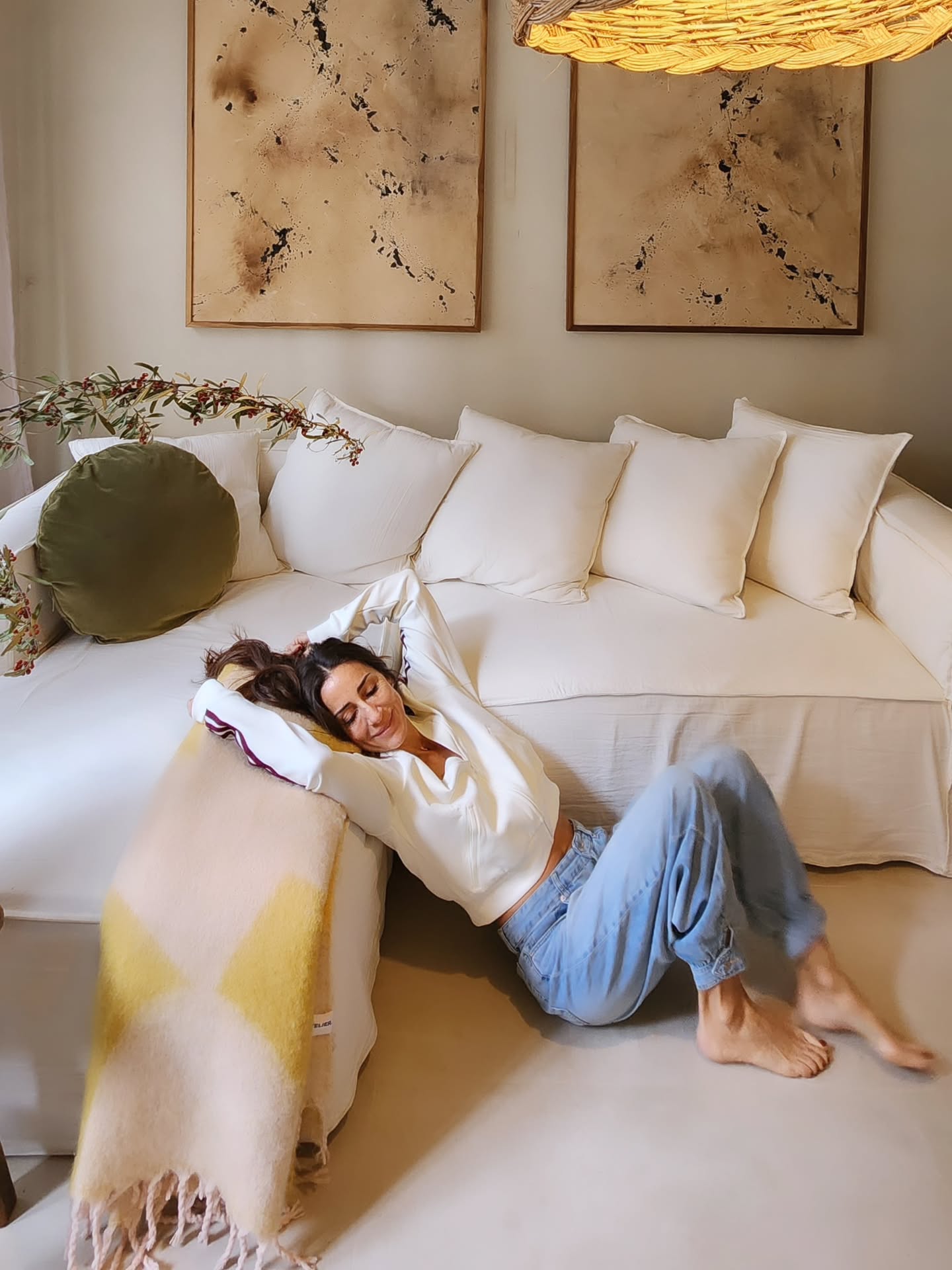
Two large abstract artworks give the pale sofa in this multipurpose sitting room a warm backdrop. Their sandy colors and matching wood frames create a clear pair, while uneven dark markings keep the arrangement from feeling too formal.
Try artwork with related colors and scale, then leave a visible gap between the frames so each piece has room to breathe.
You can repeat one shade from the art in a throw or pillow instead of introducing several competing patterns. Here, the fringed blanket and coarse woven pendant carry the same earthy mood through different textures.
Plain upholstery keeps those details readable. Measure the grouping against the seating below, and check its position while seated before deciding where to hang it.
5. Hang a Wall Textile as a Soft Backdrop
Credits: Instagram
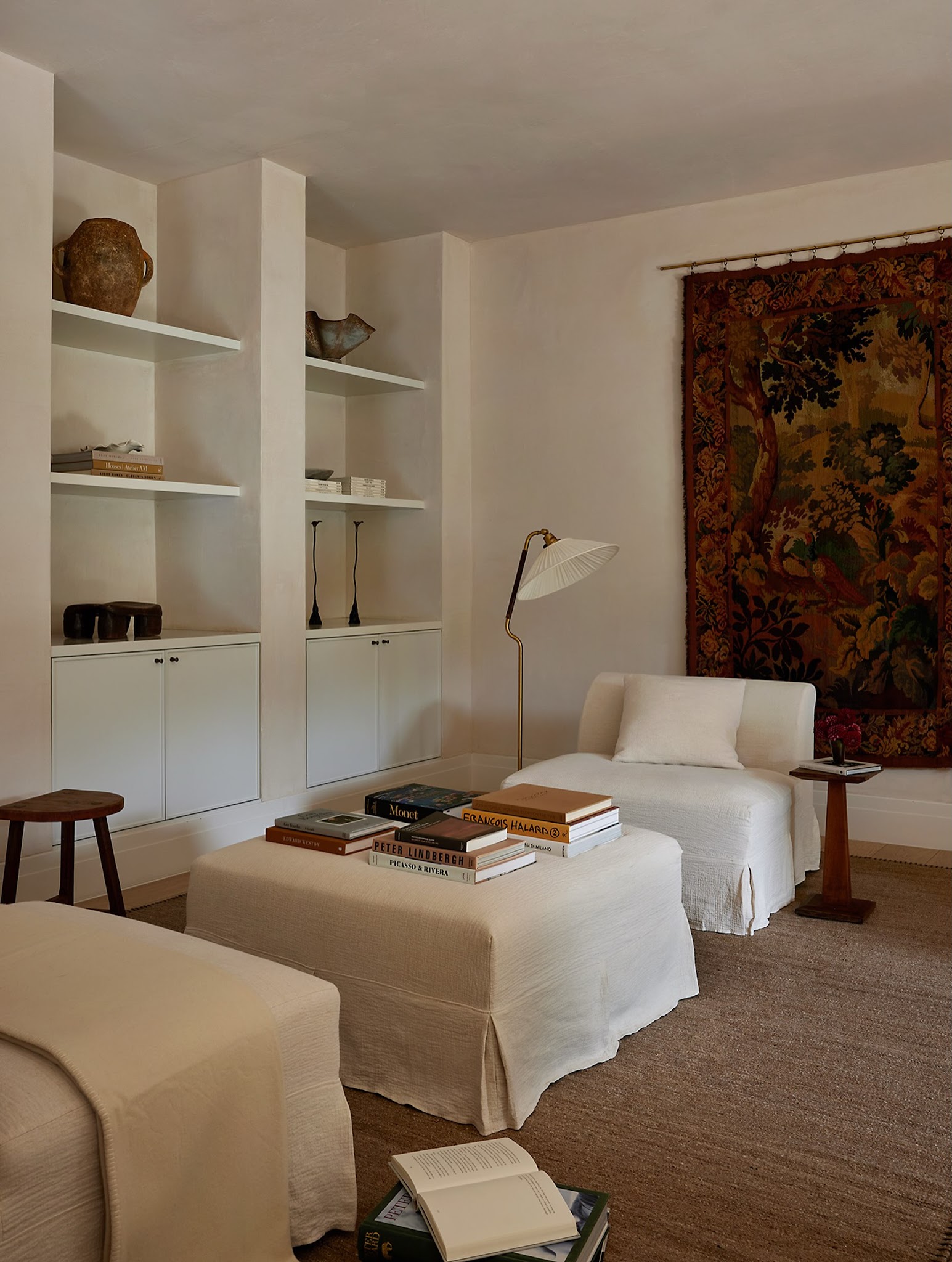
A wall textile brings a different kind of pattern to a visually quiet seating area. Here, the large landscape tapestry hangs behind a plain white chair, adding warm color without covering the upholstery in prints.
Try one substantial textile when you want a collected boho feel with relatively few accessories. Leave a border of wall visible around it so the shape reads clearly.
Choose a hanging method suited to the textile’s weight and condition, rather than pulling fragile fabric tight. Keep nearby seating simple, then repeat its earthy tones through wood stools or pottery.
The broad woven rug adds another texture underfoot. Let the textile remain the main patterned surface so its detail can be enjoyed from across the room.
6. Use Two Sculptural Tables to Serve Separate Seats
Credits: Instagram
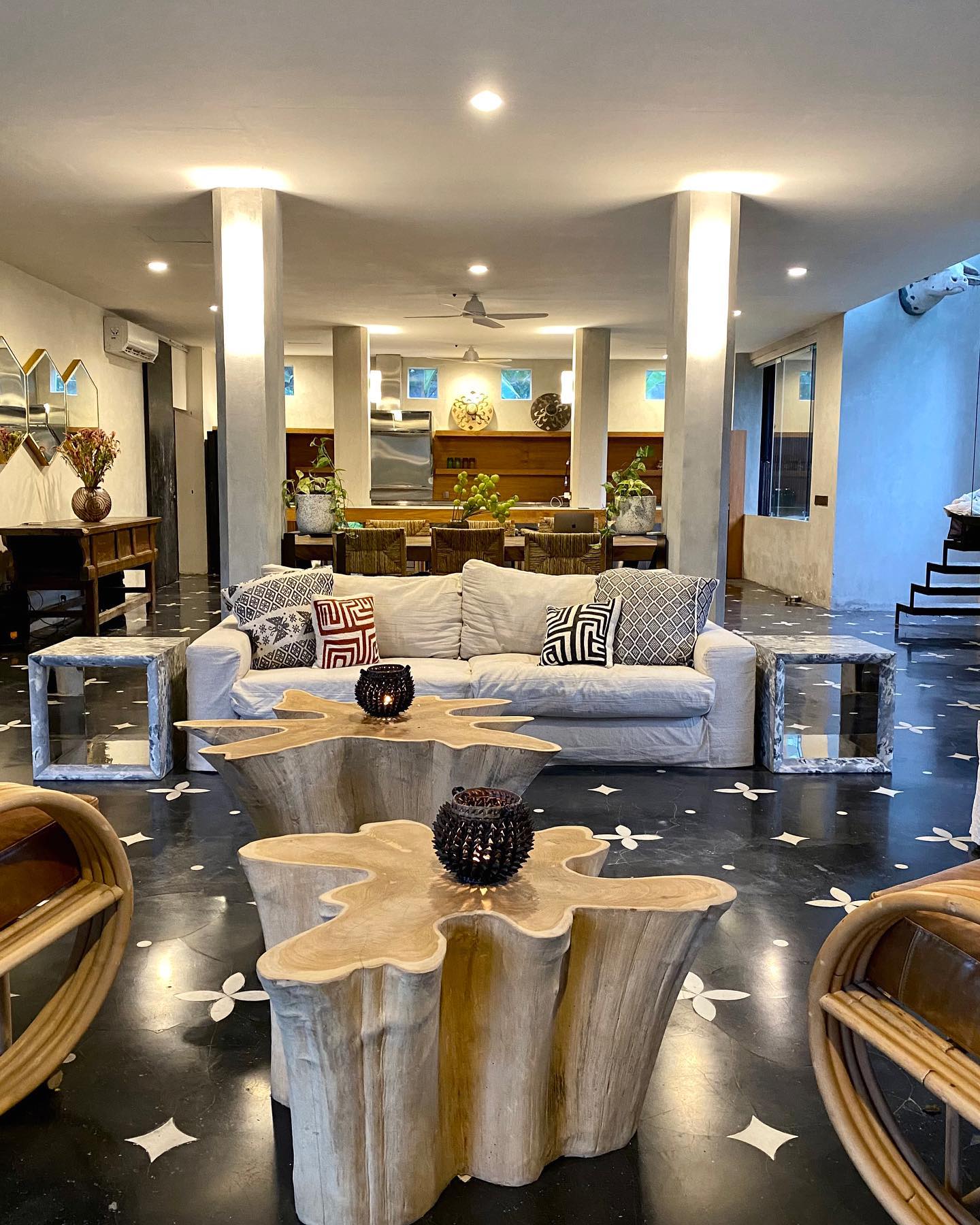
Two sculptural tables can give more seats a surface within easy reach. Here, pale wood pieces with irregular outlines sit between a relaxed white sofa and curved cane chairs.
Their similar finish connects them, while their organic shapes keep the arrangement from feeling rigid. Try marking two table footprints on the floor before choosing pieces, checking that each seat can reach a surface comfortably.
Leave a clear route between the furniture and nearby doorways. Keep tabletop decoration low and limited so the unusual edges remain visible.
Simple upholstery gives these substantial forms space to stand out, while patterned pillows add a different scale of detail. Choose tables that sit securely and leave enough flat surface for everyday drinks and books.
7. Frame the Sofa With a Personal Library
Credits: Instagram
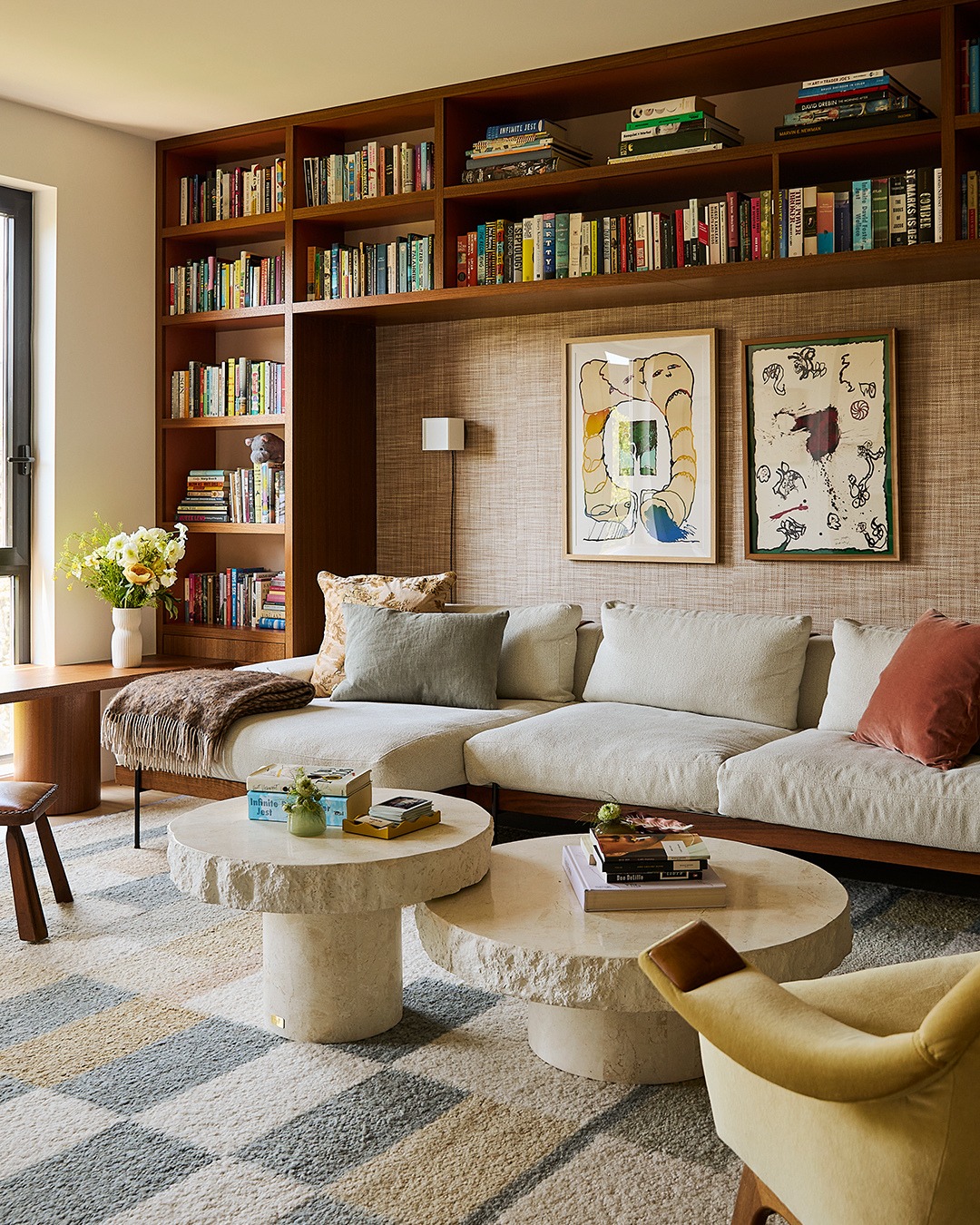
Bookcases can turn the wall around a sofa into a personal backdrop without filling the seating with accessories. Here, wood shelves extend above the sofa and down one side, framing woven wall texture and two pieces of art.
The arrangement keeps books close to the lounging area while giving the display a clear boundary. Use existing shelves to repeat a few colors from your cushions or rug, and alternate upright books with short horizontal stacks.
Leave some gaps so the shelves retain a readable rhythm. Keep the space behind the cushions clear, and place frequently used books where they are easy to reach.
A simple sofa and a fringed throw let the library add much of the room’s layered character.
8. Repeat One Deep Color at Different Heights
Credits: Instagram
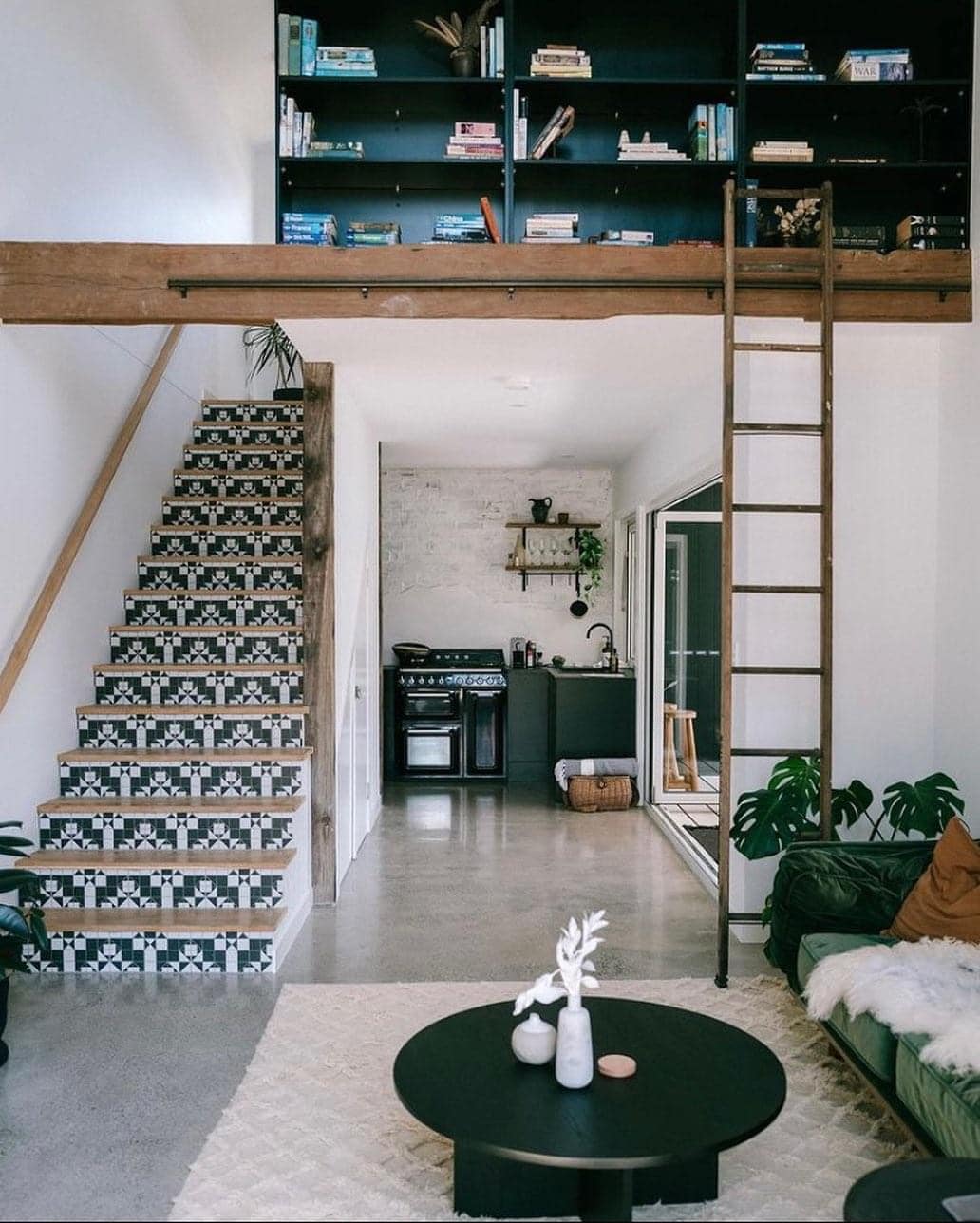
Repeating one deep color can connect a seating area to the space above it. In this loft, the green sofa relates to the dark green bookshelves on the upper wall, drawing the eye through the room’s height.
White walls and a broad pale rug give the darker areas breathing room, while natural wood and a fluffy throw add softer boho texture.
Try choosing a color from an existing sofa, then echo it on a shelf back or another visible surface. Compare samples in the light each area receives instead of expecting an exact visual match.
Keep the objects between those repeats fairly restrained. Patterned stair risers supply the busier detail here, allowing the larger green areas to remain visually simple.
9. Mix Narrow Stripes With a Floral Rug
Credits: Instagram
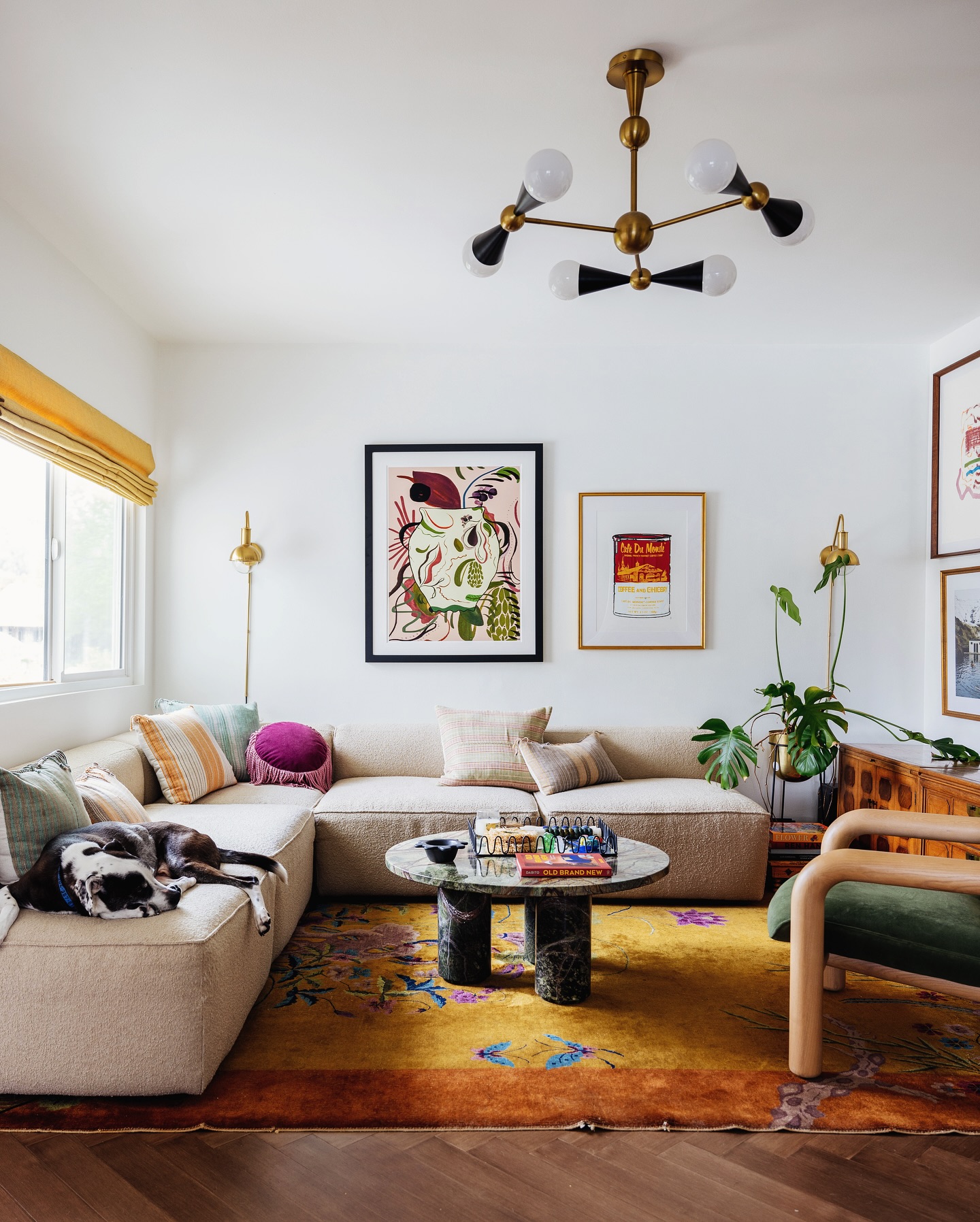
Mix narrow stripes with a larger floral pattern to give a boho room variety without making every surface equally busy. The pale sectional here carries softly striped cushions, while the yellow rug introduces oversized flowers in pink, blue, and green.
Because the sofa itself is plain, the two pattern scales have room to separate. Start with the bolder textile, then choose quieter cushions that pick up a few of its colors.
Include one solid accent, like the round magenta pillow, to interrupt the stripes. Keep the curtains or shade simple so the window does not add another competing print.
A small coffee table leaves more of the floral design visible, helping the rug connect the seating into one relaxed arrangement.
10. Vary the Heights of Hanging Plants
Credits: Instagram
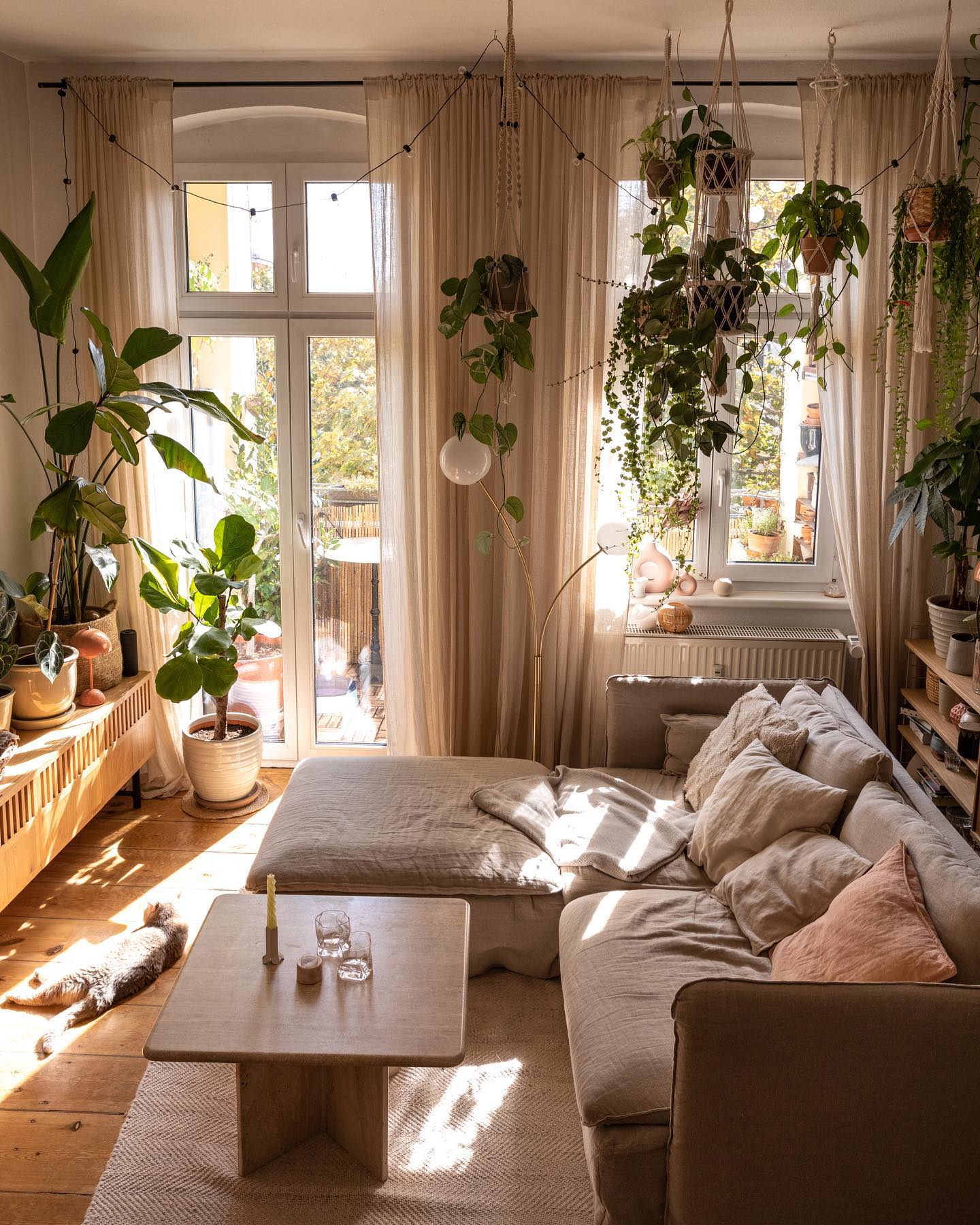
Use hanging plants to bring greenery into the upper half of a living room without covering every tabletop. Here, knotted hangers suspend trailing foliage at different heights beside tall windows, drawing the eye above a relaxed pale sectional.
The repeated light cords connect with the curtains, while varied leaf shapes keep the grouping informal. Start with two or three plants suited to the available light, leaving enough separation for their outlines to remain visible.
Keep pots clear of opening doors and curtains, and choose supports rated for their filled weight. Remove plants for watering when needed to protect upholstery below.
A simple wood table and woven rug let the suspended greenery provide the room's main layer of movement and texture.
11. Mark the Lounge Area With a Patterned Rug
Credits: Instagram
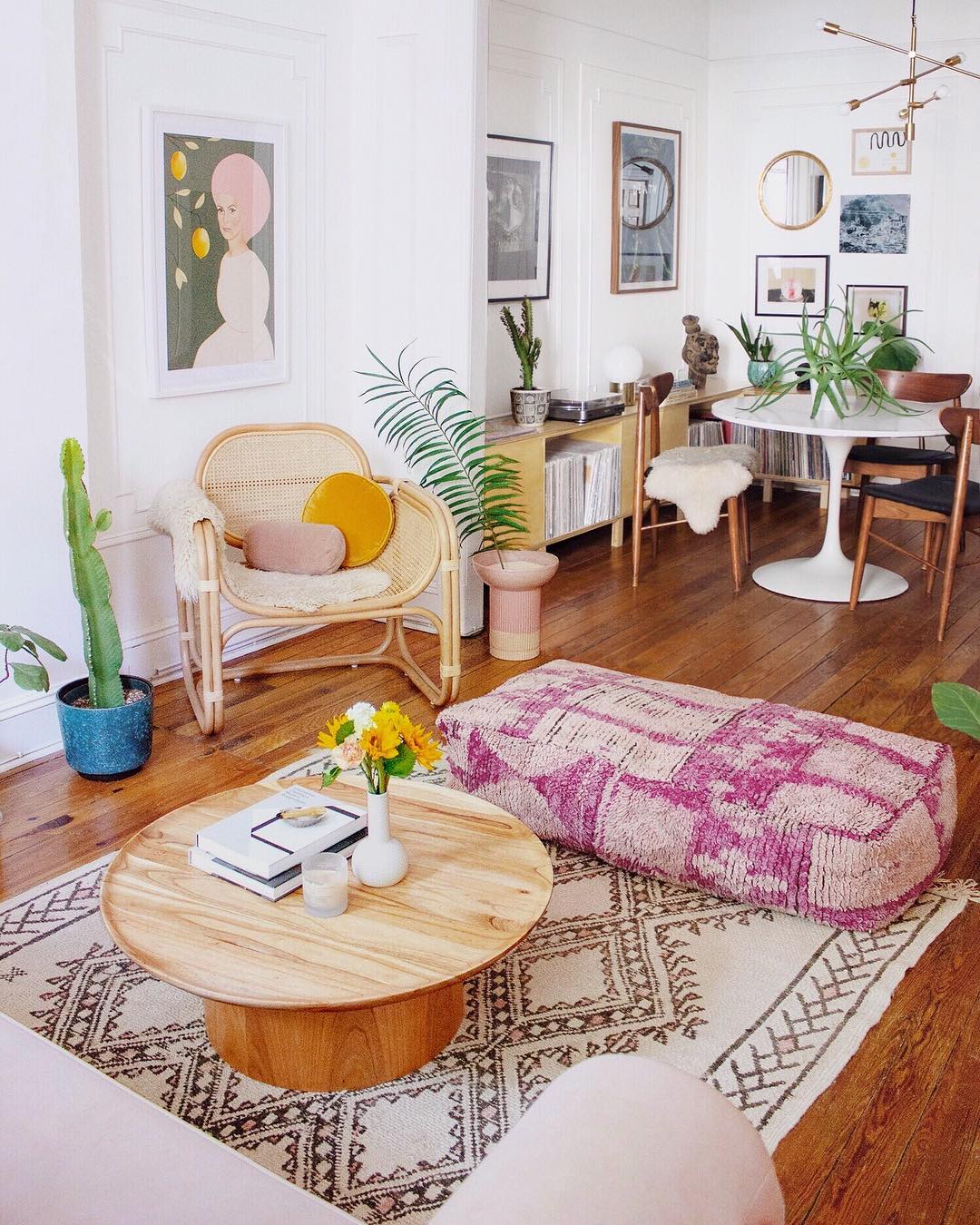
Use a rug to give the living area its own boundary when it shares a room with dining space.
Here, a cream rug with dark geometric lines groups the round coffee table, pink pouf, and sofa edge, while exposed wood flooring separates the dining table behind them.
This creates a clear lounge without a tall divider. Choose a rug large enough to support the seating arrangement, then keep the route between the two areas open.
A low pouf adds a flexible perch without blocking the view across the room. Repeat warm wood tones in both zones, as the coffee table and dining chairs do here.
Let colorful textiles provide the boho character while the furniture layout stays easy to navigate.
12. Carry Pattern Onto the Coffee Table
Credits: Instagram
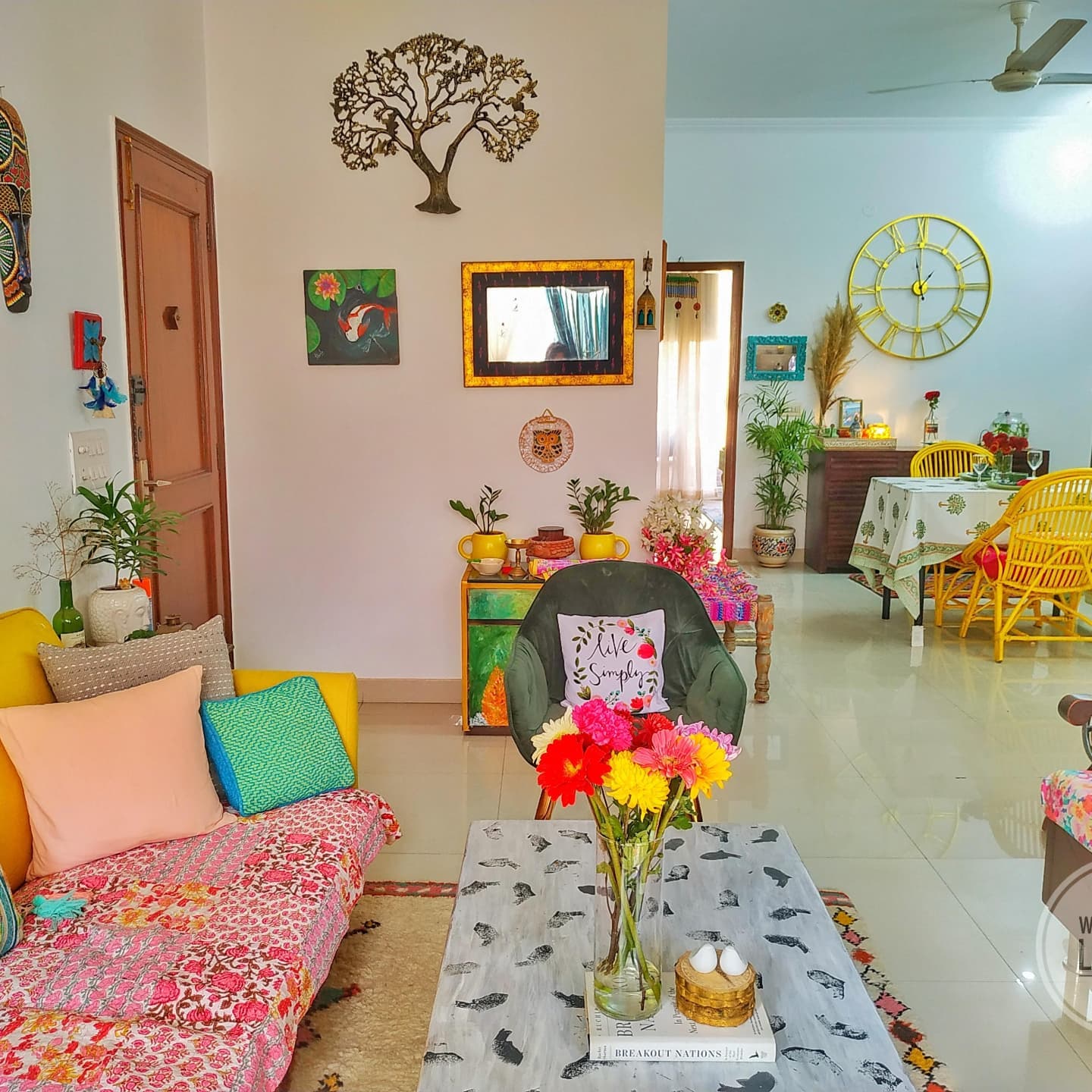
Give a coffee table its own pattern instead of relying entirely on cushions and rugs. In this room, dark bird silhouettes scatter across a pale tabletop, adding a quieter graphic layer beside the vivid floral sofa cover.
The limited table palette keeps the combination readable despite the room's many colors. Look for a patterned piece with enough plain background around each motif, especially when surrounding fabrics are busy.
Keep decorative objects together so portions of the design remain visible. A clear vase, a small box, and a short book stack create a compact arrangement here.
Repeat a simple shape or color elsewhere in the seating area, then leave enough tabletop free for everyday drinks, reading, and comfortable use by guests.
13. Use a Transparent Table Over a Patterned Rug
Credits: Instagram
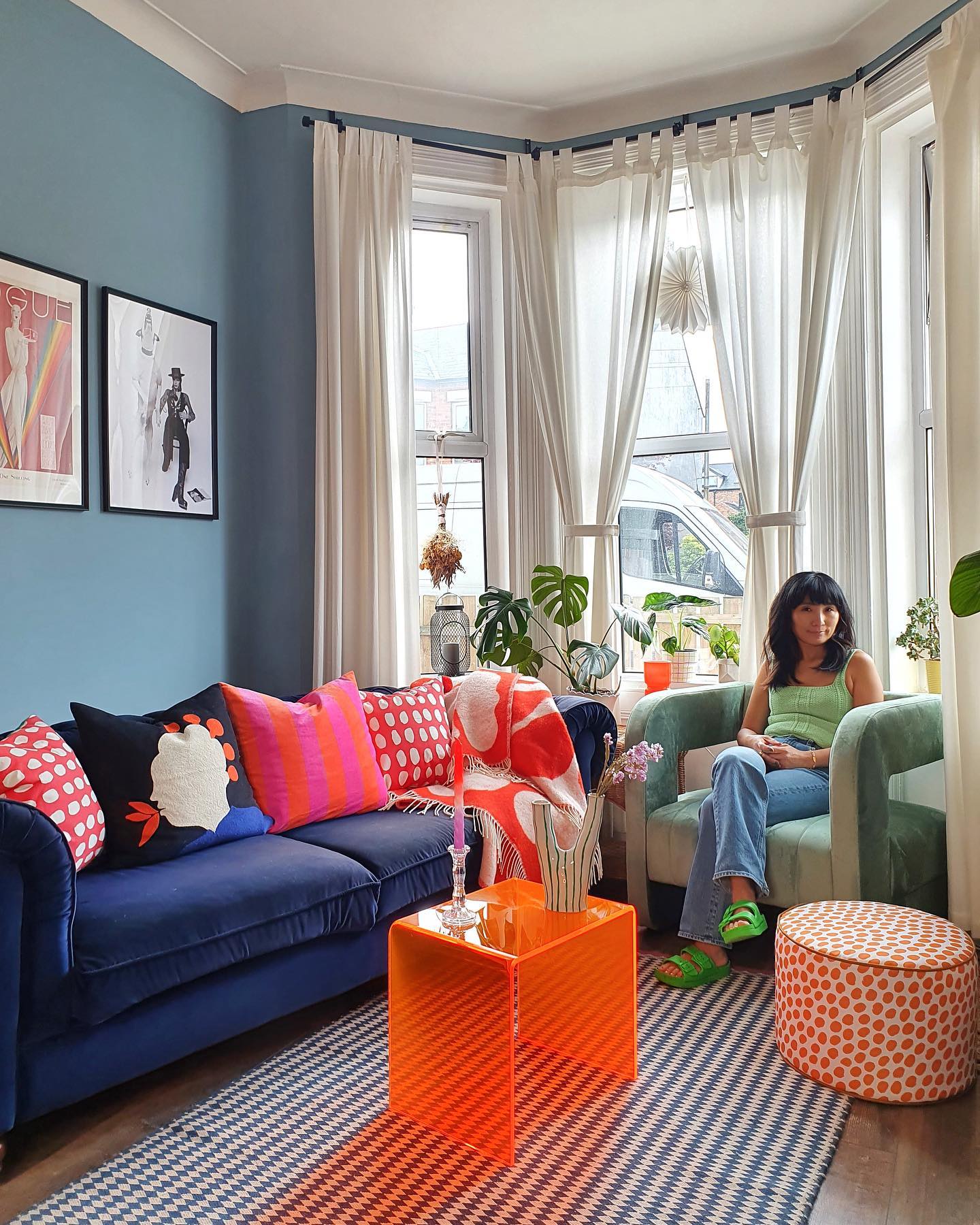
Choose a transparent table when a patterned rug deserves to stay visible. In this blue living room, a small orange table adds another bright accent while allowing the rug's geometric design to continue beneath it.
Its simple outline gives the nearby patterned cushions and rounded ottoman room to stand out. To borrow the idea, look for a compact table with a clear or tinted surface, then check its height from the seats it will serve.
Leave enough space to walk around its corners, and avoid filling the lower area with storage. Keep just a few useful objects on top.
A color picked from the textiles connects the table to the room, while its transparency keeps the furniture group feeling open.
14. Use Open Plant Shelves as a Room Divider
Credits: Instagram
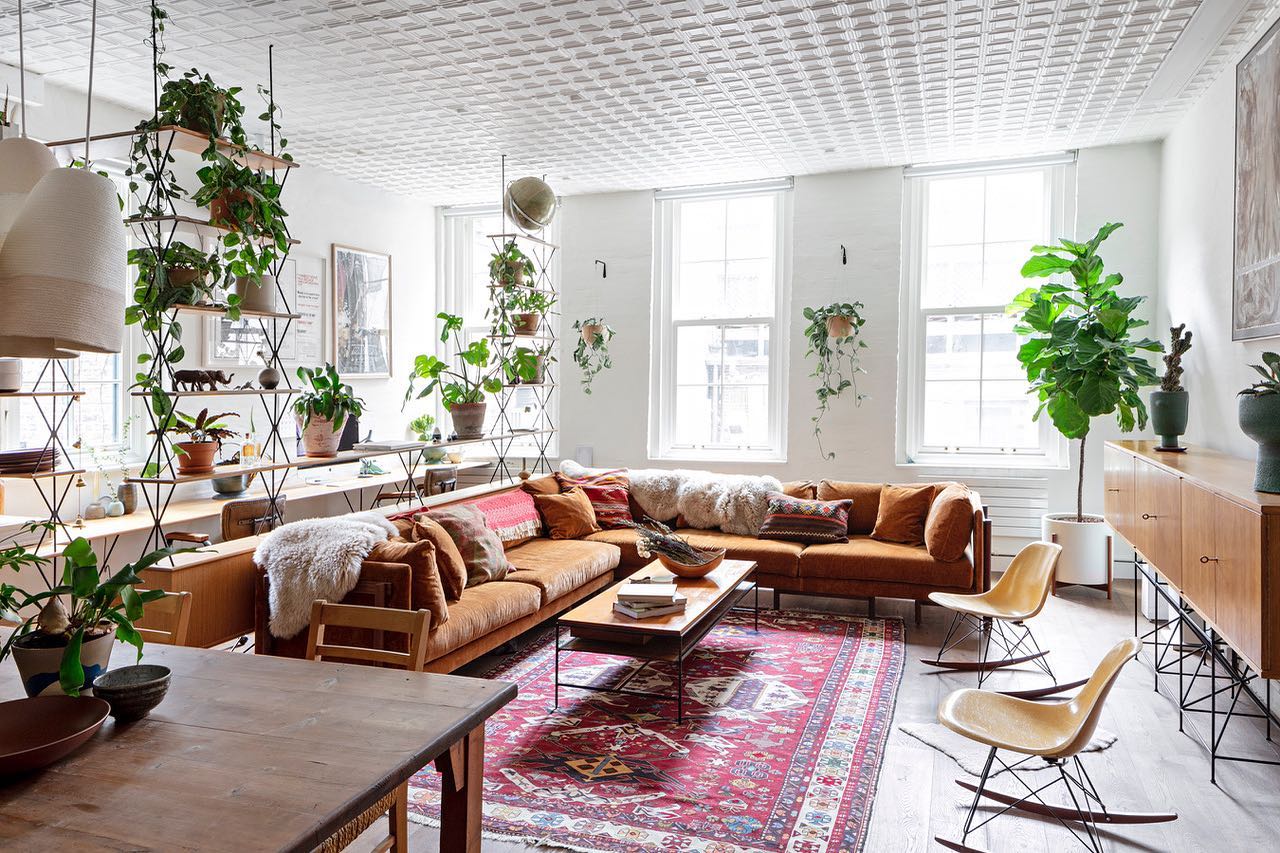
Use open shelving behind a sofa to suggest a room boundary while preserving views through the space. Here, slim supports and wood shelves carry trailing plants above a long cabinet, separating the lounge from the area beyond.
Gaps between the pots keep the screen airy, and the foliage softens its straight lines. Start with a few plants at different heights rather than filling every opening.
Choose varieties suited to the light, and use waterproof saucers to protect the shelves. Keep heavier pots low and follow the shelving manufacturer's anchoring instructions.
A low sofa lets the greenery remain visible from the seating area. Warm upholstery and a patterned rug complete the boho grouping without requiring a solid wall or enclosed room.
15. Soften a Boxy Sofa With Round Cushions
Credits: Instagram
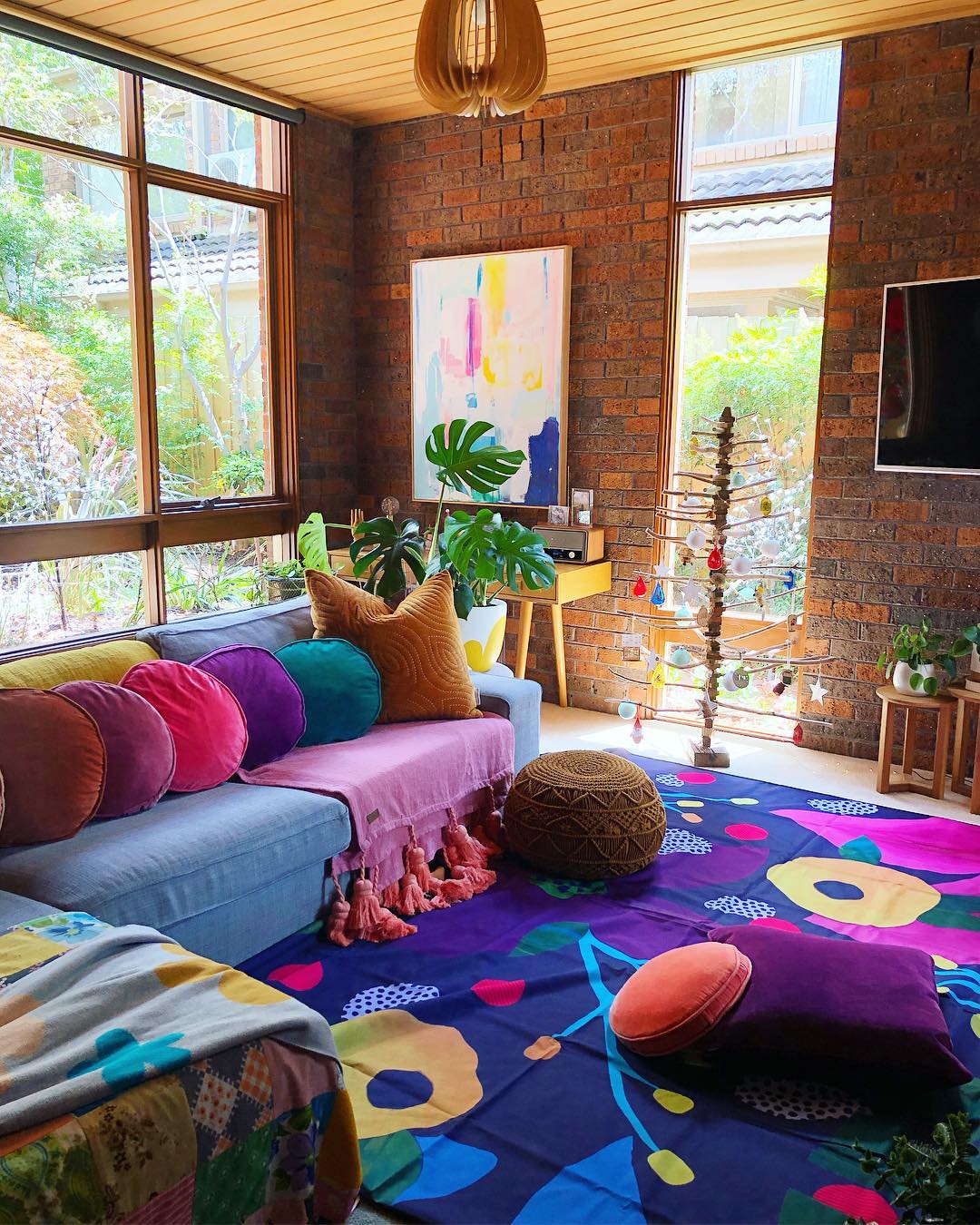
Round cushions can soften the straight lines of a boxy sofa without changing the furniture itself. Here, a row of circular pillows in rust, berry, pink, purple, and teal runs along a pale blue sofa.
One larger mustard square cushion breaks up the repetition and gives the group a taller endpoint. Start with two or three round cushions, then add a rectangular or square shape for back support.
Repeat a few cushion colors elsewhere instead of introducing a different hue in every accessory. The bright picnic blanket spread across this floor echoes the pillows, but the idea also works with a smaller throw or artwork.
Keep enough of the sofa seat clear so the arrangement stays comfortable for everyday lounging.
16. Pair an Ornate Chandelier With Relaxed Seating
Credits: Instagram
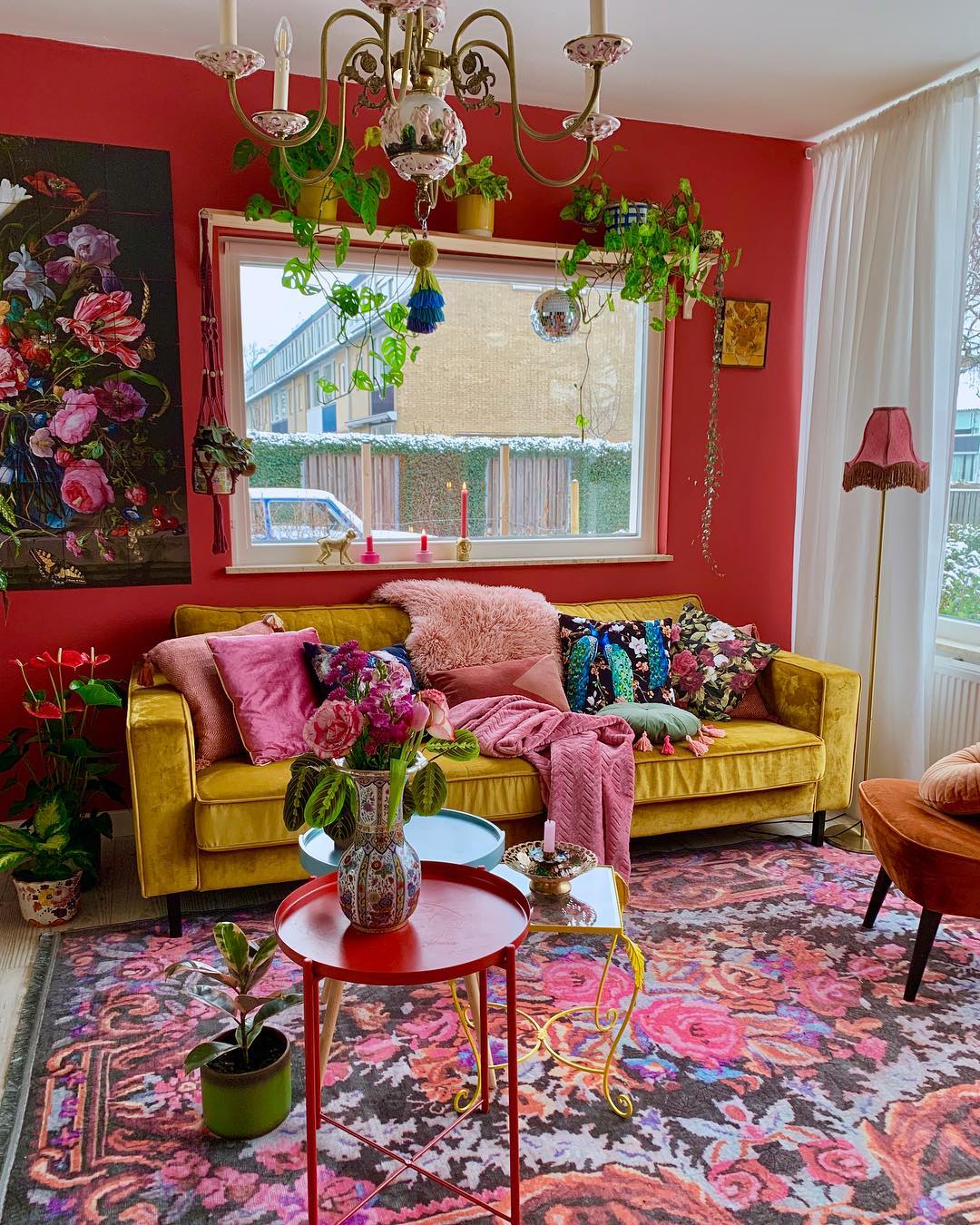
An ornate chandelier can feel at home above relaxed seating when its decorative details connect with the room below. Here, curved arms and painted floral accents join a mustard sofa, pink throws, and a richly patterned rug.
The mix gives the ceiling a collected character without requiring formal furniture. Look for a fixture with a shape you enjoy from both the doorway and the sofa, then repeat one of its colors in a smaller accessory.
Keep the surrounding ceiling simple so the silhouette remains readable. Before choosing a size, consider ceiling height and circulation, and have a qualified electrician assess installation.
Soft upholstery and casually layered blankets balance the chandelier's elaborate lines, making the seating area inviting for everyday use.
17. Give the Coffee Table a Daily Purpose
Credits: Instagram
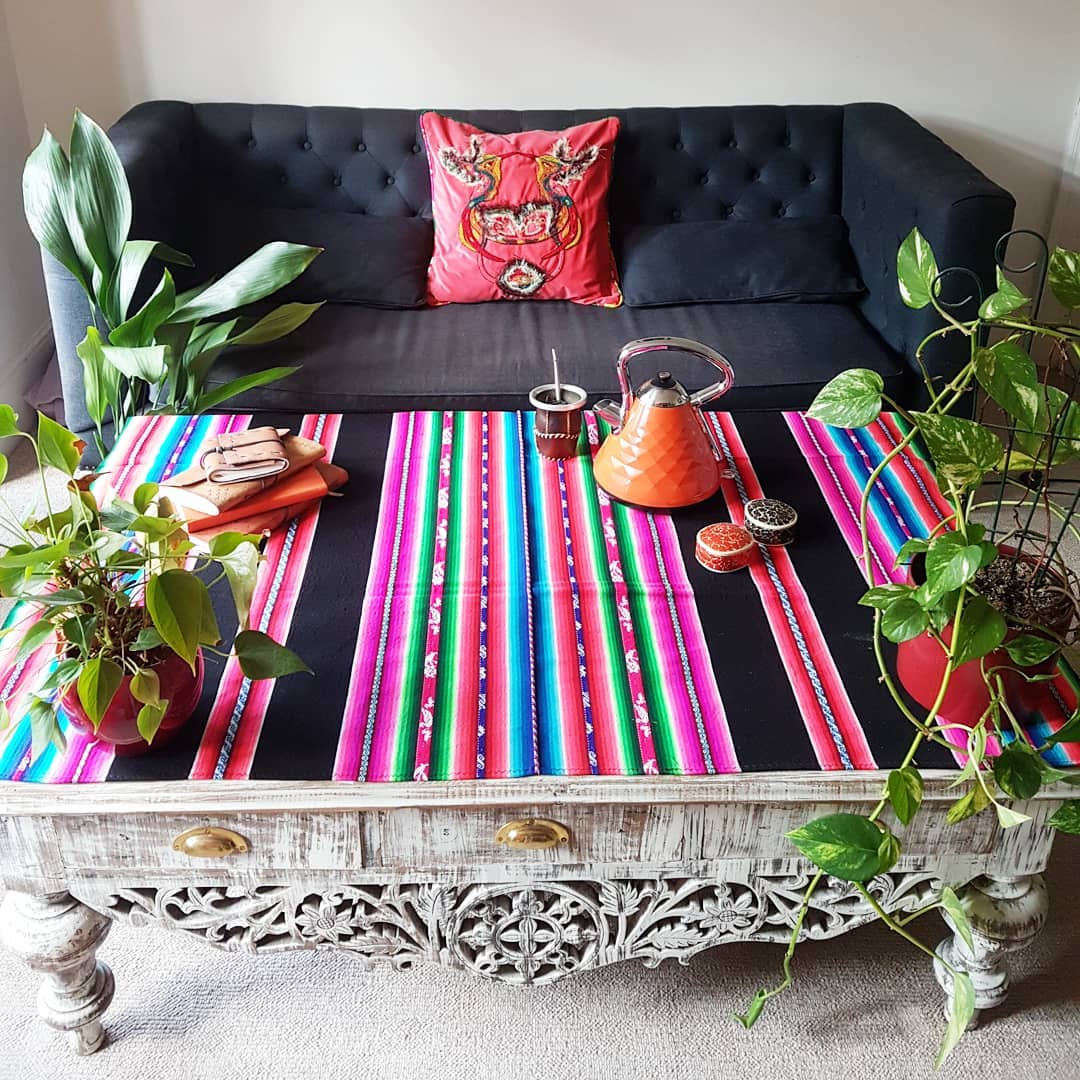
Let the coffee table support something you enjoy doing, rather than filling it only with decorative objects. This colorful setup pairs a mate cup with an orange kettle, giving the table a clear purpose beside the sofa.
The owner describes the arrangement around her mate ritual, and the striped textile makes that everyday moment feel personal. Build your version around tea, a sketchbook, or a small board game you regularly play.
Keep the useful pieces together, with space left for setting down a drink. Place plants toward the edges so their leaves frame the activity.
A tray can make smaller items easier to move when you need the surface back. Choose details that invite use, then let the decoration follow.
18. Layer Swappable Art on a Picture Ledge
Credits: Instagram
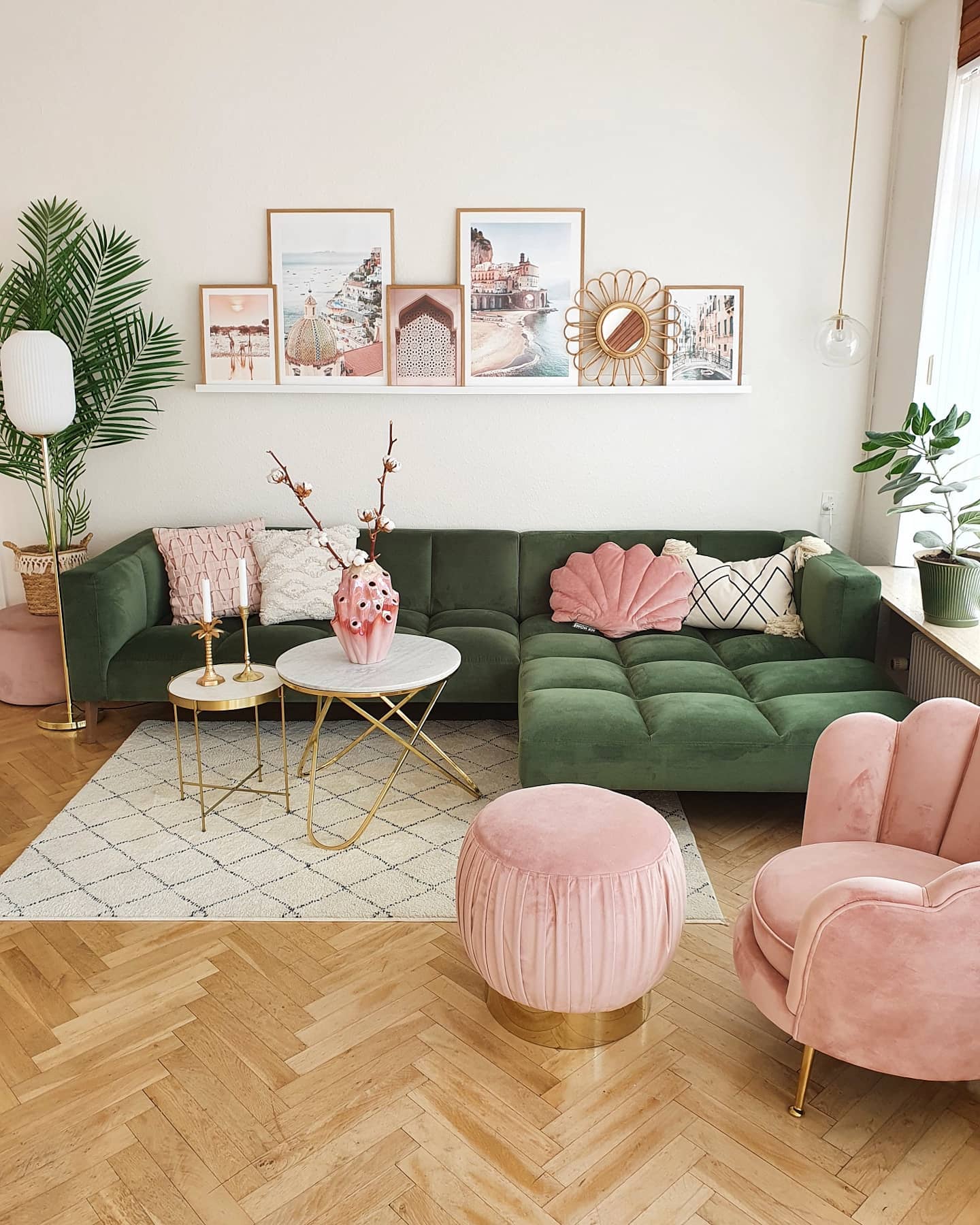
A picture ledge makes an art collection easy to rearrange as your room changes. Above this green sectional, pale architectural prints overlap in simple matching frames, with a small woven mirror breaking up the rectangles.
Their shared bottom edge keeps the display orderly even though the heights vary. Start with two taller pieces, then place smaller frames in front without hiding the subjects.
Repeat a frame finish or a few colors to connect different images. Leave a little space at either end so the arrangement feels intentional rather than crowded.
Choose a ledge deep enough for the frames, secure it appropriately, and prevent pieces from tipping above seating. Swapping one print can refresh the grouping while the furniture stays put.
19. Pair an Open Woven Chair With a Soft Sofa
Credits: Instagram
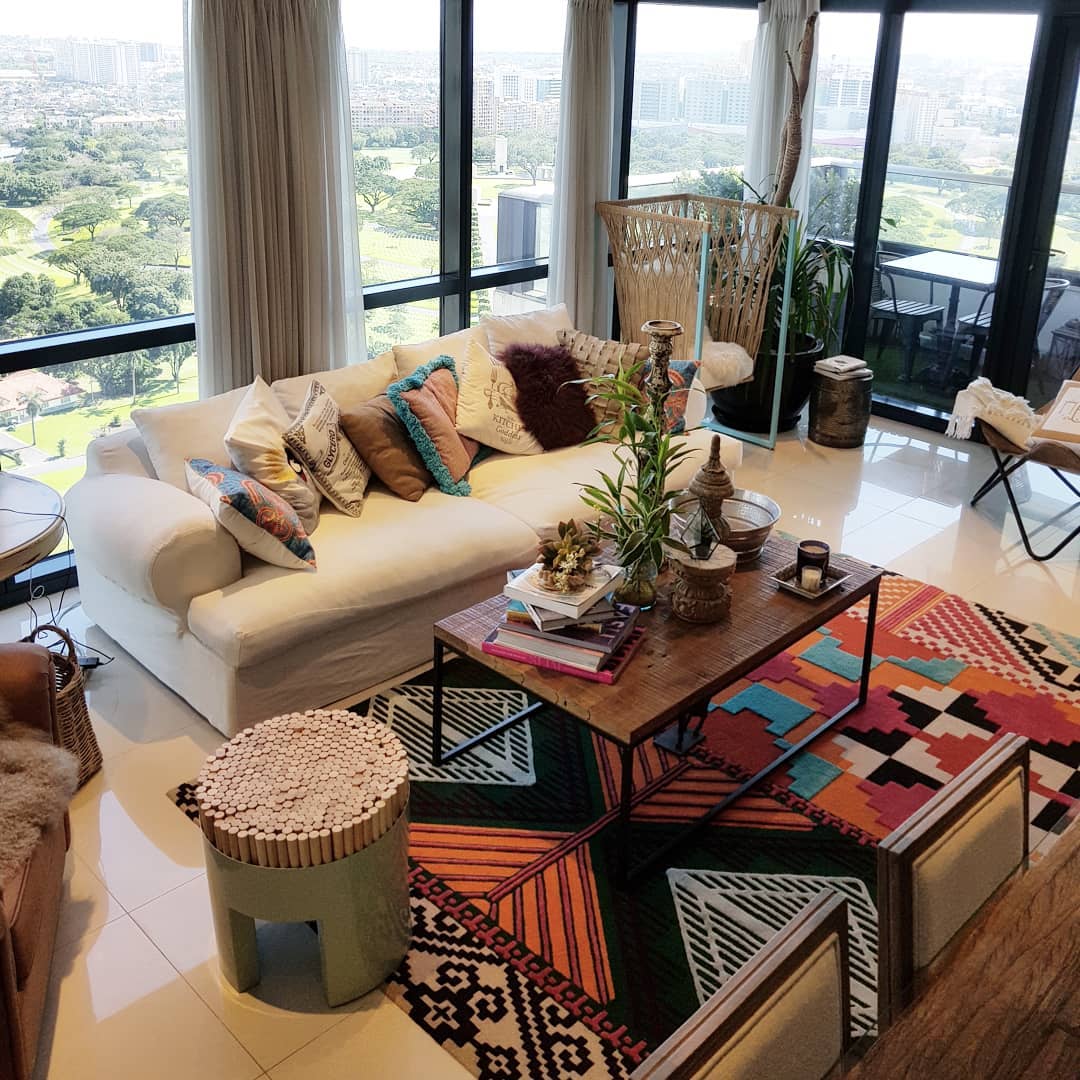
Pair a softly upholstered sofa with a chair whose open weave adds a different kind of texture.
Beside this white sofa, a tall woven chair brings strong vertical lines to the window corner, while its gaps leave parts of the glazing visible.
The contrast gives the seating group variety without requiring another bulky upholstered piece. Choose a chair that feels comfortable alongside your sofa, checking seat height and the space needed to sit down easily.
A small cushion can soften the seat while keeping most of the weave exposed. Repeat a warm natural tone in the coffee table or an accessory to connect the pieces.
Colorful textiles can then supply the pattern, with the woven chair providing a quieter counterpoint.
20. Give a Sculptural Object Room to Stand Out
Credits: Instagram
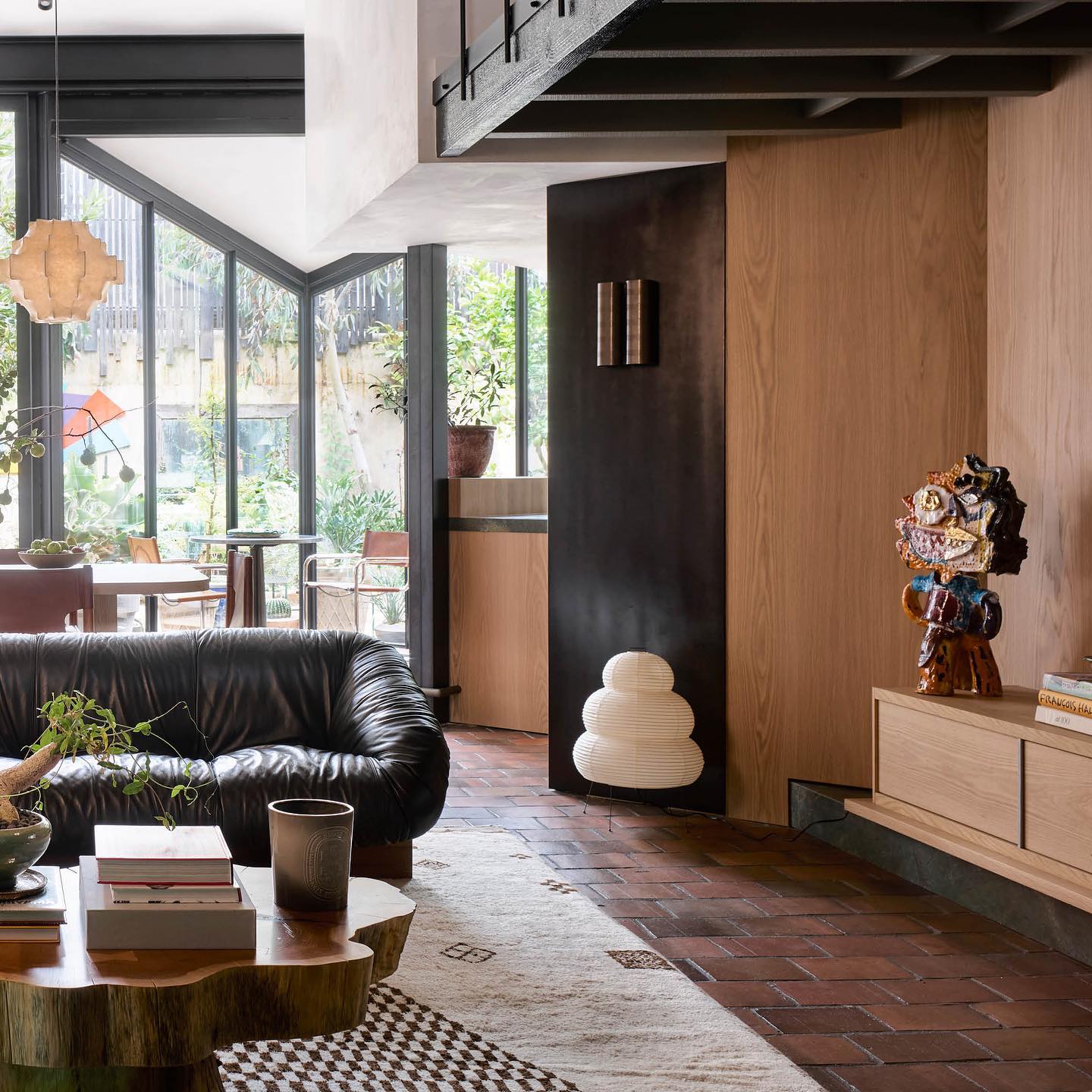
Give one expressive sculpture enough empty space to become part of the room rather than disappear among accessories. Here, a colorful figure stands on a simple wood cabinet against broad wood paneling.
Its irregular outline contrasts with the straight cabinet edges, while the black sofa and patterned rugs keep the setting grounded. Try this with an object you enjoy seeing every day, choosing a stable surface that supports its weight.
Keep nearby books low so they do not compete with the silhouette. A plain wall helps detailed pieces read clearly from across the seating area.
You can still include other collected objects elsewhere; leaving this particular surface quieter gives the room a deliberate pause between its varied textures and shapes.