
Exposed beams, tall wood paneling, or a tiled fireplace can shape a living room before you choose a single piece of furniture.
Mid Century Modern Living Room Ideas often work best when they respond to those features rather than compete with them.
This roundup shows how pale seating can lighten dark wood, mustard upholstery can relate to terracotta tones, and a starburst light can draw attention to a beamed ceiling.
You’ll also find practical ways to mix chair shapes and materials, repeat architectural lines, and balance open shelving with closed media storage.
1. Give a Beamed Room a Starburst Centerpiece
Credits: Instagram
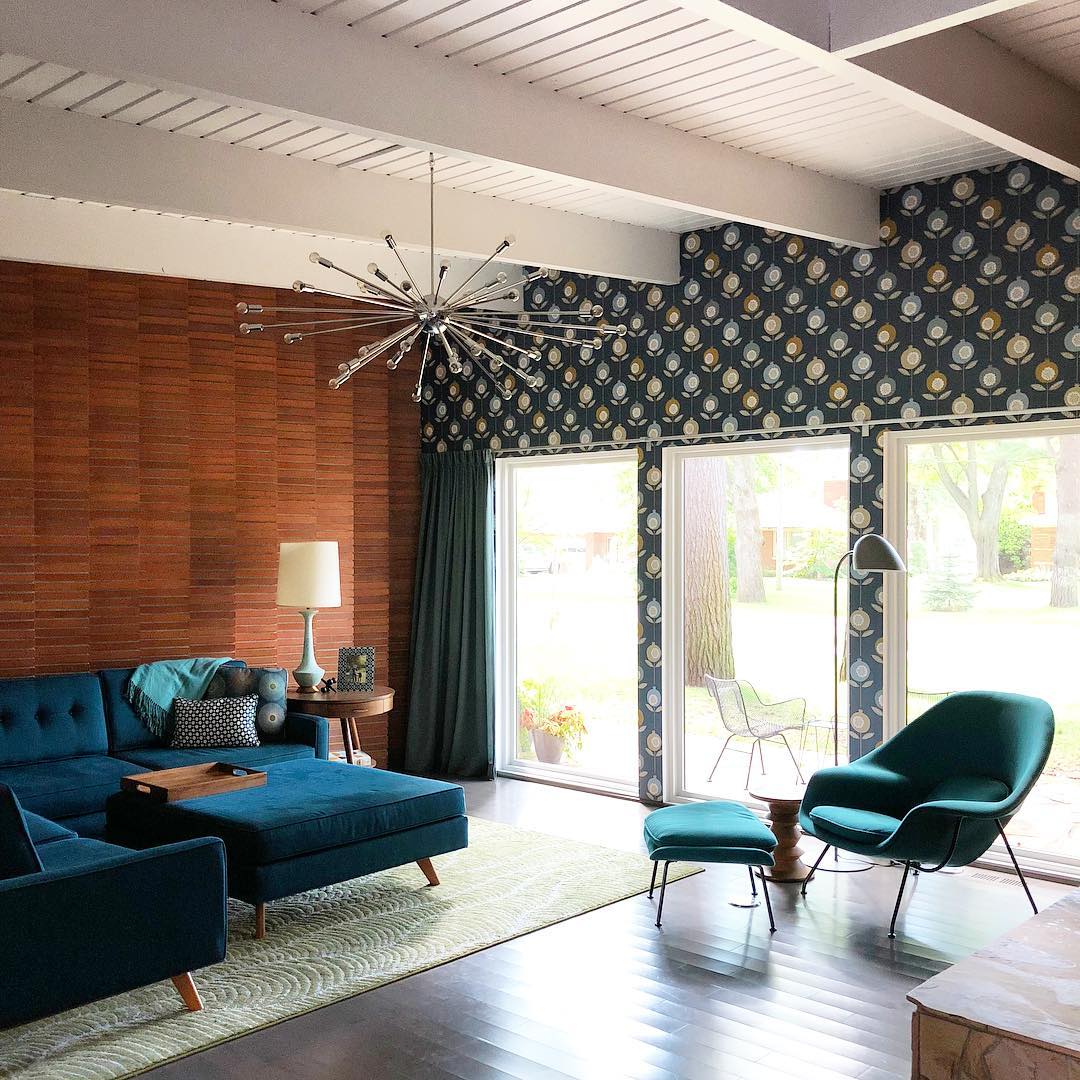
A silver starburst chandelier stretches beneath the white ceiling beams, giving this living room a focal point above the furniture.
Its slender arms echo the light outlines of the lounge chair and ottoman, while the tufted teal sectional brings a softer shape. Patterned wallpaper adds another layer without hiding the strong window frames.
The brick wall and wood floor warm up the cooler upholstery. In a room with exposed beams, choose a statement light that leaves the ceiling structure visible.
Repeat one upholstery color across different seat shapes to help the arrangement feel connected. A pale rug can separate the seating from a dark floor, keeping the lower half of the room bright enough to balance the busy ceiling overhead.
2. Balance Tall Wood Paneling With Pale Seating
Credits: Instagram
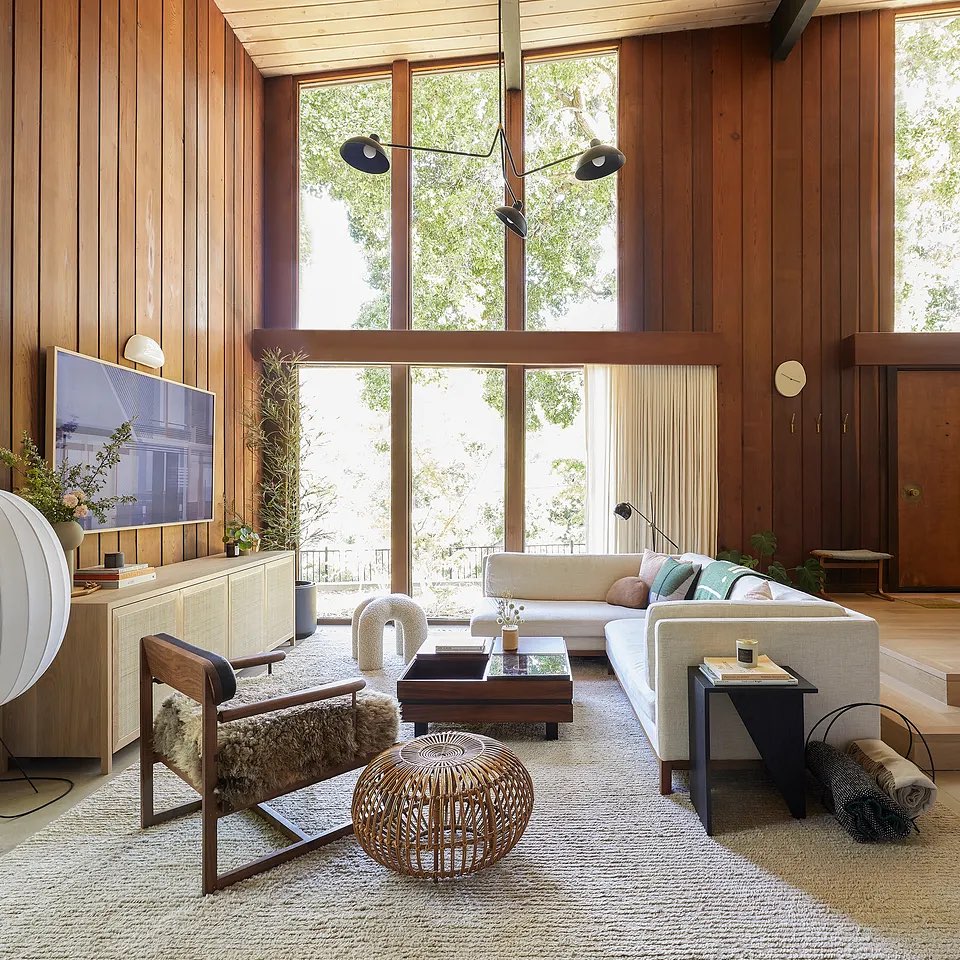
Pale seating lets the tall wood paneling remain the main feature in this living room. The cream sectional and light rug create a quiet base, while the low coffee table keeps the window wall visible across the seating group.
If your room has strong wood surfaces, try balancing them with simple upholstery instead of adding more heavy furniture. A chair with exposed wood arms repeats the paneling in a smaller dose.
Here, its open frame and the airy woven footstool add variety without blocking the view. Keep accessories low and use only a few colored cushions to break up the neutrals.
The result lets the architecture carry much of the midcentury character while keeping the furniture arrangement simple and practical.
3. Balance the Seating Group With a Pair of Wood Chairs
Credits: Instagram
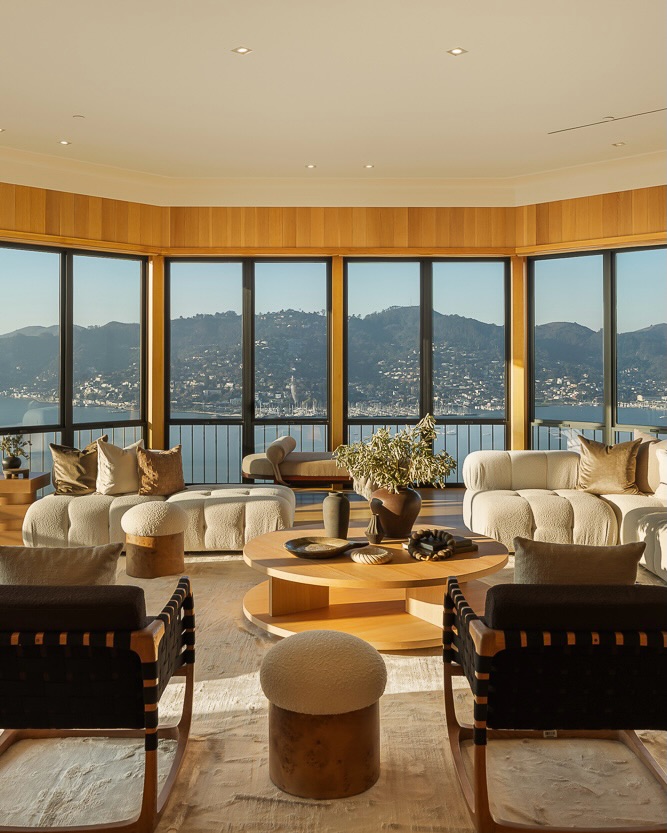
A matching pair of chairs with wood frames gives this seating group a clear front edge. Their dark woven backs add structure, while the open bases let the pale rug remain visible beneath them.
Use two similar chairs when you want a balanced arrangement that still feels lighter than another sofa. Face them toward a shared coffee table and leave a comfortable gap between them for movement.
Here, the round table softens the chairs’ straight lines, and the pale sculptural sofas keep the darker seats from dominating. Repeat the wood tone in one nearby piece to connect the group.
Test the layout from each seat before committing, checking both conversation distance and how easily you can reach the central table.
4. Pair Mustard Seating With Terracotta Tones
Credits: Instagram
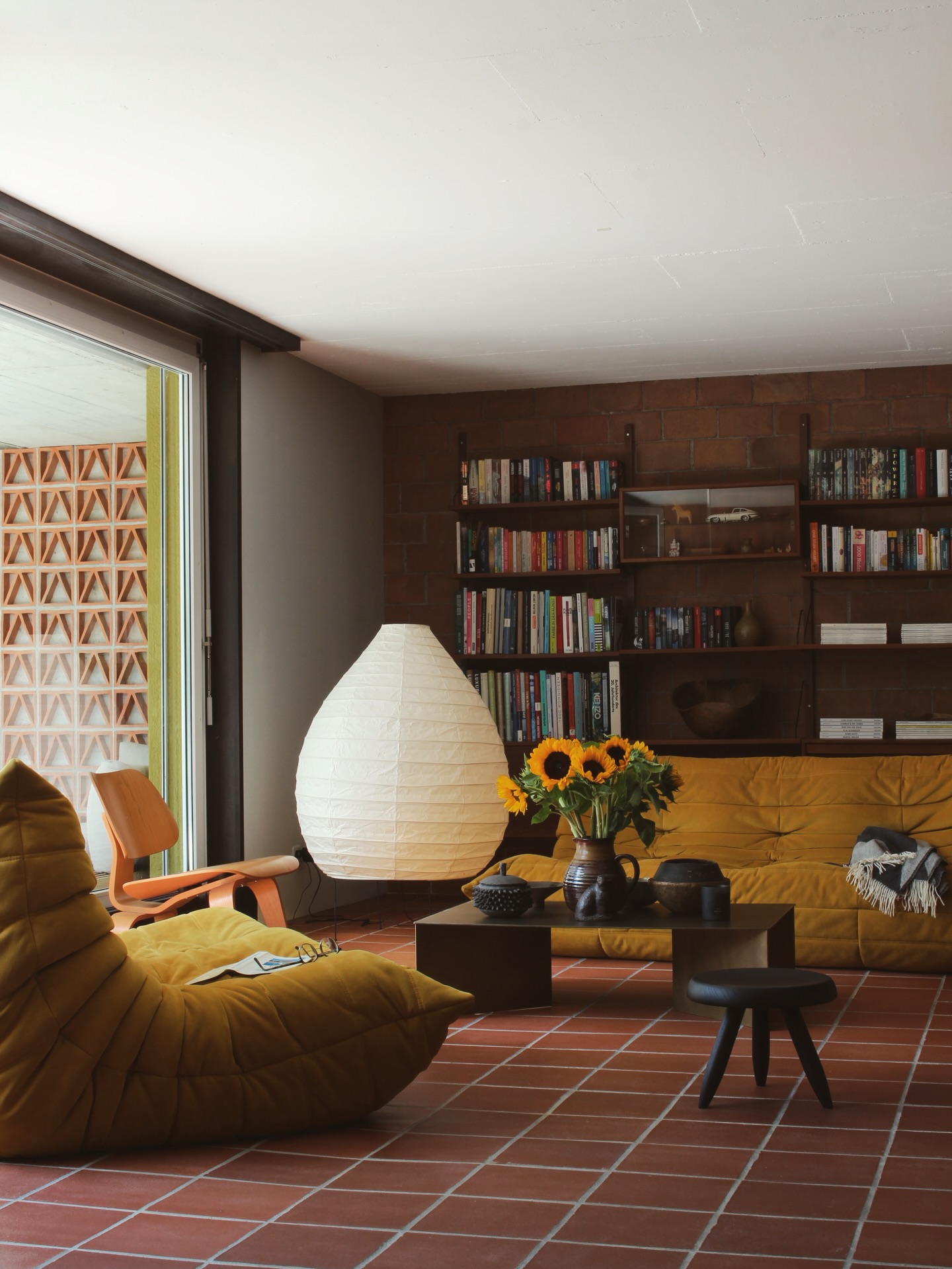
Mustard upholstery and terracotta flooring create a warm foundation for this midcentury living room. The low seats repeat the golden tones without matching the tiles exactly, while dark wood shelving and a simple coffee table add depth.
If your room already has a warm floor, compare fabric samples against it before choosing a sofa. Look for a related color that still lets each surface remain distinct.
Here, the pale paper lamp and white ceiling give the earthy palette a lighter counterpoint. Keep larger furniture in a few consistent tones, then bring in smaller changes through books, pottery, or flowers.
The sunflower arrangement echoes the seating, showing how one modest detail can connect the room without introducing another dominant accent color.
5. Contrast Soft Upholstery With a Dark Leather Chair
Credits: Instagram
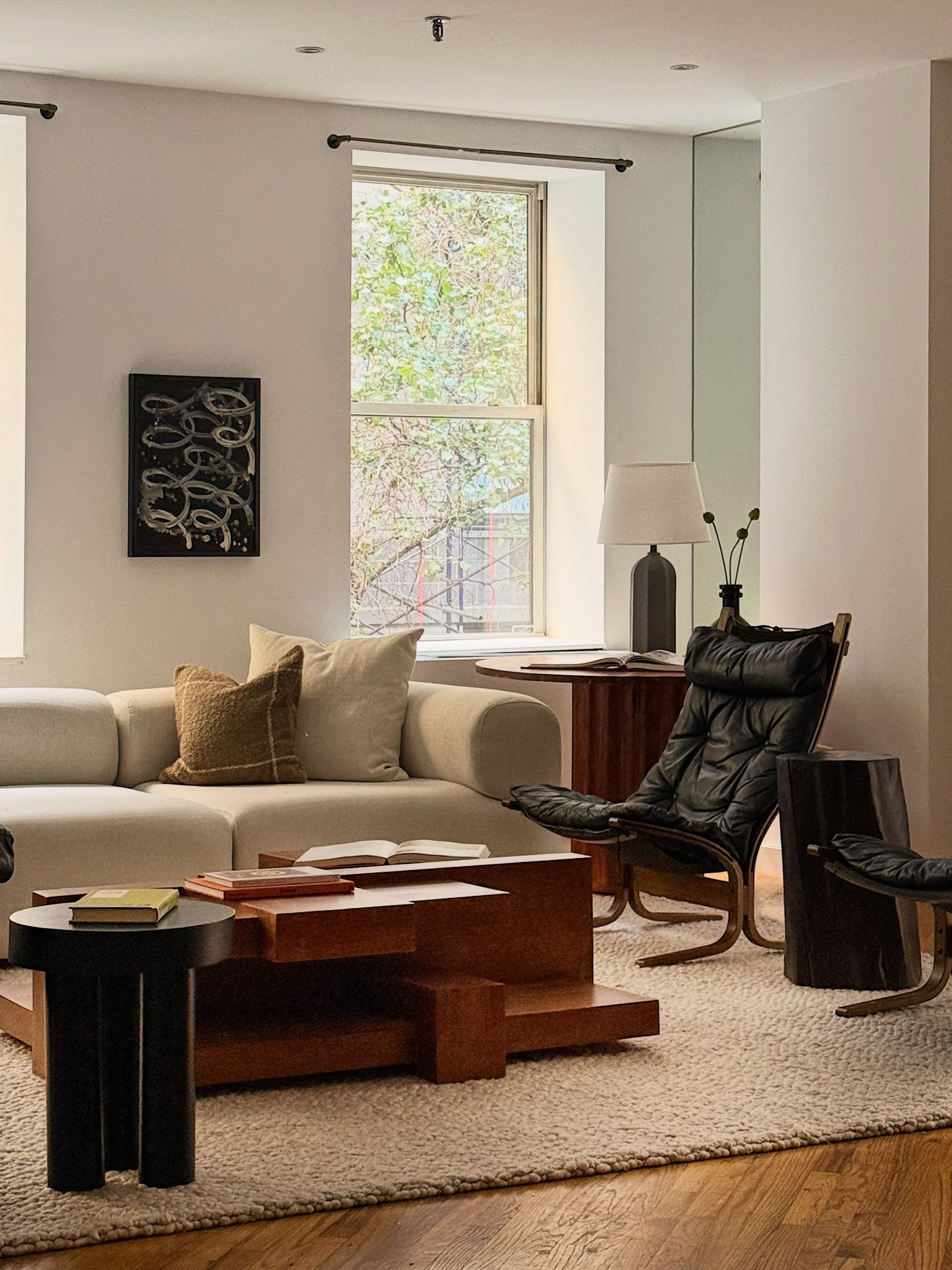
A dark leather lounge chair can give pale upholstery a stronger outline without changing the whole room. Here, the chair’s soft creases and exposed wood frame contrast with the rounded cream sofa and thick rug.
Try combining surfaces that feel different while keeping their colors simple. A light sofa, dark chair, and warm wood table create contrast through material as well as tone.
Repeat a little of the chair’s darkness elsewhere, such as on a small table or framed artwork, so it feels connected to the arrangement. Keep cushions restrained when the furniture already has distinctive shapes.
This approach brings a midcentury chair into a contemporary seating group while allowing each piece to retain its own character and visual weight.
6. Echo Exposed Architectural Features in the Furniture
Credits: Instagram
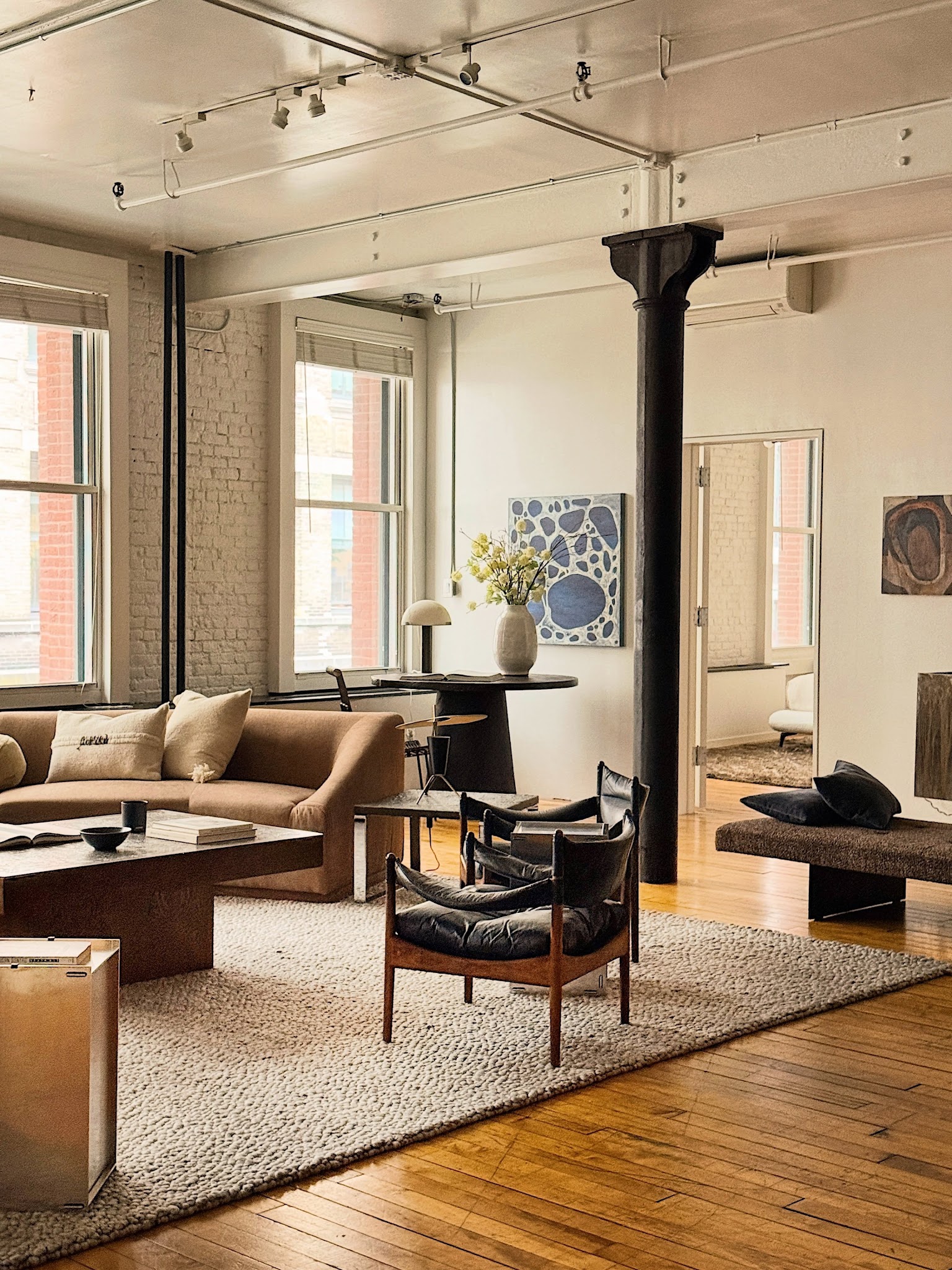
An exposed column can help guide a seating scheme instead of feeling disconnected from it. In this loft, black chairs repeat the dark finish of the column, connecting the furniture to a feature already present in the room.
Start by noticing the strongest architectural lines and colors before choosing new pieces. You might echo a dark window frame, visible beam, or column through a few furniture details.
Keep enough space around the feature that its shape remains readable and people can move comfortably. Here, a pale rug outlines the seating group while the wood floor continues beyond it.
The midcentury chairs become part of a layered interior, showing how older architectural features and furniture from different periods can work together.
7. Pair Cool Fireplace Tile With Warm Abstract Art
Credits: Instagram
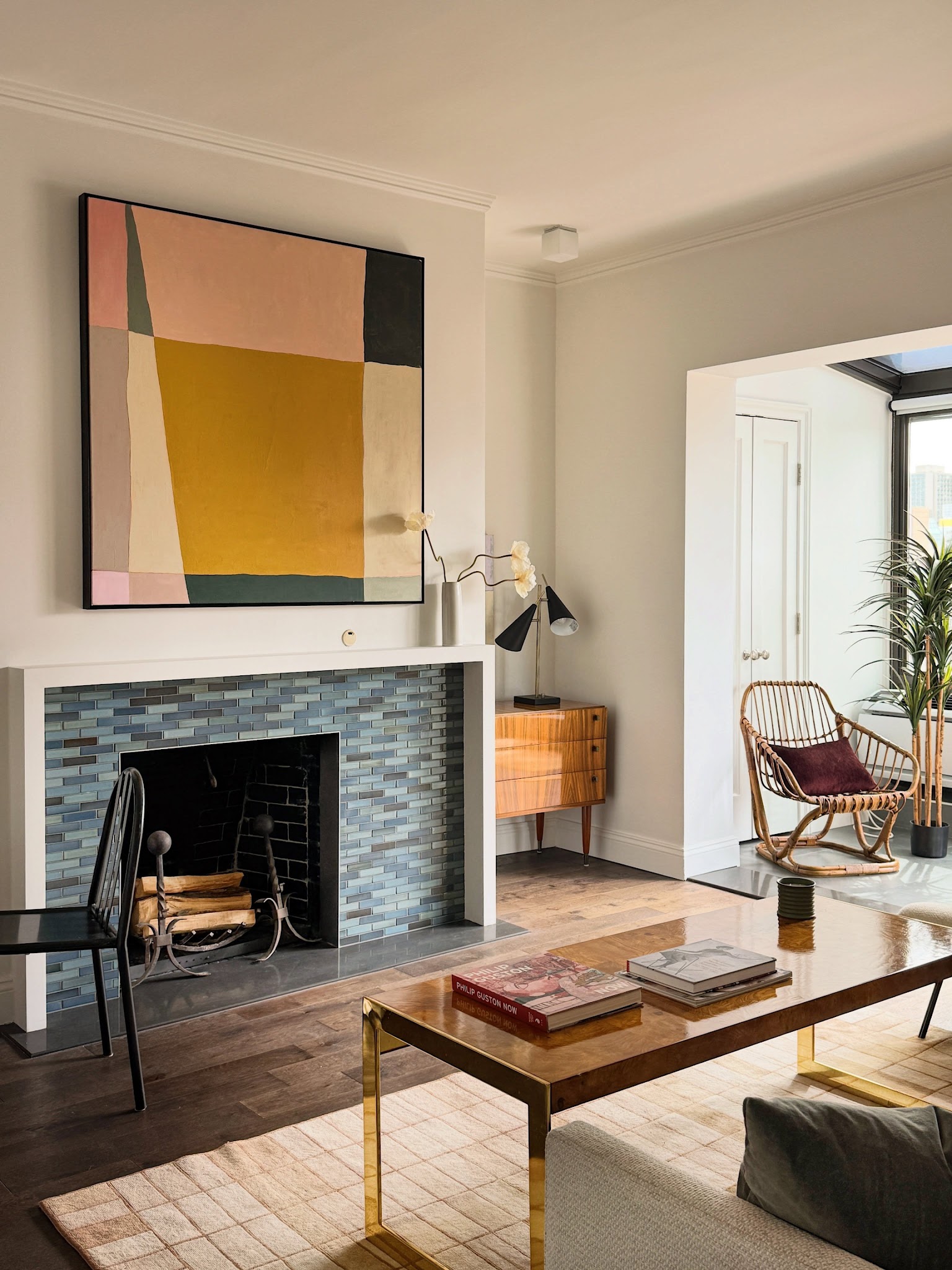
Warm abstract art can balance a fireplace finished in cool blue tile. Here, broad mustard and pink shapes sit above the small rectangular tiles, creating contrast in both color and scale.
A narrow dark frame gives the artwork a clear edge against the pale wall. If you have an existing fireplace surround, choose art that relates to it without repeating every color exactly.
Look for one subtle connection, then let the remaining tones add something different. The muted stripe near the bottom of this painting provides that link, while the warmer areas echo nearby wood furniture.
Keep mantel objects few and simple so the painting and tile remain easy to read together. One substantial artwork can give the fireplace presence.
8. Set Clean Furniture Lines Against Ornate Trim
Credits: Instagram
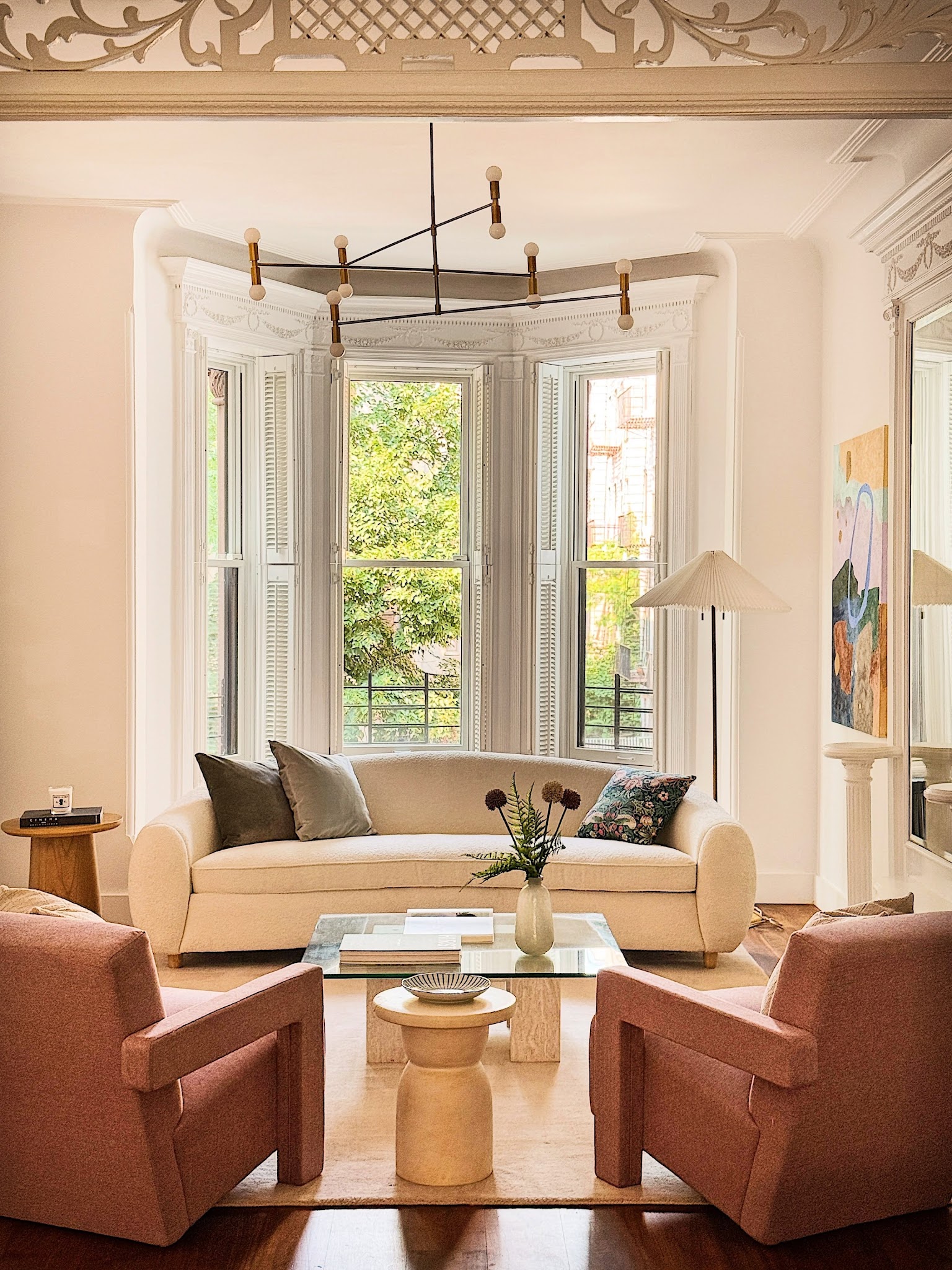
Clean furniture lines can sit comfortably beneath elaborate architectural trim. Here, the angular arms of two warm rust chairs and the thin branches of the pendant contrast with the bay window’s decorative molding.
The room keeps its historic character while the seating brings a simpler outline to the foreground. When combining these approaches, choose furniture with clear, simple silhouettes and keep large upholstery patterns restrained.
A pale sofa gives the eye a quieter resting point beneath the windows. Let one warm chair color provide contrast, then limit additional accents to a few cushions or artwork.
Check that tall lamps and furniture backs leave the important trim visible. Use a simple pale rug to give the contrasting shapes one quiet base.
9. Pair a Lounge Chair With a Matching Ottoman
Credits: Instagram
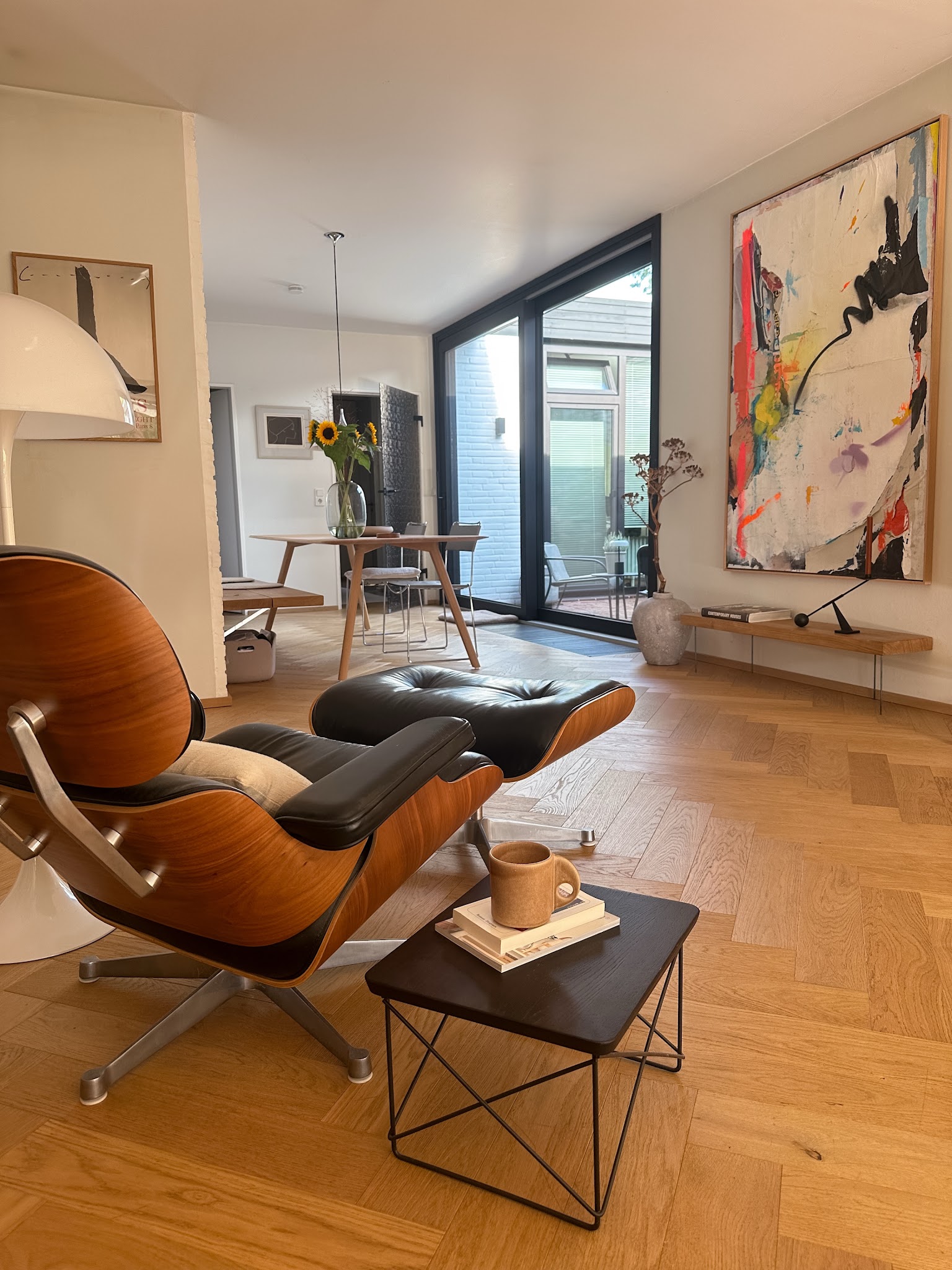
A lounge chair and matching ottoman can form a complete resting spot within a larger living room. Here, black upholstery and curved wood shells repeat across both pieces, giving the corner a clear visual identity.
Set the footstool where you can stretch out comfortably, then check that people can still walk past without stepping between the pieces. A small table beside the chair keeps a book and drink within easy reach.
Choose an open base if you want more of the floor to remain visible. Position a reading lamp near the seat and test its light while sitting in your usual reading position.
Keep the surrounding furniture lower and simpler so the chair’s sculptural profile has room to stand out.
10. Combine Open Shelves With Closed Media Storage
Credits: Instagram
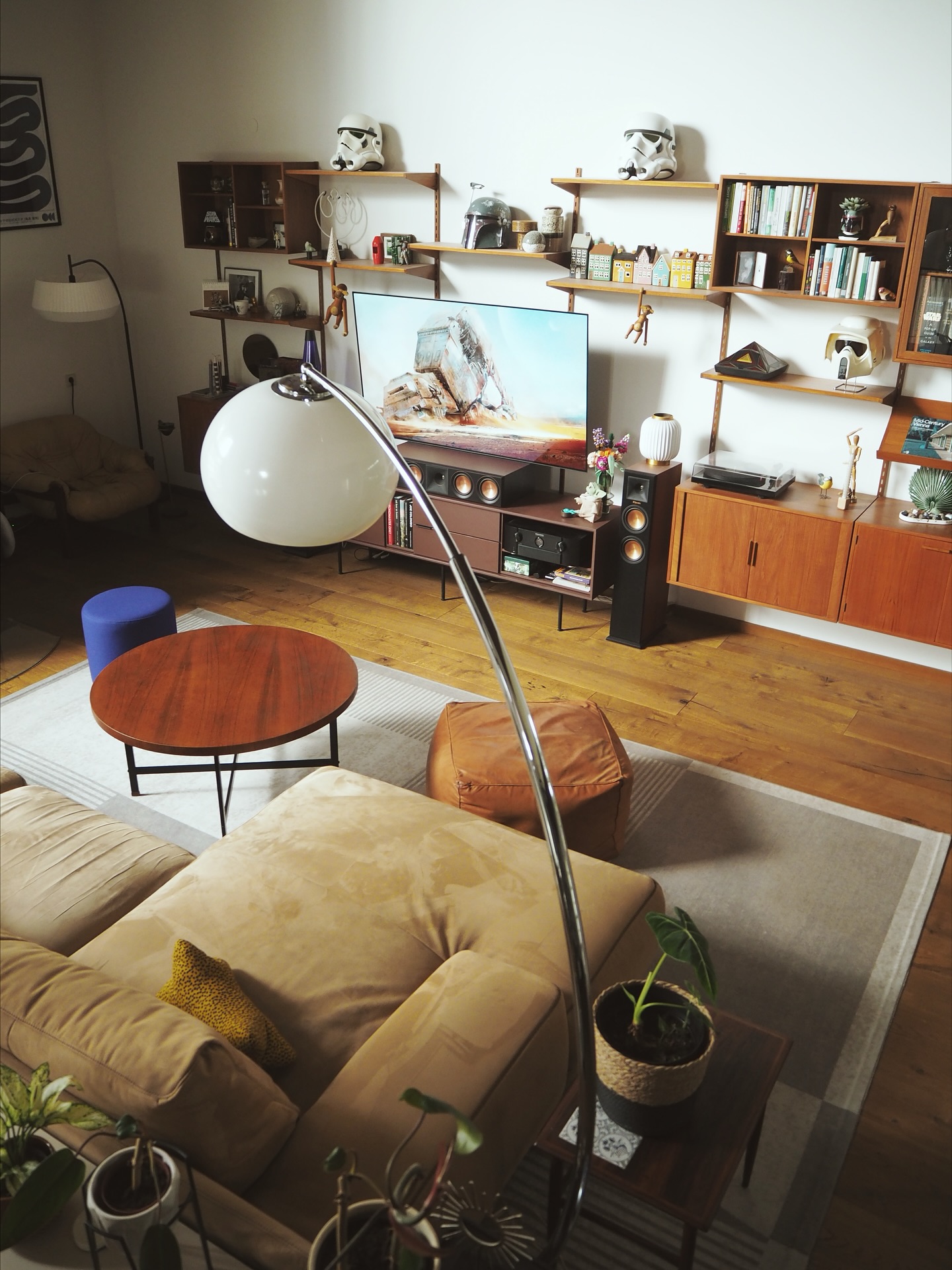
Wall-mounted wood shelving gives this living room space for books, collections, and media equipment within one connected arrangement. Slim vertical rails support open shelves and cabinets, leaving sections of pale wall visible between them.
Try combining closed storage for everyday clutter with open compartments for objects you enjoy seeing. Plan the television opening around the screen size, and leave room for speakers and cable access.
Here, the warm wood connects with the floor and coffee table, while darker equipment adds contrast. Group smaller collectibles together so they read as deliberate displays instead of scattered objects.
Before installing a system, check its wall fixings and weight limits. Keep the lower floor area open where possible to preserve the room’s lighter appearance.
11. Choose a Settee With an Open Wood Frame
Credits: Instagram
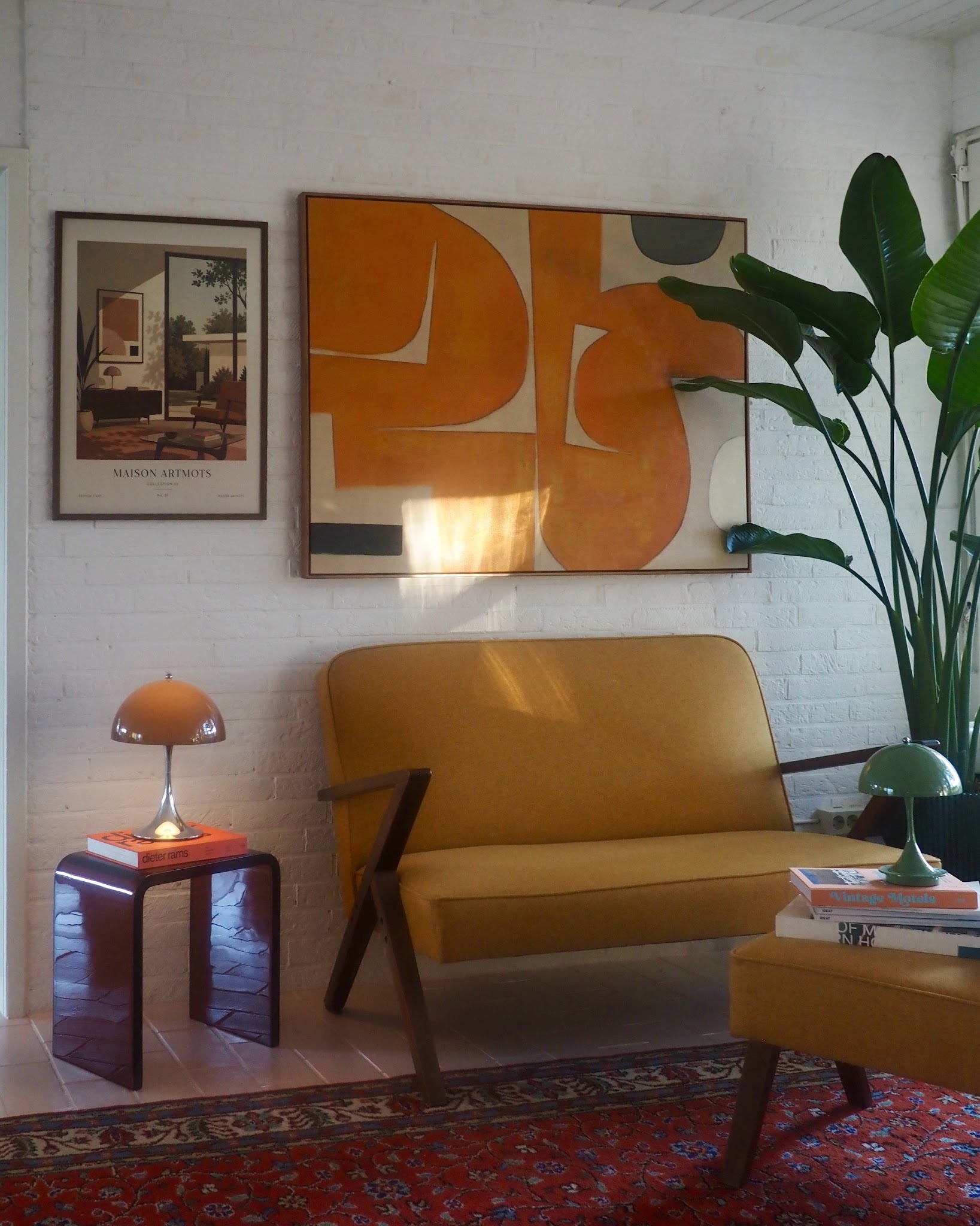
An exposed wood frame gives upholstered seating a clear outline without closing off every side. Here, the mustard settee sits on angled legs, with narrow arms that leave the white brick visible behind them.
Use this approach when you want a substantial seat to look less bulky from the doorway. Compare the frame as carefully as the cushions: check the arm shape, back supports, and space beneath the seat.
Leave the arms uncovered so their silhouette remains readable. A small open side table can hold a lamp without crowding the seating.
Keep nearby furniture low enough to preserve those open gaps. Repeat the wood tone in one frame or table, then let the upholstery supply a warmer block of color.
12. Balance a Solid Table With Slender Chair Bases
Credits: Instagram
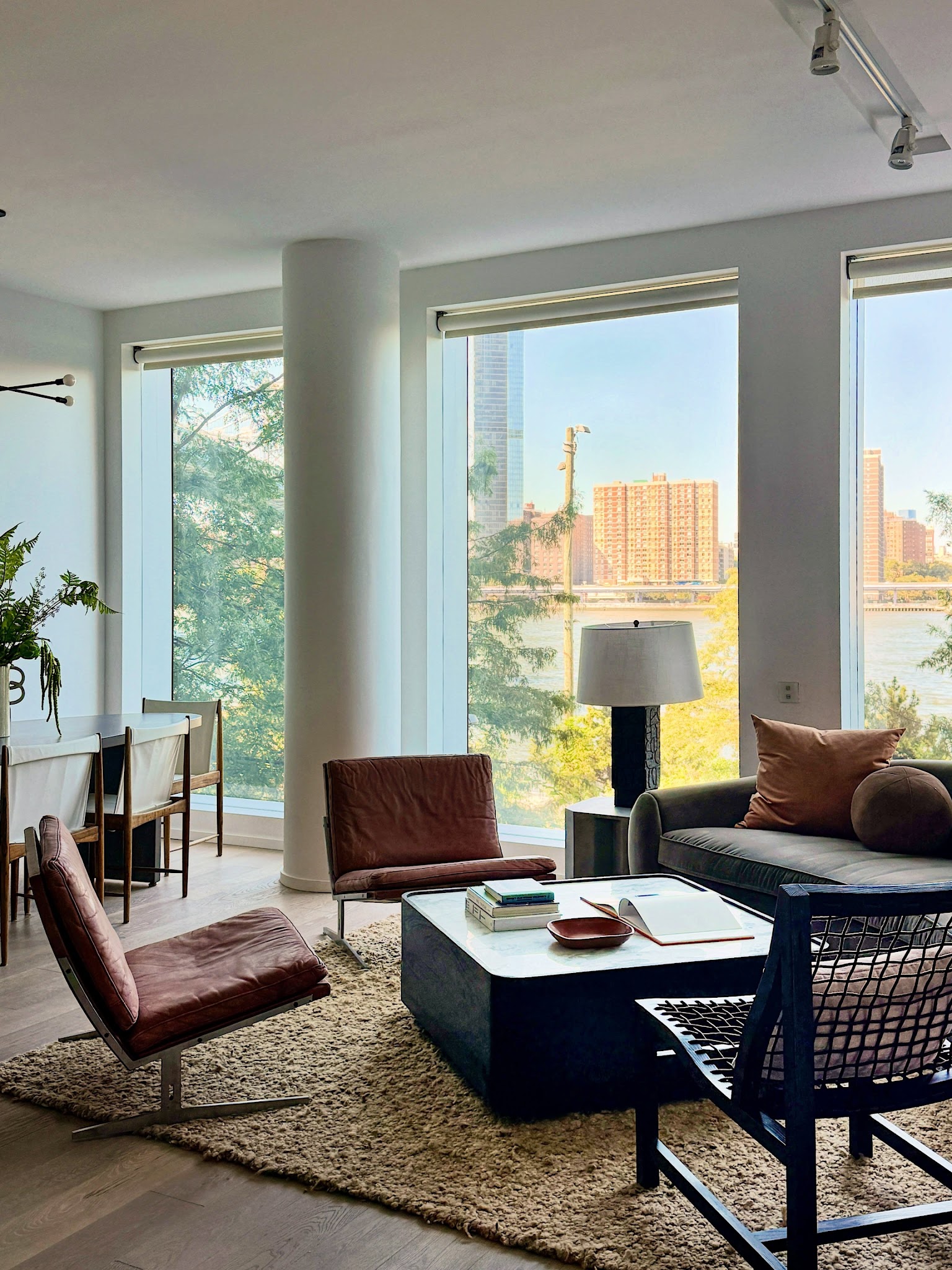
Slender chair bases can balance a coffee table with a substantial, solid shape. In this living room, two low leather chairs rest on narrow metal supports beside a dark block table.
The contrast lets the table anchor the seating without making every piece look equally heavy. Try this mix when your sofa and central table have broad silhouettes.
Look for chairs that leave some floor visible beneath and around the seat, then check their comfort before choosing them for everyday use. A textured rug connects the different pieces while softening their outlines.
Keep the table arrangement low enough for conversation across the group. Repeating dark tones in the sofa and woven chair gives the varied furniture a shared visual thread.
13. Repeat Straight Lines With a Geometric Rug
Credits: Instagram
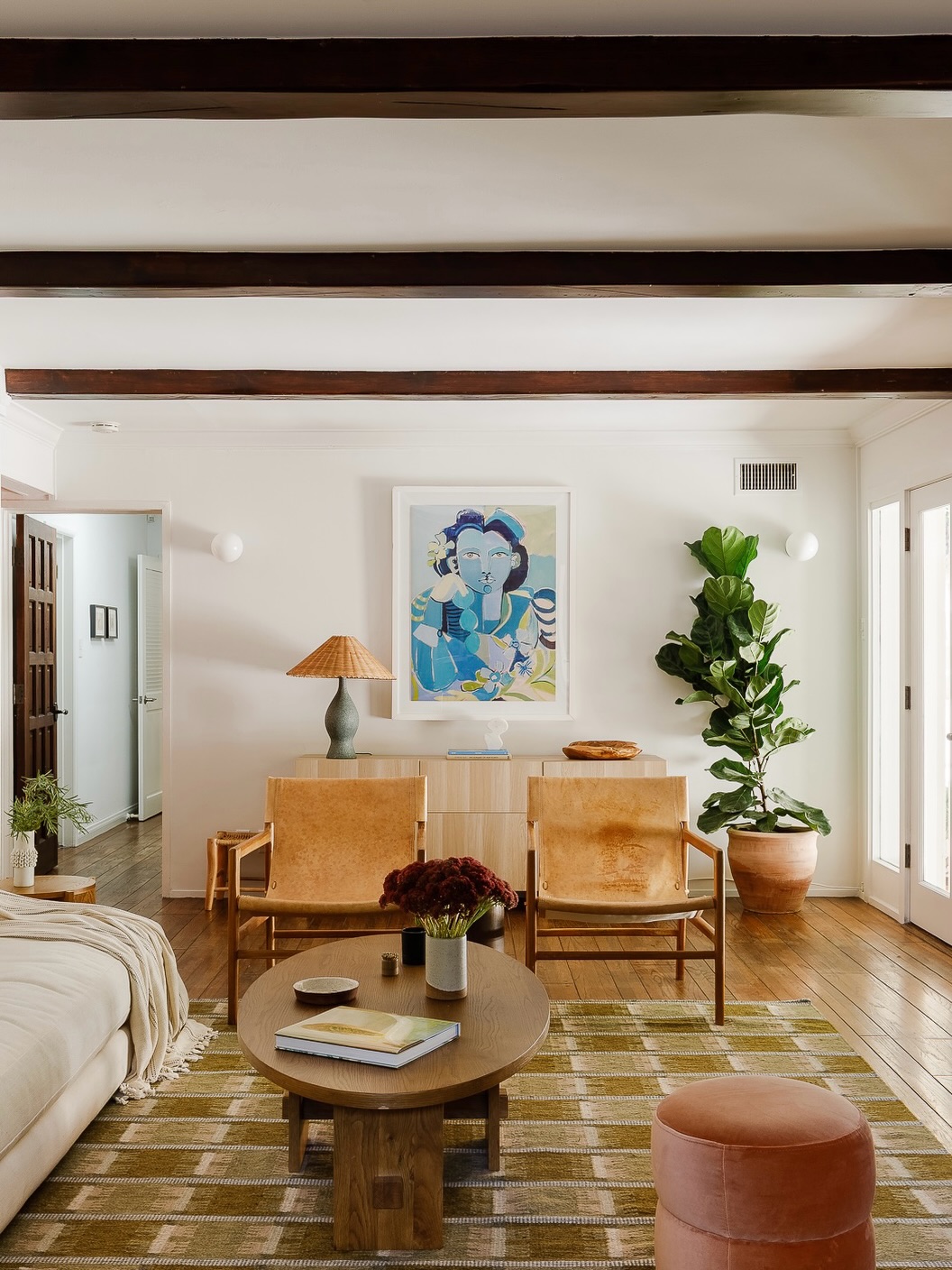
A geometric rug can connect a seating group with the room’s straight lines. Here, green rectangles and pale crossbars echo the rhythm of dark ceiling beams and the nearby door frames.
The pattern gives the floor structure while the oval coffee table introduces a softer outline. Start with a rug whose repeat is large enough to remain visible around the furniture.
Keep the main upholstery mostly plain so the pattern does not compete with every seat. Pull one muted color from the rug into a small accessory, then let warm wood provide a consistent background.
Before choosing a size, mark the rug’s edges on the floor and check that the seating feels connected while nearby doors and walkways stay clear.
14. Work With an Existing Sunken Seating Area
Credits: Instagram
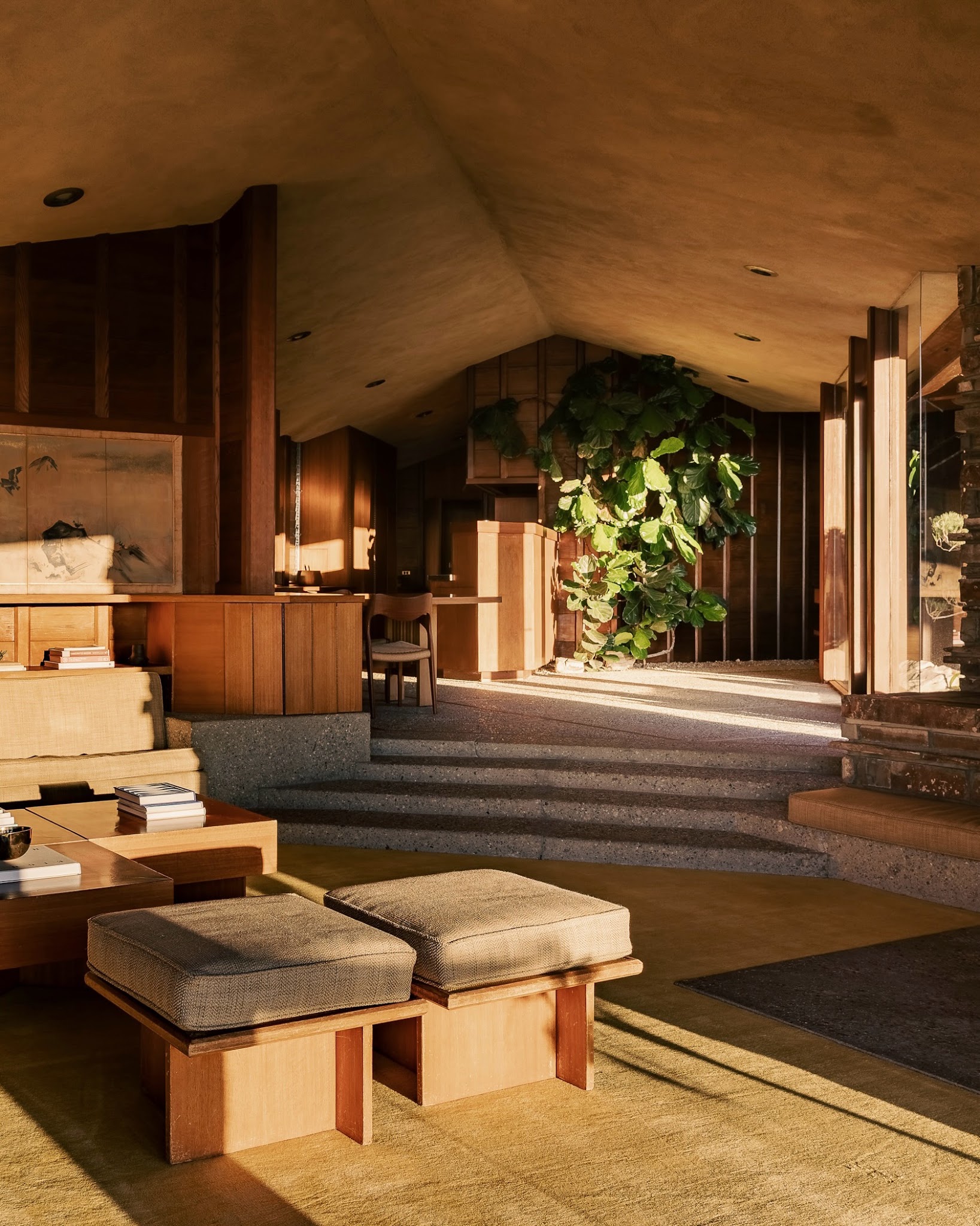
An existing change in floor level can define a living area without additional dividers. Here, broad steps lead down to low seating, two square ottomans, and simple wood tables.
Keep furniture within the lower seating zone so the transition remains easy to see and use. Position movable pieces far enough from the steps that standing up or shifting an ottoman does not block the route.
The low cushions echo the built-in seating and leave the angled ceiling and wood walls prominent. Repeat a few warm tones across upholstery, tables, and flooring to connect the levels visually.
Keep decorations off the steps themselves. In a room with this layout, thoughtful furniture placement can support the existing architecture without adding visual clutter.
15. Mix Upright Wood Chairs With Low Modern Seating
Credits: Instagram
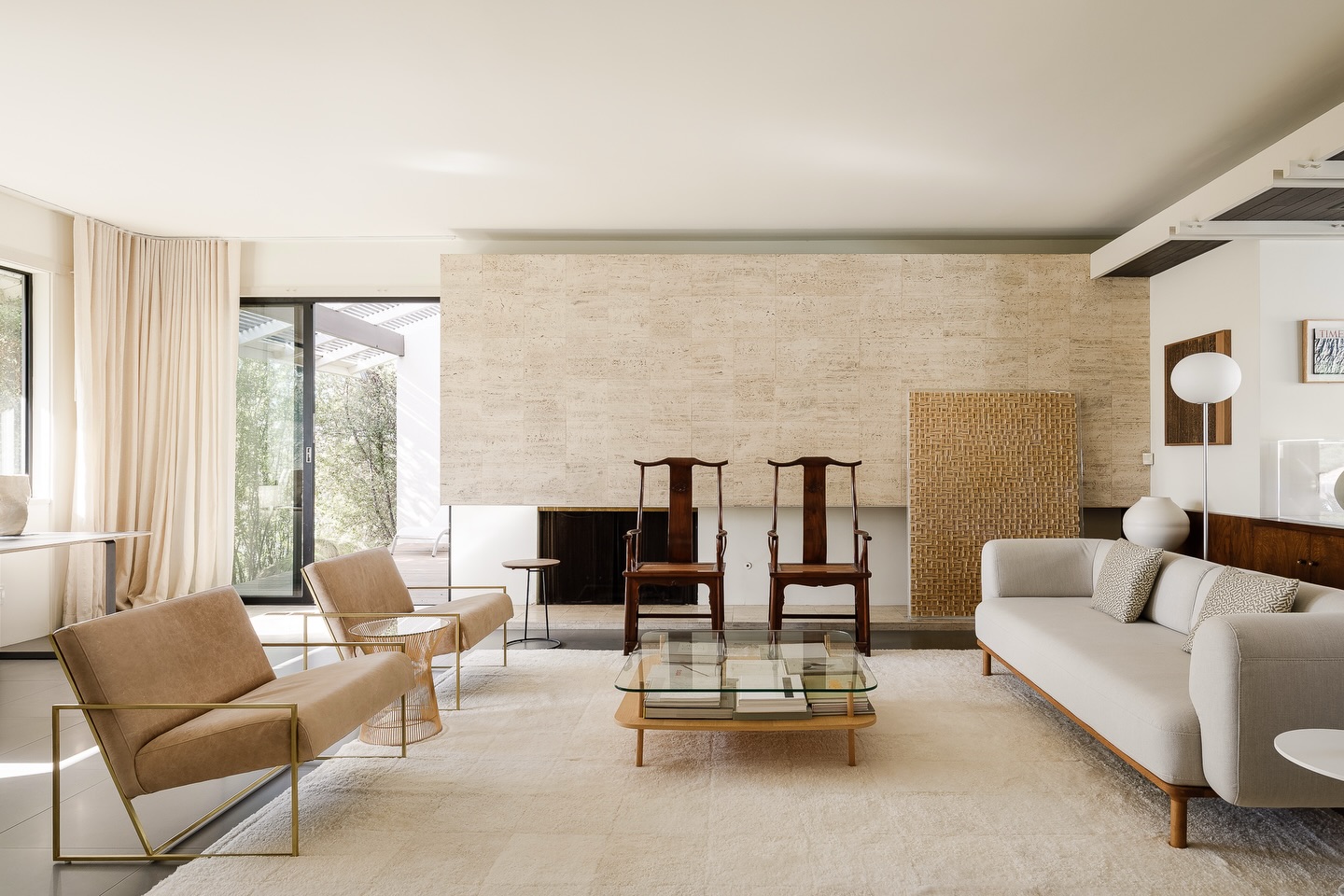
Traditional chair shapes can add character to a room furnished with low modern seating. Here, tall dark wood chairs contrast with a pale sofa on wood legs and slim metal armchairs.
Their upright backs create a second level of interest against the broad textured wall. Try introducing one distinctive chair style alongside simpler pieces, then keep upholstery colors restrained so the silhouettes remain easy to compare.
Leave some wall visible around the taller backs instead of surrounding them with many small decorations. A plain rug can bring the different pieces into one seating area.
Before arranging occasional chairs near the main group, test the walking routes and make sure the seats you use most remain comfortable and easy to reach.
16. Introduce Color With One Globe Pendant
Credits: Instagram
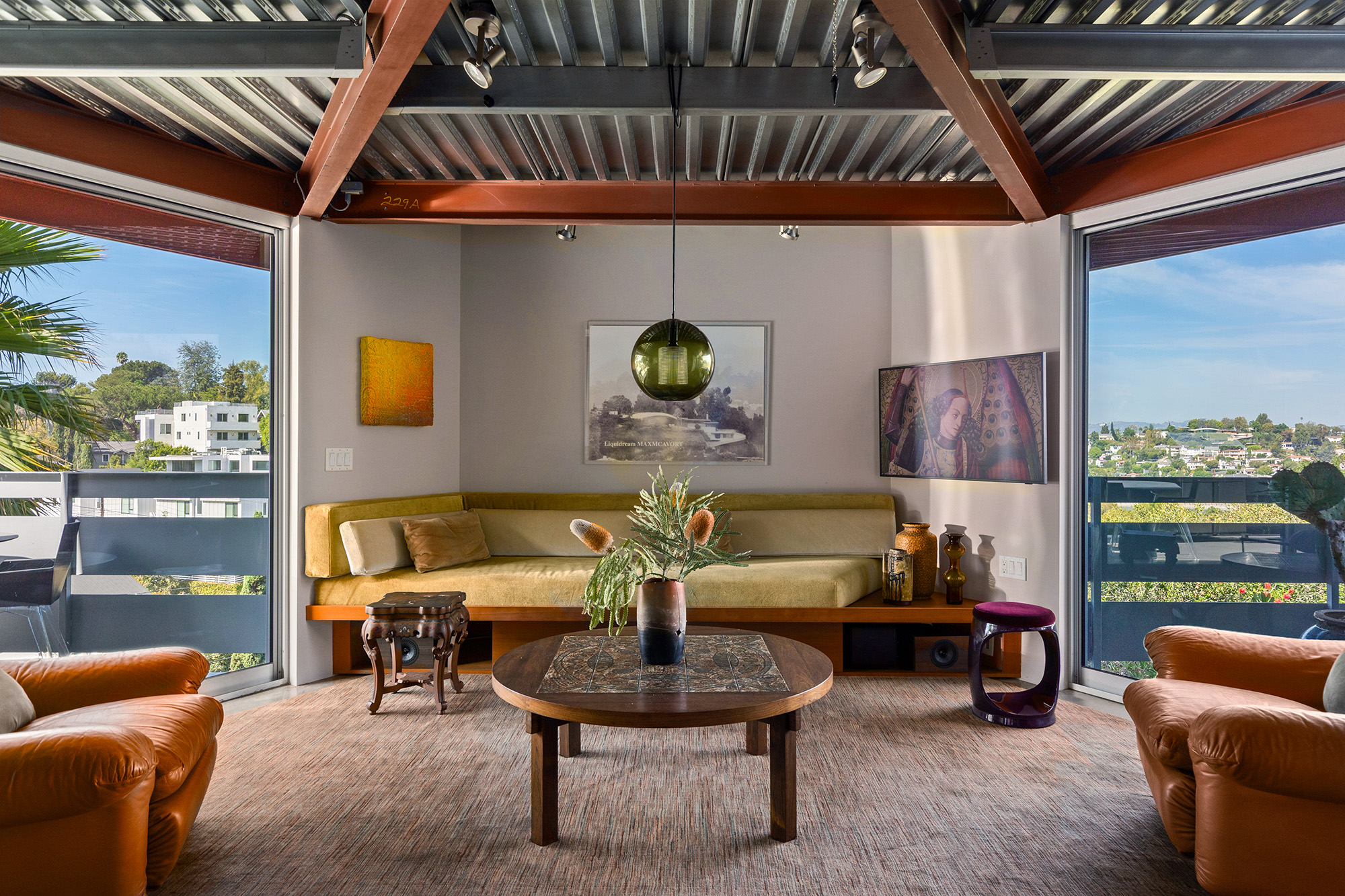
A colored globe pendant can give a low seating arrangement a clear point of emphasis. Here, the green sphere hangs above an oval coffee table, adding a rounded shape beneath the exposed roof structure.
Its color brings a cooler note to the warm sofa, leather chairs, and wood furniture. Try one distinctive pendant when the furnishings have long, simple outlines.
Check the proposed height from both seated and standing positions so it feels connected to the group without interrupting movement or conversation. Keep nearby accessories smaller, allowing the fixture’s color and shape to register.
A few green leaves can echo the shade without matching every object. The result is a focused accent within a room that mixes several furniture styles.
17. Contrast Woven Seating With Smooth Wood Furniture
Credits: Instagram
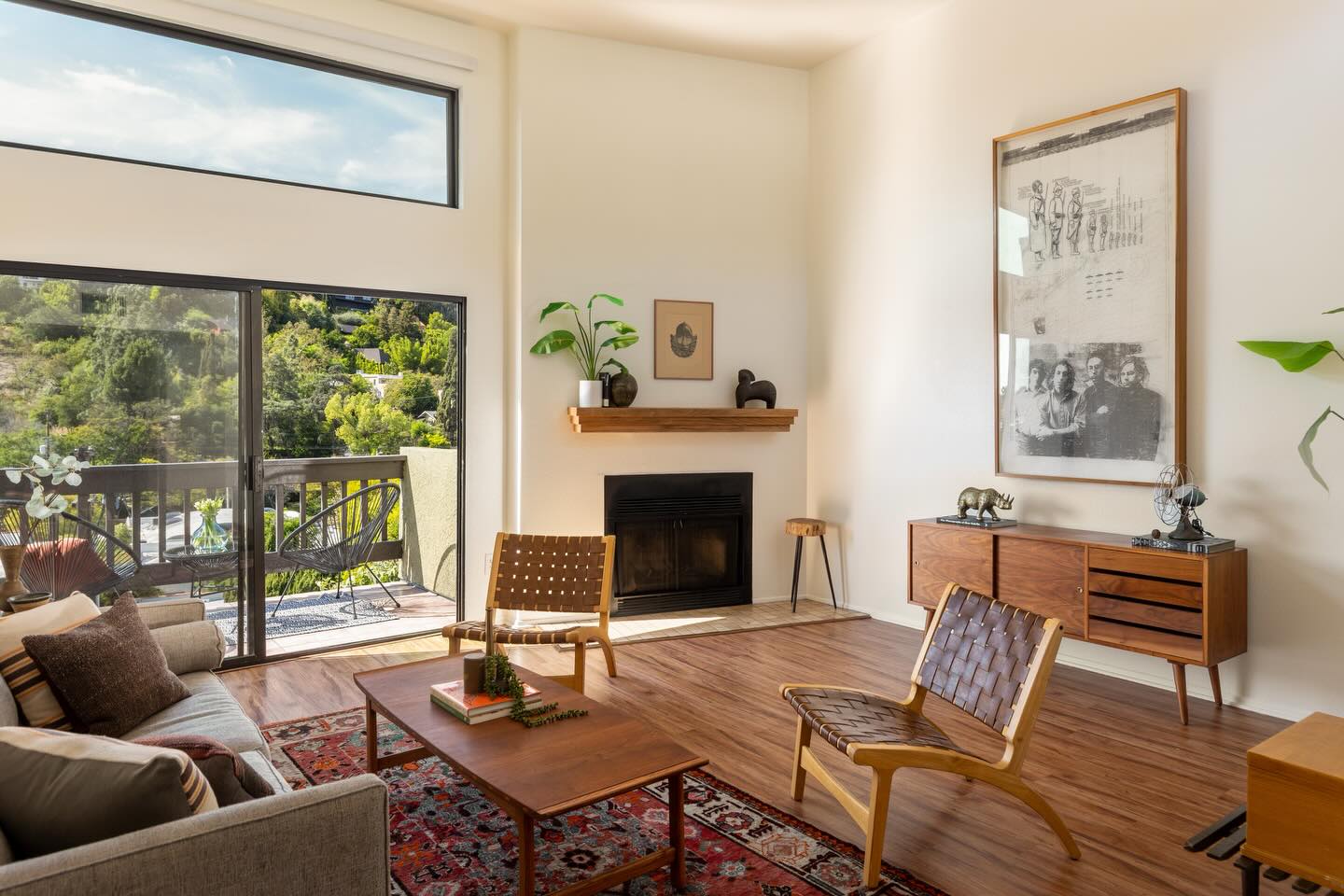
Woven chair seats can add texture without introducing another printed fabric. In this room, broad brown straps contrast with the smooth wood surfaces of the coffee table and low cabinet.
The open weave gives the chairs visual detail while their simple frames keep the arrangement orderly. Try using this contrast when several large pieces already share a similar wood tone.
Keep the sofa upholstery plain so the woven surfaces remain easy to notice. A patterned rug can sit underneath, provided its colors connect with the surrounding furniture.
Before choosing woven seating, check its comfort and support in person. Leave some space around the chair frames so the texture reads clearly, and repeat a small amount of brown elsewhere for balance.
18. Build a Wall Group Around One Larger Piece
Credits: Instagram
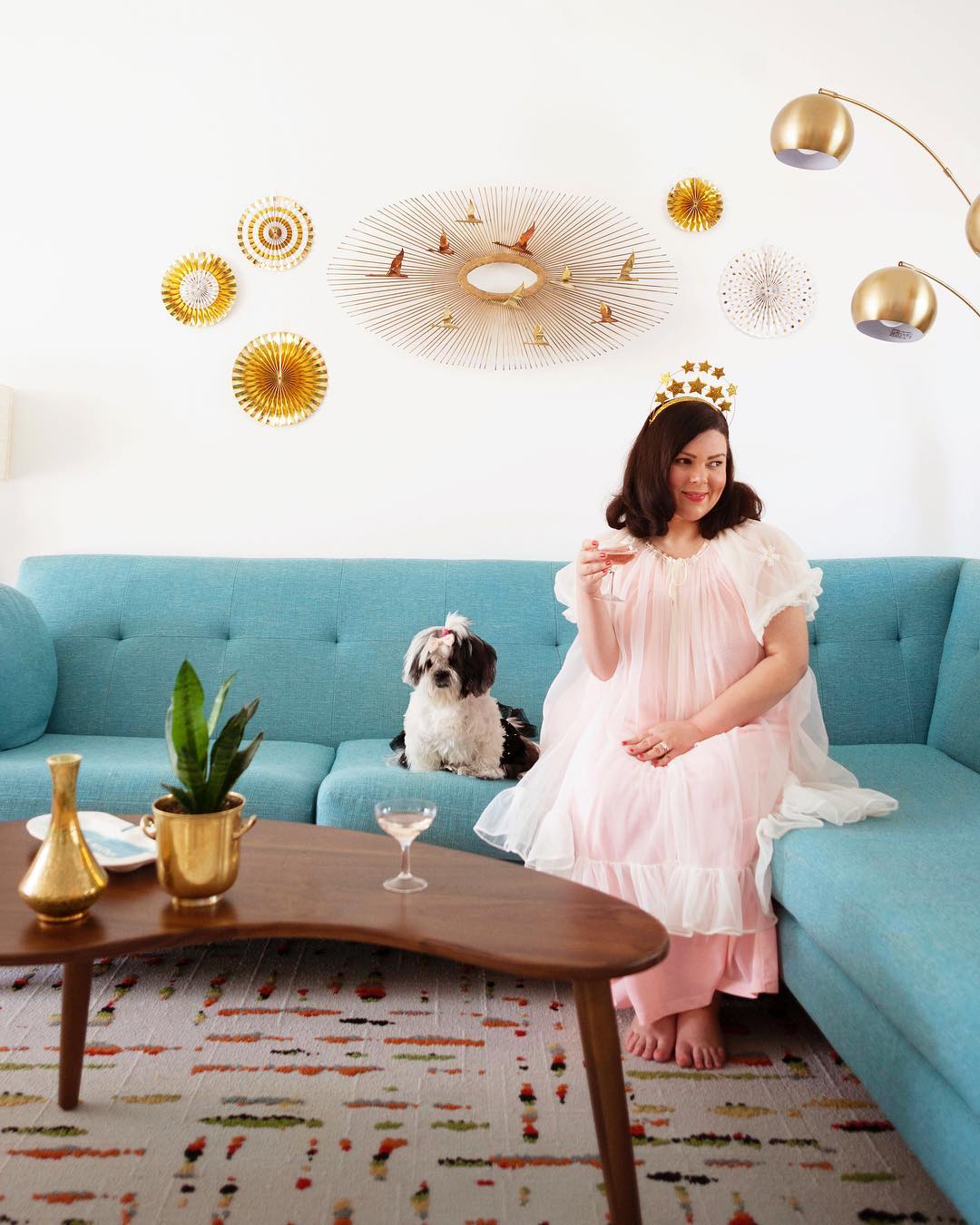
A large sunburst piece anchors this wall arrangement above the turquoise sectional. Smaller round decorations spread outward on either side, sharing gold tones while varying in size and texture.
The arrangement feels connected without relying on identical objects or a rigid grid. Start with one substantial piece, then test the smaller shapes around it using paper templates before making holes.
Leave visible wall between the pieces so their outlines remain distinct. A plain background makes the radiating details easier to appreciate, especially above colorful upholstery.
Repeat the metallic tone in one nearby lamp or accessory to connect the wall with the seating area. Keep other decorations restrained so the grouping remains the room’s main decorative feature, even from a distance.
19. Keep a Patterned Rug Visible With a Glass Table
Credits: Instagram
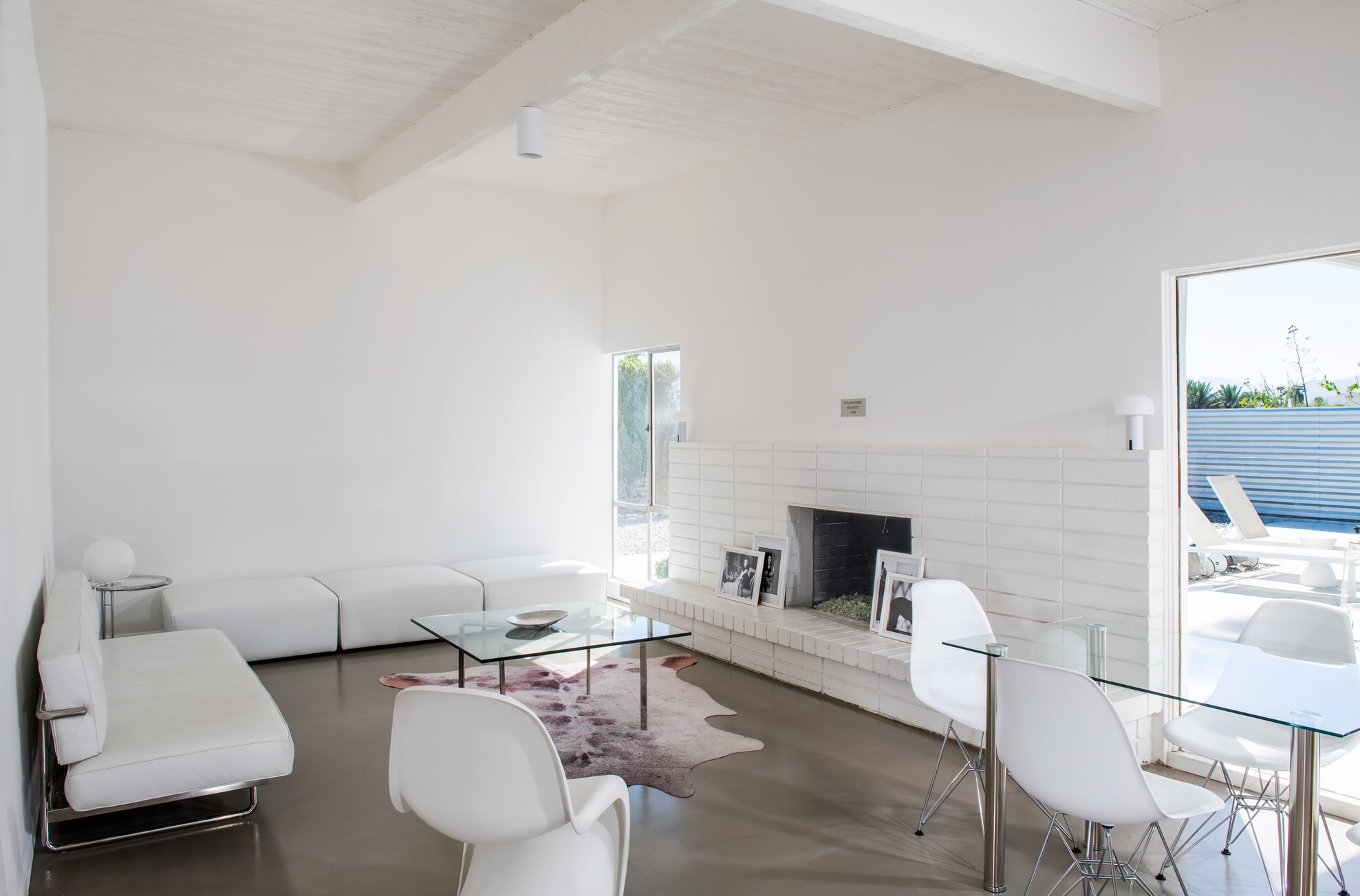
A glass coffee table lets a rug contribute pattern without covering it with another solid surface. Here, a clear square top and slender legs leave the irregular rug visible between low white seats.
The table’s simple outline also echoes the straight hearth and seating edges. Try this approach when your rug has a distinctive shape or a pattern you want to see.
Choose a table size that keeps drinks within reach while leaving comfortable walking space around the seating. Keep tabletop decorations limited so the transparent surface stays visually light.
A shallow bowl can give small objects a place without filling the view below. Check the table’s edges, stability, and cleaning needs before bringing it into your own living room.
20. Keep the View Open With a Low Daybed
Credits: Instagram
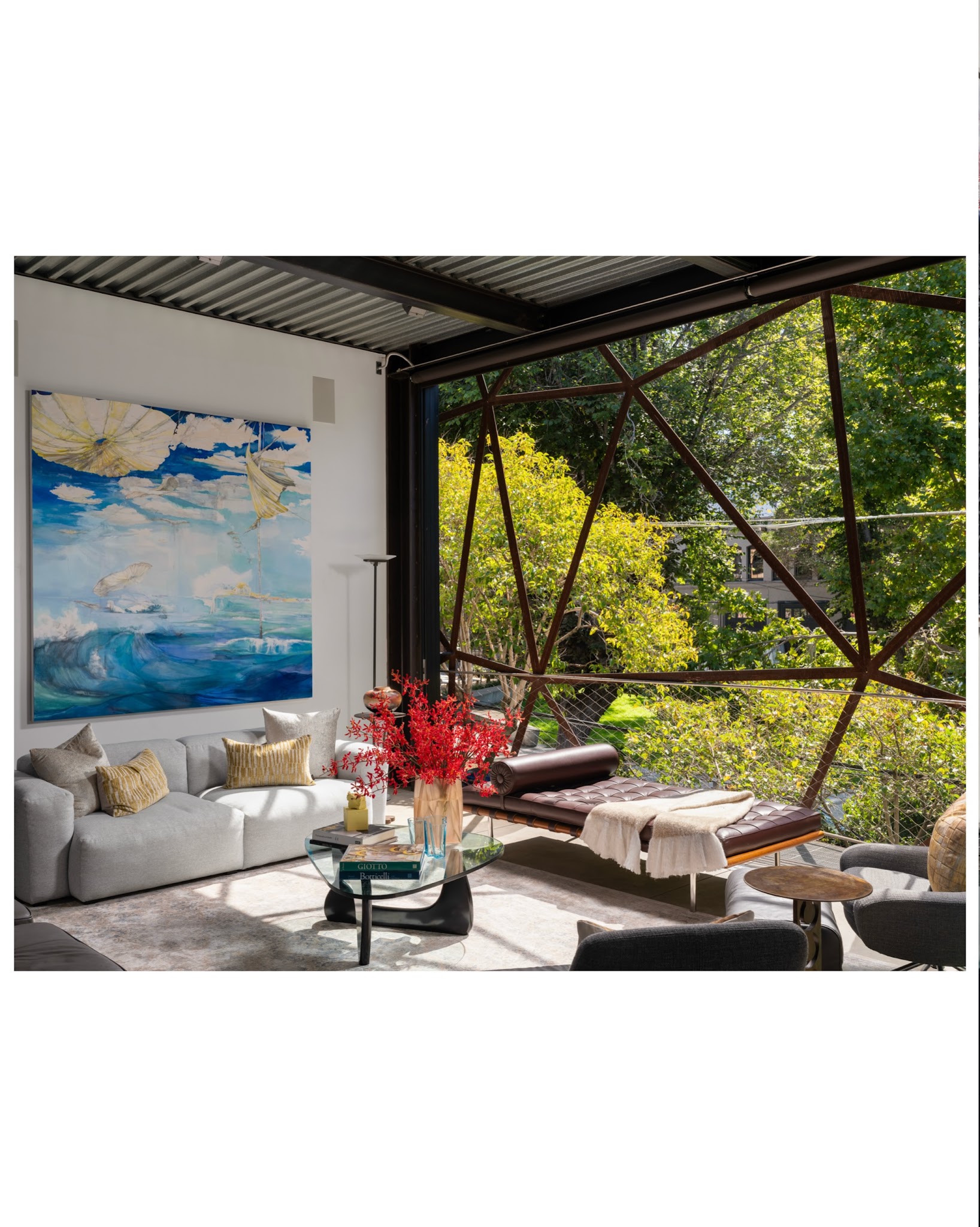
A low daybed can add a comfortable lounging spot beside a large window while keeping the view open. Here, a dark tufted cushion rests on a slim wood platform, with one cylindrical bolster instead of a tall back.
Its horizontal outline leaves the greenery and geometric framing visible above it. Try this relaxed seating arrangement where a conventional sofa would interrupt an appealing outlook.
Choose a length that fits comfortably beside the other seats, and preserve a clear route around the ends. A folded throw adds softness without hiding the furniture’s simple shape.
Keep nearby tables low enough to maintain the same open feeling. The daybed then becomes part of the conversation group while offering a different way to relax.