
A coastal room can feel more relaxed when its colors and furniture leave space for light, movement, and the view.
These Coastal Living Room Ideas show how navy and pale accents, warm wood, and touches of coral can shape a comfortable palette without leaning on beach-themed decor.
You’ll also find practical ways to arrange a room, from keeping a clear path to outdoor seating to tucking compact ottomans beneath a coffee table.
Small choices like loose cushions, woven textures, and blue-and-white patterns help bring the look together while keeping the space useful for everyday life.
1. Balance a Navy Sofa With Pale Accents and Wood
Credits: Instagram
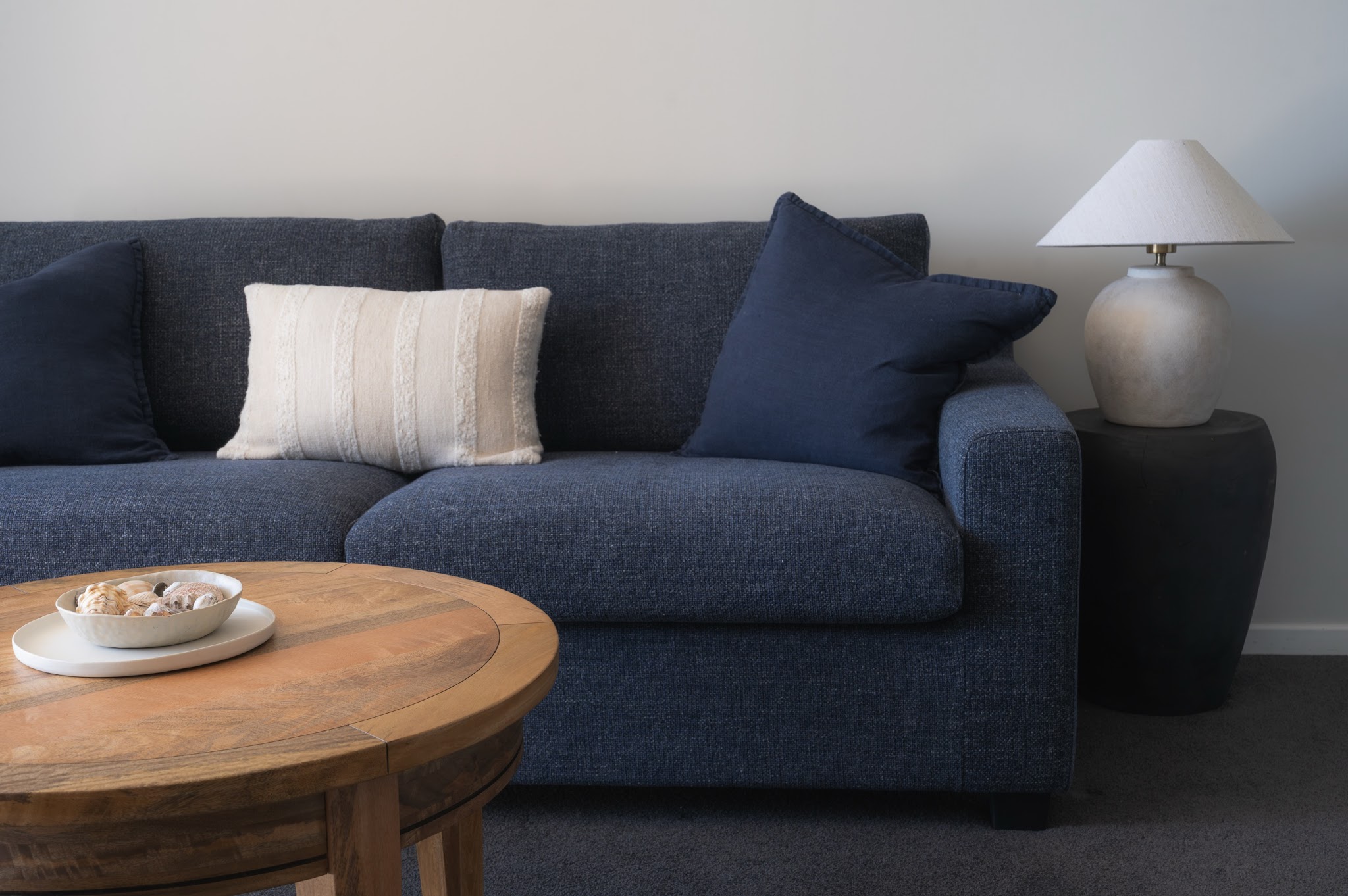
A navy sofa gives this coastal seating area a strong center, while a pale pillow and lamp keep the arrangement from feeling heavy.
The round wood coffee table adds warmth beside the cool upholstery, and a small bowl of shells supplies a clear seaside detail. Try starting with one deep blue piece, then repeat lighter tones in just a few nearby accessories.
A textured pillow can soften the contrast without introducing another color or a busy print. Keep the tabletop arrangement compact so there is still room for everyday use.
Here, the plain wall lets the furniture and textures lead. You can build a relaxed coastal palette with blue, white, and wood before adding any extra beach references or patterns.
2. Repeat Coral and Pink Accents Around Blue Seating
Credits: Instagram
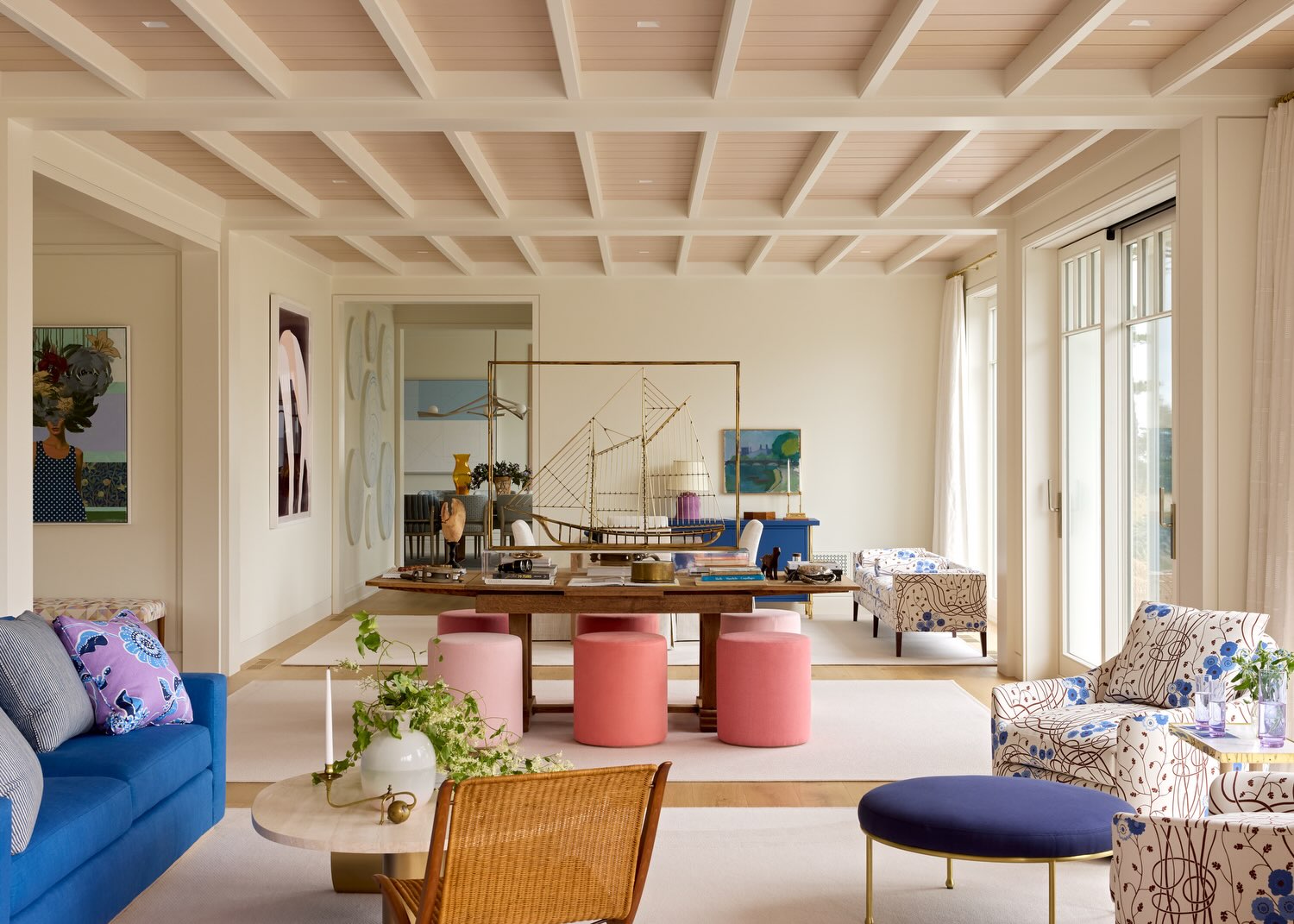
Coral and pink accents bring warmth to the bright blue seating in this coastal living room. The color appears on a group of small stools, while a patterned pillow carries a softer pink onto the sofa.
Try choosing one warm accent family and repeating it across a few pieces instead of introducing several unrelated bright colors. Vary the shades slightly so the arrangement feels collected.
Here, pale walls, curtains, and rugs give the stronger upholstery plenty of space to stand out. Blue flowers on the chairs connect the patterned seats to the solid sofa and ottoman.
Keep larger surfaces quiet when combining these prints and colors, then let a few compact upholstered pieces supply the playful part of the palette.
3. Make an Upholstered Ottoman Useful for Games and Trays
Credits: Instagram
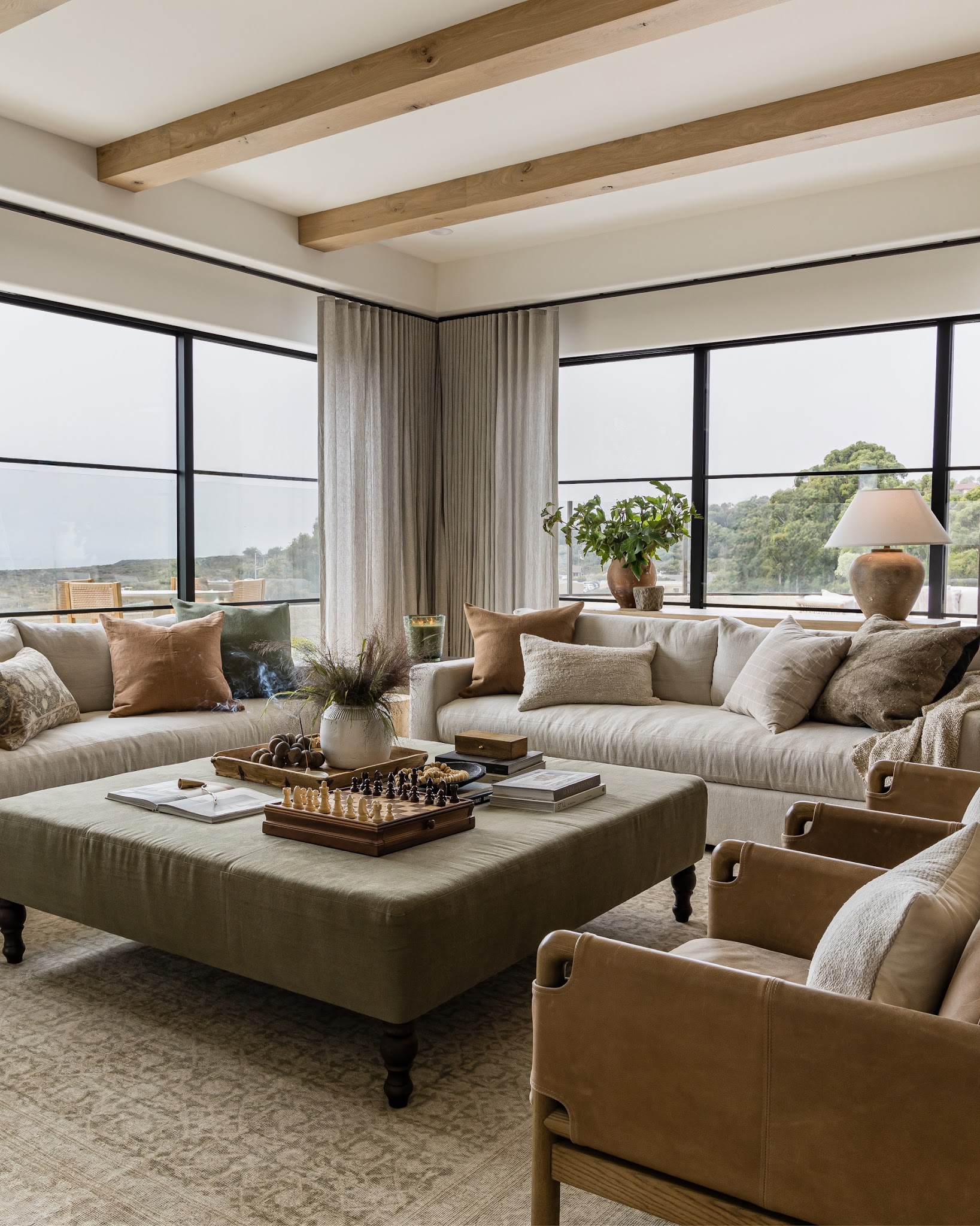
A generous upholstered ottoman can make a coastal sitting area feel comfortable and ready for everyday use. Here, its muted green fabric sits between pale sofas and brown chairs, giving the center a softer finish than another wood surface.
A chessboard and a tray add firm places for activities and small objects. To try the idea, choose a tray that rests securely on your ottoman, and leave part of the upholstery uncovered.
Keep books in a short stack so they are easy to move when you want more room. Repeat the ottoman’s quiet color in a pillow to connect it with the surrounding seats.
Simple curtains and pale upholstery let these useful details stand out without making the room busy.
4. Leave a Clear Route to Outdoor Seating
Credits: Instagram
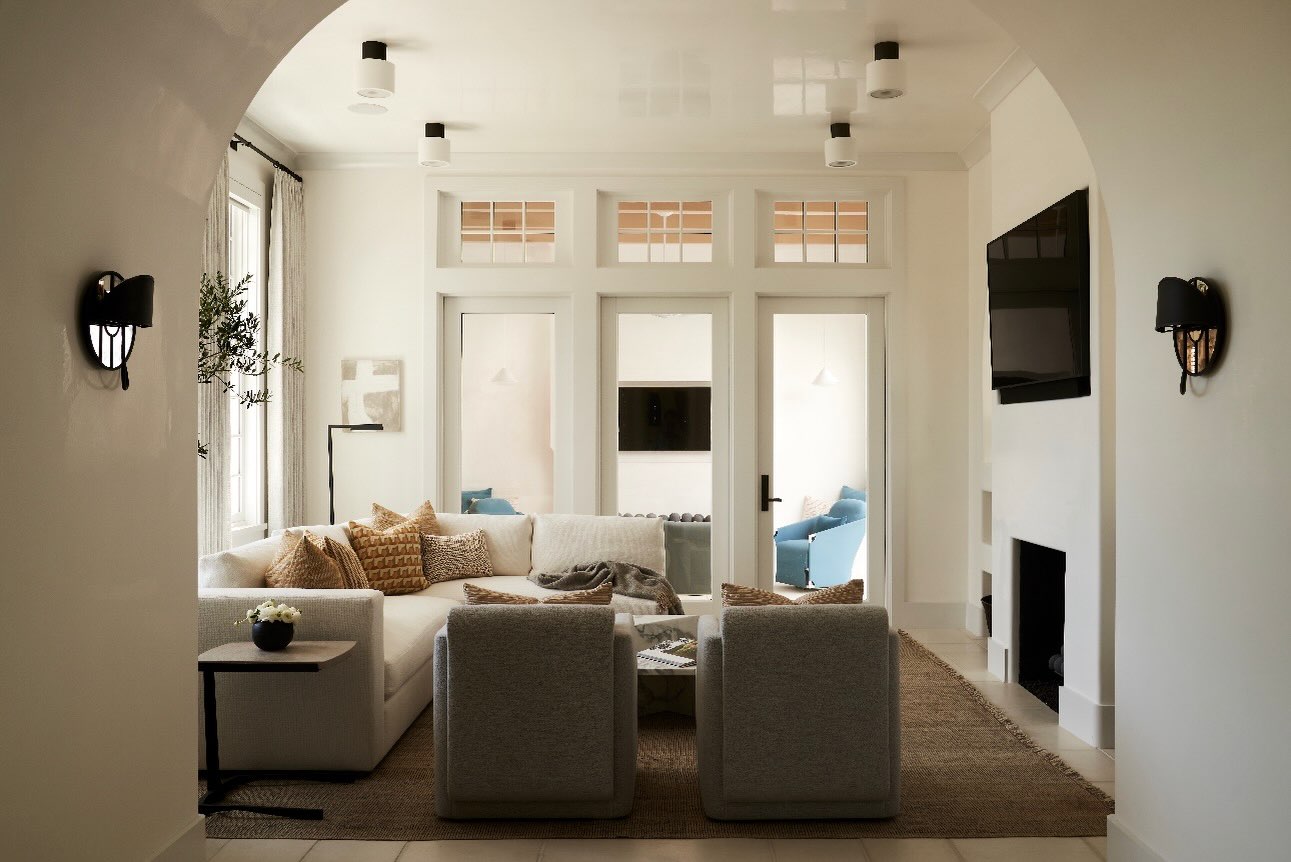
A coastal living room feels connected to the outdoors when the furniture leaves a clear route to the door.
Here, a cream sectional and two gray chairs form a conversation group, with space remaining beside the chairs toward the glazed courtyard entrance. Blue seats beyond the glass extend the relaxed palette into the adjoining area.
Try arranging the main seats around one compact table, then walk the route from your room entrance to the outdoor door before adding accessories. Keep occasional tables tucked close to the seating instead of projecting into that path.
A woven rug defines the indoor group, while low chair backs allow the bright courtyard to remain part of the view through the room’s broad arched opening.
5. Choose Loose Cushions for Relaxed Coastal Seating
Credits: Instagram
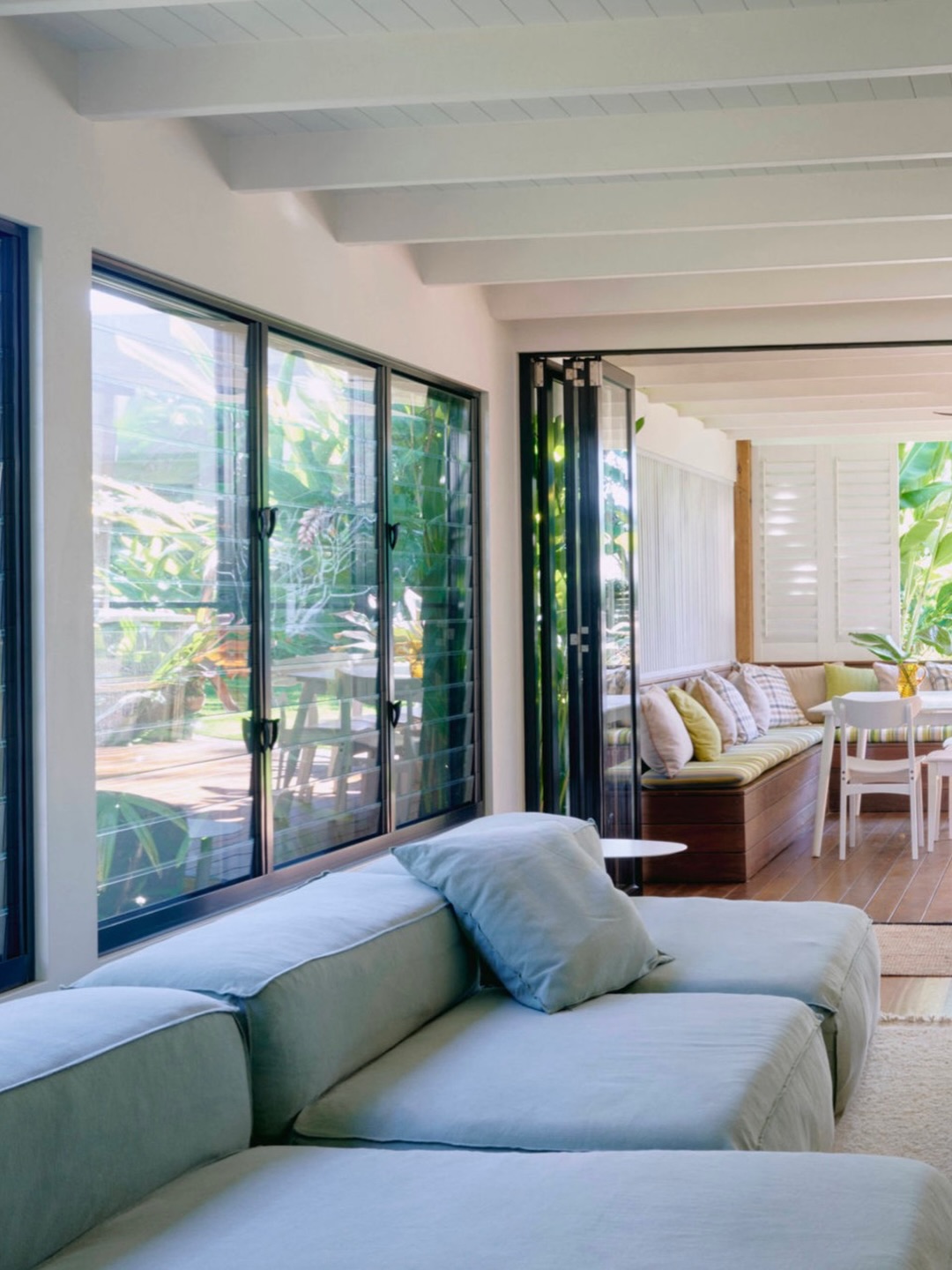
Loose cushions can soften a coastal room lined with crisp window frames and exposed beams. Here, pale blue upholstery has an easy, slightly rumpled outline beneath the dark glazing, while white walls and ceiling boards keep the background simple.
Choose a sofa whose seat depth and back cushions suit how you actually relax, then test its comfort before deciding on the fabric. A matching pillow can reinforce the relaxed shape without introducing another busy pattern.
Let nearby wood furniture provide warmth, as the banquette does beyond the open doors. Keep the sofa low enough that the windows remain a noticeable part of the room.
This balance of soft seating and clear architectural lines works without adding many extra decorative objects.
6. Tuck Compact Ottomans Beneath the Coffee Table
Credits: Instagram
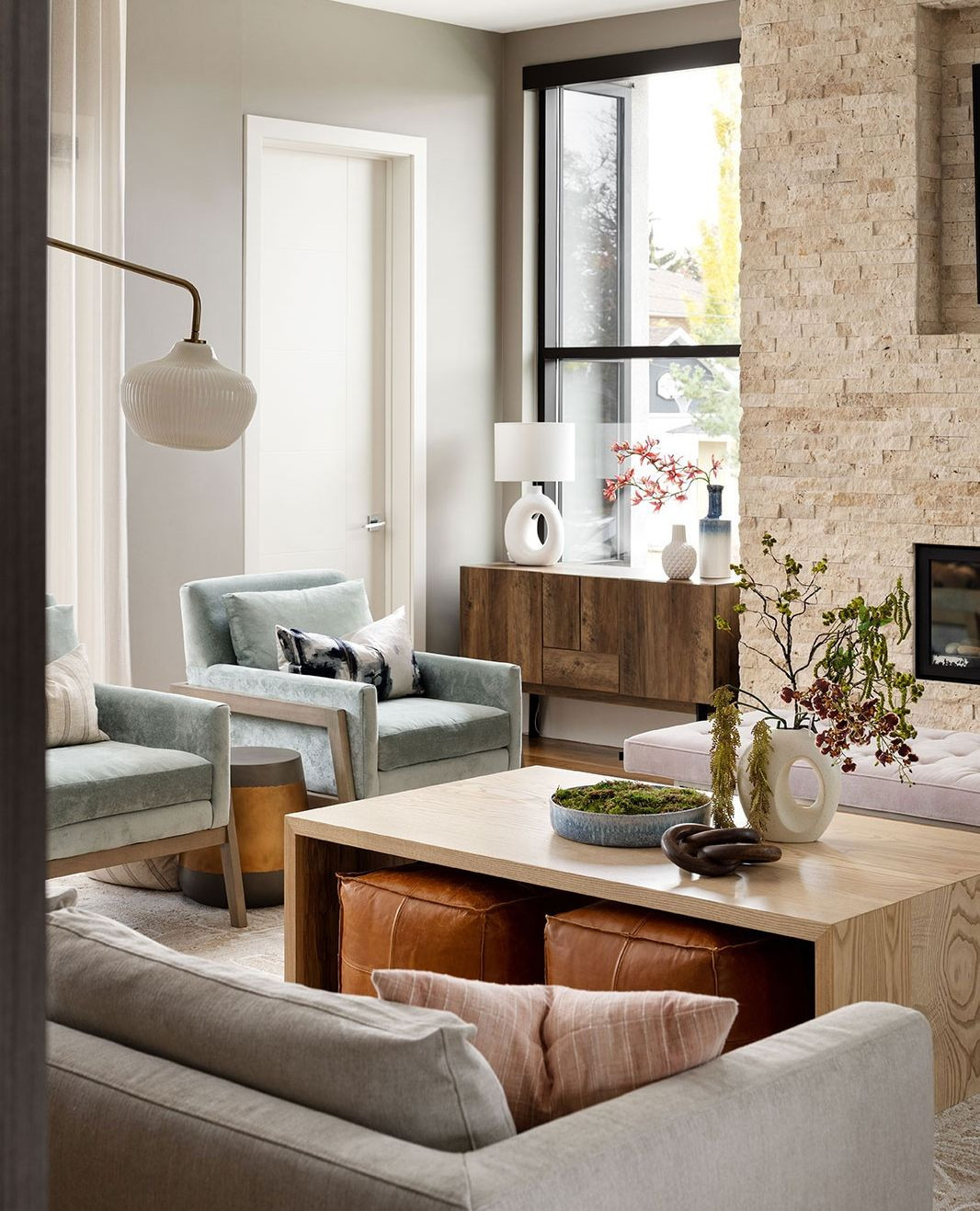
Compact ottomans can add occasional seating without permanently filling the floor around a coastal conversation group. Here, two brown pieces tuck beneath an open wood coffee table, leaving the pale top available for everyday use.
Their warm color balances the light blue chairs and gray sofa, while the table gives the pair a home when they are not needed.
Measure the opening beneath your table before choosing ottomans, allowing room to pull them out without scraping the frame. Check that their height feels comfortable alongside the main seating.
Keep the surrounding route open when they are in use. A simple table with sturdy sides can make this arrangement feel intentional, combining a useful surface and flexible seating in one footprint.
7. Keep Seating Low Beneath a Tall Window
Credits: Instagram
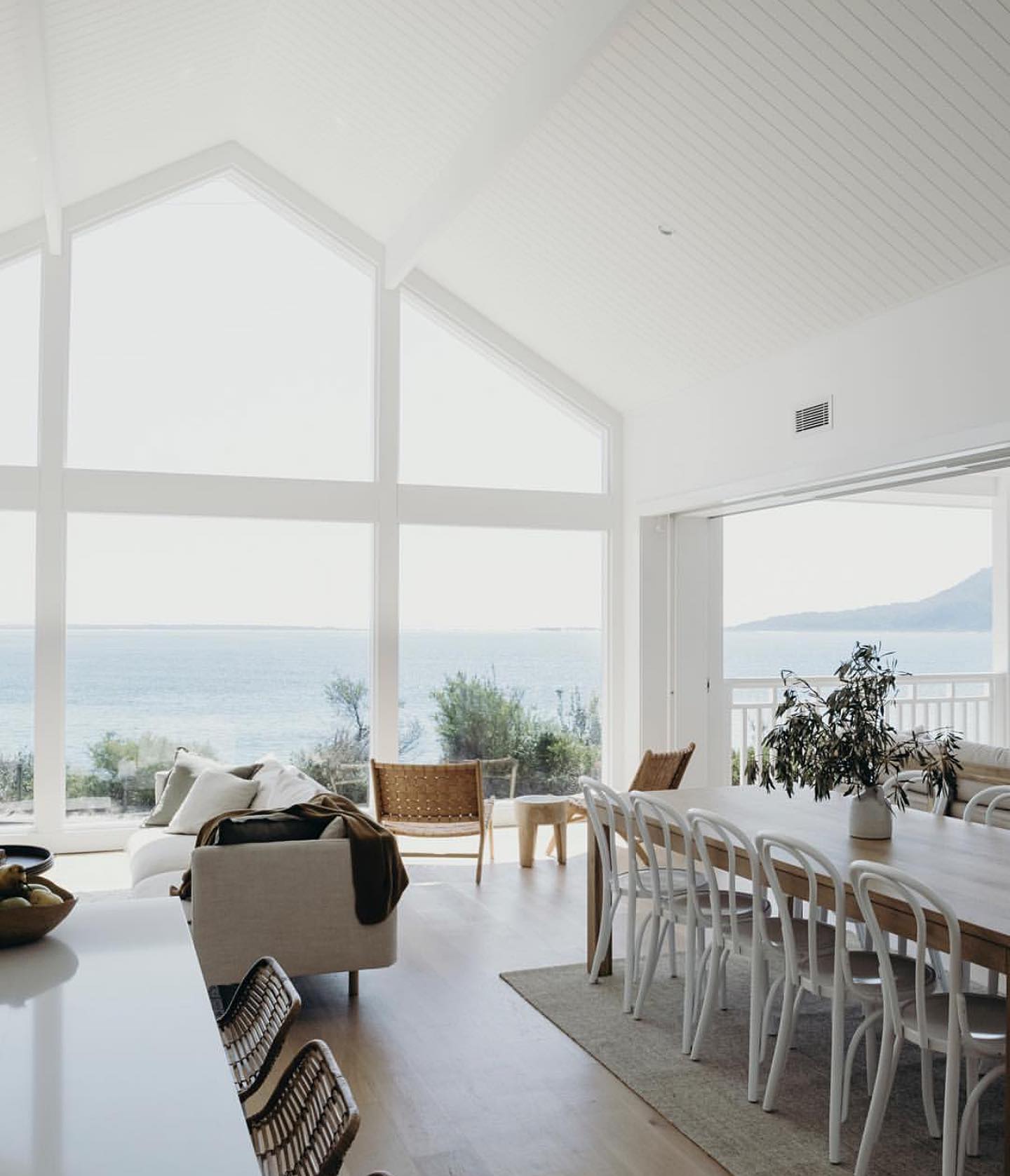
Low seating lets the water view remain the main feature of this coastal living area. The pale sofa and woven chairs sit well below the tall glazing, leaving a broad stretch of blue visible across the room.
When arranging furniture near a view, check the sightline from both the entrance and your usual seat before settling on a layout. Favor lower backs where they would otherwise interrupt the outlook, and place taller storage on another wall.
Here, white window frames and a matching paneled ceiling keep the architecture quiet, while wood and woven surfaces add warmth near the floor. A darker throw gives the sofa definition without introducing a large competing color. Let the view supply the strongest blue accent.
8. Frame Blue Walls With Crisp White Trim
Credits: Instagram
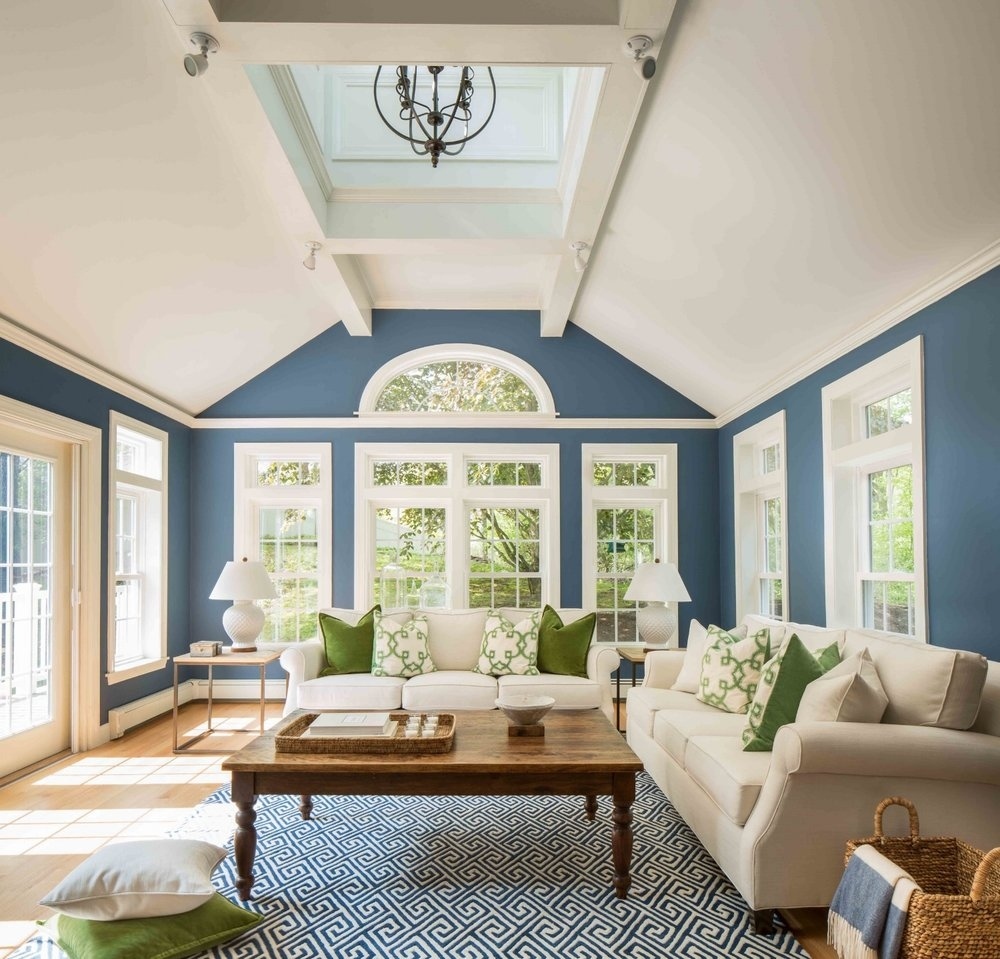
Blue walls can feel crisp and breezy when white trim gives every window a clear outline. In this room, the color surrounds tall windows while the sloped ceiling, substantial moldings, and two sofas stay pale.
That contrast lets the architecture provide much of the decoration. Try a blue sample beside your existing trim before choosing the final shade, and check it at different times of day.
Keep the ceiling lighter if you want the walls to carry the stronger color. A blue patterned rug repeats the palette lower in the room, while the wood coffee table adds warmth.
Limit other large pieces to simple finishes, then introduce a few green pillows to connect the seating with the foliage visible outside.
9. Give Pale Objects a Navy Shelf Backdrop
Credits: Instagram
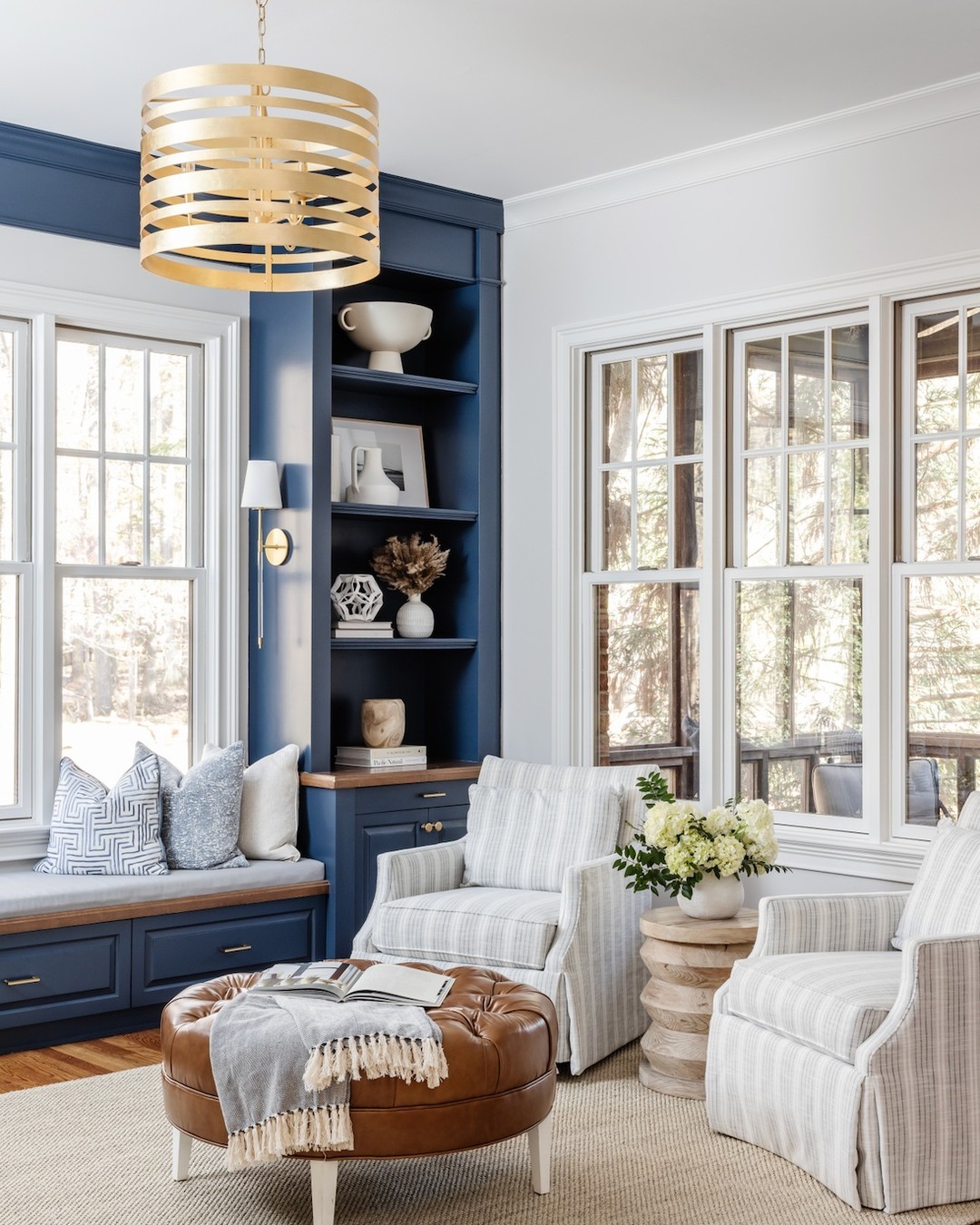
Deep navy shelving gives pale objects a clear backdrop without adding another piece of furniture. In this coastal sitting area, white vessels, a framed print, and a small stack of books stand out inside the blue cabinet.
The same paint continues across the lower storage and window bench, connecting the separate elements. Try arranging your existing objects before buying more.
Start with one larger piece on each shelf, then add a smaller companion only where the grouping needs it. Leave visible space around the shapes so the dark background remains part of the display.
Light striped chairs and a pale rug balance the strong cabinetry nearby. Wood surfaces and a warm brown ottoman keep the blue and white combination welcoming.
10. Mix Pattern Scales in Blue and White
Credits: Instagram
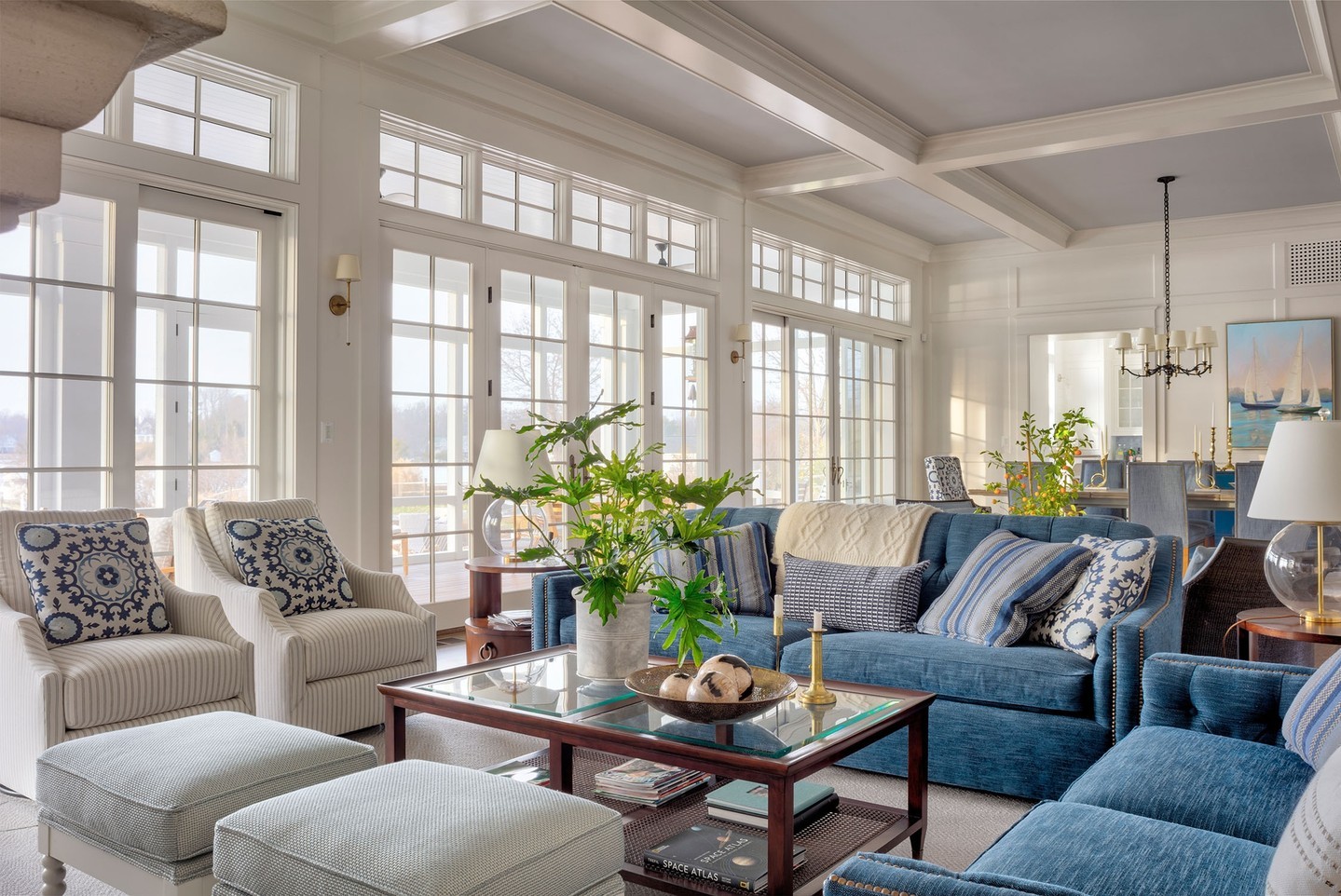
Mix narrow stripes with larger motifs to give blue and white seating a collected coastal feel. Here, striped armchairs sit beside blue sofas, while patterned pillows repeat the palette across both.
The different scales keep the fabrics from blending into one busy surface. Start with one larger print you enjoy, then choose a finer stripe and a small repeating pattern in related colors.
Spread those fabrics between the sofa and nearby chairs so the combination feels connected. Leave some upholstery plain to give each pattern room to stand out.
A pale rug and white walls provide a quiet background. Before buying several pillows, place fabric samples together in daylight and check that their whites and blues work alongside one another.
11. Make a Sailing Painting the Coastal Focal Point
Credits: Instagram
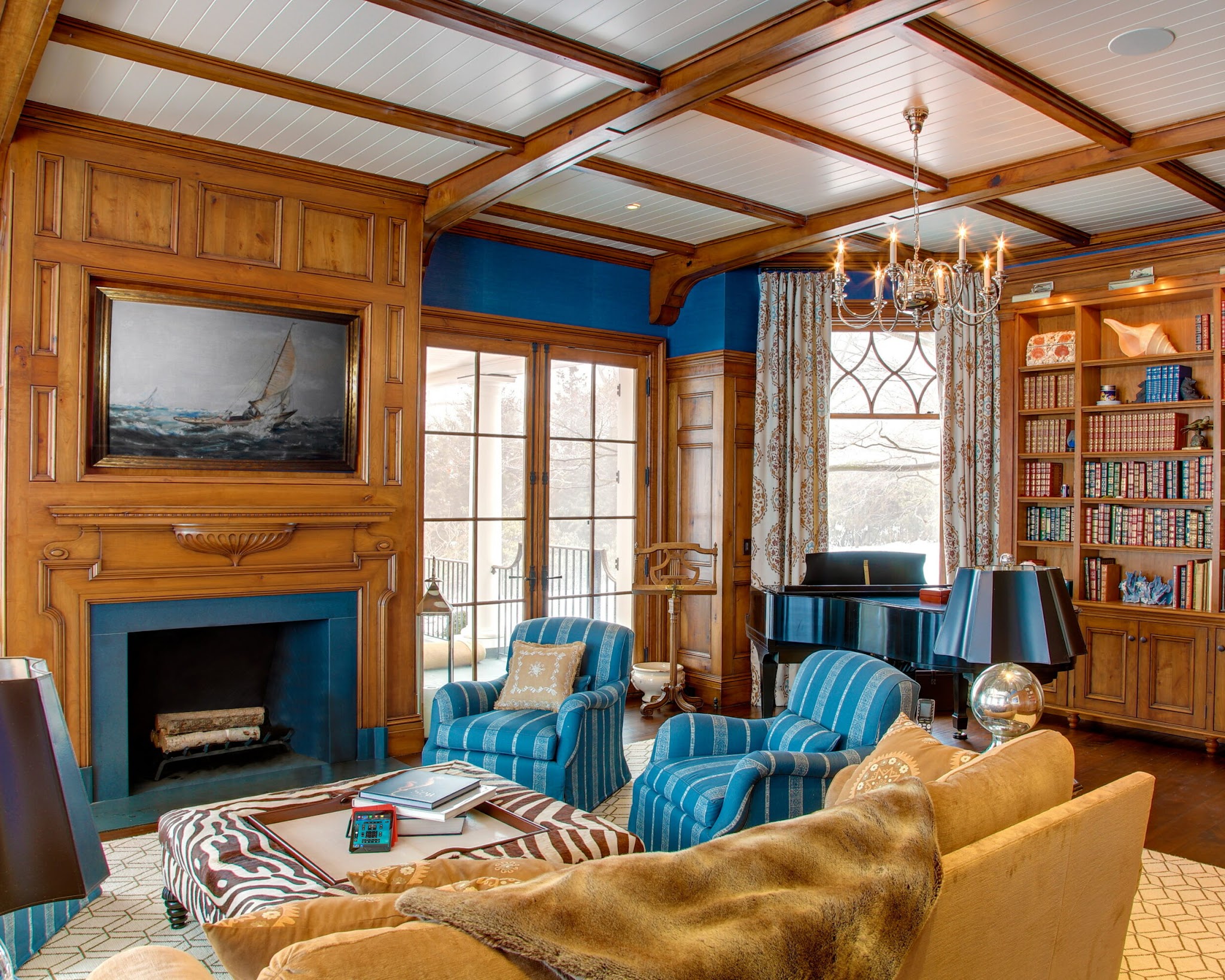
A large sailing painting can give a traditional room a coastal focus without scattering nautical objects across every surface.
Here, the framed seascape sits within the wood paneling above the fireplace, with blue chairs and upper walls extending its watery palette into the room.
Choose artwork you enjoy looking at, then test its size with a paper template before hanging. Leave enough space around the frame for surrounding moldings to remain visible.
Repeat one color from the picture in upholstery or a smaller accessory to connect it with the seating. Warm wood and a pale ceiling help balance the cooler blue.
Keep the mantel arrangement restrained so the image stays readable from across the room and from your favorite seat.
12. Balance a Sofa With Matching Woven Lamps
Credits: Instagram
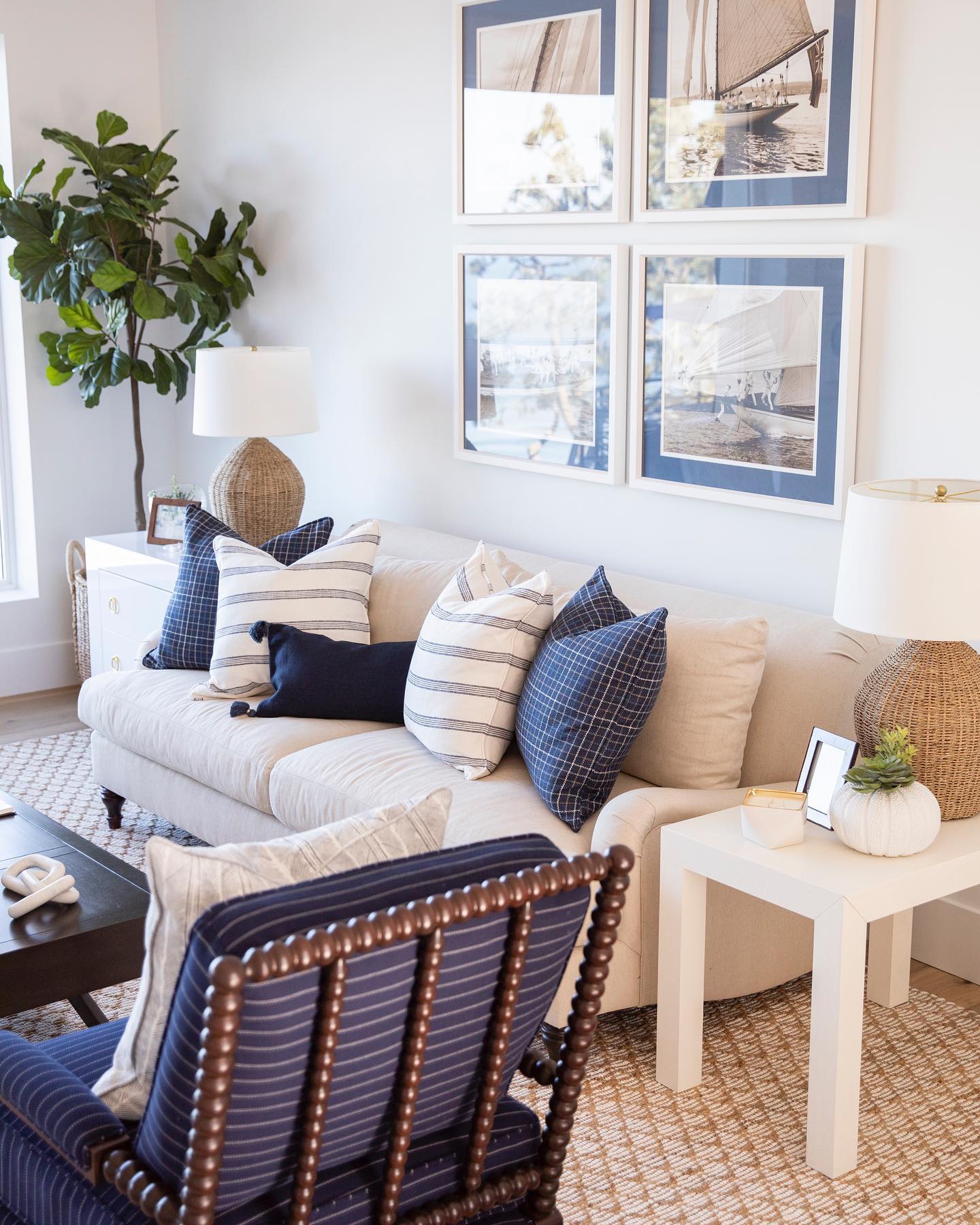
Matching woven lamps can bring balance to a sofa even when the side tables are different. Here, their rounded bases and white shades repeat at both ends of the pale seating, adding warm texture to the blue and white room.
Try choosing lamps with similar heights and shade shapes so the pair reads as one deliberate choice. Check their proportions against the sofa before buying, leaving useful tabletop space for a drink or a book.
A closed chest on one side can provide storage while a simpler table works on the other. Keep nearby accessories small enough that the lamp bases remain visible.
The repeated lighting shapes give patterned pillows and framed artwork an orderly setting without making everything identical.
13. Let Woven Chair Backs Add Texture
Credits: Instagram
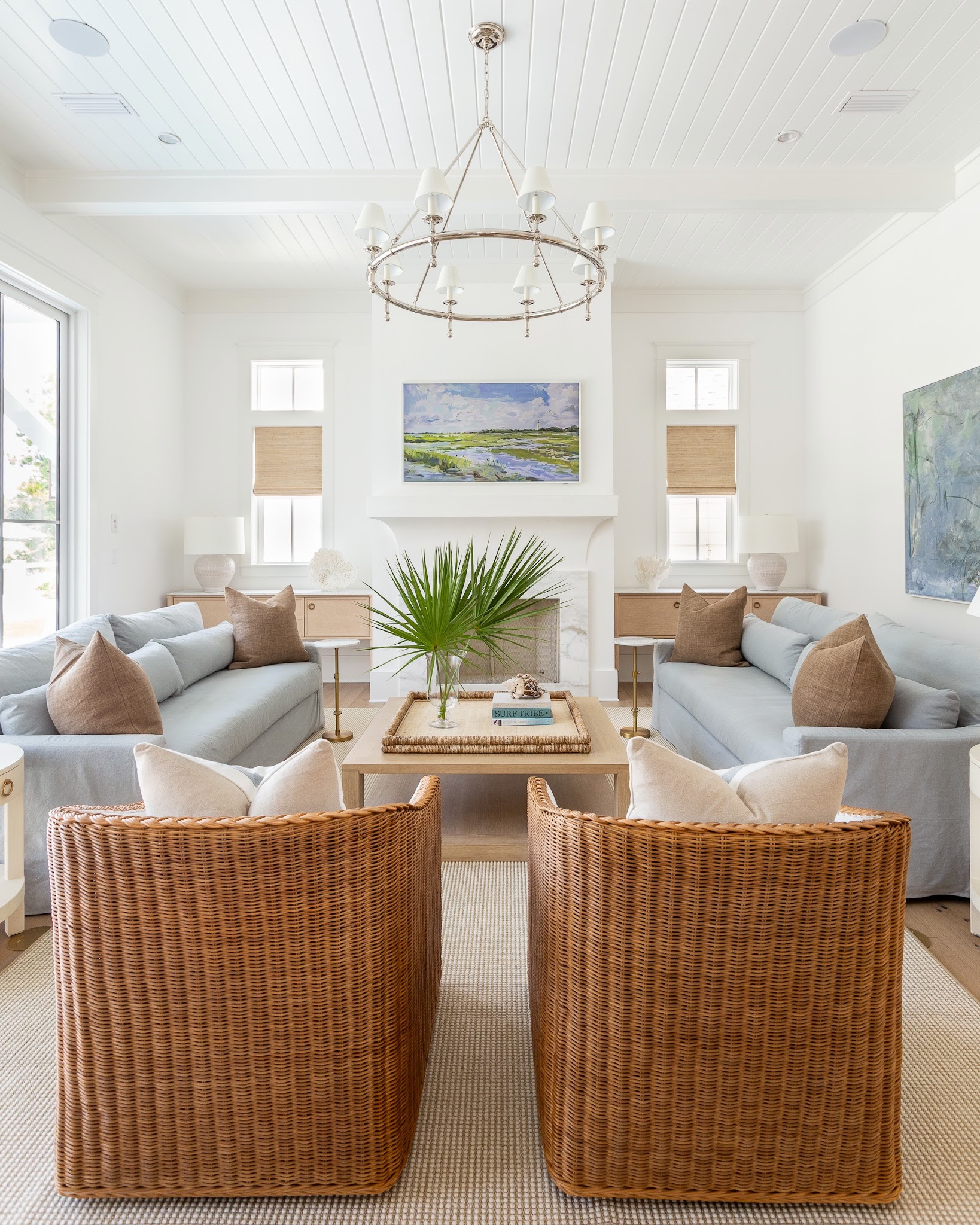
Consider the back of a chair when it faces the entrance or another part of the living room. In this arrangement, two woven chair backs add warm texture before your eye reaches the pale blue sofas and white fireplace.
Their curved outlines also soften the straight coffee table and opposing seating. Look at chairs from every angle, including behind, before choosing a pair for an open furniture layout.
Keep their backs low enough to preserve a view into the conversation area. Repeat the woven texture in a tray or window shade, as this room does, instead of introducing many unrelated finishes.
Leave a comfortable path around the chairs so the arrangement feels welcoming from both inside and outside the group.
14. Let the Ceiling Supply the Texture
Credits: Instagram
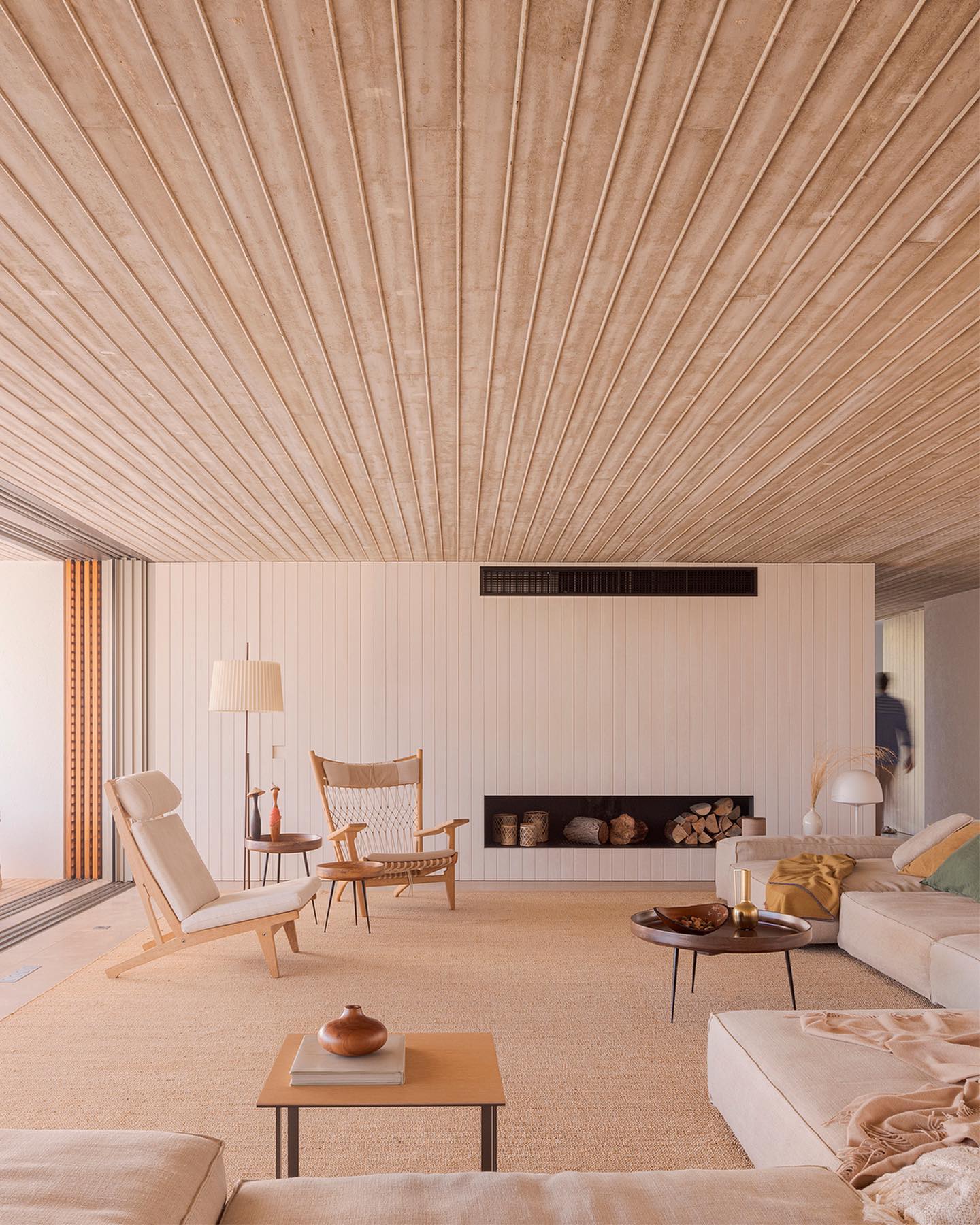
A ceiling with strong parallel lines can provide much of the texture in a quiet coastal room. Here, pale seating and a large woven rug leave that overhead pattern easy to appreciate.
White vertical wall panels introduce another direction without adding a competing color. If your room already has a distinctive ceiling, choose plain upholstery and reserve smaller accents for a few cushions or a throw.
Keep large furniture shapes simple so the architecture remains visible. A chair with an open frame adds variety without creating a solid visual barrier.
Repeat sandy tones across the rug and seats, then use darker tables sparingly for definition. This restrained combination creates a relaxed setting while allowing the room to supply the detail.
15. Use a Sofa Back to Divide Two Seating Areas
Credits: Instagram
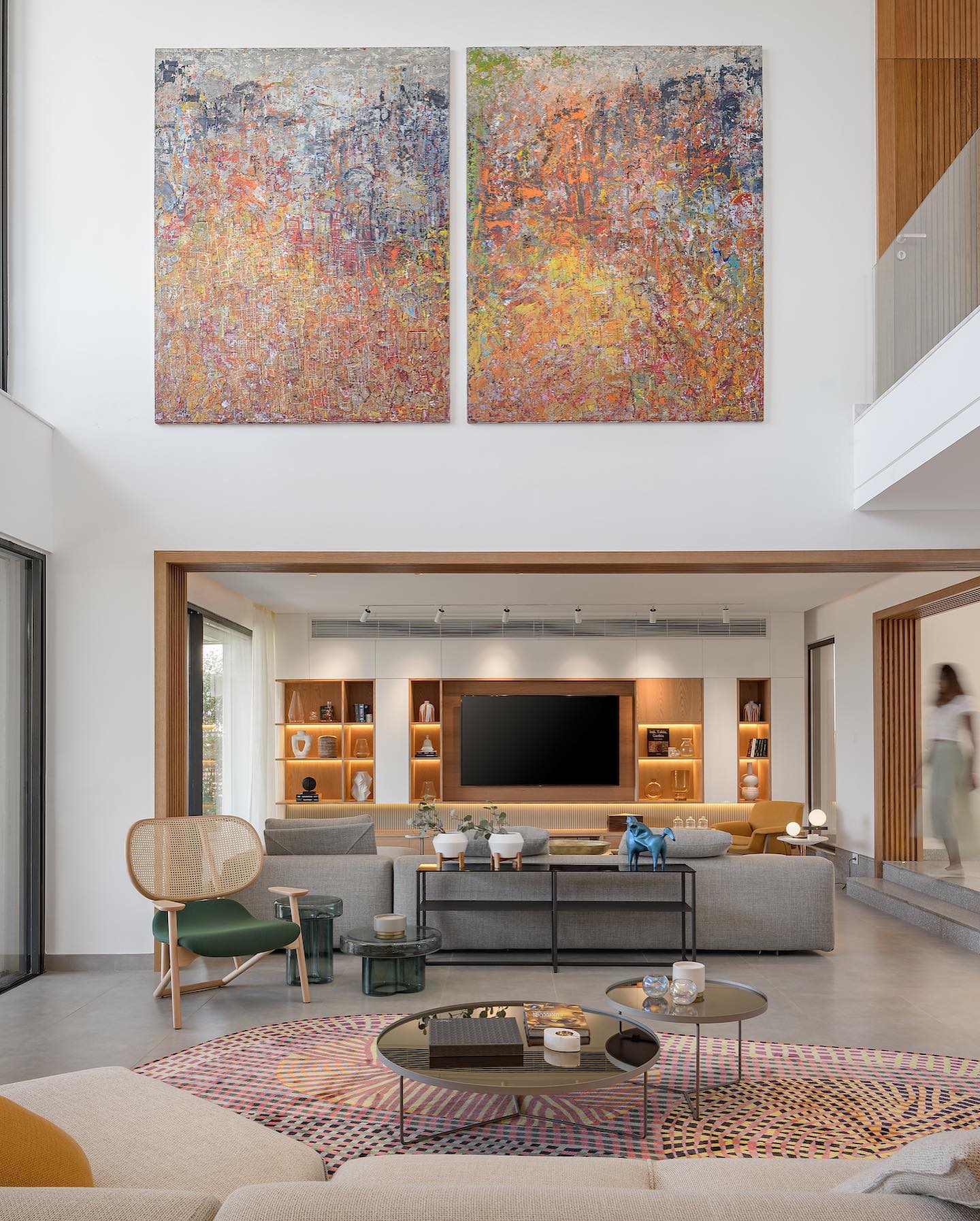
The back of a sofa can divide two seating areas without closing off an open beach house. Here, a low gray sofa faces the television while giving the foreground conversation group a clear boundary.
A slim console makes its rear side feel finished, and the broad opening keeps both spaces connected. Try arranging furniture around the activities you want each area to support before adding decorative pieces.
Leave a comfortable route between the groups, especially near doors and steps. Repeat pale upholstery or warm wood across both areas so they belong together.
A patterned rug can distinguish one group without introducing a partition. Keep objects on the console low to maintain an easy view from one space into the other.
16. Add a Bright Floral Accent to Neutral Seating
Credits: Instagram
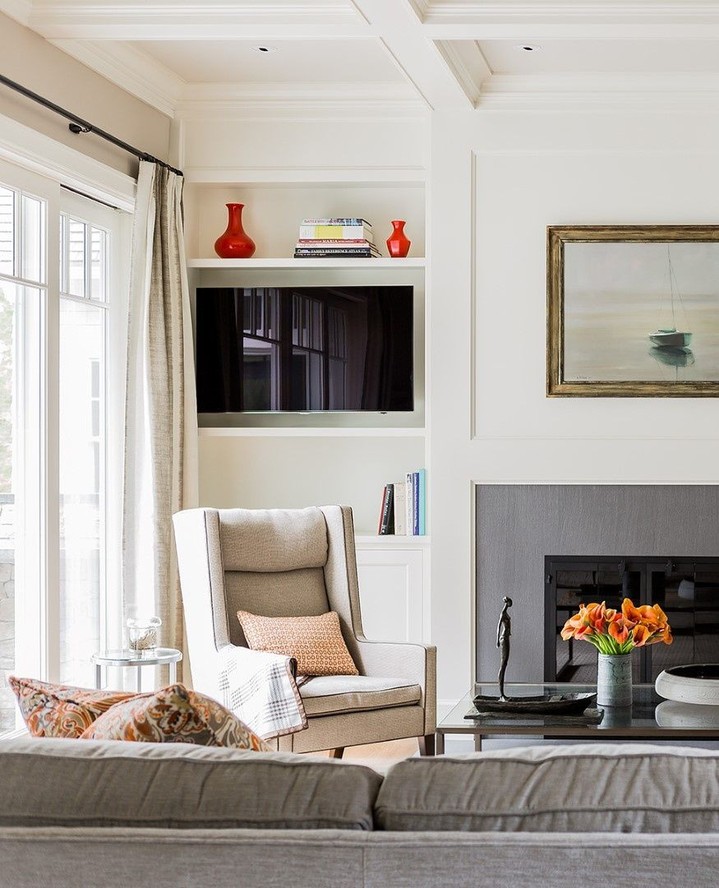
A small burst of orange can enliven a coastal room without changing its quiet foundation. Here, a compact orange flower arrangement stands out against the gray fireplace surround, while cream walls and pale upholstery keep most of the view calm.
Place a colorful arrangement where it can be seen from the main seats, then leave enough table space for everyday use. Choose a simple understated vase so the flowers supply the strongest color.
The nearby patterned pillows introduce smaller warm notes without requiring another large colorful surface. This approach works especially well when your sofa and armchairs are already neutral.
Start with one tabletop display, check the view from your seat, and remove competing accessories if the arrangement feels crowded.
17. Use Nesting Tables Beside a Sectional
Credits: Instagram
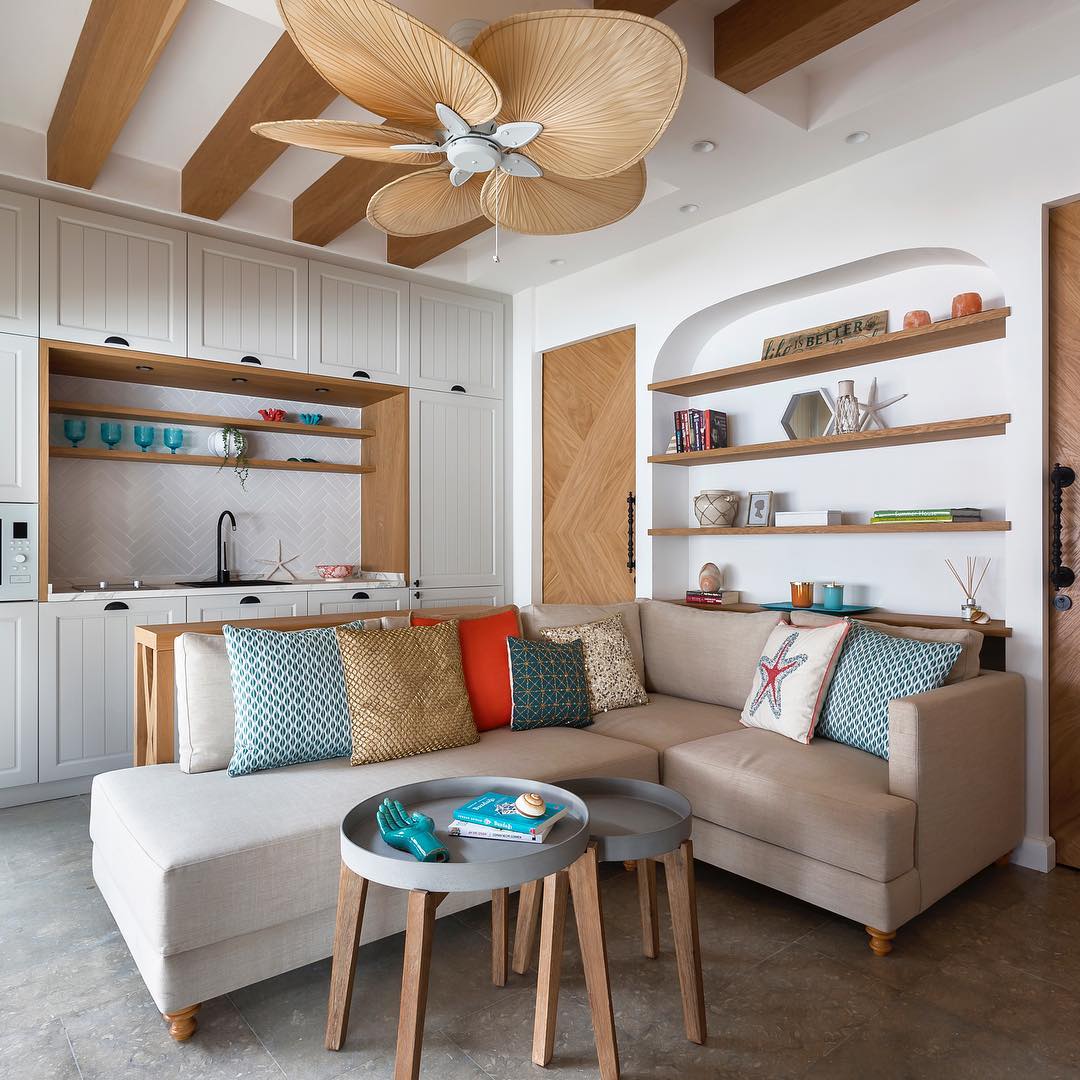
Nesting tables give a sectional more flexible surface space than one oversized coffee table. In this beach house, two round gray tops overlap beside the chaise, with warm wood legs linking them to the ceiling beams and shelves.
Try a pair that can sit together for everyday use, then separate them when someone needs a place for a drink. Check that both tables remain easy to reach without blocking the route around the sofa.
Keep one surface mostly clear so the arrangement stays useful. Repeating a quiet gray from the upholstery lets brighter coastal cushions provide the color.
The circular tops also soften the straight cabinetry and sectional, creating a compact focal point without filling the center with bulky furniture.
18. Pair Powder Blue With Warm Wood
Credits: Instagram
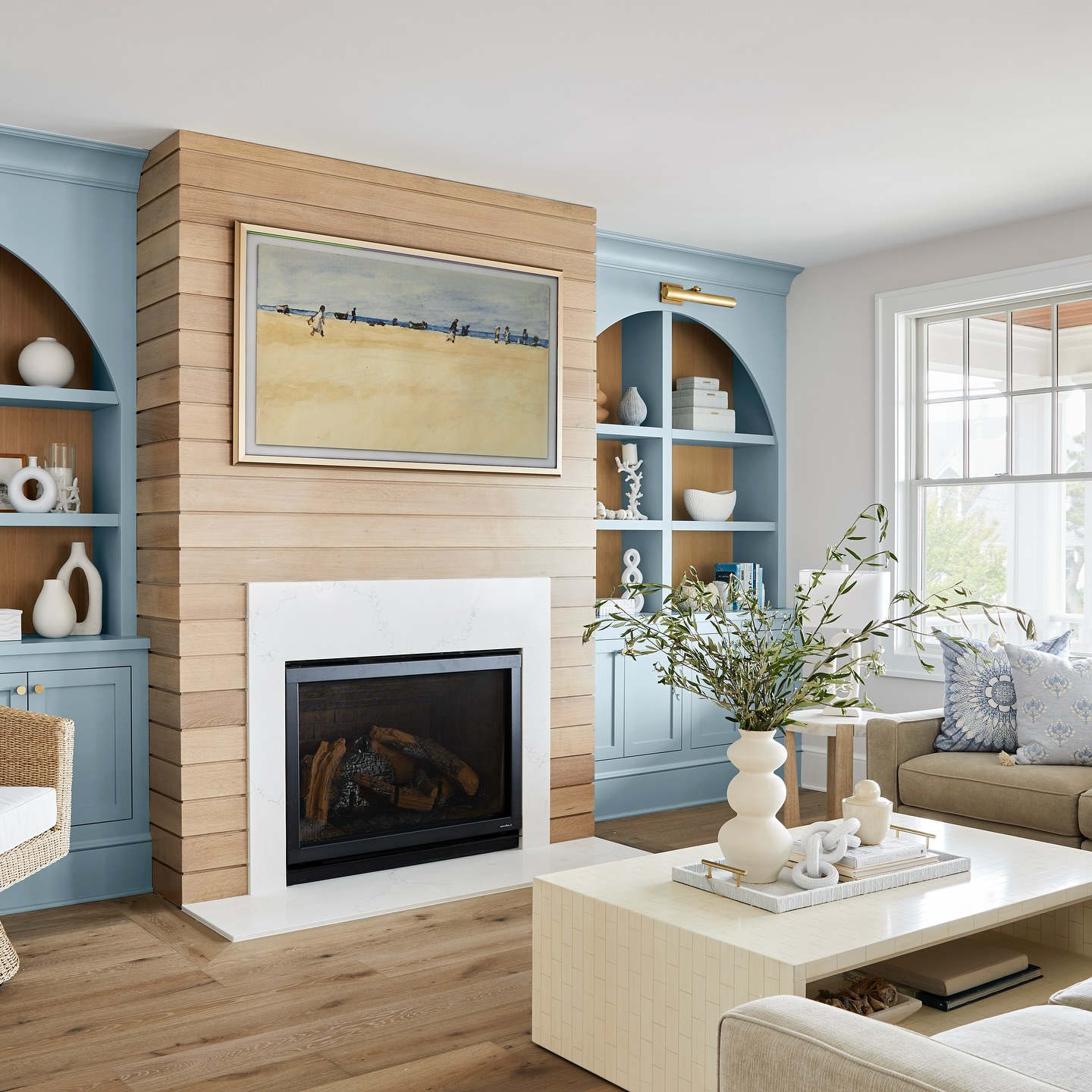
Powder blue feels warmer when it sits beside wood with a visible grain. In this coastal family room, blue arched cabinets flank a pale wood fireplace wall, and the same warm tone returns inside the shelves.
Use that pairing to build a balanced palette: one soft blue for painted surfaces, one wood tone for warmth, and white for relief.
You can borrow the combination without copying the cabinetry by placing a wood console against a blue wall. Keep nearby upholstery quiet so the color and grain remain easy to read.
A few blue patterned pillows carry the palette onto the seating. Repeating the wood tone in the floor or smaller furniture helps the different elements feel connected throughout the room.
19. Complete Facing Sofas With a Pair of Armchairs
Credits: Instagram
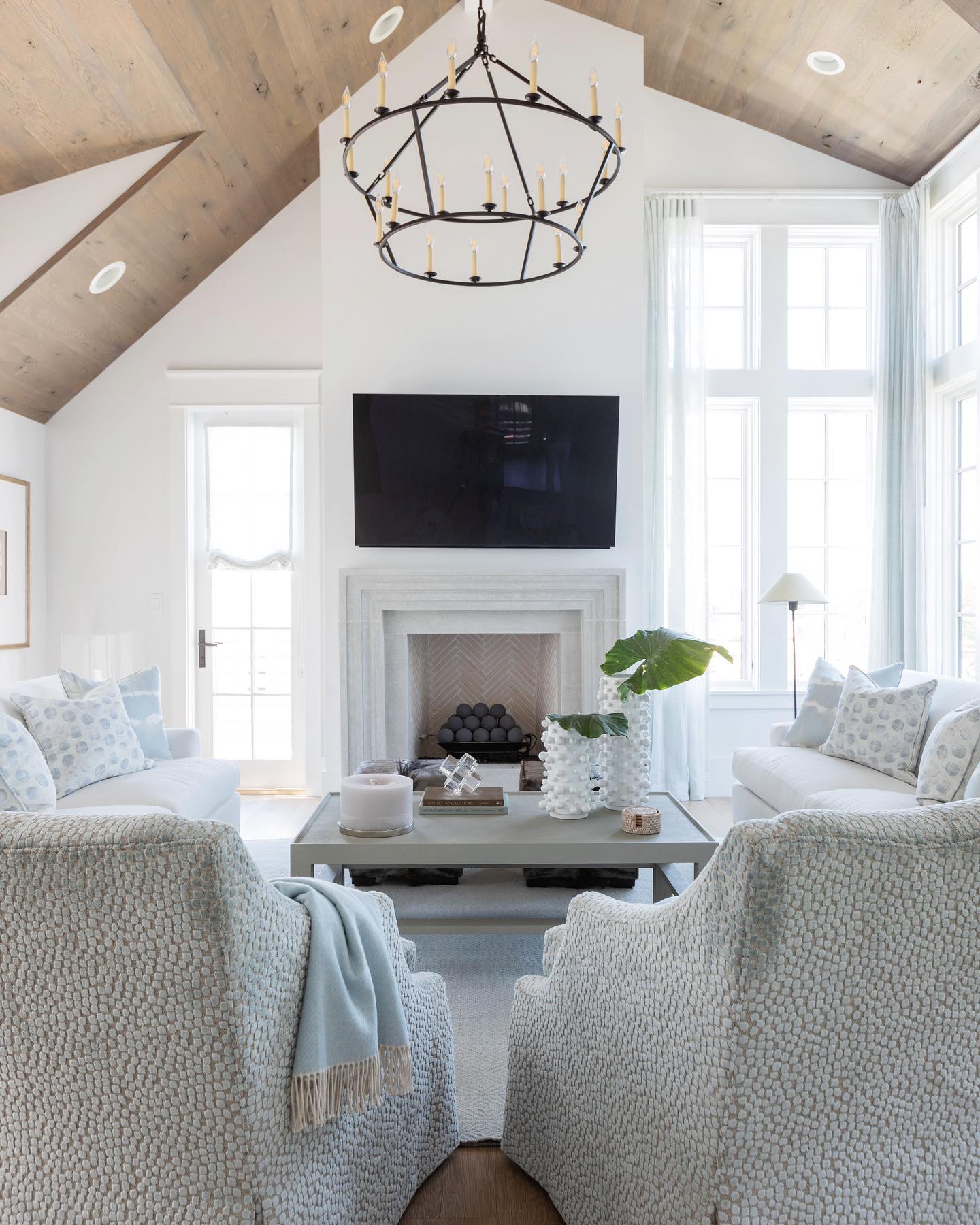
Two armchairs can complete a conversation group formed by facing sofas. In this coastal room, the chairs occupy the open end of the arrangement, bringing more seats around the central coffee table.
Their pale blue pattern connects them to the pillows while the gap between them keeps the grouping from feeling enclosed. Try positioning chairs so people can look toward one another without twisting around.
Keep enough room to stand up comfortably and move between each seat and the table. A rug beneath the group helps the separate pieces feel connected.
Choose chair heights that leave the fireplace and windows visible across the room. Soft blue and white fabrics keep this fuller seating arrangement light within the tall, sunlit space.
20. Keep the Center Open With a Glass Coffee Table
Credits: Instagram
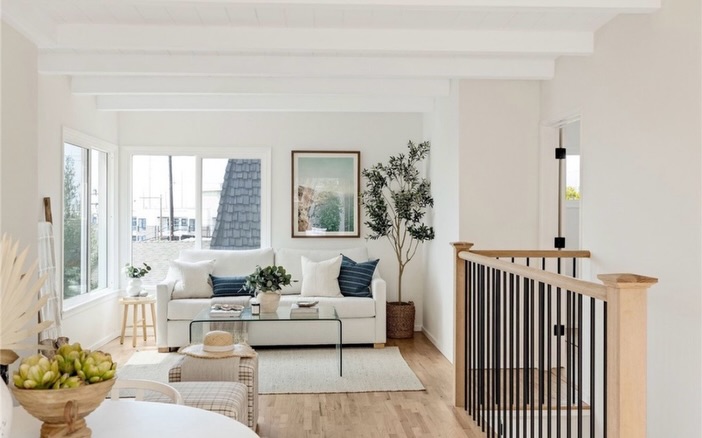
A glass coffee table helps a compact coastal seating area stay visually open. In this room, its clear top and slender dark frame leave the pale rug and sofa visible through the center of the arrangement.
Choose a table that provides a useful surface for everyday use without extending into the nearby walking route. Keep the top lightly styled so the transparent surface can do its job.
A small vase, a few books, and open space are enough. Here, blue pillows give the white sofa definition, while the light wood floor adds warmth beneath the airy furniture.
Repeat a narrow dark line elsewhere, as the stair railing does, to connect the table to the room without adding another bulky piece.