
A mirror can solve more than an empty wall: its shape and placement can connect nearby furnishings, brighten a corner, or soften a strong architectural line.
These Living Room Mirror Ideas show how a round mirror can echo globe sconces, an antiqued finish can add quiet texture to a mantel, and an arched wood frame can bring warmth to a reading nook.
You’ll also find ways to use wavy outlines and warm lighting for contrast. The right choice depends on what the room needs, whether that’s a clear focal point, a little depth, or a calmer balance among decorative pieces.
1. Echo Globe Sconces with a Round Mirror
Credits: Instagram
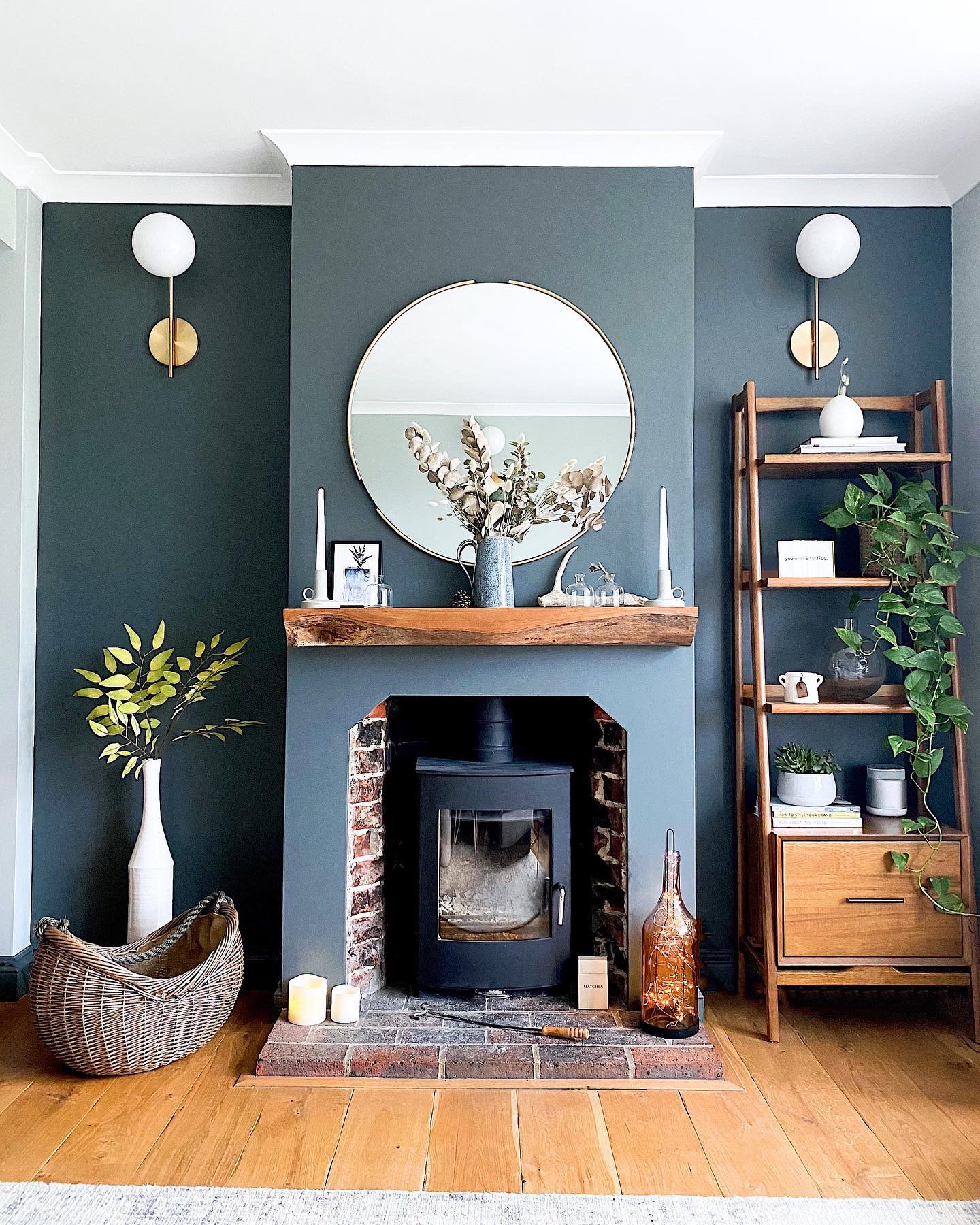
A round mirror gives this dark fireplace wall a clear center without competing with its strong color. The slender metallic rim relates to the brass sconces, while their white globes repeat its circular shape on a smaller scale.
That repetition makes the arrangement feel connected even though the furnishings are deliberately uneven: a woven basket sits on one side, and open wooden shelves fill the other.
Try this approach when a chimney breast divides your living room into unequal alcoves. Center the mirror on the fireplace itself, then let the surrounding furniture respond to your storage needs.
Keep taller mantel decorations toward the edges so the reflective surface stays readable. Natural wood and pale ceramics bring warmth to the composition.
2. Give the Sofa Wall One Clear Circle
Credits: Instagram
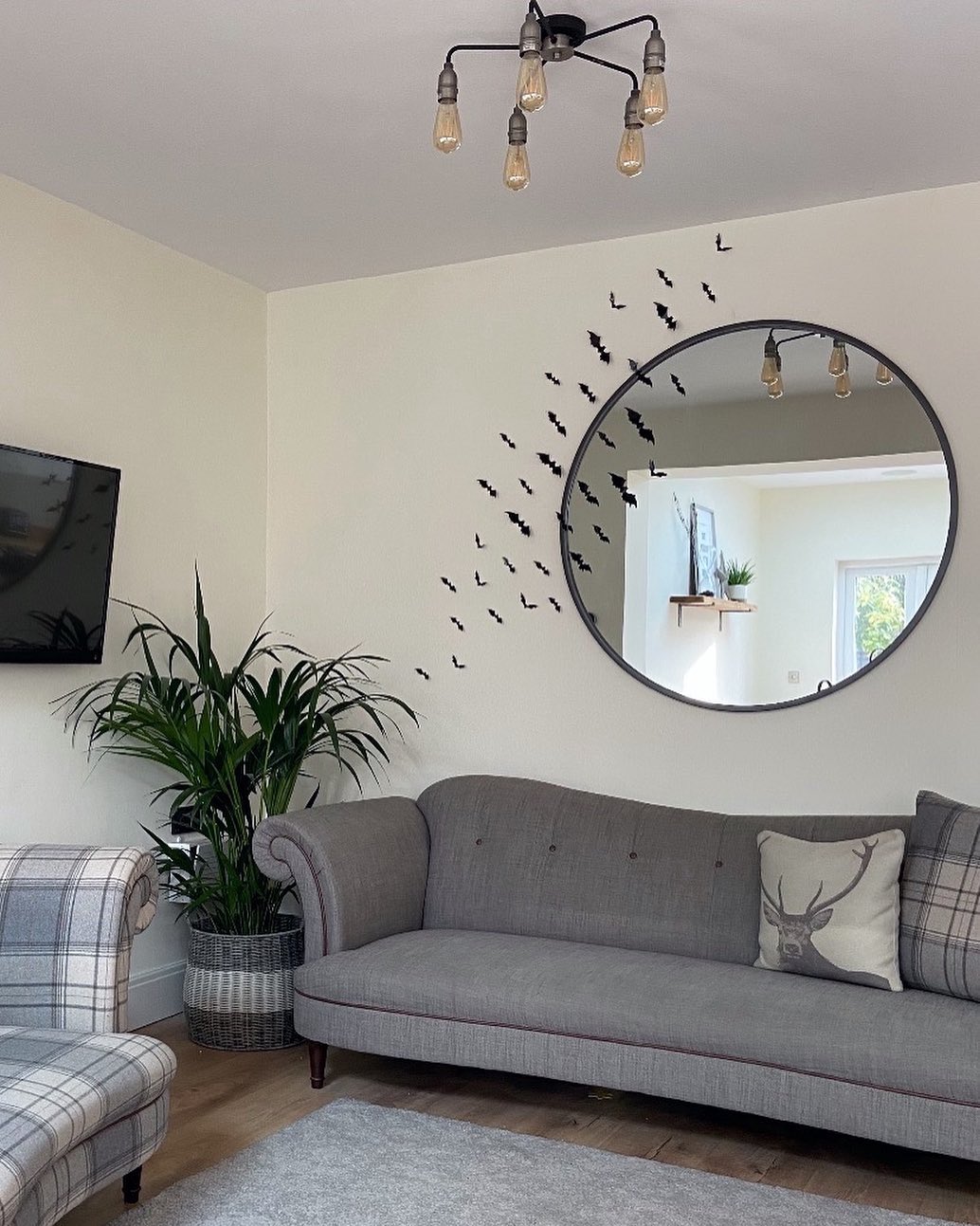
The large circular mirror above this gray sofa provides a simple focal point for an otherwise restrained living room.
Its narrow dark rim connects with the exposed bulb ceiling light, while the reflected window adds another bright rectangle to the wall. A leafy floor plant softens the corner, and plaid upholstery keeps the neutral palette from feeling flat.
Notice the generous blank wall around the mirror: that breathing room helps its shape stand out. For a similar arrangement, choose a mirror that feels substantial above your sofa without extending beyond the seating.
Test the reflection from your usual seat before hanging it. Temporary seasonal decorations can follow the rim, as these tiny black bats do, without changing the permanent scheme.
3. Let Antiqued Glass Add Quiet Texture
Credits: Instagram
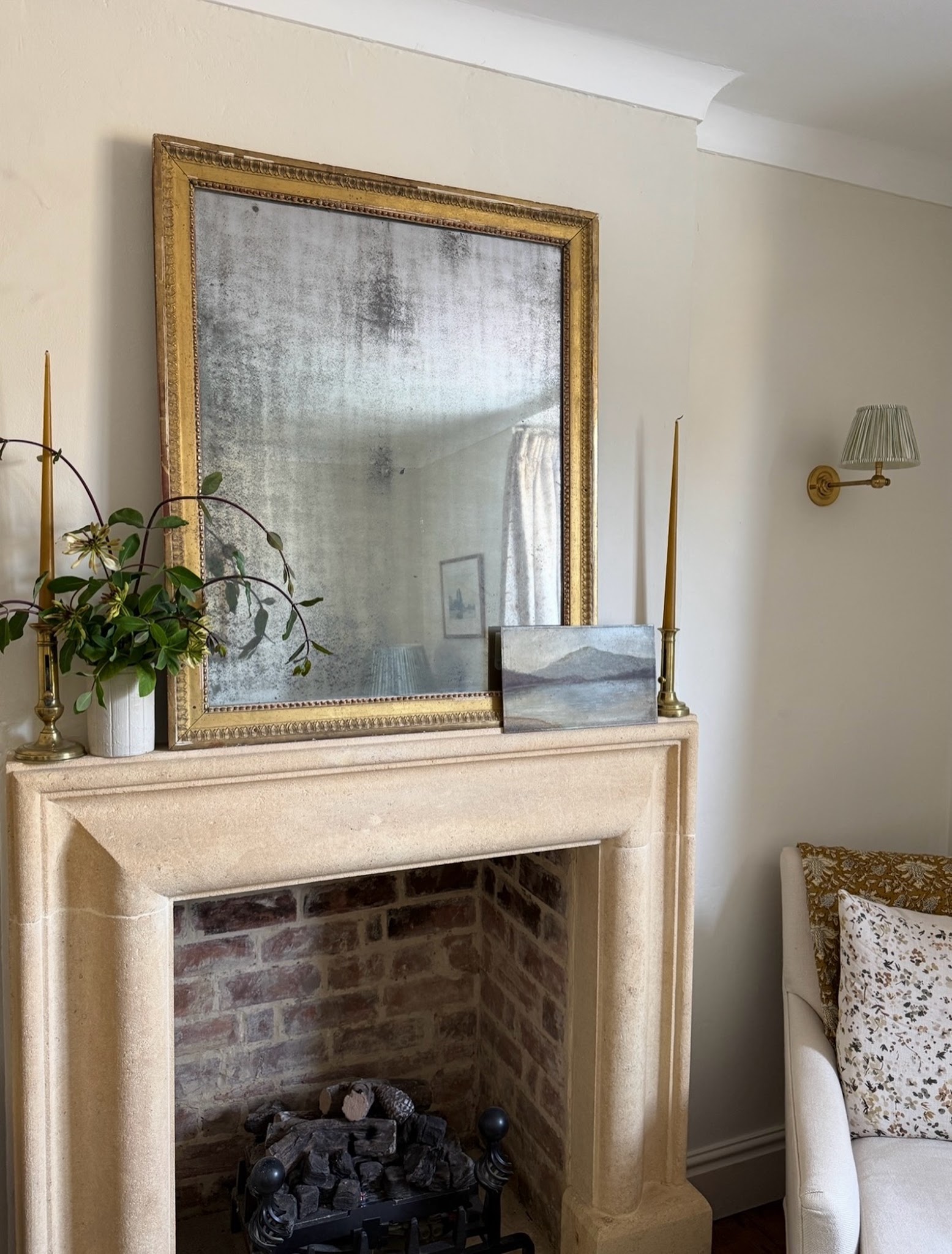
The beauty of this mantel mirror lies in its imperfect reflection. Cloudy, mottled glass brings texture to a quiet corner, while the narrow gold frame adds warmth beside the pale limestone fireplace.
Its tall rectangle gives the wall presence without requiring a bold color or elaborate silhouette. A small landscape rests across one lower corner, and slender candlesticks leave most of the glass visible.
This is a useful approach for a living room already rich in natural materials. Let the mirror contribute age and softness instead of demanding a crystal clear view.
Pair it with a few objects of different heights, keeping the largest arrangement off center. The nearby upholstered chair shows how comfortably this layered fireplace belongs within seating.
4. Use a Wavy Frame Beside an Archway
Credits: Instagram
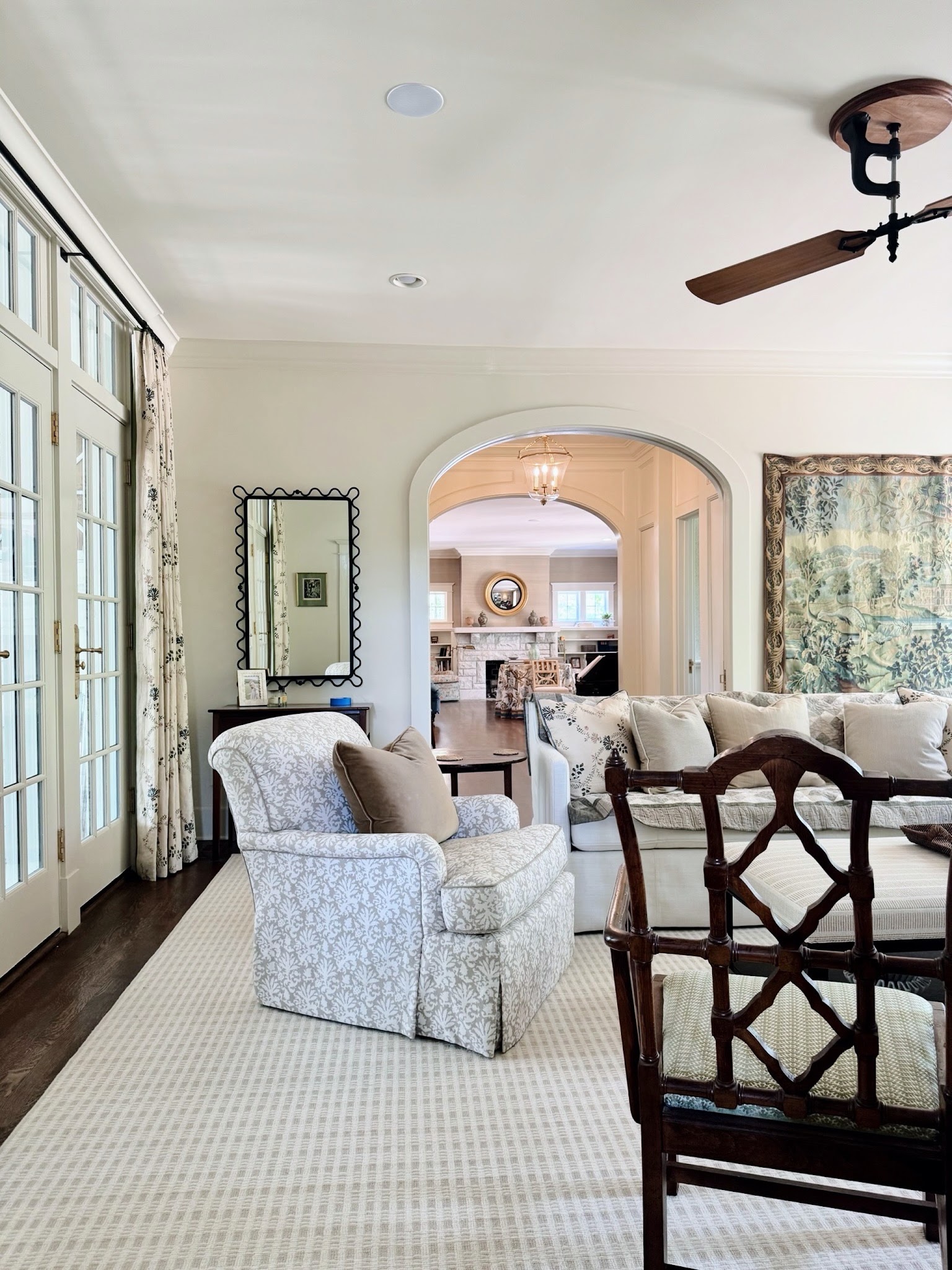
A slim rectangular mirror with a looping black border turns a narrow wall into a decorative moment in this sitting room. Placed above a small console, it sits between tall glazed doors and an arched opening without crowding either feature.
The playful frame supplies movement among the pale upholstery, floral fabrics, and traditional wooden furniture. Its reflection also repeats the curtains, helping the little wall feel connected to the larger room.
Consider this placement when the main wall already holds a tapestry or substantial artwork. A secondary mirror can have personality while staying modest in scale.
Leave a little clear wall around its outline, and keep console accessories low enough that the interesting border remains visible from the nearby chairs.
5. Warm a Reading Corner with a Wood Arch
Credits: Instagram
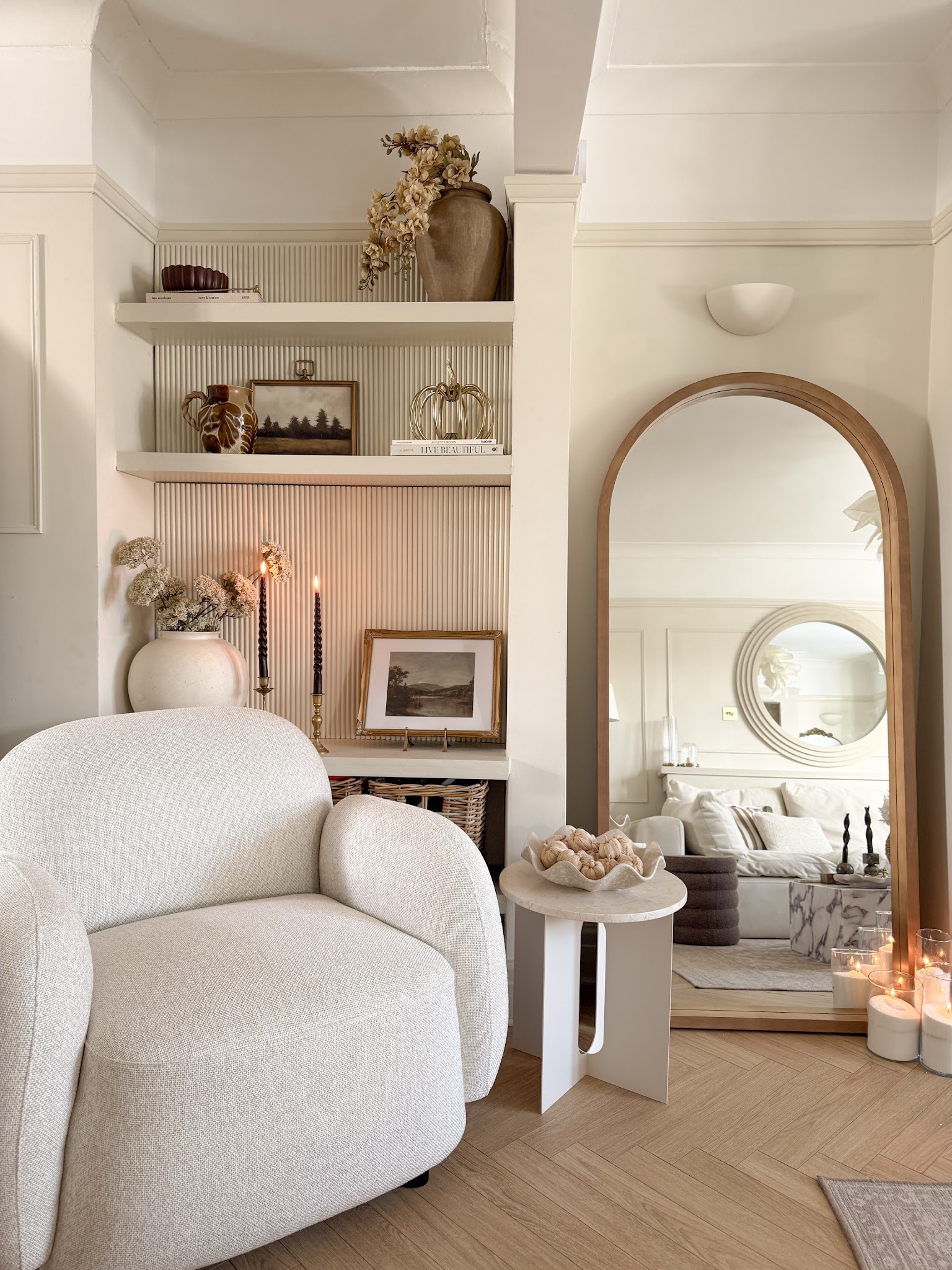
An arched floor mirror gives this pale reading corner height and a warm wooden edge. Set beside the rounded armchair, it reflects the sofa and another circular mirror across the room, adding depth to the layered arrangement.
The surrounding shelves hold framed landscapes, pottery, books, and dried flowers, but the broad reflective panel offers a calm visual pause.
Choose this idea when your living room has abundant small decorative pieces and needs one larger shape to organize them. Echo the frame color in nearby wood or woven accessories so the mirror feels integrated.
Leave enough floor space for the base, and secure a leaning mirror according to its mounting instructions. A small side table keeps the chair comfortable and useful.
6. Outline an Organic Mirror with Warm Light
Credits: Instagram
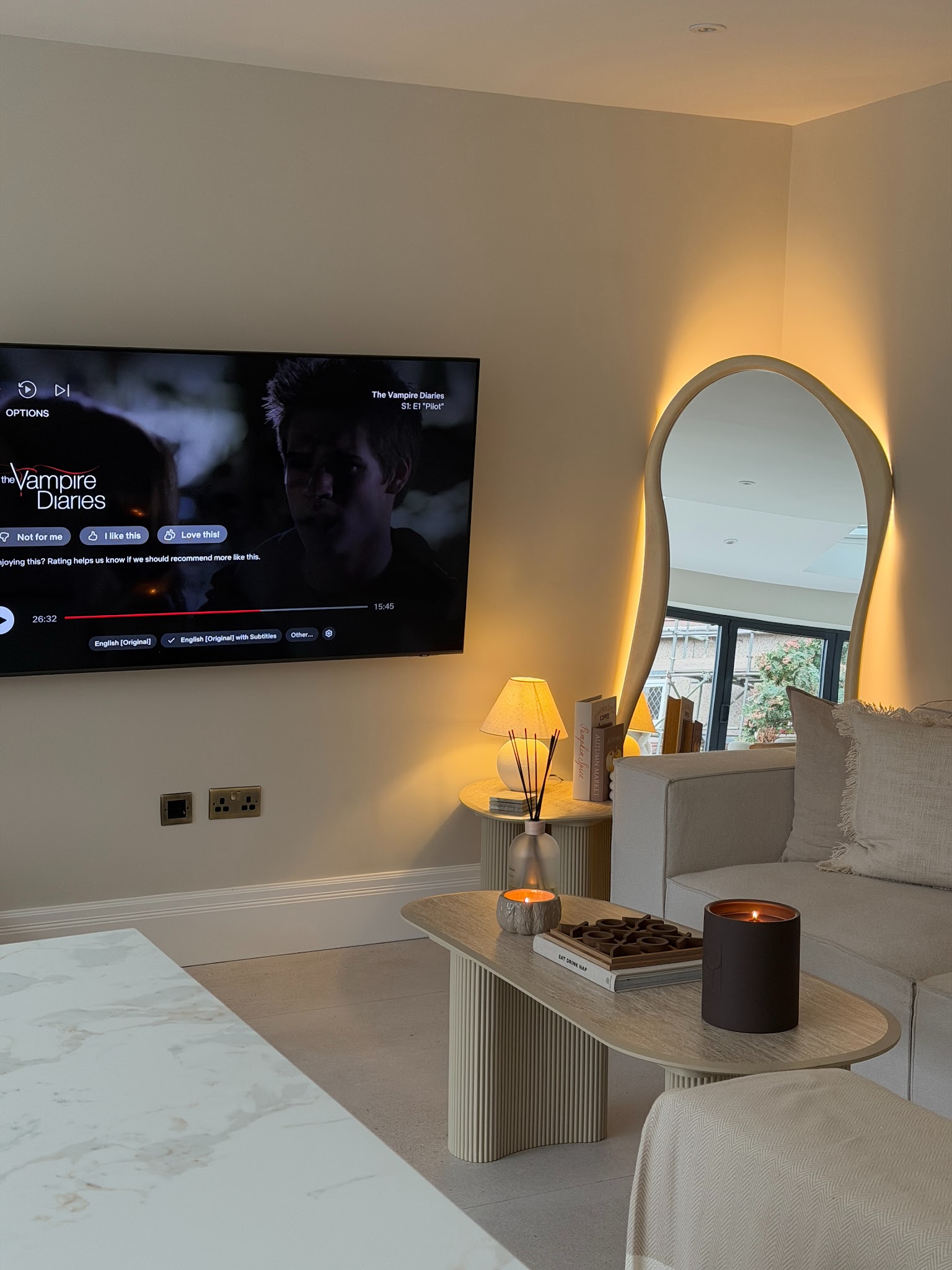
The softly irregular mirror beside the television gives this neutral living room an expressive shape. Warm light glows around its outline, turning the corner into an evening feature, while the glass reflects broad garden doors beyond the sofa.
Its curves work with the oval side tables and rounded lamp, offering a gentle counterpoint to the screen. This combination is especially useful when a television wall feels visually rigid.
Start with a mirror whose silhouette is interesting enough to stand alone, then consider lighting that makes the edge visible after sunset. Keep surrounding furniture low so the upper curve remains clear.
A restrained palette of cream fabric, pale wood, and warm illumination lets the mirror contribute character without adding another color.
7. Repeat Black Lines Around a Pale Fireplace
Credits: Instagram
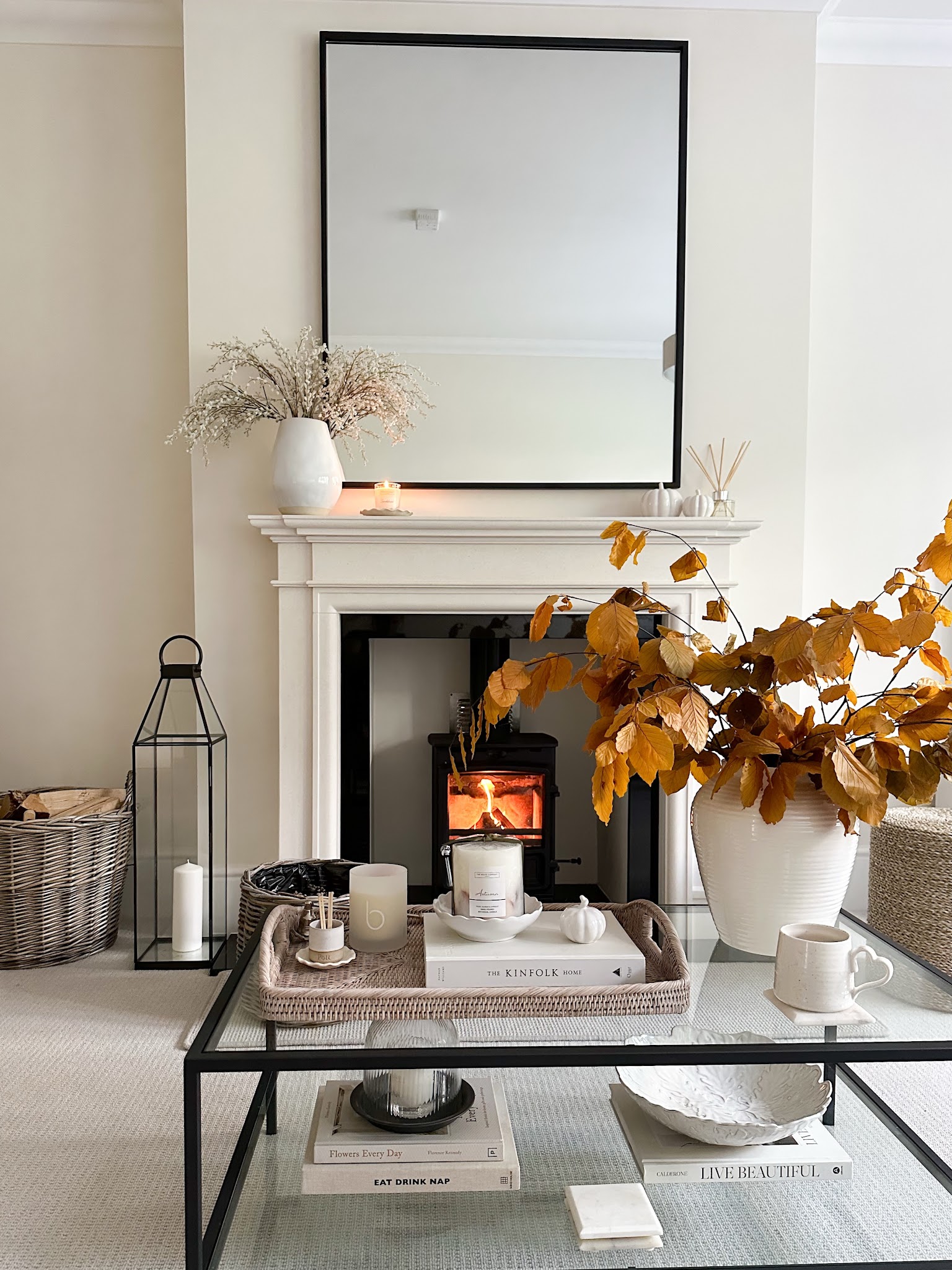
A tall rectangular mirror with a fine black frame gives this white fireplace a crisp outline. The same dark note appears in the lantern and glass coffee table, linking the room through a few carefully repeated lines.
Pale baskets, ceramics, and a substantial vase of autumn foliage soften the effect. The mirror remains mostly clear, so the mantel arrangement feels airy despite the decorative layers in front.
Try this strategy when your living room is largely cream or white and needs definition. Choose a restrained frame that relates to existing furniture rather than introducing a heavy new finish.
Keep the mirror narrower than the mantel, and balance one taller vase with smaller objects that leave plenty of reflected space visible.
8. Pair a Dark Arch with Fluted Furniture
Credits: Instagram
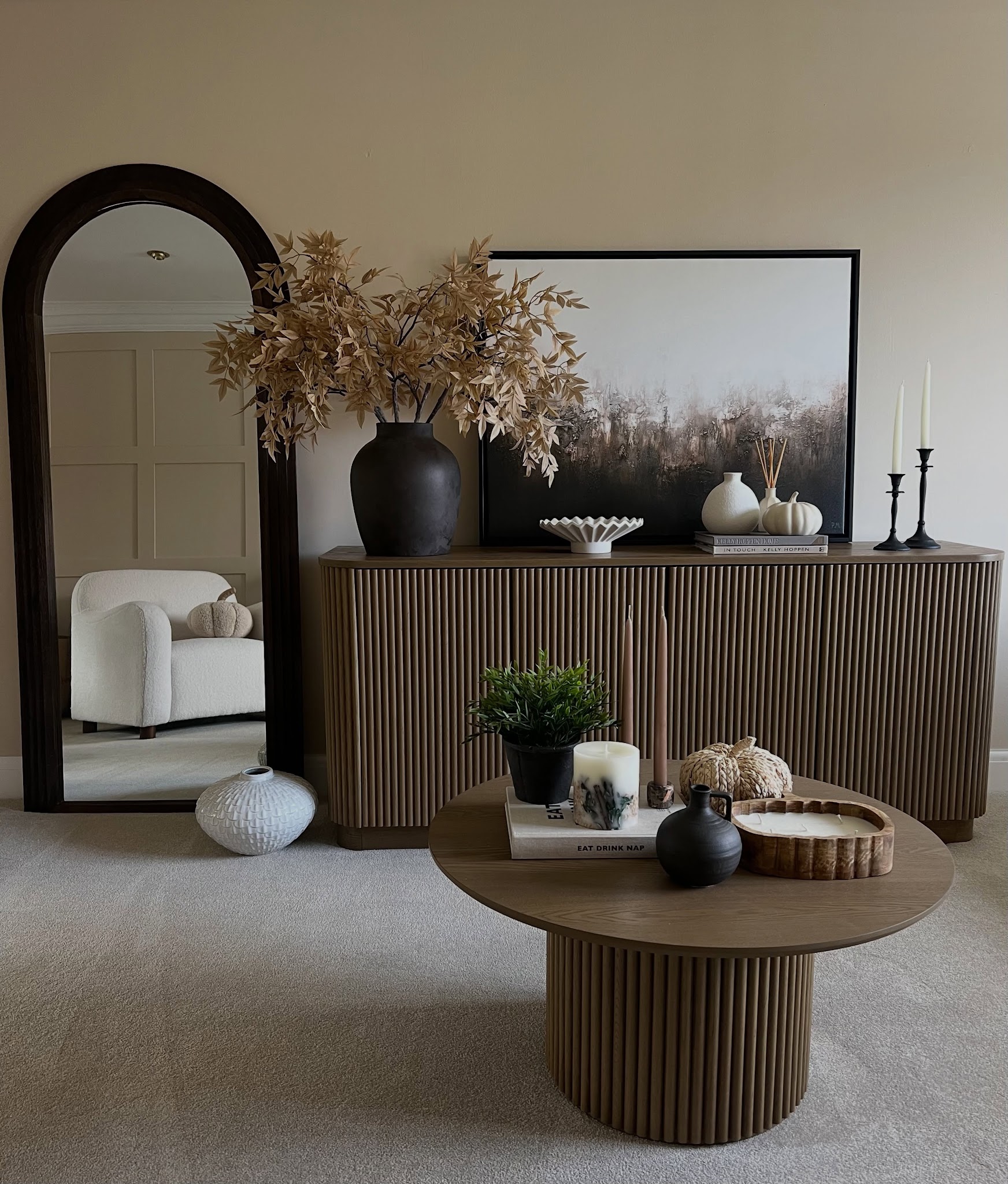
A dark wooden floor mirror brings height to this low arrangement of fluted furniture. Its rounded top softens the long cabinet and repeats the curved ends of the coffee table, while the reflection shows a pale armchair against paneled walls.
Instead of centering the mirror above the cabinet, the owner places it alongside, allowing a large framed landscape to occupy the surface. This creates two distinct vertical elements without forcing everything into symmetry.
Borrow the idea when you want both artwork and a mirror on the same wall. Coordinate their frame colors, vary their proportions, and keep the surrounding palette restrained.
The large branch arrangement bridges the two pieces, while smaller pale ceramics break up the darker wood and accessories.
9. Reflect the Seating from a Quiet Corner
Credits: Instagram
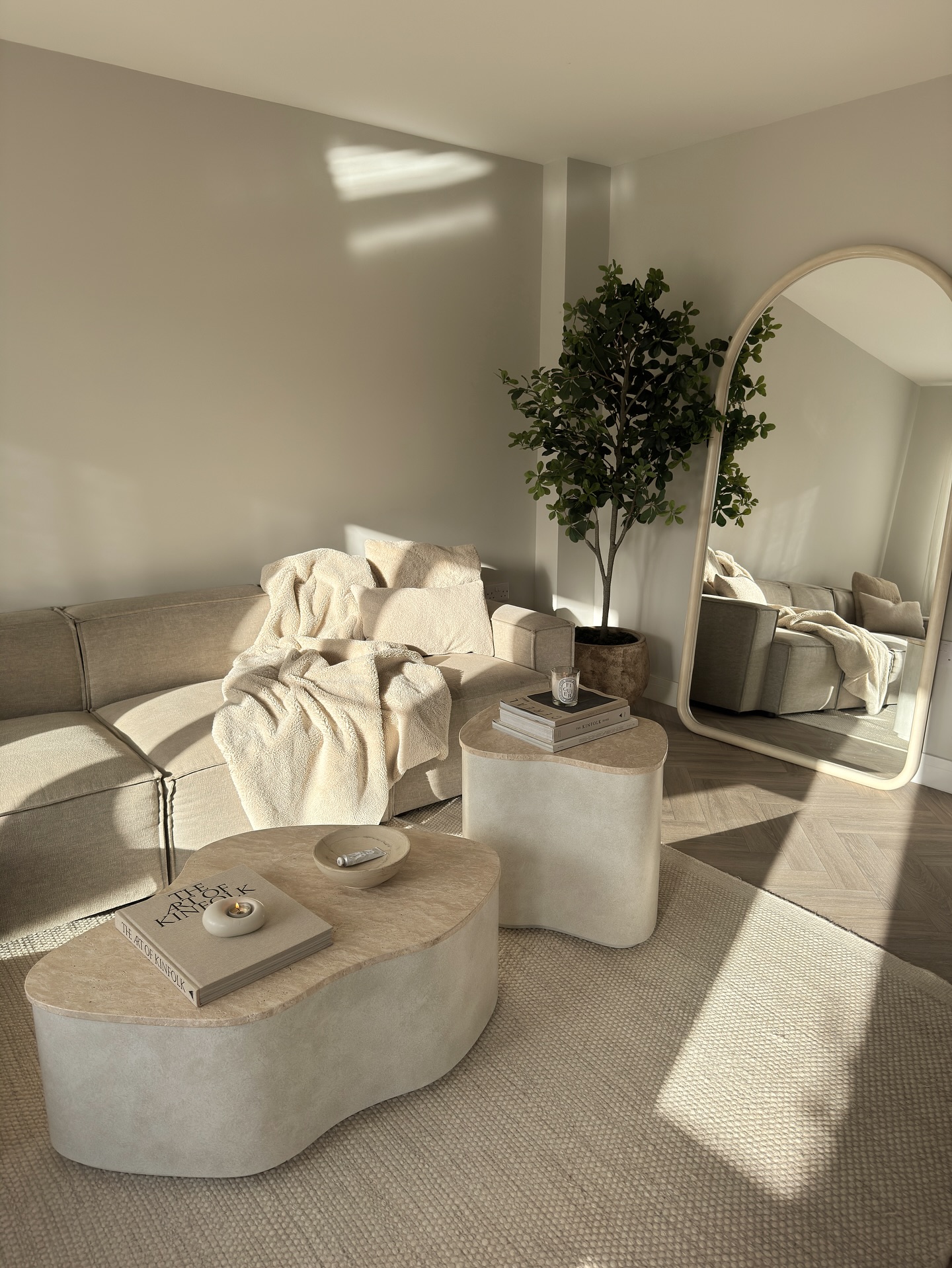
This pale arched mirror extends the view of the sofa without taking over the living room. Tucked beside a tall plant, it reflects the cushions and loosely draped throw, repeating the textures that already make the space inviting.
Its light frame stays close to the wall color, so the curved outline feels gentle beside the rounded stone tables. The idea works particularly well in a room where subtle shapes matter more than bold accessories.
Position the mirror to capture a considered part of the seating rather than an awkward doorway or storage area. Check that view from several seats before securing it.
Leave a little space around the plant so foliage frames the reflection instead of hiding most of it.
10. Create a Window Effect Above a Console
Credits: Instagram
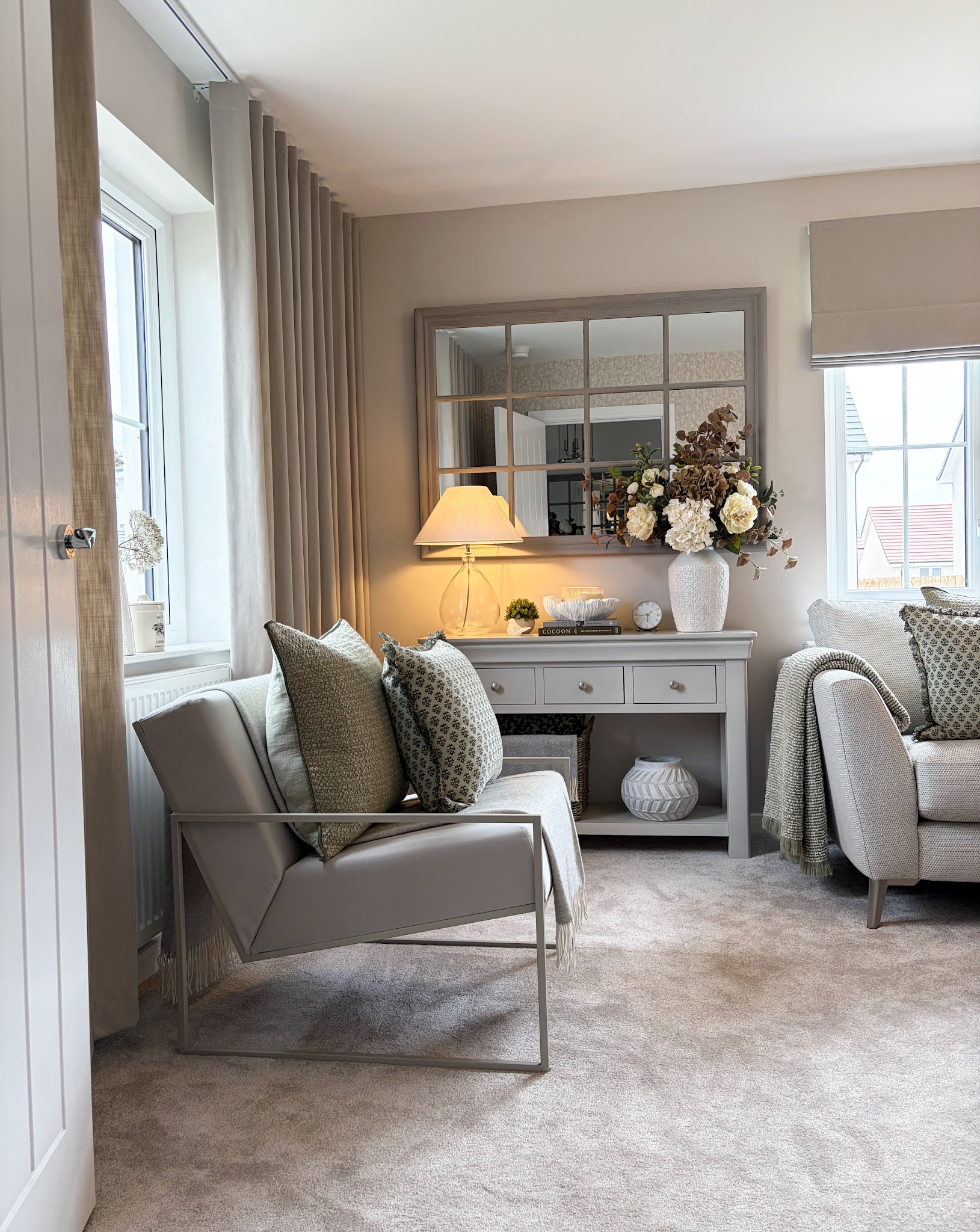
A broad grid mirror above the console echoes the real window beside it, giving this sitting area an architectural rhythm.
Its muted wooden frame fits comfortably with the gray furniture and pale curtains, while the divided glass introduces structure among the soft cushions and floral arrangement.
A lamp on one side and a generous vase on the other balance the console without looking identical. Use this approach when a living room wall needs a substantial feature but another painting would feel too busy.
Choose grid proportions that relate to nearby glazing, and leave enough wall around the frame to distinguish the mirror from an actual opening. Keep the mirror narrower than the console so the arrangement feels grounded and intentional.
11. Make a Wavy Mirror the Mantel Centerpiece
Credits: Instagram
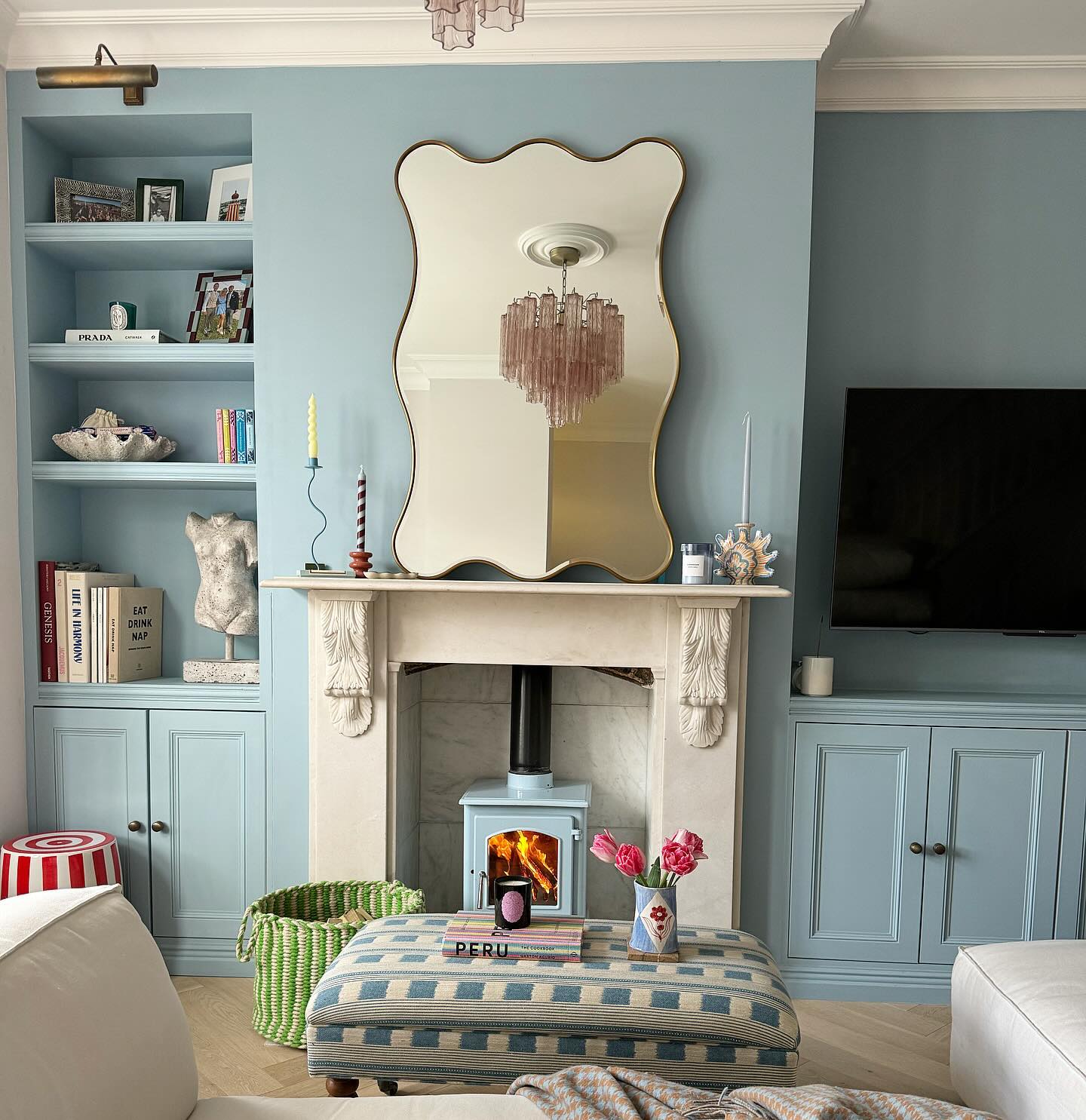
A tall mirror with rippling edges brings a playful focal point to this blue living room. Its slender gold outline follows an uneven silhouette, creating movement against the straight lines of the built-in shelves.
The reflection repeats the pink glass chandelier, while a blue stove and patterned ottoman continue the room's cheerful color story. Because the mirror is already expressive, the mantel holds only a few small objects and slender candlesticks.
Try this balance when you want a statement mirror without a crowded display. Let the shape rise above the fireplace, then repeat one metallic finish elsewhere, as the picture light does here.
Pale upholstery and colorful accessories help the unusual frame feel at home among the room's architectural details.
12. Double the Glow of a Seasonal Display
Credits: Instagram
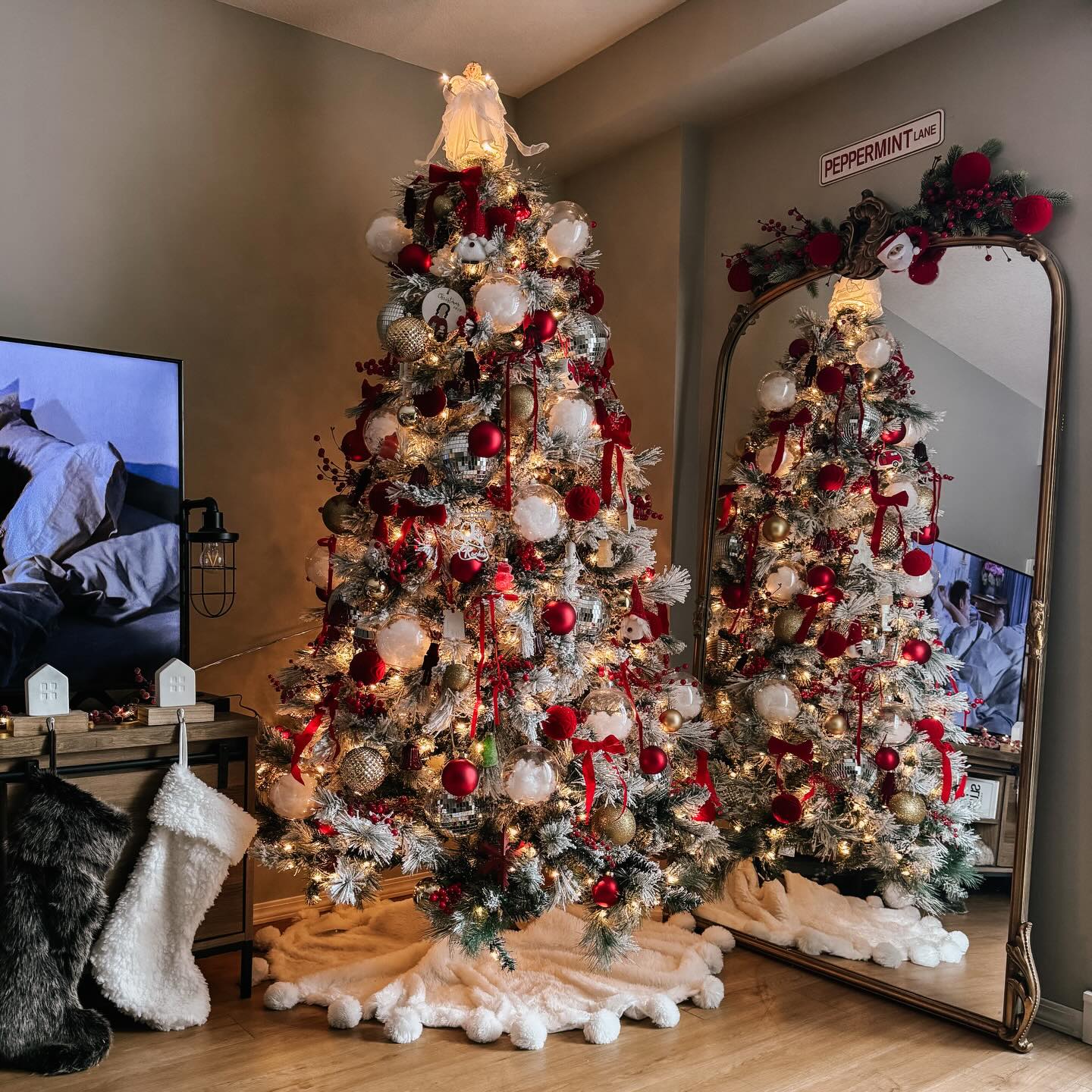
A large ornate floor mirror turns one Christmas tree into a much fuller display in this living room corner. The glass catches the lights, red ornaments, and soft white skirt, repeating the festive arrangement without adding another tree.
A short garland along the frame connects the mirror itself to the decorations. This is a useful reminder to think about reflections when arranging seasonal accents.
Place the most attractive part of the display within the mirror's view, and check the result from the sofa before settling everything in place. Keep the mirror securely anchored and leave access to nearby furniture clear.
Beyond the holidays, the same principle works with a tall plant, a favorite lamp, or a sculptural branch arrangement nearby.
13. Give Collected Shelves a Simple Mirror Neighbor
Credits: Instagram
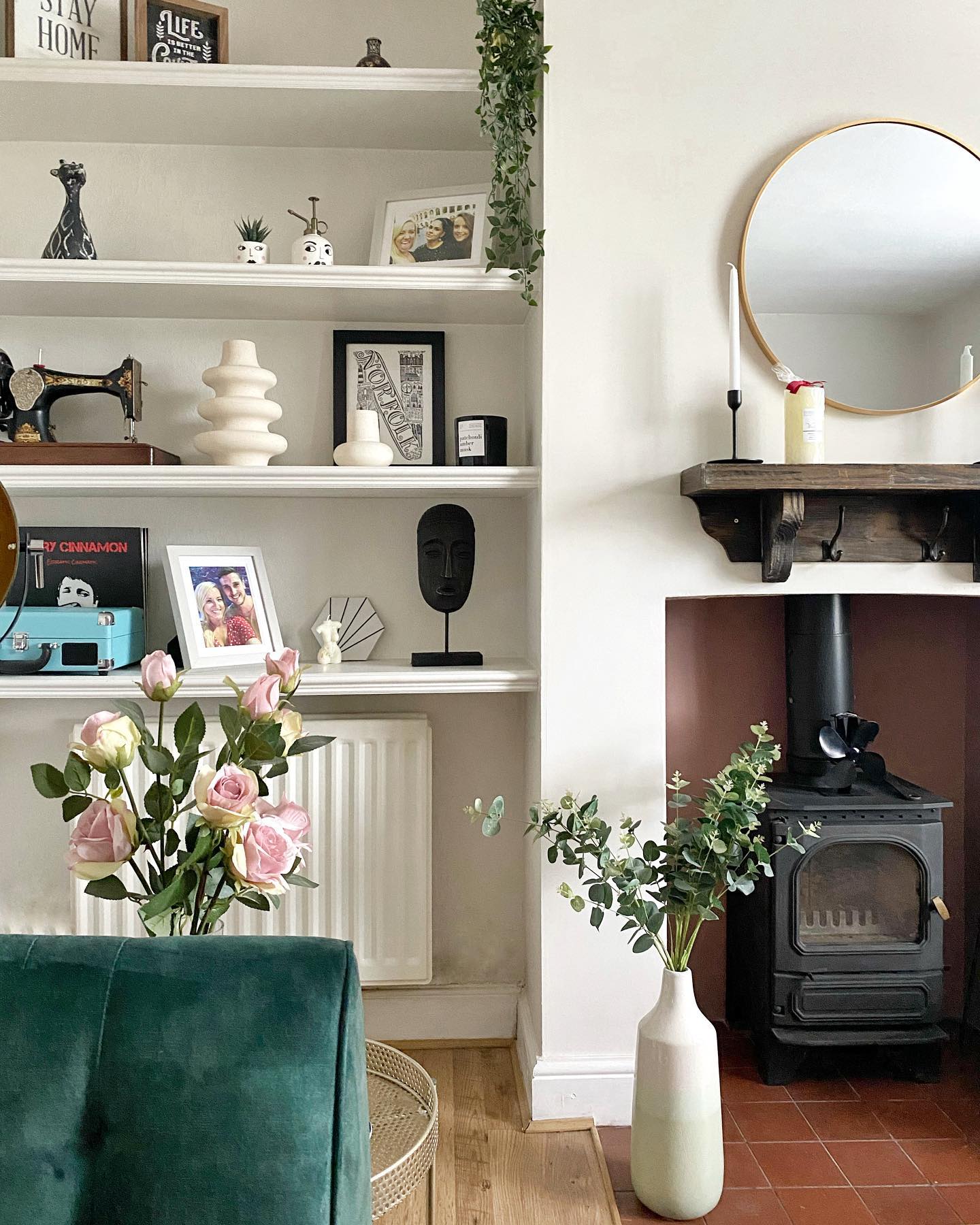
The plain round mirror above this wood burner provides a quiet counterpoint to the busy shelves beside it.
A thin gold edge adds a little warmth, while the broad glass surface gives the eye somewhere to rest between family photographs, pottery, a sewing machine, and a record player.
The dark wooden mantel keeps the circle connected to the fireplace below. Try this arrangement when your living room already tells a rich story through objects.
A simple mirror can complete the wall without introducing another competing collection. Keep its immediate surroundings spare, then let the shelves carry the variety.
The green seating, trailing foliage, and pale vase tie the two sides together, making the fireplace corner feel relaxed and personal overall.
14. Build a Mirror Gallery Above a Tufted Sofa
Credits: Instagram
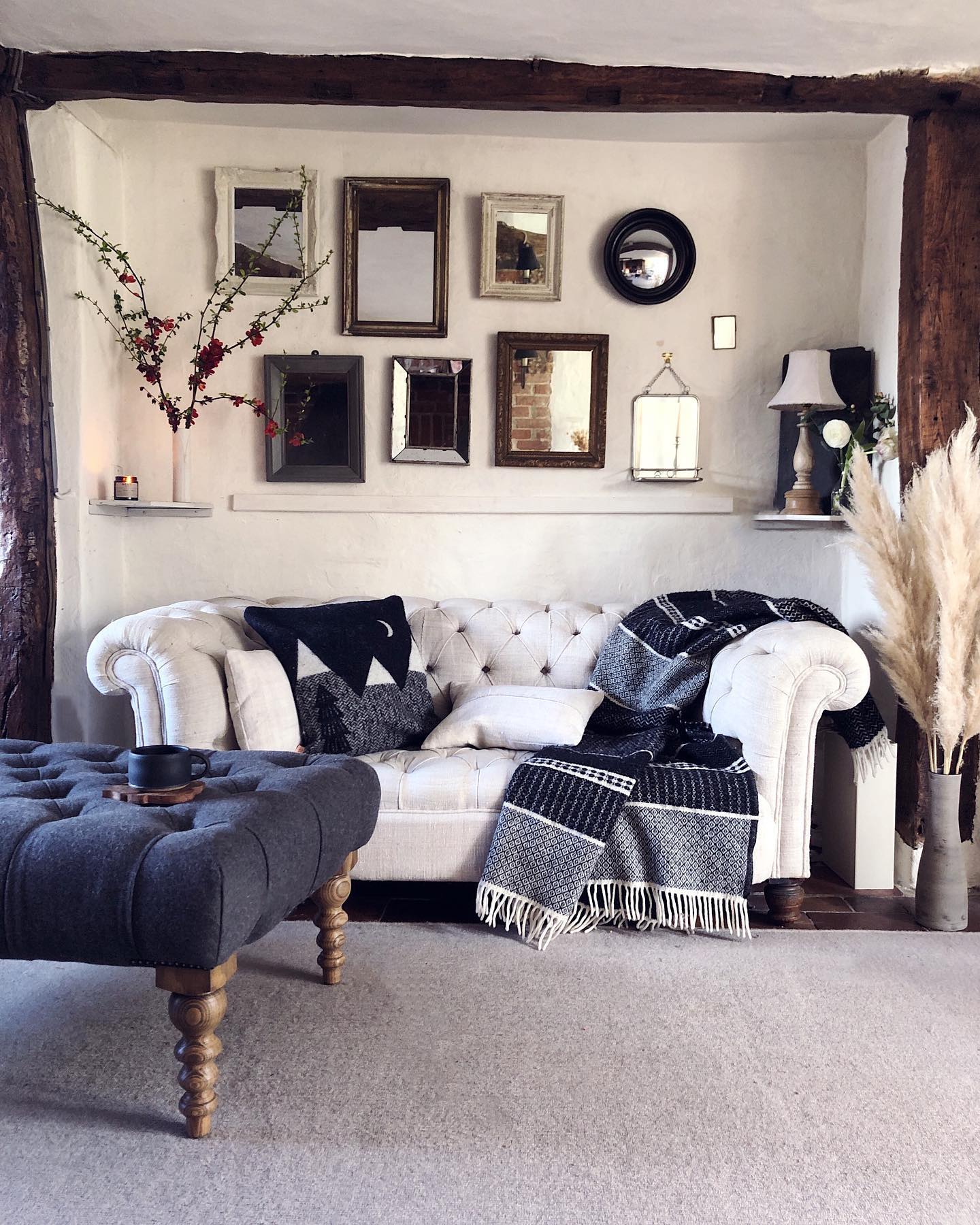
A collection of mirrors fills the wall above this cream Chesterfield with character. Dark wood, pale painted frames, a beveled rectangle, and a black convex circle share the space without looking identical.
The exposed beams provide a natural border, while the slim shelf below establishes a clear lower edge for the arrangement. Notice how the gallery remains compact enough to relate to the sofa rather than spreading across every available inch.
To borrow this idea, start with your largest mirror and arrange smaller shapes around it. Repeat a few finishes to connect the collection, but vary heights and proportions.
Keep nearby textiles within a limited palette, as the black and cream throw does here, so the reflections stay visually organized.
15. Bring Graphic Contrast Above a Neutral Sofa
Credits: Instagram
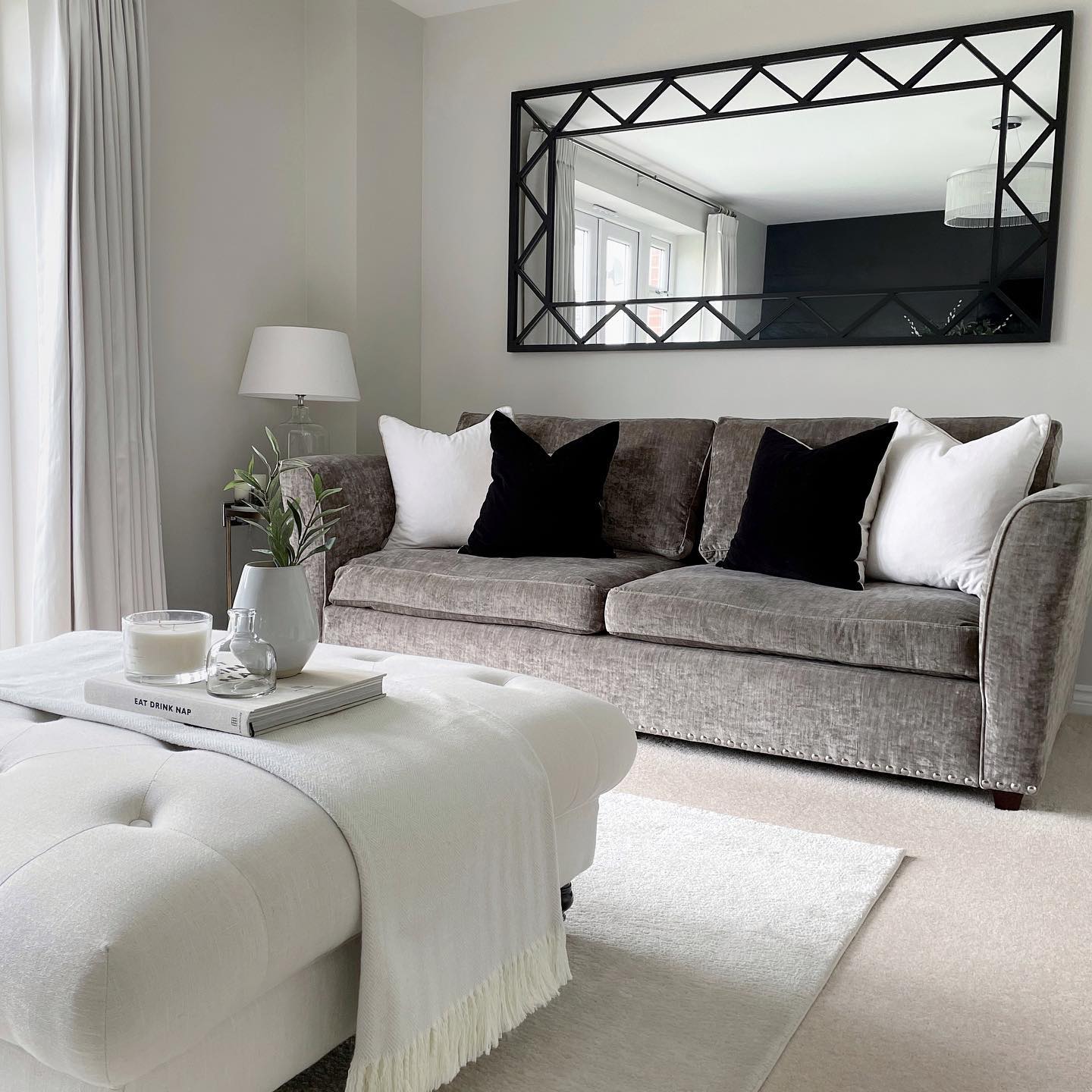
The broad mirror above this gray sofa makes a strong impression through its border. Black diagonal bars form a repeating diamond pattern around a generous central panel, bringing crisp geometry to the soft upholstery.
Black and white pillows echo that contrast, while the pale ottoman and curtains keep the rest of the room light. The reflection captures windows and a darker wall, adding depth without another piece of artwork.
Choose this approach when a neutral living room needs definition. A wide horizontal mirror can relate to the sofa's proportions while leaving the surrounding walls calm.
Repeat the frame color in a few small accents, and avoid crowding the mirror with additional wall decorations that would weaken its distinctive graphic outline.
16. Use a Textured Sunburst Between Trailing Plants
Credits: Instagram
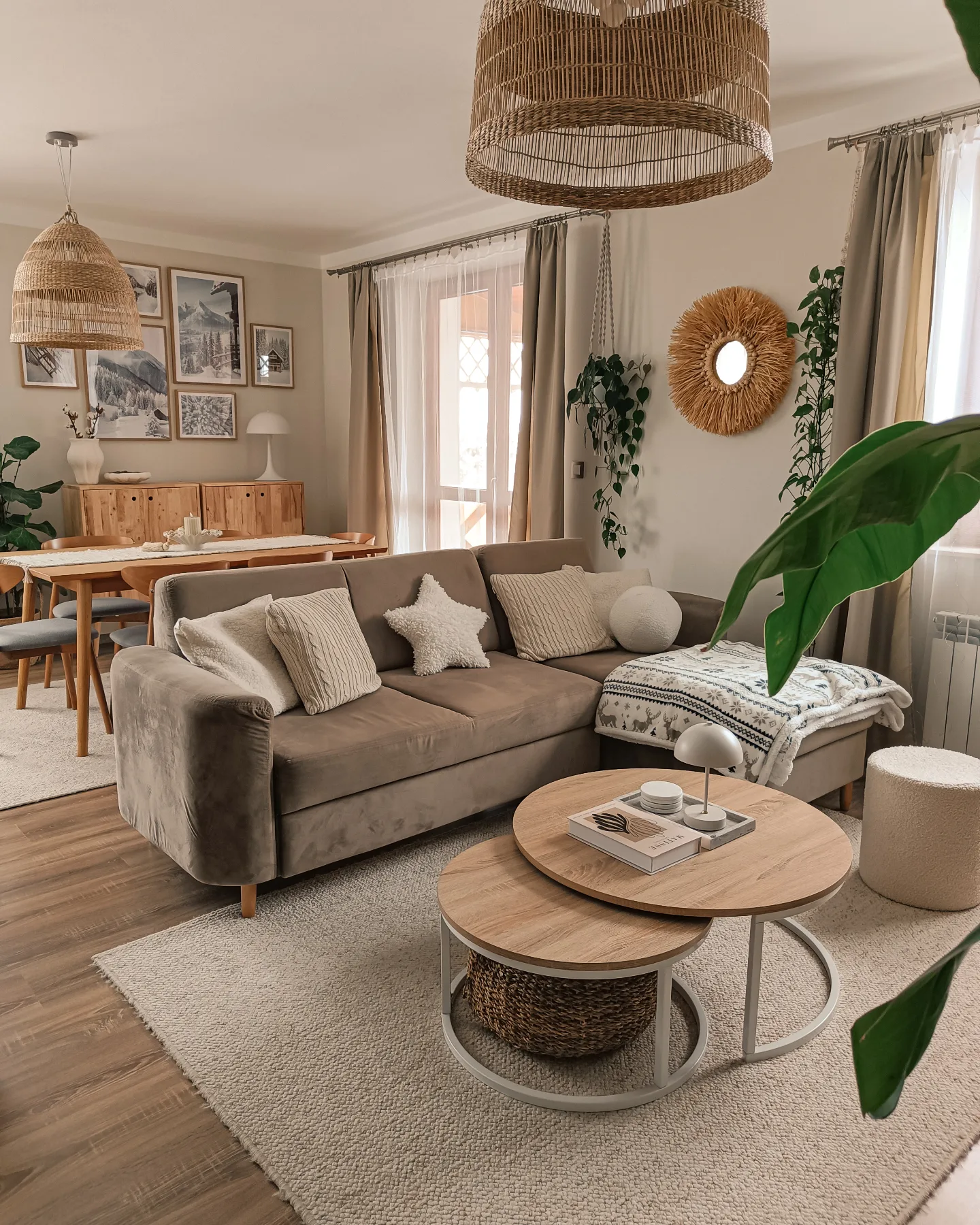
A small circular mirror surrounded by a generous fringe of natural fibers adds a sunny focal point above this neutral sectional.
Its textured edge relates to the woven pendant shades and wooden furniture, while trailing plants create a loose frame on either side. The reflective center is modest, making this choice more about texture and shape than a sweeping view.
That can be ideal when your living room already has plenty of windows. Borrow the combination of one tactile mirror, soft curtains, and greenery to make a plain wall feel considered.
Keep the frame's warm tone connected to your tables or lighting. Pale cushions with different textures add interest below without competing with the feathery outline of the mirror above.
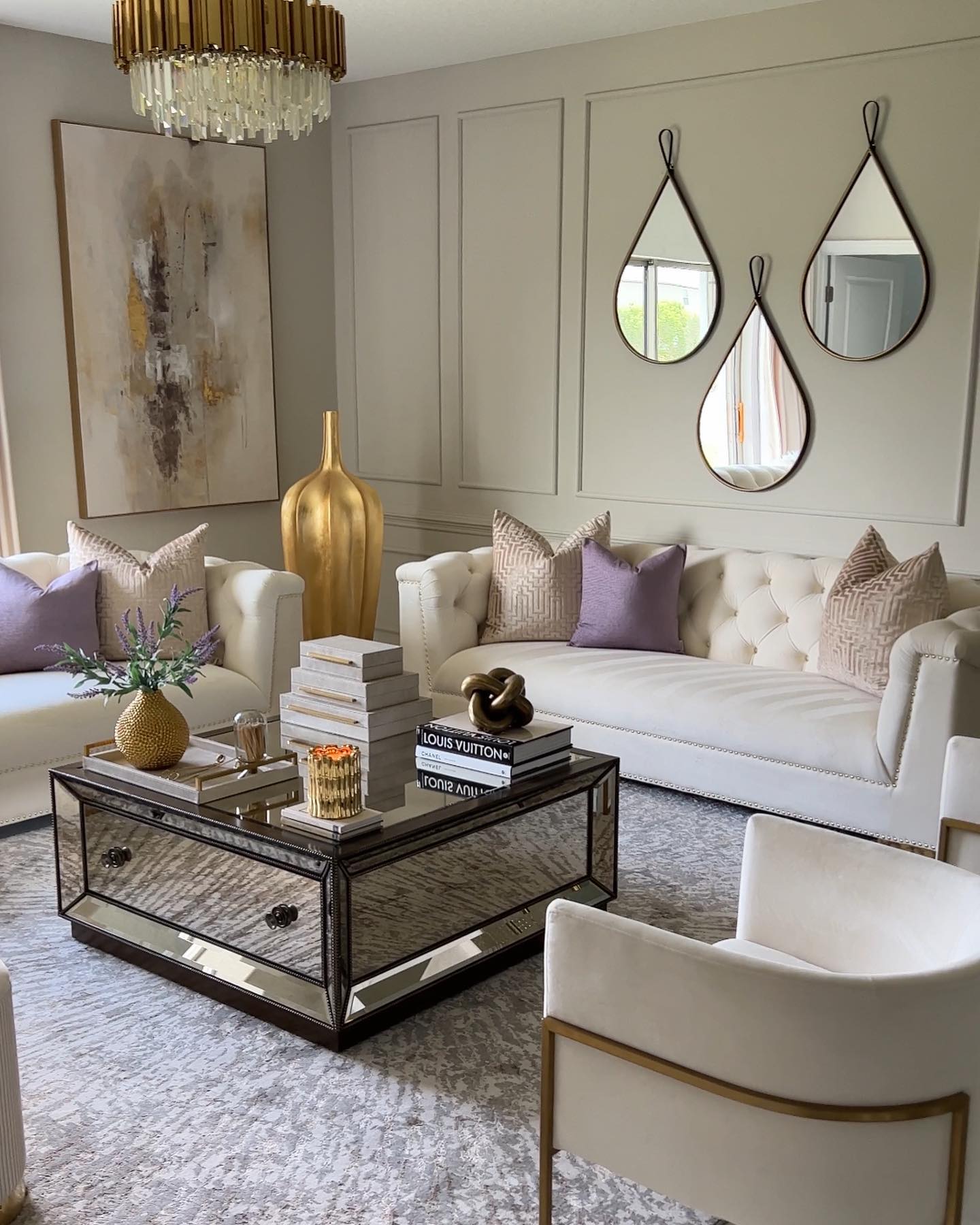
17. Arrange Three Teardrops Inside Wall Molding
Credits: Instagram
Three teardrop mirrors create an elegant grouping above this tufted white sofa. Two sit higher, with the third centered below, forming a compact arrangement inside the wall molding.
Their narrow dark borders sharpen the soft curves and connect with the dark edging on the mirrored coffee table. Lavender cushions and gold accessories add color and warmth without interrupting the simple outline.
Try this idea when a single round mirror feels too predictable for your living room. Treat the three pieces as one composition, keeping their spacing consistent and their combined width proportionate to the sofa.
Check the reflection in each piece before installation; here, different slices of windows and doorways give the arrangement variety while maintaining a coherent, balanced look.
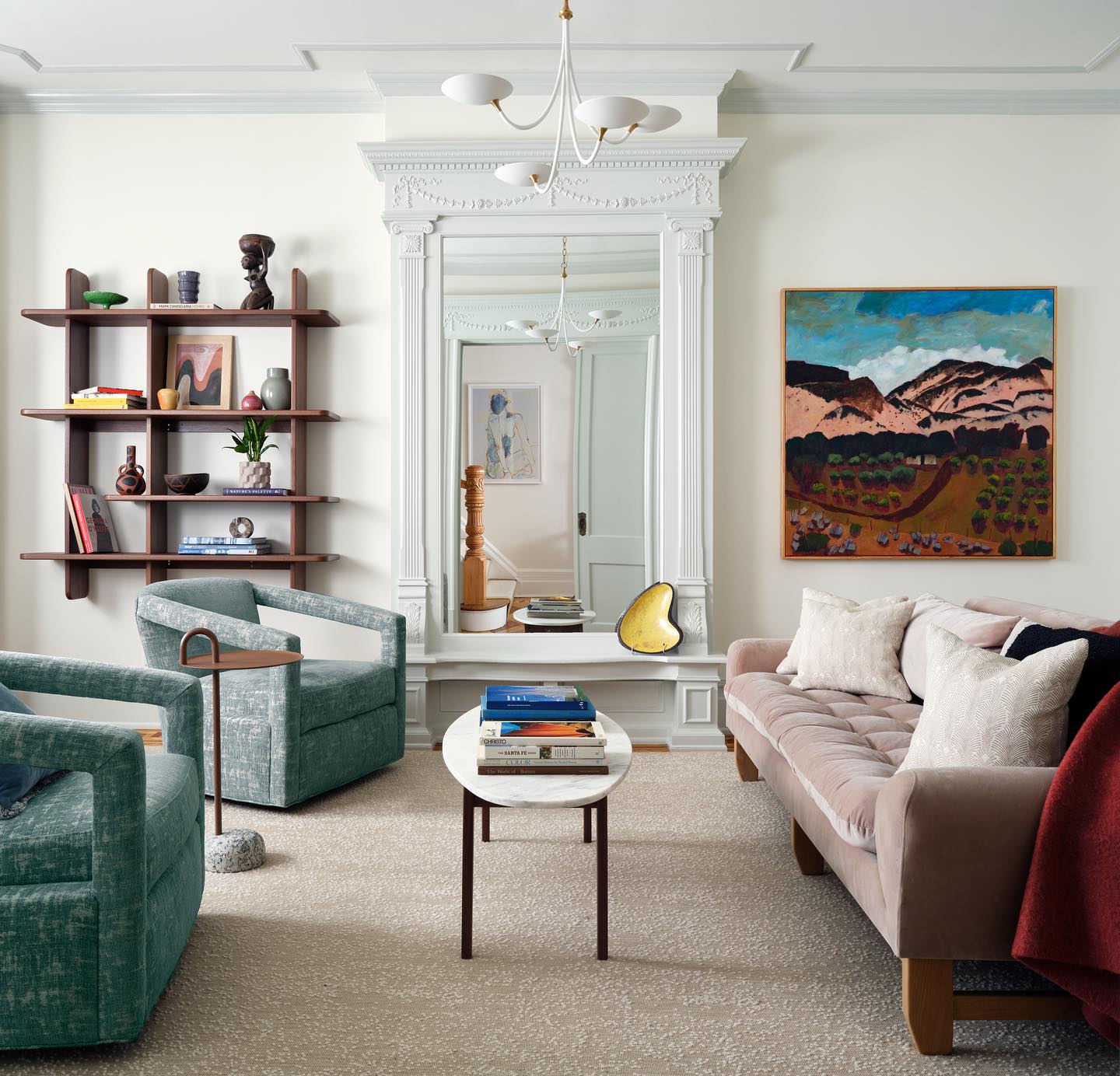
18. Let a Tall Architectural Mirror Anchor the Room
Credits: Instagram
This tall mirror brings architectural presence to the center of an elegant living room. Its pale surround includes slender columns, decorative carving, and a substantial top, making the piece feel integrated with the ceiling trim.
Green armchairs and a blush sofa face across a narrow coffee table, leaving the mirror clearly visible between a wooden display shelf and colorful landscape painting.
The reflection carries the room's light fixture and opposite doorway into the composition. Take inspiration from the scale when your space has high ceilings or decorative molding.
Keep nearby furniture visually lower, and let the mirror have its own clear vertical zone. Painting an elaborate frame close to the wall color can preserve detail without overwhelming the furnishings nearby.
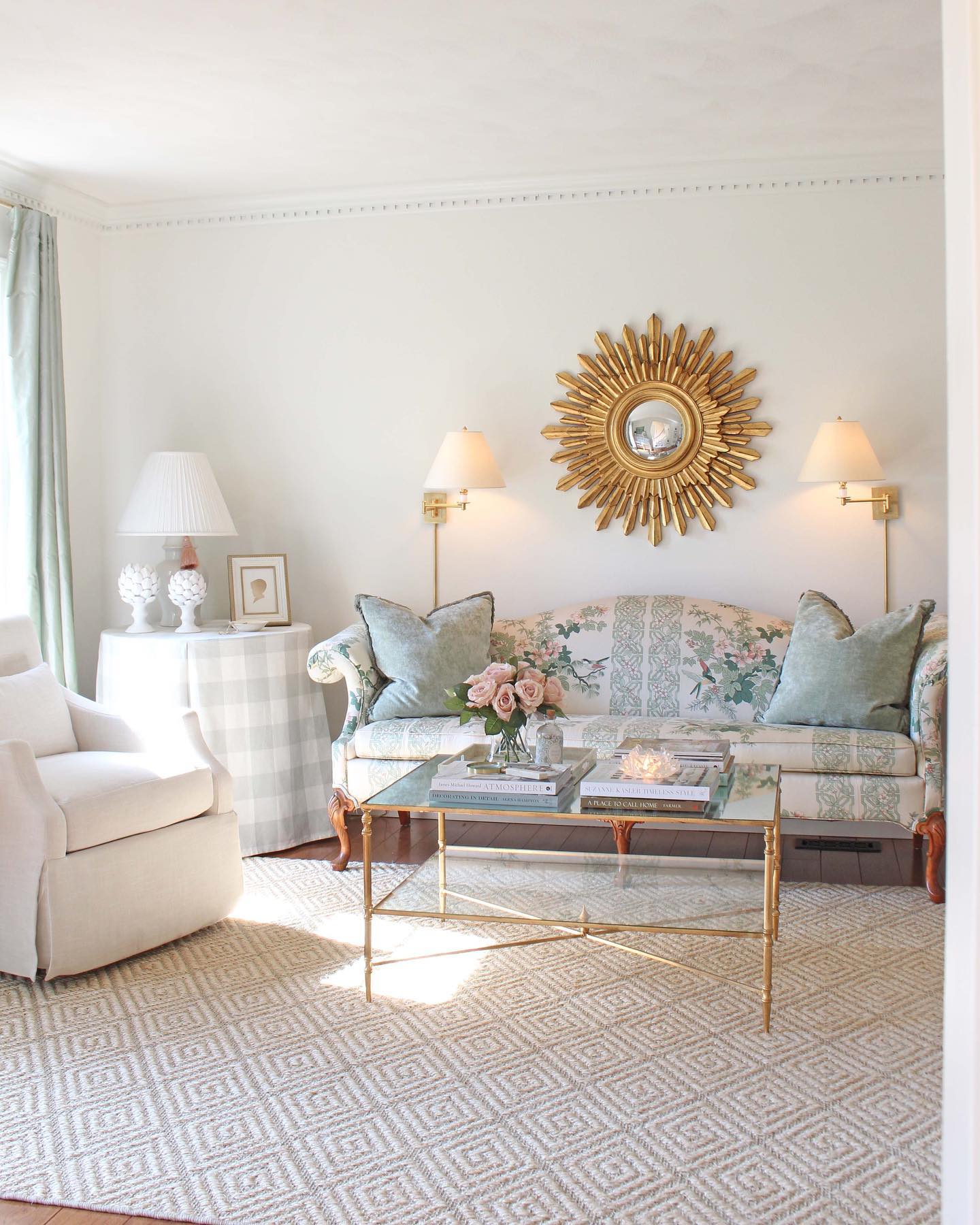
19. Center a Gold Sunburst Between Wall Lamps
Credits: Instagram
A gold sunburst mirror gives this traditional living room a bright focal point above the floral sofa. The small circular glass sits within long, irregular rays, so the frame supplies most of the visual impact.
Matching wall lamps flank it, and the slender gold coffee table carries the metallic finish down into the seating area. Soft green pillows, pale upholstery, and pink flowers temper the shine.
This is a useful arrangement when you want the decorative effect of a mirror without a large reflective surface. Center the sunburst on the sofa, then position the lamps to frame the whole composition.
Leave generous blank wall around the rays so their silhouette stays clear against the room's delicate patterns and gentle colors.
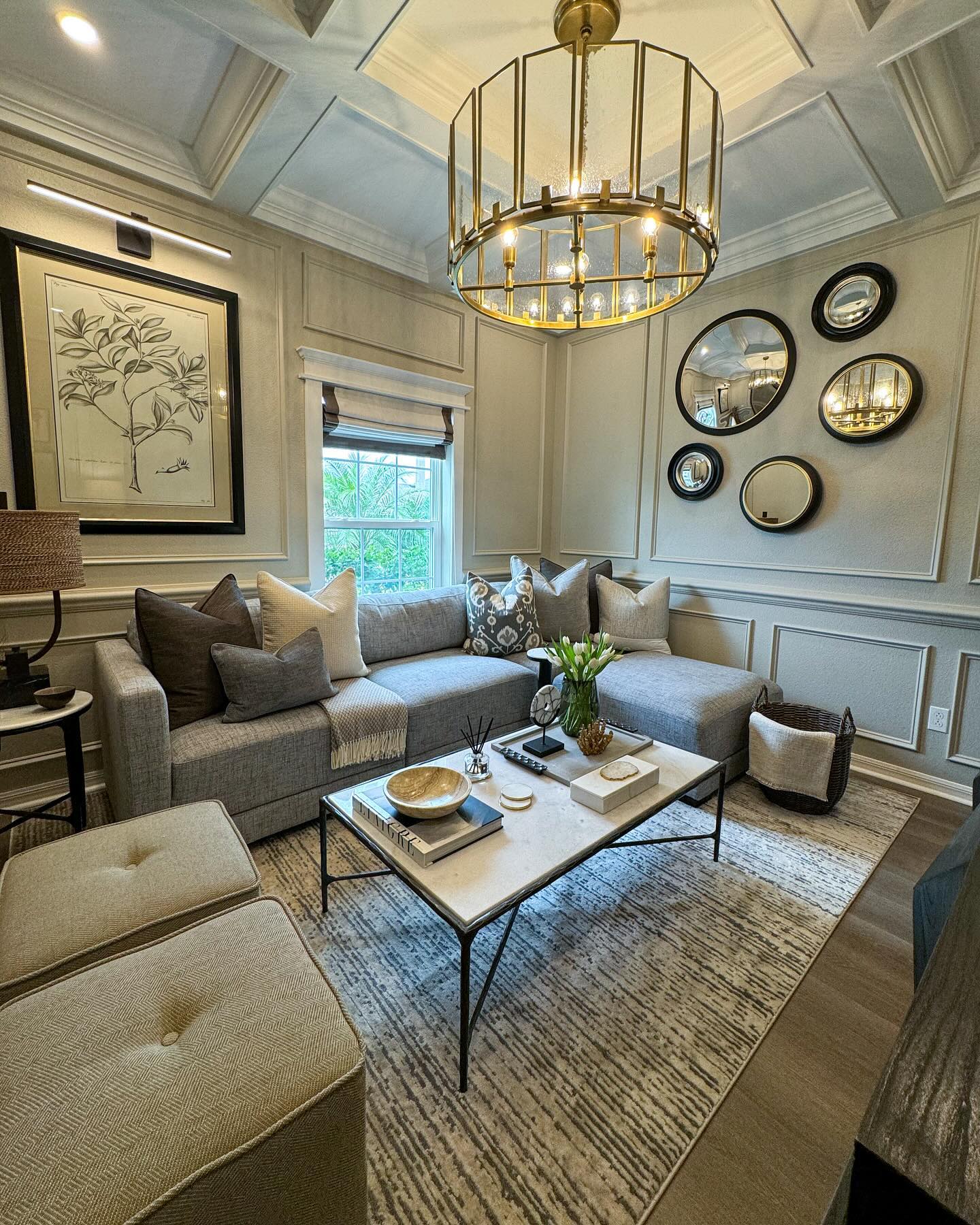
20. Group Round Mirrors Within a Paneled Wall
Credits: Instagram
Five round mirrors turn one section of this paneled living room wall into a lively display. Their varied sizes and mostly dark rims create a family resemblance, while the loose arrangement avoids the formality of a rigid grid.
Reflections of the substantial lantern and coffered ceiling bring those overhead details down to eye level. The gray sectional and patterned rug keep the room comfortable beneath the polished accents.
Use this idea when existing molding gives you a defined space to fill. Arrange the mirrors as a single cluster, leaving clear wall between the outer frames and the panel borders.
Vary diameter more than finish for a cohesive result. A nearby framed print balances the reflective group with a quieter surface.