
A room can feel more personal when its furniture doesn’t all match, but a few repeated colors or materials help keep the mix from feeling scattered.
These Eclectic Living Room Ideas show how to balance contrasting shapes, patterns, and periods with practical choices, such as using warm wood to connect different pieces or a large artwork to anchor an arrangement.
You’ll also find ways to make a small footstool stand out, display a collection above everyday seating, and carry color through an open doorway. Together, the examples offer approachable ways to add character while keeping the room comfortable and composed.
1. Start With Quiet Seating and Expressive Accessories
Credits: Instagram
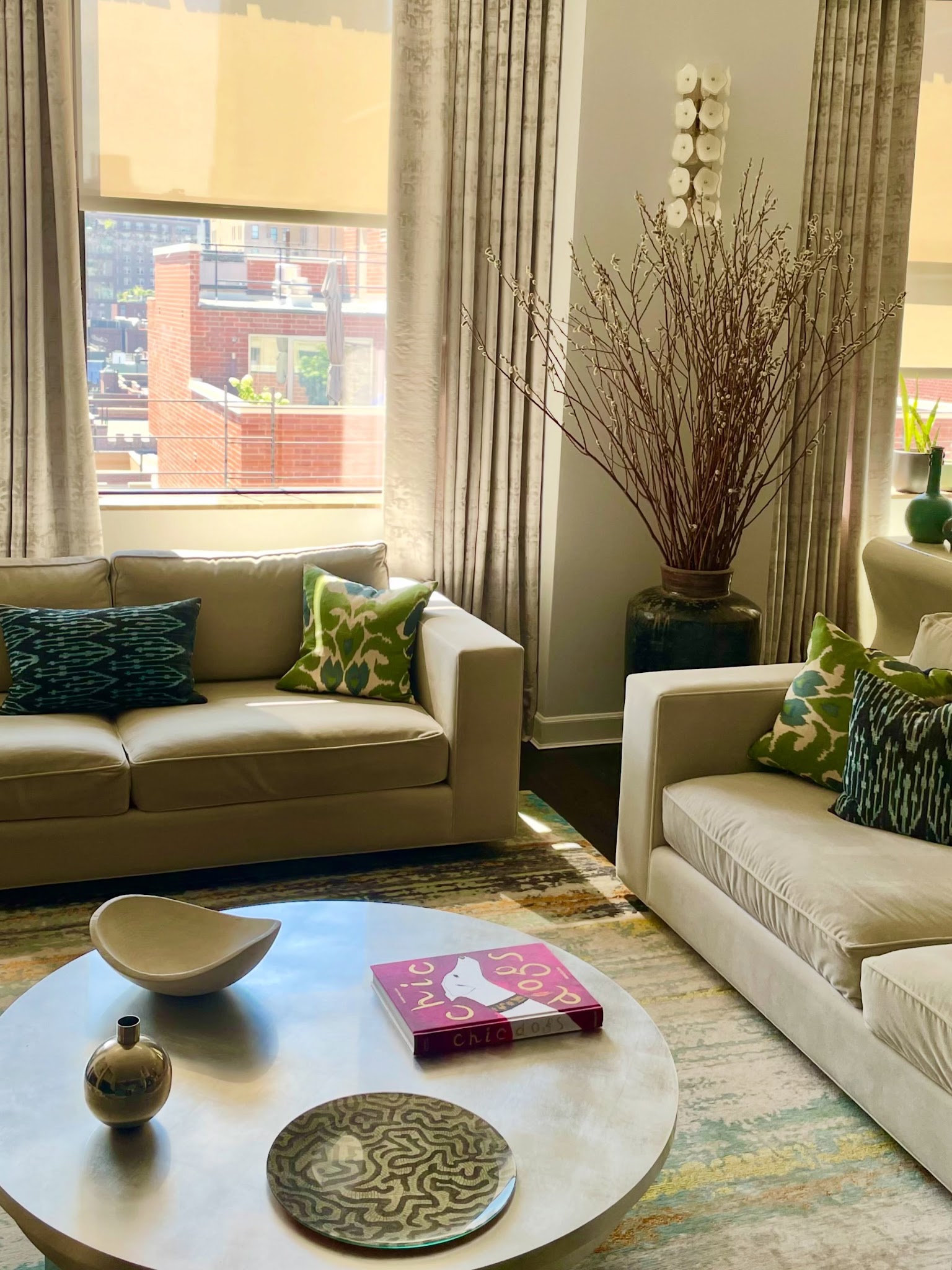
Two cream sofas give the patterned pillows and sculptural accessories in this living room a calm, neutral foundation. Blue and green repeat across the cushions, rug, and tall floor vase, creating connections without making every print identical.
The round metallic coffee table adds a different finish, while branches introduce an irregular outline beside the straight window frames.
Try this approach when you want an eclectic room that still feels composed: keep the biggest upholstered pieces simple, then vary the smaller objects.
Mix a graphic pillow with a looser, organic pattern, and leave enough of the sofa visible between them. A single unusually shaped wall light can provide personality without filling the wall. The repeated colors do the organizing for you.
2. Make a Small Footstool the Unexpected Piece
Credits: Instagram
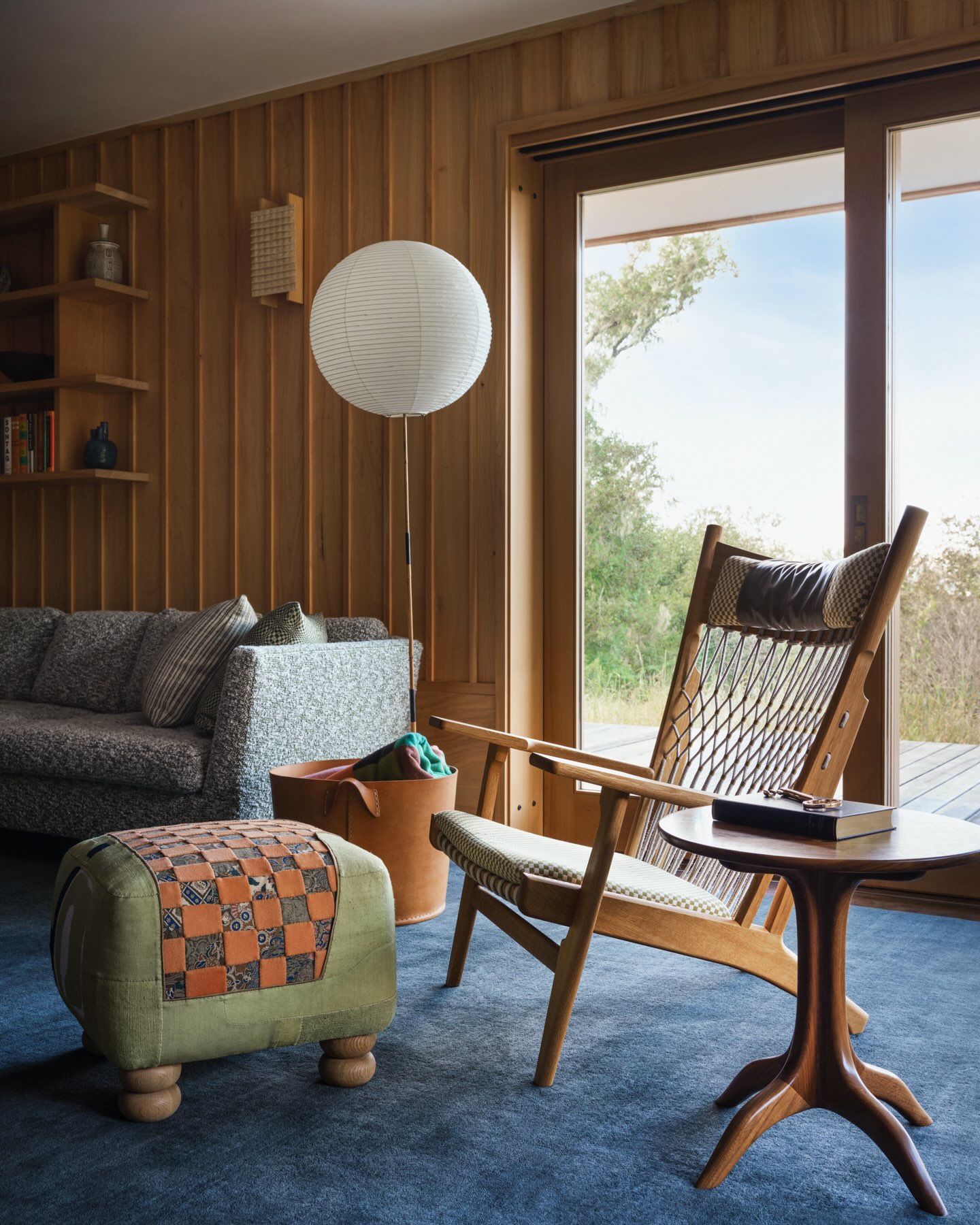
A patchwork footstool brings a playful note to this otherwise restrained living room. Its orange checks, green sides, and rounded feet contrast with the angular gray sofa and open wooden lounge chair.
The white globe lamp adds another shape, while wood paneling and blue carpet keep the palette grounded. An eclectic scheme can begin with a combination this small.
Choose one compact piece with a pattern or silhouette that differs from the main seating, then give it room to stand out. A traditional pedestal side table beside a more streamlined chair adds another useful contrast.
Keep the table surface simple so the furniture remains readable. Repeating wood tones helps these different forms sit comfortably together without requiring them to match.
3. Let One Large Artwork Unite Different Shapes
Credits: Instagram
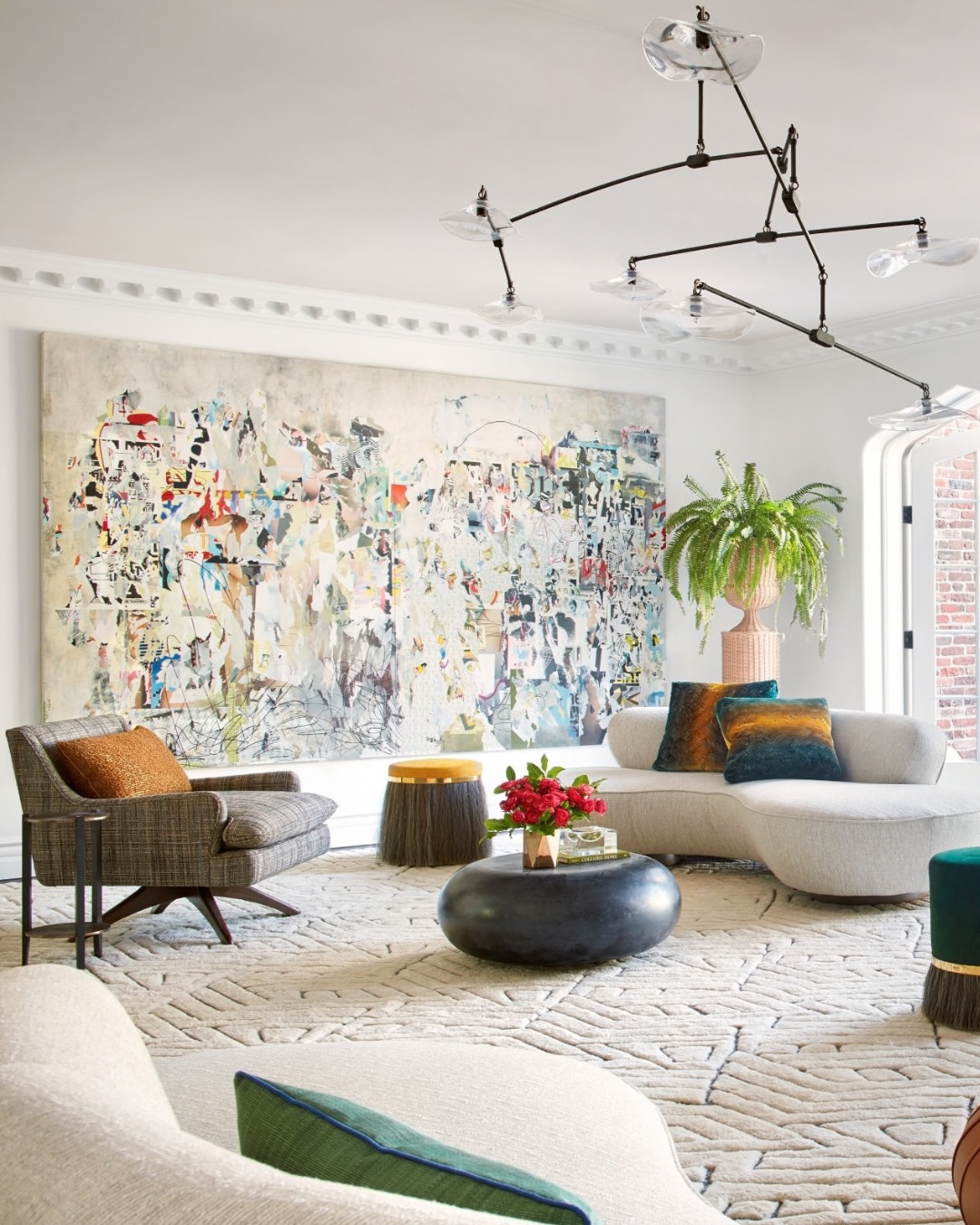
The oversized abstract painting gives this collection of unusual furniture a shared backdrop. Curved cream seating, a compact angular armchair, and a low black oval table all occupy the same pale rug, while small stools add fringe and brighter color.
The ceiling fixture spreads its fine branches overhead without competing with the painting's broad surface. Use a substantial artwork to establish the visual center of an eclectic arrangement, then borrow just a few of its colors for pillows and flowers.
Vary furniture outlines more boldly when the upholstery stays relatively quiet. A chair with visible legs helps balance heavier rounded pieces.
Leaving wall space around the canvas keeps the room from feeling crowded, even with several distinctive designs gathered below.
4. Display a Collection Above Everyday Seating
Credits: Instagram
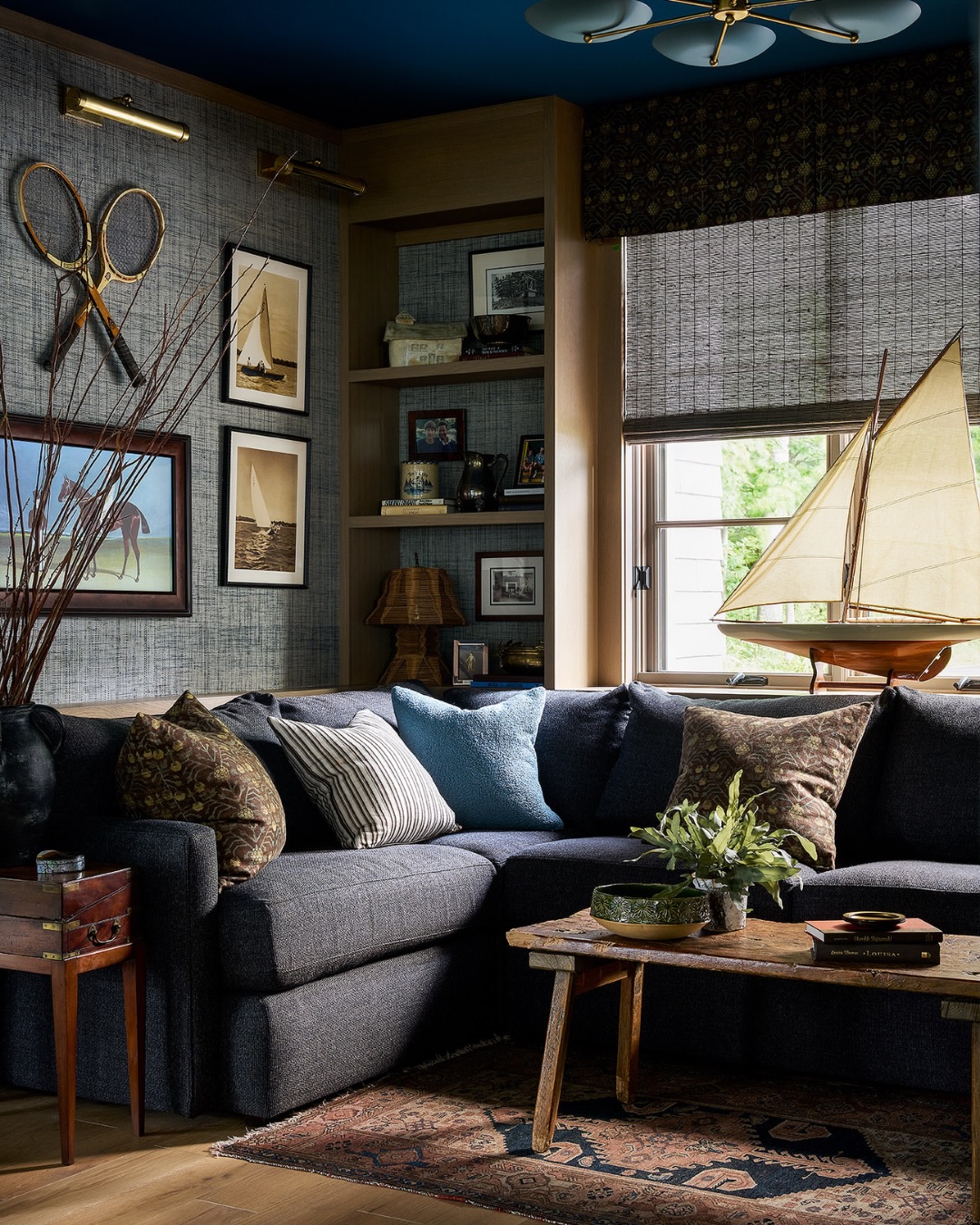
Crossed tennis rackets, sailing pictures, and a model boat give this blue living room its particular character. Their different sizes feel connected because they gather around the sectional instead of spreading randomly throughout the room.
A rustic coffee table and patterned rug soften the tailored upholstery, while built-in shelves hold smaller pieces at the corner.
Take a similar approach with objects you enjoy seeing every day: combine flat artwork with a few dimensional items, and group them near a comfortable place to sit.
Picture lights can make an informal collection feel considered. Keep the larger furniture colors related so the display stays prominent.
Here, the blue ceiling extends the surrounding color and makes the layered seating corner feel especially enclosed.
5. Pair Rounded Lounge Chairs With Traditional Storage
Credits: Instagram
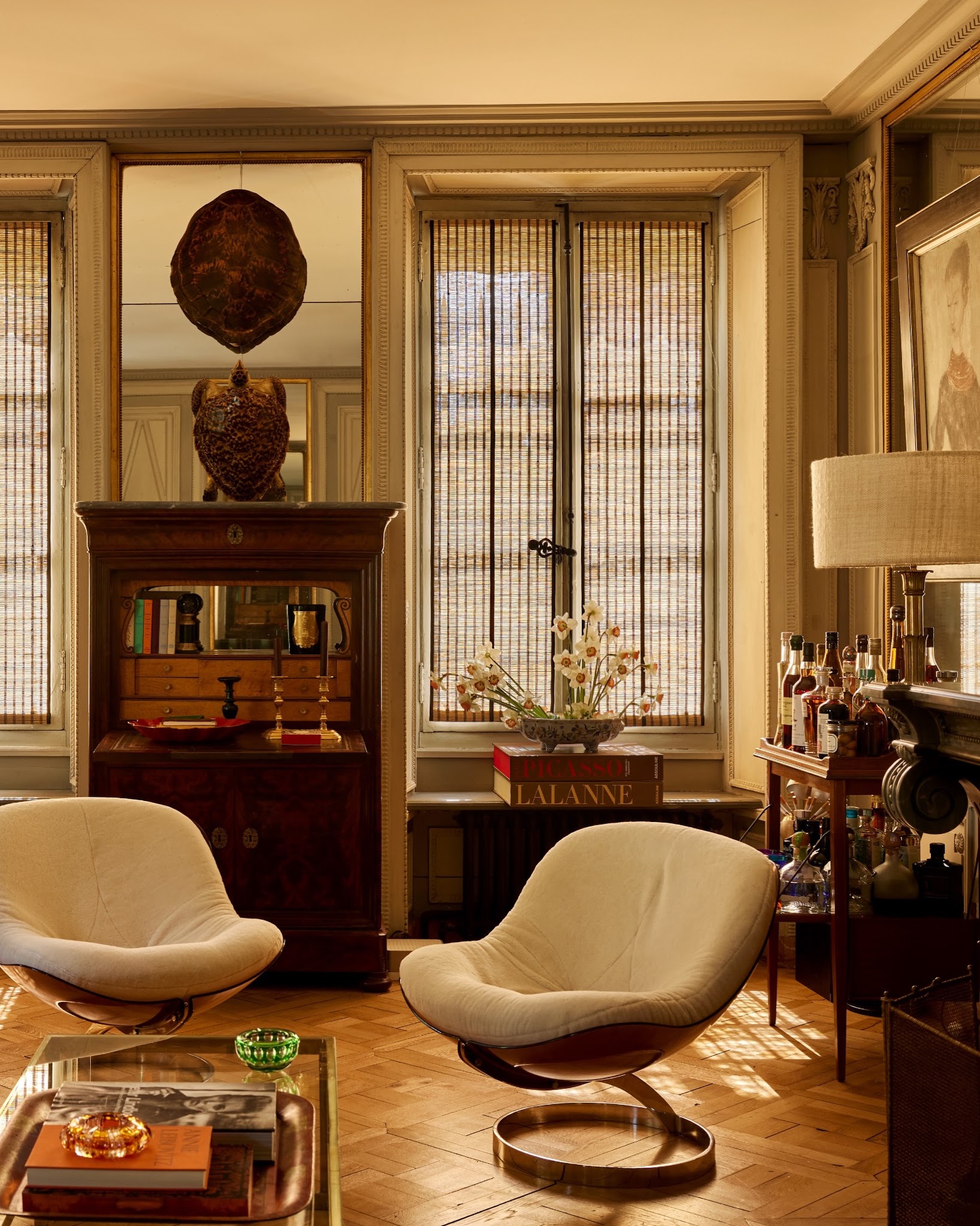
Two low, rounded lounge chairs make an unexpected companion for the tall, dark wooden cabinet behind them. Their smooth metal bases and pale upholstery contrast with the cabinet's drawers, carved details, and darker finish.
Mirrored wall panels and fine window trim add another layer, while narrow woven blinds filter the sunlight. The useful lesson is proportion: keep contemporary seating low enough that an older-looking storage piece can remain a strong vertical feature.
You do not need every furnishing to belong to the same period. Repeat warm colors across wood, metal, and textiles to connect them.
A glass-topped table preserves sightlines through the seating group, and a small bright bowl adds a final accent without taking attention away from the furniture.
6. Connect Mixed Furniture With Warm Wood
Credits: Instagram
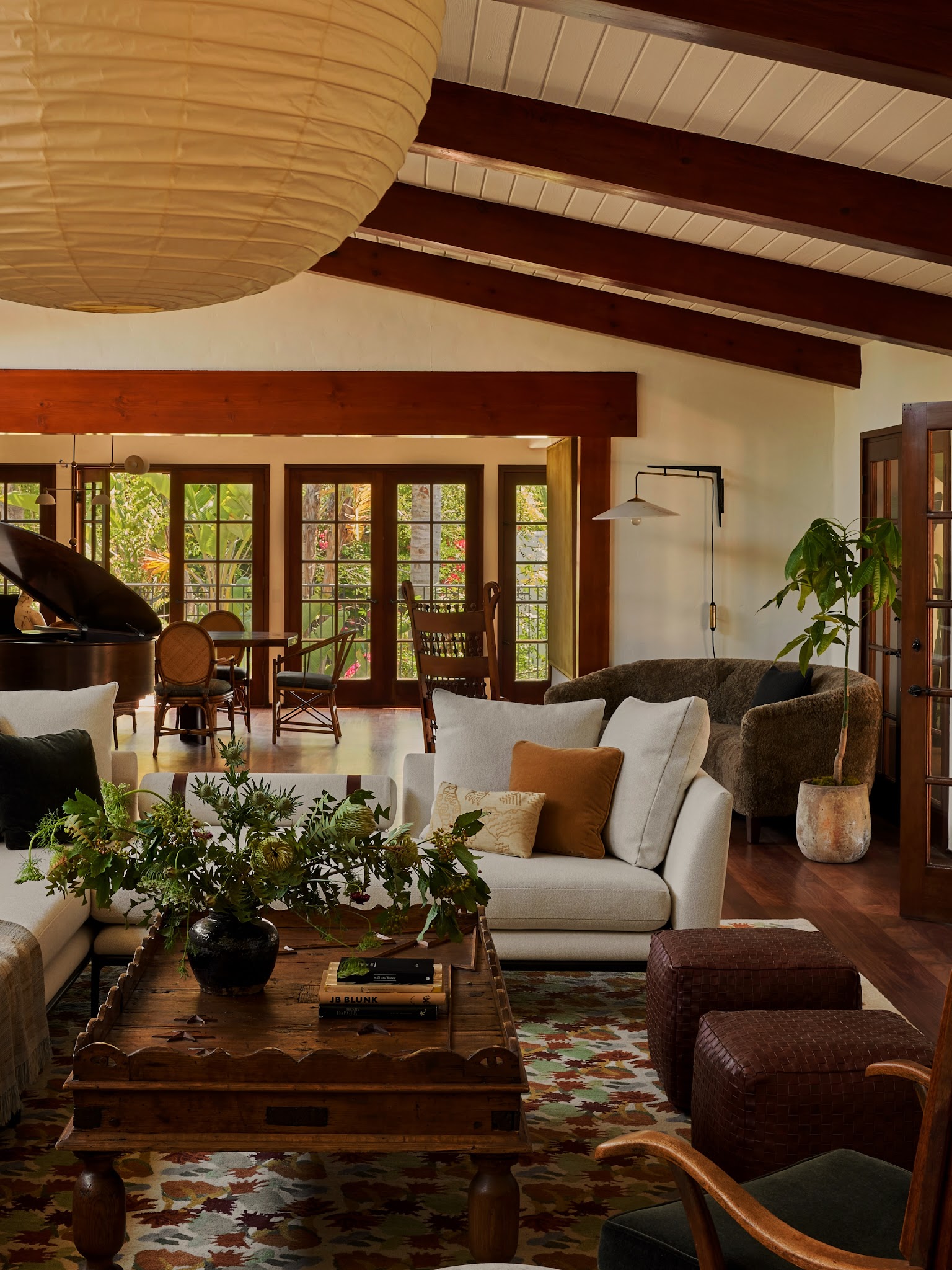
Warm wood creates continuity through this living room's varied seating and accessories. A substantial carved coffee table sits beside clean-lined pale upholstery, while woven brown stools and several different wooden chairs add their own textures.
Overhead, a large ribbed pendant softens the exposed ceiling beams. The patterned rug draws the conversation area together without hiding the room's layered character.
For a similar result, choose a broad family of warm finishes instead of trying to match every wood exactly. Balance one weighty table with lighter chairs or an open floor lamp.
Repeat a few rug colors in pillows, then let other surfaces stay neutral. The broad opening toward the piano and dining area allows the collected arrangement to extend naturally beyond.
7. Bring a Tapestry Into a Contemporary Seating Group
Credits: Instagram
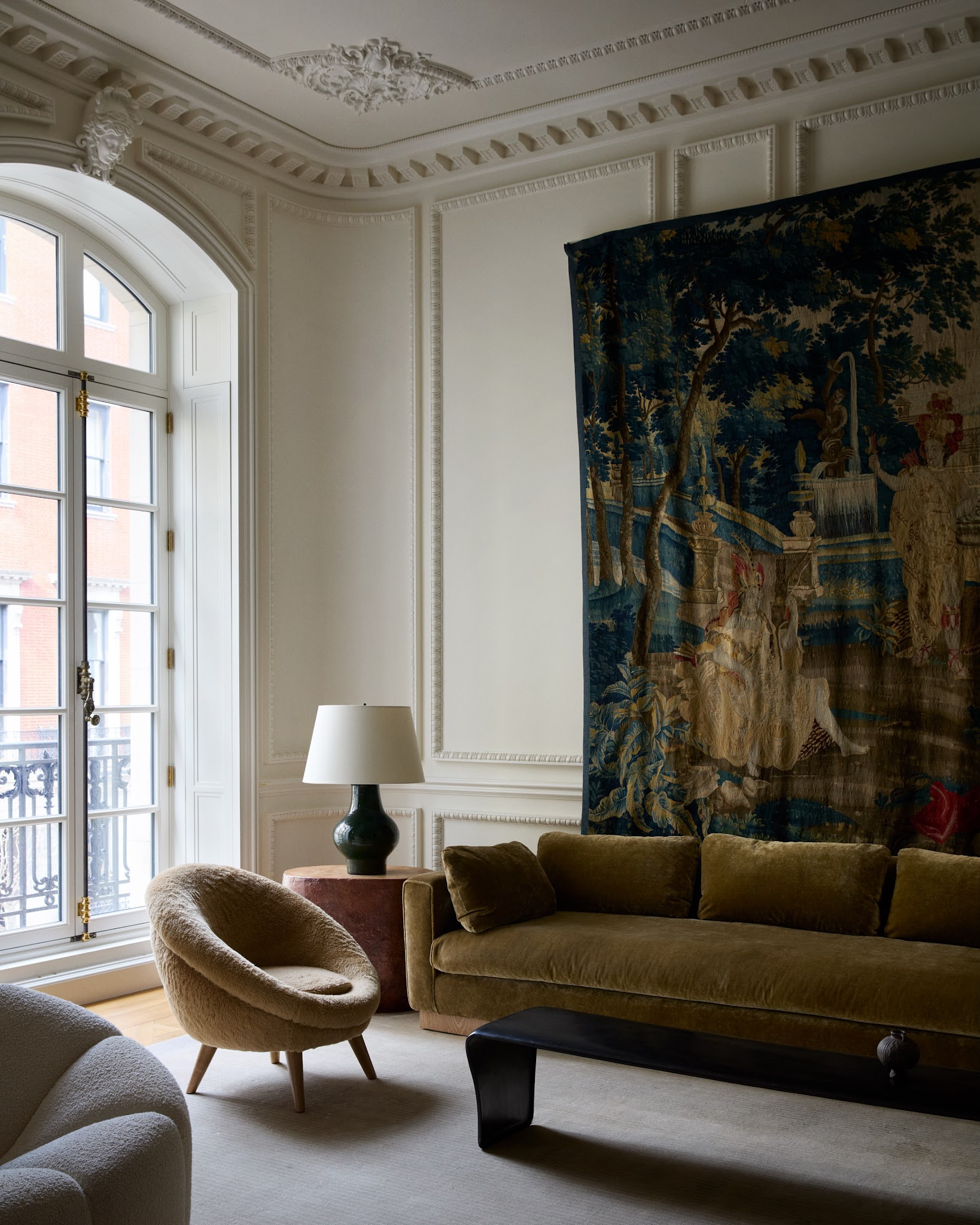
A large scenic tapestry introduces depth and pattern above the olive sofa in this living room. Its intricate imagery contrasts with the plain upholstery, rounded accent chair, and low black table.
White wall moldings and the tall arched opening provide an elaborate architectural frame, yet the furniture remains relatively simple.
This is a useful way to combine decorative history with contemporary comfort: give one richly detailed textile enough space to read, then surround it with quieter shapes.
Choose a sofa color that relates to the hanging without matching every shade. A small table lamp provides a more intimate scale beside the large wall feature.
Keeping the floor and rug pale lets the tapestry and seating create the room's strongest contrast.
8. Repeat a Bold Pattern Through Smaller Color Accents
Credits: Instagram
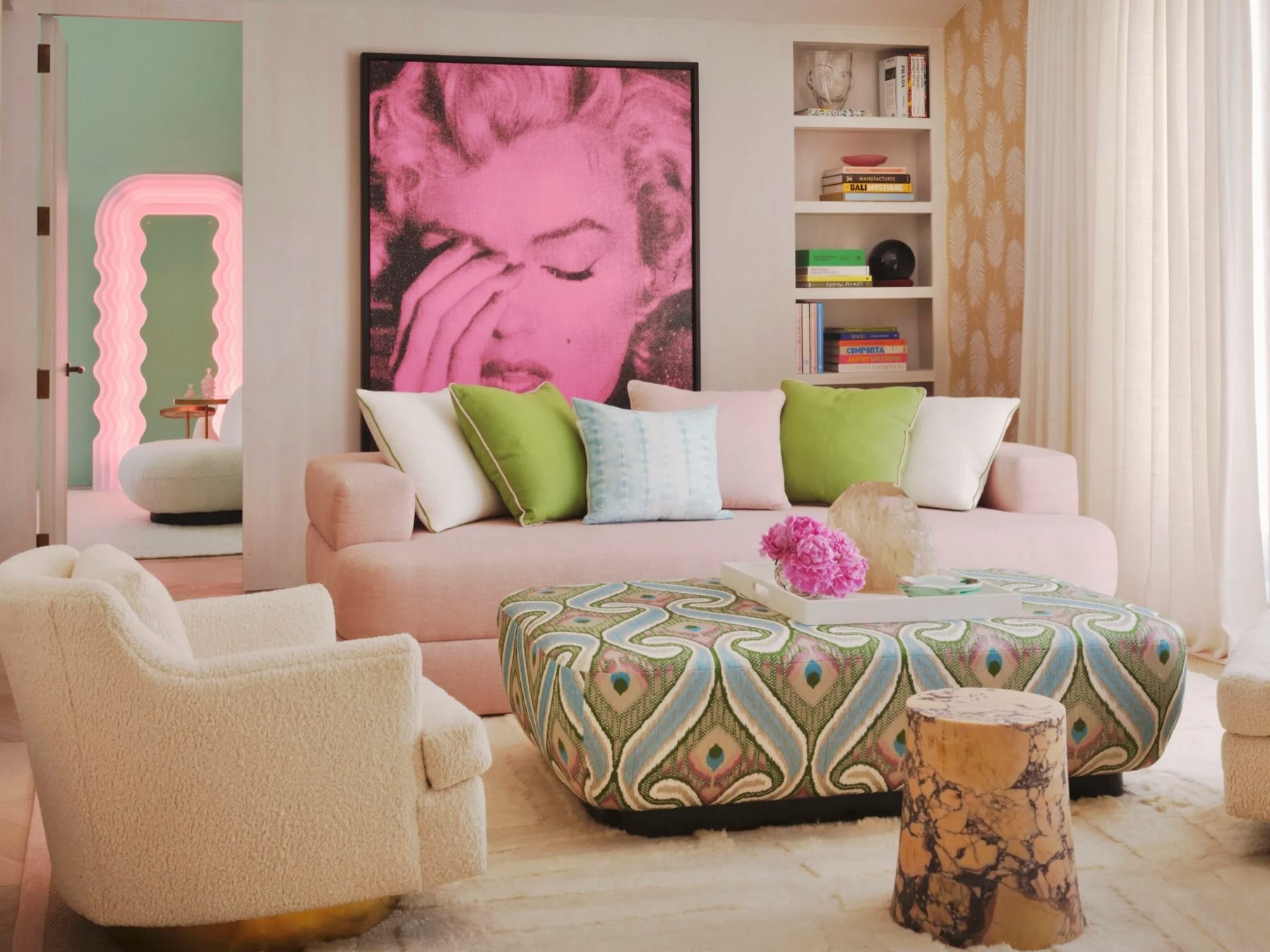
The large patterned ottoman establishes a lively mix of green, blue, and pink in this sitting room. Solid pillows repeat those colors on the pale sofa, while rounded cream chairs give the eye somewhere quieter to rest.
A pink portrait and wavy mirror introduce different kinds of visual energy without abandoning the palette. Try choosing one multicolored upholstered piece first, then drawing individual colors from it for smaller accents.
The surrounding furniture can vary in shape and texture while still feeling connected. A tray gives the soft ottoman a practical surface for flowers and objects.
The small cylindrical side table adds another pattern at a different scale, showing how variety works best when each element has a clear supporting role.
9. Make Everyday Play Part of the Room
Credits: Instagram
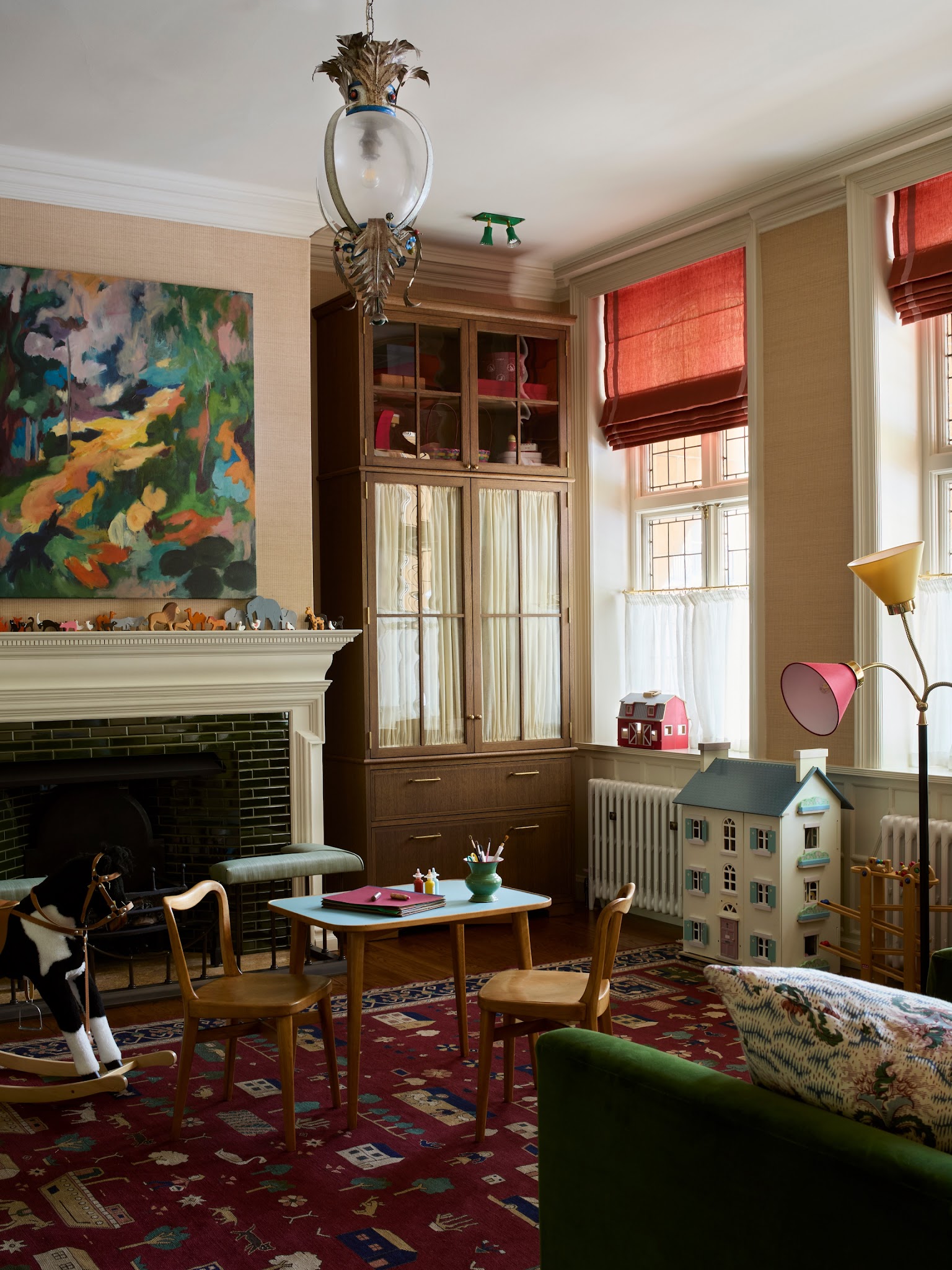
A small activity table, dollhouse, and rocking horse sit comfortably beside the green sofa and traditional fireplace in this living room. The toys become part of the colorful mix rather than disrupting a carefully matched furniture set.
A patterned rug, abstract artwork, and multicolored floor lamp help connect the different scales of objects. Borrow that flexibility when an eclectic living room serves several purposes.
Leave a useful open patch of floor for a compact table, and choose storage that belongs with the larger furniture. Here, the tall cabinet offers both display space and concealed lower drawers.
Repeating green across the sofa, fireplace tiles, and artwork gives the room continuity, while the red window shades add warmth above the busy floor.
10. Carry Color Through an Open Doorway
Credits: Instagram
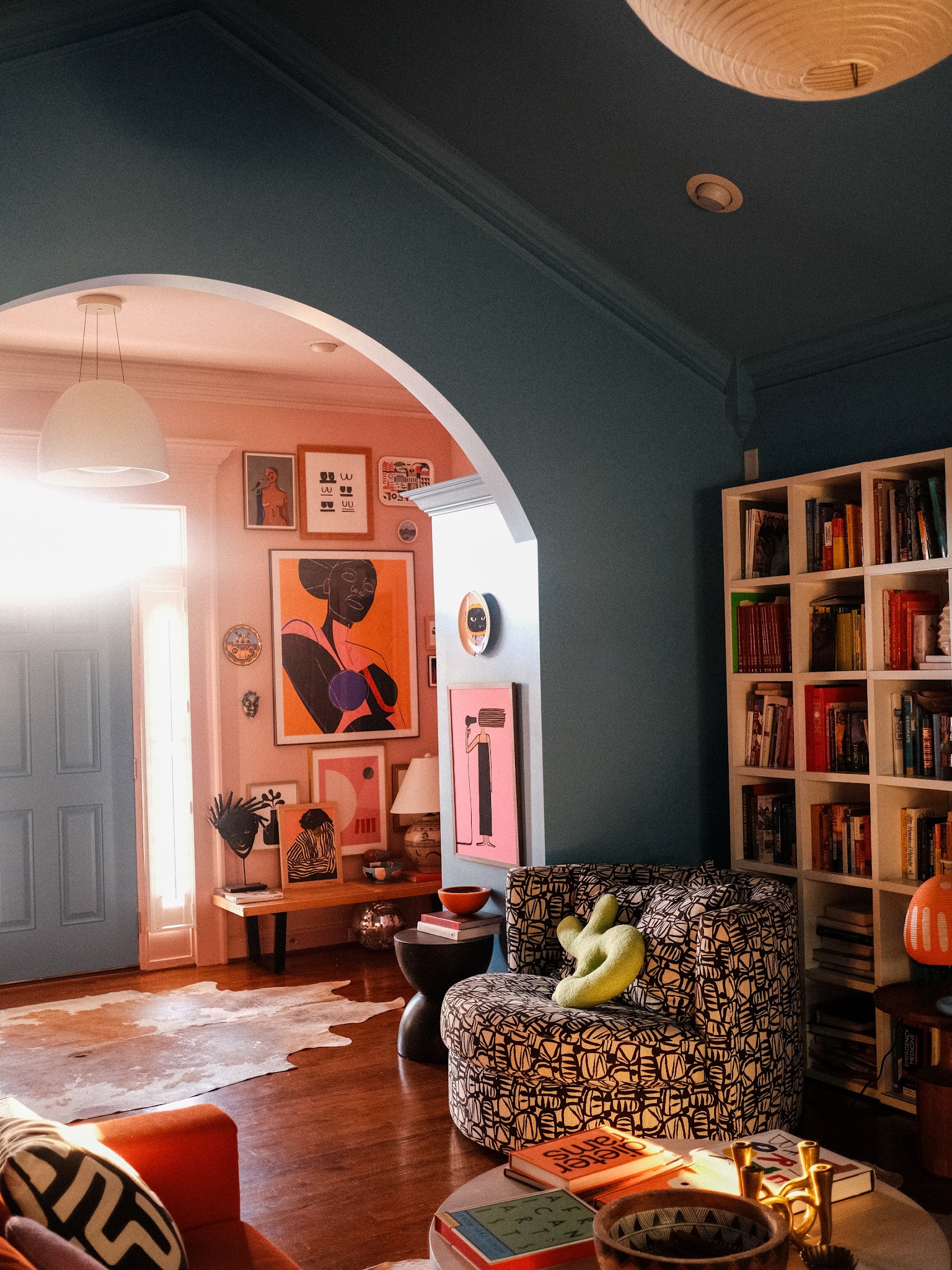
The deep blue living room and pink entry beyond feel connected because art and warm wood appear in both spaces.
A rounded patterned chair stands beside square bookshelves, with an orange sofa edge and a small sculptural pillow adding more shapes in the foreground. The broad arch frames the next room like another picture.
Use that view deliberately when decorating connected spaces: choose colors that look appealing together, then repeat one or two materials across the opening. A collection of artwork can continue from room to room without using identical frames or sizes.
Keep everyday seating and book storage accessible beneath the display. The result is a layered arrangement that rewards a closer look while still offering a reading corner.
11. Use a Long Ledge for an Informal Art Display
Credits: Instagram
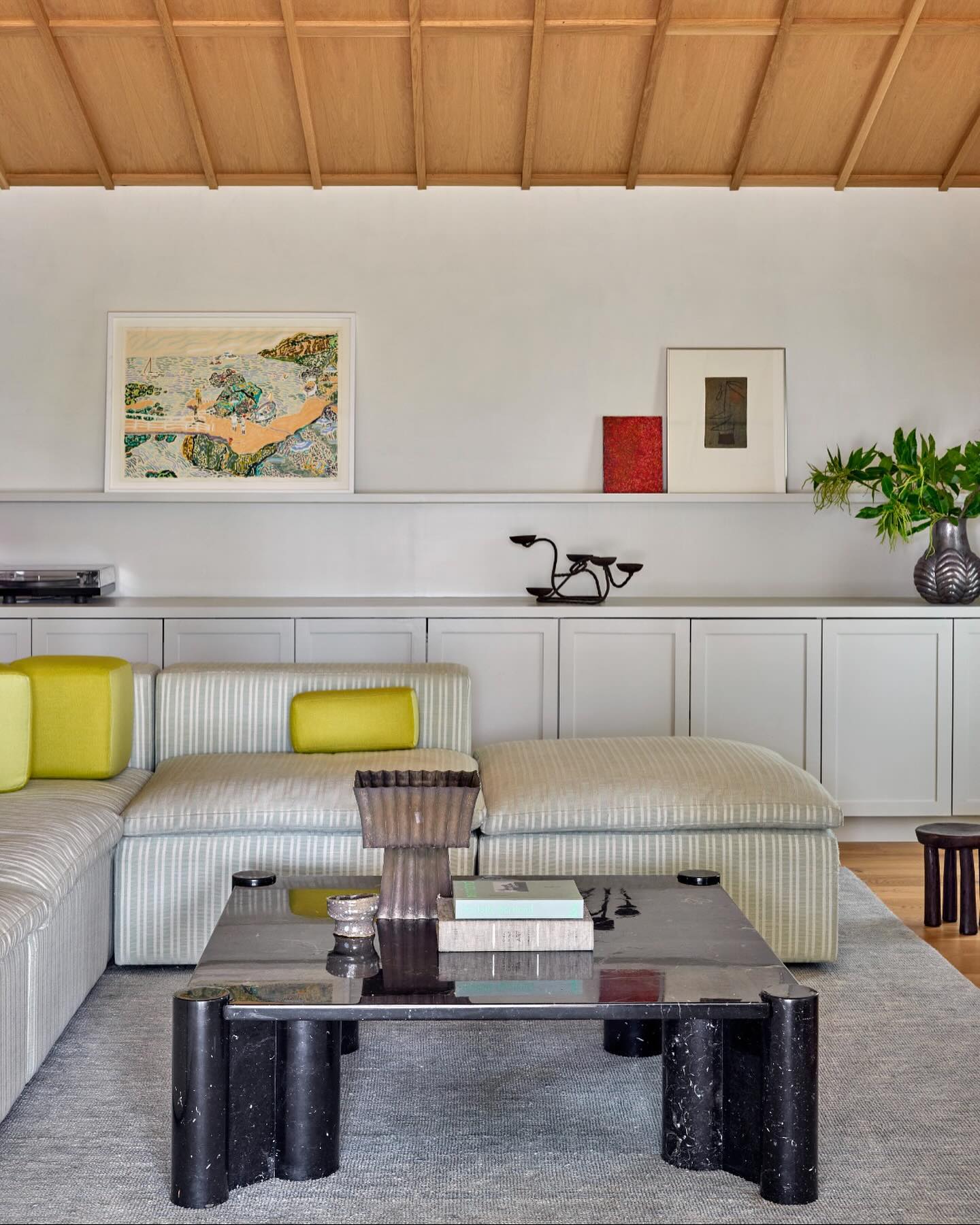
A slim picture ledge turns the wall behind this striped sectional into an adaptable display. Different-sized artworks lean against the pale surface, with generous gaps that keep the composition relaxed.
Below, a long cabinet supplies a second horizontal line, while the dark coffee table and sculptural objects add weight. Bright yellow cushions introduce an unexpected accent against the quieter stripes.
Follow this arrangement when you want to mix artwork without planning a dense gallery wall. Vary the heights, allow frames to overlap occasionally, and keep the biggest piece slightly off center.
Choose a sofa fabric with a small, orderly pattern so larger decorative shapes can stand out. The wooden ceiling brings warmth to the room's crisp lines and cool upholstery.
12. Layer Patterns Across Connected Rooms
Credits: Instagram
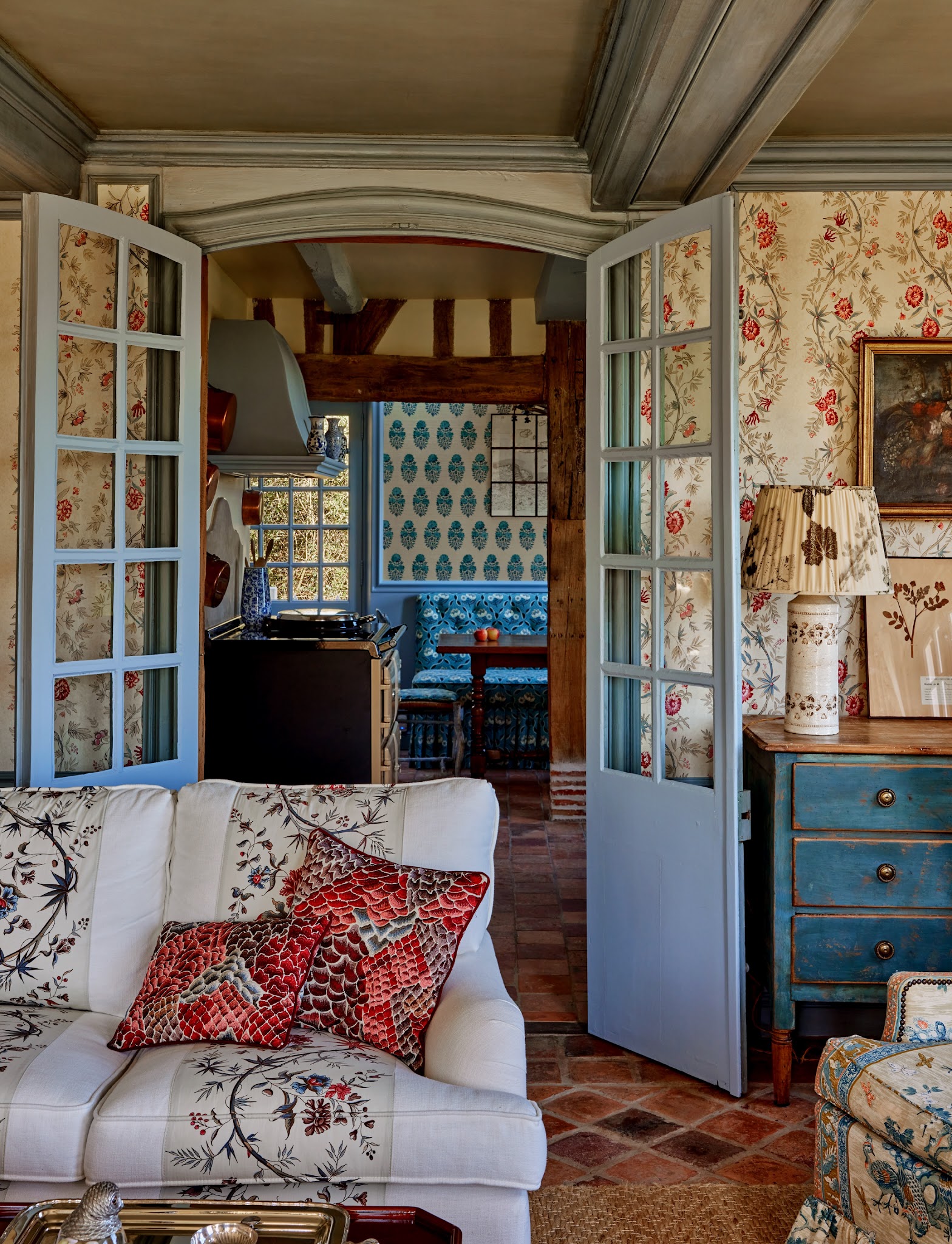
Floral wallpaper, a patterned sofa, and a richly colored cushion create a lively foreground in this living room. Through the open doors, another set of blue patterns appears around the kitchen seating.
The painted blue chest and door frames help these different prints belong to one composition. For a similarly layered look, repeat a clear color across several surfaces before adding more patterns.
Change their scale so fine branches, bold featherlike shapes, and small repeating motifs remain distinguishable. Solid sections of upholstery offer helpful pauses.
A worn-looking painted chest also brings a different finish beside the detailed textiles. Keep the doorway open when the neighboring room contributes to the palette; the additional view becomes part of the living room's decoration.
13. Give Traditional Pieces a Compact Conversation Corner
Credits: Instagram
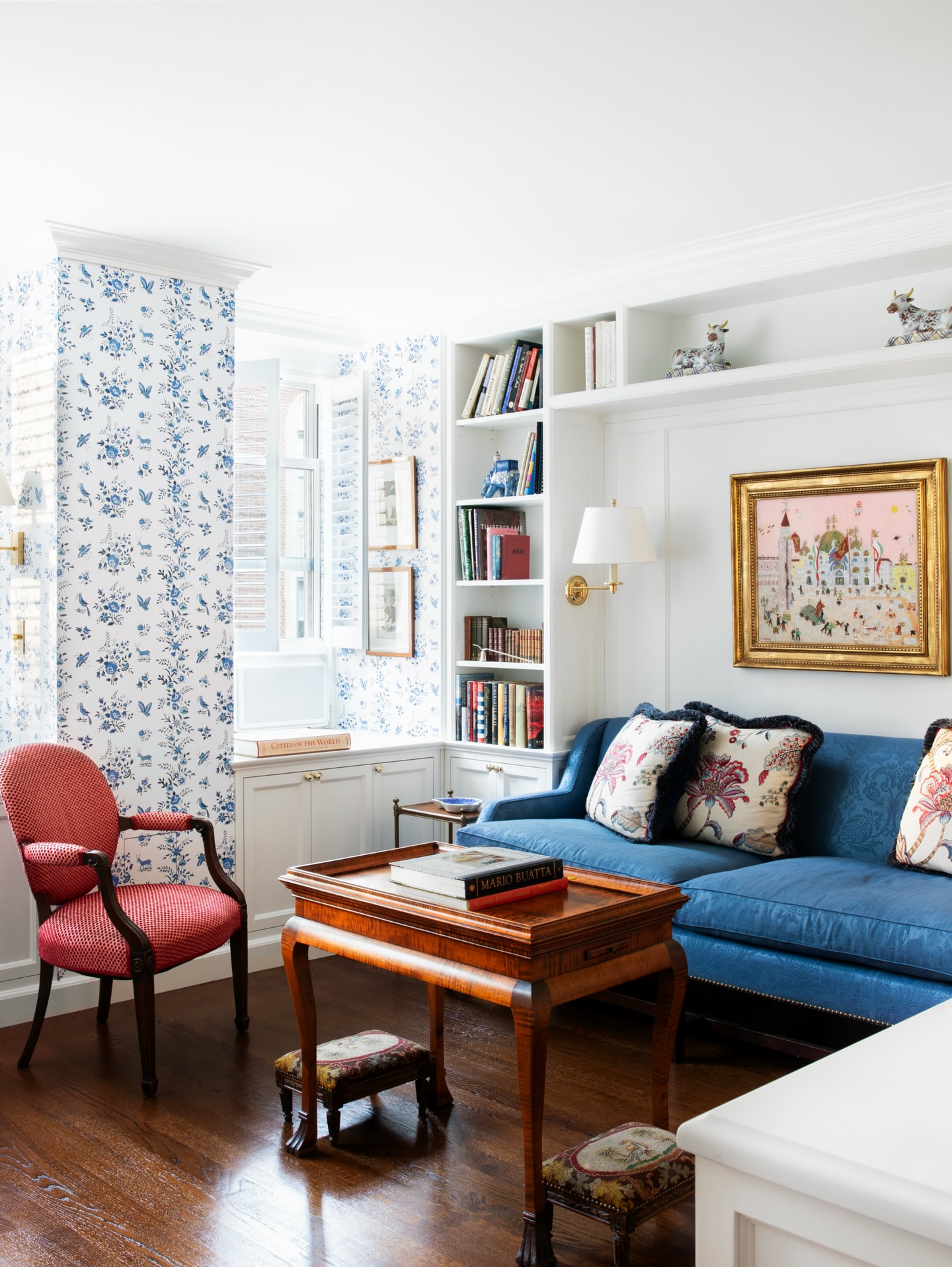
A blue sofa, red upholstered chair, and curved wooden table create a small conversation group beside the kitchen. Built-in shelves rise around the seating, making space for books and decorative objects without adding another freestanding cabinet.
The blue floral wallpaper connects with the sofa, while the red chair and pillow details keep the palette lively. This arrangement shows how an eclectic collection can work within a modest footprint.
Choose pieces with different silhouettes, but check that their scale leaves room to move between them. A table with visible legs preserves a lighter feeling than a solid block.
Small footstools can tuck beneath its edges. Keeping the surrounding cabinetry white allows the stronger colors and patterned upholstery to remain the focus.
14. Combine Several Chair Shapes Around One Sofa
Credits: Instagram
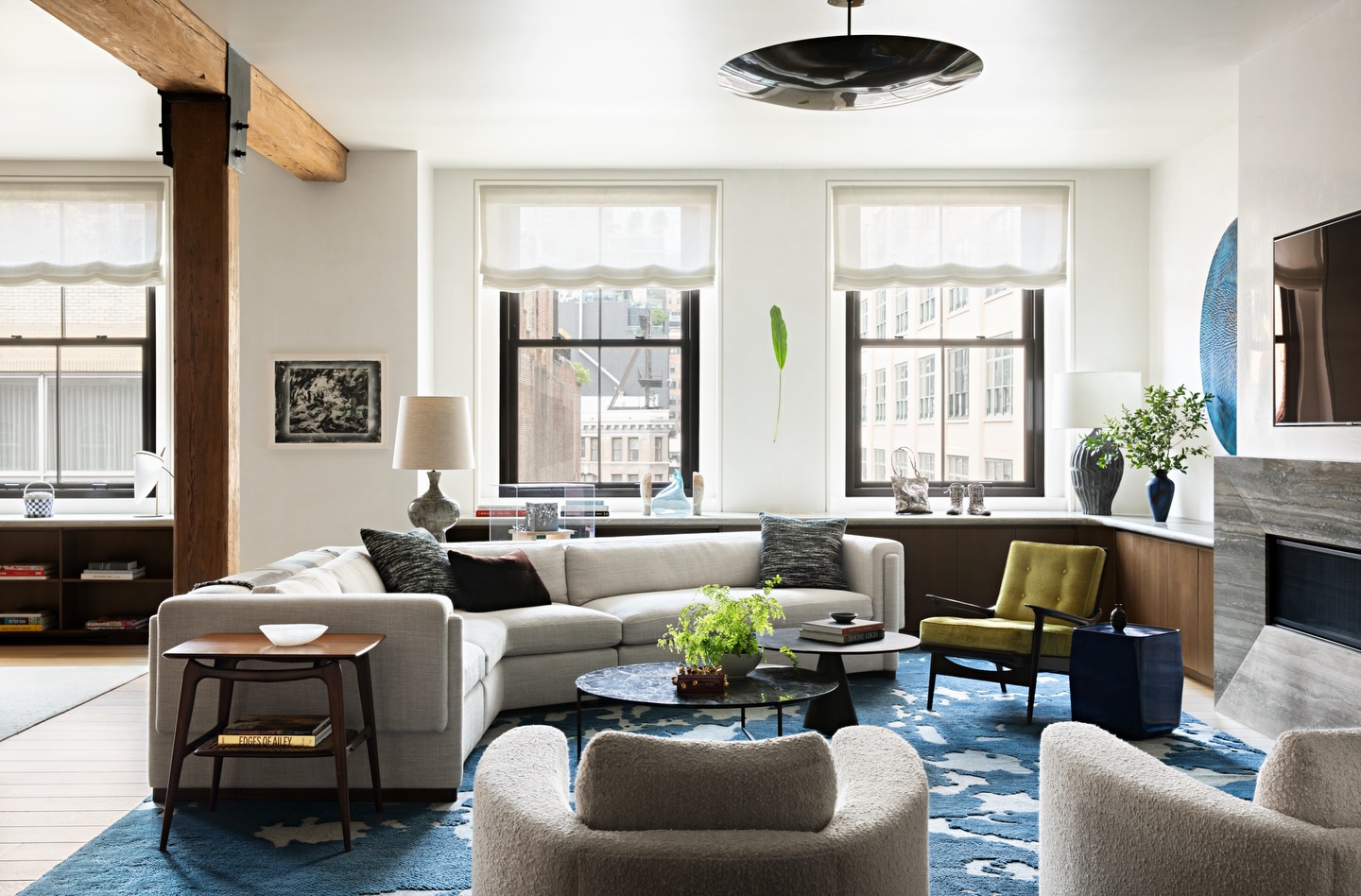
The pale sectional in this loft anchors several different kinds of seating. Rounded upholstered chairs face it from the foreground, while a green chair with visible wooden arms sits beside the fireplace.
Their varied outlines feel connected because they all share the blue patterned rug. Low tables provide separate landing places without forming a heavy barrier through the middle.
Try selecting chairs for their individual uses rather than buying a matching set: a compact upright seat for conversation, a softer chair for lingering, and a generous sofa for stretching out.
Keep the largest pieces close in color, then introduce one stronger accent. The exposed timber post and dark window frames add structure around the mixed furnishings without requiring more decoration.
15. Balance a Rough Fireplace Wall With Flowing Chair Frames
Credits: Instagram
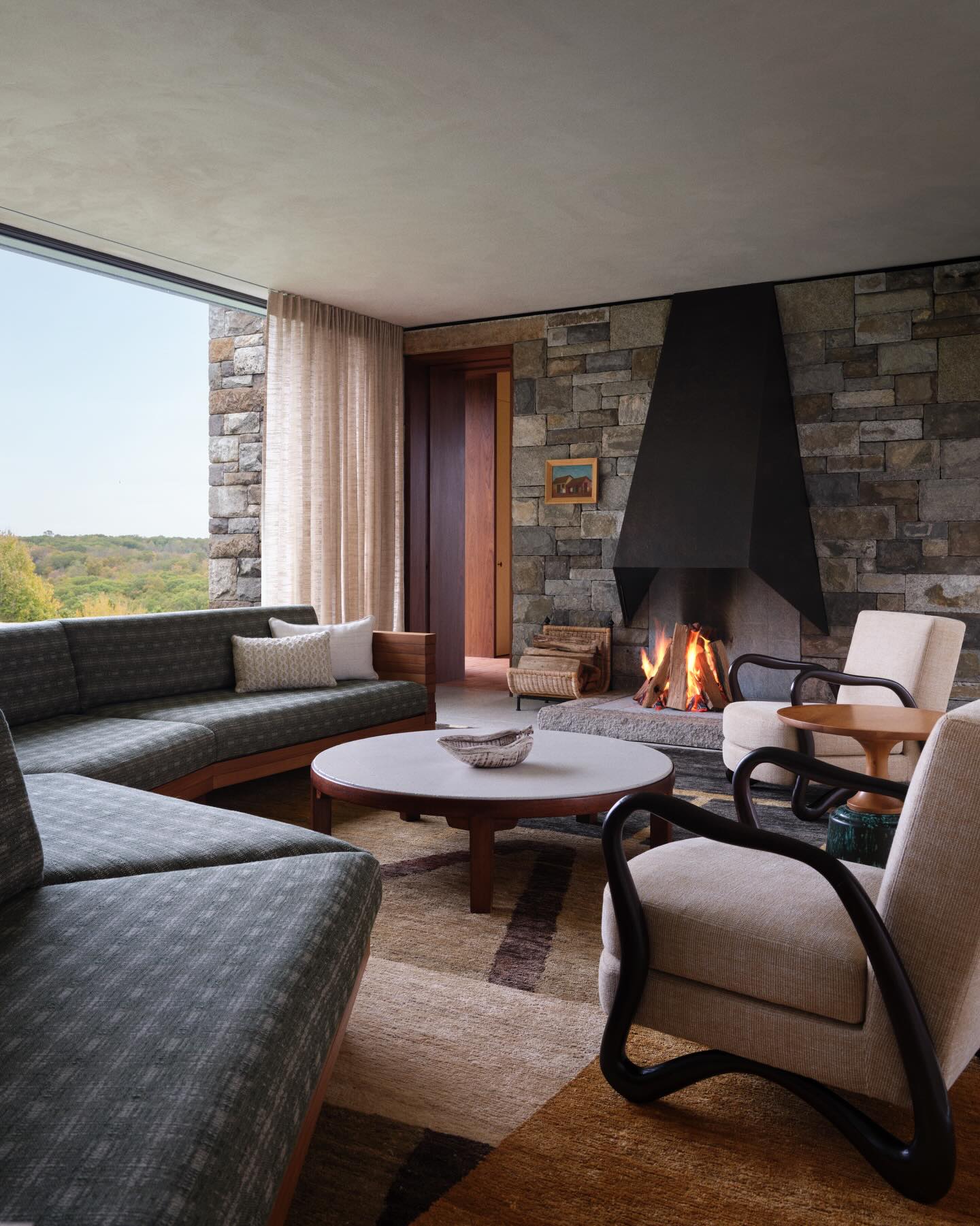
The stone fireplace wall gives this seating area a rugged backdrop, while the pale armchairs introduce smooth, looping frames. A low circular table and angular green sectional add two more silhouettes without overwhelming the room.
The quiet colors allow those differences in form and texture to become the main decoration. Use a strong architectural surface as the starting point for an eclectic arrangement, then choose furnishings that provide a clear counterbalance.
Curved chair arms can soften a wall of rectangular blocks, and a round table makes the center feel less rigid. A small framed picture adds an intimate detail beside the oversized fireplace hood.
Restrained accessories leave the view, upholstery, and distinctive furniture shapes enough room to hold your attention.
16. Use a Solid Sofa Between Competing Prints
Credits: Instagram
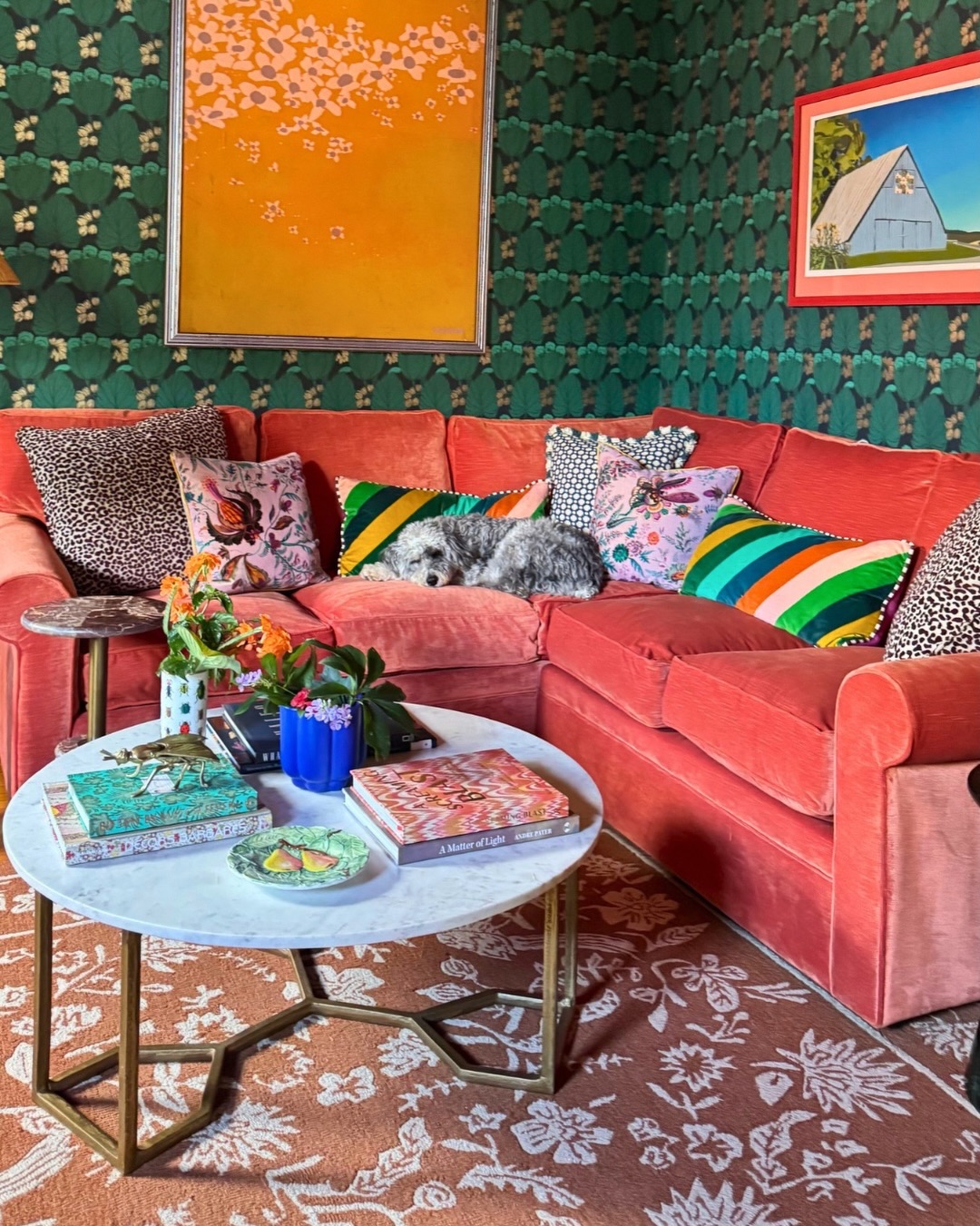
A coral sectional gives this room's many patterns a continuous band of color. Behind it, dark green wallpaper creates a dense backdrop for bright artwork; across the cushions, animal spots, flowers, and broad stripes each have their own scale.
The pale round coffee table provides a visual pause in the foreground. To borrow this approach, keep one large upholstered piece solid even when the rest of the room is busy.
Repeat its warm color in a picture frame or rug detail, then introduce a contrasting cool shade around it. Mix large, medium, and small motifs so they do not all compete equally.
A few plain objects on the table keep the arrangement useful while leaving the textiles to supply variety.
17. Give Sculptural Furniture Room to Be Seen
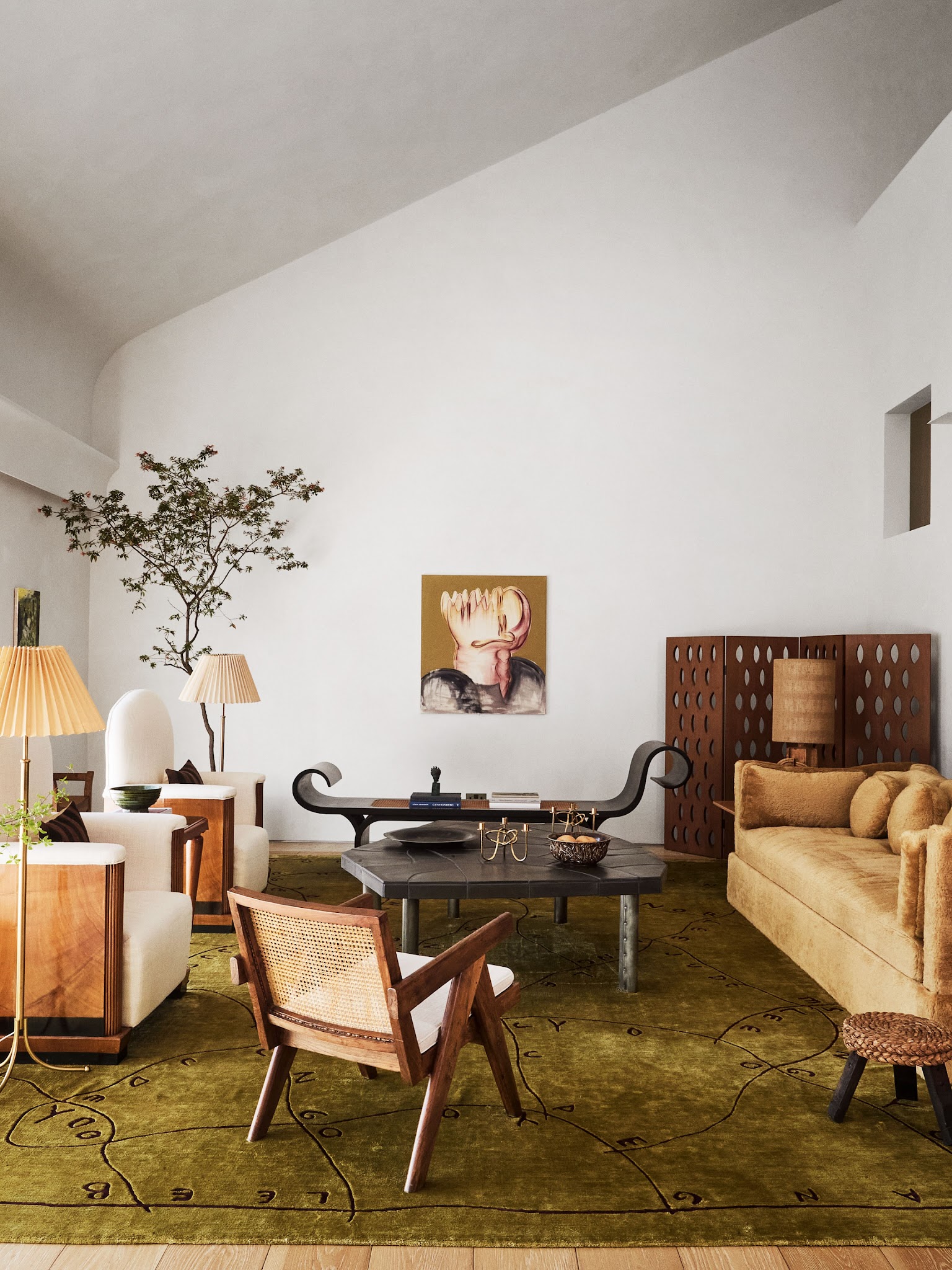
Credits: Instagram
The high white walls in this living room allow a varied collection of furniture to stand apart.
A gold sofa, pale barrel-shaped chairs, and a woven-back wooden chair share an olive rug, while dark tables and sweeping curves introduce more dramatic outlines.
A folding screen creates a smaller backdrop behind the sofa without enclosing the whole space. Use generous spacing when several furnishings have distinctive shapes: each piece needs enough room for its outline to remain visible.
Repeat a few warm tones to connect the arrangement, and resist filling every wall. Here, a single painting holds the central wall while lamps bring light down to sitting height.
The mix feels collected because the architecture gives its different pieces breathing room.
18. Add Rich Upholstery Beneath a Wooden Ceiling
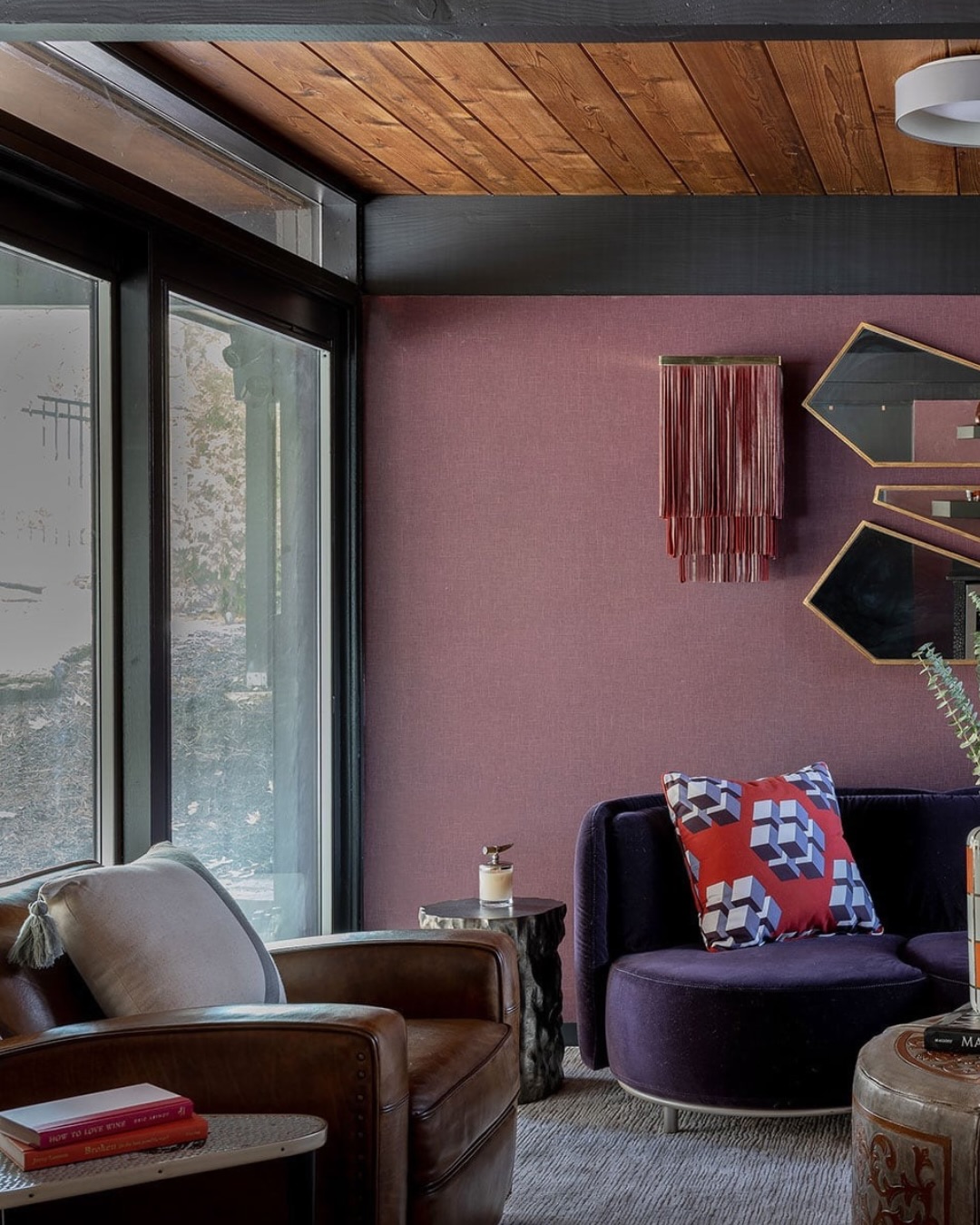
Credits: Instagram
A purple curved sofa and muted pink wall bring softness beneath the dark beams and wooden ceiling of this entertainment sitting area. The brown armchair adds another texture, while a geometric pillow and fringed wall accent introduce smaller decorative surprises.
The palette works because the warm wood and pink sit comfortably beside the deeper purple. Try a similarly rich upholstery color when exposed structure makes a room feel visually heavy.
Keep the surrounding rug quieter, then use one patterned pillow to connect several shades. An irregular mirror can add a lively outline without another large block of color.
Small side tables placed close to the seats make the arrangement practical for conversation, allowing the expressive furniture to remain equally comfortable.
19. Frame Pale Walls With a Contrasting Trim Color
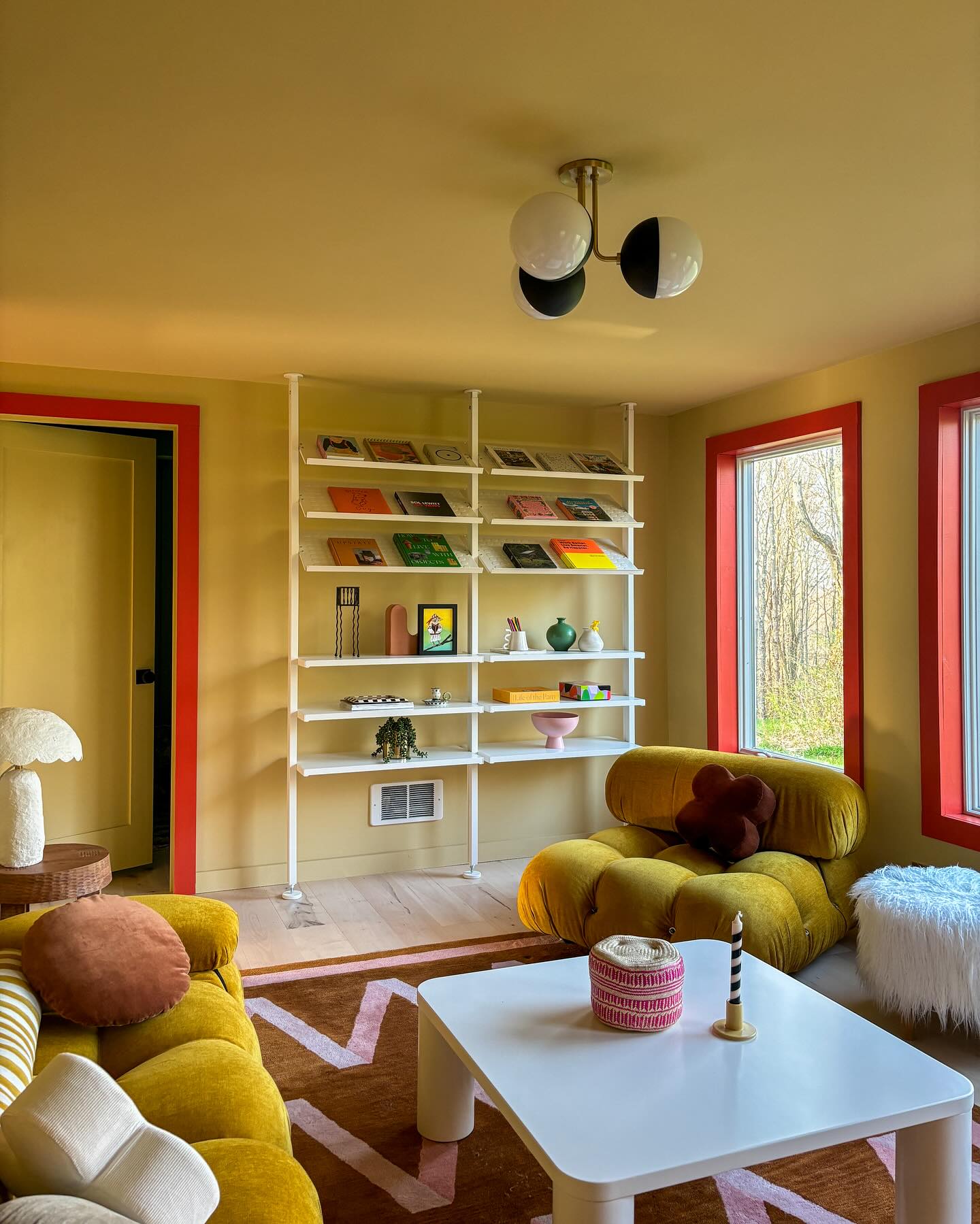
Credits: Instagram
Orange-red trim turns the windows and doorway into graphic features in this yellow living room. Rounded yellow seating repeats the wall color, while a white table and open shelving provide crisp relief.
The rug adds pink lines across a brown ground, extending the playful geometry down to the floor. This approach offers a useful alternative to adding more artwork when a room already contains expressive furniture.
Choose one contrasting color for the openings, and repeat it consistently so the architecture becomes part of the palette. Keep shelving light enough that books and objects remain easy to distinguish.
A small fuzzy stool and sculptural pillows add tactile variety, showing how a few contrasting textures can enrich a room filled with color.
20. Create a Sitting Corner That Can Grow With the Family
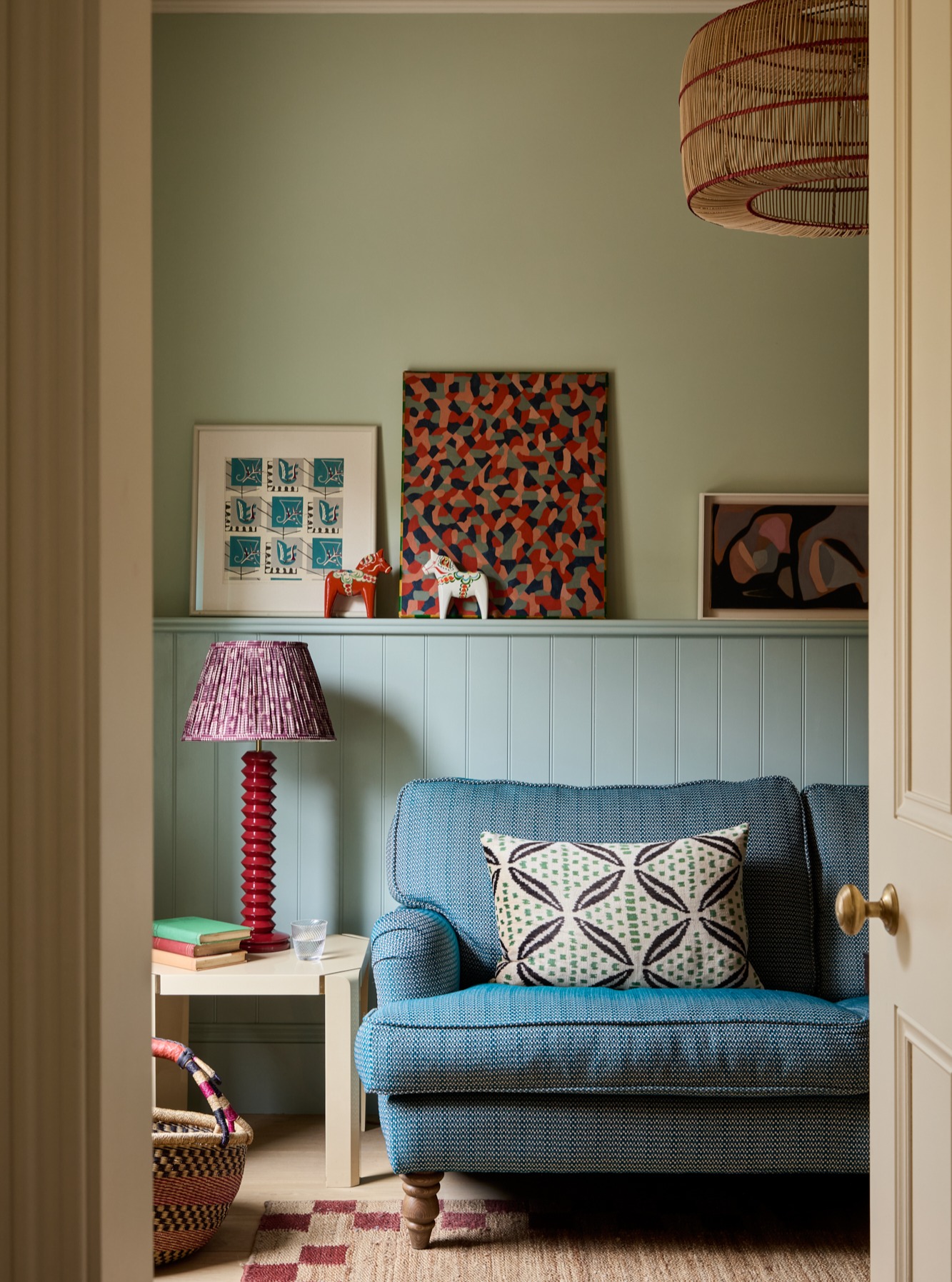
Credits: Instagram
This playroom's blue sofa, patterned cushion, and nearby lamp create a comfortable sitting corner with lasting usefulness. Artwork rests along the top of the pale green paneling, combining graphic prints with two small painted horses.
The red lamp base and threads through the woven pendant repeat a warm accent without making the room feel overly themed. Borrow that balance for a family space that needs to change over time.
Choose comfortable seating and accessible storage first, then let smaller objects reflect current interests. A basket can hold toys today and blankets later.
The picture ledge makes it easy to rearrange the display, while the calm wall color gives future additions a place to belong without requiring a complete decorating reset.