
A Southwestern living room can feel warm without relying on a roomful of rust and sand tones. Southwestern Living Room Ideas also make room for cool color, deep plum, and lively patterns alongside familiar wood, stone, and leather.
Pairing periwinkle with peach plaster shows how contrasting colors can still feel connected, while colorful pillows can brighten a brown leather sofa without replacing it.
Other approaches use rounded built-in seating or let an existing stone fireplace guide the furniture layout. The details offer practical ways to work with features and furnishings you already have.
1. Try Periwinkle Beside Peach Plaster
Credits: Instagram
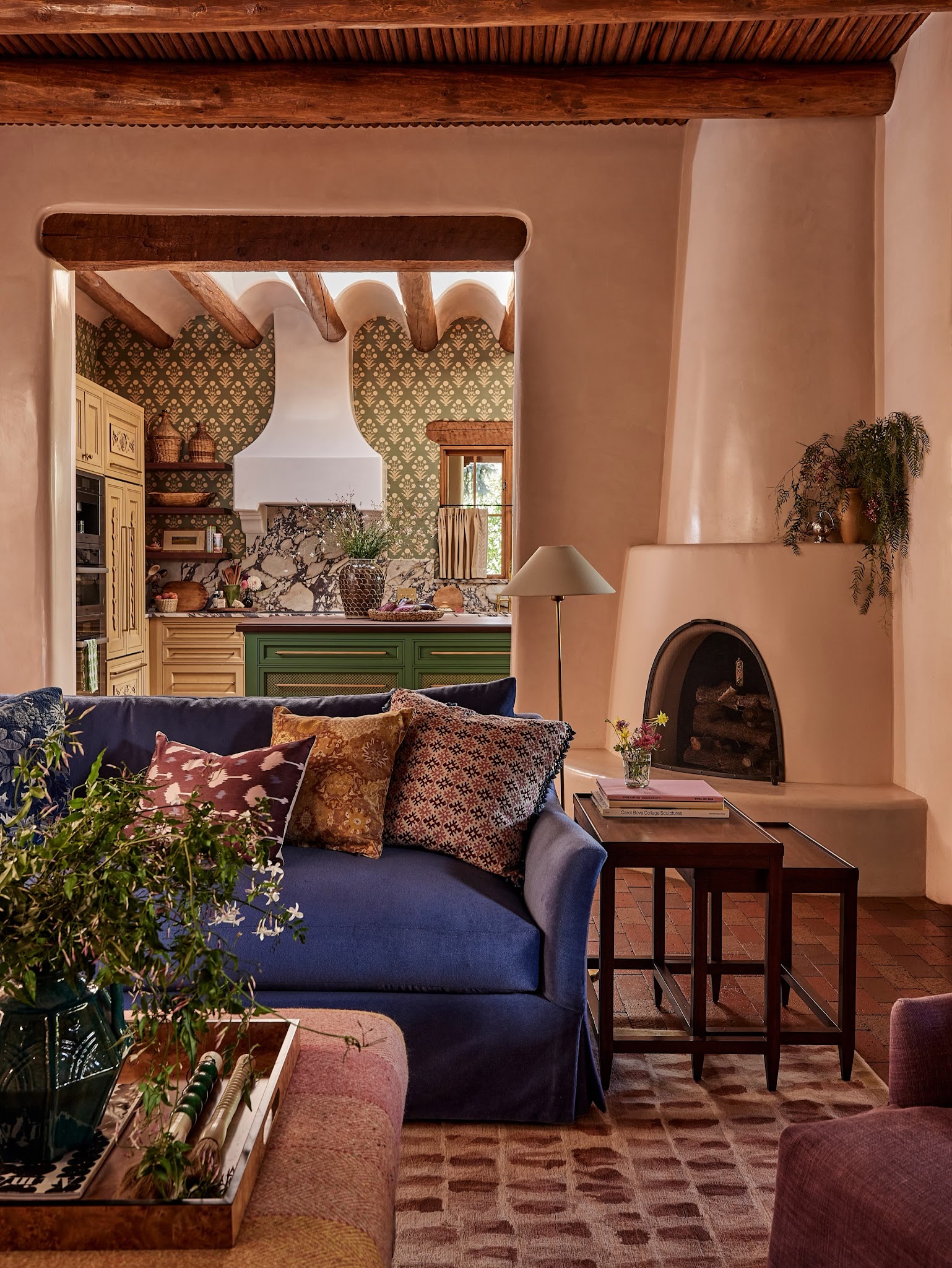
A periwinkle sofa brings a cool note to this Santa Fe living room by French and French Interiors. Peach plaster, brick flooring, and exposed wood overhead keep the setting warm, while patterned pillows connect the two temperatures.
The curved fireplace remains visible beside the doorway instead of disappearing behind furniture. Borrow the palette by pairing one blue upholstered piece with clay, cinnamon, or peach accents already in your room.
A small dark side table gives the arrangement definition without adding another large block of color. Keep the main upholstery solid when nearby rooms have busy wallpaper.
That pause makes both spaces easier to appreciate. Sample any new paint beside your fabrics, since daylight can change how pink and blue interact.
2. Turn a Banco Into a Patterned Retreat
Credits: Instagram
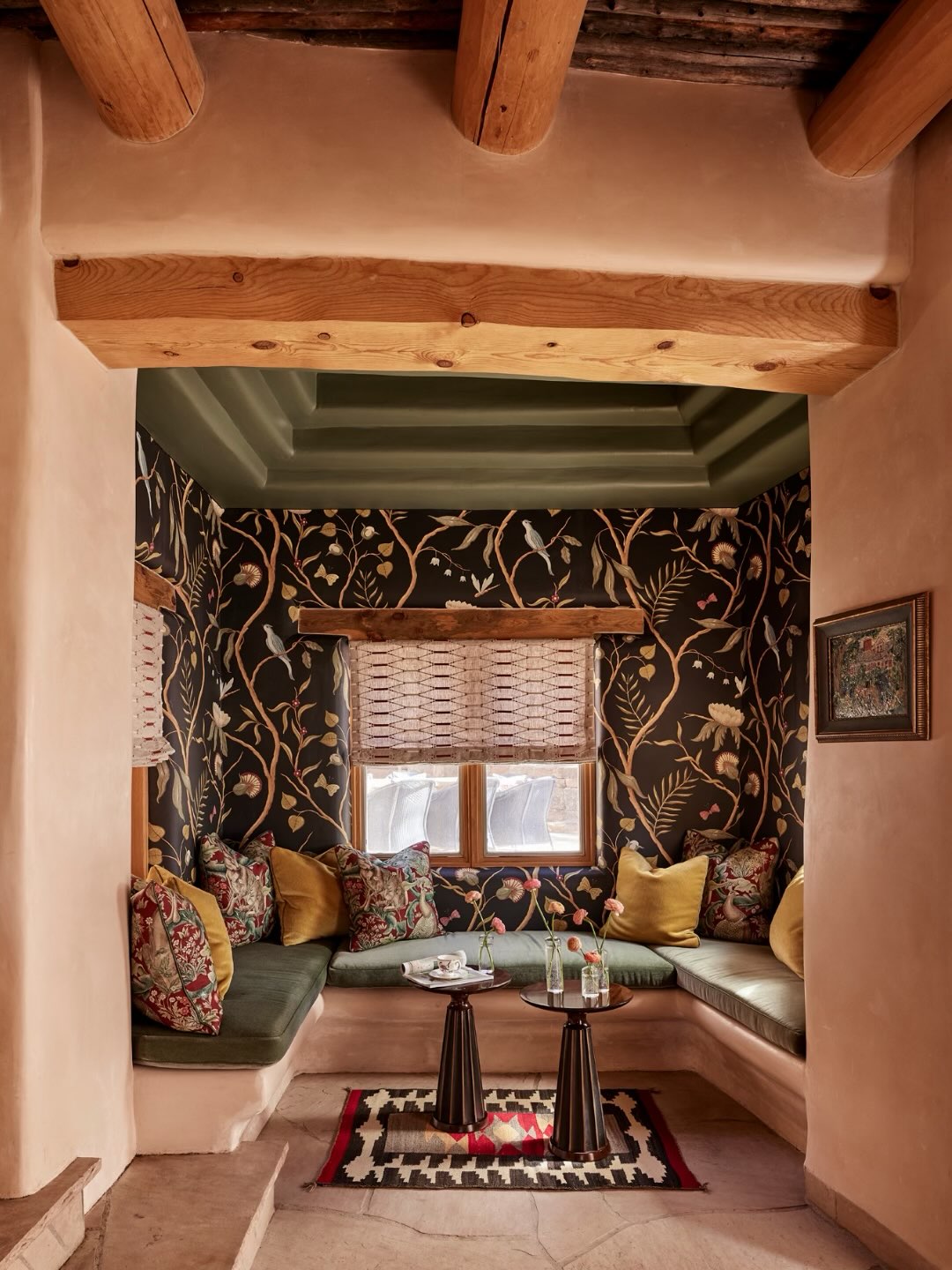
This built-in seating nook at French and French Interiors' Sunset Adobe project makes a compact corner feel designed. Green seat cushions follow the banco, while dark botanical wallpaper wraps the space above it.
Honey-colored ceiling beams and peach walls frame the opening. A small pedestal table leaves more floor visible than a bulky coffee table would.
For a similar effect, give an existing bench fitted cushions and add pillows that repeat one or two colors from the wall treatment. Measure the seat depth before choosing back cushions so the finished perch stays comfortable.
Limit tabletop accessories to leave room for drinks. The useful lesson is scale: patterned walls can work beautifully when furniture stays low and the center remains open.
3. Let Plum Upholstery Deepen the Wood Tones
Credits: Instagram
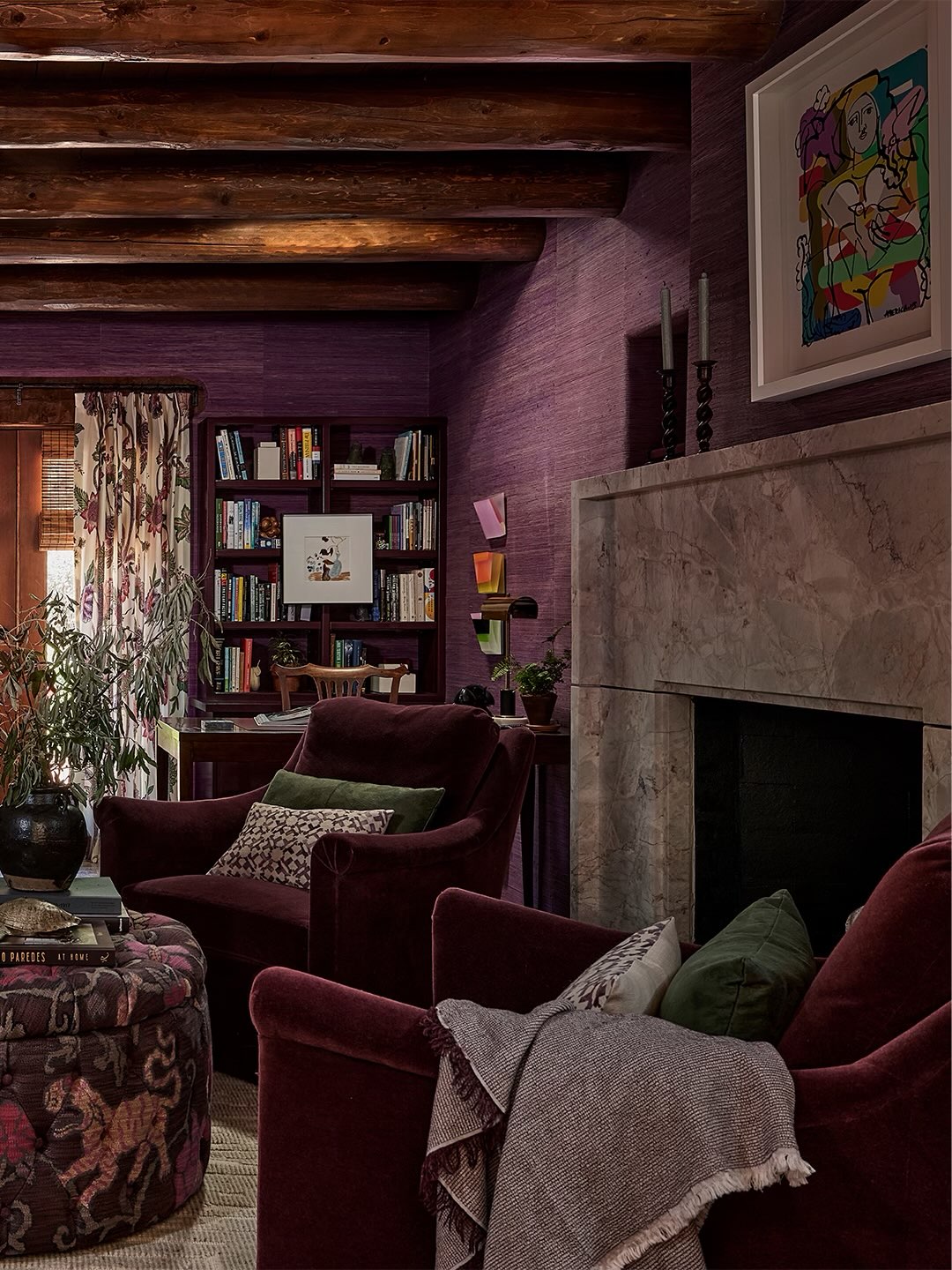
Southwestern rooms can move beyond the sand and rust palette. In this den by French and French Interiors, plum walls and deep berry seating surround a fireplace beneath exposed wood beams.
The close color family makes the room feel intimate, while the ceiling retains its distinct grain and warmth. A patterned ottoman introduces lighter flecks without interrupting the mood.
Try this approach in a smaller sitting room where you want an enveloping atmosphere. Compare dark paint samples with your existing wood before committing, and include lamps near the seats for practical evening light.
Leave a little variation between wall and upholstery colors so their outlines remain readable. Books, framed art, and a soft throw finish the room with personal detail.
4. Soften a Corner With Rounded Built-In Seating
Credits: Instagram
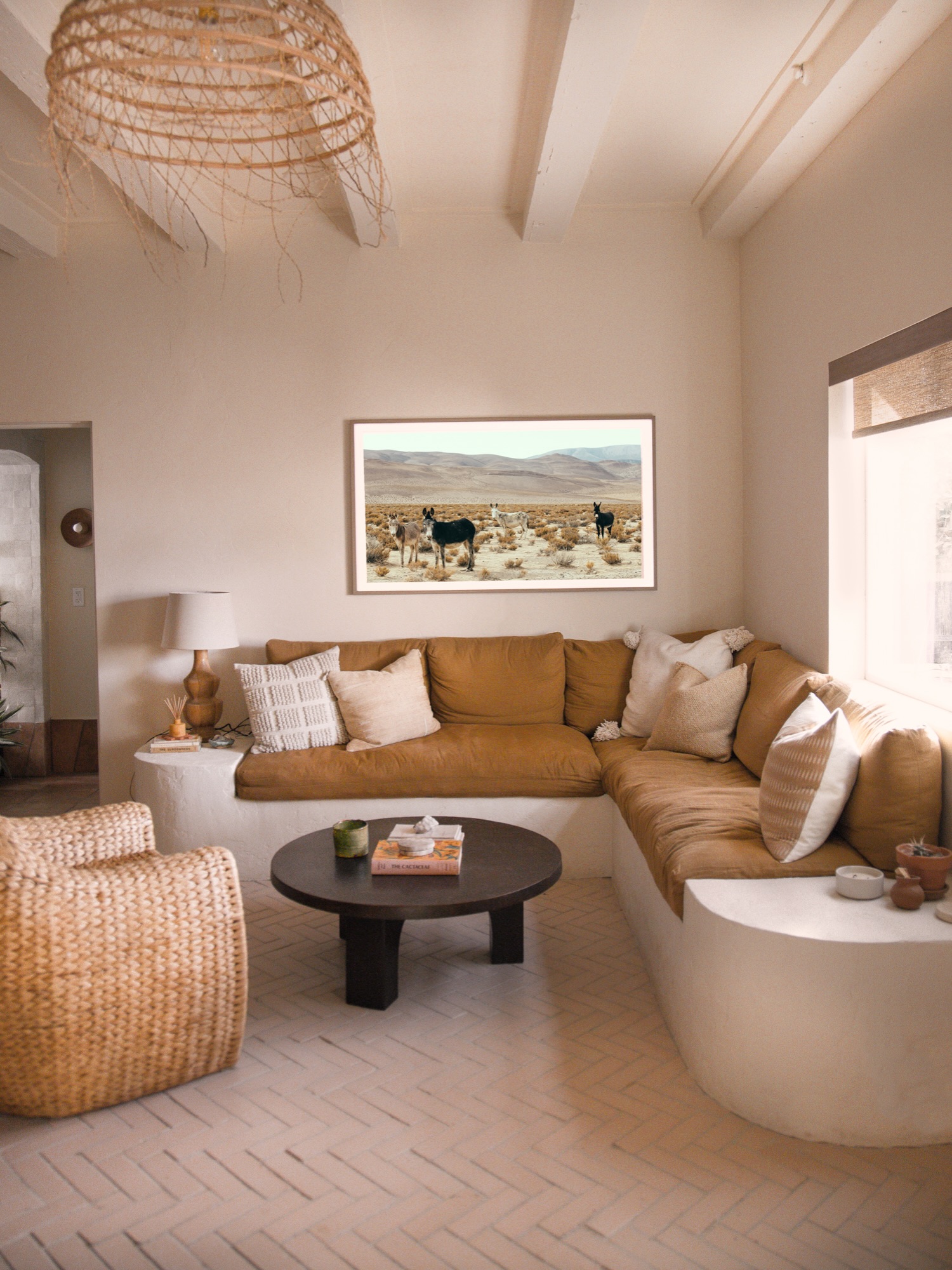
The Creosote suite at JTH Tucson uses a curved seating arrangement to make a living area feel generous. Caramel cushions follow the white built-in bench, and pale pillows soften the corner.
A dark round coffee table gives the light room a clear center, while woven furniture and a basketlike pendant add texture. The herringbone floor supplies pattern without competing with the cushions.
You can adapt the idea with a compact sectional and a round table, even without custom construction. Keep the table low enough to feel comfortable beside the seating and leave an easy route into the room.
Choose several related neutral fabrics rather than identical pillows. Their differences give a palette depth while preserving the room's relaxed, uncluttered feeling.
5. Make an Existing Stone Fireplace the Starting Point
Credits: Instagram
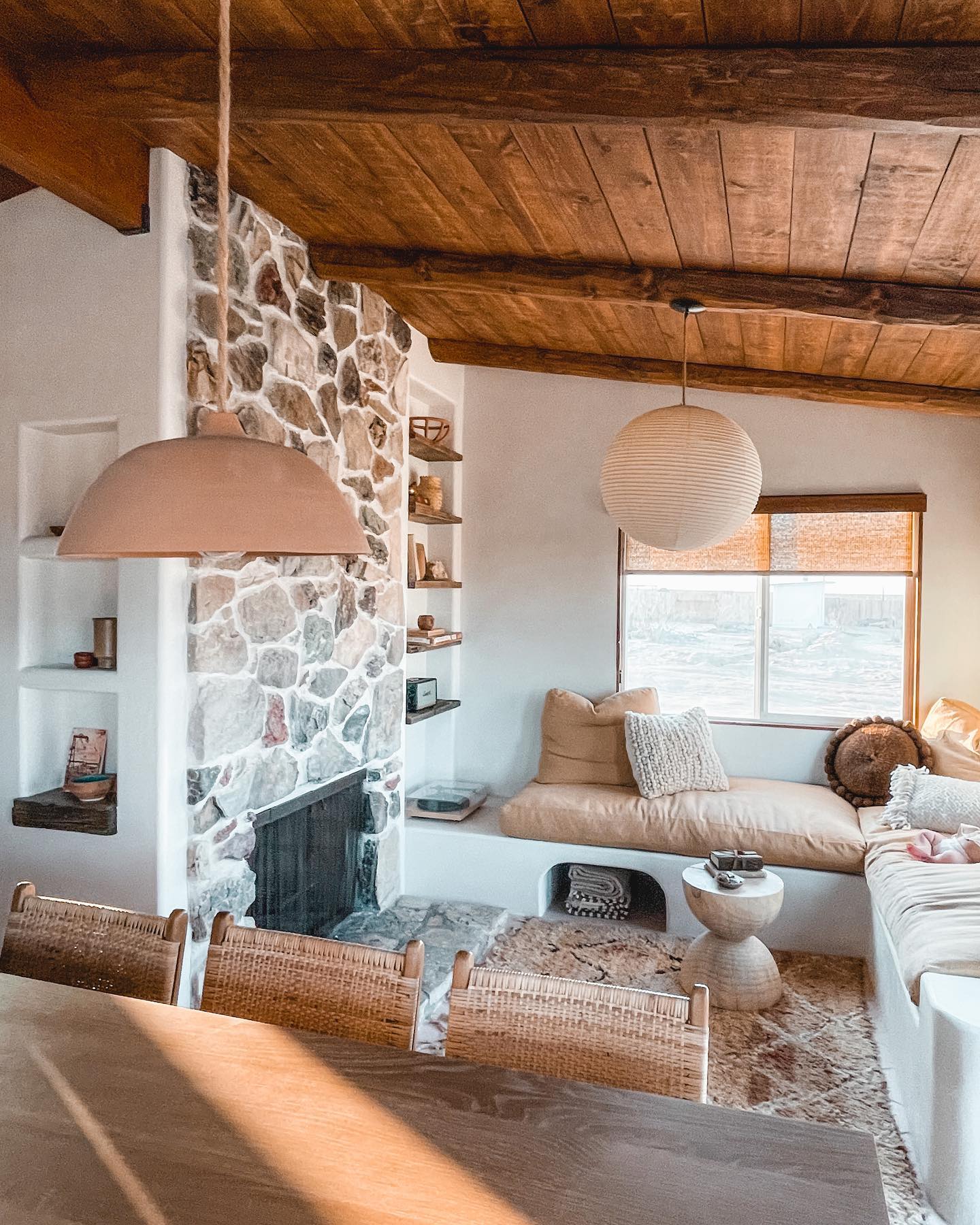
The Joshua Tree House's renovated homestead cabin lets a stone fireplace lead the room. The owners say they cleaned and over-grouted it, keeping its stone shapes visible.
A low bench, pale cushions, woven seating, and a round paper pendant balance that strong vertical feature. The warm wood ceiling adds another substantial material without crowding the small floor plan.
If your room has a fireplace worth keeping, choose furniture heights that leave its outline clear. Use soft textiles to temper the stone rather than surrounding it with more heavy pieces.
A compact table and movable stools can serve a narrow seating area. Consult a qualified professional before altering a fireplace, and maintain the manufacturer's or installer's required clearances around nearby furnishings.
6. Brighten Brown Leather With Colorful Pillows
Credits: Instagram
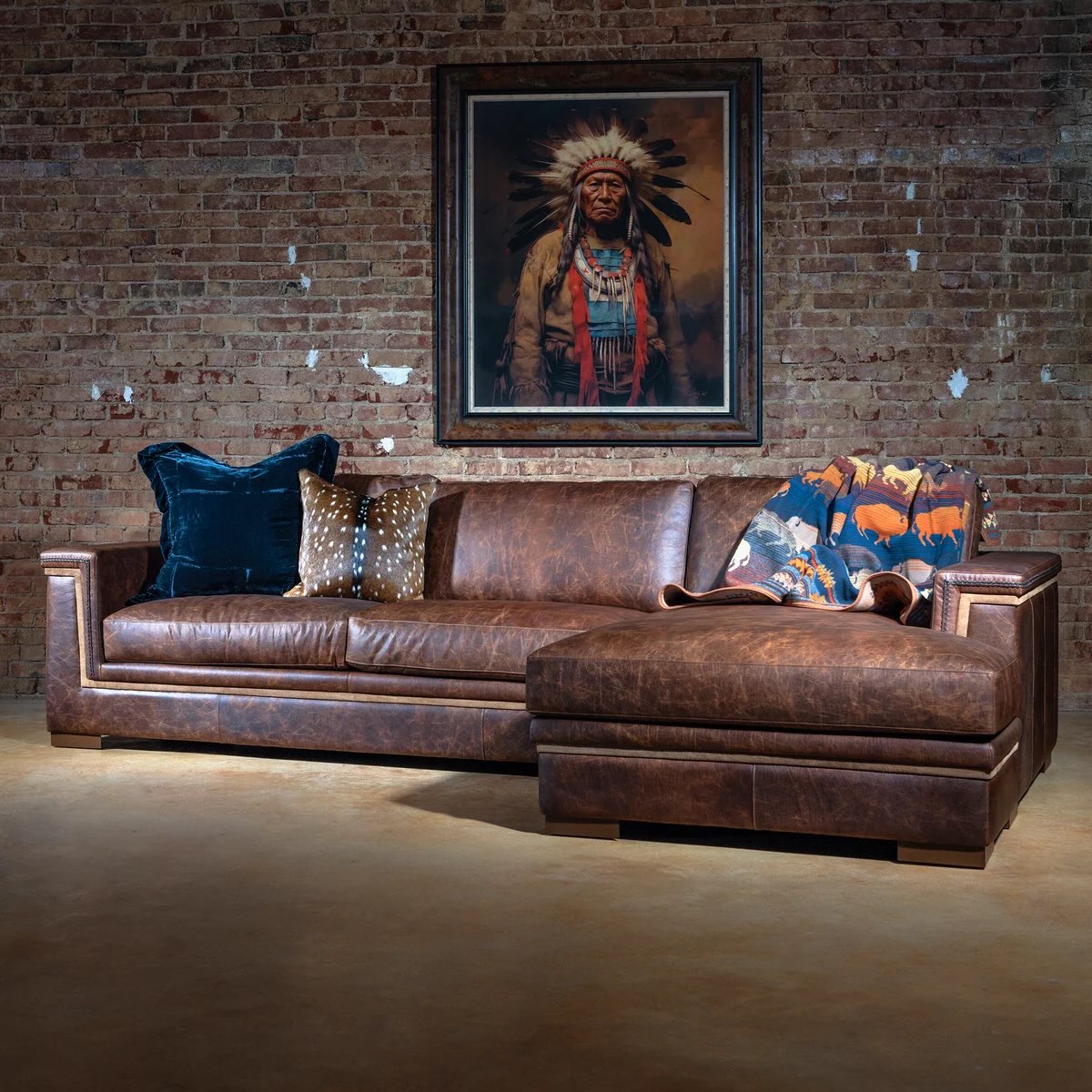
Into the West's furniture display shows how a brown leather sectional can carry lively Southwestern accents. Blue and multicolored pillows break up the seat, while a large framed artwork establishes a focal point above it.
The brick backdrop reinforces the warmth without demanding that every accessory be brown. At home, choose a small number of pillows with clearly different scales: one solid, one larger motif, and one tighter pattern.
Repeat a color from the artwork to connect the wall and sofa. A sectional already occupies visual space, so give its ends breathing room.
Add a rug that extends beyond the coffee table when arranging a complete room. This example is especially useful if your existing leather furniture needs a refresh.
7. Pair Pale Cushions With a Dark Wood Frame
Credits: Instagram
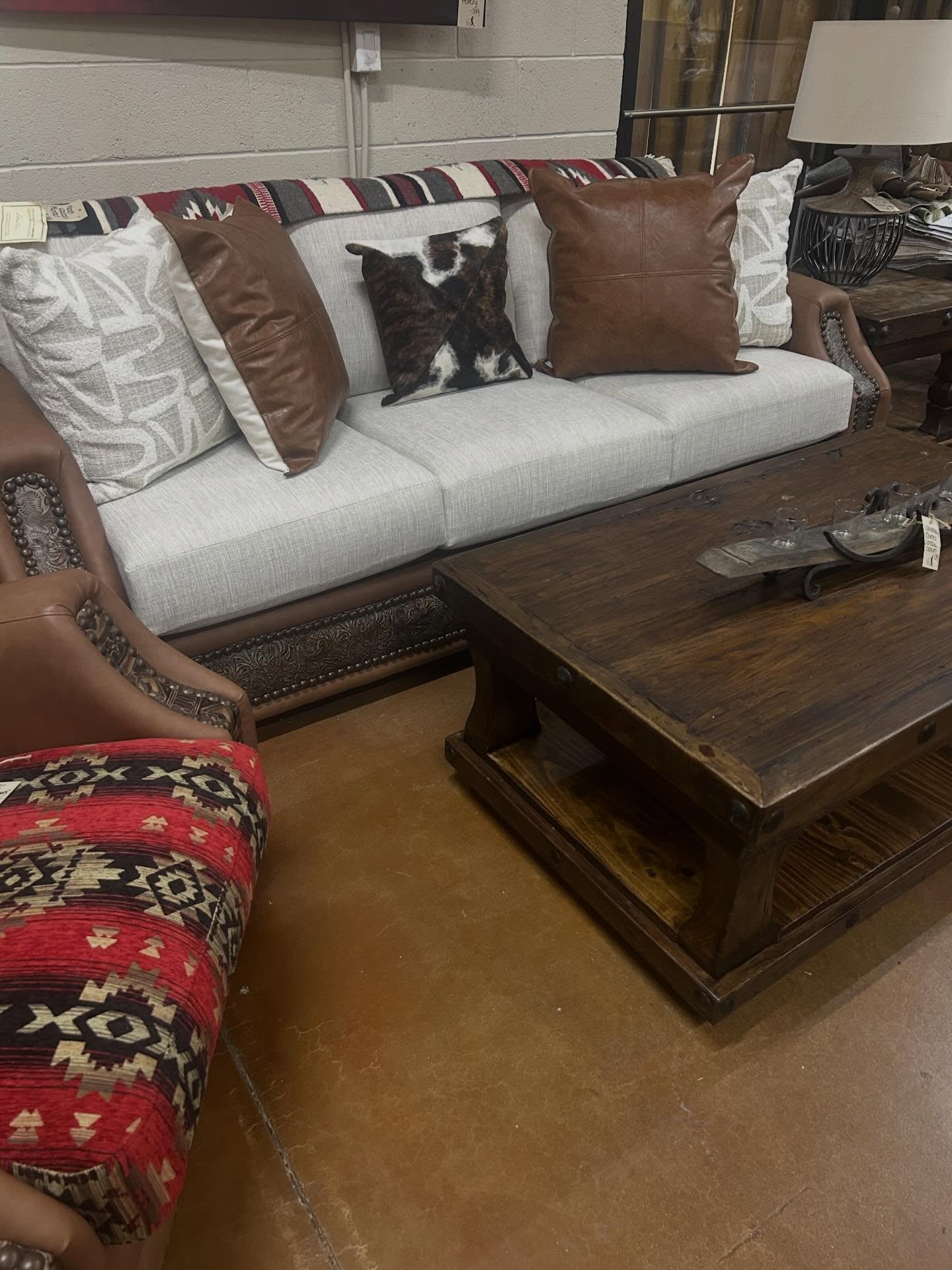
The pale cushions on this wood-framed sofa create a light center within Out West Interiors' seating display. Brown pillows connect the upholstery to the dark frame, while a patterned pillow adds a graphic accent.
The low wood coffee table repeats the substantial material at a different height. This combination works when you want Southwestern warmth without covering the largest seat in a busy print.
Let the sofa's structure remain visible and use a few contrasting cushions rather than overloading it. A lighter rug can help define dark wood furniture against a warm floor.
Place smaller accent seating where it will not block circulation. Keep the table surface usable, allowing its grain and shape to contribute most of the visual texture.
8. Give Vintage Collections a Wood Shelving Backdrop
Credits: Instagram
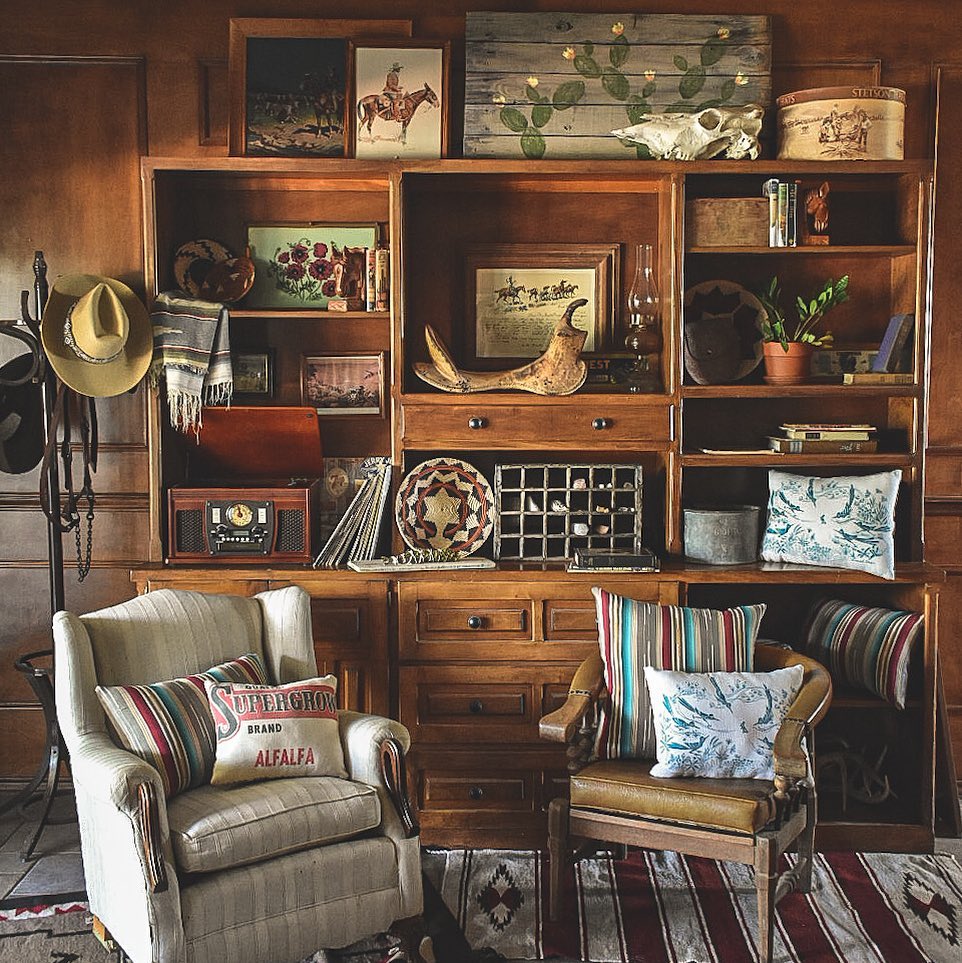
This sitting corner from Sapphires and Sagebrush brings patterned pillows, wood furniture, and collected objects together in one arrangement. The creator describes the pictured pieces as part of their own home and collection, including a chair they call their grandfather's.
Open shelves hold books, art, and Western objects, while striped pillows add color below. Start with furniture you already value, then use a few related textile colors to connect mismatched seats.
Vary the heights of objects on shelves and leave gaps so individual pieces remain visible. Keep a nearby table within reach of both chairs.
The arrangement feels personal because the collection relates to the people using it. You do not need to fill every shelf at the same time.
9. Anchor Bright Windows With an Ochre Sectional
Credits: Instagram
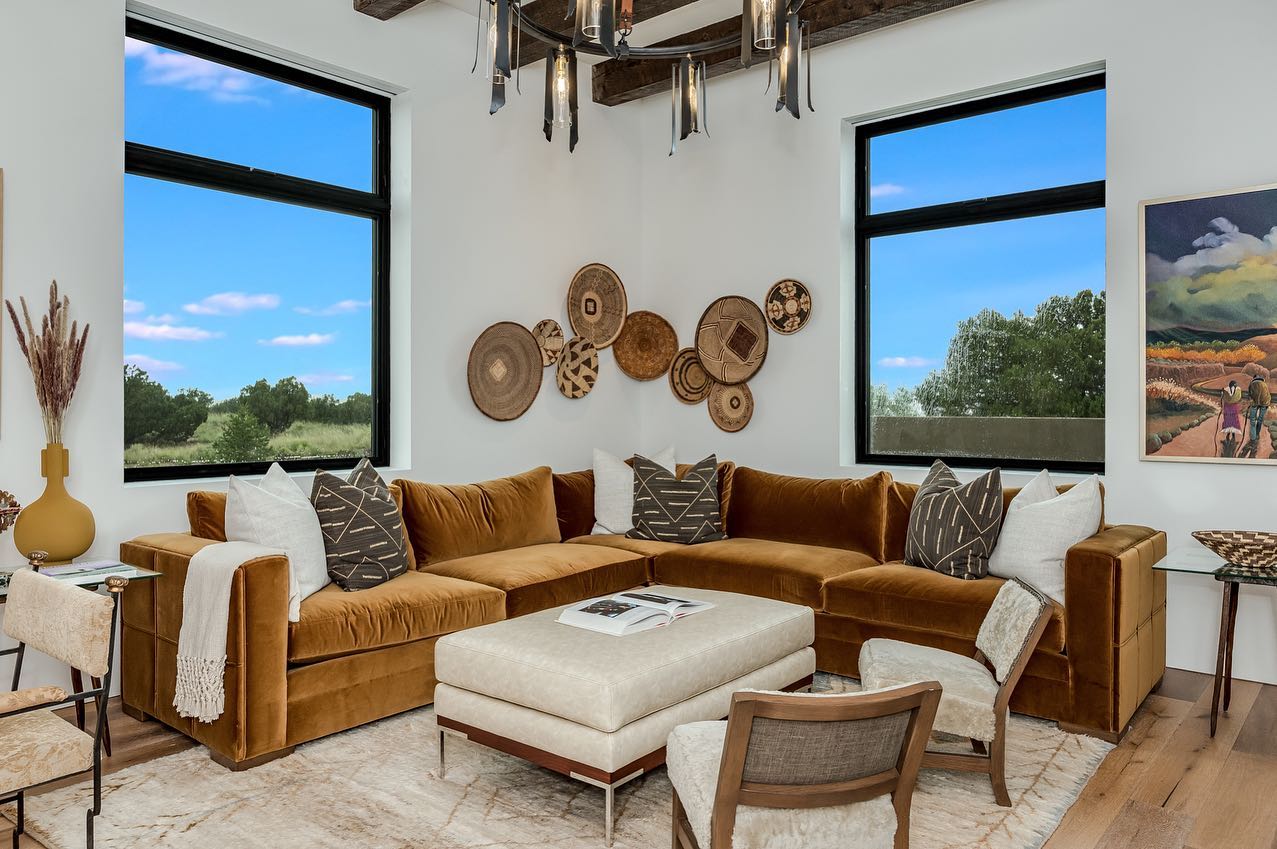
Jennifer Ashton Interiors uses an ochre sectional to give this Santa Fe living room a warm center. Dark window frames outline the view, while a pale ottoman and light rug keep the seating group from feeling heavy.
A cluster of woven wall pieces echoes the upholstery's golden tones. The combination offers a practical alternative to painting a room orange.
Choose one substantial warm-colored piece, then surround it with lighter surfaces and a few dark outlines. Vary the sizes of wall decorations, but keep the grouping close enough to read as one composition.
A tray can make an upholstered ottoman more useful for drinks. Check that the sofa's corners leave comfortable routes to windows and doors before copying a similar layout.
10. Use Recessed Displays to Frame the Seating
Credits: Instagram
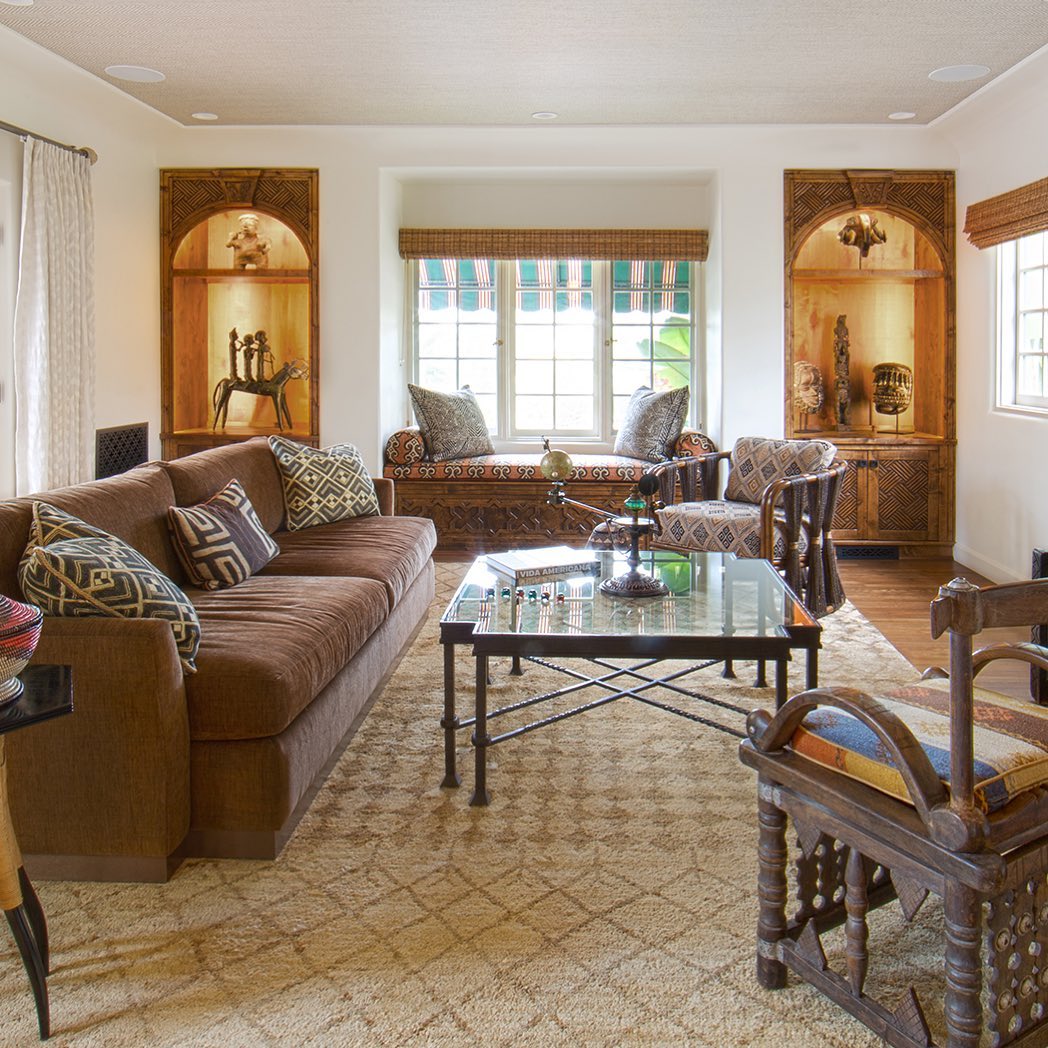
Two illuminated niches flank the window in this den by David Naylor Interiors, giving the room a balanced backdrop. Brown seating, patterned pillows, and wood furniture build warmth around a light rug.
The niches hold pieces at varying heights, keeping the display from looking like a row of identical objects. If your room already has recessed shelves, try arranging fewer, larger items with space around each one.
A lamp nearby can offer a gentler alternative when built-in lighting is unavailable. Keep the middle of the seating group practical: the glass-topped table preserves a view of the rug while providing a usable surface.
Repeat a warm tone from the displays in one cushion to connect the architecture with the furniture below.
11. Build a Reading Corner Around a Generous Chaise
Credits: Instagram
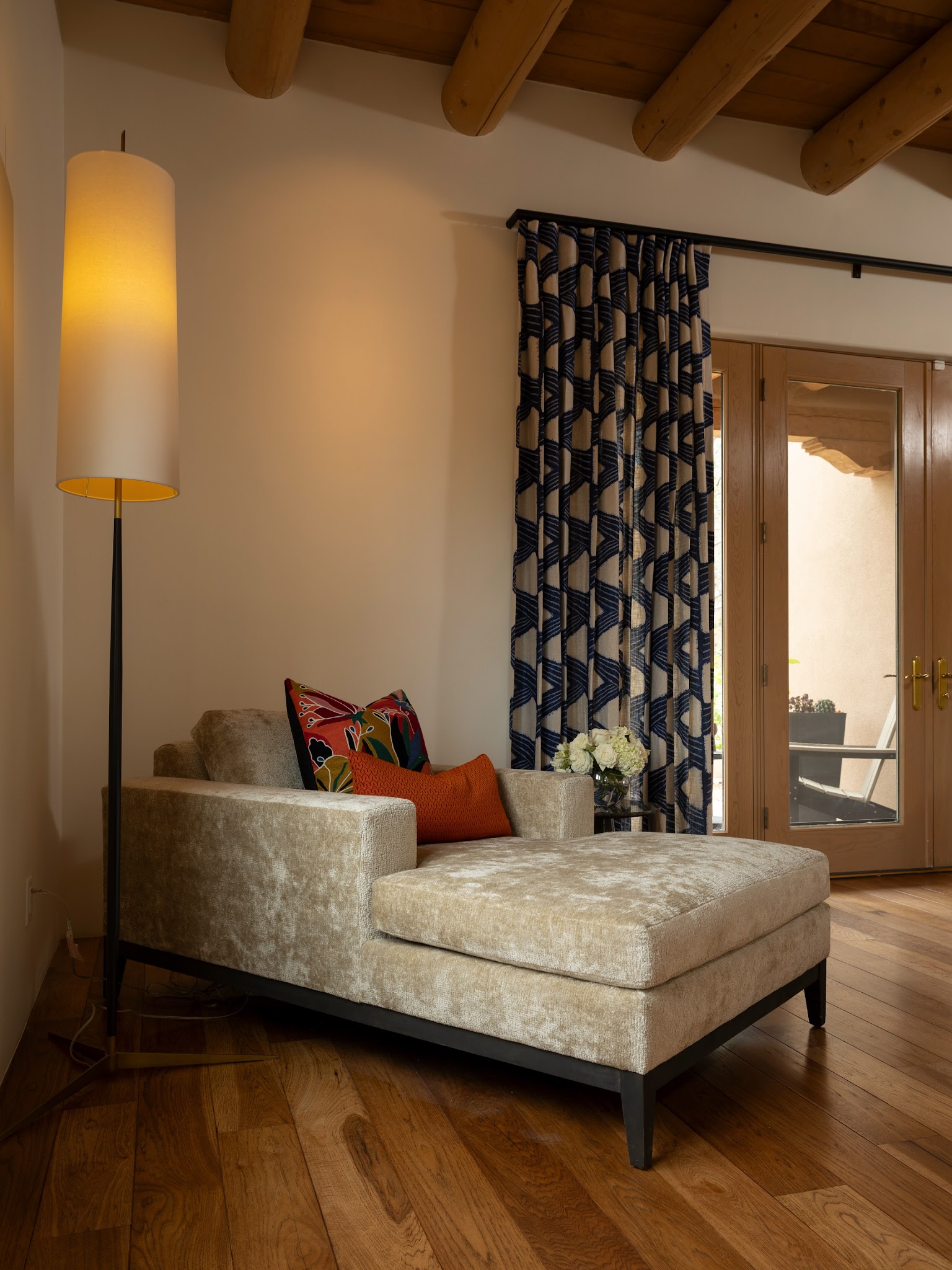
A chaise makes this corner by Neubleu Interiors feel like a destination. Its quiet upholstery lets the exposed wood ceiling and patterned curtain have more presence.
A tall shaded lamp stands close enough to serve the seat, and a small rust-colored pillow adds warmth. For a similar reading spot, measure the chaise with its full footprint in mind, including the space needed to walk around it.
Place the lamp so it lights a book without shining directly into your eyes. One curtain panel with a strong vertical pattern can draw attention to the window without adding more furniture.
Keep nearby accessories modest. The room already gets its character from contrasting textures, a comfortable seat, and the view through the glass.
12. Let Bold Art Lead a White Adobe Room
Credits: Instagram
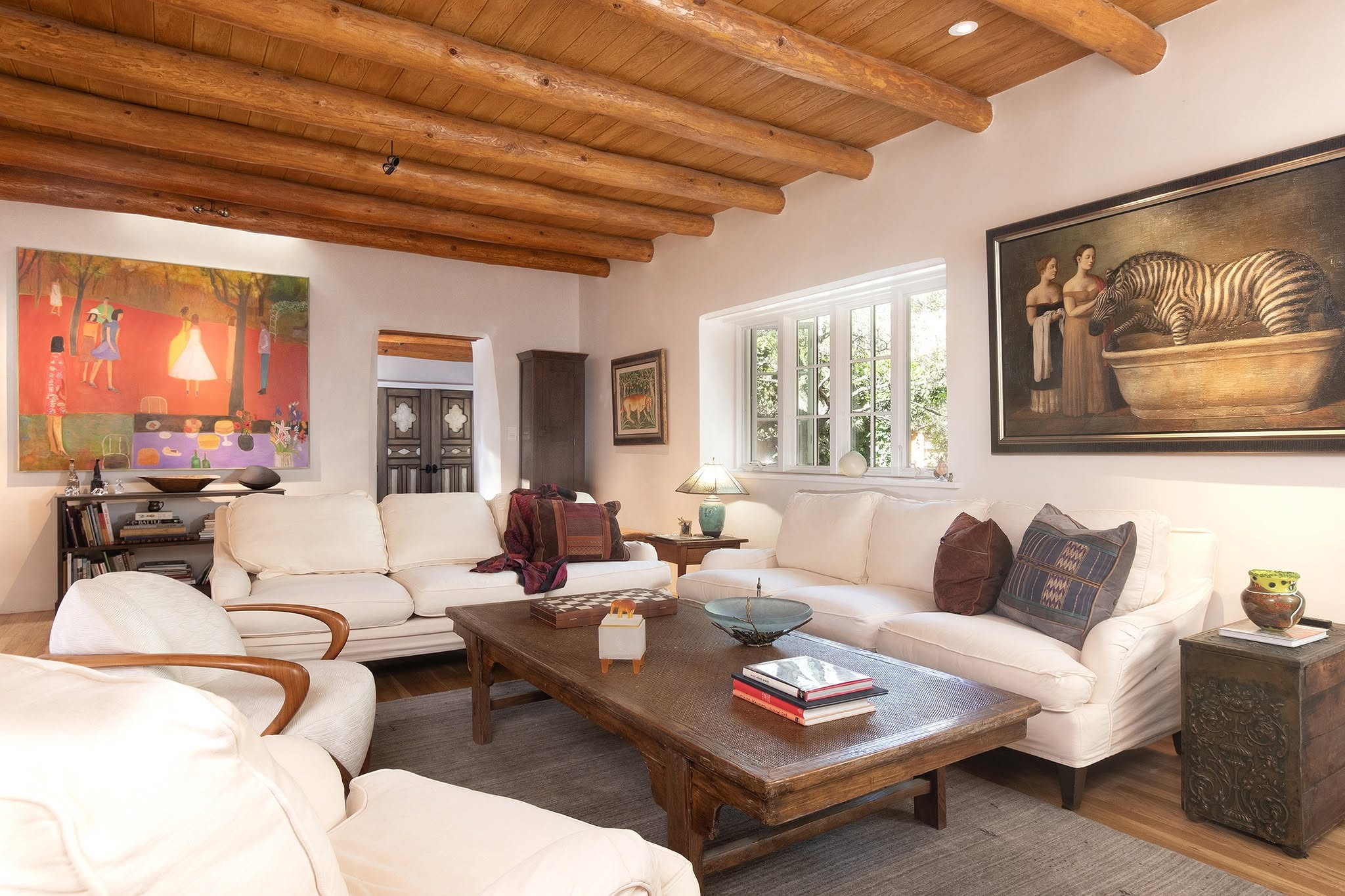
In this Santa Fe restoration shared by Prull Custom Builders, artworks bring color to a living room with white walls, exposed vigas, and a curved fireplace.
Pale seating keeps the arrangement light, while the wood coffee table relates to the ceiling. The art gives the room personality without requiring a different pattern on every cushion.
Start with a piece you want to see every day, then borrow one of its quieter colors for a throw or pillow. Keep frames and hanging heights consistent enough for the collection to feel considered.
Furniture should leave the fireplace and doorways easy to use. This approach is useful when the architecture already has strong character and only needs a few personal choices around it.
13. Use a Fireplace to Define an Open Living Area
Credits: Instagram
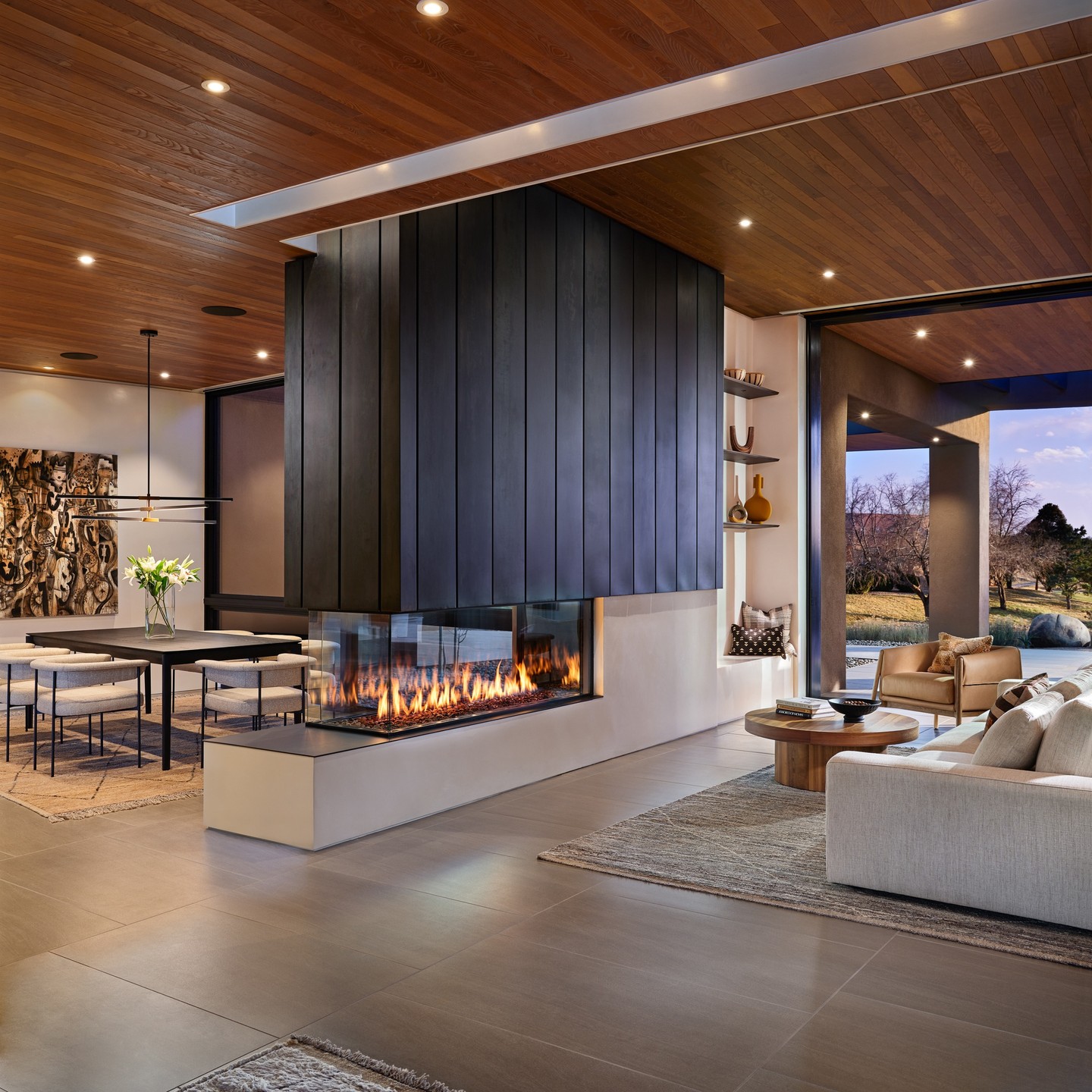
This Santa Fe interior from Hoopes Architects gives the fireplace a central position between living and dining areas. Dark vertical cladding draws the eye upward, while the wood ceiling carries warmth across the open plan.
A pale hearth and light seating prevent the central feature from becoming too visually dense. The adaptable idea is to give each activity a zone while maintaining views between them.
Use furniture placement and rugs to establish those zones before considering major construction. If a fireplace alteration is involved, have professionals assess the structure, ventilation, and clearances.
Keep nearby decorative objects simple so the central volume remains legible. Repeating wood tones across both sides helps a large shared space feel connected without matching every item.
14. Keep the Desert View Open Between the Chairs
Credits: Instagram
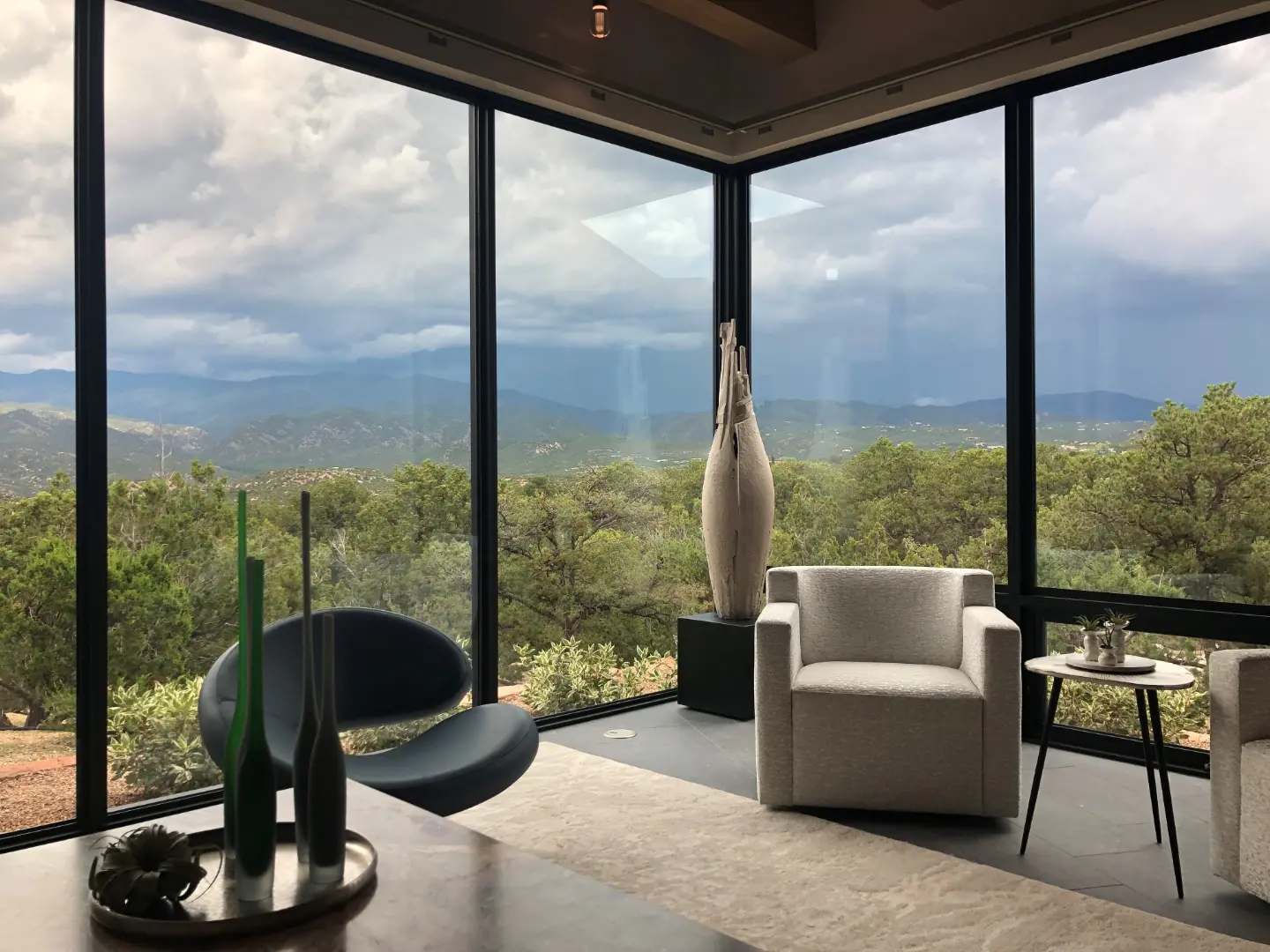
Two sculptural chairs sit beside full-height corner glazing in this Tierra Concepts home, with interiors credited to Annie O'Carroll Design. The landscape provides the color and texture, so the furniture stays low and the palette restrained.
A round table serves the chairs without creating a barrier across the glass. In a living room with a view, test the furniture arrangement from a seated position before adding more pieces.
Keep tall plants, shelving, and lamps away from the best sightlines. A rug can define the conversation area while letting the window wall remain open.
Choose a few tactile objects for the table rather than a crowded display. The room's quiet shapes allow changing outdoor light to become part of its character.
15. Bring Rich Textiles Close to a Kiva Fireplace
Credits: Instagram
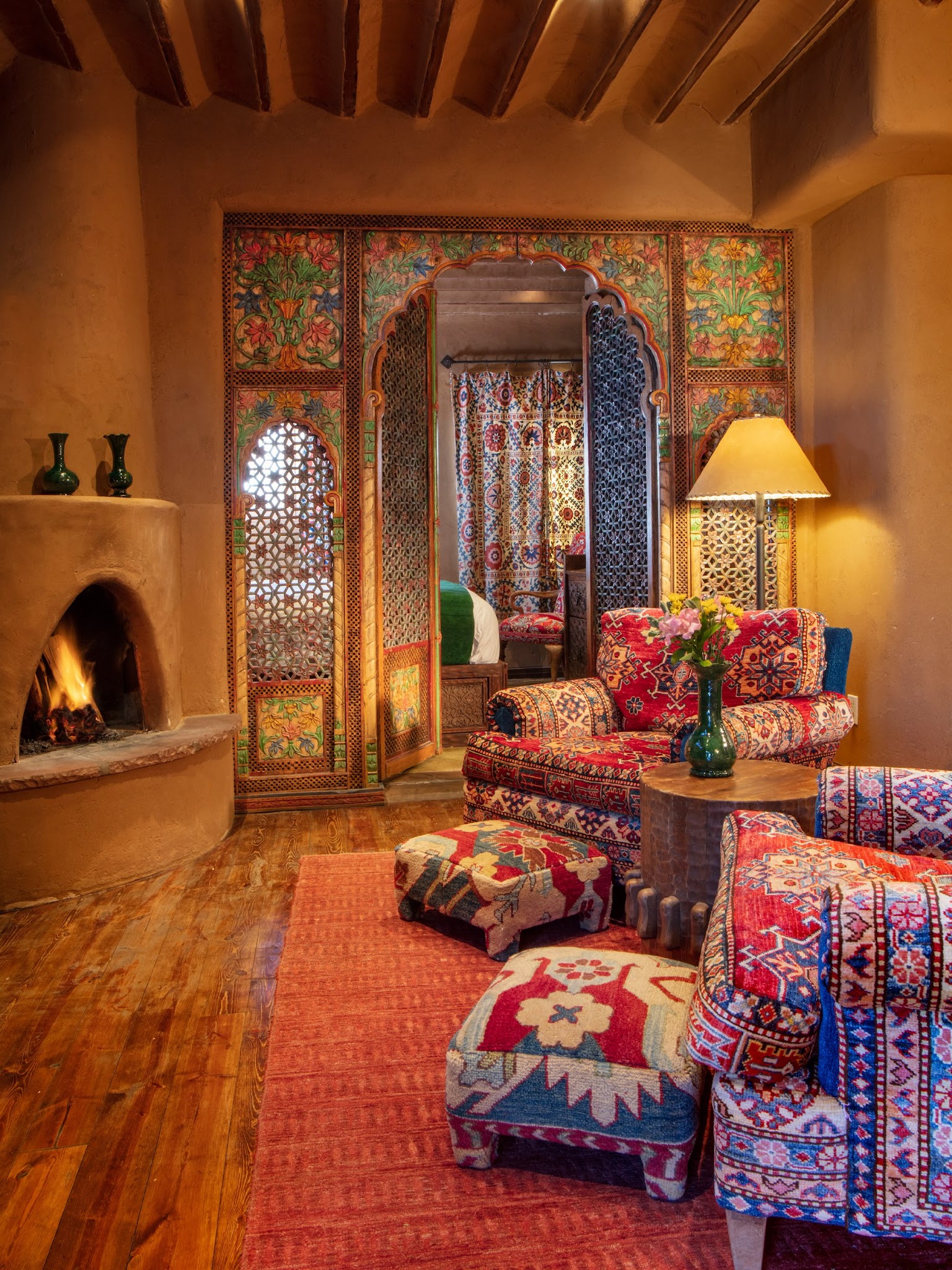
The Magnolia suite at The Five Graces shows a layered sitting area beside a kiva fireplace. Patterned chairs, colorful cushions, and a red rug sit within warm walls and a wood ceiling.
A decorated doorway makes the transition to the bedroom part of the composition. The hotel's caption identifies Uzbekistani textiles, so the room demonstrates how documented pieces from different places can coexist with Southwestern architecture.
At home, begin with one textile you love and repeat a few of its colors in neighboring fabrics. Keep the fireplace opening and required clearances free of furnishings.
Choose a lamp with a simple shade when surrounding surfaces are elaborate. A restrained furniture layout gives all those intricate details enough space to be enjoyed.
16. Repeat Geometric Motifs Across a Long Seating Area
Credits: Instagram
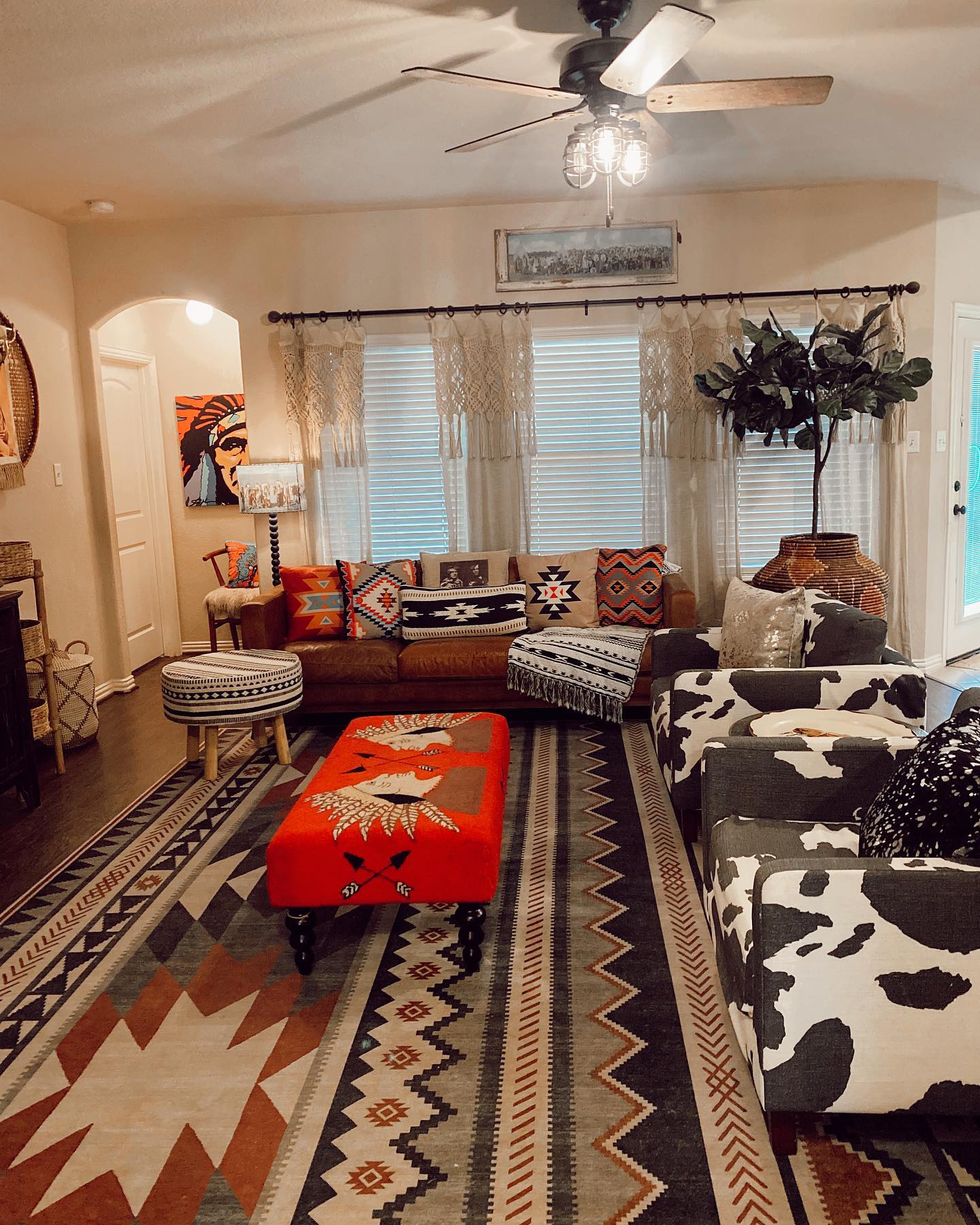
Strong geometric patterns organize this living room shared by homeowner boho_mo1987. A patterned rug leads between the seats, and a red ottoman establishes the center.
Smaller patterned stools and cushions repeat the graphic mood, while pale walls provide a quieter backdrop. The owner describes rearranging the room until the family found favorite seating spots, a reminder to test function alongside appearance.
When mixing this many motifs, repeat a small set of colors and vary their scale. Leave a clear route through the seating so the rug reads as a connection rather than an obstacle course.
Try the arrangement before buying more accessories. A bright central ottoman can supply enough emphasis without adding another large artwork or changing the wall color.
17. Try a Dark Palette for a Desert Retreat
Credits: Instagram
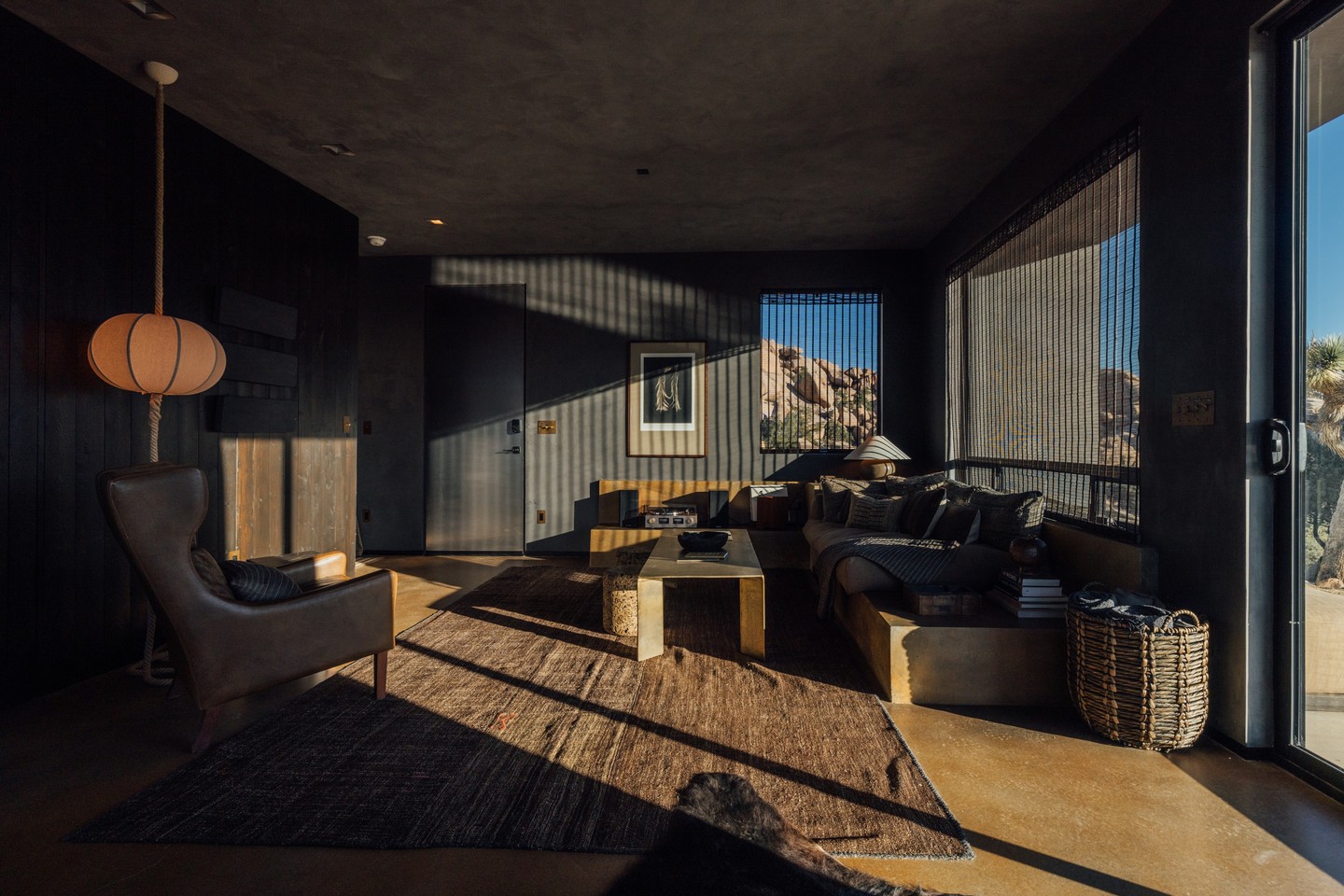
AMAR, a Rimrock hideaway designed by Hammer and Spear and shared by Homestead Modern, takes a moody approach to desert living.
Low seating, a compact table, and a shaded pendant sit against deep walls, while broad windows bring in the rocky landscape. Sunlight creates contrast across the floor and furniture.
The lesson is to balance dark finishes with a clear source of daylight and lamps. Test paint samples in evening light as well as sunshine before choosing a similar mood.
Keep the seating arrangement compact so the room still feels intimate when the view disappears after sunset. Woven texture can soften dark surfaces without adding bright patterns.
A few decorative objects are enough when light supplies so much visual interest.
18. Pair Olive Upholstery With a Warm Orange Wall
Credits: Instagram
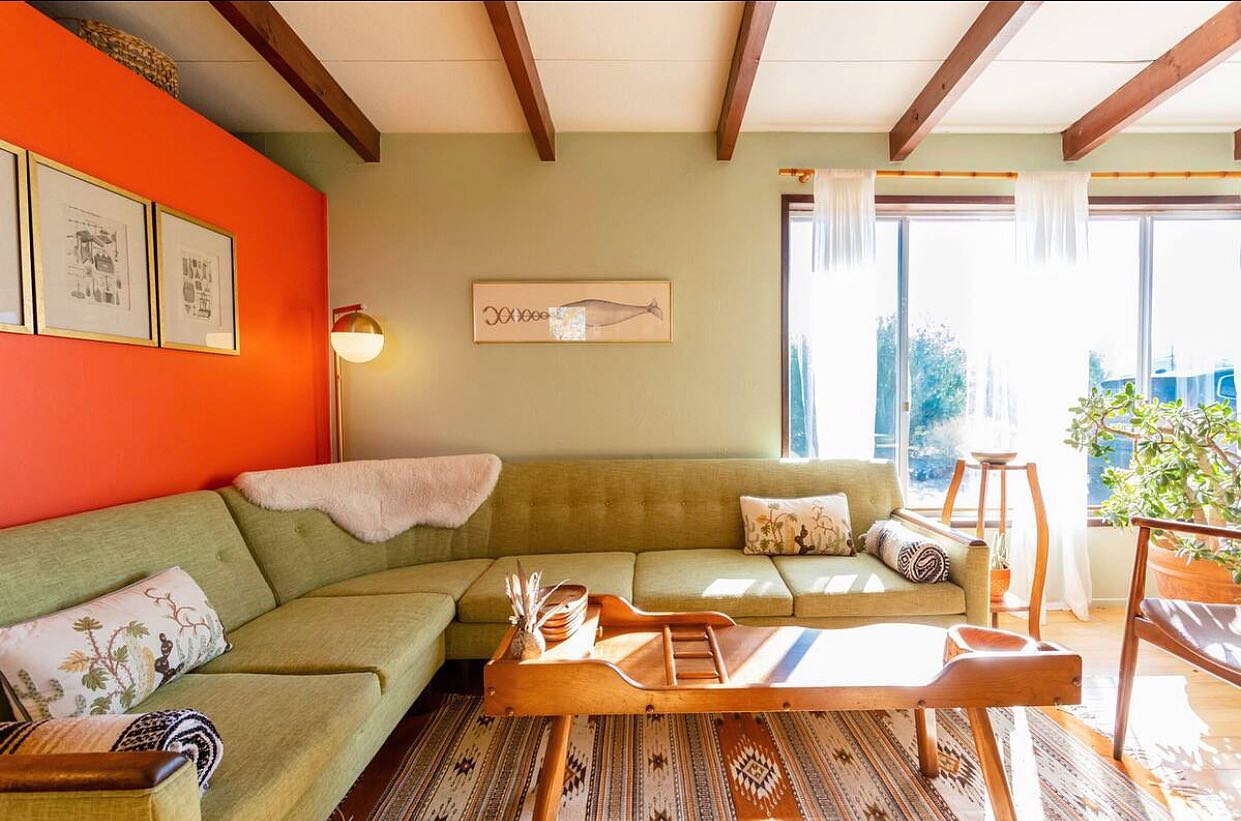
The Vintage Desert Farmhouse living room brings olive seating and an orange wall together beneath ceiling beams.
The owner explains that the sofa came with the house and was later reupholstered, showing how an existing piece can guide a fresh scheme. A low wood coffee table and a striped rug reinforce the relaxed mood.
Try a similarly warm accent wall behind a solid sofa, then keep the remaining walls lighter to give the stronger color room to breathe. Small framed pictures work here because they stay within the wall's compact display area.
Pick cushions that repeat cream or other quiet tones from the rug. The result feels lively while leaving the everyday function of the seating group at the center.
19. Balance Rough Stone With Playful Desert Color
Credits: Instagram
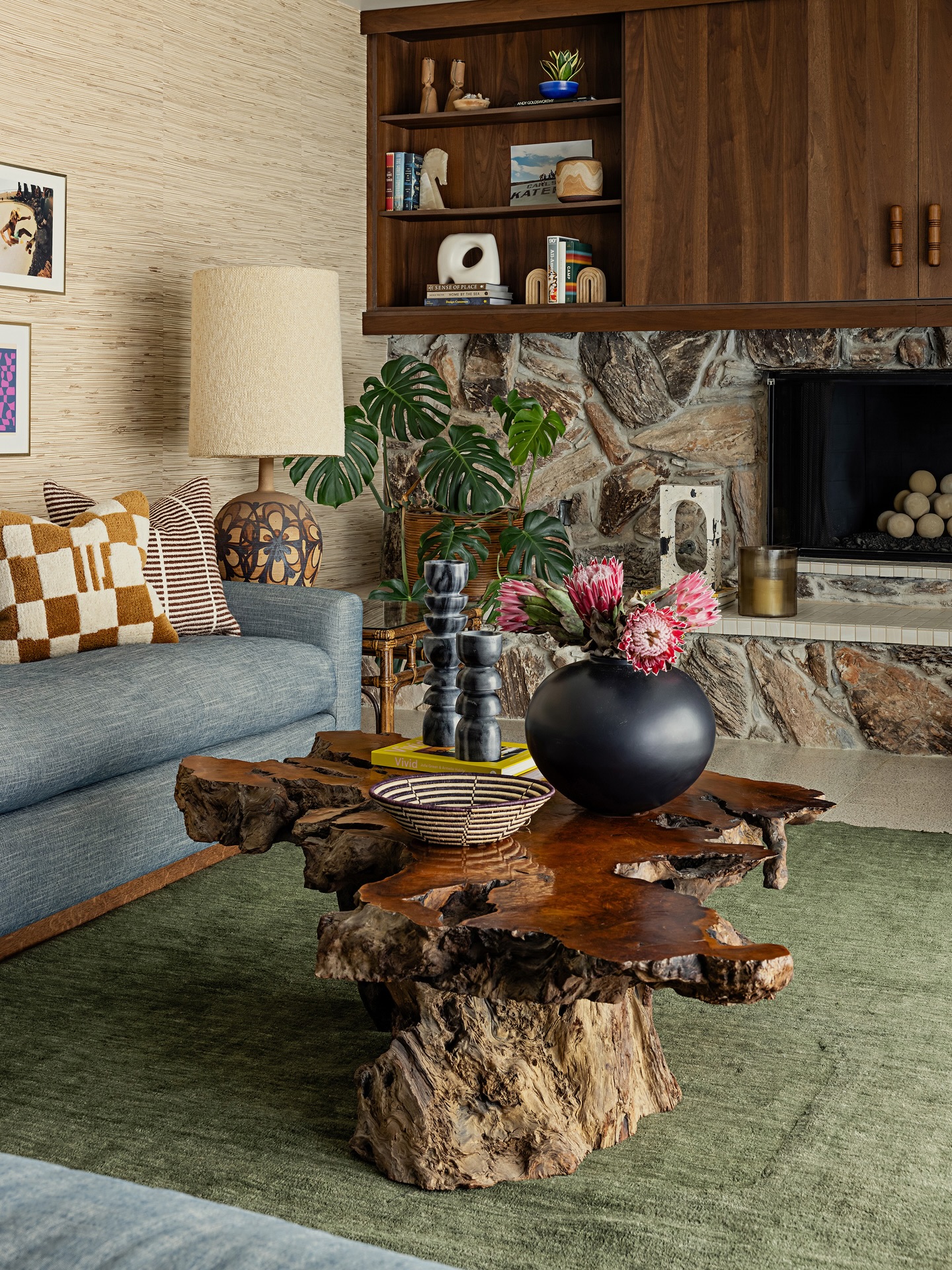
Colossus Mfg's own home combines a stone fireplace with a blue sofa, a wood coffee table, and bursts of color.
The designers describe Mexican surf style and midcentury design as influences, making this a desert-adjacent interpretation rather than a traditional adobe room. The stone and wood supply weight, while the upholstery and accessories keep the space lighthearted.
When adapting the mix, let one natural-textured feature lead and choose simple shapes for nearby furniture. Repeat a few colors in cushions, artwork, or flowers instead of covering every surface with a new pattern.
Keep the table low enough for comfortable conversation across the seating. Shelving works best when it includes breathing room around books and collected objects. Texture can carry the room.
20. Keep Western Memorabilia Above a Simple Sofa
Credits: Instagram
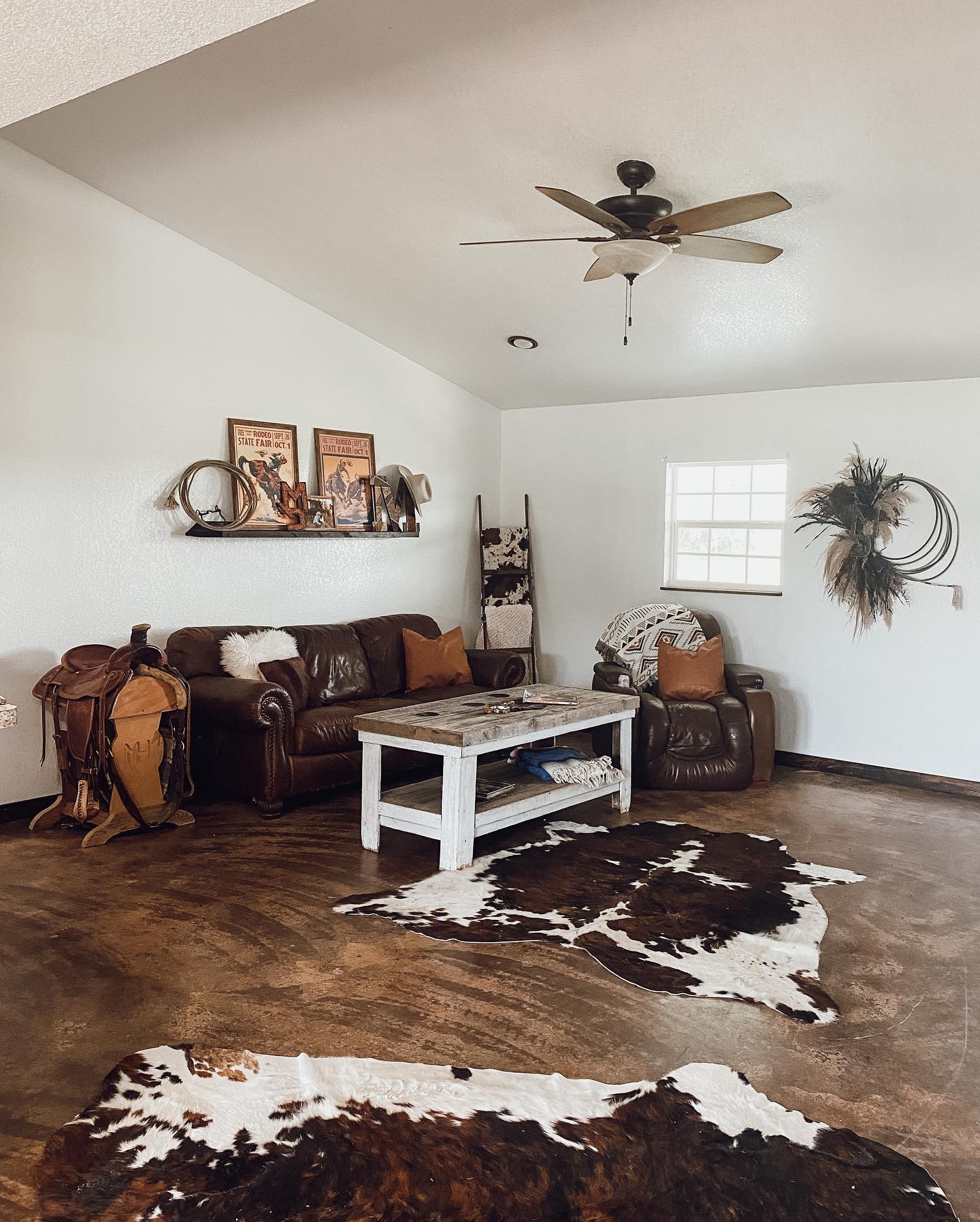
Crystal McCarty's ranch living room uses a shelf to gather Western prints, a hat, and a rope above a brown sofa. The rest of the wall stays open, giving the display room to be seen.
Rust and cream pillows soften the leather, while a light coffee table stands out against the darker floor. Borrow the idea with objects that have meaning to you, checking the shelf's load rating and anchoring it.
Arrange taller pieces at the back and leave gaps between their outlines. Keep nearby seating simple when the wall carries several different shapes.
A small tray can organize the coffee table without hiding its surface. This approach gives everyday furniture character through a focused collection instead of replacing it.