
A strong 1970s room can feel lively without letting every surface compete for attention.
These s Living Room Ideas show how to balance expressive details with quieter anchors, from pairing teal seating with a warm shag rug to offsetting wood paneling with cream and teal.
You’ll also find ways to group colorful cushions against a dark wall, arrange rounded furniture around low tables, and bring vintage needlework together as a focused display.
Small, repeated colors and shapes help connect patterns, textures, and furniture into a room that feels collected rather than cluttered.
1. Repeat a Tiled Table Pattern in a Shag Rug
Credits: Instagram
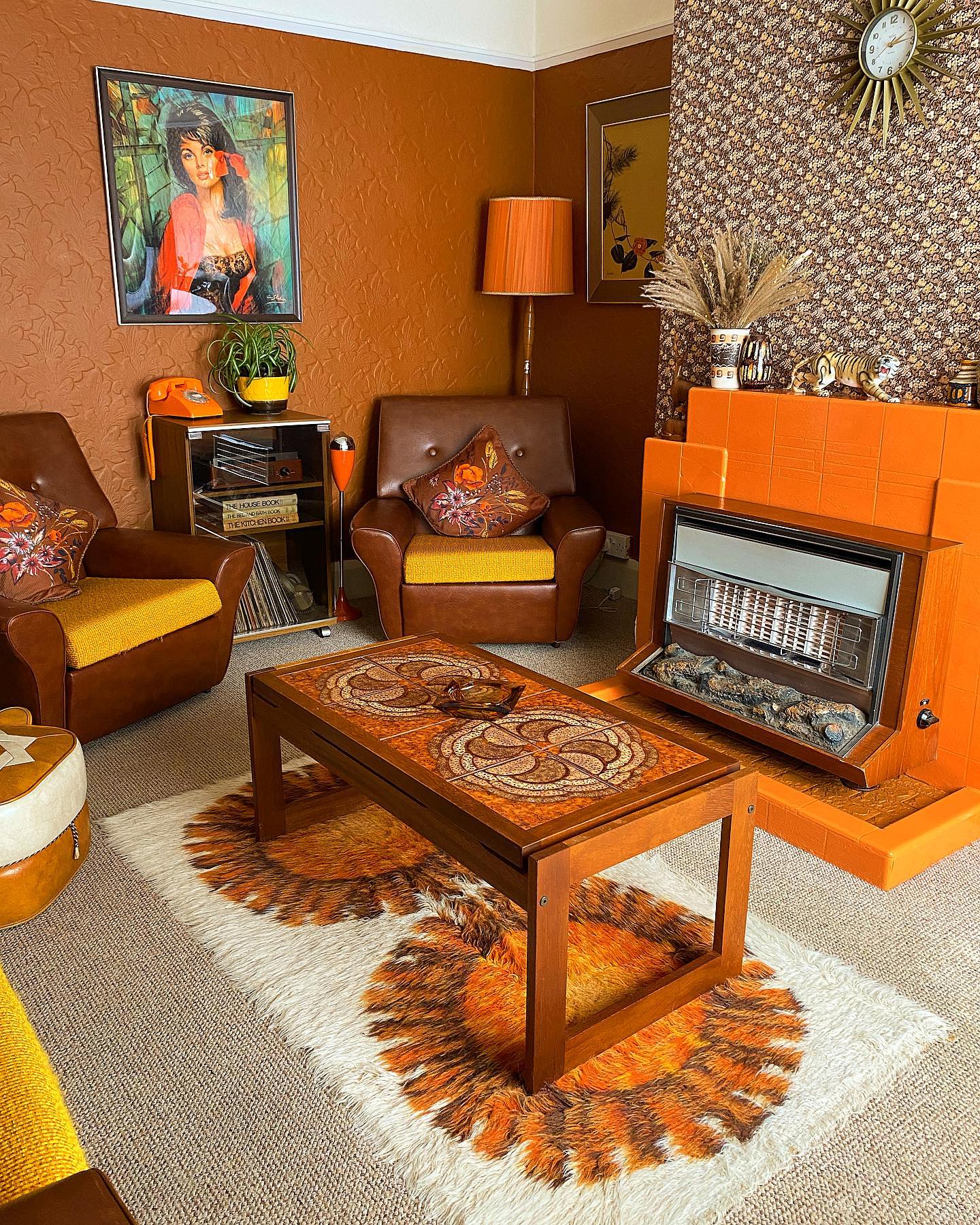
A tiled coffee table brings orange and brown together at the center of this vintage lounge. Its large circular motifs echo the shag rug below, while smaller floral patterns appear on the cushions and chimney wall.
Repeating colors across different pattern sizes helps this busy room feel connected. Start with one piece that already combines your favorite shades, then borrow those shades for nearby textiles.
The brown chairs provide calm surfaces between the patterned details. Mustard seat cushions brighten their outlines without adding an unrelated color.
If you collect vintage furniture, give your strongest find room to stand out before surrounding it with accessories. Keep drinks on a stable surface, and leave the table's decorative tiles visible around any tray.
2. Mix Rounded Space Age Shapes With Simple Seating
Credits: Instagram
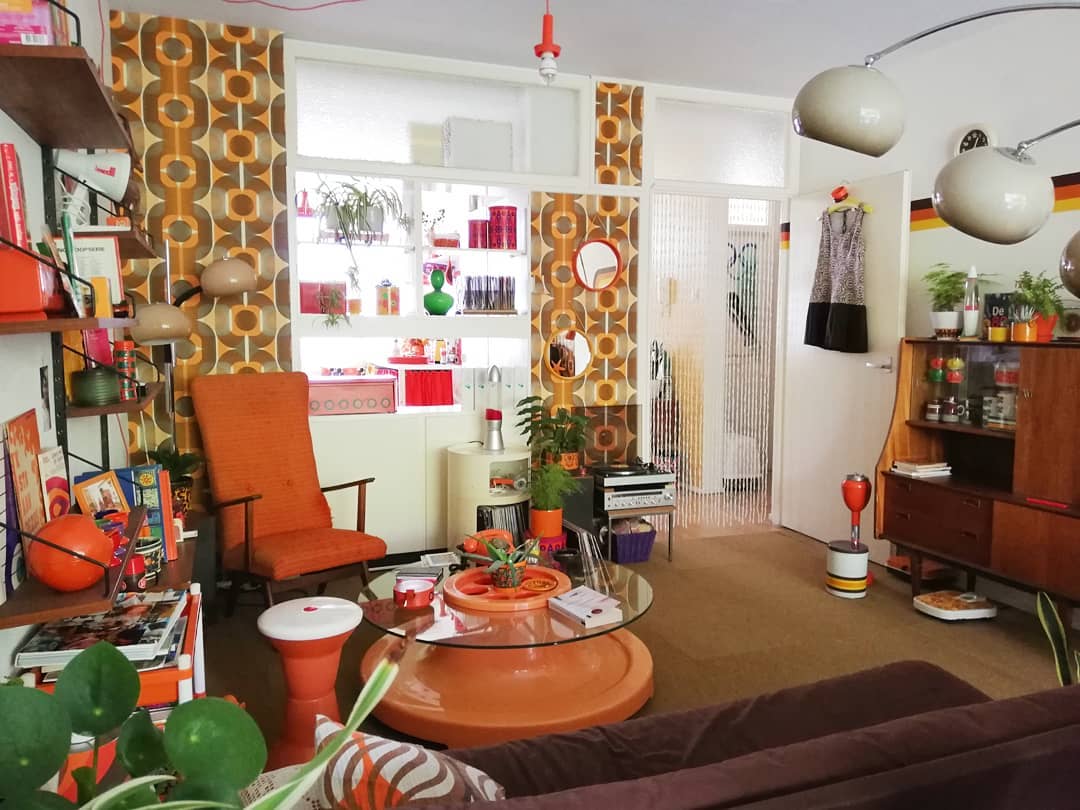
Rounded lamps and a circular glass table give Laura's colorful living room its playful retro character. An orange chair and brown sofa provide larger blocks of solid color among the geometric wallpaper and open shelves.
The glass tabletop makes its sculptural orange base visible without adding another opaque surface. To borrow the effect, choose one rounded centerpiece and repeat its curve in a lamp or small stool.
Keep at least one major seat plain so the patterns have something quieter beside them. Narrow strips of wallpaper can introduce a bold repeat without covering every wall.
Orange accessories carry the color around the room, while pale walls and window frames provide useful breaks between the closely arranged furniture and collected objects.
3. Balance Teal Seating With a Warm Shag Rug
Credits: Instagram
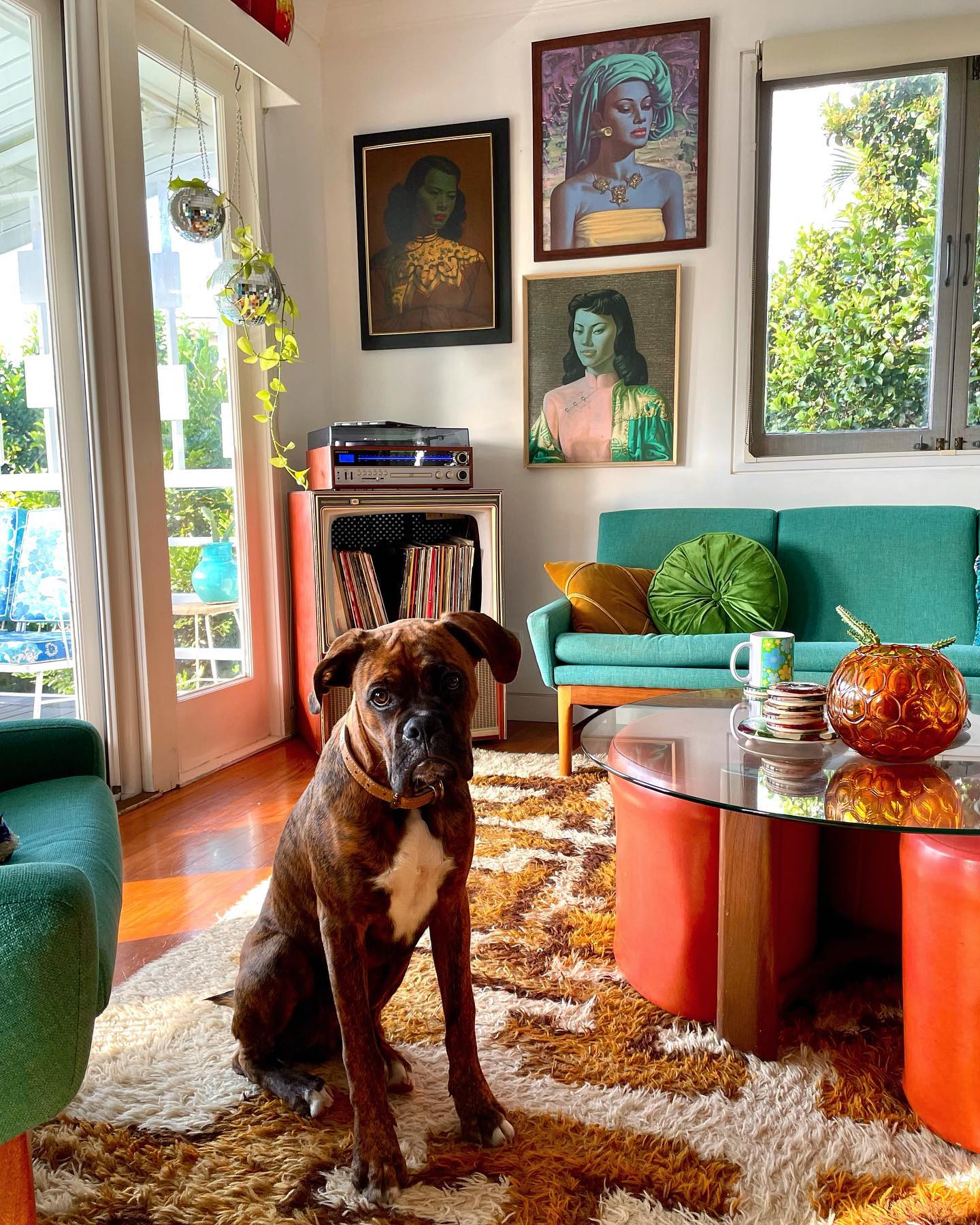
Teal seating brings a cool note to this sunny lounge, while a cream, mustard, and brown shag rug warms the floor beneath it. A round green cushion introduces another cheerful color already echoed in the portraits and plants.
The glass table keeps the rug's large pattern visible, even with its chunky orange supports. This combination works when you want contrasting colors to feel connected through shared shapes and textures.
Start with a rug containing several warm tones, then choose one cooler upholstery color. Repeat that cooler shade in artwork rather than adding more large furniture in the same finish.
Keep any deep pile clear of doors and choose cleaning methods suited to the rug before making it your everyday flooring.
4. Anchor a Bright Room With an Orange Sofa
Credits: Instagram
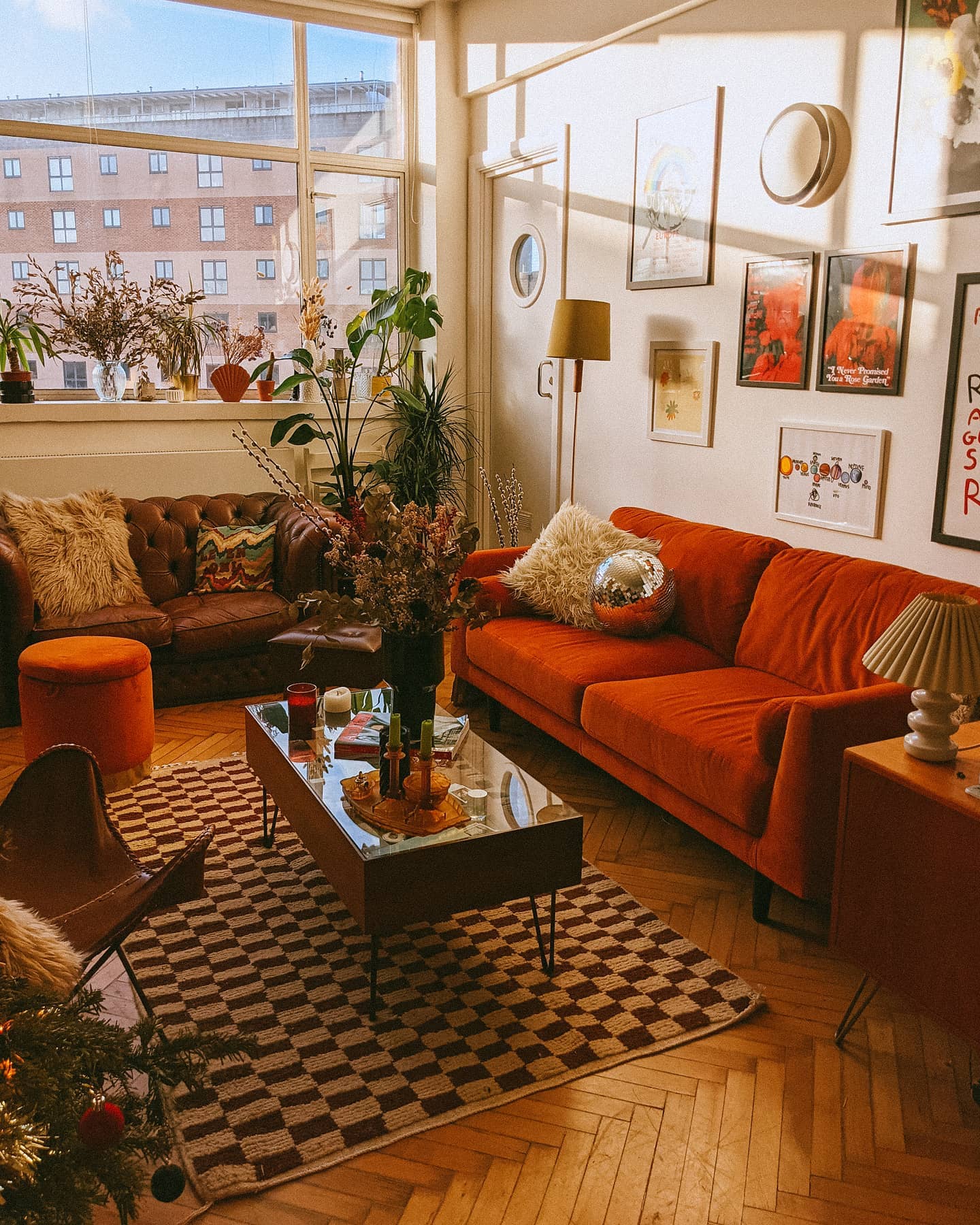
The orange sofa in Hannah's living room holds its own beside a tufted brown couch and a wall of framed prints. Both seats share tones, but their different shapes and surfaces keep the grouping from looking like a matching suite.
A brown and cream checkerboard rug connects them beneath the coffee table. Try this approach when one colorful sofa needs a quieter companion.
Repeat its orange in a small ottoman or artwork, then let wood and cream handle the background. Pale cushions add contrast against the saturated upholstery.
Keeping the wall light helps the gallery remain readable above the seating. A reflective tabletop adds brightness, while slender table legs leave the patterned rug visible through the center of the arrangement.
5. Balance Wood Paneling With Teal and Cream
Credits: Instagram
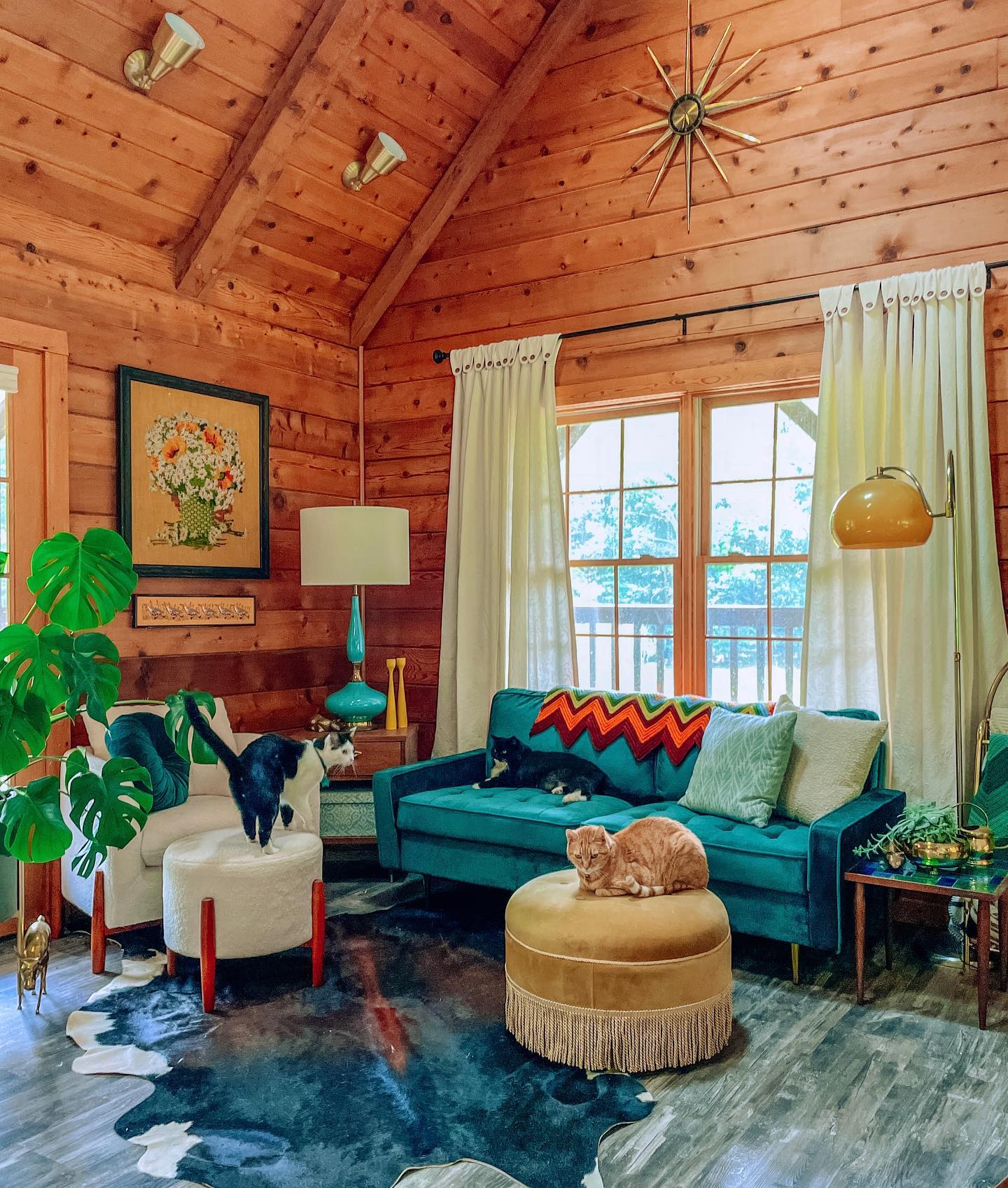
Warm wooden boards cover the walls and ceiling of Kristi's lounge, giving the room plenty of texture before any accessories are added.
A teal sofa stands clearly against the wood, while cream curtains and a pale chair introduce lighter areas at different heights. The round mustard ottoman adds softness with its long fringe.
Borrow the balance by choosing one cool upholstery color for a heavily paneled room, then repeating a light neutral near the windows. A colorful zigzag throw can connect several accent shades without changing the main furniture.
Keep artwork large enough to read against the timber grain. A starburst clock or sculptural lamp supplies a retro outline, leaving the paneling itself as the room's strongest visible architectural feature.
6. Show Colorful Cushions Against a Dark Green Wall
Credits: Instagram
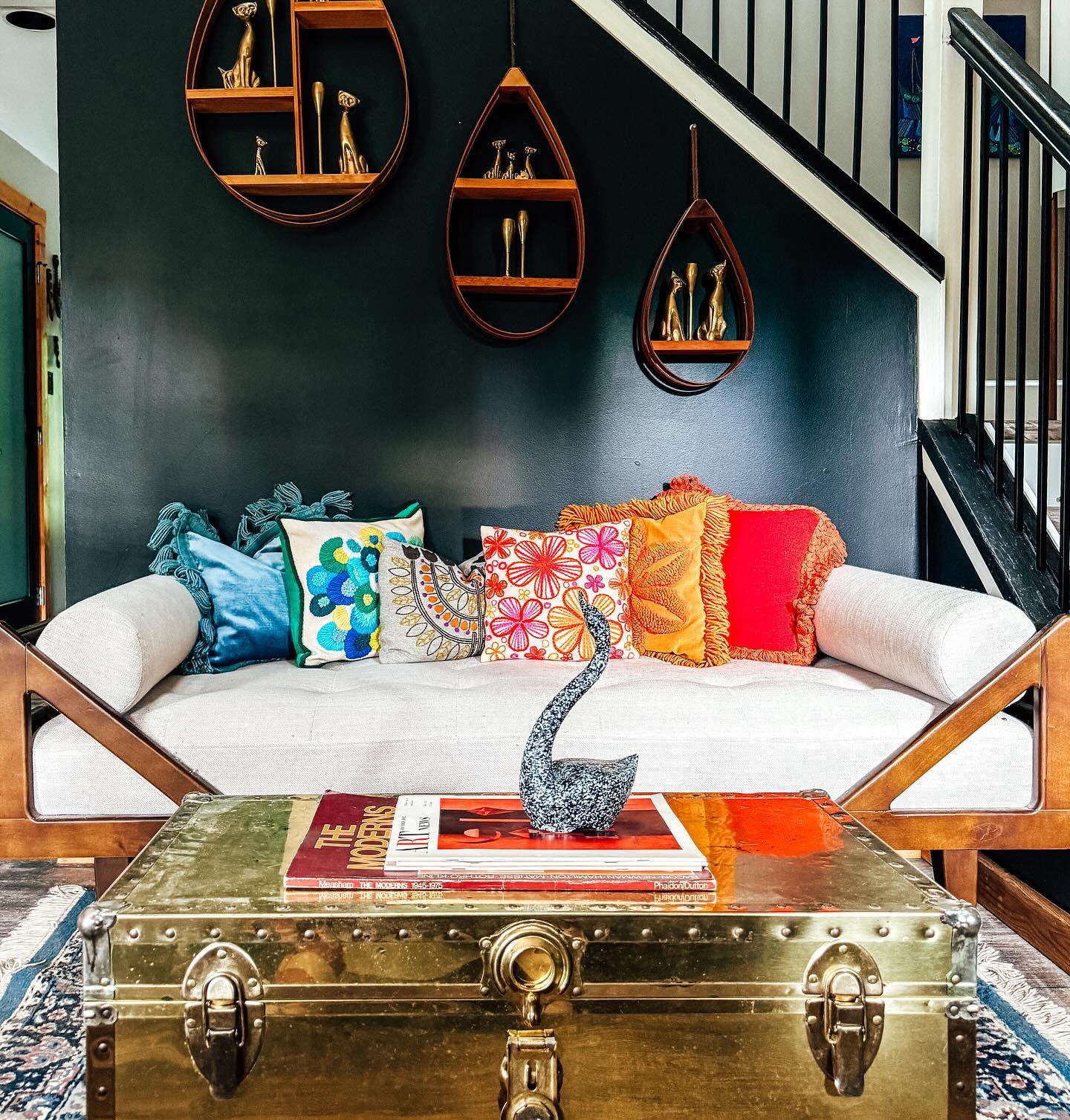
A cream sofa gives Kristi's bright embroidered cushions a clear backdrop beneath the dark green stair wall. Blue, orange, red, and floral designs sit together because their colors remain concentrated in one band across the seating.
The exposed wooden frame connects the sofa to the teardrop shelves above. This is an approachable way to add seventies character without changing every large piece.
Start with a plain sofa and choose cushions that vary in pattern but repeat a few colors. Leave enough seat space for comfortable use instead of filling the entire back with pillows.
Brass objects on the shelves relate to the reflective chest below, while the dark wall allows their small silhouettes to remain visible from across the room.
7. Group Vintage Needlework Into One Wall Display
Credits: Instagram
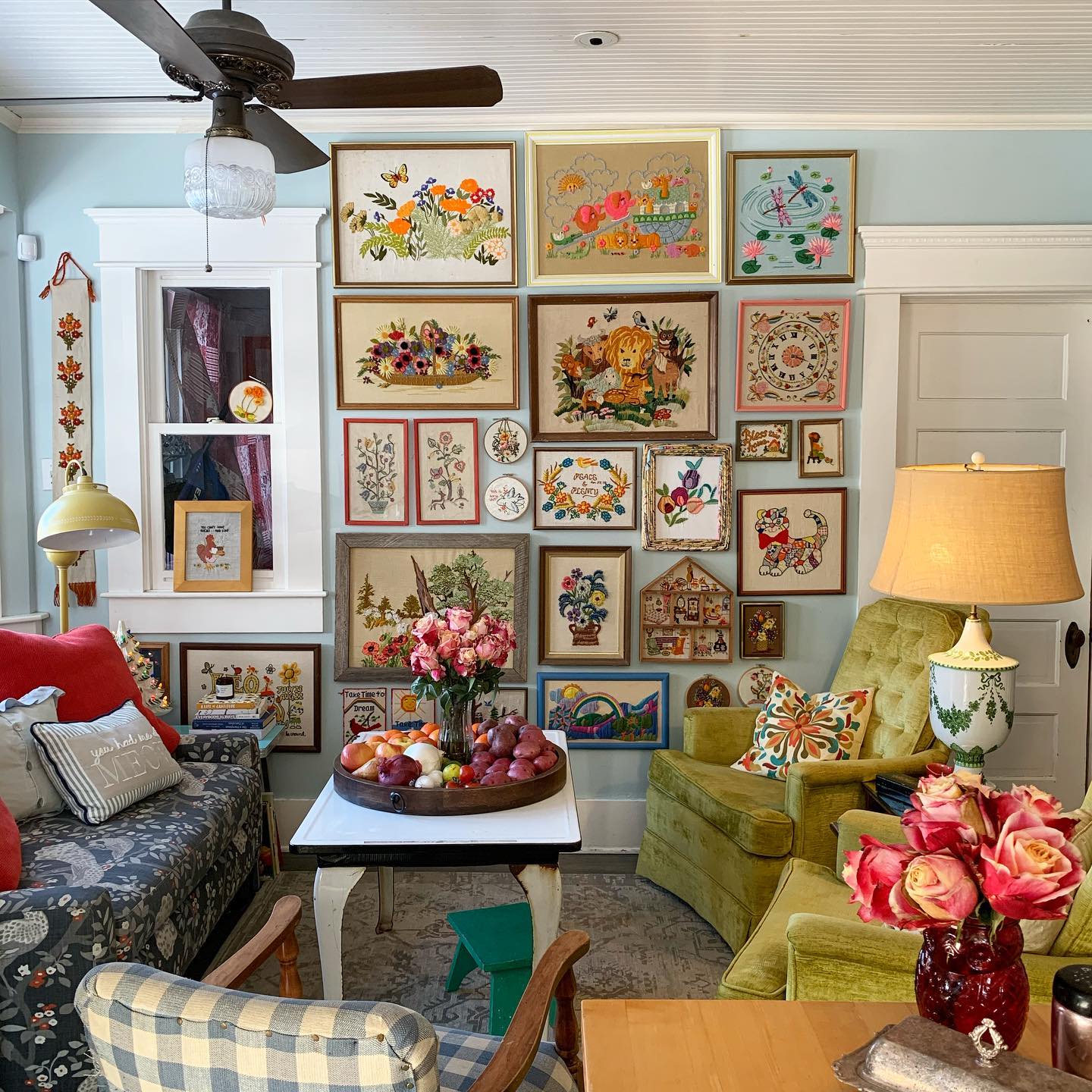
A dense collection of floral and figurative needlework turns the wall of this sitting room into its main attraction. Different frame sizes fit between the window and door, while pale backgrounds keep many of the colorful pictures visually related.
The green chairs and floral sofa continue the collected feeling at seating height. To create a smaller version, begin with several pieces you genuinely enjoy and arrange them on the floor before hanging.
Place the largest frames first, then fill selected gaps with smaller work. Repeating a flower color in a cushion can connect the wall to your furniture.
Leave the table comparatively simple so the artwork remains easy to enjoy, and use secure hanging hardware suited to each frame's weight.
8. Refresh Rattan Chairs With Bold Floral Cushions
Credits: Instagram
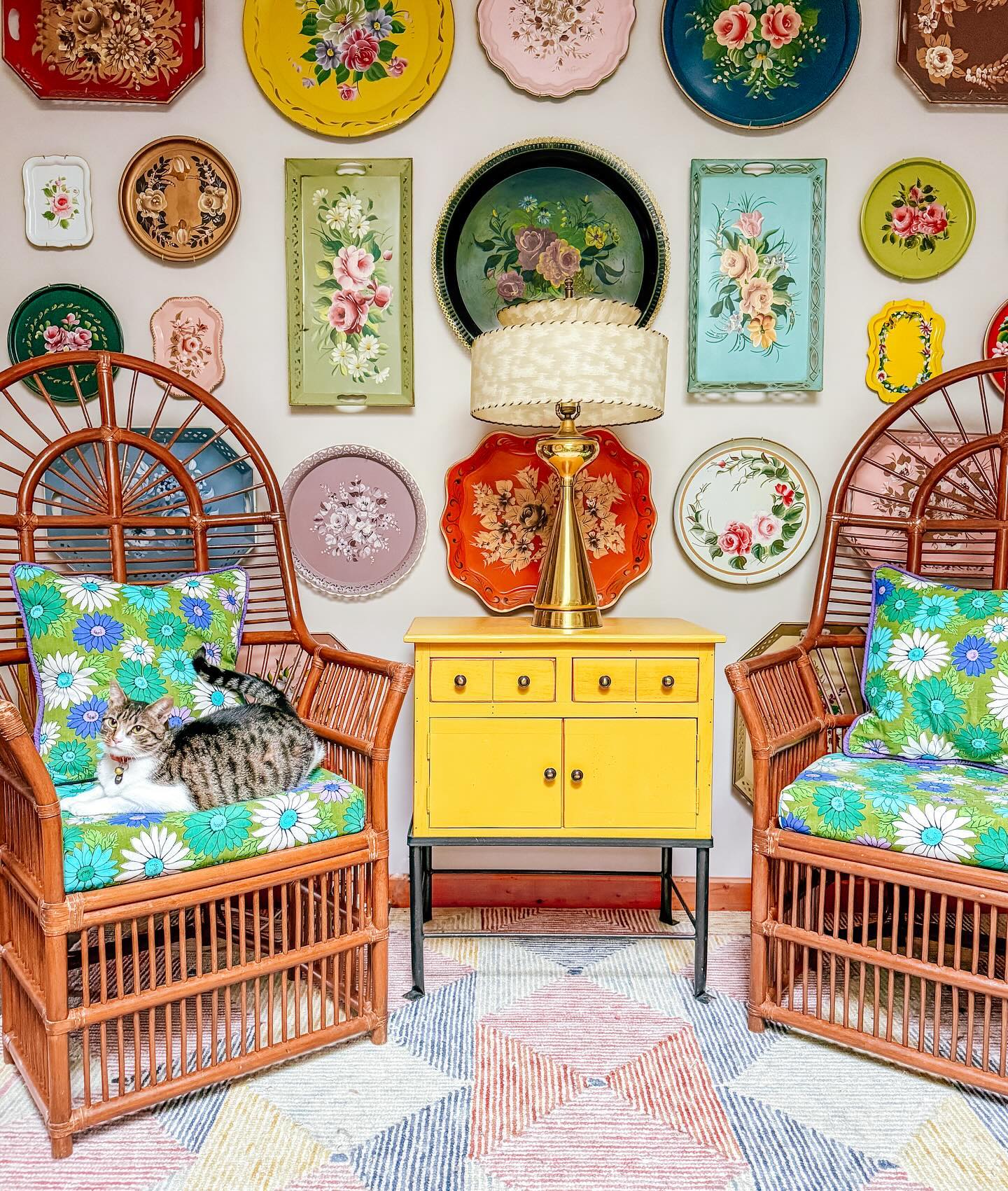
Two rattan chairs become a cheerful sitting corner through matching floral cushions in green, blue, and white. Their open frames leave the colorful tray collection visible behind them, while a small yellow cabinet gives the pair a shared surface.
A brass lamp adds height at the center without hiding the chairs' rounded backs. Borrow this arrangement when you have two similar vintage seats that need fresh patterned upholstery.
Choose a fabric with a clear large pattern, then pull one supporting color into the table or cabinet between them. Inspect older frames and weaving before regular use, and choose cushions that fit securely.
A pale wall helps the warm rattan stand out even when the surrounding accessories include several strong colors.
9. Use a Geometric Rug to Brighten Burgundy Seating
Credits: Instagram
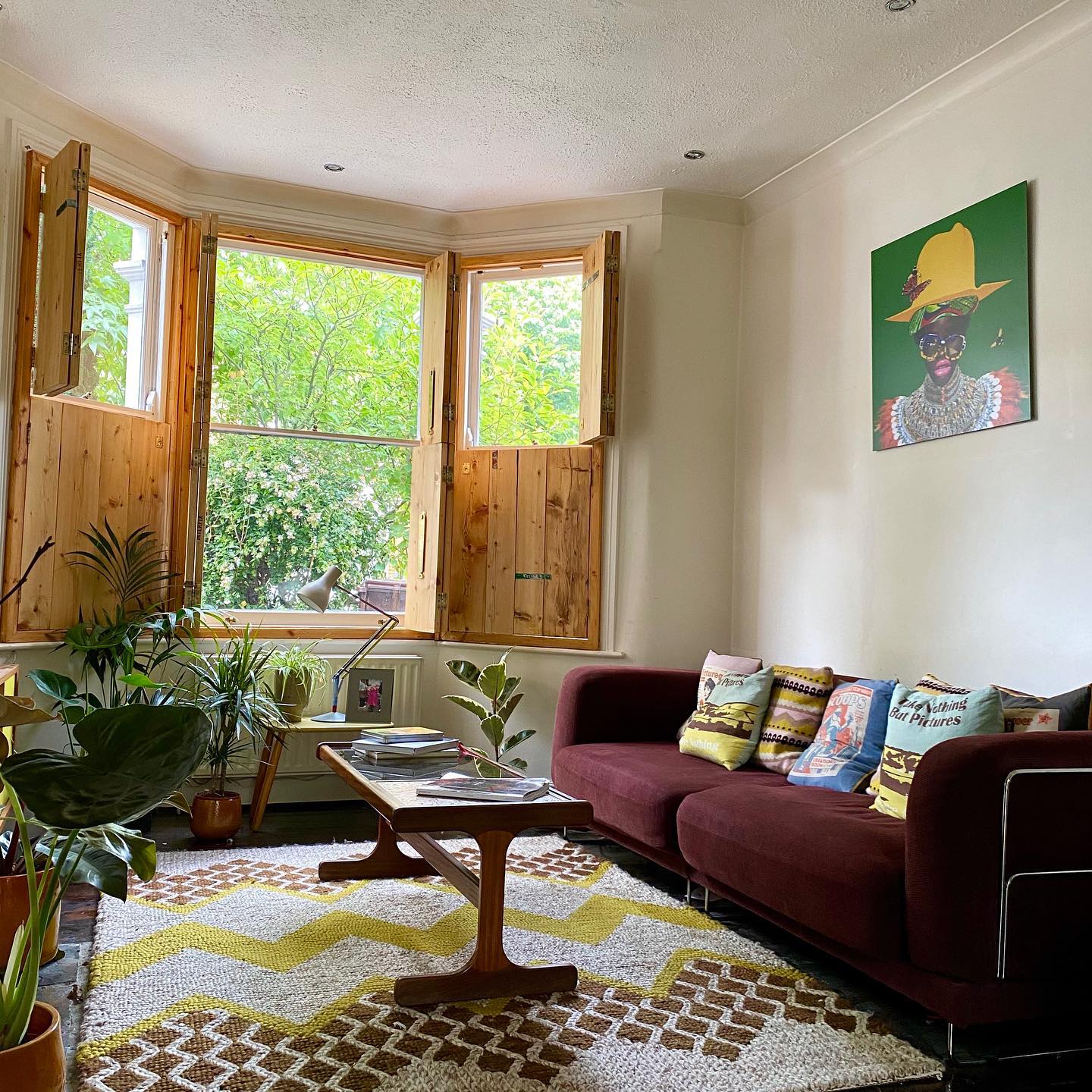
A cream rug with mustard zigzags and brown rounded motifs brightens the floor beside this burgundy sofa. The warm wooden coffee table relates to the window shutters, while colorful cushions connect the darker upholstery to the lively pattern below.
The owner describes finding the vintage table secondhand, showing how one useful purchase can strengthen an existing room. Start with a rug that includes both a light background and colors that suit your sofa.
A glass tabletop lets more of that pattern remain visible. Keep nearby walls relatively quiet if the floor carries the strongest design.
Plants add softer outlines beside the straight window frames, and one large artwork gives the sofa wall a focal point without requiring a crowded arrangement.
10. Combine Open Wood Shelving With Modern Media
Credits: Instagram
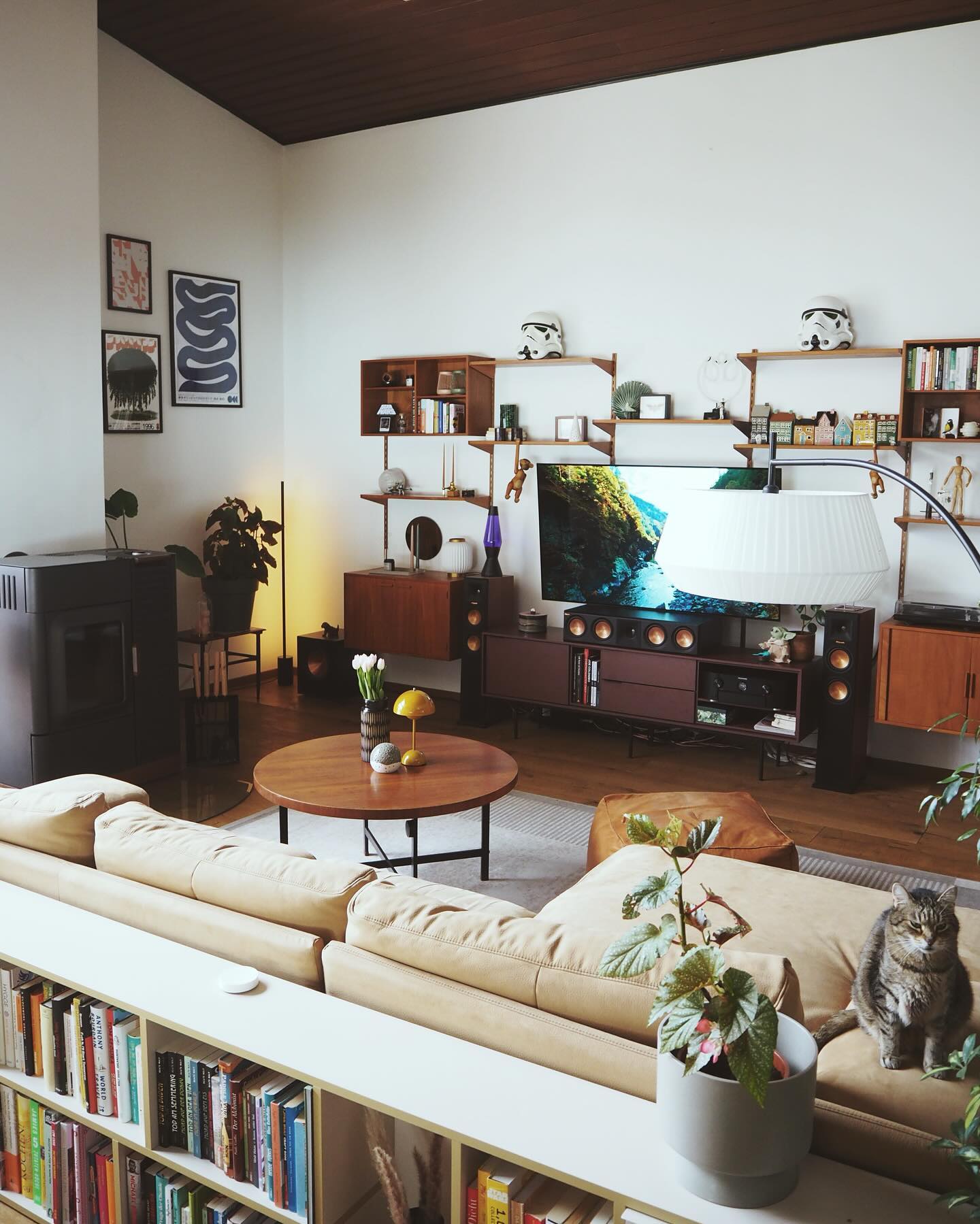
Warm wooden shelves frame the television in this living room, giving contemporary equipment a place among books, small collections, and lamps. Closed cabinets provide heavier visual anchors below, while open sections leave the pale wall visible.
The cream sofa and light rug balance the dark ceiling and floor. You can use a similar approach with existing shelving by leaving a clear central area for the screen and grouping smaller objects around it.
Check the equipment's ventilation and cable access before fitting storage closely. A round wooden table repeats the shelves' warm finish without adding more straight lines.
Keep a few shelf spaces partly empty so the display remains readable, and secure the system according to its intended installation and load.
11. Create a Low Seating Conversation Area
Credits: Instagram
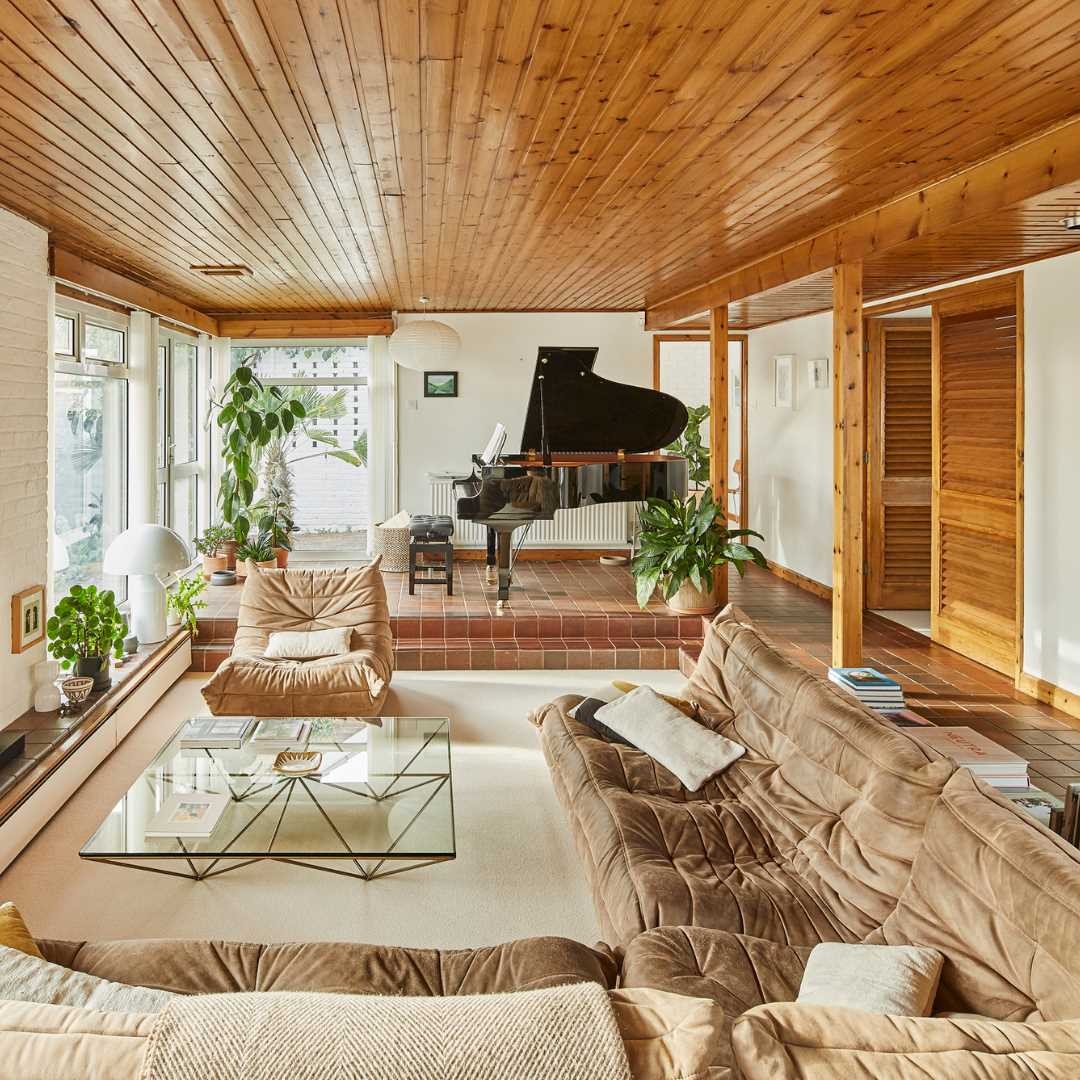
Deep tan seating wraps around a glass coffee table in this split level living room. The low backs keep the wood ceiling, large windows, and raised piano area visible from the lounge.
You can borrow that horizontal emphasis without changing your floor levels. Arrange a low sofa and a separate lounge chair around one shared table, keeping the main walkway outside the grouping.
A clear tabletop reduces visual bulk when the upholstery is generous. Here, cream flooring and a pale throw soften the warm wood and tan combination.
Use tall plants at the edges to vary the height without blocking conversation. If your room already has steps, make their edges easy to see and keep the approach free of furniture.
12. Try a Cream Palette With Sculptural Seating
Credits: Instagram
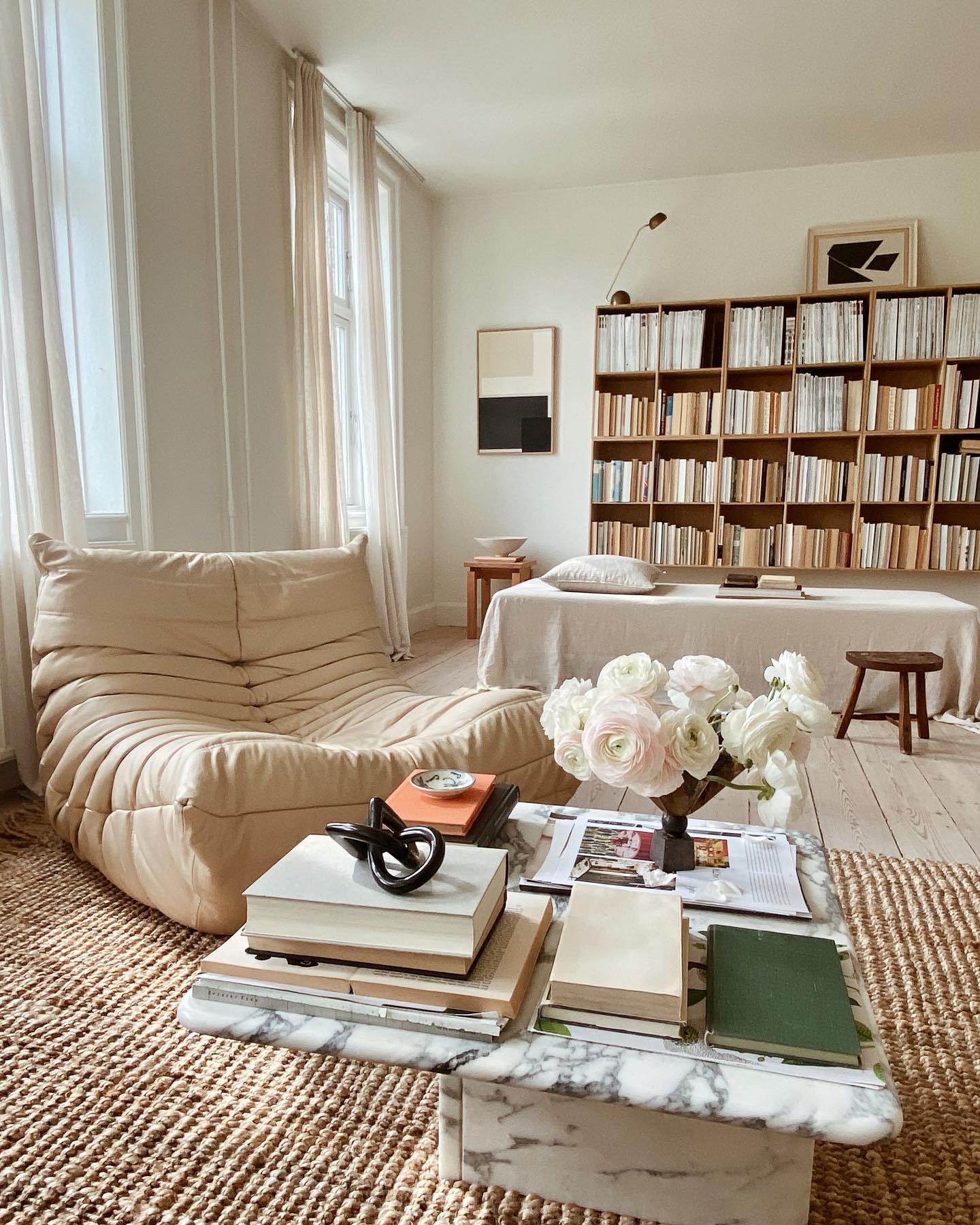
A deeply folded cream lounge chair supplies the retro shape in this quiet reading room. Its soft outline stands out against the straight wooden bookcase and the low marble table.
The limited palette makes texture especially noticeable: woven flooring, smooth stone, loose curtains, and upholstered folds all contribute something different. Start with one comfortable sculptural seat if a full vintage furniture arrangement feels overwhelming.
Choose neighboring pieces with simple profiles so the chair remains easy to appreciate. Open book storage supplies rhythm across the wall without requiring a busy print.
Keep books and flowers grouped on the table, leaving a practical place for a cup. Warm wood in the shelving and small stools prevents the pale room from feeling stark.
13. Mix Curved Lounge Chairs Around Low Tables
Credits: Instagram
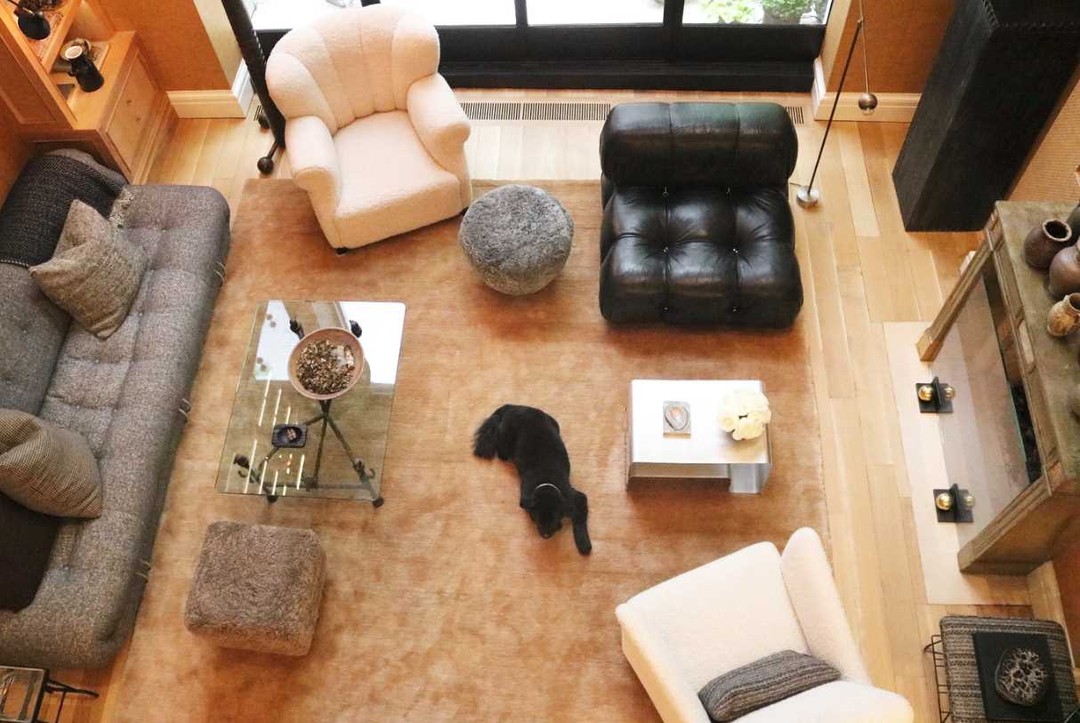
Viewed from above, this seating arrangement shows how different vintage shapes can work together. A black tufted chair, pale rounded armchairs, and a gray sofa share a warm rug, while small tables fill the gaps.
Their common low height matters more than matching upholstery. Try arranging existing seats to face one another before buying a coordinated suite.
A dark chair can provide a clear anchor among lighter fabrics, especially when its shape is broad and rounded. Give each seat a reachable surface without placing every table in the center.
Here, reflective and pale tabletops break up the large tan field below. Leave enough open floor between the pieces for people to move comfortably, and test the arrangement from every chair.
14. Soften Paneled Walls With Round Paper Lanterns
Credits: Instagram
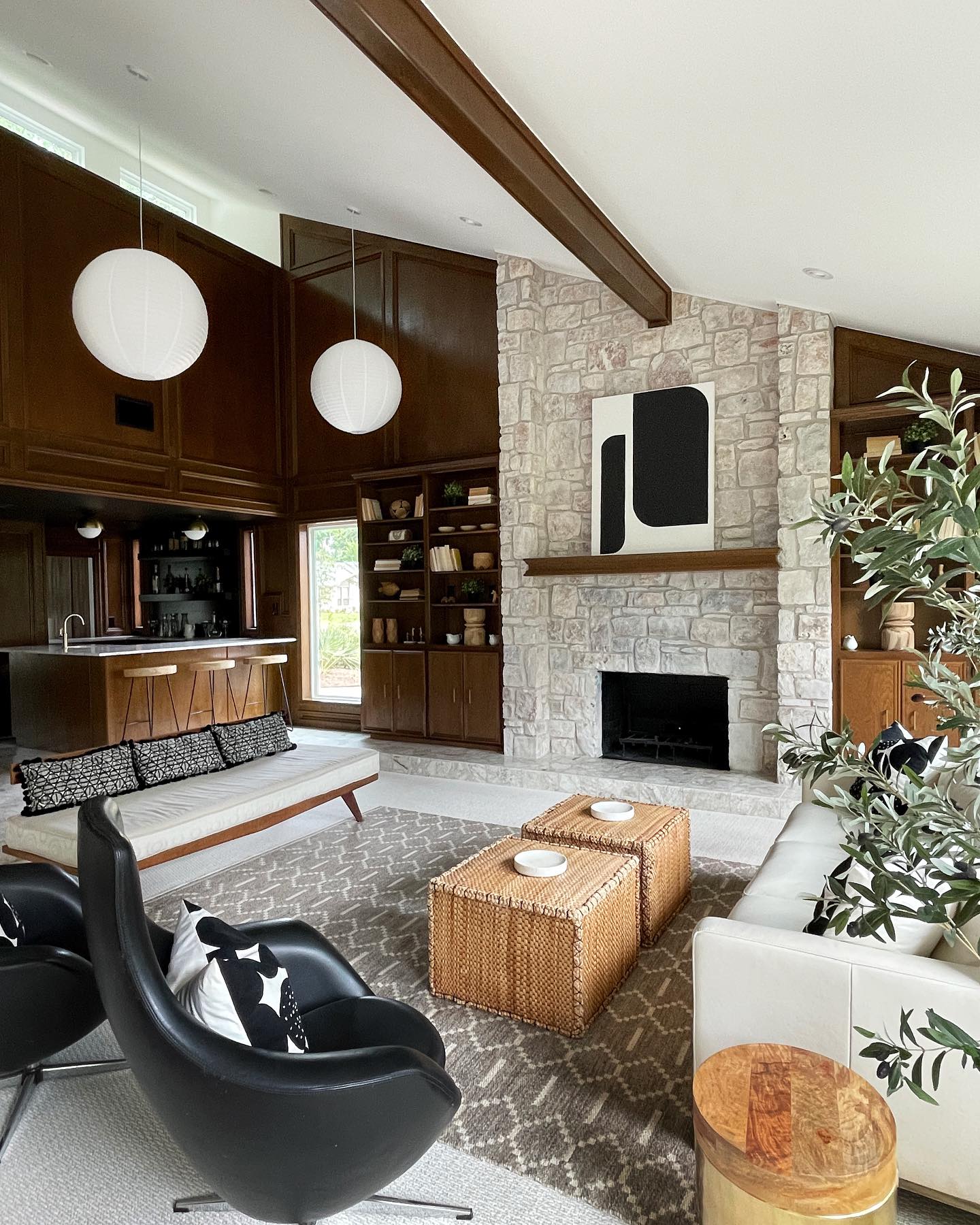
Two white globe pendants bring a light touch to this room's dark wood walls and substantial stone fireplace. Their rounded forms repeat the curves of the black lounge chair, while the pale sofa and bench brighten the seating area.
This is a useful balance when original paneling dominates the architecture. Try a generous round shade that reads clearly against the wood rather than many tiny decorative lights.
Keep the surrounding furniture lower so the wall treatment remains visible. Woven square tables introduce another natural texture without repeating the heavy cabinetry.
A simple black and white artwork connects the chair and cushions above the mantel. Have suspended lighting installed appropriately, and position it clear of walking routes and the fireplace opening.
15. Keep Brick and Slate With Woven Accents
Credits: Instagram
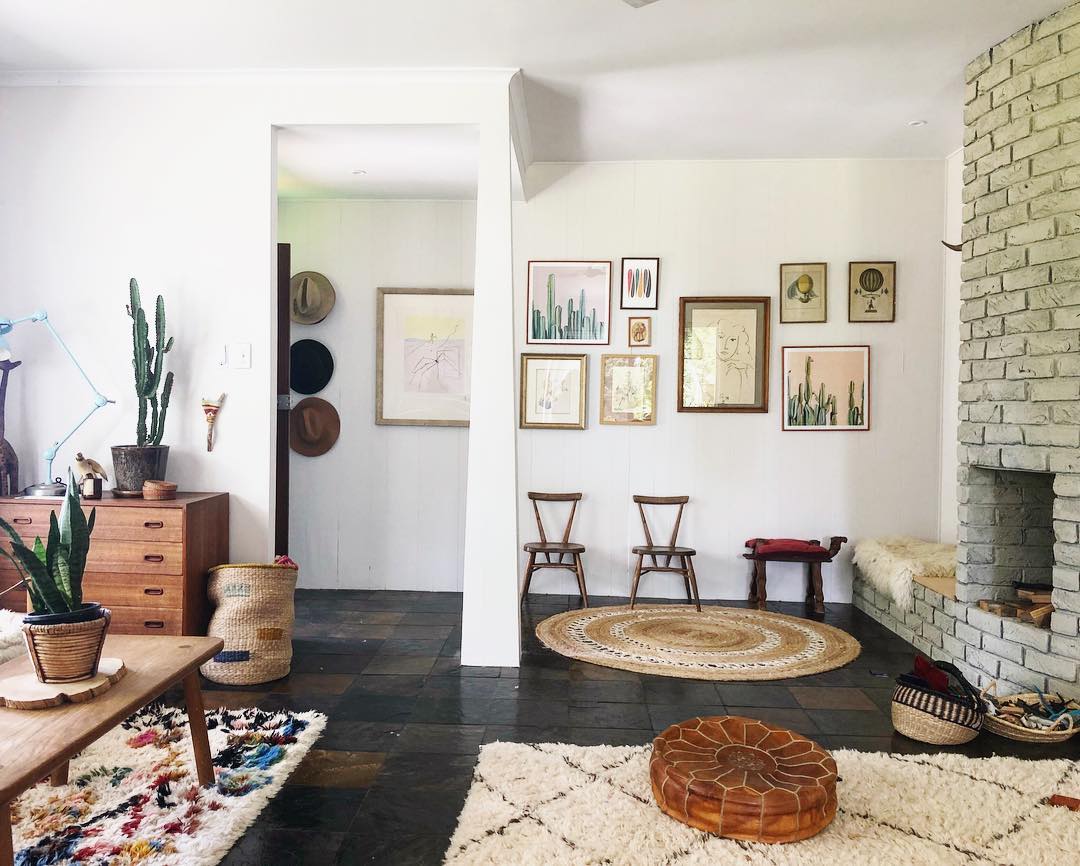
The textured brick fireplace and dark tiled floor give this lounge a sturdy starting point. Pale walls, shaggy rugs, and woven baskets make those harder surfaces feel more relaxed.
A round stitched pouf offers an easy contrast to the rectangular hearth and wood furniture. If your home already has similar finishes, begin with movable textiles before considering a permanent change.
Place a comfortable rug where feet land beside the seating, and use a basket to gather items. Keep rug edges flat and outside the fireplace's required clearance.
The small gallery wall adds personality above a line of simple wooden chairs. Repeating tan through the pouf, baskets, and circular rug links the different materials while leaving the architecture easy to see.
16. Layer Shaggy Throws Over a Corner Sectional
Credits: Instagram
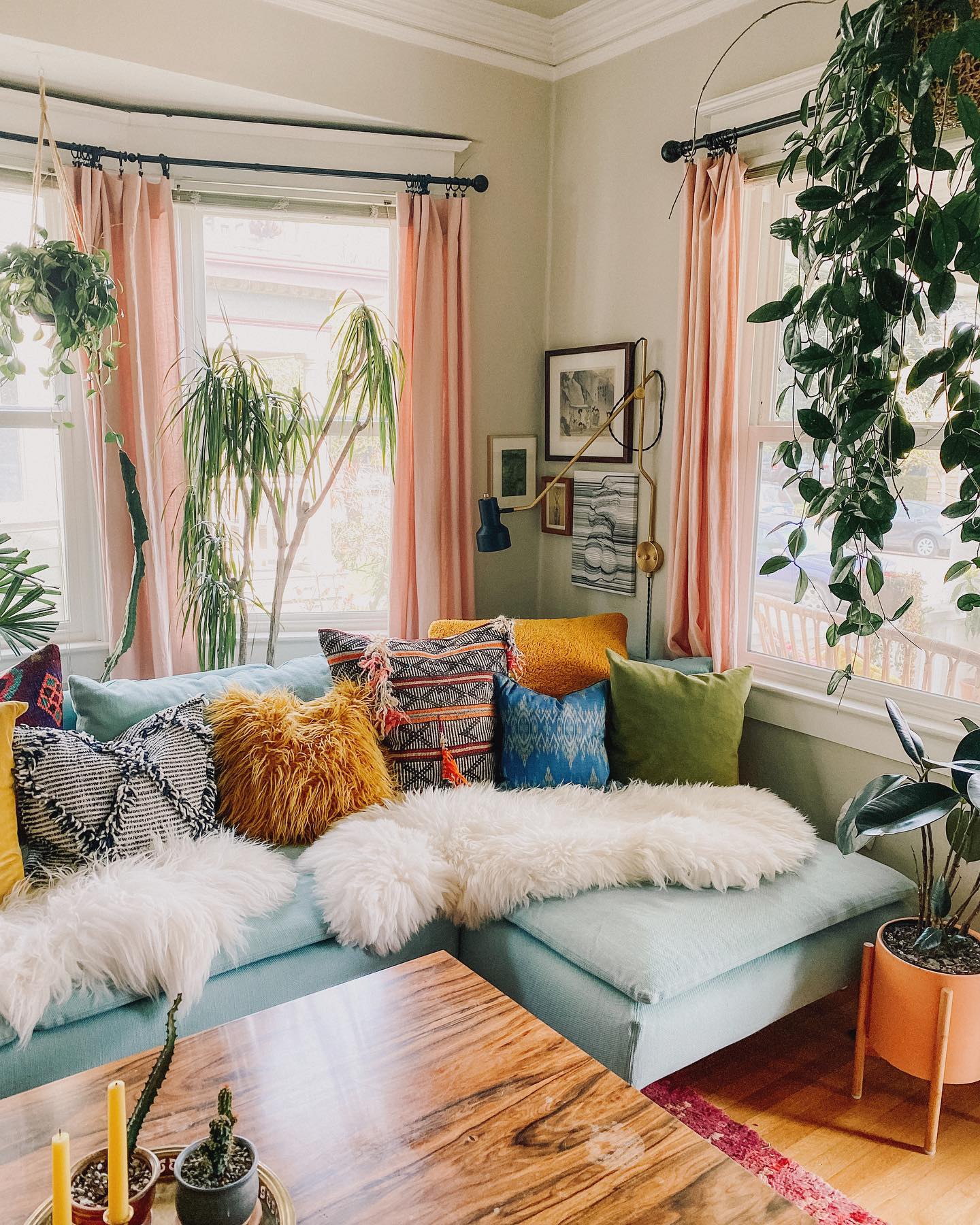
A pale blue sectional becomes a soft retro nook through shaggy white throws and a varied collection of cushions. Mustard, green, and patterned fabrics give the light upholstery definition, while pink curtains warm the windows behind it.
The wooden coffee table adds a smooth surface beside all that pile and fringe. Borrow the layered effect with a limited group of colors rather than matching every cushion.
Mix one shaggy texture with a flatter woven pattern so the combination remains readable. Keep the seat usable by moving extra cushions when needed.
Hanging plants draw the eye upward and leave more floor around the sofa. Choose supports suited to their weight, and keep trailing growth clear of lamps and window operating hardware.
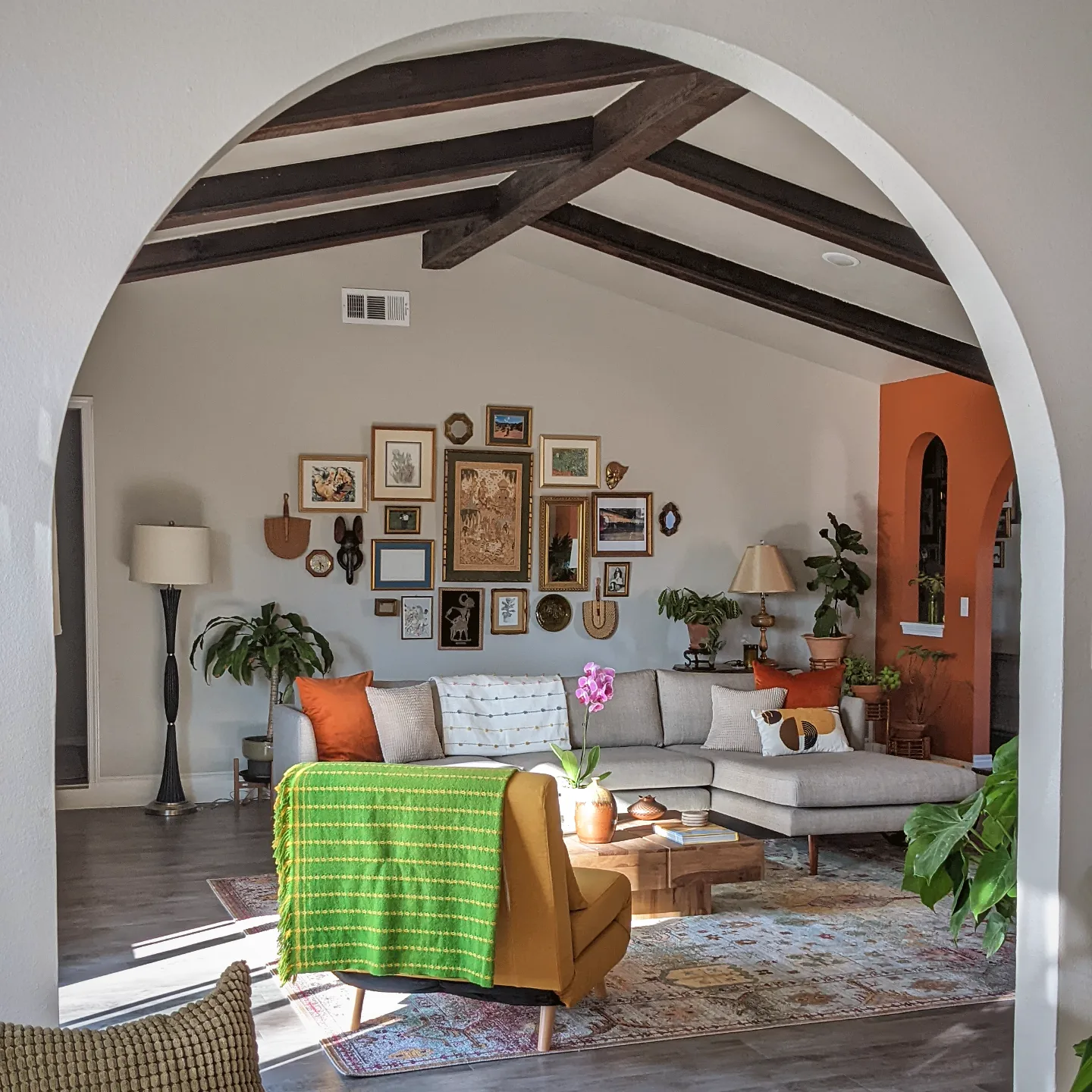
17. Carry Warm Accent Colors Through an Archway
Credits: Instagram
An orange wall beside the arched opening gives this otherwise neutral living room a warm point of focus. Orange sofa pillows repeat the color, while a mustard chair and green throw extend the earthy palette into the foreground.
The gray sectional remains a calm background for the gathered frames above it. You can use the same idea without building an arch: paint one existing architectural section, then repeat that shade in a few movable pieces.
A low wooden table adds weight at the center without competing with the gallery wall. Keep the larger walls pale if the room benefits from a brighter backdrop.
Plants at different heights soften the corners, and a patterned rug connects the seating into one group.
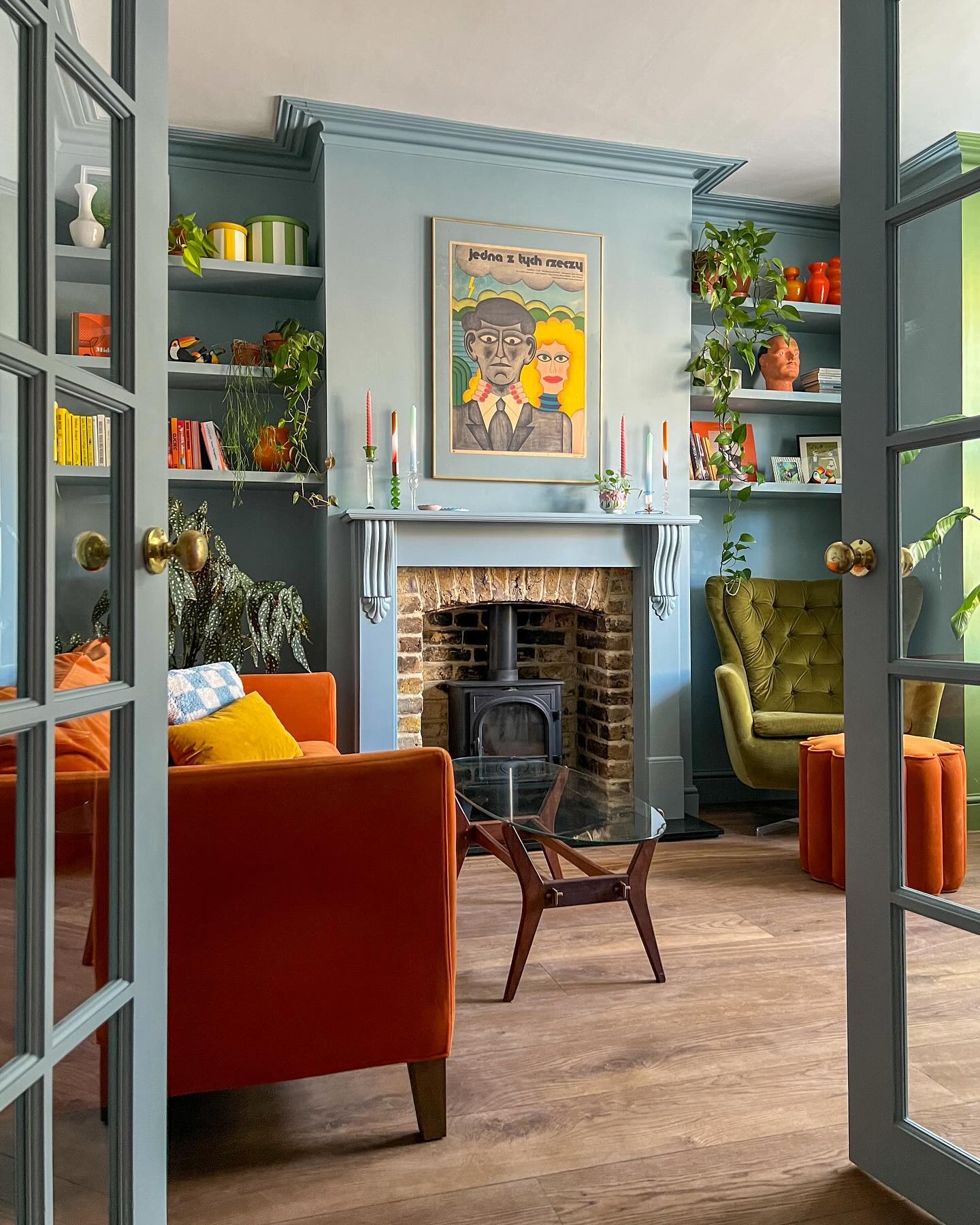
18. Balance Orange Seating With Soft Blue Walls
Credits: Instagram
Soft blue paint links the fireplace surround, shelves, and glazed doors in this colorful living room. Against that continuous background, the orange seating and olive armchair remain easy to distinguish.
A glass coffee table shows the wooden base and keeps the center visually open. Try this palette when you like warm retro furniture but want a cooler room envelope.
Repeat small touches of orange in vases or book covers so the sofa feels connected to the shelves. Keep the biggest wall artwork centered on the fireplace to establish a clear focal point.
The exposed brick adds a rougher texture beside the smooth paint. Group accessories with breathing room, and keep trailing plants and decorative candles safely away from the stove.
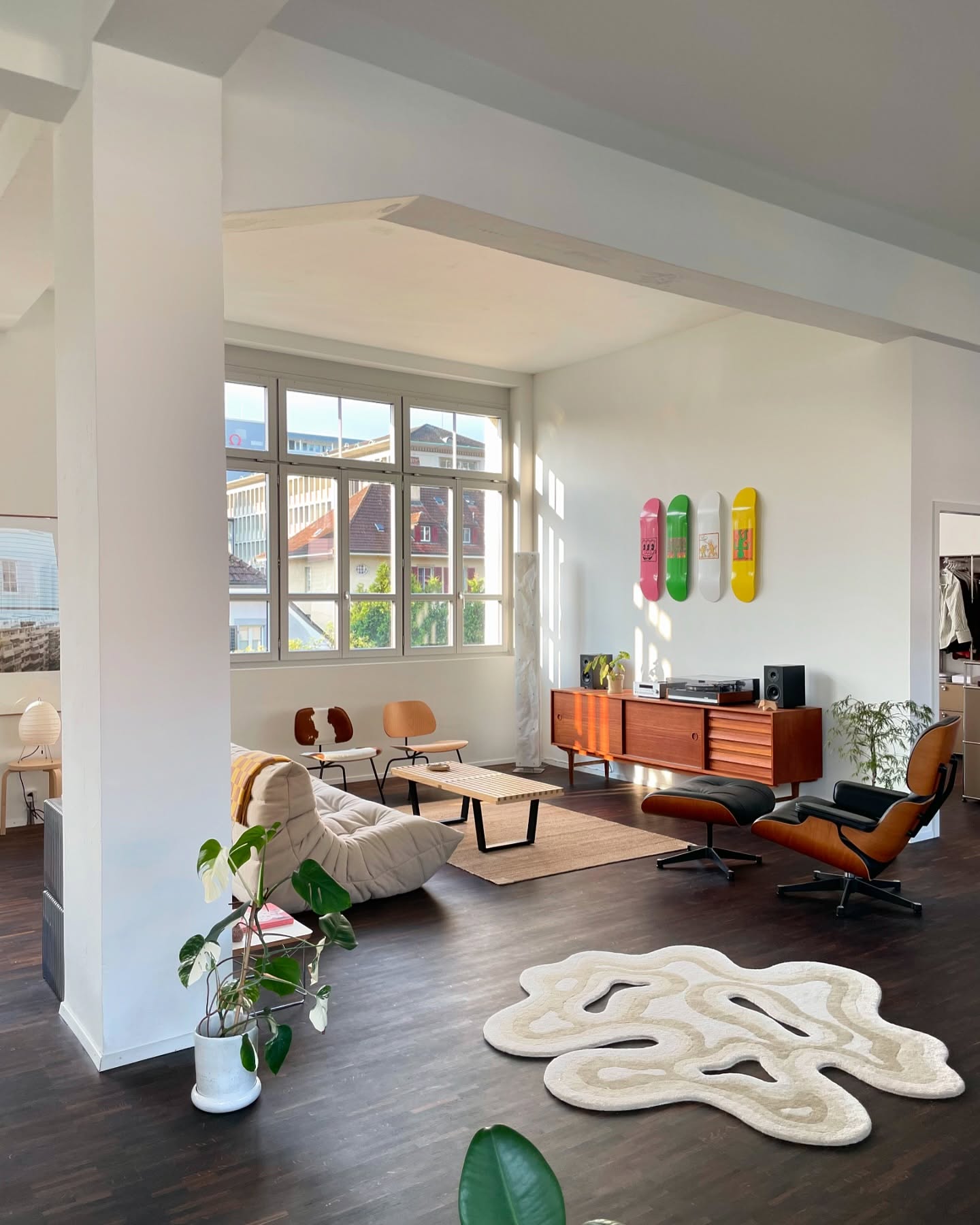
19. Frame a Listening Corner With Low Seats
Credits: Instagram
A long wooden sideboard puts the record player at the center of this bright loft lounge. Low seating, a simple slatted table, and a quiet natural rug leave the music setup easy to see.
The room combines several furniture silhouettes without filling the space between them. For a similar listening corner, give the turntable a stable surface and allow the clearance its lid and cables need.
Keep speakers positioned for listening rather than squeezing them among decorative objects. Here, colorful skateboard decks provide one concentrated burst of wall color above the storage.
That leaves the surrounding white walls restful. A compact, softly folded chair adds a relaxed seventies note beside the more structured wood and leather seating across the room.
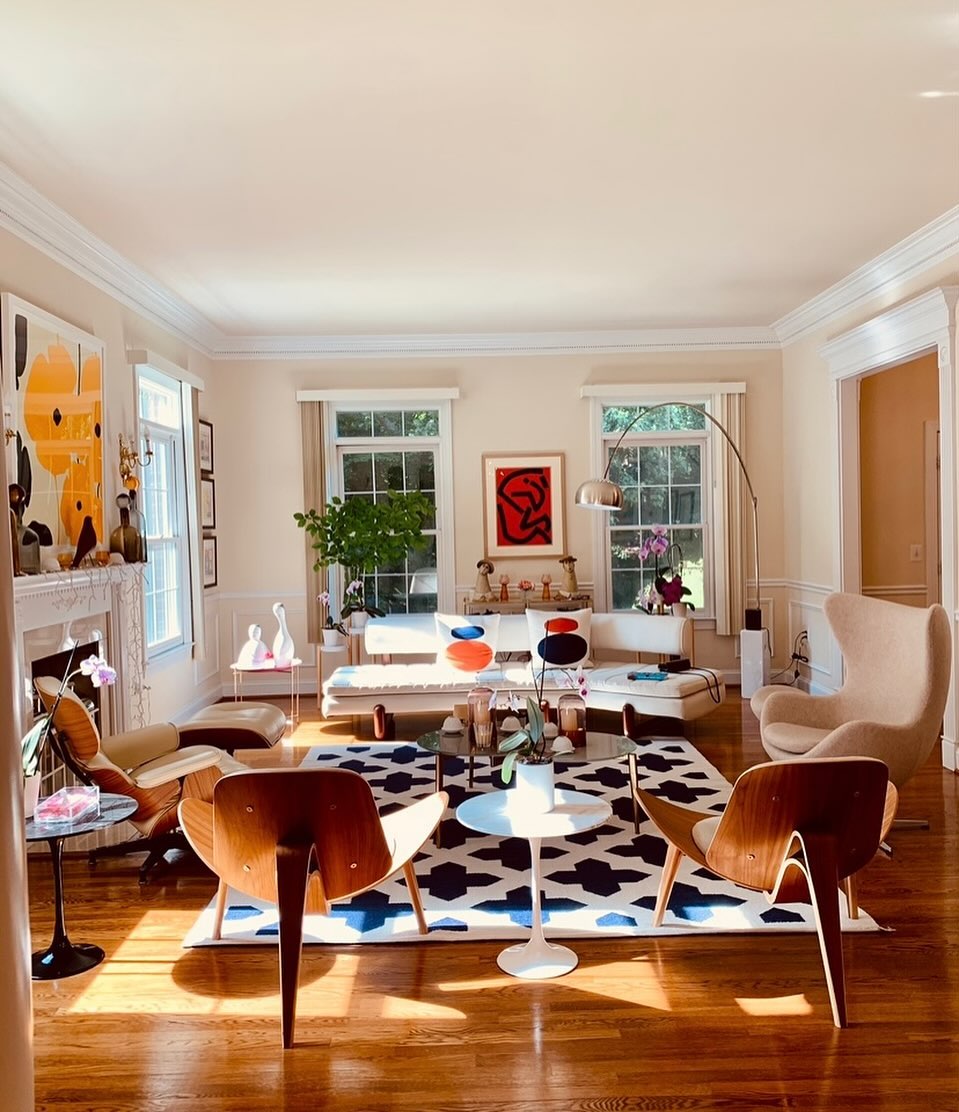
20. Repeat Curves in Lamps and Accent Tables
Credits: Instagram
An arcing floor lamp reaches over the pale sofa, echoing the rounded side tables and curved wooden chair backs. Those repeated outlines bring the furnishings together even though the individual pieces differ.
The bold blue and white rug supplies a graphic foundation, while warm wood keeps the room from feeling entirely cool. Use one sweeping lamp to introduce this sculptural effect, then repeat its curve at a smaller scale.
A round pedestal table can fit between chairs without another set of angled legs. Check that the lamp base sits outside the main walking route and that the shade clears seated heads.
Keep the larger upholstery light when the rug is prominent, and pull small accent colors from artwork already nearby.