
A bedroom can feel collected rather than chaotic when contrasting patterns, colors, and furniture each have room to stand out.
Eclectic Bedroom Ideas in this roundup show how a shared color or material can connect unexpected pairings, from tropical leaves with tiny florals to plum paneling with a patterned ceiling.
You’ll also find practical ways to give a room balance, such as using a black canopy to frame flower-filled walls or letting different nightstands feel cohesive through matching lighting.
These combinations offer plenty of inspiration for mixing pieces without making everything match.
1. Join a Scenic Mural With Tailored Pink Upholstery
Credits: Kimberly Duran / Swoon Worthy
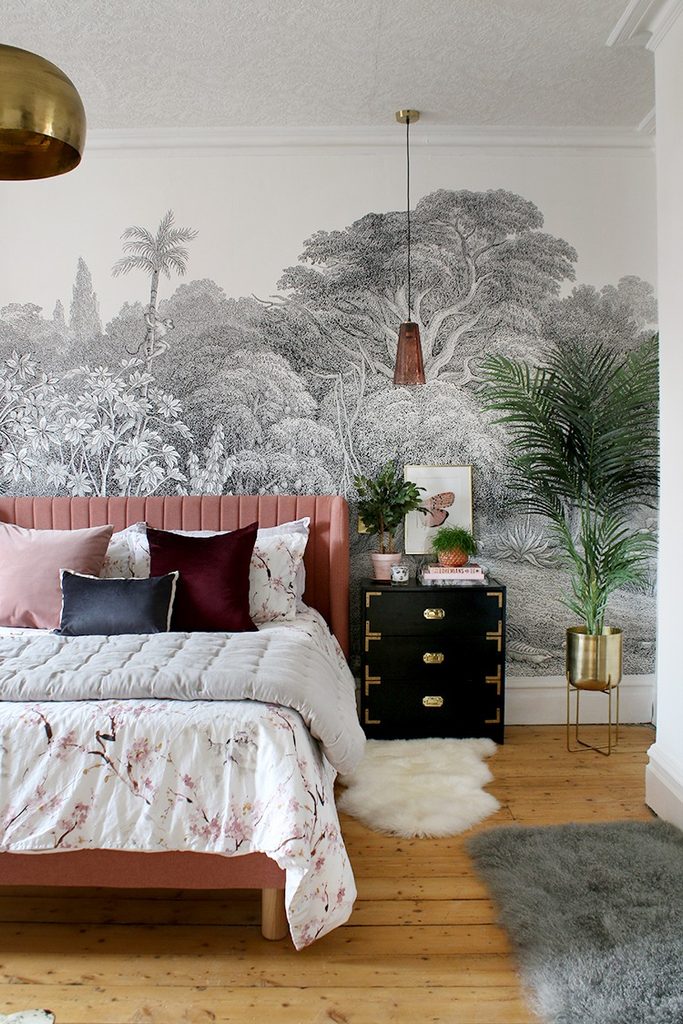
An intricate black and white landscape becomes the meeting point for several different bedroom styles. The pink upholstered bed feels tailored, while the black chest with brass details adds a sharper, more formal note.
Leafy greenery and a small sheepskin soften both. This combination works because each material has a clear role instead of trying to imitate its neighbors.
Use a scenic wall covering as your largest pattern, then choose bedding with smaller motifs and a quieter background. A pendant above the nightstand preserves room for everyday essentials.
When selecting a mural, check its composition against the headboard so important scenery remains visible. Repeat one metal finish in a couple of places to keep the varied furnishings connected without matching.
2. Hang Bold Abstract Art Above a Woven Headboard
Credits: Annette / A Vintage Splendor
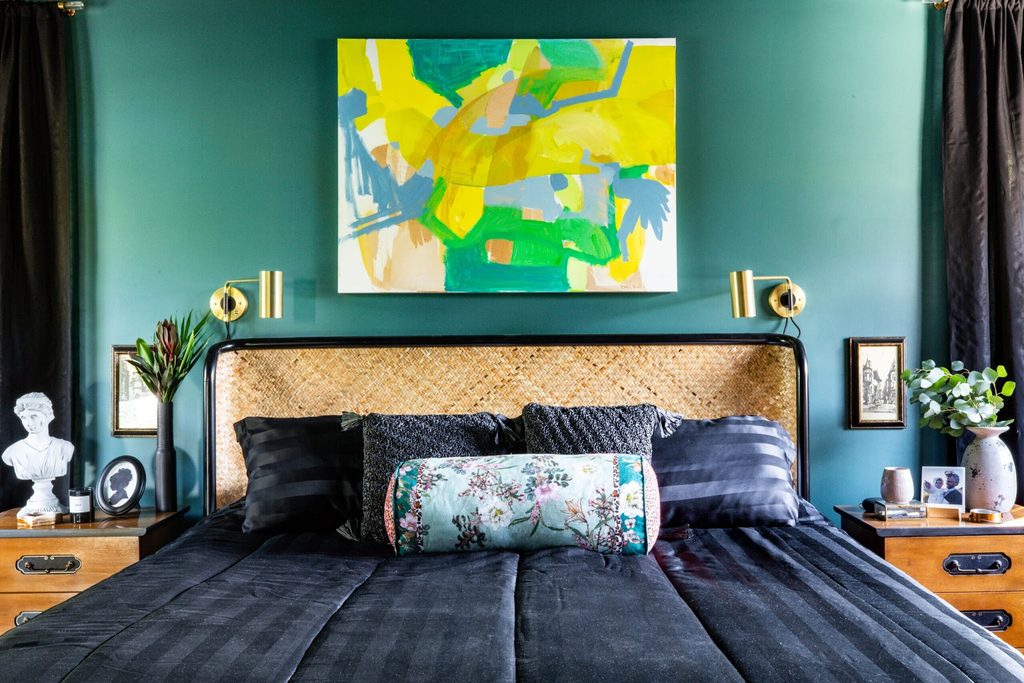
Bright yellow and green brushstrokes give this teal bedroom an unexpected burst of energy. Below the painting, woven cane, dark striped bedding, and warm wooden drawers introduce very different surfaces.
The floral bolster adds another pattern without competing with the larger artwork. An eclectic arrangement becomes easier to manage when one piece establishes the strongest color contrast.
Here, the painting does that job, allowing smaller framed pictures and personal objects to feel collected rather than random. Choose bedside lighting with a simple outline if the surrounding furniture is detailed.
Try pulling just one color from your art into a pillow or vase. You can keep beloved pieces from different periods when their colors or materials establish a few recognizable connections.
3. Mix Tropical Silhouettes With Tiny Florals
Credits: Stephanie / Casa Watkins Living
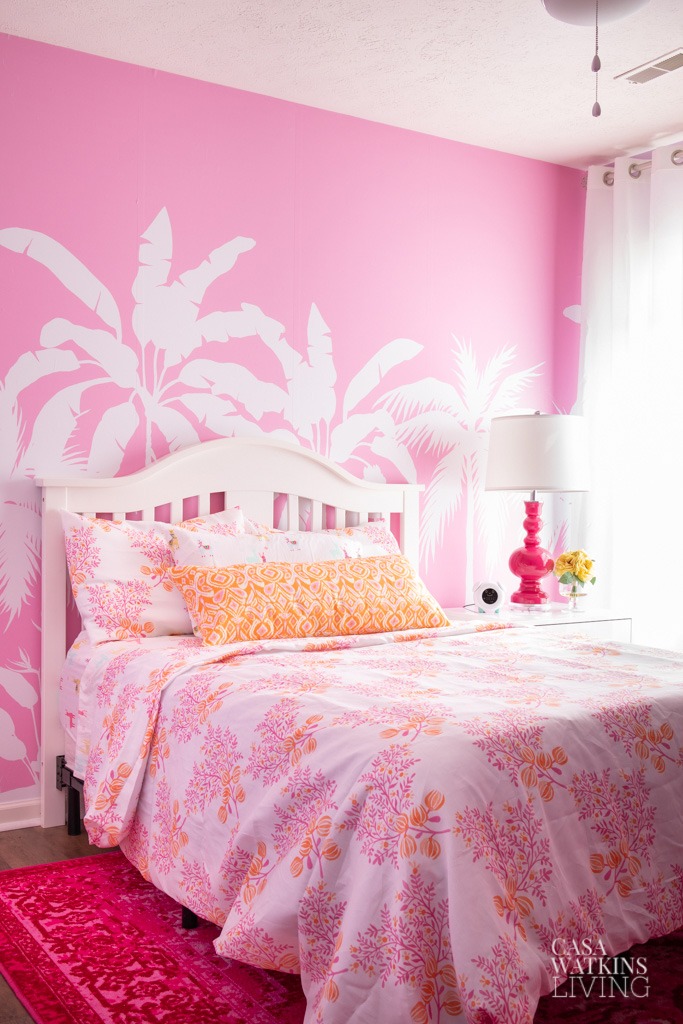
Large white leaves stretch behind a bed dressed in much smaller pink and orange flowers. That difference in scale makes this bright room feel layered without hiding its individual patterns.
The orange lumbar pillow introduces angular shapes, while the curved white headboard creates a calm boundary between the wall and bedding. To borrow the approach, place fabric samples together and look at them from across the room.
One pattern should remain readable at a distance, with the others becoming softer texture. White furniture helps separate closely related pink shades.
A vivid bedside lamp can repeat the color family without copying the print. Keep the colors limited, then enjoy mixing organic leaves, tiny blossoms, and geometric details within that shared palette.
4. Set a Wavy Green Mirror Beside a Traditional Dresser
Credits: Gemma Louise
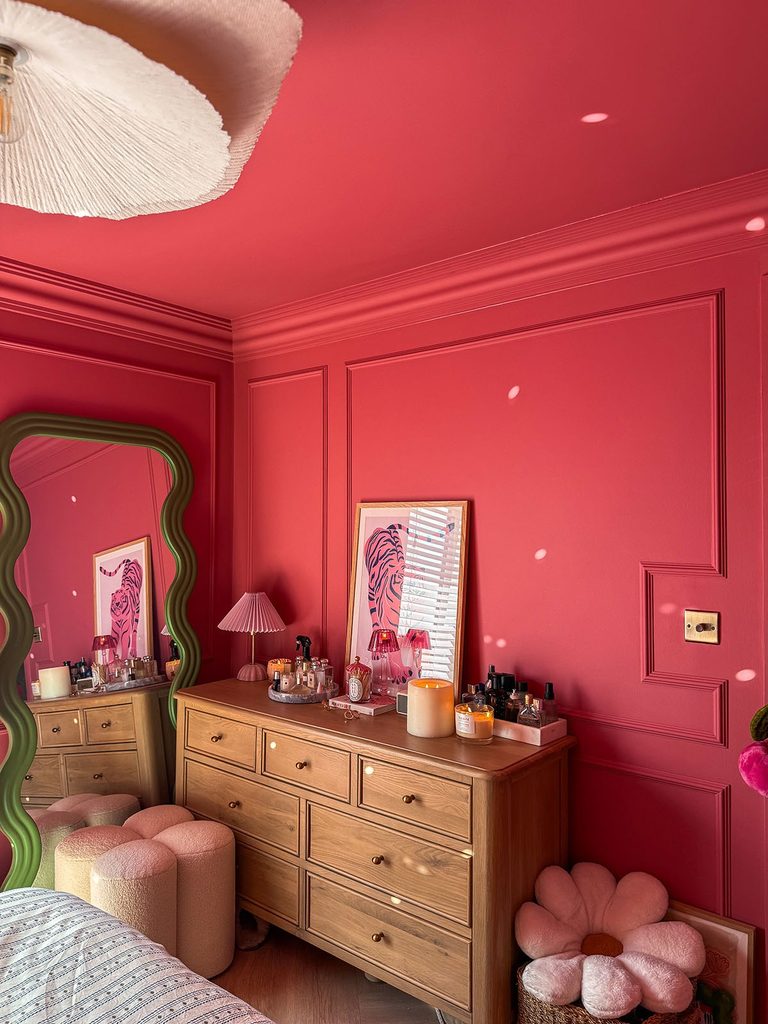
A curving green mirror changes the character of this otherwise traditional dressing area. Its playful outline stands beside a wooden dresser with straight drawers and small round knobs.
Deep pink walls, decorative molding, a tiger print, and a flower shaped cushion push the combination further. The lesson is to make differences deliberate: a sculptural accessory can bring fresh energy to furniture you already own.
Give the mirror enough space that its outline is easy to see, and anchor it according to its instructions. Organize small grooming items on trays so the surface stays usable.
The dresser’s natural wood offers a helpful pause among saturated colors. You do not need every accessory to match when one piece provides visual stability underneath.
5. Combine Plum Paneling With a Patterned Ceiling
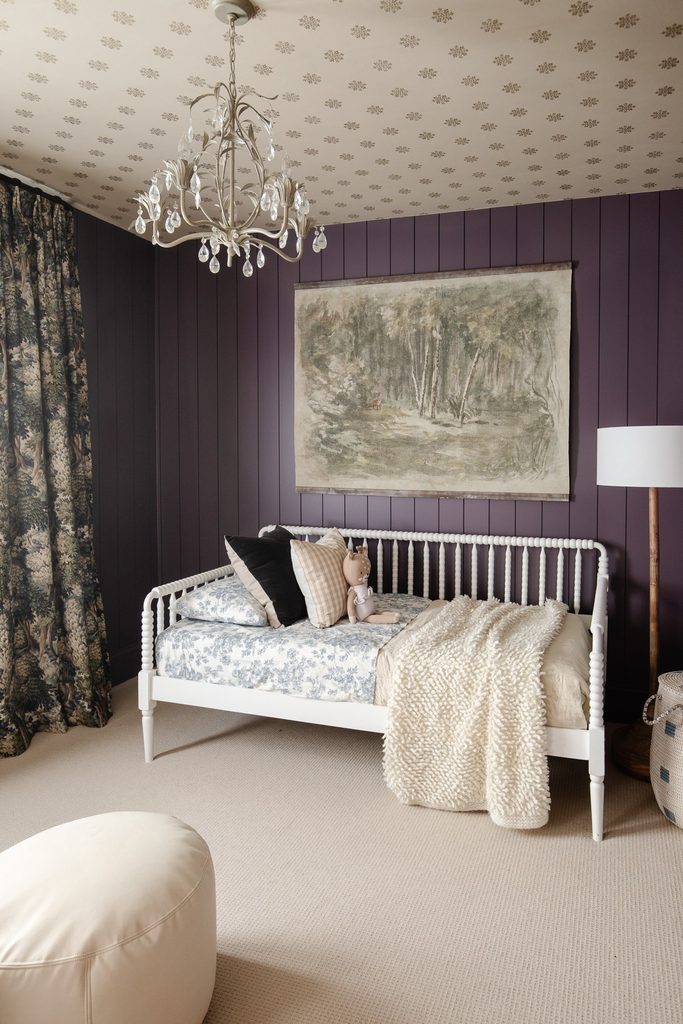
Credits: Chris Loves Julia
This bedroom gathers cottage details, rich color, and several patterns around a simple white daybed. Plum vertical boards make a solid background for a woodland hanging, while tiny ceiling motifs contrast with the larger pattern on the curtains.
A delicate chandelier contributes sparkle above the relaxed bedding. The room feels layered because the patterns occupy different surfaces and operate at different scales.
Start with a wall color that appears somewhere in a favorite fabric, then test a quieter companion for the ceiling. Pale upholstery or painted furniture can prevent the darker wall from overwhelming a small sleeping area.
Keep floor space open around the bed. An eclectic room benefits from breathing room just as much as a restrained room does.
6. Balance Flower Filled Walls With Graphic Checks
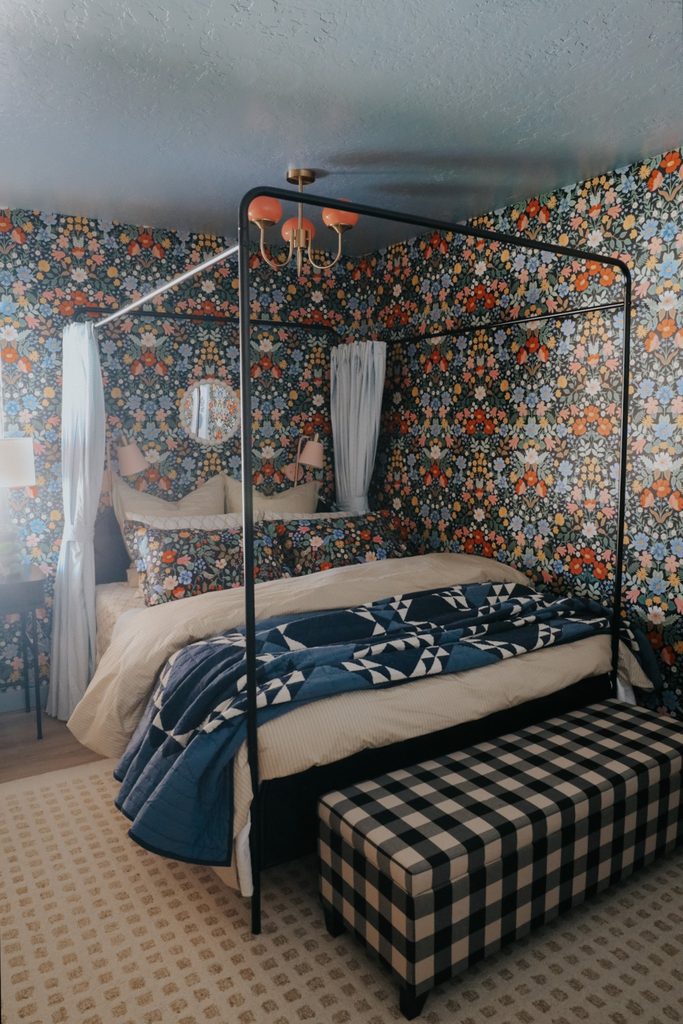
Credits: Brooke Christen / Nesting With Grace
A black canopy gives these lively floral walls a clear architectural outline. The checked bench and blue geometric throw introduce a different kind of pattern, bringing structure to the scattered flowers.
Cream bedding separates the busier elements, and small curtain panels soften the bed’s corners. For an eclectic bedroom, this is a useful lesson in mixing curves with grids.
Pick a shared dark color to connect the furniture, upholstery, and wallpaper, even when their patterns differ. Keep canopy fabric clear of lamps and moving parts, and confirm that the frame is designed to support it.
You can begin with a checked cushion before committing to a bench. Smaller experiments reveal whether your floral pattern needs stronger contrast or softer companions.
7. Refresh a Pale Wood Bed With Earthy Color Layers
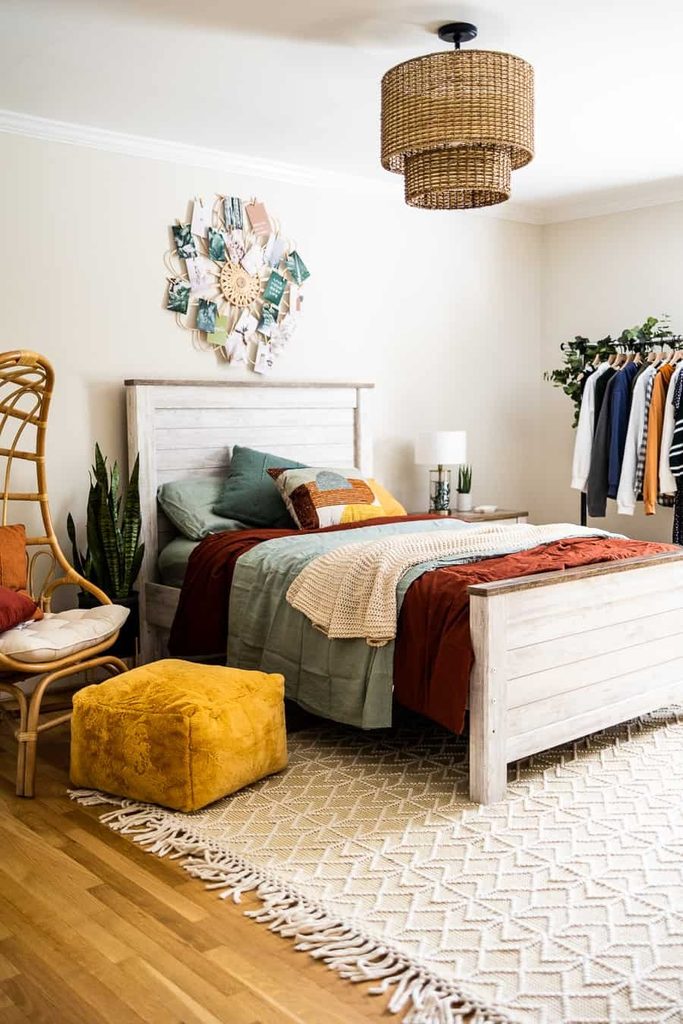
Credits: Aniko / Place of My Taste
Rust, sage, and mustard turn a plain wooden bed into the center of this relaxed room. A woven ceiling shade, patterned rug, and clipped picture display contribute texture without requiring darker walls.
The furnishings feel collected because their finishes vary, yet their warm undertones relate. This approach is useful when you want personality while keeping existing large furniture.
Start by layering two solid bedding colors, then add one patterned pillow that can bridge them. Choose a rug with enough quiet background to avoid competing with the textiles.
The open clothing rail becomes part of the composition, so limit it to pieces you use. A light wall leaves room for future changes as your favorite prints, plants, and bedding gradually evolve.
8. Let Different Nightstands Share the Same Lighting
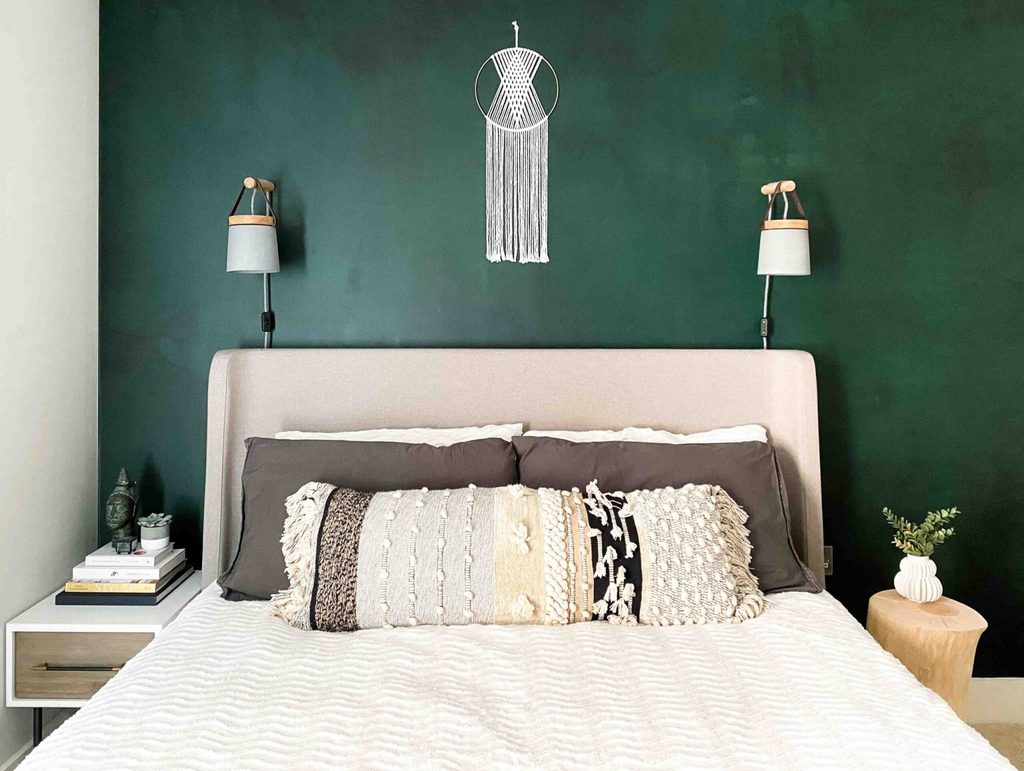
Credits: Lizzie Ravn / Emmerson and Fifteenth
One side of this bed has a compact rectangular cabinet; the other has a rounded wooden stump. Matching wall lights make those different bedside shapes feel balanced.
Their pale shades also relate to the upholstered headboard, while the deep green wall lets small textures stand out. Eclectic furniture does not need identical dimensions, but both sides should serve the people using them.
Compare surface heights with the mattress and decide what must stay within reach. Wall mounted lights can help when a chosen table is too small for a lamp.
Use a restrained bedding palette to emphasize tactile details instead of adding more colors. The result gives practical mismatched pieces a clear relationship without disguising their individual character or differences.
9. Turn Secondhand Books Into Dimensional Wall Art
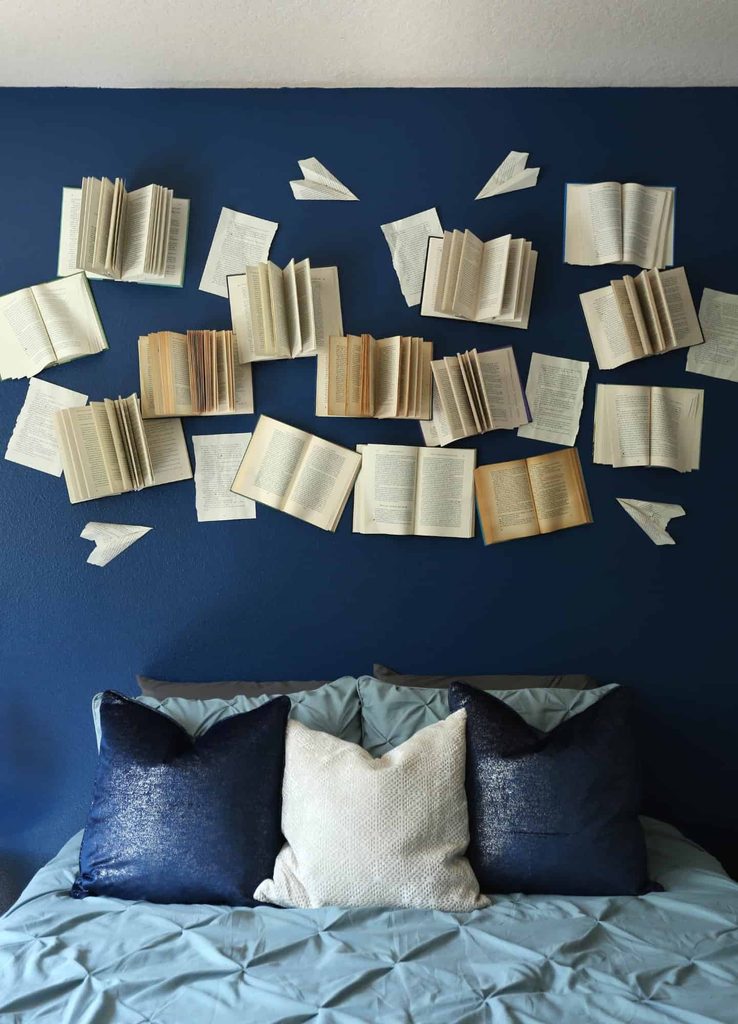
Credits: Emma Chapman / A Beautiful Mess
Open books float across this blue wall in a loose, irregular arrangement. Their cream pages become sculptural shapes, with folded paper accents carrying the movement upward.
The idea suits an eclectic bedroom because ordinary objects take on an unexpected decorative role. Use inexpensive books you own and are comfortable altering, and plan the composition on the floor before mounting anything.
Consider weight, wall construction, and secure attachment, especially above a sleeping surface. Keep the lowest pieces well beyond the space your head occupies when sitting upright.
Simple blue bedding allows the paper display to remain the main feature. Leave gaps between groups so individual pages cast shadows.
A smaller version beside a reading chair can deliver the same imaginative effect.
10. Give a Colorful Quilt a Strong Canopy Outline
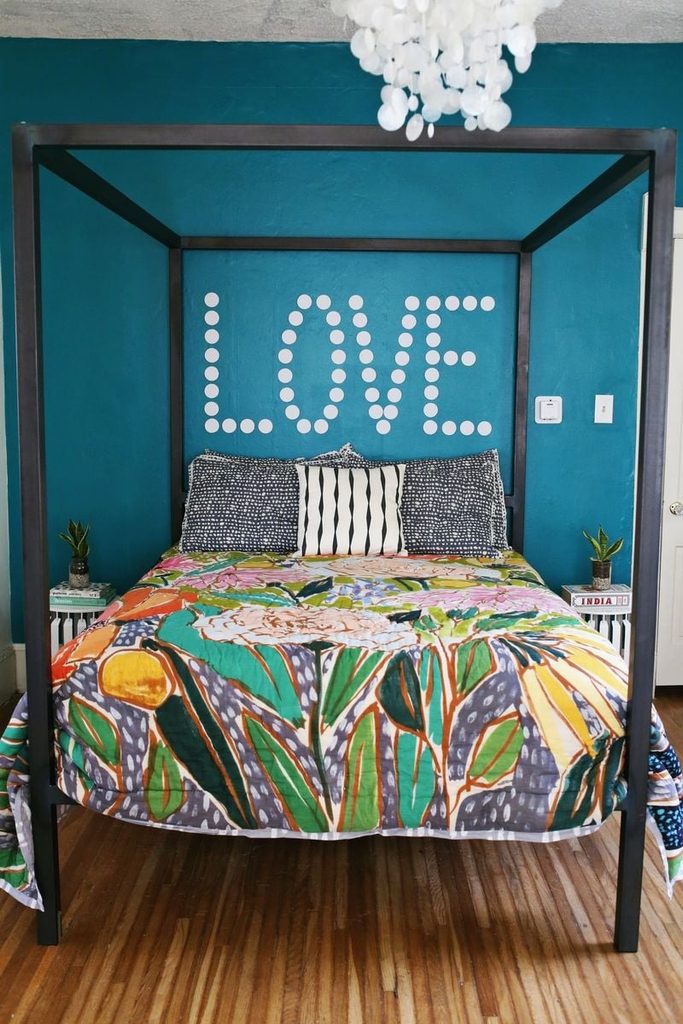
Credits: Elsie Larson / A Beautiful Mess
The dark canopy in this room acts like a frame around a painterly quilt. Teal paint behind it repeats a color from the bedding, while monochrome pillows add smaller, more controlled patterns.
A dotted word on the wall and a light shell chandelier introduce playful details without changing the room’s structure. Begin with a textile that contains several colors you genuinely enjoy.
Choose one for the wall and let the others remain accents. A substantial bed frame can keep an energetic mix from feeling visually scattered.
Check that the canopy clears your ceiling fixture and leaves enough room to make the bed comfortably. The combination shows how a single expressive quilt can connect contemporary lines, decorative lighting, and personal artwork.
11. Pair a Black Metal Bed With Soft Mixed Prints
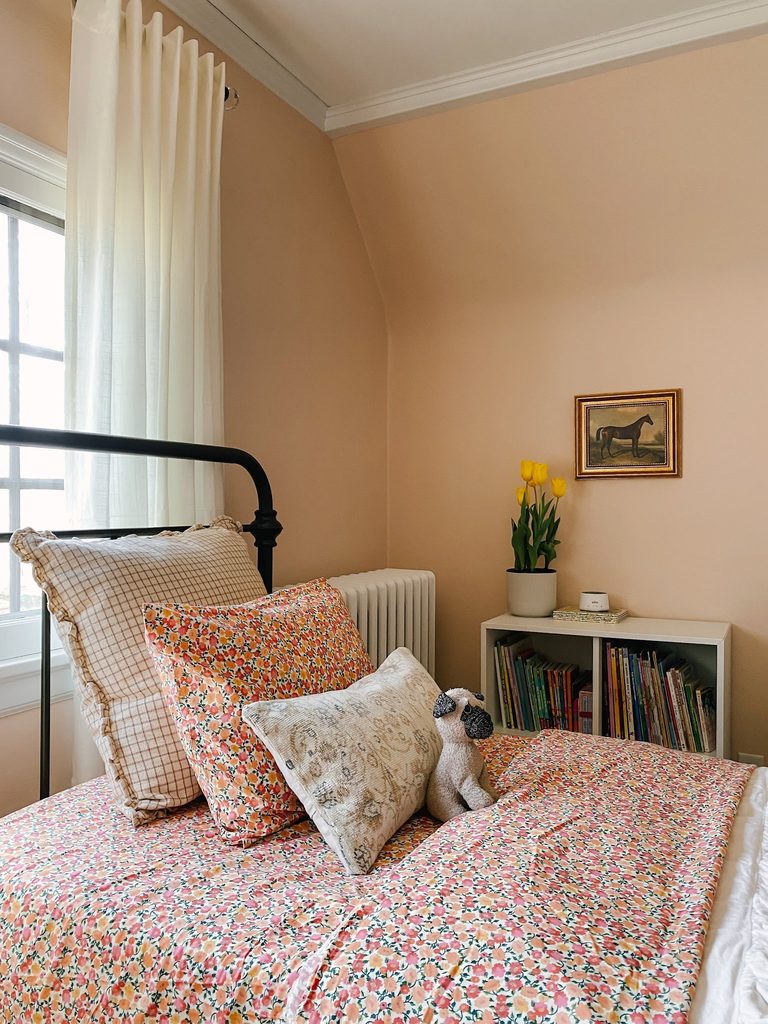
Credits: Patti Wagner / Patticake Wagner
A narrow black bed frame gives this pale pink bedroom a crisp edge. Small orange and pink flowers cover the bedding, while a checked pillow and faded patterned cushion add two quieter layers.
The little horse picture brings a traditional note above a practical white bookcase. Nothing needs to come from one matching collection for the corner to feel coherent.
Choose prints with similar background colors, then vary their scale and contrast. Plain curtains are useful when the bed already carries several patterns.
Keep the furniture around the bed simple enough that books and flowers can add personality. This is an approachable eclectic formula for a modest room: one strong outline, gentle walls, familiar artwork, and textiles collected over time.
12. Add a Scalloped Bench to a Patterned Dormer
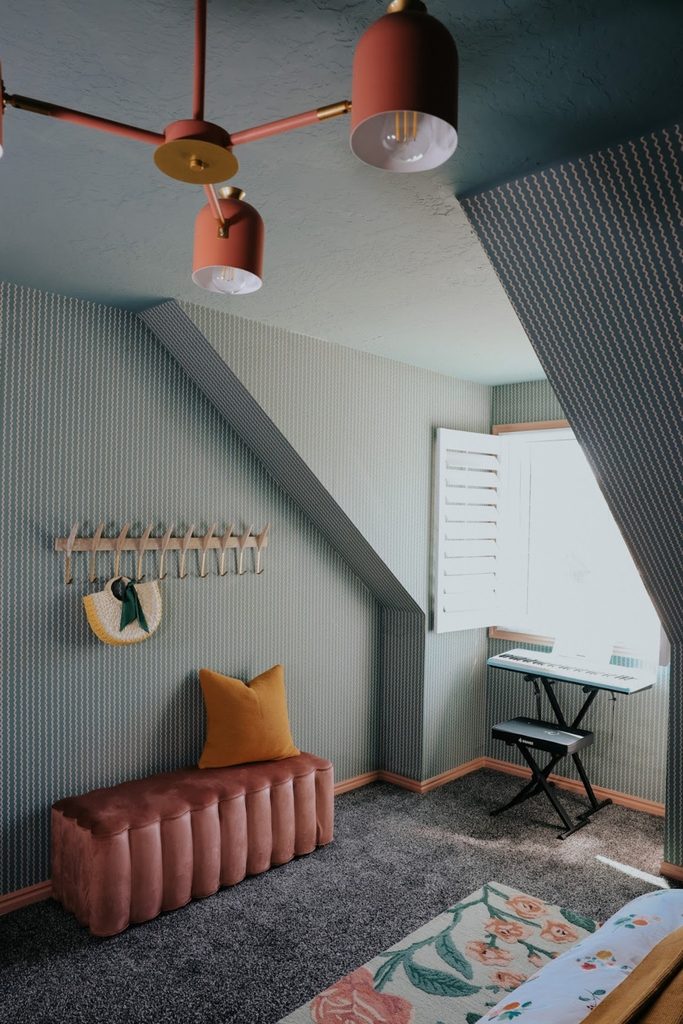
Credits: Brooke Christen / Nesting With Grace
The pink velvet bench makes a small dormer corner feel like a destination. Its rounded channels contrast with narrow wavy wallpaper lines and a straight wooden peg rail.
A mustard cushion introduces warmth, while a compact keyboard keeps the bedroom connected to an interest. Eclectic rooms become more convincing when they make space for real activities.
Instead of filling an awkward slope with decorative furniture, decide whether it could support music, dressing, or reading. Measure the usable headroom and the depth needed to sit comfortably.
Repeating the bench color in trim or bedding can help an unusual shape belong. Keep the window accessible and the route beside the bed clear. A distinctive seat works best when it remains genuinely useful.
13. Give Closet Doors an Antique Mirror Finish
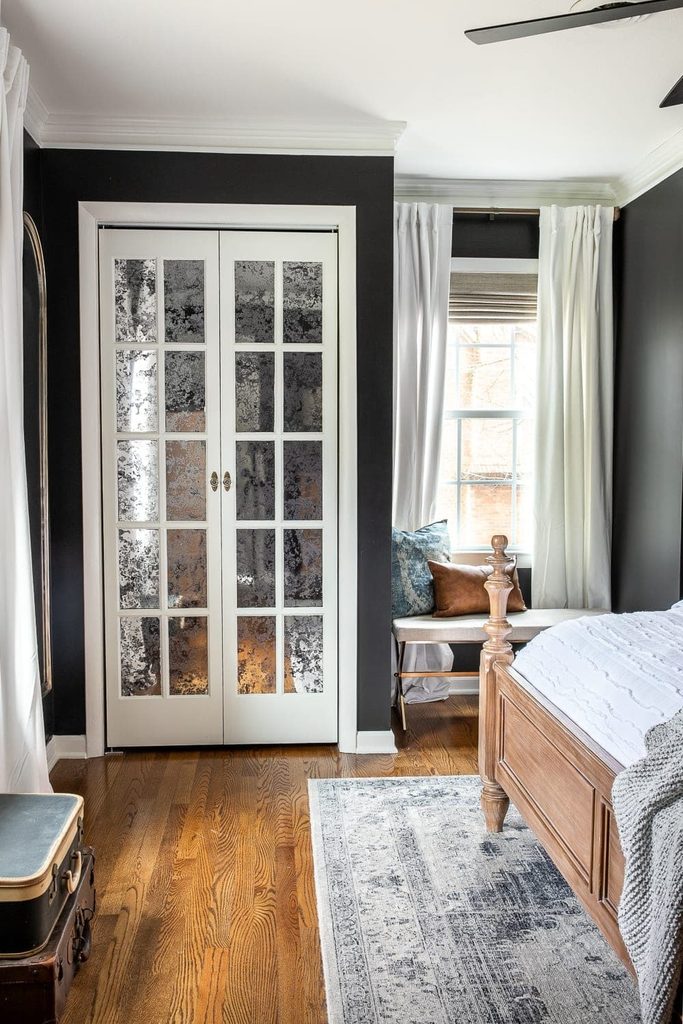
Credits: Lauren / Bless’er House
Mottled mirror panels make these white closet doors a decorative feature within a dark bedroom. Their aged appearance sits comfortably beside a traditional wooden bed, while the pale rug and simple curtains introduce lighter, more contemporary surfaces.
The contrast feels collected without relying on numerous accessories. If your room has plain glazed doors, investigate a compatible film or replacement panel rather than assuming the whole unit must change.
Keep the hinges, clearances, and opening action working properly. An antique effect produces a softer reflection, so retain a separate clear mirror when accurate dressing visibility matters.
Repeat a little white around the room to connect the doors with their surroundings. Mixing old looking finishes with clean textiles can create character efficiently.
14. Mix Leather, Wood, and Tassels in a Quiet Palette
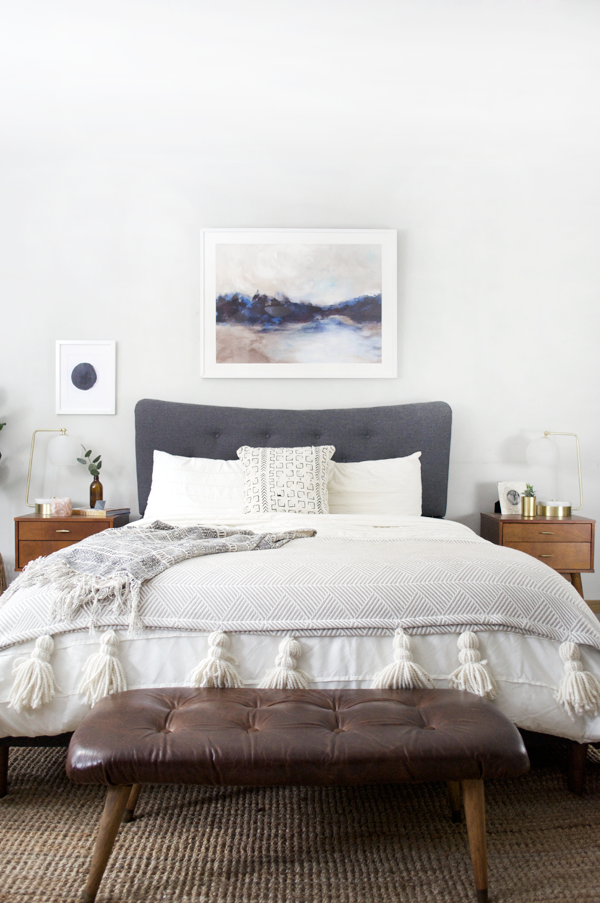
Credits: Bre / Brepurposed
Eclectic styling can be understated. This bedroom combines a gray upholstered headboard, warm wooden nightstands, a tufted leather bench, and oversized cream tassels.
Pale walls and bedding keep those different materials easy to appreciate. A blue abstract print supplies the clearest color accent above the bed.
Try building a similar room around texture before introducing numerous patterns. Choose pieces with comparable visual weight, and repeat warm or cool undertones in more than one place.
The bench adds a useful seat without matching the bed frame. Make sure its depth leaves a walking route at the foot of the mattress.
Small geometric marks on a pillow can provide enough pattern when the furniture already has stitching, grain, and sculptural textile details.
15. Match a Tall Rattan Chair With a Mustard Ottoman
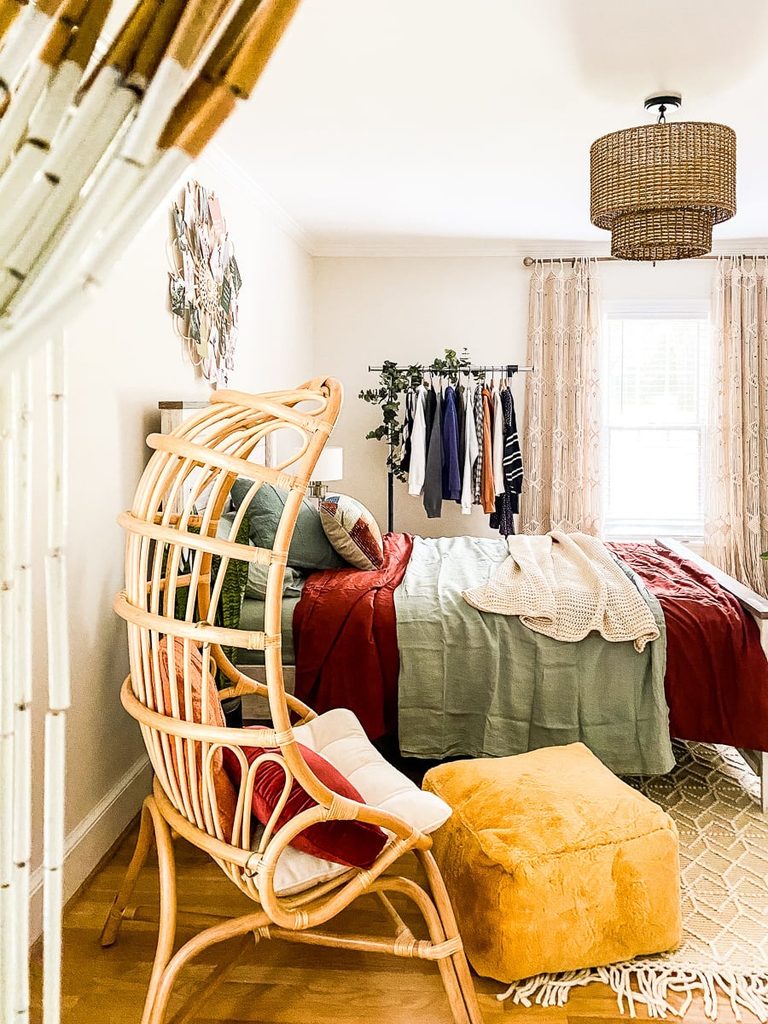
Credits: Aniko / Place of My Taste
A tall open frame gives this rattan chair presence without forming a solid wall beside the bed. The mustard ottoman brings a different texture and a stronger block of color, while a rust cushion links the seat to nearby bedding.
This is a simple way to create an eclectic reading spot from individual pieces. Choose an ottoman whose height works with the chair rather than buying only by color.
Leave enough room to approach the seat and move around the bed without shifting furniture. A soft seat cushion makes rattan more inviting for longer use.
Nearby woven lighting and light window treatments repeat the natural texture. The corner feels intentional because comfort, scale, and a few shared colors connect it.
16. Give an Antique Settee Playful Patterned Cushions
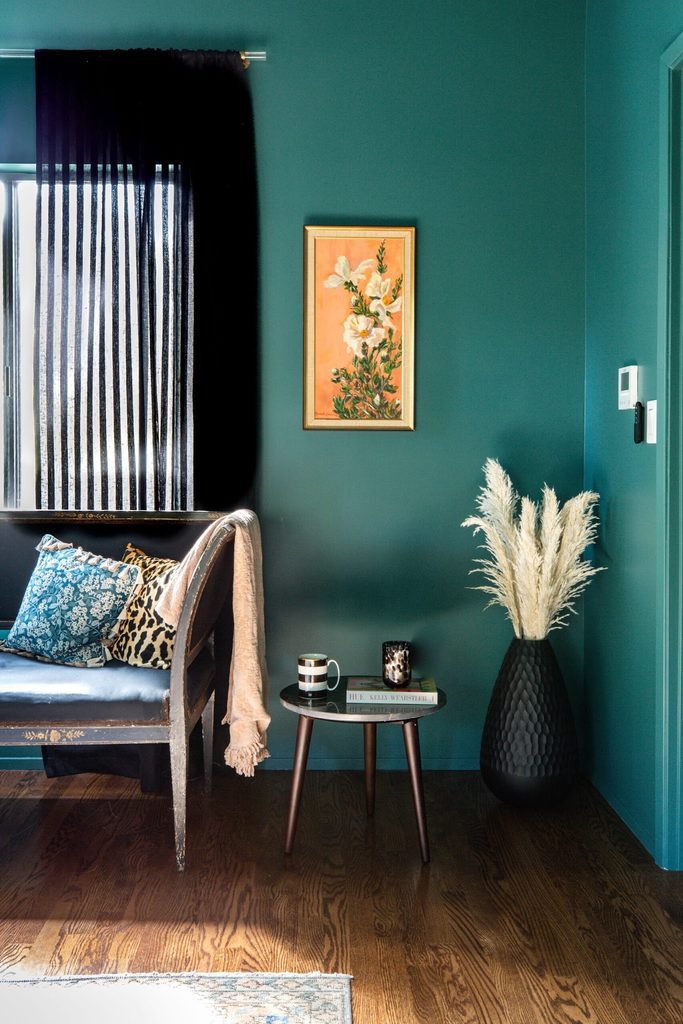
Credits: Annette / A Vintage Splendor
Floral and animal print cushions make an antique settee feel relaxed in this teal bedroom corner. Its worn decorative frame is joined by a small modern table, a dark sculptural vase, and a bright floral painting.
Those differences give the arrangement personality while the consistent wall color holds it together. Start with an old seat, then add one contemporary piece with a simpler outline.
Check the upholstery and frame for comfort and stability before treating it as an everyday reading spot. A table should be close enough to hold a drink without stretching.
Keep tall decorative stems away from the main walking path. This mix shows how inherited or secondhand furniture can remain useful alongside newer lighting, art, and accessories.
17. Use a Purple Headboard as the Room’s Main Character
Credits: Cordelia / Phyrra
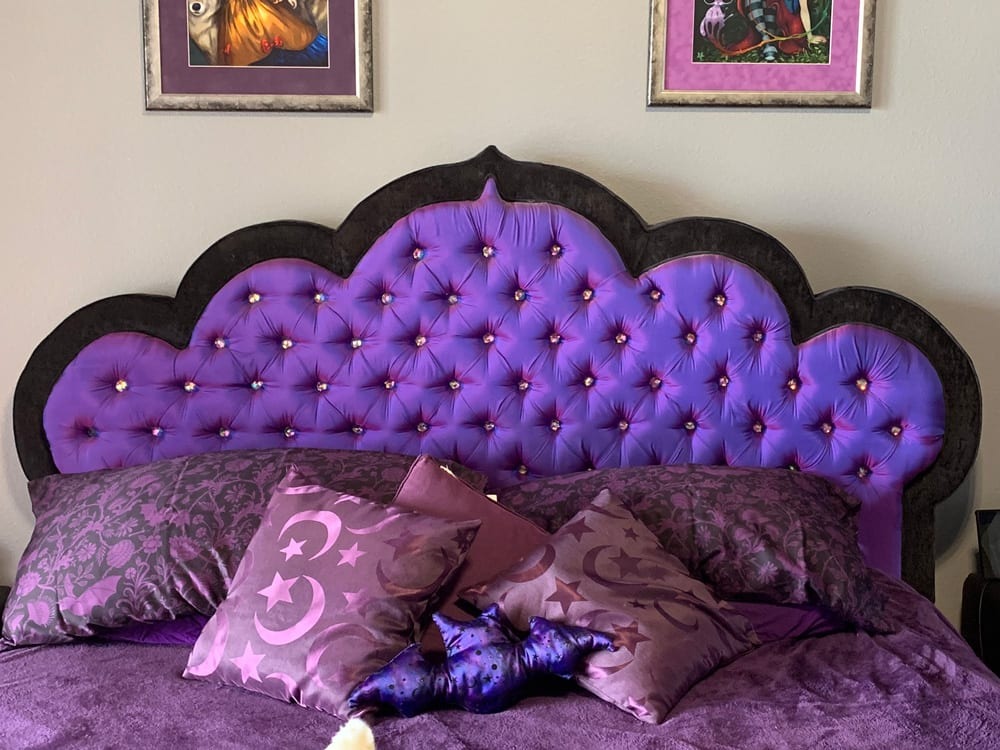
A scalloped purple headboard makes an unmistakable statement, with deep tufting and a black border emphasizing its shape. Patterned pillowcases, moon motifs, and framed colorful artwork create a personal collection around it.
The pale wall is important: it leaves enough contrast for the elaborate outline to remain visible. When one piece is this expressive, build the rest of the bedroom around colors already present in it.
Repeating purple in different shades creates continuity without requiring identical fabrics. Check the headboard’s full width and height before adding art nearby.
A few meaningful accessories will feel more convincing than filling every surface to match a theme. An eclectic bedroom can reflect an interest while still giving its strongest furniture plenty of space.
18. Pair a Clear Chair With a Pastel Bedroom Desk
Credits: Stephanie / Casa Watkins Living
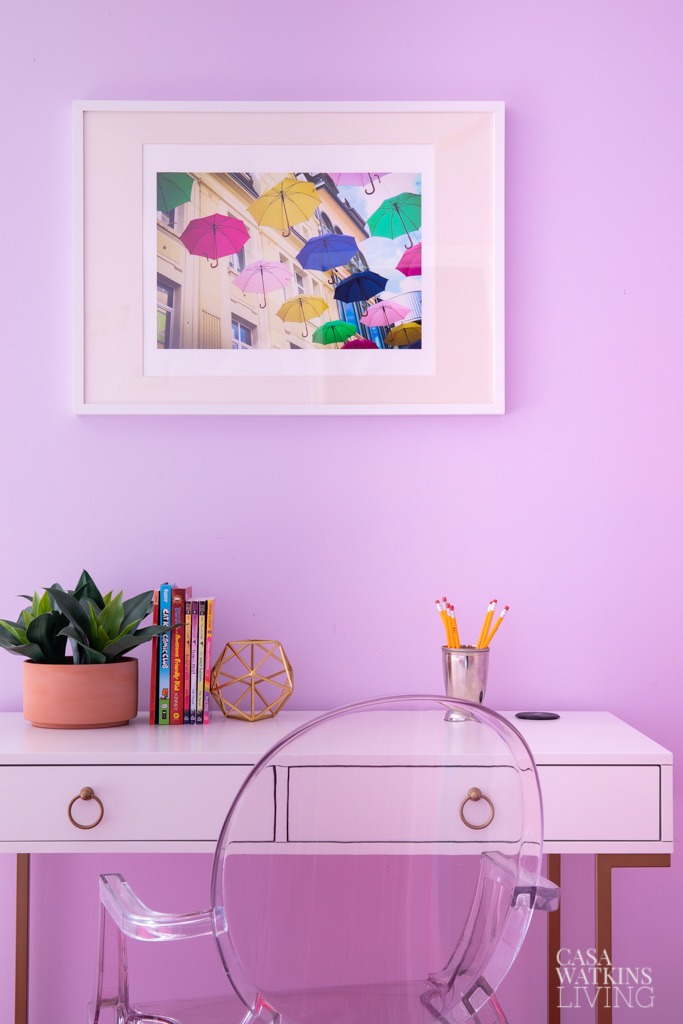
A transparent chair adds an unexpected modern shape to this white desk. Pink walls, brass colored hardware, a terracotta planter, and a colorful umbrella photograph bring several influences into one compact bedroom workspace.
The chair allows the drawers and slim legs to remain visible, keeping the arrangement visually light. For a similar corner, choose a desk large enough for your actual work rather than styling supplies alone.
Test the seat height and comfort before committing to a sculptural chair. Group small objects at one end so the surface stays useful.
Artwork can introduce colors that do not appear elsewhere, particularly when its frame relates to the furniture. A bedroom desk should feel personal while still supporting the task it serves.
19. Contrast Handmade Macrame With an Industrial Light
Credits: Colleen Pastoor / Lemon Thistle
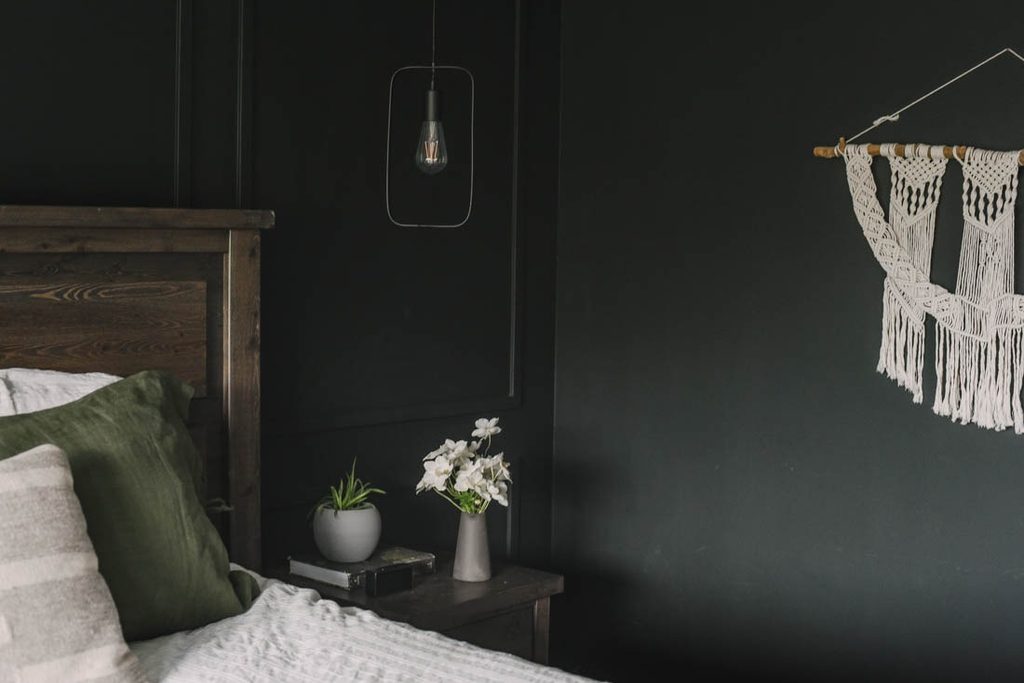
Cream knotted fibers soften the dark wall beside this substantial wooden bed. Nearby, a spare black light with an exposed bulb offers a different texture and outline.
Green bedding, pale stripes, and small plants keep the contrast grounded in a set of colors. The combination is a useful starting point for an eclectic bedroom that does not depend on bright paint.
Put one handmade or richly textured piece near something clean and mechanical, then let the difference remain visible. Choose a bulb and fixture suitable for the location, with comfortable brightness for evening use.
Keep textiles clear of heat sources. A few natural materials can connect the two styles, making the room feel layered without filling every wall or surface.
20. Build a Bedroom Listening Corner Around Album Covers
Credits: Kelley Nan
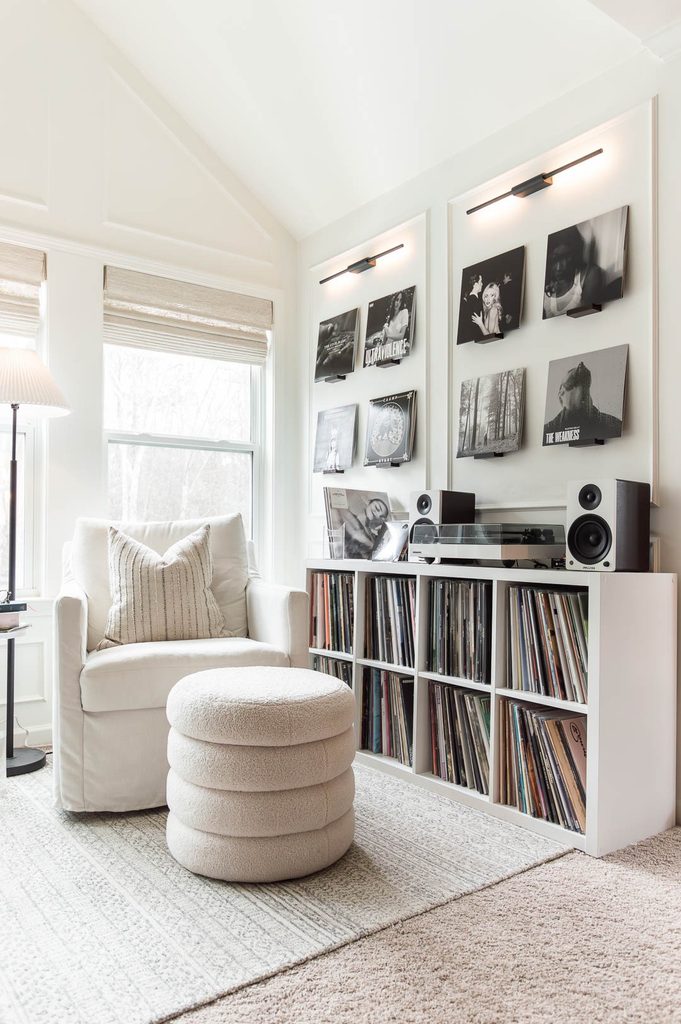
Album sleeves become a changeable gallery above this record cabinet. Their mostly dark artwork contrasts with pale molding, while a soft armchair and rounded ottoman make the display part of a usable listening corner.
The room combines structured wall details with personal music choices and relaxed seating. Start with records you enjoy, then choose ledges that support the sleeves without damaging their edges.
Consistent spacing lets very different covers read as one collection. Keep records away from excessive heat and direct sunlight, and allow easy access to the turntable.
Picture lights can distinguish the display from the surrounding wall. An eclectic bedroom feels more personal when a hobby shapes its furniture arrangement instead of appearing only as a decorative theme.