
A guest bed can look inviting yet still leave visitors wondering where to put a book, charge a phone, or stash a spare blanket.
These Guest Bedroom Ideas balance welcoming style with the small practical details that make an overnight stay more comfortable.
Pair matching lamps for easy bedside reading, clear a drawer for guests’ belongings, or use a daybed that serves as seating between visits.
You’ll also find approachable ways to add warmth, from textured layers and a wooden headboard to softly varied neutrals, without making the room feel crowded.
1. Offer Matching Lamps on Both Sides of the Bed
Credits: Sara Tramp / Emily Henderson
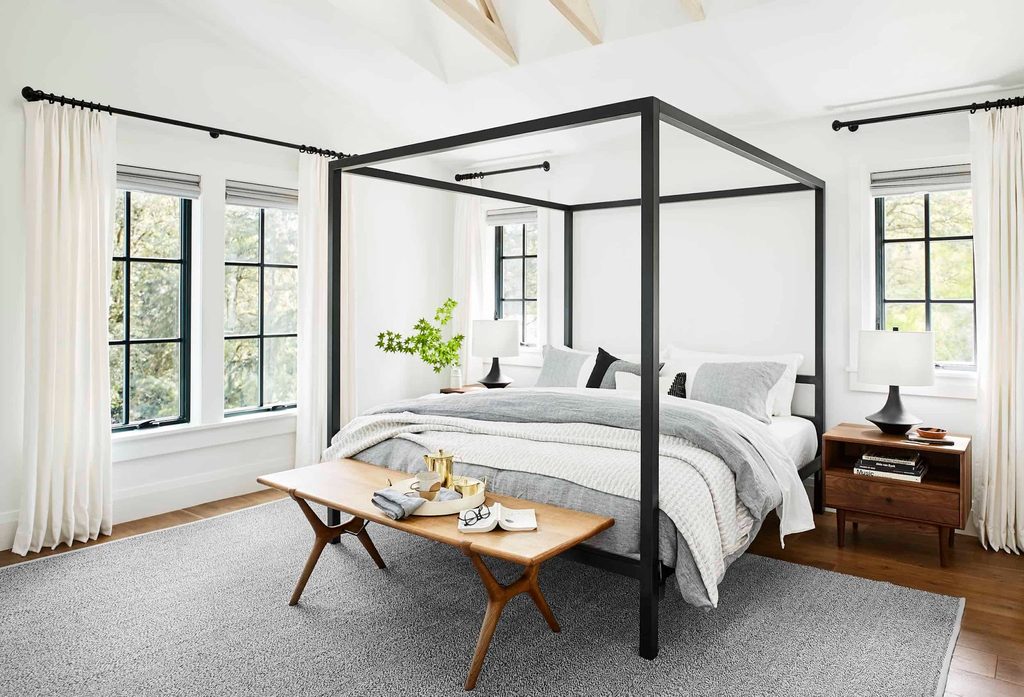
Matching lamps make a guest bedroom feel ready for two people rather than arranged around only one sleeper. In this bright room, black bases echo the canopy frame, while white shades keep the bedside areas light.
Wooden nightstands provide warmth and useful surfaces beneath them. Choose lamps that fit the tables without taking over their entire tops, and make sure the switches are easy to locate from bed.
Visitors will appreciate being able to read without relying on the ceiling light. Keep a portion of each surface free for personal belongings.
The paired arrangement does not require identical accessories on both sides; a few different objects can keep the room welcoming while the lighting establishes a balanced, easygoing rhythm throughout.
2. Move Bedside Lighting Above the Table
Credits: Cass / Cass Makes Home
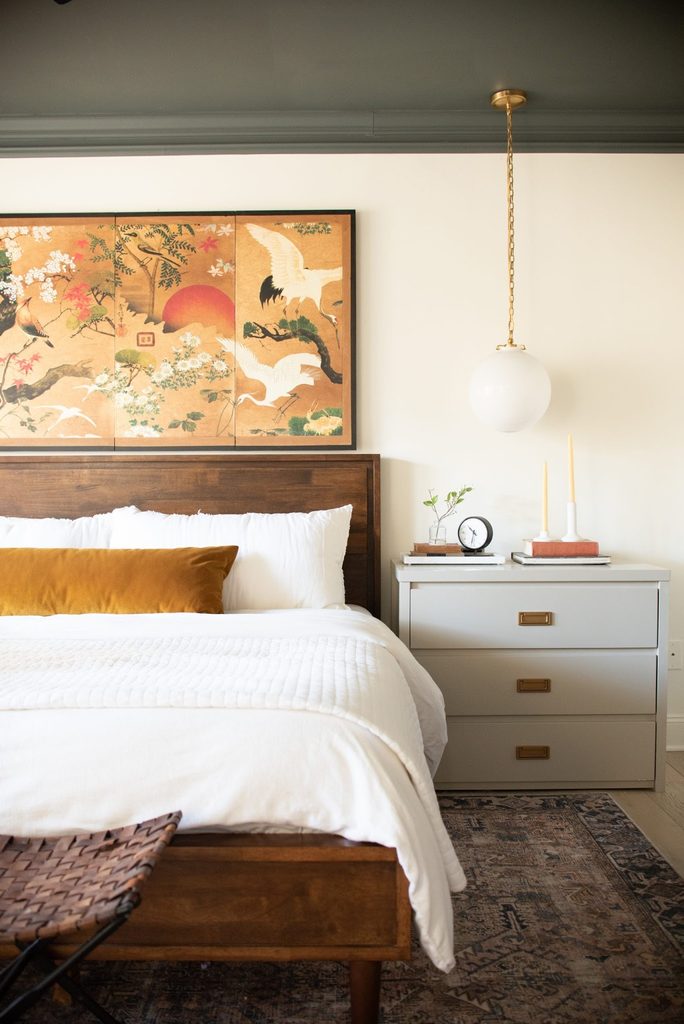
A suspended globe leaves more of this bedside chest available for useful items. Its simple white shape repeats the bedding, while the brass chain relates to the hardware and warm artwork above the headboard.
For a guest room, this arrangement can combine generous drawer storage with lighting that does not occupy another corner of the tabletop. Plan the fixture position carefully so it stays clear of anyone sitting up or walking beside the bed.
Have electrical work completed appropriately and provide an obvious, reachable control. A small clock can help visitors orient themselves without reaching for a phone.
Keep decorative objects modest before arrival, leaving a clear landing space for glasses, a book, or a drink during an overnight stay.
3. Make a Daybed Work Beyond Overnight Visits
Credits: Instagram
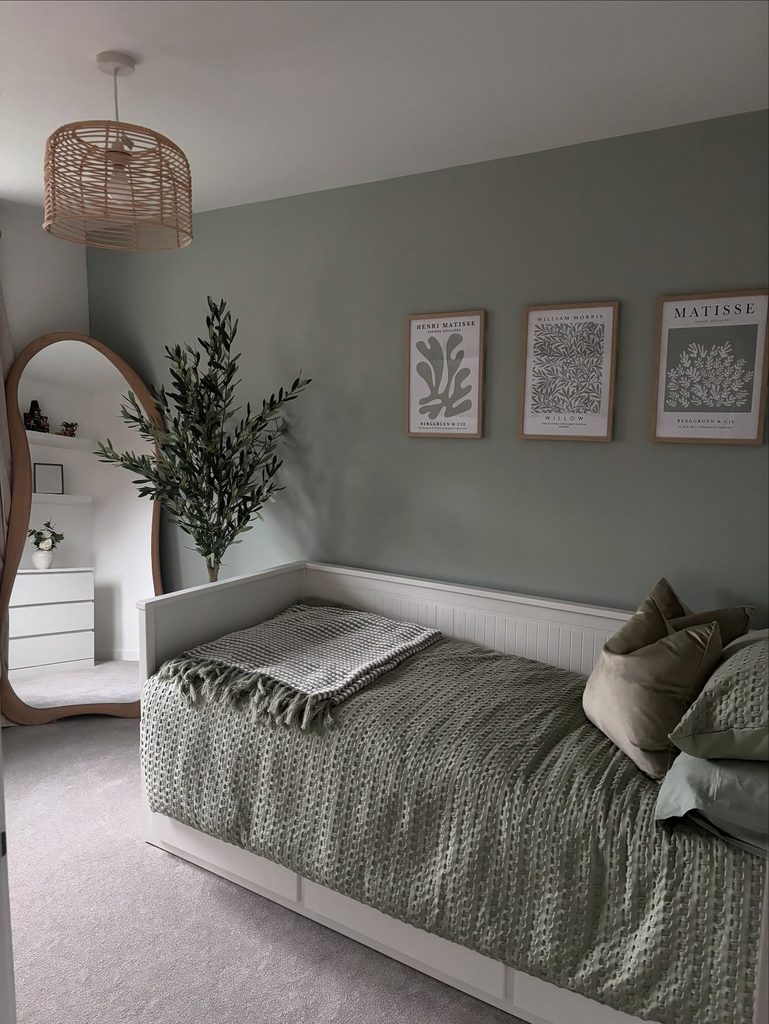
During quiet weeks, a daybed can turn the spare room into somewhere you use. This white version sits against a sage wall, with green cushions arranged along one end and a textured throw over the mattress.
A tall mirror and a slim dresser make the room feel ready for visitors, rather than temporary. Follow the same idea with comfortable bedding that can be folded back when the bed becomes a seat.
Keep spare pillows and a clean sheet set together so preparing for an overnight stay takes little effort. Before choosing furniture, check the full sleeping dimensions and allow room for any pullout mechanism.
Guests should be able to get in and out without moving the mirror or nearby storage.
4. Make White Bedding Feel Warmer With a Textured Throw
Credits: Brittany Stager
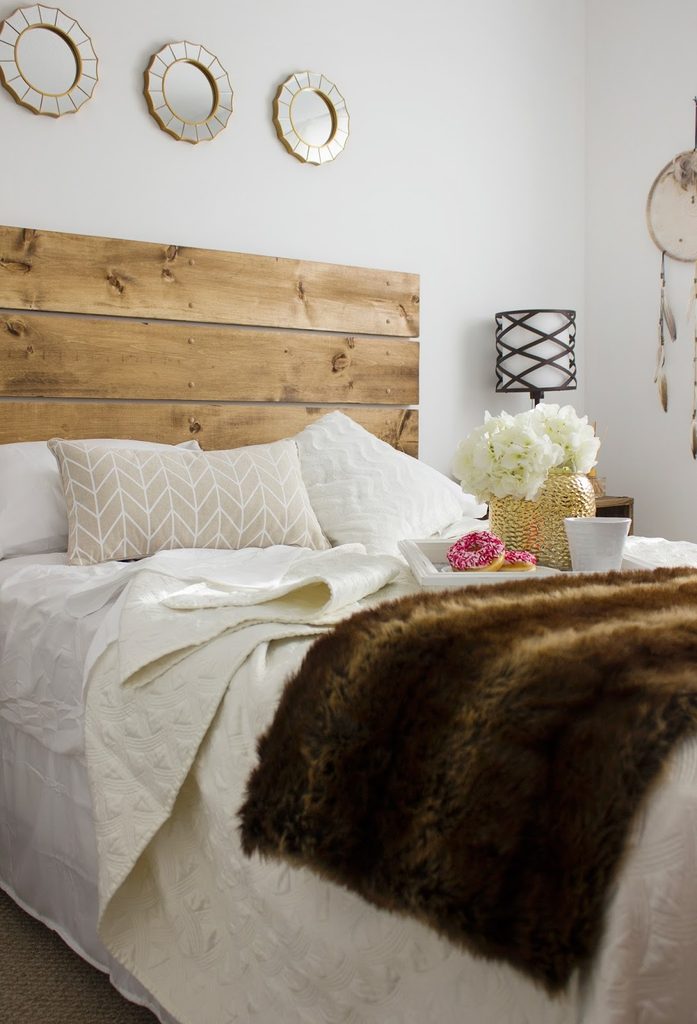
White linens look inviting when they have enough variation to avoid feeling bare. This guest bedroom combines a stitched coverlet, pale pillows, a wooden headboard, and a rich brown faux fur throw.
The darker layer adds visual warmth without changing the room’s light walls. Begin with comfortable, freshly washed bedding, then offer one extra blanket that guests can easily add or remove.
Check its care instructions so keeping it clean between visits remains straightforward. A decorative tray may look welcoming in a photograph, but move it onto a stable surface before the bed is used.
The simple white foundation also makes future changes easy: different pillows or a lighter seasonal throw can refresh the room without replacing its larger furnishings.
5. Refresh a Sound Bed Frame With Soft Upholstery
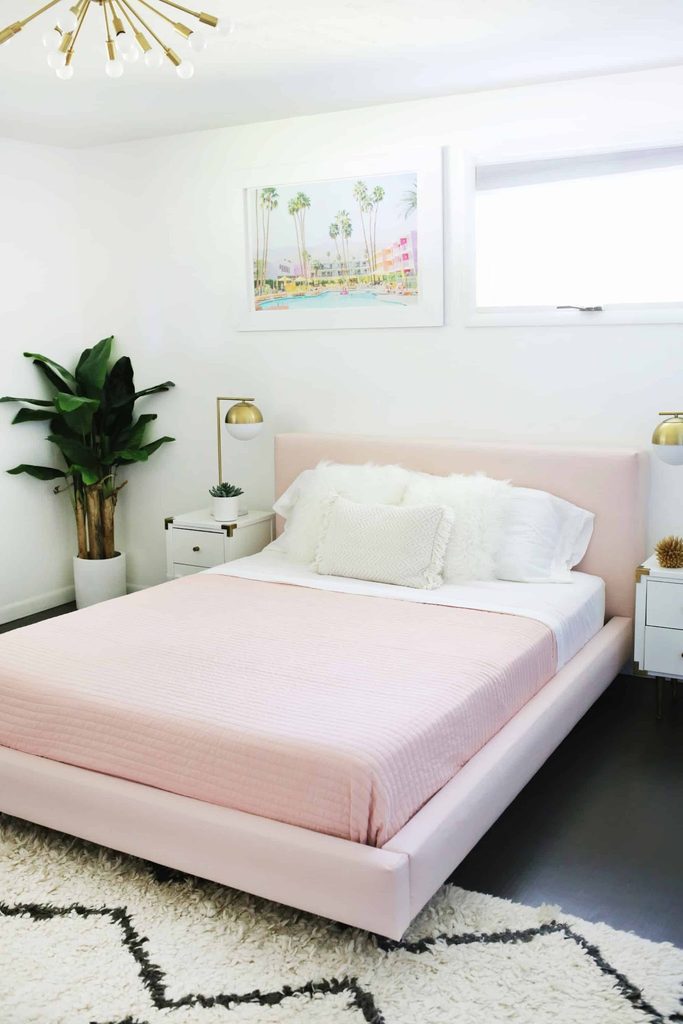
Credits: Laura Gummerman / A Beautiful Mess
Blush upholstery gives this plain bed a softer outline while allowing the surrounding white room to stay bright. The color repeats in the folded cover, and simple bedside furniture keeps the arrangement from feeling crowded.
If an existing guest bed is sturdy and comfortable, refreshing its visible finish may be more useful than replacing the whole piece. Consider a suitable fabric with care needs that match how often the room will be used.
Follow a tested upholstery method and avoid changing any structural support. Keep the mattress dimensions and bed height comfortable for your usual visitors.
A restrained textile update can make familiar furniture feel intentional again, leaving more of the budget available for good pillows and fresh, comfortable sheets.
6. Reserve Bedside Drawers for Visitors
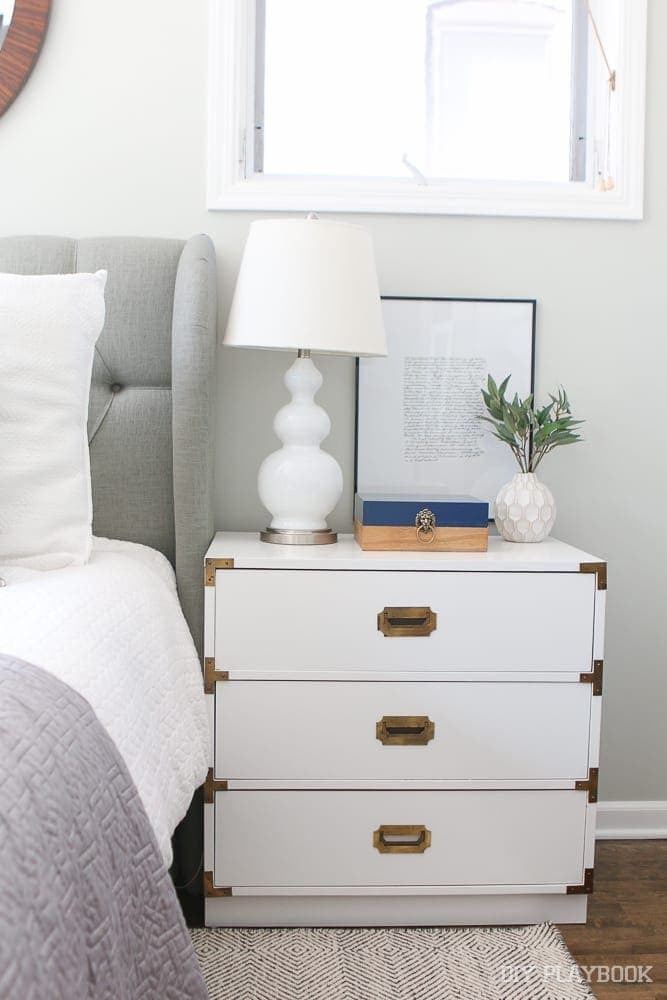
Credits: Casey Finn / The DIY Playbook
A small chest beside the bed provides more flexibility than a narrow pedestal table. This white piece includes several drawers, with a lamp and a few personal details arranged on top.
Its pale finish sits comfortably beside the upholstered headboard and keeps the corner visually light. In a guest room, empty at least one drawer before visitors arrive and let them know it is available.
A place for small belongings can make a short stay feel less like living out of a bag. Avoid filling the top with so many objects that a phone or water glass has nowhere to go.
The furniture can still look finished with one framed piece and a modest plant, leaving the surface genuinely useful.
7. Use One Floral Wall to Create a Welcoming Backdrop
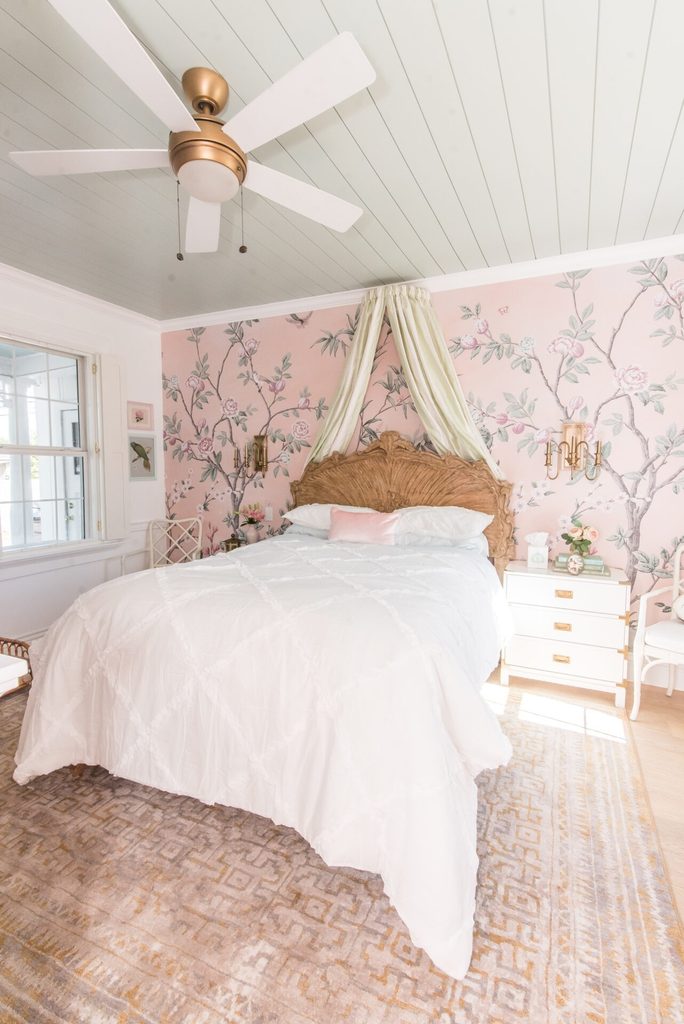
Credits: Ashley Wilson / At Home with Ashley
A pink floral wall gives this bedroom character without needing elaborate bedding. White linens leave the flowering branches visible, while the carved wooden headboard provides a warm focal point within the pattern.
Pale green overhead details connect with the leaves and keep the palette gentle. For a guest bedroom, a single decorative wall can make basic furniture feel more considered.
Choose the wall that naturally frames the bed and test a wallpaper sample beside the largest existing pieces. Keep the other surfaces quieter if the print is detailed.
The practical essentials still deserve space: reachable lighting, clear bedside surfaces, and comfortable routes around the mattress. A memorable backdrop works best when the rest of the room feels simple to use.
8. Combine a Deep Wall Color With Generous Storage
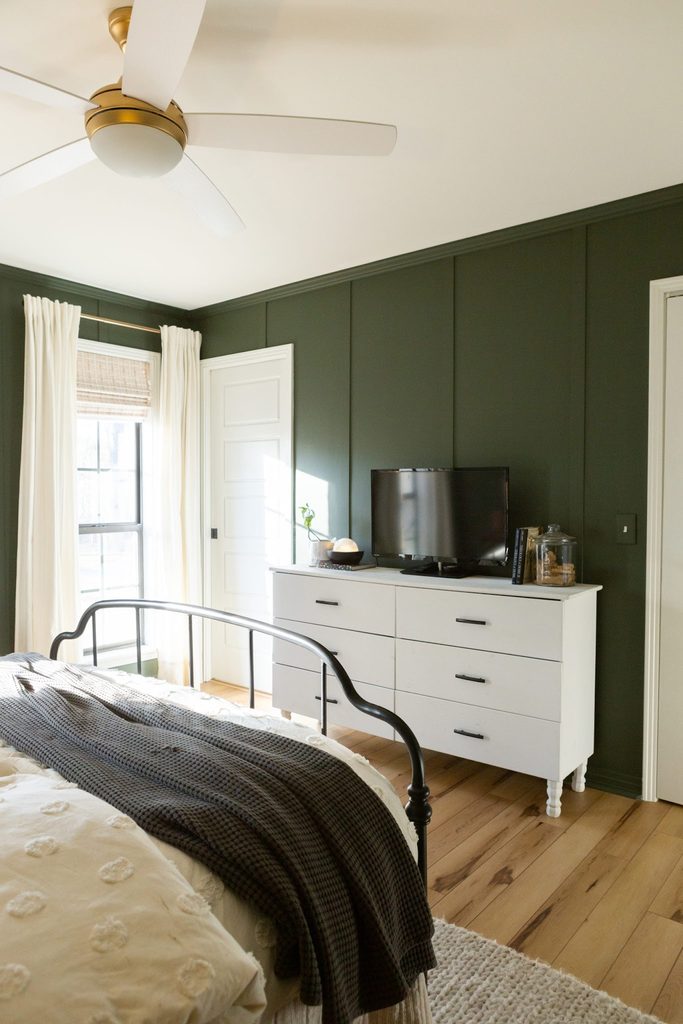
Credits: Jordan Jean
Deep green paneling gives this bedroom a cozy backdrop, while a pale dresser remains easy to distinguish against it. The room balances the stronger wall with white trim, light curtains, and a bright ceiling.
This is a useful combination when you want a guest room to feel intimate without making every surface dark. Test the color under both daylight and the lamps you plan to use.
Reserve some dresser space for visitors instead of treating the spare room as permanent household overflow. If you include a television, keep the remote easy to find and the instructions simple.
The pictured arrangement shows how practical storage can sit comfortably within a richer palette while the lighter furnishings keep the room feeling approachable.
9. Let a Wooden Headboard Warm a Sage Wall
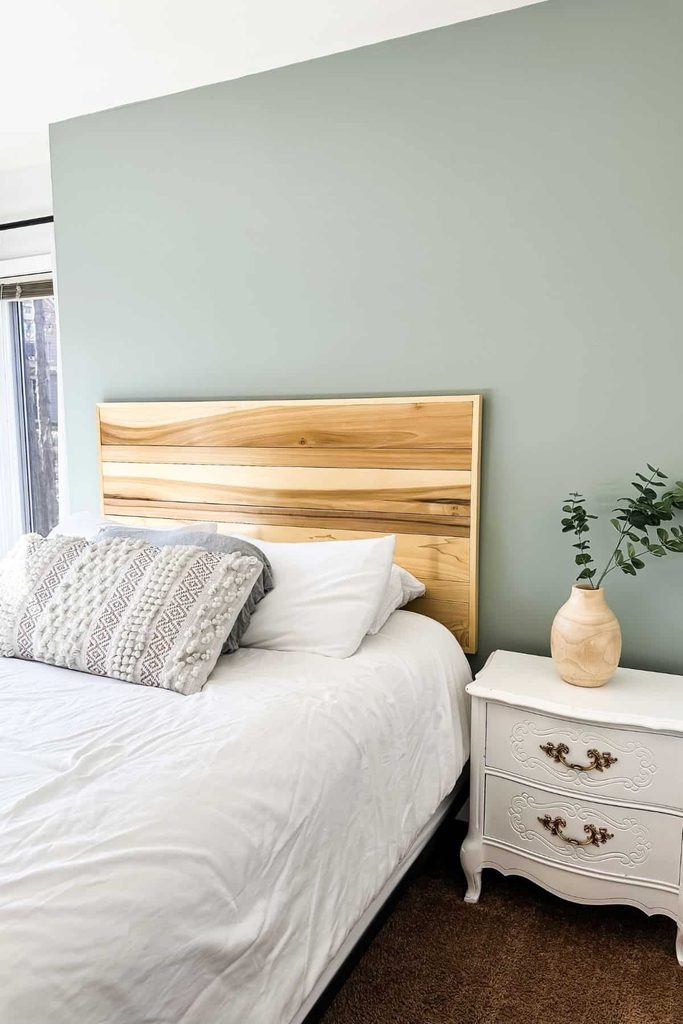
Credits: Wendy Duffy / At Lane and High
Natural wood grain brings warmth to this simple sage bedroom without adding another pattern to the bedding. The broad headboard has a clear rectangular shape, and the white bedside chest provides a lighter companion.
For a guest room, this combination can make a restrained palette feel comfortable rather than unfinished. Keep the headboard securely attached and choose a finish that is smooth around areas visitors may touch.
A few textured pillows can provide softness, but leave room to put them aside at bedtime. The open wall above the bed keeps the grain visible as the main decoration.
You can repeat a little of that warmth in a vase or picture frame without needing every wooden piece to match exactly throughout.
10. Build a Quiet Palette With Softly Varied Neutrals
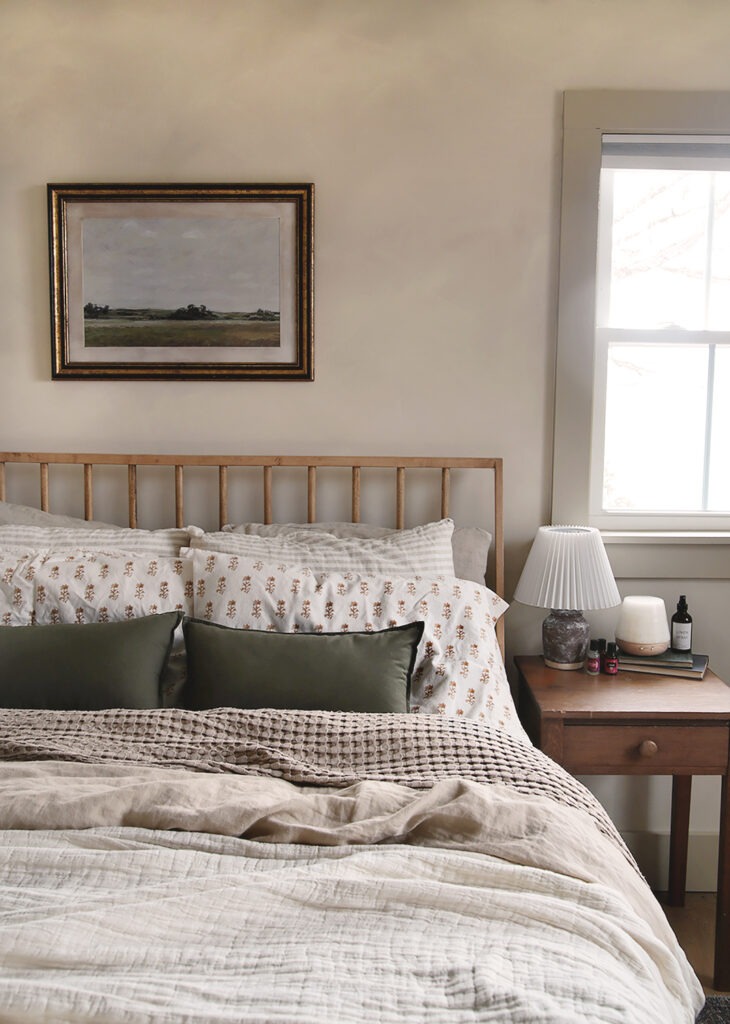
Credits: Manda / The Merrythought
Subtle variation in the beige wall gives this bedroom depth without relying on a strong color. The creator’s faux limewash finish sits behind a simple wooden bed, with small floral pillowcases and olive cushions adding gentle detail.
A guest room can borrow this softness while keeping its main furnishings uncomplicated. Try a sample of the decorative finish before applying it across the room, since the effect depends on lighting and technique.
Let the bedding stay comfortable and easy to wash rather than choosing every layer for appearance alone. A small framed landscape is enough above the headboard.
The varied surfaces help the room feel settled, while the limited palette makes it easier to replace or rotate linens between visits later.
11. Soften a Sloped Sleeping Alcove With Pale Curtains
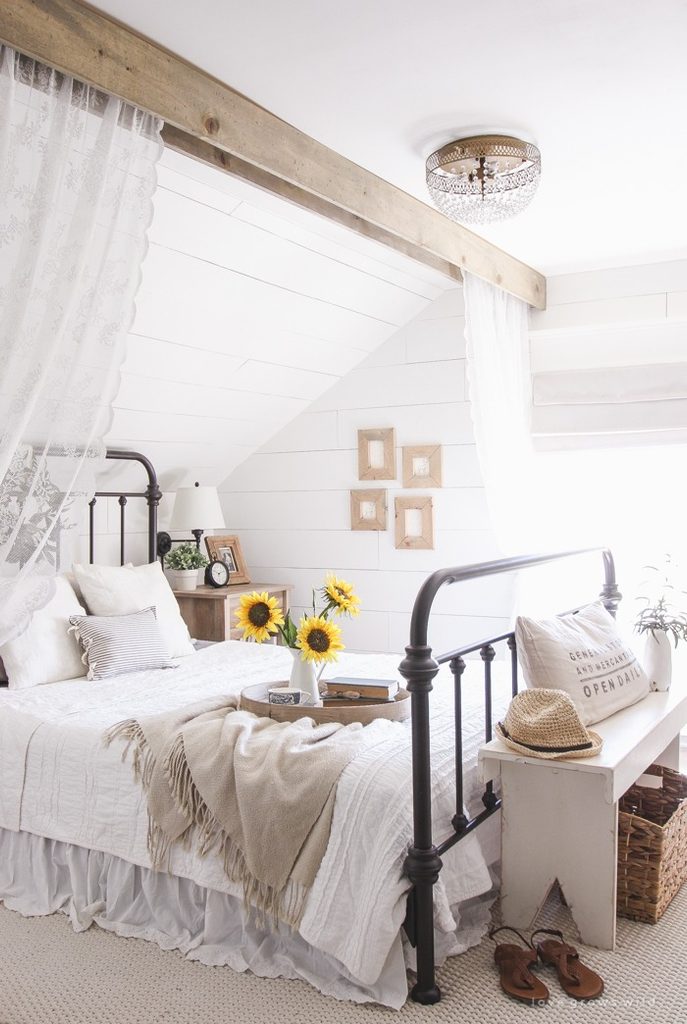
Credits: Liz Fourez / Love Grows Wild
Sheer curtains frame this sloped sleeping area and make its architectural shape feel intentional. The light fabric hangs beneath a wooden beam, softening the dark metal bed without hiding the white wall boards.
This approach can be useful in an attic guest room where the ceiling already creates a natural alcove. Measure carefully before adding fabric so it stays clear of anyone getting in and out of bed.
Use a secure mounting method and keep textiles away from lights or heaters. The curtains shown are decorative; separate window coverings may still be needed for privacy and sleep.
A small bench and an accessible bedside surface help the nook remain useful, giving visitors somewhere to settle belongings in the compact room.
12. Set Aside a Comfortable Reading Corner
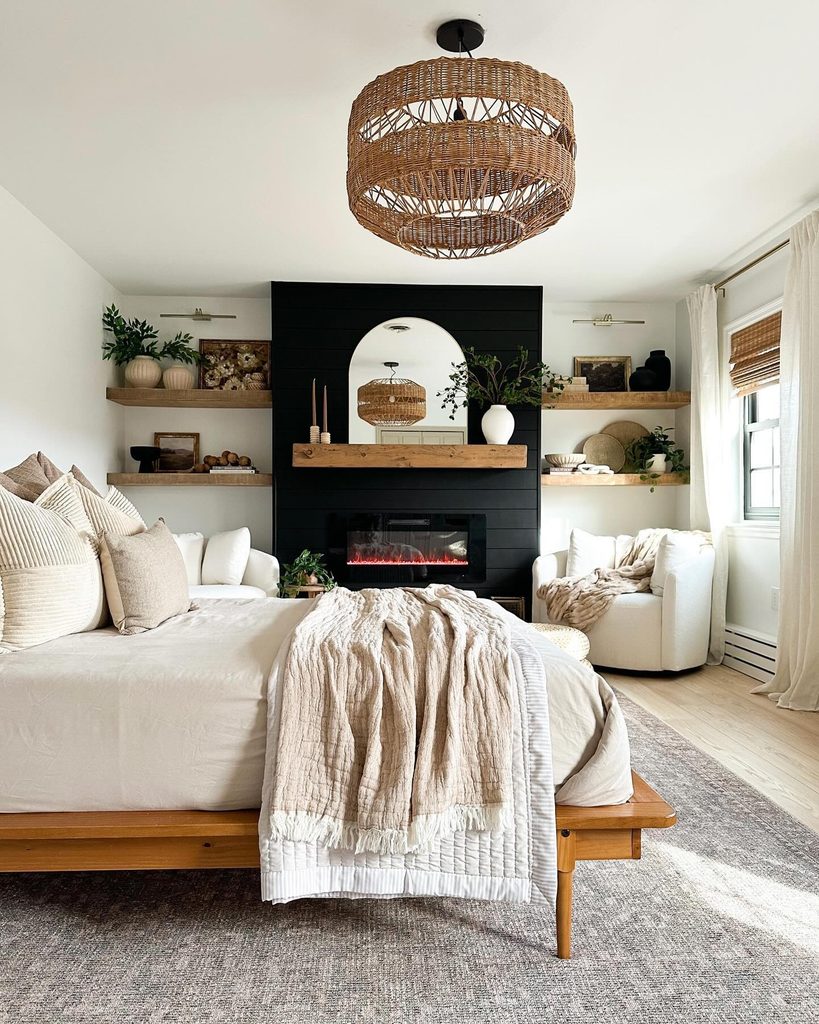
Credits: Instagram
Visitors appreciate somewhere to settle that does not involve sitting on the bed. In this guest bedroom, a pale armchair occupies the window corner beside a dark fireplace wall.
Soft throws and nearby shelving make the spot feel connected to the rest of the room. You can create a similar retreat with one comfortable seat, a reachable light, and a small surface for a mug or book.
Place it where the door and curtains still move freely. If the room includes a heater or fireplace, follow its clearance instructions and keep textiles safely away.
Avoid turning the chair into storage for decorative pillows. Leaving it ready to use makes the room more welcoming for guests who enjoy some quiet time.
13. Balance an Off Center Window With a Display Shelf
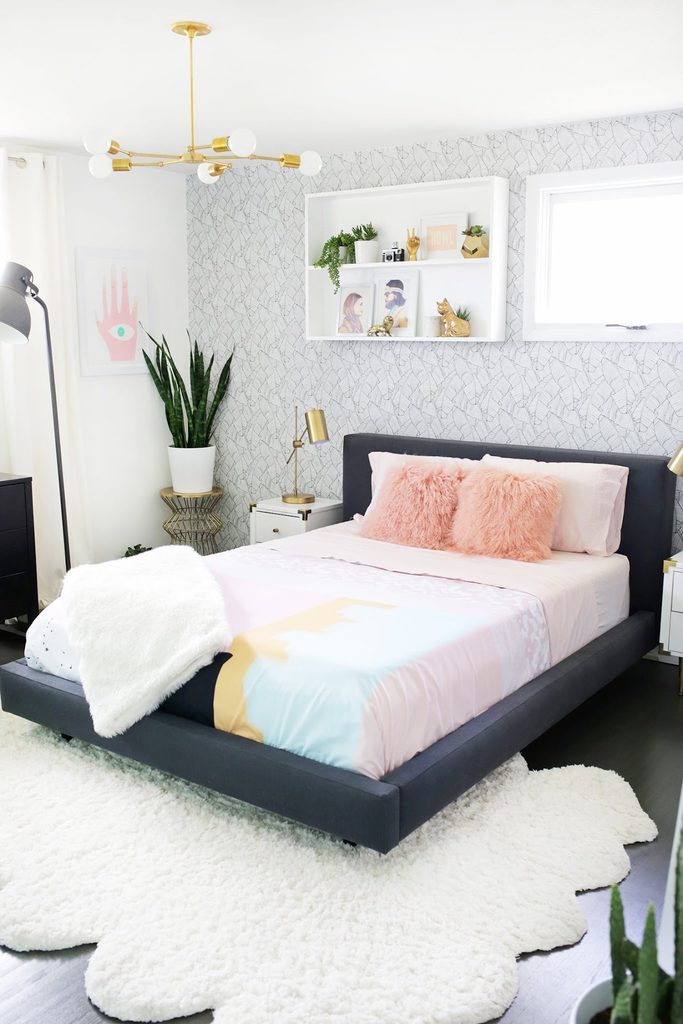
Credits: Laura Gummerman and Elsie Larson / A Beautiful Mess
A white box shelf creates a visual partner for the high window beside it. The two rectangles help the bed feel more centered, even though the wall opening sits toward one side.
Small plants and framed pieces add personality inside the shelf without spreading across the nightstands. If a guest bedroom has an awkwardly positioned window, consider working with its proportions instead of trying to conceal it completely.
Measure the surrounding trim and test a shelf outline on the wall before installation. Above a sleeping area, secure both the shelf and its contents appropriately.
Keep the display light and easy to dust. A considered wall arrangement can make an unusual room feel finished while leaving the practical surfaces below available.
14. Use a Tray to Organize a Small Welcome Arrangement
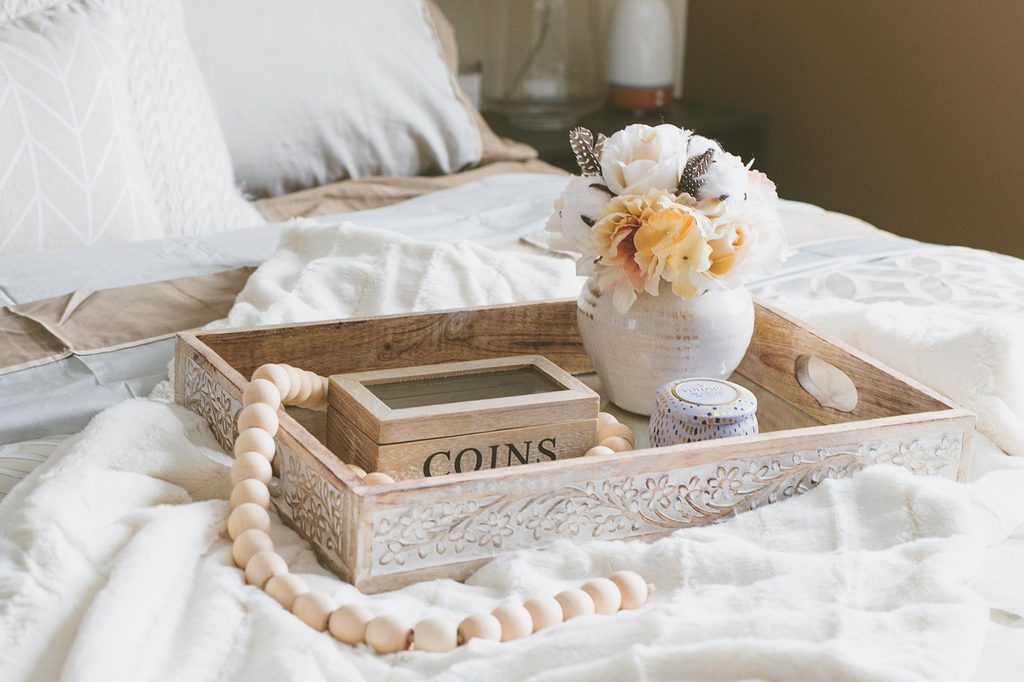
Credits: Brittany Stager
A shallow wooden tray groups several small objects into one movable arrangement. In this bedroom, a compact container and flower vase sit together rather than being scattered across the bedding.
The idea translates easily to a guest room when the contents are chosen for the visitor. A note, tissues, or a useful charging cable can be more helpful than extra ornaments.
Put the tray on a stable table or dresser before the guest uses the bed, and leave space around it for their own belongings. Avoid strong scents unless you know they are welcome.
Keeping the arrangement small makes it simple to lift when cleaning. The tray provides a sense of preparation without turning every available surface into a display.
15. Keep Spare Linens in Drawers Beneath the Bed
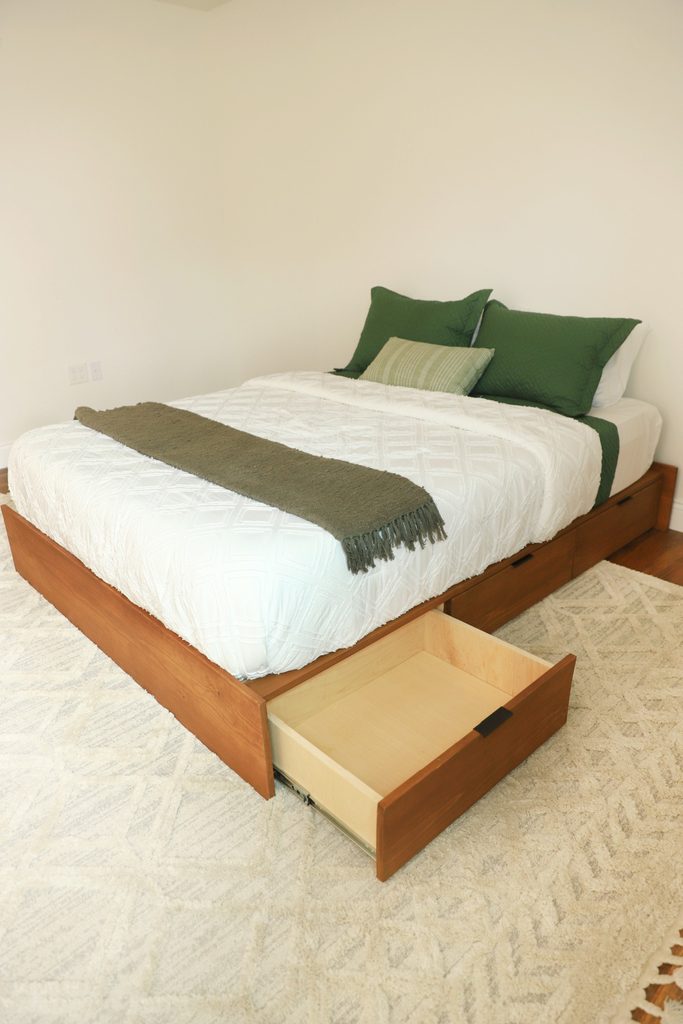
Credits: Shara / Woodshop Diaries
Drawers built into this wooden platform use space that might otherwise remain empty. Their plain fronts keep the bed’s outline simple, while the open compartment shows how much useful storage can fit below the mattress.
This can help a guest room stay organized when there is little space for another chest. Reserve the easiest drawer for clean spare sheets or blankets, and tell visitors where to find them.
Check that every drawer opens fully without hitting a nightstand or catching on the rug. Avoid packing bedding so tightly that it becomes difficult to remove.
A storage bed works best when its capacity remains accessible, letting the room accommodate guests without becoming a collection of extra cabinets and bulky storage boxes.
16. Give Small Bedside Essentials a Lidded Home
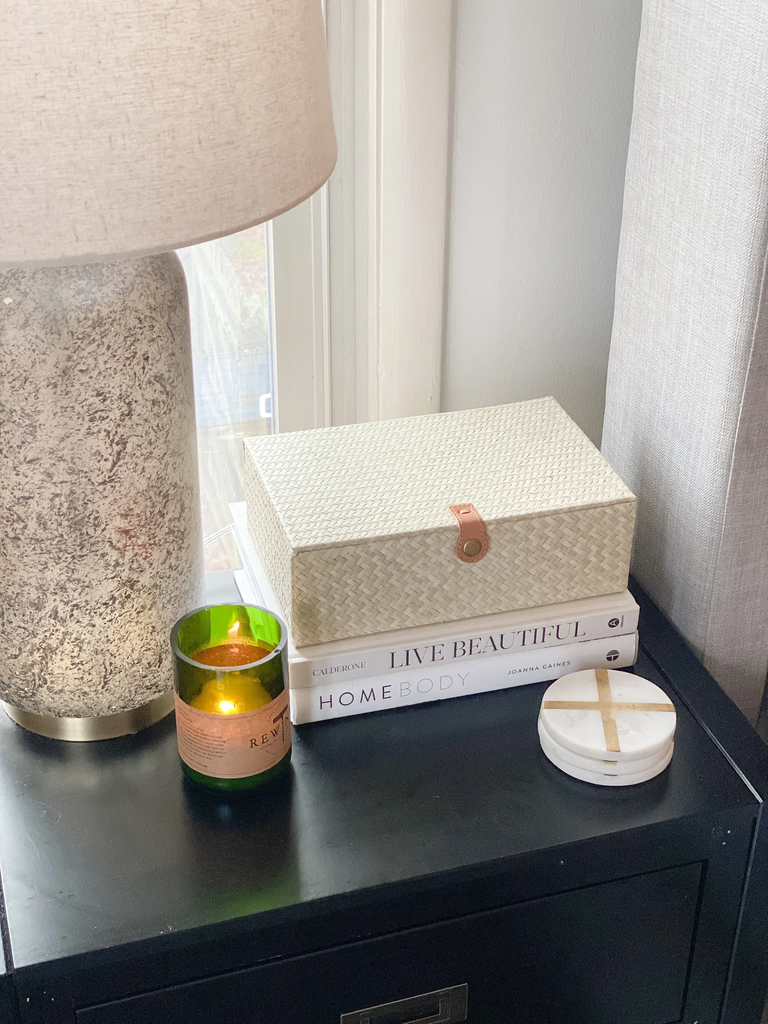
Credits: Emily Schmidt / Gathered Living
A woven box keeps small items contained beside this upholstered bed. Its light texture contrasts with the dark nightstand, while a nearby coaster offers a practical place for a drink.
In a guest room, a similar box can hold spare charging cables or other useful basics without leaving them scattered across the surface. Choose a size that opens easily and does not crowd the lamp.
Keep the contents simple, clean, and clearly available to visitors rather than mixing them with private household belongings. The photographed candle adds atmosphere, but a flameless light is an easier option to leave ready for overnight guests.
A small amount of closed storage can make the corner look calmer while keeping everyday necessities within reach.
17. Keep an Extra Blanket in an Easy to Find Basket
Credits: Caitlin / Caitlin Marie Design
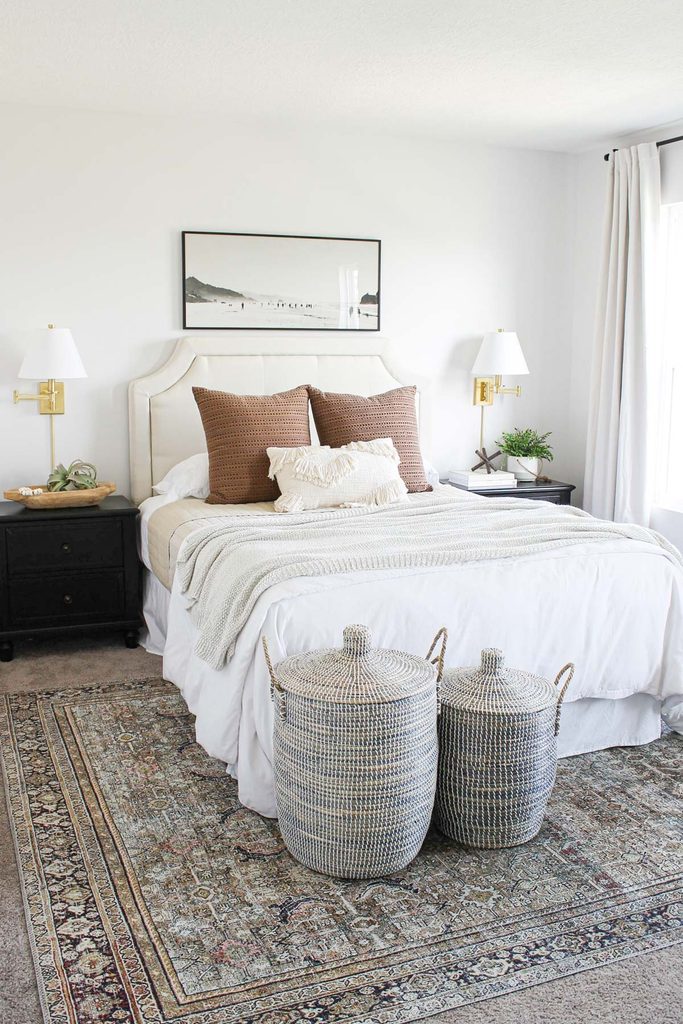
Lidded baskets offer a clear home for spare bedding while adding texture to this pale room. Their rounded shapes soften the straight edges of the furniture, and their natural weave relates to the patterned rug beneath them.
For overnight guests, the most important detail is that an extra layer is easy to find. Store a clean blanket loosely enough to remove without unpacking several other things.
One basket may be sufficient if the room is compact. Place it beside a wall or at the foot of the bed only when there is comfortable walking space around it.
Tell visitors that the contents are there for them. Useful storage feels welcoming when it is obvious, accessible, and ready to use immediately.
18. Leave Room for Water Beside the Bed
Credits: Sara Ligorria-Tramp / Emily Henderson
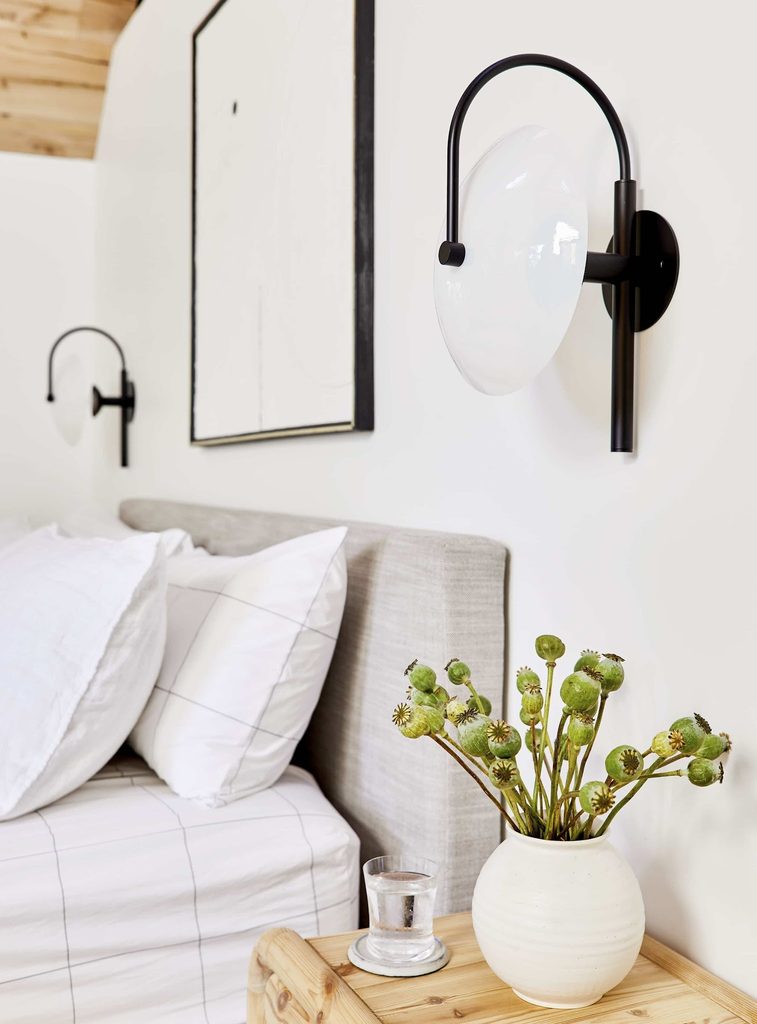
A simple glass of water makes this bedside arrangement feel useful as well as attractive. The coaster protects the wooden surface, while the wall light keeps the tabletop from being occupied by another lamp base.
White bedding and a pale vase leave the corner visually quiet. Before a guest arrives, check whether there is enough room for their own phone, glasses, or book alongside anything you set out.
A small water carafe can be helpful if you already have one, but the arrangement does not need to be elaborate. Keep drinks away from outlets and electrical controls.
The nicest bedside details usually make an ordinary need easier, giving visitors a comfortable place to settle without having to rearrange your decorations.
19. Add a Compact Bench for Dressing and Unpacking
Credits: Brittany Stager
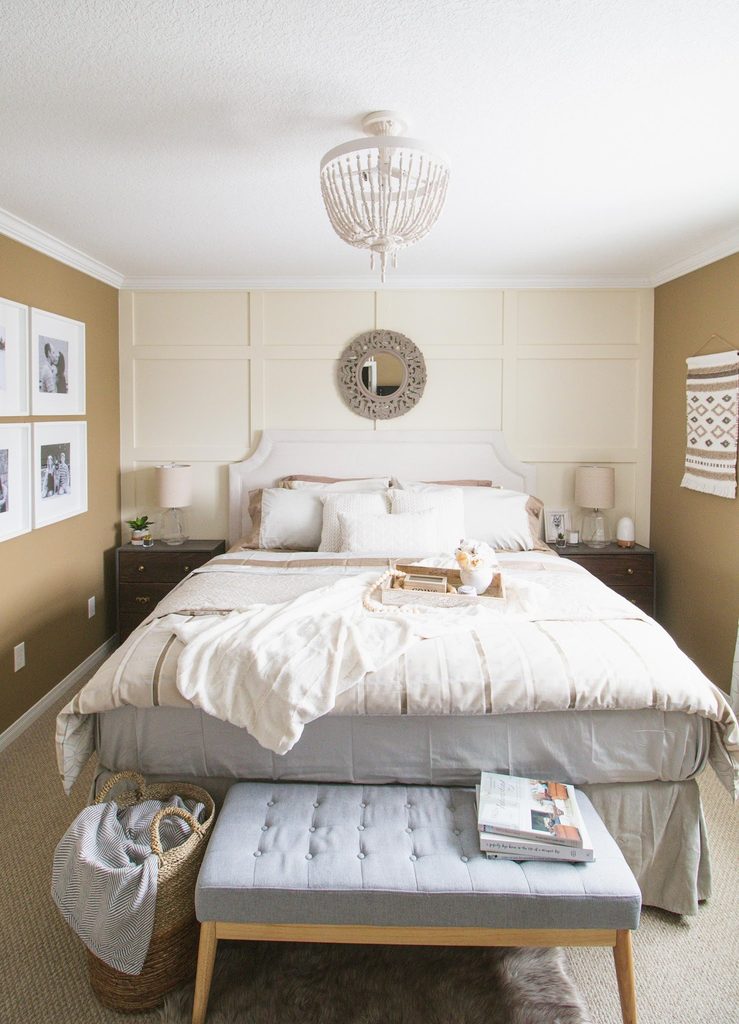
A low upholstered bench gives this bedroom an extra place to sit without obscuring the bed. Its gray fabric sits easily with the neutral bedding, and the slender wooden base keeps the piece from looking heavy.
In a guest room, a bench can help with putting on shoes or briefly setting down a small bag. Measure the space beyond the bed before choosing one, leaving enough clearance for comfortable movement.
Keep the top clear when visitors arrive rather than treating it as another display shelf. If the room is narrow, a smaller stool may provide the same benefit.
The best extra seat earns its place through daily usefulness while adding a soft layer to the room’s overall appearance and comfort.
20. Leave a Clear Desk for Writing or a Laptop
Credits: Aniko / Place of My Taste
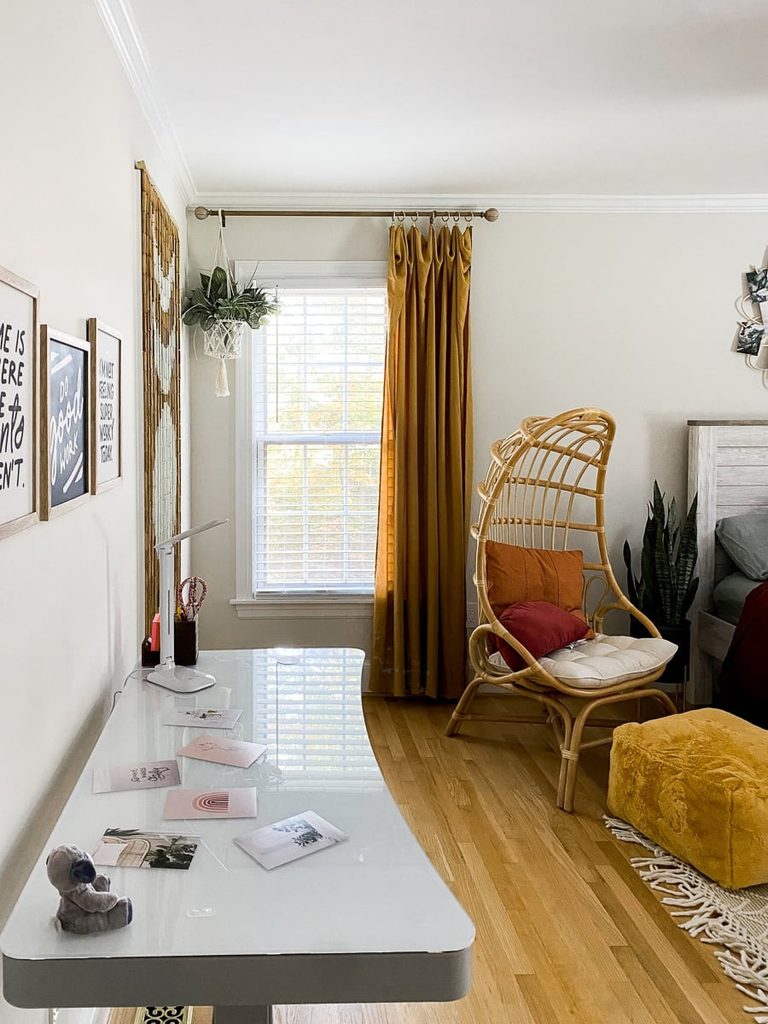
A simple desk gives visitors somewhere to write, check travel plans, or use a laptop away from the bed. This light tabletop sits beside a window, with a small task lamp and open floor space around it.
The warm curtain and woven chair keep the corner connected to the bedroom’s relaxed style. Before a visit, clear the work surface and provide a suitable chair that can tuck away when it is not needed.
Make sure there is an accessible outlet without cords crossing the walking route. A spare room can still serve household projects between stays, but remove those materials when guests arrive.
A modest workspace is most welcoming when visitors can immediately understand how to use it comfortably themselves.