
A nightstand has to hold the things you reach for while still feeling like part of the bedroom, so every inch counts.
Bedside Table Decor Ideas can help you balance that everyday function with a display that feels personal and considered.
Try layering a meaningful framed note behind useful objects, repeating a bedroom color in a short book stack, or adding a woven basket to an open shelf.
Small choices in lighting, texture, and storage can make the bedside area feel more settled without crowding its surface.
1. Layer a Framed Letter Behind Everyday Objects
Credits: Casey Finn / The DIY Playbook
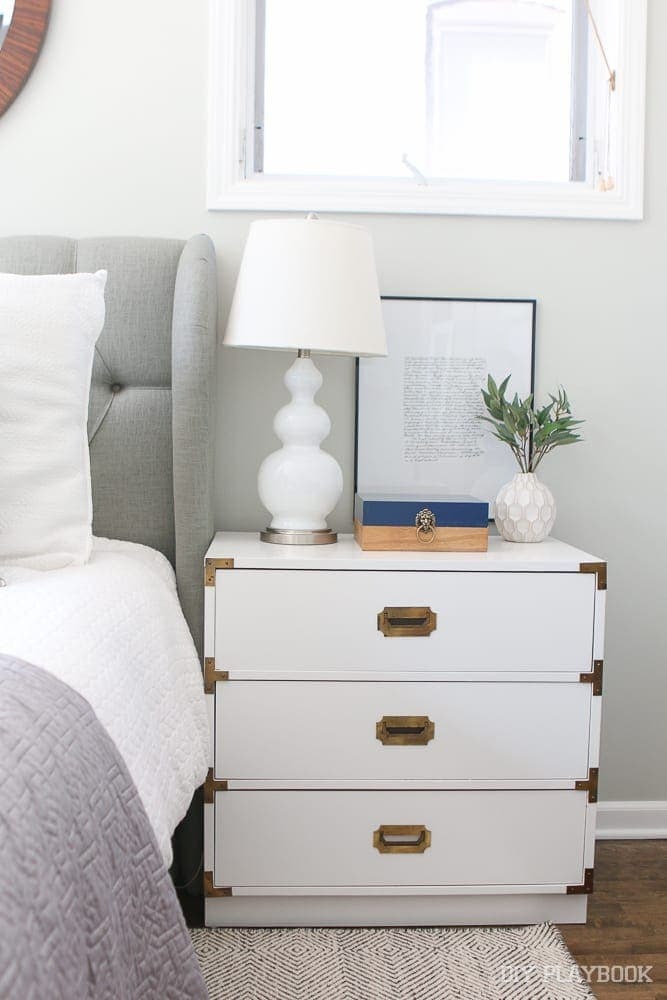
A slim black frame leans behind the lamp and accessories on this white campaign nightstand. The handwritten page gives the arrangement personal meaning while its pale background keeps the corner quiet.
A blue lidded box sits lower in front, and the small leafy vase leaves much of the writing visible. Try framing a copy of a meaningful letter, recipe, or note instead of buying another decorative print.
Keep the original safely stored if it is fragile or irreplaceable. Choose a frame that fits behind your lamp without blocking the switch.
Secure it against slipping, then leave the front edge of the table available. The layered arrangement adds height while using little more space than the objects already on the surface.
2. Use Dark Stems to Add Contrast to a Pale Room
Credits: Jordyn / Our PNW Home
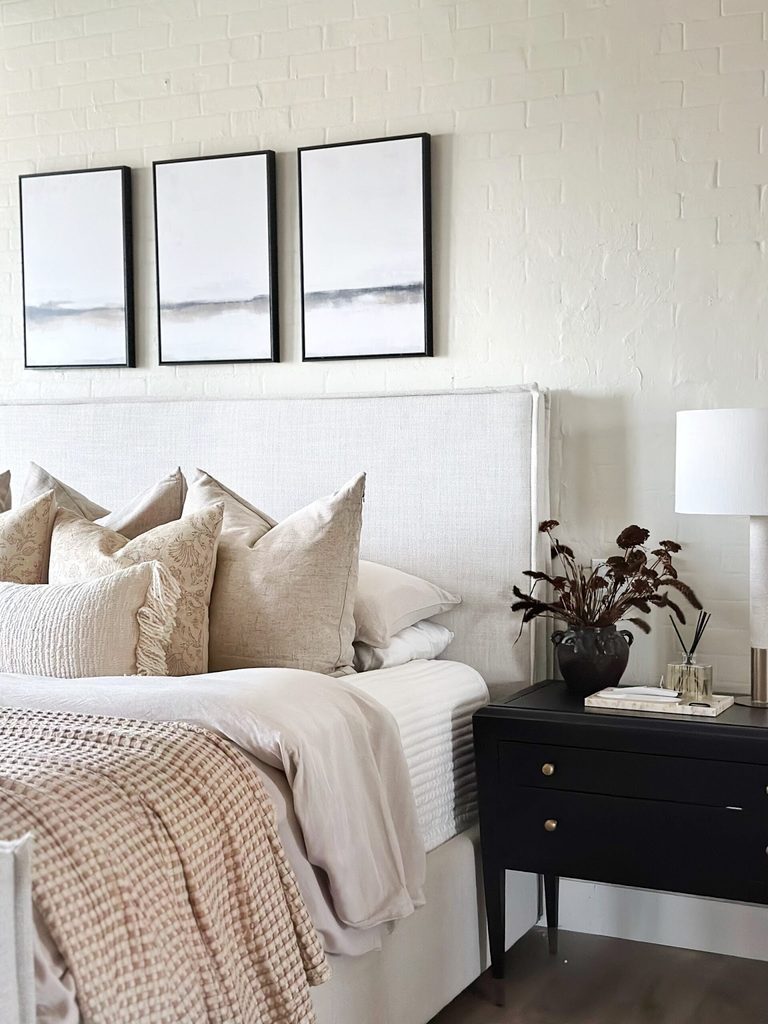
Dark flower stems rise from a black vase beside the pale lamp in this otherwise light bedroom. Their uneven silhouette gives the bedside corner movement, while the dark chest below keeps the display connected to the furniture.
A low tray leaves the smaller accessories in a separate group. Choose stems with enough space between them to see their branching shapes against the wall.
They can be fresh, dried, or convincing artificial stems, depending on your routine. Keep the vase stable and position it where the foliage will not brush your pillow.
Dark flowers can work as a small accent even when the bedding stays neutral. The contrast gives familiar furniture a stronger outline without requiring another patterned textile or artwork.
3. Repeat Bedroom Colors in a Small Book Stack
Credits: Ashley Wilson / At Home with Ashley
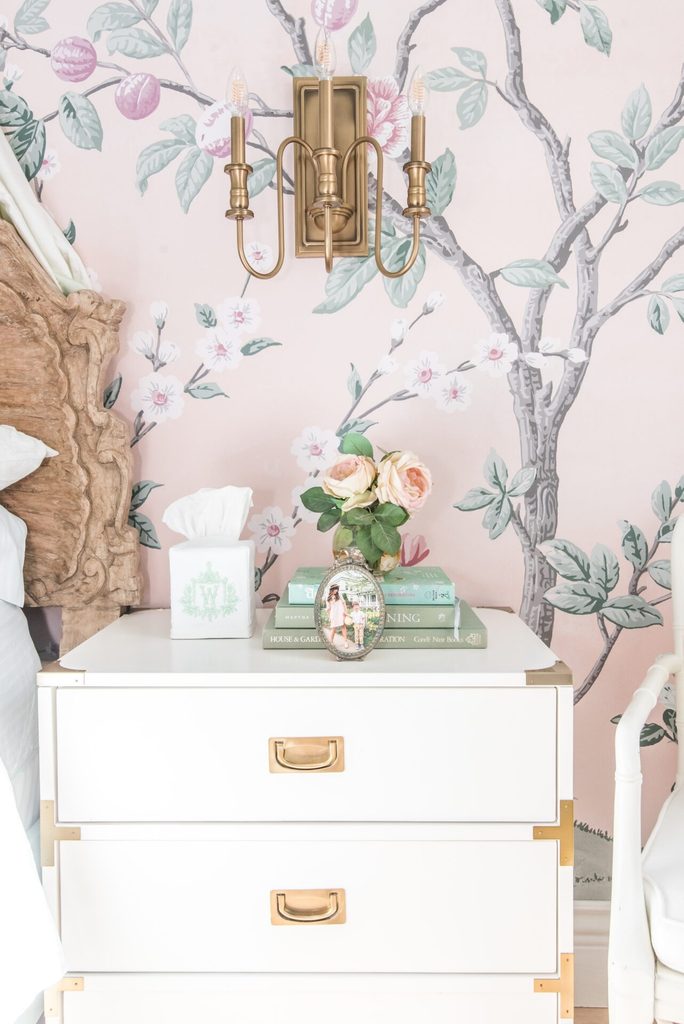
Three green books bring the leafy wallpaper colors down onto this white bedside cabinet. Their horizontal stack lifts a small vase of pink roses, connecting the tabletop to the flowers behind it.
A silver oval photograph frame sits in front without concealing every spine. To borrow the idea, start with books you already own and look for one color that appears elsewhere in your bedroom.
You do not need identical covers or a perfectly graduated set. Keep the stack stable and low enough that the vase is easy to lift.
Add a waterproof barrier beneath any flower vessel. This approach makes ordinary reading material part of the palette while keeping the display personal, accessible, and easy to change over time.
4. Tuck a Woven Basket Into an Open Nightstand
Credits: Casey Finn / The DIY Playbook
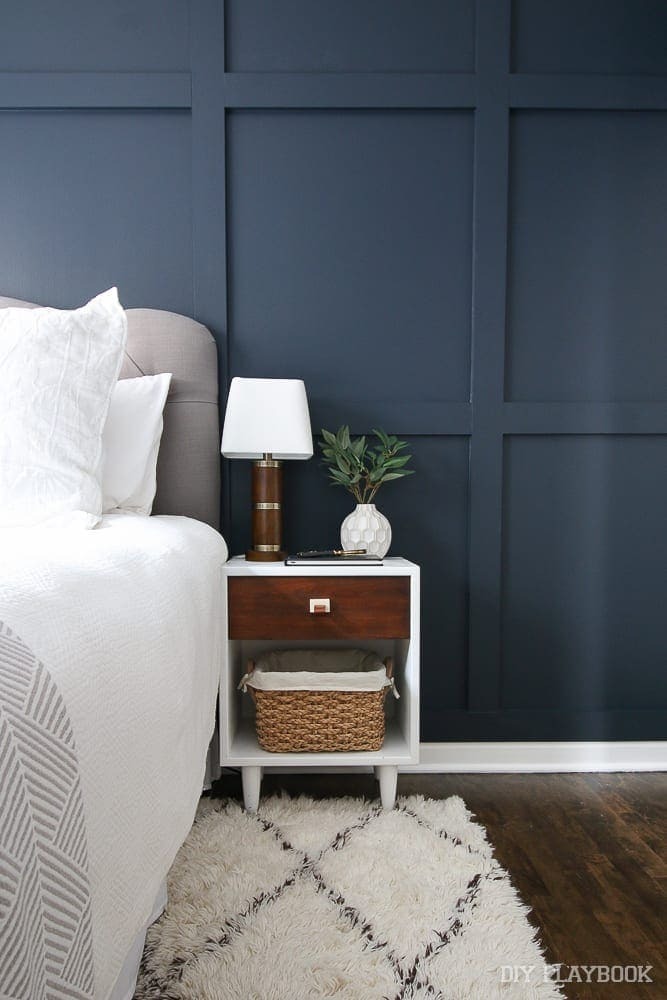
A woven basket fills the lower opening of this compact bedside table, giving the small piece useful hidden storage. Its pale fabric lining softens the edge, while the natural weave relates to the warm wooden drawer above.
The lamp and leafy vase keep the tabletop simple. Measure the shelf opening before choosing a basket, including the clearance needed to pull it out comfortably.
A container that fits too tightly will be frustrating in everyday use. Use it for light belongings you need nearby, such as a spare throw or current reading material.
Keep its contents below the rim so the arrangement stays tidy. The texture adds interest while the basket gives otherwise awkward open space a clear job to do.
5. Move the Light Above a Small Bedside Display
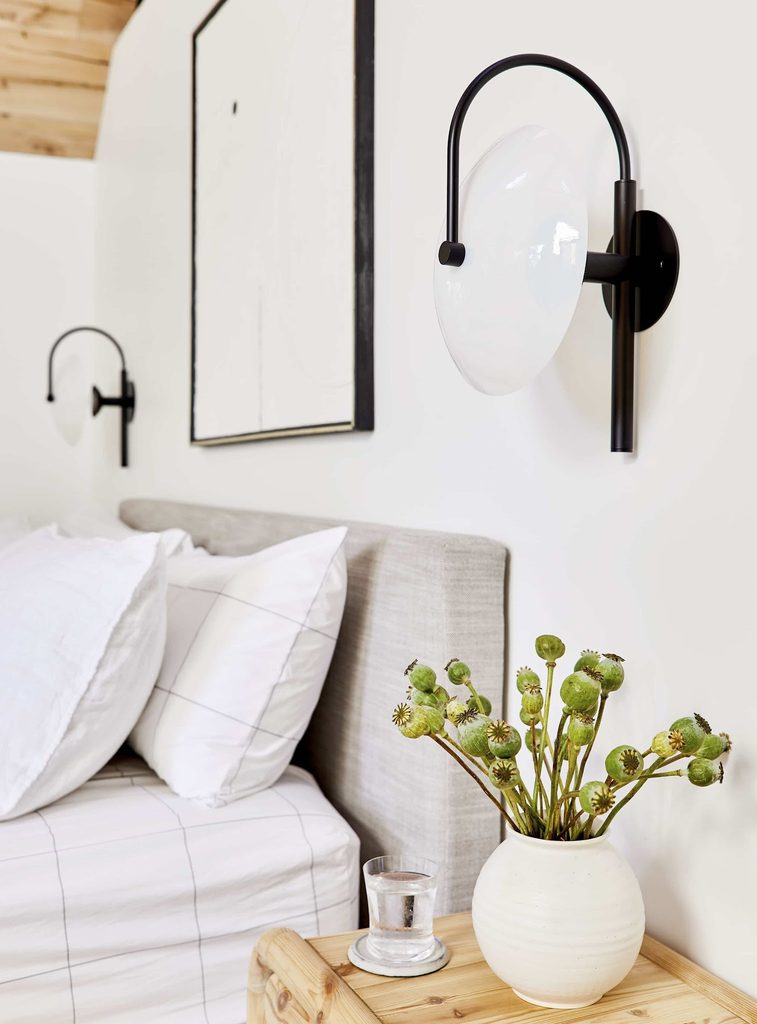
Credits: Sara Ligorria-Tramp / Emily Henderson
A wall mounted light leaves this wooden bedside surface available for a white vase and a water glass. The sculptural fixture adds height above the arrangement, so the objects below can remain low and simple.
Notice that the glass has its own coaster and sits separately from the vase. That small gap makes a practical object easy to reach without disturbing the stems.
If you already have suitable wall lighting, try removing the table lamp before adding more accessories. Keep whatever you use nightly closest to the bed, and reserve the outer corner for decoration.
Any hardwired fixture needs appropriate professional installation. The useful lesson is to plan lighting and tabletop space together instead of treating them as unrelated decisions.
6. Let Texture Carry a Pale Bedside Palette
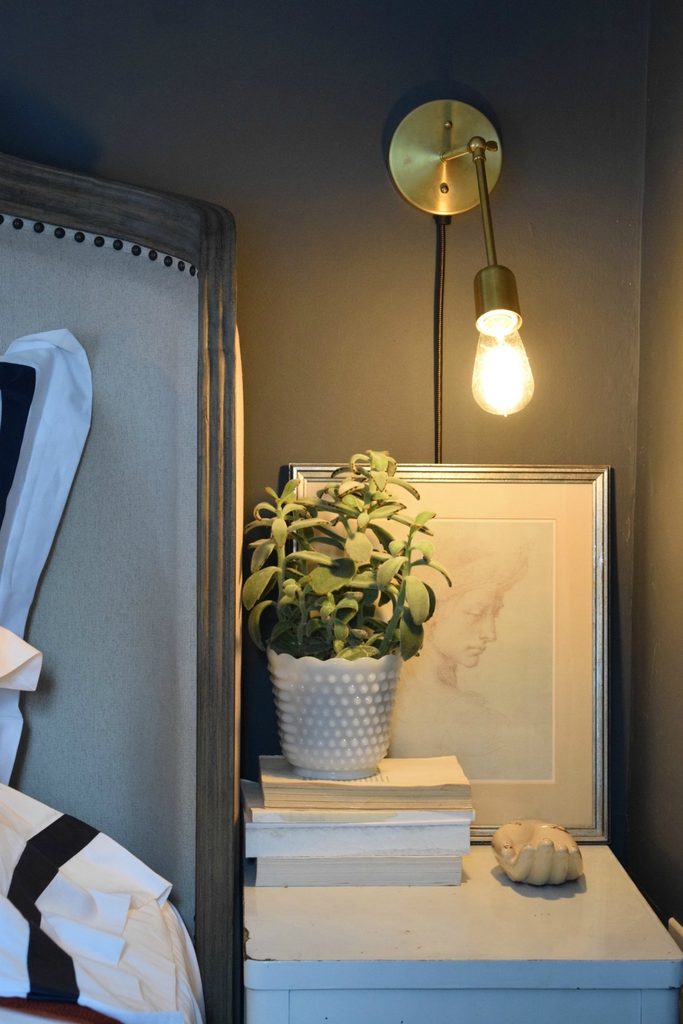
Credits: Brooke Christen / Nesting With Grace
A white hobnail planter, pale book pages, and a small rounded ornament create interest without adding many colors to this bedside table.
Their different surfaces are easy to appreciate against the dark wall, while the frame behind them gives the grouping height. The raised dots on the pot keep it from disappearing into the books underneath.
Try combining a smooth object, a textured vessel, and a paper or fabric surface within a similar palette. Use only pieces that fit your available space and leave a clear landing spot.
Protect books from moisture if you place a plant above them. The quiet colors help the textures stand out, making the little arrangement feel varied without competing with the bedding or artwork.
7. Add One Small Personal Photograph
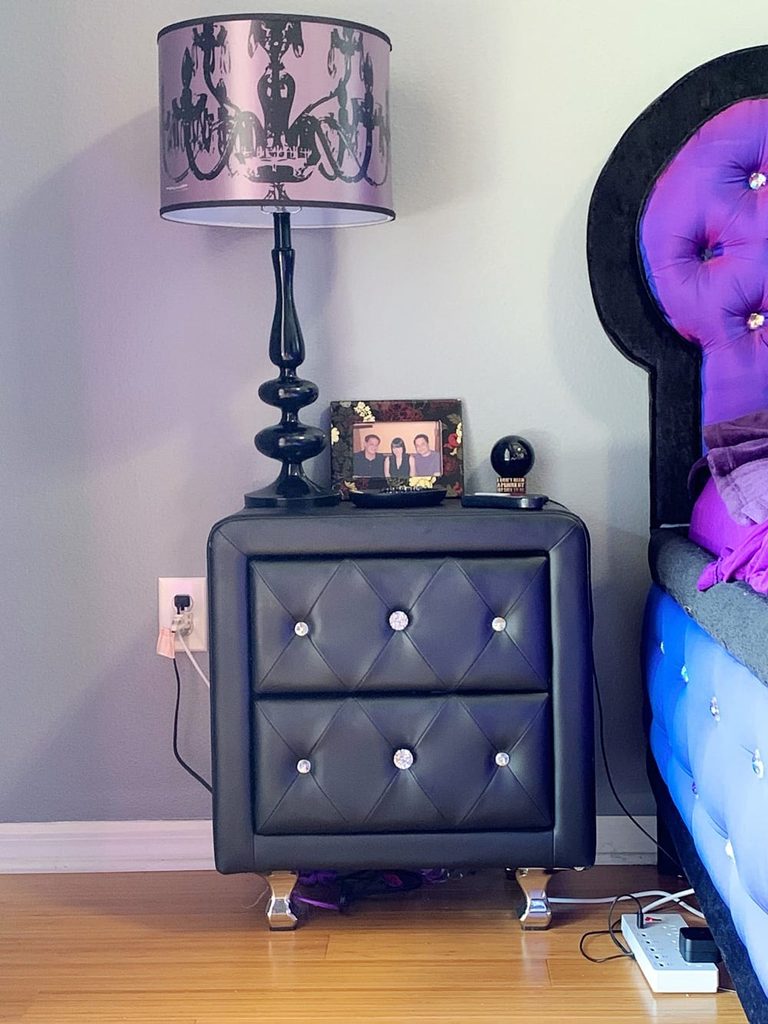
Credits: Phyrra
A small framed photograph sits beside the lamp on this dark bedside cabinet. Its compact size allows the lamp and nearby headboard to keep their strong silhouettes, while the picture adds a personal detail close to the bed.
This is an easy way to make a styled nightstand feel lived in without covering it with several frames. Choose one photograph you enjoy seeing and a frame that stands securely on the available surface.
Check the view from the pillow, not just from the doorway. Keep it clear of lamp heat, water and the objects you reach for most often.
A modest frame can provide enough personality when the furniture and lighting already have plenty of shape and decorative detail themselves.
8. Echo a Wall Pattern With One Small Accessory
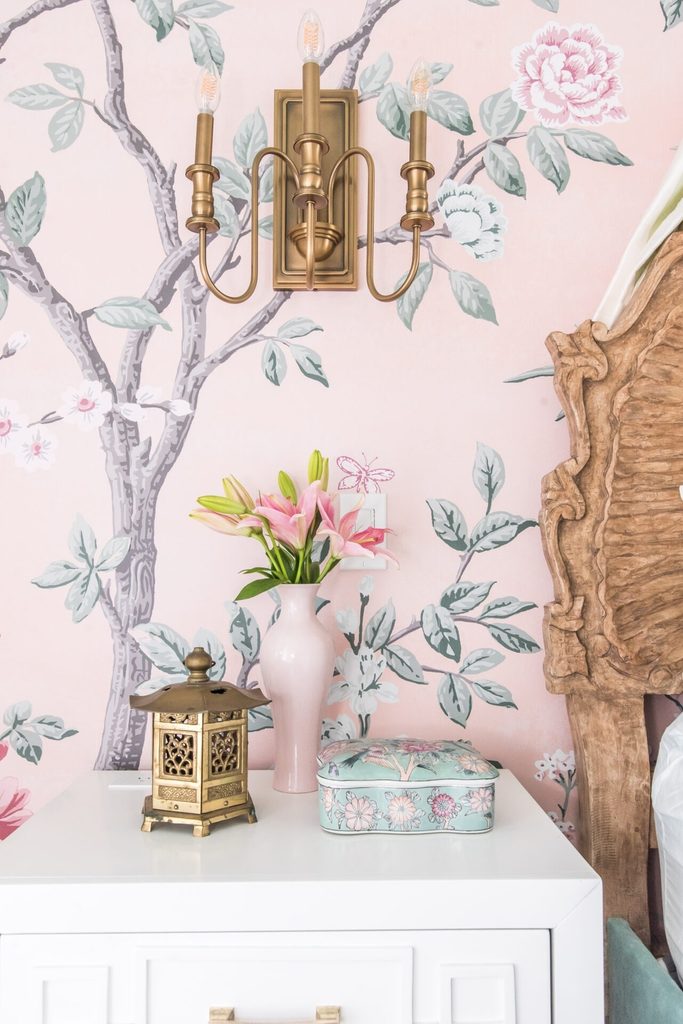
Credits: Ashley Wilson / At Home with Ashley
The floral box on this bedside table repeats the pink and green colors of the wallpaper. Its compact pattern connects the surface to the wall, while the plain pink vase gives the eye a calmer shape between the detailed pieces.
A brass lantern adds a different material without introducing another strong color. To create this relationship, choose one small accessory with a motif or palette already present in your room.
It does not need to match the wallpaper exactly. Balance it with simpler objects so their outlines remain easy to see.
Keep a decorative lantern unlit near bedding, and choose flowers appropriate for your household. A modest patterned piece can tie together the corner without requiring a whole matching collection.
9. Match the Lamps and Vary the Smaller Accents
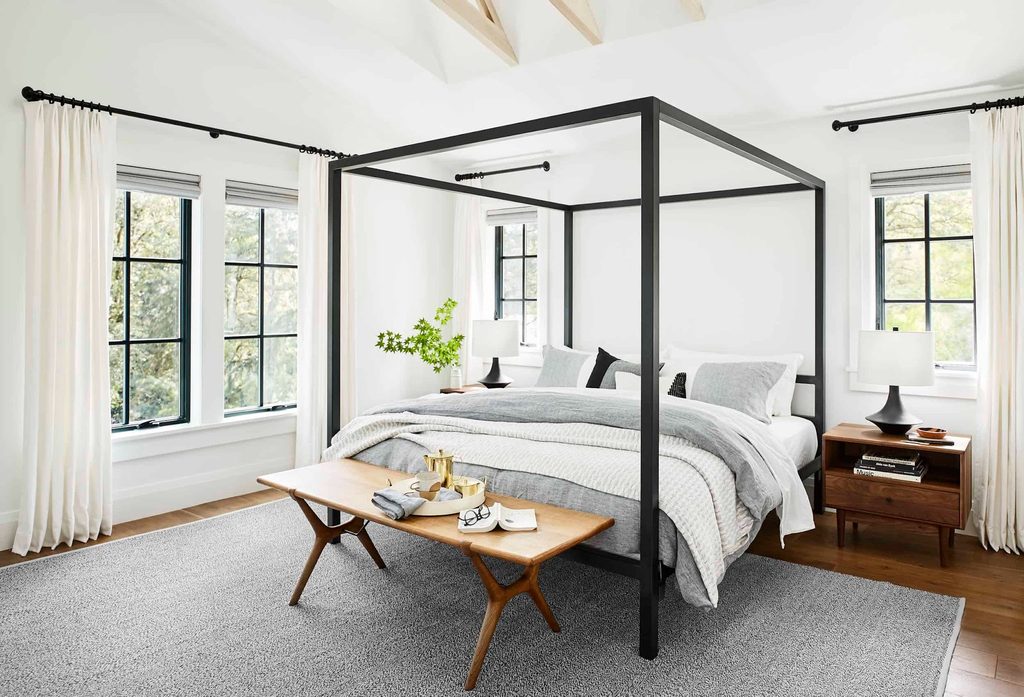
Credits: Sara Tramp / Emily Henderson
Matching black lamps give the two wooden nightstands a balanced outline in this bright bedroom. The smaller accessories differ: leafy branches rise on one side, while a shallow bowl and books keep the other quieter.
That combination allows each sleeper to use the surface differently without losing the shared visual rhythm. Begin with lighting that has a similar height and shade size on both sides.
Then choose accessories according to each person’s routine instead of copying every object. Keep the overall amount of decoration comparable, even if the exact shapes differ.
This approach is especially useful when one person wants flowers and the other needs more open space. The bedside pair can feel coordinated while still supporting two different habits.
10. Leave Space Around One Sculptural Lamp
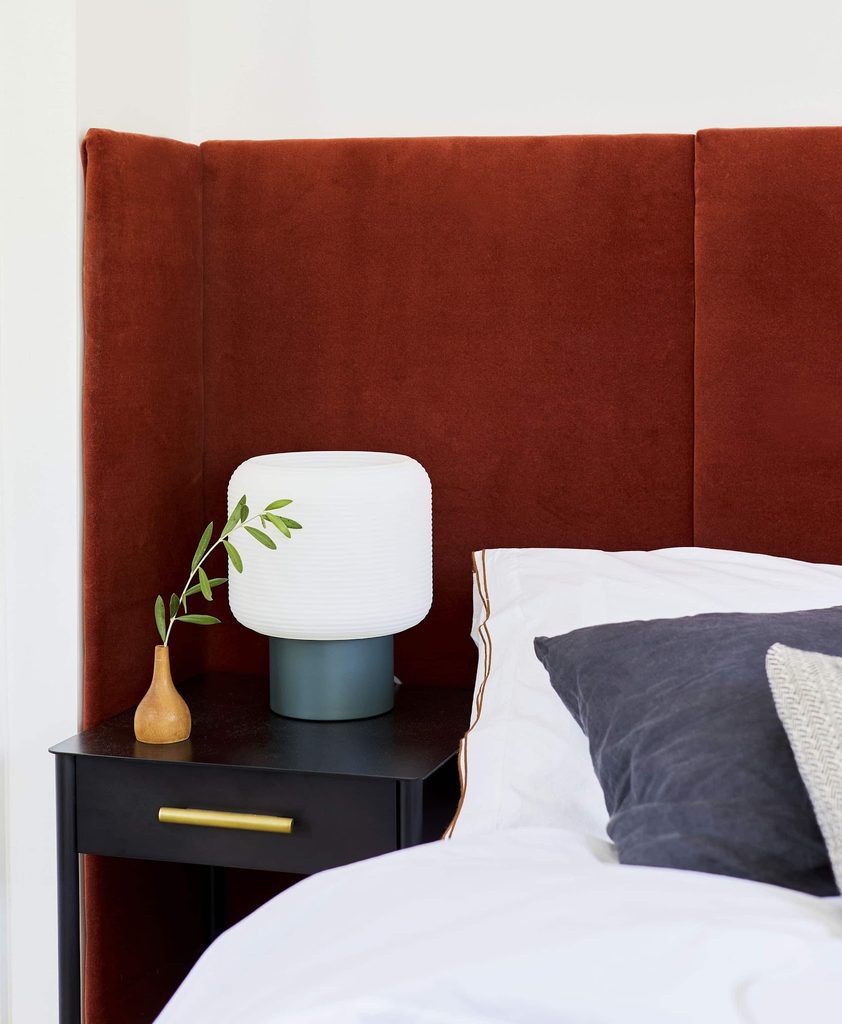
Credits: Sara Ligorria-Tramp / Emily Bowser for Emily Henderson
A rounded lamp with a white ribbed shade is the main object on this compact black nightstand. Beside it, a tiny ochre vase holds one leafy stem, adding a lighter outline without competing with the lamp’s substantial shape.
The rest of the surface stays visible. This is a useful approach when your lighting already has enough character to serve as decoration.
Start by placing the lamp where its switch is comfortable to reach. Add only one smaller object, then check that you still have room for a glass or phone.
Relate the smaller piece to a color or material nearby. The contrast between a solid lamp and an airy stem creates interest without requiring a crowded collection beside the bed.
11. Add a Small Metallic Accent Beside a Pale Frame
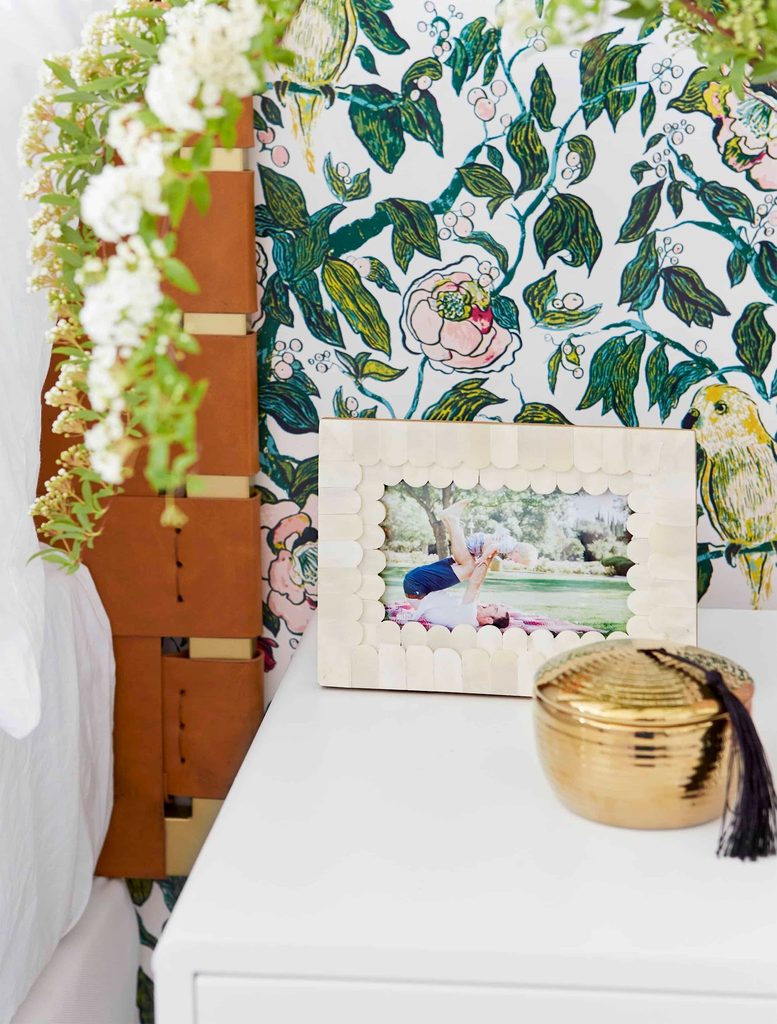
Credits: Sara Tramp / Emily Henderson
A gold toned lidded candle introduces a reflective surface beside the pale scalloped photograph frame. Its rounded shape and dark tassel stand out against the white tabletop, while the broad frame remains the larger decorative element.
The arrangement shows how a little shine can add variety without needing several metal accessories. Try one compact brass, gold, or silver toned piece that relates to existing hardware in the room.
Leave enough space around it to appreciate its outline. Keep the candle closed and unlit in a position this close to bedding and flowers.
A similar lidded vessel could also hold small belongings if designed for storage. The effect comes from contrasting finishes and proportions, rather than accumulating objects across the nightstand.
12. Give a Favorite Collectible Its Own Space
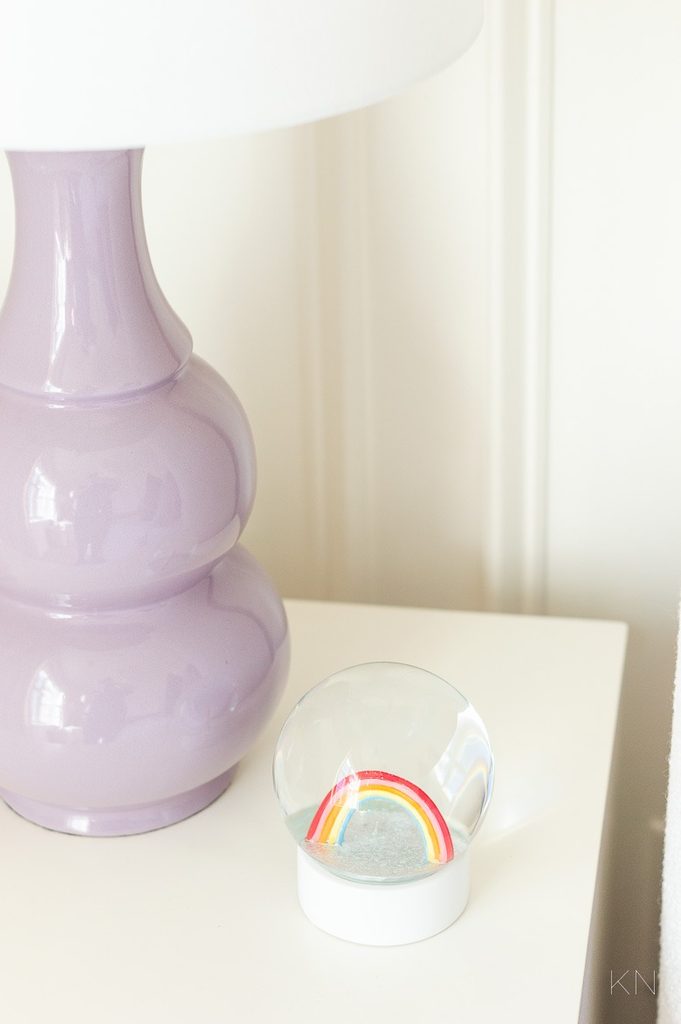
Credits: Kelley Nan
A small rainbow snow globe sits beside the lavender lamp on this pale nightstand. The clear sphere keeps the display light, while its bright rainbow adds a playful detail against the quieter colors around it.
Because there are few objects nearby, the little collectible is easy to notice. Choose something that has meaning for you rather than adding several pieces only to fill the surface.
Check that its base is stable and place it away from the edge or the sweep of bedding. A sturdy ornament can work where fragile glass is unsuitable.
Leave room for the items you use every evening. Giving one favorite possession a clear place often feels more personal than arranging a whole collection beside you.
13. Keep a Decorative Coaster Stack Within Reach
Credits: Emily Schmidt / Gathered Living
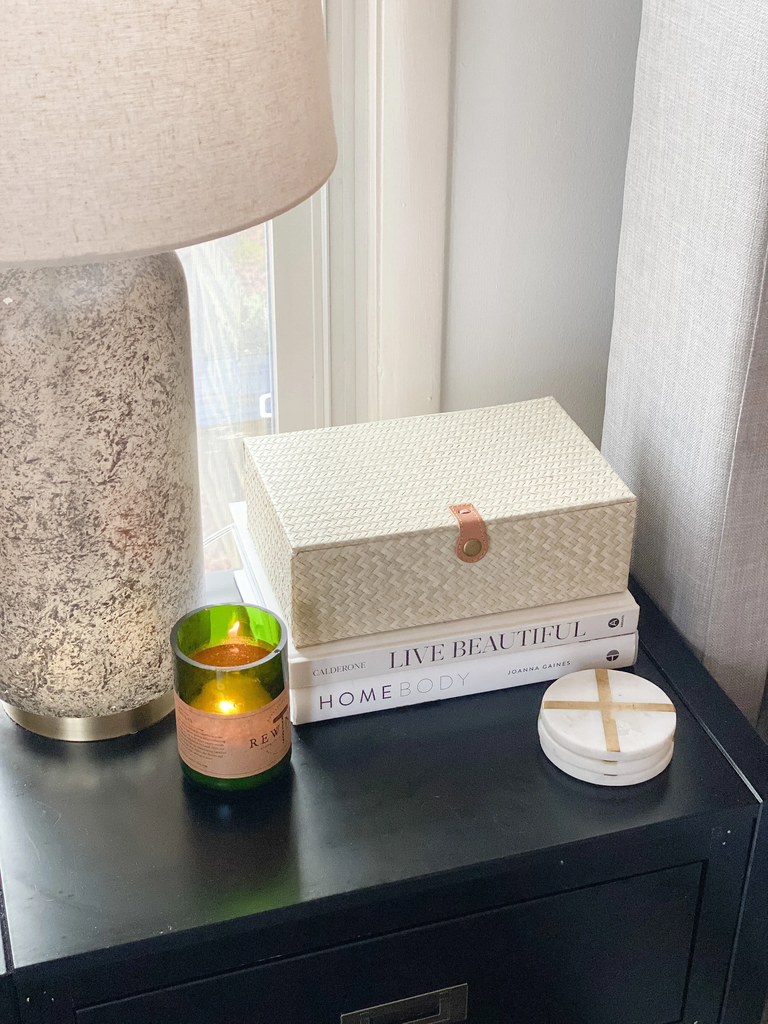
A short stack of round white coasters with gold details sits at the front of this dark bedside table. Their pale color makes them easy to find, while the metallic lines relate to the lamp base and nearby candle vessel.
They provide a useful finishing detail beside the woven box and books. Choose coasters large enough for the glasses or mugs you actually use, with a surface and backing suited to your furniture.
Keep them in an accessible spot rather than hiding them beneath decorative objects. Return extras to the stack so they do not spread across the table.
This small habit protects the surface while letting an ordinary practical accessory contribute its own pattern to the overall bedside arrangement.
14. Give Everyday Jewelry a Small Decorative Dish
Credits: Driven by Decor
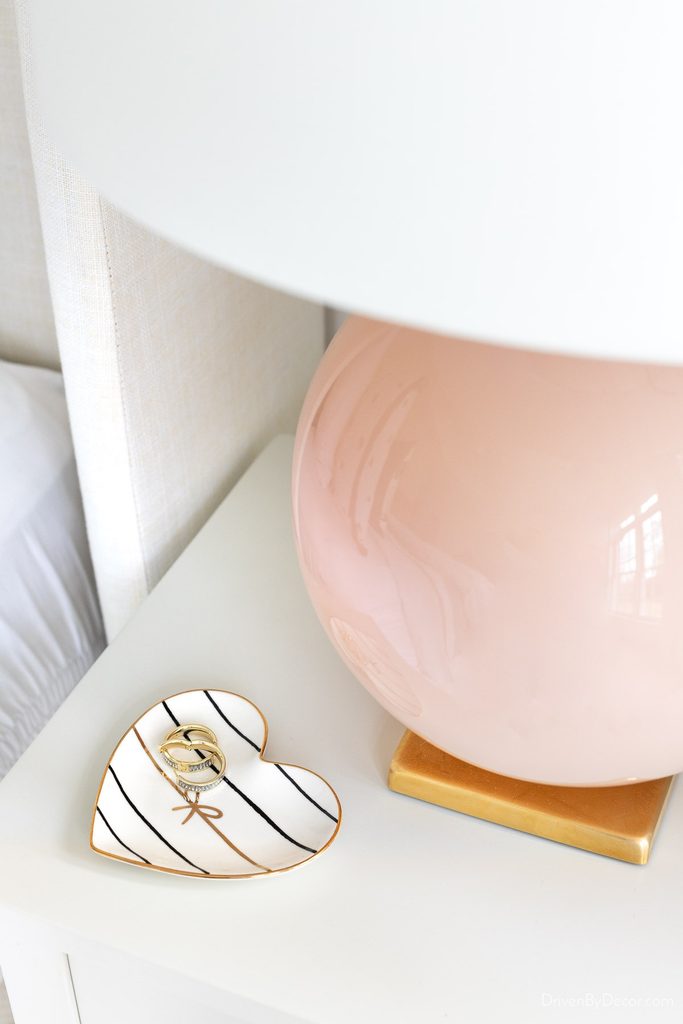
A heart shaped dish creates a defined spot for jewelry beside the pink bedside lamp. Its striped pattern and fine metallic edge add detail, but the shallow size keeps it from becoming the main object on the nightstand.
This is useful for the few pieces you remove regularly, rather than storing an entire collection in the open. Choose a dish with a smooth interior and enough room for items to sit separately.
Place it where it will not be swept off by bedding or a reaching hand. Leave valuable or rarely used pieces in appropriate secure storage.
A small tray or bowl can serve the same purpose. The decoration works because it also gives an everyday habit a clear home.
15. Cover a Tissue Box With a Woven Sleeve
Credits: Driven by Decor
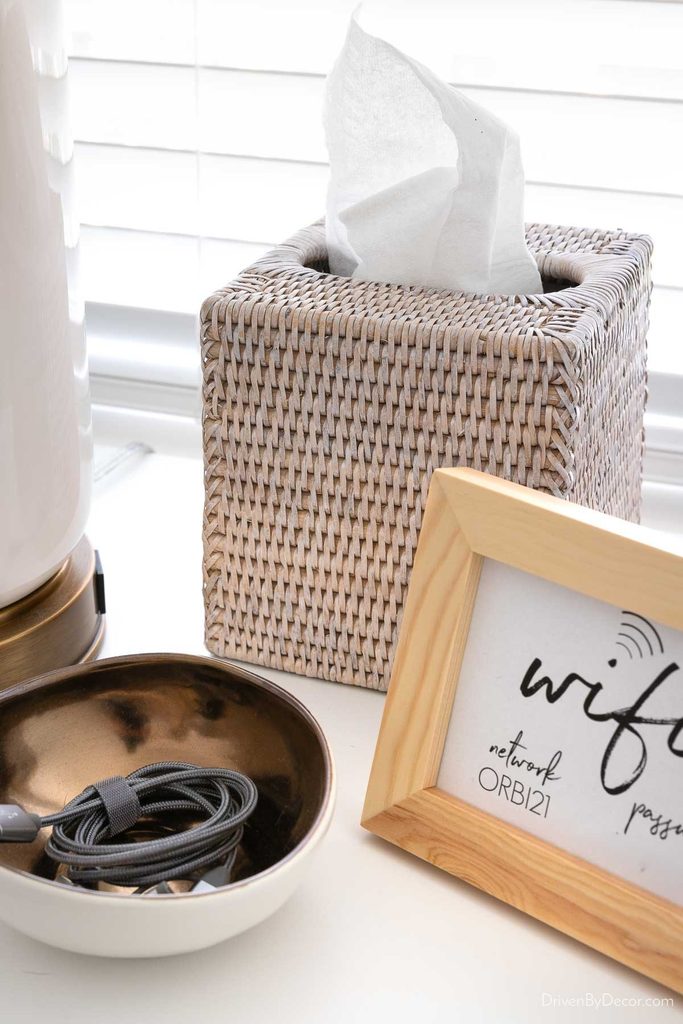
A pale woven cover turns an ordinary tissue box into a textured part of this nightstand. The simple square shape sits behind a small frame and bowl, keeping the tissues available without leaving bright packaging in view.
Its natural surface contrasts gently with the smooth lamp base and tabletop. Measure your usual tissue box before choosing a cover so it fits without needing to be forced into place.
Check that tissues pull through easily and that the cover can be cleaned. Position it within reach without blocking the lamp switch or other essentials.
This is a small change with a practical purpose: an object you already need can join the bedroom’s materials instead of adding another decorative item to maintain.
16. Choose a Small Planter With a Playful Shape
Credits: Laura Gummerman and Elsie Larson / A Beautiful Mess
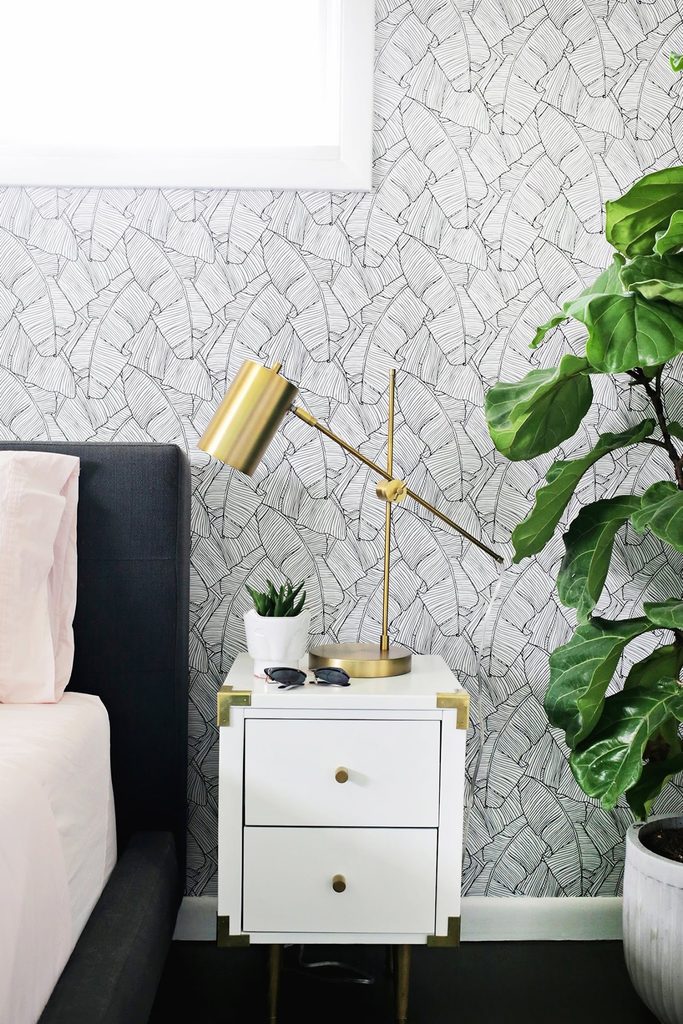
A white face shaped planter adds a playful detail beside the brass task lamp on this compact nightstand. The succulent’s pointed leaves contrast with the smooth pot, while the pale finish relates to the cabinet below.
Its small footprint leaves space at the front for sunglasses and other daily items. Look for a planter whose shape you enjoy even when the plant is modest in size.
Choose greenery suited to the actual light in your bedroom and your ability to care for it. Use a watertight outer container and remove the plant for watering when necessary.
Keep leaves away from the lamp’s heat. A single characterful pot can add personality without requiring several plants or a large arrangement of foliage.
17. Build a Simple Group With Three Different Heights
Credits: Casey Finn / The DIY Playbook
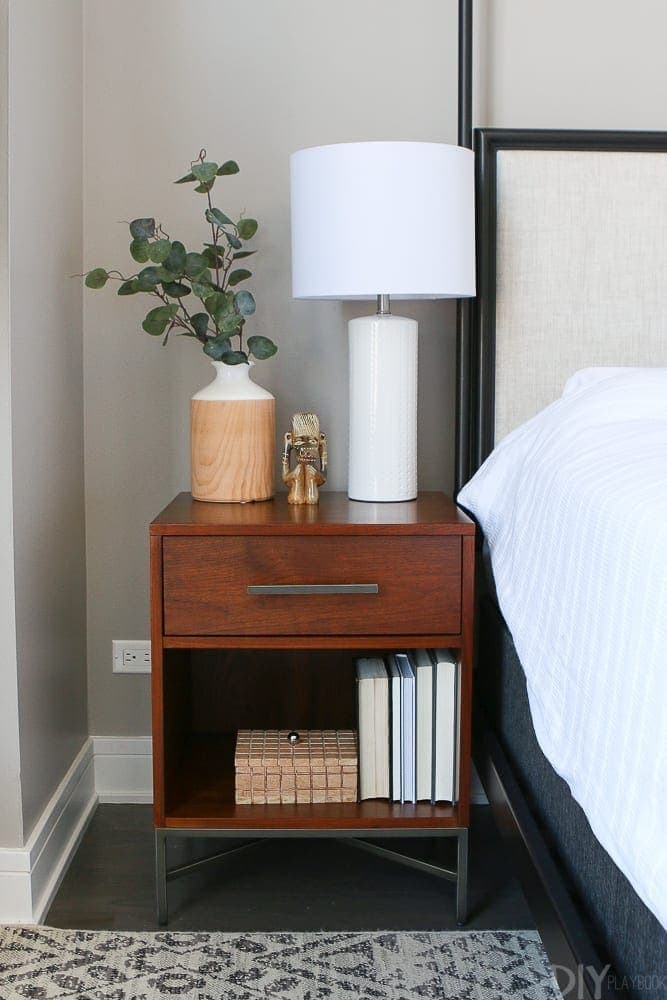
The tall white lamp, leafy vase, and small gold ornament create three clear levels on this wooden nightstand. Their outlines keep the tabletop interesting even though the grouping is limited to a few pieces.
The vase shares the furniture’s warm tones, and the ornament supplies a small reflective highlight between the larger objects. Start with the lamp you need, then add one medium object and one low piece.
Check the arrangement from bed so the smaller item does not disappear behind the others. Keep the front of the surface open for practical use.
You can make this work with possessions you already have. The contrast in height matters more than buying a coordinated set of decorative accessories for the room.
18. Frame a Useful Welcome Note for Guests
Credits: Driven by Decor
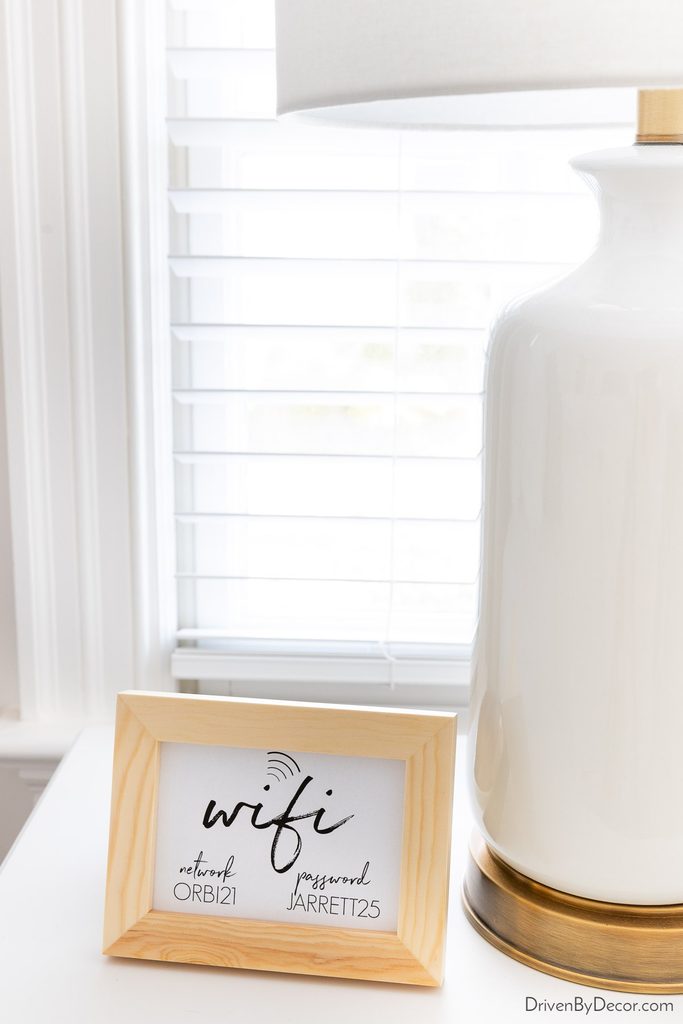
A small wooden frame places useful guest information beside the bedside lamp. The light frame feels decorative while keeping the message easy to find, so the nightstand supports visitors rather than serving only as a display.
You could use a short welcome note or simple house guidance suited to your own guest room. Keep the text brief and readable without requiring someone to move the lamp.
The source photograph uses illustrative network information, which the creator says is not a real password. Do not publish your own access details in shared photographs.
Leave space nearby for a visitor’s phone, glasses and book. A thoughtful practical addition can make a guest nightstand feel more considered than another purely decorative object would.
19. Organize the Drawer to Keep the Top Clear
Credits: Driven by Decor
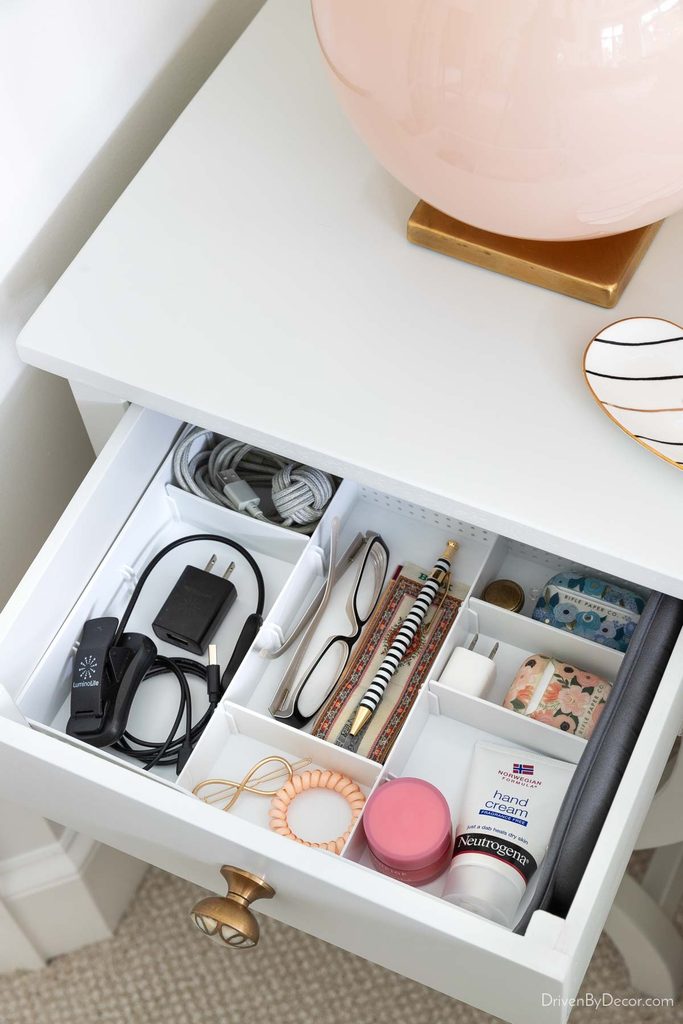
A shallow divided tray separates small bedside belongings inside this nightstand drawer. Glasses, a pen, cords and personal care items each have a visible place, leaving the top available for a lamp and a small dish.
The arrangement shows how the hidden part of the furniture supports the visible styling. Measure the drawer before choosing an organizer and check that it still closes easily with the tallest item inside.
Group objects by how you use them rather than trying to fill every compartment. Keep liquids securely closed and avoid crowding chargers or cables.
A tidy drawer makes it easier to return essentials after use, so the nightstand can stay practical without accumulating a changing pile of small objects on top.
20. Hide Remotes in a Decorative Tabletop Box
Credits: Emily Schmidt / Gathered Living
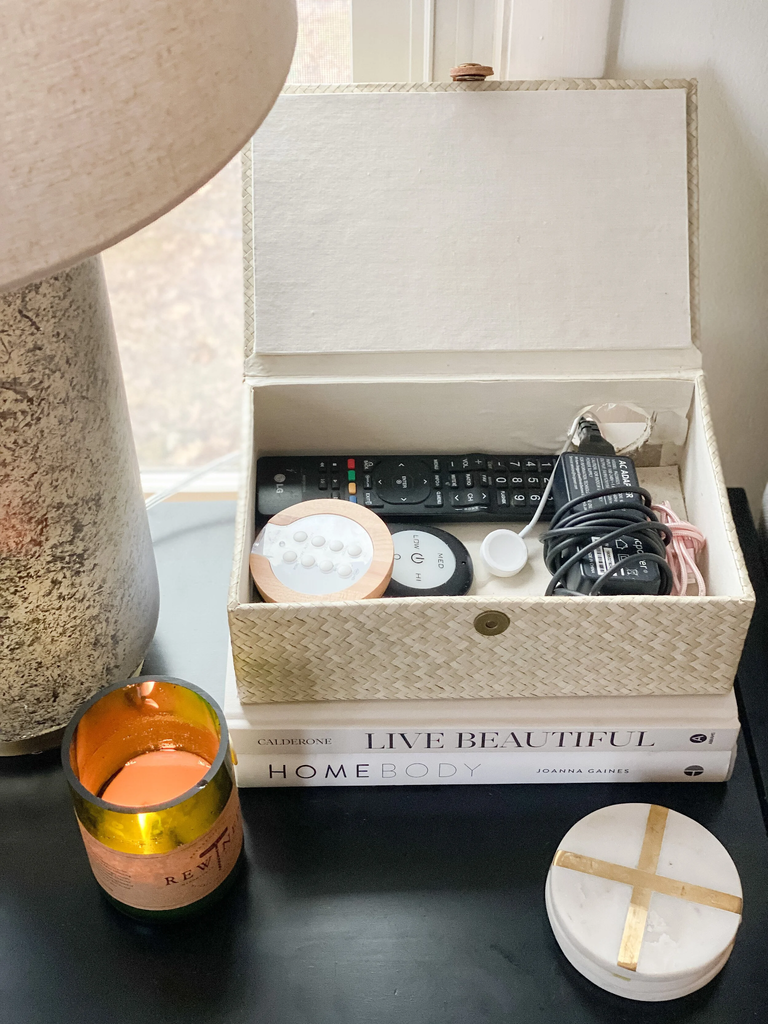
An open woven box reveals the remotes and loose cords responsible for cluttering a bedside table. When the lid closes, its pale texture becomes part of the display beside the lamp and stacked books.
Choose a box that fits the objects you actually use, with a lid that opens without knocking into nearby accessories. Keep it close enough to reach from bed and avoid burying the everyday remote underneath rarely used items.
Store only unplugged cords and inactive accessories inside; charging devices and power adapters need appropriate ventilation. The nearby candle is best left unlit beside this grouping.
A practical container can make a nightstand look calmer while keeping necessary controls together instead of hiding them in several different places.