
A bedroom wall can feel unfinished even when the furniture and bedding are in place, but filling every blank spot isn’t the only answer.
These Bedroom Wall Decor Ideas range from subtle finishes to expressive displays, so you can choose a treatment that suits the wall and the room’s existing details.
Consider painted vertical boards for a strong backdrop, quiet picture frame molding for gentle structure, or a delicate row of moon shapes when space is limited.
The examples also show how artwork, wallpaper, and a soft faux limewash finish can add interest without making every wall compete.
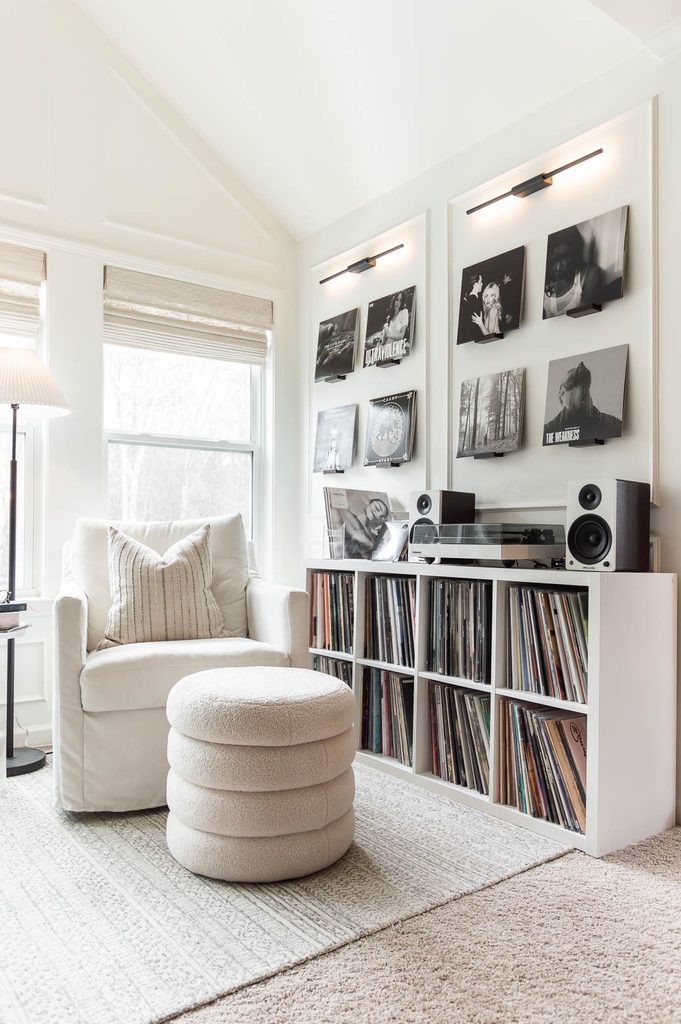
1. Arrange Album Covers on Individual Display Ledges
Credits: Kelley Nan
Album sleeves become an orderly wall display when each has its own small support. Here, eight covers sit in two balanced groups above a record console, with narrow lights emphasizing their rectangular arrangement.
The mostly monochrome artwork keeps the collection connected, even though the subjects differ. Choose ledges that support sleeves without bending their edges, and protect valuable records from direct sunlight or damp conditions.
Mark the complete layout with paper templates before installing the hardware. Keep gaps consistent enough that changing one cover will not disrupt the overall rhythm.
This approach works particularly well in a bedroom listening corner because the decoration reflects an activity already enjoyed there. Leave the console accessible so choosing music remains comfortable and simple.
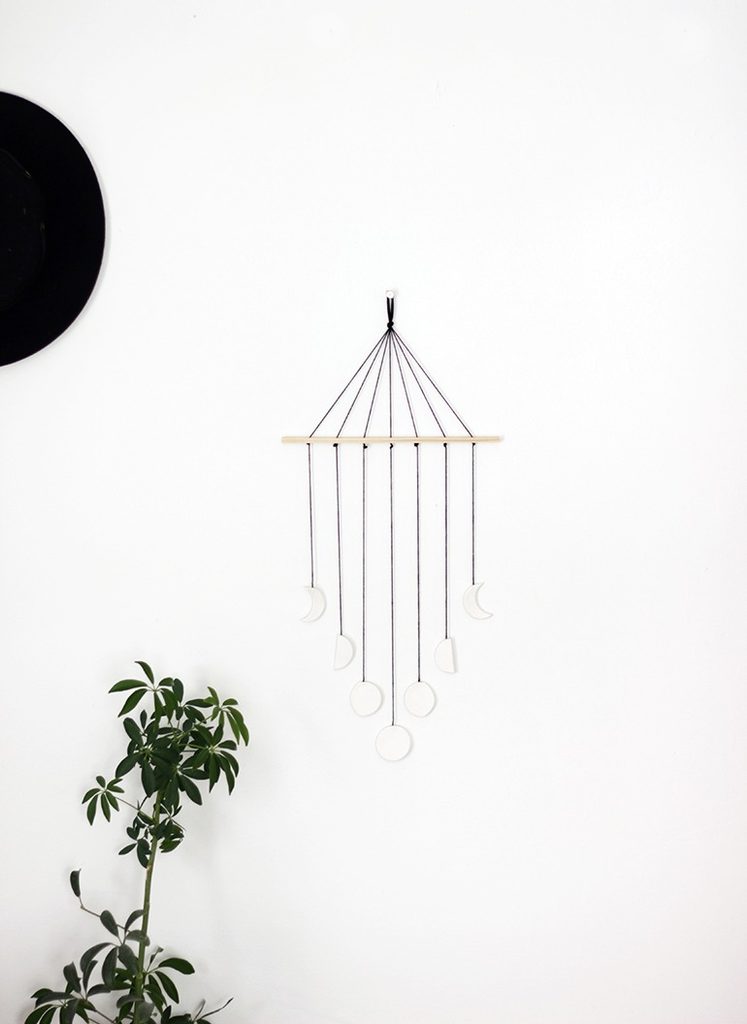
2. Hang a Delicate Row of Moon Shapes
Credits: Caitlin / The Merrythought
Small pale moon shapes give this simple white wall a quiet focal point without covering much surface. Suspended from dark strings, the crescents and circles descend toward the middle, creating a balanced shape beneath a slim wooden bar.
The contrast comes mainly from the strings and shadows, so nearby greenery can remain the stronger color. Consider a mobile like this for a narrow bedroom wall where a large frame would feel crowded.
Check its full hanging length before deciding on placement. Keep cords and small components well away from children, pets, and sleeping areas where they could be reached or tangled.
Use secure hardware and leave enough surrounding space for the individual shapes to remain readable against their simple background.
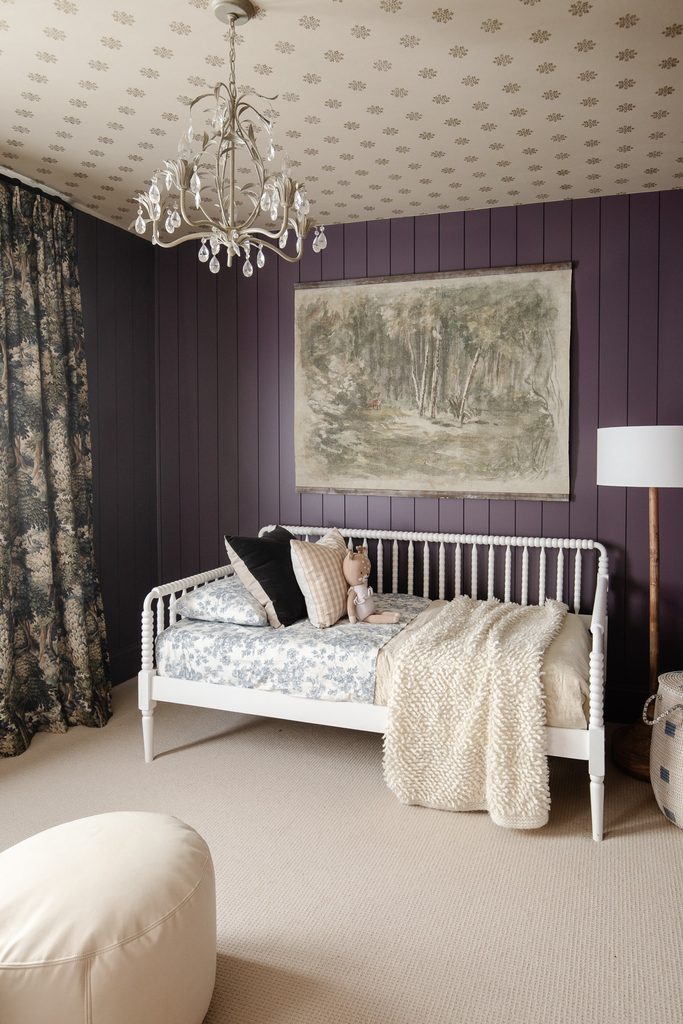
3. Give Plain Walls Rhythm With Painted Vertical Boards
Credits: Chris Loves Julia
Deep plum paint makes the vertical boards in this bedroom feel like a complete decorative surface. Their repeated seams bring structure behind the white spindle daybed, while a large landscape hanging introduces a softer shape and muted woodland colors.
The patterned ceiling remains lighter, keeping the room from feeling uniformly dark. If you are considering paneling, plan board widths around corners, sockets, and the furniture that will sit in front.
Try the paint on a sample panel so you can judge shadows along the joints. One generous artwork can be enough once the wall has this much detail.
Choose a finish suited to everyday cleaning, and let lighter bedding provide a clear visual break between the dark backdrop and bed.
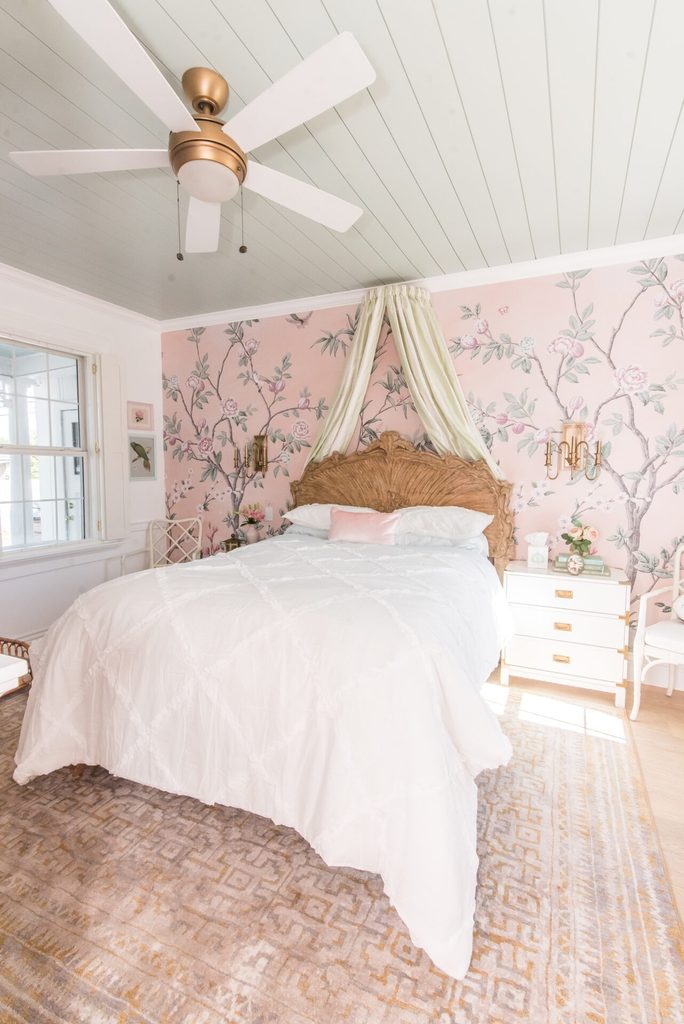
4. Use a Chinoiserie Mural Behind the Bed
Credits: Ashley Wilson / At Home with Ashley
Branches, flowers, and small birds spread across this pink bedroom wall, giving the bed a decorative backdrop without a separate gallery.
The mural’s pale greens connect with the ceiling, while white bedding leaves the delicate illustration visible around the carved wooden headboard. Notice how the branches continue beyond the bed instead of forming a small isolated picture.
Measure the complete wall before ordering a mural, including doors, windows, and areas hidden behind furniture. Ask for a scaled preview when available so important details do not disappear behind the headboard.
Test a sample beside your bedding in daylight and evening light. A restrained palette allows a detailed pattern to feel gentle, especially when neighboring walls and larger textiles stay relatively plain.
5. Outline the Walls With Quiet Picture Frame Molding
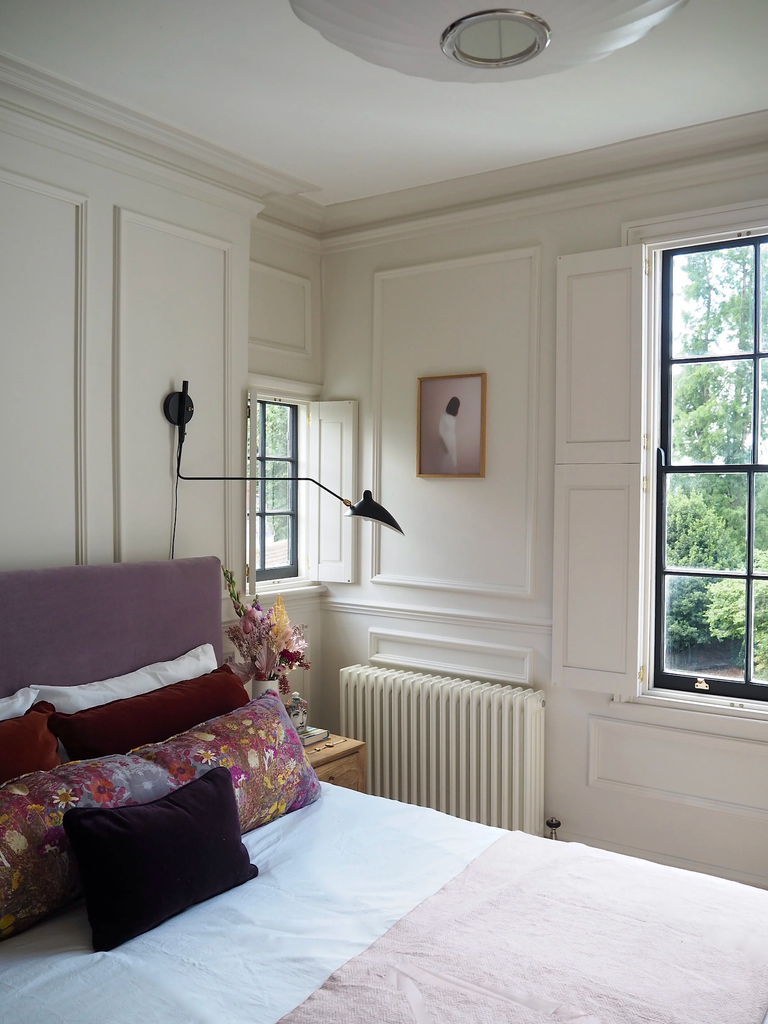
Credits: Melanie Lissack Interiors
Slim raised rectangles add detail to these pale bedroom walls while keeping their surface calm. The molding follows the room around windows and above the radiator, creating a consistent architectural pattern rather than a collection of separate decorations.
A small portrait sits inside one panel, showing that artwork can remain modest when the wall already has structure. Sketch the entire elevation before fixing trim, allowing for sockets, curtains, and furniture heights.
Consistent margins usually matter more than making every rectangle identical. Painting the molding and background together emphasizes shadow instead of color contrast.
Choose a profile that suits the room’s existing trim, and check door and shutter movement. This treatment can make an ordinary wall feel considered without adding clutter.
6. Let a Soft Faux Limewash Finish Supply Texture
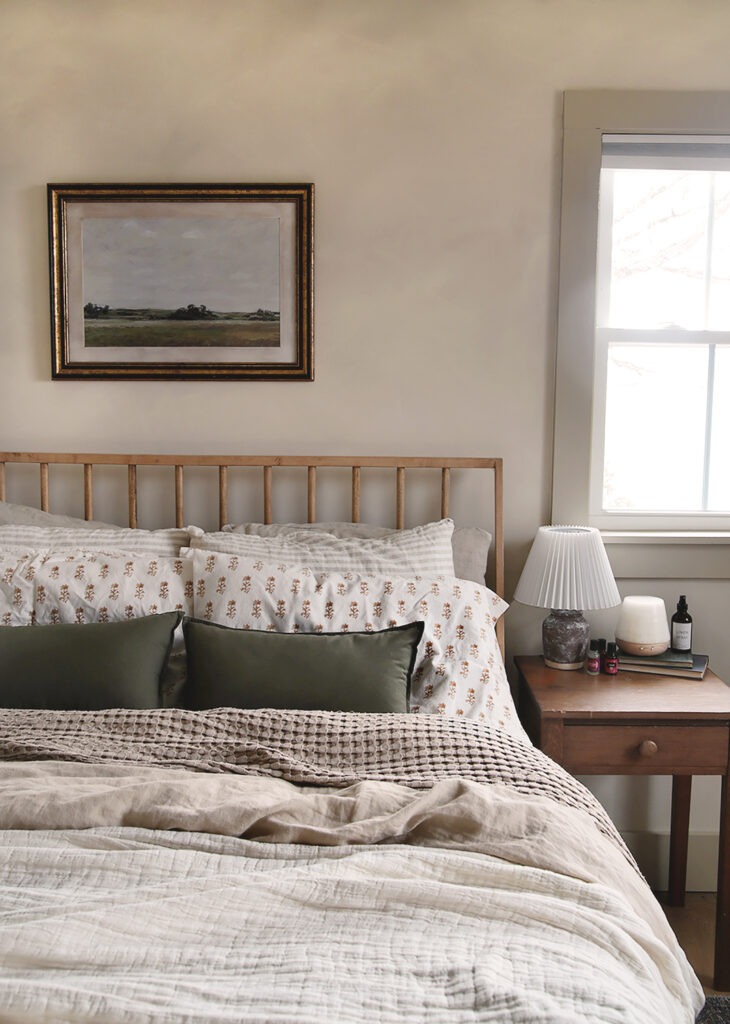
Credits: Manda / The Merrythought
A softly varied wall finish brings movement to this neutral bedroom without relying on a bold pattern. Behind the wooden headboard, cloudy beige tones create an uneven, painterly surface that complements the layered linen and small landscape artwork.
The homeowner identifies the treatment as faux limewash, so its appearance should not be mistaken for a specific mineral product. Try your chosen technique on a large sample board before committing to a whole wall.
View it from the doorway and beside the bed, where the variations will read differently. Keep brush movements and tonal contrast restrained if you want a similar gentle effect.
Simple wood furniture and one framed picture leave enough exposed wall for the finish itself to remain visible.
7. Refresh a Thrifted Mirror With a Soft Painted Frame
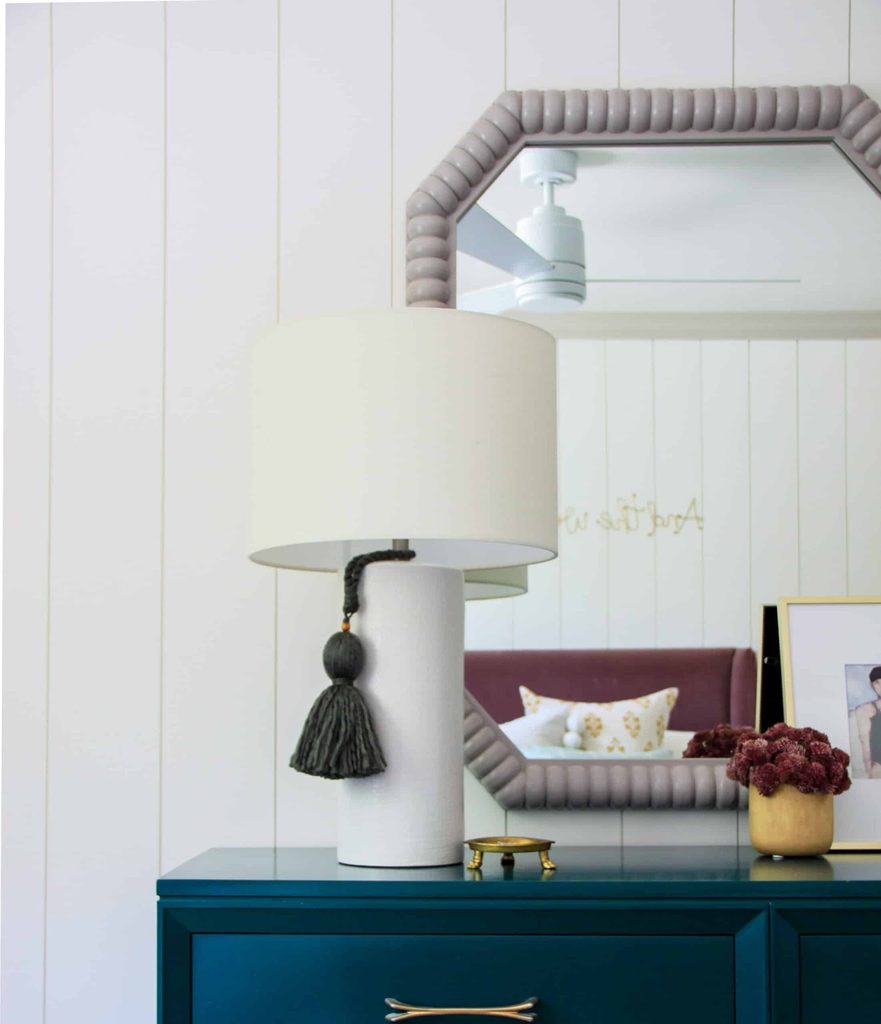
Credits: Wildflower Home Interiors
A lavender frame makes this bedroom mirror feel connected to the surrounding colors without needing matching furniture. Its ridged border and clipped corners provide decorative interest against the straight white wall boards.
The reflection brings the bed and its berry headboard into the dresser arrangement, adding another view of the room. When choosing a mirror, consider what it will reflect from the doorway and from bed before deciding on height.
A secondhand frame can be refreshed with preparation and paint appropriate to its material. Protect the glass while working, and use fixings rated for the finished mirror’s weight.
Leave part of the dresser clear so the frame stays visible. A restrained display underneath gives the painted outline room to register.
8. Paint a Scalloped Edge Around a Bedroom Corner
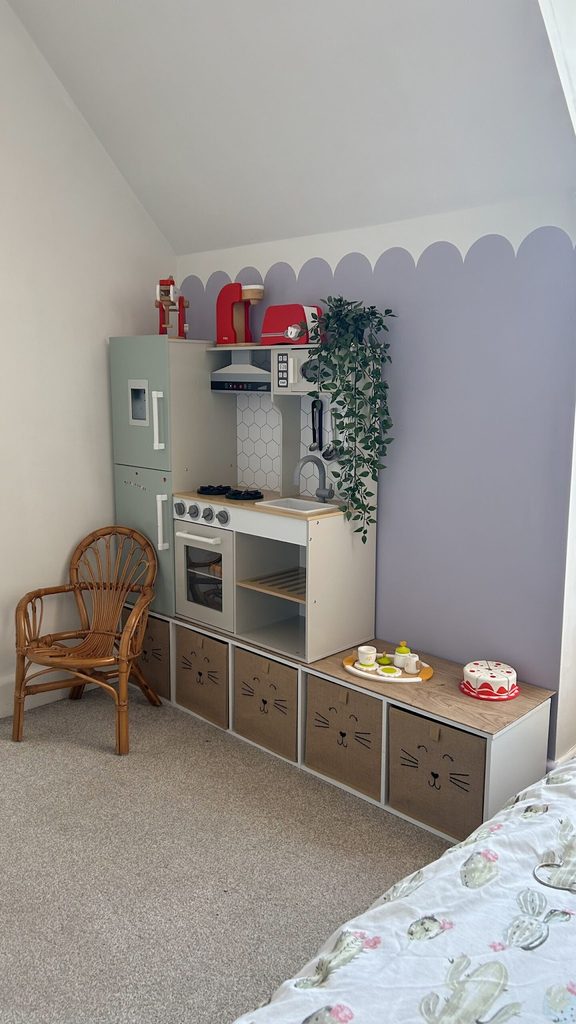
Credits: Lianne Hempsall / Makes, Bakes and Decor
A row of rounded scallops turns the boundary between lavender and white into the decoration. The repeated curves continue above a play kitchen and storage bench, making the wall feel finished even where no pictures hang.
This is a useful way to introduce pattern while keeping the rest of a bedroom flexible. Decide on the boundary height with furniture in place, then test the scallop size using paper shapes.
Carry the spacing carefully through corners so the rhythm looks intentional. A pale upper section leaves room for the ceiling to feel separate, while the colored lower area relates to everyday furniture.
Use paint suitable for the wall and allow it to cure before moving objects back against the finished surface.
9. Turn a Jewelry Collection Into a Framed Wall Display
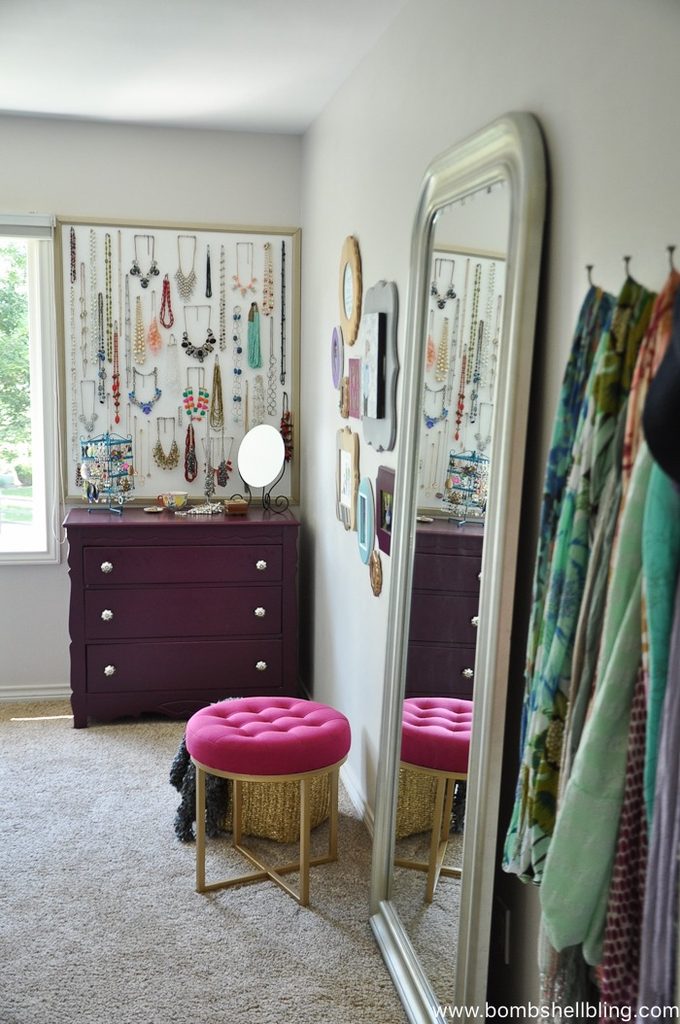
Credits: Sarah Westover McKenna / Bombshell Bling
Necklaces create their own pattern when displayed against a pale background above a dresser. In this bedroom, a large gold edged frame defines the collection, while the purple drawers below supply a solid block of color.
The homeowner reused an existing cork surface, showing how practical storage can also become personal decoration. Adapt the idea to pieces you wear frequently, arranging longer necklaces where they can hang without tangling.
Use fittings that suit both the board and the weight of each item. Keep delicate or valuable jewelry protected when open display would expose it to sunlight, moisture, or dust.
Leave space between groups so individual shapes stay visible. Editing the collection regularly keeps this useful wall from becoming visually crowded.
10. Choose Monochrome Botanical Wallpaper for One Wall
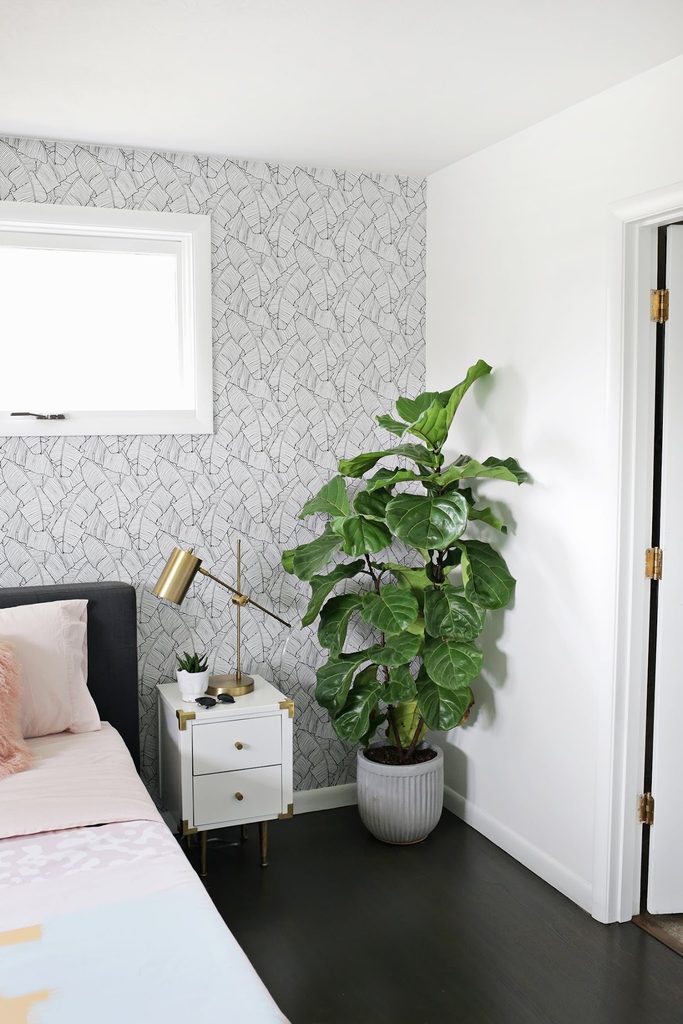
Credits: Laura Gummerman and Elsie Larson / A Beautiful Mess
Fine black leaf outlines give this bedroom wall plenty of pattern without adding another strong color. The white background relates to the nearby door trim and nightstand, while the dark headboard makes a clear boundary against the busy print.
A living plant beside the bed echoes the botanical shapes in a different scale. Test wallpaper samples where they will meet existing woodwork, and check the repeat before calculating the quantity needed.
A restrained color palette can support detailed imagery, but leave neighboring walls quieter if the room is compact. Keep accessories simple enough that their outlines do not disappear into the pattern.
Here, a brass lamp and pink bedding add warmth while allowing the illustrated leaves to remain the focus.
11. Use Wire Lettering for a Personal Message
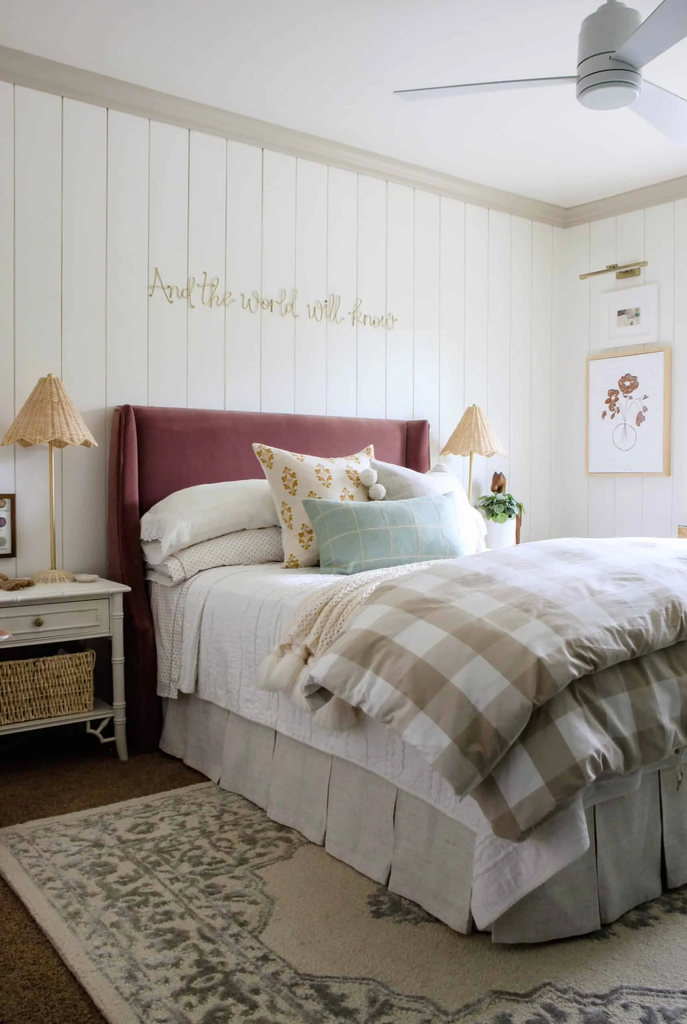
Credits: Wildflower Home Interiors
Gold lettering stretches above this bed without hiding the pale vertical boards behind it. The open script feels lighter than a solid sign, and its gentle curves soften the room’s repeated straight lines.
The creator chose words with personal meaning, which is the most useful part of the idea to borrow. Select a short phrase that matters to you and check its complete width before ordering or making it.
Paper templates help establish spacing and prevent the lettering from drifting unevenly across the wall. Keep the message comfortably above pillows and use suitable fixings for each component.
Repeat the metallic tone in one nearby detail if desired. Plenty of empty wall around the words helps the delicate shapes remain legible.
12. Balance an Awkward Window With a Box Shelf
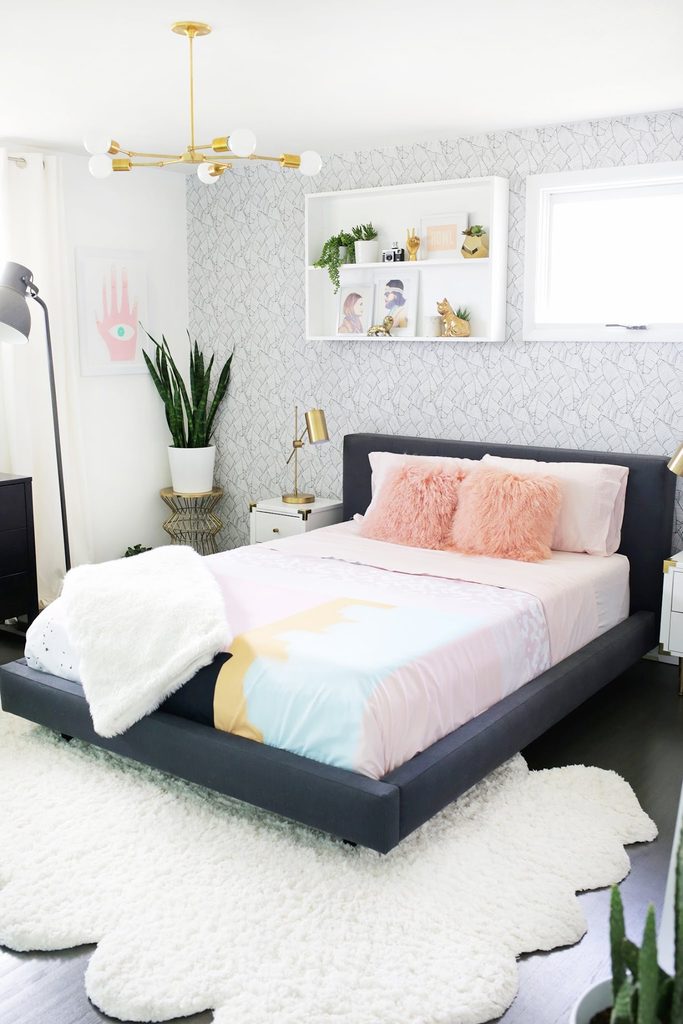
Credits: Laura Gummerman and Elsie Larson / A Beautiful Mess
A white box shelf gives this bed wall a second rectangular feature beside its high window. The similar outlines help the bed feel connected to the whole arrangement, while the shelf provides space for small plants, pictures, and favorite objects.
Its pale backing also creates a quiet patch within the surrounding botanical wallpaper. Begin by comparing the window’s proportions with the available wall rather than choosing shelving by habit.
Plan suitable structural fixings and secure any objects displayed above a sleeping area. Keep the arrangement light and leave gaps so the shelf’s outline remains visible.
Avoid placing water where it could damage artwork, electrical fittings, or bedding. This approach turns an uneven wall into a useful, deliberately balanced bedroom feature.
13. Let a Gallery Follow the Space Beside a Loft Bed
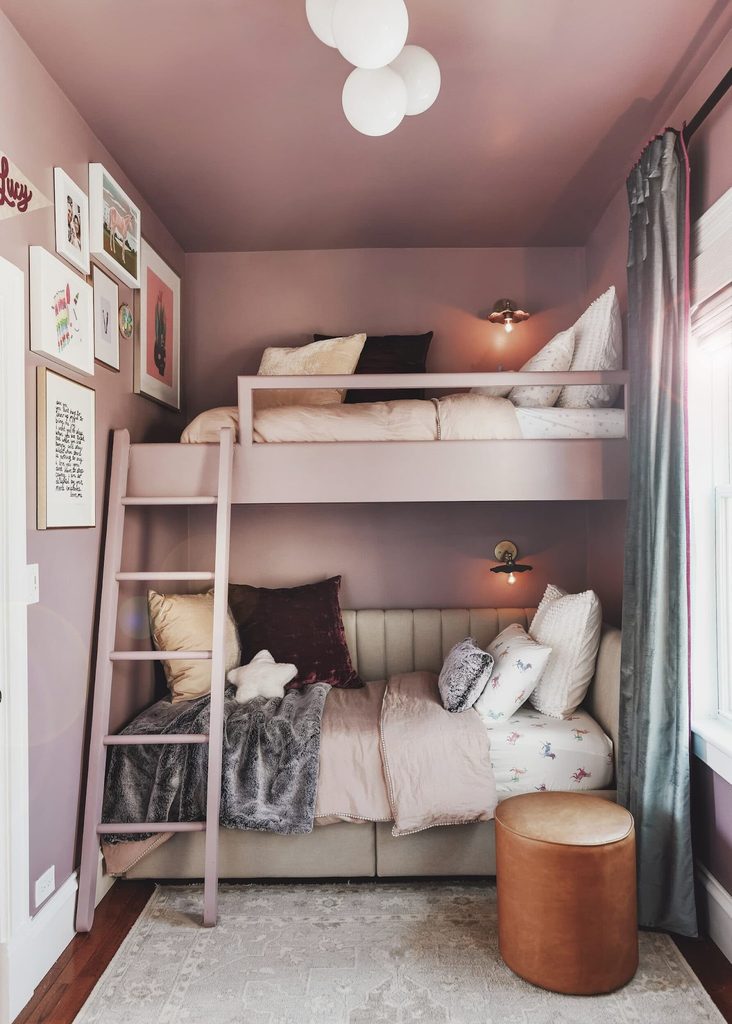
Credits: Yellow Brick Home
A tall bed does not leave the same blank rectangle as a conventional headboard. This bedroom uses the narrow wall beside its ladder for a loose gallery that rises toward the ceiling.
White and pale frames help the individual pictures connect, while the mauve background continues around the sleeping area. Map your arrangement with the bed already in position, paying attention to what can be seen from both levels.
Keep frames and projecting corners away from climbing routes, pillows, and places where someone might sit up suddenly. Mix personal photographs with drawings or small prints, but give the largest pieces clear positions first.
The arrangement can grow gradually without requiring every available patch of wall to be filled at once.
14. Group Three Unequal Pictures With Related Colors
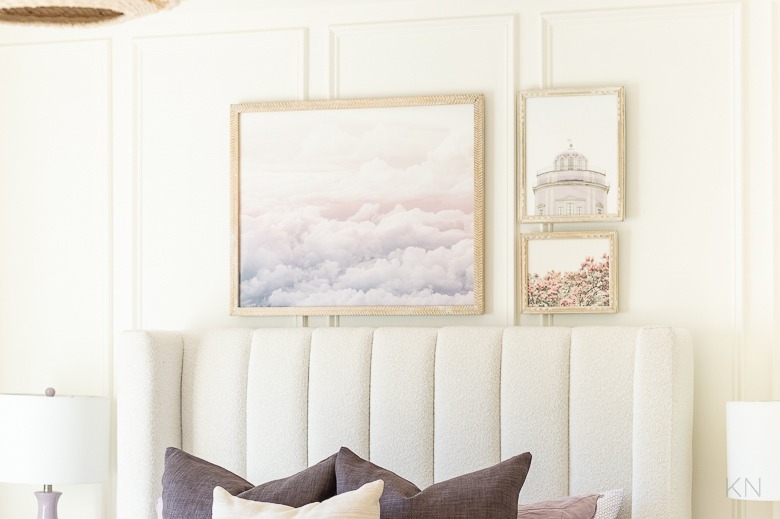
Credits: Kelley Nan
One large cloudscape and two smaller pictures form a compact gallery above this upholstered headboard. Their matching gold toned frames provide a connection, while pale lavender and pink shades make the different subjects feel related.
The smaller pair balances the larger piece without copying its proportions. Lay the arrangement out on the floor before making holes, then check the total shape against the bed’s width.
Similar gaps will help the group read as one composition. You can use artwork you already own by choosing mats or frames that bring the pieces together.
Keep the lowest edges clear of pillows and secure everything properly. A small, edited collection can add personality while leaving much of the bedroom wall open and restful.
15. Keep Painted Brick Visible Around Simple Artwork
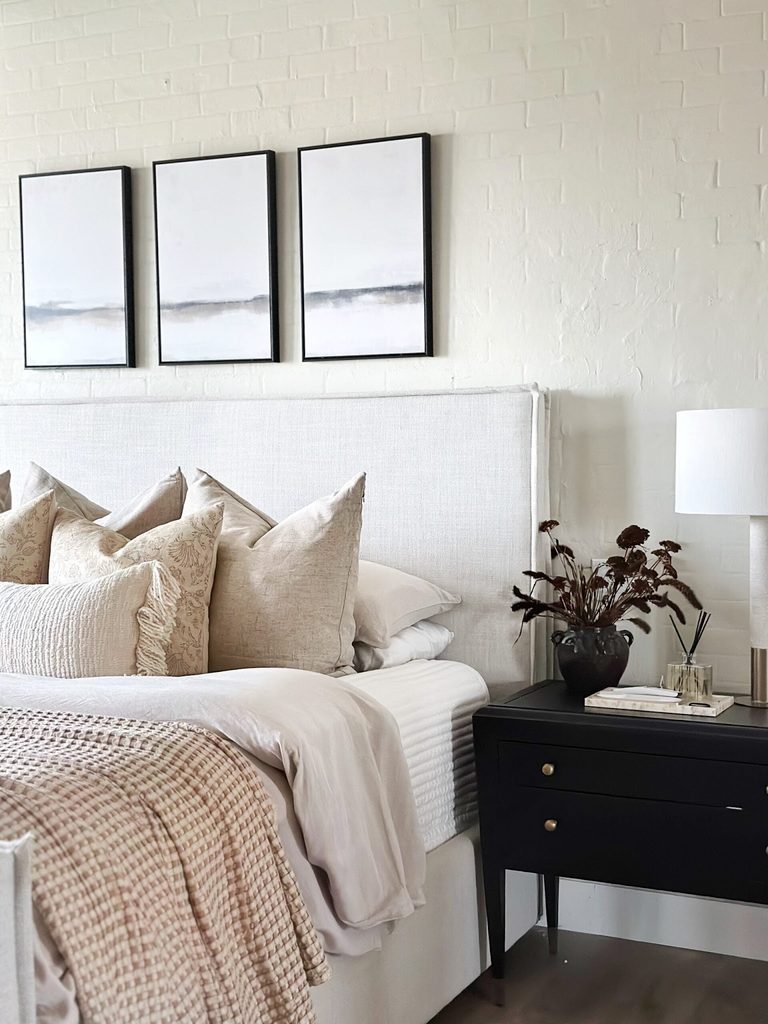
Credits: Jordyn / Our PNW Home
White paint allows the texture of this brick wall to provide decoration without a strong competing color. Three slim black frames add a measured rhythm above the headboard, but their pale images leave the masonry visually important.
Neutral bedding and a dark bedside chest repeat the same balance of light and definition. Before painting existing brick, consider its condition and whether covering the original surface suits your plans.
Choose preparation and coatings appropriate to the masonry rather than treating it like ordinary plaster. If the wall is already painted, simpler artwork can help its texture remain visible.
Test frame spacing with paper templates, and use hardware suited to the substrate. Leaving generous blank areas gives the brick room to register.
16. Make a Small Wall Light Part of the Decoration
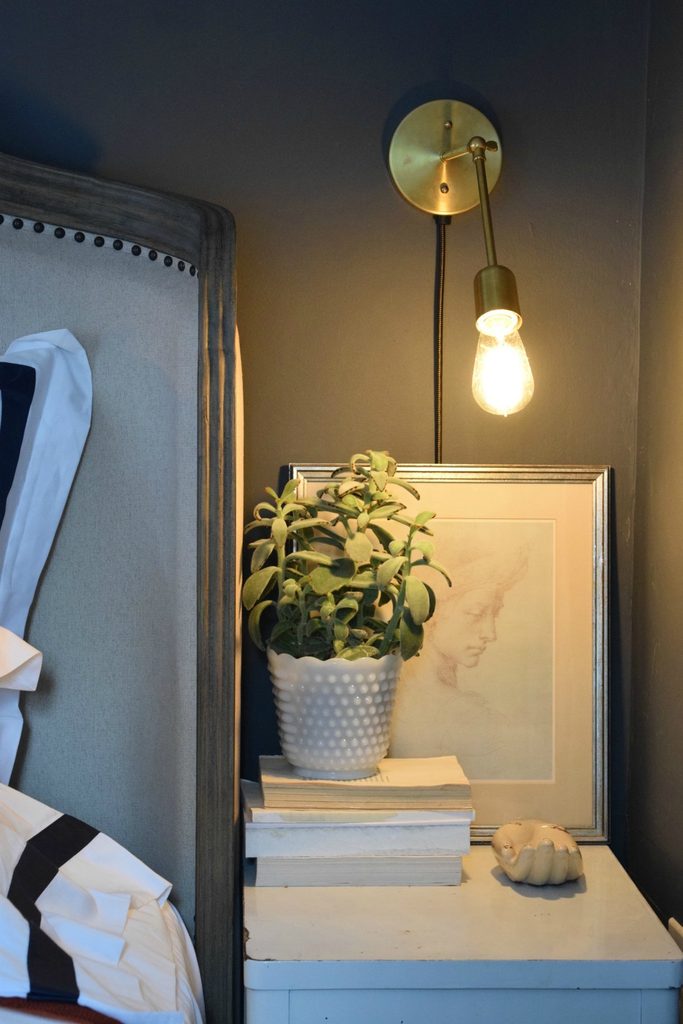
Credits: Brooke Christen / Nesting With Grace
A slim brass wall light gives this bedside corner a decorative outline while freeing the tabletop below. Against charcoal paint, its round backplate and narrow arm stand out clearly beside the upholstered headboard.
The warm metal also relates to the pale framed picture leaning underneath. Choose a fitting for its practical reach as well as its appearance, checking the position from your normal reading posture.
Avoid glare and follow the manufacturer’s clearance and installation requirements. A qualified electrician should handle work that needs one.
Keep visible cords neat without placing them under strain or where bedding can catch them. Because the light already supplies a strong vertical detail, a small group of objects beneath it can finish the wall comfortably.
17. Fit Favorite Posters to a Sloping Bedroom Wall
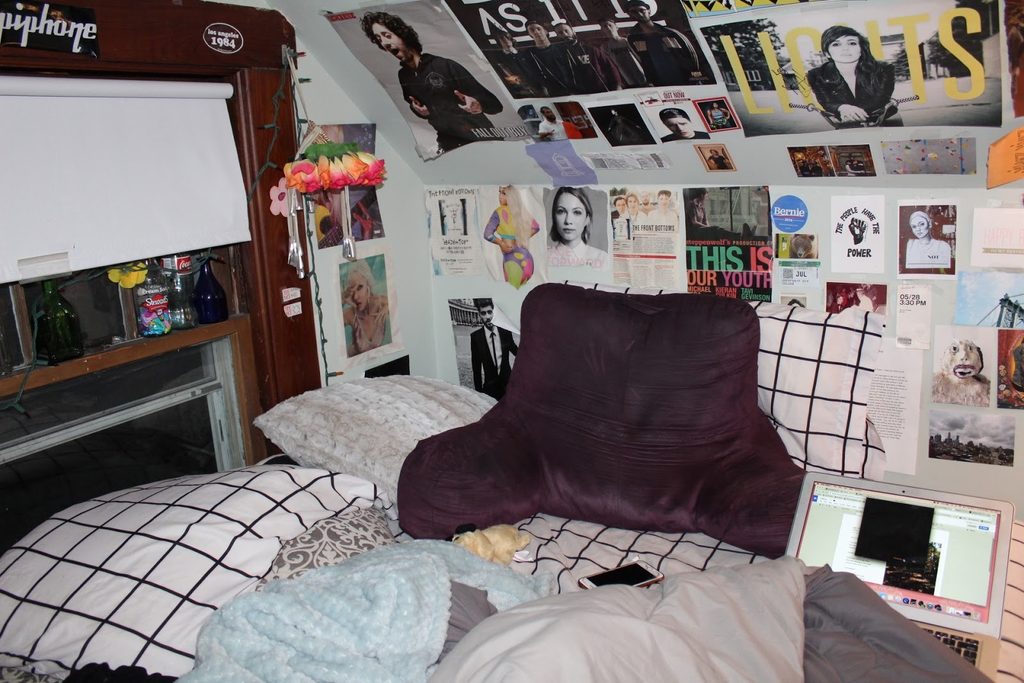
Credits: How Fitting
An angled wall can become a place for favorite images rather than an awkward empty strip. In this bedroom, music posters follow the slope while smaller photographs and paper pieces fill the vertical area behind the pillows.
The checked bedding creates a calmer foreground for the varied collection. Start by deciding which images deserve the clearest view, then arrange secondary pieces around them before attaching anything.
Use lightweight mounting methods suitable for your wall, and protect valuable originals in proper frames or storage. Keep paper away from heat sources and leave window hardware accessible.
A collection does not need to cover every gap to feel personal. Repeating a few colors or image sizes can help an informal display stay coherent.
18. Display Colorful Scarves on a Simple Row of Hooks
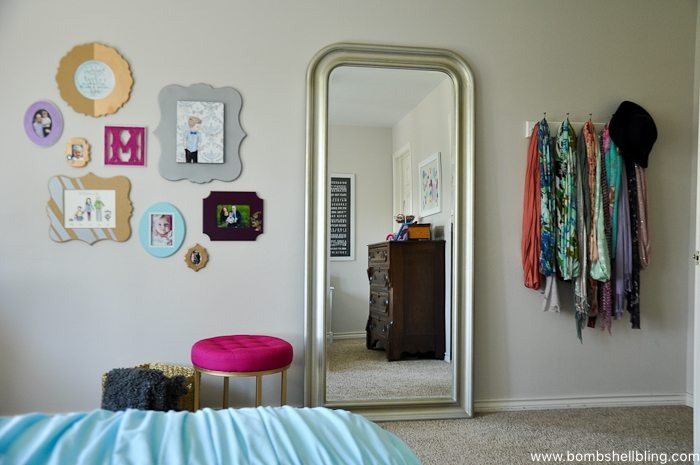
Credits: Sarah Westover McKenna / Bombshell Bling
Everyday accessories can bring color to a bedroom wall when they have a deliberate place to hang. Here, a row of hooks holds patterned scarves beside a tall mirror, turning their loose folds into a changing textile display.
The pale wall keeps the different prints visible, while a stool repeats one strong accent below. Choose scarves or lightweight accessories that you enjoy seeing and can reach easily.
Leave room between hooks so removing one item does not pull several others down. Check that the arrangement will not interfere with doors, drawers, or the path beside the bed.
Suitable fixings and sensible weight limits matter even for a small rail. Regularly rotating the selection keeps the display useful and visually manageable.
19. Mount a Large Landscape Print on Plain Plywood
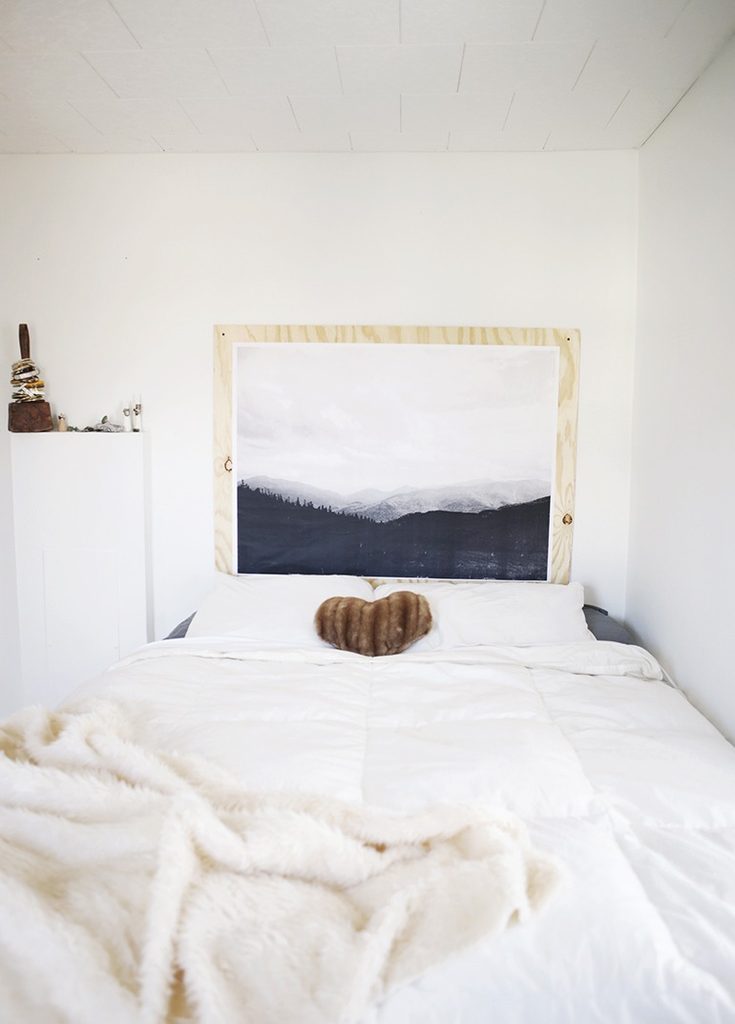
Credits: Caitlin / The Merrythought
A large landscape image gives this bed a substantial backdrop without an elaborate frame. Its pale plywood border introduces visible grain around the monochrome mountains, connecting the picture to the room’s natural materials.
The scale makes the artwork function visually like a headboard, with little need for smaller decorations around it. Measure the bed and wall together before choosing a print, and leave enough exposed border for the timber to register.
Use an image you have permission to reproduce at the required size. Mount the panel securely with hardware appropriate to its weight and wall construction.
Keep edges smooth and clear of pillows. Simple white bedding allows the landscape’s dark horizon to remain the main visual feature in the room.
20. Frame a Small Textile Above a Bedroom Bookcase
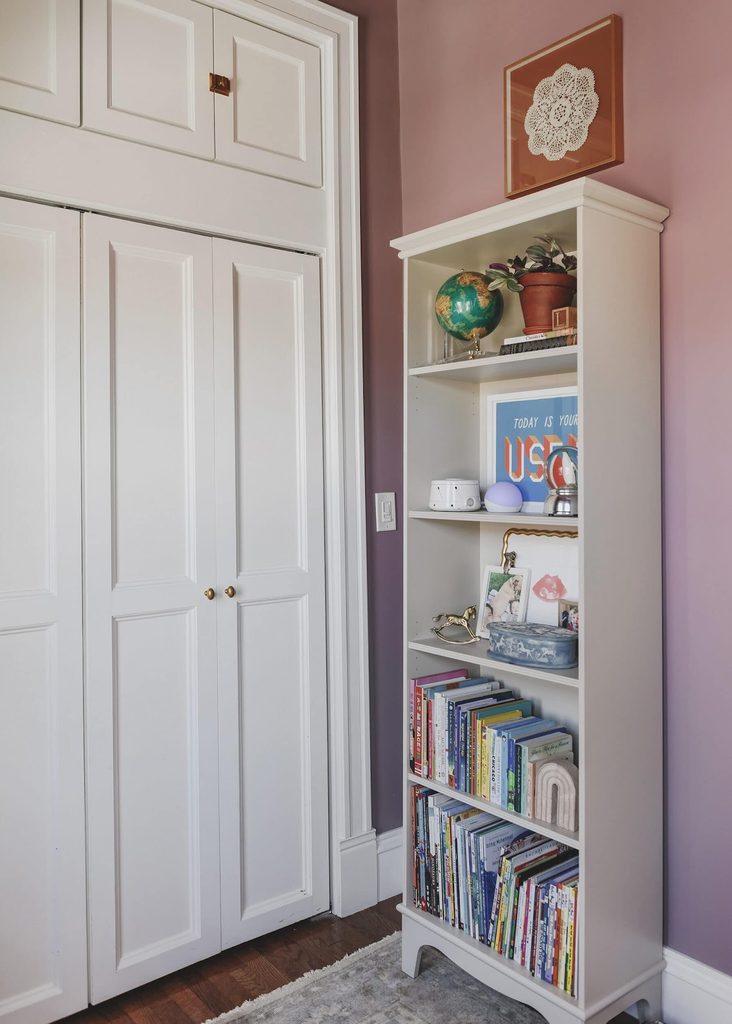
Credits: Yellow Brick Home
A framed doily turns a piece of textile work into a clear wall accent above this bedroom bookcase. The warm backing makes the pale stitches visible, while the square frame contrasts with the doily’s circular pattern.
Its position finishes the tall furniture without requiring another large gallery. Try this approach with a textile that has personal meaning, choosing a backing color that reveals its detail.
For a fragile or valuable piece, ask a framer about reversible mounting and suitable protective materials. Avoid placing it in direct sunlight or damp conditions.
Check the frame’s size against the bookcase rather than the whole wall. One carefully presented object can give an ordinary storage corner a distinctive, personal focal point of its own.