
A bed frame can shape a room even when the bedding stays simple, but bulky rails or tall posts may compete with the space around it.
These Bed Frame Ideas show how small design choices can change both the look and use of a bed, from cane panels that add texture to storage drawers concealed behind a plain platform edge.
You’ll also find ways to make a frame feel lighter, including slim canopy rails and recessed supports that create a floating effect. Consider which details suit your room and daily needs before choosing a style.
1. Turn a Spindle Daybed Into a Sitting Spot
Credits: Chris Loves Julia
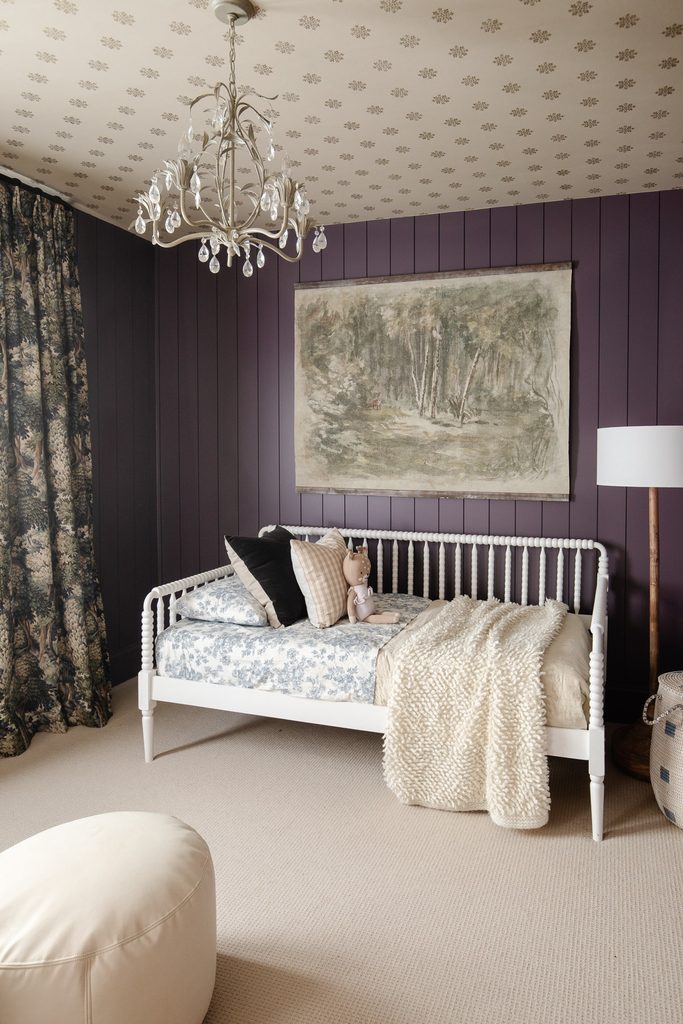
A frame with three gracefully open sides gives a daybed the outline of a small sofa while keeping the mattress easy to reach.
This white example repeats turned spindles across the back and both ends, with a straight front rail and slim legs below. The light finish makes those details stand out against plum paneling without adding a large solid panel.
Place cushions along the back for daytime sitting, then move them aside for sleeping. Keep enough of the front edge uncovered to show the frame’s shape.
When choosing a similar piece, check its overall depth, arm height, and mattress requirements. A daybed works best when its furniture proportions suit the room rather than merely fitting the available mattress size.
2. Add Cane Panels to a Storage Daybed
Credits: Kelly Mindell / Studio DIY
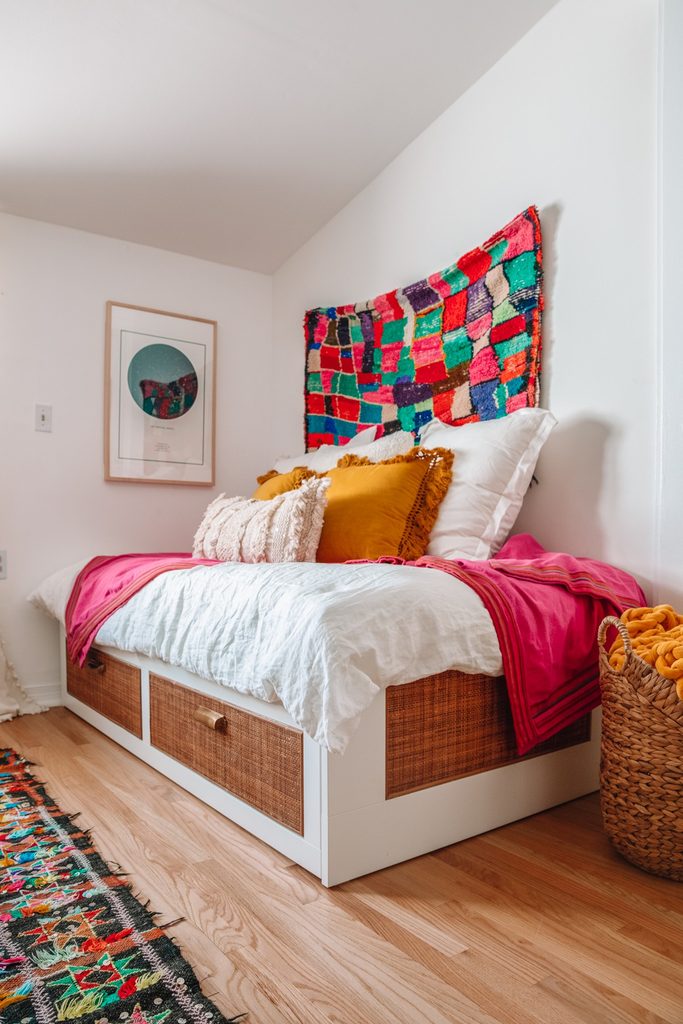
Woven panels can change the character of a storage bed while leaving its useful box-shaped base intact. Studio DIY’s daybed adds warm cane texture to white drawer fronts and end panels, with simple metal handles marking the storage below.
The contrast between the pale frame and darker weave makes each rectangle easy to read. Keep the trim narrow so the woven surface remains the main detail.
If updating existing furniture, check that added layers will not obstruct drawer travel or the bed’s extending mechanism. Compare the new handles with nearby furniture before drilling.
A neatly tucked cover helps reveal the customized base, while loose pillows above give this practical frame a more relaxed appearance during both sitting and sleeping hours.
3. Build a Loft Above a Separate Daybed
Credits: Yellow Brick Home
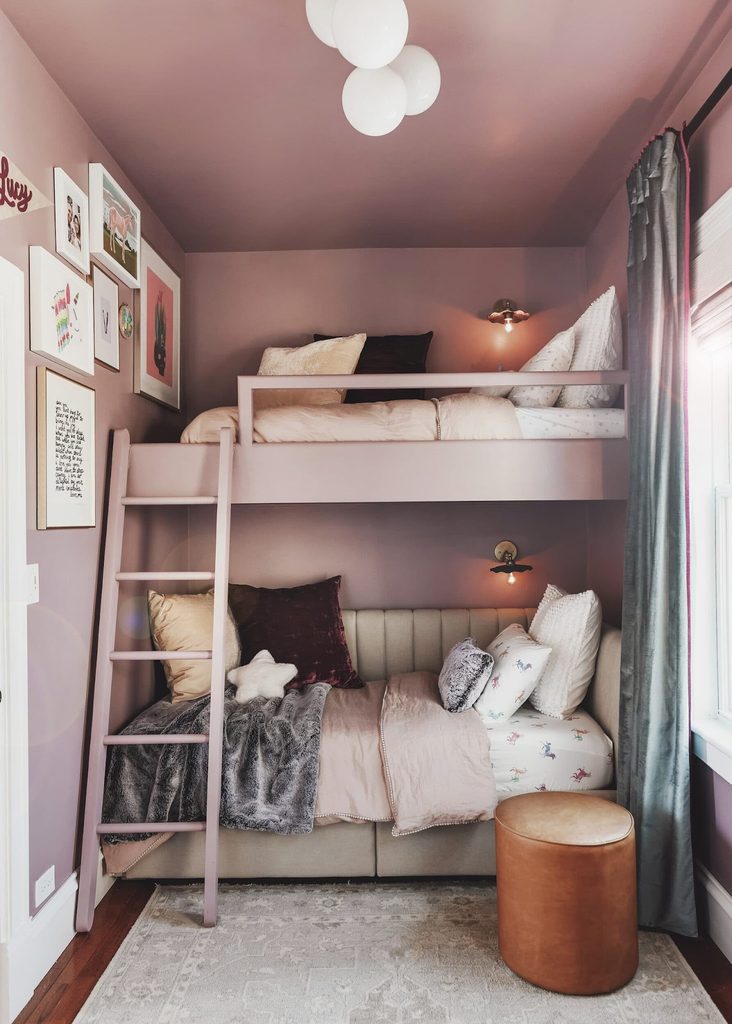
A built-in loft can give a bedroom two clearly distinct levels while leaving the lower bed visually independent. Here, a painted upper frame spans the narrow room above an upholstered daybed.
A matching ladder connects the levels, and the broad front rail echoes the surrounding wall color. The lower piece brings a softer texture without changing the loft’s clean outline.
Treat this as an idea for arranging compatible furniture, not a construction plan. Structural support, guarding, mattress thickness, access, and required clearances need proper assessment for the intended users.
Keep lights and window coverings clear of climbing routes. Matching the upper frame to the walls can quiet its size, while a contrasting lower bed makes each part easy to understand.
4. Keep a Tall Canopy Frame Visually Light
Credits: 136home
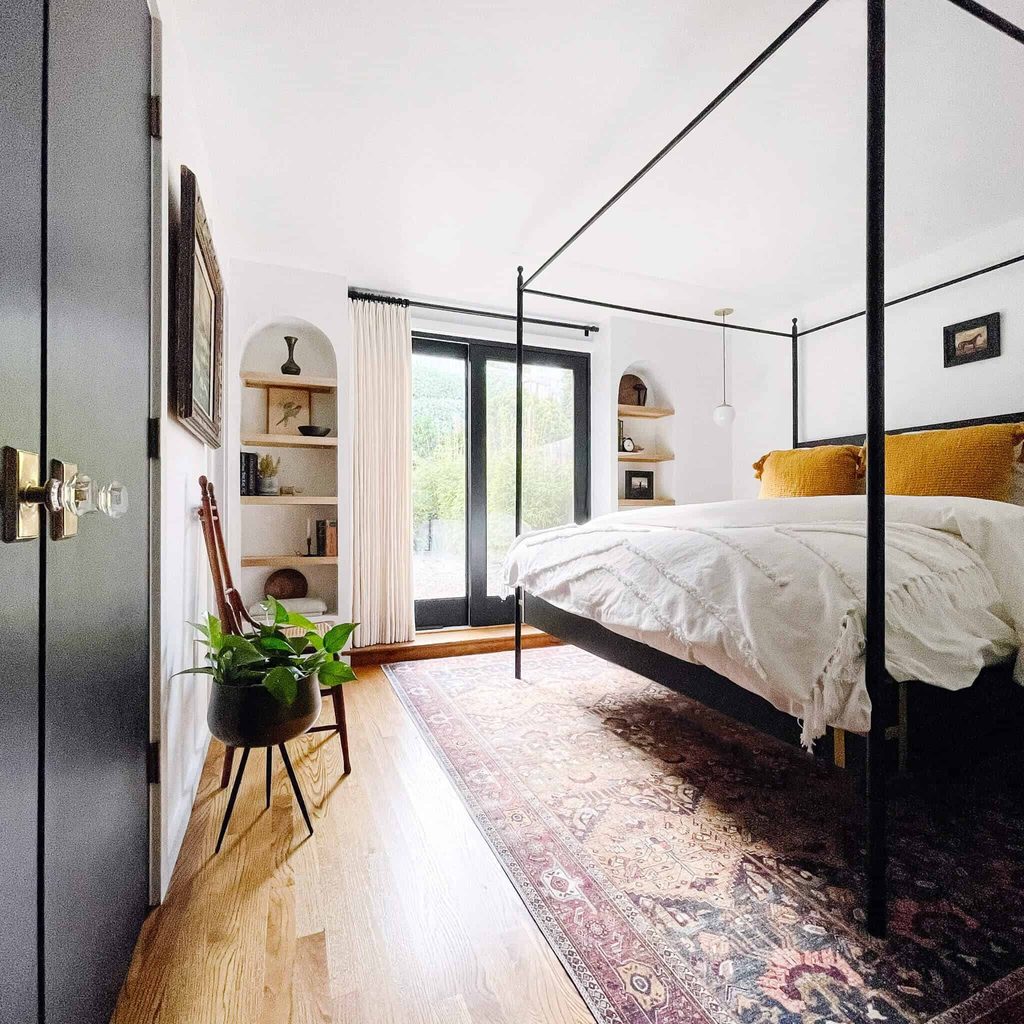
Thin dark posts can outline a tall bed without enclosing the bedroom in heavy furniture. This canopy frame uses slender uprights and bare top rails, leaving the window and wall niches visible through its structure.
The low headboard and open space below the base help balance the height overhead. White bedding provides a clear contrast with the metal outline, while the warm floor prevents the arrangement from feeling stark.
Measure the ceiling height and nearby pendant positions before choosing a similar frame. Leave the upper rails uncovered when you want the architectural shape itself to be the feature.
Keep the walking route around the corners comfortable, since a visually delicate post still occupies real space within a compact bedroom layout.
5. Hide a Box Spring With a Timber Surround
Credits: Caitlin McGrath / The Merrythought
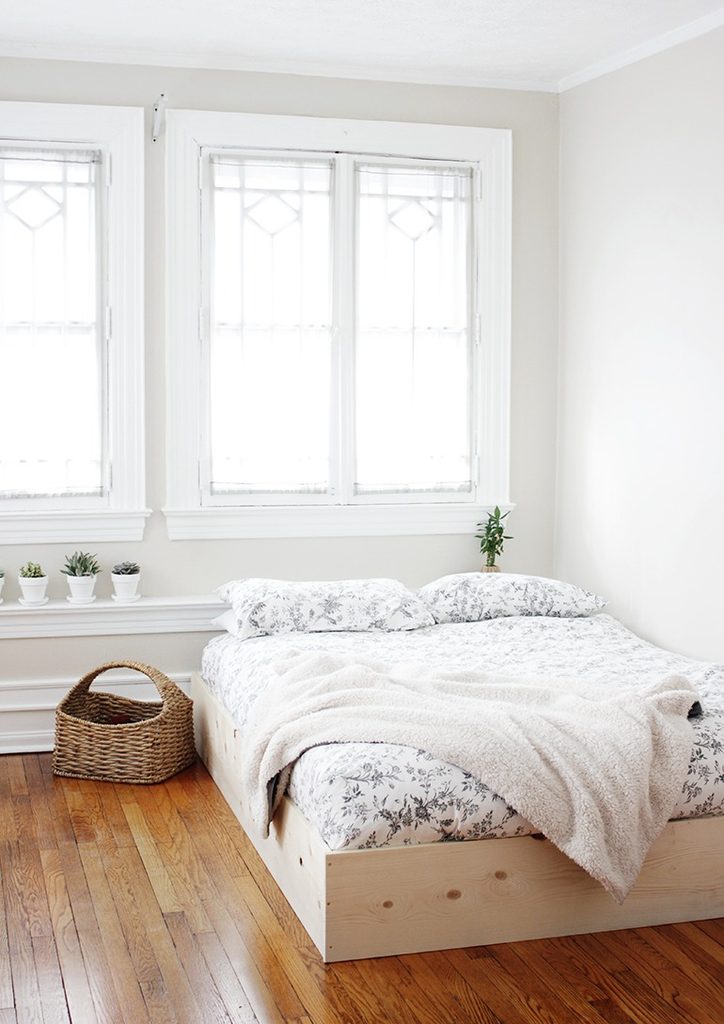
A plain timber surround can make a floor-level bed look more finished without adding a tall headboard. The Merrythought’s example wraps a box spring with pale boards, allowing the knots and long horizontal edges to become the main furniture detail.
Floral bedding and a textured blanket soften the rectangular outline while leaving its front visible. The creator describes this project as a cover, so do not assume the outer boards provide the mattress support.
Keep a suitable supporting base and follow the mattress maker’s ventilation guidance. Before adapting the look, compare the finished height with your preferred sitting position and bedside storage.
A restrained surround is especially useful when windows or wall details already provide interest above the sleeping area.
6. Refresh Every Rail With Matching Upholstery
Credits: Laura Gummerman / A Beautiful Mess
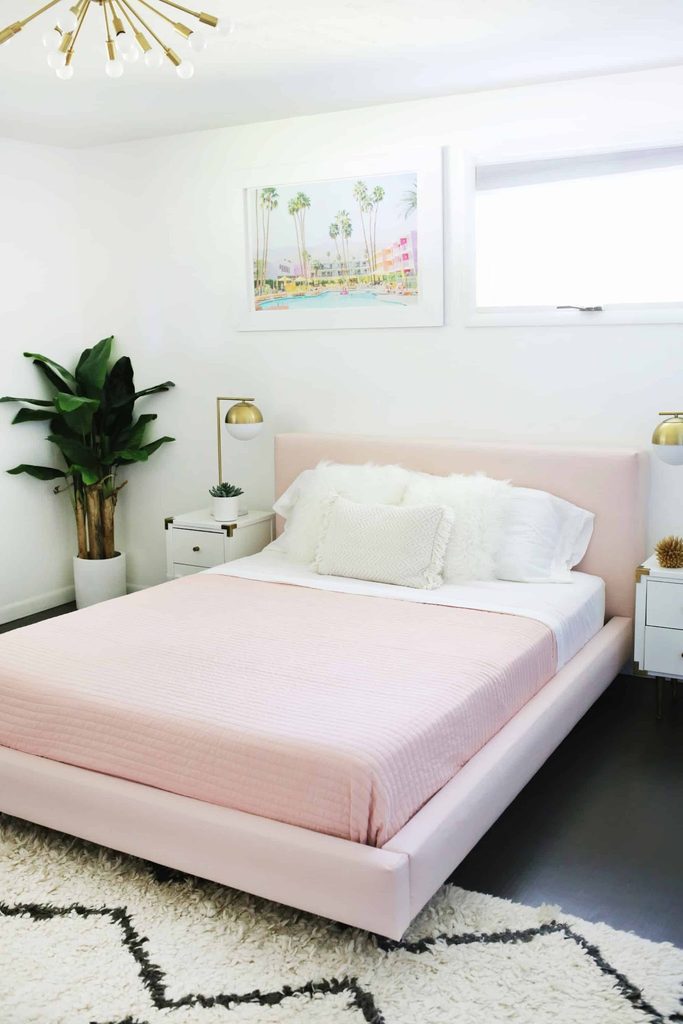
Covering the entire frame in one fabric can make an existing bed feel like a coordinated new piece.
Laura Gummerman’s blush example carries the same smooth blush upholstery across the headboard, side rails, and foot rail, with dark feet barely visible below. The fabric softens the long rectangular edges without introducing elaborate shaping or deep tufting.
Keep bedding tucked inside the frame so the updated rails remain part of the room’s appearance. When considering a similar refresh, check the condition of the structure and existing padding before choosing fabric.
Label removable hardware and follow the original assembly requirements. Test the new cloth over the old finish first, since a darker underlying color may show through a pale covering in daylight.
7. Repeat Recessed Panels Around a Wood Frame
Credits: Henry / Plank and Pillow
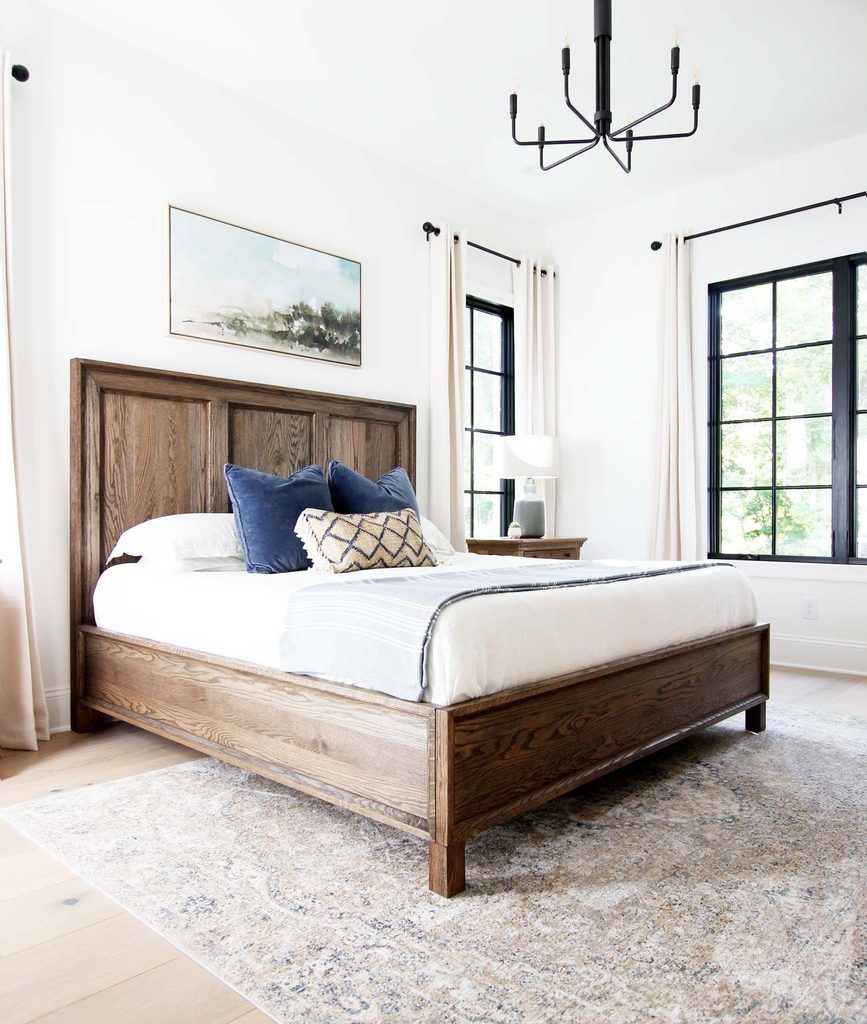
A paneled bed feels more considered when the detailing continues beyond its headboard. This handmade oak frame repeats narrow raised borders along the side rails and footboard, creating a complete furniture outline around the mattress.
Its dark stain emphasizes the grain, while short square legs keep the base visibly separate from the floor. White bedding leaves the panel edges clear and prevents the woodwork from disappearing behind layers.
When choosing a similar frame, compare the depth of the rails with your mattress and foundation combination. The top of the mattress should sit where the manufacturer intends.
Keep nearby furniture simpler, allowing repeated panel details to supply interest without needing additional carving, contrasting hardware, or an elaborate arrangement of decorative pillows.
8. Use Stacked Timber for a Raised Platform
Credits: Colette’s Little Home
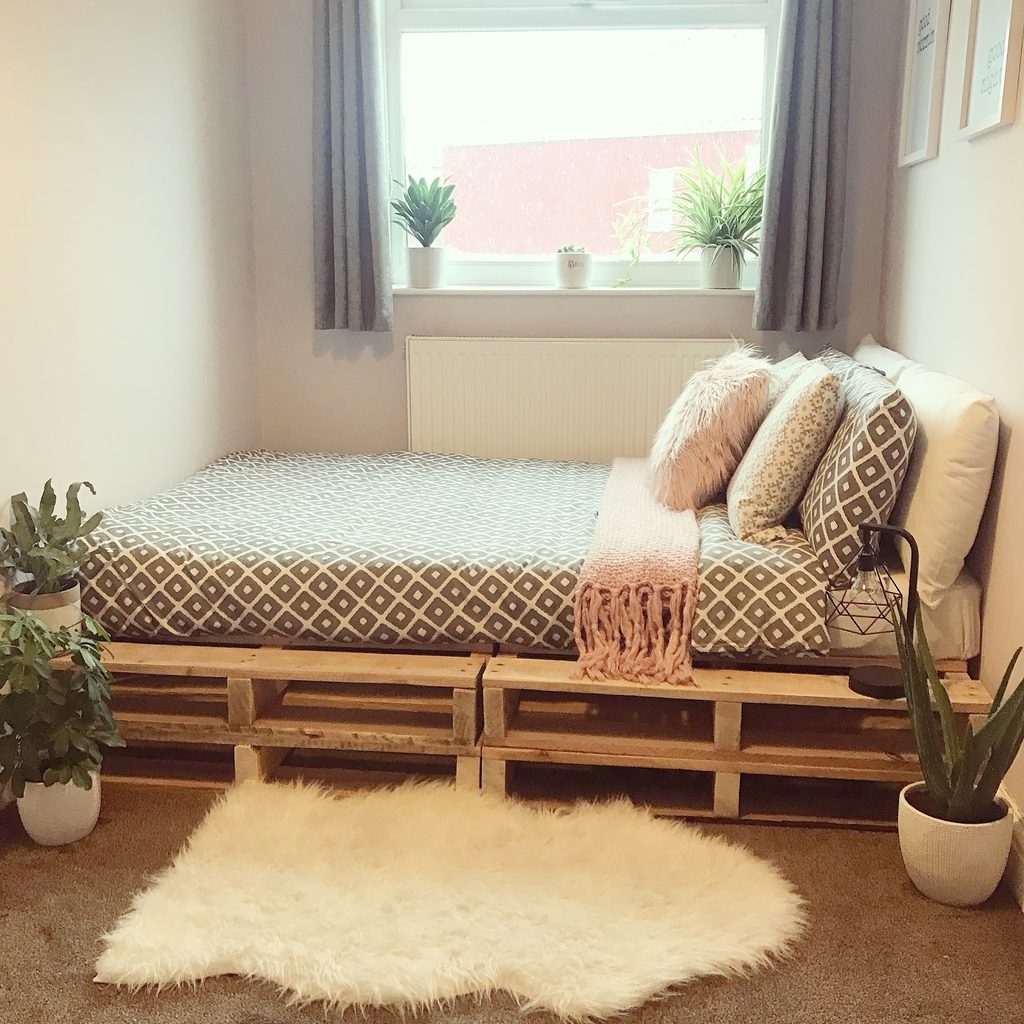
Stacked pallets give this compact bedroom a distinctive layered base beneath the mattress. Their repeated openings and exposed blocks create an informal timber pattern, while the top boards extend slightly beyond the bedding to form a ledge.
The pale wood works with neutral textiles and leaves the frame visible across the front. Borrow the visual idea carefully: reused shipping pallets require verified suitability, a clean history, and sound construction before indoor furniture use.
A purpose-built frame with a similar layered appearance can offer another route. Check mattress support and ventilation rather than assuming any flat stack will work.
Leave the exposed edge clear of fragile objects, especially where people approach the bed or place their feet while getting up daily.
9. Give Turned Posts a Fresh Painted Finish
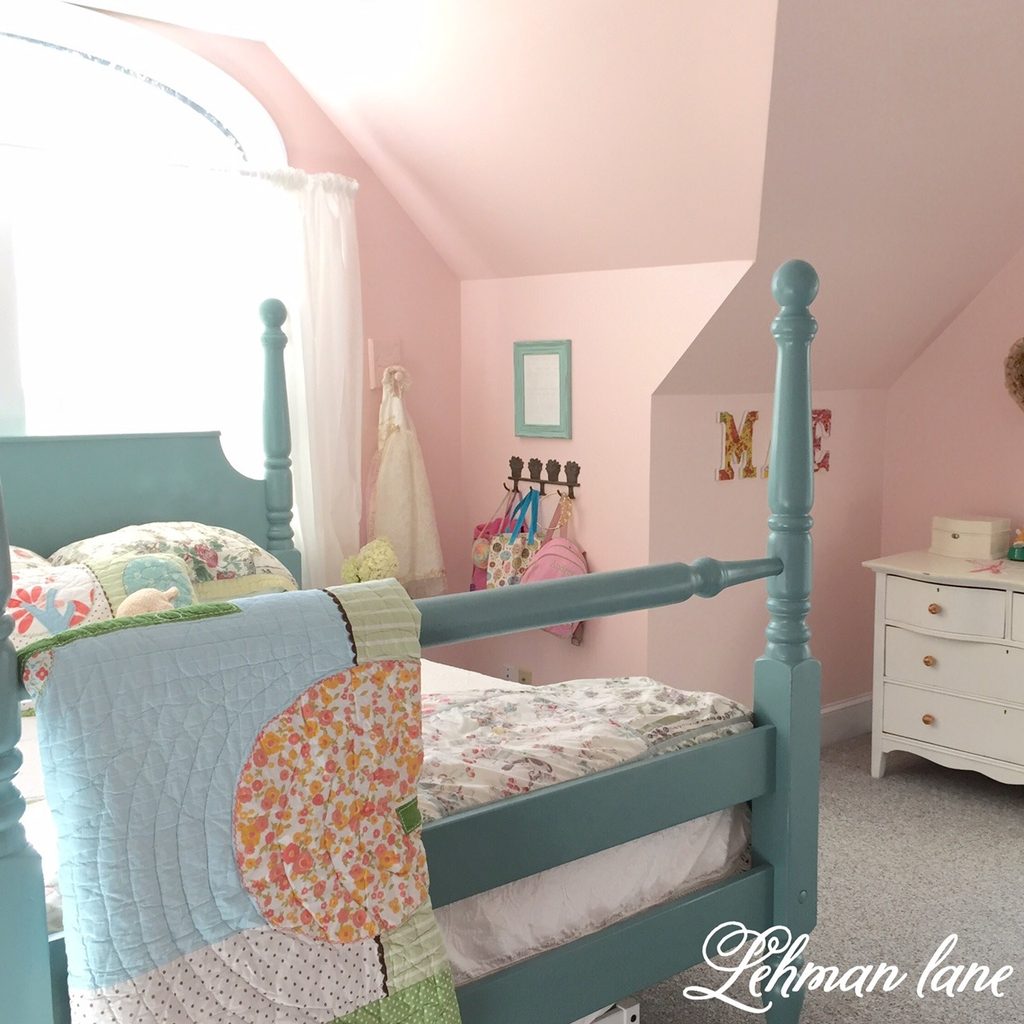
Credits: Tara Lehman / Lehman Lane
A strong paint color can make a traditional four-poster frame feel newly intentional. Tara Lehman’s bed uses blue-green paint across the headboard, broad foot rails, and tall turned posts, allowing the whole piece to read as one sculptural shape.
Rounded finials and carved collars become easier to appreciate when the finish is consistent. The open space between the foot rails prevents those substantial posts from creating a completely solid barrier.
Keep bedding below the main rail where possible so the silhouette remains visible. Before repainting an older bed, assess its finish and construction, and choose suitable preparation products.
Measure the highest posts against sloping ceilings and nearby windows; their placement matters as much as the mattress footprint within the room.
10. Recess the Supports for a Floating Effect
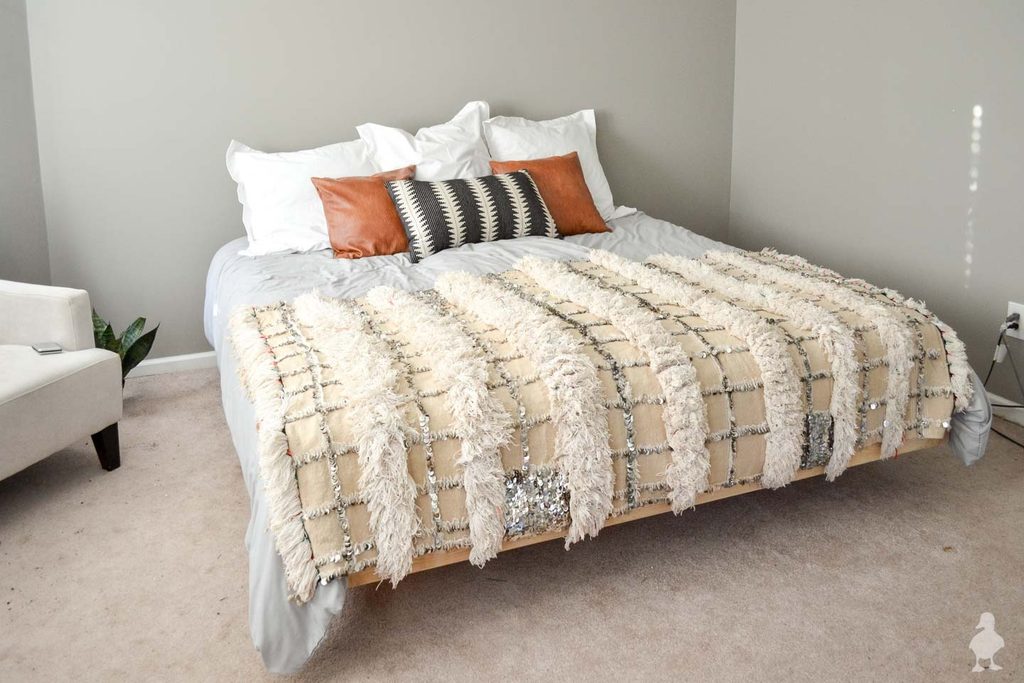
Credits: Sarah / Ugly Duckling House
A bed can appear to hover when its supporting base sits well inside the mattress perimeter.
Sarah’s handmade platform uses this approach, leaving a shadow under the visible wooden front edge while the mattress and layered bedding seem to project outward.
The effect comes from the relationship between the upper platform and its recessed supports, not from suspending the bed. Keep part of the perimeter visible if you want that detail to register clearly.
Before choosing or building a similar frame, check its engineered support, stability, and mattress requirements. Deep overhangs need appropriate design rather than guesswork.
A simple backdrop makes the outline easier to read, while comfortable clearances around the corners remain important even when the legs are hidden.
11. Conceal Drawers Behind a Plain Platform Edge
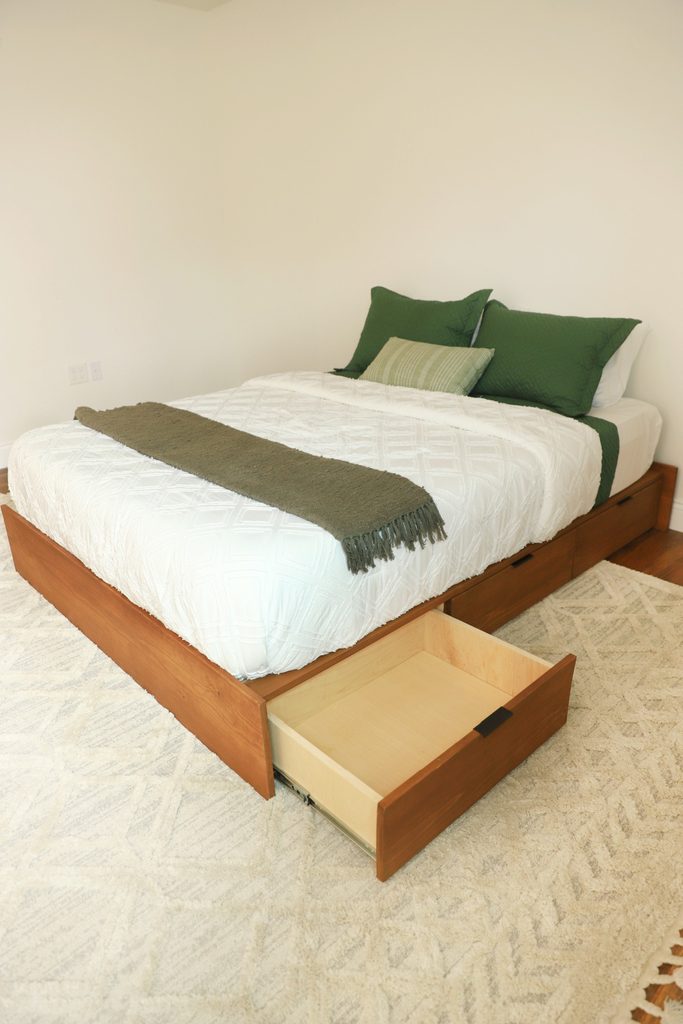
Credits: Shara / Woodshop Diaries
Storage works especially neatly when the drawer fronts follow the same lines as the bed frame. This wooden platform hides drawers along its sides, with one pulled open to show the space beneath the mattress.
Long, flat fronts preserve the quiet rectangular outline, while dark pulls provide a small functional detail. The frame does not need a tall footboard to make its structure visible.
Before planning something similar, allow enough clear floor space for the drawers to open fully beside rugs, nightstands, and nearby furniture. Decide what you want to store before comparing internal dimensions.
Keep bedding from trailing over the handles, and choose a mattress support system suited to the mattress rather than treating storage capacity as the priority.
12. Raise an Upholstered Frame on Tapered Legs
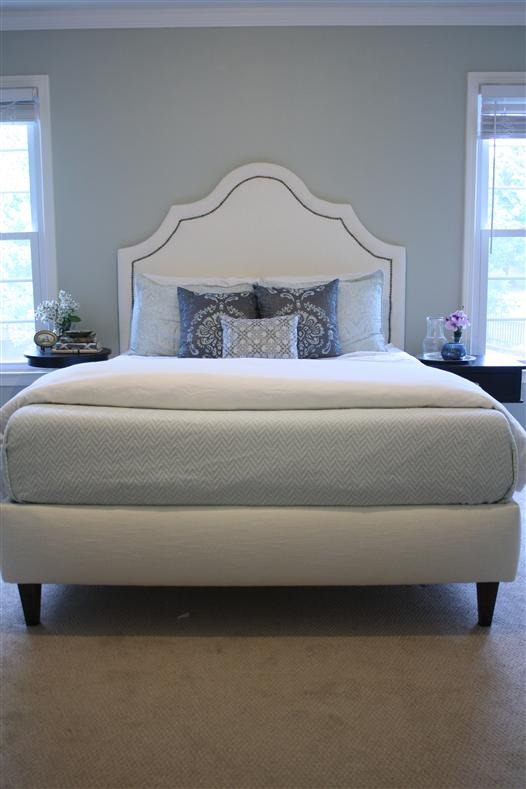
Credits: Kelly and Andy / View Along the Way
Visible legs can give an upholstered bed a lighter stance than a base that reaches the floor. This cream frame places a shallow padded foot rail above dark tapered feet, leaving an uninterrupted shadow beneath the mattress.
The contrast makes the support points part of the design, while the shaped headboard adds a softer outline above. Tuck bedding within the rail to keep that raised profile clear.
When comparing similar beds, measure the floor clearance and check whether cleaning tools can actually reach underneath. Consider leg placement as well as appearance, since inset supports and projecting corners affect how you move around the bed.
Repeating the dark leg finish in a bedside piece can connect otherwise different furniture without matching.
13. Show the Joints of an Industrial Pipe Frame
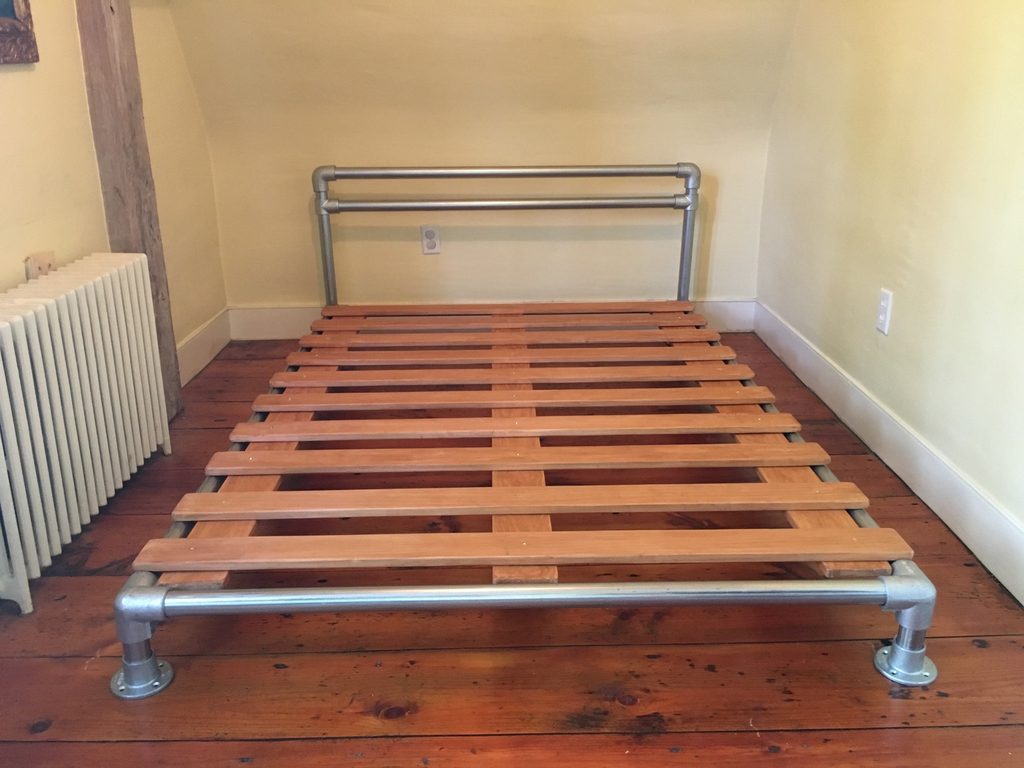
Credits: PJ Mehaffey / Alchemy Eclectic
Exposed pipe connections can supply the character of a bed frame without extra decorative panels. PJ Mehaffey’s example uses silver-colored tubes, elbow fittings, and round flange feet around a wooden slatted base.
Two horizontal head rails repeat the frame’s straight lines, while the low foot rail keeps the mattress end open. The bare finished frame makes its construction easy to understand in the bedroom.
For a similar appearance, choose a purpose-designed bed or have a qualified maker assess the joints, bracing, and mattress support. Ordinary plumbing parts alone do not establish furniture suitability.
Keep bedding simple enough to reveal the metal perimeter, and account for the width of the fittings when checking clearance beside furniture, doorways, and the main walkway.
14. Extend the Platform Into Bedside Shelves
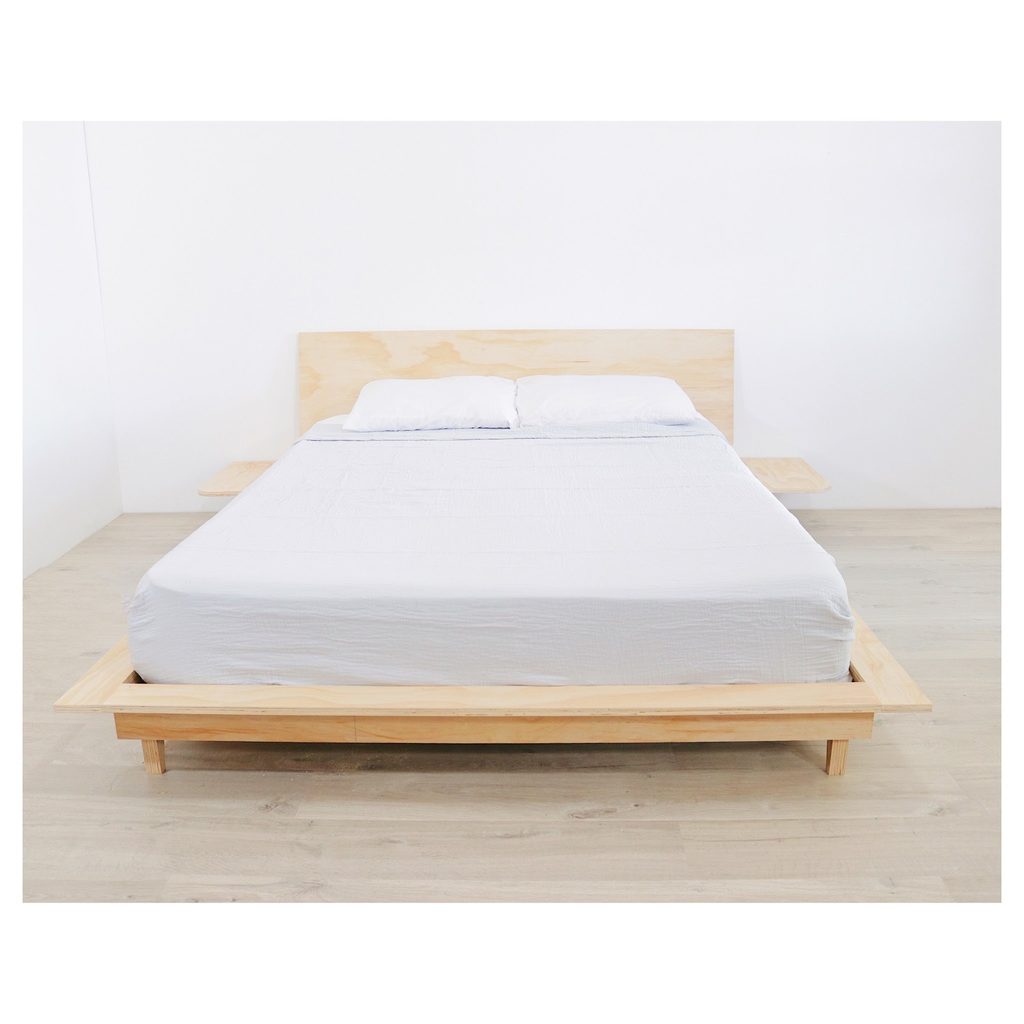
Credits: Mike Montgomery / Modern Builds
Built-in bedside surfaces can make a bed frame feel like one complete piece of furniture. Mike Montgomery’s plywood design extends beyond the mattress on both sides, forming shelves beneath a broad, simple headboard.
The same pale material runs around the platform edge, with short legs lifting the base from the floor. Rounded shelf corners soften the otherwise straight outline.
This approach works best when the frame’s full width is planned into the room from the beginning. Check the shelf height against the mattress and think through lamp placement and cable access.
Keep the surfaces lightly furnished so their relationship to the bed remains visible. A restrained bedding palette allows the exposed plywood layers and continuous perimeter to supply the detail.
15. Balance an Arched Headboard With Turned Feet
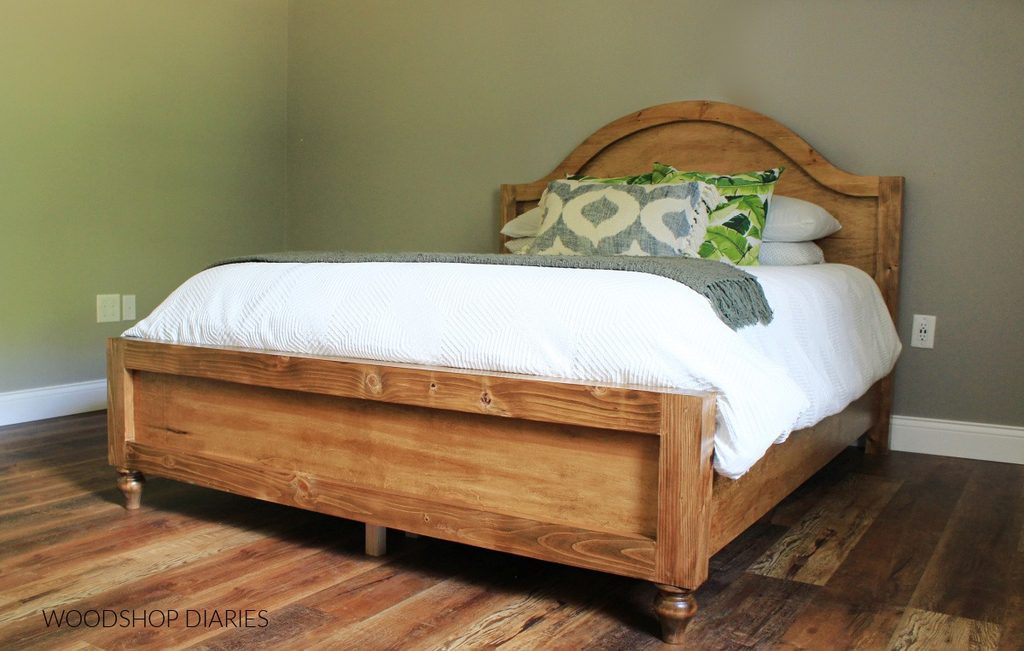
Credits: Shara / Woodshop Diaries
Small shaped details can soften a substantial wooden frame without making every surface ornate. This bed pairs an arched headboard with a straight recessed footboard panel and rounded front feet.
The contrasting profiles give the frame character from both ends, while broad timber borders keep the whole piece coherent. A finish reveals the grain and connects the decorative feet to the larger rails above.
Leave the lower footboard uncovered so those relationships remain visible. When considering a similar design, compare the headboard height with your normal pillow arrangement and check how far the feet project.
Simple bedding gives the woodwork space to stand out, and a quiet wall color keeps the combination of curves and straight panels easy to read.
16. Make Suspension Part of the Frame Design
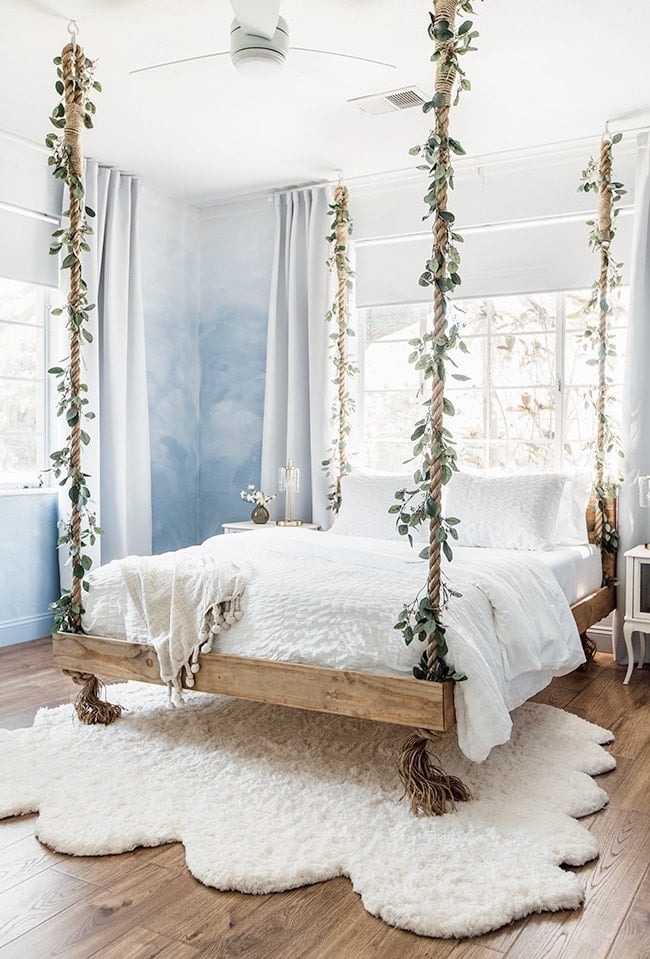
Credits: Jenna Sue Design
Ropes can become the defining lines of a bed when the frame is deliberately designed for suspension. Jenna Sue’s bedroom shows a plain wooden platform hanging from four substantial ropes, with visible knots below the corners.
The simple timber perimeter keeps attention on the unusual support arrangement, while light bedding allows the lower edge to remain visible. Treat this as a specialist design idea requiring professional assessment of the building structure, fixings, movement, and intended loads.
A photograph cannot establish whether a similar installation would be suitable elsewhere. Plan clear space around the bed and keep its possible movement in mind when locating windows, furniture, and lighting.
The strongest visual feature is the contrast between grounded timber and vertical ropes.
17. Tailor a Slipcover Around the Entire Base
Credits: Suzannah / Create Enjoy
Open creator’s original bedroom project
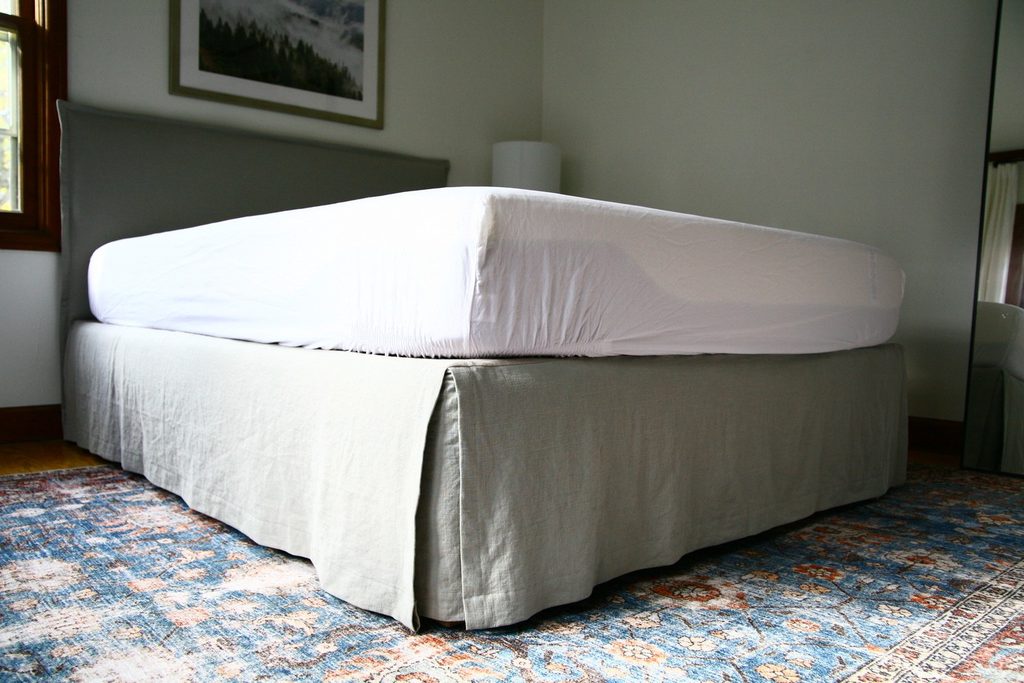
A tailored slipcover can change a frame’s outline as well as its color. This gray fabric cover reaches down around the bed base, with overlapping corner panels that create a continuous, softly structured perimeter.
Unlike a loosely draped blanket, the fitted cover follows the frame closely while concealing the legs and lower supports. The matching headboard makes the bed read as one upholstered piece.
If adapting this idea, measure the assembled frame carefully and allow for the fabric’s care requirements before sewing. Keep the bottom edge clear enough to avoid dragging during everyday use.
Corner openings should sit evenly when the mattress is in place. A plain cover is especially effective when the surrounding rug already carries a detailed pattern.
18. Carry Mixed Wood Tones Through the Frame
Credits: Jen Woodhouse / The House of Wood
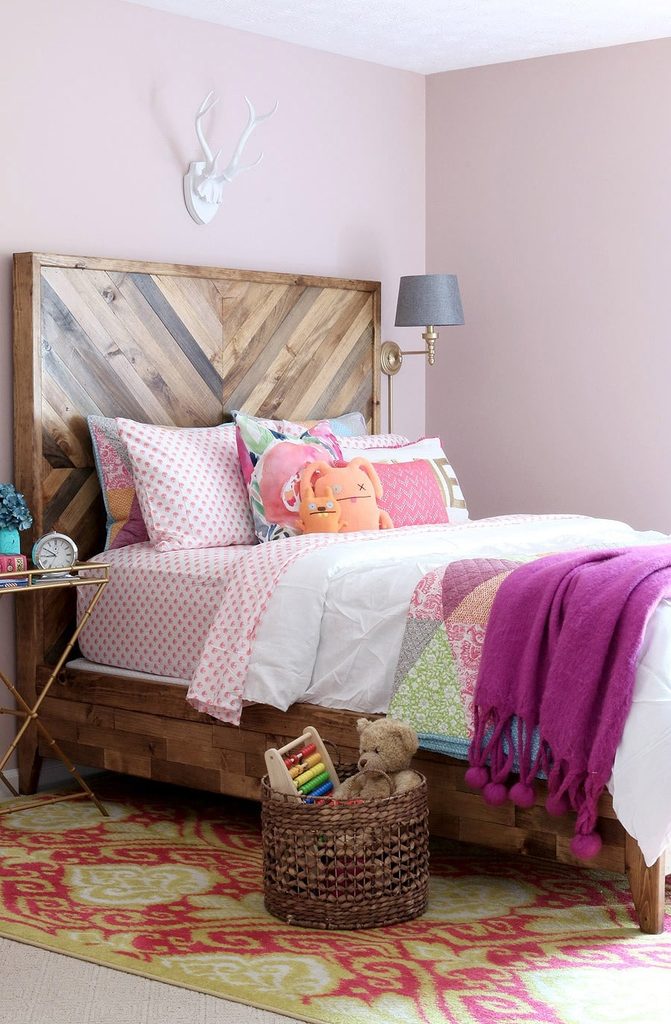
A chevron headboard feels more connected to the bed when its varied wood tones continue around the lower frame. Jen Woodhouse’s design pairs diagonal headboard planks with horizontal pieces along the broad side rail, all contained within simple timber borders.
The result has the character of reclaimed wood, although the creator used new pine with different stains. Keep that distinction in mind when choosing materials or describing a similar piece.
A low foot end lets the patterned headboard remain dominant without leaving the base visually unrelated. Pull bedding back enough to expose some of the rail.
Test finishes together before committing, and limit nearby wood patterns so the frame’s changes in direction remain the main source of texture and interest.
19. Make Open Cubbies Part of a Low Platform
Credits: Instagram
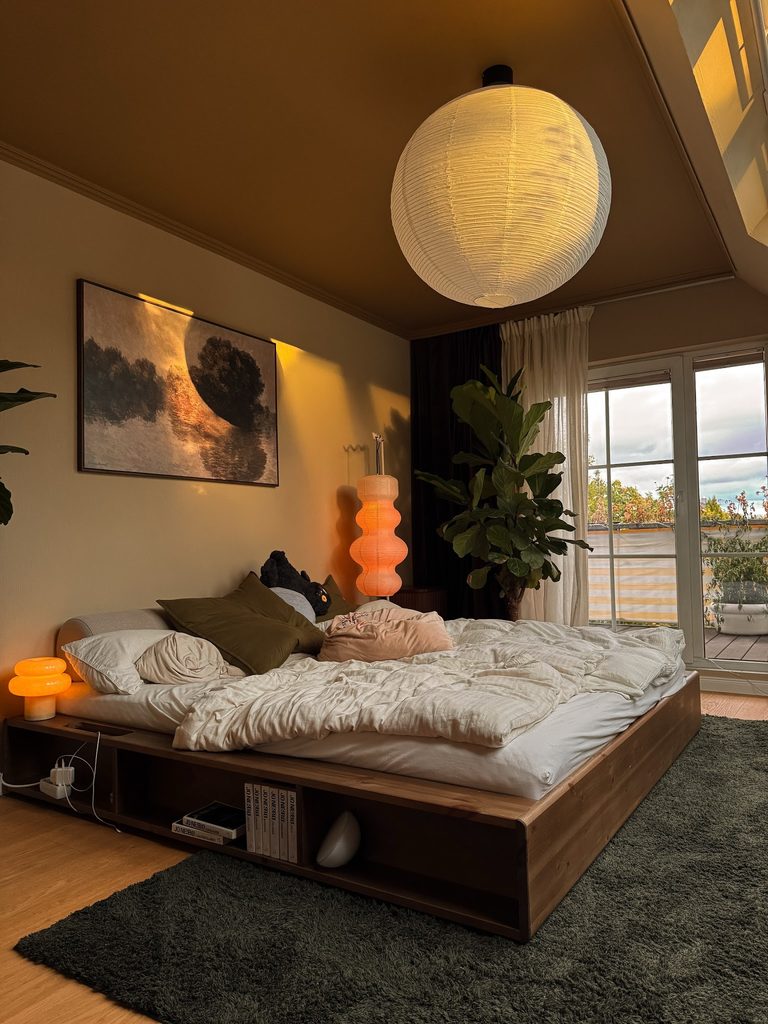
Built-in open compartments can give a low bed a second purpose without adding another cabinet. The wooden platform in this room includes accessible cubbies along its outer edge, keeping the structure visible beneath loosely arranged cream bedding.
A deep green rug introduces a soft contrast to the warm frame, while the paper globe above echoes the relaxed mood.
Treat the exposed storage as part of the design: a few books or useful objects will read more clearly than tightly packed shelves. Check compartment dimensions against what you want to keep nearby, and allow room to reach them comfortably.
A low mattress position also changes bedside needs, so compare table and lamp heights before reusing furniture chosen for a taller bed.
20. Outline a Low Bed With a Pitched Roof
Credits: Bree / Rain and Pine
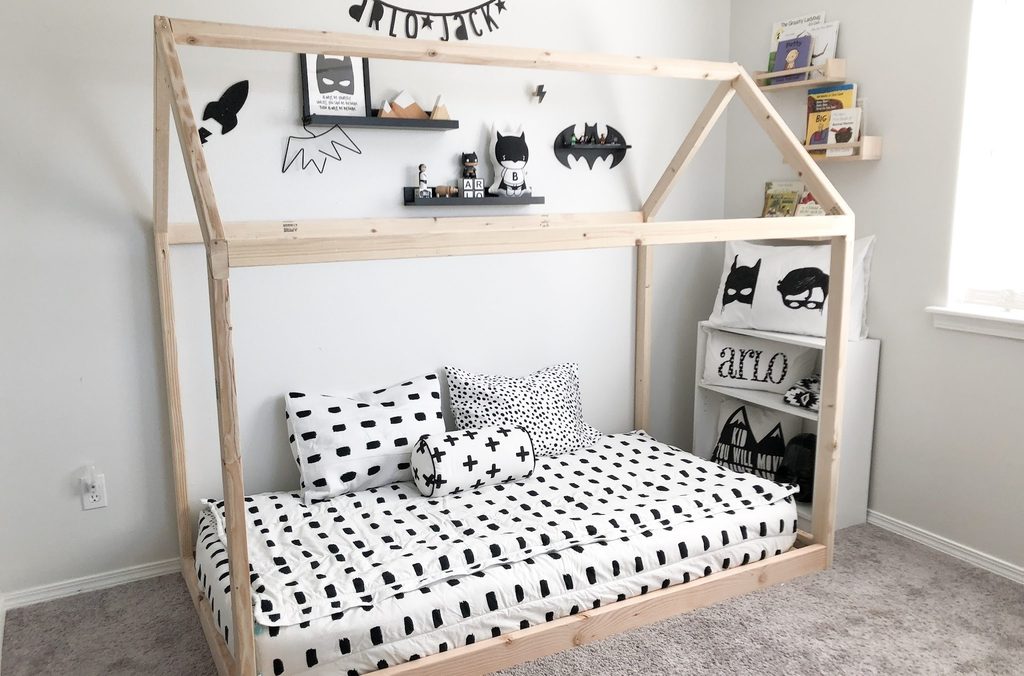
A house-shaped frame introduces height without placing the mattress on an elevated platform. This pale wooden example uses straight corner posts, sloping roof members, and an open ridge above a low rectangular base.
Leaving the roof uncovered keeps the construction readable and allows the wall decor to remain visible through it. The repeated timber sections give the bed an architectural outline without solid upper panels.
For a child’s room, choose a design appropriate to the child’s age and have its stability, openings, mattress fit, and overall safety assessed. Do not treat overhead rails as climbing equipment or assume a low mattress removes every risk.
Simple bedding helps the roof shape stand out while the surrounding floor stays open and usable.