
A cramped bedroom often needs better use of its edges, not another piece of furniture in the middle. These Small Bedroom Ideas show how small, practical choices can add comfort and personality while keeping the floor usable.
Make a reading corner with a folding chair, bring greenery near the window, or soften the bedside with a small rug.
You’ll also find simple ways to shape the room’s look with wall-matching curtains, repeated color accents, and a patterned duvet—details that can make a compact space feel considered without adding clutter.
A Folding Chair for Occasional Reading
Credits: Instagram
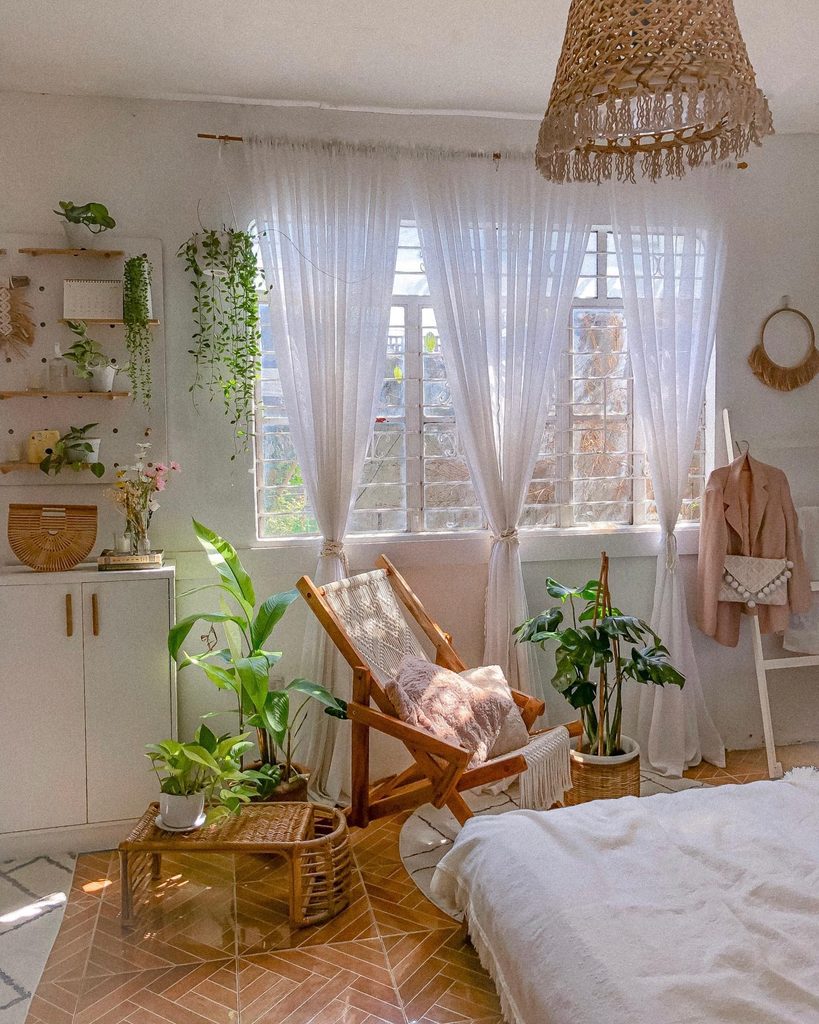
Sometimes the missing comfort is simply somewhere to sit that is not the mattress. Dana’s bedroom places a wood sling chair beside the window, making a little reading spot within an otherwise busy corner.
Its open frame looks lighter than an upholstered armchair. For a similar arrangement, choose a folding model that you can carry and store easily when the floor needs clearing.
Check the chair in its open position before buying, including the space your legs occupy. One cushion is enough to soften the seat without creating another pile to manage.
Keep a reading light within reach, and resist surrounding the chair with so many plants or baskets that moving it becomes a project every time you need room.
A Collected Gallery Above the Dresser
Credits: Instagram
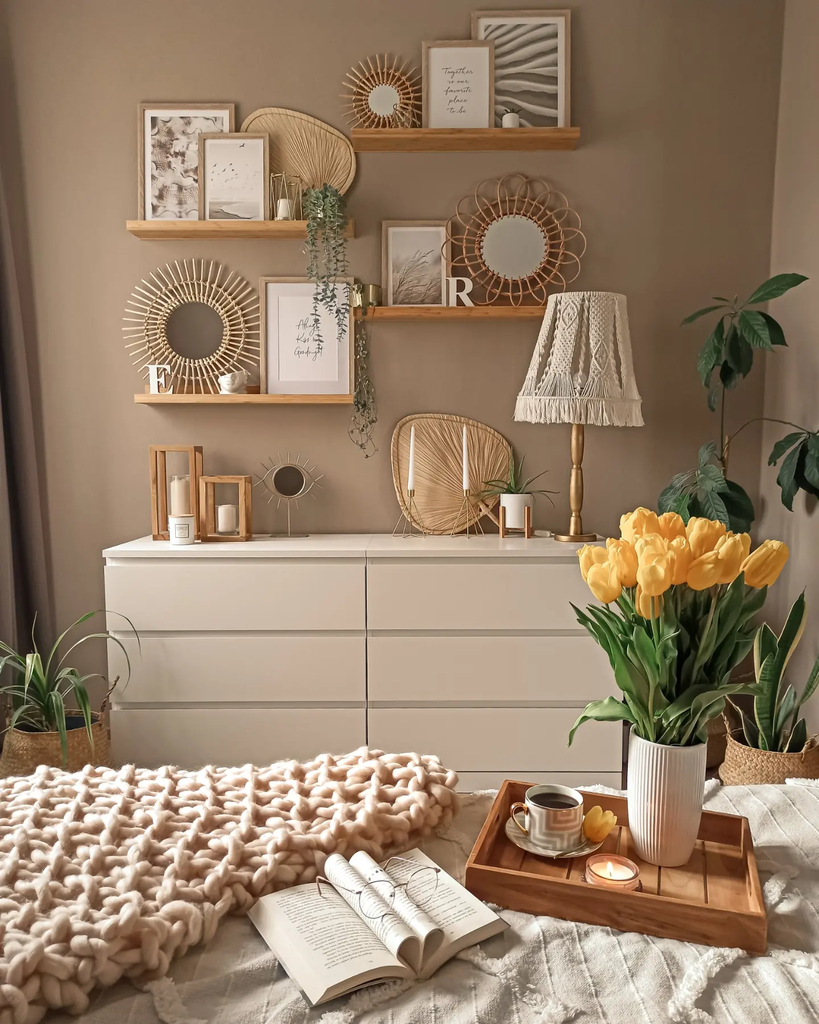
Personal keepsakes need a boundary more than they need another piece of furniture. In Ewa’s bedroom, a group of prints, round woven mirrors, and a trailing plant gathers above the white dresser.
Short staggered ledges give different objects a common place to belong. The restrained beige palette helps the varied shapes feel connected.
Try arranging your own frames and keepsakes on the floor first, keeping the total display within the width of the furniture below. Leave open spaces so each object remains recognizable.
Secure ledges and frames appropriately for your walls, and keep everyday dresser space available underneath. A gallery like this can evolve with new photographs or seasonal artwork while the room’s larger furnishings stay exactly where they are.
Hanging Greenery Near the Window
Credits: Instagram
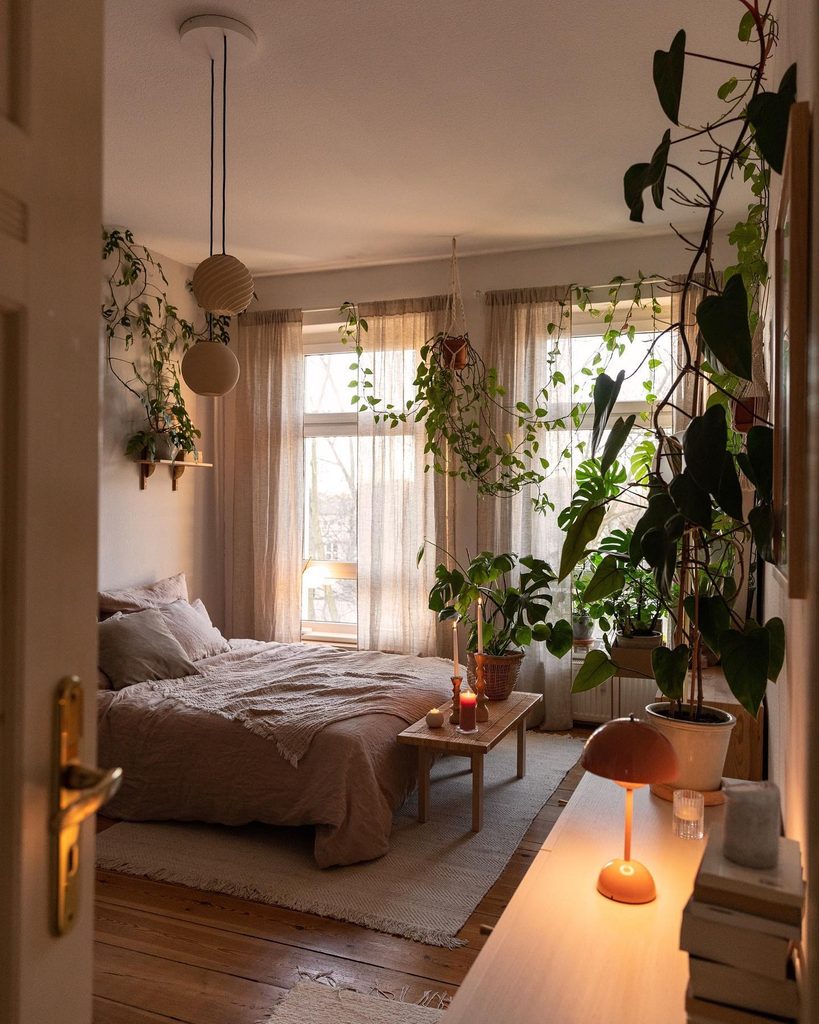
Look toward the window when the floor feels too crowded for another plant stand. Caroline Reichel lets trailing greenery occupy the upper part of her bedroom, where hanging pots bring leaves into the light without adding another cabinet or table.
The effect suits a compact room because the foliage becomes part of the view. Begin with one plant whose light requirements match that window, then choose a secure support rated for the filled pot.
Think about watering before deciding on the height; a reachable plant is easier to maintain than an impressive inaccessible one. Keep vines away from curtains and walking routes.
You can enjoy the same leafy feeling with a modest arrangement, leaving the bed and floor comfortably usable.
Curtains That Blend With the Walls
Credits: Instagram
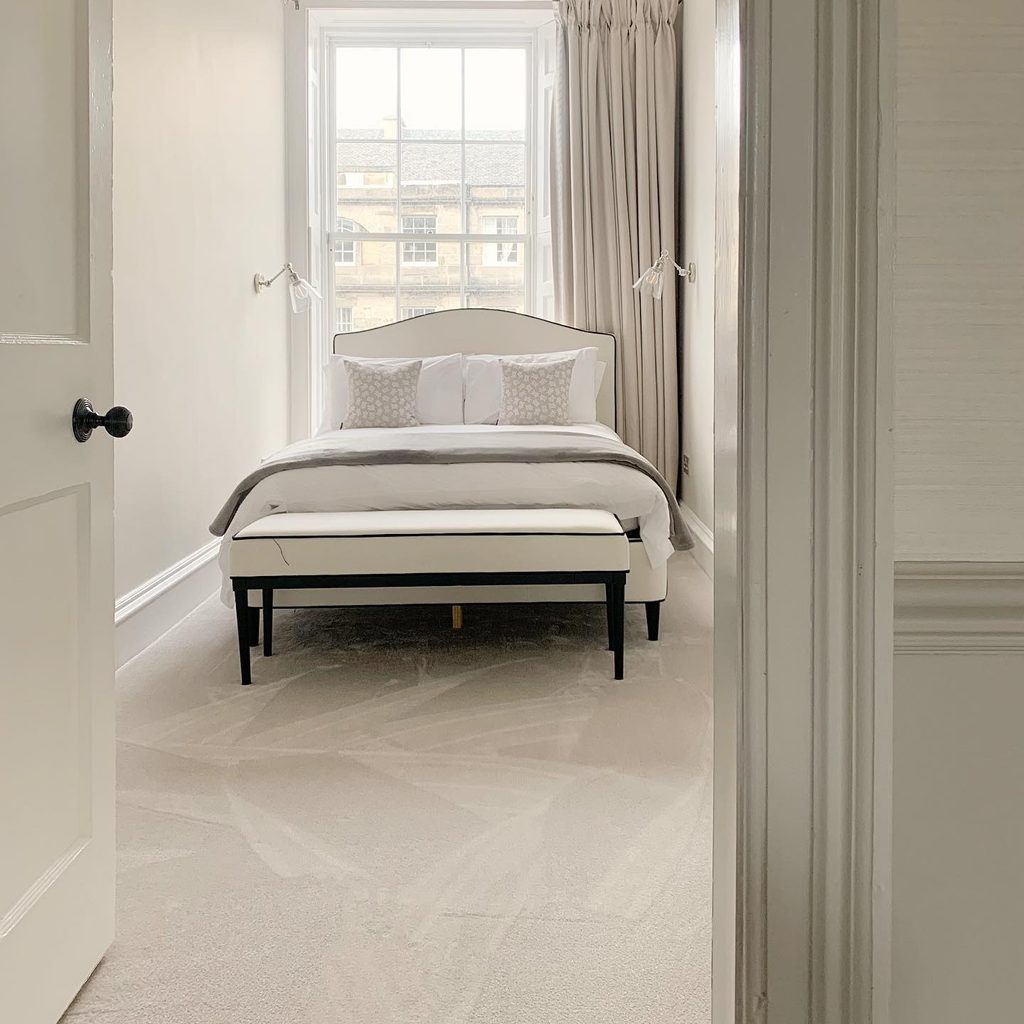
Quiet transitions can make a narrow bedroom feel less divided into sections. Lara’s room pairs beige curtains with similarly pale walls, while white bedding and neutral carpeting continue the soft background.
The window still has definition, but its fabric does not demand attention from across the room. Bring paint samples beside curtain swatches in daylight and evening light before choosing a close match.
Exact sameness is unnecessary; look for compatible warm or cool undertones instead. Hang enough fabric for the panels to close comfortably, and check that they do not interfere with nearby furniture.
This approach leaves room for contrasts, such as the black bench legs in the photograph, which give the gentle palette a clear outline without overwhelming it.
A Bottom-Up Blind for Daylight and Privacy
Credits: Instagram
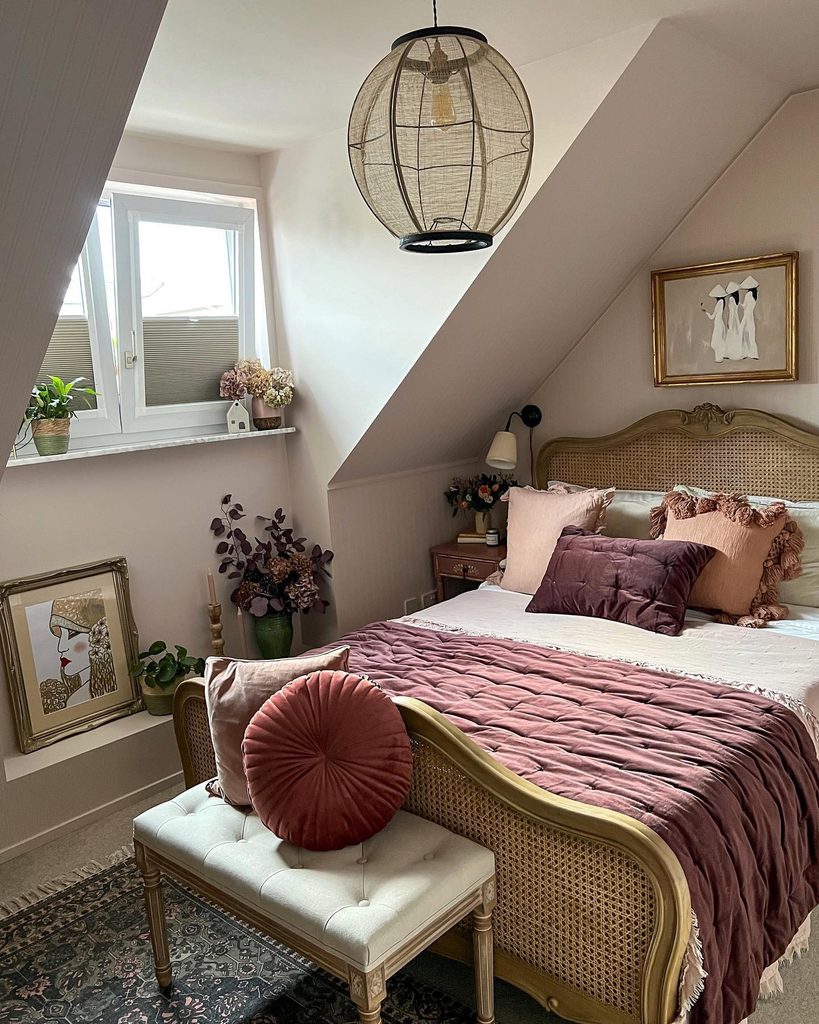
Nearby buildings need not dictate your window treatment. Sarah Doyle’s compact bedroom uses a pleated blind that rises from the bottom, screening the lower glass while leaving daylight available above.
That arrangement is useful when a nearby building or sidewalk overlooks the room. Her curtain-free window also leaves the surrounding sloped walls visually simple.
Before choosing a similar blind, check which systems fit your window frame and opening mechanism; the photographed version was selected for tilt-and-turn windows. Test how much screening you need while standing and while lying in bed.
If you need darkness for sleep, consider that separately when selecting the fabric. A practical window treatment should accommodate both daytime use and your nighttime routine without making either difficult.
A Small Soft Rug Beside the Bed
Credits: Instagram
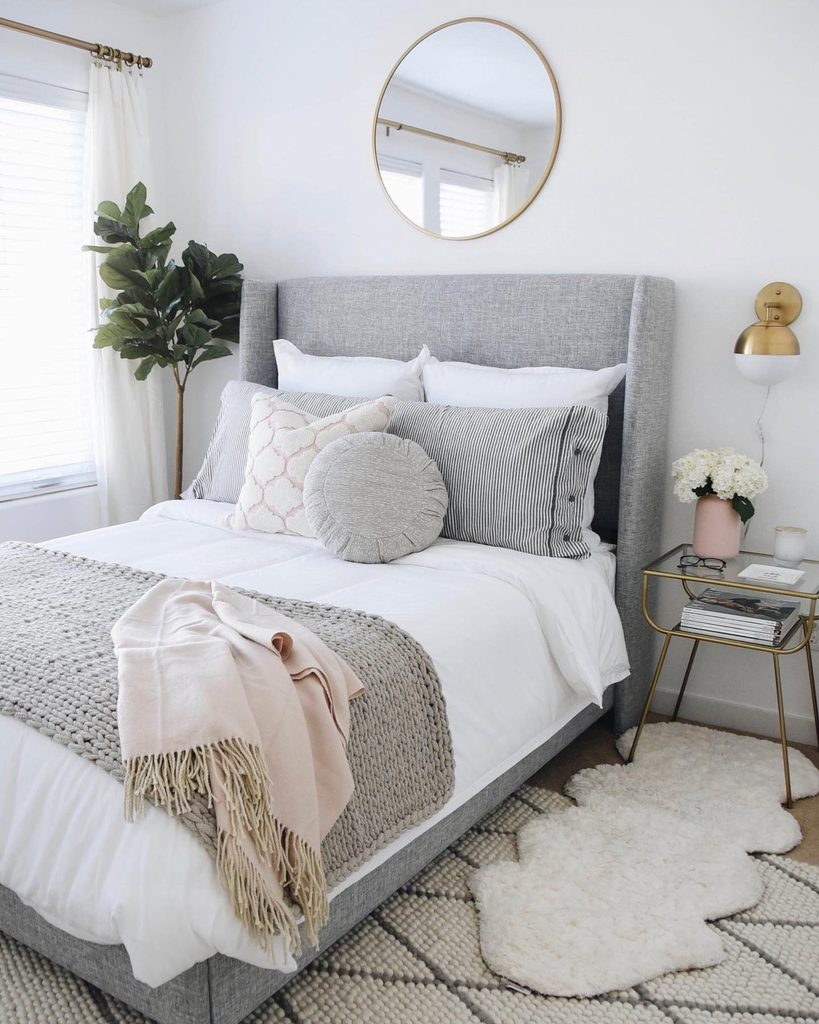
Getting out of bed feels nicer when your feet find a soft landing. Crystalin Marie layers a fluffy white rug beside her gray upholstered bed, over a larger geometric rug.
The extra texture adds comfort exactly where it is used, without requiring a bulky bench or chair. In your room, start by identifying the spot where you normally step down, then choose a rug that fits without curling against furniture.
Use a suitable nonslip layer and make sure nearby drawers and doors still open freely. A washable option may be easier to maintain in a bedroom.
Keep the shape simple if the main rug already has a strong pattern, letting the smaller piece contribute softness rather than another competing design.
One Strong Color Repeated in Small Accents
Credits: Instagram
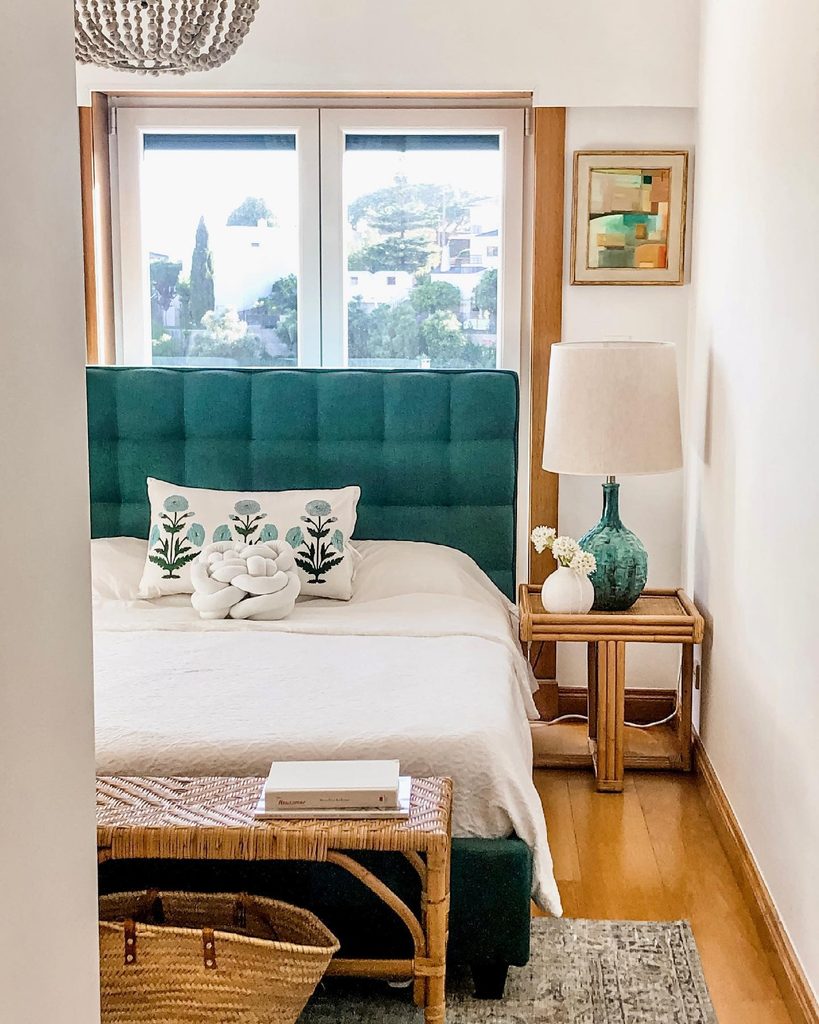
A colorful bed can provide all the direction a small room needs. Christina Toth repeats the green of her upholstered frame in a bottle-shaped lamp and a botanical cushion, while white bedding keeps the center calm.
The narrow bedside table adds warmth without introducing another competing color. To adapt the idea, pick one shade already present in a large furnishing and repeat it in two accessories.
Those touches need not match perfectly; related tones can look collected. Keep the surrounding textiles simpler so the main color remains easy to recognize.
This is especially helpful when you cannot replace a prominent piece. Styling around what you own can make that furniture feel intentional and save both shopping effort and storage space.
A Tray for Easily Moved Bedside Essentials
Credits: Instagram
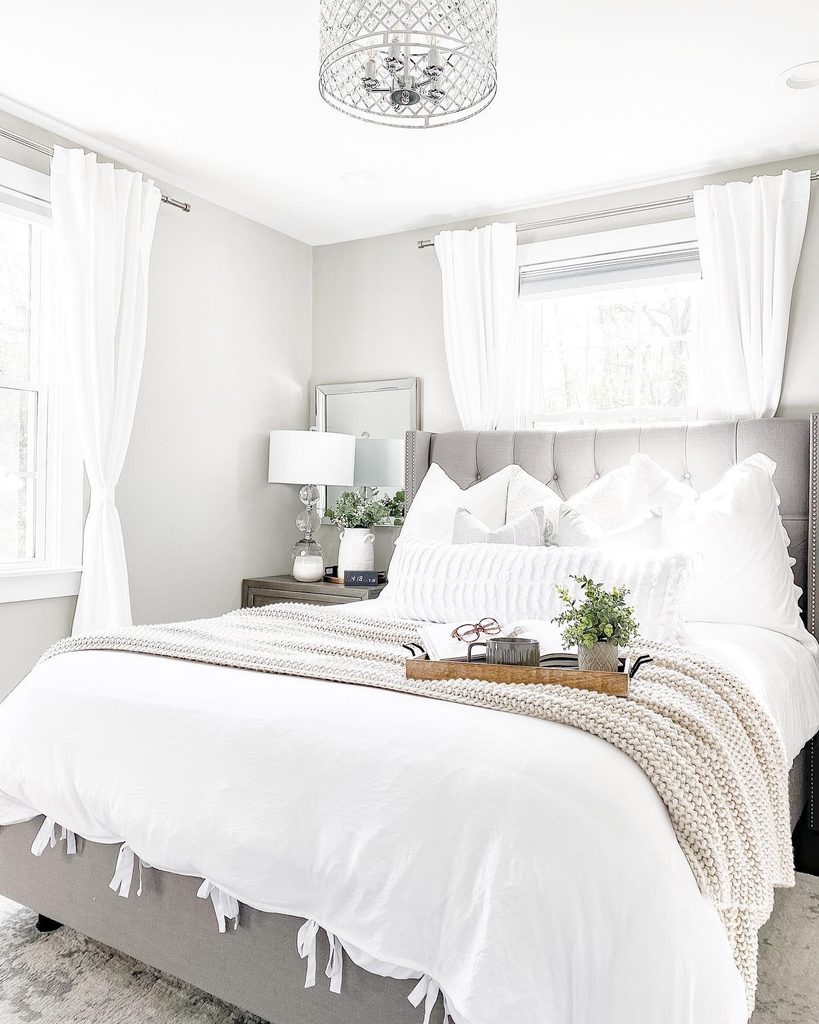
A crowded nightstand is easier to reset when the little things move together. Michelle styles a wooden tray on her bed, showing how one contained grouping can replace several scattered objects.
For everyday use, adapt the idea with a tray for reading glasses, a remote, or a notebook, then give it a stable resting place on existing furniture.
Choose handles or a raised edge that make carrying it comfortable. A narrow bedroom benefits when the tray can move aside during bedmaking or cleaning.
Keep additions secondary to the things you reach for. Avoid treating a soft mattress as a permanent surface for hot drinks.
The aim is a simpler routine, with essentials easy to find and easy to put away.
A Bright Lampshade on an Existing Dresser
Credits: Instagram
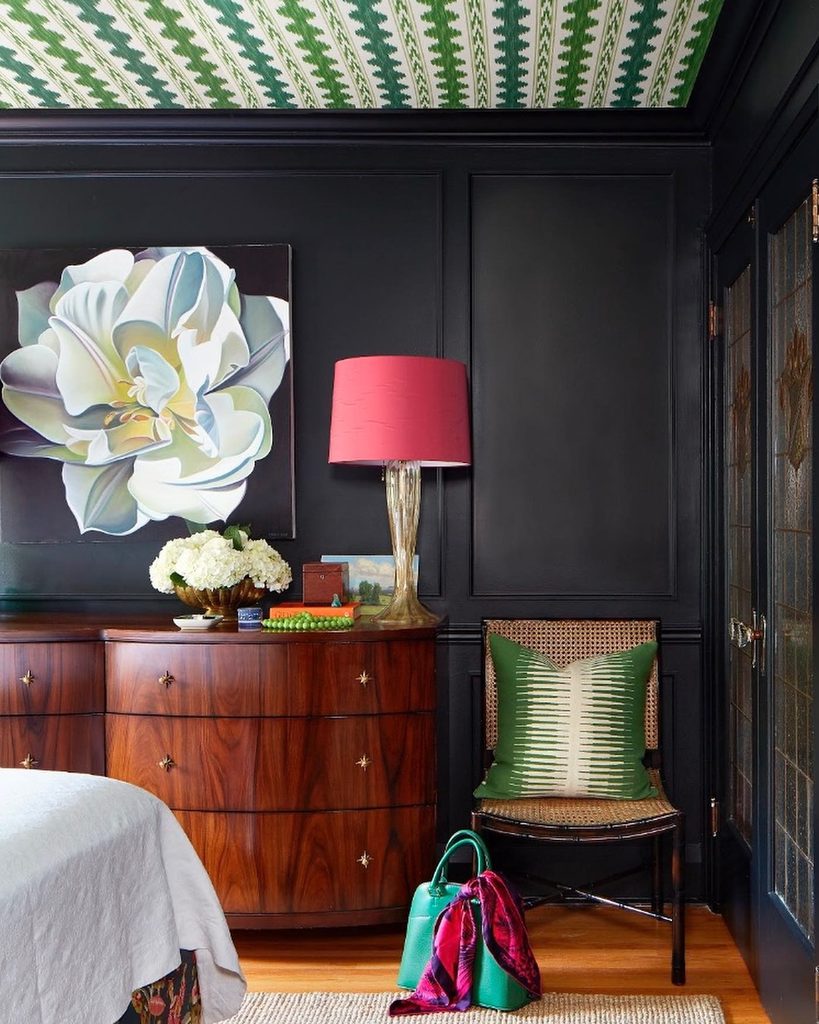
Changing a lampshade can alter the mood of a room without changing its furniture. Cynthia Ferguson’s small bedroom demonstrates the effect with a pink shade against dark walls and a wooden dresser.
The bright fabric gives one necessary object a decorative role, so additional ornaments become less important. Try this on a lamp you use, choosing a shade whose fitting and proportions suit the base.
Check the manufacturer’s requirements for bulb clearance and wattage before making the swap. Consider how the fabric looks with the light switched on as well as off.
A saturated shade can be effective beside quieter bedding or storage furniture. Leave enough clear dresser space around the lamp for the things that belong there each day.
A Short Strand of Lights for Evening Ambience
Credits: Instagram
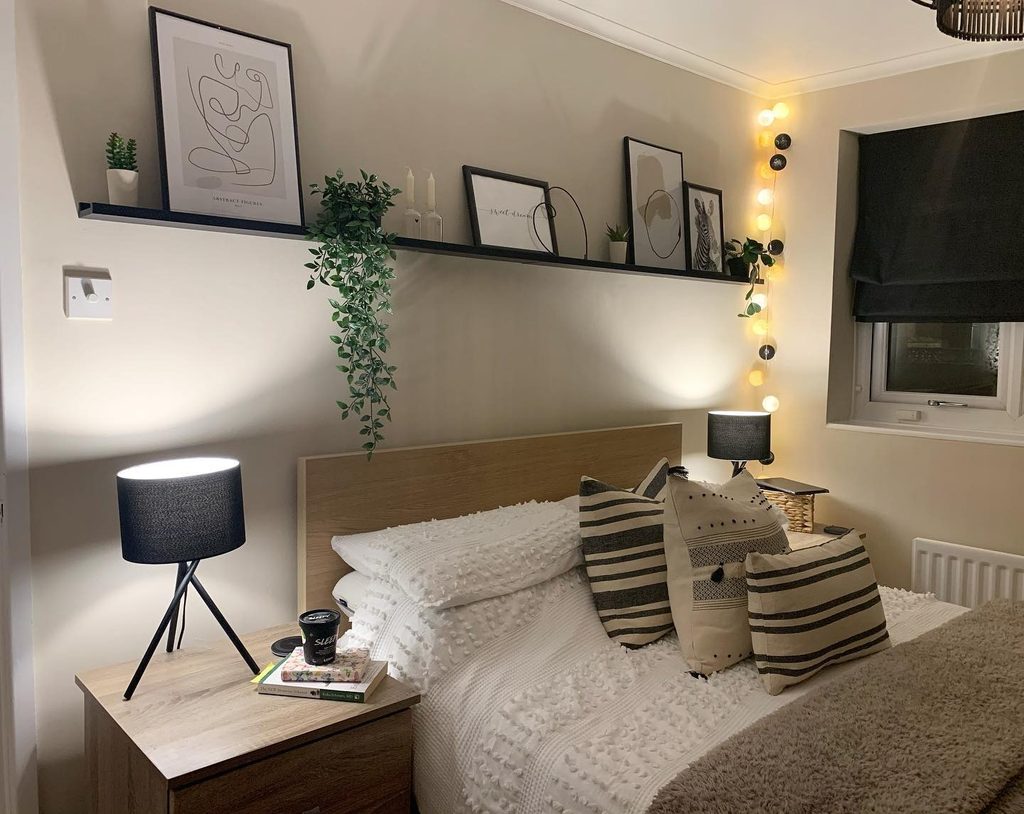
After sunset, gentle illumination can add atmosphere. Tracy Lynch adds a strand of round lights near her bedroom window, supplementing the bedside lamps without using more floor space.
The arrangement makes an accent beside the dark blind and pale walls. To try it, select lights designed for indoor use and follow their mounting instructions, keeping cords tidy and away from bedding.
Low-heat lights are a sensible choice near decorative materials, but they still need the clearances specified by their maker. Treat this glow as background lighting rather than your only reading source.
A switch or timer makes the arrangement easier to live with. Keep the strand restrained so the room feels restful when the rest of the lights go down.
A Small, Deliberate Mix of Pillows
Credits: Instagram
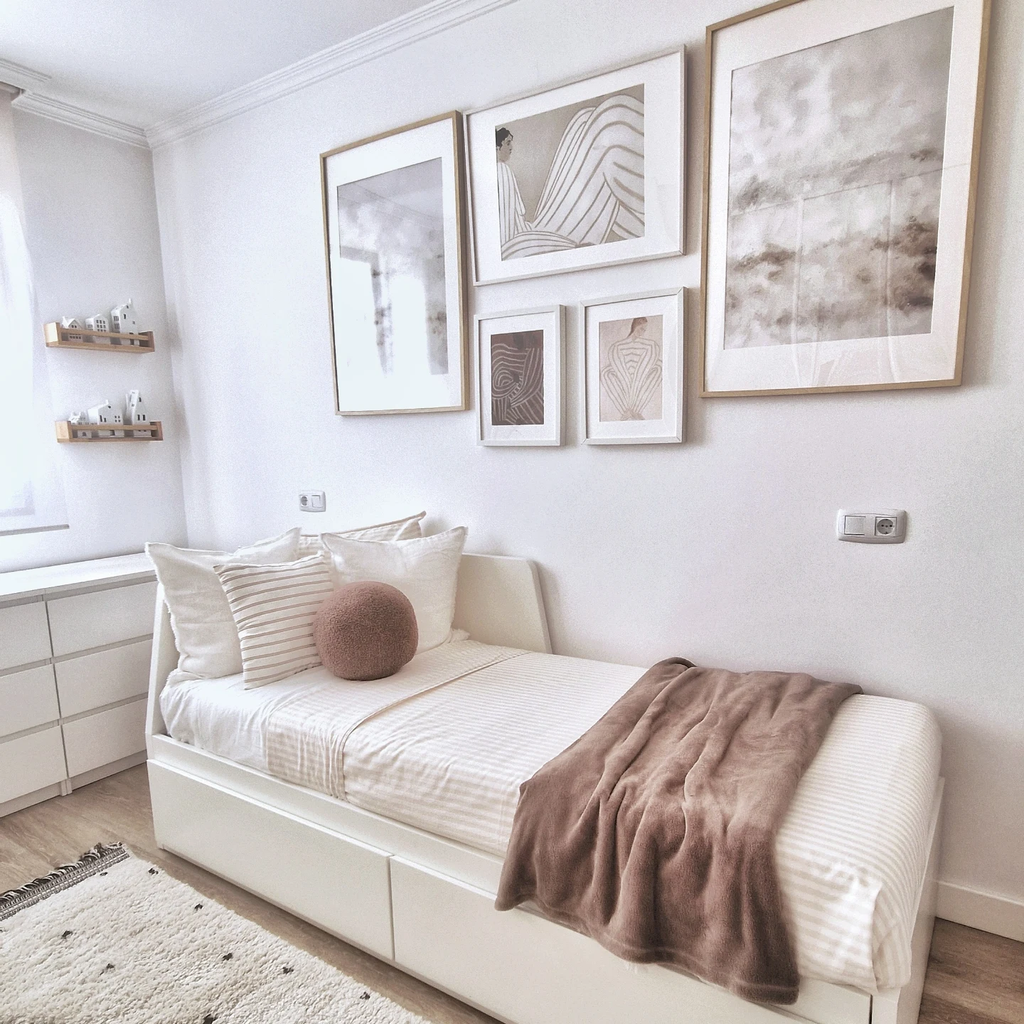
Too many cushions can turn a small bed into a nightly chore. This room from Little Ohana Deco keeps its palette restrained and varies the shapes instead, pairing pale square pillows with a striped rectangle and one round brown cushion.
The different forms add interest while the bed remains easy to understand as a sleeping place. Work with the pillows you enjoy using, then remove any that exist only to complete a crowded arrangement.
Think about where extra pillows will go at night before buying more. A limited group is easier to straighten in the morning and takes less storage space between changes.
Let subtle texture or a single contrasting shape do the work that a larger pile might attempt.
A Patterned Duvet That Does the Decorating
Credits: Instagram
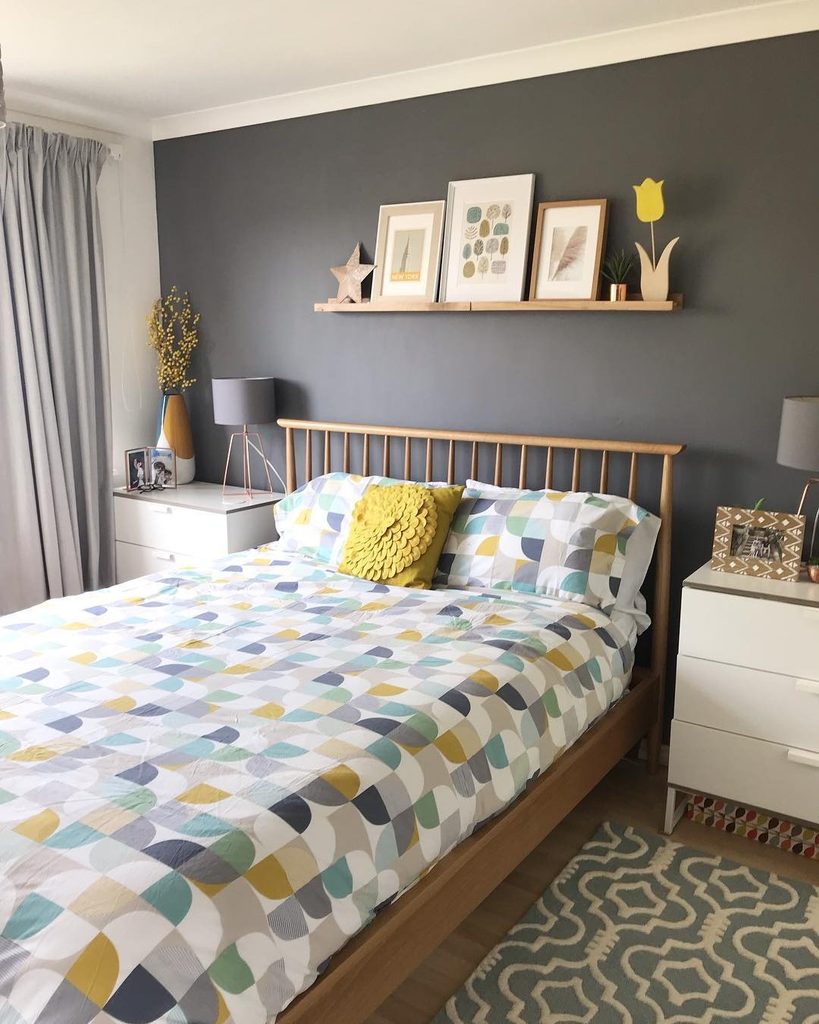
Your largest textile can carry the room’s personality itself. In this compact bedroom, a geometric duvet brings yellow, green, blue, and gray into a simple arrangement of wood, white furniture, and a dark wall.
Matching pillowcases make the pattern feel deliberate, while one plain yellow cushion gives the eye somewhere to pause. A new cover can refresh a small room without adding objects to shelves or floors.
Choose a pattern you will enjoy seeing across a broad surface, and check its care instructions against your laundry routine. Keep surrounding prints quieter if the bedding is busy.
When making the bed, smooth the cover within the frame’s outline so excess fabric does not spill into the walkway or conceal space below.
A Petite Nightstand With One Useful Drawer
Credits: Instagram
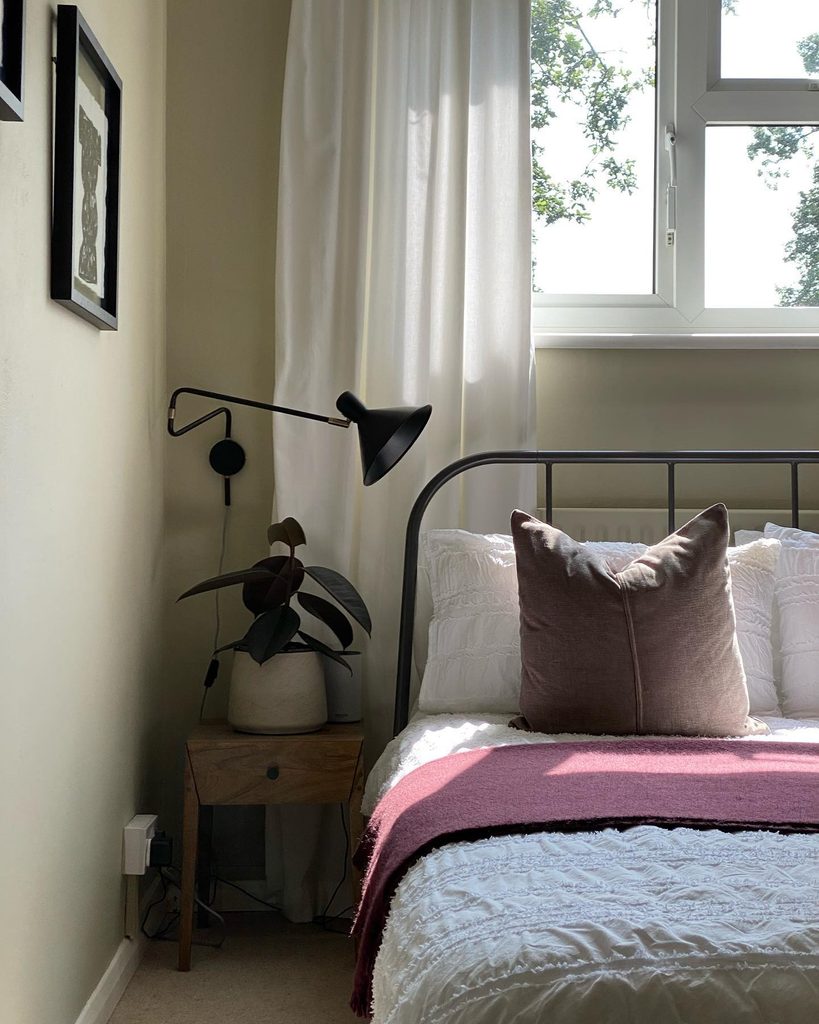
The narrow gap beside a mattress can still hold something useful. Becky’s spare bedroom fits a wooden nightstand with one drawer and slender legs between the bed and wall.
Its small footprint leaves the arrangement feeling open, while the drawer offers somewhere to put the less attractive essentials. Before choosing a similar piece, measure the available space and allow for opening the drawer without catching bedding.
Decide what needs to live there, such as glasses or a charging cable, rather than buying storage without a purpose. Keep the top mostly clear; a plant or small object should leave space for essentials.
A separate wall light, as shown here, can help when a table lamp would occupy nearly the entire surface.
A Peg Rail With a Small Hanging Basket
Credits: Instagram
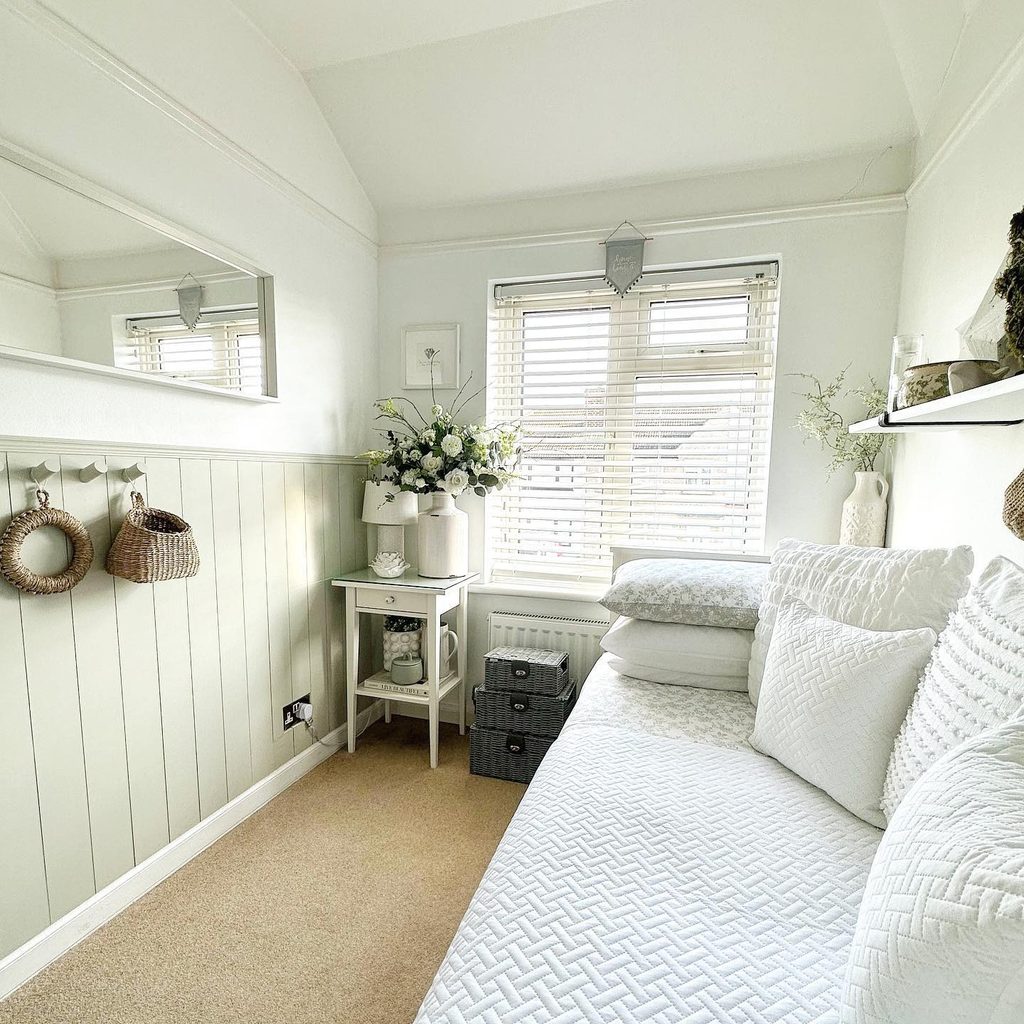
Everyday accessories are easy to lose when every surface has several jobs. Samantha’s narrow bedroom gives a woven basket a home on a short peg rail, using a slim strip of wall without adding a dresser.
The basket brings texture to the pale green paneling. A similar setup could hold a sleep mask, soft scarf, or another lightweight item you need.
Choose a basket that sits close to the wall and does not project into the route beside the bed. Attach the rail appropriately and stay within its load limits.
Leave some pegs empty so the arrangement remains easy to use. This works best as a designated spot for daily essentials, with sorting to prevent it becoming a crowded catchall.
A Bedroom Theme Carried by Replaceable Accessories
Credits: Instagram
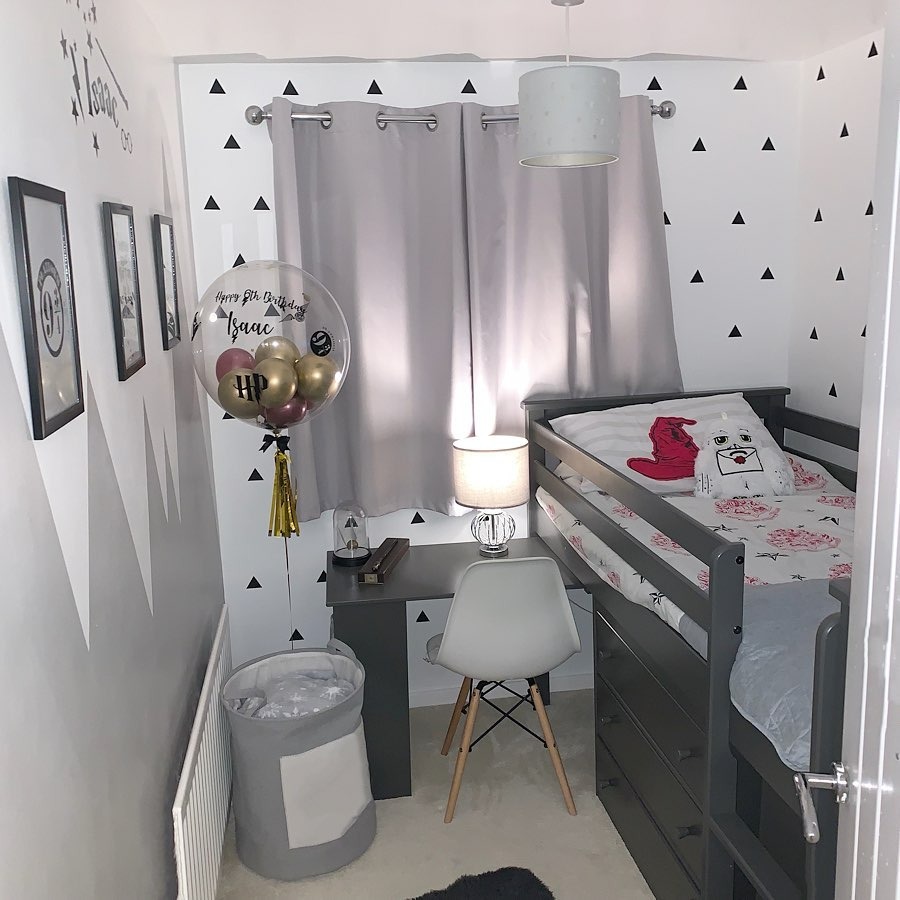
Interests change faster than furniture, especially in a child’s small bedroom. Danielle Dixon keeps the elements gray, black, and white, then introduces a Harry Potter theme through bedding and framed pictures.
Those smaller pieces carry the personality without requiring a different bed or new paint. This approach also suits other interests: start with essentials, then choose a few accessories that can be replaced independently.
Keep artwork in standard frames so swapping prints is straightforward. Store only the previous pieces worth using again, rather than accumulating every version of the room.
A limited theme also leaves space for books, schoolwork, and everyday belongings. As preferences develop, the room can change while its useful foundation continues to serve the person sleeping there.
A Tall Mirror Beside the Bed
Credits: Instagram
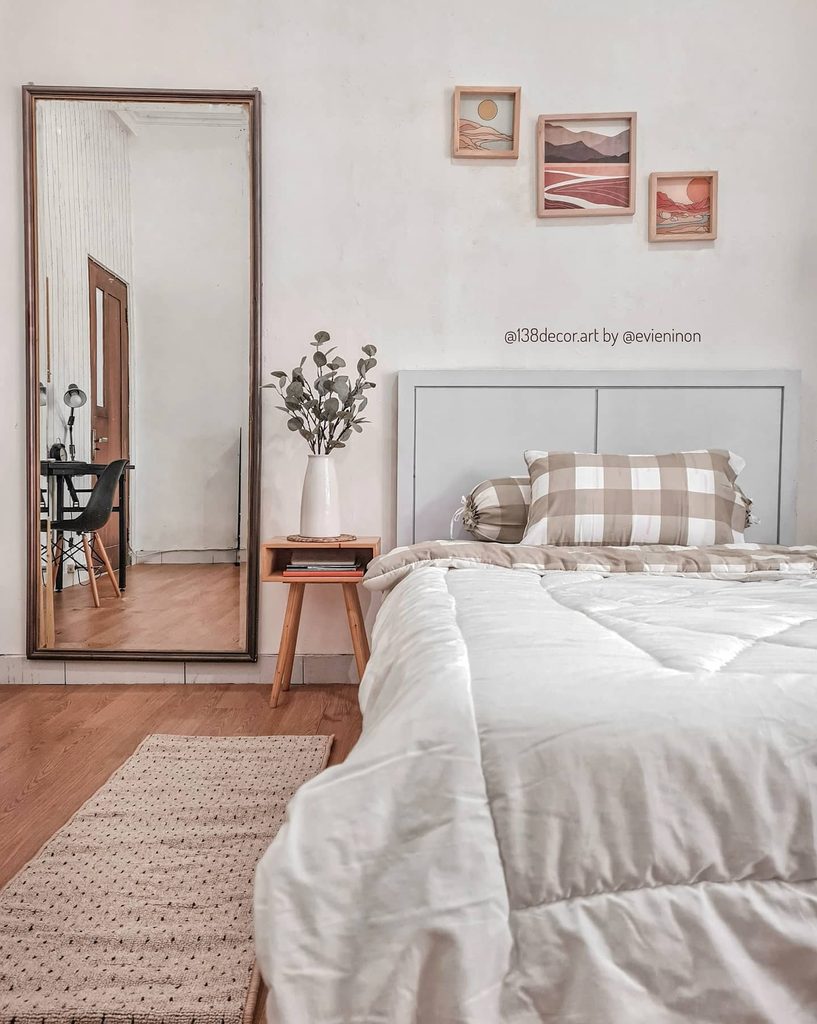
A mirror can give a narrow bedroom another view without adding another bulky furnishing. Here, a tall framed mirror beside the bed reflects a desk, chair, and doorway on the opposite side.
Its slim outline fits alongside a petite wooden table, while the reflection makes the corner feel less enclosed. Try a few positions before installing your own, checking the view from the bed as well as from the doorway.
Reflect a reasonably clear area rather than the room’s busiest storage spot. Choose appropriate fixings for the mirror’s weight and your wall, following the manufacturer’s instructions.
Leave enough standing room to use it while dressing. This gives one wall feature a practical daily role alongside its effect on the space.
A Woven Rollout Chest Under the Bed
Credits: Instagram
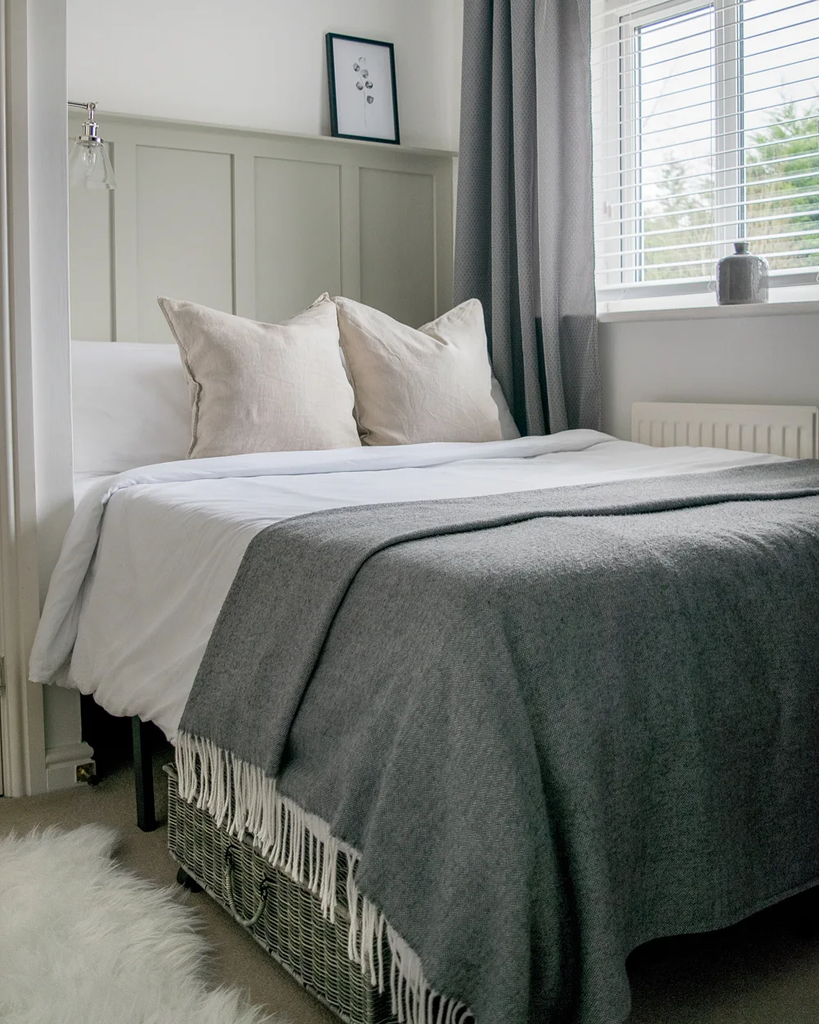
Useful storage does not have to look like a row of plastic tubs. Rebecca places a woven rollout chest beneath her bed, where its texture fits with neutral bedding and pale wall paneling.
The chest uses a gap and remains part of the room’s visual character when it is visible. For your own bed, check clearance along the route before buying, including any crossbars and the room needed to pull a container out.
Choose handles you can reach without moving furniture. Store clean, dry items together by category so retrieving a blanket does not become a search through belongings.
Leave room for cleaning underneath. The most successful container is one you can access easily enough to use throughout the year.
A Soft Textile Hanging on an Empty Wall
Credits: Instagram
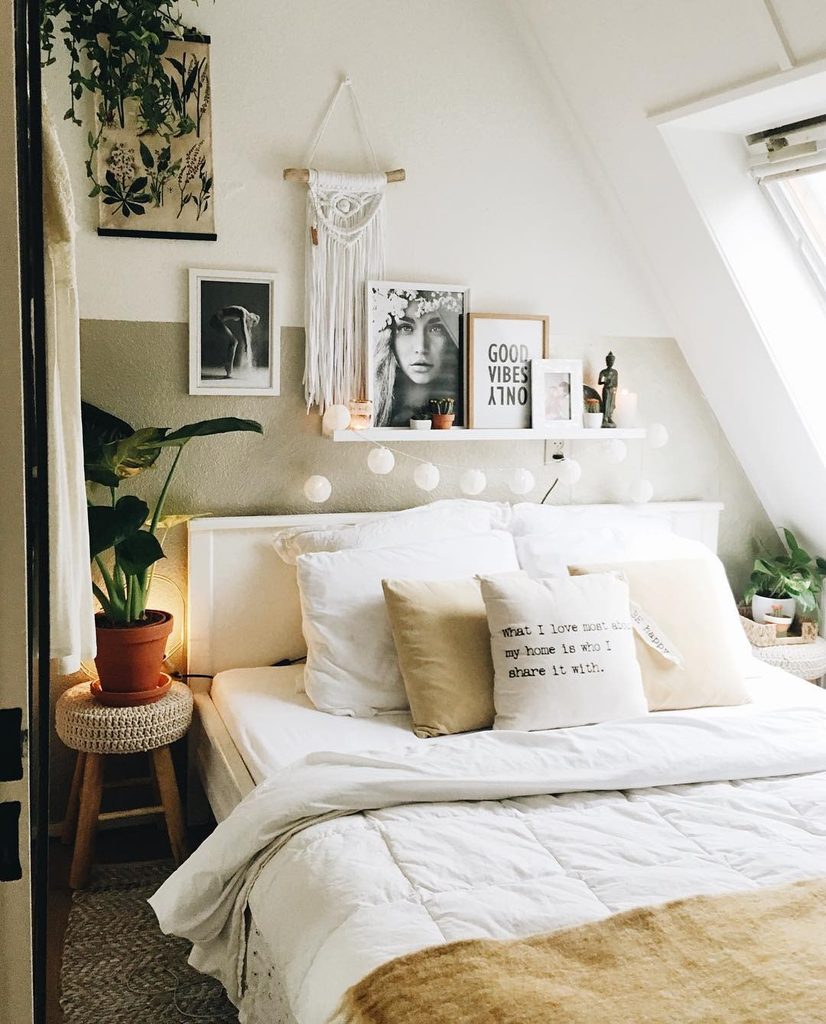
Texture can move onto the wall when there is nowhere to put another furnishing. Sheila’s tiny bedroom includes a cream knotted hanging above the bed, bringing fringe and knotted detail into a collection of framed pictures.
Its narrow shape adds visual rhythm without demanding floor space. For a similar effect, choose one textile in a color that works with the bedding, then give it enough breathing room to show its outline.
Secure it with suitable hardware and keep it clear of lights or other heat sources. A wall hanging can be especially useful when you want softness without more cushions to remove every night.
Consider how easily it can be cleaned, since decorative fabric still needs attention in a bedroom.
A Compact Desk With a Rounded Front
Credits: Instagram
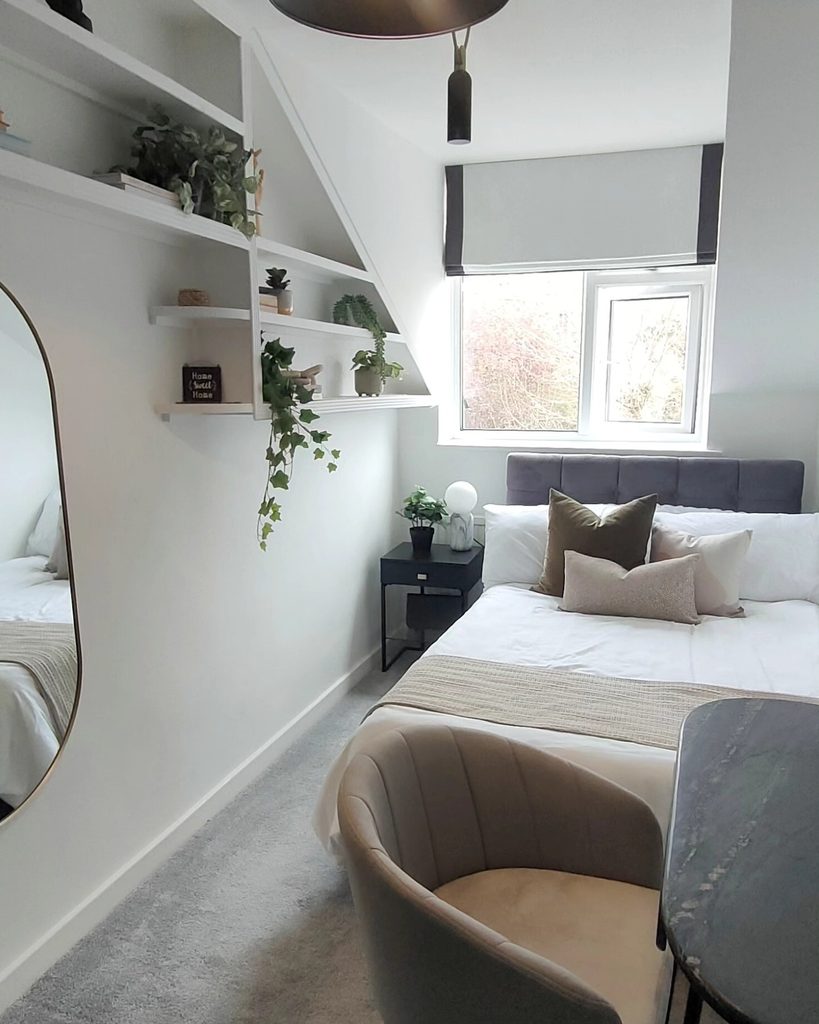
Work or getting ready may call for a surface smaller than a conventional desk. Aman Garcha’s compact bedroom project includes a dark desk with a rounded front and a curved chair.
Both pieces have curves that soften the area beside the bed. When adapting this idea, test the furniture together so your knees fit comfortably and the chair can tuck in as far as needed.
Reserve the desktop for the task at hand, using a container to gather supplies afterward. A rounded edge can make a tight route feel less awkward, although the furniture still needs adequate clearance.
If the bedroom serves several purposes, choose a seat you can also use elsewhere, giving this setup more flexibility between busy days.
One Extra Blanket for Changing Temperatures
Credits: Instagram
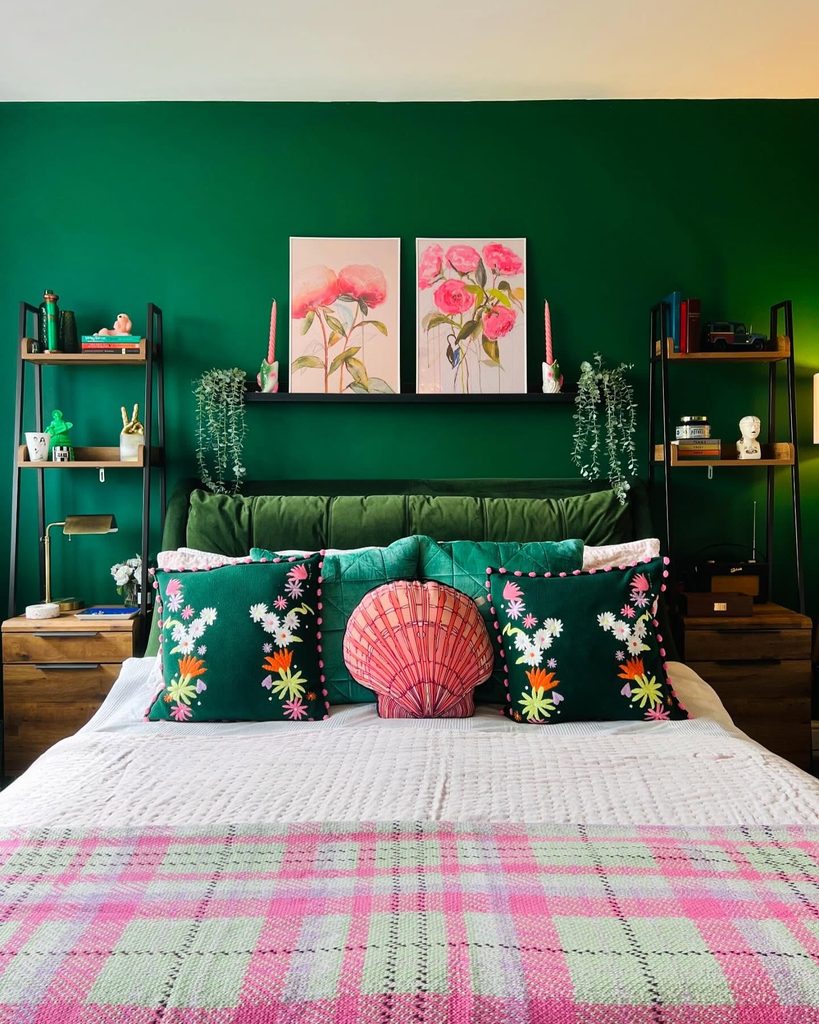
Comfort is easier to adjust when bedding comes in manageable layers. Katie Hughes places a patterned blanket over the lower part of her bed, bringing another texture and color into the room without adding furniture.
A separate top layer can be pulled up on a cooler evening or folded away when it is not needed. Choose its weight for how you sleep, and check whether it can be washed.
In a small bedroom, decide where the extra layer will go before introducing more. One blanket is often easier to manage than a stack.
Coordinate it with pillowcases or wall colors, leaving the rest of the bed straightforward. This lets seasonal changes happen through fabric rather than a collection of accessories.