
A 1960s-inspired living room can feel warm and distinctive without relying on a full set of period pieces.
These s Living Room Ideas show how a few thoughtful choices—like mustard upholstery against sculptural wood or a record cabinet dividing an open layout—can bring vintage character into everyday spaces.
You’ll also find ways to balance cognac leather with a graphic rug, frame a fireplace with matching low cabinets, and soften exposed beams with pale seating.
The common thread is a mix of useful storage, clean shapes, and earthy color that feels inviting rather than overly themed.
1. Pair Mustard Upholstery with Sculptural Wood
Credits: Instagram
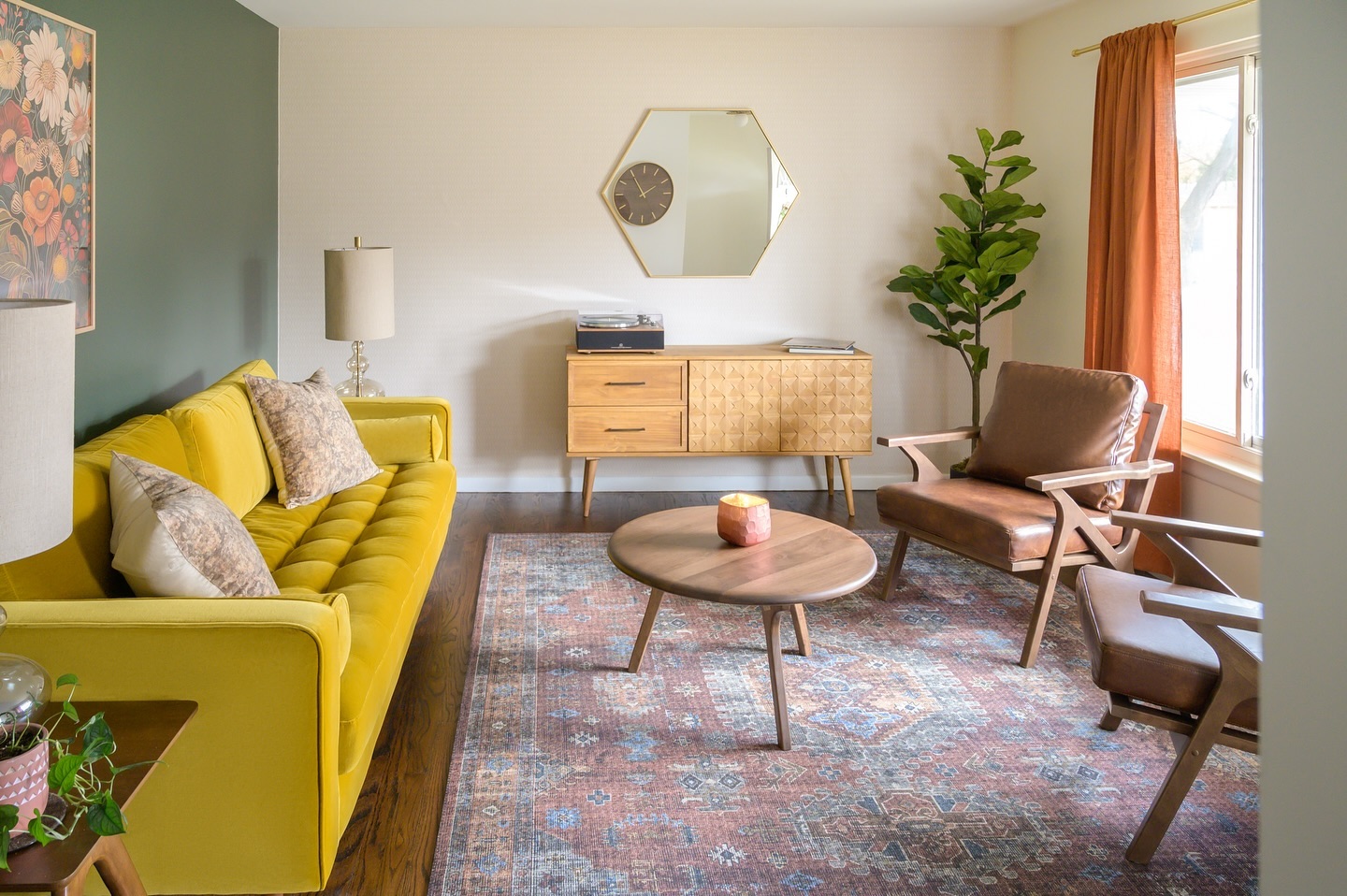
Mustard upholstery, an olive wall, and rust curtains give this room a lively 1960s-inspired palette. The wooden chairs and compact sideboard keep the shapes crisp, while the faded patterned rug softens the contrast.
Start with one strong sofa color, then repeat quieter earthy shades around it instead of matching every textile. A small round coffee table makes the face-to-face arrangement easier to move through.
Notice the record player on the cabinet: functional objects can supply the period mood without filling shelves with novelty decorations. Hang a geometric mirror above a low storage piece to lift the eye.
Choose curtains that reach the floor, and leave the cabinet top mostly clear so its textured doors remain part of the room's appeal.
2. Use a Record Cabinet as a Room Divider
Credits: Instagram
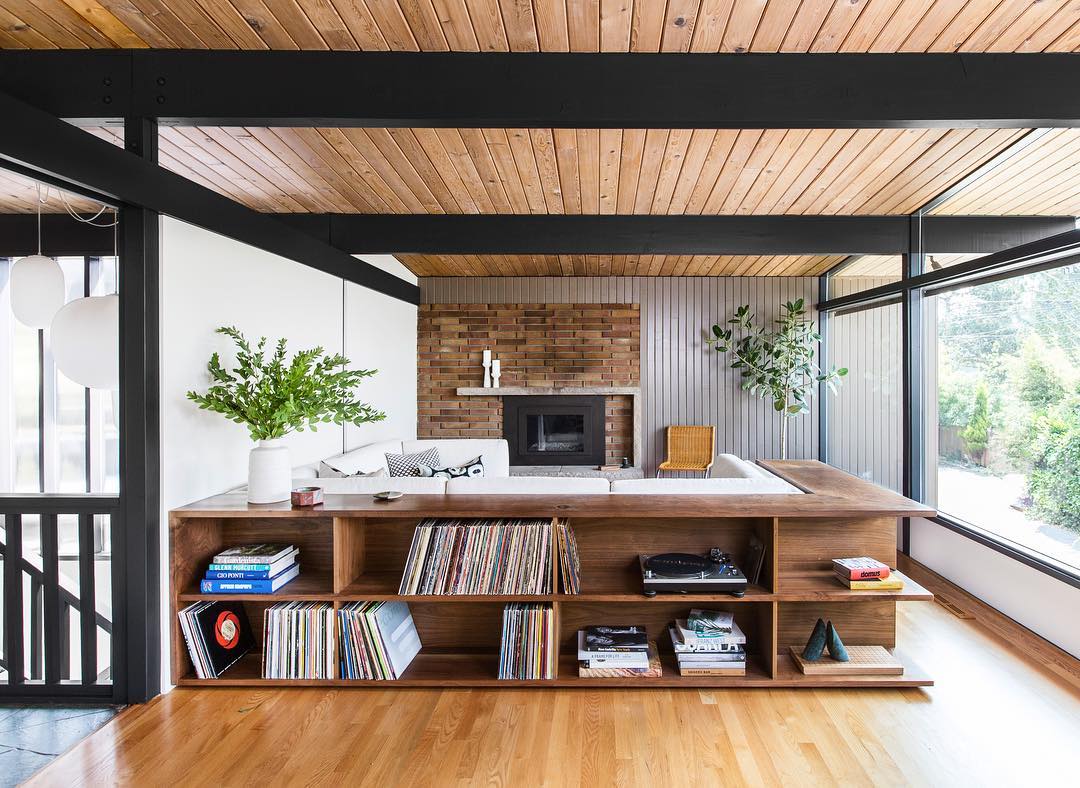
A long, low wooden cabinet separates this sitting area from the circulation space while keeping the fireplace and windows visible. Records fill its open compartments, making everyday listening part of the decoration.
This is a useful 1960s-inspired move for an open layout: position storage behind the sofa instead of building a tall partition. Measure record sleeves and equipment before choosing the shelf depths, and allow ventilation around electronics.
The cabinet's horizontal outline repeats the ceiling beams and window frames, giving the space a clear rhythm. Pale upholstery prevents the timber from becoming overwhelming.
Keep large plants near the edges and select only a few objects for the top, preserving the broad, open view across the room and toward the garden.
3. Combine Cognac Leather with a Graphic Rug
Credits: Instagram
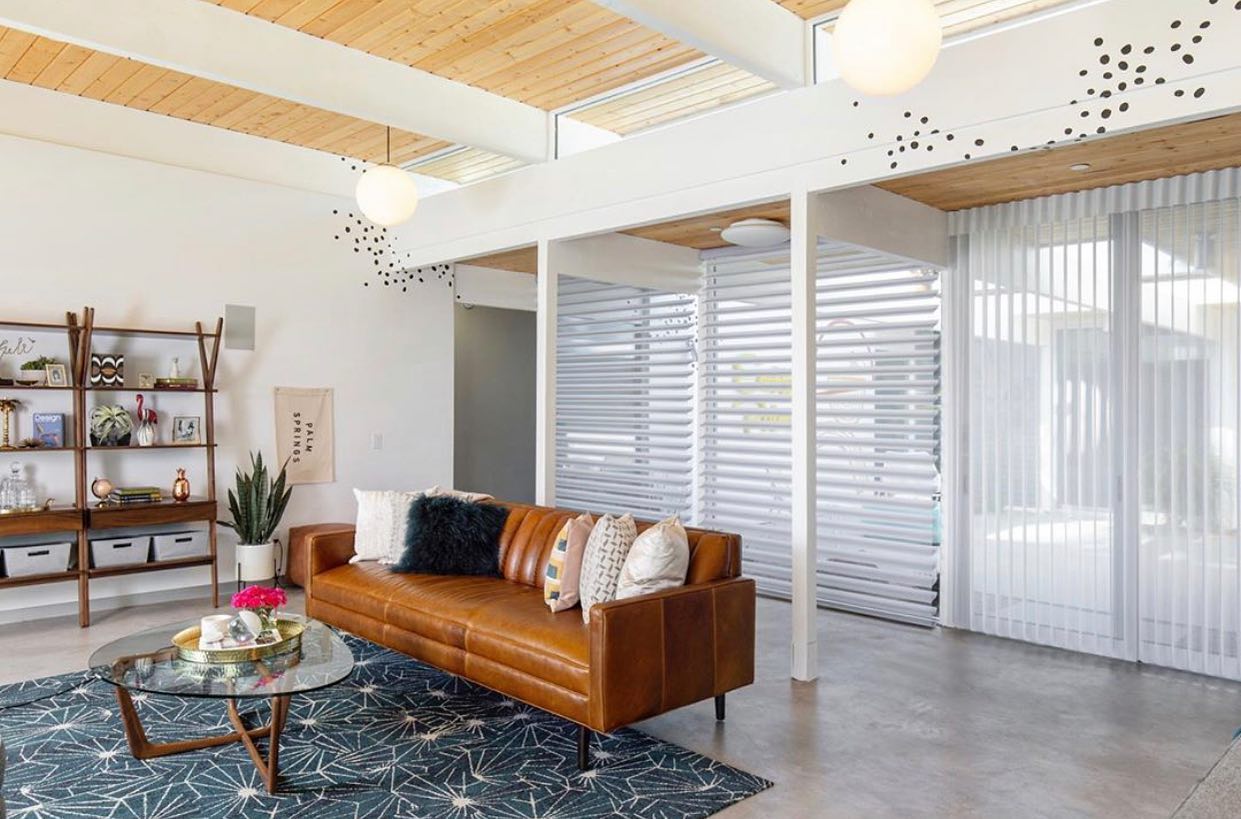
The cognac sofa gives this bright room warmth, while the dark rug introduces an energetic network of pale lines. Together they suggest a 1960s-inspired scheme without requiring colored walls.
A glass coffee table keeps the pattern visible and adds a lighter outline beside the solid leather seating. Borrow the balance by pairing one warm upholstery color with white walls and a dark geometric textile.
The open shelving supplies useful display space without blocking light or competing with the high windows. Group small objects rather than spreading them over every shelf.
Pale blinds preserve the architectural grid and soften daylight. A few varied cushions are enough to relax the sofa; let the furniture legs, rug, and window proportions supply the detail.
4. Frame the Fireplace with Matching Low Cabinets
Credits: Instagram
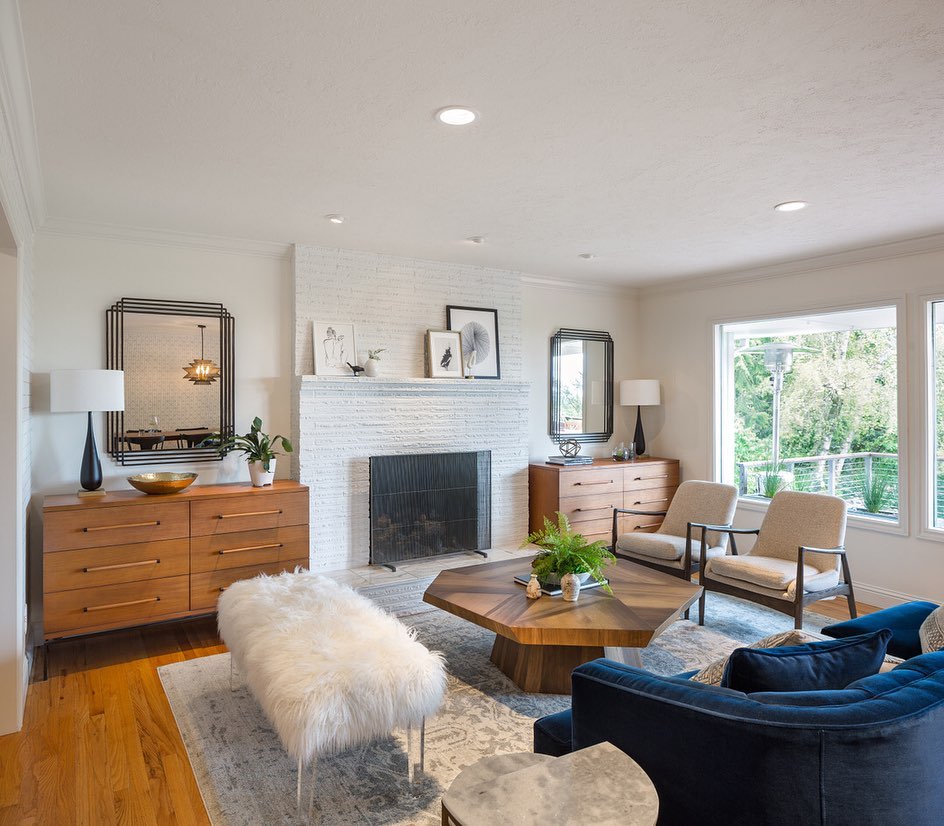
Two wooden chests flank the white brick fireplace, creating a calm framework for this living room's varied seating. Their long drawer fronts and slender legs bring a midcentury note, while matching mirrors and lamps make the composition feel intentional.
You can use this approach when a fireplace needs surrounding storage but built-ins would be too costly. Choose cabinets of similar height and leave enough clearance for safe use of the hearth.
The broad wooden coffee table acts as the central anchor, balancing the smaller furniture outlines. Blue upholstery adds a cool counterpoint to the warm floor and timber.
Keep artwork on the mantel relatively small so the brick remains visible, and use a pale rug to connect the seating arrangement.
5. Soften Exposed Beams with Low Pale Seating
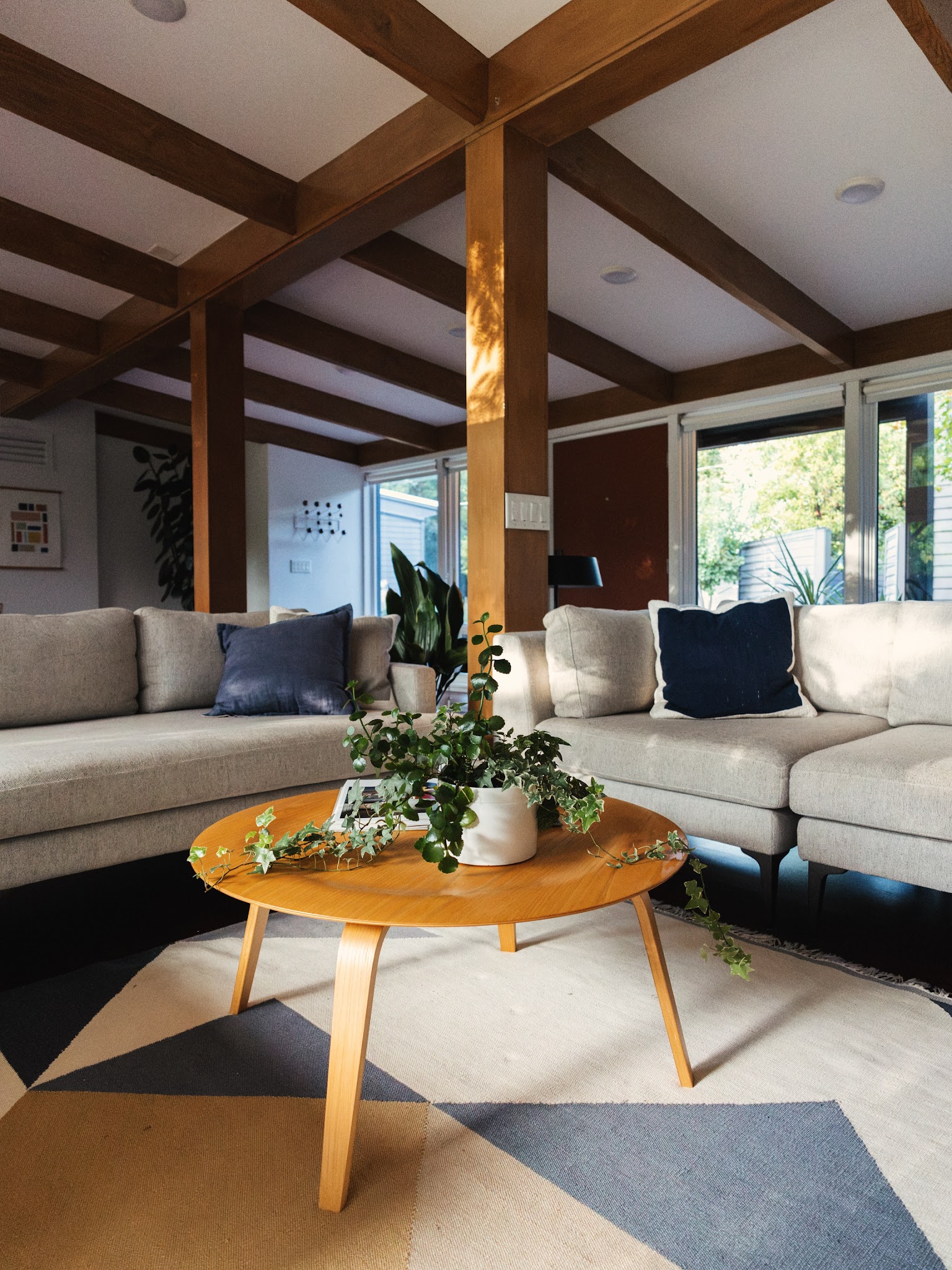
Credits: Instagram
The visible timber framework gives this living room a strong geometric order. Low pale sofas keep the view open beneath the beams, while a honey-colored round table supplies a softer shape in the center.
That combination is an approachable way to build a 1960s-inspired room around existing architecture. Let structural wood remain the dominant material and choose upholstery that contrasts gently with it.
The rug repeats the room's angles in larger, quieter blocks, avoiding a clash of tiny patterns. Dark cushions connect with the furniture feet and add definition to the light seating.
Position plants beside a post or window rather than across the main walkway. A restrained table arrangement leaves the curved wood surface visible and useful for living.
6. Turn a Paneled Wall into Display Storage
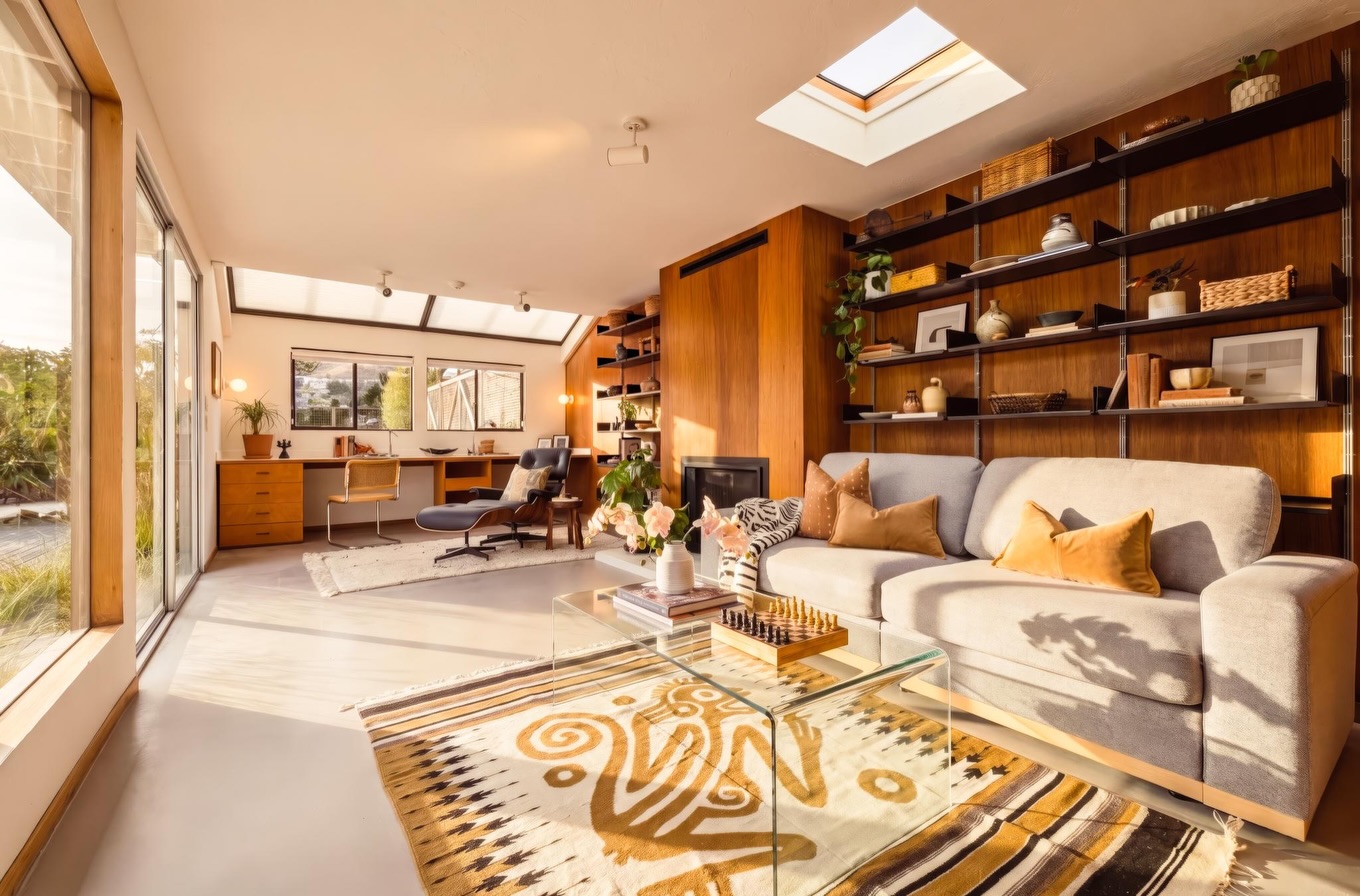
Credits: Instagram
Dark open shelves stand against warm wood paneling in this sunlit room, adding storage without hiding the wall's character. Their repeated horizontal lines complement the low sofa and transparent coffee table.
For a 1960s-inspired version, combine a simple shelving system with a limited mix of baskets, books, pottery, and framed pictures. Leave empty spaces between groups so the timber can still be seen.
A pale sofa keeps the long room light, while mustard cushions connect it to the golden tones underfoot. The clear table allows the graphic rug to carry more visual weight.
Use one rug to define the conversation area and keep the nearby desk visually quieter. This helps working and relaxing coexist without making the room feel overfilled.
7. Create Two Relaxed Seating Zones
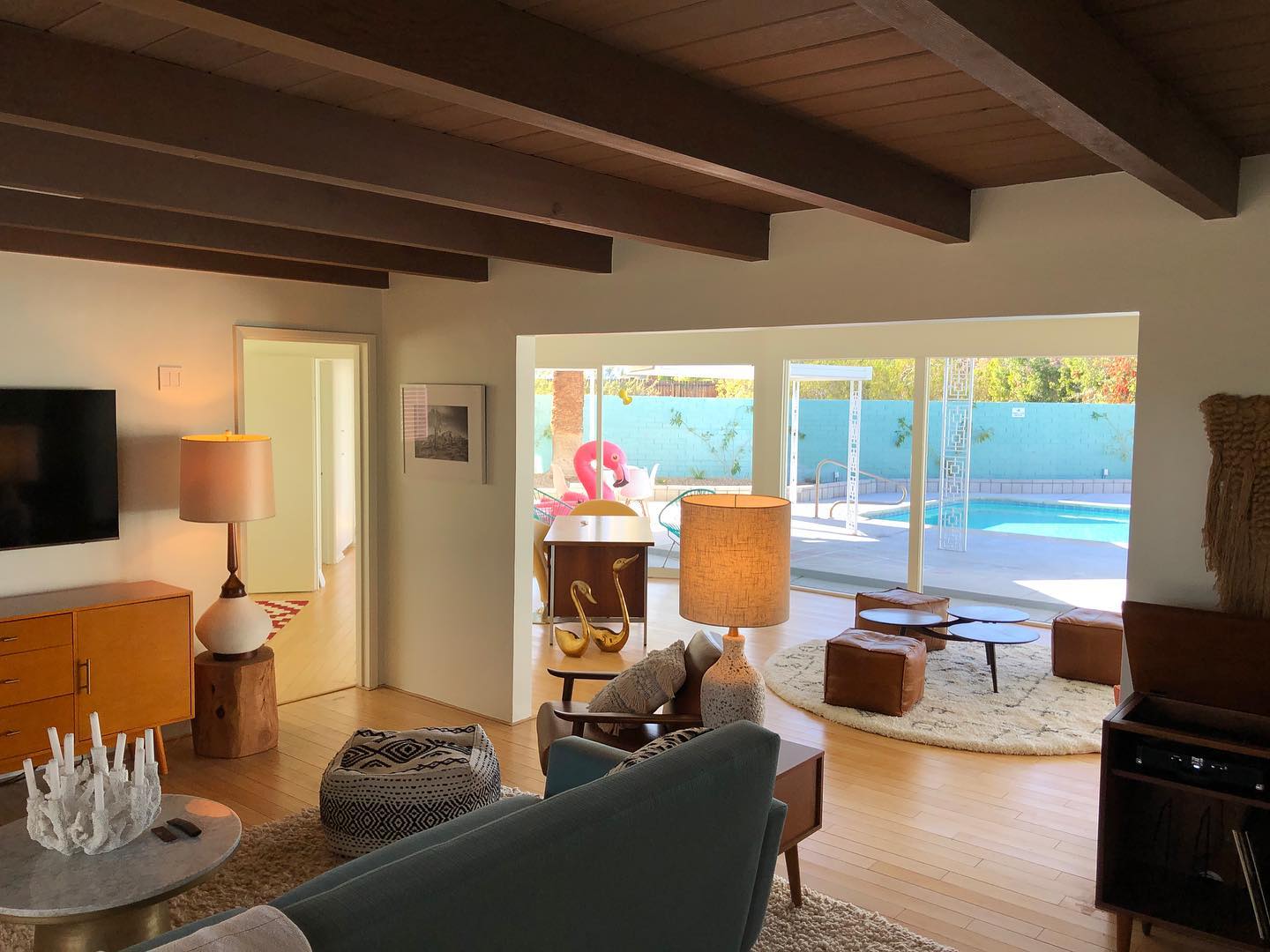
Credits: Instagram
This room uses an opening to connect two sitting areas, each with its own rug and low furniture. The closer sofa faces a television, while the round rug near the glazing holds compact stools and nesting tables.
It is a flexible 1960s-inspired arrangement for a room that serves more than one activity. Define each area with a rug before adding extra seating, and keep the route between them clear.
Warm wooden cabinets and substantial table lamps help the two zones feel related. The blue sofa picks up the cool view beyond the windows without dominating the interior.
Choose small tables that can move between seats when needed. A consistent wood tone will help separate furniture groups read as one home.
8. Mix Rounded Chairs with a Slim Coffee Table
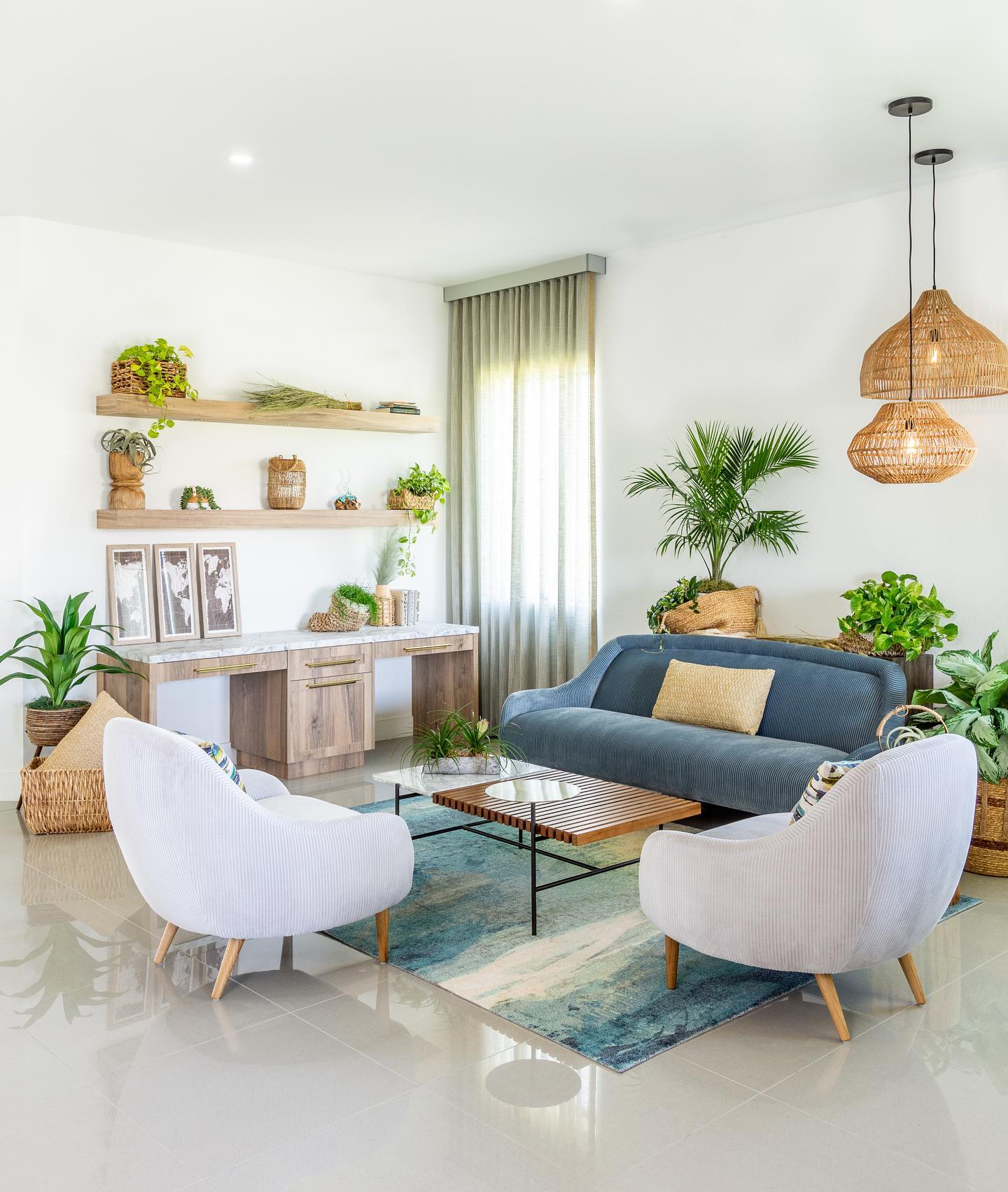
Credits: Instagram
Rounded white chairs face a blue sofa across a slim wooden coffee table, creating a conversation group with a light footprint.
The curved seats and tapered legs provide the room's 1960s-inspired character, while woven shades and greenery bring a relaxed finish. Use a compact sofa as the anchor, then angle two chairs toward it rather than placing everything along the walls.
A rug large enough to catch the front legs makes the group feel connected. Notice how the open table base leaves plenty of floor visible.
Repeat natural textures in a few baskets and plant containers to soften the glossy floor. Keep floating shelves lightly arranged, and choose curtains close to the wall color so the seating remains the focus.
9. Display Colored Glass Beside a Woven Chair
Credits: Instagram
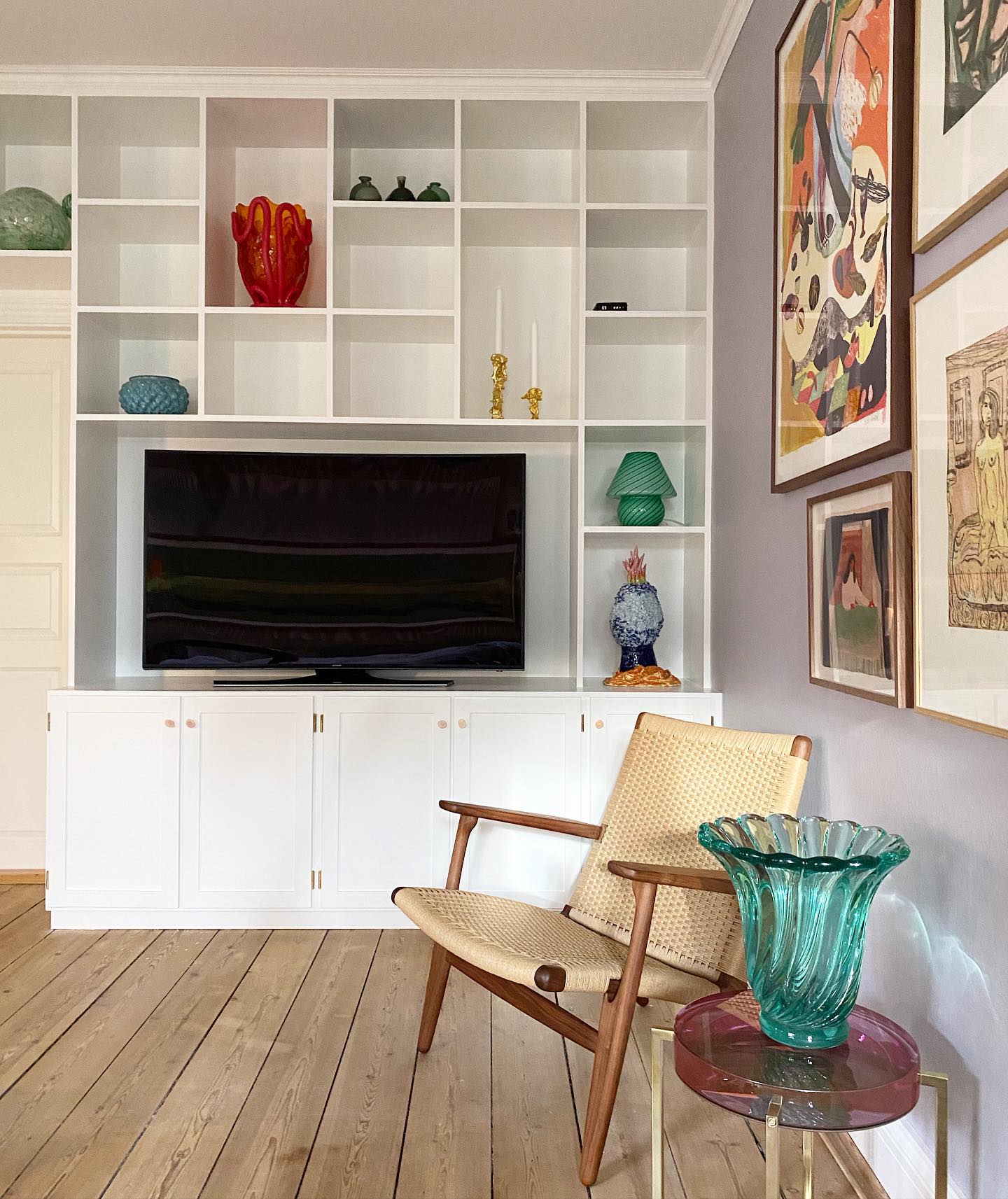
A woven wooden armchair and a rippled green glass vase give this television corner a distinct midcentury flavor. White shelving provides a quiet background, letting the colorful objects and framed artwork stand out.
For a 1960s-inspired update, start with one tactile chair and one sculptural glass piece rather than replacing every large item. The small round side table makes the corner useful without filling the floor.
Keep its surface stable and large enough for both decoration and a drink. In the shelving, vary object heights and leave compartments empty; the open spaces are part of the arrangement.
Closed cupboards below the screen hide practical clutter. Pull two or three colors from nearby artwork to guide accessories and keep collecting focused.
10. Let Sculptural Furniture Carry a Quiet Scheme
Credits: Instagram
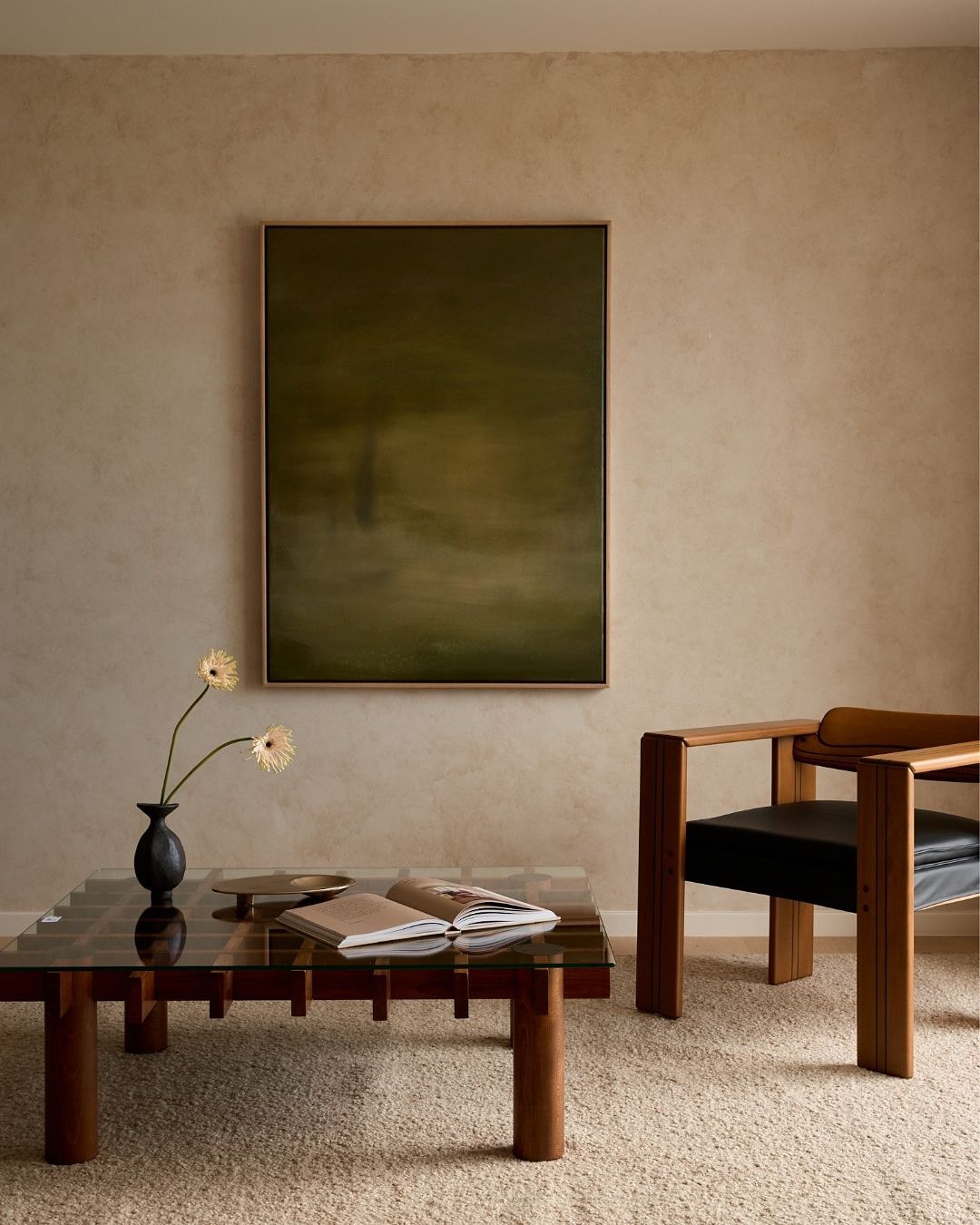
This seating vignette relies on the shapes of its wooden armchair and glass-topped coffee table rather than a busy color palette. The table's sculptural base stays visible beneath the transparent surface, giving a 1960s-inspired furniture outline room to breathe.
Try the same idea with one distinctive table and a straightforward chair in a compact sitting corner. Warm neutral walls and a textured rug help the dark wood and black seat feel grounded.
A large green artwork creates a calm focal point without introducing many small decorations. Keep the tabletop arrangement low and grouped to one side, leaving usable space for a book or cup.
Check the chair and table heights together before buying; comfortable proportions matter as much as appearance.
11. Build a Gallery Wall Above a Vintage-Style Sideboard
Credits: Instagram
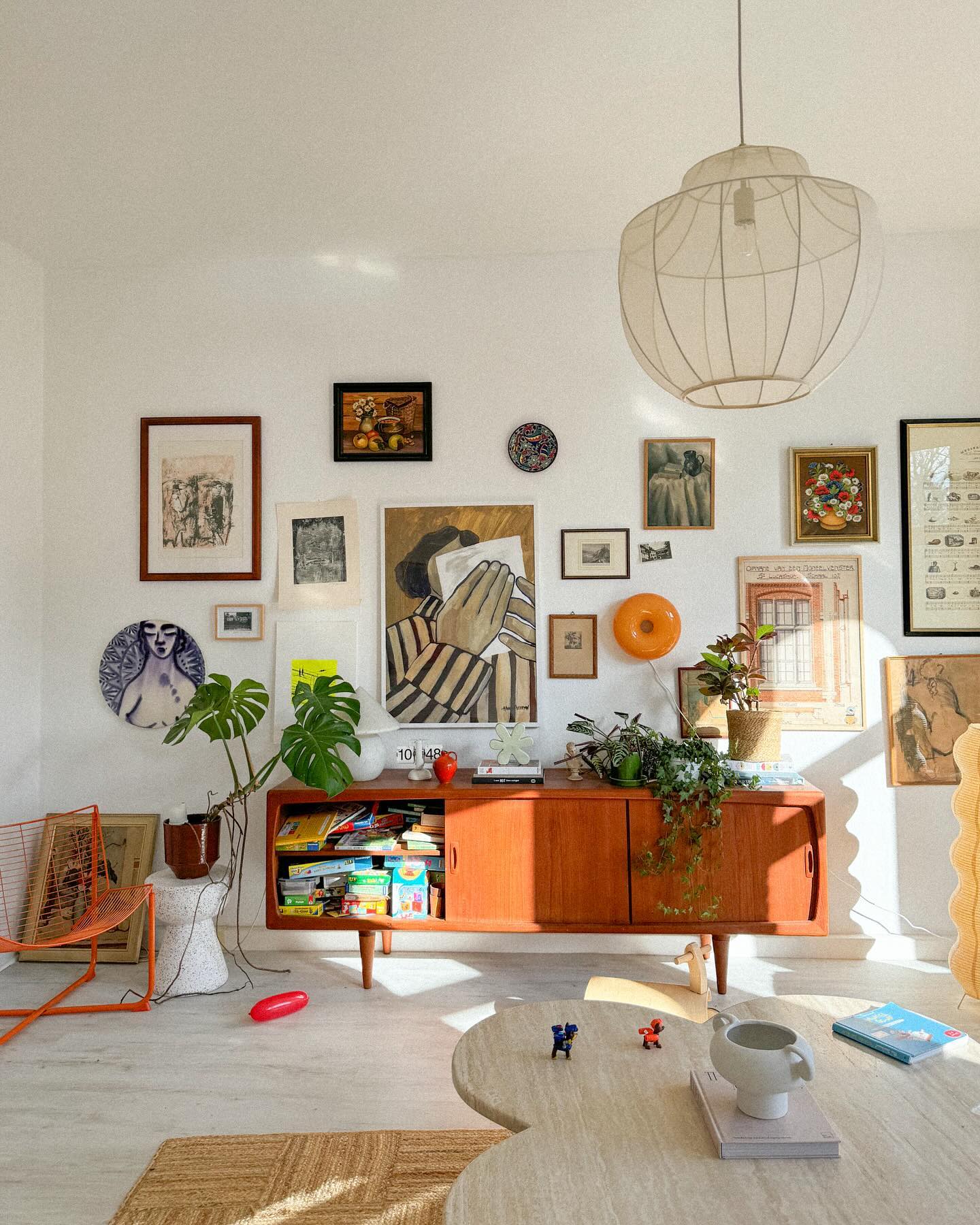
A warm wooden sideboard anchors this playful wall of pictures, ceramics, and small colorful objects. Its low height and slim legs keep the arrangement grounded, while the oversized pale pendant gives the room a softer outline.
For a collected 1960s-inspired look, begin with one storage piece and arrange artwork around a larger central image. Mix frame sizes, but leave visible wall between them so individual pieces can be appreciated.
The orange wall light and wire chair repeat a bright accent without covering every surface in color. Closed sideboard compartments are useful for everyday belongings, while one open section can keep games accessible.
Balance the busy wall with a relatively simple rug and table, allowing the collection to remain the focus.
12. Give Green Seating a Terracotta Backdrop
Credits: Instagram
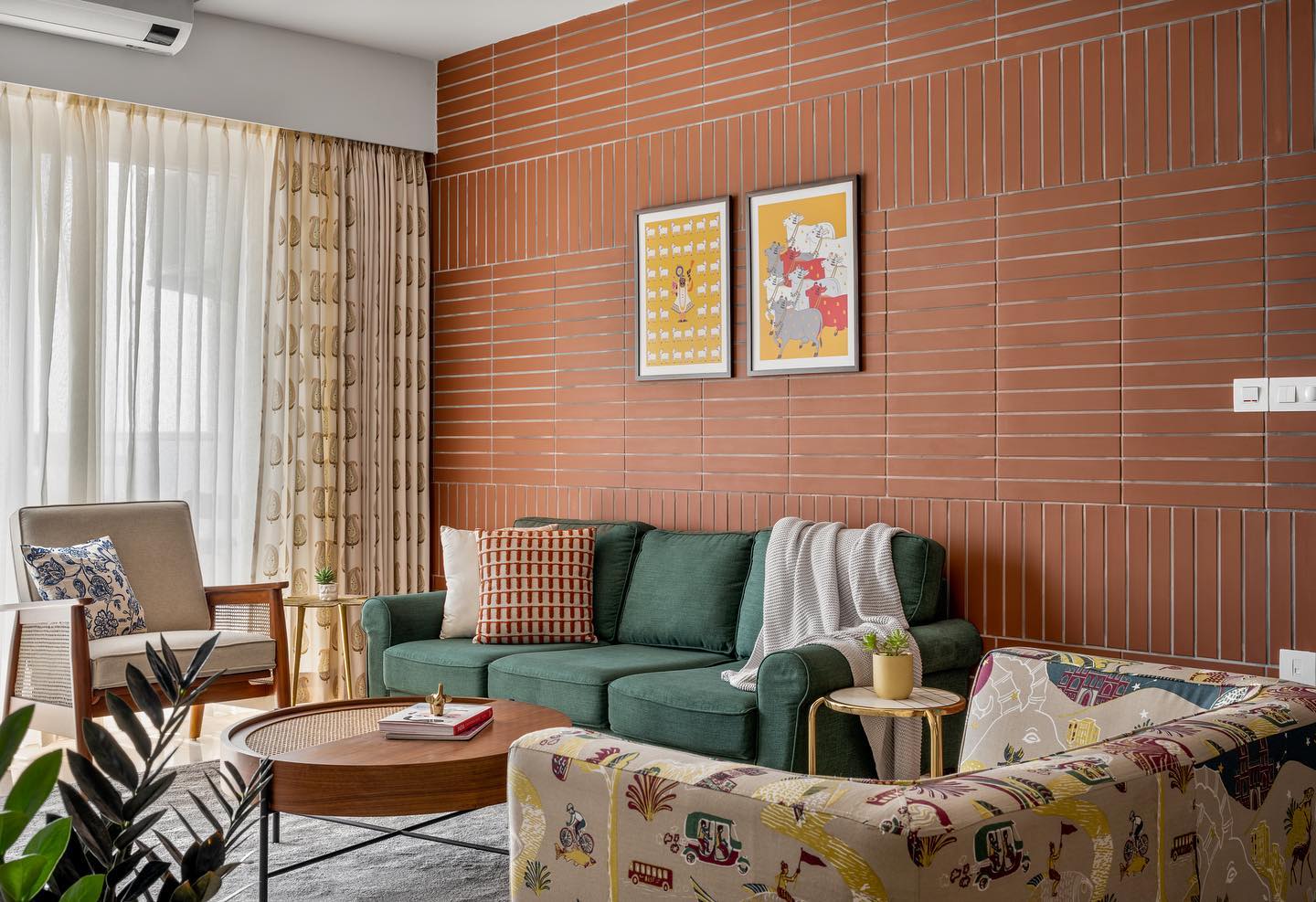
Terracotta-colored wall cladding makes a warm backdrop for the green sofa, while its lines introduce a graphic rhythm. The wooden armchair, rounded coffee table, and brass-colored side tables add the varied materials that make a retro scheme interesting.
Try this balance with a muted green sofa and a warm accent wall before adding patterned seating. Keep at least one large upholstery surface plain so the prints have space to stand out.
Here, the pictures above the sofa repeat yellow from the surrounding textiles, helping different patterns feel related. Pale curtains soften the strong wall treatment and maintain a bright edge beside the window.
A low round table keeps the conversation area open and provides a practical landing place for books.
13. Pull a Muted Palette from Abstract Artwork
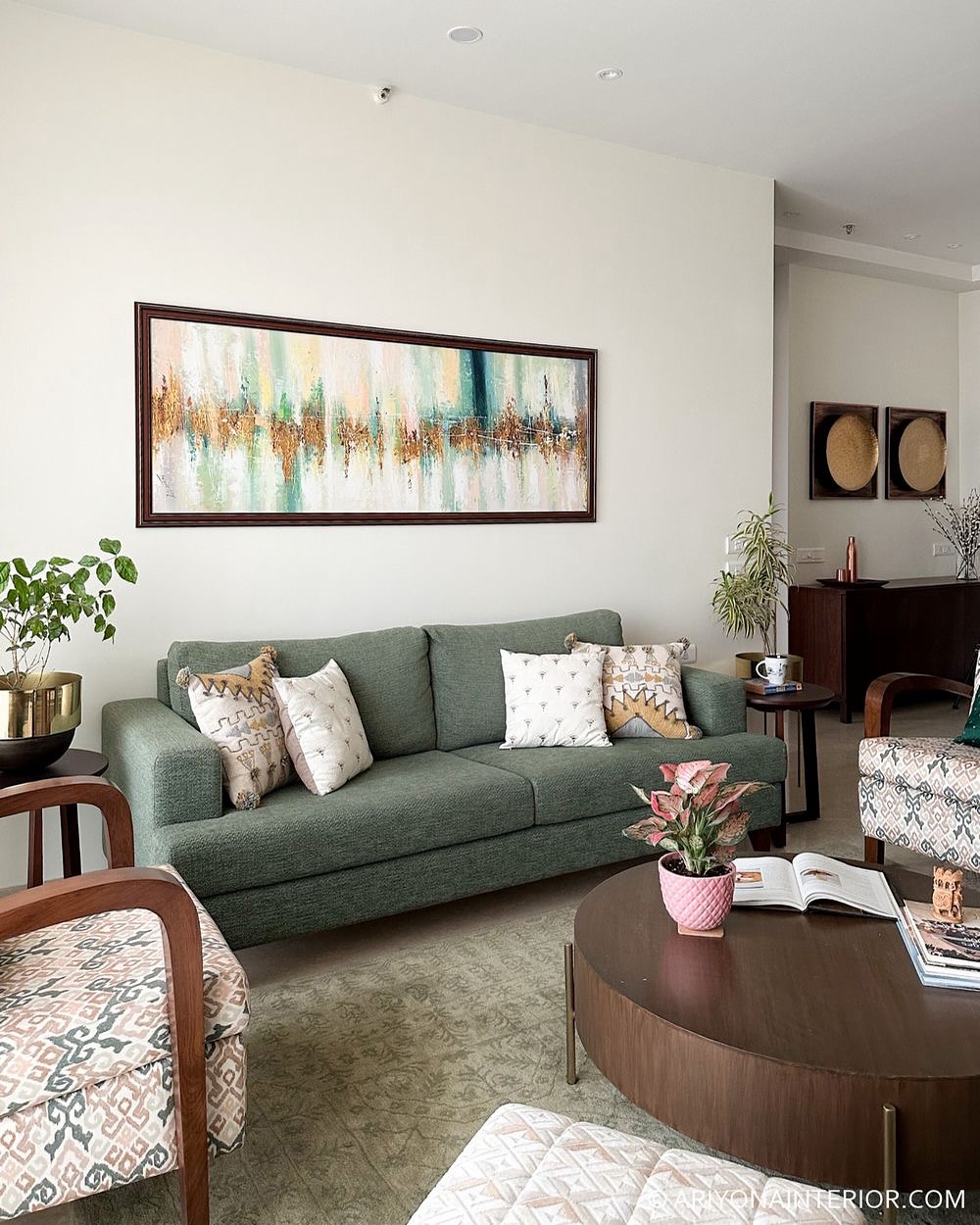
Credits: Instagram
The long abstract painting above this green sofa gathers the room's pale gold, cream, and soft green into one focal point.
Wooden chair frames repeat the warm tone of the coffee table, bringing a midcentury outline to the otherwise quiet scheme. To borrow the idea, select artwork before choosing small textiles, then pull two or three colors into cushions and upholstery.
Patterned armchairs can supply movement while the sofa stays plain. Notice how the wide, low table keeps the seating arrangement feeling grounded.
Use a rug with a subtle pattern when several fabrics already share the room. A small pink plant container adds an unexpected accent; repeat the main palette more often than accent colors to keep the effect calm.
14. Add a Sculptural Chair to a Plant-Filled Room
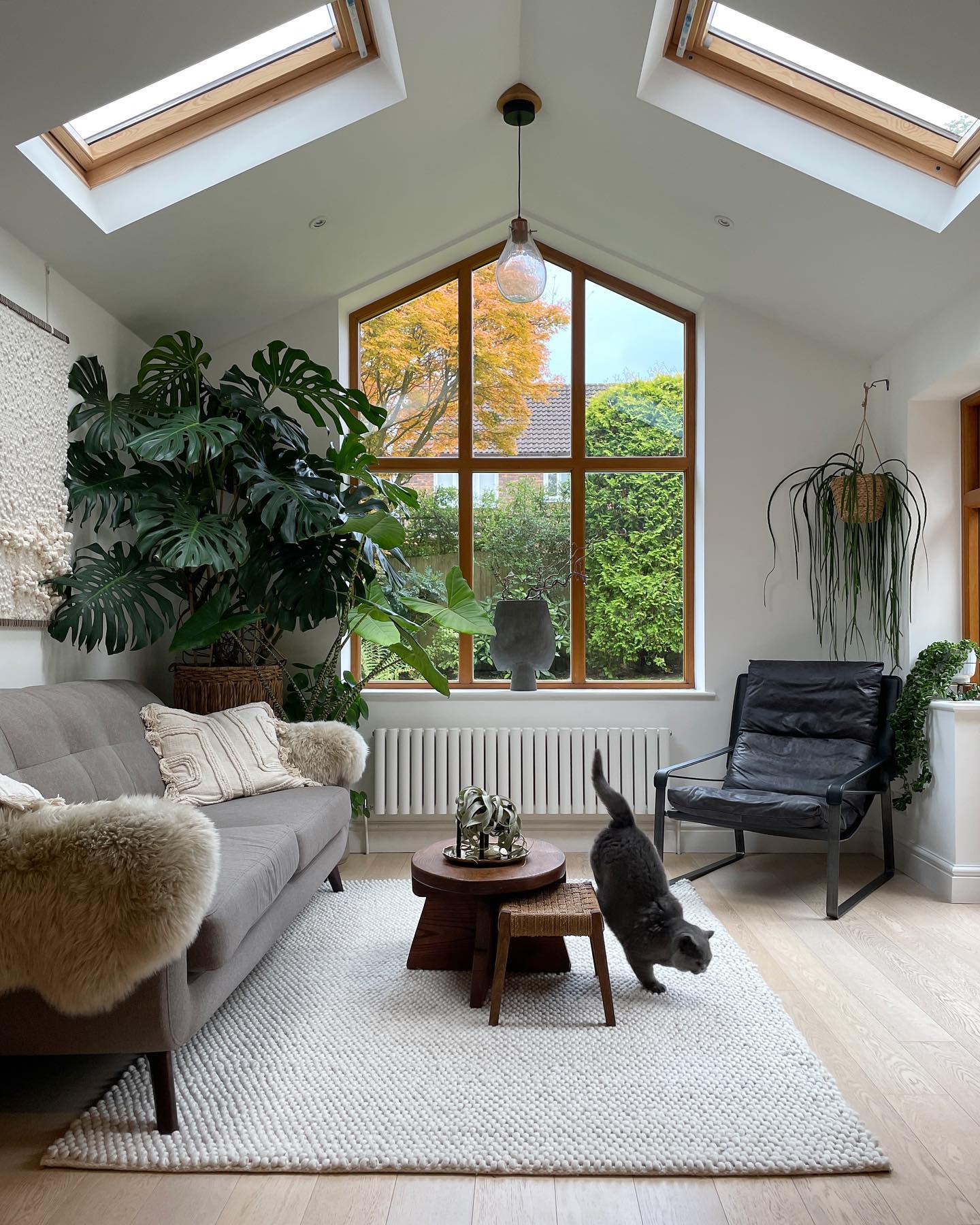
Credits: Instagram
A black sling-style chair gives this light sitting room a crisp, sculptural outline beside the soft gray sofa. Large leaves, woven containers, and a compact wooden table bring warmth to the angular window setting.
This is a gentle way to introduce a 1960s-inspired furniture note into an existing neutral room. Choose one chair with an expressive frame, then keep nearby textiles simple enough for its shape to remain visible.
A pale textured rug links the seats without competing with the greenery. Group plants according to their light needs, and leave room around the radiator and main walkway.
The low central table preserves the view toward the garden. Use a small stool alongside it when you need an extra flexible surface.
15. Choose a Compact Leather Sofa with Raised Legs
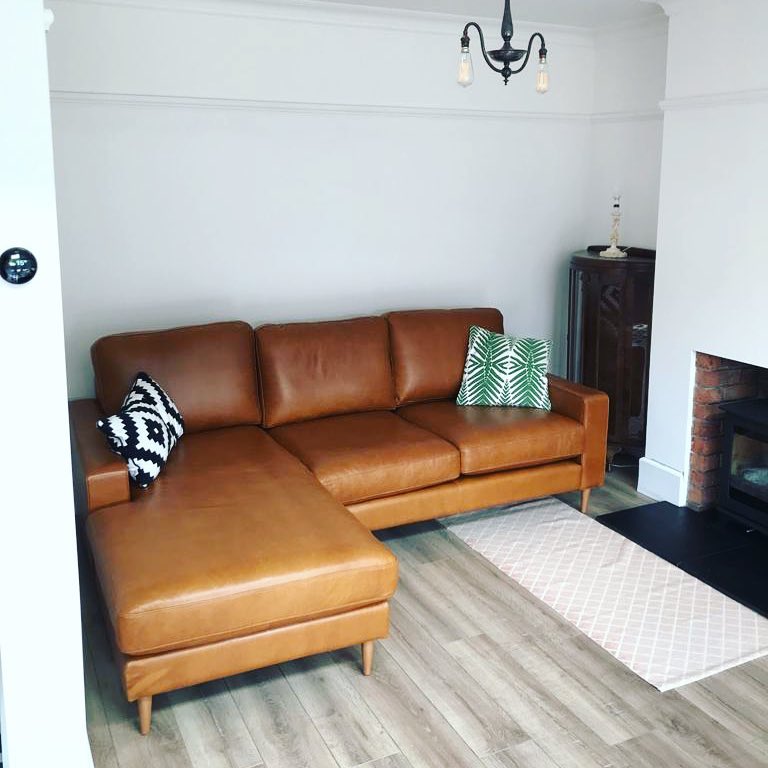
Credits: Instagram
This compact tan leather sofa brings warmth into a small room without relying on many accessories. Its raised wooden legs leave the floor visible, and the clean seat shapes provide a restrained midcentury reference.
When adapting the idea, measure the chaise so it leaves a comfortable route through the room. Keep a small space open by choosing a light wall color and limiting the number of separate furniture pieces.
Two graphic cushions add enough pattern to distinguish the sofa from the plain surroundings. The pale rug introduces a softer surface beside the hearth.
Try several rug positions before settling on one that connects with the seating. A slim movable side table would provide a useful surface without crowding the layout.
16. Use an Arc Lamp to Connect Two Seats
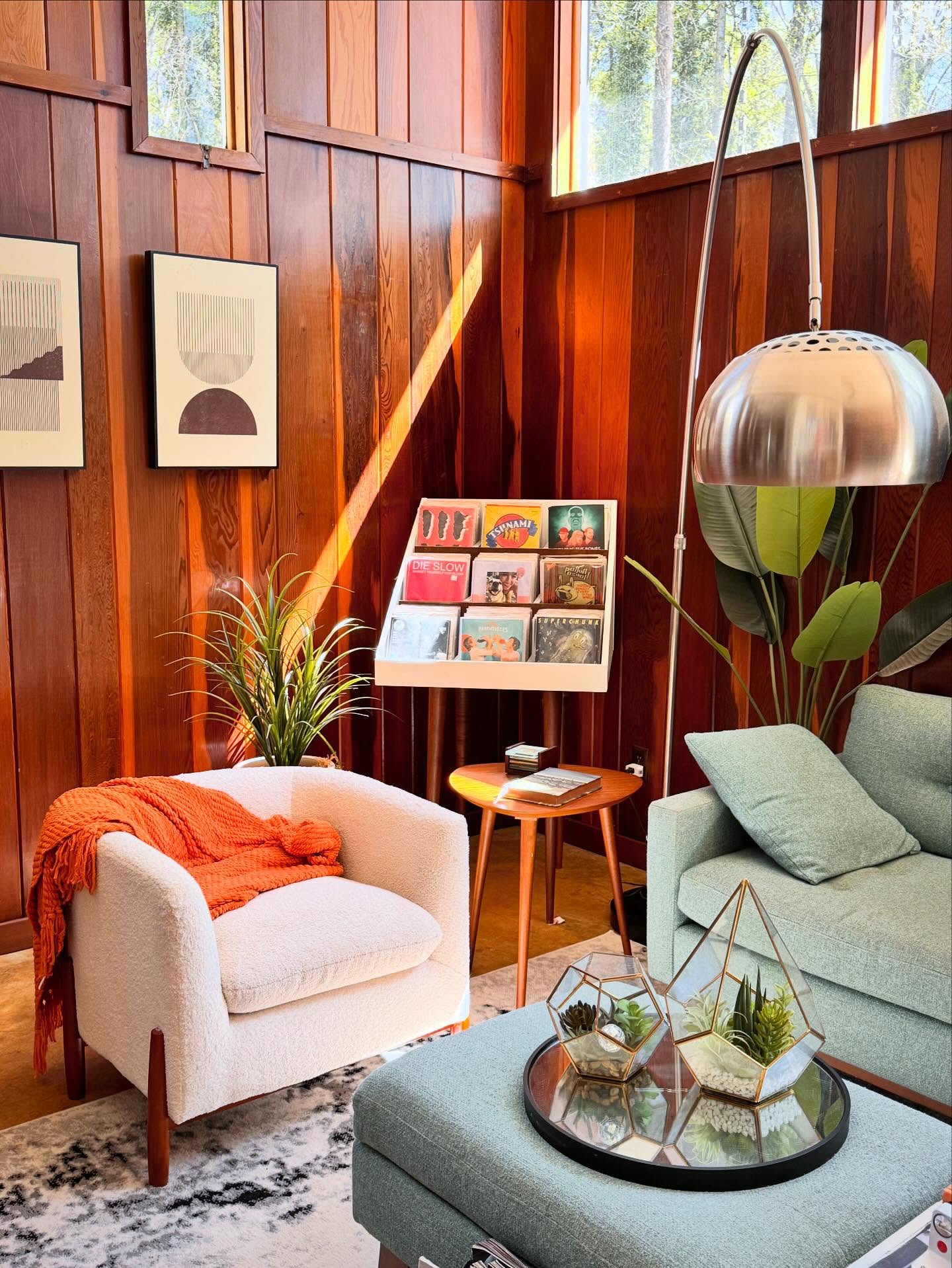
Credits: Instagram
The metal dome of this arc lamp reaches over a green sofa, linking it visually with the neighboring pale chair. Against warm timber paneling, its reflective finish creates a clear 1960s-inspired contrast.
An arc lamp is useful when a seating group needs light but a ceiling fitting would be awkward to reposition. Check the base footprint and head height before buying, keeping both away from walking routes.
Here, a small wooden table sits between the seats, while an upholstered footstool adds another comfortable surface. A tray makes that soft top practical for lightweight objects.
The orange throw provides one lively accent. Keep nearby artwork relatively graphic and simple so the lamp's sweeping curve has enough visual space to stand out.
17. Balance Patchwork Seating with an Architectural Backdrop
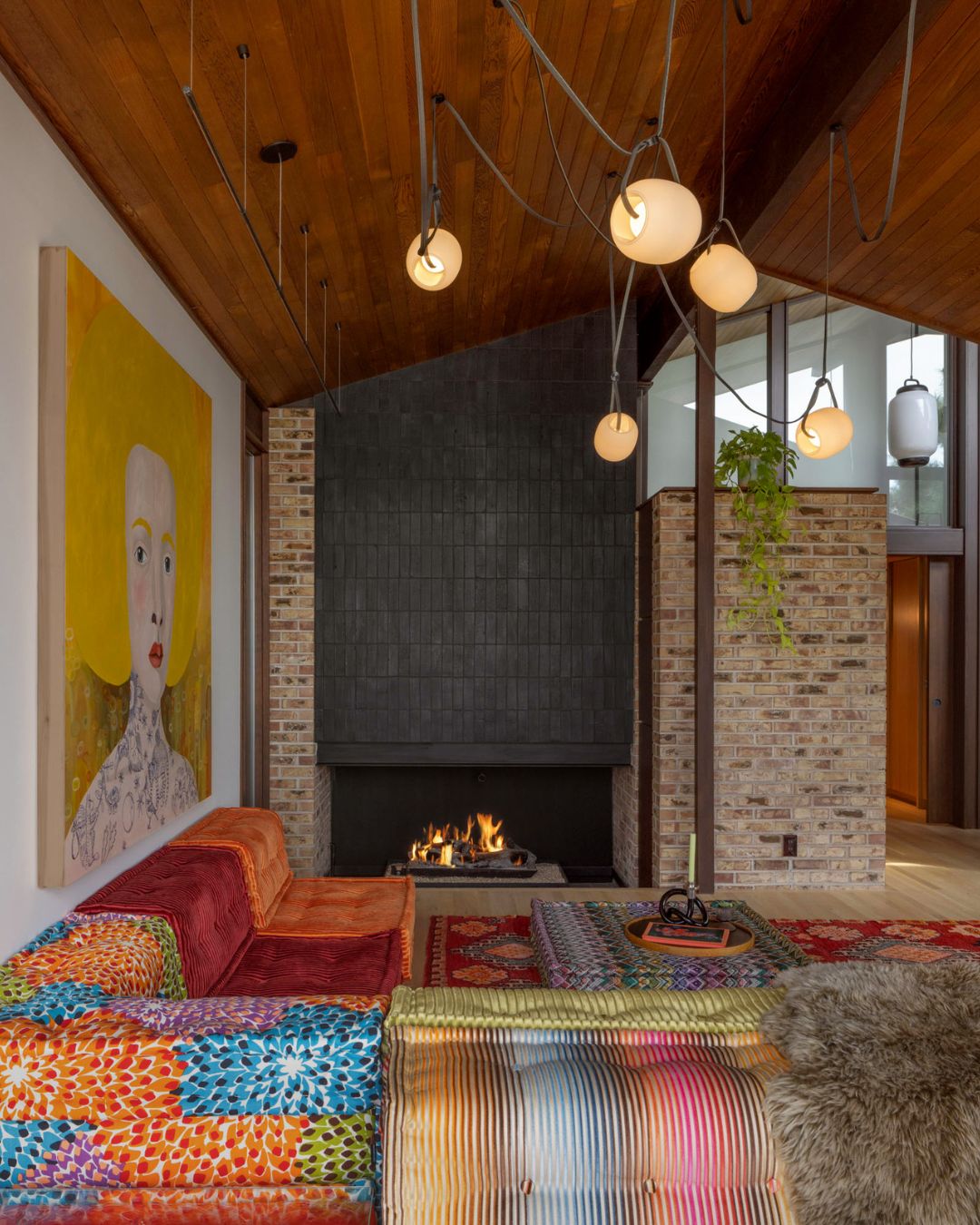
Credits: Instagram
Colorful patterned seating turns this room into a gathering space, but the surrounding timber, brick, and dark fireplace keep it grounded. The hanging globe lights introduce rounded shapes above the low furniture, giving the composition a playful midcentury character.
Start with one multicolored textile and choose a few related patterns that share its colors. Vary their scale so stripes, small motifs, and larger shapes do not compete equally.
A substantial artwork can hold its own beside bold upholstery more easily than several tiny pictures. Let architectural materials remain quiet, and avoid filling every surface with accessories.
Low tables and upholstered pieces support an informal arrangement. Leave clear movement routes around the seating and safe space in front of the fireplace.
18. Build a Low Bench into an Unused Nook
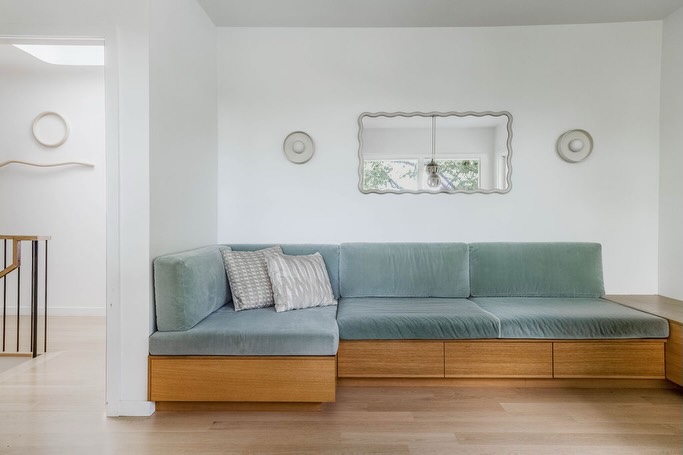
Credits: Instagram
A low upholstered bench fills this wall, combining generous seating with drawers underneath. Its blue-green cushions and uninterrupted wooden base create a simple midcentury silhouette that suits a small den.
Consider this approach when a conventional sofa would waste space at either end. Plan the seat depth, cushion firmness, and back height around how you actually sit; a dining bench and a lounging sofa need different proportions.
The extended wooden surface at the right provides a useful place for a drink or book. Above, a single mirror and two small wall lights keep the composition uncluttered.
Use removable cushion covers where possible, and decide what the drawers will hold before setting their dimensions. The practical details make built-in seating worthwhile.
19. Place a Lounge Chair Where the Room Meets the Garden
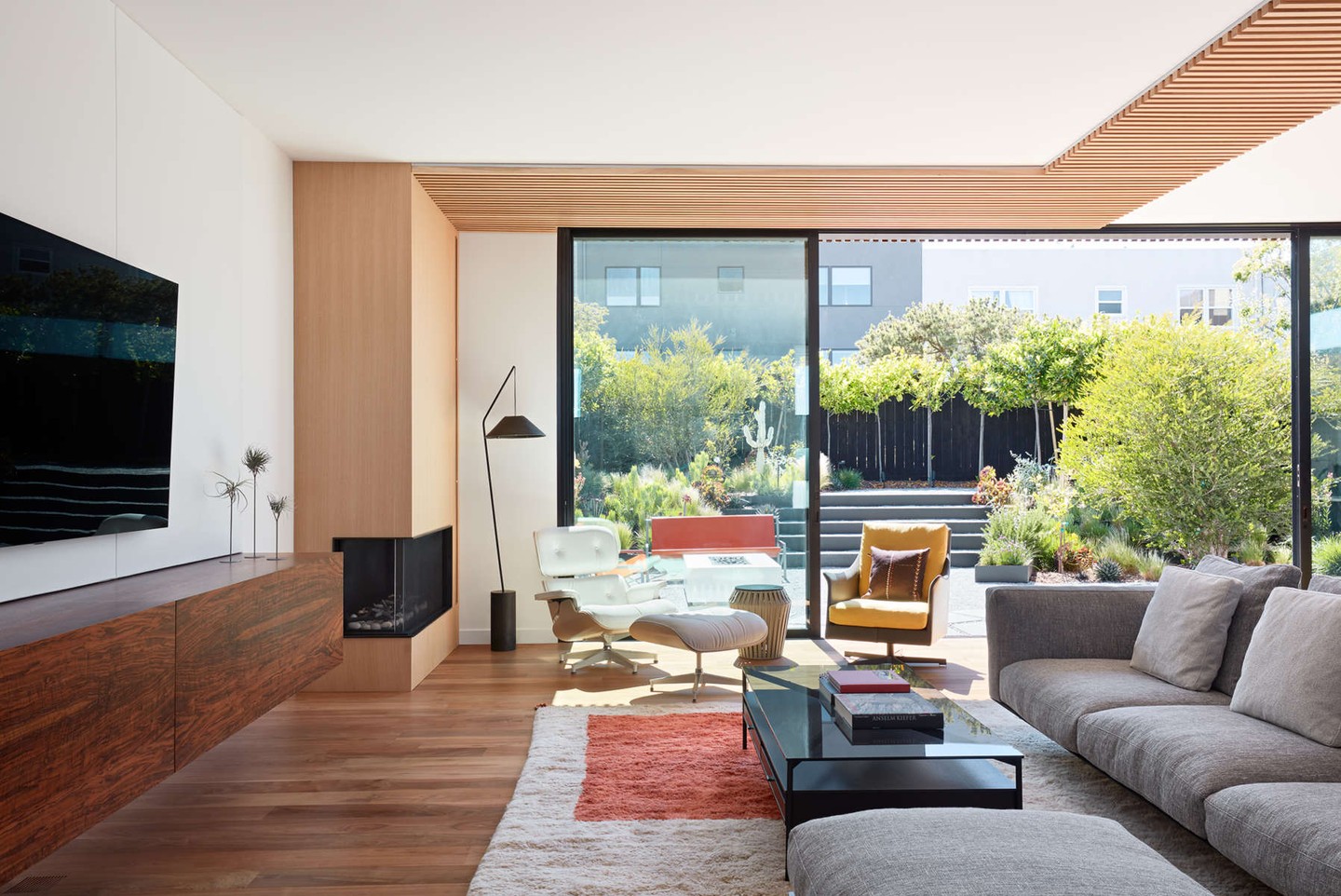
Credits: Instagram
A pale reclining chair and footstool create a reading spot beside the broad glazing, separate from the larger gray sofa.
Warm wood cabinetry and the slatted ceiling detail connect the seating areas, while a rusty rug panel adds a restrained retro accent.
To recreate this 1960s-inspired arrangement, give a comfortable lounge chair enough room for its footstool and a nearby light. Position it to enjoy daylight without blocking the main route outside.
The long low cabinet keeps the television wall visually quiet. A slim coffee table leaves more of the rug visible and makes the sofa area feel lighter.
Repeat one warm wood tone across the room, then use cushions or a small chair to introduce a second upholstery color.
20. Pair a Bold Graphic Print with a Simple Armchair
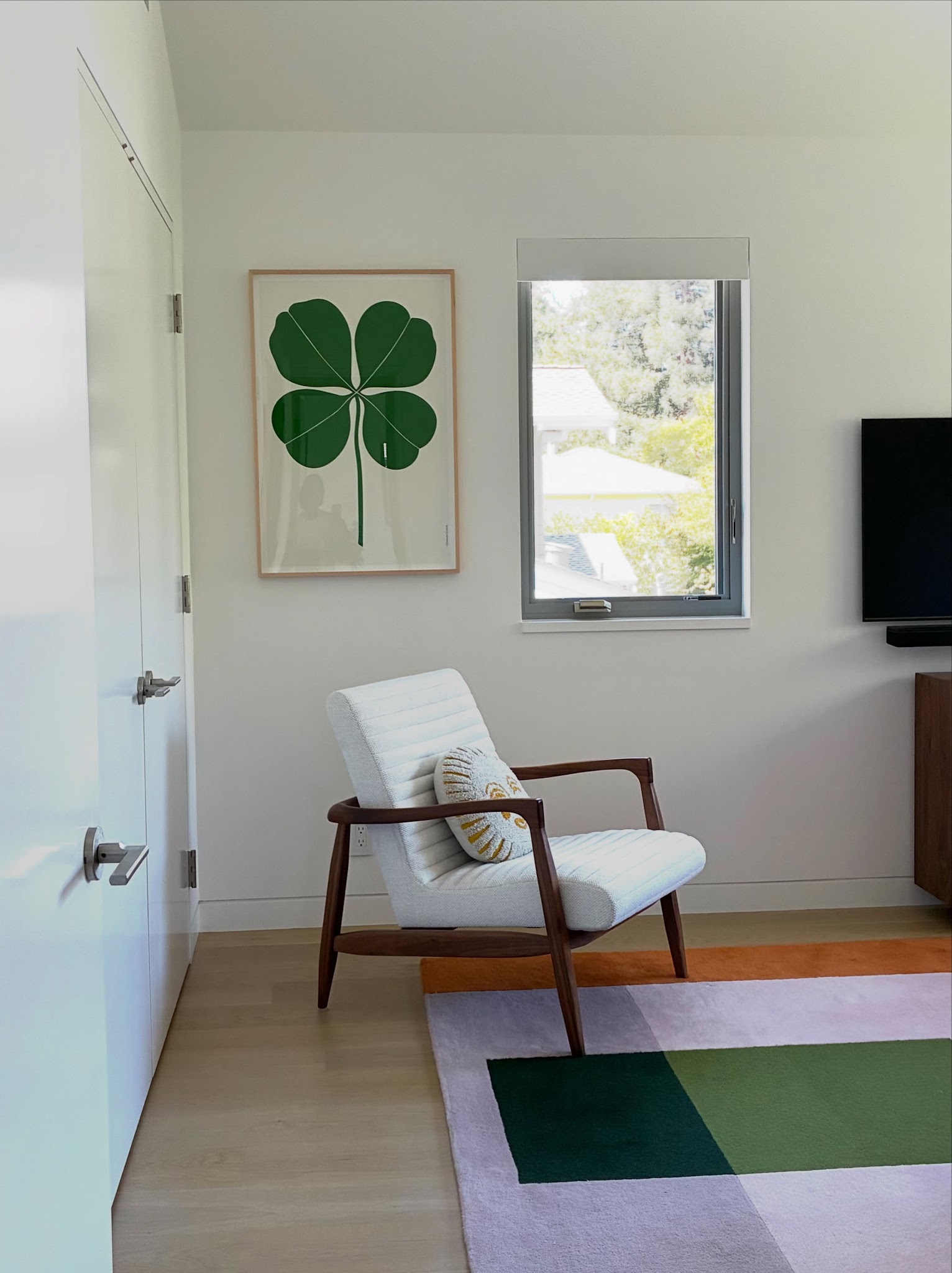
Credits: Instagram
A large green clover print gives this quiet corner a cheerful graphic focus. Beneath it, a pale upholstered chair with a dark wooden frame adds the slender, angled outline associated with midcentury seating.
The rug repeats green in larger blocks alongside lavender and orange, making the small space feel deliberate.
You can borrow this idea without redecorating the whole living room: choose one clear graphic image, then echo a color from it in a rug or cushion.
Keep the wall pale so the artwork remains easy to read. Leave enough space for the nearby door to open and the chair to be used comfortably.
A compact side table would complete the corner while preserving its simple shape and open floor.