
A traditional room can feel collected rather than formal when pattern, architecture, and seating each have a clear role.
Traditional Living Room Ideas in this roundup show how to strike that balance, from building a seating area around a patterned rug to mixing floral fabric with a bold animal print.
You’ll also find ways to define a light room with ceiling beams, soften dark seating with pillows and greenery, and use symmetry to organize statement chairs.
These practical arrangements offer inspiration for adding character while keeping the room comfortable and visually composed.
1. Build the Seating Area Around a Patterned Rug
Credits: Instagram
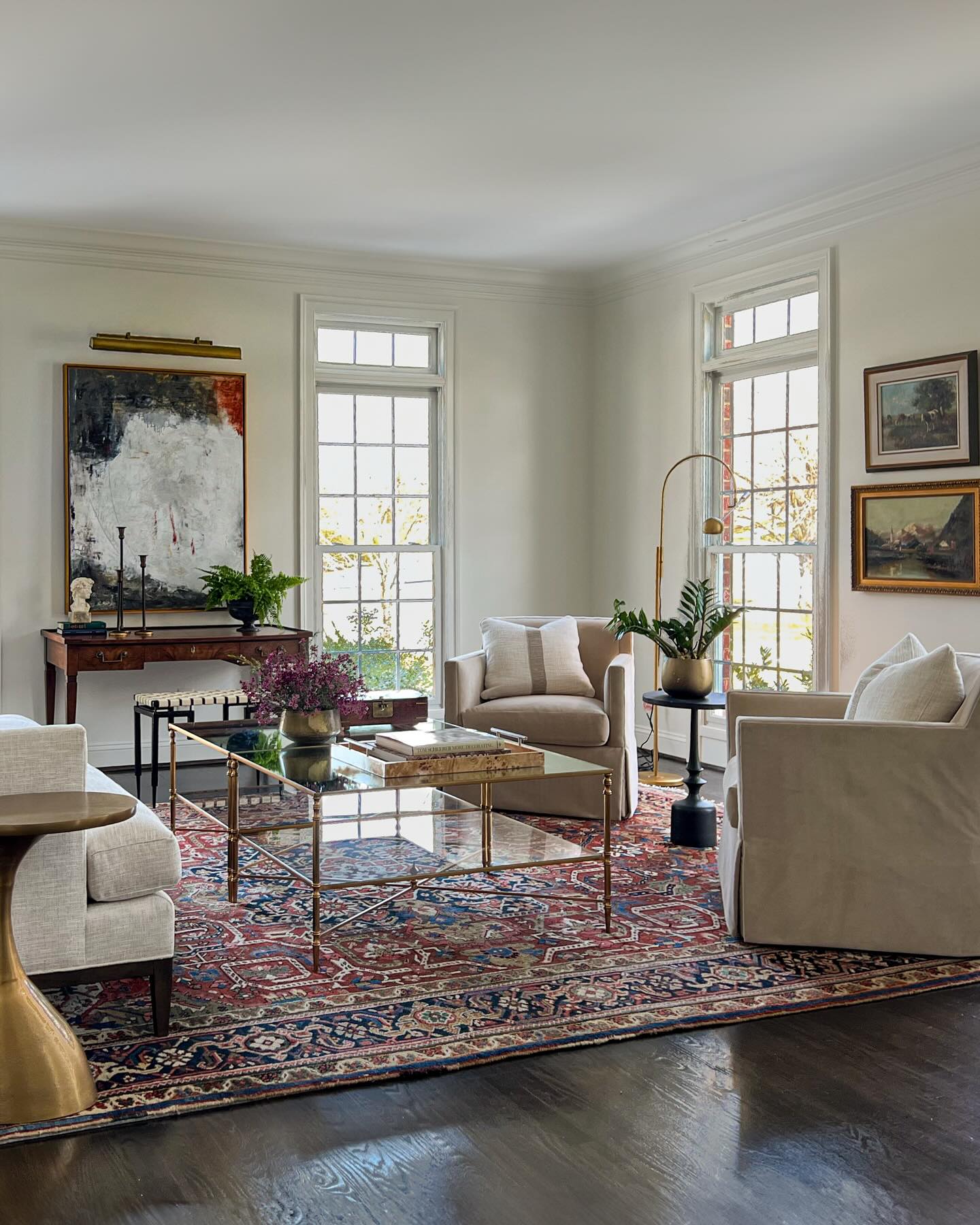
A richly patterned rug gives this pale living room a clear center without requiring colorful upholstery everywhere.
Cream chairs and a sofa leave room for the red and blue motifs to stand out, while slim tables keep the middle of the arrangement visually open.
Framed pictures at different scales add another layer of interest against the light walls. Start with a rug large enough to connect your principal seats, then repeat one or two of its colors in smaller accessories.
Keep nearby tables relatively simple when the floor already carries a busy pattern. The useful lesson here is balance: substantial upholstery supplies comfort, slender furniture preserves breathing room, and artwork gives a traditional setting a distinctly individual point of view.
2. Mix Floral Fabrics With a Bold Animal Pattern
Credits: Instagram
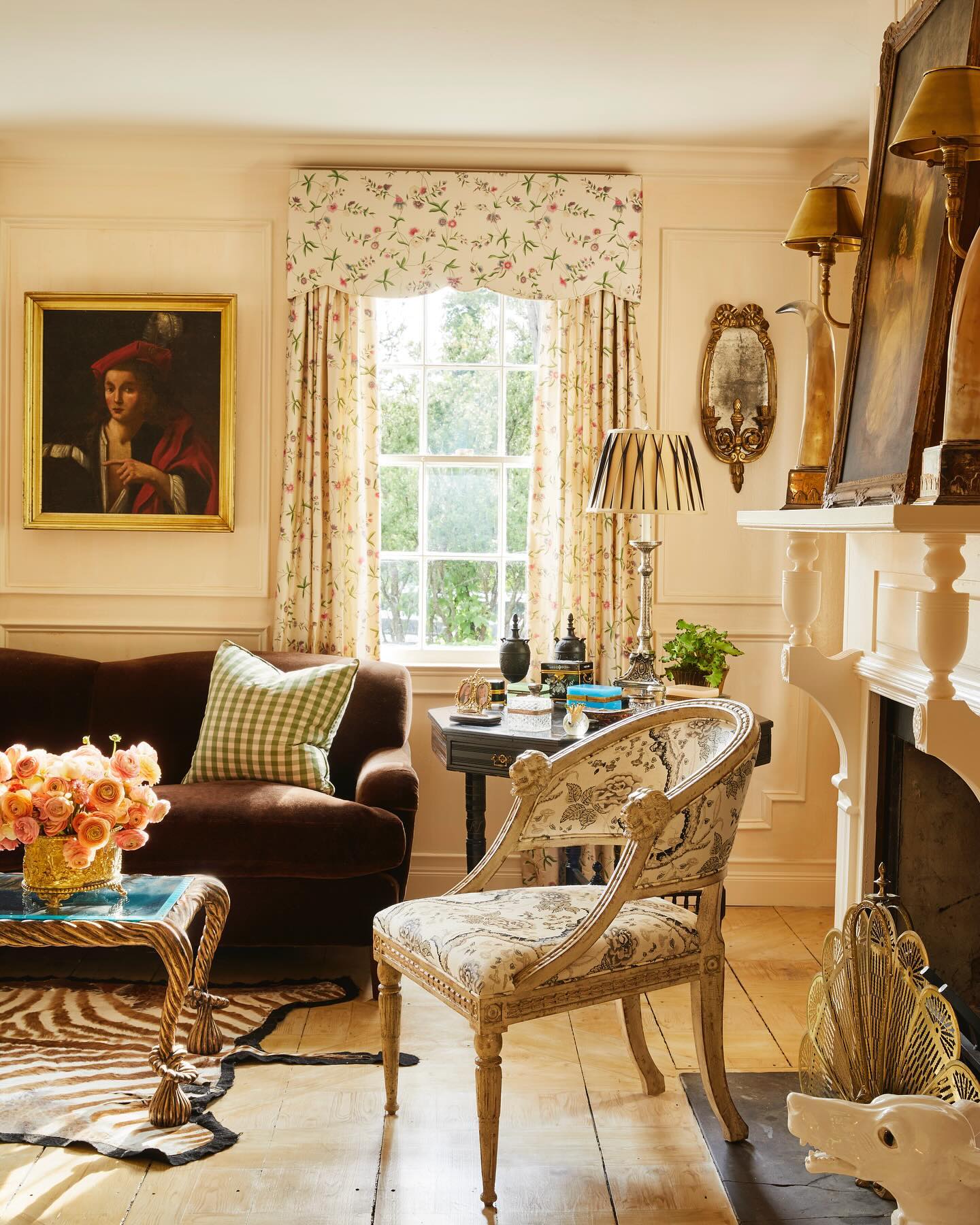
Traditional rooms can handle several patterns when each has a different job. Here, delicate floral curtains soften the window, a patterned chair introduces curved lines, and a zebra motif adds movement near the center of the room.
The dark sofa provides a quieter patch between these decorative surfaces. Cream walls and a pale fireplace surround keep the collection from feeling crowded.
To try this approach, combine one small botanical print with one bolder graphic pattern, then give your largest seating piece a solid color. Repeat a warm neutral across both fabrics so they relate without matching.
Leave some tabletop space clear around flowers and lamps; the furniture shapes and fabrics already supply plenty of detail for the eye to explore.
3. Give a Light Room Definition With Ceiling Beams
Credits: Instagram
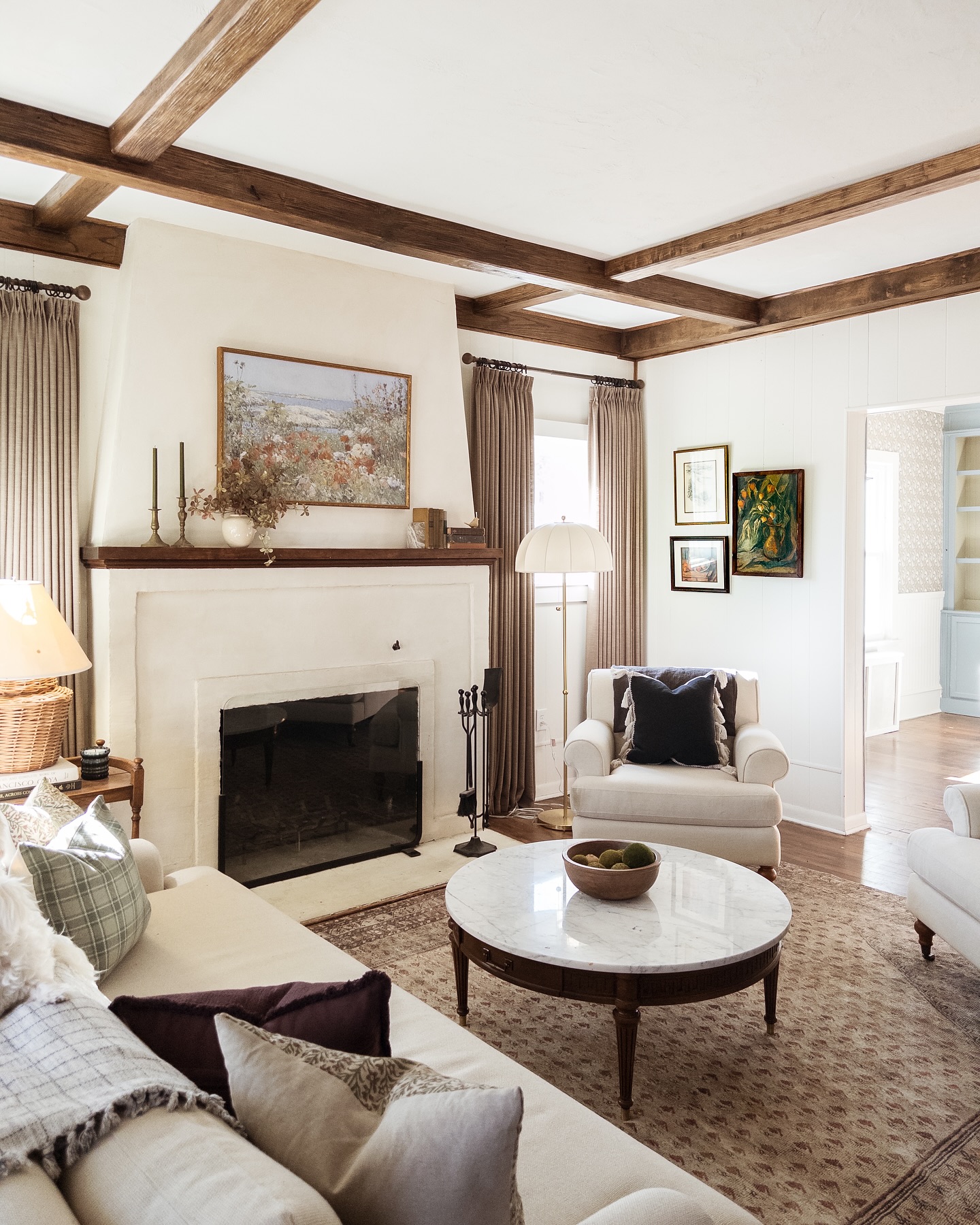
Dark ceiling beams create a strong framework above this otherwise soft seating area. Their rectangular arrangement echoes the fireplace and window trim, making the architecture feel connected from ceiling to floor.
Pale upholstery, light walls, and a muted patterned rug keep the contrast comfortable rather than heavy. A round coffee table interrupts the straight lines and leaves gentle curves at the center of the room.
When planning a similar effect, consider the ceiling alongside the furniture instead of treating it as an isolated feature. Repeat the darker tone in a table or picture frame, then let larger surfaces stay light.
Floor lamps and small decorative objects provide interest at seated height, helping an architectural statement still feel intimate and welcoming.
4. Frame Tall Windows With Floral Curtains
Credits: Instagram
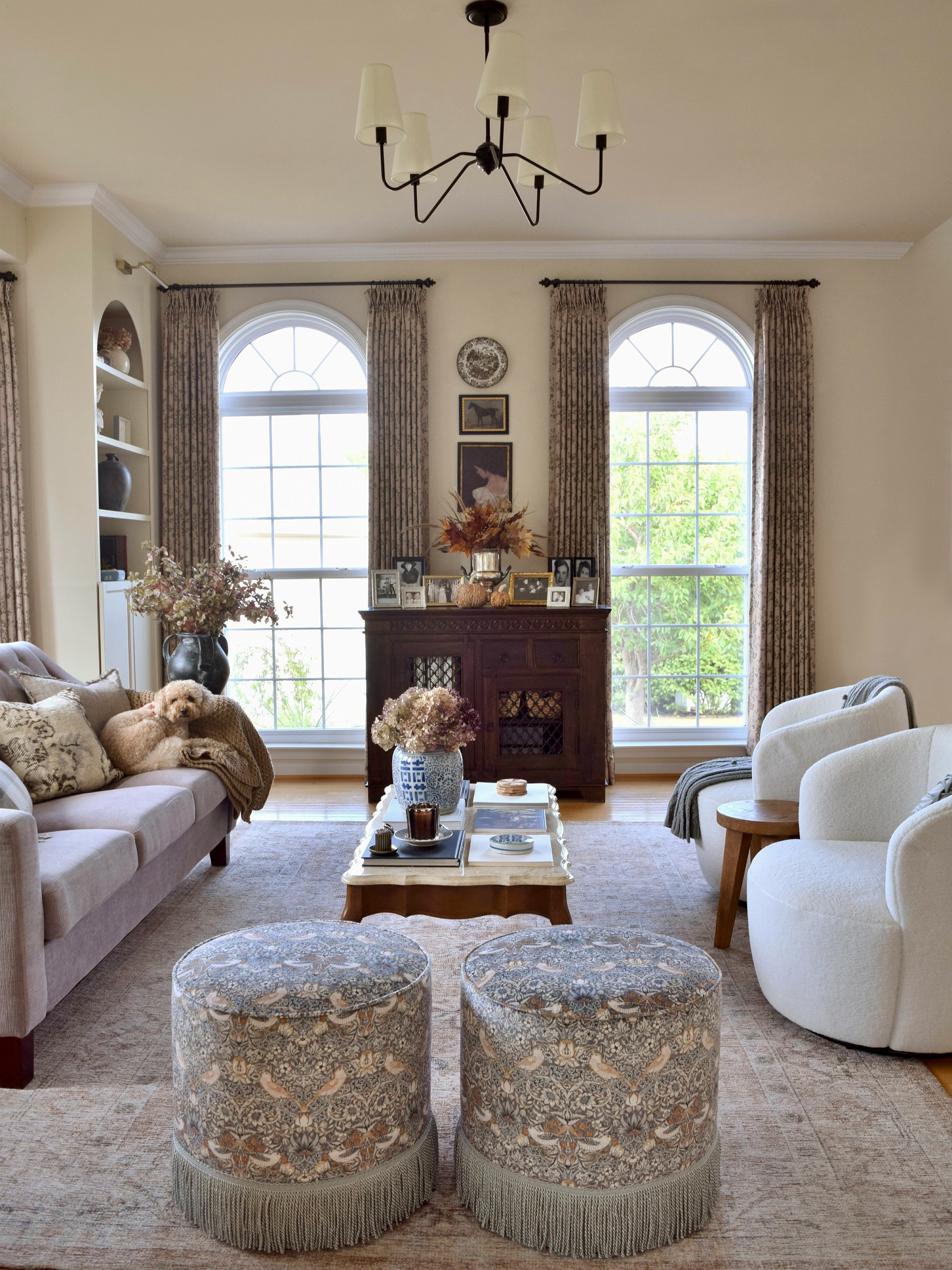
Floral curtains bring softness to the tall windows in this traditional living room. The fabric introduces pattern along the perimeter, allowing the sofa and rounded chairs to remain quiet.
Two upholstered stools repeat the decorative mood near the coffee table, while a cabinet between the windows gives the far wall a useful visual center.
For a similar arrangement, hang curtains high enough to acknowledge the architecture and leave the window shapes visible whenever possible.
Choose a print whose background relates to the wall color, then repeat one smaller accent from it in pillows or accessories. Keep furniture near the windows low so daylight can reach the seating area.
The result feels layered while preserving an open path through the room.
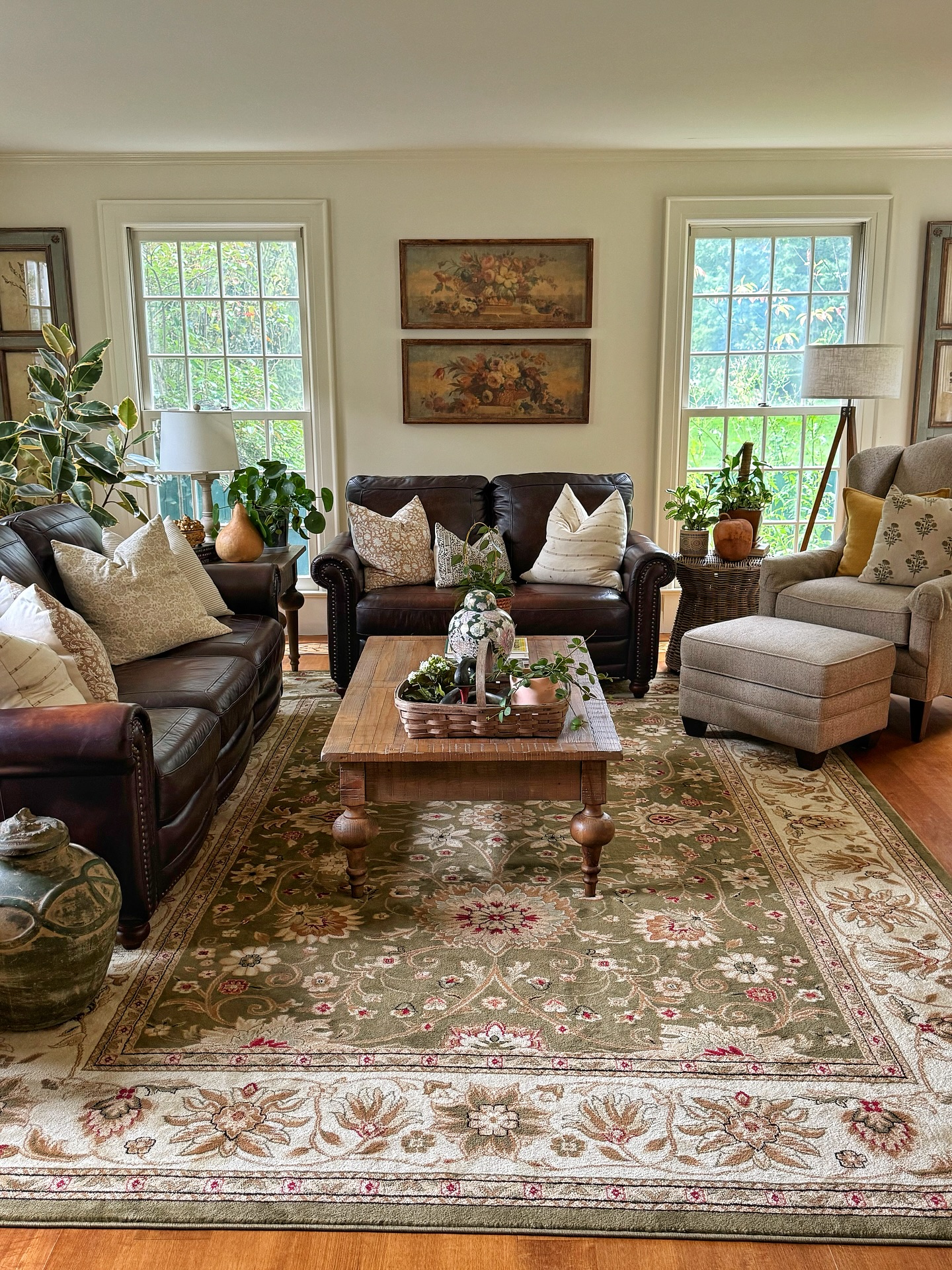
5. Lighten Dark Seating With Pillows and Greenery
Credits: Instagram
Dark seating feels inviting here because lighter pillows, pale walls, and generous windows surround it. A patterned rug connects the chairs and sofa, while the substantial coffee table provides a practical place for books and plants.
Greenery appears at several heights, bringing movement to an arrangement built from familiar traditional shapes.
If you own dark furniture, start by changing what touches it visually: lighter cushions, a brighter rug, and an open space beside the windows can make a meaningful difference.
Group plants where their light needs can be met, keeping leaves away from frequently used walkways. A pale accent chair offers another break in the darker upholstery and gives the seating group variety without introducing an entirely different decorating style.
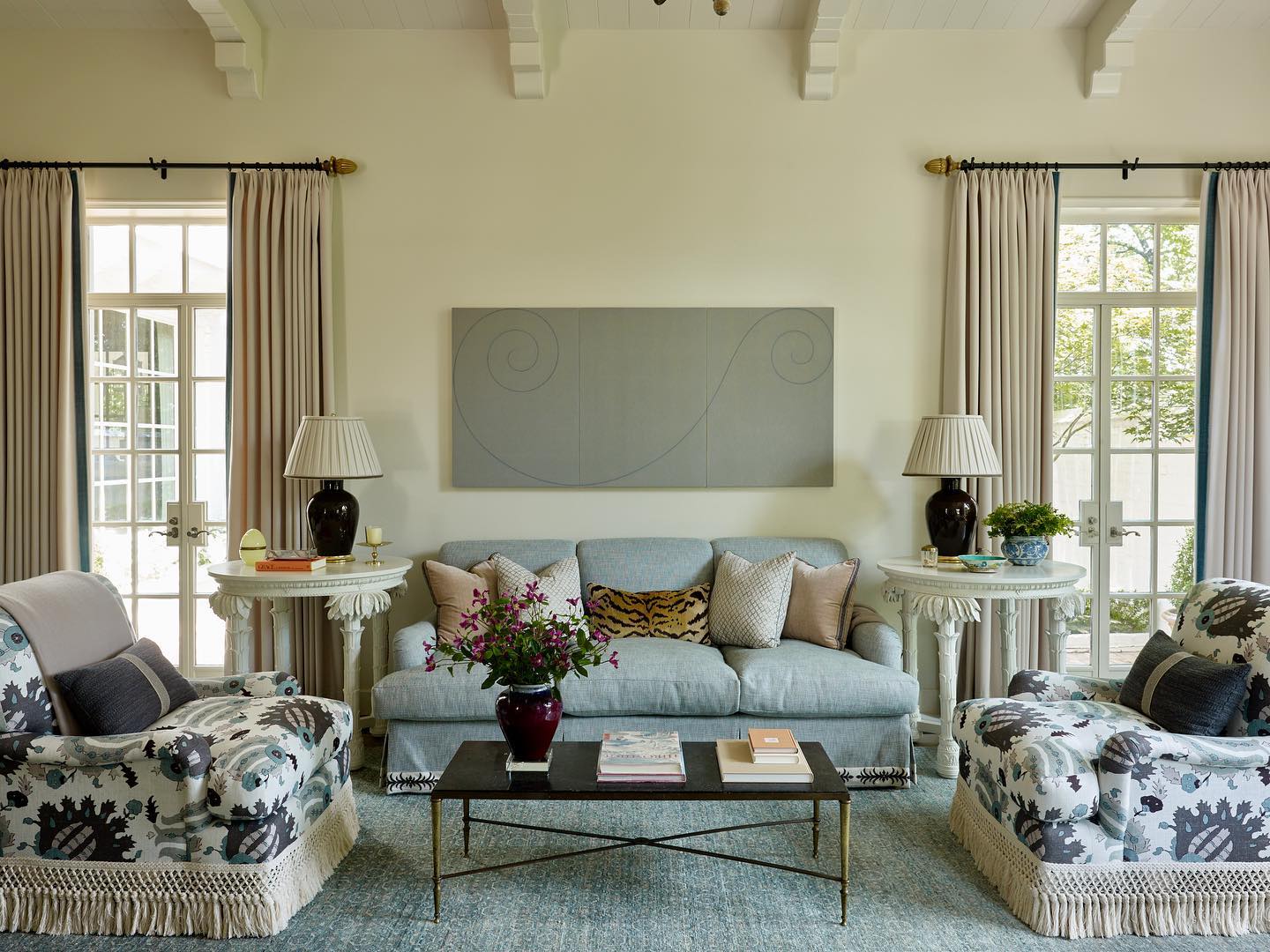
6. Use Symmetry to Organize Statement Chairs
Credits: Instagram
Two matching patterned chairs establish a rhythm in this living room, facing a pale blue sofa across a narrow coffee table. Matching lamps and side tables reinforce the balance, while curtains frame the arrangement at either end.
The chairs carry the strongest print, so the surrounding surfaces can remain calm. This is a useful formula when you want traditional formality without filling every corner with decoration.
Begin with the sofa as your center line, then place a pair of chairs where conversation feels natural. Repeat lamp heights to create order at eye level.
Introduce smaller differences through cushions, books, and flowers. The room will still feel personal, but its larger shapes will hold the composition together from across the doorway.
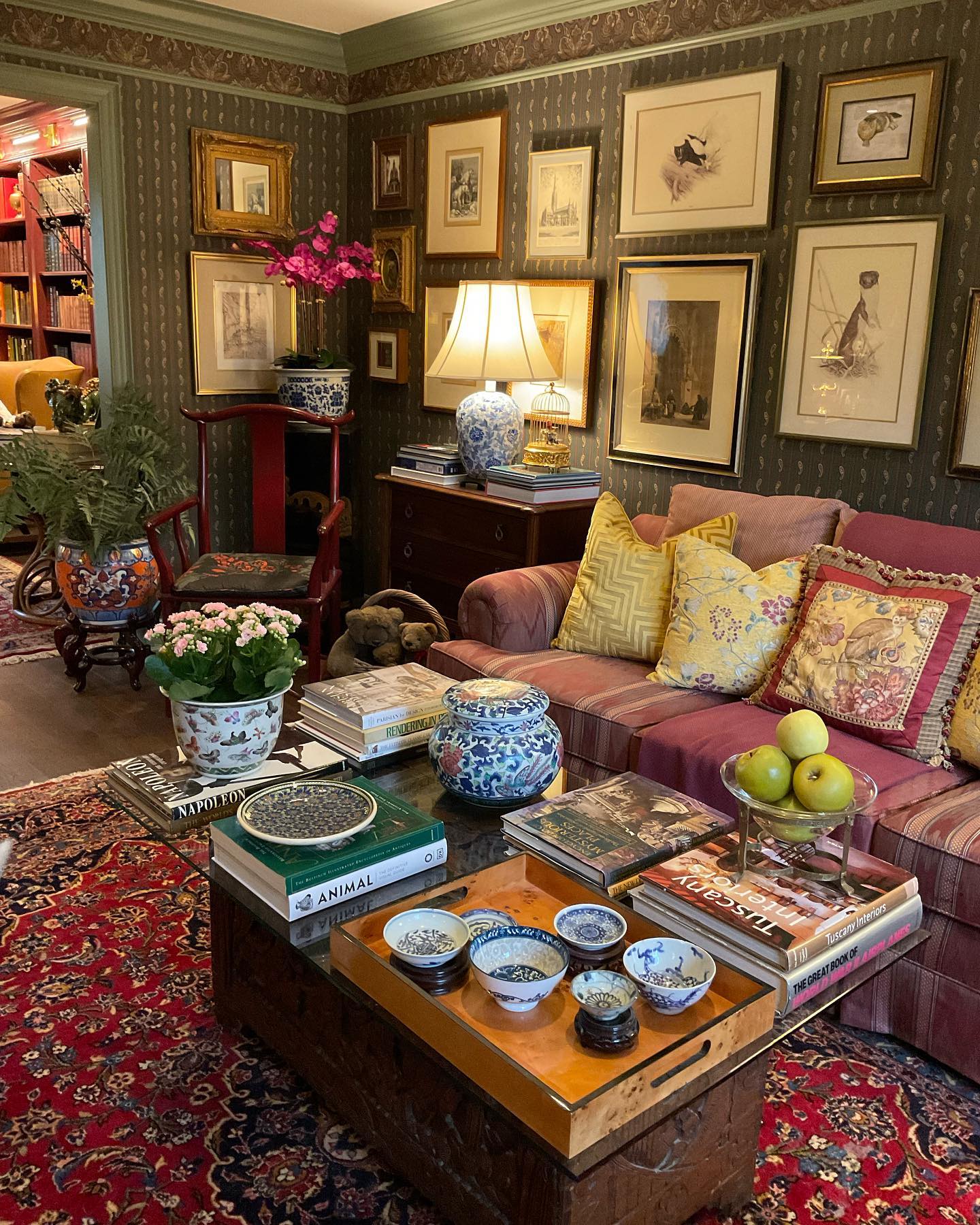
7. Create a Collected Gallery Above the Sofa
Credits: Instagram
A gallery of framed pictures gives this living room its character, while the pink sofa anchors the display below. Dark patterned walls connect the varied frames, and a red rug brings the color down to floor level.
Books, blue and white vessels, and a lamp make the arrangement feel used and personal. To build a gallery like this, lay out your frames before hanging them and decide which larger piece will organize the grouping.
Keep the lowest row close enough to the sofa to read as one composition. Repeat a few frame finishes rather than making every frame identical.
Balance the busy wall with seating and a clear route around the coffee table so the room remains easy to inhabit.
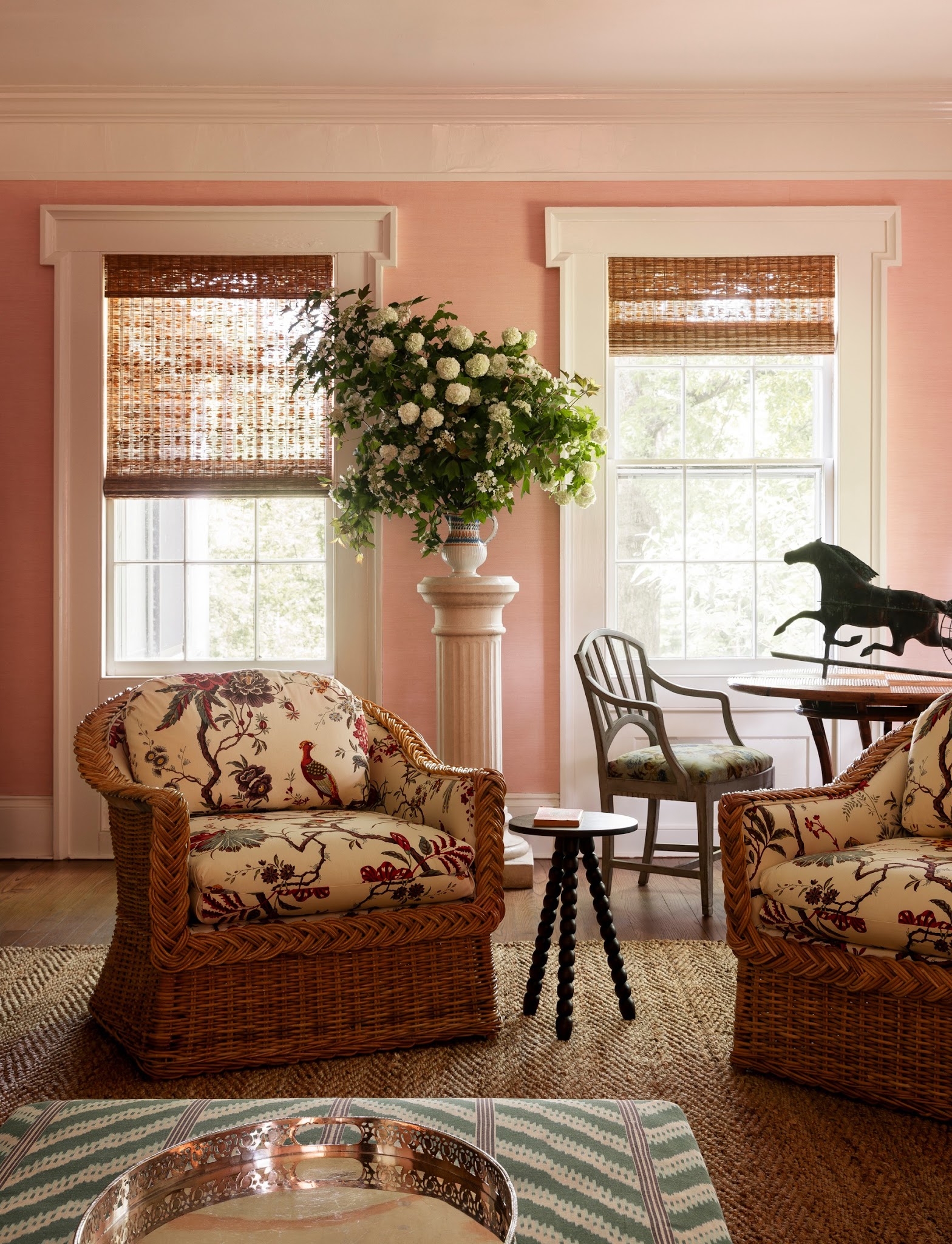
8. Warm Classic Seating With Soft Pink Walls
Credits: Instagram
Soft pink walls create a backdrop for the floral chairs in this living room. Their woven frames bring texture, while white window trim gives the wall color a crisp boundary.
Simple shades filter the view without adding another large print, and a striped ottoman introduces a different pattern at a lower level. The arrangement shows how a traditional room can feel relaxed without losing its decorative detail.
Try a muted wall color that picks up a small note from your upholstery, then use plain trim to keep the edges clear. Position two comfortable chairs with a small table between them for drinks or reading.
A taller arrangement near the window adds height while leaving the seating area easy to use.
9. Treat a Scenic Wall Panel Like Oversized Art
Credits: Instagram
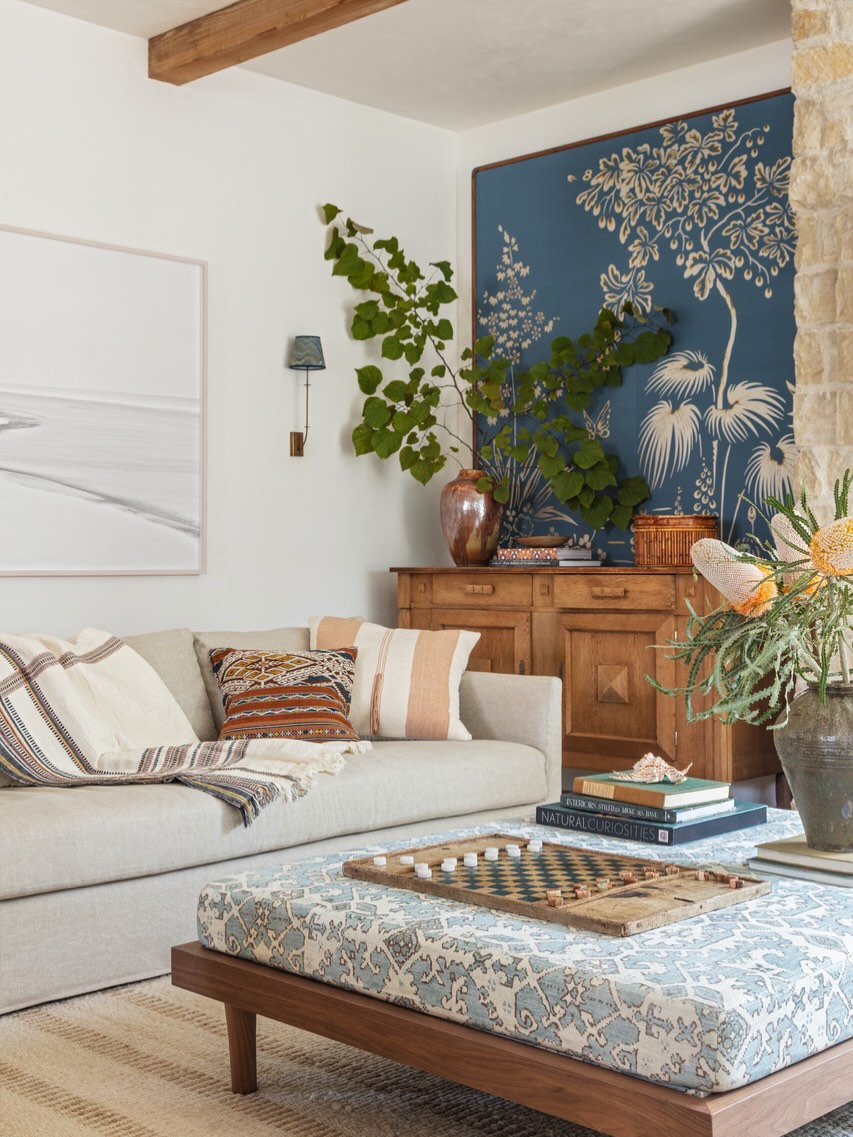
A blue scenic panel gives this living room a clear decorative focal point above a warm wood cabinet. Its pale branches and birds introduce traditional detail without covering every wall.
The neutral sofa allows that image to stand out, while stripes and a patterned ottoman bring smaller scale variation to the seating area.
Consider using a framed wallcovering panel when you want the impact of a mural in a more contained form. Center it over a substantial piece of furniture and allow a visible margin around its edges.
Repeat the panel’s blue in a cushion or accessory, then keep adjacent surfaces simple. The combination works because the room has one strong vertical statement and comfortable, quieter shapes gathered beneath it.
10. Balance a Patterned Sofa With Matching Lamps
Credits: Instagram
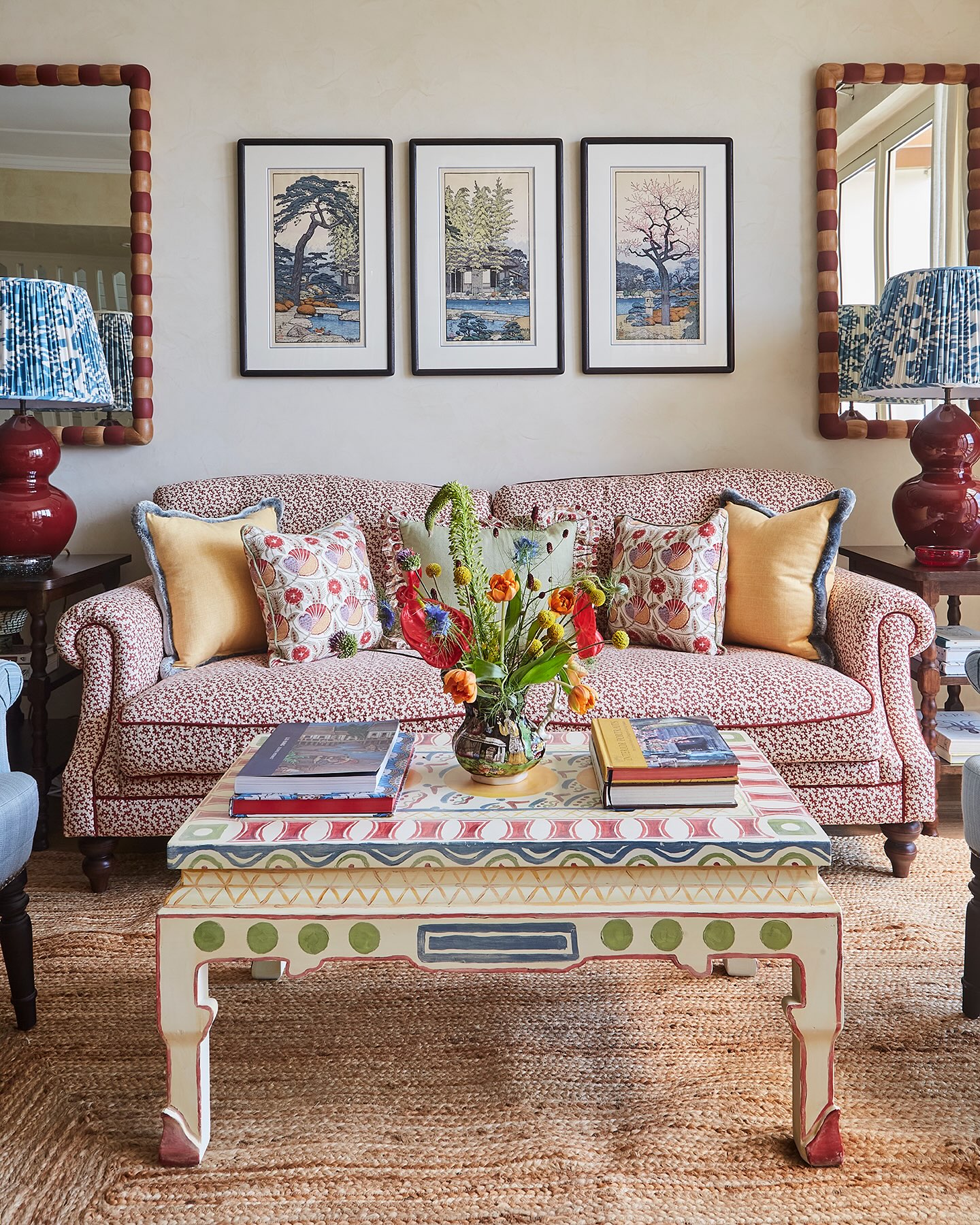
A patterned sofa becomes the center of this colorful room through repetition. Matching red lamps stand on either side, their blue patterned shades echoed by smaller blue details across the arrangement.
Three framed pictures form a measured row above the sofa, and paired mirrors extend the composition outward. The painted coffee table adds another decorative layer while the plain rug offers a visual pause.
For a similar scheme, establish symmetry with lamps and art before adding varied pillows. Choose patterns at different scales so each remains readable from a distance.
Keep the number of dominant colors limited, even when the prints are lively. A calm floor and wall background lets traditional furniture carry plenty of personality without overwhelming the space.
11. Arrange Decorative Plates Around a Central Mirror
Credits: Instagram
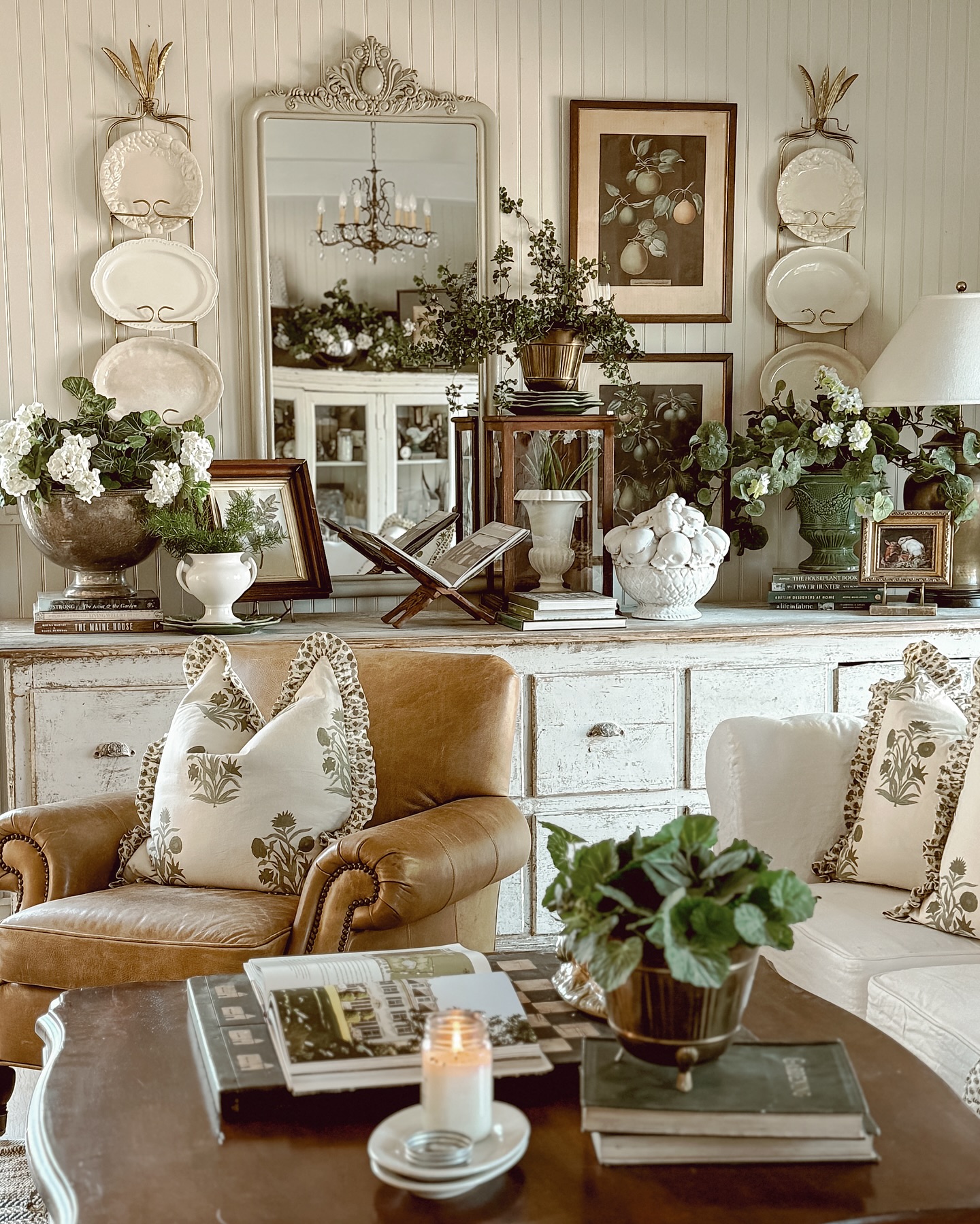
A tall mirror and two vertical groups of white plates give this living room wall an orderly backbone. Framed botanical pictures, small mirrors, and leafy arrangements fill the surrounding space with personal detail.
The pale cabinet and upholstery connect with the plates, while the golden chair and dark tabletop prevent the room from becoming visually flat.
Start with one central piece, then arrange plates in simple columns or balanced clusters before adding smaller frames. Vary the shapes while keeping their colors related.
A cabinet underneath provides both storage and a place to gather objects at different heights. Leave enough space around the seating to enjoy the display from across the room rather than placing treasured objects on the coffee table.
12. Paint Wall Moldings in One Deep Color
Credits: Instagram
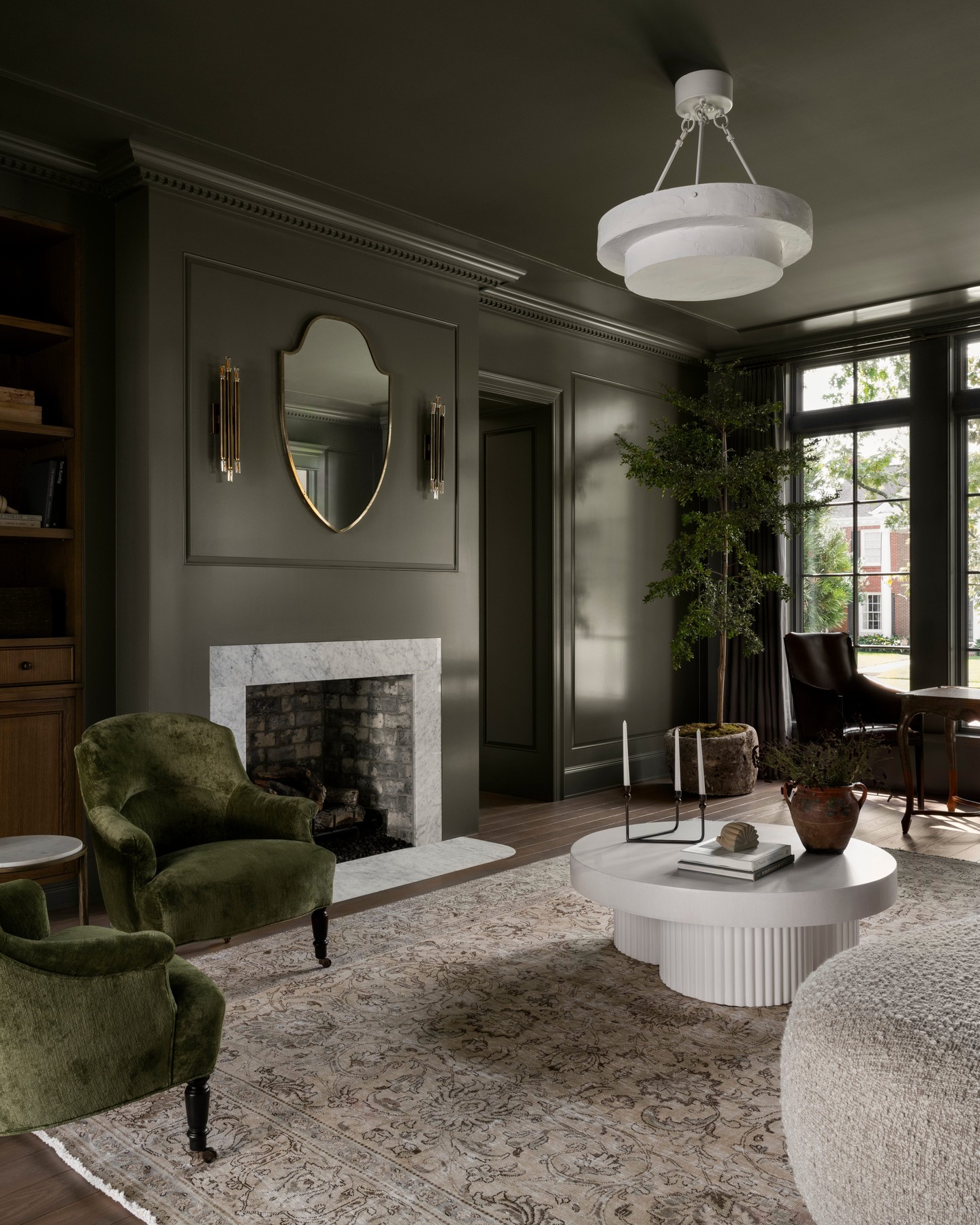
Deep green paint unifies the walls, trim, and ceiling in this sitting room, allowing their raised details to emerge through light and shadow.
A green armchair continues the color at a lower level, while the pale fireplace surround and rounded coffee table provide relief. The pendant adds a simpler shape above the traditional moldings.
If you want to try an enveloping scheme, test your chosen color on several walls before committing, since daylight changes its appearance. Keep a few lighter furnishings within the seating area so their outlines remain clear.
A mirror over the fireplace creates another reflective surface. The mix of familiar architecture and rounded furniture makes the room feel composed while still offering a comfortable place to settle.
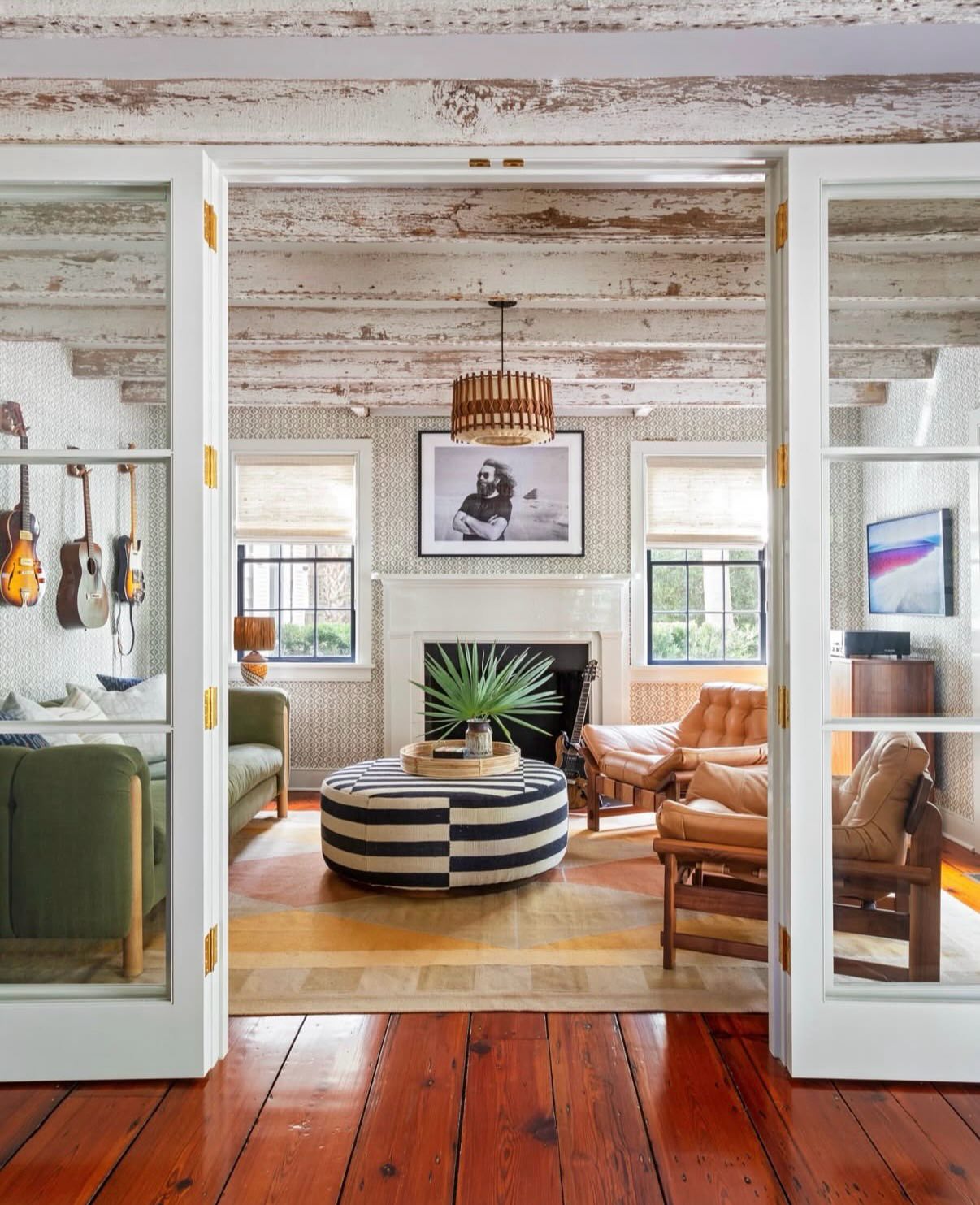
13. Center a Traditional Room on a Striped Ottoman
Credits: Instagram
A round striped ottoman brings a playful center to this living room’s traditional architecture. Seen through glazed doors, it gathers the surrounding seating into a clear group without blocking the view toward the fireplace.
Warm wood floors, pale walls, and the textured ceiling create a varied backdrop, while the broad stripes remain easy to read from the adjoining room.
Choose an ottoman that leaves comfortable walking space around the seating and fits the scale of your sofa. A tray can provide a steadier surface for drinks or books.
Keep nearby patterns smaller if the central piece has strong stripes. This approach gives a familiar living room a distinct focal point while preserving the sightline that makes connected rooms feel welcoming.
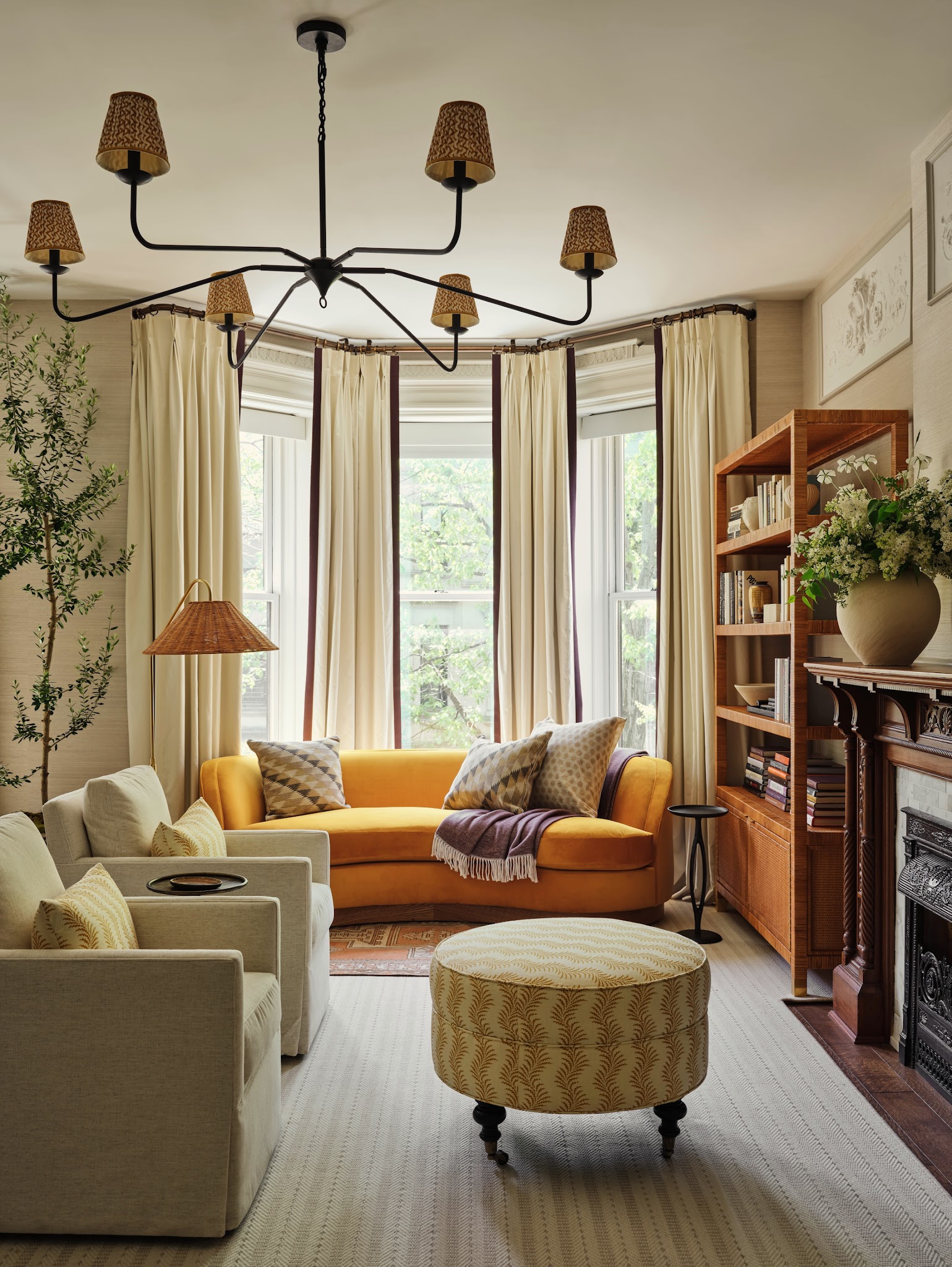
14. Turn a Bay Window Into a Conversation Spot
Credits: Instagram
The yellow sofa tucked into this bay window gives the narrow room a destination. Two pale chairs face into the seating area, and a round upholstered ottoman keeps the middle flexible.
Curtains emphasize the window’s shape while a bookcase and fireplace add traditional weight along the side wall. For a room with similar proportions, begin by protecting a clear route from the entrance to the seating.
A shorter sofa can sit within the bay without covering its full width, and chairs with modest footprints help preserve circulation. Repeat the curtain color in larger upholstery pieces, then reserve one brighter shade for the window seat.
The arrangement feels deliberate because every piece contributes to conversation, reading, or a place to pause.
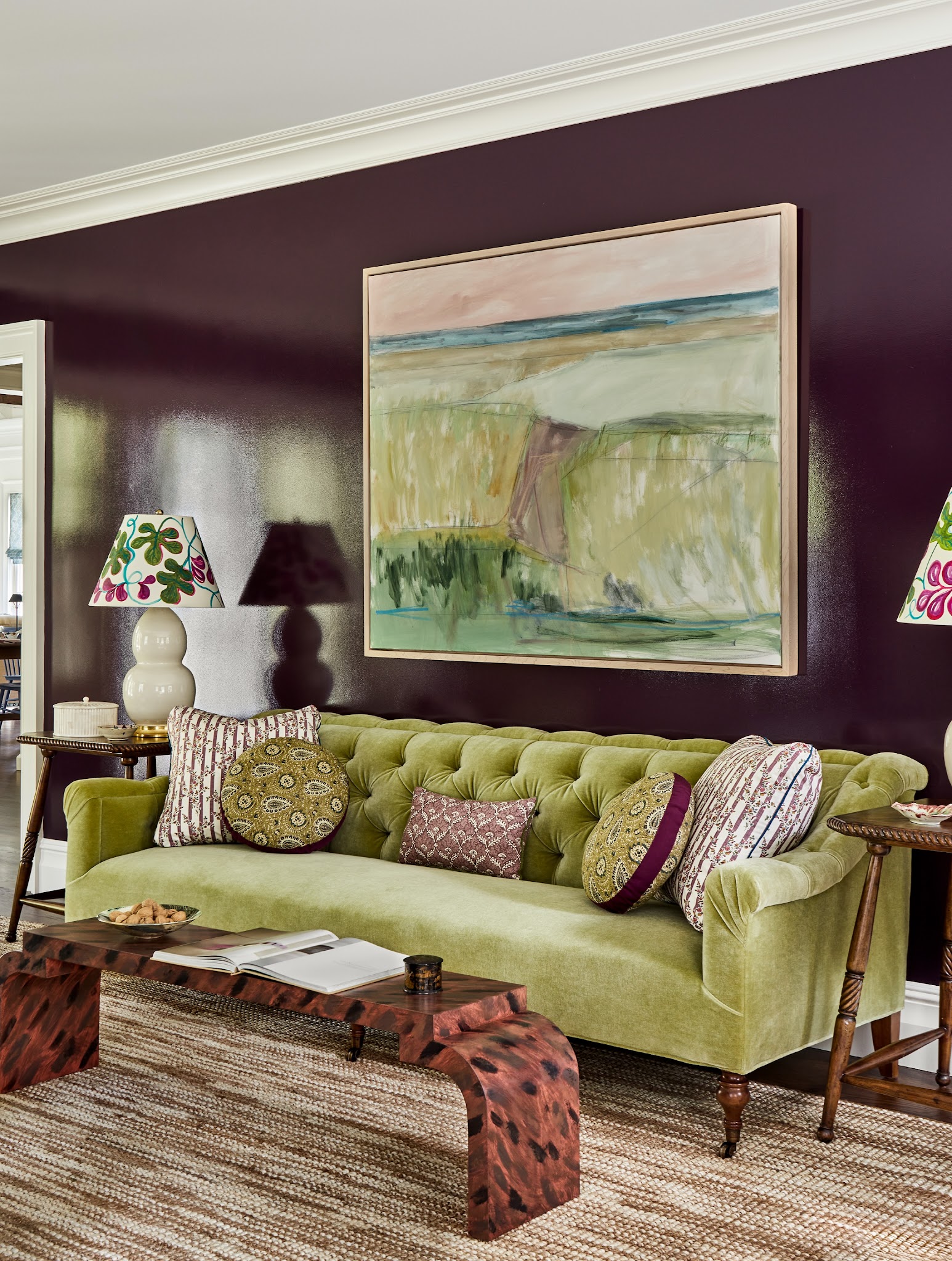
15. Pair a Green Tufted Sofa With Plum Walls
Credits: Instagram
A green tufted sofa stands out against the deep plum walls of this living room. Its curved arms and turned legs establish a traditional profile, while the large landscape above it introduces softer greens and pale tones.
Patterned lampshades and mixed pillows extend the color conversation without competing with the sofa’s outline. When using two strong colors together, give one a larger uninterrupted surface and let the other appear in a major furnishing.
Here, the simple floor covering leaves room for that contrast to work. Select artwork that shares a few colors with the room rather than trying to match every shade.
Keep the coffee table low enough to preserve the furniture’s shape and the view of its decorative details.
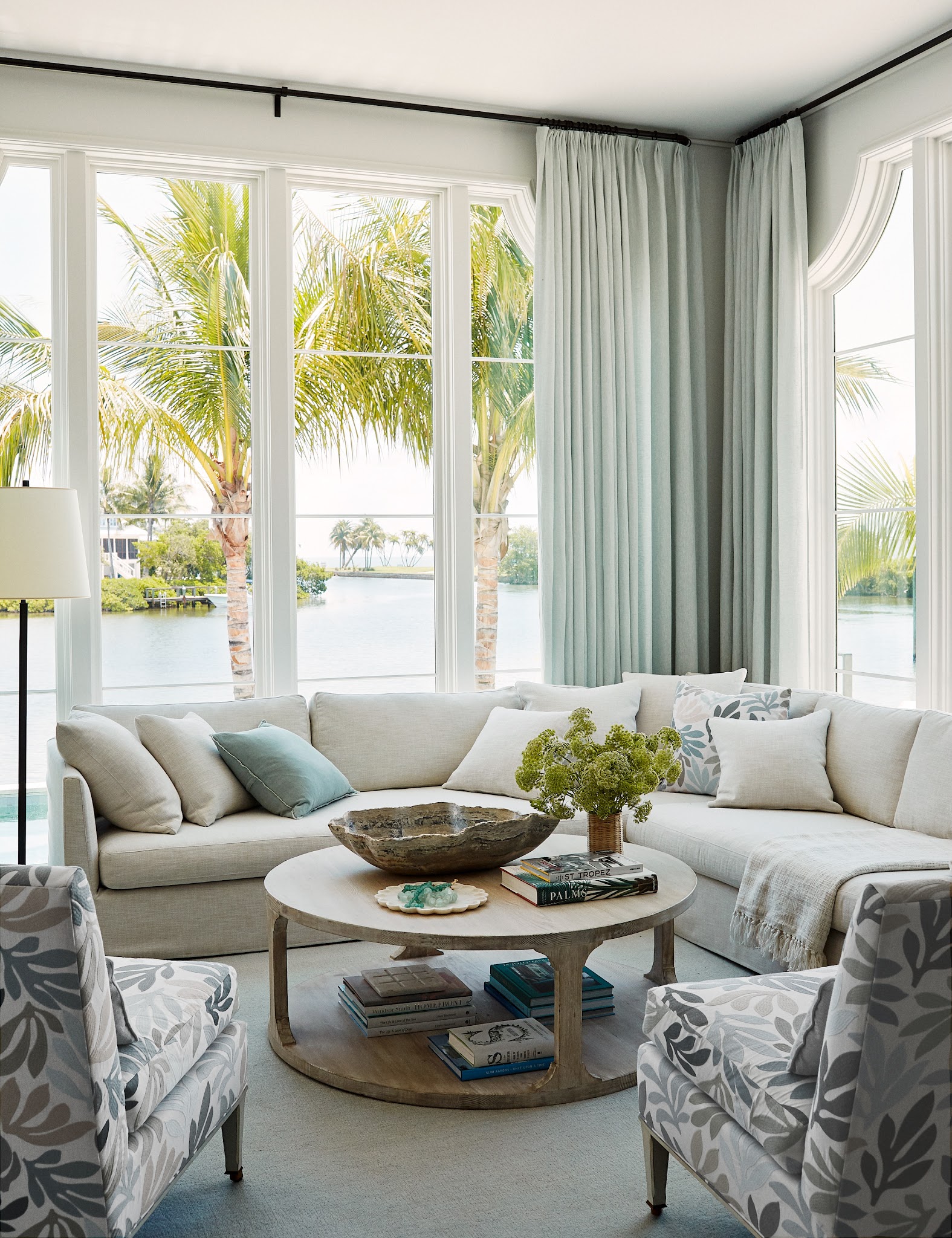
16. Keep Window Views Open With Low Seating
Credits: Instagram
Low seating follows the windows in this bright living room, letting the outdoor view remain part of the composition. Pale upholstery and blue curtains establish a quiet palette, while two patterned chairs give the foreground a traditional decorative note.
A round coffee table makes the center feel accessible from several seats. This layout works well when a corner has windows on adjoining walls.
Keep the tallest furniture elsewhere, and choose curtains that can draw away from the glass. Repeat the curtain color sparingly in pillows so the room feels connected without becoming overly coordinated.
A shelf beneath the table offers a useful place for books. The result combines a gathering area with the lightness that makes a windowed room appealing.
17. Frame the Fireplace With Useful Painted Bookcases
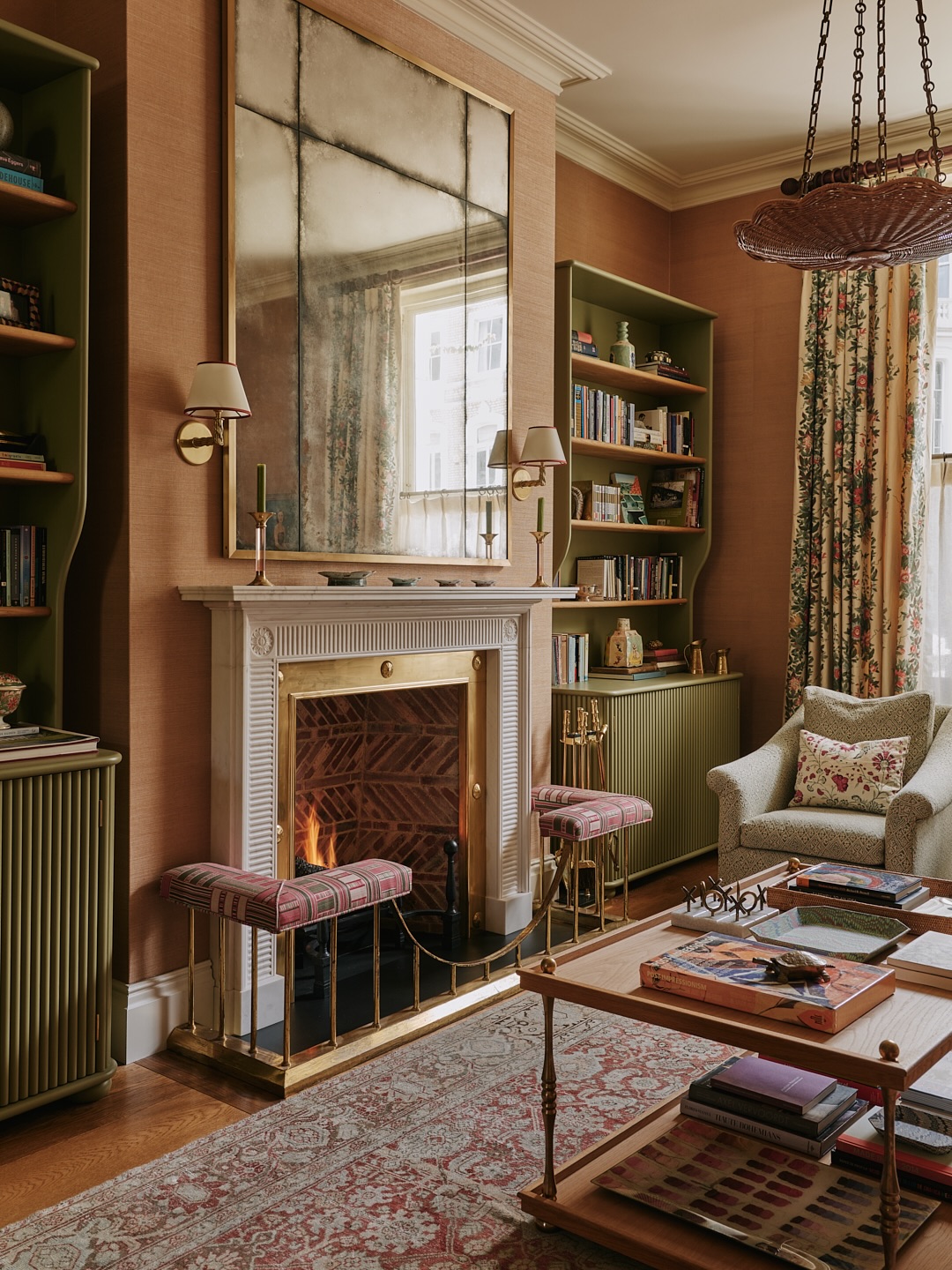
Credits: Instagram
Green bookcases on either side of the fireplace give this living room storage and a strong sense of balance. Their color sits comfortably against the warm pink walls, while the tall mirror above the mantel draws attention upward.
A patterned rug, slender coffee table, and small upholstered seats keep the foreground detailed but open. If your fireplace has recesses beside it, consider shelves that combine closed storage below with display space above.
Leave gaps between groups of books so the shelves do not become a solid visual block. Repeat the cabinet color in a cushion or decorative object elsewhere in the room.
The gain is substantial: everyday belongings have a home, and the architecture gains a more complete, connected frame.
18. Scale Artwork to a Comfortable Corner Sofa
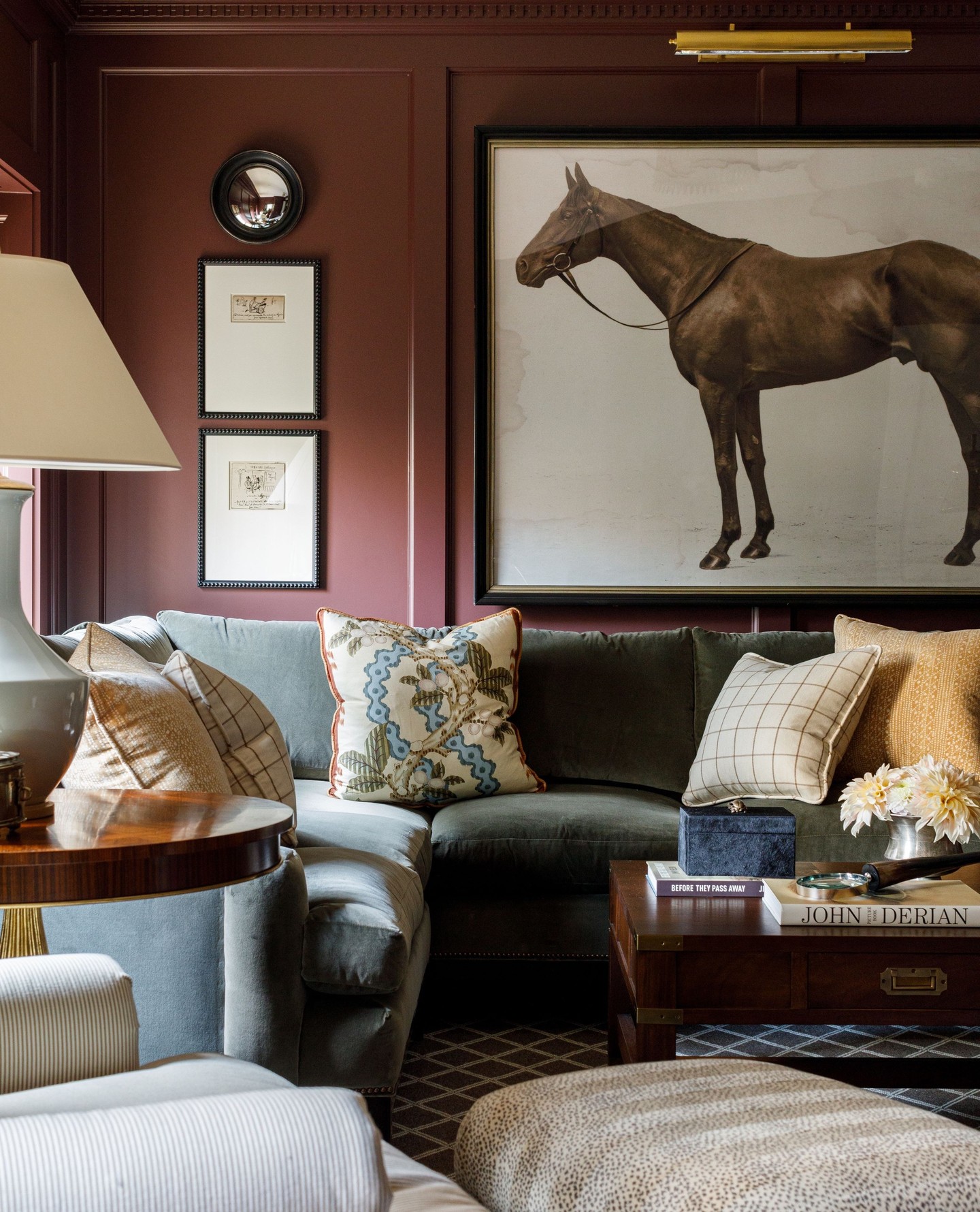
Credits: Instagram
A large horse picture gives this seating area a strong focal point. The dark green sofa sits against rich red paneled walls, with lighter chairs and patterned pillows providing contrast at the front.
Smaller pictures beside the main artwork make the display feel collected without weakening its center. In a room with substantial furniture, choose artwork that has enough presence to hold its own above the cushions.
Check the relationship from the doorway before adding more frames. A lamp beside the sofa brings light down to reading height, while a low chest serves as a central surface.
Combining checks with a more decorative pillow pattern adds variety, but the shared subdued colors keep the corner comfortable rather than visually restless.
19. Repeat a Small Green Pattern Across the Room
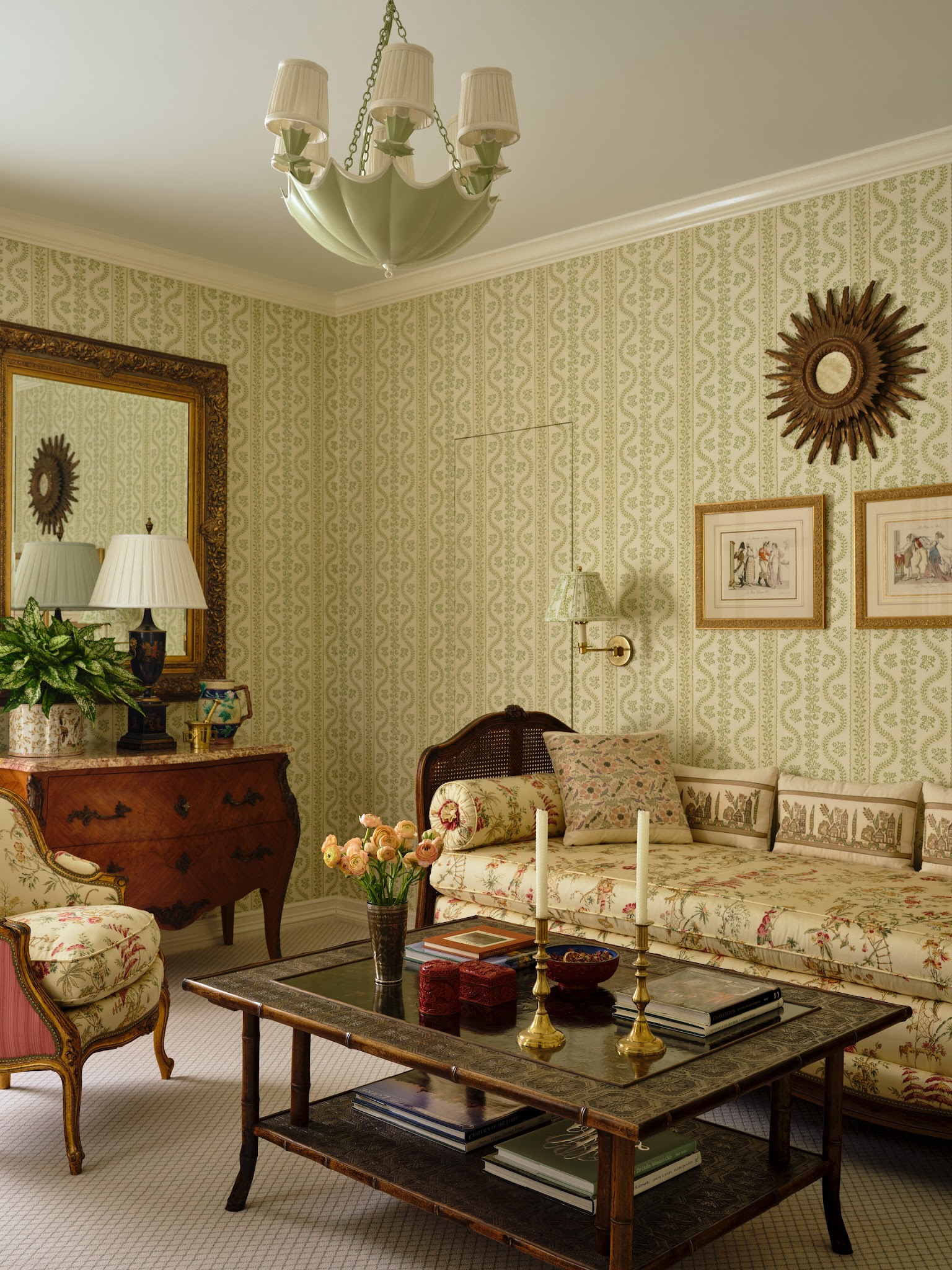
Credits: Instagram
A pale green wall pattern gives this living room a rhythm, echoed by the sofa’s lighter patterned upholstery. Dark wood furniture supplies definition, and a framed mirror prevents the walls from feeling visually closed.
The coffee table’s open structure leaves the patterned rug visible underneath. To use repeated pattern successfully, vary its scale or density between the walls and furniture.
Keep a few broad surfaces quieter, such as the ceiling or tabletop, so the eye has somewhere to rest. A chest provides concealed storage while supporting a lamp and smaller decorative objects.
The room demonstrates how traditional details can remain soft and inviting when the palette stays narrow and the furniture is arranged around a clear, practical central gathering space.
20. Layer Bold Florals Around a Traditional Sofa
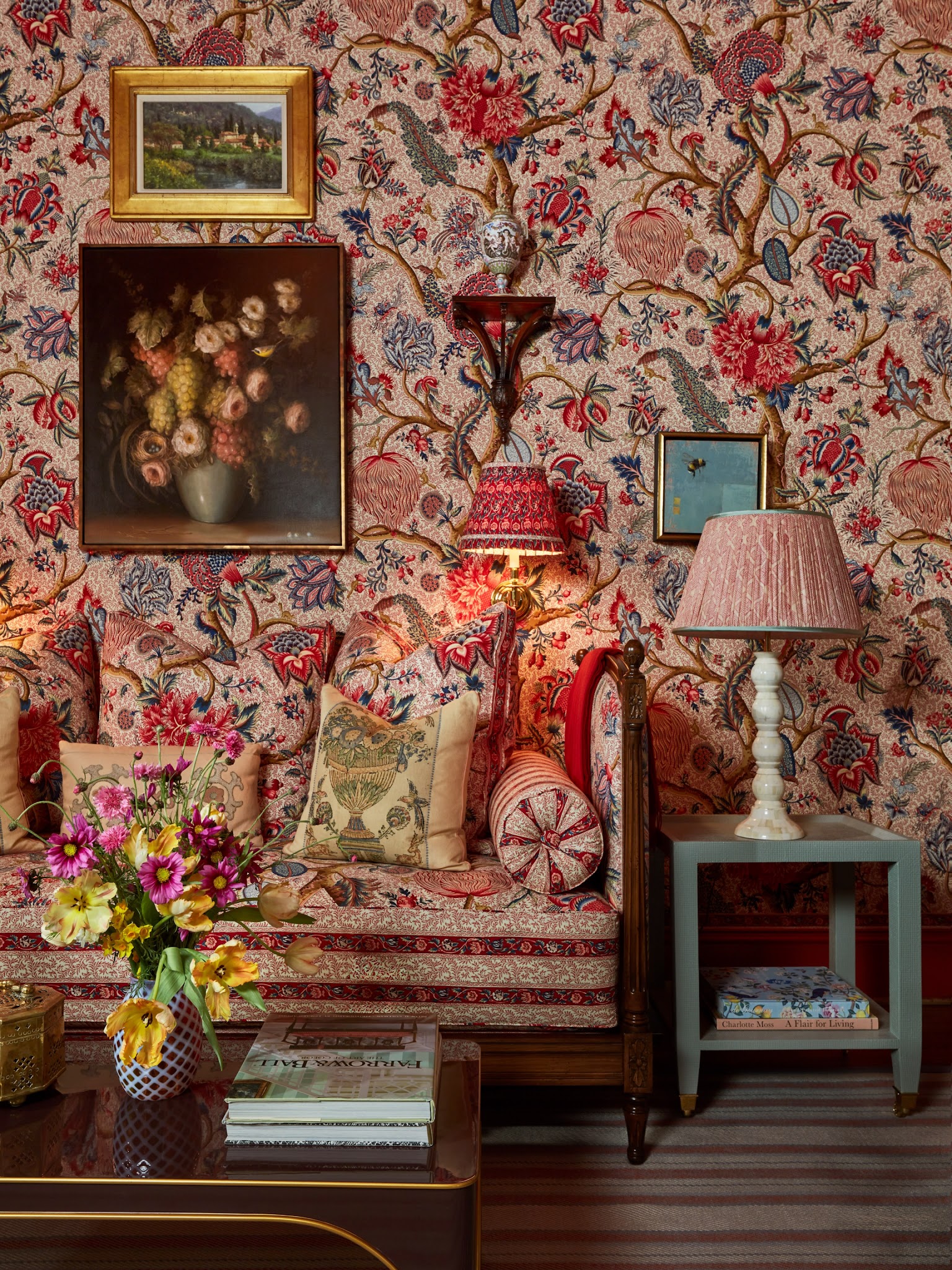
Credits: Instagram
Dense floral pattern gives this sitting room a rich, enveloping character. The wall covering and sofa share a related palette, while striped upholstery details introduce a narrower rhythm.
Framed pictures, two different lamps, and a simple blue side table give the eye recognizable shapes within the pattern. This approach works best when the colors are repeated thoughtfully rather than when every object demands attention.
Choose one dominant floral design, then bring in smaller patterns that share its background or accent colors. Use a plain side table or lamp base to create a visual pause.
Keep practical surfaces available for books and drinks. The room shows how a traditional sofa can anchor a bold scheme when its shape remains clearly defined.