
A rust-toned room can feel rich without becoming heavy when warm color is balanced with pale surfaces and cooler accents.
Terracotta Living Room Ideas show how to bring that balance to the sofa, rug, ceiling, or television wall, rather than relying on one all-over color.
Gray seating can temper a rust sofa, while cream upholstery and textured fabrics soften a deeper terracotta-brown piece. For a smaller change, a patterned ottoman or rust armchair adds warmth without asking you to redo the whole room.
1. Repeat Rust Across the Sofa and Rug
Credits: Instagram
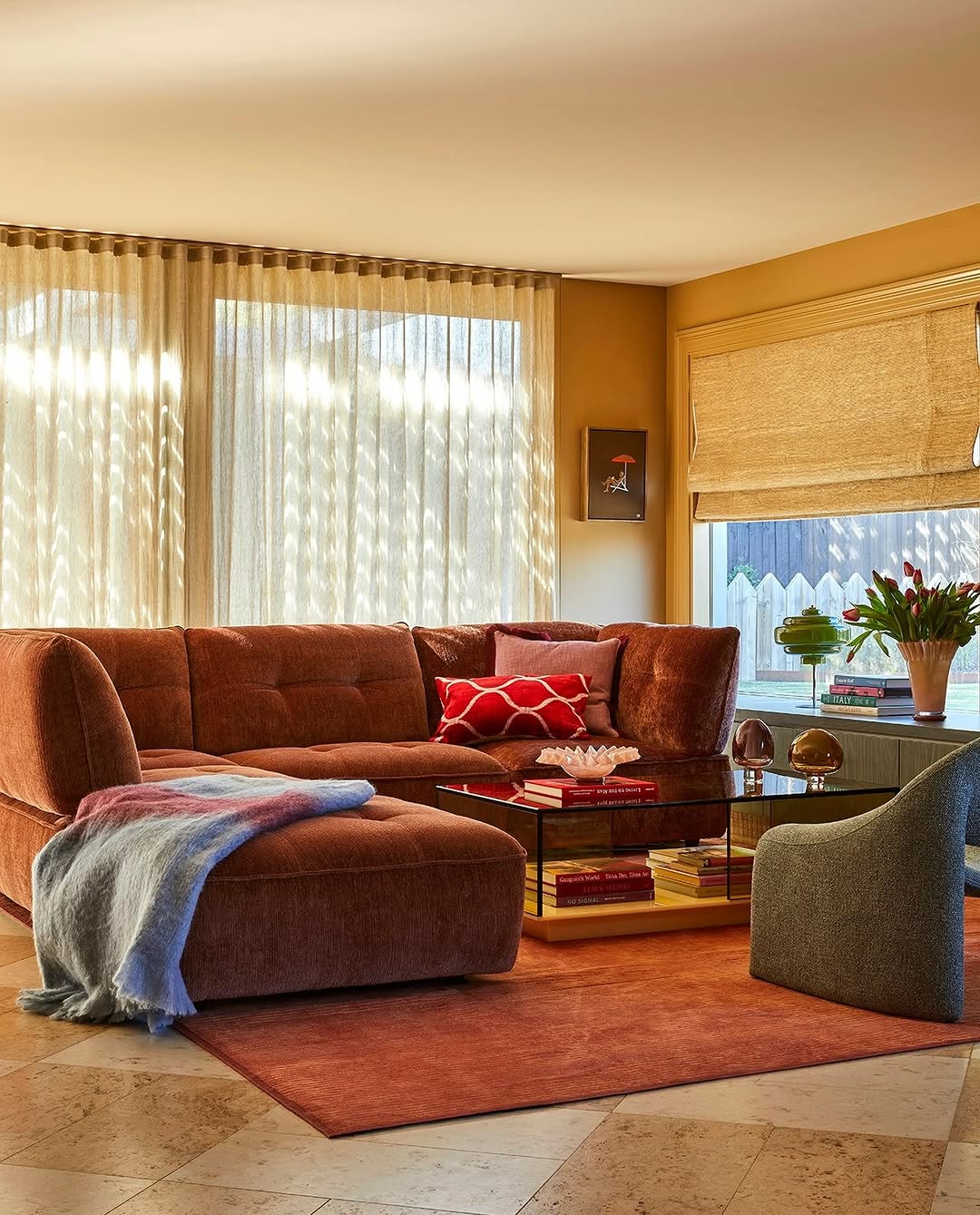
A rust sectional feels especially settled when its color continues onto the floor. Here, the low sofa and rectangular rug create one generous seating zone, while a glass coffee table lets the warm tones show through.
The gray accent chair interrupts the color just enough to keep each piece readable. Borrow this approach by choosing a rug slightly brighter or flatter than your upholstery, rather than searching for an exact match.
Sheer curtains soften the daylight, and the pale floor provides a useful border around the rug. A blue throw, pink pillow, and small green lamp bring cooler notes into the mix.
Keep accessories varied but contained so the sofa remains the clear center of this inviting, thoughtfully layered arrangement.
2. Paint the Ceiling a Warm Terracotta
Credits: Instagram
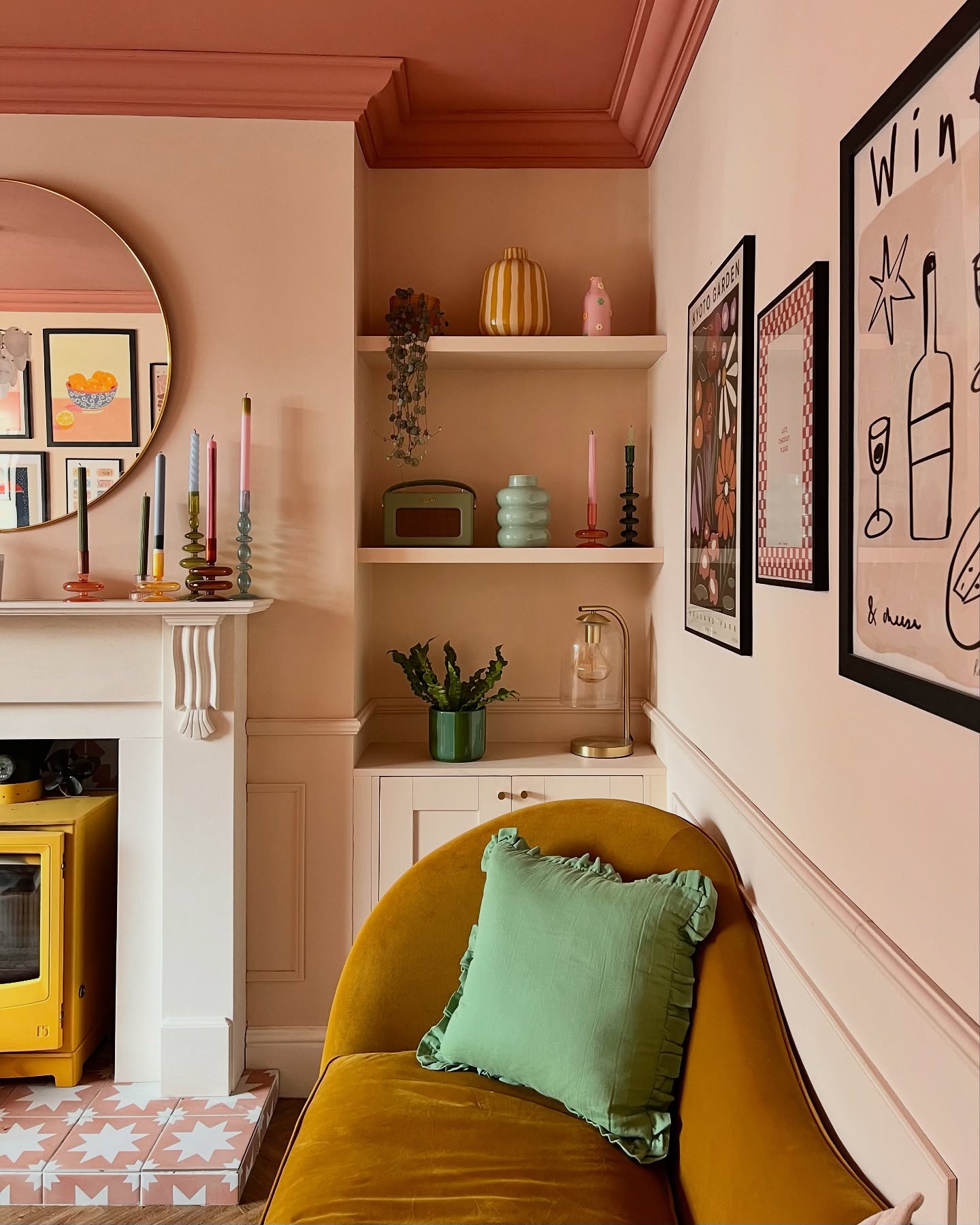
Terracotta on the ceiling brings warmth into this living room without taking over its pale walls. Carrying the color across the crown molding makes the upper edge feel deliberate, while the round mirror reflects that same warm band.
Below, a mustard chair, green pillow, and colorful candles give the corner a playful rhythm. Try a deeper ceiling color with lighter walls when you want definition around decorative molding.
Test a large sample overhead before committing, because the angle of the light changes how color reads. The built-in shelves stay close to the wall color, letting their small objects stand out.
Black picture frames add crisp outlines, and the patterned hearth repeats a softer version of the ceiling's earthy pink-orange tone.
3. Balance a Rust Sofa With Gray Seating
Credits: Instagram
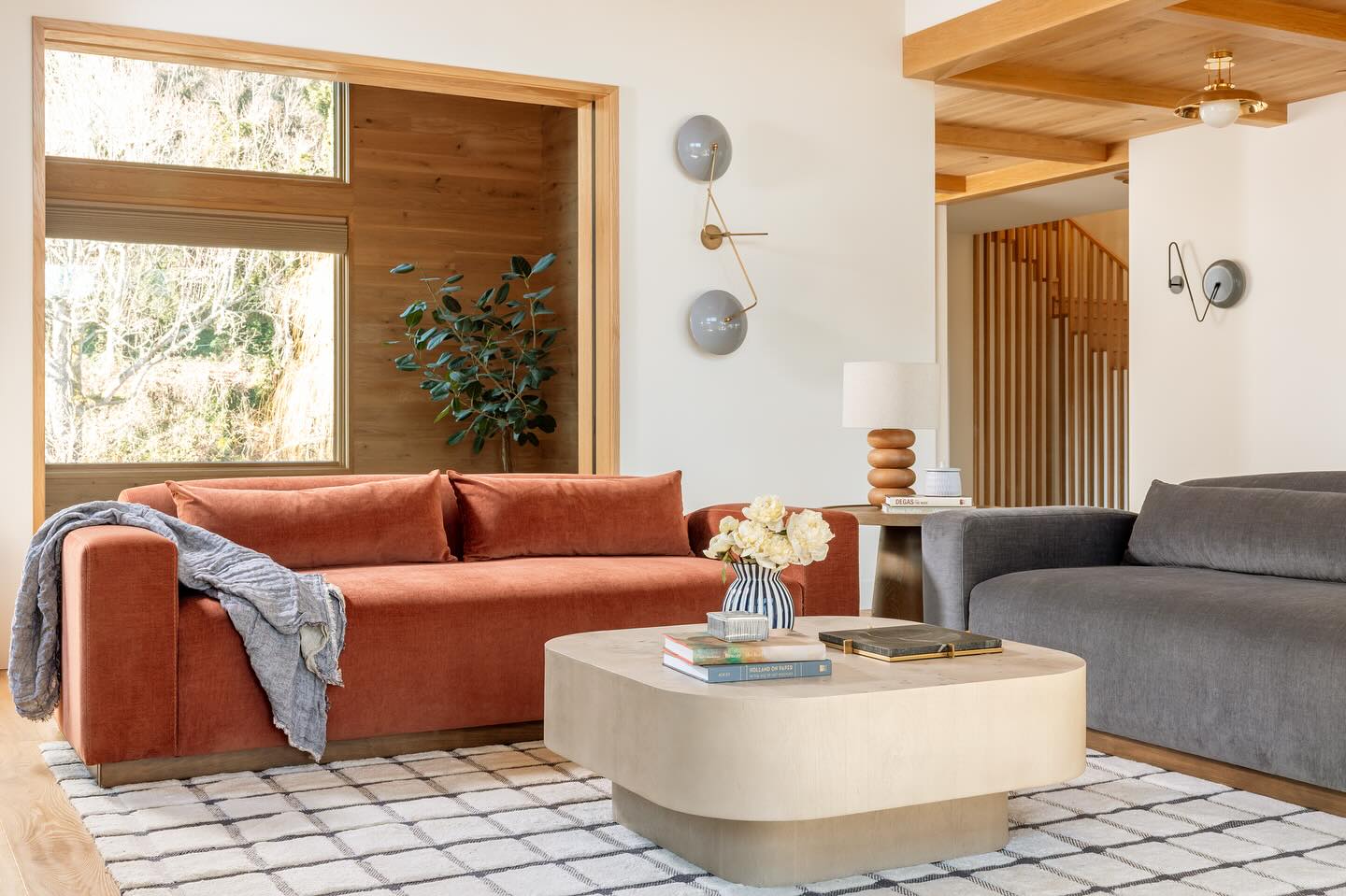
A rust sofa can bring warmth to a room that already has gray upholstery. This seating group gives the two colors similar visual weight, then connects them with a pale grid rug and a low, rounded coffee table.
The light wood ceiling, window trim, and stair rails reinforce the sofa's warm side without adding another strong color.
To use the idea, keep the shapes of the sofas simple and repeat a cool gray in a throw or wall light. That connection helps the pieces feel chosen together.
The coffee table's broad surface provides breathing room between the two seats. White walls and restrained accessories keep the contrast clear, making the rust upholstery feel lively without making the whole room busy.
4. Mix Terracotta and Cream Within One Sectional
Credits: Instagram
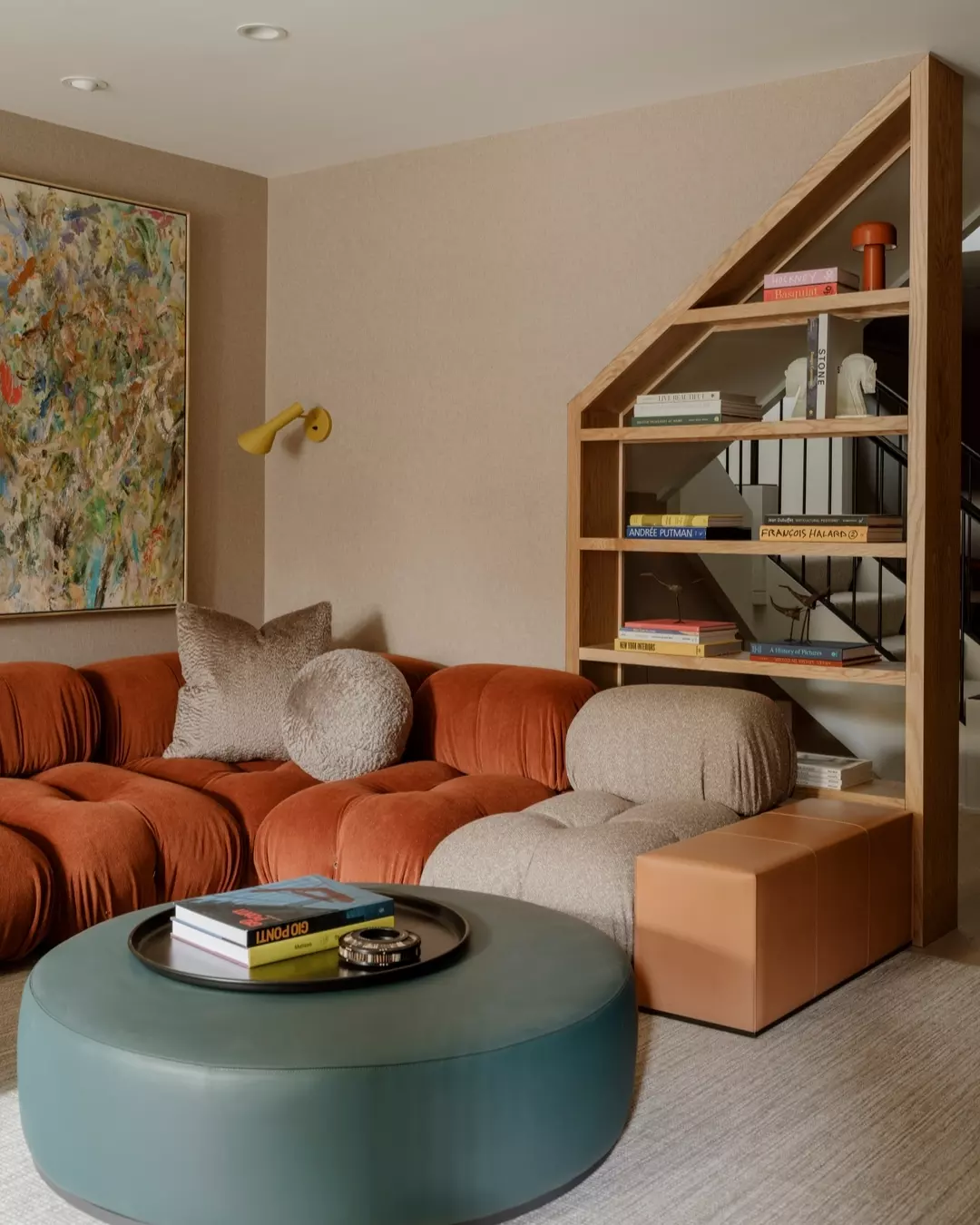
A sectional does not need to be one solid color to feel cohesive. This room combines terracotta and cream upholstery, creating a soft patchwork across the low, deeply cushioned seating.
The round blue table introduces a cooler note, while the built-in bookcase follows the slope above the sofa. Keep a two-tone seating arrangement convincing by choosing related shapes and a limited palette.
A cream pillow on a rust section can connect the colors without adding another pattern. Here, the large abstract painting brings movement to the quiet wall, and its varied tones prevent the furniture from feeling isolated.
The pale rug gives the whole arrangement a calm base. Leave nearby surfaces uncluttered so the changing upholstery remains easy to appreciate.
5. Let a Terracotta Rug Define the Room
Credits: Instagram
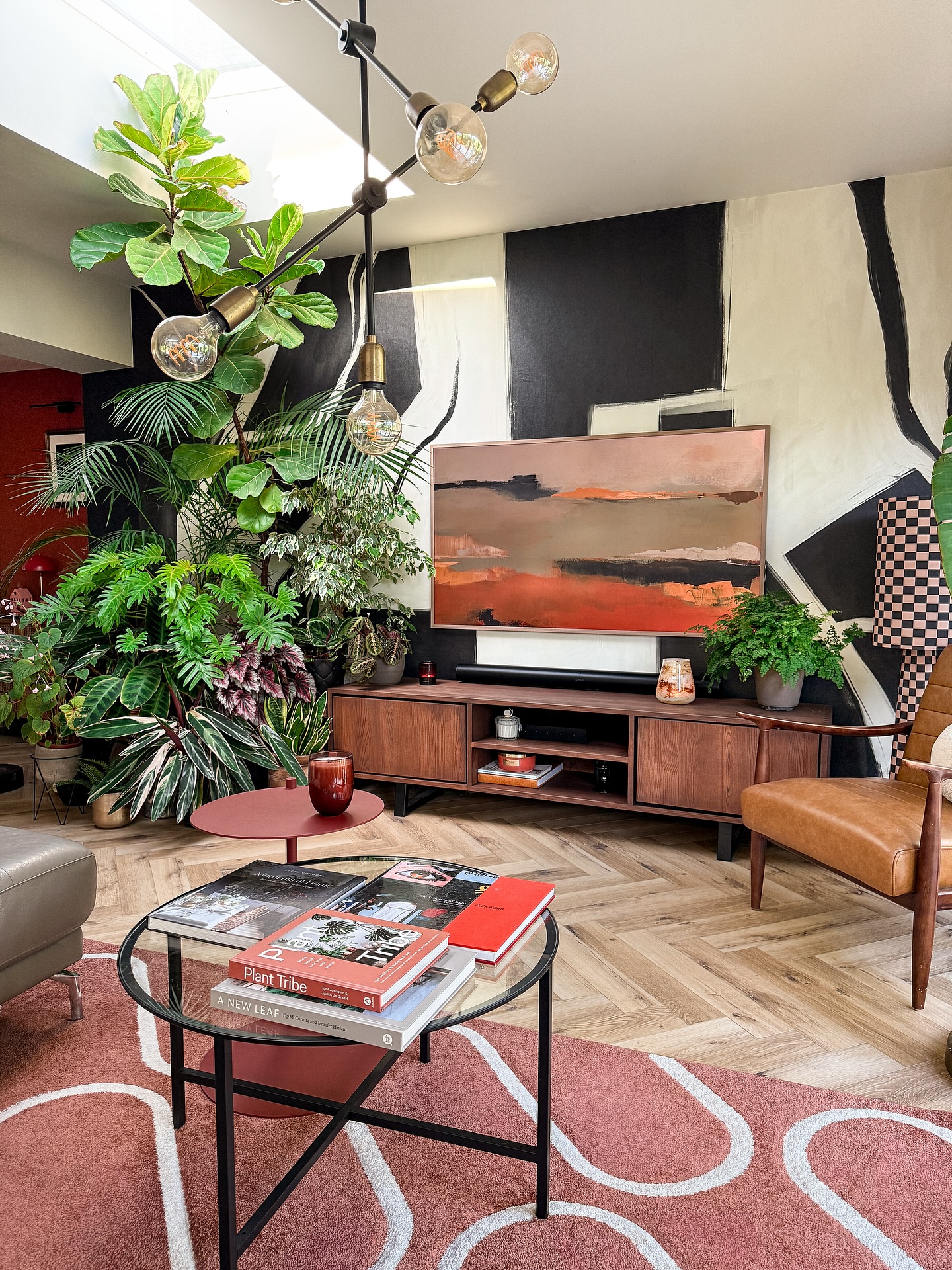
A large terracotta rug can carry the color story even when the seating stays neutral. The looping white pattern here gives the floor movement and relates to the slim curves of the glass coffee table.
A warm-toned image on the television repeats the rug's color at eye level, while the tall plants create a green counterpoint. Start with a rug large enough to connect the main furniture, then repeat its warmth in one piece nearby.
This room uses a compact side table for that link. The dark lines in the wall artwork and lighting stop the softer colors from looking vague.
Keeping the coffee table transparent allows more of the pattern to remain visible through the center of the space.
6. Warm Up the Television Wall
Credits: Instagram
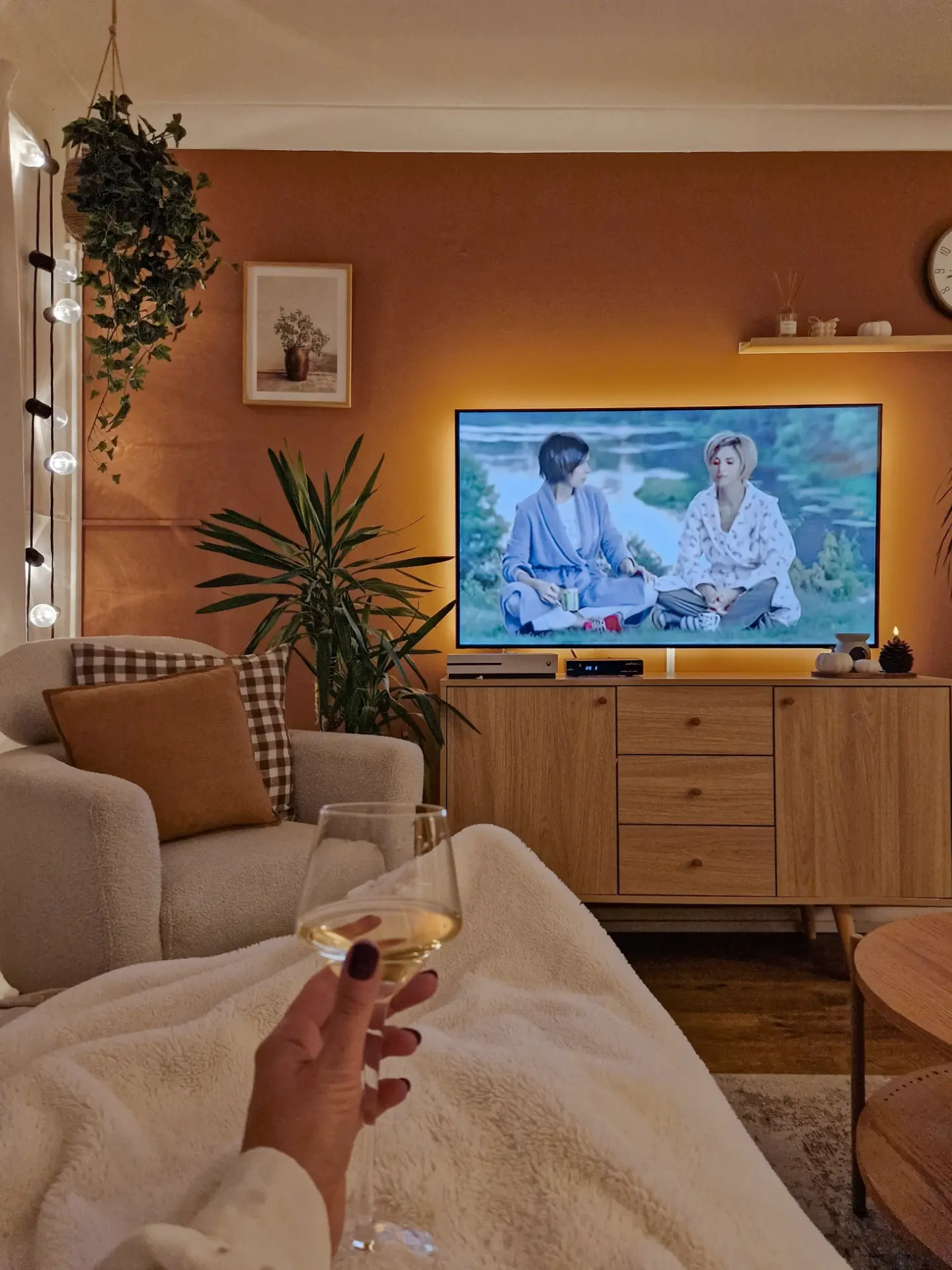
Terracotta gives this television wall a softer, more welcoming backdrop. The warm color continues behind the wood media cabinet, while a light chair and pale throw keep the foreground relaxed.
A floating shelf, simple framed print, and hanging plant break up the wall without crowding the screen. Try this approach when your television sits on the room's largest blank surface.
Choose a cabinet wide enough to feel grounded beneath it, then arrange the surrounding objects at different heights. The subtle glow behind the screen adds another layer of evening light.
Keep the remaining furniture lighter if you want the wall to stand out. A warm pillow on the chair repeats the color in an easy addition to the seating area.
7. Give Traditional Details a Rust Accent
Credits: Instagram
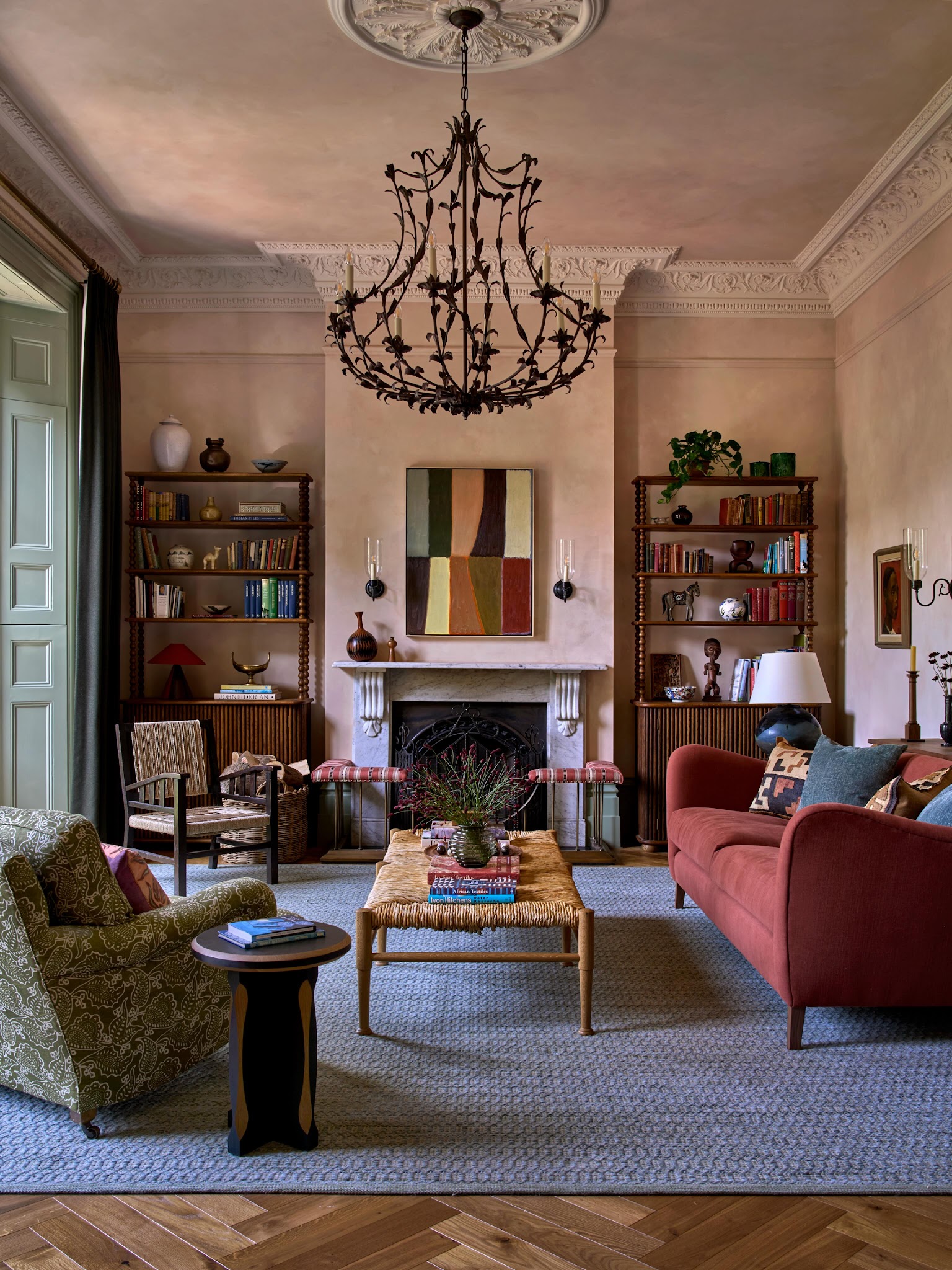
A muted rust sofa brings warmth to this living room's traditional architecture. Its curved arms sit comfortably beside the ornate ceiling molding, open shelves, and pale fireplace surround, while the woven coffee table keeps the center feeling relaxed.
The room avoids matching every upholstered piece: a patterned chair and smaller striped seats add variety around the solid sofa. To borrow the balance, choose one substantial rust piece and let its neighbors introduce quieter colors or finer patterns.
Repeat the warm tone in a lampshade or artwork rather than across every wall. Here, the tall shelves frame the fireplace without hiding the architectural detail.
A low arrangement on the table preserves the view across the seating group and toward the painting.
8. Deepen Rust With Mustard and Wood
Credits: Instagram
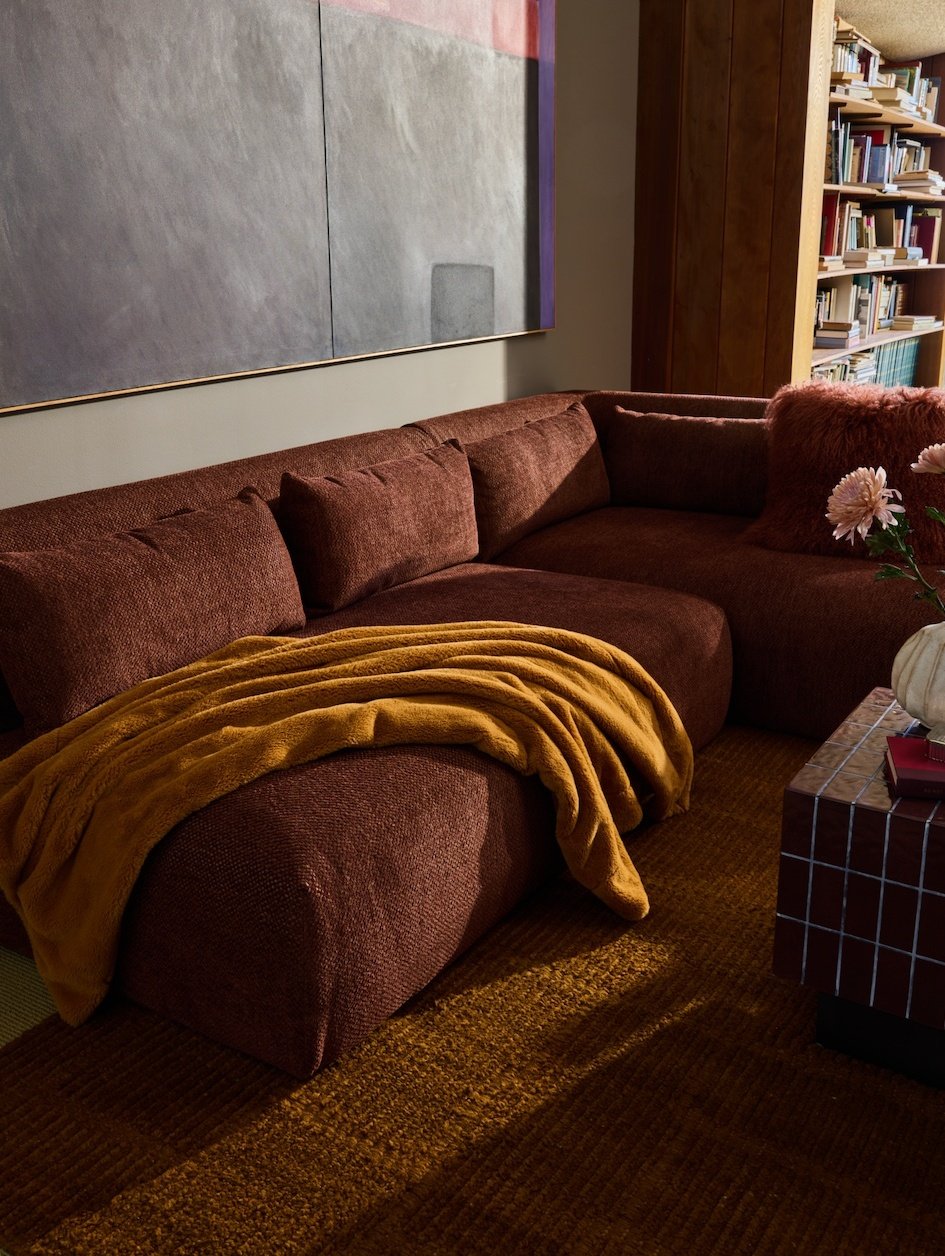
Deep rust upholstery gives this corner a rich, grounded starting point. A mustard throw and textured rug continue the warm palette, while the large gray artwork adds a quieter surface above the sofa.
The nearby bookshelf brings height and useful storage without needing another feature. Try layering related earthy shades that differ in texture: a nubby sofa, soft blanket, and flatter rug can feel connected without looking identical.
The dark tiled table provides a firm edge beside all those soft surfaces. Keep the artwork large and relatively restrained if the upholstery already has plenty of character.
A few books and flowers are enough to finish the corner. Leaving some of the sofa uncovered lets its shape and color remain prominent.
9. Layer a Floor Lamp Behind Rust Seating
Credits: Instagram
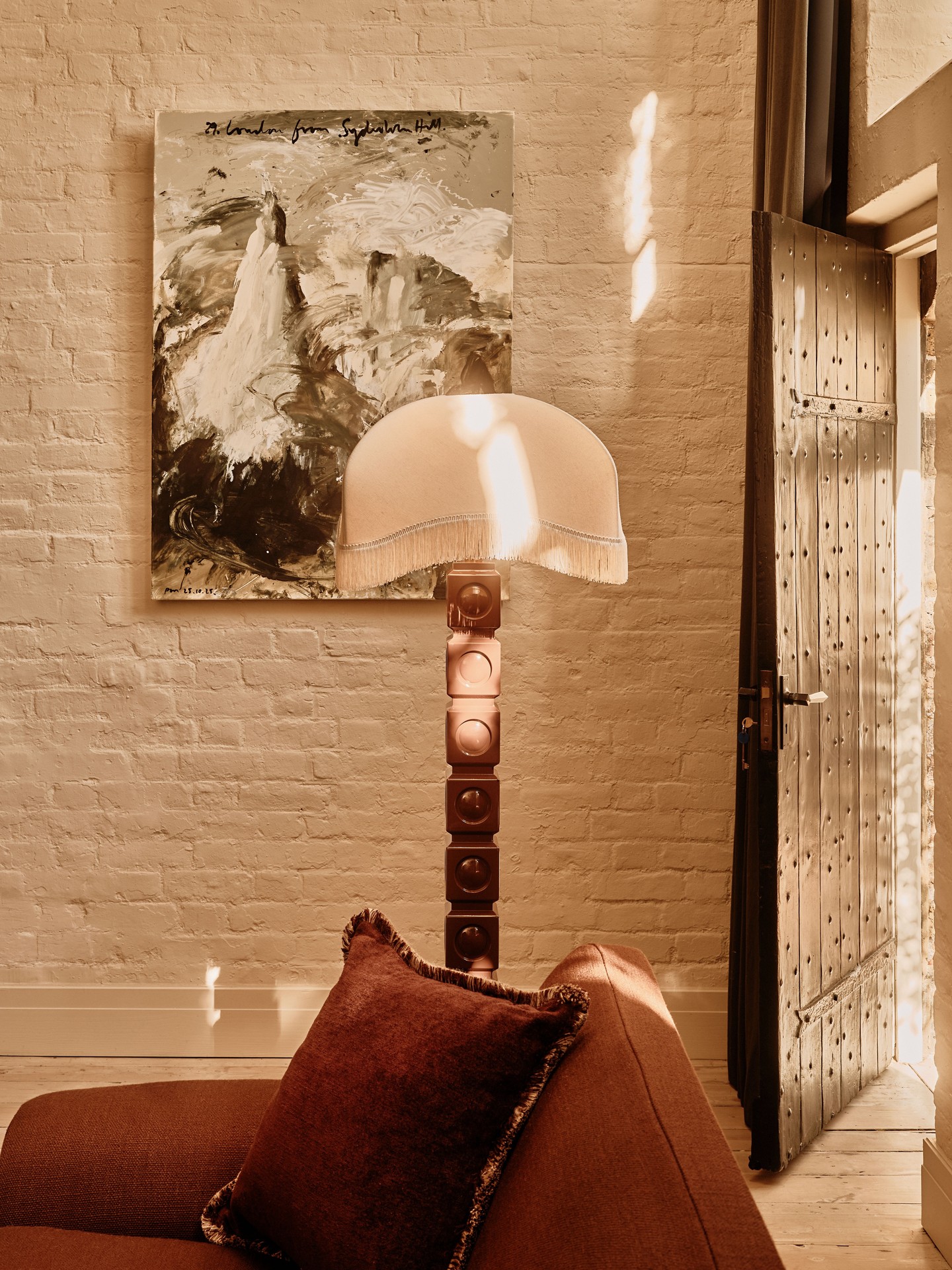
A floor lamp can make the corner of a rust sofa feel like a destination. This one pairs a sculptural stem with a broad fringed shade, adding height behind the seat without taking up the wall with shelves.
The darker rust pillow gives the upholstery another layer, and the pale painted brick keeps both colors easy to see. Try placing a lamp just behind the sofa's arm or corner so the base stays outside the main walking route.
Check the shade height from a seated position before choosing it. Here, a large neutral painting completes the vertical grouping without competing with the fabric.
The mix of smooth upholstery, soft fringe, and uneven brick gives the small arrangement plenty of interest.
10. Introduce Terracotta With a Patterned Ottoman
Credits: Instagram
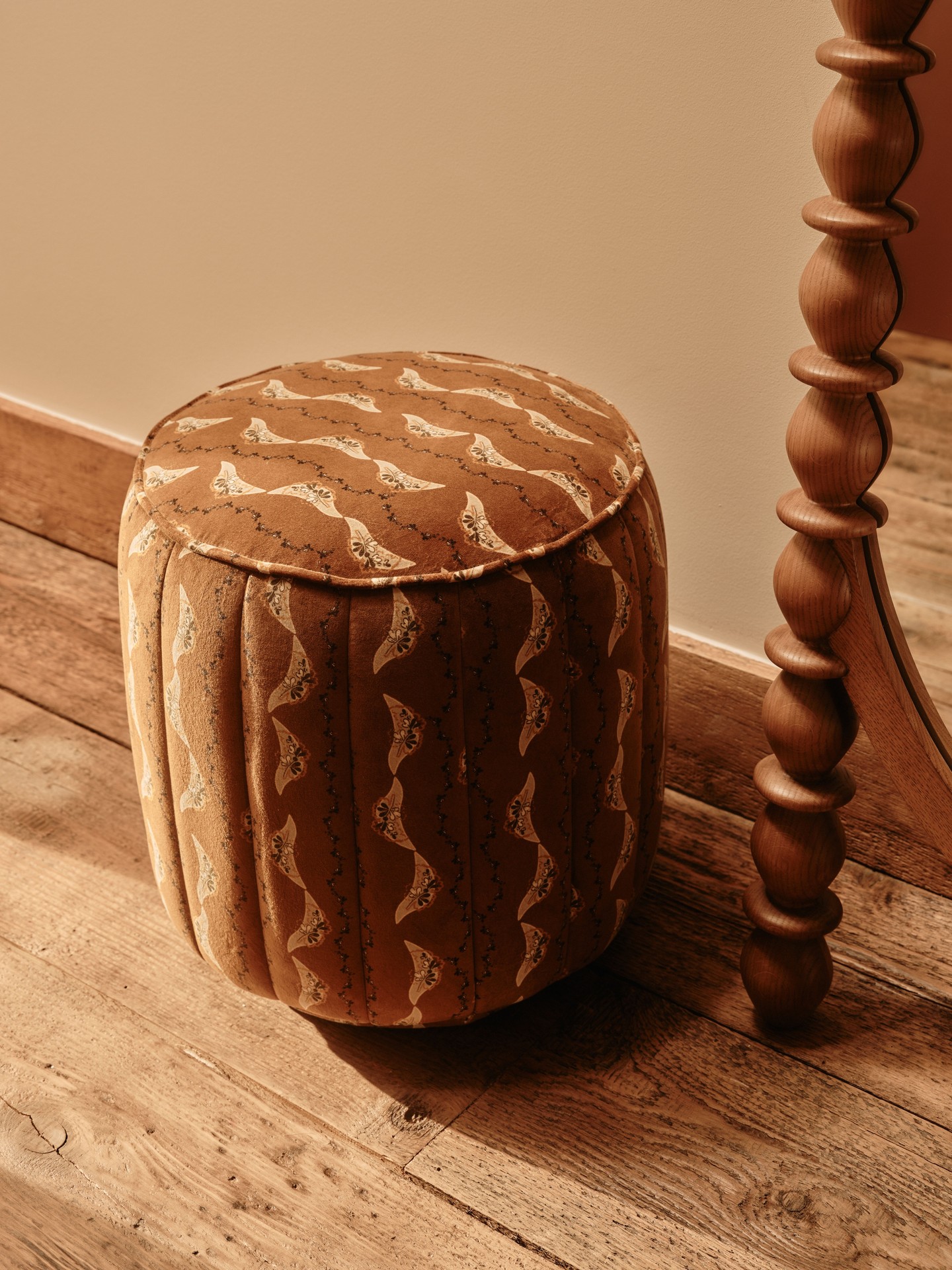
A small upholstered ottoman is a practical way to try terracotta before committing to a sofa. This round example combines an earthy ground with pale curved motifs, bringing pattern and color into a corner.
The turned wood lamp base echoes its rounded shape, while the quiet wall leaves the upholstery easy to appreciate. Choose an ottoman that can move between seats when you need a footrest or a place to set a tray.
Keep its height compatible with the sofa so it feels useful as well as decorative. Here, the piping neatly defines the top and gives the soft cylinder a finished edge.
Warm wood underfoot connects the terracotta fabric to the rest of the room without requiring matching pieces.
11. Let a Rust Armchair Warm a Cream Seating Group
Credits: Instagram
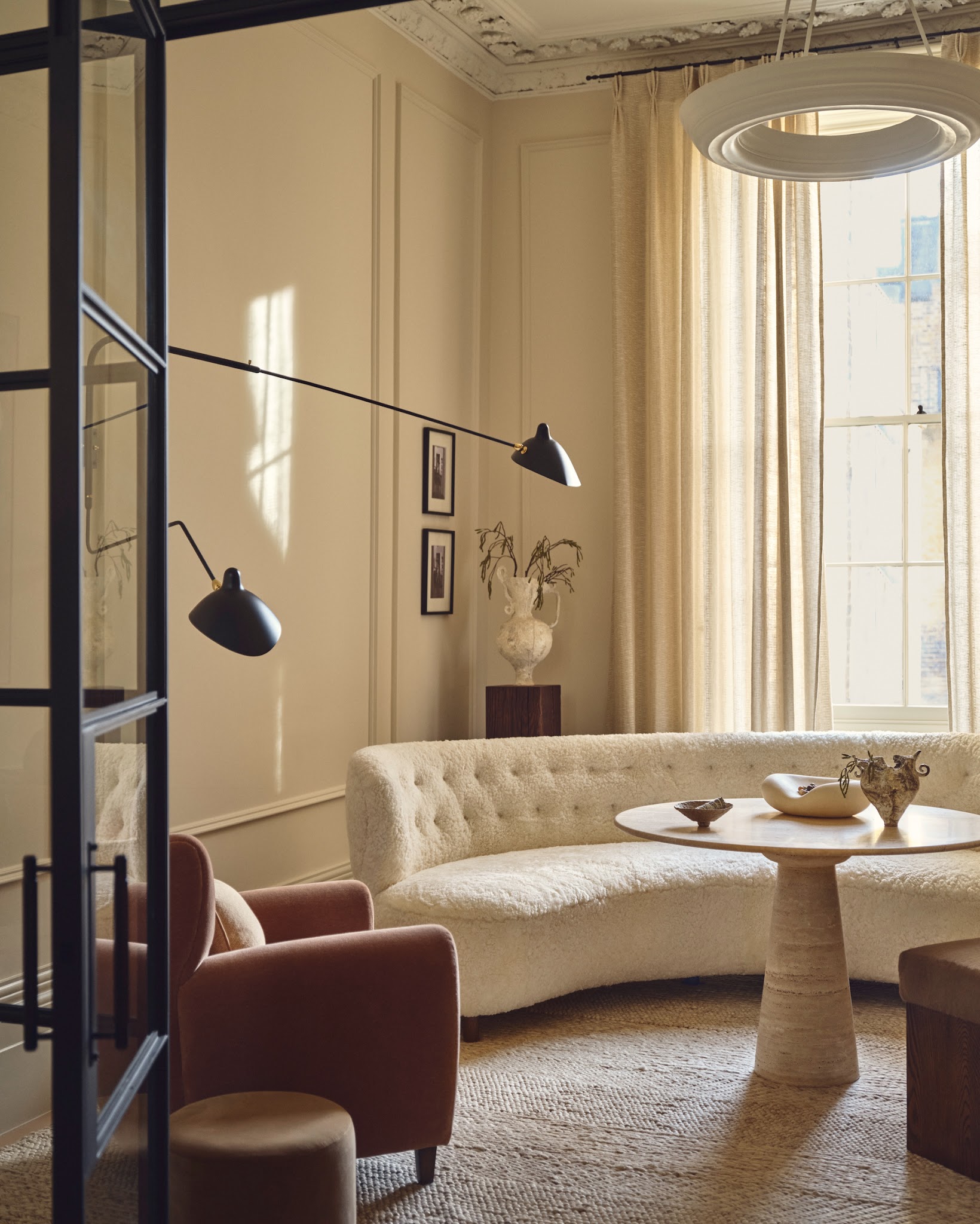
A muted rust armchair gives this pale sitting room a warm point of contrast. Its rounded arms relate to the curved cream sofa, while the different upholstery colors keep the pieces from blending together.
Try this pairing when you want one substantial dose of terracotta without repainting the room. Keep the rug and curtains close to the sofa's light tone, then use a few black details to sharpen the arrangement.
Here, long black lamps reach across the wall, and the doorway frame repeats their crisp lines. A round pedestal table continues the softer shapes between the seats.
Position the accent chair toward the sofa so its color supports a comfortable, inviting conversation area instead of becoming an isolated corner statement.
12. Put a Black Table Between Warm Chairs
Credits: Instagram
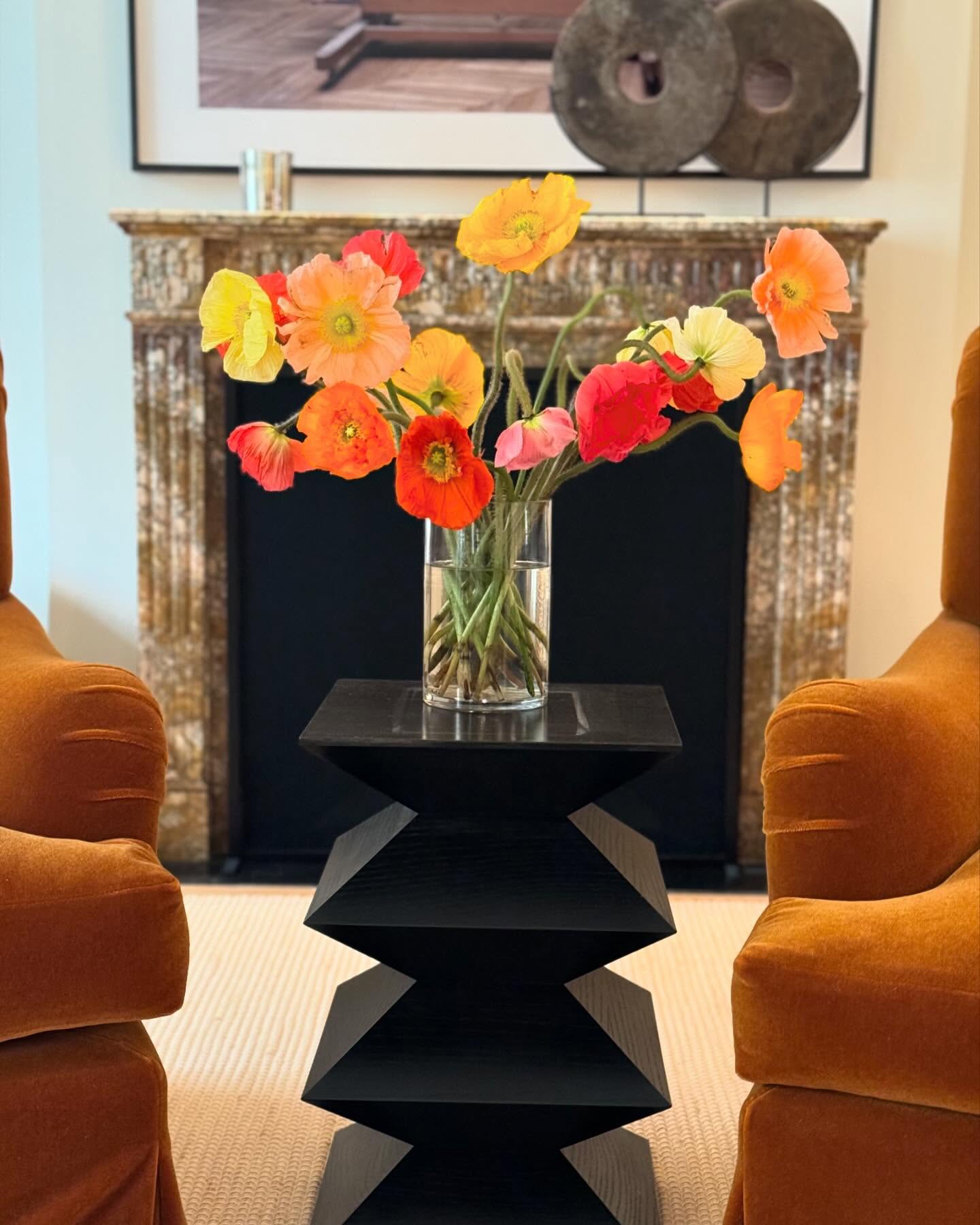
A dark accent can make terracotta upholstery look richer. These warm rust-orange chairs frame a black sculptural table, creating a clear contrast without needing another large piece of furniture.
The table's angular base also interrupts the chairs' soft outlines. Borrow the combination by pairing rounded seating with one compact table that has a strong silhouette.
Leave enough surface free for a drink or book, especially when the table serves two seats. A clear vase keeps the bright flowers visually light, while the pale rug prevents the arrangement from feeling heavy.
The fireplace behind provides a centered backdrop. Repeat the darker color in an artwork frame or small object so the table feels connected to the rest of the living room.
13. Center the Layout on a Rust Fireplace Wall
Credits: Instagram
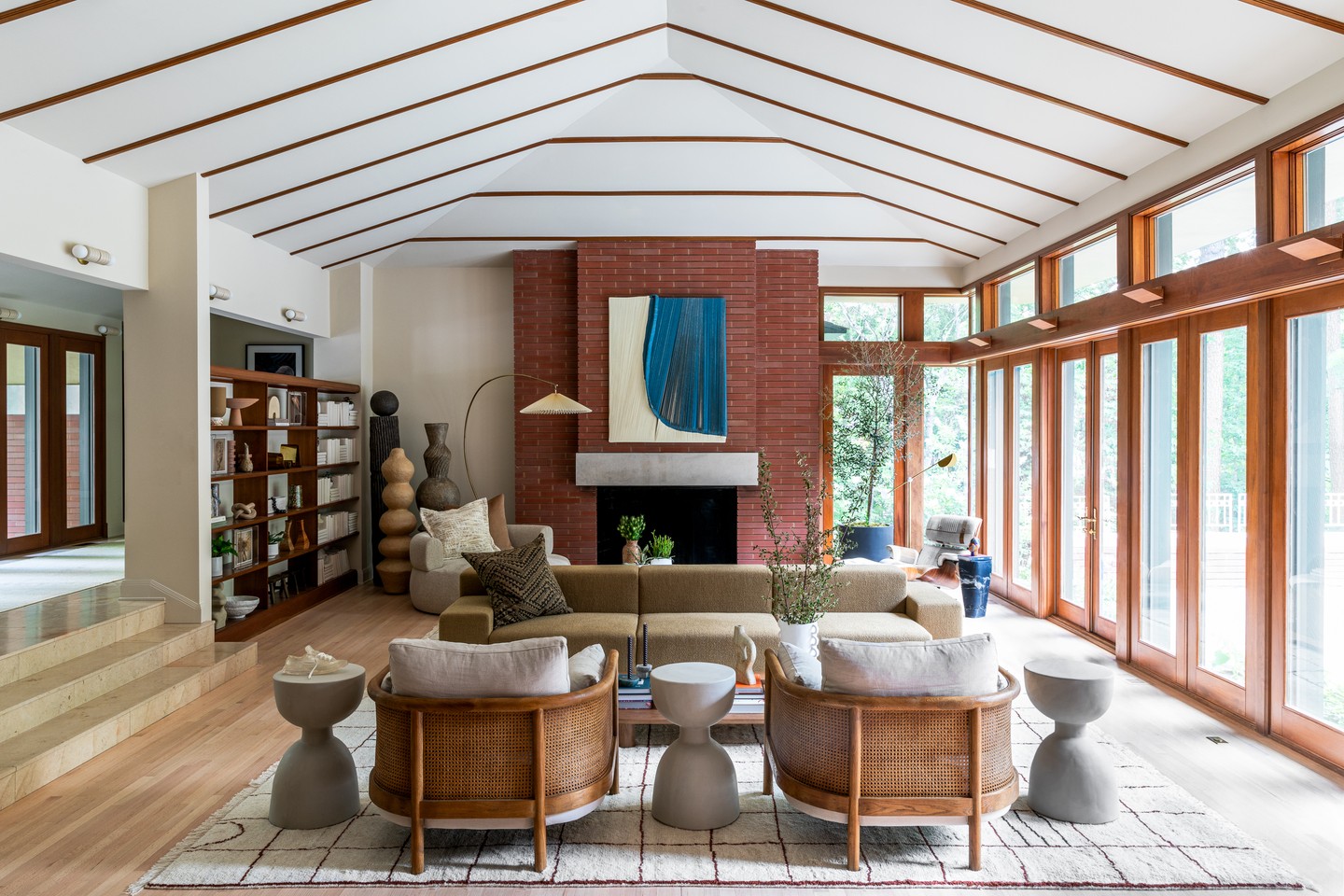
The rust-colored fireplace wall gives this airy room a strong center. Its rectangular outline rises toward the vaulted ceiling, while pale seating and a light rug leave the warm color easy to see.
If your living room already has a reddish fireplace surround, build the palette around it before adding more color. This room pairs the warm wall with wood window frames and quiet upholstery, then introduces a blue artwork for contrast.
The furniture forms a conversation group rather than lining every wall. Low chairs preserve the view toward the fireplace, and open shelving adds useful display space at one side.
Keep nearby accessories varied in shape but restrained in color so the architectural focal point continues to hold attention.
14. Echo a Warm Ceiling in a Patterned Throw
Credits: Instagram
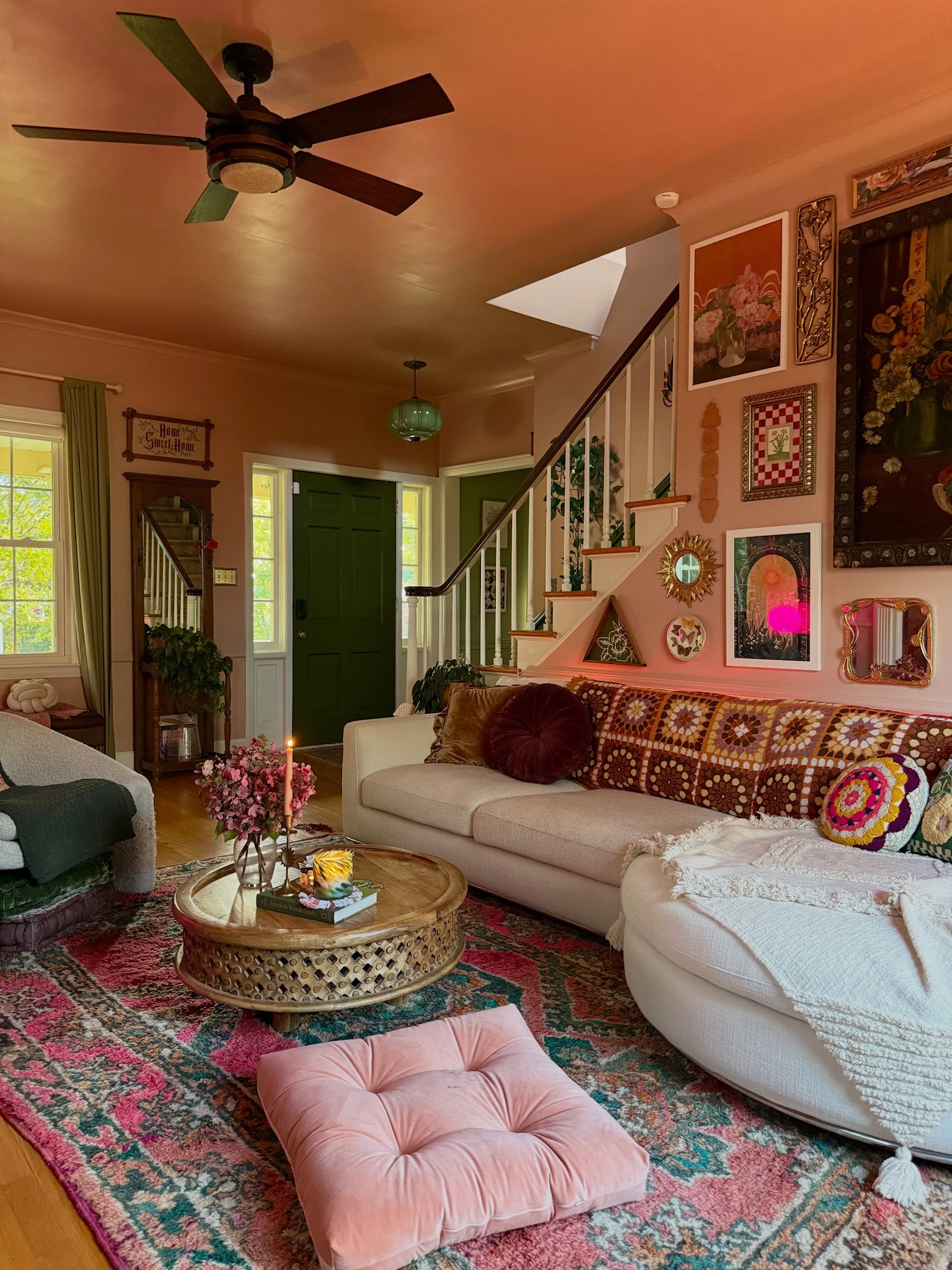
A terracotta-toned ceiling becomes part of the whole room when its warmth appears again below. Here, a patterned throw across the pale sofa repeats rusty orange and brown, connecting the seating to the color overhead.
The gallery wall adds smaller warm notes, while green curtains and a dark green door provide contrast. Use this approach to make an adventurous ceiling feel settled within an eclectic room.
Start with one textile that includes your ceiling color, then let the remaining pillows vary in texture and shape. A light sofa keeps the pattern readable.
The round coffee table softens the busy collection of rectangular frames, and the colorful rug gives the many pieces a shared base without requiring every detail to match.
15. Soften a Terracotta-Brown Sofa With Texture
Credits: Instagram
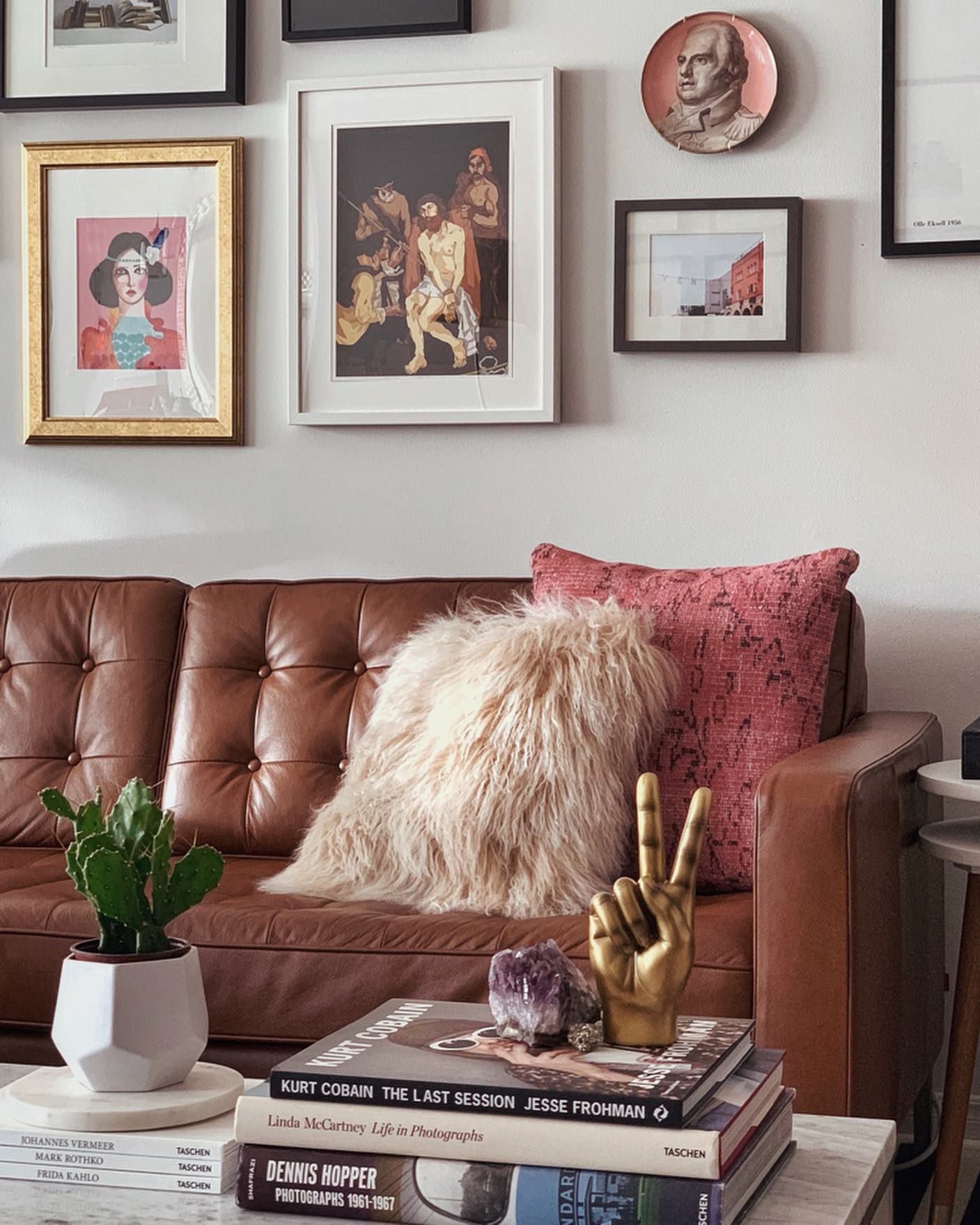
Terracotta-brown upholstery can serve as a warm foundation for a collected living room. This tufted sofa gains softness from a fluffy cream pillow and a larger patterned pink cushion.
The contrast works because the sofa remains the biggest uninterrupted color in the arrangement. Try combining one smooth surface with one shaggy or woven textile, then add a patterned pillow that repeats a related reddish tone.
Above, mixed frames and a decorative plate create a gallery with different shapes. Pale mats give each artwork breathing room.
Books on the coffee table introduce another layer without hiding the upholstery. Keep a few lighter objects nearby, such as the white planter shown here, to balance the deeper color and bring the grouping forward.
16. Give Rust Upholstery a Bright White Backdrop
Credits: Instagram
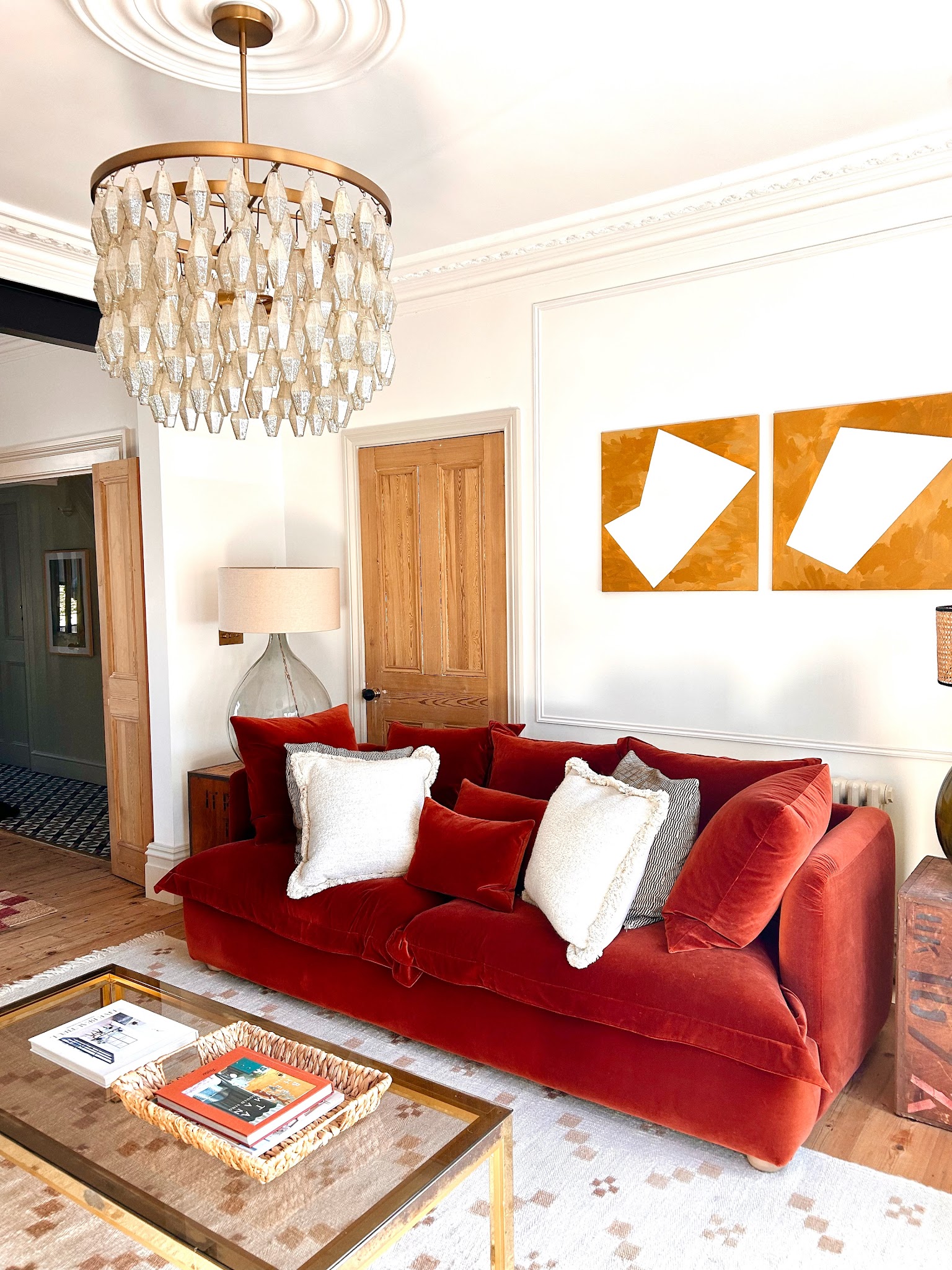
A saturated rust sofa stands out against white walls and decorative molding. This room gives the upholstery plenty of space, using pale pillows and a light patterned rug to break up the rich color.
The wood door and floor add warmth without competing with the sofa. If you want the same balance, keep your largest wall surfaces simple and choose accessories with clear, restrained shapes.
Two geometric artworks repeat a warmer golden note above the cushions. A glass coffee table allows the rug to remain visible, while its gold-toned frame relates to the chandelier.
Place the most substantial color at seating height, then repeat warmth more lightly above and below it for a living room that feels bright and connected.
17. Nestle a Rust Footstool Beside a Pale Table
Credits: Instagram
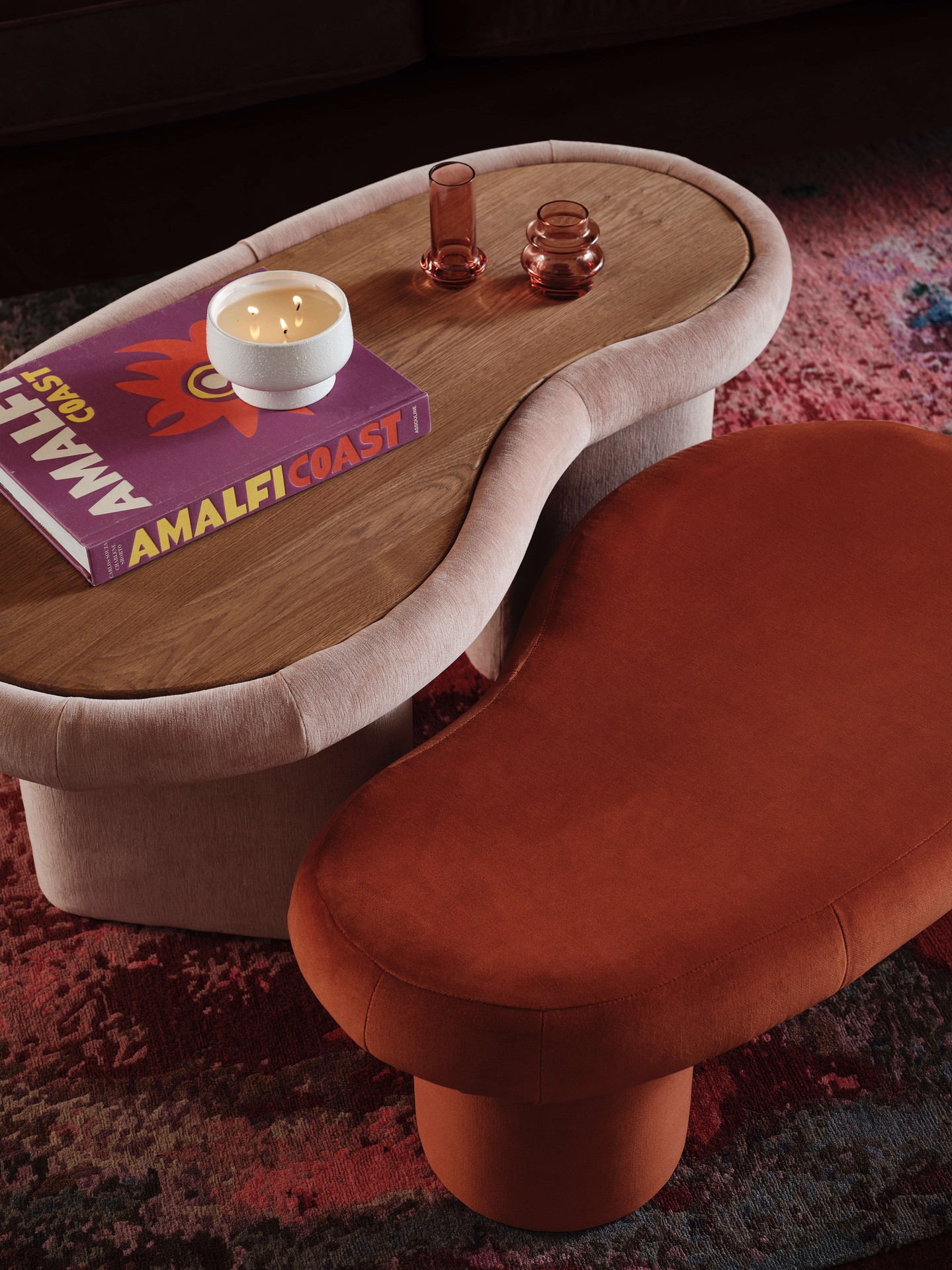
A rust footstool can introduce substantial color while taking up little space. This curved piece sits beside a pale upholstered coffee table, with their rounded outlines creating a relaxed pairing.
The wood tabletop adds a practical surface, while the footstool keeps the seating area soft. Try combining pieces with related curves and different heights so each shape remains clear.
Before buying, measure the gap around them and make sure you can reach the table comfortably from your sofa. A patterned rug brings several warm shades together beneath the pair.
Keep tabletop objects compact, as shown by the small glass vessels and single book. The strong rust color gives the arrangement focus without requiring a matching sofa or additional painted wall.
18. Set Rust Armchairs Beside a Bold Patterned Sofa
Credits: Instagram
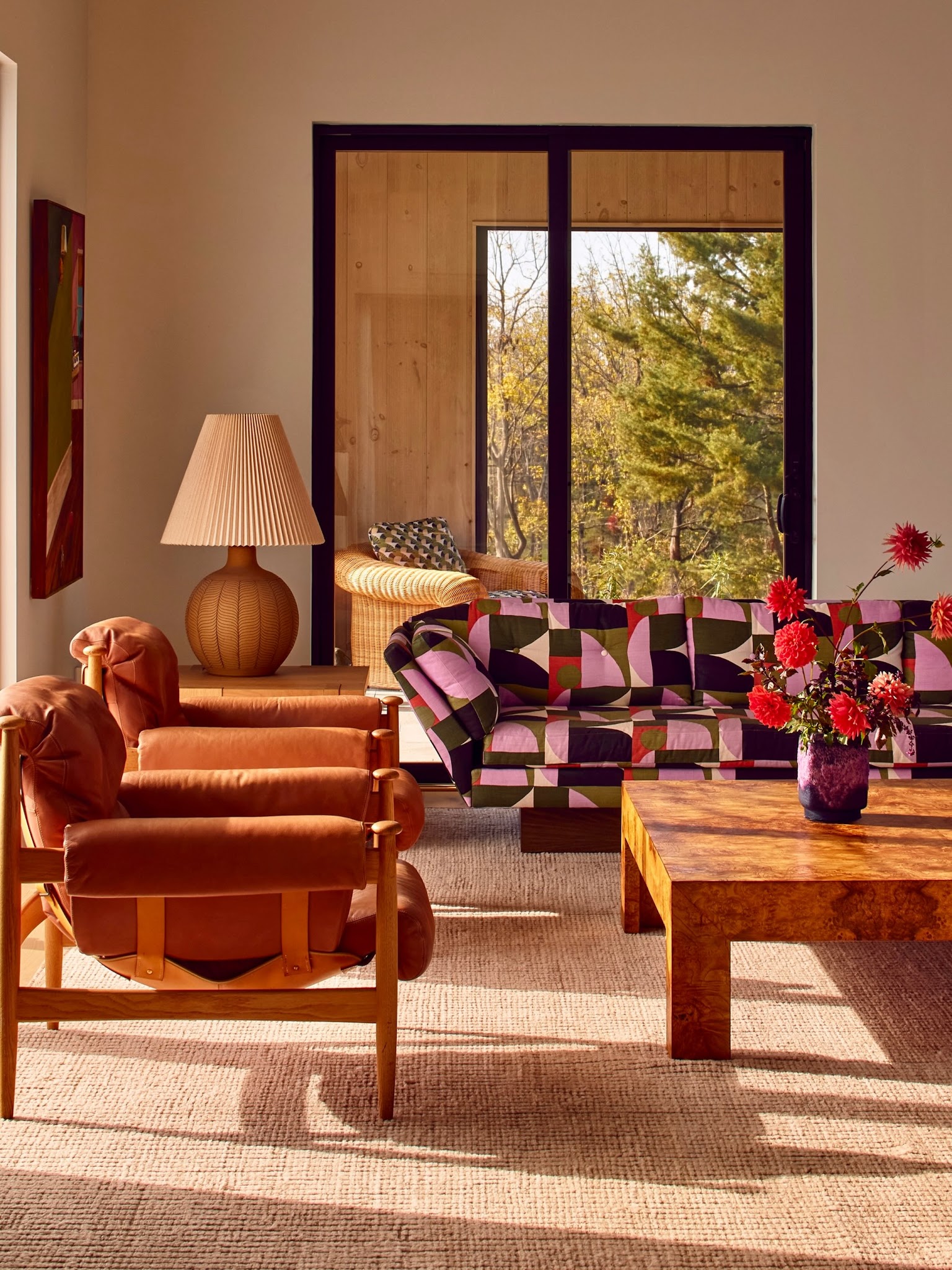
Solid rust armchairs give a patterned sofa a companion that feels confident without adding another print. Here, the warm chairs sit beside a sofa covered in large geometric shapes, with a pale rug separating both from the wood floor.
The chairs' open frames keep their substantial cushions from looking bulky. Use a similar balance by choosing one dominant pattern and repeating a warm color elsewhere in a simpler form.
The broad wood coffee table supplies another quiet surface between the seats. A pleated lampshade and textured lamp base add detail at a smaller scale.
Leave some wall space clear around the furniture so the pattern has room to breathe, and keep the main seating close enough for an easy conversation.
19. Wrap a High-Ceilinged Room in Terracotta
Credits: Instagram
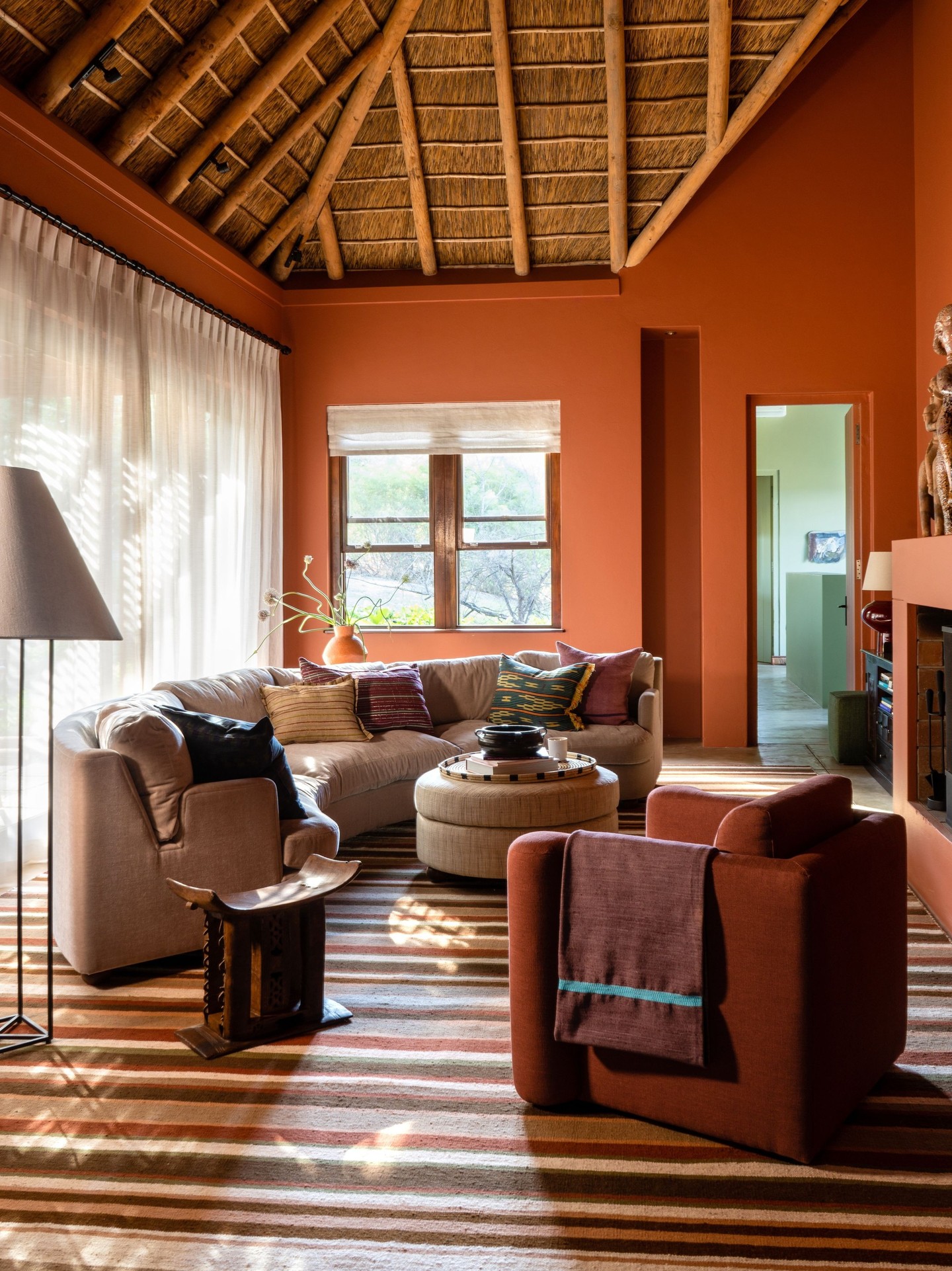
Terracotta walls help this tall sitting room feel welcoming beneath its exposed roof structure. The warm color continues around the window and fireplace, creating a consistent backdrop for the pale curved sofa.
A rust armchair repeats the wall color at a lower level, while a striped rug connects the seating. To borrow the idea, choose a wall color that relates to the room's wood tones, then balance it with lighter upholstery.
Sheer curtains soften the large glazed opening without interrupting the warm palette. A round ottoman suits the sofa's curve and keeps the center visually gentle.
Use a tray when you need a stable spot for drinks, and leave enough room between the pieces for comfortable movement through the space.
20. Balance a Brick-Rust Sofa With Blue Details
Credits: Instagram
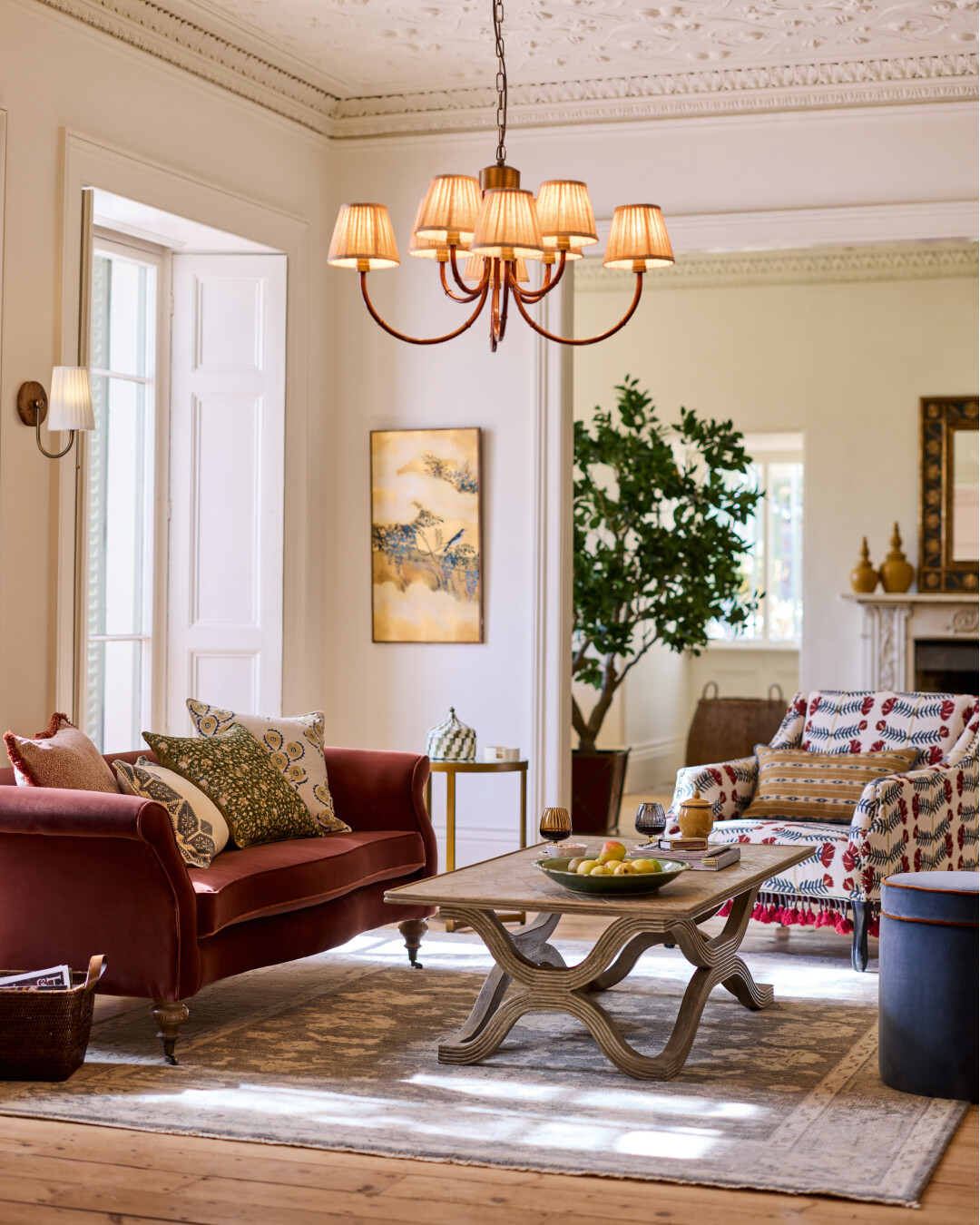
A brick-rust sofa brings warmth to this traditional living room, while blue details keep the palette varied. The patterned armchair, small round stool, and artwork introduce cooler notes without taking attention away from the sofa.
Try repeating one contrasting color in several modest pieces instead of adding a second colored sofa. Cream walls and a pale rug give the combination a quiet setting.
The coffee table's curved supports echo the sofa's rolled arms, helping different furniture styles sit comfortably together. Keep pillows varied but connected through a shared warm or cool tone.
A tall plant adds height beside the seating, while the chandelier and wall light create additional points of interest above the furniture without filling the walls with decoration.