
Thread spools rolling away, tangled fabric piles, and misplaced tools can disrupt even the simplest sewing project.
Practical sewing room organization ideas focus on efficient storage, clear workspace zoning, and easy access to essential supplies.
A well-arranged sewing space supports accuracy, speeds up workflow, and helps protect fabrics, patterns, and equipment from damage.
This guide covers smart storage solutions such as thread organizers, fabric shelving, pegboards, and labeled bins, along with layout strategies that improve usability in both small craft corners and dedicated sewing rooms.
Each method is designed to reduce clutter while keeping tools visible and within reach. With a structured setup, your sewing room becomes a productive, organized space that supports consistent creativity and smoother project completion.
Pastel Pegboard Compact Sewing Station
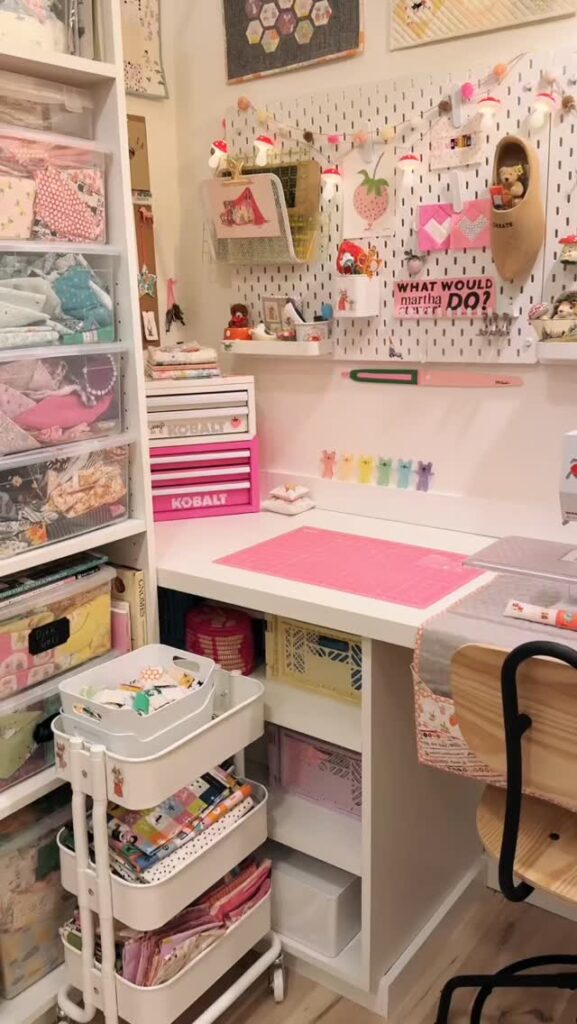
Soft color palettes paired with smart vertical storage can instantly improve sewing room efficiency without requiring extra space.
A pastel pegboard setup allows clear visibility of essential sewing tools like scissors, measuring tapes, rotary cutters, and thread spools, reducing time spent searching.
Hooks, mini shelves, and baskets create a modular system that adapts to different project needs while keeping the workstation clutter-free. Positioning the pegboard above a compact sewing desk maximizes wall utilization and supports ergonomic workflow.
This layout works especially well in small sewing rooms or apartments where every inch matters.
By combining aesthetic appeal with practical organization, this setup encourages consistency, improves productivity, and keeps daily sewing tasks structured and enjoyable for beginners and experienced crafters alike.
Hidden Cabinet Fold-Out Sewing Studio
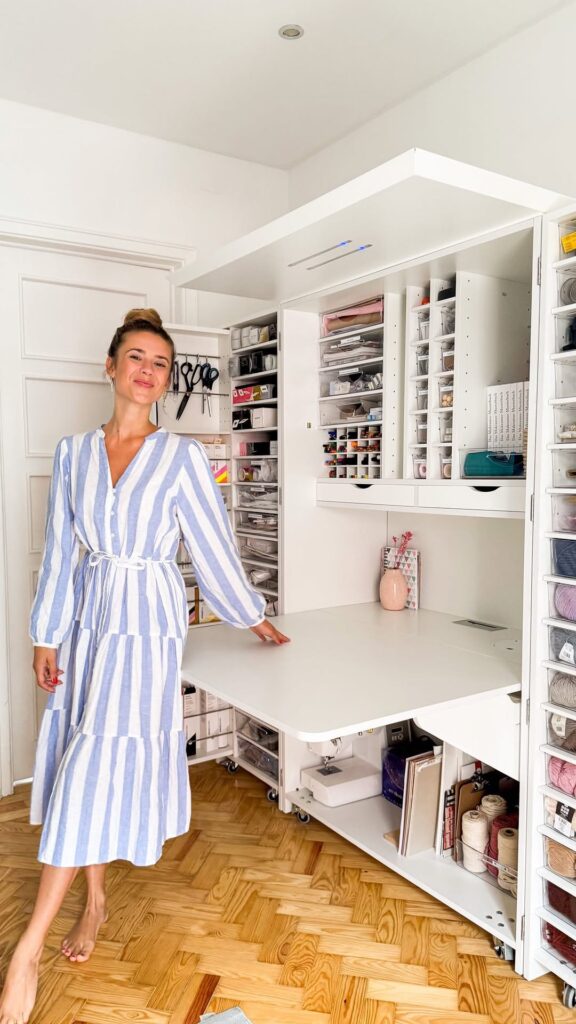
Space does not need to restrict creativity when furniture is designed with multifunctional intent. A hidden cabinet fold-out sewing studio offers a discreet solution that transforms any room into a fully functional workspace within seconds.
Closed cabinets maintain a clean, minimal look, while the interior reveals organized compartments for fabric, thread, needles, and sewing accessories. Fold-out surfaces act as cutting tables or machine platforms, ensuring stability during use.
This setup is ideal for shared spaces such as living rooms or bedrooms where permanent sewing stations are impractical.
Integrated lighting, labeled storage bins, and cable management further enhance usability. The result is a streamlined system that balances organization, convenience, and visual neatness without compromising on accessibility or workflow efficiency.
Blush Pegboard Thread Wall Sewing Setup
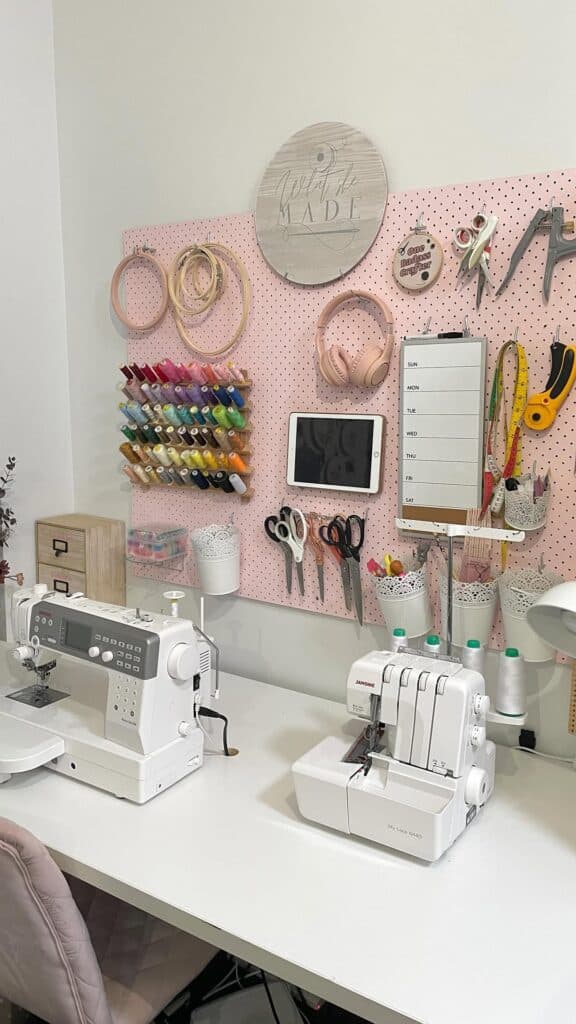
A well-structured thread organization system plays a crucial role in maintaining an efficient sewing environment. A blush-toned pegboard thread wall not only adds a refined visual element but also keeps thread spools sorted by color, size, or project type.
This arrangement minimizes tangling, prevents duplication of supplies, and allows quick selection during stitching tasks. Mounting the pegboard near the sewing machine improves workflow by keeping frequently used materials within arm’s reach.
Additional hooks can hold bobbins, rulers, and small tools, enhancing overall storage functionality.
This setup supports both hobbyists and professionals by promoting a clean, distraction-free workspace. With consistent organization, sewing becomes faster, more accurate, and significantly more enjoyable, especially during complex or multi-thread projects requiring precision and efficiency.
Rainbow Thread Wall Compact Sewing Desk
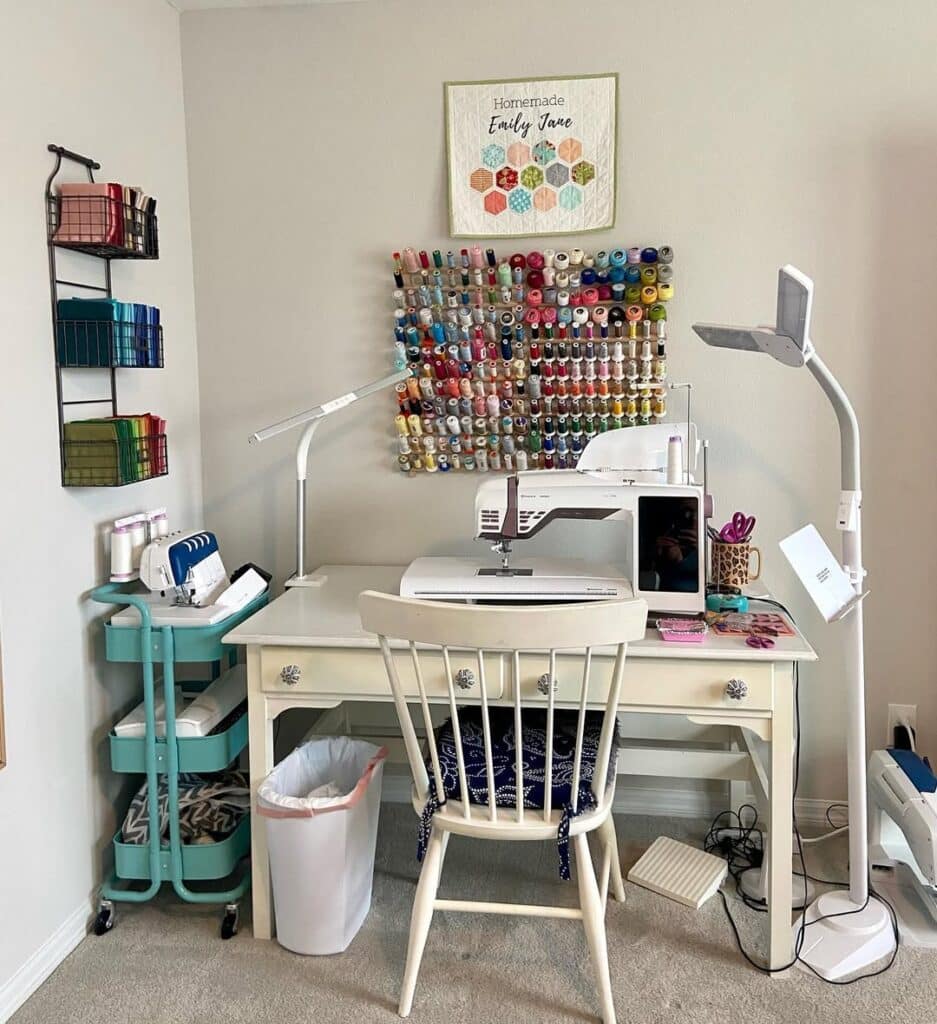
Color-coded organization can dramatically simplify sewing workflows while creating a visually engaging workspace. A rainbow thread wall combined with a compact sewing desk ensures every spool is easy to locate, reducing interruptions during detailed projects.
Arranging threads by gradient not only improves accessibility but also helps in quickly matching colors for fabrics and designs. The compact desk beneath should include drawers or dividers for storing needles, presser feet, and cutting tools, keeping the surface uncluttered.
This setup is particularly effective for small sewing rooms where efficient use of vertical and horizontal space is essential.
Maintaining order through structured storage leads to smoother project execution, better time management, and a more enjoyable sewing experience for both beginners and advanced users.
Central Island Fabric Studio Sewing Room
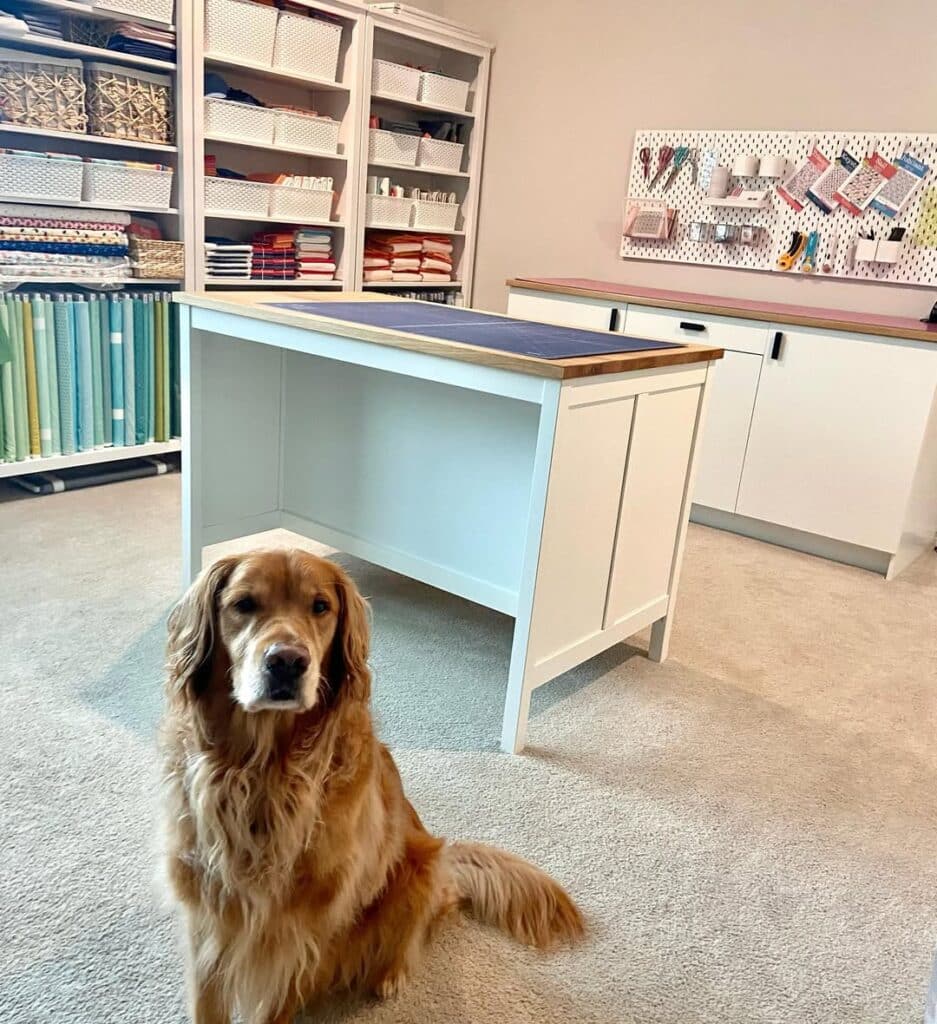
Larger sewing rooms benefit greatly from a centralized workspace that supports multiple tasks simultaneously. A central island fabric studio creates a dedicated area for cutting, measuring, and organizing materials while allowing easy movement around the room.
Surrounding storage units can house fabric rolls, sewing patterns, and tools, ensuring everything remains within reach. The island surface should be spacious, durable, and well-lit to handle detailed cutting and assembly work.
Drawers and open shelving beneath the island provide additional storage for frequently used supplies, improving overall efficiency.
This layout promotes a professional workflow by separating preparation, stitching, and finishing zones. With proper organization, the sewing room becomes highly functional, supporting productivity, creativity, and consistent project completion without unnecessary clutter or delays.
Dual Machine Pegboard Utility Sewing Desk
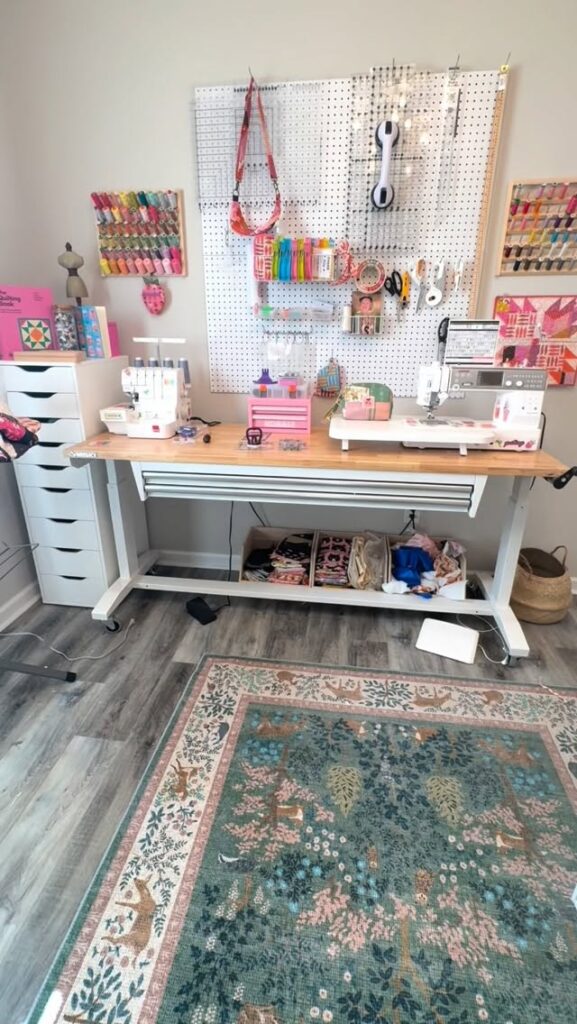
Managing multiple sewing tasks becomes easier when the workspace is designed to support efficiency and accessibility.
A dual machine pegboard utility sewing desk allows users to operate a standard sewing machine and a serger side by side, reducing setup time between projects.
The pegboard above the desk keeps essential tools such as scissors, thread spools, rulers, and presser feet organized and visible. This setup minimizes clutter on the work surface while improving workflow continuity.
Built-in drawers or storage bins beneath the desk can store fabrics, patterns, and accessories neatly.
Ideal for intermediate and advanced sewists, this arrangement supports multitasking, maintains a structured environment, and enhances productivity without requiring a large sewing room or complex layout.
Ribbon Rail Pegboard Craft Sewing Station
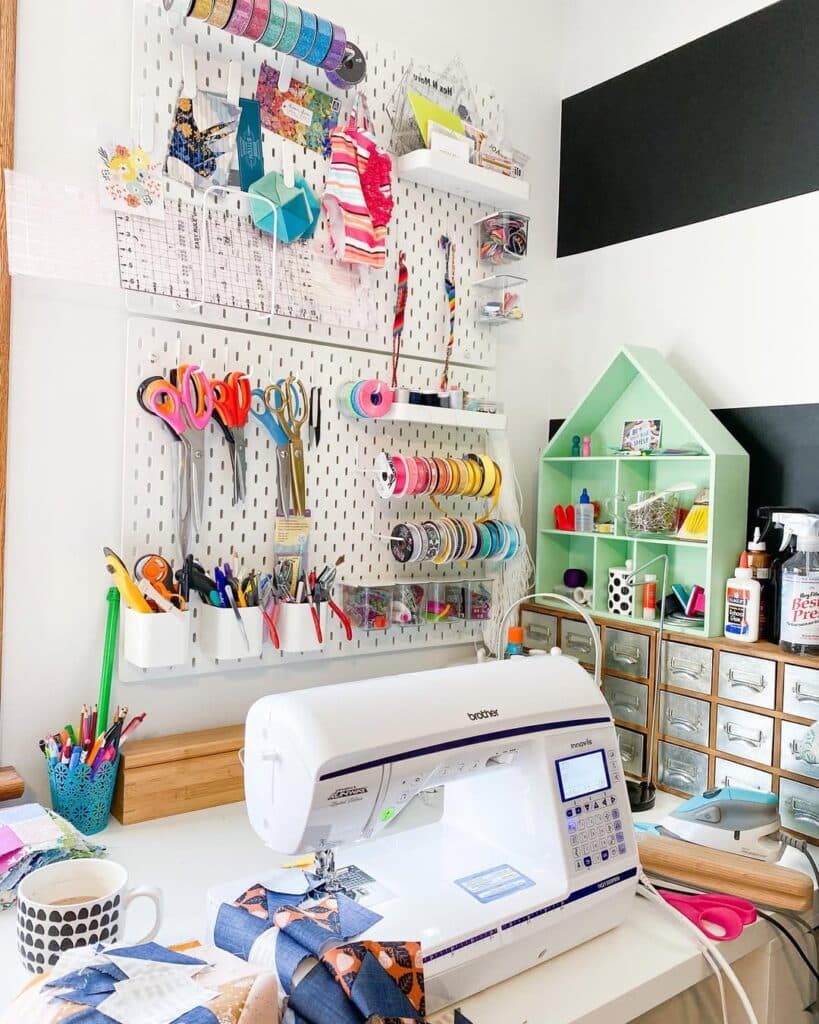
Keeping decorative materials organized can significantly improve both efficiency and creativity in sewing projects. A ribbon rail pegboard craft sewing station offers a practical solution by allowing ribbons, trims, and lace rolls to hang neatly on horizontal rods.
This setup prevents tangling and ensures easy access while working on detailed designs. The pegboard can also hold hooks for scissors, measuring tapes, and other essential sewing tools, creating a centralized organization system.
Positioned above a functional sewing desk, it maximizes vertical storage while keeping the workspace clear. This approach is especially useful for crafters who frequently use embellishments.
With everything visible and within reach, project execution becomes faster, more accurate, and visually inspiring throughout the sewing process.
Scandinavian Shelf Styled Sewing Workspace
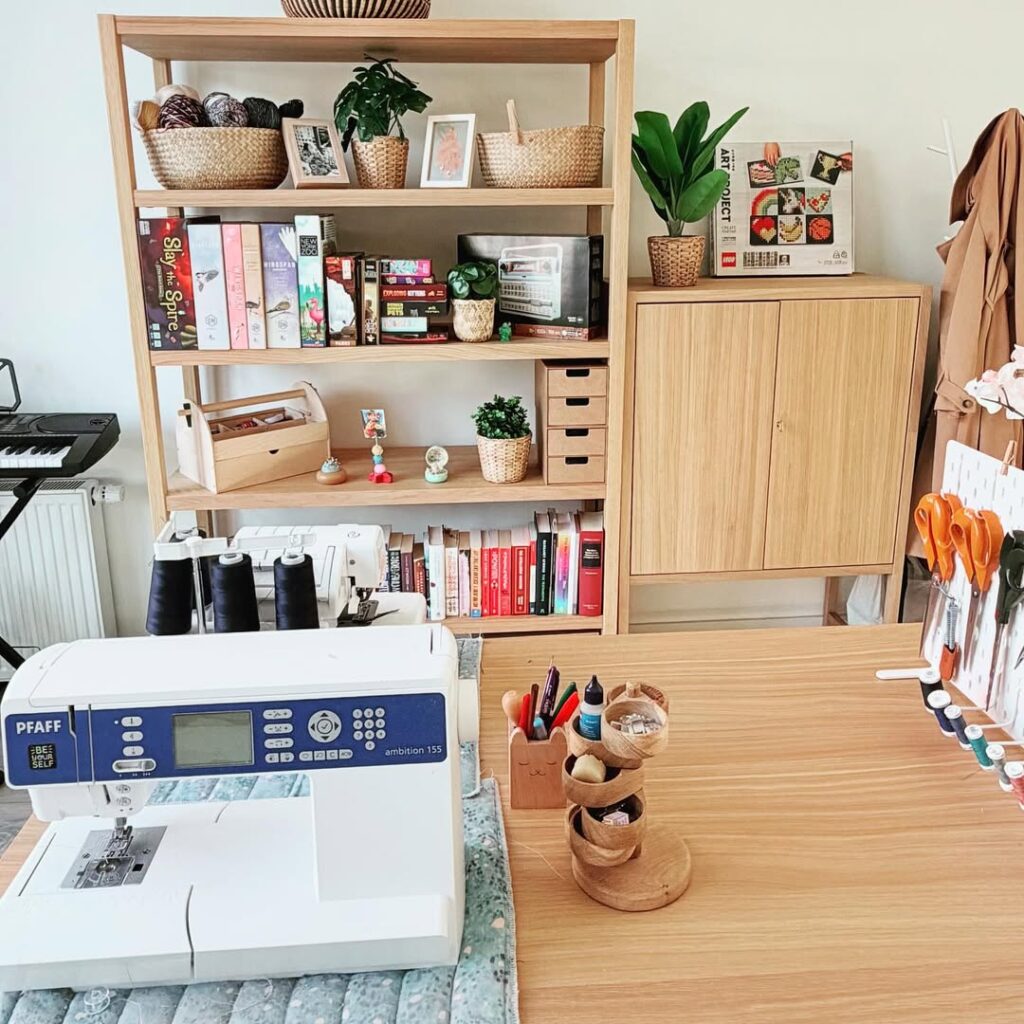
Clean lines and minimal design can greatly improve focus and organization in a sewing room. A Scandinavian shelf styled sewing workspace emphasizes simplicity with open shelving, neutral tones, and functional storage solutions.
Wooden shelves provide space for folded fabrics, storage boxes, and neatly arranged sewing supplies, maintaining a calm and clutter-free environment. A well-positioned sewing desk beneath the shelves ensures that frequently used tools remain accessible without overwhelming the space.
This setup supports a streamlined workflow by reducing visual distractions and promoting intentional organization. Suitable for both small and medium-sized rooms, it balances aesthetics with practicality.
By maintaining order and clarity, this workspace helps users stay productive while enjoying a comfortable and visually appealing sewing environment.
Multi-Station Compact Sewing Corner Setup
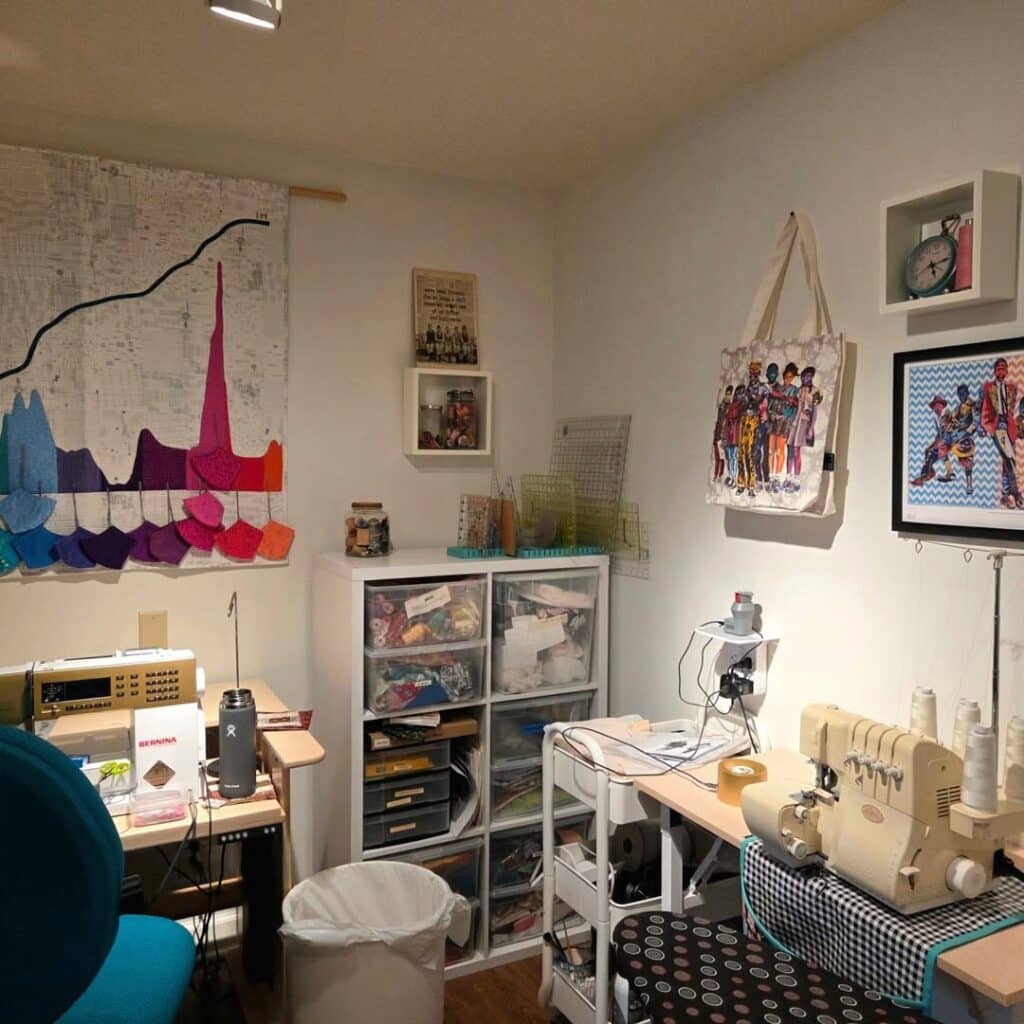
Maximizing corner space can transform even the smallest area into a highly functional sewing zone. A multi-station compact sewing corner setup divides tasks into dedicated sections, such as stitching, cutting, and storage, all within a limited footprint.
L-shaped desks or corner tables provide enough surface area for machines and tools while maintaining efficient movement between stations. Vertical storage, including wall shelves and pegboards, keeps supplies organized and easily accessible.
Storage bins, labeled containers, and drawer units help manage fabrics and accessories systematically. This layout is ideal for small apartments or shared spaces where efficient use of space is essential.
With proper organization, the sewing process becomes smoother, reducing clutter and improving overall workflow and project completion speed.
Wall-to-Wall Craft Cabinet Sewing Studio
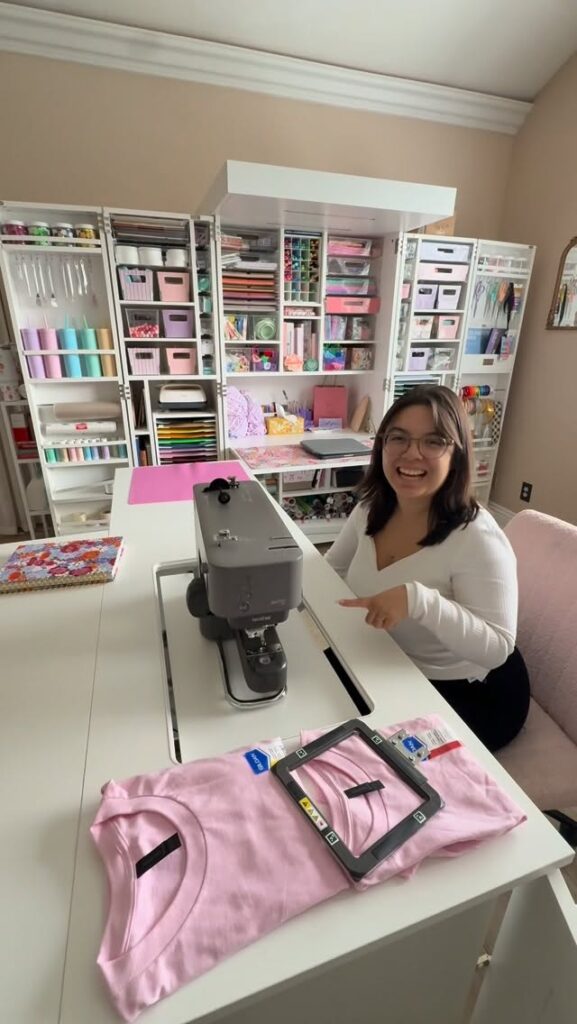
Expanding storage across an entire wall can significantly enhance organization in a dedicated sewing room. A wall-to-wall craft cabinet sewing studio offers extensive space for storing fabrics, patterns, threads, and tools in an orderly manner.
Cabinets with adjustable shelves, pull-out drawers, and labeled compartments ensure that every item has a designated place, reducing clutter and saving time. Integrating a sewing desk within the cabinetry creates a seamless and efficient workspace.
Closed cabinets maintain a clean appearance, while open sections allow quick access to frequently used supplies. This setup is ideal for serious hobbyists or professionals managing large inventories.
With everything systematically arranged, the sewing environment becomes highly efficient, supporting consistent productivity and long-term organization.
Yarn Shelf Dual Machine Sewing Nook
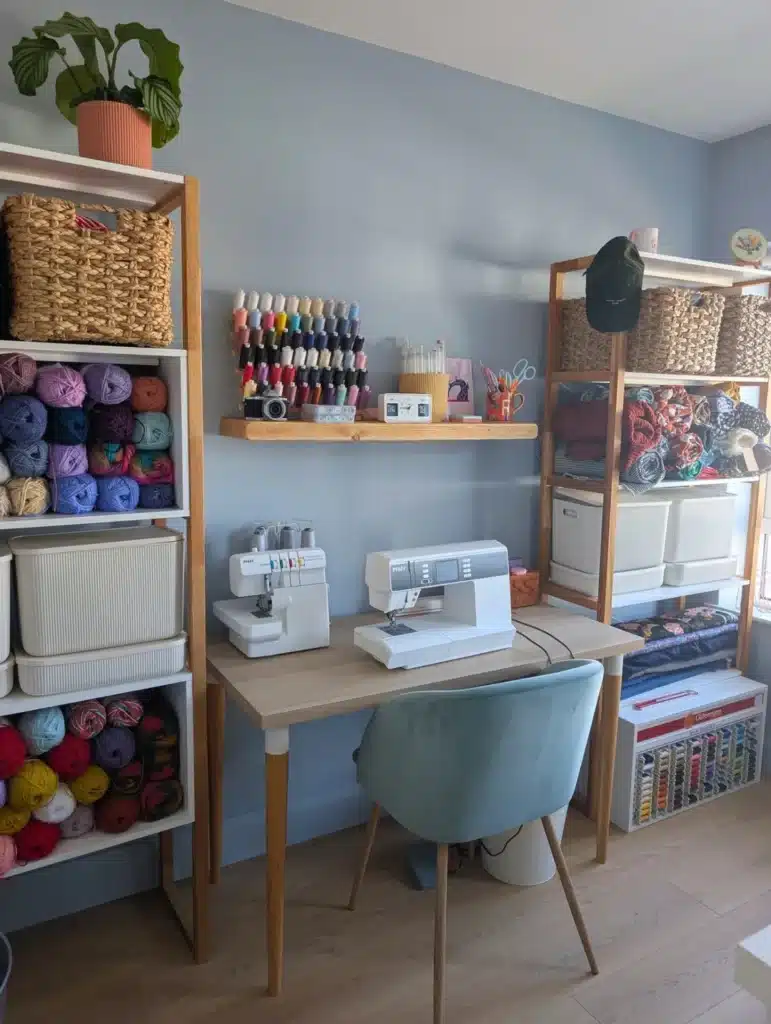
Efficient layouts make a noticeable difference when handling multiple sewing and crafting tasks in one area.
A yarn shelf dual machine sewing nook combines vertical storage with a practical workstation, allowing both a sewing machine and serger to operate within a compact setup.
Open shelving above the desk keeps yarn neatly arranged and visible, preventing tangling and simplifying color selection during projects. This configuration supports smooth transitions between stitching and embellishment work without disrupting workflow.
Drawer units or baskets beneath the desk can store needles, threads, and small accessories in an organized manner.
Ideal for hybrid sewing and knitting enthusiasts, this setup maximizes space, reduces clutter, and ensures every essential item remains within easy reach for consistent productivity.
Color-Sorted Fabric Cube Storage Wall
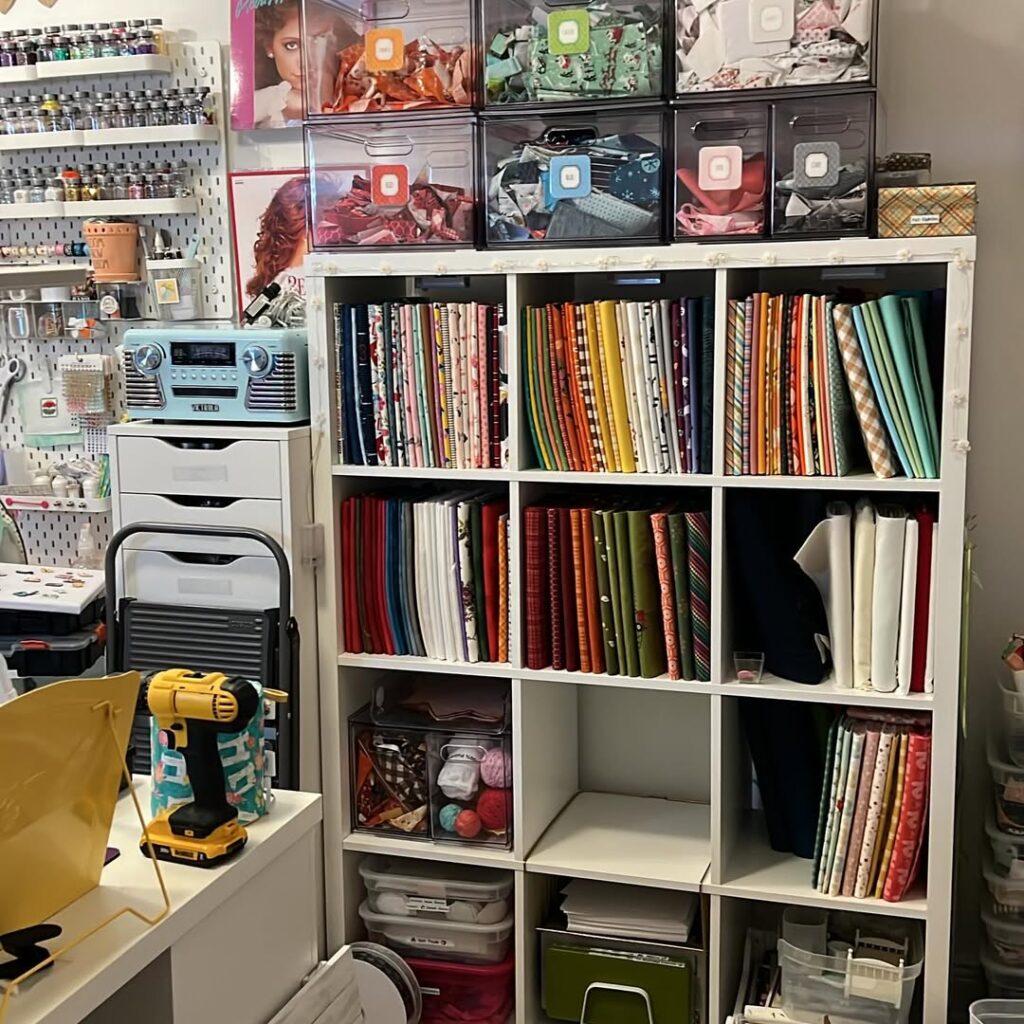
Clear categorization plays a key role in maintaining an organized sewing room, especially when handling large fabric collections. A color-sorted fabric cube storage wall offers a visually structured system where fabrics are folded and arranged by shade, pattern, or type.
This method not only enhances the room’s appearance but also simplifies fabric selection for projects, saving time during planning. Cube shelves provide equal compartments that keep stacks neat and prevent wrinkles or damage.
Placing this storage unit near the main sewing area improves accessibility while maintaining a tidy workflow. Labels or dividers can further refine organization.
This setup is particularly useful for frequent sewists, ensuring materials are easy to locate, manage, and maintain over long periods.
Corner Pegboard Thread Wall Sewing Nook
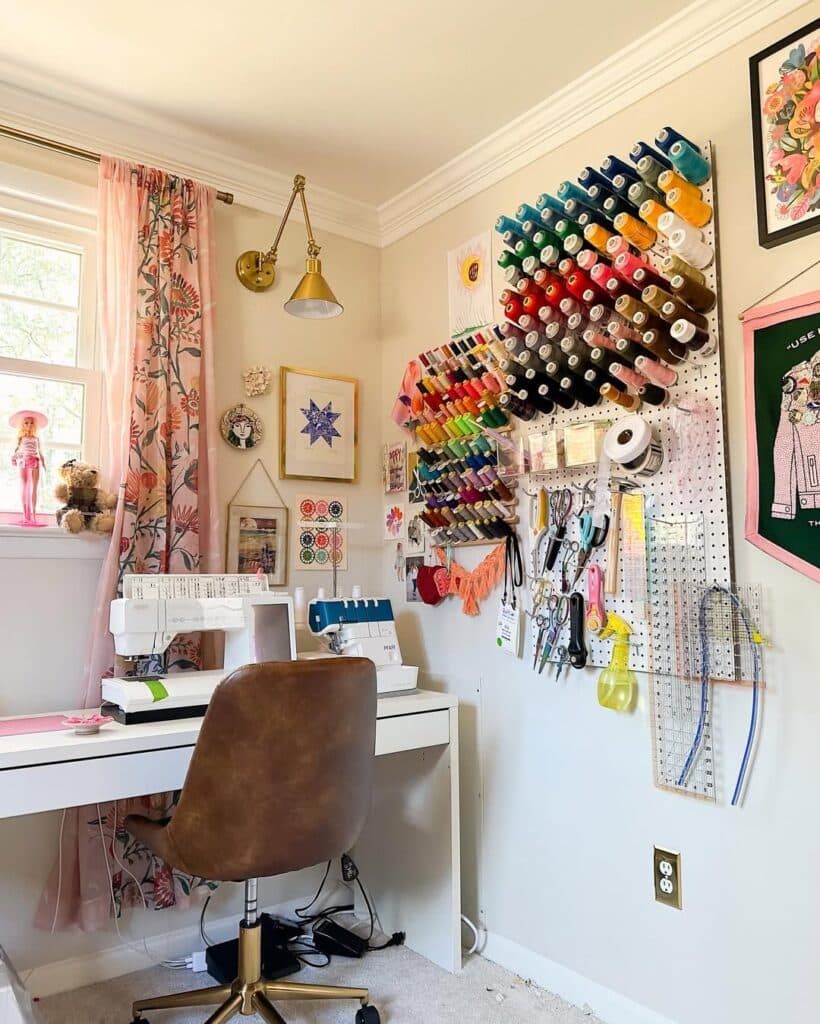
Unused corners can be transformed into highly functional sewing zones with the right organization strategy. A corner pegboard thread wall sewing nook utilizes vertical surfaces to store thread spools, bobbins, and essential tools in a compact area.
Arranging threads by color or type on the pegboard allows quick identification and reduces time spent searching during projects. Hooks and small baskets can hold scissors, measuring tapes, and other accessories, keeping the workstation uncluttered.
Positioning the sewing machine within the corner ensures efficient use of space while maintaining easy access to supplies.
This setup is ideal for small rooms or apartments, offering a practical solution that improves workflow, maintains order, and supports a more focused and productive sewing experience.
All-in-One Modular Craft Cabinet Sewing Hub
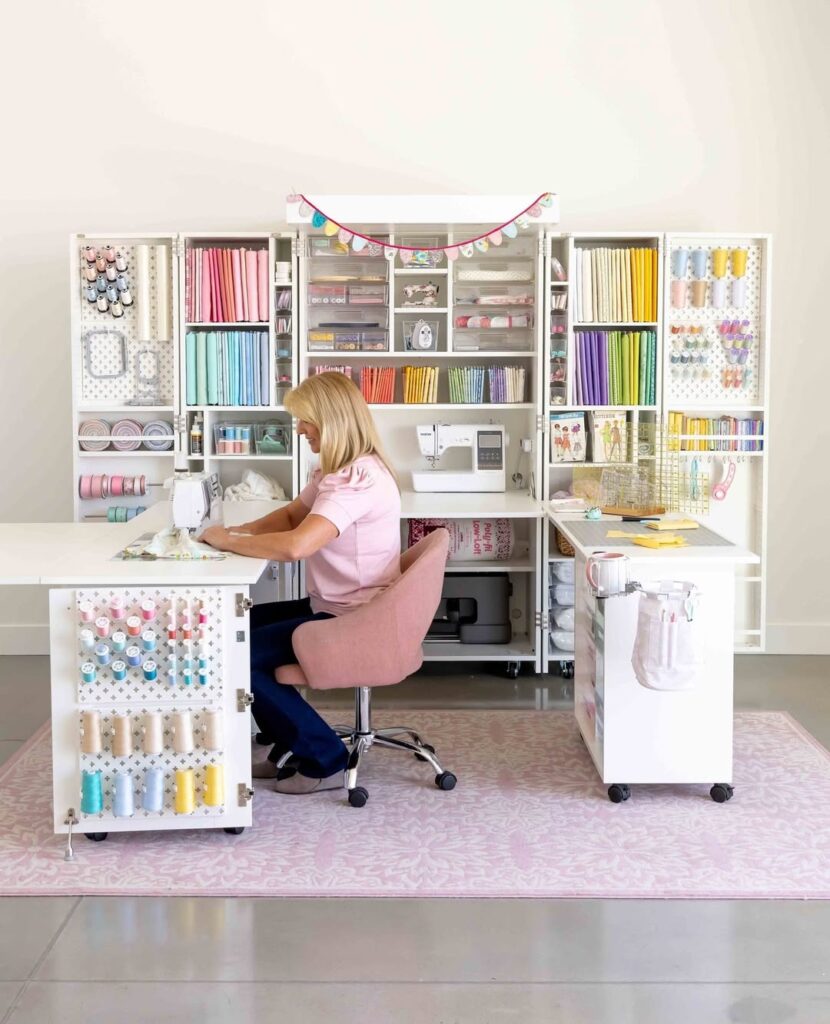
Organizing a sewing space becomes significantly easier when storage and workspace are combined into one cohesive system. An all-in-one modular craft cabinet sewing hub provides customizable compartments for fabrics, threads, tools, and equipment within a single unit.
Adjustable shelves, pull-out trays, and hidden storage sections allow users to tailor the setup based on project needs.
A built-in work surface offers a stable area for sewing machines or cutting tasks, while closed cabinets maintain a clean and clutter-free appearance.
This configuration supports efficient workflow by keeping everything centralized and accessible. Suitable for both beginners and experienced crafters, it promotes long-term organization, reduces workspace distractions, and enhances productivity in both small and medium-sized sewing rooms.
Oversized Cutting Island Yarn Storage Studio
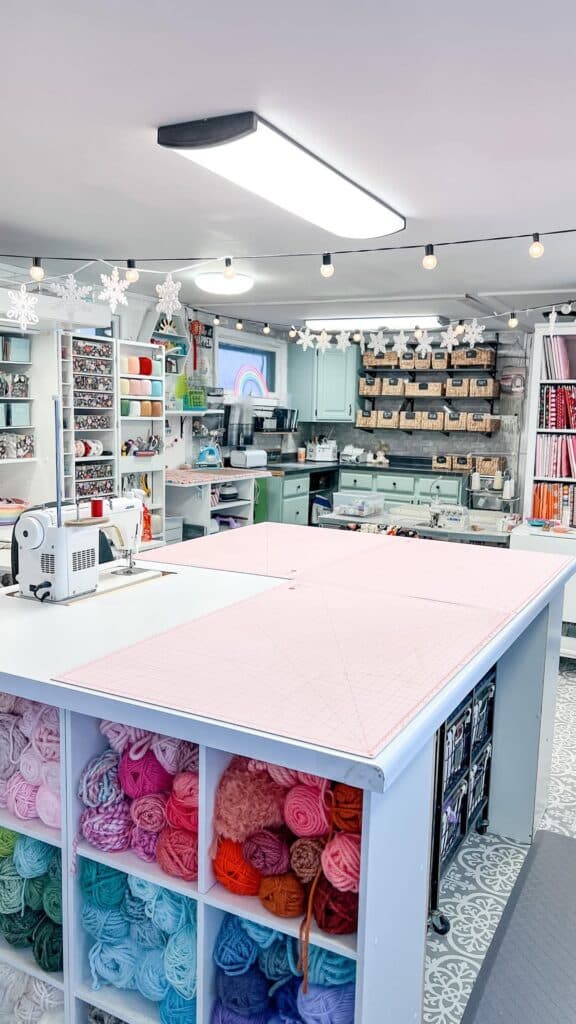
Dedicated work zones can greatly improve efficiency in larger sewing rooms. An oversized cutting island yarn storage studio creates a central workspace designed for fabric cutting, measuring, and project preparation.
The wide surface allows accurate cutting without restrictions, while built-in storage underneath keeps yarn, fabrics, and tools neatly organized.
Open shelves or drawers provide quick access to frequently used materials, reducing interruptions during work. Surrounding the island with additional storage units ensures a seamless workflow between preparation and sewing stages.
This setup is ideal for advanced users managing multiple projects or bulk materials. With everything organized and within reach, the sewing process becomes smoother, more efficient, and better suited for handling complex or large-scale creative tasks.
Butcher Block Cutting Table Pegboard Setup
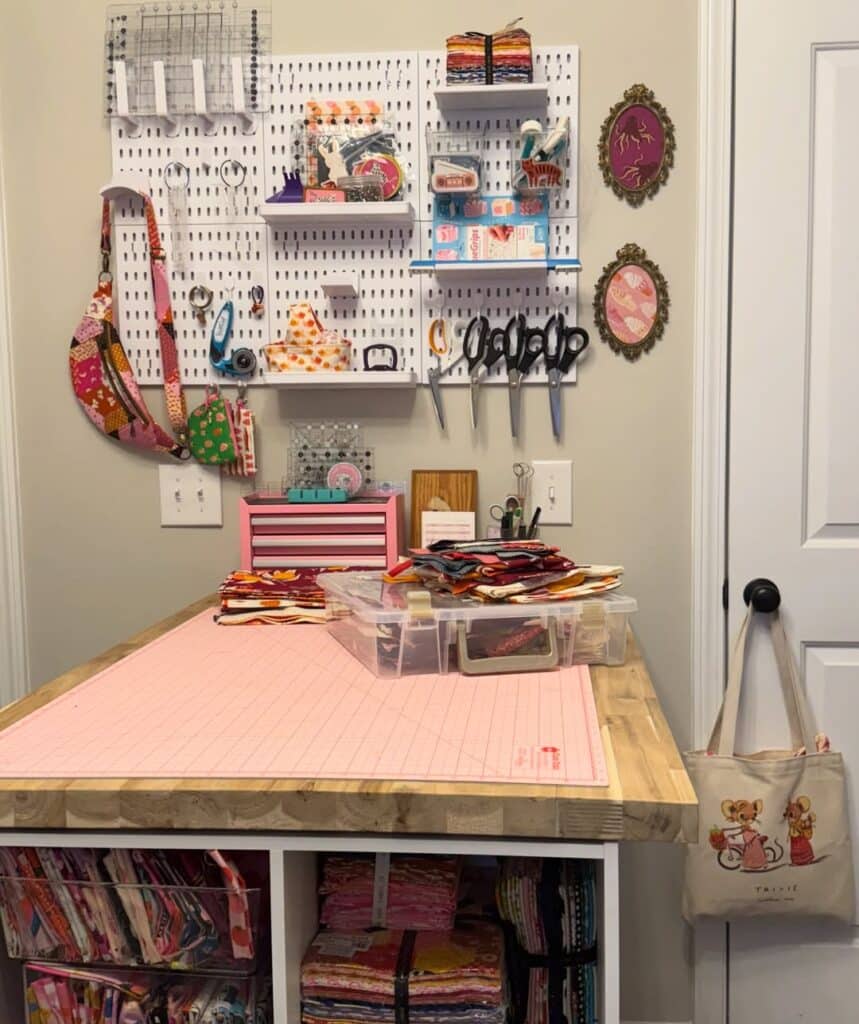
Durable work surfaces play a critical role in maintaining accuracy during sewing and fabric preparation tasks. A butcher block cutting table paired with a pegboard setup provides both strength and smart organization in one efficient layout.
The solid tabletop offers a stable area for cutting fabric, pattern tracing, and measuring, reducing errors during detailed work. Above the table, a pegboard keeps essential sewing tools like rotary cutters, rulers, scissors, and thread easily accessible and neatly arranged.
This combination minimizes clutter on the workspace while supporting a smooth workflow. Ideal for both beginners and experienced sewists, the setup ensures consistency, improves productivity, and creates a structured sewing environment that supports precision and long-term organization.
Open Bin Fabric Sorting Sewing Desk
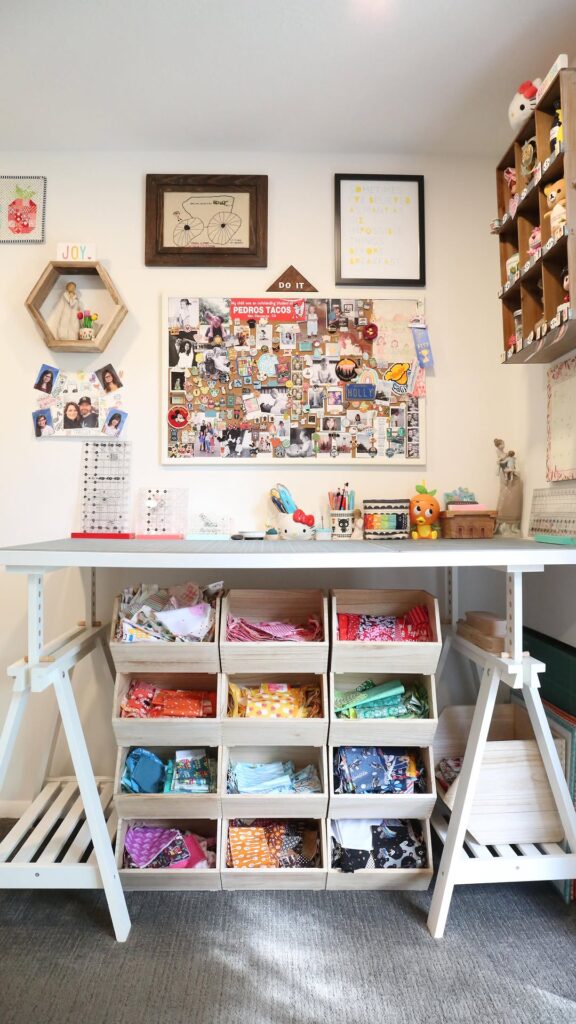
Keeping fabrics sorted and easy to access can significantly improve sewing efficiency and project planning. An open bin fabric sorting sewing desk provides a practical solution by using labeled bins to categorize materials based on color, type, or usage.
This system prevents clutter and makes it easier to locate the right fabric quickly without disrupting workflow. Positioned under or beside the sewing desk, these bins allow seamless access while maintaining a clean work surface.
Clear or breathable containers also help protect fabrics from dust while keeping them visible.
This setup is especially useful for small to medium sewing rooms where organization is essential. With everything sorted systematically, sewing becomes faster, more organized, and less stressful overall.
Natural Light Pegboard Sewing Corner Setup
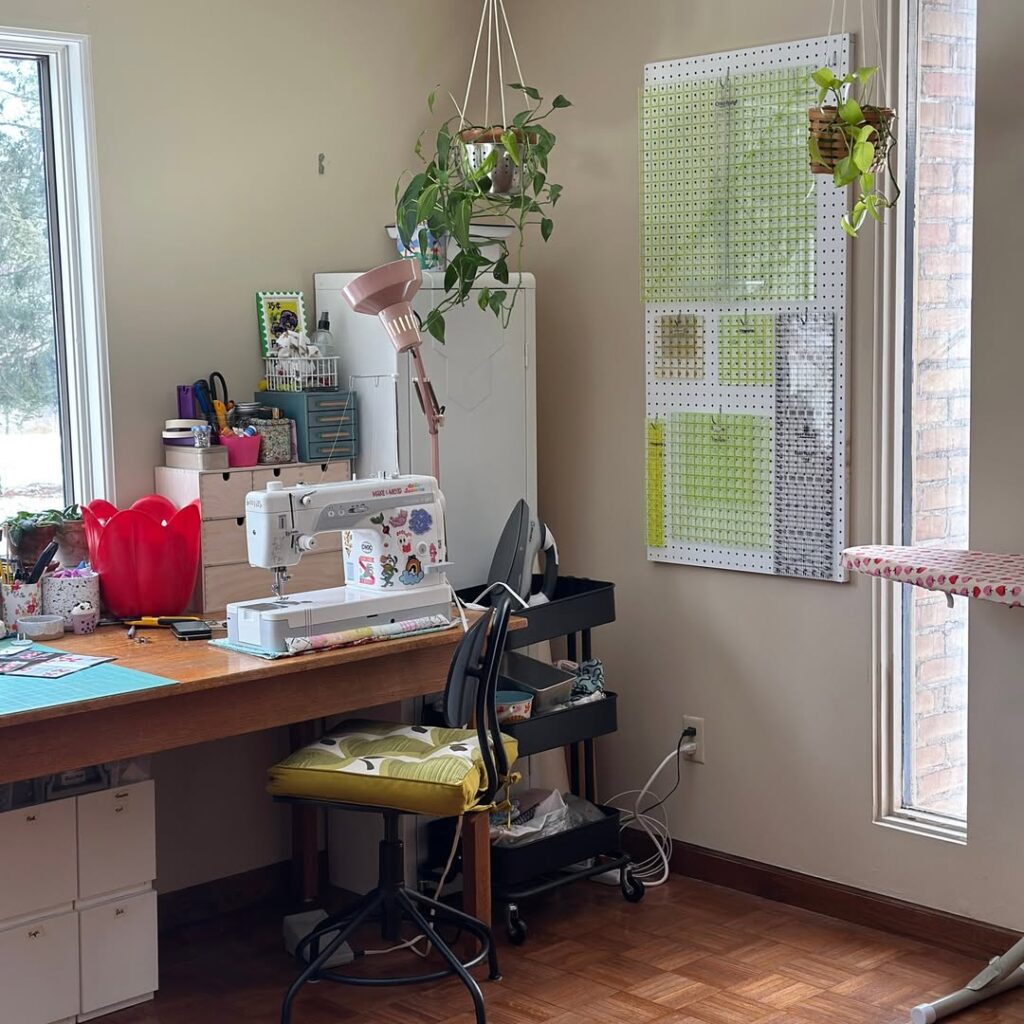
Well-lit workspaces can greatly enhance precision and comfort during sewing projects. A natural light pegboard sewing corner setup takes advantage of window placement to provide consistent daylight, reducing eye strain and improving color accuracy.
Positioning the sewing desk near a window ensures better visibility while working on detailed stitching or fabric matching tasks. The pegboard mounted nearby keeps essential tools organized, including threads, scissors, and measuring tools, allowing easy access without cluttering the desk.
This layout maximizes both vertical and natural resources, making it ideal for compact spaces. By combining proper lighting with efficient storage, this setup supports a focused workflow, improves productivity, and creates a more enjoyable sewing environment for daily use.
Rainbow Studio Cutting Table Sewing Room
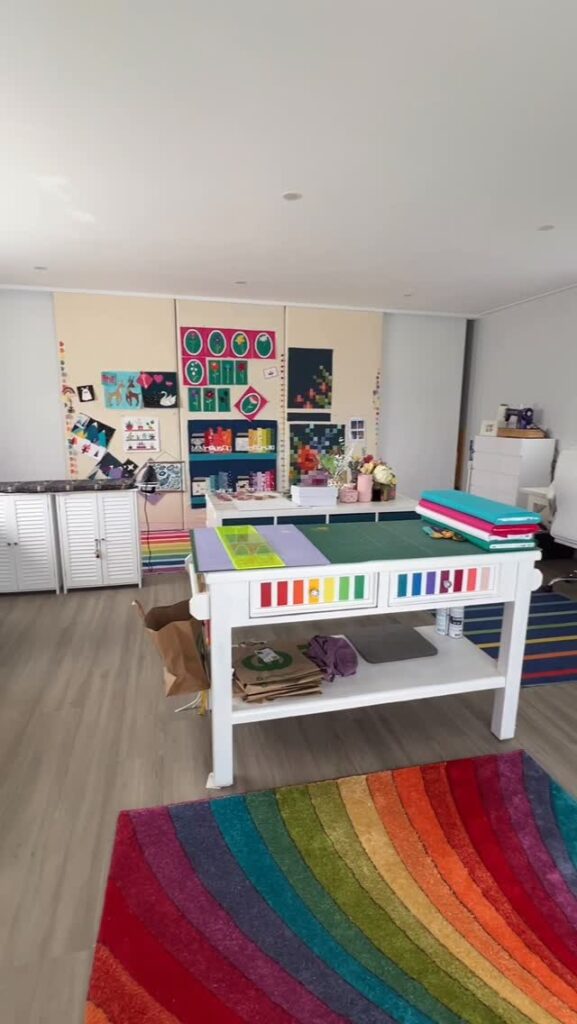
Color-based organization can transform both the functionality and visual appeal of a sewing space. A rainbow studio cutting table sewing room arranges fabrics, threads, and materials by color, creating a structured and visually engaging environment.
This method simplifies fabric selection and coordination, reducing time spent searching for matching shades during projects. The central cutting table provides ample space for measuring, cutting, and preparing materials, ensuring accuracy and efficiency.
Surrounding storage units or shelves maintain order while keeping supplies easily accessible. This setup is particularly effective for creative professionals who work with varied materials.
With organized storage and a dedicated workspace, the sewing process becomes smoother, faster, and more enjoyable for consistent project completion.