
A calm living room depends as much on how pieces relate as on how little you put in it.
Scandinavian Living Room Ideas can help you shape a space that feels warm and uncluttered, whether you’re working with a compact chaise corner or an open-plan layout.
Repeated wood tones can connect dining and sitting areas, while a large rug can gather modular seating into one comfortable zone. For a softer finish, layer neutral fabrics and pillows, or bring seasonal branches into a sunny corner.
These practical details offer ways to balance texture, light, and easy movement.
1. Quiet a Media Wall With Repeated Vertical Lines
Credits: Instagram
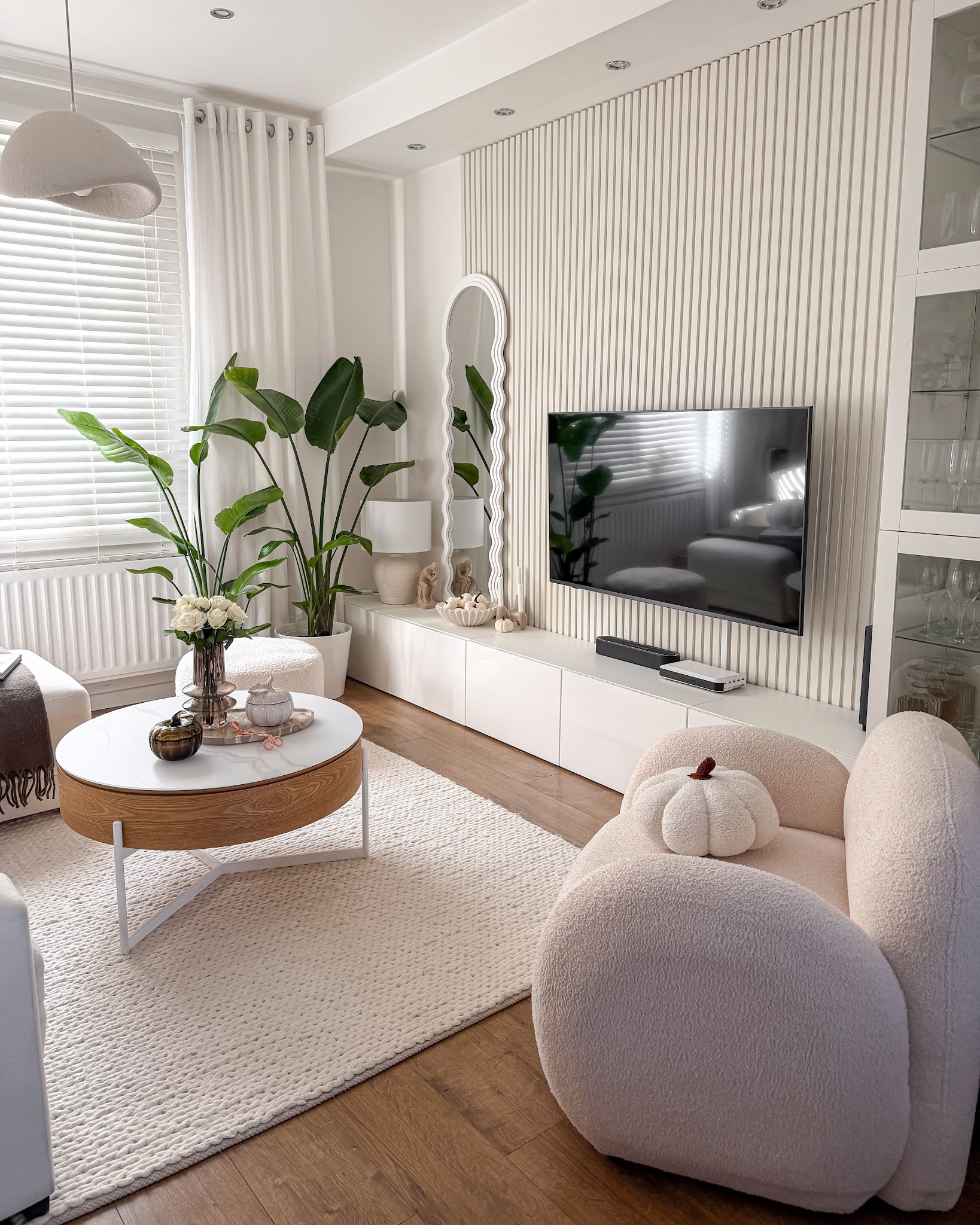
A wall of narrow vertical slats gives this Scandinavian living room texture while keeping the television area orderly. The pale finish blends with the low white cabinets, so the dark screen becomes the strongest contrast.
A rounded chair and circular coffee table soften all those straight lines. To borrow the idea, keep the wall treatment and storage close in color, then introduce warmth through a wood floor or table edge.
Leave enough room around the chair for an easy path through the seating area. A large plant can break up the repeated lines without adding more small accessories.
Choose a substantial light rug that reaches beneath the furniture, helping the room feel like one connected place to sit and unwind.
2. Open the View With an Arched Display Niche
Credits: Instagram
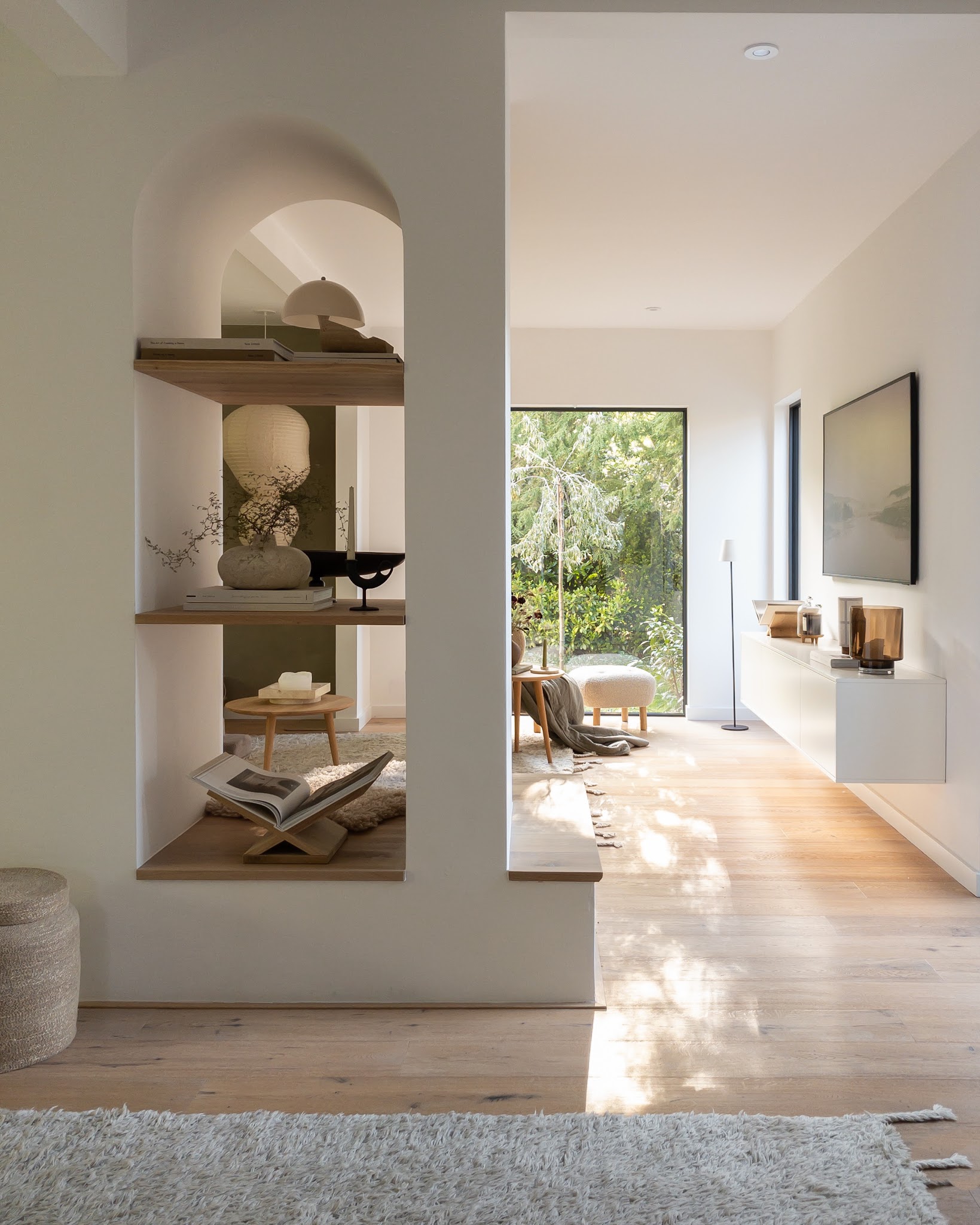
An arched opening turns a thick partition into a display area while allowing views through to the sunny living room. Wood shelves warm the pale walls, and the limited arrangement of books and vessels keeps the opening visually light.
Beyond it, a compact chair takes advantage of the garden view. This approach works especially well when you want definition between spaces without closing them off completely.
Before changing a wall, have a qualified professional assess its structure and any hidden services. For a simpler version, choose an open shelving unit with a curved top.
Keep taller objects toward the sides, leave gaps between groupings, and repeat nearby wood tones so the display feels connected to the surrounding furniture and flooring.
3. Layer Tactile Neutrals Around a Simple Sofa
Credits: Instagram
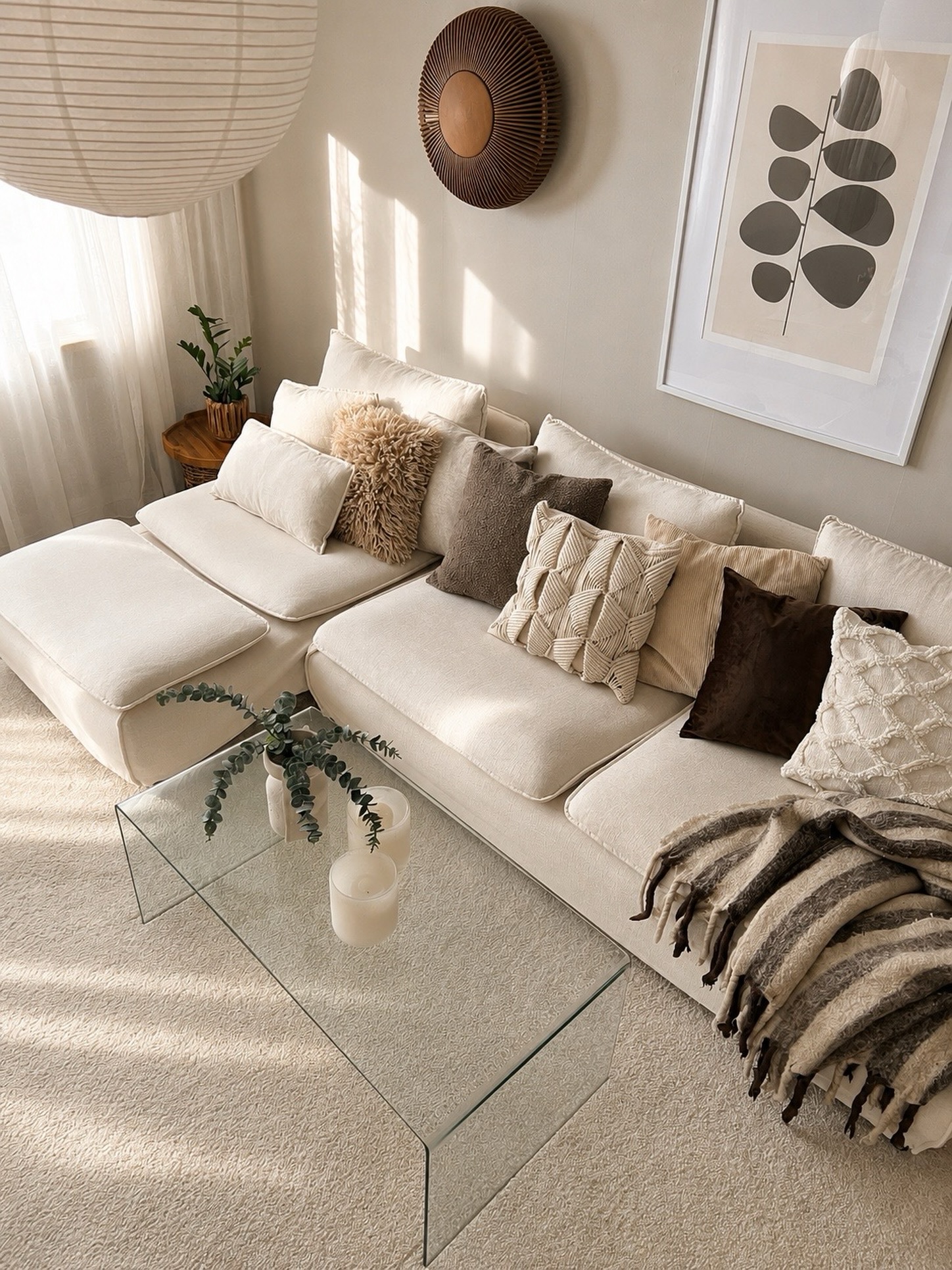
Beige becomes more interesting when several textures share the same space. Here, a low sectional carries fluffy, nubby, and smooth pillows, while a striped throw adds a darker note.
The glass coffee table keeps the floor visible, and a paper shade brings another soft surface overhead. Start with one upholstery color, then collect pillows in slightly different shades rather than buying an identical set.
Limit strong patterns to one or two pieces so the room remains restful. A botanical print can echo the gentle palette without introducing another accent color.
Leave part of the sofa uncovered to keep the arrangement practical. The result feels welcoming because the materials vary, even though the overall color range stays narrow and very quiet.
4. Make a Compact Chaise Corner Feel Cozy
Credits: Instagram
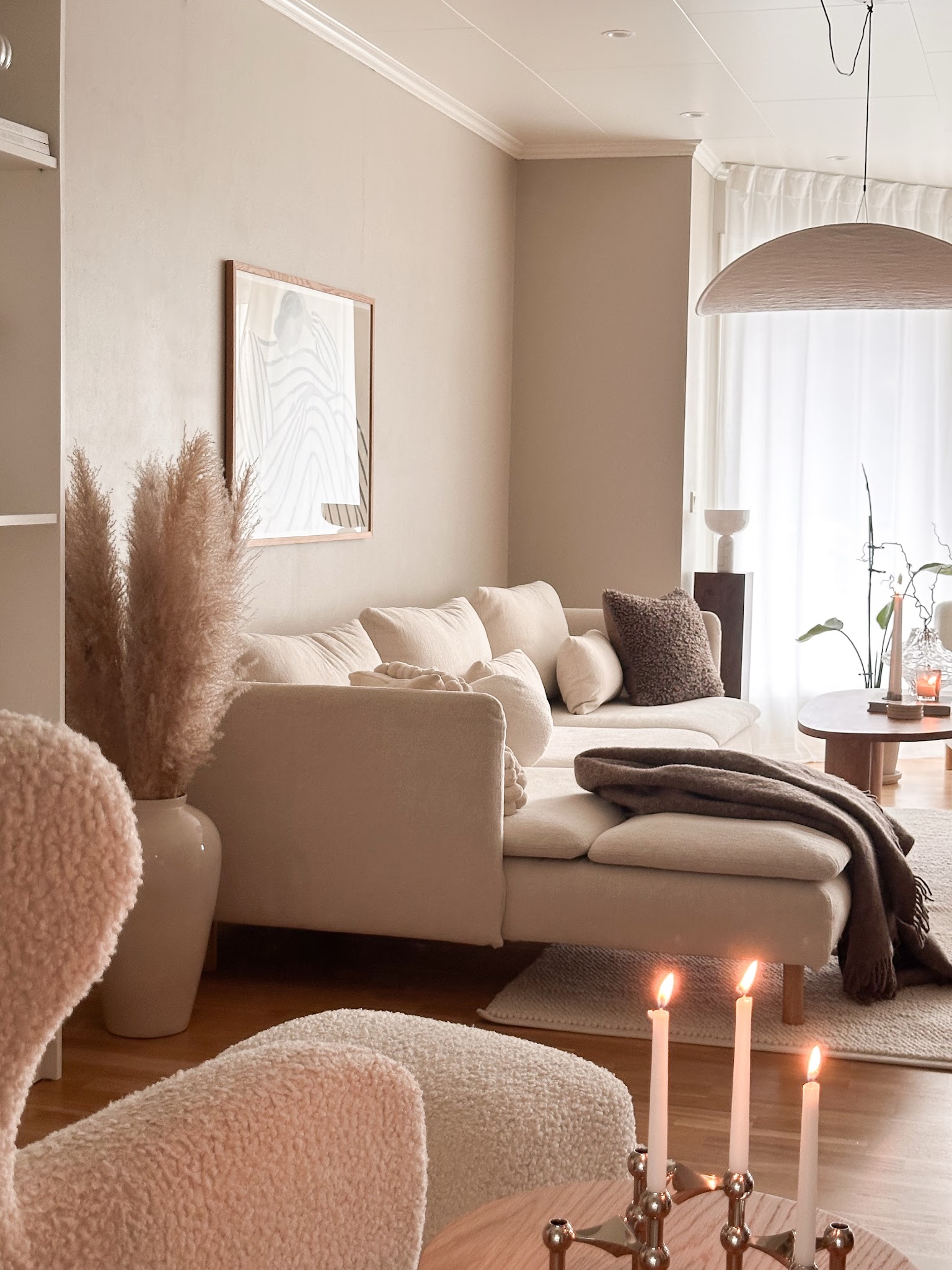
A small chaise sectional can deliver generous lounging space without filling an entire living room. In this corner, cream upholstery sits against warm beige walls, with a dark throw adding definition along the seat.
The rounded pendant and textured chair continue the soft shapes, while tall curtains frame the daylight. Try keeping the largest pieces within a close tonal range, then add contrast through a pillow, blanket, or small side table.
Check the chaise depth against your walking route before choosing a sofa. Leave enough space to reach the window comfortably.
A single large framed print provides a calm focal point above the back cushions. Finish with gentle table lighting for evenings when the overhead fixture feels a little bright.
5. Connect Open Plan Spaces With Warm Wood
Credits: Instagram
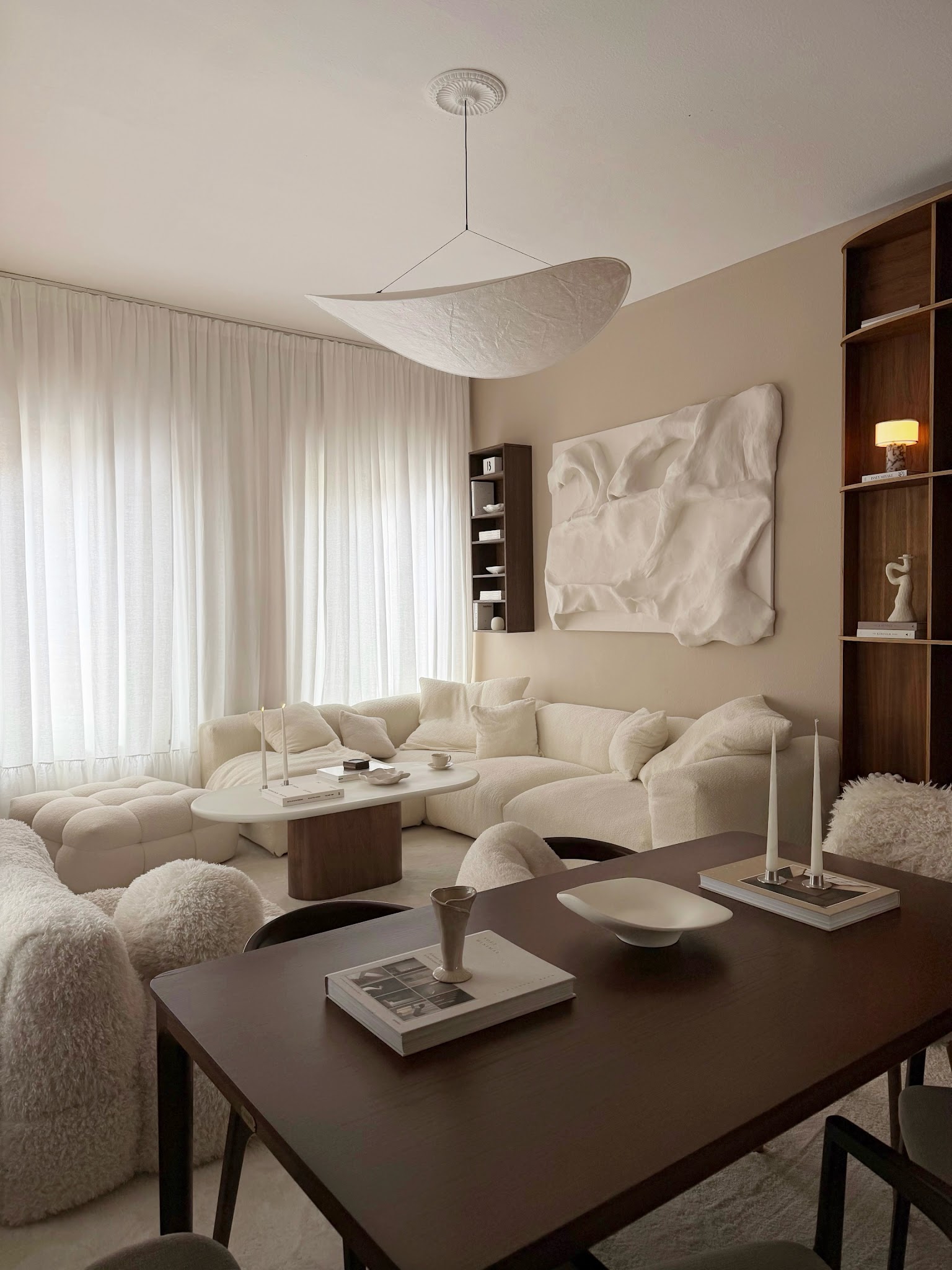
A dark dining table and tall wood shelving give this pale living room a clear sense of structure. The cream sectional, light curtains, and sculptural ceiling shade soften the deeper finishes.
Instead of treating the dining and sitting areas as unrelated rooms, repeat the same wood tone in a few places. A shelf, chair frame, or coffee table can create that connection without requiring every piece to match.
Keep accessories on the dining table low enough for conversation and leave some shelves open. Textured wall art adds interest above the sofa while staying within the neutral palette.
This combination is useful in an apartment where several activities share one room and each area needs to feel purposeful, comfortable, and connected.
6. Gather Modular Seating on One Large Rug
Credits: Instagram
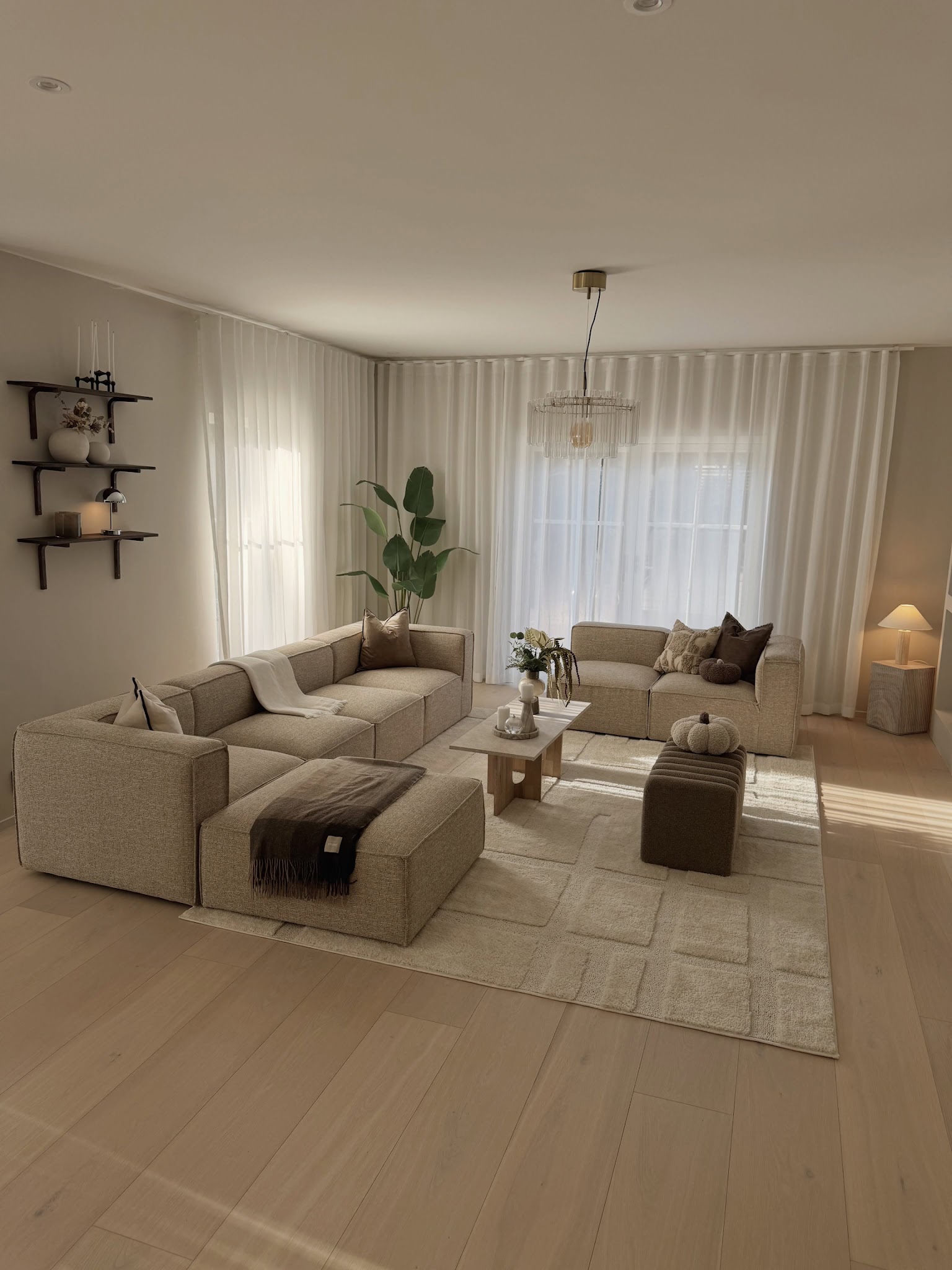
Modular seating gives this Scandinavian living room a relaxed, flexible arrangement. A chaise projects toward the center, while an ottoman and small loveseat create additional places to settle in.
The large pale rug brings the pieces together and contrasts gently with the surrounding wood floor. Before buying a modular sofa, map its individual sections with tape so you can test the layout.
Keep a clear route around the outside rather than cutting through the middle of the seating group. Choose a coffee table that leaves comfortable reach from the main seats.
Full curtains soften the windows, and a single leafy plant adds height. A few darker cushions help define the upholstery without taking attention away from the room's easy proportions.
7. Bring Seasonal Branches Into a Sunny Corner
Credits: Instagram
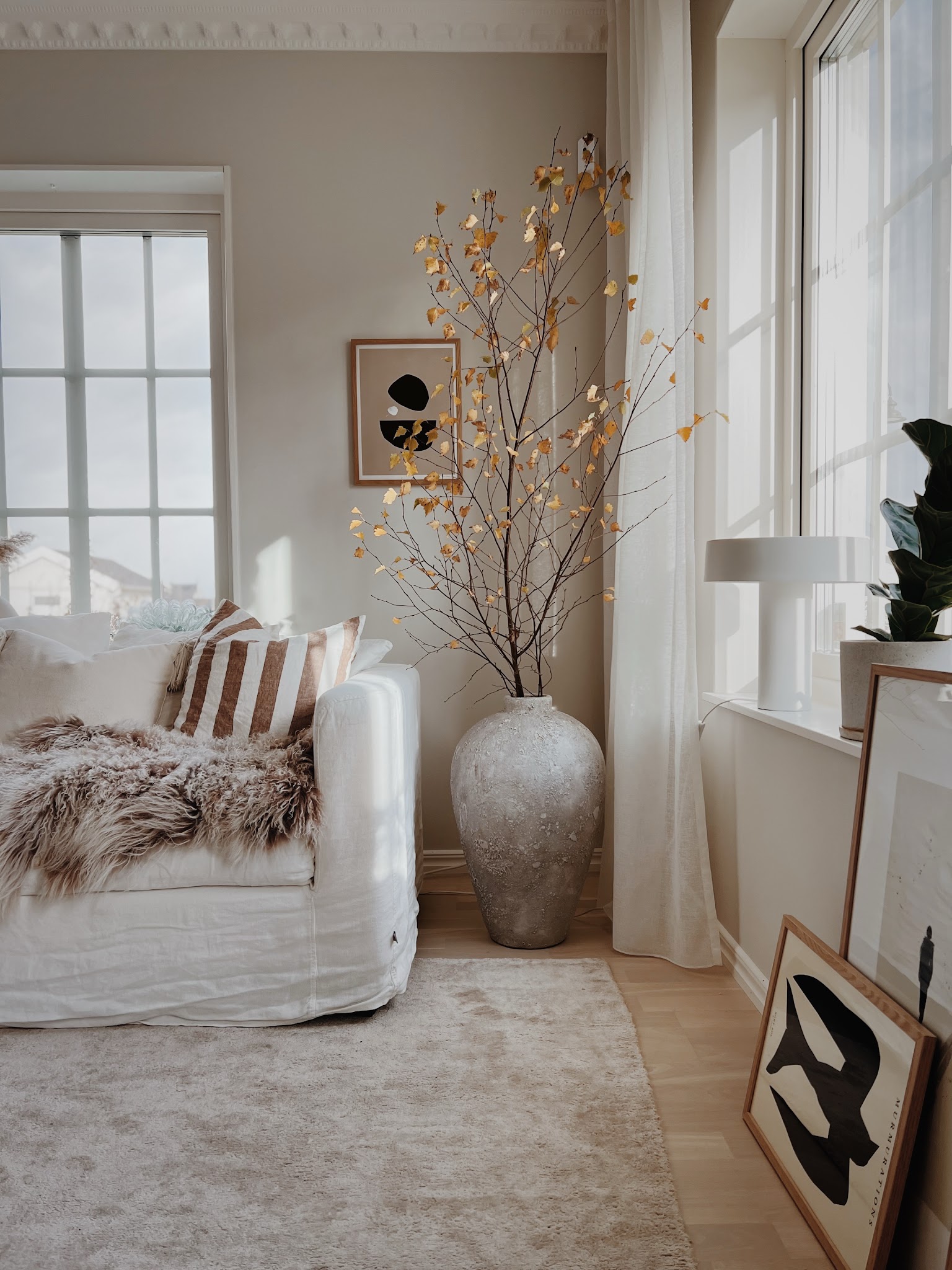
Tall branches make a simple sofa corner feel connected to the changing season. Their loose outline contrasts with the straight window frames, while a large pale vase gives the arrangement enough weight beside the seating.
A striped pillow and patterned throw introduce quiet movement across the white upholstery. Try using one generous floor arrangement instead of scattering several small decorations around the room.
Choose a stable vase and position it where branches will not obstruct a walkway or brush against curtains. Keep nearby art low and simple so the natural shape remains the focus.
The pale rug and wood floor provide a gentle background. This is an easy way to refresh a Scandinavian living room while keeping familiar furniture intact.
8. Pair Muted Green Walls With Sculptural Seating
Credits: Instagram
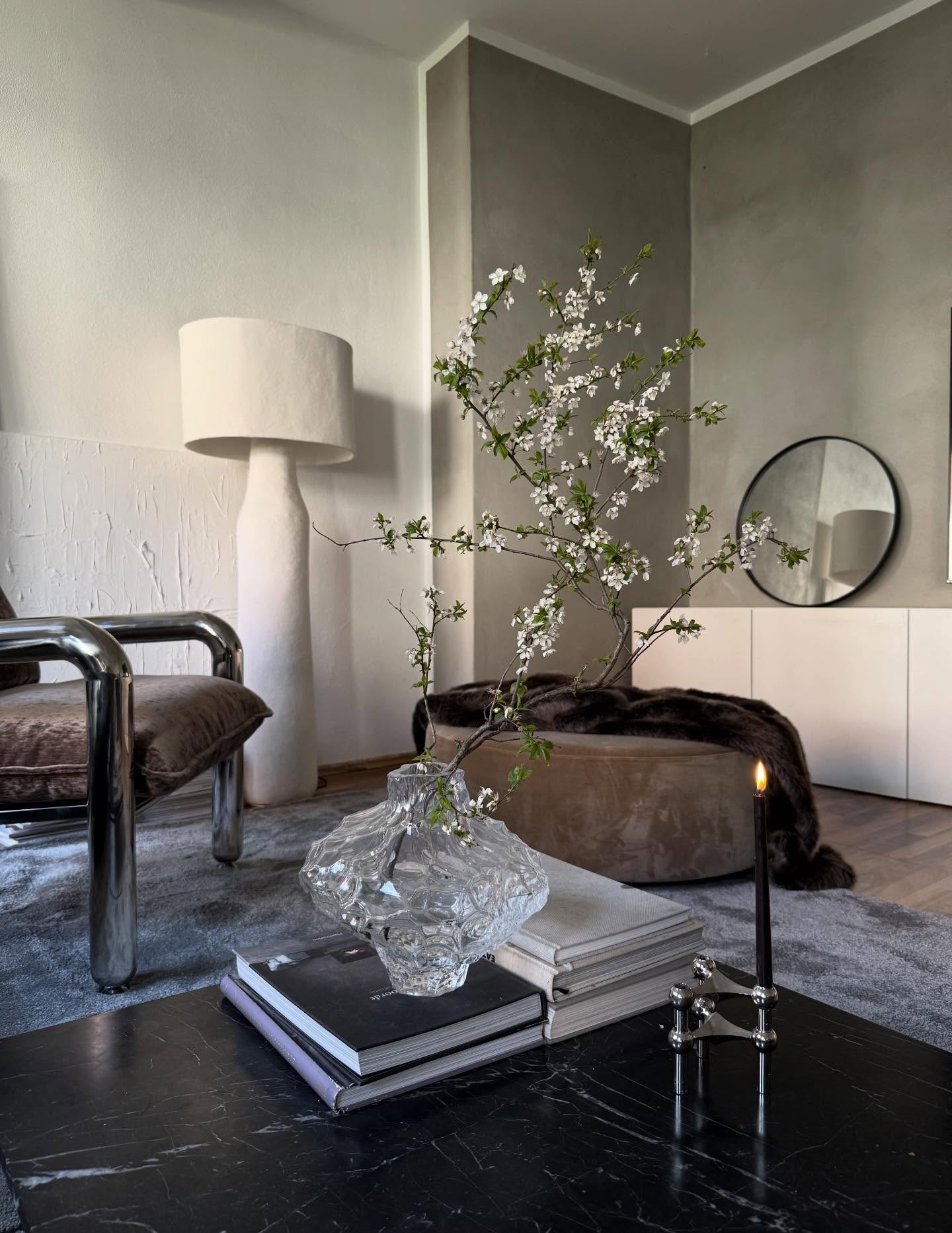
Scandinavian rooms can feel calm with deeper wall color, too. This sitting area uses muted green behind sculptural seating, a dark coffee table, and a low white cabinet.
The restrained palette lets the curved seats and polished metal frame stand out. If you want a similar mood, test green samples beside your flooring and upholstery before painting the whole room.
Look at them in daylight and under your evening lamps. Keep a few larger surfaces light so the space retains definition.
A tall floor lamp and round mirror introduce contrasting shapes without crowding the wall. Fresh branches bring an informal touch to the polished table.
Let the furniture silhouettes provide most of the interest, keeping smaller decorations to a minimum.
9. Arrange Pale Seating for Easy Conversation
Credits: Instagram
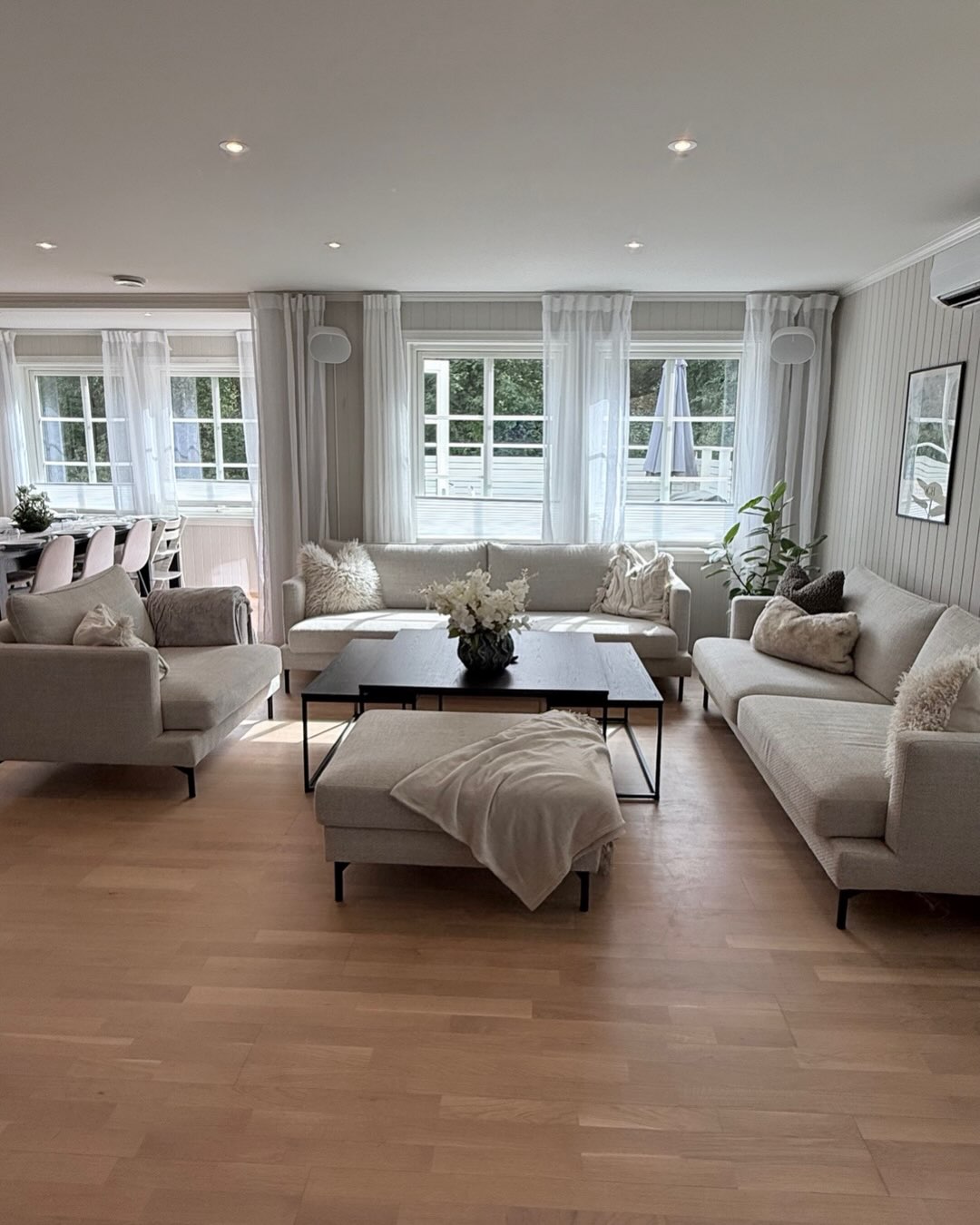
Two sofas and a matching armchair make this bright Scandinavian living room feel ready for company. The pale upholstery creates a consistent background, while a dark rectangular coffee table defines the center.
Bare wood flooring around the seating keeps the arrangement from feeling heavy. To recreate the layout, measure both the furniture footprints and the space needed to walk behind them.
Use similar seat heights so the group feels comfortable for conversation. An ottoman offers a flexible extra perch, but it should leave enough clearance around the table.
Light curtains frame the windows without blocking their shape. Add just a few darker cushions to repeat the table color, then keep the remaining textiles simple for a cohesive and welcoming room.
10. Mix Nordic Furniture With Older Architectural Details
Credits: Instagram
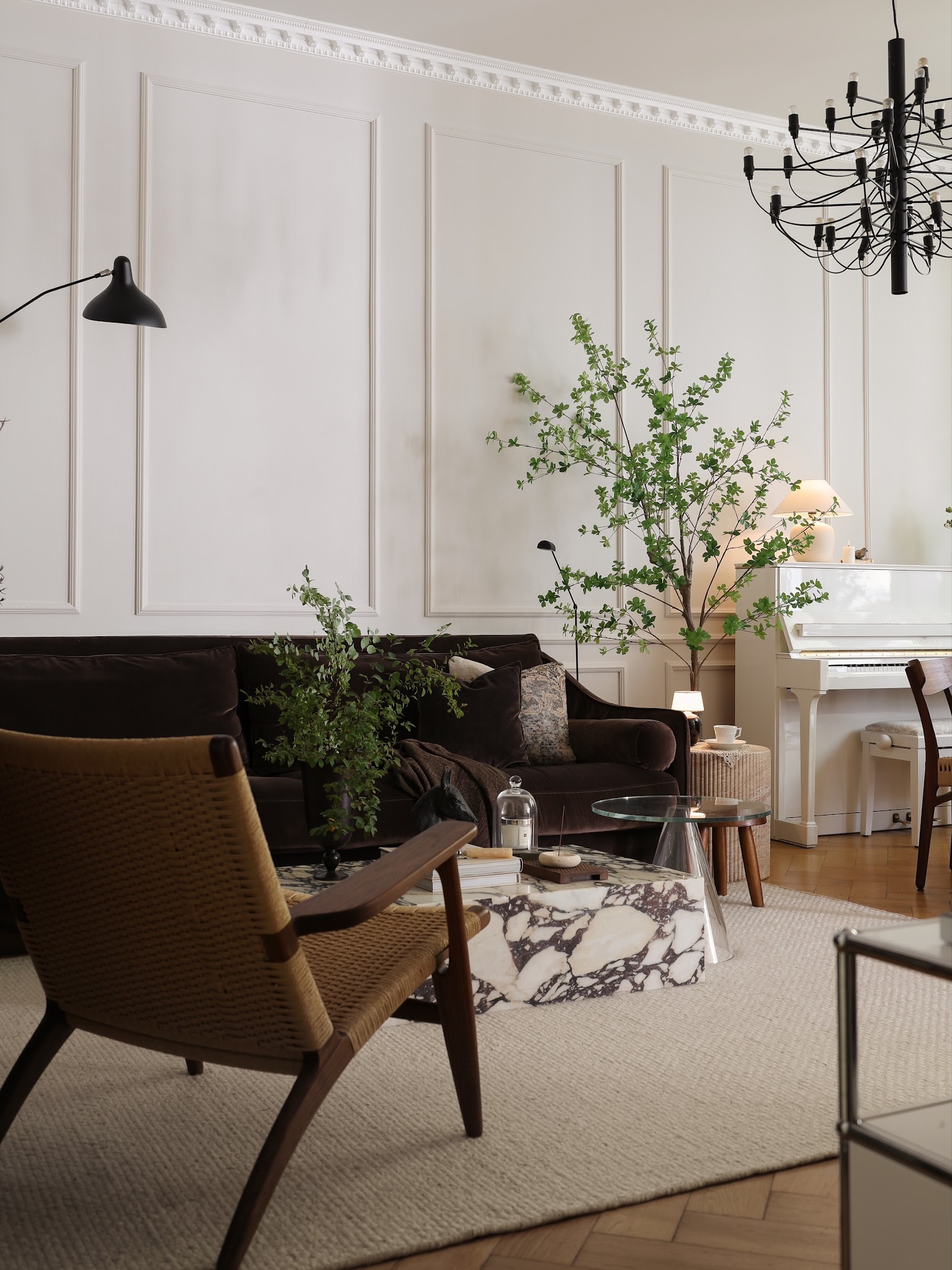
Simple furniture can sit comfortably beside decorative molding. In this living room, a wood framed lounge chair and slim black floor lamp bring clean lines to a space with paneled walls and a chandelier.
The dark sofa gives the arrangement depth, while a pale rug keeps the seating area distinct from the wood floor. Try pairing one substantial upholstered piece with a lighter chair that shows its frame.
This prevents a traditional room from becoming visually crowded. A stone coffee table introduces another natural material, but keep its styling restrained when the surface has strong pattern.
Greenery softens the formal architecture. Repeating black in a lamp or small accessory helps connect the newer pieces with the room's existing decorative details.
11. Use Low Lounge Chairs Beneath a Tall Ceiling
Credits: Instagram
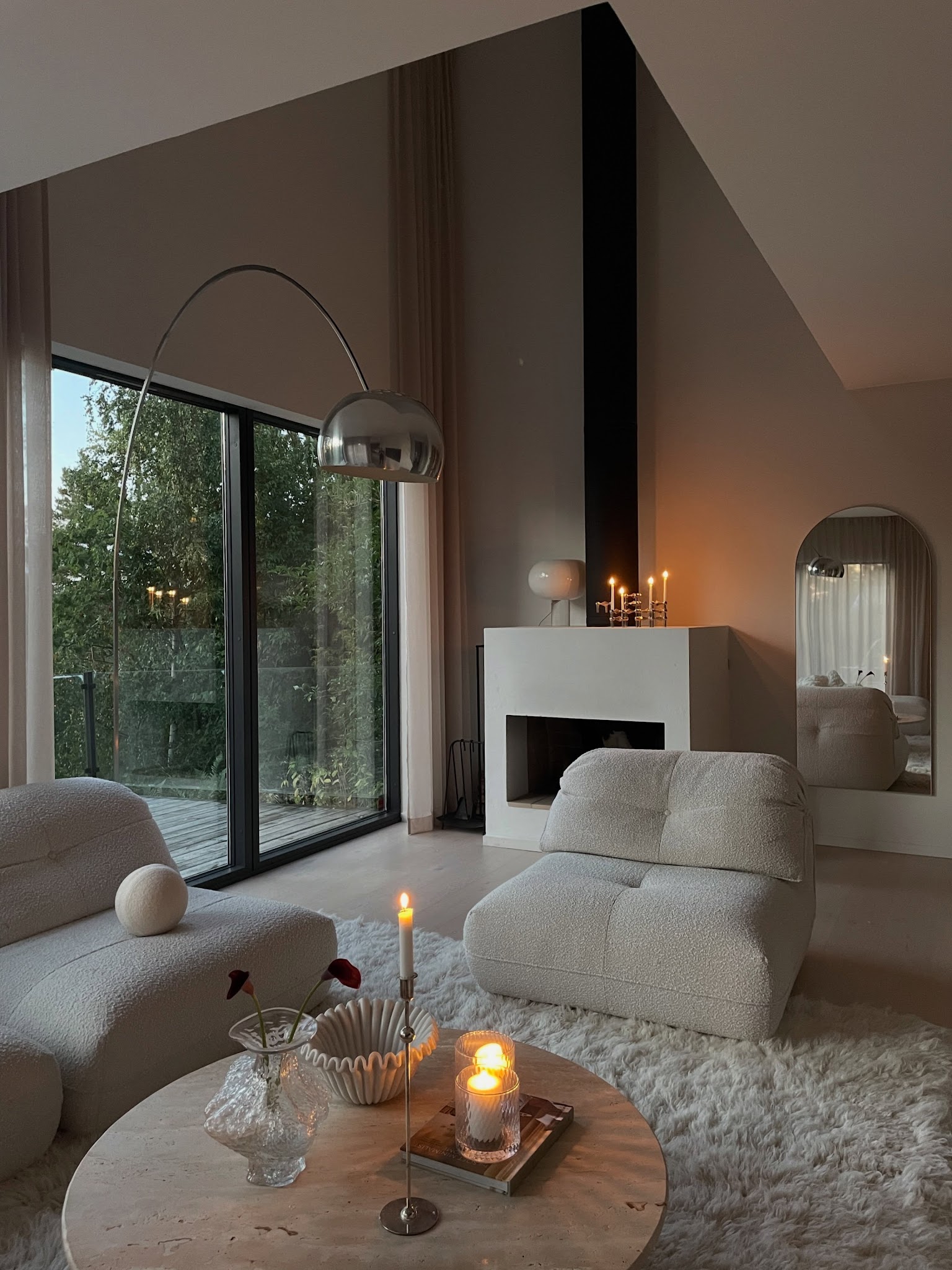
Low lounge chairs make the height of this Scandinavian living room feel especially generous. Their rounded upholstery and the deep textured rug create a comfortable seating area beneath tall windows and a slender black chimney.
A curved floor lamp brings light down toward the chairs, making the scale feel more personal. Try this balance in a room with a high ceiling: keep the seating low, then introduce one taller element with a light visual profile.
A round coffee table repeats the curves without interrupting the view. The pale fireplace surround blends into the walls, allowing its darker opening to provide definition.
For a similar evening glow, combine shaded lamps with flameless candles placed at different heights around the room's perimeter.
12. Let Woven Seating Bridge Two Living Areas
Credits: Instagram
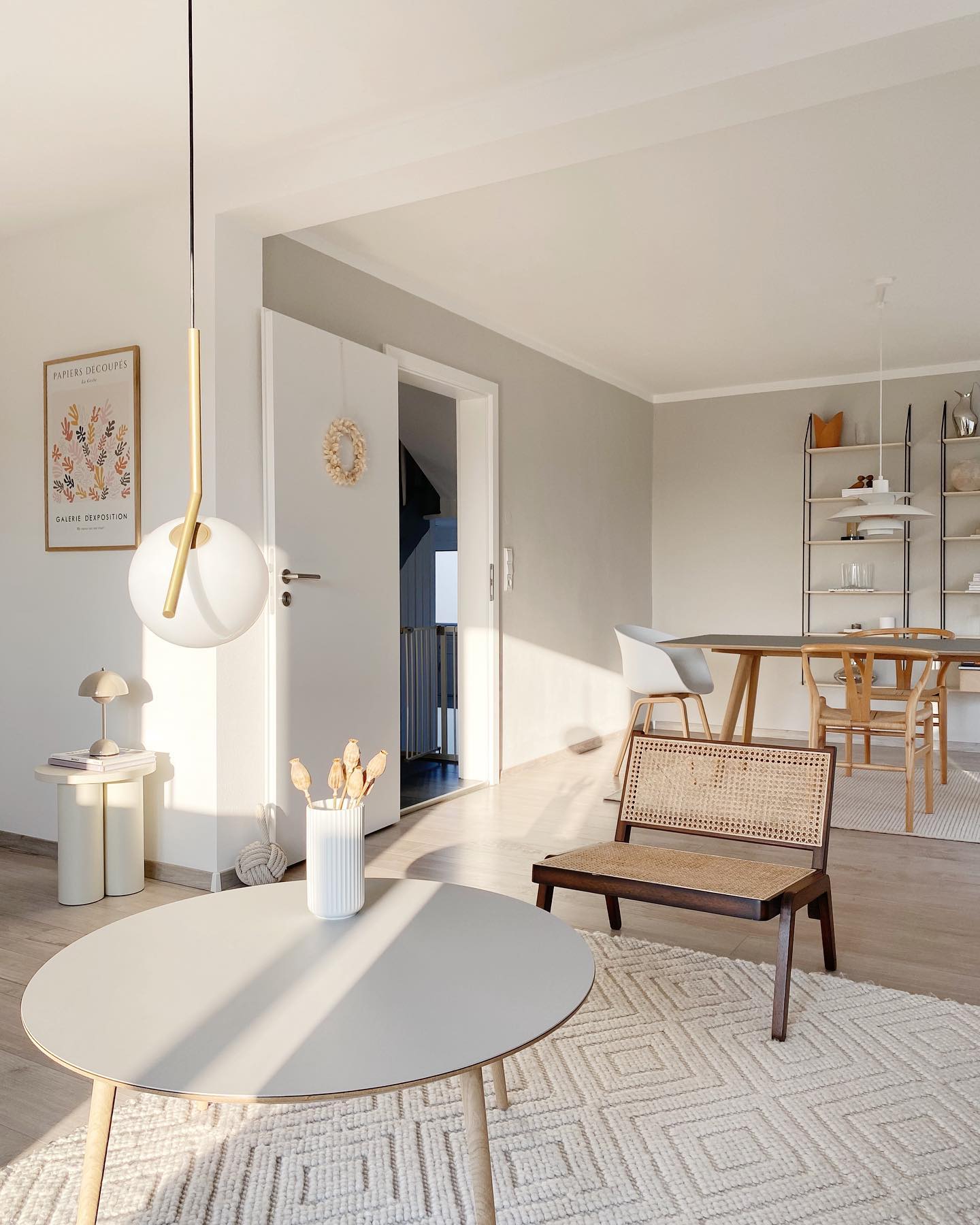
A woven lounge chair gives this bright sitting area a natural focal point. Its dark wood frame adds contrast to the pale floor and oval coffee table, while the open cane keeps the chair visually light.
Beyond it, wood dining chairs repeat the warm material, connecting the two spaces. Consider a chair with an exposed frame when your living room shares space with a dining area.
It can offer seating without creating a solid barrier across the view. Choose a rug with subtle texture to define the lounge, and leave the surrounding floor visible.
Simple wall art and open shelves keep the background calm. A small pendant over the coffee table adds another layer of light above the seating area.
13. Combine a Paper Pendant With Collected Pillows
Credits: Instagram
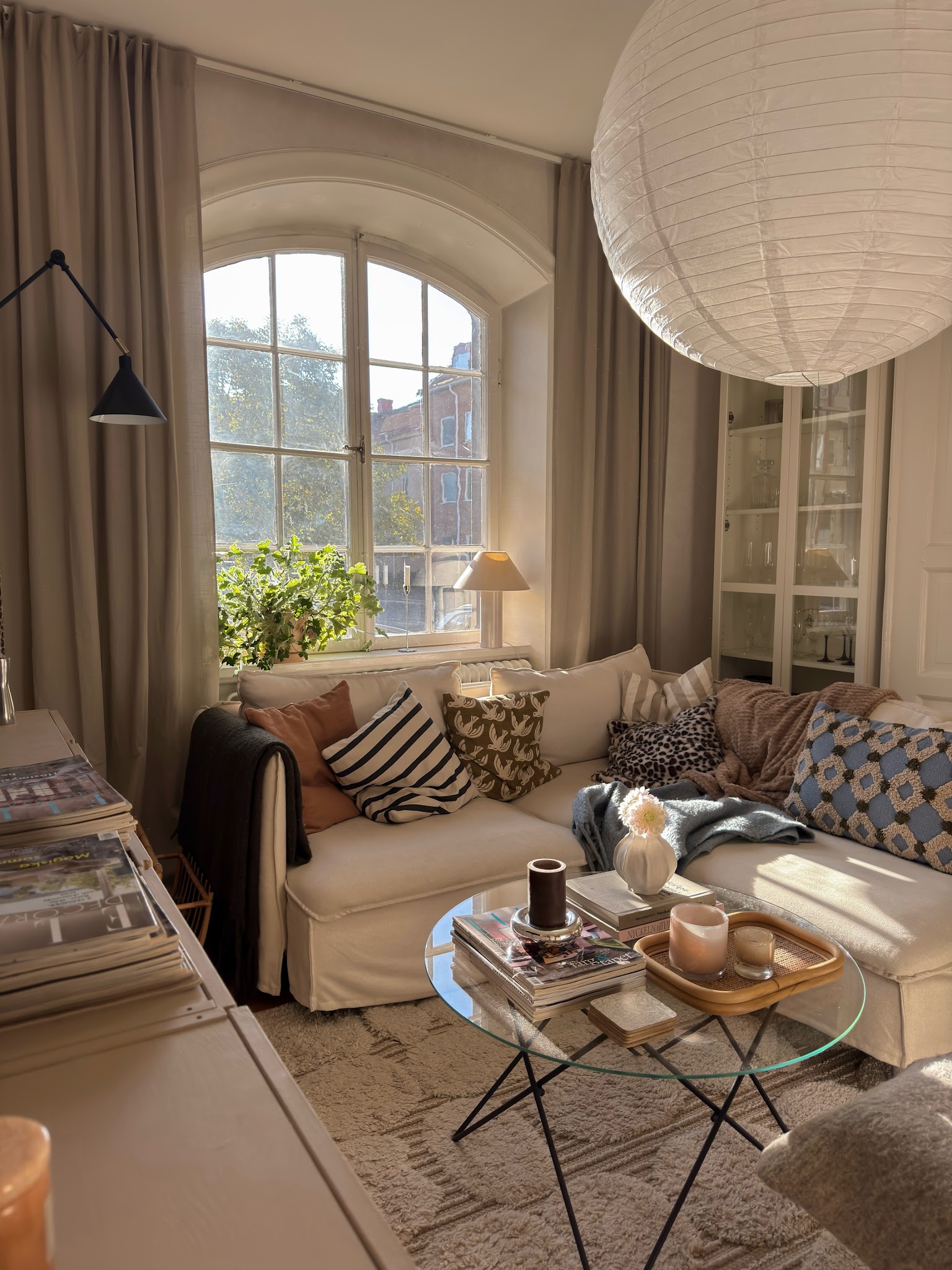
A generous paper pendant floats above this compact, welcoming living room, softening the tall window and glass cabinet. The corner sofa carries a lively collection of striped, floral, and textured pillows, giving the neutral upholstery plenty of personality.
A glass coffee table helps the busy arrangement feel lighter by revealing the rug beneath it. To mix patterns successfully, repeat a few colors across the pillows and vary their scale.
Leave space between stacks of books and everyday objects so the tabletop remains useful. Full curtains add another soft layer around the window without hiding its arched outline.
Keep the largest furniture pieces simple, then let textiles and favorite reading material provide the personal details that make the corner feel inviting.
14. Warm a Pale Room With Several Small Lights
Credits: Instagram
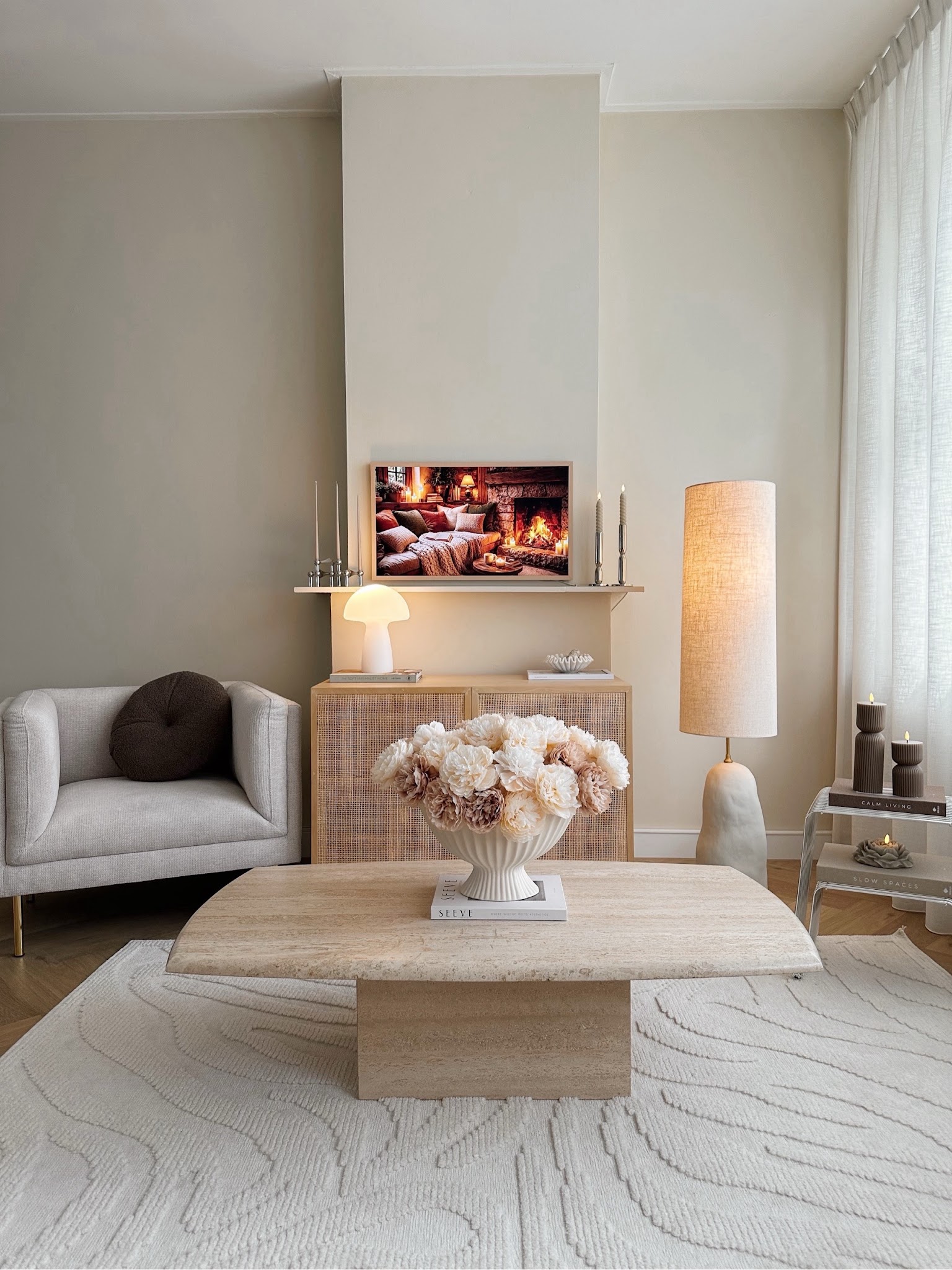
Different light sources make this pale living room feel comfortable before the evening fully arrives. A tall fabric shade, a glowing table lamp, and smaller lights on the side table create points of warmth around the seating.
The woven cabinet fronts and textured rug add interest within the restrained palette. Try placing lamps at different heights rather than relying on one bright overhead fixture.
Choose shades that diffuse the light and position them where they will not reflect directly into a screen. A substantial coffee table can anchor the arrangement while its rounded corners soften the path around it.
Keep decorative pieces in related shades of cream and brown so their shapes stand out gently against the room's quiet background.
15. Balance Graphic Pattern With Rounded Wood
Credits: Instagram
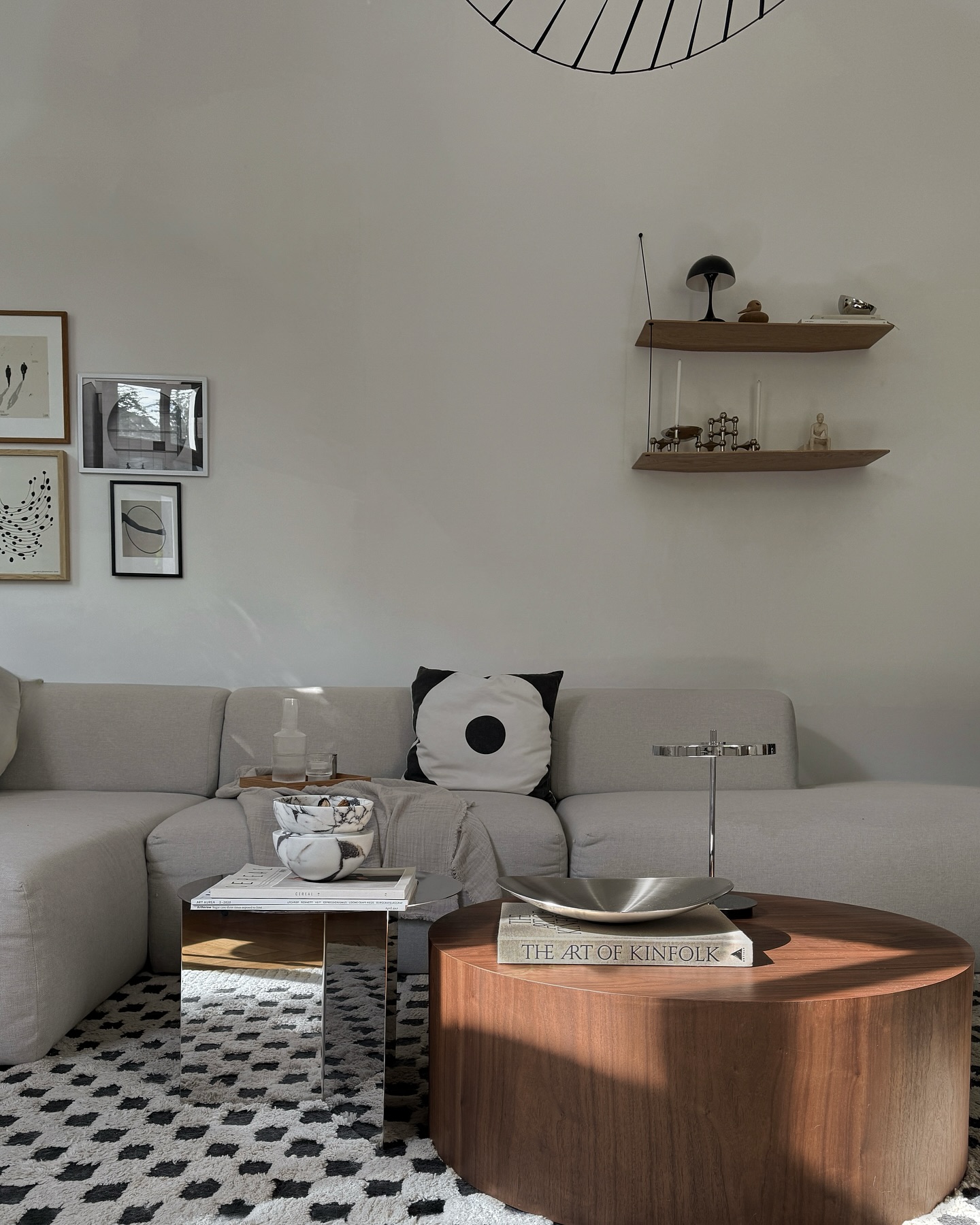
A round wood coffee table brings warmth to this gray sectional, while the black and white rug adds a crisp graphic layer below. The mirrored side table creates another surface without adding the visual weight of a second solid piece.
Above the sofa, a small group of framed prints balances two open shelves, leaving plenty of wall visible between them. Borrow the mix by pairing one patterned textile with larger areas of plain upholstery.
Choose a table whose curves contrast with the sofa's straight lines, and repeat its wood tone in shelving or picture frames. Metal accessories can introduce a little shine, but keep their number limited.
The room feels collected because each material has a clear place to contribute.
16. Keep the Floor Open Between Sitting and Dining
Credits: Instagram
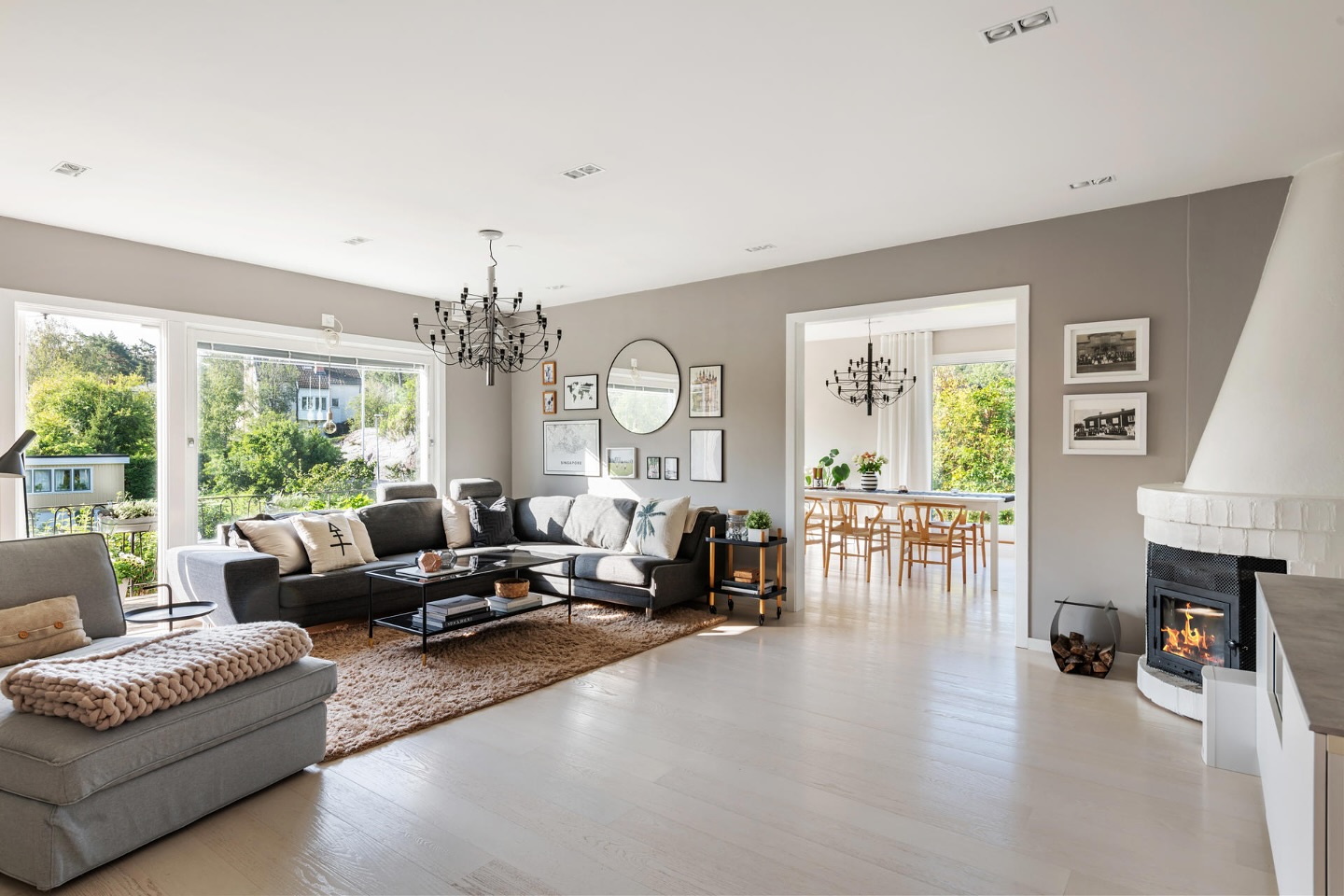
Pale floorboards run continuously through this Scandinavian living room and its adjoining dining area. The seating stays grouped on a textured brown rug, leaving a generous route between the sofa and fireplace.
Dark upholstery gives the lounge definition without requiring a different wall color. When arranging an open room, start with the paths people use most often, then position furniture around them.
A corner sectional can hold a group together while keeping the center of the floor clear. Choose a coffee table with an open frame to preserve sightlines.
Repeating the chandelier style in the dining room creates a connection overhead. Simple framed pictures and a round mirror finish the wall while allowing the broad windows to remain the focus.
17. Turn a Sloped Corner Into a Soft Retreat
Credits: Instagram
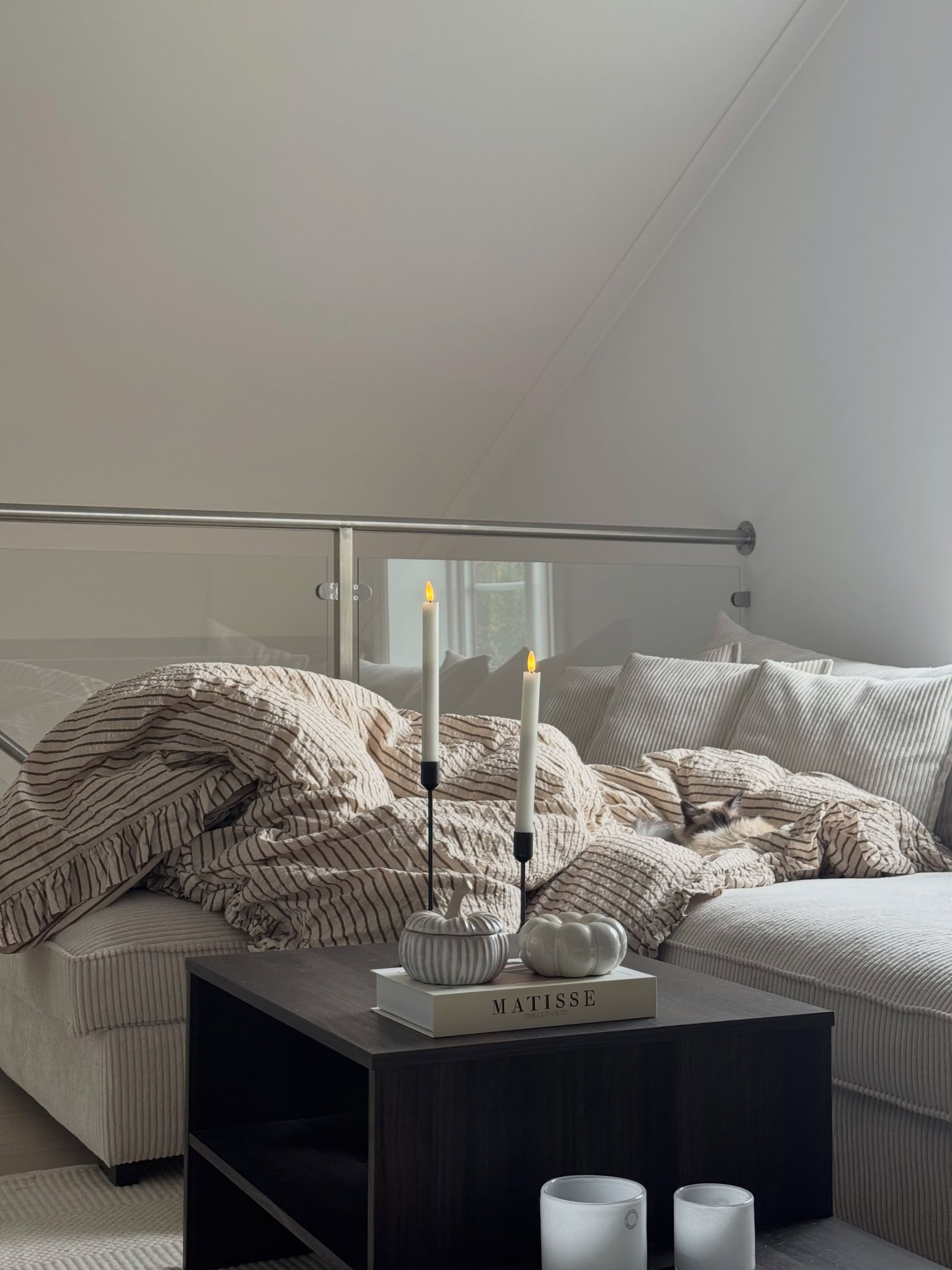
A low sectional makes practical use of the space beneath this sloping ceiling. Its pale ribbed upholstery sits quietly against the walls, while striped blankets add warmth and a relaxed, pleasantly casual feel.
The dark square table provides a firm contrast and a useful place for books or drinks. For a similar nook, check the ceiling height where you will stand up and sit down before choosing furniture.
Keep taller storage toward the room's highest wall. A soft rug can define the seating area without introducing a strong new color.
Choose flameless candles for the same gentle glow around loose textiles. Leave the table partly clear so the corner remains comfortable for everyday reading, conversation, or an unhurried afternoon rest.
18. Add Color With a Playful Statement Rug
Credits: Instagram
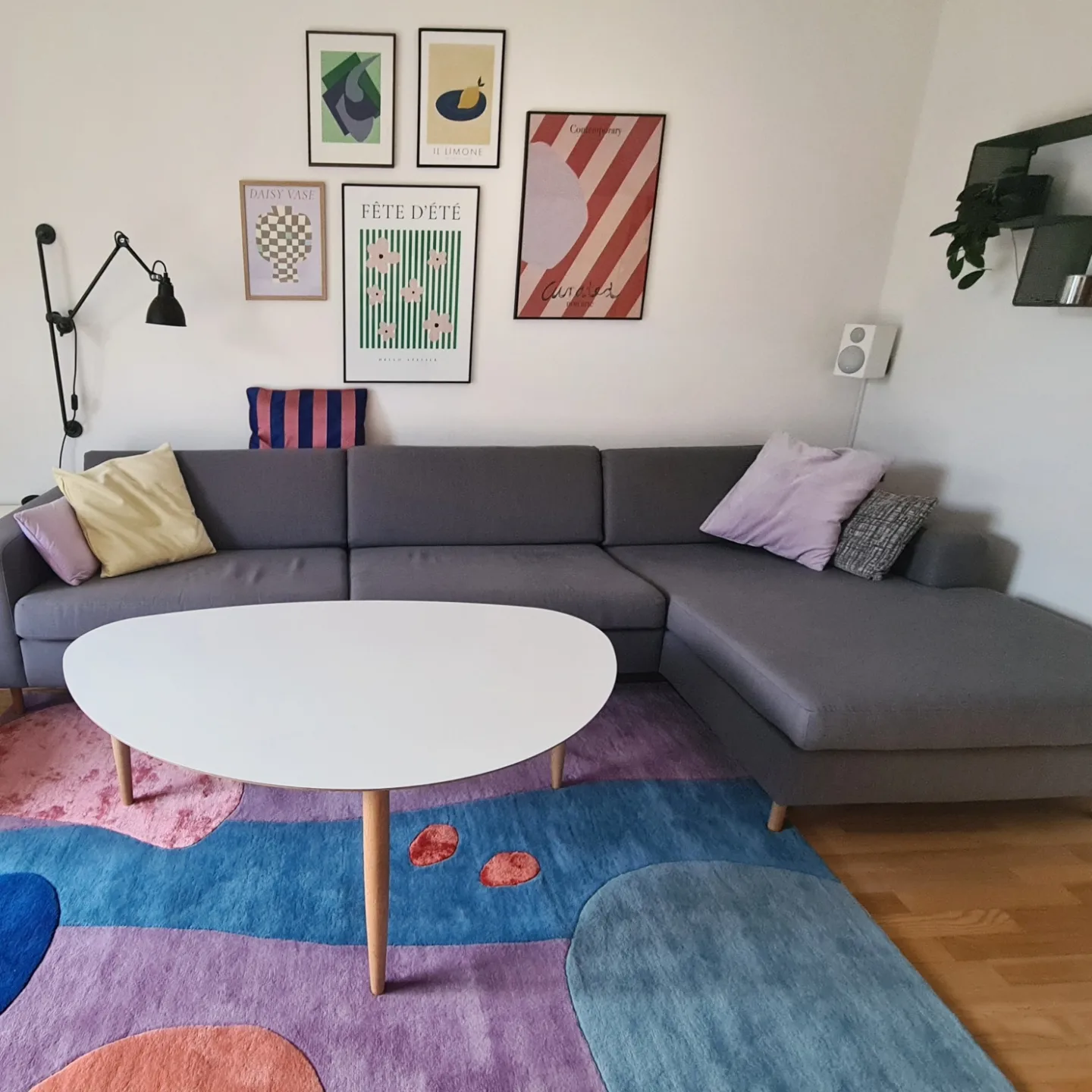
A colorful rug gives this bright living room energy while the gray sectional keeps the overall arrangement grounded. Pink, blue, and lavender shapes echo the cheerful prints above the sofa, making the color feel connected rather than scattered.
The white coffee table offers a quiet surface between the pattern and upholstery. Start with a rug you love, then choose just a few of its colors for pillows or artwork.
Keep the sofa and larger storage pieces simple so the accents have room to stand out. A black adjustable lamp provides definition beside the gallery wall.
Arrange frames with consistent gaps, even when their sizes differ. This approach lets a familiar Scandinavian furniture palette support a more playful and expressive room.
19. Ground White Floorboards With Black and Natural Textures
Credits: Instagram
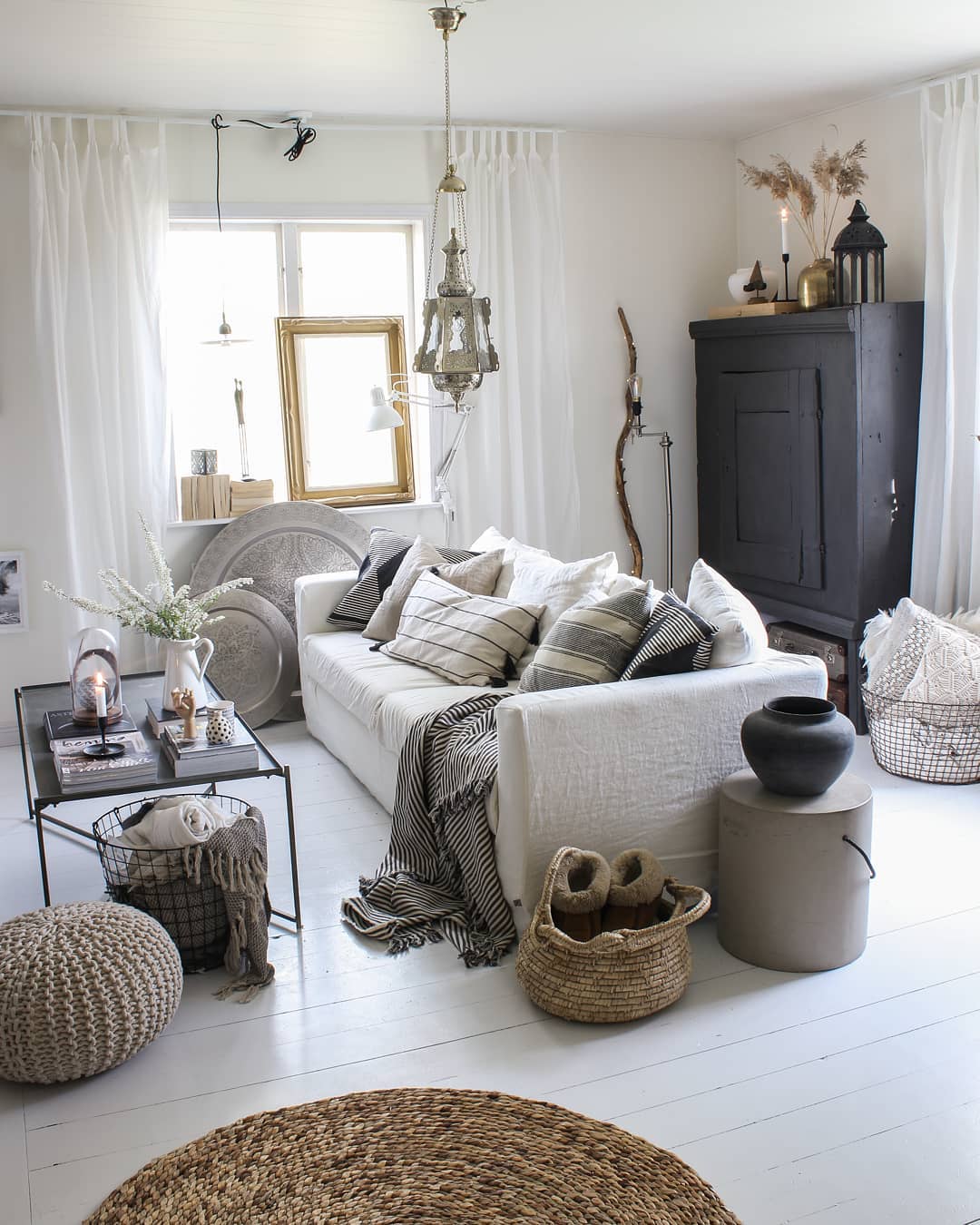
White floorboards give this small living room a bright foundation for darker furniture and woven details. A black cabinet anchors one side, while the pale sofa carries a mixture of striped pillows and a casually draped throw.
Baskets, a knitted pouf, and a round woven rug bring texture close to the floor. Try keeping the main surfaces light, then use black in a few substantial pieces rather than many tiny accessories.
Choose baskets that handle practical storage so the room stays easy to use. A narrow coffee table leaves more walking space around the sofa.
Add one or two warm metal accents for a softer transition between dark and light, and keep everyday seating free of excess cushions and blankets.
20. Give a Reading Corner One Sunny Accent
Credits: Instagram
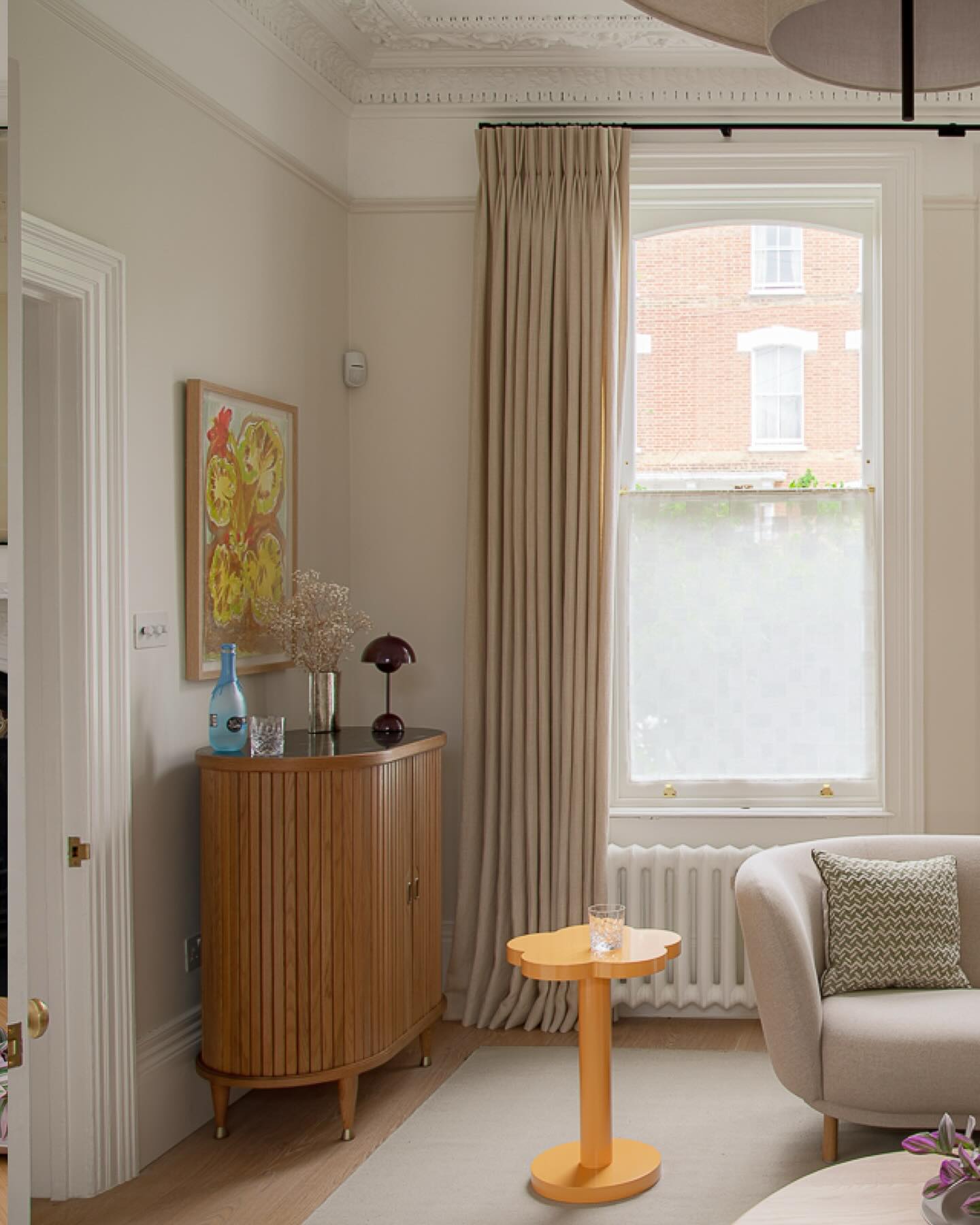
A yellow side table adds a cheerful note to this otherwise quiet reading corner. The pale armchair, soft curtains, and wood cabinet provide a restrained background, allowing that small burst of color to stand out.
The rounded cabinet edges and curved chair arms make the grouping feel gentle beneath the decorative ceiling. To borrow the idea, choose one useful accent piece instead of scattering bright accessories throughout the room.
Position the table within comfortable reach of the chair and give a nearby lamp its own clear surface. A colorful print can repeat the accent more subtly.
Light window coverings provide privacy while preserving daylight, and a simple rug helps the corner feel connected to the rest of the living room.