
A bedroom can feel modern without relying on a complicated layout or a pile of decorative accents.
Modern Bedroom Ideas in this roundup use clear shapes and thoughtful details, from a plywood platform that extends into bedside shelves to a frosted globe suspended above a nightstand.
Other approaches include pairing fine-grid bedding with sculptural black lines, using one oversized landscape as the bed-wall focus, and painting walls and flat molding the same deep shade.
Each idea shows how a few considered choices can give a bedroom a distinct look while keeping the arrangement easy to read.
1. Extend a Plywood Platform Into Bedside Shelves
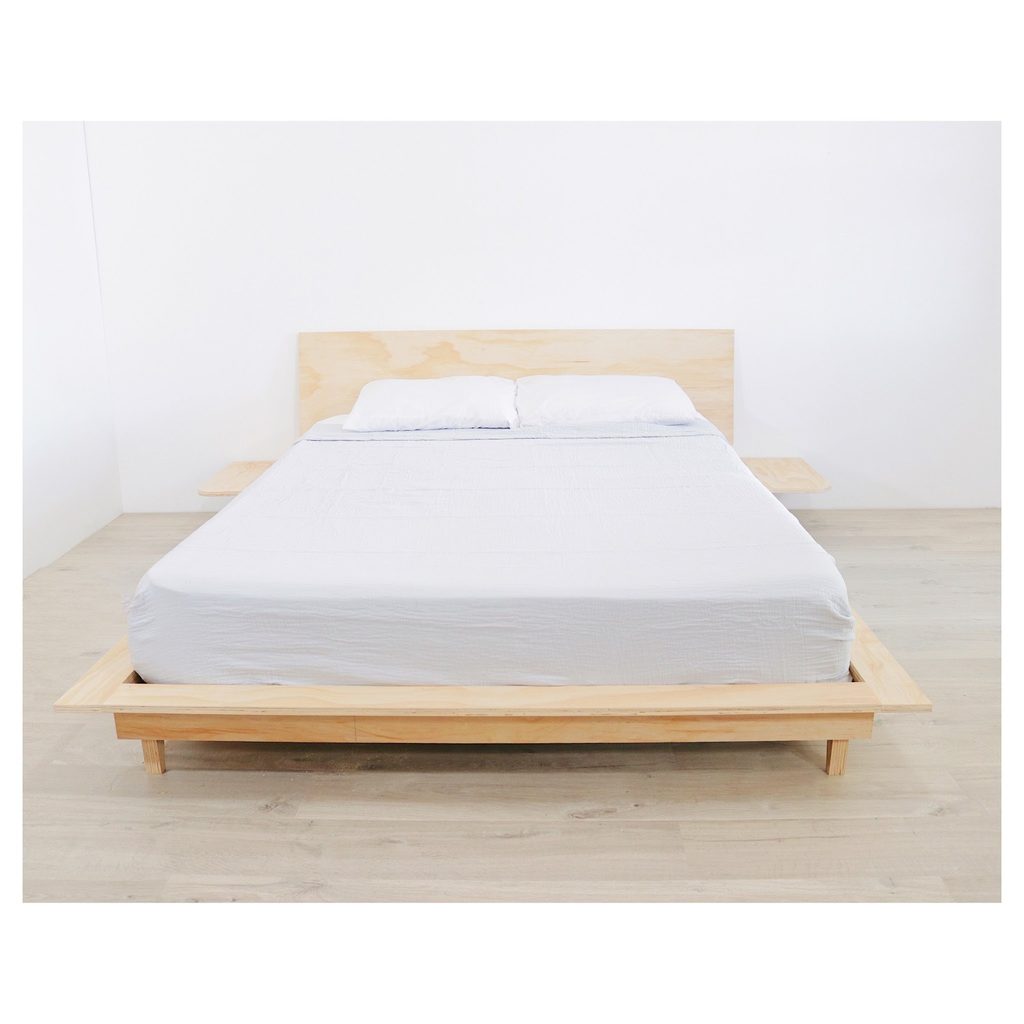
Credits: Mike Montgomery / Modern Builds
Pale plywood gives this bed a continuous outline, from the broad platform to the headboard and projecting bedside shelves. Its visible grain warms the white room while the straight edges keep the arrangement simple.
Combining the sleeping surface and small tables can reduce the number of separate furniture shapes competing for attention. Measure the whole footprint, including the shelf extensions, rather than checking mattress dimensions alone.
Leave comfortable access around the projecting corners and choose a bedside height that works with your mattress. A restrained bedding arrangement makes the construction easier to appreciate.
The creator documents this as a real plywood build, so use the linked project for construction details instead of treating a photograph as a complete structural plan.
2. Suspend a Frosted Globe Above the Nightstand
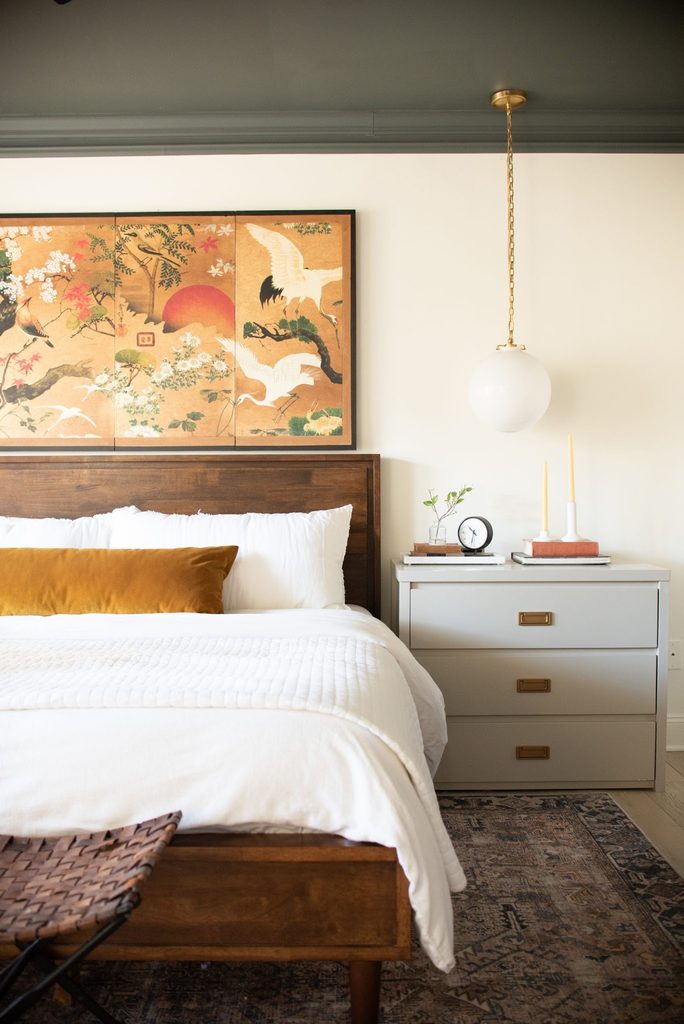
Credits: Cass / Cass Makes Home
A frosted globe hangs beside the bed on a slender gold chain, bringing a simple rounded shape into a room with substantial wooden furniture. Because the light is suspended, the nightstand retains space for books and everyday belongings.
The pale shade stands clearly against the cream wall, while its metal fittings relate to the drawer handles below. Plan the pendant location around the actual bed position and the way you reach across the table.
Check clearance when sitting up, opening drawers, and changing bedding. Choose suitable controls that are convenient from the mattress, and have electrical work handled appropriately.
The useful modern gesture is the clear separation between lighting and furniture, even when surrounding artwork and materials have older influences.
3. Pair Fine Grid Bedding With Sculptural Black Lines
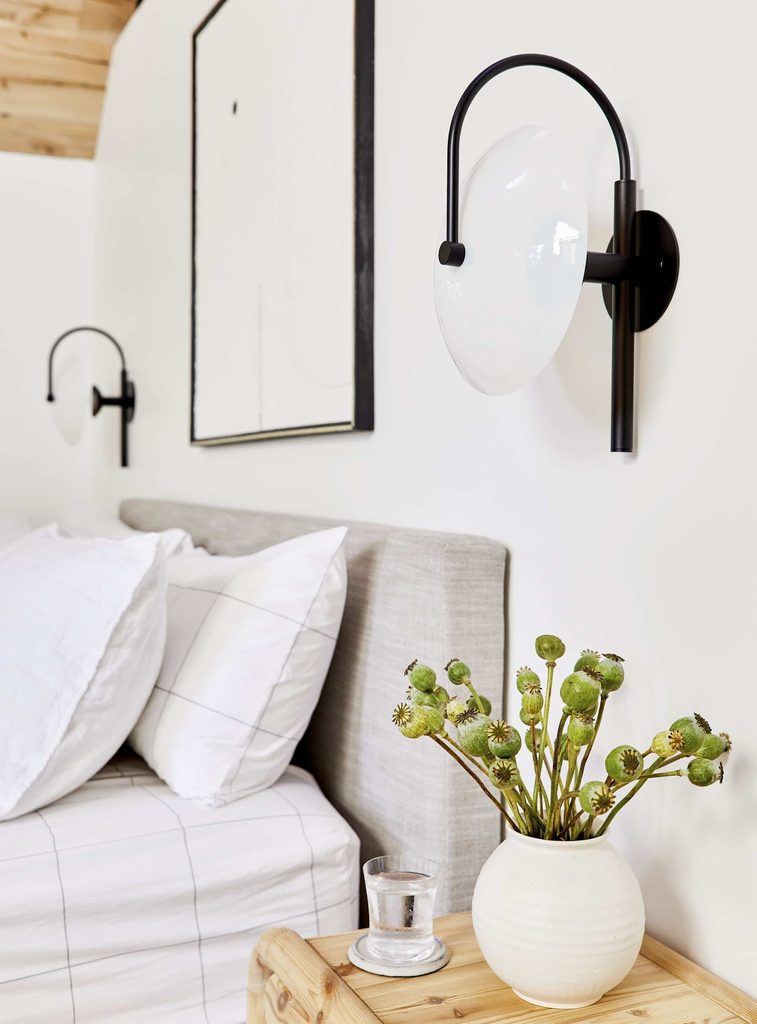
Credits: Sara Ligorria-Tramp / Emily Henderson
Thin gray lines across the white bedding introduce pattern without filling the room with a dense print. Black wall lights and a narrow picture frame repeat that linear quality at a stronger weight, giving the pale bedroom a clear structure.
The headboard stays softly textured, and the rounded vase prevents every element from becoming angular. When combining geometric details, vary their scale so they do not compete for the same attention.
A small grid can sit comfortably beneath larger, simpler outlines. Start with one patterned textile and assess it beside the existing furniture before adding more.
Warm wood at the bedside keeps the combination approachable. Space around the objects allows their different shapes and surfaces to remain easy to read.
4. Wrap a Simple Bed Frame in Blush Upholstery
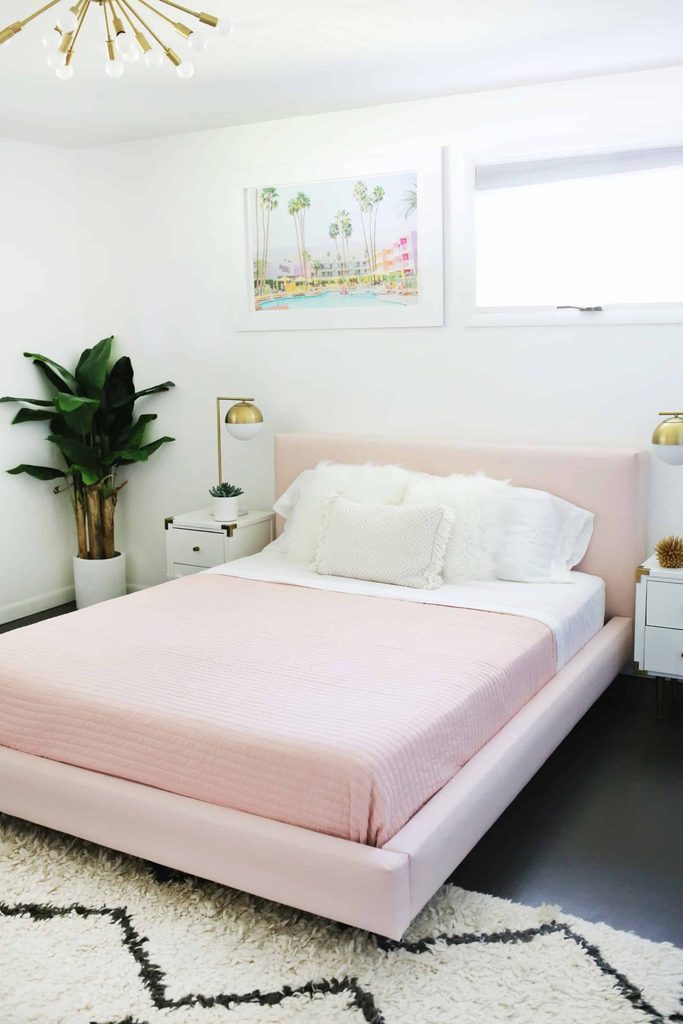
Credits: Laura Gummerman / A Beautiful Mess
Blush fabric covers both the headboard and the low rails, giving this bed a unified silhouette. White pillows soften the center, while the matching pink coverlet repeats the frame color without obscuring its shape.
The white walls leave room for the pale upholstery to register. This is a useful way to update a straightforward frame when its proportions still suit your bedroom.
Choose fabric for durability, cleaning requirements, and how it behaves around corners, rather than color alone. Compare samples with the floor and bedding in daylight.
Keep any refurbishment compatible with the frame’s assembly and mattress support. The fresh effect comes from carrying one finish consistently around an uncomplicated form, with small metallic lights adding definition at either side.
5. Let Black Paint Unify Walls and Flat Molding
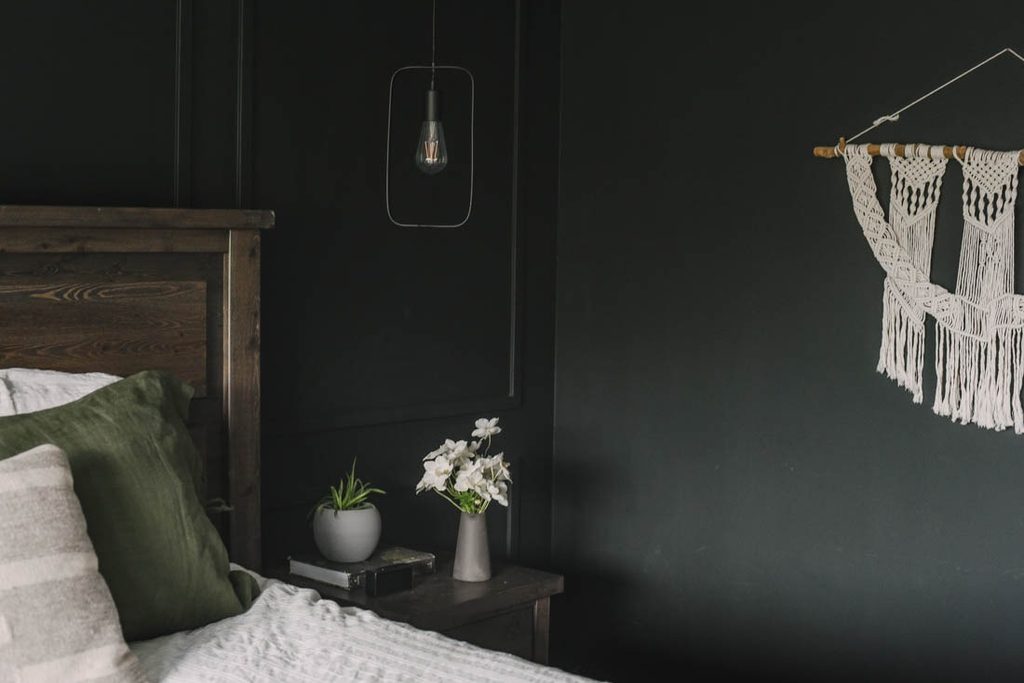
Credits: Colleen Pastoor / Lemon Thistle
Painting the wall and its flat trim the same deep shade creates detail through shallow shadows. The black surface in this bedroom stays quiet beside the wood headboard, while pale bedding and a woven hanging provide softer contrasts.
This approach suits a modern room that needs depth without several competing paint colors. Test a generous sample in daylight and under the lights you use at night.
Dark paint can reveal surface imperfections differently, so preparation matters as much as the chosen shade. Keep a few lighter surfaces visible to help separate furniture from the background.
The narrow pendant almost disappears into the wall, allowing the room’s tactile elements to stand out without making the arrangement depend on many decorative objects.
6. Use One Oversized Landscape as the Bed Wall Focus
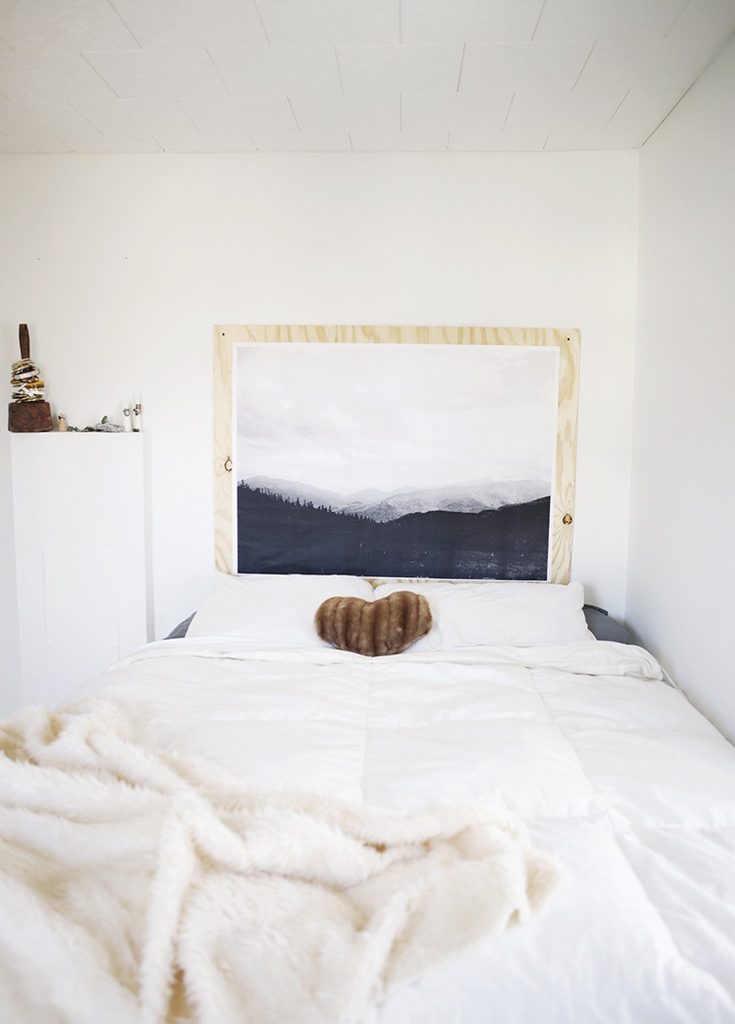
Credits: Caitlin / The Merrythought
A large monochrome landscape occupies the wall immediately above this bed, giving the narrow room a single clear focal point. The plywood backing adds a pale natural border that relates to the quiet white bedding.
Instead of spreading several small frames across the available space, one generous image creates a calmer arrangement. Measure the visible wall and compare a paper template with the bed before choosing artwork.
Check its position while sitting against the pillows, and use secure fixings appropriate to the piece and wall. The surrounding blank surface is important because it lets the mountain shapes remain legible.
Soft bedding brings comfort beneath the strong rectangle, showing how a pared back bedroom can still have warmth and personal character.
7. Combine Open Shelves With a Black Fireplace Wall
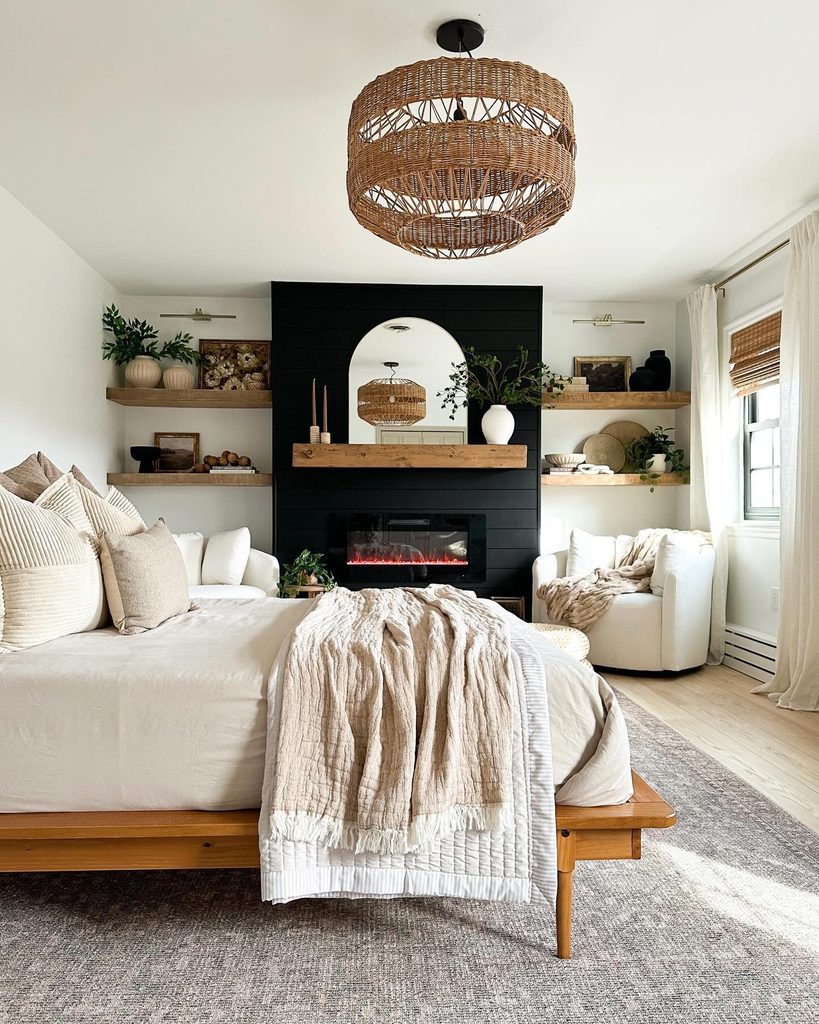
Credits: Instagram
Guests are not the only people who benefit from a bedroom with somewhere to pause. This room combines a black fireplace wall, open shelves, and a small pale chair, creating a focal area beyond the bed.
Natural-looking textures soften the dark central shape, while the shelves give collected objects a defined home. The design is useful as a planning reference rather than a fireplace installation guide.
Check the appliance’s required clearances, nearby fabrics, and suitable wall construction with an appropriate professional. If a fireplace is impractical, a dark painted section with carefully spaced shelves can provide a related visual effect.
Leave room between displayed objects so the wall retains its structure instead of becoming a dense background of competing accessories.
8. Conceal Drawers Within a Plain Wooden Platform
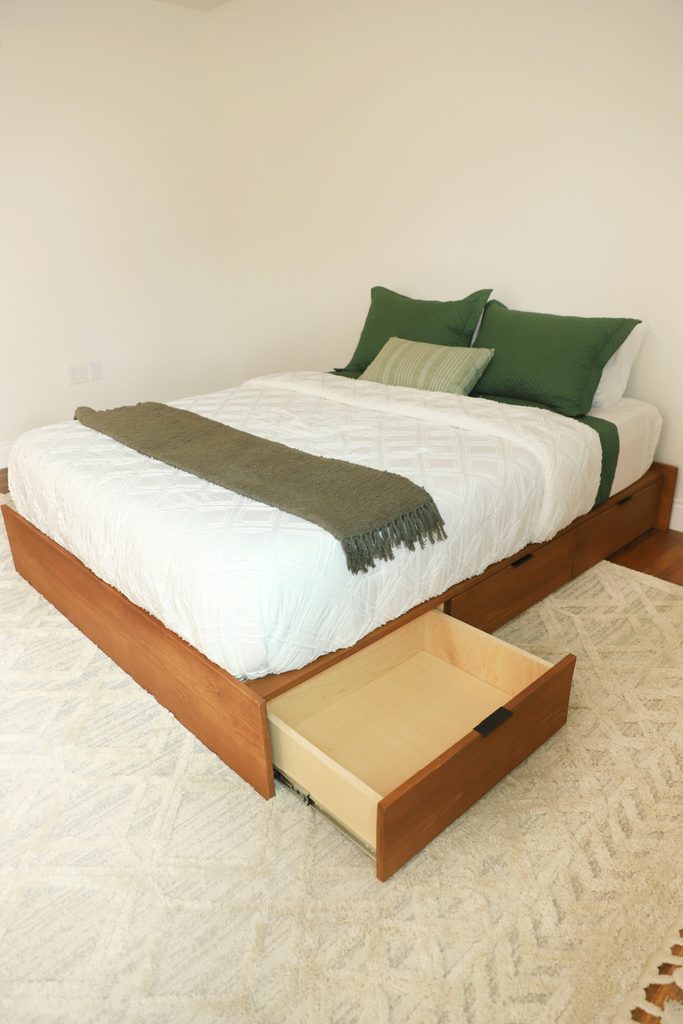
Credits: Shara / Woodshop Diaries
A simple wooden platform keeps this bedroom visually spare while incorporating drawers beneath the mattress. The open drawer reveals storage that becomes much less noticeable when its plain front sits flush with the surrounding frame.
This can be useful where a separate chest would crowd the room. Check the space needed to open every drawer before committing to the layout, including interference from rugs, bedside furniture, and doors.
Decide what you want to store so the internal dimensions match real belongings. The understated handles and continuous wood tone preserve the bed’s clean outline.
Pale bedding and green pillows add softness above it. Practical capacity works best when access is convenient enough that the hidden storage remains useful in everyday life.
9. Choose a Slender Canopy With Open Sides
Credits: 136home
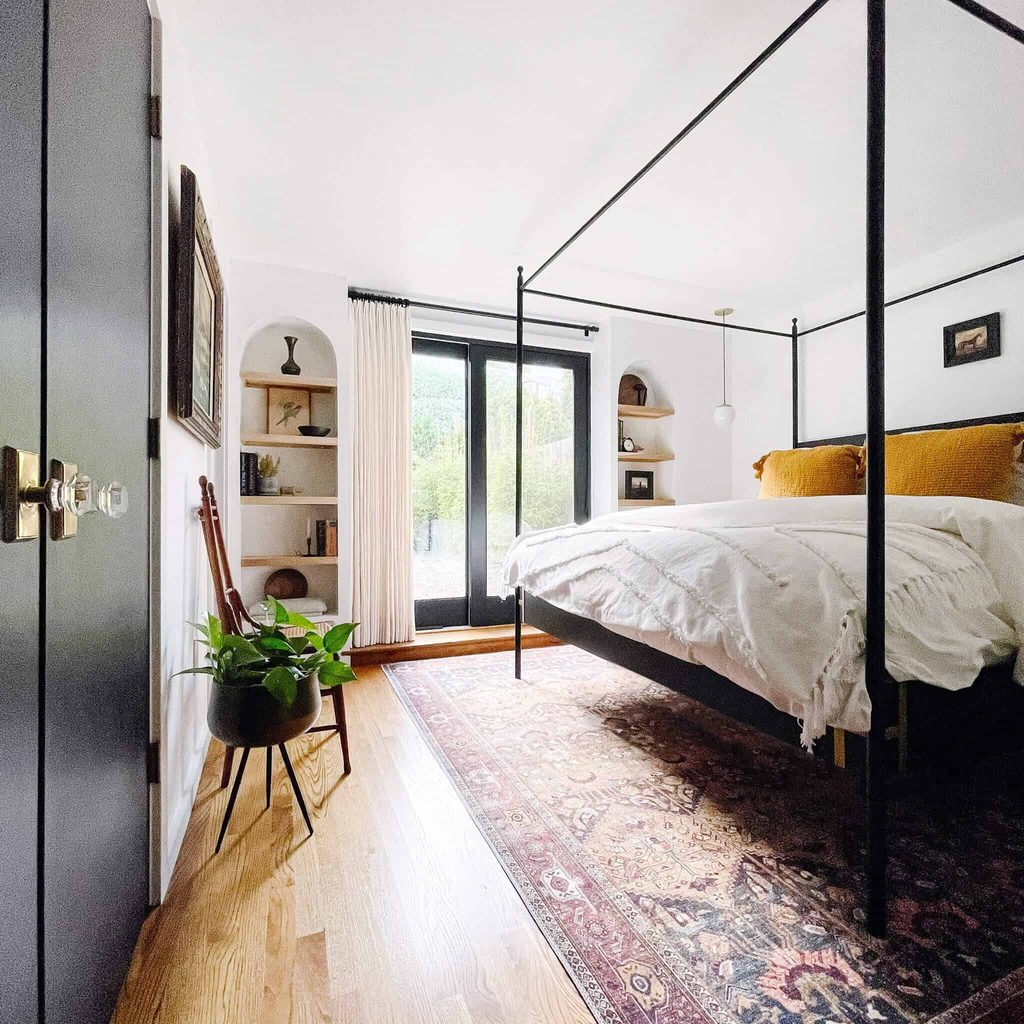
Thin black rails outline this canopy bed without concealing the walls or the glazed doors beyond it. The frame has a strong shape, but its open sides allow the small room’s light and architectural details to remain visible.
Cream curtains and textured bedding soften the metal outline, while warm floorboards prevent the palette from feeling severe. When considering a canopy, measure ceiling height as well as the width around the mattress.
Check how the upper rails relate to lights, curtain rods, and nearby openings. Leave the frame bare if fabric would make the room feel crowded.
Repeating its dark tone in a few existing details can connect the bed to the room without adding more large areas of black paint.
10. Fit a Painted Grid Beneath a Vaulted Ceiling
Credits: Sam Raimondi / DIY Huntress
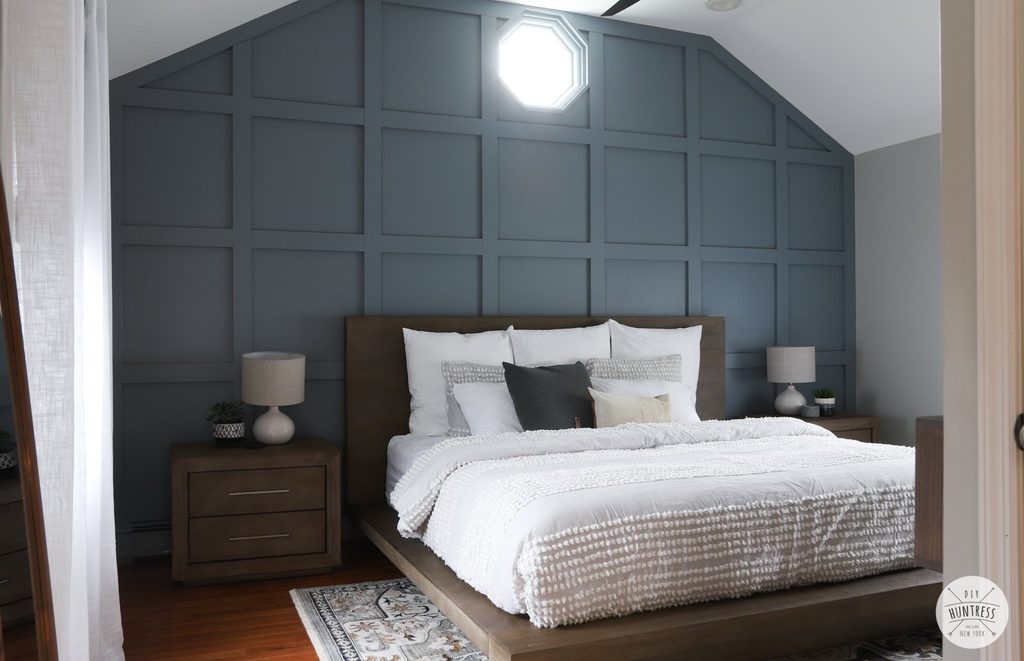
A grid of flat boards gives the tall wall behind this bed an orderly rhythm. The pattern continues beneath the sloping ceiling and around the high window, making those architectural features part of the composition.
Painting every section the same muted blue gray keeps the result cohesive. Before planning a similar treatment, draw the complete wall with its openings and furniture in place.
Adjust the spacing so awkward narrow panels do not appear at the edges. Keep the bedside pieces simpler when the wall already carries a strong pattern.
Here, plain wood furniture and pale textured bedding leave the geometry visible. The idea works through measured proportions rather than extra decoration, giving an unusual room shape a more deliberate finish.
11. Add Woven Cane to a Straight Edged Daybed
Credits: Kelly Mindell / Studio DIY
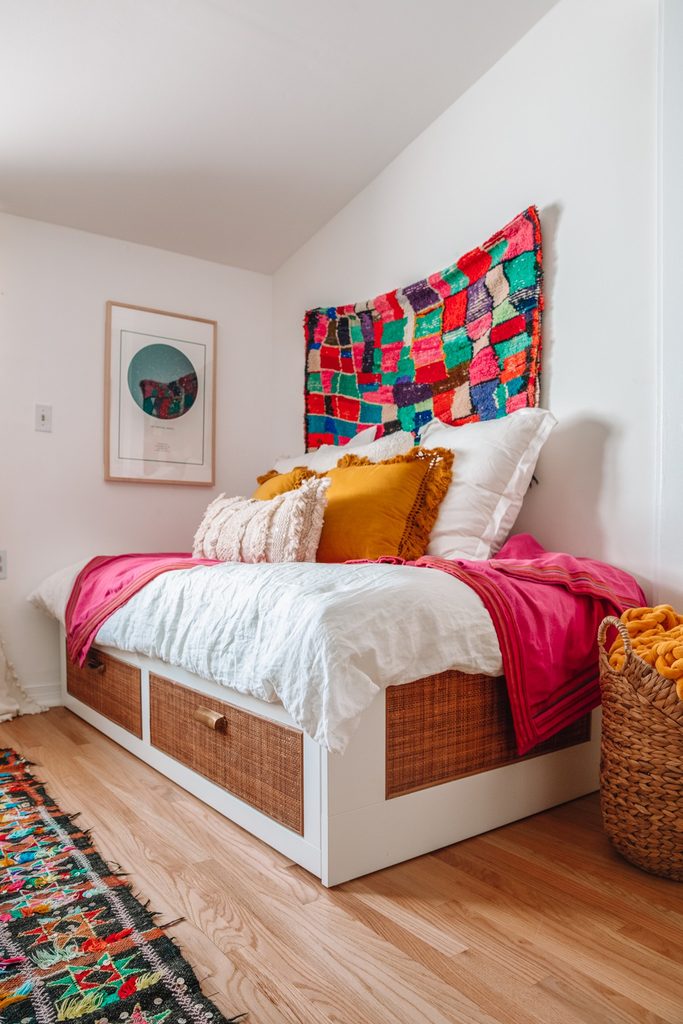
Woven cane panels bring a warm, fine texture to this daybed’s white frame. The repeated rectangles look orderly, while their natural tone connects with the wooden floor and basket nearby.
Bright textiles supply the room’s color without changing that quiet furniture foundation. Consider this balance when modern pieces feel too smooth or impersonal.
A small area of visible weave can make a substantial difference beside painted surfaces. If adapting existing furniture, use the creator’s project as a guide and confirm that changes do not weaken the structure or obstruct moving parts.
Keep the material away from damp conditions and follow its care requirements. The strongest effect comes from preserving a clear border around each panel so the texture reads distinctly.
12. Balance a High Window With a Matching Box Shelf
Credits: Laura Gummerman and Elsie Larson / A Beautiful Mess
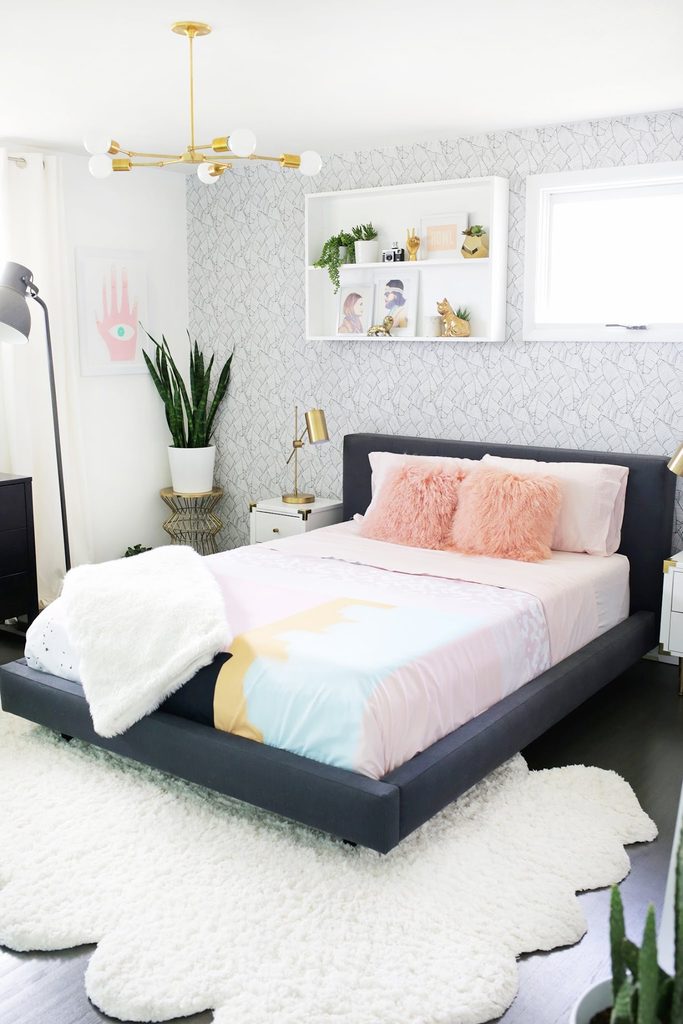
A white box shelf occupies the wall beside this bedroom’s high window, creating a second rectangle with similar proportions. That simple relationship helps the bed feel centered even though the opening sits to one side.
The shelf also gives small plants and personal objects a contained display area. Measure the window frame rather than the glass when planning a corresponding shape, and test the arrangement with a paper outline first.
Secure shelves and their contents carefully, especially above a sleeping area. Leave some empty space inside each compartment so the display does not become visually heavy.
Repeating white around both rectangles makes them feel related, while the patterned wall and dark bed provide enough contrast to keep their outlines visible.
13. Repeat Small Black Triangles Across a Pale Wall
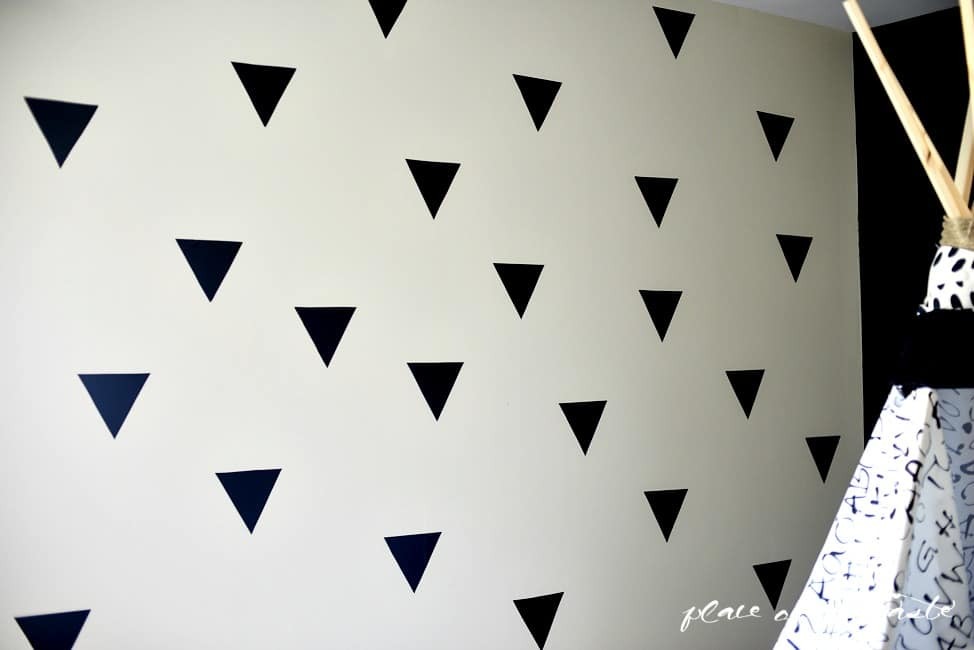
Credits: Aniko / Place of My Taste
Small black triangles turn a plain pale wall into a crisp geometric backdrop. Their consistent orientation creates order, while generous gaps keep the arrangement from becoming visually dense.
The creator used cut vinyl for this bedroom project, making it a useful alternative to a complicated painted pattern. Check that any adhesive product is suitable for your wall finish and test removal in an inconspicuous spot.
Plan the spacing with temporary paper shapes before attaching the pieces. A single repeated motif usually needs little additional decoration nearby.
Keep larger furniture forms uncomplicated so the wall remains readable. This detail view shows how even a modest graphic intervention can bring a contemporary note to a room without requiring new furniture or construction.
14. Paint One Large Circle Behind a Simple Headboard
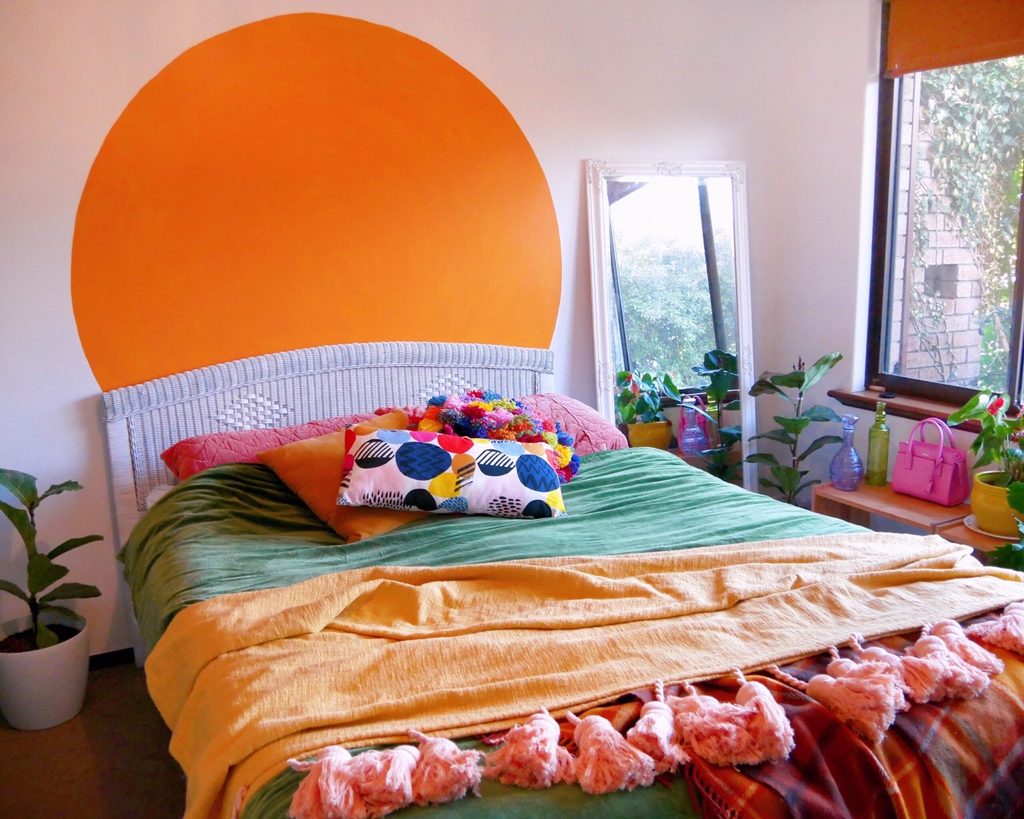
Credits: Kate Hannah / An Artful Life
An oversized orange circle gives this bedroom a clear graphic center above its white woven headboard. The shape is larger than the pillows, so it reads as part of the wall rather than another small accessory.
Green bedding and smaller warm accents connect the strong color with the rest of the room. Try a full size paper outline before painting, checking the circle from the doorway and from beside the bed.
Consider how much of it will remain visible behind your actual headboard. A single large shape can provide enough visual energy that additional wall art becomes unnecessary.
Keep its edge clean and its placement intentional. The surrounding pale wall gives the saturated color space to stand on its own.
15. Give a Charcoal Wall a Herringbone Wood Pattern
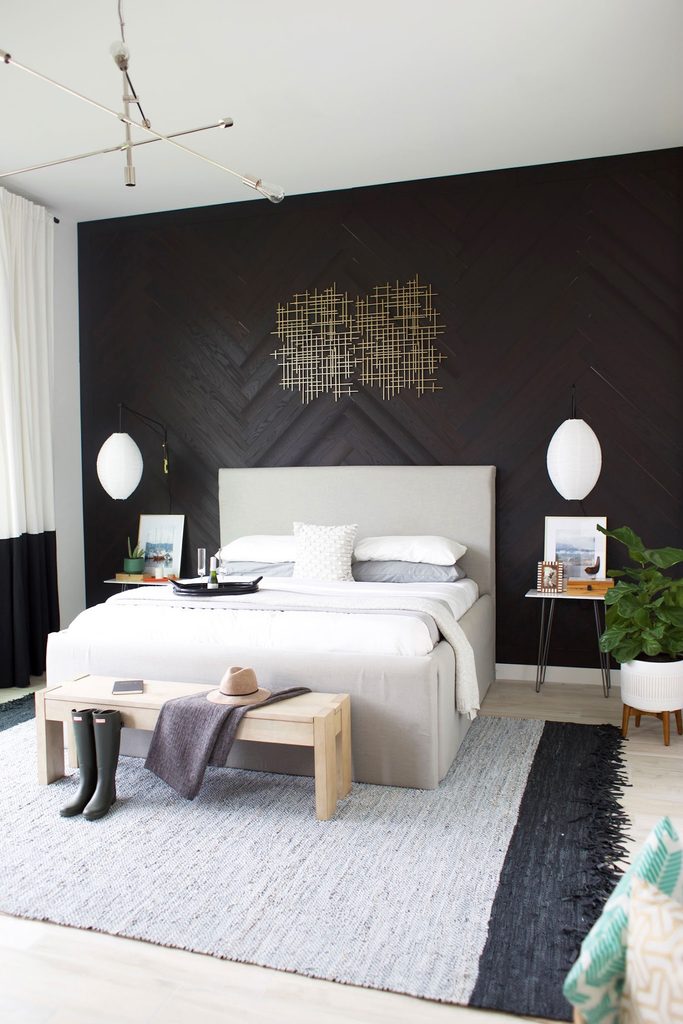
Credits: Kristi Murphy
Diagonal wood strips give this charcoal wall movement while retaining a restrained color. Their herringbone arrangement is visible through changes in grain and reflected light, rather than through contrasting finishes.
The pale bed and simple bedside tables let the wall remain the main architectural feature. Choose the scale of the pattern in relation to the whole wall, including its borders and the furniture that will cover the lower portion.
Examine material samples under side lighting, where texture becomes more noticeable. Follow the manufacturer’s preparation and installation requirements for the chosen cladding.
A lightly furnished foreground helps the pattern stay legible. This room demonstrates that a dark modern bedroom can gain detail through material direction without needing a busy printed wallpaper.
16. Slide Matching Storage Boxes Beneath an Open Bed
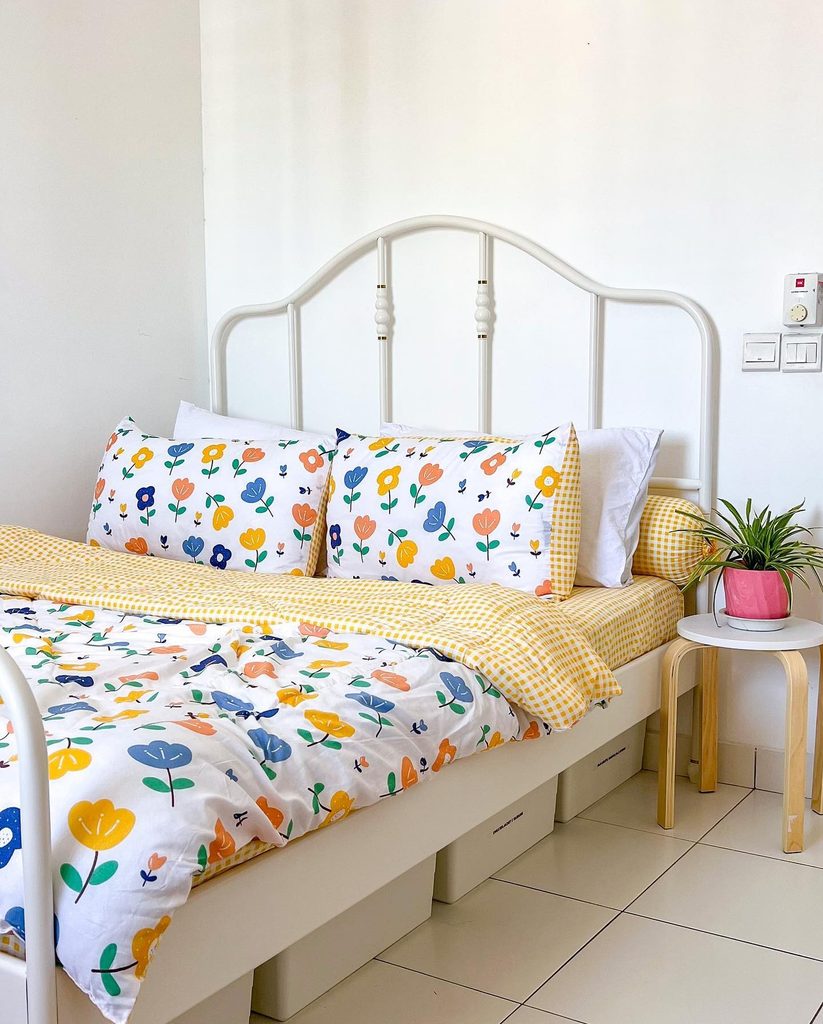
Credits: Instagram
Measure both underbed clearance and the space needed to pull containers out before investing in bedroom storage boxes. Handles, lids, and nearby furniture can all affect access.
In this room, matching pale containers tuck beneath an open bed frame, keeping occasional belongings together without introducing another cabinet. The creator identifies the boxes and describes using them for clothing that is not needed every day.
Group similar contents and label them discreetly so the arrangement stays useful after the first tidy-up. Consistent sizes create a calmer line along the floor than an assortment of unrelated containers.
Above them, cheerful patterned bedding remains the visual focus. The combination makes practical use of existing space while preserving the room’s light, uncluttered overall appearance.
17. Mix Oversized Florals With a Striped Bedside Rug
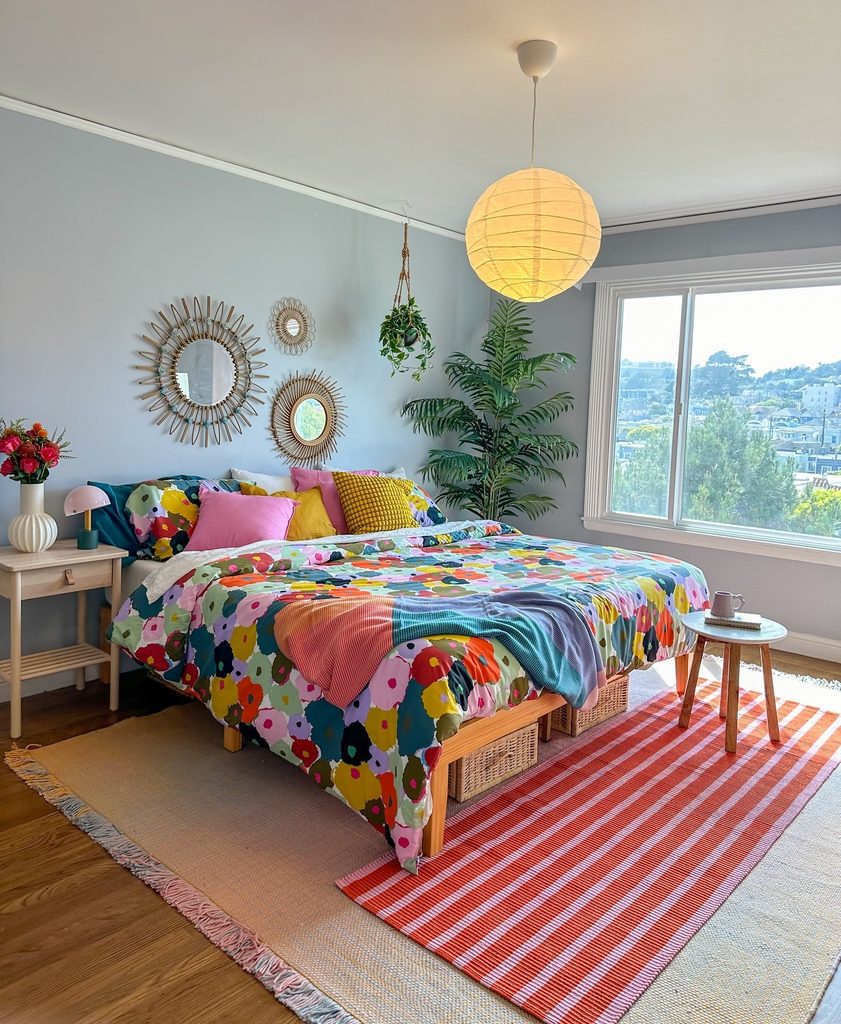
Credits: Instagram
Pattern mixing feels more deliberate when the repeats differ clearly in scale. Large painted-looking flowers cover this duvet, while narrow stripes run across the rug beside the bed.
Bright cushions repeat a few colors from the floral fabric, connecting the layers without using the same motif everywhere. If you want a lively modern bedroom, start with one dominant print and choose a simpler companion.
View the fabrics together before buying; two busy patterns of similar size can compete even when their colors match. Plain walls and uncomplicated wood furniture give this combination breathing room.
The bedside stool and lamp stay small, letting textiles carry the character. You can change the mood later without repainting or replacing the larger furniture pieces.
18. Stop Blush Paint Below a White Ceiling Band
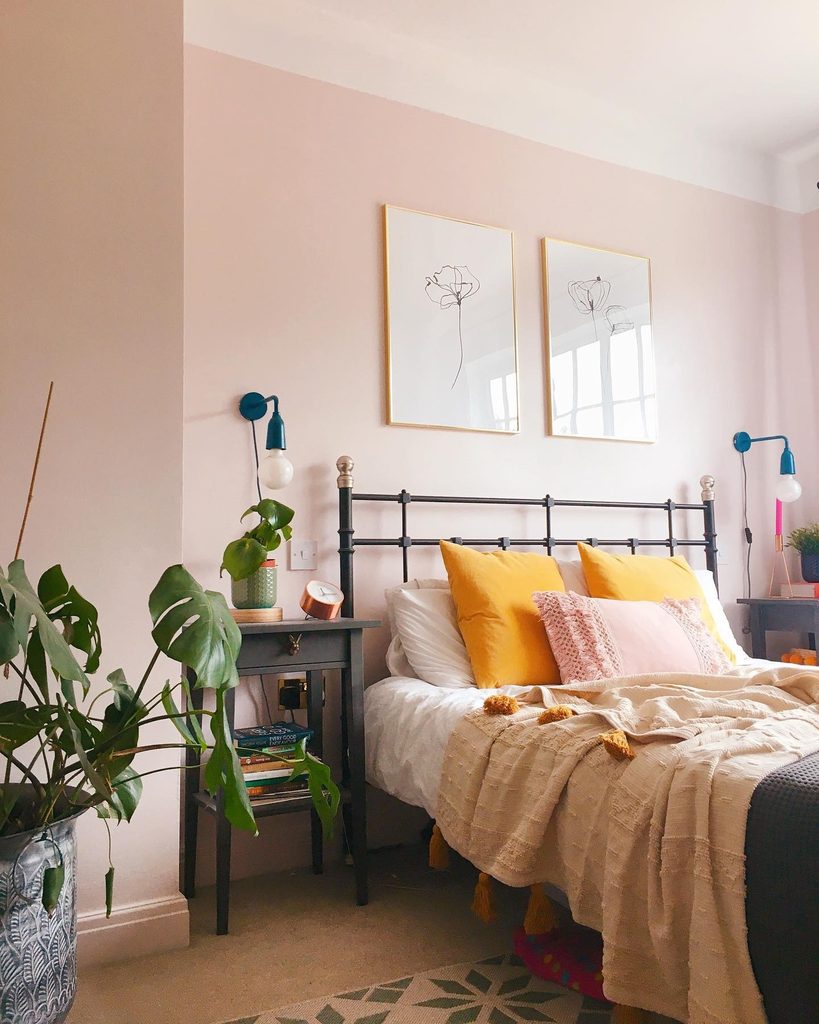
Credits: Instagram
Paint creates a clear horizontal boundary in this cheerful bedroom. Blush walls stop below a white band at the ceiling, making the color feel intentional while preserving a lighter upper edge.
Teal wall lights and yellow cushions add sharper accents around the simple dark bed frame. Mark the boundary carefully before painting and check how it meets door frames, corners, and adjoining walls.
A clean continuous line works best when it is planned as part of the whole room rather than judged from one photograph. Choose a couple of accent colors instead of repeating every bright object shown.
The wall treatment already contributes a strong graphic gesture, so relatively simple artwork and furniture will allow that decision to remain visible.
19. Extend Rich Upholstery Behind the Bedside Table
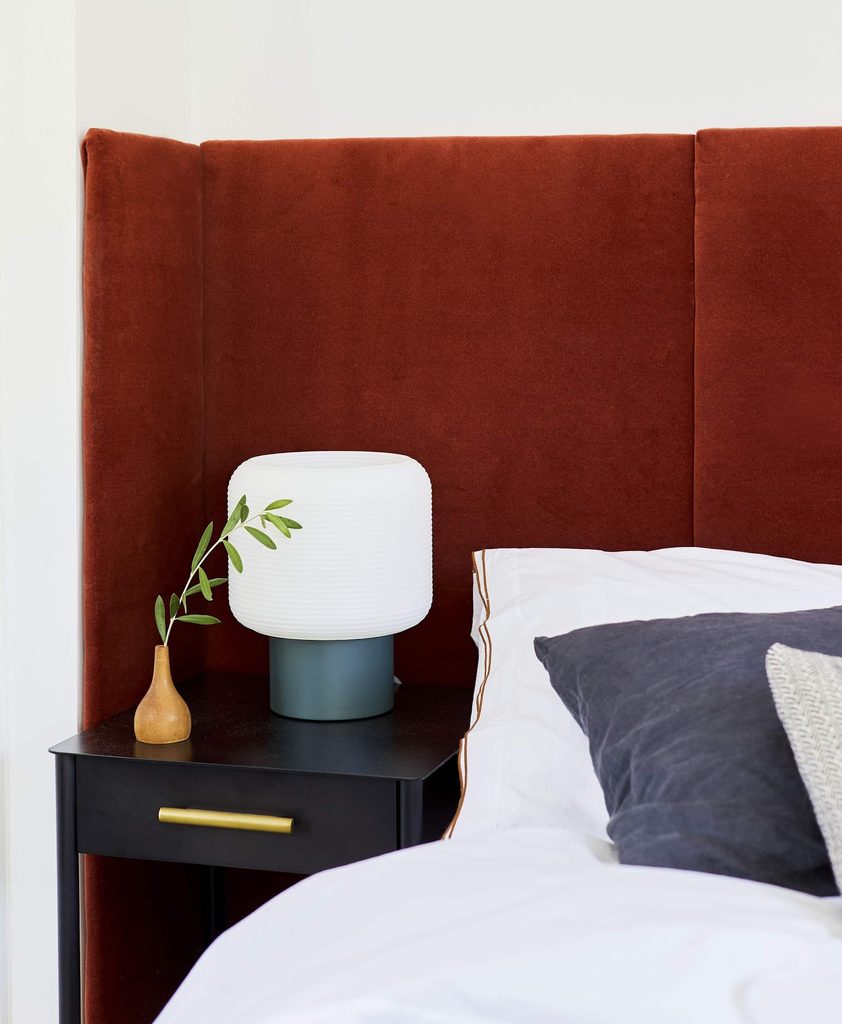
Credits: Sara Ligorria-Tramp / Emily Bowser for Emily Henderson
Rust colored upholstery continues beyond the pillows and behind a compact black nightstand, giving this bedroom a generous, continuous backdrop. The broad soft fabric panels bring warmth to the white wall while making the small furniture feel intentionally placed.
A rounded lamp and slender vase stand clearly against the rich color. Consider the full bedside arrangement when choosing a wide headboard, including switches, sockets, and how drawers will open.
Test fabric samples beside the bedding and any existing timber before deciding on a saturated shade. Keep nearby accessories limited so the upholstered surface remains visible.
The contrast between soft fabric, a simple dark table, and a pale lamp provides enough variety without requiring additional artwork directly above the sleeping area.
20. Break a Plywood Wall Into Unequal Rectangles
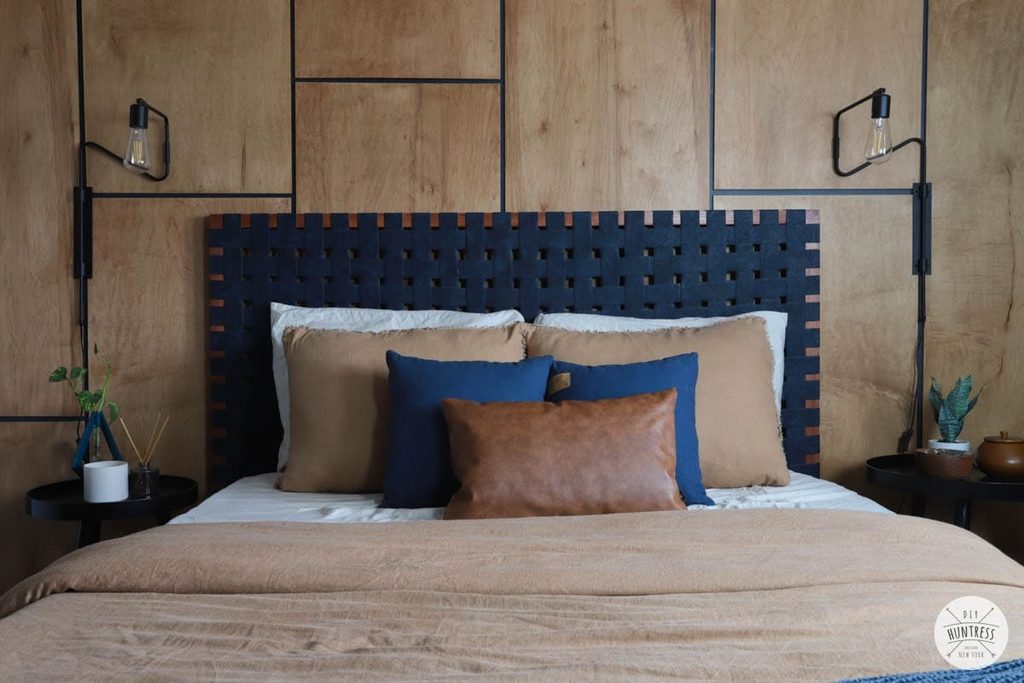
Credits: Sam Raimondi / DIY Huntress
Large plywood rectangles create a warm backdrop behind this dark woven headboard. Narrow dark lines divide the wall into an irregular grid, giving the wood grain a clear framework without making every panel identical.
Black lights and small round bedside tables repeat that outline, while tan bedding connects to the timber’s warmth. Plan the panel arrangement on paper before cutting, accounting for outlets, corners, and the height of the bed.
A varied layout still benefits from deliberate alignments and consistent gaps. Compare the wood finish with existing furniture to avoid an accidental clash of undertones.
Keep the surrounding textiles simple so the panel divisions remain apparent. The result combines natural variation with graphic structure, a useful balance for modern bedrooms.