
A family living room has to make room for play and everyday clutter without losing its comfortable, grown-up feel.
Kid Friendly Living Room Ideas can start with practical choices that also shape the layout, like tucking toy baskets behind a sofa or using a sectional to separate lounging from a play zone.
Other arrangements pair round ottomans with a craft corner or build storage along one wall. These examples show how seating, simple storage, and clear paths can help different activities share the same room.
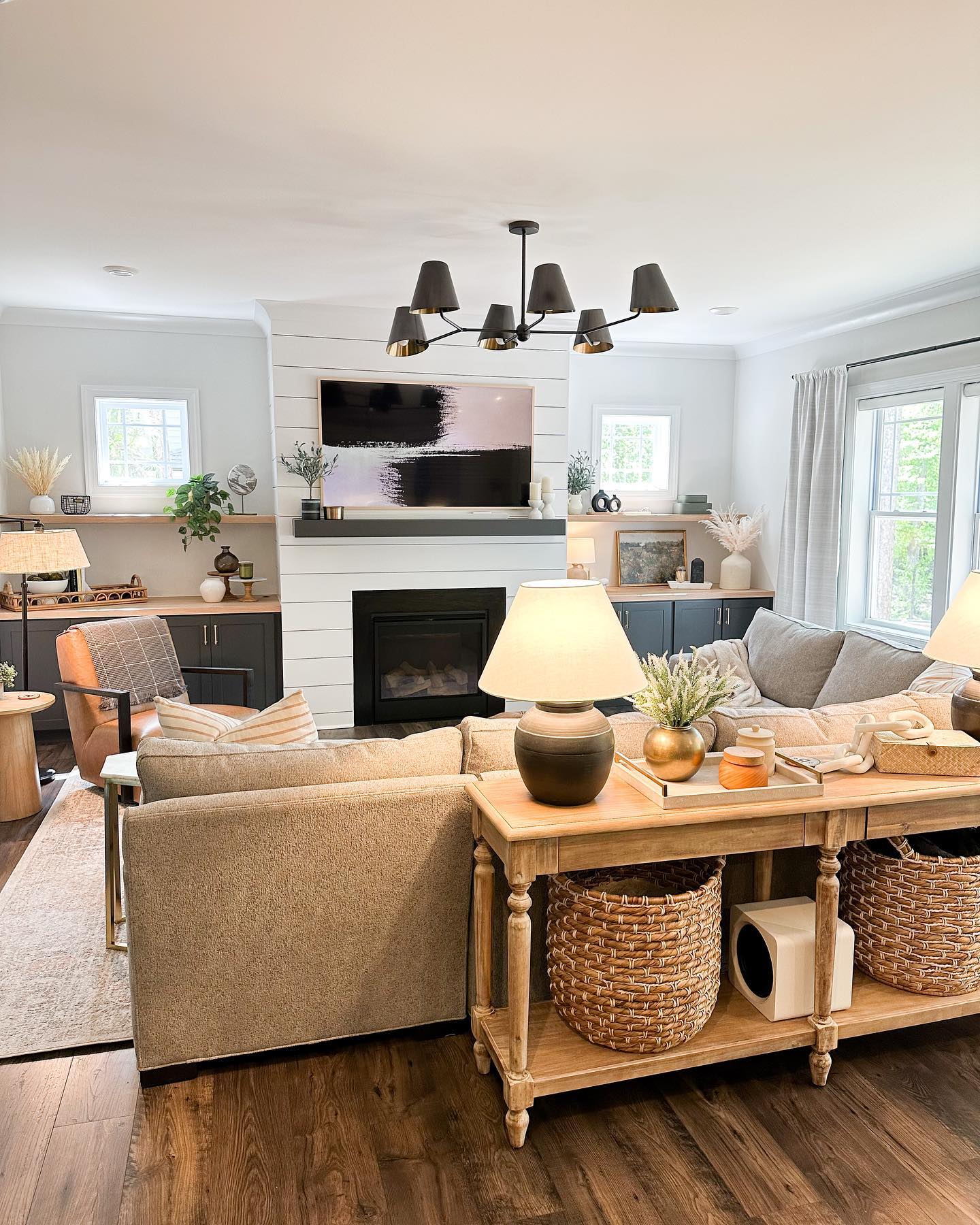
1. Put Toy Baskets Behind the Sofa
Credits: Instagram
A narrow console behind the sectional gives this family room a useful second layer. Two generous woven baskets occupy its lower shelf, keeping everyday pieces close to the seating without filling the main rug.
The sofa faces a fireplace framed by closed cabinets, so storage works on both sides of the gathering area. Repeat the idea with a console that fits comfortably behind your couch and baskets children can recognize at cleanup time.
Keep the tabletop simple, especially where little hands can reach it. Pale upholstery, warm wood, and a patterned rug connect the practical pieces to the rest of the room.
This arrangement makes particularly good use of a floating sofa whose back would otherwise face an empty walkway.
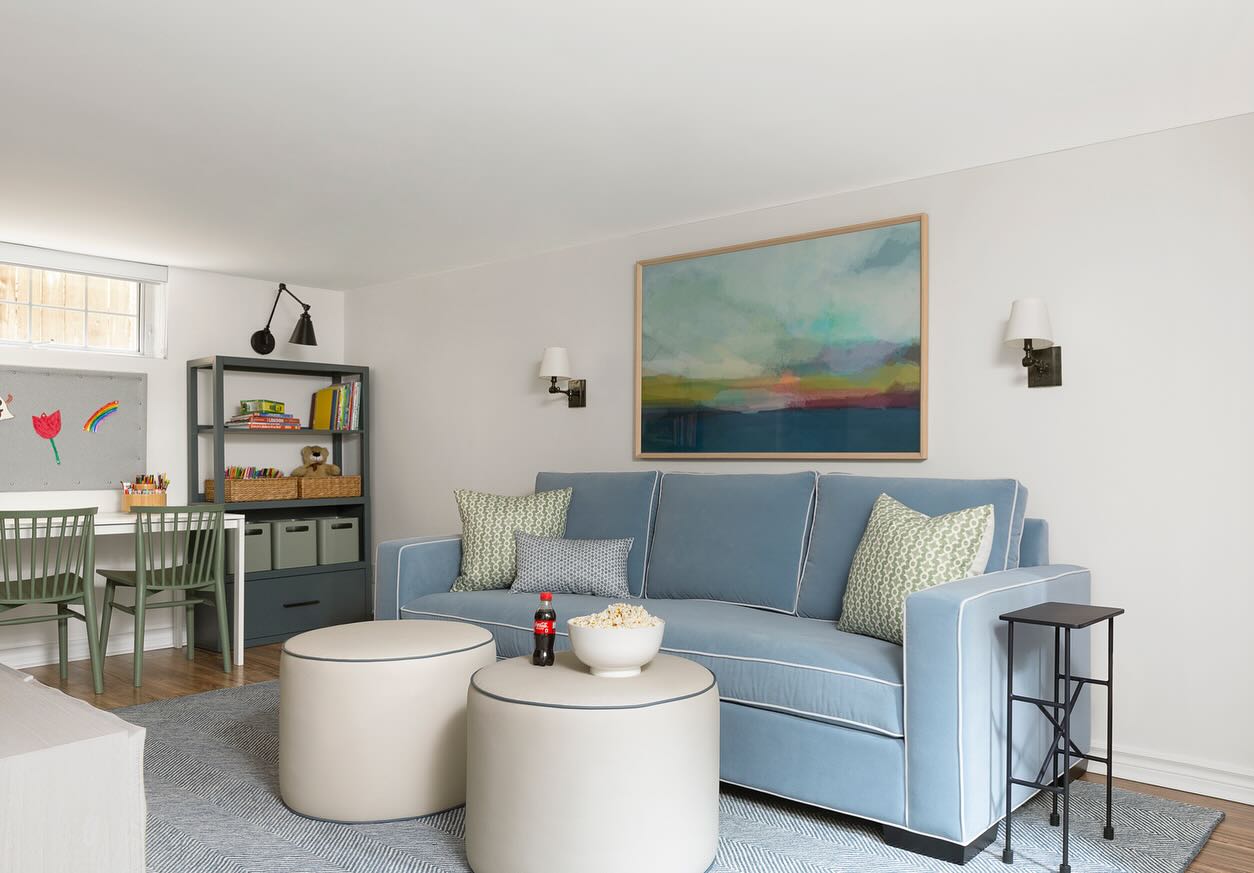
2. Pair Round Ottomans With a Craft Corner
Credits: Instagram
Two round upholstered ottomans sit in front of a powder blue sofa, creating a soft visual center for this bright family room.
Their compact footprints leave room around the seating, while a small table and green chairs establish a separate activity spot behind it. A nearby shelf holds neatly grouped bins, giving the craft corner a clear place for supplies.
Borrow the layout by matching the scale of your ottomans to the sofa and keeping the route between both zones open.
The blue upholstery and landscape artwork lend the adult seating a calm identity, while the green chairs introduce gentle color. Wall sconces also free the sofa's side surfaces for whatever the family happens to be doing throughout the day.
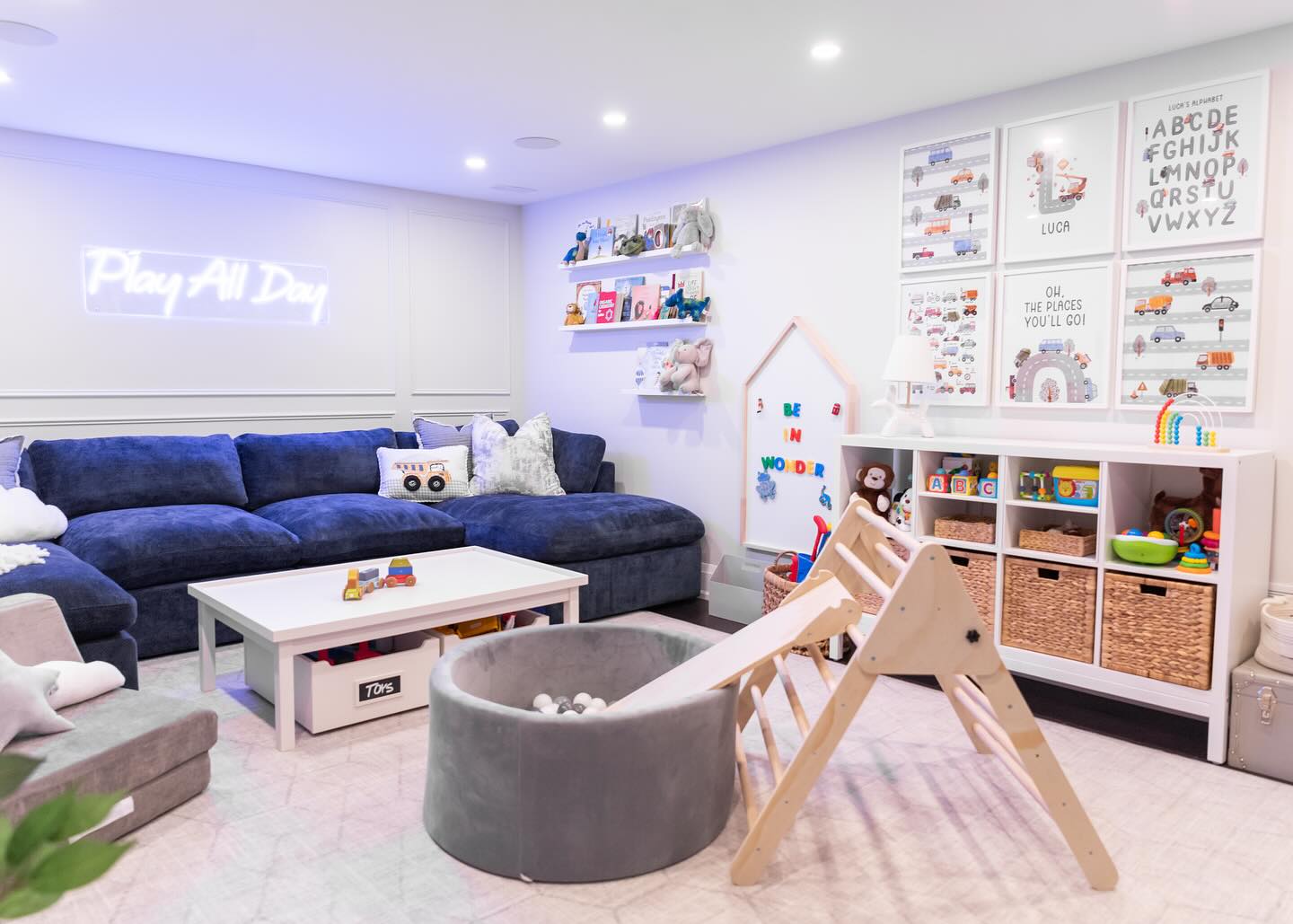
3. Let the Sectional Share the Play Zone
Credits: Instagram
A deep blue sectional wraps around the back of this shared lounge, leaving the foreground available for play. Low cubbies organize toys beside the seating, and woven baskets give smaller items a defined home.
The climbing structure and round ball pit make the room's purpose clear, while framed prints and a large pale rug bring the different activities together.
For a similar arrangement, start with the adult seating, then map out distinct places for the play equipment your family actually uses. Leave space to move between each activity and follow the equipment's placement guidance.
A low table near the sofa supports quieter projects and shared games. Repeating white storage throughout helps the busy room feel coordinated without hiding its personality.
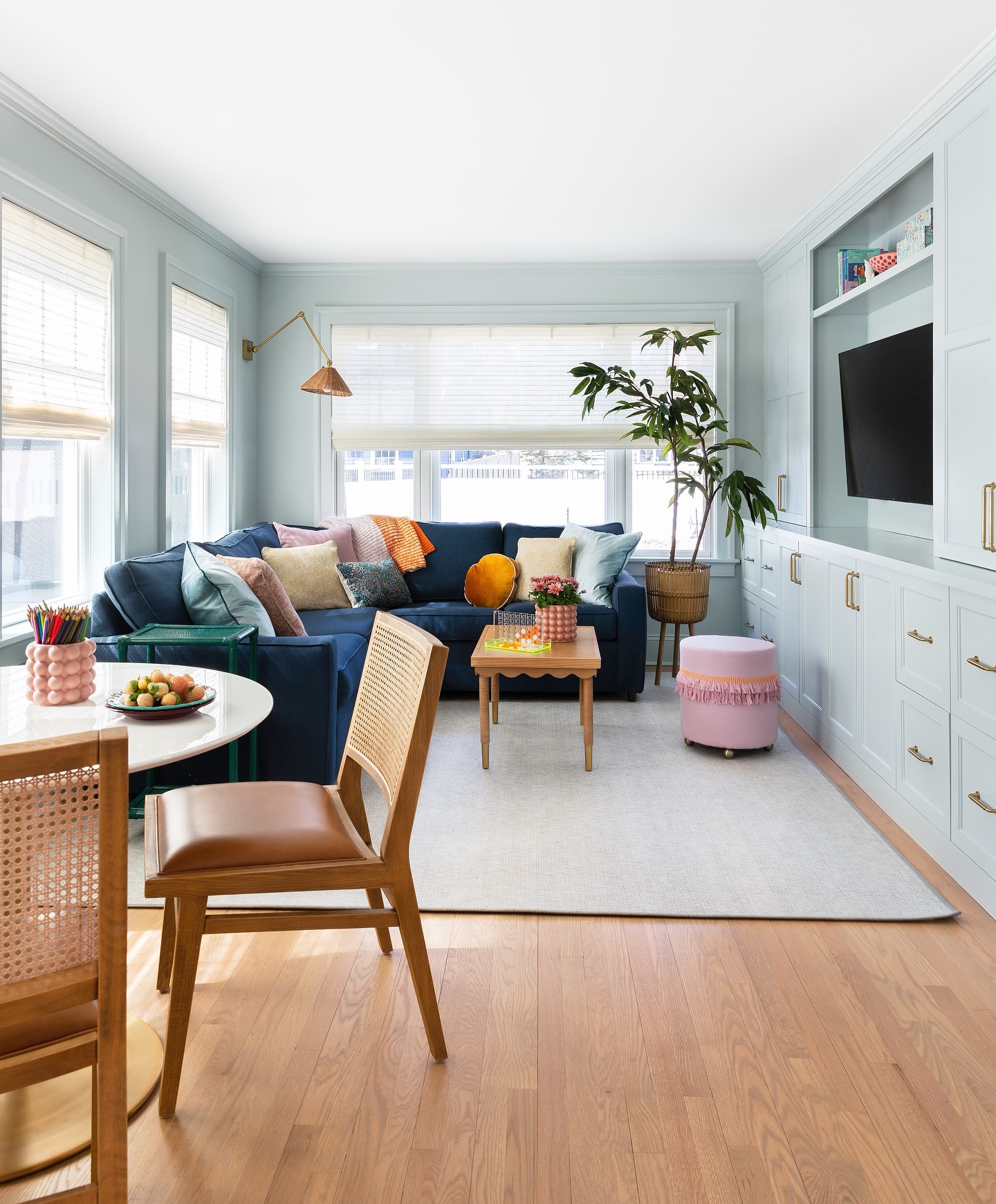
4. Build Storage Along One Living Room Wall
Credits: Instagram
Closed cabinets run beneath the television in this sunny room, creating a long stretch of storage opposite the blue sectional.
A pale rug defines the lounge without covering the entire wood floor, and the open strip beside it makes the room's length easy to understand.
At the near end, a round table offers another place for drawing or games. The cabinetry's light finish blends into the walls, while small open shelves leave space for books and favorite objects.
Take inspiration from that balance: conceal loose supplies in lower cupboards and reserve visible shelves for a few intentional displays.
A small pink ottoman adds flexible seating, and cheerful pillows prevent the practical layout from feeling overly restrained or uniform for families.
5. Use a Sectional to Define Shared Space
Credits: Instagram
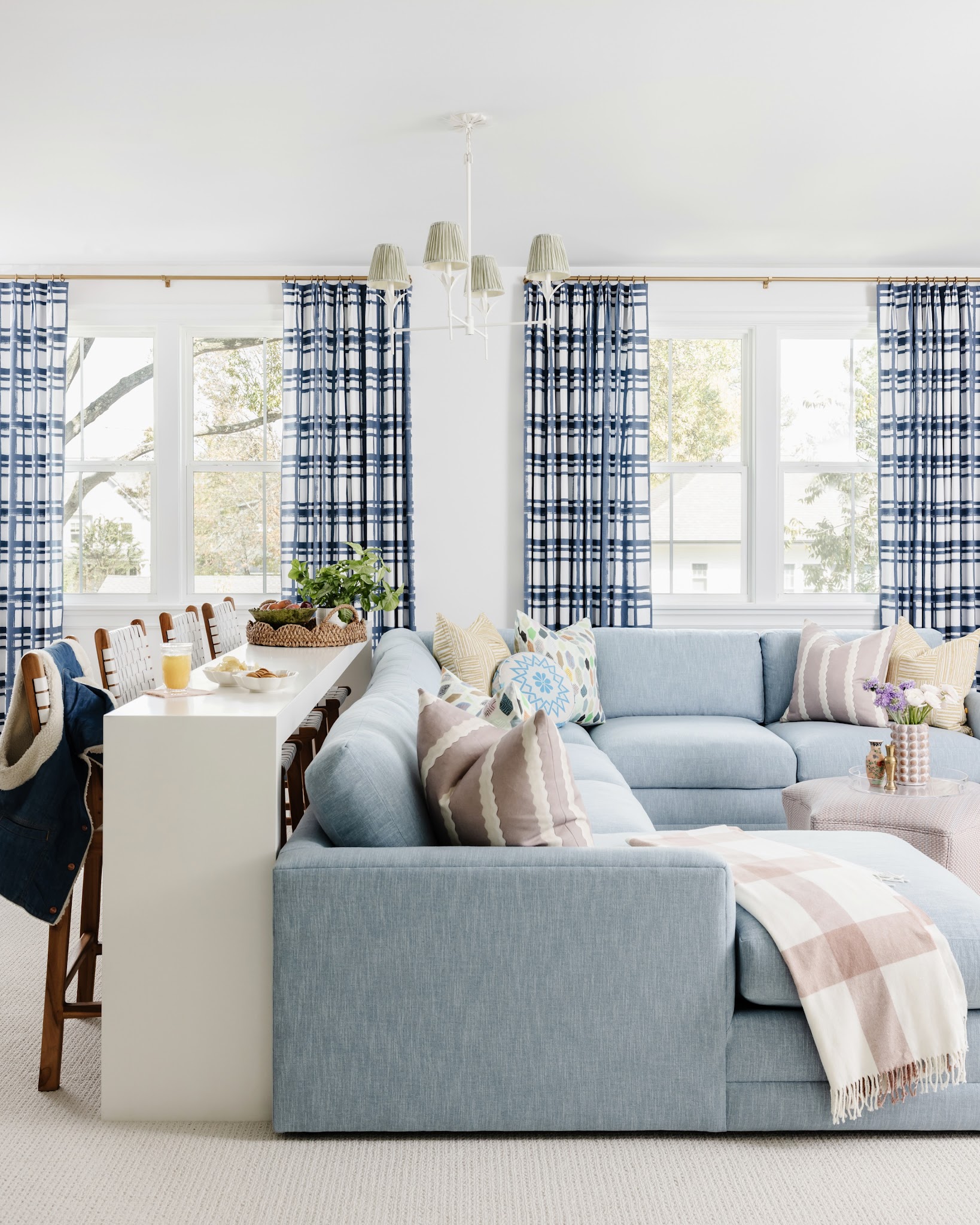
A pale blue sectional gives this open room a clear lounging area while a dining table sits immediately behind it. The sofa's broad back acts as a simple boundary, allowing both activities to share the same bright space.
Blue checked curtains repeat the upholstery color, and varied pillows soften the substantial seating. This is a useful arrangement when homework, meals, and movie time all happen nearby.
Begin by measuring the space needed to pull out dining chairs, then position the sectional so both areas remain comfortable to use. Keep the furniture colors related without matching every pattern.
A restrained palette helps a large sofa feel integrated, while the windows and light floor preserve an airy atmosphere around the gathering zones.
6. Choose a Slim Upholstered Centerpiece
Credits: Instagram
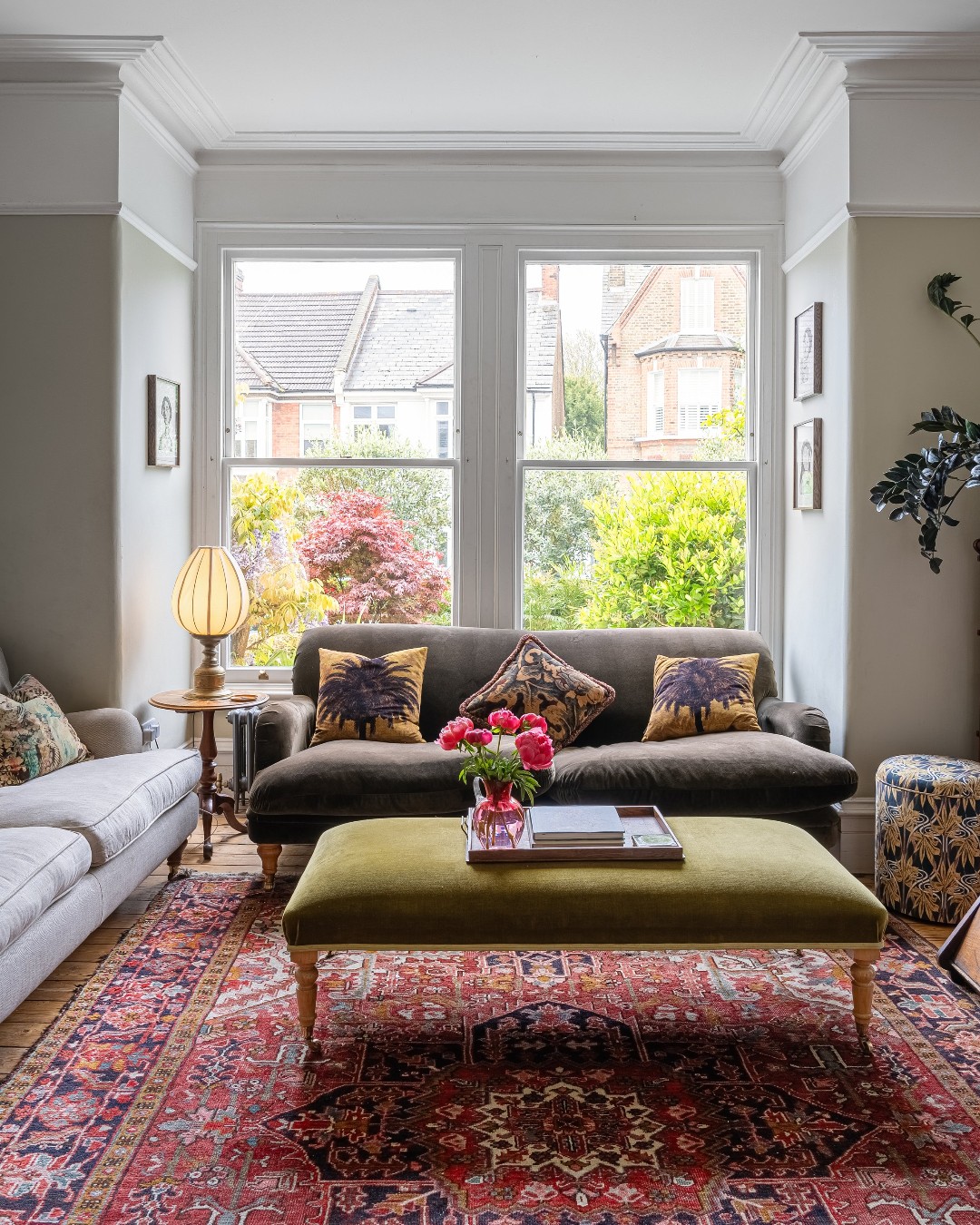
An elongated green ottoman sits between the sofas in this welcoming living room, offering a generous upholstered surface without a bulky base. Its narrow legs reveal more of the richly patterned rug underneath.
Two sofas face into the space from adjoining walls, creating an intimate setting for conversation, reading, or a family game. The room also shows how older furniture and collected patterns can live comfortably with a practical layout.
Borrow the proportions before copying the colors: leave enough room beside the ottoman for everyone to pass through easily. Use a tray when you need a level surface, then remove it for lounging.
Floral cushions, warm lighting, and the leafy view make the room feel layered, relaxed, and warmly personal.
7. Soften the Room With Curved Seating
Credits: Instagram
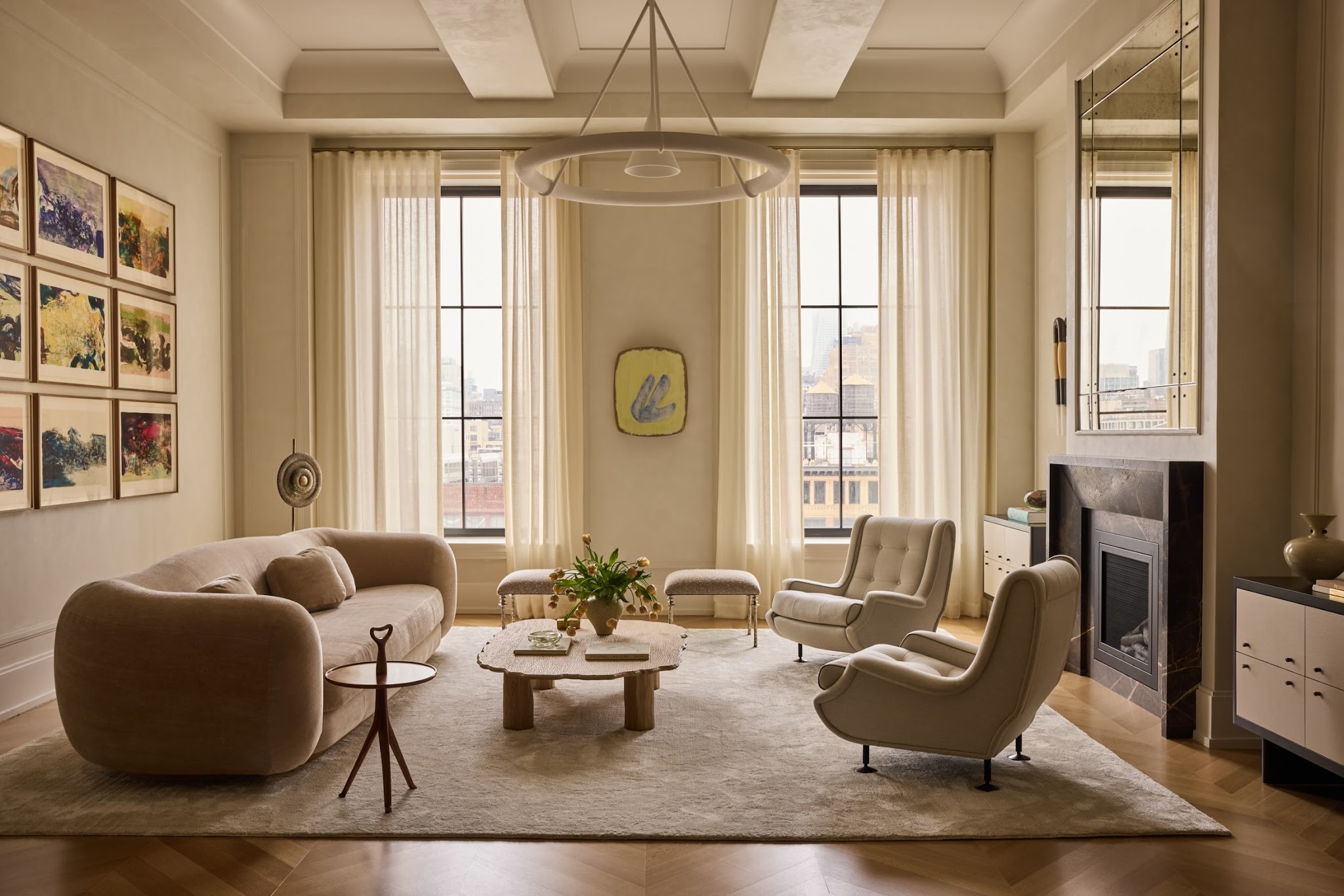
Rounded furniture gives this living room a gentle rhythm without filling it with extra accessories. The curved sofa, cushioned lounge chairs, and scalloped coffee table gather on one large rug, leaving clear space around the seating group.
That arrangement offers a useful starting point for a family room that also needs to welcome guests. Choose comfortable pieces with dimensions suited to the room, then keep their edges away from the main walking route.
The photograph's neutral colors allow several different shapes to work together, while a gallery of pictures adds personality above the sofa. A small stool supplies another flexible perch.
Practical family adaptations can follow the same restrained approach, with everyday toys stored nearby and tabletop decorations kept minimal.
8. Add a Game Table Beyond the Sofa
Credits: Instagram
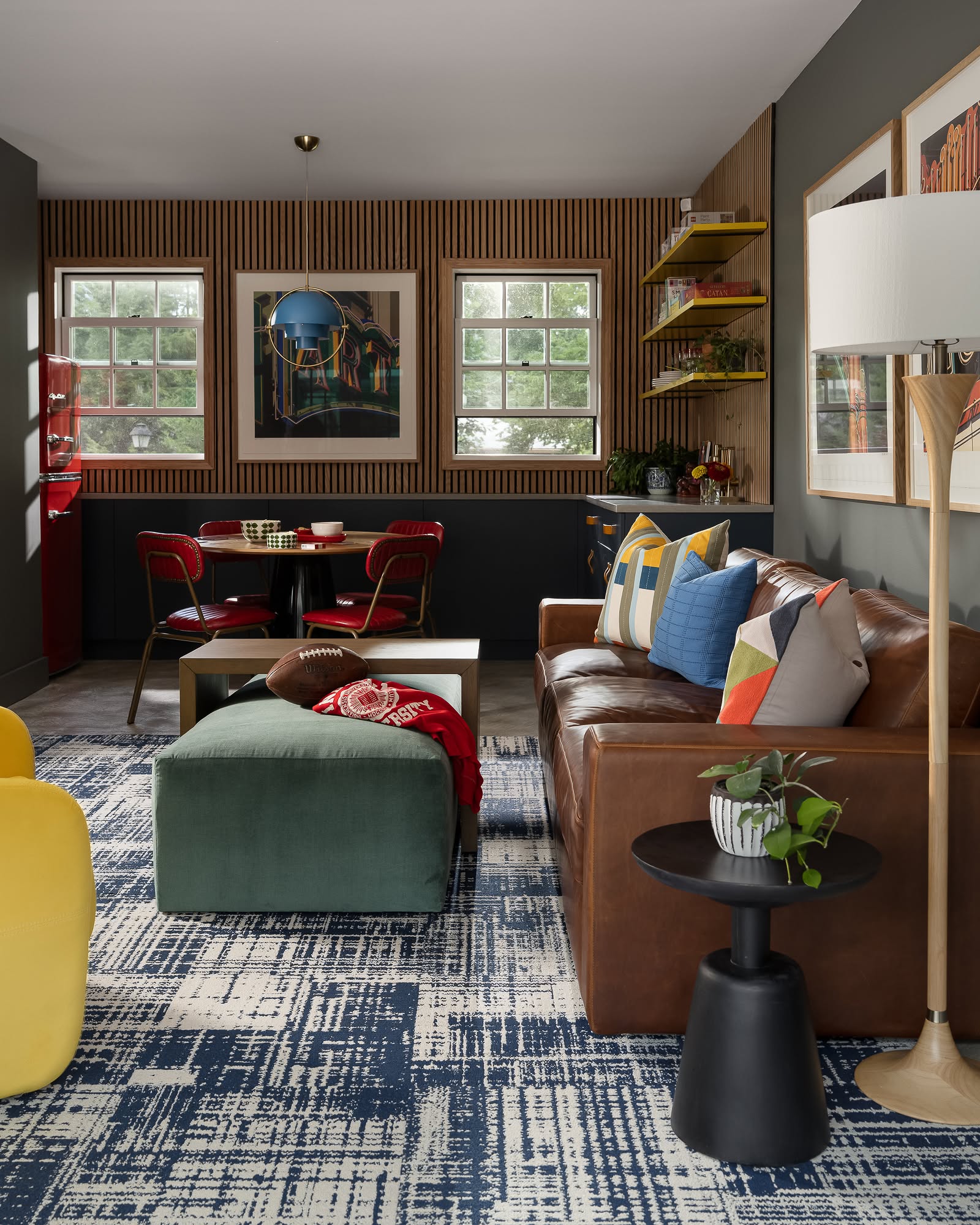
A brown sofa and green ottoman anchor the lounge, while a small round table creates a second gathering spot near the windows. Red chairs make that corner easy to distinguish from the main seating.
Blue cabinets and bright yellow shelves give the back wall useful storage without adding another piece in the walkway. Adapt this idea for board games, puzzles, or drawing when your living room has a little extra depth.
Keep the activity table close enough for conversation but outside the main route through the room. A patterned rug brings the seating colors together, and the ottoman provides an upholstered centerpiece.
The combination feels lively and welcoming while giving different family activities their own places within the shared room.
9. Give a Small Family Nook Grown-Up Style
Credits: Instagram
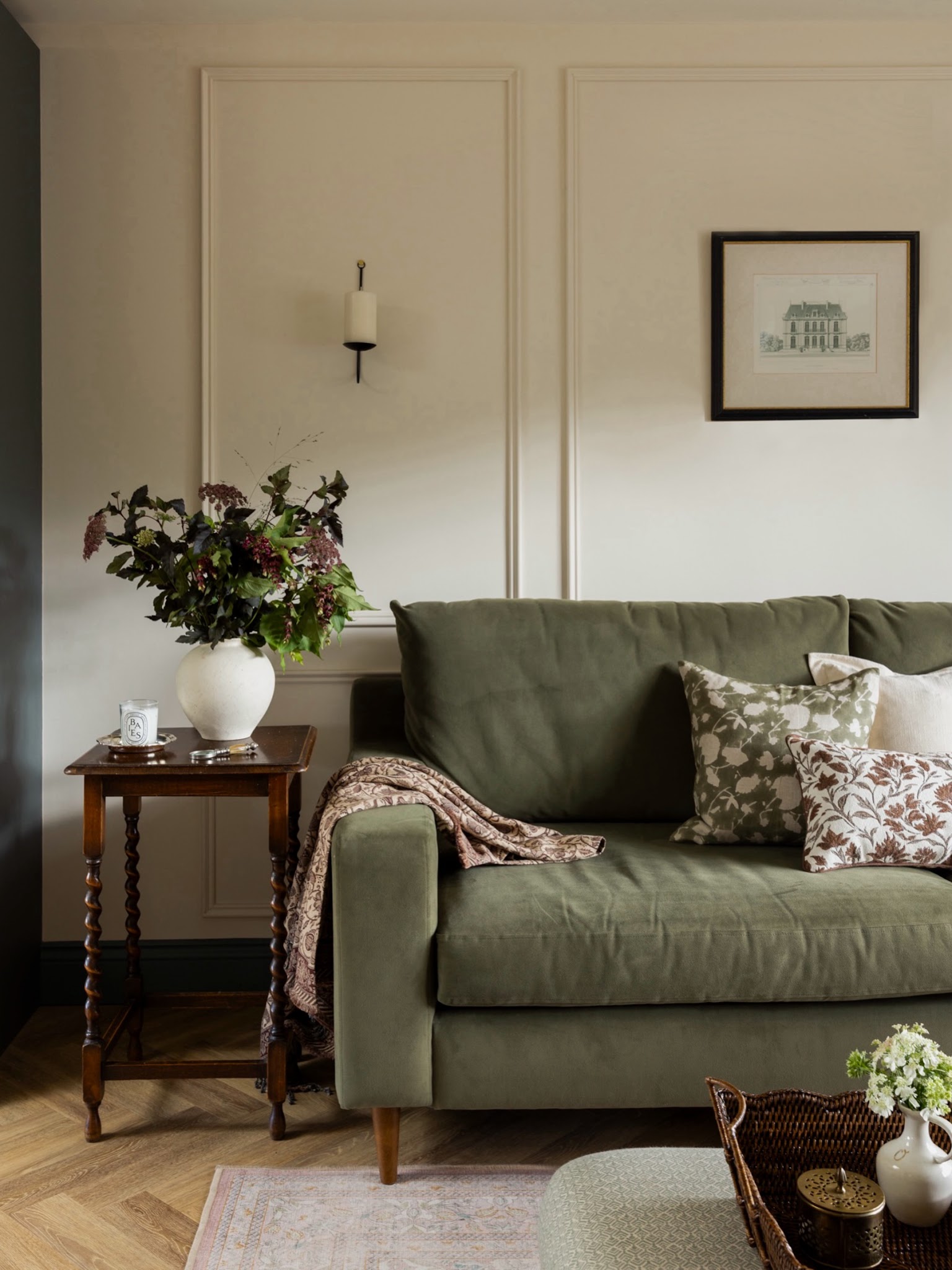
An olive green sofa, pale paneled walls, and a compact side table give this family nook a settled, inviting character. The room does not rely on bright primary colors to welcome children.
Instead, comfortable seating and simple furniture proportions make the space easy to imagine using throughout the day. A patterned pillow and relaxed throw add softness without crowding the sofa.
When borrowing this approach, choose a fabric whose care instructions suit your household and leave the seating clear enough for reading together. Keep breakable tabletop decorations out of reach when adapting the styling for younger children.
A single framed picture and small wall light provide interest above the furniture, preserving the room's footprint for daily family use and relaxation.
10. Divide a Family Snug With Sliding Screens
Credits: Instagram
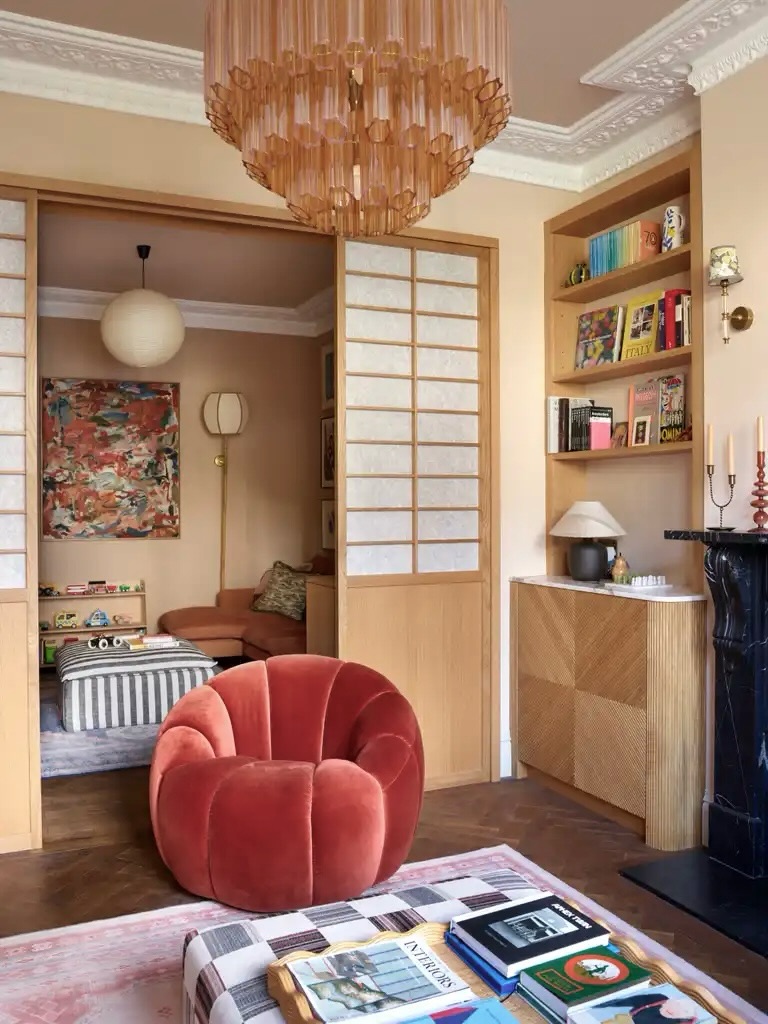
Wood framed screens distinguish the quieter section of this living room while allowing the two seating areas to remain visually connected. Their pale panels soften the transition beside a rounded rust chair and built-in shelving.
Closed lower cabinets provide a place to put everyday belongings away, while books add character above. This approach can help a long reception room support several activities without filling its center with extra furniture.
Consider how a divider opens, closes, and affects circulation before planning a similar feature. The photograph also offers a smaller idea: repeat warm wood tones across storage and partitions so practical additions feel intentional.
Cushioned seating and a layered rug complete a family snug that feels connected to the living area.
11. Keep a Low Sofa Beside Open Toy Shelves
Credits: Instagram
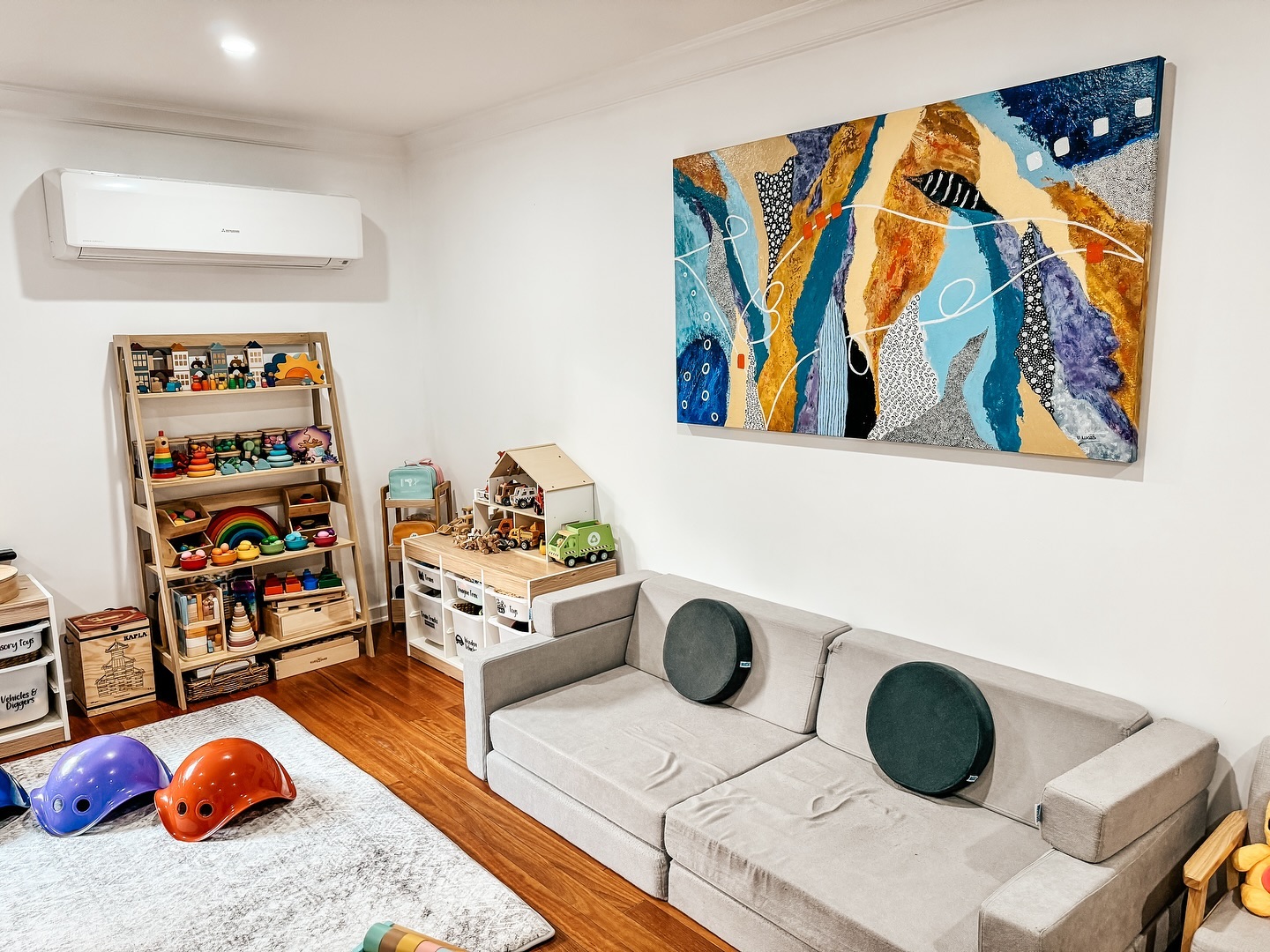
A low gray sofa gives this play-focused living area a place to pause without interrupting the surrounding activity space. Its broad cushions sit beside accessible toy shelves and a small set of bins.
The rug leaves an inviting center for floor activities, while a colorful abstract painting makes the seating feel like part of the home.
Try this arrangement when toys naturally migrate into the lounge: group storage close to the floor and position comfortable seating along the wall. Select only the toys you want available, then give each group a consistent place to return.
Green circular pillows echo the room's playful shapes. The result is a straightforward shared area where resting, reading, and playing can happen side by side.
12. Mix Lounge Seating With Soft Floor Perches
Credits: Instagram
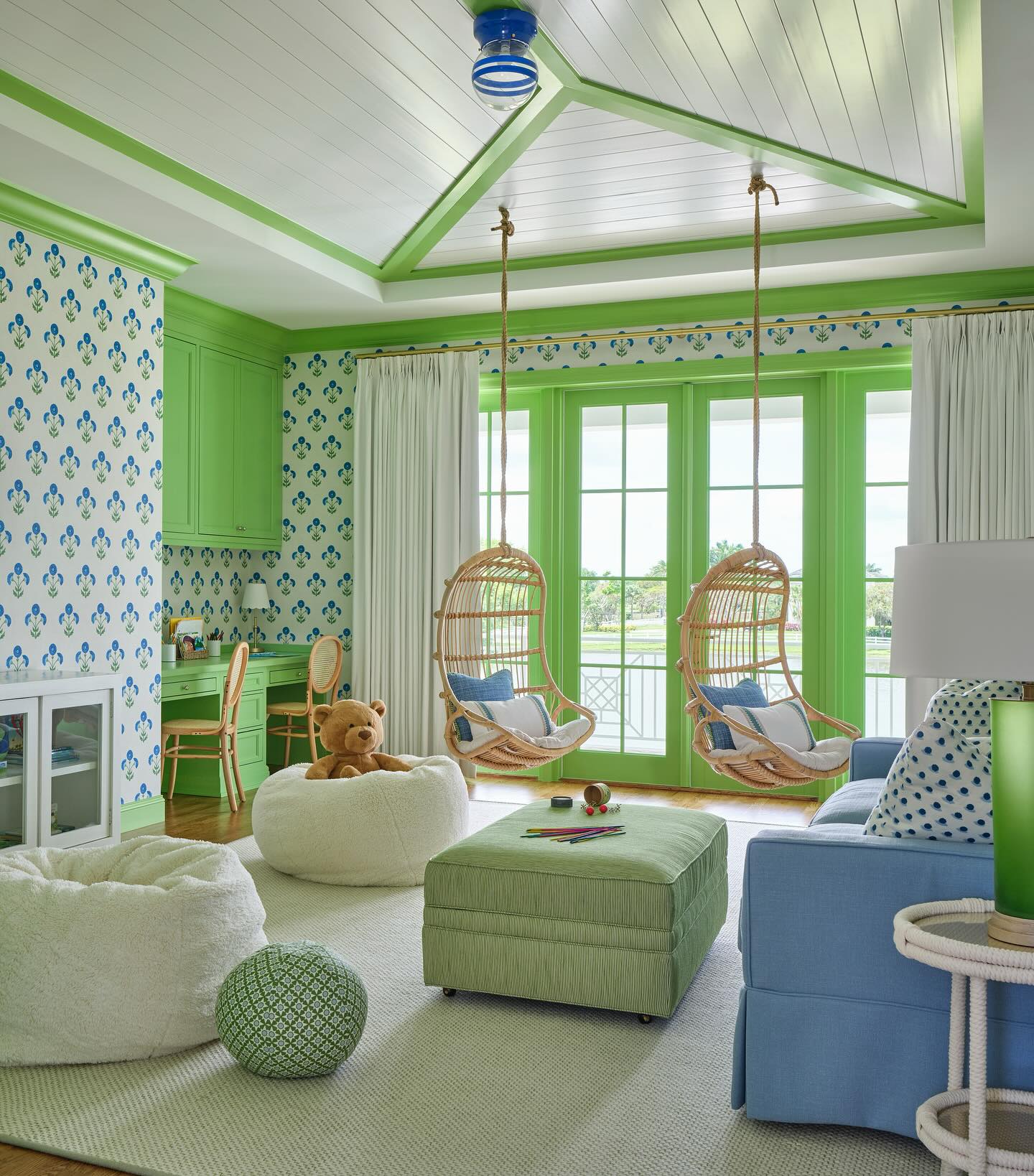
A blue sofa, green upholstered ottoman, and two pale floor cushions create several ways to settle into this cheerful room. Bright green trim and patterned walls give the space energy, while the light rug keeps the center visually simple.
The seating varies in height and shape, so the room offers more than one fixed arrangement. Borrow that flexibility with a sofa for shared reading and a few appropriately sized cushions that can move as activities change.
Keep the central path clear when setting everything out. The hanging chairs belong to this particular installation; any similar feature needs suitable support and placement.
Matching the ottoman to the trim is a smaller, accessible way to bring the photographed room's lively palette together.
13. Pair Floor Seating With Book Displays
Credits: Instagram
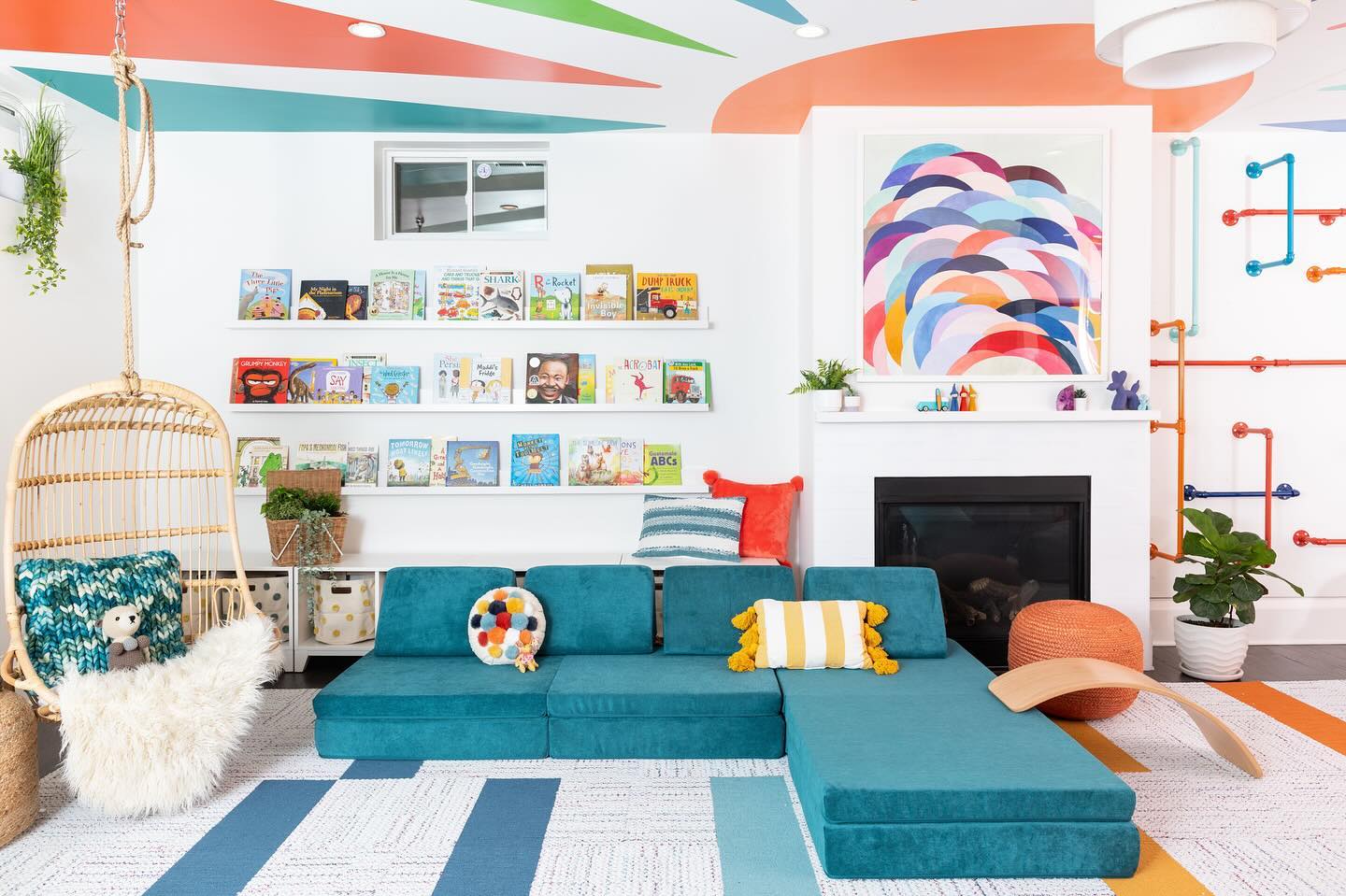
Turquoise floor seating stretches across the center of this colorful family play space. Behind it, shallow ledges display books with their covers facing forward, making the reading area easy to recognize.
The bright ceiling design and striped rug connect the room's many colors, while the low furniture preserves views across the space.
You can borrow the reading arrangement without recreating every play feature: position a comfortable low seat near a clearly organized selection of books. Rotate the display as interests change and leave a place to put unfinished stories.
Rounded cushions add another level of lounging. The photograph shows how books can become part of the decor while remaining central to the room's everyday purpose and shared family reading routines.
14. Turn a Window Seat Into a Family Retreat
Credits: Instagram
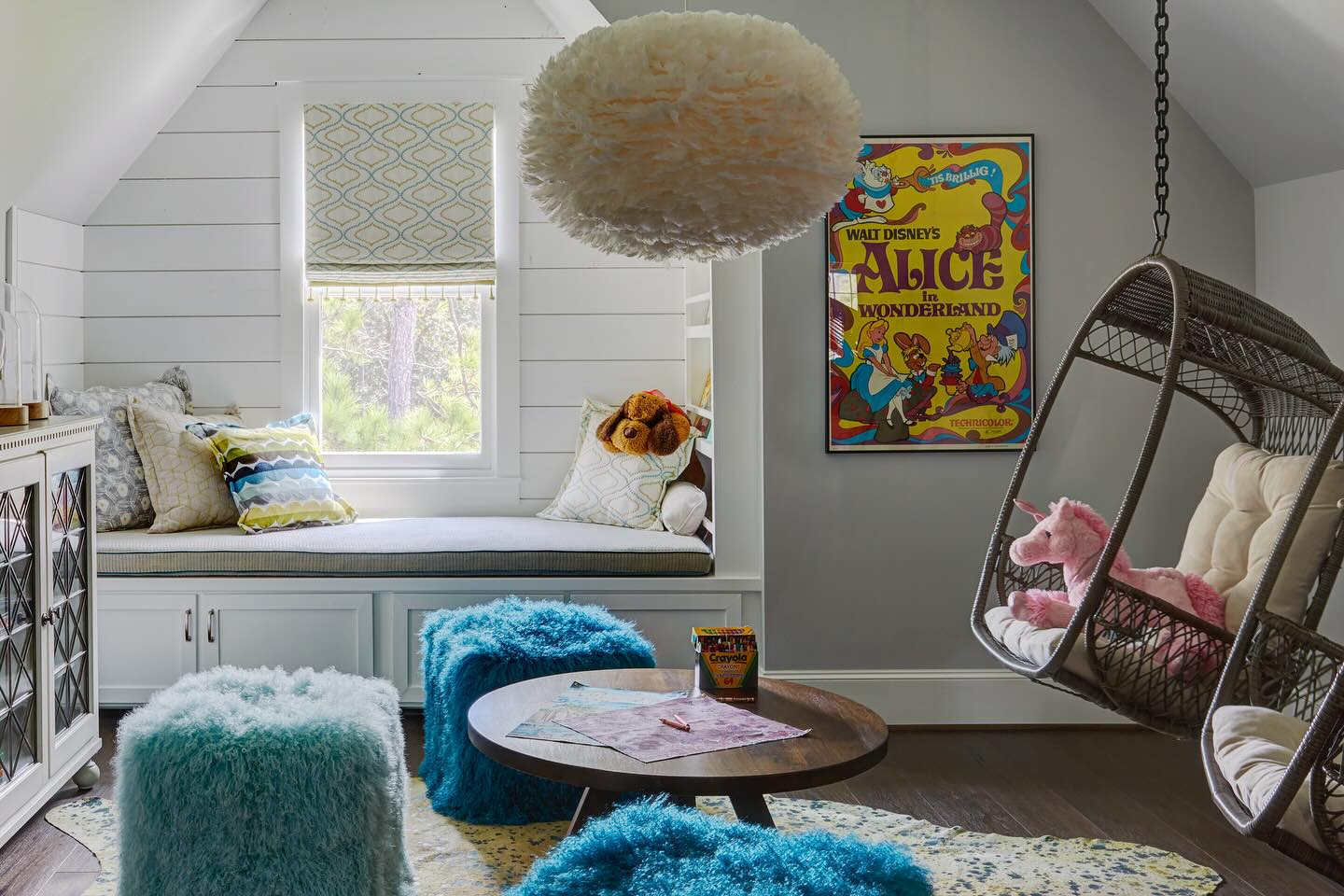
A cushioned window bench makes clever use of the low wall in this upstairs lounge. Cabinets underneath provide storage, while a round table and fuzzy blue stools create a gathering spot nearby.
The sloping ceiling gives the room a tucked-away character, and the large storybook poster adds a playful note. For a similar retreat, organize the layout around the window seat first, then add only the pieces needed for reading or games.
A compact round table helps the arrangement fit beneath the changing ceiling height. Choose storage that leaves room for knees and feet when the bench is occupied.
The mix of fixed seating and movable perches can accommodate different activities without requiring a full-size sofa or additional bulky chairs.
15. Organize a Family Library Around a Round Ottoman
Credits: Instagram
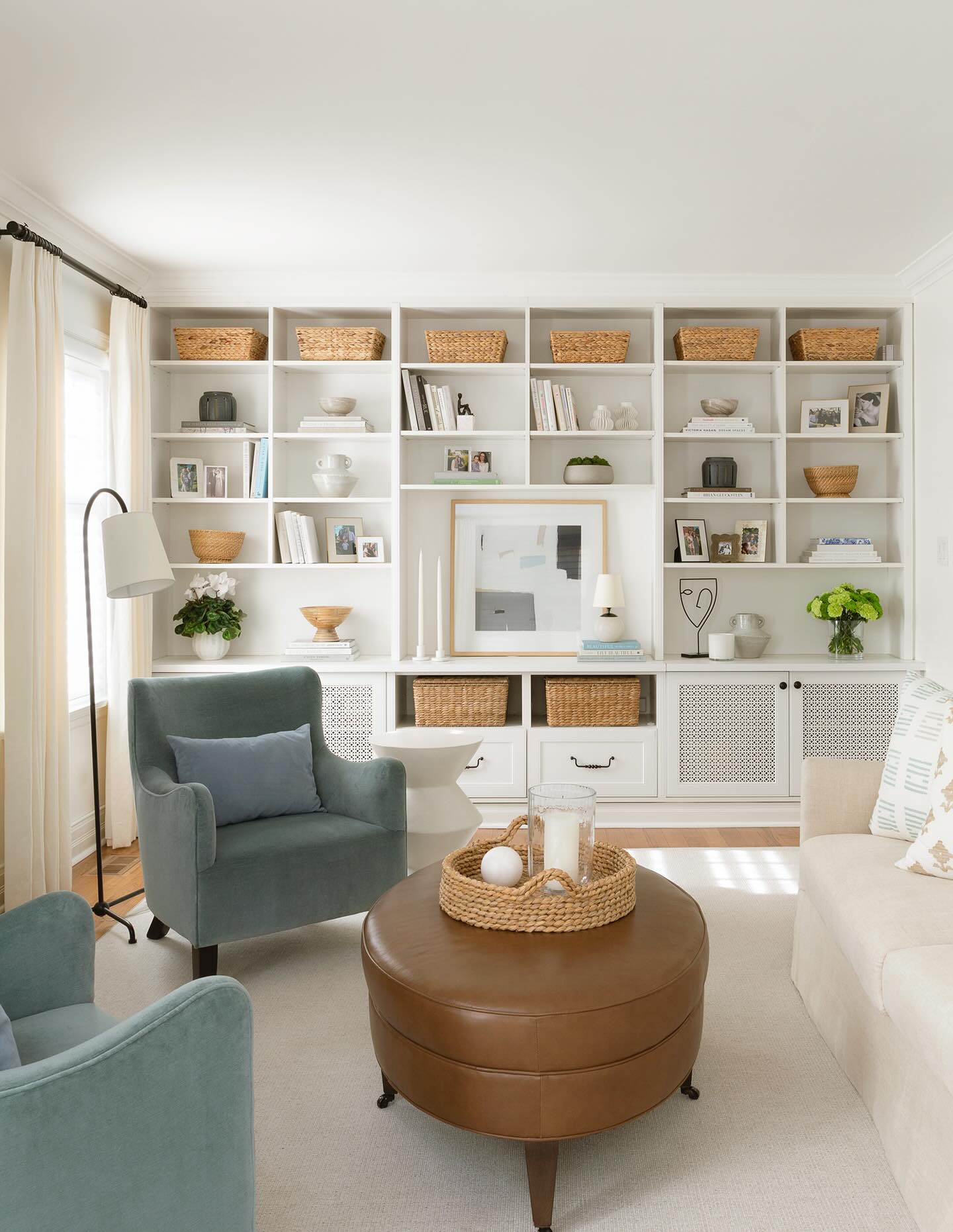
A wall of white shelving gives this bright sitting room plenty of places for books, baskets, and favorite objects. Lower cabinets offer concealed storage, while a round brown ottoman anchors the conversation area between pale blue armchairs.
The arrangement combines grown-up seating with a practical place to gather at a lower level. Recreate the balance by deciding which shelves should remain visible and which everyday belongings need baskets or doors.
Keep frequently used books where the household can comfortably reach them. The ottoman's circular shape leaves room to move around the center, and its warm color prevents the white cabinetry from feeling stark.
Repeating baskets across the upper shelves also helps the substantial storage wall read as one composed feature.
16. Fit a Homework Banquette Into the Corner
Credits: Instagram
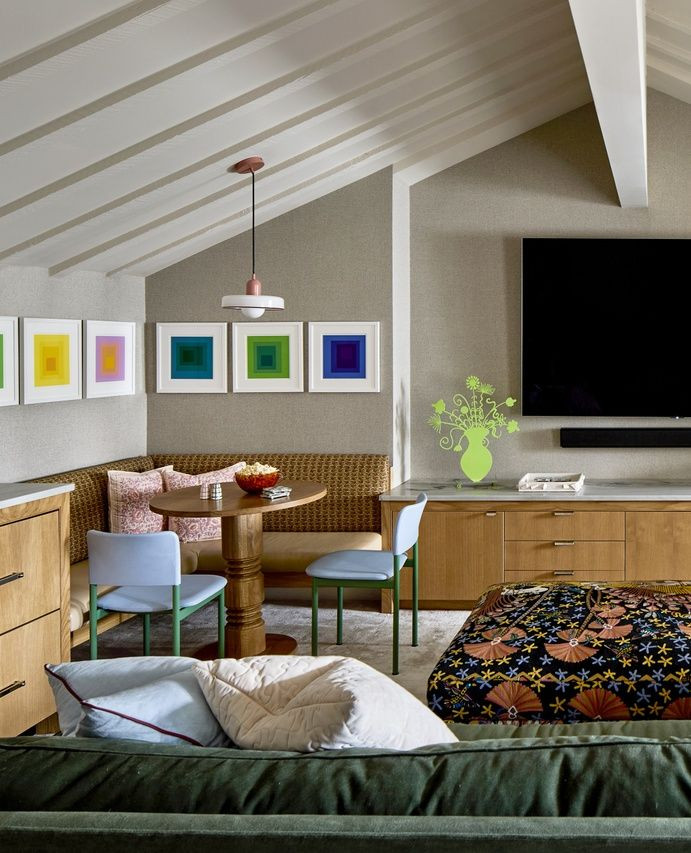
A corner banquette turns the end of this family room into a useful place for homework, games, and snacks. Its round table nestles beneath a sloping ceiling, with two colorful chairs completing the gathering spot.
Low wood cabinetry continues toward the television, linking the activity area to the upholstered seating in the foreground. A row of framed squares adds a playful rhythm above the bench without taking floor space.
Use this idea where a conventional desk would feel isolated from family life. Plan comfortable access around the table and storage close enough for supplies.
The connected cabinetry helps several functions feel intentional, while the mix of patterned upholstery and simple wood keeps the room warm, lively, and adaptable over time.
17. Keep the Main Lounge Beside Toy Storage
Credits: Instagram
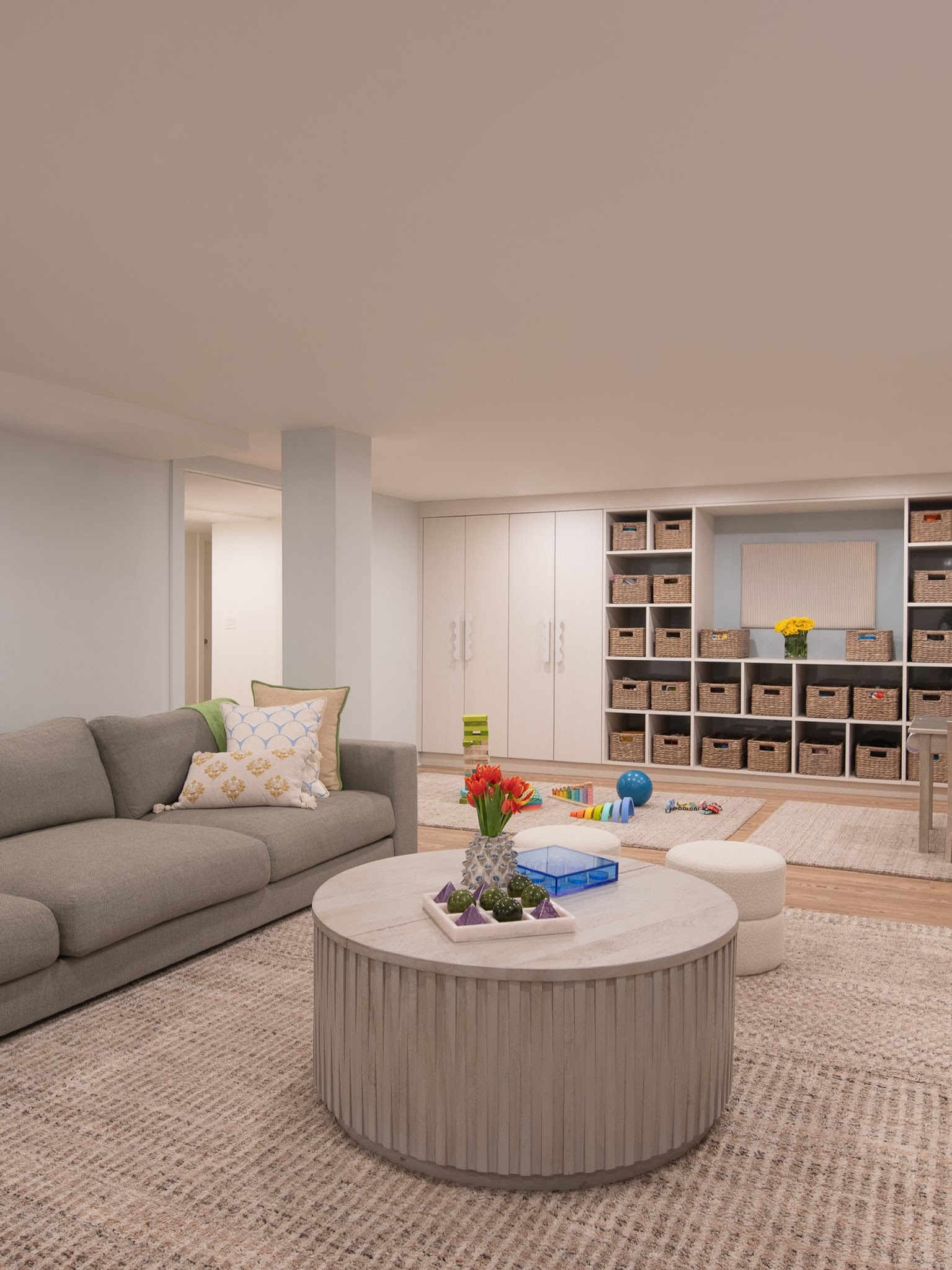
A gray sofa and round coffee table establish a comfortable lounge at the front of this shared family space. Beyond them, a broad wall of cubbies organizes toys and supplies, keeping the play area connected to the seating.
The muted upholstery and generous rug make the different functions feel related, while the round table introduces a gentler outline in the center. Use this layout when your family wants to stay together while doing separate activities.
Give toys a dedicated storage wall, then keep the space between it and the sofa open. Consistent bins help the shelves look orderly.
A few colorful objects can remain visible, adding personality without requiring every toy to become part of the room's permanent decorative display.
18. Round Off a Compact Conversation Area
Credits: Instagram
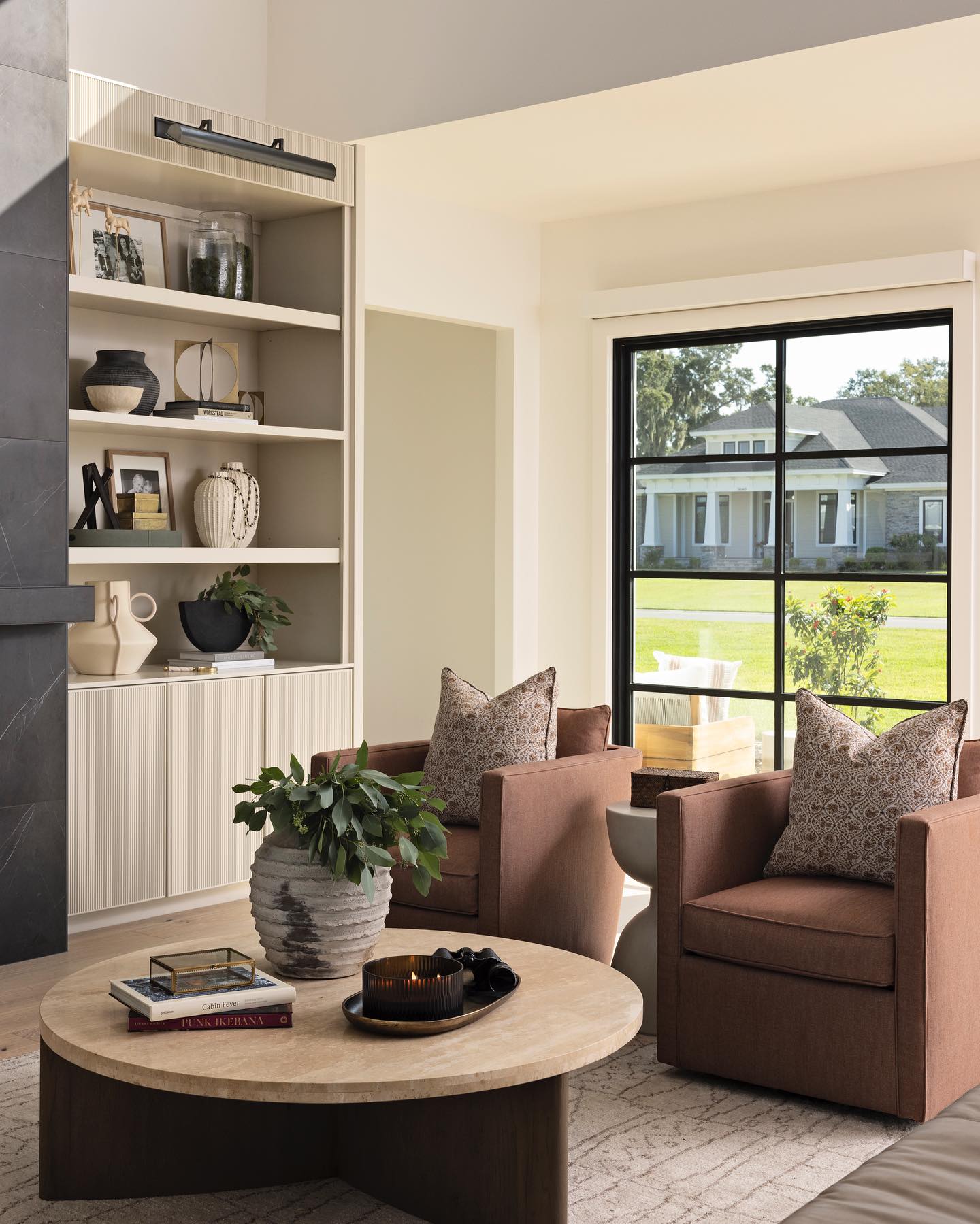
A large circular coffee table brings an easy focal point to this living room's compact seating group. Two upholstered chairs face the table beside a large window, and built-in shelving combines display space with closed storage below.
The pale patterned rug keeps the room light while giving the furniture a clear boundary.
Borrow the proportions when planning a family conversation corner: leave enough space to pass between the table and chairs, and reserve nearby cabinets for items that tend to spread across the room.
The photograph's simple palette makes several textures stand out, from the smooth table to the woven-looking upholstery. A few books and a small tray finish the center without overwhelming the useful surface for everyday family activities.
19. Include a Child-Sized Table in the Den
Credits: Instagram
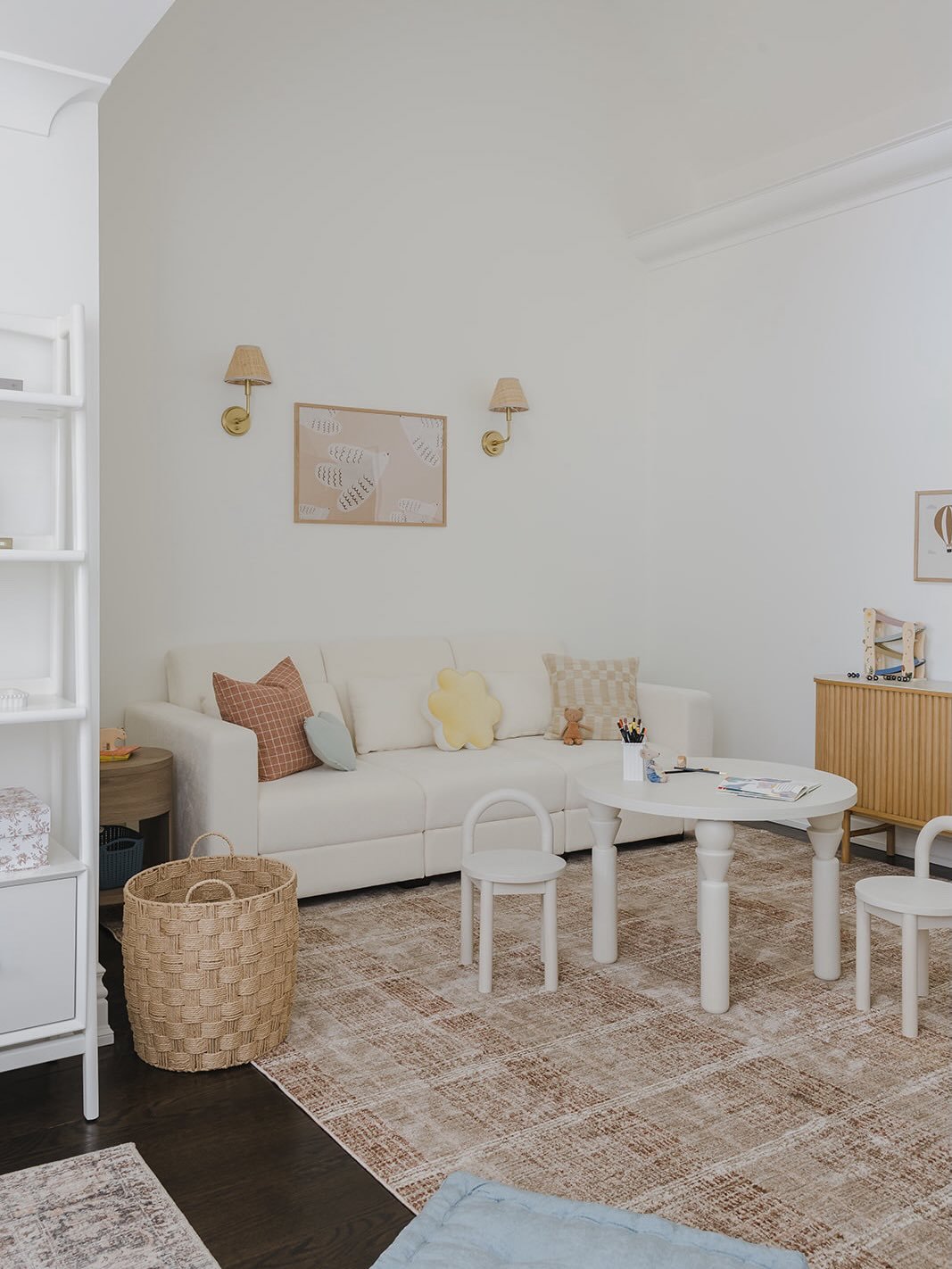
A small round table and matching chairs sit directly in front of the sofa in this bright upstairs den. Their light finish relates to the surrounding furniture, making the activity area feel like an intentional part of the room.
A wood cabinet provides nearby storage, while the patterned rug gathers the different pieces into one cozy zone. This arrangement works as an idea for families who want to draw, read, or build together within the main seating area.
Scale the table to its intended users and leave a comfortable route around it. Soft yellow and blush pillows add color without overwhelming the pale backdrop.
Simple wall lights keep the floor available, and the sofa provides a relaxed spot for adults.
20. Let a Playful Ceiling Keep the Floor Simple
Credits: Instagram
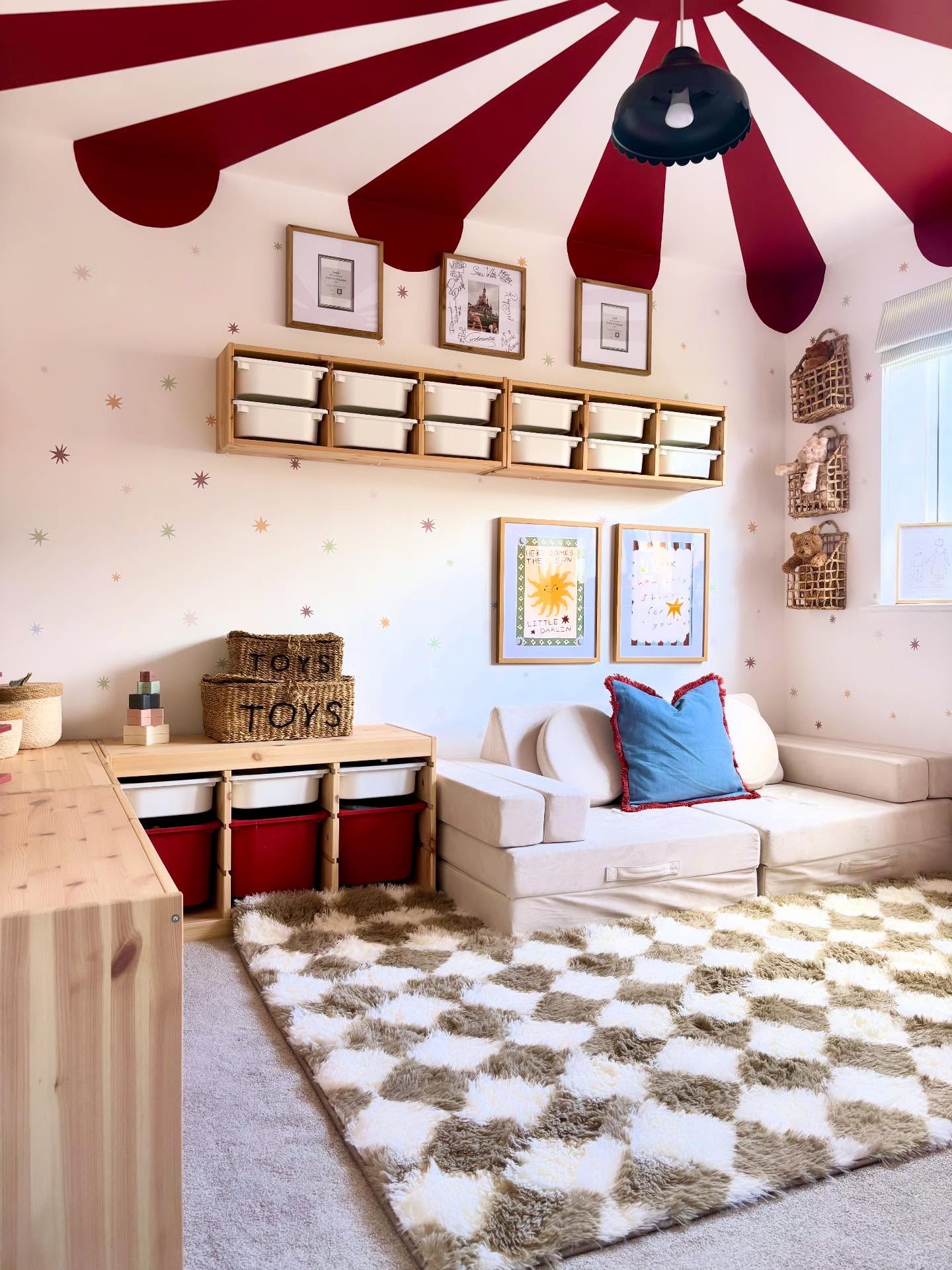
Bold red stripes spread across the ceiling of this family play lounge, creating a lively focal point above a straightforward arrangement of furniture.
A pale modular sofa sits beside low toy storage, while a checked rug brings pattern down to floor level. The small bins make cleanup locations easy to distinguish, and shallow wall shelves provide additional organization.
Borrow the room's balance by placing the strongest decorative feature overhead or on the walls, then keeping the furniture layout simple. Leave the center available for activities instead of filling it with decorative tables.
A single blue pillow adds contrast to the warm red accents. The result feels playful while preserving clear places for lounging, reading, and putting toys away after use.