
A small bedroom can feel crowded when every useful surface also has to serve as storage or display. Japandi Bedroom Ideas make the most of simple forms, natural-looking materials, and a restrained palette while keeping daily needs in view.
A wall-mounted light can free up the nightstand, while a wooden bench adds a practical place to sit or set down clothes.
Other approaches include stopping wood paneling at headboard height and letting a softly mottled wall provide texture, so the room feels considered without relying on extra decoration.
Soften a Compact Room With a Paper Lantern
Credits: Instagram
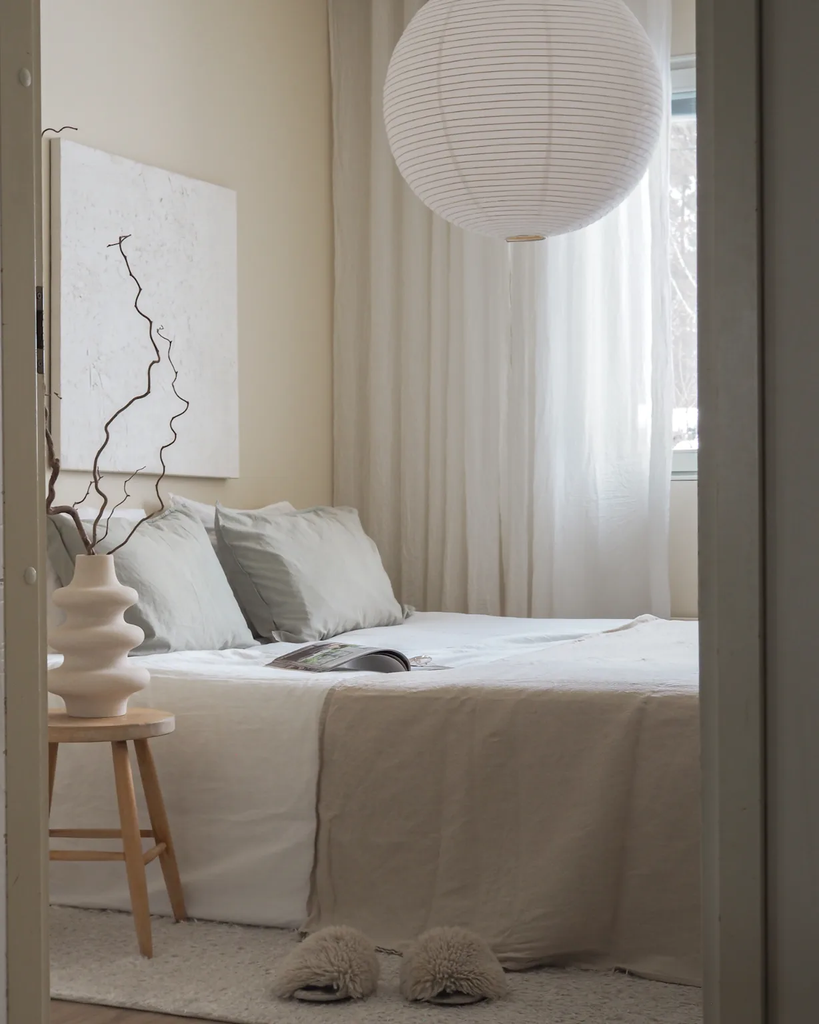
A generous lantern can give a modest bedroom a focal point without filling another surface. Here, its rounded white shade hangs above simple bedding, while sheer curtains and a small wooden stool keep the surrounding shapes light.
That contrast between delicate lighting and useful, unfussy furniture makes the Japandi influence easy to recognize. Choose a shade that suits your ceiling height and leaves comfortable clearance wherever you walk or sit.
Pair it with a compatible bulb and add a separate reading light if needed. Pale green pillows bring a little color into the quiet palette.
You can keep the same restrained effect with one favorite vase or a simple artwork, leaving enough bedside space for the things you actually use.
Free the Nightstand With a Compact Wall Light
Credits: Instagram
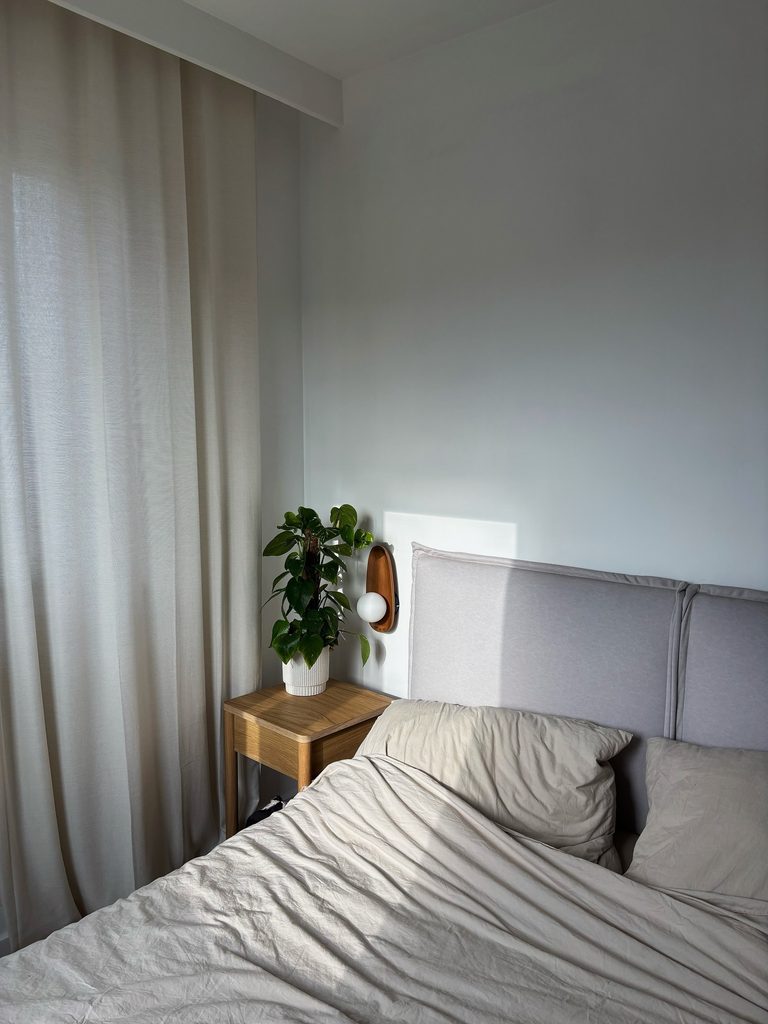
Bedside essentials quickly crowd a small table when a lamp needs space too. This room moves the light onto the wall, pairing a rounded fixture with a simple wood-tone nightstand and a pale upholstered headboard.
The compact arrangement leaves a useful landing spot beside the mattress without introducing a large decorative object. Before installing a sconce, sit against your pillows and check its height, reach, and glare.
A shaded or adjustable model may suit reading better than an exposed globe. Keep the switch accessible and have wiring handled appropriately.
The quiet cream and wood palette connects the practical change to the rest of the bedroom. A single plant supplies an organic shape while leaving the tabletop easy to use daily.
Stop Wood Paneling at Headboard Height
Credits: Instagram
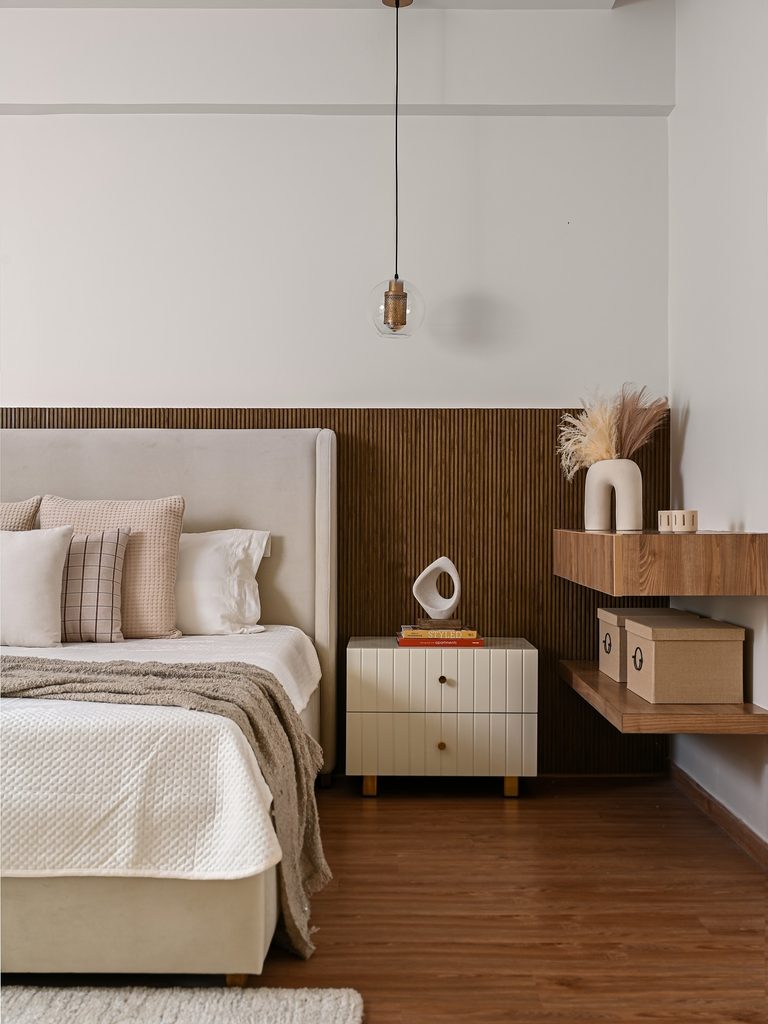
Vertical grooves bring a subtle rhythm to this bed wall, but the paneling stops well below the ceiling. A broad area of plain white above it keeps the darker wood tone from dominating the room.
Pale upholstery and compact bedside drawers make the contrast feel deliberate. You can borrow the proportion without copying every finish: first mark the proposed panel height on the wall and check it against your mattress, pillows, and bedside lights.
Let the top edge read as one clean line across the sleeping area. When the wall already supplies texture, simple bedding is usually enough.
A restrained patterned pillow adds variation here, while the narrow pendant leaves more room on the small bedside surface for everyday essentials.
Build a Low Bed Wall With an Integrated Ledge
Credits: Instagram
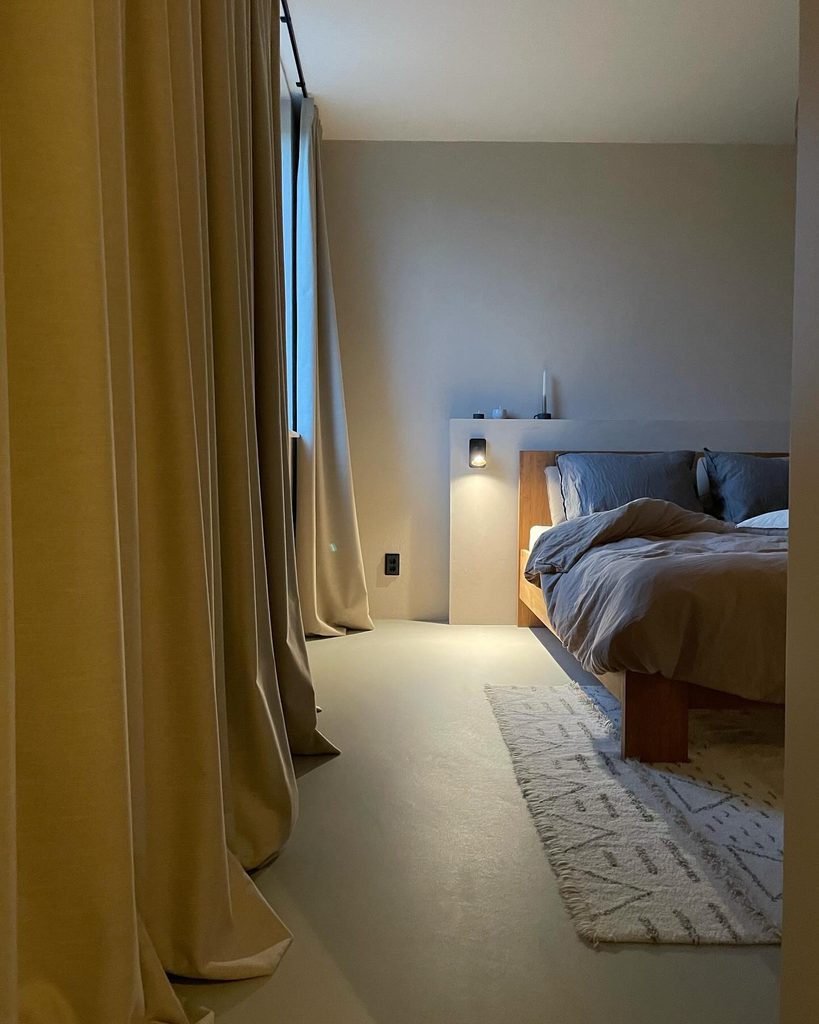
An extra strip of useful surface can be built into the bed wall itself. The shallow ledge in this room runs behind a straightforward wooden bed, creating a place for a few small objects without a separate shelf floating overhead.
Its pale finish sits quietly beside gray bedding and long curtains. This is an architectural change, so plan the depth, electrical outlets, and wall light positions before construction.
Keep anything heavy or fragile away from the area directly above pillows, and avoid filling the ledge from end to end. In an existing room, a headboard with an integrated shelf can offer a similar arrangement.
The strongest part of the idea is having one purposeful horizontal line that organizes the bed.
Give a Plain Wooden Bench Room to Work
Credits: Instagram
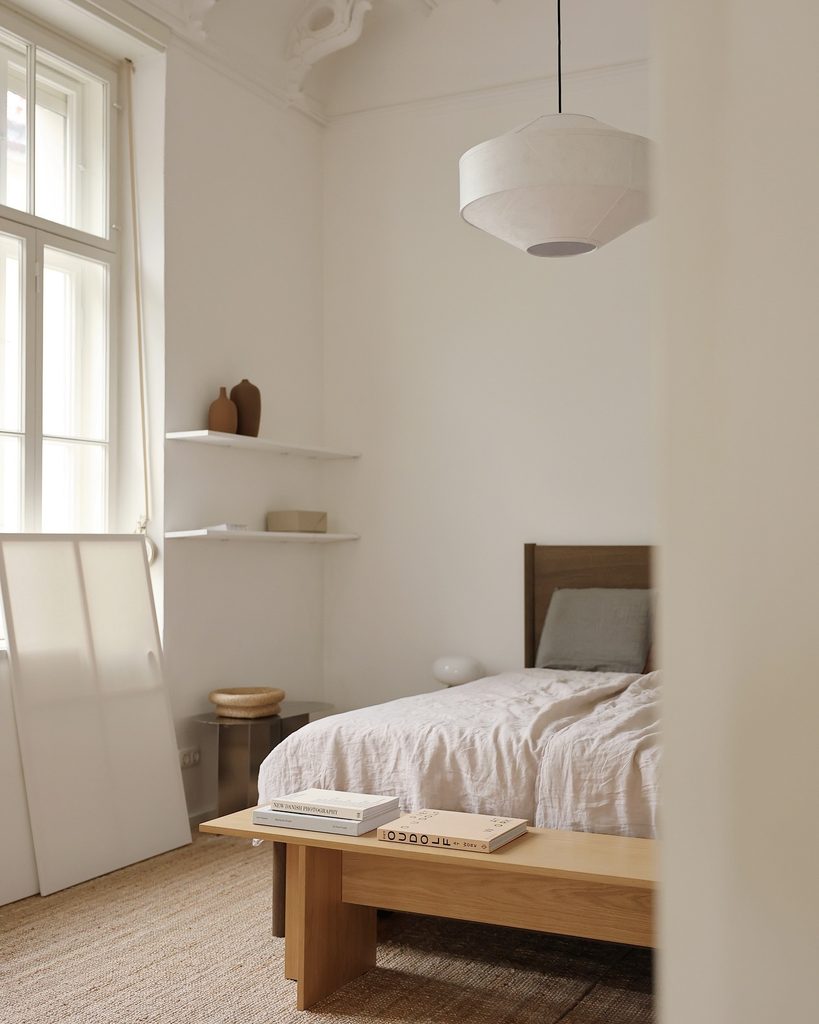
Some bedrooms need a place to pause while getting dressed more than another decorative chair. A plain wooden bench answers that need at the foot of this bed, its substantial rectangular shape contrasting with rumpled bedding and a textured rug.
The pale room gives the wood grain enough attention without an elaborate finish or extra accessories. Measure the walking space beyond the bench before choosing one, including the route to wardrobes and doors.
A shorter version can work where a full bed width would feel crowded. Keep its surface mostly available for sitting or temporarily setting down clothes.
Books look appealing in the photograph, but your daily routine should determine what stays there and what belongs in a nearby drawer.
Let a Softly Mottled Wall Supply the Pattern
Credits: Instagram
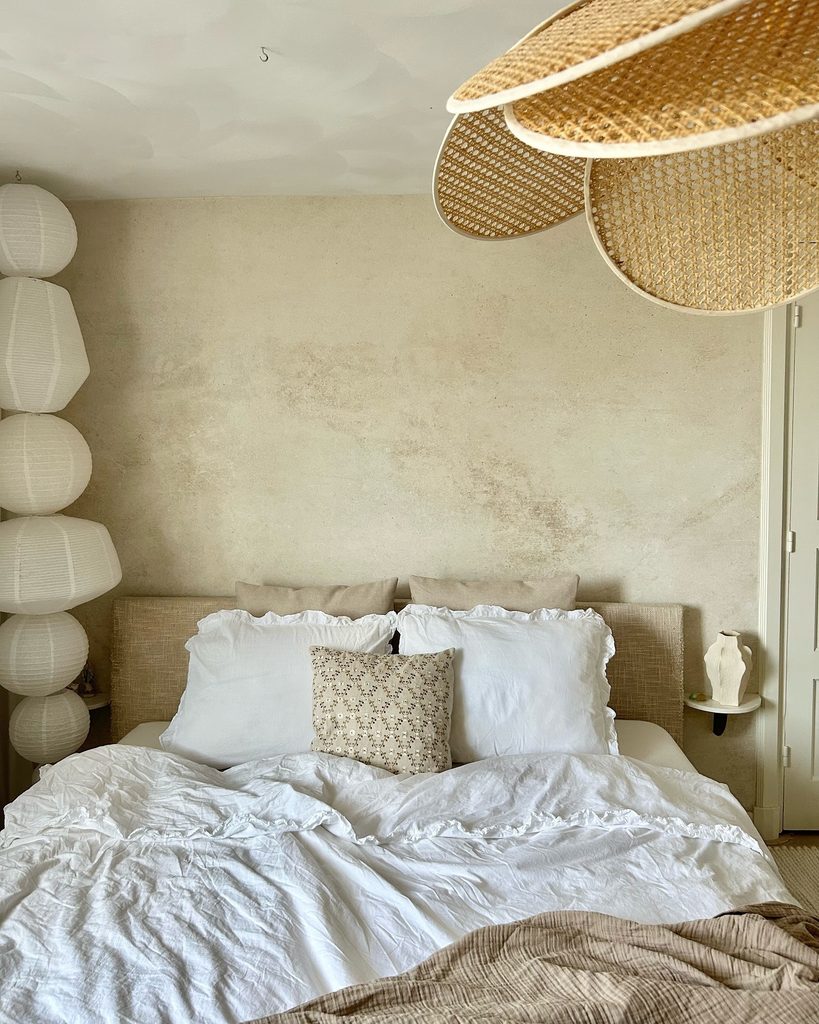
Texture can carry a room even when the color range stays narrow. This softly mottled wall gives a pale bedroom depth without requiring a gallery of pictures or strongly patterned bedding.
A woven headboard and light linens introduce different surfaces, while a small patterned cushion provides a focused accent. To adapt the look, view finish samples beside your bed during daylight and under the lamps you actually use.
A finish resembling limewash can vary considerably with application and the surface underneath, so follow the chosen product’s preparation instructions. Let the finished wall remain visible above the headboard instead of covering its variation.
The result depends on the relationship between smooth and irregular surfaces, not on buying several matching beige accessories.
Set Aside a Compact Sitting Area With Rounded Chairs
Credits: Instagram
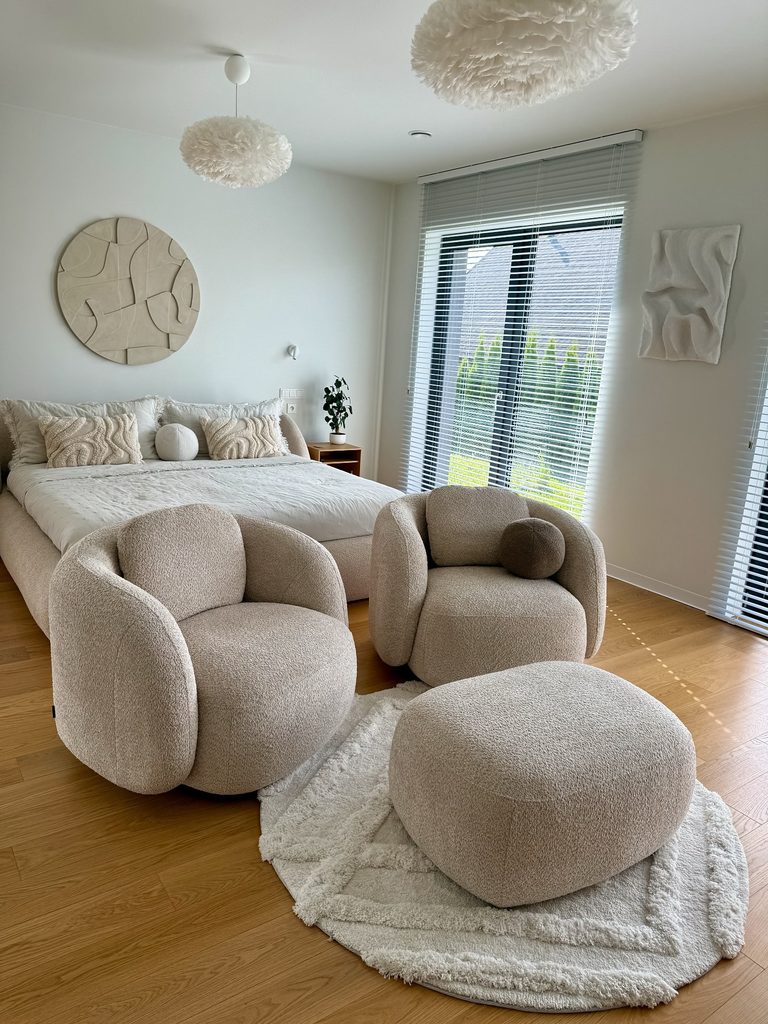
A pair of rounded chairs gives this bedroom another use beyond sleeping. Their soft shapes face into a compact sitting area, with an ottoman and a small rug defining the arrangement.
Behind them, the bed and circular wall art continue the calm palette. The useful lesson is to make a secondary zone feel intentional while keeping the route around it clear.
In a smaller bedroom, one chair and a modest side table may be the better translation. Check that you can open curtains, reach storage, and walk to the bed comfortably before adding an ottoman.
Choose seating you will actually use for reading or dressing. Leaving a little visible floor between furniture pieces helps these generous curves feel less crowded.
Use One Graphic Artwork to Define Pale Wood
Credits: Instagram
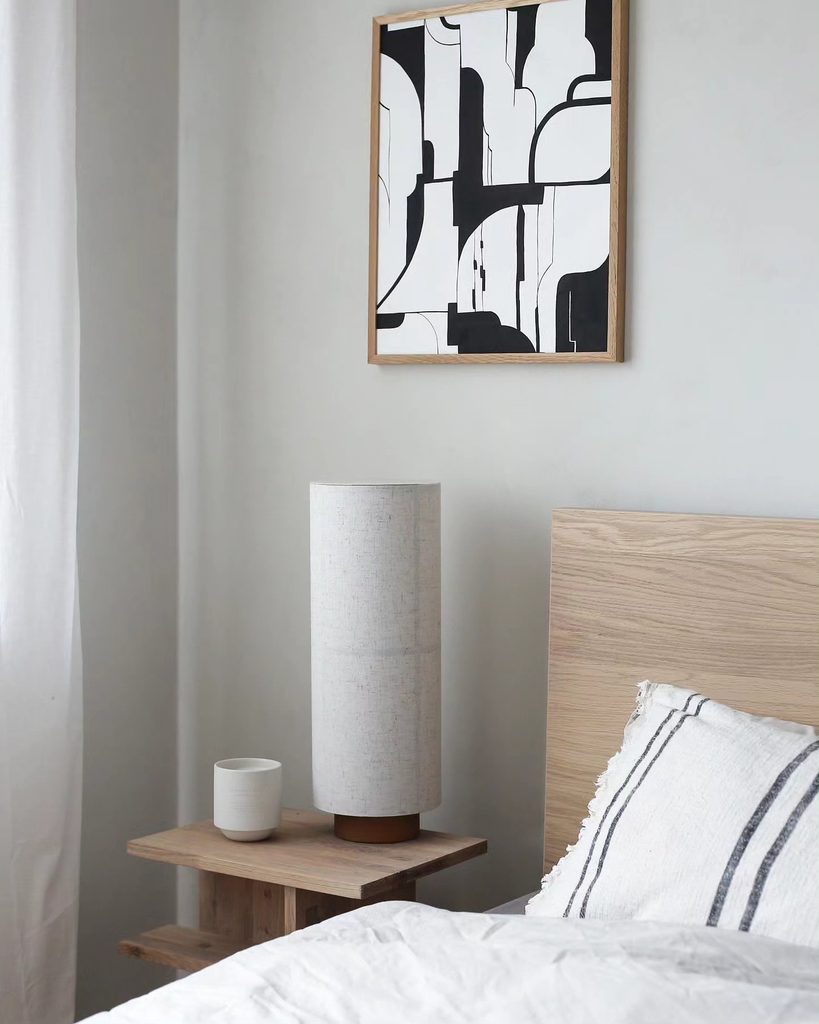
One dark shape is enough to give this pale bedroom definition. A piece of black-and-white artwork hangs above a broad wooden headboard, while the bedside lamp and finely striped bedding keep the surrounding details simple.
The picture becomes the focal point because the wall around it is quiet. Try choosing art before buying several small accessories, then repeat one of its tones in a pillow or frame elsewhere.
Check the scale against the headboard rather than judging it on an empty wall. Secure it properly and leave comfortable clearance above seated heads.
A warm wood frame can connect the graphic contrast to existing furniture. This approach suits a Japandi bedroom when you want a personal mark without introducing busy patterns.
Bring Texture to Closed Storage With Woven Doors
Credits: Instagram
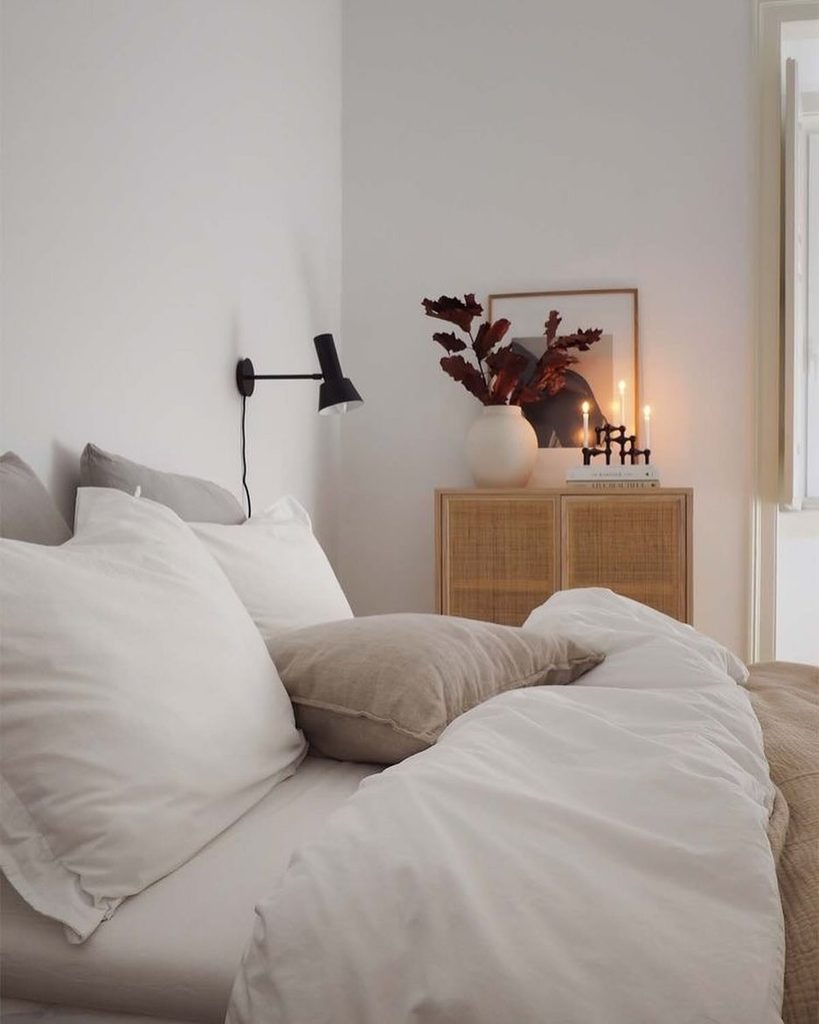
Everyday storage can contribute texture without putting all its contents on display. The cabinet beside this bed uses woven door panels framed in a pale wood tone, balancing the soft white bedding and simple dark wall light.
Its closed front keeps the bedroom visually quiet while giving the corner a useful purpose. Before choosing a similar piece, measure door swing and the space needed to reach both the cabinet and the bed.
Pick storage around what you need to put away, rather than treating a decorative cabinet as an automatic solution. A little open space on top keeps the woven pattern readable.
One picture and a vessel can be enough; move delicate objects elsewhere if the surface serves everyday tasks.
Balance a Charcoal Bed Wall With Warm Wood
Credits: Instagram
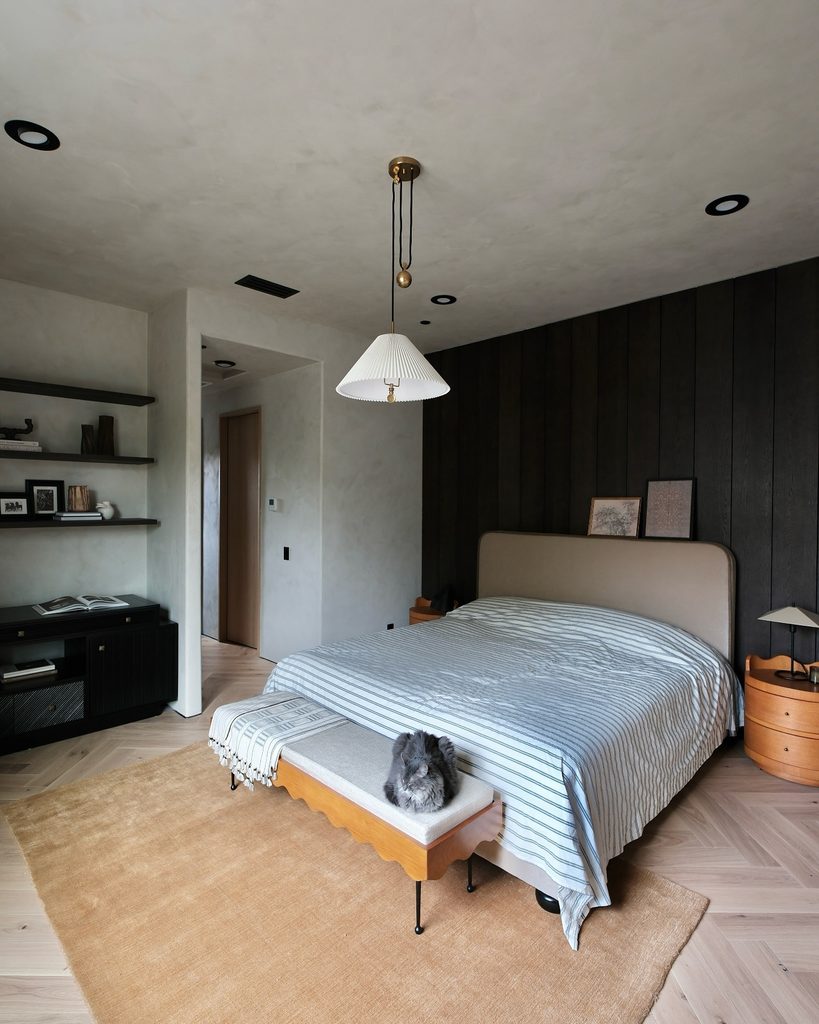
Dark color gives this bedroom a strong backdrop without taking over every surface. The charcoal bed wall sits behind a softly curved headboard, with warm wooden furniture and pale textiles balancing its depth.
A restrained rug and a bench continue the softer tones at floor level. Test a dark color on the wall that receives the light you actually have; the same sample can look quite different across a room.
Keeping neighboring walls lighter can help you control the effect. You do not need to repeat black in every accessory.
Here, contrast comes from large, uncomplicated areas, allowing the shapes of the bed and nightstand to remain clear. Choose a few useful pieces and let the darker wall frame them.
Blend Full-Length Curtains Into the Wall Color
Credits: Instagram
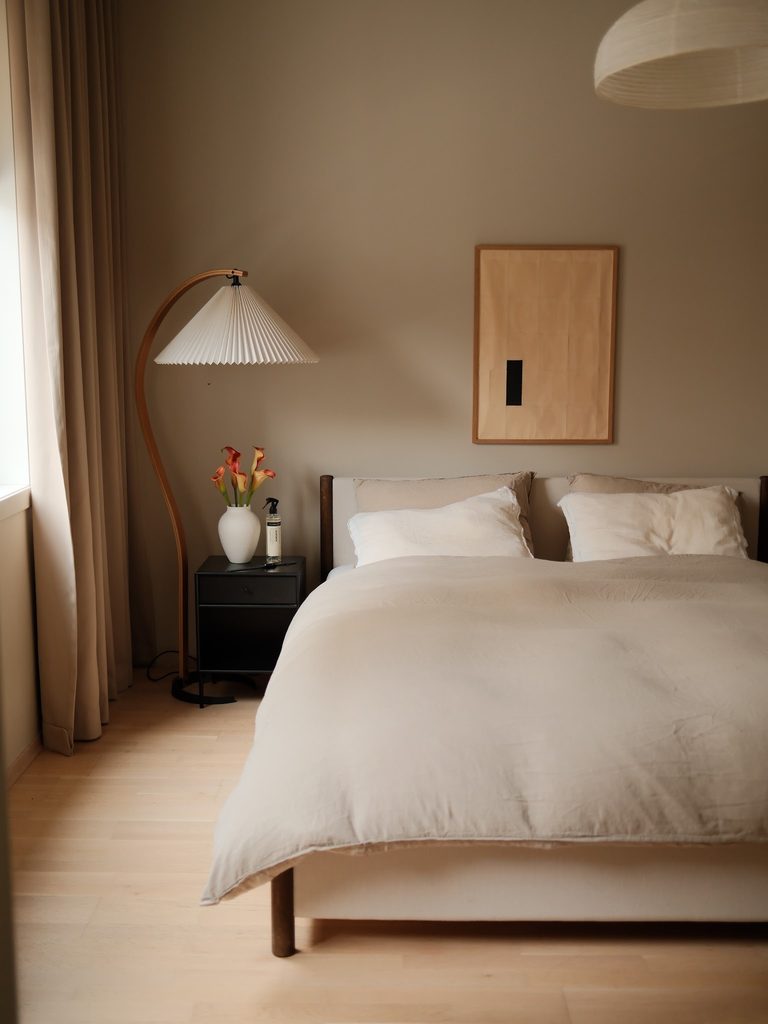
Windows feel less visually separate when their curtains share the surrounding wall’s tone. This bedroom uses long taupe curtains beside a muted wall, creating a gentle backdrop for the bed and a curved wooden floor lamp.
Pale bedding keeps the center of the room light. For your own version, compare fabric samples against the paint in daylight and at night, since closely related colors can shift differently.
Choose lining for the privacy and light control you need; color alone does not tell you how a curtain will perform. Allow the panels enough space to open without blocking the bed or lamp.
The continuous color lets the furniture’s simple silhouettes stand out, while the folds supply texture across a broad surface.
Carry a Fine Slatted Texture Across the Ceiling
Credits: Instagram
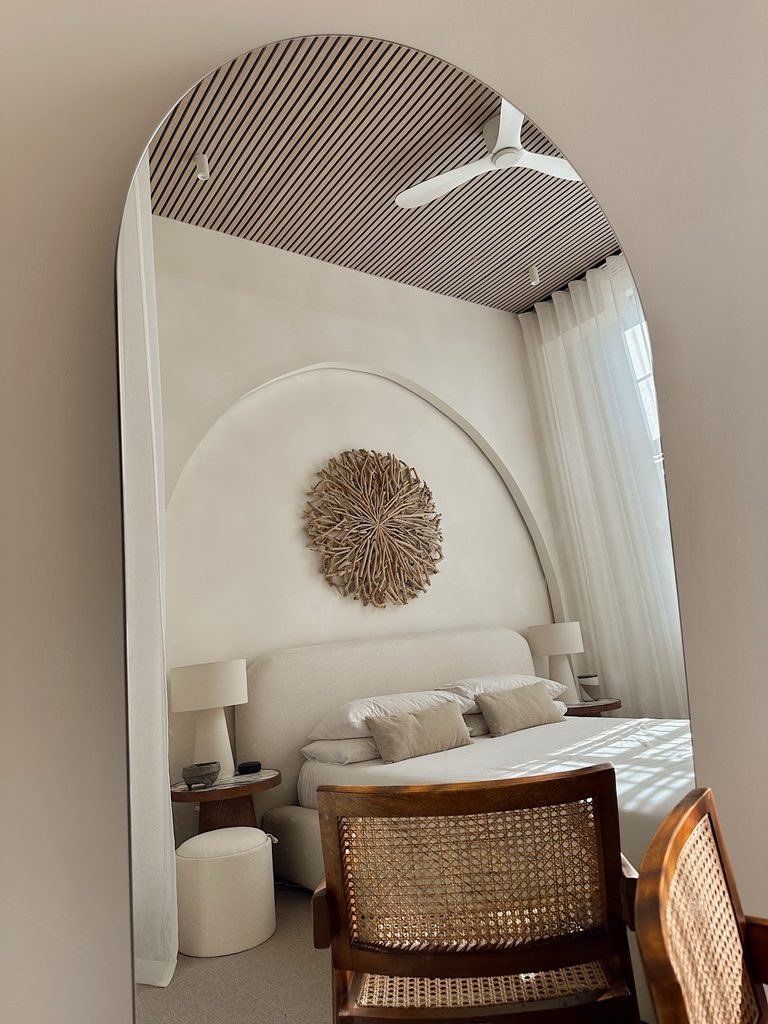
Looking upward reveals the detail that gives this bedroom its character. Fine wood-tone ceiling slats extend across the ceiling, introducing a linear pattern above a pale bed and long curtains.
The photographed mirror view also shows how the ceiling treatment relates to the rest of the room, rather than functioning as an isolated feature.
This is best considered as part of a planned renovation: lighting, fixtures, attachment, and access all need attention before installation. In a lower room, test how the proposed depth and color affect the space before committing.
Keep the walls and bedding comparatively restrained so the overhead pattern has room to register. A smaller section above the bed can introduce the effect without covering the whole ceiling.
Introduce Muted Green Through One Textured Throw
Credits: Instagram
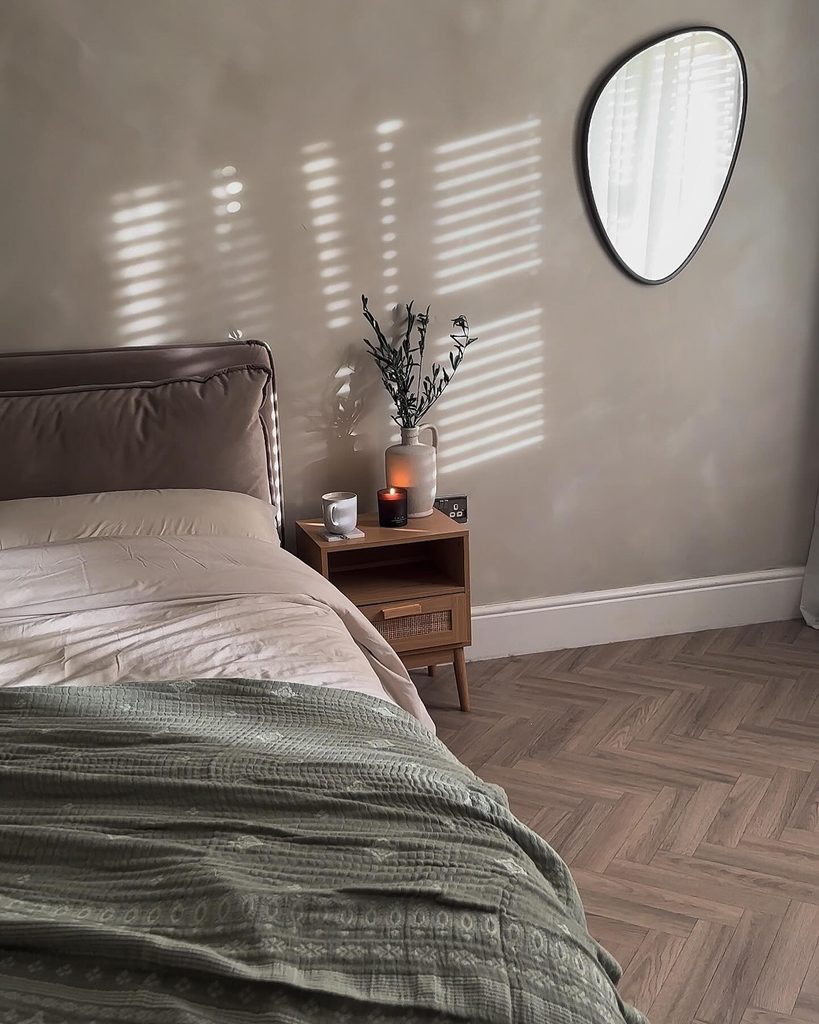
A soft green layer changes the mood of this bedroom without replacing its neutral foundation. The textured fabric lies across pale bedding, picking up the room’s soft, earthy direction while leaving the upholstered headboard and mottled wall visible.
A small woven drawer front adds another tactile detail nearby. Start with one textile if you want to introduce color gradually.
Compare it with your existing curtains and wall finish, then decide whether another accent is necessary. The shade does not need to match every object exactly.
A slightly varied palette often feels easier to live with than a coordinated set. Fold or drape the throw so it remains usable, and choose a fabric you can maintain according to its care instructions.
Soften a Small Bedroom With an Arched Floor Mirror
Credits: Instagram
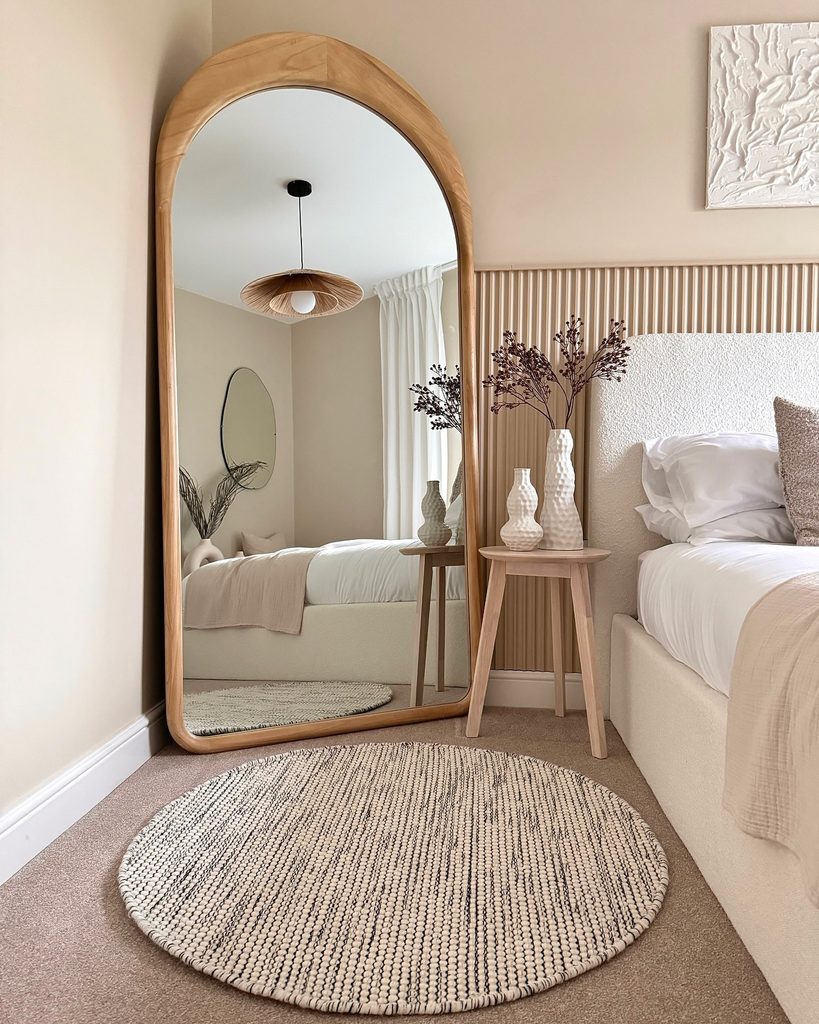
Curves can make a narrow bedroom corner feel less rigid. This tall arched mirror sits beside a simple bed, repeating the gentle shapes of a round rug and small wooden stool.
Its frame brings another warm wood tone into the room, while the reflection extends the view of the window and furnishings.
Position a mirror by checking what it reflects from the doorway and from the bed, rather than choosing an empty wall automatically. Follow the manufacturer’s anchoring guidance even if you prefer a leaning appearance.
Leave enough access for curtains, outlets, and cleaning around the frame. A single generous mirror can provide a dressing spot and a focal point without adding several smaller wall decorations to a compact bedroom.
Lower the Bed to Open Up the Wall Above It
Credits: Instagram
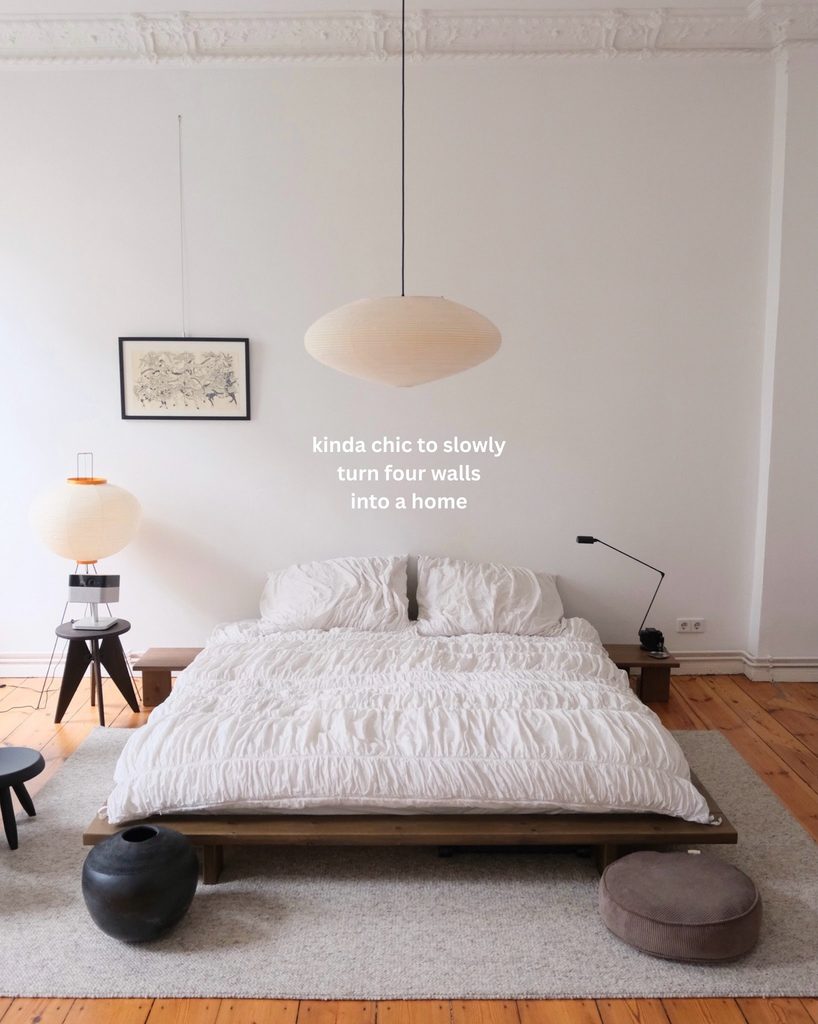
The empty wall above a low platform bed is part of the composition.
This bedroom gives most of its visual weight to the lower portion of the room: a wooden frame, simple bedside pieces, a rug, and a round floor cushion.
Light bedding and paper shades keep those grounded shapes from feeling heavy. A low bed can work beautifully, but choose its height around your comfort when sitting down and standing up.
Confirm that the frame supports your mattress as specified and that you can clean around it. Resist filling the visible wall simply because it is available.
One restrained artwork or no artwork at all can preserve the balance. The aim is comfortable proportions that suit your own room.
Define the Sleeping Area With One Broad Woven Rug
Credits: Instagram
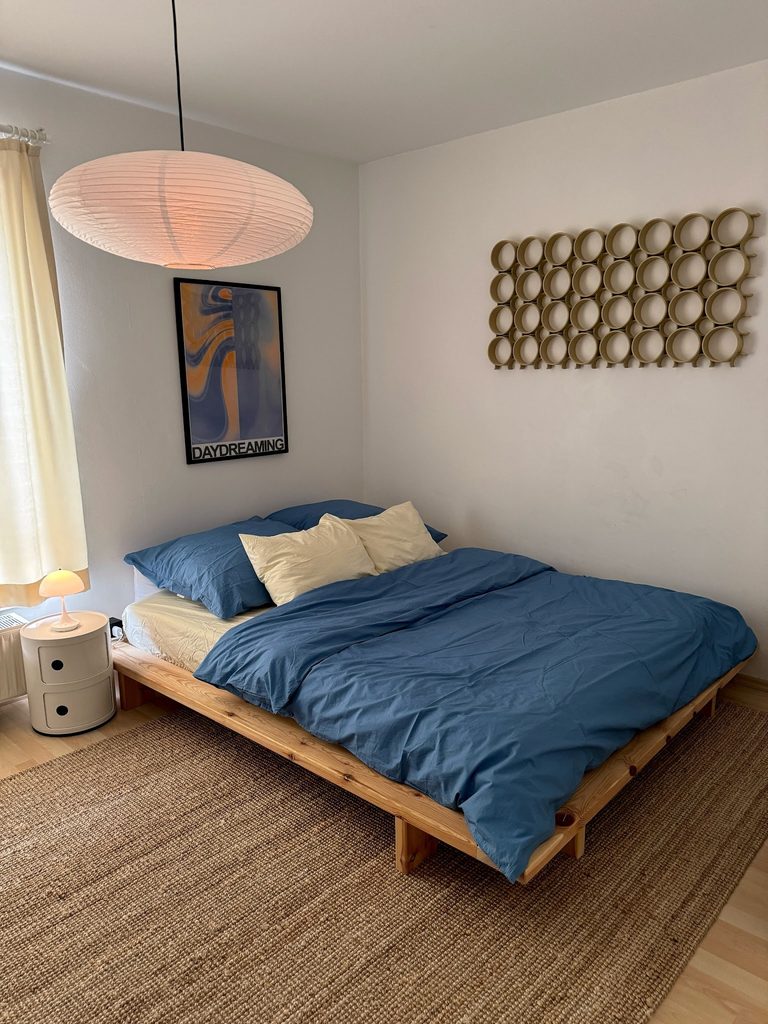
Under this blue and pale yellow bedding, a broad woven rug gives the wooden platform a clear boundary. Its earthy color connects the low bed to the floor while allowing the brighter textiles to feel contained.
A paper lantern and a small cylindrical nightstand keep the remaining shapes uncomplicated. Work out the rug position using the way you approach the bed, so your feet meet it where that matters most.
Check door clearance, furniture stability, and the rug’s suitability for your floor before choosing an underlay. There is no need to remove all color to create a calm Japandi bedroom.
A limited combination of soft colors can sit comfortably alongside wood, simple forms, and an uncluttered arrangement of everyday objects.
Fit a Tall Chest Into an Existing Alcove
Credits: Instagram
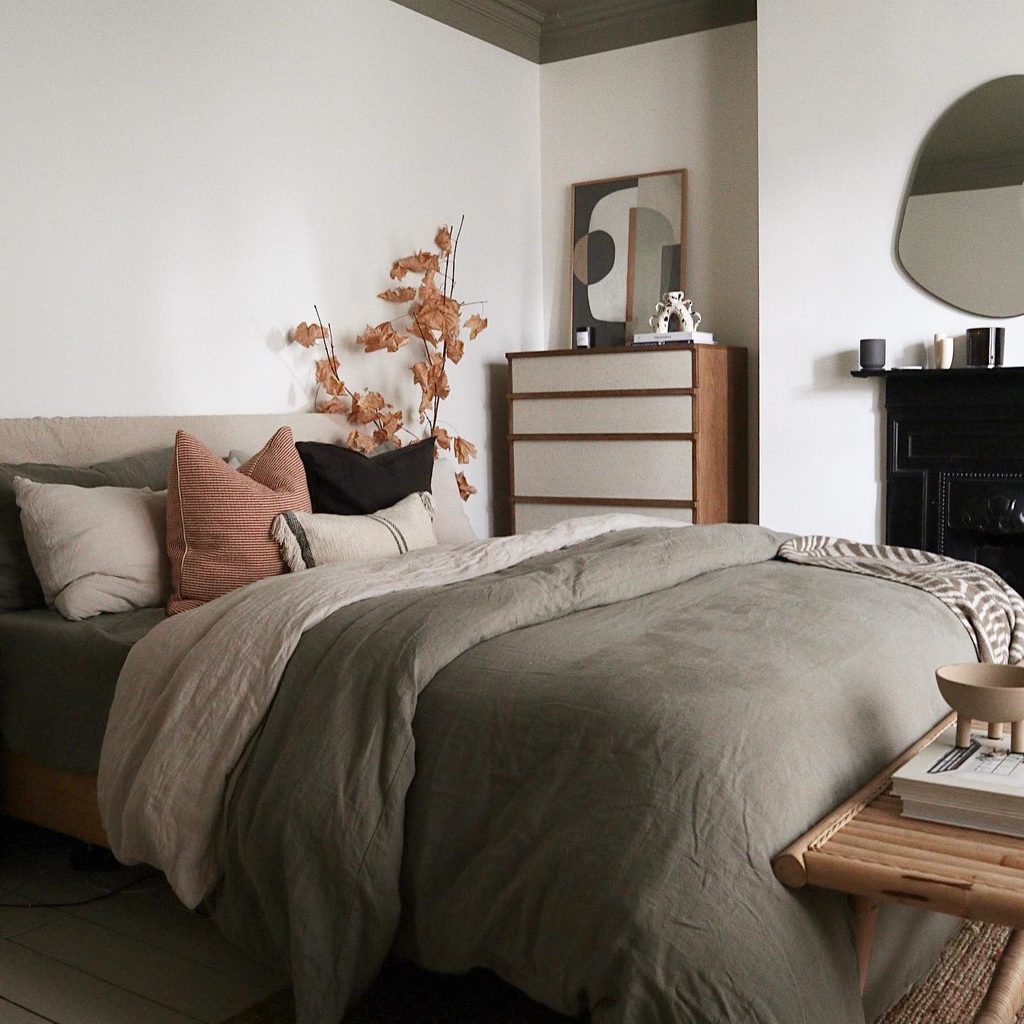
An awkward recess becomes useful when the furniture respects its proportions. Here, a tall narrow chest fits beside an existing fireplace, providing closed storage without spreading across the bedroom.
Its pale drawer fronts and wooden frame relate to the soft bedding and restrained artwork above. Measure an alcove at several heights before shopping, and include baseboards, handles, and the space needed to open every drawer.
Secure tall furniture according to its instructions. If a fireplace is active, follow its required clearances rather than copying the photographed spacing.
A simple picture or mirror can finish the area without adding another freestanding furniture piece. This approach keeps the room’s architecture visible while turning a difficult strip of wall into practical everyday storage.
Carry the Same Wood Tone Through the Doorway
Credits: Instagram
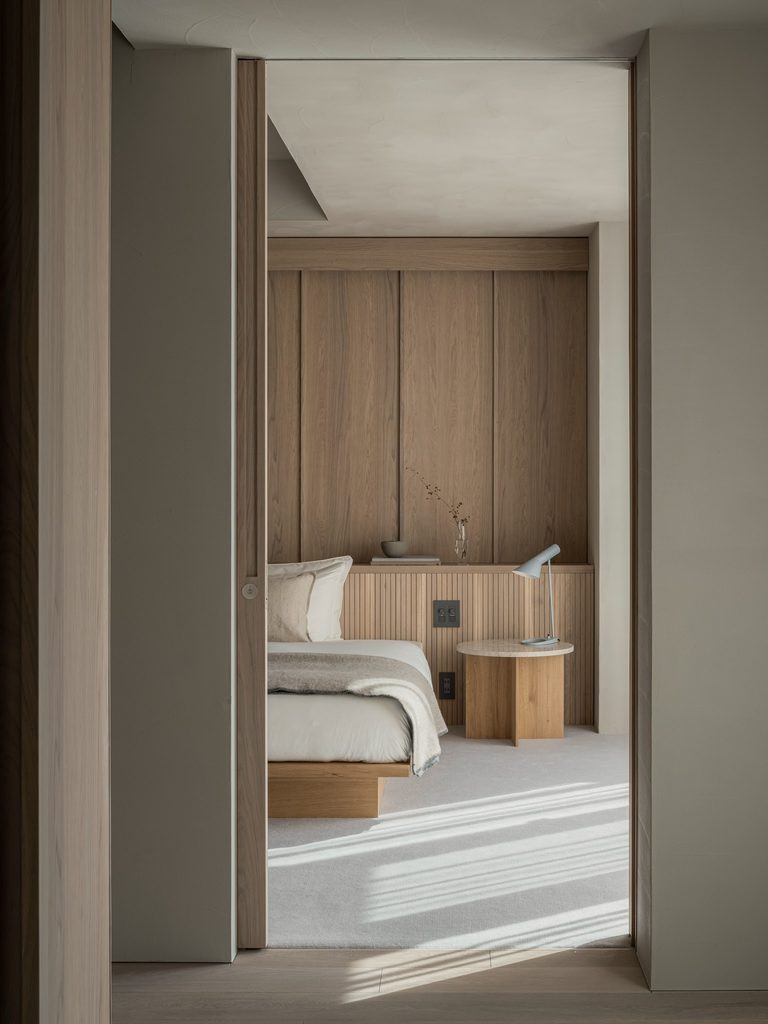
The view into this bedroom feels coherent before you reach the bed. Warm wood around the opening relates to the low frame, paneled back wall, and round bedside table inside.
Pale surfaces between those elements give the grain and clean lines room to show. You can apply that continuity during a renovation by reviewing door frames, furniture, and integrated interior finishes together instead of choosing each separately.
Existing pieces do not have to match perfectly; a related undertone is sufficient. Keep the transition clear so the doorway still works comfortably.
The small lamp and sparse bedside objects reinforce the room’s practical restraint. This is a useful way to connect a Japandi bedroom with its adjoining space through a shared palette.
Use One Tall Branching Accent Beside the Bed
Credits: Instagram
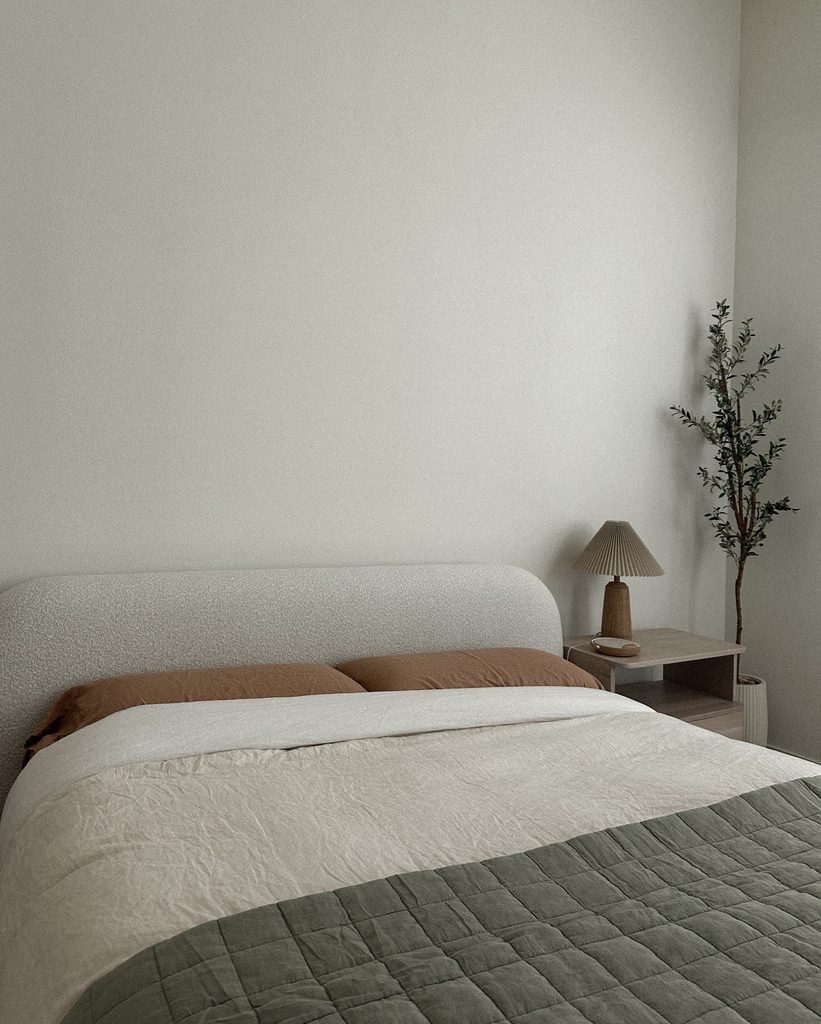
A slender branching accent gives the corner beside this bed height without needing a large piece of furniture. Its open outline rises above a small lamp and nightstand, balancing the low upholstered headboard and bare wall.
The green quilt and warm brown pillows connect the accent to the bedding without repeating its shape. Look for a form that leaves space around the leaves or branches rather than filling the whole corner.
If you choose a living plant, match it to the actual light and access for care; the photograph alone cannot establish those needs. A suitable artificial arrangement can serve the same visual purpose.
Keep the base stable and make sure foliage does not interfere with the bedside lighting fixture.
Display a Few Sculptural Objects on Light Shelves
Credits: Instagram
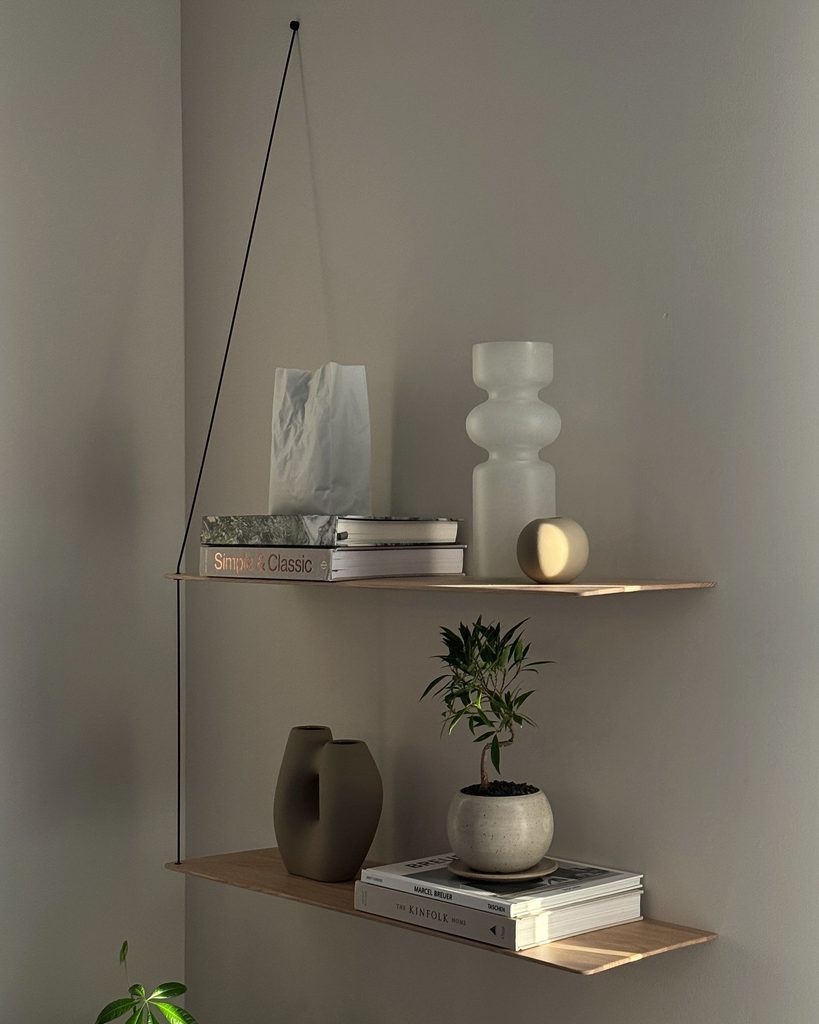
Personal objects can belong in a quiet bedroom when each has enough space around it. These two slim wood-tone shelves hold books, sculptural vessels, small art, and greenery, with the bed visible at the mirror’s edge.
The thin shelves and dark suspension wires keep the display lighter than a bulky bookcase. Try arranging a few pieces of different heights, then leave clear gaps instead of adding something to every opening.
Place heavier objects only where the shelf system and wall fixings are rated to support them. Avoid hanging a display over pillows or a busy walking route.
A restrained group of meaningful items can introduce personality while preserving the simple forms and material focus that make a Japandi bedroom appealing.