
A gray headboard can feel cool or heavy if every nearby finish shares the same tone. The Best Grey Headboard Bedroom Ideas show how warm accents, floral bedding, and beige paneling can bring contrast while keeping the bed visually grounded.
You’ll also find ways to mix patterns around a simple gray silhouette, give vertical channels room to stand out, and pair soft upholstery with rustic wood.
These approaches make it easier to work with the headboard and finishes you already have, rather than relying on a perfectly matching bedroom set.
Soften Charcoal With Warm Accents
Credits: Instagram
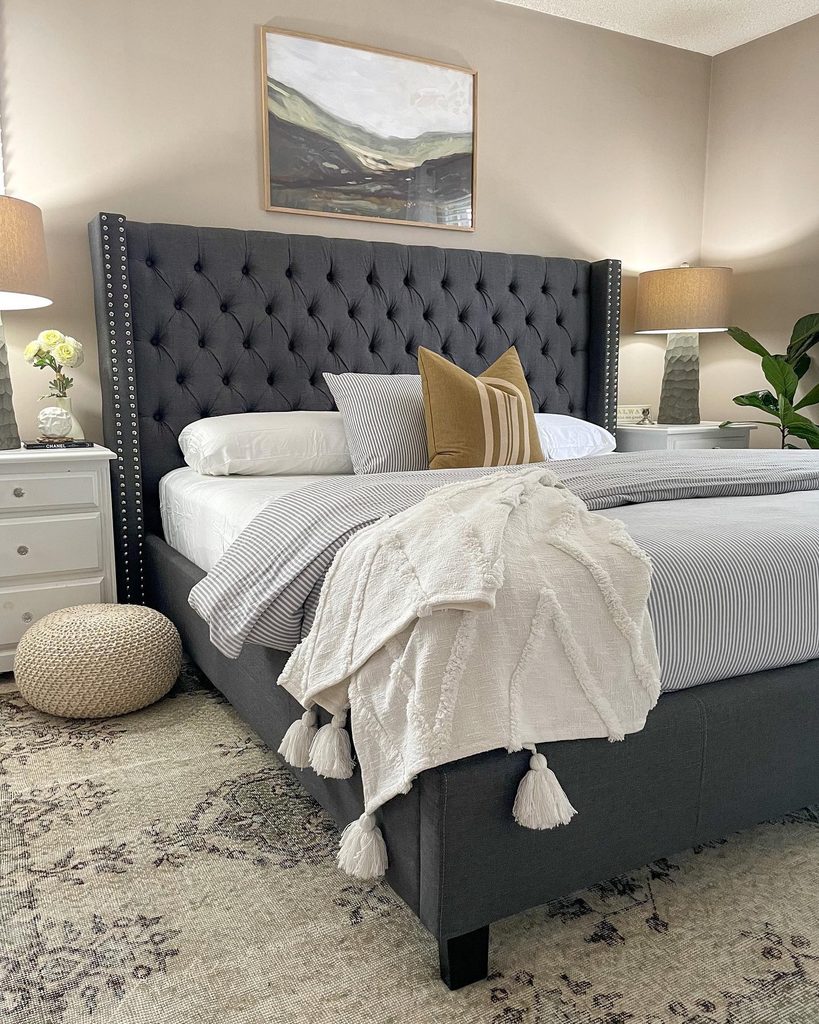
A little warmth keeps charcoal upholstery from making a bedroom feel severe. Here, a tall, diamond-tufted headboard has narrow studded wings, while a mustard pillow and cream tasseled throw soften its dark outline.
White nightstands give the bed room to stand out instead of surrounding it with equally heavy furniture. Try choosing one warm accent from a landscape print or rug, then repeating it sparingly across your bedding.
The result feels coordinated without requiring a matching set. Before buying a similarly tall headboard, check how much remains visible above your everyday pillows.
Leave the upper buttons and metallic edging exposed rather than hiding them behind several oversized cushions. A single smaller accent pillow can supply color while preserving the silhouette.
Pair Gray Tufting With Florals
Credits: Instagram
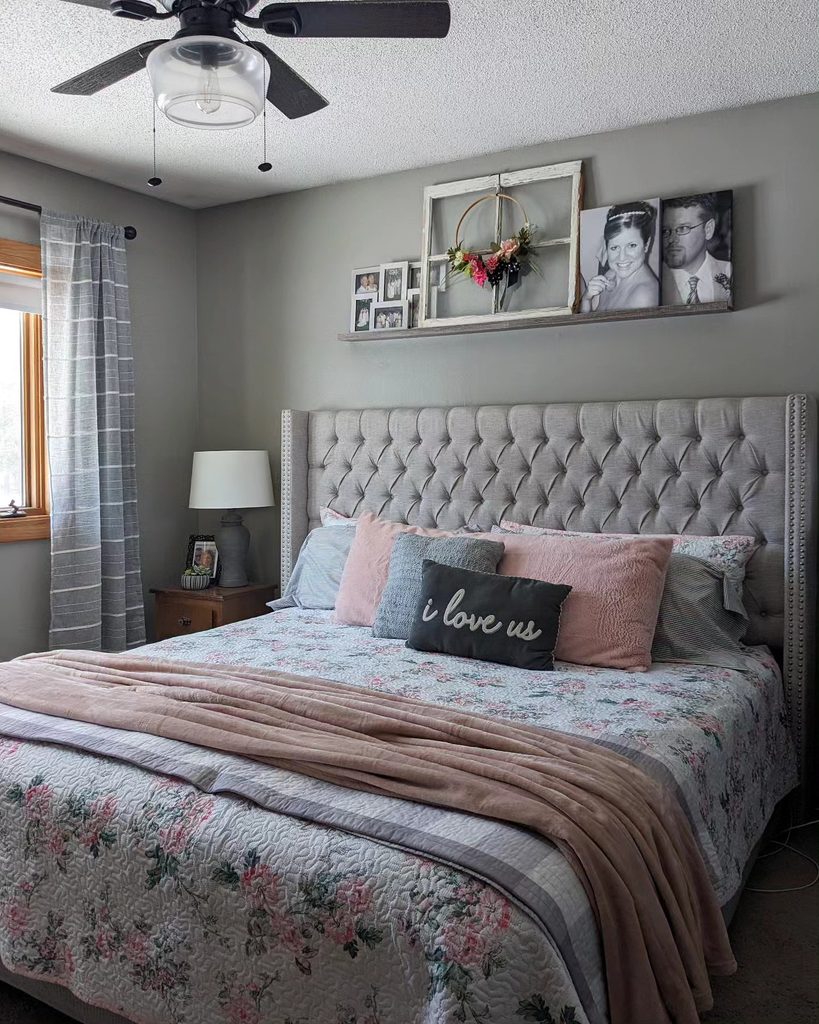
A patterned quilt feels grounded when a substantial neutral headboard supplies structure. This light gray design combines diamond tufting with neatly studded side wings, creating a tailored counterpoint to the pink botanical bedding.
Gray plaid curtains and darker walls keep the room connected, while the wood nightstand prevents everything from becoming one continuous cool surface.
For your own version, choose a floral print that already includes gray, then pull just one additional color into pillows or a throw. That small link makes older bedding and a newer upholstered bed look intentional together.
Keep the pillow arrangement low enough to reveal the headboard’s tufting. Personal photographs can finish the room, provided shelving and frames are securely installed above the sleeping area.
Balance Gray With Beige Paneling
Credits: Instagram
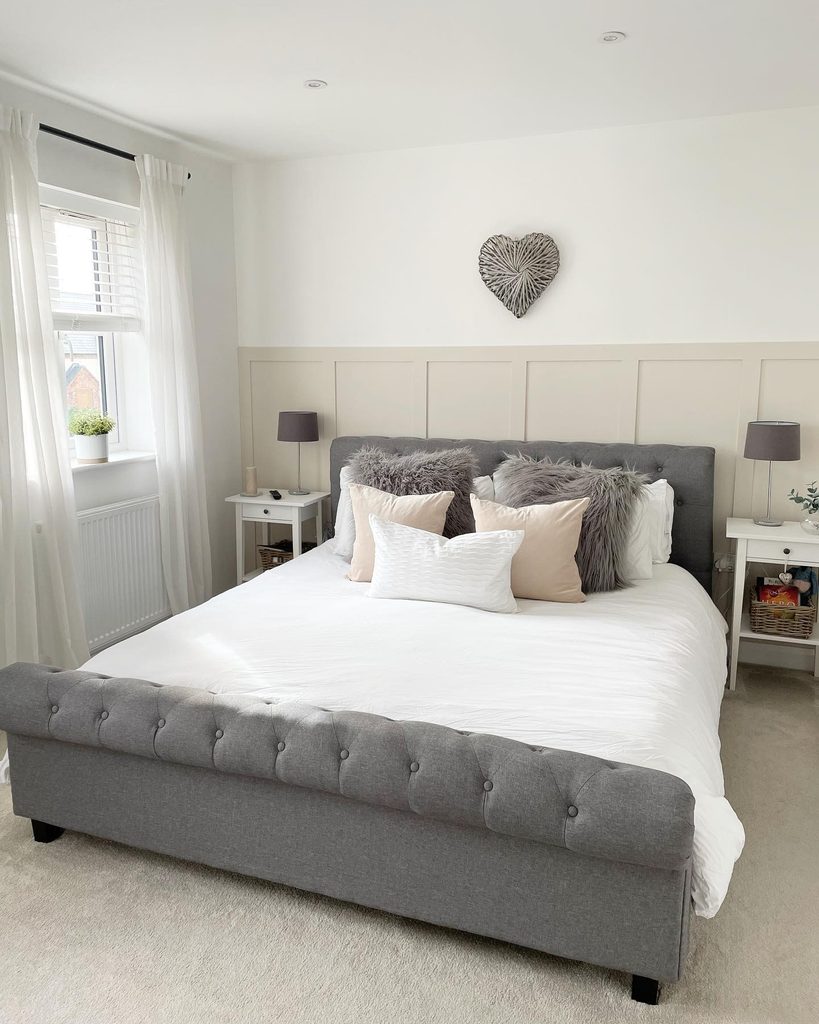
An existing gray bed can feel warmer with a softly colored, paneled backdrop like the one shown here. The headboard here sits below the paneling’s horizontal line, allowing both finishes to remain visible.
Matching gray lamps and pillows connect the upholstery to the rest of the space, while white bedding keeps the combination light.
You can borrow the palette without installing paneling: a warm neutral wall color and a few cream textiles can create a similar relationship.
Compare paint samples directly beside the upholstery before committing, since gray fabric may shift warmer or cooler throughout the day. Resist covering every surface with accessories.
This room’s straightforward arrangement gives the upholstered bed and quiet architectural lines enough presence to feel considered.
Layer Patterns Against Simple Gray
Credits: Instagram
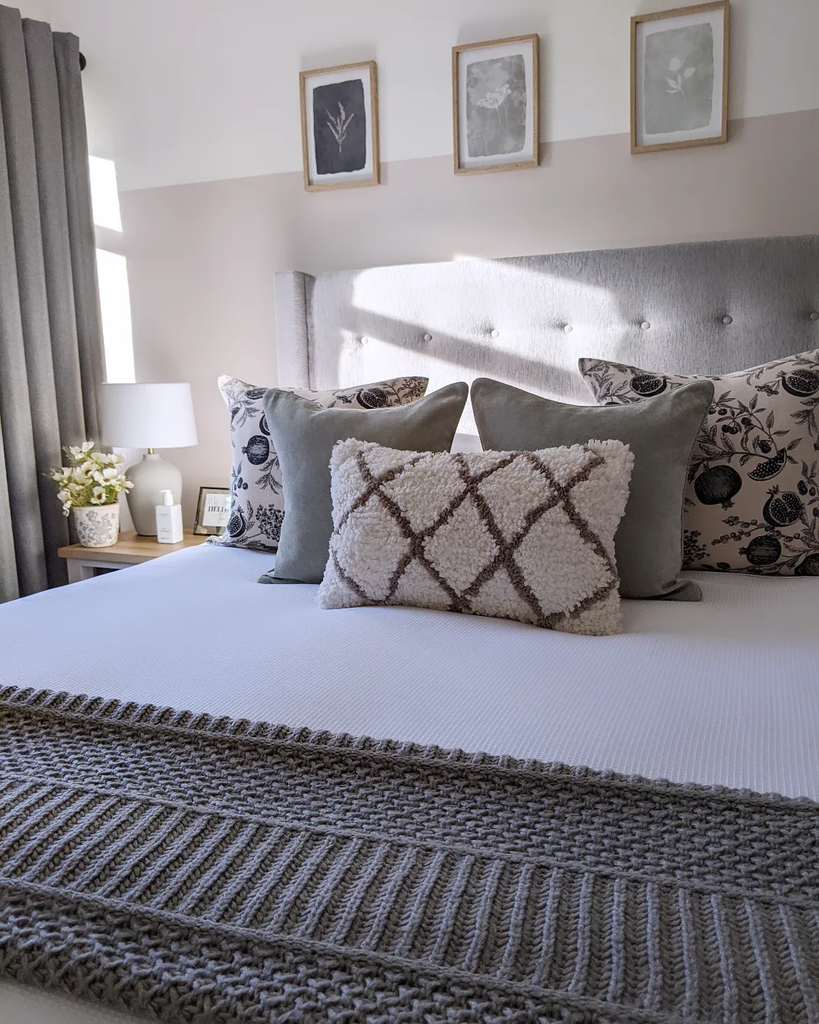
Pattern mixing becomes easier when the largest upholstered surface stays simple. A lightly buttoned gray headboard supports botanical pillows, muted solid cushions, and a textured diamond-pattern lumbar without adding another busy motif.
The chunky knitted throw introduces a larger texture at the foot, balancing the smaller details near the pillows. Start with patterns that share a limited palette, then vary their scale rather than choosing several equally dense prints.
Leave a little white bedding visible between the different layers so each one remains readable. Three framed botanical images repeat the room’s natural theme above the bed.
If your headboard is similar, keep artwork comfortably separated from its top edge instead of squeezing everything into one crowded band across the wall.
Give Channel Tufting Breathing Room
Credits: Instagram
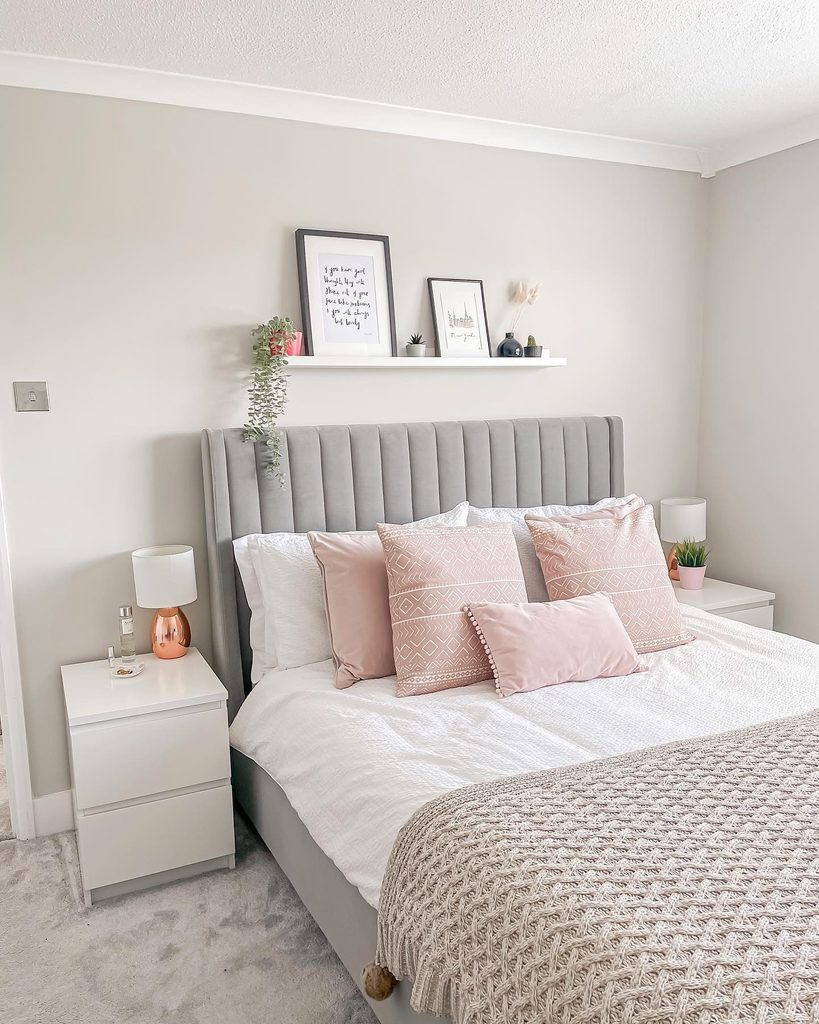
Vertical channels offer enough detail that the surrounding wall can stay relatively quiet. In this bedroom, a medium gray headboard rises above blush pillows, with a slim picture ledge floating farther overhead.
White nightstands and compact lamps keep the arrangement light, while a beige knitted throw adds warmth without competing with the upholstery’s repeated lines. To adapt the look, decide whether your headboard or your artwork should be the stronger feature.
A narrow shelf with a few carefully spaced pieces suits this restrained approach better than a densely packed gallery. Keep trailing plants away from the pillow area, and secure anything mounted above the bed properly.
The most useful takeaway is the generous blank space that separates each visual layer.
Let Gray Ground Dusty Pink
Credits: Instagram
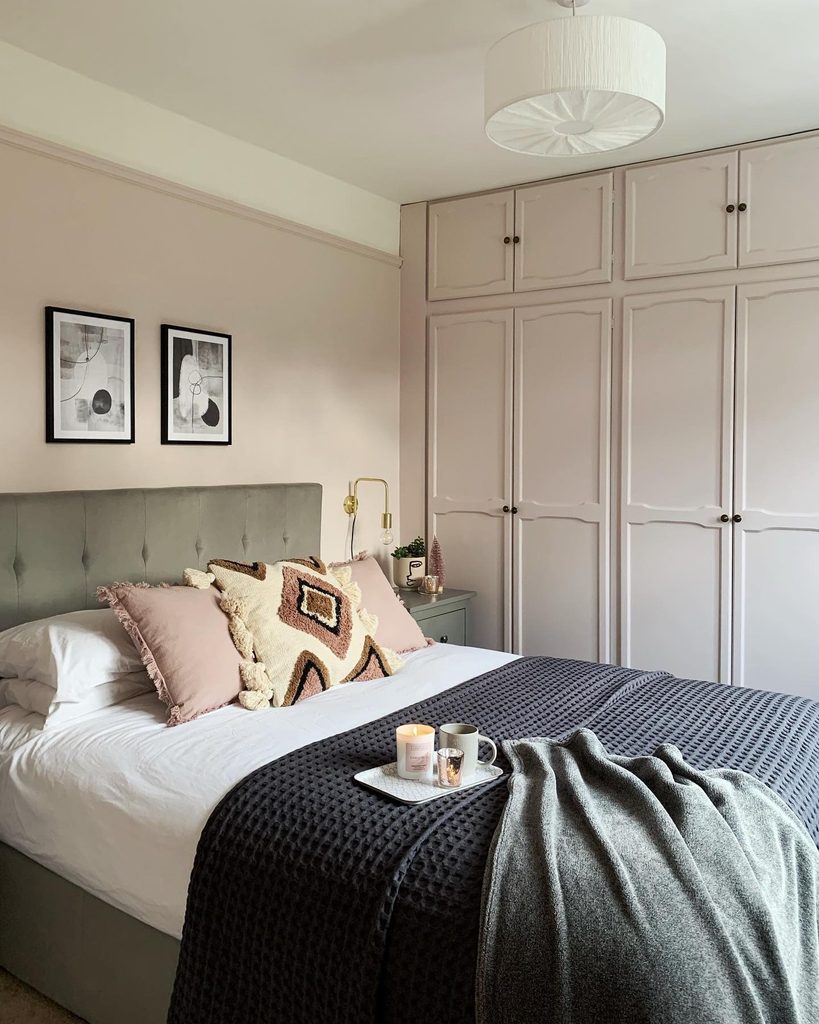
Built-in closets surround this bed, so the understated gray headboard keeps its outline simple. Its rectangular outline and small buttons keep the bed composed beside tall paneled closets, while darker bedding adds definition below.
The patterned center pillow provides a little personality without turning the whole room into a collection of competing prints. If you are working with built-in storage, choose a headboard whose height leaves the surrounding architecture easy to read.
Wall-mounted bedside lighting can also reduce clutter where cabinet doors or narrow gaps limit furniture placement. Test pink and gray together under your actual bedroom lighting before choosing either finish.
A warm gray can connect the two comfortably, particularly when white sheets create a clean break between them.
Echo Curves With Tailored Bedding
Credits: Instagram
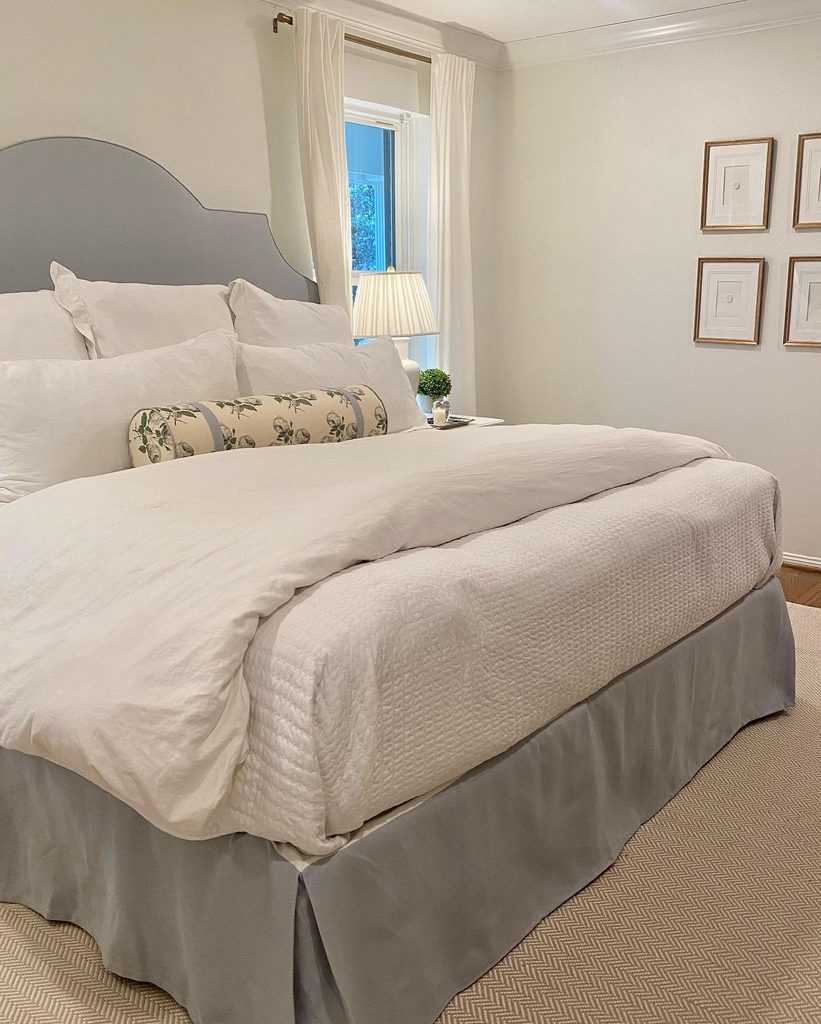
Sometimes the outline matters more than tufting or decorative hardware. This smooth gray headboard uses a broad arch and curved shoulders to create a traditional focal point, with a matching bed skirt carrying the color down to the floor.
White bedding lets that silhouette stay prominent, while a small floral bolster contributes pattern in a controlled dose. For a similar bedroom, repeat the headboard color in one lower element rather than spreading it across every pillow.
That creates a complete composition without making the bed visually heavy. Check the curve against nearby windows and artwork before ordering, especially if the headboard rises high.
Simple pillows are particularly helpful here because they preserve the graceful shape instead of concealing its edges.
Extend Channels Beyond The Mattress
Credits: Instagram
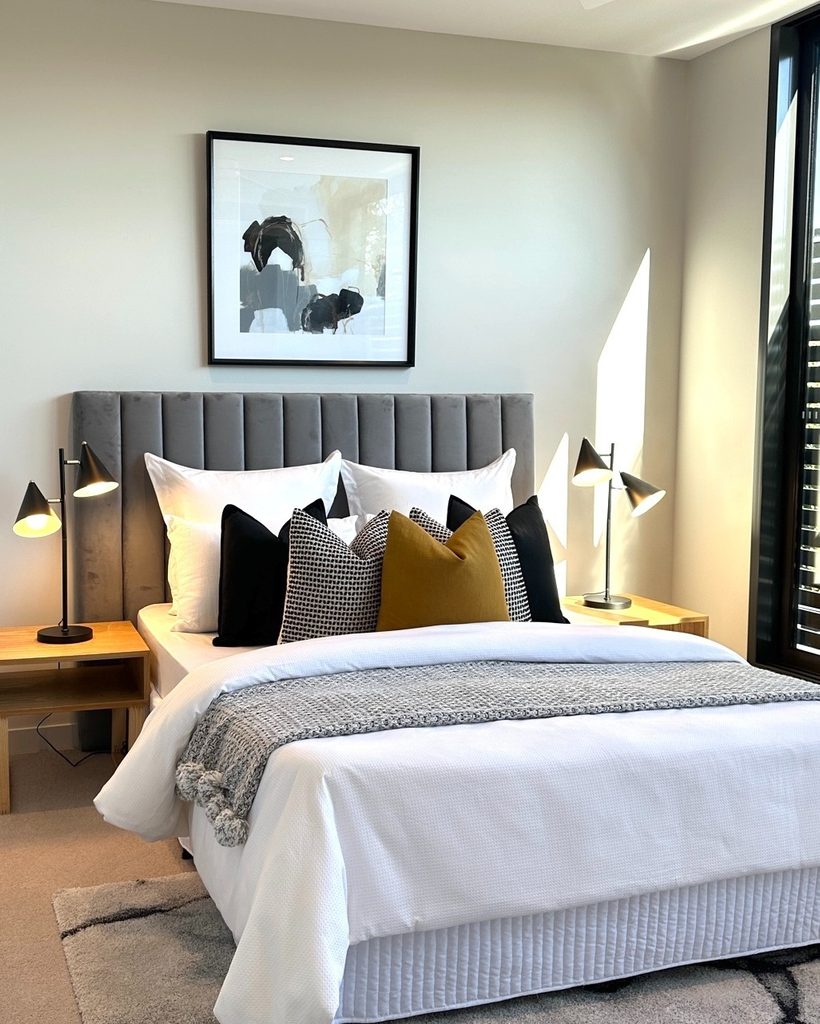
Width can make a headboard feel architectural without requiring an entire upholstered wall. This gray channel design stretches toward the nightstands, bringing the bed, lamps, and furniture into one connected arrangement.
Warm wood bedside tables and black lamps add contrast, while mustard and checked pillows prevent the palette from becoming overly uniform.
Measure the complete furniture grouping before choosing an extended headboard, including switches, outlets, and the space needed beside each table. A wider design should support the layout rather than force the nightstands into awkward positions.
Keep the bedding relatively simple so the vertical channels remain the main texture. Repeating the gray in a folded throw is enough to link the layers without losing the distinction between each element.
Set Soft Upholstery Beside Rustic Wood
Credits: Instagram
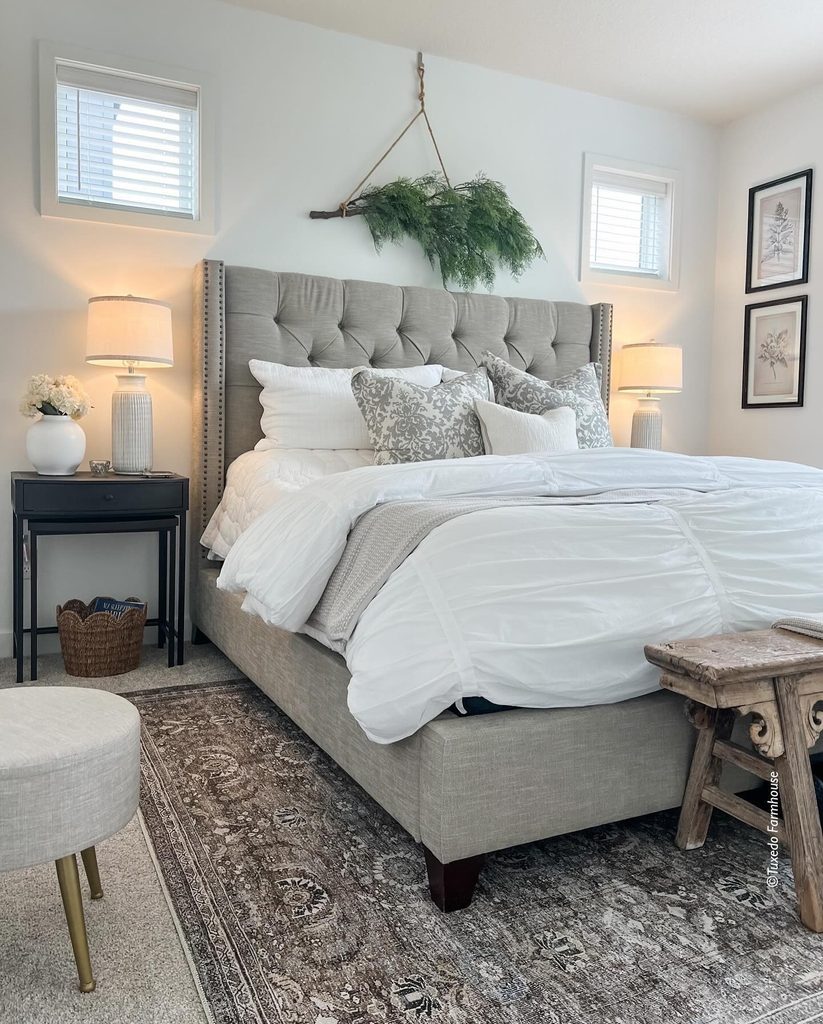
Weathered wood and upholstered furniture can balance each other beautifully. The substantial gray tufted bed in this room feels softer beside a rustic bench, while the bench’s uneven character keeps the upholstery from looking too formal.
White bedding provides a bright middle layer, and dark bedside tables anchor the edges. The creator identifies the fabric color as a warm, taupey gray, which explains why it sits comfortably with brown tones in the rug.
When combining these finishes, compare their undertones rather than trying to make them match exactly. Choose one noticeably rougher texture and let the rest stay quieter.
A few leafy details can complete the relaxed effect without turning the bedroom into a display of unrelated decorative farmhouse accessories.
Frame Colorful Art With Quiet Gray
Credits: Instagram
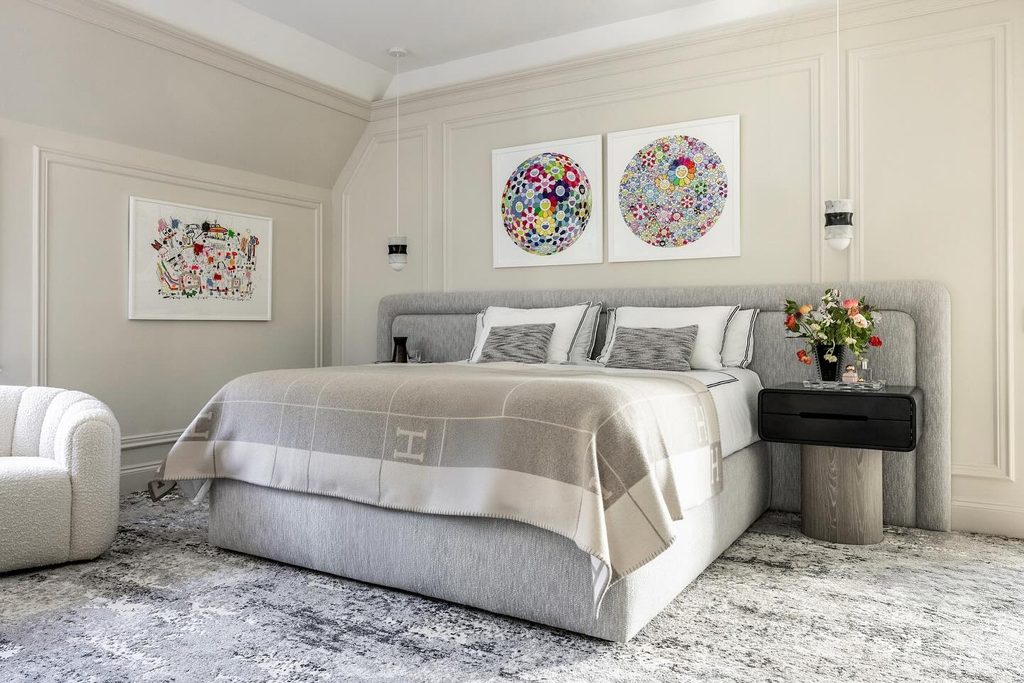
Expressive artwork gains clarity when the bed beneath it remains understated. This broad gray headboard has a nested, softly rounded profile, creating depth without relying on buttons or bold fabric patterns.
The colorful circular artworks above become the liveliest part of the composition, supported by otherwise quiet bedding and pale paneled walls. Consider this approach if you already own art that you want to emphasize.
Pull a subtle gray from the artwork into the upholstery, then leave stronger colors mostly within the frames. The headboard does not need to match the pictures’ width exactly, but the group should feel balanced from across the room.
A dark bedside element can sharpen the arrangement and keep the pale surfaces from blending together.
Layer Two Headboard Scales
Credits: Instagram
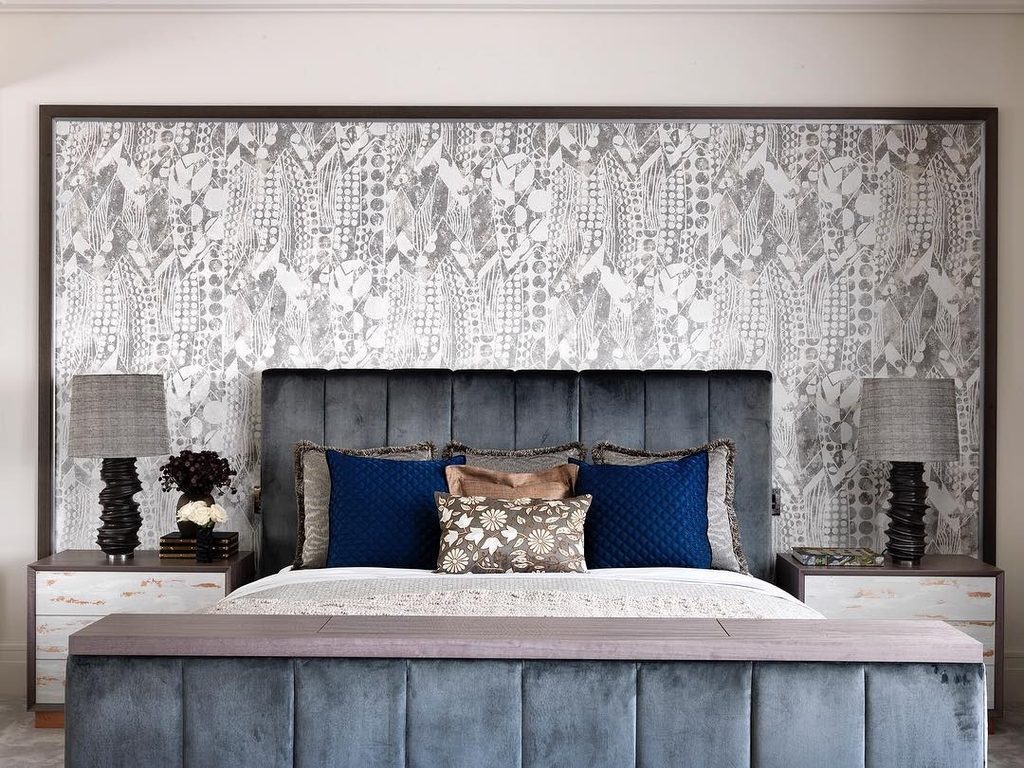
Contrasting design scales give this headboard arrangement its distinctive character. A large framed panel in gray-and-white patterned fabric forms the background, while a smaller upholstered headboard introduces another layer in front.
The designer identifies the backing as fabric rather than wallpaper, an important distinction if you want to recreate its upholstered appearance.
Use this idea when a standard bed seems too small against a broad wall, but a fully patterned bed would feel overwhelming. Keep the surrounding palette controlled so the layered outlines remain understandable.
Before commissioning anything, map the total height and width on the wall, including the bedside furniture. A quieter front upholstery allows the patterned backing to read clearly without demanding equally decorative bedding or additional artwork.
Lighten A Substantial Upholstered Bed
Credits: Instagram
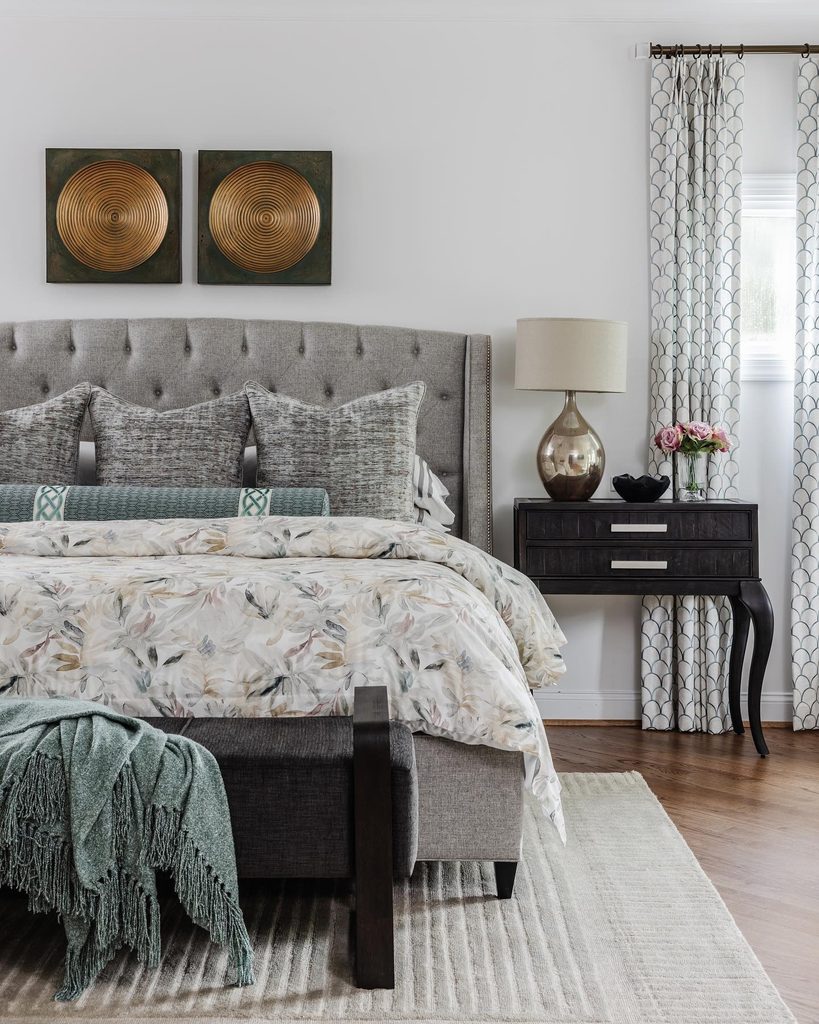
Open space beneath bedside furniture can offset the visual weight of a large upholstered bed. Here, a gray tufted headboard sits beside a dark nightstand with long, curved legs, giving the composition a lighter edge.
Botanical bedding, a green bolster, and a fringed throw soften the tailored upholstery, while metallic wall accents add a little warmth above. If your bed already feels substantial, consider changing the nearby furniture before replacing the headboard.
A table with visible floor underneath often feels less bulky than a solid cabinet of similar width. Keep practical needs in mind, including usable surface area and accessible storage.
This arrangement works because the headboard provides structure while the surrounding shapes and textures introduce movement around that foundation.
Set Pale Gray Against Muted Green
Credits: Instagram
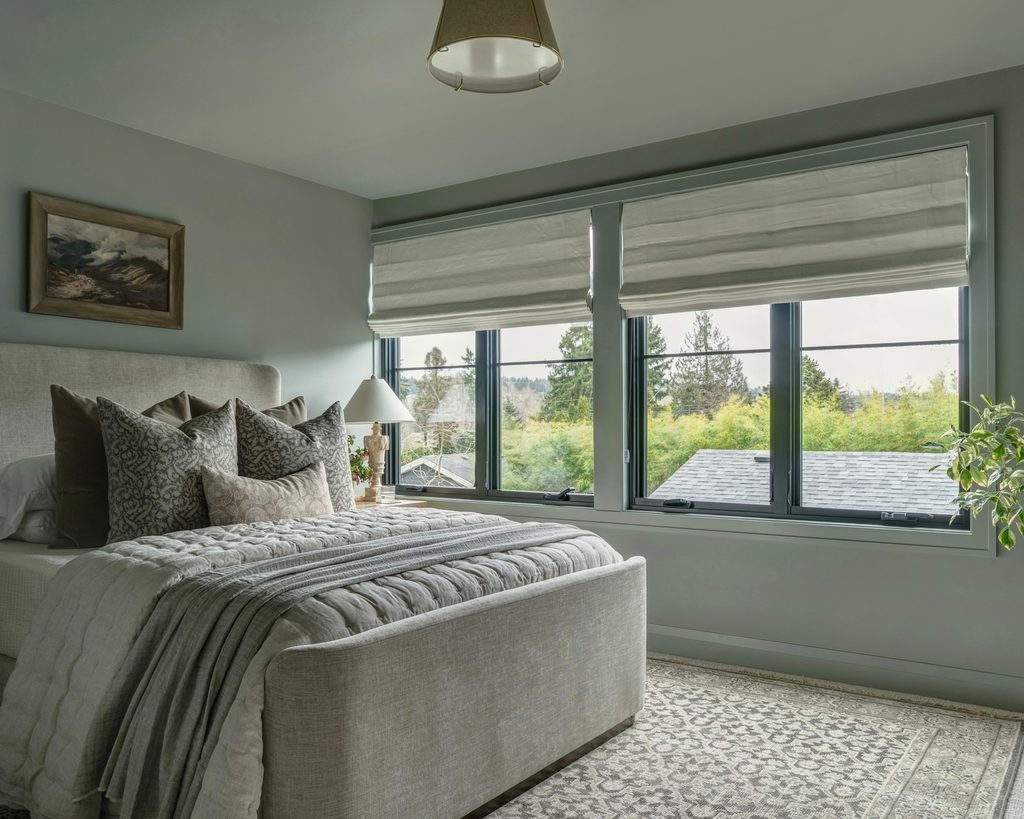
Color can surround a neutral bed without swallowing it. In this guest room, muted green covers the walls, window trim, and ceiling, while a pale gray headboard creates a gentle interruption.
Rounded corners soften its simple outline, and the matching upholstered footboard gives the bed a substantial presence. Dark green pillows connect it to the painted surfaces without making every textile identical.
To try a similarly immersive palette, test your upholstery beside a large painted sample in both daylight and lamplight. Keep sheets and at least one prominent accessory light so the room retains contrast.
A restrained landscape picture works well here because it adds another shade of green without breaking the calm relationship between the bed and its surroundings.
Pair Large Wall Grids With Soft Panels
Credits: Instagram
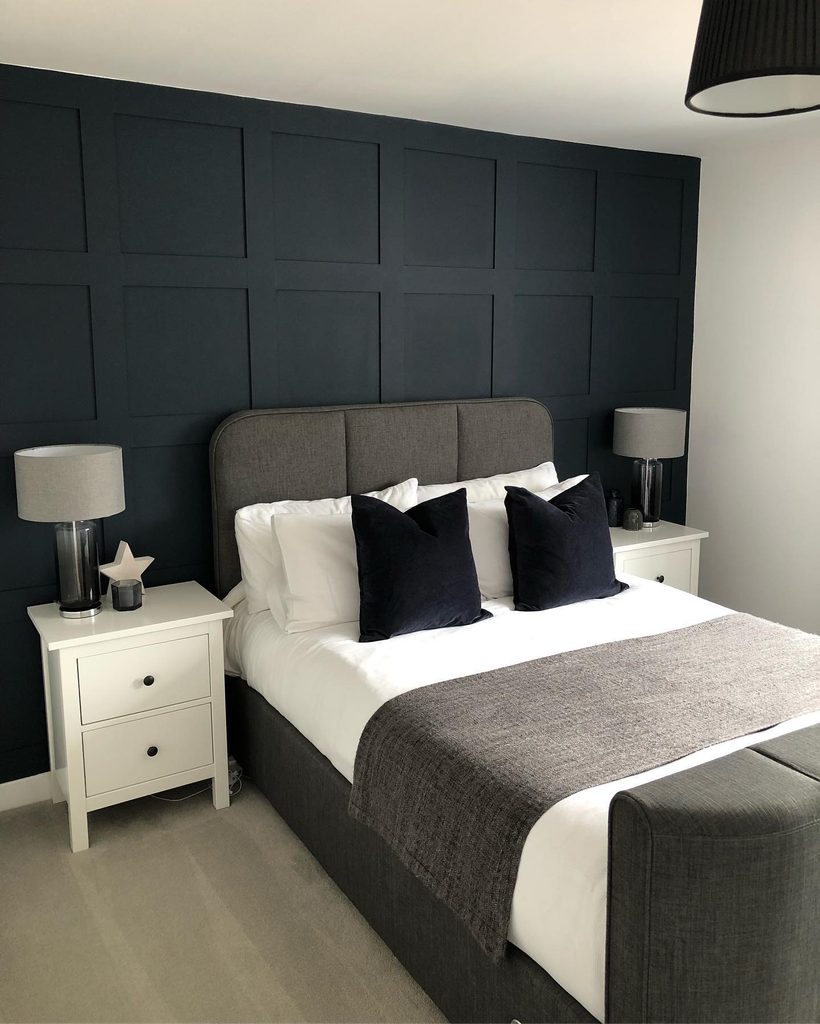
Three broad upholstered sections make this headboard feel softer than the navy grid behind it. Their rounded upper corners interrupt the wall’s rigid geometry, giving the bed its own identity despite the repeated vertical lines.
White bedding and pale nightstands brighten the arrangement, while darker pillows connect the two main surfaces. If you’re planning paneling around an existing bed, sketch both outlines together before choosing the spacing.
The wall divisions should look deliberate beside the headboard rather than accidentally grazing its edges. This combination also benefits from a limited accessory palette: gray lampshades and a folded gray blanket repeat the upholstery without introducing another pattern.
Let the contrast between crisp architectural lines and padded shapes supply most of the detail.
Outline A Ribbed Headboard With Light
Credits: Instagram
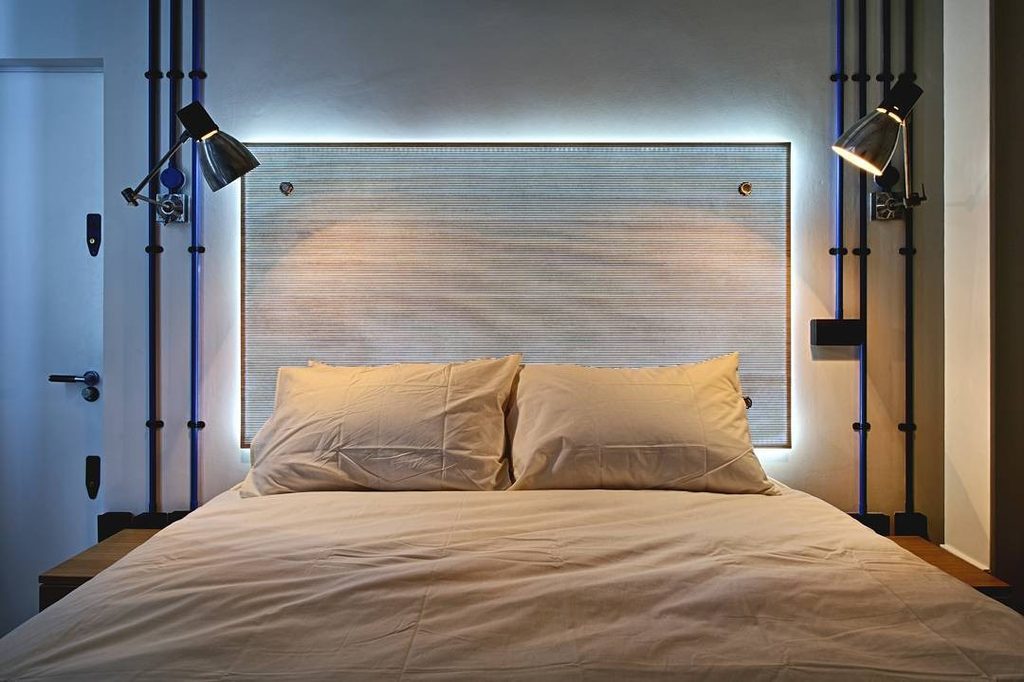
An illuminated outline turns this bedroom’s headboard into a feature after dark. The gray ribbed panel sits against a plain white wall, with a cool glow tracing its perimeter and adjustable reading lights positioned nearby.
Exposed pipework strengthens the room’s industrial character, but the white bedding keeps the arrangement from feeling visually crowded. For a gentler interpretation, explore a dimmable backlight in a warmer tone and keep the light source concealed from the pillow position.
Treat decorative glow and reading light as separate needs when planning controls. Any wiring should be safely installed for the chosen fitting and wall.
You can borrow the layered lighting idea without copying every industrial detail or covering the entire bedroom in matching gray finishes.
Turn Upholstered Channels Sideways
Credits: Instagram
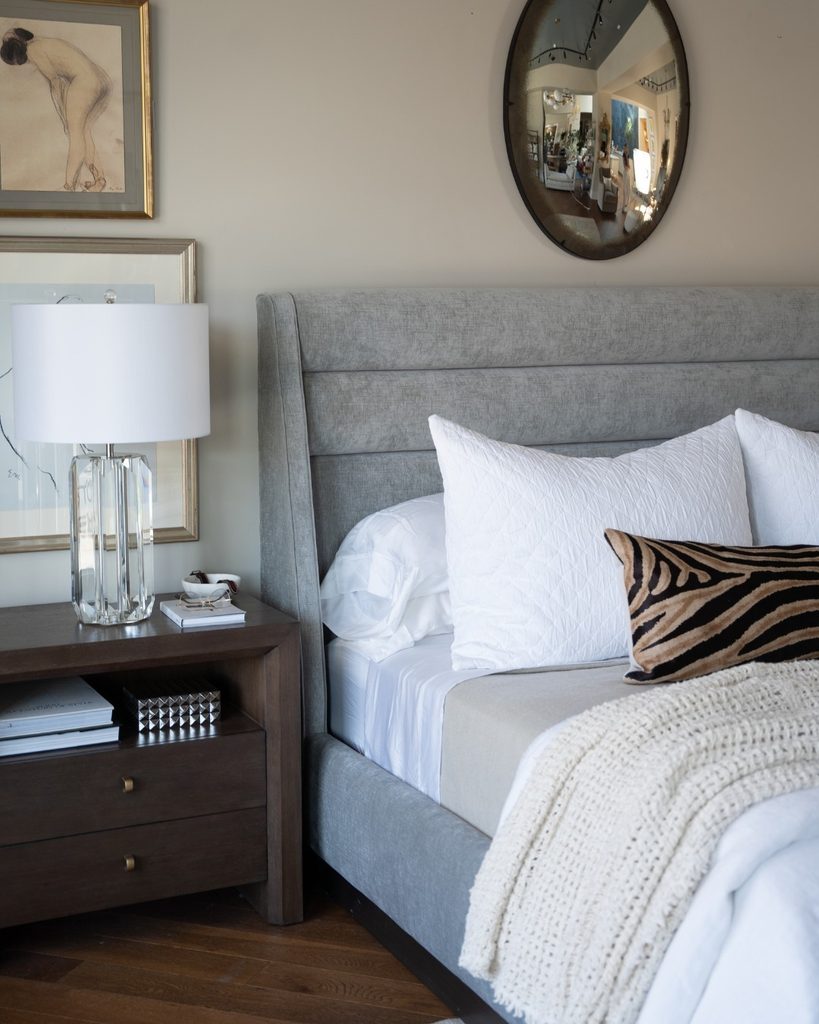
Long upholstered bands draw the eye across this bed rather than up the wall. The light gray headboard combines horizontal channels with narrow wings, creating a sheltered shape that feels crisp.
White pillows show off those lines, while one striped accent cushion adds a livelier pattern near the center. A dark wood nightstand provides contrast without requiring dark bedding as well.
When choosing a similar design, check the depth of its side wings against your mattress and nearby table: both should remain comfortable to reach. Keep tall accessories outside the wing’s outline so the silhouette stays readable.
A clear lamp is useful here because its base adds presence without becoming another solid block beside the upholstered bed and surrounding furniture.
Combine Gray Upholstery With A Wood Frame
Credits: Instagram
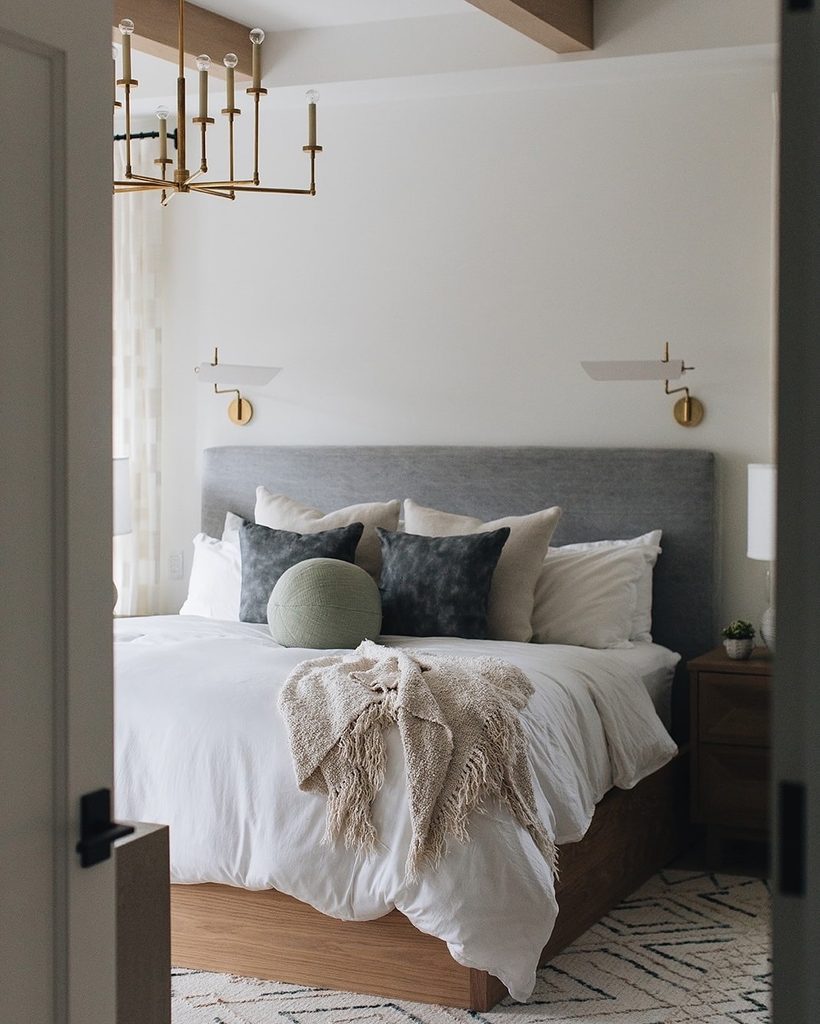
Two different finishes can make a bed feel more collected than a fully matched suite. Here, a straightforward gray upholstered headboard sits above a warm wood frame, balancing a soft backrest with a clearly defined base.
White bedding preserves the contrast, and wood nightstands repeat the frame’s warmth. The relatively low headboard also leaves room for wall sconces to read as separate features.
If you’re combining pieces yourself, confirm their compatibility instead of assuming every headboard fits every frame. Compare the visible wood tones together, then decide whether you want a close match or an intentional contrast.
A rounded accent pillow, like the one shown, can soften the rectangular composition without requiring another large curved piece in the bedroom layout.
Partner Gray With Cognac Leather
Credits: Instagram
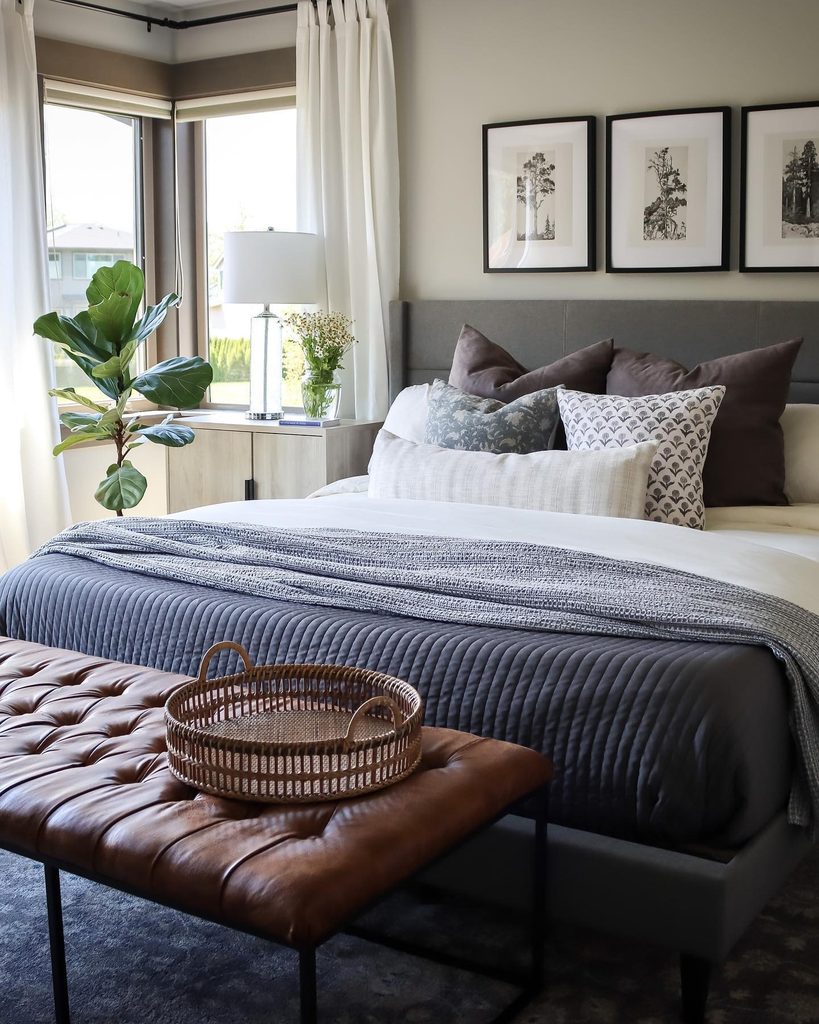
Rich brown leather brings a different kind of warmth to a gray upholstered bed. This bedroom places a tufted cognac bench at the foot, where its smooth surface contrasts with the quilt and soft headboard.
Dark legs keep the bench visually connected to the black picture frames overhead. Rather than matching every brown item exactly, look for a shared warm undertone between a bench, pillows, and nearby wood furniture.
Leave enough space around the foot of the bed for comfortable movement, especially when adding seating to an existing layout. The low, simple headboard helps the artwork remain prominent without competing with it.
White curtains and light walls keep the heavier gray and brown pieces from dominating this airy bedroom arrangement.
Trace A Curved Headboard With Silver
Credits: Instagram
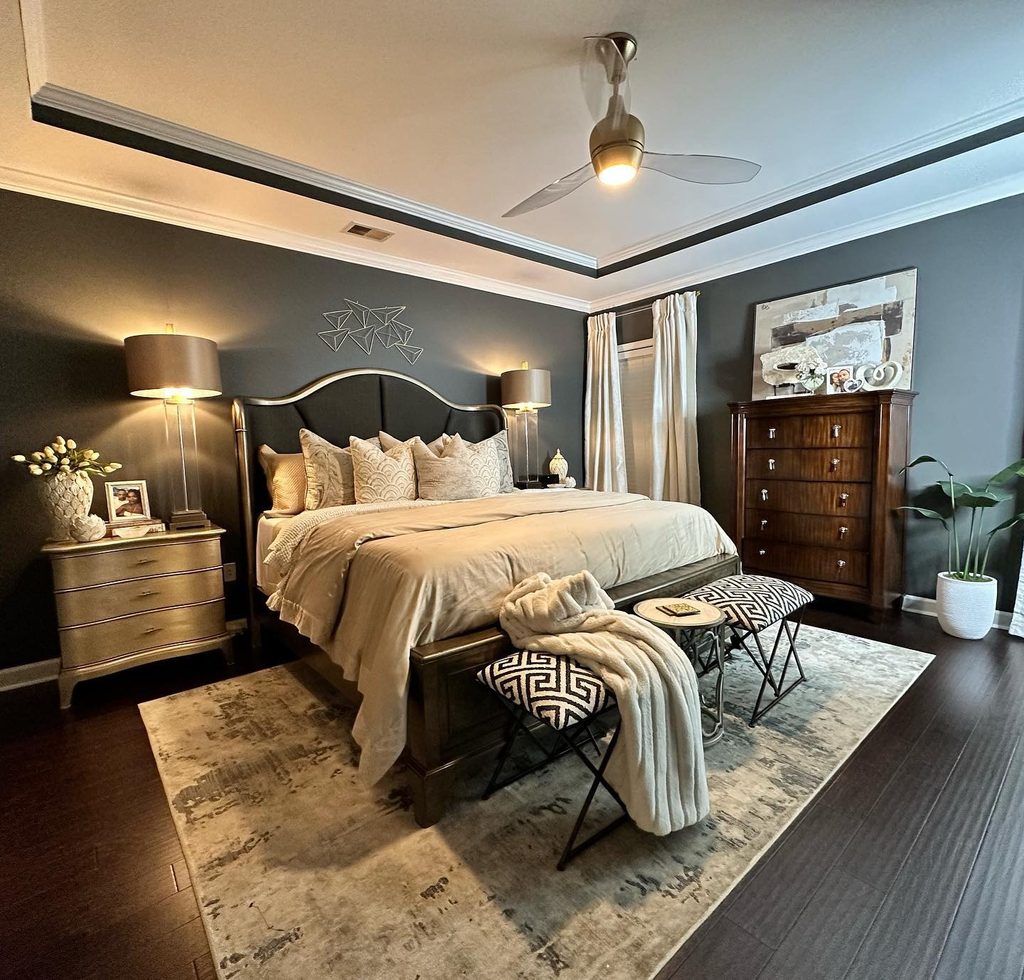
A sweeping silhouette gives charcoal upholstery a more decorative personality. This headboard’s curved outline and fan-like sections are emphasized by reflective silver-colored trim, which catches light around the darker center.
A curving nightstand and tall lamp continue the room’s polished mood, while patterned pillows introduce smaller details. The useful lesson is to choose one shape and let nearby pieces echo it selectively.
You don’t need every furnishing to have a metallic finish for the outline to feel connected. Keep bedding relatively light so the curved top remains easy to distinguish, and consider how lamps will reflect in shiny surfaces from the bed.
If glare becomes distracting, reposition the light or choose a shade that directs illumination away from the trim.
Give A Tall Headboard A Dark Backdrop
Credits: Instagram
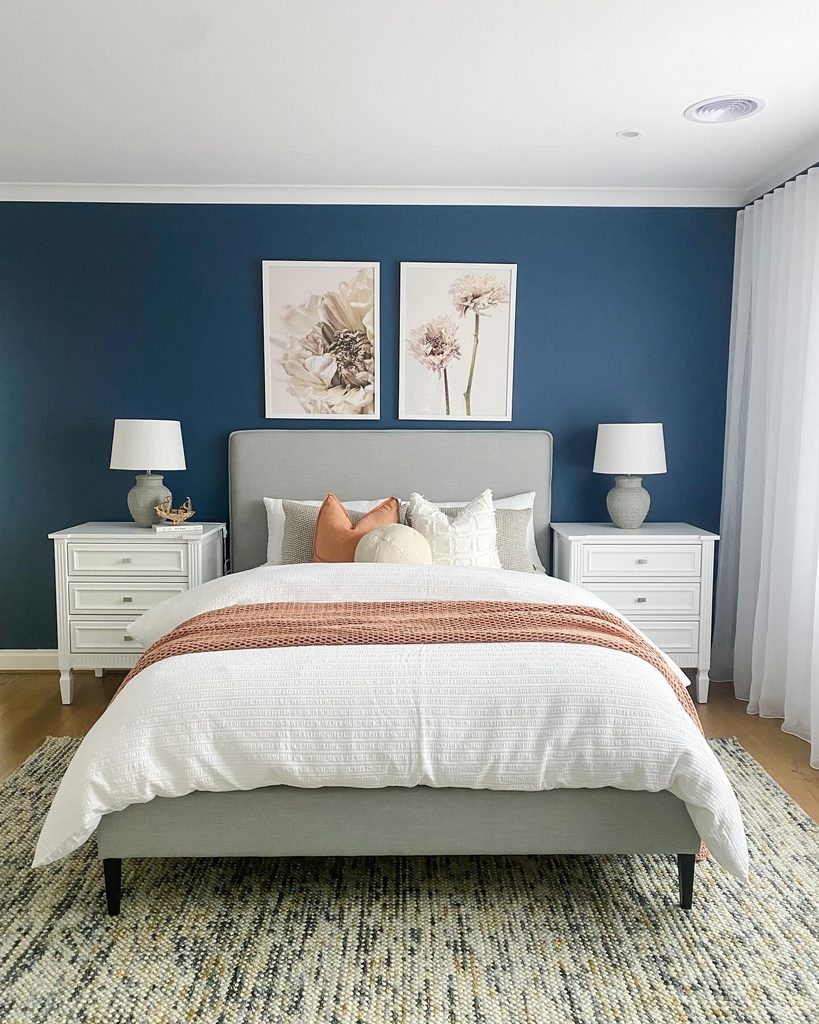
Height becomes easier to appreciate when the wall offers enough contrast. In this bedroom, a tall gray upholstered headboard stands against navy paint, while white drapes and bedside furniture prevent the dark backdrop from taking over.
The gray bedbase repeats the upholstery below the white bedding, making the bed feel like one coherent piece. Before choosing a similar headboard, measure from the floor rather than judging its height in a product photograph.
Allow for your mattress, pillows, and the wall area that you want to remain visible. Warm accent textiles can break up the cool palette without changing the furniture.
Keep those accents limited so the strongest relationship remains the gray bed, its deep blue backdrop, and the surrounding whites.