
A dark wall behind the bed can feel inviting rather than heavy when lighter finishes and warm accents balance it.
Dark Blue Bedroom Ideas can take shape through details such as navy paneling topped with a picture ledge, a blue bed wall defined by broad rectangular molding, or white botanical shapes against a deep blue backdrop.
The palette also works with honey-colored wood, soft peach textiles, and pale wallpaper, each bringing a different kind of contrast. These approaches help you choose how much blue to use and what to pair with it.
Before settling on a shade or pattern, compare it with the bed and nearby finishes.
Finish Navy Paneling With a Picture Ledge
Credits: Instagram
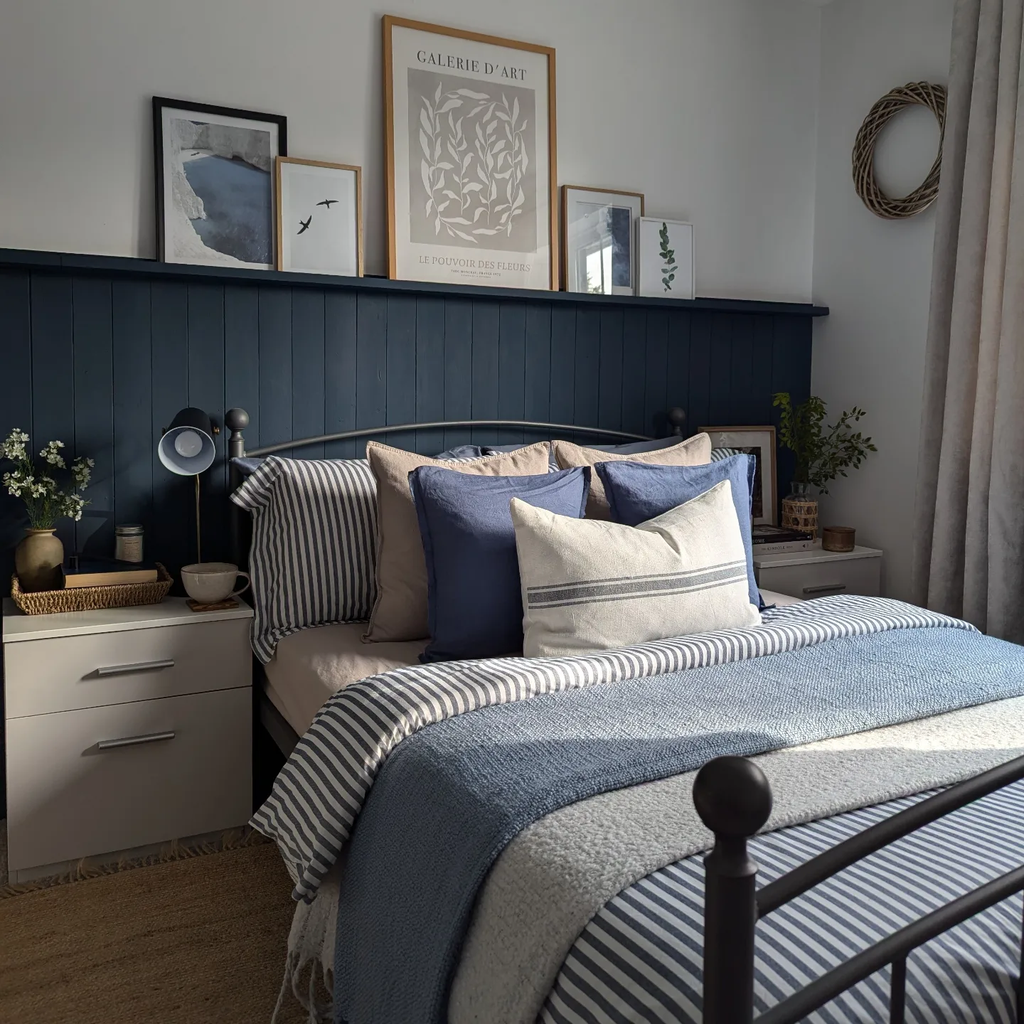
A narrow ledge turns the top of this navy paneling into a place for a restrained picture display. The pale wall above separates the frames from the darker boards, while an open metal bed leaves their vertical lines visible below.
This is useful when you want dark blue behind the bed without painting the entire wall. Plan the panel height around the headboard and your usual pillows, then compare it with nearby furniture.
Keep the ledge shallow enough that it does not intrude over the sleeping area. Secure frames appropriately rather than relying on a leaning arrangement alone.
Blue cushions and striped bedding connect with the painted surface. Leave gaps between the pictures so the ledge remains an orderly accent.
Contrast a Deep Blue Recess With Honey Colored Wood
Credits: Instagram
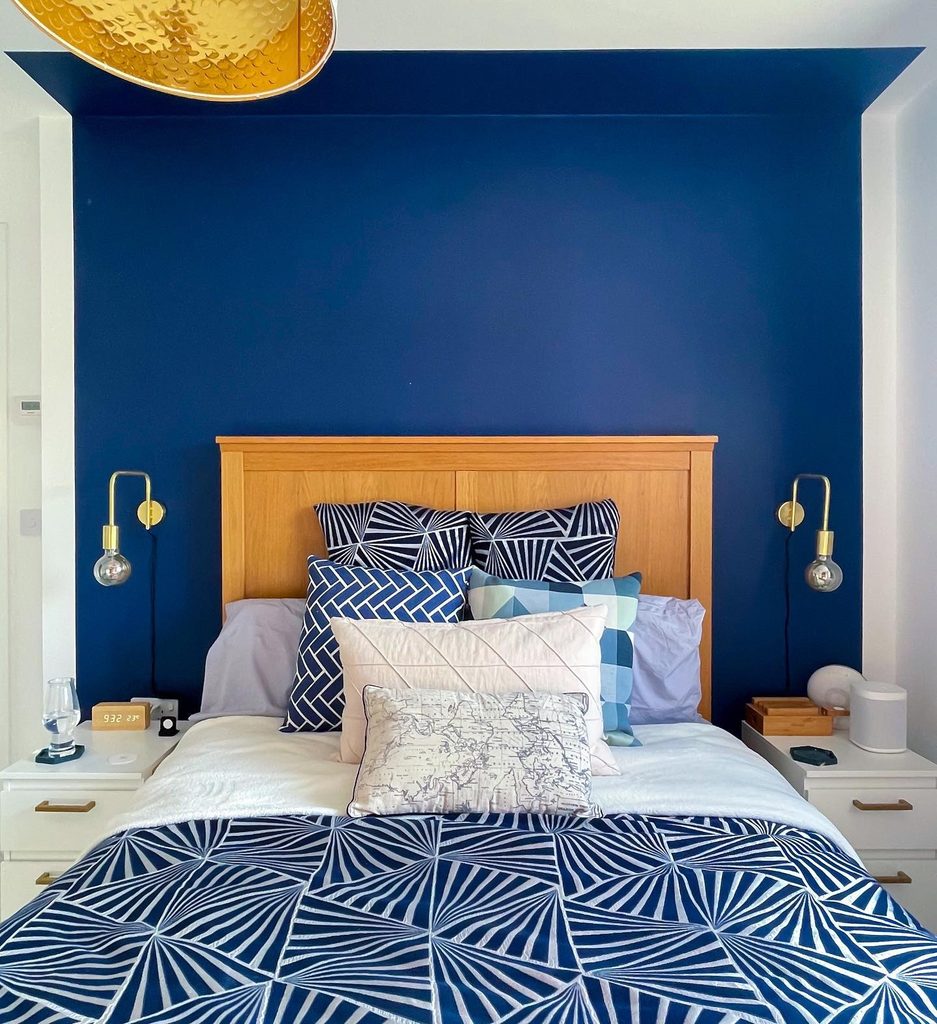
Warm timber gives the bed a clear outline against this saturated blue recess. The headboard’s simple rectangular shape interrupts the painted surface, while navy geometric bedding adds a smaller pattern below.
White bedside cabinets keep the edges light, and brass colored fittings repeat the wood’s warmth. Try this combination when existing furniture feels too orange beside pale paint; a deeper blue may make its finish look more intentional.
Test the proposed color alongside the headboard before committing. Keep surrounding walls quieter if the recess should remain the main feature.
Choose just a few related bedding patterns rather than covering every surface with geometry. The contrast between warm wood and cool paint supplies much of the room’s character on its own.
Use a Strong Blue Upholstered Bed With Pale Wallpaper
Credits: Instagram
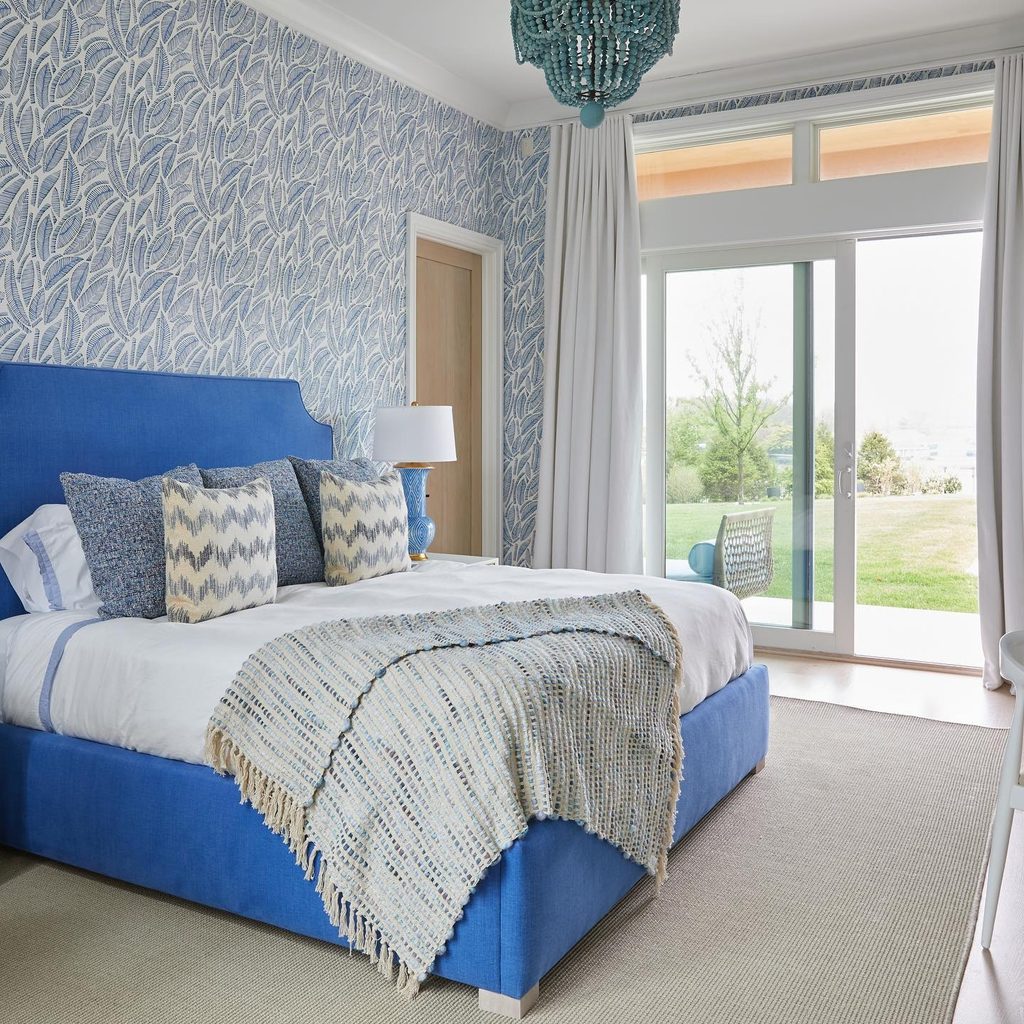
The upholstered bed supplies the strongest blue in this light bedroom, giving both the headboard and base a clear outline. Pale patterned wallpaper keeps the surrounding walls interesting without competing with that larger solid shape.
White bedding and curtains provide a calm break around the color. This is a brighter royal blue interpretation of a deep blue bedroom, useful when navy paint would feel too heavy.
Compare upholstery samples with the wallpaper under the room’s actual daylight before deciding. Check the bed’s full dimensions rather than mattress size alone, since padded frames extend beyond the sleeping surface.
Keep other large furniture relatively quiet. Smaller patterned pillows can connect the blue bed with its surroundings while leaving the upholstery visibly distinct.
Give a Blue Bed Wall a Broad Rectangular Grid
Credits: Instagram
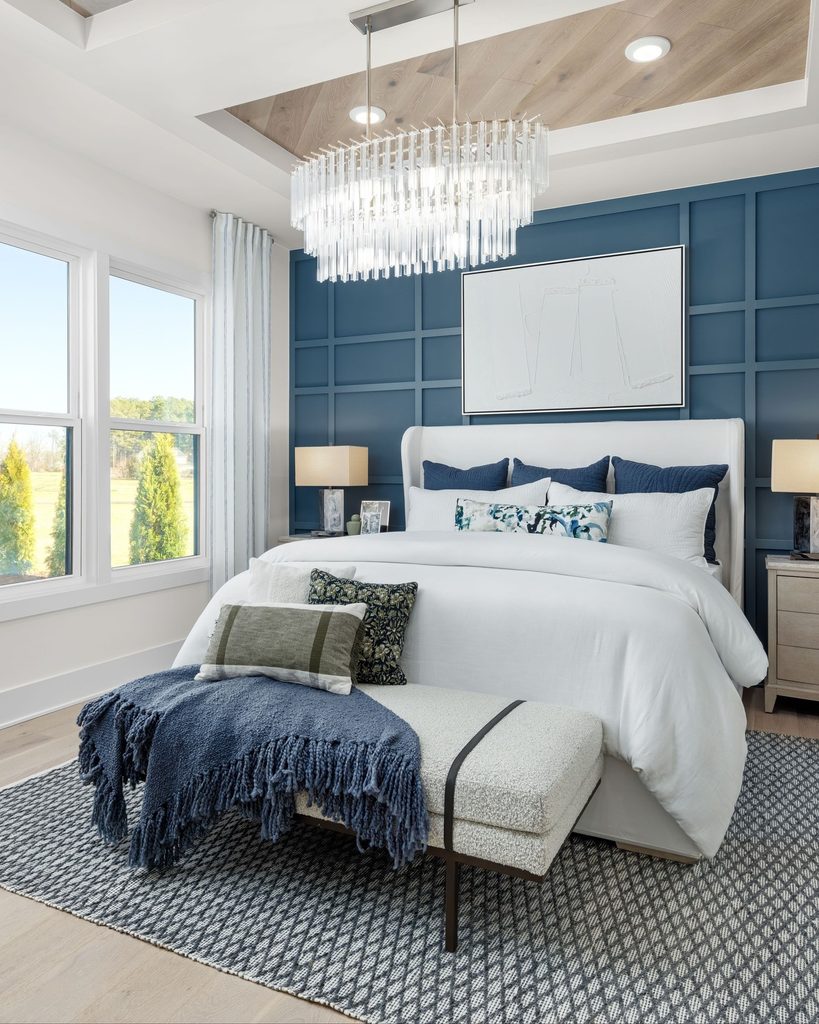
Large rectangular panels bring structure to the blue wall behind this pale upholstered bed. The repeated lines extend beyond the headboard, making the sleeping area feel connected to the room rather than isolated against a plain surface.
White bedding and a light picture keep the darker backdrop from becoming visually solid. Draw the panel layout around the bed, sockets, and wall edges before choosing dimensions.
A few generous rectangles can feel calmer than many narrow divisions. Paint the molding and wall together when you want the pattern to depend on light and shadow.
Keep nearby prints modest if the grid should remain readable. A blue throw or cushion can repeat the wall color without covering the entire bed in it.
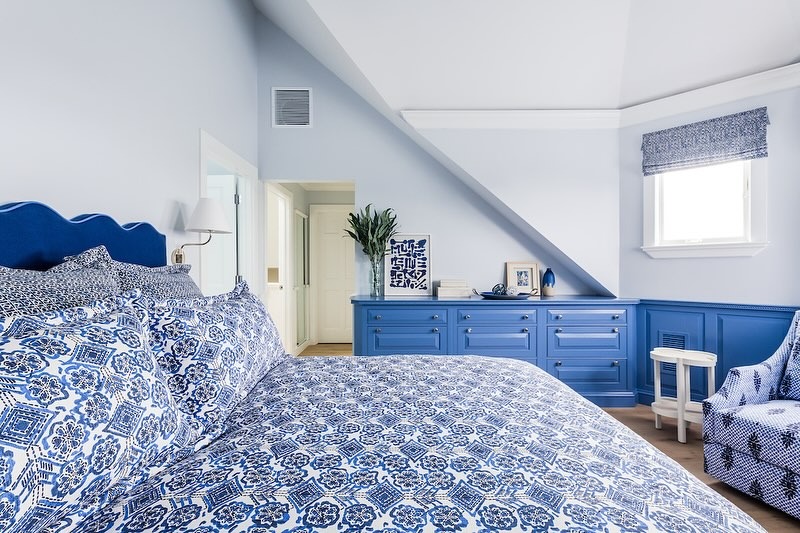
Carry Blue Storage Beneath a Sloping Bedroom Ceiling
Credits: Instagram
Low fitted drawers make use of the wall beneath this roof slope, turning an awkward boundary into purposeful storage. Their blue finish connects with the headboard and patterned bedding while the ceiling and upper walls remain pale.
This keeps the concentrated color below the changing roofline. Begin with the items you need to store, then plan drawer depth and opening clearance around the bed.
Leave access to any vents or services that share the wall. A qualified joiner can assess what is practical beneath an existing slope.
Test the blue beside your textiles rather than choosing each finish separately. Keeping the countertop lightly arranged makes the long storage run feel deliberate, with enough clear space for a lamp or essentials.
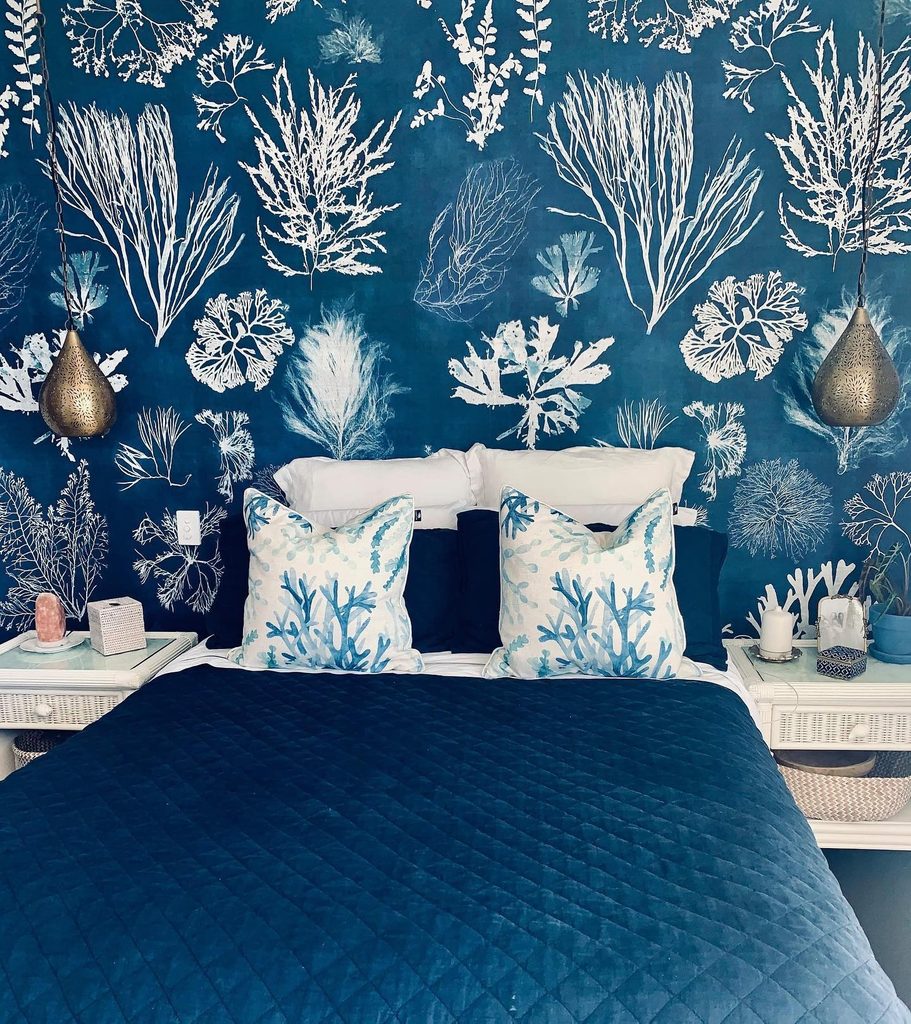
Choose White Botanical Shapes on a Deep Blue Wall
Credits: Instagram
White branching forms give this dark blue wall a strong decorative rhythm behind the bed. The plain blue quilt repeats the background color without duplicating every line of the pattern, while pale pillows create a clear break at the head.
Warm metallic pendant shades add smaller accents at either side. View a wallpaper sample before choosing a similar design, since the size of the branching shapes matters across a full wall.
Check which parts will remain visible around your headboard and furniture. Keep nearby artwork limited so the wallcovering can do the decorative work.
One patterned cushion can connect with the botanical theme without making every textile identical. The combination offers depth and detail while retaining a coherent blue palette.
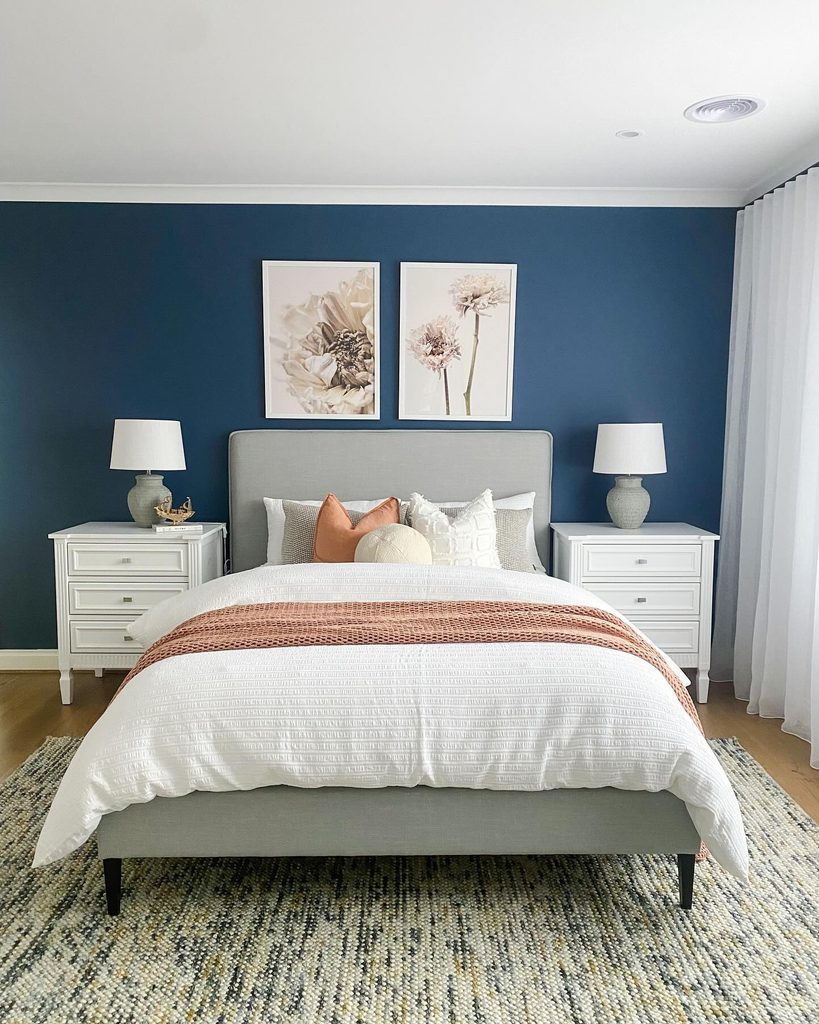
Warm a Navy Feature Wall With Soft Peach Textiles
Credits: Instagram
A peach throw and cushion bring a gentle warm accent to this otherwise blue and white bedroom. Their color is repeated quietly in the floral pictures, while the navy wall remains the largest painted feature.
Pale upholstery and matching bedside cabinets make the arrangement feel balanced. Start with one removable textile if you are unsure about introducing a warmer tone beside dark blue.
Compare it with both the wall and your usual bedding in daylight. Keep the accent smaller than the blue area so the room’s main color stays clear.
A textured throw can provide enough variation without adding another busy print. Repeating its warmth in a picture or small accessory helps the color feel connected rather than accidentally placed.
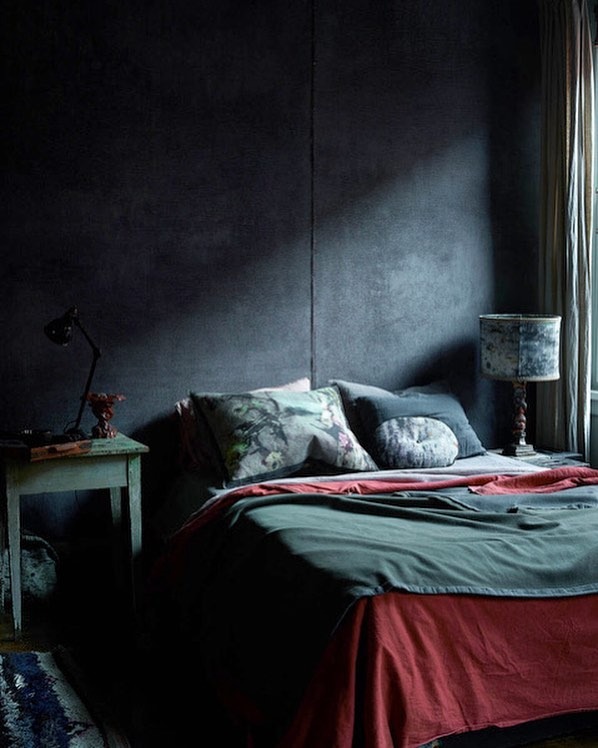
Combine Midnight Blue Texture With Burgundy Bed Layers
Credits: Instagram
The nearly black blue wall gives this bedroom depth through its subtle mottled surface. Burgundy fabric at the mattress edge adds warmth, while deeper green blue layers connect the bed with the surrounding shadows.
A patterned lamp and cushion contribute detail without turning the whole room into a collection of competing prints. This approach suits someone who wants an enveloping dark palette rather than a single bright feature wall.
Test a large sample in several parts of the room, since low light can change how much blue remains visible. Keep useful bedside lighting independent of the decorative effect.
A small warm accent is enough to separate the layers. Texture provides variation even when most surfaces stay close in tone overall.
Pair an Oversized Blue Motif With a Checked Rug
Credits: Instagram
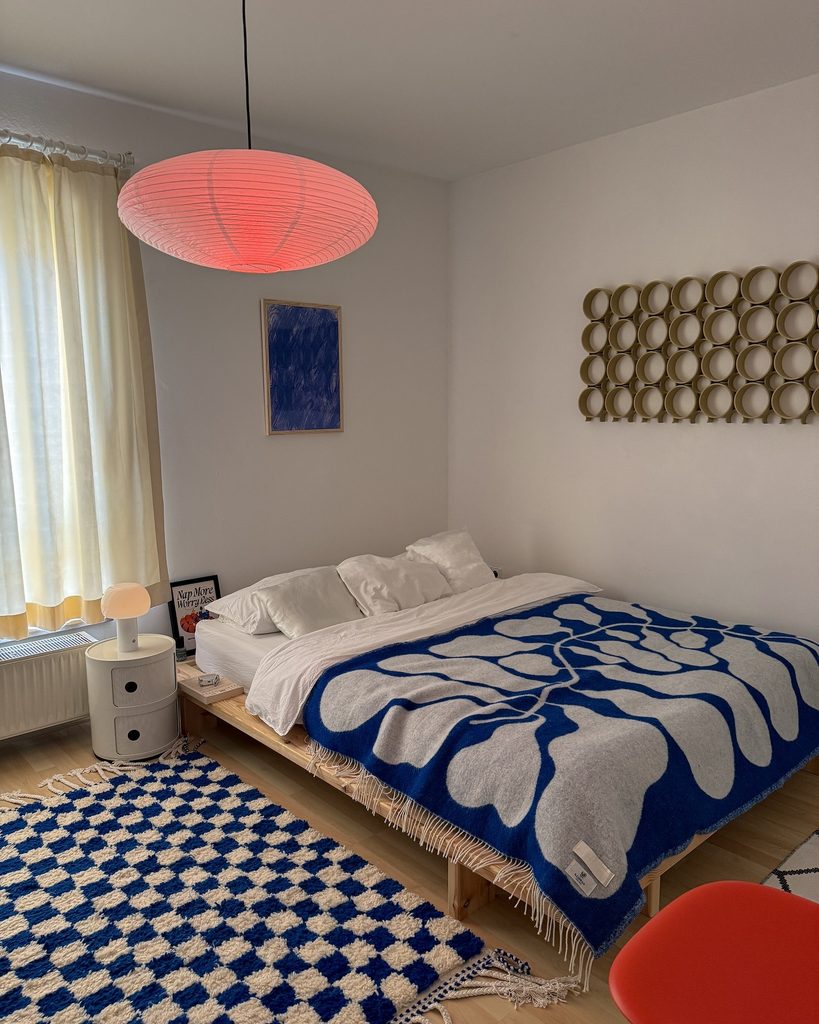
Deep blue pattern gives this pale bedroom its personality without requiring painted walls. A large curving motif covers the blanket, while smaller checks on the rug repeat the color at a different scale.
White sheets leave a pause between those two busy surfaces. This is a flexible approach when you want a dark blue accent that can move with you or change seasonally.
Compare the size of the patterns rather than trying to match every shape. Keep the surrounding furniture simple enough for the textiles to remain easy to appreciate.
Check that rug edges lie flat and do not obstruct the route around the bed. One blue picture can connect the palette vertically without adding another large area of pattern.
Let a Deep Blue Carpet Anchor Light Bedroom Furniture
Credits: Instagram
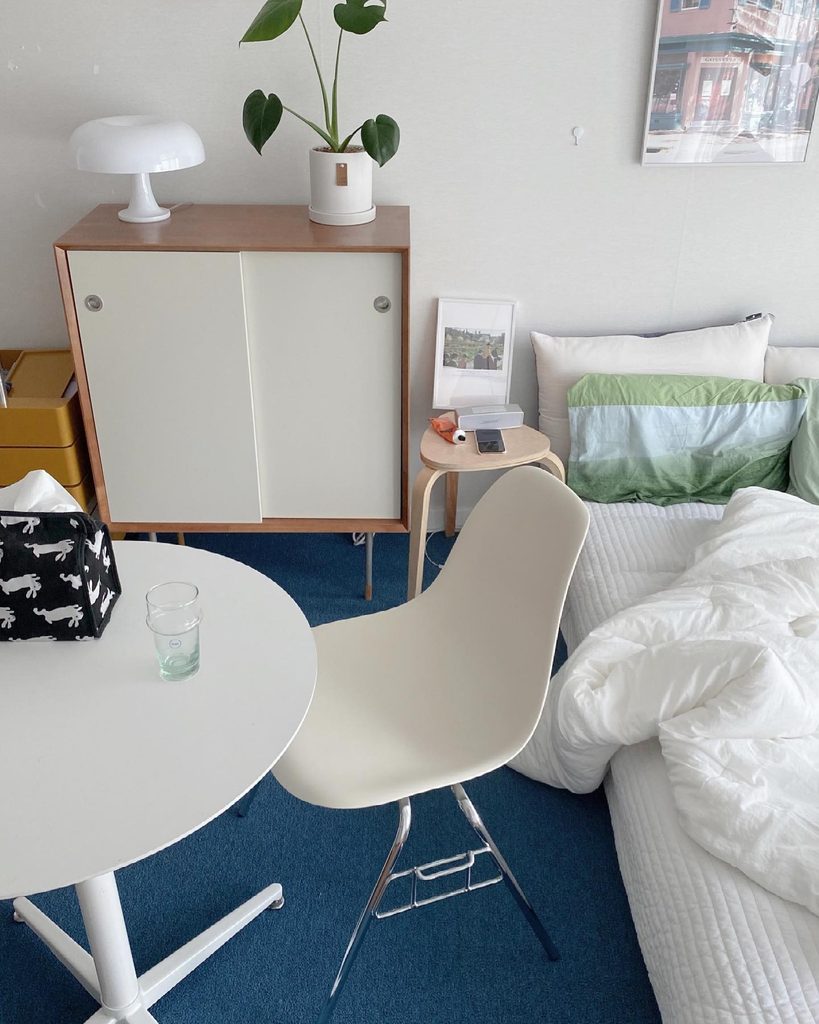
Color can sit underfoot while the larger furniture stays pale. The deep blue carpet in this compact bedroom contrasts with white bedding, a light chair, and a cream fronted cabinet.
Its continuous surface connects the sleeping and sitting areas without requiring darker walls. Consider this direction when a blue floor is already present and you want to work with it.
Raised furniture leaves more of the color visible, while smaller warm wood details stop the arrangement from feeling entirely cool. Compare any new textile against the carpet rather than treating all blues as interchangeable.
Keep the route beside the bed clear of loose cords and crowded furniture. A restrained palette above floor level lets the layout remain easy to read.
Set White Nightstands Against a Nearly Black Navy Wall
Credits: Instagram
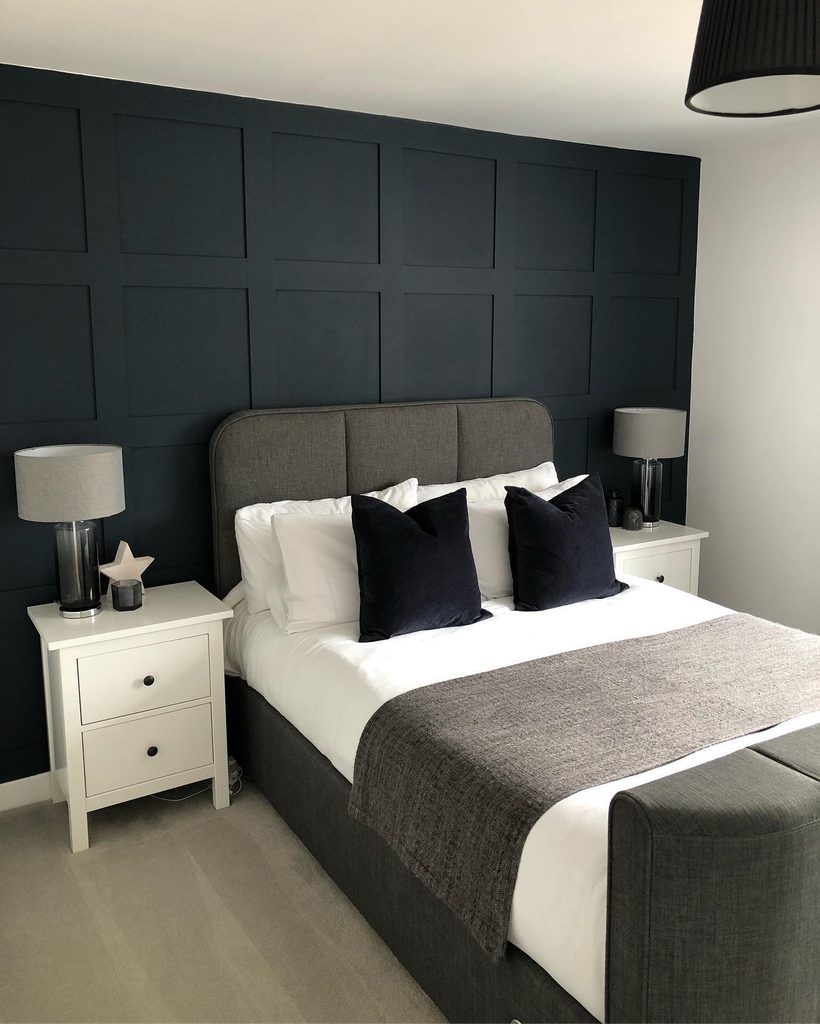
White bedside cabinets bring clear edges to this bedroom’s very deep blue backdrop. Their compact shapes frame a gray upholstered bed, while pale lampshades repeat the lighter color above.
The wall’s panel detail remains subtle because its molding shares the same finish. This combination is useful when you want navy to feel dramatic but still need the bedside area to read clearly.
Compare cabinet height with the mattress before choosing a matching pair. Leave enough space for drawers and ordinary movement beside the bed.
Keep the tops simple so the contrasting furniture remains the main feature. A gray blanket can bridge white linens and the dark wall without introducing another strong color. Check the navy under evening lighting before committing.
Repeat Dark Blue in Broadly Striped Cushions
Credits: Instagram
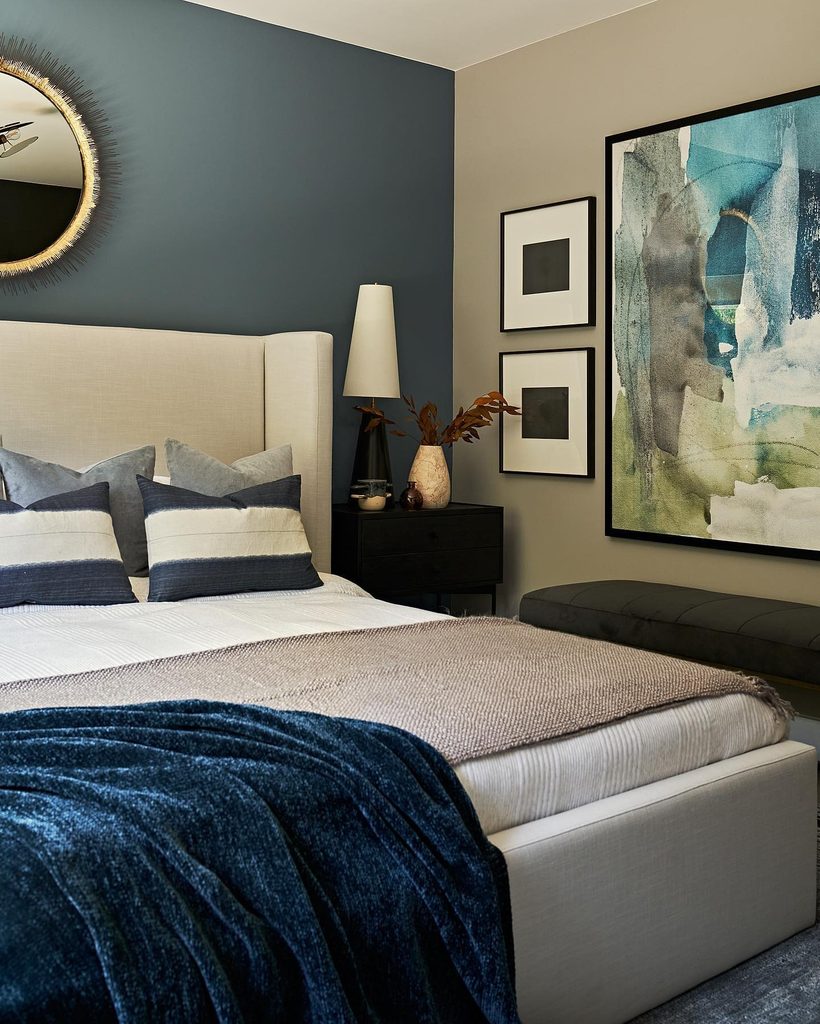
Broad navy bands give these cushions a simple graphic presence against a pale upholstered headboard. Their cream centers relate to the bedding, while a dark blue throw repeats the color at the foot.
The painted wall is a softer blue, so the textiles supply the deepest contrast. Try this arrangement when you want related blues without expecting every finish to match.
Start with the darkest fabric and compare the wall sample beside it in the room. Keep other patterns smaller or quieter so the wide stripes remain legible.
A warm neutral blanket can separate the blue layers across the mattress. The useful connection comes from repeating a color at different heights while allowing each material to keep its own texture.
Line a Traditional Canopy With Deep Blue Fabric
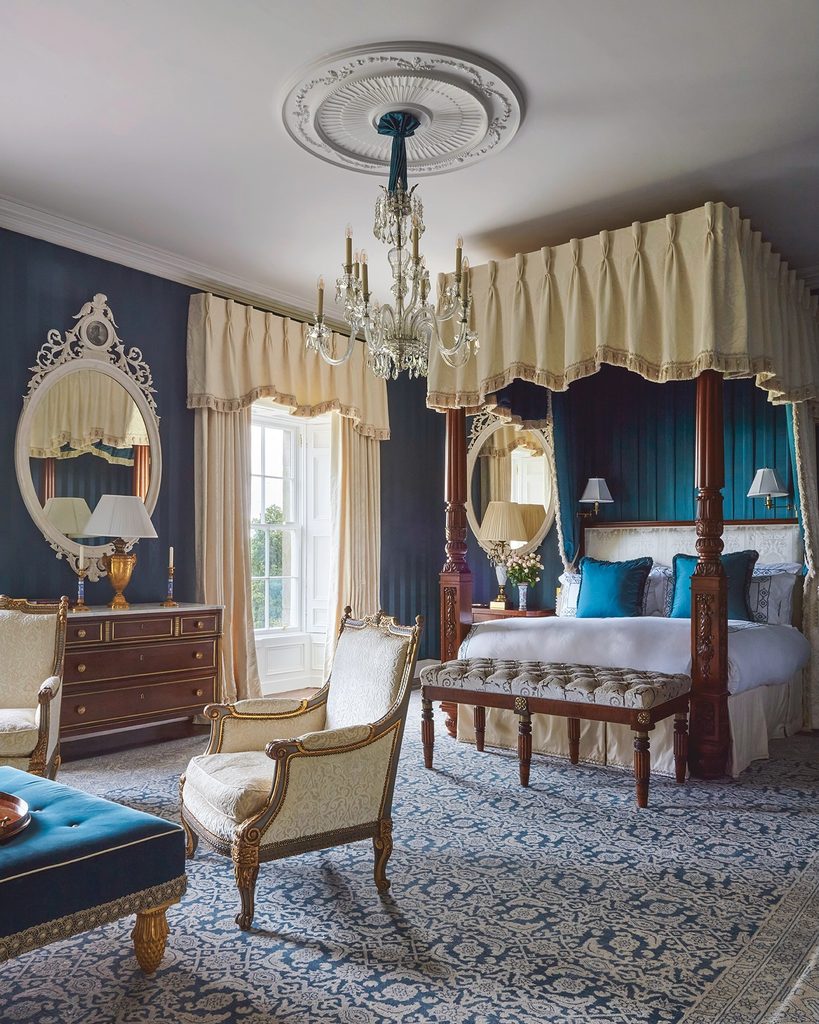
Credits: Instagram
Deep blue fabric behind the headboard creates an enclosed feeling within this carved canopy bed. Cream drapery around the upper edge and windows keeps the darker interior distinct, while wood and warm metallic details add another layer.
The room shows a formal interpretation that can be simplified for a smaller bedroom. Begin with a frame designed to support the intended fabric and check ceiling clearance carefully.
Keep loose material away from lighting and heat sources. A single blue back panel can suggest the same depth without reproducing every valance and decorative trim.
Use pale bedding to make the sleeping surface easy to read. The contrast between a dark inner backdrop and a lighter outer frame gives the canopy its definition.
Introduce Dark Blue Through a Pair of Botanical Prints
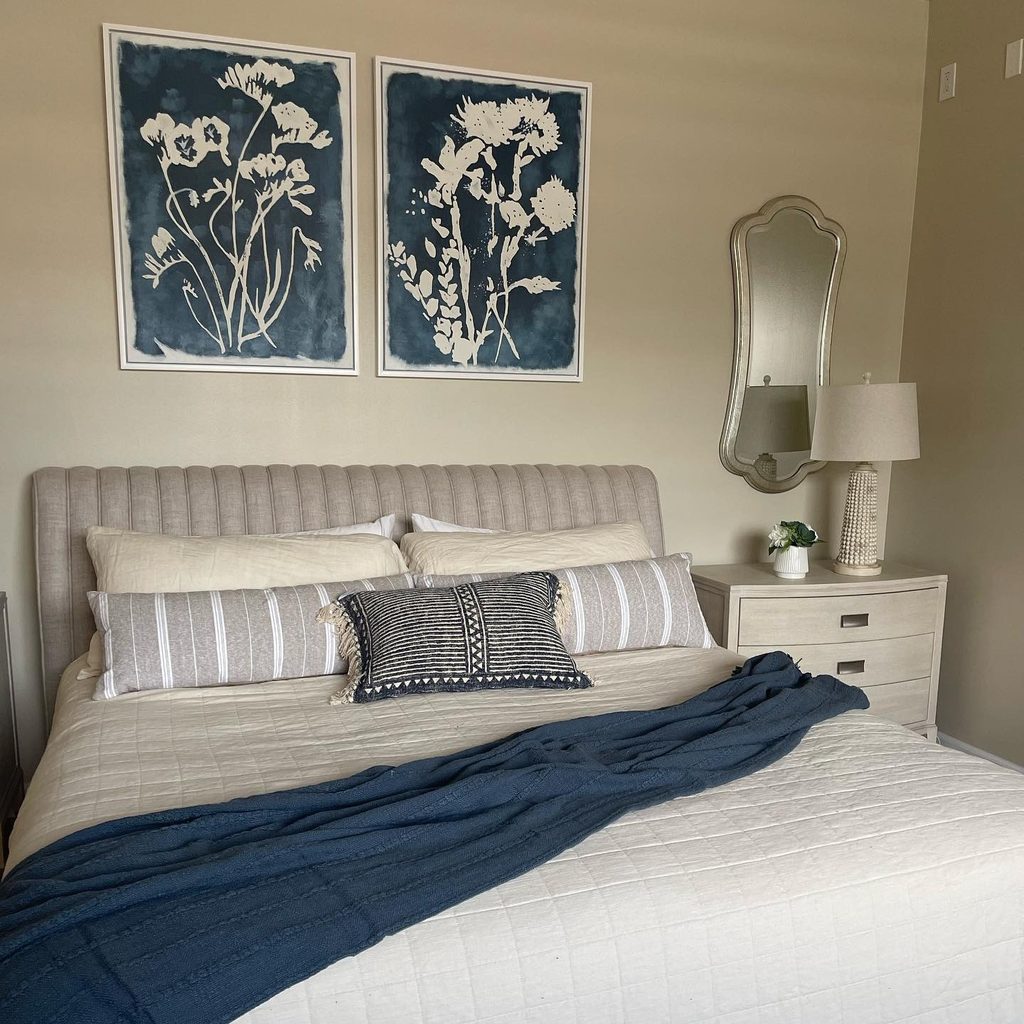
Credits: Instagram
Two botanical pictures place deep blue above this otherwise pale bed, with white plant shapes making the color easy to notice. A blue throw repeats the shade across the mattress, linking wall decoration and textiles without repainting the room.
Neutral upholstery leaves both accents distinct. This is a manageable starting point when you want to test a dark blue palette before changing larger surfaces.
Choose pictures you enjoy for their subject as well as their color, and compare their combined width with the headboard. Hang them with suitable fixings and enough space to read as separate pieces.
Keep additional patterns restrained around the bed. The blue can remain concentrated in artwork and one textile while the surrounding bedroom stays light.
Frame a Navy Bed Wall With Warm Coral Curtains
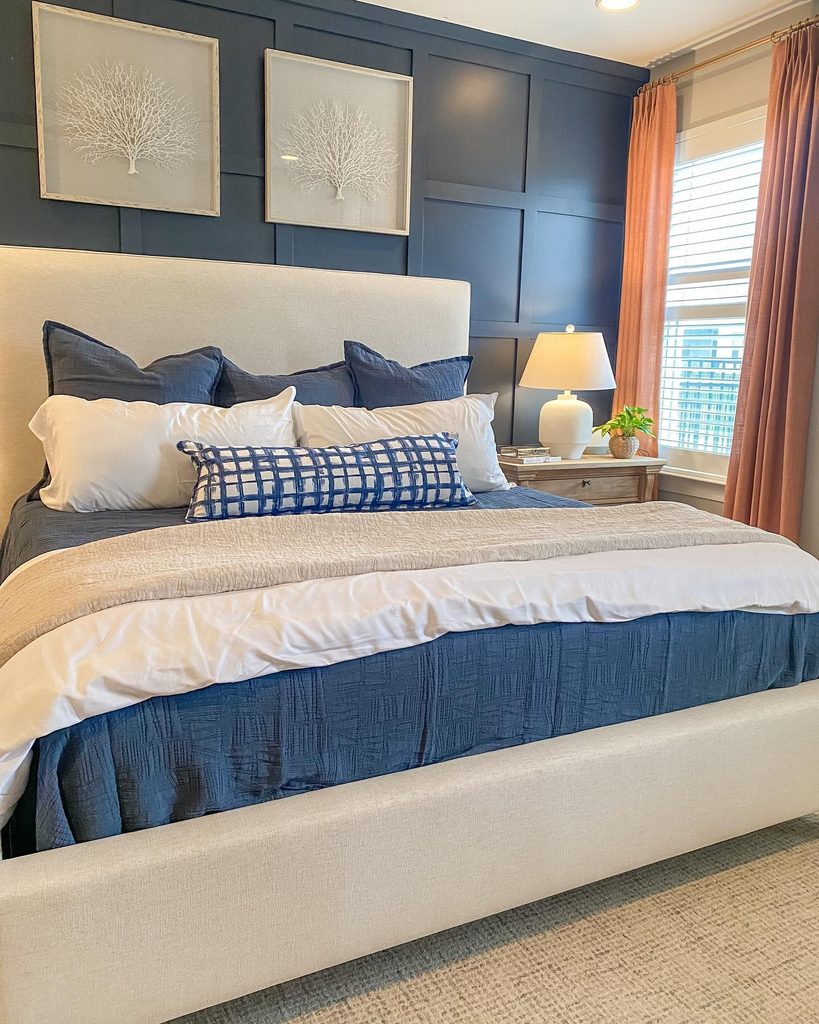
Credits: Instagram
Coral curtains introduce a warm vertical accent beside the navy wall in this bedroom. Pale upholstery and cream bedding prevent the combination from becoming too dense, while blue pillows connect the mattress with the painted backdrop.
The curtains contribute color even when drawn open, so their proportions matter as much as their fabric. Compare a generous sample beside the wall in both daylight and lamplight.
Plan enough width for comfortable coverage without crowding the nearby furniture. A quieter blind can provide another layer when privacy needs differ during the day.
Keep the warm accent focused around the window rather than repeating it across every surface. The contrast makes the blue feel intentional while leaving the bed itself calm and comfortable.
Add Small Red Accents to Layered Blue Upholstery
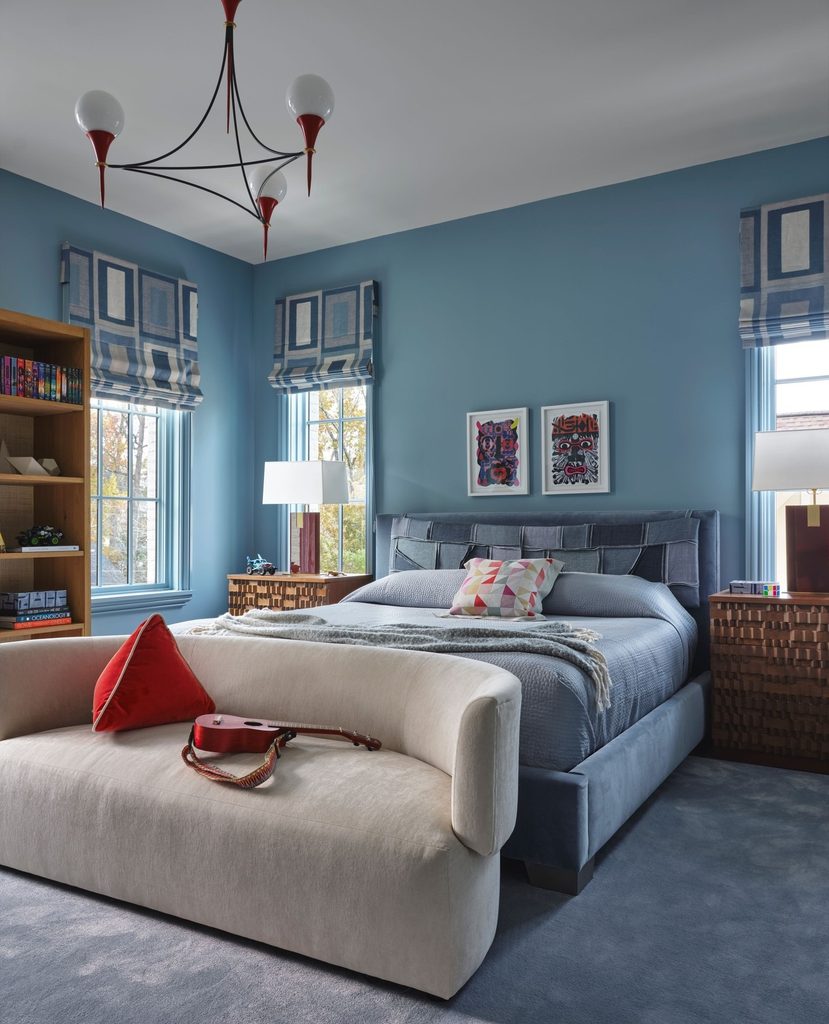
Credits: Instagram
A deeper denim blue bed sits within lighter blue walls in this bedroom, keeping the palette layered rather than uniform.
Small red details in the ceiling light and cushions supply a lively contrast, while the cream sofa creates a pale foreground. The room demonstrates how a warm accent can work without covering a whole wall.
Begin with one cushion or another easily moved piece, then repeat its color sparingly elsewhere. Compare the blues together so the upholstery remains distinct from the paint.
Keep the larger bedding surfaces relatively quiet if the window blinds already carry a geometric pattern. A seat at the foot should leave comfortable circulation.
The balance depends on generous blue areas with only a few brighter interruptions.
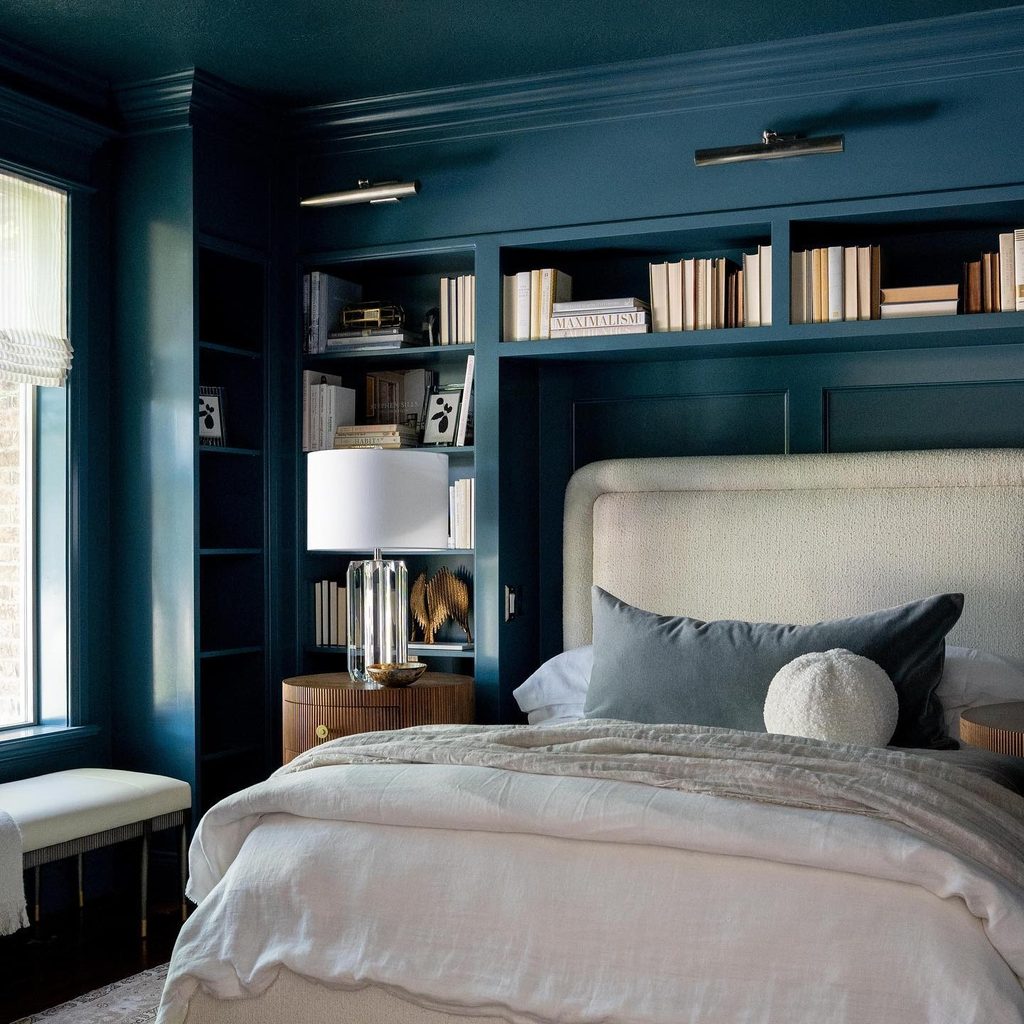
Paint Bedroom Bookshelves the Same Deep Blue as the Wall
Credits: Instagram
Built in shelves become part of the bedroom backdrop when their frames share the wall’s deep blue finish.
Pale book spines and a light upholstered headboard stand out within the darker surround, while small picture lights make the upper structure visible. This approach adds storage without introducing another large furniture color.
Plan shelf depth and access around the bed before commissioning or adapting cabinetry. Keep heavier objects on appropriately supported shelves, with secure fixing suited to the wall.
Avoid overfilling the space directly above the pillows. A few open areas let the painted framework remain readable.
Natural wood bedside tables add warmth below the shelves, connecting the practical storage with the softer sleeping area without requiring every piece to match.
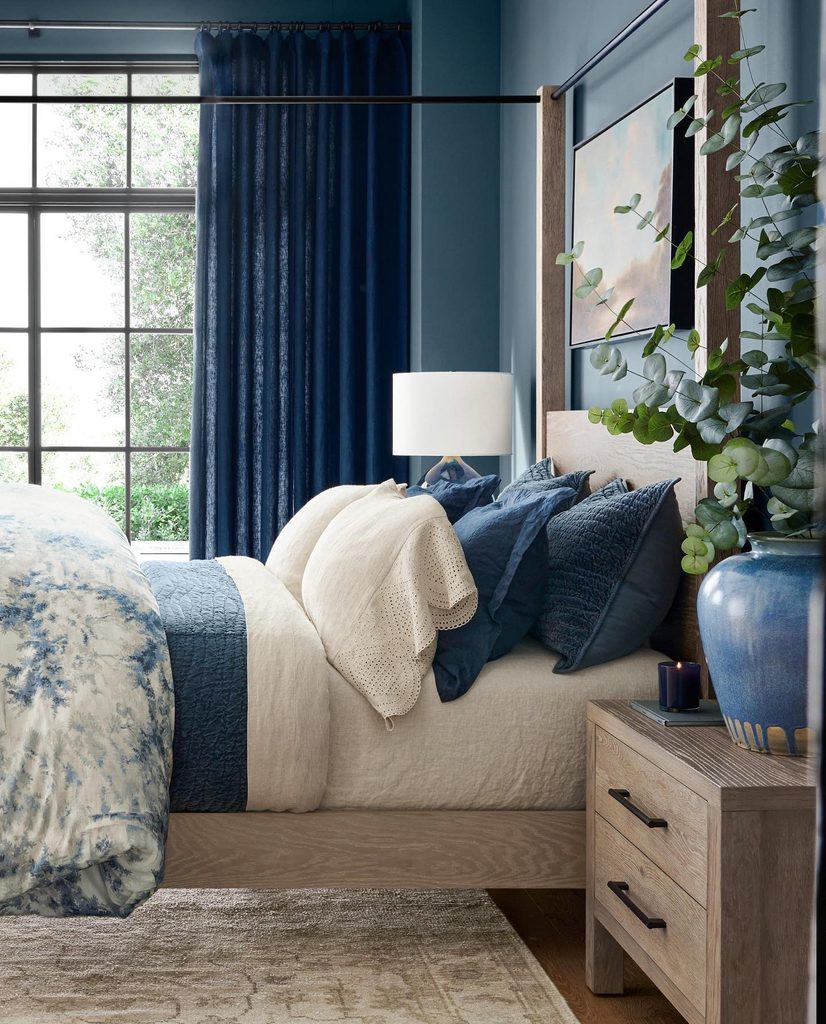
Extend Blue From the Bed Wall Into Long Curtains
Credits: Instagram
Long dark blue curtains carry the bedroom palette onto the window wall, connecting the glass opening with the painted backdrop behind the bed.
Blue cushions and a quilt repeat the tone at a lower level, while cream bedding keeps the sleeping surface distinct. The effect depends on coordination rather than an exact match between fabric and paint.
Compare samples together in daylight, then check how the curtain looks when gathered into deeper folds. Choose lining and coverage for the privacy and light control you need.
Keep the fabric clear of nearby furniture and any heat source. A natural wood bed provides a warm boundary between the blues.
Small changes in texture keep the connected color scheme from looking flat overall.
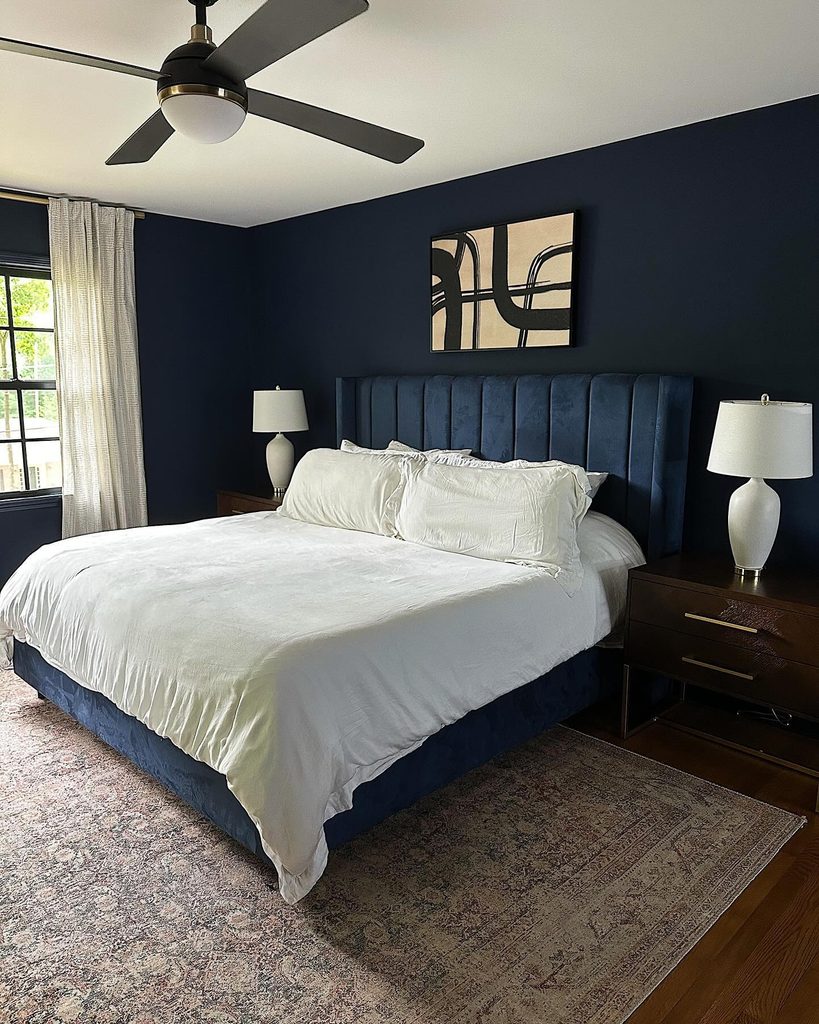
Pair a Channelled Navy Headboard With Plain White Linen
Credits: Instagram
Vertical upholstery channels give this navy headboard detail without introducing another printed pattern. It sits against a similarly dark wall, so white bedding and pale lamps establish the strongest contrast.
Wood bedside furniture adds warmth below the smooth painted surface. This is useful when you want a dark blue room that still feels straightforward to maintain.
Compare the fabric with the wall color before purchasing, allowing enough difference in texture for the headboard to remain visible. Check its height against your usual pillows so the channels are not hidden.
Keep the main cover plain and let the upholstery provide the rhythm. A restrained picture above can finish the arrangement without competing with the bed’s broad outline or the practical lighting.
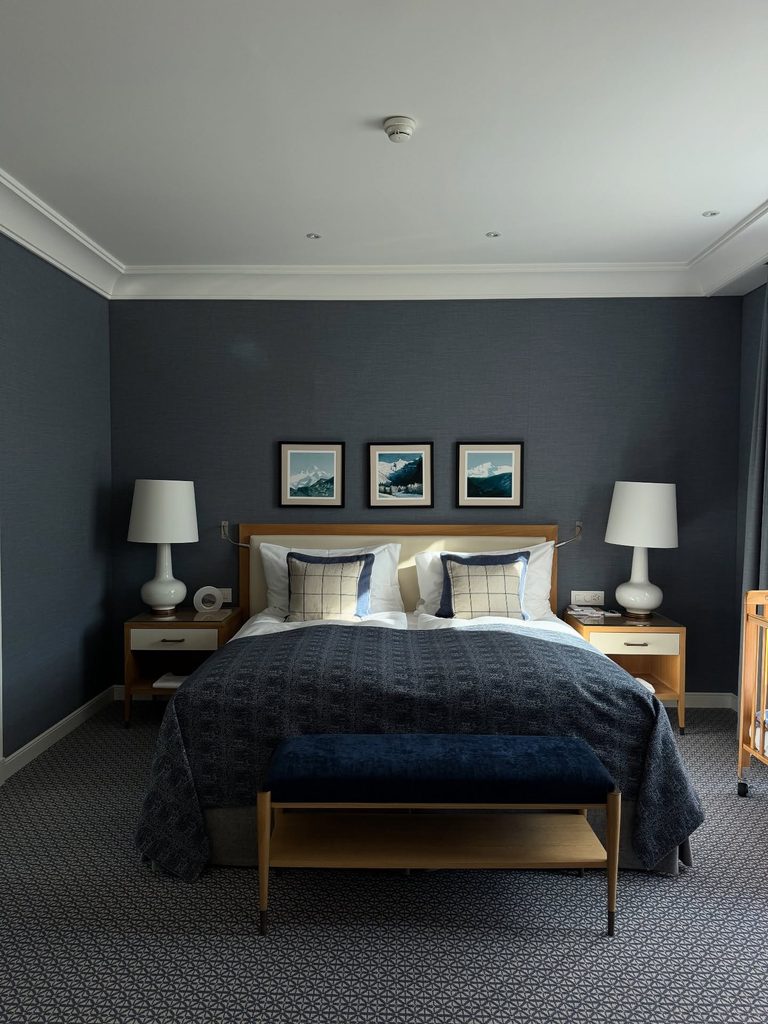
Repeat the Bedspread Color in a Small Foot Bench
Credits: Instagram
A dark blue bench echoes the coverlet in this bedroom, carrying the color down toward the floor. Its open lower shelf and light wood frame keep the small seat visually separate from the heavier bedding.
Pale lamps and a white ceiling balance the blue gray walls. Consider this arrangement when you want a practical place to sit without adding another unrelated accent color.
Measure the remaining walkway at the foot of the bed before choosing the bench. Check its stability and intended use rather than assuming every decorative piece supports sitting.
Keep the top available for dressing, with any stored items contained below. Repeating the textile color can connect useful furniture while allowing its shape and material to remain distinct.