
A canopy can frame a bed without making the room feel closed in.
Canopy Bed Ideas range from slim iron rails left bare to fabric gathered only behind the pillows, so you can choose how much structure or softness suits your space.
Decorative finials and a curved headboard add detail without curtains, while a carved crown paired with plain side panels offers a quieter way to dress the frame.
The examples also show how fluted rails, striped fabric, and pale wood against a dark wall can give the canopy its character.
1. Leave a Fine Iron Canopy Open
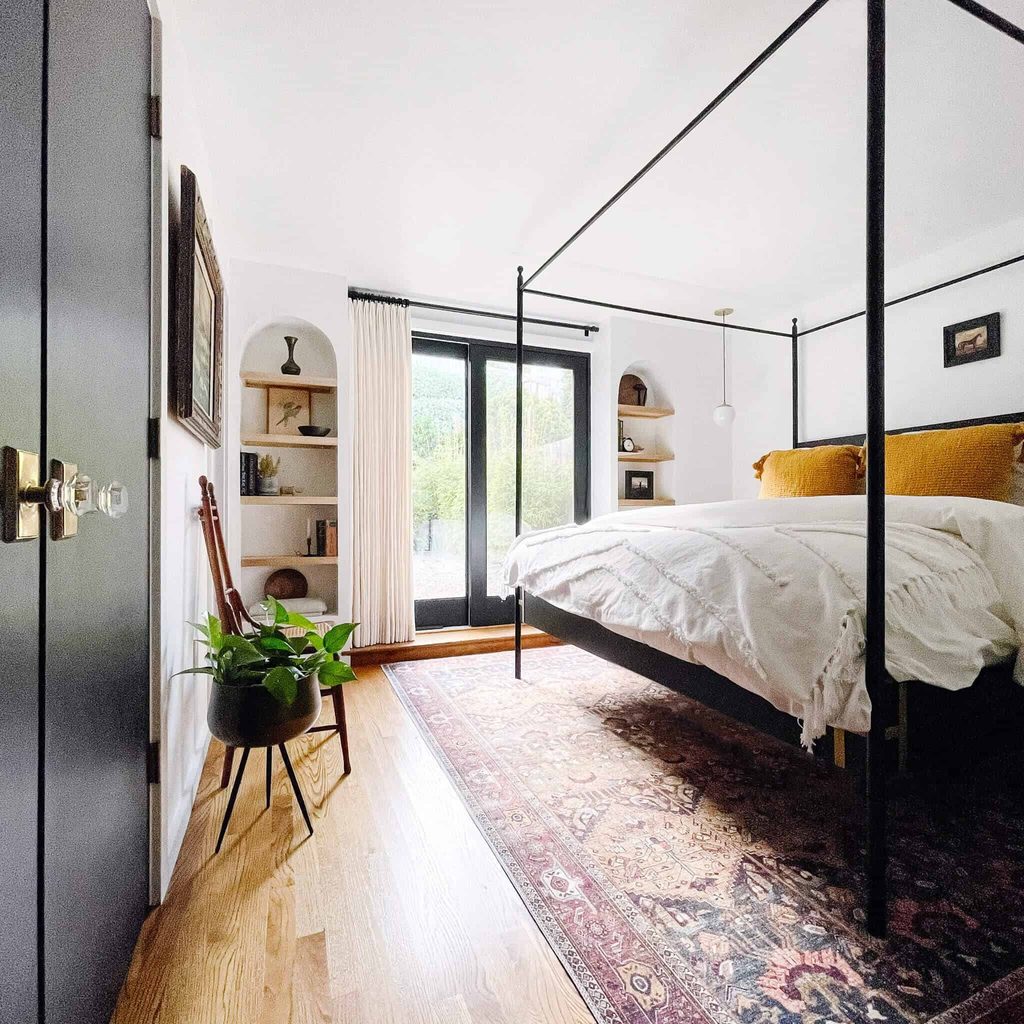
Credits: 136home
Thin iron rails give this bed height without blocking the view across the room. The black outline remains visible against white walls, yet daylight still reaches the bedding and the arched shelves beside the window.
Low furniture and a simple headboard keep the structure light from floor to ceiling. Choose this approach when you want a canopy’s outline rather than its enclosure.
Compare the posts with nearby window frames so their thickness feels intentional. White bedding softens the dark metal, while mustard cushions add warmth without cluttering the upper rails.
Keep hanging decorations to a minimum and allow comfortable walking space around the bed. The open structure works best when surrounding shelves and surfaces also have room to breathe naturally.
2. Combine Open Rails With Upholstered End Panels
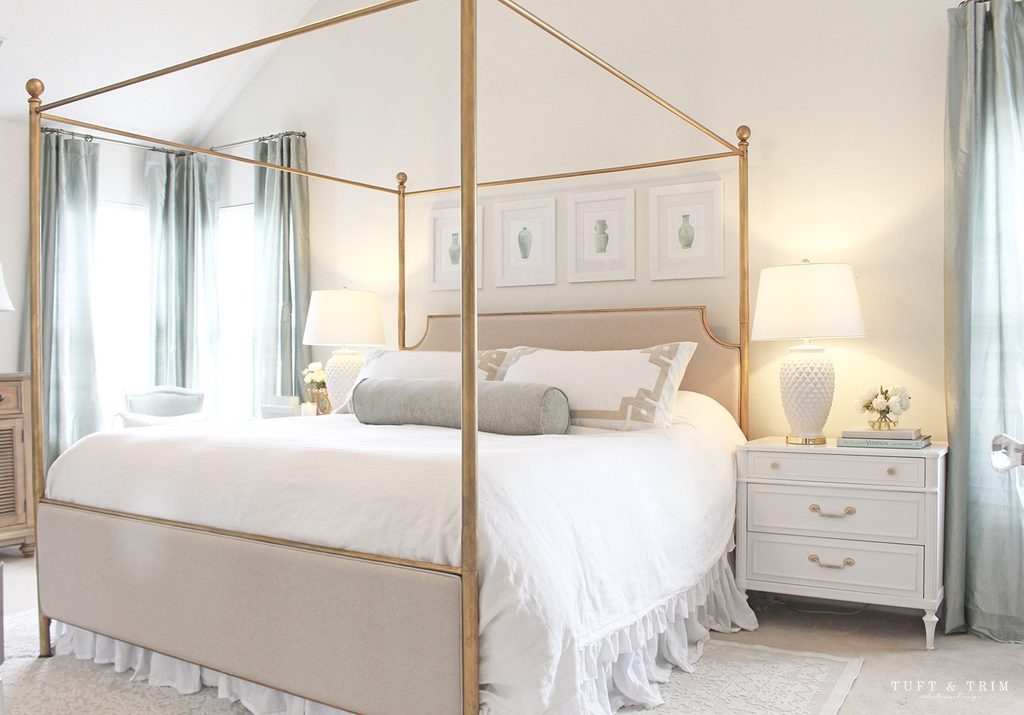
Credits: Tuft & Trim
Fabric-covered end panels give this slender canopy a softer foundation. The upholstered headboard and footboard fill the lower part of the frame, while the golden upper rails remain open.
That combination offers a more finished silhouette than posts surrounding an otherwise separate mattress, yet it still lets the room feel bright. Rounded finials soften the corners, while pale curtains and framed vase prints introduce gentle color behind the bed.
When considering a similar design, compare the footboard height with the mattress and the proportions of surrounding furniture. Choose an upholstery color so the rails stay legible.
Leaving the canopy uncovered preserves the useful contrast between solid, padded ends and airy structure, especially against simple white bedding and lightly textured walls.
3. Gather Colored Curtains at the Rear Posts
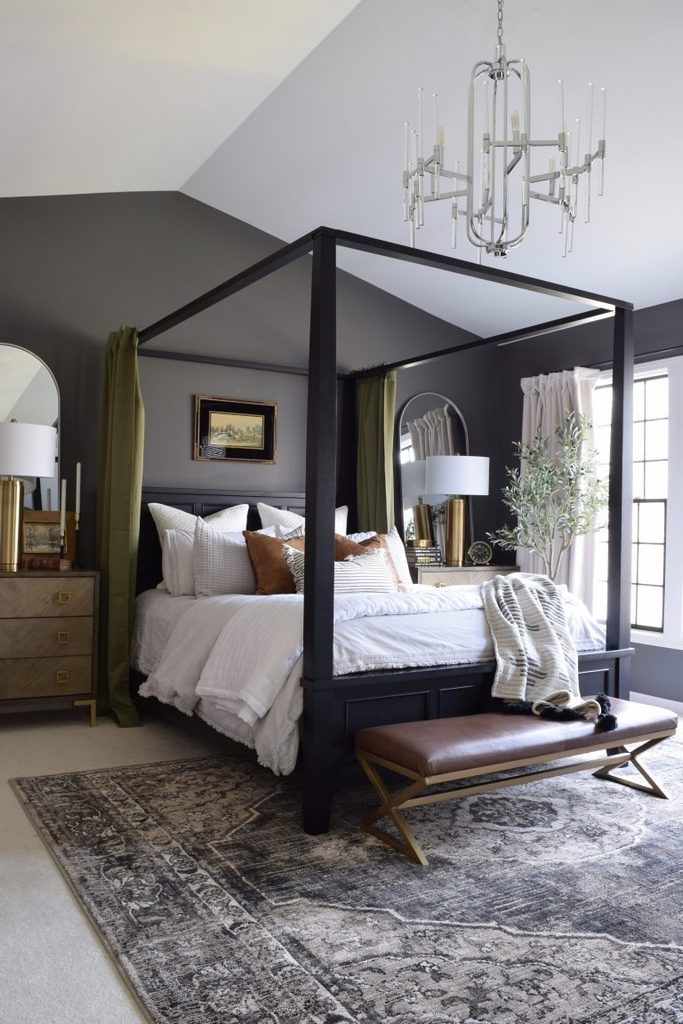
Credits: Haneen’s Haven
Curtains do not need to cover every side of a canopy. This dark frame carries olive green panels near the headboard, leaving the front and sides largely open.
The concentrated color draws attention toward the pillows while allowing the substantial rails to remain visible. White bedding lightens the center, and warm wooden nightstands prevent the dark walls from feeling severe.
Try a pair of colored panels before committing to a fully enclosed arrangement. Compare their tone with cushions, artwork, and wood finishes so the fabric feels connected to the room.
Leave plenty of clearance around lamps and preserve easy access beside the mattress. Gathering the fabric behind the sleeping area makes the canopy feel dressed without concealing its architectural outline.
4. Choose Decorative Finials and a Curved Headboard
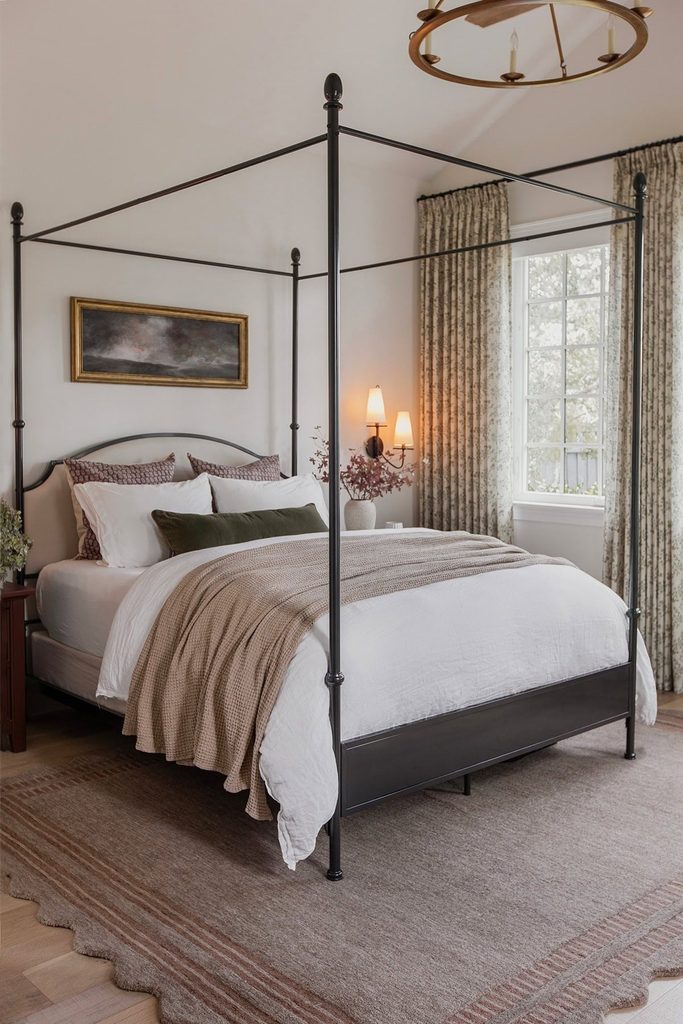
Credits: Jenna Sue Design
Small finishing details can soften a canopy whose upper rails remain straight. This dark metal bed uses oval finials and turned collars on the posts, with a curved upholstered headboard nested inside the rectangular frame.
Those changes in shape give the silhouette interest without adding curtains. Try this combination when plain rails feel too austere but an elaborate canopy would overwhelm the room.
Keep the bedding quiet enough that the post details stay visible. A long bolster and a loosely folded throw add softness below the strong vertical lines.
Check the height of finials against the ceiling and any nearby light fitting before choosing the bed. The decorative ends should complete the outline rather than crowd the space above it.
5. Pair a Carved Canopy Crown With Plain Side Panels
Credits: Instagram
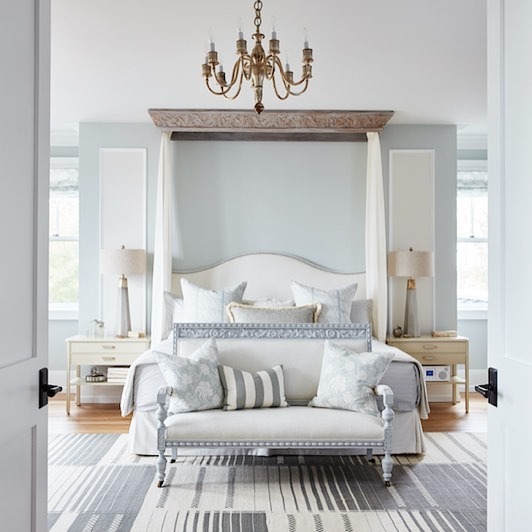
A decorative wooden crown can supply the character while the curtains stay simple. Here, a carved upper piece spans the head of the bed, with narrow pale panels falling at either side.
Leaving the center open reveals the upholstered headboard and soft blue wall rather than hiding them behind fabric. This is a useful compromise between a bare bed and a fully enclosed canopy.
Choose the crown’s width in relation to the mattress, then keep the supporting installation appropriate for its weight. Plain curtains let the carved detail remain legible.
A low upholstered bench repeats the pale fabric below without blocking the bed. Limit extra ornament near the crown so its texture reads clearly from the doorway and bedside positions.
6. Make Fluted Rails the Canopy’s Decoration
Credits: Instagram
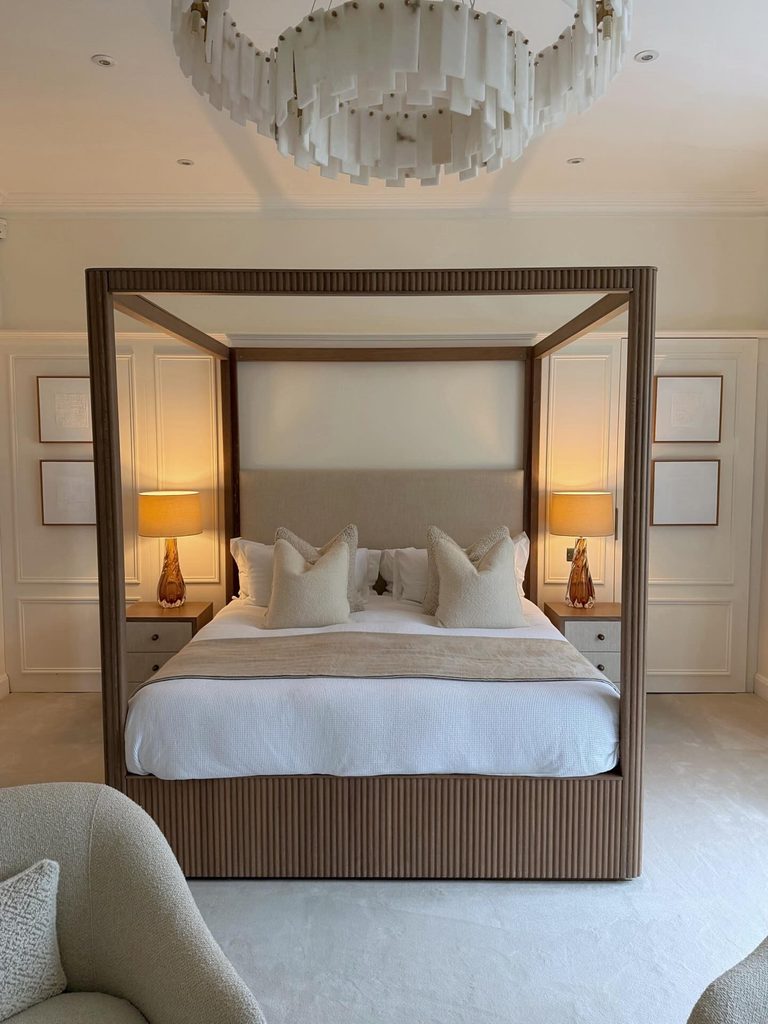
Fluting gives a substantial canopy texture without requiring curtains or hanging ornaments. This wooden frame carries repeated narrow grooves across the posts, upper rail, and footboard, creating a consistent detail around the mattress.
Pale upholstery and bedding keep the inside quiet, while matching lamps balance the bed against paneled walls. Use this approach when the furniture itself should be the focal point.
Check how the wider posts affect your view from the doorway before choosing a frame. Simple wall art and restrained bedding allow the grooves to stay visible.
Avoid adding several competing wood finishes immediately beside it. The canopy’s open top preserves a sense of air above the mattress, even though the lower frame has considerable weight and presence.
7. Drape Sheer Black Panels Around a Metal Bed
Credits: AJ / Lemon8
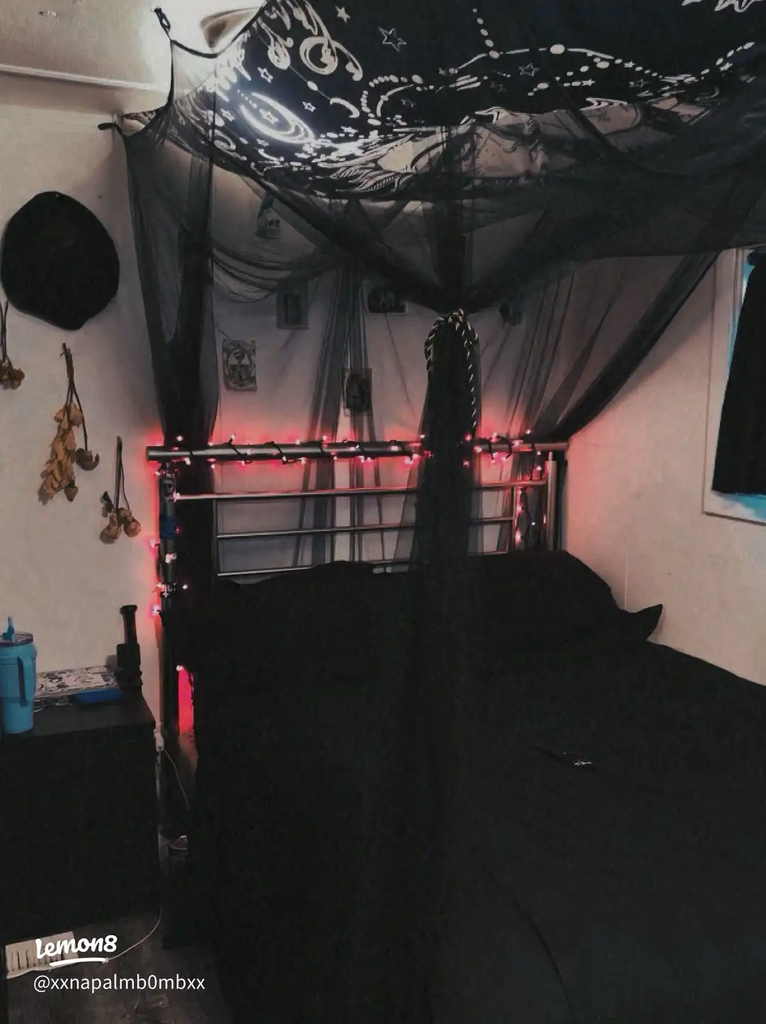
Sheer black fabric gives this bed a sheltered outline without hiding the room completely. Loose panels gather around the sleeping area, with red accent lights emphasizing the headboard below.
The simple dark bedding allows the canopy shape to remain the main feature. Start with a small amount of lightweight fabric rather than covering every side at once.
Check that the mounting method suits the ceiling or frame and that nothing can fall onto sleepers. Keep material well away from bulbs, heaters, and fans, following every light fitting’s clearance guidance.
Leave a generous opening for getting into bed. A separate reading lamp will keep decorative red light from having to serve every purpose, especially when you need to read or tidy.
8. Stencil Pattern Directly Onto the Canopy Frame
Credits: Semigloss Design
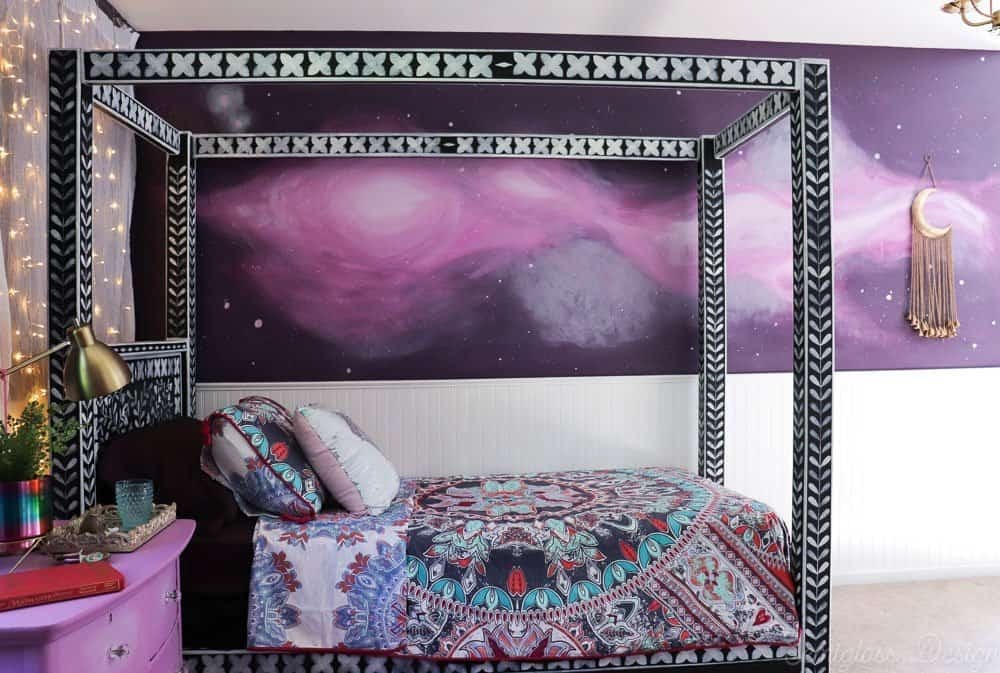
A canopy can carry decoration even when no curtains hang from it. This black frame is covered with pale repeating motifs that resemble decorative inlay, turning each post and rail into a patterned border.
The open center leaves the purple galaxy mural visible, while colorful bedding continues the expressive mood below. Borrow the idea with a restrained stencil pattern and a contrasting paint color suitable for your furniture finish.
Test the repeat on a sample first, especially where horizontal rails meet vertical posts. Keep the central bedcover simpler if your walls already contain strong artwork.
The useful lesson is placement: concentrating small motifs on the framework gives an ordinary rectangular canopy a distinctive identity without suspending any loose fabric overhead.
9. Wrap a Full Canopy in Broad Neutral Stripes
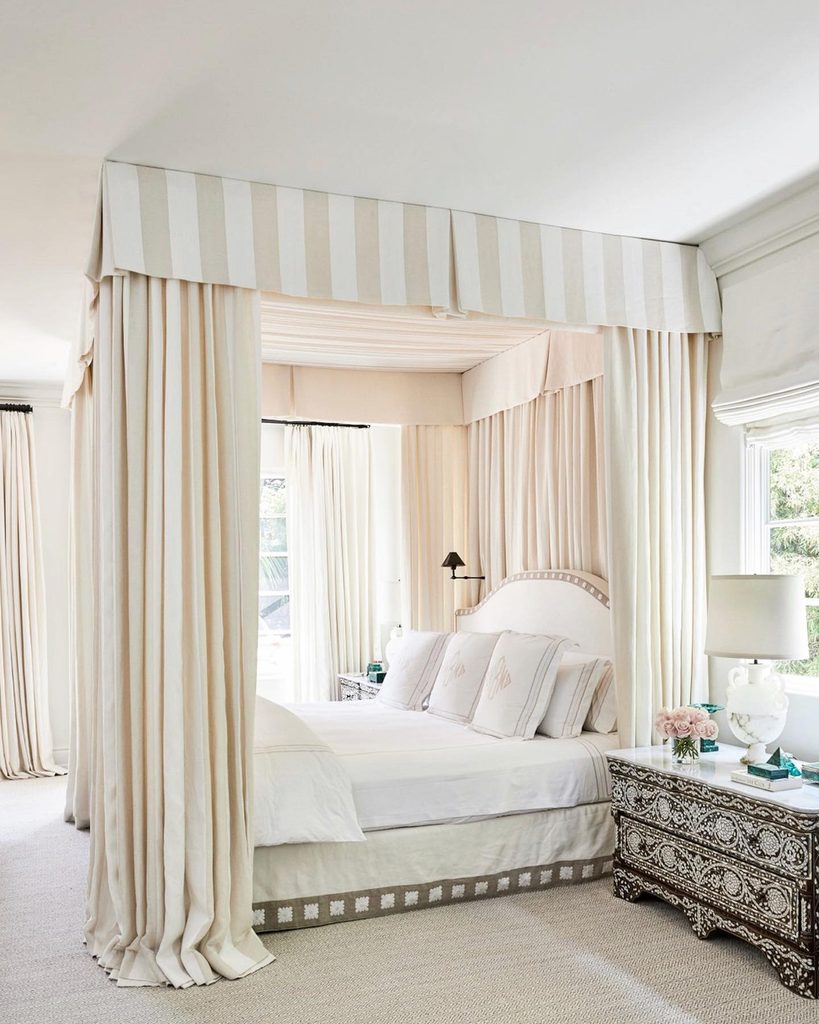
Credits: Instagram
Broad stripes give this fabric canopy definition while its colors remain quiet. Cream and white bands run down the curtains and across the valance, outlining the bed without introducing a strong accent shade.
Gathered panels soften the corners, and the inner roof makes the sleeping area feel like a small room within the room. Try this treatment when you want pattern that still works with pale bedding.
Check the stripe direction on each surface before ordering fabric, since the front valance and overhead lining are viewed differently. Leave generous openings beside the mattress and keep curtains away from lamps.
A simple headboard and carefully limited pillow arrangement allow the larger striped enclosure to remain the room’s most noticeable decorative feature.
10. Blend Ceiling Rods Into Exposed Beams
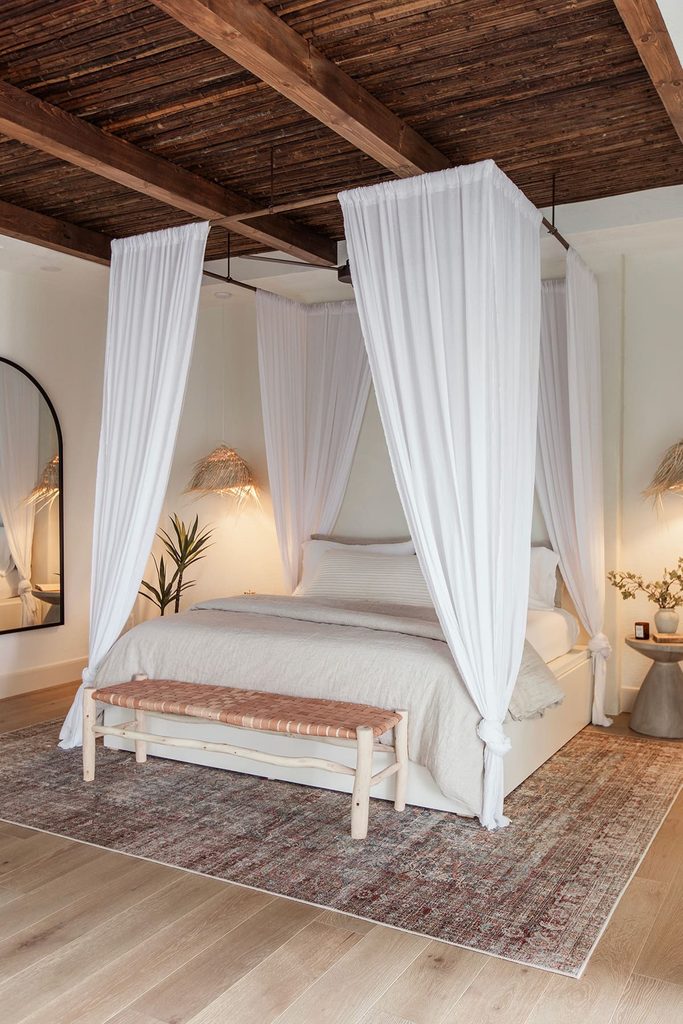
Credits: Jenna Sue Design
A dark overhead support can disappear against a richly textured ceiling. Here, slim rods sit below exposed wooden beams and hold gathered white curtains around a low upholstered bed.
Tied corners reveal the mattress and leave the foot open, while the bright fabric contrasts with the warm bamboo ceiling. Use this arrangement when you want a canopy without adding tall posts to the furniture itself.
Plan the support with a qualified installer and keep fabric clear of nearby lights and moving fan blades. Plain curtains let the ceiling materials remain visible through the upper opening.
Below, a woven bench and softly patterned rug echo the natural textures without competing with the long vertical folds that define the bed’s sheltered outline.
11. Give a Low Bed a Pitched Fabric Roof
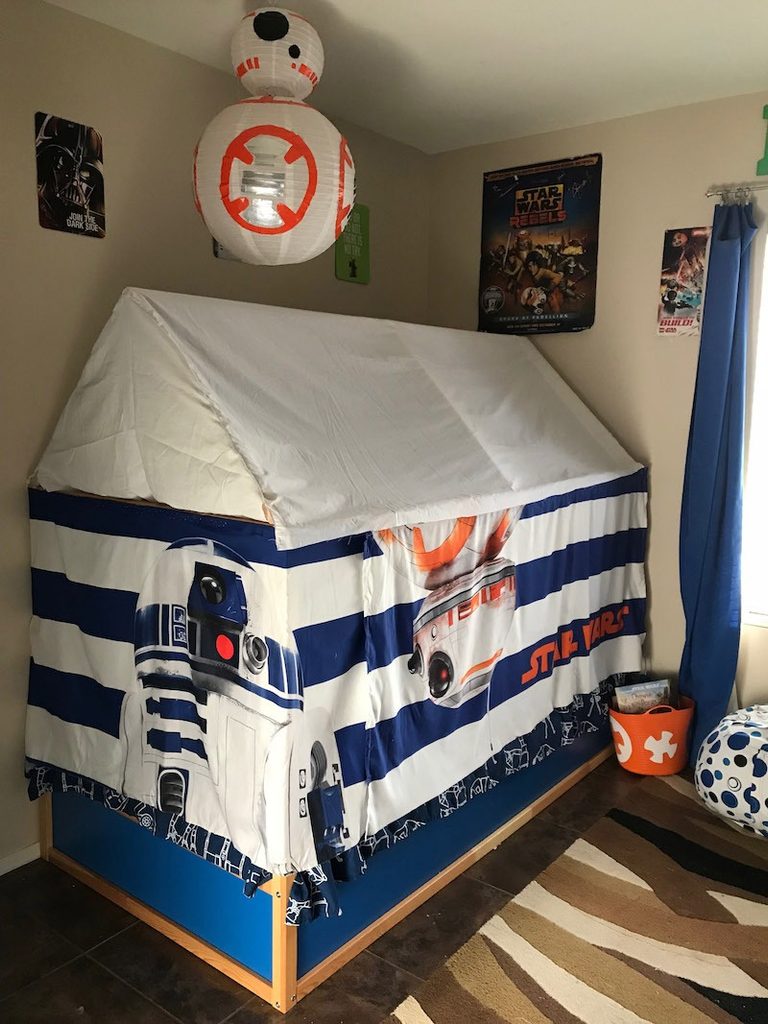
Credits: Desert Chica
A pitched fabric roof makes this low bed resemble a compact indoor tent. White material defines the sloping top, while themed side curtains add a playful border below.
The wooden base remains visible at floor level, keeping the enclosure connected to the furniture rather than appearing as a separate structure. Use the photograph as a shape and styling reference, not as instructions for modifying a bed.
Choose a canopy system intended for the bed and occupant, following its assembly and age guidance. Keep entrances open, maintain ventilation, and secure fabric so it cannot fall onto sleepers.
A restrained roof color helps stronger curtain graphics stand out. Nearby furnishings should leave clear routes around the bed rather than narrowing its access.
12. Set Pale Wooden Rails Against a Dark Wall
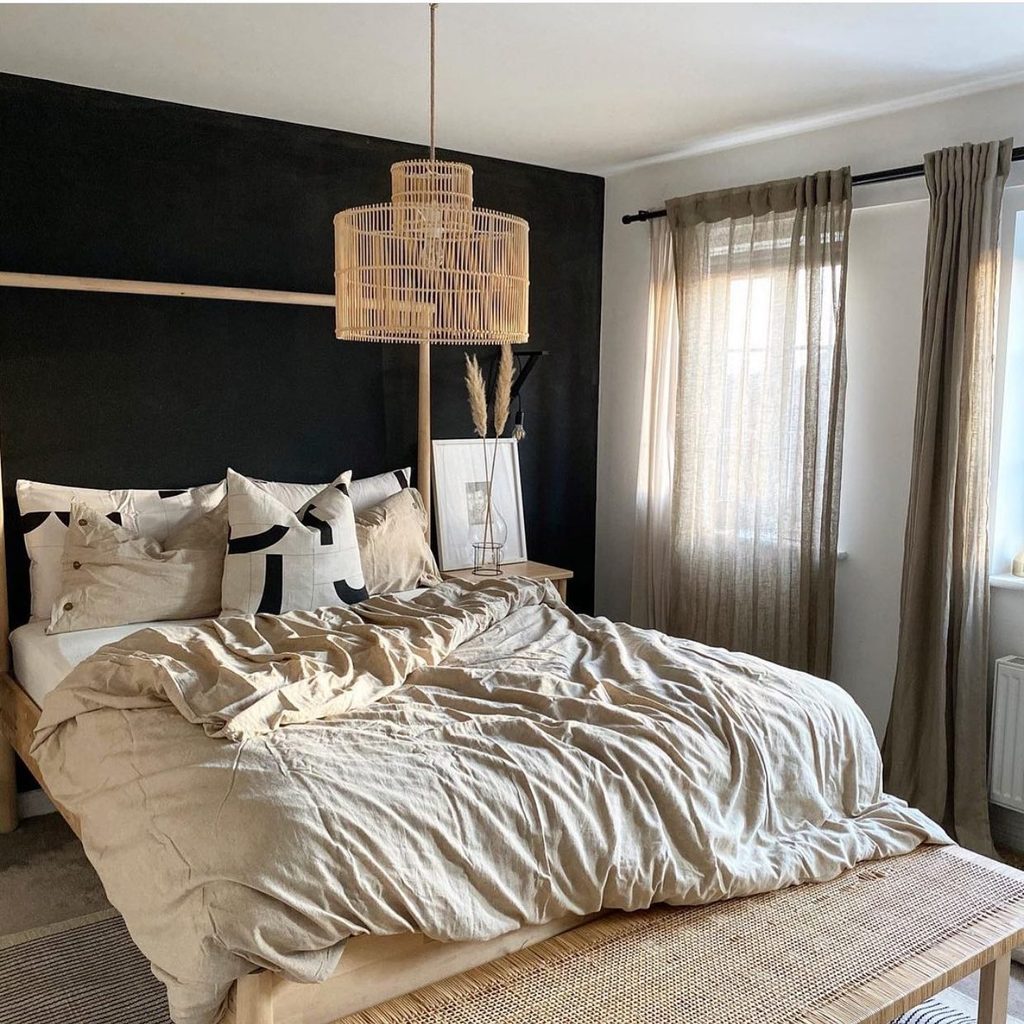
Credits: Instagram
Contrast can make a simple wooden canopy more noticeable than elaborate carving. In this room, pale rails stand against a nearly black wall, drawing a clean horizontal line above relaxed neutral bedding.
The wood relates to the woven pendant and cane bench, so the frame feels part of a small family of natural materials. Try a dark backdrop when an otherwise delicate timber structure disappears against white walls.
Test the paint behind the bed before extending it around the room. Keep adjacent curtains light enough to preserve daylight, and choose bedding with soft texture rather than busy pattern.
Leaving the upper rails uncovered allows the wall color to show through, making the canopy’s geometry visible without adding decorative fabric panels.
13. Finish a Floral Valance With Contrasting Fringe
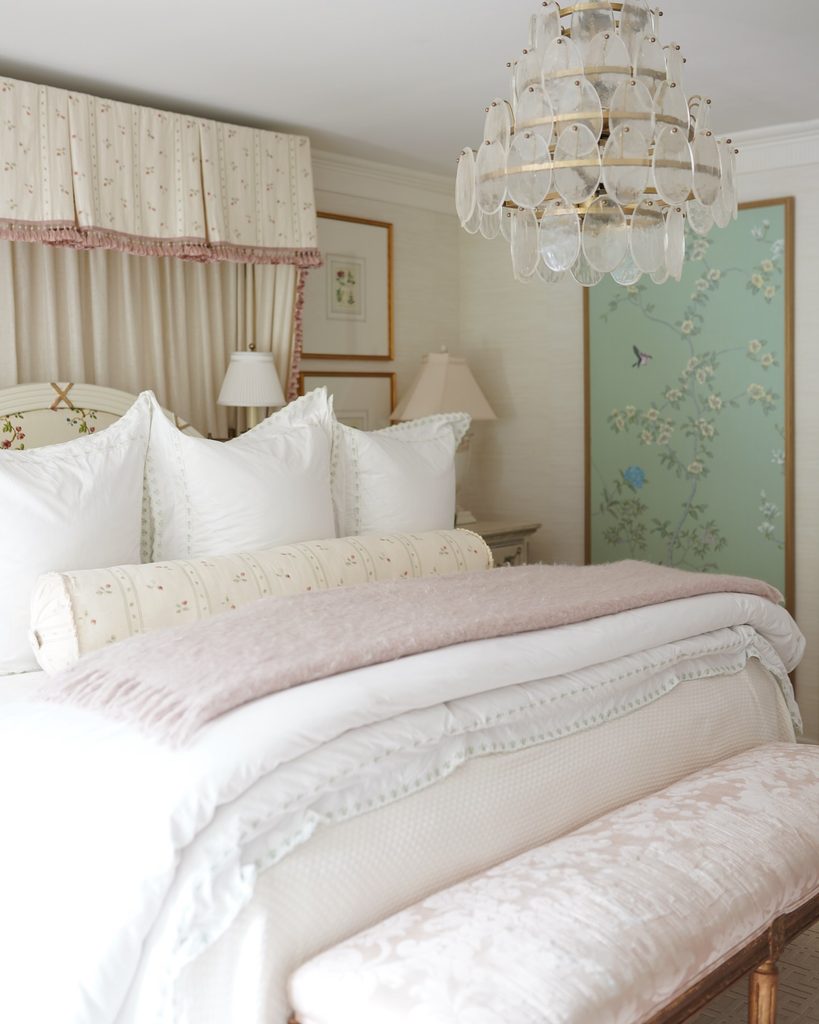
Credits: Instagram
Small trims can give a canopy its character without requiring a bold fabric. This pale floral valance is edged with pink fringe, which traces the lower border above gathered curtains.
The same soft pink appears on the folded throw, while a patterned bolster relates to the canopy’s delicate print. Borrow this idea when you want bed drapery that feels detailed rather than heavy.
Compare a trim sample with the fabric in daylight, and check whether its scale remains visible from across the room. Keep larger bedding surfaces mostly white so the border has space to register.
A decorative headboard can sit inside the drapery as long as its shape stays visible above the pillows and the surrounding folds remain controlled.
14. Match a Fringed Tester to the Window Treatment
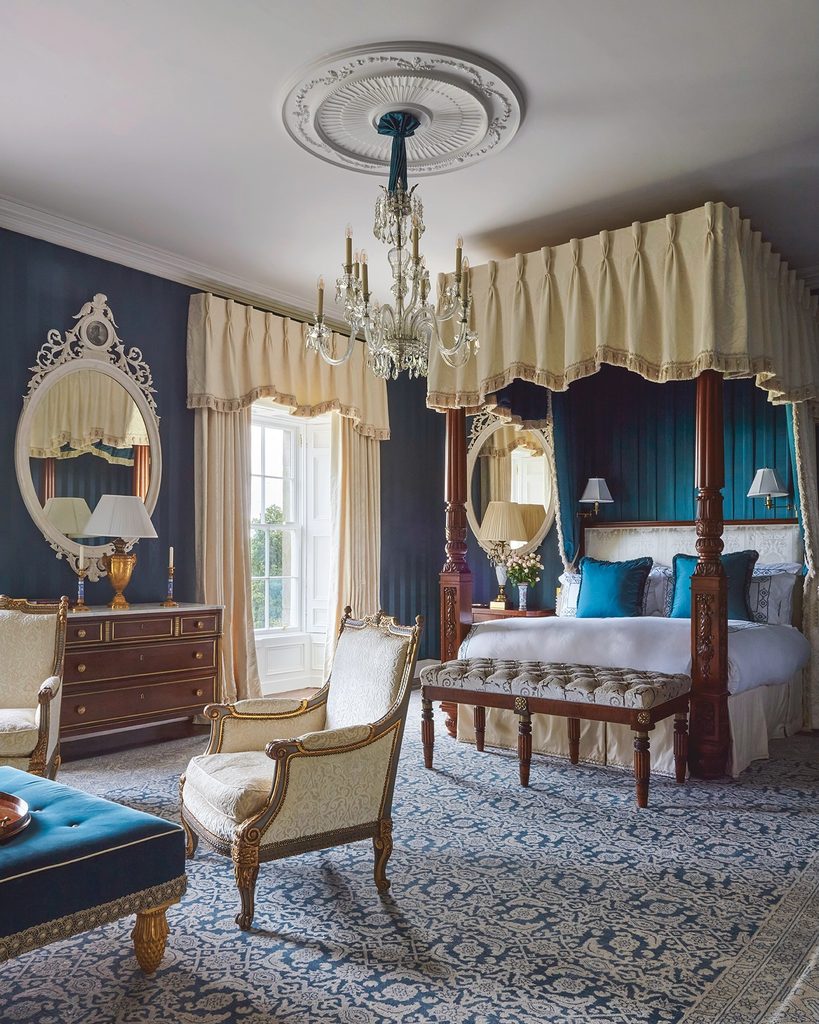
Credits: Instagram
Repeating a canopy fabric at the windows can make a traditional bedroom feel coordinated. Here, a cream tester with pleated fabric and fringe sits above carved wooden posts, while the window carries a matching treatment.
Deep blue walls and the darker inner canopy give the pale outer layer stronger definition. Use this approach when a substantial bed needs to relate to the room’s architecture.
Compare the valance depth with the ceiling height before committing to such a generous treatment. Leave the carved posts exposed so fabric does not hide the frame’s workmanship.
White bedding provides a quieter middle between the rich wood and layered textiles. Smaller touches of blue on the pillows connect the enclosure with the surrounding wall color.
15. Use a Small Hoop Above the Pillow End
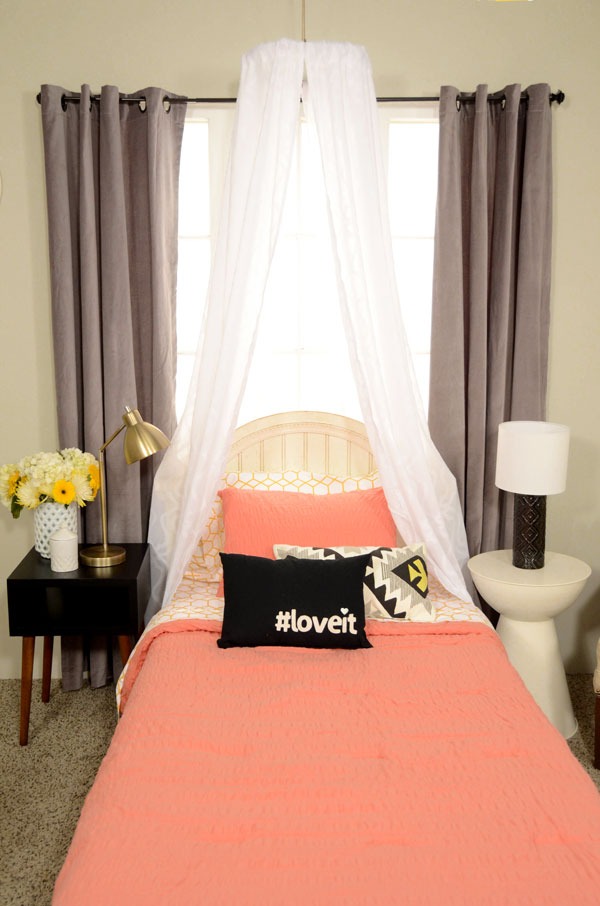
Credits: Mr. Kate
A compact hoop gives this single bed a canopy without surrounding the entire mattress. White panels gather into a narrow circular crown, then fall beside the headboard to frame the pillows.
Because the fabric is sheer, daylight still reaches the colorful bedding from the window behind it. Try this concentrated arrangement when a full rectangular canopy would crowd a small room.
Compare the hoop diameter with the headboard width and keep the entrance comfortably open. Secure every suspension point appropriately, and keep loose fabric and cords away from sleepers, especially children.
Let the bedding provide color while the canopy stays pale. Darker window curtains on either side create a second frame, helping the lightweight white drapery remain clearly visible throughout.
16. Follow a Sloping Ceiling With a Fabric Canopy
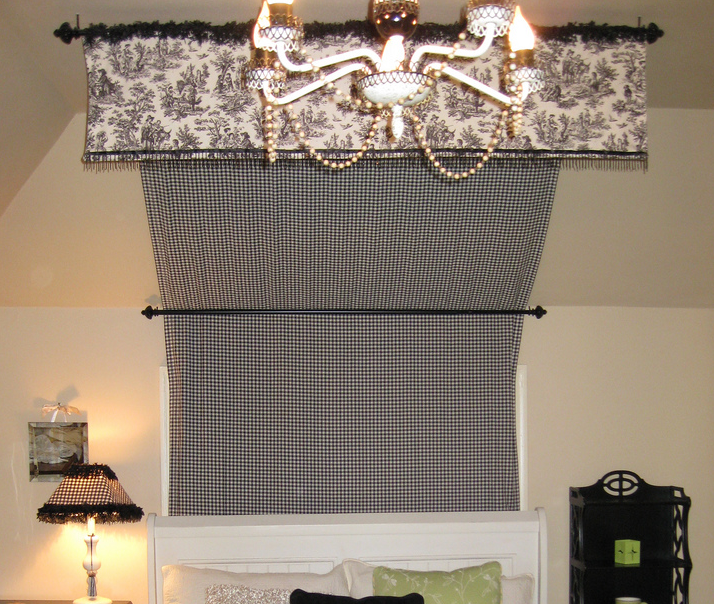
Credits: The Inspired Room
An angled ceiling can guide the shape of a canopy rather than limit it. In this bedroom, fabric travels from a high front rod down toward the headboard, following the room’s slope.
A checked underside creates a patterned inner roof, while a toile valance with fringe finishes the front edge. The white bed below gives these patterns a quiet base.
Plan the profile from the side before choosing fabric, making sure there is comfortable clearance above the pillows. Ask an installer to assess suitable supports and keep every panel well clear of light fixtures.
Repeating one dark color across rods and textiles makes the arrangement coherent. The result is a shallow canopy fitted to the architecture instead of freestanding posts.
17. Layer Contrasting Fabrics Beneath a Rounded Crown
Credits: The Morris Mansion
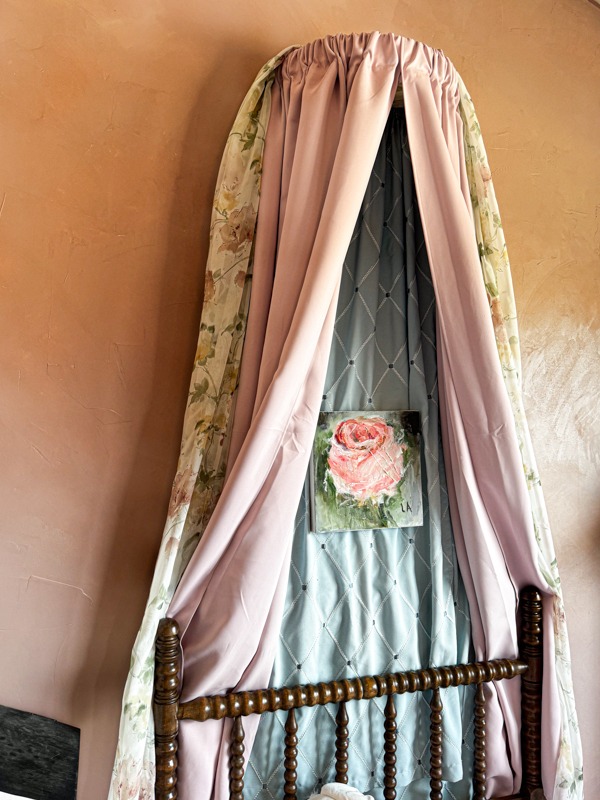
A rounded wall crown gathers several fabrics into one compact canopy. Here, pink side panels open around a blue diamond-patterned background, while a floral outer layer frames the arrangement against a warm wall.
The turned wooden headboard below remains visible, giving the drapery a clear relationship to the bed. Try this concentrated treatment when you want decorative enclosure mainly above the pillows.
Select one patterned fabric for the center and keep the larger side panels relatively plain. Compare all layers together before cutting, including how their reverse sides will appear when gathered.
Have the crown mounted securely for its weight and keep hanging fabric away from sleepers and lights. A small artwork within the opening adds a final focal point.
18. Repeat a Toile Print Across Canopy and Bedding
Credits: Tuft & Trim
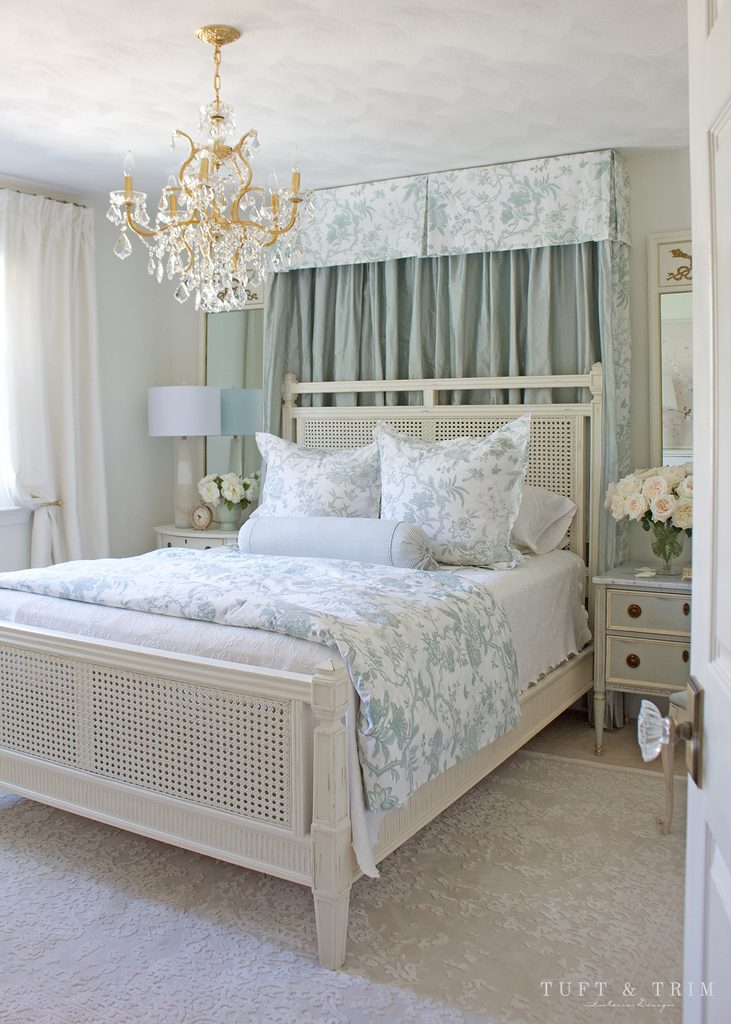
Matching fabric can make a shallow canopy feel integrated with the bed below.
Here, a pale toile valance and side borders repeat the print on the duvet and pillows, while gathered blue silk creates a quieter background behind the cane headboard.
The contrast between smooth pattern and soft folds gives the small enclosure depth. Try this approach when you want coordinated bed drapery without installing posts at the foot.
Keep the supporting frame narrow enough to suit the headboard, and check its attachment with someone qualified. Choose a plain inner fabric that relates to one color in the printed outer layer.
White bedding provides a break, preventing the repeated motif from overwhelming the room or hiding the furniture’s woven detail.
19. Frame a Curved Headboard With a Shallow Tester
Credits: Instagram
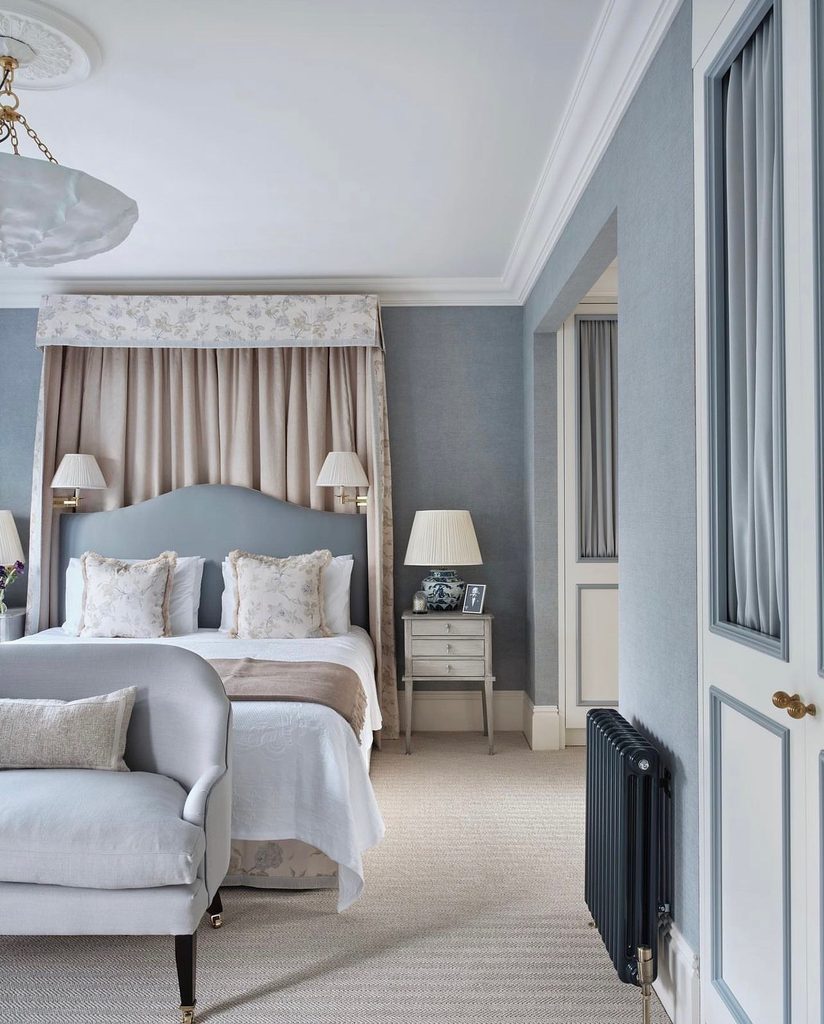
A shallow tester can emphasize the headboard without adding posts at the foot. This arrangement sets gathered neutral fabric behind a curved blue headboard and finishes the top with a restrained floral valance.
Its tall vertical folds draw attention upward, while the upholstered shape remains clearly visible below. Choose this solution when you like traditional drapery but want the sides of the bed to stay accessible.
Match the tester width to the headboard rather than automatically stretching it across the wall. Pale bedding and simple cushions prevent the fabric background from competing with the bed.
Nearby curtains can repeat the wall color instead of the canopy fabric, giving the room coordination without making every textile identical from every viewing angle.
20. Soften a Timber Canopy With Rumpled Blue Linen
Credits: Instagram
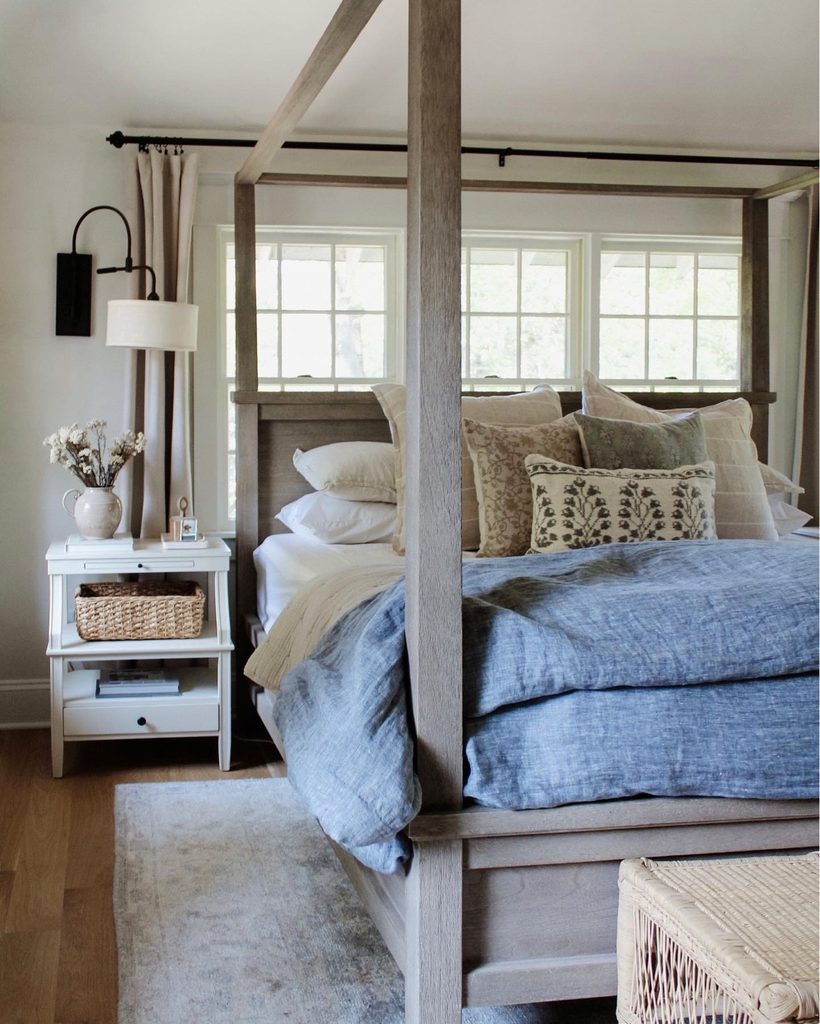
Straight timber posts can feel relaxed when the bedding beneath them has visible texture. This canopy pairs a weathered wooden frame with rumpled blue linen, layered white pillows, and a small floral cushion.
The clean rails establish the outline while the fabric prevents the bed from feeling rigid. Try this balance when you prefer a casual bedroom to a formally dressed canopy.
Leave the upper structure bare so the wood grain remains part of the design. Nearby woven storage and a bench introduce softer natural surfaces at a lower level.
Choose one muted bedding color and repeat it sparingly rather than matching every accessory. The contrast between crisp construction and loose linen gives the bed interest without needing overhead curtains.