
A room with heavy ceiling beams can feel grounded and warm, but too much dark wood may make the space seem closed in.
The Best Mediterranean Living Room Ideas show how pale walls, muted upholstery, and open routes through the room can balance those strong architectural details.
You’ll also find ways to give a brick fireplace arch a quieter surround, bring color into the seating with blue sofas, and let terracotta tile remain visible around a dark rug.
These approaches keep the focus on the character already built into the room while making the layout practical for everyday use.
1. Frame the Seating Area with a Broad Arch
Credits: Instagram
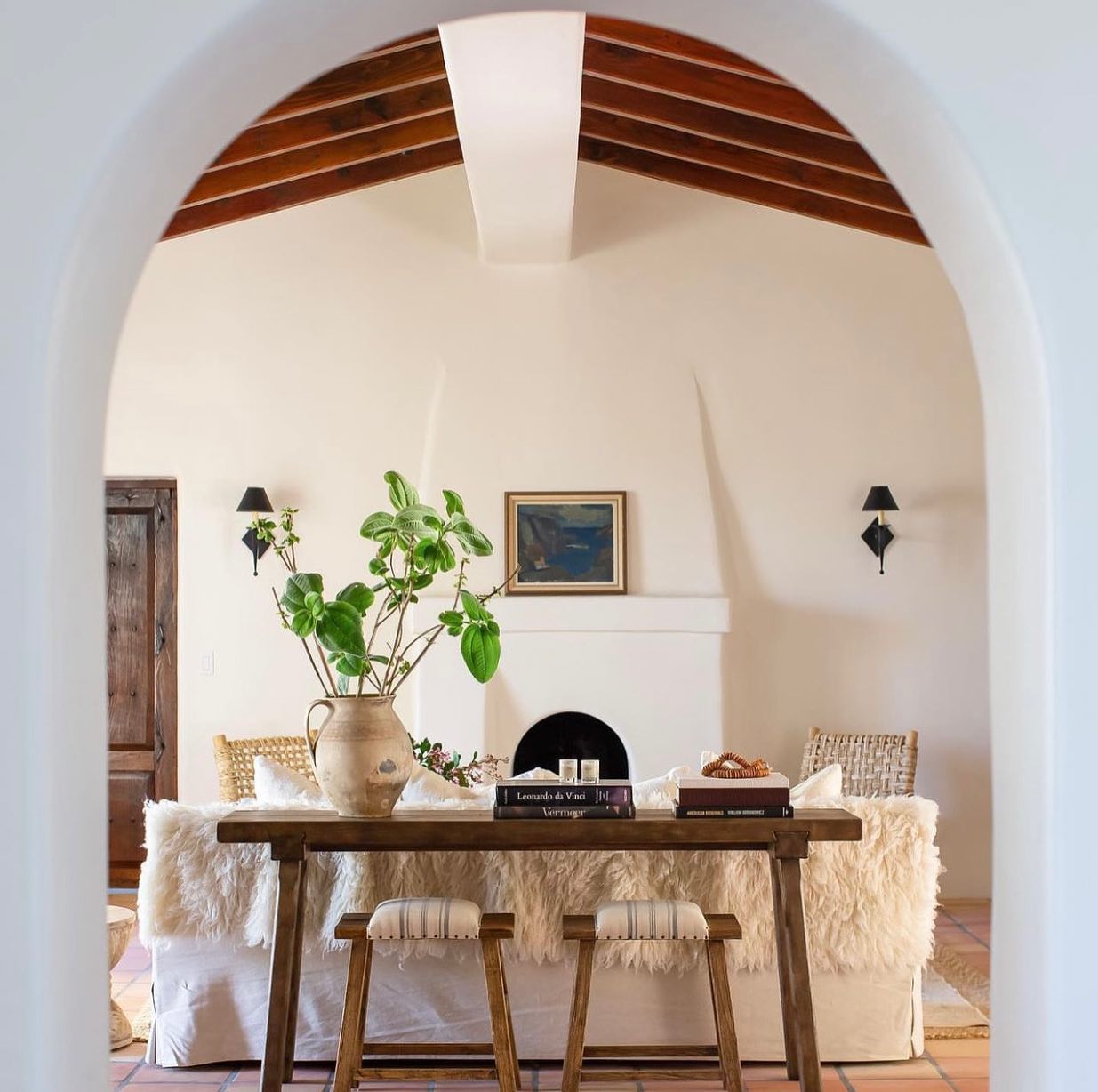
The broad white arch turns this seating area into a view worth keeping open. Beyond it, exposed ceiling beams and a tapered fireplace establish the room’s warm, simple character.
Position the sofa so its back sits below the architectural features, then choose a narrow console that follows its width. Here, two stools tuck underneath, adding useful seats without filling the walkway.
Keep the console arrangement low near the center so the fireplace remains visible. A taller branch arrangement can sit toward one end, where it softens the outline without blocking everything behind it.
Pale upholstery helps the darker table read clearly. Before moving furniture, stand in the adjoining room and check how each piece looks through the arch from there.
2. Balance a Dark Timber Ceiling with Pale Walls
Credits: Instagram
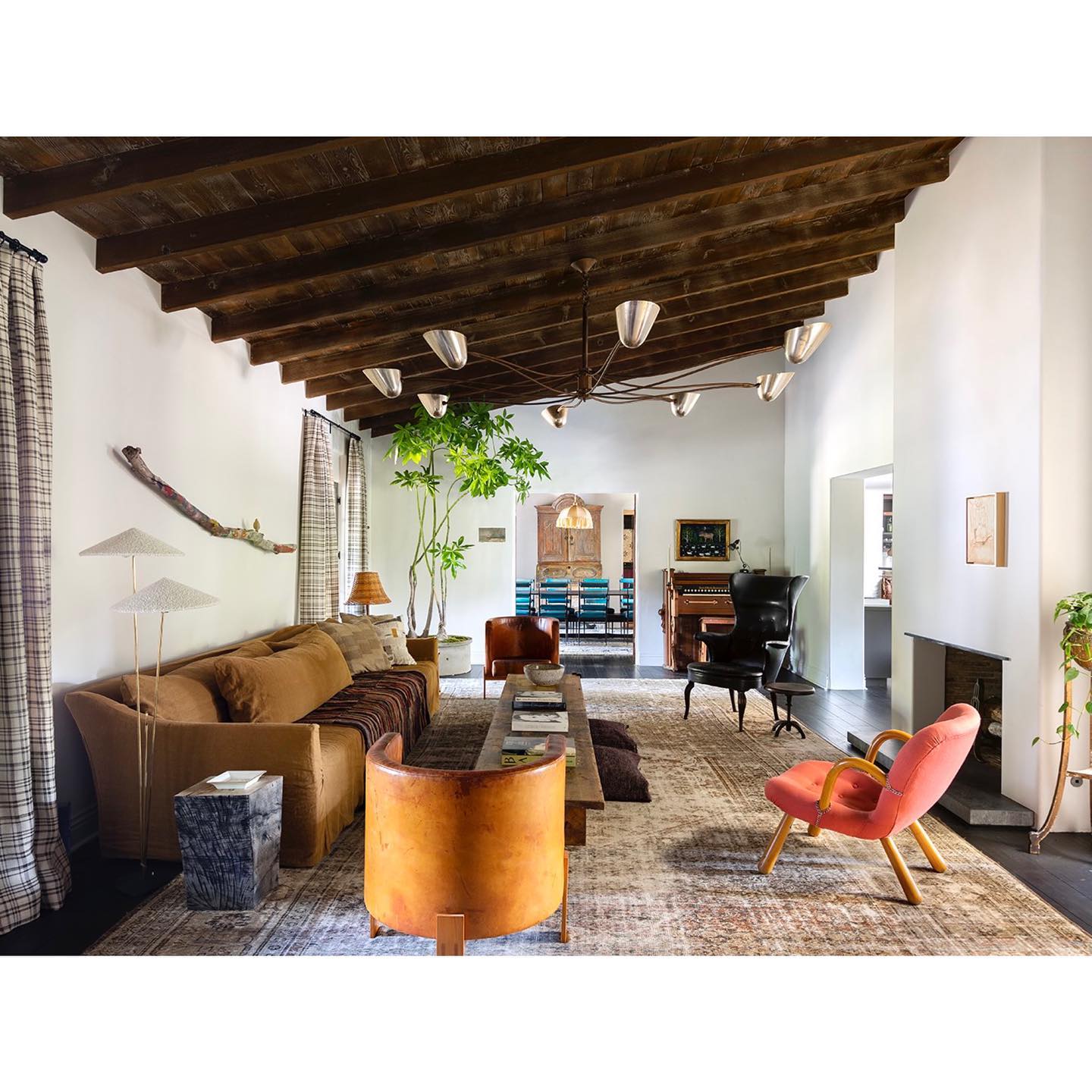
A dark timber ceiling gives this room depth, while pale walls keep the space from feeling enclosed. The long sofa and narrow coffee table follow the room’s proportions, leaving an open route toward the adjoining area.
Borrow that layout before adding decorative details: keep large pieces parallel to the longest walls and check the walking space between them. Warm brown seating relates naturally to the ceiling, while one coral chair adds a small, lively interruption.
You do not need matching chairs to create a coherent group. Repeat similar wood tones or rounded shapes instead.
A large patterned rug gathers the different seats into one zone, and curtains soften the tall wall surfaces without covering the timber overhead in this room.
3. Give a Brick Fireplace Arch a Quiet Surround
Credits: Instagram
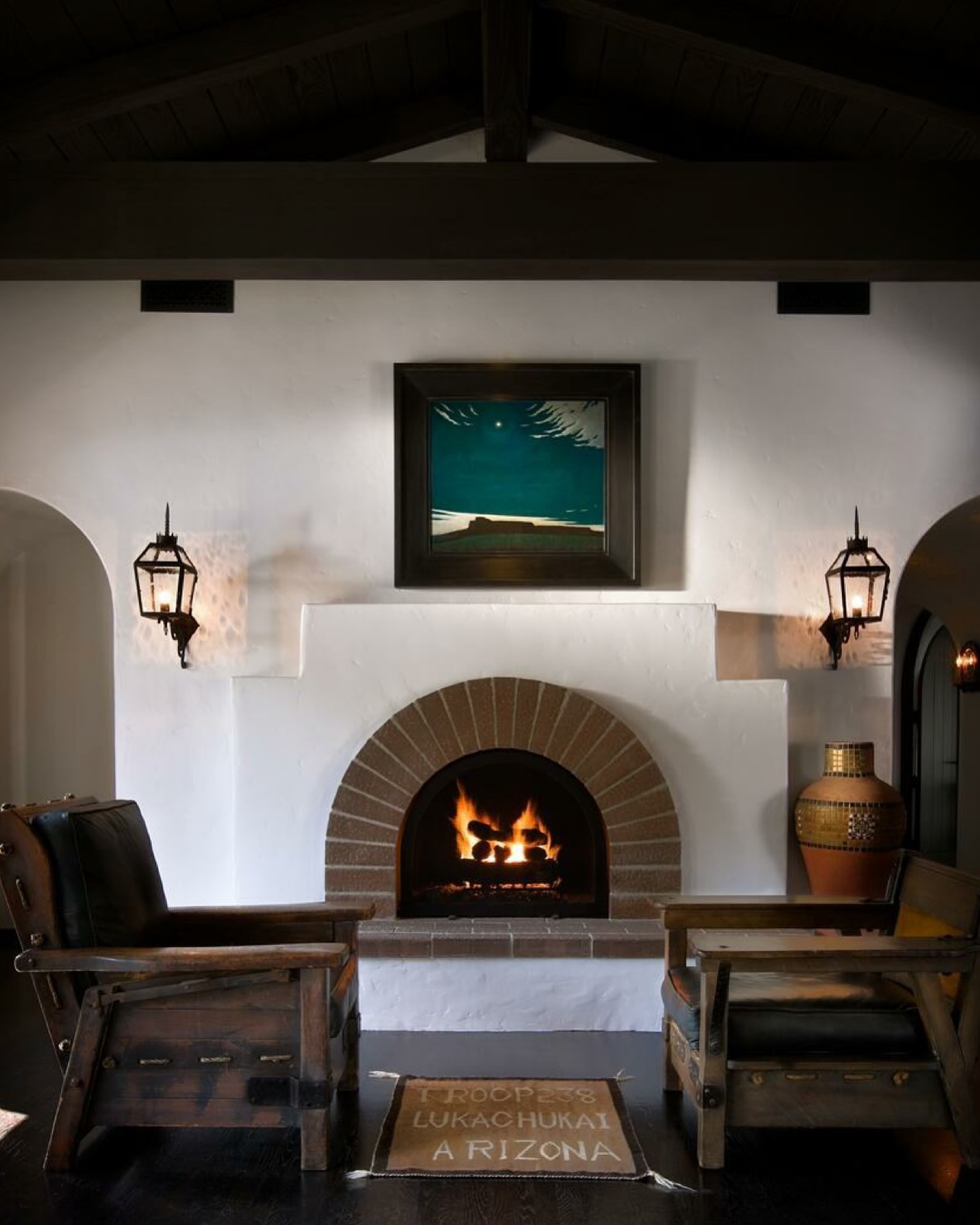
The fan of brick around this fireplace stands out because the surrounding wall stays simple and pale. Its stepped silhouette adds interest without competing with the arched opening.
If your fireplace already has an attractive detail, clear the mantel and surfaces before deciding it needs more decoration. One substantial artwork can provide enough color above it.
Here, paired lantern sconces reinforce the balanced arrangement, while dark chairs echo the overhead beams. Keep furniture outside the fireplace manufacturer’s required clearances and maintain an unobstructed approach to the hearth.
A single large vessel beside the surround adds another rounded form. The useful lesson is restraint: let the masonry pattern, firebox shape, and surrounding architecture provide most of the room’s character and interest.
4. Pair Muted Blue Sofas Beneath Dark Beams
Credits: Instagram
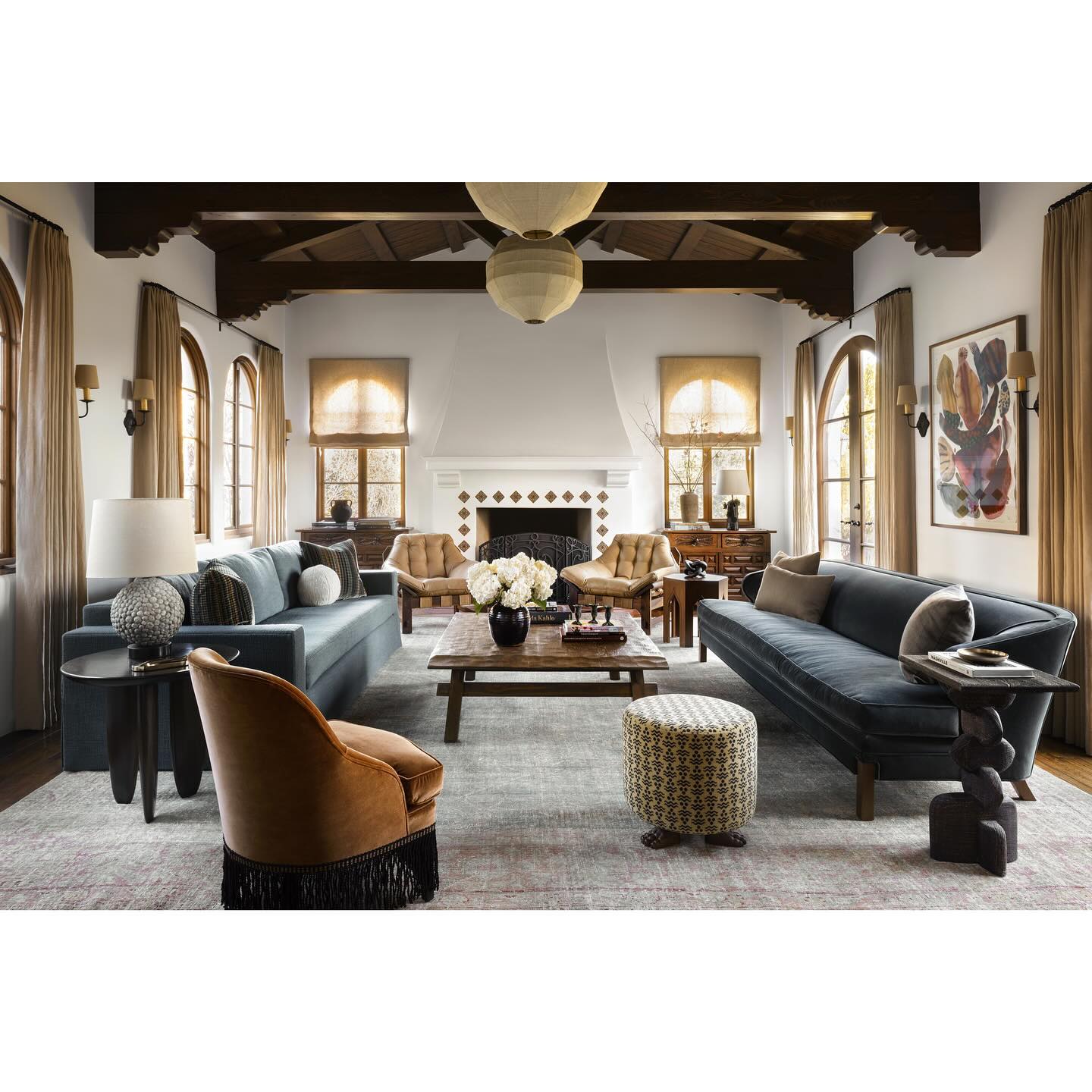
Muted blue sofas introduce cool color into a room filled with dark ceiling beams and warm window frames. Their restrained shade lets the arched windows and fireplace remain important parts of the composition.
To try this approach, bring upholstery samples home and compare them beside your woodwork in both daylight and lamplight. A blue that feels gentle in a showroom can look brighter against cream walls.
Facing sofas work especially well when conversation is the priority. Leave enough space for people to pass the coffee table comfortably, and add a small side table where someone can set a drink.
Here, warm brown chairs prevent the palette from becoming chilly, while a large pale rug connects the seating across the room.
5. Filter Daylight Around Warm Wooden Windows
Credits: Instagram
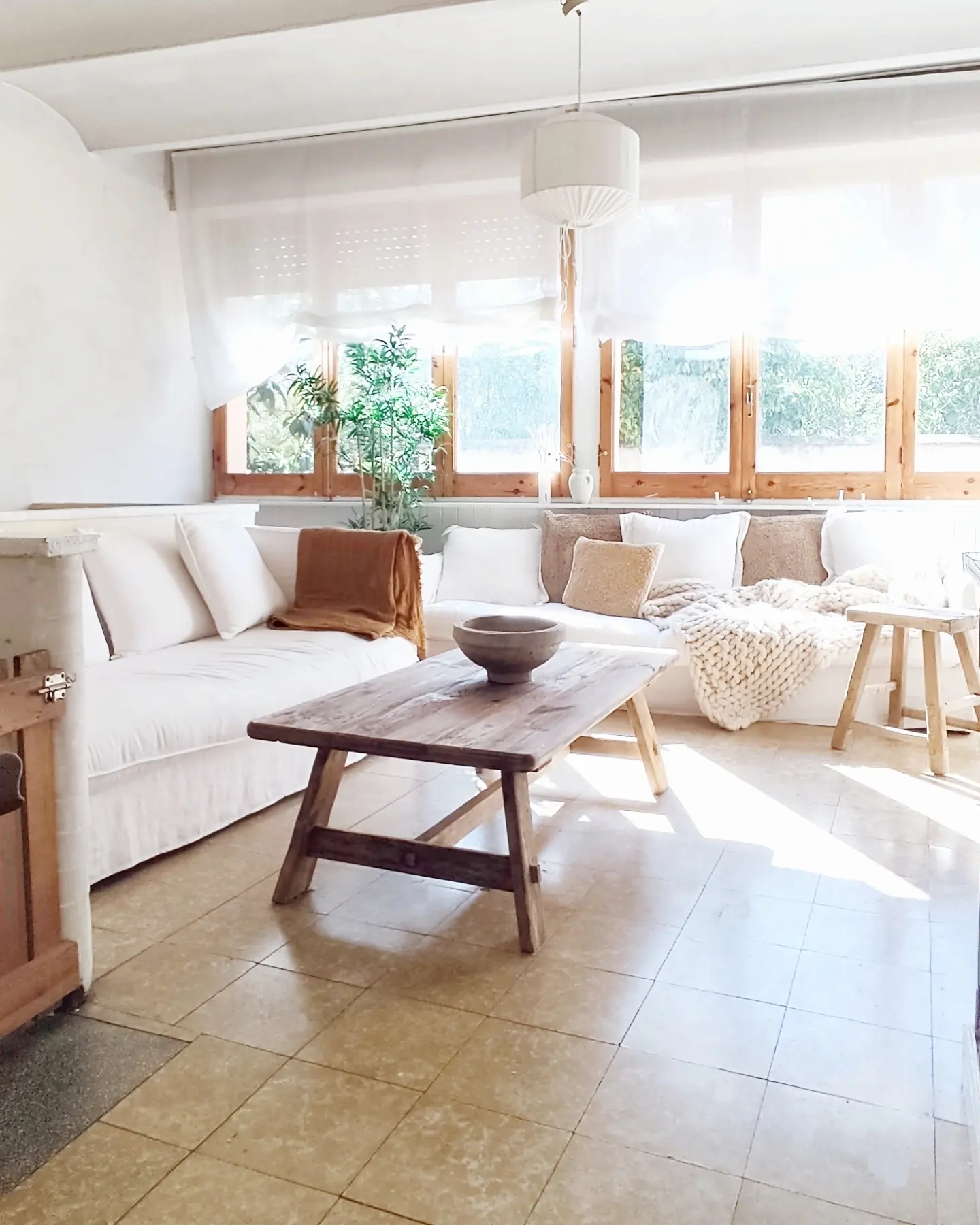
Soft window shades diffuse the daylight while leaving much of the wooden framing visible. That balance is especially useful when the windows themselves provide the room’s warmest detail.
Choose shades that can stop above the sofa back, and check that their controls remain easy to reach. Here, the pale corner sofa follows the windows, creating a generous place to sit without introducing another strong color.
A rustic table adds a darker surface at the center, while a rust-colored throw connects the seating to the warm frames. Keep nearby accessories simple so the view and changing light have room to work.
If you need evening privacy, test the fabric after dark before committing to a whole set of matching window treatments.
6. Set Ornate Chairs Against Simple Cream Upholstery
Credits: Instagram
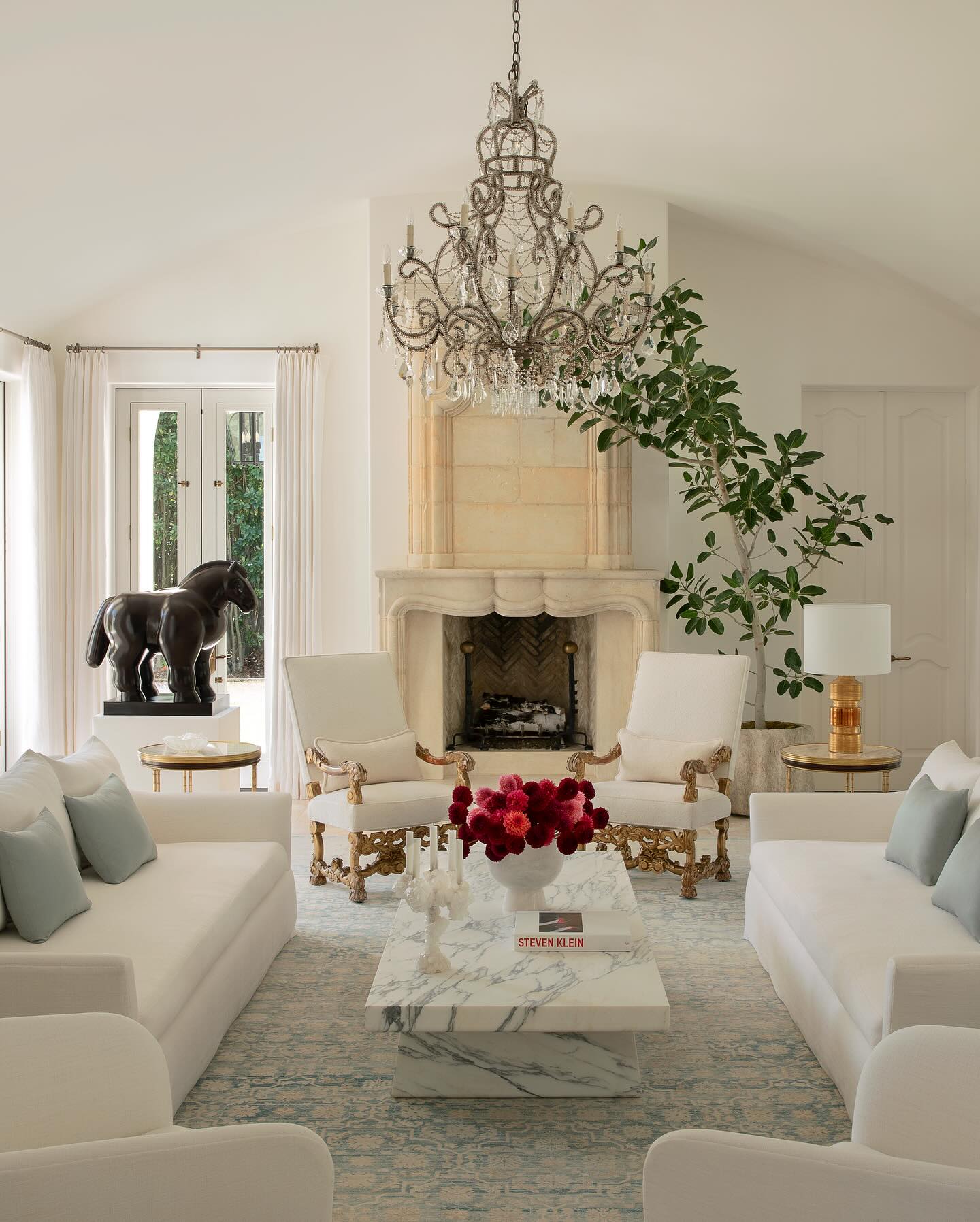
Carved gilded chairs and an elaborate chandelier bring decorative detail to this pale living room. Their impact is stronger because the surrounding sofas have plain upholstery and clean outlines.
When combining older and newer pieces, choose which objects deserve attention, then make the larger background elements quieter. You can begin with one carved chair rather than replacing an entire seating group.
Keep the upholstery within a close range of cream shades so the different shapes still feel connected. Here, a tall limestone fireplace adds another established focal point, while the low rectangular table keeps the center grounded.
Pale blue pillows and a softly patterned rug introduce enough color to separate the furniture from the walls without competing with the antiques.
7. Echo Dark Ceiling Beams with a Striped Sofa
Credits: Instagram
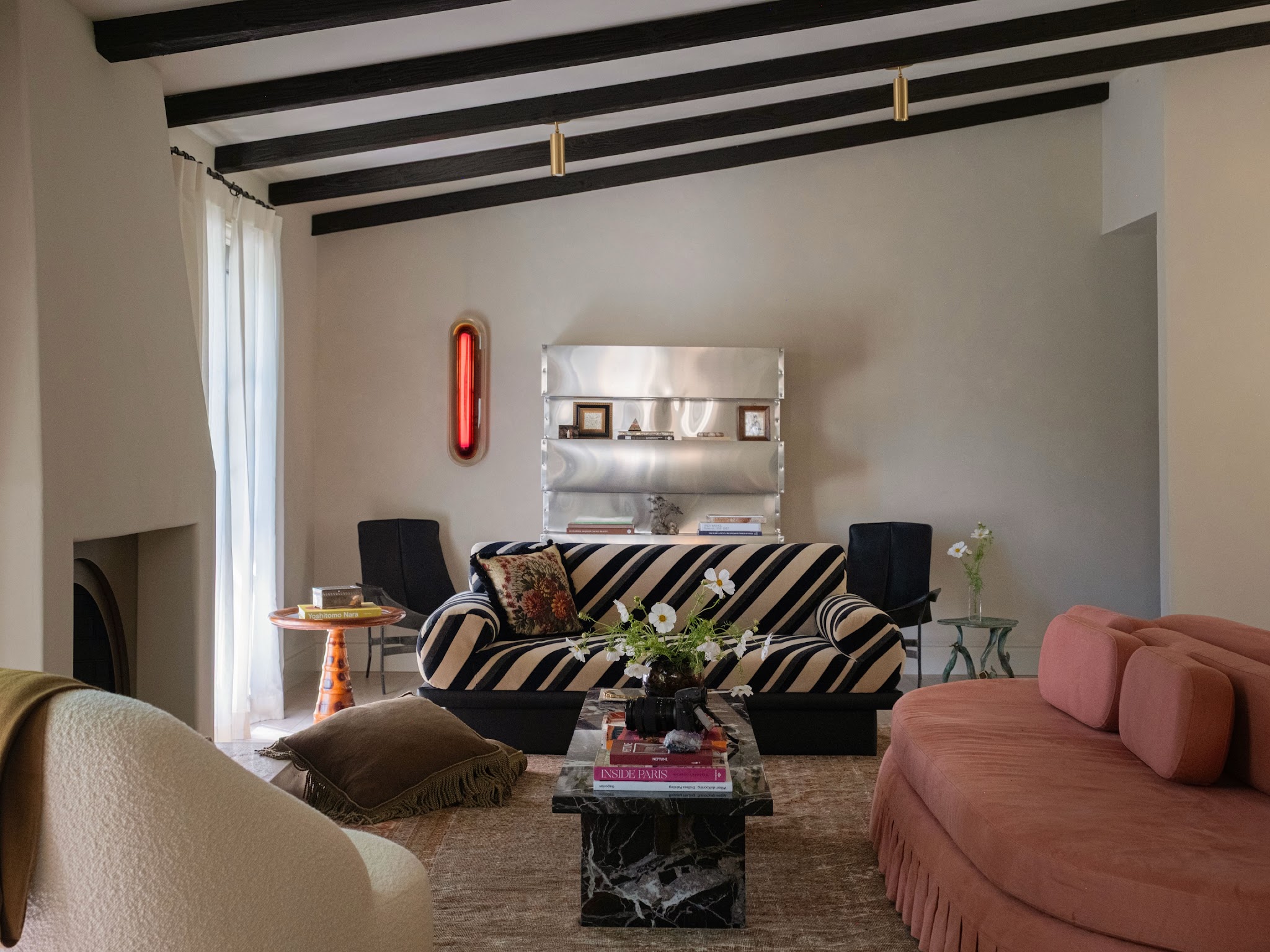
Bold diagonal stripes give this living room an energetic center without disguising its architectural shell. The sofa’s dark lines relate to the overhead beams and arched fireplace opening, while the cream ground connects with the walls.
Use that kind of repetition when introducing a strong pattern: it will feel more settled if one of its colors already appears elsewhere. Keep the largest neighboring seat in a solid fabric so the eye has somewhere to rest.
Here, a curved coral sofa softens the crisp stripes and adds warmth. A quiet woven rug limits the number of competing patterns.
Before ordering striped upholstery, review a large fabric sample and the proposed seam placement, especially across cushions, rounded arms, and the sofa’s back.
8. Echo an Arched Window with a Rounded Sofa
Credits: Instagram
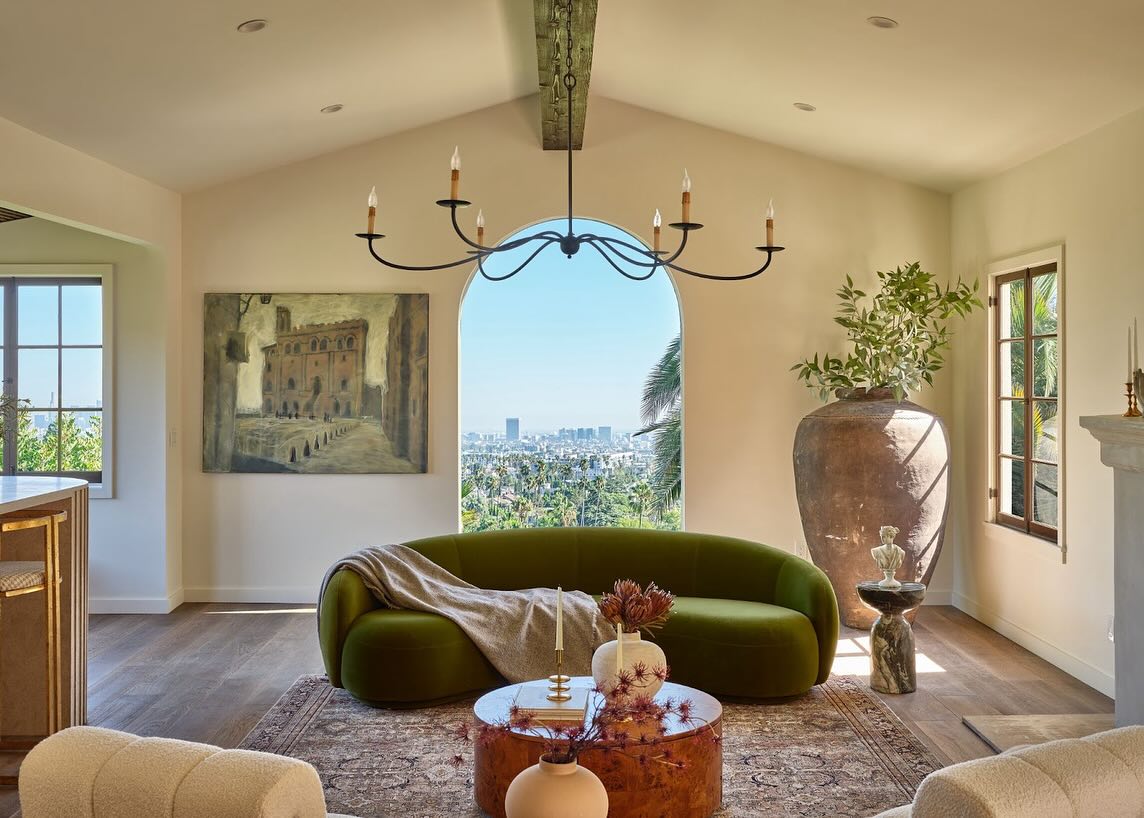
A rounded olive sofa repeats the soft outline of the tall arched window behind it. Its low back leaves the view largely open, letting the architecture and outdoor greenery become part of the seating arrangement.
Measure your window sill and sofa height before using this layout; even a few inches can change how much glass remains visible. The warm circular table continues the curved shapes without matching the sofa exactly.
Here, a large weathered vessel provides height beside the window instead of directly in front of it. Keep tall accessories toward the edges when a view is the main attraction.
A slim chandelier preserves the room’s airy center, while a patterned rug supplies a gentle boundary for the seating group.
9. Leave Terracotta Tile Visible Around a Dark Rug
Credits: Instagram
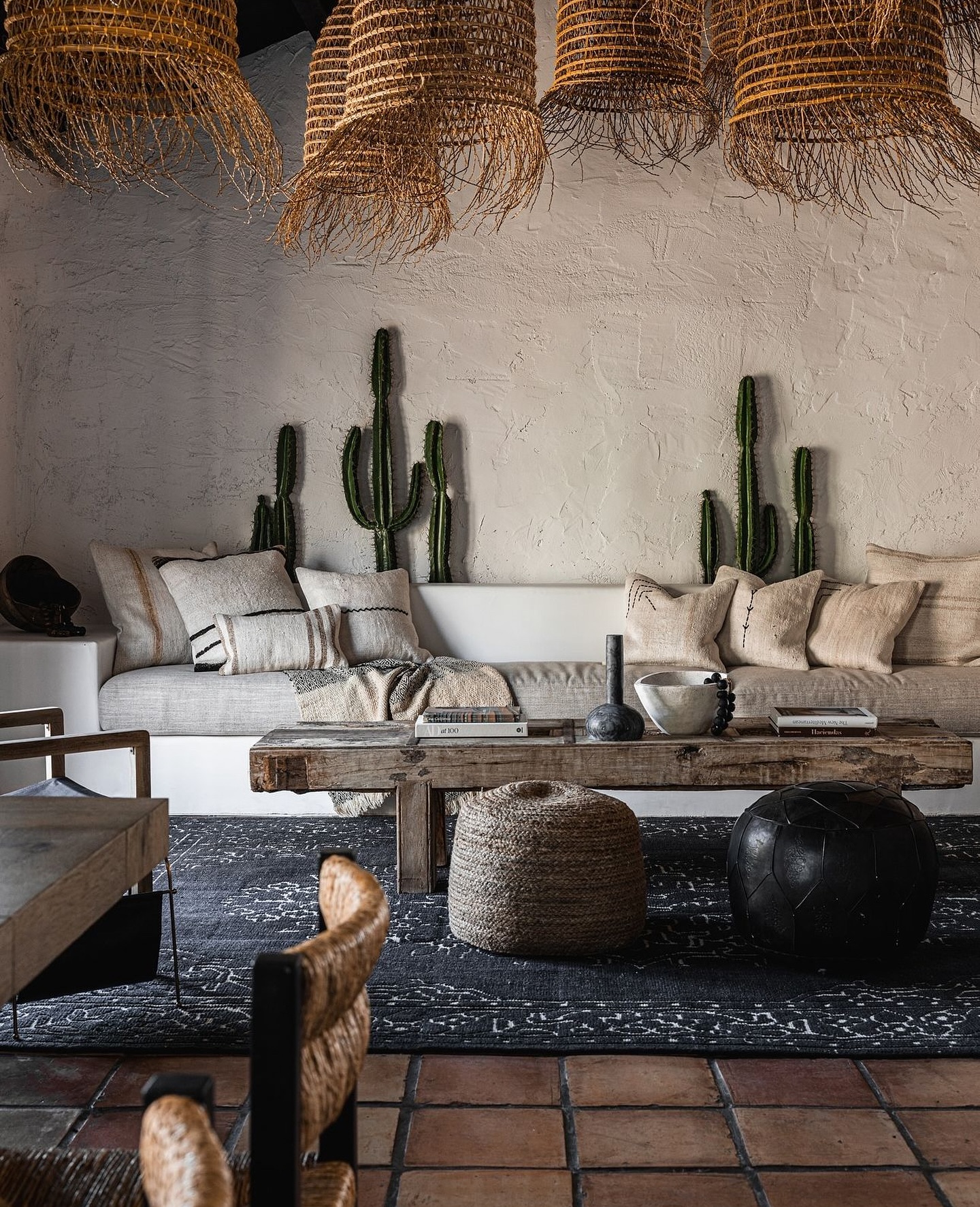
Warm terracotta tiles form a border around the dark patterned rug in this sitting area. That contrast gives the pale built-in seating a stronger base and keeps the floor’s character visible.
When choosing a rug, measure the seating arrangement first, then mark its proposed edges with painter’s tape. You want enough coverage to connect the furniture without concealing every tile.
Here, a long weathered table carries the warm tones into the middle of the room, while woven shades and textured pillows soften the hard surfaces.
Keep the palette focused on a few related neutrals when mixing this many textures. Small movable stools add flexible seating, but leave a direct path through the room so the arrangement stays easy to use.
10. Let Patterned Stair Risers Supply the Accent
Credits: Instagram
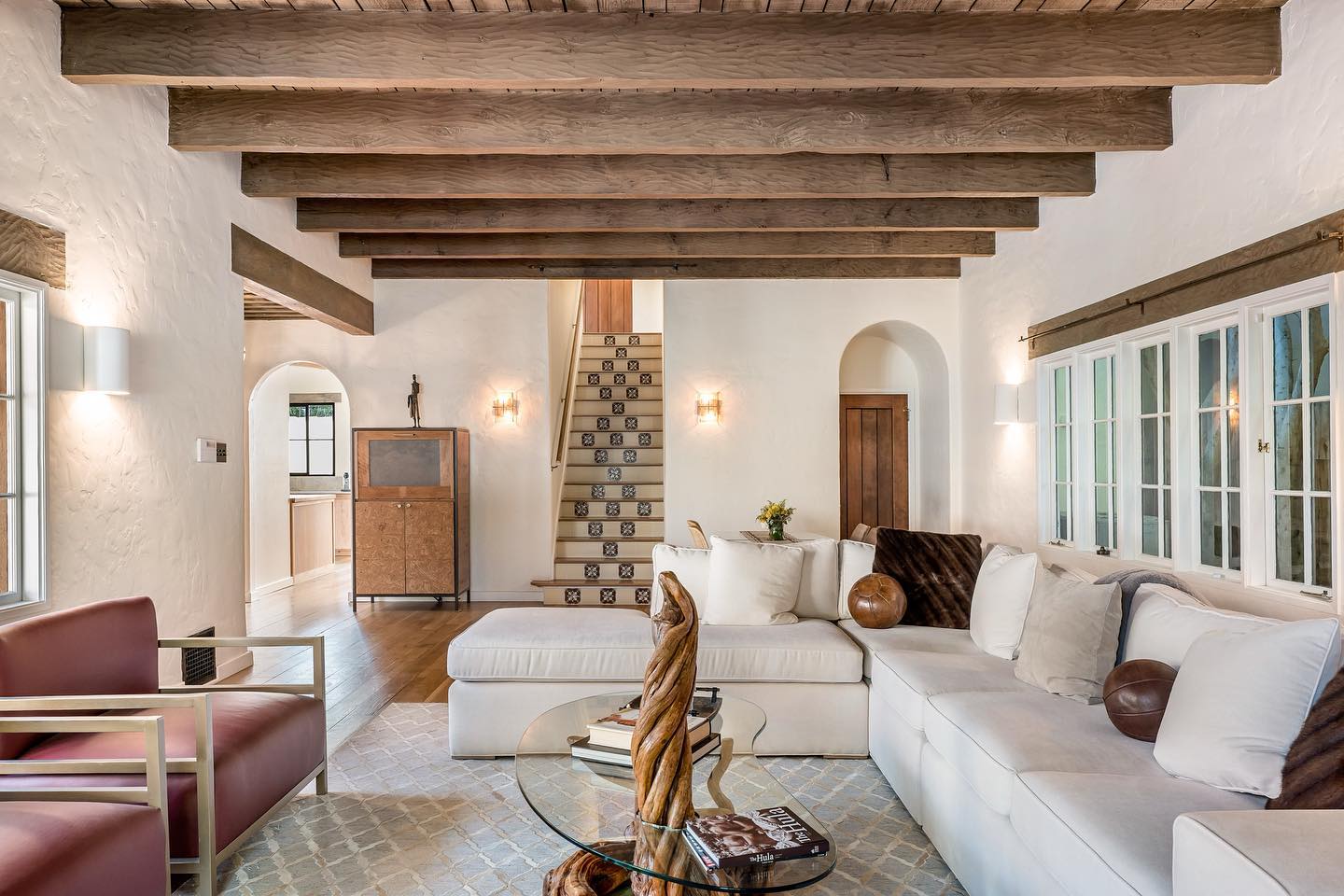
Patterned stair risers create a decorative backdrop in this pale room, with rounded doorways and substantial beams framing the view. The living furniture stays simple, allowing that small architectural detail to register from across the space.
If your stairs are visible from the sofa, treat them as part of the room’s composition when choosing rugs and textiles. A quiet upholstery color leaves more room for pattern elsewhere.
Here, a low white sectional sits beneath the windows, while a glass tabletop keeps the center from feeling crowded. Maintain an open route to the stairs instead of filling the foreground with extra stools or baskets.
One deeper chair color gives the seating definition without introducing another busy print beside the patterned risers.
11. Pull Upholstery Colors from Antique Fireplace Tile
Credits: Instagram
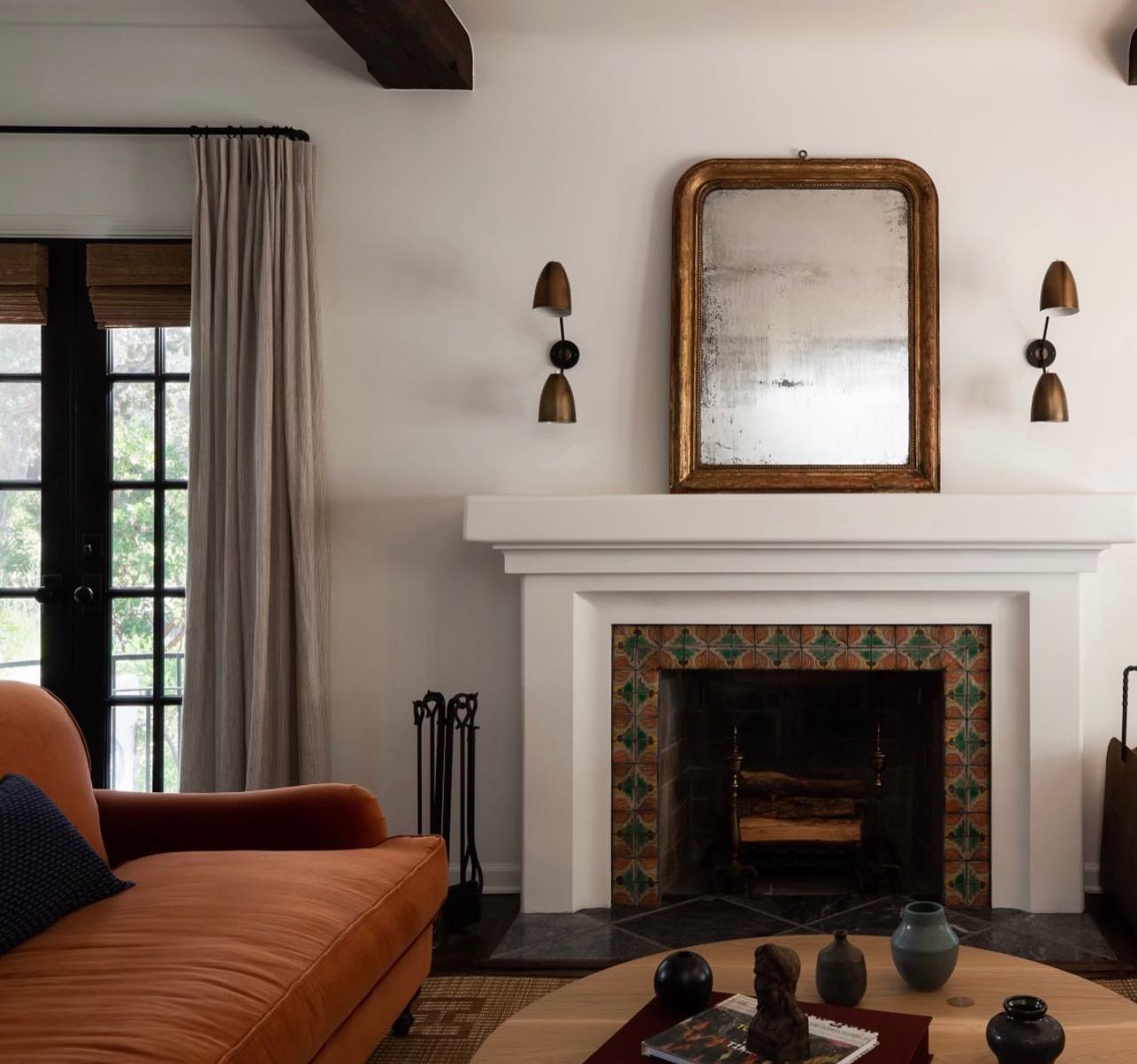
The fireplace’s patterned tiles supply a ready-made palette of warm clay and muted green. A burnt orange sofa picks up the warmer notes, while a green vessel repeats the cooler accent on the coffee table.
Start with an existing feature like this before shopping for upholstery: photograph it in daylight and bring several fabric samples home for comparison. The colors only need to relate, not match exactly.
Here, the pale plaster mantel gives the busy tile border breathing room, and an antique mirror adds height without introducing more pattern. Keep surrounding curtains simple when the fireplace already offers intricate detail.
A few dark objects connect the black doors and hearth, helping the softer colors feel grounded throughout the seating area.
12. Outline a Pale Room with Slender Black Lighting
Credits: Instagram
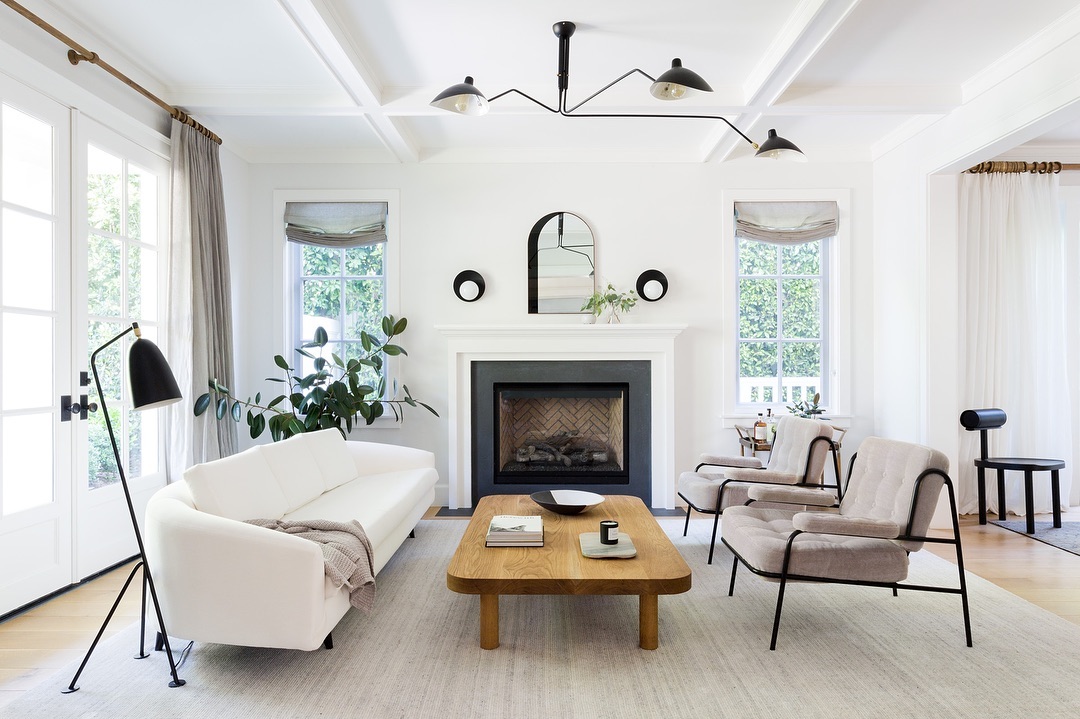
Slender black light fixtures add definition to this bright room without blocking the white ceiling or windows. Their dark lines repeat in the chair frames, arched mirror, and fireplace opening, giving the pale furnishings a clear outline.
Start with one fixture that suits the room’s proportions, then repeat its finish in a few smaller details. You do not need every metal surface to match.
Here, warm curtain rods and a honey-colored table keep the scheme from feeling severe. The ceiling light spreads across the seating area, while a floor lamp provides a separate pool of light beside the sofa.
Check lamp placement from a seated position so the shade conceals the bulb and the light falls where you need it.
13. Let a Tall Plant Rise Above Low Seating
Credits: Instagram
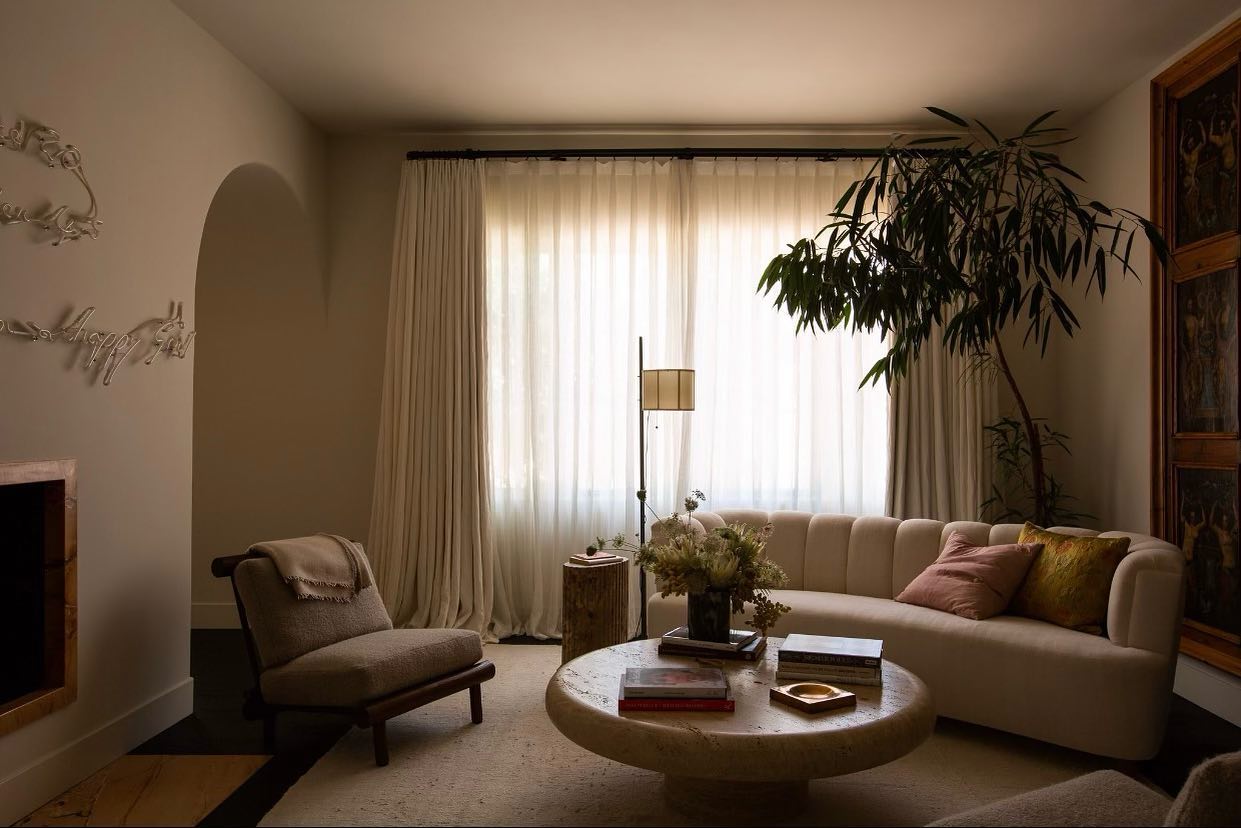
A tall leafy plant fills the upper corner of this intimate sitting room, bringing a loose silhouette beside the broad curtains. The low sofa leaves space for the foliage to spread without crowding the furniture.
Before choosing a plant, check the light at that spot throughout the day and select a variety suited to those conditions. Leave access for watering and protect the floor beneath its container.
Here, cream upholstery and warm walls create a quiet background, while the round coffee table makes the close seating arrangement easier to navigate. Keep smaller tabletop arrangements low so they do not compete with the taller greenery.
The nearby arch adds another soft outline, connecting the room’s architecture with its furnishings and foliage.
14. Let One Stone Wall Carry the Rustic Texture
Credits: Instagram
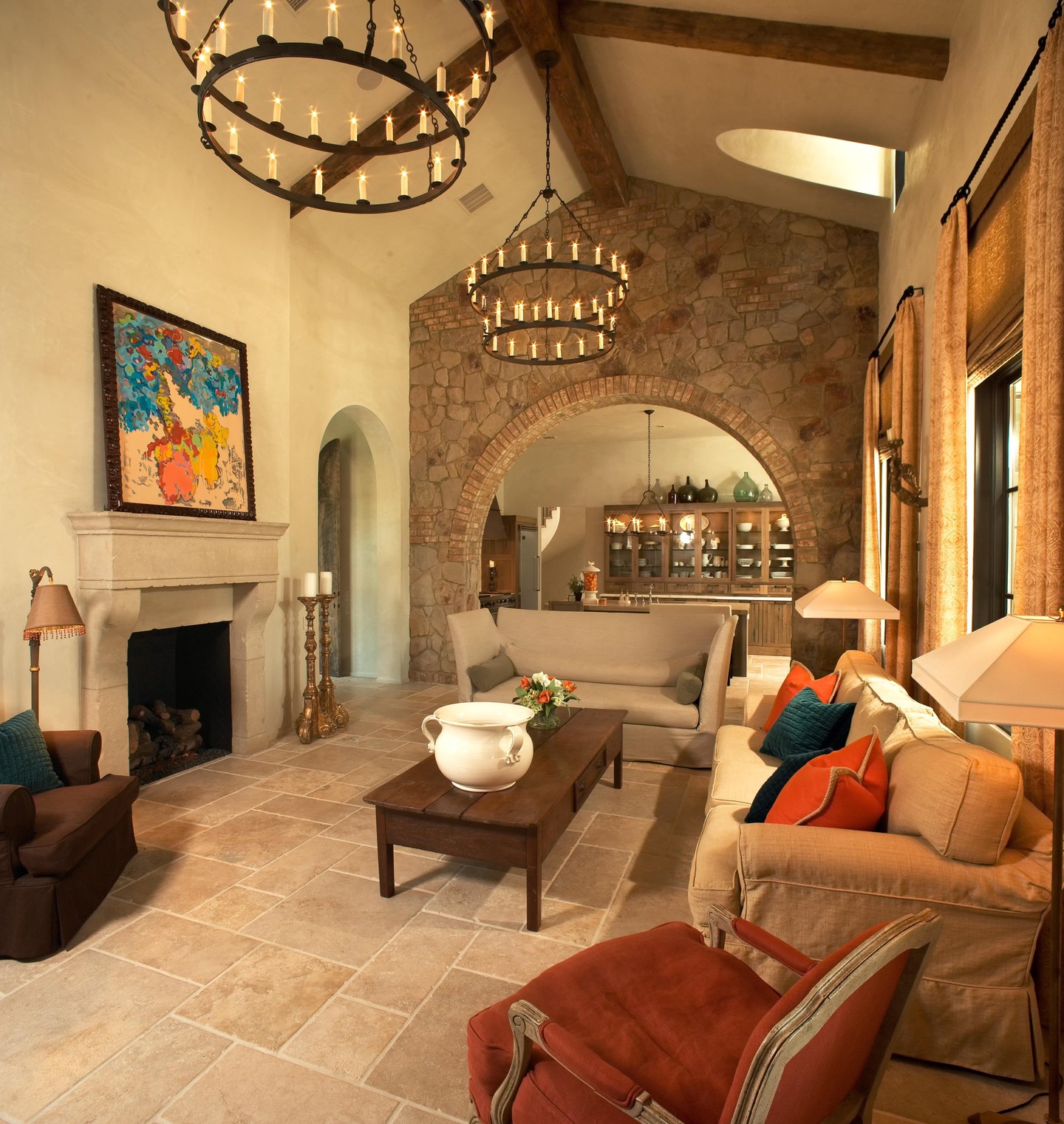
A full stone wall gives this tall room its strongest texture, with a brick arch marking the passage into the next space. The adjacent walls stay quieter, allowing the varied masonry to remain legible.
When a room already has a substantial stone feature, choose upholstery that relates to its softer background tones rather than adding another dominant pattern.
Here, pale seating and warm curtains connect with the limestone floor, while orange and teal pillows echo colors in the artwork. Keep those brighter accents easy to change.
A simple rectangular table gives the seating group a useful center without adding elaborate carving. Before buying accessories, view the room from its main entrance and remove anything that competes with the stonework’s outline.
15. Connect the Hearth to a Low Storage Run
Credits: Instagram
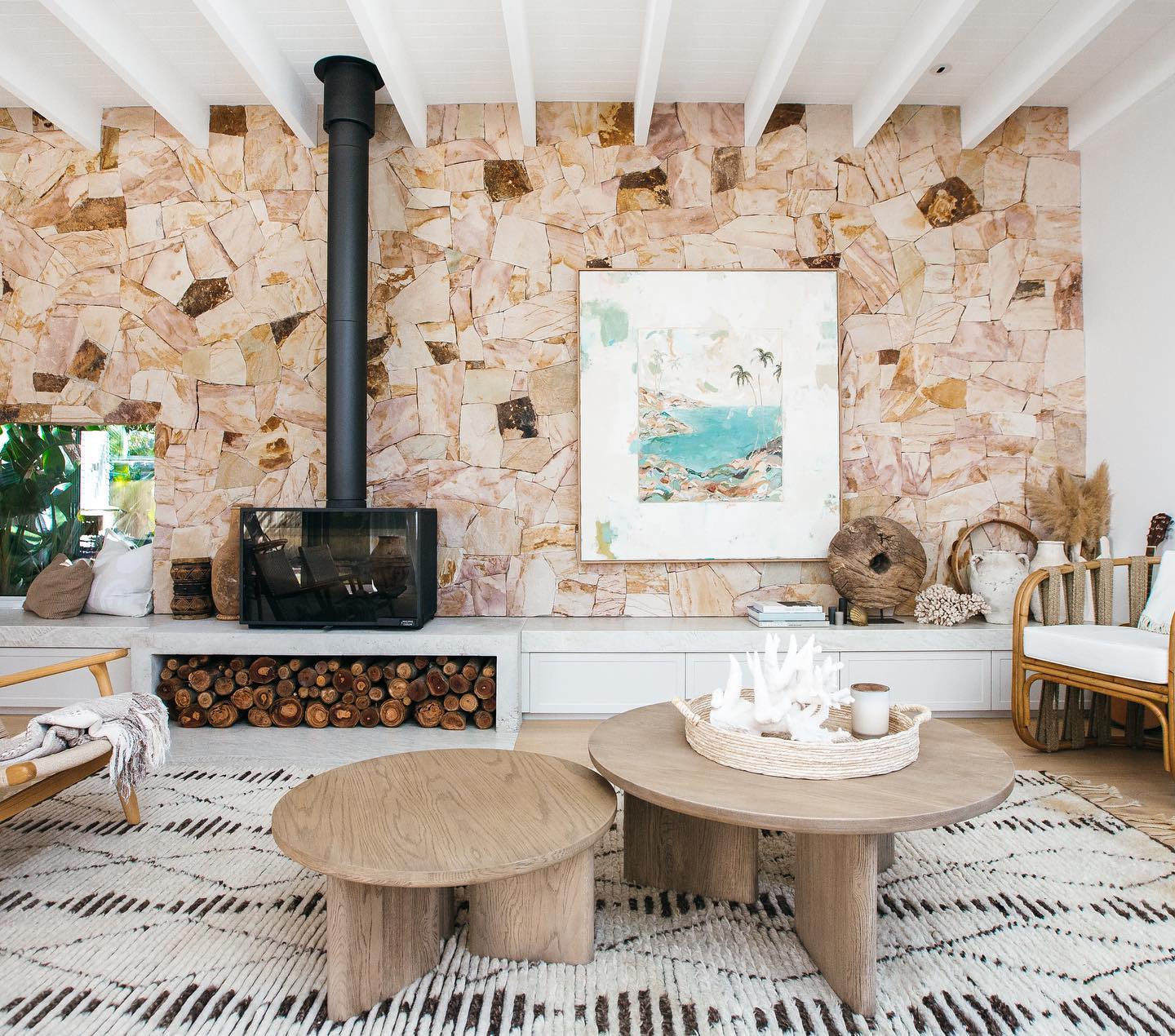
A continuous low ledge connects the fireplace area with closed storage beneath the artwork. Its pale finish gives the busy stone wall a calm horizontal line and keeps everyday belongings out of sight.
When planning built-ins, list what needs storing before deciding the cabinet sizes, then keep frequently used items within easy reach of the seats. Have fireplace clearances and suitable materials checked by the installer before extending cabinetry near a stove.
Here, rounded nesting tables make the center flexible, while woven chairs and a geometric rug add softer textures. Leave part of the cabinet top empty so the artwork has room around it.
A few larger objects will usually feel more settled against irregular stone than many decorative pieces.
16. Warm a Small Seating Area with Terracotta Walls
Credits: Instagram
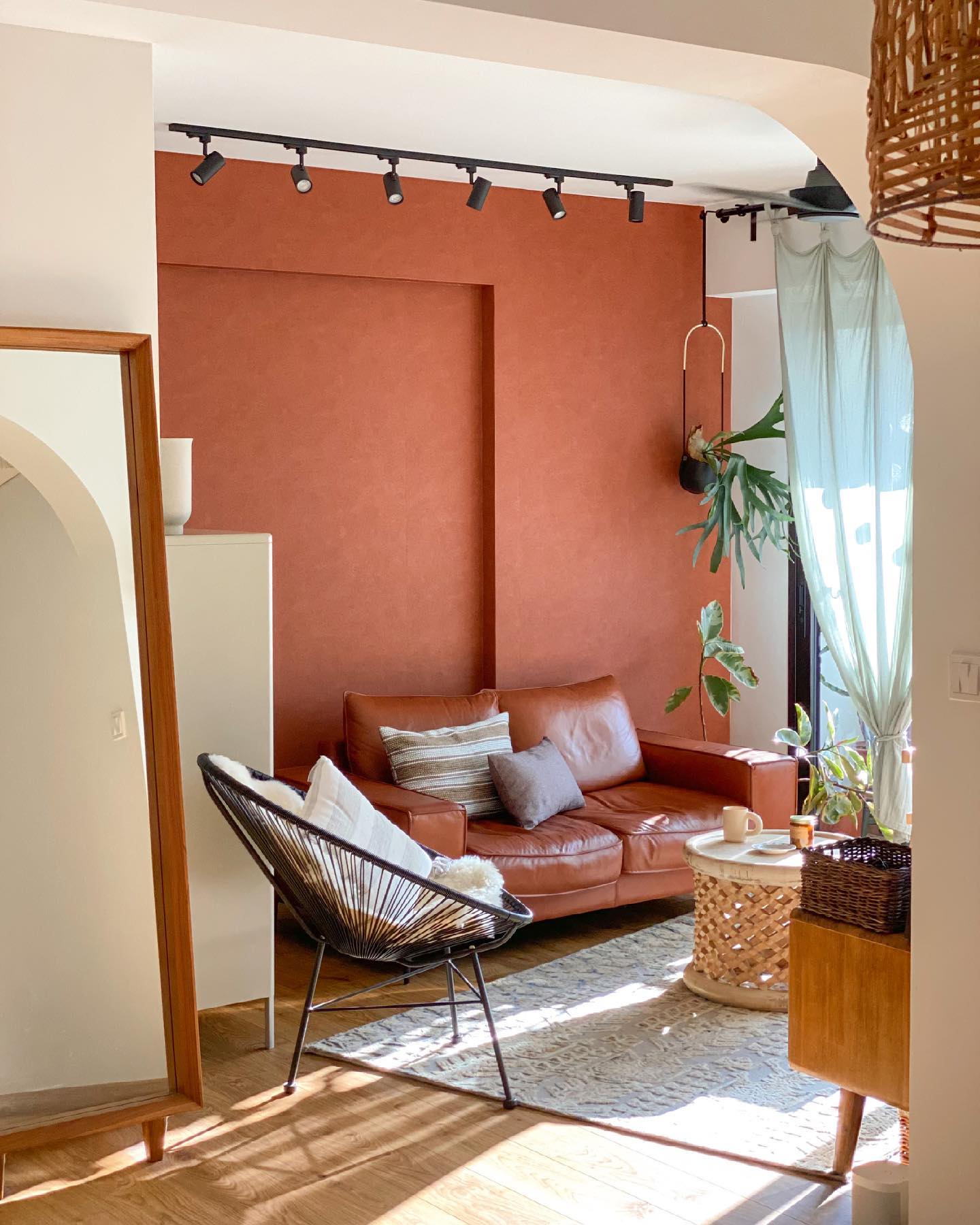
A terracotta-colored wall gives this compact seating area warmth, while the white arch keeps its entrance bright and defined. The inset rectangle adds depth without needing another piece of artwork above the sofa.
You can borrow the color strategy even in a room with plain walls: concentrate the stronger shade behind the main seat and keep nearby surfaces lighter.
Compare paint samples with your existing upholstery so the two warm tones complement each other. Here, the cognac sofa sits close to the wall color, while pale pillows and a light rug provide separation.
An open-framed chair preserves views through the small space. Keep window treatments light and gather them clear of the glass to make the most of the daylight.
17. Lighten a Built-In Seat with an Open Woven Table
Credits: Instagram
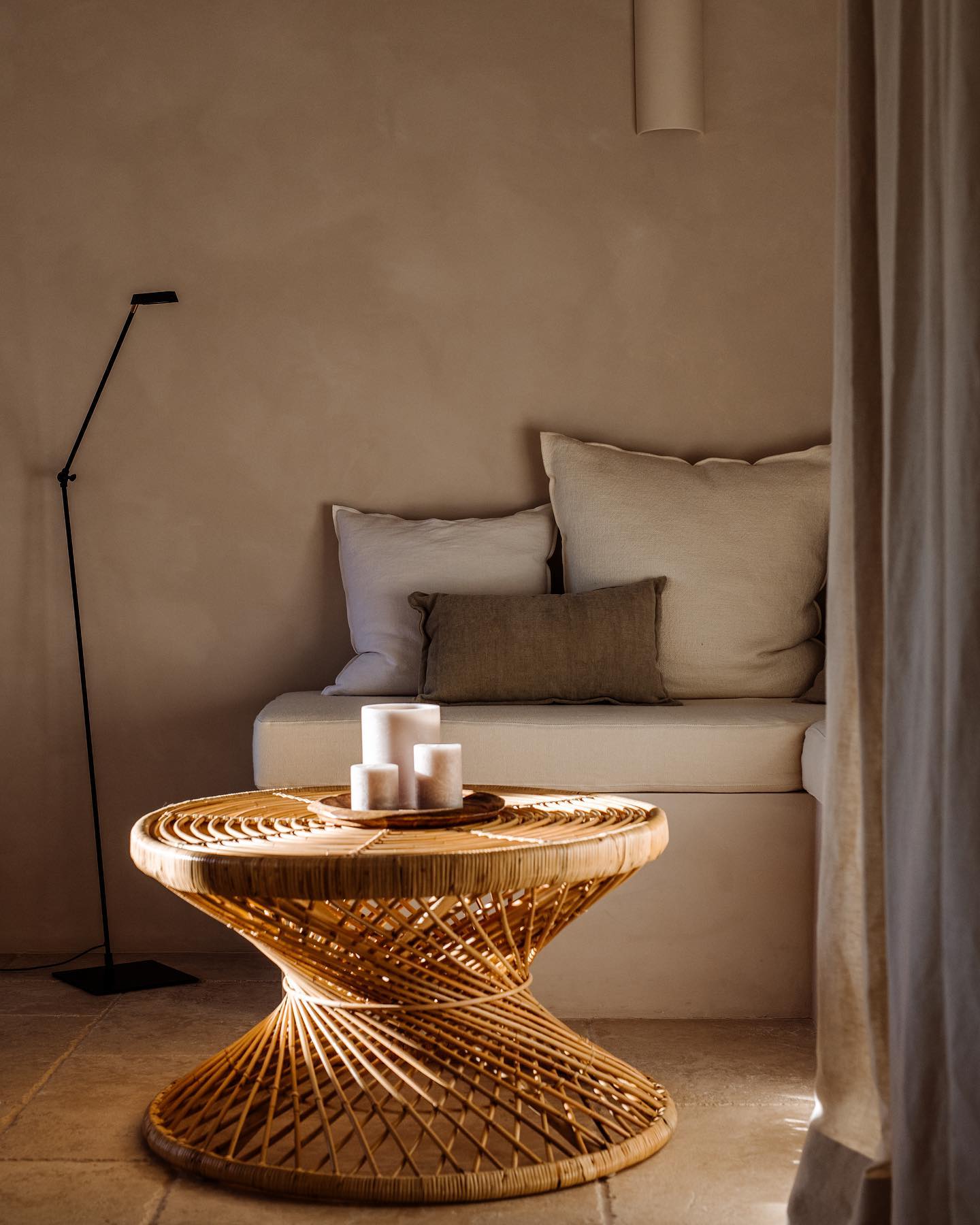
An open woven table brings a lighter silhouette to this sitting nook, balancing the solid base of the built-in seat. Its curved profile also breaks up the straight cushion edges and quiet wall behind them.
Try this combination when a compact seating area feels heavy even though the colors are pale. Choose a table with visible space through its base, then check that its height works comfortably with the seat.
A firm tray can provide a stable spot for drinks on an uneven woven top. Here, generously sized cushions make the simple bench inviting, while a slim black lamp adds a useful reading light.
Keeping the walls mostly bare allows changing sunlight to reveal their subtle texture throughout the day.
18. Organize a Favorite Collection in a Tall Grid
Credits: Instagram
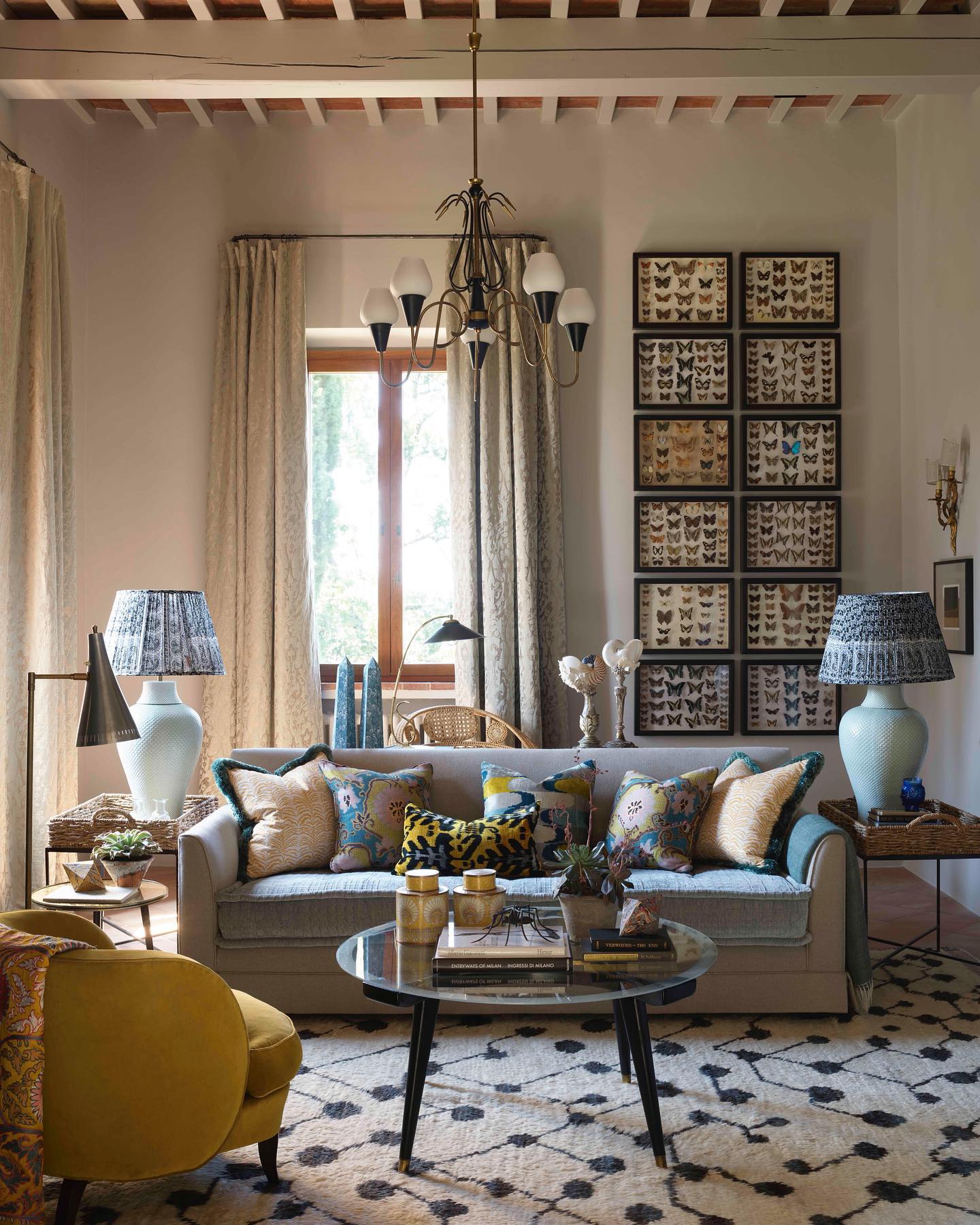
A tall grid of framed butterflies gives this layered sitting room a display area beside the window. Matching dark frames create order, allowing the sofa pillows, lamp shades, and rug to carry different patterns.
Use the same approach for a collection of botanical prints, postcards, or family photographs. Lay the arrangement on the floor first, then use paper templates to check its scale on the wall before hanging.
Keep the gaps consistent so the collection reads as one composition. Here, paired pale blue lamps provide another steady rhythm at either end of the sofa.
The warm ceiling panels and pale beams remain visible above, giving the lively textiles an architectural setting. Leave nearby wall space clear to preserve that balance.
19. Float a Conversation Group in a Tall Room
Credits: Instagram
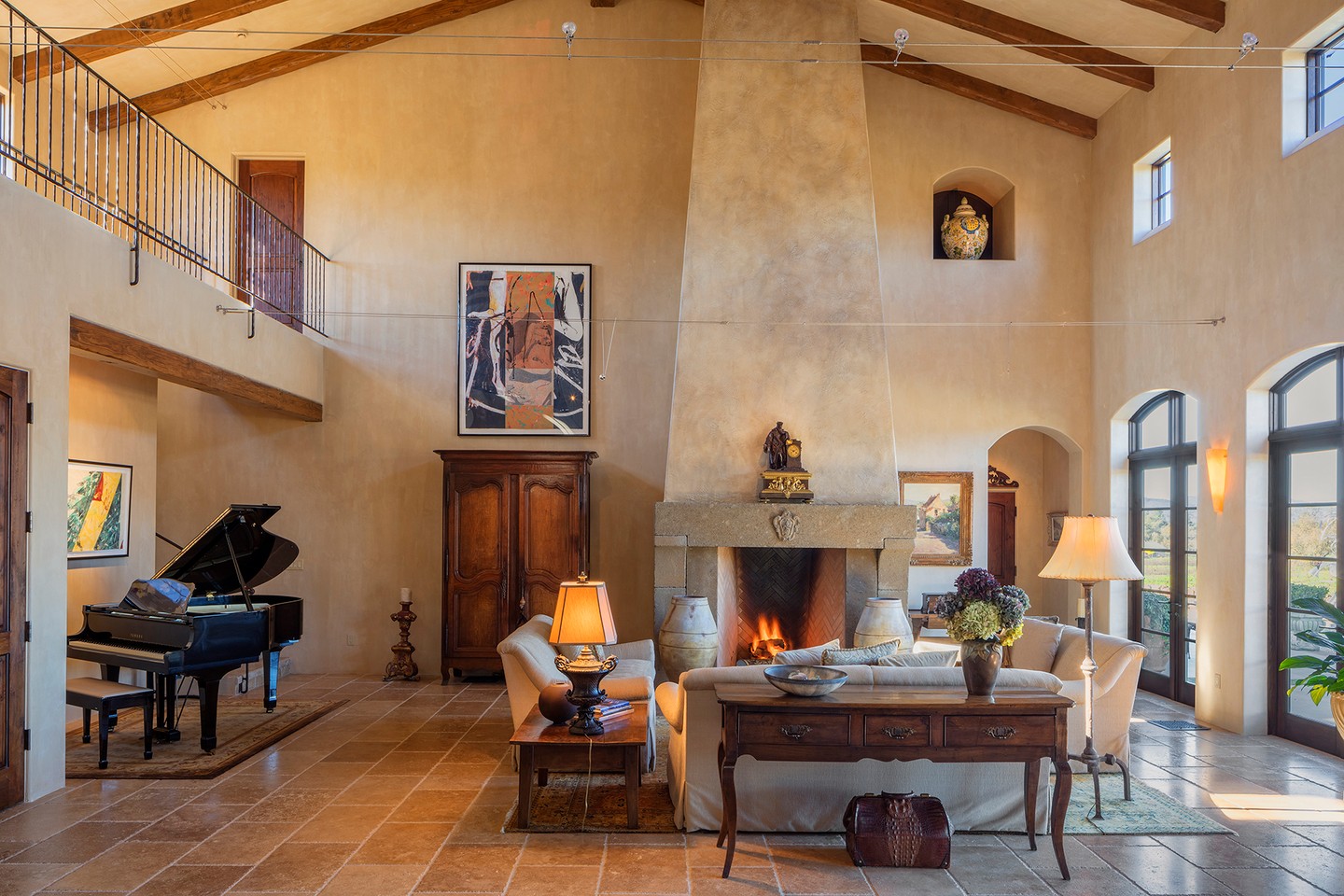
The seating gathers closely around the fireplace despite this room’s height. A sofa and console define the back of that conversation area, leaving the piano in a separate zone to one side.
Use furniture placement to create smaller destinations within a large room instead of pushing every piece against the walls. Start by marking the routes between doors, then arrange the seats where people can talk comfortably across the table.
Here, a rug anchors the group while the warm floor continues around it. Table lamps bring light down to sitting height, making the lofty architecture feel more welcoming after dark.
Keep the console narrow enough to preserve circulation behind the sofa, and choose accessories that look attractive from both sides.
20. Anchor Ornate Patterns with a Solid Green Chair
Credits: Instagram
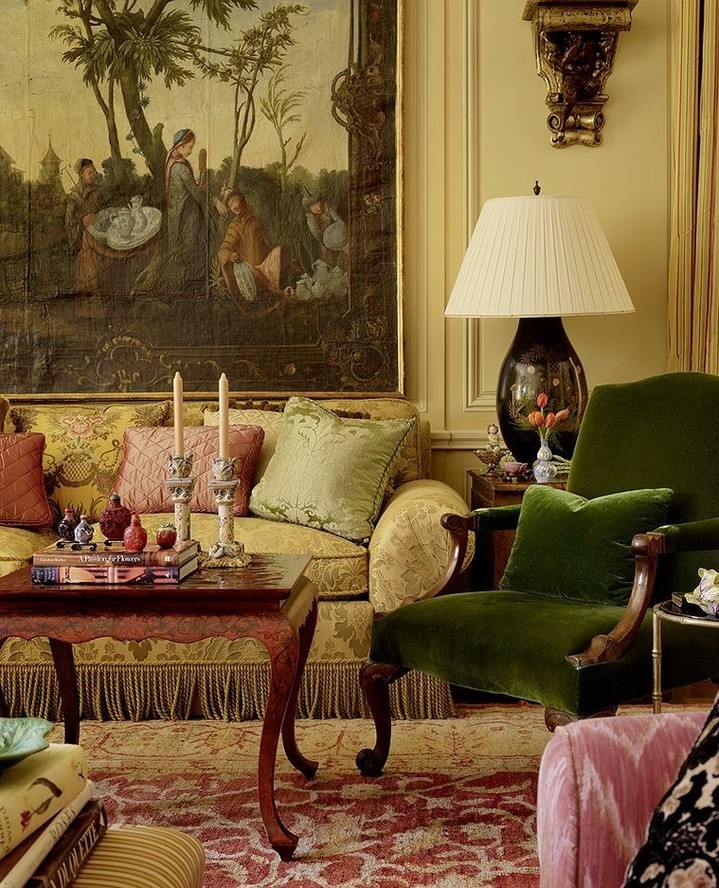
The solid green armchair gives the eye a resting place among this room’s patterned sofa, detailed artwork, and colored rug. Its olive tone also connects with the foliage in the painted panel, making the contrast feel intentional.
When a room contains several elaborate pieces, pull one quieter color from the artwork and use it on a single upholstered chair. Keep that fabric plain so its shape and depth of color can do the work.
Here, rose pillows and warm yellow upholstery create a layered palette around the green. A simple pleated lamp shade introduces another calm surface above the decorative table.
Leave enough usable tabletop space for everyday needs, even when displaying treasured objects, books, and a pair of candlesticks.