
Dark gray upholstery can anchor a living room, but too many heavy finishes may make the seating area feel crowded.
The Best Dark Gray Sofa Living Room Ideas show how to balance that weight with pale rugs, light coffee tables, and softer shapes.
You’ll also find ways to add color with deep teal walls or terracotta accents, and to make a sectional feel more open with baskets, glass, and thoughtful furniture placement.
These practical details help the sofa feel connected to the room rather than dominating it.
Brighten a Dark Gray Sectional with a Geometric White Wall
Credits: Instagram
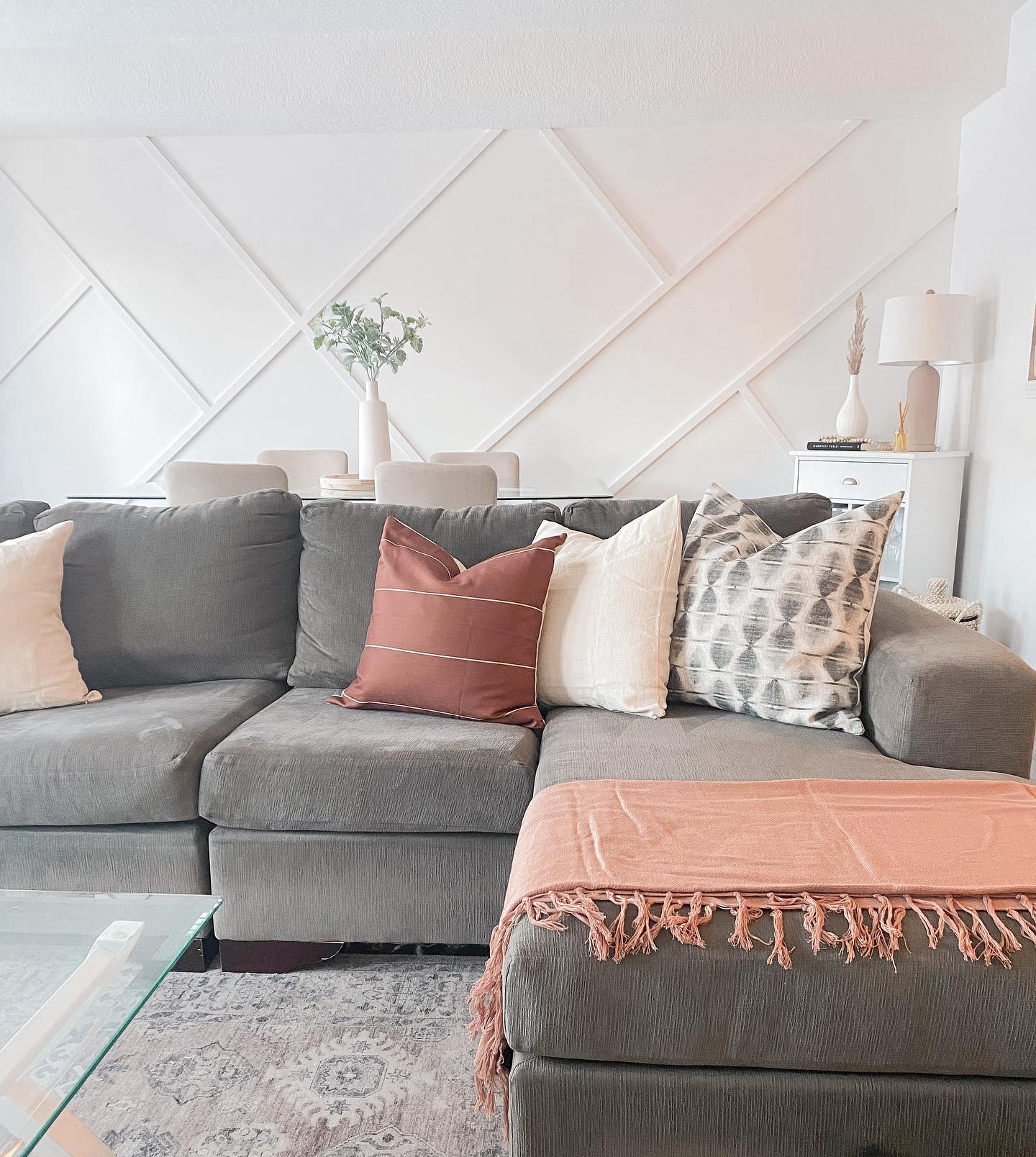
A white wall can bring contrast to a dark gray sectional without leaving the room feeling plain. Here, diagonal trim adds large, simple shapes behind the seating and dining area, giving the open space a shared backdrop.
Painting the trim and wall the same color keeps those lines subtle. Try mapping your pattern with removable tape before installing anything, then check how it looks from the sofa and nearby doorways.
Leave some generous blank sections so the design does not compete with cushions. Blush and white textiles soften the gray upholstery, while one patterned pillow connects the two neutrals.
Keep larger accessories pale and the wall becomes an airy focal point that works even when the couch fills the foreground.
Pair a Charcoal Chaise with Light Nesting Tables
Credits: Instagram
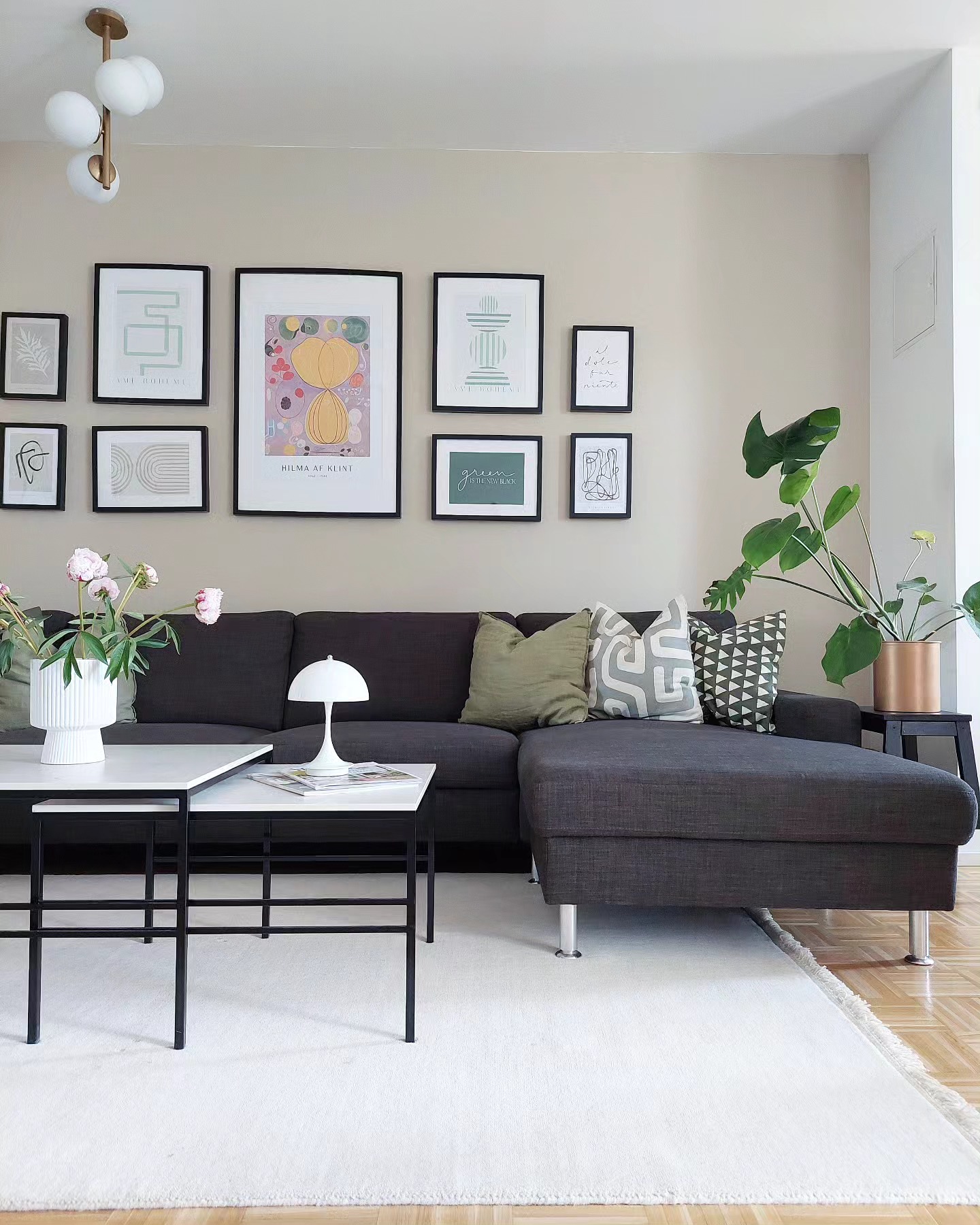
A substantial charcoal sectional feels less imposing when its coffee tables leave plenty of open space underneath. This arrangement pairs pale tabletops with slim black frames, repeating the dark outlines of the gallery wall without adding another heavy block.
Choose nesting tables that can overlap when you need floor space and separate when guests need somewhere to set a drink. Check their heights against the sofa cushions before buying, and leave enough clearance to walk around the chaise comfortably.
A large white rug makes the table frames and sofa legs easy to read. Olive pillows and leafy plants add gentle color, while the clean table surfaces keep the seating area practical rather than crowded. Keep everyday essentials on one table.
Soften a Boxy Sectional with a Round Ottoman
Credits: Instagram
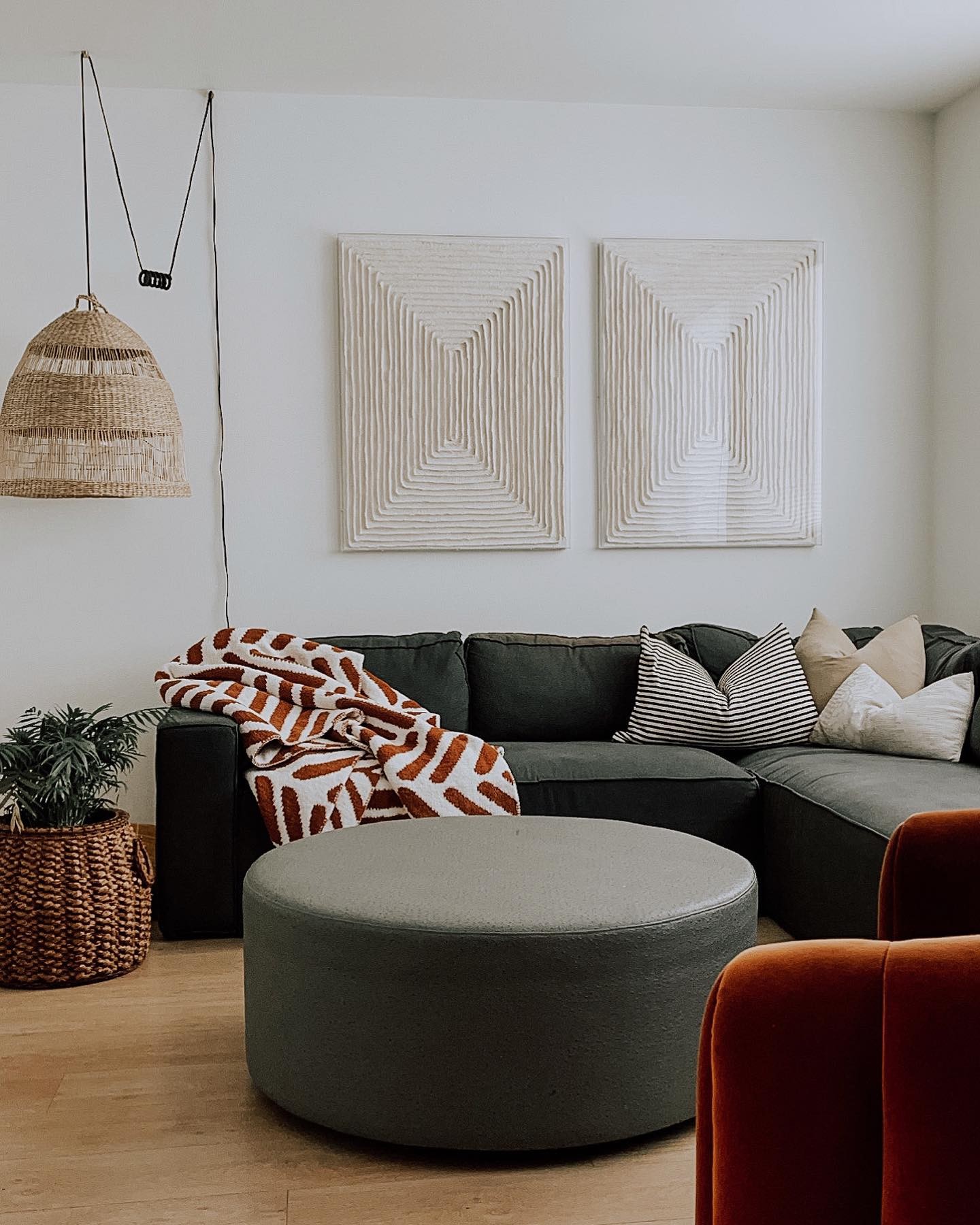
A round upholstered ottoman brings an easy curve to the straight lines of a dark gray sectional. Here, its broad, low shape fills the center without introducing a hard corner or another contrasting finish.
Choose a diameter that leaves comfortable paths around the seating, and compare the height with your sofa before ordering. A similar gray tone keeps the two pieces connected even when their shapes differ.
The room gets its contrast from pale textured artwork, striped cushions, and a warm patterned throw rather than a busy coffee table.
If you need a stable spot for drinks, add a sturdy tray that sits flat and remove it when using the ottoman as a footrest. Keep nearby side tables within reach.
Add Useful Basket Storage Beneath a White Coffee Table
Credits: Instagram
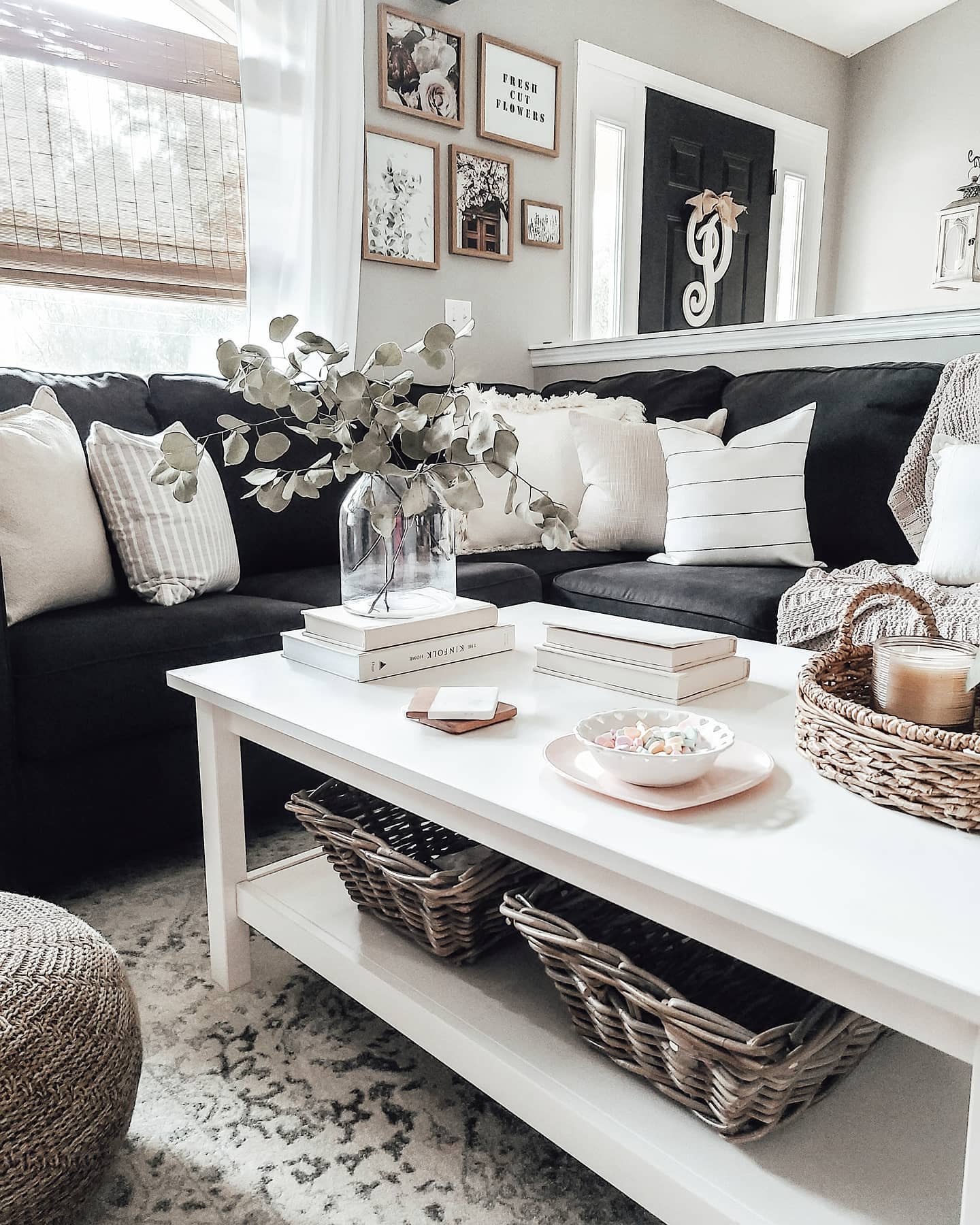
A white coffee table gives this charcoal sectional a bright counterpart while making room for everyday storage. Two baskets occupy the lower shelf, leaving the top available for a few books, greenery, and small essentials.
When choosing a similar table, measure both the shelf opening and the baskets, including their handles. Leave enough space to slide each basket out without moving the table.
Use one for remotes and charging accessories and the other for magazines or small toys. Matching baskets create a calmer look than several unrelated containers.
White pillows repeat the tabletop color against the dark upholstery, while striped fabric and woven surfaces add quiet variation. Keep the arrangement practical by leaving an open place for drinks and snacks.
Wrap the Seating Corner in Deep Teal Color
Credits: Instagram
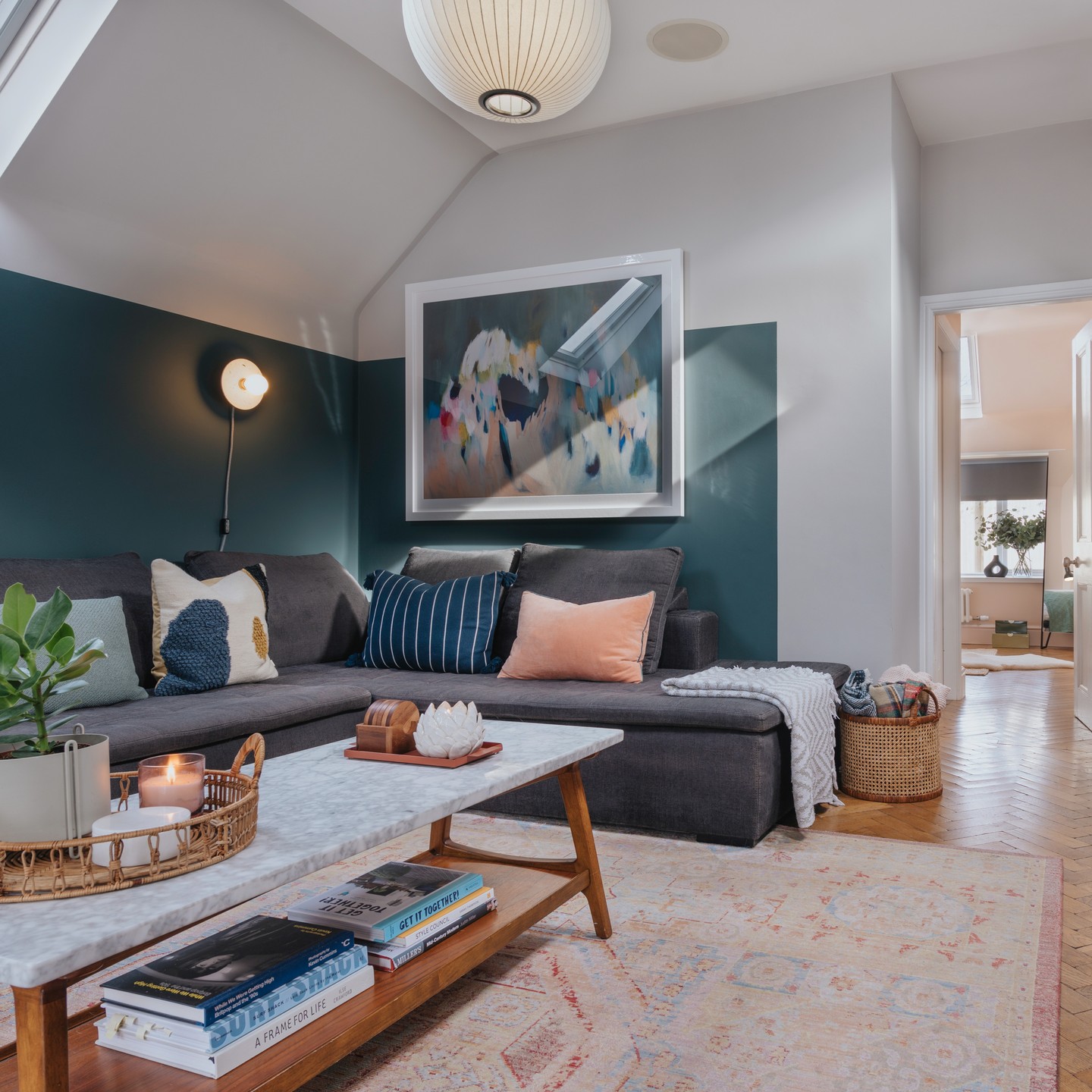
Color blocking can give a dark gray sectional its own defined corner without painting the entire room a deep shade. Here, teal wraps behind both sides of the sofa, while the upper walls and sloping ceiling stay pale.
The horizontal paint line extends beyond the artwork and helps the seating feel connected. Try marking your proposed height with tape before painting, then view it from the room entrance.
Keep the line level across adjoining walls rather than following the sofa cushions. A pale framed picture breaks up the darker backdrop, and a blush pillow picks up warmer accents in the rug.
Repeat just one wall color in a cushion so the arrangement feels intentional without requiring a fully matching set.
Show a Pale Textured Rug Through a Glass Coffee Table
Credits: Instagram
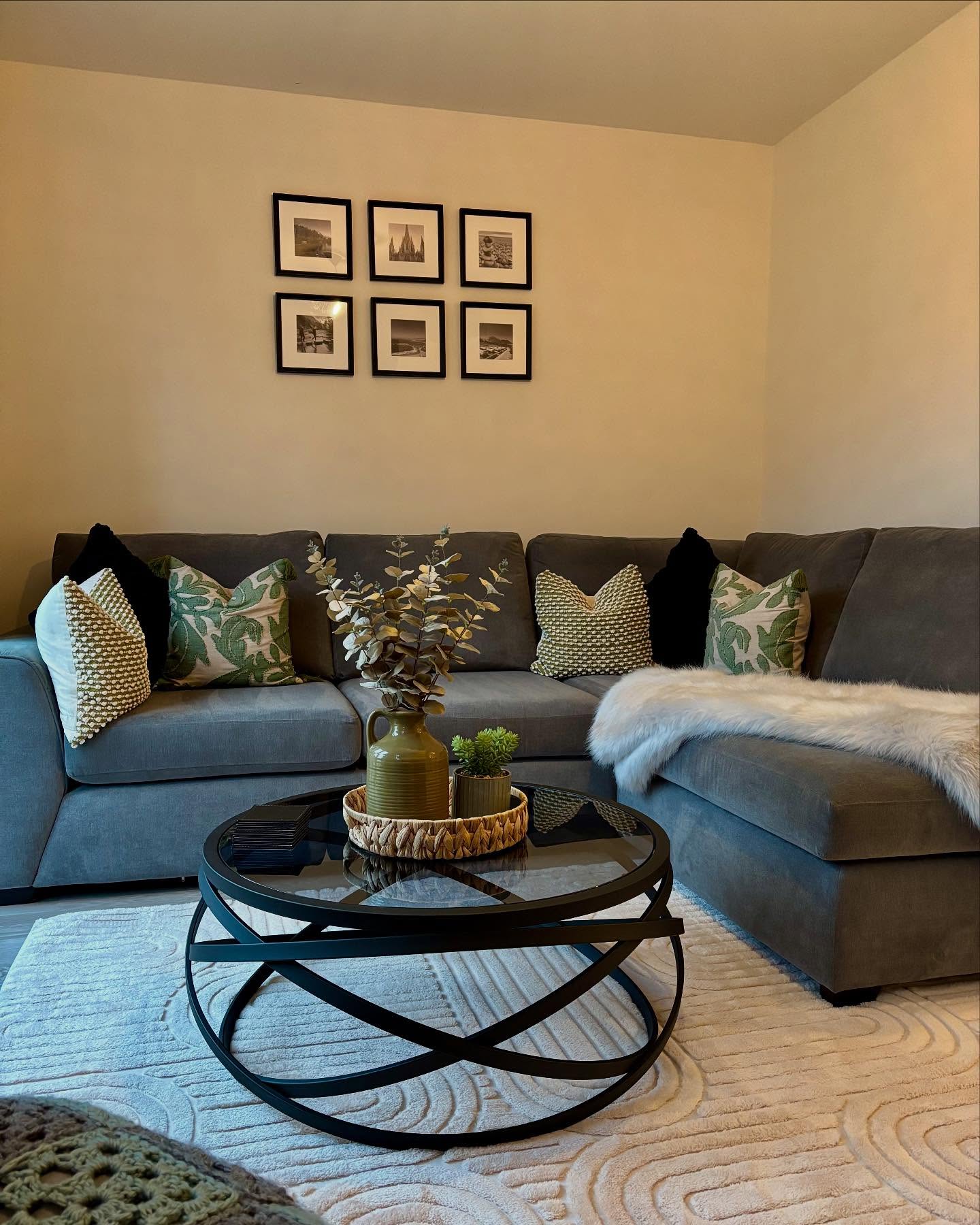
A glass coffee table lets a pale rug remain part of the view, which is useful when a dark gray sectional wraps around the room.
This rug has raised, flowing lines that stay visible through the tabletop and open base. Choose a light rug with texture rather than a strong print if you want gentle contrast beneath substantial seating.
Before buying the table, check its diameter against the space between the sofa and chaise. Keep the surface simple so it does not hide the rug beneath it.
Here, a single tray groups the decorative pieces, while green pillows connect with the vase. The dark table frame provides definition without making the center feel like another solid block in the room.
Layer Botanical Pillows with Warm Neutral Solids
Credits: Instagram
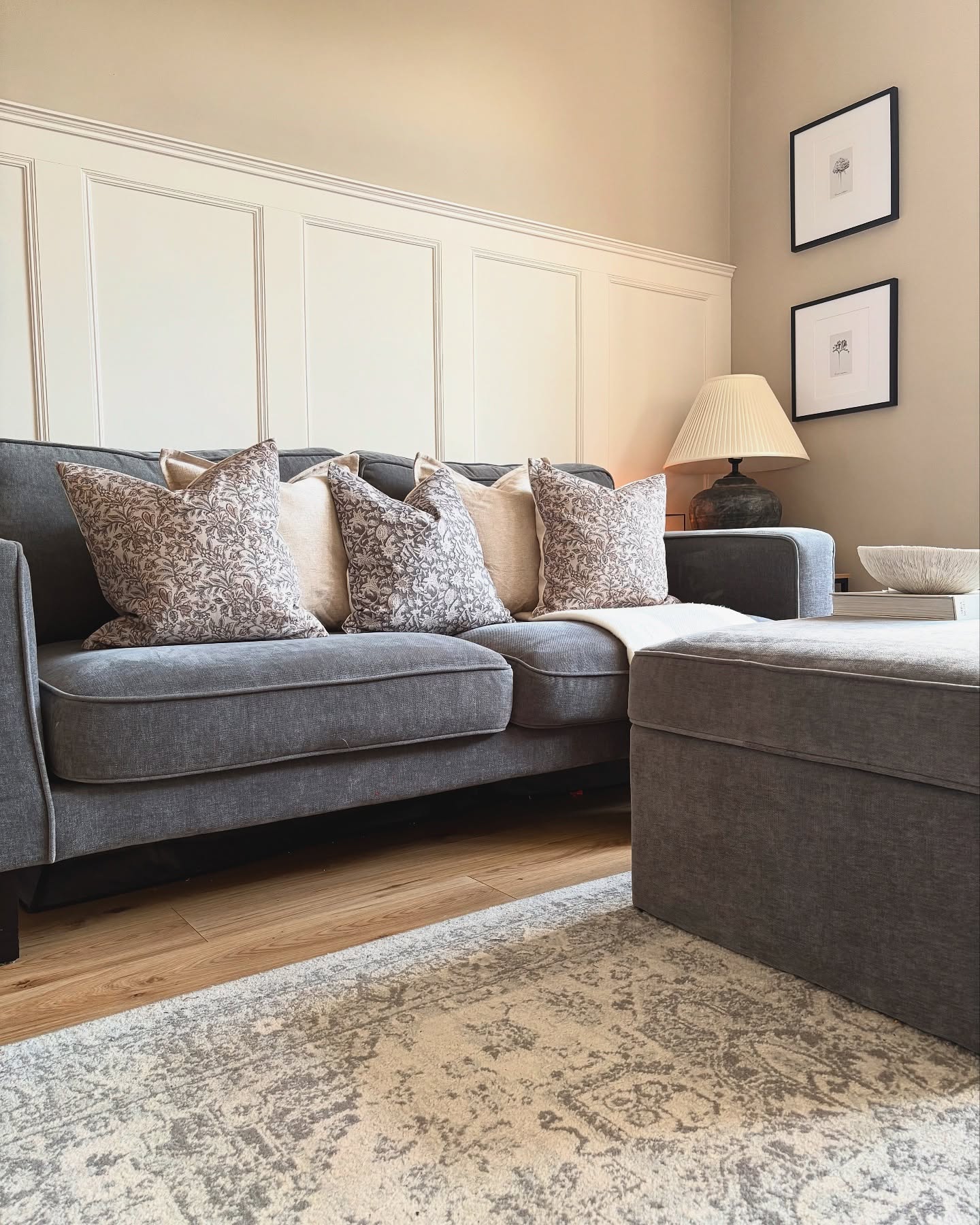
Small botanical patterns can soften a dark gray sofa while keeping its overall palette quiet. In this room, several leafy pillow covers sit in front of warm neutral cushions, creating depth without introducing a bright accent color.
Start with one print you like, then pull a background shade from it for the solid covers. Vary the sizes slightly so each layer remains visible, and leave enough uncovered seating to sit comfortably.
The pale wall paneling and patterned rug echo the cushions without copying every detail. A pleated lampshade adds another soft shape beside the sofa.
This approach is easy to refresh: swap the printed covers seasonally while keeping the larger neutral pillows and the gray upholstery as your consistent base.
Hang a Broad Mirror Above a Compact Charcoal Sofa
Credits: Instagram
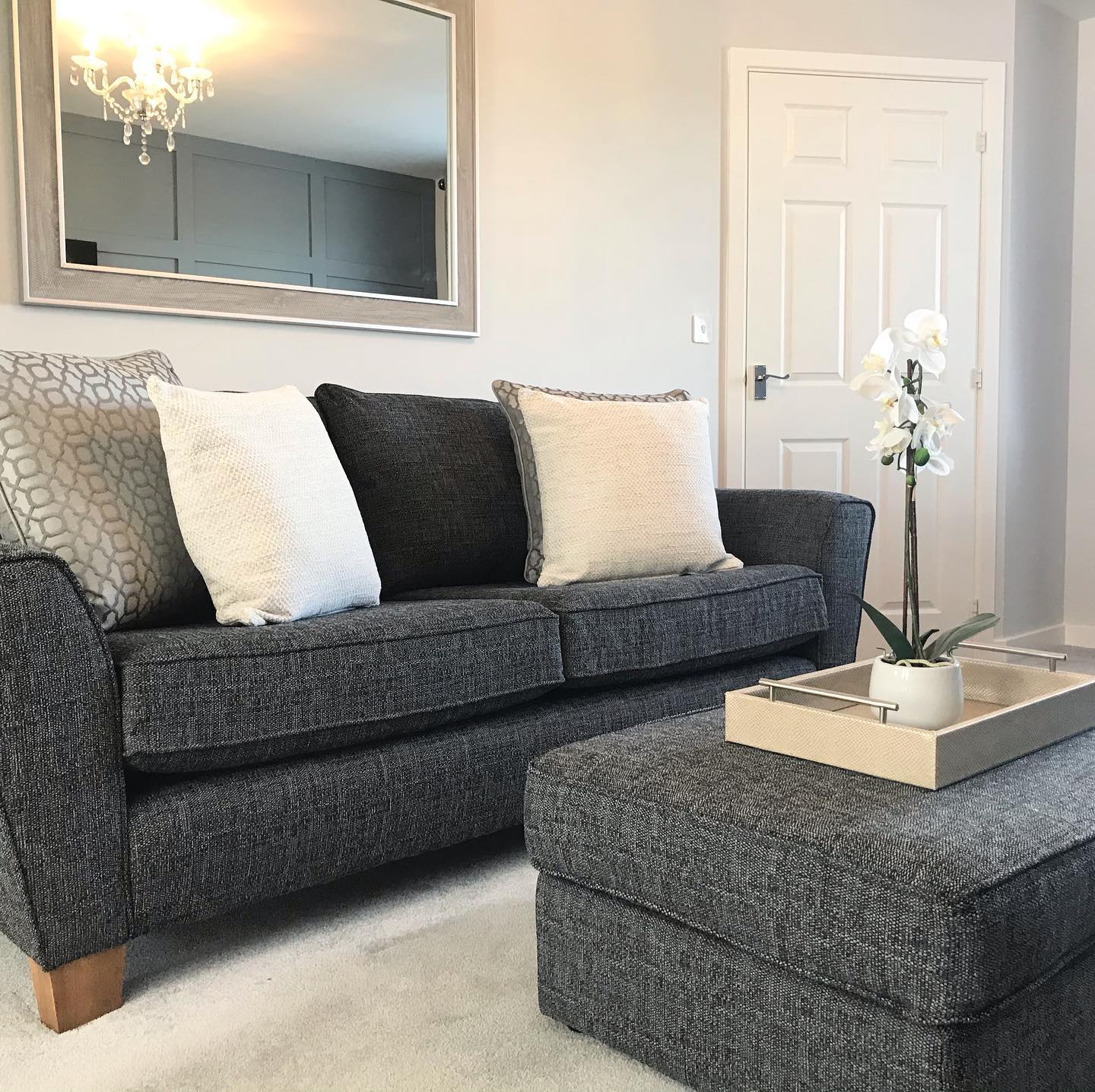
A broad rectangular mirror gives the wall above a charcoal sofa a focal point without adding more dark color.
Here, the reflection brings the opposite paneled wall and ceiling light into view, making the small seating arrangement feel connected to the rest of the room.
Before hanging a mirror, check its reflection from the doorway and from a seated position. Aim to capture an appealing feature rather than clutter or a distracting glare.
Use wall anchors and mounting hardware suited to its weight and your wall construction. Pale cushions keep the dark upholstery outlined beneath it, while a light tray repeats that contrast on the matching ottoman.
Choose a simple frame so the reflection remains the main feature above seating.
Repeat Terracotta Accents Across Art and Pillows
Credits: Instagram
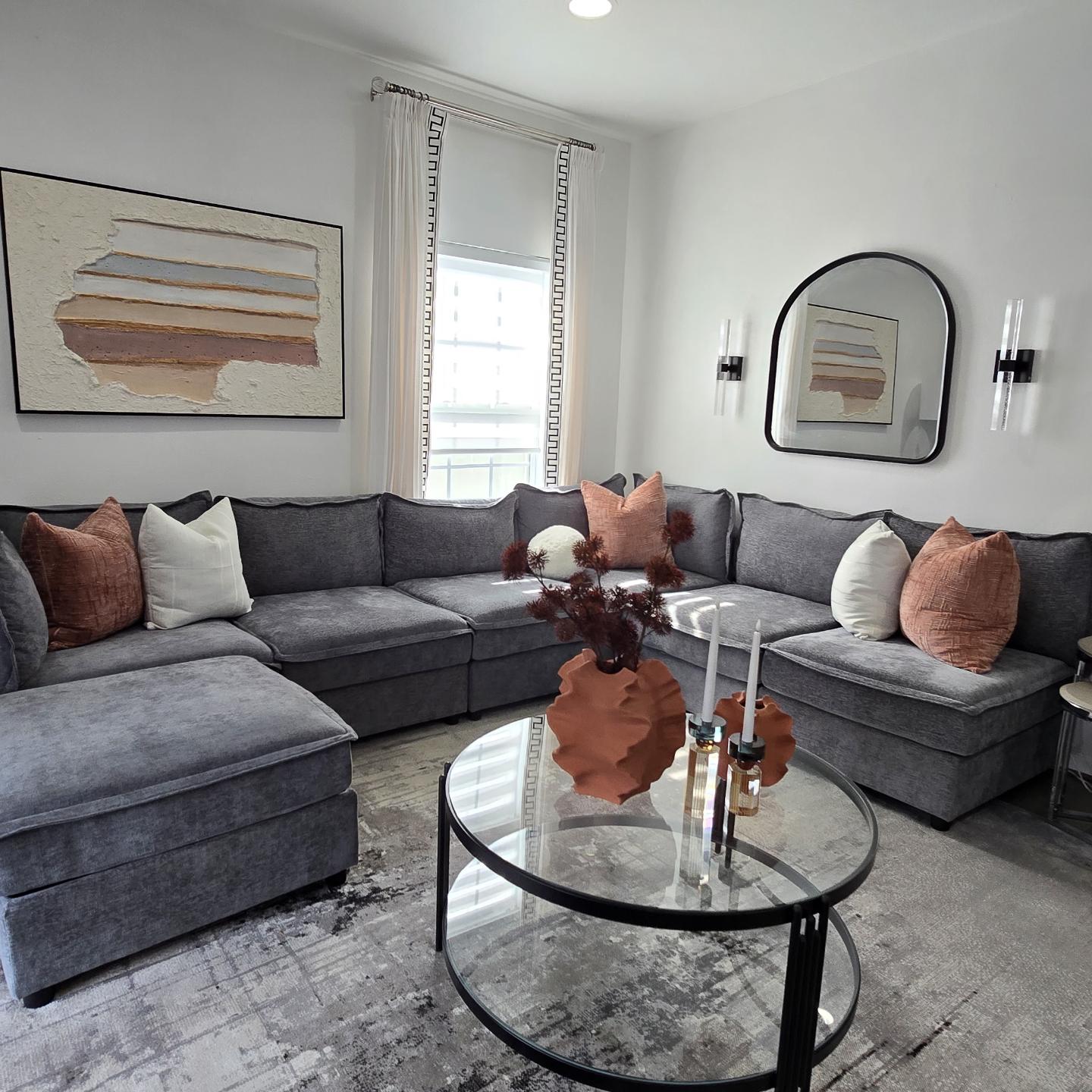
A few repeated warm accents can make a charcoal sectional feel more welcoming without changing the room's neutral foundation. Here, muted terracotta appears in the pillows, tabletop vases, and bands of color within the artwork.
The repetition carries your eye around the seating instead of concentrating every accent in one corner. Choose one warm shade, then vary its intensity across two or three kinds of objects.
Keep some pillows pale so the color has room to stand out against the gray fabric. Black outlines on the mirror, table, and picture provide a second connecting detail.
If you already own neutral furniture, begin with pillow covers and a small vase before investing in larger artwork or changing the walls around them.
Arrange Two Charcoal Sofas at Right Angles
Credits: Instagram
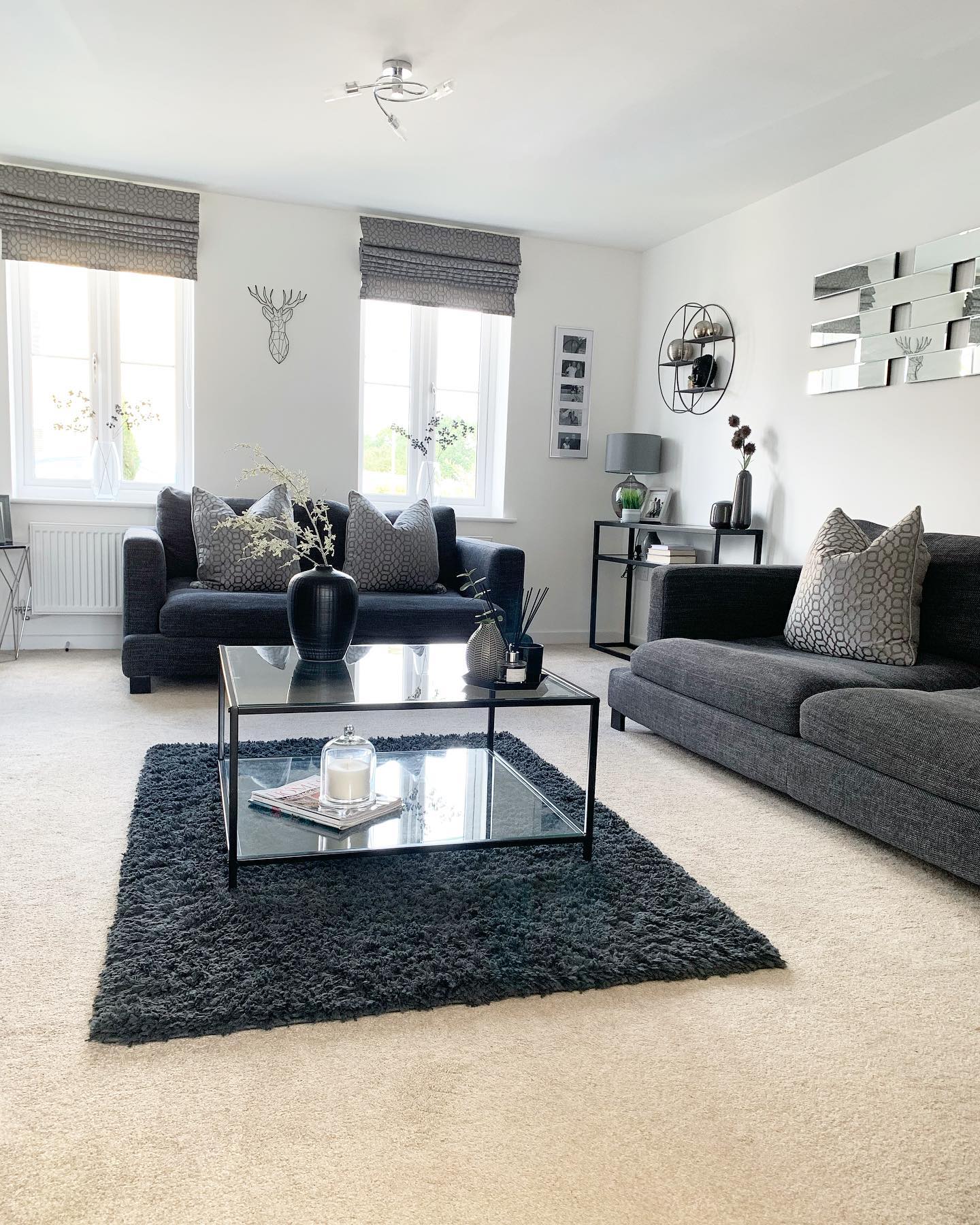
Two separate dark gray sofas can create a conversational corner without the fixed footprint of a sectional. Here, one sits beneath the windows and the other runs along the adjoining wall, with a square table serving both.
Measure the gap between the seats before choosing the table, and keep the main route into the room clear. Matching upholstery helps the two pieces read as one arrangement, while their separate forms leave flexibility for future layouts.
Repeating a pillow pattern gives the grouping another simple connection. A dark rug defines the center against the pale carpet, and the open table frame keeps that area visually lighter.
If your room is narrow, test the arrangement with taped outlines before committing to furniture.
Build a Black-and-White Gallery Above a Gray Sectional
Credits: Instagram
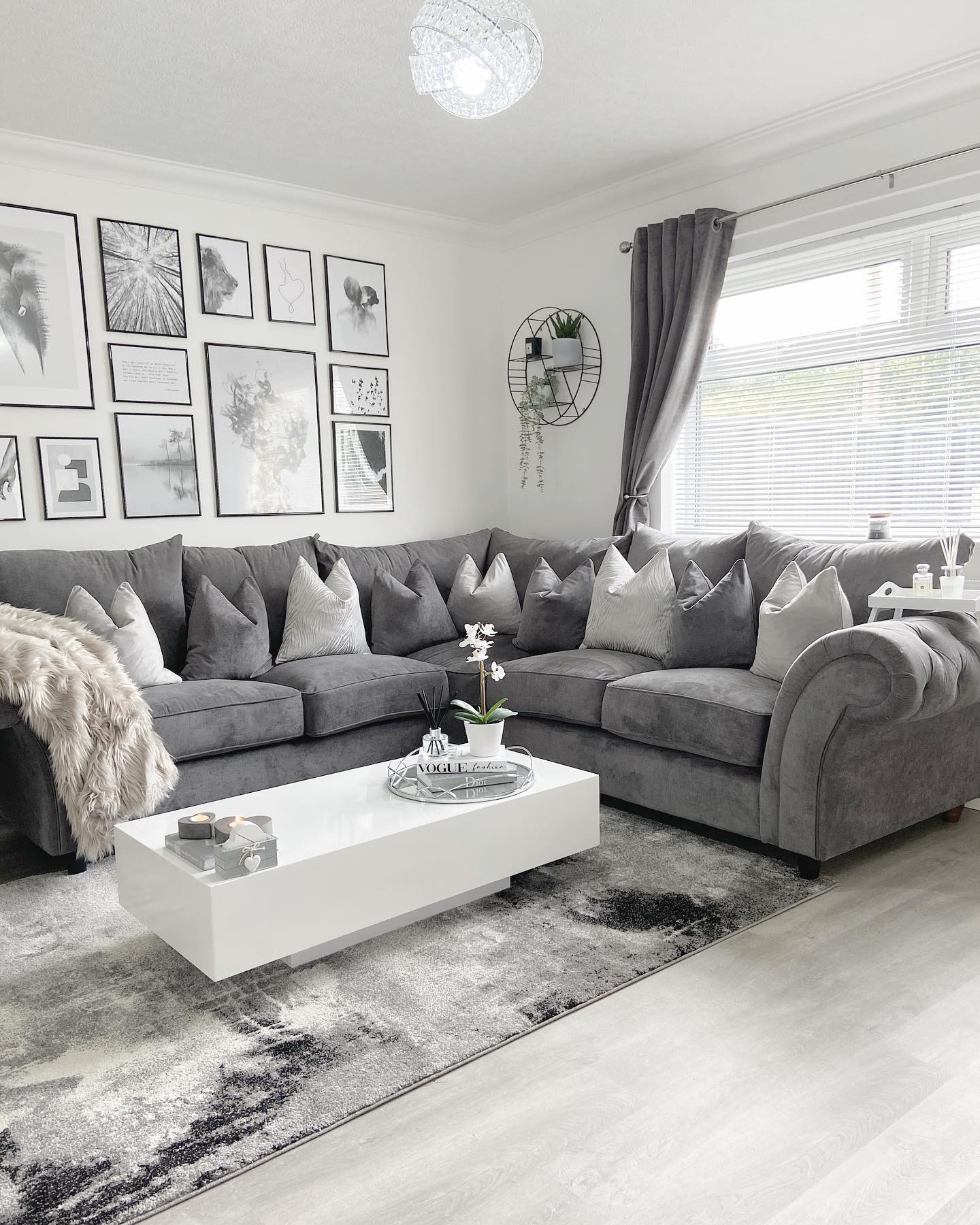
A collection of monochrome prints gives a large gray sectional a coordinated backdrop without demanding a new accent color. This wall mixes photography, botanical images, and simple line art inside thin dark frames.
Varying the picture sizes keeps the grouping interesting, while the shared frame color brings order. Arrange paper templates on the wall first, keeping consistent gaps between neighboring pieces.
Center the overall composition on the main sofa section rather than aligning every frame with a cushion. The room repeats gray in the curtains and rug, then uses a bright coffee table to break up the heavier seating.
Keep nearby shelving lightly styled so it does not compete with the gallery. A plant adds life to the neutral setting.
Float a Charcoal Sofa to Define the Living Area
Credits: Instagram
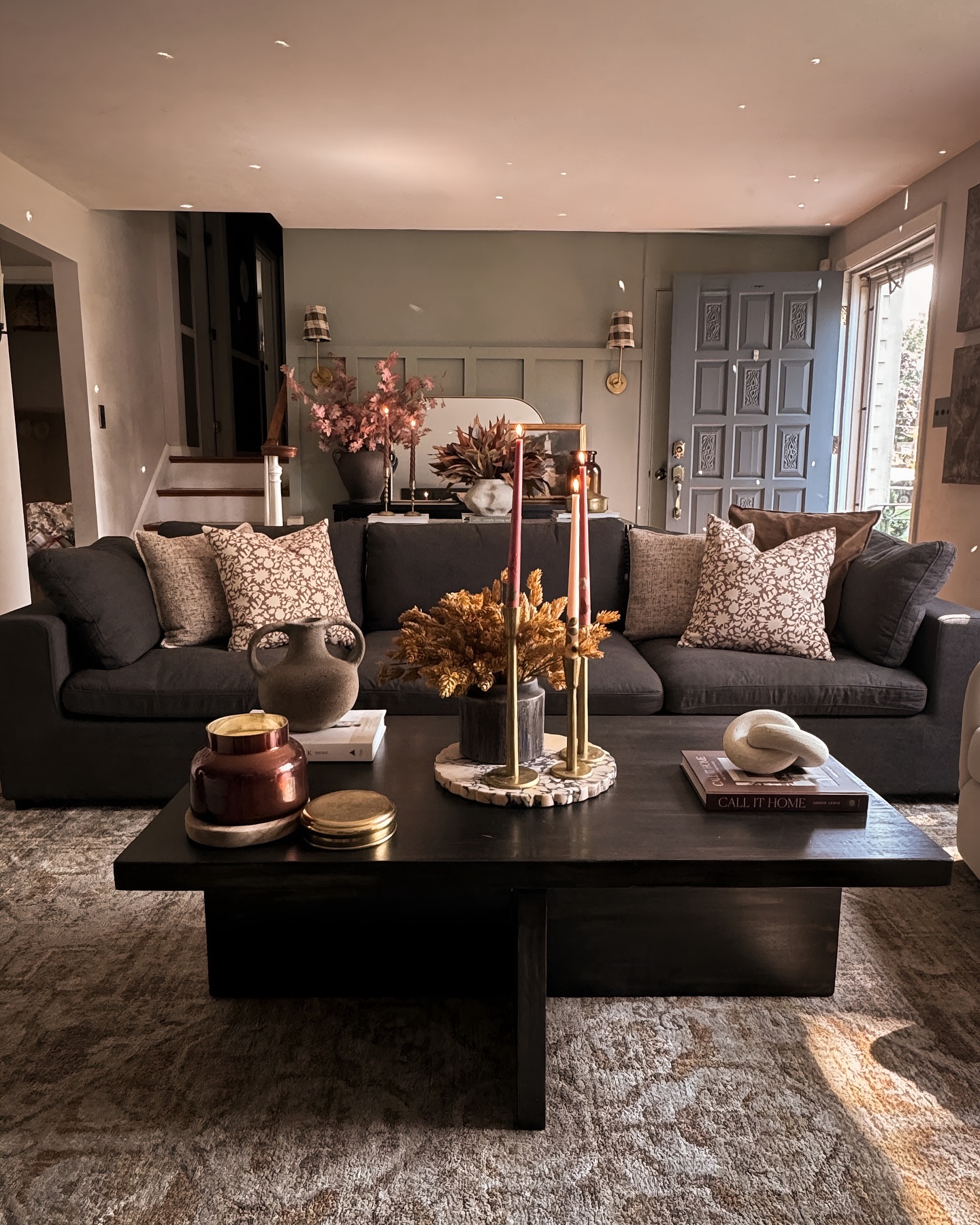
A charcoal sofa can mark the edge of a living area when the front door and stairs open into the same space. In this arrangement, the sofa faces the coffee table while the entry remains visible behind it.
The dark upholstery provides a clear boundary without adding a partition. Before trying this layout, measure the walking route behind and beside the sofa, including the space needed to open the door fully.
Choose a piece with a finished back because it will be visible from the entrance. Keep tall accessories outside the main walking path and use a rug to connect the sofa with the table.
Coordinated pillows help the seating feel settled even though it is positioned away from walls.
Echo a Curved Sofa with an Irregular Coffee Table
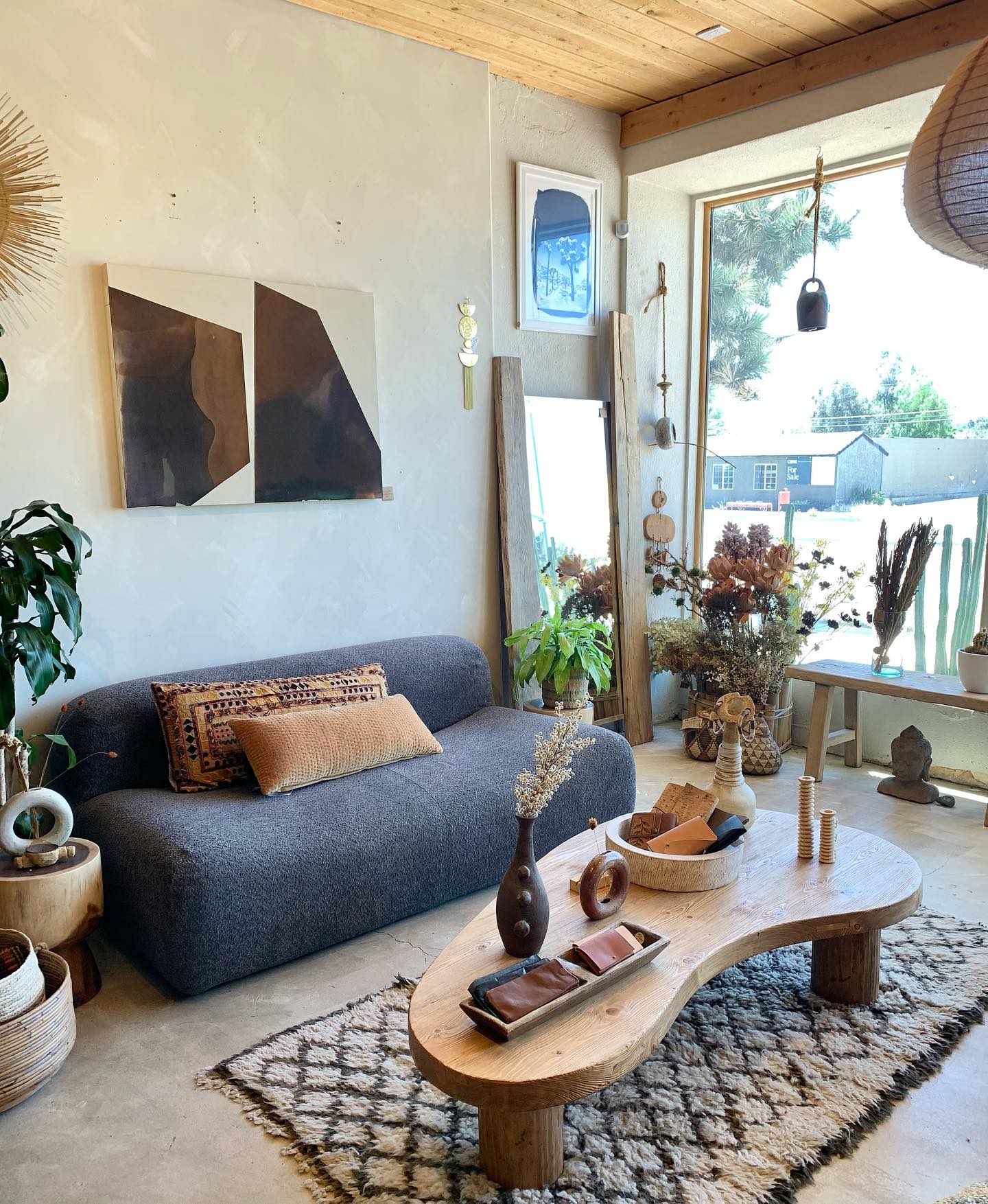
Credits: Instagram
Rounded furniture shapes give this charcoal sofa setting its relaxed character. The armless sofa curves gently at the ends, and the irregular coffee table repeats that softness without matching its outline exactly.
Try pairing one sculptural seat with one rounded table, then keep the surrounding pieces simpler so the shapes remain easy to appreciate.
Check the table at its widest points, since an uneven edge can take up more floor space than expected. Warm pillows and a patterned rug soften the dark upholstery, while plants add height near the window.
For a smaller room, leave the sofa ends open instead of crowding both sides with large tables. This preserves the curved profile and keeps the seating approachable from several angles.
Balance a Low Gray Sectional with Tall Greenery
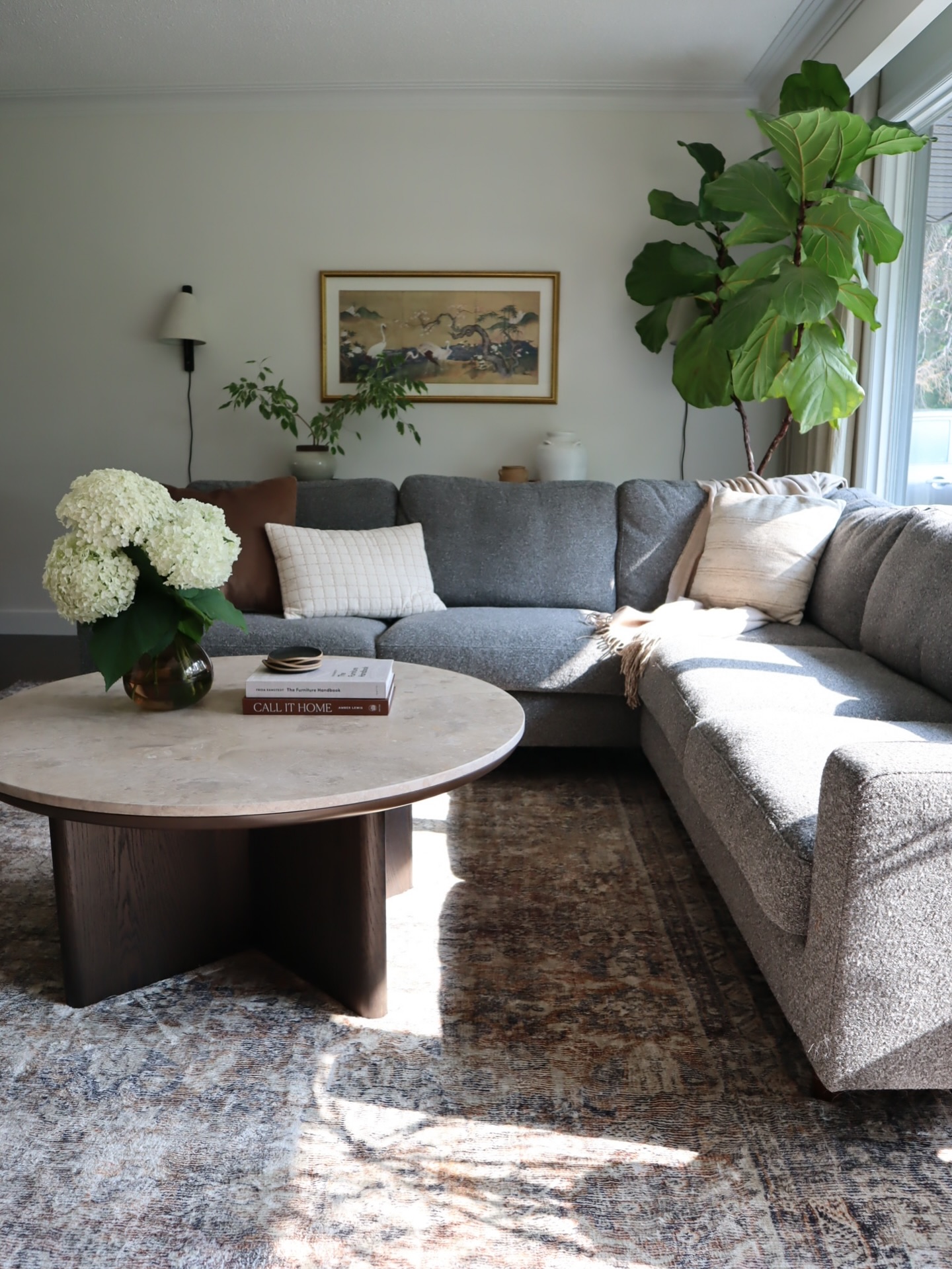
Credits: Instagram
Tall greenery can draw attention upward when a low gray sectional fills most of a seating corner.
Here, a large leafy plant stands near the window and extends well above the sofa, adding a vertical element without another piece of bulky furniture.
Position a plant where its mature size will fit, leaving room for curtains, cushions, and people to move comfortably. If you choose a live specimen, match it to the available light and protect the floor beneath its container.
Smaller branches behind the sofa repeat the green color at a lower height. Keep the remaining accessories simple so the leaves remain the main accent.
Pale pillows and a light tabletop help the gray upholstery sit comfortably within the arrangement.
Frame a Charcoal Sofa with Matching Table Lamps
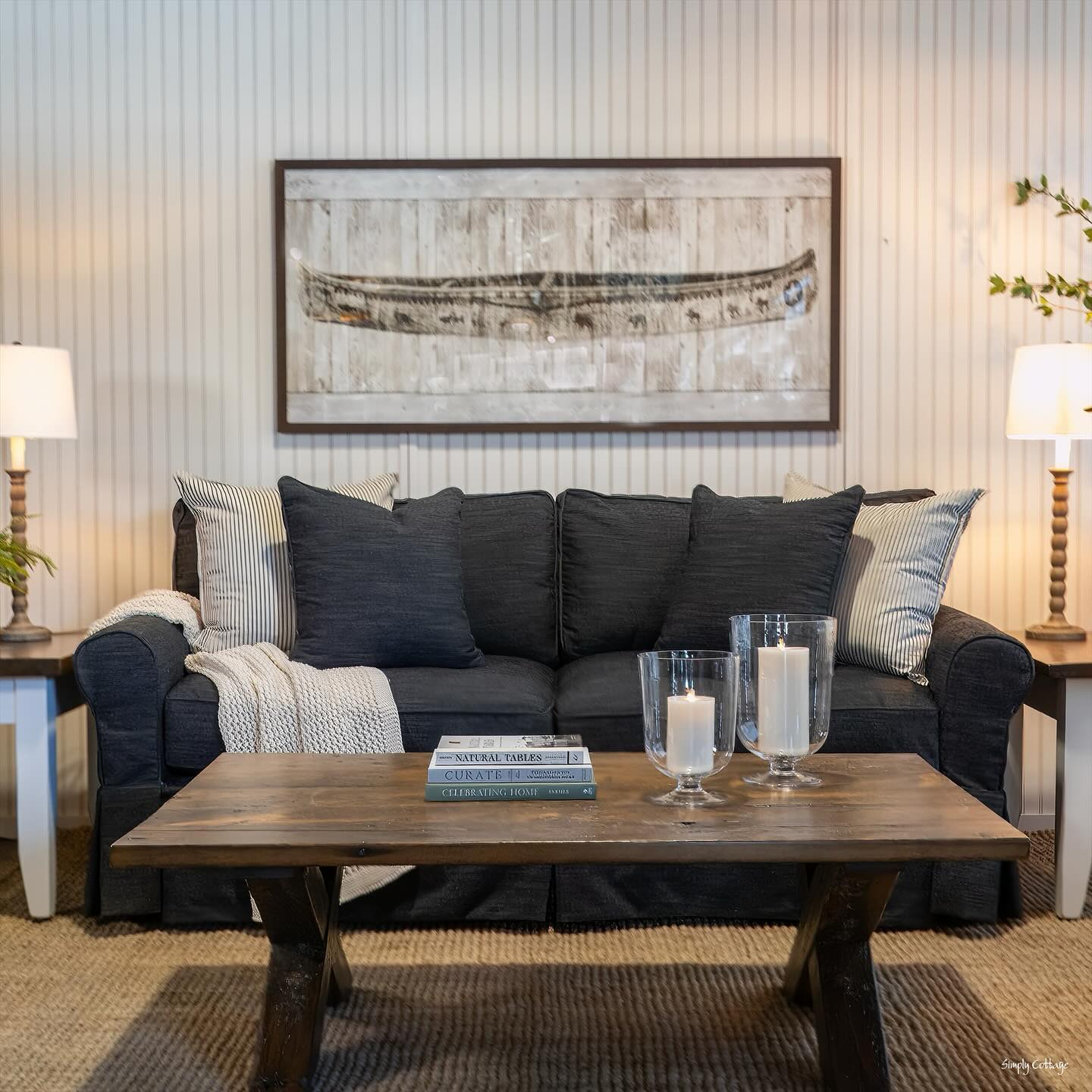
Credits: Instagram
Matching lamps give a charcoal sofa a balanced setting and spread light across both ends of the seating. This arrangement uses pale shades to stand out against the dark upholstery, with a wide picture centered between them.
Choose lamps whose shades sit at similar heights when placed on their tables. Check that each switch is reachable from the sofa and that the shades do not project awkwardly into nearby walking paths.
Using the same bulb color in both lamps keeps the light consistent. Striped pillows, a pale throw, and the narrow wall grooves add detail without breaking the symmetry.
Keep the coffee table styling looser, as shown here, so the room feels welcoming rather than arranged as a mirror image.
Bring Rich Red Pattern to the Wall and Floor
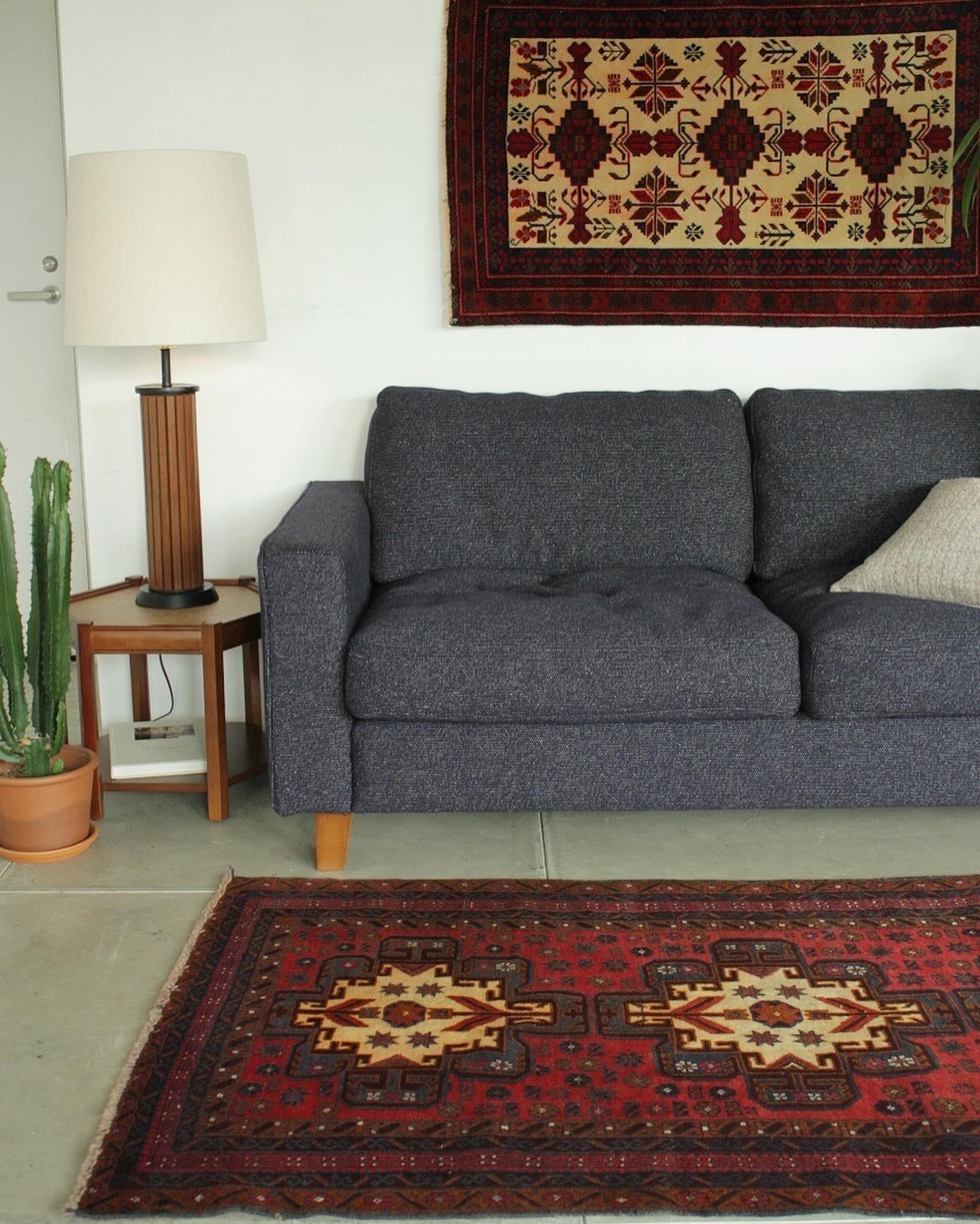
Credits: Instagram
A charcoal sofa makes a calm anchor for patterned textiles in deeper red tones. This setting uses a rug on the floor and another textile above the sofa, connecting two surfaces without covering the upholstery in competing prints.
Look for pieces that share a few colors while varying their border or central pattern. Keep the sofa cushions simple so the textiles remain easy to appreciate.
If you hang a rug, use a support method suited to its weight and condition rather than puncturing it with ordinary nails. Leave a visible margin around the hanging to give it the presence of artwork.
A pale lampshade and warm side table soften the contrast, while the gray sofa keeps the overall combination grounded.
Use Charcoal as a Base for Bold Mixed Patterns
Credits: Instagram
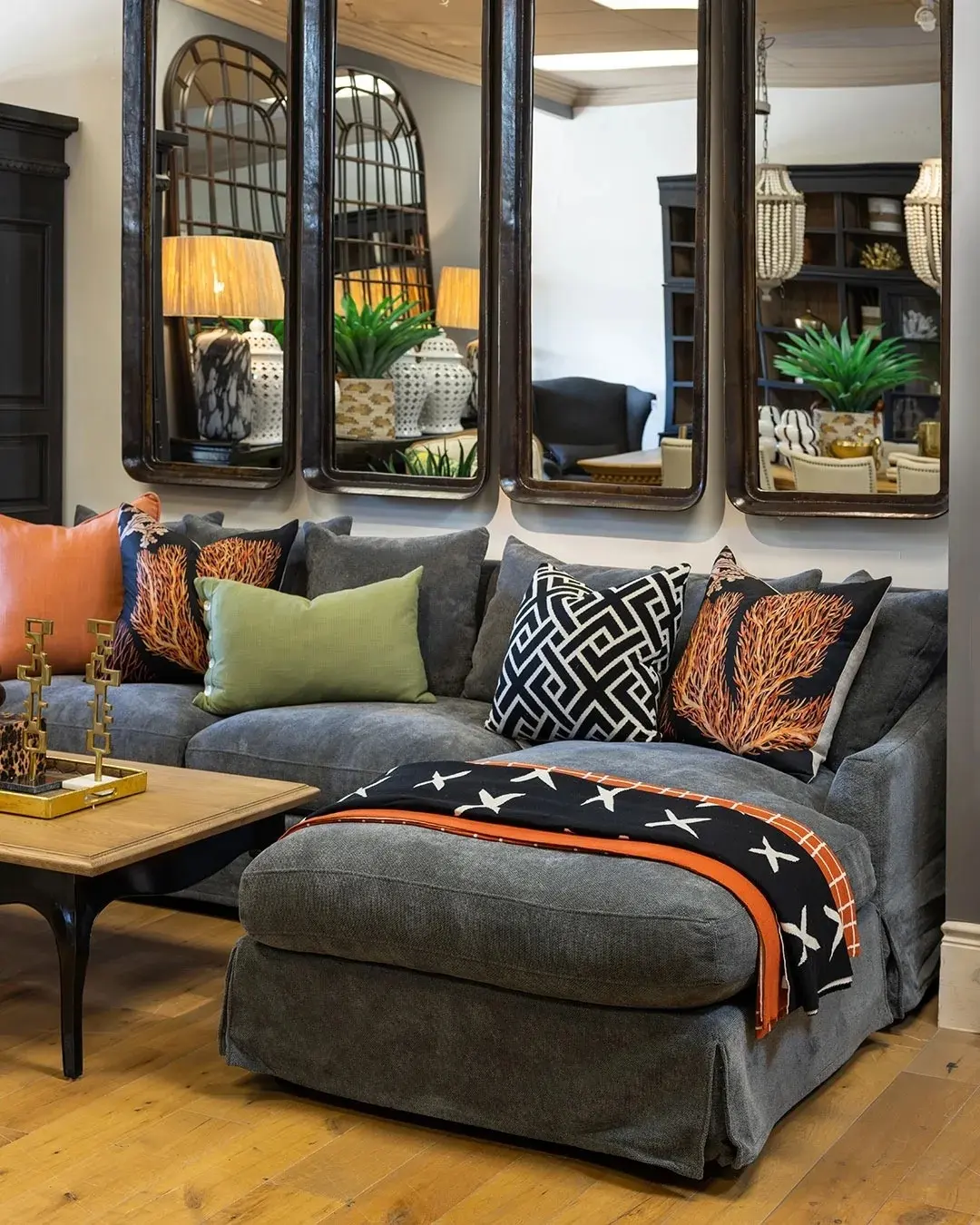
Charcoal upholstery gives bold patterns a steady background, making several prints easier to combine. This sectional mixes orange branching motifs, a black-and-white geometric pillow, and a patterned throw, with a green cushion offering a quieter pause.
Start with two accent colors, then repeat them in different proportions instead of buying every accessory in the same print. Vary the scale so one large motif does not fight another of equal size.
Leave some gray cushions visible to keep the sofa from disappearing beneath the layers. The throw works well across the chaise because its border follows the long seat.
Try arranging covers before filling every cushion, and stop when the mix feels balanced from the doorway and your usual seated viewpoint.
Set a Tufted Charcoal Sofa Against Warm Brick
Credits: Instagram
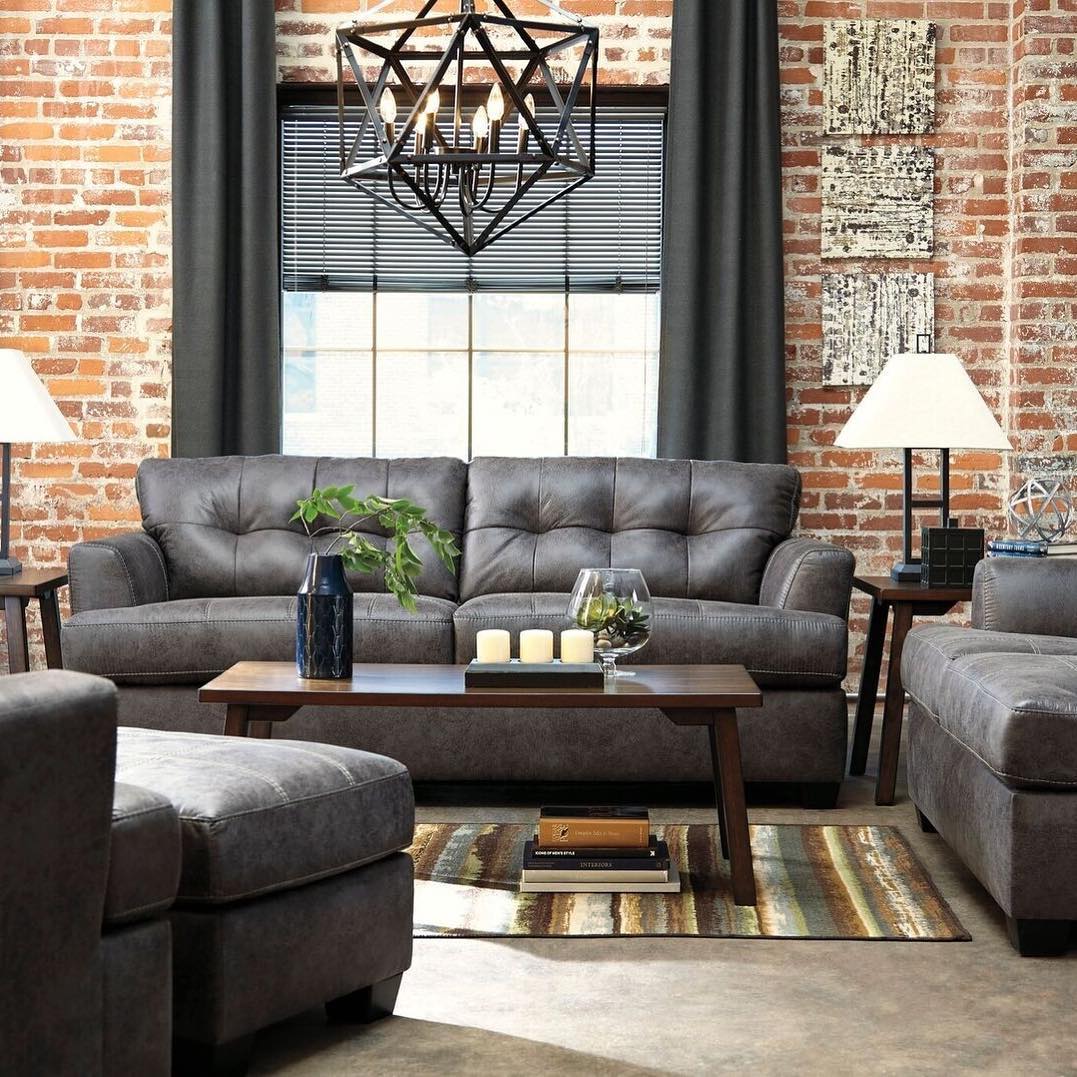
Warm brick gives a charcoal sofa a textured backdrop that feels lively even without colorful pillows. Here, the reddish wall contrasts with the gray upholstery, while dark curtains and a geometric ceiling fixture repeat its deeper tones.
If your room has exposed brick, let it provide the pattern and keep the larger furniture fabrics simple. A tufted back adds dimension without needing another print.
Pale lampshades help lift the seating area, and a rug with warm stripes brings some wall color down to the floor. Avoid filling every surface with small decorations; a few pieces are easier to read against the detailed brickwork.
Choose curtain panels that frame the window without covering too much of the wall you want visible.
Pair Charcoal Walls with Crisp Pale Architectural Details
Credits: Instagram
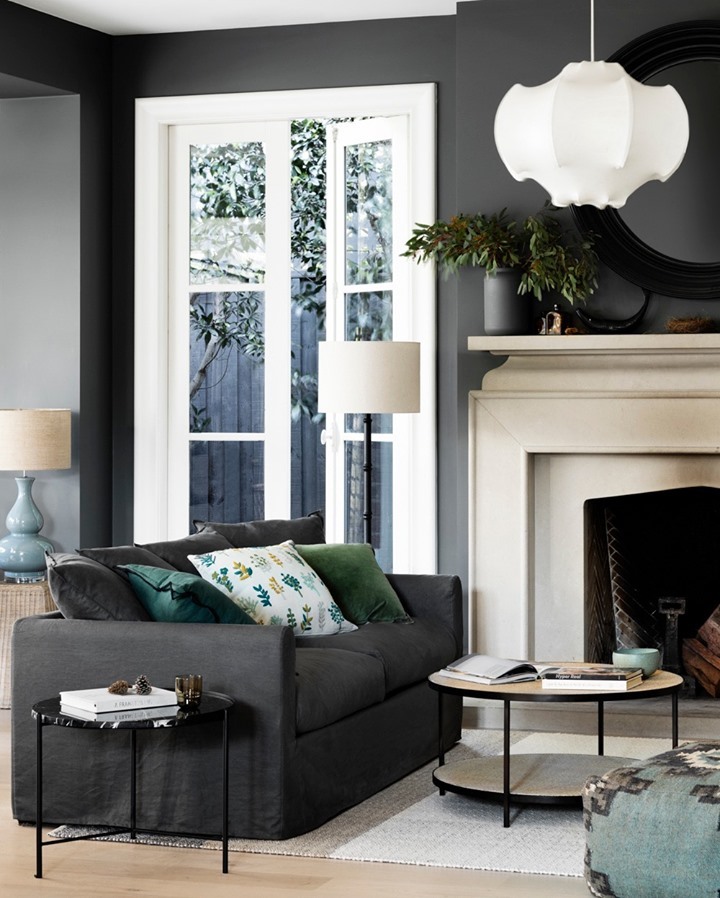
A dark gray sofa can sit comfortably against charcoal walls when lighter architectural details provide clear contrast. In this room, the tall white window trim and pale fireplace surround give the eye bright edges to follow.
The sofa stays connected to the wall color, while green and patterned pillows keep it from disappearing into the background.
If you want a similar effect, test wall samples beside the upholstery in daylight and under your lamps before choosing a shade. Keep the ceiling and selected trim lighter to preserve definition.
Pale lampshades and an airy pendant repeat the bright accents at different heights. A light rug separates the sofa from the floor, making the dark palette feel layered rather than uniformly heavy.
Warm a Charcoal Sofa with Gold-Tone Accents
Credits: Instagram
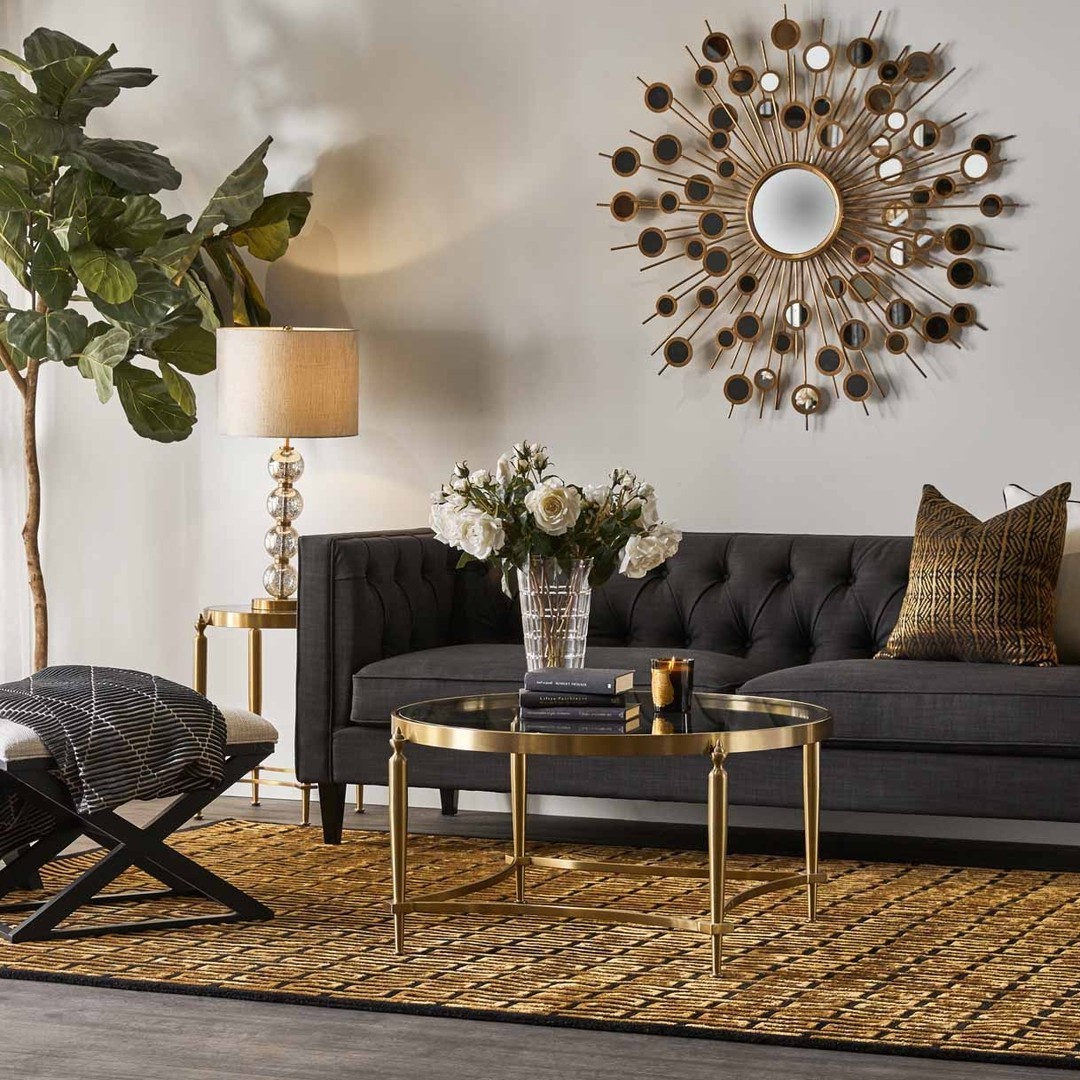
Gold-tone accents bring warmth and a little shine to a charcoal sofa without changing its versatile neutral color. This room repeats the finish in a round coffee table, a slim side table, and a decorative mirror above the seating.
Choose a few pieces with similar undertones so they relate without needing to match exactly. Keep their shapes different, as the circular table and radiating mirror do here, to avoid a repetitive look.
A golden patterned rug extends the warm color across a larger surface while the sofa remains the darkest anchor. Balance reflective finishes with softer elements, such as a lampshade, flowers, or a textured pillow.
Leave some tabletop space clear so the metallic edges remain visible and useful daily.