
Brick fireplaces have plenty of texture, so a makeover doesn’t have to hide every uneven edge or color shift.
The Best Brick Fireplace Makeover ideas here show how a few thoughtful changes can shape the whole wall, from warming black brick with wood to letting pink and gray tones show through a whitewash.
You’ll also find ways to frame gray brick with white paneling, highlight an arch with contrasting mortar, and give a rustic mantel a pale finish.
Together, these approaches make it easier to decide which details to emphasize and which to leave alone.
Soften Black Brick With Warm Wood
Credits: Instagram
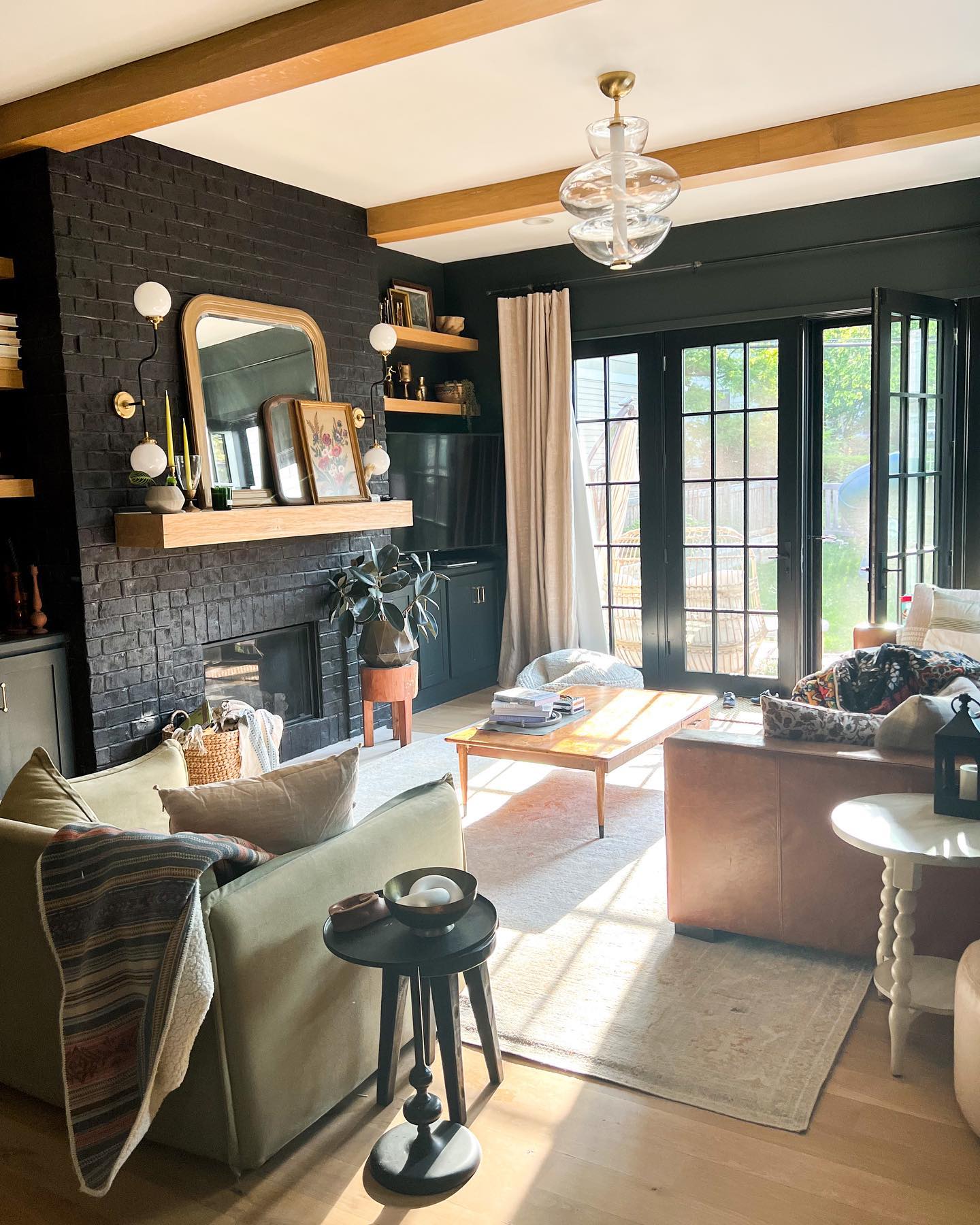
Black brick gains warmth when a substantial wood mantel interrupts its dark surface. Here, the golden wood repeats in floating shelves and ceiling beams, connecting the fireplace to the wider room.
Keep that repetition intentional: choose similar undertones rather than trying to match every grain. A rounded mirror softens the brickwork's straight lines, while layered artwork gives the mantel a relaxed, collected feel.
Pale upholstery, curtains, and a large light rug prevent the surrounding dark paneling from feeling heavy. If your fireplace already has a wood shelf, consider whether refinishing it could provide the contrast you need.
Before installing or enlarging a combustible mantel, have its position and projection checked against the fireplace's required clearances by a qualified fireplace professional.
Frame Gray Brick With White Paneling
Credits: Instagram
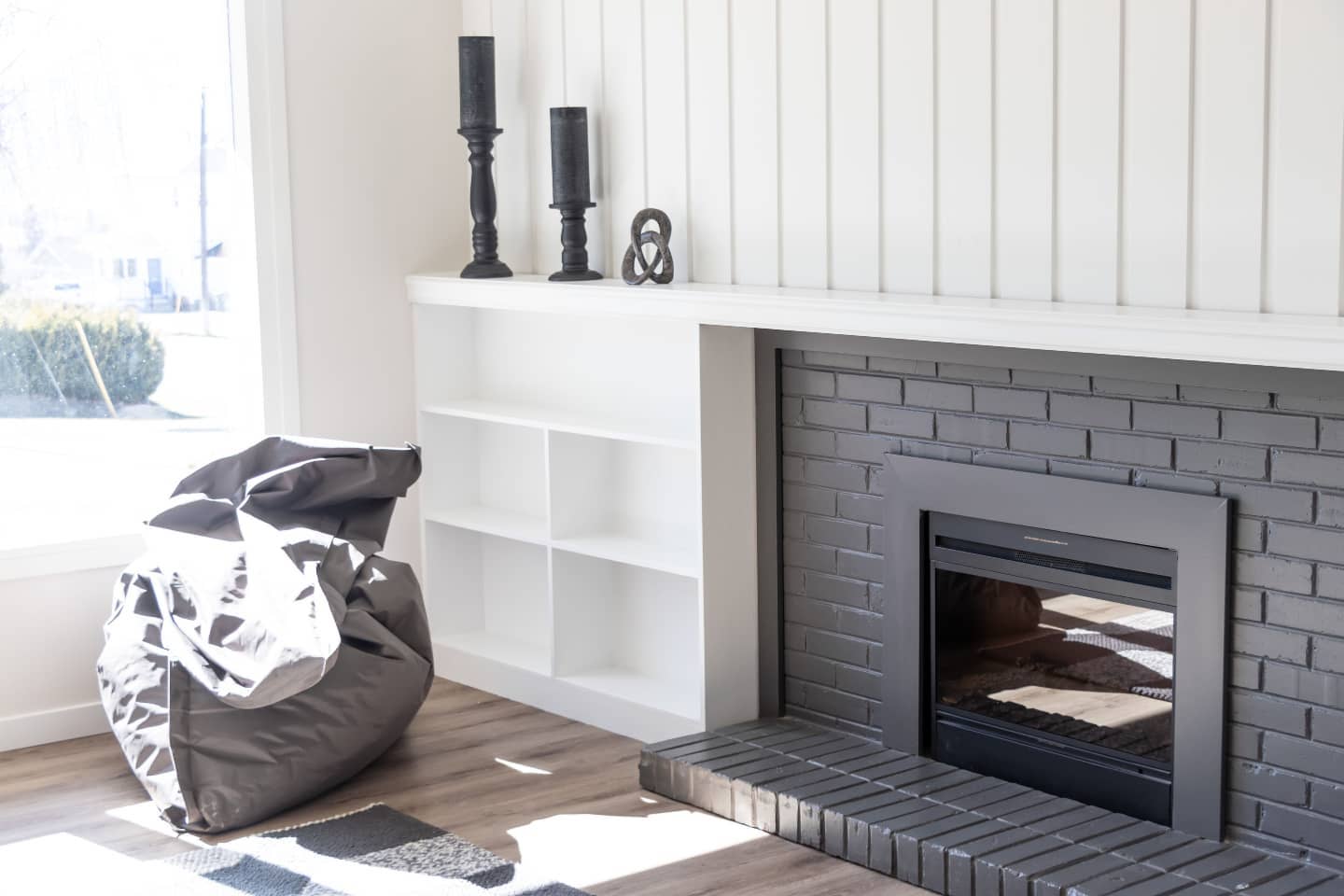
A gray brick surround can bridge a black fireplace insert and bright white built-ins. In this room, painting the upper paneling and shelving white gives the wall a unified frame, while the darker brick preserves a clear focal point below.
Carrying gray across the raised hearth makes its projecting shape feel deliberate. Try paint samples beside the flooring and in changing daylight before choosing a gray; undertones can shift noticeably against warm wood.
Keep nearby accessories simple, as the vertical paneling and horizontal brick courses already supply plenty of pattern. Black candlesticks repeat the insert's dark outline without competing for attention.
For any planned repainting near the firebox, confirm suitable products and required clearances with the manufacturer or installer first.
Keep Brick Variation Visible With Whitewash
Credits: Instagram
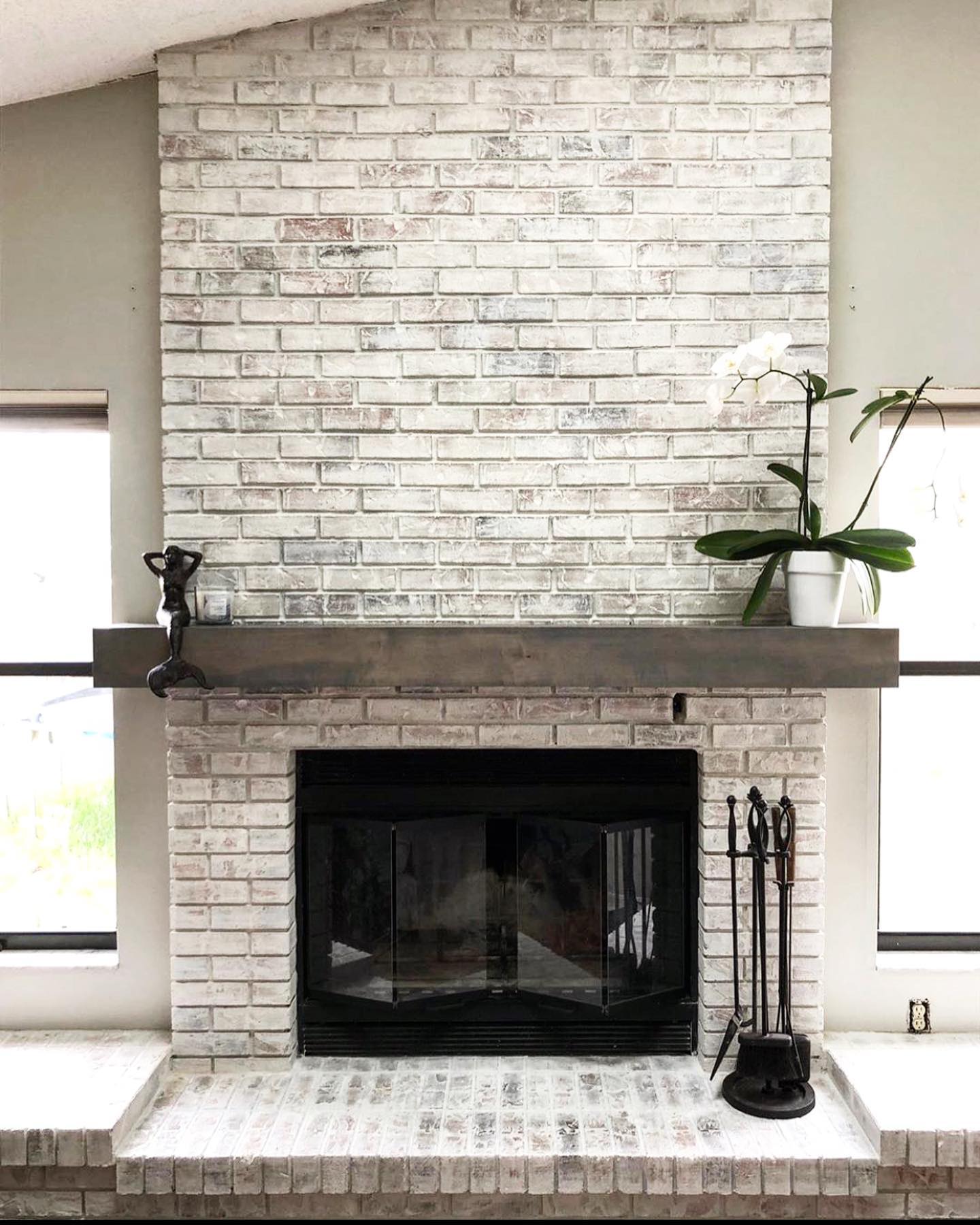
Whitewash gives this tall fireplace a lighter presence while allowing pink and gray brick tones to show through. The uneven color is the appeal: individual bricks remain visible rather than disappearing into a solid white block.
In this renovation, the designer extended the brick to meet the sloping ceiling and added a custom mantel, creating one continuous architectural feature. A dark wood shelf provides a strong horizontal break and connects visually with the black firebox.
Before committing to a similar finish, test a discreet area and assess the dried result from across the room. Limit mantel decorations so the textured surface stays prominent.
Have a fireplace professional assess any masonry extension or mantel change before work begins on your fireplace.
Let Varied Brick Stand Without a Mantel
Credits: Instagram
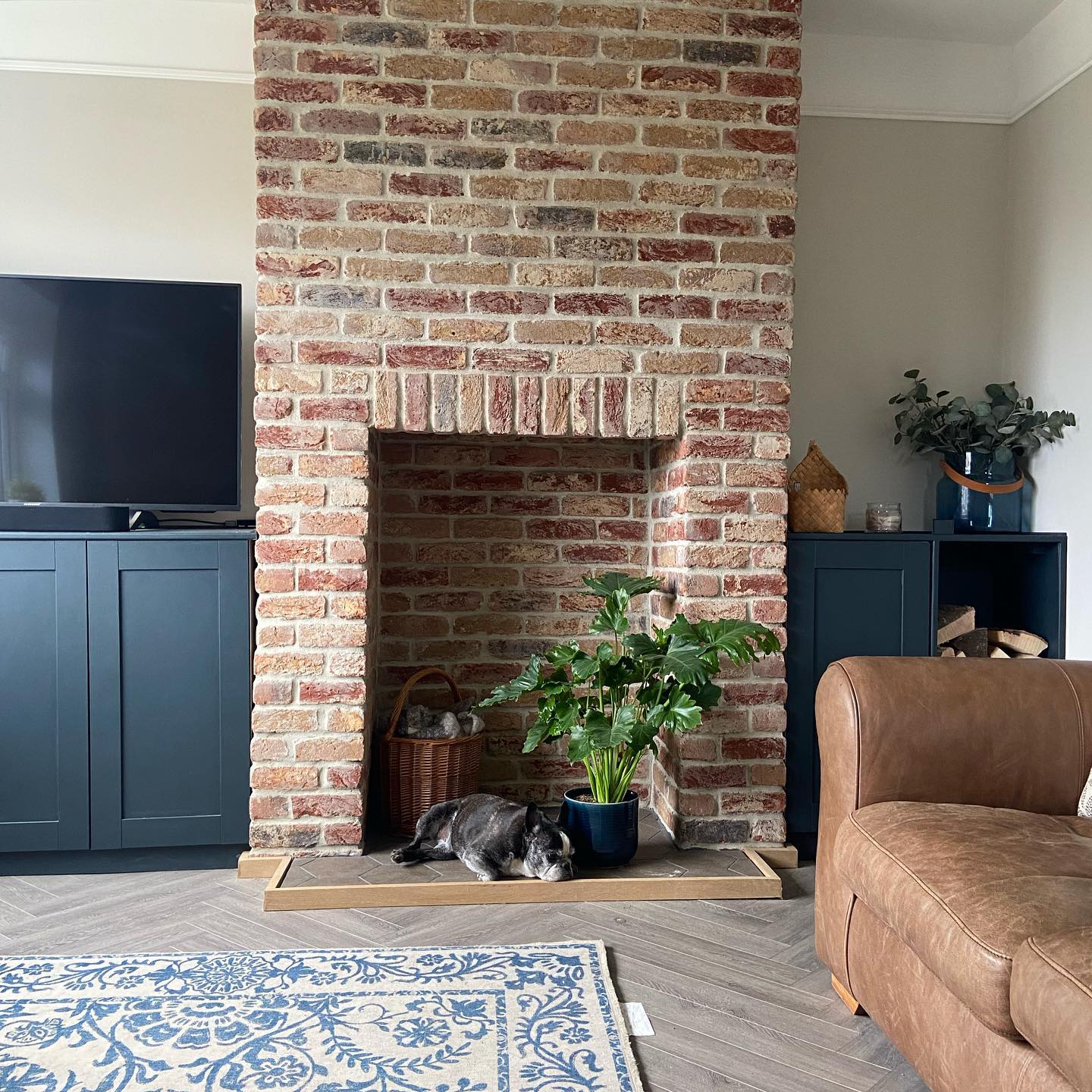
Skipping a mantel lets varied brick color become the main decoration. This chimney breast combines rusty reds, sandy tones, and charcoal accents, with pale joints making each course readable.
The vertical bricks above the opening add another detail worth leaving uncovered. For a similar composition, place the television on an adjacent cabinet so the brick surface remains uninterrupted.
Low blue cupboards provide contrast on either side without obscuring the fireplace's height. Pull one brick tone into nearby furniture, as the brown leather chair does here, and keep surrounding walls quiet.
Before removing an existing mantel, check how it is attached and whether repairs will be needed. Any changes affecting the opening or supporting masonry deserve assessment by a qualified professional.
Refresh a Rustic Mantel With a Pale Finish
Credits: Instagram
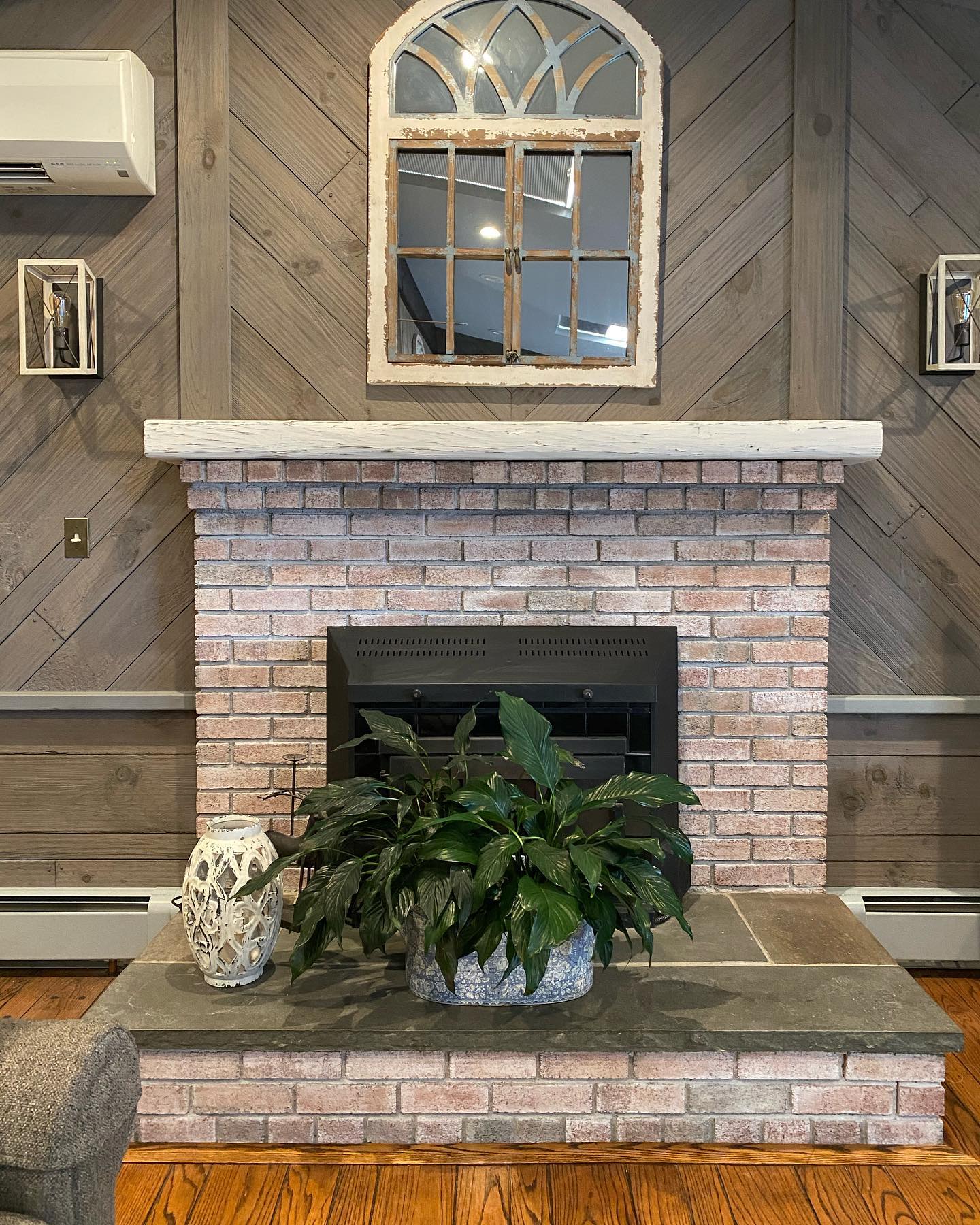
An existing mantel can change the fireplace's character without introducing a bulkier surround. Here, a pale painted finish highlights the shelf's irregular grain and worn edges against darker chevron paneling.
The maker paired that distressed treatment with refreshed brick, allowing the fireplace to brighten while the room retained its rustic texture. Use this approach when your shelf has an appealing shape but disappears against the wall.
Compare a warm ivory with cooler whites beside the brick before choosing a finish. Repeating the pale color in one substantial mirror frame gives the mantel a companion without crowding its surface.
Before refinishing, identify the existing coating and confirm preparation methods appropriate to its condition. Keep any working fireplace's required clearances in mind.
Highlight a Brick Arch With Contrasting Mortar
Credits: Instagram
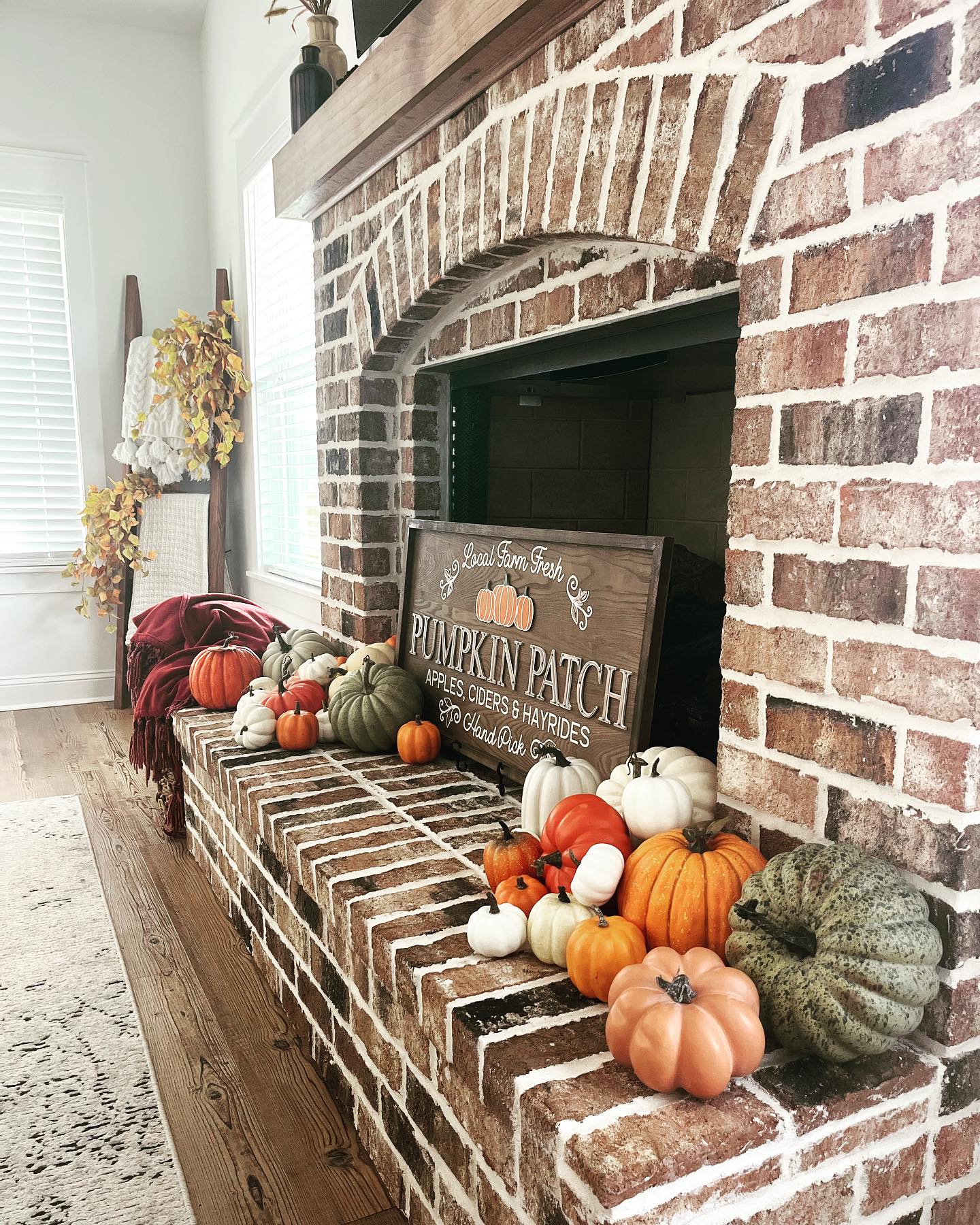
A shallow brick arch introduces a gentle curve above an otherwise rectangular firebox. Here, pale mortar emphasizes the angled bricks, making that construction detail easy to appreciate against the darker opening.
The same contrast continues across the broad raised hearth, tying the entire fireplace together. If your surround already has an arch, give it breathing room with quiet walls and a simple timber mantel rather than covering it with elaborate trim.
Consider mortar color alongside brick color when discussing a renovation with a mason; the joints strongly influence the finished appearance. Existing mortar should be assessed before any proposed changes.
Seasonal objects can dress an inactive hearth, but remove combustible decorations and preserve required clearances whenever the fireplace is operating.
Unify Brick Patterns With One Charcoal Color
Credits: Instagram
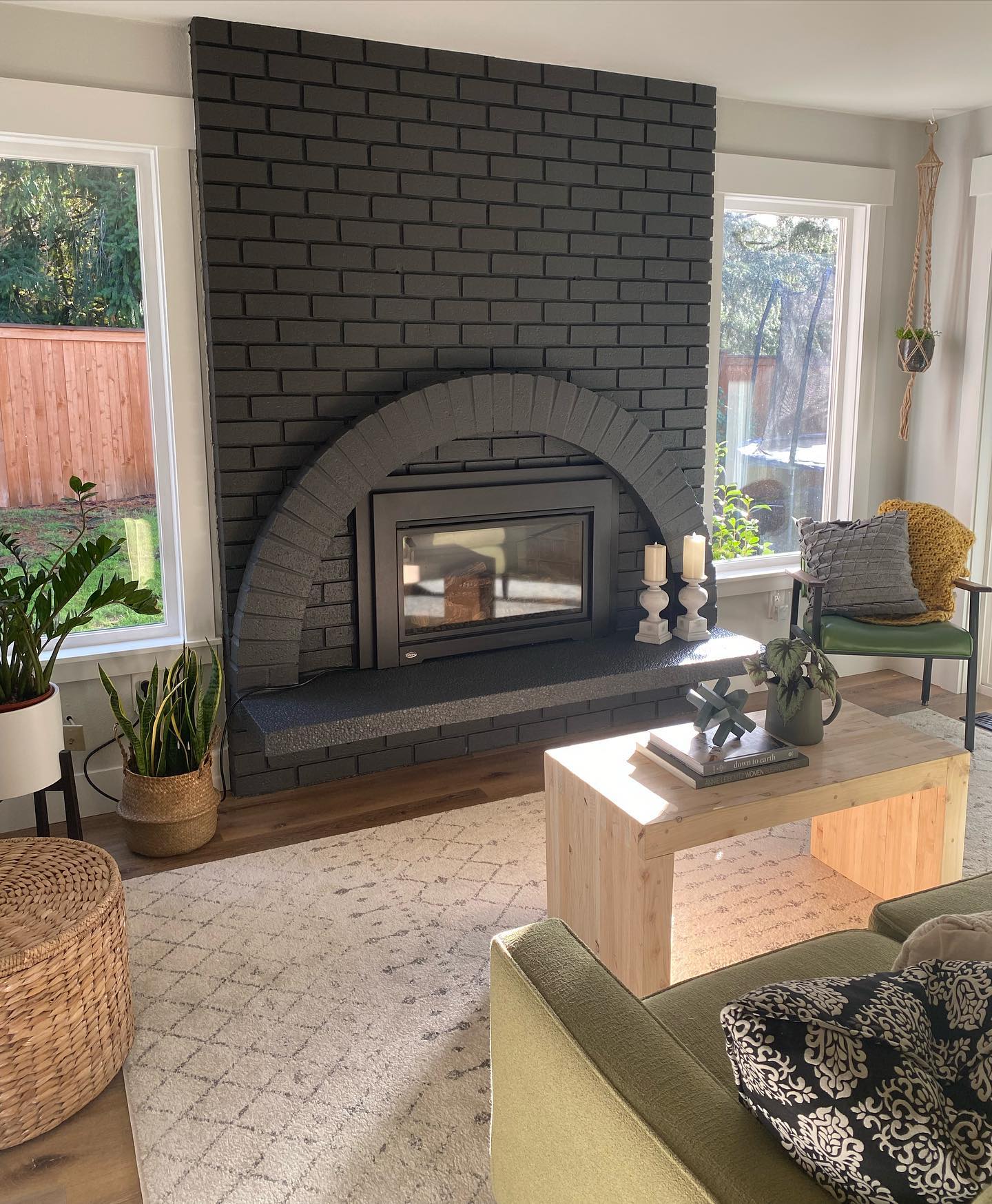
One charcoal color can bring several brick patterns into a cohesive composition. This fireplace combines straight horizontal courses with a broad projecting arch, yet the shared dark finish makes them read as one sculptural feature.
Light still catches the arch's edges, preserving its shape without a contrasting outline. Leaving the upper brick bare of a mantel or artwork strengthens the effect.
Surrounding white trim and pale walls give the dark mass definition, while a light wood coffee table prevents the seating area from feeling severe. Sample your chosen charcoal on a separate test surface before judging its undertones beside existing furnishings.
Check the proposed finish with a fireplace professional, who can advise which surfaces need products suitable for their exposure.
Blend Charcoal Brick Into Warm Gray Walls
Credits: Instagram
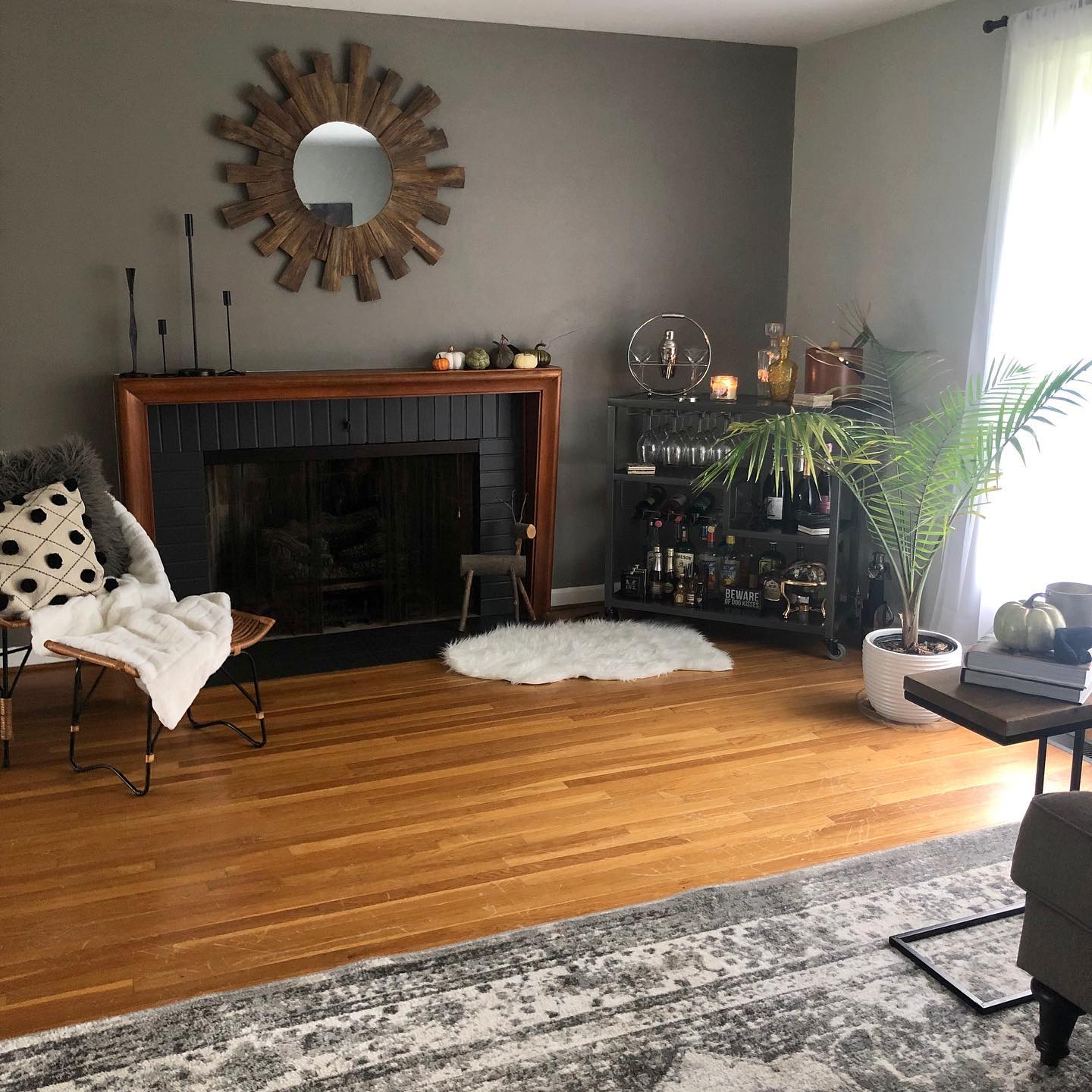
Updating the wall around a fireplace can make its existing materials feel more intentional. Here, muted warm gray walls create a soft transition between charcoal brick and a chestnut wood surround.
The fireplace remains distinct, but the close tonal relationship keeps it from looking isolated. Test wall samples directly beside the wood trim, since gray with the wrong undertone can exaggerate orange or red in the finish.
A round sunburst mirror repeats the wood's warmth while breaking up the rectangular surround. Keep smaller mantel objects in loose groups, leaving stretches of the shelf visible.
A restrained arrangement helps the wall color do its work. Position chairs, rugs, plants, and other combustible furnishings beyond the required clearances when using the fireplace.
Give White Brick a Crisp Steel Surround
Credits: Instagram
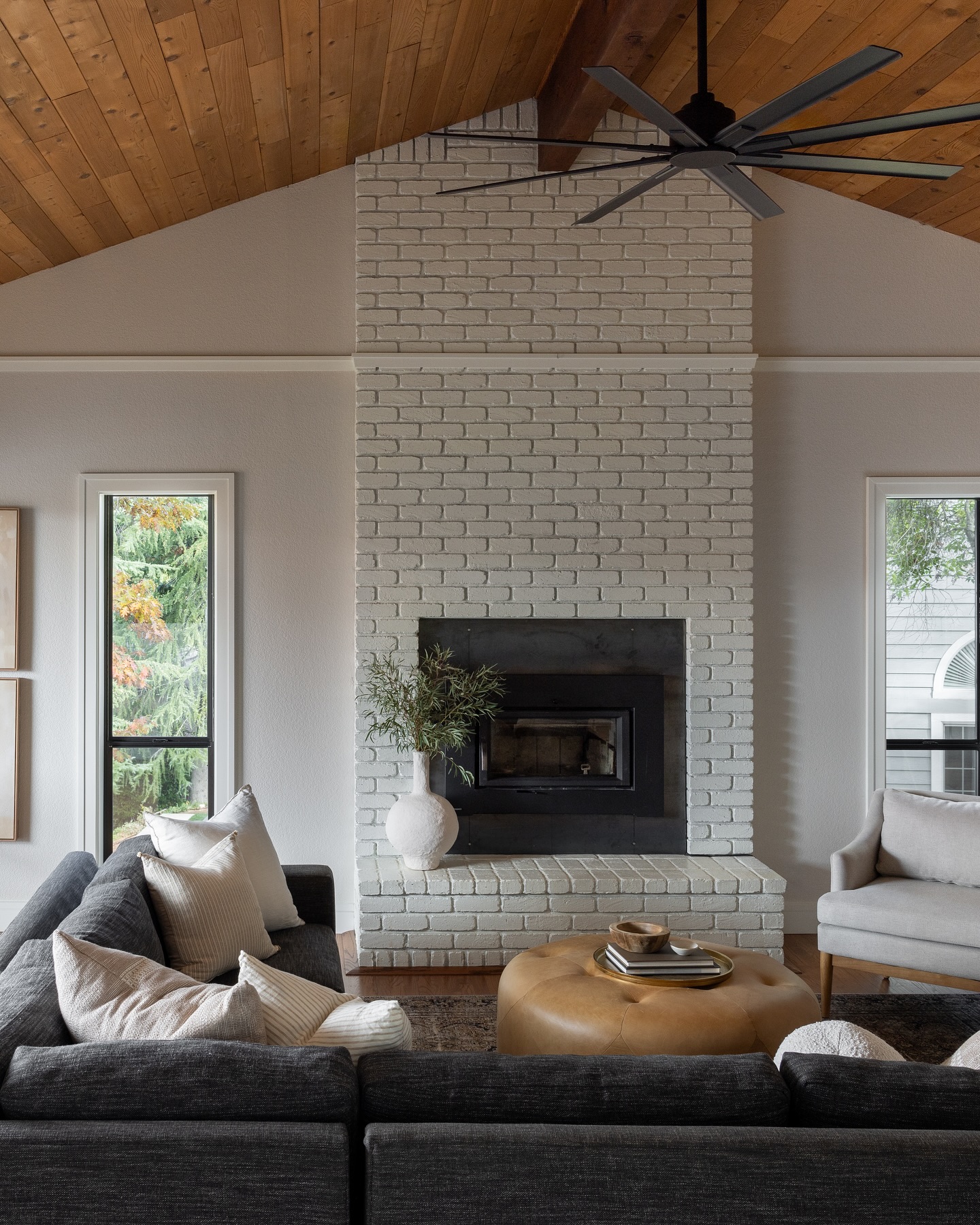
A broad steel surround gives white brick a precise, contemporary focal point. In this renovation, the contractor replaced a pellet stove with a wood burning fireplace, painted the brick white, and installed a custom steel frame.
Its dark rectangular border contrasts with the irregular brick texture without hiding the tall chimney breast. The proportions matter: a generous frame holds its own beneath the vaulted timber ceiling, while the pale masonry keeps the wall visually light.
Discuss surround dimensions with your installer before choosing finishes, considering both the opening and the room's scale. Fireplace replacement and custom metalwork require professional specification, including ventilation and clearance requirements.
Repeat the dark accent sparingly in nearby furnishings to connect the feature with the room.
Soften Orange Brick With Uneven German Schmear
Credits: Instagram
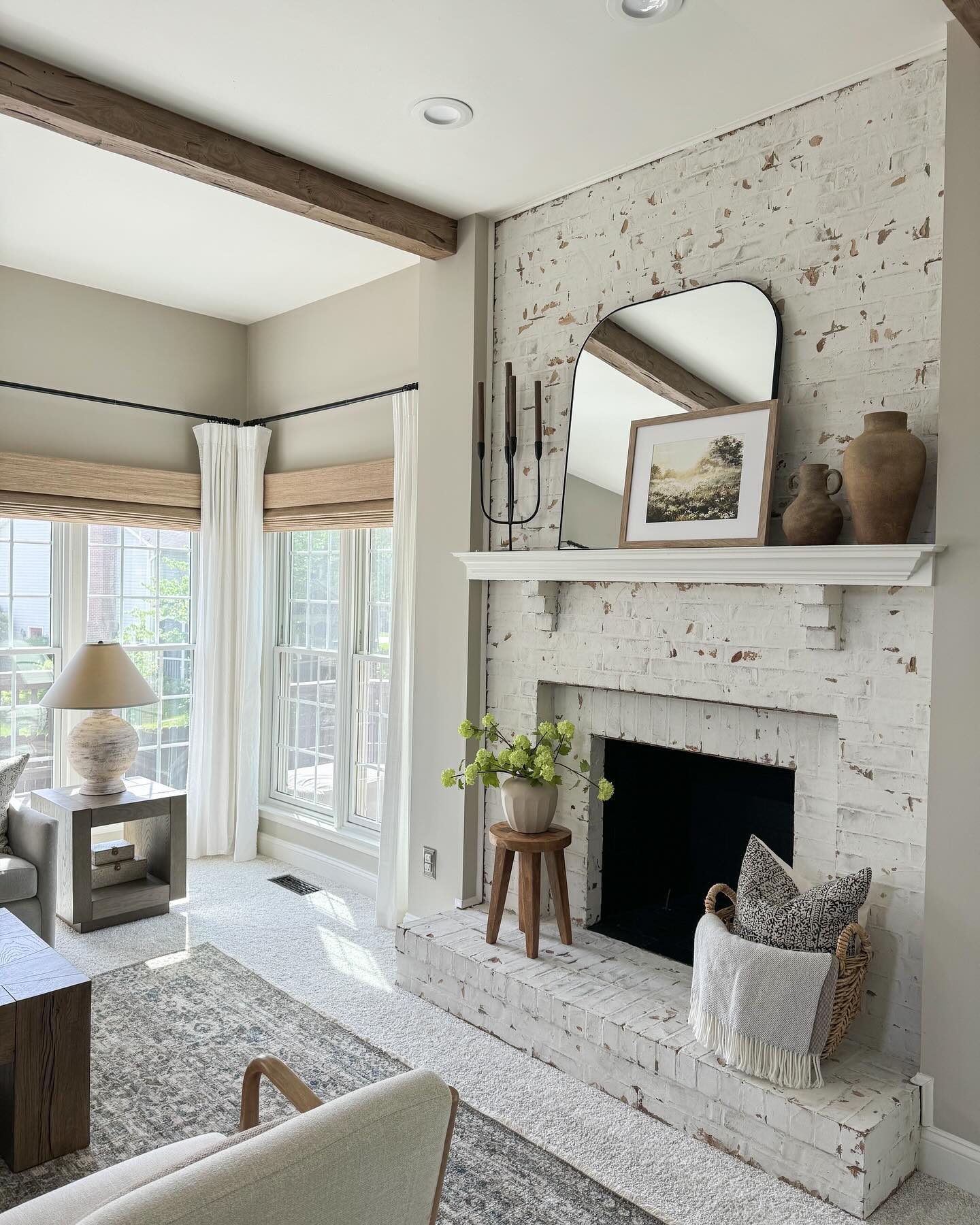
German schmear can soften orange brick while leaving scattered glimpses of its original color. The homeowner identifies this fireplace's finish as that treatment, and its patchy coverage creates a more textured impression than a translucent whitewash.
Small exposed areas keep the tall surround from becoming featureless, even within an otherwise pale room. Before approving a similar makeover, request a sample showing both heavily covered sections and visible brick.
Judge the balance at room scale rather than inspecting each patch alone. A crisp white mantel offers relief from the irregular surface, while earthy pottery echoes the remaining brick tones.
Confirm the treatment's compatibility with your masonry and fireplace location before proceeding, and keep combustible hearth decorations clear whenever using the fire.
Add Industrial Detail With Exposed Mantel Brackets
Credits: Instagram
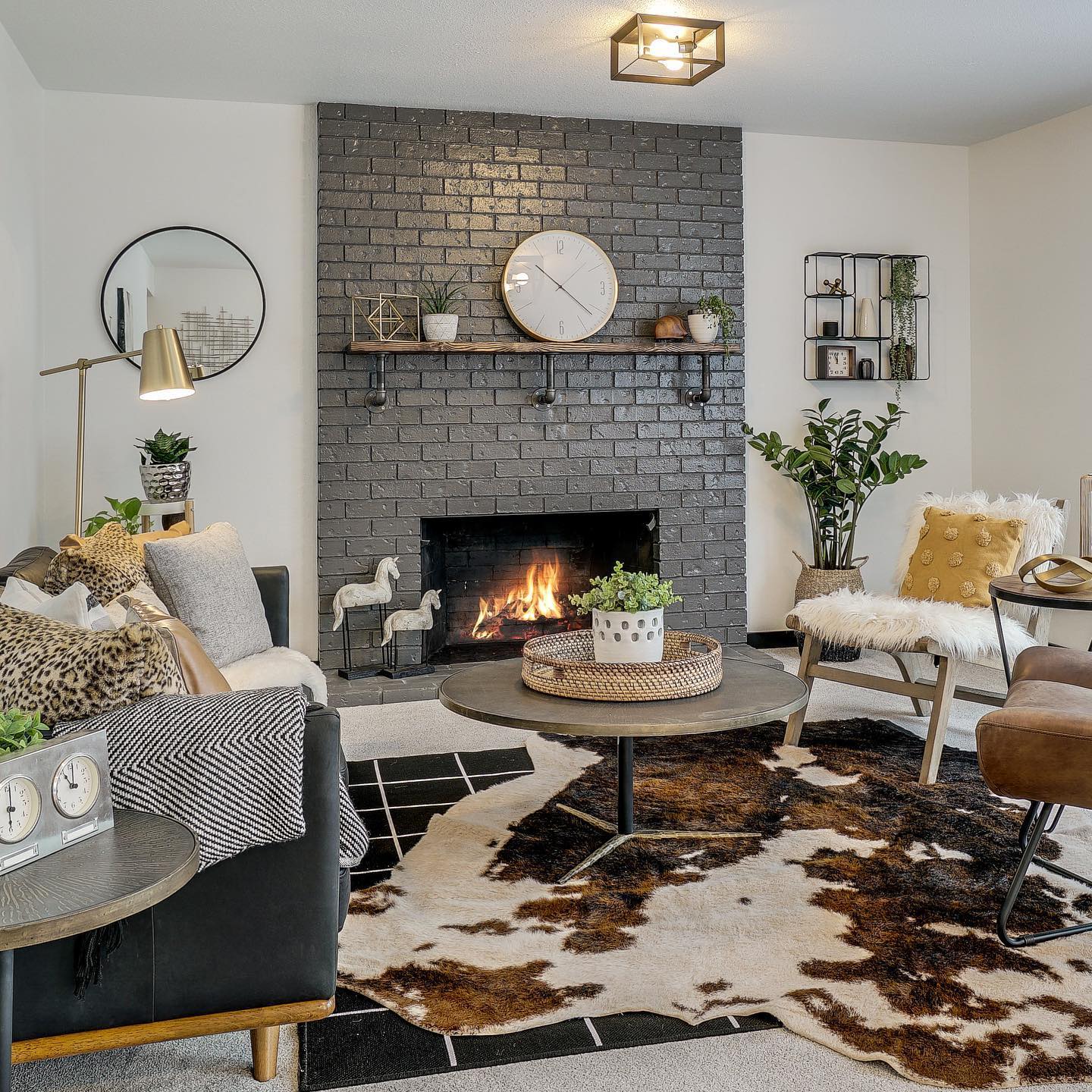
Visible metal brackets can turn a simple mantel shelf into a distinctive detail. Here, three dark pipe supports punctuate a long, slim timber shelf against gray brick.
Their exposed shape introduces an industrial note without the visual weight of a thick beam or elaborate surround. A narrow profile also leaves more of the brick face visible above the opening.
Echo the bracket finish in a nearby mirror frame or lighting detail, then use warmer wood and textiles to soften the combination. Plan the shelf length and bracket spacing together so the supports feel deliberate.
Have a qualified installer verify fastening, load capacity, mantel projection, and required clearances. Choose the decorative arrangement only after those practical requirements establish the mantel's position.
Build Coordinated Storage Around the Fireplace
Credits: Instagram
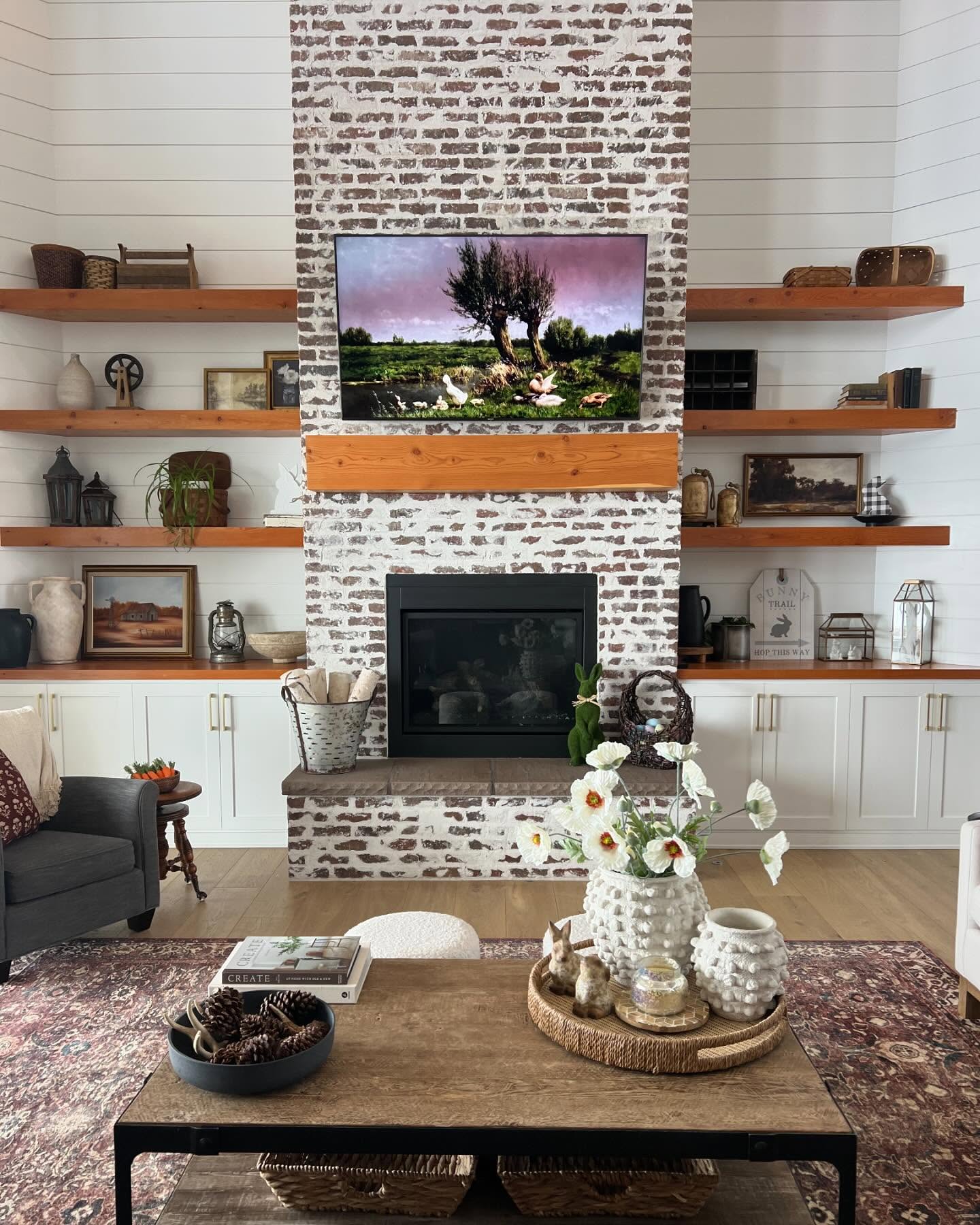
Treat the space beside your fireplace as part of the makeover. These coordinated built-ins combine open timber shelves with closed white cabinets, giving the brick chimney breast a purposeful setting.
Repeating the mantel's wood tone across both sides connects the storage to the central feature. White paneled backs keep displayed objects readable, while cupboard doors provide places for less decorative essentials.
Start by listing what needs storage, then set shelf heights around those items rather than arranging shelves by appearance alone. Keep some open space between displays so the brick's lively texture retains attention.
Matching cabinet heights establishes balance even when the accessories differ. Plan any new joinery around the fireplace's required clearances and preserve access needed for maintenance work.
Use a Unified White Finish Between Renovation Stages
Credits: Instagram
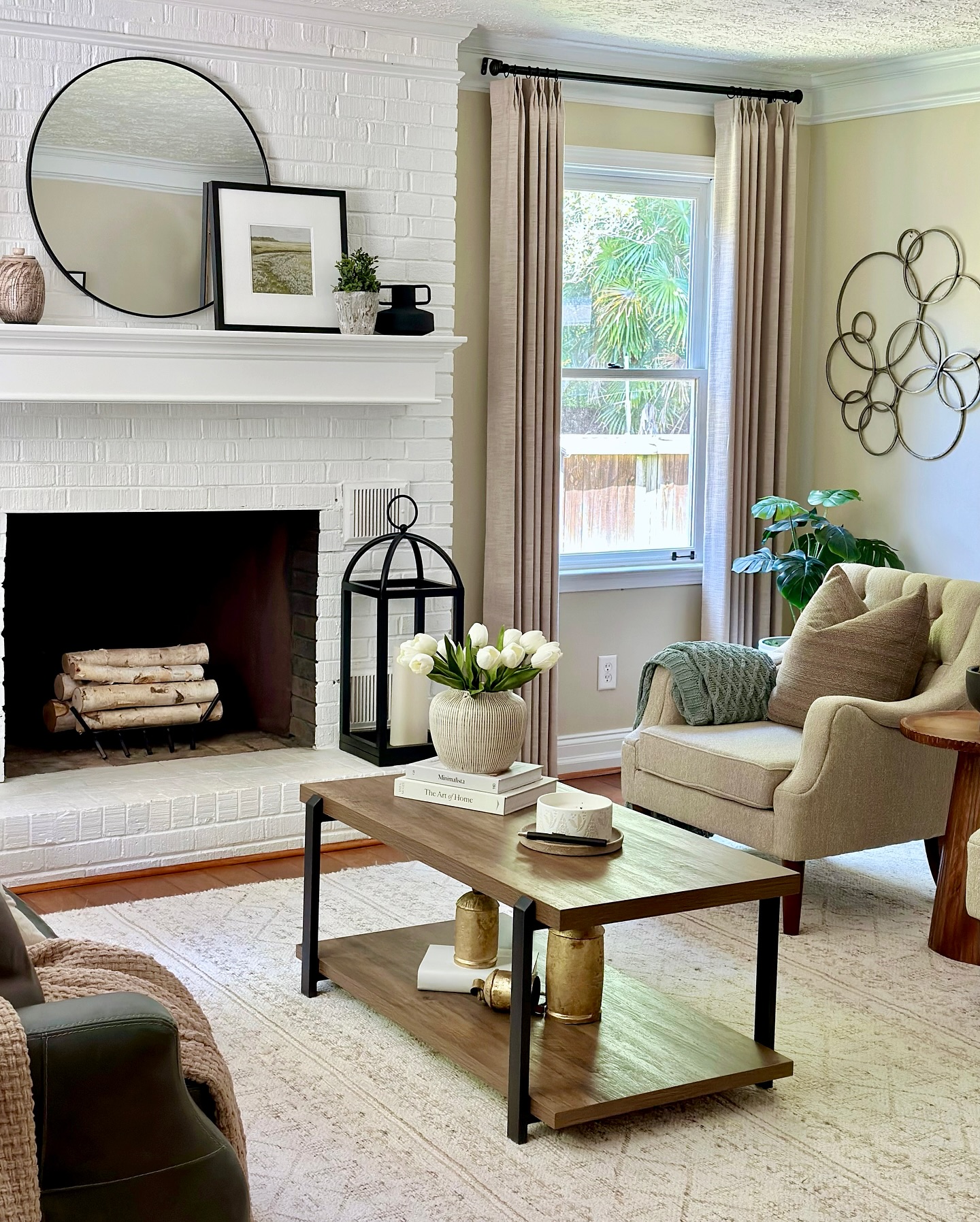
A unified white finish can make a fireplace feel settled while larger renovation plans remain undecided. This homeowner painted the brick while considering a future stone makeover.
Matching the mantel and hearth visually reduces competing elements, allowing the brick texture and traditional shelf profile to remain quietly visible. Black picture frames and a round mirror supply definition without another permanent alteration.
If you are renovating in stages, price the preparation and finishing work before comparing it with a complete reface. Decide whether the interim result is something you could enjoy for several years.
Painting masonry is a lasting change, so discuss future plans and surface suitability with your contractor. Preserve vents, required clearances, and access to all existing fireplace components.
Pair a Brick Base With Green Upper Paneling
Credits: Instagram
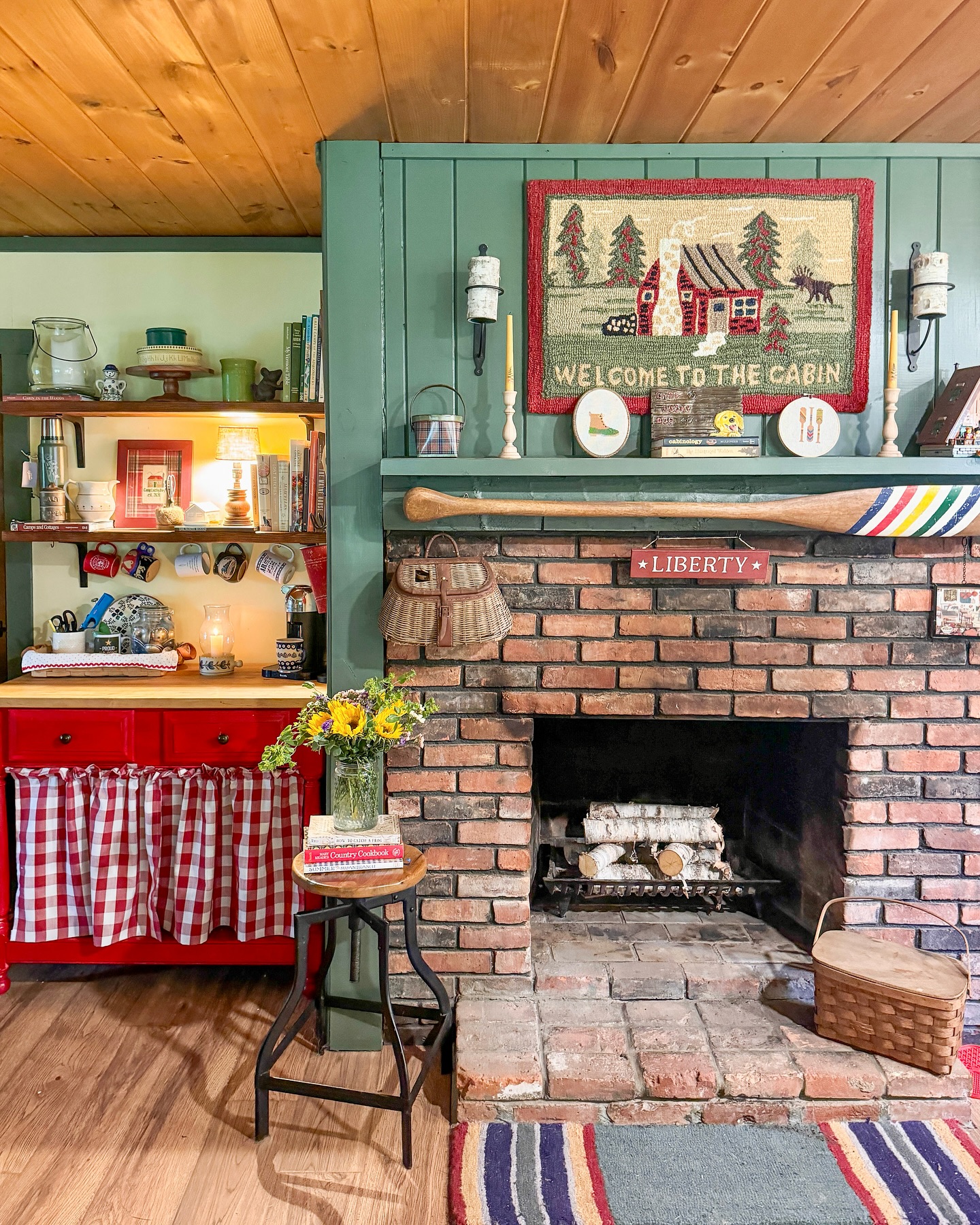
Keeping warm brick below the mantel while changing the upper wall creates two complementary textures. In this cabin makeover, the homeowner retained the lower brick and introduced vertical paneling above it.
Green paint on the paneling and mantel brings a cool counterpoint to the orange brick and honeyed ceiling. The straighter, quieter upper surface also provides a backdrop for artwork without competing with every mortar joint.
Consider where the material transition will fall before choosing panel widths or trim. A consistent color across the shelf and surrounding woodwork makes the added elements feel connected.
Have a qualified fireplace designer assess material compatibility, attachment details, and combustible clearances before covering any existing masonry. Retain necessary ventilation and service access throughout planning.
Frame Pale Brick With a Classical Fluted Mantel
Credits: Instagram
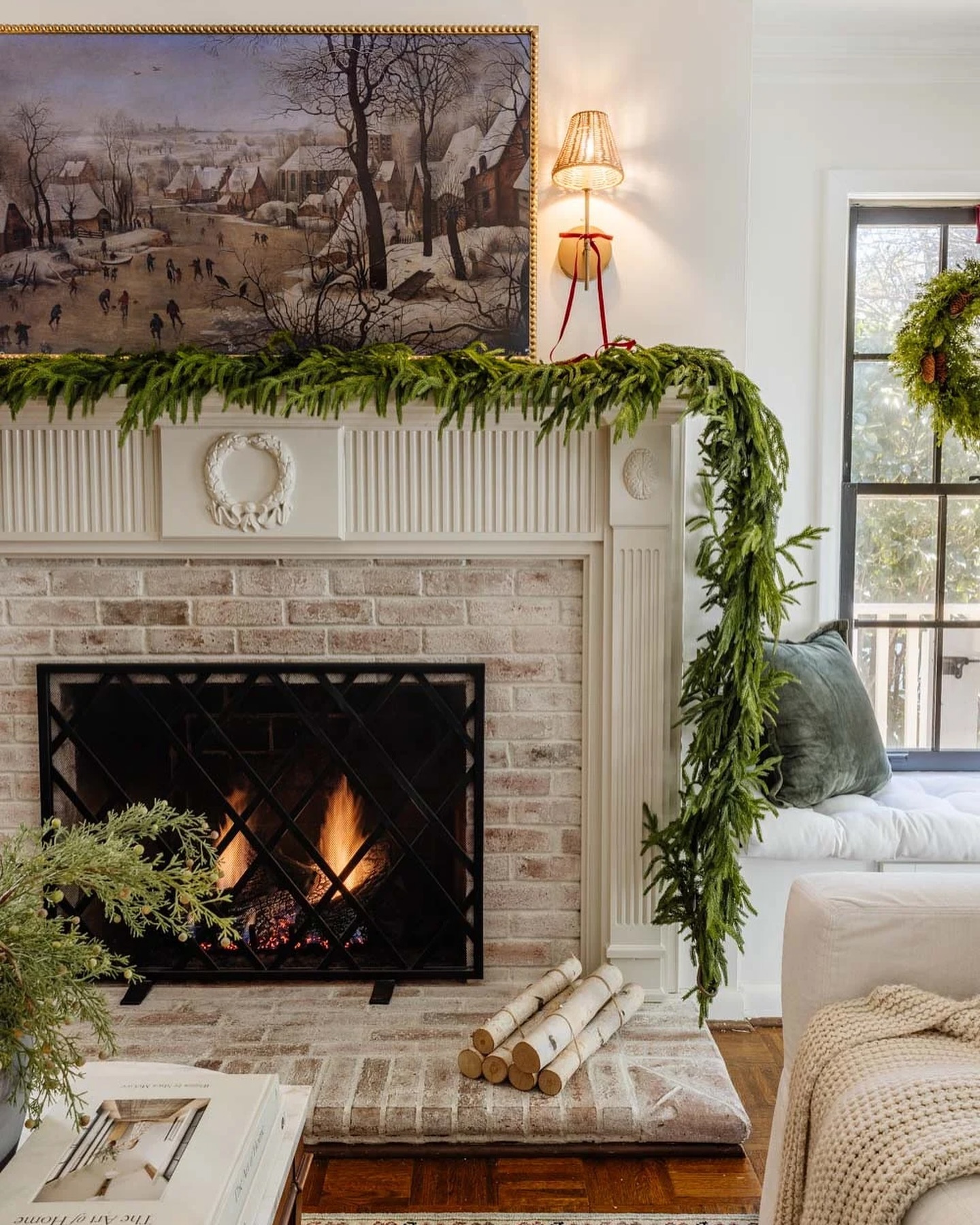
A decorative mantel can give plain brick a more formal architectural setting. This creamy surround uses fluted panels and raised medallions to introduce classical detail while leaving a generous band of pale brick visible around the opening.
Keeping the trim in one color lets shadows define the ornament instead of adding competing paint accents. The contrast between precise moldings and irregular brick texture is what makes the pairing interesting.
When planning a similar update, compare the surround's overall width with nearby windows and furniture so its details have room to breathe. Choose a restrained artwork arrangement above it.
Have the mantel's materials, dimensions, attachment, and required clearances specified by a qualified professional, and keep seasonal greenery away from operating fireplaces.
Introduce a Blue and White Patterned Border
Credits: Instagram
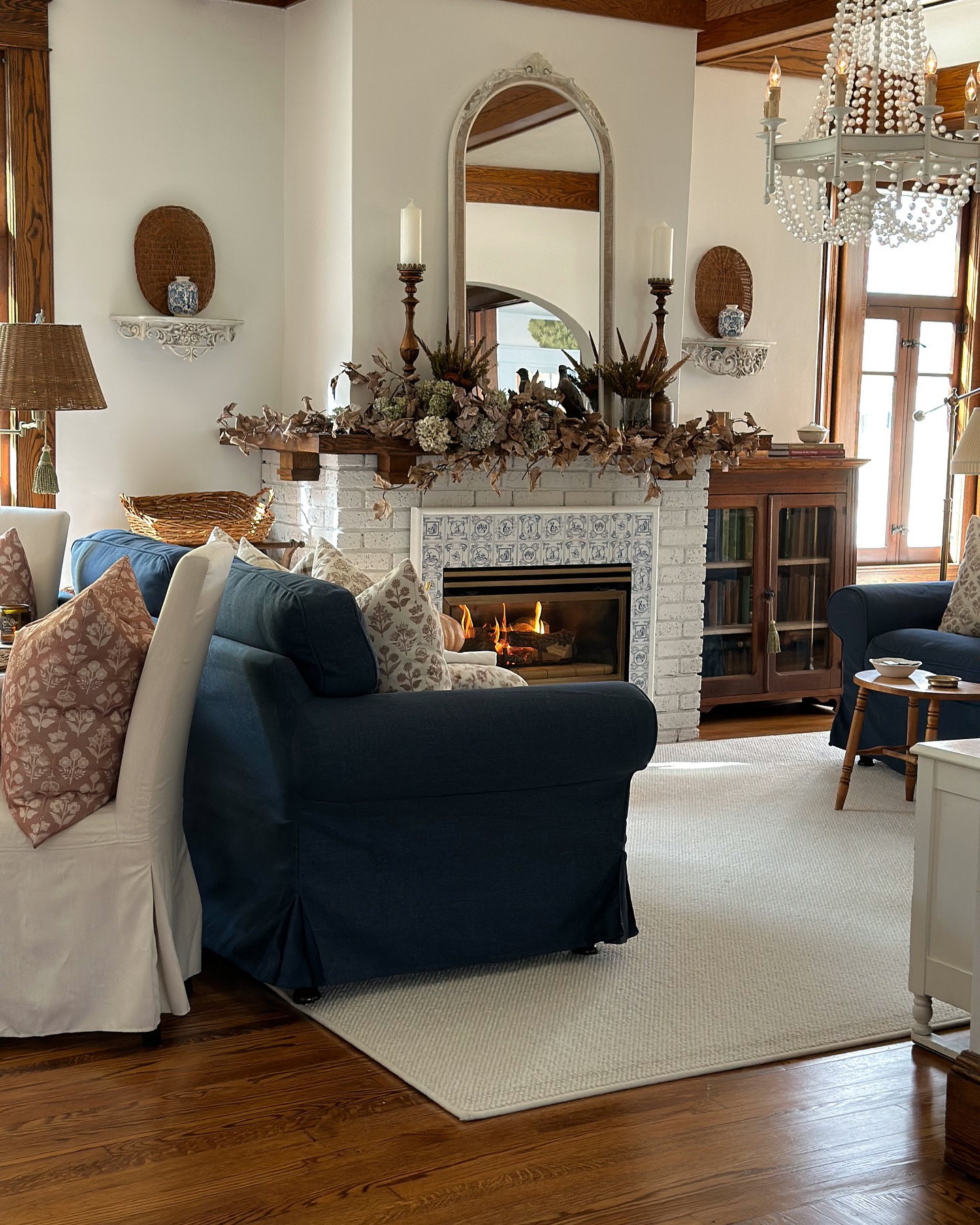
A narrow patterned border can add personality without covering all the brick. This fireplace pairs a blue and white motif around the opening with a quieter white brick surround.
Keeping the pattern concentrated creates a clear focal point, while blue seating carries its color into the room. The wood mantel and nearby cabinet provide warmth that balances the pale masonry.
To explore this idea, compare pattern scale with the width available around your firebox; intricate designs need enough space to remain legible. Bring samples together with your existing upholstery before committing.
Ask a fireplace professional to specify suitable facing materials, installation details, and required clearances for your particular unit. Preserve operating controls and ventilation, and keep combustible decorations safely away.
Repurpose Characterful Timber for a Custom Mantel
Credits: Instagram
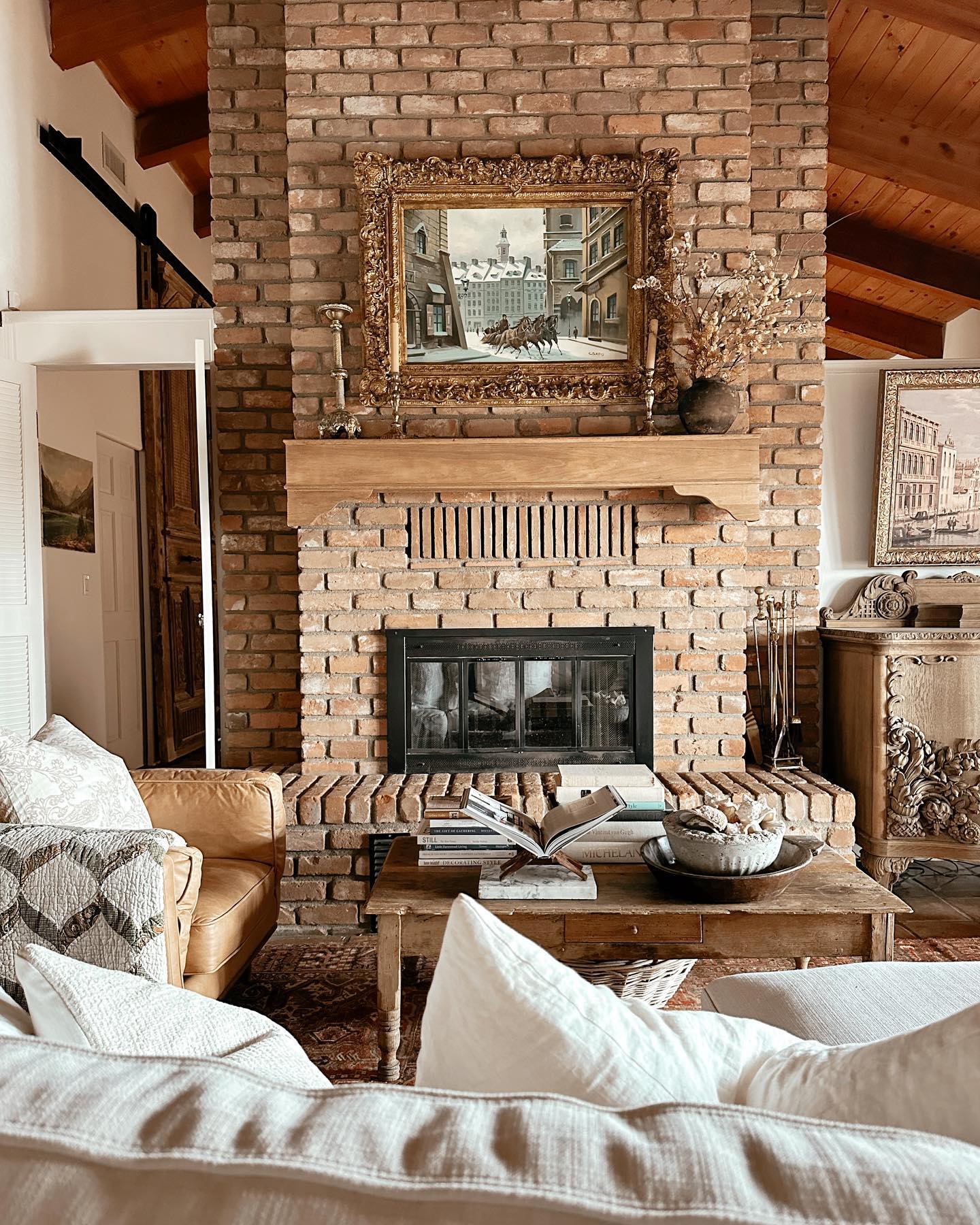
Repurposed timber can give a mantel a story as well as a distinctive profile. The homeowner says this shelf was made from a bed side rail found in the garage.
Its shaped ends add subtle character to the natural brick without competing with the ornate artwork above. A mellow wood finish connects the new piece with nearby furniture and the timber ceiling.
Look for useful proportions and interesting edges when considering salvaged furniture parts, rather than assuming the heaviest piece will work best. Have the wood's condition, previous coatings, attachment, and intended load assessed before installation.
A qualified professional should also confirm mantel clearances. Keep existing upper and lower ventilation grilles unobstructed when designing the shelf and arranging surrounding furnishings.
Balance an Off-Center Fireplace With Freestanding Cabinets
Credits: Instagram
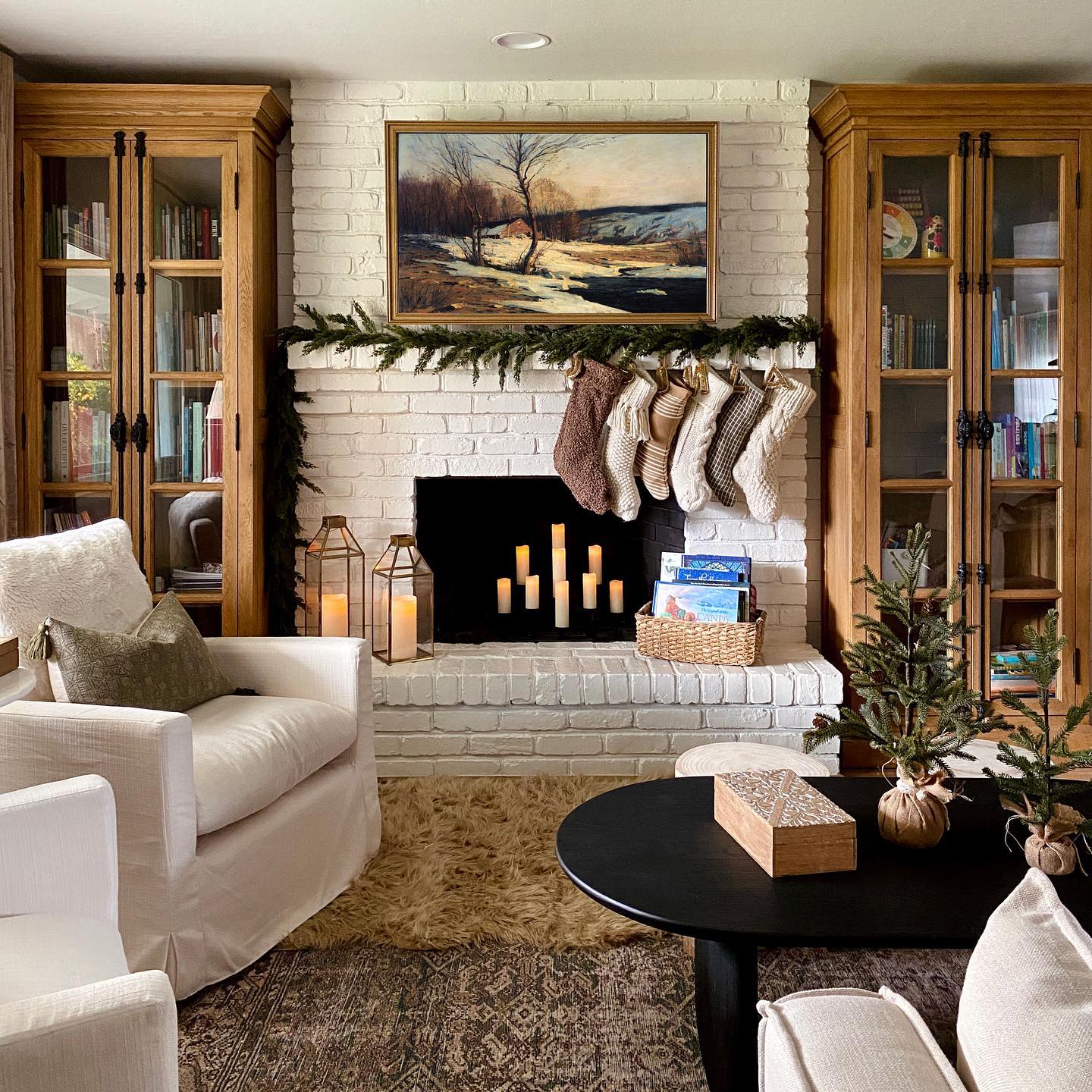
An off-center fireplace does not always require rebuilding the surrounding wall. This homeowner rethought the room's layout and brought in consignment cabinets, creating a balanced arrangement around the white brick.
Tall matching wood cabinets give both sides comparable visual weight, while glass doors keep their large forms from feeling completely solid.
For your room, measure the available spaces separately and check door swings, ceiling height, and walking routes before shopping secondhand. Similar height and finish can create cohesion even when pieces are not identical.
Center artwork on the fireplace itself to reinforce that local focal point. Secure tall furniture appropriately and confirm required fireplace clearances before settling on positions. This approach adds adaptable storage while leaving future layout changes possible.
Soften Straight Brickwork With an Arched Screen
Credits: Instagram
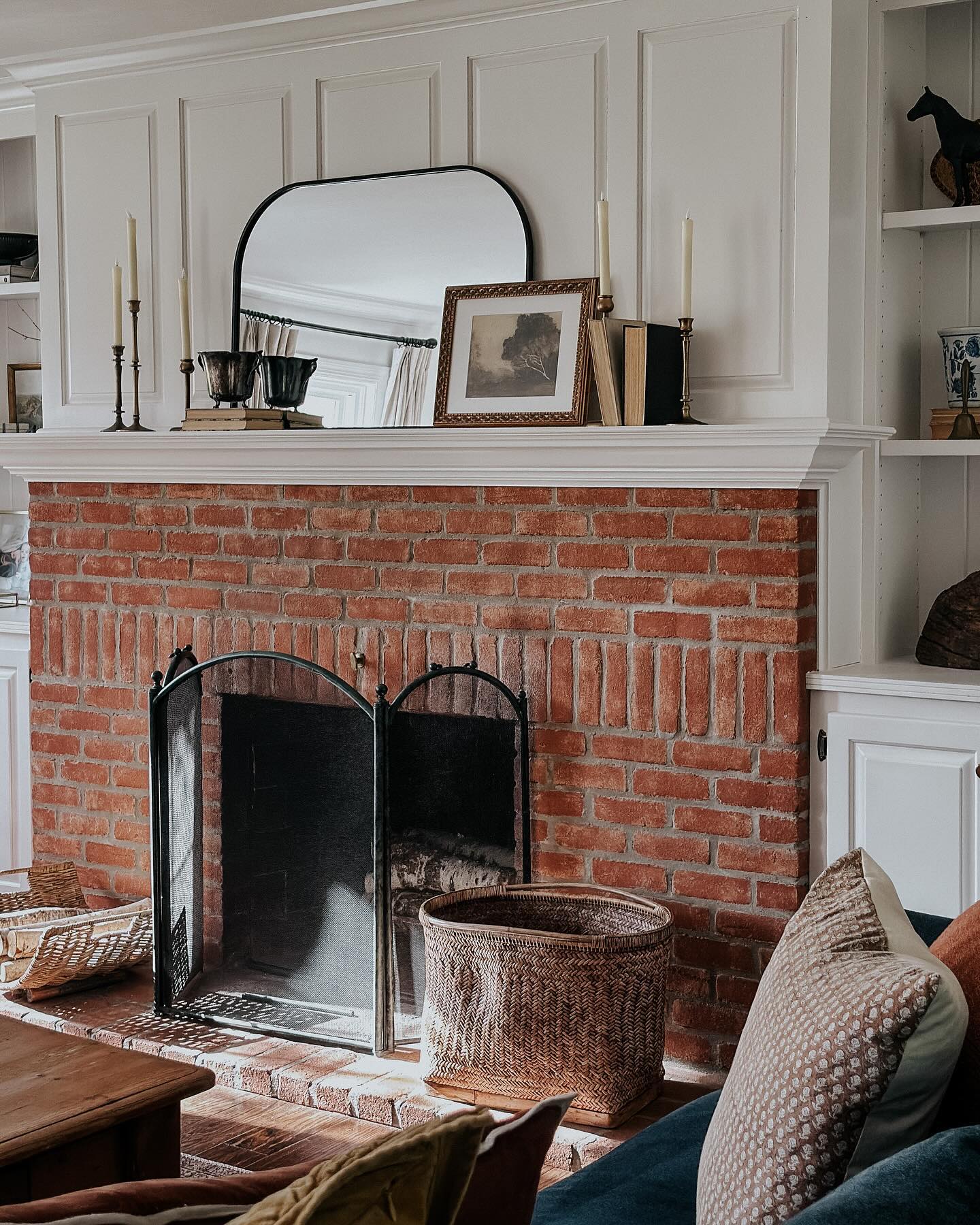
Changing the fireplace screen offers a focused update when the brick already suits the room. Here, curved black screen panels soften the straight courses of red brick and the rectangular white millwork above.
Their slender outline adds definition while mesh allows the opening to remain visually present. Repeating that dark finish in the mirror frame creates a connection across the mantel without changing the masonry.
Measure the opening and hearth before choosing a screen, including the space needed for its feet or folding panels. Ask your fireplace specialist which design and coverage are appropriate for the unit's operation; decorative appearance alone is not enough.
Keep baskets, cushions, and other combustible furnishings outside the required clearances whenever the fireplace is used.
Turn the Refreshed Fireplace Into a Sitting Nook
Credits: Instagram
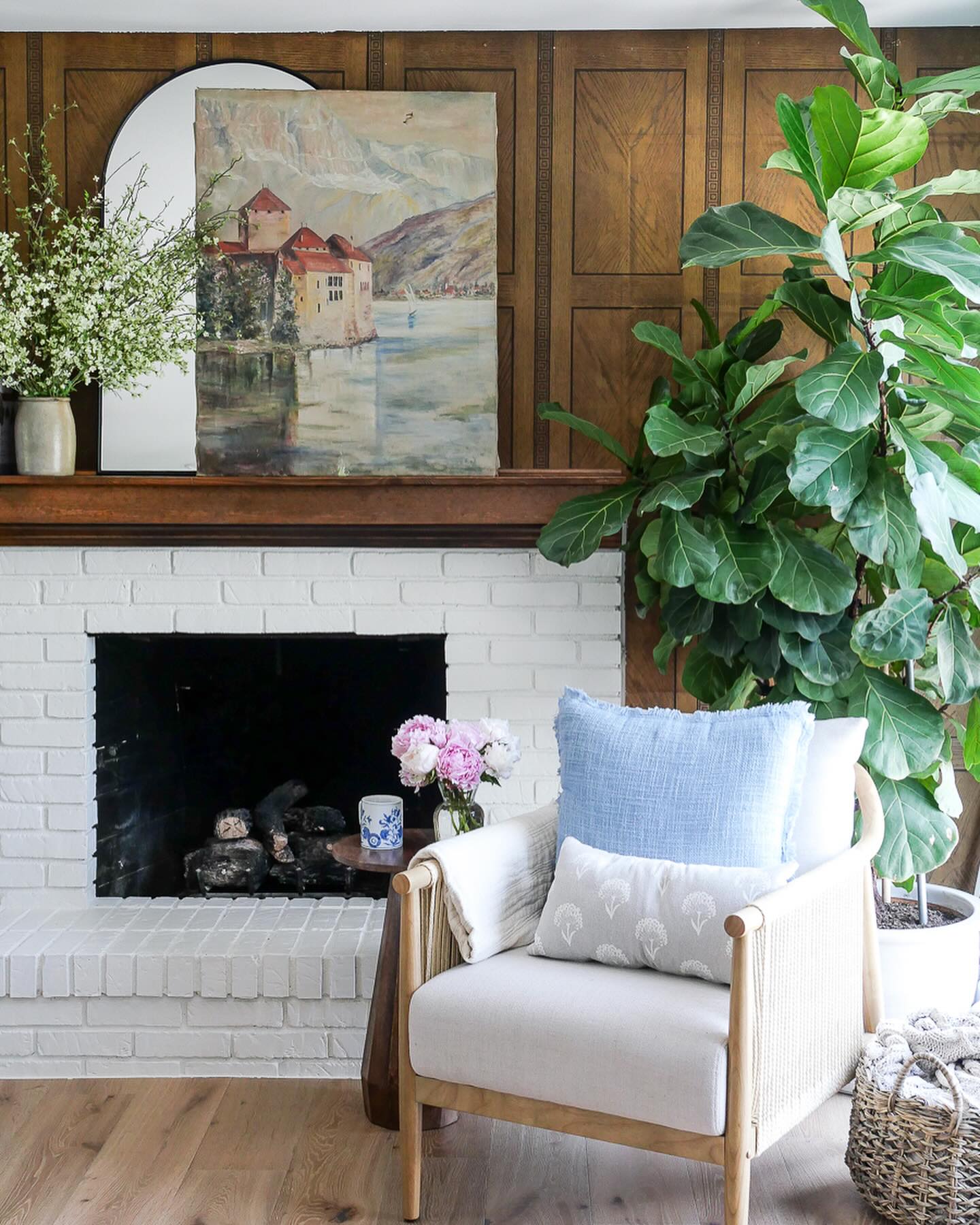
A fireplace refresh becomes more useful when the surrounding space gains a clear purpose. This homeowner turned a kitchen-adjoining fireplace area into a sitting nook, pairing white brick with retained dark wood paneling.
The same principle works in an overlooked living room corner: add a comfortable chair and a small table sized for a drink or book.
Pale upholstery keeps the seat visually light against the rich wood, while a soft blue cushion introduces gentle color. Start with how you want to use the corner, then choose furniture that leaves circulation comfortable.
Preserve the fireplace's required clearances when positioning seating, tables, and plants. Ask a fireplace professional to review the operating layout before settling on furniture sizes and final positions.