
A small living room can feel crowded before you add much at all, so every seat and surface needs to earn its place.
These Small Living Room Decor Ideas focus on practical ways to make a seating area work without filling it with bulky furniture.
Pair a compact loveseat with one accent chair, use individual chairs to shape a conversation spot, or add a cushioned wall bench where a second sofa would take up too much room.
You’ll also find simple ways to keep sightlines open, add color through a single accent, and make separate pieces feel connected.
1. Pair a Compact Loveseat With One Accent Chair
Credits: Instagram
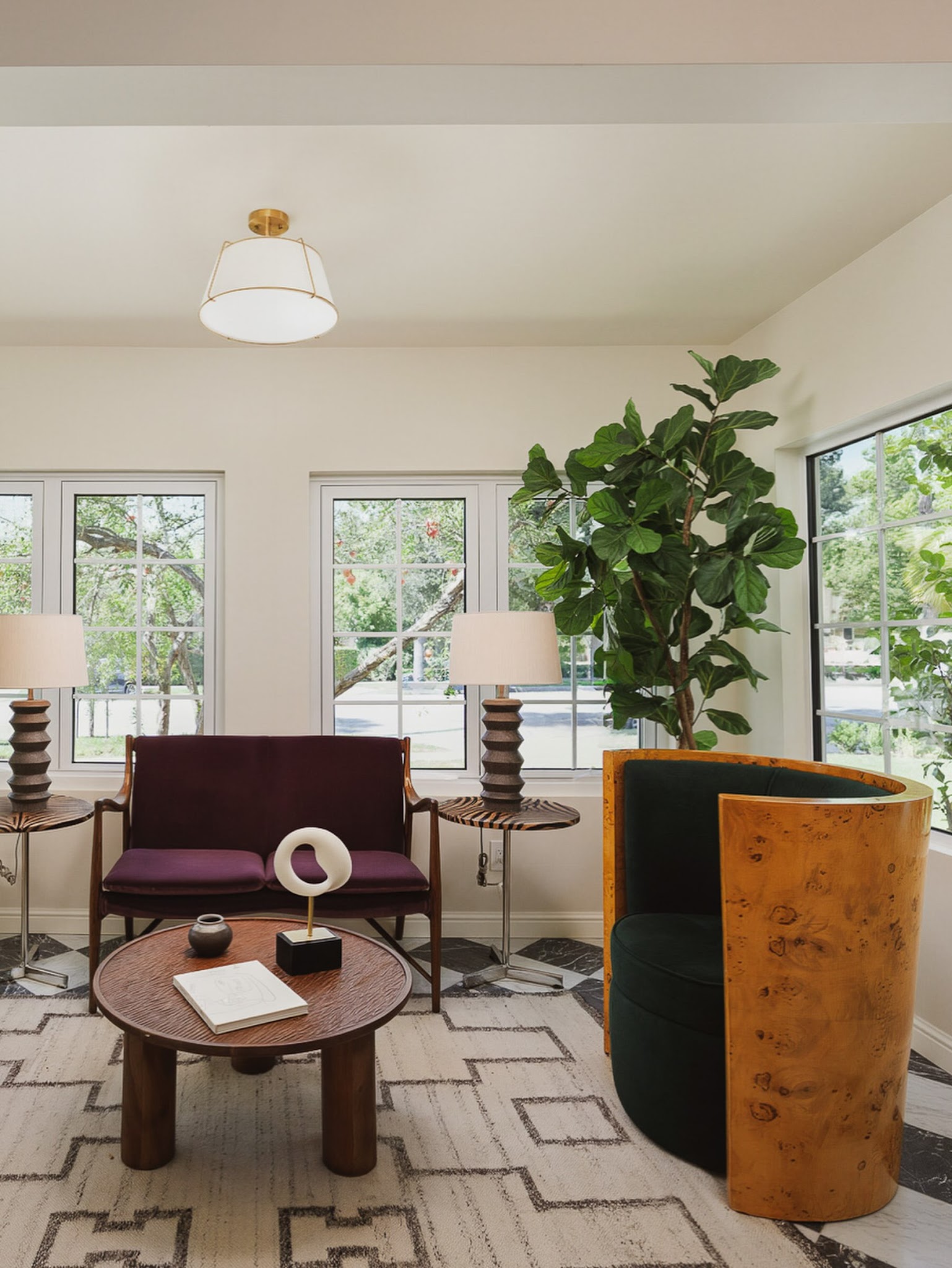
A compact loveseat and one accent chair create a complete conversation area without needing a second sofa. Here, the narrow wood arms of the burgundy seat keep its outline light, while the curved chair adds a contrasting shape.
Try this arrangement when you need several places to sit within a limited furniture footprint. Choose the loveseat by its overall width and depth, then check how much space the chair needs beside it.
A round coffee table gives both seats a shared surface without a projecting corner between them. Keep the center of the table useful by grouping decorations on one side.
The rug connects the pieces, while matching lamps give the small seating group balance without adding more upholstered furniture.
2. Build a Conversation Area With Individual Chairs
Credits: Instagram
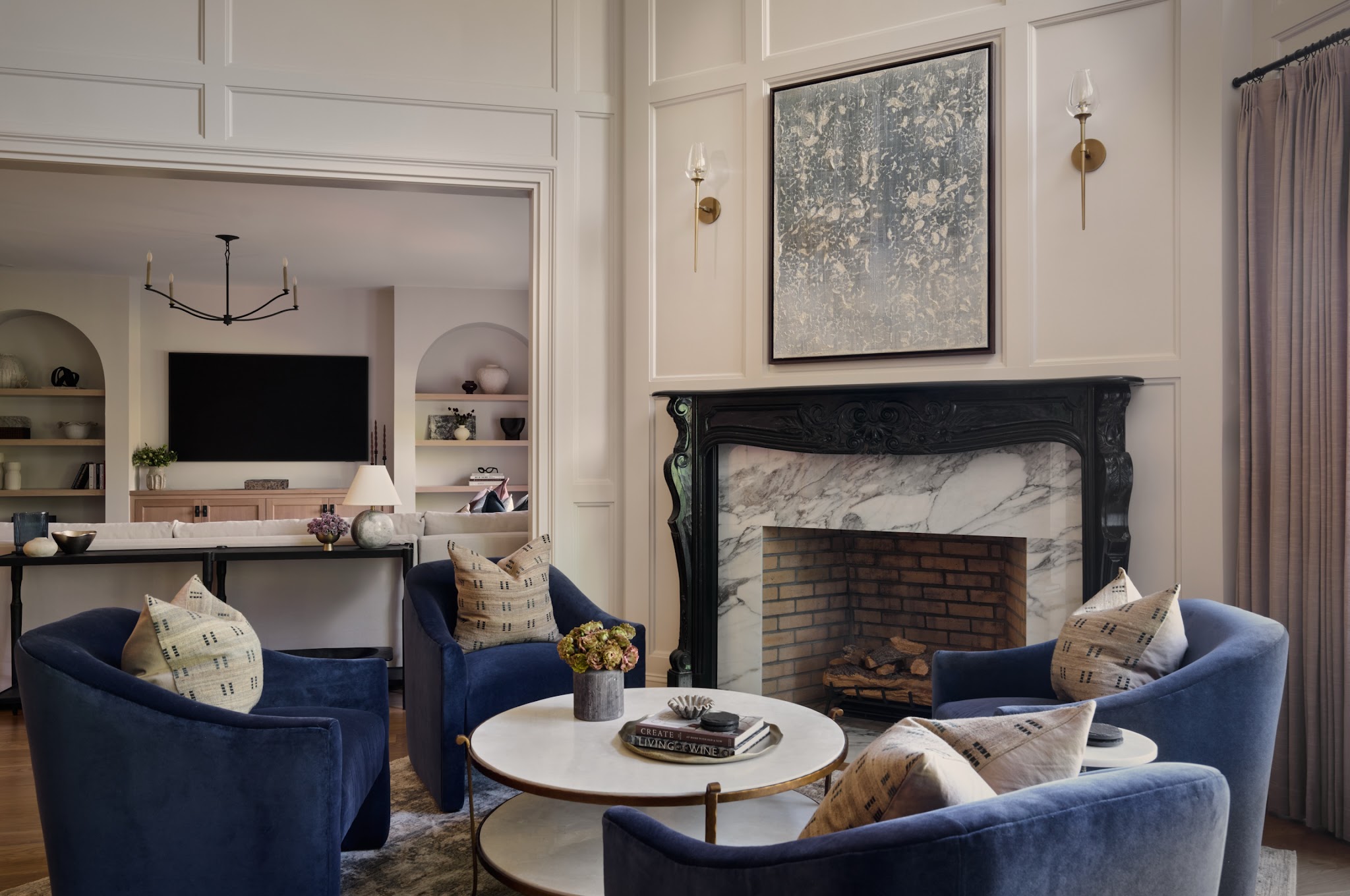
Individual armchairs can turn a spare corner into a conversation area when a sofa would dominate the arrangement. Here, four blue chairs face a shared round table beside the fireplace, giving each person a defined place to sit.
For a smaller footprint, begin with two chairs and add seating only after checking the walking routes. Measure the full chair width, including its arms, rather than judging by the seat cushion alone.
Keep upholstery consistent to make separate pieces feel connected. A table with a lower shelf can hold reading material while leaving the top available for drinks.
Angle the chairs toward one another and test the gaps between them before settling on a layout that feels comfortable for everyday use.
3. Make One Striped Bolster the Strongest Accent
Credits: Instagram
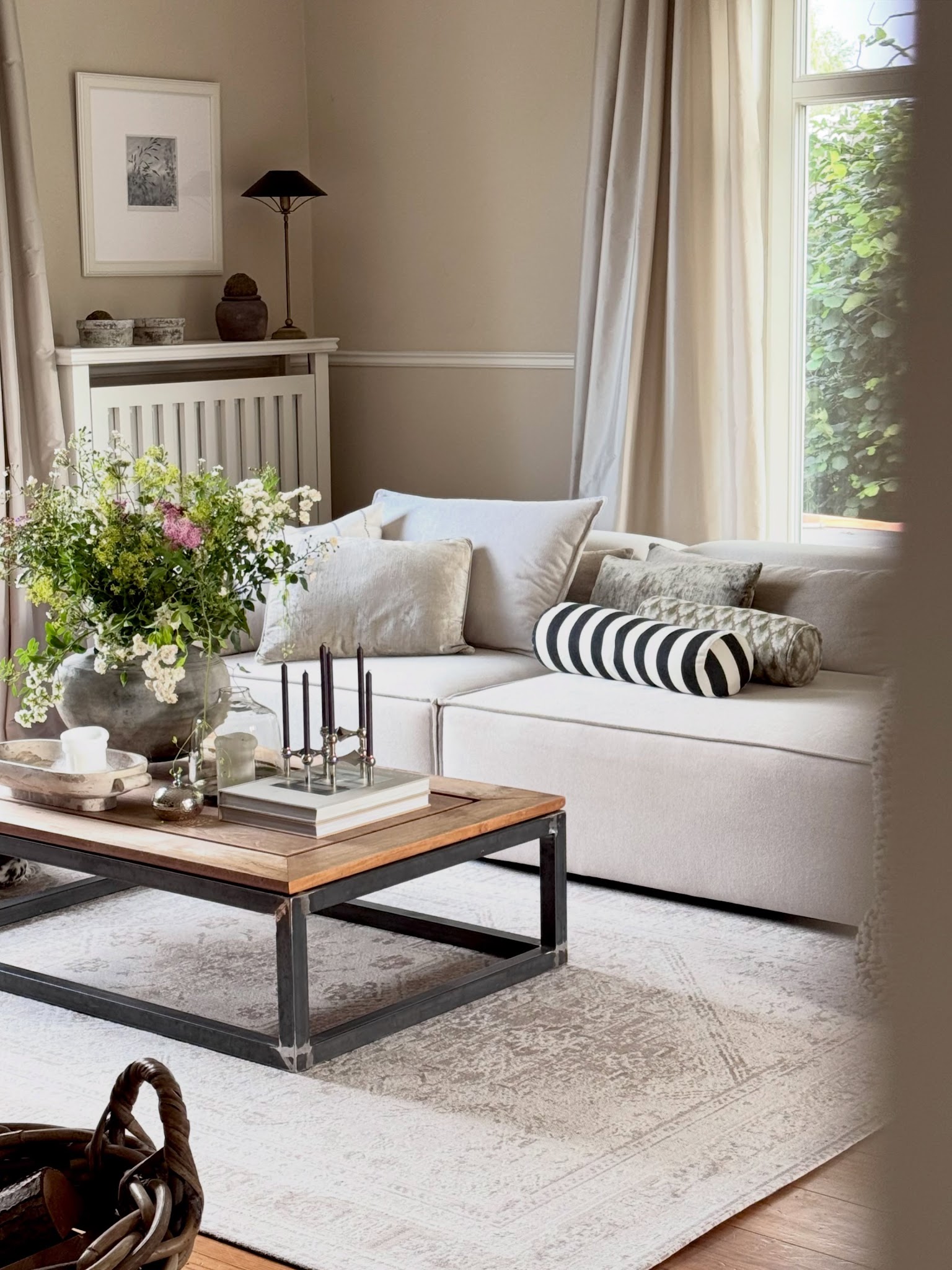
A striped bolster adds a clear focal point without requiring another piece of furniture. Here, its black and white bands stand out against a pale sofa, while softer neutral cushions keep the seating comfortable.
Try one compact cushion with stronger contrast when a small seating area needs definition. Let it sit in front of larger pillows so its shape remains visible instead of disappearing into the arrangement.
Repeat its darkest color in something already nearby, such as a lamp or table frame, to connect the details. Keep enough of the sofa seat uncovered for everyday use.
If you add another pattern, choose quieter colors or a smaller scale so the different fabrics complement each other without overwhelming the limited space.
4. Add Seating With a Cushioned Wall Bench
Credits: Instagram
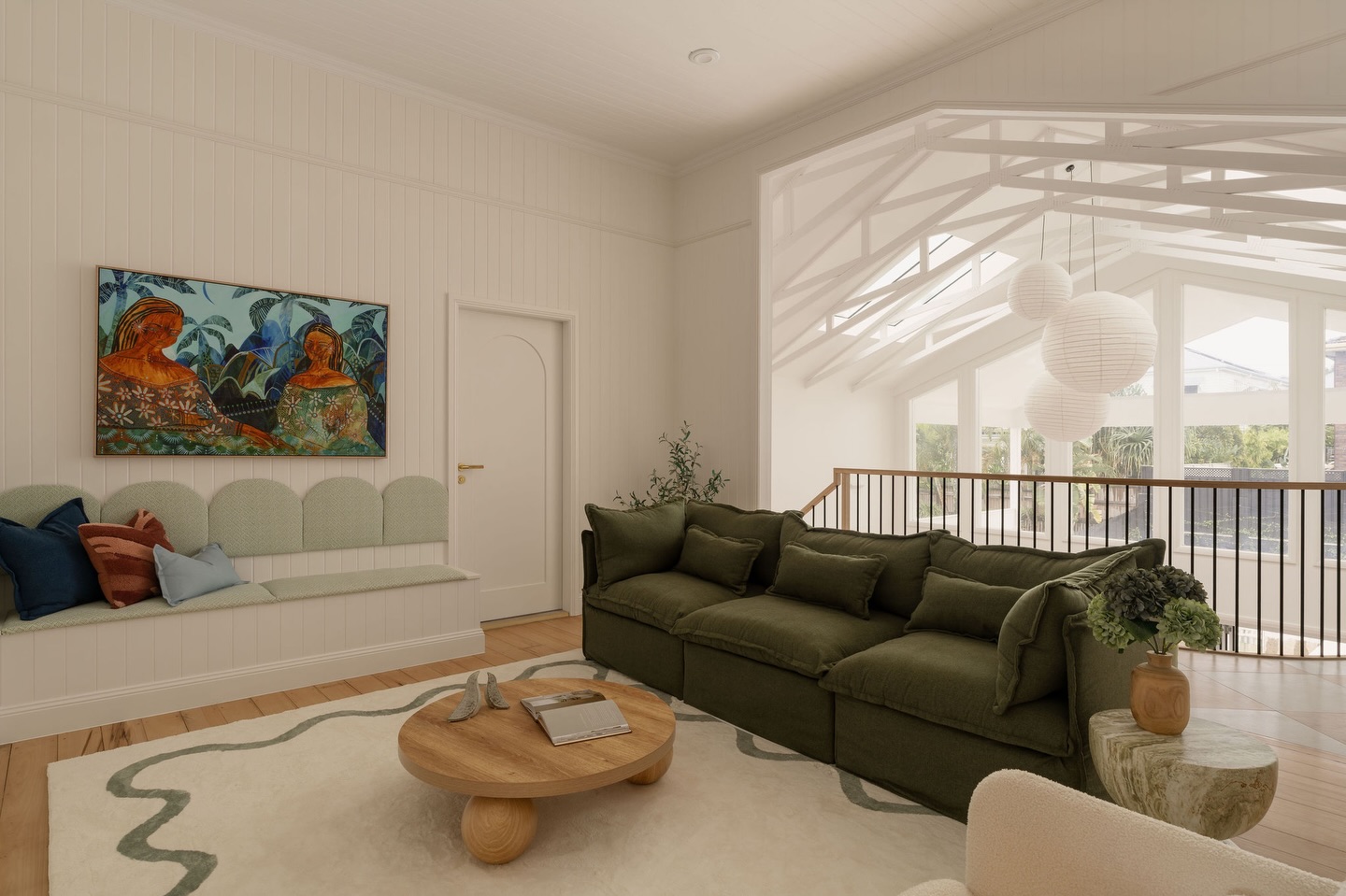
A cushioned wall bench adds another place to sit without repeating the sofa’s bulky shape. In this upstairs lounge, the white bench follows the paneled wall, while a thin seat pad and rounded padded back panels make it inviting.
Its pale finish keeps the arrangement visually quiet beside the deeper green sofa. Consider a bench along an underused wall when a second sofa would crowd a compact seating area.
Plan a comfortable seat depth and leave the nearby doorway clear. Keep loose cushions to one end so there is still space to sit.
Repeating a color from the sofa in the bench fabric or rug helps connect the pieces. A rounded coffee table completes the group with a softer outline.
5. Match the Fabric on Different Window Treatments
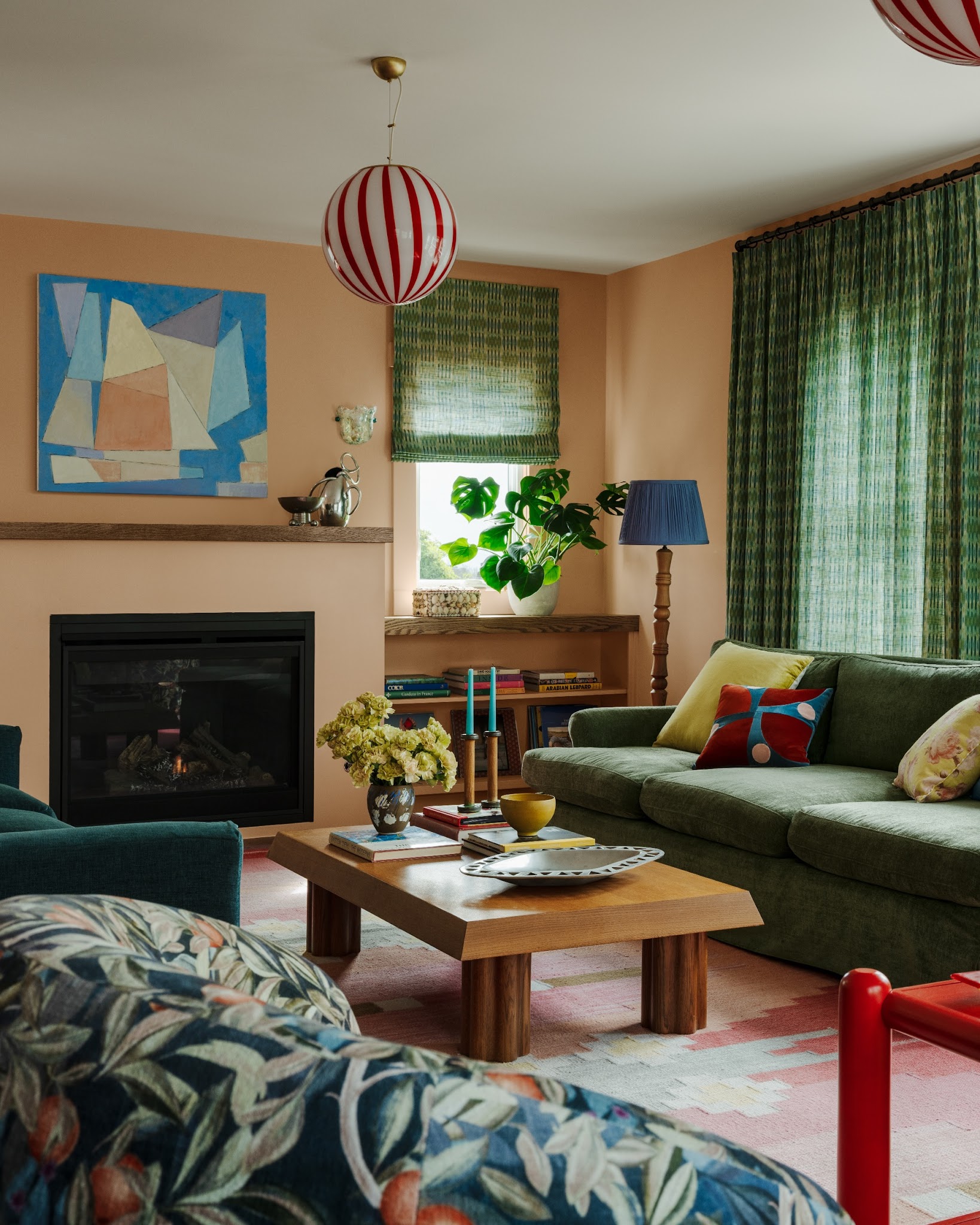
Credits: Instagram
Repeating one fabric across different windows can make a compact seating area feel connected. Here, the green patterned curtain and matching Roman shade share a design, even though their shapes and sizes differ.
Try this approach when a room has a wide window beside a narrower opening. Choose the treatment that works for each window, then use matching fabric to link them.
A shade can keep fabric close to the glass where full curtains would compete with nearby shelves. Let a solid sofa pick up one color from the pattern, as the green upholstery does here.
Keep the surrounding wall color consistent, and leave some plain areas between patterned pieces so the room feels intentional without needing additional decorative furniture.
6. Keep Sightlines Open With Low Seating
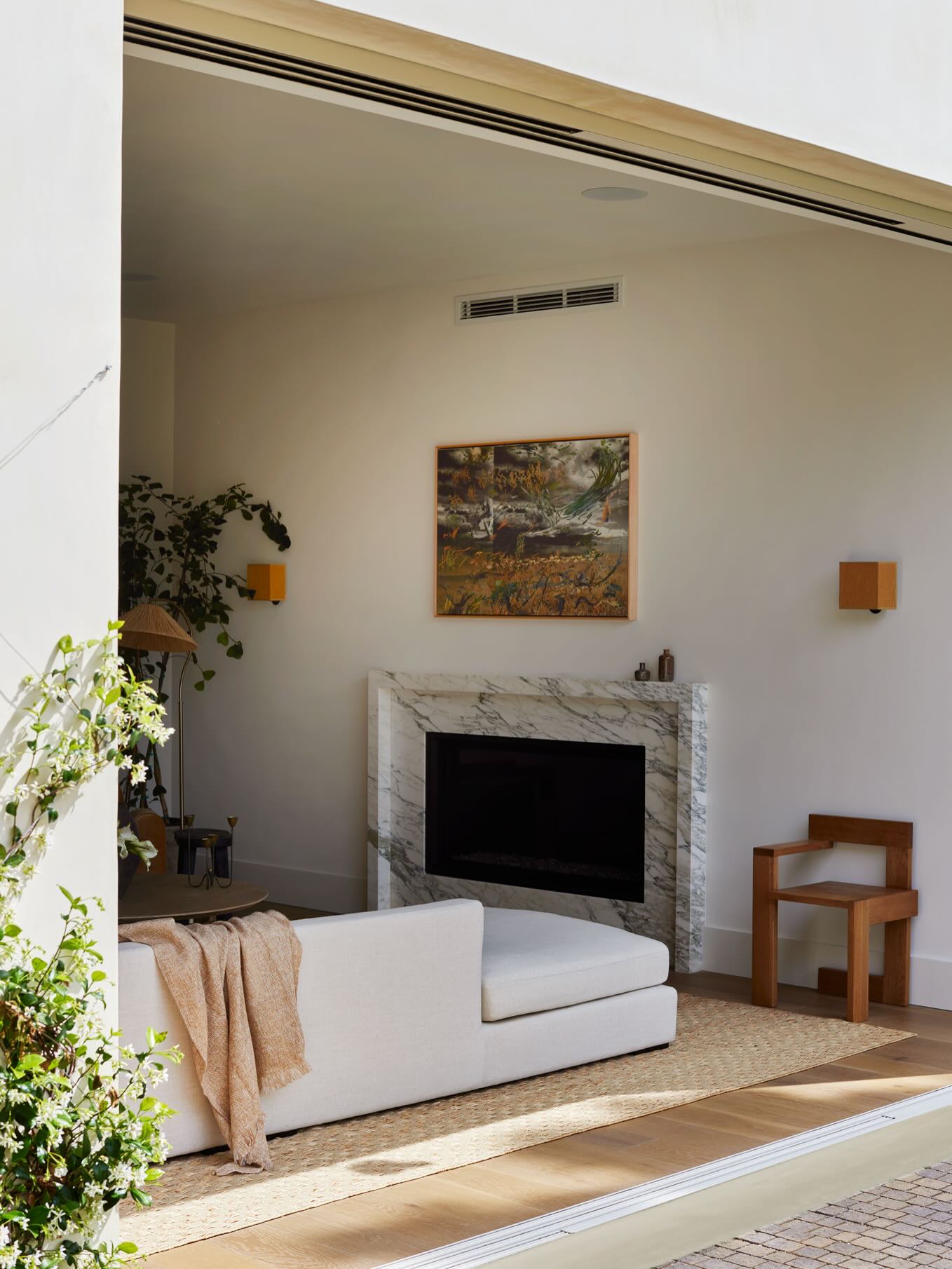
Credits: Instagram
Low seating can make a compact arrangement feel less enclosed, especially beside a wide doorway or sliding opening.
In this room, the pale upholstered seat has a short back and an open end, leaving the fireplace and opposite wall visible above and around it.
Consider a similar shape when a tall sofa back would cut across an important view. Keep a clear walking route past the open end, and check that the seat still provides the support you prefer.
A simple woven rug defines the sitting area without adding another bulky piece of furniture. The wood chair offers another perch against the wall.
Finish with one draped throw rather than a pile of cushions that hides the seat’s clean outline.
7. Build a Corner Display Above Closed Storage
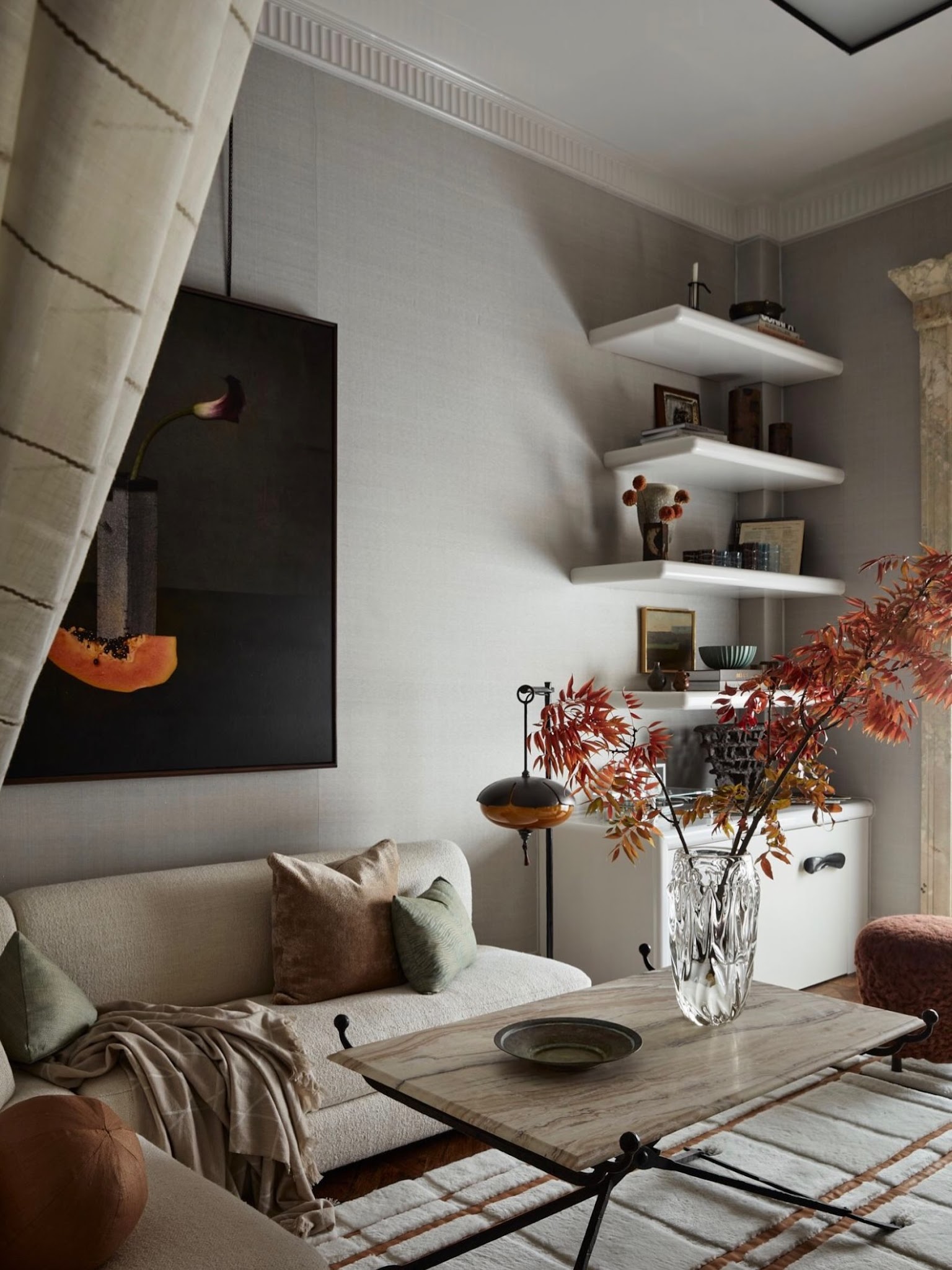
Credits: Instagram
Corner shelves can turn a narrow wall section into useful display space. In this showhouse sitting room, pale shelves rise above a closed cabinet beside the sofa, leaving the broader wall available for one large artwork.
Try this arrangement where a wide bookcase would overwhelm the seating area. Measure the objects you want to display before choosing shelf depth and spacing.
Keep everyday clutter behind the cabinet doors, then place only a few books, bowls, or framed pieces above. Leave gaps between groups so the corner does not become a solid column of objects.
A consistent finish connects the shelves and cabinet. Check that nearby curtains and doors can move freely, and follow the shelving system’s mounting and load guidance.
8. Fit a Slender Side Table Beside a Chair
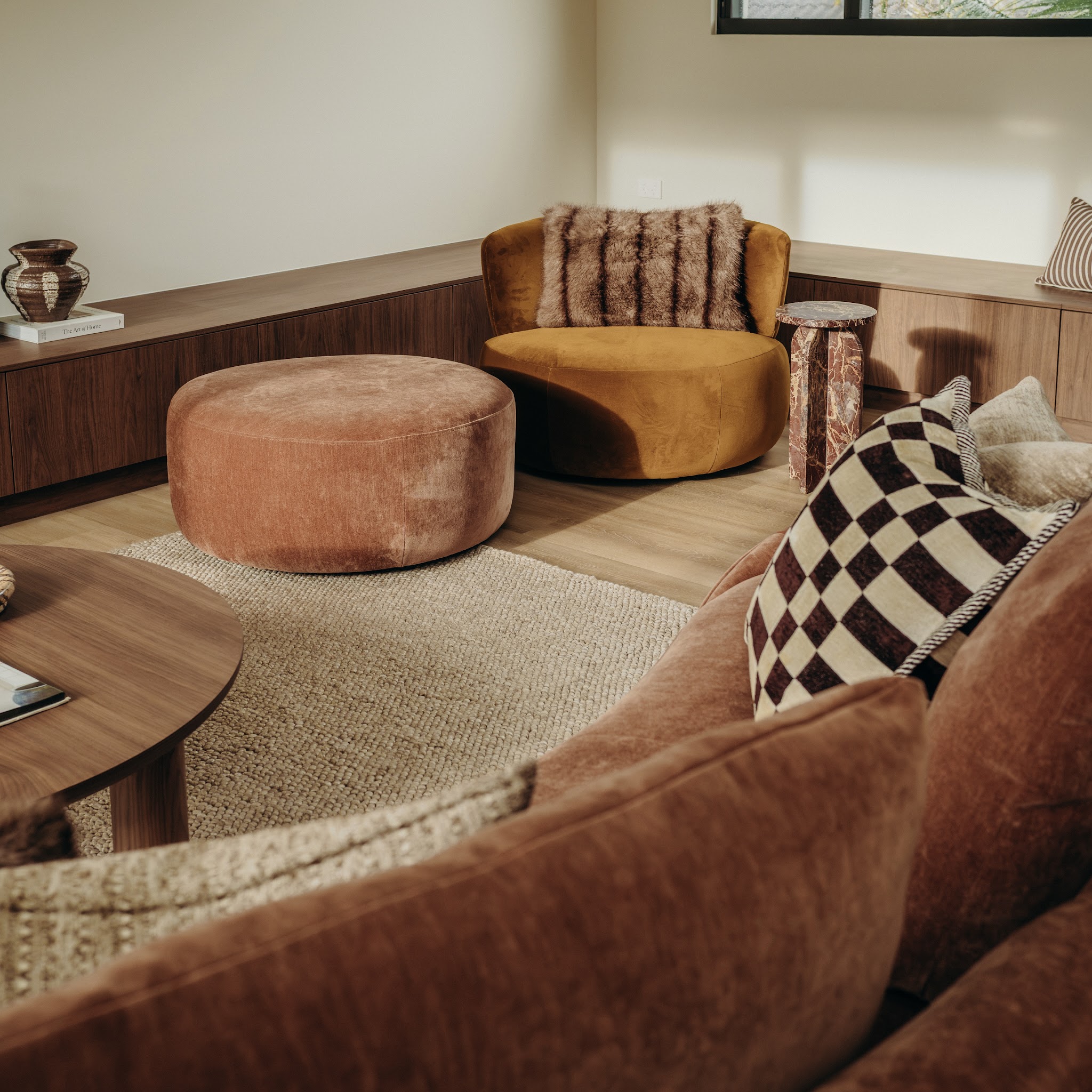
Credits: Instagram
A narrow side table can make the gap beside a chair useful without filling it with another large piece.
Here, a small round tabletop sits between the mustard chair and the sofa, offering a separate landing spot beside the larger coffee table. Its slim profile leaves the neighboring seat clearly defined.
Measure the available gap before shopping, including room for someone to sit down and stand up comfortably. Check the tabletop height from the chair so a drink is easy to reach.
Choose a stable base, then keep the surface mostly clear for everyday use. A patterned finish can add interest in this small area while the larger furniture carries the room's softer colors and textures without needing extra accessories.
9. Soften a Sectional Layout With a Round Rug
Credits: Instagram
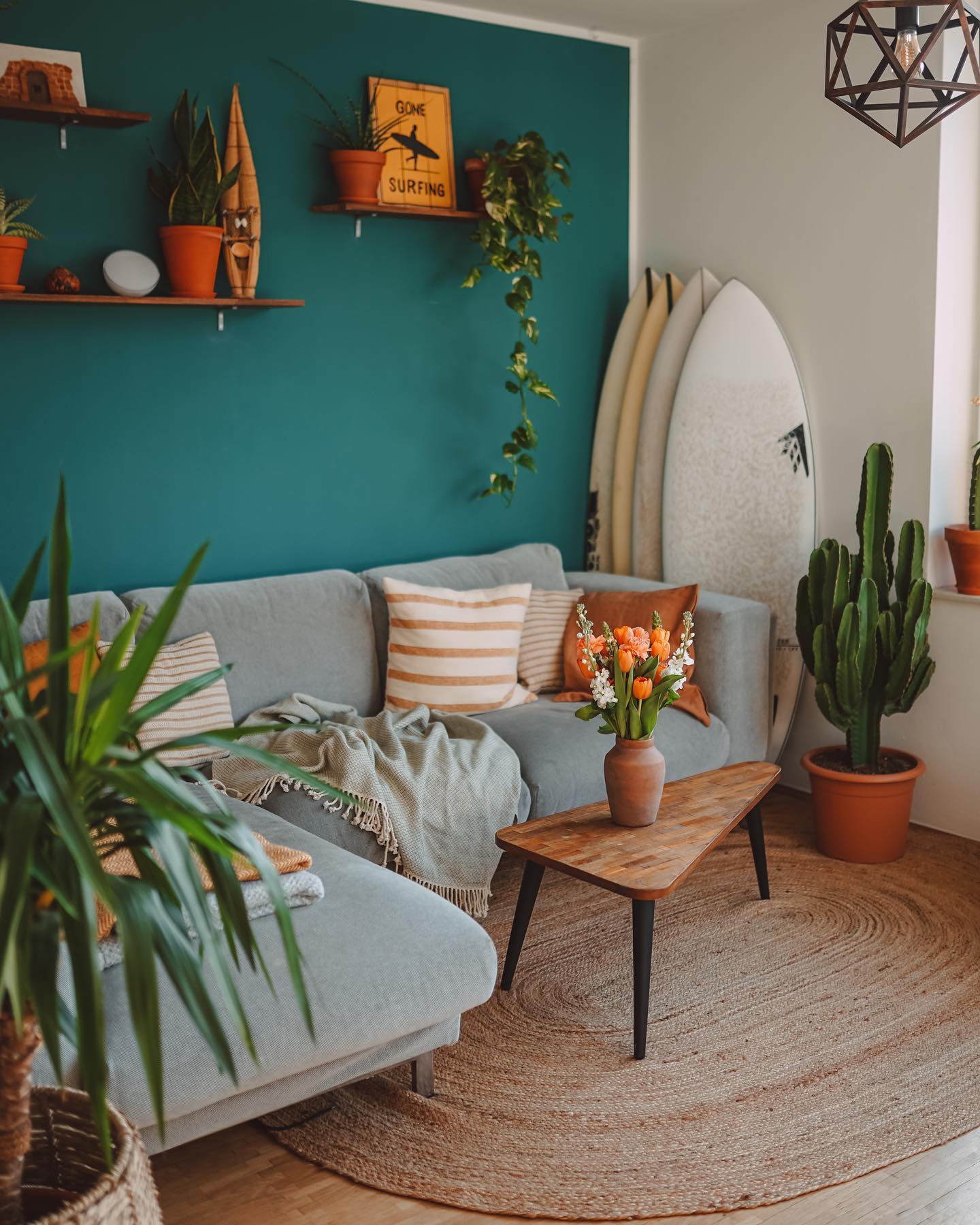
A round rug can soften the outline of a sectional without adding another piece of furniture. Here, a large woven circle sits beneath the gray chaise and triangular coffee table, bringing a curved edge into an otherwise angular seating area.
Part of the wood floor remains visible around it, so the rug defines a zone within the room. Before buying, mark the proposed diameter on the floor and check how it meets the sofa legs and nearby walkway.
Choose a size that connects the main seats instead of leaving the table on an isolated island. A simple, textured surface works well when cushions, plants, and wall color already provide interest. Keep the curved edge visible so its shape remains clear.
10. Keep Wall Decor in a Small Group Above the Sofa
Credits: Instagram
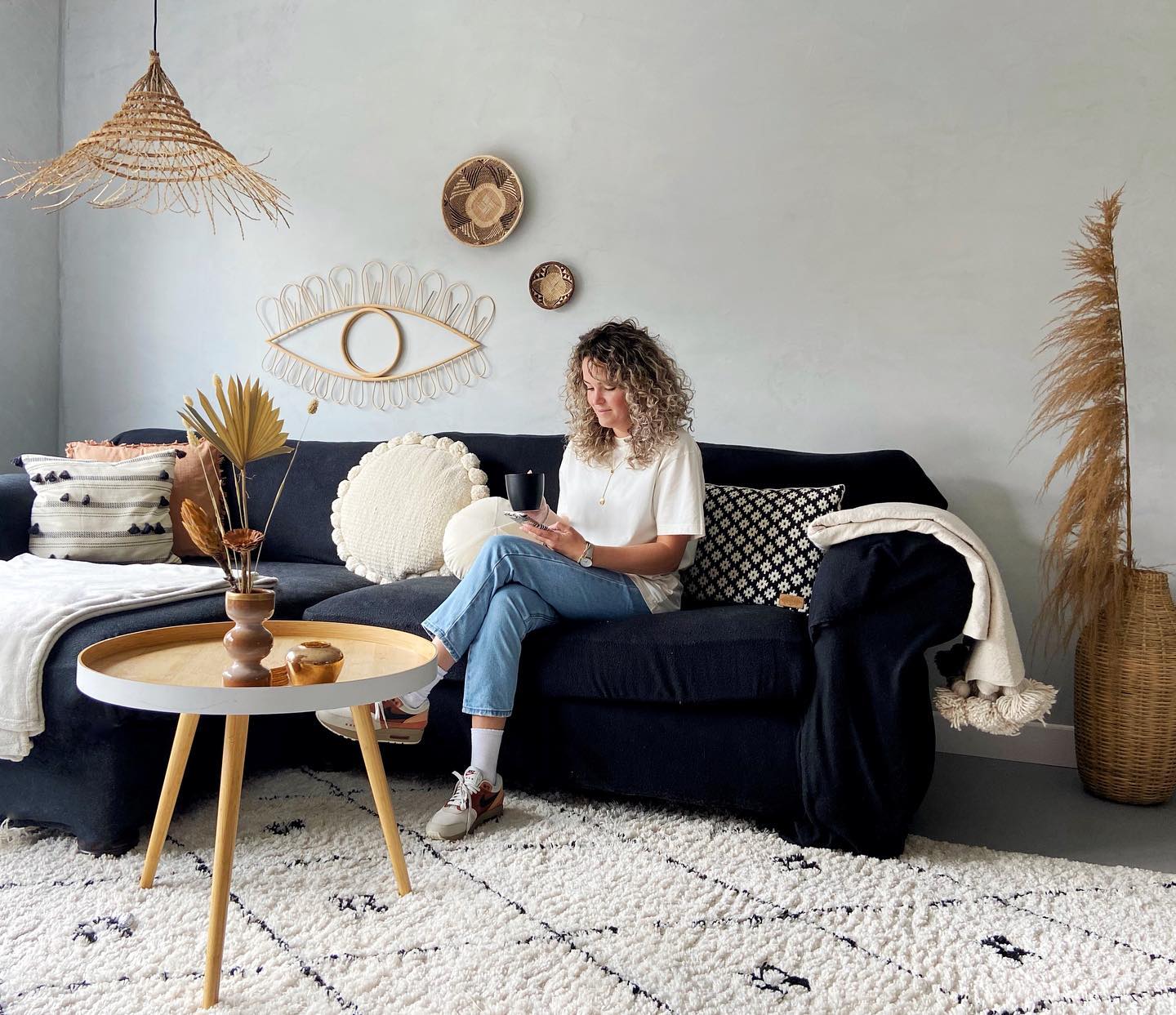
A small wall display can add personality above a sofa while leaving the floor free for seating and movement. In this room, an eye-shaped mirror and two woven baskets form a loose group against the pale wall.
Their warm tones connect with the pendant and coffee table, while generous blank space keeps the arrangement from competing with patterned cushions. Start with one larger piece, then place two smaller accents nearby at different heights.
Test their positions with paper templates before hanging. Keep the grouping comfortably above the sofa back and use hardware suited to each object and your wall.
Repeating a material or color gives varied shapes a clear connection without needing to fill every empty patch with more decorations.
11. Make a Bold Sofa the Main Color Statement
Credits: Instagram
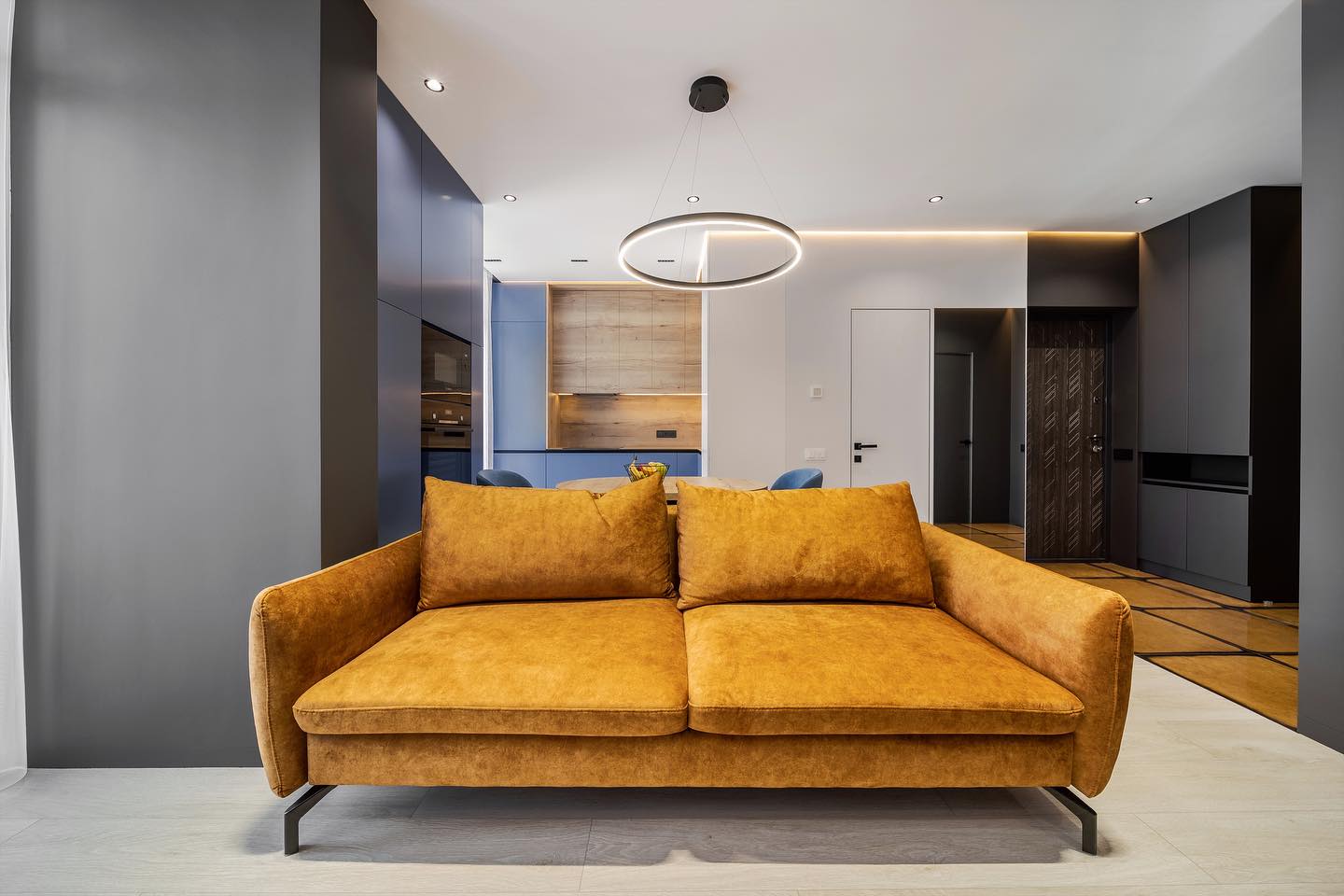
One strongly colored sofa can give a compact living area a clear identity without a collection of decorative extras. Here, mustard upholstery stands out against gray walls, dark cabinetry, and a pale floor.
The plain cushions let the color and fabric texture carry the design. Because the dining area and kitchen sit directly behind the sofa, that warm focal point also makes the seating zone easy to recognize.
Try a large fabric sample beside the finishes visible from your main seat before choosing a color. Keep nearby additions simple, then introduce just one or two coordinating accents if needed.
Slender legs leave some floor visible beneath the sofa, helping the bold piece feel less heavy within the shared living space.
12. Use Texture to Add Interest to Neutral Seating
Credits: Instagram
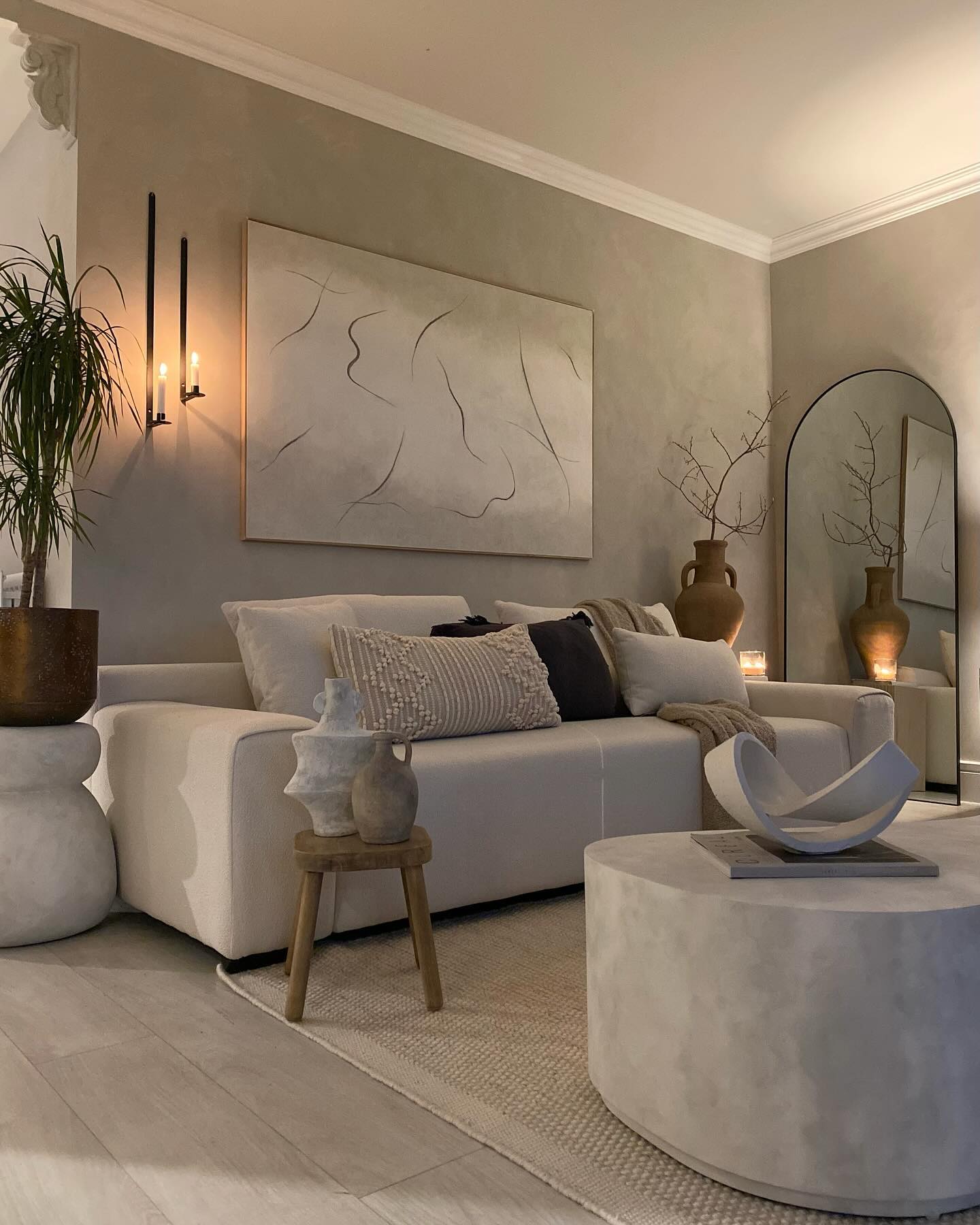
Texture can give a small seating area depth without adding several competing colors. This cream sofa pairs plain cushions with a raised woven pattern and a softly draped throw, while the rug adds another quiet surface beneath the furniture.
Start with your existing upholstery color, then choose one cushion with a noticeable texture and another with a simpler finish. Keep their tones close enough that the differences emerge gradually.
A dark cushion can provide a small point of contrast without changing the whole palette. Repeat those pale shades in one nearby accessory instead of collecting many unrelated pieces.
Before buying more, remove an item and look again; the aim is comfortable layering with enough clear space left for everyday use.
13. Carry One Color Across Walls, Ceiling, and Trim
Credits: Instagram
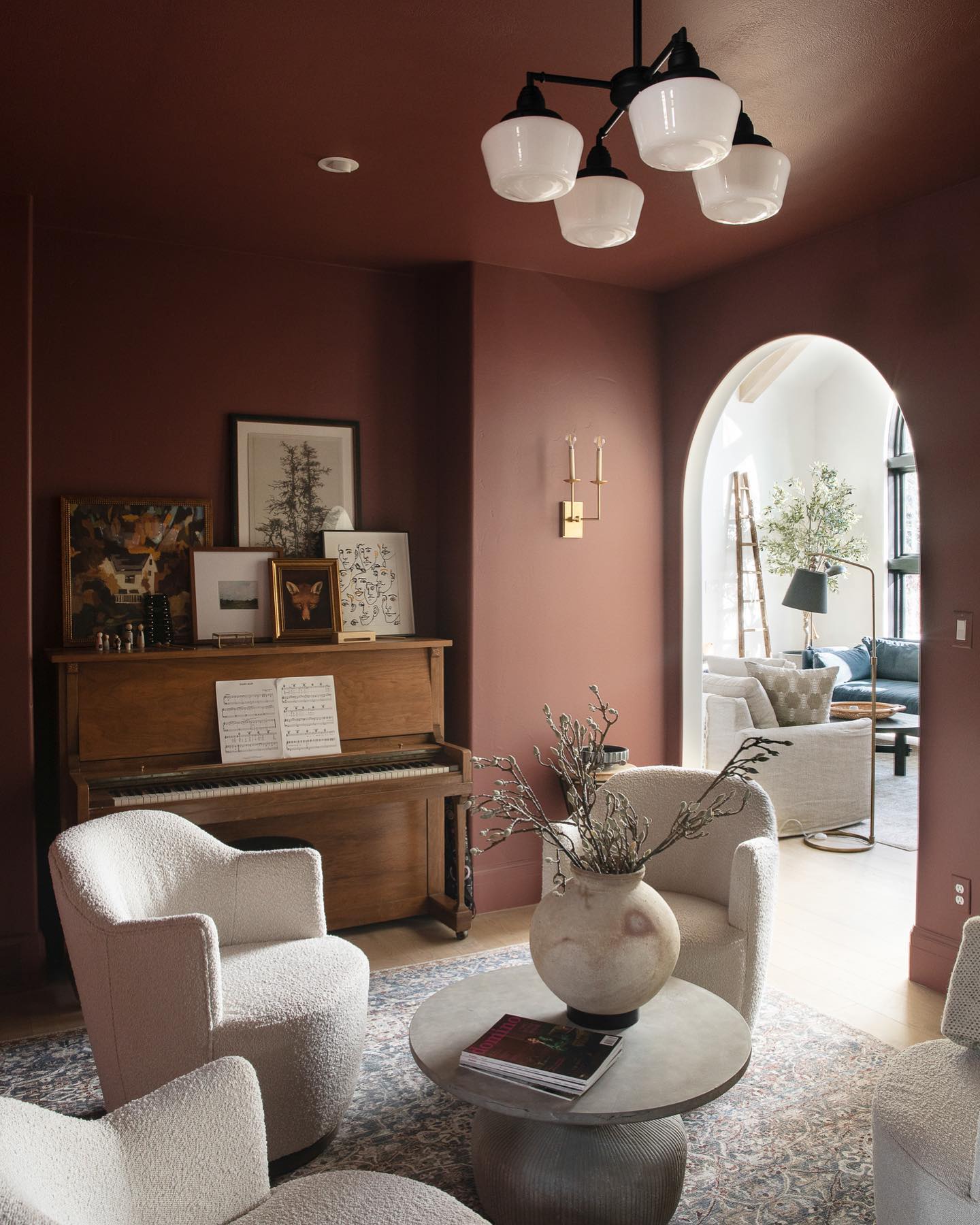
Carrying one paint color across walls, ceiling, and trim can give a small sitting room a strong, continuous backdrop. Here, muted red surrounds four pale upholstered chairs and a round table, while a wood piano adds warmth along one wall.
The light seats keep their outlines visible against the deeper paint. Try large samples on both a wall and the ceiling, then check them in daylight and under your lamps.
The same color can look different as light changes direction. Choose finishes suited to each surface, especially trim that receives frequent handling.
Keep the main upholstery simple so the enveloping color remains the focus. An open doorway can provide a visual pause between this concentrated palette and an adjoining room.
14. Choose a Rounded Ottoman for Flexible Seating
Credits: Instagram
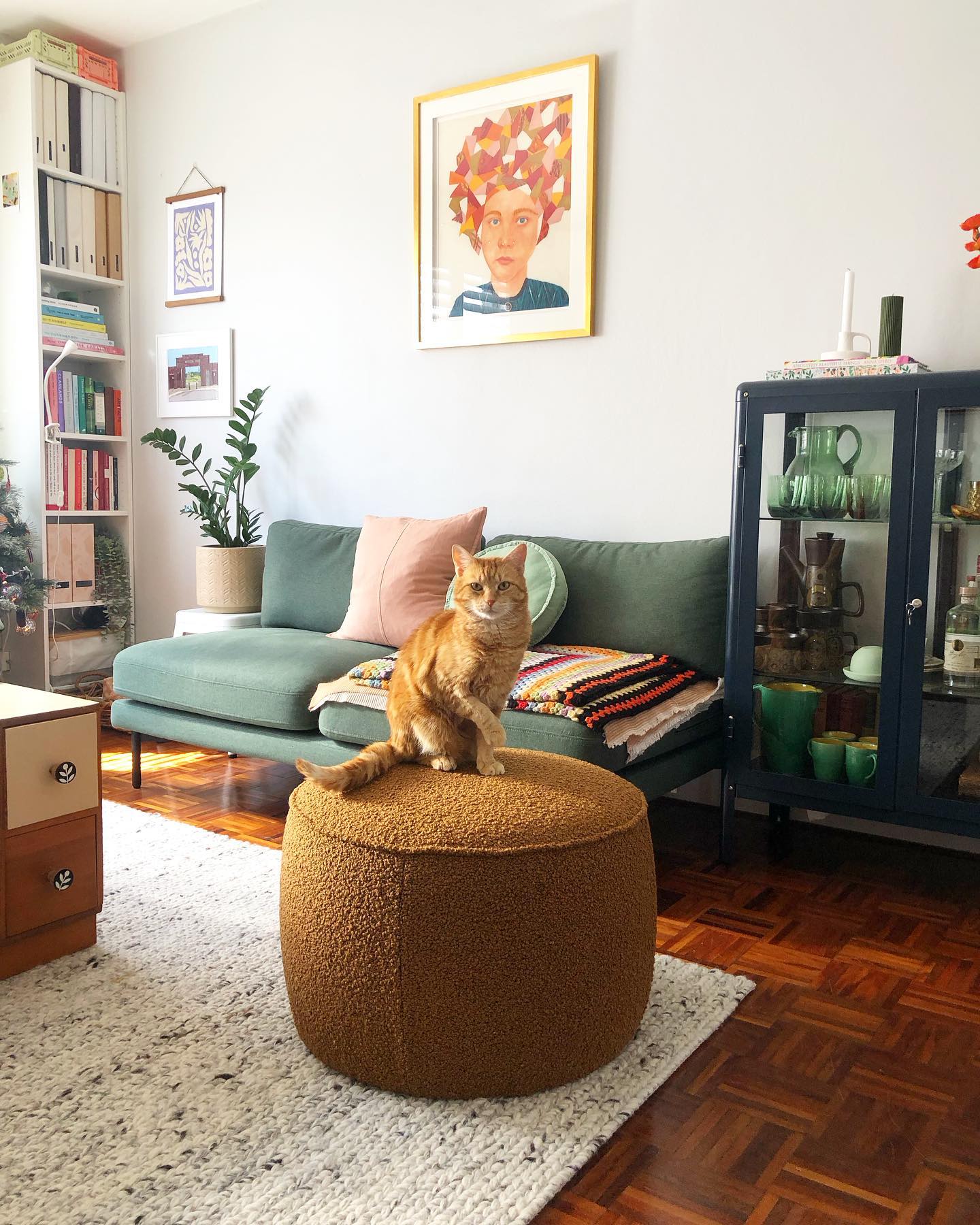
A rounded ottoman can give a compact seating area another useful function without the tall back of an extra armchair.
In this room, an ochre upholstered piece sits in front of the green sofa, leaving the surrounding bookcase and glass cabinet visible. Its curved outline softens the straight edges of the storage furniture.
Choose a model designed to support sitting if you want it to double as an occasional guest seat. Check that its height works comfortably as a footrest, too.
Before buying, mark its footprint on the floor and test the routes to cabinets and nearby seats. A textured fabric adds interest, while a single solid color keeps the piece easy to combine with patterned throws and colorful artwork.
15. Fit Seat Pads Neatly Around a Corner
Credits: Instagram
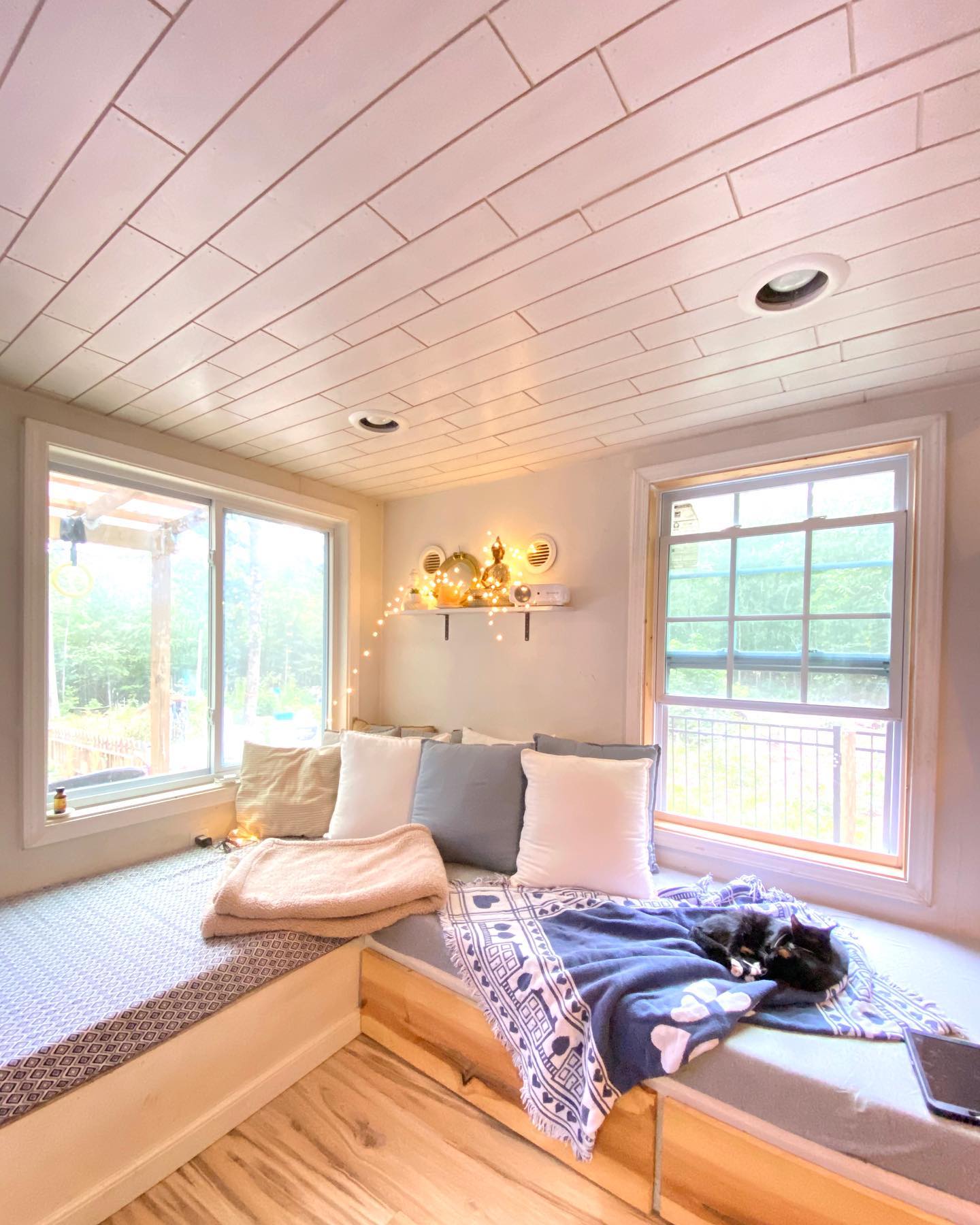
Fitted seat pads can make an awkward corner feel like a deliberate lounging spot. Here, two cushioned runs meet beneath adjacent windows, with loose pillows gathered where the walls join.
The pads follow the wooden bases rather than spilling far over their edges. For an existing built-in seat, measure each run separately and make a paper template of the corner before ordering cushions.
Check how the pieces meet so they sit neatly without bunching. Choose covers you can remove for cleaning, and keep a folded throw nearby for extra softness.
A few upright pillows provide flexible back support while leaving the longer stretch available for lounging. Repeat one fabric color across both sides to give separate cushions a clear connection.
16. Let a Glass Tabletop Keep the Rug Visible
Credits: Instagram
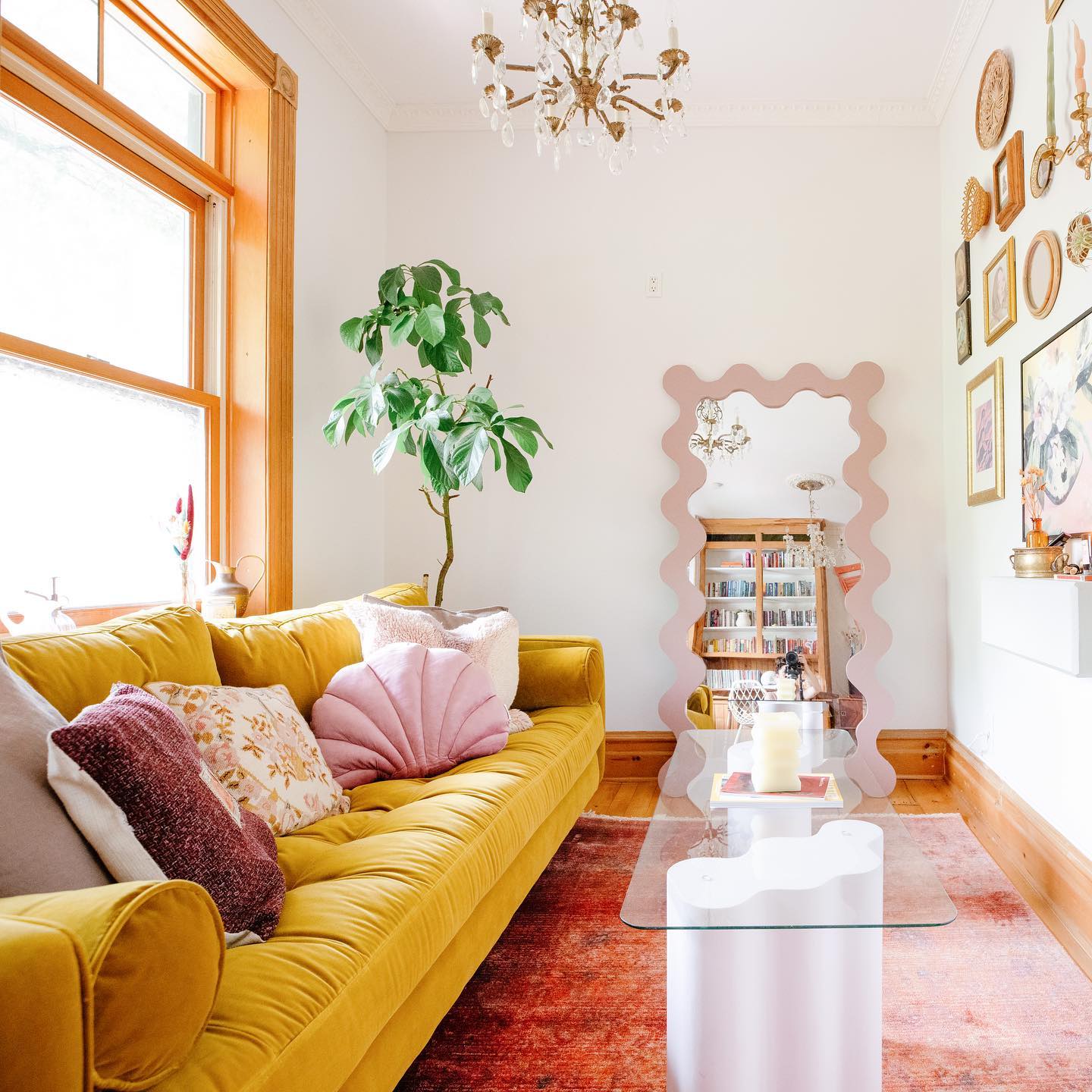
A glass coffee tabletop lets more of the rug remain visible in a narrow seating area. Here, the clear surface rests on two sculptural white bases beside a mustard sofa, so the pink rug continues visually beneath the table.
The supports become decorative shapes without turning the entire center into a solid block. Choose a tabletop length and width that suit your sofa, then mark its outline on the floor to check the walking route.
Leave enough clearance around the table so people can move comfortably. Keep tabletop styling restrained so books and accessories do not hide the effect.
A few small pieces are enough when the room already includes colorful upholstery, a statement mirror, and a busy gallery wall.
17. Keep Everyday Storage Beside the Sofa
Credits: Instagram
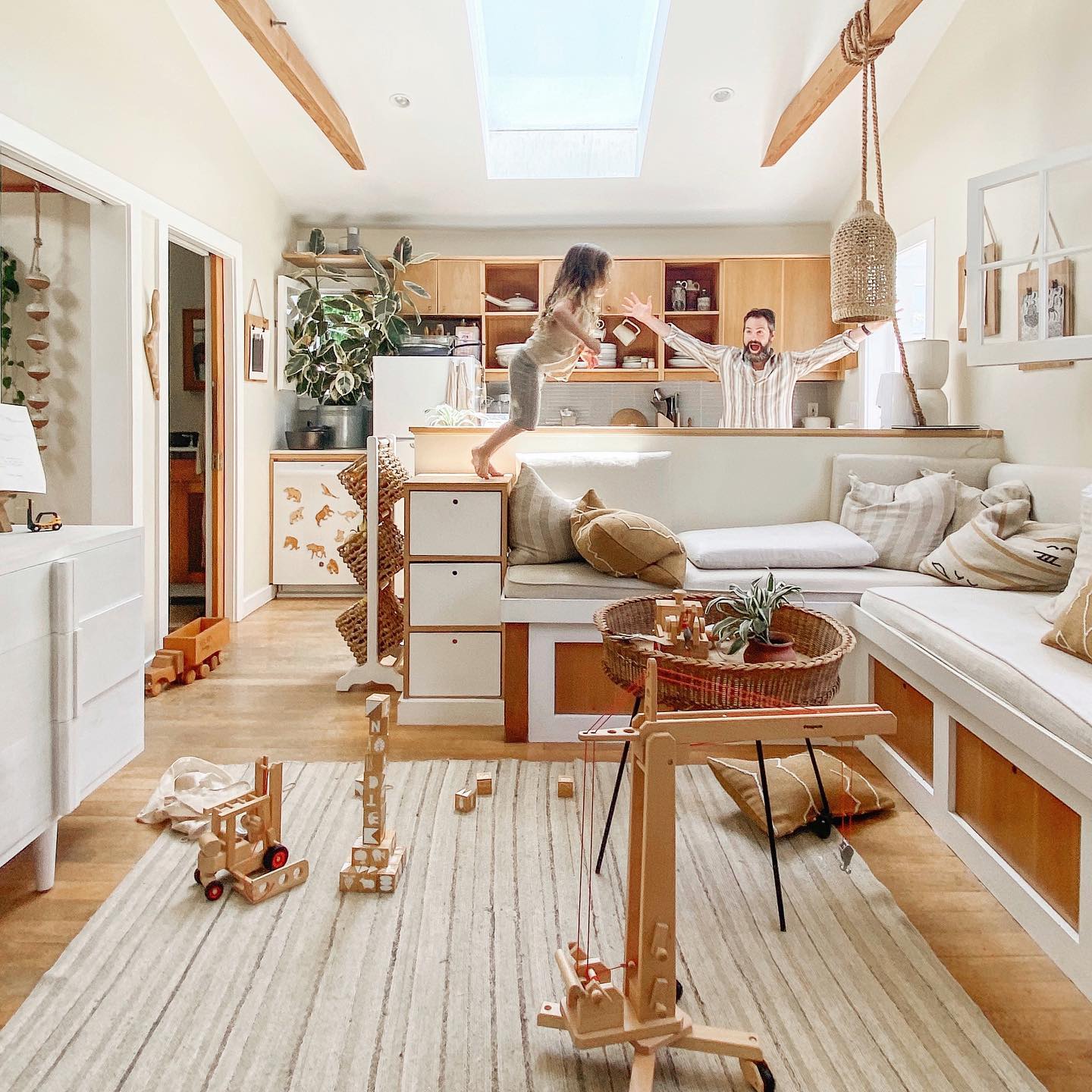
Storage works hardest in a small living room when it is easy to reach from the seats.
Here, three compact white compartments are stacked at the end of the built-in sofa, keeping useful storage close without placing another cabinet in the center.
Consider a narrow unit beside your seating for remotes, games, or other items you regularly use there. Measure the clearance needed to open each drawer or door before deciding where it belongs.
Keep that area free of a permanent coffee table or decorative pile. A finish that repeats the sofa base helps storage feel integrated.
Sort contents by everyday use, then leave the top simple so it remains handy for setting down a book or a small tray.
18. Save TV Stand Space With a Retractable Screen
Credits: Instagram
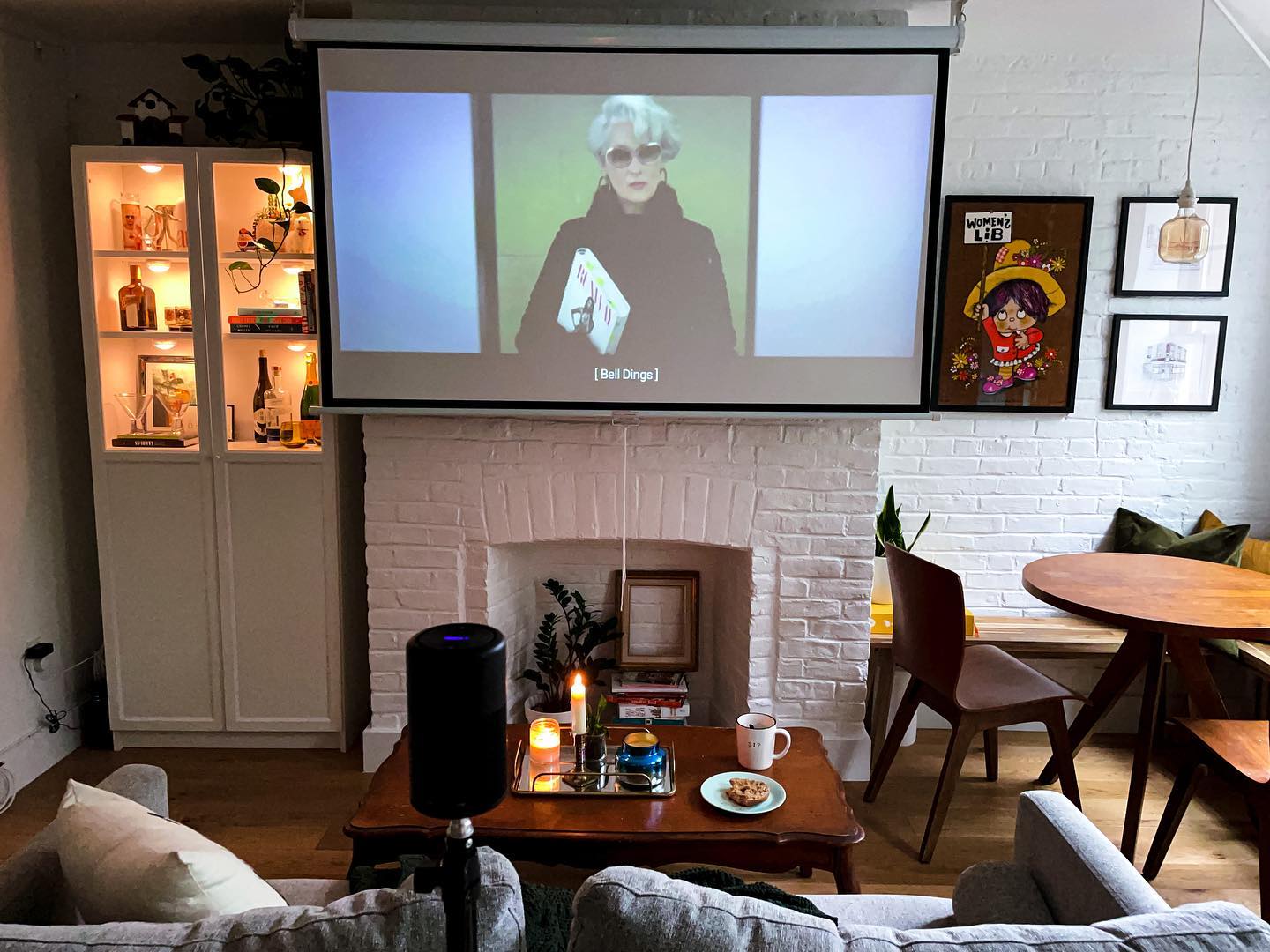
A retractable projection screen can make movie watching possible without dedicating floor space to a television stand.
This apartment places the screen in front of a white brick wall, with a sofa and coffee table facing it and a dining area alongside.
The arrangement keeps several activities within the same room. Before choosing a screen, check its lowered position from your usual seat and make sure it clears nearby furniture.
Plan a stable place for the projector and a cable route that stays outside walking paths. A retractable design also lets the wall become part of the decor again when viewing ends.
Keep surrounding pieces useful and compact so the screen fits into the room instead of dictating every furnishing.
19. Separate Sleeping and Lounging With the Sofa
Credits: Instagram
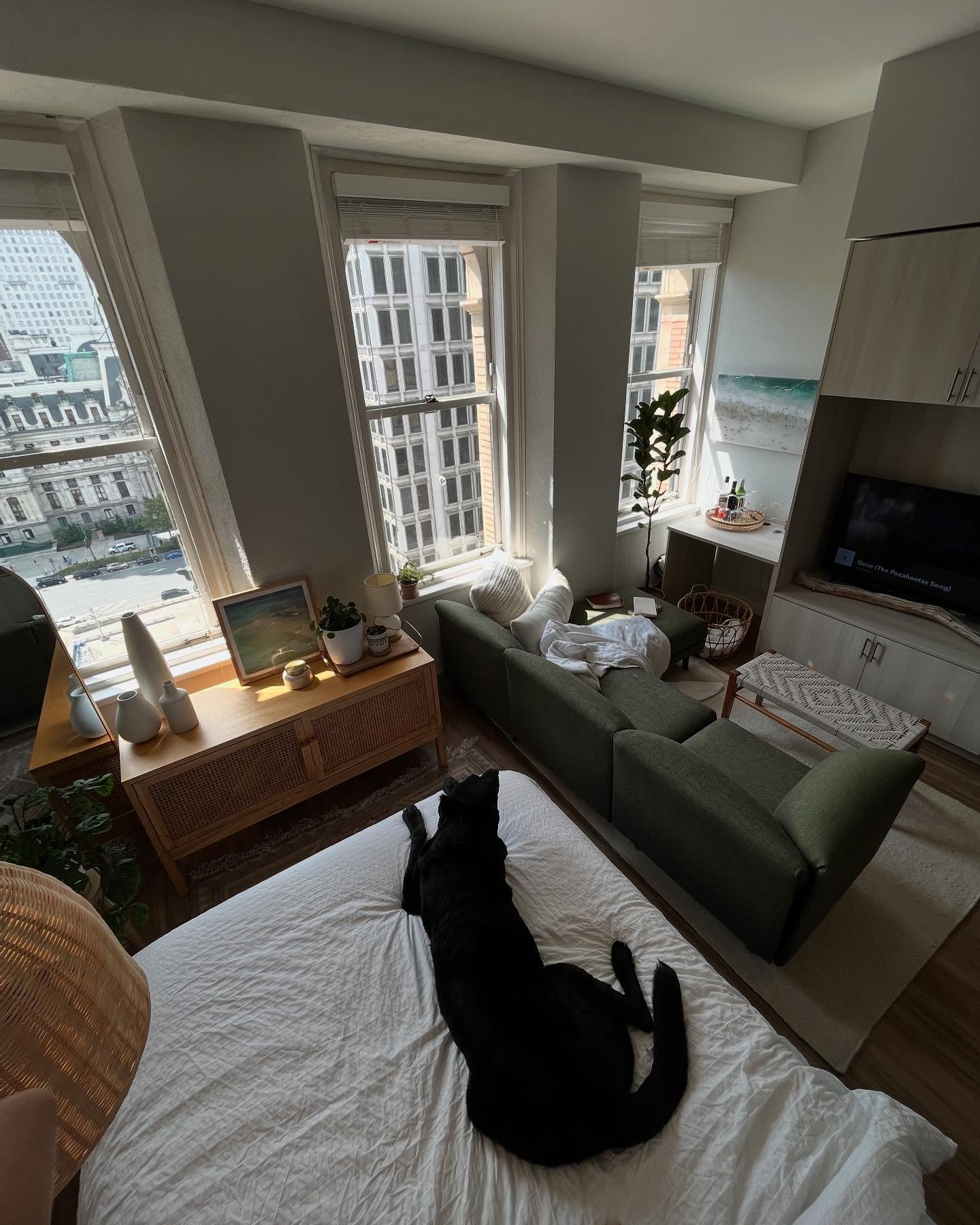
A sofa back can mark the boundary between sleeping and lounging without adding a separate screen. In this studio apartment, the green sectional faces the television while its back runs alongside the bed.
That arrangement gives the seats a clear purpose within one shared room. Choose a sofa with a finished back if it will be visible from your sleeping area.
Before moving furniture, mark the sofa outline on the floor and check the routes to the bed, windows, and storage. Leave enough room to use both areas comfortably.
A narrow table in front of the seats can provide a useful surface without occupying the entire zone. Keep nearby colors coordinated so the division feels deliberate rather than visually disjointed.
20. Soften Closed Storage With an Arched Cabinet
Credits: Instagram
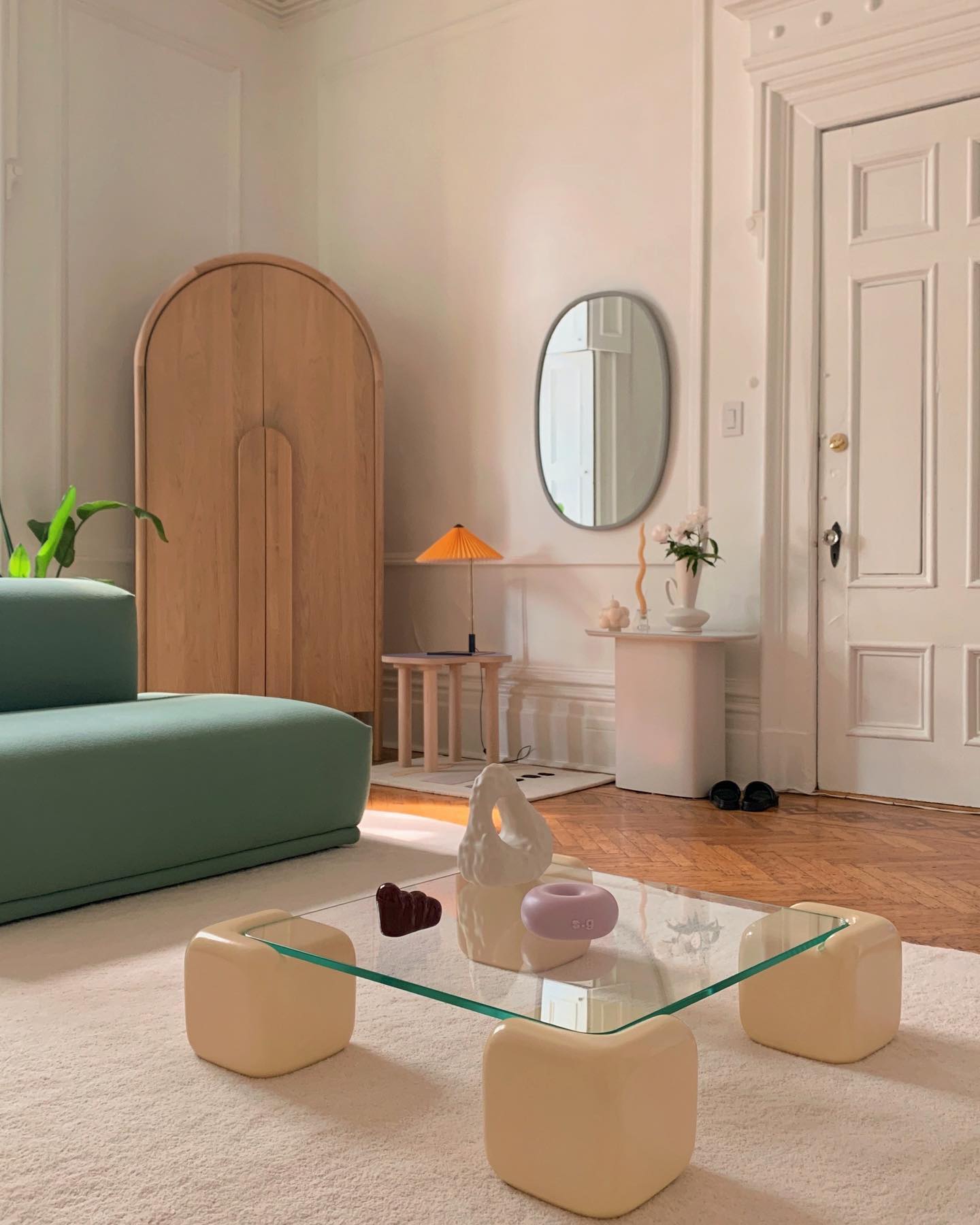
A cabinet with an arched top can make closed storage feel like an intentional decorative piece. Here, the warm wood cupboard brings a rounded outline to a living area framed by straight wall moldings and a paneled door.
Its solid fronts provide a calm surface beside the green sofa and low coffee table. Look for a cabinet that holds what you actually need to put away, then compare its depth with the space available beside your seating.
Allow room for both doors to open without hitting nearby furniture. Leave some blank wall around the cabinet so its curved outline remains easy to see.
Repeat the softer outline in one nearby accessory, such as an oval mirror, to connect the shapes.