
Dining rooms feel more inviting when their furniture balances clean lines with materials that have warmth and character.
These Mid-Century Modern Dining Room Ideas show how a simple wood table can take on different moods, from a sunny banquette and colorful Wishbone chairs to woven seats paired with a pedestal table.
You’ll also find ways to mix sculptural end chairs with a matching set and soften a broad wood tabletop with olive upholstery.
Each approach offers a practical starting point for shaping a dining area around the furniture, textures, and seating that suit your space.
1. Build a Sunny Banquette Around a Simple Wood Framed Table
Credits: Instagram
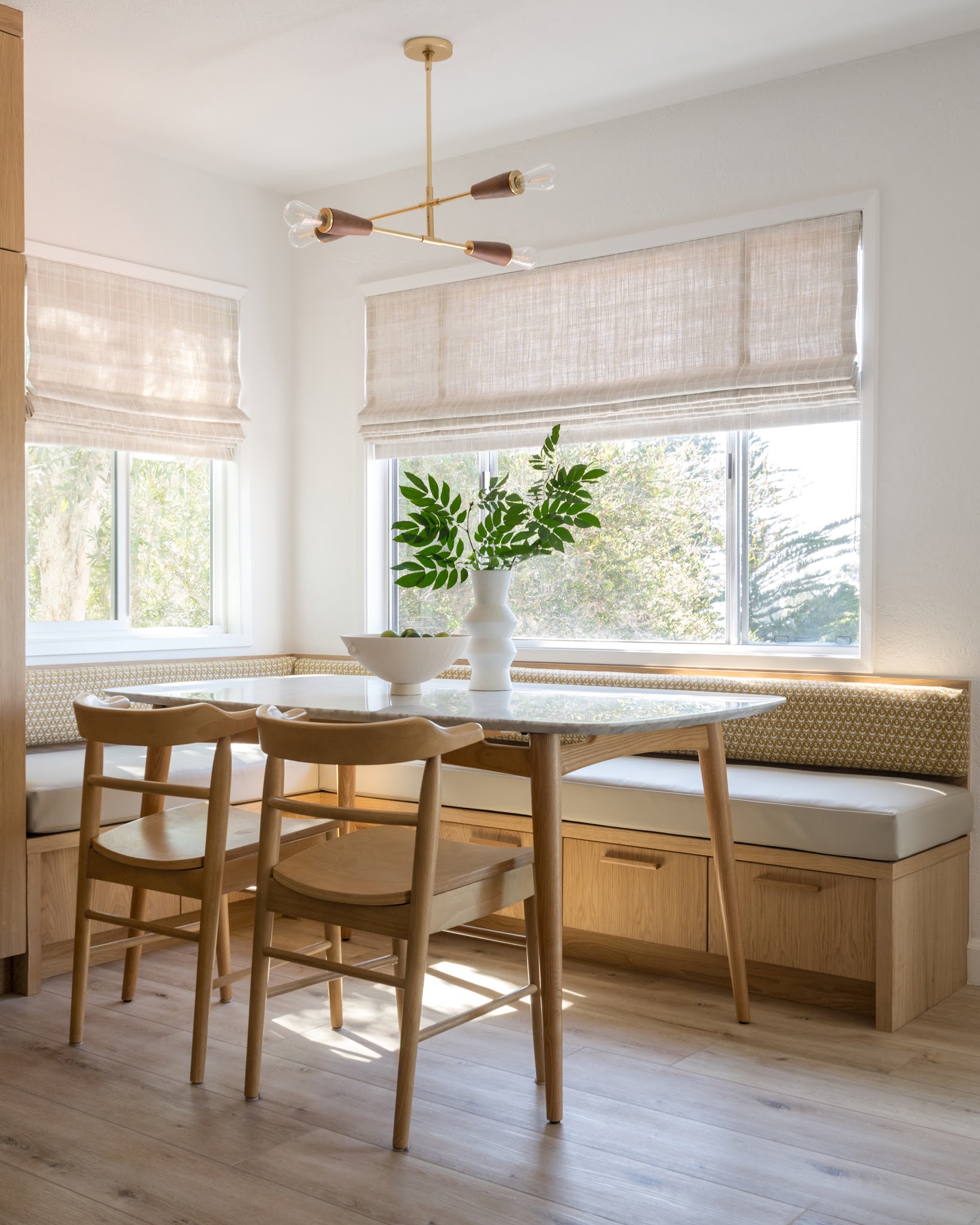
A window corner becomes a comfortable dining spot with a continuous upholstered bench and a wood framed table. The tapered legs and gently curved chair backs give the arrangement a midcentury feel without overwhelming the small footprint.
Above, a brass fixture with wood accents repeats the warm materials at eye level. Try this combination when you want to fit everyday meals into an underused corner.
Keep the bench back low enough to preserve the view, and choose chairs that tuck neatly beneath the tabletop. Subtle patterned upholstery adds interest while pale cushions and relaxed shades soften the geometry.
Drawers beneath the seating are especially useful for table linens, making the dining area work harder without adding another freestanding cabinet nearby.
2. Give Wishbone Chairs a Bright Color Treatment
Credits: Instagram
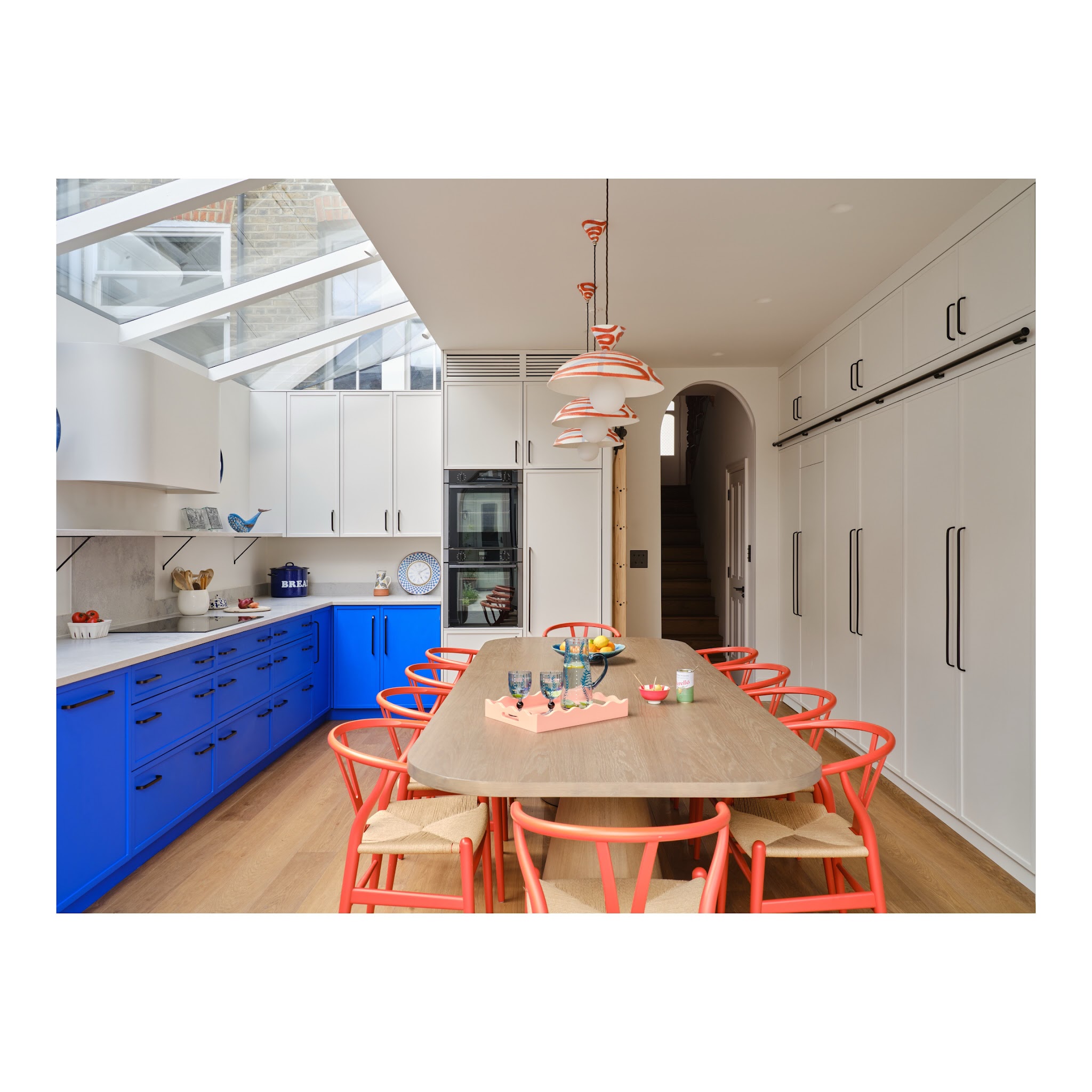
Coral chairs bring immediate energy to this light filled dining area. Their curved backs and woven seats retain the familiar warmth of Scandinavian modern furniture, while the unexpected color makes the group feel playful.
Blue kitchen cabinets create a strong second color, and the natural wood table gives both shades a calm place to meet. To try the idea, choose one repeated chair shape and let its finish supply the personality.
Keep the tabletop relatively simple so the seats remain the focus. A row of small pendants can follow a long table without creating one oversized visual block.
Repeating a little chair color in the lighting helps the whole arrangement feel connected, even within a busy kitchen and dining layout.
3. Pair a Stone Table with Light Wood Chairs
Credits: Instagram
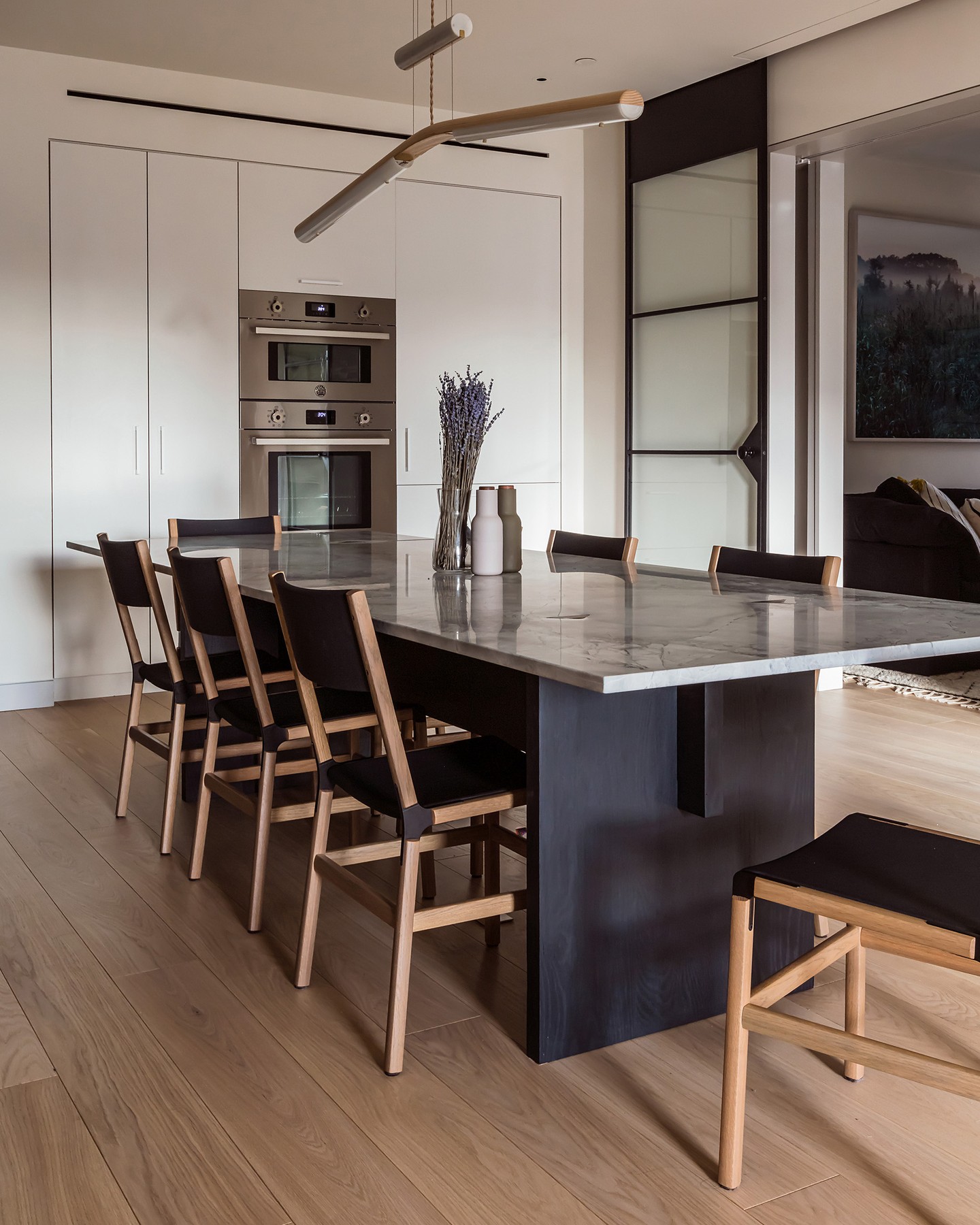
The substantial stone tabletop feels lighter when surrounded by slim wood chairs. Dark seats and backs repeat the table base, giving the materials a clear relationship without making everything match.
This is a useful way to bring midcentury influenced furniture into a contemporary dining room: emphasize honest materials, visible frames, and uncomplicated shapes. Choose chairs with enough open space beneath and between their rails to balance a heavier table.
A narrow sculptural pendant can echo that lightness overhead. Here, pale cabinetry and wood flooring keep the surrounding room quiet, allowing the stone veining to stand out.
A few simple vessels provide a centerpiece that leaves the beautiful surface visible and makes clearing the table for dinner an easy daily task.
4. Combine a Pedestal Table with Woven Chairs
Credits: Instagram
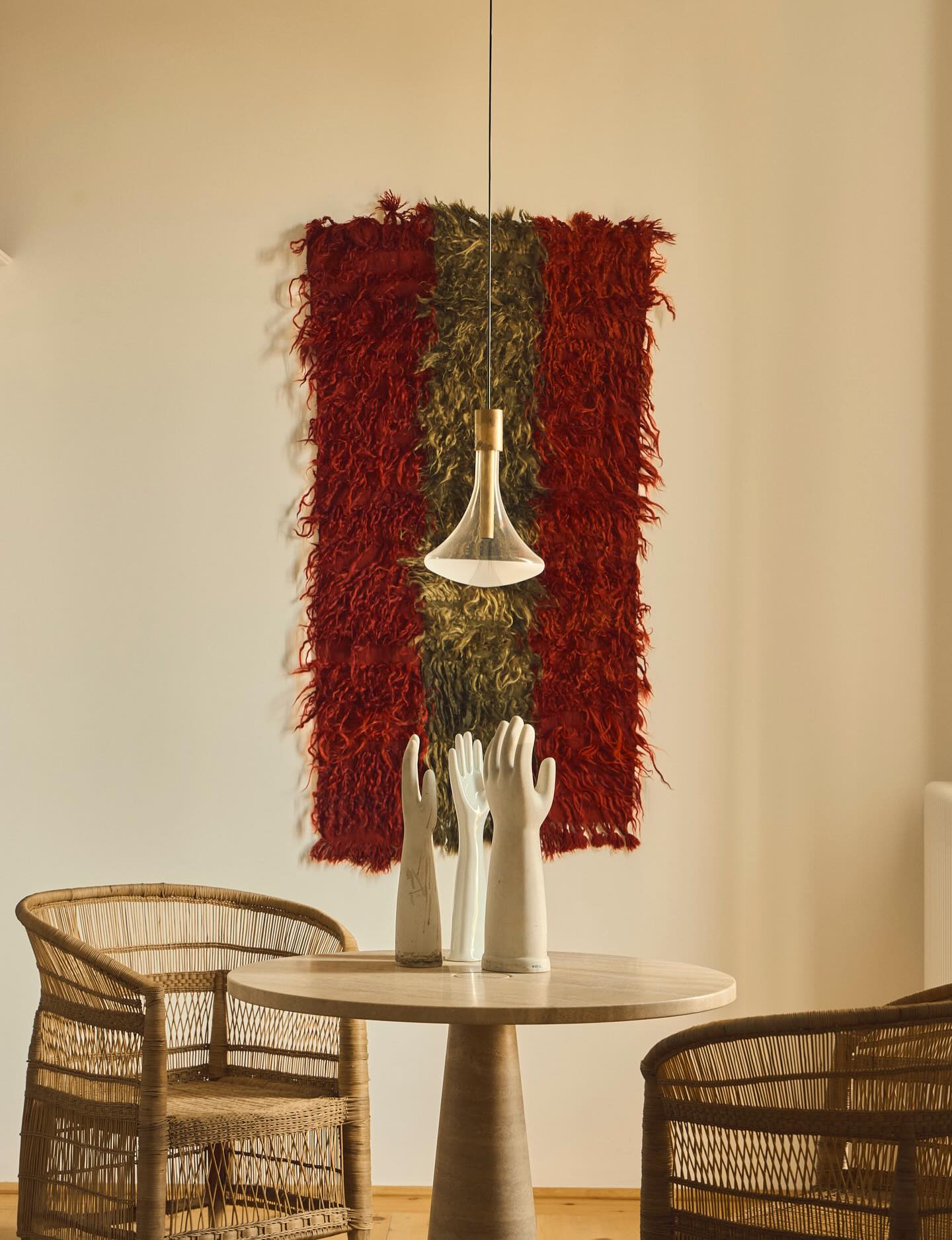
A small round pedestal table gives this dining corner a sculptural center. The single tapered support leaves more visual space around the chairs, while their woven frames introduce the natural texture often found alongside midcentury furniture.
A shaggy wall hanging in rust and olive makes the quiet background feel warmer. For a similar balance, pair one smooth material with one visibly textured material.
The contrast can be as simple as stone against rattan or a polished tabletop beside a woven seat. Keep the wall decoration focused on a single substantial piece rather than several small accessories.
A slender pendant completes the composition without hiding the artwork, and its warm metal detail connects neatly with the honey colored furniture around it.
5. Mix Sculptural End Chairs with a Matching Set
Credits: Instagram
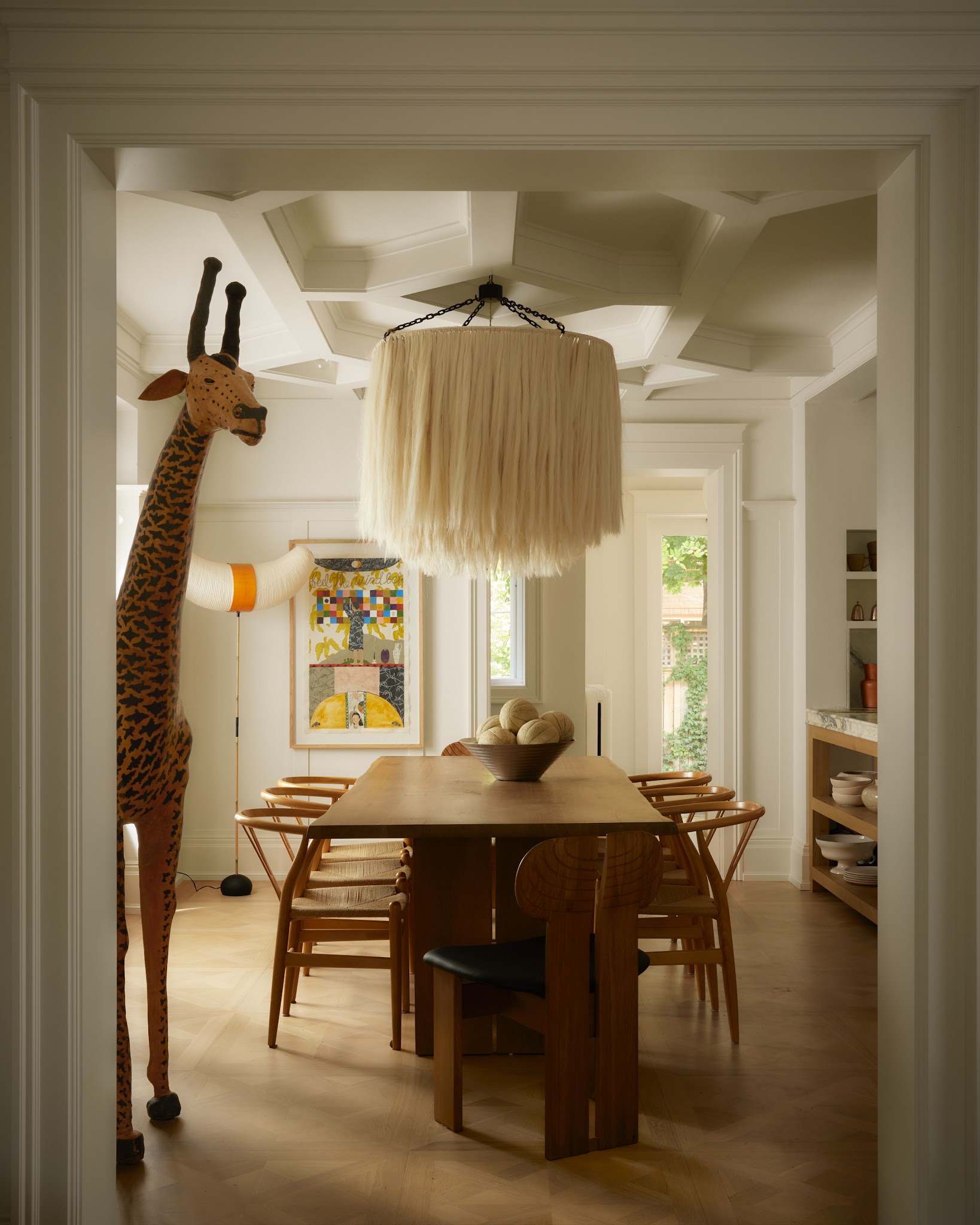
Matching side chairs establish a steady rhythm, but a different chair at the end of the table adds personality. In this room, the curved wood armchairs and sculptural end seat share a warm finish, so the variation feels deliberate.
The approach works well for a midcentury inspired dining room because it highlights shape and craftsmanship instead of relying on a complete furniture suite.
Start with a table that has a straightforward outline, then compare the heights and proportions of any chairs you combine. Similar wood tones provide an easy connection.
A large textured pendant softens the arrangement overhead, while colorful artwork and an unexpected decorative giraffe prevent the formal architecture from making the dining space feel too stiff or serious.
6. Soften a Wood Dining Table with Olive Upholstery
Credits: Instagram
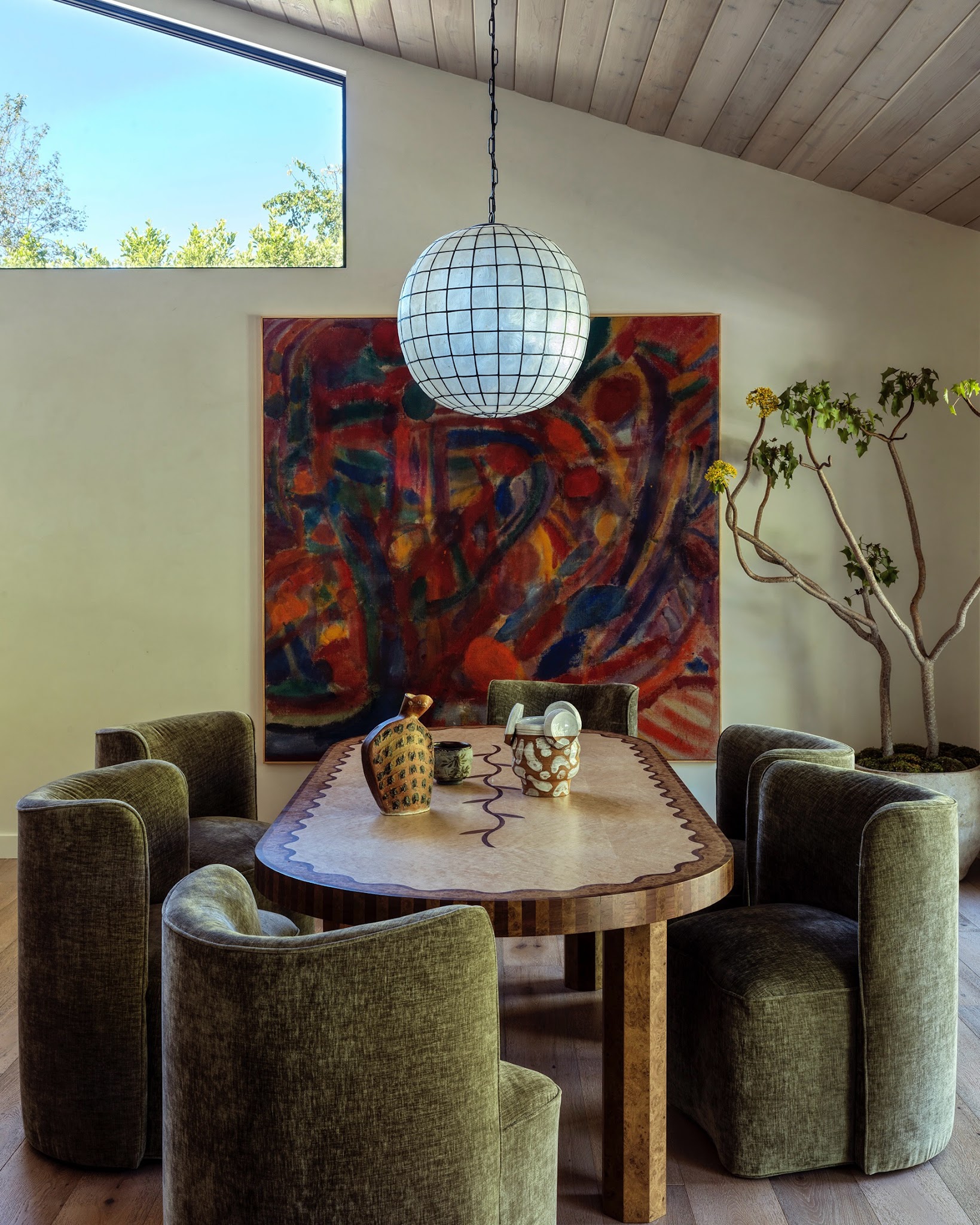
Olive upholstered chairs turn this dining area into a place that looks comfortable enough for a long evening. Their rounded backs contrast with the broad wood tabletop, while the earthy color connects with the tree beside the window.
The wood ceiling and high glazing provide a warm modernist backdrop. To borrow the mood, look for dining chairs with a low, enclosing silhouette and pair them with a table that still leaves enough elbow room.
One large artwork can carry the stronger colors, letting the furniture stay grounded in wood and green. A simple globe pendant adds another rounded shape above the table.
Keep decorative pieces limited so the upholstery, wood grain, and artwork each have space to be appreciated fully.
7. Echo a Wood Ceiling with a Classic Dining Set
Credits: Instagram
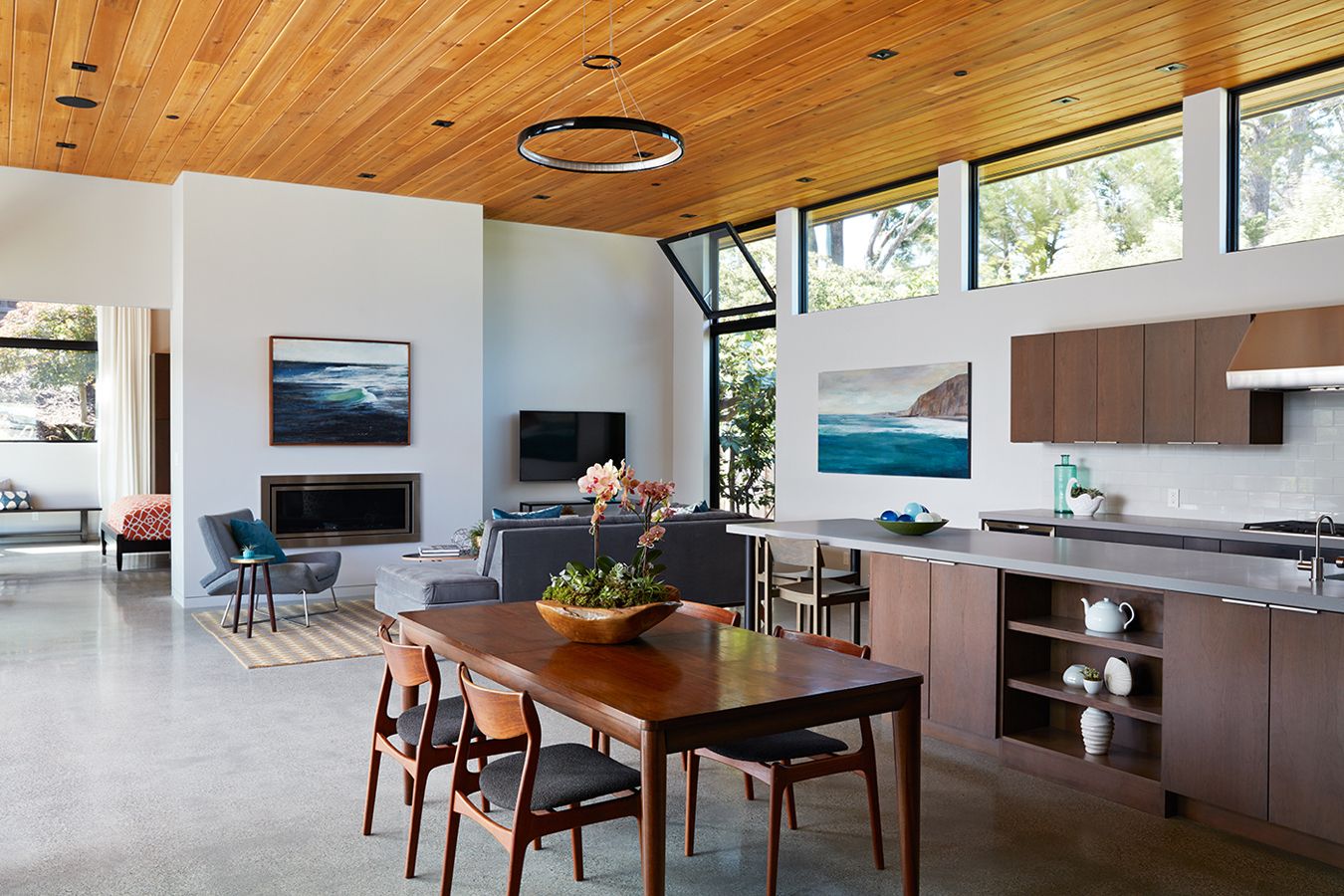
A warm wood dining set looks immediately at home beneath this broad timber ceiling. The curved chair backs, slim legs, and simple rectangular table establish a recognizable midcentury rhythm, while black seat cushions keep the grouping visually grounded.
High windows and generous glazing allow the room to feel open without sacrificing useful wall space. If your dining area shares a room with the kitchen, repeat a wood tone across the table and nearby cabinetry to connect the zones.
You do not need identical finishes; related warmth is enough. Keep the dining light visually light so it does not compete with the ceiling.
A low centerpiece preserves views through the room and leaves the furniture's graceful outlines easy to see clearly.
8. Introduce Modern Chairs into a Traditional Dining Room
Credits: Instagram
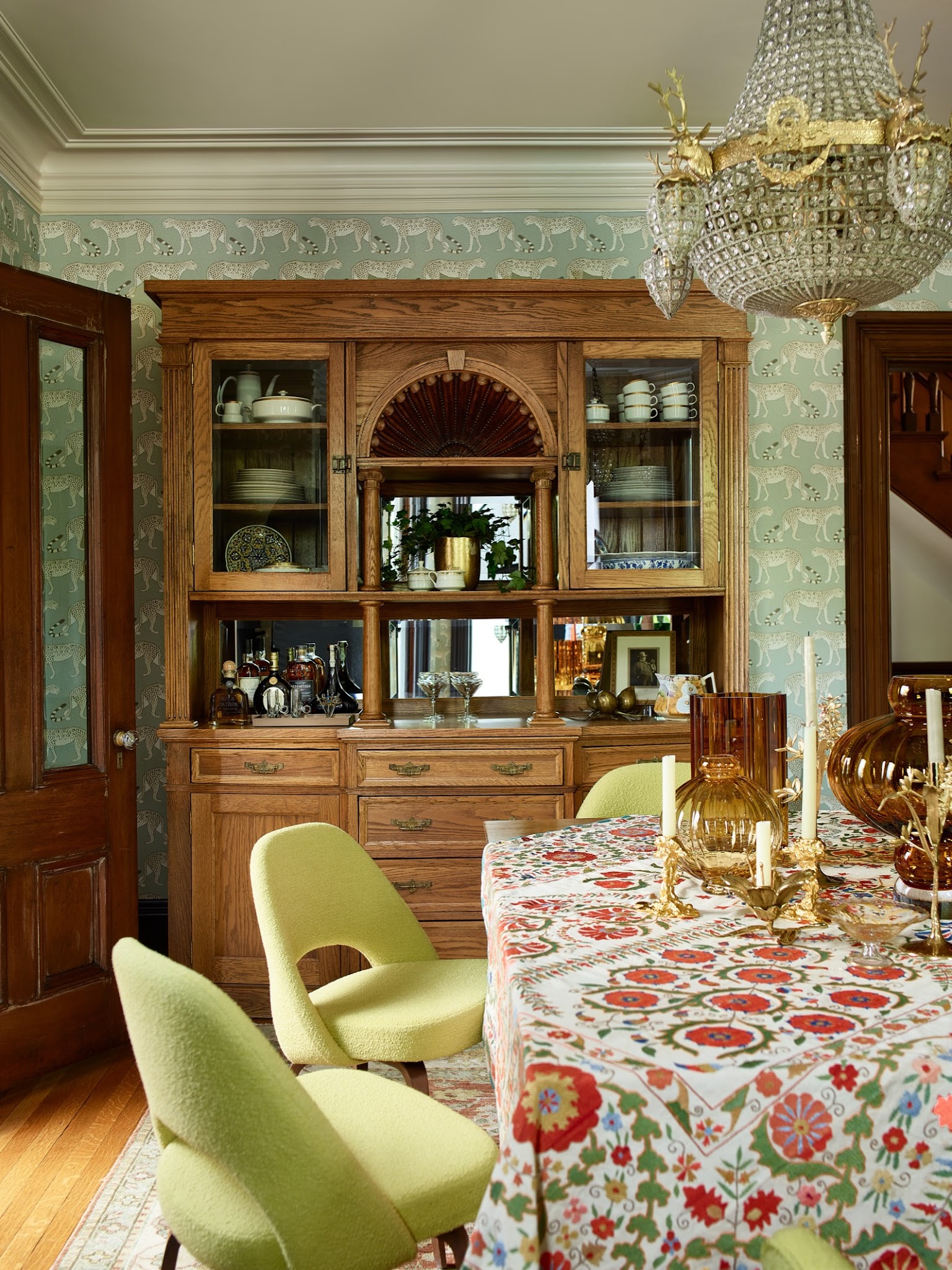
Midcentury furniture can work beautifully beside older architectural details. Here, softly curved green dining chairs bring a fresh shape to a room with rich woodwork, patterned walls, and a crystal chandelier.
Their simple outlines give the eye a resting place among the more intricate surfaces. If your home already has a traditional cabinet or decorative trim, consider changing the chairs before replacing the entire dining set.
An upholstered seat in a clear, cheerful color can connect with existing wallpaper or table linens. Keep its shape uncomplicated so the contrast feels intentional.
The result is a room that acknowledges several eras while still serving everyday meals. Warm glass accessories help bridge the clean chairs and the deeper tones of the woodwork.
9. Refresh Vintage Dining Chairs with Patterned Upholstery
Credits: Instagram
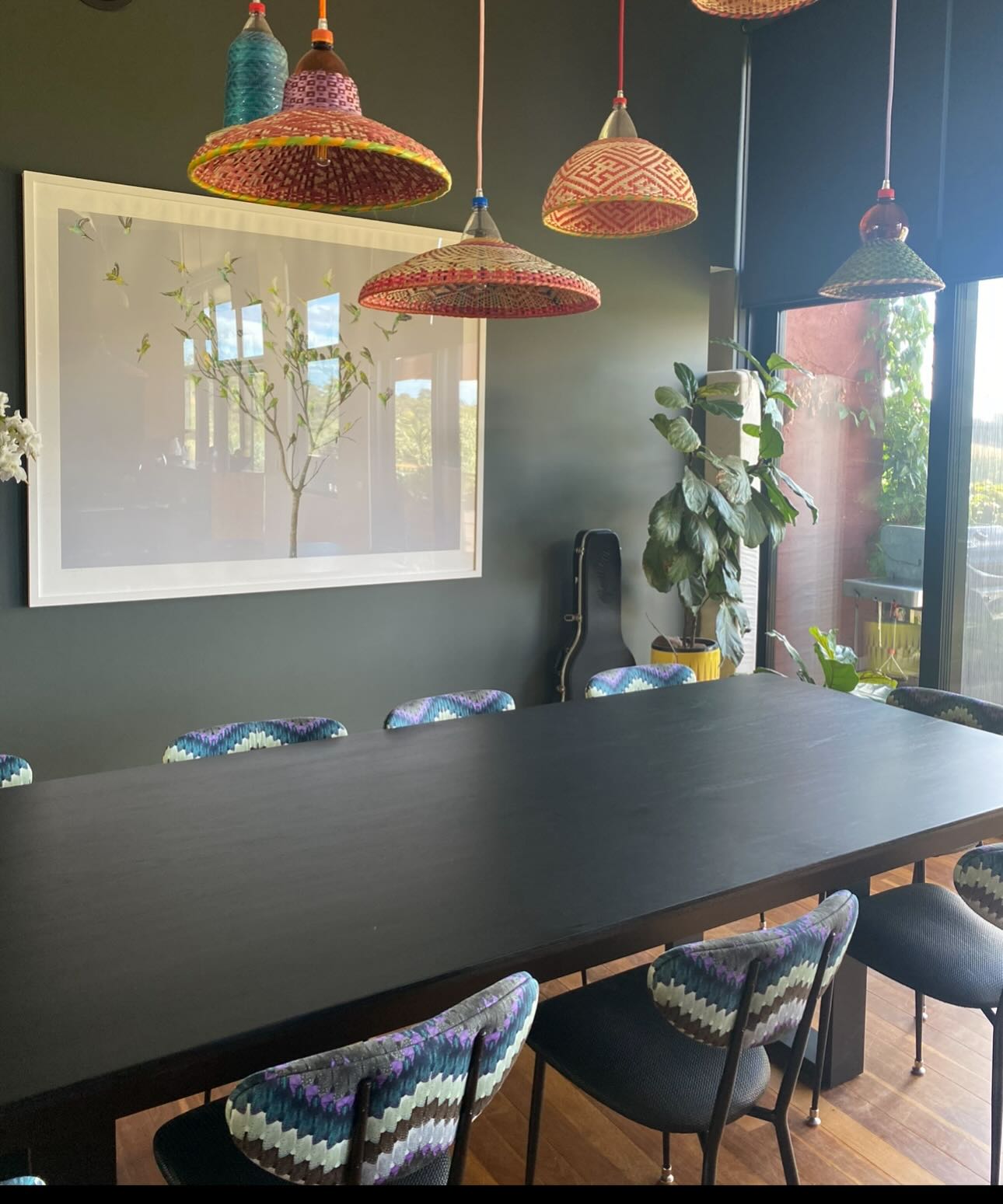
Patterned chair backs give this dining room its lively rhythm. The slim dark frames and small metal feet preserve the light appearance of the vintage seats, while the new upholstery introduces waves of blue, purple, and green.
A simple dark table provides a calm surface beneath the colorful woven pendants. This is a practical direction when you have structurally sound chairs that need a refresh.
Choose fabric that suits daily use, then pull one or two colors into nearby accessories. Keeping the seat cushions quieter can prevent the pattern from feeling overwhelming.
Dark green walls make the brighter details stand out, and generous window light keeps the arrangement welcoming. The mix feels collected, personal, and comfortable rather than overly coordinated.
10. Warm a Compact Dining Nook with Cognac Leather
Credits: Instagram
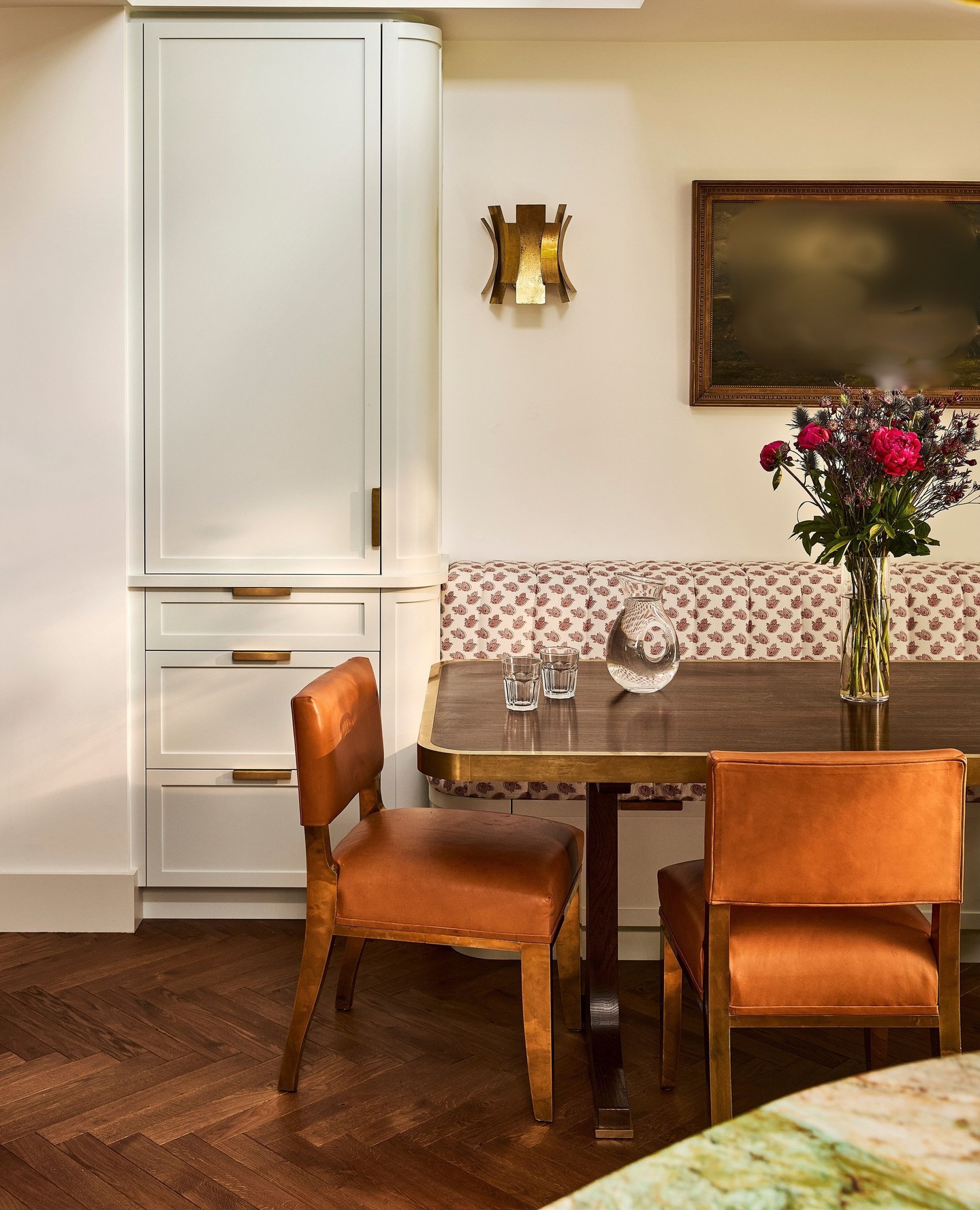
Cognac leather gives a small dining nook a rich, welcoming center. The chairs have straightforward padded backs and exposed frames, while the wood table repeats their warm color.
A built in banquette supplies extra seating without requiring chairs along every side. This combination suits a midcentury inspired room that needs to fit comfortably into existing architecture.
Choose a table with softened corners to make movement around the nook easier, and leave enough clearance for the freestanding seats to slide back. Patterned bench upholstery adds a softer layer beside the leather.
Here, pale cabinetry keeps the compact arrangement bright, while small brass details tie the table edge, hardware, and wall light together. The effect is polished but still inviting for breakfast.
11. Keep a Tulip Dining Set Visually Light
Credits: Instagram
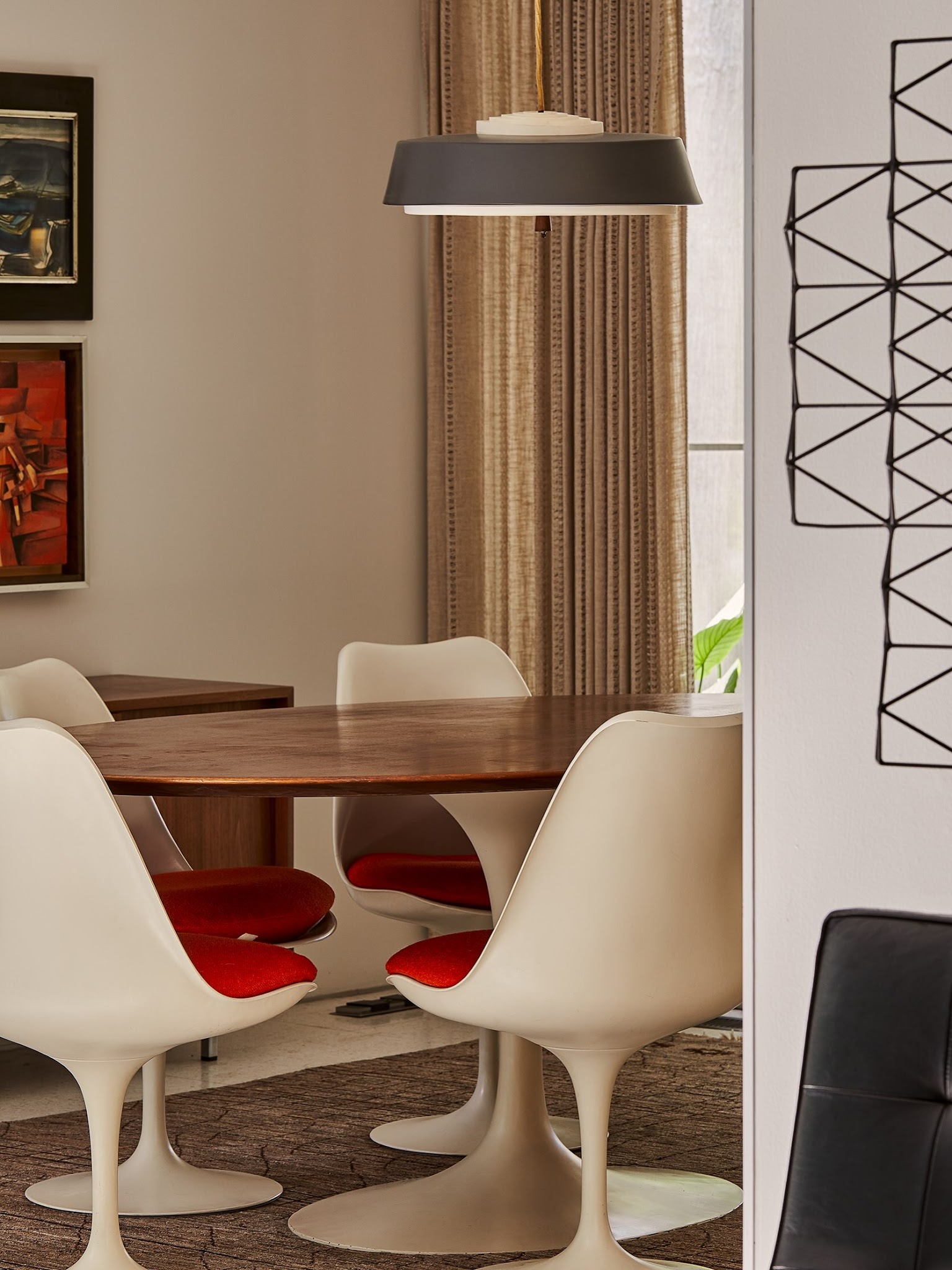
White tulip chairs make this dining area feel open even with several seats gathered around the table. Their continuous pedestal bases reduce the visual tangle that conventional chair legs can create.
Red seat pads add a cheerful accent against the wood tabletop and softly colored curtains. To borrow this classic midcentury idea, let the furniture silhouettes remain visible rather than covering everything with linens.
A simple pendant can echo the broad tabletop without competing with the sculptural seating. Keep nearby storage low and uncomplicated so the dining group stays central.
The warm wood and woven rug prevent the white surfaces from feeling stark. A few small framed artworks add personality while leaving plenty of quiet wall space around the table.
12. Use a Pedestal Table Beneath a Glass Roof
Credits: Instagram
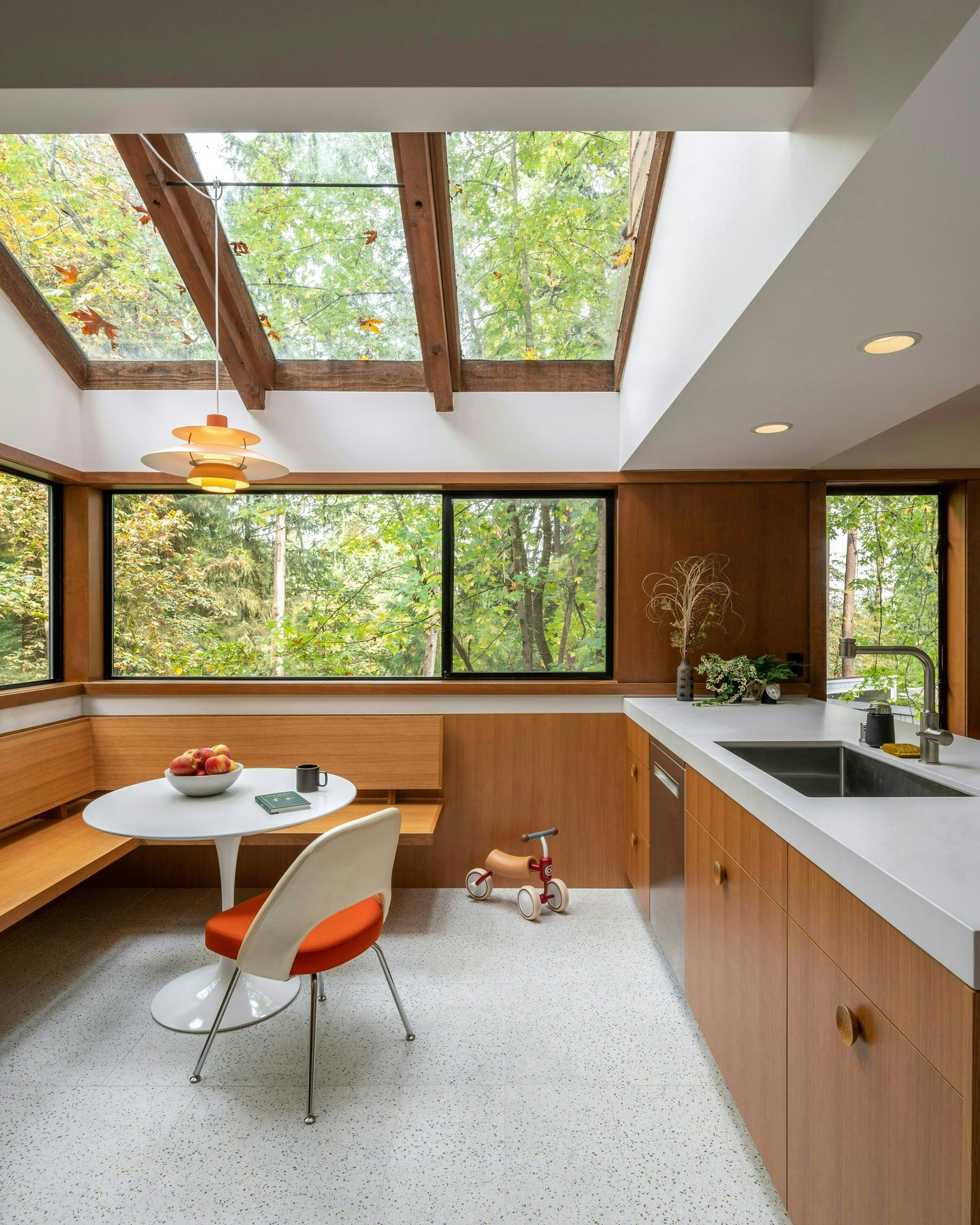
A compact white table creates a bright focal point within this wood lined dining nook. Its pedestal base leaves room for a bench on one side and a slender modern chair on the other.
Above, a broad skylight makes the surrounding trees part of the experience. The effect captures the midcentury interest in connecting everyday life with nature.
For a smaller project, borrow the furniture arrangement even if a glass roof is not possible. Fit a simple bench beneath existing windows, then choose a table that allows comfortable access from the open side.
One orange seat cushion and a layered pendant supply just enough color. Keeping the cabinetry, bench, and window trim in related wood tones makes the corner cohesive.
13. Define the Dining Area with a Low Pendant
Credits: Instagram
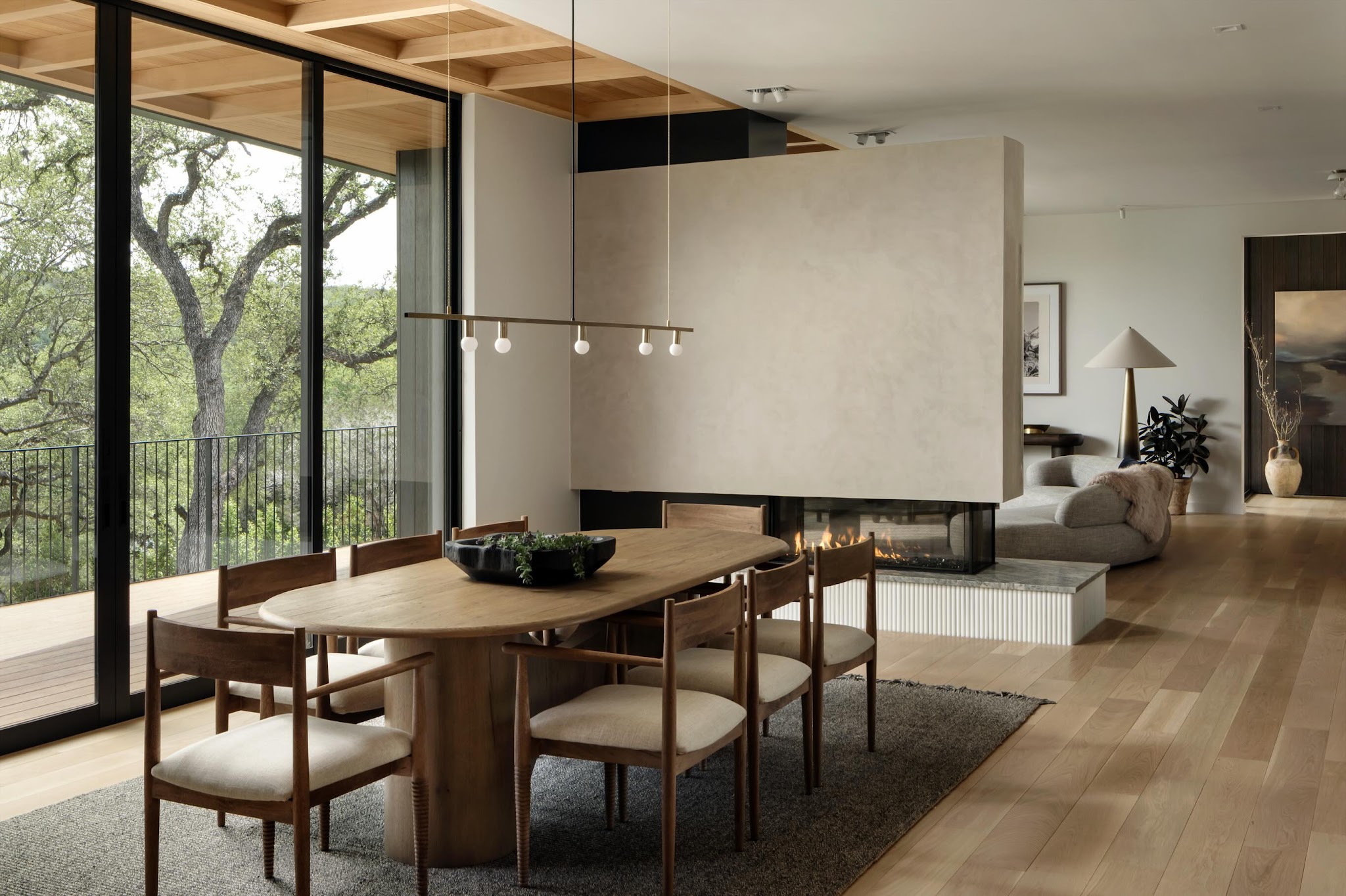
A slim linear pendant marks the dining area without interrupting the view through the glass wall. Beneath it, an oval wood table and open framed chairs create a relaxed modernist grouping.
The long fixture follows the table's shape, while its small bulbs keep the composition light. This is an effective approach when dining and living spaces share an open plan.
Choose a light that relates to the table rather than centering it automatically within the entire room. A generously sized rug can reinforce the dining zone below, provided chairs remain on it when pulled out.
Here, a fireplace adds another gentle boundary between activities. Natural wood, pale upholstery, and the landscape outside supply texture without requiring a busy decorative scheme.
14. Balance Bold Wood Grain with Patterned Seats
Credits: Instagram
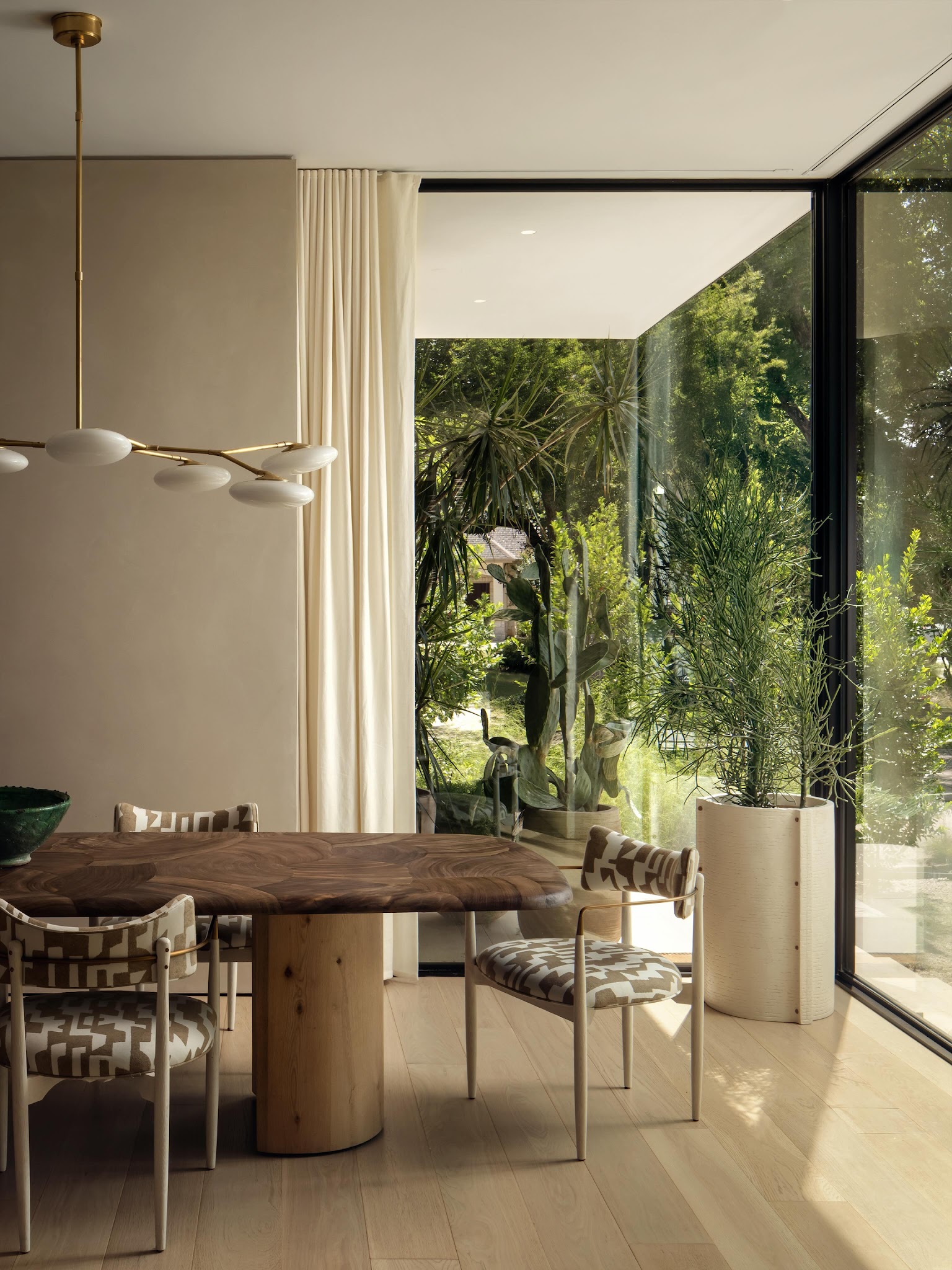
Expressive wood grain becomes the main decoration on this dining table. The chairs respond with a quiet geometric pattern, creating interest through material and repetition instead of several competing colors.
Their slender frames leave the table's substantial supports visible. This balance suits a midcentury inspired dining room where natural surfaces and sculptural furniture should lead.
If you choose a strongly figured tabletop, keep the upholstery palette limited to two related shades. Repeat a warm metal detail in the lighting to connect the chairs with the space above them.
The broad windows and pale curtains help the heavier wood feel at ease. A single green bowl provides a useful accent while leaving plenty of open surface for serving food and conversation.
15. Pair Wire Chairs with a Cushioned Window Bench
Credits: Instagram
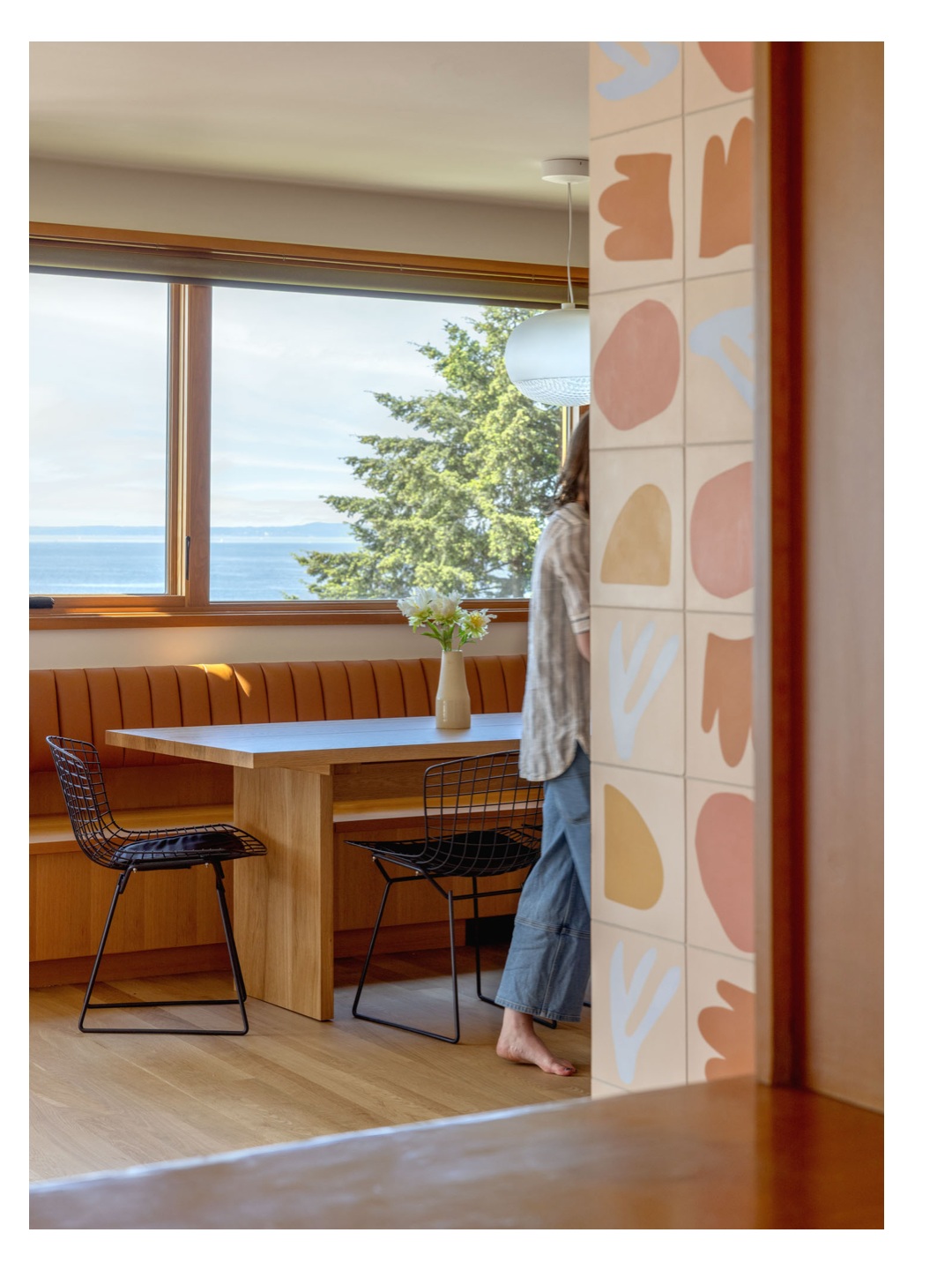
Wire chairs bring an airy counterpoint to the upholstered bench in this dining nook. Their open grid backs allow the wood table and warm orange seating to remain visible, keeping the compact arrangement from feeling crowded.
A broad window turns the outside view into the room's most generous decorative feature. This is a useful midcentury combination for a breakfast area or an informal dining corner.
Let the bench provide softness, then choose lighter chairs for the side facing the room. A simple table base helps preserve legroom and makes cleaning easier.
Nearby graphic tile adds a playful note without taking over the seating area. Keep the tabletop styling minimal so the window, upholstery, and chair outlines do the visual work.
16. Mix Cantilever Chairs with a Rustic Wood Table
Credits: Instagram
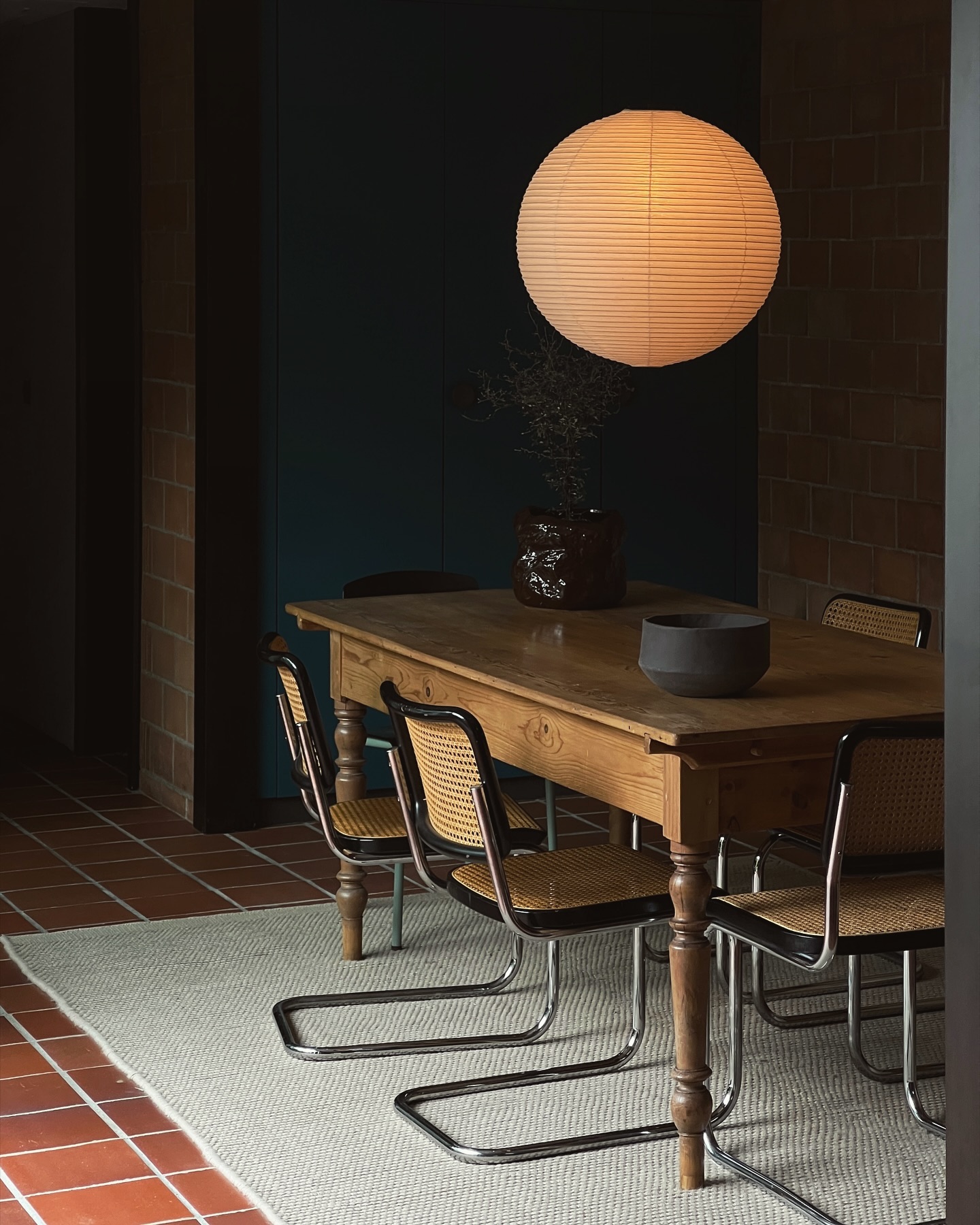
A rustic wood table takes on a modernist character when surrounded by cane cantilever chairs. The tubular metal frames provide a crisp contrast to the turned table legs, while the woven seats connect naturally with the warm timber.
An oversized paper globe adds a soft pool of light above the arrangement. This kind of mix is useful when you love midcentury interiors but want to keep an older family table.
Focus on a consistent chair design, then let the table bring its own history. A simple textured rug gives the group a defined footprint against the tile floor.
Deep wall color strengthens the evening mood, and the uncluttered centerpiece lets the different materials stand out without making the room busy.
17. Pair Danish Style Chairs with a Dramatic Chandelier
Credits: Instagram
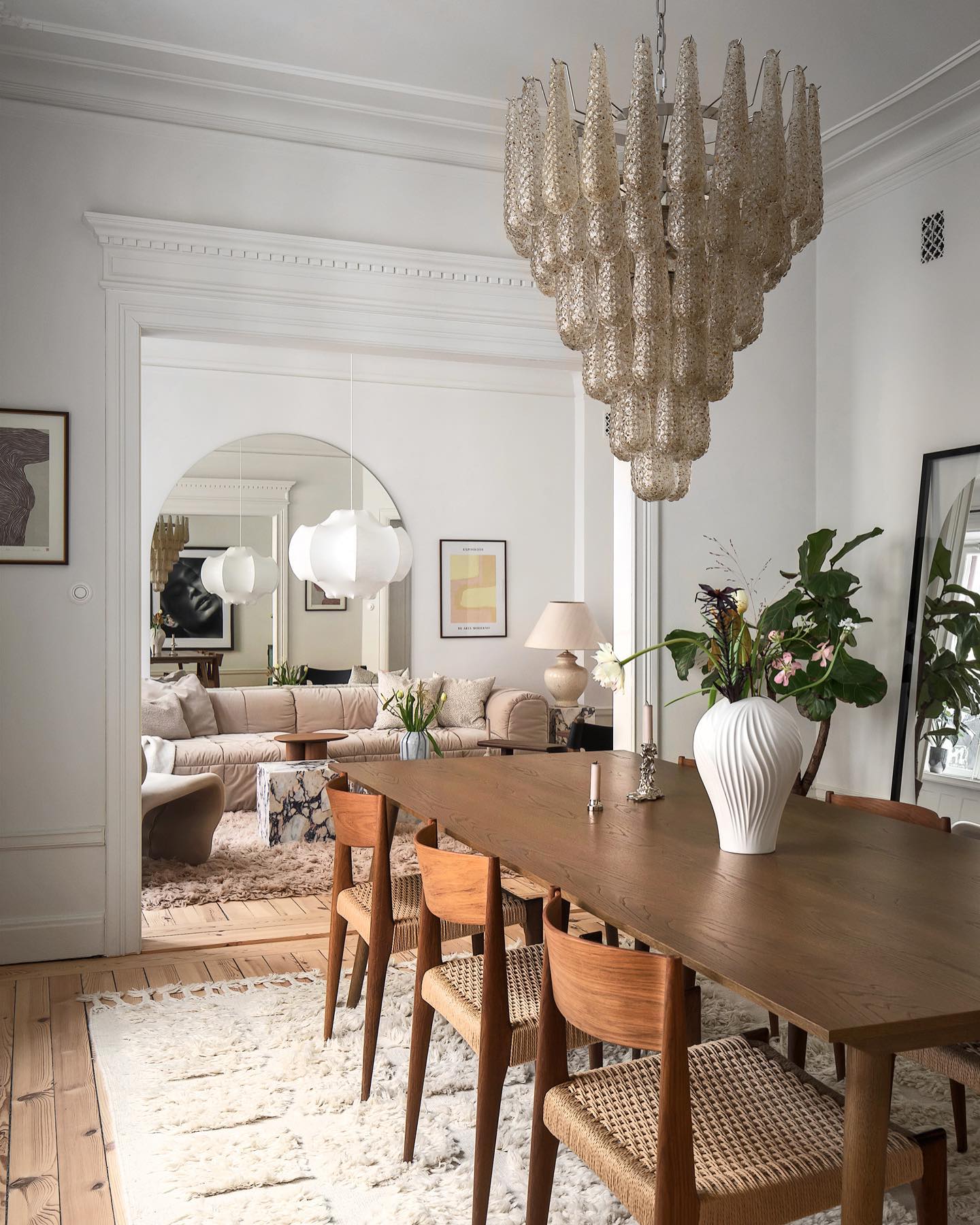
The dining furniture is beautifully restrained: warm wood, curved chair backs, woven seats, and a long table with a clean outline. Above it, a large textured chandelier adds a more glamorous note.
That difference in character keeps this midcentury inspired room from feeling like a matching showroom. If you enjoy statement lighting, give it a quieter furniture group beneath.
Chairs with simple frames and natural seats can provide warmth without adding another bold pattern. Pale walls allow the wood tones to stay visible, while an adjoining room repeats the soft neutral palette.
A large mirror helps extend the light and the sense of space. Keep the tabletop arrangement spare so the chandelier's shape remains the strongest decorative gesture in view.
18. Add Sculptural Red Chairs to a Collected Dining Room
Credits: Instagram
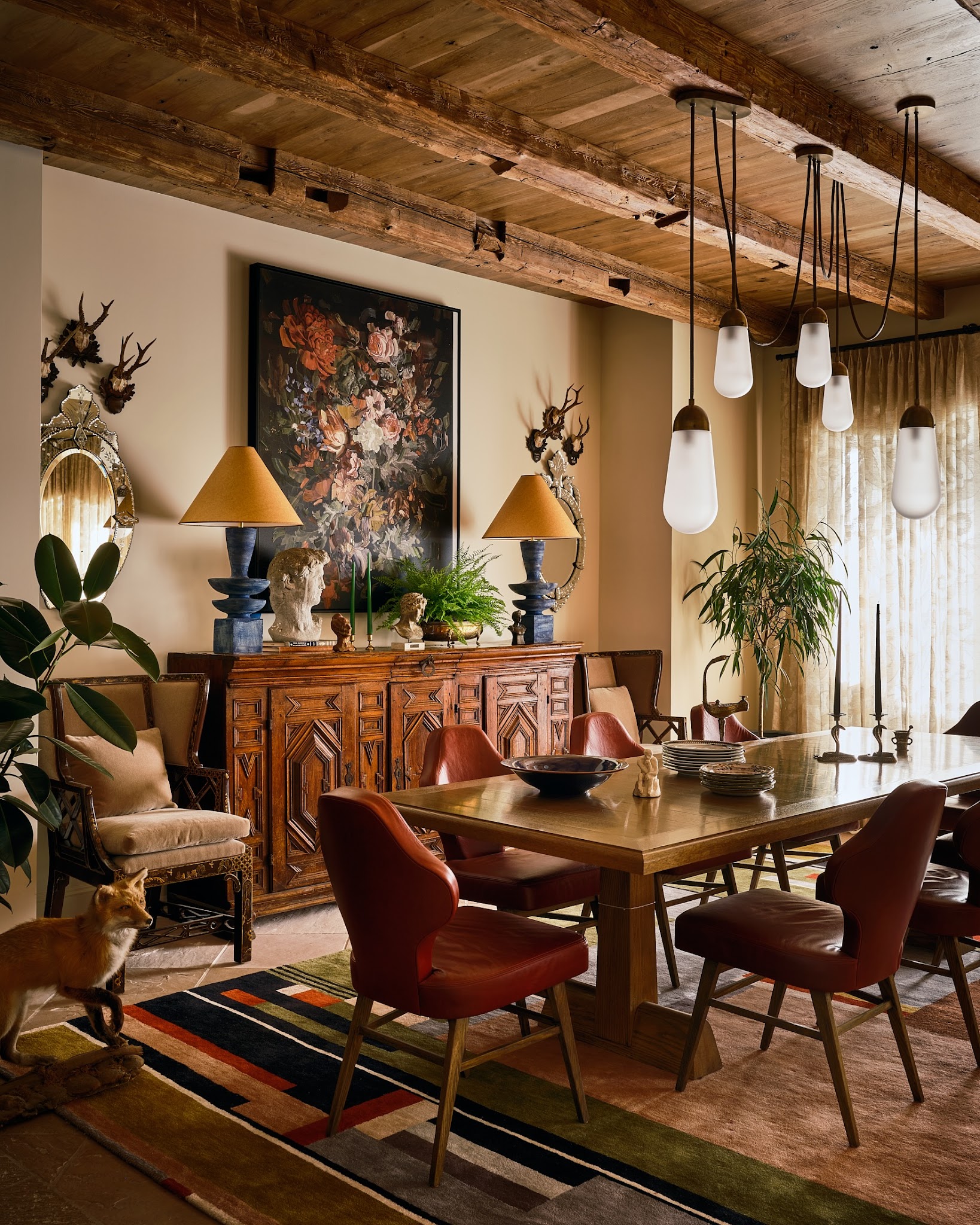
Sculptural red chairs give this richly layered dining room a clear modern accent. Their shaped backs and tapered supports stand out against the antique cabinet and rough wood ceiling.
The table stays simple, allowing the seating to connect the room's older pieces with a midcentury sensibility. To use this approach, begin with chairs whose silhouettes are distinctive even without a bright finish.
Then choose upholstery that draws from a rug, painting, or nearby accessory. Here, warm red works comfortably with the wood, ochre shades, and earthy artwork.
Several small hanging lights spread across the table instead of forming one heavy chandelier. The mix shows how modern dining furniture can bring structure to a room filled with personal collections and history.
19. Give a Small Dining Corner One Strong Chair
Credits: Instagram
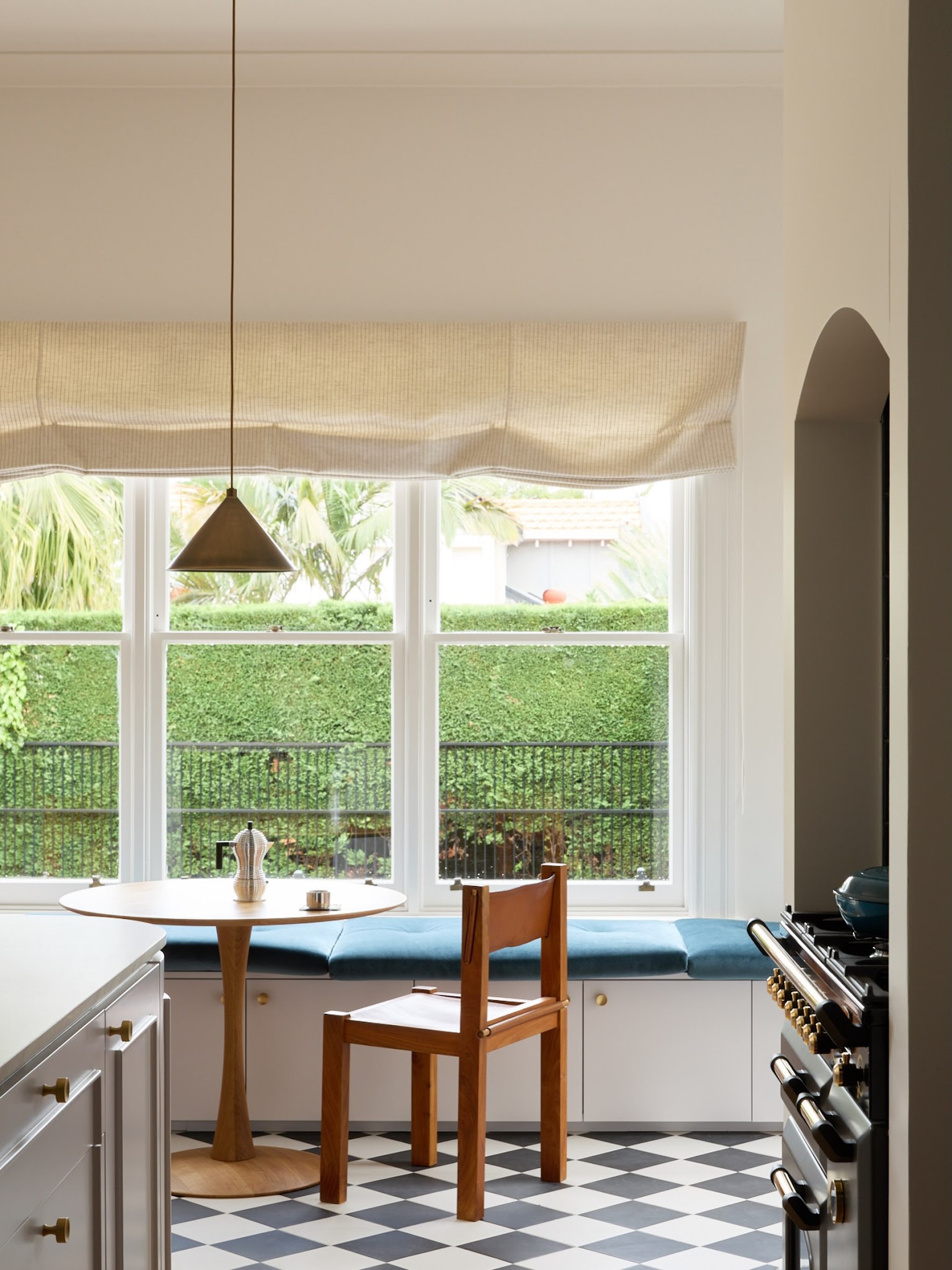
One well shaped chair can establish the character of a compact dining nook. Here, a substantial wood frame and leather back sit beside a round pedestal table, creating a warm modernist pairing.
The blue window cushion supplies comfortable seating for additional guests without filling the floor with more furniture. To recreate the balance, choose a chair with a strong outline and keep the table shape simple.
Position the bench beneath the window so the dining spot receives daylight and feels connected to the garden. A small cone pendant provides a clear center above the tabletop.
The checkerboard floor adds movement, while restrained cabinetry lets the wood furniture remain noticeable. This is a practical arrangement for meals in a narrow kitchen.
20. Add Glass and Reflective Finishes to the Dining Room
Credits: Instagram
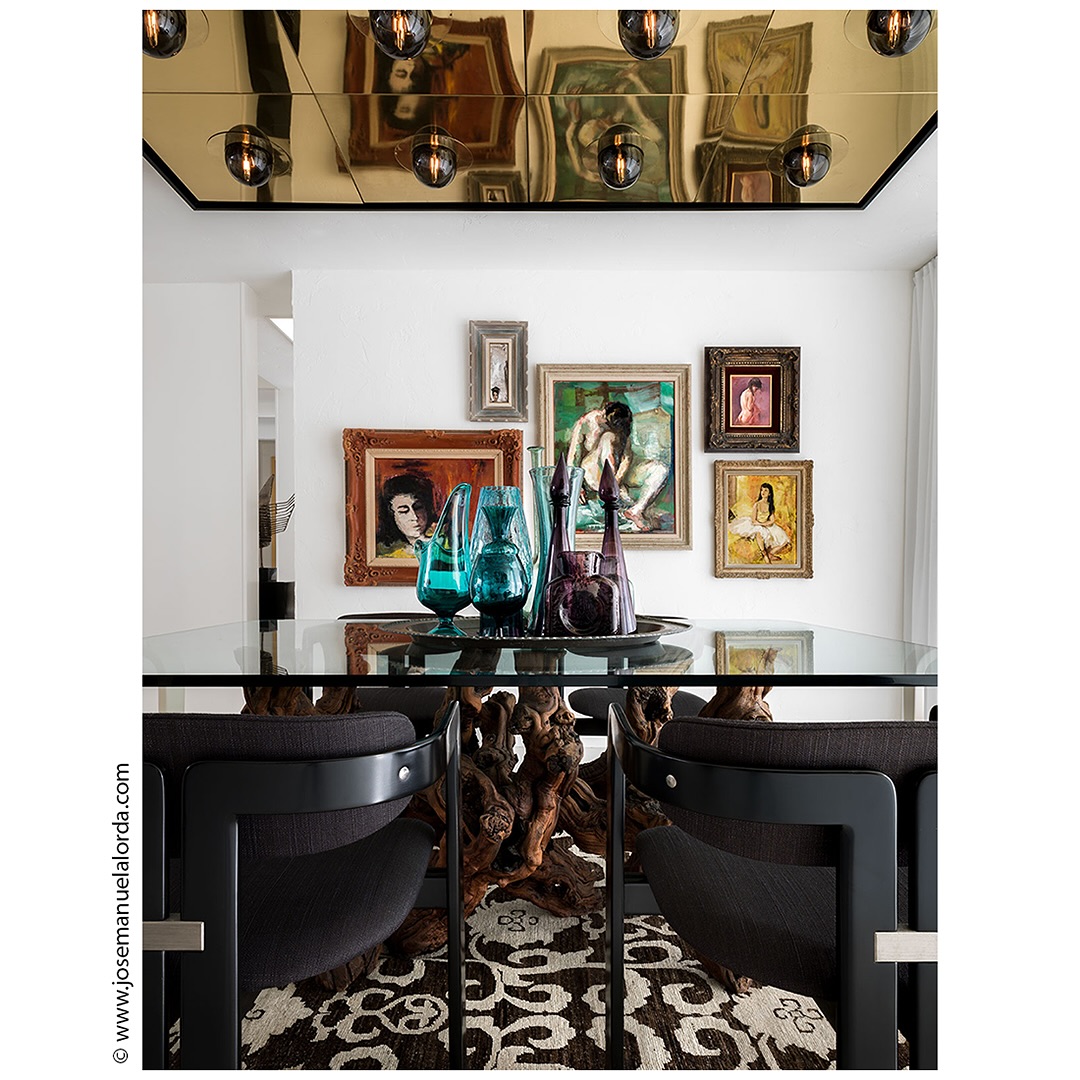
A glass tabletop lets the sculptural wood base become part of the room's decoration. Dark framed chairs give the airy surface a firmer outline, while tinted glass vessels add concentrated color at the center.
Above, a reflective ceiling panel doubles the visual presence of the small hanging lights. The combination brings a glamorous note to a midcentury dining scheme without relying on a large amount of furniture.
For a simpler version, start with the transparent table and one group of colorful glass pieces. Keep the chair upholstery quiet so the materials remain easy to read.
Artwork in varied frames gives the white wall a collected feeling, and a patterned rug anchors the otherwise reflective surfaces with a strong graphic layer.