
Green can make a living room feel calm or dramatic, depending on how it’s paired and where it appears.
These Green Living Room Ideas show ways to make the color feel intentional, from carrying deep green across walls and trim to using pale sage as a backdrop for botanical art.
You’ll also find combinations that bring warmth and contrast, including sage walls with mustard seating, mint walls with dark bookcases and pink accents, and emerald with gold and blush.
Consider how the room’s existing details, furniture, and natural views can help guide your palette.
1. Build a Green Palette With Different Pattern Scales
Credits: Instagram
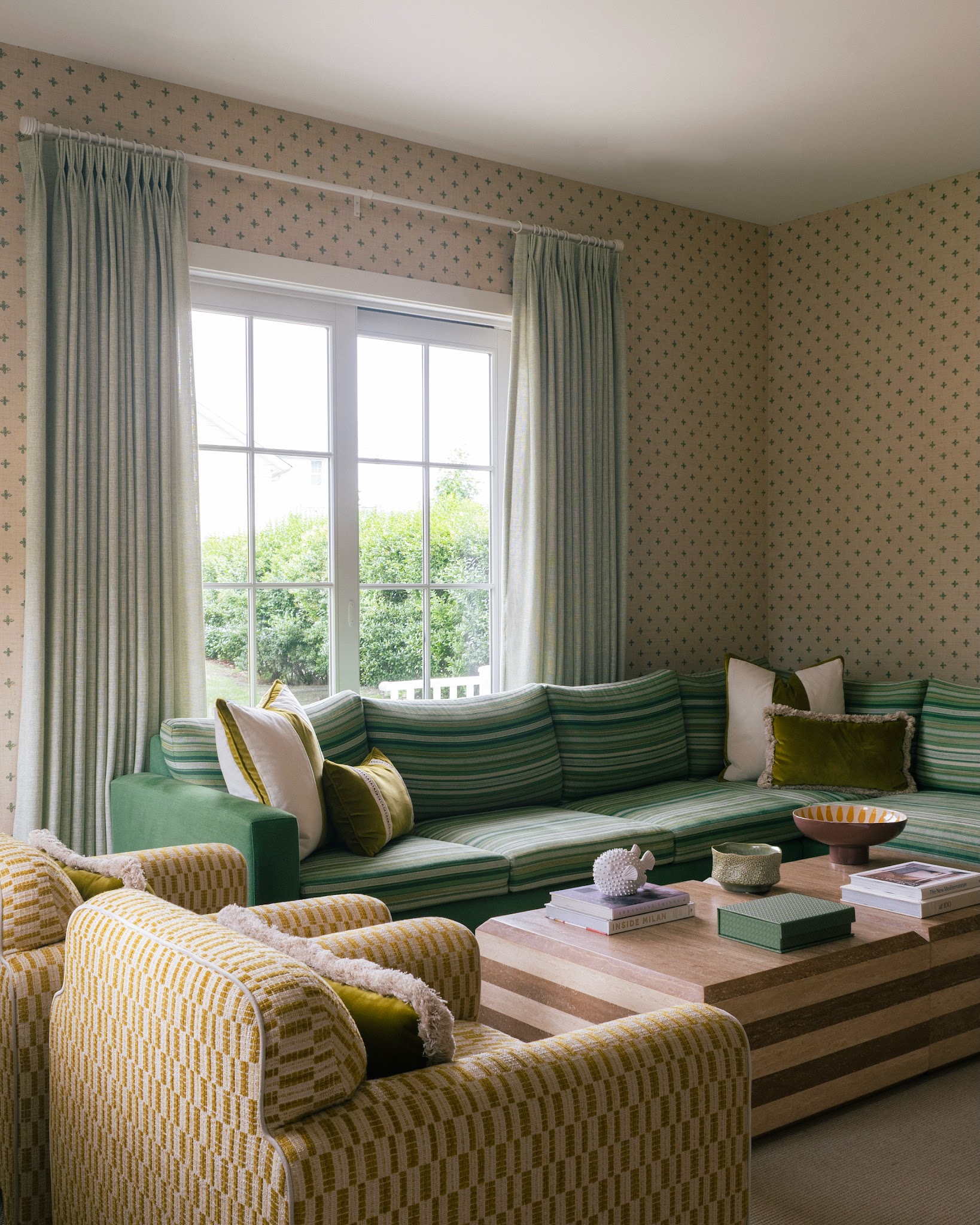
Green stripes give this sectional a clear identity, while the small repeating wall motif keeps the surrounding surface lively. Pale striped curtains continue the palette without copying the upholstery exactly.
Yellow patterned armchairs and olive pillows add warmer notes, making the greens feel varied rather than uniform. To borrow the approach, choose one dominant pattern for your largest seat, then use a smaller pattern on a nearby surface.
Keep a few pieces solid so the eye has somewhere to rest. The broad rectangular coffee table provides that pause here, with simple objects gathered into separate groups.
Test your fabrics together in daylight before committing, since a cool green and a yellow green can look surprisingly different beside the same window.
2. Carry Deep Green Across Walls and Trim
Credits: Instagram
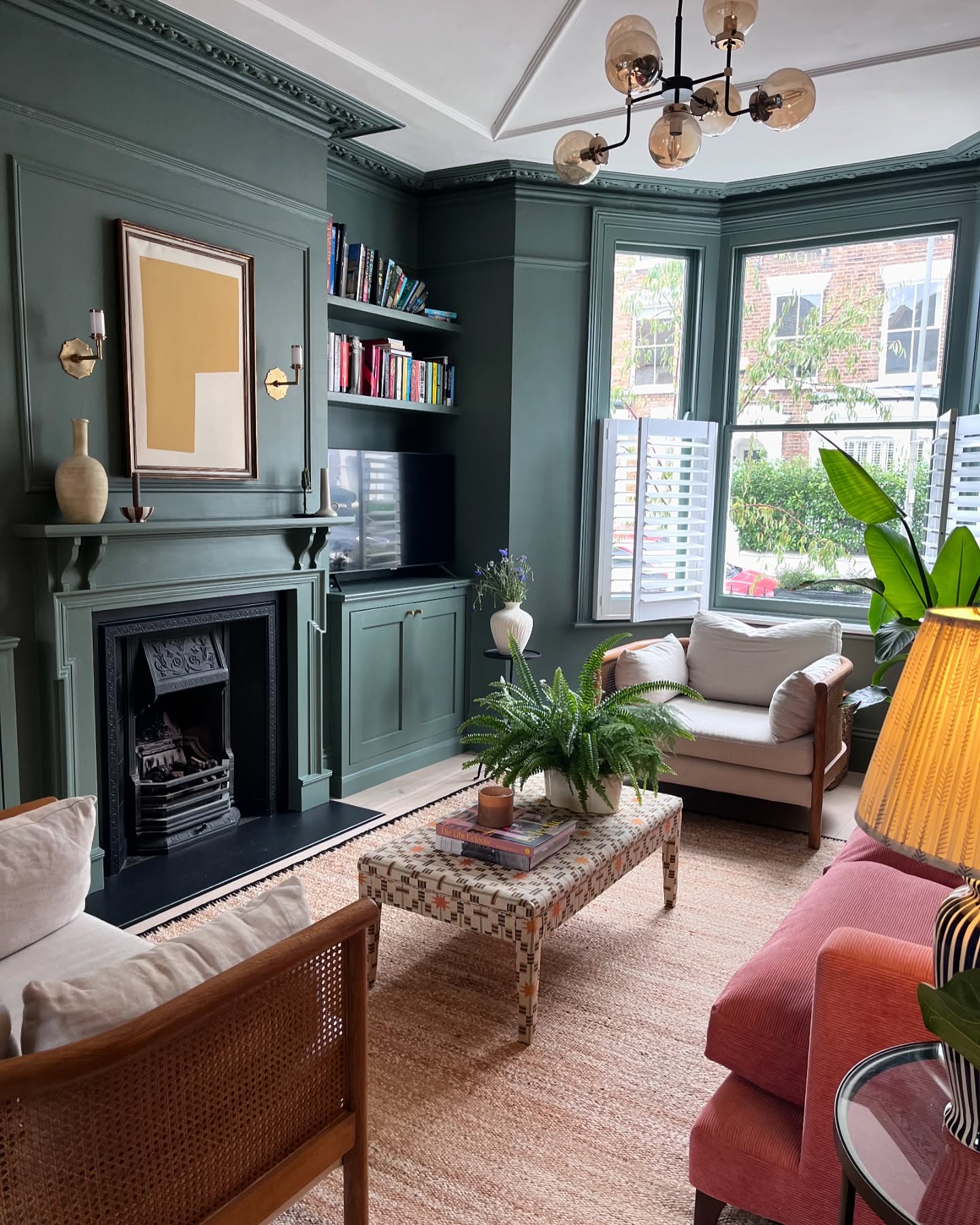
Painting the fireplace surround, shelving, window frames, and decorative molding in the same deep green makes this living room feel connected.
The white ceiling and lower window shutters provide a clear break, while pale chair cushions stop the seating area from disappearing into the walls. A pink sofa and yellow artwork bring small doses of warmth.
This is a useful approach when a room has many architectural details competing for attention. Try a consistent color across those details, then decide where a lighter boundary should begin.
Keep large accessories simple so the molding remains visible. Here, the patterned ottoman adds interest at the center without requiring another bold wall treatment, and open bookshelves make everyday storage part of the composition.
3. Let Pale Sage Frame Bold Botanical Art
Credits: Instagram
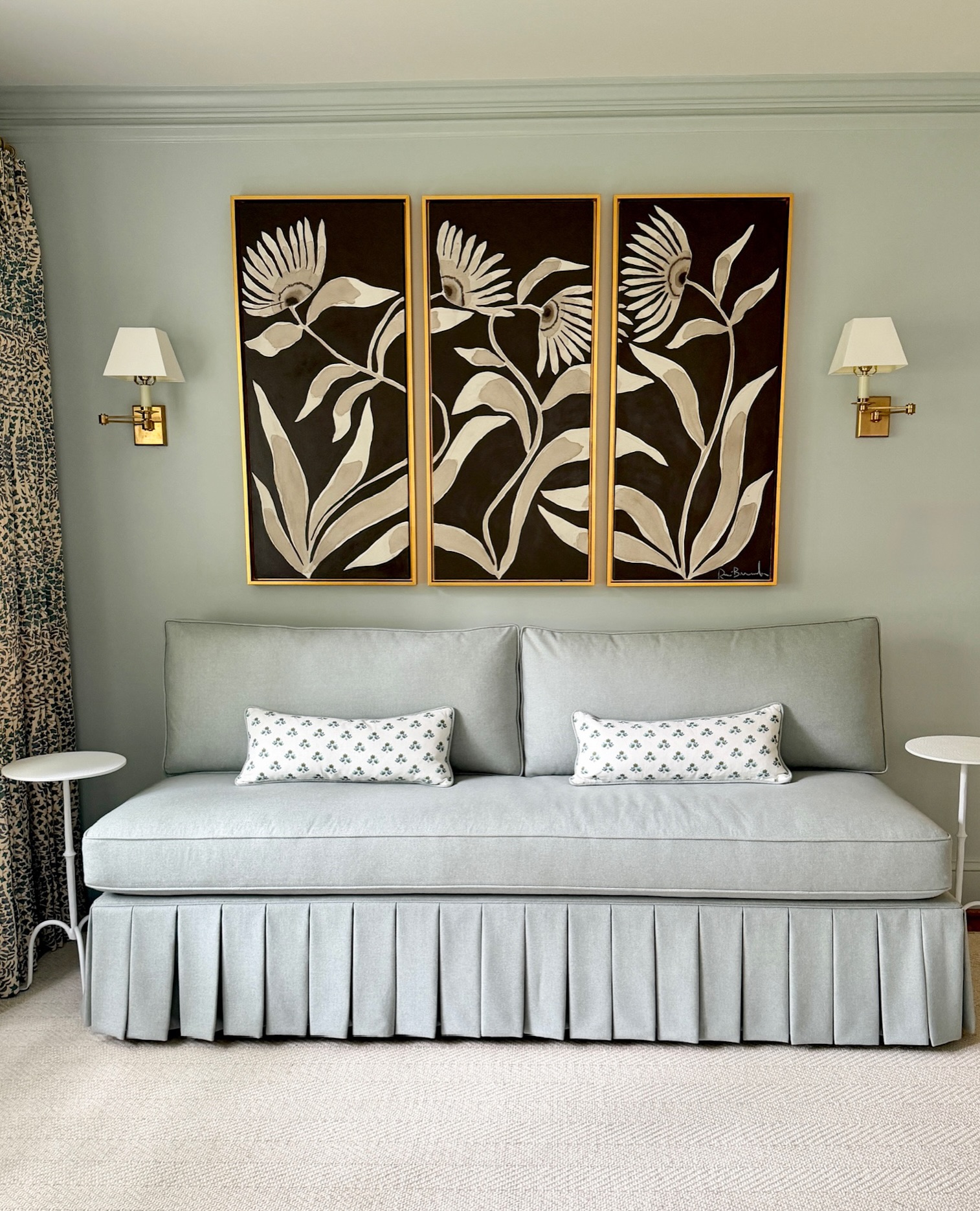
A pale green wall and similarly colored sofa create a quiet foundation for the three botanical panels above this sitting area.
Dark backgrounds in the artwork supply contrast, while the slim gold frames relate to the wall lamps on either side. Small patterned pillows and the curtain introduce detail without interrupting the gentle palette.
Consider this arrangement when you want green to feel present but understated. Choose the wall and upholstery together, checking whether they share a gray or yellow undertone.
Then give one piece of art enough contrast to become the focal point. The narrow side tables leave the sofa visually uncluttered, and the pleated skirt offers another layer of texture without introducing a new color into the room.
4. Echo a Garden View With Green Armchairs
Credits: Instagram
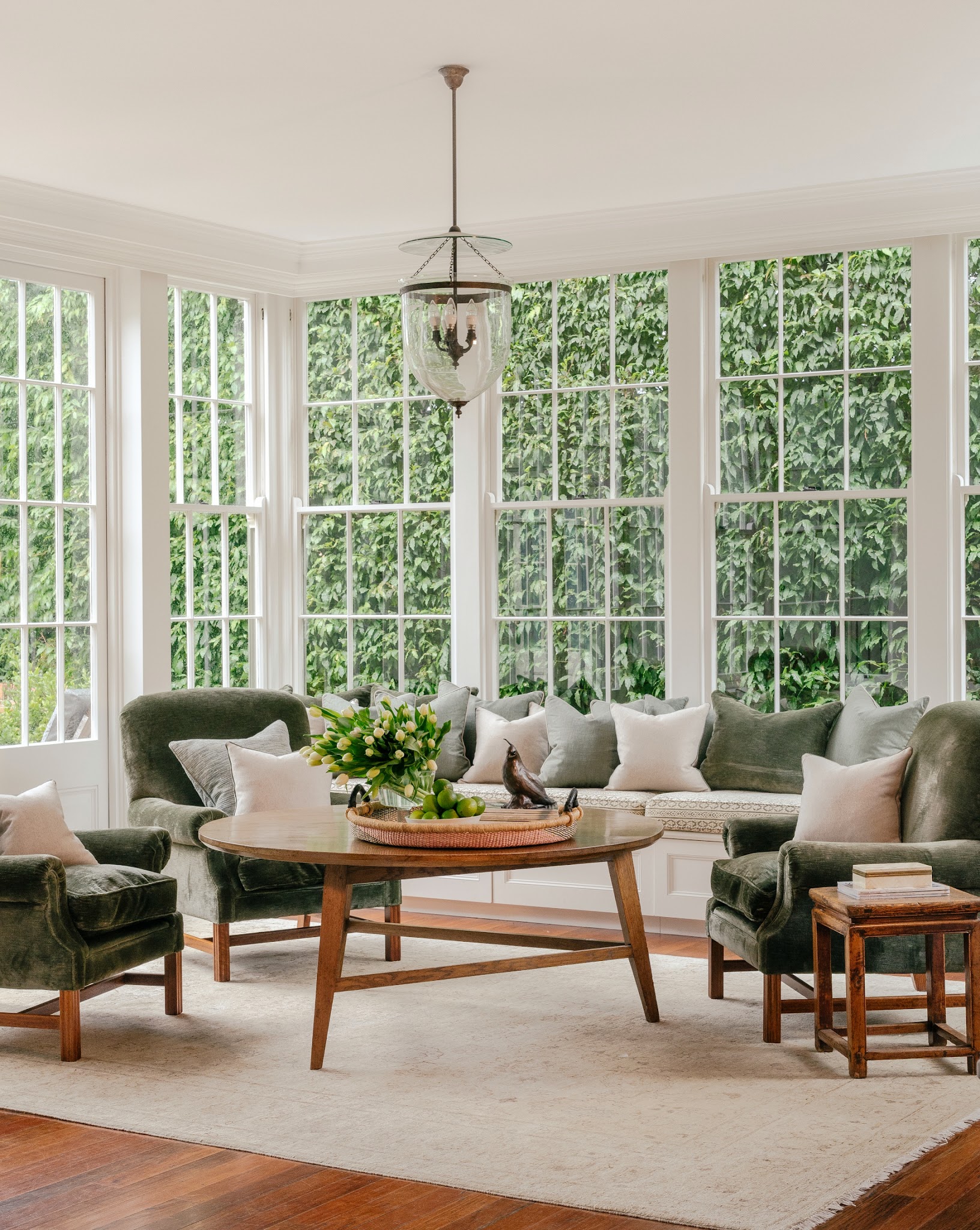
Green armchairs turn this bright, windowed sitting room into a continuation of the leafy view.
The seating color appears again in the pillows along the built-in bench, while pale cushions and white window frames keep the room from becoming visually heavy.
A rounded table gives the group a shared center, and the light rug distinguishes the seating area from the surrounding floor.
If your windows overlook greenery, consider repeating one of those greens in upholstery instead of filling every surface with plants. Keep furniture low enough that the view remains part of the composition.
The photograph also shows how a restrained accessory grouping can work: flowers, fruit, and a decorative bird occupy one tray, leaving much of the table visible.
5. Balance Green Walls With a Light Upper Band
Credits: Instagram
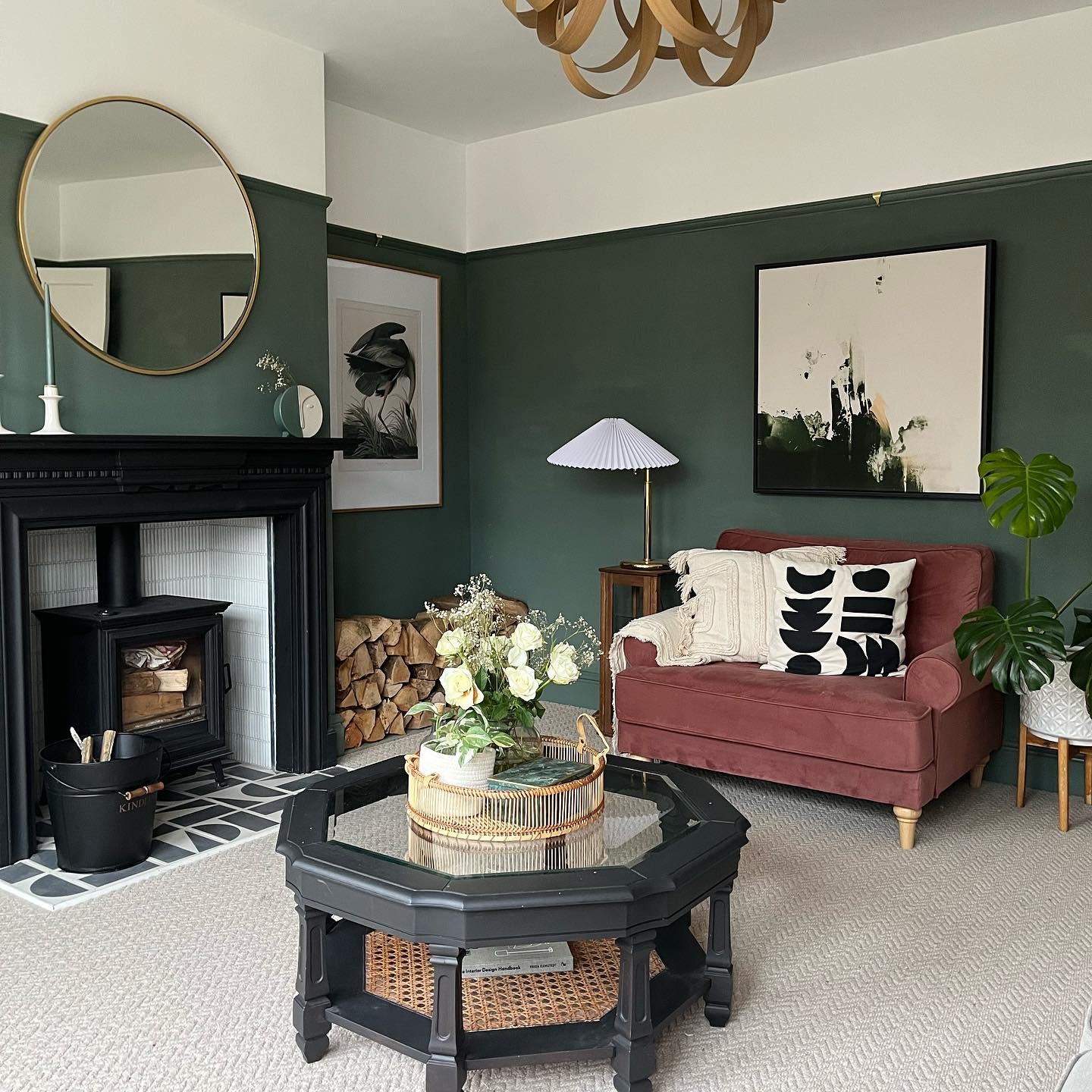
The green walls in this living room stop below a broad white band, giving the dark color a clear boundary.
A black fireplace surround and coffee table reinforce the lower part of the composition, while a round mirror and pale artwork lift the eye. The muted red armchair adds contrast without competing with the green.
This approach can suit a room where you want deeper walls while retaining a lighter ceiling. Follow an existing picture rail if you have one, or carefully plan a consistent horizontal line.
Repeat black in several small places so the fireplace feels connected to the furniture. Soft pillows, a pale carpet, and a pleated lampshade then introduce lighter textures around the stronger shapes and colors.
6. Pair Mint Walls With Dark Bookcases and Pink
Credits: Instagram
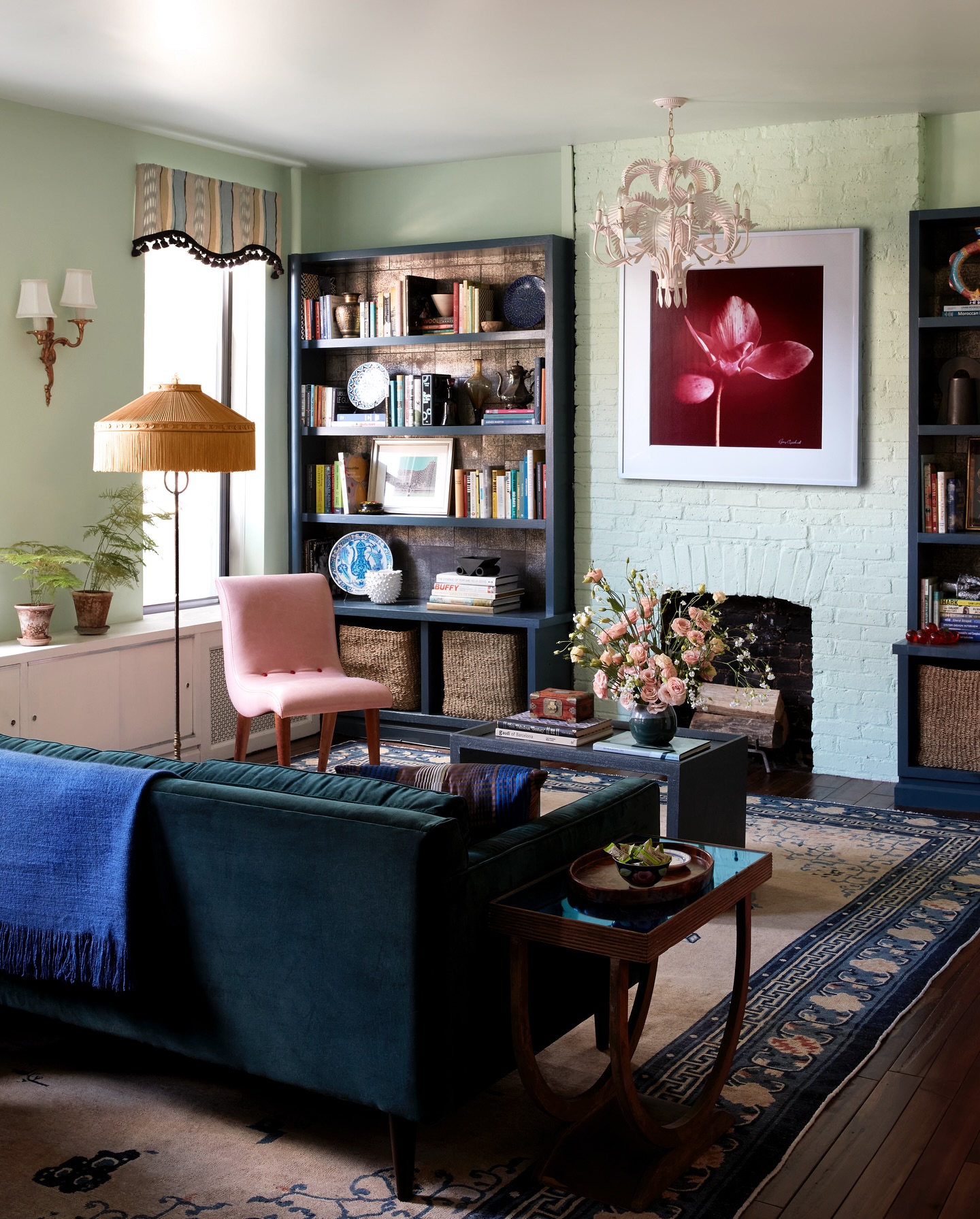
Mint green covers both the smooth walls and painted brick chimney in this layered living room. Dark bookcases frame the fireplace, giving the pale color a stronger outline.
A pink chair, pink chandelier, and flower artwork create a related accent family, while the dark upholstered sofa anchors the foreground.
To adapt this mix, begin with a light green background and select a darker color for storage or a large seat. Repeat one warm accent in different forms rather than adding many unrelated hues.
The bookshelves combine books, ceramics, and baskets, keeping the room personal without making every shelf identical. Leave portions of the painted brick visible around the artwork so its texture can contribute to the room alongside the color.
7. Match Sage Cabinetry to the Surrounding Walls
Credits: Instagram
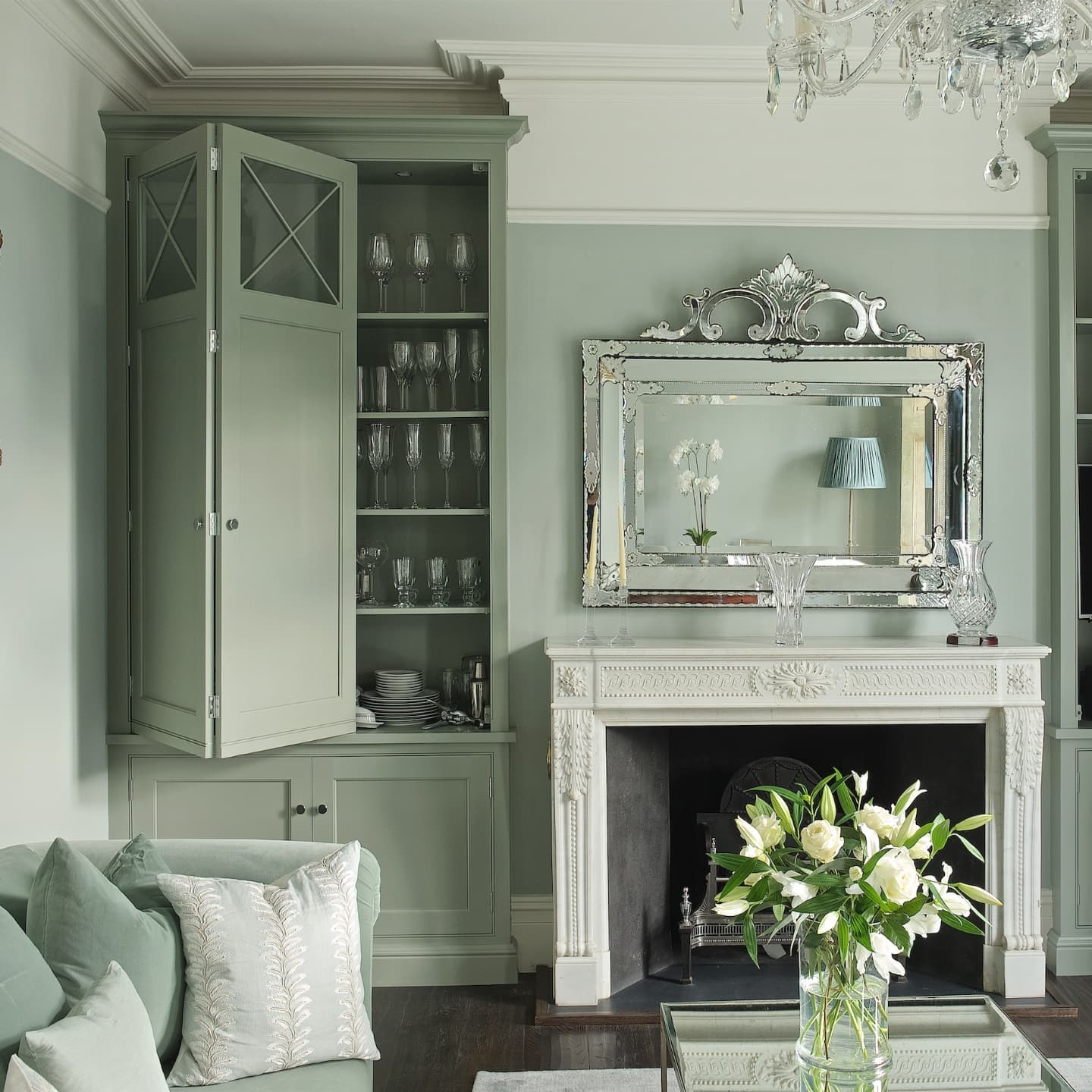
Sage cabinetry blends into the walls beside this white fireplace, allowing the detailed mantel and decorative mirror to stand out. The open folding door reveals glassware, showing how concealed storage can also become a display when needed.
Pale upholstery extends the green through the seating area, while reflective surfaces add variation within the limited palette. This idea works when storage occupies much of a living room wall.
Match the cabinet color to its surroundings, then use differences in shape and finish to keep the room interesting. Check door clearance before choosing a folding arrangement, especially near seating.
Keep the fireplace ledge relatively spare, as shown here, so the carved details and mirror remain easy to appreciate from across the room.
8. Warm Sage Walls With Mustard Seating
Credits: Instagram
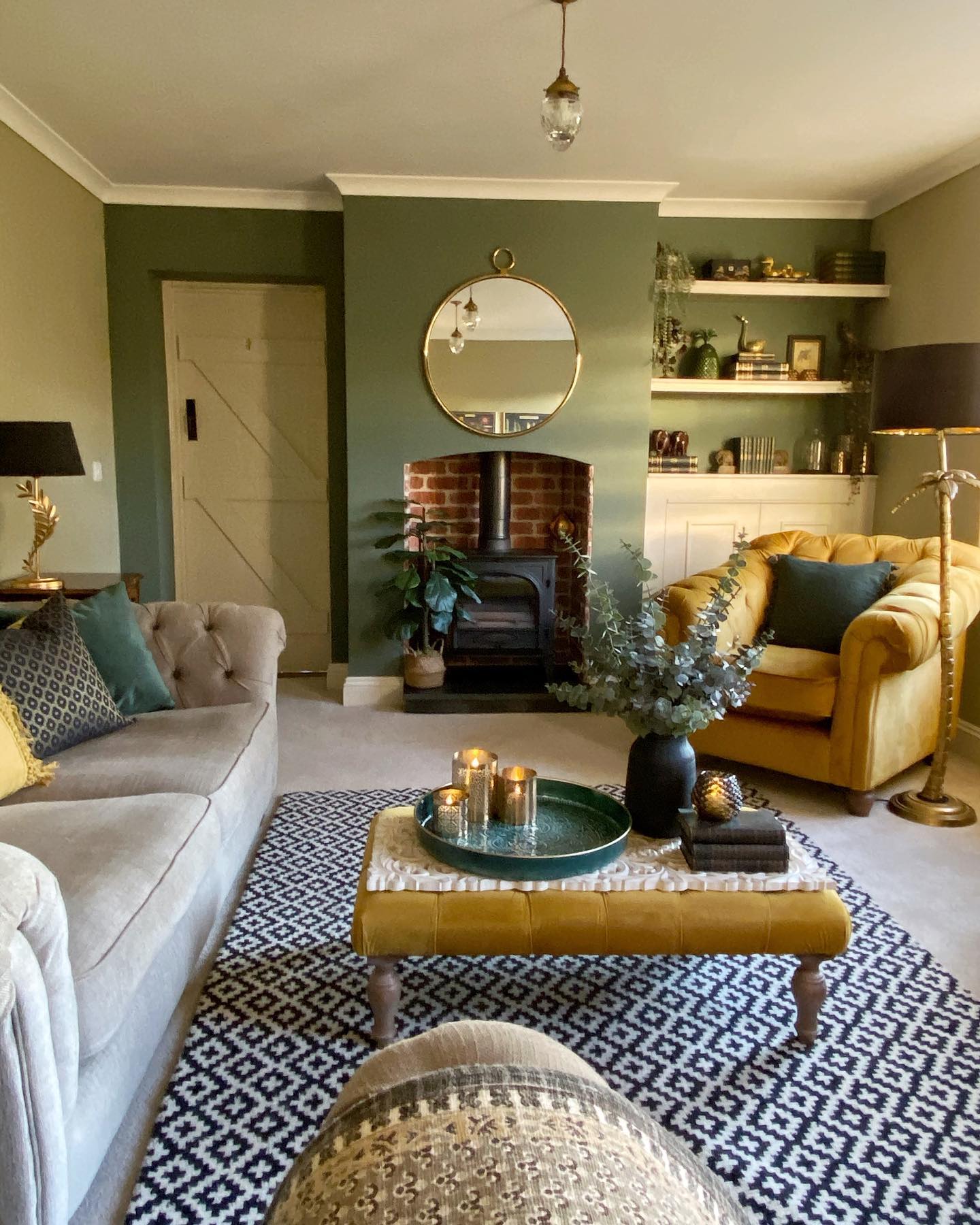
Sage walls give this cottage living room a gentle backdrop, while a mustard armchair and matching ottoman create a warmer center. The gray sofa keeps the larger seating area neutral, and green pillows connect it to the walls.
A patterned rug introduces contrast below the furniture, balancing the simple painted surfaces above. To try this combination, use green as the background color and reserve mustard for one or two upholstered pieces.
Repeat each shade once more in a small accessory so neither feels isolated. The round mirror above the stove softens the straight lines of the chimney and nearby shelves.
Keep practical surfaces available by placing a tray on an ottoman, while leaving enough uncovered space for its everyday use.
9. Use One Green Wall to Connect Everyday Furniture
Credits: Instagram
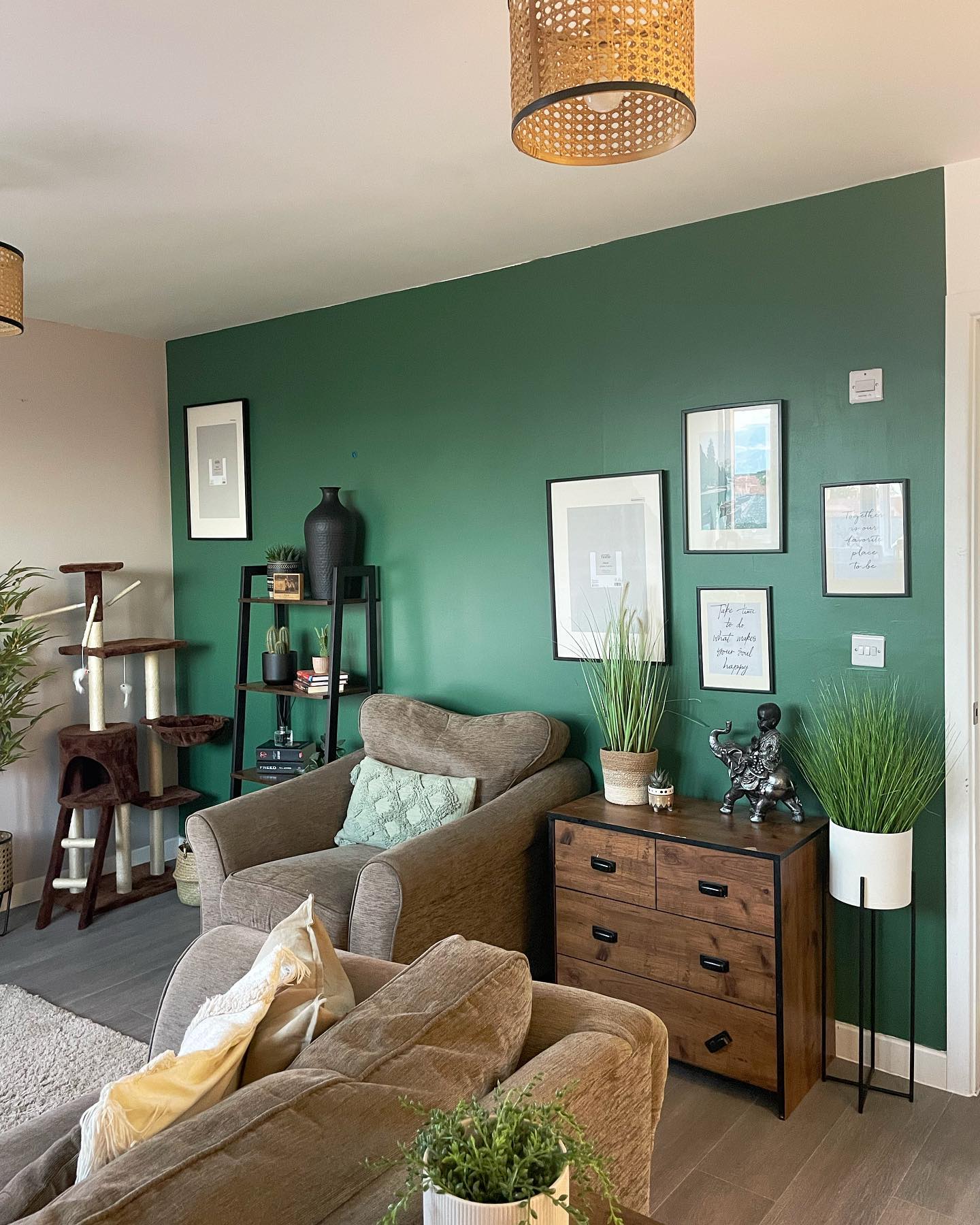
A single green wall brings cohesion to this living room without requiring matching furniture. The neutral armchair, darker shelving, and warm brown drawer unit each keep their own character, while black frames repeat across the wall and storage pieces.
A small pale green pillow makes a direct connection between the seat and the backdrop. This is a practical starting point if you are keeping most of your existing furnishings.
Choose a wall that already holds a seating group, then test green samples beside the upholstery and floor. Arrange artwork with consistent spacing, but allow different sizes to avoid a rigid effect.
The varied plant heights add another layer, while the clear areas of wall keep the display from feeling crowded.
10. Mix Emerald Walls With Gold and Blush Accents
Credits: Instagram
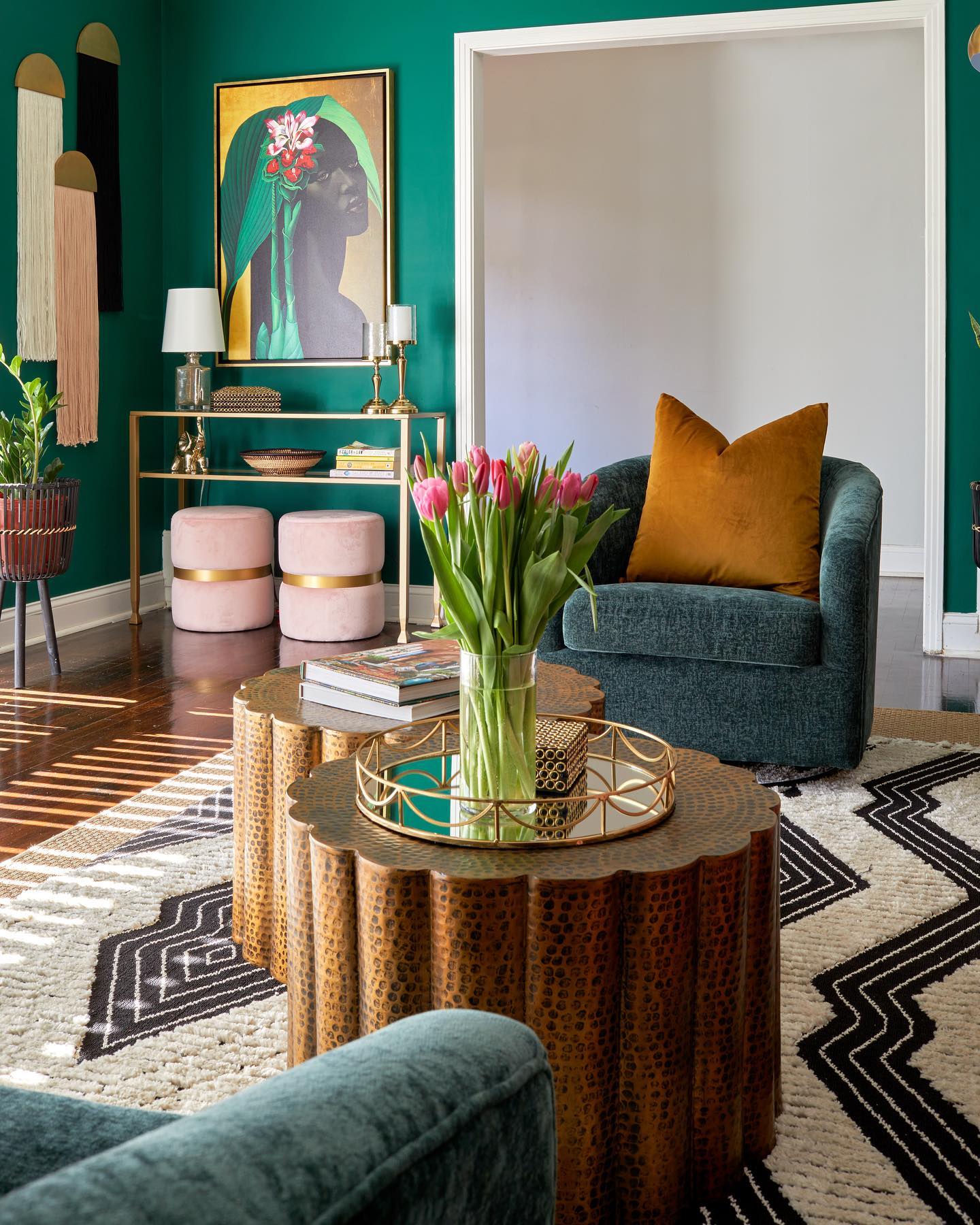
Emerald walls establish a vivid backdrop for this seating area, with darker green upholstery adding depth at the center.
Gold tones repeat across the console, picture frame, tray, and sculptural tables, while blush stools and pink flowers introduce a softer accent. The pale doorway and patterned rug provide relief between the saturated surfaces.
To use a similar palette, choose green for the largest color areas, then limit the supporting shades to a small, repeated group. Curved furniture shapes can soften a room with strong rectangular openings.
Here, the rounded chair and scalloped tables provide that contrast. Keep accessories grouped on a tray or shelf so the metallic details read as intentional accents rather than a collection scattered throughout the room.
11. Ground a Colorful Gallery Wall With Forest Green
Credits: Instagram
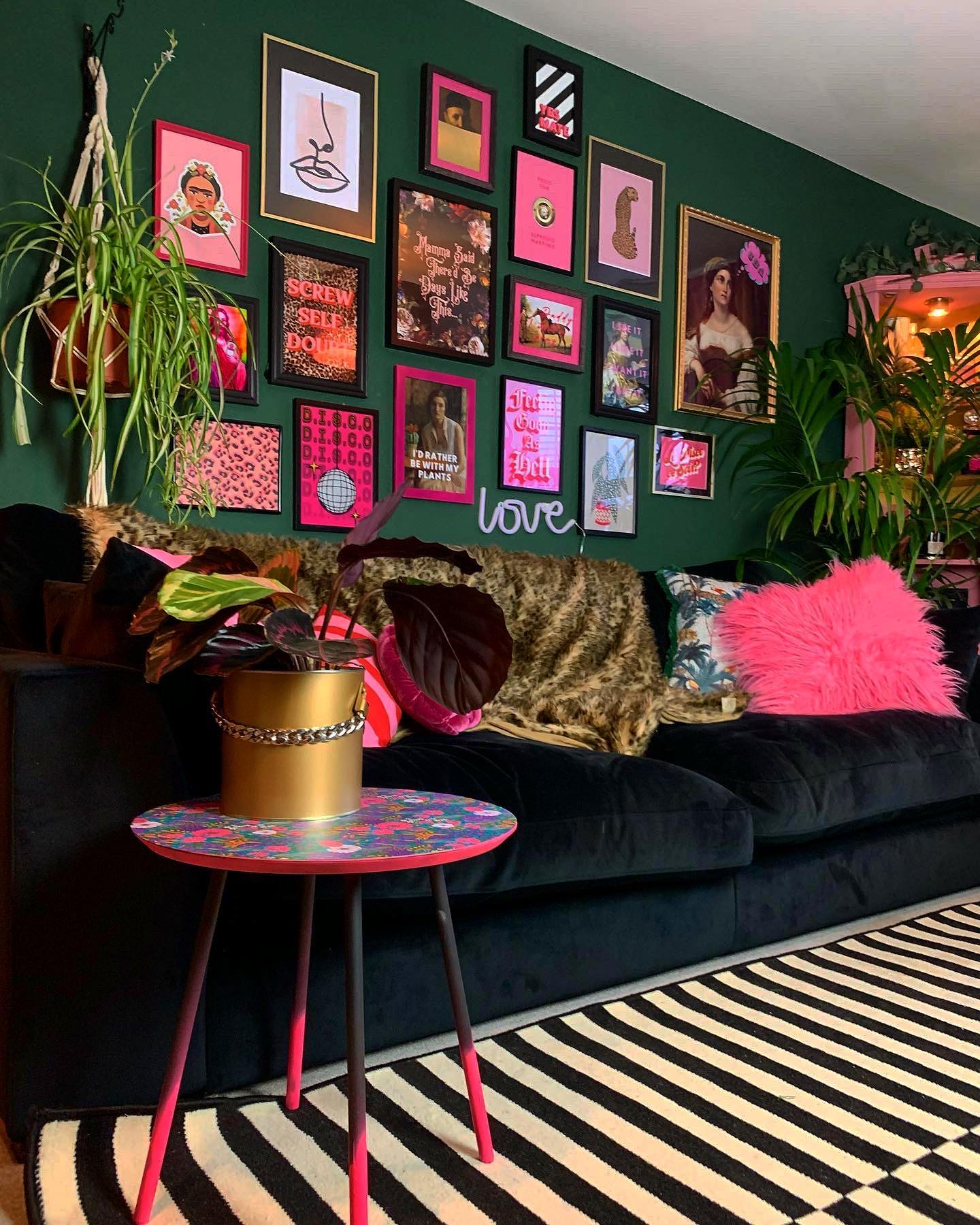
Forest green gives this gallery wall a consistent background for an energetic mix of pictures and frames. Pink appears repeatedly in the artwork, pillows, and nearby cabinet, helping the varied collection feel connected.
A dark sofa supports the display, while a striped rug introduces a simpler graphic pattern below. If you enjoy collecting art, choose a wall color that works with several favorite pieces rather than matching every picture.
Lay out the arrangement before hanging, leaving enough space between frames to show the green. Repeat a bright accent at sofa height so the color does not live only on the wall.
Here, plants and an animal-patterned throw add further layers, while the broad sofa remains a single, steady visual anchor.
12. Layer Olive Textiles Against Sage Paneling
Credits: Instagram
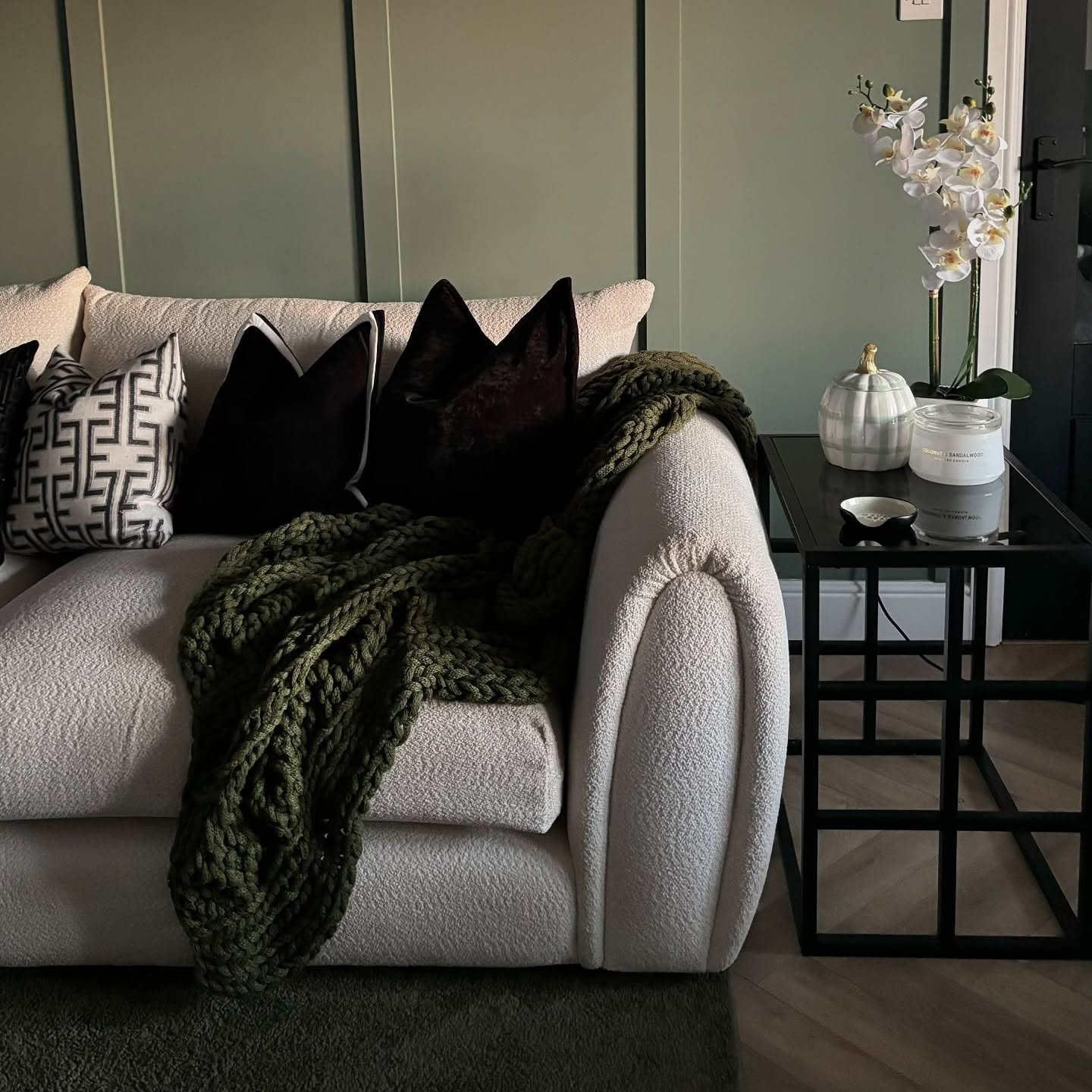
A chunky olive throw introduces a deeper green against this pale sofa and sage paneled wall. Black pillows, a graphic cushion, and a dark side table sharpen the softer colors, while the white orchid echoes the upholstery.
This close view is a useful reminder that a green living room can depend on texture as much as paint. Begin with a muted wall color, then add a darker green textile that you can move or replace easily.
Compare the throw with your sofa fabric so the textures look deliberately different. Keep the tabletop edited, leaving space for a cup or book.
The simple panel lines provide structure behind the rounded sofa arm without requiring extra artwork or a busy wallpaper pattern.
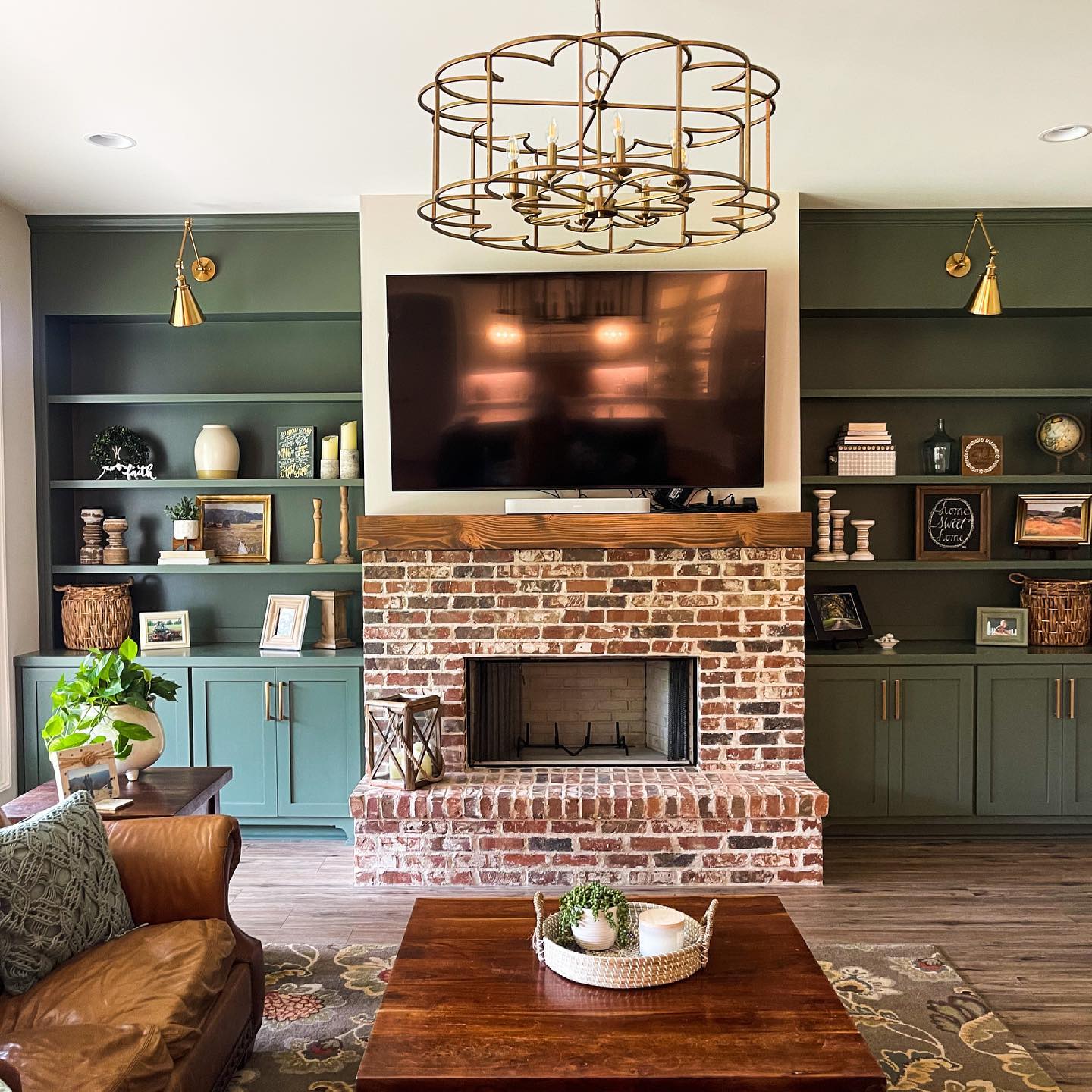
13. Frame a Brick Fireplace With Green Built-Ins
Credits: Instagram
Green shelves and lower cabinets give this fireplace wall a strong frame. The exposed brick and broad brown mantel bring warmer tones into the center, while gold-toned lights and cabinet handles connect the two sides.
Open shelves hold a mixture of framed pictures, books, baskets, and decorative objects, with visible gaps between groupings. If you are adding green storage, think about the whole wall before arranging individual shelves.
Repeating the same cabinet color on both sides creates continuity, even when the objects differ. Let the fireplace material supply a second texture rather than covering every surface with paint.
The photograph also shows how a green pillow can carry the built-in color forward into the seating, linking architecture and furniture together.
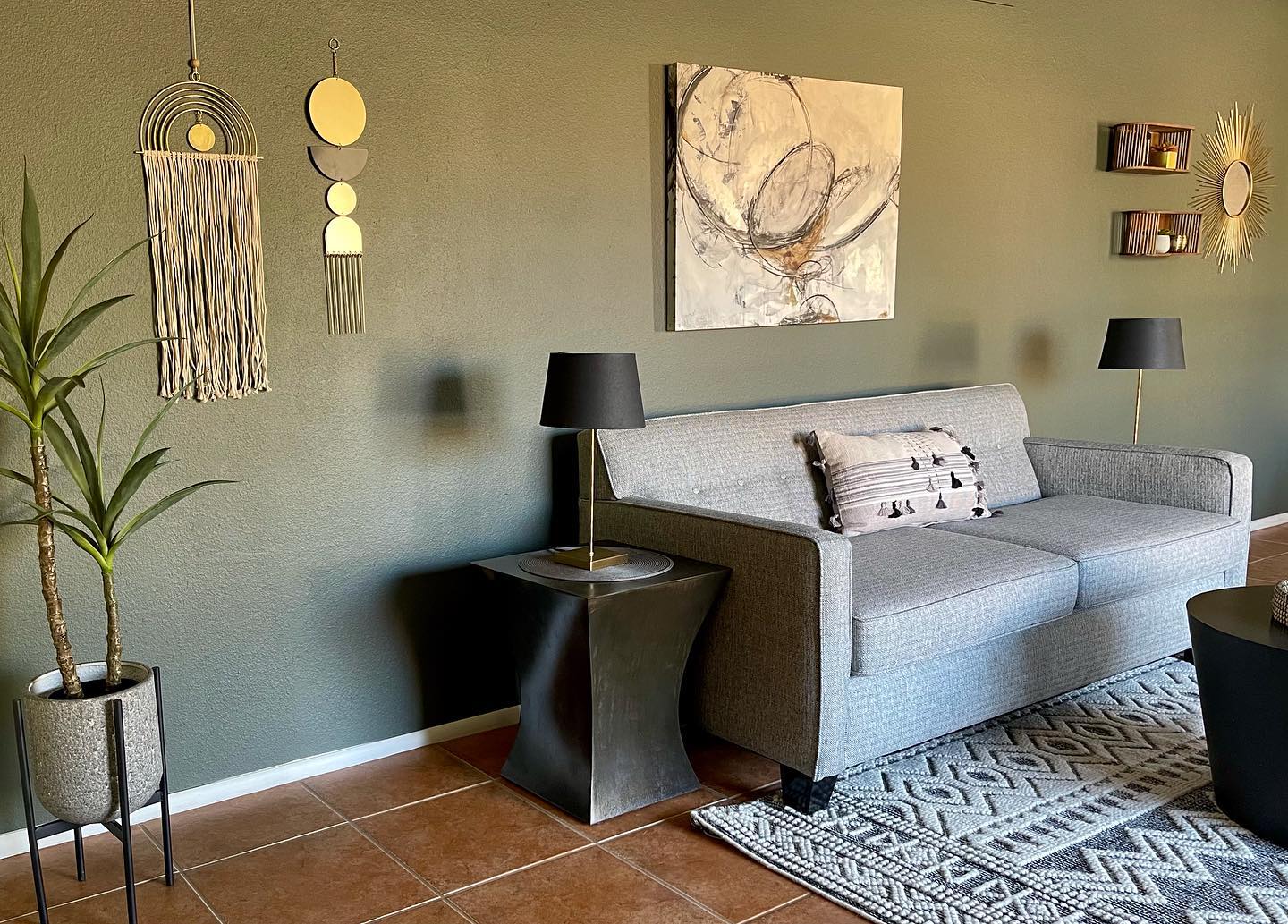
14. Give a Gray Sofa an Olive Green Backdrop
Credits: Instagram
Olive green walls make a straightforward gray sofa feel more distinctive in this living room. Black lampshades and dark tables repeat a clear accent, while gold-toned wall decorations add lighter points against the paint.
The warm floor color keeps the overall palette from becoming entirely cool. This combination is useful when your sofa is staying but the room needs a stronger identity.
Test green samples beside the upholstery, checking them with both natural light and your evening lamps. Choose artwork that includes some of the sofa's neutral tones so it belongs to the same composition.
The photograph leaves plenty of green visible between the decorations, allowing the wall color to do the work without requiring a dense arrangement of objects.
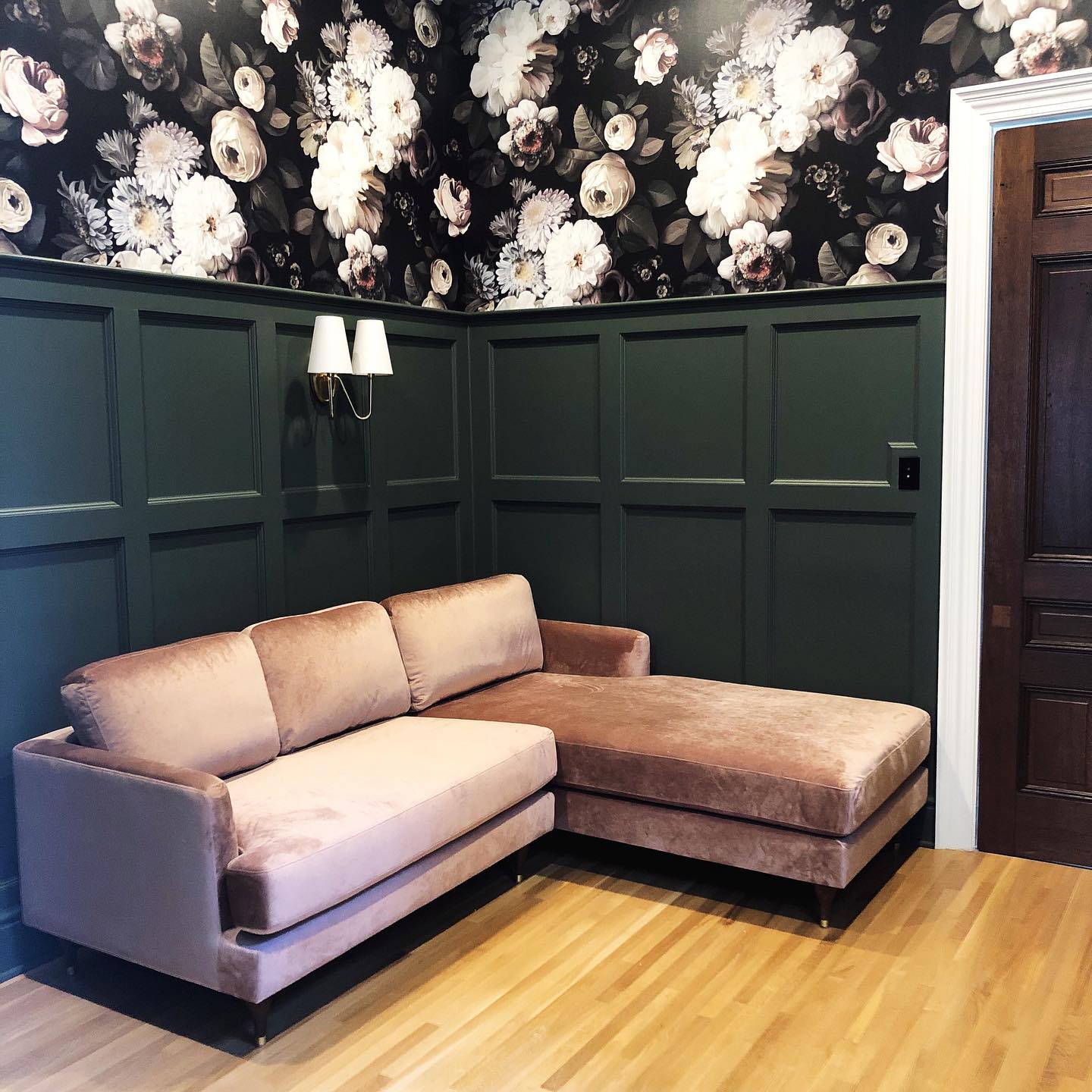
15. Set Pink Seating Against Deep Green Paneling
Credits: Instagram
Deep green wall panels provide a structured base beneath the oversized floral wallpaper in this sitting area. The pink chaise sofa picks up the softer flower colors, while the dark door relates to the wallpaper's background.
A white door frame and pale wall light introduce small breaks in the deeper palette. To adapt this look, start with a floral pattern you enjoy, then pull a subdued green from its leaves for the lower walls.
Keep the sofa simpler than the wallpaper so the shapes remain readable. Plan the panel height with the furniture in place, checking how the dividing line sits above the back cushions.
The clear floor area shown here also gives the patterns and saturated colors breathing room.
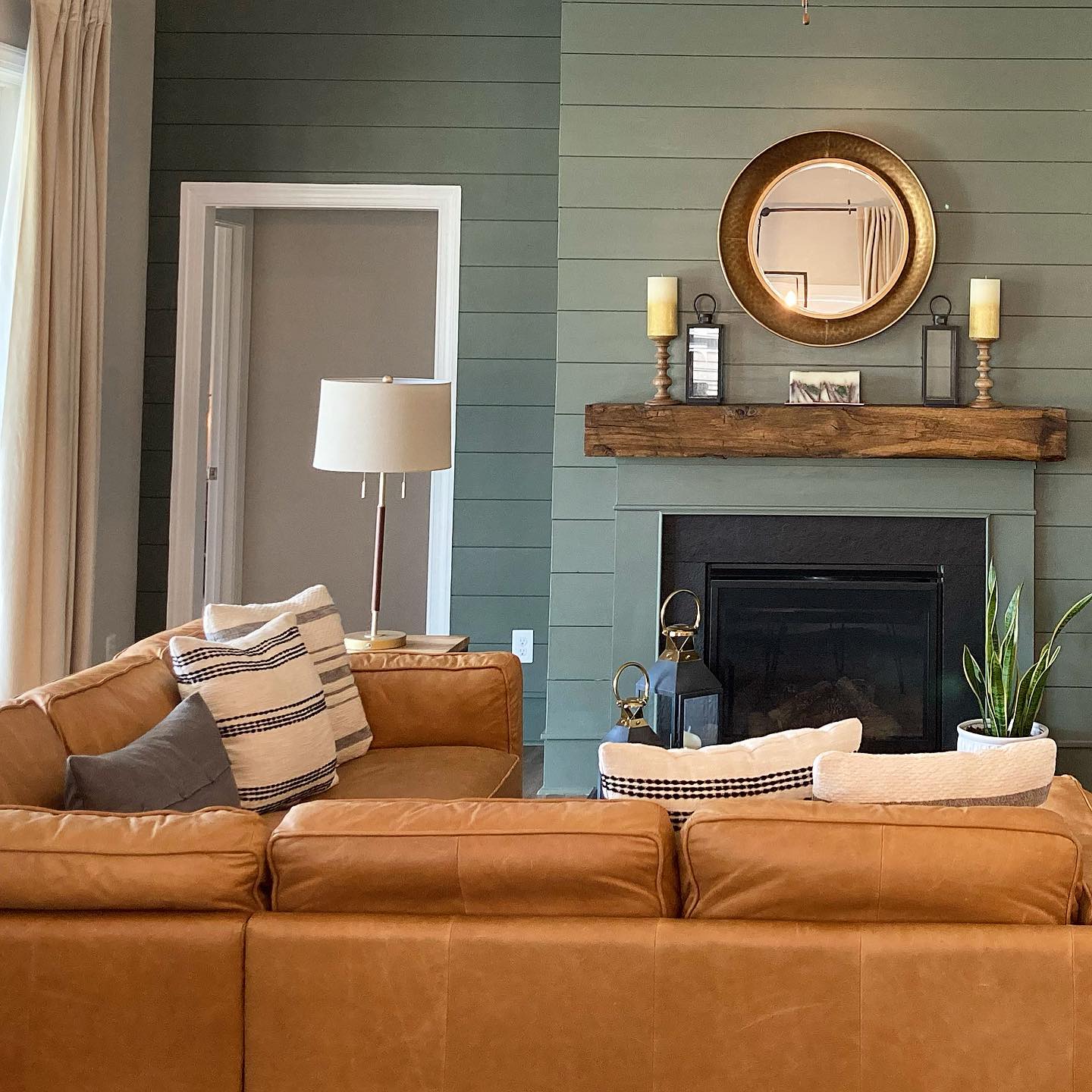
16. Bring Green to a Paneled Fireplace Wall
Credits: Instagram
Muted green horizontal paneling draws attention to the fireplace in this living room, while the brown mantel and tan seating add warmth. A round mirror interrupts the straight panel lines, and pale curtains echo the lighter doorway trim.
The color is concentrated on one architectural surface, making it easy to understand from the seating area. If you want to try this idea, choose a green that relates to an existing furnishing rather than introducing a separate palette.
Repeat a dark accent in the fireplace opening, lanterns, or lamp details to create continuity. Keep the mantel arrangement low enough that the mirror remains visible.
This room uses paired objects for balance, with a small picture occupying the center beneath the mirror.
17. Pair an Olive Sofa With Exposed Brick
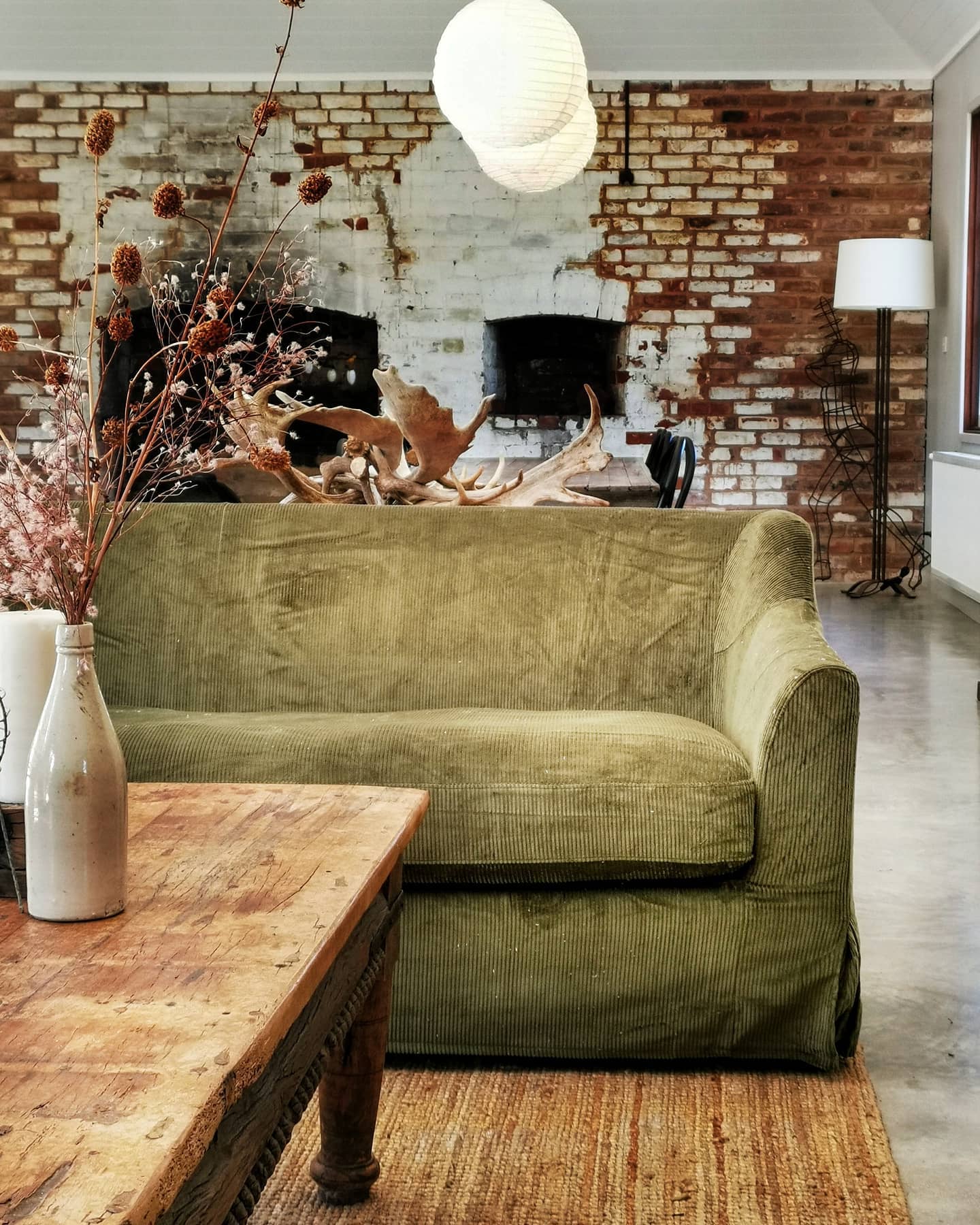
Credits: Instagram
An olive sofa brings a soft block of color into this room of exposed brick, pale walls, and brown furniture. Its ribbed upholstery adds a fine texture that contrasts with the irregular brickwork and worn-looking tabletop.
The large white pendant keeps the upper part of the view simple, while branches and sculptural objects reinforce the earthy palette. Consider this approach when your room already has strong architectural texture.
Choose one green upholstered piece with a clear silhouette, then let the surrounding surfaces remain visible. You do not need to match every green exactly; the photograph relies on the sofa as its main color statement.
A restrained arrangement of vases on the table leaves room to appreciate both shape and surface.
18. Make Olive Upholstery the Main Color Statement
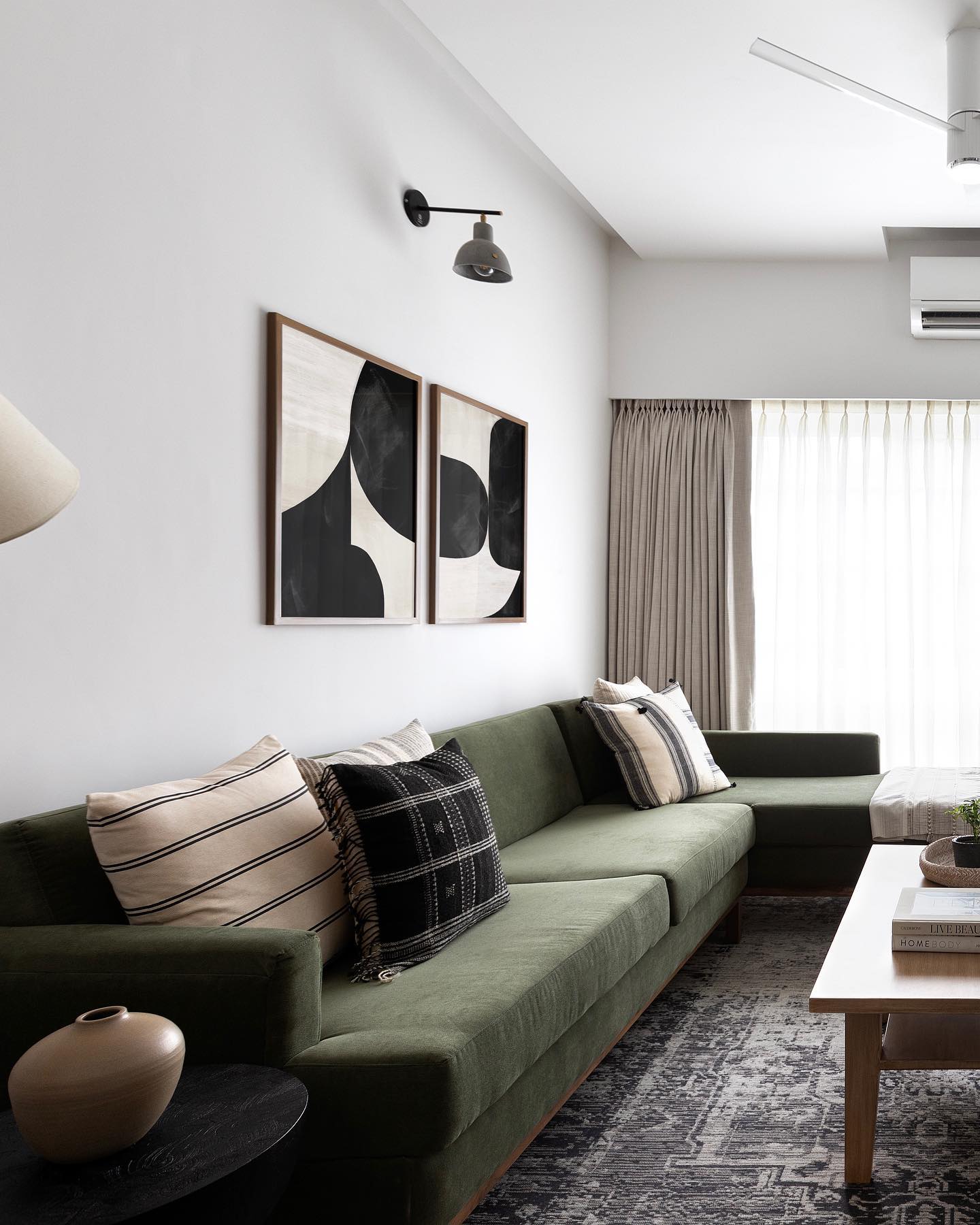
Credits: Instagram
The olive sectional supplies almost all the color in this otherwise restrained living room. White walls, pale curtains, and a gray patterned rug give the long seat a quiet setting.
Black-and-white artwork and striped pillows repeat a simple graphic theme without introducing another strong hue. This is an approachable option if you prefer neutral surroundings but want more character from your largest piece of furniture.
Compare green upholstery samples with the rug and curtains before buying, particularly if your neutrals have different undertones. Keep the wall art aligned with the seating group, and choose pillows that vary in pattern scale.
The light coffee table provides contrast beside the darker sofa, while a small side table adds another surface within reach.
19. Keep a Large Green Sectional Visually Grounded
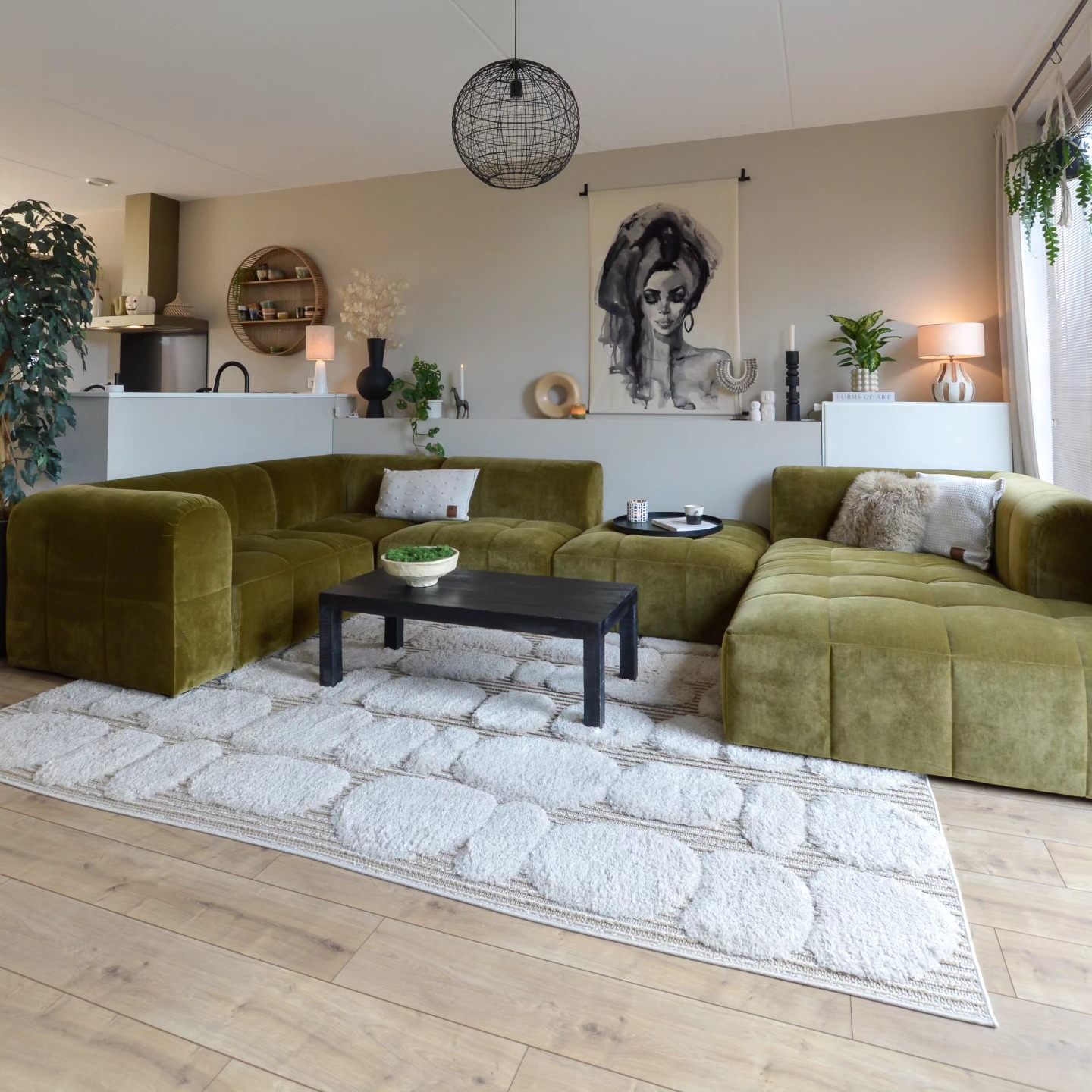
Credits: Instagram
A broad olive sectional becomes the focal point of this open living area. Its rounded edges and tufted surfaces are balanced by a simple black coffee table, pale rug, and long white storage units behind it.
Only a few pillows interrupt the green, allowing the upholstery to read as one continuous color statement. If you are considering a similarly large seat, mark its footprint on the floor and check the paths around it before ordering.
Keep nearby storage and tables relatively simple so the furniture does not compete for attention. The photograph repeats black in the pendant, artwork, and small accessories, connecting the table to the rest of the room. A light floor and rug help define the sectional's outline.
20. Connect Brown Seating With a Dark Green Wall
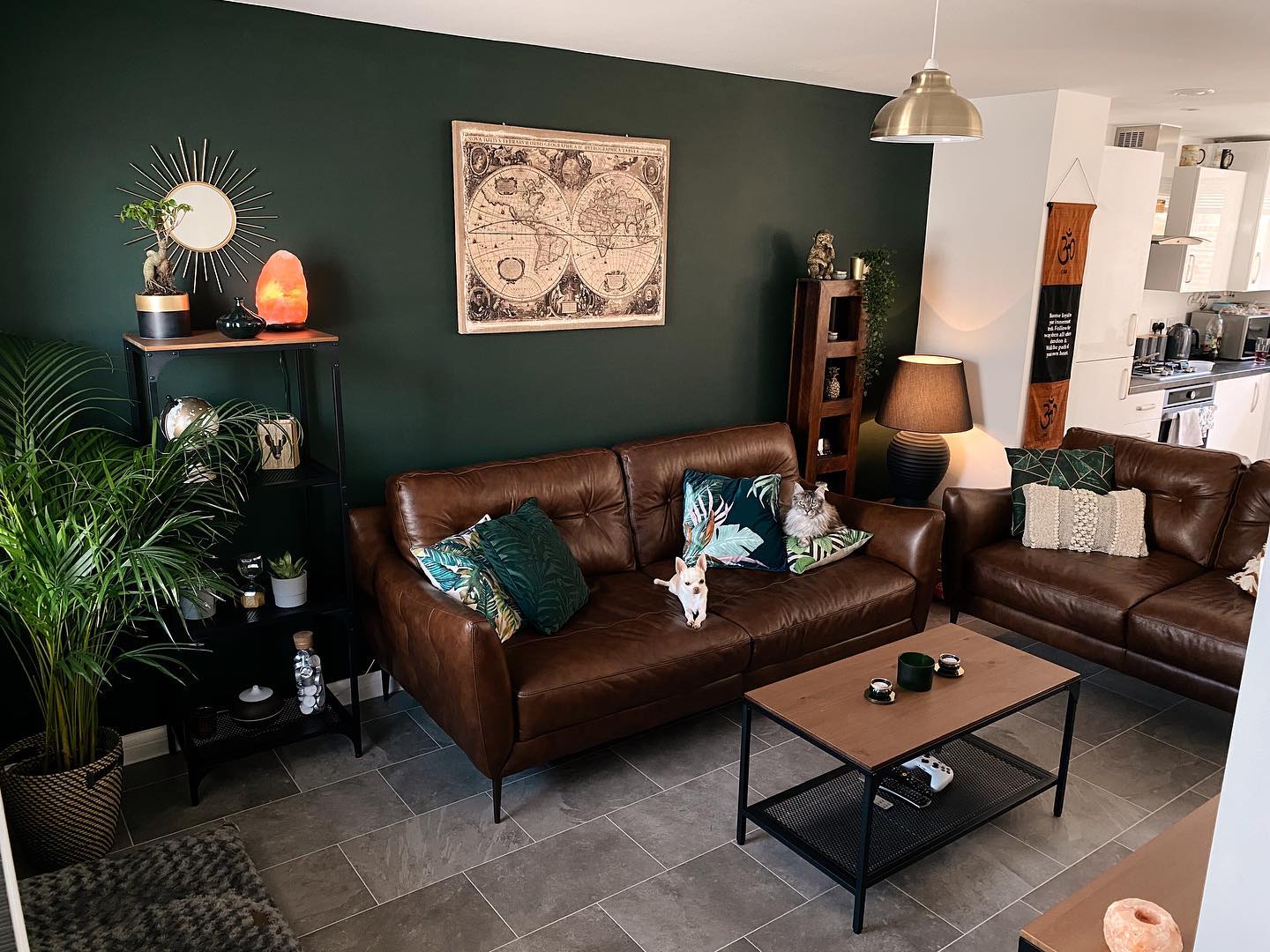
Credits: Instagram
A forest green wall gives these brown sofas a strong backdrop while defining the living area beside the white kitchen.
Leaf-patterned pillows repeat the wall color at seat height, and darker shelves frame the main sofa without covering the entire surface. A simple rectangular coffee table leaves the wall and upholstery as the main features.
This is a useful palette if you already own brown furniture and want a change through paint and accessories. Compare several greens beside the sofa, since a yellow undertone will create a different effect from a cooler shade.
Keep the artwork large enough to relate to the seating below. Here, the pale map print and gold-toned mirror add contrast while preserving generous areas of green.