
Vintage rooms can feel cluttered when every chair, fabric, and accessory competes for attention. These Vintage Living Room Ideas show how to let distinctive pieces stand out while giving the rest of the room a quieter role.
Balance patterned chairs with plain curtains, use painted shelves to frame a fireplace, or build a reading corner around a wing chair and lamp.
Other arrangements pair a retro pattern with a solid sofa or anchor mixed furniture with a quiet rug. The result is a practical way to make varied vintage finds feel connected without making them match.
1. Turn a Canopied Daybed Into a Focal Point
Credits: Instagram
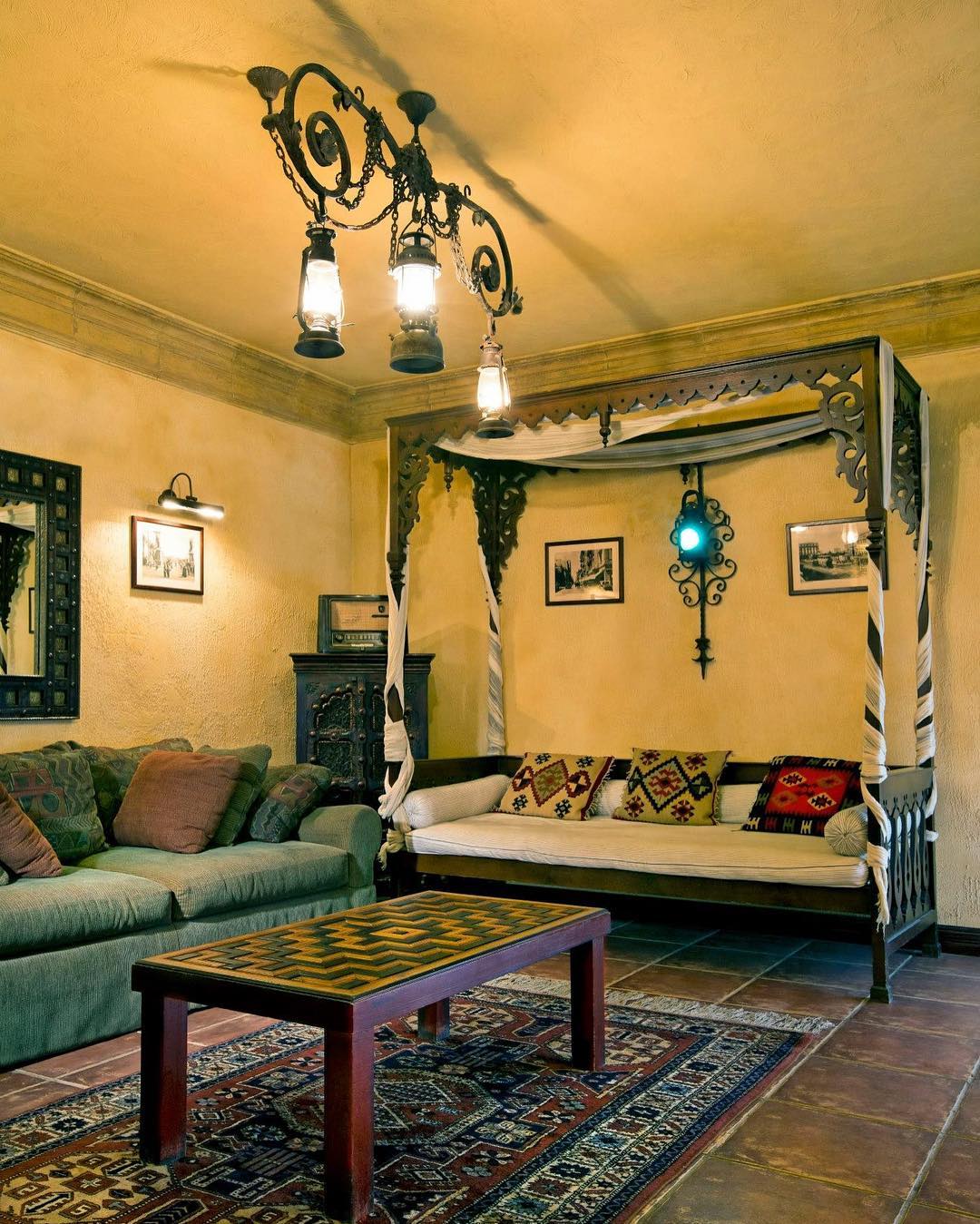
A tall canopied daybed gives this golden living room an unmistakable focal point. Its tall posts and fabric panels frame a row of patterned cushions, while the neighboring sofa keeps the seating arrangement conversational.
A rectangular coffee table and the rug connect the two pieces at floor level. To borrow the idea, choose one furniture silhouette with enough presence to anchor the room, then repeat a few of its colors nearby.
The blue wall light and colorful pillows show how small accents can enliven an earthy palette. Keep the space beneath the canopy visually simple so its outline remains readable.
If your room is smaller, a decorative daybed back or substantial framed textile can provide a similar sense of enclosure.
2. Balance Patterned Chairs With Plain Curtains
Credits: Instagram
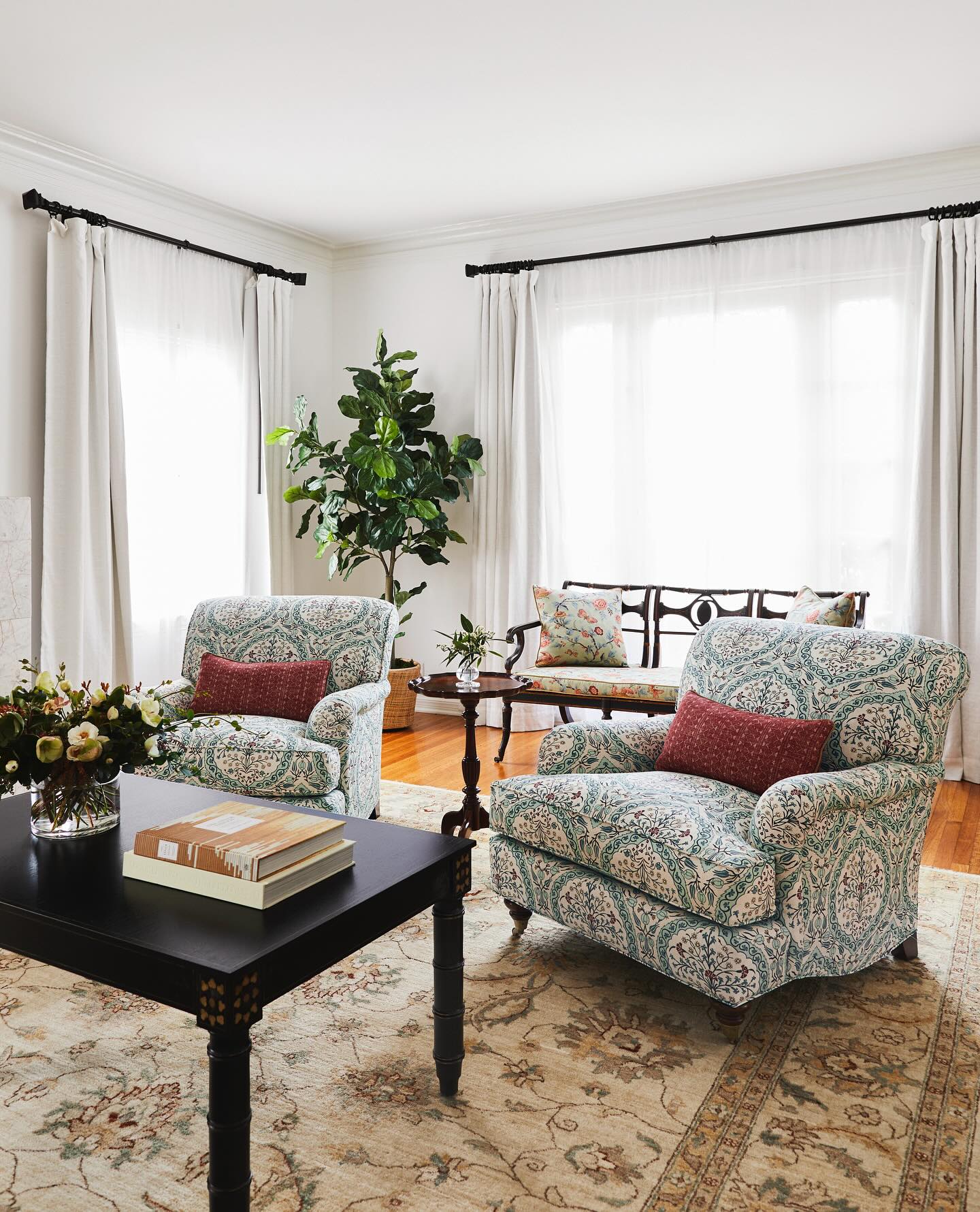
Two generously patterned armchairs bring a collected feeling to this light living room. Their rounded arms and backs sit comfortably beside a dark coffee table, a delicate pedestal table, and an open backed bench.
Plain white curtains give all those distinctive shapes and prints a quiet background. This is a useful strategy when several vintage pieces need to share one space: let the furniture provide variety while the largest fabric surfaces stay simple.
A muted rug connects the chairs without copying their pattern exactly. Deep red pillows add a second color in small doses.
Before buying another patterned piece, stand at the doorway and check whether each existing shape still reads clearly. Leave enough open floor visible between furniture legs.
3. Give a Fireplace Two Different Neighbors
Credits: Instagram
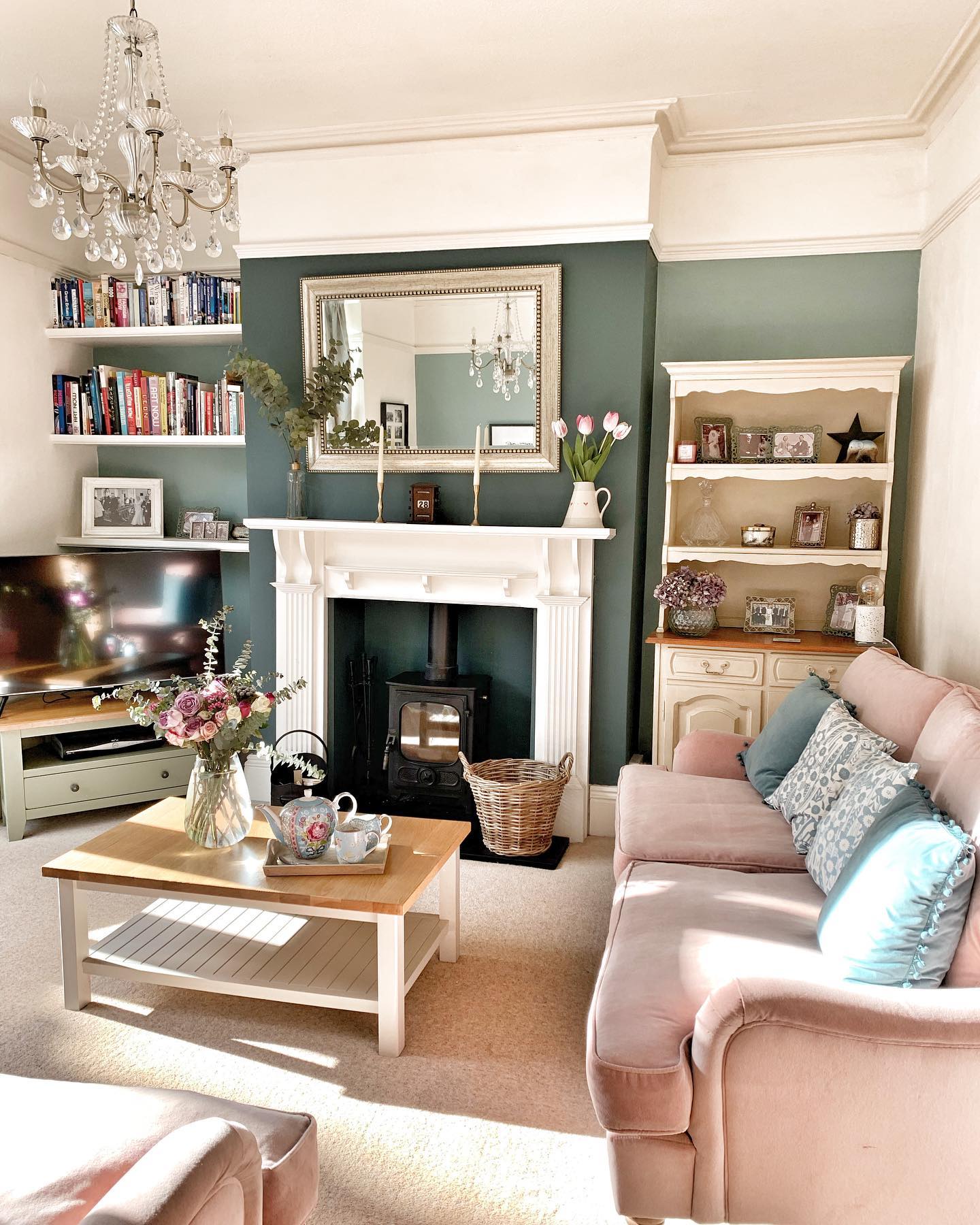
A fireplace can organize a vintage living room without requiring identical furniture on both sides. Here, open bookshelves occupy one alcove while a pale display dresser fills the other.
The white mantel and large rectangular mirror connect those different arrangements, and the green wall colors create a shared backdrop. A pink sofa softens the composition without hiding the architectural center.
Try this approach when you already own useful pieces that do not match. Compare their height and visual weight, then use books, pictures, or small objects to balance the overall view.
Keep the mantel arrangement restrained if the adjacent shelves are busy. A simple coffee table leaves breathing room in front of the sofa and gives the eye somewhere calm.
4. Build a Reading Corner Around a Wing Chair
Credits: Instagram
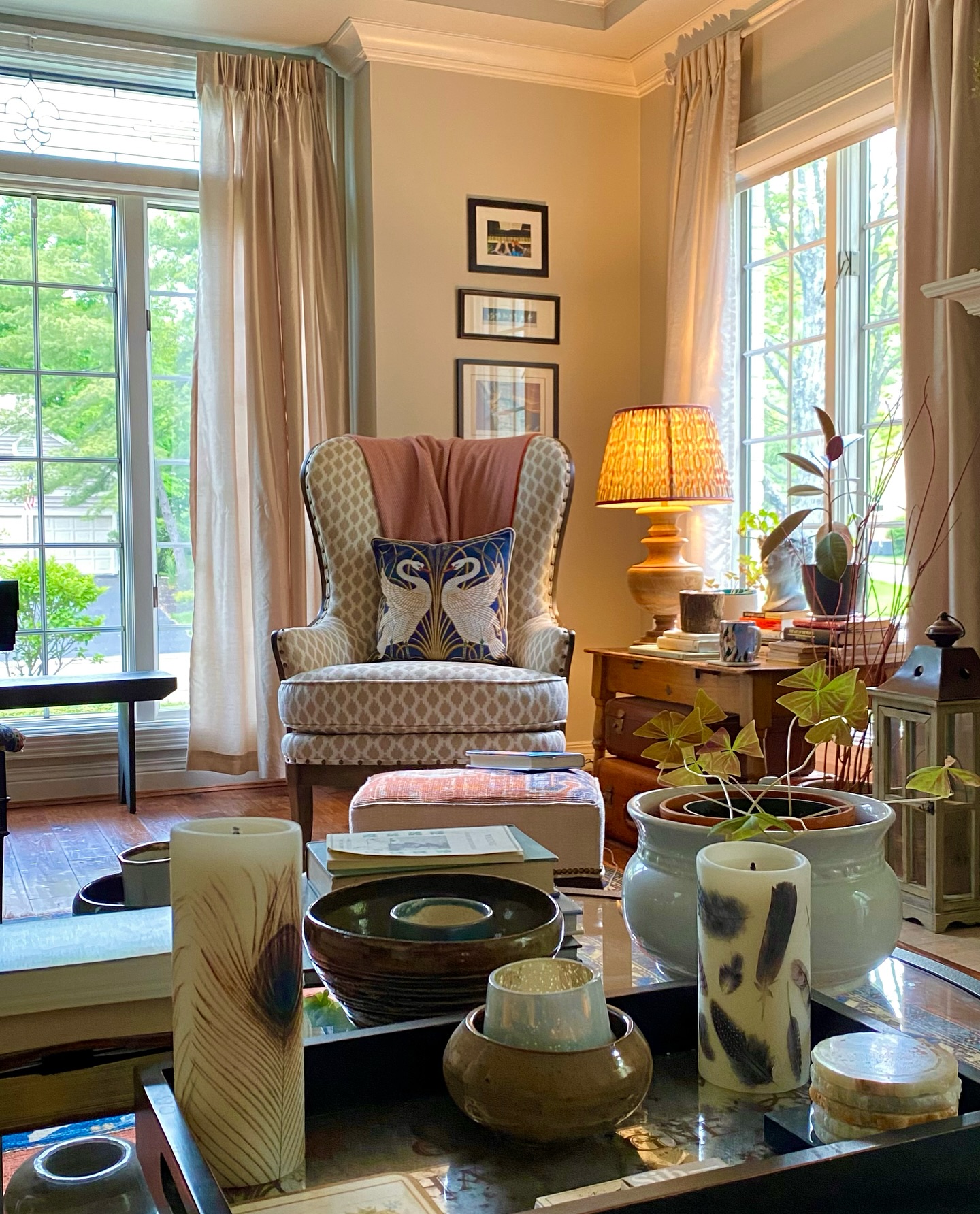
A patterned wing chair, a shaded lamp, and a window create the foundation of this inviting reading corner. The surrounding books, plants, and small ceramic pieces make it feel personal, while the blue pillow and patterned rug introduce deeper color.
Notice how the little footstool sits close to the chair rather than interrupting the route toward the window. Start your own version with a comfortable chair and a table that puts a drink within easy reach.
Add a lamp at a useful reading height, then bring in a few objects you actually enjoy handling. Leaving the curtains plain helps the smaller patterns remain distinct.
Keep the tabletop arrangement low enough that the window still contributes light to the seating area.
5. Layer Window Treatments Behind a Small Sofa
Credits: Instagram
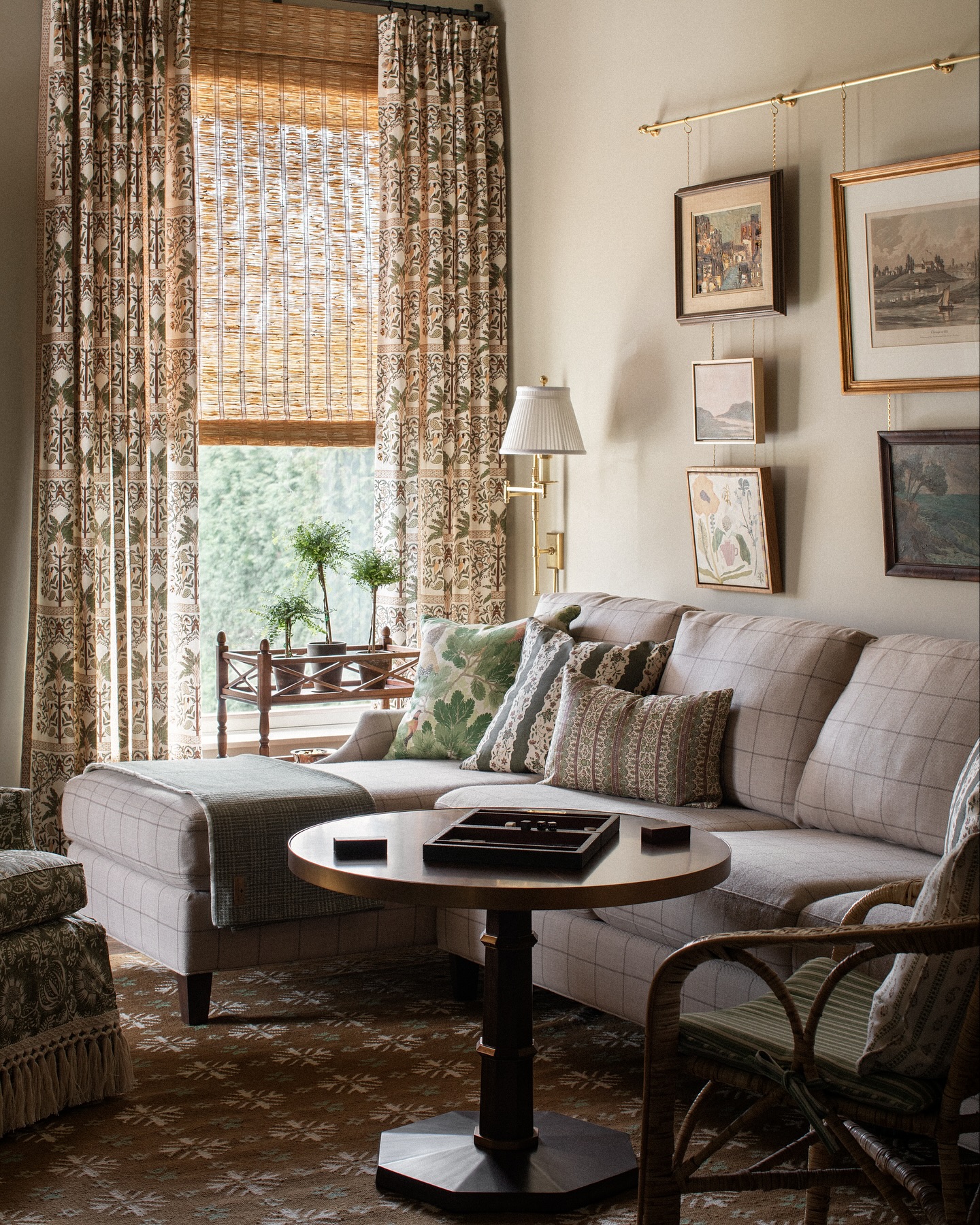
A woven shade and patterned curtains give this compact sitting area depth before the furniture enters the picture. The low sofa carries a quiet check, while a round table offers a contrasting silhouette in front.
Framed art fills the neighboring wall in an informal arrangement, making the corner feel accumulated over time. Use the same layering principle when a vintage living room needs softness around a window.
Start with the practical window covering, then add curtains whose pattern relates to one upholstery color. Keep the sofa fabric quieter if both layers are visually active.
A small round table can fit comfortably beside a chaise shaped seat, but measure the walking route first. Choose artwork sizes that suit the remaining wall.
6. Use Painted Shelves to Frame a Fireplace
Credits: Instagram
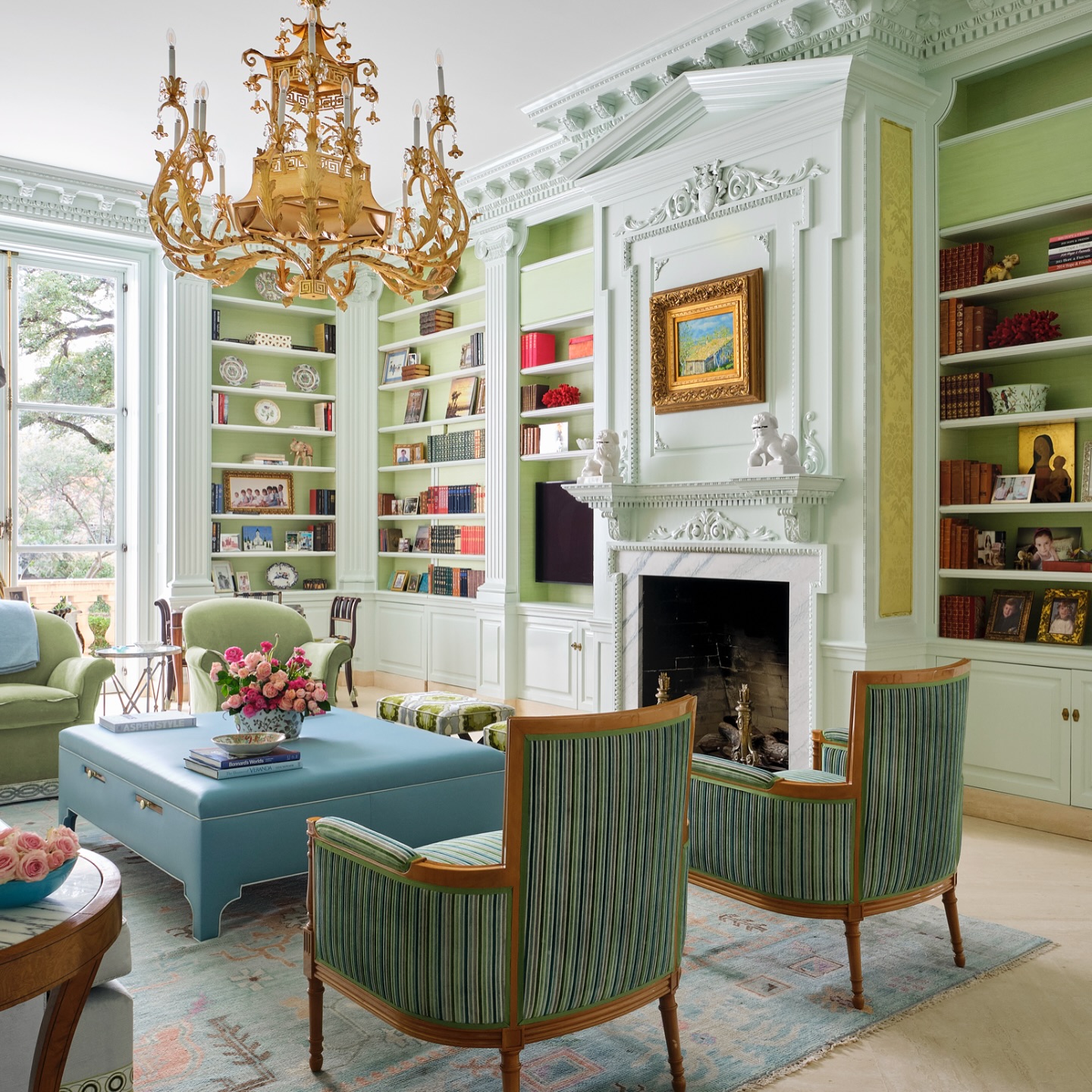
Pale green shelving turns this formal living room into a display for books, objects, and color. White architectural details keep the fireplace prominent, while striped chairs and a large blue ottoman soften the symmetry.
The ornate hanging light introduces another decorative layer without requiring every furnishing to be elaborate. For a similar vintage inspired arrangement, paint the shelf interiors a color that appears elsewhere in the seating area.
Vary the books and objects within each bay, leaving some visible background around them. Position chairs so they face the conversation rather than simply lining the walls.
An upholstered ottoman can anchor the grouping; add a stable tray when you need a surface for drinks. Keep taller displays away from the mantel.
7. Let an Arched Window Shape the Room
Credits: Instagram
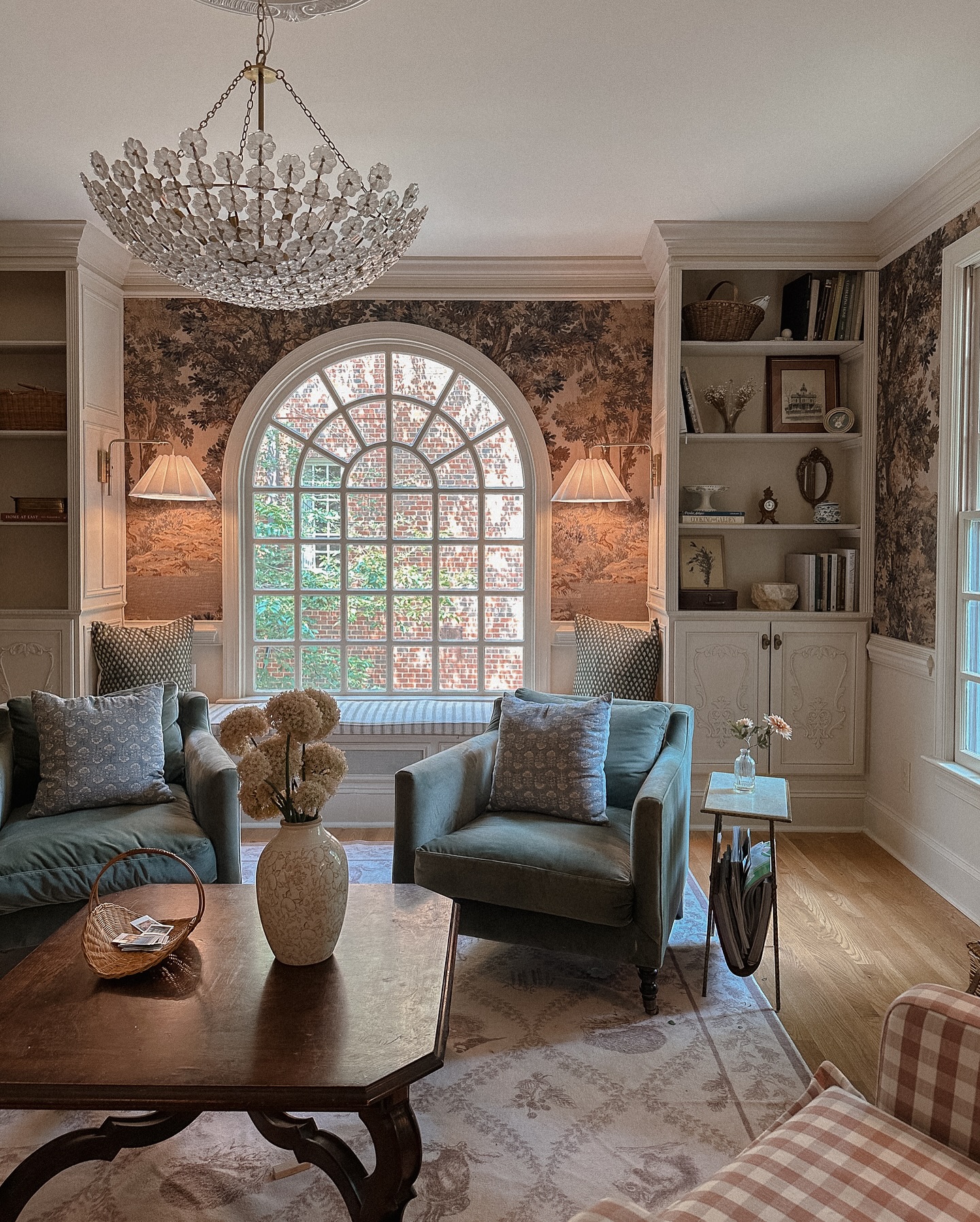
The arched window gives this sitting room its strongest line, and the furniture arrangement lets that shape remain visible. Muted blue seating, a wooden coffee table, and a pale patterned rug form a soft foreground.
Scenic wallpaper and a sparkling chandelier add detail above, while shelves frame the central window. When a room has a distinctive window, begin by keeping its outline clear.
Choose nearby furnishings that sit below the main view, then repeat its curves in one or two smaller pieces. Here, curved table legs provide that connection without competing with the architecture.
Use a restrained upholstery palette when wallpaper already supplies several colors. A window bench can add another seat, provided its height and depth suit the opening.
8. Pair a Retro Pattern With a Solid Sofa
Credits: Instagram
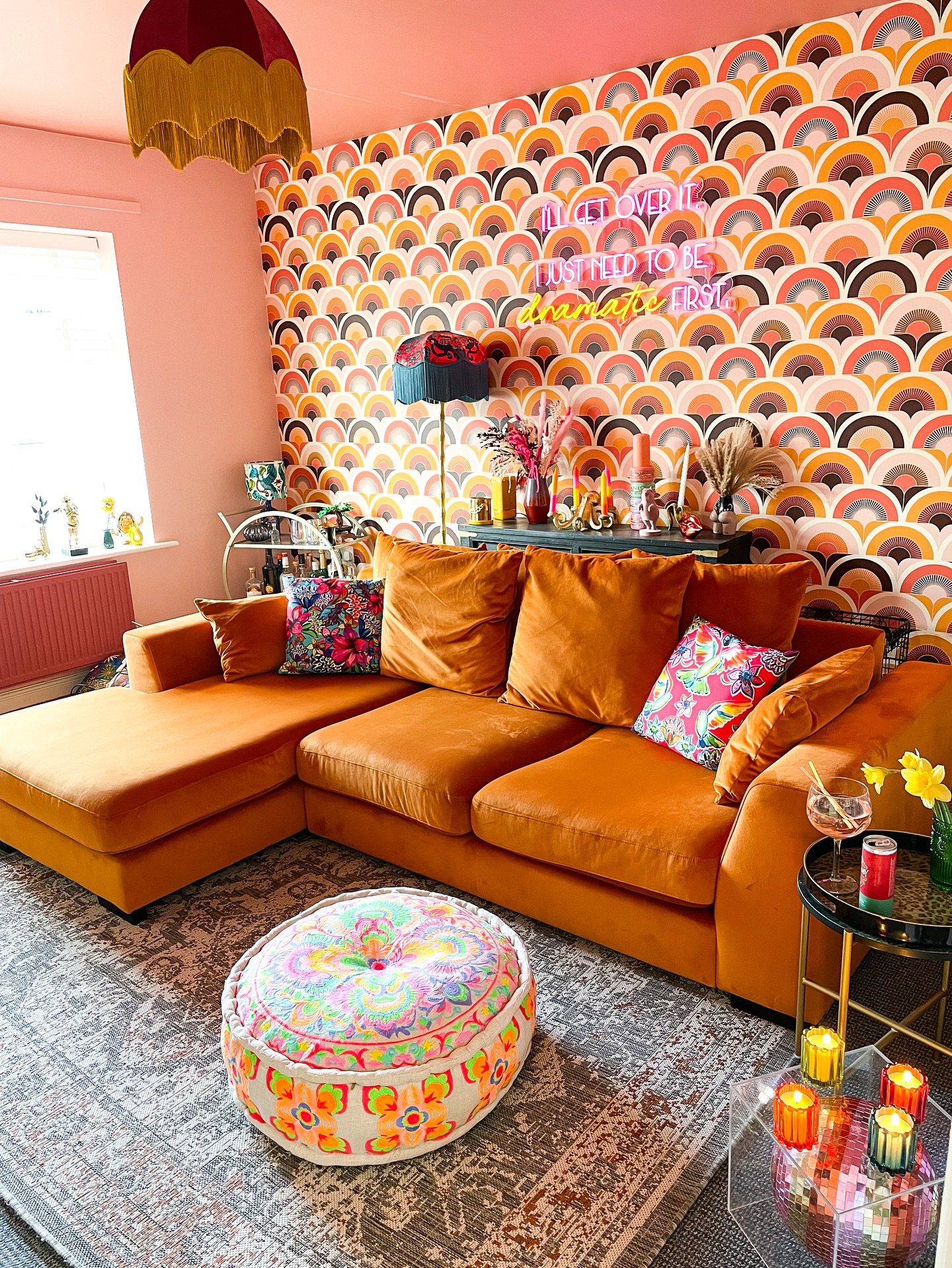
A mustard sectional holds its own against the repeating fan shaped wallpaper in this colorful living room.
Pink walls, a fringed pendant, and a colorful round ottoman extend the playful palette, while the sofa remains a broad area of solid color. That balance makes the many smaller details easier to absorb.
If you want a similarly expressive vintage inspired room, choose one large pattern first and pull your upholstery color from it. Keep the sofa relatively simple in shape so decorative lighting and artwork can provide the flourishes.
A transparent table leaves more of the patterned rug visible. Test the wallpaper and fabric together in daylight before committing, and leave enough clear tabletop space for the room to function comfortably.
9. Bring Handmade Color to a Blue Sofa
Credits: Instagram
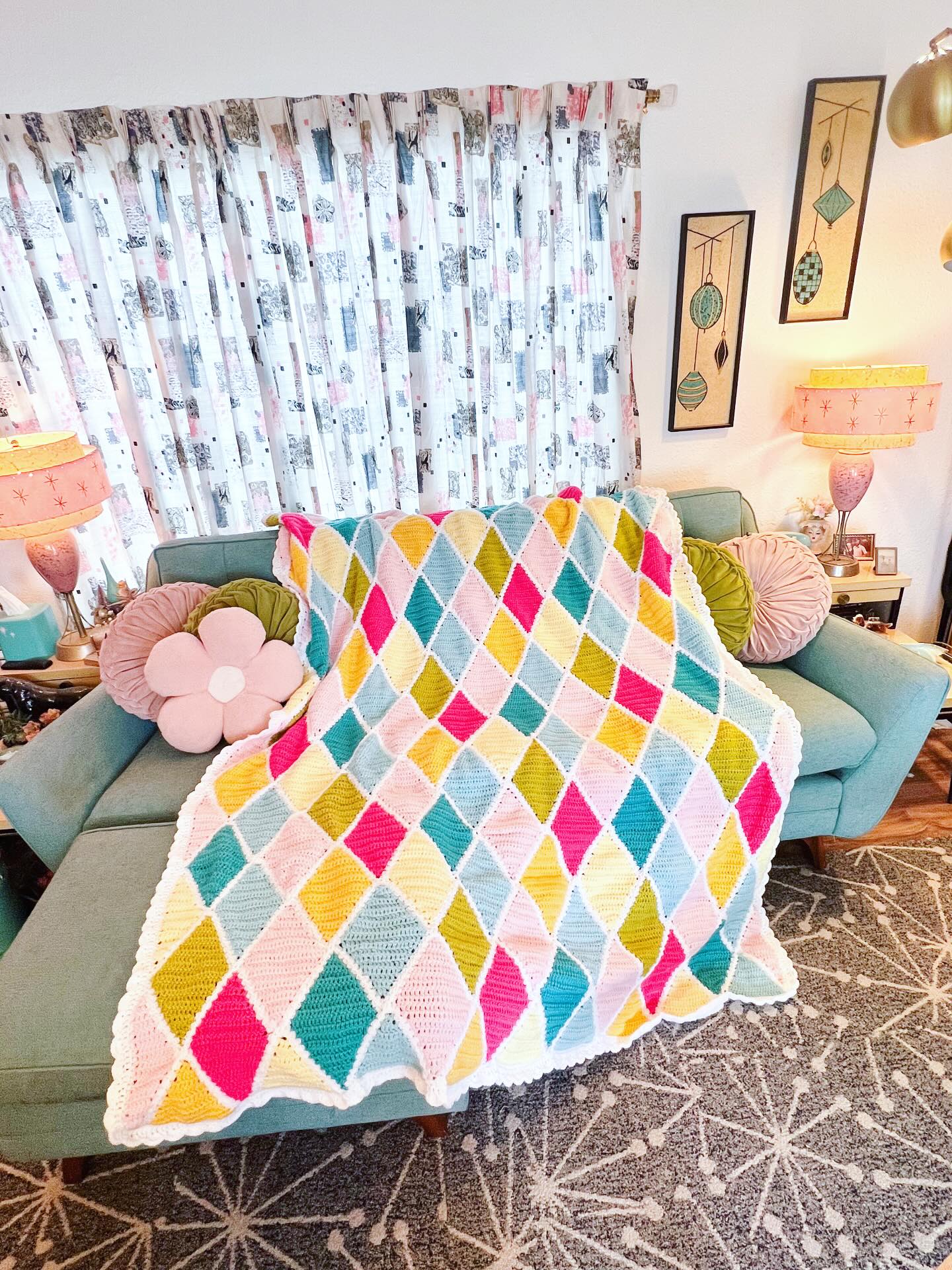
A colorful crocheted blanket transforms the blue sofa in this cheerful sitting area. Its repeated diamonds pick up the pink, yellow, and green accents around the room, connecting the flower shaped cushion with the patterned curtains.
The blanket is the main event, so the sofa provides a relatively simple background. This is an approachable way to introduce vintage character without replacing major furniture.
Choose a handmade or secondhand textile whose colors already relate to something you own, then repeat only a few of them in smaller accessories. Let part of the sofa remain visible so its shape does not disappear.
A patterned rug can join the mix when its colors are quieter. Check textile dimensions before shopping for your seat.
10. Celebrate a Geometric Room Divider
Credits: Instagram
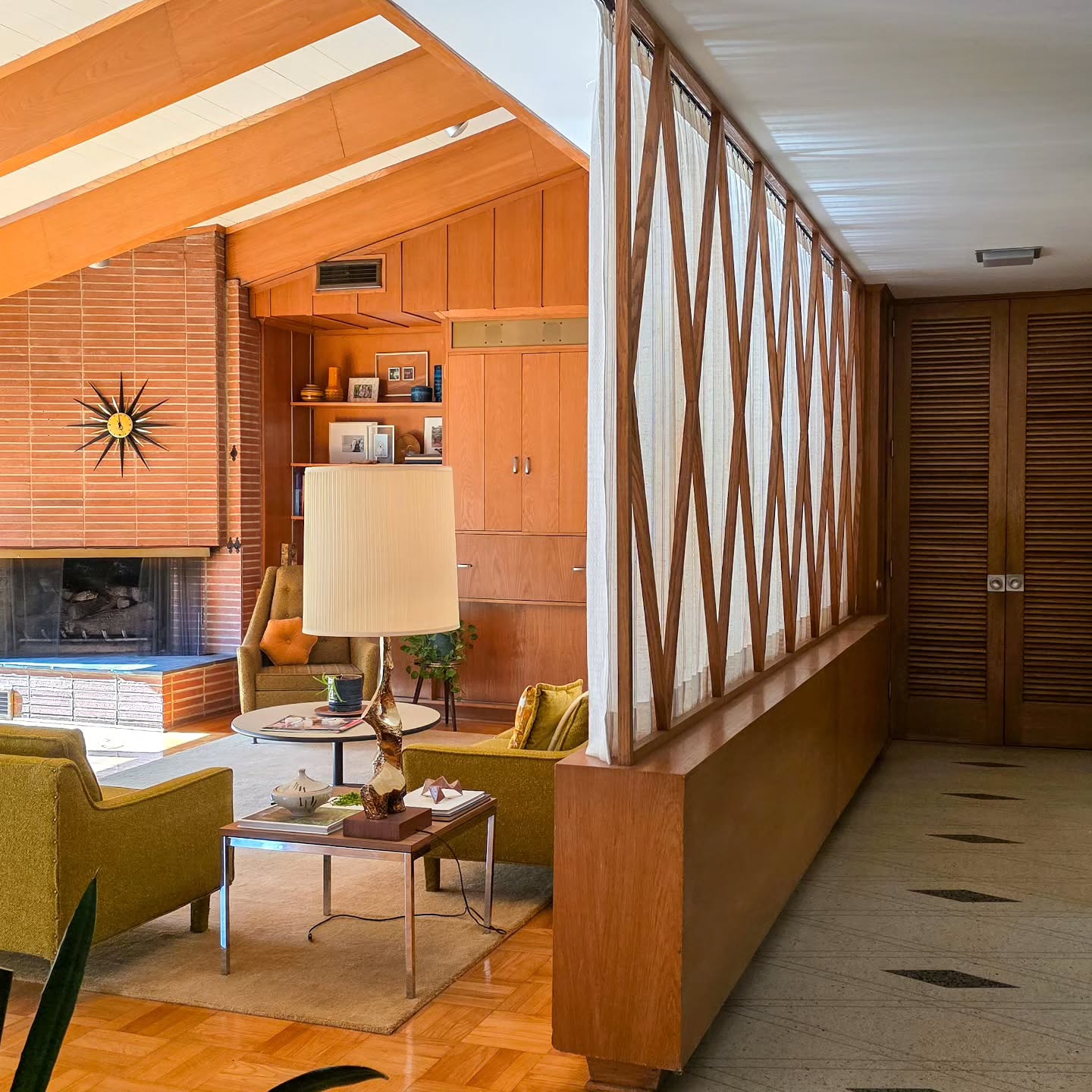
A geometric divider gives this wood toned den a memorable entrance. Its diagonal lines mark the boundary between the hallway and seating area while allowing daylight to filter through textured panels.
Inside, green chairs, a slim table, and a tall shaded lamp keep the arrangement legible against the paneled walls. The brick fireplace and starburst clock strengthen the room's retro character.
Use this photograph as a lesson in making architectural details work with furniture: repeat one or two of their colors, but avoid placing tall storage directly in front of a patterned divider.
Low seating lets the pattern remain visible from both sides. If you are introducing a screen, confirm its stability and leave a comfortable route around its edges.
11. Make Floral Upholstery the Color Guide
Credits: Instagram
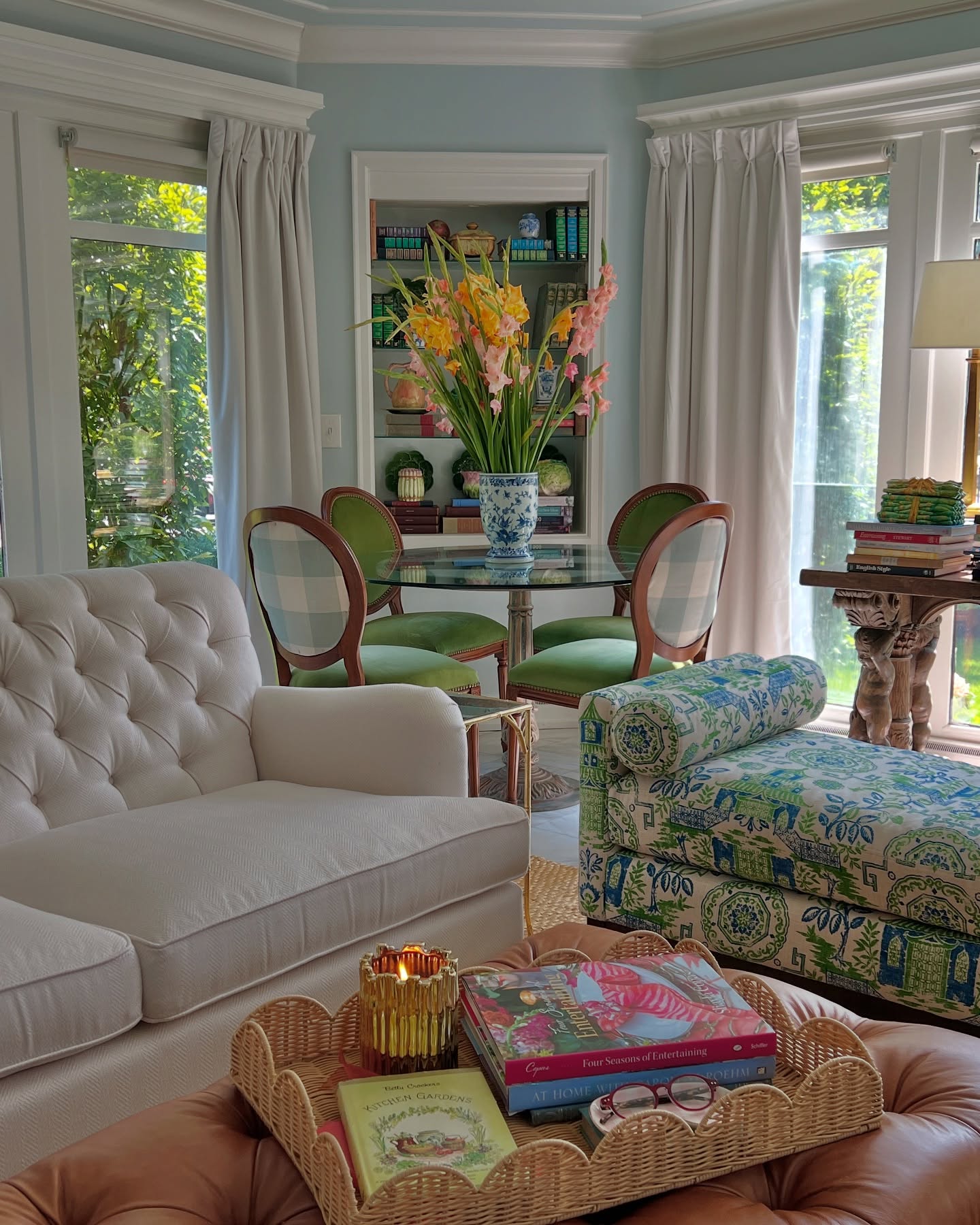
A floral chaise links the green accents and pale blue walls in this bright sitting room. A white tufted sofa provides a quieter companion, while a warm colored ottoman introduces another upholstery texture.
In the background, oval backed chairs repeat the green without repeating the floral print. This is a helpful approach when vintage furnishings arrive in different styles: choose one patterned piece to connect their colors.
Pull a shade from its fabric for another seat, a pillow, or a painted wall. Keep the largest remaining upholstery area relatively plain so the mix has somewhere to rest.
A tray gives the ottoman a useful surface for books and small objects. Check that its base sits securely before setting down drinks.
12. Unify Vintage Finds With Deep Red Textiles
Credits: Instagram
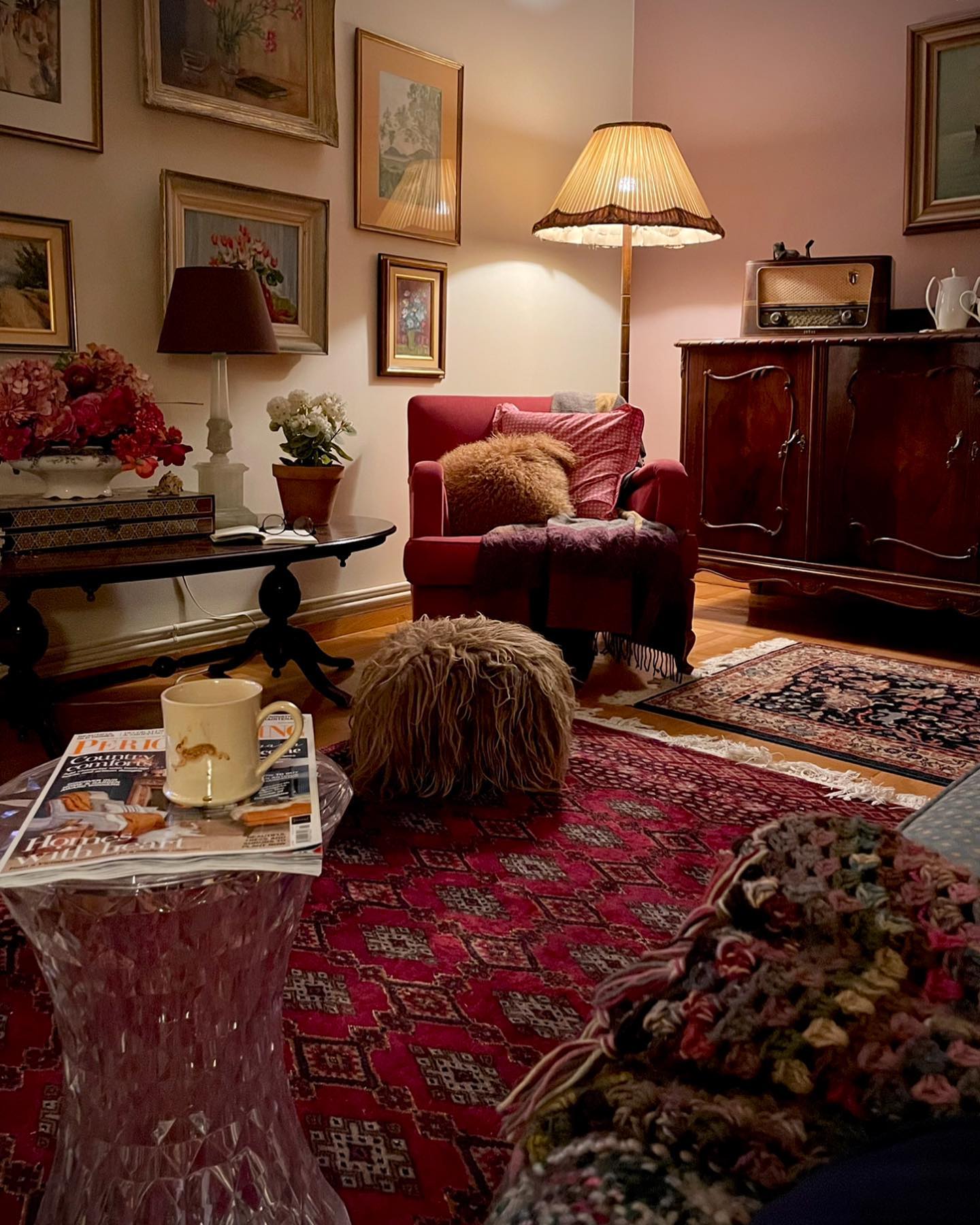
Deep red repeats across the armchair, patterned rugs, and small lampshade, giving this collection of furniture a clear connection. The shades vary from rosy upholstery to darker burgundy, so the result feels layered.
A carved wood cabinet and old radio add vintage character, while the shaggy pouf and fringed throw soften the polished surfaces. Pale walls leave room for the framed paintings to stand out.
Try choosing one rich color from a favorite rug, then repeat it in a chair, cushion, or shade. Keep the wood finishes and frame styles varied if you enjoy a collected look.
A small transparent table adds a different texture and provides a useful landing place without covering much of the rug beneath your feet.
13. Set Sculptural Vintage Chairs Against a Quiet Wall
Credits: Instagram
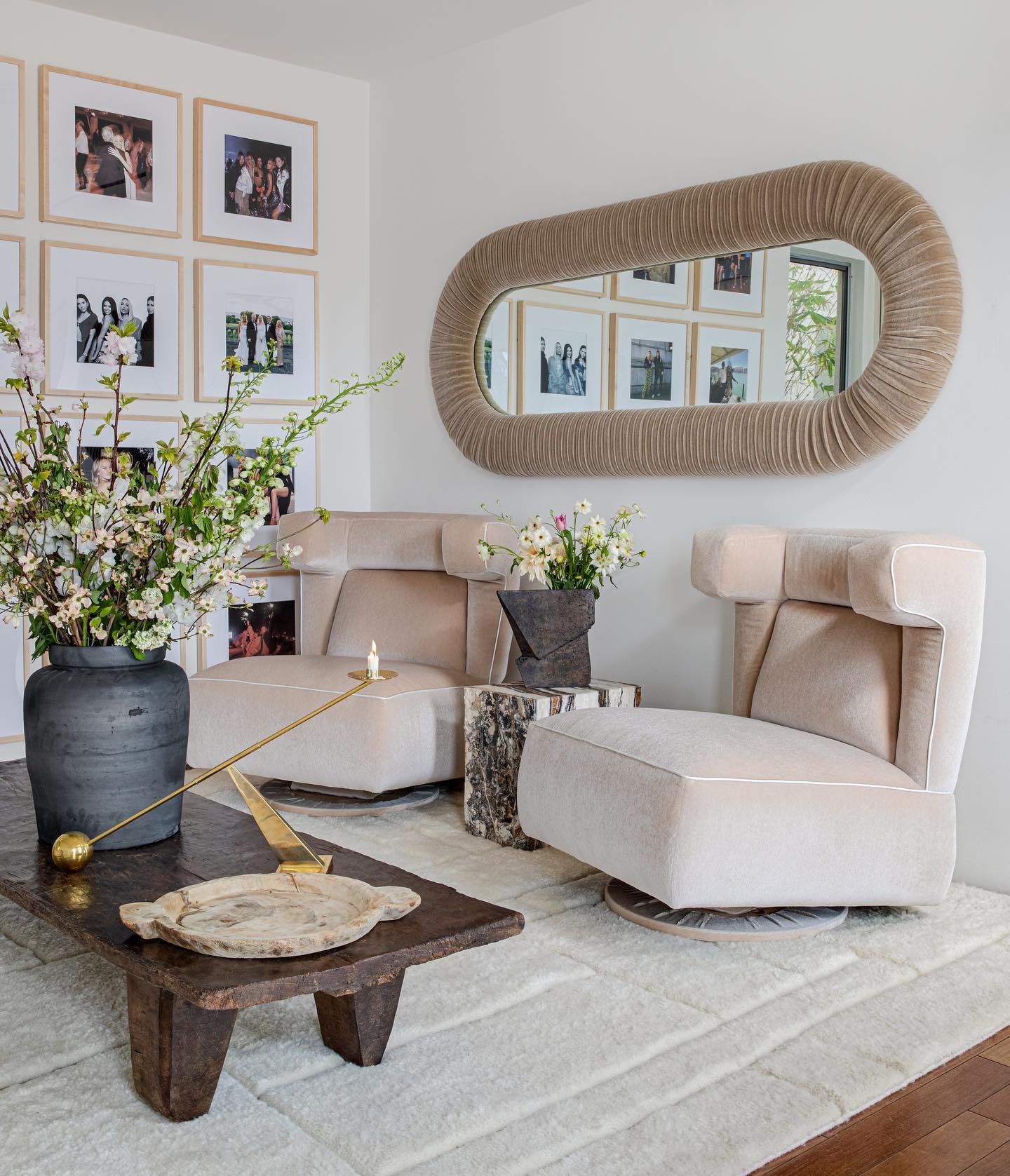
Two pale chairs make their unusual shapes the focus of this small sitting area. The broad padded backs, thick cushions, and low seats create visual interest without a strong upholstery pattern.
A long oval mirror echoes those curves, while the angular low table supplies contrast. The designer identifies the chairs as vintage in the original post, making this a useful example of older furniture in a restrained setting.
To adapt the idea, give a distinctive chair enough open space to reveal its profile. Keep surrounding colors related, then vary the silhouettes.
The framed pictures add detail without overpowering the seating. Use a rug large enough to connect the pieces, and choose table heights that feel comfortable from the actual seats.
14. Anchor Mixed Furniture With a Quiet Rug
Credits: Instagram
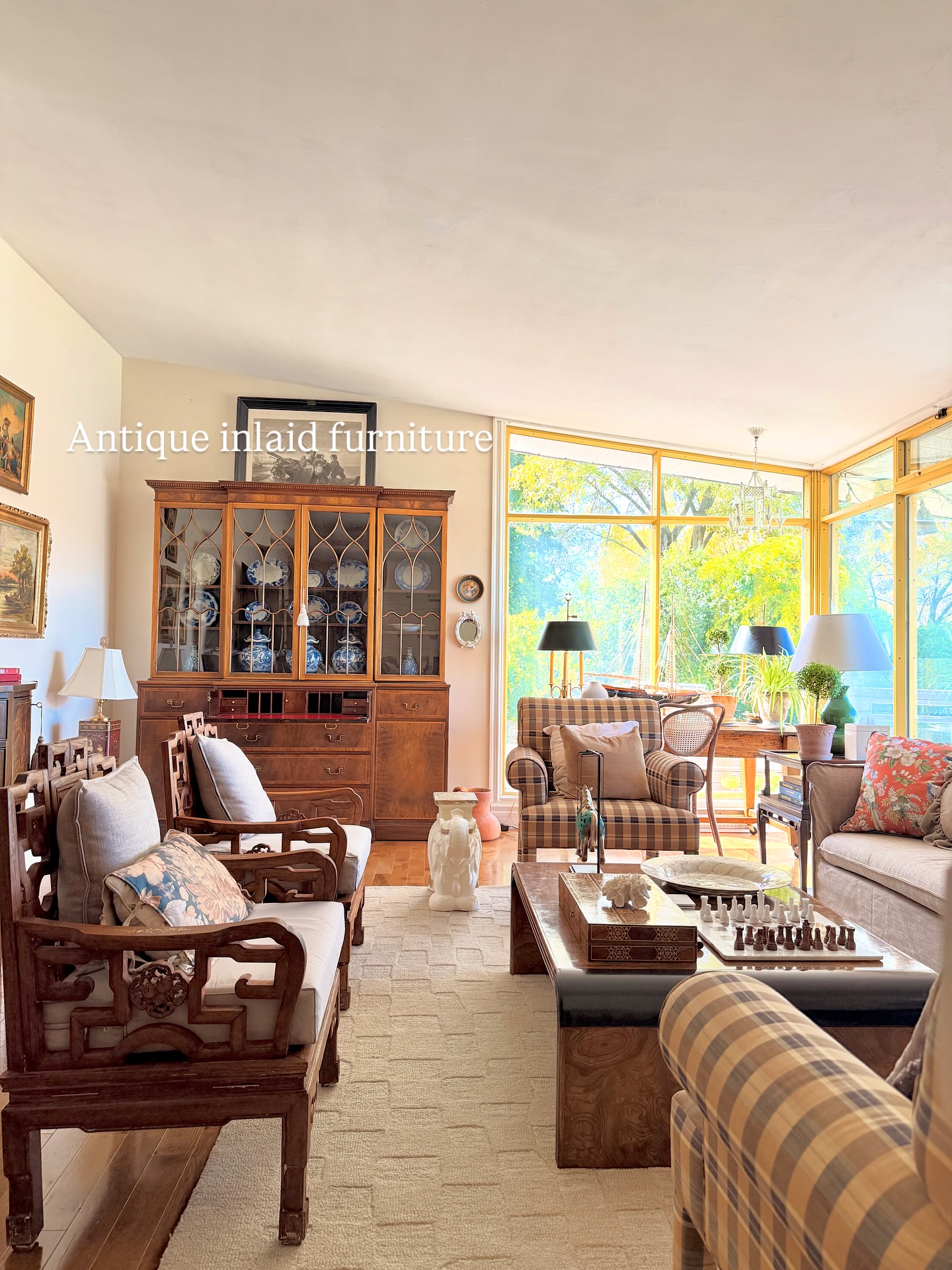
A pale rug connects the varied furniture in this sunlit living room. Carved armchairs, checked upholstery, a glass front cabinet, and a low rectangular table each bring a different shape or pattern.
The relatively quiet floor covering keeps the arrangement readable. This is especially useful when you want to live with several vintage finds without forcing them to match.
Start by placing the main seats around a shared center, then choose a rug color that relates to the room's lighter surfaces. Let stronger patterns appear in smaller areas such as cushions or one chair.
The broad windows keep the darker furniture from dominating the view. Leave the main walking route clear and check cabinet doors can open fully before settling.
15. Give a Sideboard a Pair of Tall Lamps
Credits: Instagram
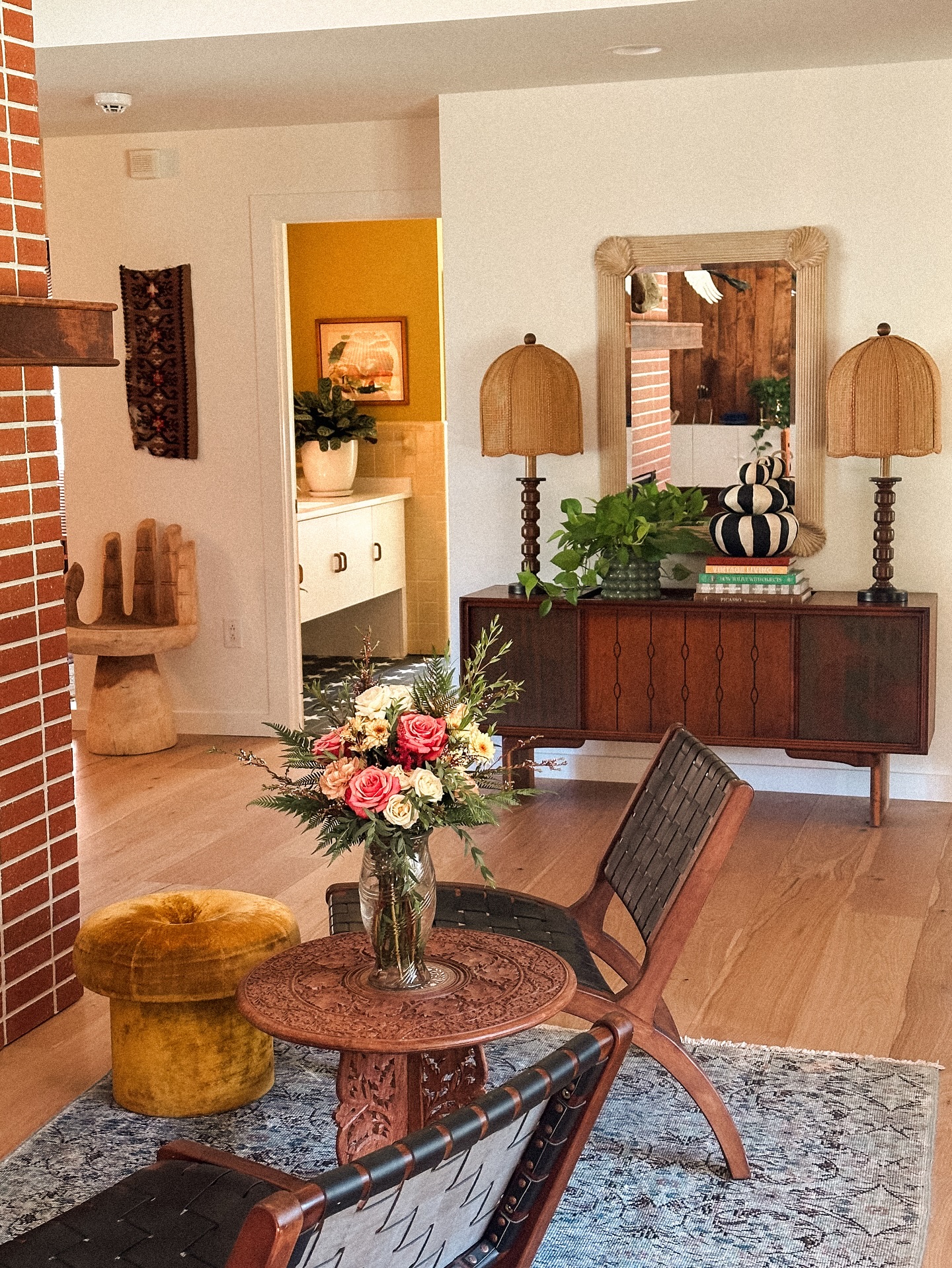
A pair of tall lamps turns the sideboard in this living room into a clear focal point. Their rounded shades flank a mirror, while the lower furniture in front keeps the arrangement visible.
A dark framed chair, small round table, and mustard stool add different shapes around the rug. For a similar vintage inspired composition, begin with a sideboard that fits the wall comfortably.
Use two lamps to establish balance, then vary the objects between them instead of matching every accessory. The mirror can connect the display to the rest of the room, but check what it reflects from the doorway.
Repeat one warm color in nearby seating, and keep the sideboard top practical enough for the items you use.
16. Give a Wood Framed Chair a Colorful Backdrop
Credits: Instagram
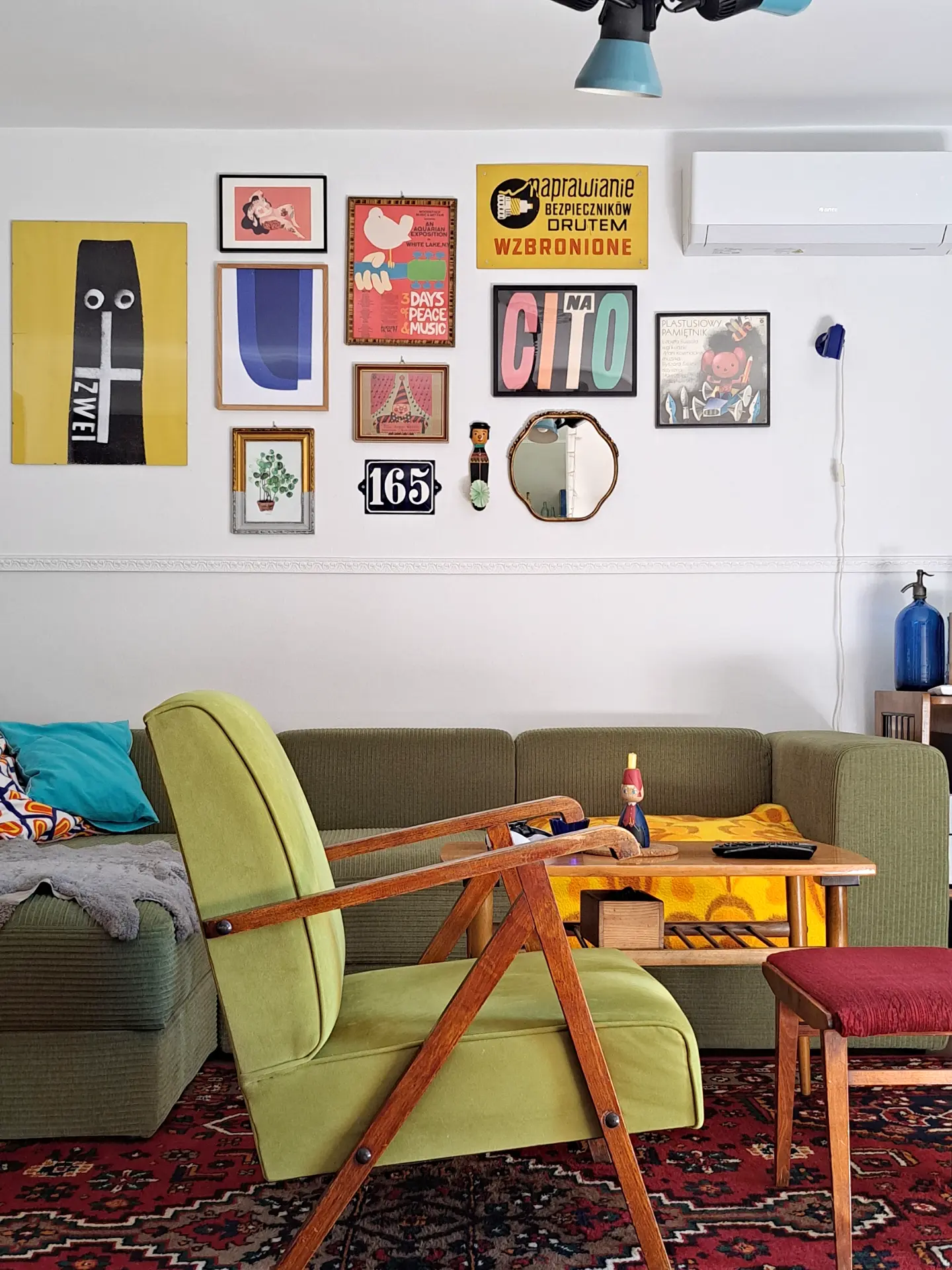
A green upholstered chair brings a strong furniture silhouette to this playful living room. Its exposed wood frame sits in front of a low green sofa, with a patterned red rug connecting the seating.
Above, posters and smaller pictures form an informal gallery on the white wall. This arrangement shows how vintage character can come from shape and color without covering every surface in pattern.
Let a distinctive chair sit slightly forward of the sofa so its arms and legs remain visible. Choose artwork that repeats a few upholstery or rug colors, then vary frame sizes for a collected effect.
Keep the wall around the grouping open. A small side table provides a useful landing spot without blocking the chair.
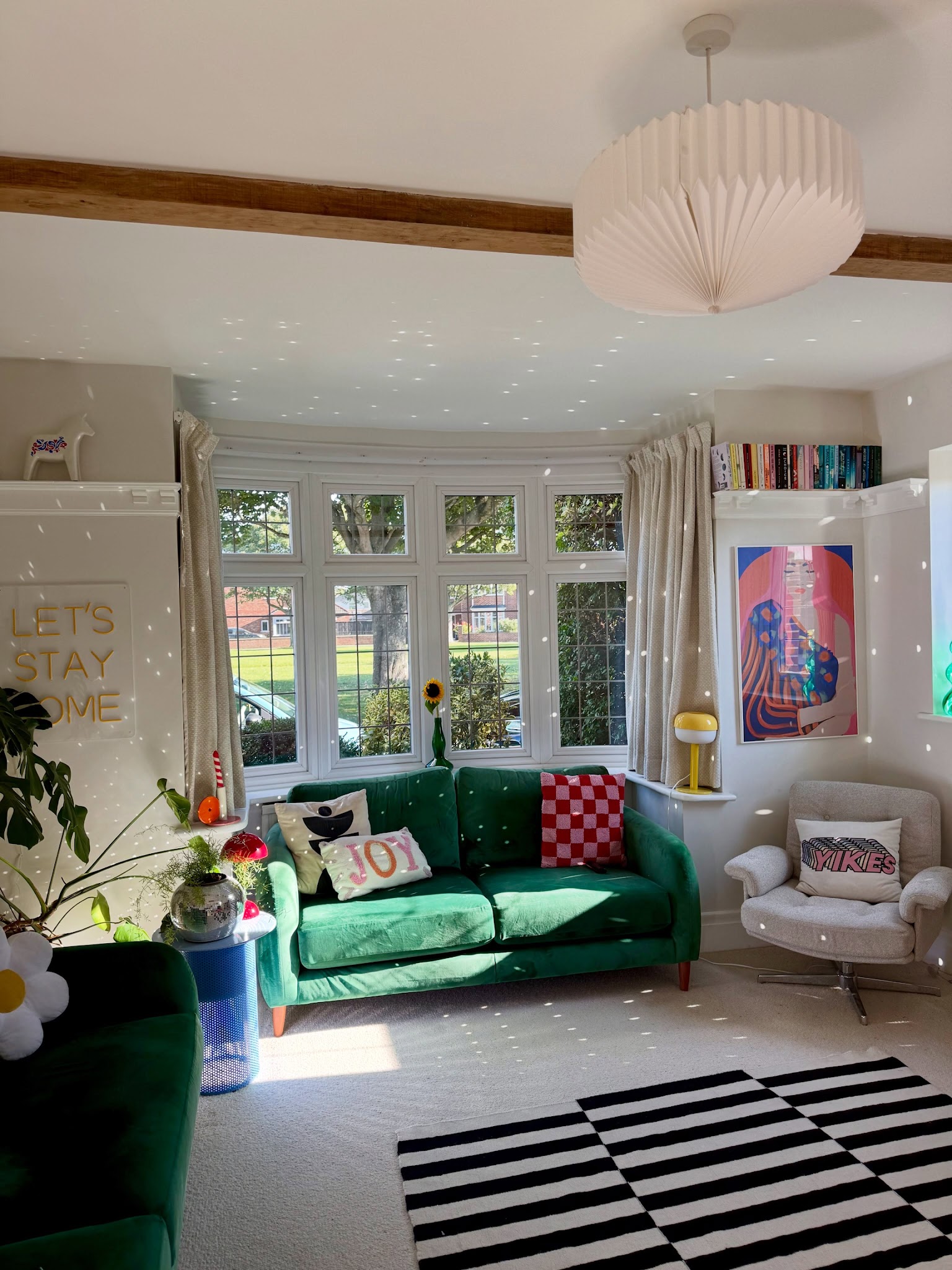
17. Combine a Green Sofa With Graphic Flooring
Credits: Instagram
The vivid green sofa stands out against the pale walls and floor in this bright living room. A bold black and white rug adds structure, while small colorful cushions keep the seating playful.
The bay window gives the sofa a clear architectural backdrop, and a pale chair nearby keeps the furniture mix from feeling overly matched. To introduce a similar retro mood, start with one saturated upholstery color and repeat it sparingly elsewhere.
A graphic rug can define the seating area without adding another strong hue. Check its size against the sofa before purchasing so the grouping feels connected.
Leave space around the bay window, and use smaller lamps or accessories where taller furniture would interrupt the view and daylight.
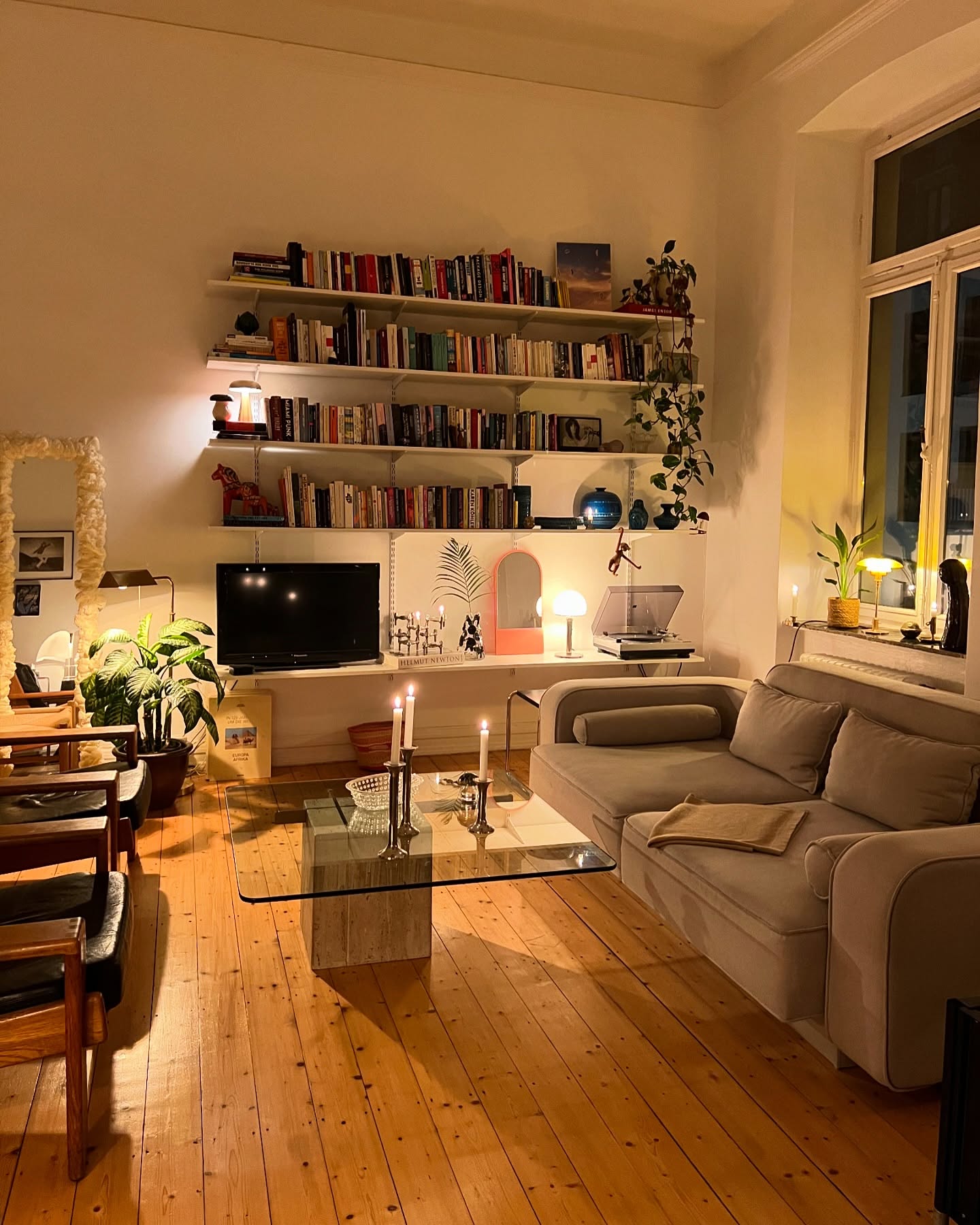
18. Layer Low Lamps Around a Book Filled Wall
Credits: Instagram
Several small lamps give this living room a welcoming evening glow. Books line open shelves above the television, while a low sofa and transparent coffee table keep the center visually light.
Wood toned flooring and the chair frames bring warmth beneath the pale walls. This is a useful vintage inspired approach for a room that already holds books and everyday equipment.
Place lamps at different points around the seating rather than relying on one overhead source. Keep the television within the same broad arrangement as the shelving so it feels integrated.
A transparent table can preserve the view of the floor, but choose furniture shapes and materials appropriate for your household. Leave open surface space beside lamps for regular use.
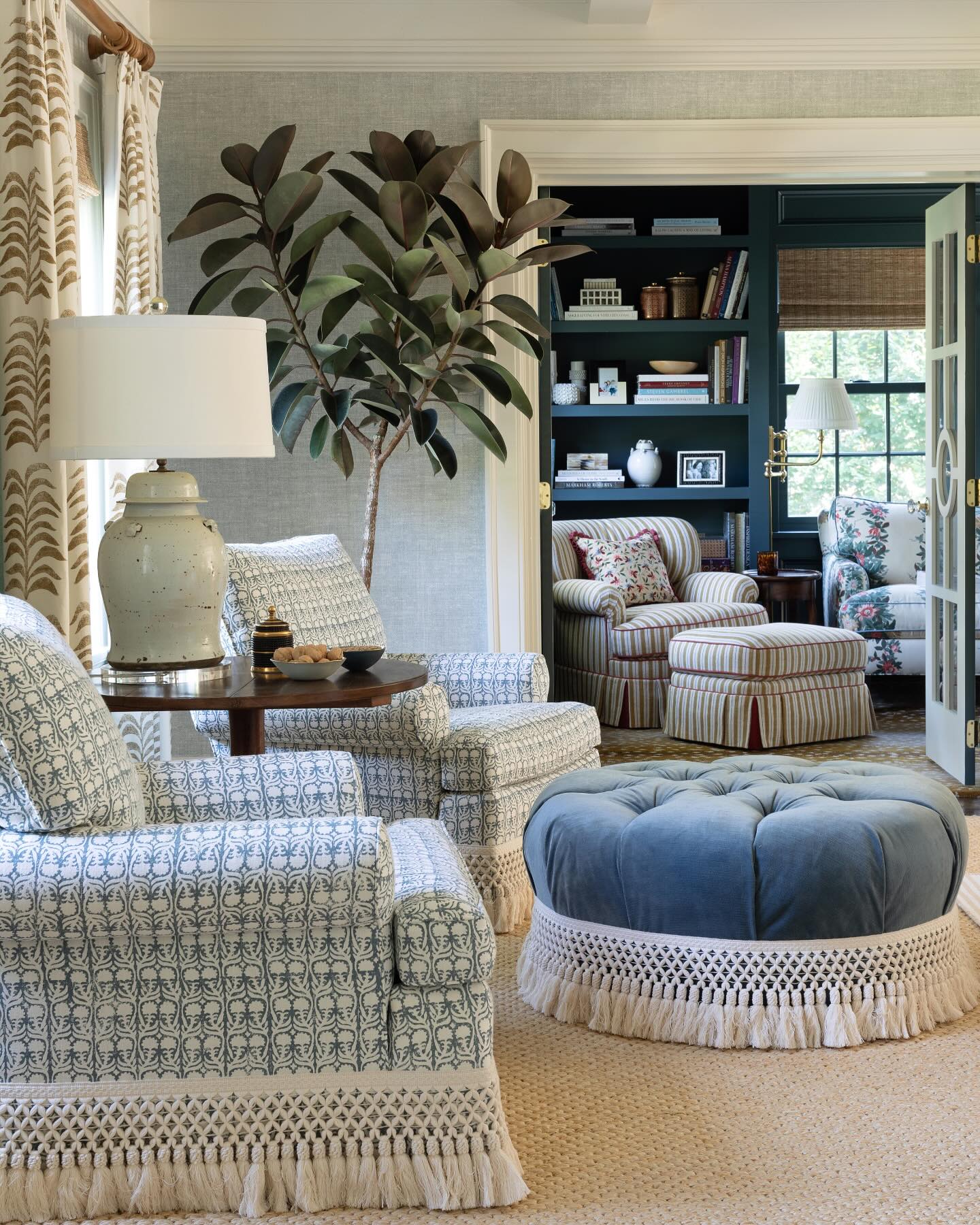
19. Connect Different Upholstery With Fringe
Credits: Instagram
Decorative fringe connects the two patterned chairs and blue ottoman in this layered sitting area. The repeated trim creates a visual relationship even though the upholstery differs.
Beyond the doorway, striped and floral seating carries the collected mood into the adjoining room. This photograph shows how one small detail can organize a varied vintage inspired scheme.
Choose a trim color that works with several fabrics, then use it selectively so the room does not feel overloaded. The solid blue ottoman gives the eye a rest beside the patterned chairs.
A substantial lamp and tall plant add height without introducing more fabric motifs. Before adding fringe to existing upholstery, check the attachment method and keep the finished edge clear of floors.
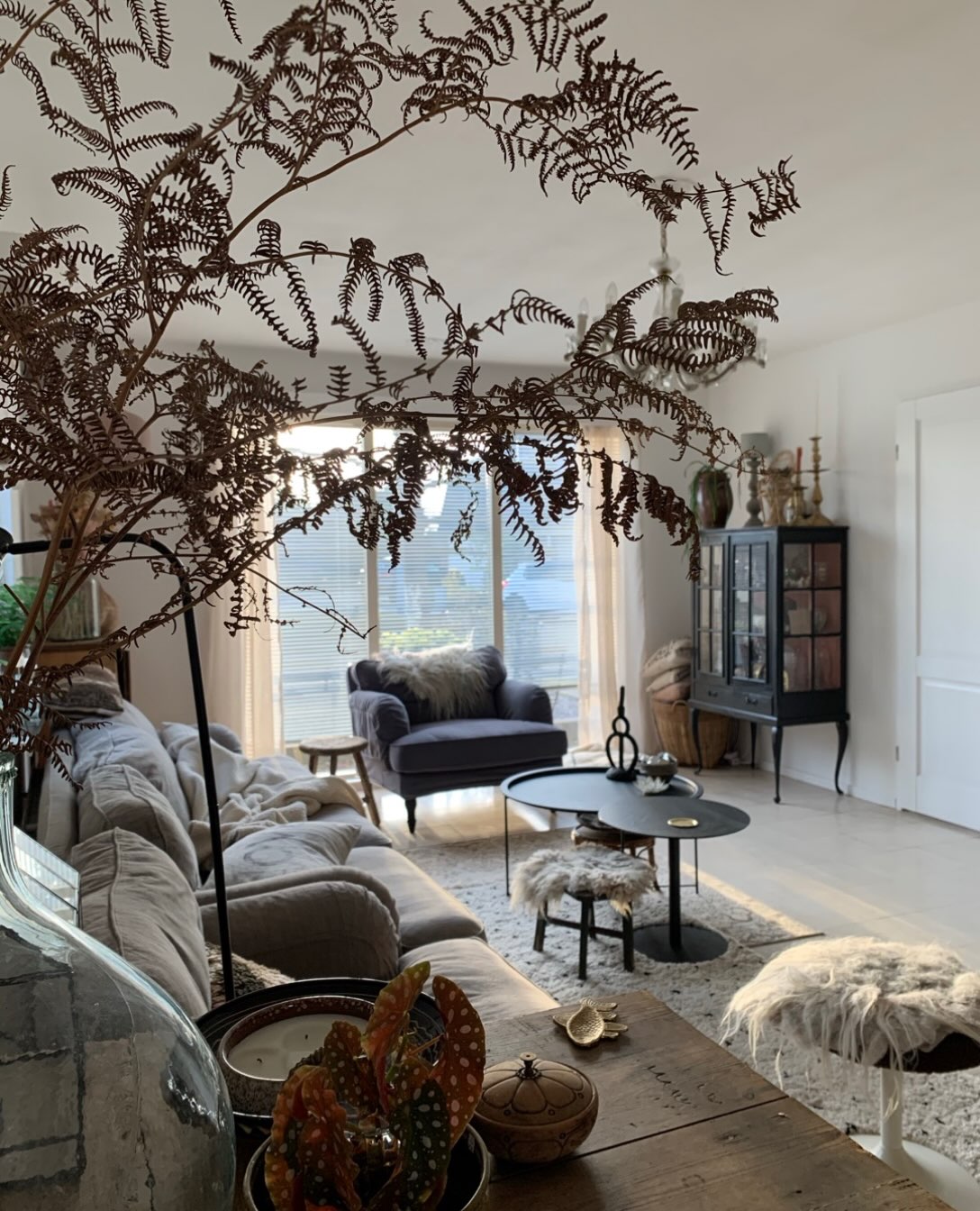
20. Mix Small Tables With an Upholstered Accent Chair
Credits: Instagram
Small tables and varied seating give this pale living room an informal, collected feeling. An upholstered accent chair sits near the window, while a long sofa, dark display cabinet, and several textured stools add different shapes around it.
The generous foliage arrangement introduces a loose line above the furniture. You can borrow the mix without crowding a room by choosing smaller pieces that serve specific seats.
Place a table where someone can comfortably reach it, then leave a clear route between the groupings. Repeating a few dark finishes helps the scattered furniture feel connected.
Keep large arrangements outside normal walking paths and away from faces when seated. Softer cushions and throws can make a traditional accent chair feel more inviting.