
Heavy timber, stone, and sloped ceilings can make a living room feel imposing unless softer textures and inviting colors balance them out.
Rustic Boho Living Room Ideas show how colorful seating, layered rugs, and collected shelves can bring warmth without hiding the room’s character.
Other approaches include using floor cushions for flexible seating, pairing a weathered trunk with a sofa, or adding warm light along a sloped ceiling.
These rooms mix natural materials with patterns and greenery, offering practical ways to make a rustic space feel relaxed and personal.
1. Soften Heavy Beams With Colorful Seating
Credits: Instagram
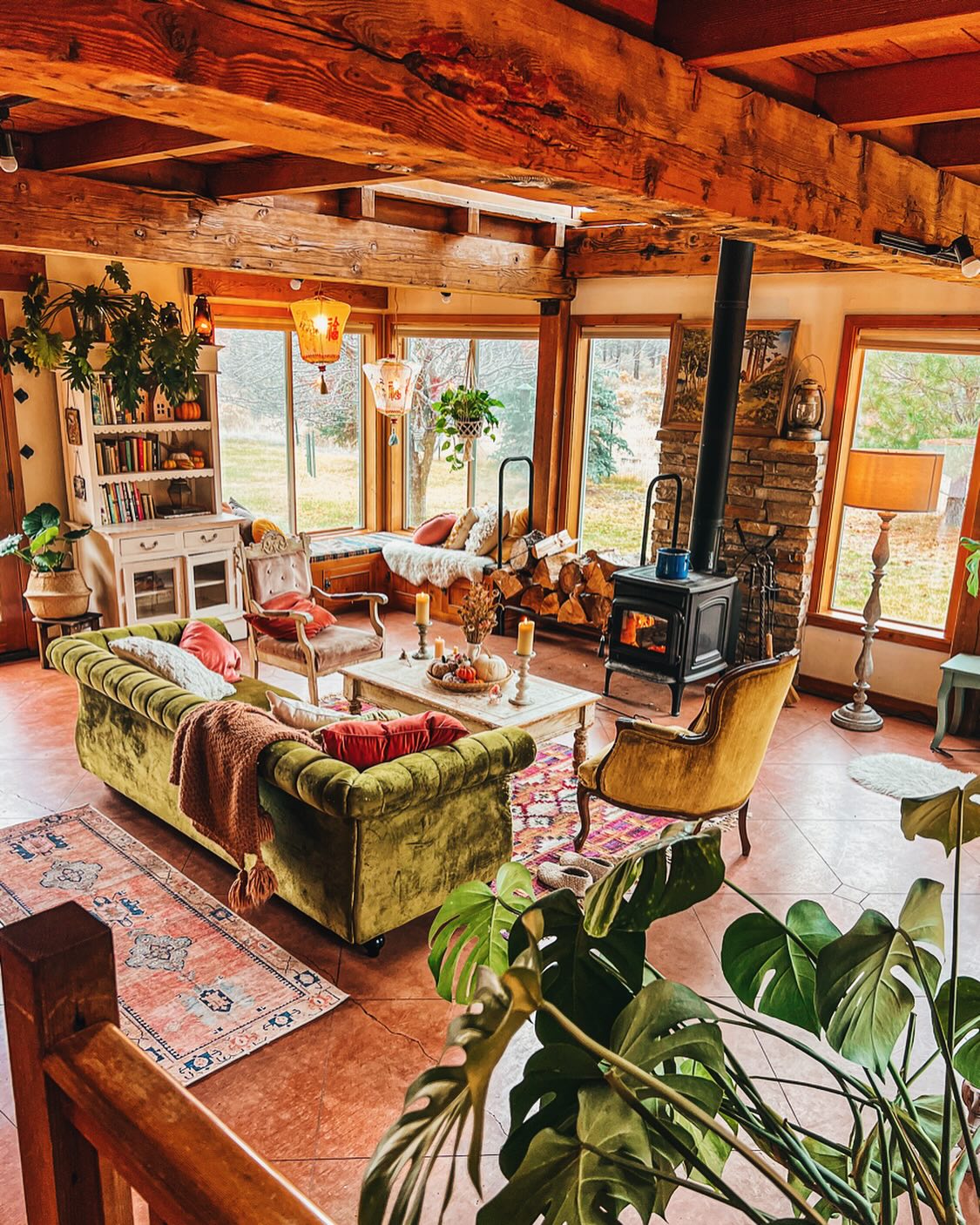
Deeply textured beams dominate this cabin, but the olive sofa and mismatched chairs make the seating group feel approachable.
Pink and red textiles draw color down from the warm wood ceiling, while two patterned rugs break up the broad tiled floor. Try the same balance by choosing upholstery with a soft surface and curved edges beside substantial timber.
Furniture does not need identical frames; repeat a few colors through cushions instead. A pale painted coffee table gives the arrangement a lighter center.
Keep its decorations low enough for comfortable conversation across the room. Where a stove is present, plan seating and accessories around the manufacturer's required clearances, then leave a useful route between the seating group, windows, and adjoining spaces.
2. Soften a Stone Chimney With Collected Shelves
Credits: Instagram
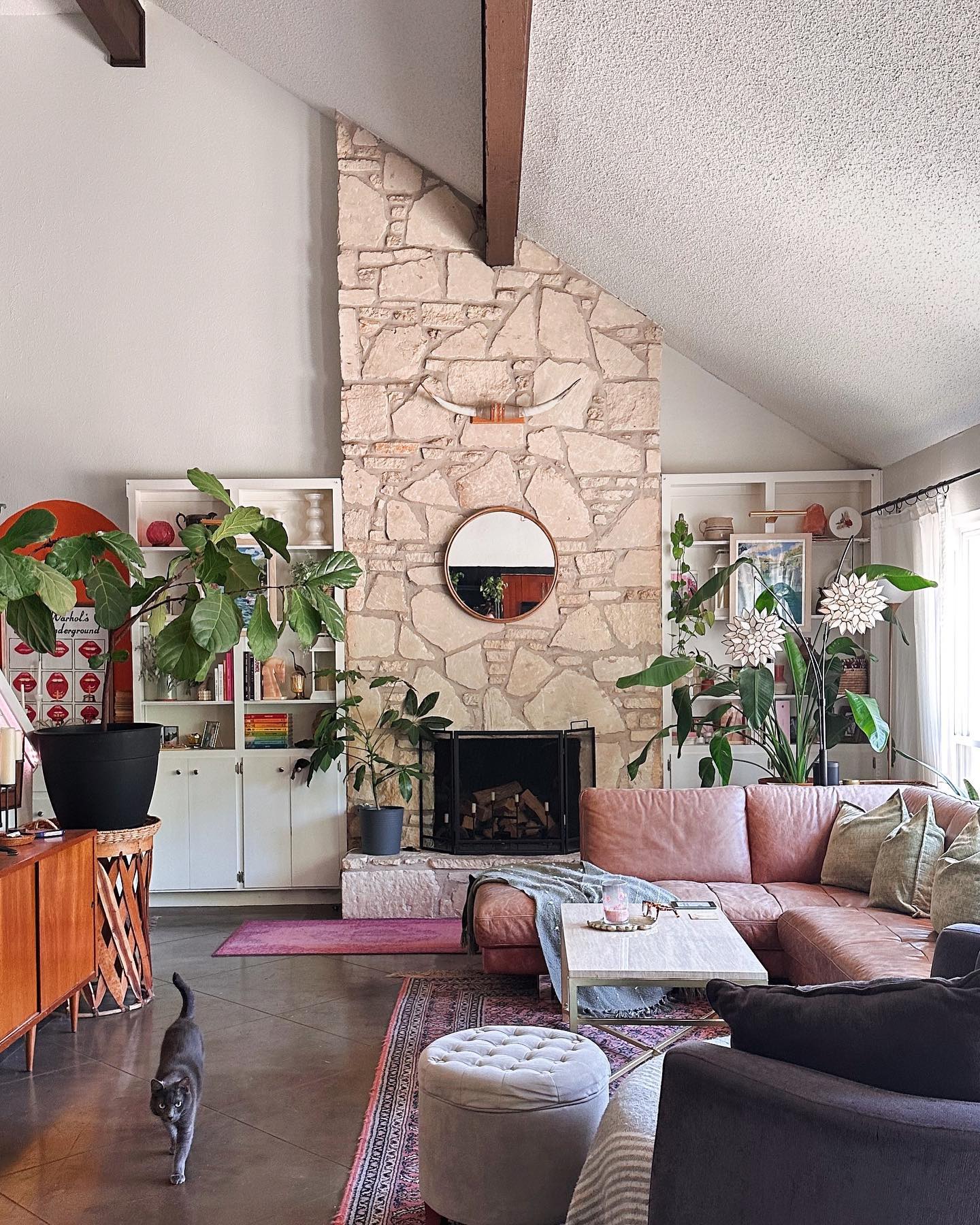
The tall, irregular stone chimney gives this room its rustic backbone. White shelves on either side introduce a more relaxed rhythm through books, pottery, art, and plants.
A round mirror interrupts the rough surface without covering much of it, while the brown sectional and patterned rugs bring the scale back to everyday lounging.
If your fireplace already has strong texture, keep nearby white shelving simple and vary the objects inside. Alternate a stack of books with one slightly taller vessel, leaving visible space around both.
Repeat green and warm reddish tones in small amounts across the room. Place larger plants beside the seating rather than in the walking route, and keep every combustible object outside the fireplace's specified clearance zone.
3. Layer a Plush Sofa Against Pale Plank Walls
Credits: Instagram
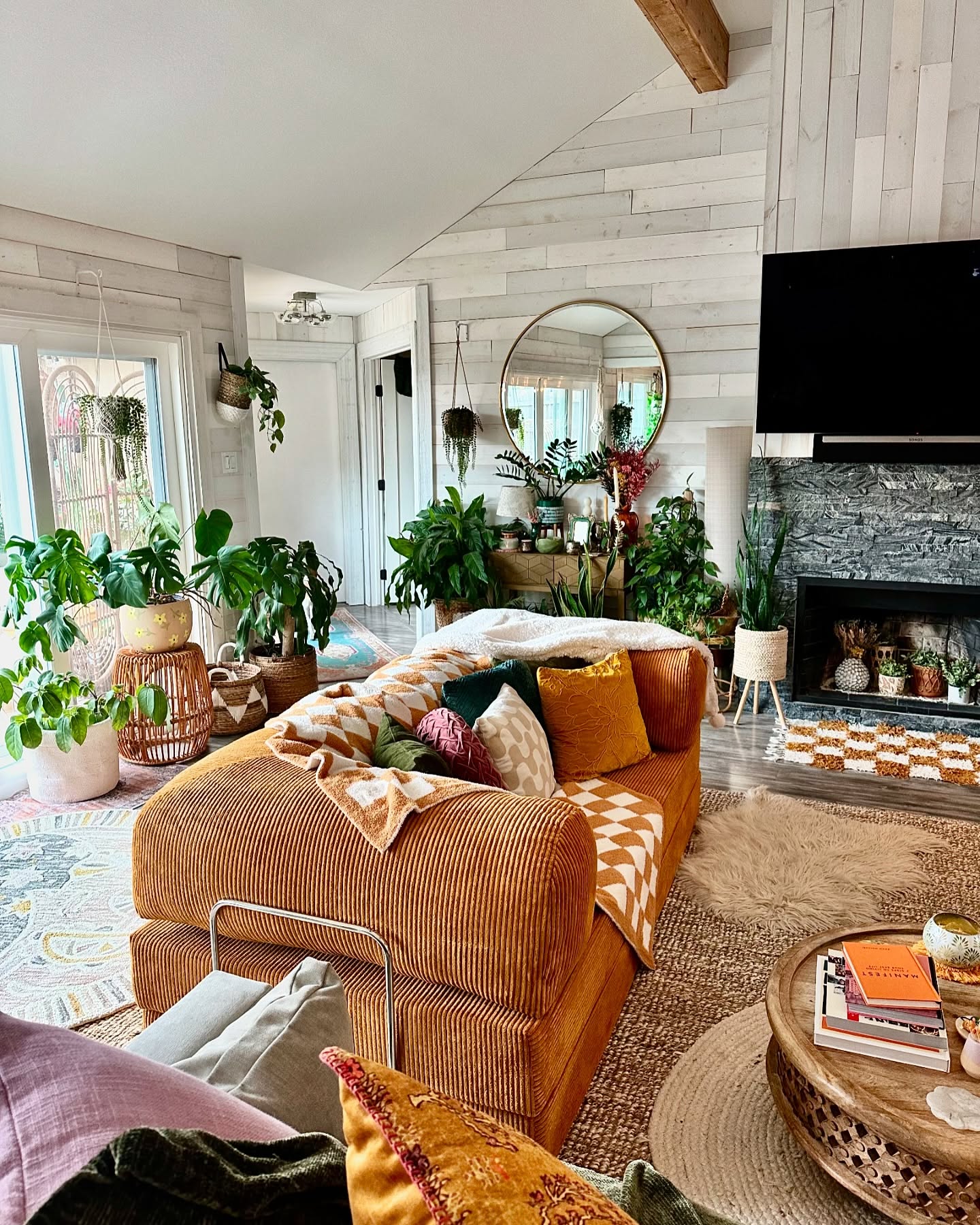
Pale plank walls create a quiet backdrop for the mustard sofa, checked throw, and dense collection of plants.
The contrast is tactile as much as colorful: ribbed upholstery, large woven planters, shaggy rugs, and the rough fireplace surround all catch light differently.
Build this kind of room around one generous seat, then choose smaller textures that can change with the season. A checkerboard blanket works especially well when its colors repeat the sofa and walls.
Use a round mirror to reflect daylight from the windows across the planted corner. Group pots at several heights so leaves remain visible.
Leave enough space around the sofa arms for sitting down easily, and protect the floor beneath every plant with suitable watertight trays.
4. Make a Chunky Plank Table the Centerpiece
Credits: Instagram
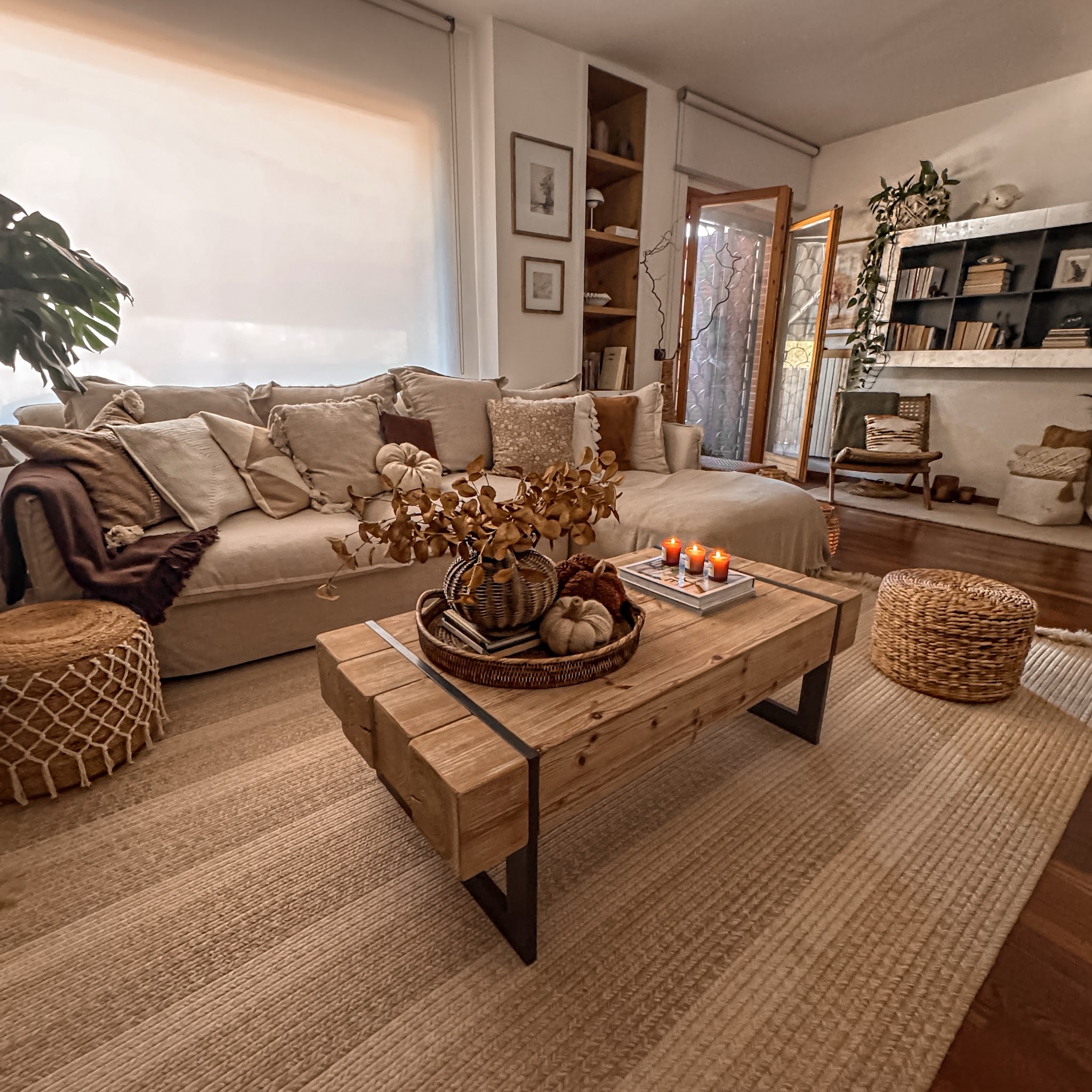
A substantial plank coffee table anchors the soft sectional in this room. Its dark metal bands connect with the darker shelf interiors, while rounded woven stools make the surrounding space feel less rigid.
The palette stays close to cream, honey, and brown, so texture carries most of the interest. Start with a table whose size suits the sofa, leaving comfortable daily passage around every exposed edge.
Balance its heavy shape with a low rounded tray and a loose arrangement of branches or flowers. Cushions with fringe and small patterns soften the straight furniture lines.
Choose movable stools that can tuck beside the sofa when needed. Keeping most tabletop objects together also makes it easier to clear space for everyday use.
5. Use Floor Cushions for Flexible Boho Seating
Credits: Instagram
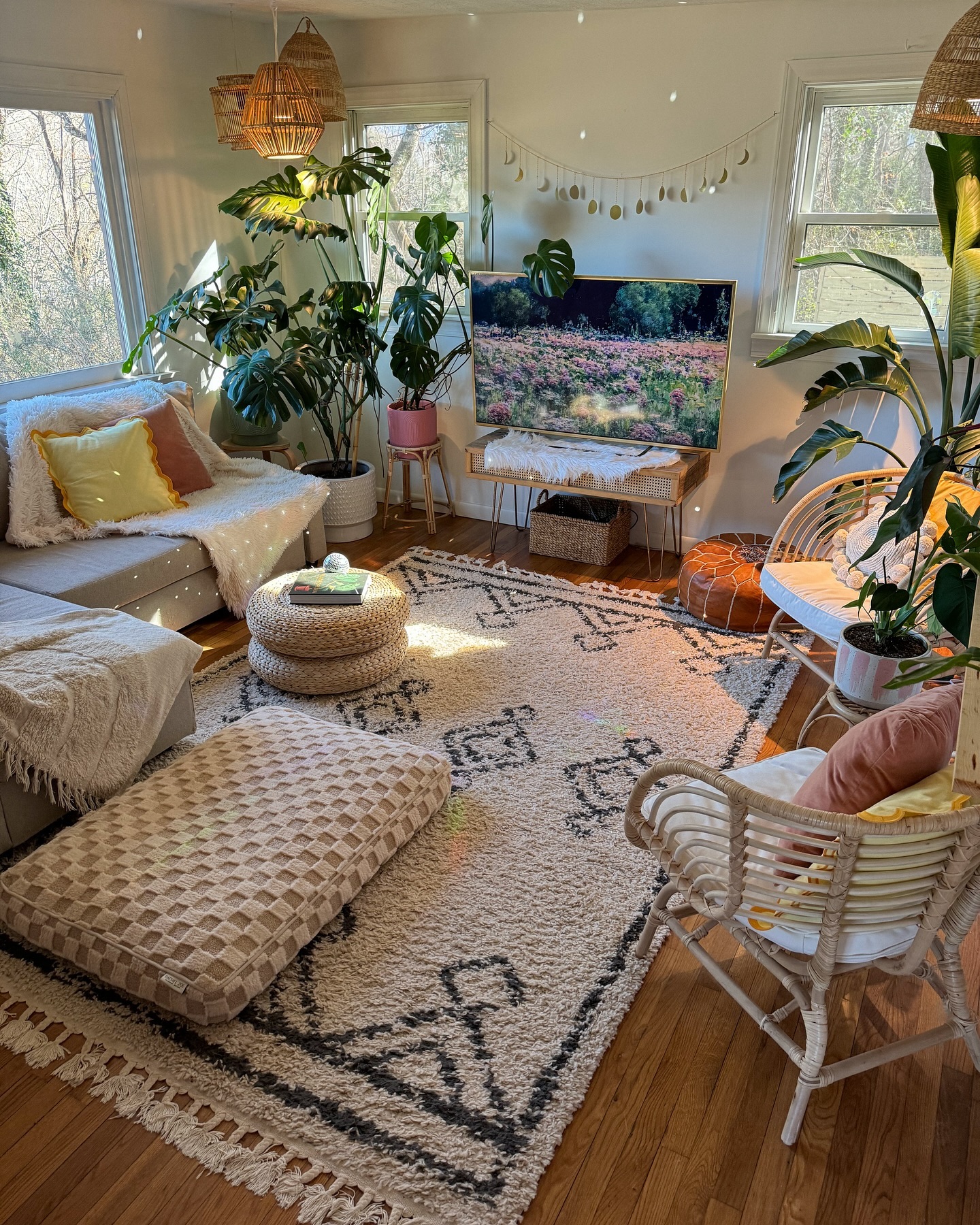
This compact lounge keeps its center adaptable with a large floor cushion and stacked woven poufs. Open framed chairs show the wood floor beneath them, while a pale patterned rug connects the different seats.
The large leafy plants and woven pendant shades carry natural texture upward, so the room feels complete without a heavy central table.
Copy the flexible arrangement with a cushion that stores beside the sofa and a firm pouf that suits your preferred sitting height. Give drinks a separate stable surface rather than balancing them on soft upholstery.
Repeat the rug's light color in throws to connect mismatched furniture. Keep plant stands beyond the main walking path, and leave room to open windows and reach curtains comfortably.
6. Turn a Sunroom Into a Layered Lounge
Credits: Instagram
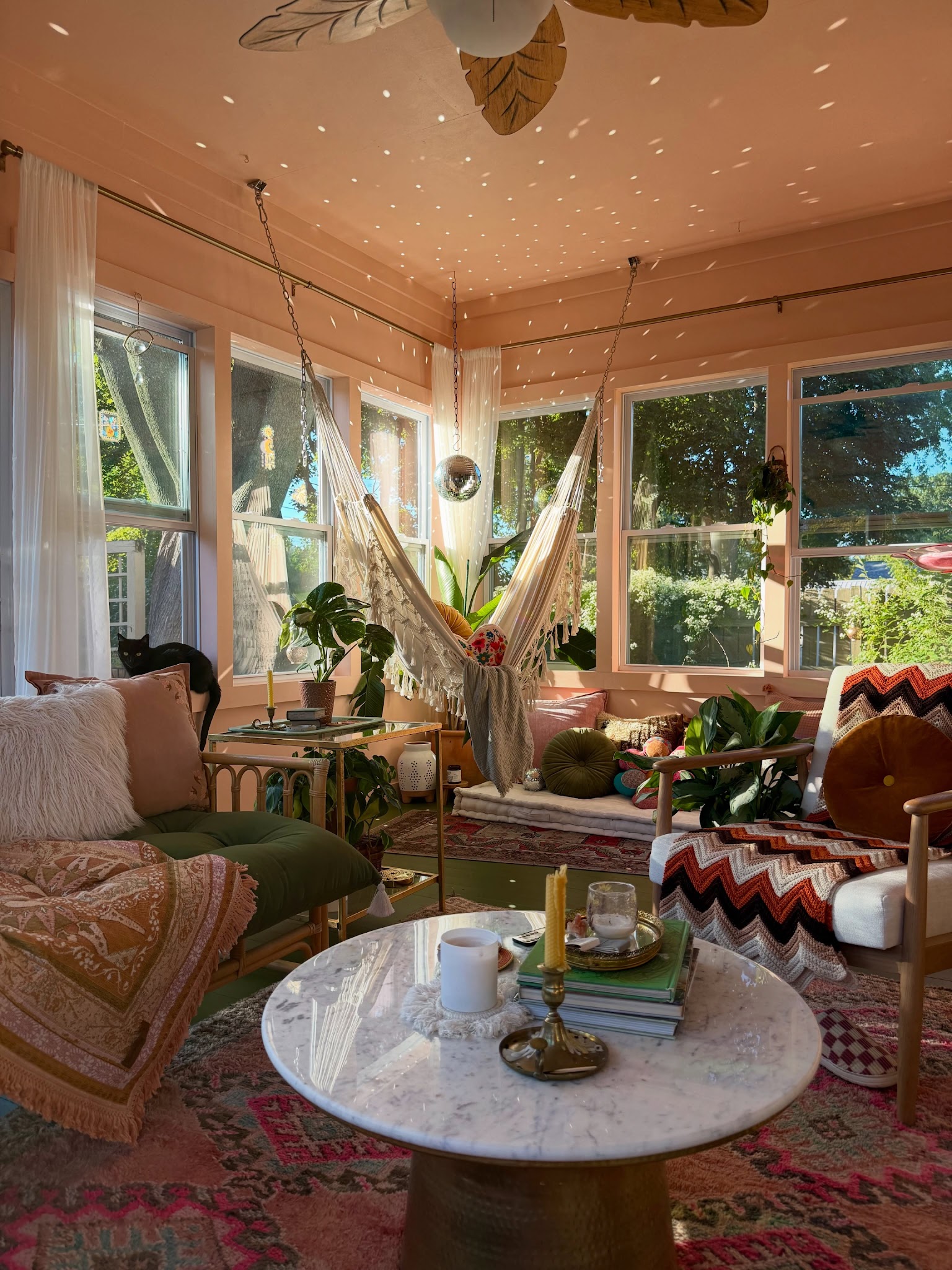
Warm peach walls and an assortment of patterned textiles turn this enclosed sunroom into a relaxed sitting area.
A fringed hammock occupies the window corner, while a wood framed chair, low cushions, and a curved sofa create several ways to settle in. The round coffee table helps the arrangement feel sociable despite the varied seating heights.
Begin with a rug large enough to connect the main seats, then repeat two or three colors across blankets and pillows. Lightweight curtains soften the windows without hiding their shape.
If you want suspended seating, have its support and hardware professionally checked for the intended load. Leave sufficient clearance around its movement, and keep a clear route through the room for comfortable everyday use.
7. Follow a Sloped Ceiling With Warm Light
Credits: Instagram
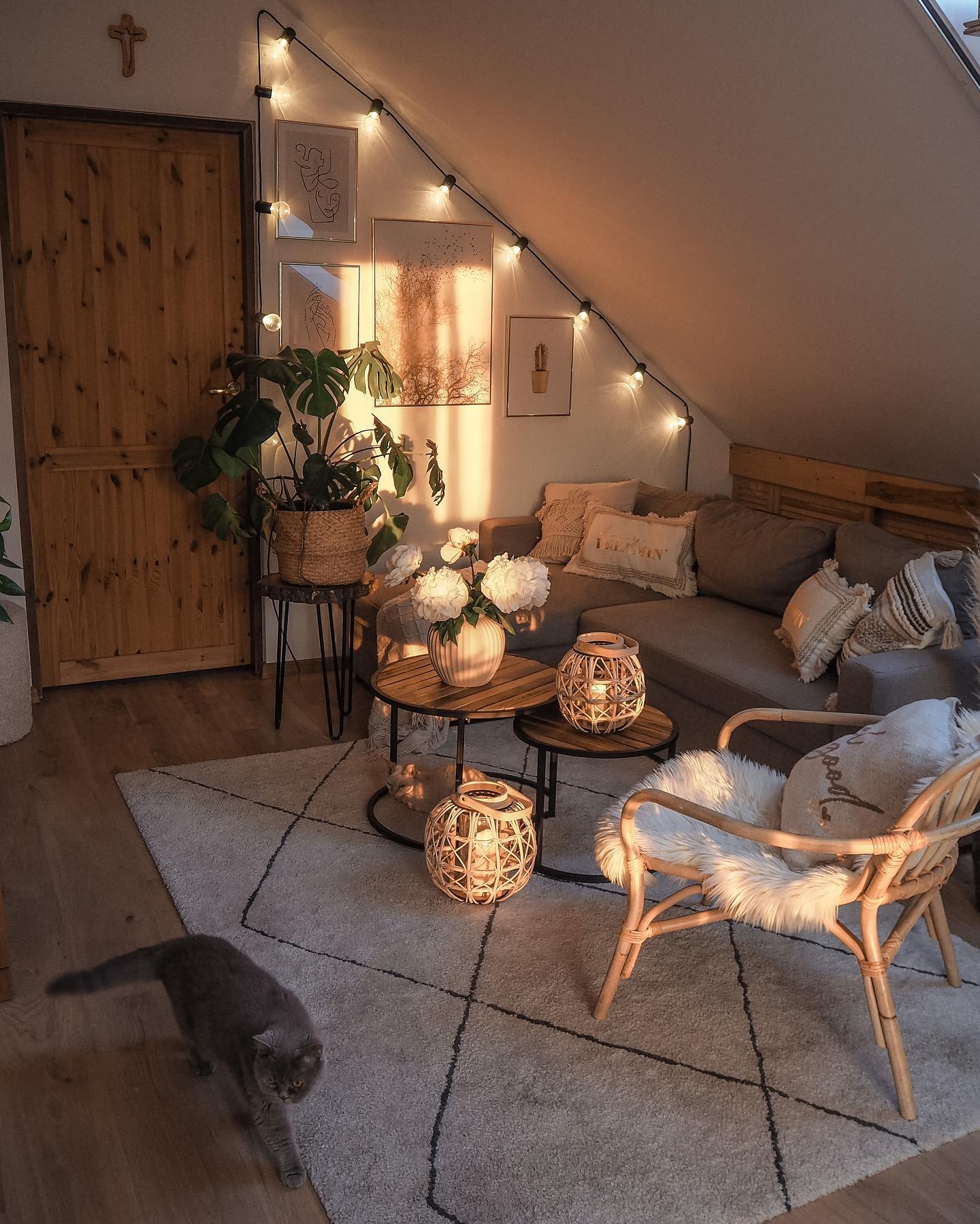
The string lights trace the ceiling slope, giving this small attic lounge a clear outline after dark.
A wood door and low timber panel behind the sofa provide rustic character, while the open framed chair and woven lanterns add softer curves.
Keep the sofa beneath the lower part of the ceiling and place taller plants where headroom increases. Nesting tables offer useful surfaces without committing the entire center to one large piece.
A pale rug with a simple dark diamond pattern connects the furniture while leaving the wood floor visible around it. Choose lights rated for indoor use and secure the cable neatly.
Use battery candles inside low lanterns so their glow stays practical around pets, textiles, and passing feet.
8. Use a Weathered Trunk Beside a Colorful Sofa
Credits: Instagram
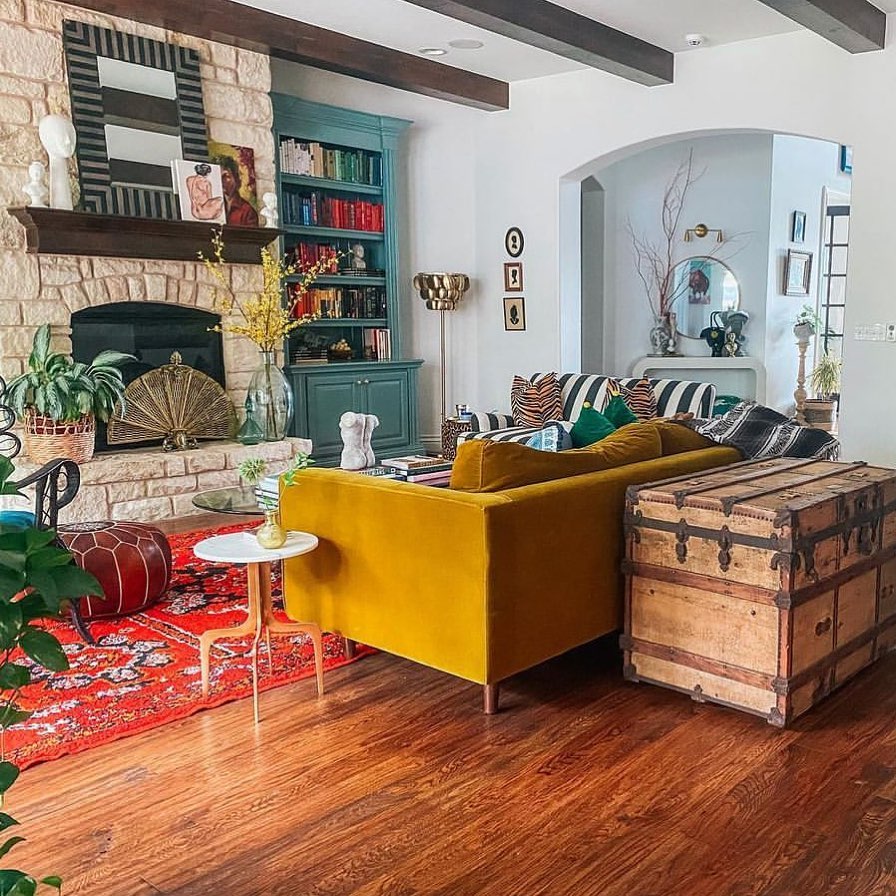
A large wood trunk sits beside the mustard sofa, balancing the room's saturated red rug and turquoise shelving with a timeworn surface. The stone fireplace and ceiling beams add more substantial texture, while striped upholstery keeps the collected look lively.
An older chest can work as useful storage if its size leaves the surrounding route comfortable. Check the lid, hinges, and interior before filling it, especially in a family room.
Pick one vivid upholstery color and let the rug supply the remaining accents. The photo also shows how pale walls can give strong patterns enough breathing room.
Keep everyday drinks on a smaller side table so opening the trunk does not require clearing an entire arrangement of decorations each time.
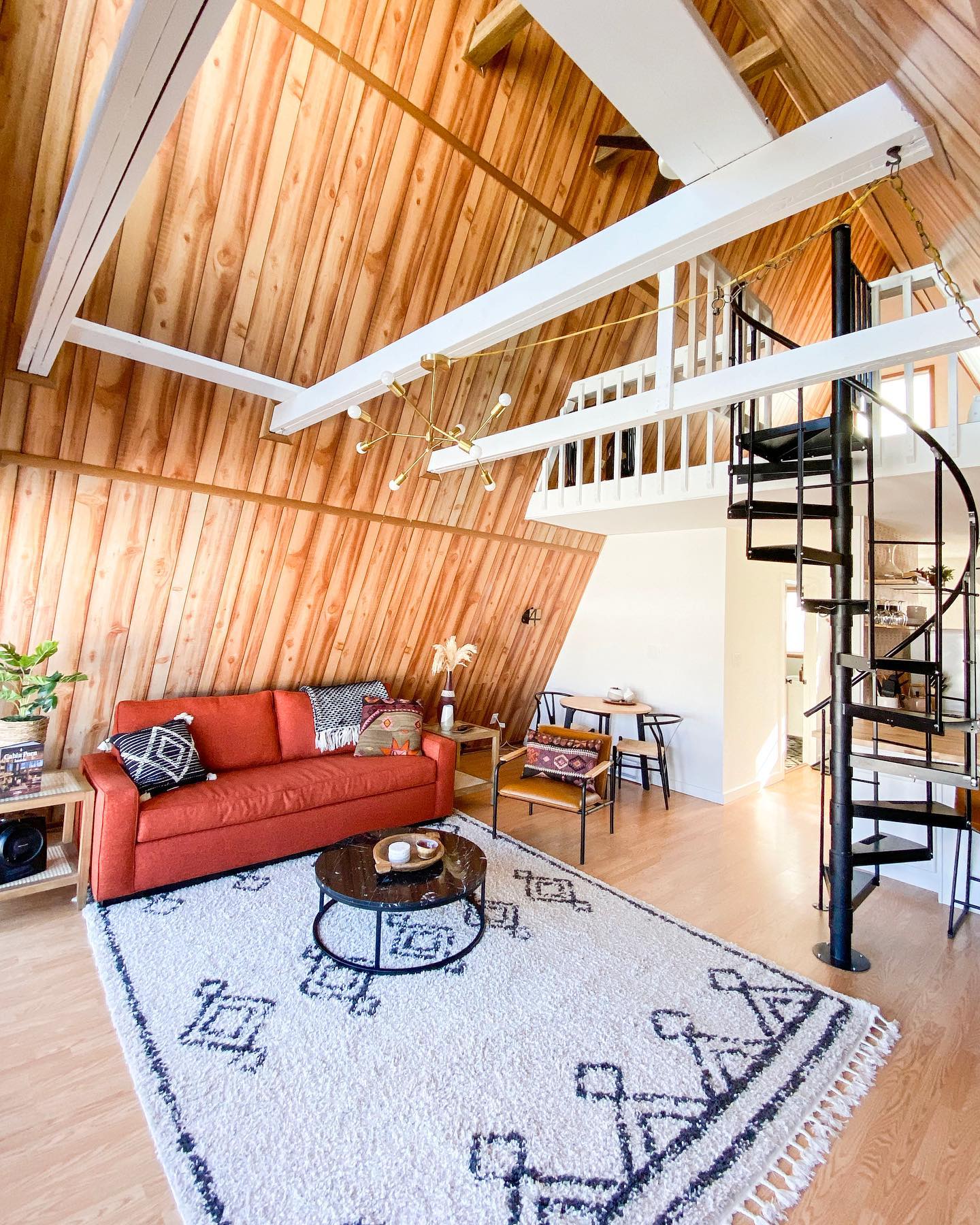
9. Anchor an A Frame With a Pale Patterned Rug
Credits: Instagram
A broad cream rug creates a soft landing beneath the broad, steep wood walls of this cabin. Its dark geometric pattern connects with the spiral stair and coffee table, while the orange sofa warms the pale floor.
With architecture this expressive, a compact furniture group can be enough. Position the sofa along the lower wall and use a small open framed chair where the room needs extra seating.
Simple side tables provide storage without interrupting the long wood surface. Repeat the rug's darker lines through cushions or a throw, keeping the rest of the palette limited.
Before buying furniture, measure the stair approach and walking paths; leaving these areas open helps the dramatic room remain easy to navigate every day.
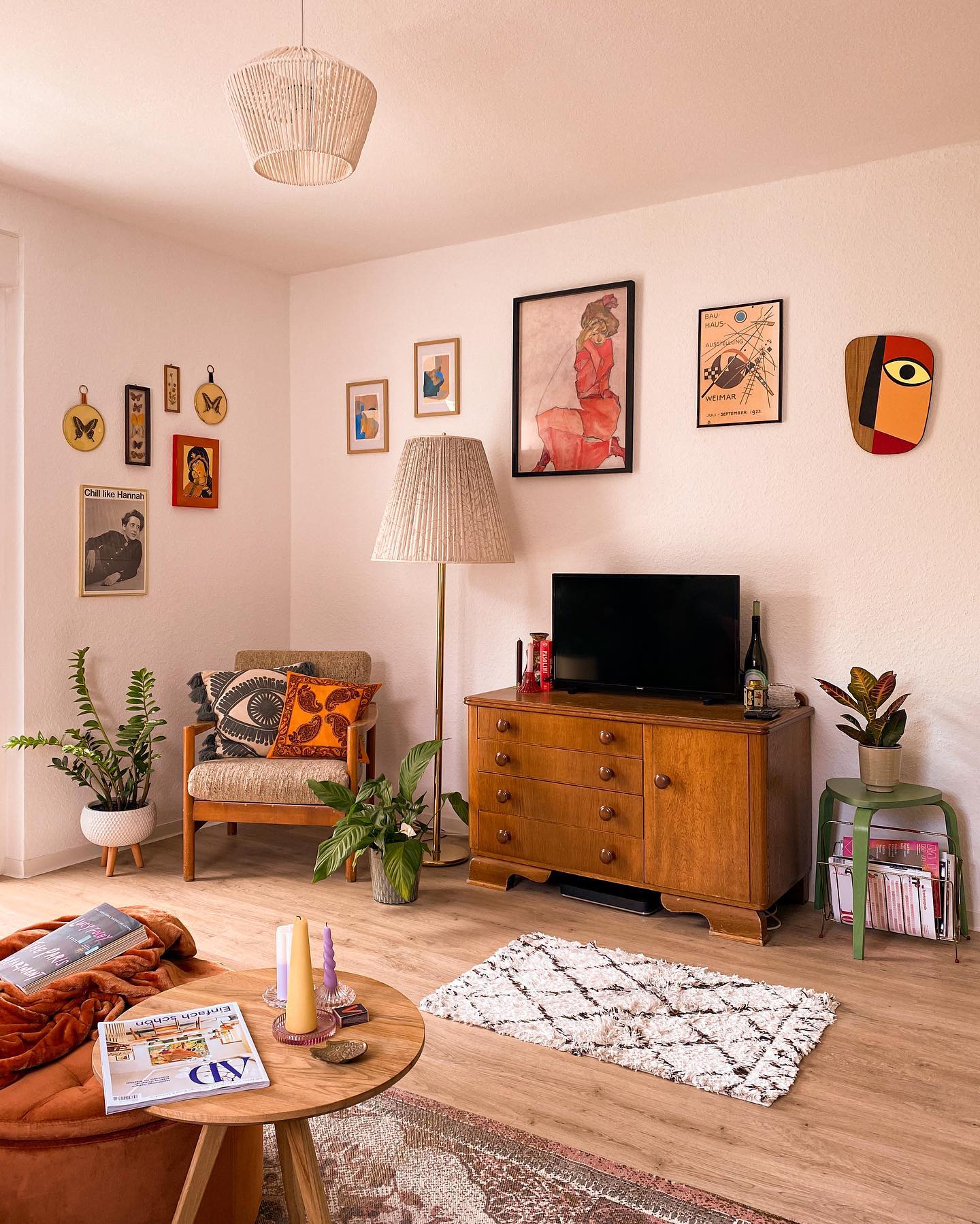
10. Give the Television a Vintage Wood Base
Credits: Instagram
The warm wood cabinet brings warmth and useful storage to this light, colorful art filled lounge. Its rounded knobs and shaped feet contrast with the black television, making the screen feel like one part of a collected room.
A woven pendant, patterned cushions, and small plants extend the relaxed boho mood. Look for a cabinet wide and deep enough to support your television safely, then check ventilation for any equipment stored inside.
Hang pictures at varied heights while keeping their overall arrangement related to the furniture below. The nearby chair and floor lamp create a second focal point.
A small green stool repeats the plants' color and offers another surface without matching the cabinet or crowding its doors and drawers.
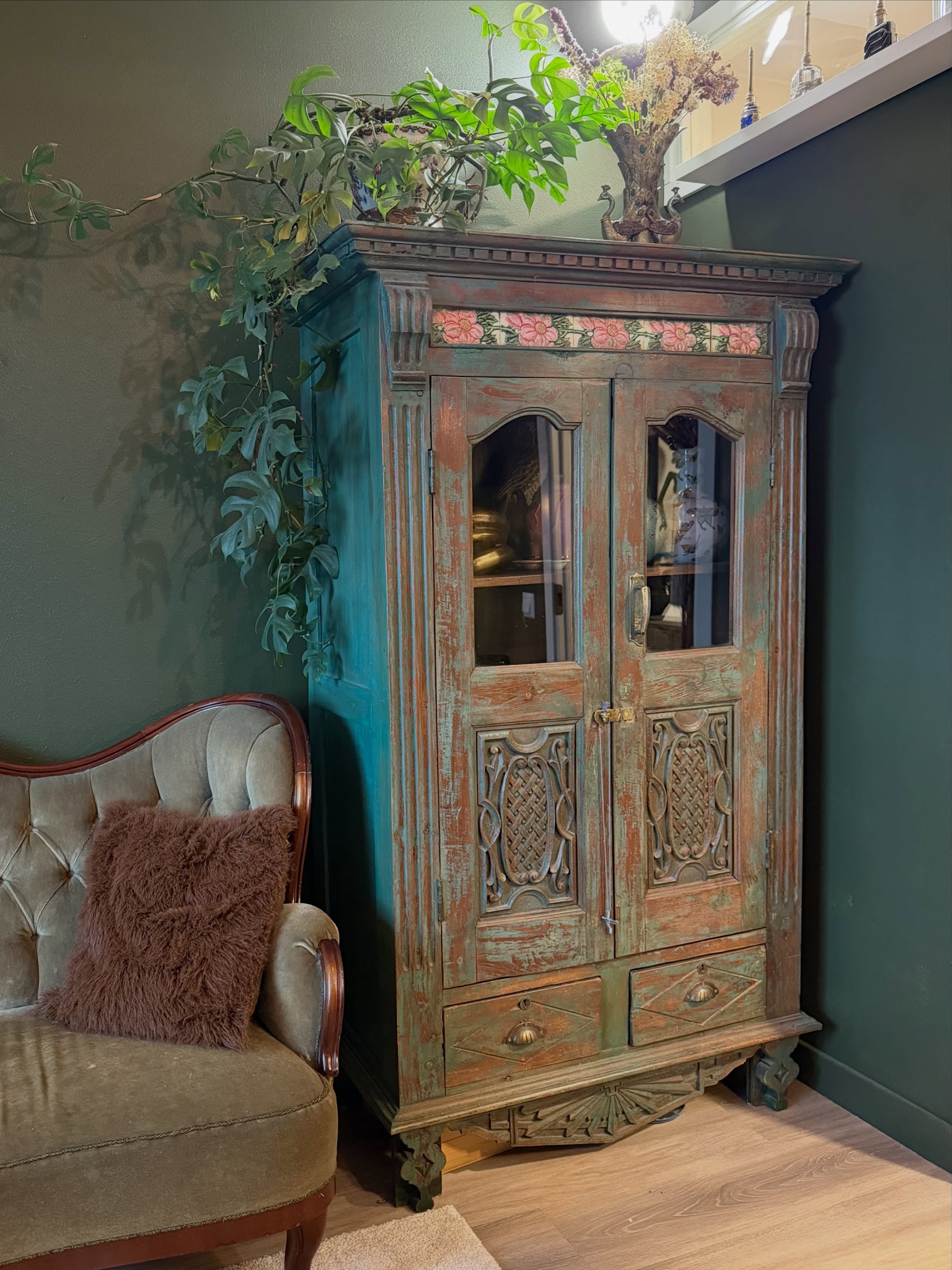
11. Let a Weathered Cabinet Carry the Pattern
Credits: Instagram
The carved cabinet supplies most of the pattern in this corner, from its floral band to the shaped door panels and worn painted finish.
Deep green walls allow those details to stand out, while the curved chair introduces a softer silhouette beside it. You can build a similar arrangement around one characterful freestanding storage piece instead of covering every wall with decoration.
Repeat a color from the cabinet in a cushion or plant pot, and keep nearby furniture relatively simple. Glass doors make everyday collections visible without leaving them fully exposed to dust.
Check shelf strength before loading heavier objects. A trailing plant adds movement above the cabinet, provided its pot is protected and remains easy to reach for watering.
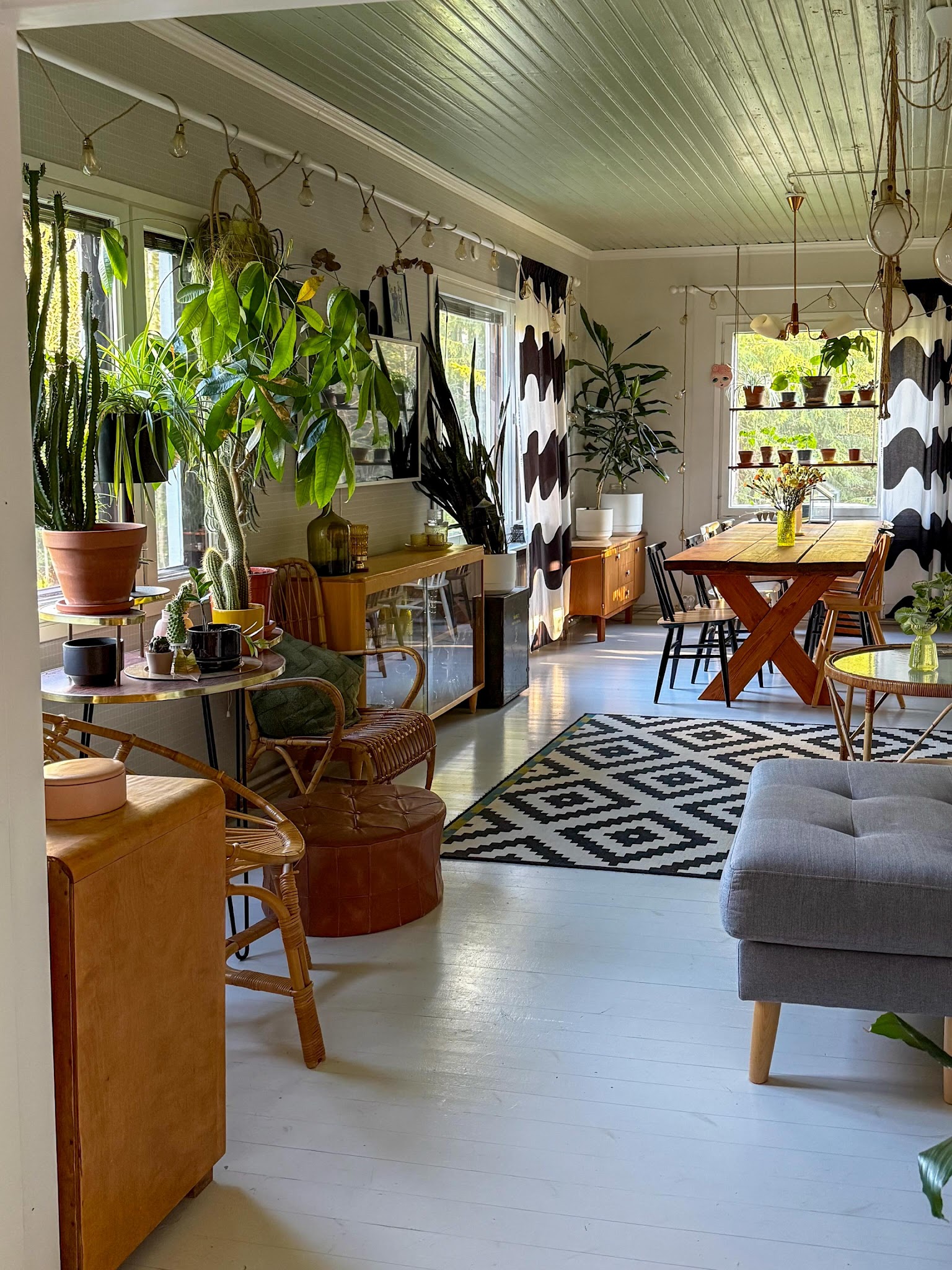
12. Connect Living and Dining Areas With Natural Texture
Credits: Instagram
Warm wood furniture and a collection of woven chairs link the sitting area to the dining table in this long room.
Painted floorboards and a pale green ceiling keep the background light, while black and white patterns give the arrangement structure. Use one consistent natural wood tone across a few key pieces, then allow smaller chairs and cabinets to vary.
A rug can mark the lounging area without creating a barrier between activities. The window plants provide a second connection, repeating greenery along the room's length.
Keep their containers on protected surfaces and leave access to window handles. For an equally relaxed result, give each seat a useful nearby surface while preserving a clear route from one area to another.
13. Pair Two Wood Chests as Coffee Tables
Credits: Instagram
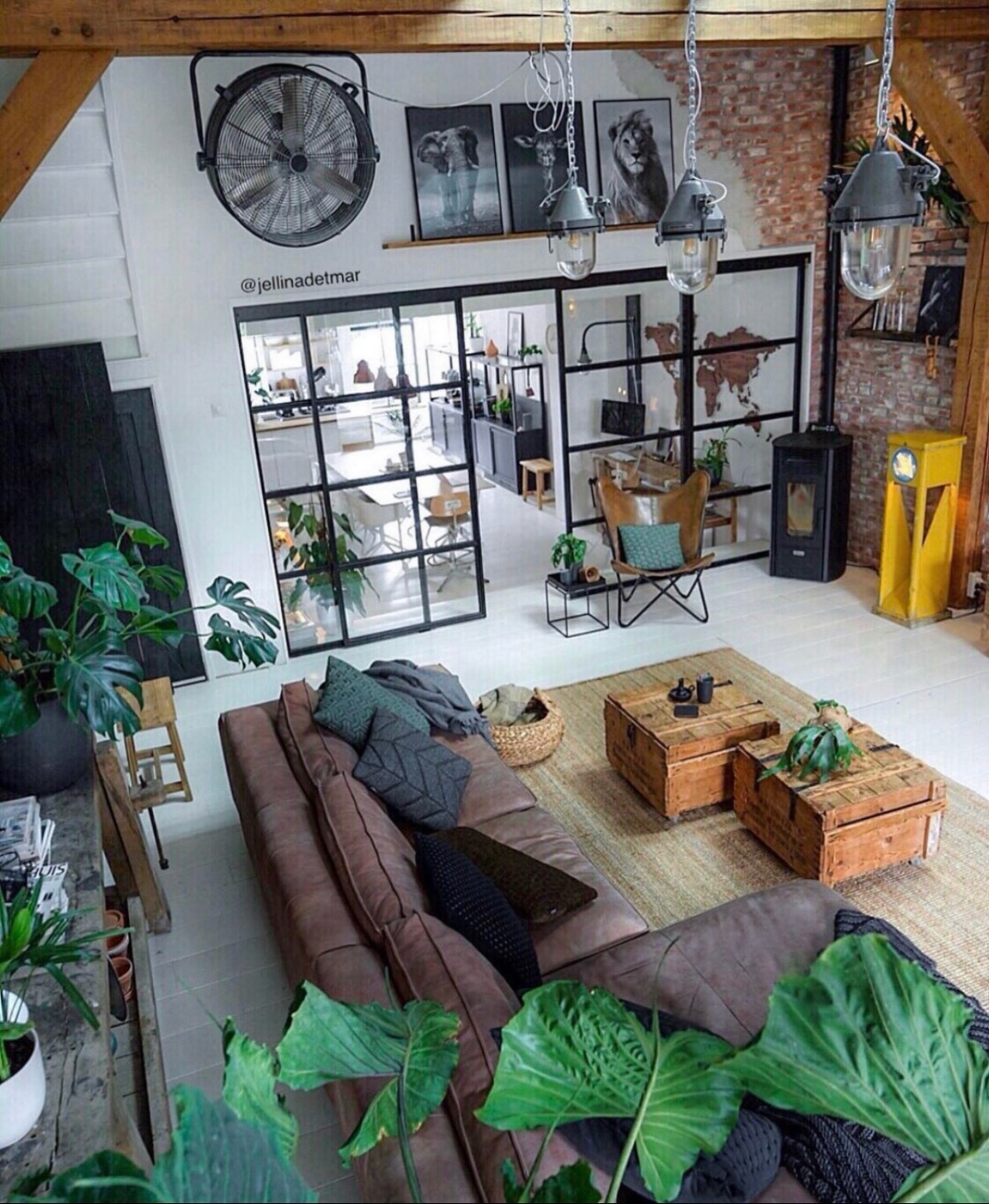
Two square wood chests sit together in front of the deep sectional, giving this airy loft a substantial center. Their worn surfaces suit the exposed beams and brick, while the large woven rug brings the separate pieces into one arrangement.
This approach works when a single table feels too small for a long sofa. Choose chests with compatible heights, then leave a narrow gap so each lid can operate.
Keep frequently used objects on trays that lift away easily. Dark cushions, metal lighting, and the glazed partition repeat a second finish throughout the room.
Plants soften those hard edges without hiding the architecture. Measure the full table grouping before placing it so the sofa remains comfortable to enter and leave.
14. Paint a Sunburst Beneath the Roof Peak
Credits: Instagram
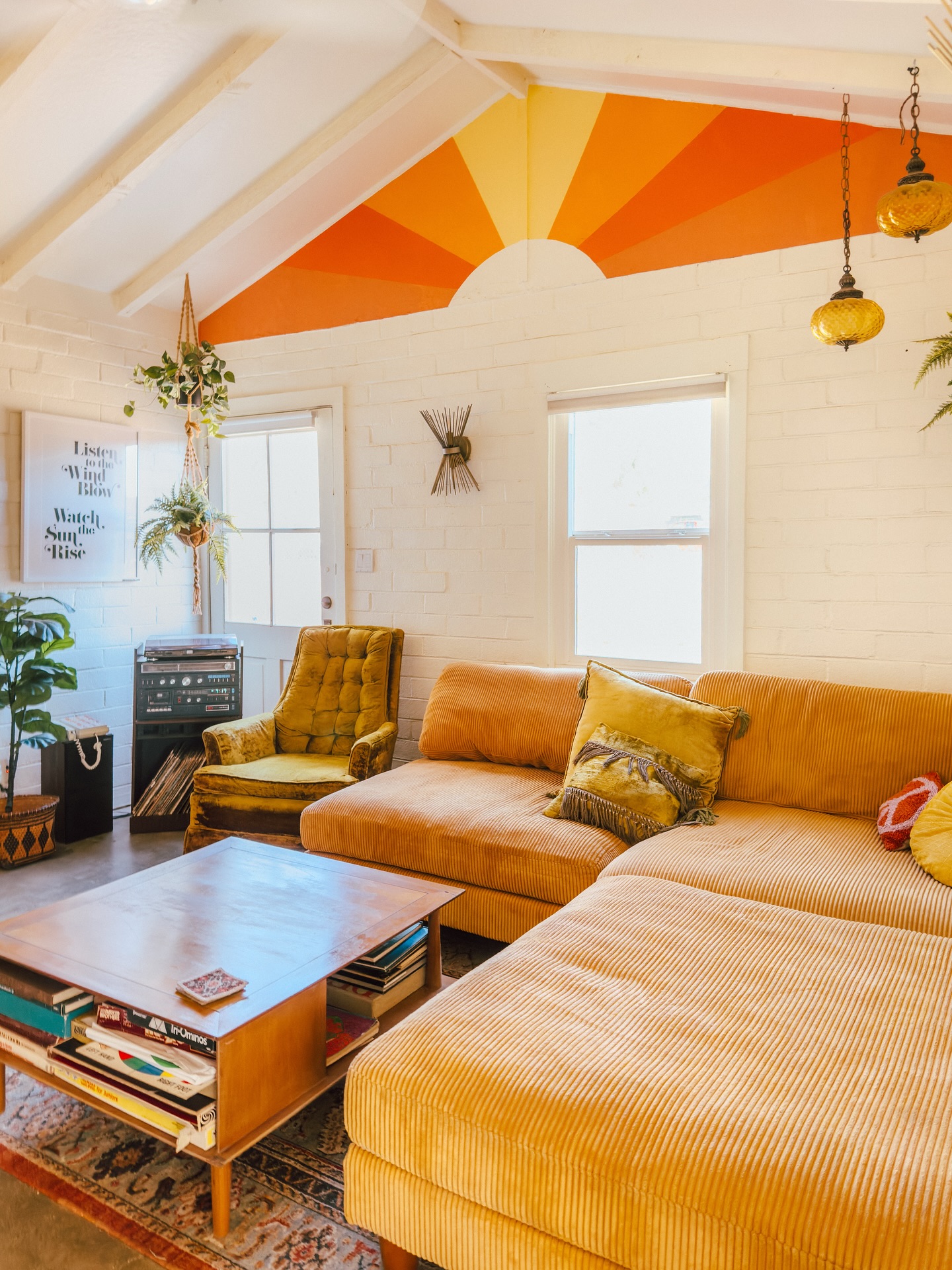
An orange and yellow sunburst fills the triangular wall above this sofa, making the roof shape part of the room's decoration.
White beams and painted brick keep the bold color contained, while the golden upholstered seating, hanging plants, and textured rug extend the boho mood below.
A simple mural can work where framed art would feel awkward or undersized. Sketch the rays on paper first and test the colors beside your upholstery before painting.
Let the architecture guide the outline so the pattern looks intentional. Keep the lower wall relatively quiet, using one or two small decorations between windows.
A wood coffee table with open storage adds practical warmth and gives books a place within easy reach of the sofa.
15. Repeat Leafy Green Around a Brick Fireplace
Credits: Instagram
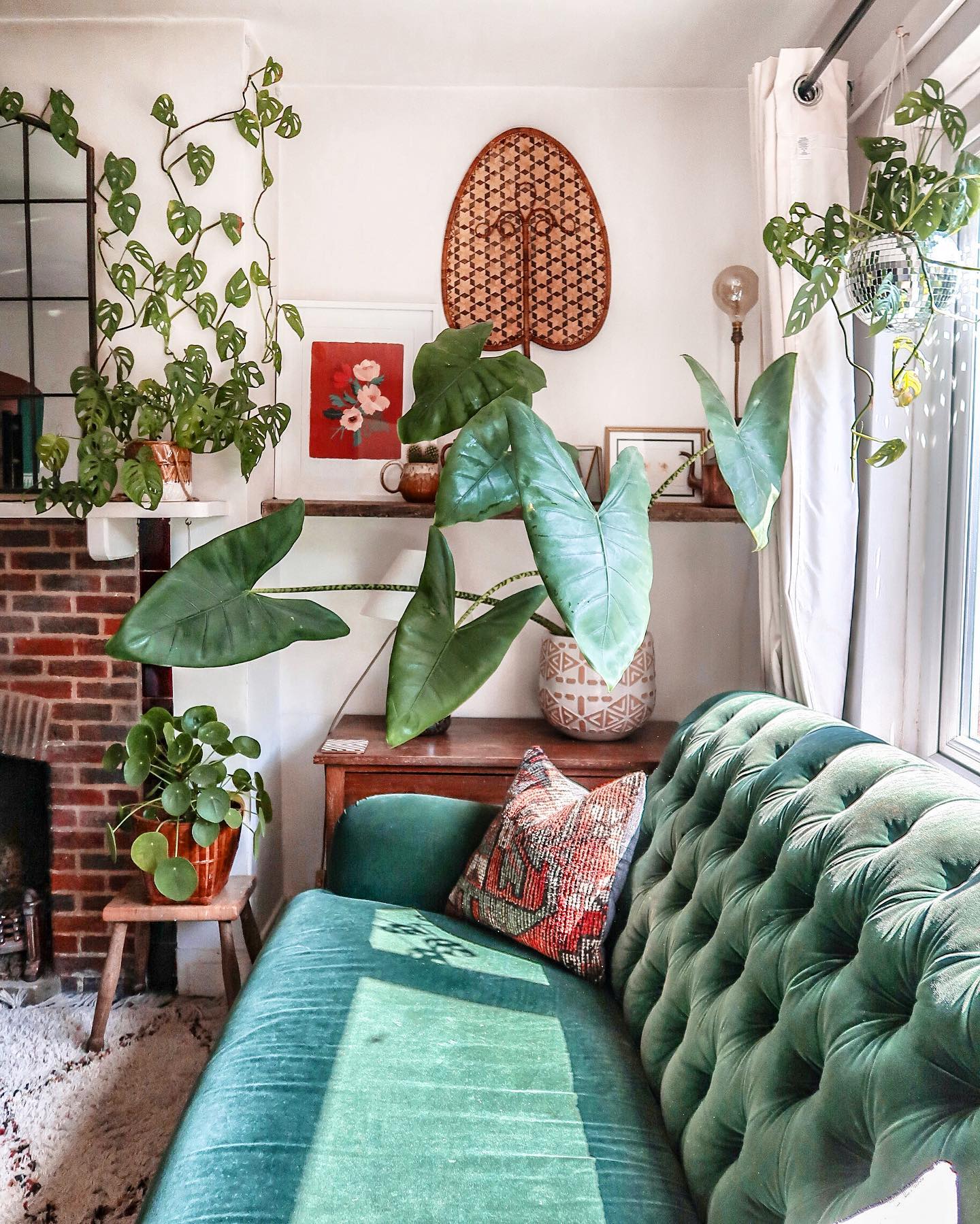
The glossy green sofa takes its cue from the surrounding plants, creating a strong link between upholstery and foliage.
Brick, a simple wood ledge, and a small stool introduce rustic texture, while the woven wall decoration and patterned cushion add boho detail.
Start with one substantial plant beside the sofa, then use smaller pots at different levels to build a loose arrangement. Keep enough distance for leaves to grow without brushing every person who sits down.
Artwork can lean on a securely fitted ledge if it stays stable and does not crowd the plants. Repeat the brick's warm color in a pot or pillow.
Protect the wood surfaces from watering spills and keep greenery clear of any working fireplace's heat.
16. Gather Warm Lanterns Over the Seating Group
Credits: Instagram
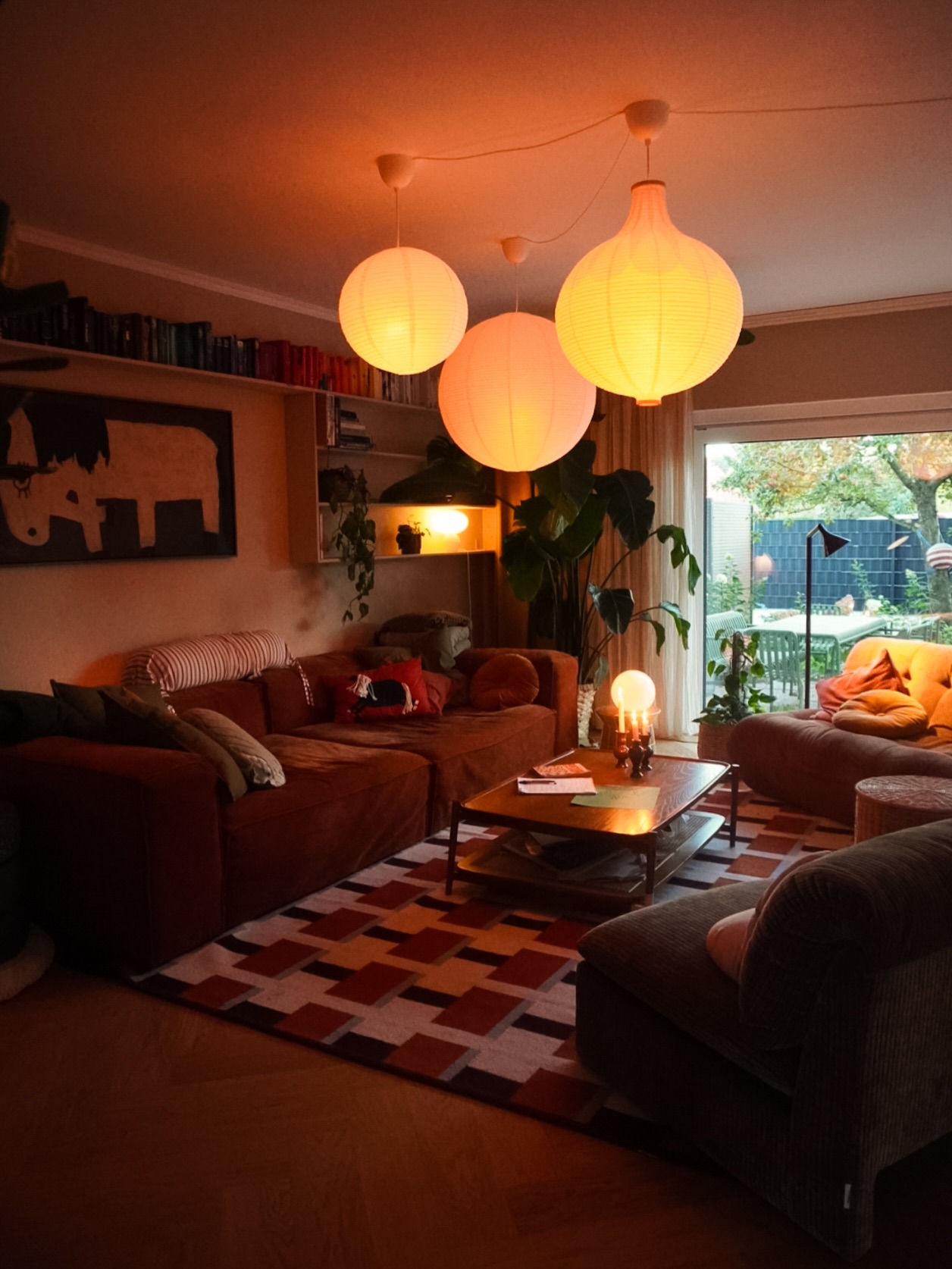
Three glowing lantern shades create a gentle canopy above the deep brown seating in this room. Their rounded shapes contrast with the rectangular wood coffee table, wall shelves, and graphic rug.
Instead of relying on a single bright ceiling fixture, combine a soft overhead glow with smaller task lamps near the places people sit. Varying the lantern shapes keeps a simple group interesting without introducing another strong pattern.
The photo's warm reds and browns continue through cushions and floor textiles, connecting the separate seats. Choose compatible bulbs and fittings, following each shade's heat and wattage limits.
Position the lower lamps where they provide useful light without shining directly into someone's eyes, and keep the table clear enough for evening drinks.
17. Frame a Wood Mantel With Muted Green
Credits: Instagram
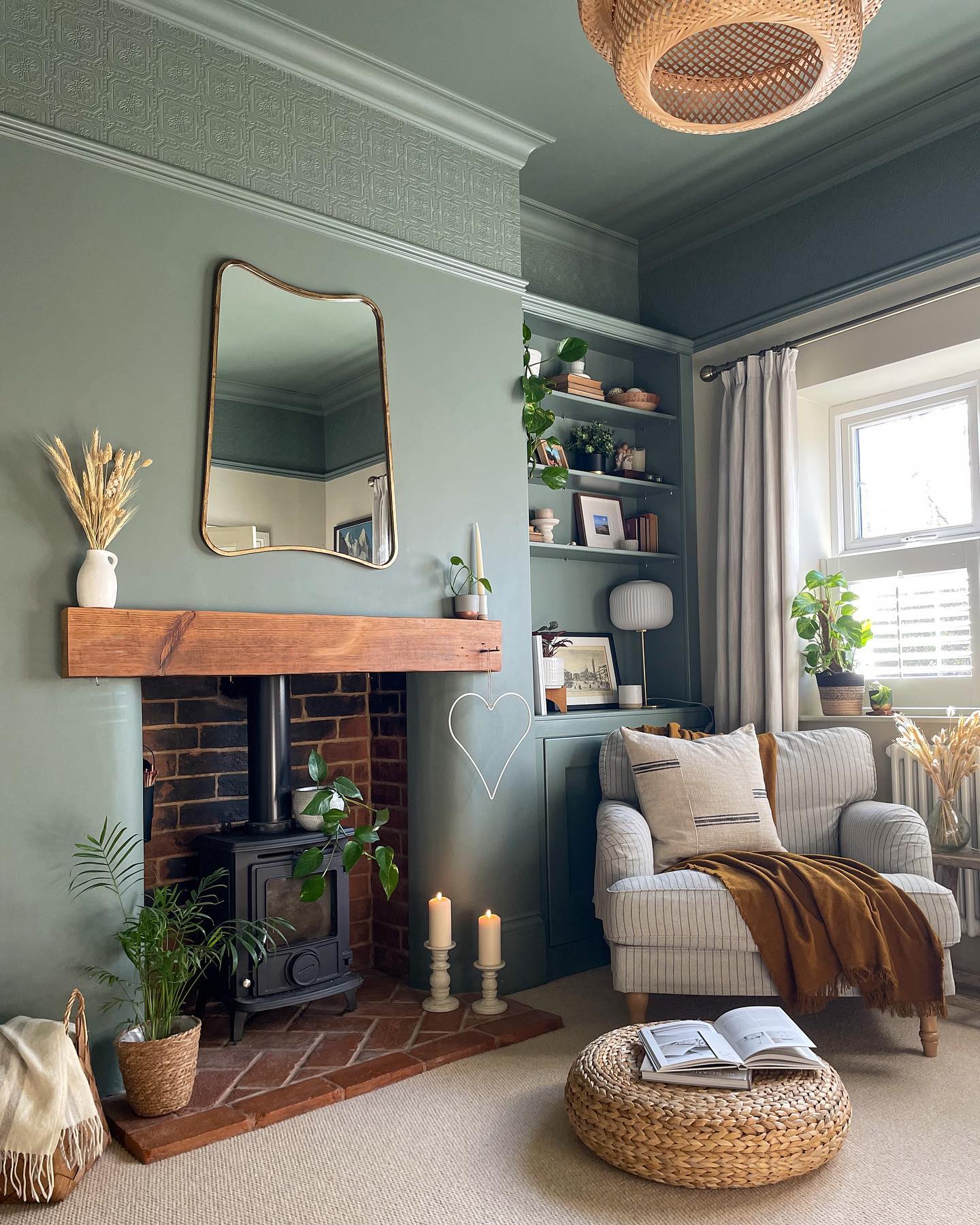
A broad wood mantel stands out against the muted green chimney breast, linking the brick hearth to the woven pendant and round pouf.
The nearby armchair stays pale, allowing the fireplace wall to hold attention without making the sitting corner feel heavy. Try one muted wall color across the chimney and adjacent shelves to connect mismatched architectural details.
Then repeat warm wood or woven texture in two smaller pieces. A mirror with a curved outline softens the straight mantel, while books and a few plants make the alcove feel personal.
Keep shelf arrangements low enough to avoid crowding the chair. Treat the hearth as part of the stove's safety zone and move textiles, candles, and plants beyond its required clearances.
18. Build a Collected Gallery Above Simple Seating
Credits: Instagram
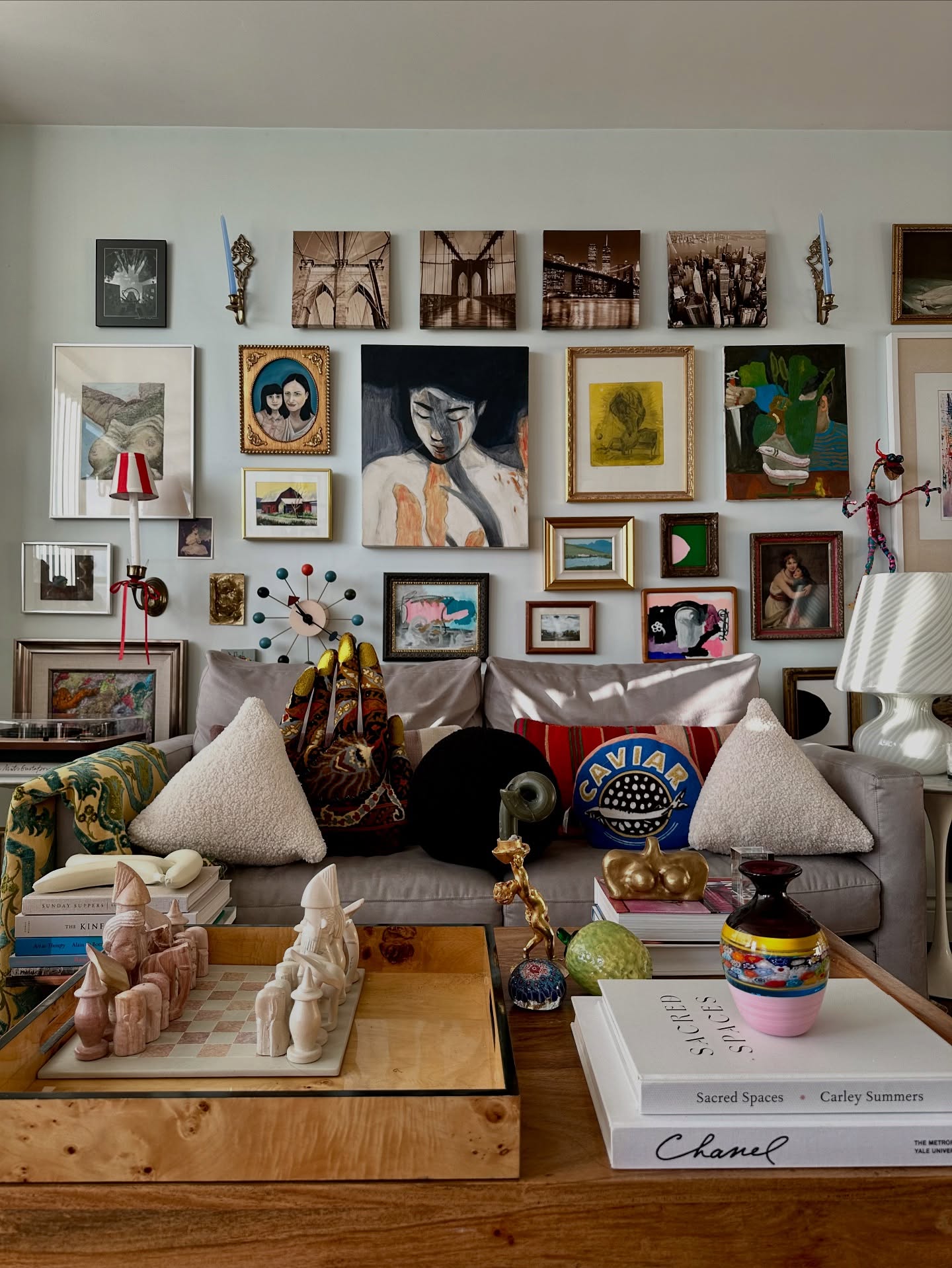
An assortment of portraits, landscapes, photographs, and small objects fills the wall above this neutral sofa. The plain neutral upholstery gives the collection a steady base, while patterned cushions and a wood coffee table bring warmth closer to the seats.
Start with the largest artwork and arrange smaller pieces around it on the floor before making holes. Mixing frames works best when a few finishes repeat across the group.
Leave enough clearance above the sofa so frames cannot be bumped when someone sits down. A tray can gather smaller tabletop objects and preserve a useful open surface.
Keep the most fragile pieces away from busy edges, allowing the room to hold personal collections without making everyday relaxation feel too precious.
19. Set an Orange Chair Against a Green Color Band
Credits: Instagram
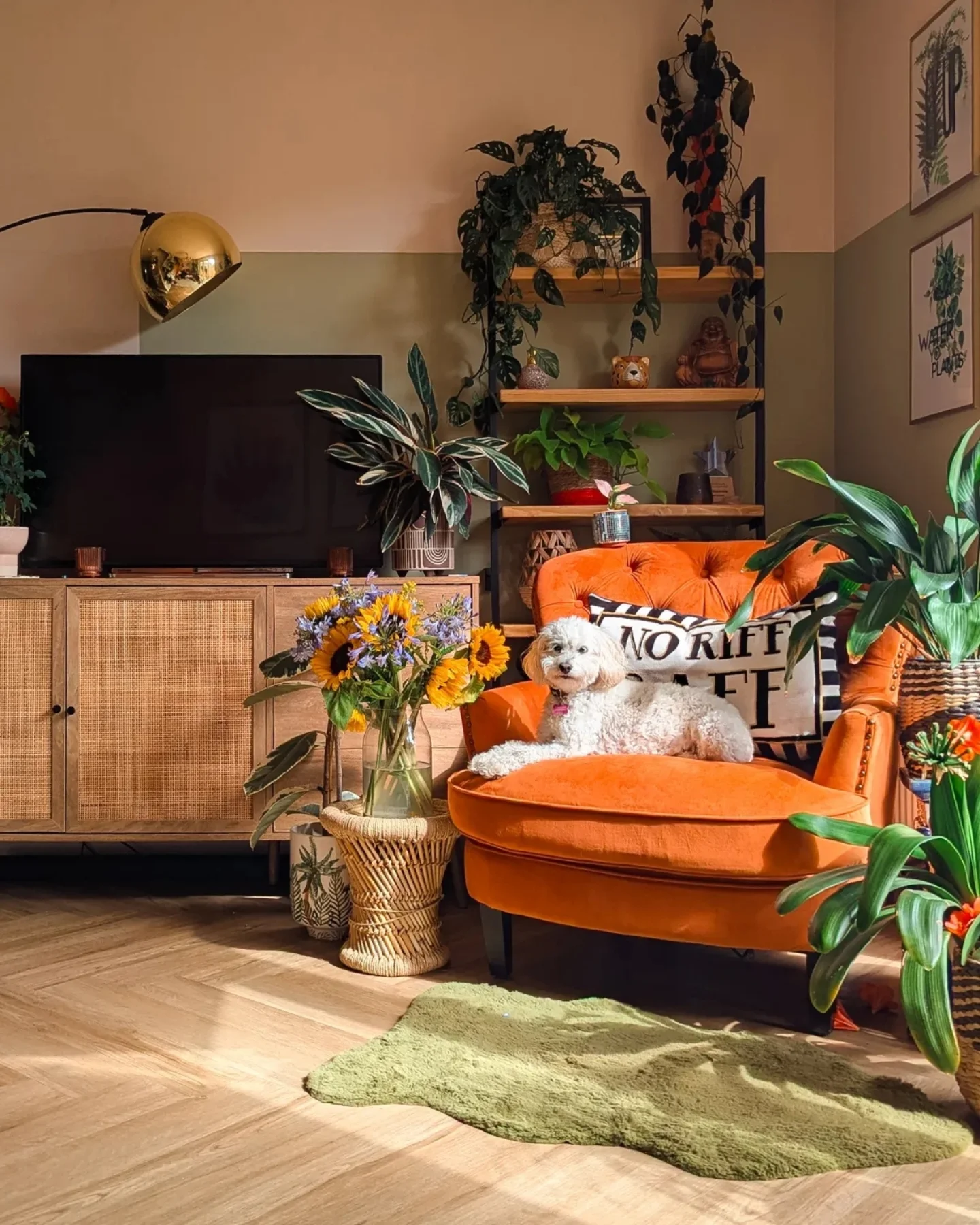
The orange armchair brings a lively focal point to this plant filled corner. A green band across the wall links it to the surrounding leaves, while the woven cabinet fronts and small wicker table supply natural texture.
You can borrow the idea with one colorful chair and a limited background palette. Position the paint boundary in relation to the furniture rather than choosing a height at random.
Open wood shelves give trailing plants room to fall, but they should not interfere with the seat or television. Repeat the cabinet's woven texture in one smaller accessory nearby to connect the arrangement.
Leave a reachable surface for a drink, and choose an adjustable reading light if this chair will serve that purpose.
20. Balance a Rough Table Base With Soft Blush
Credits: Instagram
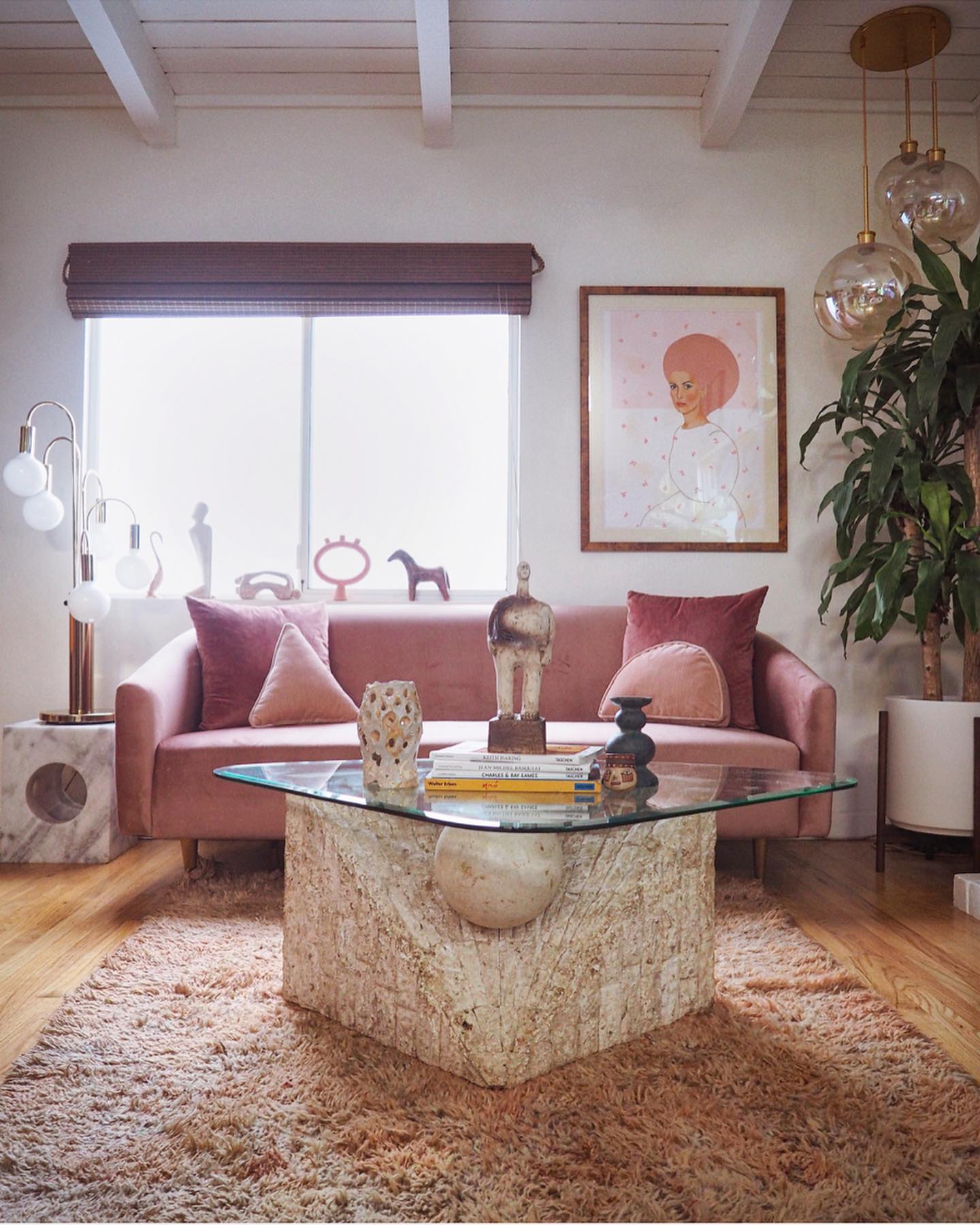
The pale, textured coffee table base introduces a rugged surface to this otherwise soft sitting area. A glass top keeps that substantial shape from feeling too heavy, while the pink sofa and shaggy rug bring warmth and comfort around it.
This is a useful way to mix rustic texture into a lighter boho palette without changing every piece of furniture. Choose a table with proportions that leave enough space between its corners and the seats.
Repeat a warm neutral from the base in a pot or small accessory. The varied sculptural objects and framed portrait add personality, but their limited number keeps the tabletop readable.
Place taller decorations away from the center so people can still see one another comfortably.