
A room with stonework or exposed beams can feel imposing unless the seating gives it a comfortable, human scale.
European Farmhouse Living Room Ideas often balance those strong architectural features with inviting furniture, earthy textiles, and a few carefully repeated colors.
You’ll find practical ways to arrange facing sofas in a long room, soften a rugged hearth with rounded chairs, and bring warm lamp light closer to the seating.
Other examples pair pale stone with dark storage or use woven trunks as coffee tables, showing how useful pieces can also add texture and character.
1. Give Tall Stonework a Low, Comfortable Base
Credits: Instagram
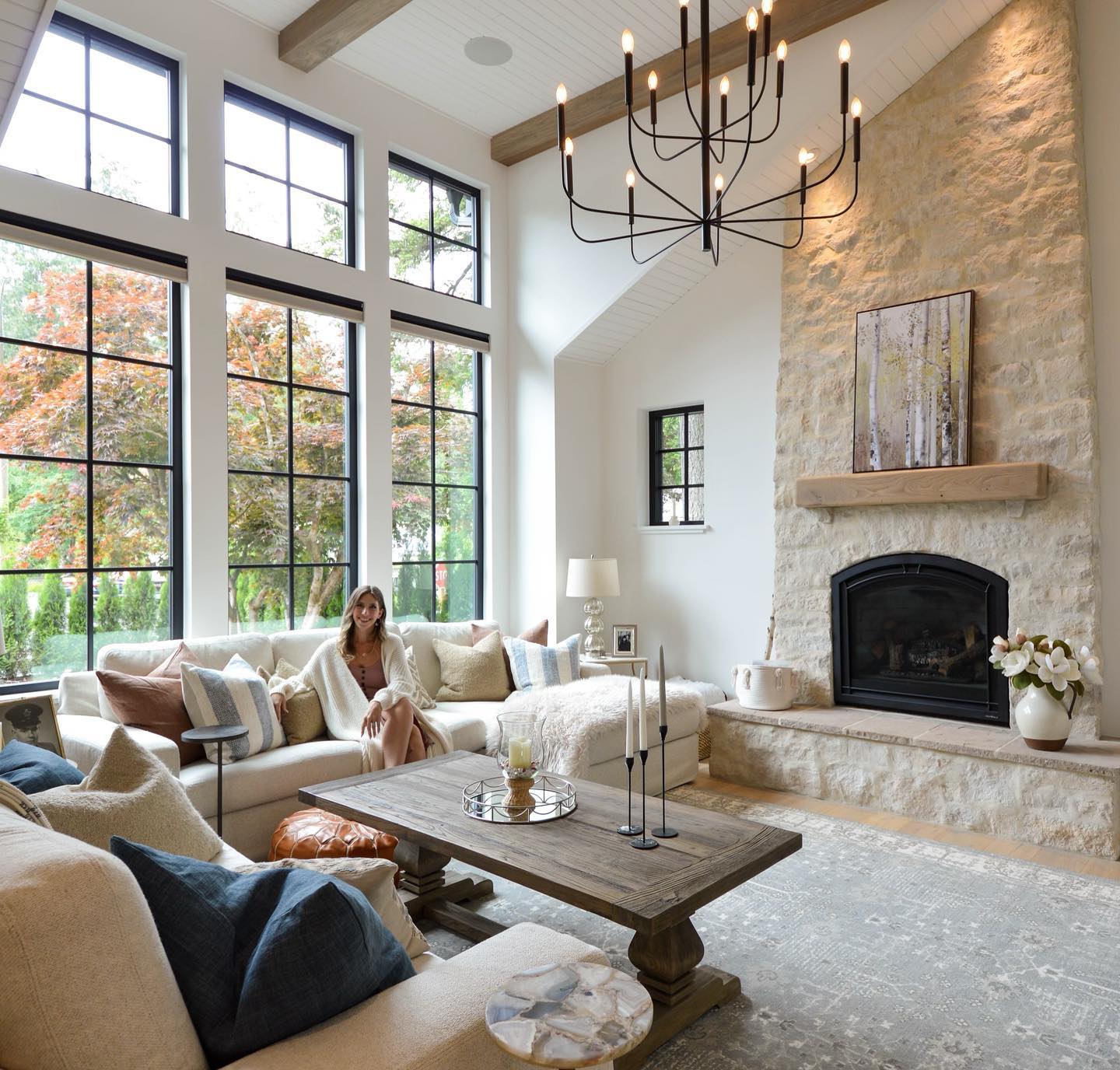
The pale stone chimney, timber beams, and slender black chandelier establish the farmhouse character before a single accessory is added. Below them, generous sofas and a substantial wooden coffee table make the tall room feel approachable.
Borrow that balance by choosing seating with a low back when architectural height is your main feature. Let the rug spread beneath the front legs of every seat so the conversation area reads as one group.
Here, dark window frames are repeated in candlesticks and cushions, connecting the airy upper walls to the furniture. Keep mantel styling simple: one picture and a few smaller objects give textured masonry room to breathe.
A compact side table brings drinks within reach without crowding the shared table.
2. Mix a Woven Pendant with Traditional Details
Credits: Instagram
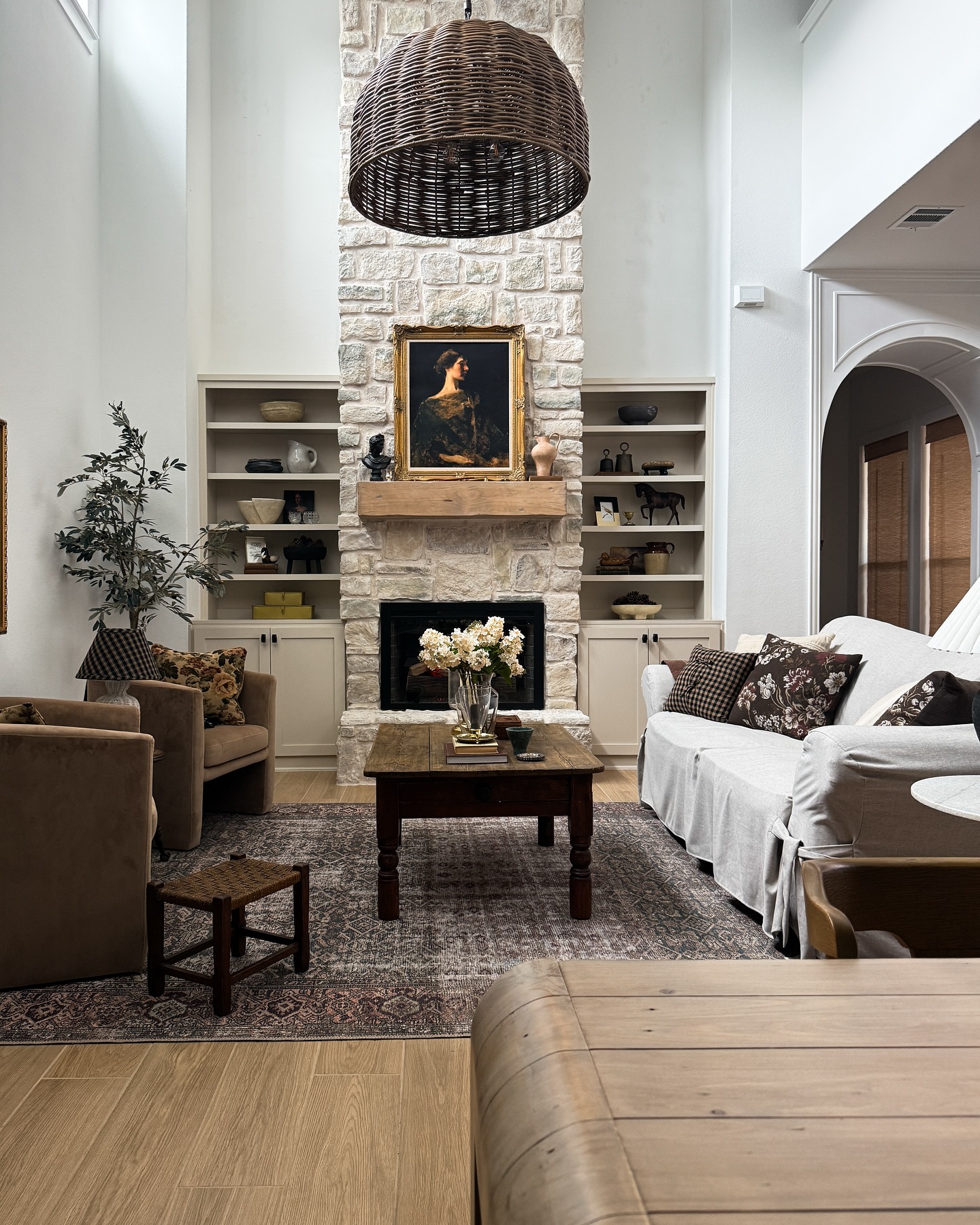
A large woven pendant brings a relaxed note to this room's stone chimney and formal portrait.
The combination works because each element has a different job: the pendant softens the height, the portrait provides focus, and the dark table grounds the seating.
Try one textured light fitting above a group of traditional furnishings for a similarly collected effect. Keep the surrounding palette restrained, as the white sofa and brown chairs do here.
Small checks and floral cushions add pattern without overwhelming the stonework. Shelves hold scattered pottery and sculptural pieces, leaving visible space around each object.
Repeat a few dark brown tones across furniture and accessories, then let pale walls connect them into an easy, comfortable whole for everyday living.
3. Echo Dark Beams with Green Furniture
Credits: Instagram
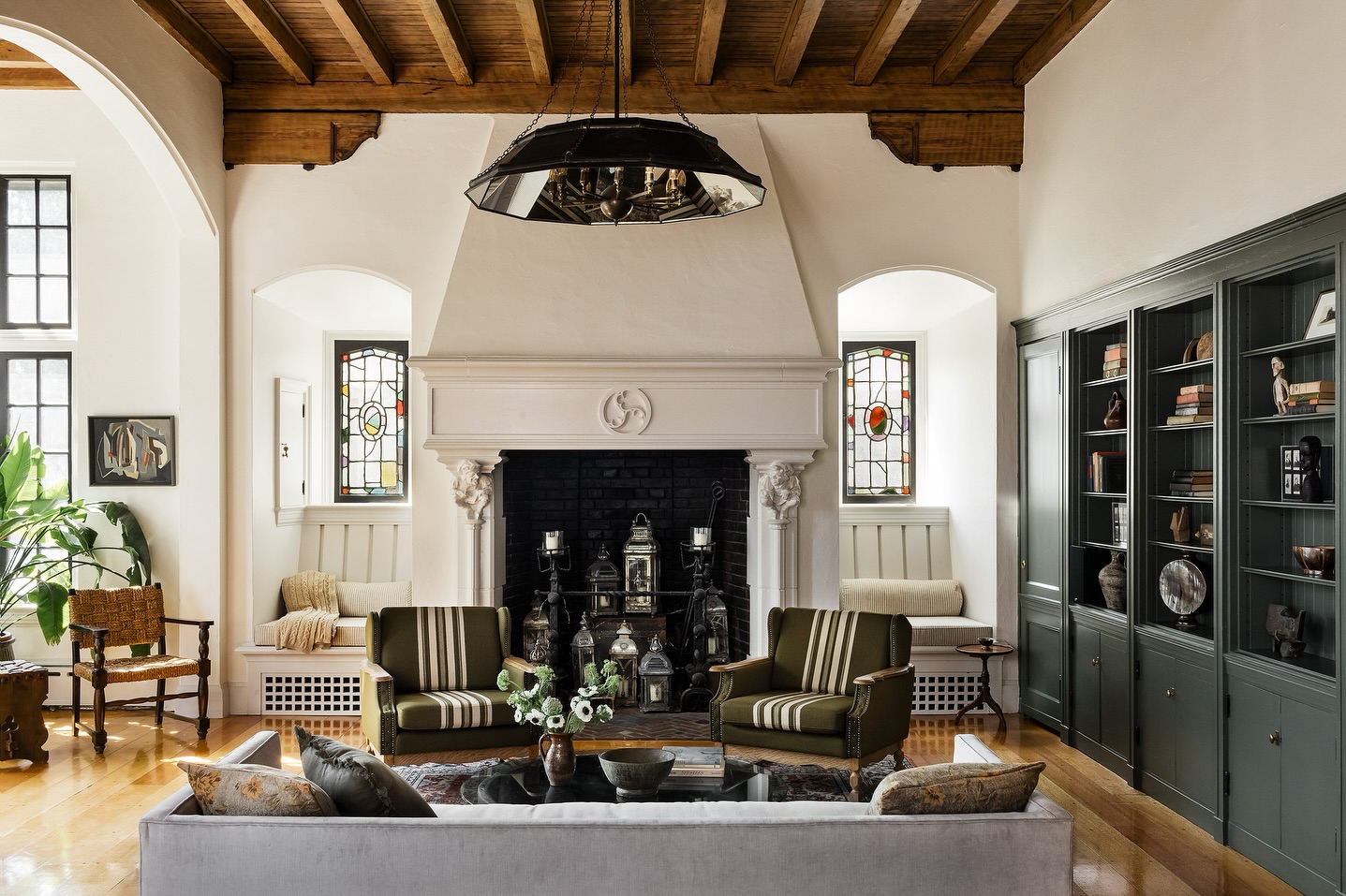
Deep green upholstery and cabinetry give this beamed room a restful middle layer. The cream fireplace remains the focal point, while striped chairs connect its pale details to the darker shelves.
If your ceiling already has strong timber character, pick one muted color for substantial furniture instead of adding several competing shades. Repeat it across a pair of chairs and a storage unit to make the decision feel deliberate.
Here, a plain sofa back creates a quiet foreground for the intricate fireplace, stained glass, and lantern collection. Keep tabletop arrangements low enough for conversation across the seats.
One woven chair adds a rougher texture, showing how everyday country pieces can sit comfortably beside more decorative architecture without needing identical finishes.
4. Warm Paneled Walls with Earthy Textiles
Credits: Instagram
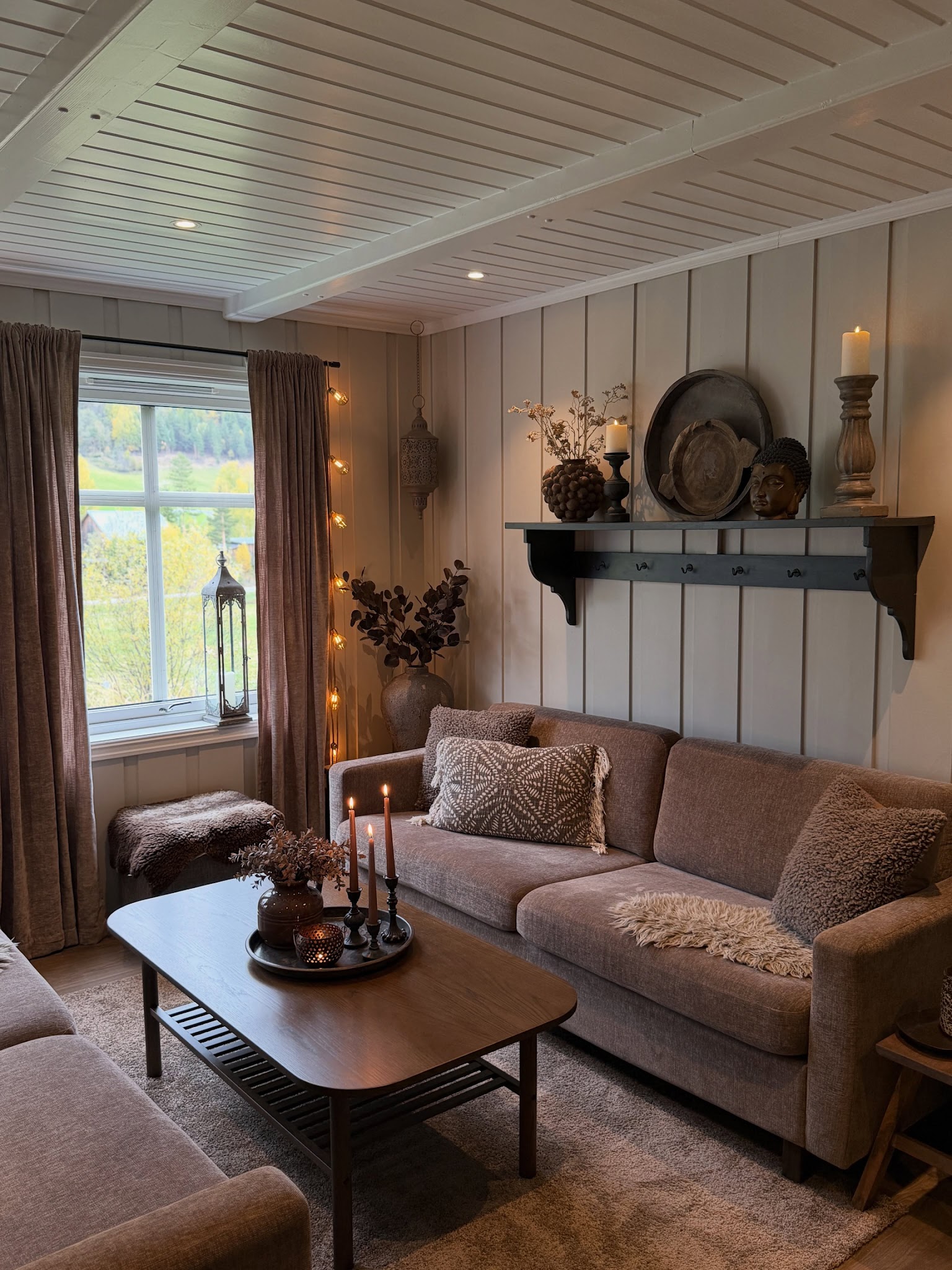
Painted boards cover both the walls and ceiling, giving this compact sitting room a gentle rhythm. Brown curtains, a muted sofa, and a dark wooden table keep the effect warm rather than stark.
Recreate the mood by keeping large textiles within a narrow range of earthy shades, then varying their surfaces. A shaggy throw, small patterned cushion, and textured rug provide enough contrast without introducing another strong color.
The long shelf above the sofa gathers plates, vessels, and candlesticks into one clear display. Leave the rest of the wall relatively open so the panel lines remain visible.
A tray makes the coffee table arrangement easy to move when you need more space for a book, a cup, or visiting friends.
5. Pair Pale Stone with a Dark Storage Piece
Credits: Instagram
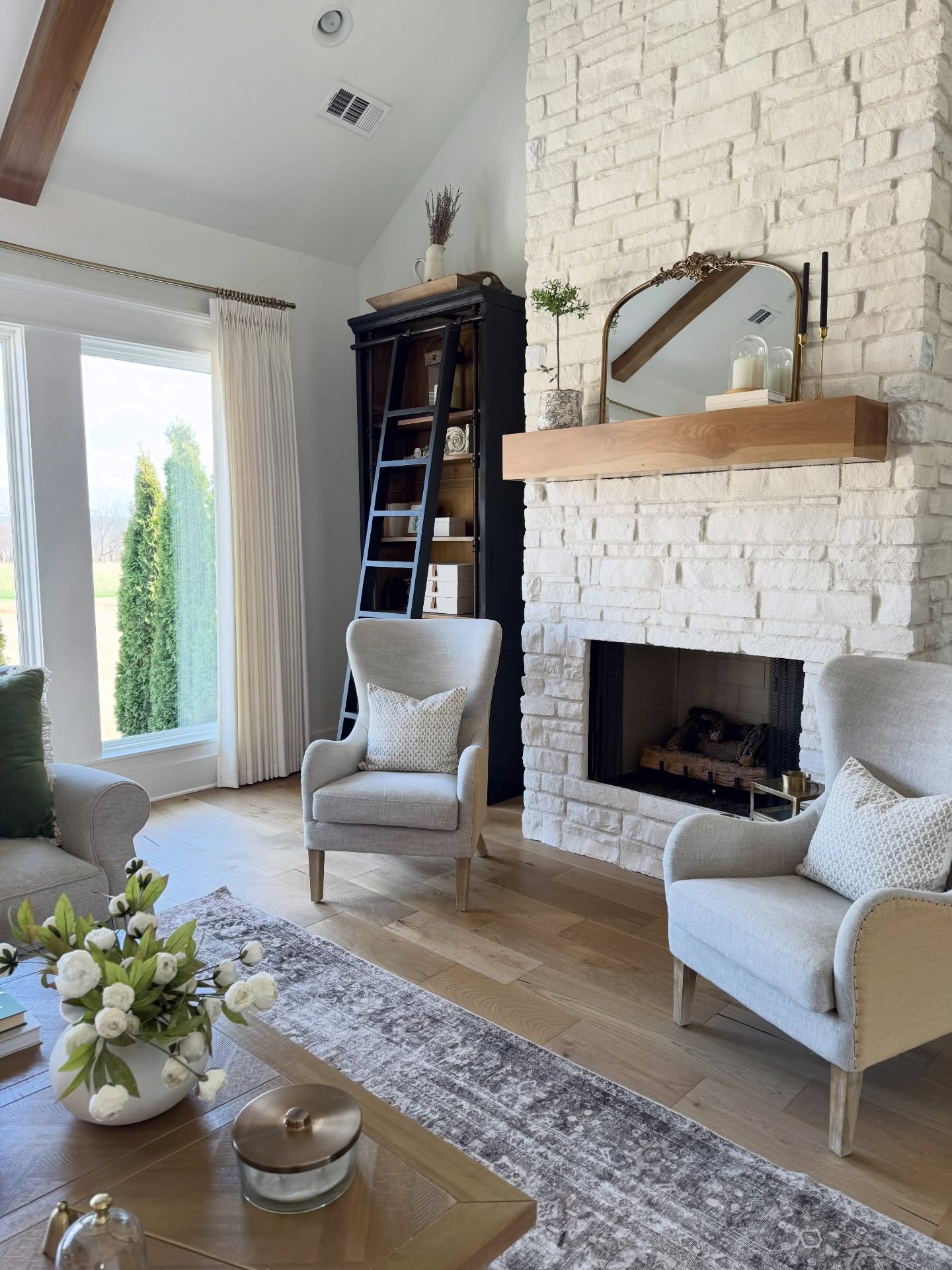
The light fireplace and pale chairs make this corner feel open, while a tall dark cabinet adds welcome depth. Its ladder and warm interior give the room a useful library character alongside the softer seating.
This is a helpful formula when an otherwise neutral scheme looks unfinished: introduce one substantial storage piece with a deeper finish. Match its scale to the wall, but leave breathing room beside windows and walkways.
Here, an ornate mirror sits above the simple timber mantel, balancing a decorative outline with straightforward shapes. Small patterned cushions make the chairs inviting without competing with that focal point.
Carry a little warmth into the floor, table, and curtain hardware so the darker cabinet feels connected to the room.
6. Let Yellow Trim Brighten a Rustic Room
Credits: Instagram
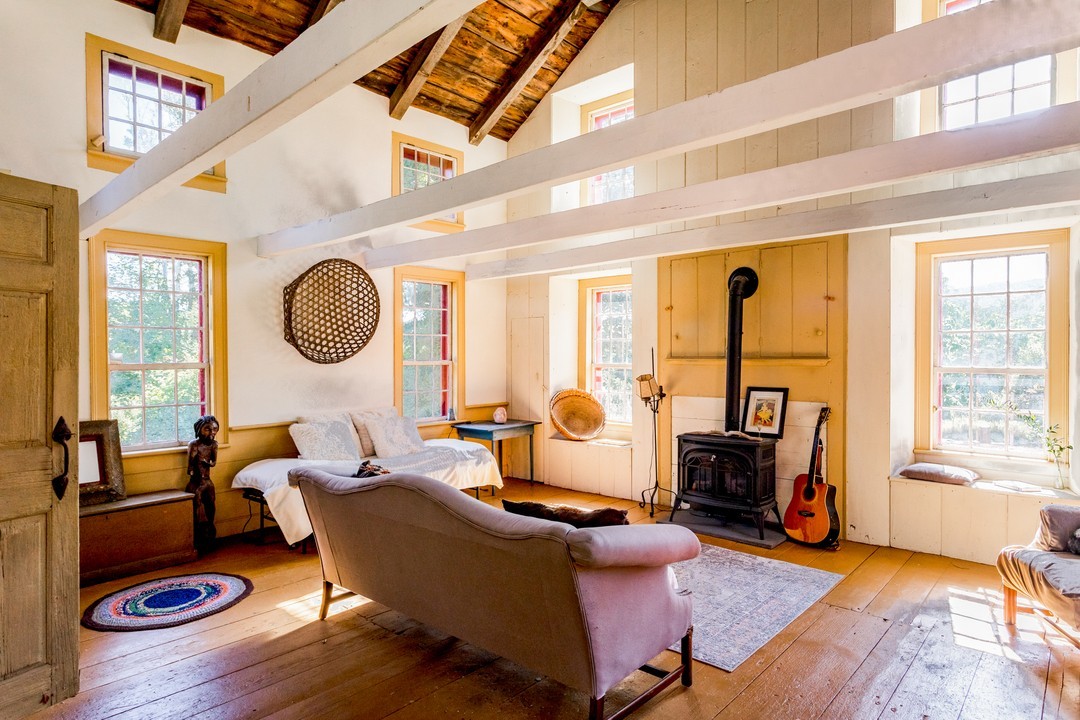
Yellow trim draws attention to the windows and boards in this sunny room. Against white beams and a darker timber roof, it creates a cheerful farmhouse palette without covering every surface in color.
Try the idea on window surrounds, a door, or lower wall paneling if you want a manageable first step. Sample the shade beside existing wood so their undertones feel comfortable together.
The curved sofa introduces a softer outline beneath the straight overhead beams, while a pale rug marks out the sitting area. Keep other furniture modest in scale to preserve the view through the room.
A woven wall piece repeats the country texture, proving that a single large object can be enough decoration for a busy wall.
7. Use Facing Sofas to Order a Long Room
Credits: Instagram
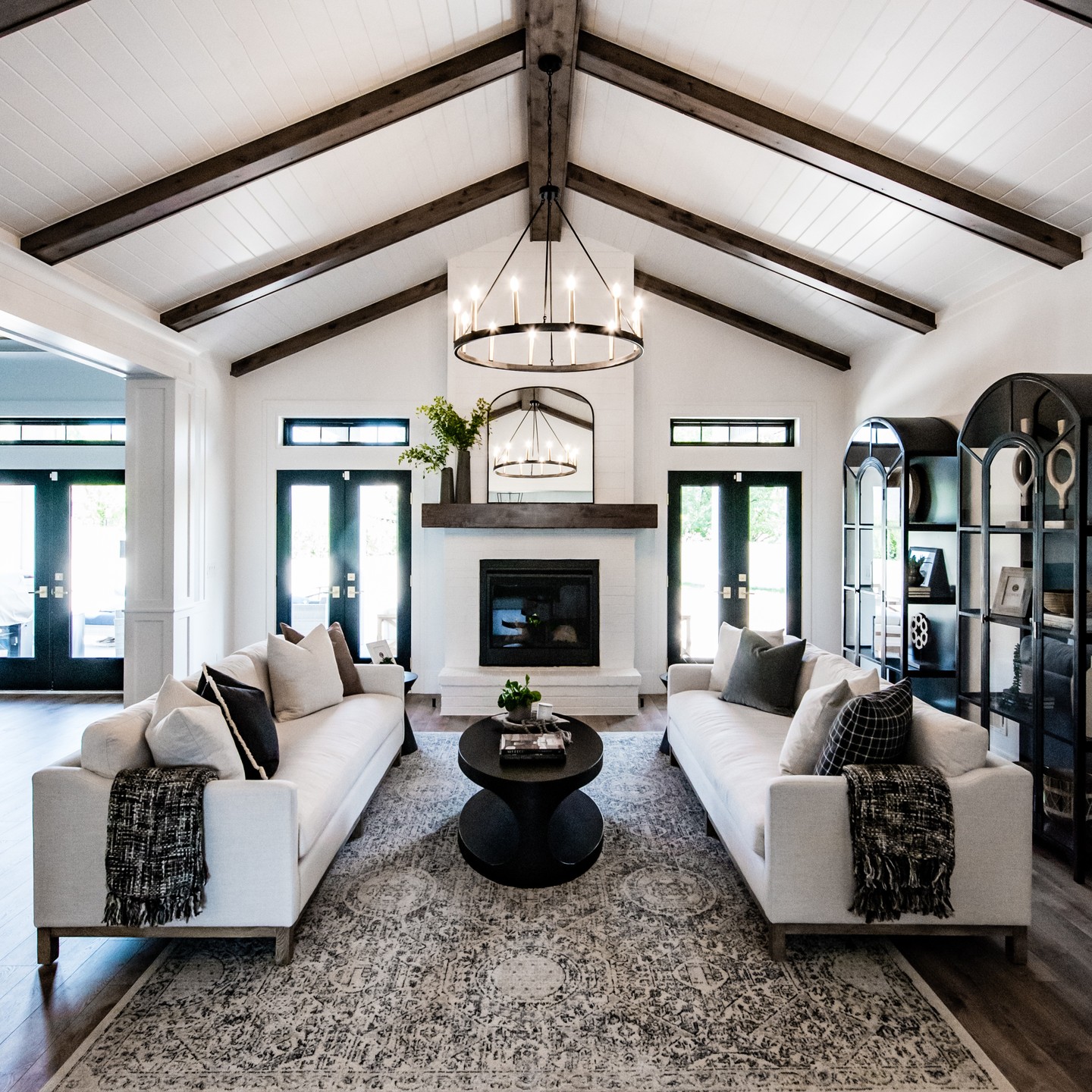
Two sofas face each other beneath a pitched ceiling, creating a clear conversation area in this long room. The arrangement echoes the balanced doors and central fireplace, while a round table breaks up the straight lines.
Use this layout when you have enough width to walk comfortably around the furniture without squeezing between seats. A large patterned rug can join both sofas and keep the center from looking empty.
Here, dark beams, doors, and arched cabinets provide a consistent outline around the light upholstery. Repeating that dark tone in a few cushions and throws carries it down to seat level.
Keep the mantel spare so the overhead structure and the cabinet shapes remain the main decorative features in the room.
8. Build a Large Seating Group Around a Checked Rug
Credits: Instagram
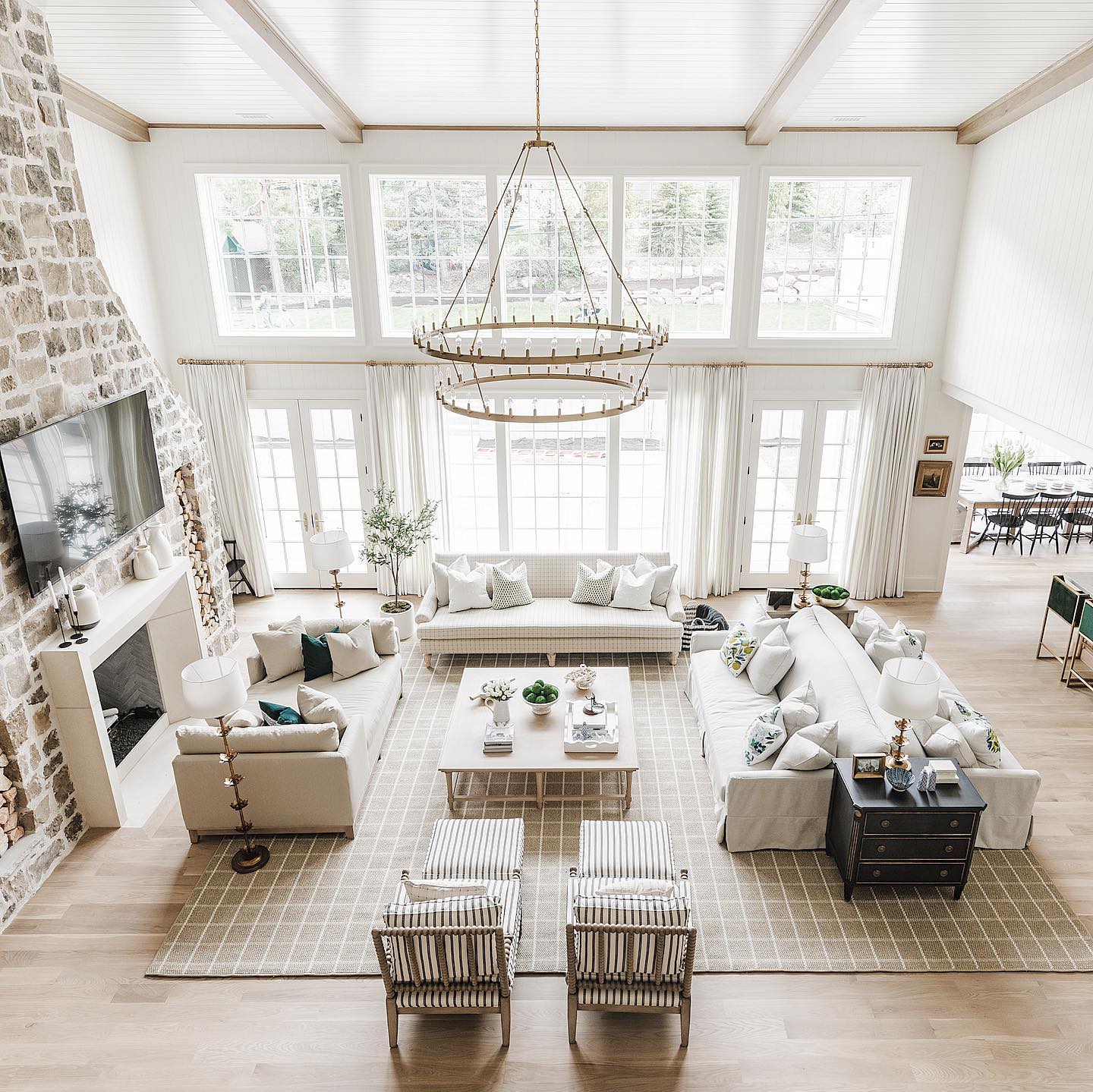
A checked rug turns this expansive room into a recognizable gathering place. Sofas, a daybed, and two striped chairs sit within its boundary, while open floor remains around the edges.
The practical lesson is to choose the rug before spreading furniture across a large room. Let its size establish the conversation zone, then make sure each seat has a comfortable relationship to the central table.
Here, pale upholstery keeps the many pieces visually light. The striped chairs add country pattern, and the dark chest gives one corner a stronger anchor.
Long curtains soften the tall window wall without hiding the upper panes. Repeat a small accent color in cushions or bowls to connect the seats without matching every fabric exactly.
9. Soften a Rugged Hearth with Rounded Chairs
Credits: Instagram
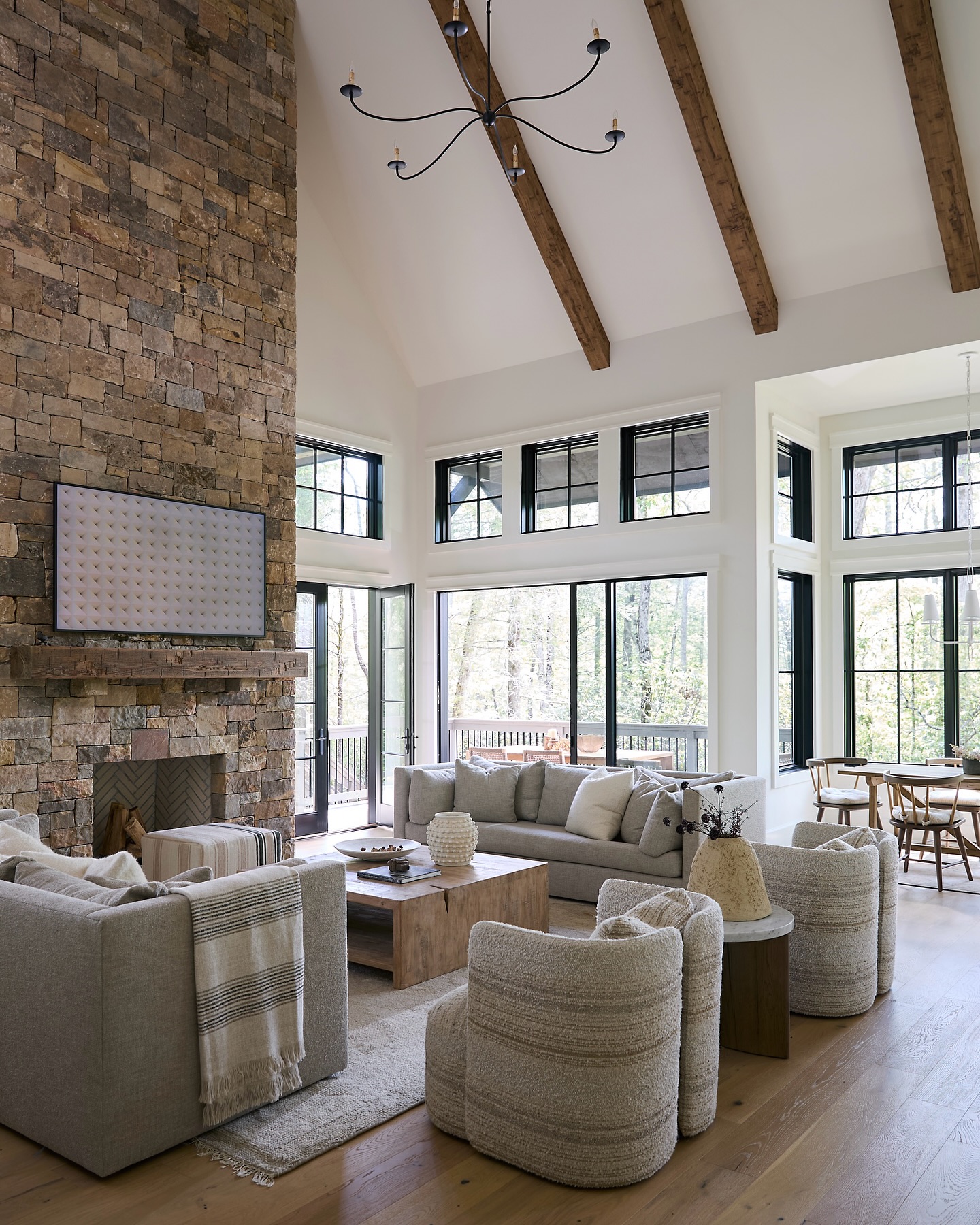
The tall stone chimney and exposed beams give this room a strong framework. Rounded, textured chairs soften the foreground, balancing the straighter sofas and blocky wooden table.
Choose a pair with compact proportions when you want extra seating without closing off a view between rooms. Here, their pale upholstery connects them to the sofas, while their shape supplies the contrast.
A striped throw is enough pattern against the busy stonework. Keep the coffee table arrangement low and use a small side table for taller branches, leaving faces visible across the seating group.
The black window frames repeat the chandelier's outline, bringing the upper and lower parts together. This mix suits farmhouse inspiration with simple furniture and a relaxed, uncluttered mood.
10. Give a Rustic Fireplace a Softer Frame
Credits: Instagram
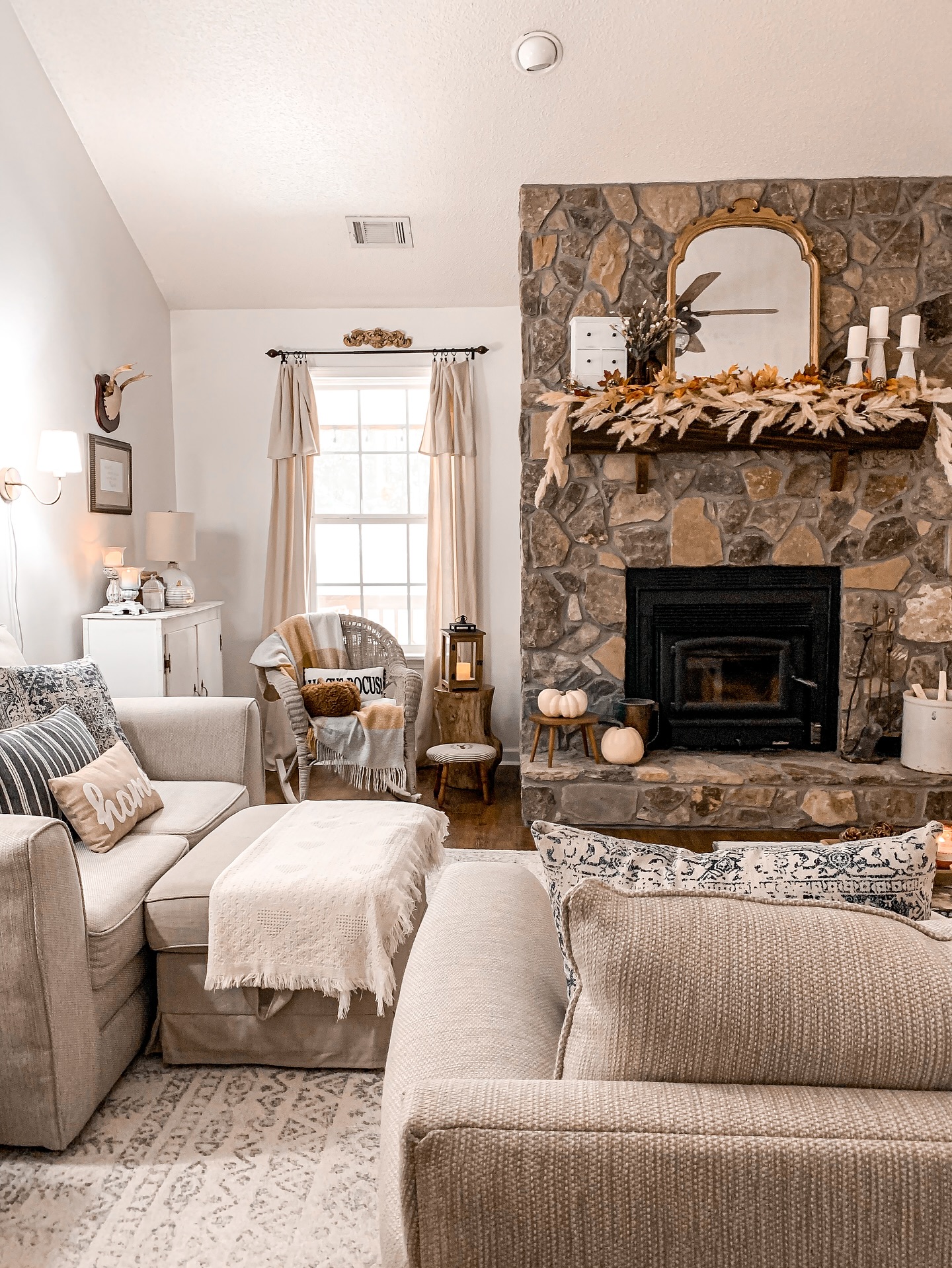
A gold mirror brings a graceful outline to this rugged stone fireplace. Pale curtains and generous upholstered seating soften its weight, making the room feel comfortable without disguising the rough surface.
Start with the contrast between one decorative piece and one substantial architectural feature, then keep most surrounding colors quiet. Here, cream, oatmeal, and muted gray flow across the sofas, rug, and curtains.
Small patterned cushions prevent that restrained palette from looking flat. A woven chair beside the window adds another texture and a useful occasional seat.
Seasonal stems and pumpkins are grouped around the hearth, but the underlying furniture would work throughout the year. Leave practical space for fireplace use and adjust decorative placement to the appliance's clearance requirements.
11. Bring Lamp Light Down to the Seating
Credits: Instagram
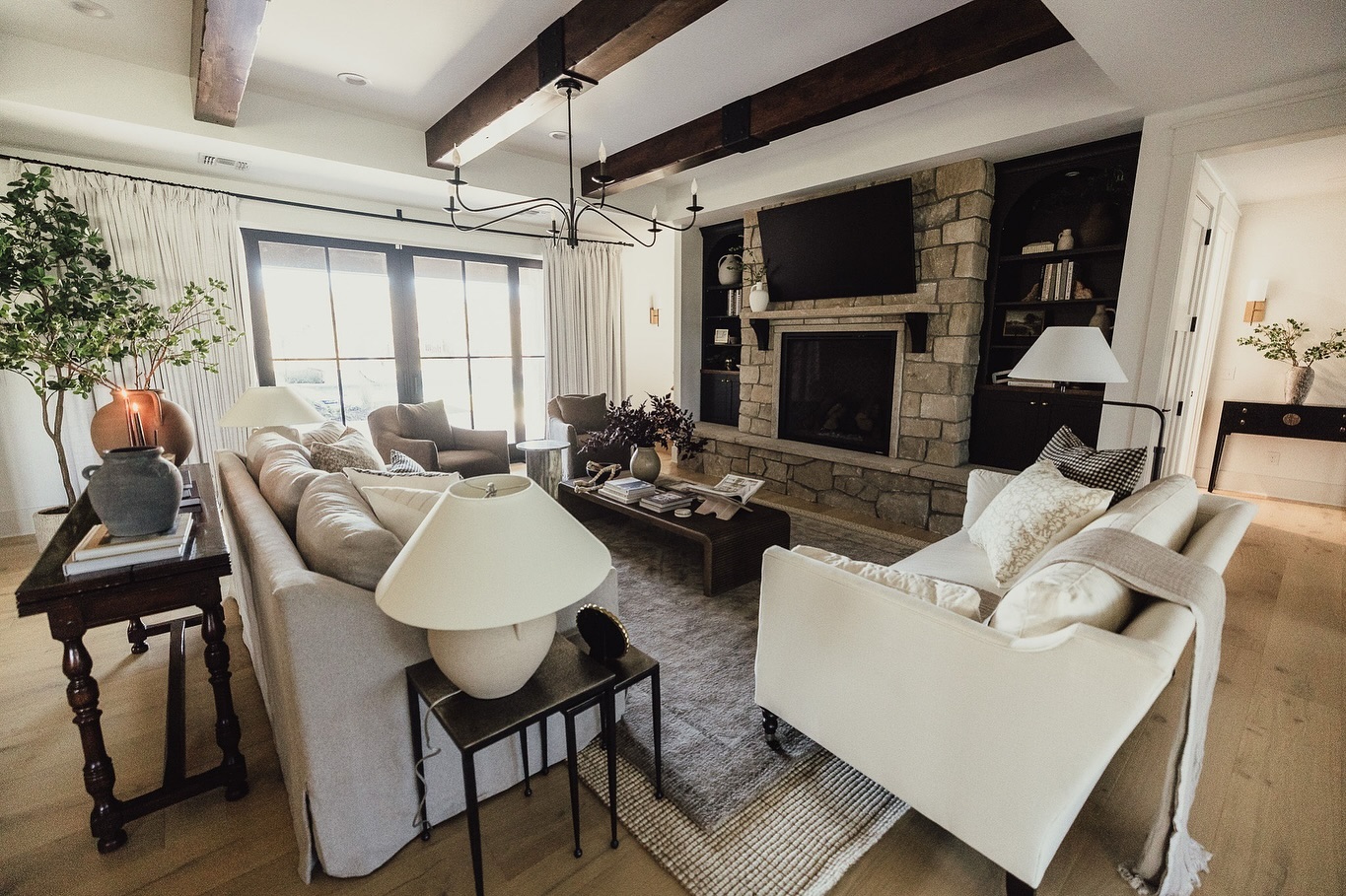
Low table lamps make this beamed room feel welcoming beneath its dark ceiling details. Their pale shades repeat the upholstery, while dark shelving gives the stone fireplace a strong frame.
Use several modest lamps around a seating group instead of relying entirely on an overhead fitting. Place them where people read or sit, and check that the shades do not block conversation.
Here, a narrow table behind the sofa adds a useful surface without interrupting the main furniture arrangement. The coffee table stays low, and generous curtains soften the glazed doors.
Mix a traditional turned table with a simpler metal stand to keep the room from feeling like a matching suite. Repeating dark finishes makes those different shapes feel related.
12. Keep Tall Trusses Visible Above Simple Seating
Credits: Instagram
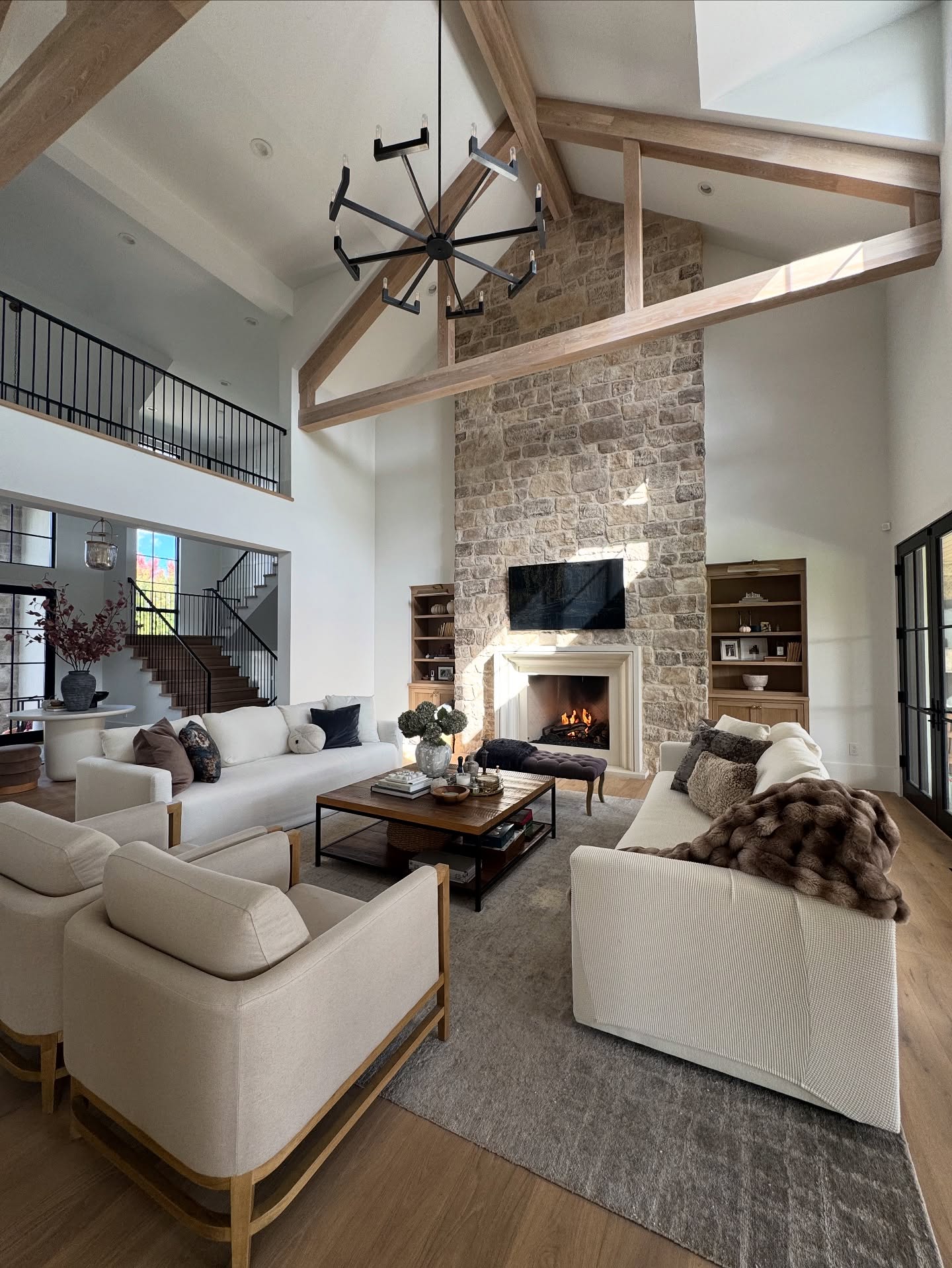
The pale timber truss is the defining feature of this soaring room. Cream seating allows its shape to remain visible, while the dark chandelier and railing provide a crisp outline.
When working with strong overhead architecture, keep the main furniture group straightforward and relatively low. Add character through smaller pieces that will not compete with the roofline.
Here, a tufted bench and patterned cushions introduce traditional details around a plain rectangular table. Shelves beside the chimney sit at a much lower height, keeping useful storage close to the people using it.
A large rug gathers the seats into a single comfortable zone. Choose a few warm brown accents to link pale upholstery with the timber above without matching every finish.
13. Use Woven Trunks as Practical Coffee Tables
Credits: Instagram
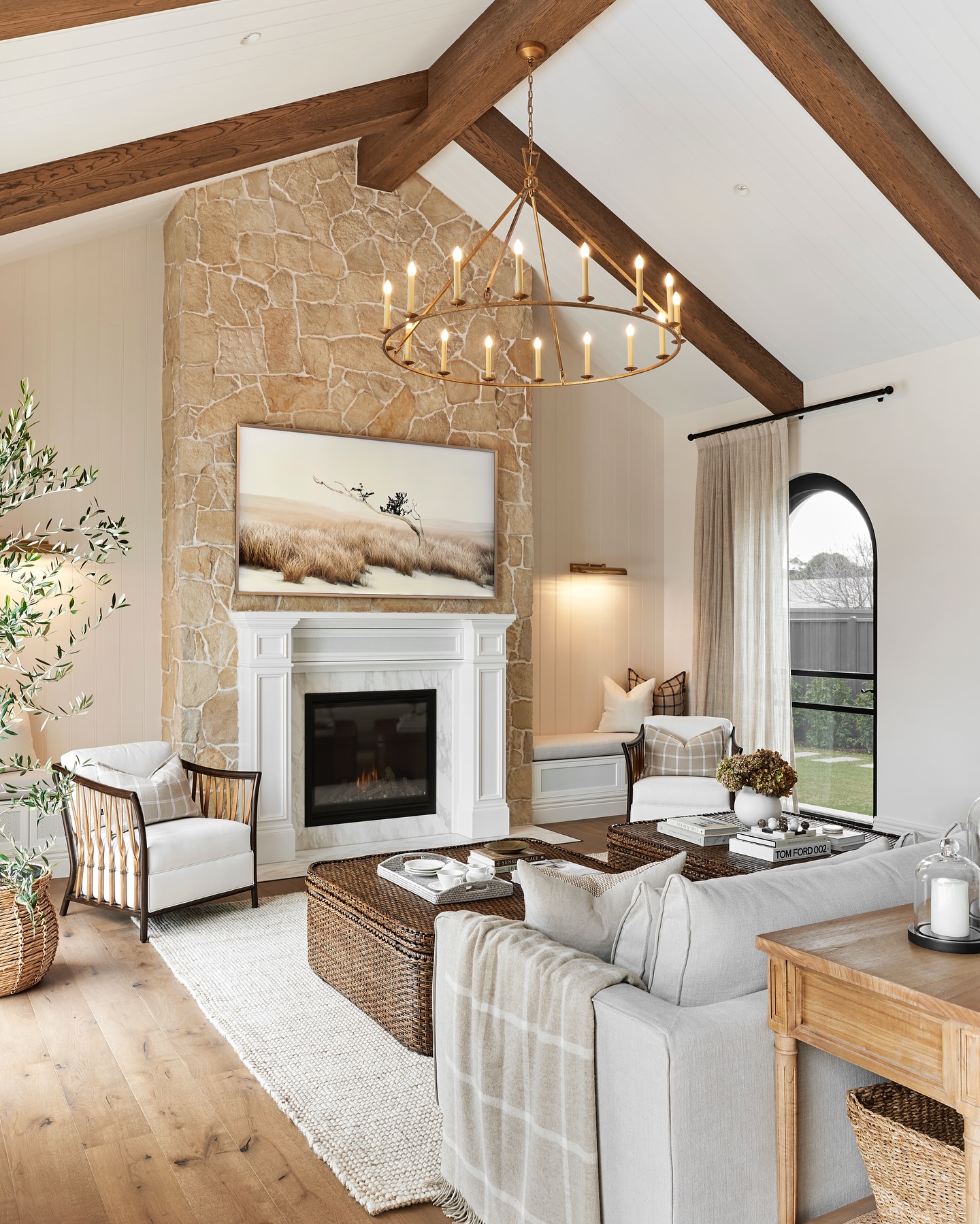
Two woven trunks bring texture to the center of this light living room. Their boxy shapes balance the delicate chairs and curved chandelier, while flat trays provide steady places for cups.
Try a pair of smaller tables or trunks when one oversized coffee table would be difficult to move. Check their height against your sofa so reaching across feels comfortable.
Here, pale upholstery, checked cushions, and a soft rug keep the room relaxed around the more formal fireplace surround. The visible timber ceiling and irregular stone add farmhouse character without needing extra rustic accessories.
Curtains frame the arched window, and a basket planter repeats the woven texture at the edge. Leave clear walking routes between the trunks and surrounding seats.
14. Give an All White Room Pattern and Patina
Credits: Instagram
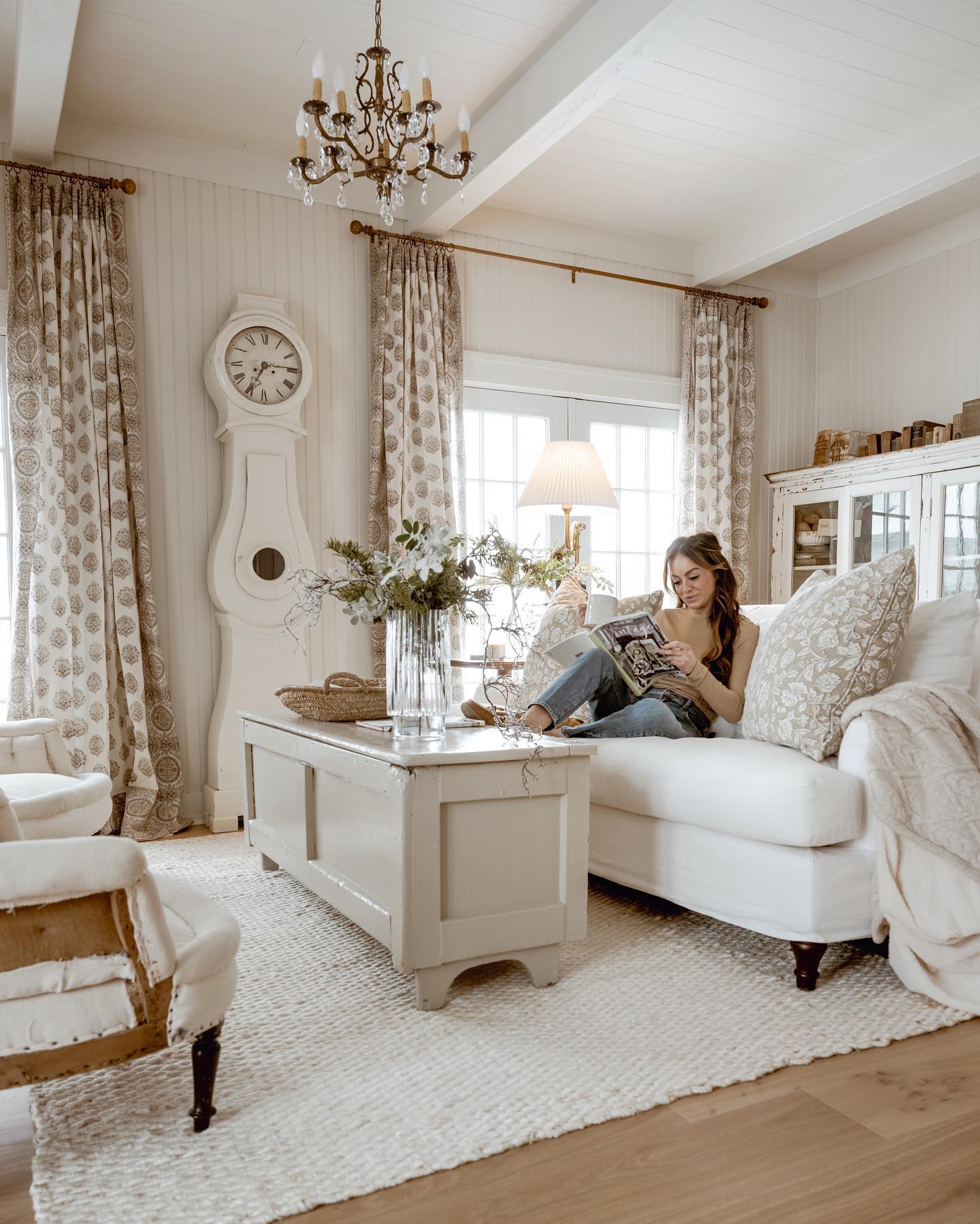
White covers the walls, ceiling, sofa, clock, and coffee table, yet this room has plenty of character. Patterned curtains and cushions create movement, while worn painted furniture adds visible variation.
The lesson is to work with several textures when the color range is narrow. Choose one modest print for the window treatments, then repeat a related tone in the cushions rather than matching the fabric exactly.
A large woven rug gives the seating a warm foundation. Here, a tall curved clock and delicate chandelier add decorative outlines against the plain boards.
A glass vase keeps the tabletop arrangement light. Use a practical tray for smaller objects so the generous coffee table can quickly become a useful surface for everyday activities.
15. Swap the Coffee Table for a Tufted Ottoman
Credits: Instagram
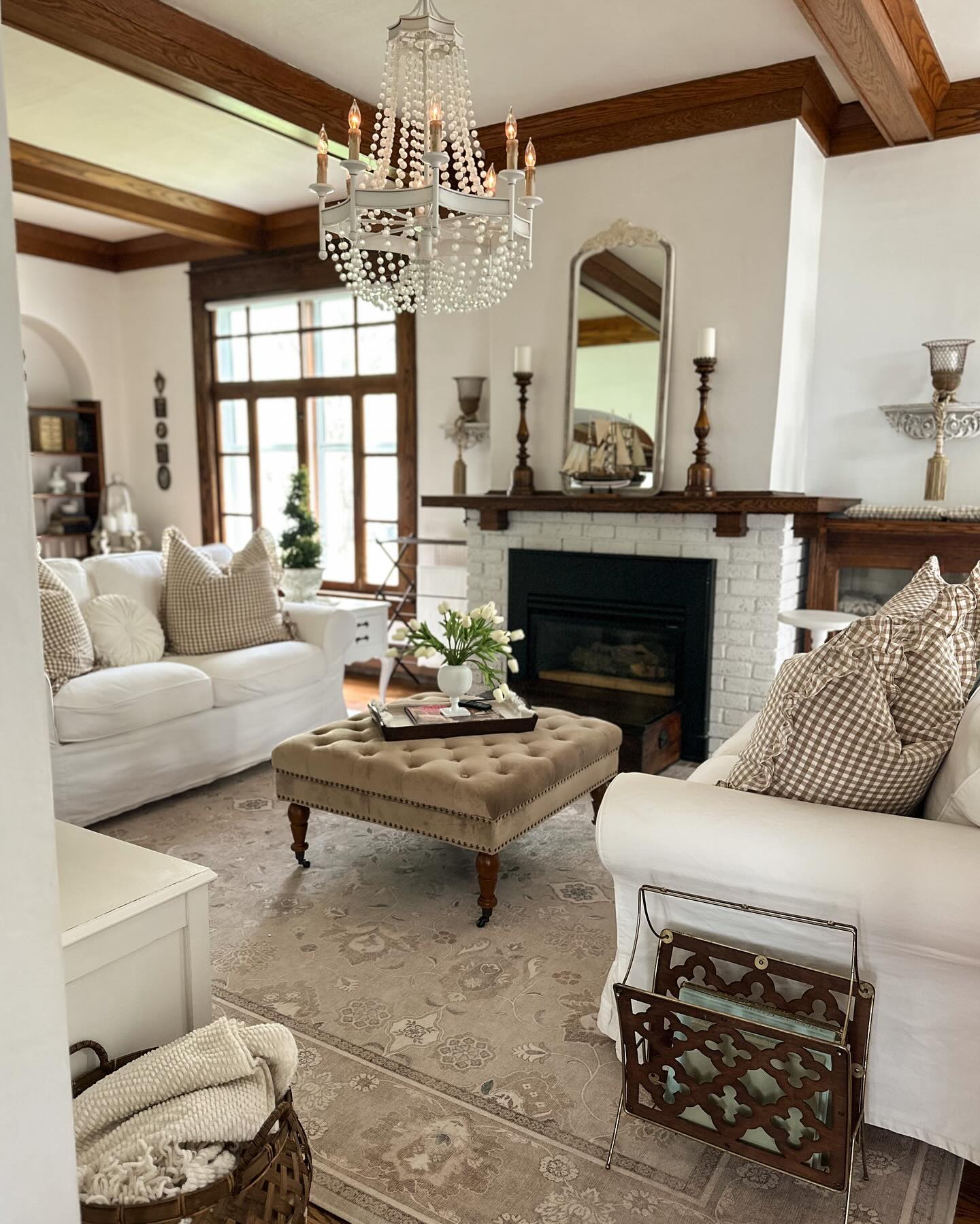
A tufted ottoman supplies a soft center between two white sofas, making this compact room feel inviting. Its warm beige tone sits comfortably beside the timber trim and the faded pattern of the rug.
Use a sturdy tray when you need a flat surface for drinks or flowers, and leave part of the upholstery clear for resting feet. Here, checked cushions bring small scale country pattern to otherwise plain seating.
The tall mirror, candlesticks, and beaded chandelier add height without requiring more furniture on the floor. Keep the ottoman within easy reach of both sofas and allow a clear route around it.
A small cabinet or side table can hold items that need a permanently stable home beside your seat.
16. Introduce Rose Upholstery Under a Timber Ceiling
Credits: Instagram
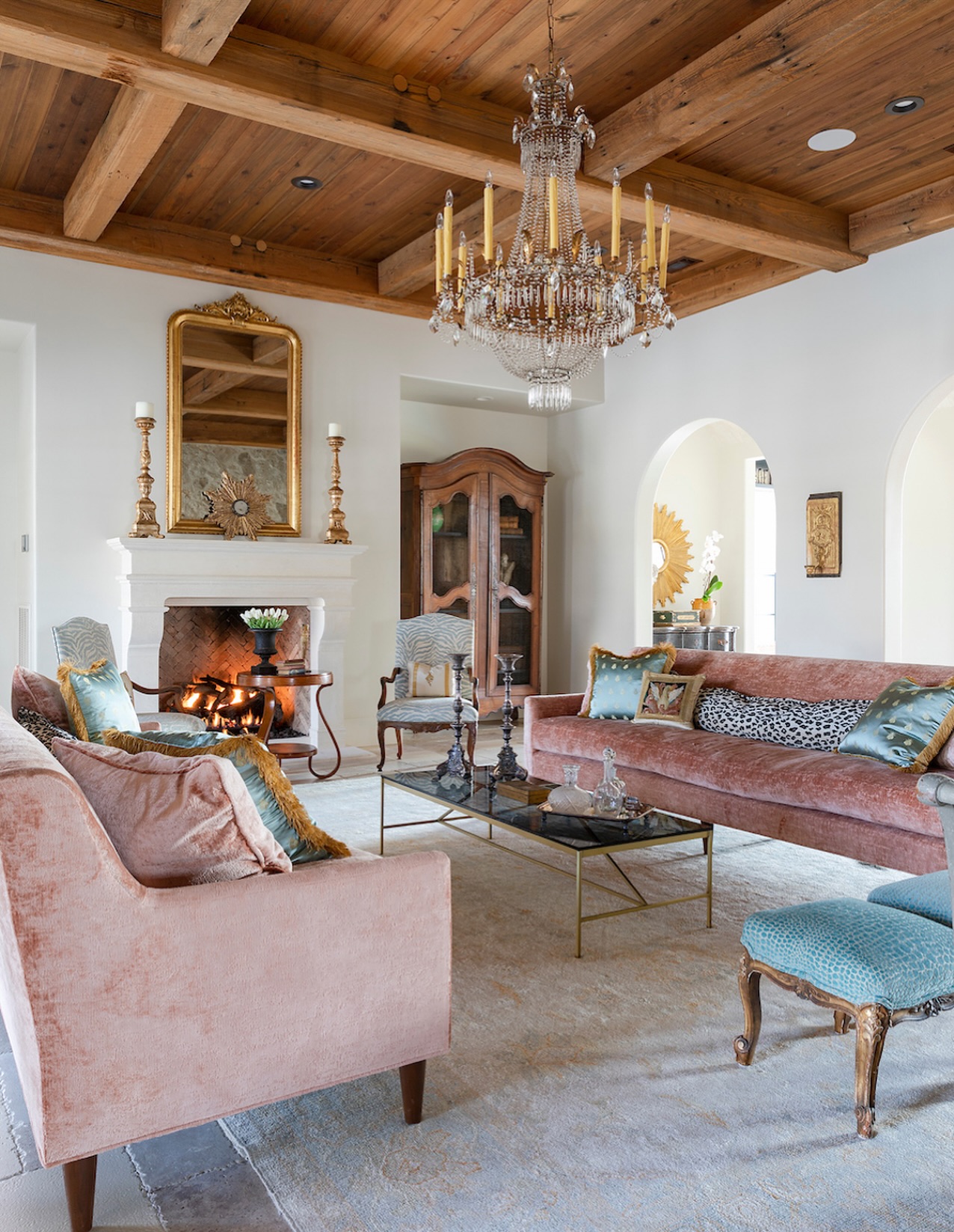
Rose colored sofas add a softness beneath this substantial timber ceiling. Pale blue accents, a glass coffee table, and a sparkling chandelier keep the room from feeling heavy.
For a similar European farmhouse interpretation, combine one earthy architectural element with furnishings that have lighter shapes and gentle colors. Let the ceiling or floor supply the rustic texture instead of distressing every piece.
Here, an arched cabinet and curved chairs reinforce the traditional mood, while the open table base preserves sightlines between the sofas. A mostly plain rug gives patterned cushions room to stand out.
Repeat a small touch of blue across separate seats to connect the palette. Keep the largest upholstered pieces close in tone so the combination feels settled.
17. Mix Checks and Organic Prints Around One Palette
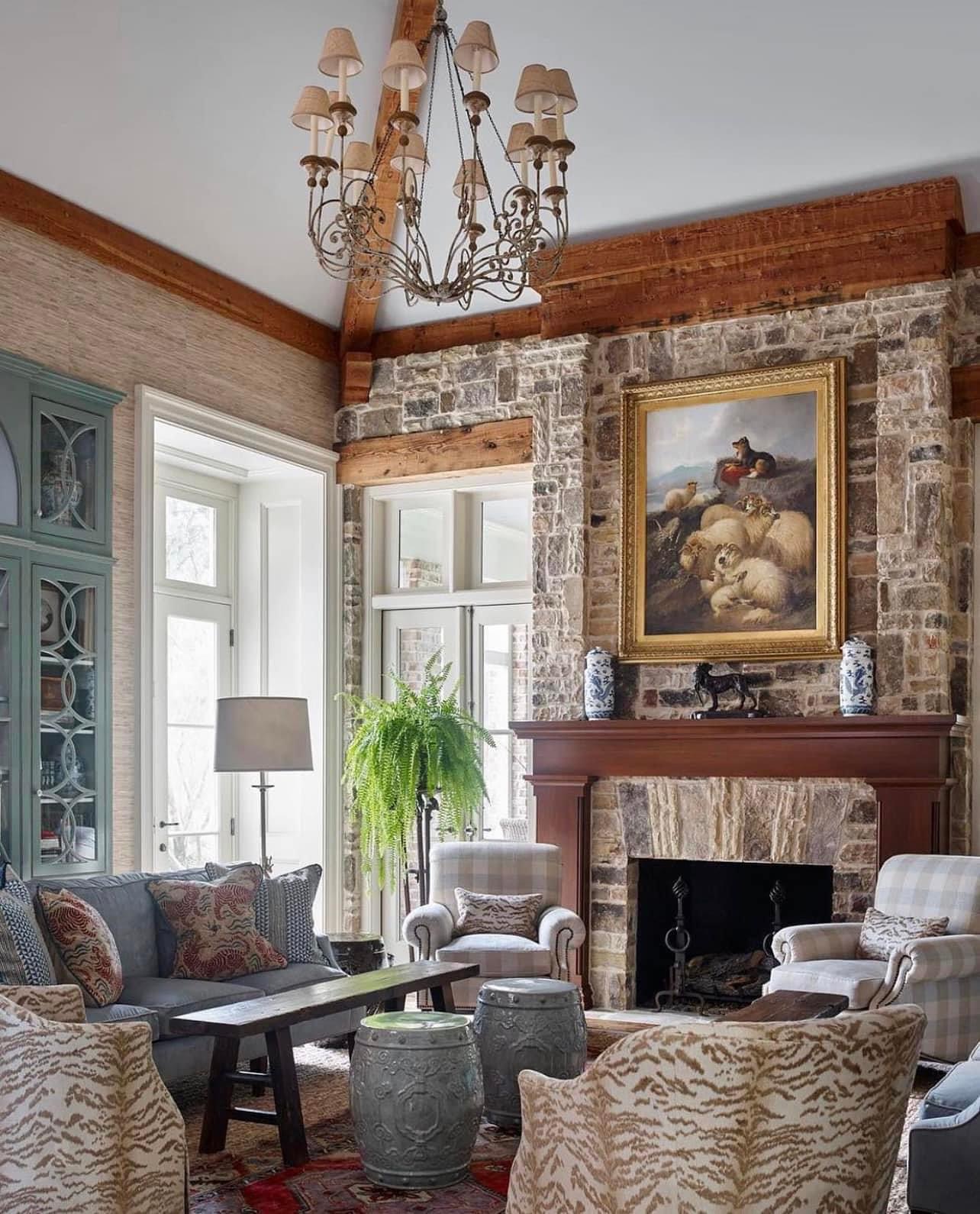
Credits: Instagram
Checks, flowing motifs, and small cushion patterns share this room without overwhelming it. Their muted colors relate to the blue cabinetry, brown timber, and warm stone, giving each fabric a place in the wider palette.
Start with two or three colors already present in your room, then choose patterns with different scales. A broad check can sit beside a more intricate design when their contrast levels stay similar.
Here, plain blue upholstery offers a resting point between the patterned chairs. The long wooden table has a straightforward shape that keeps the middle practical.
Two small glazed stools introduce another finish without filling the whole floor. Leave enough plain wall, floor, or furniture visible to keep a layered scheme comfortable overall.
18. Make the Back of the Sofa Part of the Room
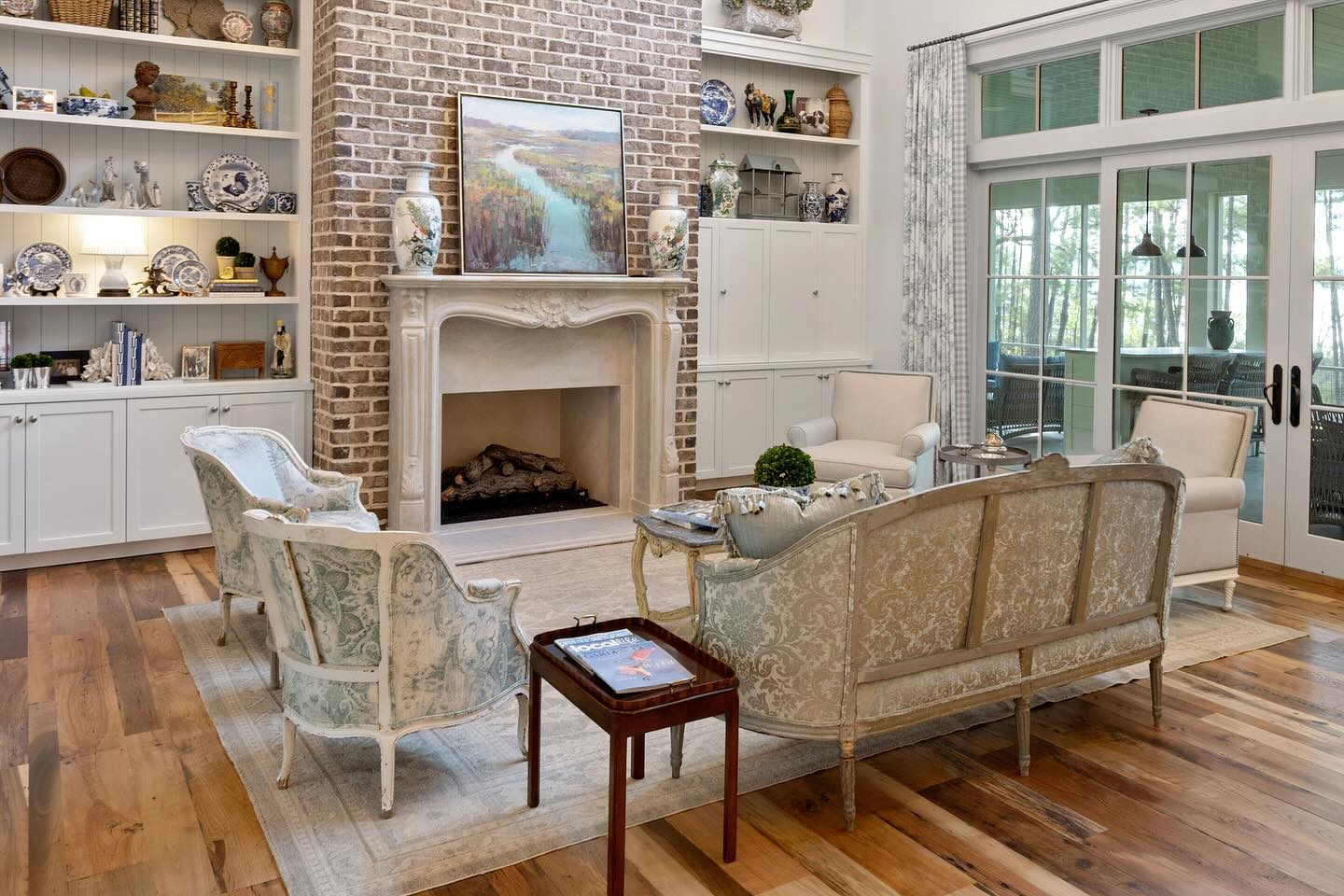
Credits: Instagram
The exposed frame and patterned upholstery make this sofa interesting from the back, an advantage in a room with multiple approaches. It helps define the sitting area without creating a solid visual barrier.
When floating furniture away from the walls, inspect every side before choosing a piece. Legs, frame details, and upholstery seams become part of the view.
Here, matching curved chairs establish a gentle rhythm around the table, while plainer chairs keep the group from looking overly formal. A pale rug distinguishes the seating from the warm floor.
The decorative fireplace surround adds refinement against the brick chimney. Keep nearby shelves loosely organized by size and color so their collected objects support the furniture rather than compete for attention.
19. Unify Different Armchairs with Matching Cushions
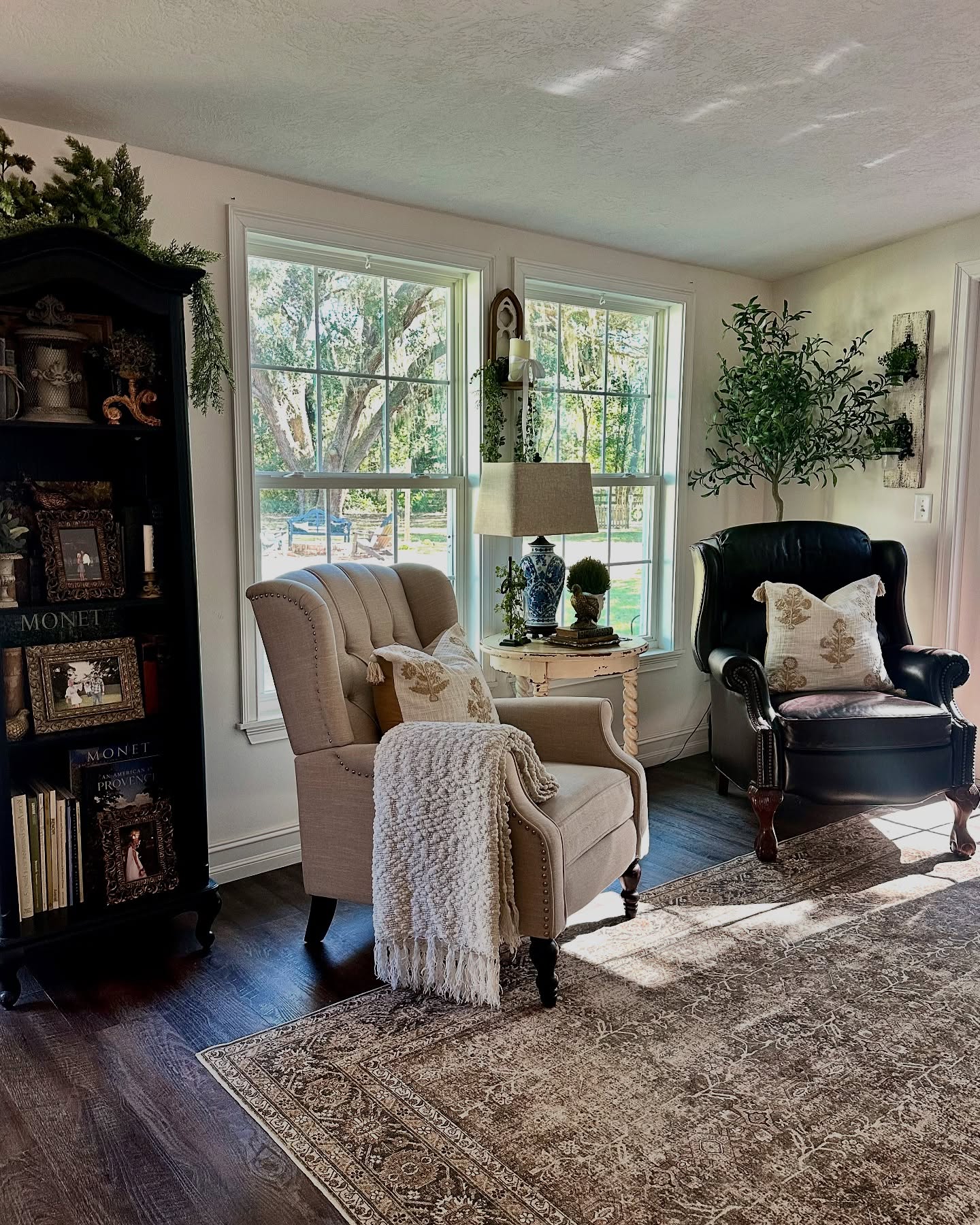
Credits: Instagram
One pale chair and one dark chair create a comfortable window corner with an appealing collected quality. Matching botanical cushions give them a connection without hiding their different shapes and finishes.
This is an easy approach when furnishing gradually or combining pieces you already own. Keep their seat heights compatible, then place a shared table where both people can reach it.
Here, a blue patterned lamp brings a small accent color, while the worn pale table bridges the light and dark upholstery. A generous patterned rug joins the chairs to the nearby cabinet.
Layer a throw on one seat for softness, and keep the window treatment simple so daylight reaches the textured furniture and the rest of this sitting area.
20. Choose a Storage Chest Beneath Rough Beams
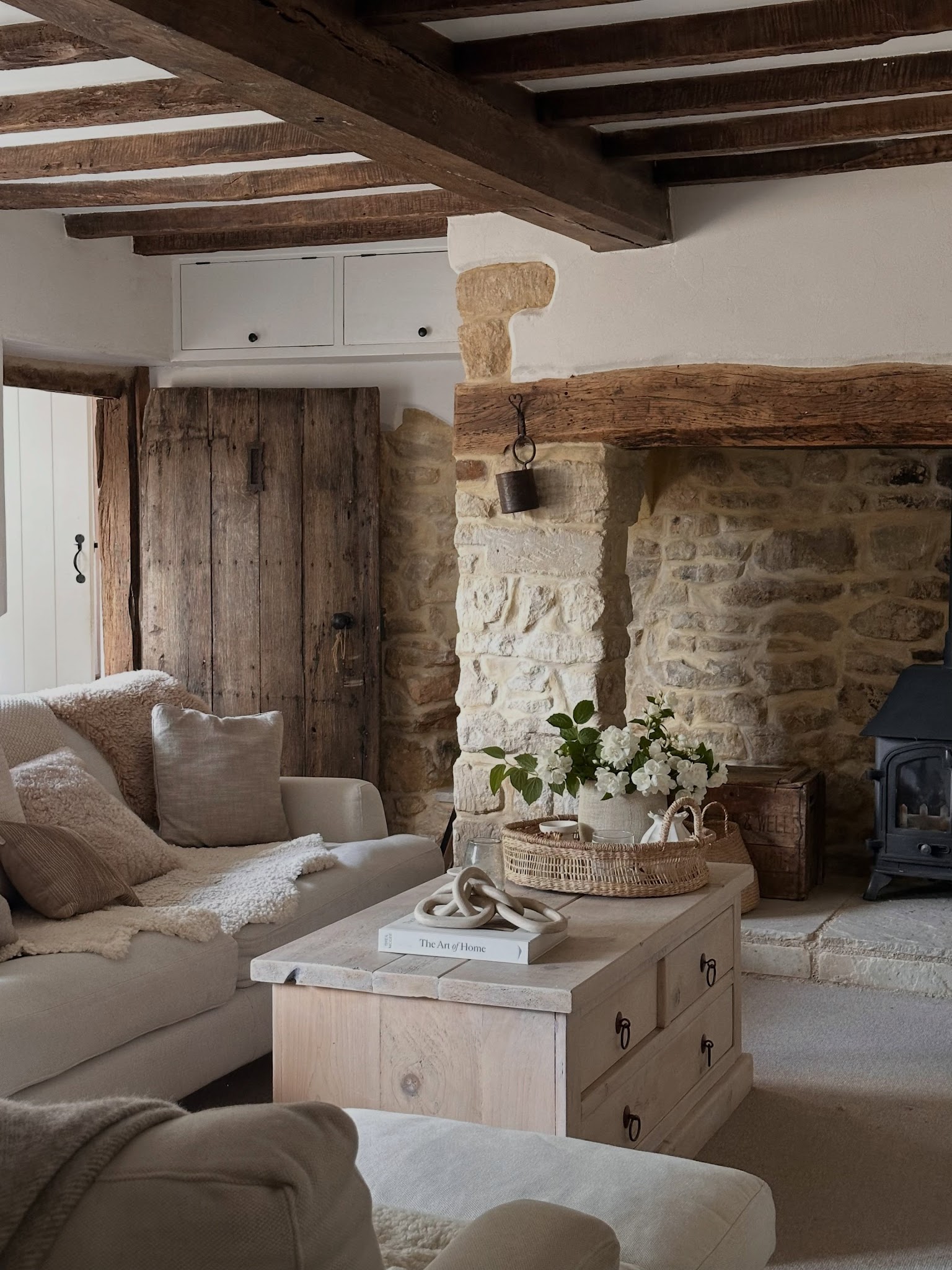
Credits: Instagram
A pale wooden chest gives this snug sitting room a practical center without competing with its rough beams and stonework. Drawers provide a place for everyday items, while the flat top holds a tray and a short stack of books.
Choose a piece with accessible handles and enough clearance for the drawers to open fully between the seats. Here, soft neutral upholstery keeps the architecture prominent, and varied cushions add comfort without a busy color scheme.
The broad woven tray introduces another texture and makes the flowers and cups easy to move together. A plain wall above the hearth prevents the room from feeling crowded.
Let the strongest existing surfaces carry the farmhouse character, then furnish for how you relax.