
A television can dominate a room unless the wall around it gives the eye somewhere else to go.
Modern TV Room Ideas here show how warm wood slats, layered lighting, and open shelves can make a screen feel integrated without crowding it.
Other approaches use a wide border, a quiet symmetrical niche, or a floating black console to bring structure while keeping the display area simple.
Small choices matter, too: a reading wall can surround a compact screen, and an upholstered ottoman can soften the seating area. The ideas offer different ways to balance media, storage, and texture.
1. Frame the Screen Against Warm Wood Slats
Credits: Instagram
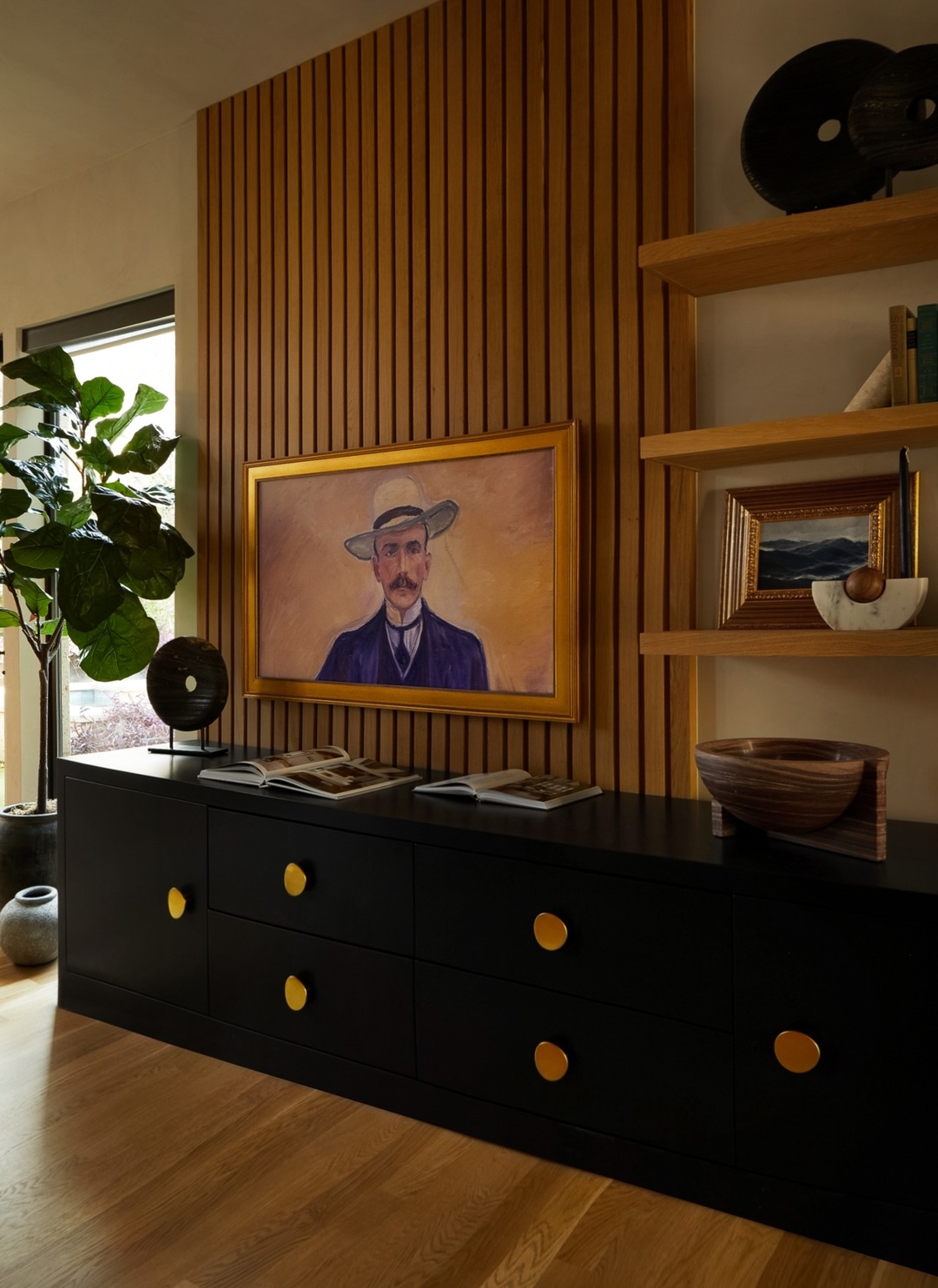
A gold television frame picks up the round brass cabinet knobs in this richly layered media wall. Behind it, vertical wood slats continue above the screen, while open shelves give books and sculptural objects their own space.
Borrow the balance by pairing one textured backdrop with a simple, dark cabinet below. Keep shelf styling loose enough that the television remains easy to see from across the room.
A tall plant at the edge softens the transition to the window without crowding the screen. If you use an art display mode, choose images whose colors relate to the wood and nearby accessories.
Plan accessible cable routes before installing the paneling so future equipment changes do not require dismantling the finished wall.
2. Light a Floating Wall in Separate Layers
Credits: Instagram
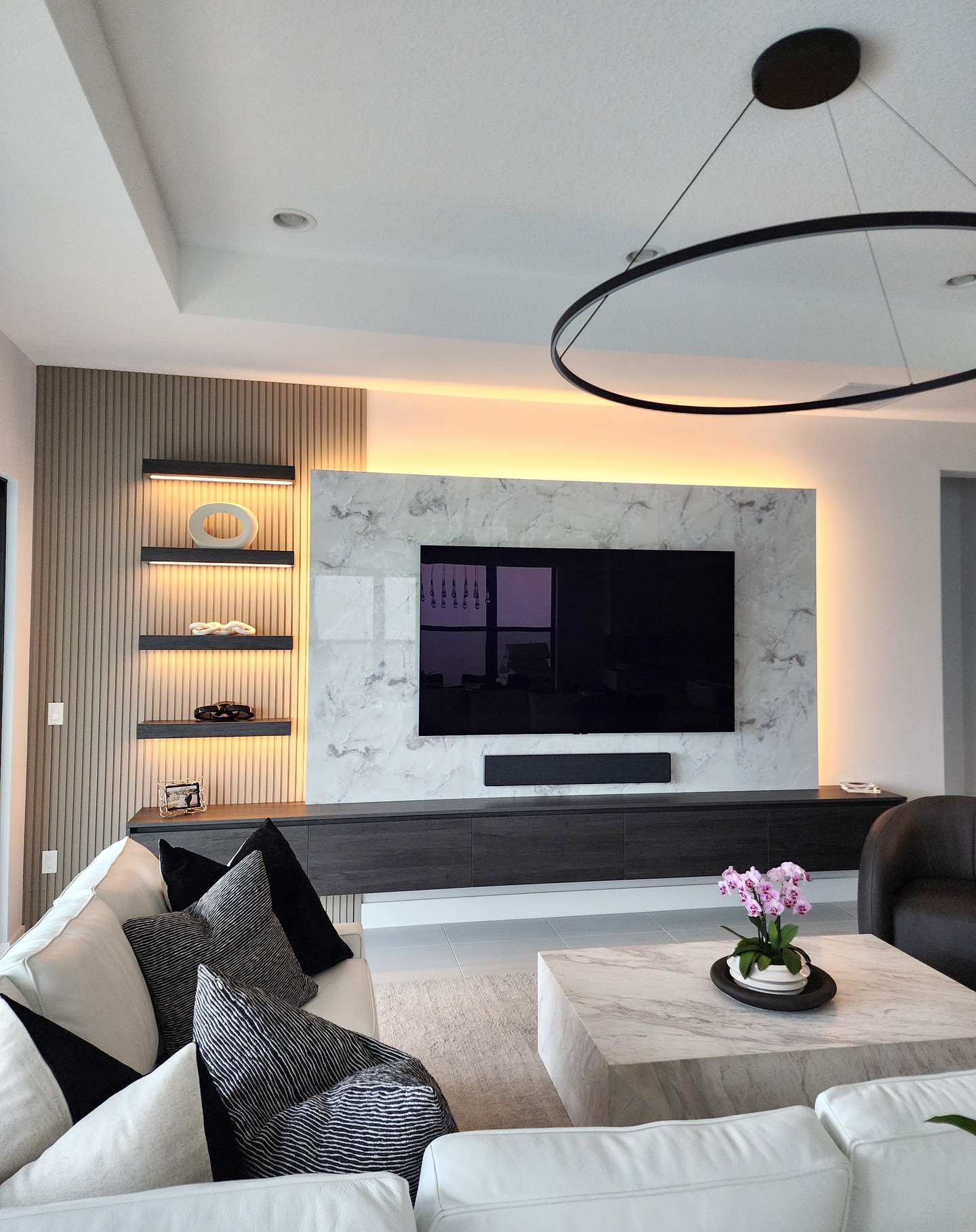
Warm light outlines the pale marble effect panel and the shelves in this gray and white TV room. The layered glow makes the wall feel deeper, while a floating cabinet preserves a clear strip of floor below.
Use separate lighting controls for the shelves and the television backdrop so you can dim decorative areas during a movie. Black shelf edges, pillows, and the circular ceiling fixture repeat the screen's color throughout the room.
That repetition helps the large television belong to the palette. Choose a low coffee table that stays beneath seated sightlines, and keep taller flowers near its outer edge.
Before ordering cabinetry, check the width and ventilation requirements of the soundbar and every device you intend to store.
3. Balance Open Shelves With a Glass Display Tower
Credits: Instagram
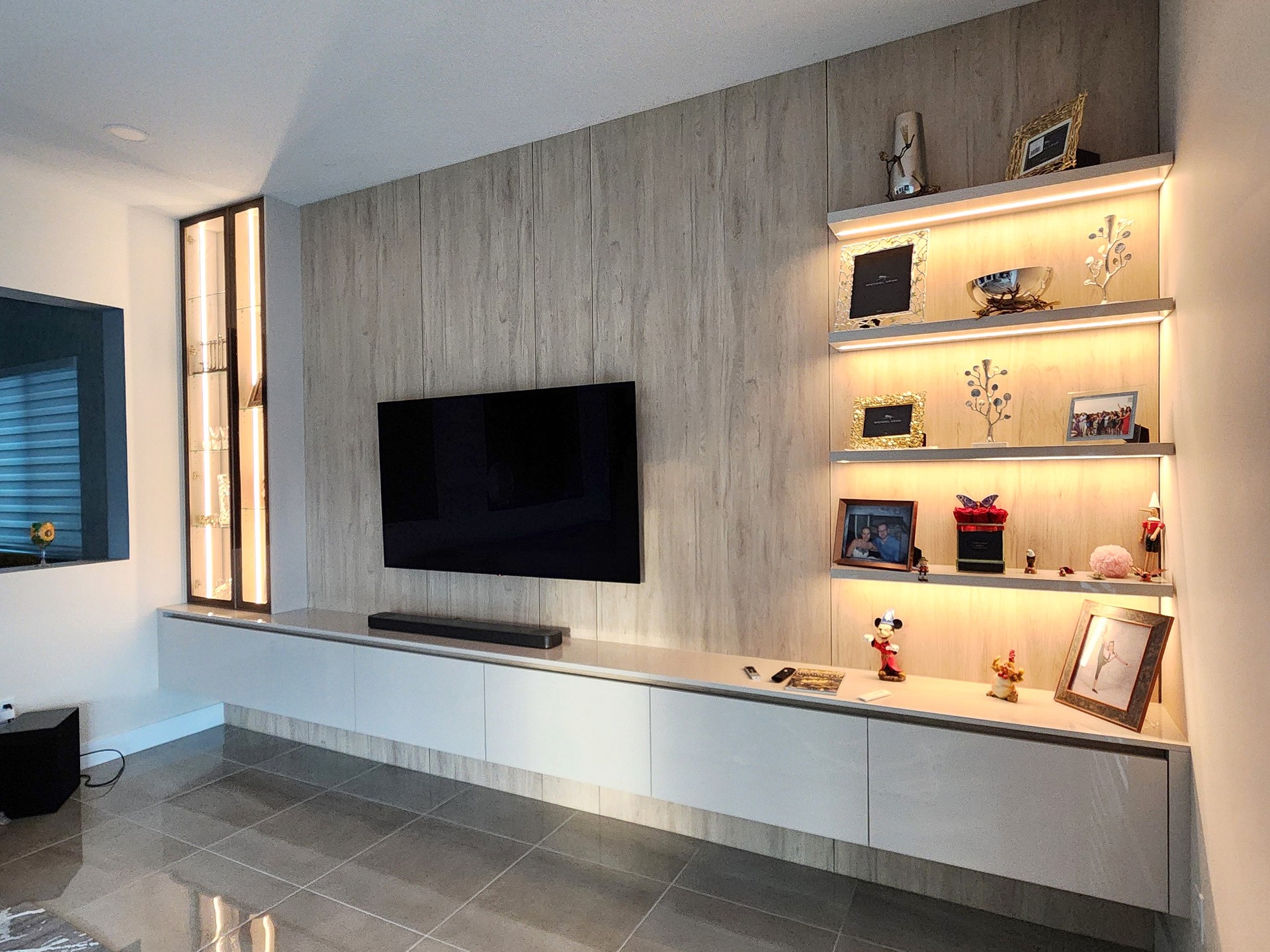
An illuminated glass cabinet anchors one side of this media wall, while a column of open shelves balances the other. The television sits between them against pale wood grain, above a long white cabinet.
This arrangement works when you want display space without surrounding the screen with identical shelves. Reserve the glass section for a cohesive collection and use the open side for family photographs or pieces you change more often.
Keep the center mostly clear so the television has breathing room. The continuous base ties the unequal upper sections together and provides everyday storage.
Ask the cabinetmaker to coordinate shelf lighting with the room's other fixtures, and test the proposed brightness from the sofa before settling on your controls.
4. Connect a Statement Stone Panel to a Wood Ceiling
Credits: Instagram
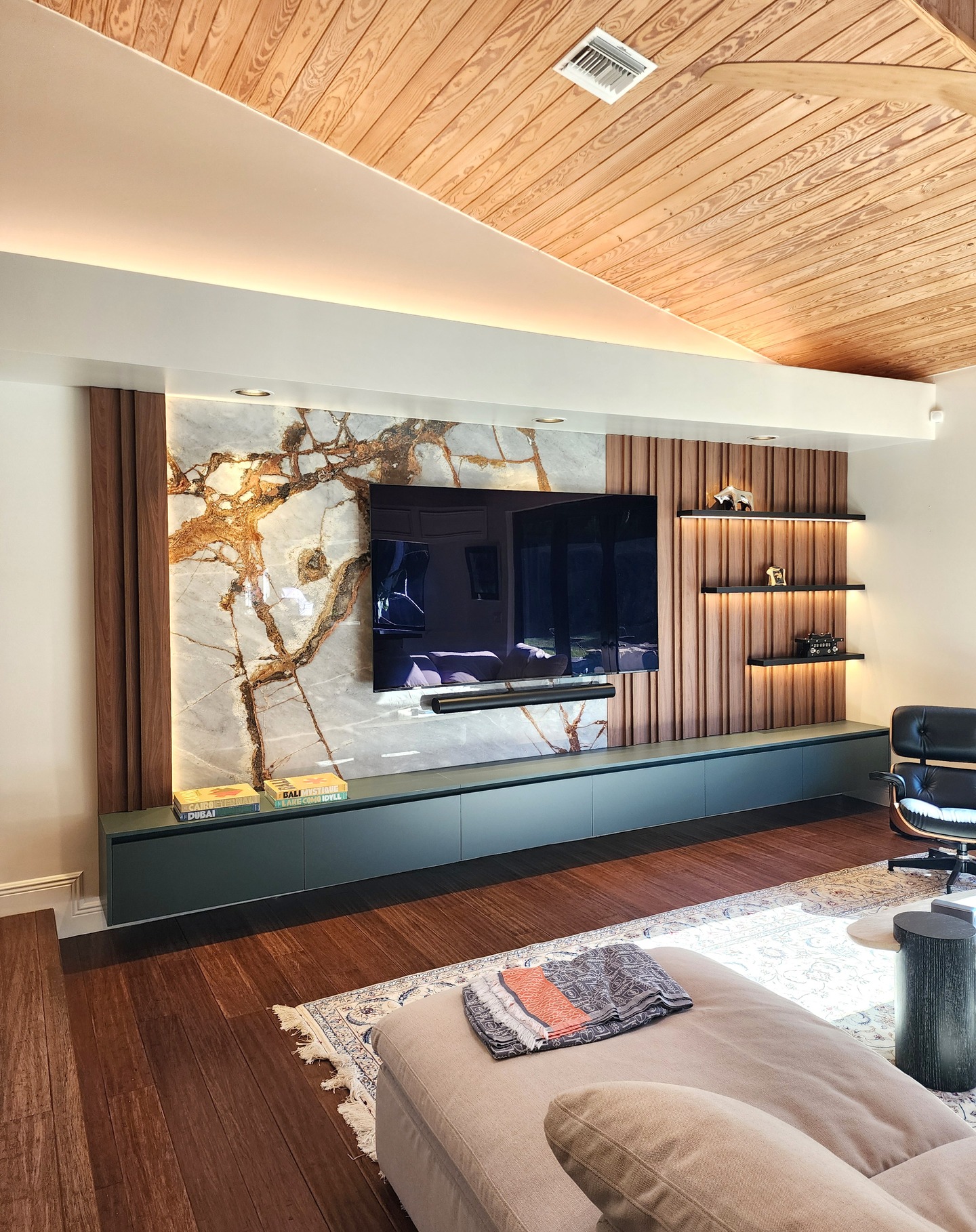
Coppery veining, fluted wood, and a timber ceiling give this TV room a warm material palette. The large stone panel stands slightly left of center, leaving space for three illuminated shelves on the right.
A long dark cabinet links both sections without adding another prominent pattern. When adapting the idea, choose your statement surface first and repeat one of its quieter colors in the cabinetry.
Let the stone remain visible around the screen instead of covering every edge with accessories. The leather lounge chair and upholstered ottoman offer different ways to relax, while a patterned rug softens the floor.
Check reflections from nearby windows at your usual viewing time before deciding where to mount the television and position the seating.
5. Keep Symmetrical Niches Quiet and Sculptural
Credits: Instagram
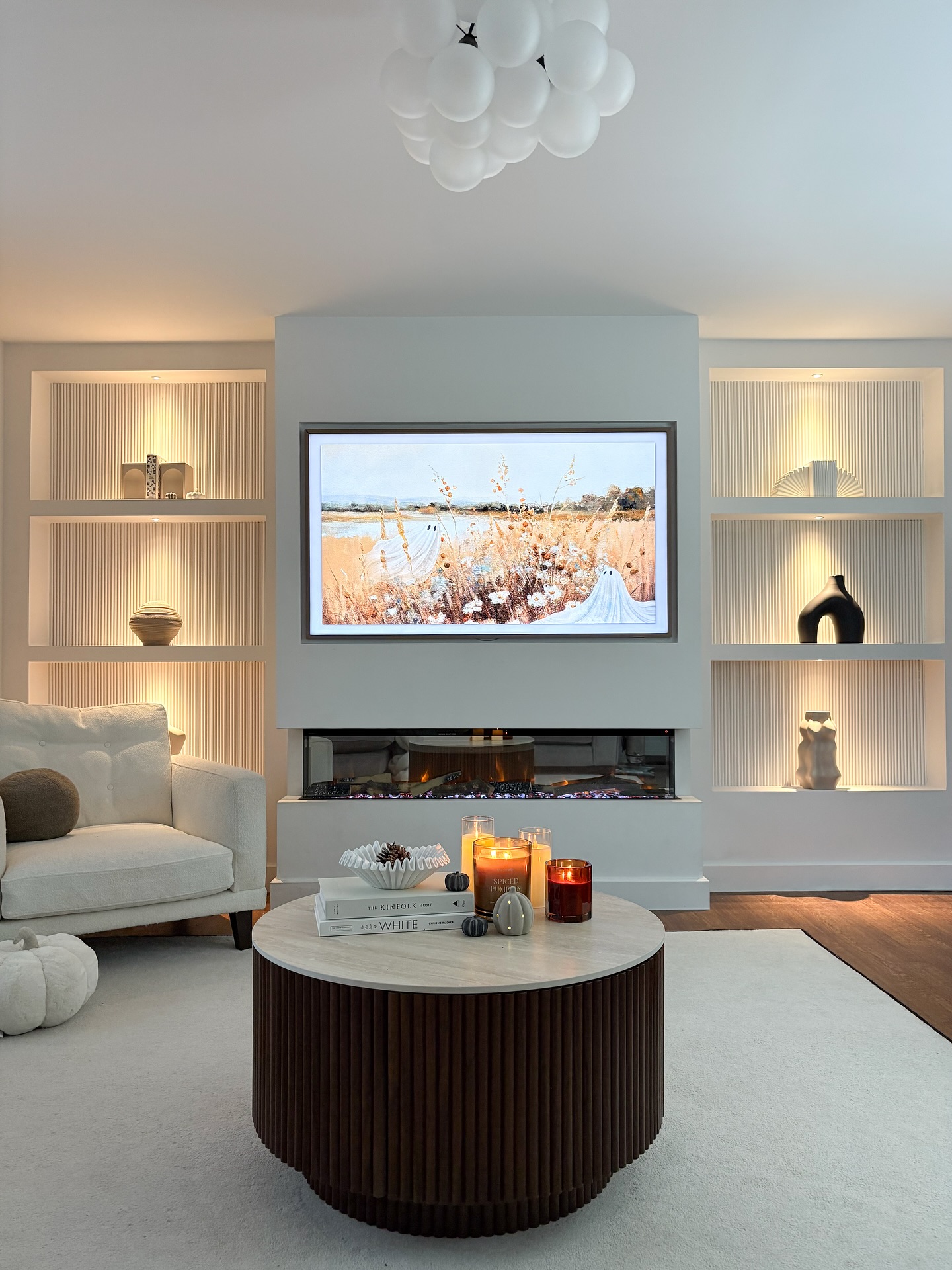
Six softly illuminated niches frame the central screen and fireplace in this pale living room. Their ribbed backs add texture, but the restrained styling lets each bowl or vase stand out.
Recreate that calm by choosing a few objects with distinct silhouettes and leaving open space around them. The round coffee table repeats the ribbing in darker wood, linking the seating area to the wall without matching every finish.
A generous light rug makes the arrangement feel connected. If you plan a television above a fireplace, have the installer confirm the appliance's clearances and heat requirements before building the surround.
Mark the proposed screen position on the wall and test it from your actual chair to judge comfortable viewing height.
6. Use a Wide Border to Give the Television Structure
Credits: Instagram
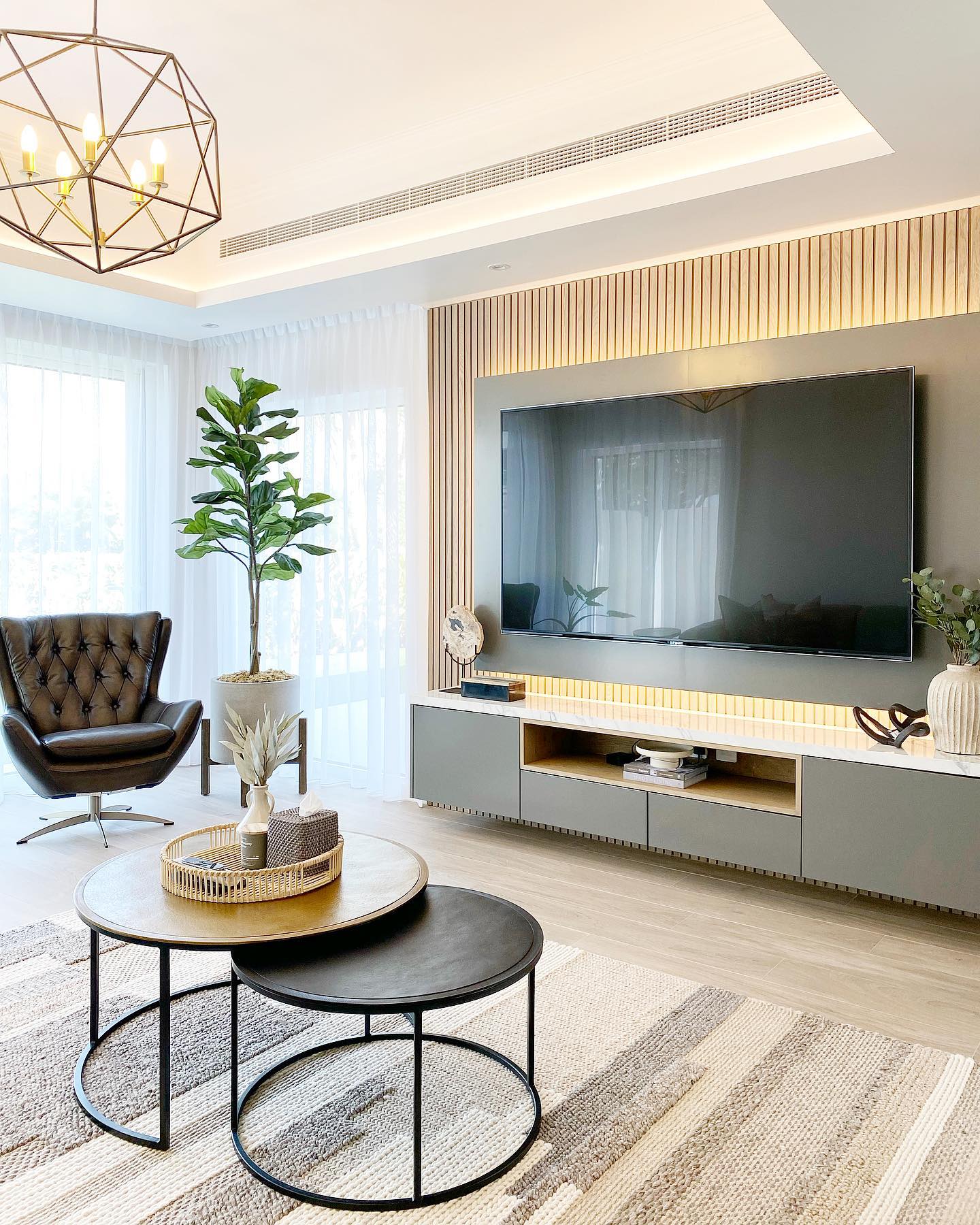
A broad gray panel surrounds the television in this bright room, creating a clear rectangle against narrow vertical slats. The matching cabinet below includes one open compartment, keeping the composition light while leaving useful access to equipment.
Choose a border proportion that looks intentional around your screen, and allow for servicing before committing to a fixed recess. Nearby, nesting round tables and a curved leather chair soften the wall's straight lines.
Their dark frames also echo the television. Sheer curtains preserve the daylight in this example; add a separate shading layer if reflections interfere with viewing.
Keep tall plants and decorative branches toward the sides, where they can add height without overlapping the screen or blocking movement through the room.
7. Pair a Plain Wall With a Floating Black Console
Credits: Instagram
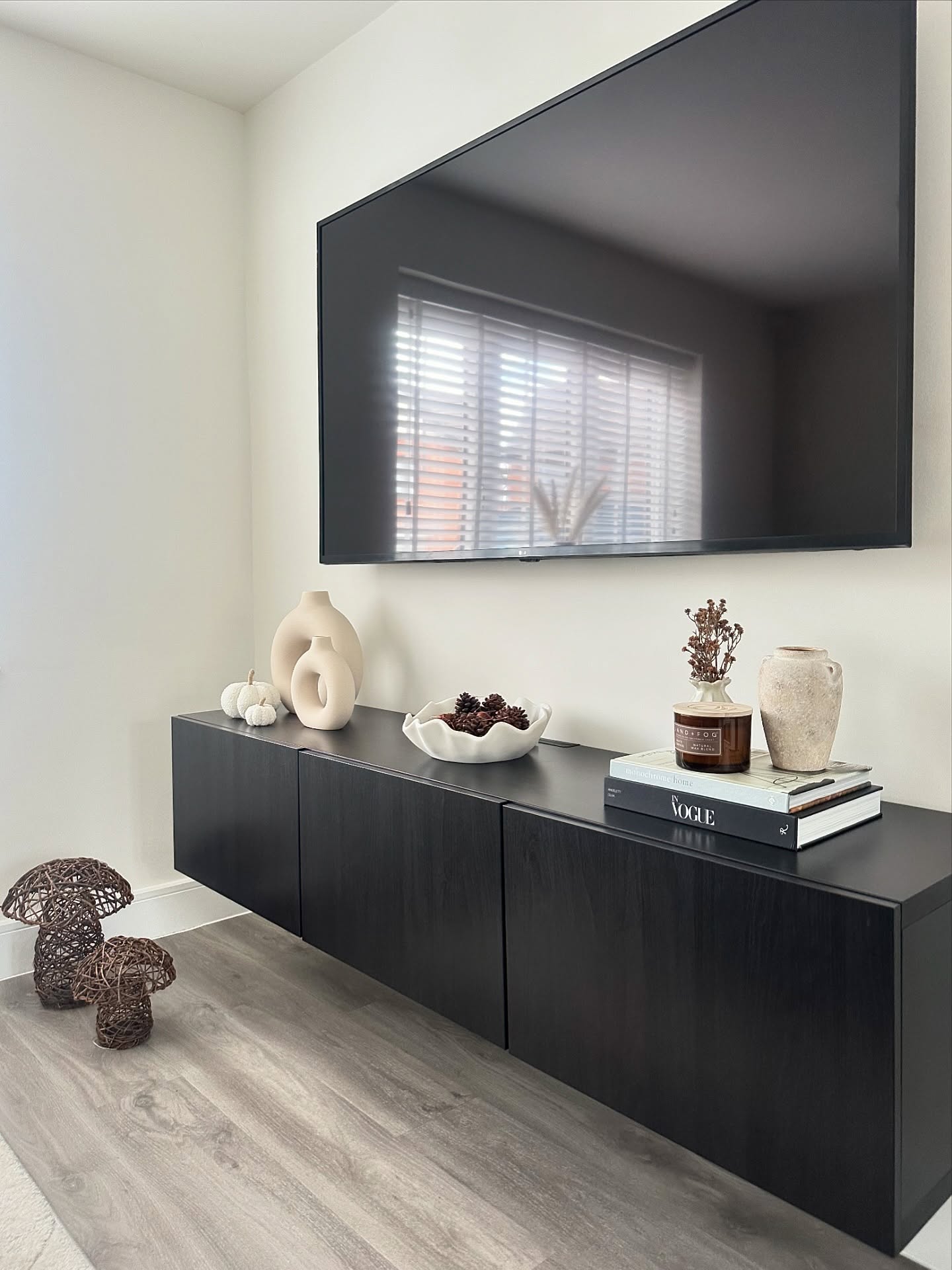
A simple black console gives this television a strong base without requiring a full feature wall. Its flat fronts and suspended position keep the small corner visually tidy, while pale ceramic shapes soften the dark surface.
Repeat the look with a cabinet wider than your television and a restrained group of accessories. Vary their heights, but keep everything comfortably below the screen's lower edge.
Leave some bare countertop so the display can handle a remote or a drink during everyday use. The window reflection visible here is a useful reminder to test placement before drilling.
Sit in your usual viewing position at different times of day, then choose blinds or curtains that address glare while preserving the light you enjoy.
8. Build a Reading Wall Around a Compact Screen
Credits: Instagram
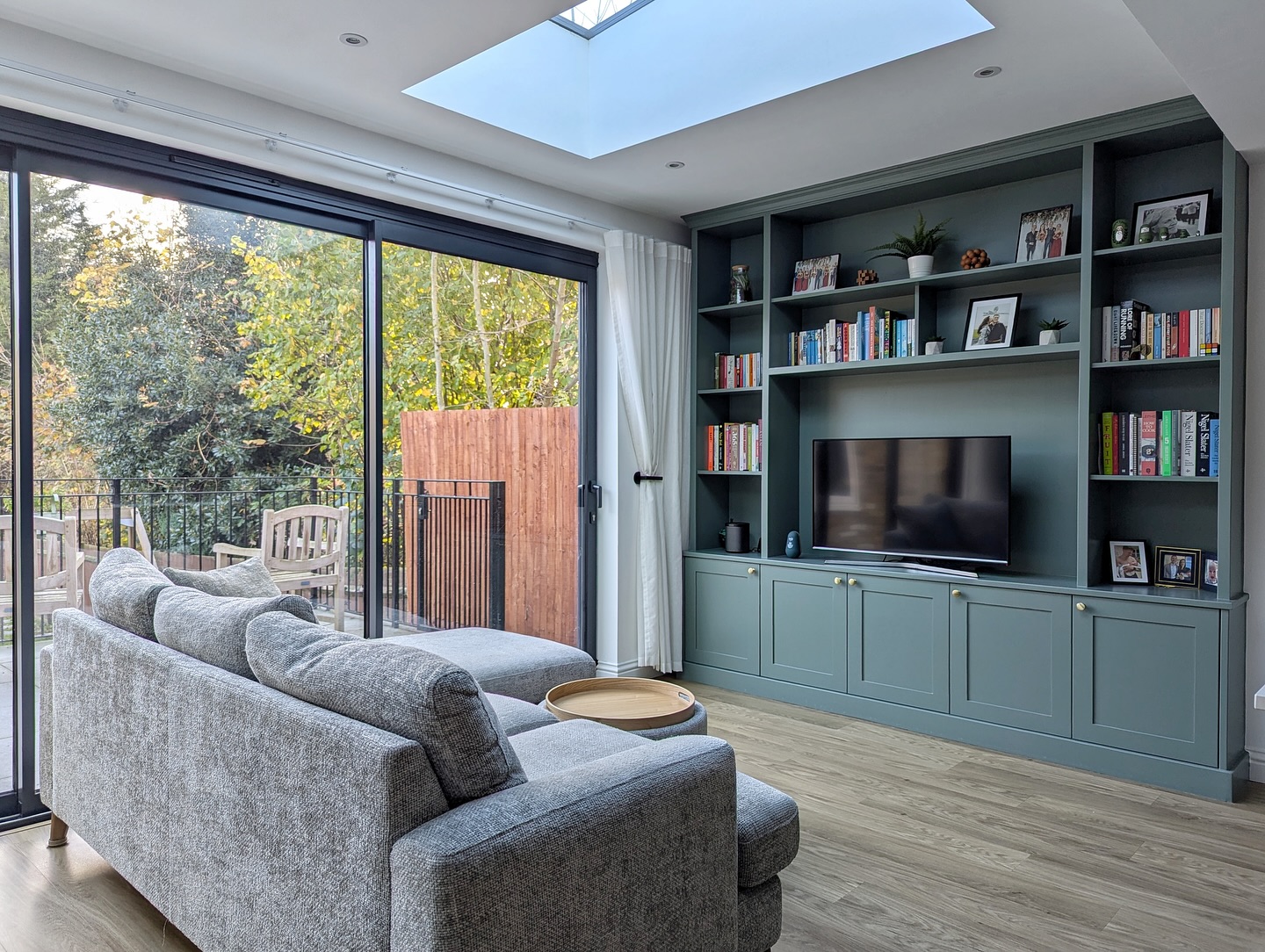
Books and family photographs share this green media unit with a modest television, making the wall useful beyond movie night. Closed cabinets below hold the less attractive items, while the broad opening keeps the screen accessible.
A gray chaise sofa faces the unit and sits beside glazed doors, preserving a view of the garden. Use this arrangement when a living room must support reading, relaxing, and watching together.
Size shelf openings around your actual books rather than filling every gap with ornaments. Choose a muted cabinet color that relates to the upholstery and outdoor view.
Before fixing the sofa position, leave enough room to open cabinet doors and reach the shelves comfortably, and keep the route to the patio clear.
9. Wash Slatted Panels With Paired Wall Lights
Credits: Instagram
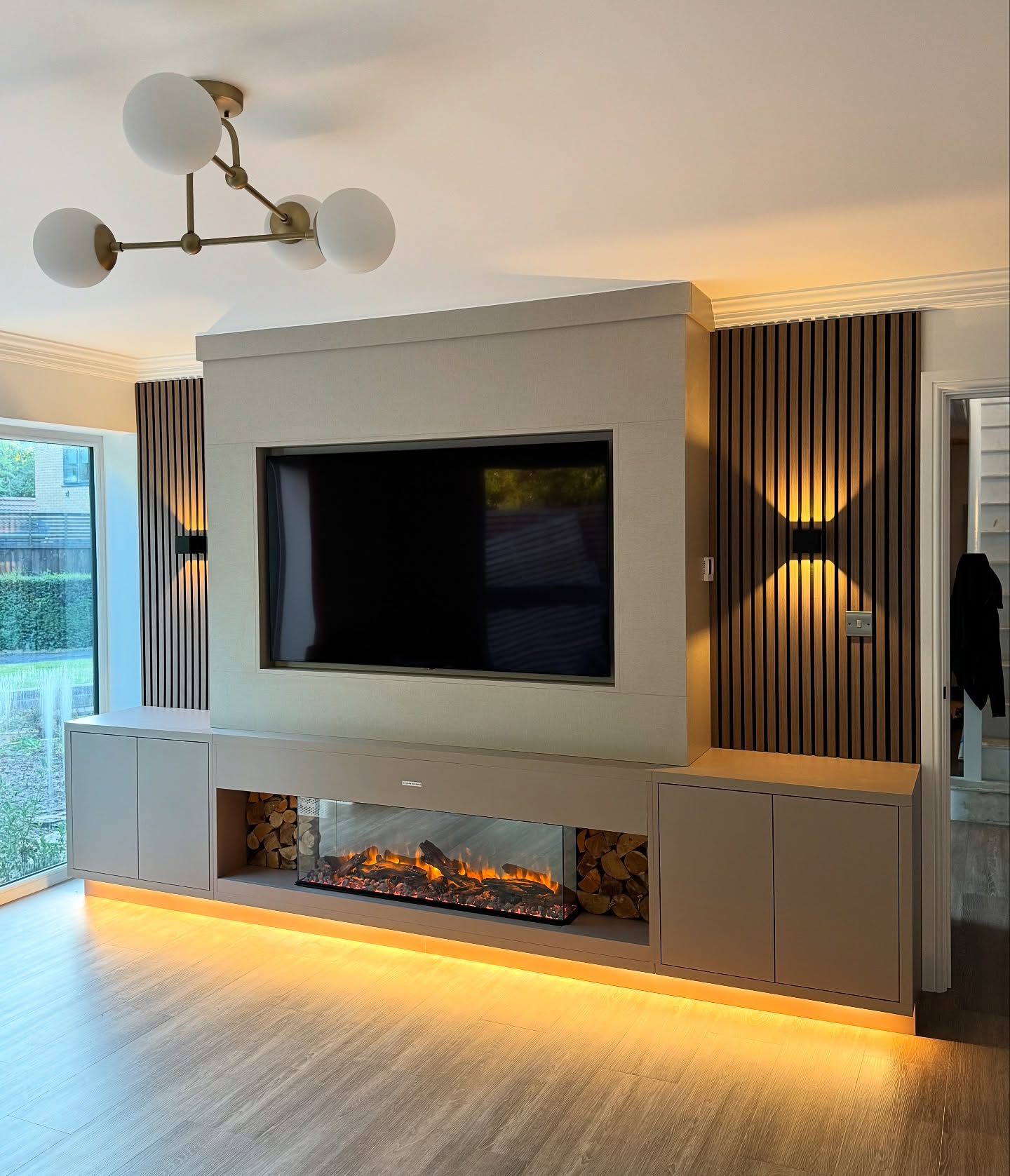
Two wall sconces cast light upward and downward across the wood panels beside this recessed television. The central surround remains plain, so the texture and lighting stay at the edges of the composition.
A low cabinet extends across the wall and appears lighter with illumination underneath. Use that layered arrangement to give a compact media zone depth without adding lots of display shelves.
Put decorative lights on dimmers so they can become quieter when the screen is on. The photograph includes an electric fireplace below the TV; any similar installation needs the appliance maker's specified ventilation and clearances.
Confirm those details with the installer, along with cable access and the seated viewing height, before finalizing the cabinetry and wall recess.
10. Give a Neutral TV Wall a Rhythmic Pattern
Credits: Instagram
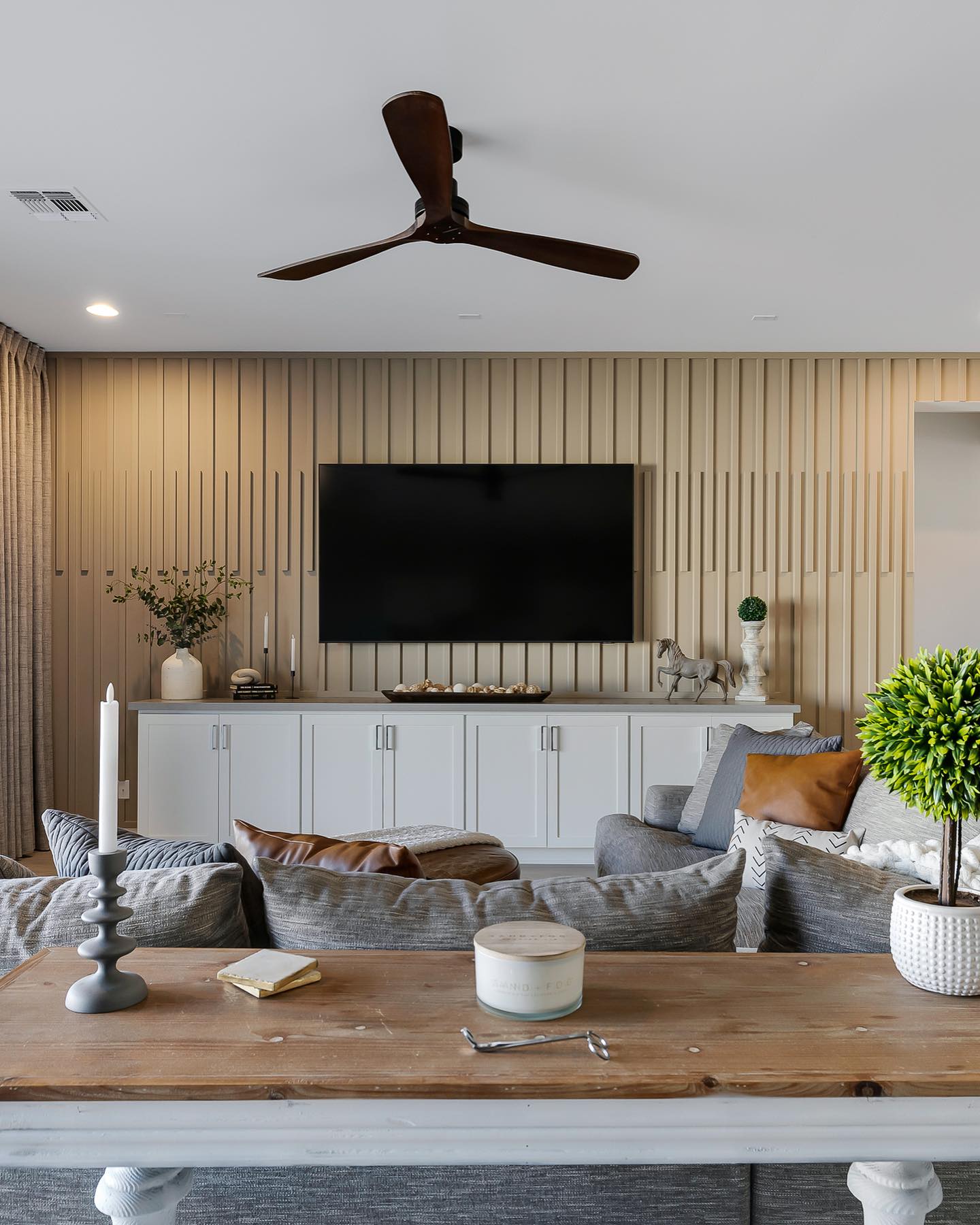
Narrow vertical strips form a subtle rhythm across this neutral wall, with an extra pattern running behind the television. The treatment brings detail to a large surface without relying on contrasting paint or busy artwork.
Below, a white cabinet provides a long horizontal counterpoint and space for a few decorative pieces. Match the trim color to the wall if you want shadows, rather than color changes, to define the pattern.
The gray sectional, leather accents, and wood console table keep the seating area comfortable and layered. Position a sofa table behind the seating when you need another place for lamps or drinks.
Measure the walking route around that extra surface first, and keep its accessories low enough to preserve views.
11. Swap a Hard Coffee Table for an Upholstered Ottoman
Credits: Instagram
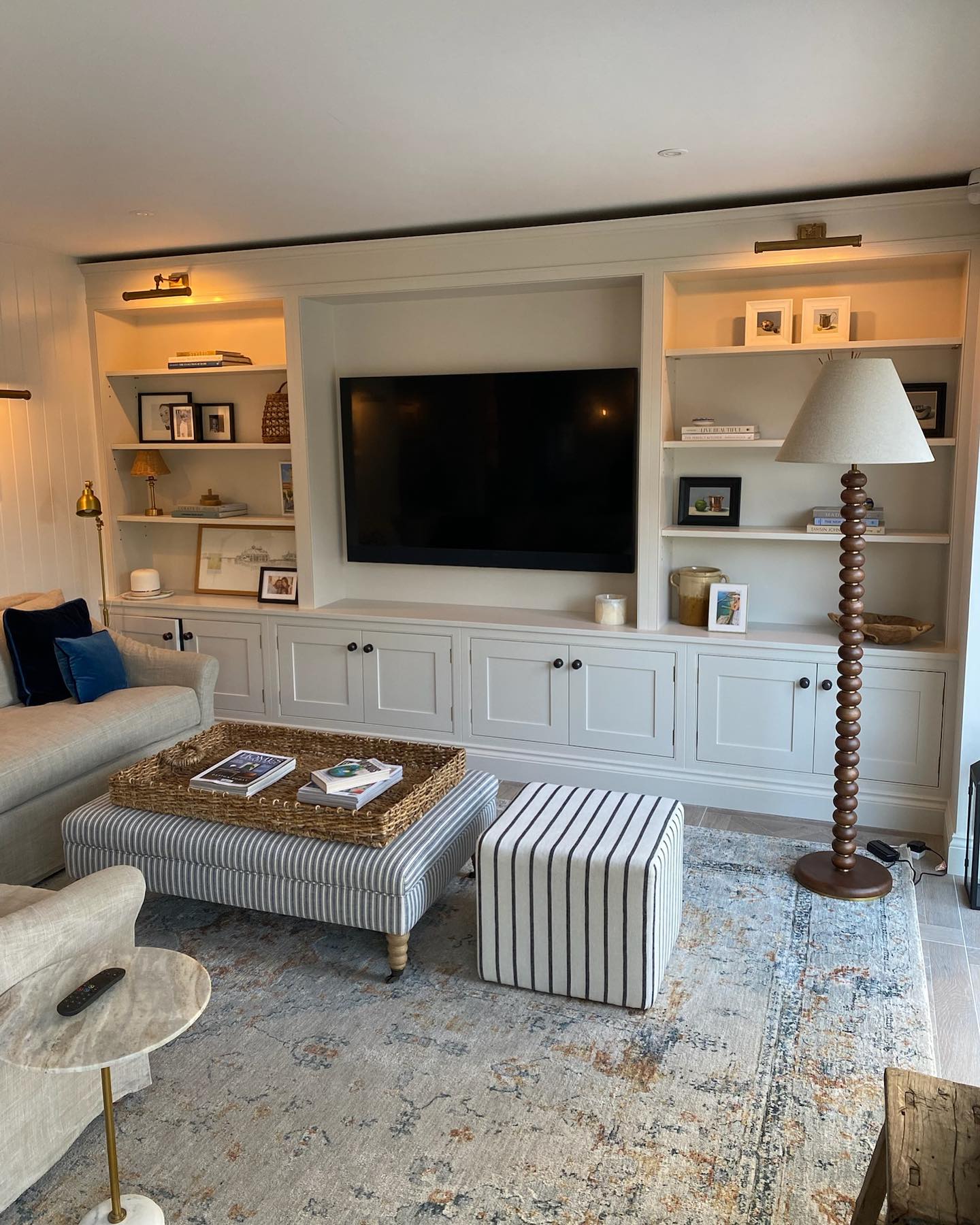
A striped ottoman brings a softer center to this television seating area, while a woven tray creates a useful surface for books. The striped cube can move closer to a chair or serve as an extra perch when needed.
This is a practical way to make a media room feel relaxed without changing its built-in storage. Pick upholstery that works with everyday wear, and choose a tray large enough to sit securely on the cushion.
The picture lights above the shelves and the floor lamp offer separate pools of light around the screen. Keep those lights independently controlled so one person can read while another watches.
Leave enough space around the ottoman to reach the cabinet doors without moving furniture.
12. Fit a Media Wall Between Existing Windows
Credits: Instagram
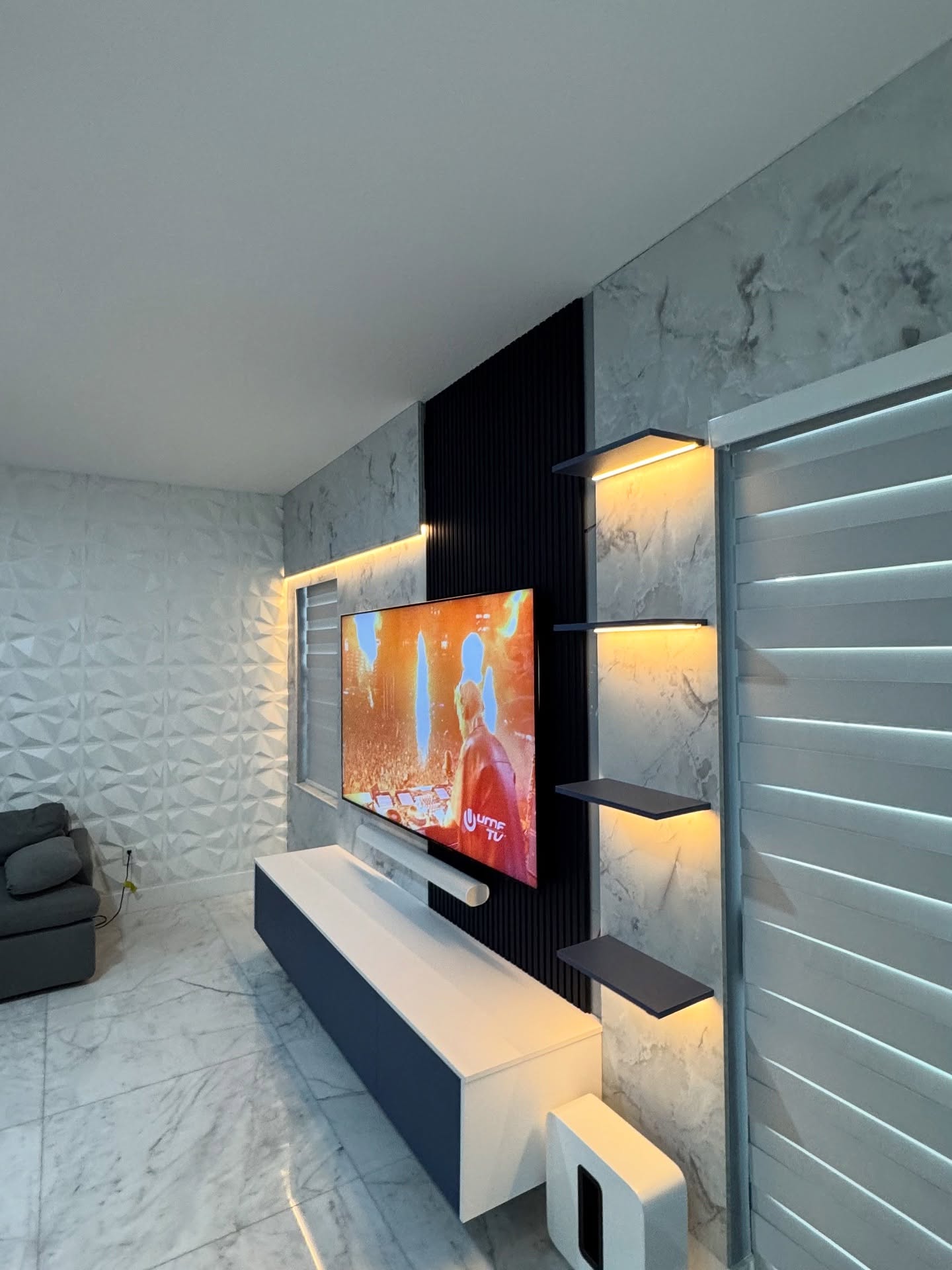
Two windows interrupt this TV wall, so a narrow dark panel gives the screen a clear center between them. Small shelves occupy the strip beside one window, and a floating cabinet provides storage below.
The design makes use of the wall's pieces instead of covering the glazing. Start by measuring window trim, blind operation, and outlet locations before planning any cabinetry.
Keep shelves shallow enough that their edges do not interfere with the window treatment. Here, light stone patterns and the white cabinet top contrast with the dark vertical section and blue fronts.
Use restrained styling when the finishes already provide plenty of detail. Test the television with the blinds open and closed to understand how daylight affects the picture.
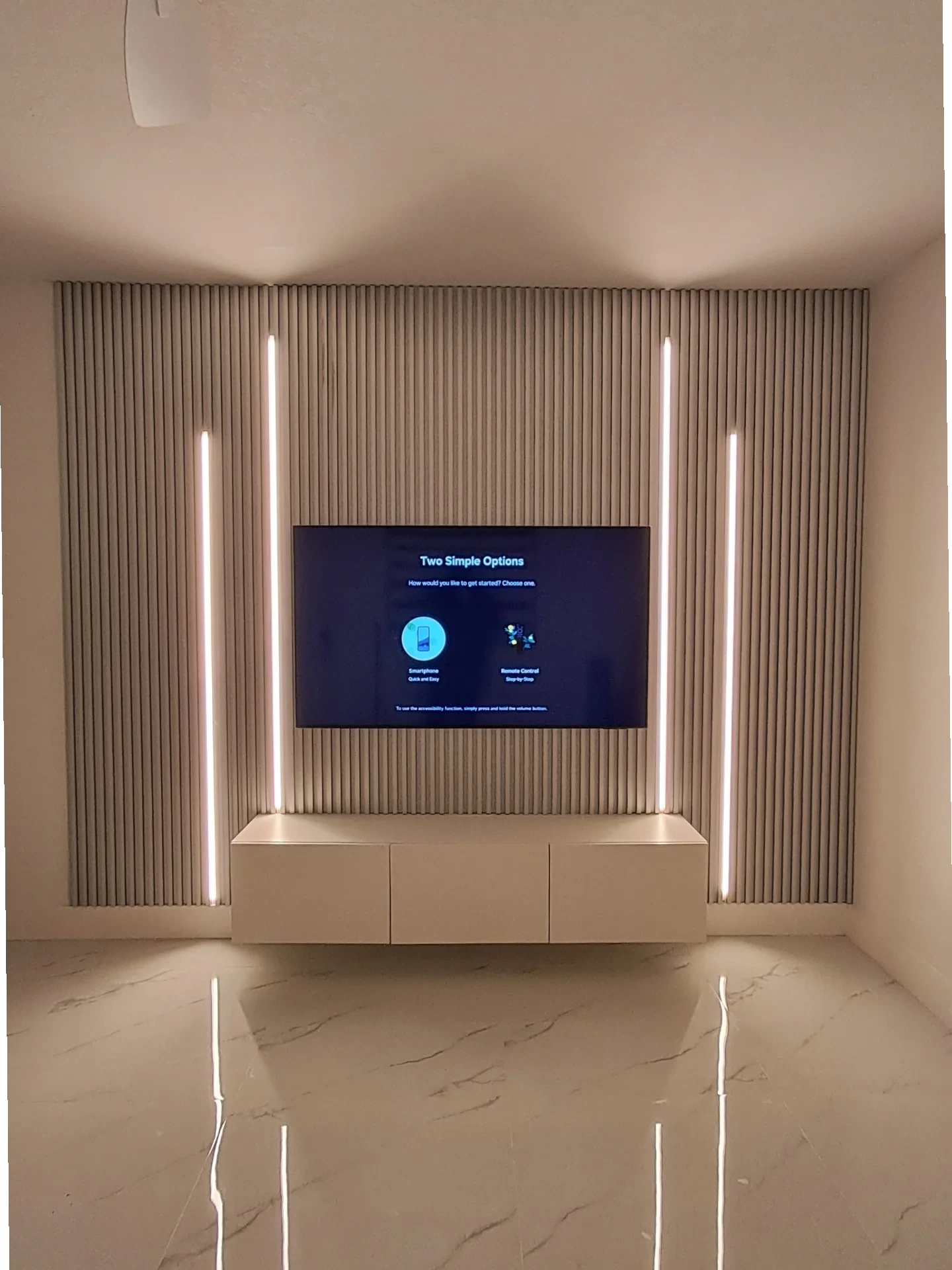
13. Draw Vertical Light Lines Around the Screen
Credits: Instagram
Four slender light strips break up the ribbed wall behind this television. Their staggered heights create a simple pattern, while a small floating cabinet keeps the base uncluttered.
The idea suits a room where the media wall needs a clear identity without additional display shelves. Plan the lighting positions together with the screen dimensions so the lines feel deliberately spaced.
Choose dimmable fixtures and test them from the sofa; bright decorative strips may be distracting during darker scenes. A pale finish makes the texture subtle in daylight and more noticeable when the lights are on.
Because the installation is so spare, neat edges and accessible wiring matter. Keep room for device connections and future maintenance behind or inside the cabinet.
14. Soften a Black Media Wall With Curved White Seating
Credits: Instagram
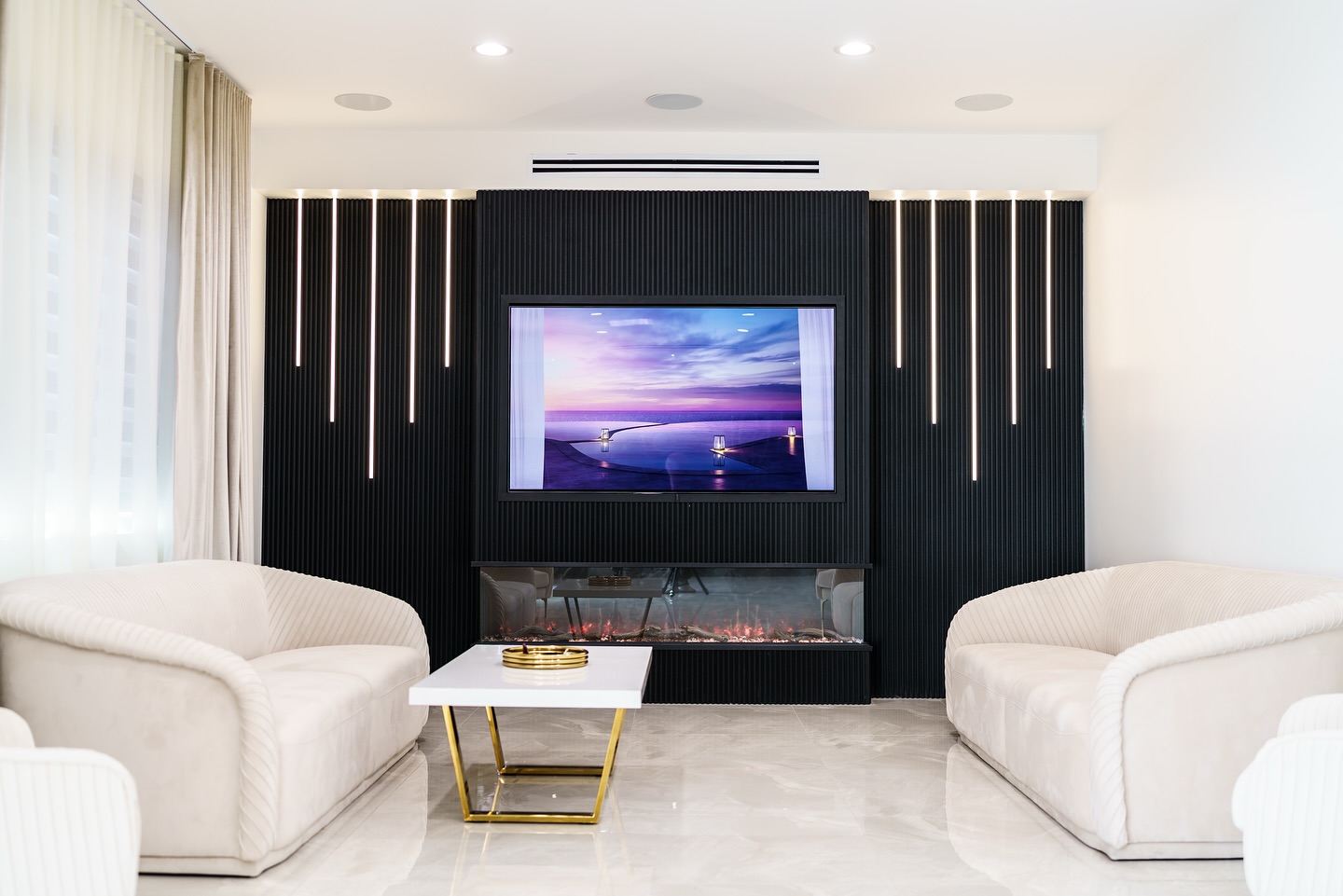
Rounded white seats give this black media wall a softer counterpart. The upholstery's curved channels echo the wall's vertical ribbing, connecting two very different surfaces.
A small table with a gold base adds warmth without interrupting the pale floor. Borrow the contrast by keeping the television wall dark and the main seating light, then repeating one texture across both.
Plan seat positions around the way you actually watch; chairs arranged for conversation may need to turn toward the screen. Layer curtains to adjust daylight without changing the room's palette.
If you include a fireplace below the television, confirm the specific appliance's heat and clearance requirements with the installer, and keep decorative wall lighting dimmable for a comfortable evening viewing setup.
15. Give the Soundbar Its Own Place
Credits: Instagram
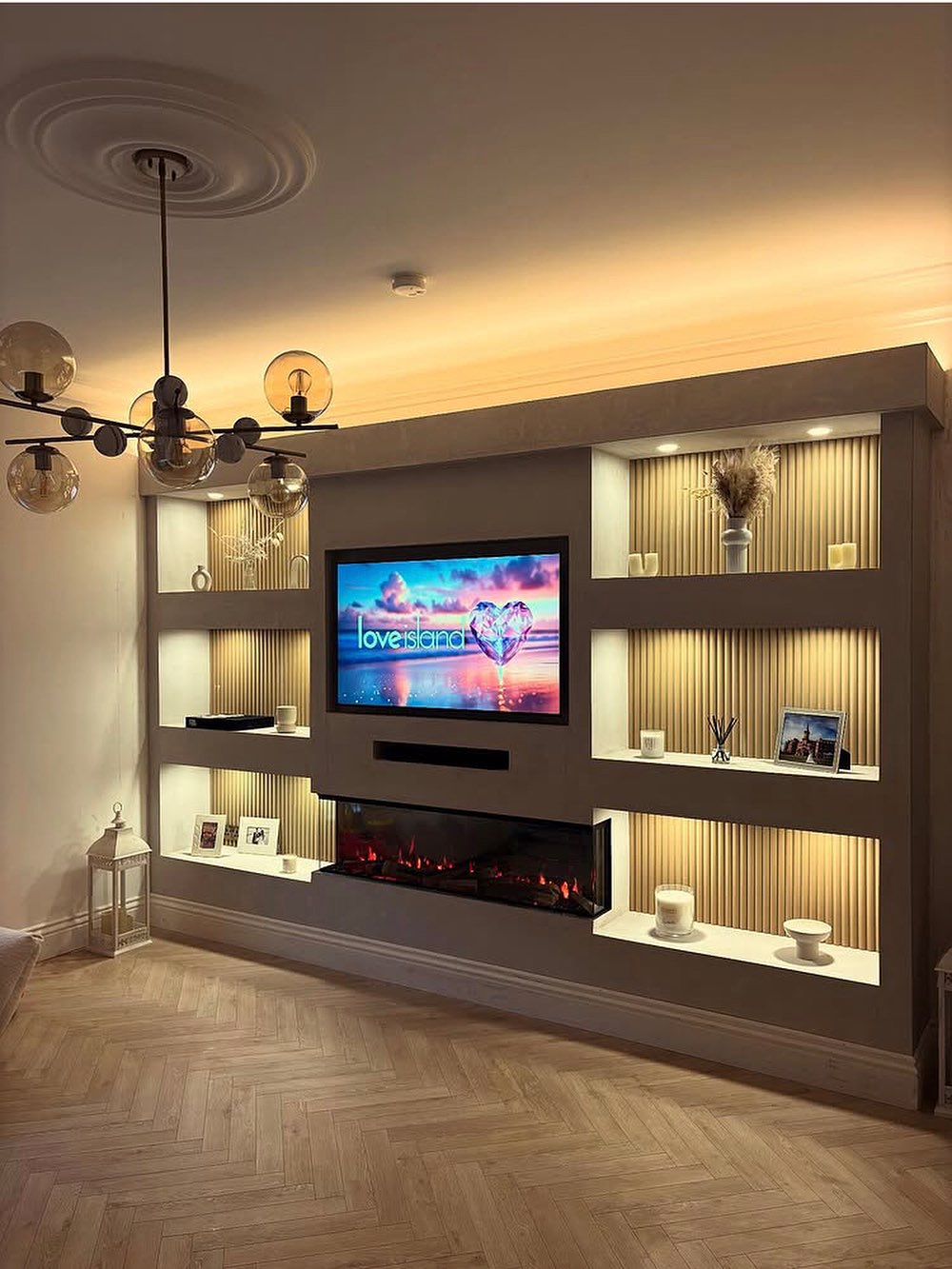
A slim horizontal opening below the screen offers a potential home for a soundbar within this media wall. The detail keeps equipment organized while the wider display niches hold a few personal pieces.
Treat that opening as a technical decision as well as a design choice. Check the soundbar manufacturer's guidance before recessing it, since some models need unobstructed upward or side-facing sound paths.
Leave access to connections and allow the recommended ventilation around electronics. The photograph's reeded niche backs and warm lighting add texture around the otherwise plain central section.
Repeat one finish across the whole structure so the different openings feel related. Before construction, confirm fireplace clearances, service access, and the television height from your usual seated position.
16. Warm White Cabinetry With Wood Shelf Backs
Credits: Instagram
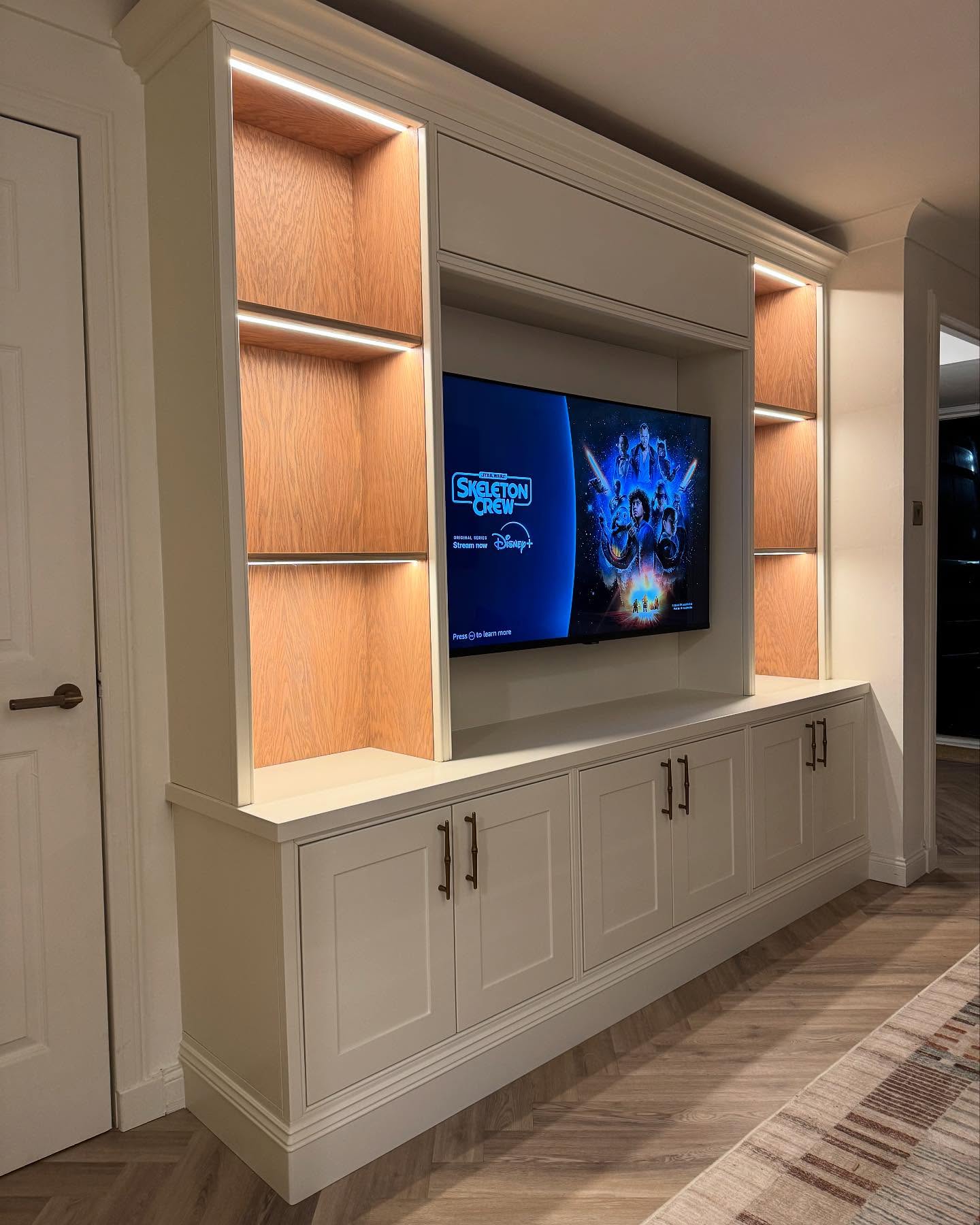
Wood-lined shelves bring warmth to this pale media cabinet without changing its simple outer frame. Lighting tucked beneath each shelf makes the grain stand out and emphasizes the cabinet's vertical sections.
The empty shelves also show how effective the material can be before accessories are added. Use the idea when you prefer light cabinetry but want more depth than an all-white wall provides.
Coordinate the wood tone with the flooring, then keep hardware consistent across the lower doors. The television opening should leave enough space for installation and servicing, even if you prefer a closely fitted appearance.
Ask for a lighting sample against the wood before approving the finish, and make sure switches remain easy to reach from the room.
17. Keep a Pale Media Wall From Feeling Cold
Credits: Instagram
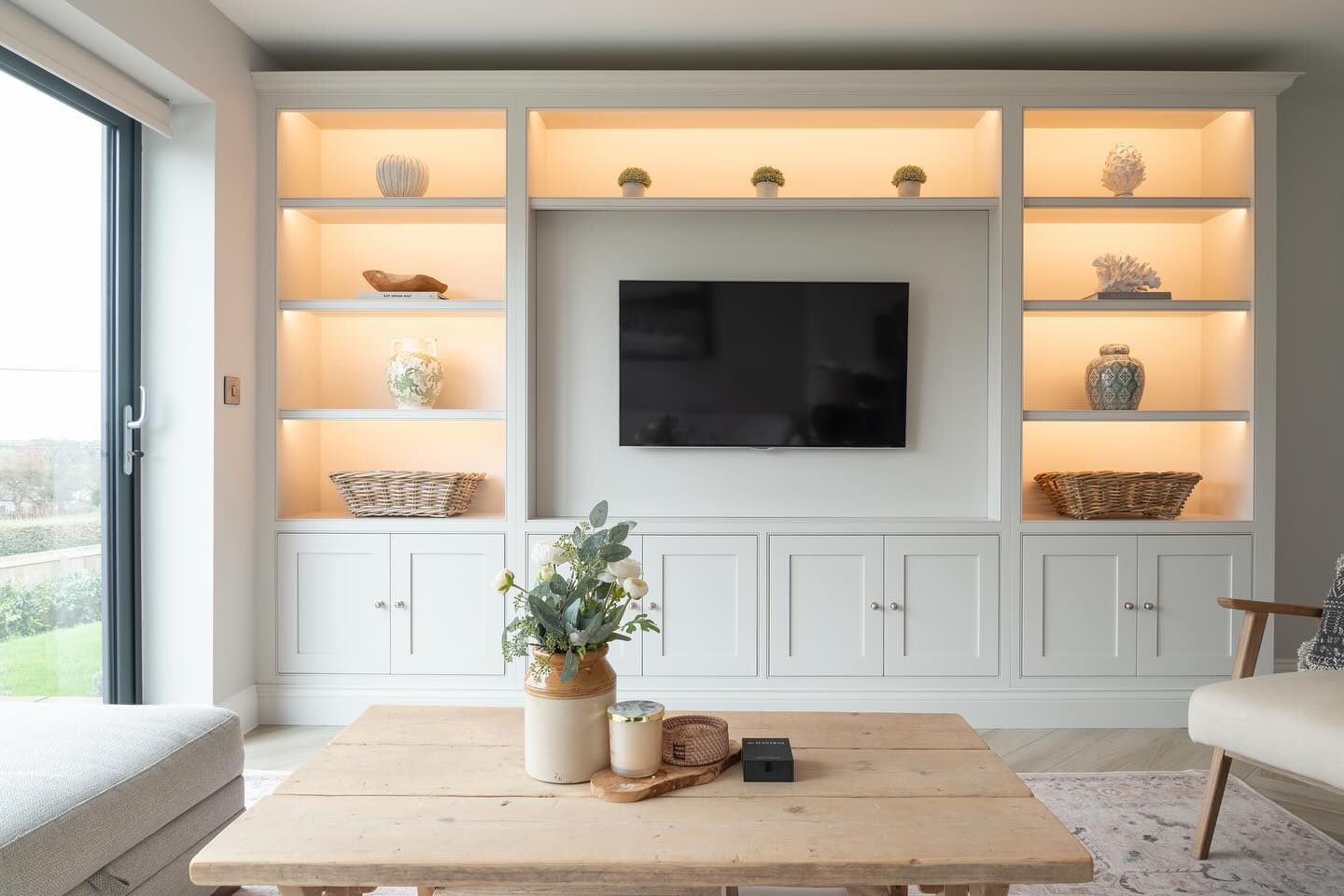
Warm shelf lighting, woven baskets, and a wood coffee table give this light media wall a comfortable feel. The television remains the strongest dark shape, balanced by the slim frame of the glazed door at the left.
Choose a small family of natural textures to repeat across the room, rather than adding many unrelated accent colors. The low table and open chair arms keep views through the seating area clear.
Leave useful space around the television instead of filling every inch with decor. On the side shelves, larger pieces read more calmly than clusters of tiny ornaments.
Include closed cabinets beneath the displays for storage, and check that the table position leaves a comfortable route to both seating and doors.
18. Organize a Media Unit With Repeated Baskets
Credits: Instagram
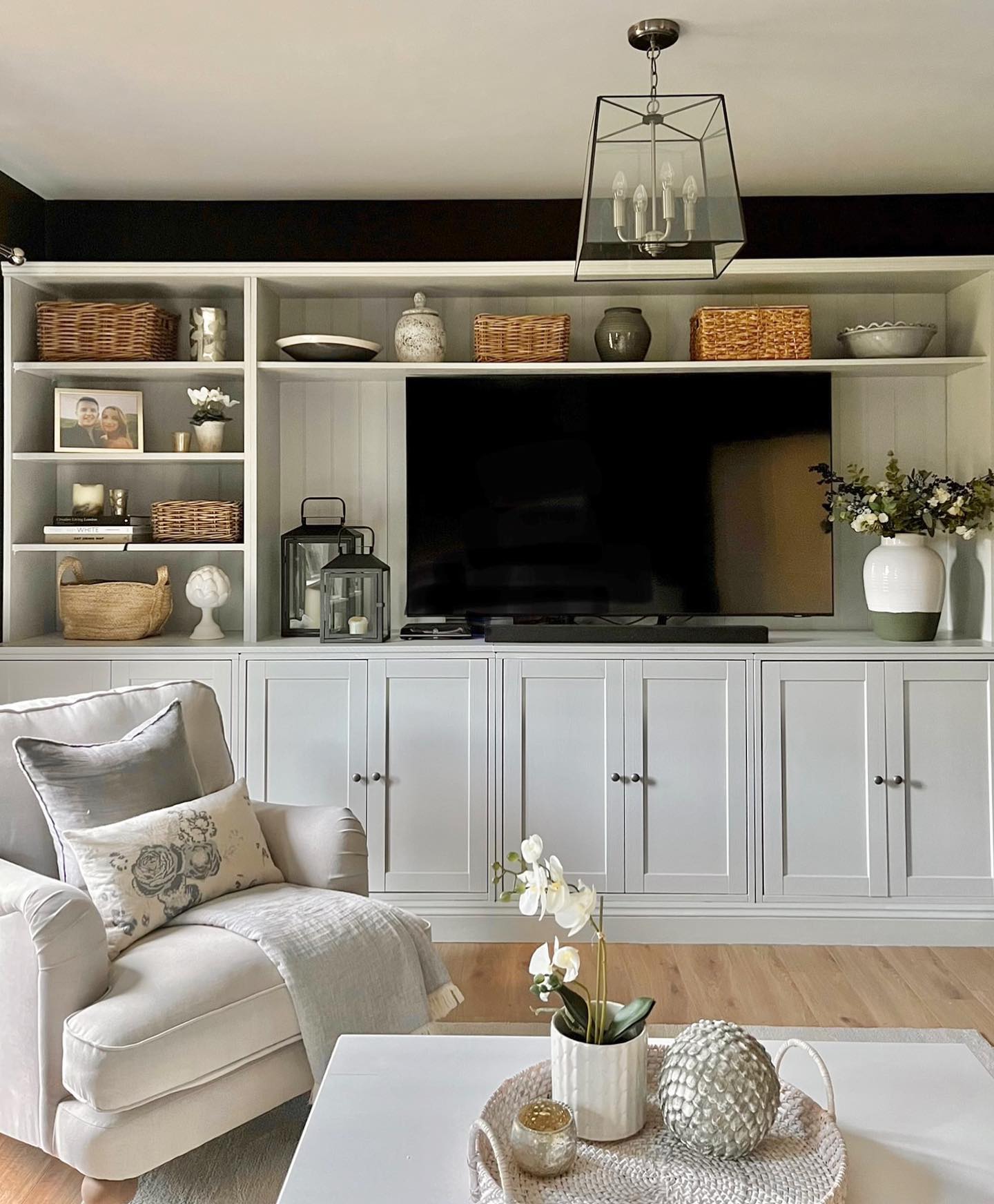
Woven baskets repeat across the upper shelves of this light cabinet, bringing texture and useful storage to the television wall. Their similar tones make the assortment feel deliberate even though the shapes differ.
The homeowner identifies the project as a DIY media wall, showing how a fitted appearance can become part of a personal renovation.
Before planning your own version, list the objects you need to store and measure baskets against the shelf openings. Keep frequently used items low enough to reach comfortably.
The larger television opening leaves room for a soundbar and a few accessories, while paneled doors conceal bulkier belongings. Repeat one darker accent in lighting or frames to connect the screen with the rest of the room.
19. Leave Open Floor Around a Full-Width Media Unit
Credits: Instagram
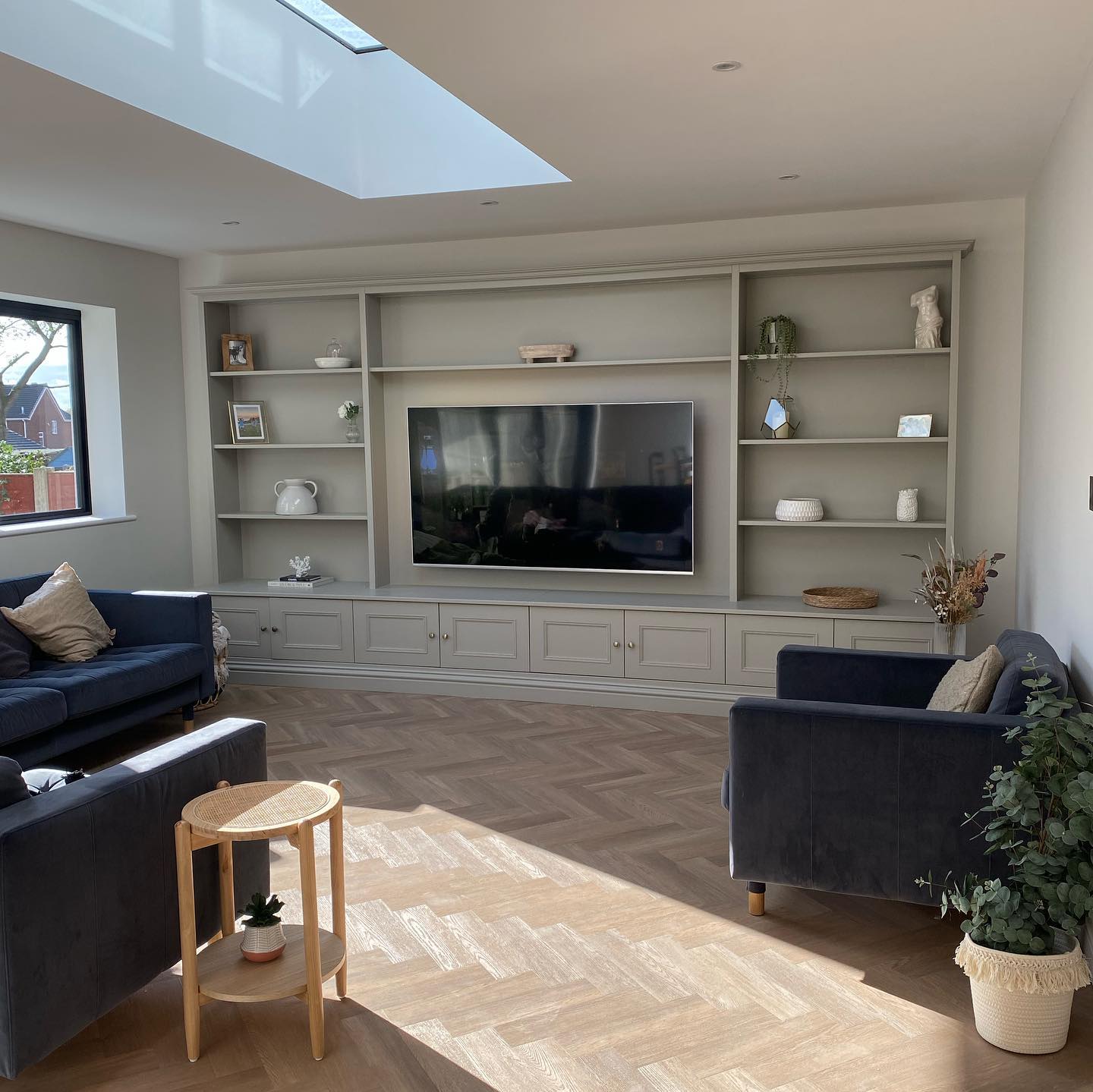
This broad media cabinet gives the television and a few decorative objects a defined home, while the seating remains separated from it. Dark upholstery contrasts with the pale cabinetry, and the open floor shows off the herringbone pattern.
Keep the same sense of breathing room by choosing fewer substantial seats and smaller side tables instead of filling the center with bulky furniture. Angle chairs toward the screen when watching and toward one another for conversation.
The large overhead window brings daylight into the seating area, so assess glare before settling on the television location. A restrained shelf display keeps the long wall from feeling busy.
Use the lower drawers for everyday clutter so the room stays easy to reset afterward.
20. Put an Accent Color Inside the Shelves
Credits: Instagram
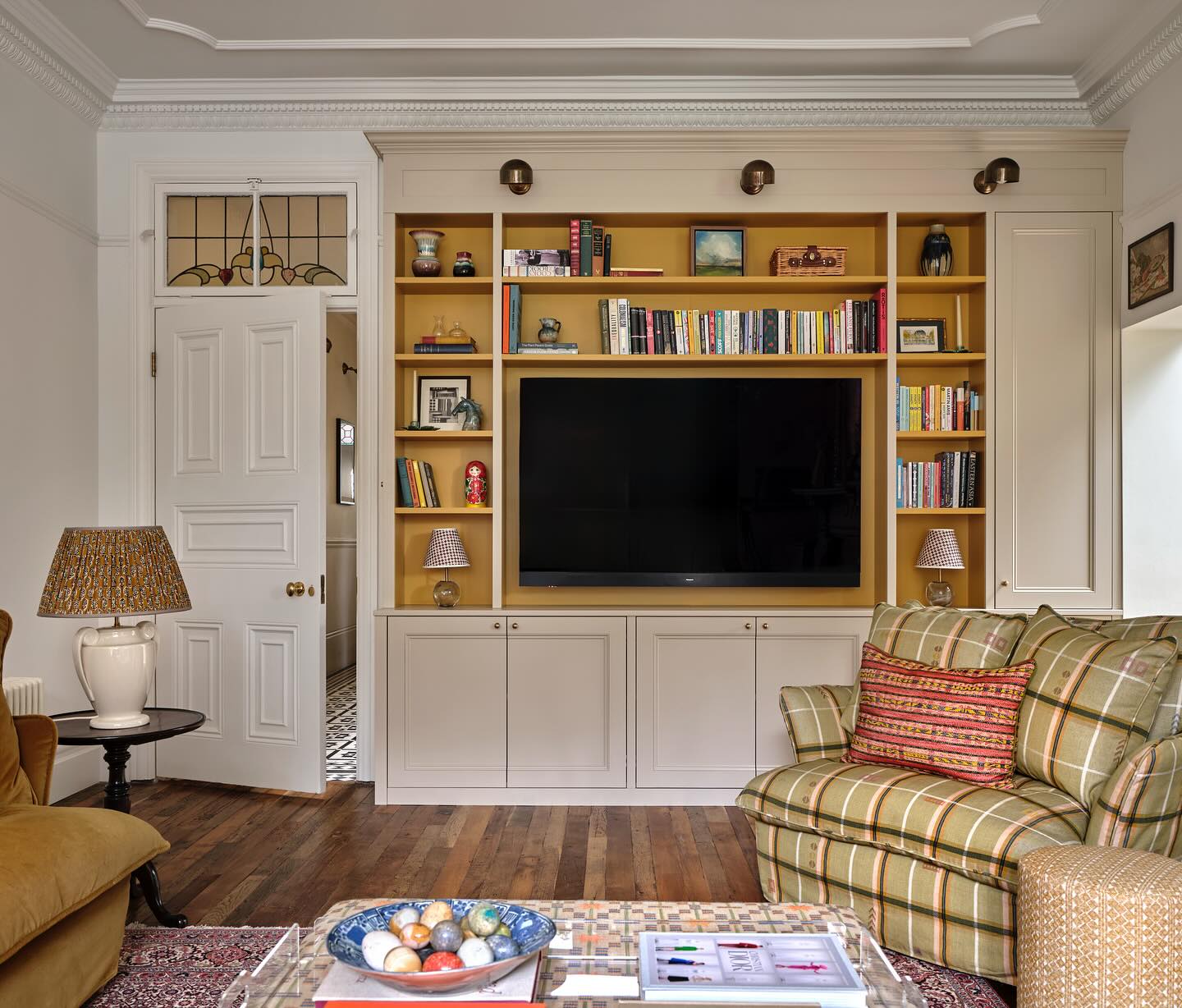
Mustard yellow shelf interiors turn this television cabinet into a lively feature while its outer doors stay quietly neutral. The approach adds color around the screen without painting every wall.
It also helps a new media unit sit comfortably beside older architectural details, as the ceiling molding and paneled doorway demonstrate here. Choose one accent shade that relates to nearby upholstery or artwork, then repeat it sparingly.
Keep the cabinet's outer finish close to the room's trim for a connected look. Books and small objects break up the colored background, while closed storage below handles everyday necessities.
Before painting, test the shade both beside the switched-off screen and during evening viewing, when cabinet lighting can change how the color appears.