
A blue room can feel cool and settled, while orange upholstery adds warmth without requiring a full room makeover.
Blue And Orange Living Room Ideas show how to balance the contrast in different ways, from a burnt orange sofa against a navy corner to rust seating paired with blue built-ins.
You can also let a large painting set the palette or use stripes and patterned textiles to repeat both colors. The key is deciding which shade will anchor the room and where smaller echoes can help the colors feel connected.
1. Let a Burnt Orange Sofa Define a Navy Corner

Credits: Instagram
A burnt orange sofa stands out clearly against the deep navy corner in this living room.
Its simple shape and narrow legs keep the bright upholstery from feeling bulky, while a glass coffee table leaves the seat visible from across the room.
Try this combination when you want one colorful piece to carry most of the decorating work. Choose a blue that stays recognizably blue beside the orange in daylight and lamplight.
Keep nearby accessories restrained so the contrast remains easy to read. Here, the dark floor lamp and irregular black rug reinforce the shaded wall without introducing another strong color.
White blinds brighten the window, and a few warm accents on the sill connect the sofa to its surroundings.
2. Carry Blue Above a Pair of Orange Chairs
Credits: Instagram
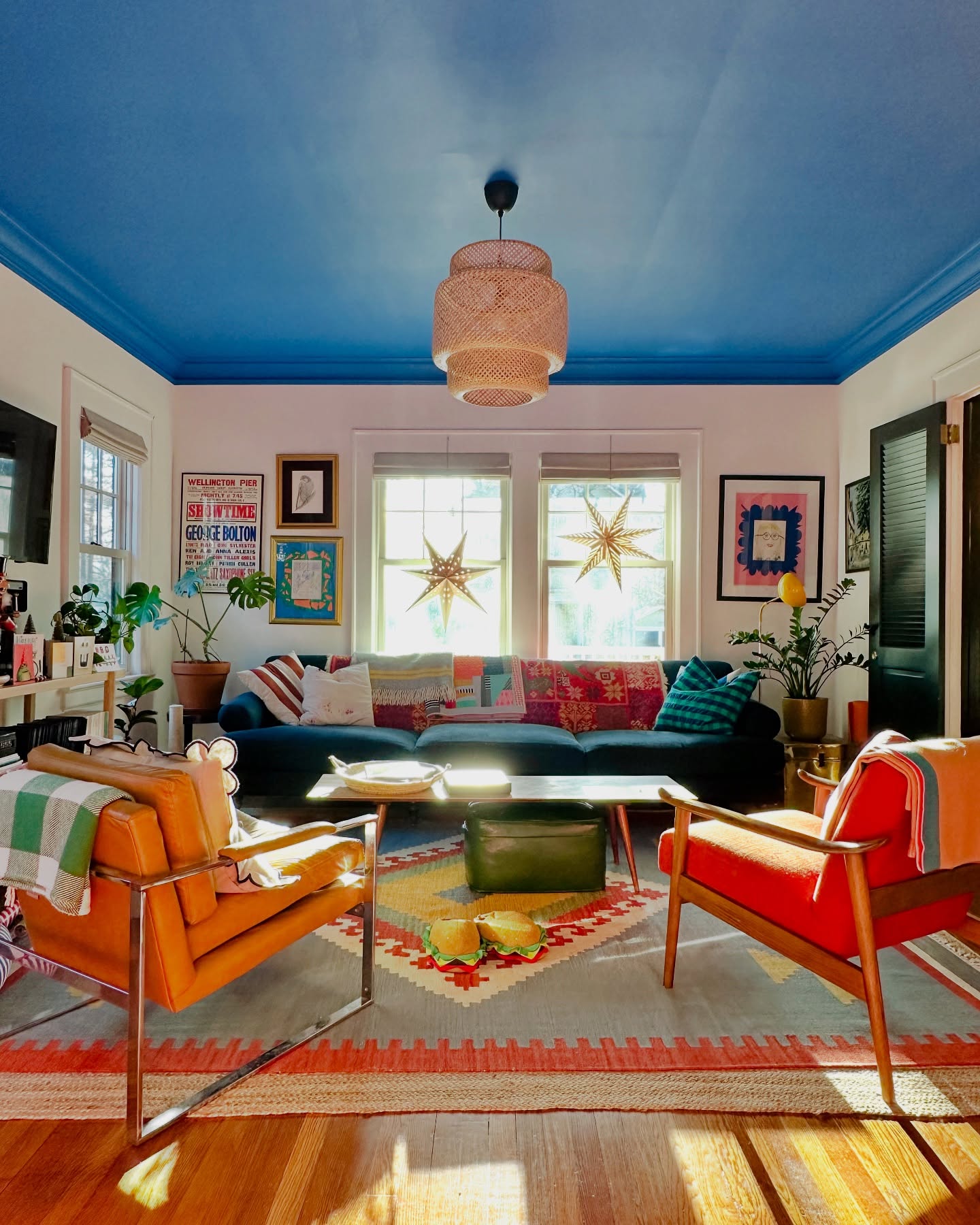
A vivid blue ceiling gives this living room an unexpected color anchor above its orange chairs. The blue sofa repeats the cool tone lower down, creating a visual connection across the pale walls.
Orange appears in the rug border as well as the seating, helping the contrasting colors feel distributed through the room. To borrow the idea, keep the walls lighter and test your chosen ceiling color on a large sample overhead.
Pair warm chairs with a simpler sofa, then use a rug that contains both color families. The wooden furniture frames and woven pendant add quieter textures between the saturated surfaces.
Leave enough space around each chair to walk comfortably, and use the central table to gather the arrangement.
3. Build the Palette Around One Large Painting
Credits: Instagram
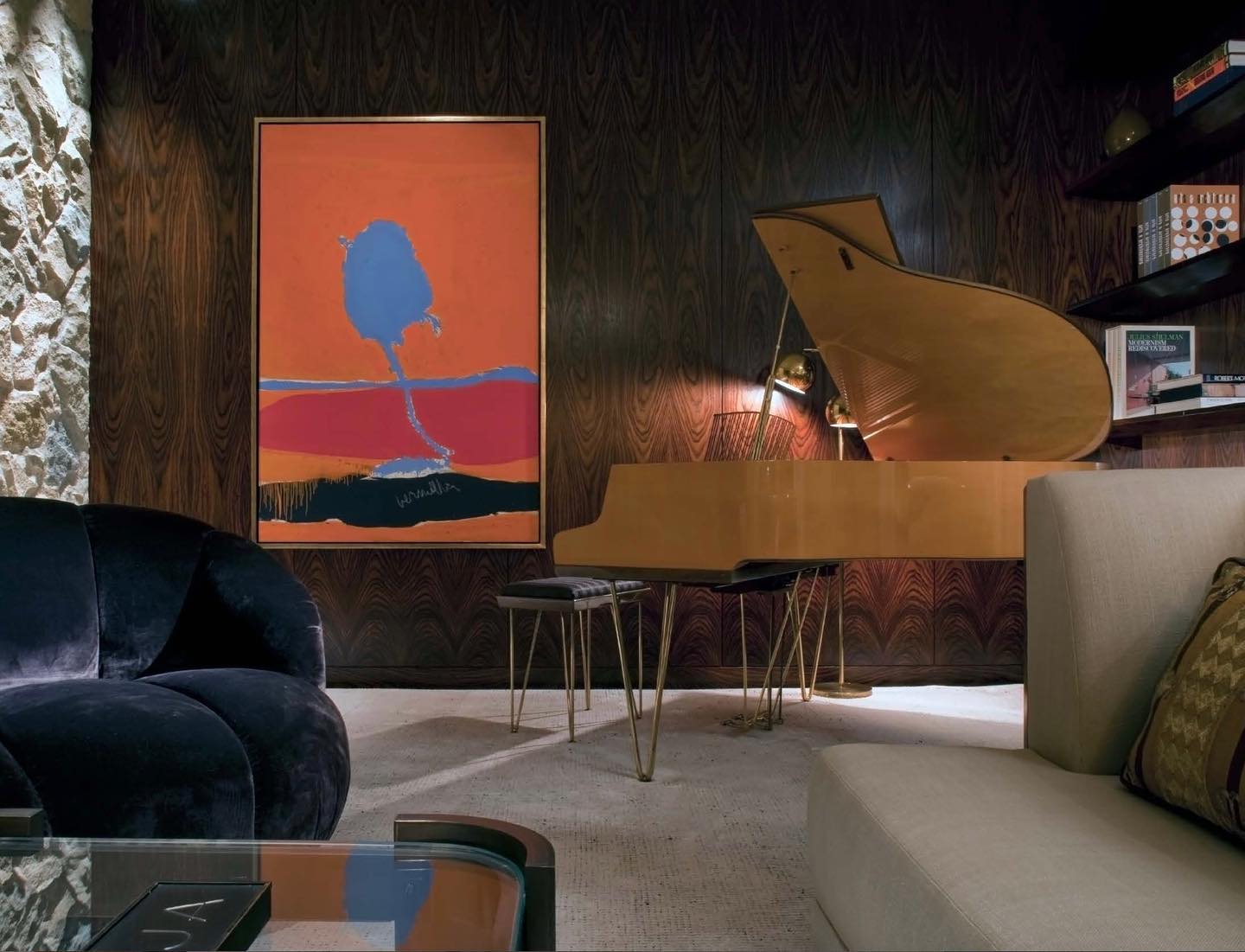
Orange and blue meet most clearly in the large painting in this dark living room. The navy upholstered chair picks up its cool color, while the warm wood wall and piano complement the orange without matching it.
This is a useful approach when your room already contains substantial wood finishes. Start with artwork you enjoy, then repeat just one of its colors in a comfortable seat or textile.
Let the remaining furnishings stay quieter so the painting retains its presence. Here, pale upholstery and a light rug keep the darker backdrop from dominating every surface.
A slim frame defines the artwork, and nearby lighting brings attention to the wood grain. Keep wall decorations nearby minimal to give this composition space.
4. Mix Crisp Stripes With Orange Accent Seating
Credits: Instagram
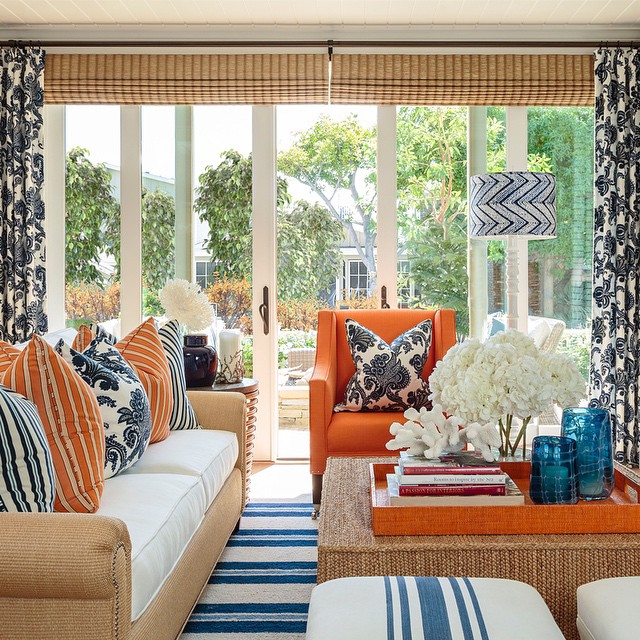
Orange upholstery gives this bright room a lively center, while blue stripes and patterned textiles spread the cooler color throughout the seating area. The white sofa cushions and broad windows leave plenty of visual breathing room between the stronger accents.
Try building a similar palette with one orange chair, striped pillows, and a blue rug before introducing more pattern. Vary the scale of your prints so a narrow stripe does not compete with a larger decorative motif.
Woven furniture, a textured ottoman, and bamboo shades provide a natural middle ground between the two colors. An orange tray repeats the chair color across the room and creates a firm surface for accessories. Blue glass pieces add another small, transparent color echo.
5. Balance Rust Seating With Blue Built-In Storage
Credits: Instagram
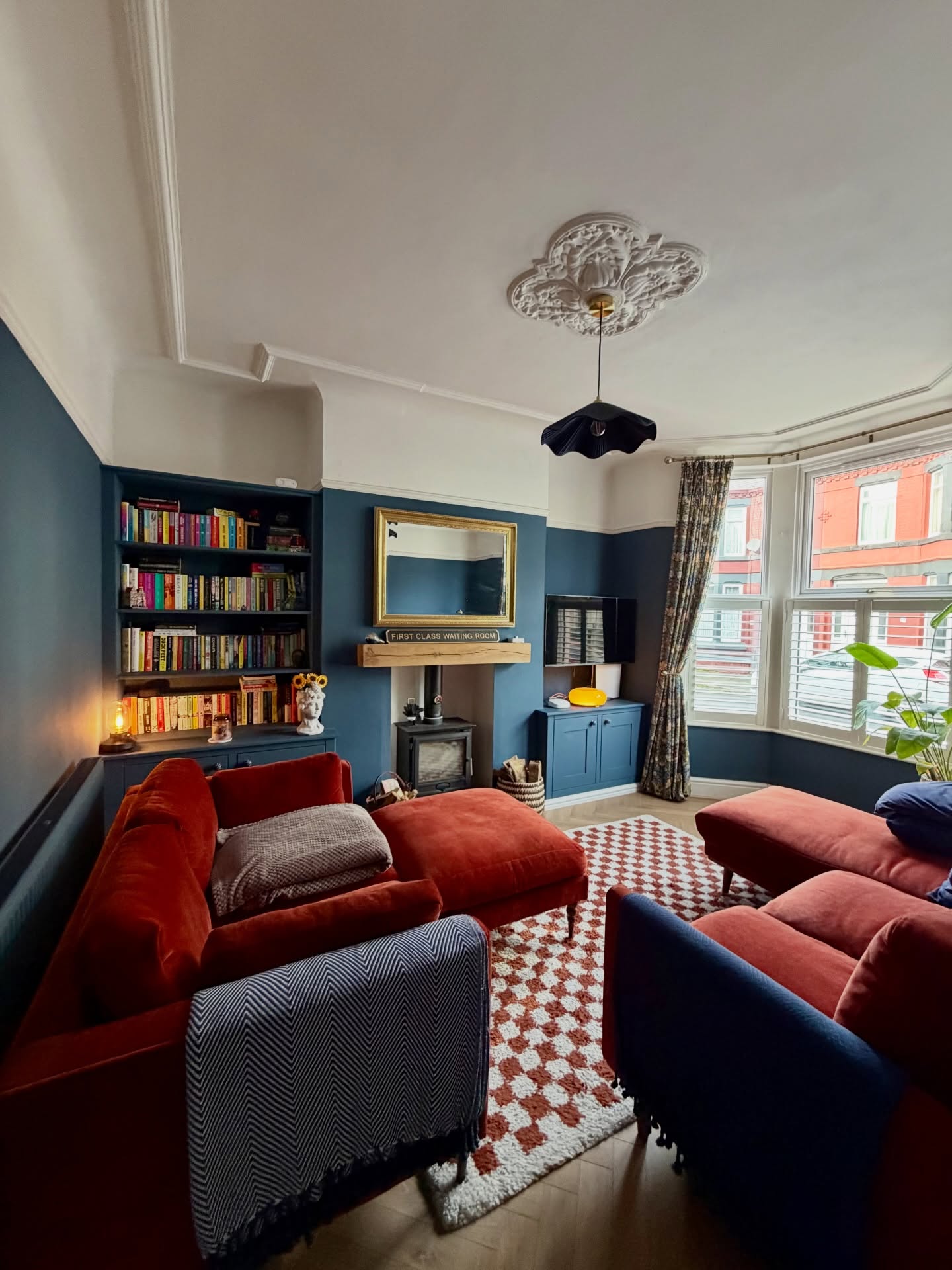
Rust velvet seating brings warmth to this living room, where blue walls and matching built-in cabinets form a practical backdrop. The color continues around the bay window, but a pale ceiling and upper wall preserve a lighter band above.
Use this division when you want a deep color without covering the whole room. Align the paint boundary with an existing picture rail or another architectural line for a deliberate finish.
Here, a checkered rug repeats the warm seating color in smaller doses, connecting the chairs and sofa. The books add varied color within the blue shelving, and a timber mantel offers a simple natural accent.
Keep the fireplace opening and circulation routes clear while arranging seats toward the room's center.
6. Layer Cobalt Chairs Against Softer Blue Walls
Credits: Instagram
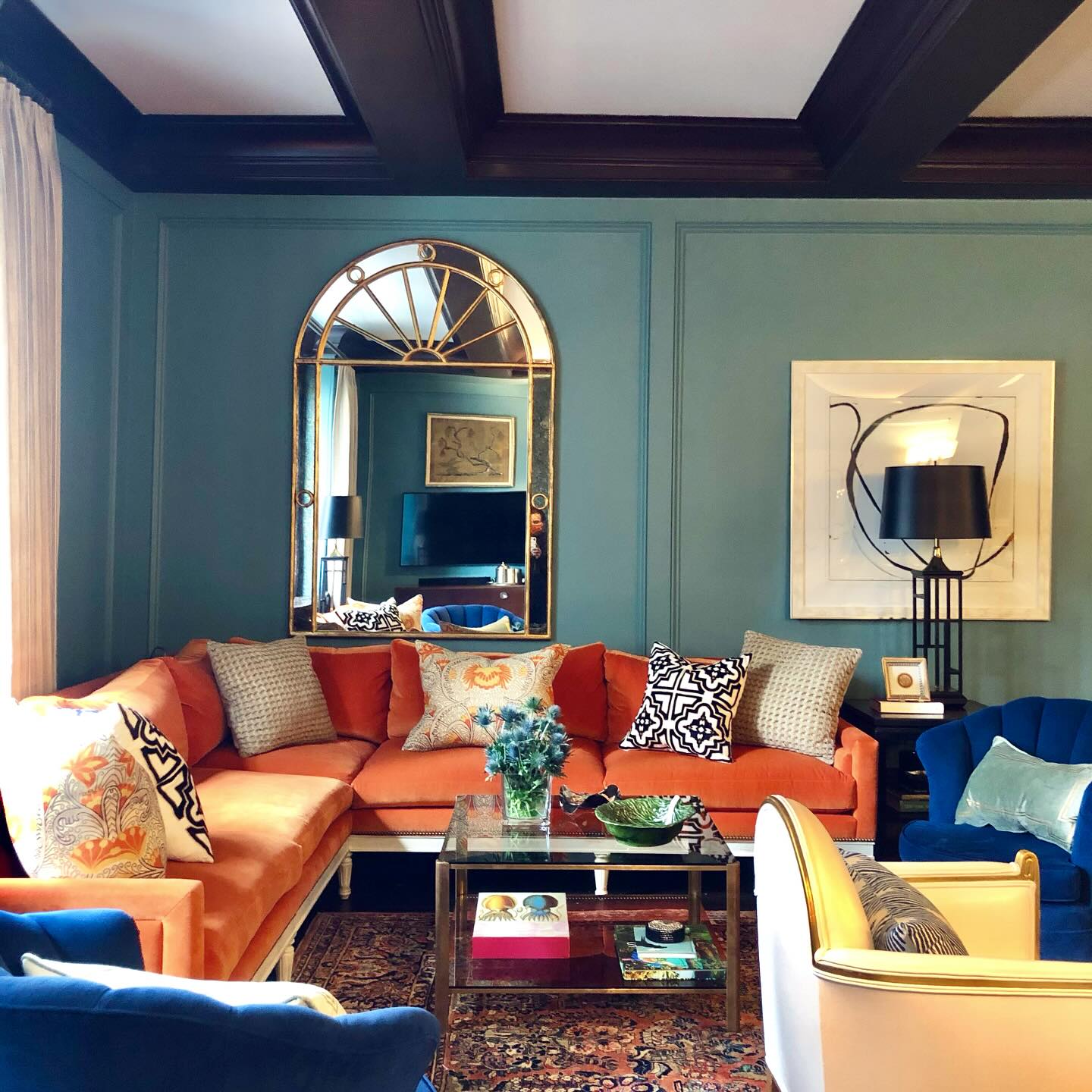
Cobalt chairs add another dimension to the softer blue walls surrounding this orange sectional. The contrasting blues prevent the room from looking like a strict match between two paint chips.
A patterned rug, pale pillows, and a glass table introduce smaller details without hiding the large blocks of color. Try choosing one blue for the architecture and a stronger version for movable seating.
Then give orange the broadest upholstered surface so the balance feels intentional. Here, black ceiling beams and lamp shades frame the composition, while a tall arched mirror reflects the room and window light.
Keep the biggest patterns separated across pillows and flooring. A few metallic edges provide definition without needing to add another bright accent color nearby.
7. Pair Apricot Upholstery With Glossy Sky Blue Walls
Credits: Instagram
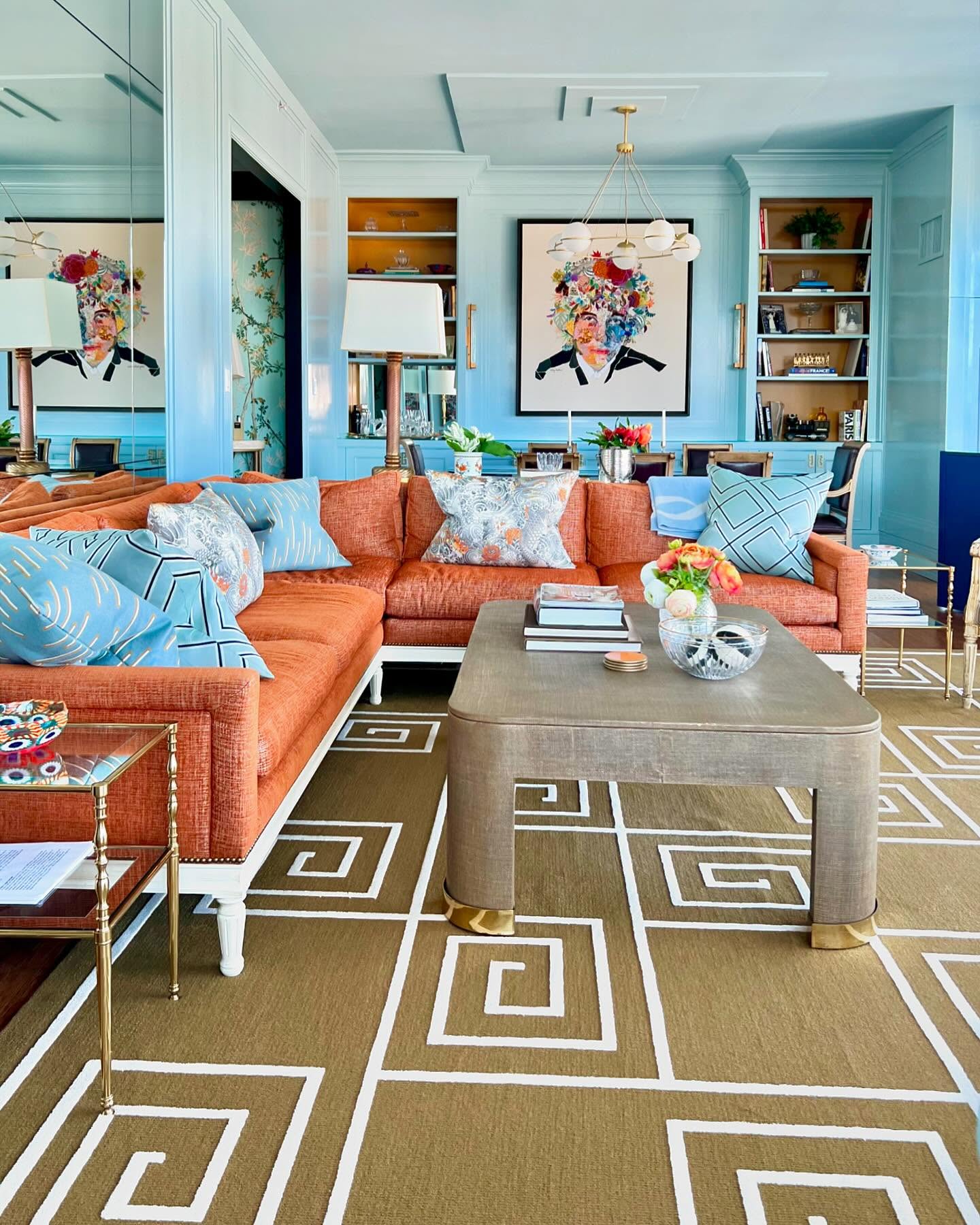
An apricot sectional brings warmth into this room of glossy sky blue walls and reflective surfaces. Blue pillows repeat the surrounding color directly against the upholstery, making the relationship clear even within the seating arrangement.
The olive rug offers a quieter third color, while its broad geometric pattern gives the furniture a defined setting. Try this softer version of orange when a vivid tangerine feels too strong for your space.
Balance the warm sofa with blue textiles of different patterns instead of identical matching pillows. Here, the large coffee table and slimmer side tables offer useful surfaces without creating a solid visual barrier.
Keep artwork generous in scale so it holds its own beside the substantial sectional and patterned floor.
8. Repeat Orange and Blue Through a Gallery Wall
Credits: Instagram
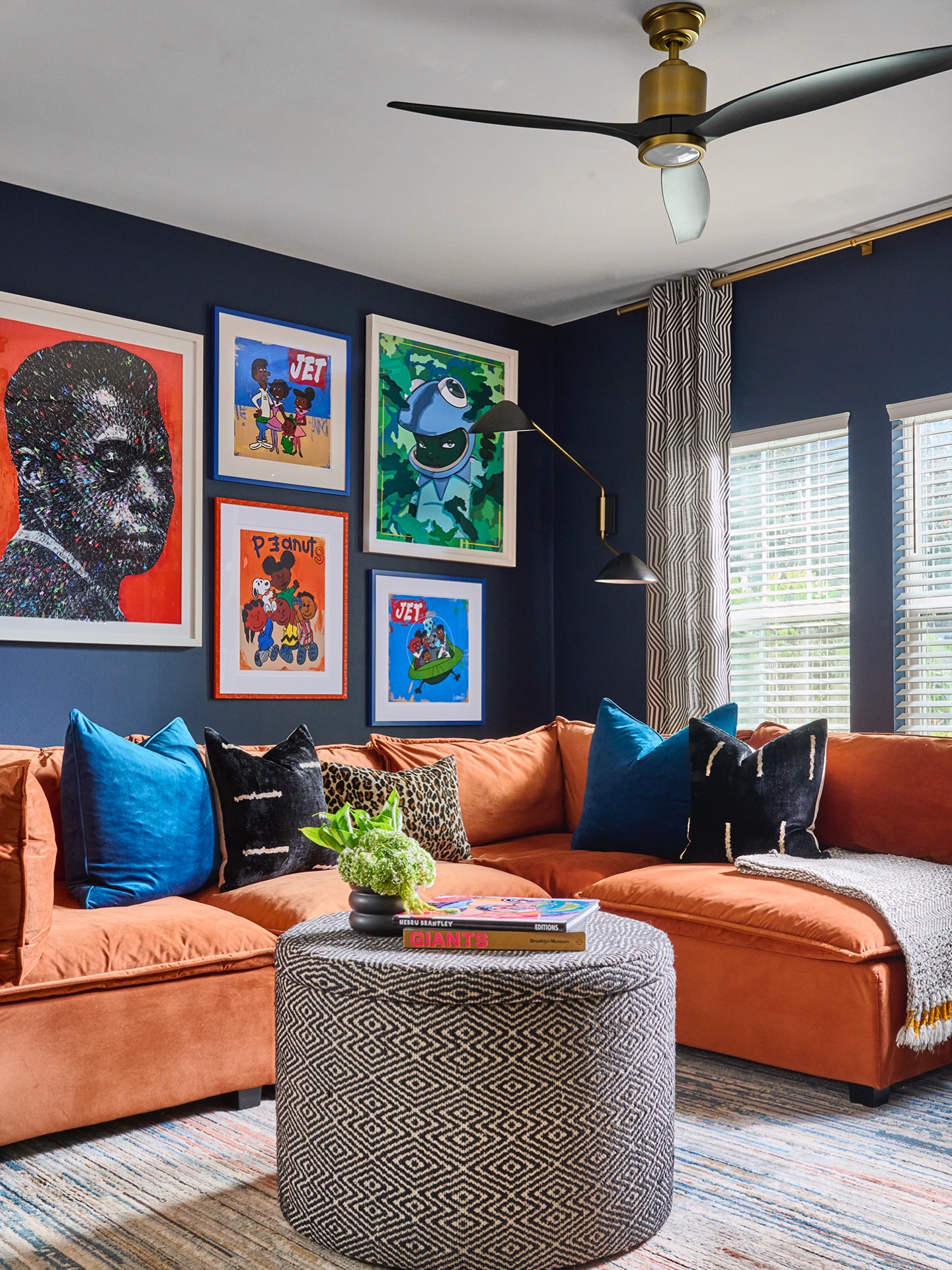
The orange sectional and blue walls establish this room's palette, but the gallery wall makes the colors feel personal. Bright blue pillows connect the sofa to the artwork, and orange picture frames carry its warmth upward.
Black and white patterns in the curtains and ottoman give the eye something different to follow between those color blocks. Start with art you already love, then identify two shades that recur across several pieces.
Use one for a major furnishing and the other for surrounding paint or textiles. Keep the spacing between frames consistent enough to organize the collection, even when sizes vary.
A pale rug and light ceiling help this room retain brightness, while the round ottoman softens the sectional's angular arrangement.
9. Drench a Vaulted Room in Bright Blue
Credits: Instagram
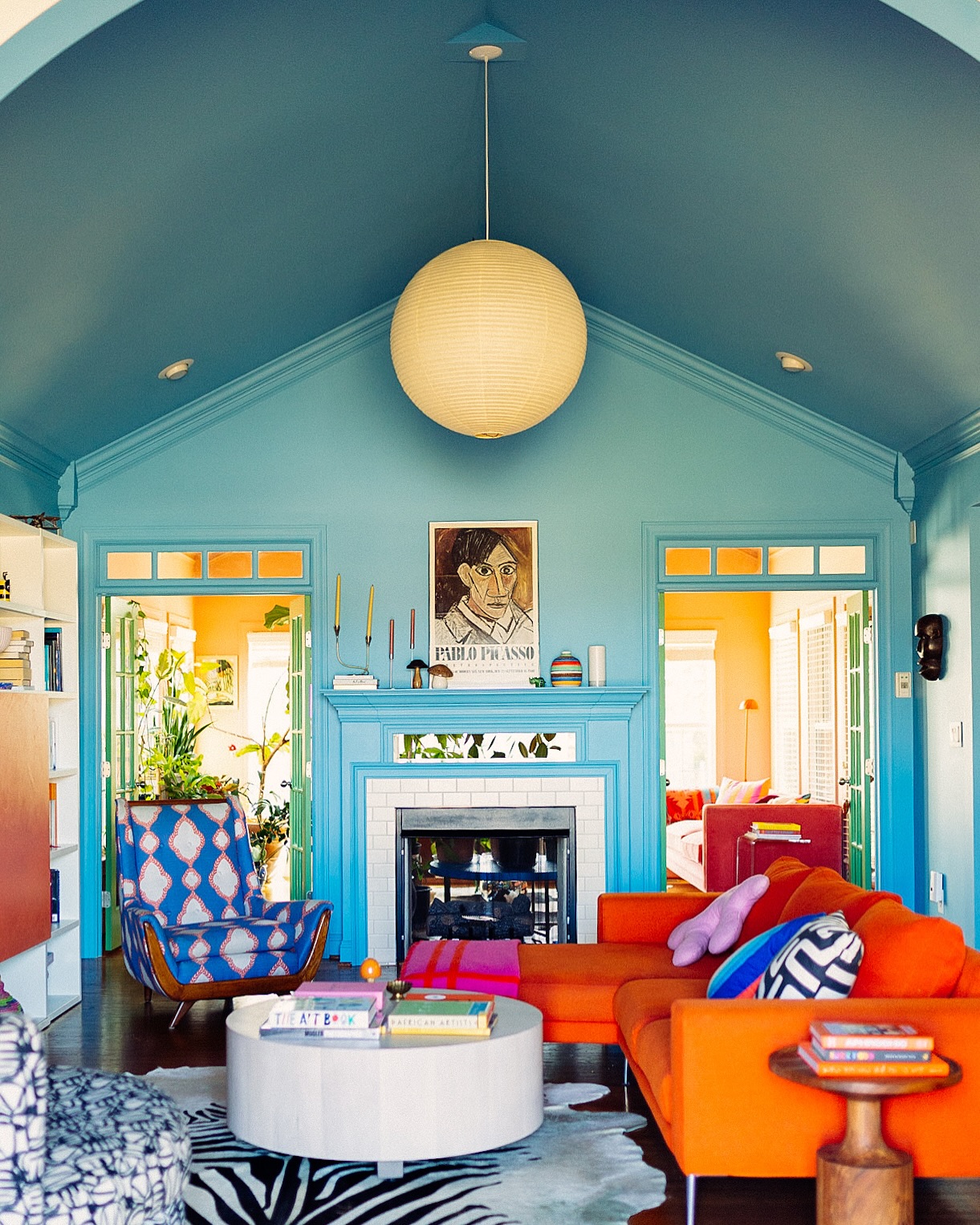
Bright blue covers the vaulted ceiling, walls, and fireplace surround in this living room, giving its architecture one continuous color.
A vivid orange sofa provides a concentrated contrast below, and a patterned blue chair helps link the furnishings to the surrounding paint. Try this approach when you want the room's height and unusual angles to become part of the design.
Test the blue on both vertical and sloping surfaces because they catch light differently. Keep a few large elements pale, as the white table and fireplace tile do here, to create resting points.
Smaller pink accessories add variety without taking over. Let the seating remain distinct from the wall, and keep doorways clear so neighboring rooms remain easy to reach.
10. Ground Denim Sofas With a Rust Orange Rug
Credits: Instagram
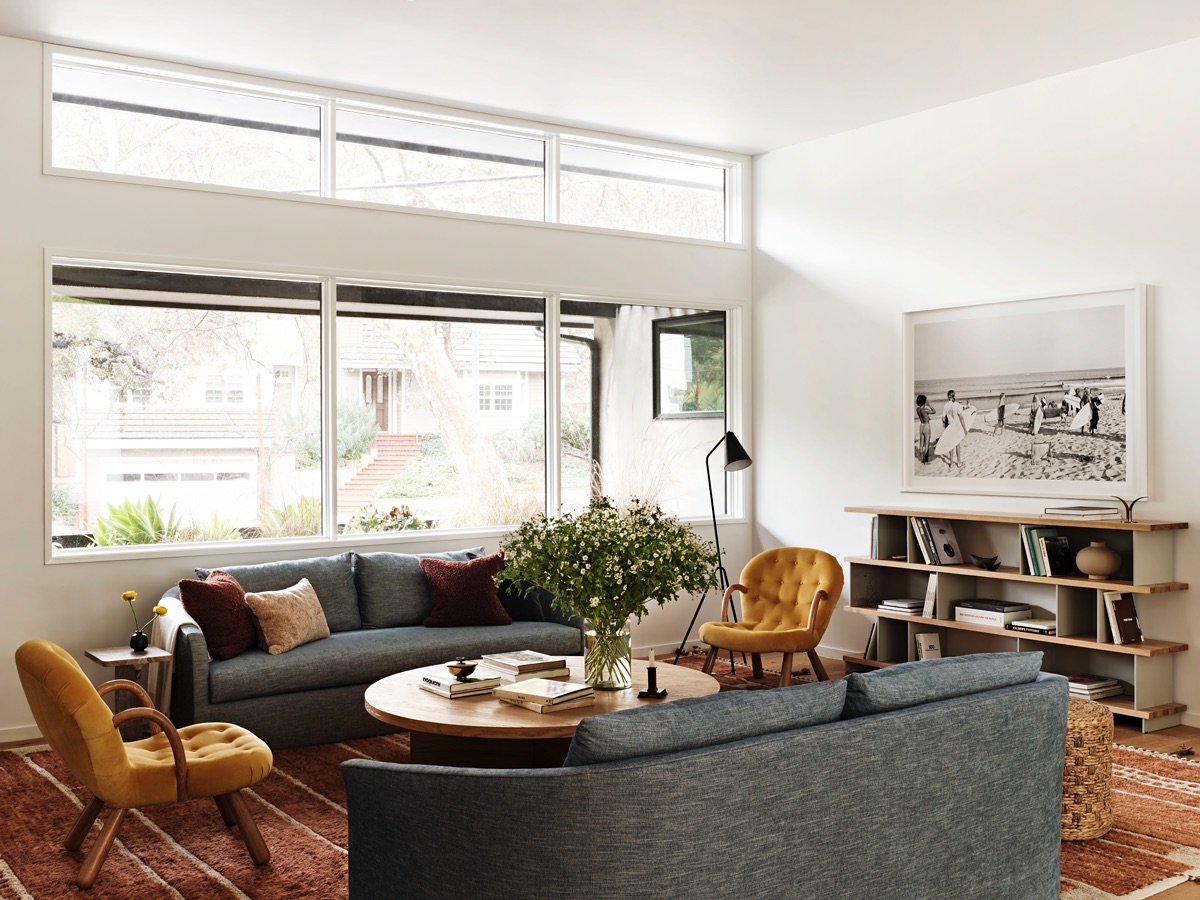
A rust orange rug gives the denim blue sofas a warm foundation in this bright living room. The colors feel relaxed because their textures are soft and their shades are slightly muted.
White walls and generous clerestory windows leave the furniture grouping clearly defined without needing additional painted accents. Begin with a rug large enough to connect your main seating pieces, then repeat its warmth in a few pillows.
Blue upholstery can carry the cool color while wooden furniture bridges the palette. Here, rounded tables and curved chair arms soften the straight lines of the sofas and shelving.
Keep the coffee table within comfortable reach of each seat, and use open storage sparingly so the room retains its airy feeling.
11. Accent a Powder Blue Sofa With Burnt Orange Pillows
Credits: Instagram
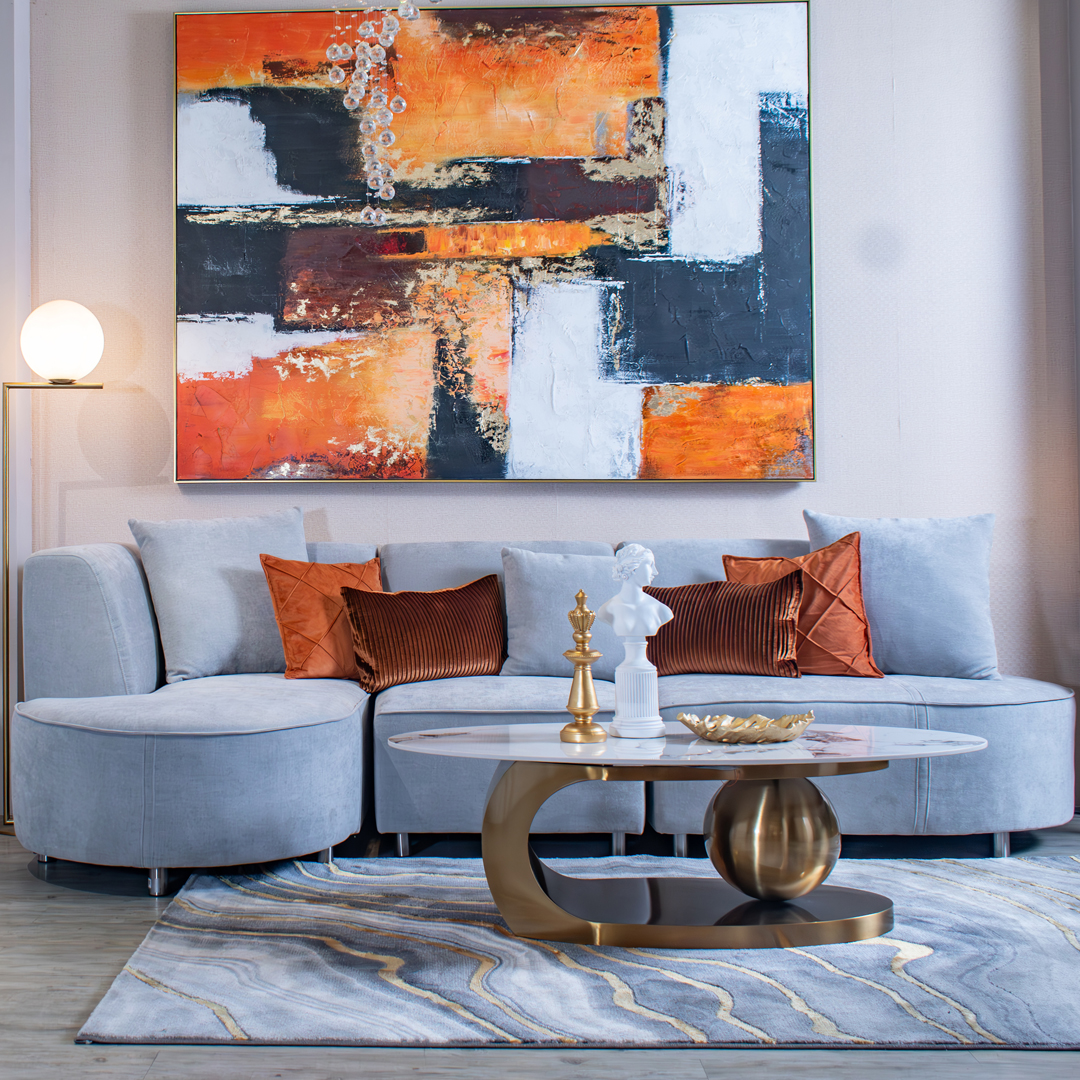
A pale blue sofa offers a gentle foundation for burnt orange pillows in this polished seating arrangement. The large abstract painting repeats both colors at a much greater scale, connecting the small textiles to the surrounding wall.
Try this combination when you prefer light upholstery but still want a contrast. Use a pair of orange pillows in different textures, then leave some matching blue cushions between them.
Here, the curved sofa ends, oval coffee table, and rounded lamp provide a consistent softness beneath the painting's blockier shapes. Metallic details add a warm glint without introducing another dominant color.
Keep the rug quieter than the artwork so the two patterns support each other instead of competing for attention across the room.
12. Combine Blue and Orange Within a Modular Sofa
Credits: Instagram
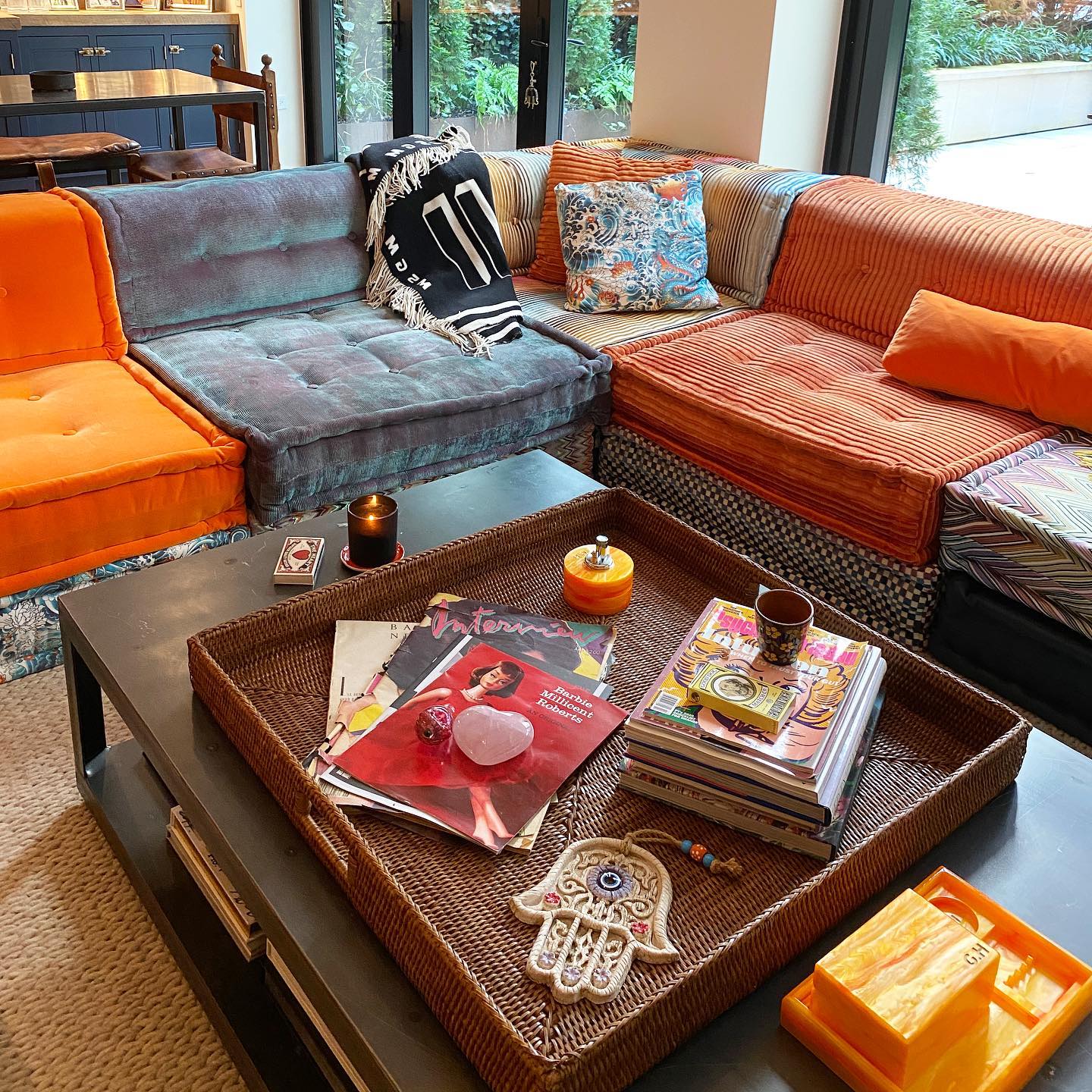
Different fabrics turn the sections of this low sofa into a patchwork of blue, orange, and stripes. Because the modules share similar proportions and tufting, the varied colors still read as one seating arrangement.
Try this idea with coordinated modular pieces, or introduce the same effect through removable covers and carefully chosen throws. Keep the surrounding furniture simpler so the upholstery stays the focus.
Here, a dark rectangular coffee table provides a practical counterweight to the soft cushions, while a broad woven tray gathers books and small objects. Orange accessories repeat the warmer sofa sections without covering every surface.
Choose patterns containing both colors to bridge adjacent modules, and check that every combination still leaves a comfortable place to sit.
13. Introduce Orange Through a Patterned Blue Rug
Credits: Instagram
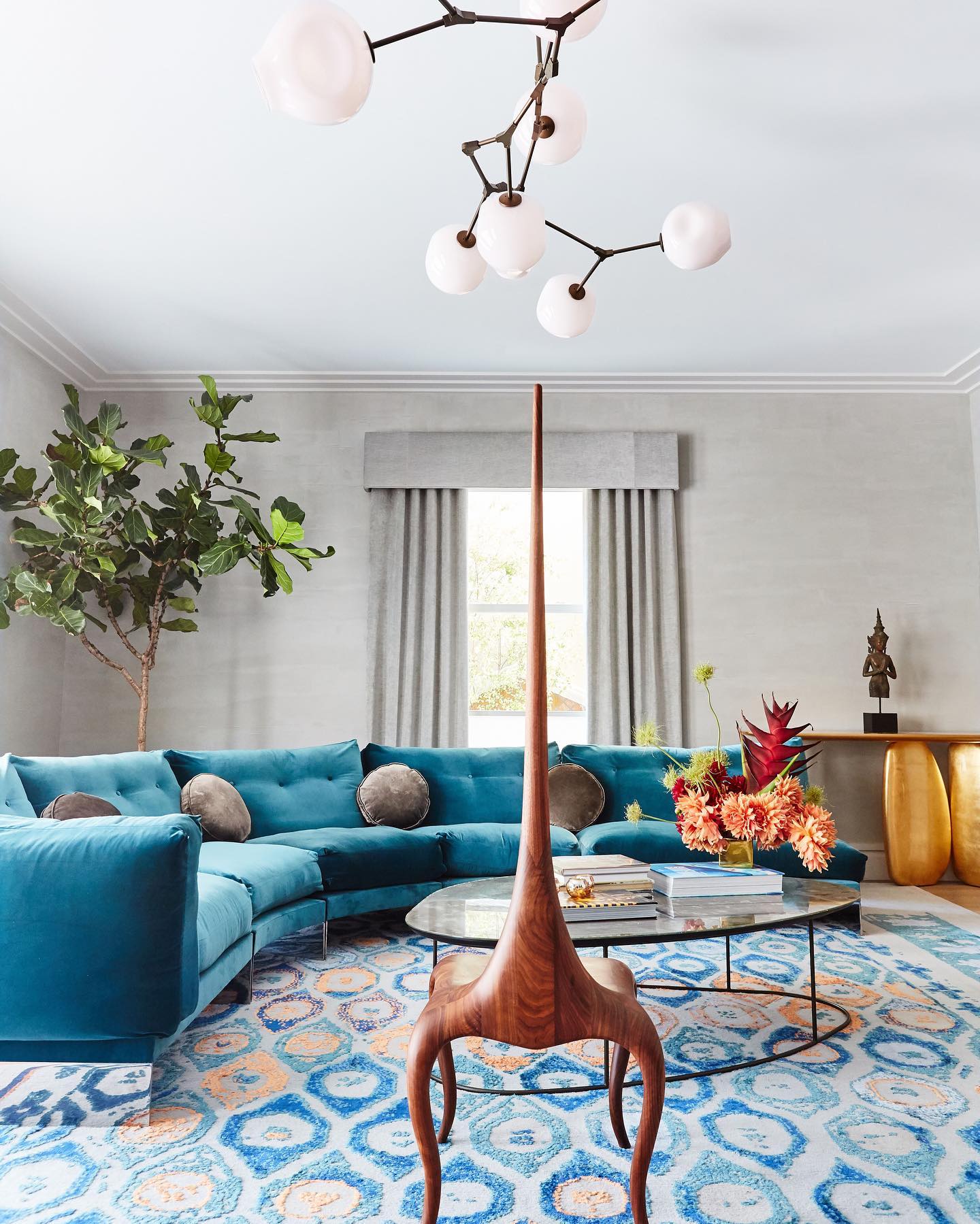
Orange appears in small rings within the blue patterned rug beneath this curving sofa. The flowers reinforce that warmer accent, allowing the upholstery to remain the room's strongest color.
This is an approachable way to combine orange and blue when you prefer a mostly neutral backdrop.
Look for a rug with a blue base and scattered orange details, then bring its warmer shade onto a table through flowers or a small vessel.
Here, pale curtains and walls give the saturated sofa plenty of space to stand out. Circular pillows echo the rug's rounded motifs, while the oval coffee table follows the seating's curve.
Keep additional patterns limited so the rug can connect the room without creating too much visual activity.
14. Mix Two Sofa Styles in Complementary Colors
Credits: Instagram
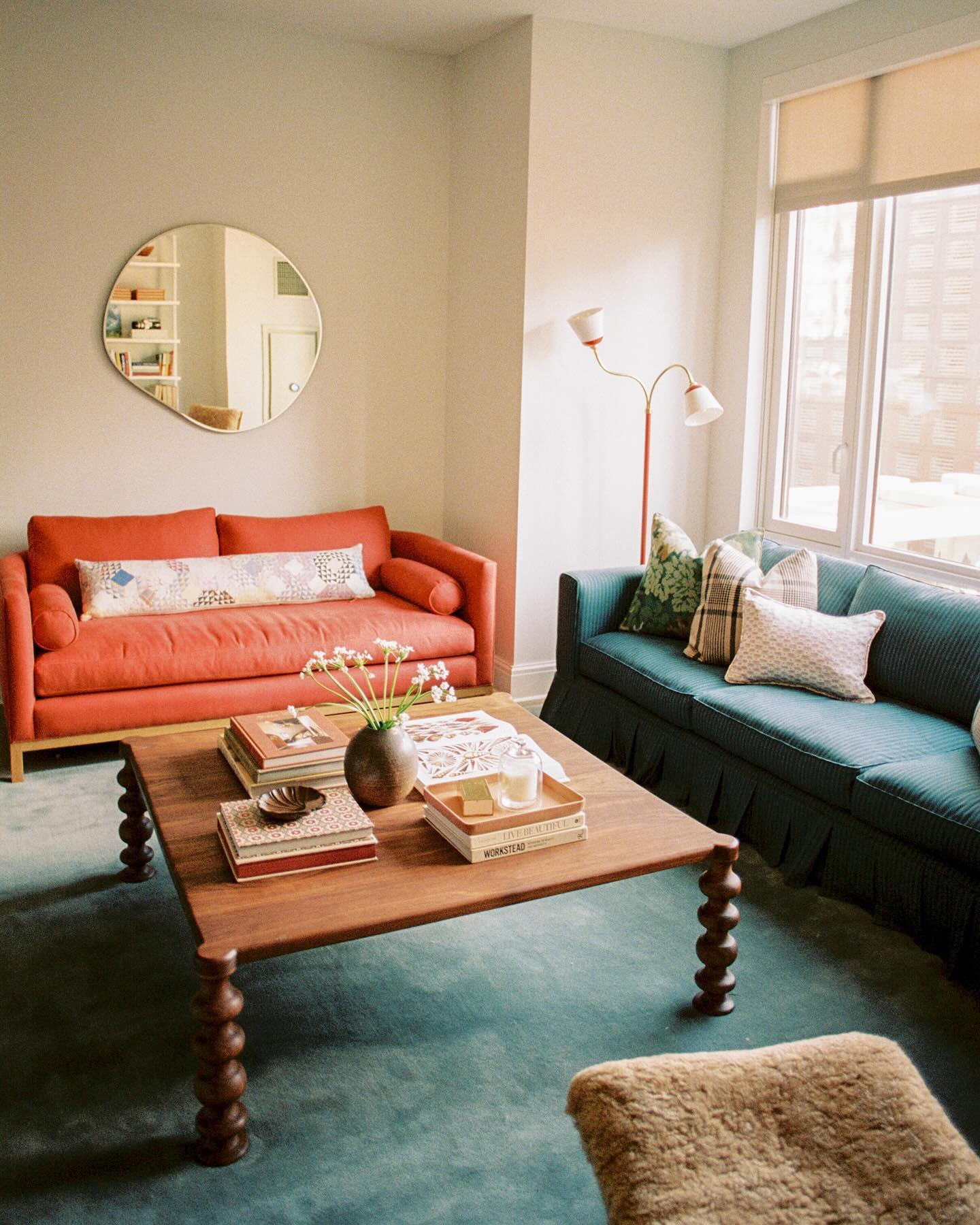
An orange loveseat and a deep blue-green sofa bring different personalities to this sunny living room. One has rounded bolster cushions and exposed legs; the other wears a tailored skirt and a subtle stripe.
Their shared color relationship helps those differences feel intentional. Try pairing two sofas by color rather than buying a matching set, especially when you already own a piece you enjoy.
A soft blue rug can connect them visually, while a substantial wooden coffee table gives the arrangement a common center. Here, pale walls, simple window shades, and a round mirror keep the backdrop quiet.
Mix patterned pillows in smaller amounts, repeating a little of each sofa's color so neither piece feels isolated within the seating group.
15. Set Orange Chairs Beside a Blue Gray Feature Wall
Credits: Instagram
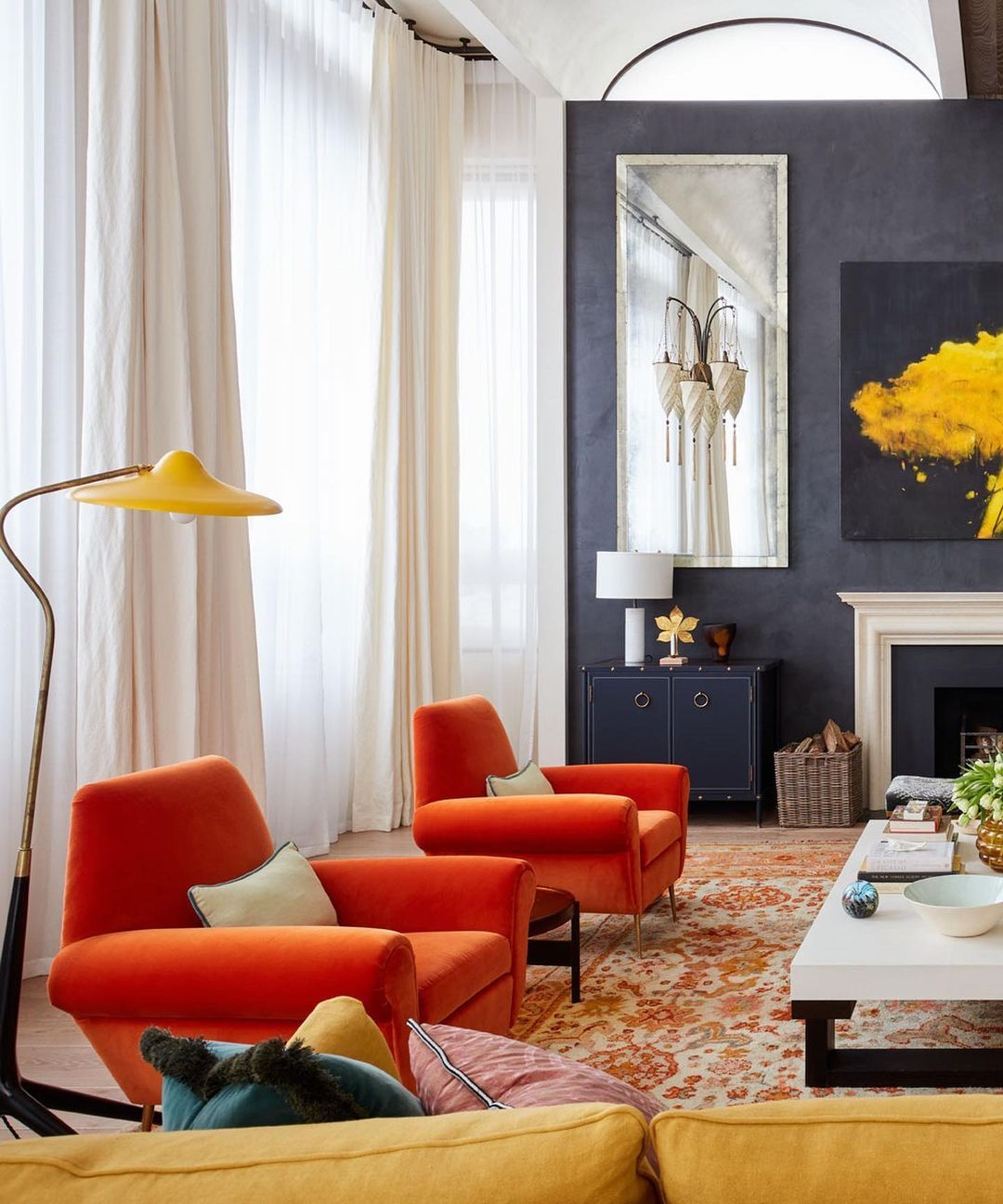
Two orange chairs provide a warm focal point beside the tall blue gray wall in this living room. The dark background is limited to the fireplace end, while long white curtains keep the window side bright.
That contrast lets the seating feel vivid without covering the whole room in strong color. Try this balance with a pair of matching accent chairs and a single deeper wall.
Keep the curtains simple enough to reveal their generous folds, and choose a rug that contains small orange details. Here, a pale fireplace surround and white table separate the darker surfaces, while a yellow lamp adds another warm note.
Angle the chairs toward the main seating so their color also supports an conversation area.
16. Link Orange Artwork With Tall Ceramic Vases
Credits: Instagram
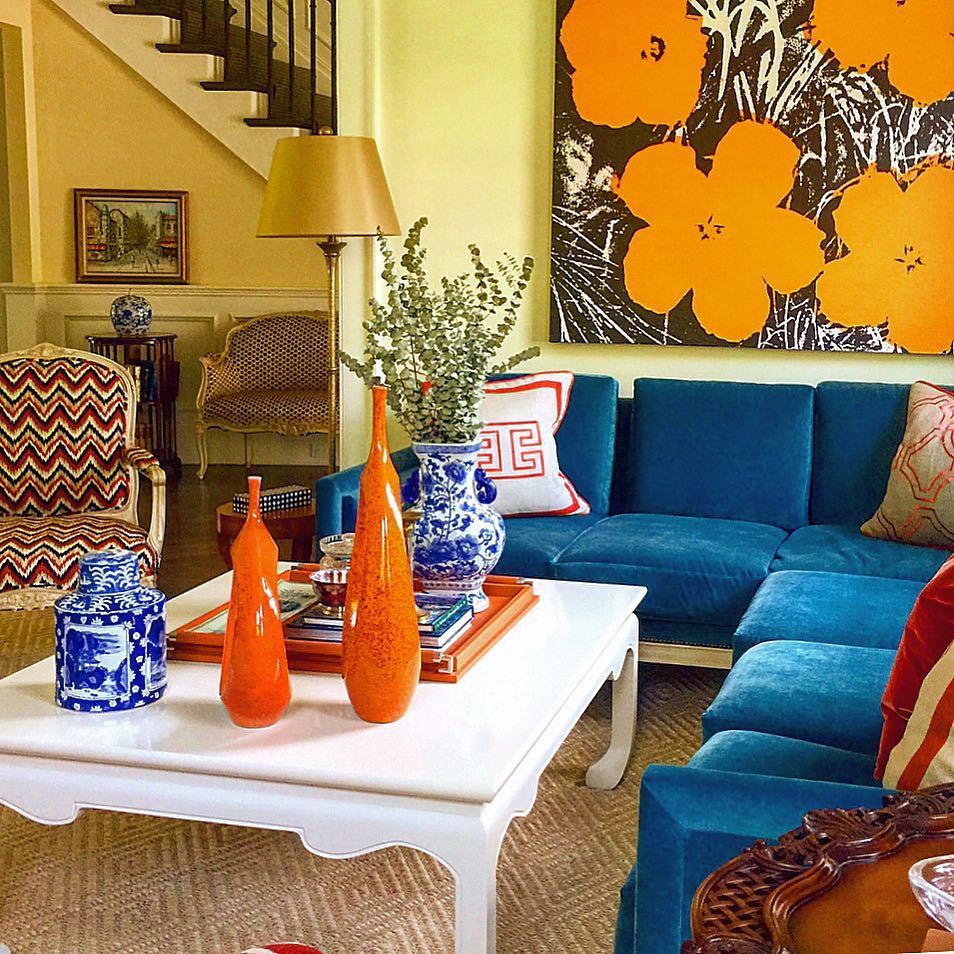
Orange flower artwork makes a lively partner for this blue sectional, and the tall orange vases bring the same contrast down to the coffee table.
Their simple shapes remain clear beside the smaller patterns in blue and white ceramics and pillows. Try repeating an artwork's warmest color in two or three accessories placed at different heights.
You do not need identical shades; a shared orange family is enough to connect them. Here, a white table creates a light base for the objects, while a woven rug adds texture beneath the saturated upholstery.
The patterned chair introduces another rhythm without taking over the palette. Group taller pieces where they will not block conversation, leaving room for drinks and everyday use nearby.
17. Give an Orange Sofa a Playful Blue Rug
Credits: Instagram
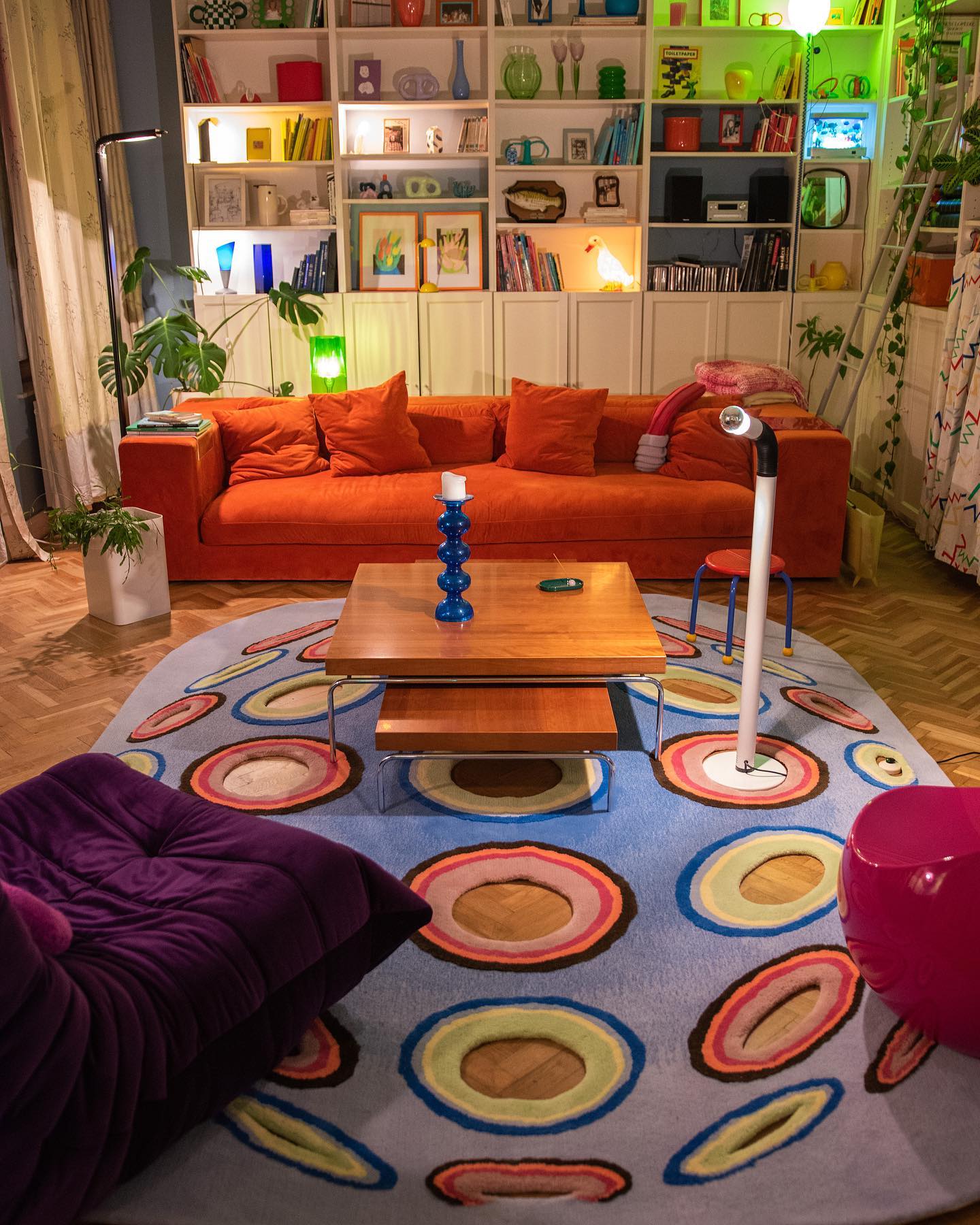
The orange sofa and blue rug create two clear color fields in this exuberant living room. Open circles in the rug introduce other warm shades and expose small glimpses of the wood floor, giving the pattern an unusually light quality.
Try pairing a solid sofa with a more adventurous rug when you want variety without several competing upholstery prints. Repeat the rug's blue in a small tabletop object to connect the lower and upper parts of the room.
Here, white shelving provides a calmer backdrop for colorful books and ceramics, while several lamps create pockets of evening light.
Keep the coffee table simple enough for the rug to remain visible around it, and preserve comfortable paths between the surrounding seats.
18. Pair Burnt Orange Seating With Oversized Blue Art
Credits: Instagram
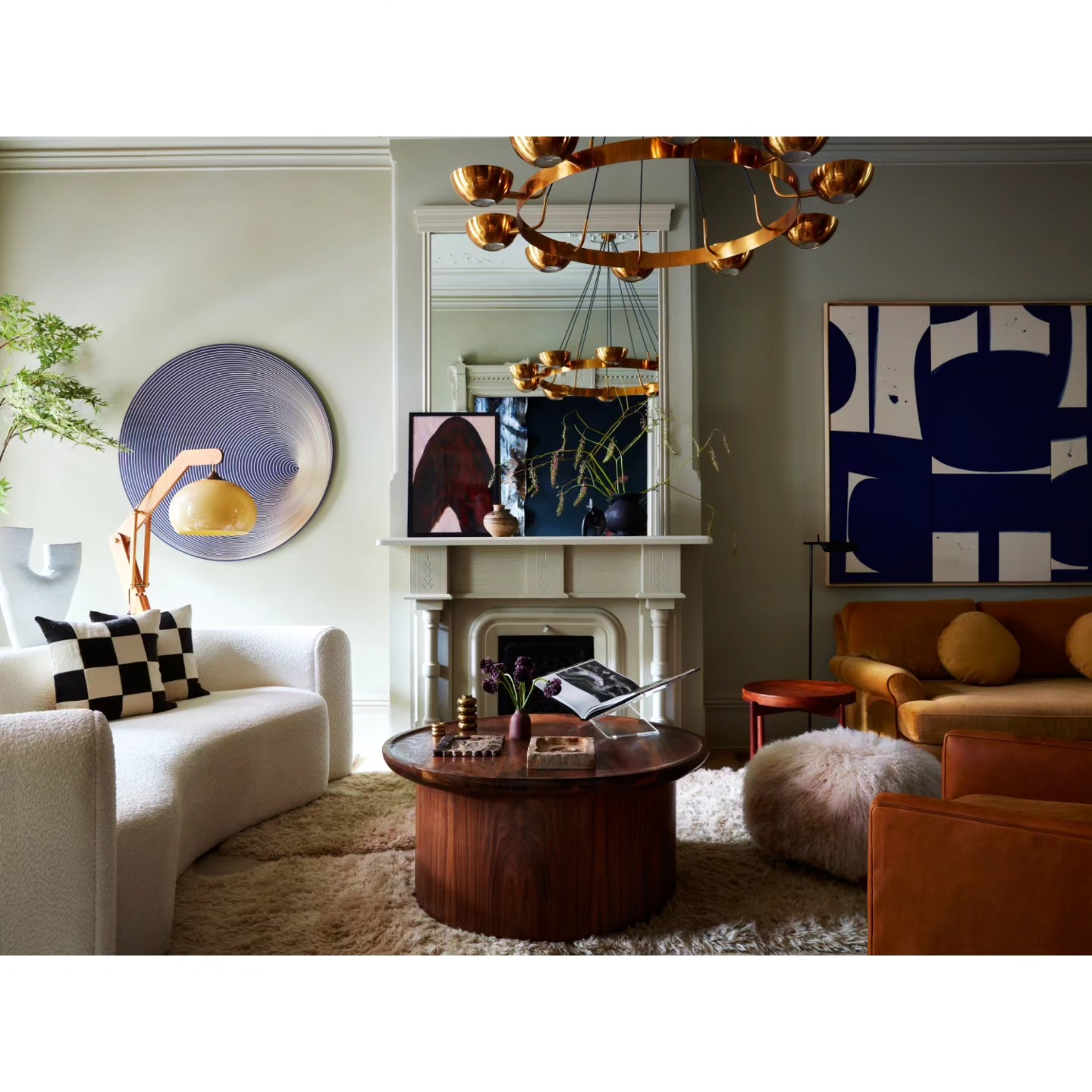
A large navy and white painting gives the burnt orange seating a cool counterpoint in this layered living room. Most of the surrounding surfaces stay pale, so the color pairing can remain concentrated around the furniture and art.
Try a similar approach when repainting the walls is impractical or you prefer a quieter background. Choose artwork large enough to relate to the seating beneath it, then add a smaller blue object elsewhere to continue the connection.
Here, a white curved sofa and a soft rug balance the darker upholstery, while warm metal lighting adds another reflective texture. The round coffee table creates a shared center without introducing more angular lines. Keep its styling low enough for conversation across the room.
19. Soften Orange Artwork With Smoky Blue Seating
Credits: Instagram
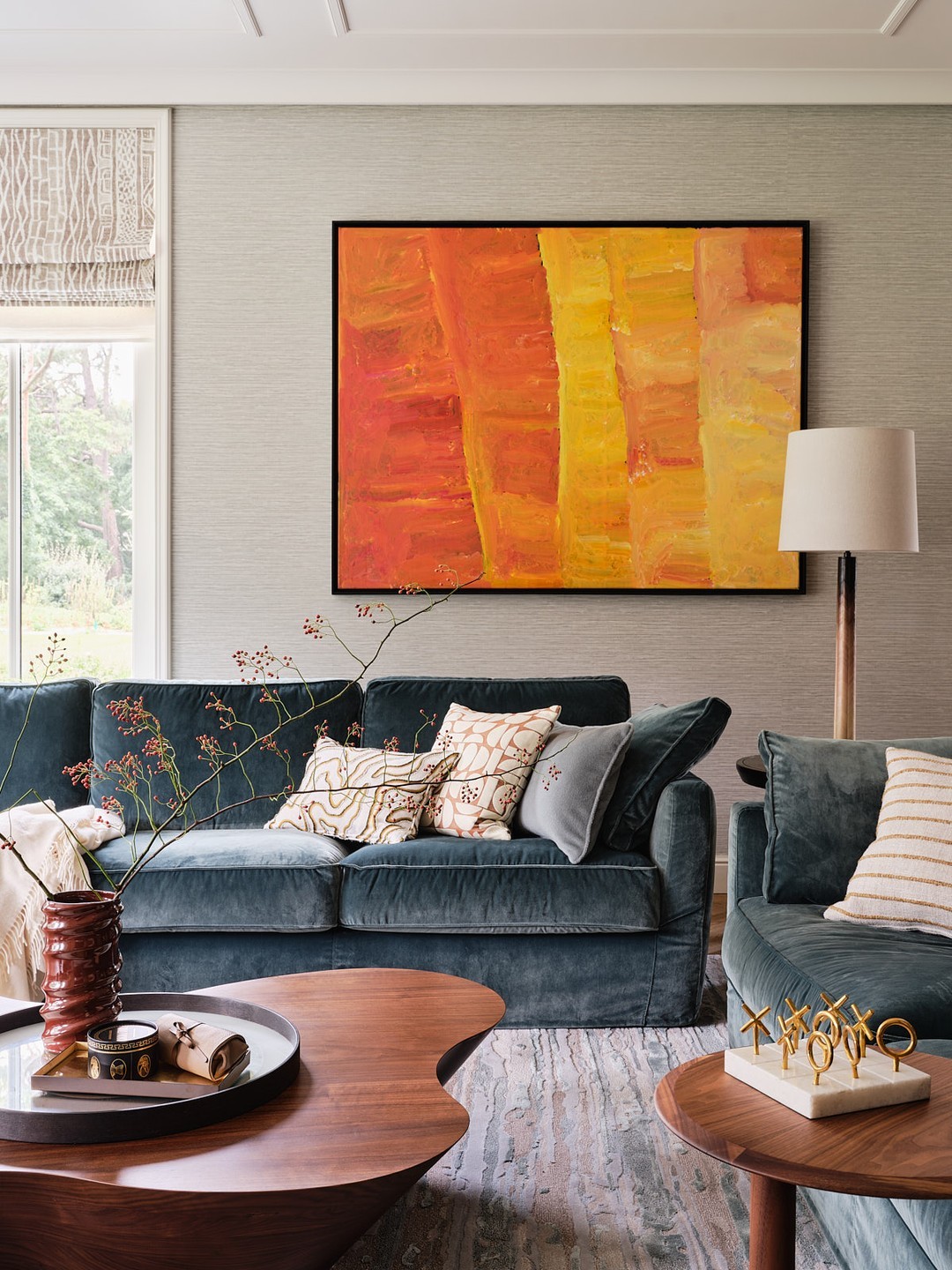
Smoky blue upholstery provides a quiet counterpoint to the large orange and yellow painting in this living room. The artwork introduces the brightest color, while the sofas, rug, and textured wall remain more subdued.
Try this approach if you want a warm accent without committing to orange furniture. Choose a painting with enough scale to relate to the sofa beneath it, then echo its orange in a pillow or small accessory.
Here, rounded wooden tables bring natural warmth between the cooler seats, and pale patterned cushions keep the upholstery from feeling heavy. A plain lampshade adds a calm vertical shape beside the canvas.
Leave some table surface open so the strongest colors remain easy to appreciate from each seat nearby.
20. Balance Blue Walls With Matching Orange Lamps
Credits: Instagram
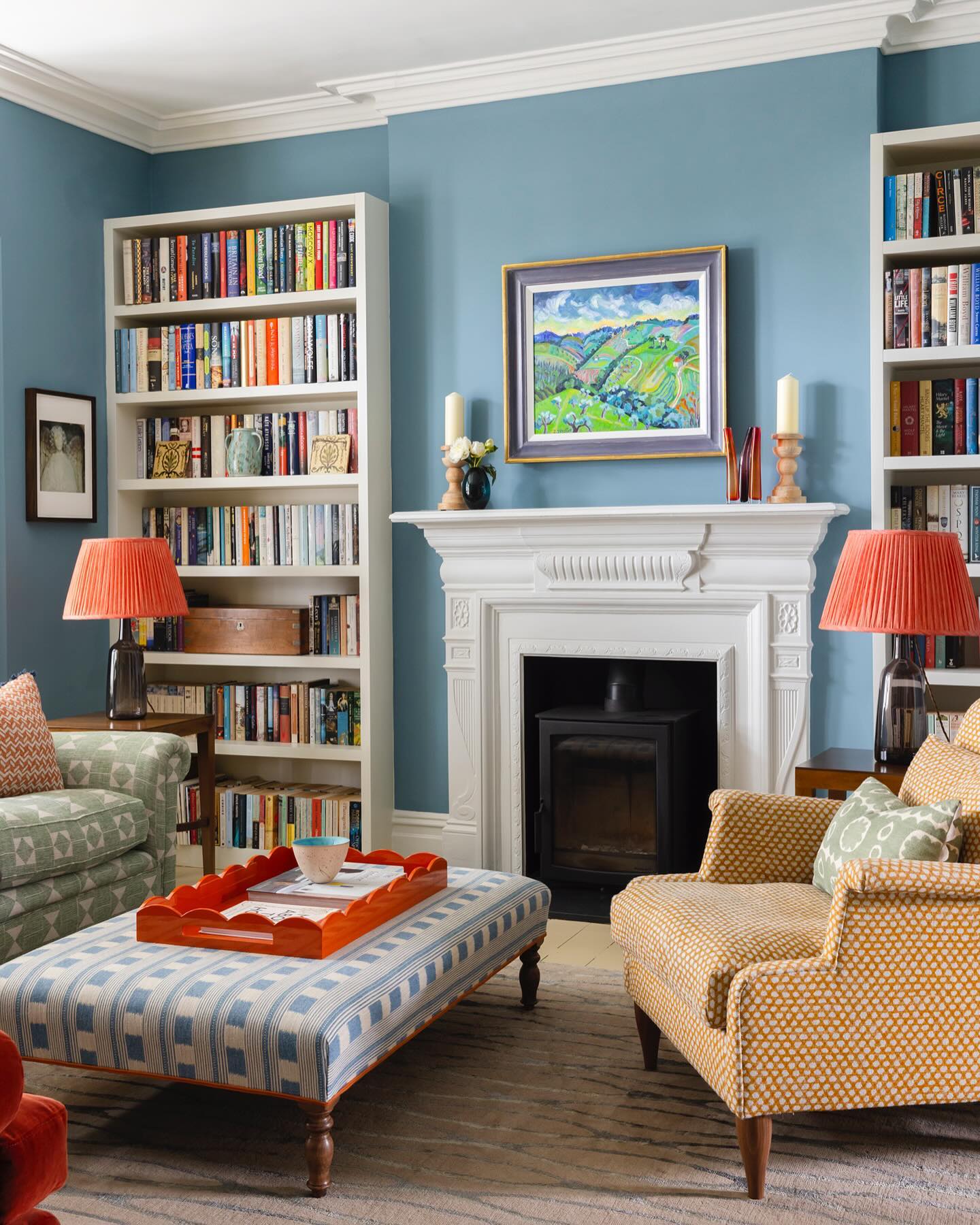
Matching orange lampshades give this blue living room a sense of balance. Their warm color reappears in the scalloped tray on the ottoman, linking the side tables to the center of the seating area.
White shelves and a white fireplace keep the blue walls looking crisp around the books and artwork. Try this arrangement when your room has a fireplace or another strong central feature.
Place similar lamps on either side, then introduce their color once more at a lower height. Here, patterned seating brings several softer shades into the room, while the striped ottoman repeats the blue in smaller amounts.
Keep the lamps at useful reading height and leave enough space on each table for a drink or book.