
A leather sofa can feel like the room’s visual anchor, so the colors and shapes around it matter as much as the upholstery.
These Leather Couch Living Room Ideas show ways to connect dark leather with olive green or warm wood, soften a seating area with a round rug, and pull a coordinated accent palette from one oversized painting.
Other arrangements use pale chairs, reflective accents, or artwork scaled to a long sectional.
The common thread is balance: repeat a few colors and materials, then use contrast and varied shapes to keep the seating area from feeling too heavy or rigid.
1. Give Black Leather an Olive Green Backdrop
Credits: Instagram
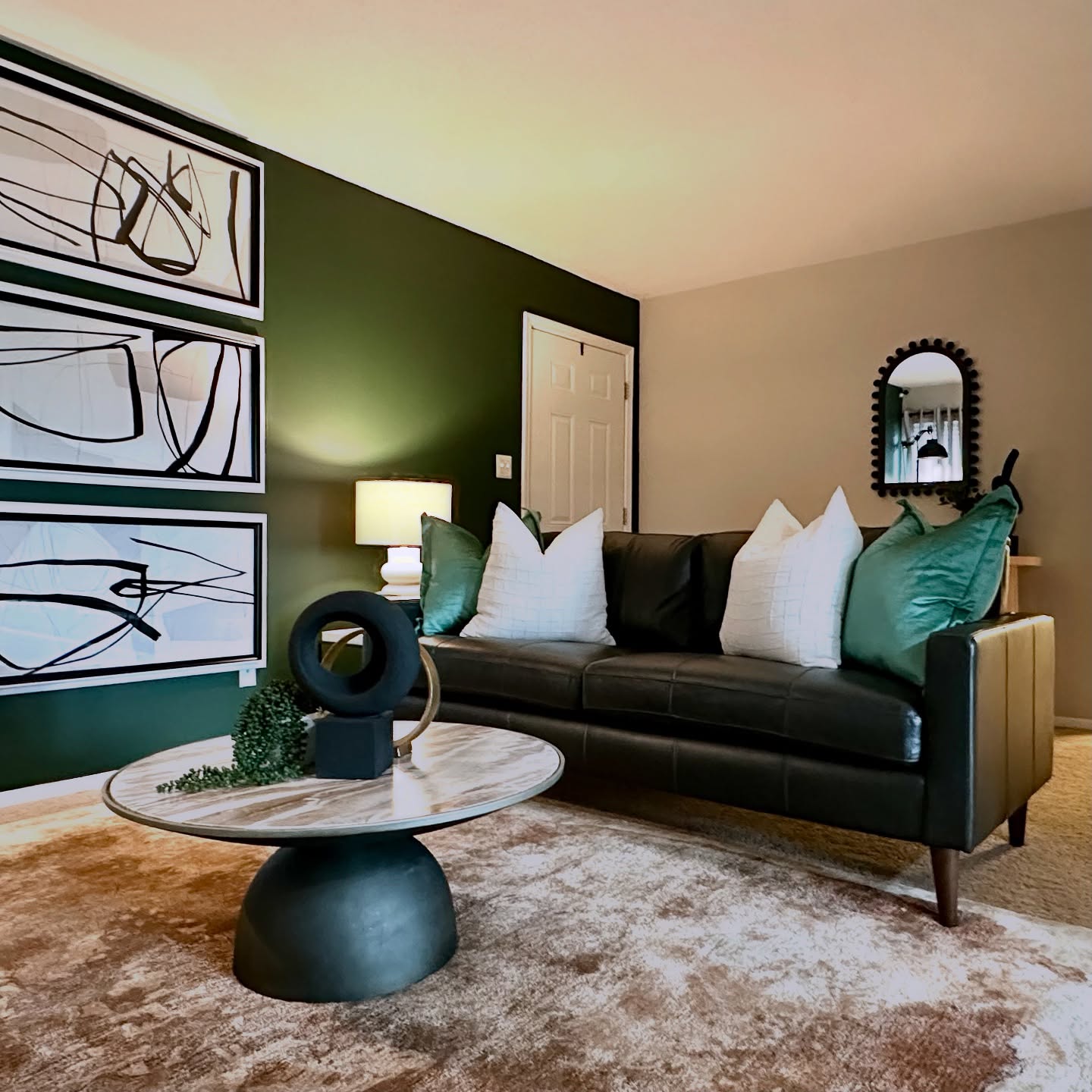
Olive green makes the black leather sofa feel especially rich in this Charter Furniture apartment model. Three stacked abstract prints fill the adjoining stretch of wall, their white backgrounds linking to the bright cushions.
The round coffee table introduces a softer outline among the rectangular frames and squared sofa arms. Borrow the palette by painting one clearly defined accent wall and repeating its green in a smaller textile.
Keep the ceiling, trim, and neighboring walls pale to preserve contrast. A lamp beside the sofa brings light directly onto the painted surface, helping the color remain visible after dark.
Choose artwork with generous blank areas if you want a bold wall color without making the entire seating corner feel visually crowded.
2. Connect Black Leather With Warm Wooden Furniture
Credits: Instagram
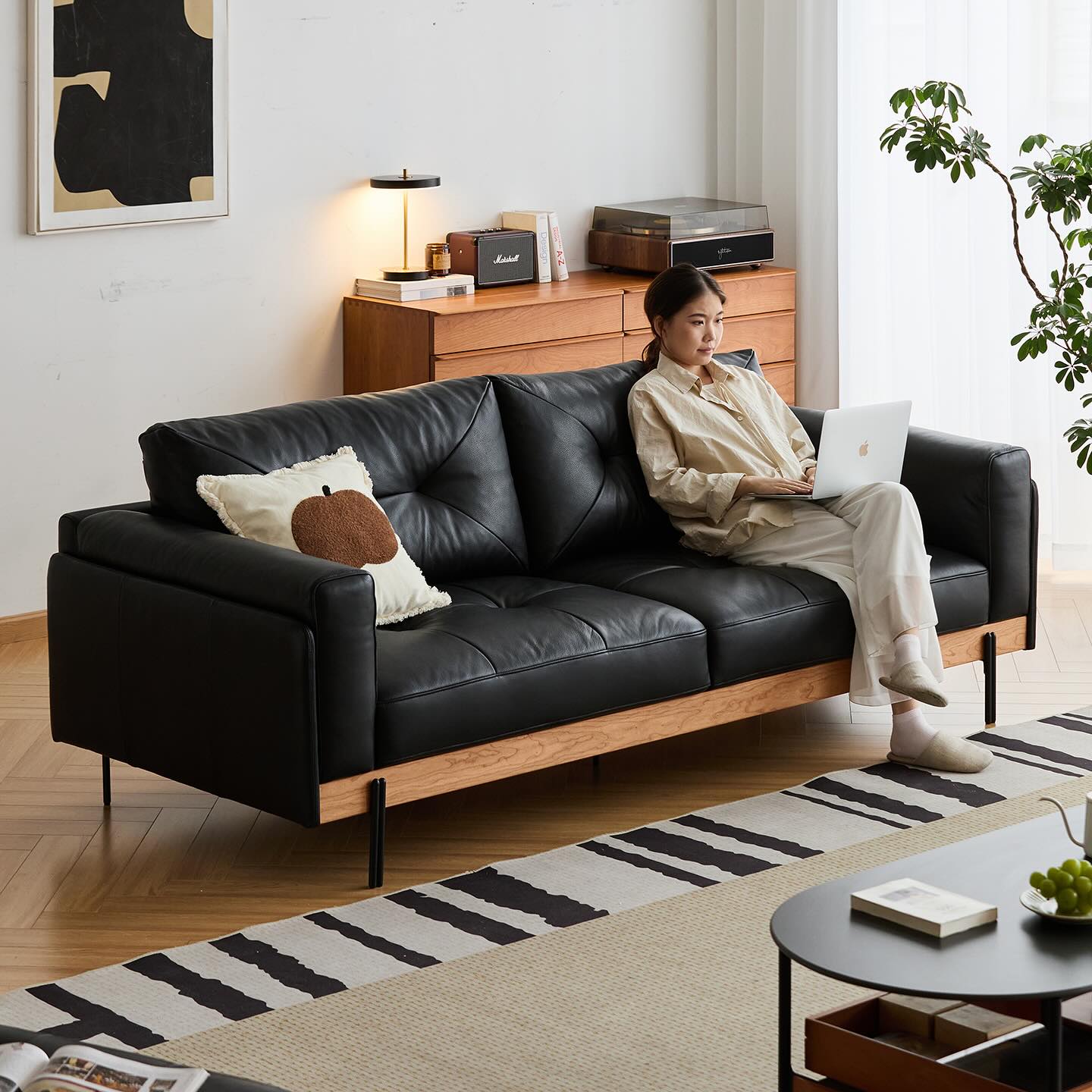
The exposed wooden rail beneath this black leather sofa connects it to the credenza behind it in Loft Home's styled photograph. That repeated warm tone makes the dark upholstery feel integrated with the pale floor.
Thin black legs, a simple coffee table, and graphic rug stripes keep the outline crisp. If you already own a black couch, bring in a wooden cabinet or table with visible grain instead of relying on several small brown accessories.
Repeat black in a lamp or framed print so the sofa has company. Leave some floor visible beneath surrounding furniture to maintain the airy effect.
A single light cushion breaks up the leather while allowing its stitched back cushions to remain part of the composition.
3. Shape a Cream Sofa Corner With a Round Rug
Credits: Instagram
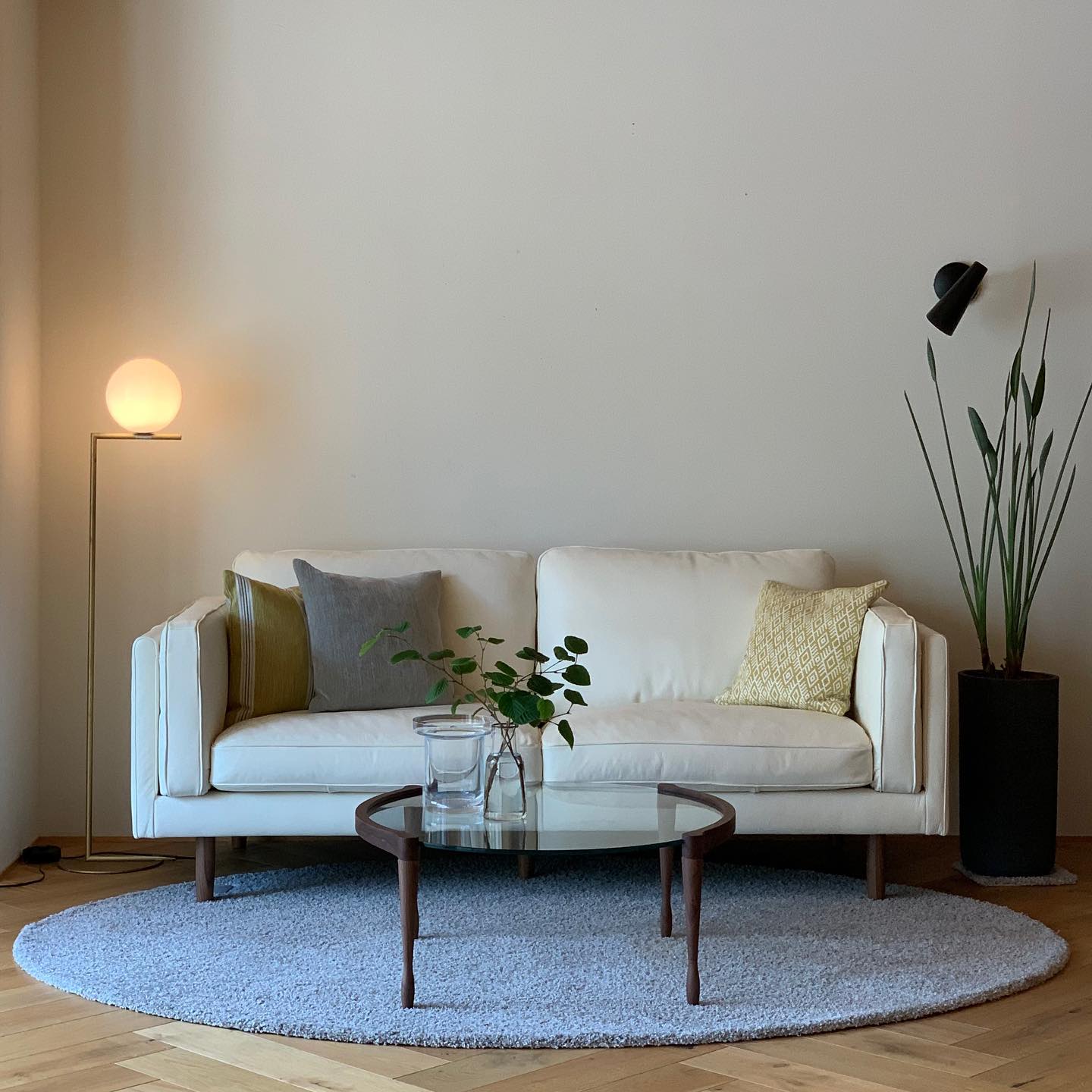
A circular rug gathers the cream leather sofa and glass coffee table into one arrangement in this ACTUS display. The table's curved wooden frame echoes the rug, while slender sofa legs leave the floor easy to see.
A glowing globe lamp adds another round shape without crowding the seat. This is a useful direction for a small sitting area that feels too boxy.
Start with the rug's footprint, then choose a table that sits comfortably inside its edge. A transparent top keeps the overlapping shapes visible.
Balance the low furniture with one tall plant or slim floor lamp. Soft gray and muted yellow cushions add definition against pale upholstery while keeping the overall color range quiet and easy to repeat.
4. Arrange Pale Chairs Around a Dark Leather Sofa
Credits: Instagram
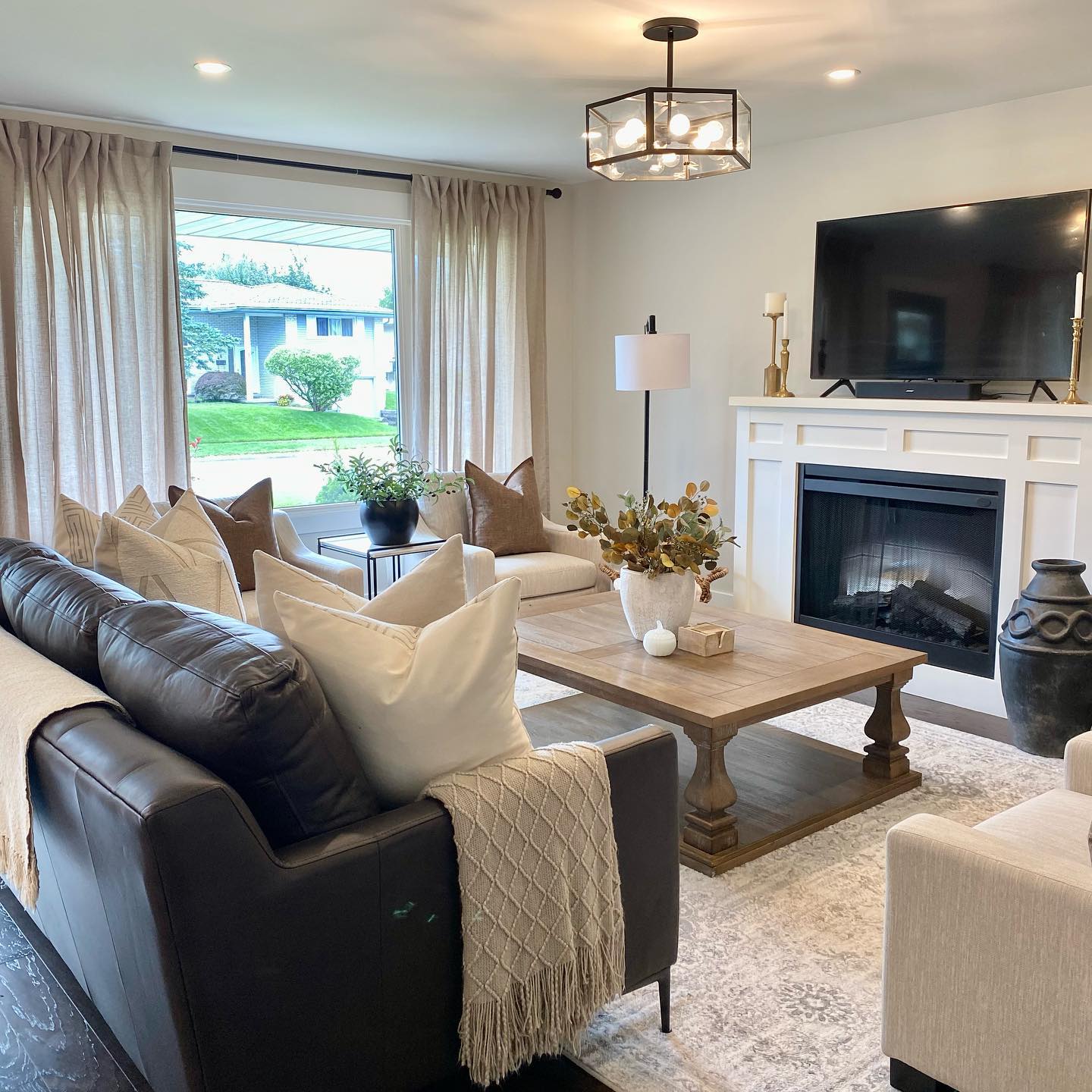
Keira's living room uses a dark leather sofa to anchor a group of pale upholstered chairs around a substantial wooden table.
The chairs' lighter fabric connects with the curtains and fireplace surround, giving the seating different textures within a restrained palette. This arrangement offers a useful alternative to buying a matching sofa suite.
Choose chairs that share a similar visual weight, then repeat their pale color elsewhere in the room. Position the pieces so people can talk across the table without turning completely away from the fireplace.
The black curtain rod, lamp stem, and ceiling fixture distribute small dark accents above the sofa. Keeping those details consistent helps a dark couch feel connected to the room rather than visually isolated.
5. Pull Accent Colors From One Oversized Painting
Credits: Instagram
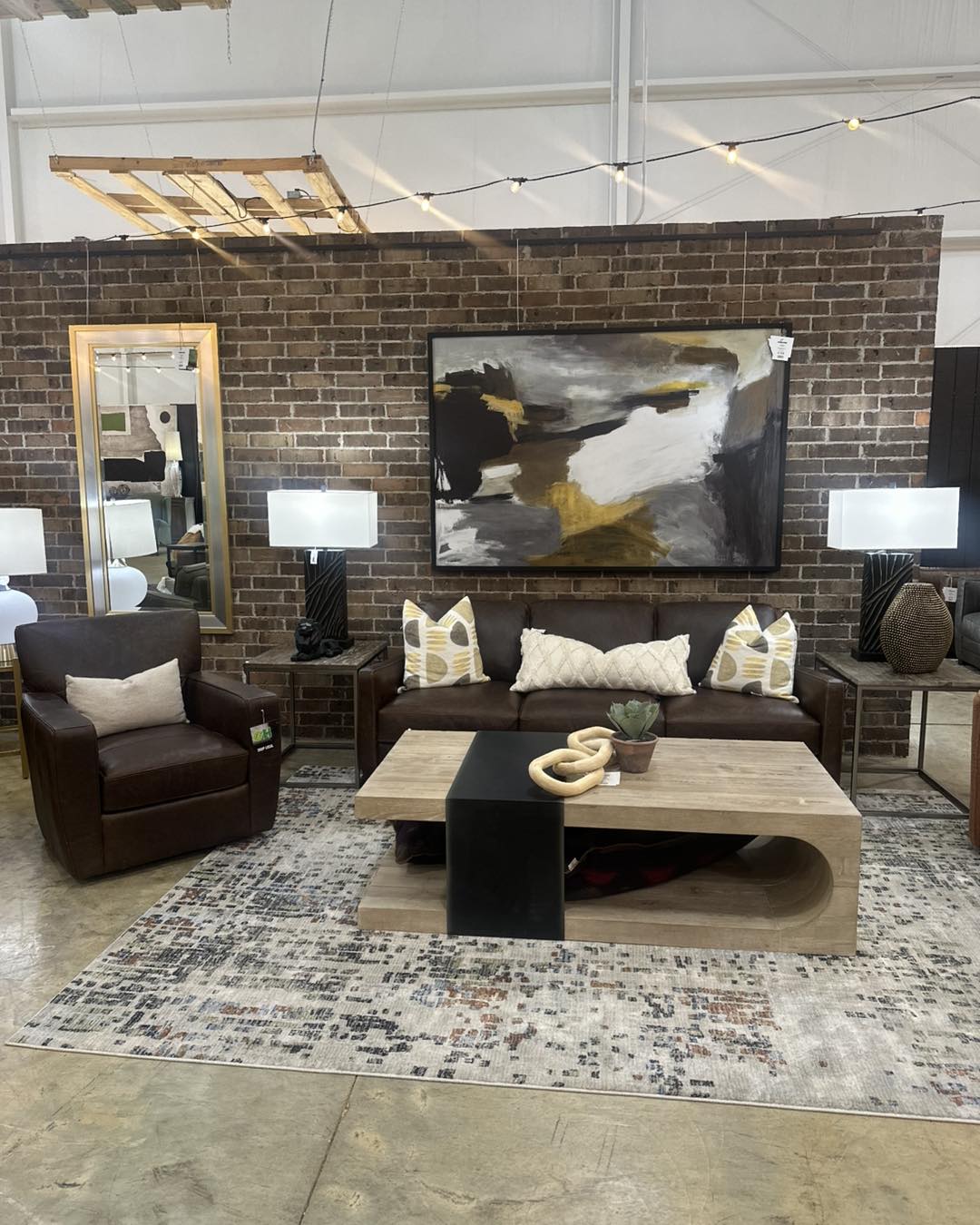
The abstract painting above this deep brown leather sofa supplies the cream, charcoal, and mustard accents in Gamble Home Furnishings' showroom arrangement. Those colors reappear in the patterned cushions and graphic coffee table, bringing order to the busy brick backdrop.
The pale rug separates the dark seating from the floor and gives the central table a clear outline. Try choosing one artwork before shopping for smaller decorations.
Pull out a light shade, a dark shade, and one warmer accent, then distribute them in unequal amounts. A large painting can hold its own against textured brick without requiring a crowded gallery wall.
Keep the objects on the coffee table simple when its shape and finish already provide plenty of visual interest.
6. Scale a Triptych to a Long Leather Sectional
Credits: Instagram
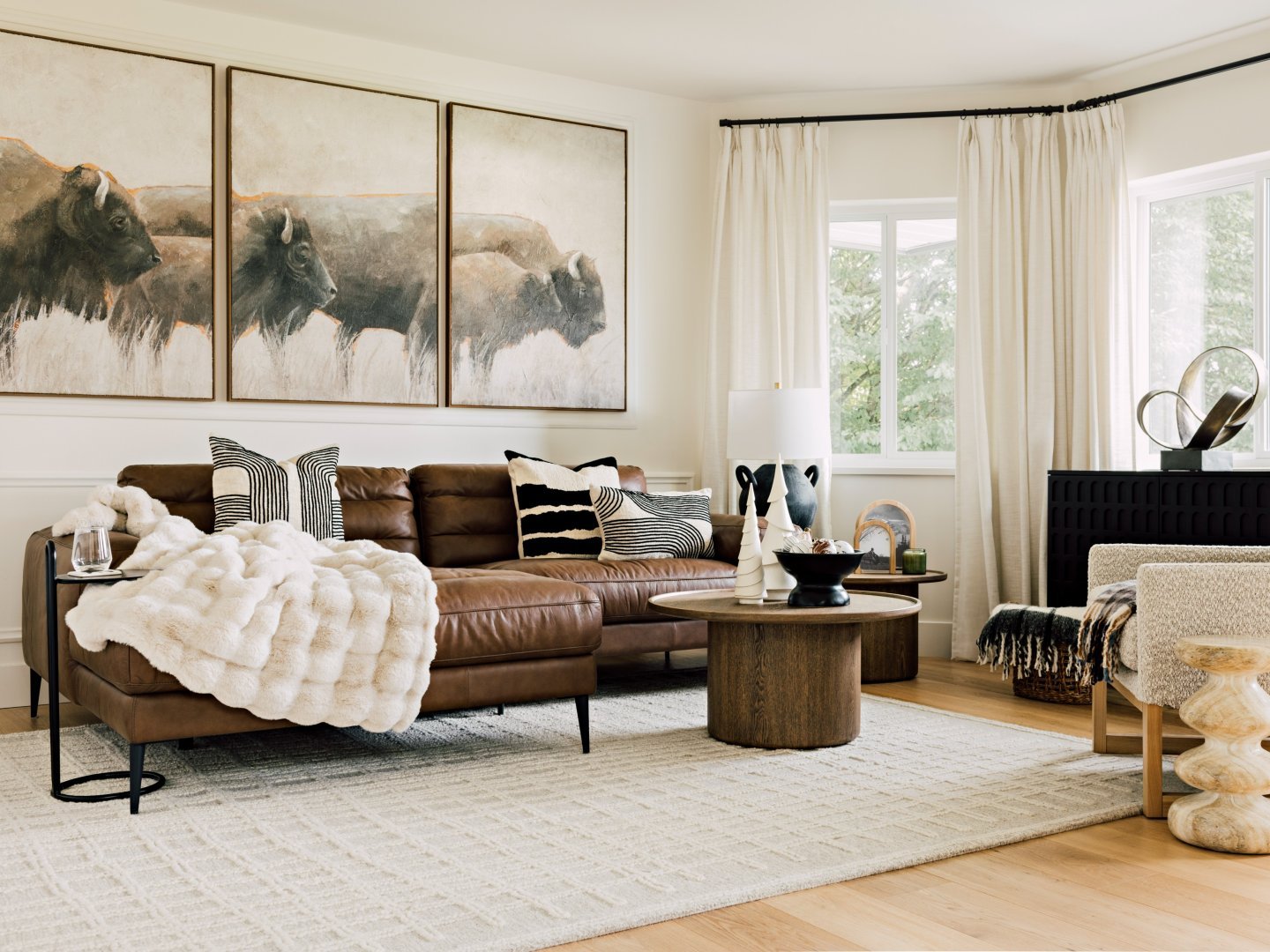
Three bison pictures stretch across the wall above the brown leather sectional in this Urban Barn styled room. Their combined width gives the long sofa a substantial backdrop, while pale backgrounds connect the artwork to the curtains and rug.
The chunky cream throw adds softness across the chaise without introducing another color. For a similar arrangement, treat several framed pictures as one composition when deciding their total width and position.
Lay out the gaps before hanging so the series reads evenly across the wall. Choose related artwork with a shared palette if your sofa already has a strong presence.
Rounded tables keep the central area from echoing every straight line, and black accents give the pale room a clear outline.
7. Lighten a Black Sectional With Reflective Accents
Credits: Instagram
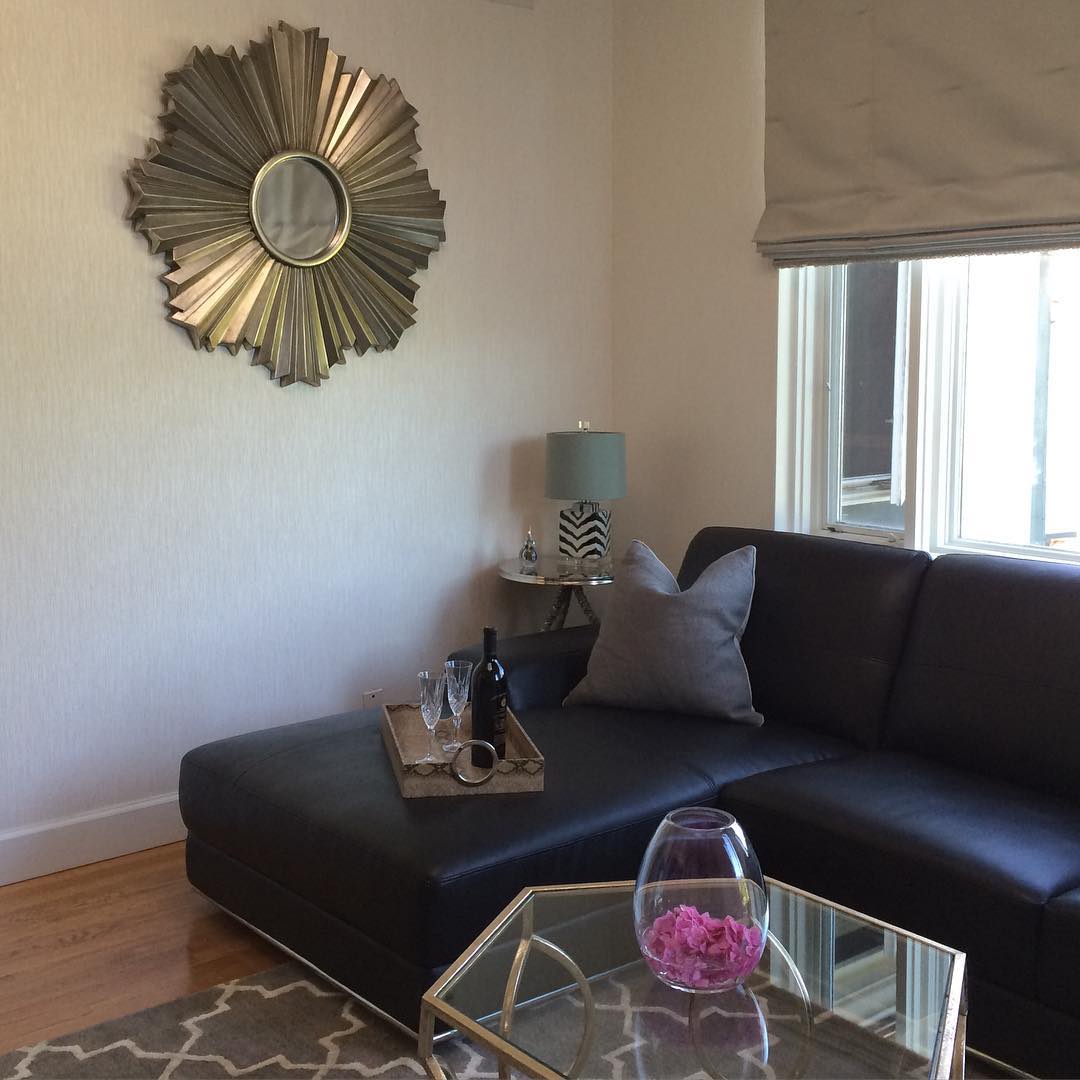
A sunburst mirror and geometric glass table bring bright edges to the black leather sectional in Nora Gabbay's completed TV room. The pale wallcovering and soft Roman shade keep the background gentle, allowing the darker seating to define the corner.
Notice how the mirror's radiating shape contrasts with the sofa's broad, simple cushions. To borrow the effect, choose one prominent reflective wall piece and a lighter looking table rather than filling every surface with metallic accessories.
Check the mirror's reflection from your usual seat before mounting it. A restrained gray cushion can connect the upholstery to the rug, while a small shaded lamp provides softer evening light.
Keep your drinks on a stable table within easy reach of the chaise.
8. Mix Colorful Patterns on a Moss Green Sofa
Credits: Instagram
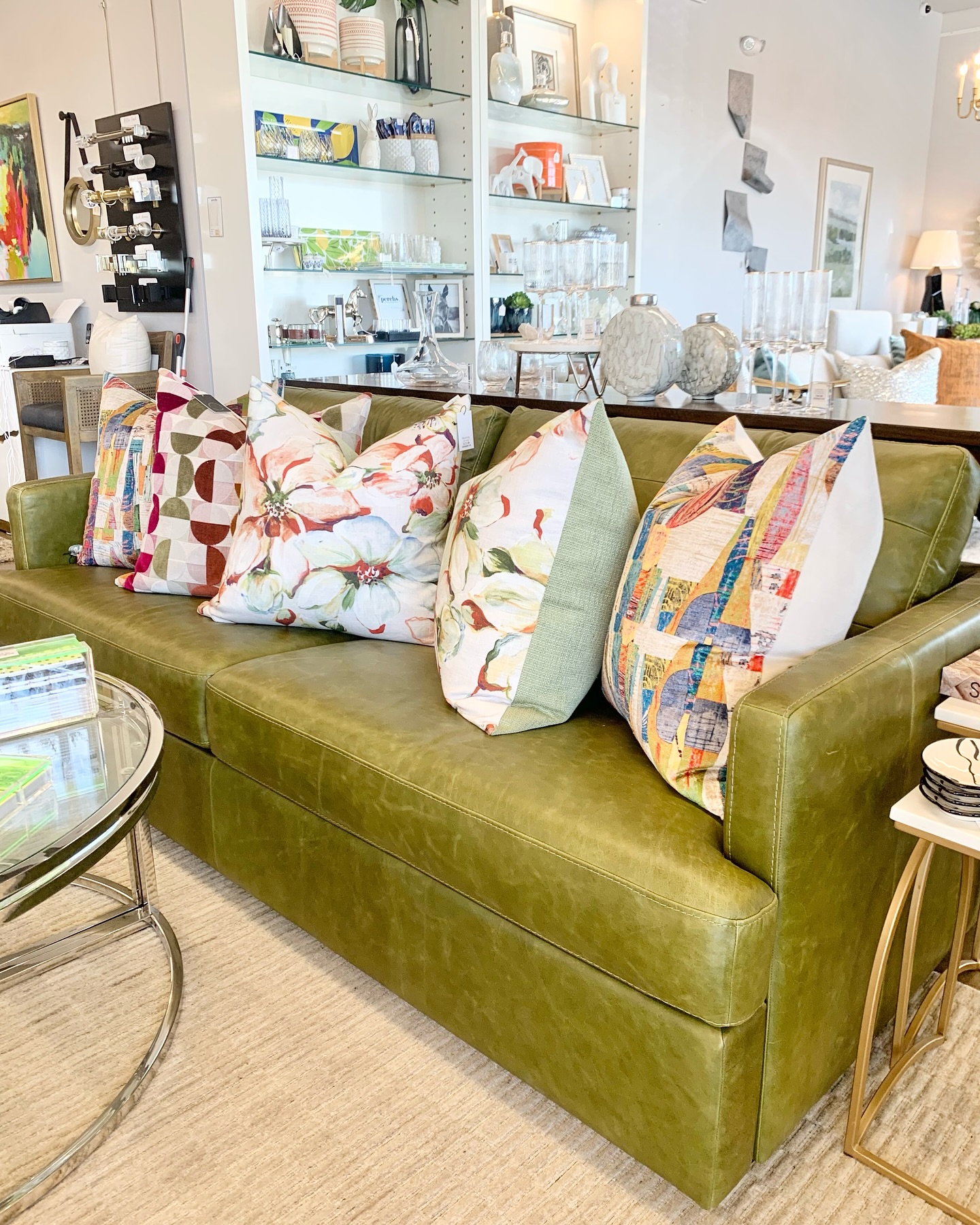
Moss green leather becomes a lively backdrop for floral and geometric cushions in Perch Midland's shop display. The pale grounds of the fabrics keep the patterns readable, while pink, orange, and blue add color without hiding the green.
The trick worth borrowing is the change in pattern scale: broad flowers sit beside smaller repeated shapes and loose multicolored marks. Start with one print you love, then find another that shares at least one of its colors.
Include a quieter solid surface among the busier fabrics so the arrangement has breathing room. At home, use fewer cushions than this retail display and leave enough clear seat space to settle in comfortably. A simple neutral rug lets the upholstery carry the color.
9. Pair Burgundy Leather With Ornate Framed Art
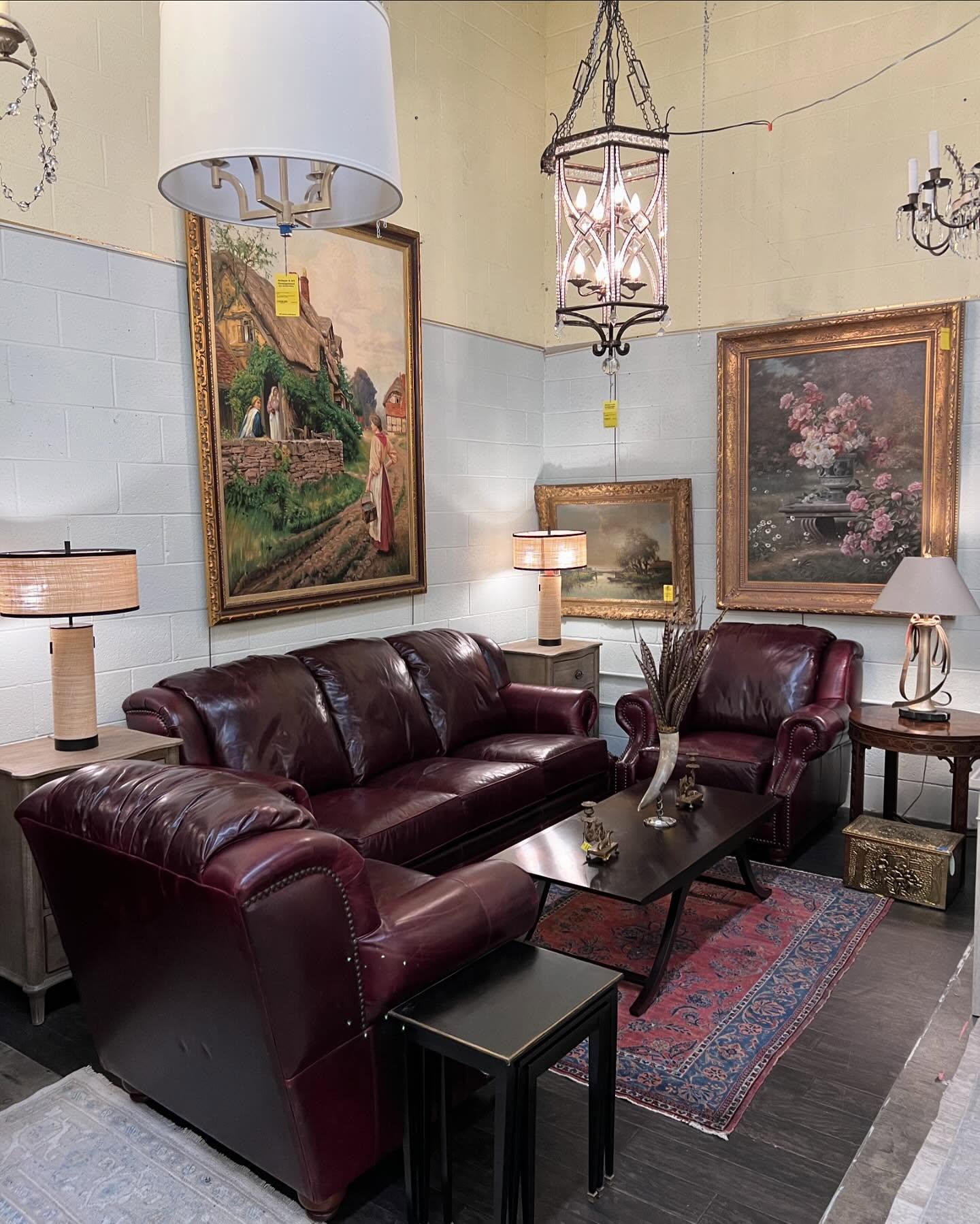
Credits: Instagram
Burgundy leather seating sits beneath ornate gold colored frames in this Anna's Mostly Mahogany consignment display. The floral painting and red patterned rug pick up the upholstery's rich tones, while pale walls stop the grouping from becoming dark.
Rolled arms and nailhead detailing suit the traditional artwork, but the narrow coffee table keeps the center comparatively simple. Use this idea when you want an older leather sofa to feel intentionally collected.
Choose one substantial picture with colors that connect to the seating, then repeat a related red in a rug or small accessory. You can borrow the relationship without reproducing the showroom's density.
Give each major piece enough space to show its outline, especially around curving arms and decorative frames.
10. Float a Tan Sofa in Front of a Console
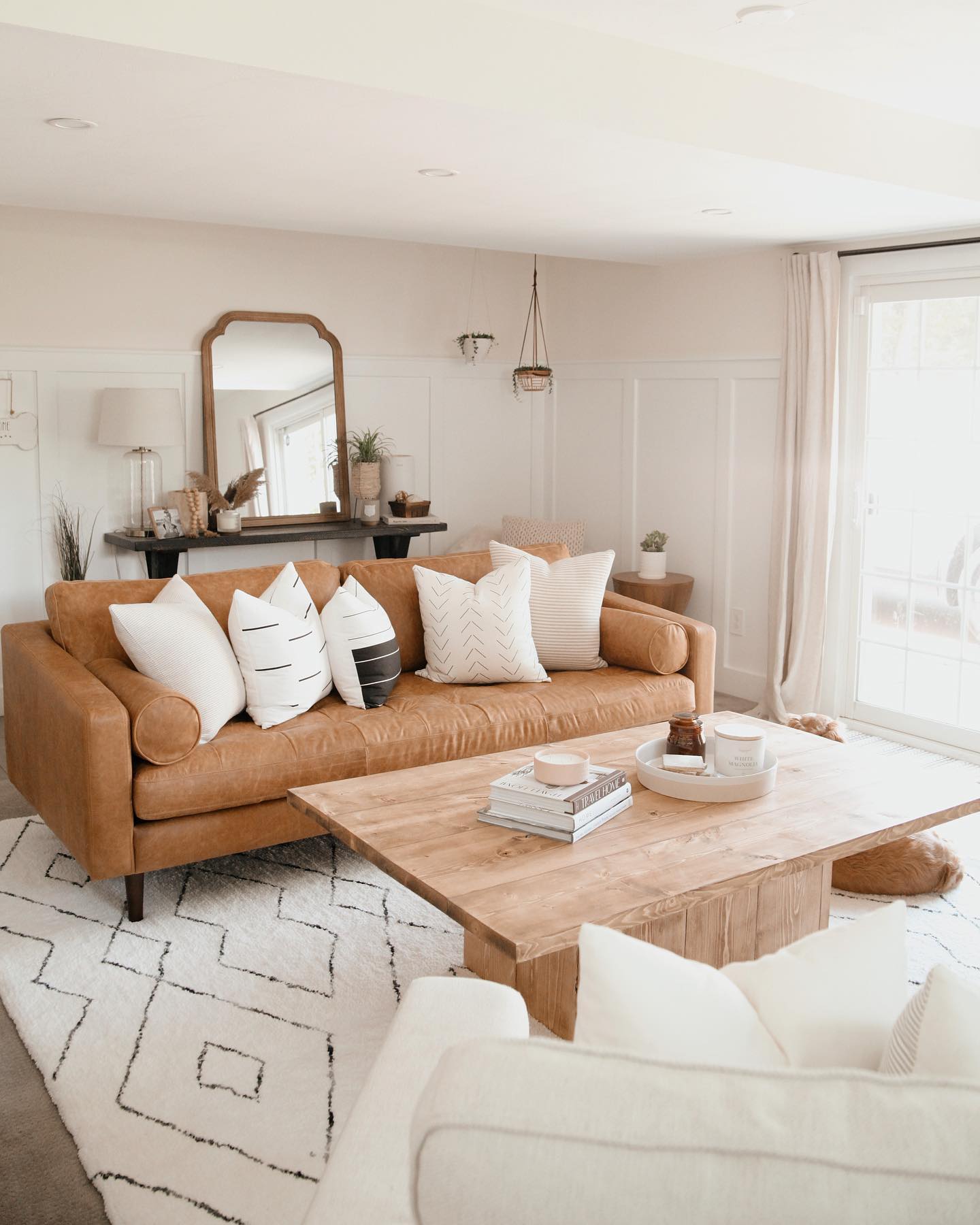
Credits: Instagram
In Fashionably Kay's bonus room, a tan leather sofa sits forward of a narrow console topped with a tall mirror.
That extra layer gives the room depth and provides a place for a lamp, plants, and small personal objects behind the seating.
Pale wall paneling and curtains keep the backdrop calm, while the broad homemade coffee table repeats the sofa's warm tone. Try this layout when a sofa pushed directly against the wall leaves the room feeling flat.
Allow comfortable access to the console, and secure a leaning mirror appropriately for your household. Hanging plants add height without filling the tabletop.
Keep the front coffee table arrangement low so the mirror and greenery remain visible across the warm leather backrest.
11. Refresh an Existing Leather Sofa With a Colorful Rug
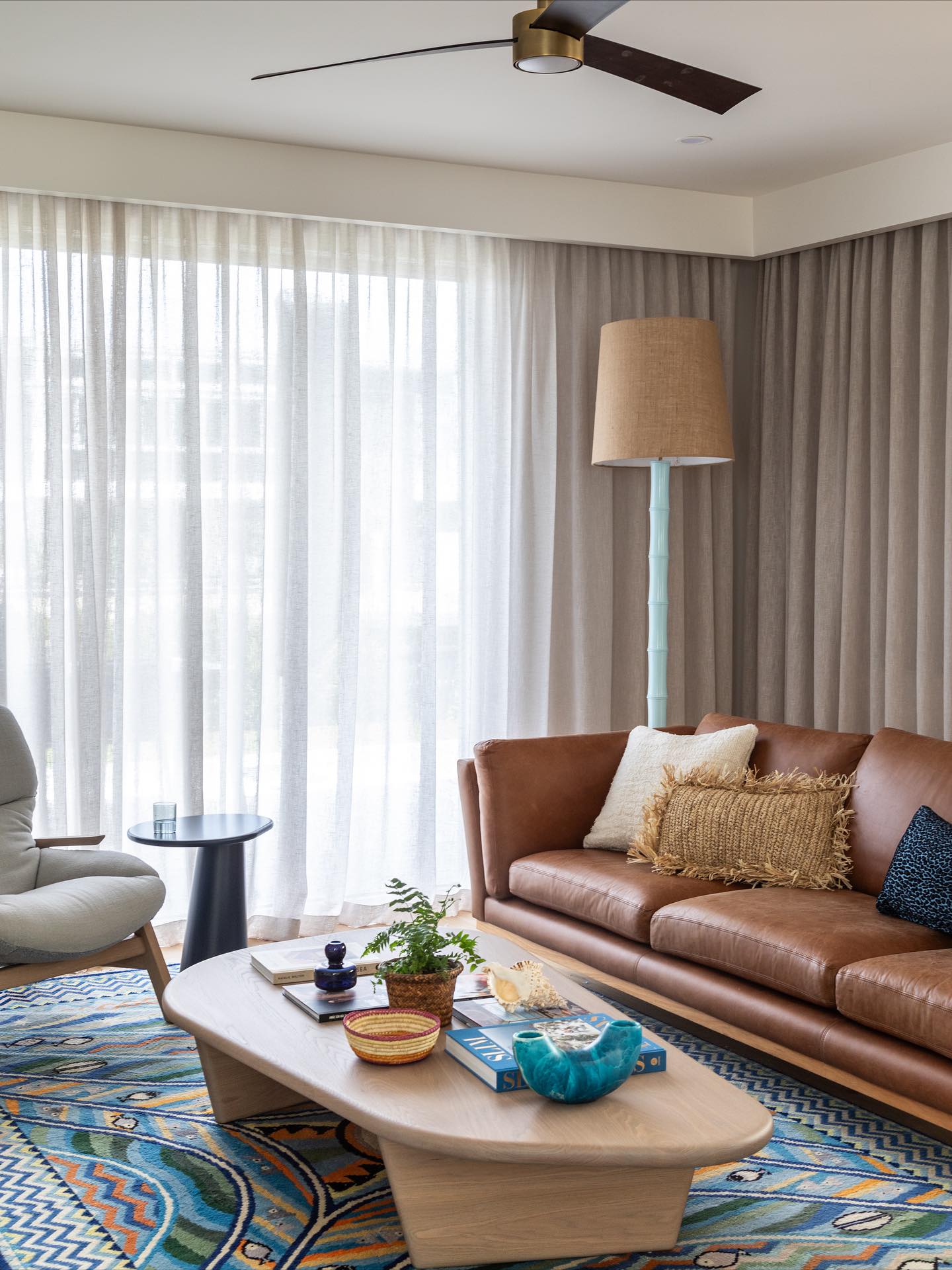
Credits: Instagram
Michelle Baskin kept her clients' existing brown leather sofa and gave it a fresh setting with a vibrant ocean themed rug.
Blues, greens, and orange run beneath the seating, while the pale wooden table provides a quieter surface for books and ceramics. Sheer curtains soften the bright windows without introducing another pattern.
This is an encouraging approach when a comfortable couch still works but the room feels tired. Start with the rug, then repeat one or two of its colors in small accessories.
The pale turquoise lamp adds height and brings a cool note beside the warm leather. Choose cushions with different textures to keep the sofa inviting while leaving enough of its original upholstery visible to anchor the arrangement.
12. Show Off a Blue Rug With a Glass Coffee Table
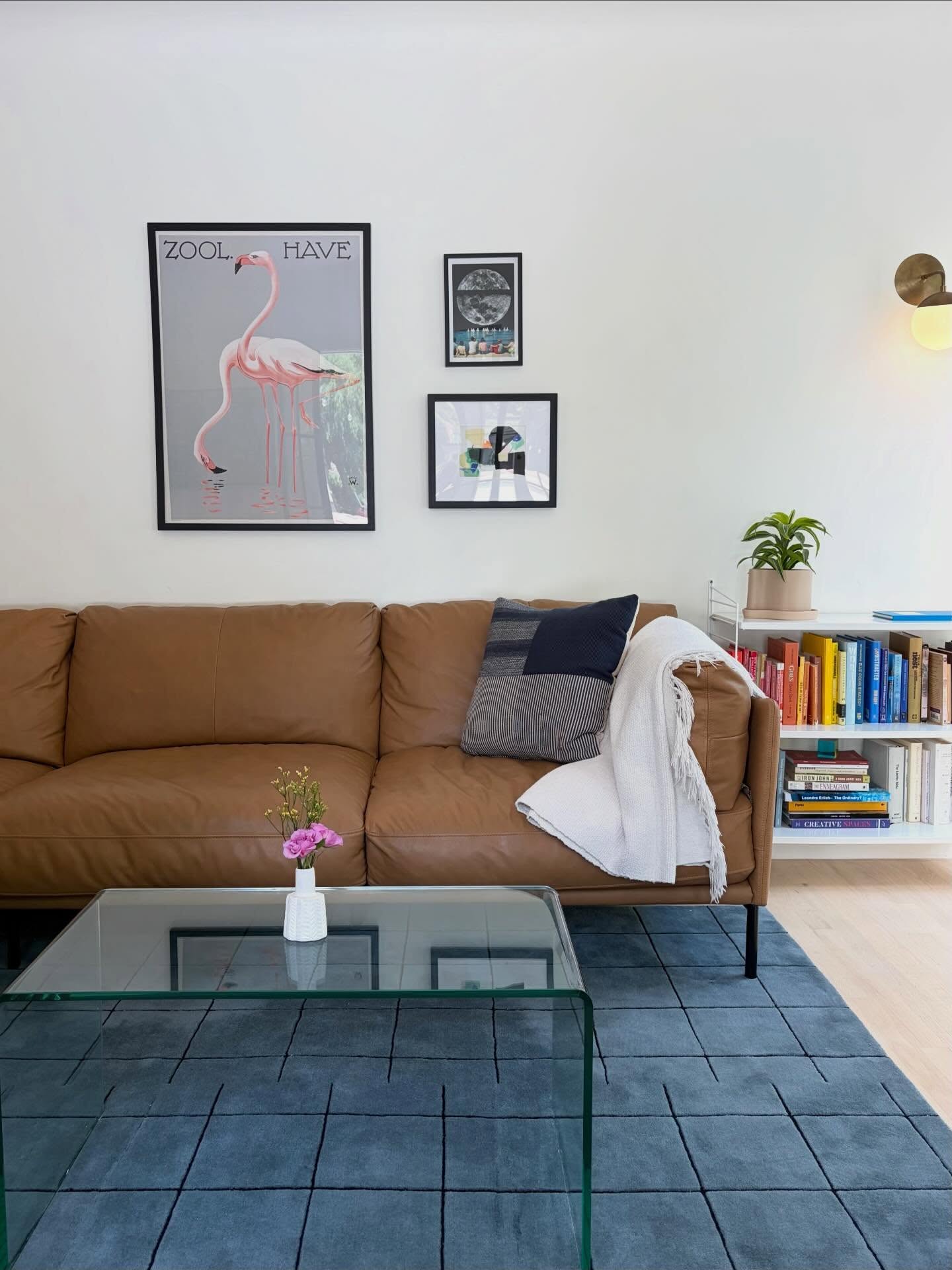
Credits: Instagram
The transparent coffee table in this living room leaves the blue rug's fine grid visible beneath it. That uninterrupted color gives the tan leather sofa a cool contrast, while black picture frames echo its slender legs.
A white throw links the seating to the walls and nearby bookshelf. Borrow the combination when you want a colorful foundation without several competing patterns.
Choose a rug with subtle geometry, then keep the table visually light enough for the design to show through. A small grouping of framed prints brings personality above the sofa without covering the wall.
Add one cushion that repeats the rug's blue, and keep tabletop accessories low so the furniture's simple shapes remain easy to appreciate from every seat.
13. Echo Open Kitchen Cabinetry in Brown Leather Seating
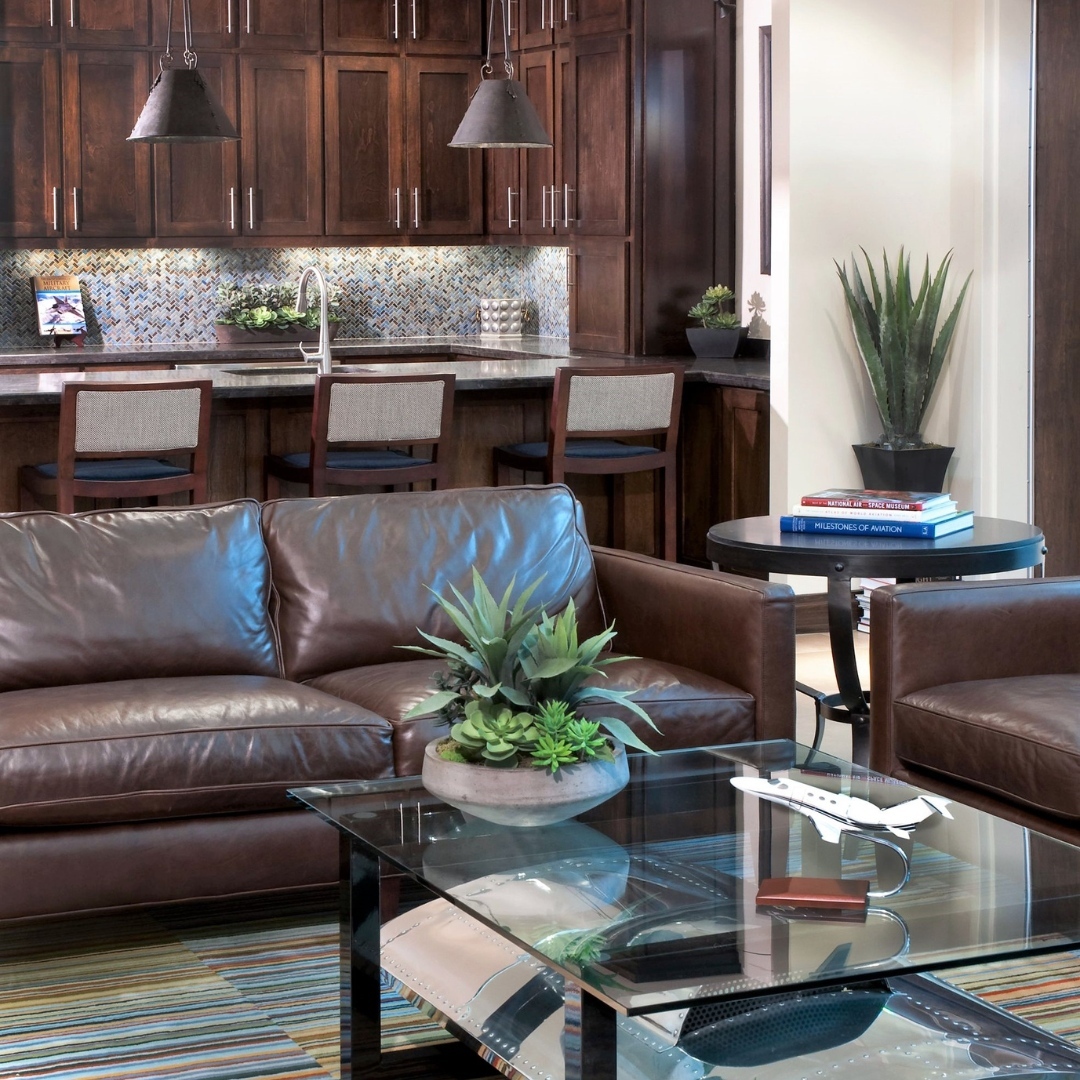
Credits: Instagram
Brown leather and dark wooden cabinetry share the view in this Lucas Eilers Design room. Because the living area opens directly toward the kitchen, those related colors make the two spaces feel connected.
A pale backsplash, light walls, and transparent coffee table interrupt the darker surfaces. The striped rug introduces several colors without competing with the cabinetry's strong vertical lines.
Consider the finishes beyond your seating area before choosing a leather sofa for an open floor plan. A related brown can link existing woodwork to new furniture even when the tones do not match exactly.
Use lighter surfaces between them to preserve definition. Repeating a little metal in table legs and kitchen hardware can strengthen the connection across the room.
14. Balance Broad Sofa Arms With a Substantial Round Table
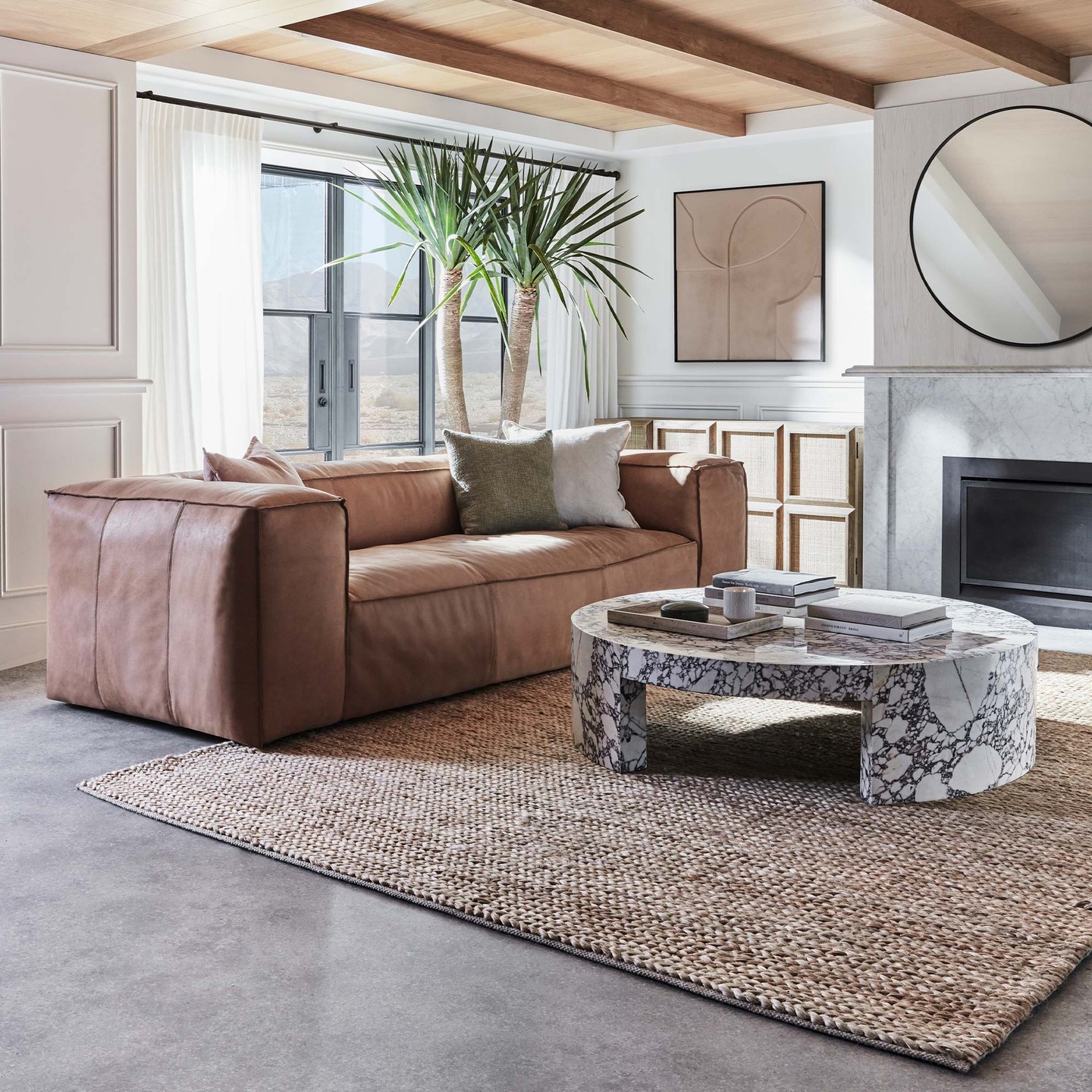
Credits: Instagram
Coco Republic's styled room pairs a broad leather sofa with a low round table that has enough presence to hold its own.
The table's dramatic stone pattern contrasts with the quieter upholstery, while its curved edge breaks up the sofa's blocky shape. A thick woven rug connects both pieces to the warm ceiling beams.
This combination works best when you consider scale before adding accessories. A tiny table can look lost beside wide sofa arms, even if its color fits perfectly.
Choose a generous surface while allowing room to move comfortably around it. Keep cushions simple so the leather's seams and natural variations remain visible.
The round mirror above the fireplace repeats the curve and carries it onto the wall.
15. Let White Leather Balance Dark Architectural Details
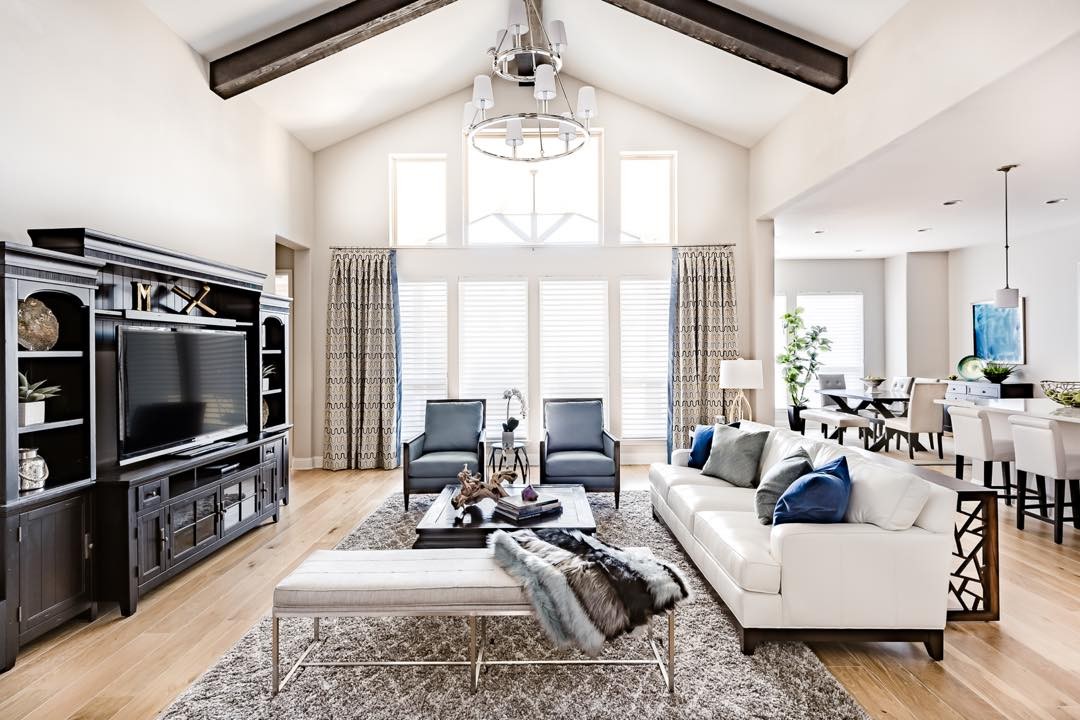
Credits: Instagram
A white leather sofa brightens this North Austin living room designed by Toni Rae McWilliams. Dark ceiling beams and a large media cabinet give the space weight, but the pale seating, walls, and tall windows keep the overall impression light.
Blue cushions connect the sofa to the pair of chairs facing into the conversation area. Consider white leather when your room already contains substantial dark woodwork and you want contrast at seating height.
Repeat the pale tone in a bench or lampshade so the sofa belongs to a wider palette. A patterned rug can bridge light and dark without adding another dominant color.
Keep decorative objects on the cabinet selective, letting the furniture's scale and the ceiling structure remain visible.
16. Repeat Warm Wood Around a White Leather Sectional
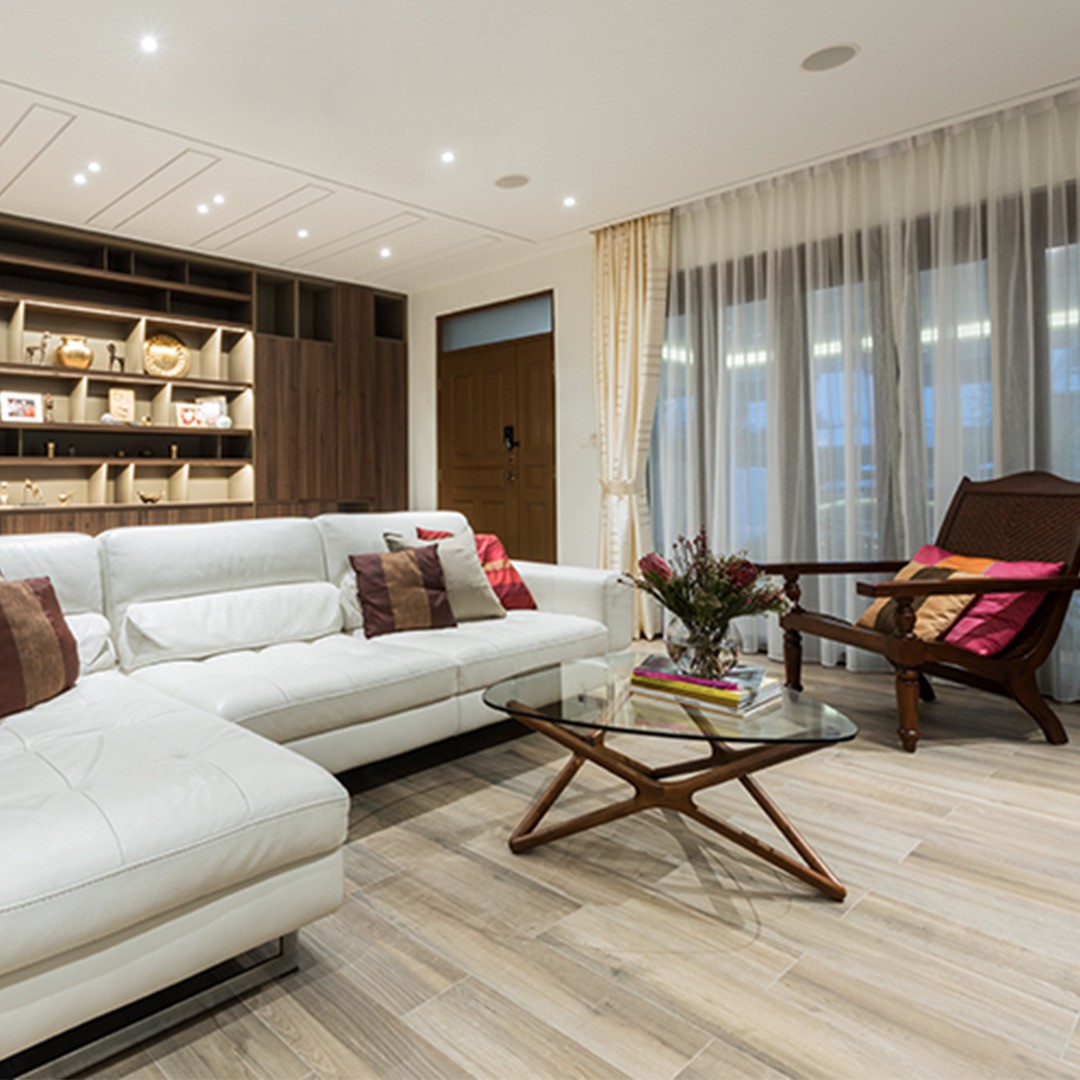
Credits: Instagram
The white leather sectional in this A.RK Interior Design room sits beside a traditional wooden lounge chair and a glass table with a sculptural timber base.
Those warm wood details connect the seating group to the display cabinetry behind it. Full length curtains and a pale floor soften the contrast, while red and brown cushions introduce smaller blocks of color.
This approach suits a room where an existing wooden chair needs to work with a newer sectional. Repeat its tone in one substantial nearby piece rather than scattering many small accessories.
A transparent tabletop keeps the chair's curved outline and the table base visible. Leave the sectional's broad cushions mostly clear so the white leather continues to brighten the arrangement.
17. Add Natural Texture Beneath a White Leather Sofa
Credits: Instagram
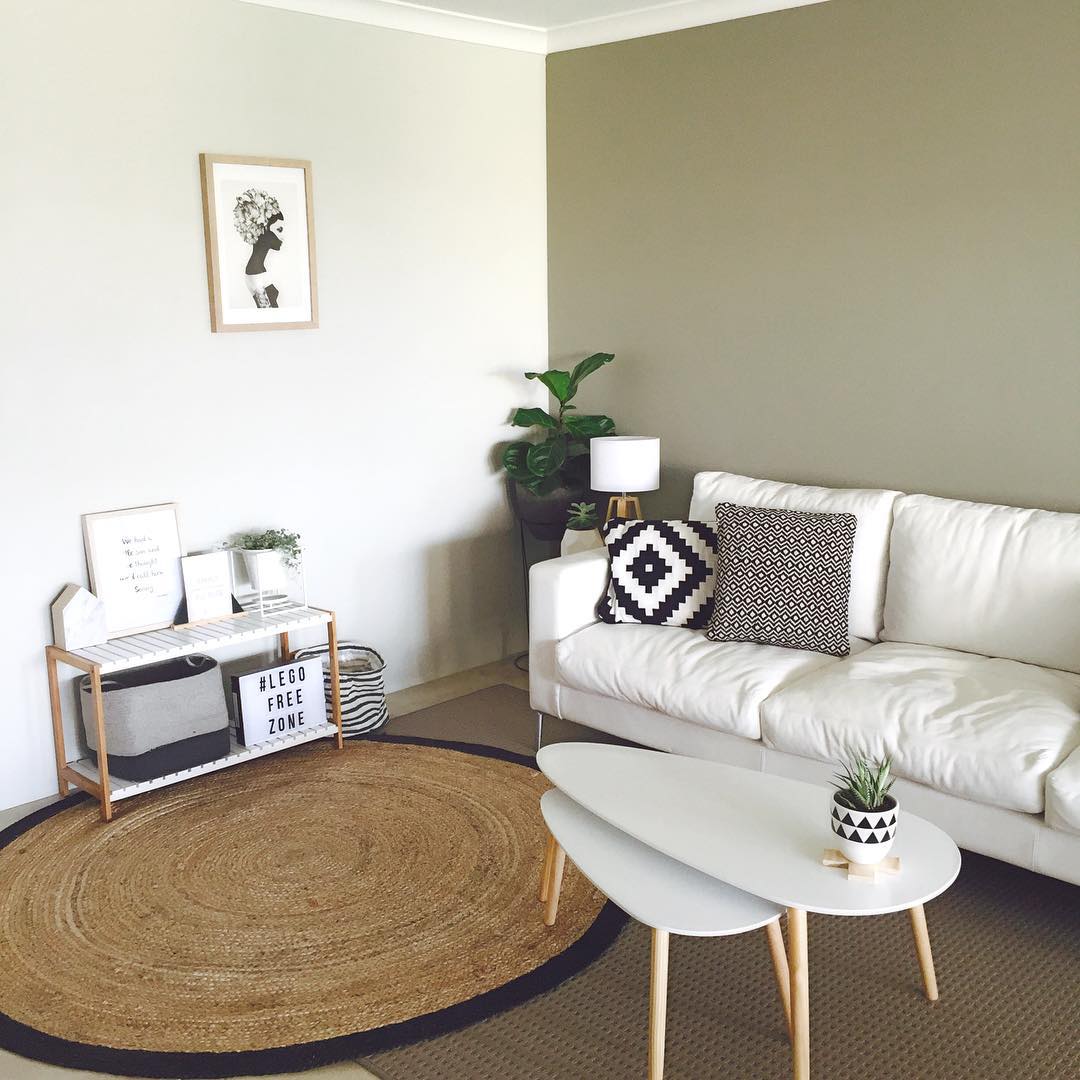
A round jute rug gives this white leather sofa a warm, textured neighbor. Its dark border connects with the black patterns on the cushions, while the pale nesting tables repeat the upholstery's light tone.
The small wooden legs and open shelf add warmth without making the corner feel heavy. This is a practical palette to borrow when a white couch looks too stark against a plain floor.
Start with one woven piece large enough to register beside the seating, then add a few darker details for definition. Keep patterns at different scales, as the bold diamond cushion and finer zigzags demonstrate.
The homeowner notes that the wall photographs khaki despite being gray, so test paint samples in your own light.
18. Give Sculptural Leather Seating Space to Stand Out
Credits: Instagram
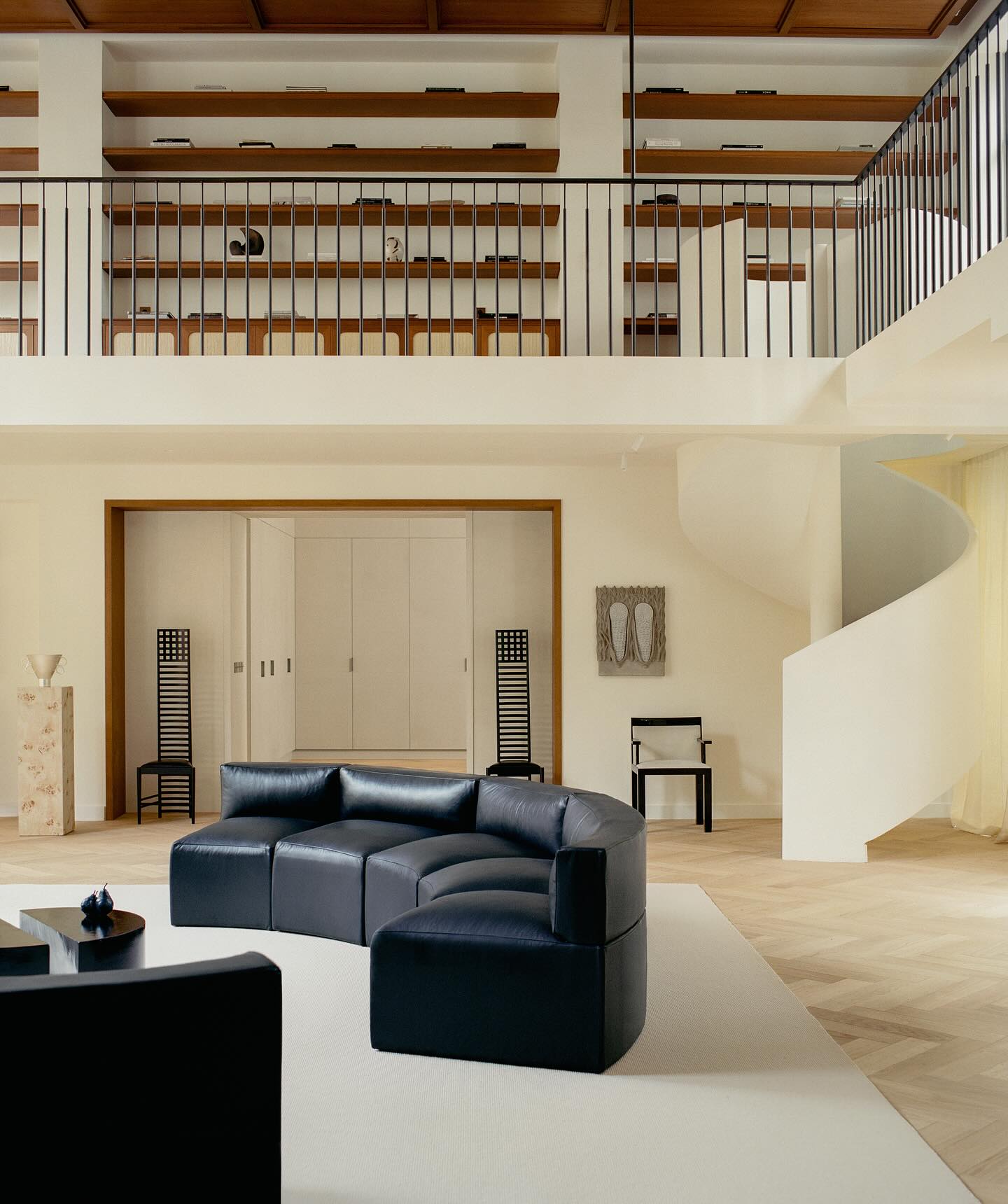
Katja Pargger's Villa N living room gives a curved black leather sofa a clear stage within a tall, open interior. The pale rug defines its footprint, while the surrounding floor remains visible on several sides.
Above it, timber beams and slim dark railings add structure without competing with the seating's rounded outline. You can borrow the spatial idea without needing a room this large.
Give an unusual sofa enough clear space for its shape to be understood, and choose a simple rug that separates it from the floor. Keep nearby pieces lower or visually lighter where possible.
A restrained palette helps the form become the focal point. Repeat one dark accent elsewhere to connect the leather with the broader room.
19. Pair Black Leather With a Pale Block Coffee Table
Credits: Instagram
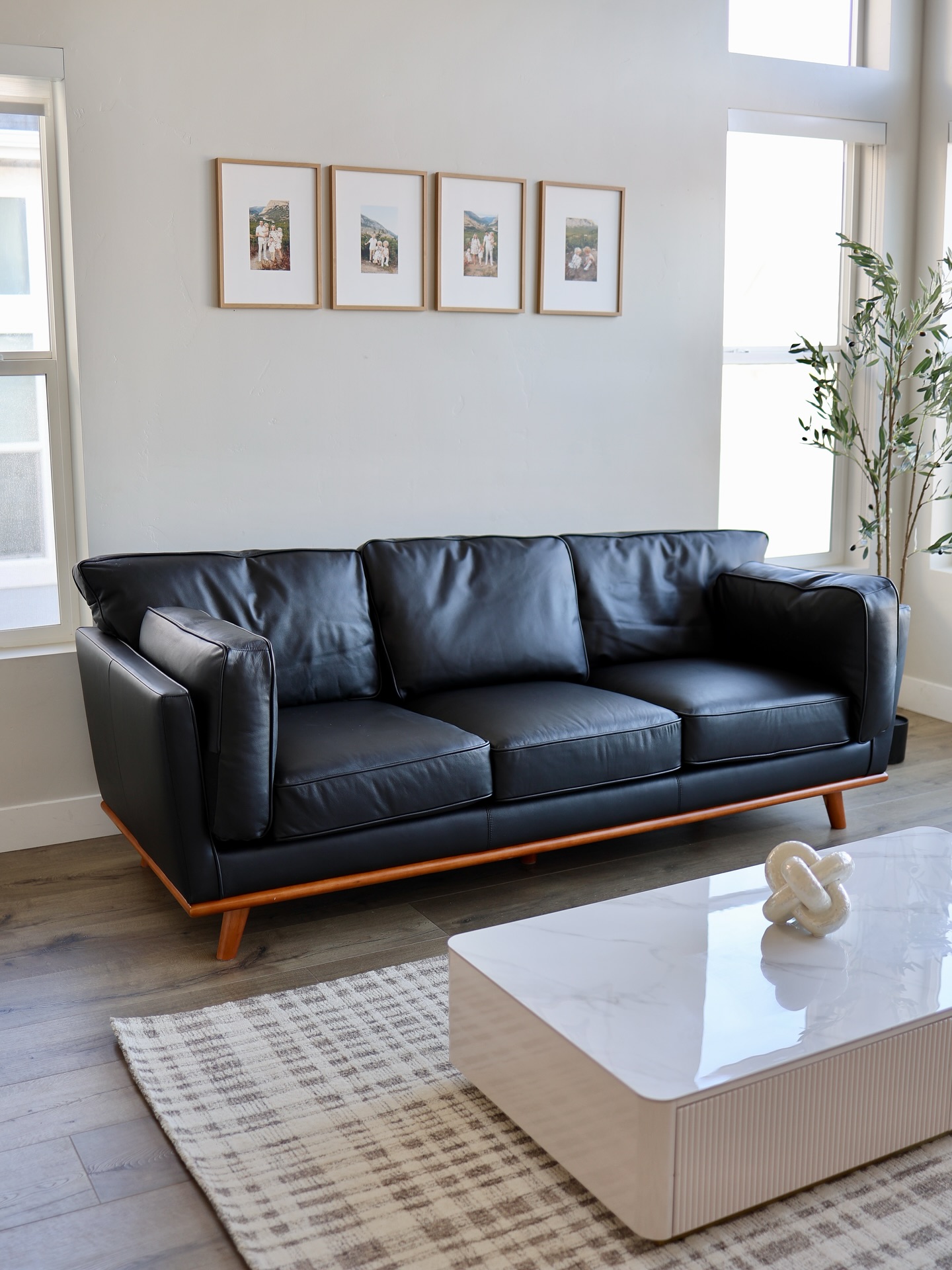
Barbara Teerlink's black leather sofa faces a pale coffee table with rounded corners and a substantial block shape.
The table's light surface stands out against the upholstery, while the sofa's exposed wooden base adds warmth between the black leather and gray floor. Four evenly spaced picture frames bring a quiet rhythm to the wall above.
Try this pairing when a dark couch needs a brighter partner in the center of the room. A low table with a simple outline can provide contrast without introducing visual clutter.
Repeat its pale tone in the rug, then use warm frames or wood details to connect with the sofa base. Leave some tabletop visible so the contrasting shapes remain the focus of the arrangement.
20. Face a Black Chesterfield With Warm Brown Chairs
Credits: Instagram
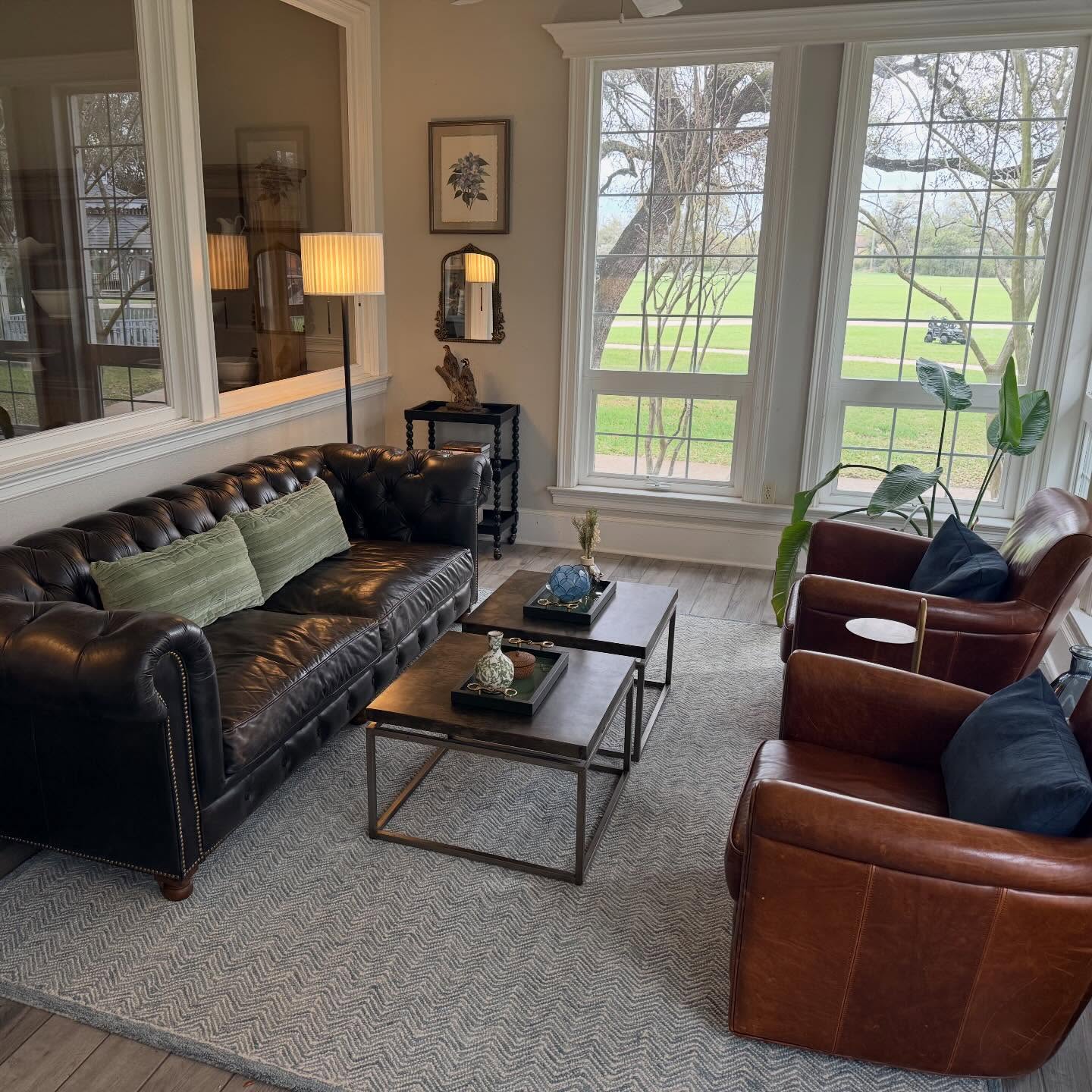
In Vintagestephen's living room, a tufted black leather sofa faces two warm brown chairs across a pair of slim tables. The different leather colors keep the grouping from feeling uniform, while similar seating heights make the arrangement feel balanced.
Pale green lumbar cushions link the sofa to the leafy plant beside the windows. This layout is useful when you want conversation seating with a traditional couch as the anchor.
Choose chairs with simpler arms so they complement the sofa's deep tufting. Nesting tables can serve the length of the seating group while preserving a lighter central outline.
A large pale rug gathers the pieces, and a floor lamp adds a welcoming pool of light beside the sofa in the evening.