
Natural materials can make a living room feel grounded, but too many rough, heavy finishes may leave it feeling unbalanced. The Best Earthy Modern Living Room Ideas show how to pair warmth and texture with lighter, cleaner details.
Think terracotta carried onto the ceiling, olive seating set against substantial wood, or rugged stone balanced by slim black accents. Other ideas use organic-shaped lighting, sheer curtains, and open shelves to bring softness and breathing room to an earthy palette.
These combinations offer practical ways to make the room feel layered without crowding it.
1. Carry Terracotta Paint Onto the Ceiling
Credits: Instagram
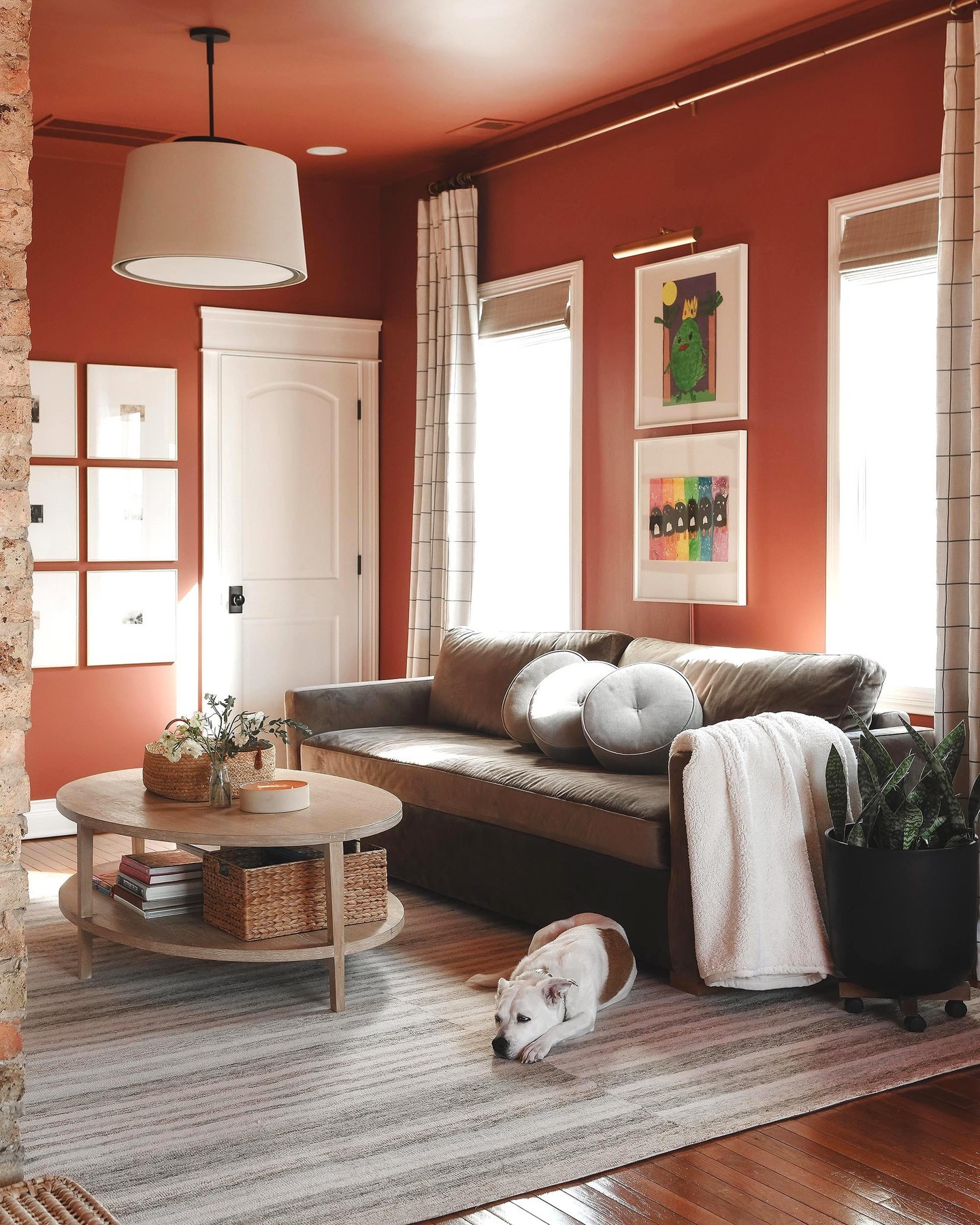
Terracotta walls continue across the ceiling here, wrapping the seating area in warm color. White window trim, checked curtains, and a pale drum shade keep the room from feeling visually heavy.
Try this treatment in a room where you want an intimate, settled atmosphere, and test large paint samples on both vertical and overhead surfaces before committing.
Daylight can change the same shade considerably from morning to evening. Balance the color with a quiet sofa and a light rug, then bring in woven baskets for practical storage.
The round coffee table softens the room's straight lines while leaving a comfortable route around the seating. Keep artwork frames consistent so personal pictures feel collected rather than competing with the saturated backdrop.
2. Pair Olive Seating With Substantial Wood
Credits: Instagram
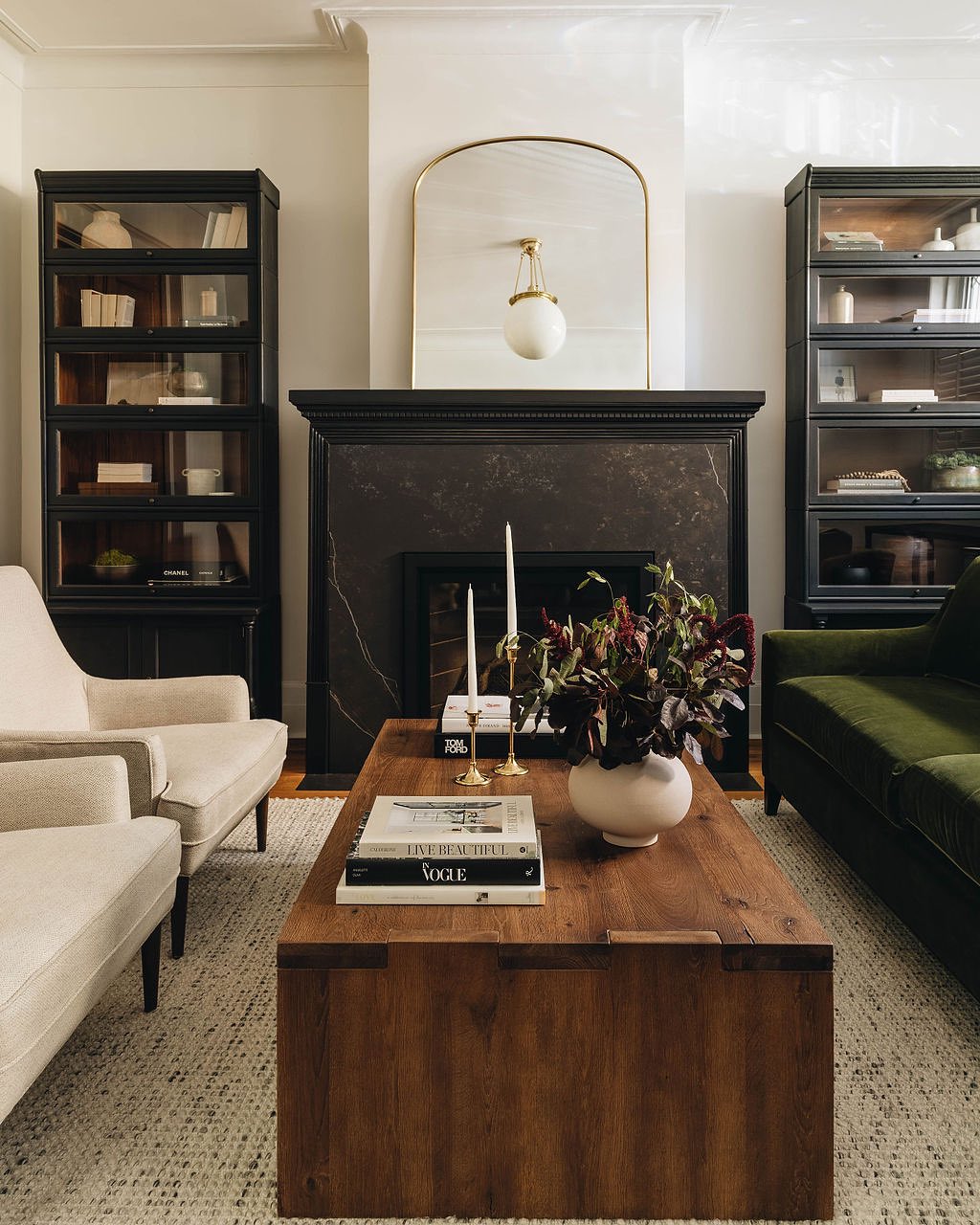
A substantial rectangular coffee table anchors this arrangement, bringing visible grain and warm brown color between an olive sofa and pale armchairs. Dark cabinets and the fireplace surround add depth, while the light rug keeps the center welcoming.
Borrow the pairing with one generously scaled wood piece and green upholstery, whether that means a sofa or a single accent chair. Before buying, tape the table's footprint on the floor and check that everyone can move comfortably around it.
Keep tabletop accessories concentrated in a few groups so the grain remains part of the display.
A rounded vase offsets the table's blocky silhouette, and small gold-tone accents introduce a little shine without interrupting the grounded palette across the whole seating area.
3. Lean Artwork on a Warm Wood Sideboard
Credits: Instagram
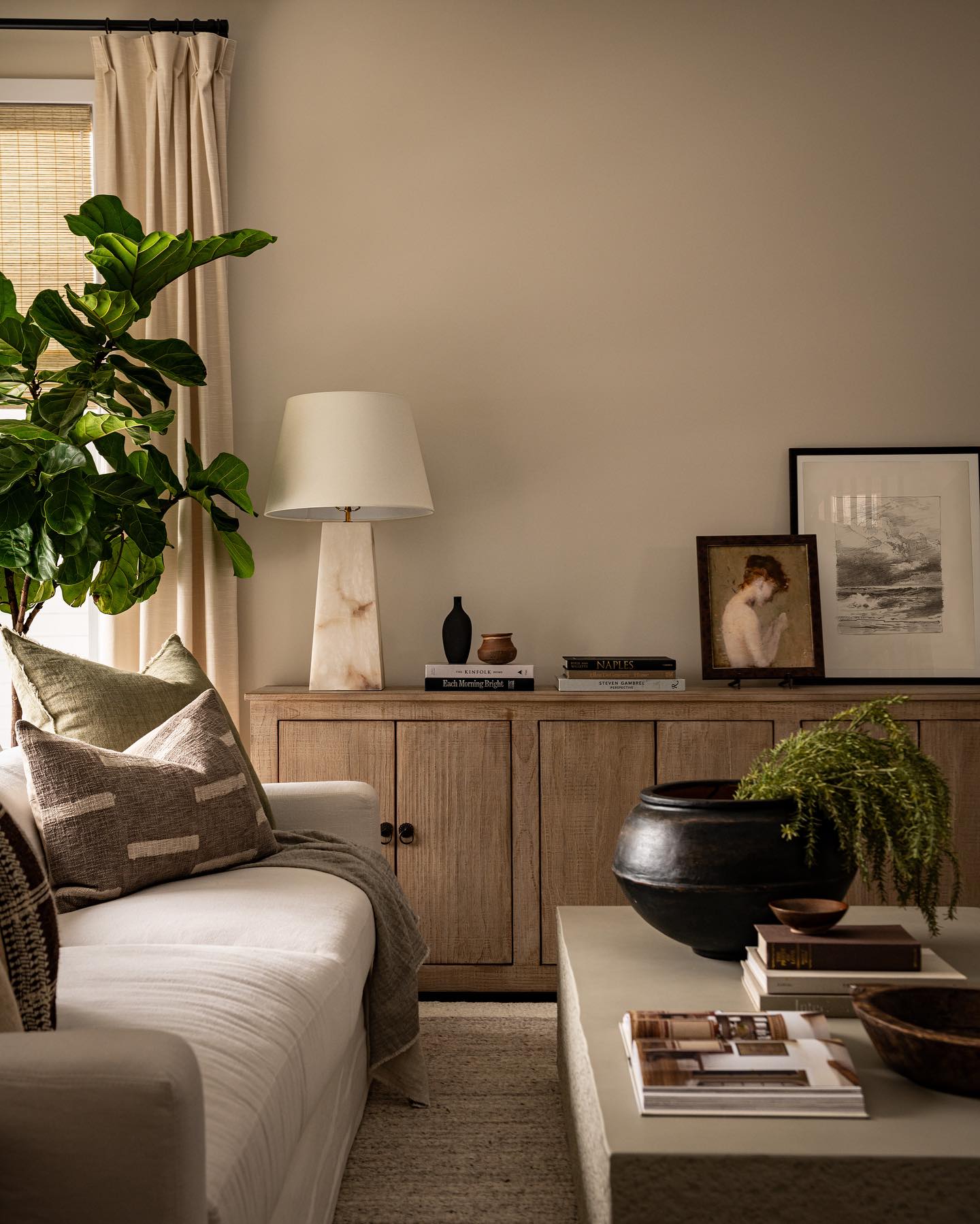
Two framed pictures rest against the wall on this long wood sideboard, with the smaller portrait overlapping the larger print. A tall lamp balances their height across the surface, while short book stacks bridge the space between them.
This is an approachable way to build a layered display without filling the entire wall. Start with artwork you already own, vary the frame sizes, and leave a generous section of tabletop visible.
Secure leaning frames discreetly where pets or children could knock them over. Choose a lamp tall enough to contribute useful evening light for reading or conversation, then tuck away its cord.
The nearby leafy plant, pale curtains, and textured pillows carry the sideboard's relaxed mood into the seating area.
4. Bring Organic Shapes Into Ceiling Lighting
Credits: Instagram
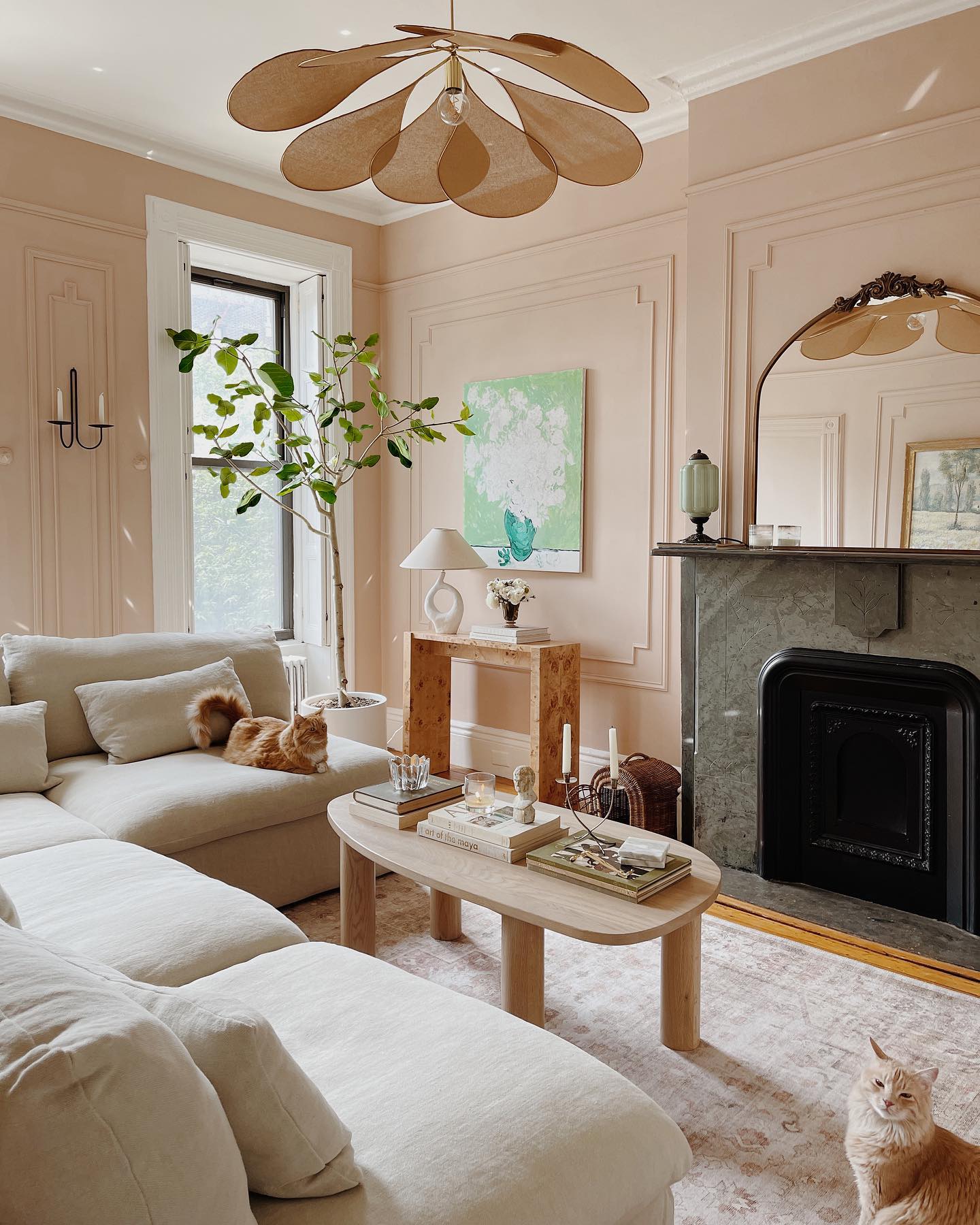
The broad pendant's overlapping petal shapes introduce a playful, organic silhouette above this pale sectional. Its warm tan color connects with the wood tables below, while the curved mirror and rounded coffee table repeat the softer lines.
Consider a sculptural shade when a room already has plenty of rectangular architecture or wall molding. You can create a similar effect with a rounded paper shade or woven fixture suited to your ceiling height.
Measure the fixture's diameter and hanging clearance before purchasing, especially where people walk beneath it. Keep nearby furniture shapes simple enough to let the light stand out.
A small table lamp adds another lighting level, making the room useful after the overhead light is dimmed for the evening.
5. Contrast Rough Wood With Soft Upholstery
Credits: Instagram
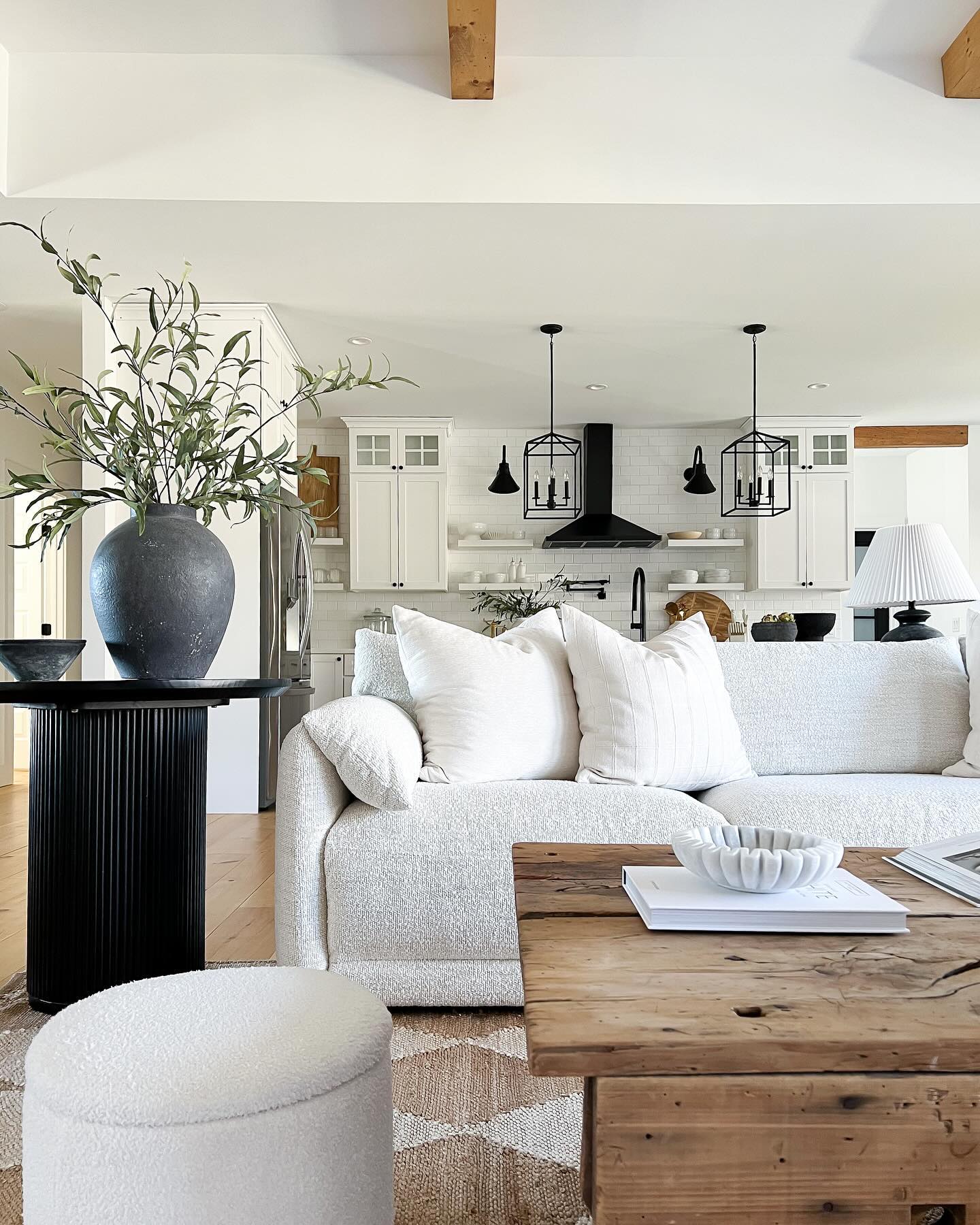
Deep cracks, knots, and uneven coloring give this coffee table a rugged presence beside the softly textured white sofa. The contrast makes a mostly pale room feel layered, especially with a rounded ottoman and dark ribbed side table nearby.
Look for visible wood character rather than perfectly matching every finish. A secondhand table can deliver the same relaxed effect, provided its surface is stable and smooth enough for everyday use.
Check for splinters, loose joints, and sharp edges before bringing it home. Set a tray beneath drinks if the top is uneven.
Keep upholstery and cushions relatively simple so the table remains the tactile focal point, then repeat its warm brown tone in one small accessory on a nearby shelf.
6. Repeat Ochre in Artwork and Lighting
Credits: Instagram
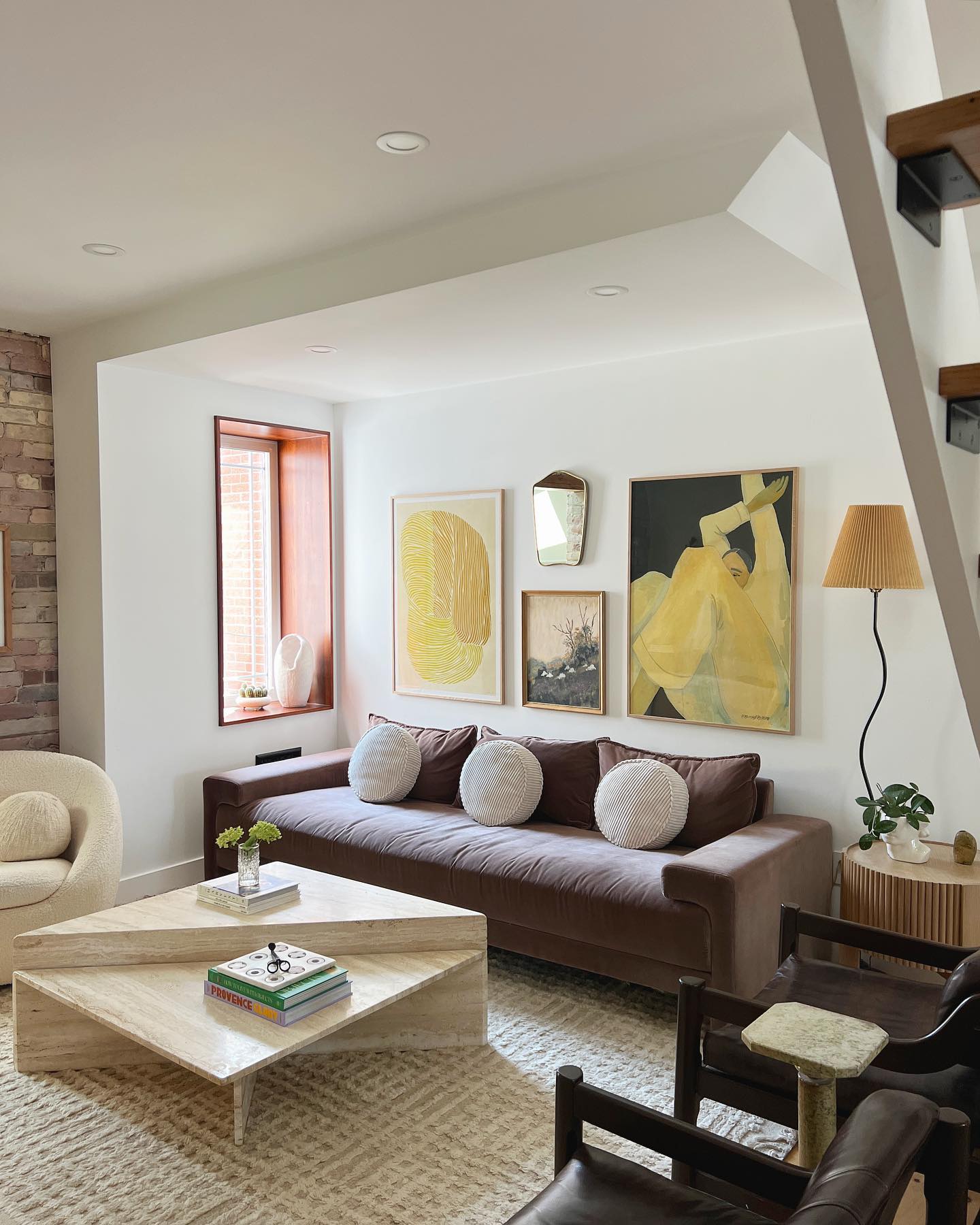
Yellow and ochre notes travel across the artwork above this brown sofa and reappear in the pleated lampshade. That repetition gives the gallery wall a clear relationship with the furniture without requiring identical frames or perfectly matched colors.
Start with one picture you love, then pull a muted accent from it for a shade, pillow, or small decorative object. Keep the larger upholstery pieces brown, cream, or another quiet neutral so the accent has room to register.
Lay out your art arrangement on the floor before hanging, varying sizes while keeping the gaps deliberate. Here, round striped cushions add another shape without introducing a competing color.
A small mirror among the pictures brings variety to the grouping without another print.
7. Balance Rugged Stone With Slim Black Accents
Credits: Instagram
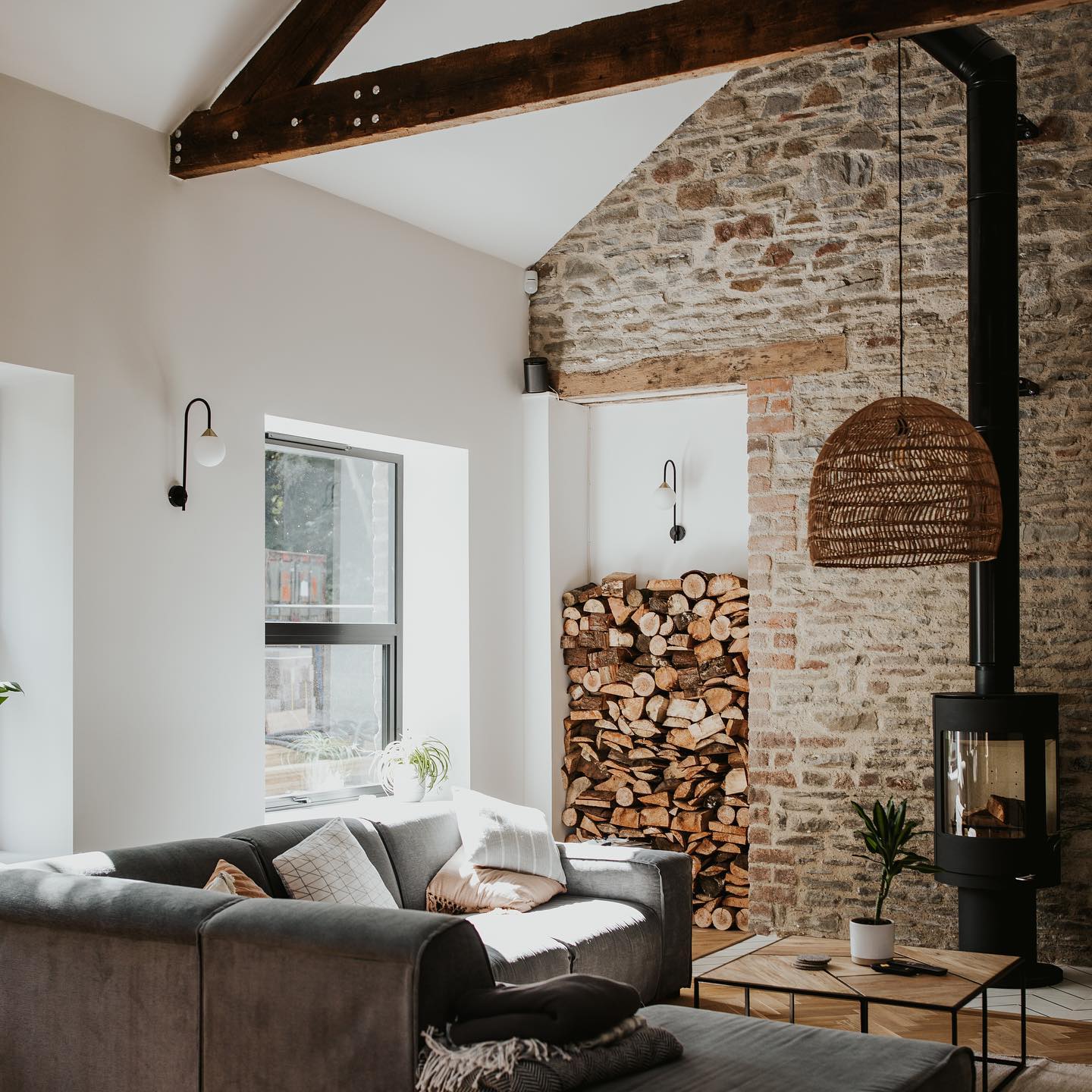
An exposed stone wall and heavy overhead beam give this room strong texture, while slender black sconces and coffee table legs add crisp outlines. The dark stove echoes those details without requiring every furnishing to look rustic.
In a room with existing masonry, choose a few simple black accents and let the wall supply most of the pattern. A narrow lamp, open table base, or understated picture frame can provide the same contrast on a smaller budget.
Pale walls and neutral cushions offer visual rest beside rough surfaces. Keep furniture profiles low enough to preserve views of the architecture.
If your room includes a working stove, follow its required clearances rather than copying furniture or decor placement from photographs alone.
8. Leave Breathing Room on Floating Wood Shelves
Credits: Instagram
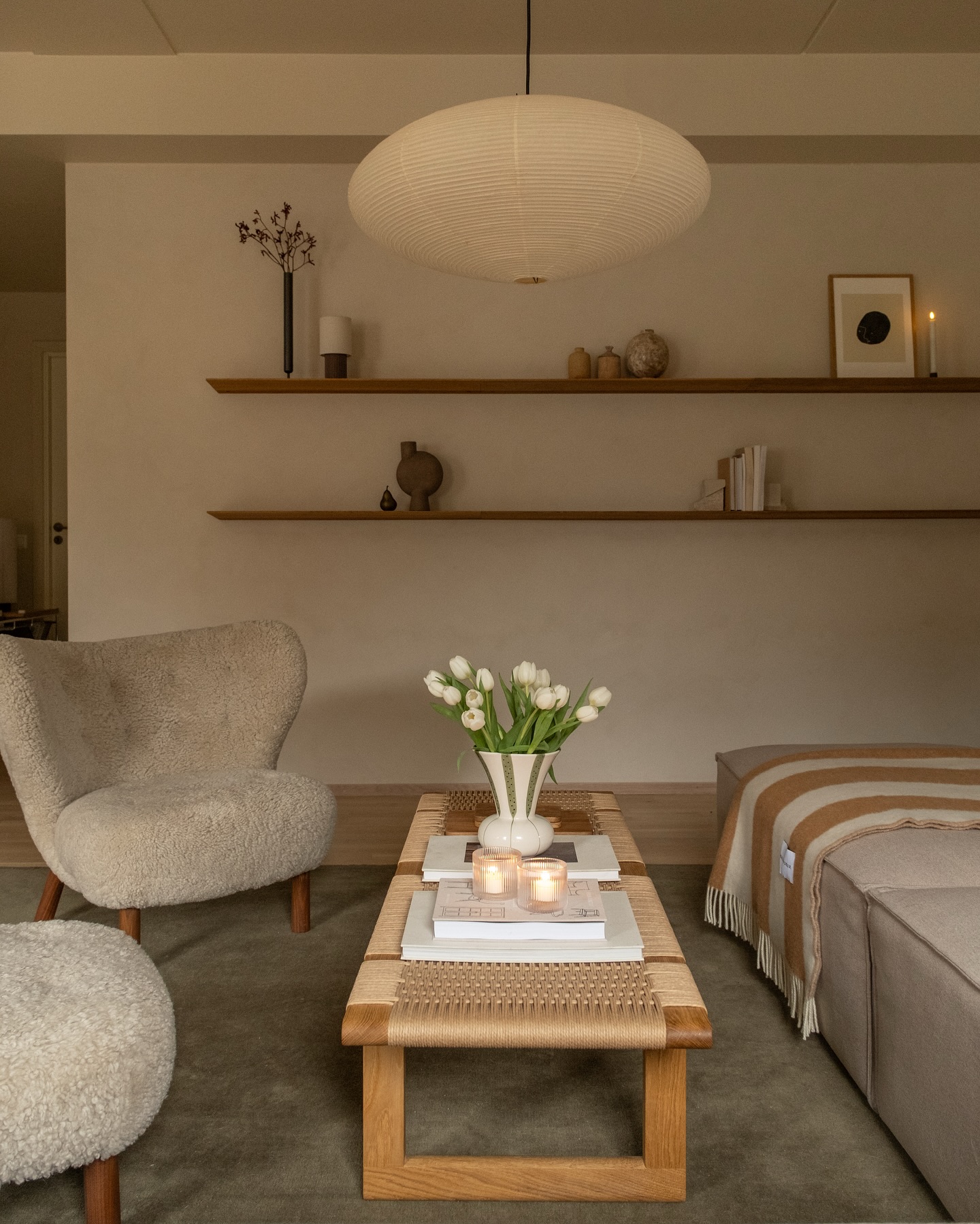
These two long floating shelves work because the empty stretches are as noticeable as the objects. A tall narrow vase, small vessels, a framed print, and a few books form separate clusters instead of an uninterrupted row.
Try editing your shelves before buying anything new: remove half the display, then return only pieces with different heights or interesting shapes.
Keep the palette close to the room's warm wood, cream upholstery, and muted green rug for a calm result. Place heavier items where the shelf supports and weight rating allow.
Small bookends can keep upright books tidy without adding much visual noise. Rotate one favorite object seasonally rather than filling every gap, and leave room to dust easily without moving everything.
9. Frame a Garden View With Deep Green
Credits: Instagram
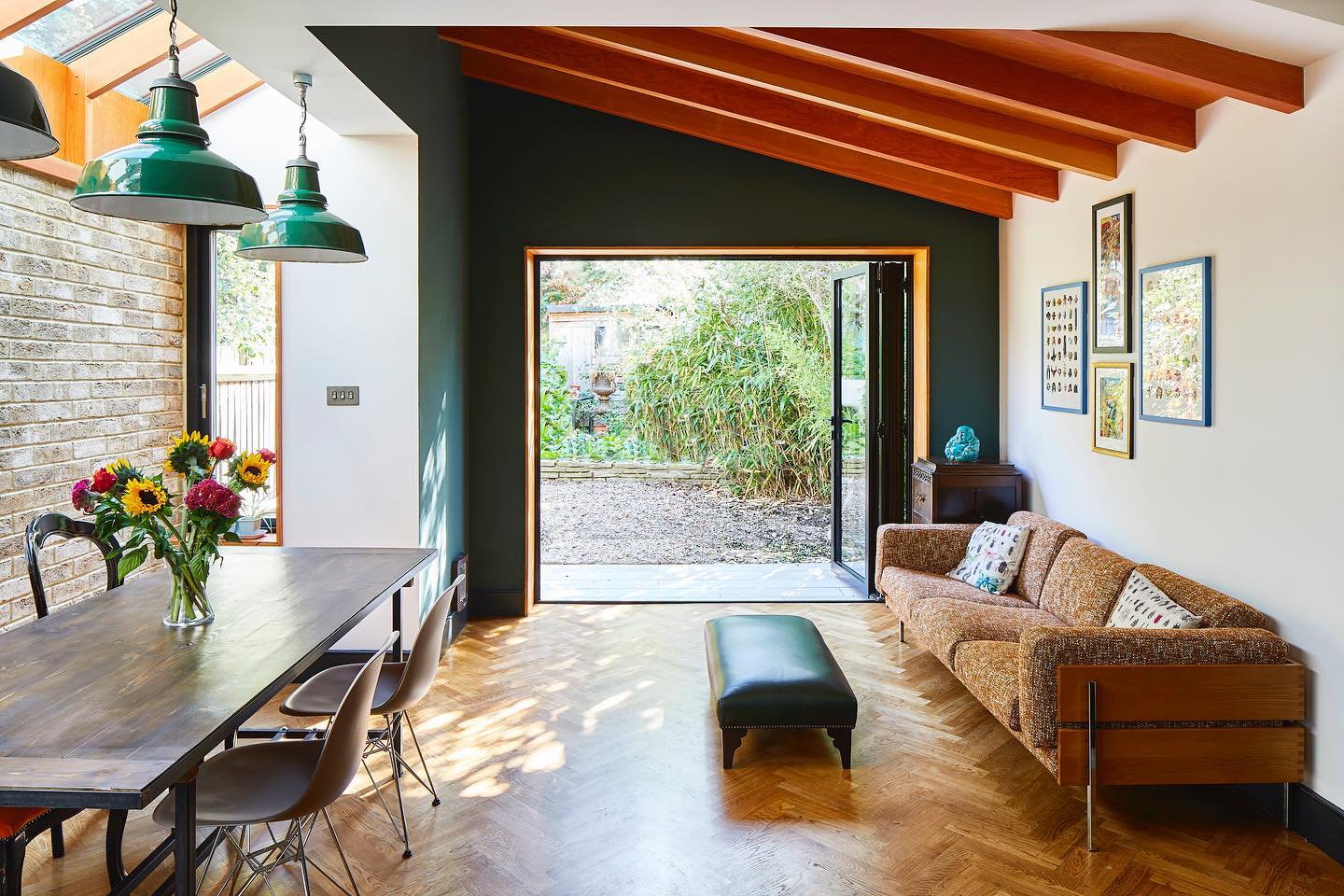
A deep green wall frames the broad garden opening, drawing attention to the greenery beyond.
Warm wood ceiling beams and the honey-colored floor prevent the dark paint from feeling isolated, while green pendant shades repeat the color over the dining table.
You can borrow the effect around an existing window or glazed door without recreating the architecture. Sample several greens beside the view, checking how they look when the garden is bright and when evening light takes over.
Keep the adjacent walls lighter if you want the opening to remain the focal point.
Position seating so the route outside stays clear, and use a compact ottoman or table where a bulky centerpiece would interrupt circulation between the two activity zones.
10. Soften Olive Seating With Sheer Curtains
Credits: Instagram
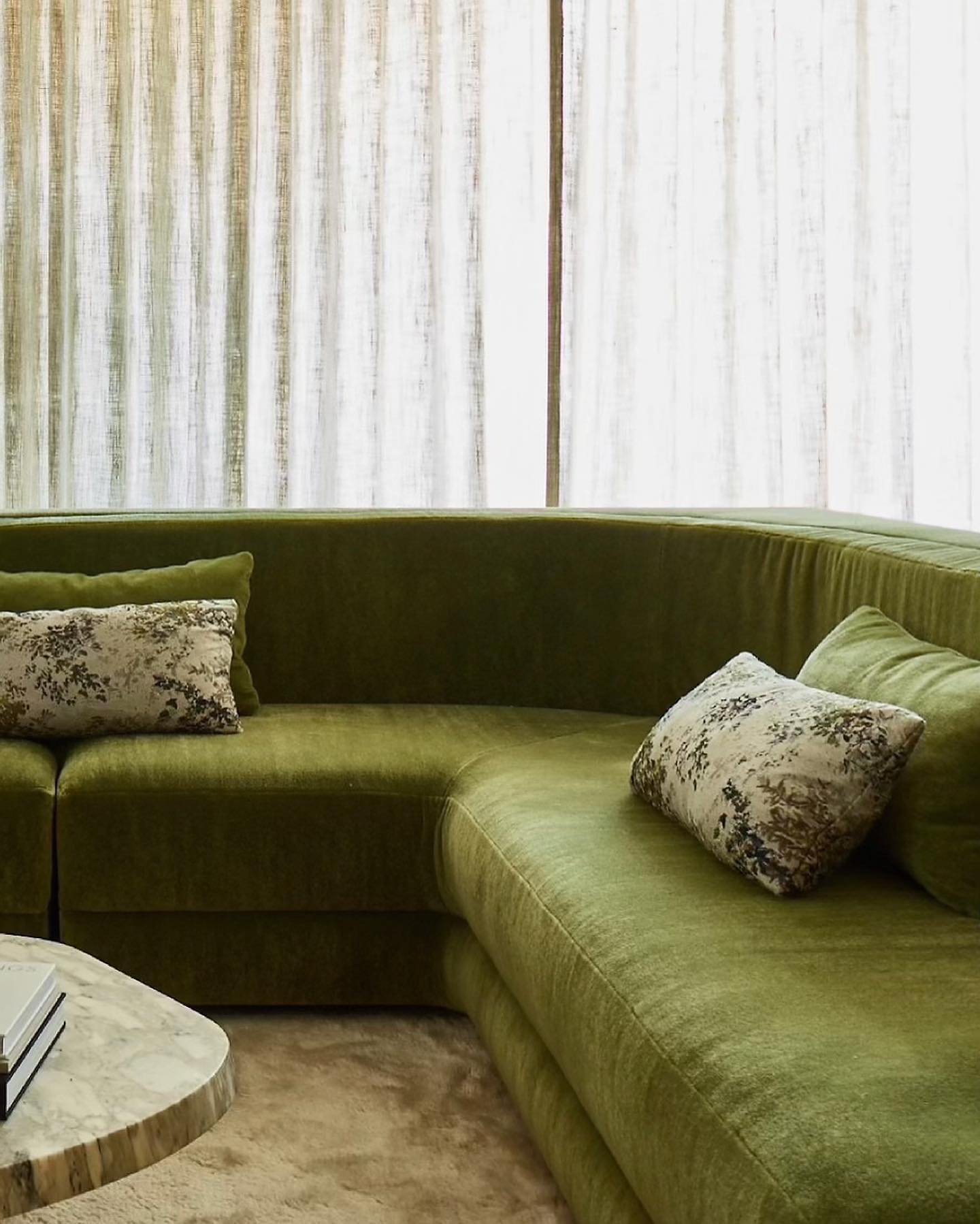
Light filters through pale sheer curtains behind this generously curved olive sofa, softening the contrast between the rich green upholstery and the tall, bright windows.
Cream pillows with dark botanical patterns break up the broad seats without obscuring their shape. Pair rich green seating with airy window panels when you want depth of color and a gentle daytime atmosphere.
Hang curtains so they move freely behind the sofa rather than catching on the cushions, and check the fabric's privacy level after dark. Add a separate shade if the room needs more coverage.
A light rug and rounded table can continue the softer look at floor level. Keep pillow patterns within a restrained palette so the upholstery remains the central feature.
11. Carry Warm Wood Around Large Windows
Credits: Instagram
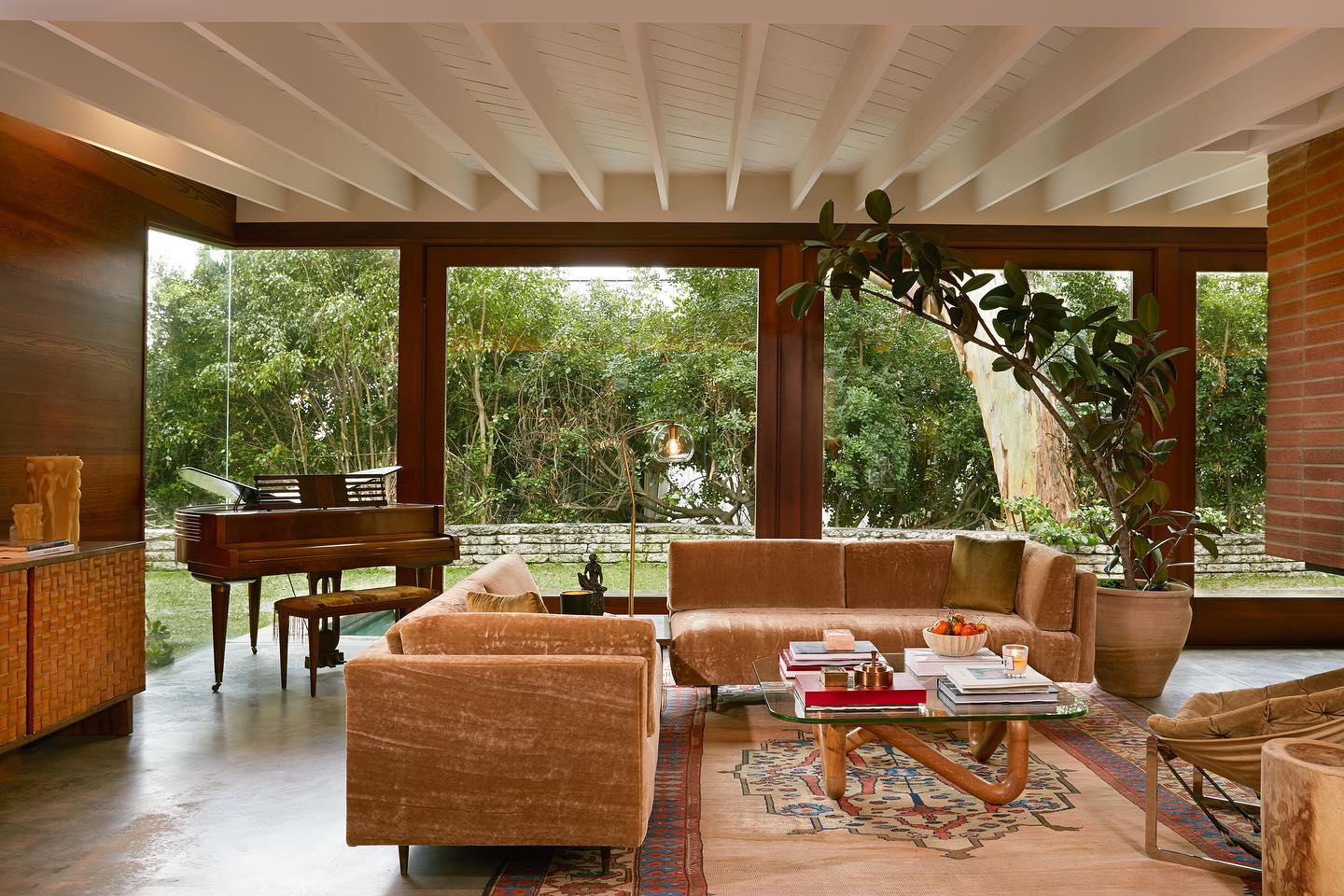
Warm brown window frames connect the garden view to the wood paneling, piano, and cabinet in this airy living room. A white beamed ceiling keeps those rich surfaces from overwhelming the space, while peachy seating picks up their warmer undertones.
To borrow the idea, start with the woodwork you already have and choose one nearby furniture finish that relates to it. Matching every piece is unnecessary; the rounded coffee table base adds another shade without breaking the connection.
Keep tall objects toward the edges of the windows so the view remains open.
If replacing trim is beyond your budget, introduce a substantial wood console beneath an existing window and echo its color in picture frames or a small side table.
12. Pair Moss Green With Gentle Blush
Credits: Instagram
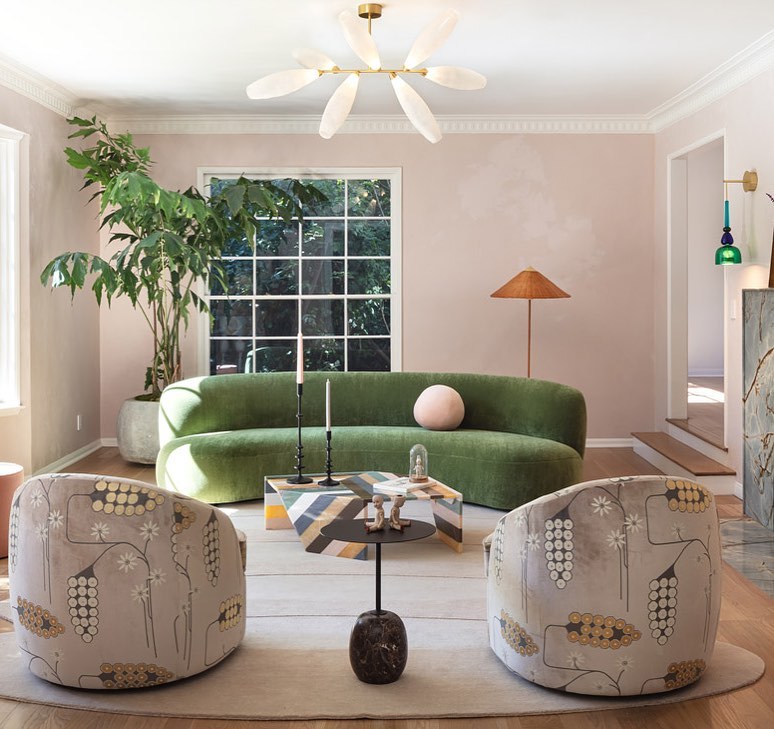
A curved green sofa stands out against pale blush walls, with a round pink cushion quietly connecting the two colors.
The room gives this pairing plenty of room to breathe: white trim, a light rug, and open floor space keep the palette soft.
Try the combination through smaller purchases first, such as a mossy throw and a dusty pink pillow on your current sofa. Choose muted shades so neither color feels fluorescent beside the other.
The patterned chairs demonstrate how a little yellow and gray can join the mix without taking over. Before committing to wall paint, compare large samples beside your upholstery in daylight and evening light.
Finish with one leafy plant to reinforce the green throughout the room.
13. Layer Warm Browns Beneath Timber Beams
Credits: Instagram
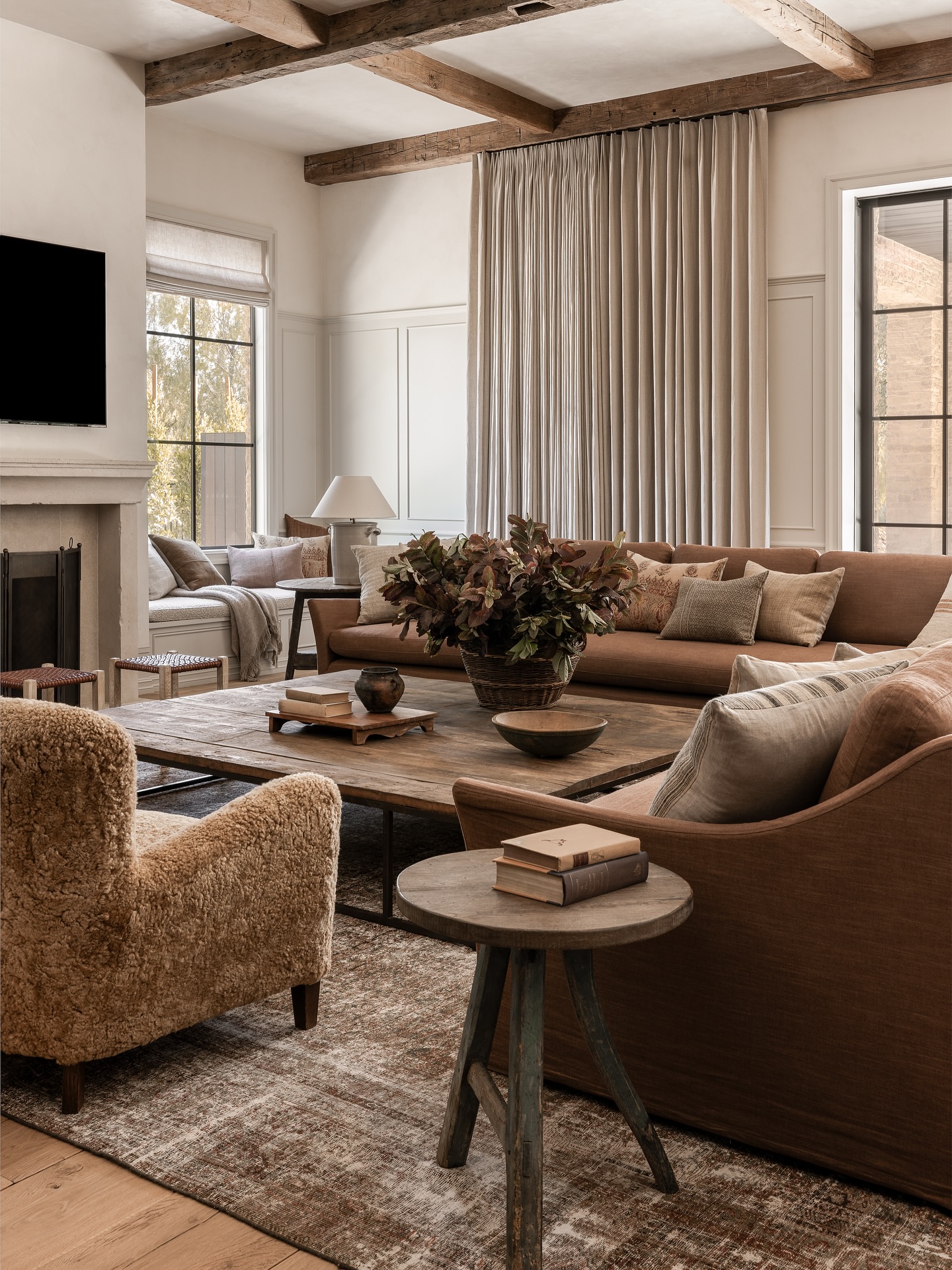
Substantial ceiling beams set the tone for this room, where brown sofas, a broad wood coffee table, and a textured chair bring similar warmth down to sitting height.
Pale walls and tall curtains keep the layers from feeling heavy. Work with a range of browns rather than searching for identical shades: caramel upholstery can sit comfortably beside weathered wood and darker pottery.
For an affordable starting point, gather pillows in oatmeal, tobacco, and muted cinnamon, then vary their weaves. The photographed room also uses quiet patterns to give its neutral seating more depth.
Keep your largest accessories simple in shape, and leave useful space on the coffee table. One low bowl and a small book stack can provide enough interest.
14. Make Russet Fireplace Tile the Focal Point
Credits: Instagram
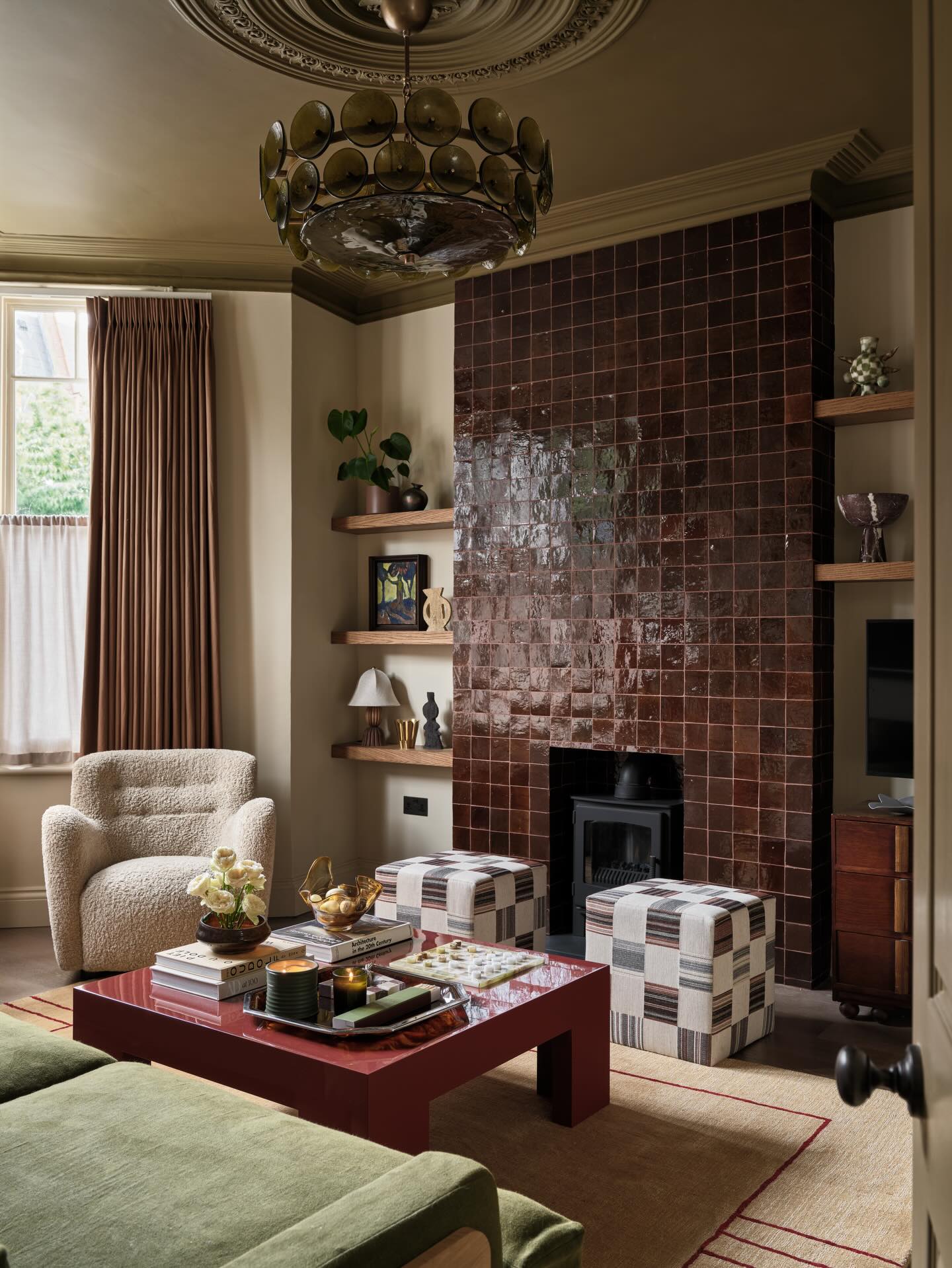
Glossy reddish brown tiles turn the fireplace wall into this room's strongest feature. Their small square grid contrasts with the broad red coffee table, while green seating and a cream chair soften the composition.
If you are planning a fireplace update, bring tile samples home and view them vertically; a glossy surface can look surprisingly different as daylight moves.
Confirm that your chosen products and installation meet the requirements of your fireplace or stove before proceeding. You can explore the same palette without construction by adding a russet tray, dark red vase, or small accent table.
Repeat the color sparingly across the room, as the thin red rug border does here, and let nearby shelving hold a few well-spaced objects.
15. Divide an Open Room With a Low Planter
Credits: Instagram
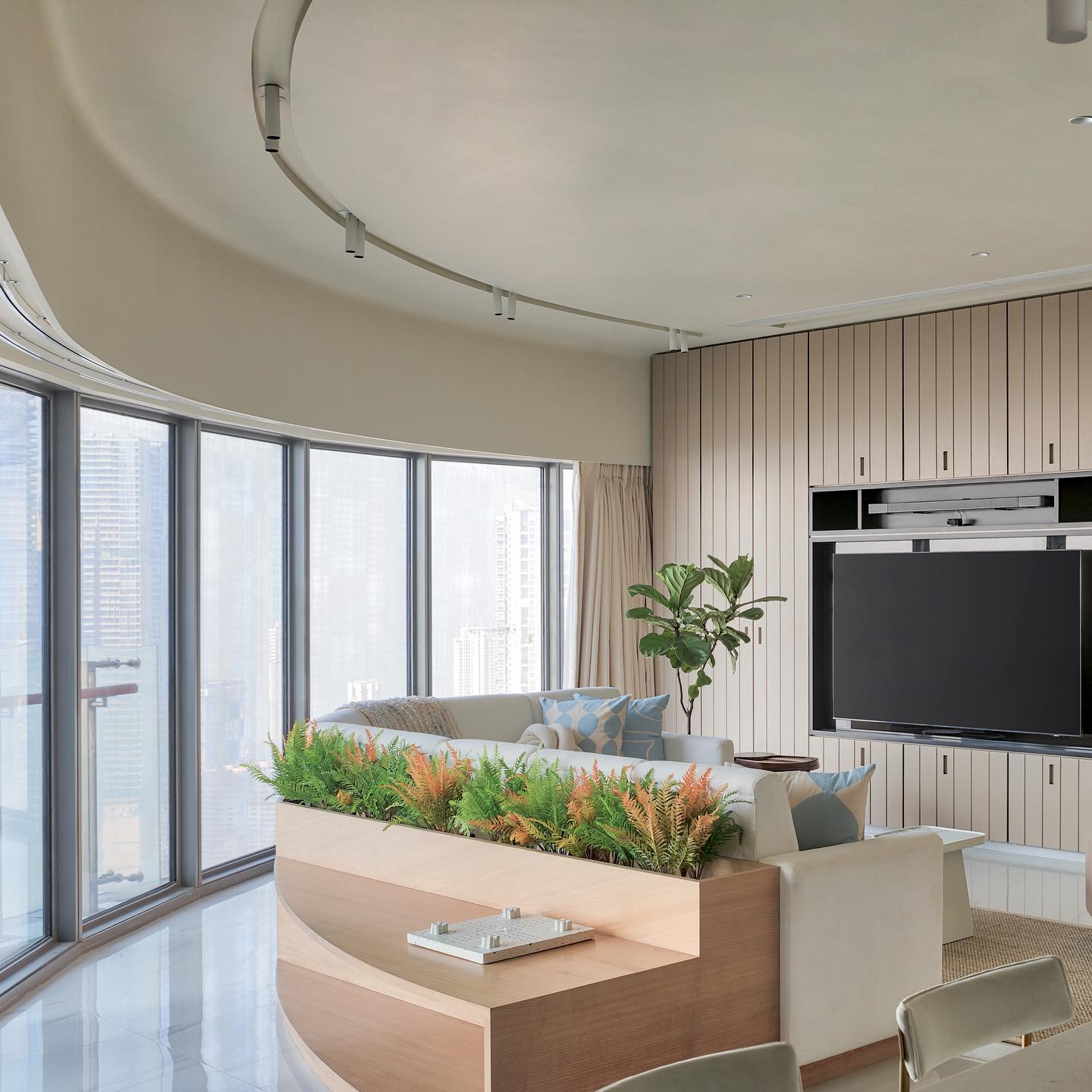
A long wood planter sits directly behind the pale sofa, marking the edge of the seating area without closing off the curved window wall. Its greenery creates a soft divider, while the attached ledge offers another useful surface.
Borrow this layout with a narrow console and a row of individual planters if custom cabinetry is out of reach. Keep the arrangement low enough to preserve conversations and sightlines across the room.
For live plants, use removable pots with watertight saucers or liners so moisture cannot reach the furniture. Check the available light before choosing varieties, and leave room to water them comfortably.
A continuous row of similar containers will give an improvised divider the orderly feeling of this built version.
16. Conceal Storage Behind Fluted Wood
Credits: Instagram
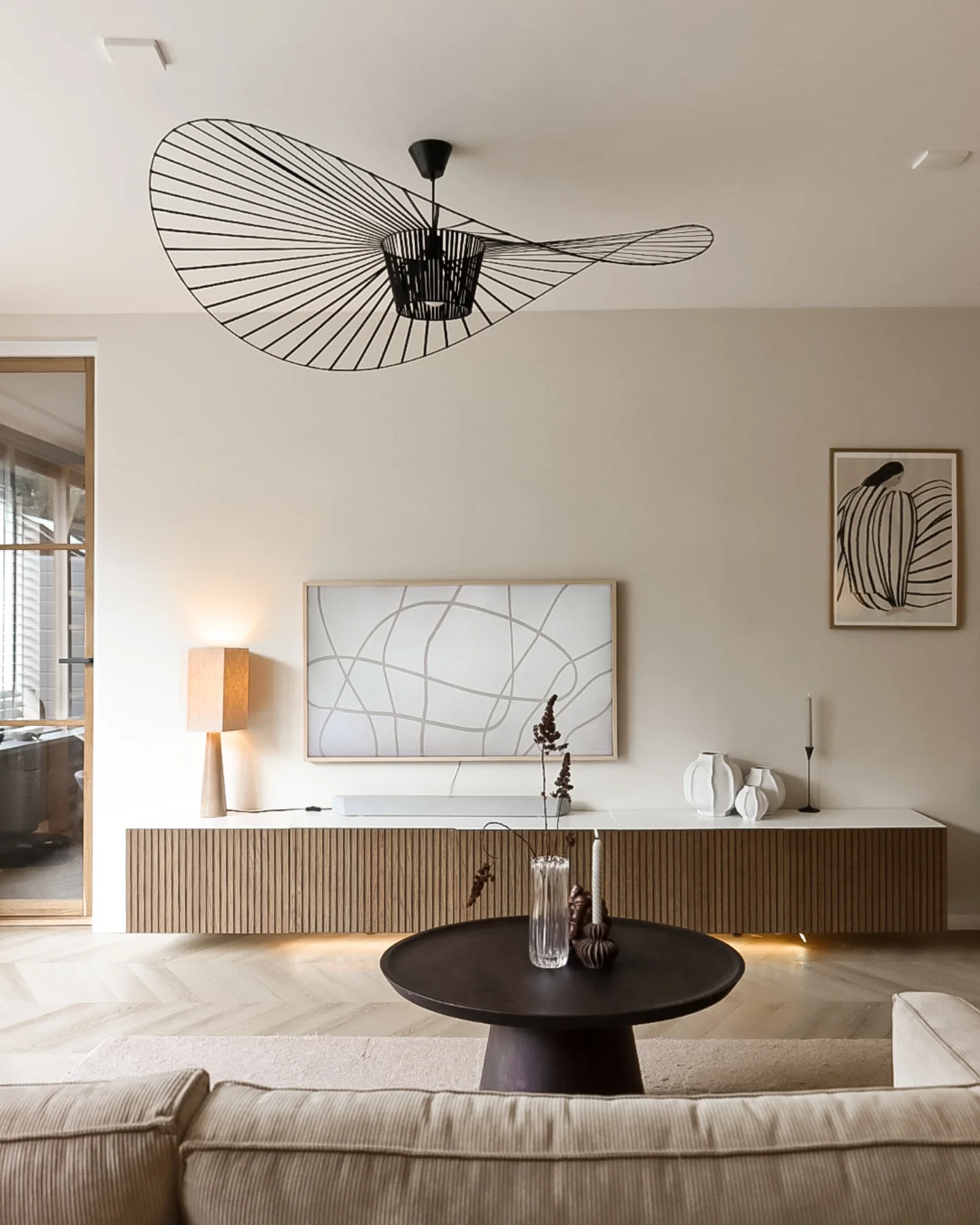
The long cabinet gives this television wall a warm, orderly base. Narrow vertical grooves add texture across its closed fronts, while a pale top and simple artwork keep the composition light.
Choose a media unit with enough enclosed space for your equipment before focusing on its finish. Measure consoles, routers, and cables, and check ventilation needs so attractive doors do not create practical problems.
A freestanding cabinet with ribbed fronts can offer a similar effect without custom construction. Keep the surface useful by grouping decorations at the ends, as the lamp and white vessels do here.
The dark round coffee table provides contrast without adding another pattern. Route loose cords neatly, and reserve accessible storage for remotes and charging essentials.
17. Showcase Stone Veining With a Simple Table
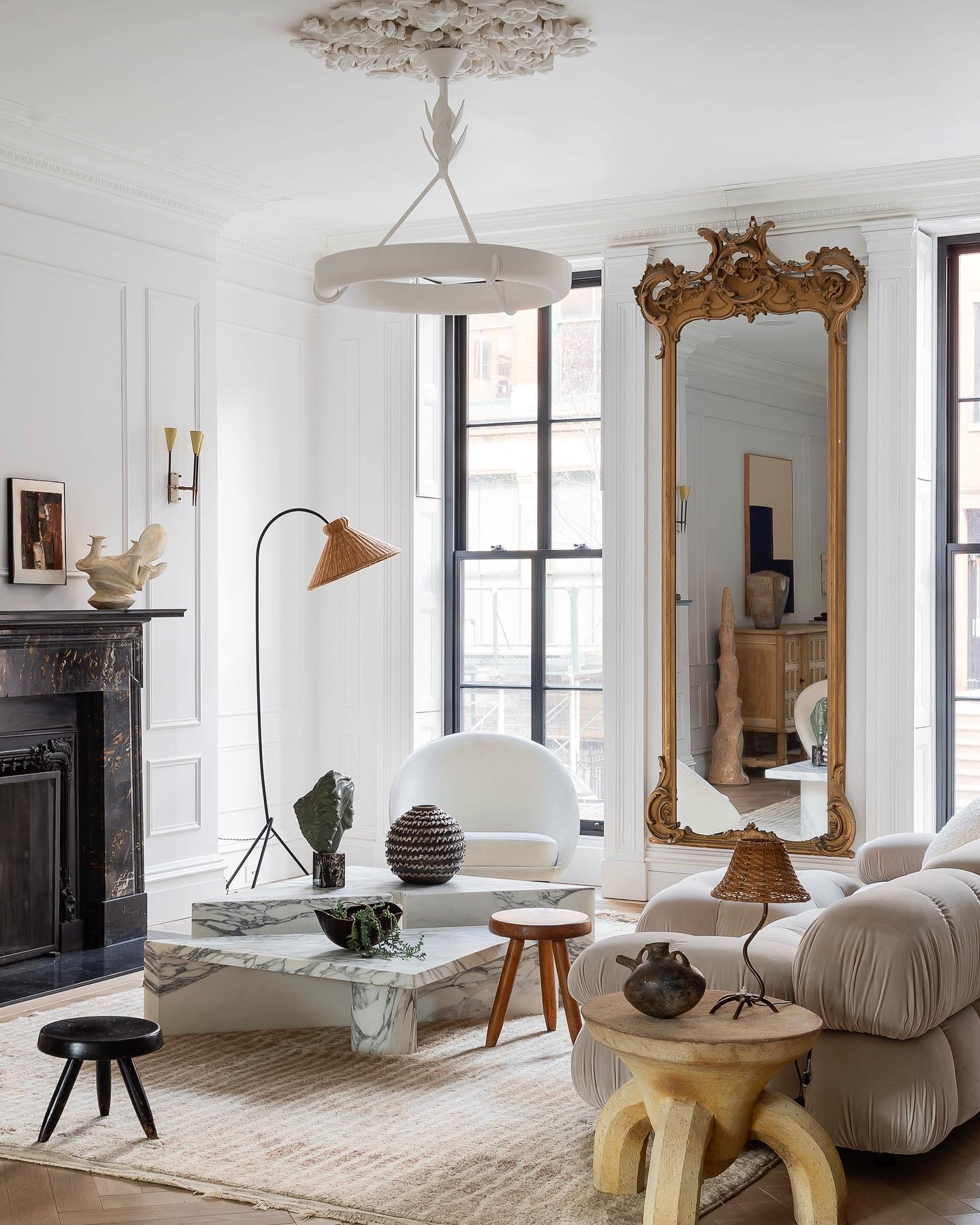
Credits: Instagram
The blocklike table arrangement lets bold gray veining become the central pattern in this bright living room. Rounded white seating and a pale rug give that movement a quiet background, while small wood pieces add warmth.
When shopping for a similar effect, favor a straightforward shape so the surface remains the main attraction. Stone look finishes can also bring the pattern into a smaller budget; compare samples and check care instructions before choosing.
Avoid covering the entire top with trays and books. A single vessel or low bowl leaves enough space to appreciate the markings and set down drinks.
Balance the substantial table with furniture on slimmer legs, and measure walking routes before bringing a heavy piece into the room.
18. Unite Mixed Seating on a Muted Rug
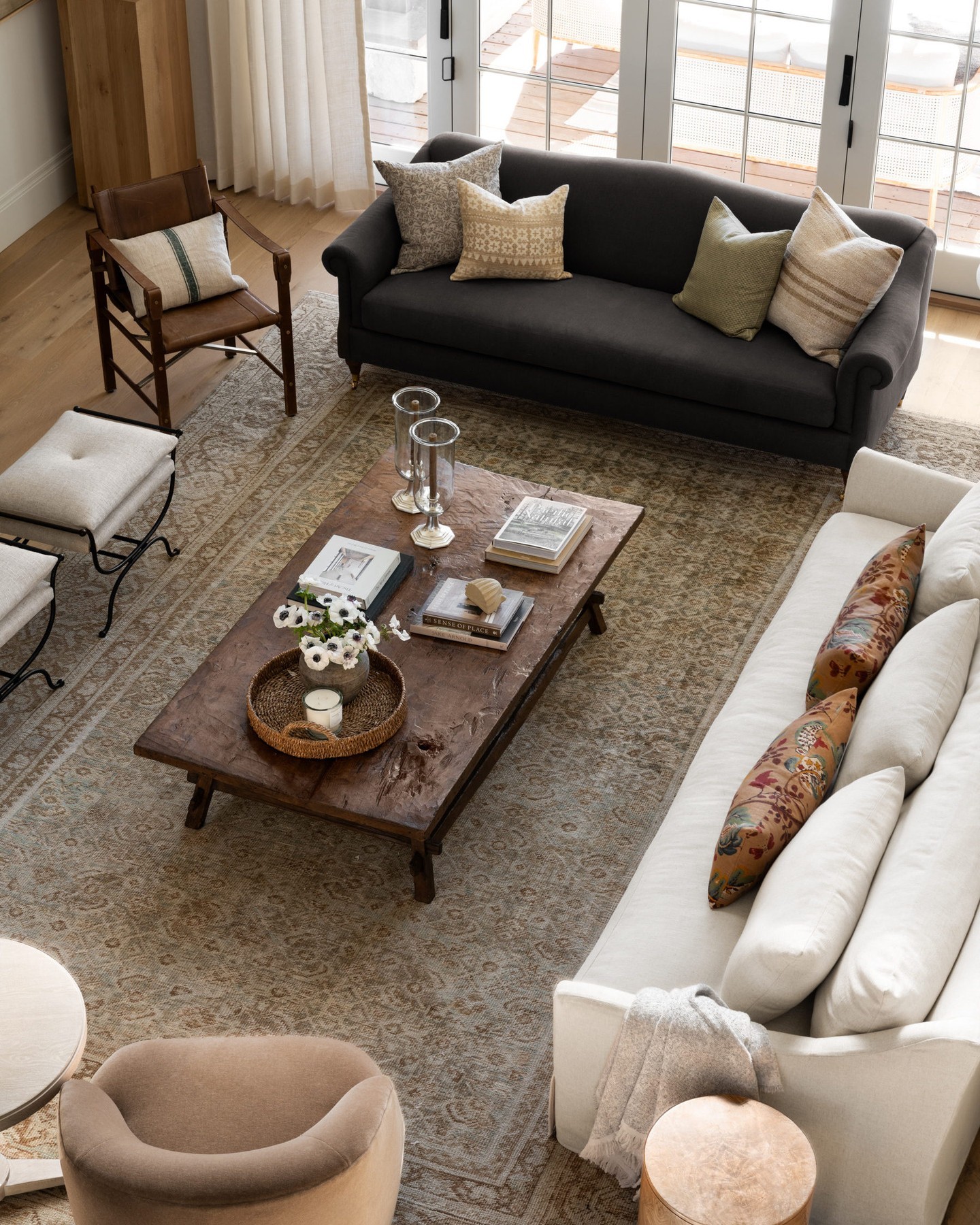
Credits: Instagram
A patterned rug brings the charcoal sofa, cream sofa, wood armchair, and small stools into one connected seating area. Its subdued colors make room for different silhouettes and pillow patterns without turning the floor into another loud feature.
Start by measuring your seating arrangement, then choose a rug that reaches beneath the front legs of the main pieces. In a smaller room, tape the outline on the floor before buying.
Pull two or three pillow colors from the rug rather than matching the sofas to each other. Here, muted greens, sandy neutrals, and warm patterned cushions create those links.
A long wood coffee table gives the group a shared center, with enough exposed surface for drinks alongside books and flowers.
19. Add Cane-Backed Wood Armchairs
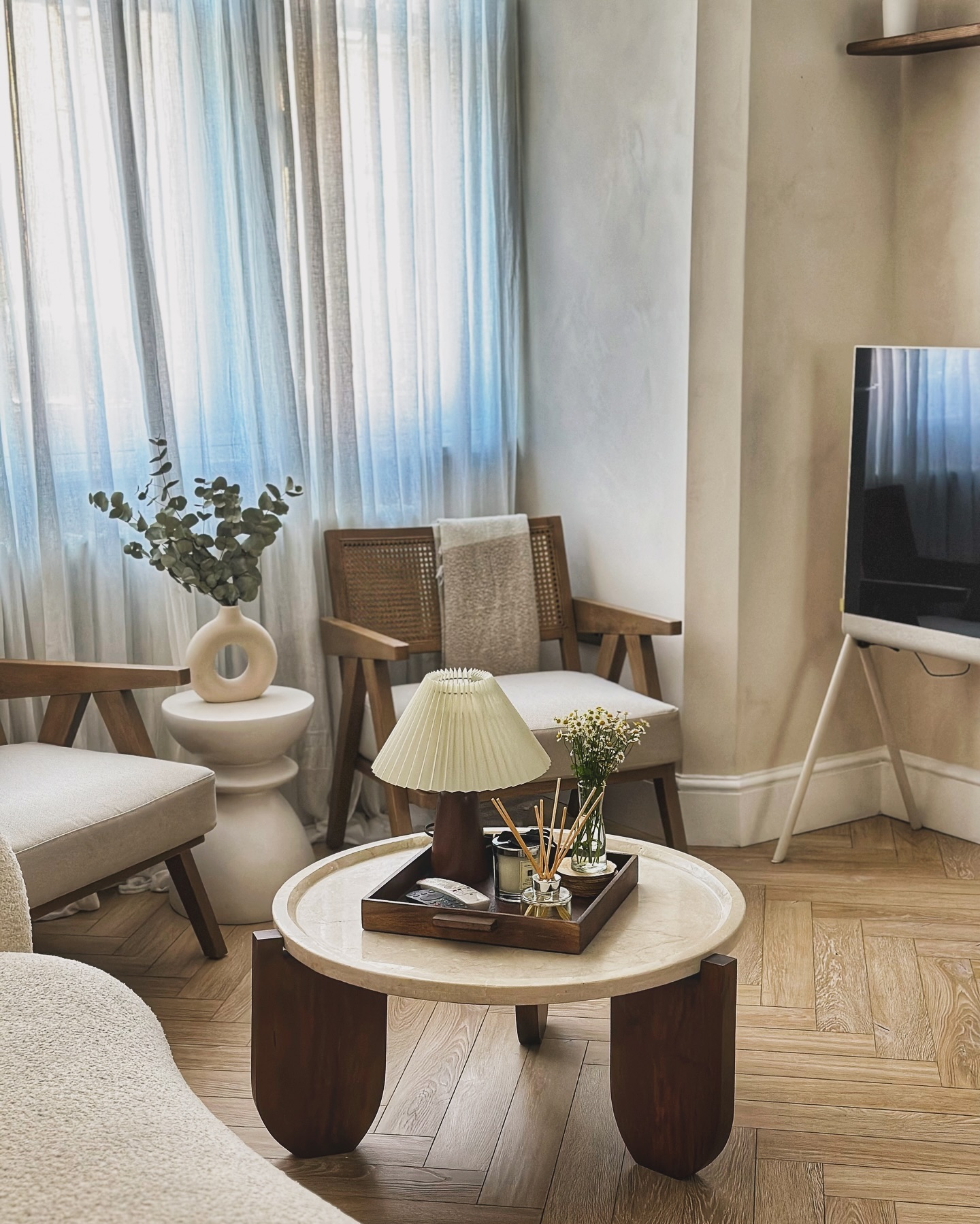
Credits: Instagram
Wood armchairs with woven backs introduce an airy texture beside the sheer curtains in this compact seating area. Their pale cushions relate to the rounded sofa and light tabletop, while darker table legs prevent the room from looking washed out.
Try one open framed chair where a fully upholstered armchair would feel bulky. Check its seat depth and arm height in person when possible, especially if it will be your reading spot.
A folded throw adds softness without hiding the woven detail completely. Keep a small side table within reach so the chair functions comfortably on its own.
The photo's cream accessories and greenery suggest an easy finishing approach: repeat a few familiar tones instead of filling every available surface.
20. Warm a Black Feature Wall With Woven Textures
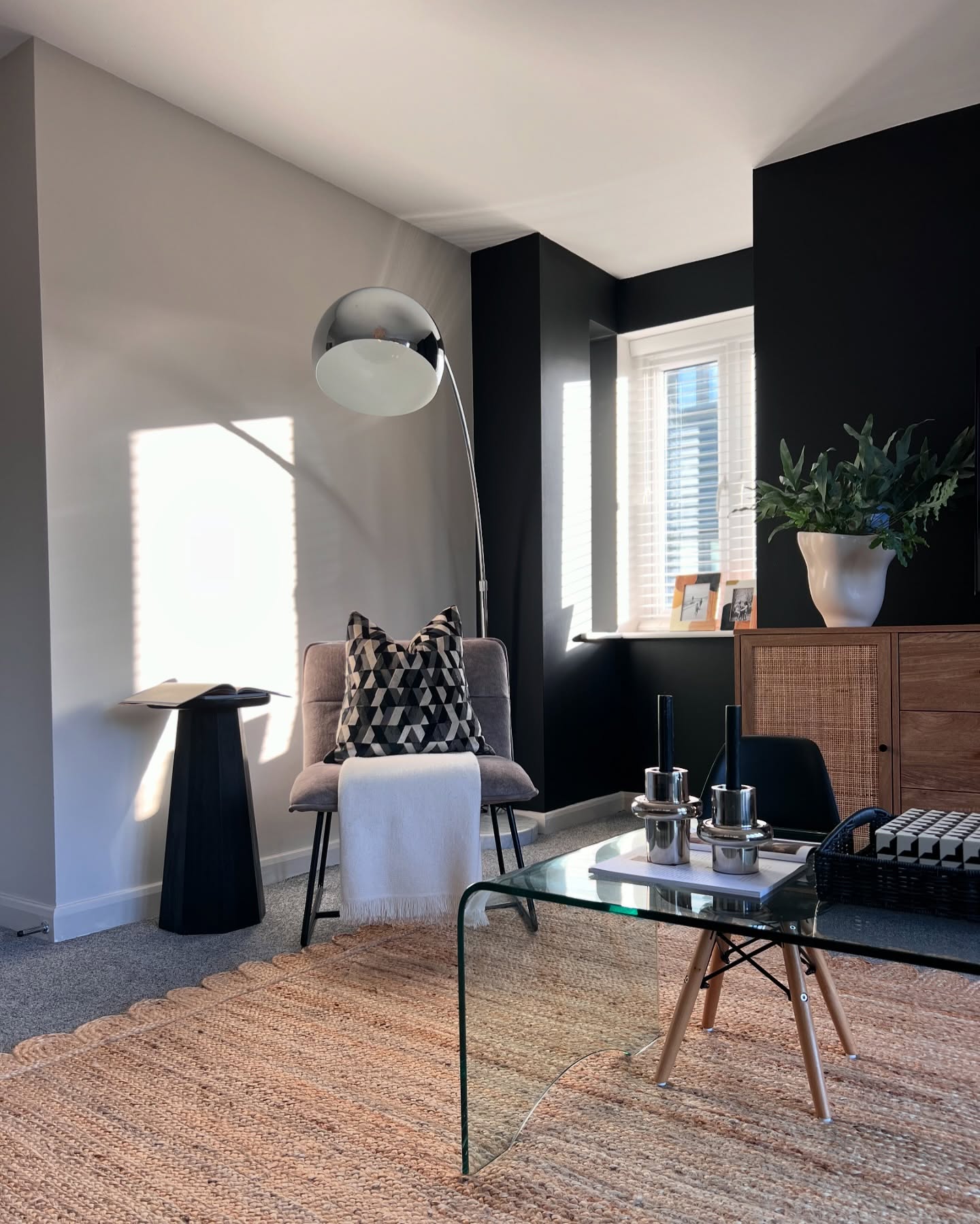
Credits: Instagram
A near black wall makes the woven cabinet front and leafy arrangement stand out, while a large tan rug keeps the seating area warm.
The glass table leaves much of that texture visible, and a white throw adds a soft break against the darker furnishings.
You can test this balance before painting by placing woven baskets, a natural toned rug, or a wood cabinet beside your existing dark furniture. Choose one main texture and repeat it lightly rather than adding competing patterns everywhere.
If painting a feature wall, try a sample near the window and inspect it at night. Keep adjacent surfaces lighter, as they are here, and add a reading lamp so the corner remains comfortable after daylight fades.