
A broad empty wall can feel unfinished even when the rest of the living room is settled.
The Best Large Blank Wall Ideas For Living Rooms here range from adding painted panel molding to arranging a gallery along an awkward stair wall, so you can choose a treatment that suits the shape of your space.
Other options include a bookcase built around a high window, warm color blocks, or one large landscape. Consider what the wall needs—structure, storage, or a focal point—before deciding how much of it to fill.
Give Empty Walls Structure With Painted Panel Molding
Credits: https://www.instagram.com/p/CbH8MYaro6A/
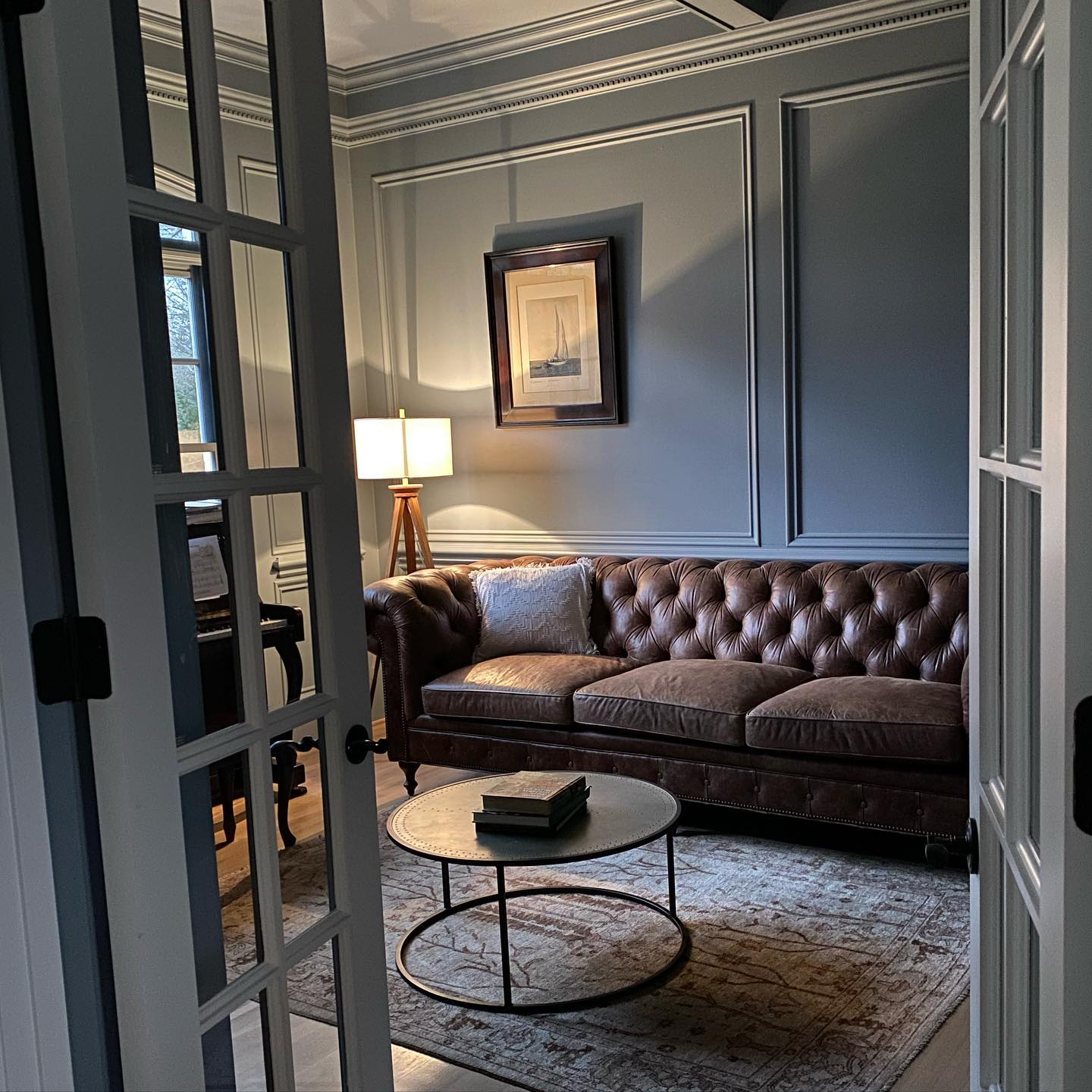
Large rectangles of molding make this gray wall feel considered even where no artwork hangs. Behind the brown tufted sofa, one framed sailboat picture sits inside a broad panel while the neighboring panel stays empty.
That balance is useful when you want architectural detail without collecting enough art to cover an entire room. Sketch your panel layout around the furniture first, leaving consistent borders beside corners and openings.
Paint the trim and wall the same shade so the raised edges supply the contrast. A lamp placed near one end will highlight their depth after dark.
Keep the artwork comfortably within its panel, and let some sections remain bare rather than filling every rectangle just because another picture could fit there.
Shape Your Gallery Around An Awkward Stair Wall
Credits: https://www.instagram.com/p/Ch0OnsJPqp9/
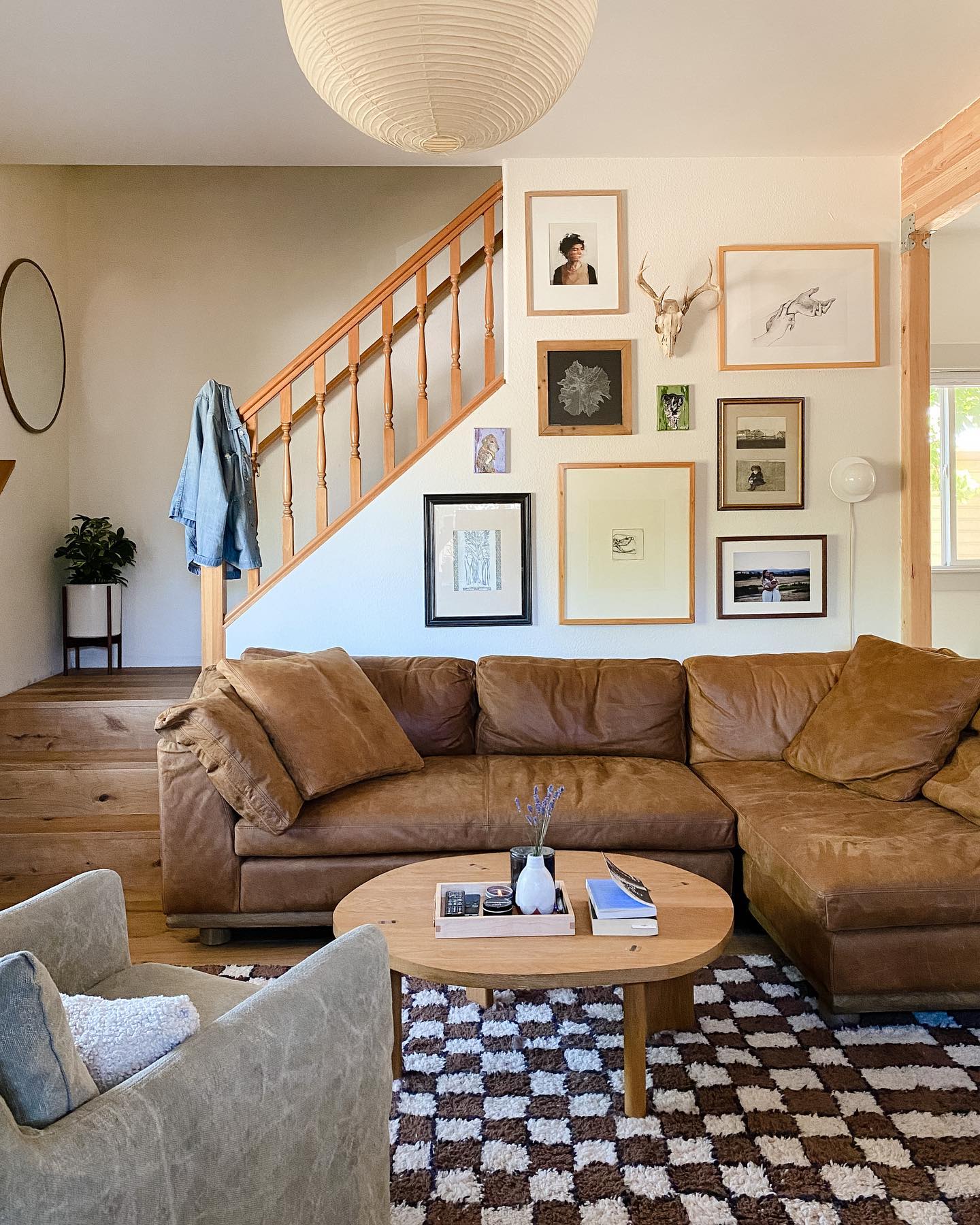
An uneven wall can give a gallery its shape. Here, the staircase cuts diagonally across the space behind a brown sectional, and the pictures occupy the taller area to its right.
Larger frames sit low above the sofa while smaller pieces fill gaps between portraits, drawings, photographs, and a mounted antlered skull. The mix feels connected through repeated pale mats and warm frame tones rather than matching dimensions.
Try arranging paper templates on your wall before making holes. Establish the bottom edge above the sofa, then build upward where the wall allows.
Leave some breathing room around three-dimensional objects, and keep the composition clear of a nearby sconce. You can borrow the arrangement with artwork and personal photographs you own.
Wrap A Corner In Geometric Wood Slats
Credits: https://www.instagram.com/urbanwalldesign/p/Clueb1vP7IJ/
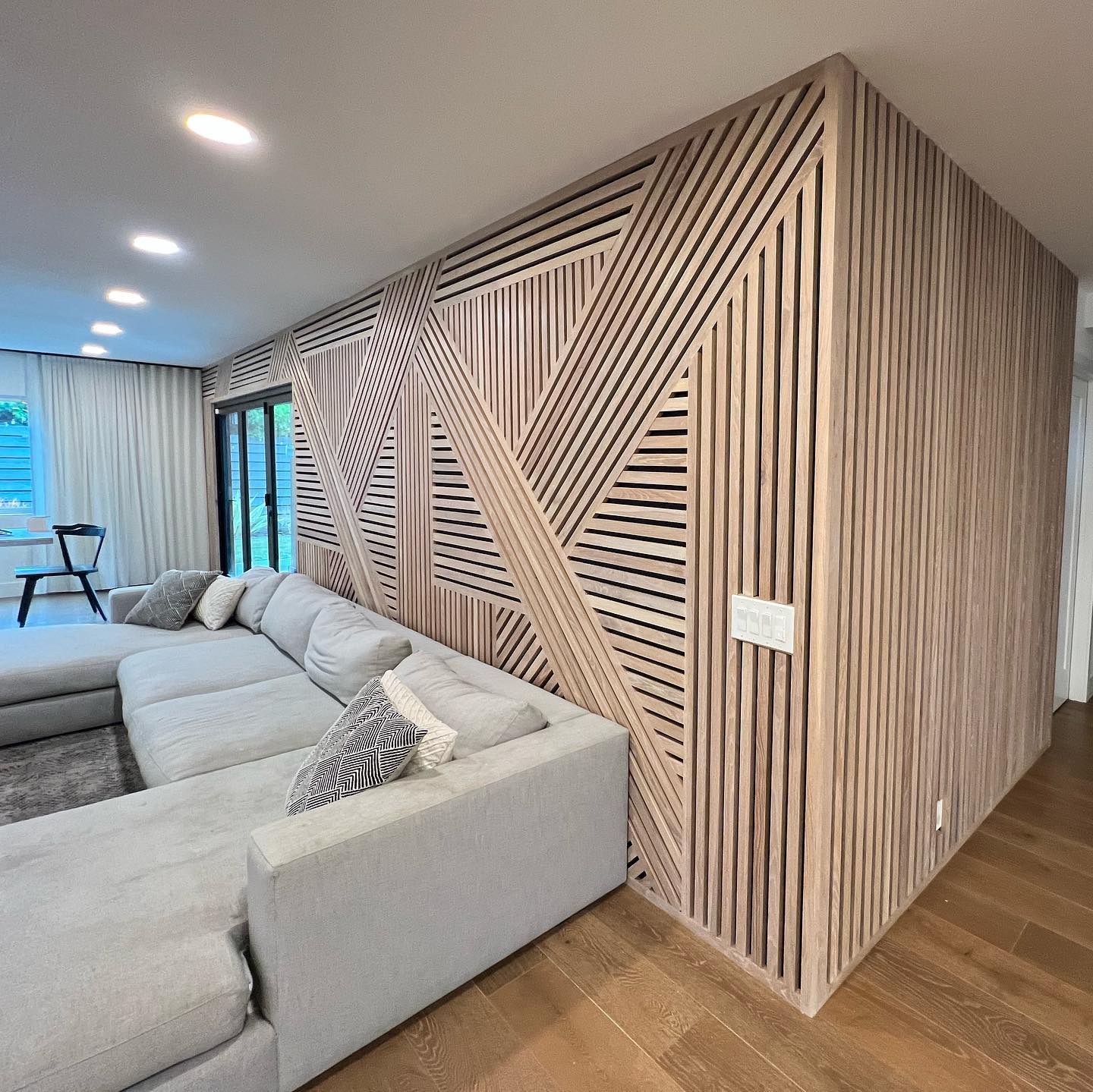
This wall makes its pattern from the direction of the slats. Broad diagonal bands cross sections of horizontal and vertical strips behind a pale sectional, then the treatment turns the corner into simpler vertical lines.
The consistent wood tone connects the different patterns, while dark gaps keep each section readable. For a smaller room, adapt the idea as one defined panel behind the sofa instead of covering every wall.
Draw the major diagonals first and plan how they meet the edges before choosing individual slat spacing. Account for switches and outlets early so they remain accessible within the layout.
Keep nearby upholstery and curtains relatively quiet, as shown here, giving the angular wall enough visual space to carry the composition.
Build A Bookcase Wall Around A High Window
Credits: https://www.instagram.com/p/Cp0oo2MvDih/
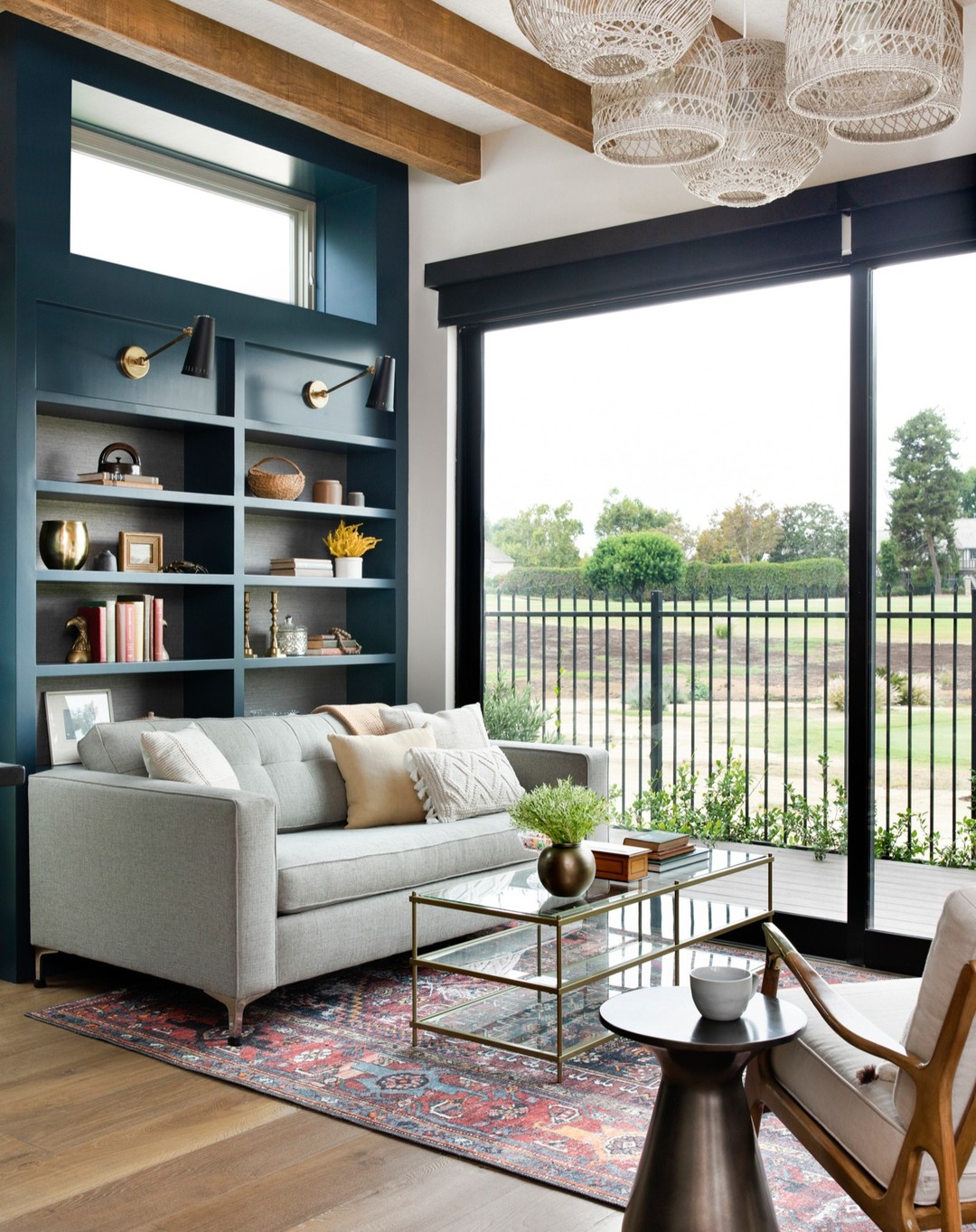
A high window does not have to interrupt a bookcase wall. In this room, deep blue shelving rises behind the pale sofa, with matching painted surrounds tying the upper window into the composition.
Two adjustable sconces sit above the open shelves, where books share space with baskets, framed pictures, and small decorative pieces.
Take the idea to a blank wall by planning shelves around existing openings instead of forcing a freestanding unit into the available gap. Leave enough clearance behind the sofa to reach what you store.
Keep frequently used books on accessible shelves and place occasional display objects higher. Repeating one paint color across shelves and surrounding trim helps the whole installation read as a single, deliberate wall feature.
Use Light Lines As The Wall Decoration
Credits: https://www.instagram.com/p/DJlUzUWM-99/?img_index=1
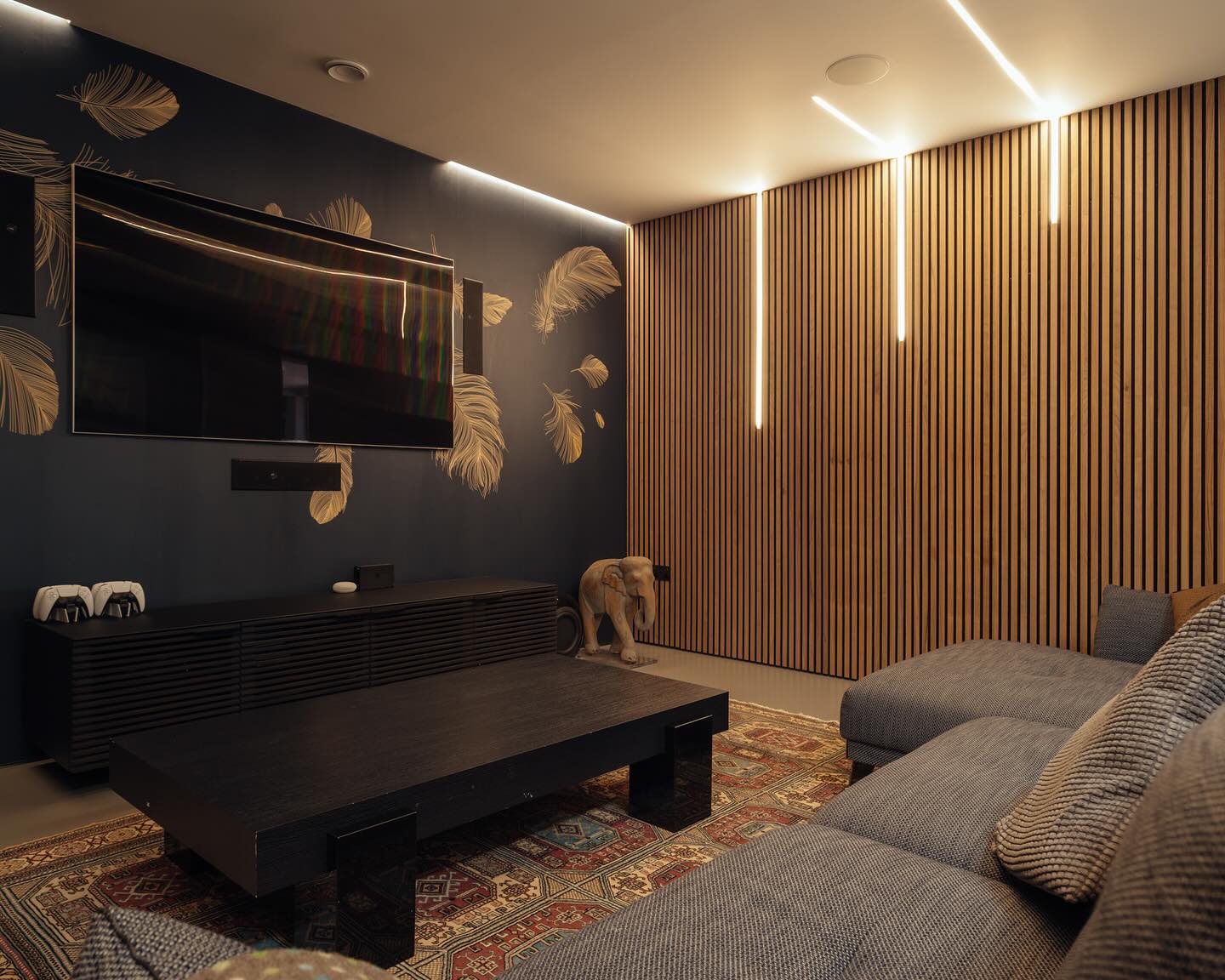
Lighting becomes the artwork on this broad slatted wall. Narrow illuminated lines descend from the ceiling at different lengths, breaking up the repeated vertical strips beside the television.
Some continue overhead, making the junction between wall and ceiling part of the design. The room keeps its furniture dark and simple, leaving those bright lines clearly visible.
Adapt the approach with a few deliberately positioned linear fixtures rather than scattering small lights across a large surface. Plan their spacing from the main seat and check how they reflect in your screen before committing.
Ask an electrician about suitable wiring and dimming, especially if you watch television here. A controlled lighting pattern can decorate the wall without needing additional frames or shelves.
Divide A Blank Wall With Warm Color Blocks
Credits: https://www.instagram.com/p/CzavIu6rBjZ/
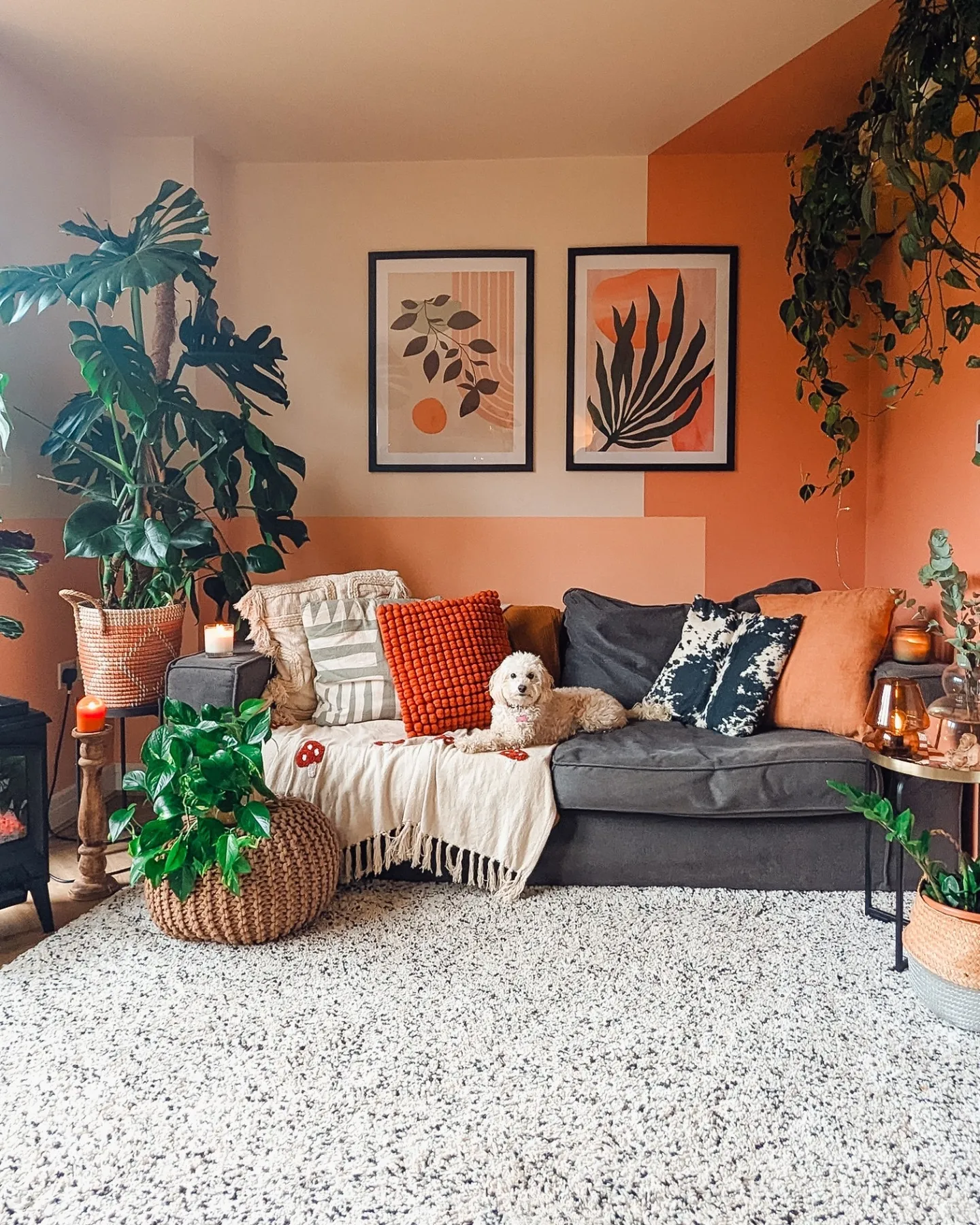
Paint can give a wide wall structure before you hang anything. Behind this gray sofa, a peach band runs horizontally while a stronger orange section wraps the right corner.
The pale upper area keeps the composition from becoming one uninterrupted field of orange. One botanical print overlaps the color boundary, and rust cushions repeat the warmer shade below.
To adapt this idea, mark your proposed blocks with tape and view them from the doorway before painting. Use the sofa height and wall corners as reference points, but let one section extend beyond the furniture.
Test the colors together in daylight and lamplight. A few repeated accents will connect the painted shapes to the seating without requiring every cushion to match.
Let One Large Landscape Fill The Wall
Credits: https://www.instagram.com/p/Ctro5gUA6CN/?img_index=2
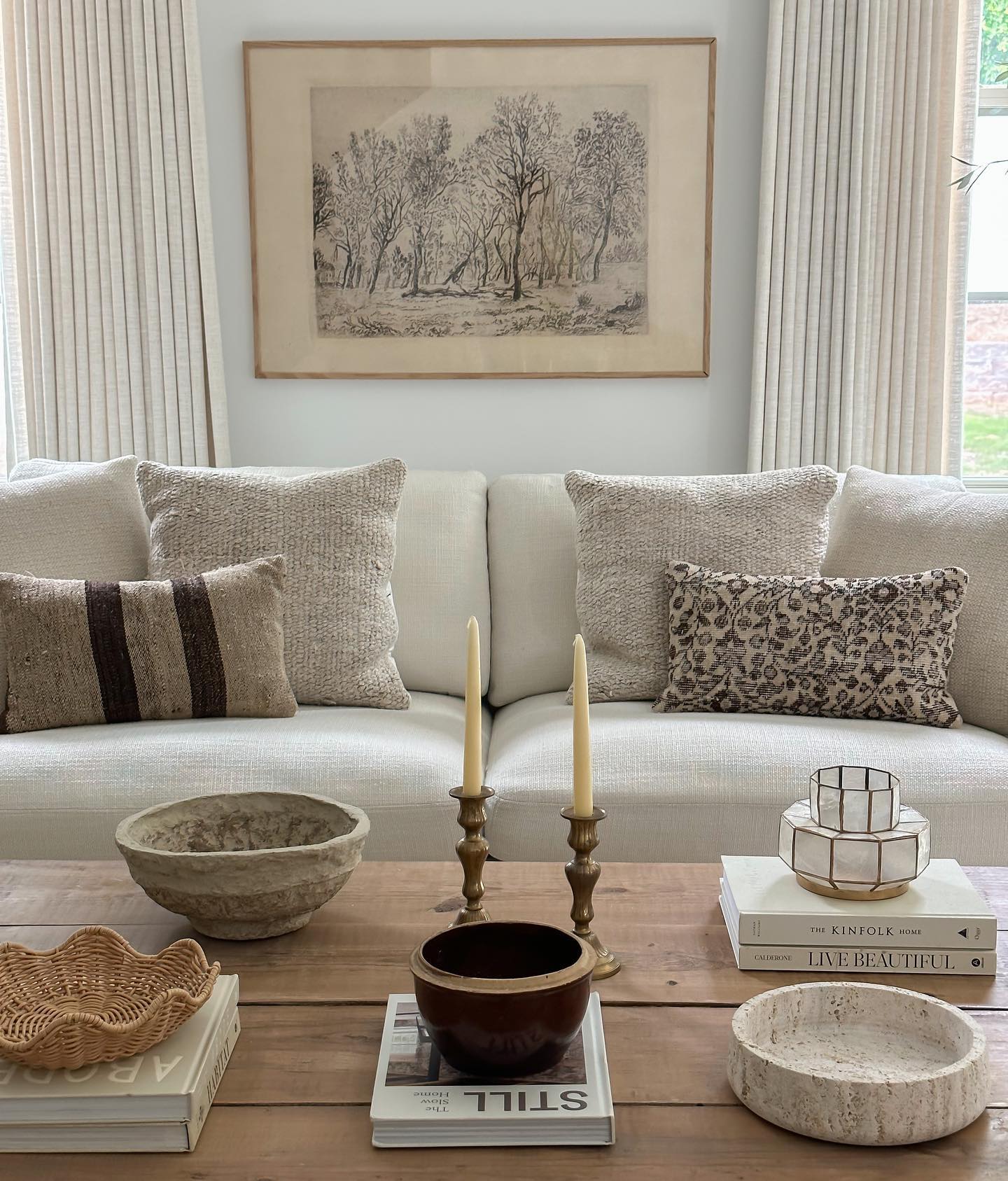
One generous frame can be enough when a wall already has clear boundaries. Here, a horizontal woodland image occupies the space between two curtains above a cream sofa.
Its pale mat and slim frame keep the intricate trees from competing with the textured cushions below. Instead of adding smaller pictures around a favorite print, consider giving that image a larger frame and breathing room.
Measure the visible wall between curtains or other openings, then test a paper outline before ordering. Choose a frame that relates to a nearby finish, as this warm frame does to the coffee table.
Keep the artwork close enough to feel connected to the sofa, with ample clearance above the cushions for people to sit comfortably.
Cover The Whole Wall With A Garden Mural
Credits: https://www.instagram.com/p/CxBVrlFL-YF/
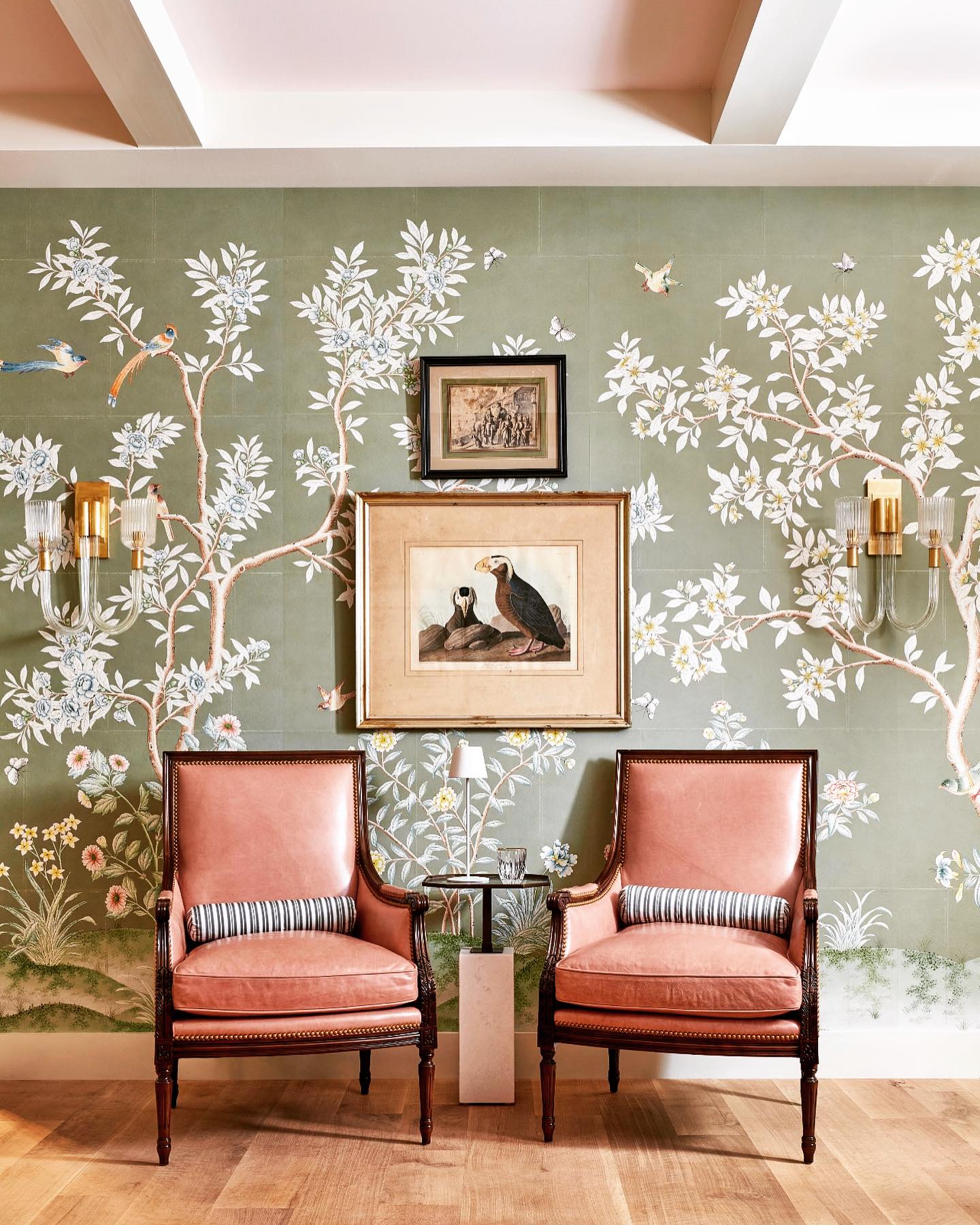
A garden mural turns this entire wall into the main decorative feature. Pale flowering branches spread across a muted green background, with birds and butterflies adding details between them.
Two coral chairs and matching wall sconces create a balanced sitting area in front, while framed pictures are layered over the pattern.
To borrow the idea, choose a mural whose branches or larger shapes still read clearly from across your room. Check the full design against your wall dimensions before buying, especially where doors, sockets, and furniture will interrupt it.
Pull one quieter color into the seating, or echo a small accent from the mural. Leave some sections uncovered so the scene remains legible, particularly around the most detailed flowering branches.
Anchor A Collected Gallery With A Picture Ledge
Credits: https://www.instagram.com/p/CysSXemq1WS/
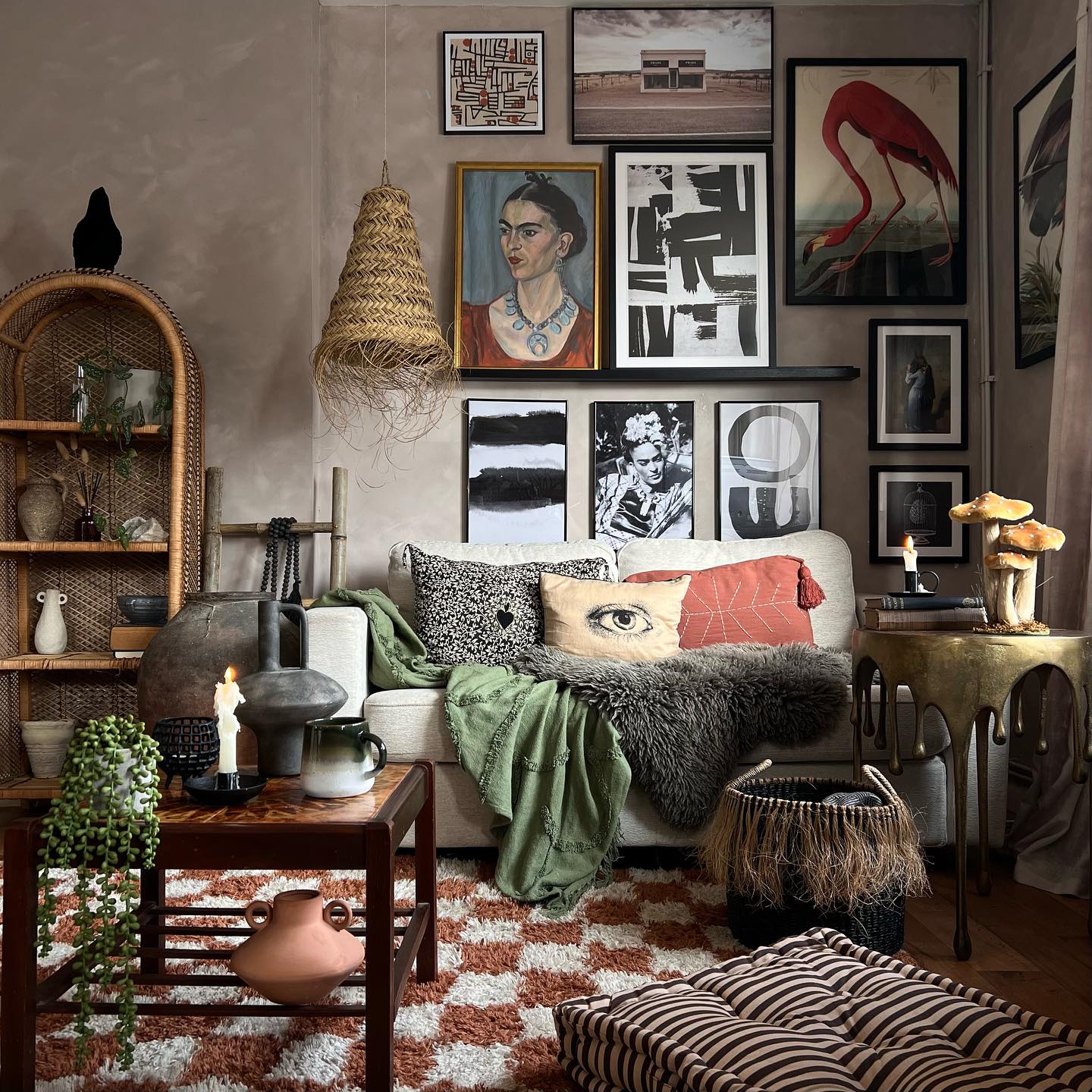
A dark picture ledge gives this busy gallery a clear horizontal anchor. Two tall framed pieces rest along it, with smaller pictures arranged above and another row hanging underneath.
Mostly dark frames connect the varied portraits, abstract images, and bird print without making everything identical. The ledge is useful if you enjoy changing a few favorites while leaving the rest of the display in place.
Start with its position relative to the sofa, then arrange your largest frames before filling smaller gaps. Check the ledge depth and weight rating for the pieces you want to display, and secure frames where needed.
Keep the ledge arrangement easy to reach so favorite pictures can rotate without rearranging the entire gallery around them.
Mix A Round Mirror With Rectangular Artwork
Credits: https://www.instagram.com/p/CCKZErODZ5Z/
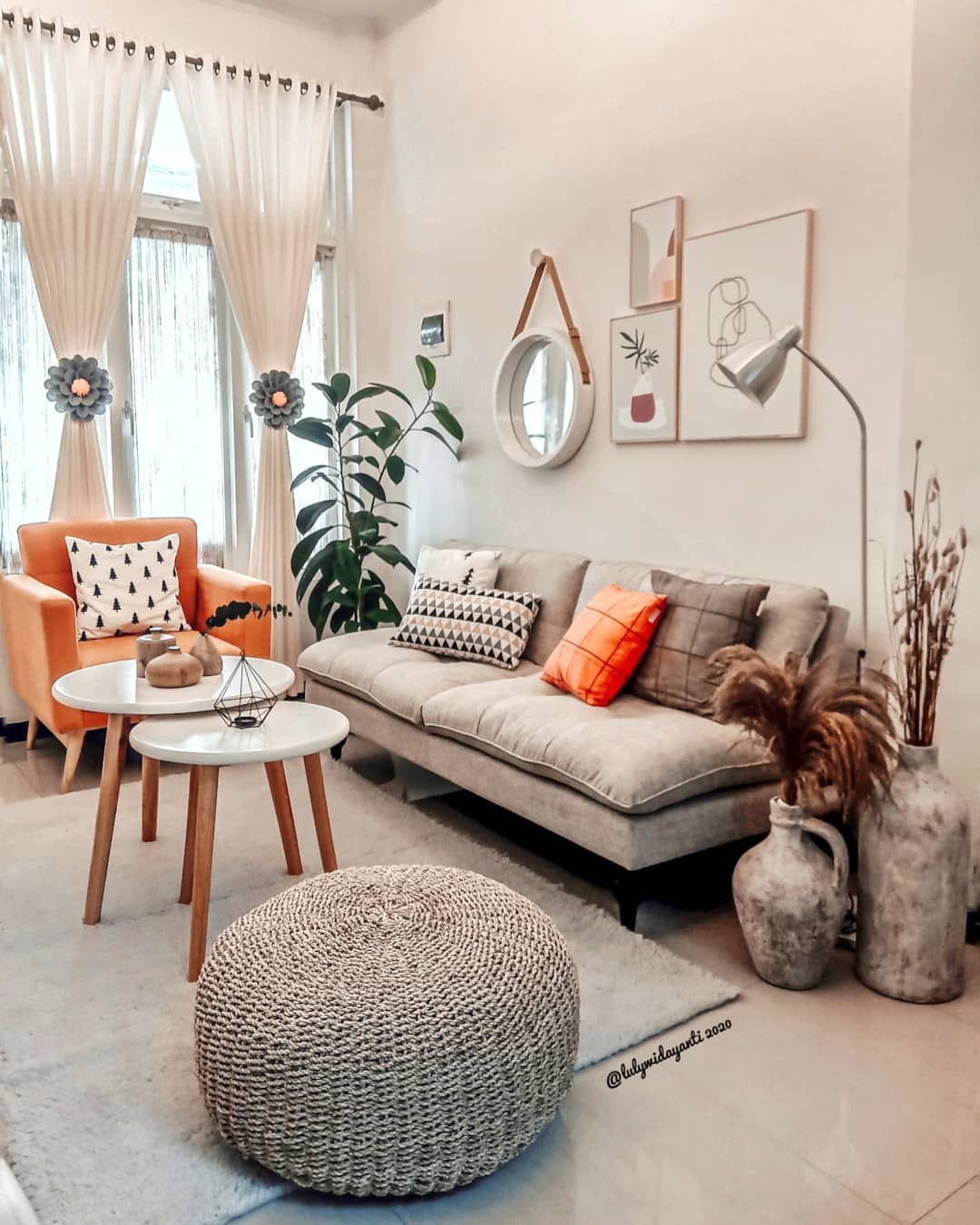
A round mirror brings a different outline to this arrangement above a gray sofa. Its pale rim and hanging strap sit beside three rectangular prints, with two smaller frames stacked next to one larger piece.
Warm frame tones relate to the orange chair and cushion, while the mirror reflects part of the window. Use this approach when you want more variety than a matching set of pictures.
Plan the mirror and artwork as one group, keeping the spaces between them deliberate. Check what the mirror will reflect from your usual seat before fixing its position.
A tall plant or floor lamp can balance the edges of the arrangement without adding another object to the wall or crowding the central display.
Make A Substantial Mantel Shelf The Main Feature
Credits: https://www.instagram.com/p/CCb4Xnlp_7Z/
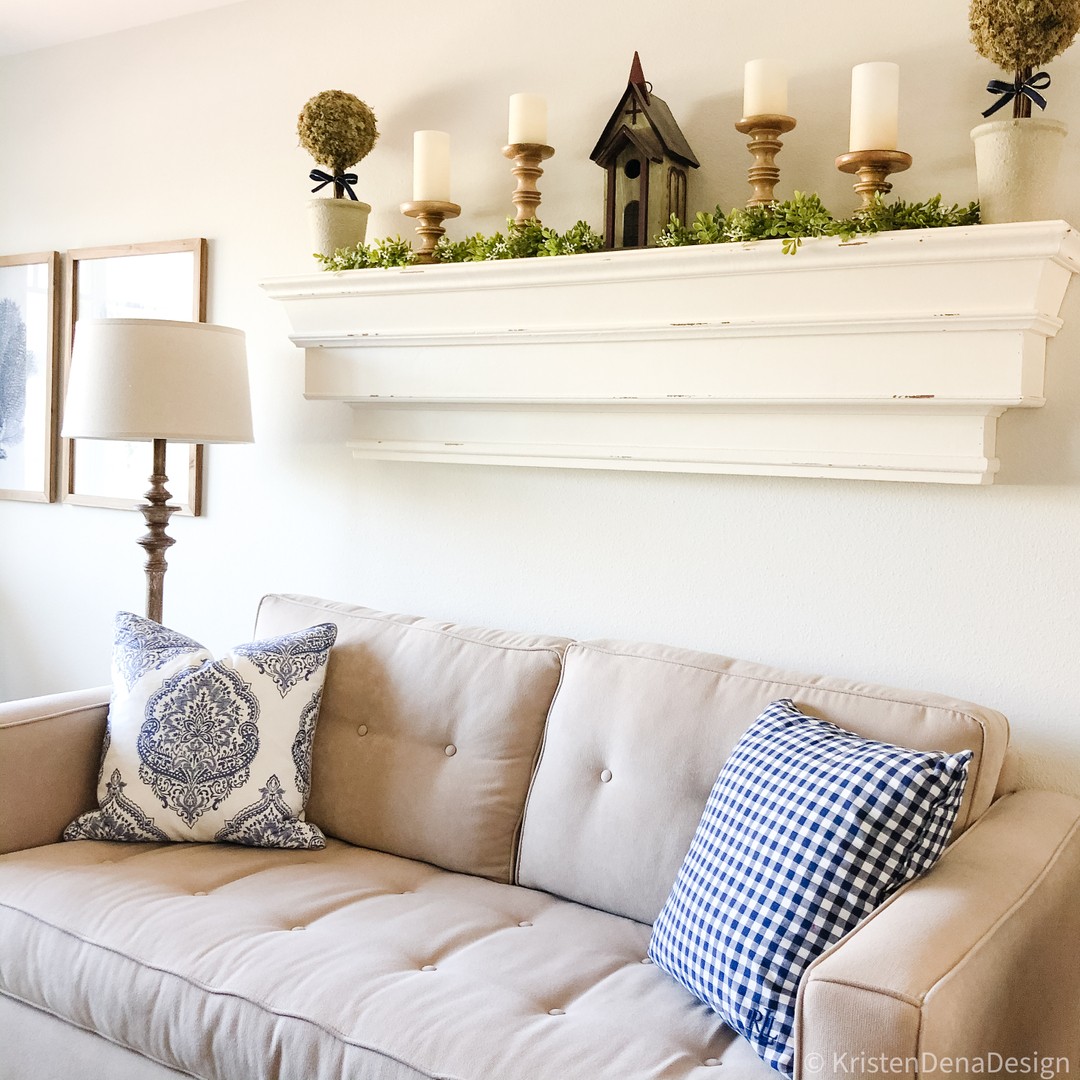
This broad white shelf has enough depth and molding to decorate the wall even before anything is placed on top.
Above the cream sofa, its stepped profile creates a strong horizontal feature, while candleholders, small topiary forms, and a birdhouse add height. A low trail of greenery connects the separate objects along the surface.
Borrow the idea with a substantial decorative shelf sized to your seating area, checking its projection so seated people have comfortable clearance. Use appropriate fixings for both the shelf and its display weight.
Arrange taller objects toward the ends or center, with lower pieces linking them. Flameless candles are a practical choice above upholstery, and leaving some shelf visible keeps its architectural shape easy to appreciate.
Back A Tall Display Recess With Patterned Wallpaper
Credits: https://www.instagram.com/p/Cx_QWhJLTxX/?img_index=1
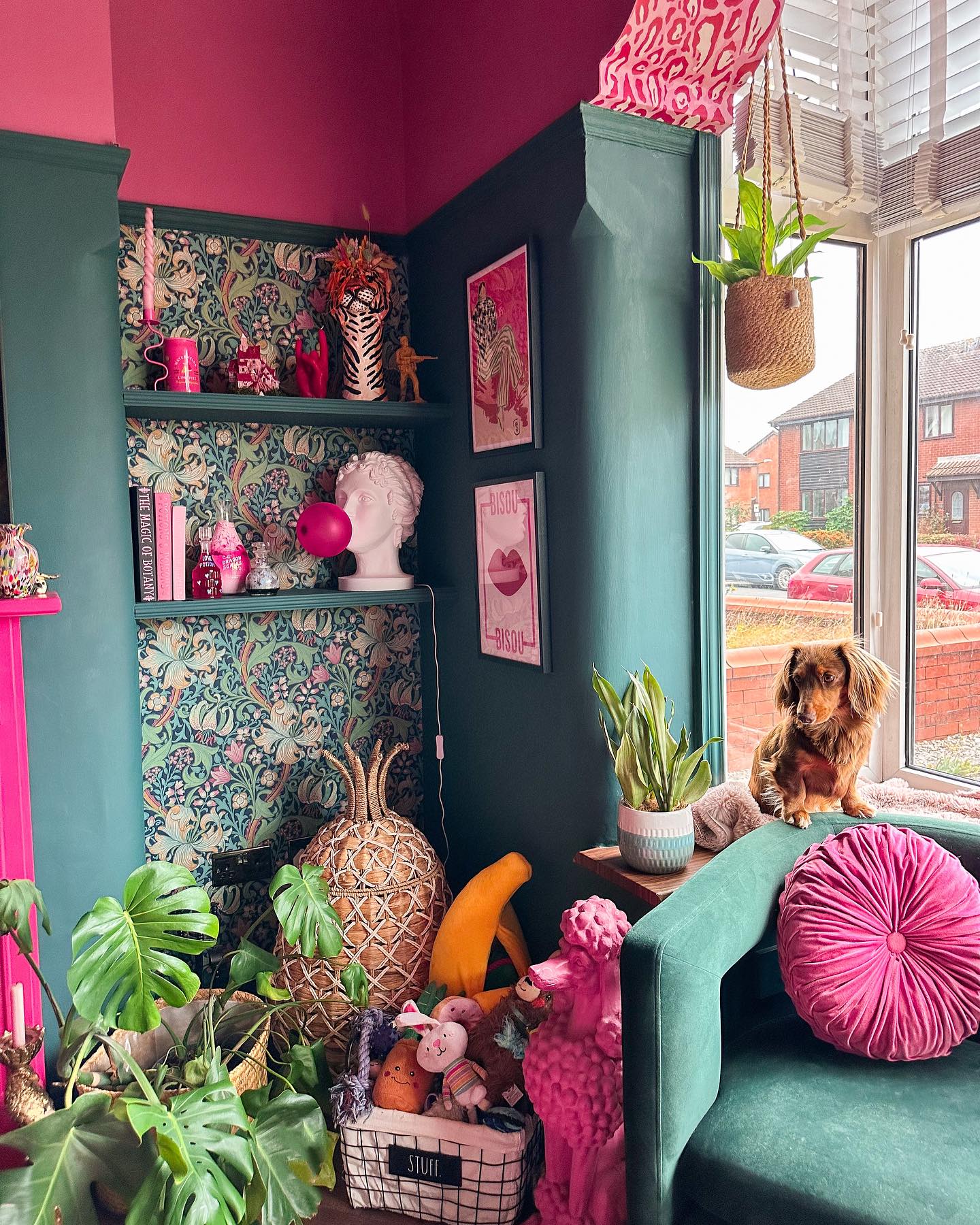
Patterned wallpaper makes this recess feel like a decorative panel. The floral design continues above and below two green shelves, while the surrounding walls stay solid green.
Pink objects repeat the ceiling color, connecting the display to the rest of the room. Although this example occupies an alcove, the idea can translate to a defined vertical section on a wider blank wall.
Use painted borders or simple trim to give the wallpaper a clear stopping point. Choose shelves that leave enough of the pattern visible, and group objects rather than lining up pieces across every inch.
Test your wallpaper beside the surrounding paint before committing. Keeping both treatments related in color helps a detailed pattern sit comfortably within the room.
Let Dark Horizontal Cladding Cover The Whole Wall
Credits: https://www.instagram.com/p/CnnlW14Jo8H/
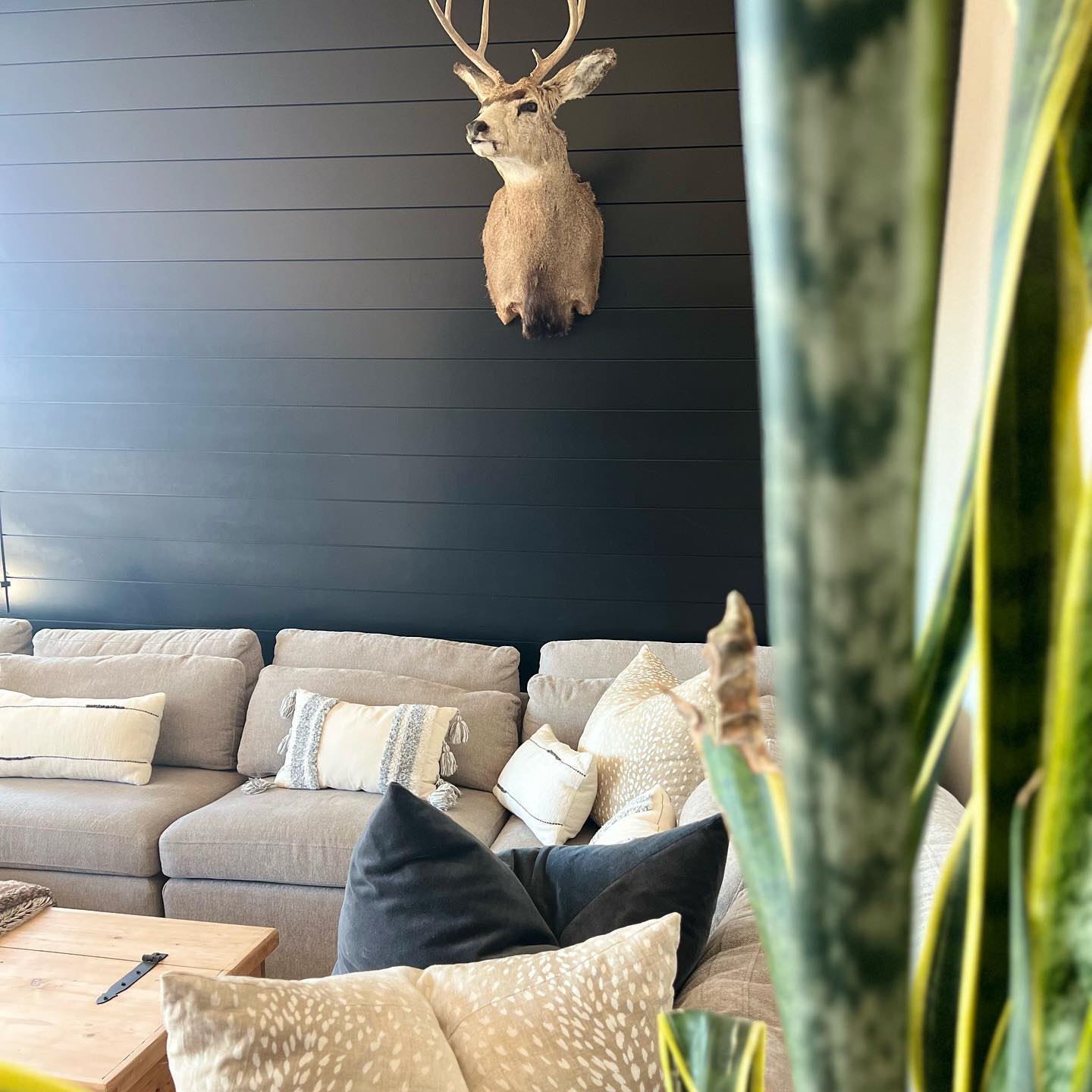
Dark horizontal boards give this tall wall a clear rhythm without requiring a collection of pictures. Their fine seams remain visible behind a pale sectional, and a single mounted deer head leaves much of the surface open.
Light cushions and the wooden coffee table provide contrast against the deep background. For your own room, sample a dark finish on a generous area before deciding, checking it beside the sofa in changing light.
Plan board spacing and edge details so the lines finish neatly at corners and openings. Keep the wall decoration restrained if the cladding is your main feature.
You can use one large artwork instead of a mounted object, while leaving enough uncovered surface to appreciate the horizontal pattern.
Choose An Ornate Mirror With A Considered Reflection
Credits: https://www.instagram.com/p/CYxod2hrE8T/
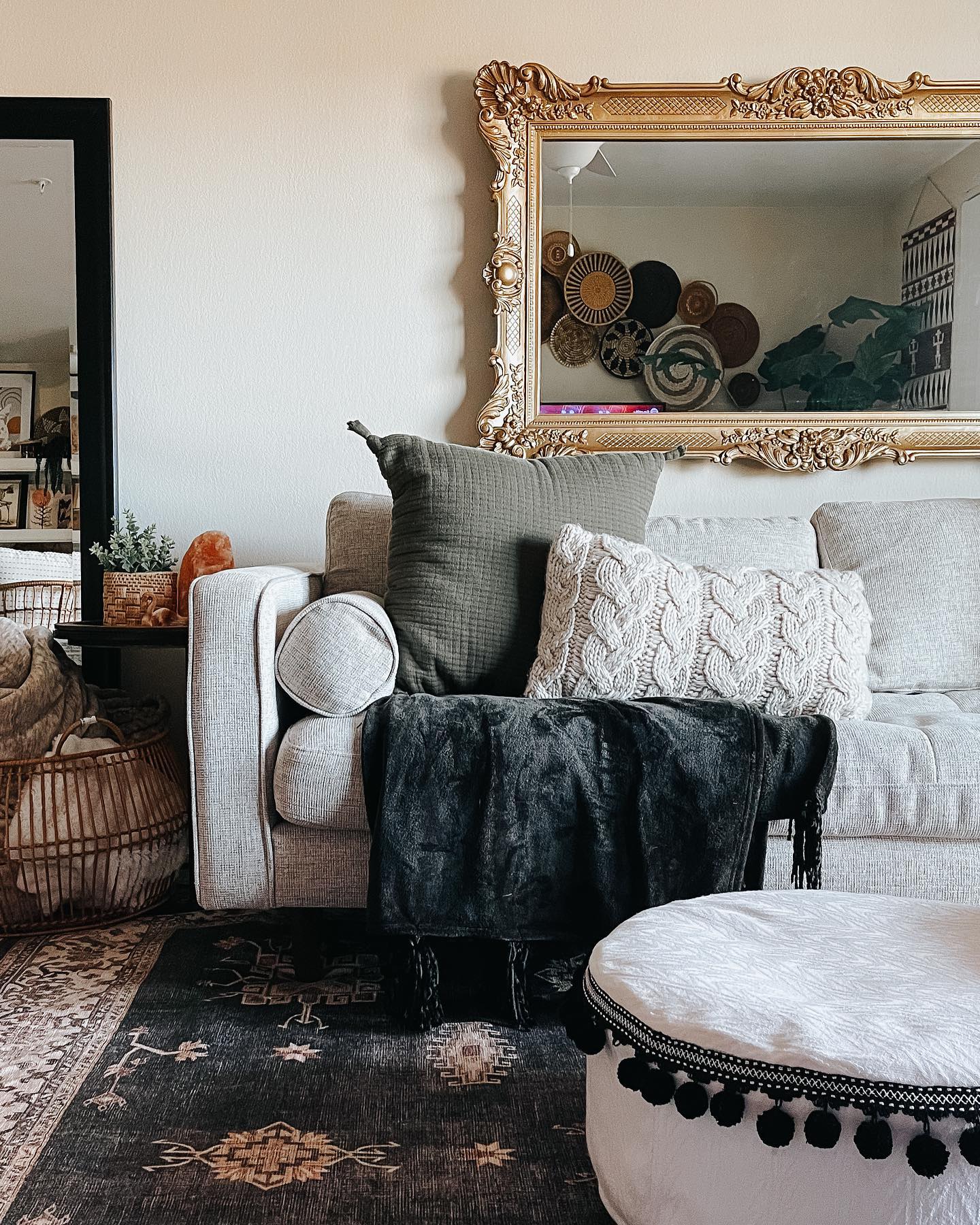
The ornate mirror above this pale sofa decorates the wall in two ways: through its detailed frame and through the view it reflects.
Its gold-toned border stands out against the simple wall, while a collection of woven baskets and leafy greenery appears in the glass. That reflected composition is worth planning as carefully as the mirror itself.
Before hanging a large mirror, hold a smaller one near the intended position and check the view from several seats. Choose a width that relates to the sofa, and leave enough clearance above the cushions.
Use fixings rated for the mirror and wall construction. Keep nearby wall decorations restrained if the frame is elaborate, allowing its curves and reflected details to stand out.
Build Storage And Display Around The Television
Credits: https://www.instagram.com/p/Cslxb2mIS8M/
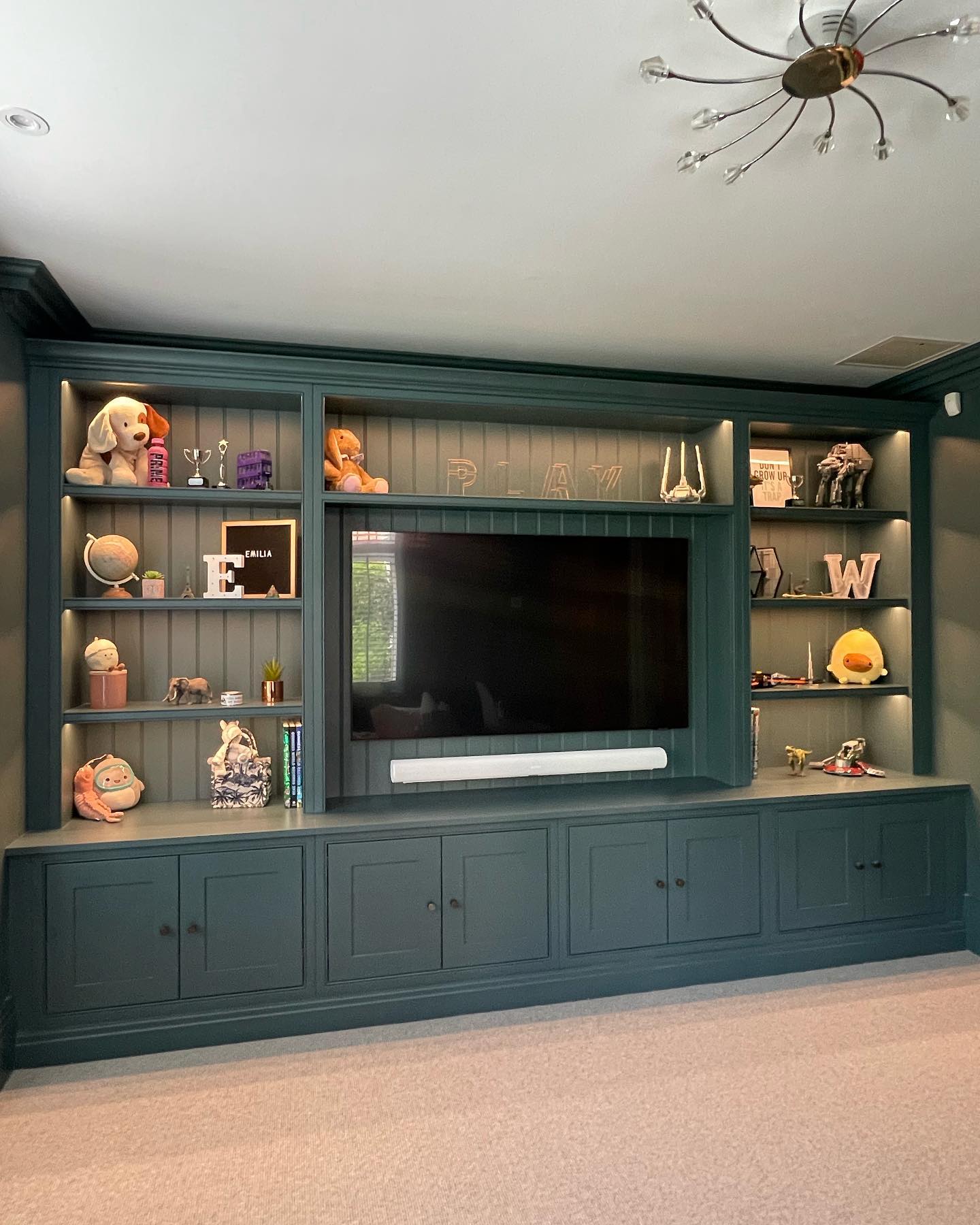
A television becomes part of the wall design when cabinetry gives it a clear place. This deep green installation surrounds the screen with open shelves, a broad upper display compartment, and closed cupboards below.
Small shelf lights pick out selected objects, while the matching painted frame keeps the whole arrangement connected. Adapt the layout to what you need to store before deciding on shelf spacing.
Allow room for the screen, sound equipment, cable access, and the ventilation each device requires. Closed lower cabinets can hold less decorative items, leaving the open shelves for a few books and favorite objects.
Test the television height from your usual seat, then plan surrounding cabinetry to suit that position and the available wall space.
Add Depth With Repeating Wave Relief Panels
Credits: https://www.instagram.com/p/CstZNoeLk5d/
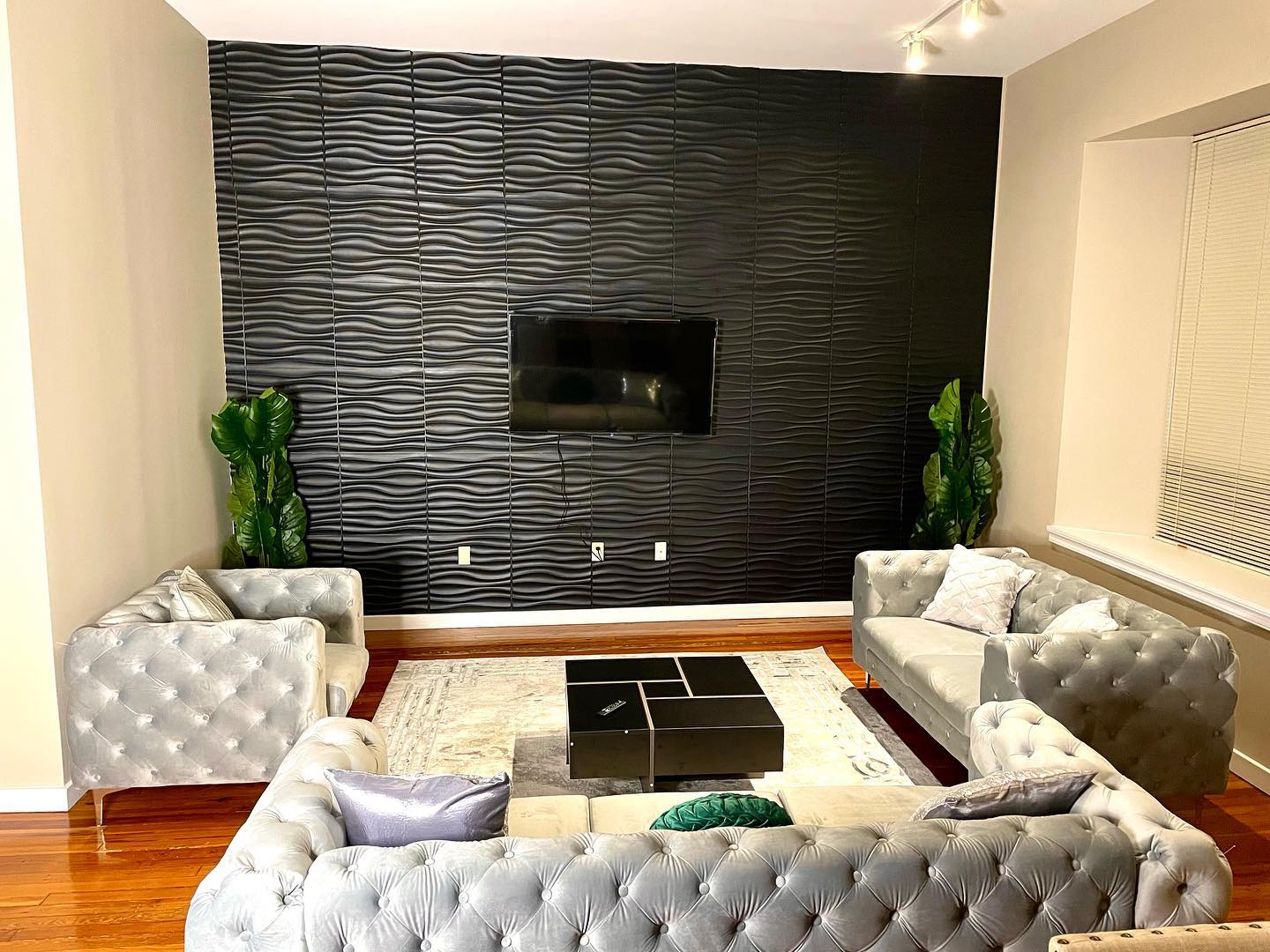
Repeating wave panels turn this tall black wall into a textured surface rather than a flat backdrop. The horizontal ridges catch light differently across the room, while visible vertical joins establish a regular grid.
A television occupies the middle, but plenty of exposed paneling remains around it. Pale tufted seating contrasts with the dark treatment.
To adapt the idea, order a sample and view it under the lighting you plan to use; a pronounced relief can look different as you move.
Map the panel dimensions across your wall before installation so cuts and joins feel deliberate. Account for outlets, cables, and mounting points early.
Keep additional wall decorations sparse, allowing the repeating shape to provide most of the visual interest.
Extend A Fireplace Feature With Shelves On Both Sides
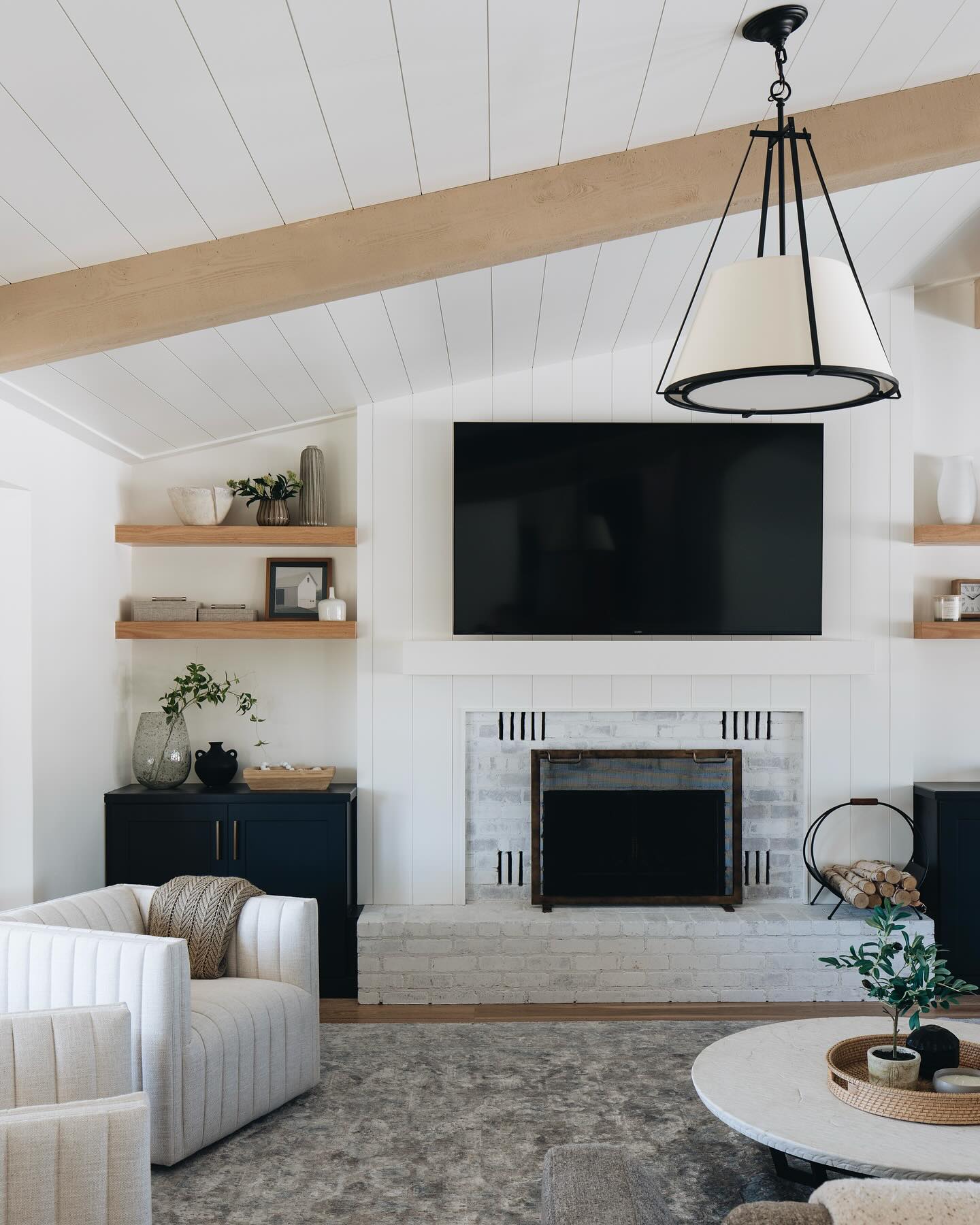
Credits: https://www.instagram.com/p/DImHVNkMx6f/
The fireplace does not have to carry the whole wall by itself. Here, floating wood shelves extend the arrangement into the adjoining recesses, with dark cabinets below and white paneling around the central television.
The repeated shelf heights connect the sides while allowing the display objects to vary. If your fireplace has unused wall beside it, sketch a balanced arrangement that responds to the available width on each side.
Keep shelf finishes consistent, and choose a few objects with different heights instead of filling every surface. Plan any cabinetry around access and the required fireplace clearances.
A continuous wall color can tie the separate sections together, while the wood shelves introduce a warmer line across an otherwise predominantly pale feature.
Scale Up With Two Vertical Pairs Of Prints
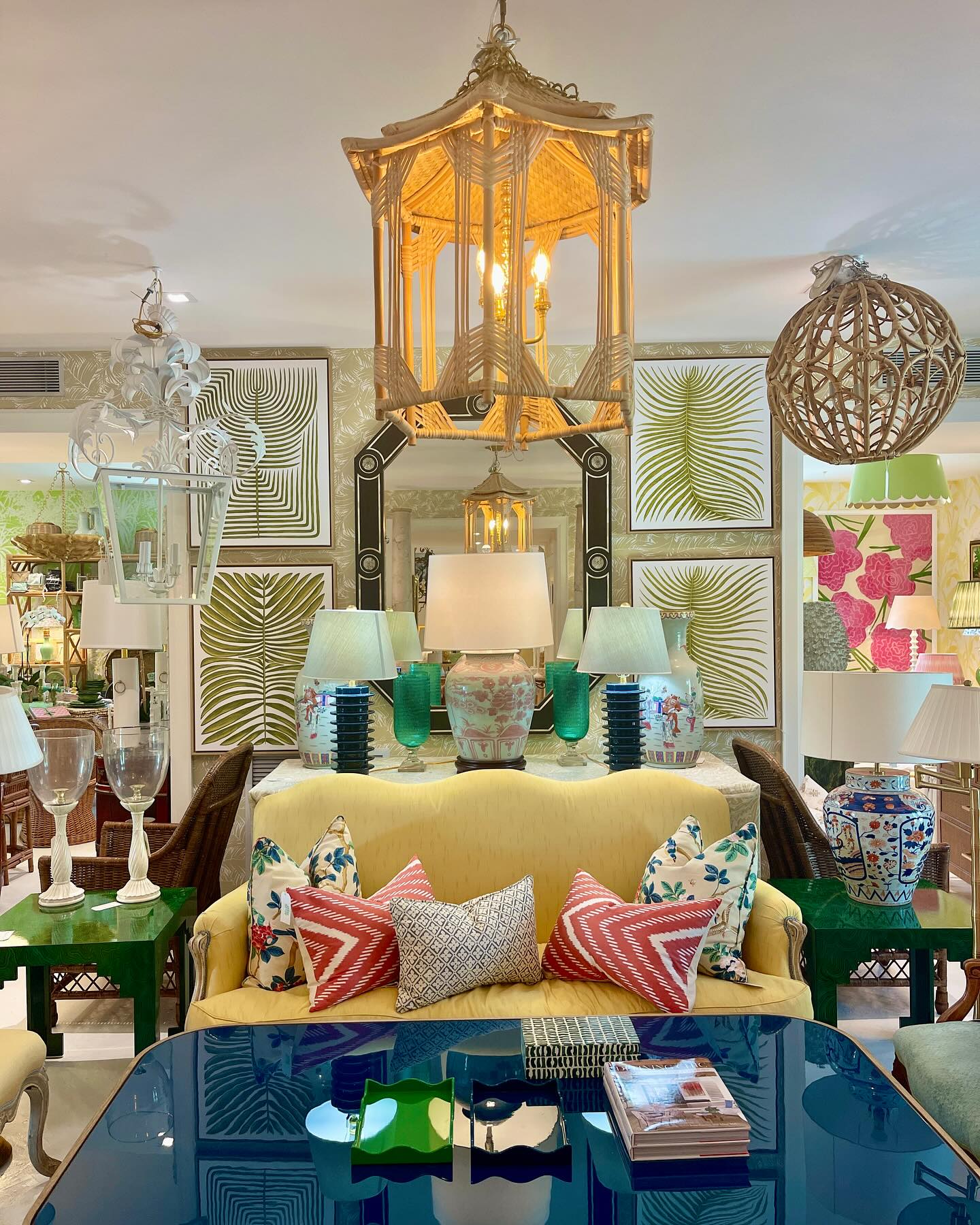
Credits: https://www.instagram.com/p/C6O7DwiOfEM/
This showroom display demonstrates how repeated frames can give a broad wall an orderly structure. Four large botanical prints form two vertical pairs beside a central mirror, creating a backdrop to the yellow sofa and layered lighting.
The matching frame sizes and shared green palette keep the artwork connected despite the busy furnishings in front. Borrow the arrangement rather than the density of the display: stack two related prints on each side of one central feature.
Align the tops and bottoms, and keep the gap within each pair consistent. Test the layout with paper templates to make sure it suits your wall.
Simpler furniture and fewer accessories will let those repeated shapes remain easy to read from across the room.
Pair One Large Artwork With A Narrow Display Column
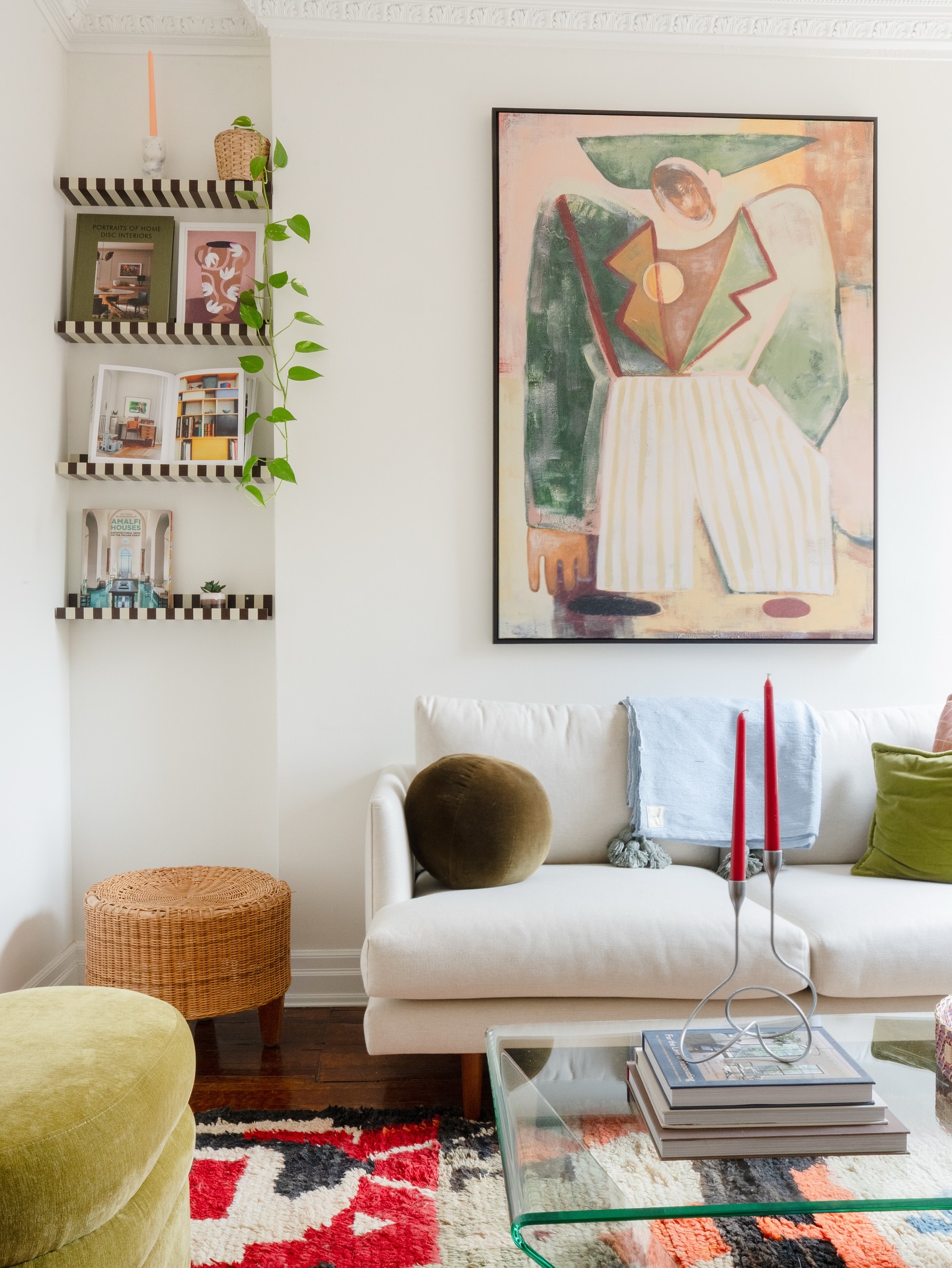
Credits: https://www.instagram.com/p/DNa5zpQNCS2/
A broad wall can hold two different kinds of display without becoming a scattered gallery. In this room, one large colorful figure fills the space above the white sofa, while four narrow striped shelves occupy the recess to its left.
Books face outward on the shelves, and a trailing plant connects their separate levels. The contrast between a generous artwork and a compact column gives each part a clear role.
Try the arrangement where your wall has a return or an uneven section beside the seating. Reserve the widest area for the main picture, then use shallow shelves for smaller favorites.
Repeat a color or dark outline between both sections, and leave a visible strip of wall separating their edges.
Unify A Collected Gallery With Repeated Frames And Mats
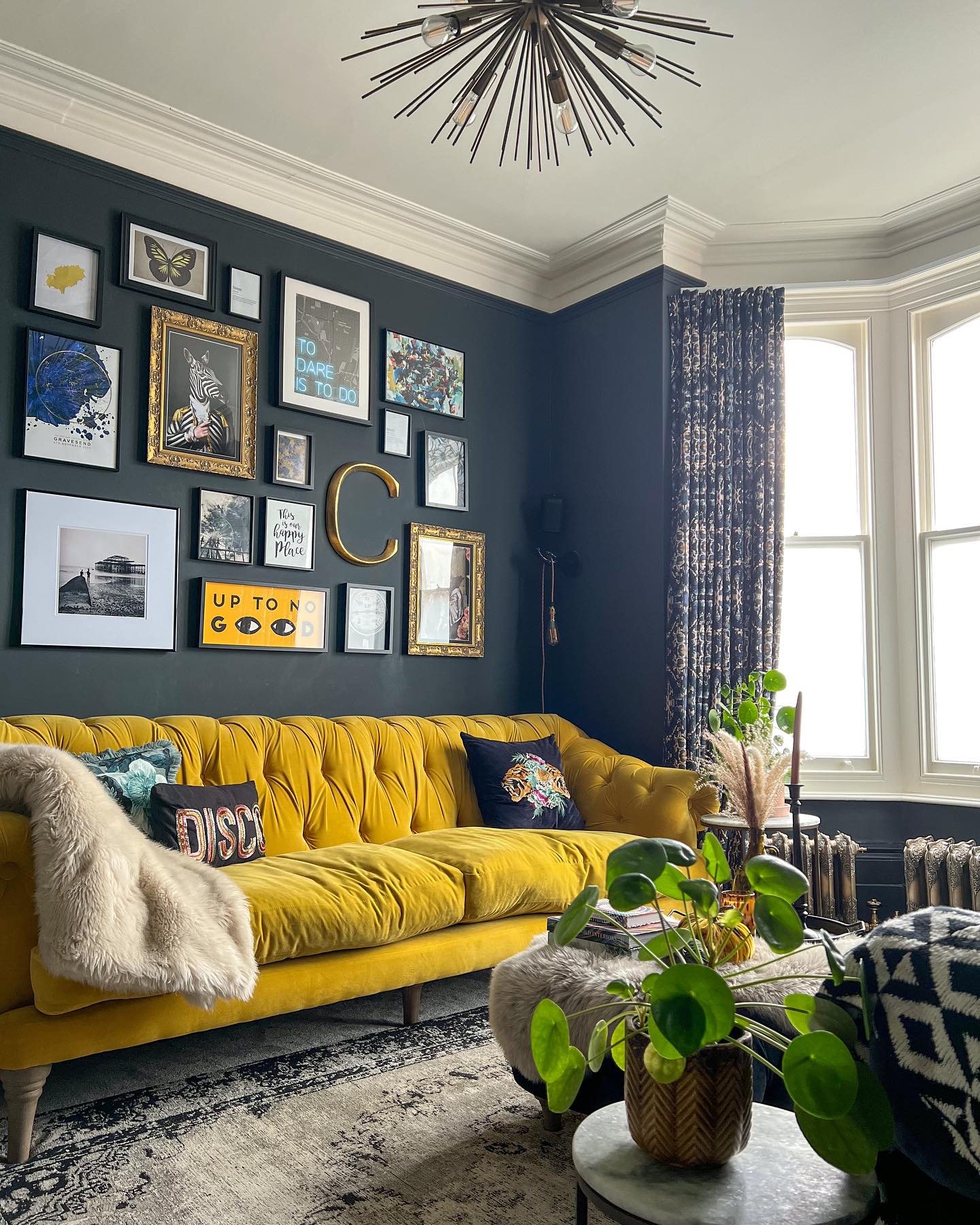
Credits: https://www.instagram.com/p/CxUqCIXKFAD/
A shared framing palette makes this varied collection readable against a dark blue wall. Most pieces have black frames, and many include pale mats that separate the images from the background.
Two ornate gold frames add variation, while yellow details in the art echo the mustard sofa below. This is a useful approach when your pictures differ in subject, size, and age.
Start by choosing one dominant frame color, then repeat a similar mat shade across several pieces. Keep special frames as accents instead of giving every image a different treatment.
Arrange the collection within a broad outline above the sofa, checking the gaps as you go. The repeated borders can provide continuity while leaving room for your individual favorites.