
A brick fireplace can anchor a room without needing a dramatic makeover; sometimes a lighter finish or a refreshed mantel is enough to bring its character into focus.
The Best Brick Fireplace Ideas here show how different treatments can change the feel of the same material, from whitewashed brick paired with a sleek linear fireplace to warm brick framed by crisp white millwork.
You’ll also find ways to balance dark brick with wood and a round mirror, or let original masonry remain the feature. Use these combinations to consider color, texture, and the details around your own hearth.
Unify a Decorative Fireplace with a Pale, Textured Finish
Credits: Instagram
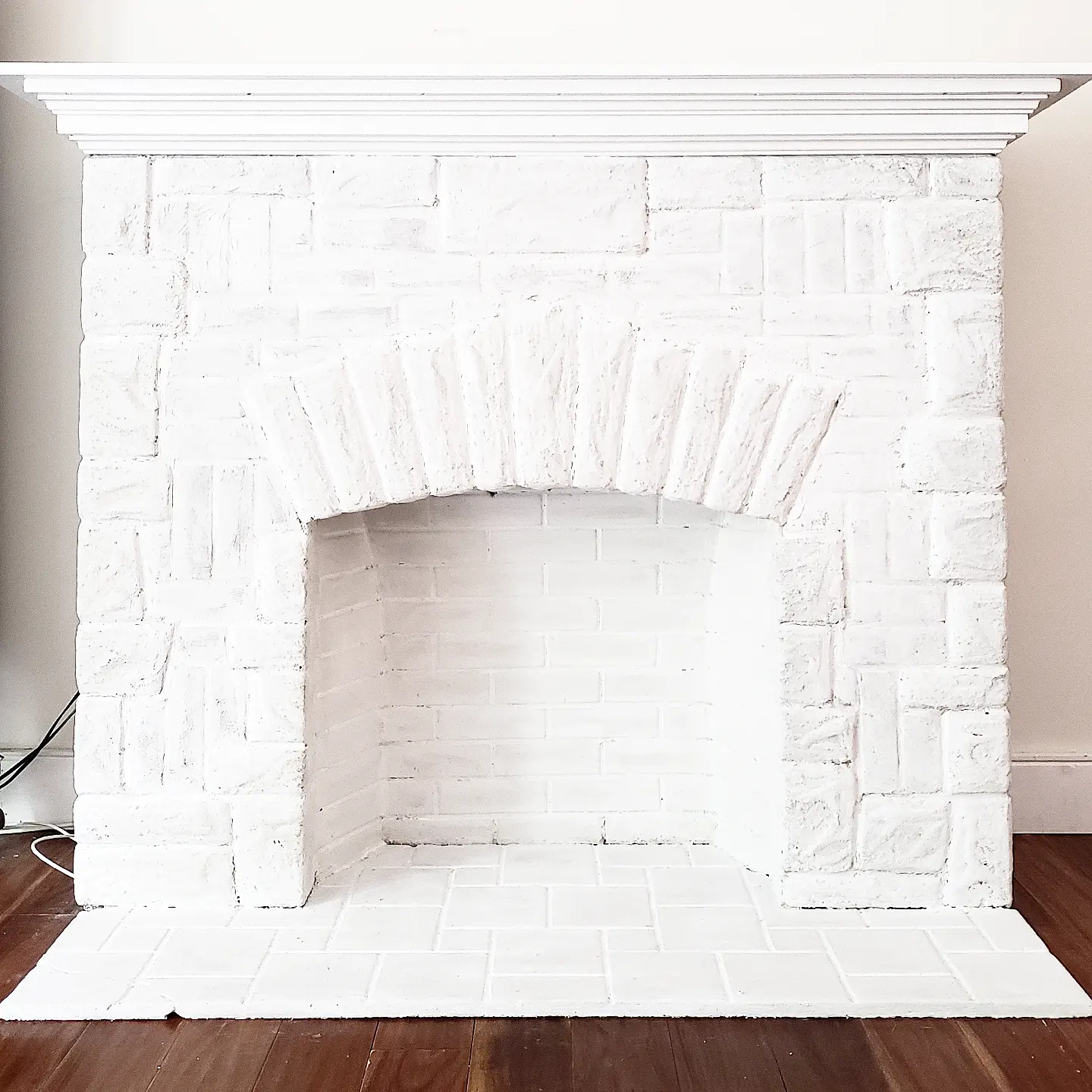
An all-white finish brings this decorative, nonworking fireplace together without flattening its character. The creator used mortar to German schmear the brick and stone, then whitewashed the surface, leaving irregular edges and shallow shadows visible.
A crisp mantel adds a polished counterpoint to the rough surround, while the arched opening supplies the strongest shape.
Borrow the balance by keeping nearby walls quiet and choosing a restrained mantel display, such as one framed print with a small ceramic vessel. Before changing an existing finish, test a discreet area to judge texture and color in daylight.
Leave the recess empty to emphasize the arch, or add a single carefully chosen sculptural object that lets the whitewashed masonry remain the main visual attraction.
Pair Whitewashed Brick with a Sleek Linear Fireplace
Credits: Instagram
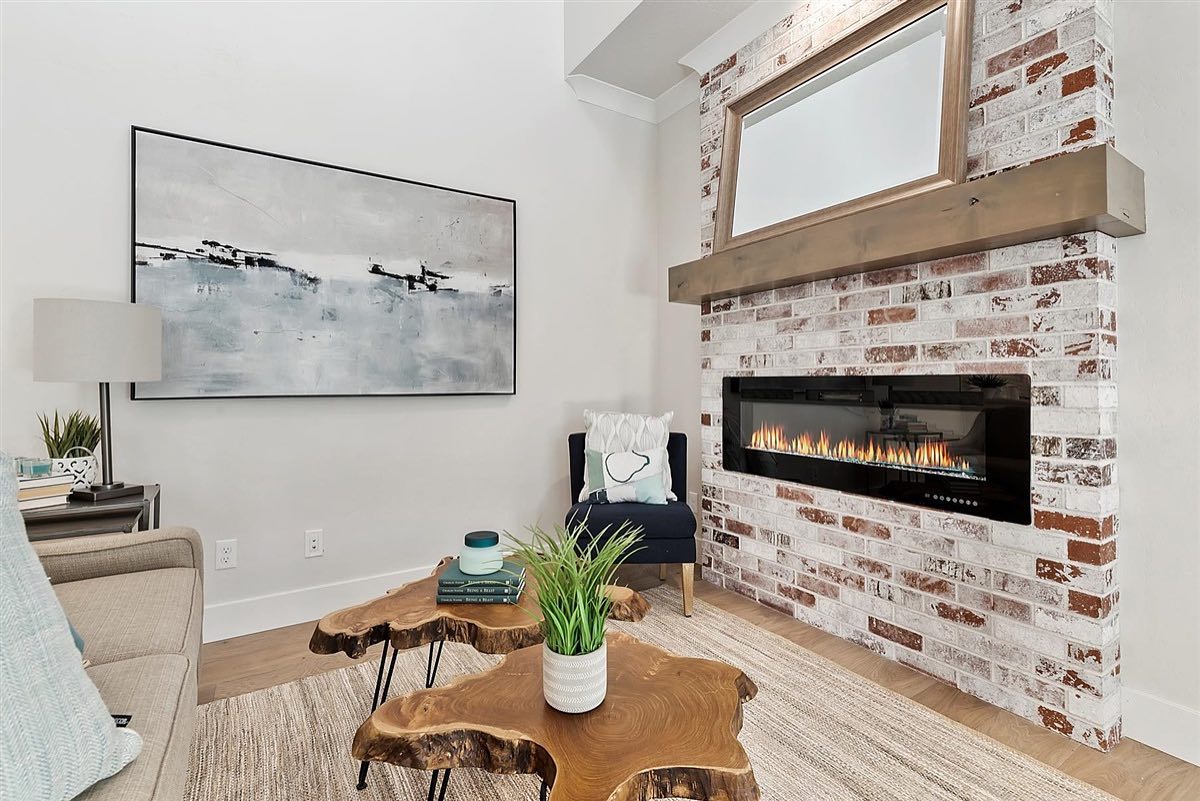
Whitewashed brick and a long black fireplace create the contrast that makes this room feel current.
Enough reddish color shows through the pale finish to keep the wall lively, while the mantel and rectangular mirror give its texture a clear framework.
Repeat that approach by choosing simple shapes around a visually busy brick surface. Here, a slim picture frame, an unfussy floor lamp, and dark chair legs echo the fireplace's black outline without competing with it.
Wood tables introduce warmer tones that relate to the exposed brick. Sample a whitewash before committing, since coverage determines how much variation remains visible.
For changes to an operating fireplace or mantel, have a qualified fireplace specialist check the proposed installation and required clearances.
Frame Warm Brick with Tailored White Millwork
Credits: Instagram
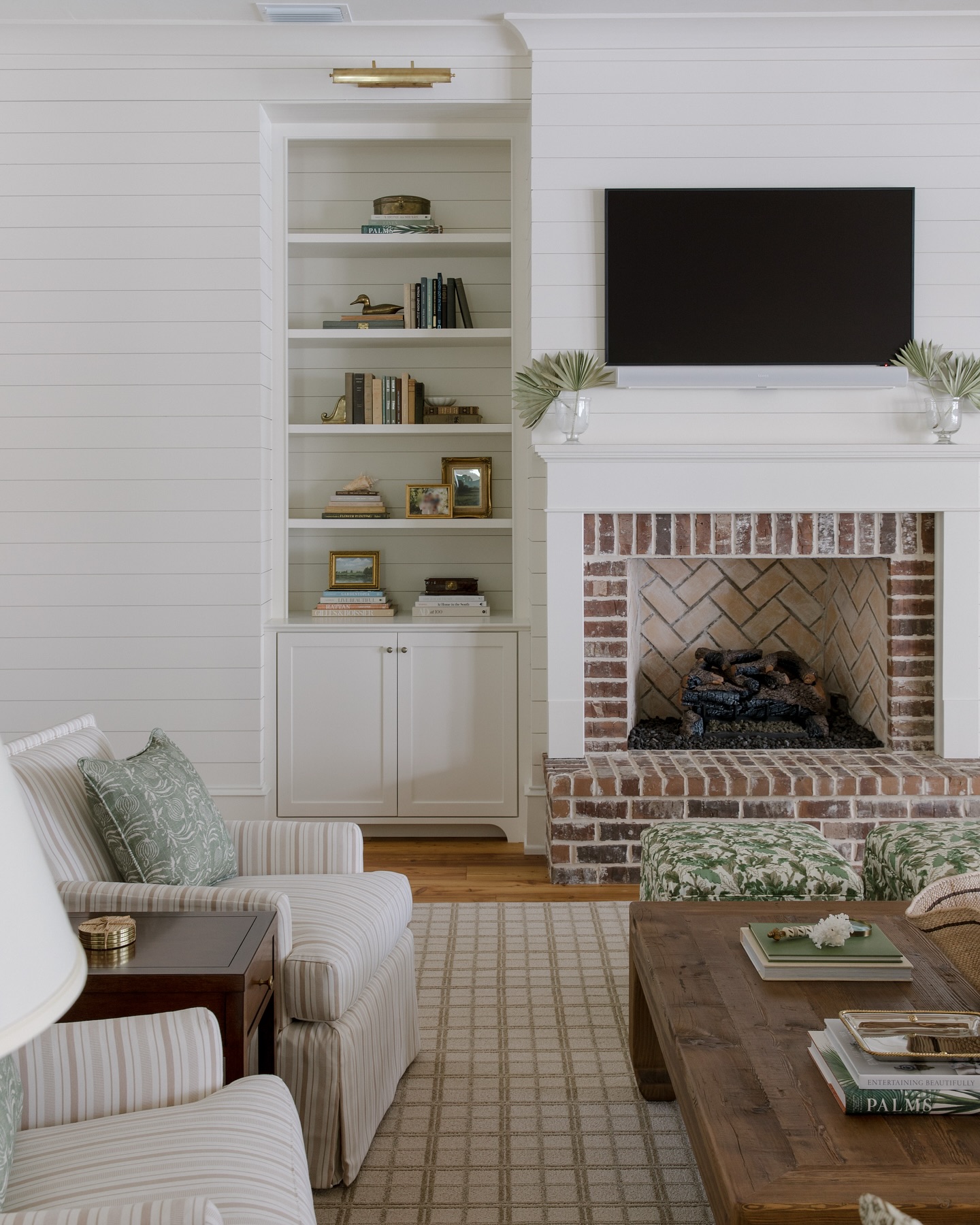
A brick hearth can feel elegant when the surrounding joinery supplies clean, deliberate lines. Here, the reddish surround and raised hearth sit beneath a substantial white mantel, with shiplap and built-in shelving extending the pale backdrop.
That contrast allows the brick's uneven coloring to remain a feature without dominating the room. If you are planning a similar arrangement, coordinate the mantel, cabinet fronts, and shelf trim before selecting decorative accessories.
Consistent white finishes help separate pieces read as one composition. Keep books and framed objects in small groups, leaving open shelf space between them.
The photograph's green patterned upholstery softens the brick's warmth, while a checked rug adds another pattern. Choose furniture placement that preserves circulation around the projecting hearth.
Balance Dark Brick with a Round Mirror and Warm Wood
Credits: Instagram
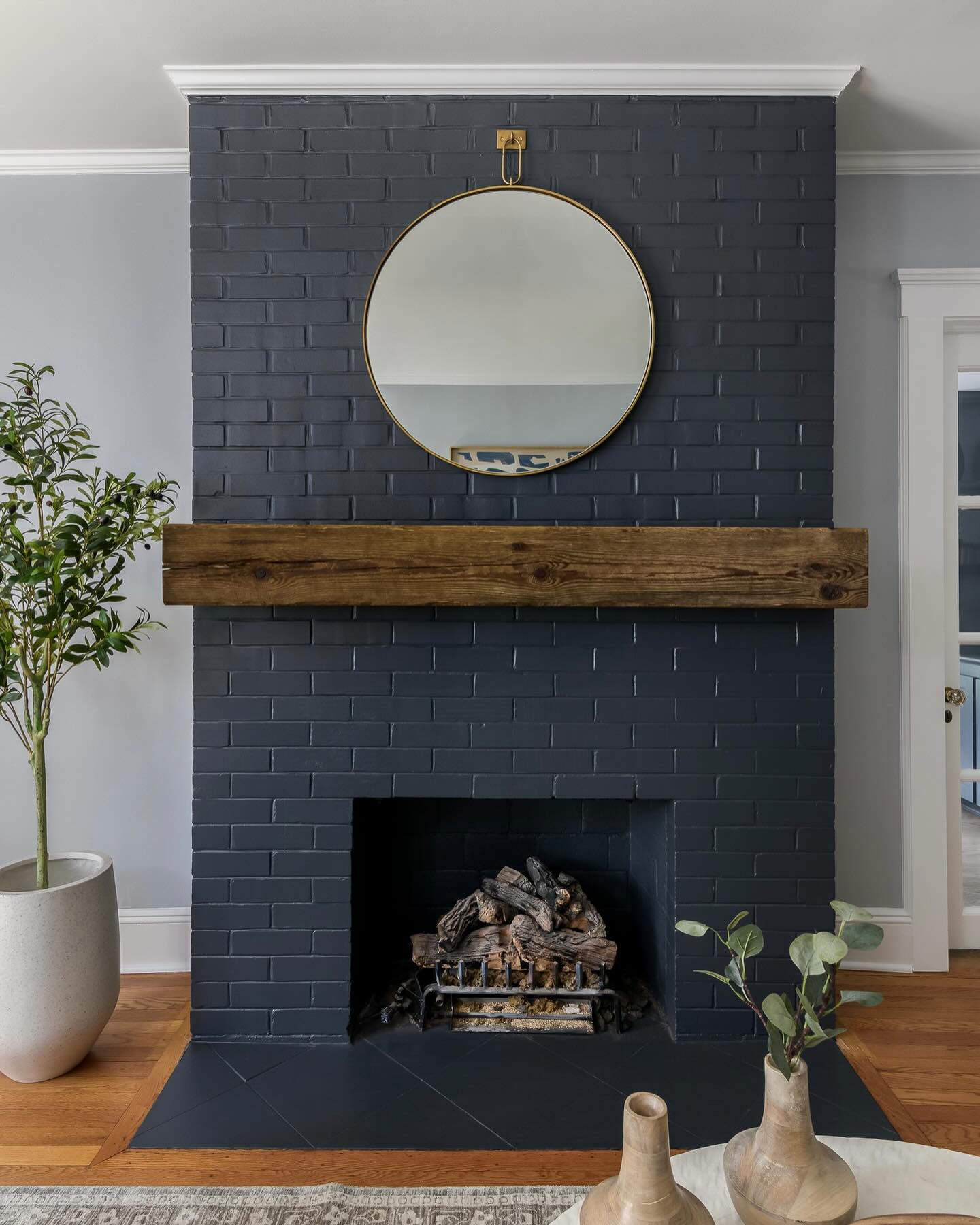
Deep blue-charcoal brick gives this fireplace a strong presence, but the styling keeps it approachable. A broad timber mantel interrupts the dark surface with visible grain, and the round gold-toned mirror softens the repeated horizontal brick courses.
Use this combination when a room needs a focal point with more depth than white paint can provide. Sample dark colors beside the floor and trim, checking whether they appear blue, gray, or almost black as daylight changes.
Keep the mantel largely clear so the wood and mirror remain distinct shapes. A leafy plant beside the chimney breast introduces a softer outline without obscuring the masonry.
Carry one warm accent into nearby furniture or lighting to connect the fireplace with the wider room.
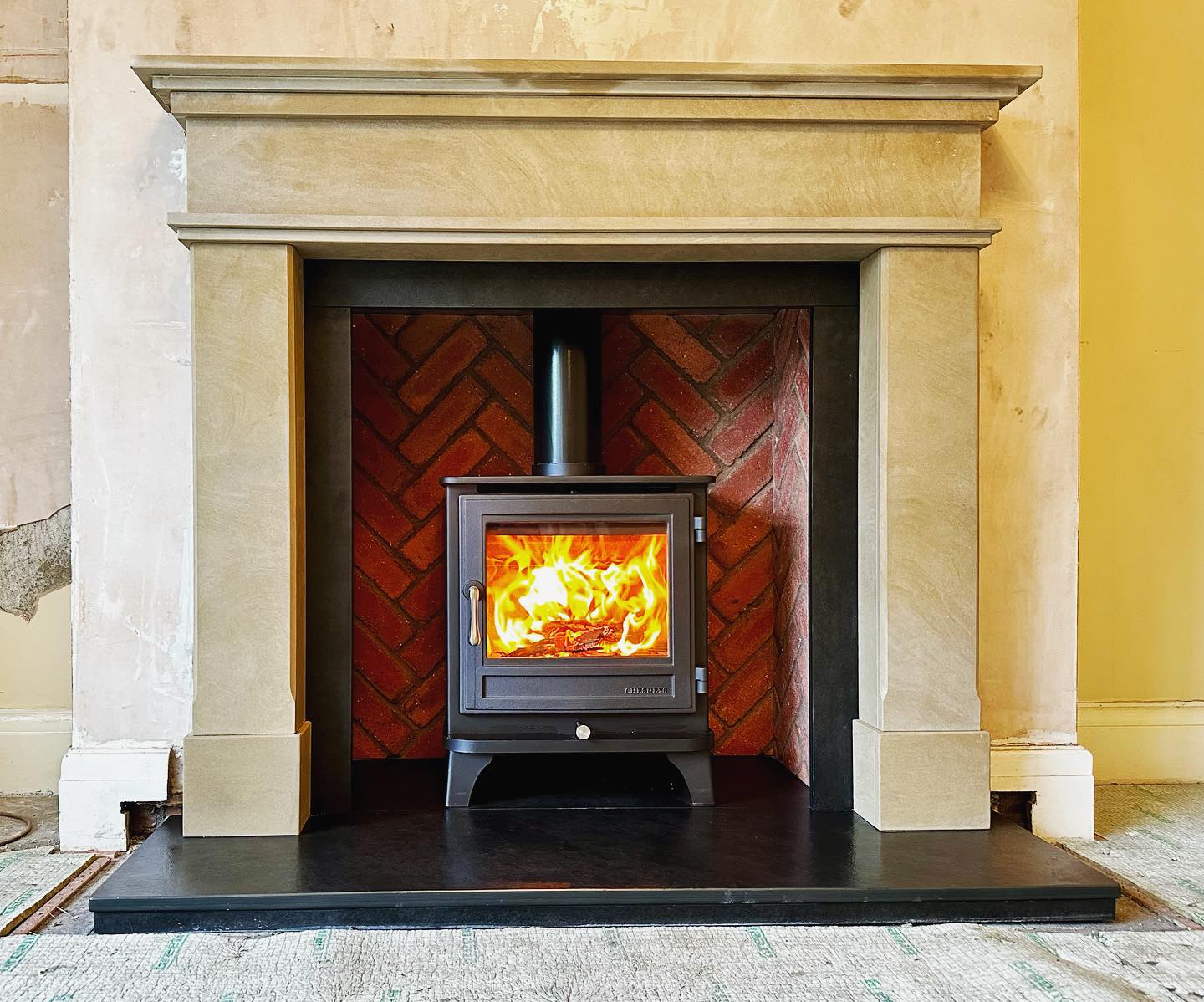
Give a Stove Chamber a Red Herringbone Backdrop
Credits: Instagram
Red herringbone brick slips turn the space behind this stove into a patterned feature. Their diagonal arrangement contrasts with the straight edges of the pale surround, giving a traditional fireplace shape more movement and depth.
The installer identifies a slate hearth, whose dark surface connects visually with the black stove and inner frame. To borrow the look, choose a restrained surround profile that lets the brick pattern remain legible.
Compare brick and mortar samples together: darker joints emphasize each diagonal, while lighter joints change the overall contrast. Repeat the brick's warm color sparingly elsewhere through a rug or pottery once the room is finished.
Have the stove installer approve chamber finishes and hearth dimensions before the decorative choices are settled.
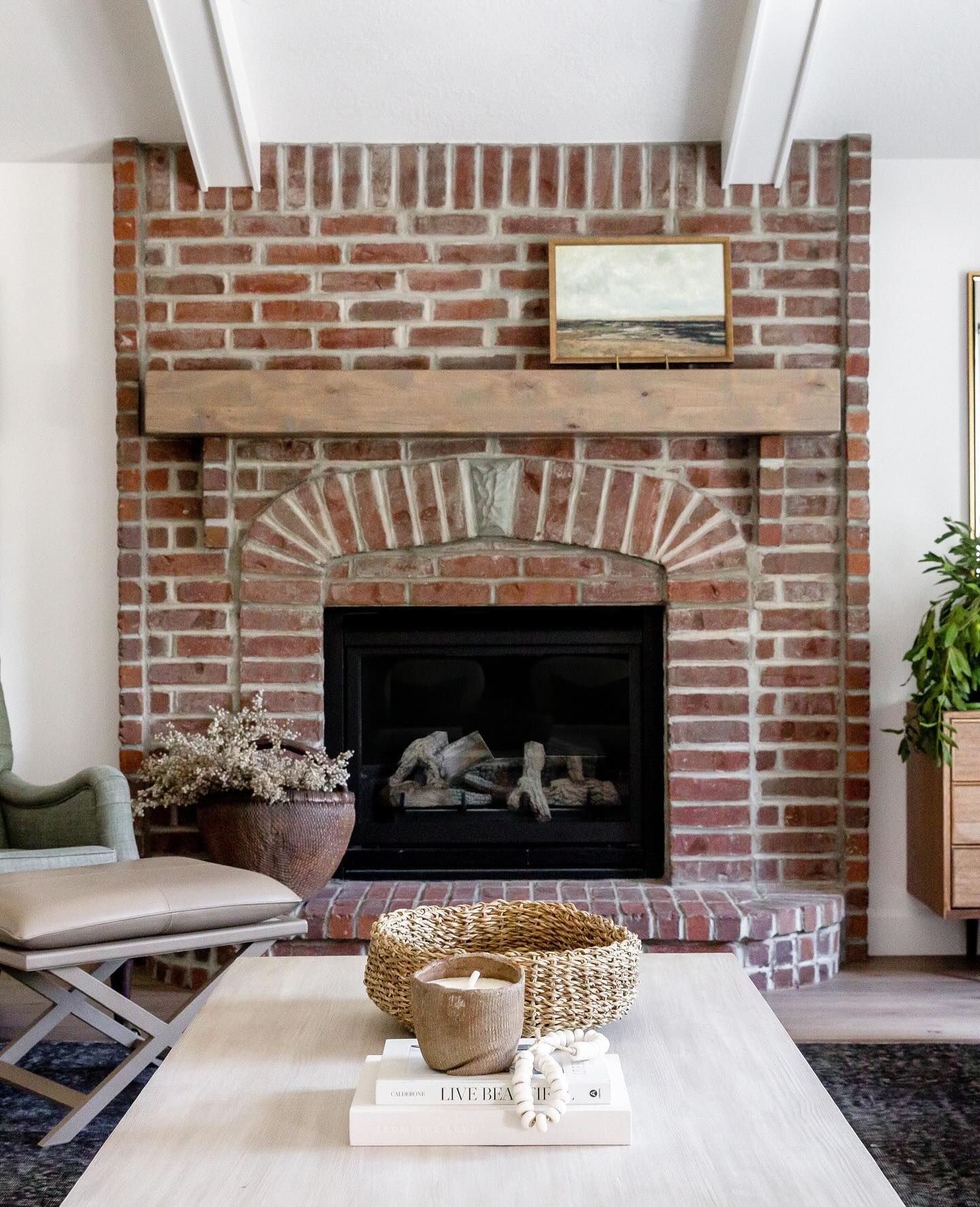
Keep Original Brick and Refresh the Mantel
Credits: Instagram
Original brick often supplies the character a renovation needs most. In this room, the designers retained the fireplace and refurbished its wood mantel to coordinate with the floors.
The result preserves the reddish brick, pale mortar, and broad arch while giving the surrounding space a calmer, lighter setting.
Before choosing paint, consider whether simpler changes could make an existing fireplace feel intentional: a renewed mantel finish, fresh wall color, or fewer accessories may be enough.
Here, one small landscape sits off-center above the timber, leaving most of the masonry visible. Woven textures, muted upholstery, and pale wood furniture soften the composition without matching every brick tone.
Let the arch remain unobstructed so its craftsmanship anchors the room's relaxed, layered character.
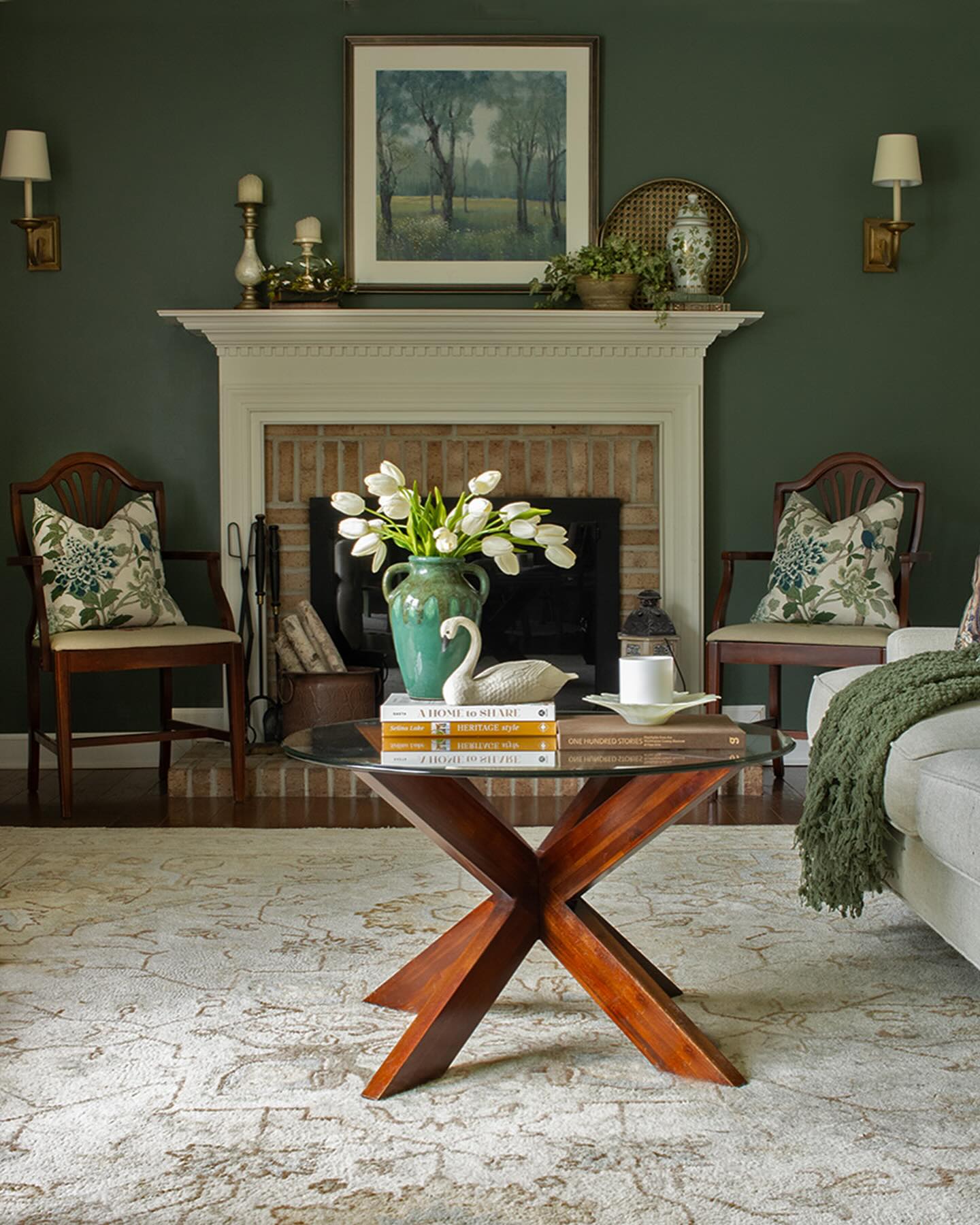
Set Pale Brick Against Deep Green Walls
Credits: Instagram
Deep green walls make the cream mantel and warm, pale brick stand out in this family room. The color supplies depth around the fireplace, allowing its traditional molding and modest brick inset to feel deliberate rather than overlooked.
Matching sconces and wooden chairs establish a balanced frame, while the mantel arrangement stays more relaxed.
Try the same combination by choosing a green that works with your brick's undertones, then repeat it in small doses through cushions, artwork, or pottery.
Keep enough cream in the rug and upholstery to connect with the surround. For mantel styling, vary object heights on either side of a central picture instead of building identical displays. That slight irregularity gives the symmetrical setting a collected quality.
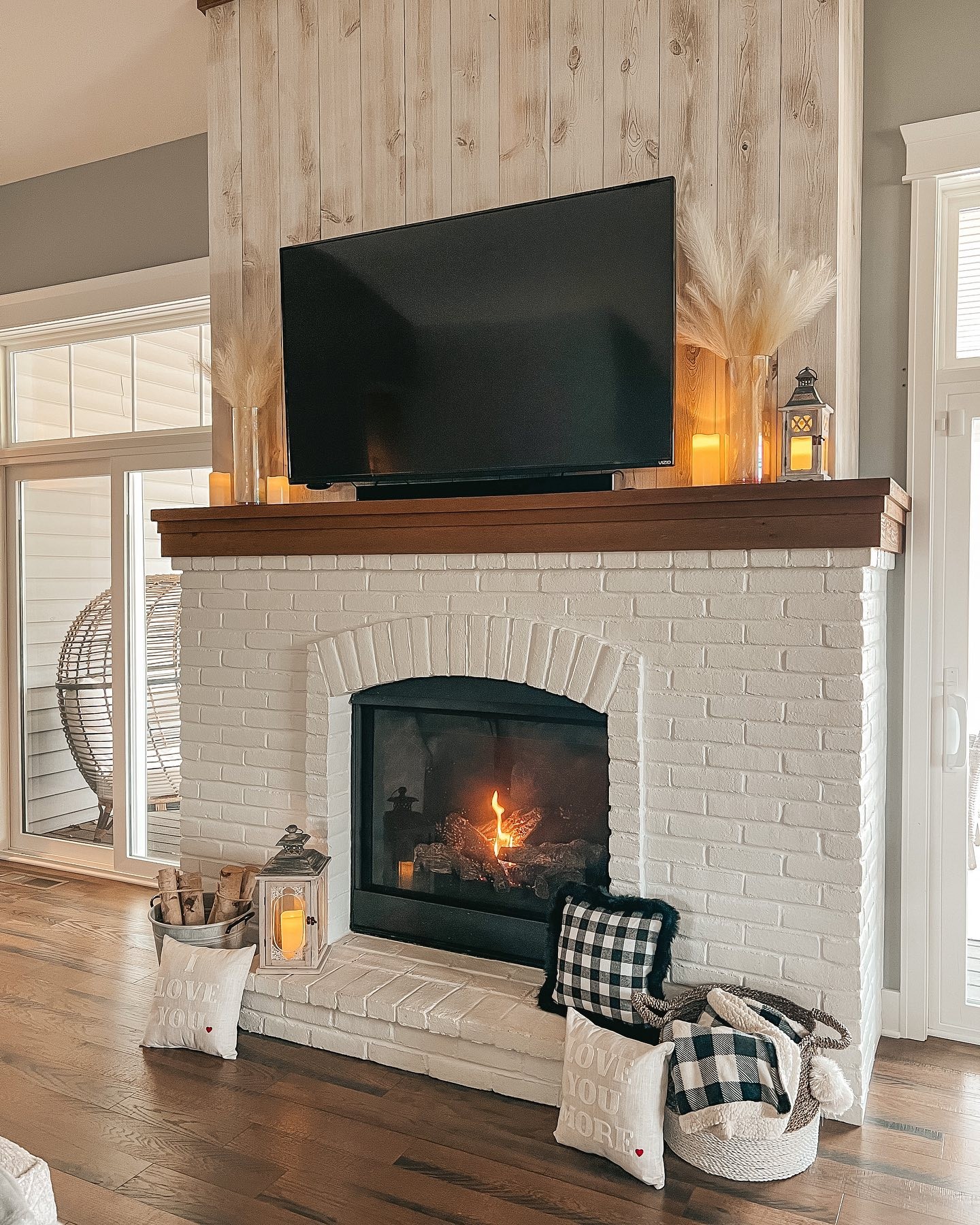
Layer White Brick with Vertical Wood Paneling
Credits: Instagram
Two contrasting surfaces give this tall fireplace wall its structure: white brick below and pale vertical wood paneling above. A dark mantel marks their meeting point, creating a horizontal pause between the arched opening and the television.
This approach can help a lofty wall feel connected to the room while retaining a sense of height. Choose paneling with a tone that relates to the floor, then let the mantel provide contrast rather than adding competing wood finishes.
Keep the masonry's arch visible so the lower section has its own architectural detail.
Treat the photographed accessories as styling, not placement guidance: move pillows, baskets, and dried stems away from heat, and have mantel, paneling, and television clearances checked before fireplace use.
Let One Large Artwork Lead an All-White Fireplace
Credits: Instagram
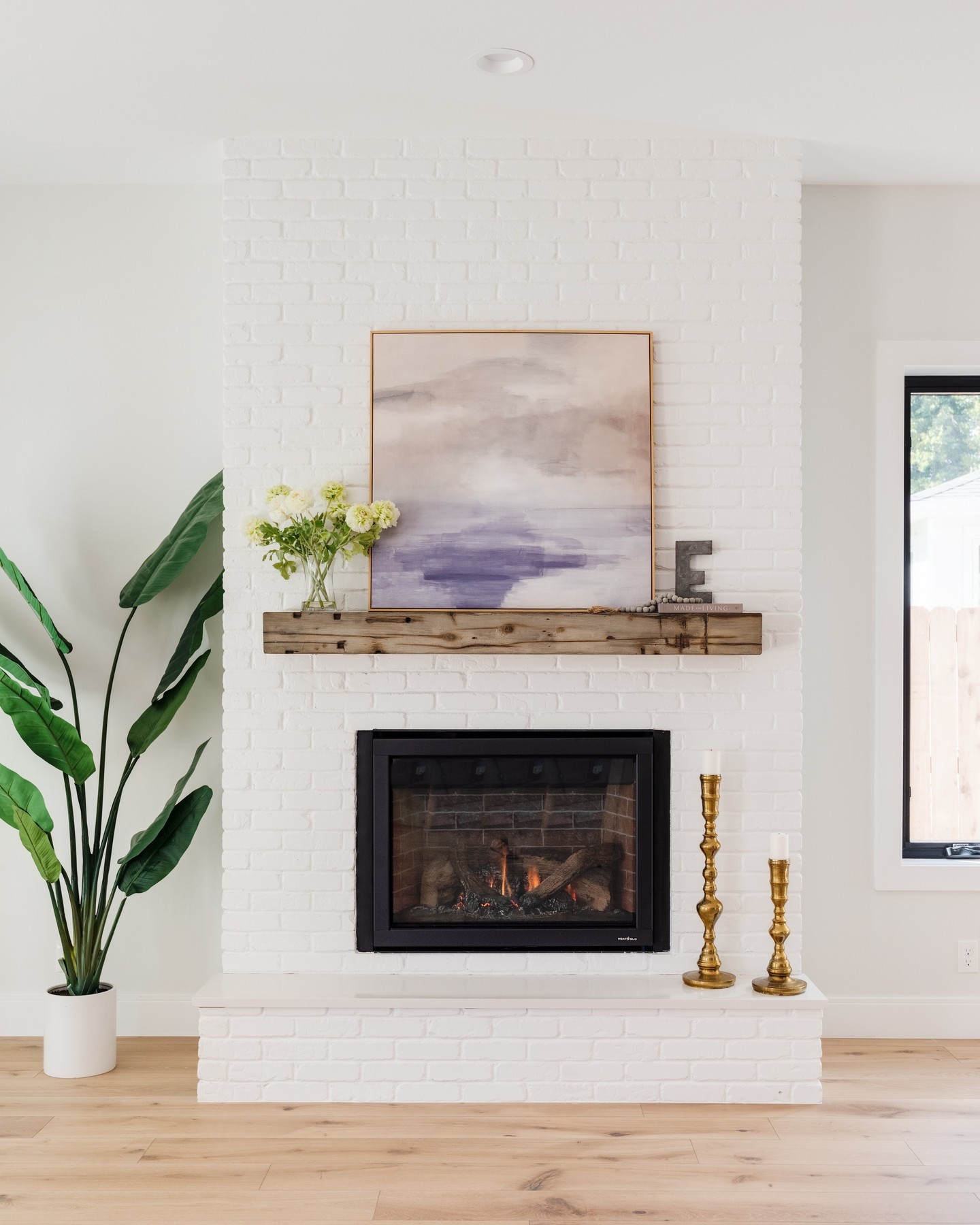
One generous artwork gives this white brick fireplace a clear center of attention. Its muted colors stand apart from the masonry without overwhelming it, while the narrow frame and simple timber mantel keep the composition relaxed.
The brick continues from the raised hearth to the ceiling, so the eye still reads a substantial architectural feature despite the restrained palette.
For a similar result, choose artwork that leaves a visible border of brick around it and relates to the mantel's width. Resist filling every remaining inch with accessories.
A small grouping on each side is enough to balance the picture. Natural wood grain and greenery introduce warmth and variation, helping white surfaces feel layered even when the surrounding room stays light.
Use a Tall Brick Chimney to Define an Open Living Area
Credits: Instagram
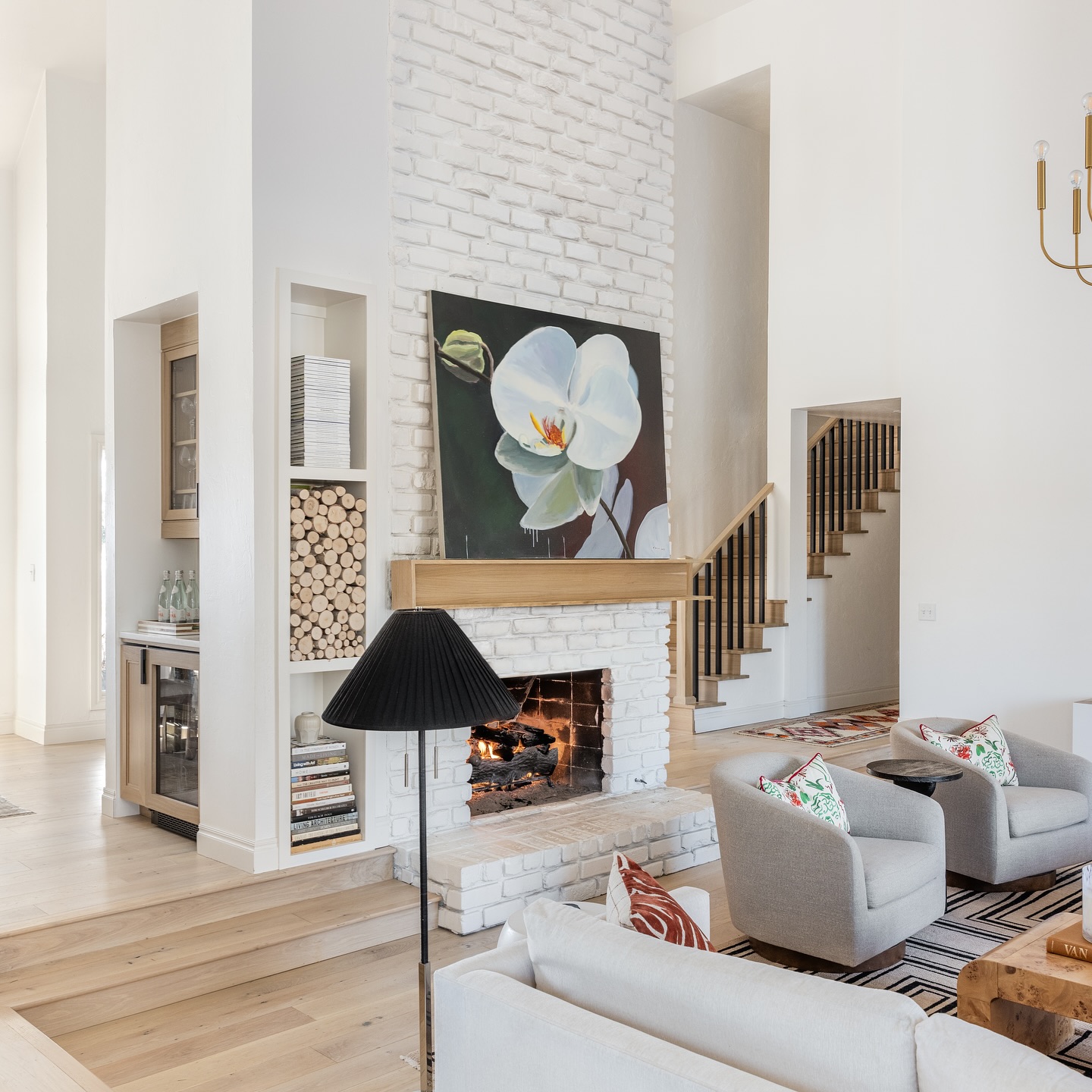
A tall white brick chimney gives this open living area a recognizable center without enclosing it. The stair and adjoining circulation spaces remain visible, while the raised hearth marks the edge of the seating zone.
A narrow recessed shelving column adds useful scale beside the broad masonry face. When arranging an open room around an existing fireplace, consider its side views as carefully as the view from the sofa.
Keep nearby passageways clear, especially where floor levels change, and choose seating that leaves the chimney visually readable. Here, a pale wood mantel relates to the staircase and flooring, connecting separate parts of the interior.
Dark furniture details repeat the stair's vertical accents, giving the airy space a sense of rhythm.
Add Graphic Contrast Inside an Exposed-Brick Surround
Credits: Instagram
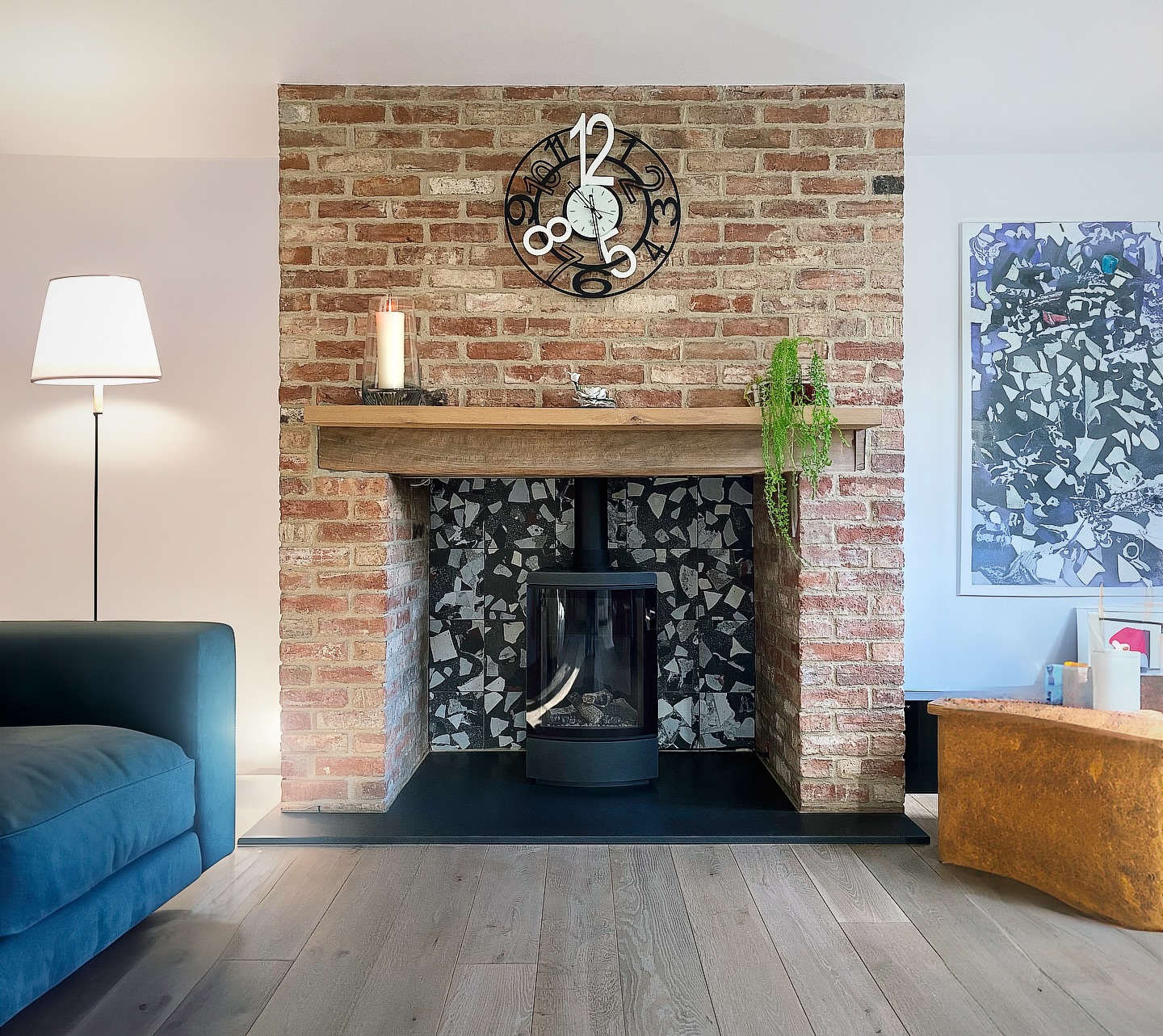
The unexpected detail in this exposed-brick fireplace sits inside the opening. A bold black-and-gray fragmented pattern forms the backdrop to a black stove, contrasting with the familiar horizontal masonry outside.
The timber mantel bridges the two treatments, while a plain dark hearth gives the busy surfaces somewhere to stop. This is a useful design direction when you like traditional brick but want the room to feel more individual.
Keep the surrounding floor and walls relatively quiet, and repeat one dark accent elsewhere, as the clock and lamp do here. Judge any proposed pattern at full scale rather than from a tiny sample.
Have the installer specify suitable chamber materials; appearance alone cannot establish whether a finish belongs behind a stove.
Soften a Brick Arch with Cream Joinery and Pottery
Credits: Instagram
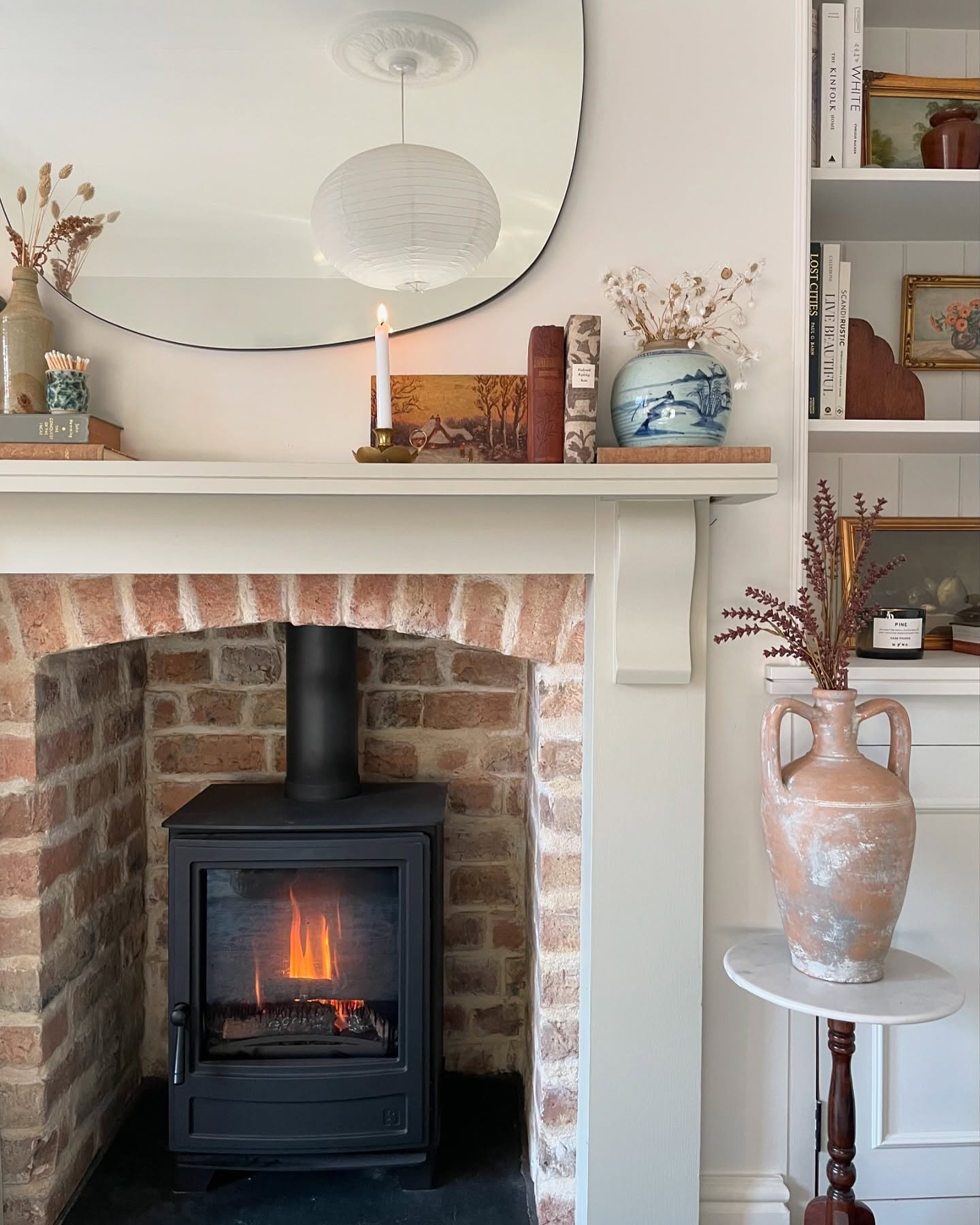
A pale surround makes the uneven brick inside this arched opening feel warm and inviting. Cream joinery outlines the niche, while the black stove supplies a simple center beneath the shallow curve.
Rather than covering the masonry, the styling picks up its muted pink and earthy brown tones in pottery, books, and small framed pictures. Use that approach to build a palette from the brick you already have.
Select two or three related colors, then vary the textures instead of introducing many new shades. Smooth ceramics, worn book covers, and painted shelves offer enough contrast.
The large curved mirror keeps the upper wall light and echoes the arch without copying it exactly, giving the arrangement a gentle sense of continuity.
Connect a Broad Brick Opening with Exposed Timber Beams
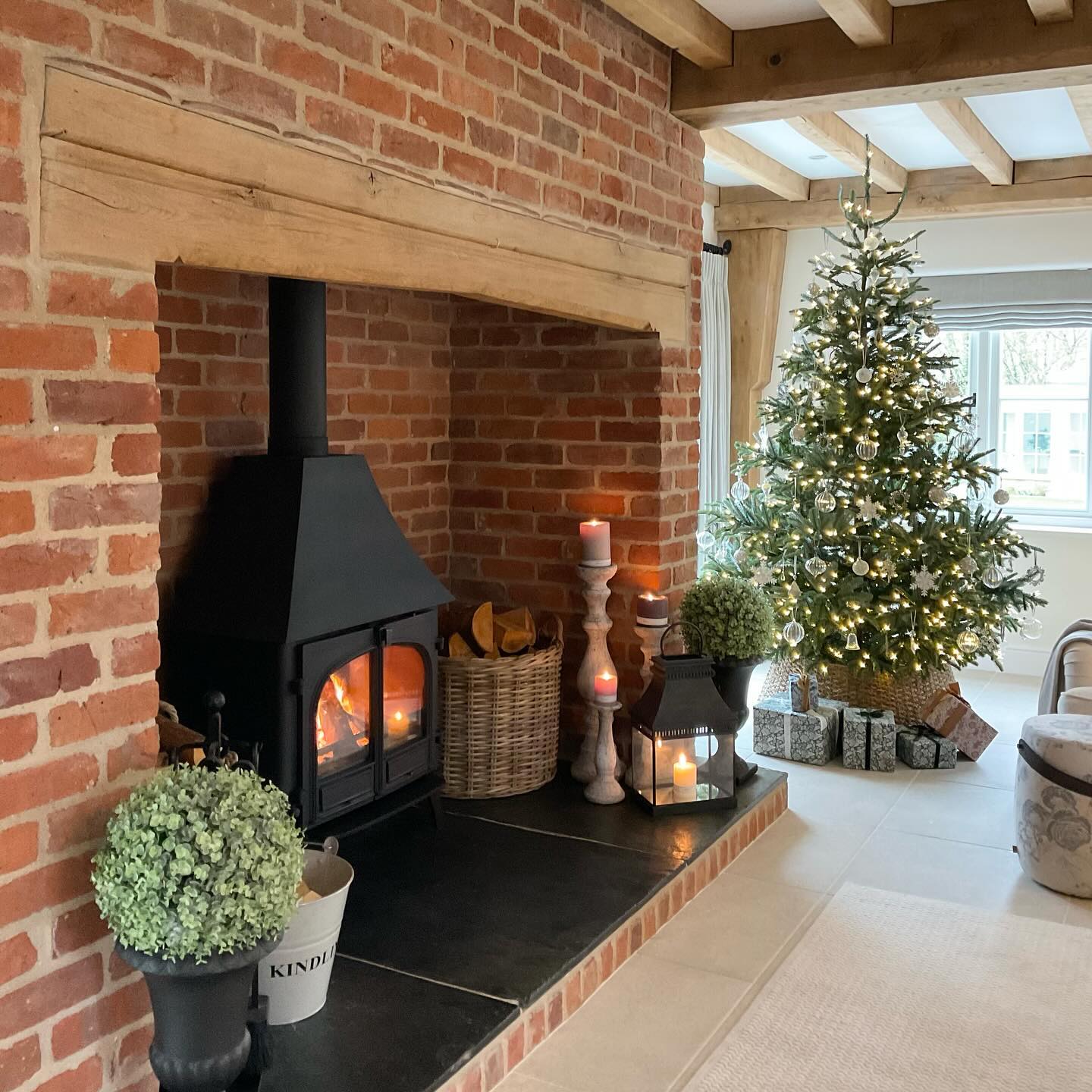
Credits: Instagram
The broad timber lintel above this brick opening belongs to a larger architectural story. Its pale grain connects with the exposed oak framing overhead, making the fireplace feel integrated with the room rather than added as a separate decorative feature.
Red brick and a dark hearth provide contrast, while the generous opening gives the stove a substantial setting.
In a similarly beamed interior, choose mantel or surround finishes that complement the existing timber's undertone instead of trying to match every mark.
Keep nearby walls and large furnishings restrained so the wood and brick retain their presence throughout the year. The seasonal styling is optional: relocate baskets, greenery, and other combustible decorations away from the operating stove, following its required clearances.
Let Brickwork Supply the Architectural Detail
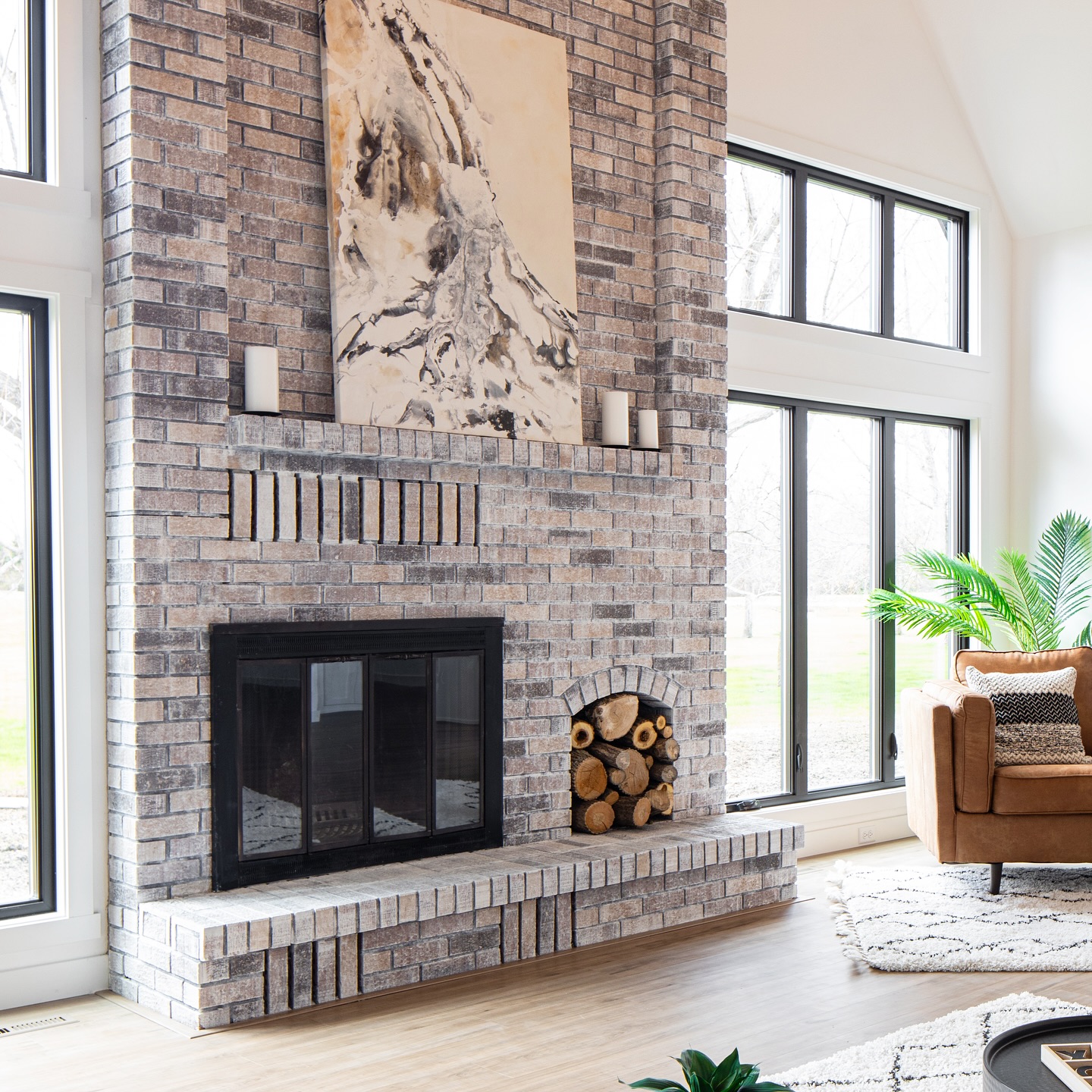
Credits: Instagram
Projecting brick edges, recessed areas, and changes in brick direction give this fireplace a sculptural presence. The gray-brown masonry forms its own mantel ledge, while a small arched log niche introduces a curve beside the rectangular firebox.
Even the raised hearth repeats the vertical accents used above, making the composition feel connected. If your fireplace has distinctive brick detailing, start by identifying those features before deciding what to change.
Simple surrounding walls and restrained accessories can reveal their character without a major alteration. Here, dark window frames relate to the firebox, and a warm leather chair draws out the brick's brown tones.
Keep artwork within the central framed area so the projecting sides and patterned masonry remain visible around it.
Frame Pale Brick Slips with Dark Joinery
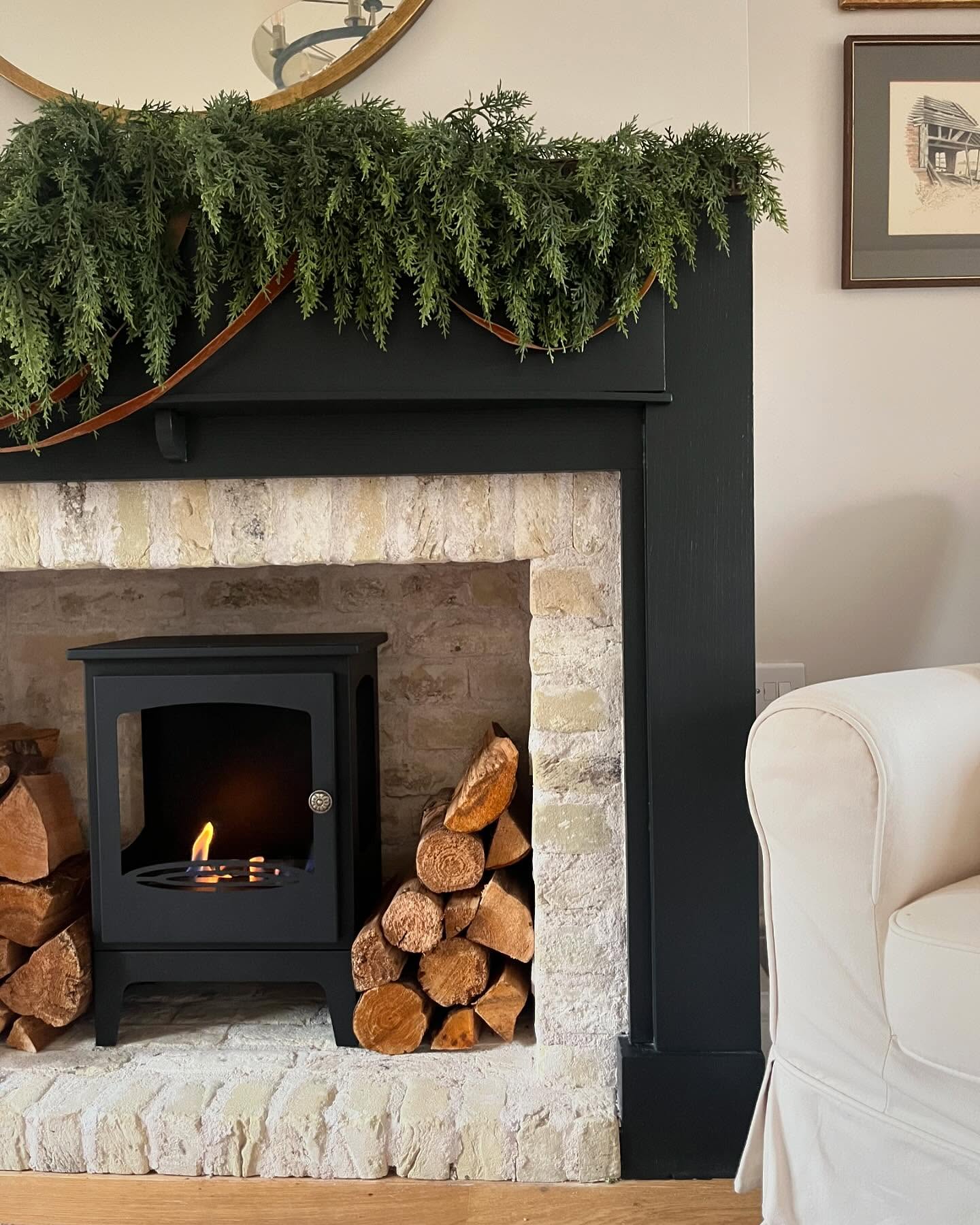
Credits: Instagram
Pale, irregular brick slips look tactile against the smooth dark joinery of this fireplace. The homeowner created the chimney breast with brick tiles and identifies the appliance as a bioethanol stove.
Visually, the strong outer frame contains the varied surface, while light grout keeps the individual pieces from feeling too busy.
Use this contrast as a starting point for a palette: one dark architectural color, warm cream walls, and a small amount of natural wood. A simple surround profile gives the masonry room to stand out.
For an operating appliance, have a qualified specialist verify the construction, material suitability, ventilation, and required clearances. Do not copy the photographed placement of logs or garland close to the stove and its heat.
Balance a Dark Wood Surround with Airy Textiles
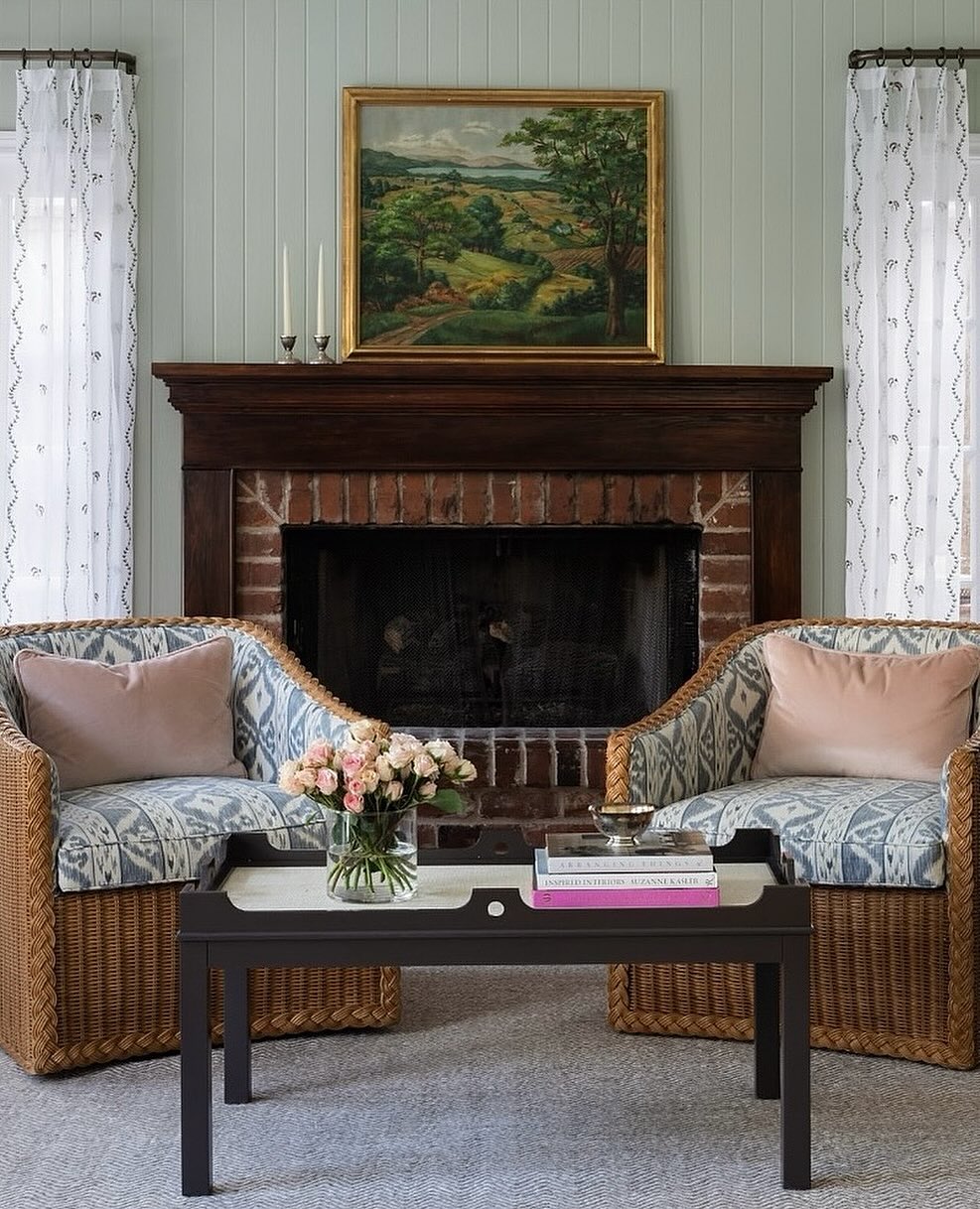
Credits: Instagram
Dark wood gives this brick fireplace a composed, traditional outline, while the rest of the sunroom keeps the mood light. Pale curtains, softly colored wall paneling, and blue patterned chair cushions prevent the substantial surround from overwhelming the setting.
Woven chair frames introduce a lighter brown that relates to the exposed brick without matching it exactly. If you already have a dark mantel, consider updating the surrounding textiles before altering its finish.
Choose curtains that admit daylight and upholstery with a pale background, then repeat a deeper tone in a small table or picture frame. The contrast can make existing woodwork feel purposeful.
Keep the mantel display restrained so its profile remains visible and the chairs supply the room's pattern.
Pair White Brick with a Traditional Insert and Open Shelves
Credits: Instagram
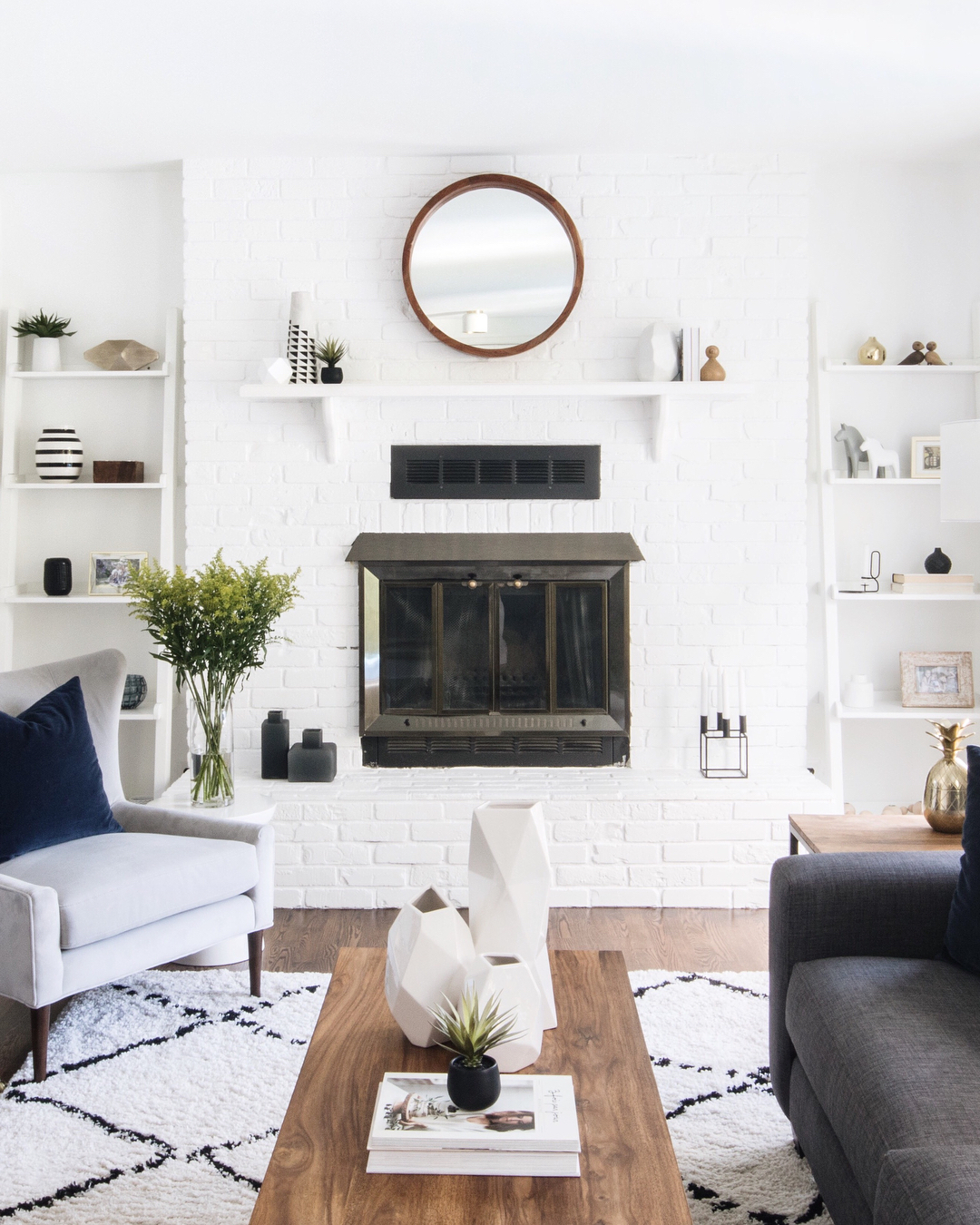
White brick provides a light backdrop for the dark, brass-toned fireplace front in this living room. The insert remains visually substantial, but slender open shelving on either side prevents the wall from feeling heavy.
Unlike built-in cabinets, these ladder-style shelves leave the surrounding wall visible and offer a lighter way to balance the chimney breast.
If you are working with an existing insert, repeat its darker notes through a few accessories instead of trying to conceal every contrast. Here, black-and-white ceramics, navy cushions, and a patterned rug connect the fireplace with the seating.
A wood-framed round mirror adds warmth above the simple white mantel. Keep shelf groupings small and varied, allowing empty space to preserve the room's bright, uncluttered character.
Unify an Asymmetrical Fireplace Wall with One Dark Color
Credits: Instagram
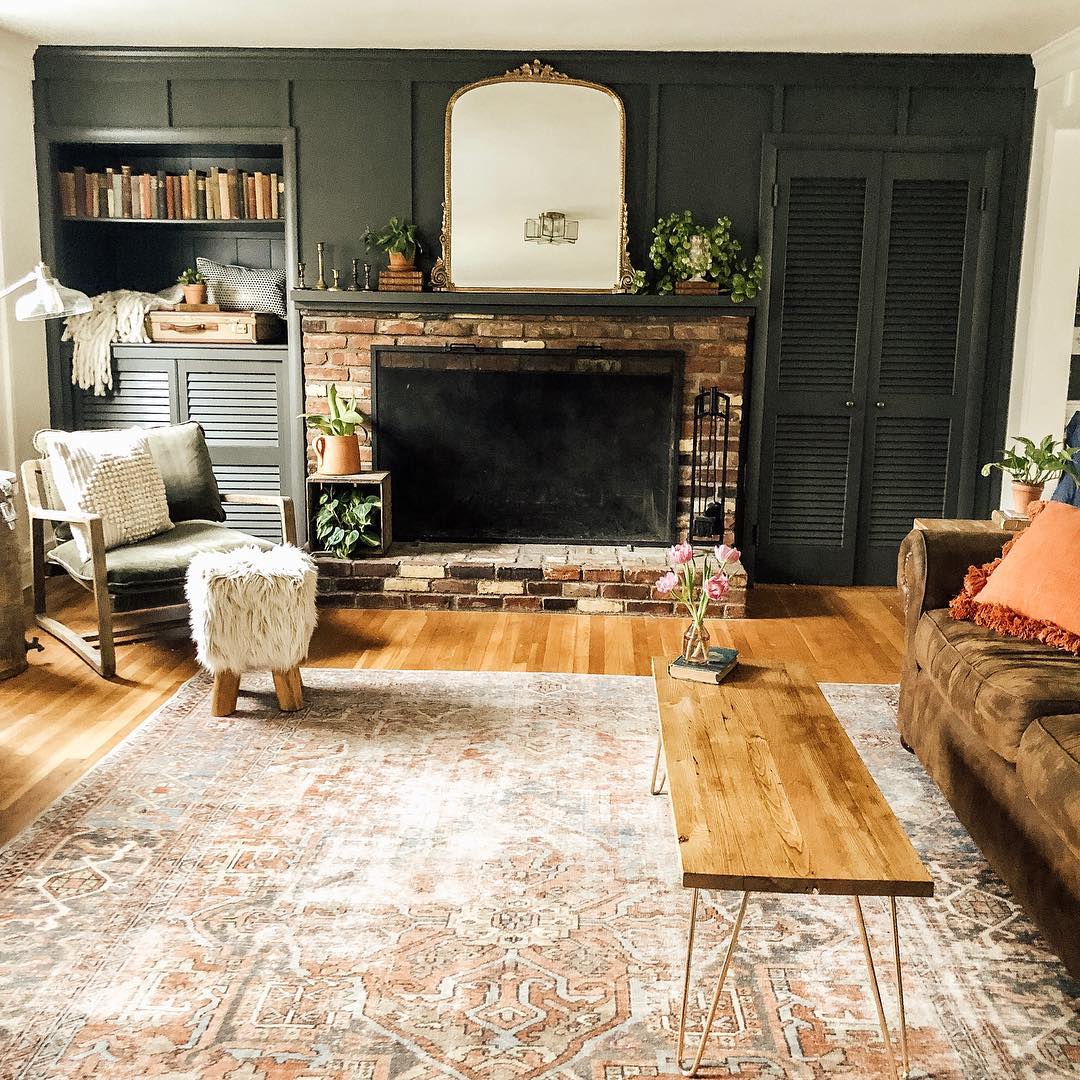
One dark color pulls this fireplace wall together even though its storage differs on each side. Open shelves and a low cabinet sit to the left, while taller louvered doors occupy the right.
Painting the surrounding paneling and joinery consistently allows the exposed brick to become the warm center of the composition. This is a practical idea for rooms where perfectly matched built-ins would be unnecessary or expensive.
Work with the existing arrangement, and use color to reduce visual breaks between its parts. Keep the brick visible if its variation complements the floor and furniture.
A pale rug and lighter chair cushions balance the wall's depth, while a gold-framed mirror gives the eye a bright resting place above the mantel.
Keep a Red-Brick Fireplace Bright with Glass and Reflection
Credits: Instagram
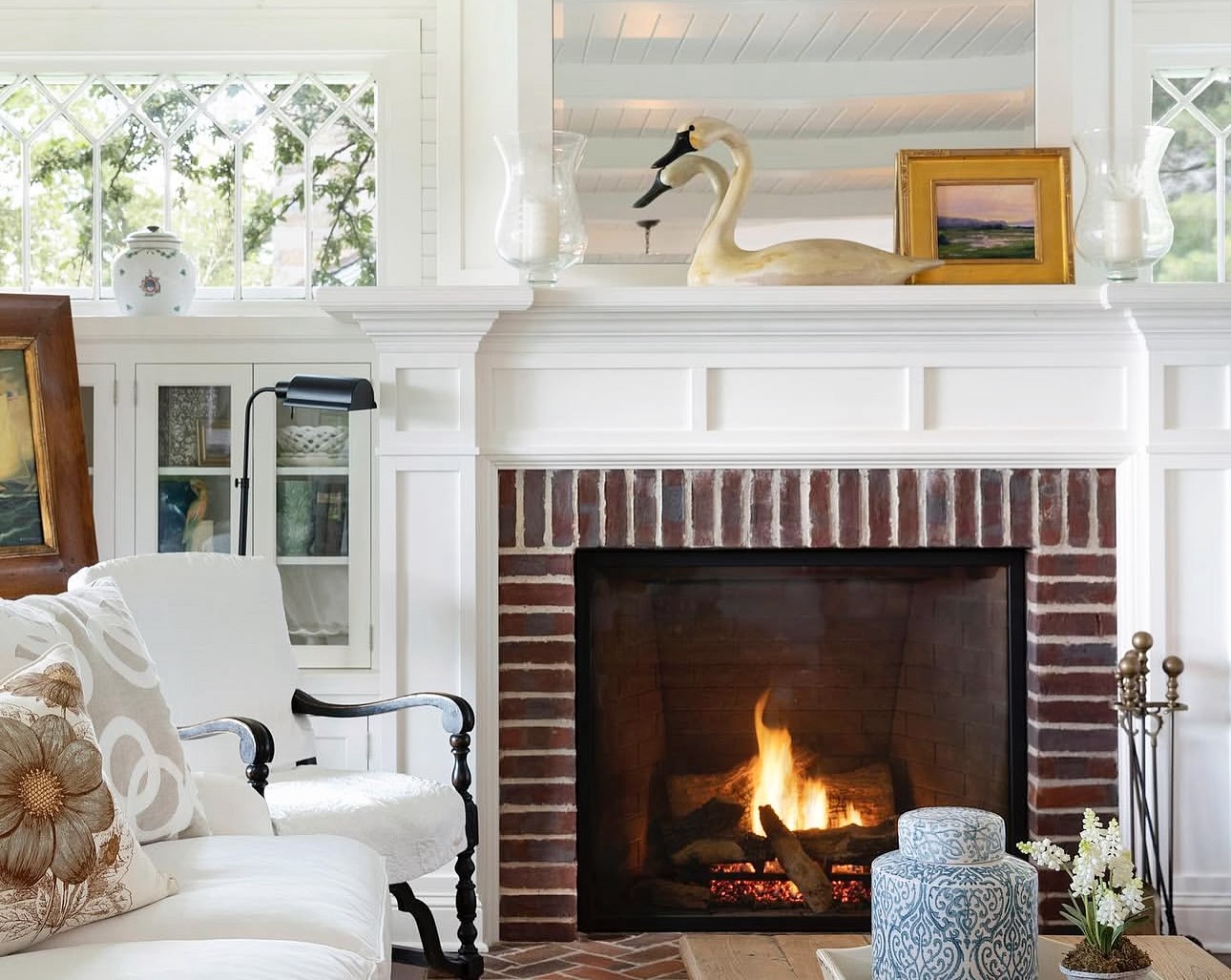
Glass-front cabinets and a broad mirror give this red-brick fireplace a light setting. The brick remains a strong warm accent, but the surrounding white joinery, diamond-paned windows, and reflective surfaces keep the wall from feeling dense.
Consider this balance when a traditional fireplace shares space with collections or display storage. Glazed cabinet doors let ceramics and books contribute color without creating the visual weight of solid fronts.
Choose a mirror that reflects an appealing part of the room, checking the view from the main seats before hanging it. Keep mantel objects low enough to leave plenty of reflected space visible.
Cream upholstery and a few dark furniture details can connect the bright cabinetry with the deeper tones in the brick.
Build a Graphic Palette Around Black Brick
Credits: Instagram
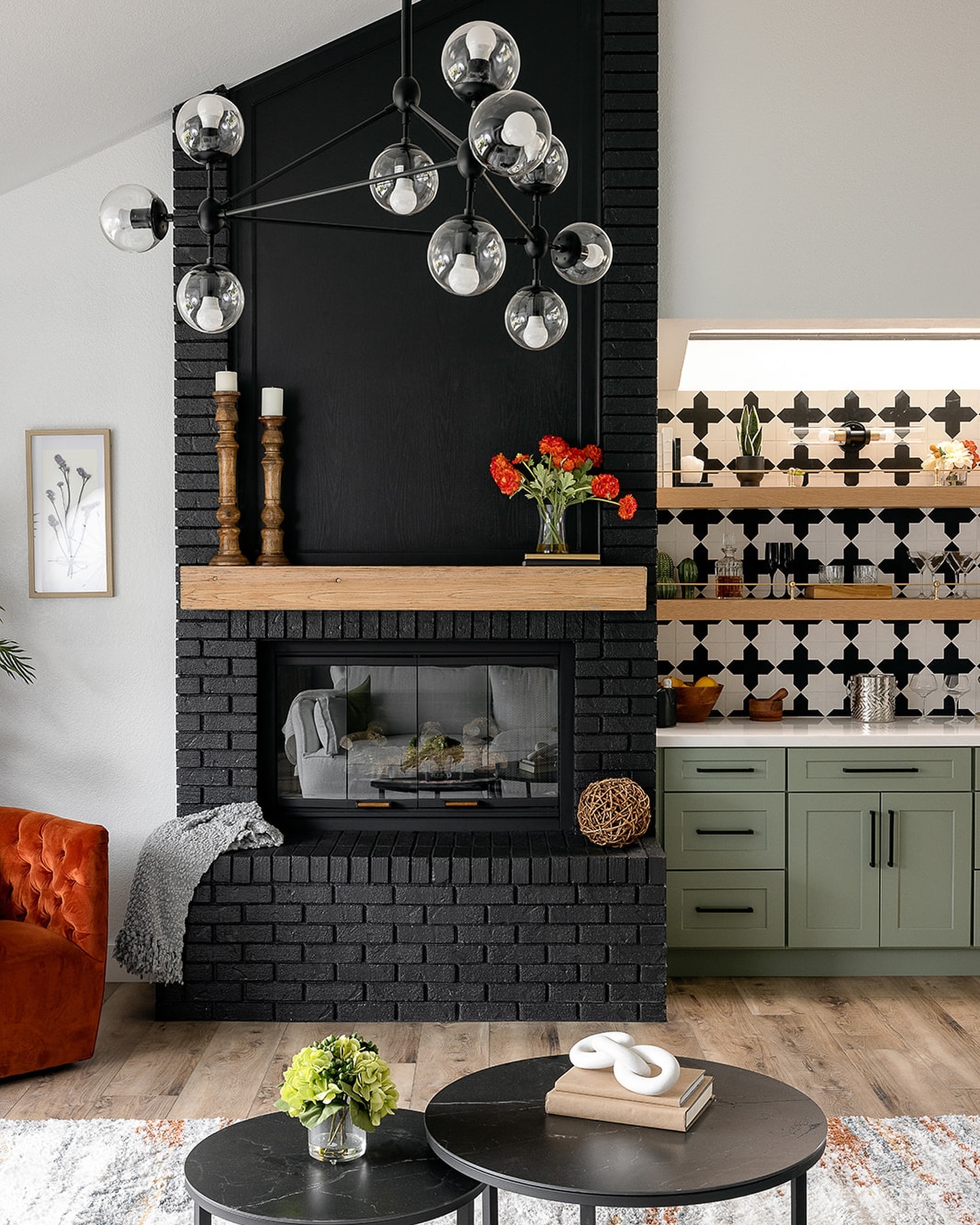
Black brick becomes part of a coordinated graphic palette in this living room. The neighboring black-and-cream tile repeats its depth, while olive cabinetry and orange upholstery introduce color without competing with the fireplace's silhouette.
Pale wood connects the mantel with the open shelves, giving the strong pattern a warmer companion. To borrow this approach, begin with the largest surfaces and limit the palette before shopping for accessories.
Repeat black in a few substantial places, then choose one muted color and one brighter accent. Keep some surrounding walls light so the fireplace remains defined.
Where a bold tile pattern meets textured brick, a shared color helps the materials relate. Simple cabinet fronts and uncluttered shelves give those busy surfaces breathing room.