
A gallery wall feels more personal when it responds to the room instead of forcing every frame into a tidy grid.
Best Gallery Wall Ideas can help you work with the space you have, whether that means carrying art around a corner, arranging pieces around a television, or breaking up a wide display with mirrors.
The article also offers ways to connect a collection through repeated colors, refreshed frames, or a large canvas that leads the arrangement. With a few practical layout choices, mixed artwork can feel cohesive while still showing its variety.
Wrap an Eclectic Gallery Around a Corner
Credits: Instagram
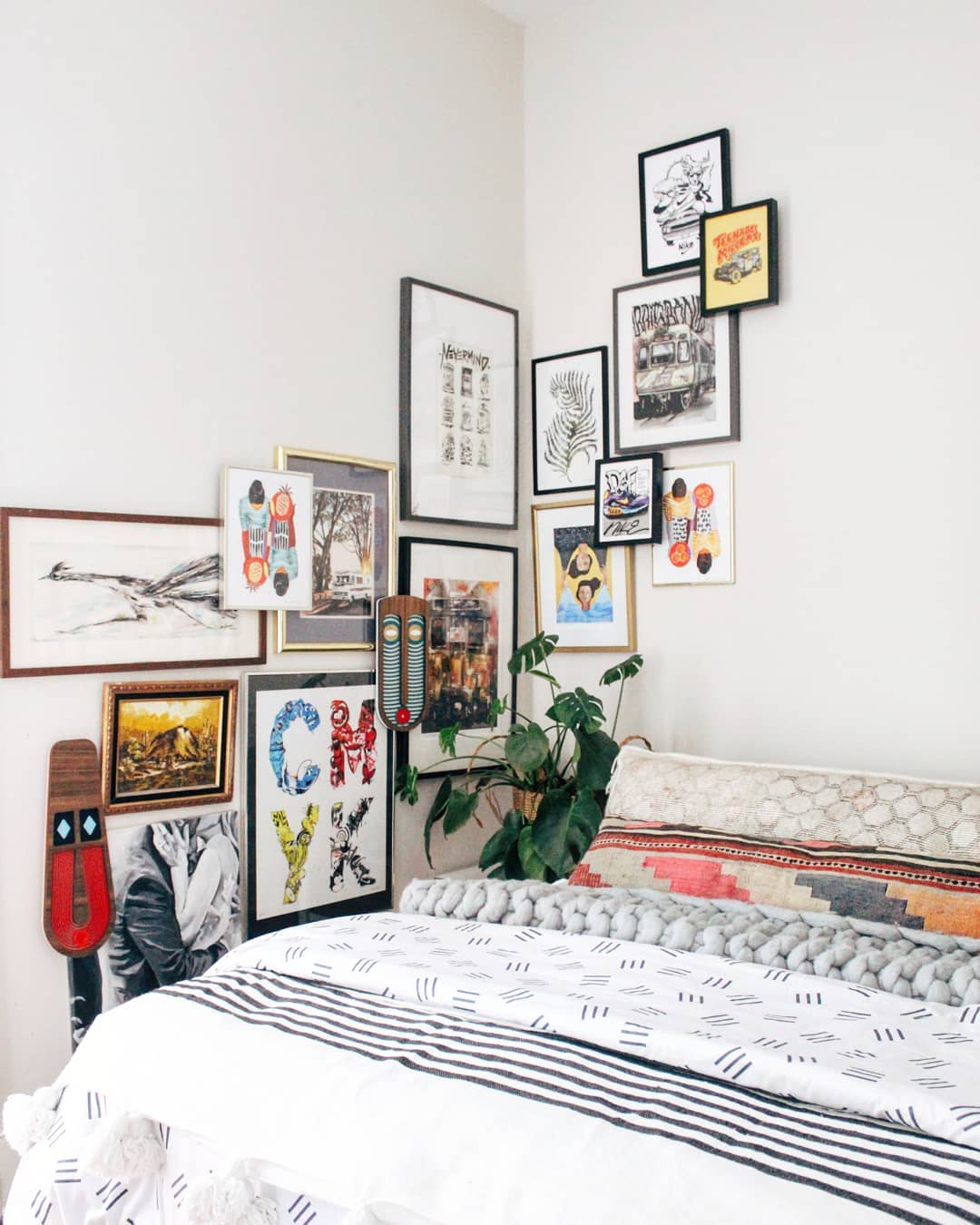
This bedroom gallery turns an awkward corner into the most expressive part of the room. Pictures climb from beside the bed onto the adjoining wall, with carved wall objects breaking up the rectangles.
Dark, brass toned, and pale frames give the collection a gathered feel, while repeated warm colors connect the art to the patterned pillow. Start with your largest pictures near the corner, then extend outward with smaller pieces.
Try the arrangement with paper templates on both walls so the turn feels continuous. Where frames appear layered, mount each piece securely rather than resting one against another.
Keep projecting objects away from pillows and leave enough clearance for someone sitting up in bed to avoid knocking the lowest pieces.
Mix Bold Lettering With Colorful Illustrations
Credits: Instagram
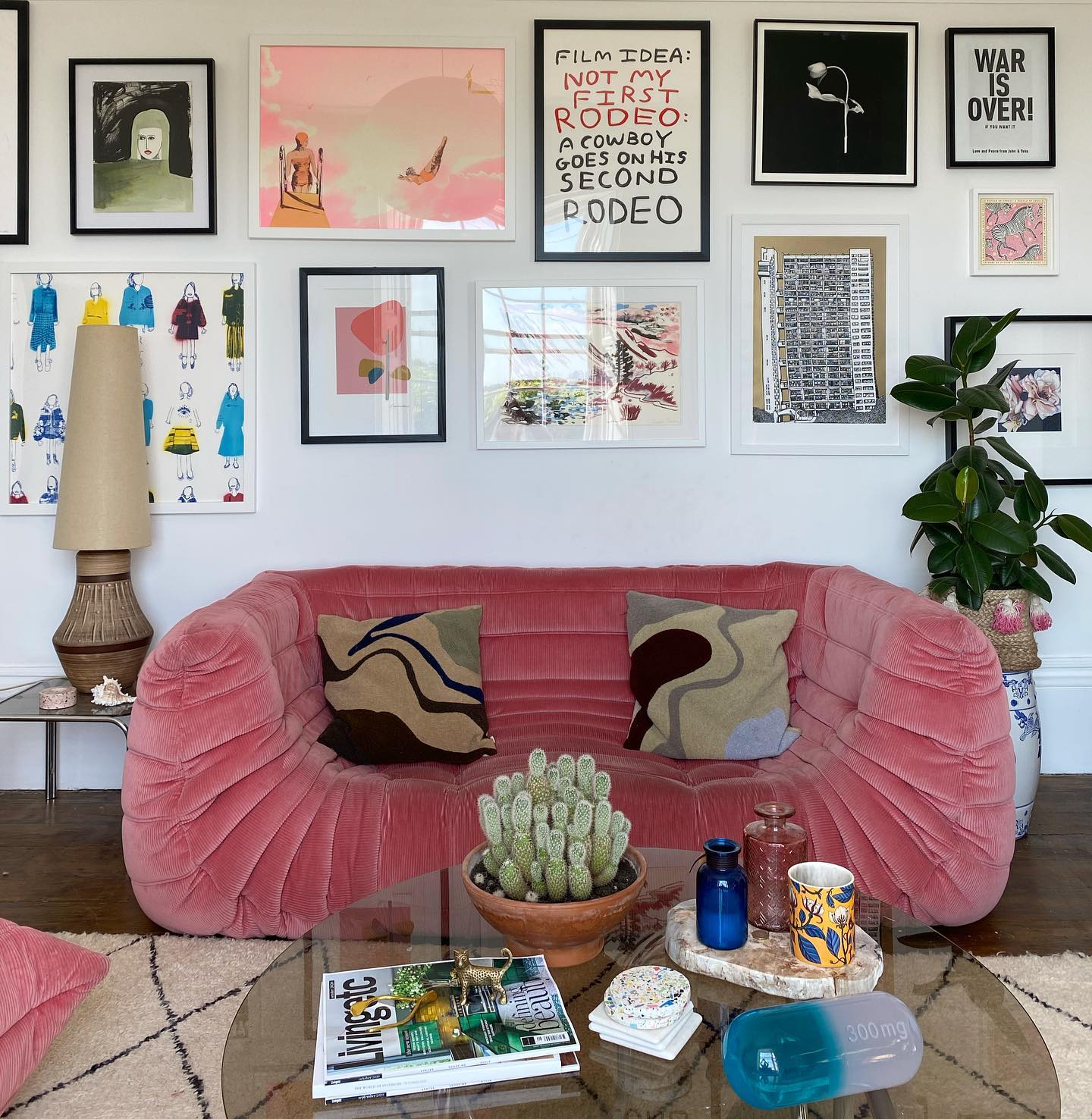
A pink sofa gives this varied collection a clear color cue. The artwork repeats that rosy tone, but black typography, a dark botanical image, and crisp frames keep the wall from becoming sugary.
Illustrations, abstract shapes, and architectural detail share space because the black and white framing creates a consistent rhythm. Choose a few larger pieces first, then place smaller works beside them without forcing every edge into a grid.
Spread the dark frames across the arrangement to balance their visual weight. Use generous mats around busy images so details remain readable.
Before hanging, check the layout from your seat and the doorway. Allow the lamp and plant room to overlap the edges without hiding the art you love most.
Break Up a Wide Gallery With Mirrors
Credits: Instagram
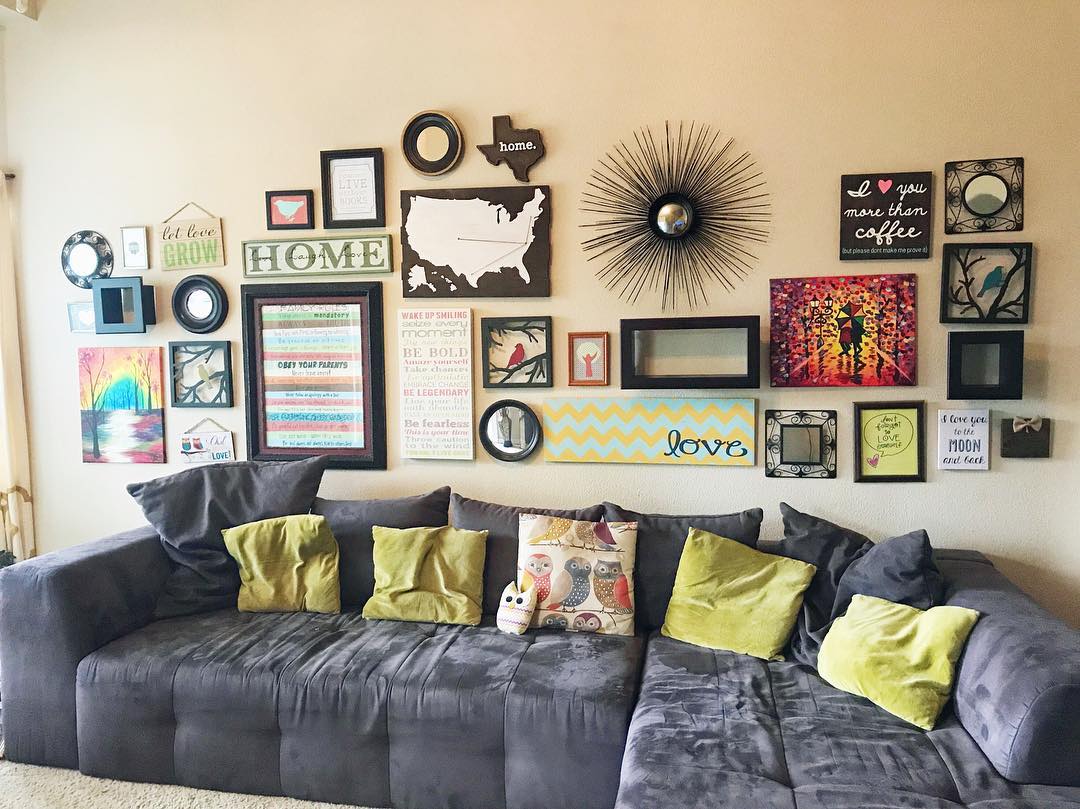
Small mirrors punctuate this colorful display above a deep sectional, while a large sunburst mirror creates a focal point. Circular shapes soften the many rectangular pictures and signs, helping the collection feel lively across a broad wall.
Build your version around one distinctive mirror, then distribute smaller reflective pieces rather than clustering them together. Repeat a frame color to connect mismatched finds; the dark outlines here also relate to the charcoal upholstery.
Keep the lowest row comfortably above cushions and check each reflection from seated positions before drilling. A mirror that catches a bright window can produce distracting glare.
Let the arrangement span the seating area, using the sofa as a visual base while leaving breathing room at either end.
Build a Gallery Around Your Television
Credits: Instagram
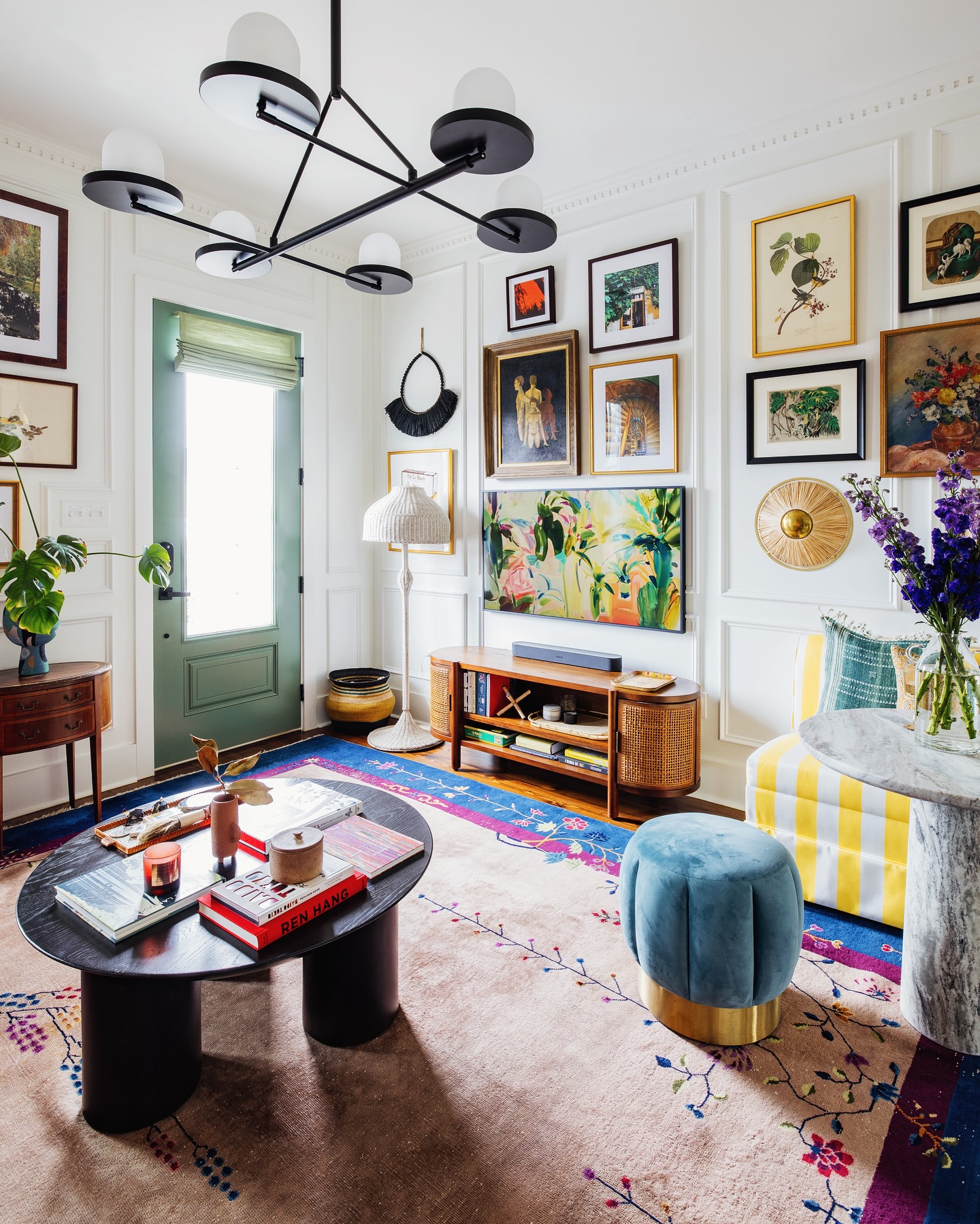
The television joins this gallery through its colorful screen image, surrounded by botanical prints, photographs, paintings, and sculptural accents. White wall molding gives the eclectic mix a structure, while recurring gold and dark frames connect the individual pieces.
Begin with a comfortable television position, then arrange art around it rather than raising the screen to suit the gallery. Use the molded wall sections to organize smaller groups, leaving visible space around their borders.
A low cabinet grounds the composition and keeps the soundbar below the picture. Plan discreet cable routes before hanging nearby artwork, and preserve access to connections.
Choose screen artwork that echoes colors already present in the room so the television feels considered even when nobody is watching.
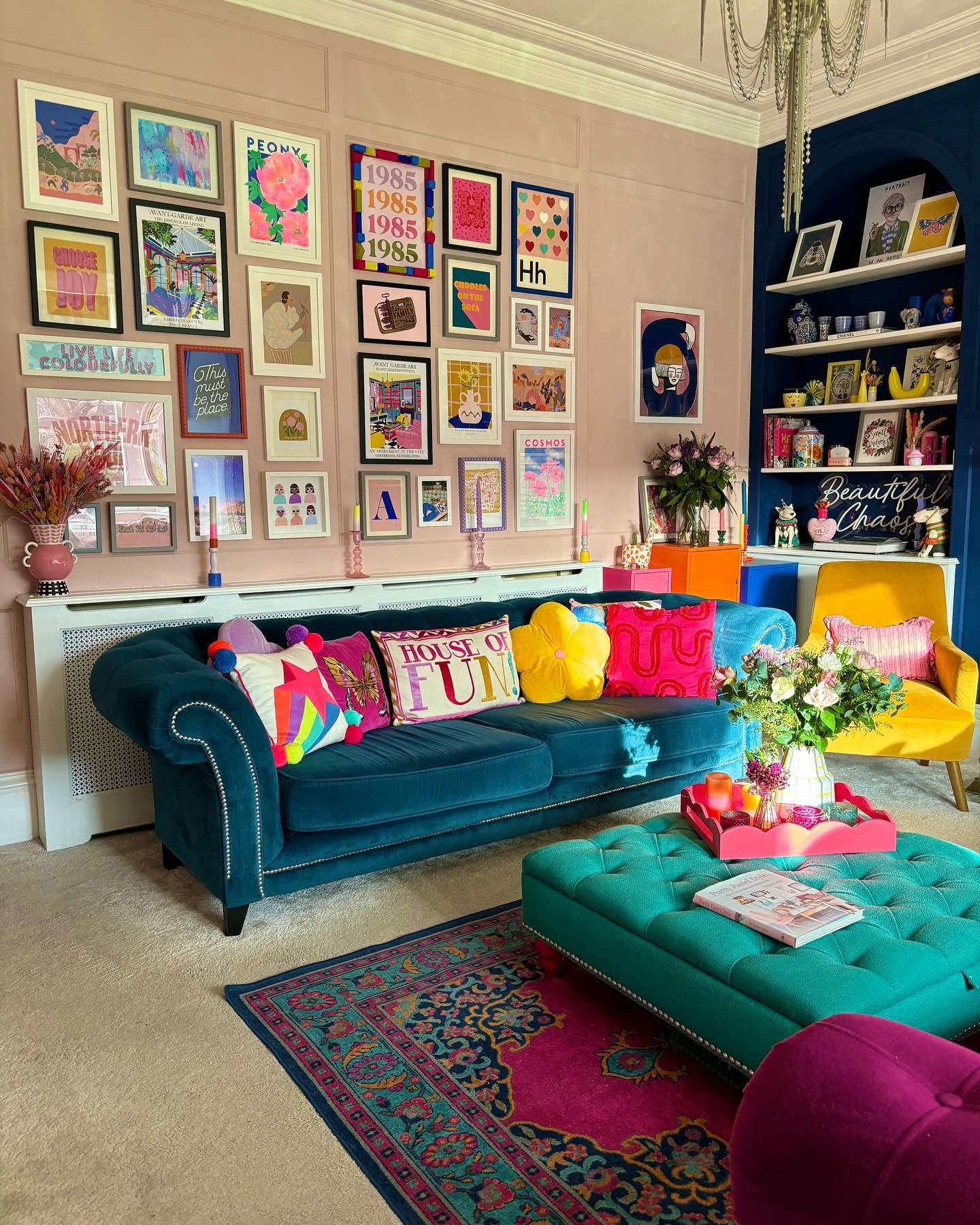
Carry Your Gallery Colors Into the Furniture
Credits: Instagram
Pale pink walls give this exuberant collection a soft background, letting saturated prints and playful lettering stand out.
The same blues, pinks, and yellows reappear in the teal sofa, bright cushions, and yellow chair, so the gallery belongs to the whole room.
Choose a palette from artwork you already enjoy, then repeat selected colors through a few textiles or accessories. Mixing light and vivid versions of those colors creates depth without requiring exact matches.
Here, pale mats separate busy prints from the wall, while the lower edge stays above the long radiator cover. Arrange larger pictures first and fit smaller pieces between them.
Leave some unfilled wall beside the collection so the neighboring shelves can hold their own colorful display.
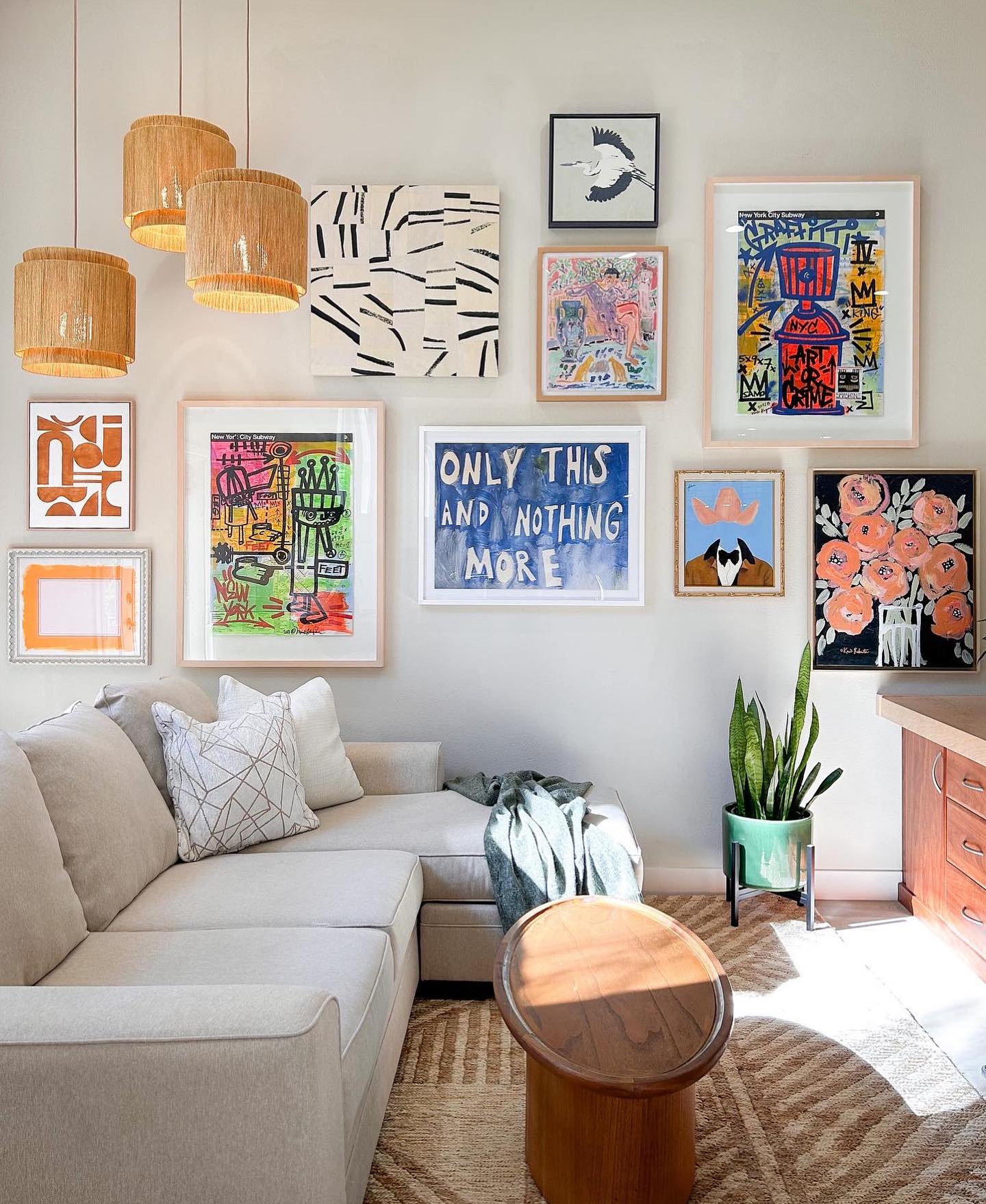
Give Existing Artwork a Fresh Frame
Credits: Instagram
A collection can feel considered without replacing every picture. In this arrangement, pale wood and white frames give colorful artwork a lighter setting, while a few darker or decorative borders retain variety.
Generous gaps let the bird, lettering, flowers, and graphic compositions remain distinct. Start by reviewing pieces you already own, then test new mats or frame finishes before buying additional art.
Repeat a light finish on several larger works to establish continuity. Arrange different sizes asymmetrically, balancing a tall picture on one side with a smaller cluster elsewhere.
Keep the surrounding furniture quiet, as the cream sofa does here. Check the composition with pendant lights included in your view, since their shades occupy space in front of the wall.
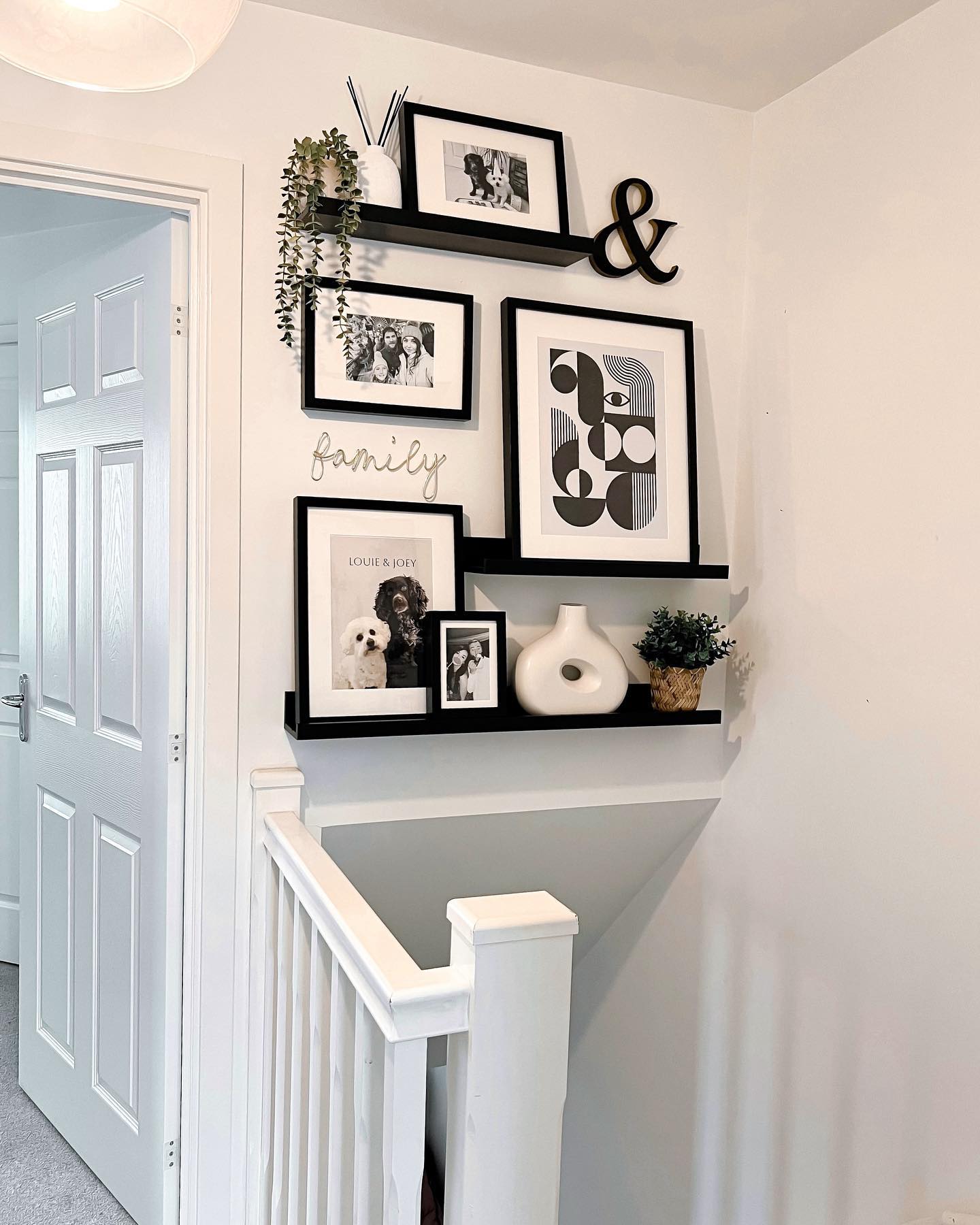
Layer Personal Pictures on Staggered Ledges
Credits: Instagram
Three black picture ledges turn this narrow landing wall into a personal display. Pet portraits and family photographs sit beside a graphic print, with white mats and matching dark frames bringing the different subjects together.
Staggering the shelves makes room for taller pictures without filling the wall with continuous horizontal lines. Start by choosing the largest frame, then plan shelf heights around it.
Leave enough room to lift pictures out when you want a change. A trailing plant and rounded vase soften the arrangement, but keep accessories restrained where the wall borders a staircase.
Secure shelves into suitable supports and prevent leaning frames from sliding or tipping. Check that nothing projects into the route people use when walking past daily.
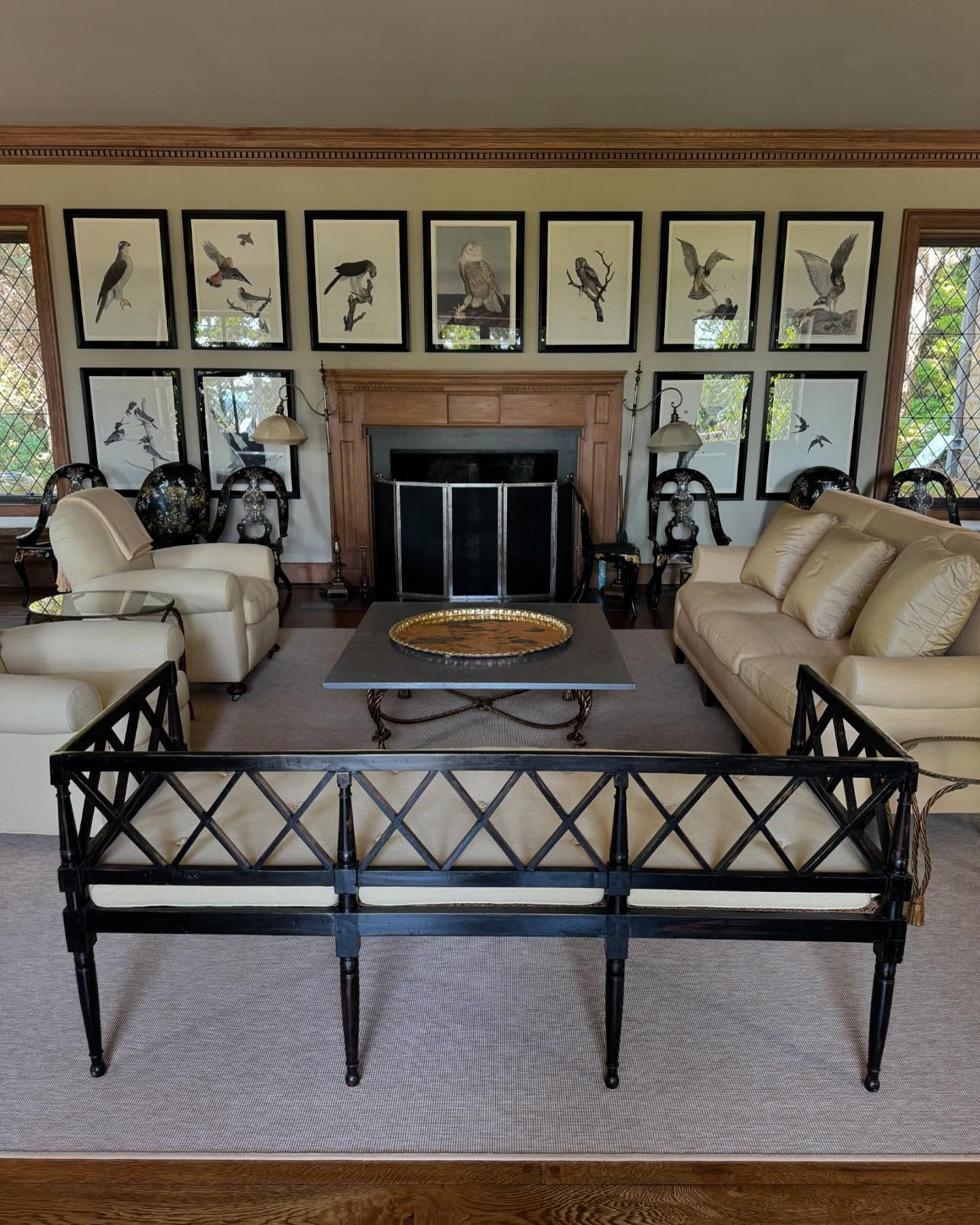
Set Matching Prints Around a Fireplace
Credits: Instagram
Repeated bird illustrations create a formal gallery across this fireplace wall. Matching black frames, pale backgrounds, and consistent portrait proportions make the different birds read as one collection.
A continuous upper row spans the mantel, while shorter lower rows flank the fireplace and preserve its central position. Measure the whole wall before choosing frame sizes, accounting for windows, lamps, and the mantel.
Establish the top row with a level, then carry its spacing into the side groups. Matching outer dimensions matter more than identical image sizes, which can be accommodated with mats.
Keep artwork clear of fireplace heat and follow the appliance guidance for nearby materials. Test reflections before installation, especially where facing windows might obscure the details behind glass.
Make Room for Drawings Among Collected Prints
Credits: Instagram
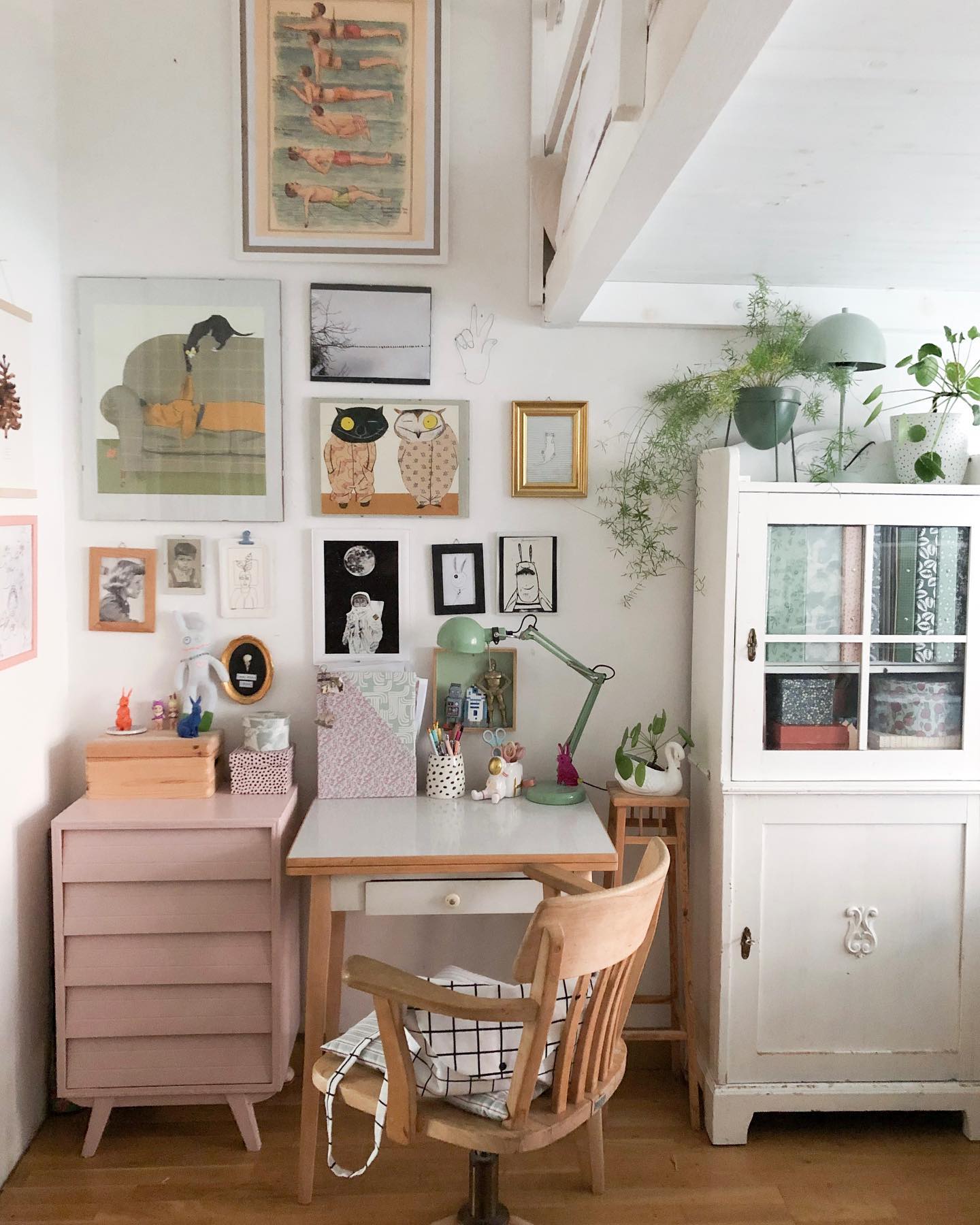
Playful line drawings, animal pictures, photographs, and an astronaut image give this compact desk corner an informal character. The mix works because larger pieces establish the arrangement, while smaller drawings fill spaces between them.
A gold frame adds emphasis to a picture without demanding another large artwork. Treat homemade sketches with the same care as purchased prints: give them a simple frame or neat backing, then place them where they can be enjoyed.
Work around the overhead loft structure rather than forcing a rectangular outline. Keep the desk lamp free to move, and leave the lowest pictures clear of storage and supplies.
Repeating muted green and warm pink tones helps the varied collection sit comfortably beside the furniture and plants.
Combine Poster Hangers With Framed Art
Credits: Instagram
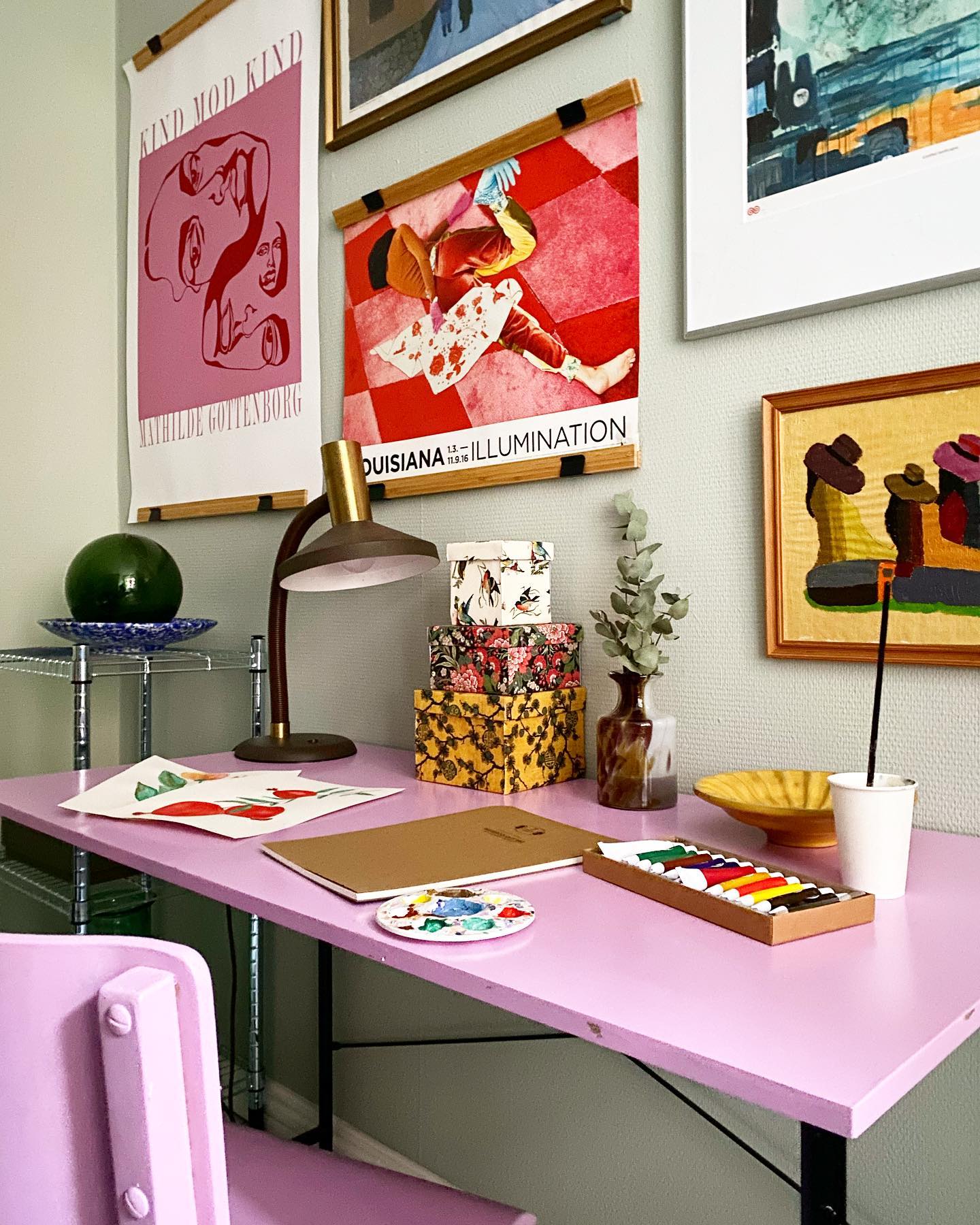
Wooden poster hangers bring a relaxed finish to this workspace gallery. Their narrow rails leave the paper visible, giving exhibition posters a different presence from the neighboring framed pictures.
Mixing the two treatments adds variety without needing more decorative objects. Try hangers for inexpensive prints you expect to change, while keeping delicate or valuable work in suitable protective framing.
Check that the rails suit the paper width and hold it evenly so the image hangs straight. Repeat warm wood tones elsewhere in the collection to connect the different formats.
Here, pink and red posters relate to the painted desk, with yellow accents adding contrast. Keep paper away from paint splashes, and leave enough clearance for the adjustable lamp to move.
Fill a Tall Wall Beside an Open Doorway
Credits: Instagram
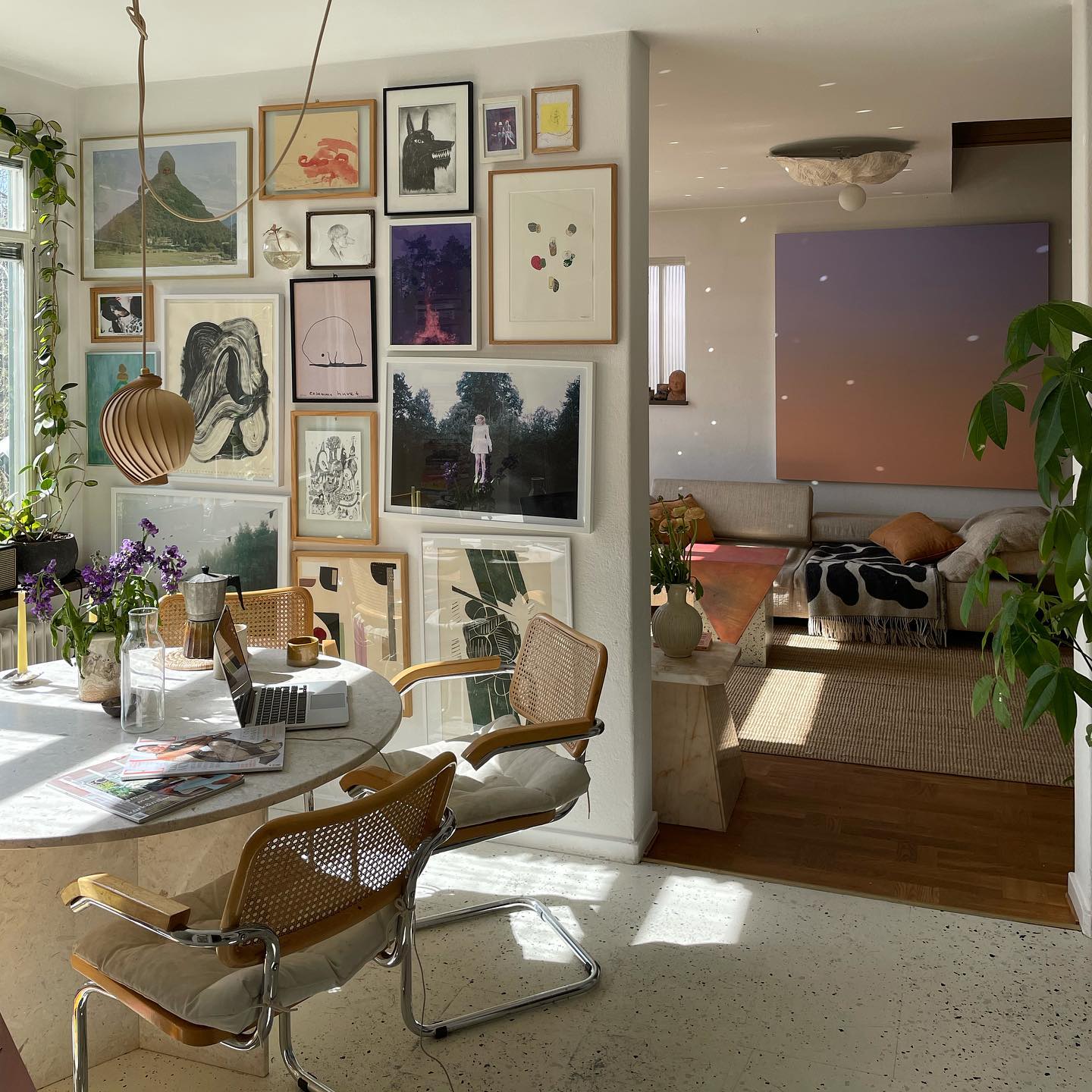
This gallery uses the tall wall between a window and an open doorway, turning a transition between rooms into a display. Large photographs and graphic pictures extend almost from ceiling to floor, with smaller works fitted between them.
Through the opening, one oversized artwork gives the adjoining sitting area a quieter focal point. Plan the gallery as a complete vertical shape before hanging individual frames.
Keep its outer edges clear of the window trim and doorway, then balance larger pictures across the available width. Low pieces need protection from chair backs and passing feet, especially beside a dining table.
Consider the view from both rooms: a densely arranged wall feels more deliberate when the next sightline offers somewhere to pause.
Let One Large Canvas Lead the Arrangement
Credits: Instagram
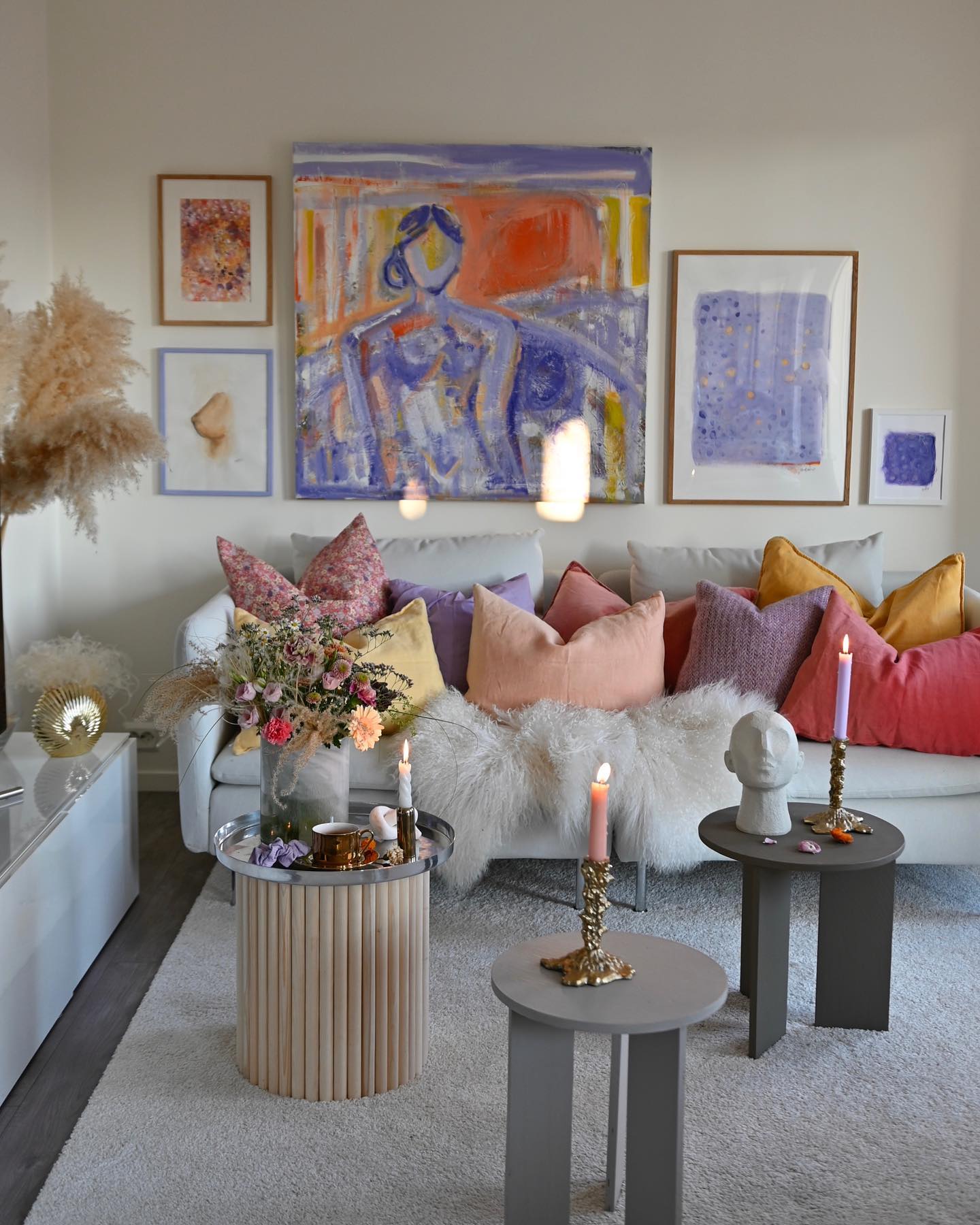
A large purple and orange canvas leads this five piece arrangement above a pale sofa. Four smaller works support it, repeating violet and warm blush tones without matching every frame or subject.
The canvas supplies the main visual weight, so the companions can remain simple and airy. Begin with a statement piece you genuinely enjoy, then choose smaller pictures that share one or two colors.
Balance their combined size on either side rather than insisting on mirror symmetry. Here, the lower edges create a loose horizontal line above the cushions.
Keep that relationship clear when testing your layout, and leave comfortable space above seated heads. Echo selected art colors in cushions to connect the gallery with the furniture beneath it.
Anchor a Salon Gallery With a Sideboard
Credits: Instagram
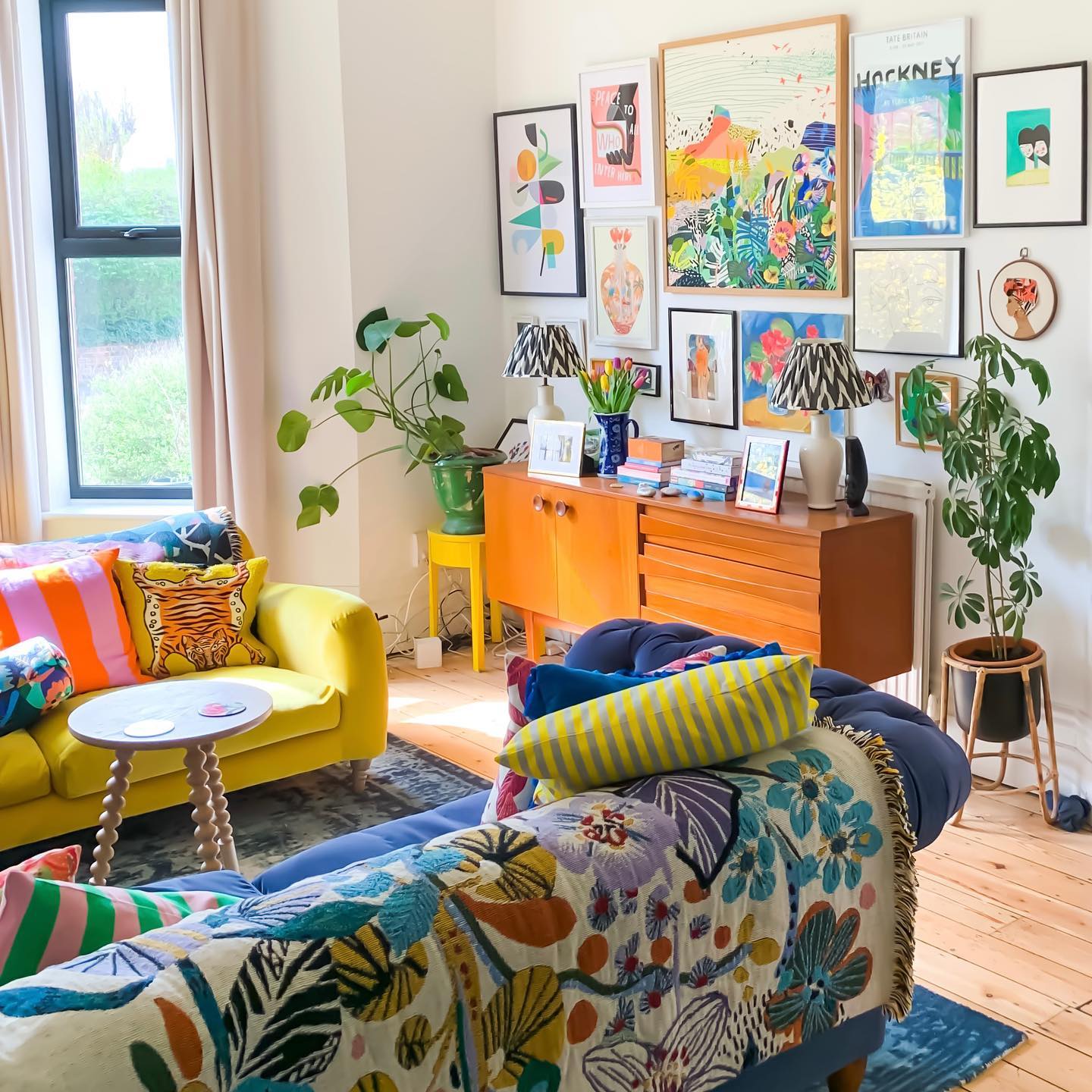
A warm wooden sideboard gives this lively salon arrangement a base. Above it, a large botanical print draws the eye, with smaller colorful pictures fitted closely around its edges.
Two lamps with matching patterned shades connect the wall display to the furniture and give the varied artwork a sense of balance. Set the sideboard and lamps in place before planning your frames.
Their height will affect which pictures remain visible and where the lowest row should sit. Let the gallery rise higher at the center, then vary its edges with smaller pieces or a round object.
Keep some usable surface for books and everyday belongings. When adding plants, leave growing space so leaves will not gradually cover your favorite pictures.
Keep a Mixed Gallery Warm and Neutral
Credits: Instagram
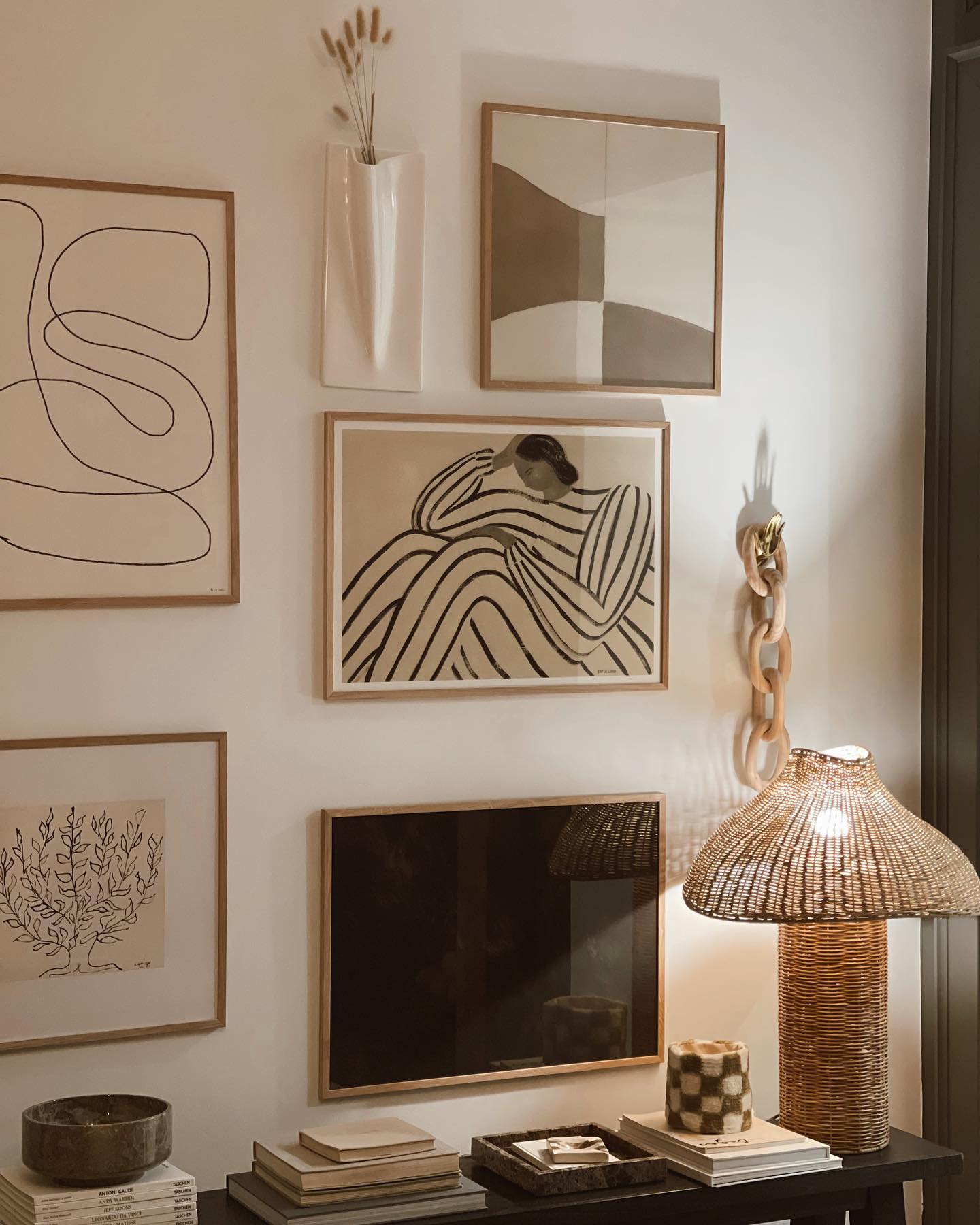
Cream, tan, and black give this gallery a restrained palette, while pale wooden frames tie its different images together. Line drawings sit beside abstract shapes and a figurative print, with a sculptural wall vase and linked wooden ornament adding depth.
The limited colors make those changes in texture more noticeable. Choose artwork with similar background tones, then vary the density of the marks so every picture does not demand equal attention.
Leave open wall around projecting objects to show their silhouettes and shadows. Repeat a natural material in a nearby lamp or furniture piece, as the woven shade does here.
Before fixing the arrangement, switch on your evening lighting and check whether reflections obscure the darker pictures you have chosen.
Bring Different Floral Pictures Into One Collection
Credits: Instagram
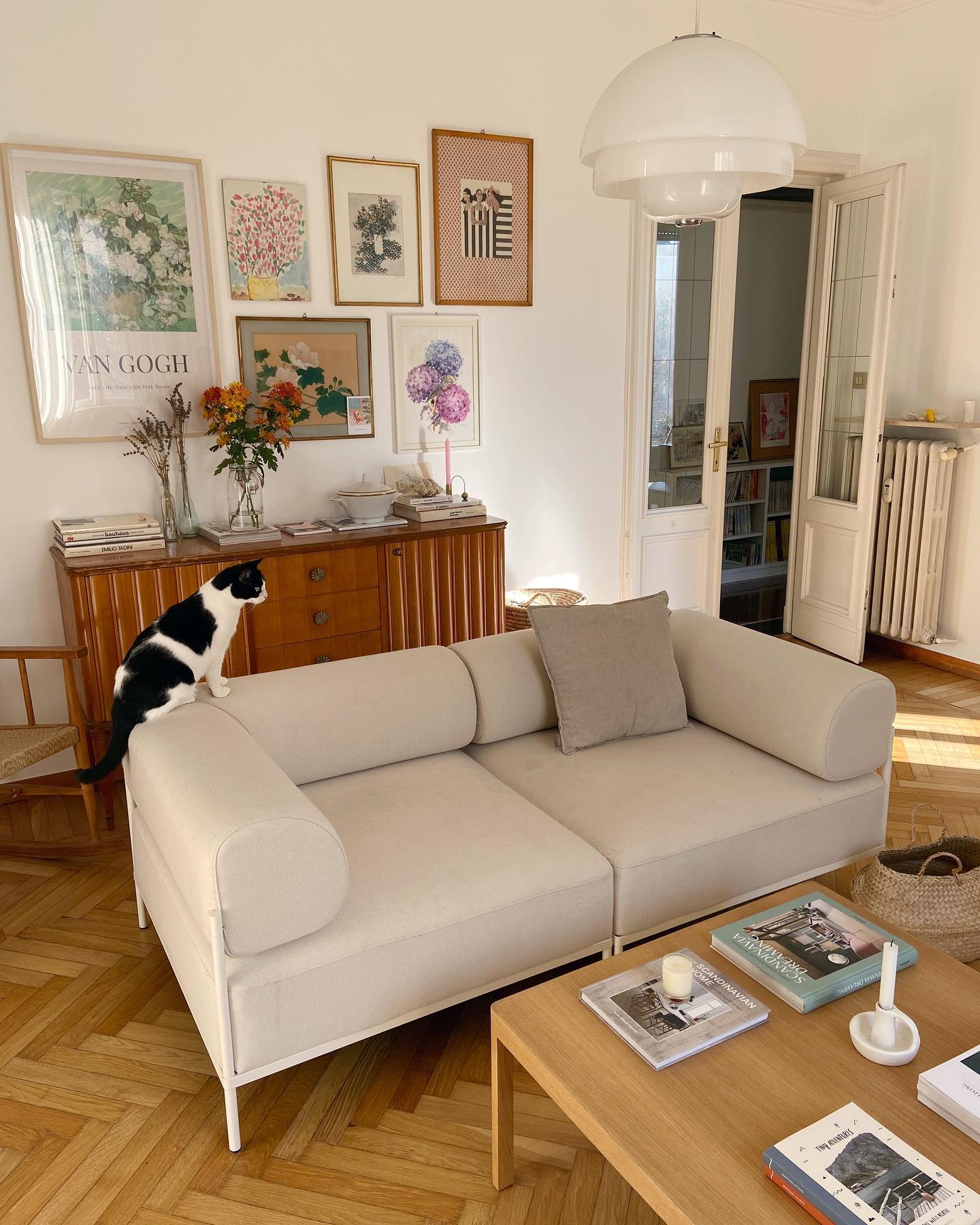
Flowers provide a shared subject for this gallery above a wooden sideboard. A large exhibition poster sits beside smaller botanical pictures, mixing soft green foliage with pink, purple, and white blooms.
Varied frame finishes and image sizes keep the theme from feeling repetitive, while the pale wall gives each piece breathing room.
Build a similar collection by varying the way your subject appears: a close view of blossoms can sit beside a loose bouquet or a leafy branch.
Choose one larger work to establish scale, then arrange smaller pictures around it. Fresh stems below create another connection, but keep vases far enough from frames to avoid splashes.
Leave room above the cabinet for objects without covering the gallery's lower edges.
Continue the Gallery Above a Door
Credits: Instagram
This arrangement carries graphic artwork up the wall and over an existing door, making use of space that often stays empty.
Black line drawings and pale abstracts connect the separate areas, while occasional warm colors relate to the room's cushions and accessories. Start by treating the door and its trim as fixed boundaries.
Place paper templates above and beside the opening, checking that the arrangement looks balanced with the door both open and closed. Keep frames clear of its swing and hardware, and secure overhead pieces appropriately.
A smaller picture above the doorway can bridge the composition without filling every gap. Leave the curtain side quieter, as shown here, so the art and tall window each have room to breathe.
Display a Small Object in a Shadow Box
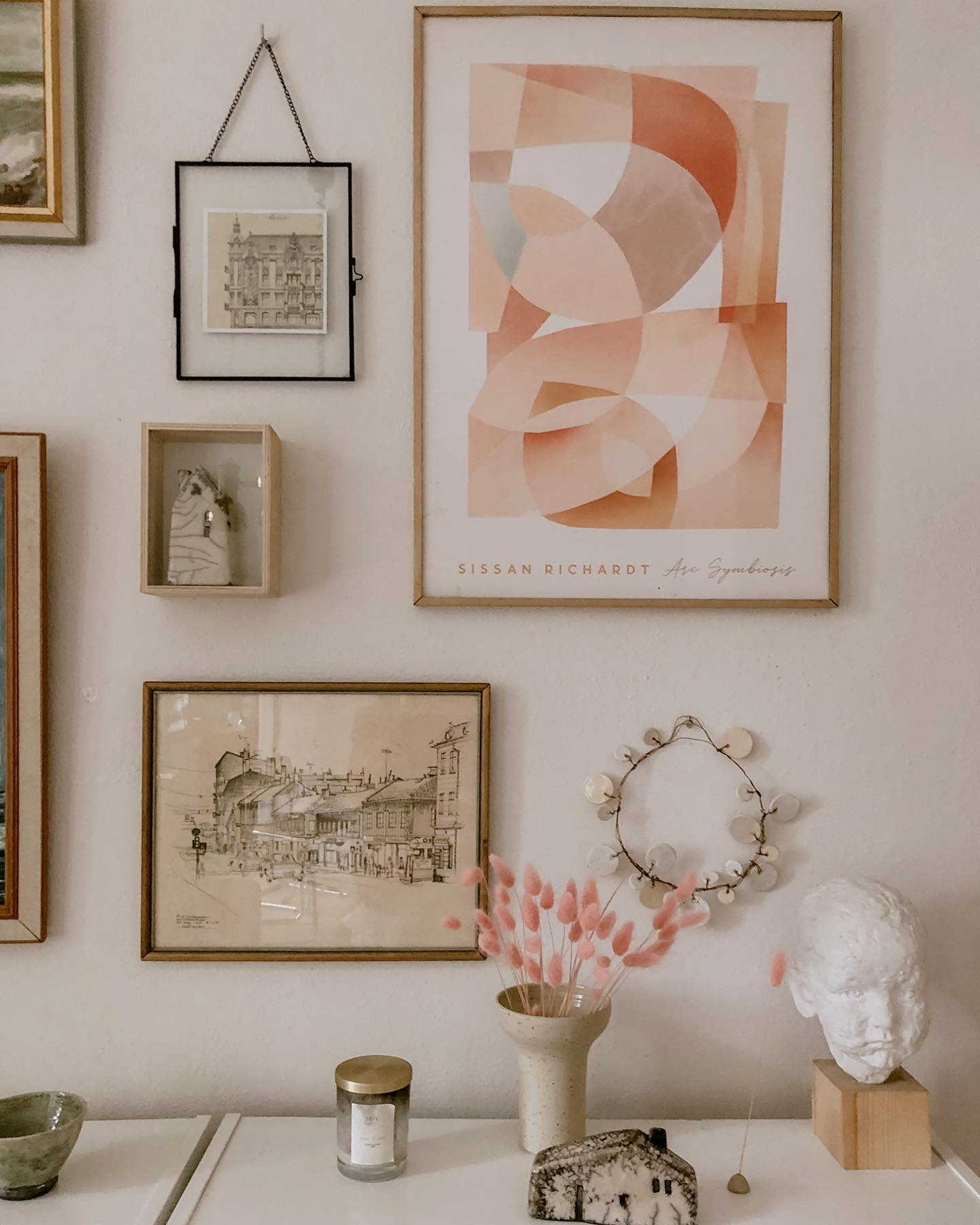
Credits: Instagram
A small object in a wooden shadow box gives this gallery a tactile detail among architectural drawings and a peach abstract print. Its depth changes the wall's rhythm without needing a large sculpture.
Choose a small handmade object or keepsake that deserves closer attention, then select a display box with enough depth to hold it safely.
Secure the object appropriately rather than relying on a loose perch, and use hanging hardware suited to the complete weight. Keep the backing simple so the silhouette remains readable.
Here, pale wood, muted paper tones, and warm metallic frames connect the different pieces. Position your smallest object near a natural viewing spot, where someone can appreciate its details without reaching across furniture or accessories.
Give Travel Photographs a Generous Mat
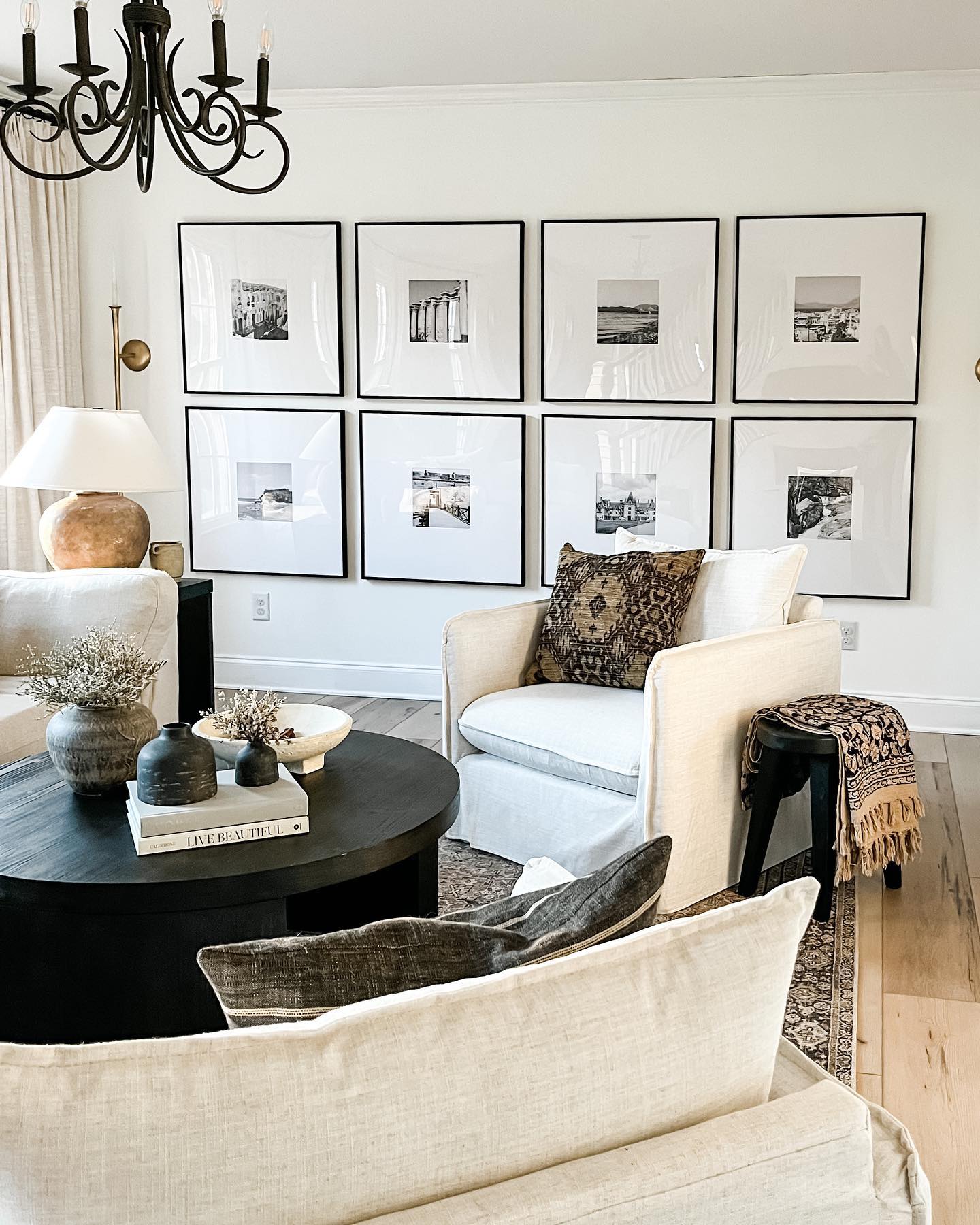
Credits: Instagram
Eight monochrome photographs form a precise grid of two rows and four columns. Their images occupy small central windows inside generous white mats, so the repeated square frames have a calm architectural presence.
This approach works well for travel pictures taken in different places: consistent printing and framing give separate memories a shared visual language. Select images that remain legible at a modest size, then test their crops before ordering mats.
Match the frame dimensions and mat openings, and plan equal gaps across both rows. Balance darker photographs throughout the grid instead of placing them all together.
Check the full arrangement against nearby furniture, allowing seated heads and chair backs to stay clear of the lower frames and their glazing.
Keep Wedding Photographs in One Quiet Row
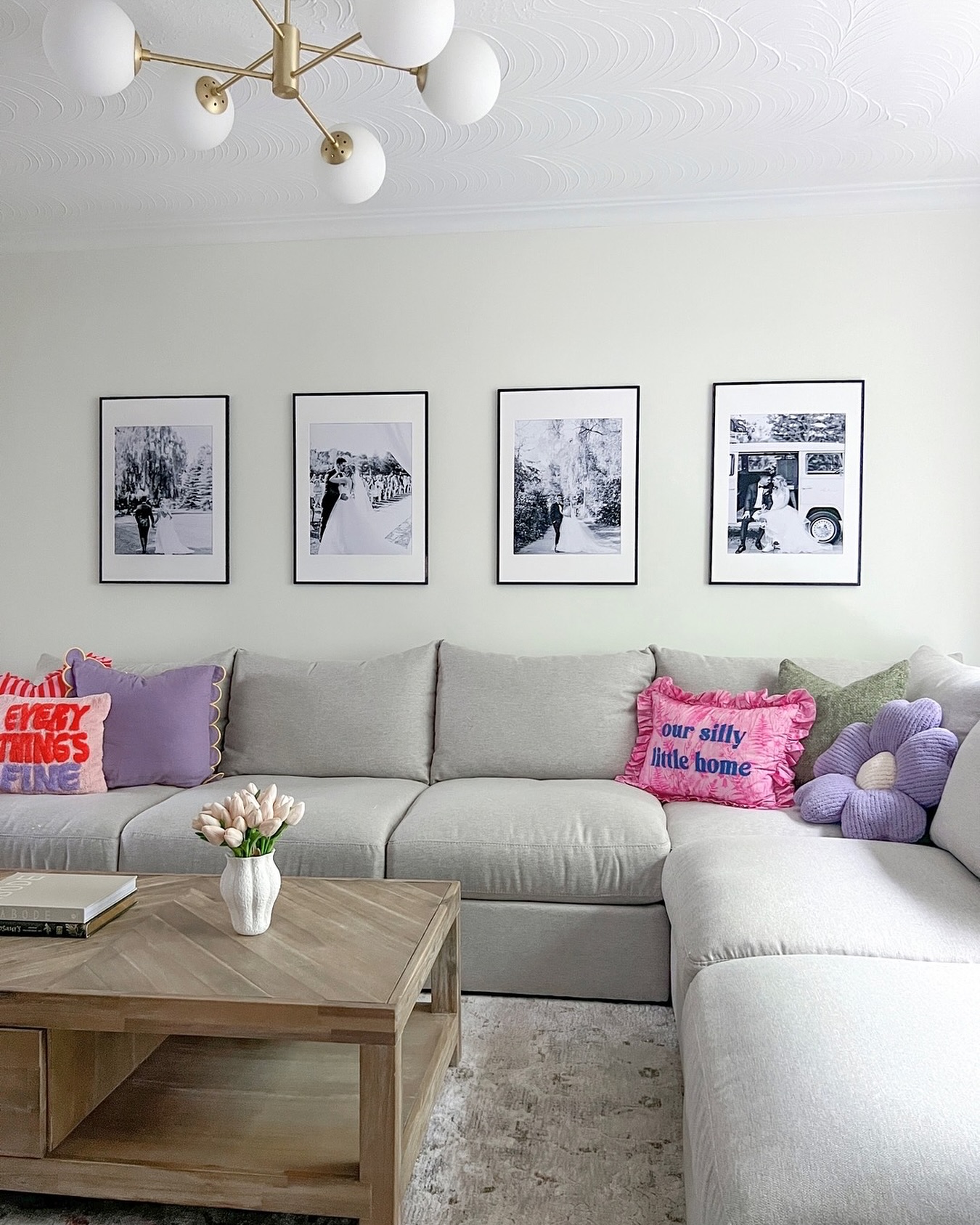
Credits: Instagram
Four wedding photographs make a personal gallery above this broad sofa. Matching slim black frames and white mats give the pictures equal importance, while a single horizontal row leaves generous blank wall above.
The restrained arrangement lets colorful cushions provide the room's playful accents. Choose a small sequence of photographs with varied moments or compositions, then give them a consistent finish.
Align the frames carefully and use equal spacing to create an even rhythm across the seating area. Before committing, tape up templates and view them from the opposite side of the room.
Keep the row close enough to the sofa to feel connected, with clearance for anyone leaning back. Resist adding extra pieces simply because unused wall space remains.
Suspend a Mixed Gallery From a Picture Rail
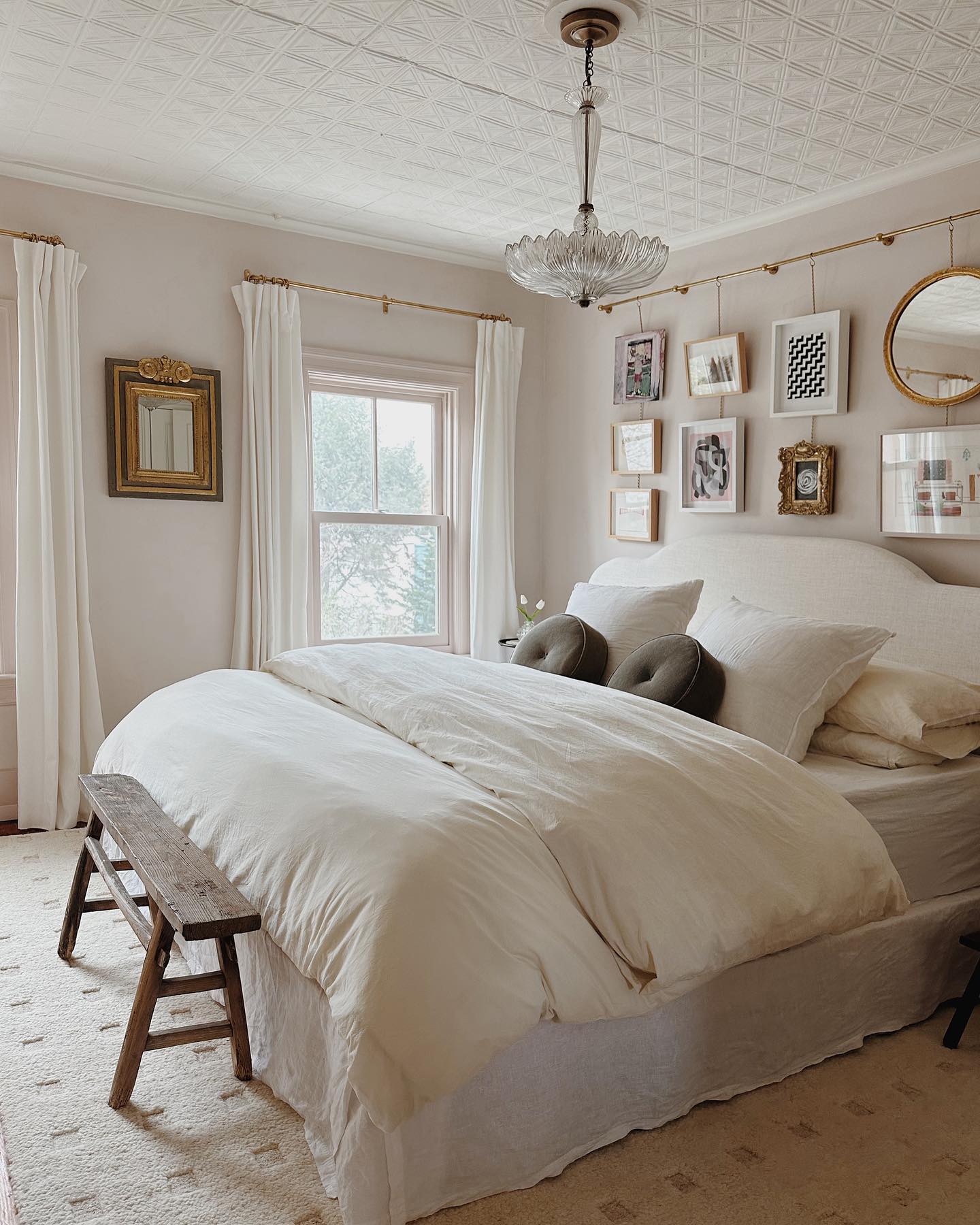
Credits: Instagram
A brass colored rail runs above this bedroom gallery, with visible chains suspending pictures at different heights. Pale frames, ornate gold details, and a round mirror create variety while the shared hanging line brings order.
Plan the arrangement around the headboard, balancing stacks of pictures with larger pieces. Use a purpose designed picture hanging system, with rails, brackets, hooks, and suspension components rated for the combined load and installed into suitable supports.
Do not assume an ordinary curtain rod can safely hold framed art or mirrors. Keep the lowest pieces clear of pillows and seated heads, and prevent frames from swinging or tipping.
Check mirror reflections from the bed before finalizing positions, especially where windows or lights could cause glare.