
A teen’s room has to work for more than sleep: it may need to support homework, display personal interests, and still feel easy to relax in.
Teen Boy Bedroom Ideas in this roundup balance practical choices with color and personality, from a defined homework surface with its own lamp to hooks and bins that keep storage flexible.
There are also ways to make a strong visual statement, such as a forest mural or bright orange bedding, without making every part of the room compete for attention.
These ideas can help shape a space that feels personal and useful.
Define the Room With a Low Band of Black
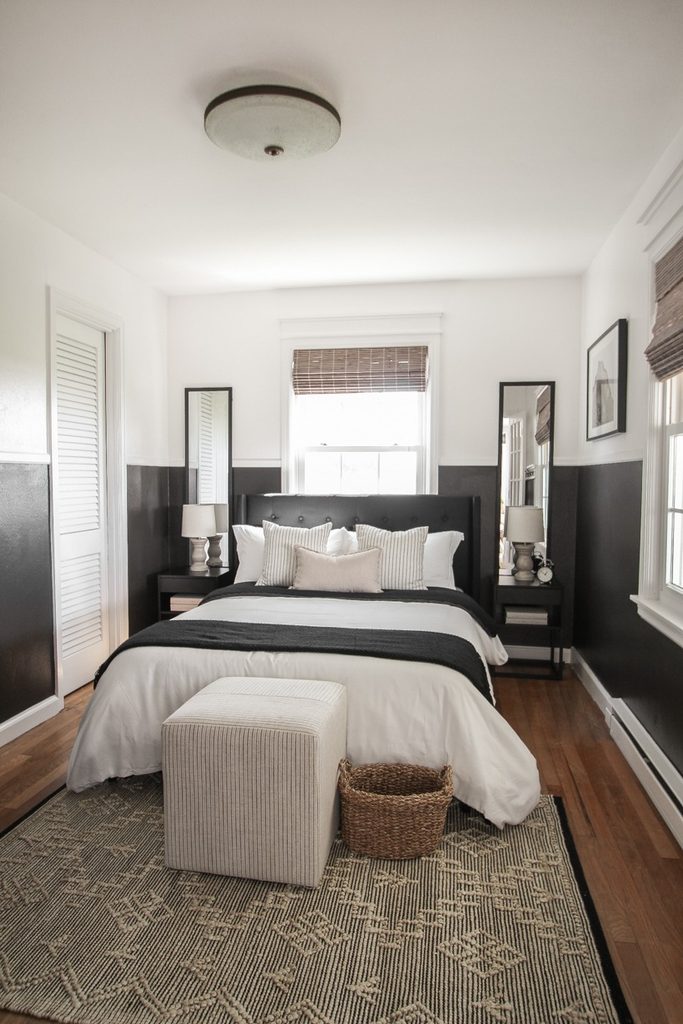
Credits: Liz Fourez / Love Grows Wild
A crisp division between black and white gives this bedroom a strong identity while keeping the ceiling and upper walls light. The dark band connects the headboard, bedside tables, and window wall, making several separate pieces feel coordinated.
For a teen who likes a moody palette, this is a manageable starting point that leaves room for changing interests. Position the paint line thoughtfully around existing trim and furniture, then test the color in daylight and under the lamps.
Pale bedding provides contrast without introducing another bold hue. The small striped seat and woven basket add texture at floor level.
Keep a little breathing room beside the bed so the darker walls still feel intentional rather than crowded with extra furniture.
Bring an Outdoor Interest Into a Forest Mural
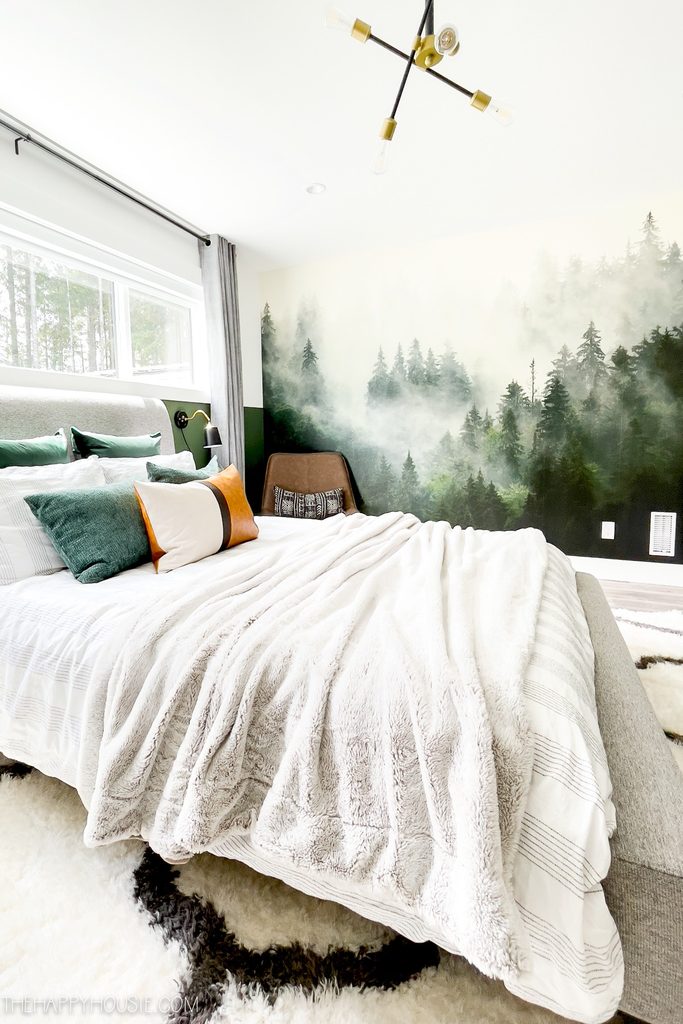
Credits: Krista / The Happy Housie
A wall of misty evergreen trees makes the strongest statement in this bedroom. The rest of the palette follows naturally, with green pillows, pale bedding, gray curtains, and a warm brown chair.
This approach can suit a teenager who enjoys hiking, camping, or simply nature imagery, without covering the room in themed accessories. Choose a mural composition that remains readable behind the furniture you already own.
Here, the pale sky keeps the upper wall light while darker trees ground the lower portion. Let the large image stand on its own instead of layering many small pictures across it.
Repeat one or two of its colors elsewhere, and use plain bedding if you want the forest to stay the main focus.
Combine Dusty Blue Bedding With Muted Green Walls
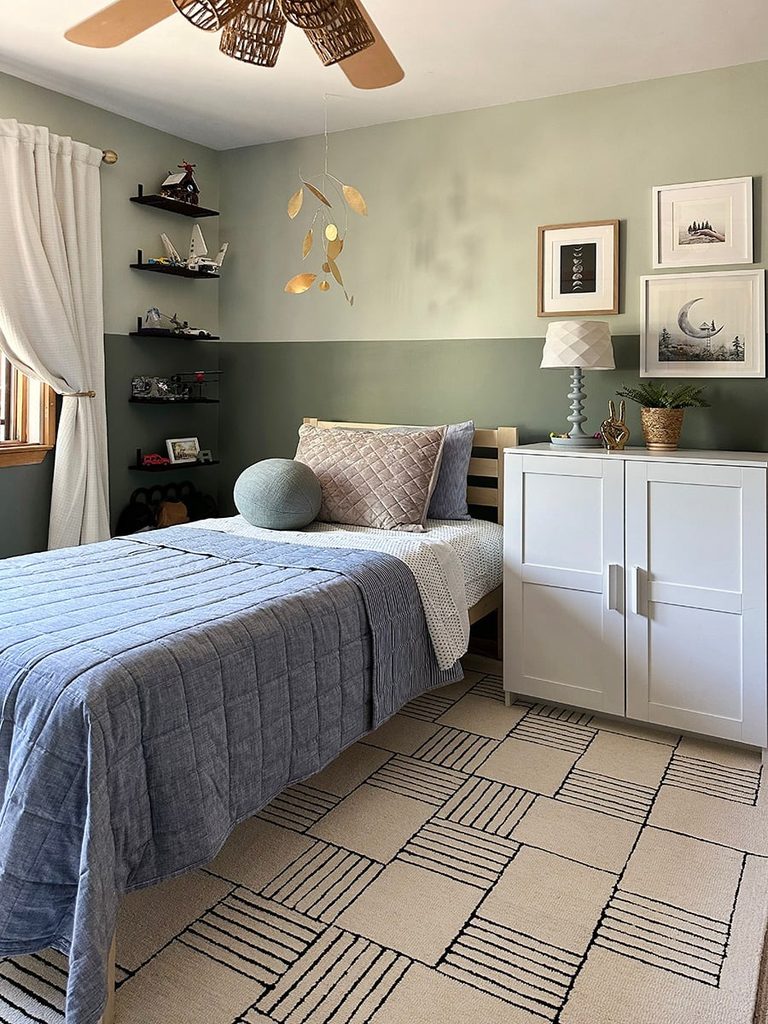
Credits: Amy Weir / Delineate Your Dwelling
Dusty blue bedding feels comfortable alongside the two shades of green on these walls. A pale wood bed and white cabinet prevent the cool palette from becoming heavy, while the graphic rug adds a little energy beneath everything.
Start a similar room by choosing the bedding and wall samples together rather than treating them as unrelated purchases. Slightly muted shades are easier to combine than several bright colors.
The small display shelves show how personal interests can remain visible within a coordinated design. Give favorite models their own spots and keep everyday items behind cabinet doors.
This balance lets a teen bedroom feel collected and lived in while leaving the sleeping area visually simple enough to settle into at night.
Let Bright Orange Bedding Carry the Color
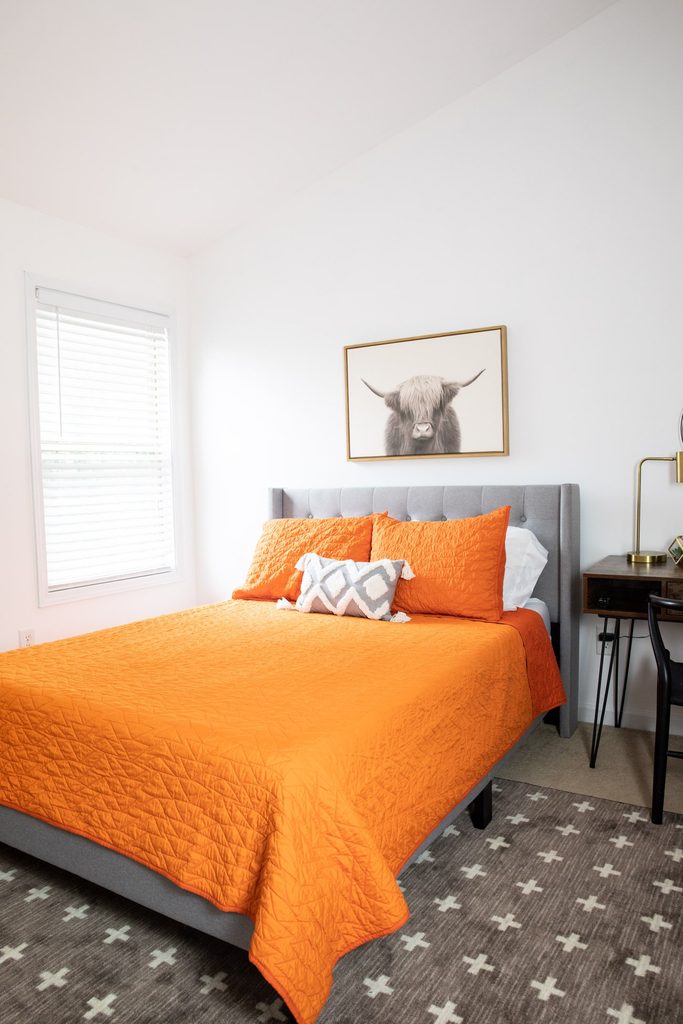
Credits: Erin Spain
An orange quilt and matching shams give this otherwise neutral bedroom an immediate burst of personality. White walls, a gray upholstered headboard, and a subdued rug let the bedding do most of the work.
It is a useful option when a teenager wants a favorite bright color but repainting the room is impractical. Choose the large textile first, then keep secondary patterns smaller and quieter.
The little gray geometric pillow connects the bed to the surrounding neutrals without competing with the orange. A single framed animal print supplies another point of interest above the headboard.
Because the strongest color lives in removable pieces, the room can take on a different mood later with a new quilt and a few pillowcases.
Anchor a Narrow Layout With a Generous Rug
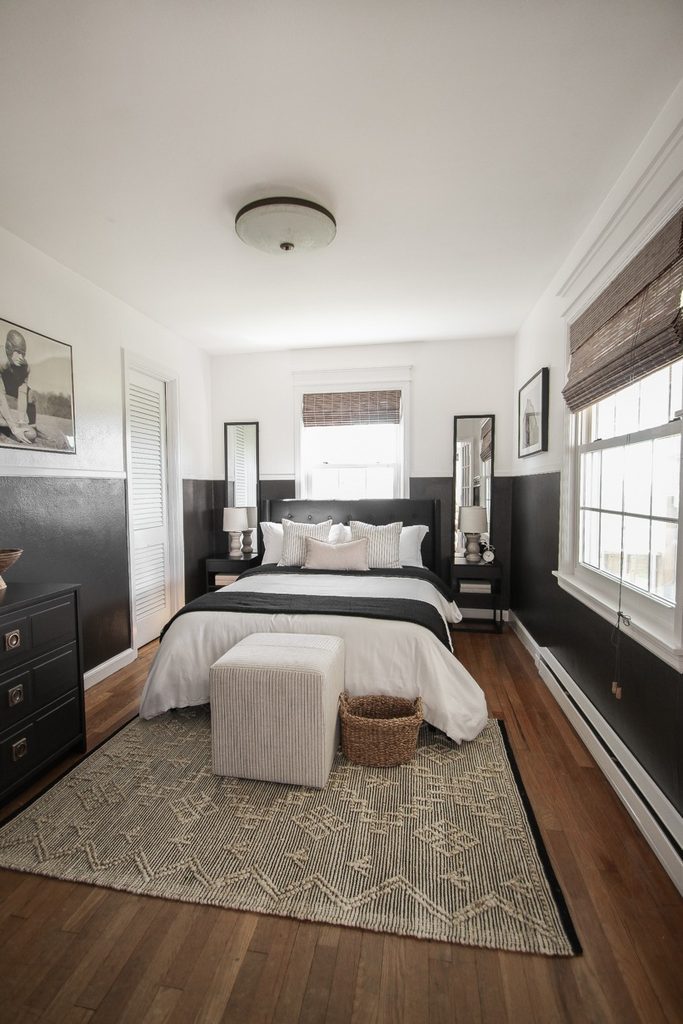
Credits: Liz Fourez / Love Grows Wild
The patterned rug reaches well beyond the foot of this bed, giving the narrow room a clear center. A visible border of wood flooring keeps the rug from looking squeezed against every wall.
When planning a teen bedroom, measure the exposed walking area as carefully as the bed itself. A rug that disappears almost completely beneath the mattress will have less visual impact and provide less softness where feet land.
This example uses a quiet pattern that works with striped cushions and a small upholstered cube. The dark furniture stays around the edges, leaving the central floor open.
Check door movement and nearby heating equipment before choosing dimensions, and use an appropriate rug pad to help prevent shifting during use.
Reserve a Small Seat Beside the Bed
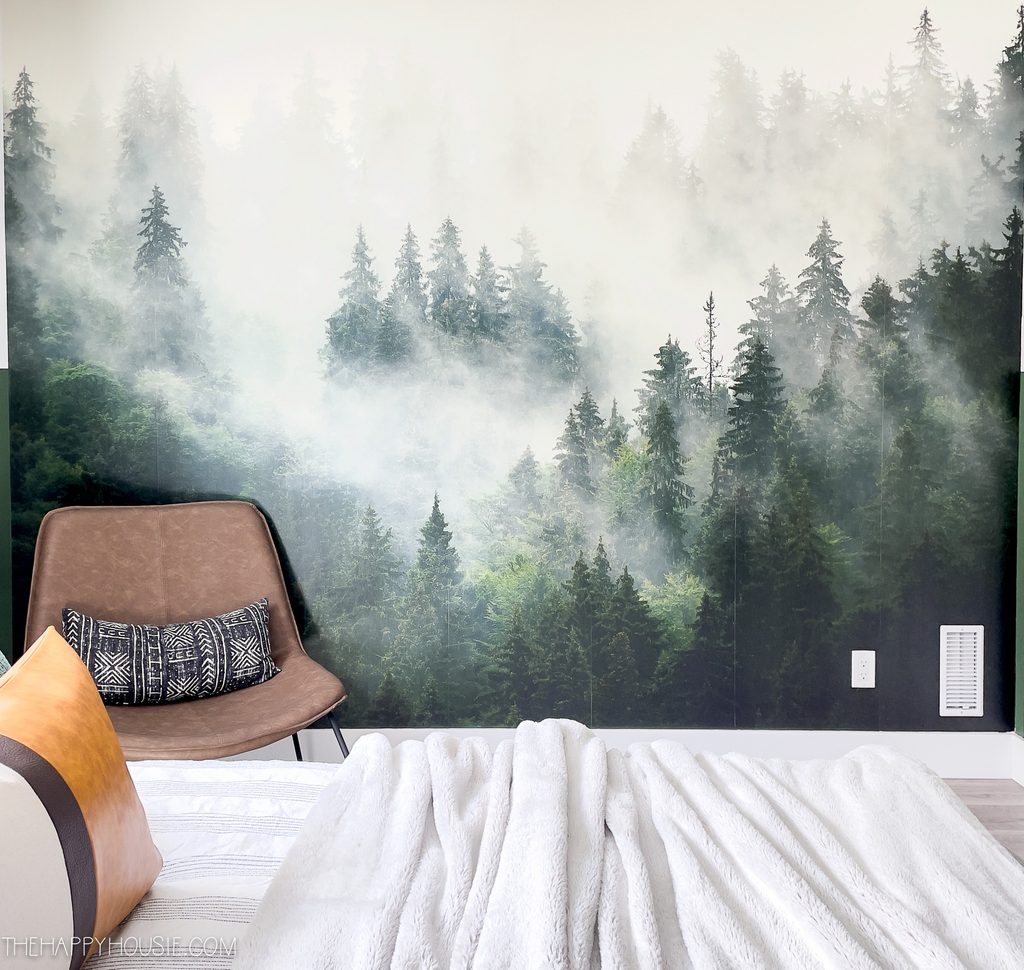
Credits: Krista / The Happy Housie
A compact brown chair creates a second place to relax without demanding the space of a full lounge arrangement. Its low back sits comfortably against the forest mural, and the patterned lumbar pillow adds support and contrast.
In a teen bedroom, a separate seat can be useful for reading, talking, or taking a break from homework. Begin with the actual available floor area and allow enough clearance to sit down easily.
A chair should not force someone to squeeze between the bed and a wall. Keep its surroundings simple if the backdrop already has a strong pattern.
One comfortable seat is often more practical than several decorative pieces that turn the remaining floor into an obstacle course during everyday routines.
Give Homework a Clear Surface and Its Own Lamp
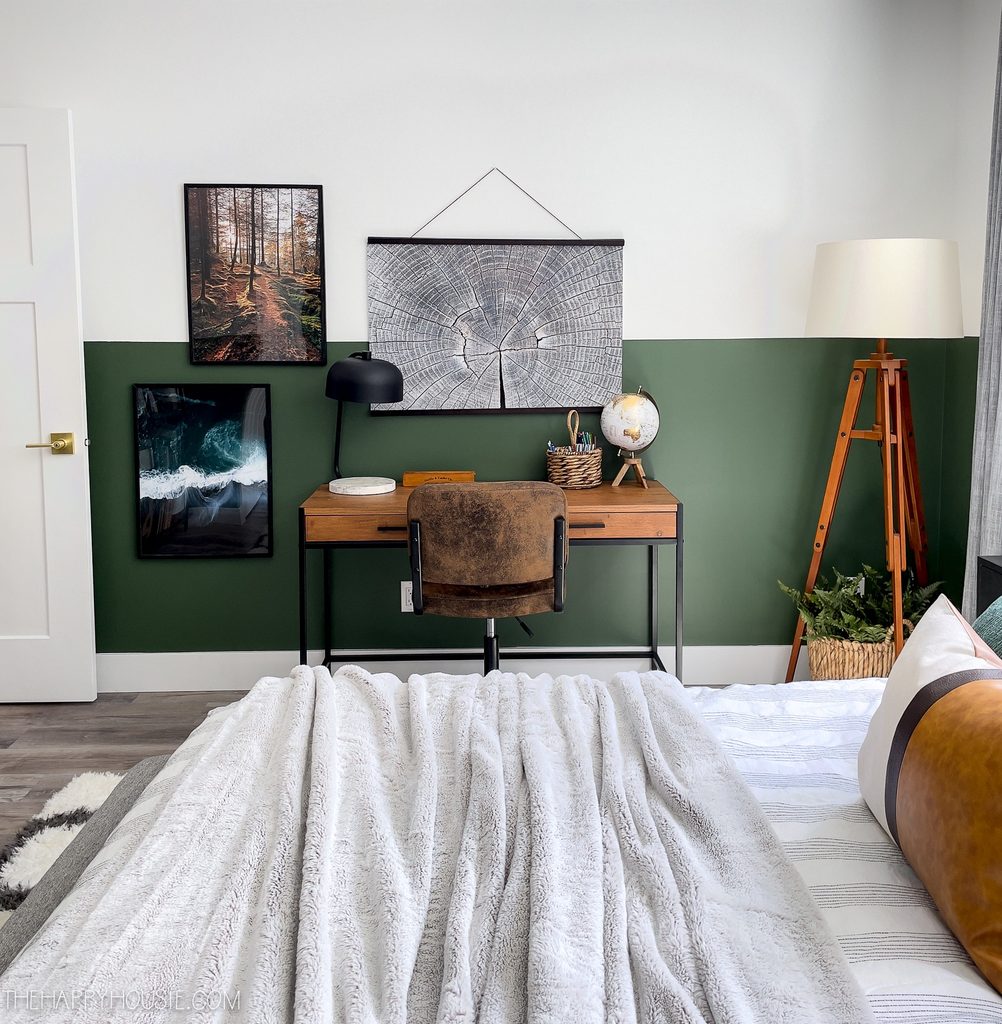
Credits: Krista / The Happy Housie
The wood desk has a straightforward setup: a chair, task lamp, pencil container, and space left open for work. Nature prints connect this practical area to the bedroom without covering the desktop in decoration.
For a teen who studies here, begin with the surface needed for an open notebook and any regularly used device. Check chair height, legroom, and access to an outlet before focusing on accessories.
A lamp positioned beside the work area is more useful than relying entirely on a ceiling fixture. The drawers offer a place to put away small supplies between sessions.
Keep larger decorative pieces on the wall, where they can personalize the corner while allowing the desk to return quickly to its everyday purpose.
Frame a Low Headboard With Long Curtains
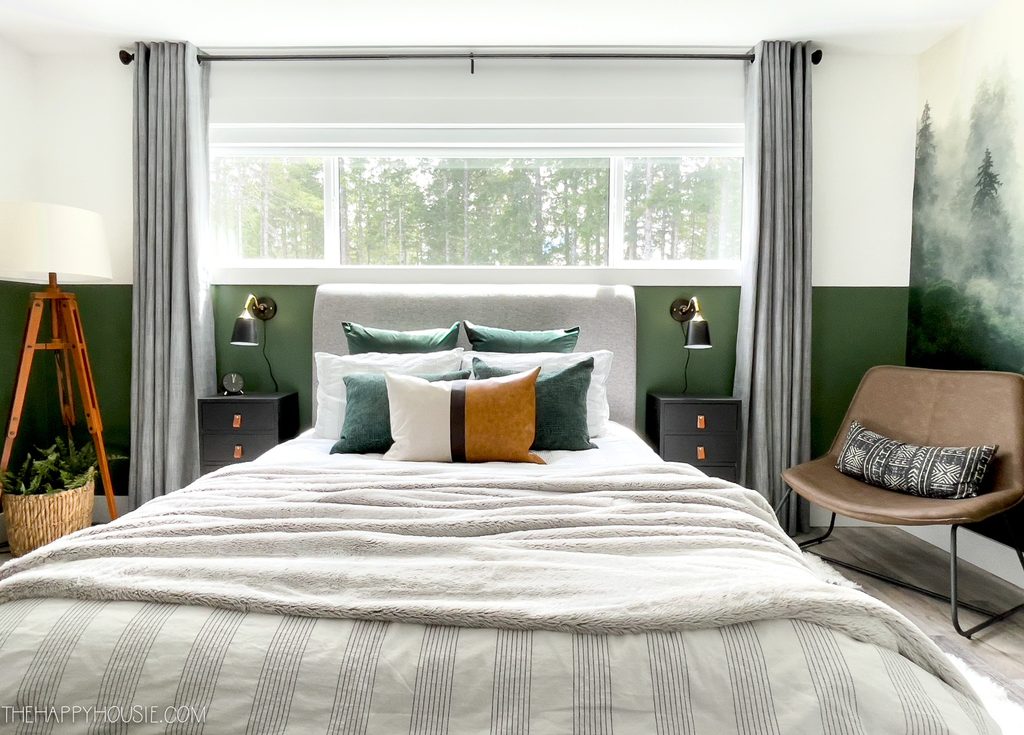
Credits: Krista / The Happy Housie
Long gray curtains bracket the bed and emphasize the width of the window behind it. The low upholstered headboard leaves the glazing visible, while matching nightstands and wall lights make the arrangement feel balanced.
Consider this layout only when the window remains usable and the bed will not block required access, ventilation, or heating. Measure the headboard against the sill instead of assuming every bed will fit comfortably beneath a window.
A separate shade can handle light control while the curtain panels soften the sides. The green wall and pillows create a continuous band behind the pale bedding.
Keep the fabric clear of the bedside drawers so opening a cabinet does not tug or trap a curtain during daily use.
Choose a Nightstand With an Easy Reach Shelf
Credits: Liz Fourez / Love Grows Wild
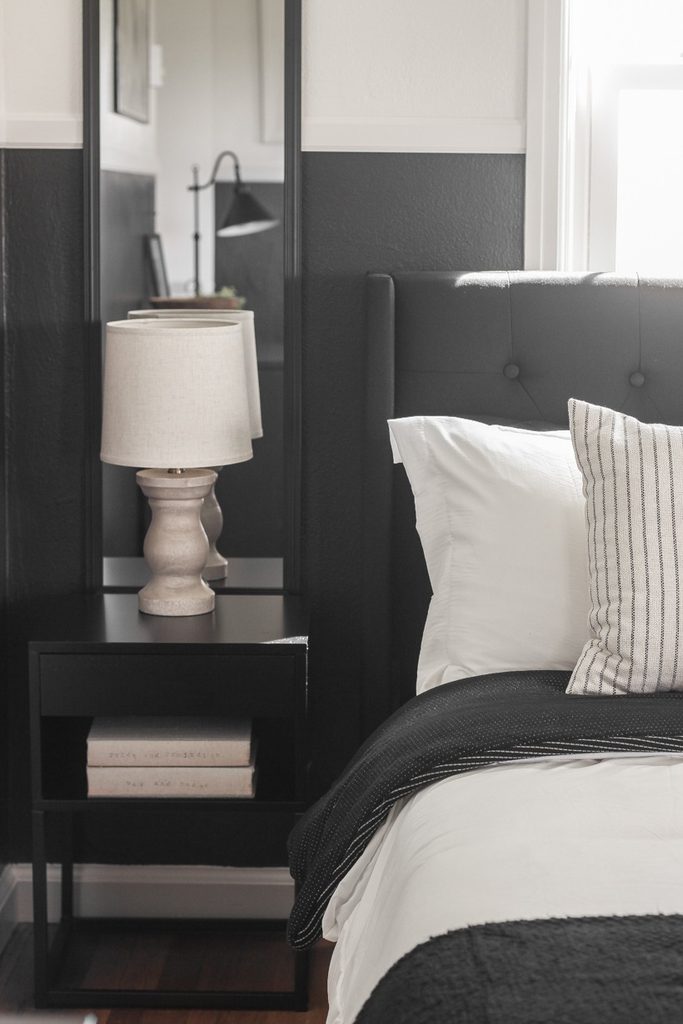
An open shelf beneath this nightstand keeps a couple of books close to the bed without filling the tabletop. The small drawer above it provides a second kind of storage for loose essentials.
That combination is useful in a teen room where reading materials, glasses, or charging accessories need predictable places. Match the table height to the mattress so reaching across does not feel awkward.
Leave enough space around the lamp for a glass of water or another everyday item. The dark finish blends into the lower wall, while pale books and a light lampshade keep the piece visible.
Avoid treating the shelf as a display cabinet; a few frequently used objects will make it easier to maintain over time.
Use Hooks and Bins to Make Storage More Personal
Credits: Krista / The Happy Housie
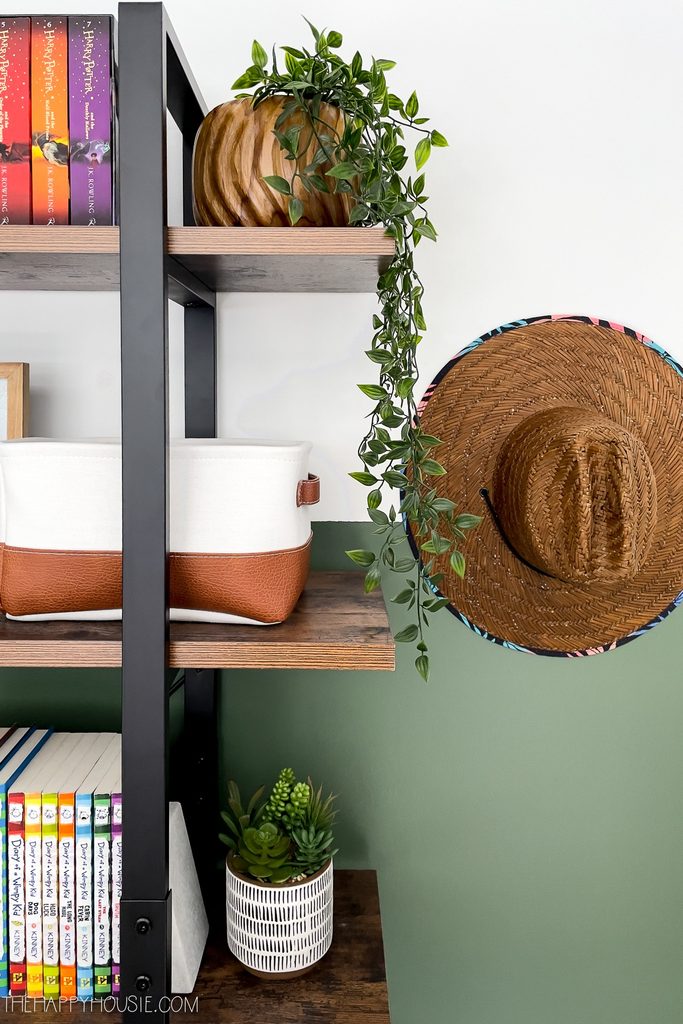
A woven hat hangs beside this open bookcase, turning a useful belonging into part of the room’s decoration. White bins with brown bases keep smaller items together while repeating the warm tones of the shelves.
For a teenager, this approach makes storage feel less like an afterthought and more like part of the design. Choose hooks suited to the wall and to the weight of whatever will hang there.
Keep frequently used items within comfortable reach instead of placing everything on the highest shelf. A trailing plant adds softness around the straight metal frame, but it should not obstruct access to books.
Leave one bin available for miscellaneous belongings so they have somewhere to go before spreading across the floor.
Give Models and Books a Shared Display
Credits: Amy Weir / Delineate Your Dwelling
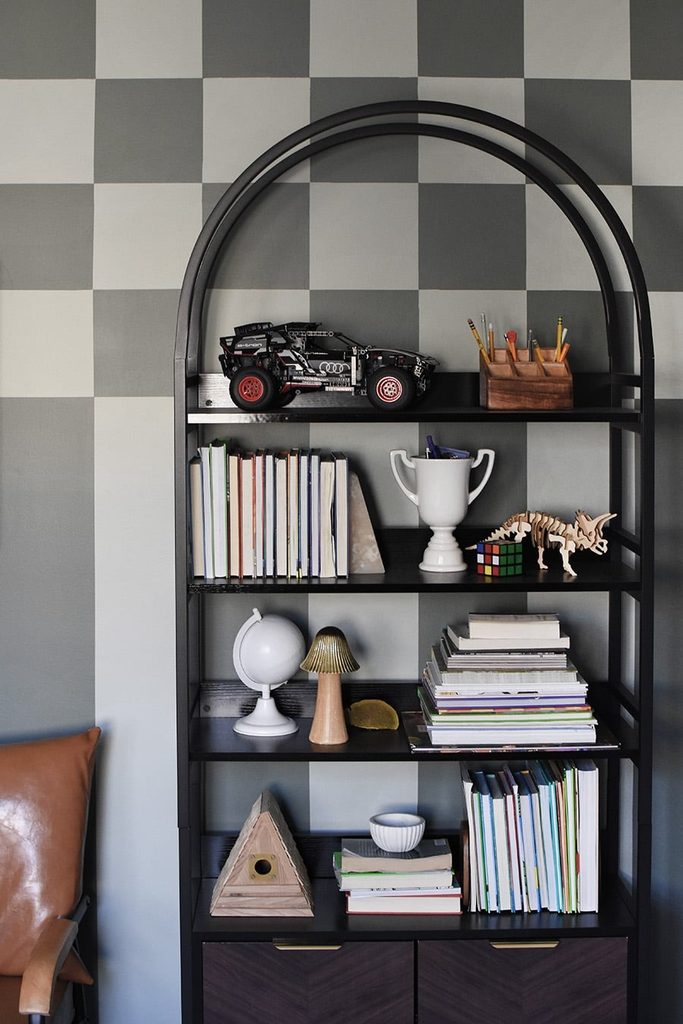
An arched black bookcase brings books, a model car, a puzzle, and small handmade objects together in one place. The curved top offers a softer outline against the checked wall behind it.
A teen bedroom does not need to hide every hobby to look coordinated; it needs enough structure that a collection can be enjoyed. Group related items, vary the direction of book stacks, and leave gaps around favorite pieces.
Place heavier objects lower down and secure tall furniture according to its instructions. Closed storage at the bottom can hold things that are useful but less attractive on display.
Review the shelves as interests change, keeping the arrangement current instead of letting every new object compete for the same space.
Set a Pinboard Against a Graphic Accent Wall
Credits: Amy Weir / Delineate Your Dwelling
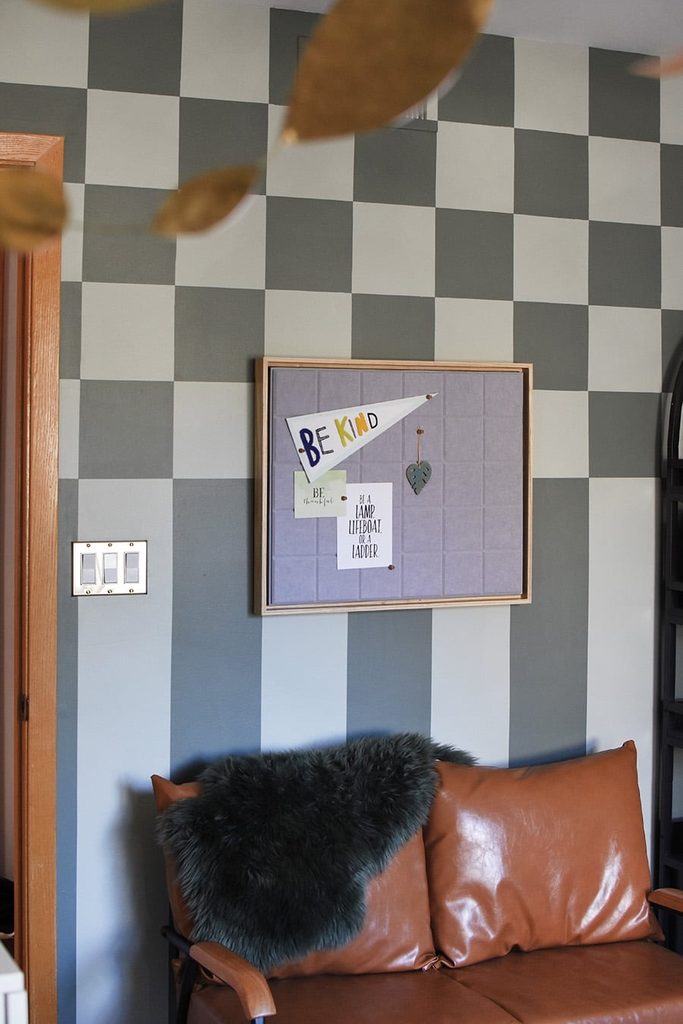
A framed gray pinboard supplies a changeable display above the small sofa. Behind it, large checks transition into vertical stripes, giving the wall character even where the board is empty.
This idea suits a teen who likes collecting drawings, reminders, or tickets but does not want to commit to permanent artwork. Choose a board large enough for a useful arrangement without crowding neighboring furniture.
Keep the frame simple when the wall pattern is already busy. Hang it where its contents can be reached comfortably, and avoid placing sharp pins over a sleeping surface.
A restrained base makes it easy to switch the display throughout the year. The brown seating below adds warmth to the cool gray and blue wall colors.
Make Closet Doors Part of the Color Scheme
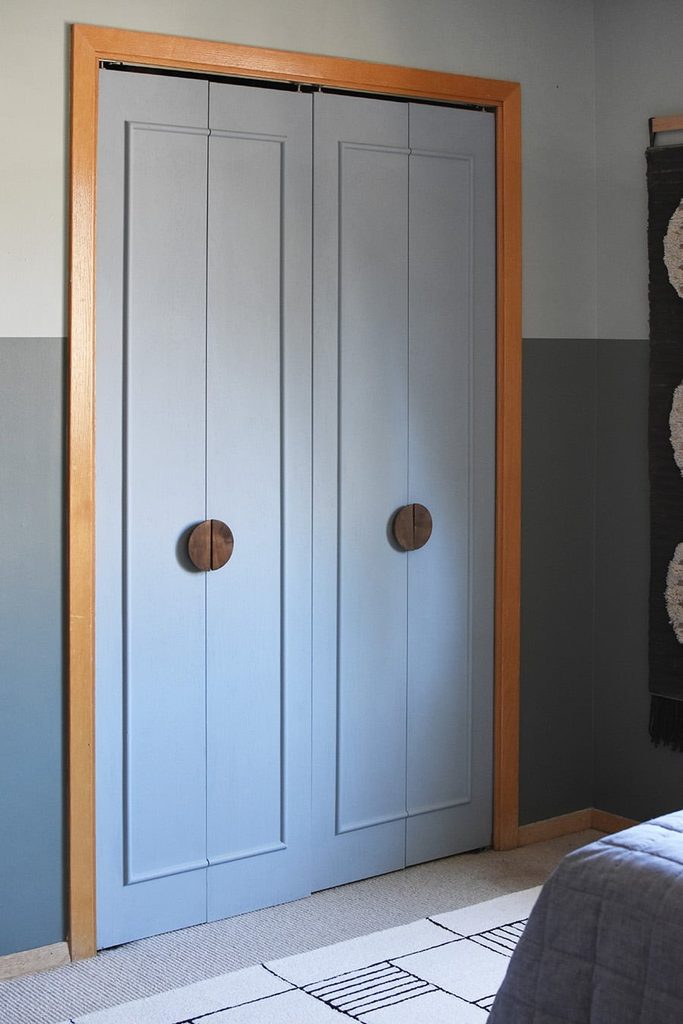
Credits: Amy Weir / Delineate Your Dwelling
Soft blue closet doors bring color to a surface that is often left out of a bedroom makeover. Narrow molding outlines the panels, and rounded wood pulls relate to the warm trim around the opening.
The result feels considered without relying on more wall art. In a teen room, updating existing doors can also leave more of the budget for a bed or useful desk.
Check the hinges, track, and opening clearance before painting or adding trim. Any new detail must allow the doors to operate properly.
Test paint compatibility with the existing finish and choose hardware that is easy to grip. Repeating the blue in bedding helps this storage area feel connected to the room rather than standing alone.
Use a Small Cabinet Beside the Bed
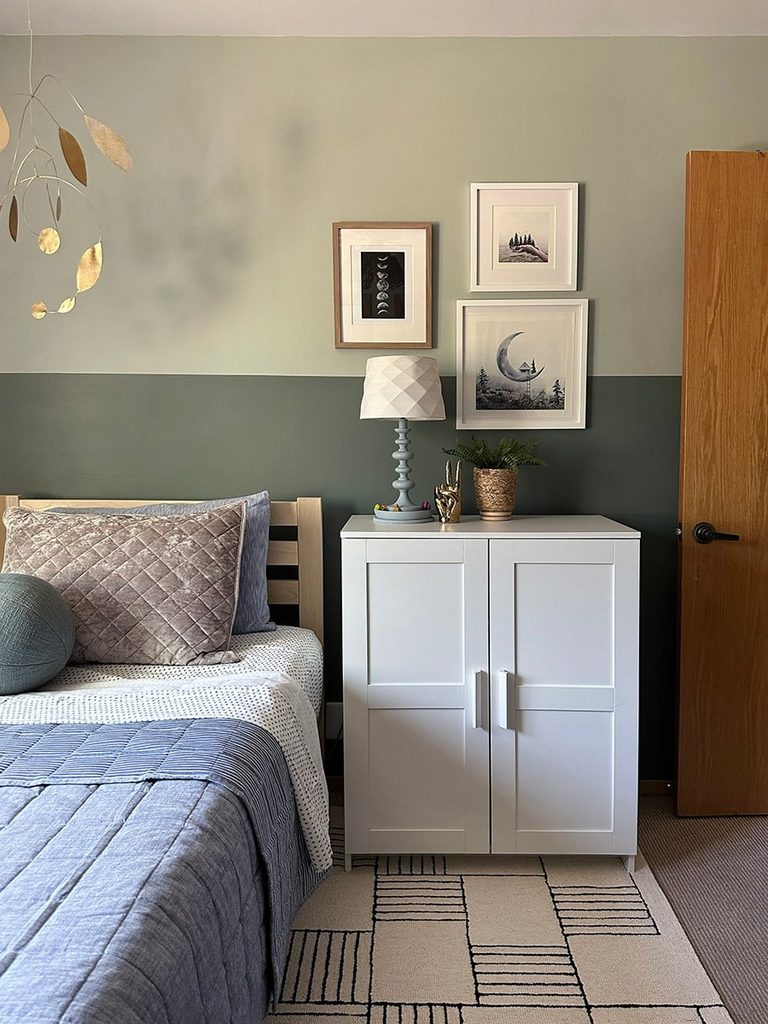
Credits: Amy Weir / Delineate Your Dwelling
A white cabinet provides more concealed storage than a small bedside table while still leaving room for a lamp on top. Its simple doors balance the patterned bedding and framed moon artwork nearby.
This can be a practical choice when a teen bedroom needs somewhere to put supplies, games, or folded clothing. Measure both the cabinet footprint and the space required for its doors to open.
Keep the top within a comfortable reach from the bed if it will replace the nightstand. The lamp and a few favorite objects give the larger piece a clear bedside role.
Avoid filling every inch of the surface; a little open space makes the cabinet useful for the items that arrive there each evening.
Add Texture With a Narrow Wall Hanging
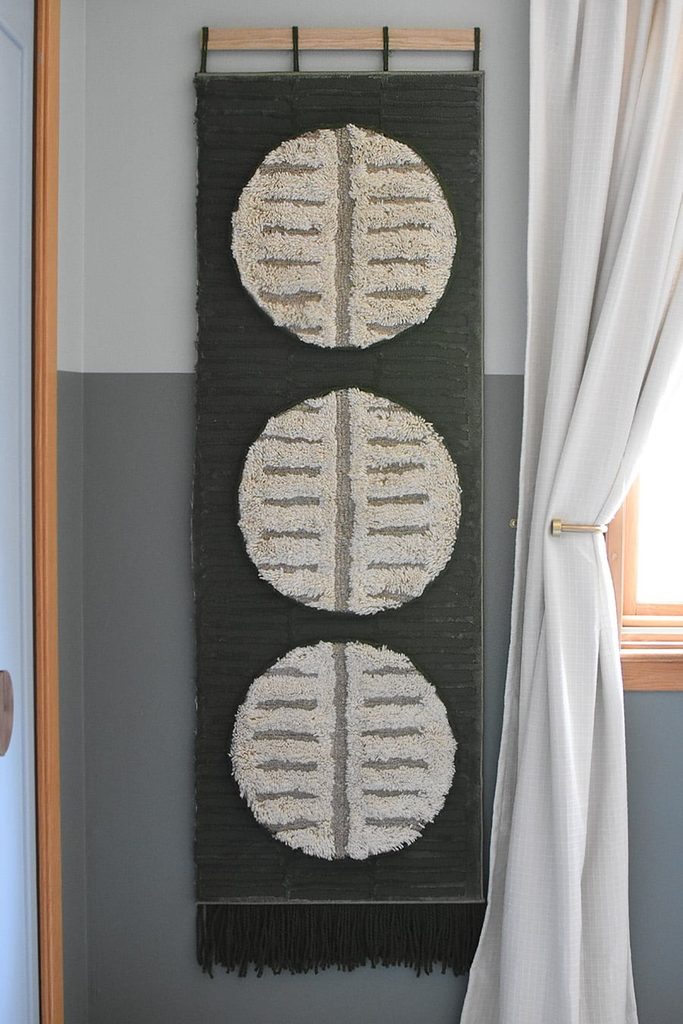
Credits: Amy Weir / Delineate Your Dwelling
Three pale circular shapes stand out against the dark green background of this textile wall hanging. Its tall, narrow format fits the strip of wall beside a window, where a broad framed print might feel squeezed.
Look for similarly overlooked spaces when decorating a teen bedroom, especially if the largest walls are already occupied by storage. A textile can introduce softness without adding another cushion to the bed.
Coordinate its colors with the room, but let its texture provide the contrast. Use a hanging method appropriate for its weight and keep it clear of curtains, heaters, and frequently opened doors.
The simple wood support shown here relates to the window trim, making the piece feel integrated into the surrounding architecture.
Display Favorite Models on a Vertical Stack of Shelves
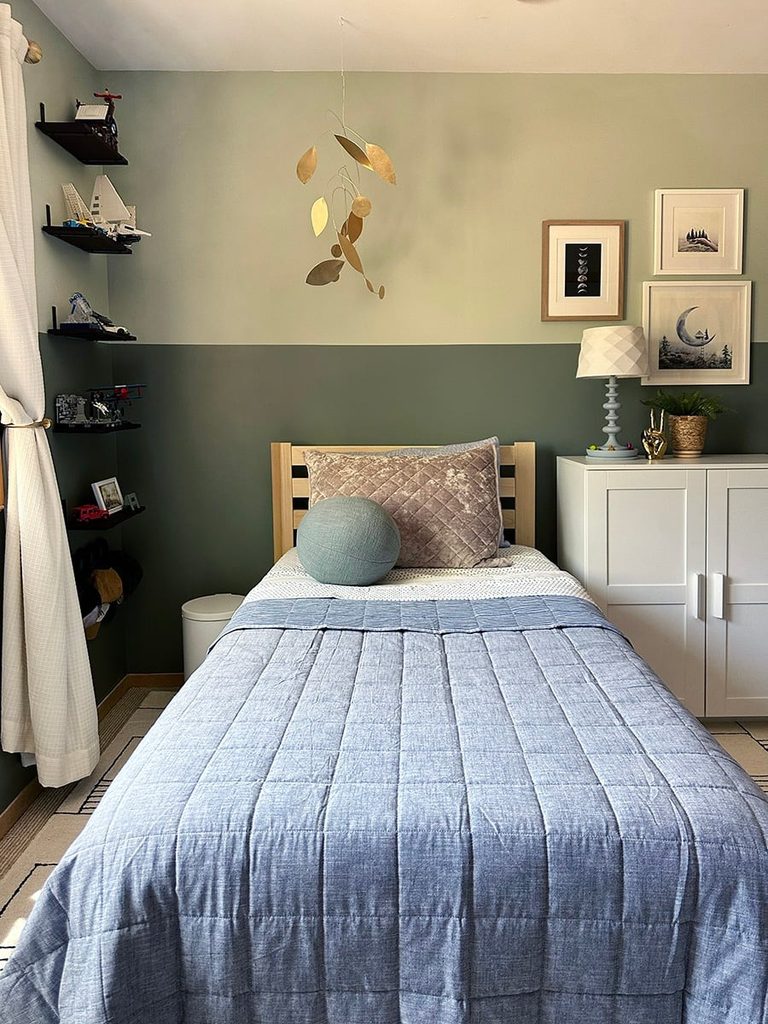
Credits: Amy Weir / Delineate Your Dwelling
Small black shelves turn an unused corner into a place for built models. Each project gets its own level, so individual shapes remain visible instead of disappearing into a crowded tabletop collection.
This is a useful direction for a teen who enjoys building, collecting, or keeping favorite objects on view. Measure the widest and tallest pieces before deciding on shelf spacing.
Use suitable anchors and keep fragile or heavy items away from the bed’s immediate overhead area. The shelves in this room share a dark finish, which helps their contents feel connected.
Leave room to remove each object easily for dusting or rearranging. A focused vertical display preserves floor space while giving personal interests a dedicated place in the design.
Choose One Framed Nature Print for a Quiet Wall
Credits: Liz Fourez / Love Grows Wild
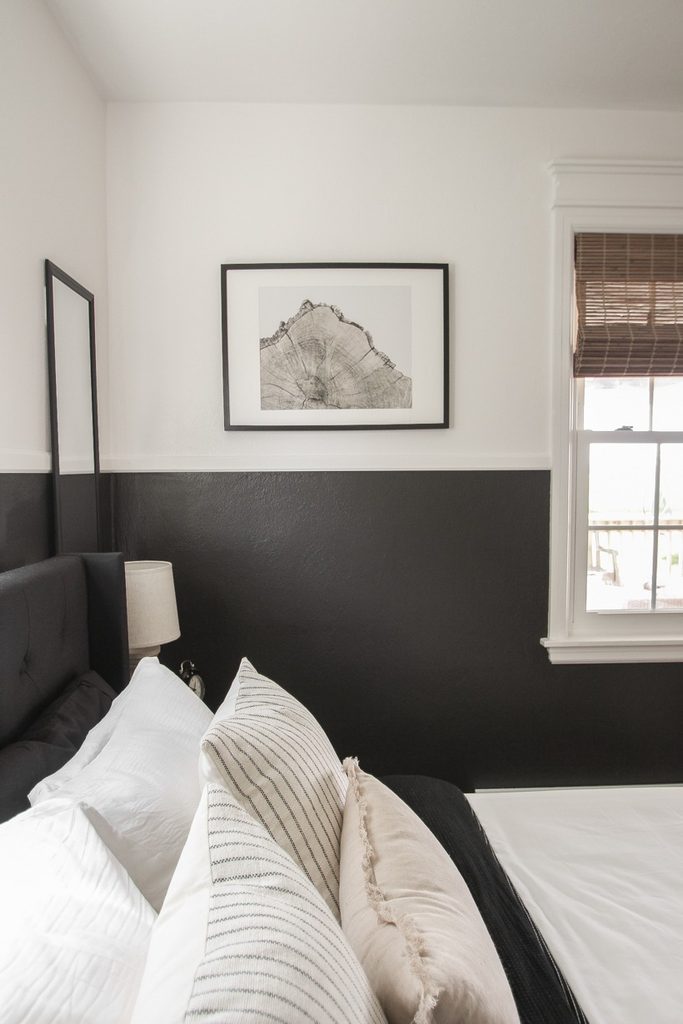
A tree ring print adds detail to this bedroom without changing its restrained black, white, and cream palette. The broad white mat gives the image breathing room and keeps it readable above the dark paint line.
For a teenager who prefers a quieter room, one meaningful print can be enough to establish an interest. Nature photography, a drawing, or an original piece of artwork can all work within the same simple arrangement.
Choose the frame size in relation to the available wall rather than filling every blank area. Hang it securely where it can be seen from the room’s viewpoints.
Repeating the black frame elsewhere creates continuity, while the organic pattern offers a welcome break from the straight furniture lines.
Create a Small Hangout Corner Beside the Books
Credits: Amy Weir / Delineate Your Dwelling
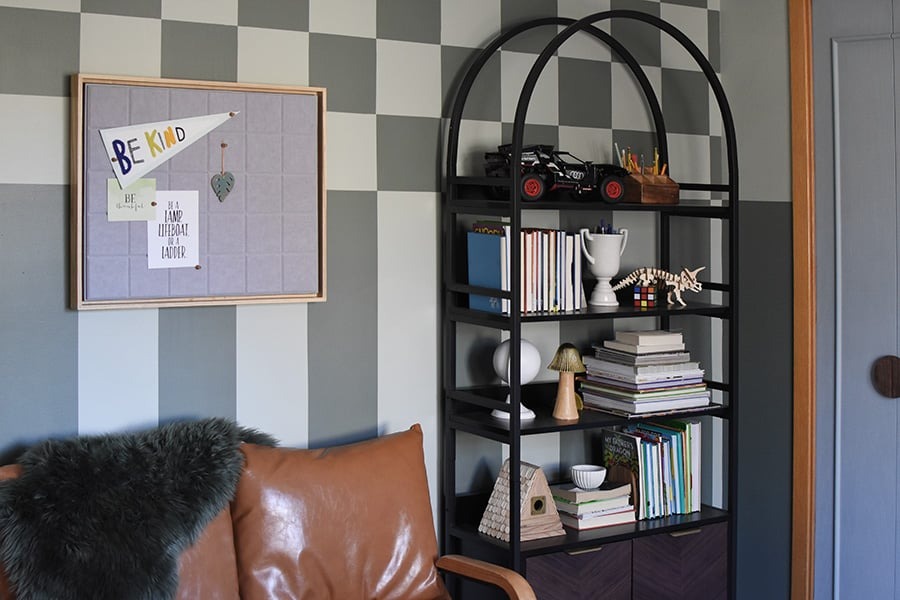
A compact brown sofa sits beside the bookcase, giving this bedroom somewhere to spend time away from the mattress. The arrangement combines seating, a pinboard, and personal collections within one corner.
It can work well for a teen who wants a place to read or chat, provided the room still has a clear route to the bed and closet.
Compare the depth of the seat with available floor space before buying; a small looking sofa can still project far. Keep a nearby shelf accessible for the book currently being read.
A soft throw adds comfort without requiring another piece of furniture. Let the surrounding storage serve the seating area so the corner remains useful rather than becoming another decorative zone.
Free the Nightstand With a Wall Mounted Reading Light
Credits: Krista / The Happy Housie
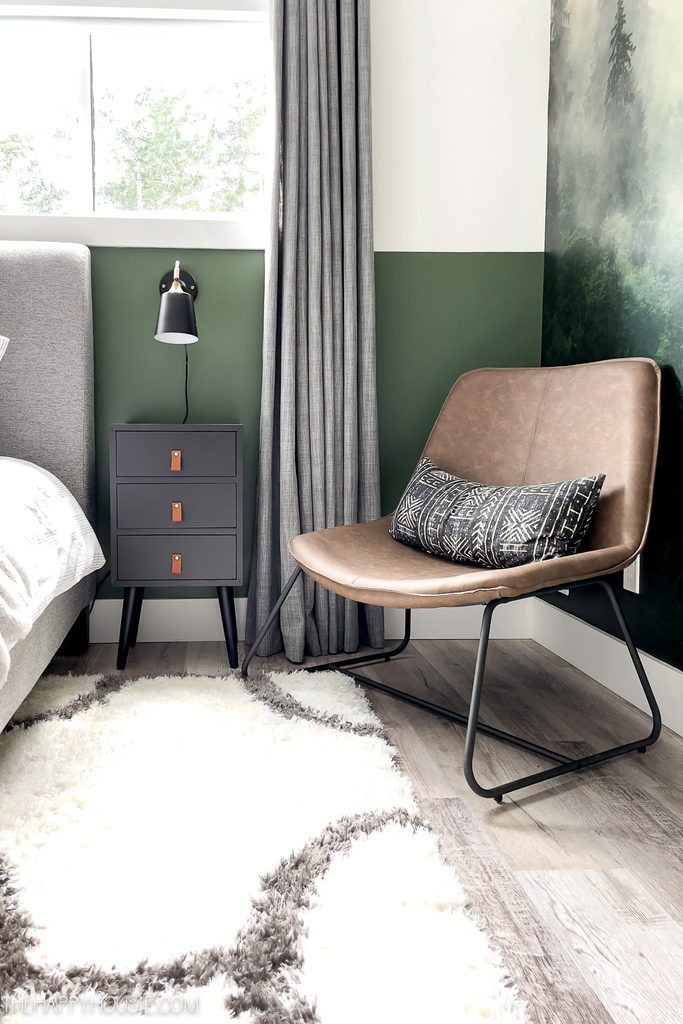
A black wall light hangs above the narrow three drawer nightstand, leaving its top almost completely open. The curved arm and light interior of the shade direct attention toward the bed without adding another bulky lamp base.
This arrangement is useful when a teen bedroom needs practical bedside storage in a tight footprint. Check the reading position while sitting against the pillows before selecting the mounting height.
The switch should be easy to reach, and any visible cord needs a route that avoids snagging or pinching. Follow the fixture’s installation instructions and use a qualified electrician when required.
Warm brown drawer pulls connect the cabinet to the nearby chair, showing how a few small details can tie practical pieces together.
Balance the Bed With Tall Narrow Mirrors
Credits: Liz Fourez / Love Grows Wild
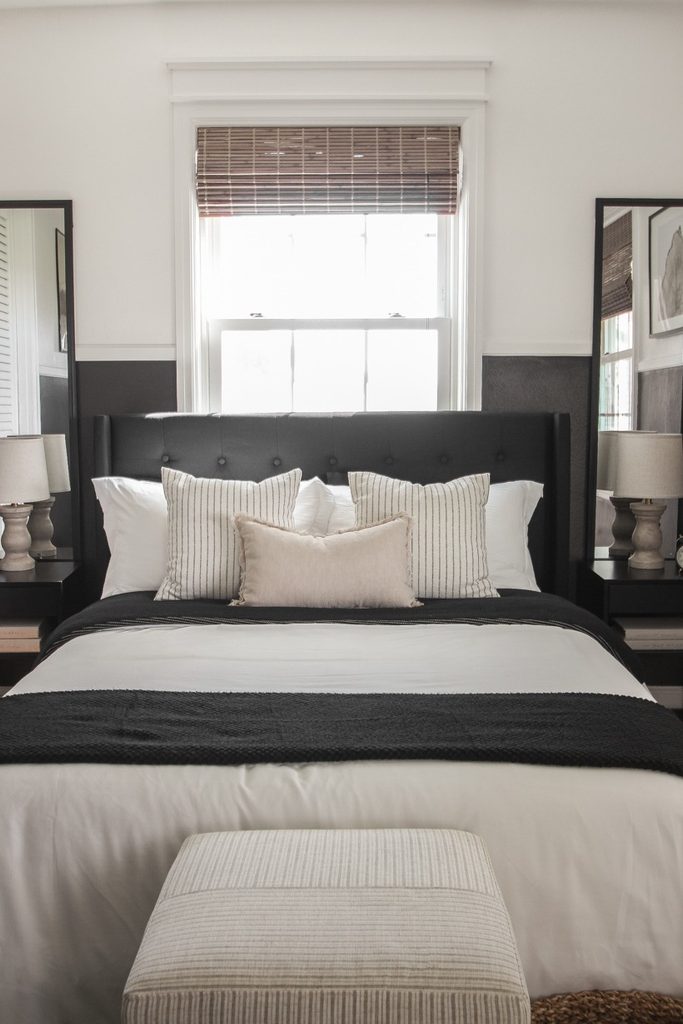
Two slim mirrors rise behind the bedside lamps, giving the bed a balanced frame without taking up extra floor space. Their narrow black borders repeat the furniture finish and allow reflected light to stand out against the darker walls.
In a teen bedroom, a similarly tall mirror can be useful for getting ready as well as for decoration. Choose its position by checking what it reflects from the doorway and from the bed.
Avoid an angle that creates uncomfortable glare from a lamp or sunny window. Secure mirrors properly rather than relying on a casual lean in a busy room.
Matching both sides is optional, but a repeated shape can help a compact sleeping area look deliberate and visually settled.