
A dark wall can feel inviting rather than heavy when it has a lighter texture or warm material nearby.
Black Bedroom Ideas here pair deep paint and paneling with contrasts such as cream macrame, cane-front furniture, leather cushions, and olive linen.
Other examples use a jungle or floral mural to add pattern, or carry black from the walls onto broad bedding stripes for a more connected look.
If you’re deciding how much black to use, the range of approaches offers practical ways to balance it with pale surfaces, natural textures, and a few considered accents.
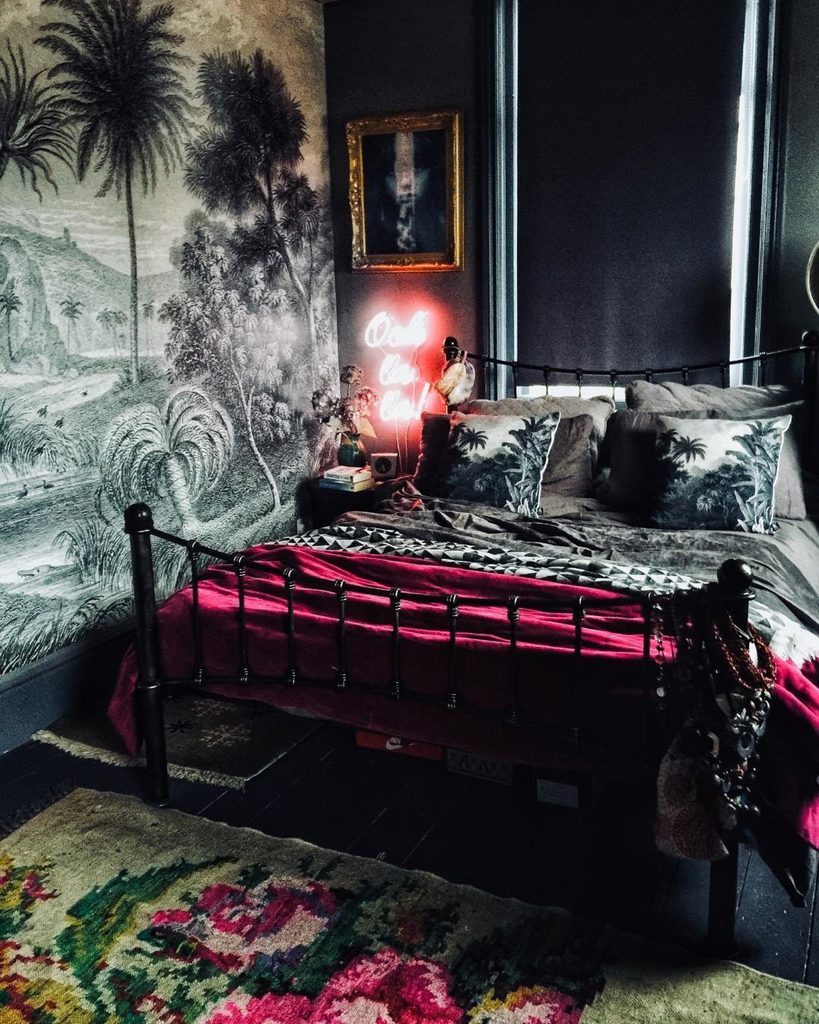
1. Jungle Mural Beside Black Bedroom Walls
Credits: Instagram
A landscape stretching across one wall gives this dark bedroom something more interesting than another framed print. The jungle mural sits beside black paneling, while the slim bed frame lets its detail remain visible.
Tropical cushions connect the bedding to the scene, and a magenta throw prevents the palette from becoming entirely monochrome. For a similar arrangement, choose one mural wall and keep nearby surfaces relatively quiet.
Match its darkest tones to your surrounding paint rather than introducing an unrelated black. A patterned rug can work here, but repeat one accent color so the layers feel connected.
Before ordering wallpaper, check the mural layout against furniture placement; a particularly tall headboard could hide the part you most want to see.
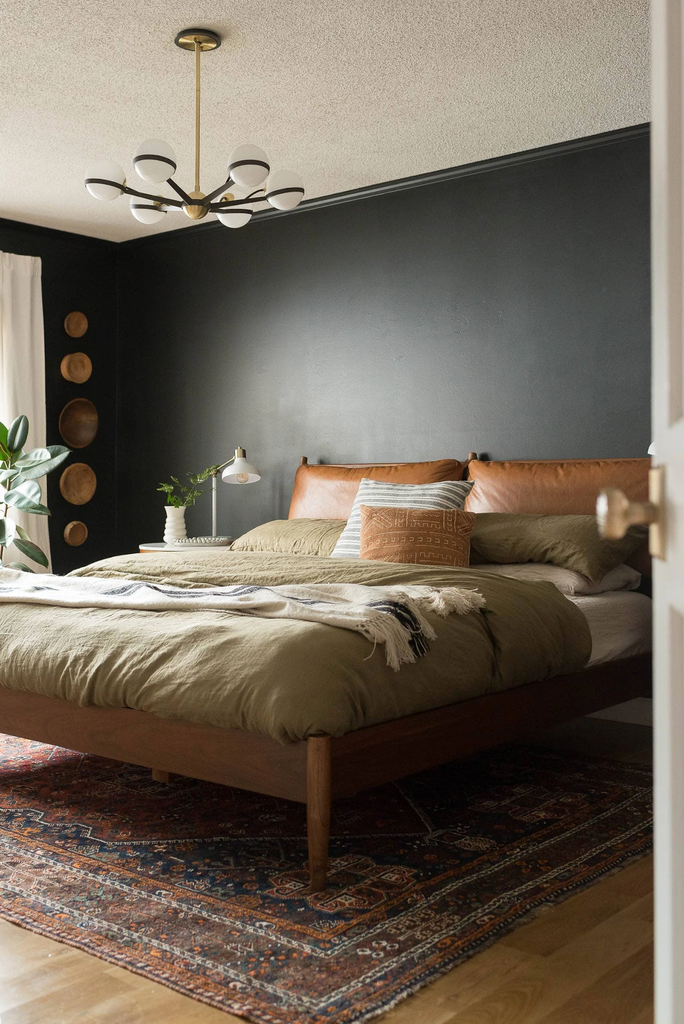
2. Warm Black Walls With Leather and Olive Linen
Credits: Ashley Mayes / Bigger Than the Three of Us
Warm leather cushions bring a welcoming note to the black wall behind this low wooden bed. Olive bedding adds another earthy color, while a patterned rug supplies softer variations underfoot.
The combination shows how black can support a relaxed bedroom without demanding an entirely monochrome palette. Begin with furniture you already enjoy, then choose bedding that connects its wood tone to the wall color.
A plain headboard wall gives these materials room to stand out. The small group of woven baskets near the window introduces round shapes without filling the entire surface.
Keep the ceiling lighter if you prefer a clear boundary overhead. A sculptural light fixture can repeat black in smaller details, tying the upper and lower room together.
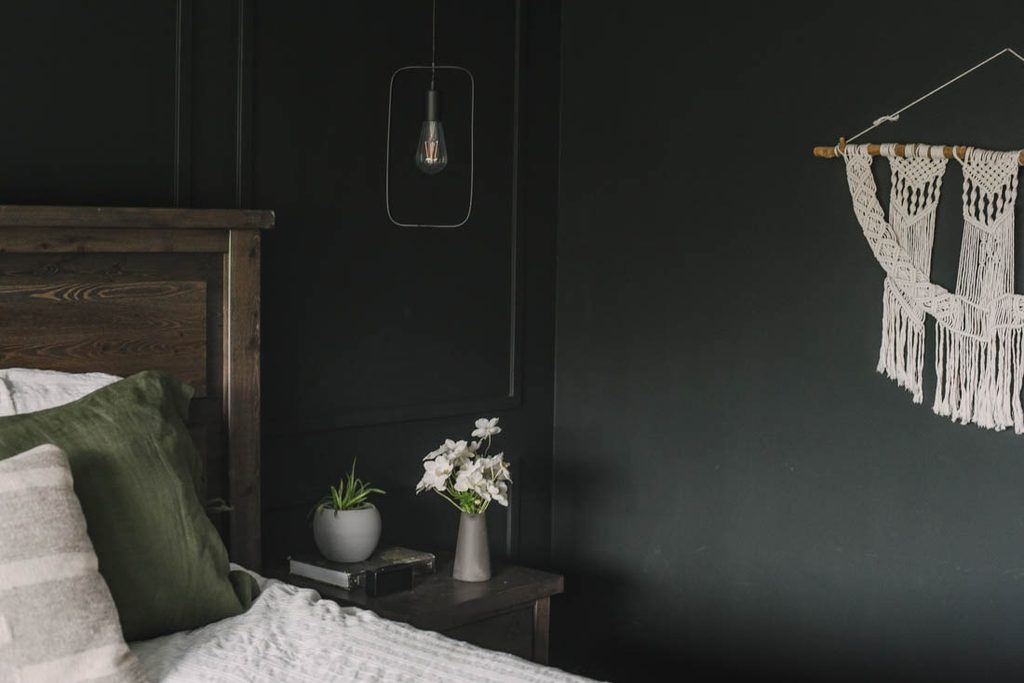
3. Let Cream Macrame Stand Out on a Black Wall
Credits: Colleen Pastoor / Lemon Thistle
An openwork macrame hanging brings a light, handmade texture to this black bedside corner. Its pale cords contrast with the dark wooden headboard and nightstand, while a green cushion introduces a quiet color change.
This is a useful direction when you want softness on the walls without a large framed picture. Choose a hanging whose proportions suit the available patch of wall, leaving space around its fringe.
A simple branch or dowel can connect the piece with the wood furniture below. The narrow black pendant remains understated against the matching paint.
Keep the nightstand arrangement small enough for everyday items, and place delicate stems where they will not be knocked by reaching hands or tangled in the hanging light cord.
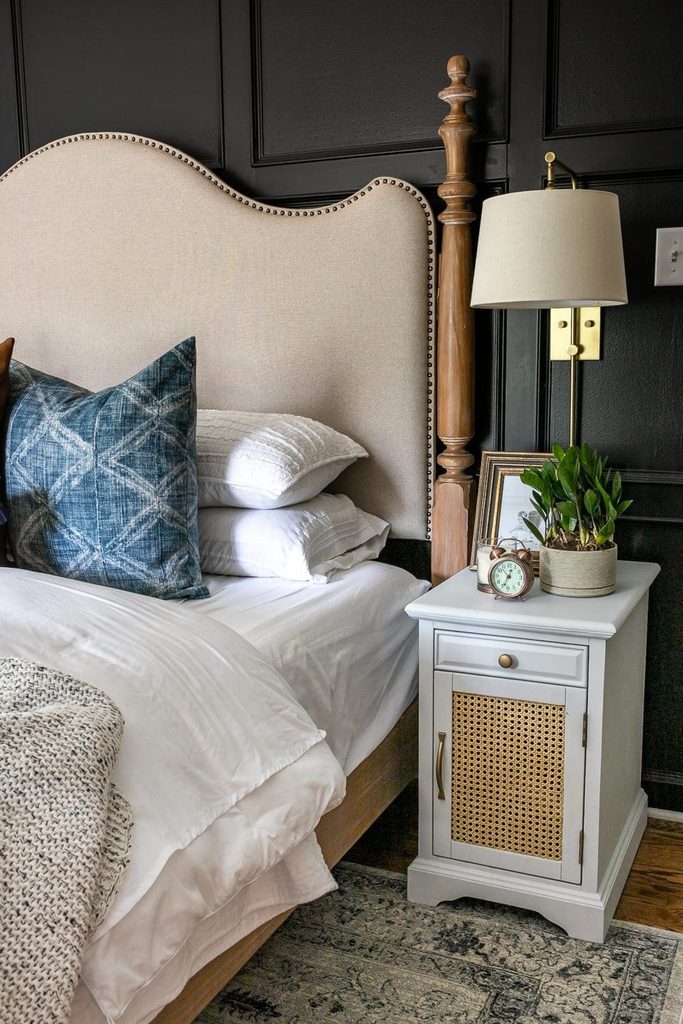
4. Brighten Black Paneling With a Cane Door Nightstand
Credits: Lauren / Bless’er House
A pale nightstand with a woven cane door offers a textured counterpoint to the black paneling behind this bed. The small gold knob and handle echo the wall light, giving the bedside area a connection without making every finish identical.
This approach suits a narrow gap where a larger dresser would overwhelm the bed. Look for a cabinet that combines enclosed storage with enough tabletop space for the things you actually use.
The cane’s warm color can link a painted piece to nearby wooden furniture. Here, creamy upholstery and white bedding continue the brighter tones above the cabinet.
Keep the wall molding visible around the furniture, allowing its shadows to provide detail instead of crowding the corner with extra decorations.
5. Repeat Black in Broad Bedding Stripes
Credits: Brooke Christen / Nesting With Grace
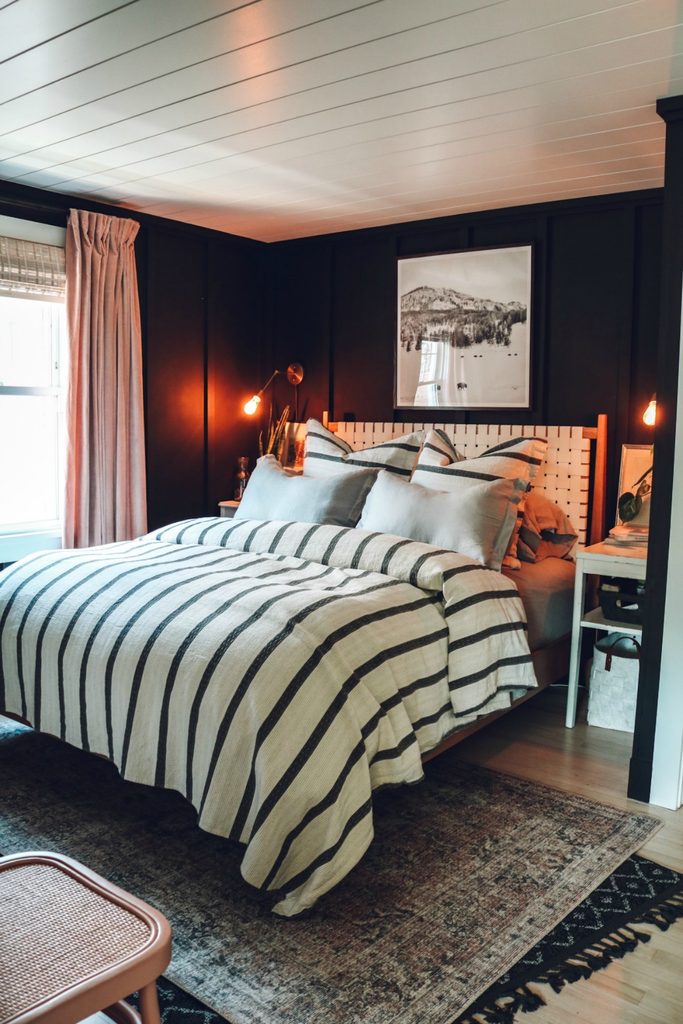
Bold stripes carry the wall color onto this bed, making the black bedroom feel connected from its perimeter to its center. White fabric between the stripes keeps the coverlet lighter, while gray pillows soften the transition.
The bright planked ceiling supplies another broad pale surface above the dark walls. Try this combination when plain white bedding feels too separate from the paint around it.
Choose a stripe width that remains readable from the doorway rather than relying on tiny patterns. Keep other bedding relatively simple so the stripes can lead.
Soft pink curtains introduce warmth at the window, and the layered rugs add worn texture below. Their quieter patterns support the bed without competing with its stronger lines and colors.
6. Follow Sloping Ceilings With One Black Accent Wall
Credits: Angela Marie Made
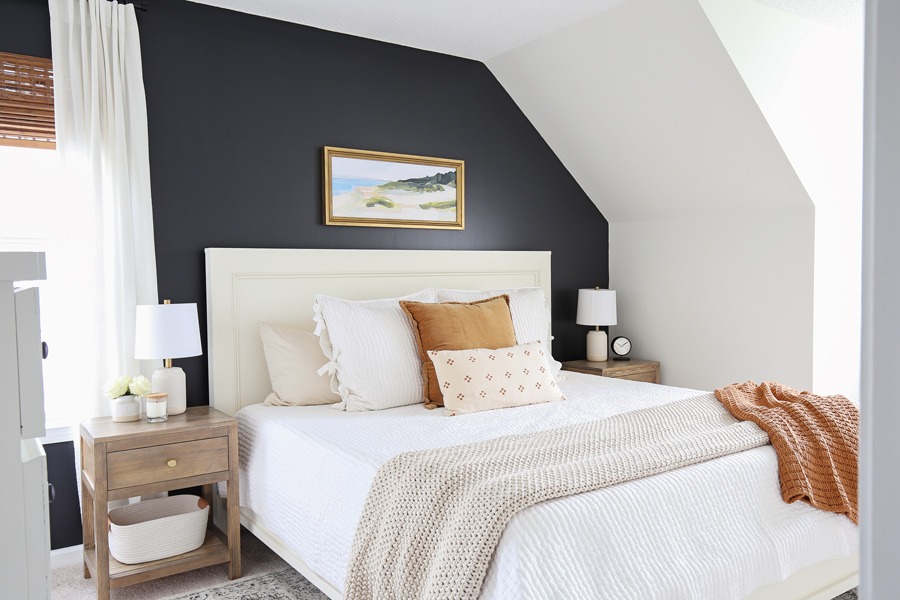
Black paint emphasizes the outline of this headboard wall where the ceiling slopes toward the bed. The surrounding white surfaces keep that shape clear, turning an architectural complication into the room’s main feature.
A cream bed and pale curtains supply generous contrast without adding another strong wall color. This works especially well when you want to experiment with black while keeping most of the room light.
Mark the intended paint boundary carefully and view it from the doorway before starting. A small landscape above the headboard leaves enough exposed wall to appreciate the silhouette.
Warm wooden nightstands and caramel textiles prevent the scheme from becoming severe. Keep the bedding layers manageable so the compact sleeping area remains easy to use.
7. Give a Black Headboard Wall Herringbone Texture
Credits: Kristi Murphy
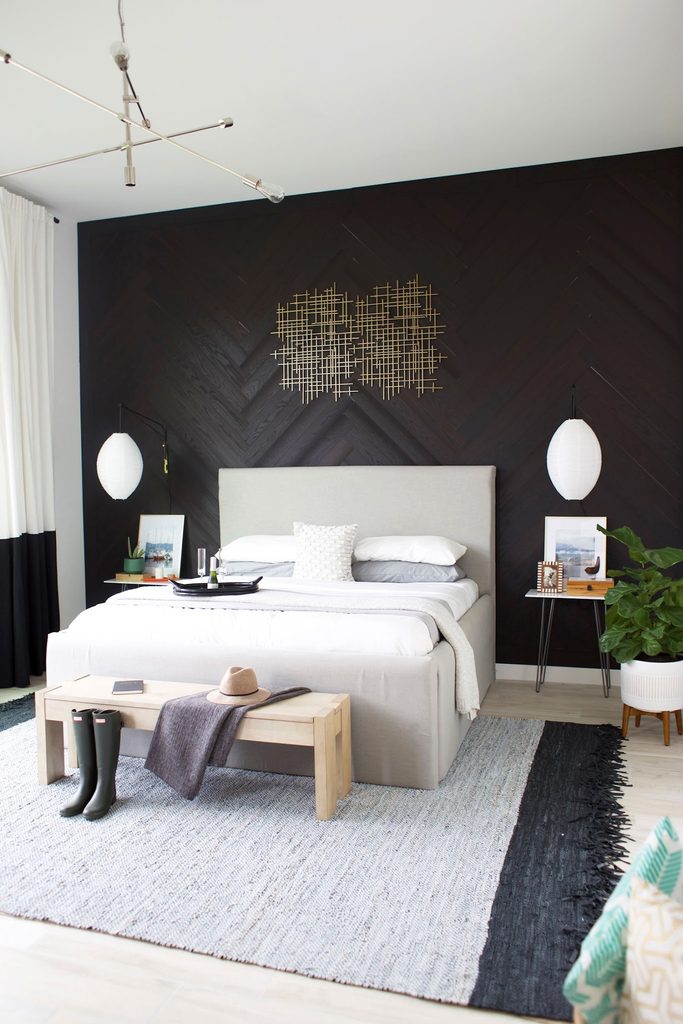
Dark wood arranged in a herringbone pattern gives this bedroom a richer surface than flat black paint alone. The diagonal grain catches light, while pale upholstery keeps the bed clearly defined against it.
Two airy metal decorations add a warm glint above the pillows without hiding much of the wall. Consider this treatment when you want black to feel tactile and architectural.
Review a physical sample in the room, since a dark finish can reveal very different grain under daylight and lamps. Simple white bedding lets the wall remain the focus.
The light wooden bench and floor provide relief at the bottom of the composition. Repeat the darkest color in a rug border or curtain band for a coordinated finish.
8. Divide the Walls Into Black and White Bands
Credits: Liz Fourez / Love Grows Wild
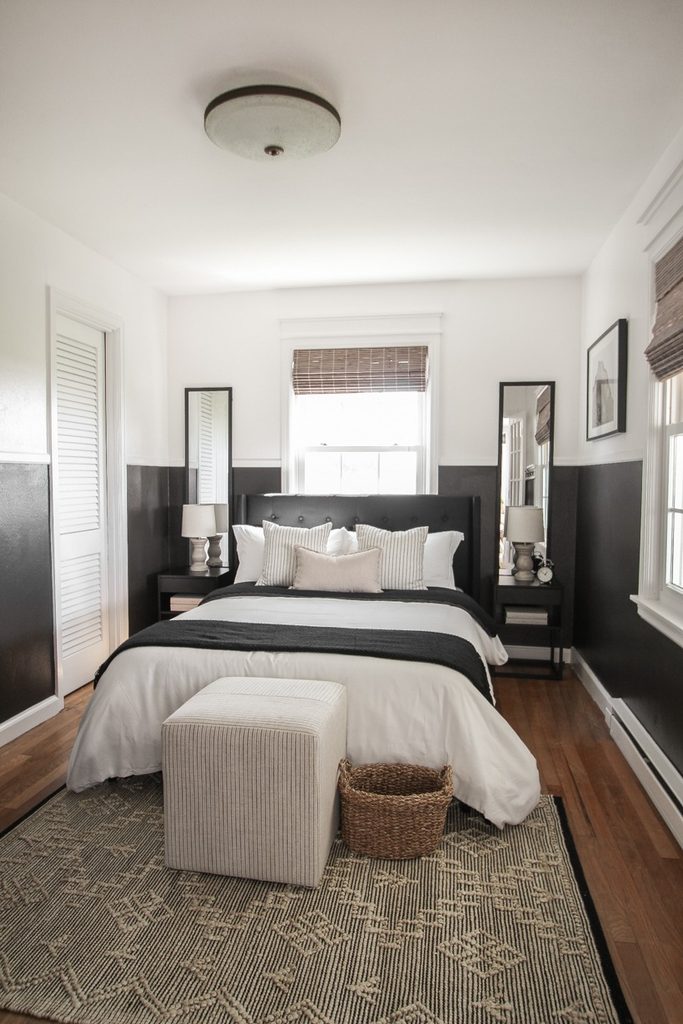
Black paint covers the lower portion of this bedroom, connecting the bed and nightstands with one continuous band of dark color. White paint above it preserves brightness around the windows and ceiling.
This treatment offers a practical middle ground if a fully dark room feels like too large a change. Set the dividing line in relation to the headboard and window trim rather than choosing a height without checking the furniture.
Carry it consistently around corners for a deliberate result. White doors keep the many openings from becoming heavy blocks.
A small upholstered cube supplies a seat where a long bench would crowd the route around the bed. Woven shades and baskets introduce warmth within the restrained two color scheme.
9. Set a Curved Pale Bed Against Black Grid Molding
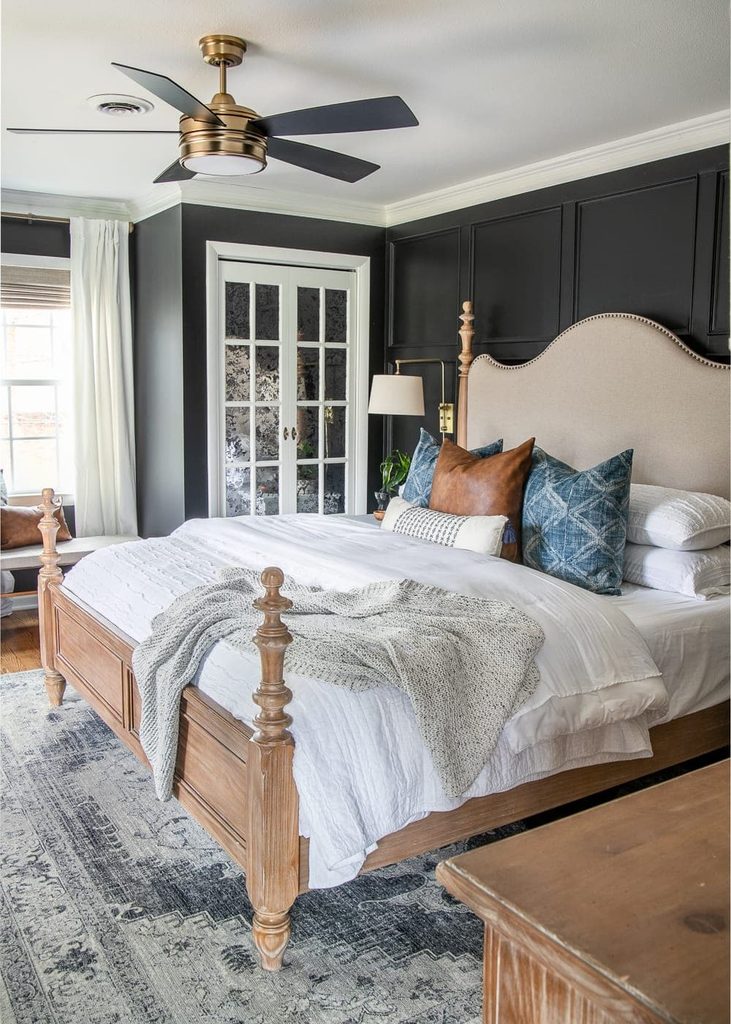
Credits: Lauren / Bless’er House
The curved upholstered headboard stands out against straight black wall panels, creating a gentle contrast between the furniture and architecture. Light wood posts and white bedding keep the bed from feeling overly weighty.
This pairing can refresh traditional furniture without replacing its distinctive shapes. Let the darkest color remain on the wall while the bed supplies the room’s lighter central form.
Narrow molding in the same finish as the paint adds depth through shadow rather than a second color. Blue patterned cushions bring a restrained accent into the arrangement.
At the ceiling, white crown molding makes the transition crisp. Choose bedside lighting that leaves useful space around the pillows and keeps the outlines of the headboard and wall panels readable.
10. Break Up Black With an Oversized Floral Mural
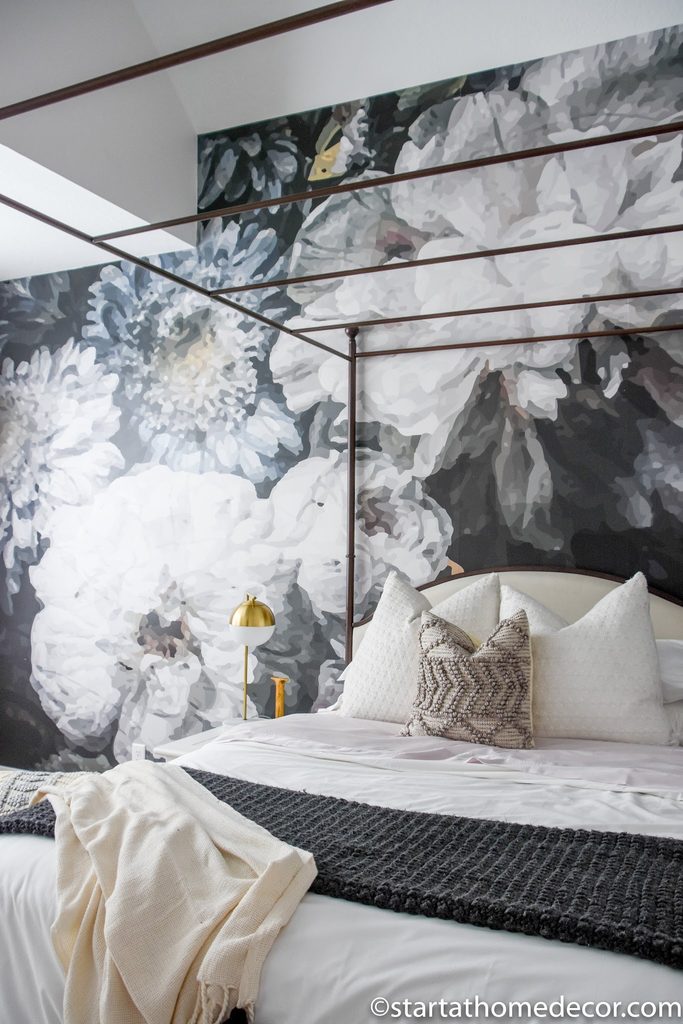
Credits: Brooke Nicole Larsen
A dark floral mural gives this bedroom a backdrop while its pale petals keep the wall from reading as one solid block.
The slender canopy rails cross the pattern without concealing it, and a charcoal throw brings the darker tone forward onto the bed. This is an option for people who like black but also want expressive pattern.
Check the mural’s full layout before ordering so important flowers will sit above the furniture instead of disappearing behind it. Keep the bedding mostly plain to give your eyes a quieter place to settle.
Small warm metal accents can add definition beside the gray background. Textured pillows contribute softness without introducing a second large motif that would compete with the floral wall.
11. Contrast Black Battens With a Woven Headboard
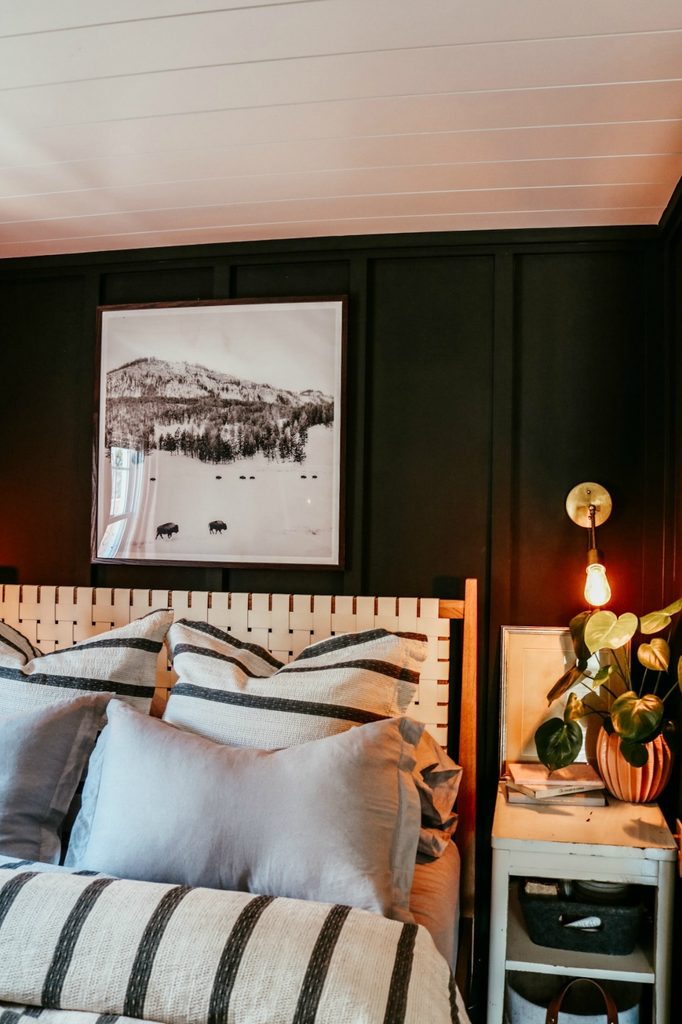
Credits: Brooke Christen / Nesting With Grace
The pale woven strips of this headboard create a visible texture against narrow black wall battens. A warm wooden frame gives the bed an outline, while gray pillows keep the transition from wall to bedding gentle.
This combination is useful when a dark bedroom needs something lighter than another upholstered surface. Compare the scale of the weave with any stripes or checks you plan to use nearby.
Here, the broader bedding stripes remain distinct from the smaller headboard pattern. A single winter landscape above the bed provides another light area.
The bedside plant and ribbed pot add rounded shapes at the edge. Leave enough clear tabletop space for a book or drink so the decorative grouping still works every day.
12. Use Black Paint Behind a Bedroom Television
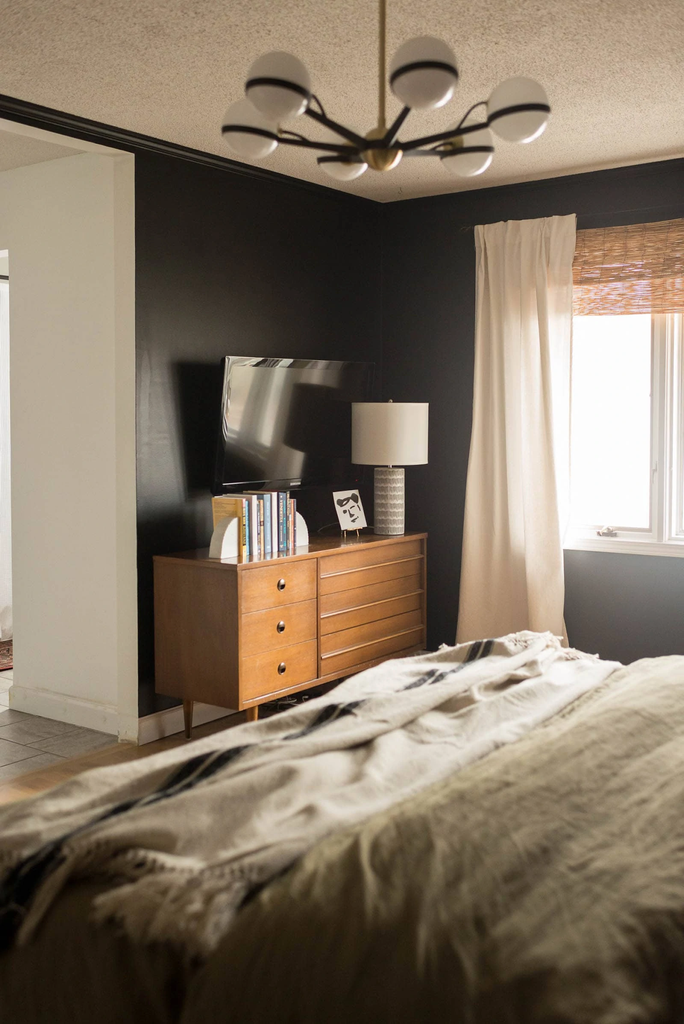
Credits: Ashley Mayes / Bigger Than the Three of Us
A black wall makes the television less visually abrupt above this warm wooden dresser. The screen still reflects light, but its dark outline sits more comfortably within the paint.
White curtains and a pale lampshade prevent the storage corner from feeling closed in. Consider this approach if a bedroom television needs to share space with furniture you already own.
Check the viewing height from the bed before deciding where to mount it. Keep books and accessories below the screen rather than around every edge.
The dresser’s slender legs leave some floor visible, helping the arrangement feel lighter. Matching black crown molding finishes the upper boundary neatly, while the wood drawers add enough warmth to keep the corner from feeling stark.
13. Make White Tufted Bedding the Brightest Layer
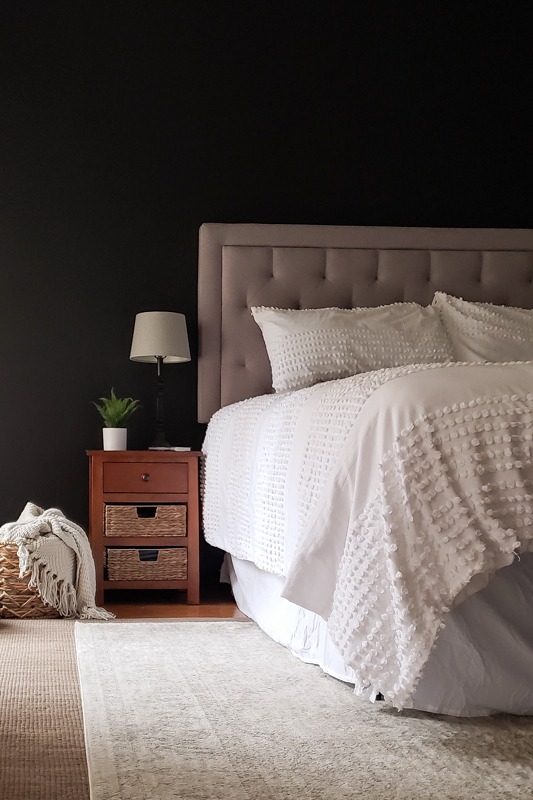
Credits: Dani Koch
Small raised dots give this white bedding dimension against an black wall. The softly tufted headboard adds a second texture in a muted tone, keeping the bed inviting without needing colorful pillows.
A wooden nightstand with basket drawers warms the bedside area and provides everyday storage. This combination suits a simple black bedroom where fabric does most of the decorating.
Look for texture you enjoy touching, then keep the color range narrow enough for those details to remain visible. The pale rug continues the light area onto the floor.
A single small lamp and plant keep the tabletop useful. Choose washable bedding that fits your routine, since a bright bed will become the most noticeable surface in this dark setting.
14. Stretch Broad Dark Planks Across the Bed Wall
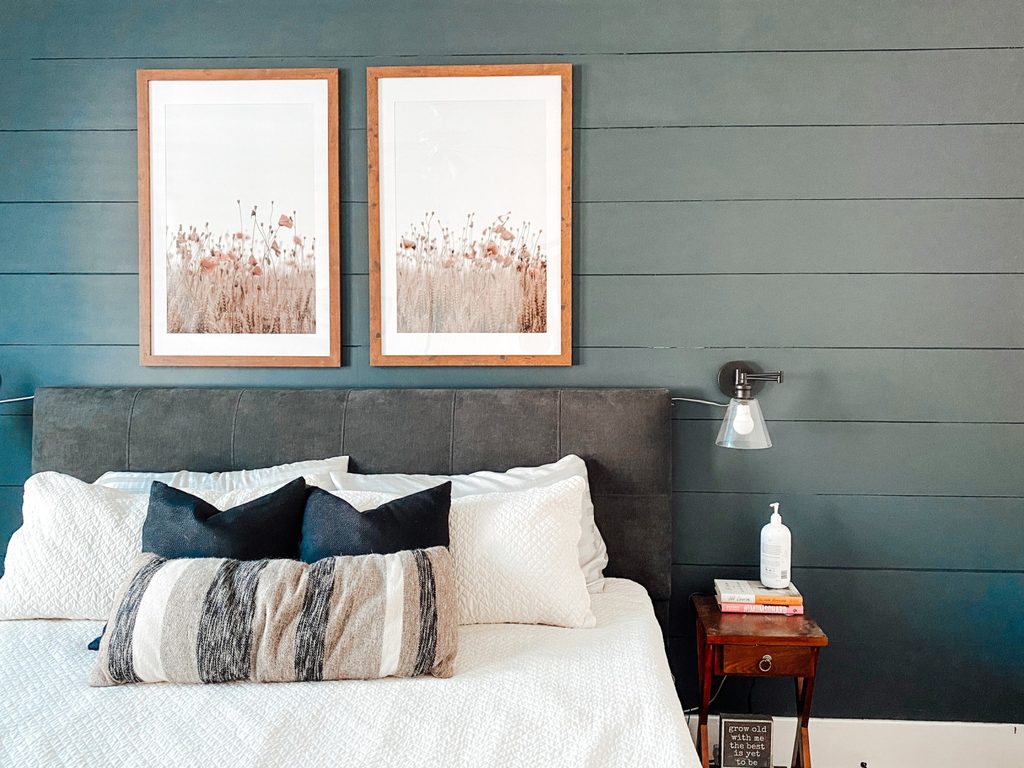
Credits: Emma Shoemaker / Shoe Makes New
Wide horizontal planks give the dark headboard wall a calm, continuous rhythm. Their charcoal finish reads slightly cooler in daylight, showing why a black paint choice should be tested inside the room.
Two botanical prints and a long striped pillow repeat the wall’s broad arrangement without making every line identical. This approach works when you want architectural texture but prefer a simpler pattern than herringbone or small panels.
Plan the board spacing so awkward slivers will not dominate the upper edge. Keep the headboard low enough to leave a generous area of planking visible.
White bedding and warm wooden frames brighten the composition. Compact wall lights preserve bedside space, especially where a narrow table cannot comfortably hold a large lamp.
15. Place Tall Mirrors Beside a Black Upholstered Bed
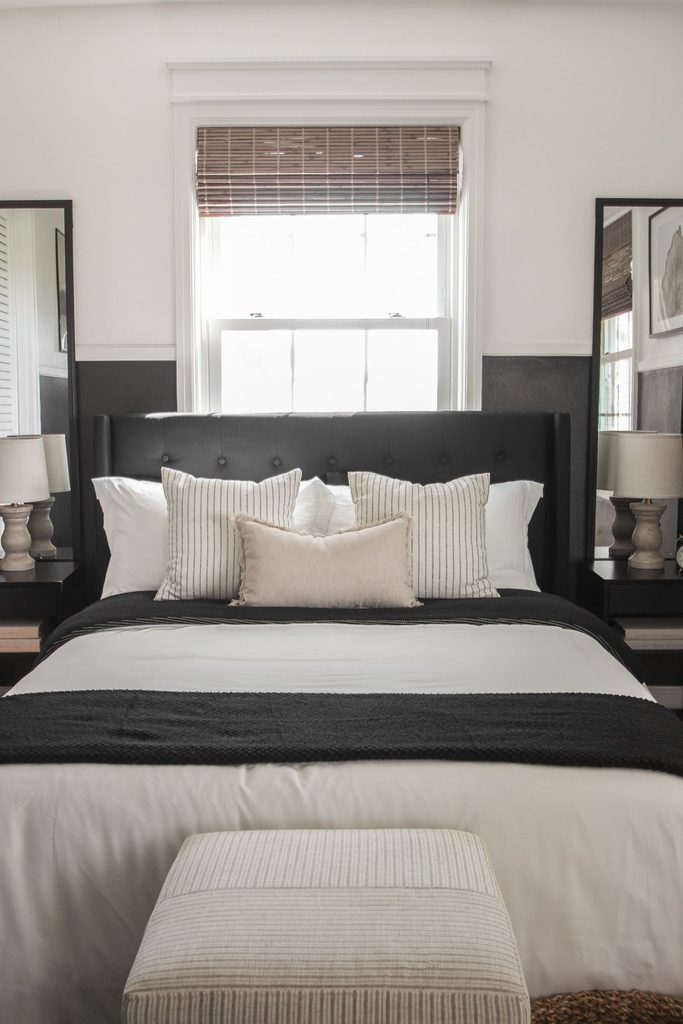
Credits: Liz Fourez / Love Grows Wild
Two slim mirrors flank the black headboard, bringing window reflections into a room with a restrained palette. Their dark frames connect with the nightstands and bedding accents, while the white upper walls keep the arrangement bright.
This is a useful alternative to filling both bedside spaces with framed artwork. Check the reflections from the doorway and pillows before choosing the final positions.
A mirror that reflects a soft curtain or bright wall may feel calmer than one facing an exposed bulb. Similar lamps reinforce the symmetry without requiring accessories.
The striped cushions and pale lumbar pillow add just enough variation across the bed. Keep the mirrors securely mounted and scaled to the furniture so their vertical lines feel intentional here.
16. Let Pale Landscape Art Lift a Black Dresser Wall
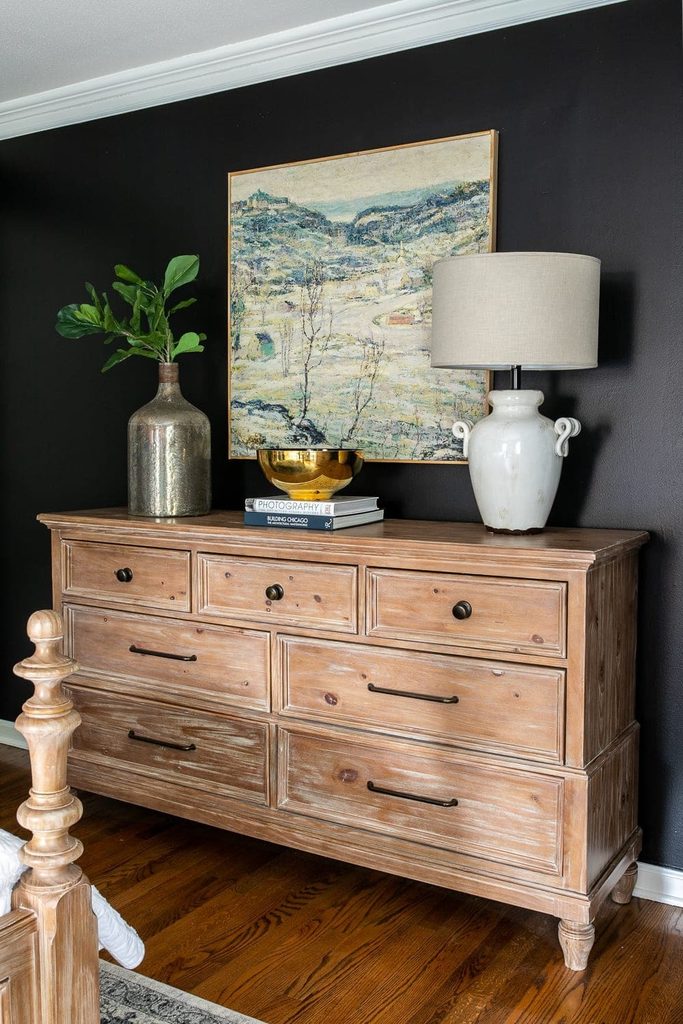
Credits: Lauren / Bless’er House
A pale landscape becomes the brightest feature above this weathered wooden dresser, lifting a section of black wall without covering it entirely.
The large frame relates to the dresser’s width, while a white lamp and metallic vase provide different shapes below. This arrangement is helpful when a dark bedroom needs a clear focal point away from the bed.
Choose artwork with enough lighter space to register against the paint from across the room. Leave a gap between the frame and furniture so neither feels crowded.
The brass bowl adds a small reflective accent near the center. Keep practical storage needs in mind when styling the top, and leave some open surface rather than building a continuous row of decorative objects.
17. Build a Light Bedside Corner With White and Wood
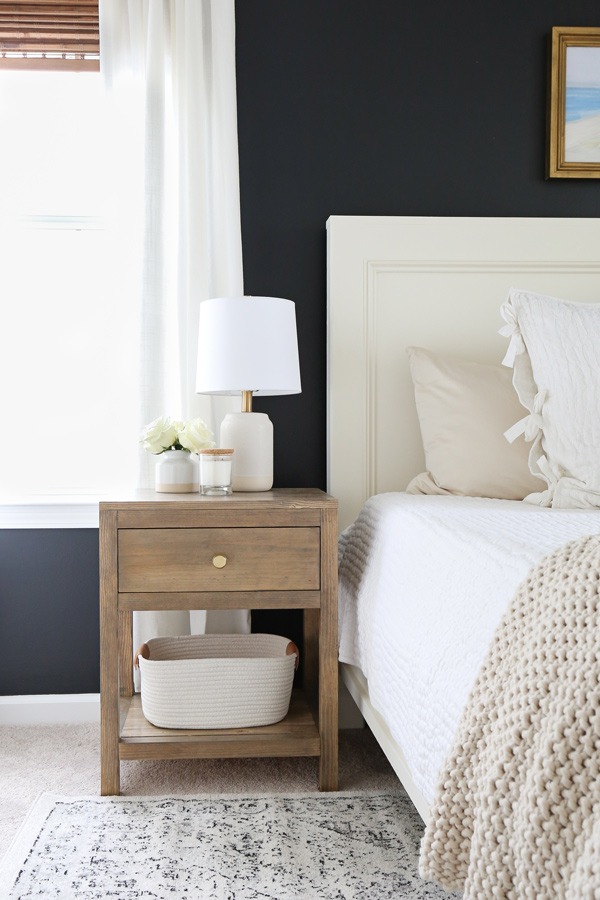
Credits: Angela Marie Made
A white lamp, pale curtains, and cream headboard gather several light surfaces beside this black wall. The wooden nightstand sits between them, adding warmth without breaking the quiet palette.
Its open lower shelf holds a basket, keeping smaller belongings close but less visible. Try this approach when one bedside corner feels too dark after painting.
Instead of adding many bright accessories, choose a few useful pieces with generous pale surfaces. The lamp shade creates a soft cylindrical shape beside the rectangular furniture.
A flower arrangement is enough decoration for the remaining tabletop. Make sure the nightstand height works with the mattress, and allow room to pull the basket out easily without catching the rug or brushing against the hanging bedding.
18. Add a Black Tufted Bench to Jewel Toned Bedding
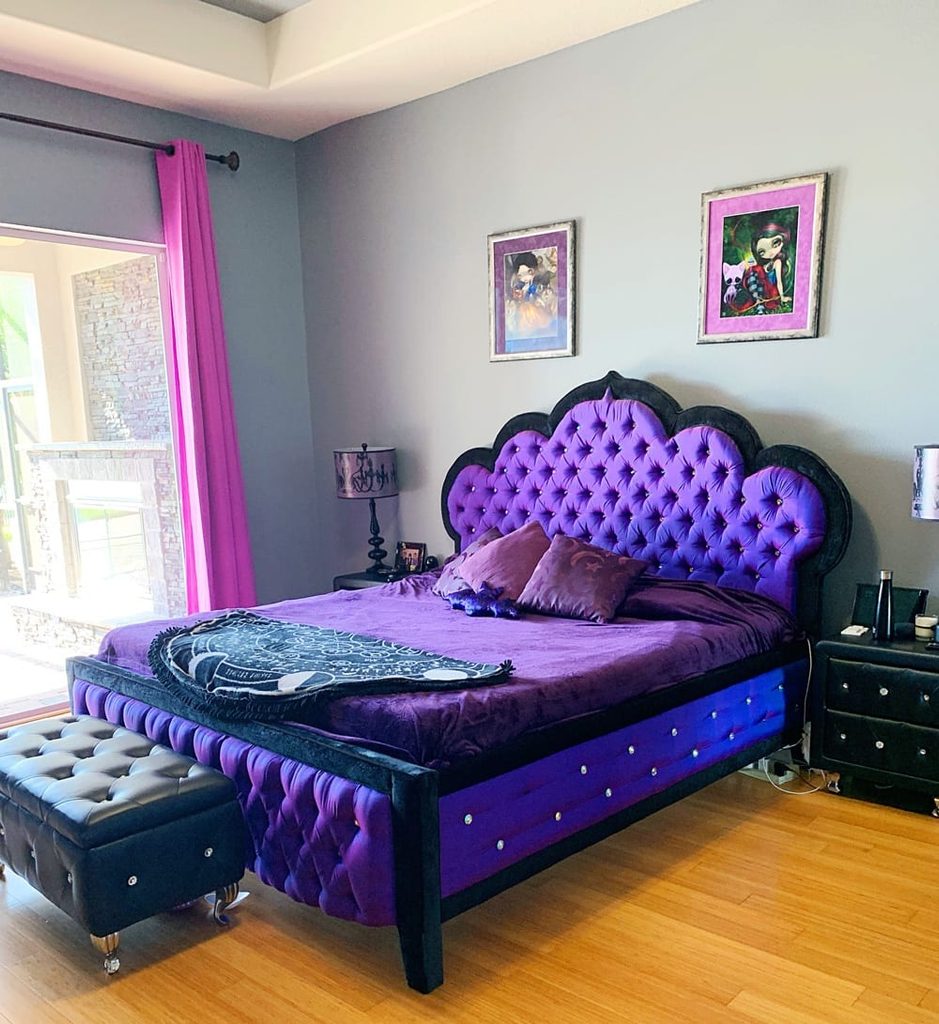
Credits: Cordelia / Phyrra
A black tufted bench repeats the dark edging of this dramatic purple bed, giving the vivid upholstery a grounded companion. Matching dark nightstands continue the color around the mattress, while the wooden floor keeps the lower room warm.
This idea suits a bedroom where black appears through furniture rather than wall paint. Choose one black piece and repeat its finish in smaller outlines instead of adding unrelated dark accessories everywhere.
The bench should leave a comfortable walking route at the foot of the bed. Tufting introduces highlights and shadows that make black upholstery more expressive.
Keep the bedding’s strongest color focused on the bed, allowing the darker furniture to frame it and bring order to the room’s lively decorative details.
19. Frame a Bright Doorway With Black Paneled Walls
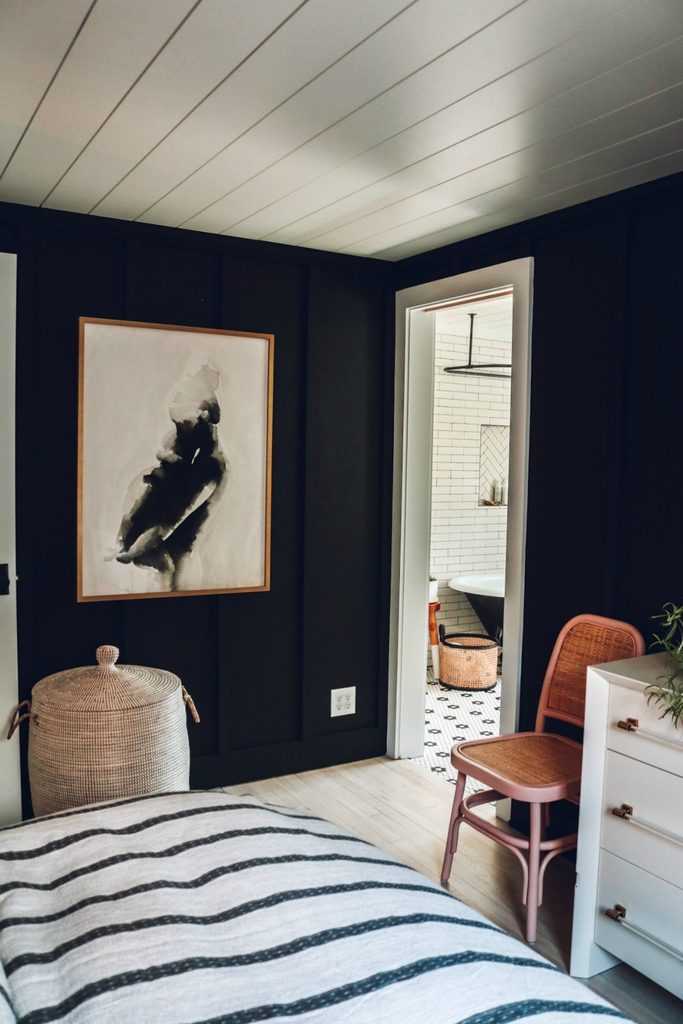
Credits: Brooke Christen / Nesting With Grace
White doorway trim gives this black paneled bedroom a clear transition into the brighter adjoining bathroom. A woven hamper and cane chair soften the dark wall, bringing natural texture close to the painted surface.
The artwork repeats black and white while its wooden frame connects with the furniture. Consider this idea when your bedroom has several openings that need to feel organized.
Keep the trim color consistent so each doorway belongs to the same scheme. Let a useful storage piece occupy an otherwise empty wall section rather than adding decoration alone.
Pale floorboards and the white ceiling maintain brightness around the perimeter. Leave enough space between the hamper, chair, and doorway so the attractive arrangement does not narrow your route.
20. Arrange Light Wood Frames in a Grid on Black
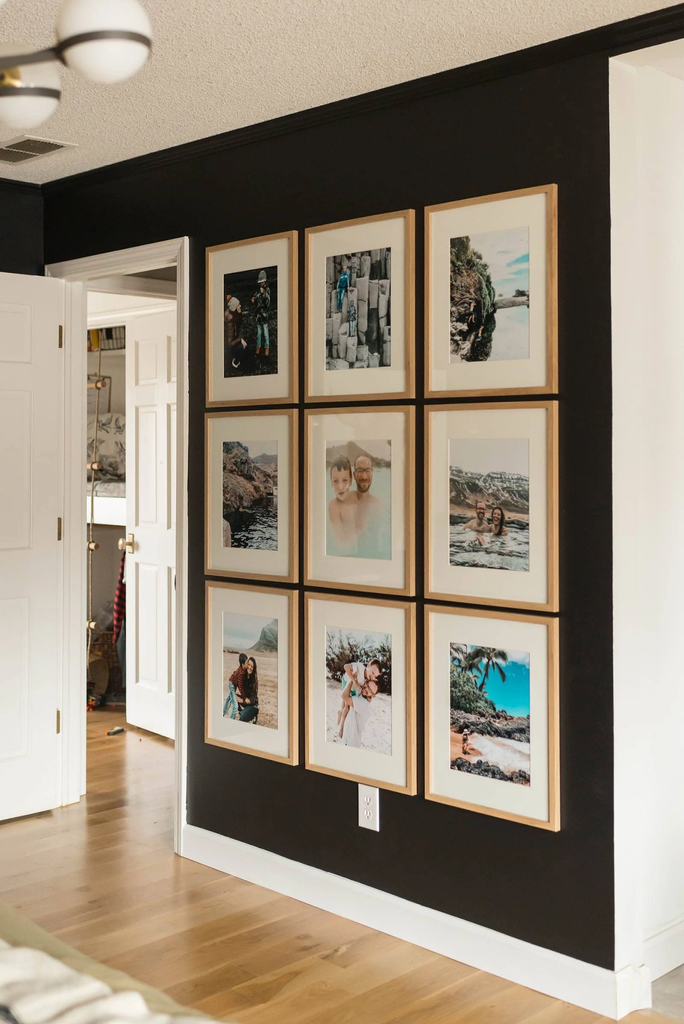
Credits: Ashley Mayes / Bigger Than the Three of Us
Nine wooden frames form a clear grid across this black bedroom wall. Their broad white mats keep the photographs distinct, while the dark gaps between them give the whole arrangement structure.
This is a good way to bring personal images into a dark room without creating a scattered gallery. Start by choosing the overall rectangle you want the group to occupy, then work out even spacing before making holes.
Matching frame sizes can make a varied collection of pictures feel cohesive. Keep nearby trim and furnishings relatively quiet so the gallery remains easy to read.
Here, white baseboards and a light doorway provide crisp edges, while the warm floor repeats the frames’ wood tone and keeps the wall feeling welcoming.